TL;DRRank Math is the best SEO plugin for WordPress, full stop. Switching over from Yoast SEO improved this blog’s SEO metrics with the exact same content, no tweaks needed. Rank Math Pro costs $69 a year for unlimited sites, whereas Yoast Premium comes in at $99, with extras like WooCommerce or the Local SEO addon costing $79 each on top. Even the free version of Rank Math beats paid Yoast, offering image SEO, a 404 monitor, a redirection manager, internal linking suggestions and WooCommerce integration. Aim for a content score of at least 87 out of 100, and migrating from Yoast SEO takes about one click.
Rank Math is the best SEO plugin for WordPress. 😈 This is going to piss off a lot of people who work with WordPress, because there are only two camps in the world of SEO on WordPress.
📉 The first camp loves the Yoast SEO plugin. I was one for 10 years.
📈 The second camp switched from Yoast SEO to Rank Math. That’s where I belong now.
With the transition to Rank Math, we have blog all SEO metrics have improved. We started getting more traffic with the same content, and new articles are ranking better. Why? Because Rank Math has more features and you can always keep your eye on content issues.
💡 We use Rank Math Pro. Some features may not be available in the non-paid version. But Rank Math is not expensive, for $69 a year you can use Rank Math on an unlimited number of your sites.
Rank Math vs Yoast SEO
The eternal battle between these plugins has no end. Rank Math suits me better, here is a summary table of my rankings, which doesn’t tell you much, but I’ll discuss everything in the text below. 😊
Rank Math
Yoast SEO
Usingplug-in
⭐⭐⭐⭐⭐
⭐⭐⭐⭐⭐
Initial settings
⭐⭐⭐⭐⭐
⭐⭐⭐⭐
Keyword optimization
⭐⭐⭐⭐⭐
⭐⭐⭐
Free features
⭐⭐⭐⭐
⭐⭐⭐⭐
Paid features
⭐⭐⭐⭐⭐
⭐⭐⭐⭐
PricePremium
59 USD
99 USD
✅ What I like about Rank Math is that you get all the features available in one subscription and can turn them on and off as you need them. Rank Math is therefore modular.
❌ Yoast on the other hand has addons for different services that are paid separately. For example, the WooCommerce add-on will set you back an extra $79, Local SEO Yoast will also set you back $79.
Features that Rank Math offers in addition to Yoast in the free version:
Both plugins evaluate your content based on a number of factors. From this single point of view, I see Yoast as a better alternative – but only for English. Neither can come up with much in the Czech language.
In English, Yoast offers more information about the readability of your content, and even has a feature called ”Inclusive language” thatdetects whether your content is written in a way that might make it harder to read for certain social or age groups (it considers 7 factors in total).
Yoast uses Flesch reading ease scores, which are not available in English. You can find out about the current availability of Yoast’s text ratings in English here.
💡 Are you thinking of starting your own blog? Read our detailed instructions, how to start a blog.
Unpaid traffic statistics
You can connect Google Analytics, Google Search Console and Google Adsense to the plugin. A lot of website owners are completely satisfied with its statistics.
The graphs are not very clear but the numbers are and the ability to filter down to the level of individual URLs I like a lot. In theory, I wouldn’t have to go to Search Console at all.
Rank Math SEO site performance
Index status
RankMath pulls data from Google Search Console and shows which URLs Google has decided to index, which it has decided not to index, and which it doesn’t know at all.
The statistics are broken down to individual URLs and you can filter them by status. You can filter out the ones that don’t get indexed and try to improve them. 🙏
Rank Math Index Status
Rank Math has multiple views of your SEO data and each serves a different purpose. One of the more interesting ones is ”Site Analytics”, which tries to evaluate the overall optimization of content on a site.
Unfortunately, it assumes you have the main keywords you are targeting clicked for all posts. Which not everyone will have. But it’s a good overview of the state of the whole site.
Rank Math overall site optimization
Rank Math plugin features
Rank Math can do a lot, so I’ll take it structured from the beginning.
SEO of posts and pages
If you have experience with another SEO plugin such as Yoast SEO, Rank Math is similar but still better in this regard.
When writing an article, you have a sidebar helper that tells you what you should improve. It addresses basic things like:
Keyword in the headline,
keyword in the first 10% of the content,
the length of the content,
number and types of links,
readability of content,
Pictures,
videos
and much more.
It helps you set up indexing for bots, create structured data and meta data for search engines and social networks.
Rank Math Helper
The entire article is rated with a score of 0-100. Although a score is no guarantee of a good ranking, I have taught myself and all my colleagues that our baseline is to get a score of at least 87. That’s your maximum unless you use the Content AI add-on.
Content AI
This is a paid feature and requires the purchase of credits. It works but a great helper in expanding content. Rank Math enters the article’s main keyword into a search engine, crawls the SERP and tells you:
Word count – how many words your competitors use and how many you should add.
Link count – how many internal and external links your competitors use and how many you have.
Heading count – how many headlines on average do your competitors have and how many do you have.
Media count – how many media elements your competitors have on average and how many you have.
Content AI will also list what other keywords you should place in your content, headings, meta title and meta description.
If it is a more searchable phrase, it will also suggest additional questions for the FAQ or recommend sites you should link to from the article.
Occasionally it happens that it does not have enough data in Czech for a given keyword and so it uses an index in English. Then, unfortunately, it offers you complete nonsense and doesn’t help you much. Moreover, he won’t even tell you that he didn’t have data for Czech. It just suddenly starts offering you English phrases. Yuck.
The Content AI will rate your article on the next scale of 0 to 100 depending on how well you meet each criterion.
Rank Math Content AI
💡 Personally, I don’t follow Content AI’s ratings very much, because I often write much longer articles than my competitors and Rank Math doesn’t like it. I like it though because I rank well with them. 😊
Generating a sitemap
Rank Math throws away the sitemap from WordPress and creates its own. You can choose which URLs you want to include in the sitemap and which ones you don’t. Yoast is similar.
Rank Math Sitemap
Structured data in Rank Math
Structured data is an important part of your website’s code because it shows search engines information in a standardized format. However, not many website owners have structured data implemented because it is usually not easy.
Rank Math can and does generate structured data automatically for all content types. And if you need to put extended structured data on a page (for example, to describe a book under review in a standardized format for books), Rank Math has a simple editor.
You can even turn on structured data for local SEO (business information) or for a podcast.
WooCommerce users will appreciate the option to enable the generation of structured metadata for products. 🙂
Rank Math Schema Generator
SEO of images
If you’ve been neglecting to fill in all the SEO fields for images for a long time, you may find the SEO for images feature useful. Rank Math can automatically populate ALT, title, image caption and image description based on the article title and image file name.
Unfortunately, there is no AI running in the background that can recognize what is really in the picture. But given that such technology is already well available, it’s only a matter of time before Rank Math can automatically recognize things in an image to better optimize images for search engines.
Instant indexing
Rank Math uses the IndexNow service and can send search engines information that you have published, updated or deleted a post or article.
This is especially useful for sites that publish news that quickly becomes outdated and you want to get it into the search engine index as soon as possible.
It is also suitable for small websites where search engine robots do not go as often.
404 monitor and redirection
The plugin automatically tracks and logs all events on the site that end with a 404 (not found) page. You can easily detect broken links across the web, or that a page has disappeared from your site. The monitor also lets you know if a robot is breaking into Worpress.
Rank Math monitor 404
Reference computer
I find this feature particularly useful. For each post or page, the plugin will show you how many times it is linked to within the site. It’s a great way to debug internal linking and I used to get this information only from expensive SEO tools.
ACF support
If you use Advanced Custom Fields, Rank Math has native support for them.
Linking to bbPress and BuddyPress forums
Some WordPresses are just an engine that runs a community forum. The big chance is that such a forum runs on the opensource software bbPress or BuddyPress. Rank Math has support for both.
Migration from Yoast SEO
If you decide to switch to Rank Math and use Yoast SEO, I have good news for you. The migration is simple and takes about one click. 🎉
Rank Math supports multiple plugins and can also migrate structured data.
Conclusion
I resisted switching to Rank Math for a long time, I was afraid to deploy a new SEO plugin on my sites, let alone on clients’ sites. But when I did, after a few months I knew there was no turning back. 😂 Pro content marketing it’s just a great tool.
Rank Math already runs all the WordPresses I manage. And if I’m somewhere as a consultant and have to work with Yoast SEO, I suffer a bit. 😊
The focus keyword is the main keyword you are trying to get your article to show up on search engines.
How does the focus keyword function work in Rank Math?
Based on the keyword phrase you provide, Rank Math analyzes your content and suggests various improvements to incorporate the phrase and related keywords into your content.
Is it important to score 100 in Rank Math?
Scoring 100 on Rank Math is not your primary goal, but a high score says you haven’t forgotten anything important.
Search for flights on Kayak. It’s our favorite search engine because it scans the websites of all airlines and always finds the cheapest connection.
Book Your Accommodation Smartly
The best experiences we’ve had when looking for accommodation (from Alaska to Morocco) are with Booking.com, where hotels, apartments, and entire houses are usually the cheapest and most widely available.
Don’t Forget Travel Insurance
Good travel insurance will protect you against illness, accidents, theft, or flight cancellations. We’ve had a few hospital visits abroad, so we know how important it is to have proper insurance arranged.
Where we insure ourselves: SafetyWing (best for everyone) and TrueTraveller (for extra-long trips).
Why don’t we recommend any Czech insurance company? Because they have too many restrictions. They set limits on the number of days abroad, travel insurance via a credit card often requires you to pay medical expenses only with that card, and they frequently limit the number of returns to the Czech Republic.
Find the Best Experiences
Get Your Guide is a huge online marketplace where you can book guided walks, trips, skip-the-line tickets, tours, and much more. We always find some extra fun there!
TL;DRChoosing a rooftop tent comes down to soft-shell versus hard-shell. Soft-shell is cheaper, fits 2–4 people, but is less stable in wind and more prone to damp. Hard-shell suits 2 people, feels sturdier and copes better with rough weather.
The author tested an aluminium Sovnaran NoHelp model, mounted on Thule Wingbar Evo bars (100 kg dynamic load limit), and drove it through Austria, Croatia, Montenegro, Albania and Greece. Reviews rate Autohome (the Maggiolina range) as the best-built tents, with prices from 50,000 CZK up to over 80,000 CZK. Running a rooftop tent pushes fuel consumption up by 0.5 to 1.0 litres per 100 km — around 17% more.
Do you go on holiday camping or just love spending nights outdoors and wondering if a roof tent for your car would be a worthy upgrade to justify the price? We bought a higher-end roof tent and after several weeks of sleeping in it, I decided to write this review of living in a rooftop tent, so you don’t have to hunt for information all over the internet. 😈
💡 TL;DR: Roof tents are amazing! Hard shell models work in all weather conditions, while lighter soft shell tents are better suited for warm climates. Don’t buy cheap tents that fall apart quickly. Quality roof tents aren’t cheap, but they can easily last 20 years. 🙂
I mount the tent on my car in June and don’t take it off until November. Until then, our travel season is wide open. A roof tent gives you incredible freedom to go anywhere, anytime.
Roof tent camping in Durrës, Albania
Sleeping and Living in a Roof Tent
Generally speaking, you sleep better in a roof tent than in a ground tent. You don’t have to worry about water seeping in from the ground or morning dew making the bottom of your tent damp. Roof tents typically offer more space and greater comfort.
You access your roof tent via a ladder. If you’re used to getting up several times a night for the toilet, this might annoy you a bit. We got used to it fairly quickly — we just stopped drinking a glass of water before bed (like I do at home).
A roof tent gets humid just like a ground tent. Most people close their roof tents at night because up on the car roof, you’re fully exposed to the wind. And even though morning dew is less of an issue, condensation inside the tent is just as much of a problem. We solved this with a condensation mat placed under the mattress, plus our tent has an upholstered ceiling that absorbs moisture so nothing drips on us at night.
On warm days, the tent naturally dries out before you’ve even finished breakfast, but in the mountains or during cooler temperatures with higher humidity, you might not have time to air it out properly, and you’ll be climbing into a damper environment in the evening.
In any case, after every trip you need to take everything out of the tent and let it dry thoroughly.
How to Choose a Roof Tent?
I can’t give you a simple answer (at least not straight away :)). It really depends on several factors. Mainly:
Number of people sleeping in it
Height of the sleepers
The climate of your most frequent destinations
The load capacity of your roof bars
Hard Shell or Soft Shell?
The basic way to categorise car roof tents is by shell type.
Soft Shell Roof Tents
Soft shell tents — fully fabric-based — are cheaper and more common. These tents usually fold open in half, with one half extending over the side of the car, supported by the ladder. These are most often family tents for 2–4 people. Thanks to the overhang, you can often buy an annex that hangs beneath the tent. Personally, I’m not a fan of these tents because they’re less stable in the wind and tend to get damp quickly.
Thule Approach L roof tent (Source: https://www.thule.com/rooftop-tents-and-accessories/rooftop-tents/thule-approach-l-_-901015)
Hard Shell Roof Tents
Hard shell roof tents (plastic or aluminium) don’t extend beyond the edges of the vehicle, but they’re designed for 2 people only. Aluminium versions (like our Sovnaran) are so sturdy you can even mount a solar panel on top. They’re also much more robust and can handle worse weather conditions. Combined with upholstered lining and a condensation mat, you’ll sleep nice and dry even on days when it’s absolutely pouring outside.
TIP: Try the Camperguru app, where you’ll find an overview of the best campsites and wild camping spots across Europe.
I also prefer the opening mechanisms on hard shell tents. You either turn a crank a few times, or just push the tent open (if it has gas struts).
There are also hybrid tents on the market that have a hard shell but flip open on one side, with the rest made of fabric. This makes them easy to set up while still accommodating up to 4 people. However, they’re still more prone to getting damp than fully hard shell tents that open straight upwards.
A special category is inflatable roof tents, which can be inflated using a 12V pump plugged into your car’s cigarette lighter. However, you won’t see these on the road very often — they tend to be quite expensive and in my opinion aren’t very practical either. Setup can take a good 10 minutes (compared to hard shell tents, which are ready in under a minute) and what happens if it starts leaking?!
Two people on an expedition – a hard shell tent, for example the NoHelp by Sovnaran
For a family of 3+ – a large soft shell tent, for example the Thule Approach L
Tent Dimensions and Standard Equipment
It might surprise you, but roof tents are often larger than regular ground tents. Two-person models can be up to 230 cm long and a comfortable 145 cm wide.
What Fits Inside a Roof Tent?
Standard equipment usually includes a quality mattress, steps, poles for propping up the exterior awnings, and shoe bags. All of this fits comfortably inside the tent even when it’s closed. We also managed to squeeze in two sleeping bags and small pillows.
Will a Roof Tent Fit on My Car?
A car roof tent can generally be mounted on any vehicle, but there are a few things you need to check.
Mounting Type
Most commonly, tents are mounted on roof bars (longitudinal or crossbars) or on roof racks. You definitely can’t just attach a tent to a bare roof without proper preparation. Tents are heavy and need to be seated on a sufficiently sturdy base.
Most modern cars come with mounting points for roof bars, but you’ll need to buy the bars separately. I wouldn’t recommend getting bars from your car manufacturer — for example, Toyota’s own roof bars have a rated dynamic load capacity of only 60 kg.
I opted for wider Thule Wingbar Evo crossbars because of the width of my tent and awning. These are rated to carry up to 100 kg while driving. Given that the bars are in perfect condition after dozens of nights in the tent, I can confirm they comfortably support an 80 kg tent plus two people. 😊
Tent Weight
Car roof tents vary in weight, ranging from about 40 kg to 80 kg. Your car’s roof can handle all of them (check your manual to be sure), but it’s worth keeping the weight in mind when choosing your roof bars.
The roof tent for our car that we chose
Roof Load Capacity
Everyone shopping for a roof tent inevitably asks: “Can my car’s roof handle it?” The answer is simple: YES. There’s a difference between dynamic and static load capacity, and manufacturers are sometimes lazy about specifying which one they mean.
Dynamic Maximum Weight
Your vehicle manual will typically state a roof load capacity of around 80 kg, but this refers to the dynamic load — i.e., while the car is moving. That’s also why the heaviest tents weigh exactly 80 kg. 😉
Static Maximum Weight
Static weight refers to the load the roof can bear when the car is stationary.The static maximum weight is typically at least three times higher than the dynamic rating. Family-sized tents (for 4 people) are regularly mounted on regular cars, and I’ve never heard of anyone’s roof caving in. 😂
Roof Tent Brands
There are loads of roof tent brands out there. We went with the Czech brand Sovnaran. Their tents are manufactured in China, but they’re very well built, and the aluminium NoHelp model, which sits on top of our Toyota RAV4, is truly top-notch.
From many reviews online, it seems that the most proven and highest-quality tents in the long run are the Maggiolina range by Autohome. These start at around €2,000, with the most expensive models going well over €3,200. They’re not the cheapest tents, but they’re not the most expensive either.
Other brands worth considering:
Sirius
Thule
Front Runner
Driving Performance and Fuel Consumption
A common question I get about my tent is whether the rooftop load changes the car’s handling. I have both a tent and an awning on my roof, and I haven’t noticed any deterioration in driving. If anything, the car actually corners a bit better with the extra weight. 😈
Fuel consumption increased by about 0.5 to 1.0 litres per 100 km depending on the terrain. With my average of 6.0 litres per 100 km, that’s an increase of roughly 17%. Not good, not bad.
With our roof tent, we drove through Austria, Croatia, Montenegro, Albania, and Greece
Condensation in the Tent
Just like in a regular ground tent, moisture builds up inside a roof tent too. Most condensation problems can be solved by getting a condensation mat to place under the mattress.
Rent Our Roof Tent
Would you like to try a roof tent before buying one? If I don’t have the tent mounted on my car at the time, I’d be happy to rent it out for €20 per day. Just drop me an email at lukas@lkmedia.cz.
FAQ
What Are the Best Roof Tents on the Market?
The best roof tents are those with a hard shell. The highest-quality tents are arguably made by Autohome (the Maggiolina product line).
Where Can I Find the Cheapest Roof Tent?
I’d recommend browsing comparison sites like Amazon, eBay, or dedicated outdoor retailers to compare prices and find the best deals on roof tents.
Tips and Tricks for Your Vacation
Don’t Overpay for Flights
Search for flights on Kayak. It’s our favorite search engine because it scans the websites of all airlines and always finds the cheapest connection.
Book Your Accommodation Smartly
The best experiences we’ve had when looking for accommodation (from Alaska to Morocco) are with Booking.com, where hotels, apartments, and entire houses are usually the cheapest and most widely available.
Don’t Forget Travel Insurance
Good travel insurance will protect you against illness, accidents, theft, or flight cancellations. We’ve had a few hospital visits abroad, so we know how important it is to have proper insurance arranged.
Where we insure ourselves: SafetyWing (best for everyone) and TrueTraveller (for extra-long trips).
Why don’t we recommend any Czech insurance company? Because they have too many restrictions. They set limits on the number of days abroad, travel insurance via a credit card often requires you to pay medical expenses only with that card, and they frequently limit the number of returns to the Czech Republic.
Find the Best Experiences
Get Your Guide is a huge online marketplace where you can book guided walks, trips, skip-the-line tickets, tours, and much more. We always find some extra fun there!
TL;DRThe Outin Nano is a portable electric espresso maker, one of the few on the market that heats water to 92°C itself and extracts under 20 bars of pressure. You can get it with a permanent 10% discount straight from the manufacturer using the code LUKAS, or through the link in the review. It weighs 670–700g and measures 23cm tall by 7cm wide, so it’s roughly the size of a regular thermos. On a single charge with cold water, it manages about 4 espressos (50ml per cup), while with hot water the manufacturer claims up to 200 cups; charging via USB-C takes around 2 hours. You can brew with ground coffee using the included adapter, or more conveniently with Nespresso-compatible capsules, and there’s also a cleaning mode to clear any blockages.
I have a whole collection of travel coffee makers at home, but the Outin Nano is the first coffee maker that can heat its own water. The coffee maker impressed me so much that I’ve dedicated this separate review to it. If you’re considering buying, or just picking out your first travel coffee maker, take the opportunity to leave a comment below the article. I’ll be happy to answer your questions. 😊
My impressions
The Outin Nano electric portable coffee maker is an excellent espresso machine for travel, but I’ve found it works as a source of entertainment on visits, or as a source of good coffee at grandmas and other households where they know at most so dissolvable coffee. They are so impressed with the coffee machine that they are not even offended that I brought my own coffee 😁
I have tested that it can handle 4 espressos (each made from 50ml of water) on one charge if I use cold water. I haven’t hit the limit with hot water, but according to the manufacturer it can handle up to 200 on a single charge.
With its 700g, the coffee machine is slightly heavier than other alternatives. For example, my Wacaco Nanopresso machine with the double espresso adapter and larger tank is not much lighter. At the same time, it is quite compact, it fits easily in my backpack next to a 750ml water bottle (they are about the same size).
💡 I like the coffee maker so much that I wrote to the manufacturer and begged a 10% discount 😂 Just click through this link.
Advantages and disadvantages of the Outin Nano coffee machine
+ heats water
– Charges in ~2 hours
+ produces a pleasant foam
– heavier than other travel coffee machines
+ 200 cups of coffee with hot water
– 5 cups of cold water
Basic technical information
The coffee machine is an electrical device, so it has the relevant certificates. It meets the standards recommended by the ECBC(European Coffee Brewing Center) and monitors its own temperature, pressure and speed to ensure the most consistent result.
It heats the water to 92°C and the coffee outlet temperature is ~80°C. Charges via USB-C.
Weight: 670 g
Heating speed: 50ml heats in ~3 minutes (depending on ambient temperature and water temperature)
Pressure: 20 bar
Power: 90W
Water tank material: food-grade stainless steel
Reservoir volume: max 80 ml
Battery: Lithium, 7500 mAh
Battery life: ~4 espressos with cold water
Methods: ground coffee or Nespresso capsules
What you will find in the package
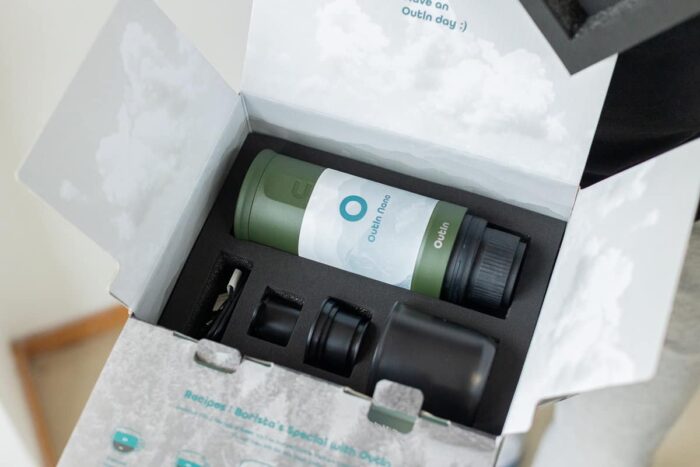
The coffee maker is packaged in a nice, designer box that is all printed and full of information. Inside you will find additional leaflets with instructions on how to use the coffee machine. Also included:
1x Outin Nano coffee machine
1x measuring cup for ground coffee
1x container for ground coffee
1x adapter for Nespresso capsules
1x USB-C cable
You will need to buy the portable wrapper separately, but you don’t need the wrapper unless you plan to combine both preparation methods when travelling.
Outin Nano package contents
How to prepare coffee with Outin
I would divide the coffee brewing process by method. Either use freshly ground coffee or save yourself the trouble and use any capsule that is compatible with Nespresso machines. I’ll start by saying that working with the capsule is much easier.
Cold or hot water
The coffee maker has only one button to enter multiple commands.
You use cold water – hold the button for two seconds, the machine heats the water and starts extraction.
Use lukewarm to warm water – hold the button for two seconds, the machine will heat the water and start extraction.
You use hot water -hold the button for five seconds, the coffee machine skips heating and starts extraction.
Outin Nano ready-made coffee
Preparation from ground coffee
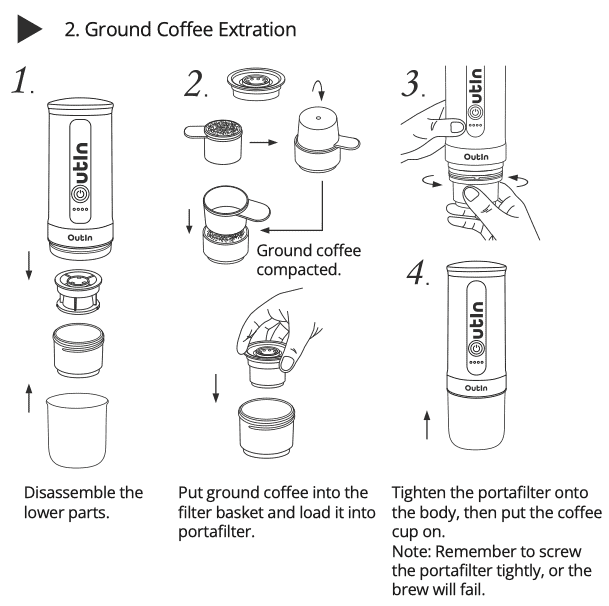
If you decide to make coffee using ground coffee, you will face a more complicated process. You need to fill the tray with coffee, stew it, close it with a perforated cap and insert the tray into another cylinder that you screw onto the bottom of the Outin Nano. You put a semi-transparent cup on top of it and the coffee flows into it.
There is a water chamber on the top of the machine, you fill it with 50ml of water (or more, it will take 80ml max) and place it on the table. Then start the coffee machine.
One white light out of four lights on the coffee machine will illuminate. As the water heats up, all the lights gradually come on until after about three minutes the machine beeps and starts extracting. When you are done, you can disassemble and clean the coffee machine.
As with all other coffee makers, this method of brewing is a bit messy and you’ll have coffee everywhere when cleaning. That’s why I prefer capsules.
Outin Nano – preparation of ground coffee
Preparation from capsule
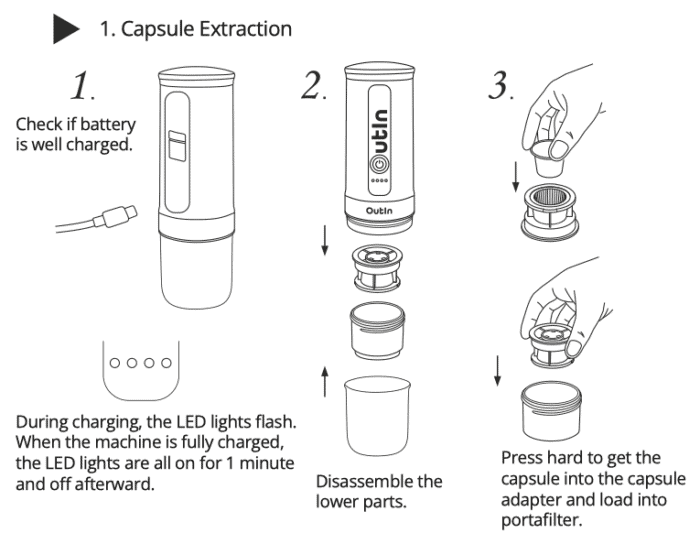
Preparing from a capsule is easier, faster and mess-free. Simply insert any capsule compatible with Nespresso coffee machine (you can find good selections, for example from Doubleshot), screw it in and start the machine.
Quick cleaning is then a matter of ten seconds.
Outin Nano preparation from the capsule
Cleaning the coffee machine when the water is not flowing
You may find that the water in your coffee machine stops flowing. This is caused in most cases due to the pressure inside the device.
The coffee maker has a special cleaning mode for this problem, which you are instructed to use before each coffee preparation. I do this about every tenth coffee and have no problem. 😊
To start the cleaning mode, turn the machine upside down, remove the filter container and pour cold water into the opening. To start cleaning, press the button twice. The water flows and it’s done. Basically, it just cleans the pipes.
If that doesn’t work, you can turn the machine back around, fill the reservoir with cold water, gently squeeze the membrane twice from underneath and start cleaning by pressing the button twice.
Here’s a video tutorial just in case:
Charging the coffee machine and battery status indicator
Charging the coffee machine depends mainly on the power supply, as it is not included. Poor quality adapters and cables can lead to the coffee machine not charging at all, so ideally you should buy a separate power supply and carry it with you. You should properly use a 5V/3A USB-C wall charger.
If you use a power supply with less than 10W, the coffee machine will not charge at all.
Unfortunately, the coffee maker does not work when it is charging.It does work, but it must have at least 50% battery charge. That betrayed me when I was making coffee for our team at nanoSPACE. If you plan to use the machine more than once in a short period of time, I recommend using hot water, as you will make a lot more coffee that way.
Battery status indicators
The coffee maker has an LED battery indicator, four LEDs in total. When all the lights are on, it’s fully charged. You can check the battery status at the touch of a button. If it flashes and beeps twice, the battery is already very low. She can still handle a few cups of hot water, though. 😊 The biggest eater is heating.
Error messages
The coffee maker only has the aforementioned four LEDs, beeps and one button. And in these ways, it tells you everything. So I copied the table from the manual just in case, because I don’t remember what all the different states mean 😁
Situation
Lights and beeps
Solution
Low battery
2x flashes 1x beep
Fully recharged
Battery overheat protection
2x flashes 2x beeps
Wait 5 minutes
Empty container heating protection
2x flashes 3x beeps
Refill water
Short circuit protection
Alternating flashing
Contact Support
Error messages of the Outin Nano coffee machine
10% discount for my readers
I arranged a permanent 10% discount directly with the manufacturer permanent 10% discount. Just enter the coupon in the cart or click through this link.
Outin Nano is also available in the Czech Republic
Don’t want to order a coffee machine from abroad? Use Heureka, where you can find all sellers. But it will be cheaper to buy directly from the manufacturer with a coupon 😊
FAQ
Can the Outin Nano overheat?
Yes, he can. In my experience, by the fourth extraction with the water heating up, it can overheat and then need five minutes at rest before it starts working again.
What if the Outin Nano stops leaking water?
Use cleaning mode. Remove the filter, turn the machine upside down and fill the opening with water. Start the coffee machine by pressing the button twice.
What capsules will fit in the Outin Nano?
Any capsule the size of an original Nespresso capsule. Alternatively, an adapter and freshly ground coffee can be used.
How big is the Outin Nano coffee maker?
The coffee maker is the size of a regular thermos. It measures 23cm in height, 7cm in width and weighs 670g.
Tips and Tricks for Your Vacation
Don’t Overpay for Flights
Search for flights on Kayak. It’s our favorite search engine because it scans the websites of all airlines and always finds the cheapest connection.
Book Your Accommodation Smartly
The best experiences we’ve had when looking for accommodation (from Alaska to Morocco) are with Booking.com, where hotels, apartments, and entire houses are usually the cheapest and most widely available.
Don’t Forget Travel Insurance
Good travel insurance will protect you against illness, accidents, theft, or flight cancellations. We’ve had a few hospital visits abroad, so we know how important it is to have proper insurance arranged.
Where we insure ourselves: SafetyWing (best for everyone) and TrueTraveller (for extra-long trips).
Why don’t we recommend any Czech insurance company? Because they have too many restrictions. They set limits on the number of days abroad, travel insurance via a credit card often requires you to pay medical expenses only with that card, and they frequently limit the number of returns to the Czech Republic.
Find the Best Experiences
Get Your Guide is a huge online marketplace where you can book guided walks, trips, skip-the-line tickets, tours, and much more. We always find some extra fun there!
TL;DREasylingo online courses are worth it especially if you want to study several languages at once through a subscription, with access to 50 courses in the basic plan or 84 courses with the PRO subscription, covering six world languages. Prices start at 229 CZK a month on the annual basic plan (2748 CZK for the year) and 289 CZK a month on the annual PRO plan (3468 CZK for the year), and paying annually gets you 5 months thrown in. Easylingo belongs to the same company as Onlinejazyky and uses the same app and spaced-repetition method, but it differs in how you pay and comes in Polish, Slovak, English and Spanish as well. You can try the course free first, and you’ll get a certificate once you finish it.
Easylingo is a Czech-based brand offering online foreign language courses that you can study through an interactive app on your phone, tablet, or directly on your computer. Did you know that it’s actually the same app and the same courses as Onlinejazyky? How is that possible, and what sets Easylingo apart from Onlinejazyky? Is it worth investing in? Keep reading our Easylingo review to find out.
Easylingo review
Onlinejazyky vs. Easylingo: What’s the Difference?
Both Easylingo and Onlinejazyky belong to the Czech company ONLINE learning, s.r.o., which specialises in teaching foreign languages in a fun and engaging way. Unlike Duolingo or other apps, they don’t just teach you vocabulary – they also cover grammar and pronunciation. Onlinejazyky and Easylingo offer exactly the same products, so what actually makes them different?
Easylingo and Onlinejazyky differ in just two ways: how you purchase individual courses and which interface languages are available. With Onlinejazyky.cz, you buy access to one specific course. With Easylingo.cz, you pay a monthly subscription that gives you access to 50 courses in six world languages.
For those who want to dive headfirst into language learning, there’s the PRO subscription. This unlocks a total of 84 courses in the same six world languages. Easylingo, just like Onlinejazyky, offers courses in English, French, Italian, Spanish, and German. 🙂
Onlinejazyky can only be studied in Czech, but Easylingo is a brand that operates in the Czech Republic, Slovakia, Poland, England, and Spain. This means you can study, for example, English with Slovak as your base language.
The teaching method works brilliantly for all age groups
Who Should Choose Onlinejazyky and Who Should Choose Easylingo?
Easylingo is worth it for anyone who wants to learn multiple languages at once or is confident they can work through a course in less than 11 months – in that case, the basic subscription is the better deal. Most courses on Onlinejazyky cost around 100 €.
Personally, I prefer Onlinejazyky.cz because I like having lifetime access to a course. On the other hand, if I had a subscription, it might actually motivate me to study more consistently and efficiently.
Try a Course for Free Before You Buy
Before you purchase any online courses from Easylingo or Onlinejazyky, make sure to try the app for FREE first. After all, you wouldn’t buy a car without a test drive, would you?
What Online Language Courses Does Easylingo Offer?
English
German
French
Spanish
Italian
Russian
Czech for Foreigners
Level A1
✓
✓
✓
✓
✓
✓
✓
Level A2
✓
✓
✓
✓
x
✓
x
Level B1
✓
✓
✓
✓
x
x
x
Level B2
✓
✓
✓
✓
x
x
x
Level C1
✓
x
x
x
x
x
x
Level C2
✓
x
x
x
x
x
x
Vocabulary Packs
✓
✓
✓
✓
✓
✓
x
Specialist Courses
✓
✓
✓
✓
x
x
x
How Much Does Easylingo Cost?
Looking at the pricing, it definitely makes the most sense to go for the annual subscription in either category (Basic or PRO). Why? With the basic annual subscription, you only pay for 7 months and get 5 months completely free.
The same applies to the PRO plan – and when you consider how many courses you get and the quality on offer, the maths speaks for itself. Before you commit to paying, though, make sure to try Easylingo for FREE.
Subscription Type
Monthly Price
Description
Total Price
Basic
Monthly
16 €
Access to 50 courses in 6 languages
Charged monthly
6-Month
10.50 €
Access to 50 courses in 6 languages
63 €
Annual
9.30 €
Access to 50 courses in 6 languages
111.50 €
PRO Subscription
Monthly
20 €
Access to 84 courses in 6 languages
Charged monthly
6-Month
13.80 €
Access to 84 courses in 6 languages
82.50 €
Annual
11.70 €
Access to 84 courses in 6 languages
140.50 €
How Does Learning with Easylingo Work?
Learning a language with Easylingo isn’t just about how many languages they offer – it’s about how effectively they guide you through each one. On Easylingo, you’ll find courses in English, French, Italian, Spanish, and German.
The moment you click to try a course for FREE on Easylingo, you can start studying right away – either in the app or on your computer. Since you’re not buying a single course, you’re free to study whatever catches your fancy.
Fancy brushing up on your English? Brilliant – you can choose from 25 different courses, either based on your current level (from complete beginner to advanced) or based on your interests – like exam preparation or business English.
Every lesson follows a clear structure. You start with a list of new vocabulary that will appear throughout the lesson. Then comes a series of exercises – you’ll be solving crosswords, dragging and dropping words, and deciding what’s true or false. And at the end? A test – but don’t worry, it’s nothing scary.
The best part is that you can repeat exercises until you get them perfect. No stress whatsoever. Easylingo is here to help you learn, not to give you anxiety.
Easylingo Review: What I Like
What I love about Easylingo isn’t just that the online courses genuinely teach you a language – it’s that they do it in such a fun and interactive way. I’ll be honest with you, though: my favourite thing is that I don’t have to stress about making mistakes.
Easylingo offers an effective and fun way to learn a language.
A Unique, Fun, and Genuinely Effective Way to Learn
You won’t find any boring exercises on Easylingo. The diverse range of tasks and activities ensures you’ll never get bored.
During lessons, you’ll encounter a variety of exercises:
Filling in blanks in sentences,
sorting vocabulary,
solving crosswords,
building sentences,
deciding whether statements are true or false,
listening and speaking practice.
Easylingo is so engaging that you sometimes forget you’re actually learning a foreign language. For every successfully completed exercise, you earn points and wildcards that help you climb the leaderboard. If you’re the competitive type, you can challenge your friends and track both your progress and theirs in the statistics section.
Spaced Repetition Method: The App Won’t Let You Forget
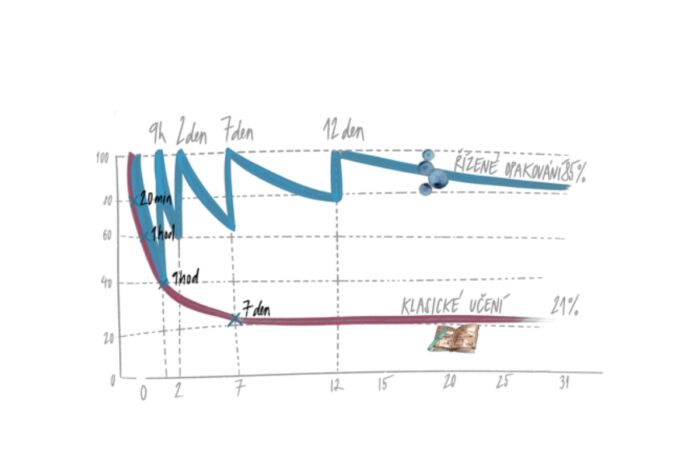
Easylingo uses the principle of spaced repetition. When you learn something new, a delicate neural connection forms in your brain – one that can weaken without reinforcement. By revisiting the material regularly, you strengthen that connection.
This approach is rooted in the discoveries of Professor Hermann Ebbinghaus from the 19th century, who found that we forget most information very quickly after first learning it.
Building on these findings, Easylingo has implemented a system where you learn only 30% new material each day, with the rest being revision. This way, you can retain up to four times more information compared to traditional study methods.
Spaced Repetition Method: The app won’t let you forget a language
Easylingo Actually Gets You Speaking
Think an app can’t teach you to speak? Think again. It might seem like online platforms can’t replace a real teacher because you can’t have a conversation with them. But Easylingo goes a step further. By clicking the microphone icon, you can pronounce a word or sentence you’re currently studying. The app then evaluates your pronunciation.
Instant Results and No Fear of Getting Things Wrong
Unlike traditional textbooks or courses where you wait days or weeks for feedback, Easylingo gives you results instantly. What’s even better is that when you get something wrong, only you can see it – and you can repeat the exercise as many times as you like until you nail it at 100%.
Learn at Your Own Pace – No Pressure
While consistency is key to successfully learning a foreign language, we all know that sometimes we need a break – whether it’s because of a busy work schedule, illness, or a holiday. With traditional language courses, you can easily fall behind and then stress about catching up. But with Easylingo, you learn whenever you want. And once you build the habit, twenty minutes a day with your phone in hand will be a breeze.
If you decide to take a break from studying, your content won’t disappear. Simply switch on the revision mode in the app and go through the material again.
You can also study in Spanish or Polish.
Vocabulary in the App or Printed Out – Your Choice
You can, of course, practise vocabulary directly in the app. But if you’d rather not be glued to a screen, Easylingo has you covered.
For each lesson, you can save the vocabulary to your device in three formats: a simple word list, printable flashcards, or audio files. This means you can practise your vocabulary on the tube or the bus without having your eyes stuck to a screen.
Statistics as Motivation
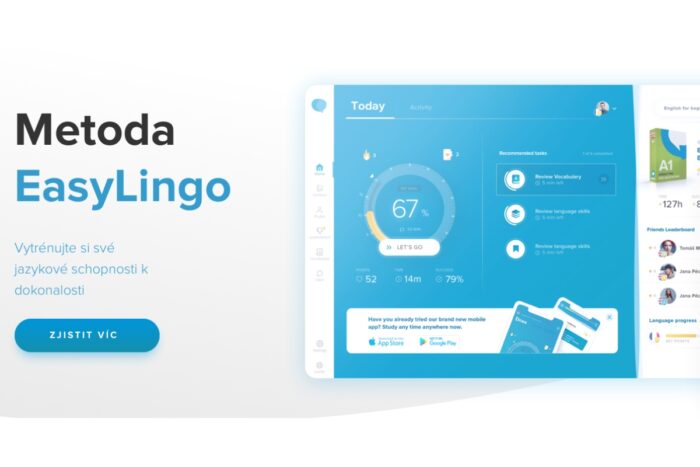
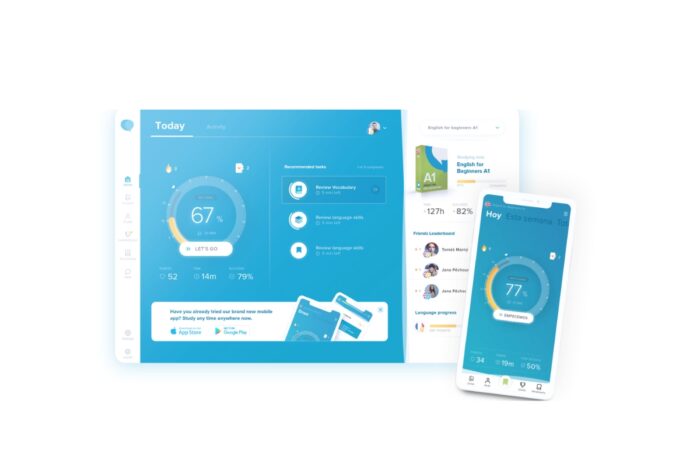
Easylingo prides itself on a gamified approach to learning. In addition to motivational videos after exercises, you have access to a dashboard with up-to-date statistics. Track your progress, your position in the courses, and how many words you’ve learned over the past week.
The mobile app helps you monitor your learning achievements and motivates you to complete at least those twenty minutes every day. Collect points, compete with friends, and watch your ranking climb on the leaderboards.
Easylingo Mobile App
Since February 2019, both Onlinejazyky and Easylingo have had their own mobile app for Android and iOS devices, which you can use anytime – on the go, during your lunch break, or while having a coffee. You can study on the train, on the bus, wherever you happen to be.
Platform
Easylingo Courses
Desktop Version
Yes
Mobile App
Yes
Android App
Yes
iOS App
Yes
App in English
Yes
Works Offline
Materials can be downloaded
Certificate Upon Course Completion
If you successfully complete a course with Easylingo, just like with Onlinejazyky, you’ll receive a certificate of completion.
What I Don’t Like About Easylingo
I’m not a fan of the inability to reset an online course. I understand why this exists with Onlinejazyky, where you buy lifetime access and could potentially pass on a reset course to someone else. But with a subscription model, it’s frustrating that you have to cancel your subscription and create a new account if you want to go through an entire course again.
Key Takeaways from This Review
Easylingo offers the same foreign language courses as Onlinejazyky, but delivers them through a subscription model. Unlike Onlinejazyky, it provides courses for Czech, Polish, Slovak, Spanish, and English speakers. You can learn 6 languages and try a total of 84 courses.
Easylingo offers language learning in a fun format backed by scientific research. It teaches you not only vocabulary, phrases, and grammar, but also checks your pronunciation. Easylingo is an ideal app for anyone who wants to learn foreign languages effectively.
Easylingo starts at approximately 9 EUR per month when you purchase a 12-month basic membership.
How many courses does Easylingo offer?
Easylingo offers 84 courses.
What languages are available in Easylingo’s online courses?
On Easylingo, you’ll find courses in English, French, Italian, Spanish, and French.
What is Easylingo?
Easylingo is an online platform for learning foreign languages. You can study through the app or on desktop.
Can I try Easylingo’s online courses for FREE?
Yes, you can try the first chapter for free.
Tips and Tricks for Your Vacation
Don’t Overpay for Flights
Search for flights on Kayak. It’s our favorite search engine because it scans the websites of all airlines and always finds the cheapest connection.
Book Your Accommodation Smartly
The best experiences we’ve had when looking for accommodation (from Alaska to Morocco) are with Booking.com, where hotels, apartments, and entire houses are usually the cheapest and most widely available.
Don’t Forget Travel Insurance
Good travel insurance will protect you against illness, accidents, theft, or flight cancellations. We’ve had a few hospital visits abroad, so we know how important it is to have proper insurance arranged.
Where we insure ourselves: SafetyWing (best for everyone) and TrueTraveller (for extra-long trips).
Why don’t we recommend any Czech insurance company? Because they have too many restrictions. They set limits on the number of days abroad, travel insurance via a credit card often requires you to pay medical expenses only with that card, and they frequently limit the number of returns to the Czech Republic.
Find the Best Experiences
Get Your Guide is a huge online marketplace where you can book guided walks, trips, skip-the-line tickets, tours, and much more. We always find some extra fun there!
TL;DRJindřichův Hradec has 23 ideas for days out, centred mainly on the vast castle complex spanning three and a half hectares. The highlights are the Black Tower, the Rondel, the Gothic Palace and Adam’s House, while other draws include Vajgar pond, the 15th meridian, the Museum of Photography and the Museum of the Jindřichův Hradec Region. Within 30 minutes’ drive you’ll find Landštejn Castle, the 33-metre Rýdův kopec lookout tower 6 km away, and the popular Pískovna Jindřiš, a 5.5-hectare sand-pit lake. The basic castle tour costs 200 Kč and takes 50 minutes, while entry to the Museum of Photography is 90 Kč. It’s worth setting aside 2 to 3 days to take in the town and surrounding area.
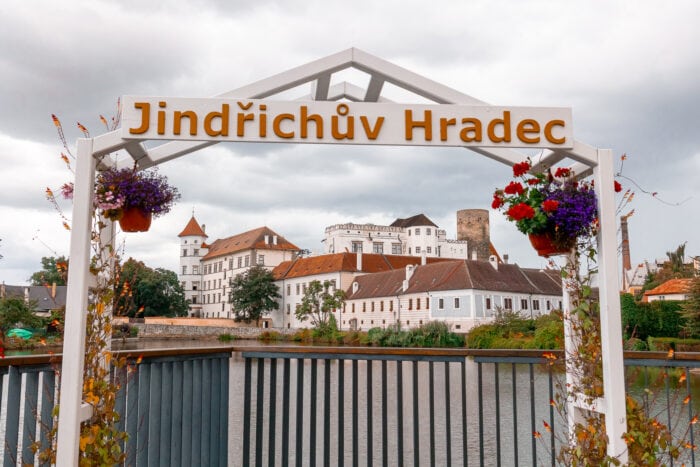
Jindřichův Hradec is a town in South Bohemia, which is a real treasure Czech Canada. It is best known for its huge castle complex, one of the largest in the Czech Republic.. Whether it’s your first time here or you’re returning, we have 23 tips on what to do and see in Jindřichův Hradec + tips on cafes and restaurants.
If you are lucky and it is free, you can try to book a very nice guesthouse at a nice price – Pension JH. It has very tasteful facilities, the rooms are clean and the staff attentive. The only thing we personally don’t like is that you have to pay cash. But it’s survivable. ☺️
Jindřichův Hradec
Jindřichův Hradec Castle: history
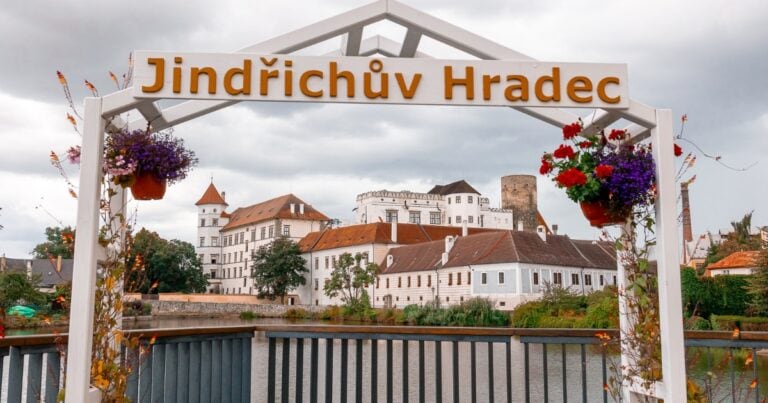
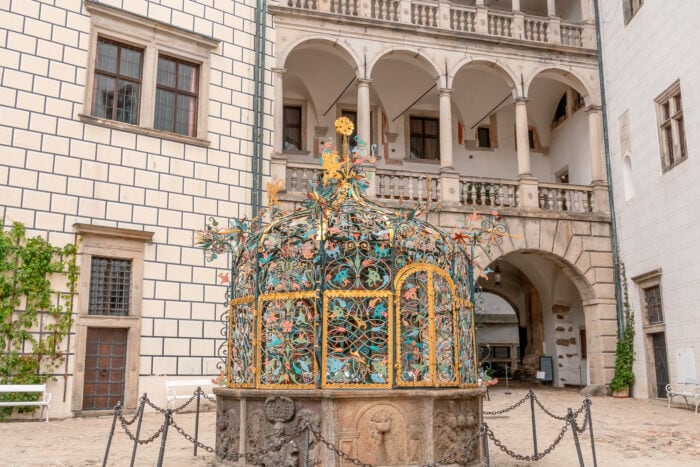
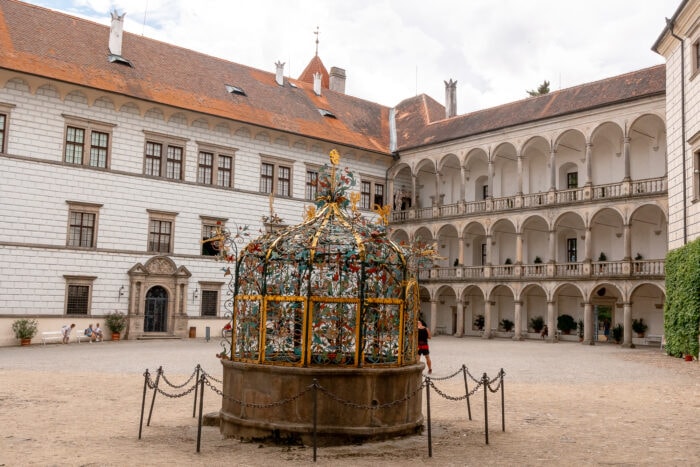
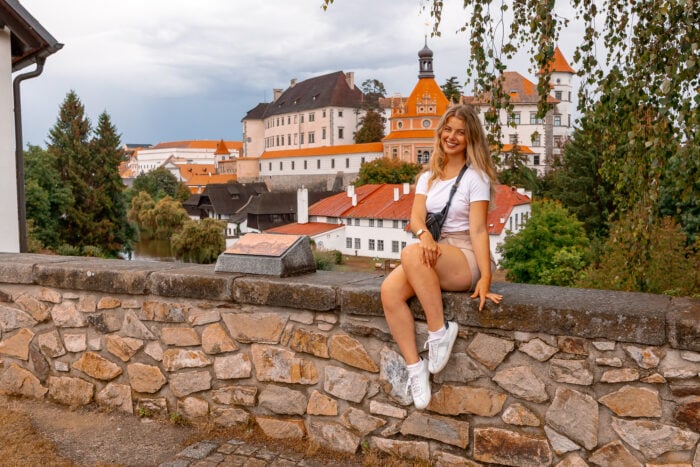
Jindřichův Hradec and its castle, which has grown over the centuries to an area of three and a half hectares, is a place where you can breathe history. This majestic complex was built on the remains of an old Slavic hillfort, whose existence has been documented as early as 10. century.
The construction of the medieval castle, first mentioned in historical records in 1220 under the name “Novum castrum” (New Castle), is associated with the name of Henry Vítkovec. He is considered the founder of the independent Vítkov line of the Lords of Hradec, who used a coat of arms with a golden rose in a blue field. At that time, the round Black Tower and the adjacent palace were built and the wall system was strengthened.
Over the years, the castle has been home to many important families, such as the Vítkovs, the Slavs of Chlum and Košumberk and the Czernins of Chudenice. Each of them brought something unique to the development of the site, whether it was significant building alterations or political and cultural influences.
We also cannot forget that Jindřichův Hradec was home to the first known castle space in Bohemia, specially adapted for theatrical performances. This theatre hall in the Spanish Wing, which was created in the mid-17th century. century, is a testament to the cultural life of the time.
Jindřichův Hradec Castle
Jindřichův Hradec and White Lords
Jindřichův Hradec is famous for its legends and legends connected to its castle and chateau. One of the most famous is the story of the White Lady. This mysterious figure is usually depicted as a lady in a white dress and wearing a tall white hat called a hennin. In her hand she holds a large bunch of keys, which she rattles if anything disturbs her.However, in all the stories, the White Lady is regarded as a good spirit who uses the colour of her gloves to predict the future.
But there is more than one White Lady. Her identity changes depending on the version of the rumor. According to one of them, it is Margaret of Lichtenberg, who was married to Henry II. from a castle called Wild. After her husband’s death, she retreated to a monastery and visited Jindřichův Hradec only to see her children.
According to the second, nowadays more accepted version, the White Lady is Mrs. Perchta of Rožmberk, who was married against her will to the boorish alcoholic John of Liechtenstein. Eventually, however, she fled to her brother in Krumlov, where she spent the rest of her life in peace, dressing in white and helping the poor.
What to see in Jindřichův Hradec
Jindřichův Hradec is one of those places that is still quite neglected. People prefer to visit Český Krumlov, but in Jindřichův Hradec you will find beautiful cultural monuments, activities for children, as well as great tourist destinations in nature. This city combines history with modern trends to create a unique atmosphere. Let’s take a look at a few places you shouldn’t miss when you visit.
State Castle and Chateau Jindřichův Hradec
The monumental palace complex is one of the most important monuments of the city. Don’t miss at least one tour during your visit.
Jindřichův Hradec Castle
List of tours:
Adam’s building (basic circuit)
Bedroom in the Green Rooms on the 1st floor of Adam’s building. Sightseeing route A (basic tour) passes through the first floor of the Renaissance building of Adam’s building. It brings to life the representative lifestyle of the high officials of the Lords of Hradec, but also the period in which the Slavats and Czernins managed their vast estate from their magnificently built residence.
Open: 9.00 – 16.30
Price: 200 CZK (adults)
Length: 50 minutes
Capacity: max. 30 persons
Reservation: reservation required for groups only
Gothic Palace (basic tour)
The sightseeing route through the Gothic Palace has been newly installed, enriched with a number of interesting exhibits, archaeological findings and equipped with new lighting.
Open: 10.00 – 16.15
Price: 140 CZK (adults)
Length: 70 minutes
Capacity: max. 25 persons
Reservation: reservation required for groups only
Black Tower + Black Kitchen
The Black Tower can be visited independently without a guide.
Open: 10.00 – 17.00
Price: 80 CZK, without guide (adults)
Capacity: max. 15 persons
Reservation: no reservation required
Children’s tours
The sightseeing route for parents with children passes through part III. circuit.
Open: 10.00 – 12.00, 13.00 – 15.00
Price: 120 CZK (adults)
Length: 30 minutes
Capacity: max. 15 persons
Reservation: reservation required for groups only
The Castle Museum and the “Cabinets of the Stuchlé”
The Blacks – ambassadors, travellers, collectors.
Open: 10.00 – 16.00
Price: 100 CZK (adults)
Capacity: max. 40 persons
Reservation: reservation required for groups only
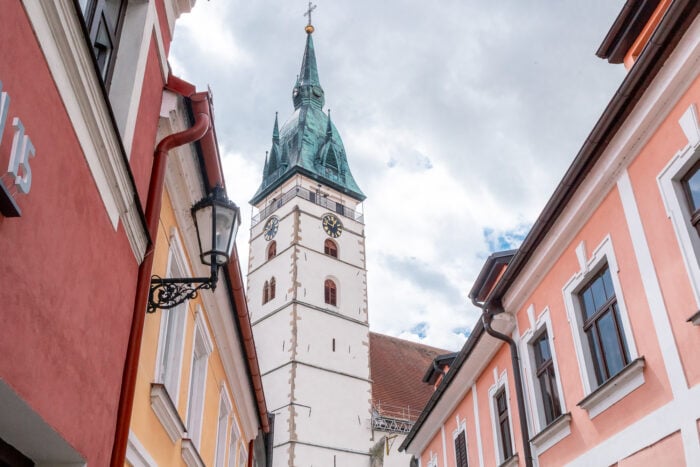
City observation tower at the Church of the Assumption of the Virgin Mary
The lookout tower, which dominates the town and belongs to the Assumption of the Virgin Mary, stands out for its height of 68.3 metres and the remarkable view it offers from a height of 35.3 metres and from 513 metres above sea level.
After climbing 153 steps, you can admire a panoramic view of the historic part of the town, the castle, the ancient square with the Marian column and the whole wide landscape. Under ideal conditions, you can even see the highest mountain in the Bohemian-Moravian Highlands, Javořice.
Today, the tower is managed by the Museum of Jindřichův Hradec Králové and in addition to regular tours, it also hosts various events such as festivals, happenings, and the sports and entertainment competition Run to the Tower.
City observation tower at the Church of the Assumption of the Virgin Mary
15th meridian
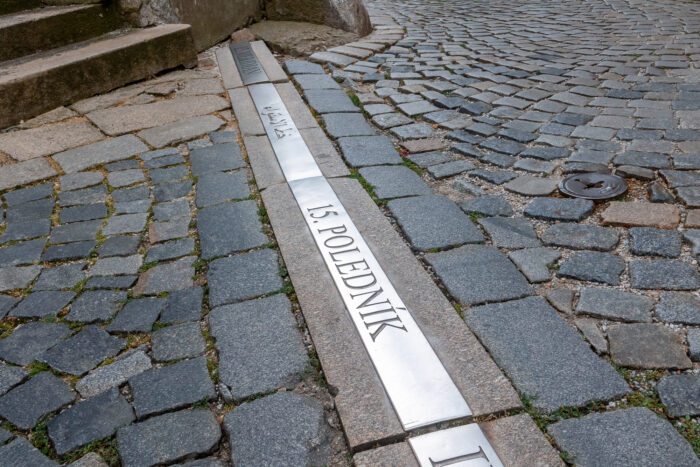
In the very heart of the town of Jindřichův Hradec is one of the most important attractions, which at first glance may seem inconspicuous – namely 15. meridian. The line is depicted in the pavement at the Church of the Assumption.
Although accurate measurements showed that the actual 15. The meridian passes a few metres away at the Nežárecká Gate, the legend of its magical power remains unchanged. According to the legend, if a visitor crosses this line and makes a wish, his wish will come true within a year and a day.
15th meridian
Column of the Holy Trinity
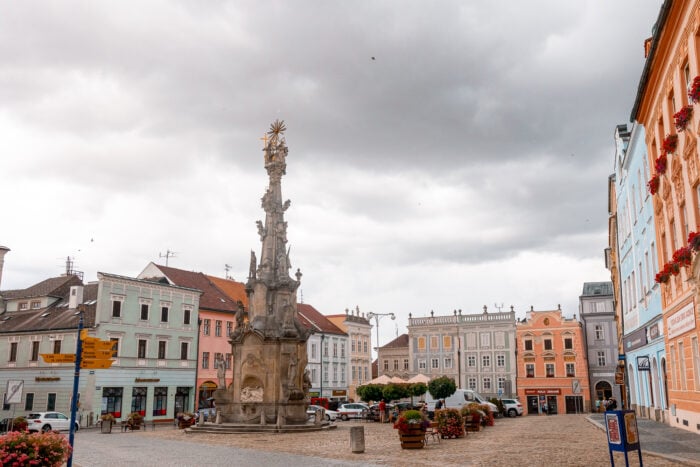
The column with the sculpture of the Holy Trinity, often referred to as the plague column, is the dominant feature of the Peace Square in Jindřichův Hradec. This twenty-metre high Baroque gem, protected as a cultural monument since 1958, dates from the period 1764-1766 and was probably created by the Dačice sculptor Matouš Strachovský.
The construction was financed by Ondřej Josef Bayer, c. k. town administrator and postmaster. The triangular ground plan of the column refers to the divine trinity, while its top is decorated with a sculpture of the Holy Trinity with a dove of the Holy Spirit and God the Father and the Son crowning the Virgin Mary of the Assumption. The column thus also serves as a Marian column.
Other elements are statues of the Archangel Michael and two angels, figures of nine saints and three niches with statues of St. Rosalie, St. Anne with the Virgin Mary and St. Joseph and baby Jesus.
Plague column on the square in Jindřichův Hradec
Kraffer’s Garden
Kraffer’s Garden is a historical gem full of life, where the Baroque gardening tradition, First Republic gardening and traces of the past regime intertwine. They have a wide range of perennials, herbs and cut flowers, grown locally and with love.
In addition, the garden offers space for cultural and environmental events, relaxation in the middle of the busy city, but it can also be a space for family celebrations. The garden is also complemented by a series of workshops for all age groups and the Za Mák landscape studio, which takes care of the design of Kraffer’s garden and other private gardens and parks across the Czech Republic.
Museum of Jindřichův Hradec
The building that houses most of the museum’s exhibitions today has its roots in a Jesuit seminary founded at the turn of the 16. and 17th century wife of Adam II. of Hradec, Catherine of Montfort.
Despite early fire damage in 1615, the building recovered quickly and thanks to the subsequent construction on a square plan with an arcaded courtyard and the completion of the seminary chapel of St. In 1642, it acquired its present late Renaissance appearance.
The building also served as an educational institution and was home to many students, including the young Bedřich Smetana.
After 1923, when the building was purchased by the town of Jindřichův Hradec, the premises were transformed into a museum, open to the public from May 1928. Visitors today can explore a number of exhibitions, including Gothic sculpture, the Landfras printing press, bourgeois and folk culture, picture galleries, history carved in stone and many more.
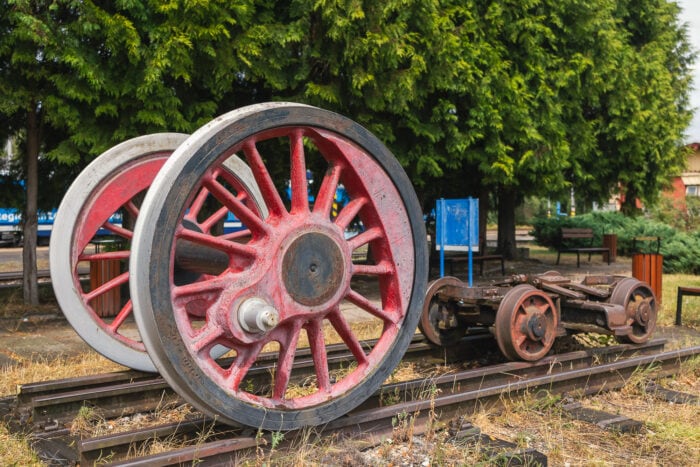
Monument of the narrow gauge local railway J.Hradec – Nová Bystřice
The history of the narrow gauge railway between Jindřichův Hradec and Nová Bystřice dates back to the end of the 19th century. century, when this line was built. The construction was not easy, especially due to the rugged terrain, which led to the extension of the line to 33 km and the limitation of travel speed. The track was a technical challenge, also due to the need to overcome a steep climb.
Nevertheless, thanks to the joint efforts of local notaries and industrialists, the line was completed and the operation was inaugurated on 1. November 1897. Trains on the line were mixed, carrying both passengers and freight.
The narrow-gauge railway played a key role in the development of the region and went through various periods during its existence, including the period 1. World War II, when the line was practically non-functional. After the war the line was nationalized under the ČSD. During 1. republic, interest in transport on the line increased, but in the 70s. a 80. years 20. century, the efficiency of the line began to be questioned.
Monument of the narrow gauge local railway J.Hradec – Nová Bystřice
Prof. František Nušl Observatory and Planetarium
The first stones of the Observatory were laid in 1956 on Šibenik Hill, and construction began in a powder magazine on the southern outskirts of the town. The opening ceremony took place in 1961, under the auspices of the Municipal Awareness Meeting, later renamed the Cultural and Social Centre.
Although in 1992 the Observatory threatened to close down and turn into a fitness centre, this crisis was successfully averted. Since 1994 the Observatory continued its work, this time under the wings of the Vítězslav Novák Gymnasium in Jindřichův Hradec. However, at the end of 1999, further complications arose regarding the renewal of the lease with the city.
Thanks to decisive negotiations, the Observatory was moved to the Children and Youth House in 2000, where it remained until July 2018. Even after this date, the Astro Club continued to disseminate knowledge about astronomy to the public. The turning point was 2018, when the extensive reconstruction of the observatory began, including the addition of a planetarium, the expansion of the main dome, the construction of a new small dome, and the improvement of space for clubs and other activities through a new clubhouse.
Bumblebee on the roundabout
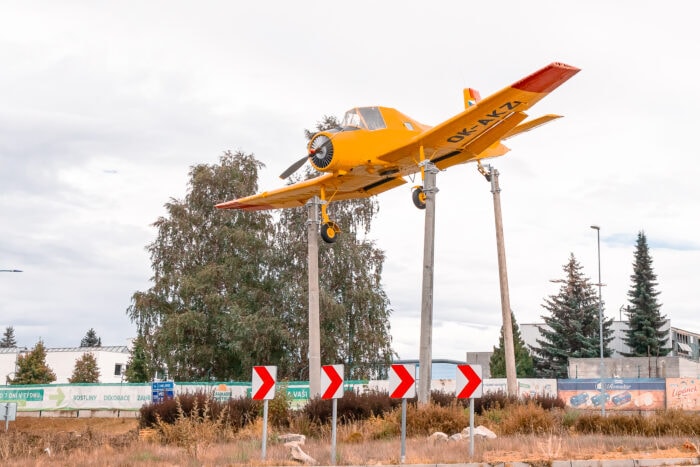
In some towns you can find flowers on the roundabout, in Jindřichův Hradec they have a Z 37 Bumblebee powder plane. This unusual attraction is the work of the local aeroclub, which celebrated its 75th anniversary in this way. anniversary of aviatics in Jindřichův Hradec.
Bumblebee in Jindřichův Hradec
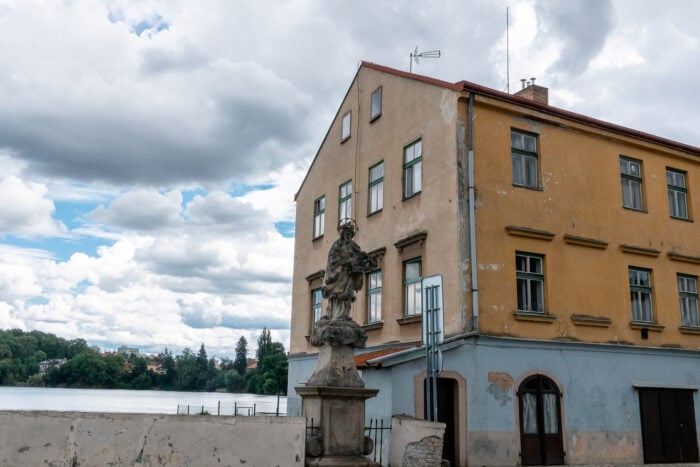
The statue of St. John of Nepomuk
John of Nepomuk, also known as John of Pomuk, is one of the most important figures of the Baroque sainthood and his iconography is firmly rooted in the Czech landscape and far beyond. His life and work, his significance as the patron saint of many professions and protector against many misfortunes, is reflected in the thousands of statues and churches found throughout Europe and even overseas.
His statues and monuments are so often seen throughout the Czech Republic because they are not only a symbol of faith and devotion, but also an important milestone in Czech history and culture. Jan Nepomucký is an indelible part of the Czech identity, his presence is an inseparable part of our landscape. That is also why his statue can be found in Jindřichův Hradec.
Statue of John of Nepomuk in Jindřichův Hradec
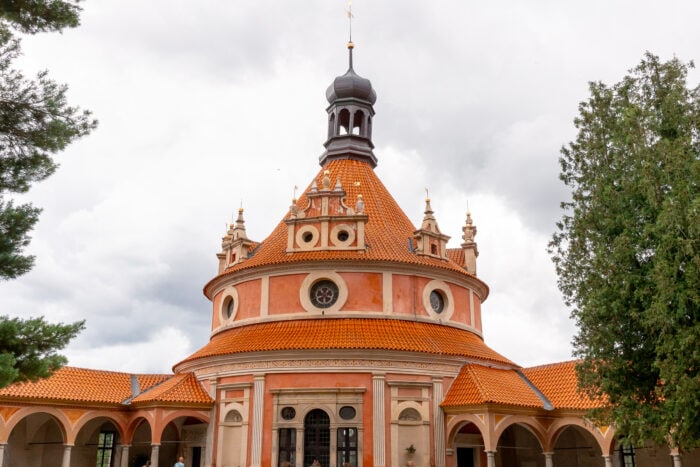
Rondel
The Rondel Music Pavilion, located in the castle in Jindřichův Hradec, is a unique monument with a rich history. Its construction dates back to the end of the 16th century. century, when Adam II. from Hradec wished to transform the old castle into a Renaissance chateau. Talented Italian architects Baltazare Maggi and Giovani Mario Faconi were called in to carry out the project. From the beginning, the Rondel was intended for noble entertainment and thus became a venue for balls, concerts and receptions for noble guests, especially in the summer months.
Rondel in Jindřichův Hradec
The architecture of the pavilion is unique not only for its mannerist style, but also for its specific acoustic design. The musicians played in the cellar under the floor, and their sound was transmitted to the main hall through a narrow opening covered by a bottomless vase. After a great fire in 1773, the pavilion was abandoned for a long time and later used as a warehouse or stable.
The Rondel was reconstructed in 1990 and then in 2012, when a rare find was discovered – a tin box full of historical documents and photographs. Today, this beautiful pavilion is back to its original purpose and serves as a cultural and representative space where weddings and other events are held. The Rondel is part of the tour routes of Jindřichův Hradec Castle and Chateau and is thus accessible to all those interested in discovering its fascinating history.
Karlov viewpoint
One of the most beautiful views of Jindřichův Hradec is from the Karlov lookout.
Karlov viewpoint
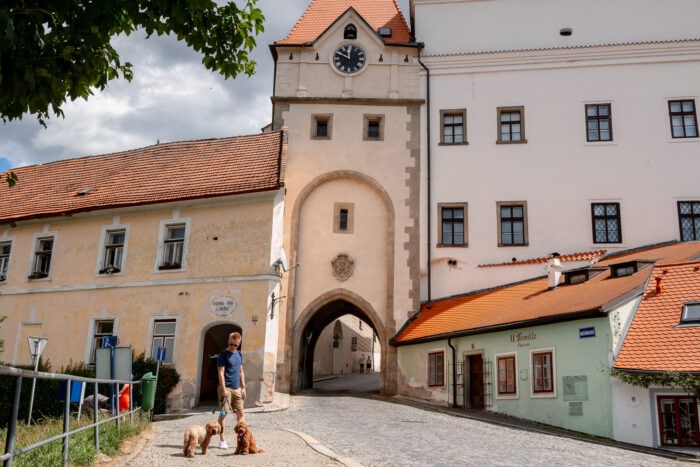
Nežárecká Gate
Nežárecká Gate, also known in the past as Linecká or Červená Gate, is an original medieval gate. Its construction is unique, with two Gothic and one Renaissance floor. In the nineteenth century the gate was supplemented with a clock. It is located in close proximity to the state castle and chateau, on Balbínov Square, just a few steps from the centre of Jindřichův Hradec.
The Nežárecká Gate, like the adjacent former Jesuit seminary, is part of the city fortifications. Of the original three city gates, only this one, also known as Linz Gate, has survived.. Originally, the gatehouse was a medieval structure with two Gothic floors, which was extended by an additional floor with keyed roofs and a gabled roof during the construction of the adjacent seminary building in the late Renaissance.
Nežárecká Gate
In the early 19. century, a triangular plate extension was added, into which the clock faces were placed. In 1879, a tower clock made by the Jindřichův Hradec clockmaker Martin Rezek was installed in the gate. On the west side, the gate is decorated with a stone relief of the town emblem in a Renaissance cartouche, while the inner side of the gate was decorated at the end of the 17th century. century with the painted coats of arms of Jan Jiří Jáchym Slavata and his wife Marie Markéta of Rappach.
Aquashow Jindřichův Hradec
Aquashow in the arcade of the St. Florian is one of the most popular attractions in Jindřichův Hradec. The Aquashow provides visitors with an unforgettable spectacle, where falling water droplets form various shapes, accompanied by a spectacular light show and video projections, all to the accompaniment of impressive music.
Aquashow takes place every day. From Monday to Friday, the program starts at 9:00 am and continues every full hour until 6:00 pm. On weekends, Saturdays and Sundays, you can visit the Aquashow from 10:00 to 17:00.
Artificial island – Vajgar pond
Vajgar Pond, one of the oldest Czech ponds, created in the 10th century. century, it has played many roles over the centuries – from defence to economic to recreational. It originally served as an important part of the castle and town fortifications, providing a source of fish, powering mills and a sawmill, and used for washing cloth. Today, the water surface of Vajgar is a mirror that doubles the magnificence of the Hradec Lords’ residence, creating a unique combination of nature and architecture.
With a depth of five metres and an area of 49 hectares , it serves not only as a reservoir for drinking water and fish farming, but also as a place for sports and recreation. It has become an unmissable fishing attraction, where fishing competitions are held and invites to rest and relax.
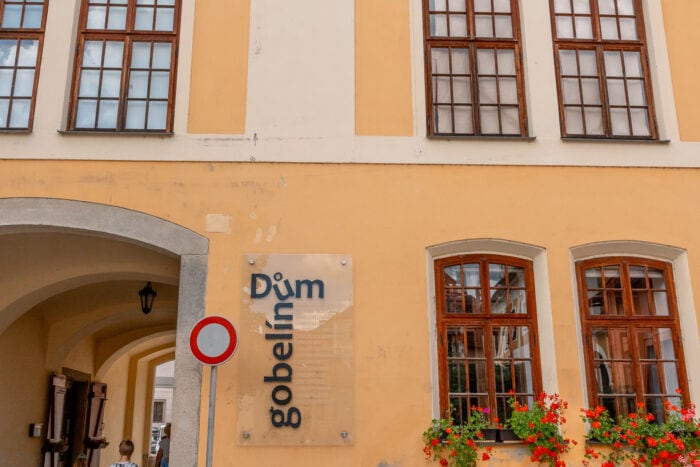
Museum of Photography and Modern Visual Media
This museum, located in a beautifully restored Jesuit college from the end of the 16th century. century, is blessed with extraordinary artistic gems, including rare ceiling and wall paintings. The main focus here is on photography, but the museum is expanding its scope to other visual media.
In the museum’s collections, you can see works by both local and foreign photographers, from important figures in the history of photography to contemporary artists. The museum also exhibits its own projects, which often focus on documenting the present, including abroad.
The price of admission for adults is 90 CZK, while for children and students it is 70 CZK. Family admission for two adults and 1-2 children is 180 CZK.
The Museum of Photography also has a beautiful park
Jesuit Park
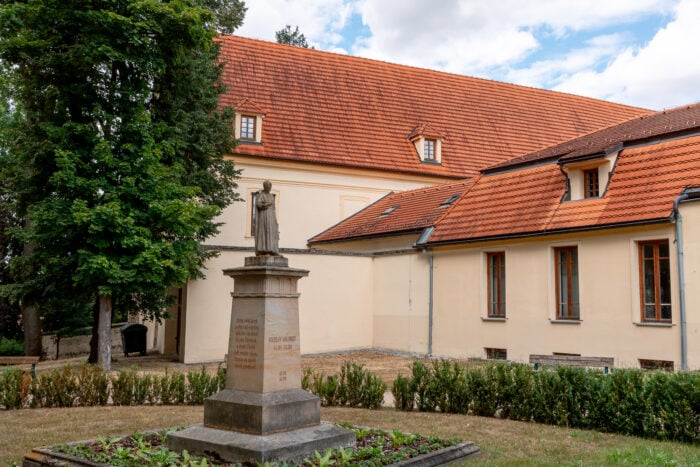
If you need a moment of peace, head to the neglected and very inconspicuous Jesuit Park. This park was founded in 1886 by the Vesna Association. It was originally much larger than it is today. The town council named it “Jablonský sady” in honour of the important personality of the Czech Revival, poet, Catholic priest and national awakener Boleslav Jablonský (1813-1881). In 1881, the Jablonski Foundation was established, which in 1886 initiated the unveiling of a memorial in the poet’s native Kardašova Řečica.
The three-metre-high sandstone statue of the poet was created by the renowned Czech sculptor Josef Strachovský, who at the end of the 1980s. years 19. century, he also worked in Jindřichův Hradec. In the museum collections in Jindřichův Hradec there is a model of Jablonský’s statue from 1886 by Strachovský. The author donated it to the Vesna Association in 1889 with the idea of building a monument in the park near the monastery. The pedestal for the model was created by local builder J. Kocáb according to the sculptor’s design.
The Vesna Society carried out this plan in the spring of 1891, when the monument was unveiled. However, already in the mid-20s. 20 years. century, the orchards were reduced to make way for the grammar school building and the remaining part of the park, including the monument, was abandoned. In 1934, the statue was in a state of disrepair, so it was rebuilt at the expense of K. Mert’s costs, an exact copy was made by local stonemason V. Neubauer. The same year Strachovský’s original was donated to the museum. After the Second World War, the park unfortunately continued to deteriorate until it was finally closed in 1976.
After another forty years, the upper part of the park was completely restored, including the repair of the original pedestal and the reinstallation of the statue. This is the second copy by V. Krninský. On this occasion, this author also restored the original in the museum collection.
Jesuit Park in Jindřichův Hradec
Tapestry House
It is located in a sensitively reconstructed industrial monument, the former castle brewery of Jindřichův Hradec. Here you can watch the restoration of historical tapestries, explore exhibition materials about the history of weaving in Jindřichův Hradec and even try your hand at weaving on a loom.
Jindřichův Hradec monuments: the House of Tapestries
If you are not interested in the planetarium or the children’s circuit in the castle, we have more tips for you.
Zoological Garden in Jindřichův Hradec
If your kids love animals, head to the Zoo Na Hrádečkuwhich boasts nearly 200 species of animals.
Visitors can actively participate and support the zoo, either by adopting an animal or by making a financial contribution. The garden relies on public support because it operates without subsidies.
The Obfuscator
If your children have ever dreamed of an experience like the book “Alice in Wonderland” or the movie “Labyrinth”, then it is Monsters near Jindřichův Hradec is just the place for them! This fascinating shrub maze is the largest of its kind in Central Europe and covers an area of 6,000 m2.
Obludiště is located in the picturesque village of Dolní Pěna, near Jindřichův Hradec. There is on-site parking and a refreshment kiosk where you can enjoy a small snack after the challenge of exploring the maze. For those who like to take pictures, there is a selfie point. And for the youngest visitors there is a playground.
The maze is open from April (from 30 April 2022) until June and in September on weekends from 9:00 to 19:00. In the summer season – July and August, the maze is open daily from 9:00 to 19:00.
Admission is free for children under 3 years, children under 155 cm pay 60 CZK and adults 110 CZK. There is a 10% discount for families (min. 2+1).
Hiking and tips for trips from Jindřichův Hradec
Would you like to know what to visit around Jindřichův Hradec? Let’s take a look at some tips for trips around Jindřichův Hradec.
Rýdův kopec – lookout tower near the village of Děbolín
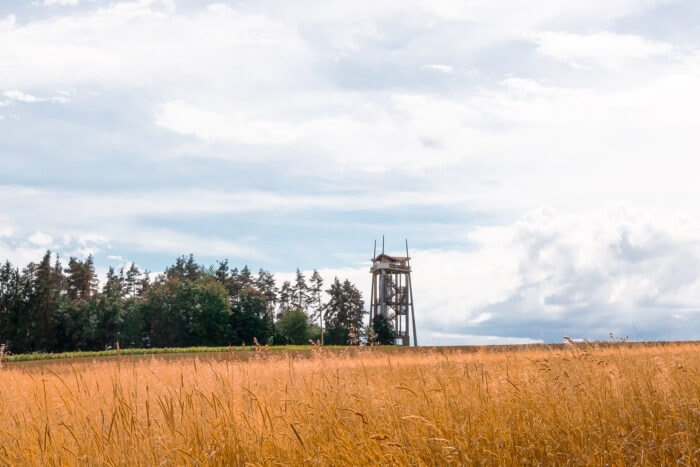
About 6 km from Jindřichův Hradec you will find a 33 m high lookout tower, which is a great tip for a trip from Jindřichův Hradec. The tower’s architecture is unique – its construction is based on the idea of an equilateral triangle, which forms its ground plan. The spiral steel staircase has 102 steps, while the wooden staircase has 128 steps.
Jindřichův Hradec excursions: lookout tower near Jindřichův Hradec
Jindřiš sandpit
In the summer you will definitely want to go to the Jindřiš Sandpit. This sandpit is one of the best places for swimming in South Bohemia. This picturesque lake covers an area of 5.5 hectares and is known for its clear water. On the shore, you can look for the ideal place to sunbathe or enjoy the tranquillity in the shade of the trees.
The natural surroundings offer options for everyone – whether you choose the gentle entry into the water on the eastern shore or prefer the deep water right at the shore. The western shore is more wild, with tall grass and reeds that sometimes restrict sunbathing areas, but at the same time it is a haven for nudists.
However, the natural beauty of the Jindřiška sandpit faces some challenges. Parking can sometimes be problematic, as can the fact that the site is sometimes used by people with varying degrees of decency. In addition, the absence of toilets and bank maintenance and litter can mean that after a sunny day the banks can look less inviting.
Jindřiš sandpit
Devil’s Stone
Devil’s Stone, one of the local hills affectionately known as “Radouňské hory“, boasts a silhouette that evokes mountain ranges. Its top is decorated with a rock formation, which according to legend is a remnant of the devil’s castle.
However, it is not without interest that the German name “Feuerstein” reflects an even more captivating history. It is likely that in the Middle Ages a wooden Watchtower stood on this rock, from where messages warning of approaching danger were sent by fire.
This rock dominant is situated on the hiking trail from Kostelní Radouň to Lodhéřov and is accessible on foot from both directions. For mountain bike lovers, however, the route from Lodhéřov is more recommended. If you would like to climb to the top from the direction of Radoun, prepare for a demanding challenge.
30 minutes from Henryk Castle you will find for example Landštejn Castle. More tips for trips to the surroundings of Jindřichův hradec can be found in our article about Czech Canada.
Where to go for coffee in Jindřichův Hradec: The best cafes
Among the best cafés in Jindřichův Hradec are definitely Koloniálka or Agnes Café. The Agnes Café also has excellent food.
Where to eat in Jindřichův Hradec
Excellent café in Jindřichův Hradec
CANTINA MEXICANA: Excellent Mexican restaurant offering authentic cuisine and a great atmosphere.
Bistro St. John’s: This small bistro offers fine food and a pleasant atmosphere. It’s perfect for a quick lunch or a get-together with friends.
Restro: This friendly bistro is popular with locals. Their menu changes frequently, so you’ll always find something new to try.
The Curry House Indian: If you love Indian cuisine, The Curry House Indian is a great choice.
Smokehouse: do you love meat? Then supposedly you have to visit the Smokehouse. We don’t eat meat, but everyone recommended the smokehouse. 😁
Frequently Asked Questions
Which films were shot in Jindřichův Hradec?
Some of the films that were shot in Jindřichův Hradec include “Bathory”, “5. The Revolt of the Hooks”, “The Last One to Hell”, “Mr. Vok is Leaving”, “In the Crest of the Lioness”, “Witness to Dying Time”, “Black Mirror”, “True Knight”, “Stellis Vinctus” and “The Secret of the Old Bambitka 2”.
What to do with children in Jindřichův Hradec?
Take the kids to the zoo, the Obludiště, the planetarium or the 15. meridian, where they can pick up a certificate at the guesthouse that they have crossed the 15. meridian.
How long to go to Jindřichův Hradec for?
In order to manage the whole city and trips to the surrounding area, we recommend going for 2-3 days.
What is in Jindřichův Hradec?
Jindřichův Hradec is one of the most beautiful castles in the Czech Republic.
What to do in Jindřichův Hradec when it rains?
When it rains, head to the castle, the photography museum, the planetarium or the Tapestry Museum.
🔗 These are affiliate links — they don't change your price and help us create content. · All experiences →
Tips and Tricks for Your Vacation
Don’t Overpay for Flights
Search for flights on Kayak. It’s our favorite search engine because it scans the websites of all airlines and always finds the cheapest connection.
Book Your Accommodation Smartly
The best experiences we’ve had when looking for accommodation (from Alaska to Morocco) are with Booking.com, where hotels, apartments, and entire houses are usually the cheapest and most widely available.
Don’t Forget Travel Insurance
Good travel insurance will protect you against illness, accidents, theft, or flight cancellations. We’ve had a few hospital visits abroad, so we know how important it is to have proper insurance arranged.
Where we insure ourselves: SafetyWing (best for everyone) and TrueTraveller (for extra-long trips).
Why don’t we recommend any Czech insurance company? Because they have too many restrictions. They set limits on the number of days abroad, travel insurance via a credit card often requires you to pay medical expenses only with that card, and they frequently limit the number of returns to the Czech Republic.
Find the Best Experiences
Get Your Guide is a huge online marketplace where you can book guided walks, trips, skip-the-line tickets, tours, and much more. We always find some extra fun there!
TL;DRAlbania is one of Europe’s fastest-growing holiday destinations: turquoise water, wild beaches, prices half those of Croatia, and crowds that haven’t caught on yet. Head to Durrës for all-inclusive resorts, the Albanian Riviera (Dhërmi, Himara) for the best beaches, and Ksamil, nicknamed the Maldives of Albania. June to September is the best time to go. The guide compares 12+ resort towns, picks out the best beaches, and covers accommodation with prices, a road trip itinerary and budget. One thing to note: Vlora’s airport isn’t operating yet, so you’ll fly via Tirana.
For the Best Holidays in Albania, especially if you seek a luxury holiday with beautiful beaches and a turquoise sea, you must visit Albania. We explored Albania by bike with a tent on the roof, and it revealed itself as a beautiful country full of contrasts. When you know where to go, Albania offers exotic sandy beaches with warm, clear water, and budget accommodation. Let’s explore the best beach resorts in Albania and discover where to go for an unforgettable seaside holiday.
Albania Beach Holidays: 12 Top Coastal Destination to Visit
The ideal months for swimming in Albania are June, July, August, and September. The coldest months are January and February, with water temperatures between 10-15°C and air temperatures between 5-10°C. The hottest period is during the summer, specifically in July and August, when water temperatures range from 27-32°C and air temperatures from 22-27°C.
Albanian coast: weather and sea temperature by month
🌡️ Warmest: July (daytime 32 °C) · 🌊 Warmest sea: August (27 °C) · ☔ Least rainfall: July
Month
Day
Night
Sea
Rainy days
January
12 °C
4 °C
17 °C
14
February
14 °C
5 °C
16 °C
6
March
15 °C
6 °C
16 °C
10
April
18 °C
9 °C
17 °C
11
May
22 °C
14 °C
20 °C
10
June
28 °C
18 °C
24 °C
3
July
32 °C
21 °C
26 °C
2
August
32 °C
21 °C
27 °C
3
September
27 °C
18 °C
27 °C
8
October
23 °C
14 °C
24 °C
9
November
18 °C
10 °C
21 °C
13
December
15 °C
7 °C
18 °C
14
Source: climate normal 2019–2024 (Open-Meteo, measured data)
How to Travel to Albania Without a Travel Agency
You can travel to Albania by car, fly to Tirana, or fly to Corfu and take a ferry to Albania.
Traveling by Car to Albania – What You Should Know
At the border, you’ll need a small technical license. An international driving license isn’t strictly required, but it’s advisable to carry it with you.
Traveling to Albania by Air
Driving can be long, so the easiest way to reach Albania is by flying to Rinas Mother Teresa International Airport, 20 km from Tirana. From there, you can rent a car through DiscoverCars.
If you’re heading to Ksamil, the easiest route is to fly to Corfu and then take a ferry to Sarande. Ksamil is just 14 km from Sarande.
Learn how to get cheap flights for your trip.
Where to Rent a Car in Albania
For car rentals in Albania, we recommend using DiscoverCars at the airport. We’ve never had any issues with them, and we’ve rented cars through DiscoverCars all over the world.
For the best beach resort in Albania, head to Ksamil. This popular destination is often compared to the Maldives for its stunning beauty. Ksamil offers pristine beaches, crystal-clear turquoise waters, and a tropical paradise feel, making it the perfect spot for an unforgettable seaside holiday.
Albania Holidays: Where Are the Most Beautiful Beaches?
Albania boasts over 300 km of stunning sandy beaches. The most beautiful ones are found in the south around Dhermi, Vlore, and Ksamil. Ksamil is particularly popular on Instagram and TikTok due to its water, which resembles that of the Maldives.
However, not everyone may prefer Ksamil’s atmosphere. Let’s explore other seaside holiday destinations in Albania, listed from north to south.
Where Are the Most Popular Places to Visit the Sea in Albania?
Here are the top resorts:
Durres (Drac): Experience luxury at the Villa One Beach Hotel.
Vlora (Vlára or Valona): Stay at Ames Hotel & SPA.
Ksamil: Choose between Apartment Erjon or Villa Melina.
What is the Albanian Riviera?
The Albanian Riviera, known locally as Bregu, is a beautiful stretch of coastline along the northeastern Ionian Sea. It starts at Vlore and extends through Sarande to Butrint National Park on the Greek border. The Riviera is famous for its breathtaking beaches, with Sarande often considered its unofficial capital.
Albania Beach Holidays: 12 Tips for Best Beach Resorts and Beaches
If you’re looking for the best beaches in Albania, here are some top tips to help you discover the most beautiful and peaceful spots along the coast:
Resort Durres: While Durres is popular, we recommend heading further south to find pristine white sands and turquoise waters. The beaches in Durres can be more crowded and less clean, leading many travelers to prefer the southern beaches.
Camping near Durres in Albania
Vlora, Albania – Best Beaches
Vlora (Vlára or Valona) is a rapidly growing port town that increasingly resembles Croatia. If you arrive by car from the north, you’ll quickly notice it is more orderly than Durres.
New businesses, hotels, and apartments are continually emerging, making it easy to find accommodation at great prices near the sea. For the best experience, focus on hotels and apartments with private beaches, as public beaches can be crowded.
Where to Stay
For an exceptional stay, consider the Ames Hotel & SPA, one of the best beach resorts in Albania.
Drymades Beach
Discover Drymades Beach, one of the best beaches in Albania, and experience its tranquility and beauty for yourself. Located 200 km southeast of the capital Tirana, Vlora boasts one of the most beautiful sandy beaches in Albania. While the sand is coarser, the turquoise water is stunning, and the beach is quieter with fewer tourists than other Albanian beaches. As with many parts of Albania, there is significant construction, but it doesn’t detract from the beach’s charm.
In a few years, this area is likely to become one of the most luxurious, with luxury hotels and businesses being built similar to those in Tulum, Mexico.
Where to Stay
By the beach, you will find a wonderful restaurant and the Summer Dream Hotel, where you can check in and enjoy a very peaceful holiday.
Drymades Beach
Dhërmiu Beach in Dhërmi
Dhërmiu Beach is considered one of the best beaches in Albania due to its crystal-clear water and sun-drenched shores. Located just outside the village of Dhërmi in southern Albania, many travelers regard this area as paradise on earth. Administratively, it belongs to the Vlora district.
Gjipe Beach
If you prefer less touristy places, Gjipe Beach is perfect for you. Situated 65 km south of Vlore between Drymades and Himarë, this remote, quiet beach is accessible only to the most passionate travelers with a proper car. The dirt road is rough, requiring a four-wheel drive. Administratively, it belongs to the Vlora district.
Beach Resort Himare
Himare, located between Sarande and Vlora, is the second-largest city on the Albanian Riviera after Sarande. Once a quieter resort, Himare has seen a lot of construction lately, attracting those looking to escape the more tourist-heavy areas like Ksamil. Surrounded by beautiful green hills and rocky mountains, Himare offers long, clear turquoise beaches. It’s also quite affordable compared to other destinations.
Where to Stay:
For a comfortable stay, try booking the Aphrodite Garden Rooms & Apartment.
Livadhi Beach (Himarë Resort)
In Himarë, you will find the large Livadhi Beach, one of the most beautiful and best-rated beaches in the area. However, it can get quite crowded in the afternoon, and parking can be difficult. Arriving early is recommended, especially if you’re staying in the center of Himarë at places like the Aphrodite Garden Rooms & Apartment, as it takes almost an hour to walk there.
Discover the best beach resorts in Albania and explore these stunning beaches for an unforgettable seaside holiday.
Beaches in Himara, Albania
Sfageio Beach (in Himarë)
Sfageio Beach is a charming smaller sandy beach located right in Himarë. It’s popular with both tourists and locals, featuring several restaurants and cafes where you can relax after a swim. If you’re spending your holidays in Himarë, don’t miss the sunset at Sfageio Beach.
Where to Stay
For convenient accommodation, consider staying at the Aphrodite Garden Rooms & Apartment, if available.
Llamani Beach
Llamani Beach is one of the best beach resorts in Albania, offering a luxurious private beach experience with free parking and a beautiful beach bar. Located about 10 minutes by car from Himarë, be prepared to buy a sun lounger and umbrella, as is common practice.
If you’re looking to spend the entire day at the beach and prefer a quieter spot, Llamani Beach is an excellent choice.
Where to Stay:
For highly-rated accommodation, try the Aphrodite Garden Rooms & Apartment if it’s available.
Llamani beach in Albania
Borsh Beach Resort
Our favorite beach in all of Albania is Borsh Beach. It’s perfect for those looking to escape the touristy areas. This beach is also popular among vanlifers with campervans, as you can camp here for free. If you find a spot near the river, you can even rinse off in the evening.
Borsh Beach is expansive, giving you the flexibility to either rent a bed or a sun lounger or simply lay your own blanket on the sand and set up your umbrella. Everyone can find their own piece of paradise here.
Where to Stay:
For a comfortable stay, consider the Guest House Luiza.
Borsh beach in Albania
Sarande
The Albanian port city of Sarande is a fantastic summer holiday destination. Located in the south of Albania, just a short distance from the northern Greek border and almost directly opposite the island of Corfu, Sarande is often reached by ferry from Corfu.
Despite its proximity to Greece, Sarande maintains a distinctly Albanian character. The town is set in a bay with sandy beaches that offer stunning views of Corfu’s silhouette. The southern tip of the town provides a more open view of the sea, making it a popular spot for watching sunsets. Beaches stretch all along Sarande’s coastline, providing plenty of options for sunbathing and swimming.
Most hotels and apartments in Sarande are conveniently close to the sea. While visiting Sarande, don’t miss a trip to the nearby ancient UNESCO site of Butrint.
Where to Stay:
For luxury accommodation, Sea Breeze Villa is a top choice, although it is often fully booked.
🔗 These are affiliate links — they don't change your price and help us create content. · All experiences →
Ksamil: The European Maldives
If you’ve seen photos of turquoise beaches with white sand from Albania on social media, it was likely one of the many beaches in Ksamil. Often referred to as the “European Maldives,” Ksamil is considered one of the best beach resorts in Albania and is located south of Sarande. It is arguably the most touristy and rapidly developing resort in the country.
The main street in Ksamil, bustling with bars and restaurants, is lively, but don’t let that deter you. With a little exploration, you can find secluded beaches that offer peace and quiet even during the peak season.
We recommend visiting Ksamil as soon as possible, as it is becoming increasingly popular and prices are rising each year.
Where to Stay:
For accommodation, consider Apartment Erjon or Vila Melina if they are available.
Ksamil, Albania
What Are the Prices in Albania?
In some areas, prices in Albania are significantly lower, about a third of what you’d pay in Croatia. For instance, in Ksamil, you can expect to pay around 6 euros for a Pizza Margherita, 10 euros for a deck chair for the whole day, and 30-100 euros per night for accommodation in an apartment. However, prices can vary widely across the country.
What Currency Is Used in Albania?
In Albania, the official currency is the Albanian lek (ALL). However, euros are commonly accepted everywhere and are even preferred in some places.
Safety in Albania: What to Watch Out For
Albania is generally considered a safe country for travelers. While some areas may have increased crime, it is rarely directed at tourists, and seaside resorts are considered safe.
One thing to be cautious about is the traffic. Albanian drivers can be quite reckless, so be prepared for unpredictable driving behavior. Additionally, some roads are not in the best condition, although many have been improved in recent years.
In coastal areas, avoid drinking tap water as it is often filtered from the sea and not always safe to drink. Opt for bottled water instead.
Albania Guide: Where to Camp?
Campsites in Albania are relatively cheap, ranging from 13-25 euros per night depending on the location. Near the sea, expect to pay around 20-25 euros per night for two people. However, cleanliness can be an issue. In Ksamil, we recommend Ksamil Caravan Camping, which offers potable water and clean toilets and showers.
How to Travel with Dogs in Albania
If you’re traveling with dogs, Albania is a great destination. Albanians love dogs and were always eager to pet ours. Dogs are welcome on most beaches, where they can swim and relax with you on sunbeds. The only place we encountered restrictions was in Ksamil, where a few beaches had signs prohibiting dogs.
Wild dogs are common in Albania, particularly around campsites. While they are mostly tame, it’s important to be cautious. Before your trip, make sure to give your own dogs a treatment for parasites.
Italy vs. Albania
Italy is celebrated for its rich history, stunning architecture, and world-renowned cuisine. Cities like Rome, Venice, and Florence are cultural epicenters filled with art, historic landmarks, and culinary delights that draw millions of tourists each year. The coastal regions, such as the Amalfi Coast and Cinque Terre, offer breathtaking landscapes and luxury experiences. Italy’s well-developed tourism infrastructure ensures high-quality services and cleanliness throughout your stay. The food in Italy is unparalleled, offering a culinary experience that is difficult to match.
Italian Dolomites, South Tyrol, Lago di Brais.
In contrast, Albania presents a more rugged and less polished option. The country, particularly in urban areas, can appear dirtier, with more garbage and less consistent services compared to Italy. However, what Albania lacks in infrastructure, it makes up for with its natural beauty and affordability. The beaches in southern Albania, especially around Ksamil and Himare, boast crystal-clear waters that often surpass those found in Italy. These beaches are less crowded and much cheaper, offering a serene escape without the high costs. Despite its challenges, Albania provides a unique and affordable Mediterranean experience with some of the clearest waters and most beautiful beaches in the region.
Croatia vs Albania
Croatia is renowned for its beautiful beaches, clear turquoise waters, and excellent service. The coastal cities like Dubrovnik and Split are picturesque and offer a blend of historic charm and modern amenities. The roads in Croatia are excellent, making travel easy and convenient. However, as Croatia’s popularity as a tourist destination increases, so do the prices. Each year, it becomes a more expensive place to visit, with higher costs for accommodation, food, and activities.
Dubrovnik
On the other hand, Albania offers a more affordable alternative with equally stunning beaches and crystal-clear waters, particularly in the south around Ksamil and Himare. While Albania can be dirtier and the infrastructure less developed compared to Croatia, the country’s affordability makes it an attractive destination for budget-conscious travelers. Despite its rough edges, Albania is rapidly developing, with new hotels and resorts springing up quickly, offering great accommodations at lower prices. For those looking to enjoy beautiful beaches and pristine waters without breaking the bank, Albania is a fantastic choice.
Lukáš and Lucie recommend
Where to stay in Albania
6 accommodations — wellness hotels, hotels and other accommodation options
🔗 These are affiliate links — they don't change your price and help us create content. · All experiences →
Tips and Tricks for Your Vacation
Don’t Overpay for Flights
Search for flights on Kayak. It’s our favorite search engine because it scans the websites of all airlines and always finds the cheapest connection.
Book Your Accommodation Smartly
The best experiences we’ve had when looking for accommodation (from Alaska to Morocco) are with Booking.com, where hotels, apartments, and entire houses are usually the cheapest and most widely available.
Don’t Forget Travel Insurance
Good travel insurance will protect you against illness, accidents, theft, or flight cancellations. We’ve had a few hospital visits abroad, so we know how important it is to have proper insurance arranged.
Where we insure ourselves: SafetyWing (best for everyone) and TrueTraveller (for extra-long trips).
Why don’t we recommend any Czech insurance company? Because they have too many restrictions. They set limits on the number of days abroad, travel insurance via a credit card often requires you to pay medical expenses only with that card, and they frequently limit the number of returns to the Czech Republic.
Find the Best Experiences
Get Your Guide is a huge online marketplace where you can book guided walks, trips, skip-the-line tickets, tours, and much more. We always find some extra fun there!
TL;DRThe best things to see in Dubrovnik, Croatia include the historic centre with the Stradun street, the city walls (entry €35), Pile Gate, Lovrijenac Fortress, the Rector’s Palace, Sponza Palace and the Cathedral of the Assumption of the Virgin Mary. For a swim, head to Banje, Copacabana or Ploče beach, while day trips lead to the island of Lokrum (10 minutes by ferry), Cavtat (20 km), Korčula (2.5 hours by boat) or Mljet National Park. Over 1.5 million people visit Dubrovnik every year, so it pays to reach the centre first thing in the morning and plan your trip for spring or autumn, when there are fewer tourists — or in summer, when the sea sits at 22 to 25 °C. There’s also the cable car (€27) with sweeping city views and plenty of Game of Thrones filming locations, such as Fort Bokar or Minčeta Tower.
Dubrovnik is one of those enchanting historic cities that’s absolutely worth a visit — but you need to plan it well.Dubrovnik, Croatia welcomes more than 1.5 million visitors every year, and it’s no wonder: it’s wrapped in imposing walls, has a breathtaking historic centre and plenty of pleasant beaches nearby. Let’s take a look at what to see in Dubrovnik, where to base yourself strategically and how to plan your visit so you get the most out of it.
Generally, the best time to go is in spring or autumn, when temperatures are pleasant for exploring the city and there are far fewer tourists around. Most visitors come to Dubrovnik during summer, when people flock here not just for the city but for the sea as well.
If you come in summer like we did, don’t make the same mistake we made the first time! Don’t head into Dubrovnik in the afternoon — set off first thing in the morning. This year we reached the centre of Dubrovnik at eight, and it was a completely different experience from five years earlier on our e-bikes.
Weather in Dubrovnik, Croatia
The sea temperature from June to September is perfect for swimming, while the highest air temperatures sit between 28 and 30 °C. But be ready for the tourist buzz — this is when Dubrovnik comes alive in full force!
Month
Average air temperature (°C)
Average sea temperature (°C)
January
12
13
February
13
13
March
15
14
April
18
15
May
23
18
June
26
22
July
30
24
August
30
25
September
26
22
October
21
19
November
16
16
December
13
15
Where to stay in Dubrovnik
Ideally you’ll stay right in the centre, but keep in mind that hotel and apartment prices are up to three times higher than elsewhere in Croatia. If you’re driving, always look for accommodation with parking — it’s nearly impossible to park in central Dubrovnik, and on top of that parking costs €10 an hour.
If you stay a little way out of the centre, you can use the bus, but Uber works brilliantly here — we used it throughout our whole visit. The apartment owner tipped us off, and it cost only slightly more than a bus ticket.
Budget accommodation (low-cost): Apartment Diverti or Apartments Ella, which we snagged at the last minute. To get into the centre we recommend taking an Uber.
What to see in Dubrovnik, Croatia: The historic centre
The historic centre of Dubrovnik is one of the most picturesque and fascinating places in all of Croatia.This stunning old town was declared a UNESCO World Heritage Site back in 1979 and is a favourite destination for travellers from all over the world.
Dubrovnik, known as the “Pearl of the Adriatic”, is a city with rich history and striking architecture. You’ll find beautiful buildings here, such as the Rector’s Palace, the city walls, the Franciscan and Dominican monasteries, Pile Gate and the fortresses of St. John and Lovrijenac. Let’s take a look at everything you’ll find in the centre and what you shouldn’t miss.
A stroll along the Stradun main street
The old town’s main street is called the Stradun, a cobbled avenue lined with historic buildings and gorgeous Baroque churches. Beyond the beautiful architecture, you’ll find plenty of cafés and restaurants here too.
The city walls
One of the most important features of Dubrovnik’s historic centre are the imposing walls that surround the entire city.
These massive walls were built to defend the city against enemies, and to this day they speak to Dubrovnik’s former ability to withstand raids and control its surroundings. If you’d like to walk the walls, it’ll cost you €35 per person.
If you’re heading up there and you speak English, we recommend booking a guided tour through GetYourGuide so you enjoy every euro to the fullest.
Pile Gate
“Pile” comes from Greek and means door. So this gate is essentially named “Door”. ☺️ And you may have spotted it in Game of Thrones (if you love GoT as much as we do, definitely take one of the guided tours on GetYourGuide). This is the main gate into the city and also onto the city walls.
Lovrijenac Fortress
This clifftop fortress is one of the most photogenic spots in Dubrovnik, perched on cliffs above the sea. It was built in the 11th century to protect Dubrovnik from enemy attacks and was once a key defensive point in the region. It’s best known as a Game of Thrones filming location — yes, this is the famous King’s Landing.
The Rector’s Palace
The 15th-century Rector’s Palace is a stunning Gothic-Renaissance building that once served as the seat of the Rector of the Republic of Ragusa. Today it houses a cultural centre hosting exhibitions, concerts and other cultural events.
As you enter the palace, you find yourself in a beautiful courtyard surrounded by columns and elegant arcades. Every corner of the palace is carefully decorated, reflecting Dubrovnik’s rich culture and art.
Inside, there are several historic halls that served as offices, courtrooms and living quarters for the rectors. These rooms are decorated with beautiful frescoes, artworks and valuable furniture.
Sponza Palace
At the end of Placa (the Stradun), next to Luža Square, stands the monumental Gothic-Renaissance Sponza Palace. Sponza is one of the most beautiful palaces in the city and has kept its original appearance.
It was built between 1516 and 1522, and its look hints at how most public and private palaces in Dubrovnik might have appeared before the earthquake of 1667.
Sponza Palace got its name from the place where rainwater used to collect (Spongia — “alluvium”). During the Republic, the palace served as a customs office and warehouse, which is why it was often called Divona (from the Italian dogana — “customs house”). The palace also once housed a mint, a bank, a treasury and an armoury.
Today, Sponza Palace is home to Dubrovnik’s most important cultural institution — the archive. The archive is located on the first floor.
Fort Bokar (Tvrđava Bokar)
Say Dubrovnik, and Fort Bokar is the first thing that comes to my mind. This large, rounded 15th-century fortress was another key part of the city’s defences and represents a masterpiece of medieval engineering. It sits on the southern side of Dubrovnik’s walls, and its position guarded the entrance to the harbour.
For Game of Thrones lovers, we can’t fail to mention that Fort Bokar is probably the most famous location from the show. It appeared most in the second and third seasons.
Dubrovnik Cathedral (Katedrala Velike Gospe, Katedrala Marijina Uznesenja)
Dubrovnik Cathedral, also known as the Cathedral of the Assumption of the Virgin Mary, is one of the most significant sacred monuments in Dubrovnik. This imposing Gothic cathedral stands in the very heart of the city’s historic centre, and its towers dominate the surrounding skyline.
The cathedral was built in the 12th century and serves as the main Catholic church in Dubrovnik. Its architecture is a beautiful blend of Romanesque, Gothic and Renaissance elements. The entrance is adorned with a lovely portal, and the interior is richly decorated with important works of art.
One of the most notable features inside is the main altar, the work of the celebrated Italian sculptor Raffaele Bonami.
The Church of the Assumption of the Virgin Mary
The Church of the Assumption of the Virgin Mary is another important church in Dubrovnik, located not far from the cathedral. It’s considered one of the oldest churches in Dubrovnik, with a history reaching back to the 12th century. Its architecture is largely Gothic with some Renaissance elements.
The church is surrounded by a picturesque square and historic buildings. Its interior is decorated with beautiful frescoes and sculptures that showcase Dubrovnik’s rich artistic heritage.
The Franciscan Monastery
The Franciscan Monastery was founded in the 14th century and is the oldest still-functioning monastery in the city. Its architecture and peaceful atmosphere will charm you the moment you arrive. In the past it was an important cultural and educational centre, where scribes and apothecaries met to share their knowledge.
One curious fact is that the monastery houses Europe’s oldest pharmacy, founded in 1317 and still in operation. Stepping inside is like travelling back in time — the original fittings, ancient glass apothecary bottles and herbal remedies transport you to the days when medicinal preparations and herbal cures were made here.
Minčeta Tower (Tvrđava Minčeta)
This fortress was named after the Minčeta family. It was built in the 15th century and has a distinctive cylindrical tower. You’ll get the best view of it if you head back out of the historic walls through Pile Gate and then climb the steps a little way above the historic centre.
This fortress is also one of the Game of Thrones filming locations. It served as the entrance to the House of the Undying.
The Dominican Monastery
The Dominican Monastery, founded as far back as 1225, is one of the oldest monasteries in the city. Although it may not look it from the outside, it’s one of the most important historic and cultural buildings in Dubrovnik.
Inside the monastery there’s a beautiful monastic church, adorned with important works of art and altars. One interesting fact is that the Dominican Monastery holds an extensive library considered one of the most valuable in the entire region. Inside are thousands of old books and rare manuscripts that testify to the ancient intellectual tradition of this place.
The church interior is richly decorated. The most remarkable piece is the large golden cross above the main altar, the work of Paolo Veneziano from the 14th century.
The monastery complex took its final shape in the 15th century, when the sacristy, chapter house and cloister corridor were added. The magnificent arcades of the corridor were built between 1456 and 1483 to a design by the Florentine architect Maso di Bartolomeo.
Fort of St. John (Tvrđava Svetog Ivana)
From the terraces of the Fort of St. John, you can enjoy a panoramic view over the whole city of Dubrovnik, the sea and the surrounding islands.
Church of St. Ignatius (Crkva sv. Ignacija)
This beautiful Baroque building was constructed between 1699 and 1725 under the direction of the Jesuit painter and architect Andrea Pozzo.
The church interior is decorated with frescoes by Gaetano García. The church is known for its grand staircase, which resembles the Spanish Steps in Rome. Next to the church stands the Jesuit college Collegium Ragusinum, which began teaching in 1658.
Today the college serves as the Ruđer Bošković Diocesan Classical Grammar School. It’s also known for its significant library, holding tens of thousands of volumes, including several incunabula.
Revelin Fortress (Tvrđava Revelin)
Revelin Fortress in Dubrovnik was built in 1463. It defended the eastern part of the city from the mainland as well as the entrance to the harbour. In 1538 the fortress was rebuilt into a spacious, sturdy fort in the shape of an irregular quadrilateral, following the instructions of the engineer Antonio Ferramolino of Bergamo.
Revelin has three entrances and was fortified by a moat and by the sea on three sides. In the spacious interior of the fortress, the famous Renaissance bell-founder Ivan Rabljanin kept furnaces for casting cannons and bells. Today, the fortress’s large terraces host various stage performances during the Dubrovnik Summer Festival.
Activities in Dubrovnik you shouldn’t miss
In Dubrovnik you don’t have to just wander around — you can also ride the cable car for city views or head out kayaking.
Dubrovnik cable car
If you’re after a gorgeous view over the city, head up on the cable car. Yes, it’s fairly pricey — the cable car costs €27 (up and down). You can check current prices here.
Kayaking at sunrise or sunset
One of the most beautiful experiences you can have in Dubrovnik is kayaking early in the morning or at sunset. You can easily book this activity, even last minute, through GetYourGuide. In high season, though, we recommend booking ahead, as tours often sell out.
Where to swim in Dubrovnik
The beaches right in Dubrovnik aren’t the best in Croatia, and often not the cleanest either. But there’s nothing better than escaping to a quieter, less-visited beach, away from the crowds that fill central Dubrovnik in the afternoon.
Banje Beach
Banje Beach is the city’s most famous and popular beach, offering crystal-clear sea and a stunning view of the old town.
Copacabana Beach
Copacabana Beach is one of the best-known beaches in Dubrovnik, located on the Lapad peninsula. It’s ideal for families with children too. Copacabana is also equipped with special access for people with disabilities.
Ploče Beach
On the eastern side of Dubrovnik’s walls lies the main city beach at Ploče. It’s considered one of the most beautiful beaches on the Adriatic and is often called the beach for both the “rich” and the “poor”.
The reason is that one part of the beach is freely accessible, while the other is reserved for those willing to rent a sunbed.
Dog-friendly beach – Danče Beach
If you’re travelling with dogs, you can head to Danče Beach, which is just 5 minutes from the historic centre. It’s one of the oldest beaches in Dubrovnik and has clear water and rocks you can jump into the Adriatic from.
The best time to visit is early in the morning, when the beach is empty, so both you and your four-legged friend can enjoy it to the fullest.
Dog-friendly beach – Lapad Beach
Lapad Beach is a calm beach surrounded by pine trees, making it an ideal spot for those who want to escape the bustle of the city.
There are several restaurants and cafés nearby, so you can grab a bite to eat or enjoy a refreshing drink while sunbathing. The beach is well maintained and there are plenty of sunbeds and umbrellas to rent, so you’ll almost always find a spot.
The beach has lots of shaded areas, which both you and your dogs will appreciate. It’s one of the cleaner beaches around.
Dubrovnik and its surroundings: day trips
Dubrovnik is also a great starting point for exploring the nearest islands, such as Lokrum, the Elaphiti Islands and many more.
Lokrum
The little island of Lokrum lies just 600 metres from Dubrovnik’s harbour, and you can get there by fast ferry in 10 minutes.
After the very short ferry crossing, get ready to spend a day exploring, because the island of Lokrum has it all — from Game of Thrones filming locations to an amazing botanical garden and, of course, beautiful beaches.
On the island you’ll also find Fort Royal, one of the most significant defensive points of the fortifications. Its origins date to the 16th century, when it was built as part of the city’s extensive defence system.
How to get there: the ferry to Lokrum runs two to four times an hour, depending on the season, and takes about 10 minutes.
If you’re adventurous and a little bold, you can also head out by kayak from Dubrovnik to Lokrum — you’ll definitely see views you wouldn’t experience any other way.
Cavtat
Because this old town is relatively close to Dubrovnik (just 20 km), getting here is really easy. You can rent a car or take a taxi (just 30 minutes’ drive), or travel by public bus or ferry.
Cavtat is a kind of mini-Dubrovnik, with a historic centre full of picturesque small-town charm, shops, restaurants and swimming spots — but thankfully without the crowds!
You can set off on a hike along the Ronald Brown Trail (8 km), which offers amazing views of the Croatian landscape. Also visit the house of Vlaho Bukovac and the Church of St. Nicholas.
Korčula
You can reach Korčula in 2.5 hours by ferry. Beyond being a breathtaking medieval town, Korčula also offers gorgeous scenery you won’t see on any other trip from Dubrovnik.
Be sure to visit some of the Renaissance palaces and relax in one of the outdoor cafés over a coffee or a glass of local wine.
Tip: If you’re a wine lover, you have to drive through the wine region on the Pelješac peninsula and visit a local wine cellar — this is included in many organised trips to Korčula from Dubrovnik. You can find them on GetYourGuide, which Lukáš and I use for interesting excursions.
Mljet National Park
The easiest way to reach Mljet National Park is to book an organised trip through GetYourGuide (especially if you only have one day to explore everything the park has to offer). But if you prefer, you can also go on your own by ferry.
Mljet was recommended to us by many travellers, mainly because it doesn’t get the tourist crowds. It simply hasn’t been discovered yet. Mljet is the greenest island in Croatia. Visit the lakes here — on one of them you’ll even find a small island with a Benedictine monastery.
The Elaphiti Islands
The Elaphiti Islands are an archipelago of 13 islands located not far from Dubrovnik on the Croatian coast. The best-known islands of the Elaphiti archipelago include Koločep, Lopud and Šipan.
How to get here: either book a trip through GetYourGuide again, or first make your way to the port of Gruž on the other side of the city.
Museums in Dubrovnik
As you stroll along the old town’s main street, the Stradun, don’t forget to visit Sponza Palace. This former palace and scriptorium now serves as the Cultural History Museum, which focuses on the city’s history, art, manuscripts and coins.
Sea lovers shouldn’t miss a visit to the Maritime Museum, housed in the Fort of St. John. The museum focuses on the maritime history and trade of the Republic of Ragusa, including its strong influence in the Mediterranean in the 16th century.
The final tip is the War Museum on Mount Srđ. Here you can learn more about the history of the wars that struck Dubrovnik, particularly the siege of the city during the war of the 1990s.
Game of Thrones and Dubrovnik
Dubrovnik is famous as one of the main filming locations for the hit series Game of Thrones, which did a great deal to boost the popularity of this beautiful Croatian city. This is where the scenes from King’s Landing, the capital of the Seven Kingdoms, were shot.
Filming locations in Dubrovnik
Lovrijenac Fort (Tvrđava Lovrijenac) – The Red Keep: Joffrey’s name day, dialogues between Cersei and Littlefinger (Season 1)
Dubrovnik’s western pier (Zapadna Obala) – Blackwater Bay: scenes with Shae watching Sansa and Littlefinger (Season 3)
Pile Harbour (Pile) – The port of King’s Landing: ships departing King’s Landing, e.g. Myrcella’s departure to Dorne (Season 2, Episode 6)
Dubrovnik’s western harbour (Zapadna Obala) – Façade with doors in the rocks: scene with the Gold Cloaks entering the city (Season 2)
Fort Bokar – King’s Landing: scenes of characters walking along the walls of King’s Landing (various seasons)
Gradac Park – The Purple Wedding: scenes overlooking the park where the Purple Wedding was filmed (Season 2)
Pile Gate (Pile) – The riot, Jaime Lannister’s return: the riot scene and Jaime Lannister’s return to King’s Landing (various seasons)
Minčeta Tower – The House of the Undying: the scene where Daenerys searches for her dragons (Season 2)
Steps by the Church of St. Ignatius – Cersei’s Walk of Shame: the scene with Cersei walking through the streets of King’s Landing being shamed (Season 5, Episode 10)
Unnamed street – The riot: the scene where Sansa flees the riot (Season 2, Episode 6)
Rector’s Palace (Knežev dvor) – Qarth: scenes set in Qarth (Season 2)
St. Dominic Street – The Walk of Shame: Cersei’s Walk of Shame scene (Season 5, Episode 10)
Steps in front of the Dominican Monastery – Speech against the Lannisters: the scene where the crowd speaks out against the Lannisters (Season 2, Episode 5)
Ploče Gate (Ploče) – Cersei’s Walk of Shame, scene with Tyrion: Cersei’s Walk of Shame scene and the scene with Tyrion (various seasons)
Lokrum Island – Some scenes from Qarth: scenes set in Qarth (Season 2, Episode 5)
The show’s creators chose Dubrovnik for its historic centre and well-preserved medieval walls, which make the perfect backdrop for scenes of epic battles and intrigue.
Tip for Game of Thrones lovers
If you speak English, you should head out on one of the guided city tours focused on Game of Thrones. One is offered, for example, by the reliable platform GetYourGuide.
Getting around Dubrovnik
Public transport is run by buses operated by Libertas Dubrovnik. A total of 13 city lines connect Dubrovnik with towns like Cavtat, Ston and Orebić. You’ll find timetables and ticket prices on the company’s website.
For trips outside the city you can rent a car — we always use DiscoverCars, with whom we’ve never had a problem (we always take out their insurance too).
Getting between Dubrovnik and the islands is easy by ferry.
Where to eat in Dubrovnik
If you fancy something a bit more upscale, try Taj Mahal, which has a Michelin star. For breakfast head to Lanii Breakfast, Lunch and Dinner, and for cheaper eats go to Vege Dub.
If you’ve been travelling around Croatia for a while, you might fancy a change. Dubrovnik also has an excellent Indian spot, Incredible India Dubrovnik. The best view is at the Panorama restaurant above Dubrovnik.
Drink tip: a lovely bar on the cliffs is Buža Bar (BARD).
Dubrovnik prices: how much things cost
Prices in Dubrovnik are much higher than in other parts of Croatia. For a restaurant meal for two you’ll pay an average of €35 or more, and for accommodation reckon on €150 and up.
Game of Thrones was filmed in several locations in Croatia, with Dubrovnik being one of the most famous.
Where is King’s Landing in Dubrovnik?
King’s Landing is a fictional location from Game of Thrones and you can find it at the Lovrijenac Fort.
What is the price of the cable car in Dubrovnik?
The price of the cable car in Dubrovnik is 27 euros for a round trip.
What to see in Dubrovnik?
In Dubrovnik you should definitely see Stradun (the main street), the city walls, Pile Gate, Lovrijenac, the Franciscan Monastery, the Dominican Monastery, the Rector’s Palace and the Sponza Palace.
What was filmed in Dubrovnik?
The series Game of Thrones was filmed in Dubrovnik, where it served as the backdrop for the fictional King’s Landing. In addition, Star Wars: The Last Jedi (2017) and Robin Hood (2018) were also filmed in Dubrovnik.
When to visit Dubrovnik?
The best time to visit Dubrovnik is spring and autumn for sightseeing, and summer for swimming.
Tips and Tricks for Your Vacation
Don’t Overpay for Flights
Search for flights on Kayak. It’s our favorite search engine because it scans the websites of all airlines and always finds the cheapest connection.
Book Your Accommodation Smartly
The best experiences we’ve had when looking for accommodation (from Alaska to Morocco) are with Booking.com, where hotels, apartments, and entire houses are usually the cheapest and most widely available.
Don’t Forget Travel Insurance
Good travel insurance will protect you against illness, accidents, theft, or flight cancellations. We’ve had a few hospital visits abroad, so we know how important it is to have proper insurance arranged.
Where we insure ourselves: SafetyWing (best for everyone) and TrueTraveller (for extra-long trips).
Why don’t we recommend any Czech insurance company? Because they have too many restrictions. They set limits on the number of days abroad, travel insurance via a credit card often requires you to pay medical expenses only with that card, and they frequently limit the number of returns to the Czech Republic.
Find the Best Experiences
Get Your Guide is a huge online marketplace where you can book guided walks, trips, skip-the-line tickets, tours, and much more. We always find some extra fun there!
TL;DRThere are six main ways to make money on Instagram: influencer marketing and brand partnerships, premium content via Patreon or HeroHero, affiliate marketing with commission on sales, selling your own product, selling your own service, and promoting your own business. Brand deals are open to accounts with as few as 1,000 followers, with rates for under 5,000 followers running to a few hundred crowns, while influencer Leoš Mareš charges at least 400,000 crowns per partnership and pulls in several million a month. Hashtags can boost a post’s reach by up to 50%, and the sweet spot is around 11 out of the maximum 30 allowed. Most people earn nothing in their first few months on Instagram — this is a long game, not a quick payday.
I’m sure you’ve heard of people earning tens or even hundreds of thousands per Instagram post. You might be thinking, “But they have millions of followers too, I can never reach that!” I’ll probably surprise you today, the truth is that you don’t need millions of followers to make money on Instagram. Even just a thousand is enough to make money on Instagram. So let’s take a look at how to make money on Instagram.
But first – what is Instagram?
What is Instagram?
Instagram is a social network with 1 billion active users that focuses primarily on visuals (videos and photos) and is only available as a smartphone app. A web interface exists, but you cannot upload posts through it.
Instagram allows its users to share photos and videos, in the form of photo or video posts, short videos in the form of so-called. Insta Stories, which disappear after 24 hours, or by sharing longer videos (up to 10 minutes) in Instagram TV (IGTV) format.
Users look to Instagram for inspiration and entertainment. Instagram is often referred to as a “friendlier social network” than Facebook. Instagram is all about visuals and videos, so you’ll find a number of accounts dedicated to travel, food, fitness, fashion and beauty.
But in the last year, there has also been a growing number of accounts where photo captions and Instagram stories are becoming more important than the photos themselves. Users can also follow the everyday life of celebrities on Instagram, for example, Leoš Mareš or Beyonce are active on the social network.
How Instagram works and basic concepts
Instagram is a social network for sharing photos and videos
Instagram is a phone app and is therefore controlled entirely via smartphone.
Followers – Followers
One of the most important aspects on Instagram is the number of followers, which are the users who follow your account. This metric measures how many people are interested in your content and adding you to their stream. The higher the number of followers, the greater your reach and potential for marketing purposes.
Followings – Followed
The number of followings indicates the number of people you follow. It is important to follow other users through the followings feature. These followers represent your audience and potential sources of inspiration. Following and interacting with interesting profiles is key to building your network of contacts and expanding the reach of your content.
Instagram Story or Instagram Stories
The format of posts (video or photo) that disappear after 24 hours. These stories appear when you click on a user’s profile photo and can make both photos and videos. They are the perfect way to instantly engage your followers and provide them with ongoing content.
Instagram Story Highlights – Saved Instagram Stories
Instagram allows users to save selected Instagram Stories that appear below the caption in their profile. This element is known as Instagram Story Highlights. By storing and organising selected posts into relevant topics or categories, you can give visitors to your profile an overview of what you do and what content you offer.
Insta Story Live Stream
Features when you can broadcast live. For example, it’s useful for questions and answers from your followers. You can broadcast live with another user.
Instagram Reels
The most popular video format is Instagram Reels.
Instagram Reels is another interesting feature offered by this popular social network. This is a format for short videos that are between 15 seconds and 90 seconds (previously 60 seconds). IG took this format from TikTok to compete with it. At Reels, it’s popular to follow trends and experiment with them. One minute they were all imitating a dance from Wednesday, the next they were making Wes Anderson-inspired videos.
How to make a successful Instagram in a nutshell
This article isn’t about building a successful Instagram, so we’re only going to cover this in detail. However, gaining a sufficient number of followers is a prerequisite for greater earnings. The number of followers is one of the main indicators of the success of your Instagram profile.
High-quality photos and unified profile
The key to success on Instagram is posting quality photos or videos that engage other users, accompanied by interesting or entertaining text.
Previously, most celebrity accounts were dedicated to photo editing (the vast majority used Lightroom) and shoot with high quality cameras (more in the article How to choose a camera for bloggers ).
Today there is more emphasis on quality content and video. Many successful Instagrammers take photos and videos of everything on their iPhone. But that doesn’t mean that post-production is any easier than it used to be. Everything has to be thoroughly edited and possibly textured in other applications before it goes out.
In general, you should stick to one main theme and a unified visual design.
Hashtags help you make your posts more visible
Hashtags increase reach by up to 50%
The choice of hashtags (a word or phrase marked with a “#”) used to indicate a keyword is more important than we all think. Hashtags can help you to make your post more visible.
Hashtags should be relevant to the content. If you’re posting from your holiday in Greece, you can add hashtags like #dovolena #recko or #greece.
You can tag up to 30 hashtags, but the ideal number for Instagram’s algorithm is 11.
Instagram rewards active users
If you yourself are not active on Instagram, i.e. you don’t look at other people’s Stories, you don’t respond to posts and you don’t like them, Instagram knows that. And Instagram prefers active users – user activity = money for Instagram. So if you want to succeed on Instagram, you need to interact with other users – like their photos and comment on them.
And here we are at last. In this section, we’ll show you ways to make money with Intagram. As we mentioned at the beginning, you usually don’t need tens of thousands or even hundreds of thousands of followers to start making money on Instagram. You can start with a few hundred followers. The important thing is to build a community of relevant followers, and keep in touch with them.
How much does it cost?
Many brands and Instagrammers are proof that more than money, Instagram will cost you a lot of time. If you invest a sufficient amount of care to your account, you will grow. The biggest investment you’ll have to make, will be into taking quality photos and videos at the moment. And especially the cutting and trimming.
How long before Instagram starts earning you money?
You can make money on Instagram with a few hundred followers
It really depends on a number of aspects. Most people don’t earn anything for the first few months after they start marketing on Instagram. Instagram is more of a long run than a sprint. But by the time you reach the finish line, all your efforts can pay off many times over.
1) Influencer marketing and collaboration
Most people think of making money on Instagram as working with brands. Influencers build their reputation on social media by sharing quality and valuable content with their followers.
It can be focused on almost anything that people are interested in. Popular is weight loss, fitness, recipes or travel. Brands then pay them to take photos and film with their products.
You might be surprised, but you don’t need tens of thousands of followers to collaborate. We got our first collaboration when I had only 1700 followers and I know people who get collaborations even under 1000 followers. How is that possible?
They either have a very well read blog (as is the case here) or they have a very narrowly focused target audience and know how to sell to them. I know a young lady who focuses on moms with kids, she only has something like 1100 followers, but every post has dozens of comments from other moms! More about collaborations with influencersin our next article.
The price is very individual anddepends onyour negotiating skills. However, up to 5000 followers, prices are usually in the hundreds. How to determine your price can be found in our next comprehensive article on working with Instagram influencers.
How much does Leoš Mareš earn on Instagram
Leoš Mareš is one of the few people to disclose how much he charges for Instagram promotion.
At the end of 2018, Forbes magazine published an interview with Leoš Mareš, one of the biggest influencers on Czech Instagram.
Leoš Mareš ‘s Instagram profile has more than 44 million views per week and reaches over 1.2 million people.
Of course, Leoš Mareš knows how to make good use of this, 50% of his income comes from his Instagram collaborations (25% of his income comes from moderating private events, 10% from appearing on TV, 10% from concerts and only 5% from radio).
He earns several million crowns a month on Instagram. Leoš Mareš said that the minimum price for cooperation on his Instagram is CZK 400 000. On Instagram, he has collaborated with brands such as MasterCard, Mall.cz and Penny.
2) Patreon or HeroHero
If you’ve already built up a following, you can create premium content on Patreon or HeroHero where people pay a monthly fee to see it.
For example, we have an account at Patreonwhere we share more sensitive data – for example, exactly how much we earn from our blog (and what exactly our profits are), our journey to buy a flat in Portugal and our best online marketing tactics. In short, everything we wouldn’t want to give away publicly for free.
There are, of course, more platforms than Patreon and HeroHero, for example Pickeywhich is Czech.
3) Affiliate Marketing
Affiliate marketing on Instagram
You’ve probably already read about affiliate marketing with us, it’s a great way to make money on your blog and on social media. Unlike influencer marketing, affiliate marketing is not about building brand awareness, it’s about driving sales.
It works quite simply, if someone makes a purchase through you from a brand whose affiliate program you are signed up to, you get a commission on the sale. Affiliate program has for example Alza, 4camping or Pilulka.cz.
On Instagram, it’s a bit more complicated because you can’t put links in individual posts, but now at least anyone can put a link in Instagram Stories (previously there was a limit of over 10,000 followers) or in a profile. You may also have a special code that your followees will use when making a purchase. This is usually solved by using a discount code.
Generally affiliate marketing is much more interesting in the case of written blog than Instagram.
4) Selling your own product
If you make bracelets, sew beautiful clothes or have written an e-book, for example, you can sell that on Instagram too. This social network is ideal for presenting almost any product that has a target audience somewhere between 18 and 50 years old.
5) Selling your own service
Skilled hairdressers, nail technicians or photographers can easily gain not only clients but also prestige through Instagram. I know a number of hairdressers who became famous thanks to Instagram, they were full even months in advance, so they could afford to increase the price by 200% in 12 months!
But it doesn’t just apply to hairdressers, you can practically sell any service today, whether you are marketing, couching or teaching foreign languages. Thanks to the Reels format, you can engage people with witty and educational posts and you don’t exactly have to have a job that’s visually appealing.
This doesn’t just apply to the above, whatever creative activity you do, you can build a decent business around it on Instagram. The more visual it is, the more chance you have of success.
Instagram is a great tool for showcasing skilled craftsmen, but also dentists.
6) Promotion of your own business
Those who already have their own business can use Instagram to promote it. Whether through your own Instagram or by collaborating with influencers. There are a number of brands that have seen tremendous growth thanks to Instagram. An example is the Czech producer of natural cosmetics Renovality.
Beware, Instagram is not for everyone. Still, most users are in the under 30 age group, so if your product is targeting 50+, you should probably look for other channels.
Frequently asked questions
How to make money on Instagram?
Collaborating with brands or selling your own products or services. You can also move some content to paid channels.
How long before I can start making money on Instagram?
It depends on the focus of the content. For some it can be from 10 000 followers, for others it can be from 1000.
How much can I earn with Instagram?
It’s individual. Some Czech influencers earn millions a month.
Do I need a business license to make money on Instagram?
In most cases, yes. You should properly tax all your income.
Tips and Tricks for Your Vacation
Don’t Overpay for Flights
Search for flights on Kayak. It’s our favorite search engine because it scans the websites of all airlines and always finds the cheapest connection.
Book Your Accommodation Smartly
The best experiences we’ve had when looking for accommodation (from Alaska to Morocco) are with Booking.com, where hotels, apartments, and entire houses are usually the cheapest and most widely available.
Don’t Forget Travel Insurance
Good travel insurance will protect you against illness, accidents, theft, or flight cancellations. We’ve had a few hospital visits abroad, so we know how important it is to have proper insurance arranged.
Where we insure ourselves: SafetyWing (best for everyone) and TrueTraveller (for extra-long trips).
Why don’t we recommend any Czech insurance company? Because they have too many restrictions. They set limits on the number of days abroad, travel insurance via a credit card often requires you to pay medical expenses only with that card, and they frequently limit the number of returns to the Czech Republic.
Find the Best Experiences
Get Your Guide is a huge online marketplace where you can book guided walks, trips, skip-the-line tickets, tours, and much more. We always find some extra fun there!
TL;DRThe Loire Valley has around 2,000 châteaux, and the 12 most beautiful — including Chambord, Chenonceau, Villandry and Azay-le-Rideau — are easy to cover on a 5–6 day driving route, basing yourself in Blois. May to September is the best window, ideally late May, when the roses are out and the crowds haven’t arrived. Entry runs €9–€20 a person, each château takes 1–2.5 hours to see, and a 5–6 day budget for two comes to €900–€1,200. From Paris, it’s 2.5 hours to Tours on the A10 motorway (tolls around €25), or 1 hour 15 minutes by TGV.
If you love castles and castles, you must visit France to the Loire Valley. The chateaux on the Loire are some of the most beautiful in the world and there are about 2,000 of them in total. Supposedly, this is a kind of French Hollywood, in the past, whoever meant something owned a chateau on the Loire. But let’s now take a look at the most beautiful castles on the Loire to see.
We’ve planned a 5-6 day journey that will take you through seven of the most beautiful castles in the Loire Valley. You’ll see majestic buildings, beautiful gardens, small towns and of course taste delicious French wine. Don’t forget to download our complete route map, including all recommended places, directly to your phone.
We thought for a long time whether it would be more convenient to move to a new accommodation every day or to start from the same place. In the end, we decided that it would be best if we stayed in one place. We chose the city of Blois, mainly because there are plenty of restaurants, shops and, as we discovered, excellent bakeries that made every morning more enjoyable.
For example, stay at the stunning Hotel la Forge du Roy or the Happy Cocoon apartments if you’re travelling with more than two people.
When to go to the Loire Chateaux
The main tourist season is from May to September, when the weather is ideal for walks through the castle parks and castle tours. However, even during spring and autumn it is beautiful here, in spring the gardens come alive with flowers, in autumn they shine with warm colours. The pre-Christmas period has something to offer, as some castles have impressive Christmas decorations.
How to get from the Czech Republic to the chateaux on the Loire?
From the Czech Republic it is about 1200 km, so it is much more convenient to fly by plane to Paris, where you can rent a car. Caution if you fly to the airport Orlythey have a limited supply of cars on the weekend. So we flew with Air France at Charles de Gaullewhere you can rent and return a car at night without any problems. As always, we rented the car through DiscoverCars, with whom we have never had a problem (we have to knock ☺️).
The 7 most beautiful castles on the Loire
Unless you plan to spend several years in the Loire, it is not in your power to visit all of the 2,000 castles you will find here. We have therefore prepared a selection of the best ones to visit. Of course, everyone has different tastes and we all have different experiences when travelling, so not everyone has to agree with us. 😬
1) Chambord Castle
Chambord Castle is one of the most famous castles in the Loire Valley and is definitely worth a visit. Ideally, head here first thing in the morning and if you don’t want to wait in a long queue for tickets, buy them in advance, for example through the reliable GetYourGuide portal, which we recommended in Rome (the Italian system didn’t work, but GetYourGuide did, thankfully) and in Seville (we didn’t have to wait in a queue for several hours),
The castle was built as a hunting lodge for Francis I and is known for its magnificent Renaissance architecture. The local fascinating two-storey spiral staircase is said to have been designed by Leonardo da Vinci himself.
The castle is huge, but even if you get bored of the interiors, climb to the top for a spectacular view of the castle and gardens.
2) Chenonceau
Chateau Chenonceau is often referred to as “the chateau of women” because it has historically been primarily owned by women. One of the most beautiful, it is characterized by its postcard gallery across the Cher River.
Be sure to go to the castle again some day first thing in the morning, because the crowds of tourists flow here as well. There is often a waiting list for tickets, so be sure to buy them in advance, for example via GetYourGuide.
The castle also has quite extensive gardens, but there is not much shade. It is privately owned by the Menier family, which also owns the famous chocolate factory. ☺️
3) Chaumont
Chaumont Castle is famous for its garden festival. We recommend going to this castle first thing in the morning, because it takes 10 minutes to walk from the car park to the castle. Inside, the castle is not very large, but the gardens are probably the largest of all (at least it felt like it to us and we were not able to explore them in the afternoon as we would have liked).
Lovers of houseplants and cacti will find a lot to like here, as they have beautiful greenhouses with monsters and succulents.
Chaumont Castle is also historically significant, having been donated by Catherine de Medici to Diana de Poitiers. This castle is now publicly owned and hosts various cultural events. Tickets can again be purchased in advance on GetYourGuide.
4) Blois
Blois Castle is considered one of the most important historical monuments in France. It was the seat of seven French kings and ten queens. JIts architecture includes elements of late Gothic and early Renaissance.
Although it has quite large interiors, you can go here only in the afternoon, because it has no gardens. Today, the chateau is owned by the city of Blois and is open to the public. Tickets can be purchased through GetYourGuide or at the door. However, be aware that queues may form in the summer season.
5) Villandry
Villandry Castle is famous for its magnificent gardens, which are considered one of the most beautiful in Europe. They are quite large, but in summer you will appreciate that there is a shaded walk along the gardens so you can see the whole thing without partying.
In addition to ornamental gardens and fountains, there is also a vegetable garden. In autumn they also grow pumpkins, which looks really amazing in the castle gardens (I saw it in the photos and regretted that we arrived at the end of May).
The interior is beautiful, but not as extensive as Blois, but you can climb up to the top of the tower where you have a view of the gardens.
6) Cheverny
Cheverny Castle is one of the best preserved castles in the Loire Valley , and one of the few castles that feels so cosy you wouldn’t even mind living there. Every room is furnished to the last detail, so there’s none of the typical chateau chill we usually feel from Czech castles.
The decoration and furniture is from 17. century. Interestingly, this chateau is still owned by the same family that built it, the Hurault family, and is open to the public all year round. In the castle gardens you will also find 100 hunting dogs and if you are here around 11. hours, you can see how they’re fed. Again, buy your tickets in advance at GetYourGuide.
7) Château du Clos Lucé
The Château du Clos Lucé is worth a visit mainly because Leonardo da Vinci spent the last three years of his life here and the entire château is dedicated to this famous painter.
The castle will be enjoyed not only by adults but also by children, as a large part is dedicated to the inventions of Leonardo da Vinci. In the garden you can try out the water pump or the tank invented by this Renaissance thinker and scientist (although he is mainly known as a painter, he did not consider himself only a painter).
This castle is privately owned and open to the public all year round. It’s extremely popular, so again, we recommend buying tickets in advance through GetYourGuide.
Lukáš and Lucie recommend
Where to stay in the Loire Valley
4 accommodations — hotels and other lodging options
If you’re wondering how to put together a program, you don’t have to. We’ve been through all the locks, made enough mistakes in the planning that you don’t have to make them anymore. As we said above, we recommend staying in Blois, from where you’ll be making daily excursions. Let’s now take a look at the ideal itinerary.
Day 1. Arrival in Paris and transfer to Blois
We recommend renting a car through DiscoverCars right at the airport so you can head straight to Blois to check in upon arrival. You can stay at la Forge du Roy or the Happy Cocoon apartments.
Day 2. Chaumont and Blois
The first place to go is Chaumont Castle, so you can explore the gardens in peace. You can then have lunch in the chateau or move on to Blois. There are even several places to eat right inside the castle.
The Chateau Bois is ideal for an afternoon, as you can hide from the heat in the cool interiors. Although the castle is quite large, it has no gardens.
Day 3. Chenonceau and Clos Lucé
In the morning, head to Chenonceau, one of the most beautiful and most visited castles on the Loire. You can then choose to visit the Chateau of Amboise or Clos Lucé, home to Leonardo da Vinci.
🔗 These are affiliate links — they don't change your price and help us create content. · All experiences →
Day 4. Chambord and Cheverny
Be sure to head to Chambord first, which is the more popular and more extensive of the two. But if you’d like to see dog feeding in Chevernyyou’re gonna have to switch. Feeding is usually at 11:30.
🔗 These are affiliate links — they don't change your price and help us create content. · All experiences →
Day 5. Villandry and Tours
If you’re flying out the next day, head first to the beautiful half-timbered houses in the town of Tours, where you can stay for lunch. After lunch, visit the stunning Chateau Villandry, which has some of the most beautiful gardens of any chateau on the Loire.
🔗 These are affiliate links — they don't change your price and help us create content. · All experiences →
If you fly up 6th day morning like us, we recommend to check in on the 5th. the evening of the day at the airport. One of the cheapest accommodations is at the Premiere Classe Roissy CDG, but it’s really just an overnight stay, don’t expect a miracle.
Day 6. – Departure
If you return a car rented through DiscoverCars, it is extremely easy to return the car, we rented a car from Sixt through them and the whole process took about five minutes. You only need to be at the airport about 2 hours before departure (even with a reserve).
Locks on the Loire by bike
If you’re a keen cyclist, consider heading to France on your bikes. The Loire Valley is one of the most popular destinations for cycling in France. There are well-maintained and very well-marked cycle paths here, and the terrain is not too difficult.
The “Loire à Vélo” cycle path is more than 900 km long and stretches from Nevers to the Atlantic Ocean. If you follow this cycle path, it will take you past most of the most famous chateaux such as Chambord, Chenonceau and Blois.
🔗 These are affiliate links — they don't change your price and help us create content. · All experiences →
Frequently Asked Questions and Answers (FAQ)
Which castles to go to with the kids?
The chateaux of Cheverny, Clos Lucé and Chambord are suitable for children. The castle in Blois, on the other hand, is unsuitable.
How long to go to the Loire Chateaux?
You can do the most important things in 4-6 days.
Which are the most beautiful castles on the Loire?
This is very subjective, but the most popular are Chenonceau, Chambord and Chaumont.
How much does it cost to enter the Loire Chateaux?
It ranges between 12 and 20 euros per person.
Where to buy tickets in advance for the Chateaux du Loire?
GetYourGuide is reliable, or you can try local lock sites.
How far are the chateaux on the Loire from Paris.
The Loire Valley is approximately 200 km southwest of Paris, which is roughly equivalent to a 2-3 hour drive, but it really depends on where you’re going. If you are travelling by train, the journey from Paris to Tours, one of the main cities in the Loire Valley, takes about an hour and a half.
Tips and Tricks for Your Vacation
Don’t Overpay for Flights
Search for flights on Kayak. It’s our favorite search engine because it scans the websites of all airlines and always finds the cheapest connection.
Book Your Accommodation Smartly
The best experiences we’ve had when looking for accommodation (from Alaska to Morocco) are with Booking.com, where hotels, apartments, and entire houses are usually the cheapest and most widely available.
Don’t Forget Travel Insurance
Good travel insurance will protect you against illness, accidents, theft, or flight cancellations. We’ve had a few hospital visits abroad, so we know how important it is to have proper insurance arranged.
Where we insure ourselves: SafetyWing (best for everyone) and TrueTraveller (for extra-long trips).
Why don’t we recommend any Czech insurance company? Because they have too many restrictions. They set limits on the number of days abroad, travel insurance via a credit card often requires you to pay medical expenses only with that card, and they frequently limit the number of returns to the Czech Republic.
Find the Best Experiences
Get Your Guide is a huge online marketplace where you can book guided walks, trips, skip-the-line tickets, tours, and much more. We always find some extra fun there!
TL;DRCroatia is brilliant to explore by chartered boat, and five island areas stand out. Susak has sandy beaches that suit families with kids. The Kornati archipelago packs in 147 islets and the Sestrice lighthouse. The Pakleni Islands off Hvar number 16 islets, including the nudist spot Jerolim and the bay at Palmižana. Korčula, birthplace of Marco Polo, offers the resort of Vela Luka and the village of Lumbarda. And Lastovo, about 14 km from Korčula, has been protected as a nature park since 2006. You can book a boat online through charter companies, and if you don’t hold the right licence, you can hire one with a skipper included.
Have you ever considered swapping a hotel for a boat on your holiday? 🛳️ You’ll avoid crowded beaches and discover unique corners you never even knew existed. Many interesting places are only accessible by water. On a boat, peace awaits you, a self-guided journey, rarely visited places, and unforgettable experiences. Let’s take a look at how to have a great boat holiday in Croatia. In this guide I will share with you Croatia: 5 Best Places for Your Holiday that are perfect for exploring by boat.
💡 You can easily book a vessel online through charter companies. Boat rental in Croatia is really not a problem nowadays. Choose the type of vessel, its size, the number of cabins, and, of course, the date you want to go on holiday. If you don’t have the necessary skipper’s license, you can also rent a boat with a captain.
You’ll travel from the Czech Republic to the Croatian port by car, where your boat will be waiting for you. And the adventure can begin. In this article, we’ll show you five areas with islands that are typically inaccessible without a boat. You definitely have to see them 😊
Map of Islands to Visit
Susak Island
You must visit this cozy sandy island if you’re going on a boat trip with children. It is located on the border of the Kvarner Bay, which is known for its azure clear water and other beautiful islands. The beaches are clean, sandy, and gently sloping, which is not so common in Croatia. Children can play to their heart’s content in the sand here.
Susak Island, source: Pixabay.com
The picturesque town on the island is completely car-free, full of old houses and winding streets. You’ll also find a few very good establishments with local specialties here. The island is also great for lovers of good wine. You can stroll through the hills, admire vineyards, dense bamboo groves, visit a cemetery or a lighthouse. You won’t want to leave this green splendor.
Kornati
You’ve certainly heard of the archipelago consisting of 147 islets, at least by word of mouth. What’s amazing about Kornati, however, is that you can spend your entire holiday here and discover something different every day. For example, head to the area between Dugi Otok and Otok Kornati islands, where Telaščica Nature Park and Kornati National Park meet.
Kornati Island, source: Unsplash.com
Beautiful views, picturesque nooks and islets await you here, as well as historical monuments, such as the Sestrice lighthouse admired by tourists. However, when sailing through Kornati National Park, find out about entrance fees. If you anchor here, you need a valid ticket, which is best purchased online.
Pakleni Islands (Pakleni)
Are you planning a boat trip closer to Split? You certainly won’t miss large islands like Brač or the tourist-loved Hvar. And it’s definitely from Hvar that you should head to the Pakleni Islands. They consist of 16 islets, with Jerolim being the most visited, a nudist paradise. You can go here for a day trip, or anchor overnight in the marina in Palmižana Bay.
Pakleni Islands, source: Unsplash.com
You’ll find dense pine growth here, after whose resin the archipelago is named. Mediterranean herbs like rosemary, sage, and laurel also add to the beauty of the islets. However, life here is very difficult, which is why there is almost no settlement here nowadays. During the summer months, many bars and restaurants are open here. Historical monuments from the Roman settlement era are also present.
Korčula
From Hvar, you can easily get to Korčula Island. This island will appeal to you if you love old towns full of life. It is home to the city of Korčula, which is the birthplace of the important traveler Marco Polo. However, the city doesn’t just thrive on its famous native. You can stroll through winding streets, admire old houses, buy creations from local artists, and enjoy good food.
Korčula Island, source: author’s archive
Korčula Island also offers less bustling places. For example, the spa resort Vela Luka or the fishing village Lambarda, where you can admire old noble residences.
Lastovo
Lastovo Island lies about 14 km from Korčula. It is home to a town of the same name and various smaller settlements. Lastovo and the smaller islets around it have been declared a nature park since 2006. So, there’s no shortage of beautiful natural views here, and you’ll also find a number of historical monuments and enjoy good food and drink.
Lastovo Island
Source: Pixabay.com
Tips and Tricks for Your Vacation
Don’t Overpay for Flights
Search for flights on Kayak. It’s our favorite search engine because it scans the websites of all airlines and always finds the cheapest connection.
Book Your Accommodation Smartly
The best experiences we’ve had when looking for accommodation (from Alaska to Morocco) are with Booking.com, where hotels, apartments, and entire houses are usually the cheapest and most widely available.
Don’t Forget Travel Insurance
Good travel insurance will protect you against illness, accidents, theft, or flight cancellations. We’ve had a few hospital visits abroad, so we know how important it is to have proper insurance arranged.
Where we insure ourselves: SafetyWing (best for everyone) and TrueTraveller (for extra-long trips).
Why don’t we recommend any Czech insurance company? Because they have too many restrictions. They set limits on the number of days abroad, travel insurance via a credit card often requires you to pay medical expenses only with that card, and they frequently limit the number of returns to the Czech Republic.
Find the Best Experiences
Get Your Guide is a huge online marketplace where you can book guided walks, trips, skip-the-line tickets, tours, and much more. We always find some extra fun there!



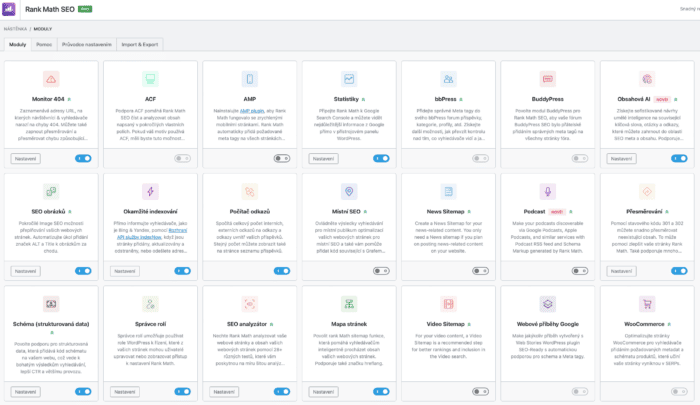
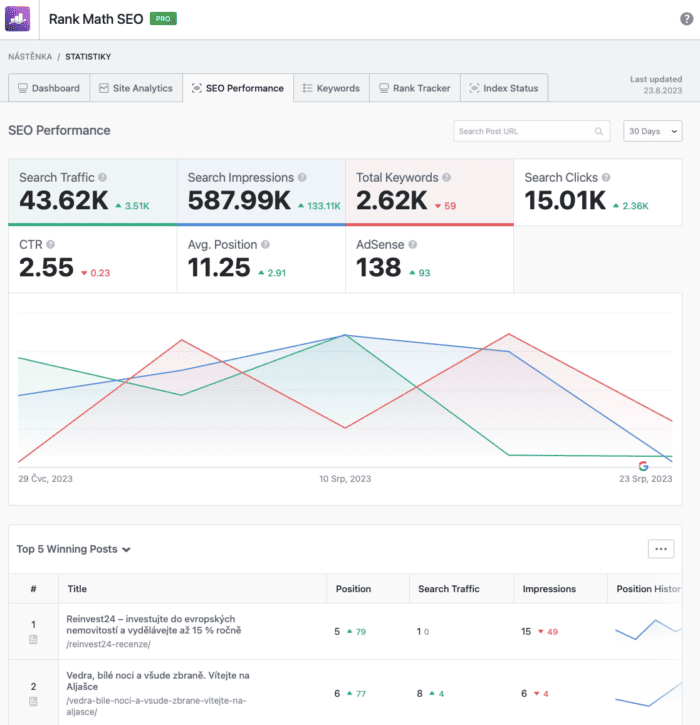
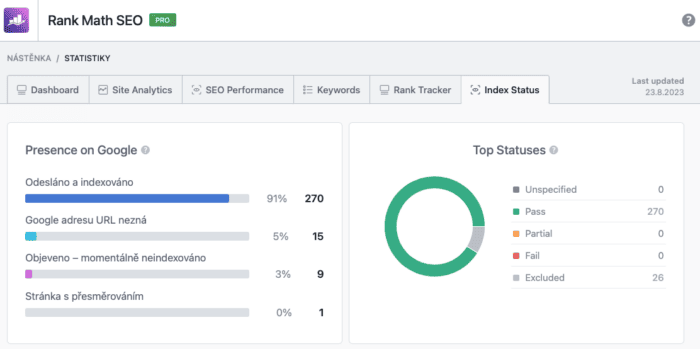

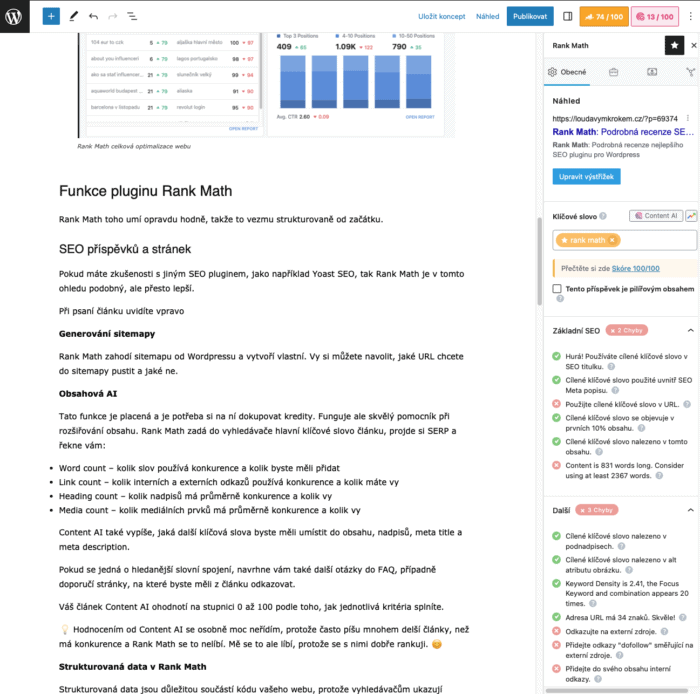
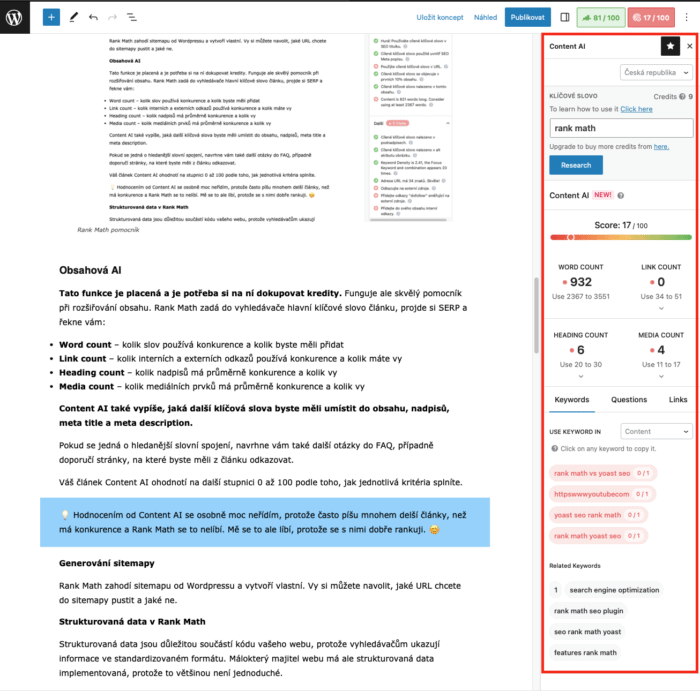
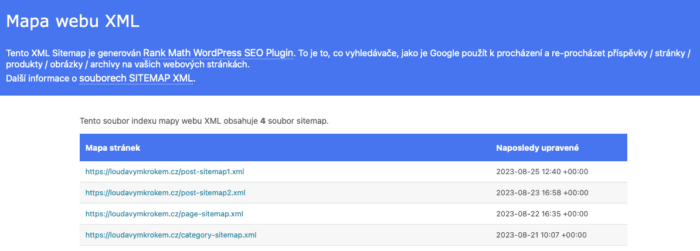
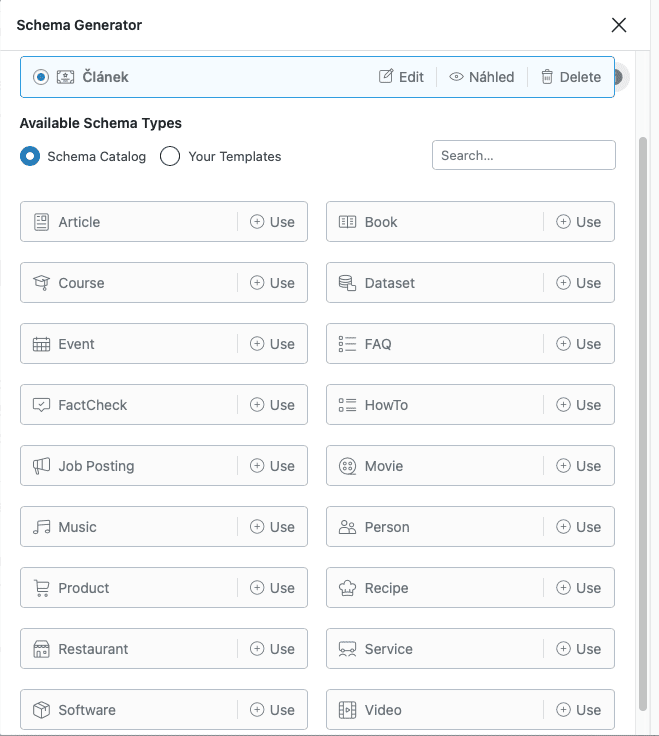
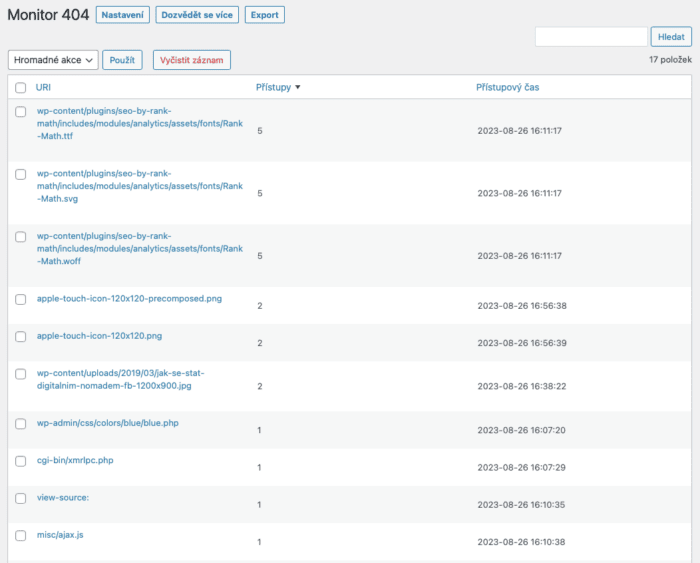
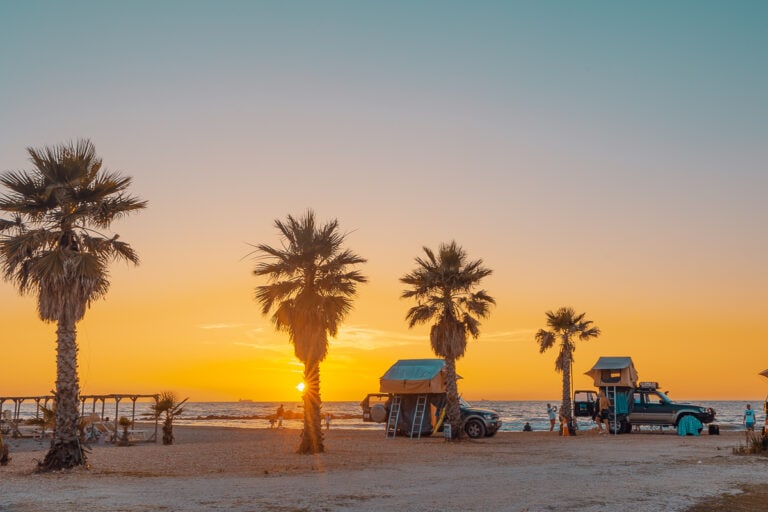
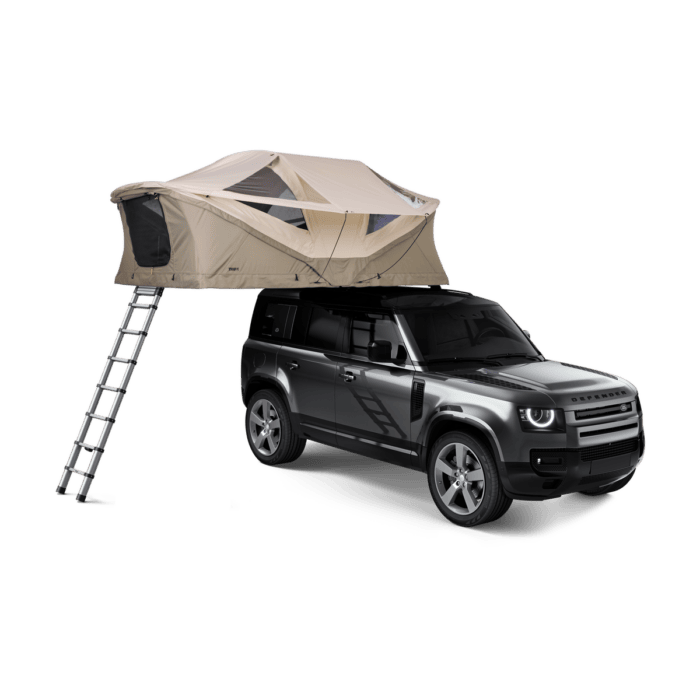
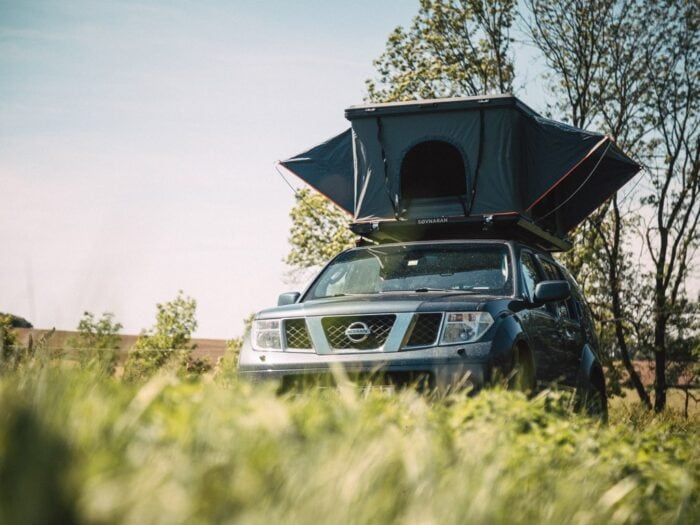
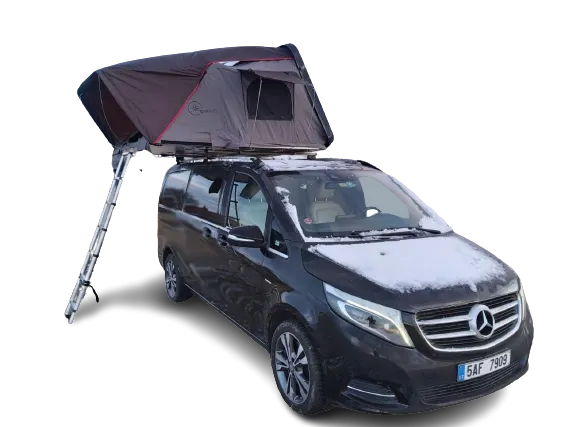
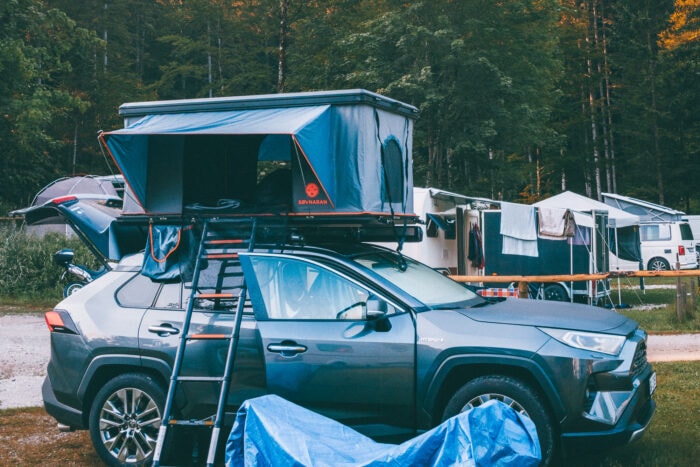
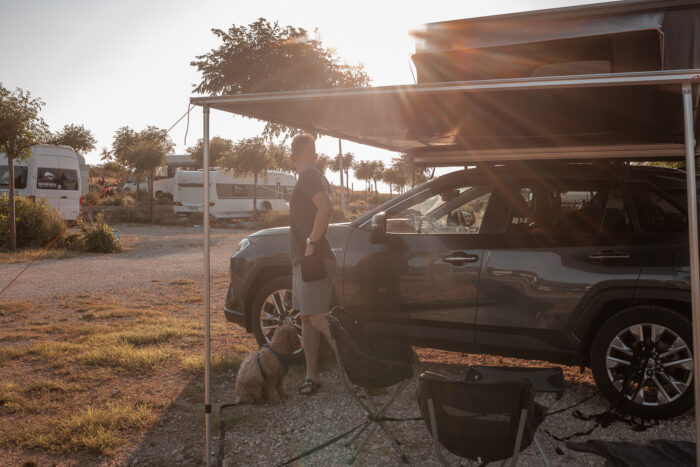
![Outin Nano coffee maker [RECENZE] 2026 + 10% off coupon](https://loudavymkrokem.cz/wp-content/uploads/2023/08/outin-nano-detail-768x512.jpg "Outin Nano coffee maker [RECENZE] 2026 + 10% off coupon")