

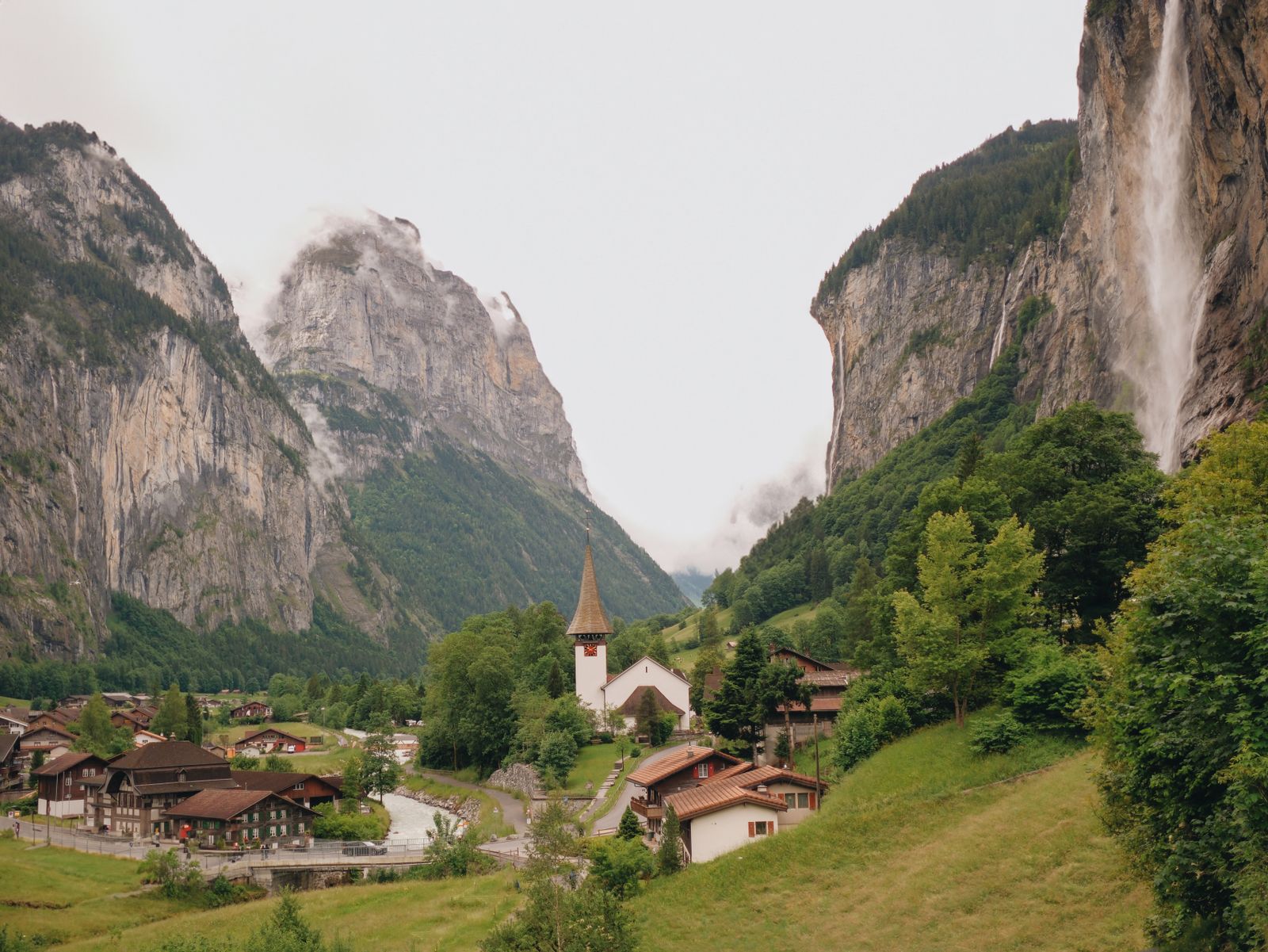
Switzerland hides countless gems, but only one single valley managed to inspire J. R. R. Tolkien himself to create the mythical Rivendell. Lauterbrunnen in Switzerland is exactly as magical as you remember it from The Lord of the Rings, and perhaps even a touch more so. Steep rock walls tower all around you, and dozens of waterfalls plunge from incredible heights.
In photos it almost looks like a fairy-tale illusion, but trust me, this Alpine village is absolutely real. I’ve put together a complete guide so you know what you can’t miss here and how to avoid the biggest crowds. We’ll cover everything from iconic waterfalls to adrenaline-pumping viewpoints.
On top of that, this year a new record-breaking cable car is being completed in the area, but you’ll also need to factor in one major transport closure. Let’s take a look at twelve places and experiences you simply can’t miss in the valley of 72 waterfalls.
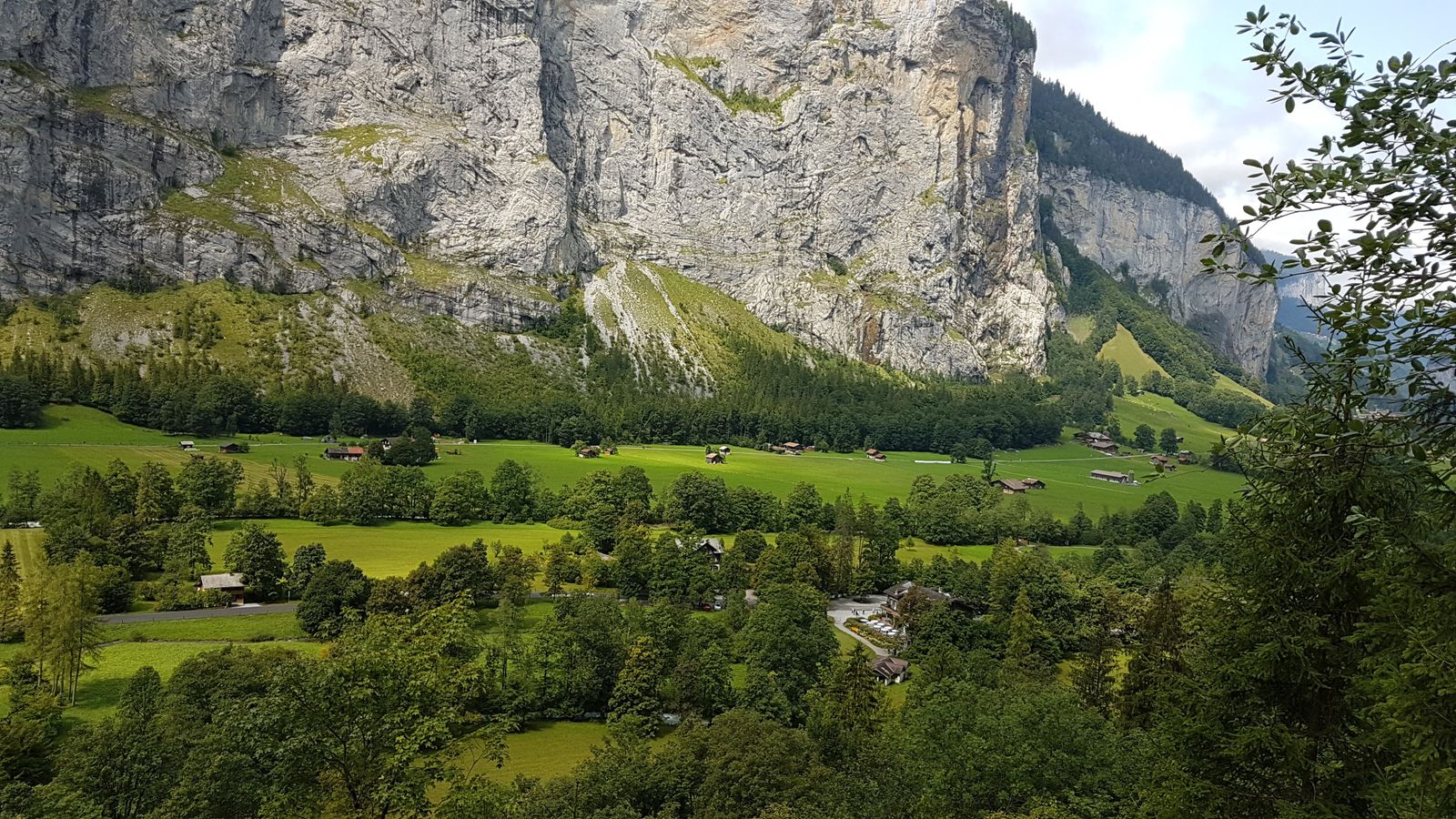
The full destination guide: Switzerland — guide and what to see
TL;DR
- Tallest waterfalls: You’ll be dazzled by the free-falling Staubbachfall and the glacial Trümmelbachfälle hidden right inside the mountain.
- 2026 closure: The cable car from Lauterbrunnen to Grütschalp won’t run from 13 April to 10 July 2026. To reach Mürren you’ll have to go via Stechelberg.
- New cable car: In April 2026 the project for the steepest cable car in the world will be completed, taking you all the way up to the Schilthorn.
- Where to stay: Capacity in the valley is very limited, so book your accommodation months in advance. A great choice is Hotel Staubbach with a view of the waterfall.
- No entry fees: Despite media reports about introducing an entrance fee, no charge is paid to enter the village.
- Car-free zones: You can’t reach the villages of Wengen and Mürren by car — you have to leave it in the multi-storey car park by the station.
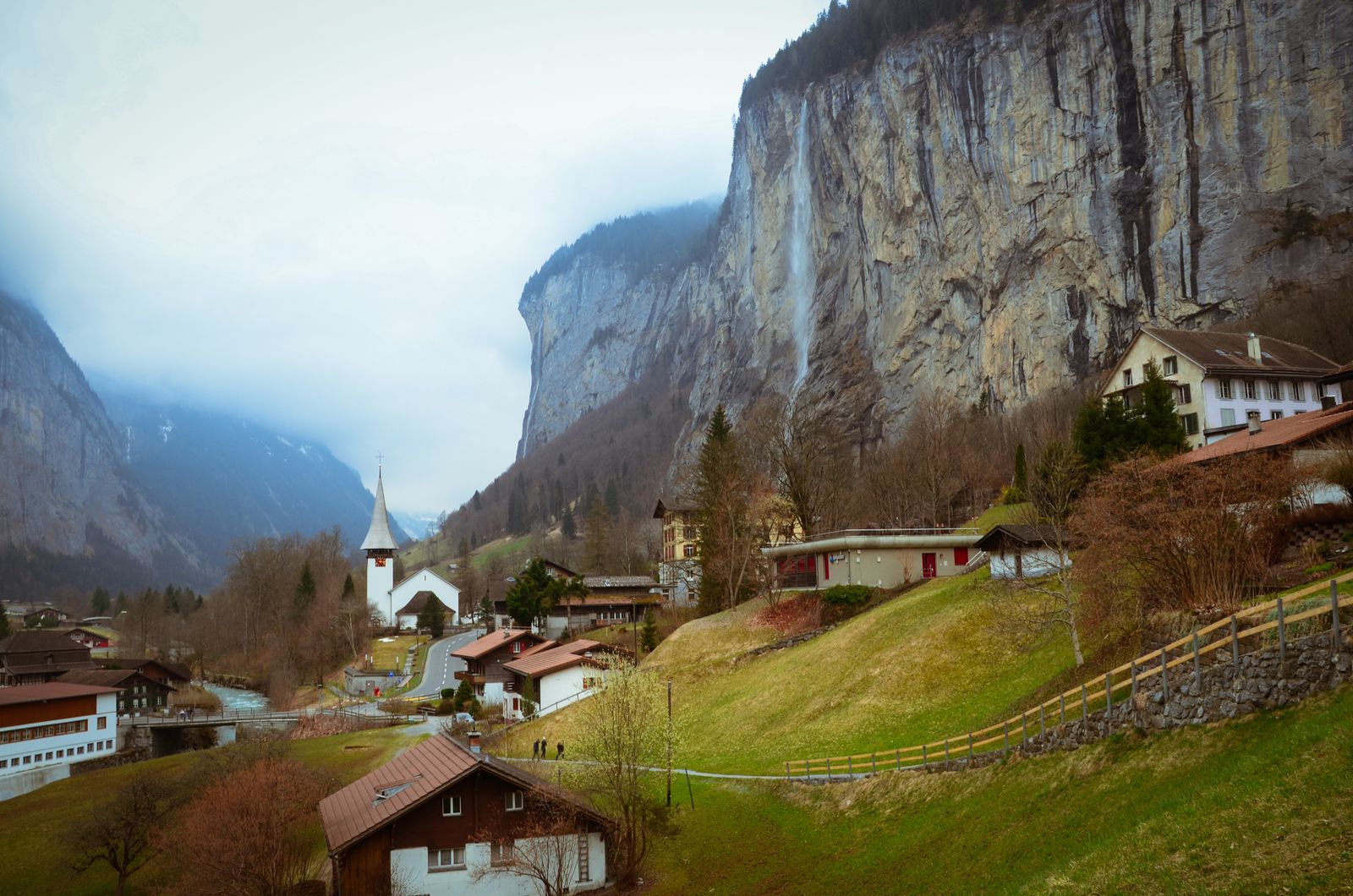
When to Visit Lauterbrunnen and the Weather in Switzerland
The waterfalls are at their most powerful in spring, when the snow melts in the mountains, and that’s also the most beautiful time to visit. May and June are absolutely ideal months if you want to see the falling water at its most majestic. What’s more, the gallery behind the main waterfall opens as soon as the winter ice melts, and the scenery is simply breathtaking. Around the same time the first flowers start appearing in the Alpine meadows, so the whole place looks like a painting.
If you head out in July or August, you can be sure that all the infrastructure and cable cars are up and running. But be prepared for the fact that the valley faces a huge influx of tourists. In the summer season I recommend getting up very early in the morning so you can enjoy the most beautiful spots in peace. By the afternoon there are usually fairly long queues at the cable cars.
September and October bring gorgeous autumn colours and far fewer people to the valley. You do need to check the timetables in advance, though, because some cable cars undergo autumn maintenance. For example, the Stechelberg–Mürren section has a closure planned for the second half of October this year.
In winter the valley turns into a snowy fairy tale and becomes a great base for the surrounding ski resorts. Keep in mind, however, that the Trümmelbach waterfall is completely closed in winter. The main Staubbach waterfall, meanwhile, often freezes into an enormous curtain of ice, which is beautiful but means you can’t get as close. On the plus side, the skiing here is perfect and you can try winter hiking along the groomed trails.
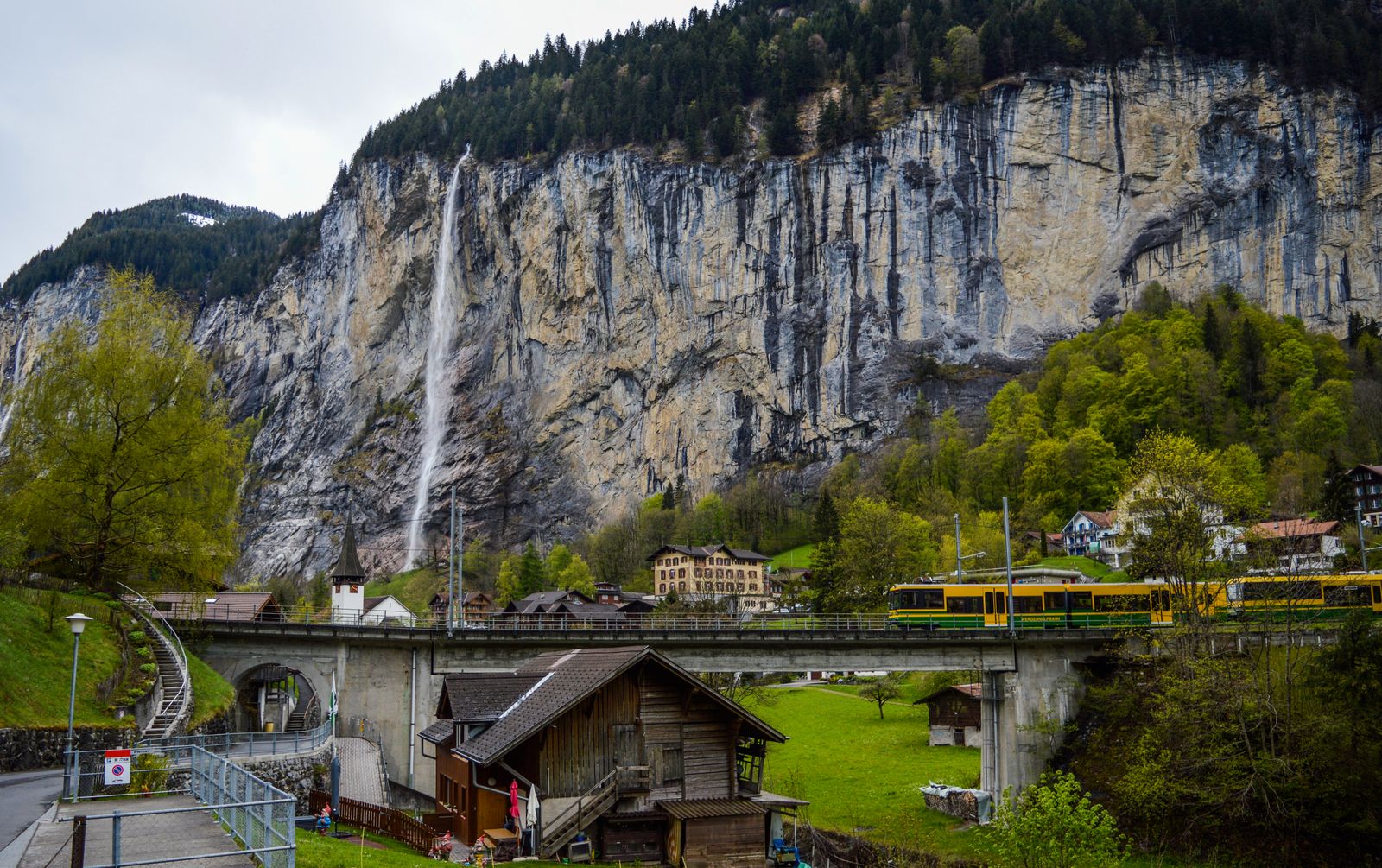
Lauterbrunnen Hotels: Where to Stay in Switzerland
💡 Tip for accommodation and experiences: We like to look for our accommodation on Booking.com, which usually has the best cancellation terms. Tickets, day trips and activities are then worth comparing and booking through GetYourGuide.
Bed capacity in the valley is desperately small and demand from all over the world is enormous. You absolutely have to sort out accommodation here well in advance, ideally as soon as you’ve booked your flights or planned your road trip. Be prepared, too, for the fact that Swiss prices are merciless — but waking up to a view of Alpine peaks is well worth it.
Right by the train station you’ll find Hotel Silberhorn, a great and practical classic. It has a lovely terrace and is often the first choice for couples who want to have everything within easy reach. If you’re after something more romantic, definitely check out Hotel Staubbach, which has fantastic reviews and offers rooms with a direct view of the iconic waterfall.
In the centre of the village stands the popular Hotel Schützen, which tempts you with a cosy restaurant with a fireplace and good prices. If you’re travelling on a smaller budget, there’s Valley Hostel, an absolute legend among backpackers with incredibly clean rooms, some of which look straight out onto the waterfalls.
For nature lovers and campers there’s Camping Jungfrau, which is flooded with enthusiastic reviews online — and from the photos you’ll understand exactly why. You can also take a look at their website. It offers not only tent pitches but also comfortable bungalows. And if you’d rather sleep high above the valley in a car-free zone, book a room at Hotel Edelweiss Superior in the village of Mürren, where absolute peace and quiet await.

Where to Eat in Lauterbrunnen: The Best Restaurants
Swiss cuisine is admittedly a little heavy, but after a full day of hiking through the mountains you absolutely deserve those cheesy feasts. In Lauterbrunnen and the surrounding villages you’ll find plenty of great spots, from cosy mountain huts to more modern cafés.
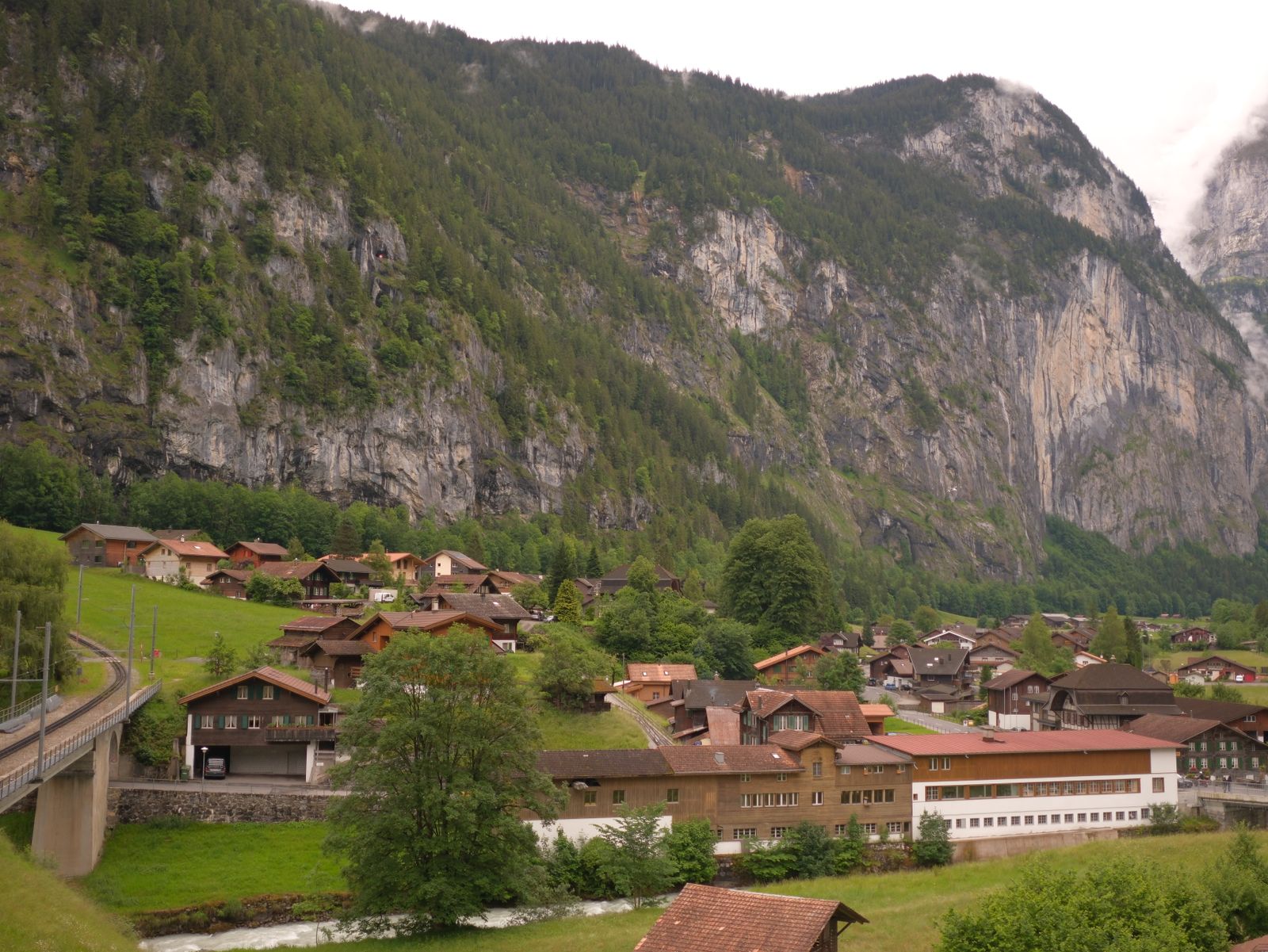
Cheese Fondue and Rösti on Every Corner
If you want to enjoy the classics, I recommend grabbing a table at one of the traditional restaurants in Mürren or Wengen. Excellent traditional rösti — golden, pan-fried potato cakes topped with melted cheese — are served, for example, at the restaurant of Hotel Schützen right in Lauterbrunnen. Most places here open for lunch and then again for dinner, so keep an eye on the time.
Another sure-fire tip for a great lunch with an incredible view is the revolving Piz Gloria restaurant on the Schilthorn. And if you get a craving for something smaller during the day, stop for a hot chocolate or a homemade dessert. The Swiss are masters at making sweet pastries, so you really can’t go wrong.
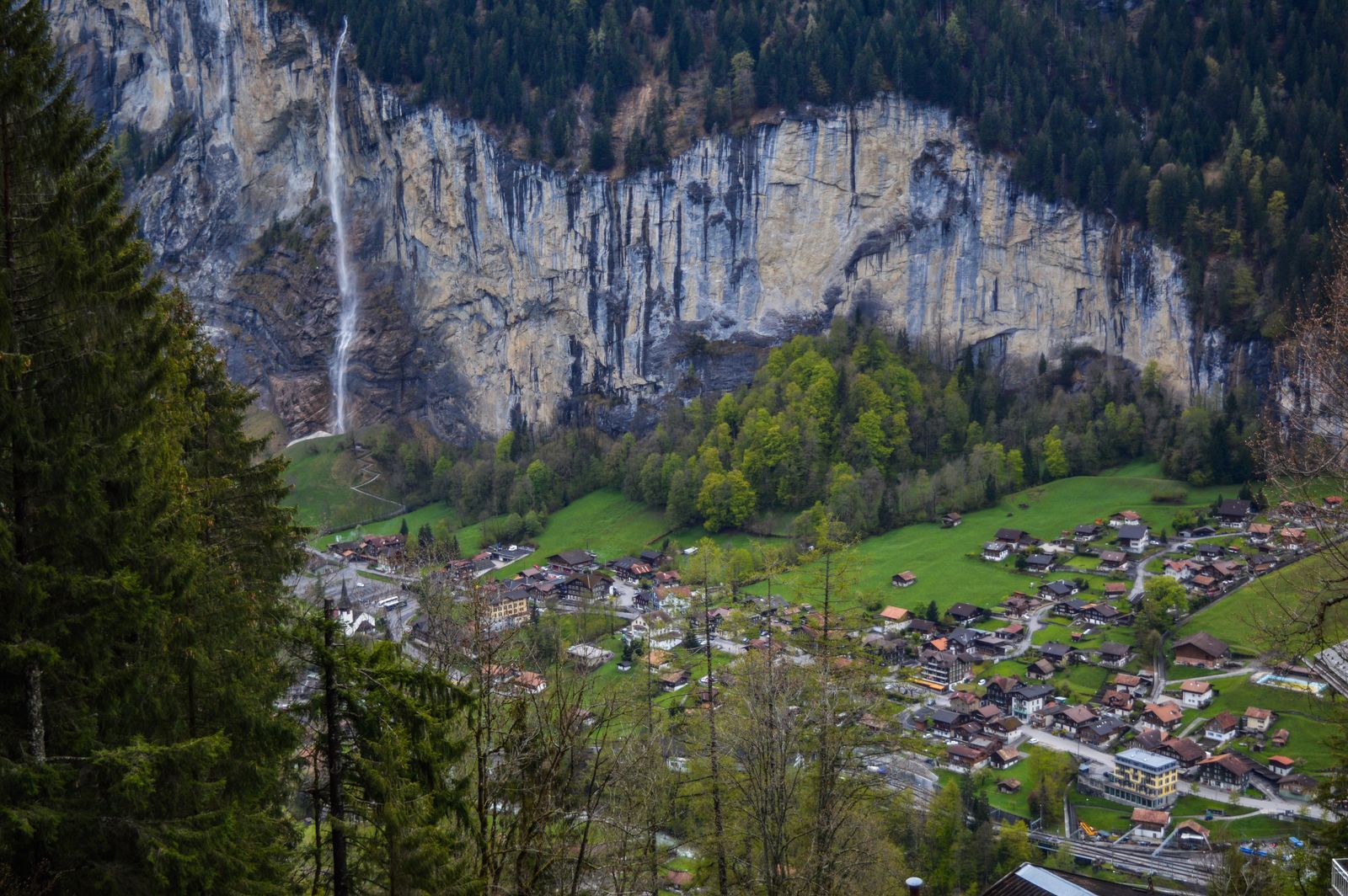
12 Best Things to See and Do in Lauterbrunnen, Switzerland
Let’s take a look at the very best this Alpine region has to offer. I’ll show you how to save time, where to find the most beautiful views, and what to watch out for this year.
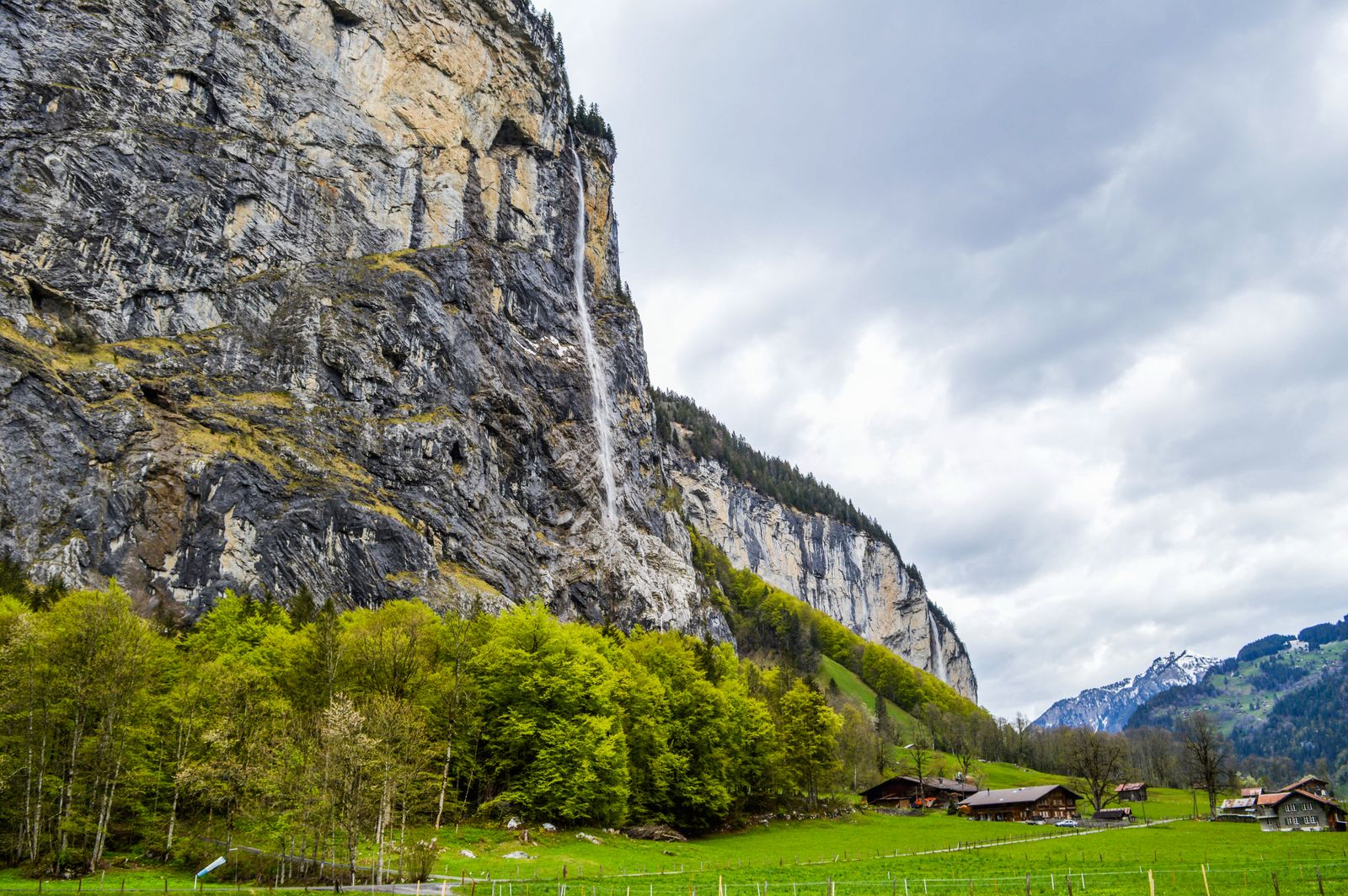
1. Staubbachfall
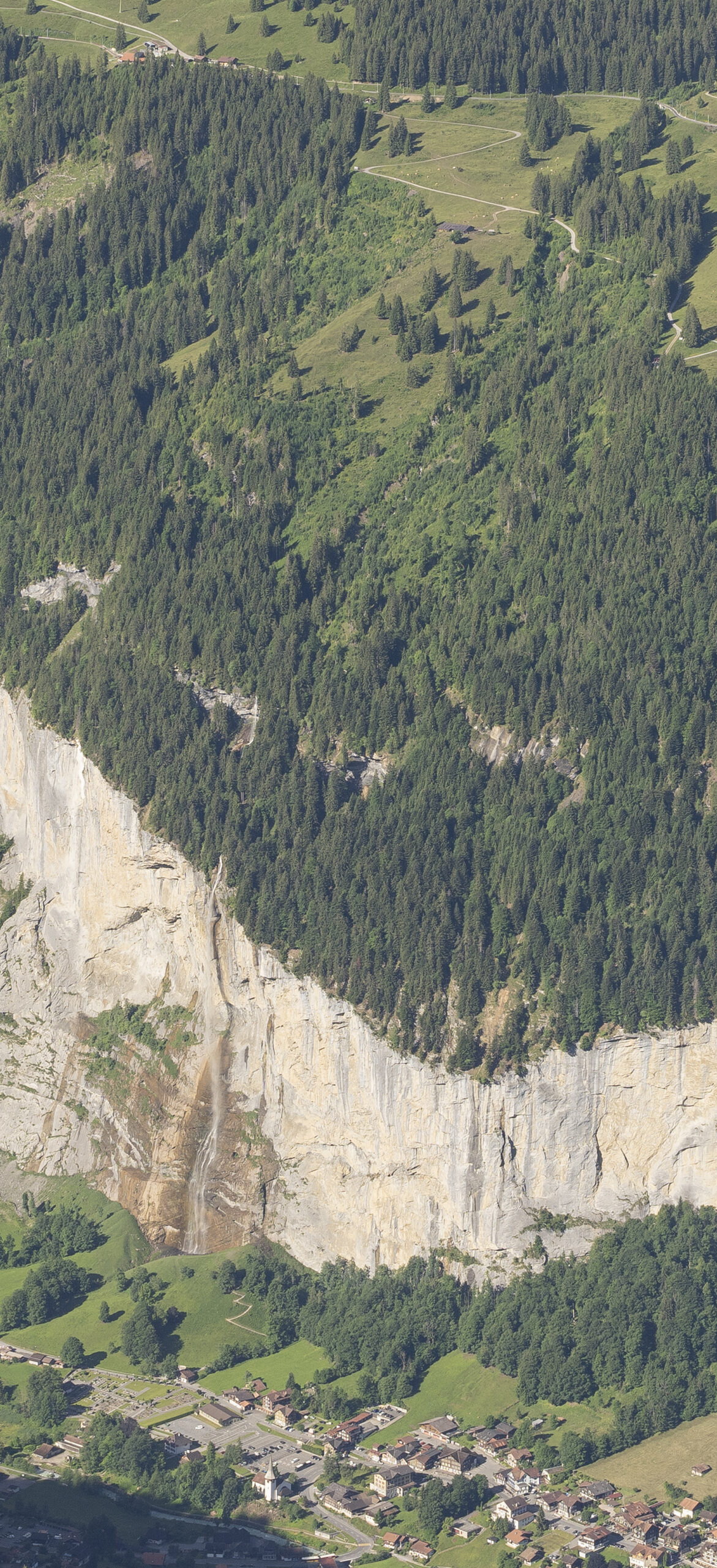
This is the absolute landmark of the entire village and quite possibly the most photographed waterfall in Switzerland. Staubbachfall stands at an impressive 297 metres and proudly holds the title of the country’s tallest free-falling waterfall. The water plunges down from a sheer rock face and shatters against the rocks so forcefully that a fine mist of water hangs permanently in the air. From the train station it’s just a few minutes of easy walking to get there.
An interesting feature is that you can actually get right behind the falling water. A narrow path leads up from the foot of the cliff, guiding you through a tunnel and up steps to a special viewing gallery. Be sure to bring a raincoat or a waterproof jacket, because you’re guaranteed not to stay dry here.
This experience is completely free — you only pay a voluntary contribution towards path maintenance. You do have to come during the main season, though, because the gallery is only open from May to October. The waterfall has been an inspiration to many artists and writers over the centuries — even the famous Goethe wrote a poem about it. The best light for photography here is usually in the morning, when the sun beautifully lights up the whole rock face. In the winter months access is closed for safety reasons due to falling chunks of ice.
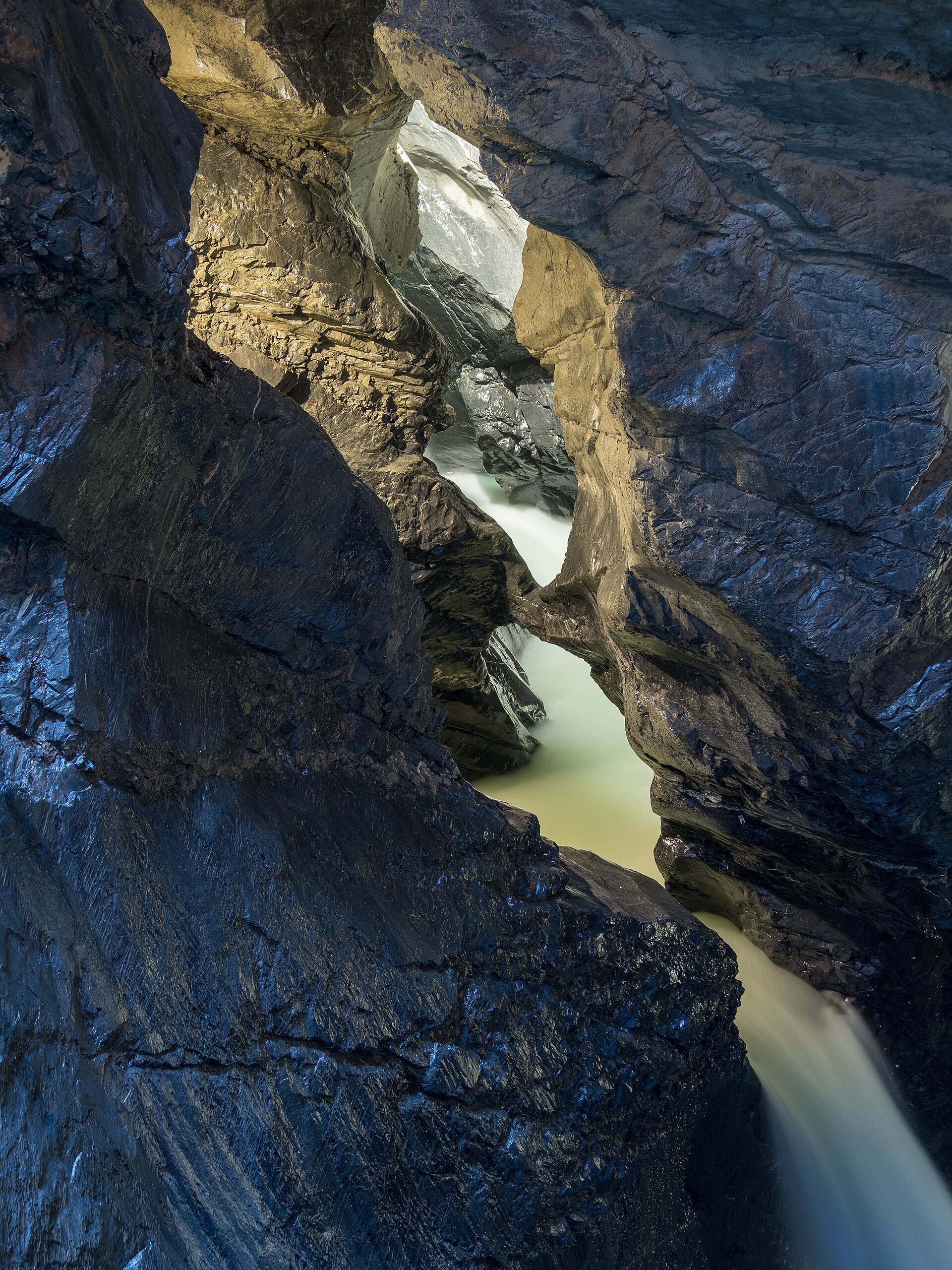
2. Trümmelbachfälle
If Staubbachfall amazed you from the outside, Trümmelbachfälle will completely blow you away from the inside. It’s a system of ten glacial waterfalls hidden deep within the heart of the mountain. These waterfalls drain the mighty glaciers of the giants Eiger, Mönch and Jungfrau, and an incredible twenty thousand litres of water flow through here every second.
To reach them, you don’t have to climb any rocks. A special tunnel lift takes you inside the mountain, and from there you continue along safely secured walkways and corridors. It’s a deafening, dark and utterly fascinating natural phenomenon with no equal in Europe. The sound of the roaring water bouncing off the cave walls is so loud you can’t even hear yourself speak.
There’s an entrance fee, and the official website lists admission at 18 CHF for adults (around €19) and 8 CHF for children. Precisely because of the spray, it’s quite cold and damp inside, so dress warmly even in the height of summer. Remember that children under four and dogs are not allowed in for safety reasons. The waterfalls are open from April to the beginning of November, and the whole complex closes in winter.
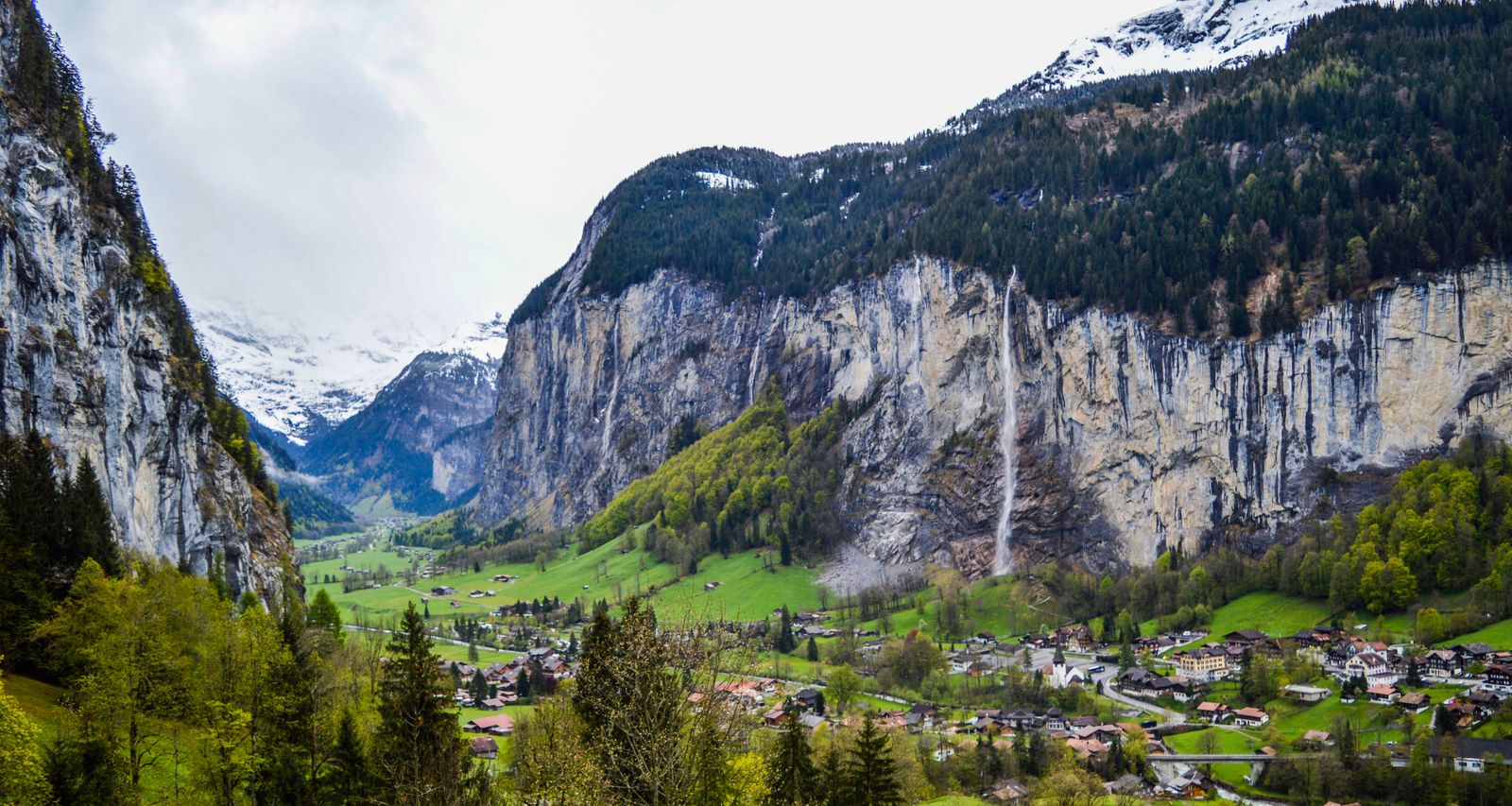
3. The Valley of 72 Waterfalls and the Hike to Stechelberg
The entire region proudly calls itself the valley of 72 waterfalls, and the best way to get to know it is on foot. A beautiful and completely easy trail leads from the train station along the flat valley floor all the way to the neighbouring hamlet of Stechelberg. The whole route is just under eight kilometres, and the elevation gain is absolutely minimal, so you can even tackle it with a pushchair.
During the roughly two-hour walk you’ll pass one waterfall after another. The path takes you past snow-capped peaks, green pastures and traditional wooden chalets. Along the way you’ll come across several rest stops and benches where you can have a snack. To your right you’ll see walls towering up that reach heights of up to four hundred metres.
About halfway along the route you can take a detour to the Trümmelbach cave waterfalls, and if you’re lucky you’ll even spot cows with traditional bells — an inseparable part of the Alps. Once you reach your destination in Stechelberg, you don’t have to walk the same way back. There’s a regular yellow PostBus that runs from here and conveniently takes you back to the centre of Lauterbrunnen.
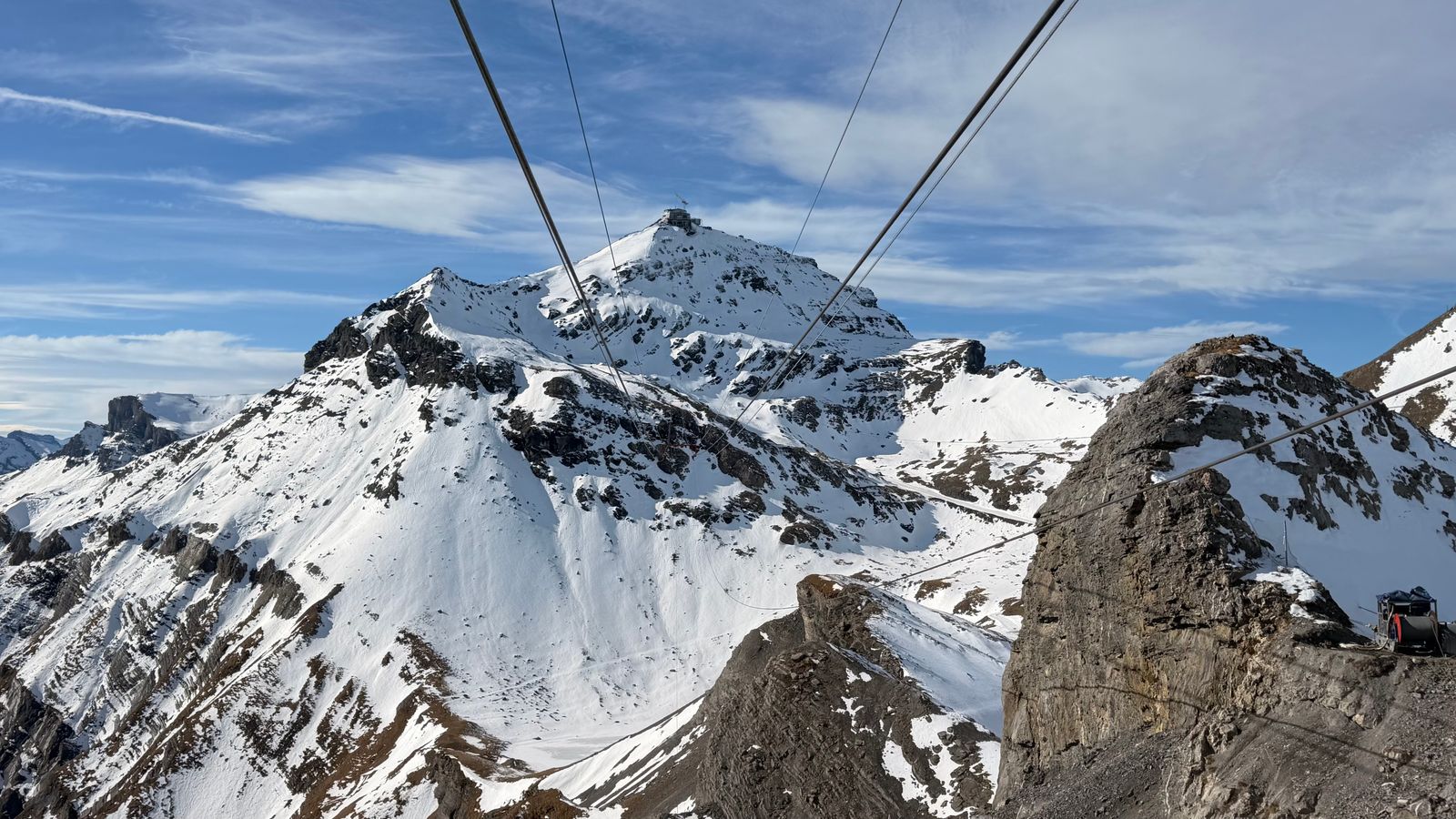
4. Wengen and the Männlichen Viewpoint
Perched on a sunny terrace right above the valley lies the picturesque village of Wengen. A key piece of information is that the entire village is completely car-free. From Lauterbrunnen you can only reach it on the Wengernalpbahn cog railway, whose journey takes about fourteen minutes and offers gorgeous views into the chasm below you.
Wengen is the quintessential postcard Swiss village (wooden façades, geraniums in the windows), but the biggest draw is the cable car up to the Männlichen summit. Some of its cabins even have an open viewing balcony on the roof, which is an experience in itself. At the top a wide Alpine panorama and crisp mountain air await.
From the upper station, definitely set off on the so-called Royal Walk. It’s an easy thirty-minute climb to the very summit, where there’s a crown-shaped viewing platform built up top. From it you’ll have the iconic trio of mountains — Eiger, Mönch and Jungfrau — beautifully laid out in front of you.
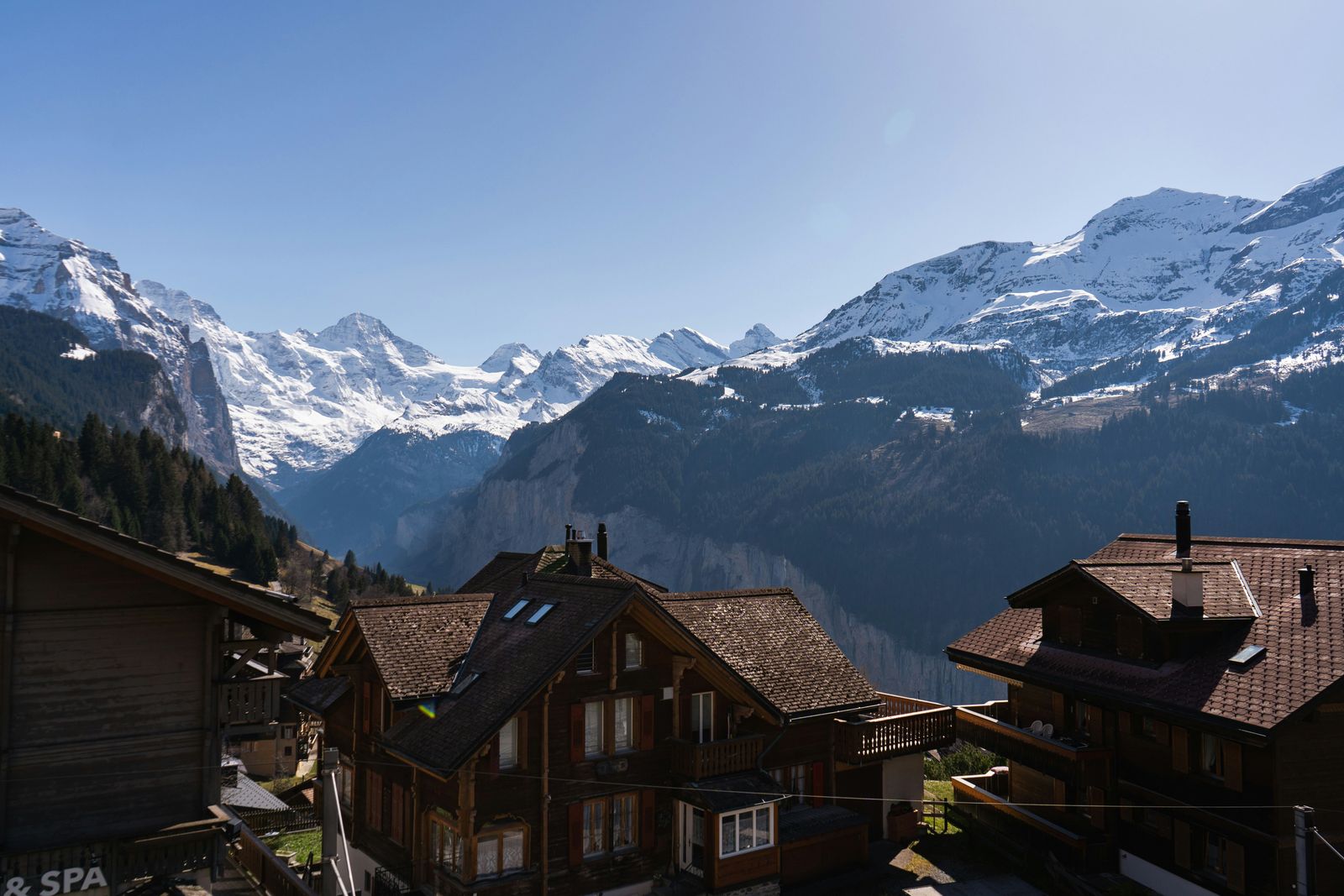
5. Mürren and Its Alpine Views
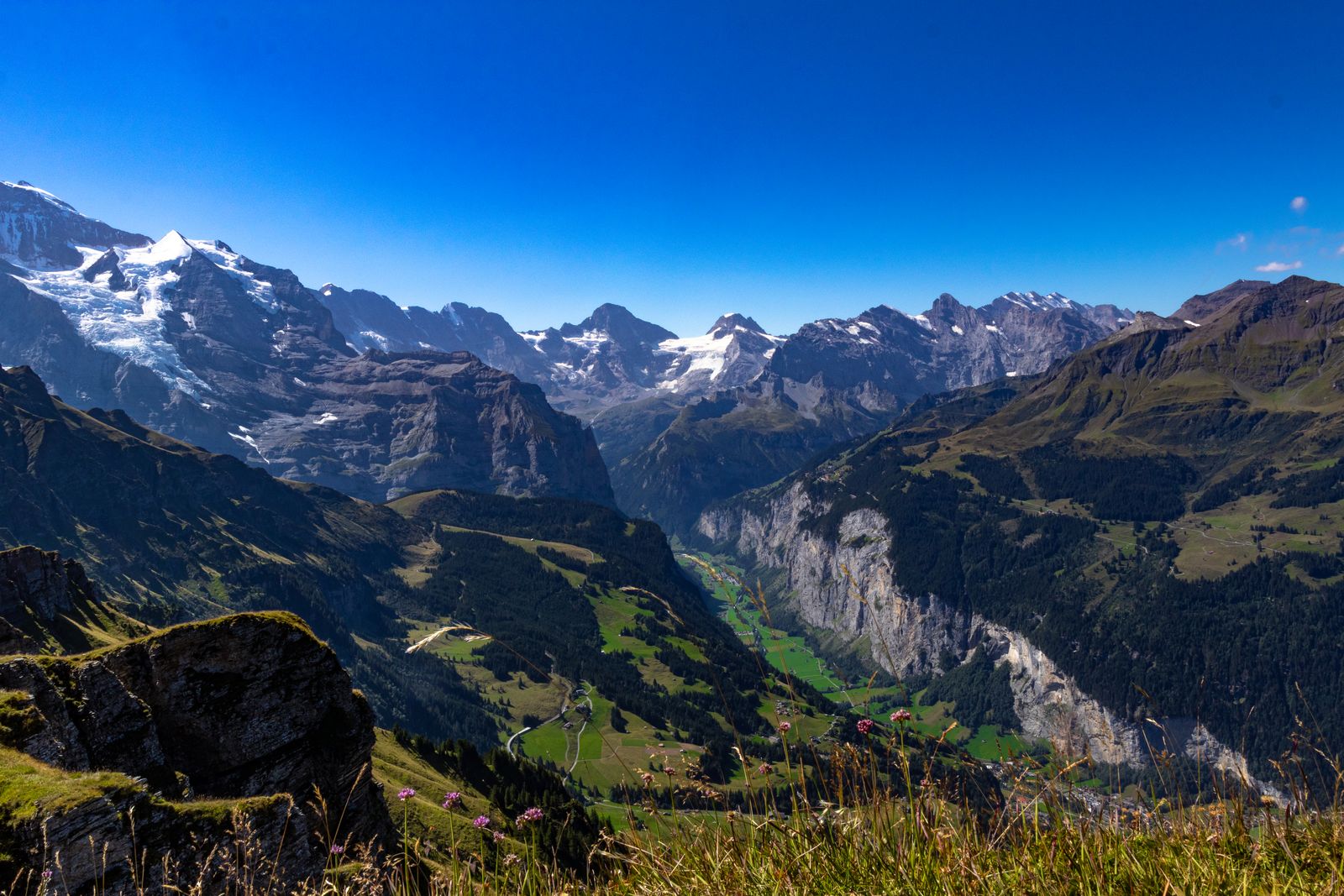
On the opposite side of the valley, at an altitude of 1,638 metres, lies another car-free village: the famous Mürren. It acts as a natural balcony above the deep valley, and the views from here are arguably even more dramatic than those from Wengen. Normally you get here by cable car from Lauterbrunnen up to Grütschalp and then on a narrow-gauge train.
💡 Tip: This year, though, you really need to watch out for the transport. From 13 April to 10 July 2026 there’s a huge closure, and the cable car to Grütschalp is completely out of service for a full rebuild. During this period you can reach Mürren exclusively via the alternative route from the Stechelberg valley station.
Mürren itself is wonderfully photogenic. You’ll find classic Swiss chalets decorated with geraniums and plenty of great restaurants. Accommodation here is admittedly on the pricier side, but waking up high above the clouds with a view of the Jungfrau massif is simply priceless. If you’re looking for a spot for lunch, the local establishments serve excellent Alpine cheese fondue or traditional rösti.
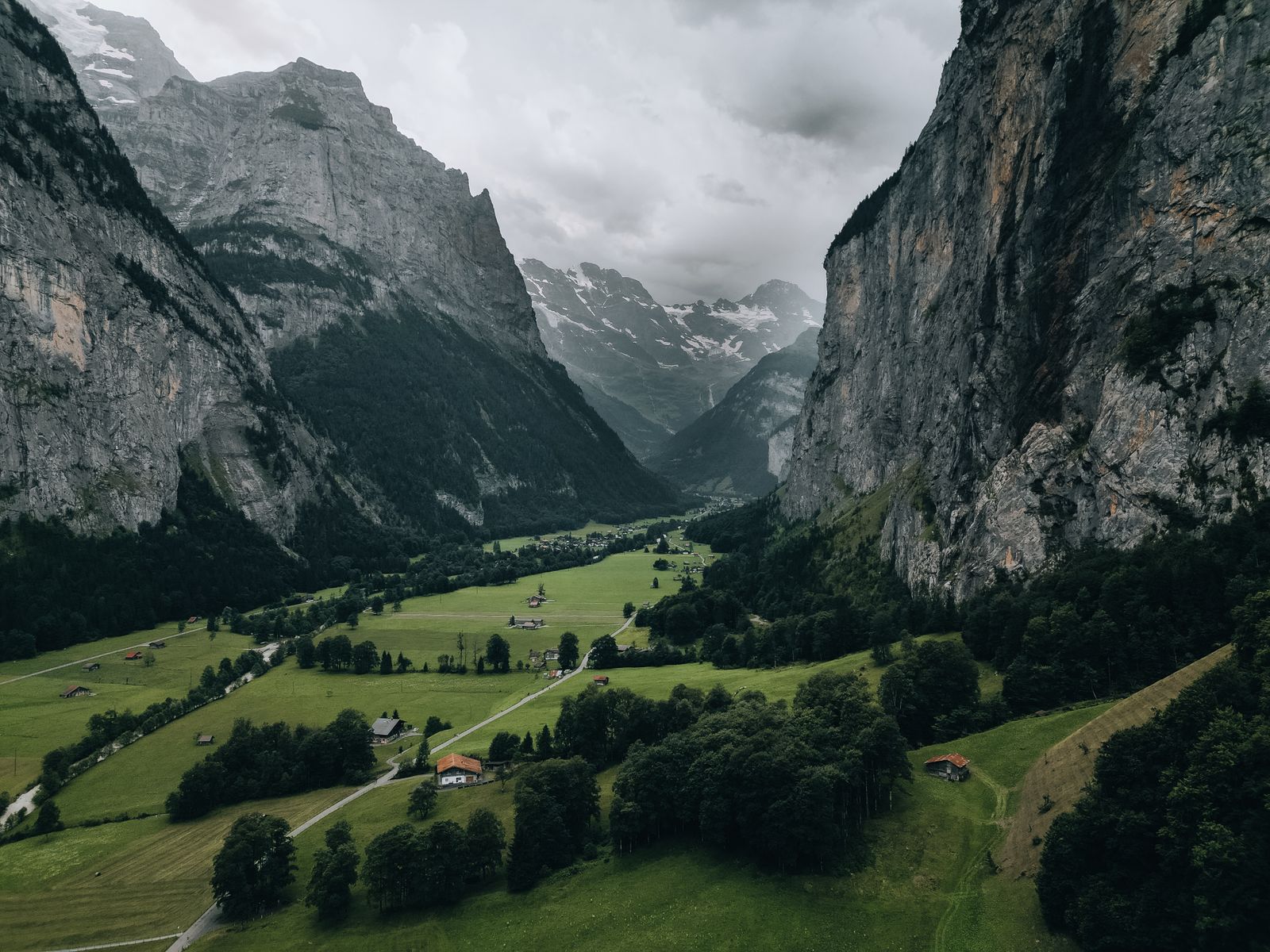

6. Gimmelwald and Its Honesty Shops
If you head downhill on foot from Mürren, you’ll come across the little village of Gimmelwald. Here, they say, time stopped many decades ago. About a hundred permanent residents live here, and you won’t find any large hotels or typical supermarkets. The whole place has retained an incredibly authentic farming atmosphere.
The most interesting thing in Gimmelwald are the so-called honesty shops — little stores built entirely on trust. Local farmers have fridges set up outside in which they offer homemade Alpine cheese, fresh eggs or jams. No one is watching over it; you simply take the goods and drop the money into a wooden cash box that’s been put out.
It’s a wonderful example of the fact that somewhere in the world decency still works. Stop by the self-service fridge at Esther’s Guesthouse, for instance, and buy a piece of cheese for a snack. Plus, you know that every franc goes straight to the locals — and they genuinely need it.
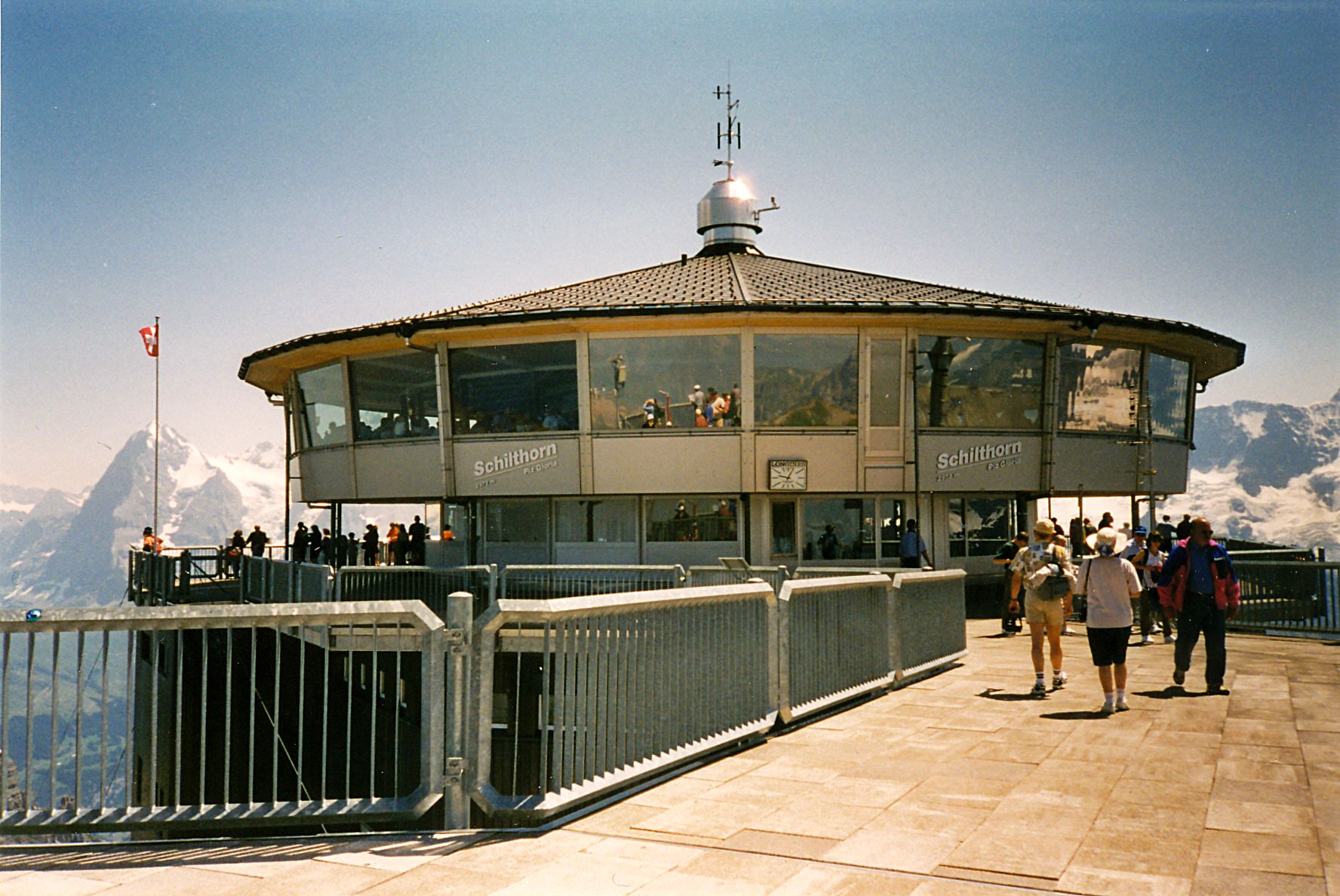
7. Schilthorn and Piz Gloria
This is the absolute highlight of any trip to this region. The Schilthorn summit rises to nearly three thousand metres and was made famous by the legendary Bond film On Her Majesty’s Secret Service. The revolving Piz Gloria restaurant still operates up here today, completing a full rotation around its axis in forty-five minutes, giving you views of more than two hundred mountain peaks.
2026 is a year of enormous changes for this mountain. In April of that year the final section of the new Schilthornbahn project will be officially completed, with the total construction costing 130 million francs. The section between Stechelberg and Mürren even boasts the title of the steepest cable car in the world, with a gradient of over 159 percent.
According to the official price list, the cost of a return ticket from Stechelberg is around 115 CHF (roughly €120). The price, however, includes not just the ride itself but also entry to the interactive James Bond museum and access to the adrenaline-fuelled Thrill Walk (suspended on a sheer rock face at the Birg intermediate station). The whole trip is packed with fantastic experiences from the first minute to the last.
8. Allmendhubel and the Flower Park
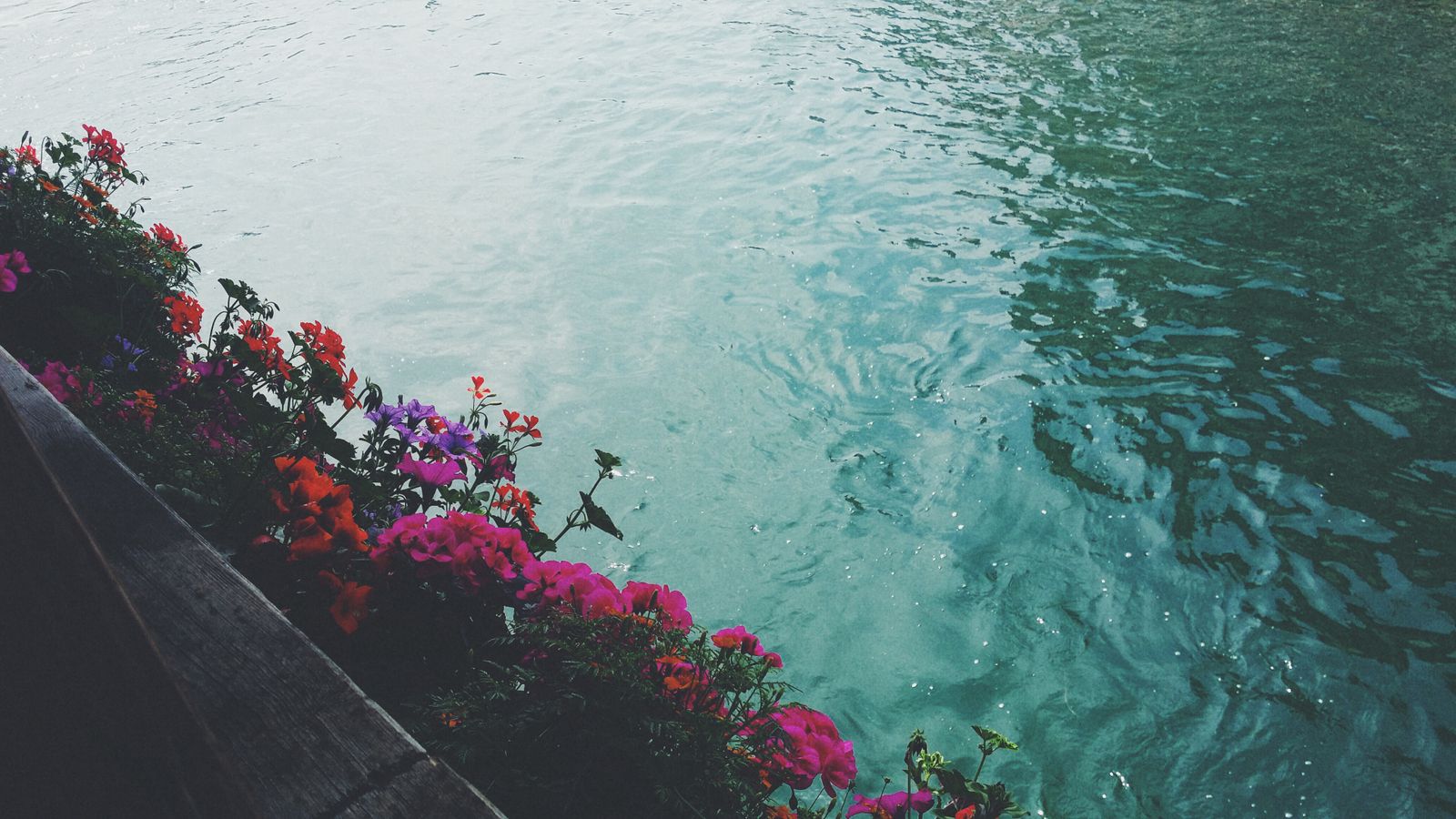
If you’re travelling with children, you mustn’t skip Mount Allmendhubel. An old-fashioned funicular runs up here from Mürren, taking you up to an altitude of just under two thousand metres. The journey takes only a few minutes, and a return ticket costs a reasonable fourteen francs (it’s best to check the price on site, as it can vary outside the season).
At the top you’ll find the Flower Park, a children’s playground that looks as though nature itself designed it. Kids can clamber through giant wooden flowers, swing and slide, while you can sit on the terrace of the panoramic restaurant and enjoy a coffee with an incredible view of the Eiger massif.
The playground is also where beautiful themed trails like the Flower Trail begin. On these you’ll learn lots of interesting facts about the local Alpine flora and see flowers that grow only at these extreme altitudes. It’s an ideal spot for a relaxed afternoon once you’ve had enough of demanding hikes.
9. The Via Ferrata from Mürren to Gimmelwald
For adrenaline lovers there’s a secured route on offer that is definitely not for those with a fear of heights. The via ferrata starts in Mürren and, unusually, leads downhill to Gimmelwald. The whole route is over two kilometres long, and the entire time you’ll have a deep three-hundred-metre drop beneath your feet.
The biggest highlight of the whole route is the so-called Nepal Bridge. It’s an eighty-metre-long rope bridge that sways slightly and beneath which gapes pure emptiness. Crossing it takes genuinely steady nerves, but the photos from this spot are absolutely unbeatable.
Access is free (you only pay a voluntary contribution towards cable maintenance), but you must bring the mandatory gear — a harness, a via ferrata set and a helmet. Don’t have your own? Any sports shop in Mürren will rent them out without any trouble. The staff at the rental shops will happily explain all the safety rules to you.
10. BASE Jumping
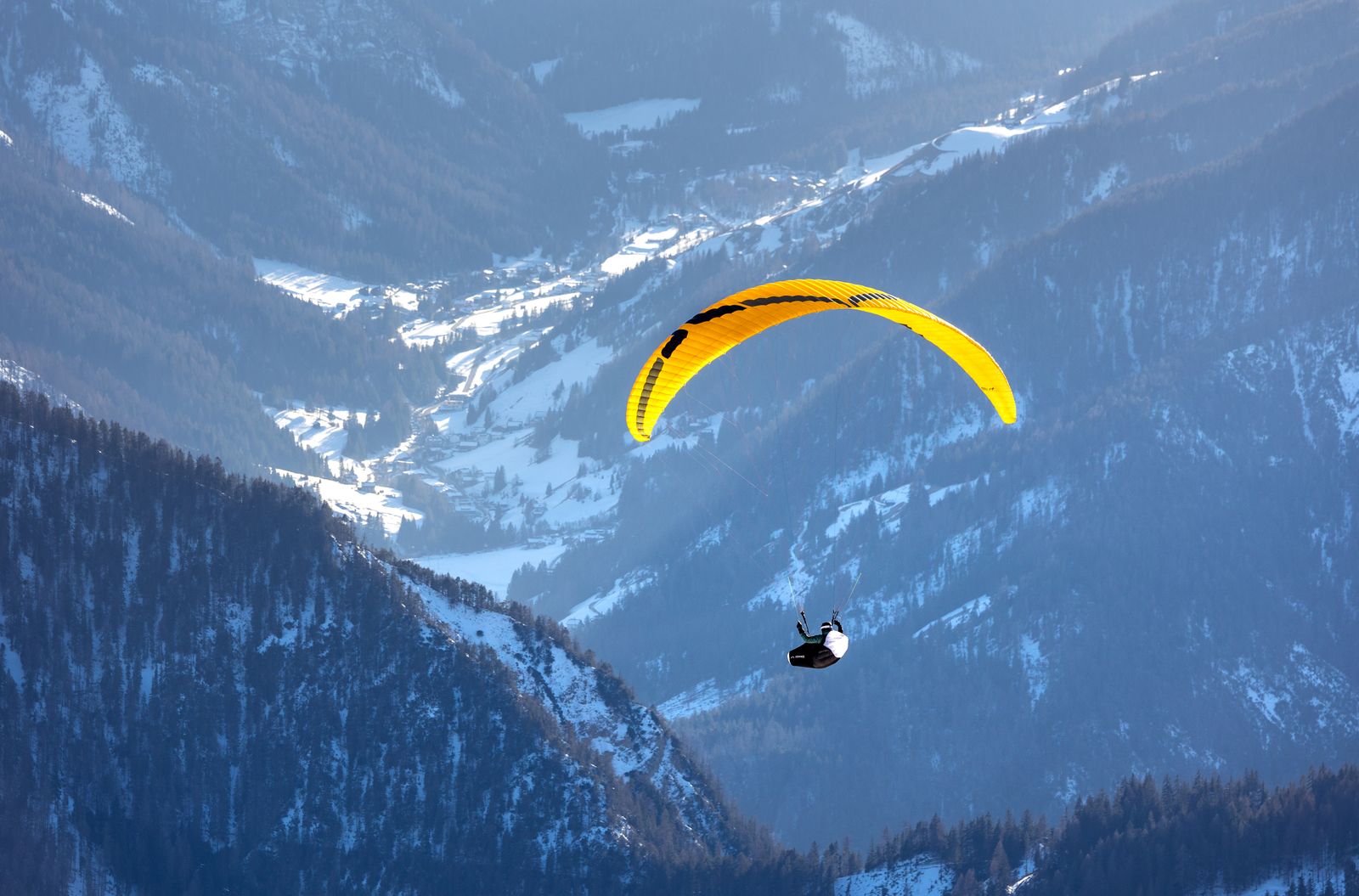
Lauterbrunnen is known worldwide as the mecca of BASE jumping — the extreme sport in which people leap with a parachute from fixed points. Each year fifteen to twenty thousand jumps take place here from the surrounding vertical cliffs. It’s a fascinating spectacle, but we have to approach it with great respect, because this sport is extremely dangerous.
Never try to look for take-off points on the edges of the cliffs — it’s an enormous risk. The best and completely safe spot for watching is right from the valley road heading towards Stechelberg. About twenty minutes’ walk from the village, all you have to do is look up and you’ll almost certainly see colourful parachutes drifting down to the ground.
Right in the centre of the village there’s the Airtime Café, a legendary spot closely linked to the community of jumpers and paragliders. They make absolutely delicious cinnamon rolls and great coffee — an ideal stop before you set off on another hike. What’s more, you’ll often find enthusiastic conversations between flyers from all over the world going on around you.
11. The Little Church and Cemetery
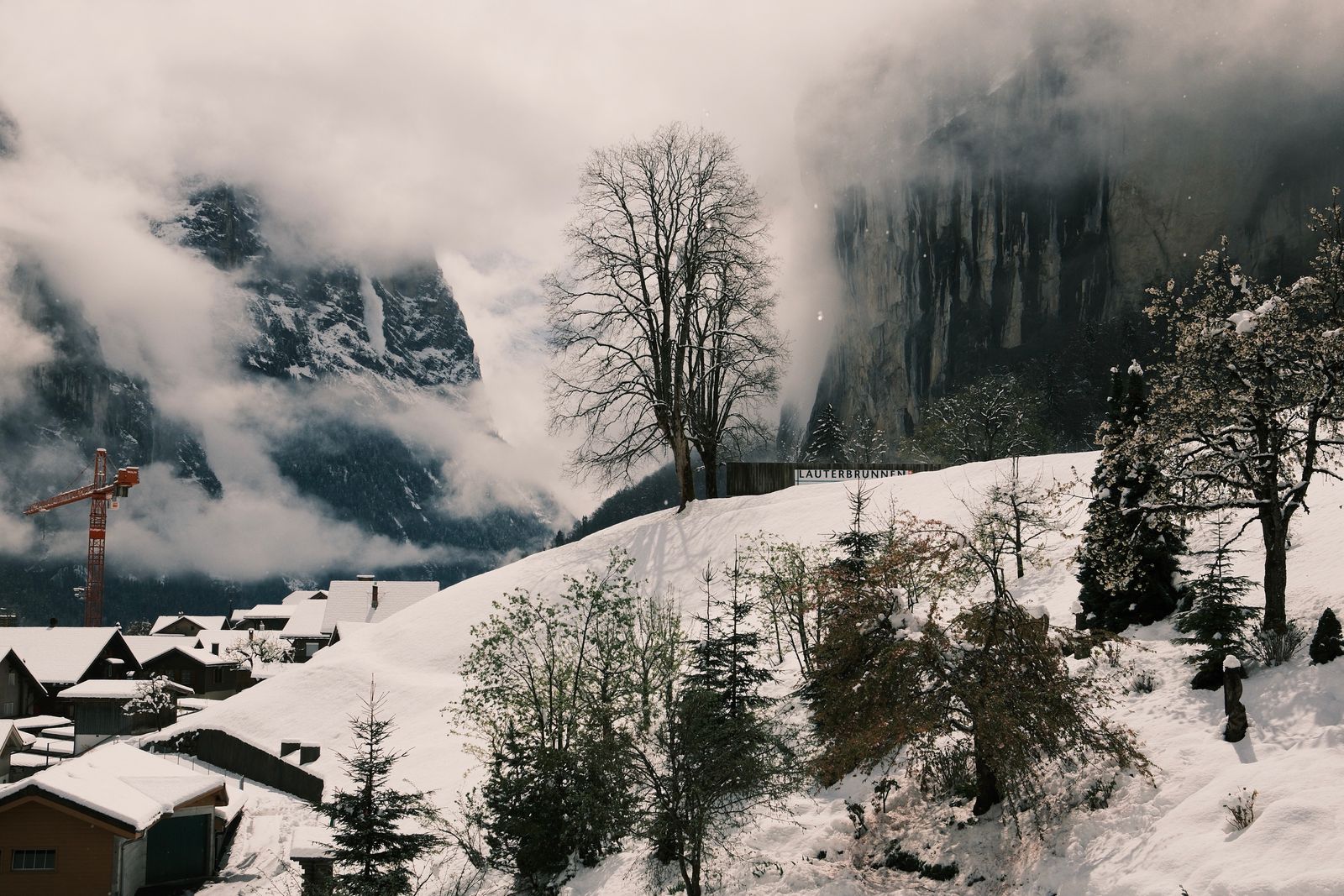
Every mountain town has its photogenic church, but the one here plays in a completely different league. The Gothic church dates back to the fourteenth century, and there’s a gorgeous view from its well-kept cemetery. From here you’ll see not only the village itself but, above all, the Staubbach waterfall and the massive rock walls in the background.
If you’re after the best angle for that perfect shot for social media, head up the main street towards Chalet Pironnet. A little way from it you’ll find a narrow path by two stone spheres. From this exact spot you’ll capture in a single frame the church tower on the left and the falling waterfall on the right.
It’s a favourite spot among photographers, especially in the early evening when the sun lights up the spray. Just bear in mind that the cemetery is still in active use and that quiet is part of the place. Simply sit silently on a bench and soak up the magical mountain atmosphere.
12. Talmuseum Lauterbrunnen
When bad weather catches you out in the Alps, it’s good to have a backup plan under a roof. The Talmuseum is tucked away in a former sixteenth-century mill and shows the hard life of the local people in the past. It’s a small but very engaging exhibition that transports you back to the era before mass tourism.
Here you’ll find historic skis, old climbing equipment and examples of traditional lace-making. On the upper floors you’ll learn interesting facts about the history of mining in the region and about the first pioneers of alpinism who conquered the surrounding three-thousanders with primitive gear. These are stories of incredible courage and perseverance from the mountain folk of the time.
Admission costs six francs, but if you have a guest card from your accommodation, entry is often completely free. It’s best to check the opening hours in advance: it’s usually open only in the afternoons from June to October, and it’s normally closed on Mondays and Wednesdays. There’s nothing worse than a wet day and a closed museum 😅
Map of points of interest for your phone
Where to Go Next from Lauterbrunnen
Lauterbrunnen makes a wonderful starting point for a day trip. The surrounding valleys are each more beautiful than the last. If you don’t want to bother with train connections, organised tours will save you a lot of planning. There are plenty of options that can easily be booked online, for example through GetYourGuide, from where you can even head out to the glaciers.
If you want to explore the surroundings on your own, definitely head to the neighbouring valley and read our article Grindelwald: What to See and Do. The atmosphere there is a little livelier, and the cable cars take you up to incredible viewpoints.
If you’re planning a longer road trip, you shouldn’t miss the most beautiful mountain in Europe, which we write about in the guide Zermatt and the Matterhorn: What to See and Do. You can also stop in the capital, where our article Bern: What to See in the Swiss Capital will help you out. And for an overall overview of the country, I recommend our big guide A Holiday in Switzerland: Where to Go, What to See and When.
Frequently Asked Questions
If you’re heading to the area for the first time, you’re bound to have plenty of practical questions about transport or admission fees buzzing around your head. Here are the answers to the most common questions to help you with your planning.
How much does entry to Trümmelbachfälle cost?
For entry to the glacier waterfall complex, according to current information, adults pay 18 CHF and children aged six to fifteen pay 8 CHF. Children under four years old are not permitted entry for safety reasons. During the winter months, the entire site is closed. You can purchase tickets directly at the entrance to the complex. I recommend having cash ready, as some smaller stands and ticket offices in the valley still prefer to accept coins and notes rather than payment cards.
Can you get to Lauterbrunnen by car?
Yes, you can drive to the village itself by car on a quality road from Interlaken. However, further towards Wengen and Mürren, there is a strict car ban. You must leave your vehicle in the huge multi-storey car park at the station, where daily parking costs approximately 18 CHF. The drive itself on the mountain roads is an amazing experience and the car park is perfectly connected directly to the train station. Don’t forget to check in advance whether your hotel offers discounted parking or assistance with luggage transfer.
Did Lauterbrunnen Inspire Tolkien’s Rivendell?
# Translation
Definitely yes. Young J. R. R. Tolkien walked through this valley in 1911 during his hiking tour. His later drawings of the legendary Rivendell strikingly mirror the steep walls and waterfalls found here. The author himself confirmed this inspiration in his letters. As you walk along the massive rock walls and cascading waterfalls, it will immediately become clear why this epic scenery captivated him so much. It’s even said among locals that the very name Rivendell loosely refers to this deep valley bounded on both sides.
Is there an entrance fee to the village of Lauterbrunnen?
Not applicable. In 2024, there was news in world media that the village was considering charging an entrance fee of five to ten francs, but the proposal ran into Swiss law. Charging for a cantonal road is not legally possible, so you only pay the standard tourist tax at your accommodation. The standard tourist tax is paid directly at reception at your hotel or campsite, and in return you often receive a so-called guest card. This card provides you with various benefits and small discounts on some cable cars or local museums in the valley.
How many waterfalls are actually in the valley?
Official materials mention 72 waterfalls cascading from the surrounding cliffs. The most famous is undoubtedly Staubbachfall, but the highest is actually Mürrenbachfall at 417 metres, which you can see from the cable car to Mürren. However, if you come in late summer or autumn, you’ll see far fewer of them. The total number and force of the falling water depends heavily on how much water is currently flowing from the glaciers and how quickly the snow is melting high up in the mountains.
When are the waterfalls at their strongest?
The waterfalls have their highest flow in May and June, when enormous amounts of snow melt in the surrounding mountains. Conversely, in winter many waterfalls freeze or have only a fraction of their spring water volume, and some of them even dry up completely. During hot spring and summer days, the water spray from the largest waterfalls also pleasantly cools the entire valley. It’s an absolutely perfect natural refreshment that you’ll definitely appreciate after a long journey or challenging climb.
Is a cable car trip to Schilthorn worth it?
Definitely yes, especially since in 2026 a completely new and steepest cable car in the world will be completed. A return ticket from Stechelberg costs 115 CHF and the price includes not only fantastic views, but also entrance to the adrenaline-pumping Thrill Walk walkway at the middle station. Once at the top, you can enjoy an iconic lunch or coffee at the famous revolving restaurant Piz Gloria with views of the entire Alps. This entire trip takes at least half a day at a comfortable pace, so it’s better to set off from the valley early in the morning.
Tips and Tricks for Your Vacation
Don’t Overpay for Flights
Search for flights on Kayak. It’s our favorite search engine because it scans the websites of all airlines and always finds the cheapest connection.
Book Your Accommodation Smartly
The best experiences we’ve had when looking for accommodation (from Alaska to Morocco) are with Booking.com, where hotels, apartments, and entire houses are usually the cheapest and most widely available.
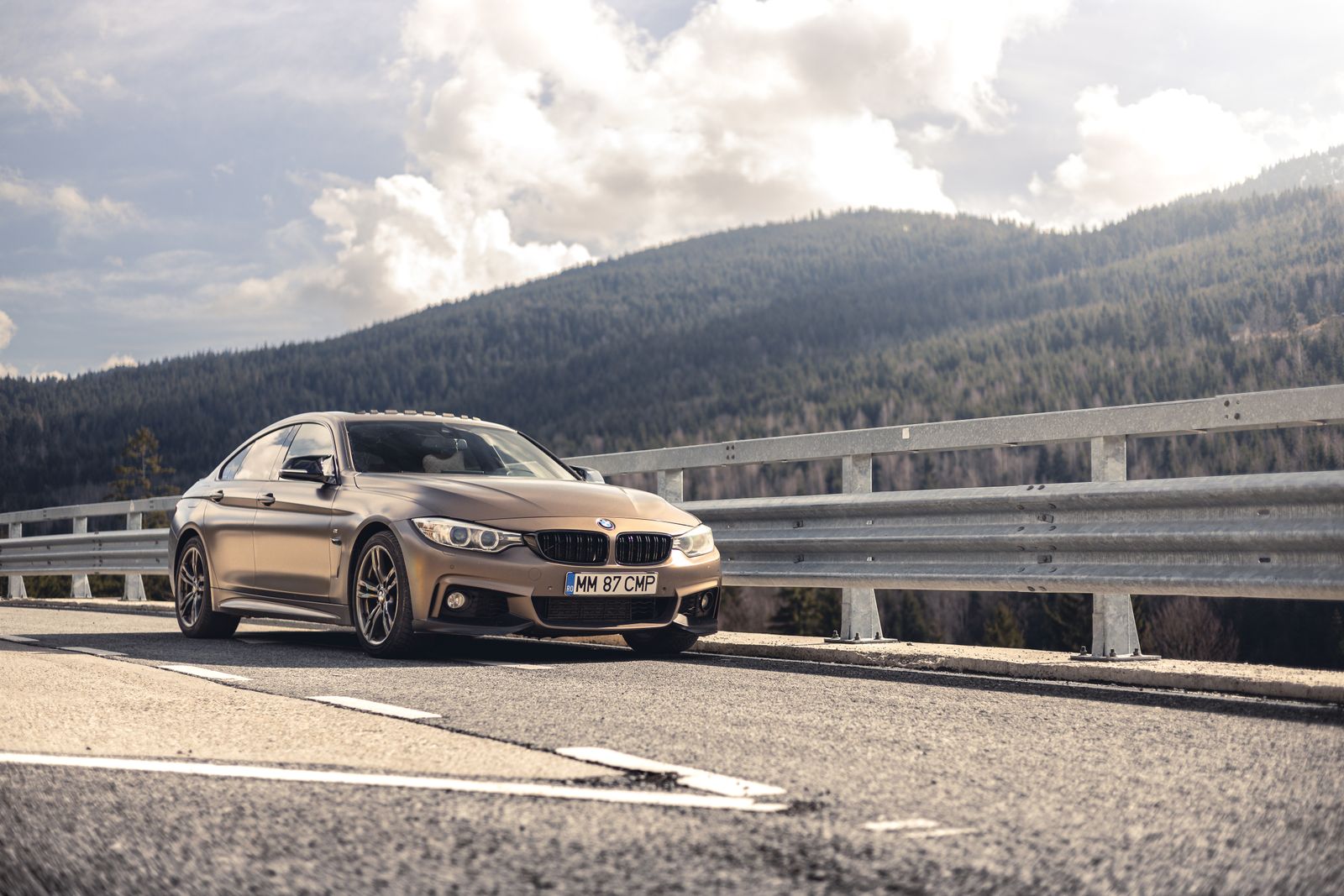 🚗 Car rental on the roadVerified car rentals in Switzerland
Search with the DiscoverCars comparison engine — it compares prices from dozens of local and international rental companies, and most bookings come with free cancellation.
Compare car prices in Switzerland →Don’t Forget Travel Insurance
Good travel insurance will protect you against illness, accidents, theft, or flight cancellations. We’ve had a few hospital visits abroad, so we know how important it is to have proper insurance arranged.
Where we insure ourselves: SafetyWing (simple monthly subscription) and TrueTraveller (for extra-long trips).
Find the Best Experiences
Get Your Guide is a huge online marketplace where you can book guided walks, trips, skip-the-line tickets, tours, and much more. We always find some extra fun there!
More from Switzerland
Full guide →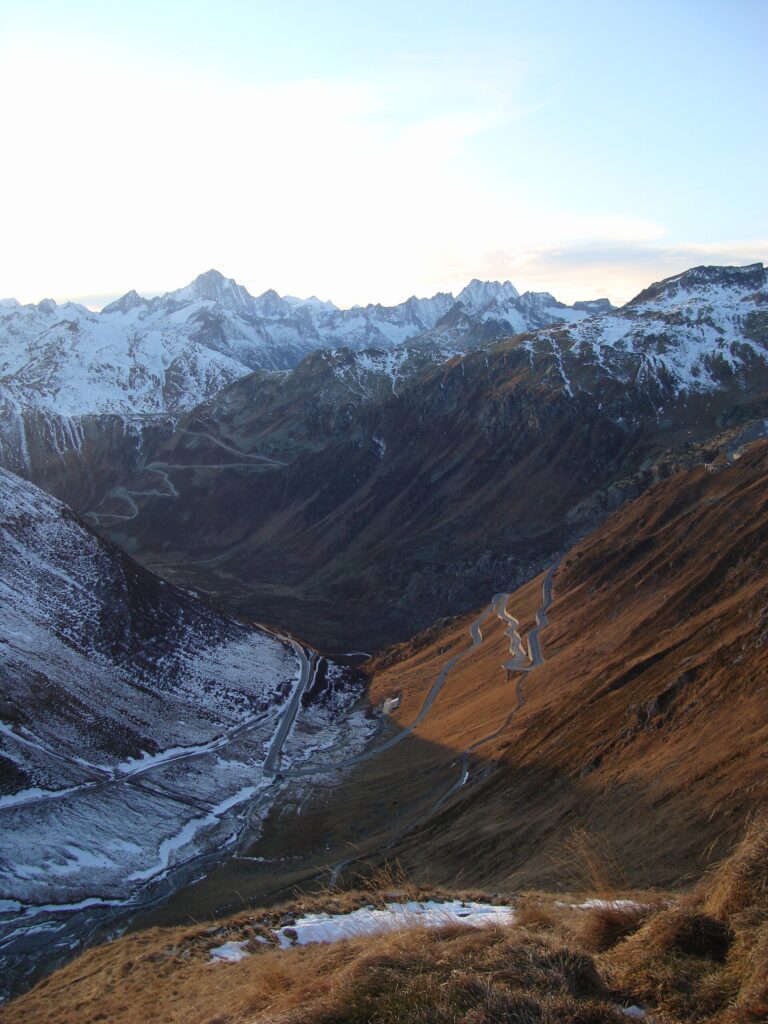 ItinerarySwitzerland Roadtrip: 7–10 Day Itinerary by Car 2026
 What to seeSwitzerland Travel Guide: 19 Best Places to Visit and Things to Do
 What to seeBern, Switzerland: 15 Best Things to See and Do in 2026
 What to seeGeneva, Switzerland: 16 Things to See and Do at Europe’s Largest Alpine Lake in 2026
 What to seeZermatt, Switzerland: 17 Things to See and Do in 2026


