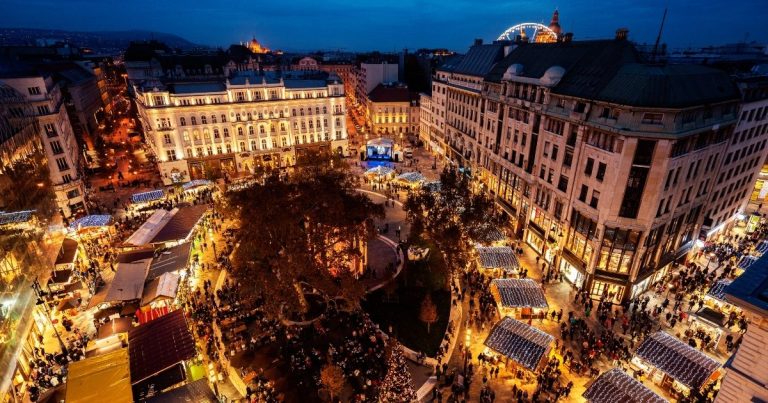
Budapest, Hungary is a place Lukáš and I are completely smitten with, and a city we come back to almost every single year. Every time, I’m amazed again at how close this majestic metropolis on the Danube really is, yet how it still feels like a whole different world. Whether you’re dreaming of soaking in steaming thermal baths or planning to dance the night away in one of the legendary ruin bars, planning your trip properly will save you a lot of stress and money. In this guide I’ll show you how to reach the Hungarian capital as comfortably as possible, whether you choose the train, the car, or a plane.
Travelling to Hungary has its quirks, and 2026 brought a few pretty major changes you really need to know about in advance. If you don’t want to get caught out the moment you arrive, it pays to know the tricks of the local taxi drivers, understand how the ruthless ticket inspectors on the metro operate, and above all, watch out for those sneaky cash machines. I’ve put together a complete, practical manual that’ll have you handling transport, navigation, and payments like a pro, without any unnecessary hassle. ☺️
TL;DR
- Most comfortable route: By train (with several direct daily connections from Vienna, around 2.5 hours), book your tickets well ahead for the best price.
- By car and the motorway vignette: Hungary uses an electronic vignette (e-matrica), so don’t forget to buy the 10-day version in advance for roughly 6,900 HUF (about £15).
- Airport transfer: The direct 100E bus from the airport costs 2,500 HUF, and standard daily travel tickets are not valid on it.
- Public transport: Download the BudapestGO app; a 24-hour ticket costs 2,750 HUF, and seniors over 65 from the EU travel completely free.
- Airbnb ban 2026: The upscale District VI (Terézváros) introduced a strict ban on short-term rentals, so look for classic hotels or other neighbourhoods instead.
- Paying and currency: Avoid paying in euros due to the terrible exchange rate; always pay in forints and steer well clear of Euronet ATMs.
- Getting around the city: Never flag down a yellow taxi on the street; always order your rides through the Bolt app.
The full destination guide: Hungary — guide and what to see
8 Things You Need to Know About Budapest, Hungary
1. 💡 Tip: The Train for Romance and Comfort
In my opinion, taking the train to Budapest is the most pleasant way to kick off the trip. You hop on in the city centre, settle in to read a book, work on your laptop, or simply pop open a bottle of wine with your partner and watch the countryside roll by. The Central European rail network funnels you through Vienna and the Hungarian town of Győr, and Lukáš and I choose the train most often because it skips the stress of the motorway entirely.
If you’re travelling via Vienna, the train is a genuine highlight, with frequent direct connections and a journey of roughly 2.5 hours. The Hungarian MÁV and Austrian ÖBB EuroCity trains depart Vienna roughly every couple of hours, and early-bird tickets start around €20 if you book ahead. Coming from the UK, the simplest combo is a flight into Vienna followed by the train, or a direct flight straight to Budapest (more on that below).
Whichever operator you choose, the golden rule for trains is crystal clear: always buy your tickets online and at least a month in advance, because on the day of travel the prices climb to astronomical heights. The earlier you book, the more comfortable and cheaper your journey will be.
2. 💡 Tip: By Car and the Sneaky Hungarian E-Vignette
If you’re travelling as a group, with kids, or simply prefer the freedom of the open road, driving gives you total flexibility. For UK travellers this usually means picking up a rental car once you’ve flown into the region, or driving across Europe if you fancy a bigger road trip. Either way, having your own wheels makes it easy to explore beyond the city and reach the spa towns dotted around the country.
The moment you cross the Hungarian border, though, an absolute must-have is the motorway vignette known as the e-matrica. The system is now fully electronic, so don’t expect any stickers on your windscreen, everything is automatically linked to your car’s number plate. For a classic long weekend in a standard car (category D1, up to 3.5 tonnes), the 10-day vignette is all you need, costing roughly 6,900 HUF for 2026, which works out at about £15.
Be very careful, however, about where exactly you buy your vignette. The safest option is to get it in advance via the official state e-shop at ematrica.nemzetiutdij.hu, where you simply create an account and carefully enter your number plate. The internet is unfortunately full of unofficial resellers who tack absurd handling fees onto the base price. If you’re driving, also remember to check parking at your accommodation beforehand, because hunting for a spot on the street in the city centre is a nightmare and works out seriously expensive.
 🚗 Car rental on the road
Verified rental cars in Hungary
🚗 Car rental on the road
Verified rental cars in Hungary
Search with the DiscoverCars comparison engine — it compares prices from dozens of local and international rental companies, and most bookings come with free cancellation.
Compare car prices in Hungary →3. 💡 Tip: Flights to Budapest, Hungary for Bargain Hunters
For most UK travellers, flights to Budapest, Hungary are by far the easiest and quickest option. There are loads of direct routes from across Britain, with airlines like Ryanair, easyJet, Wizz Air, and British Airways flying out of London (Luton, Stansted, Gatwick, Heathrow), Manchester, Birmingham, Edinburgh and more. The flight itself takes roughly two and a half hours, and in the sales you can grab return fares for a real song.
When booking, just bear in mind that the headline ticket price isn’t the full story. Once you add on getting to the airport, the obligatory security check, baggage fees, and the transfer into the centre of Budapest, your total travel time and cost can creep up fast. Booking early and travelling with hand luggage only is the classic way to keep your trip cheap and breezy.
If you’d rather sit back and let someone else do the planning, it’s worth keeping an eye on flight deal alerts and comparison sites well before your trip. A bit of patience often pays off, and Budapest is one of those city-break destinations where the airfares can be genuinely tempting. 😅
4. 💡 Tip: Straight From the Airport Into the Buzz of the City
Once you’ve landed at Ferenc Liszt International Airport, you’ll need to make your way into the city. The best value for money is the direct 100E airport bus, which works like an airport express. It stops right outside the arrivals terminal and whisks you, with no unnecessary stops, straight to the central Deák Ferenc tér square in around forty minutes.
Here comes the first big tourist trap, though, your standard daily public transport tickets are NOT valid on this bus. You have to buy a special ticket called the Airport Shuttle Bus single ticket, which currently costs 2,500 HUF. The only exception is if you hold a multi-day Budapest Card, in which case you top up with just a discounted thousand forints or so.
You board exclusively through the front doors, and the easiest option is to pay the driver directly via the Pay&GO system. Just tap your bank card on the little yellow terminal and you’re sorted. Whatever you do, don’t be lured at the airport by touts pushing unofficial taxis with promises of a quick ride, because you could end up paying triple the normal fare.
5. 💡 Tip: Public Transport, Smart Apps and Uncompromising Inspectors
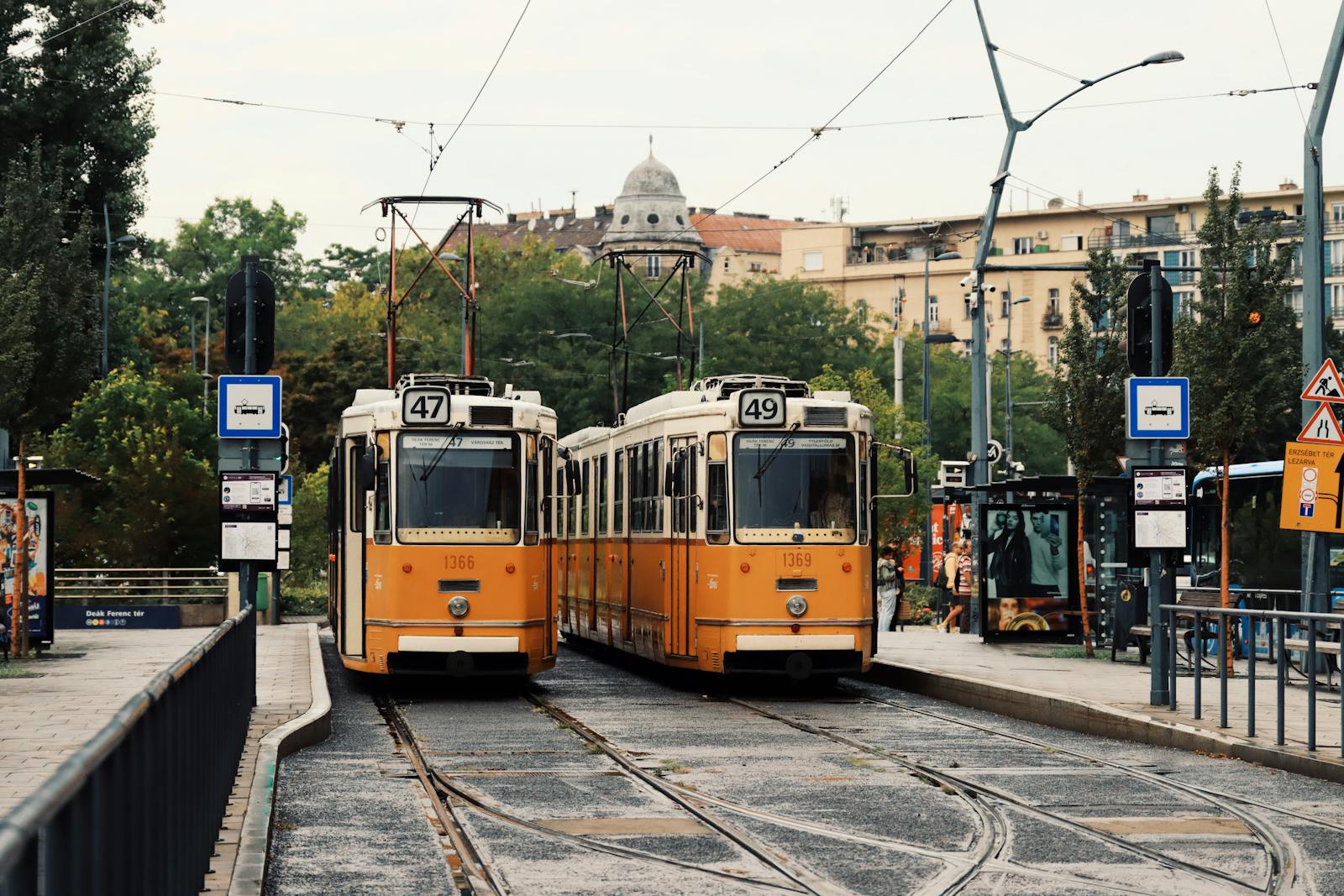
Budapest has an absolutely fantastic public transport network that gets you literally everywhere, and on top of that, the historic yellow M1 metro line is a major tourist attraction in its own right. Forget fumbling for coins at old machines, just download the official BudapestGO app to your phone, where you can easily plan your route and buy all the tickets you need.
For a typical long weekend it definitely pays to invest in a 24-hour ticket for 2,750 HUF or the three-day option, because then you don’t have to think about a thing and just hop on the trams. If you’d rather buy single tickets, the carriages have a brilliant Pay&GO system, where you simply tap your bank card on the reader and the fare is deducted automatically.
Be extremely careful about validating your tickets, because Budapest’s inspectors are notorious for being utterly uncompromising. You’ll spot them by the purple armbands on their sleeves, and they often stand in large groups right behind the metro escalators, where they practically hunt for confused tourists. If your ticket is in the app, you must always scan the QR code on the carriage door before boarding, otherwise you’re looking at a hefty on-the-spot fine of 12,000 HUF. And one more piece of great news, all seniors over 65 from the European Union travel completely free in Budapest, you just need to show your ID if checked. ☺️
6. 💡 Tip: Money, Forints and the Budapest, Hungary Currency Traps
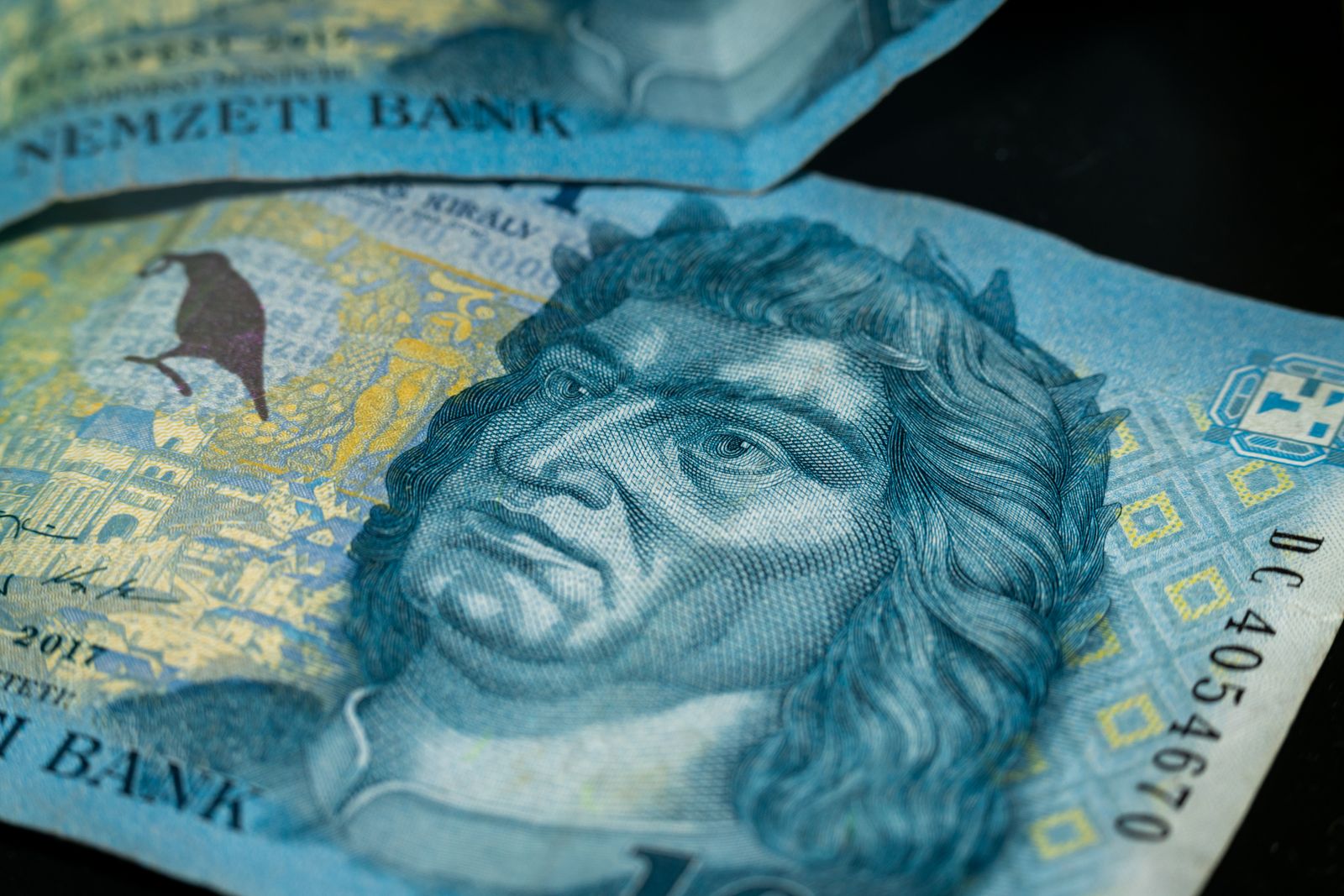
Even though Hungary has long been part of the European Union, it still uses its own currency, the Hungarian forint. The exchange rate hovers around 405 forints to the euro (roughly 470 forints to the pound), which makes the maths fairly easy once you get the hang of it. Although plenty of restaurants in the centre will happily take euros, they’ll do it at such an appalling rate that you can easily overpay by a fifth on every meal.
So the key rule is simple, always and everywhere pay in the local currency. Most of the time you’ll get by perfectly with a bank card or Revolut, but you’ll need some cash for buying spices at the Great Market Hall, tipping waiters, or using public toilets. If you do need to exchange money, steer well clear of the bureaux de change at the airport and on the main tourist street Váci utca, which lure you in with “zero commission” but bake huge hidden margins into their rates.
When withdrawing cash, the biggest pitfall in the city comes in the form of the blue-and-yellow Euronet ATMs. These machines are scattered on every corner of the tourist zones, but they charge absurd withdrawal fees. Always look for ATMs belonging to proper high-street banks, and if the screen offers to bill you in your home currency, known as DCC conversion, always decline this unfavourable service and choose to withdraw in forints without conversion.
7. 💡 Tip: Taxi Scams and Safety on the Streets
According to the statistics, Budapest is one of the safest cities in Europe, but it unfortunately excels in one discipline, and that’s elaborate tourist scams. The very worst of these is the trick known as the “consumption girls”, where friendly young women approach you on the street, strike up a conversation in English, and suggest a drink together at a nearby bar. If you go along, at the end of the evening a bill in the thousands of euros lands on your table, and bouncers appear to force you to pay.
Another huge problem is fake taxi drivers, who you really need to watch out for. Flagging down a car on the street in Budapest is pure adrenaline sport, because unofficial drivers don’t switch on their meters, take you on pointless detours, and at the end of the ride charge you double or triple the normal fare. Sometimes they even pull the trick of claiming they have no change, or palming off invalid old banknotes on you.
The solution is wonderfully simple, for all your trips around the city use only the Bolt app. It works exactly like Uber, you see the price and route in your phone in advance, and payment goes through automatically from your card, so the driver has absolutely no chance of ripping you off. Remember the local golden rule too: every legal taxi in the city must be yellow and must accept card payments, so if a driver insists on cash only, get straight back out of the car.
8. 💡 Tip: The 2026 Airbnb Ban and the Tourist Tax
If you’re currently looking for somewhere to stay, you need to know about a huge change that came into force on the first of January 2026. Residents of the upscale District VI, known as Terézváros and located around the famous Andrássy Avenue, voted in a referendum for a total ban on short-term rentals. So if you stumble across a suspiciously cheap private apartment in this area online, it’s best to back away, because the owners risk enormous fines and your booking could be cancelled at any moment.
For peace of mind and a good night’s sleep, look for accommodation in classic hotels or focus on other neighbourhoods. If you want to be close to the sights and prefer peace and quiet, District V right in the centre of Pest is ideal, as is the area below Buda Castle. If, on the other hand, you’re heading into town for the nightlife and don’t mind noise into the early hours, your dream base will be District VII, the famous Jewish Quarter packed with the best ruin bars.
Also bear in mind that a local tourist tax, known as IFA, is automatically added to every accommodation price. It’s not a fixed amount but rather four percent of the net price of your room per night, so the more luxurious the hotel you treat yourself to, the higher this fee will be. Most platforms now build this tax straight into the final price, but occasionally you may be asked to pay it in cash directly at reception.
Practical Summary and Rough Prices
Budapest may no longer be the dirt-cheap party destination it was a decade ago, but it still offers absolutely fantastic value for money. Compared with Vienna, the Hungarian capital is considerably kinder to your wallet, and across the board you’ll find prices noticeably lower than in most Western European capitals. I’ve put together an overview of current prices for 2026 so you can plan your budget more easily.
- 10-day motorway vignette: ~6,900 HUF (about £15)
- Single public transport ticket: ~450 HUF (about £1)
- 24-hour public transport ticket: 2,750 HUF (about £6)
- 100E bus from the airport: 2,500 HUF (about £5.50)
- Coffee in a nicer café: 1,000 – 1,500 HUF (about £2.20 – £3.30)
- Lángos at the market: 1,200 – 2,500 HUF (about £2.60 – £5.50)
- Basic spa entry (off-season): ~7,100 HUF (about £15.50)
- Cheap daily budget (backpacker): about £40 per day
- Comfortable mid-range with a spa visit: about £85 per day
One more little practical tip about staying hydrated, the tap water in Budapest is perfectly safe and drinkable. As you wander the city you’ll come across plenty of public drinking fountains, marked with the word “Ivóvíz”, so feel free to bring your own bottle and save money on buying bottled water.
Where to Next
You’ve now got the logistics, the transport, and the city’s pitfalls down to a T, so it’s high time to start planning the most important bit, the actual programme for your trip. Budapest is a city you could explore for weeks and it would still keep surprising you. Lukáš and I love those long walks along the Danube, the views from the Fisherman’s Bastion, and the fantastic food that wafts from every corner. And since we’re vegetarians, we’ve tried out a whole heap of brilliant little bistros serving the best cheesy lángos and proper cinnamon-dusted treats.
To help you put together the perfect itinerary, I’ve written a giant guide to the most beautiful spots in the Hungarian capital. You’ll find out which thermal baths to head for (because the famous Gellért Baths are sadly undergoing a long-term renovation right now), where to find the most photogenic ruin bar, Szimpla Kert, and what to watch out for when visiting the breathtaking Parliament building. You’ll find all this detailed info and personal experience in my extensive article 66 things to do in Budapest, Hungary, so do give it a read so you don’t miss anything important! 😉
Frequently Asked Questions
Do I need a passport to travel to Hungary?
No, Hungary is a full member of the European Union and the Schengen Area. For your trip, a valid Czech ID card is more than sufficient. You can of course bring your passport, but it’s not mandatory.
Can I drink tap water in Budapest?
Yes, the tap water from the municipal water supply is strictly controlled, meets all standards and is completely safe. Throughout the city you’ll also find plenty of drinking fountains labeled Ivóvíz. Only in very old buildings might the water have a slightly ferrous taste due to the original piping.
Is it worth paying in euros at restaurants?
Definitely not, it’s the biggest mistake you can make. Businesses will accept euros, but they’ll convert them at such a terrible exchange rate that you’ll lose out significantly. Always pay by card or withdraw local forints.
How much does a taxi from the airport actually cost?
The official and legal way by yellow taxi from the airport to the center should cost you around 9,000 to 12,000 forints. If you order a car through the Bolt app, you’ll see the exact and final price before getting in.
Is Budapest safe even for evening walks?
Budapest is among the safest European capitals and violent crime is rare here. Regular evening walks along the Danube are trouble-free. Just watch out for pickpockets in crowded areas and avoid deserted parks on the outskirts.
Do I need any adapter for Hungarian outlets?
No, electrical outlets in Hungary are exactly the same as ours in the Czech Republic (type C and F, voltage 230 V). You can charge all electronics, phones and laptops without any problems or adapters.
How exactly does the e-vignette highway toll work?
The sticker is fully electronic and is linked directly to your vehicle’s license plate. There’s nothing to stick anywhere – just purchase it in advance on the official state website and the system will check you automatically via cameras as you drive on the motorway.
Do seniors really have free public transport in Budapest?
Yes, it’s an amazing city benefit. All persons aged 65 and over from the European Union travel completely free of charge. You don’t need any special ticket, if checked by an inspector you simply just show your ID card.
Tips and Tricks for Your Vacation
Don’t Overpay for Flights
Search for flights on Kayak. It’s our favorite search engine because it scans the websites of all airlines and always finds the cheapest connection.
Book Your Accommodation Smartly
The best experiences we’ve had when looking for accommodation (from Alaska to Morocco) are with Booking.com, where hotels, apartments, and entire houses are usually the cheapest and most widely available.
Don’t Forget Travel Insurance
Good travel insurance will protect you against illness, accidents, theft, or flight cancellations. We’ve had a few hospital visits abroad, so we know how important it is to have proper insurance arranged.
Where we insure ourselves: SafetyWing (simple monthly subscription) and TrueTraveller (for extra-long trips).
Find the Best Experiences
Get Your Guide is a huge online marketplace where you can book guided walks, trips, skip-the-line tickets, tours, and much more. We always find some extra fun there!