If you’re wondering where to find a truly authentic slice of Portugal, listen up. Once you leave the bustling coastline behind and head inland, you’ll discover a landscape of endless cork oaks, olive groves, and golden plains. Right in the heart of this region known as Alentejo lies Évora Portugal — a city encircled by medieval walls that functions as a vast open-air museum. It’s a place where Roman history intertwines with Moorish influences and mysterious Christian traditions.
Évora isn’t just another pretty town on the map — it proudly holds a place on the UNESCO World Heritage list, making it an absolute must for history lovers and slow travellers. Narrow cobblestone lanes, houses glowing in white and yellow, and surprisingly monumental landmarks await you at every turn — the kind you wouldn’t expect in such a peaceful corner of the country. Compared to the hustle of Lisbon, time moves at a gentler pace here, letting you fully savour the quiet beauty of southern life.
While most visitors only pop in for a quick day trip, this city truly deserves far more of your time. Once the afternoon tour coaches depart, the historic centre empties out and takes on an incredibly romantic atmosphere. Old lanterns flicker to life, the scent of garlic and olive oil drifts from small restaurants, and you’ll have the ancient Roman temple practically to yourself. I’ve put together this detailed guide to walk you through the most fascinating corners of this Alentejo gem.
TL;DR
- Most famous landmark: The chilling Chapel of Bones (Capela dos Ossos), its walls lined with the remains of thousands of monks.
- Historical gem: A remarkably preserved 1st-century Roman temple that dominates the city skyline.
- Best viewpoint: The rooftop of the majestic Gothic Sé Cathedral, offering sweeping views across the golden Alentejo plains.
- Hidden treasure nearby: The magical Cromeleque dos Almendres megaliths, older than Stonehenge itself.
- Gastronomy: The region is famous for its full-bodied red wines, sheep’s cheeses, and unique convent desserts.
- Getting there: From Lisbon, you can get here comfortably by direct bus or train in roughly an hour and a half. From the UK, fly to Lisbon with carriers like Ryanair, easyJet, or TAP from London or other major cities.
- Weather warning: Summers here bring extreme heat, so spring or autumn is the ideal time to visit.
The full destination guide: Portugal — guide and what to see
When to Visit Évora
When planning a trip to the Alentejo region, there’s one absolutely crucial factor you need to consider: the local climate. This inland area acts like a giant oven during the summer months, with no cooling ocean breeze to take the edge off. Throughout July and August, temperatures routinely soar above 40°C. Strolling along sun-scorched cobblestone streets can quickly turn into a survival mission — a desperate search for the nearest air-conditioned café.
The most beautiful time to visit is undoubtedly spring, specifically April and May. The countryside around the city turns green, meadows burst into colourful bloom, and temperatures hover around a very pleasant 25°C. Autumn — September and October — is equally ideal, as the worst of the heat has subsided but the evenings remain warm enough for sitting outside with a glass of wine. Winters are mild but can be rainy and damp, so don’t forget to pack a warmer jumper.
If you absolutely must visit in the middle of summer, adapt to the local rhythm of life. Get up very early, tick off the key sights in the morning, and take a long siesta somewhere in the shade or by the hotel pool around midday. Life here only stirs again at sunset, when the squares fill with people and the city finally starts to breathe.
Where to Stay in Évora
💡 Accommodation & experiences tip: We love searching for accommodation on Booking.com, which usually offers the best cancellation policies. For tickets, tours, and activities, it’s worth comparing options on GetYourGuide.
Choosing the right place to stay largely depends on whether you’re arriving by car or public transport. The historic centre within the old walls is gorgeous and full of atmosphere, but navigating the maze of narrow one-way streets is an absolute nightmare for drivers. Parking spaces inside the walls are extremely limited and often reserved for residents with permits. If you’re driving, I’d recommend looking for hotels just outside the walls, where you can park stress-free and walk into the centre in five minutes.
For those who want real luxury and history rolled into one, an excellent choice is M’AR De AR Aqueduto, a five-star hotel housed in a former 16th-century palace. It offers stunning views of the historic aqueduct, a beautiful garden, and — most importantly — an outdoor pool you’ll be incredibly grateful for on warm days. It’s an oasis of calm just steps from the main tourist action.
If you prefer a cosier, family-run atmosphere right in the thick of things, check out Albergaria Do Calvário, a lovely boutique hotel set in a former olive oil mill. They serve fantastic local breakfasts and the staff are happy to help plan your excursions. For more modern facilities just outside the walls, try Vitória Stone Hotel, which boasts a rooftop pool with city views and hassle-free parking. I’d recommend booking through Booking.com, where you’ll find the widest selection and often flexible cancellation policies.
14 Best Things to See and Do in Évora
Let’s dive into the very best this captivating city has to offer. Évora may be compact, but it hides an incredible wealth of historical treasures. All the main sights are within easy walking distance of each other, so you won’t need any public transport — just wander through the centuries at your own pace.
1. Chapel of Bones (Capela dos Ossos)
This is without a doubt the most famous — and most unsettling — landmark in the entire region. The Chapel of Bones was built by Franciscan monks in the 16th century with a very clear purpose: to remind people of the fleeting nature of human life. Before you even step inside, you’re greeted by the chilling inscription above the door: “Nós ossos que aqui estamos, pelos vossos esperamos” — “We bones that are here, await yours.”
The interior of this small chapel is entirely lined with the skulls and bones of approximately five thousand people. These remains came from dozens of overcrowded medieval cemeteries around the city that had to make way for new construction. The monks carefully arranged the bones into decorative patterns across the walls and columns, creating a fascinating — if somewhat macabre — work of art. The atmosphere inside is profoundly quiet and contemplative.
The visit also includes a small museum on the upper floor, housing a collection of religious art and offering a nice view over the city. Admission is around €6, and I’d recommend heading here first thing in the morning to avoid the large crowds that pour in on organised day trips from Lisbon.
💡 Insider tip: Don’t just buy a ticket for the chapel — go for the combined entry that also covers the adjacent Nativity Scenes Museum. They have a fascinating collection of hundreds of miniature scenes from around the world.
2. Church of St. Francis (Igreja de São Francisco)
Most people make a beeline for the Chapel of Bones and completely overlook the church it belongs to, which is a real shame. This majestic building from the turn of the 15th and 16th centuries is a stunning example of Gothic and Manueline architecture combined. It held great significance in the past, as Portuguese kings and nobility often came here to pray during their stays in the city.
When you step into the main nave, you’ll be immediately struck by its vast, uninterrupted space. There are no supporting columns — an incredible architectural achievement for its time. The gilded main altar contrasts sharply with the dark themes of the adjacent ossuary, showcasing the extraordinary wealth of the Portuguese empire at its peak.
The entire complex recently underwent an extensive and carefully handled restoration, bringing the church back to its full glory. Make sure to look up at the nautical motifs and symbols on the vaulted ceilings — they’re a nod to the era of Portugal’s famous maritime discoveries and global expansion.
3. Roman Temple (Templo Romano)
Often incorrectly called the Temple of Diana, this structure was actually dedicated to Emperor Augustus in the 1st century AD. It’s one of the best-preserved Roman monuments on the entire Iberian Peninsula and the undisputed centrepiece of the city. Standing proudly on an elevated square, its fourteen original granite columns with marble capitals have been defying the elements for two thousand years.
Its remarkable state of preservation is actually down to an extraordinary twist of history. During the Middle Ages, the spaces between the columns were bricked up and the structure was repurposed as a slaughterhouse and armoury. The walls ended up protecting the ancient columns from weathering and destruction. It wasn’t until the 19th century that the later additions were removed, revealing the temple in its original classical beauty.
Today the temple is beautifully illuminated, and the best time to enjoy it is in the evening when the tourist crowds have melted away and the place takes on an incredibly magical atmosphere. Right next to it you’ll find a small park with benches, where you can sit back with a coffee and take in this ancient marvel at your leisure.
4. Sé Cathedral (Sé de Évora)
Just a few steps from the Roman temple rises another monumental structure you simply can’t miss. The Sé Cathedral is the largest medieval cathedral in all of Portugal, and at first glance it looks more like an impregnable military fortress than a place of worship. Construction began back in the 12th century, and its architecture blends elements of rugged Romanesque with more refined Gothic elegance.
Inside, you’ll be greeted by a darker but deeply atmospheric interior, dominated by a beautiful marble altar and a unique statue of a pregnant Virgin Mary. The history of this place is fascinating — it was at this very altar that the flags of Vasco da Gama’s fleet were blessed just before the legendary explorer set off on his groundbreaking voyage to India.
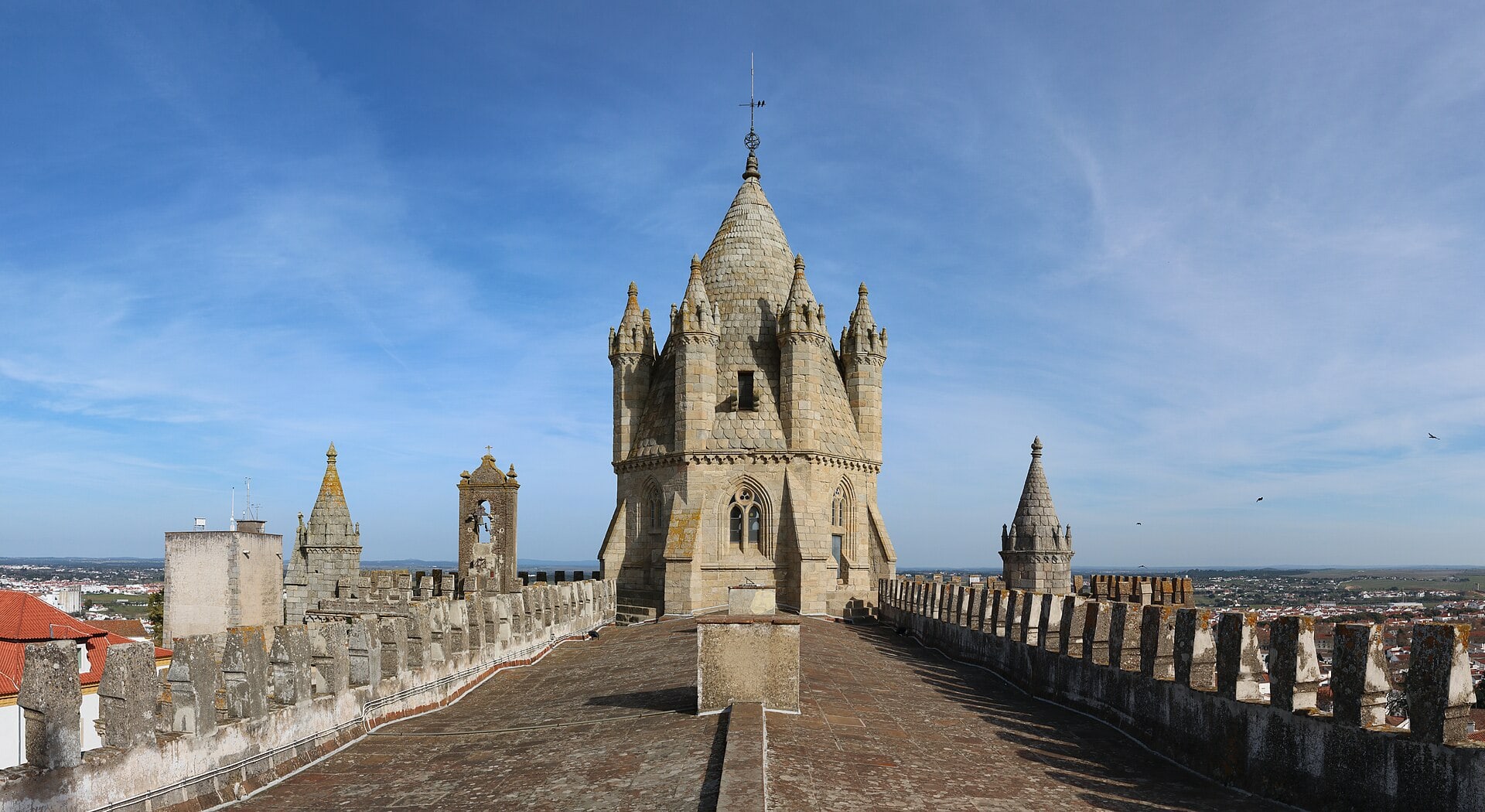
But the best part awaits when you buy a ticket to the rooftop. A narrow spiral staircase takes you right up onto the cathedral’s rooftop terraces, where you’re rewarded with a breathtaking panoramic view across the entire city and the seemingly endless Alentejo plains beyond. On a clear day, you can see for miles.
💡 Insider tip: Don’t miss the inner courtyard (cloisters), a peaceful haven of beautiful Gothic architecture that offers wonderful angles for photographing the cathedral towers.
5. Praça do Giraldo
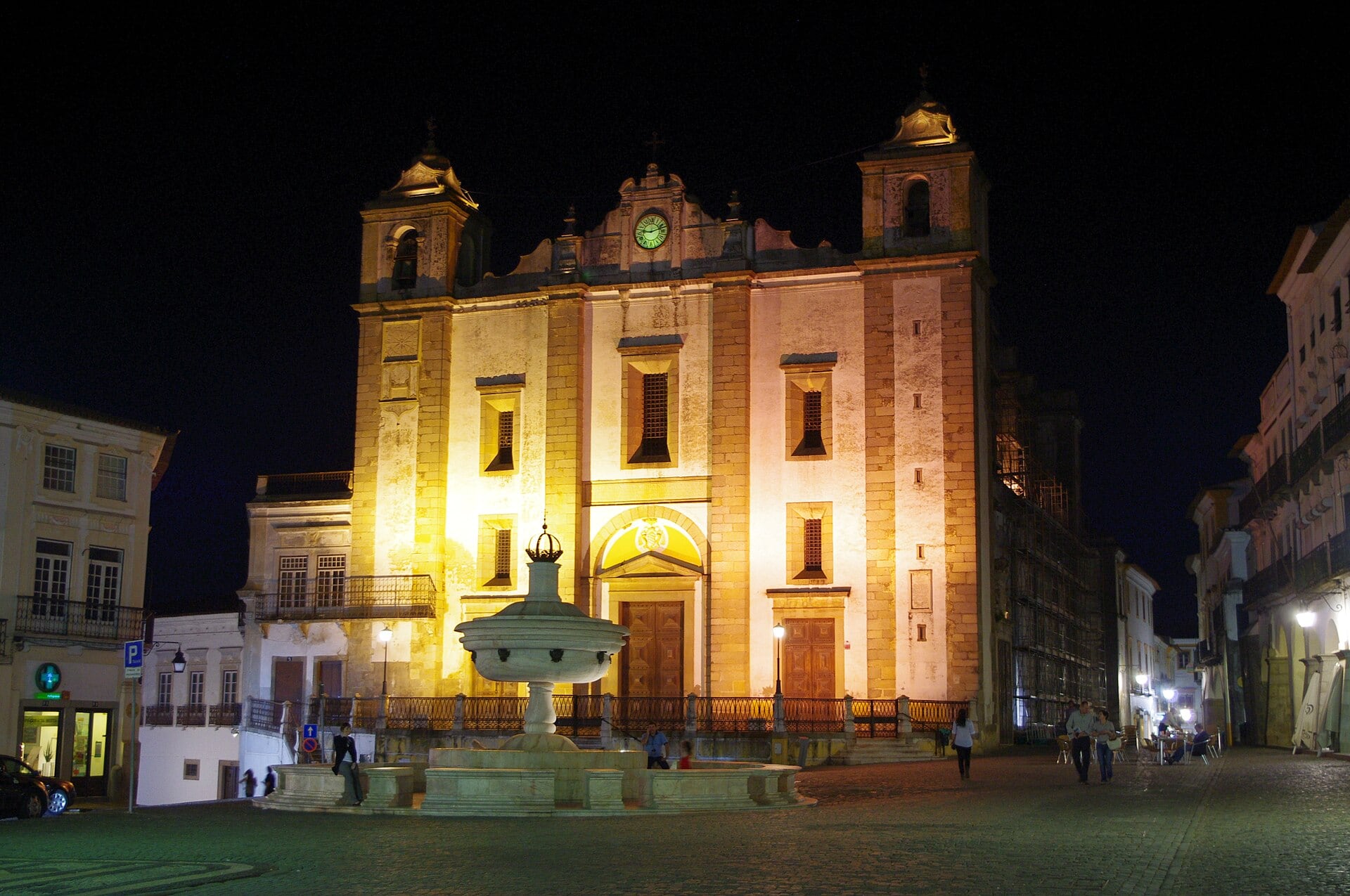
This elongated, arcaded square has been the beating heart of the city since medieval times. Praça do Giraldo is where everyone converges — local students, families with children, and tourists seeking shade alike. The entire square is lined with cafés and restaurants whose outdoor terraces invite you to linger and watch the world go by.
The northern side is dominated by the Church of Santo Antão and a beautiful marble fountain adorned with animal motifs and eight water spouts. These eight spouts symbolise the eight main streets that radiate from this square to different corners of the city. It’s the perfect landmark to orient yourself by — you’ll probably find yourself returning here several times throughout the day.
Despite its current laid-back atmosphere, the square has a dark past. During the 16th century, this was the very place where the brutal trials of the Portuguese Inquisition and public executions took place. Thankfully, today the only things filling the air are the aroma of coffee and sweet pastries from the celebrated local bakeries.
6. Souvenir Shopping on Rua 5 de Outubro
From the main Giraldo square, the gently sloping Rua 5 de Outubro leads you uphill directly to the cathedral and Roman temple. This charming pedestrianised street is the go-to hub for shops selling traditional handcrafted goods. If you want to bring home something genuinely local and authentic from Portugal, this is the place to do it.
The Alentejo region is the world’s largest producer of cork, so you’ll find absolutely everything made from this material here. Shop windows overflow not only with traditional stoppers and coasters, but also with gorgeous cork handbags, wallets, hats, and even shoes and umbrellas. Cork is incredibly lightweight, eco-friendly, and waterproof.
Beyond cork, you’ll also come across beautiful hand-painted ceramics with vibrant patterns that will brighten up any kitchen. Prices on this main street can be a touch higher than in the quieter back alleys, but the selection is unbeatable and the stroll itself — beneath colourful bunting — is a delight.

7. Historic University (Colégio do Espírito Santo)
Évora has always been a centre of learning, and its university is one of the oldest in the country. Founded by Jesuits back in 1559, it educated the Portuguese elite for centuries. Although it was shut down for a long period in the 18th century on the orders of the powerful Marquis of Pombal, today it’s once again buzzing with life and thousands of students who give the city a youthful energy.
The main building, known as Colégio do Espírito Santo, is freely open to the public and well worth a visit. At its heart lies a beautiful Renaissance courtyard surrounded by marble arcades. But the real treasure is hidden inside the individual historic classrooms, which you can peek into when lectures aren’t in session.
Each old classroom is entirely decorated with traditional blue-and-white azulejo tiles, their themes matching the subject that was taught in that particular room. In the physics classroom, you’ll find scenes related to science, while the theology room features biblical motifs. It’s an incredibly elegant showcase of Portuguese artistry.
💡 Insider tip: If you want to experience genuine student life, pop into the university canteen set within the historic premises for a coffee or a cheap lunch. It’s affordable and wonderfully authentic.
8. Água de Prata Aqueduct
This monumental 16th-century Renaissance aqueduct is an engineering marvel that once channelled drinking water into the city from nearly twenty kilometres away. It was designed by the celebrated architect Francisco de Arruda — the same man who designed the iconic Belém Tower in Lisbon. The aqueduct’s arches sweep majestically through the landscape right up to the city walls.
The most fascinating section, however, is found right inside the city, specifically along Rua do Cano. As the city gradually expanded and space became scarce, residents started building their small white houses directly between the aqueduct’s arches. Today you can see a truly unique street where ancient pillars grow right through the façades of family homes, forming part of their very walls.
If you enjoy longer walks, you can follow a dedicated eco-trail that runs alongside the aqueduct out of the city and into the open countryside. The route is well-marked, flat, and rewards you with lovely views of the surrounding cork oak groves and grazing sheep.
9. Dom Manuel Palace and Public Gardens
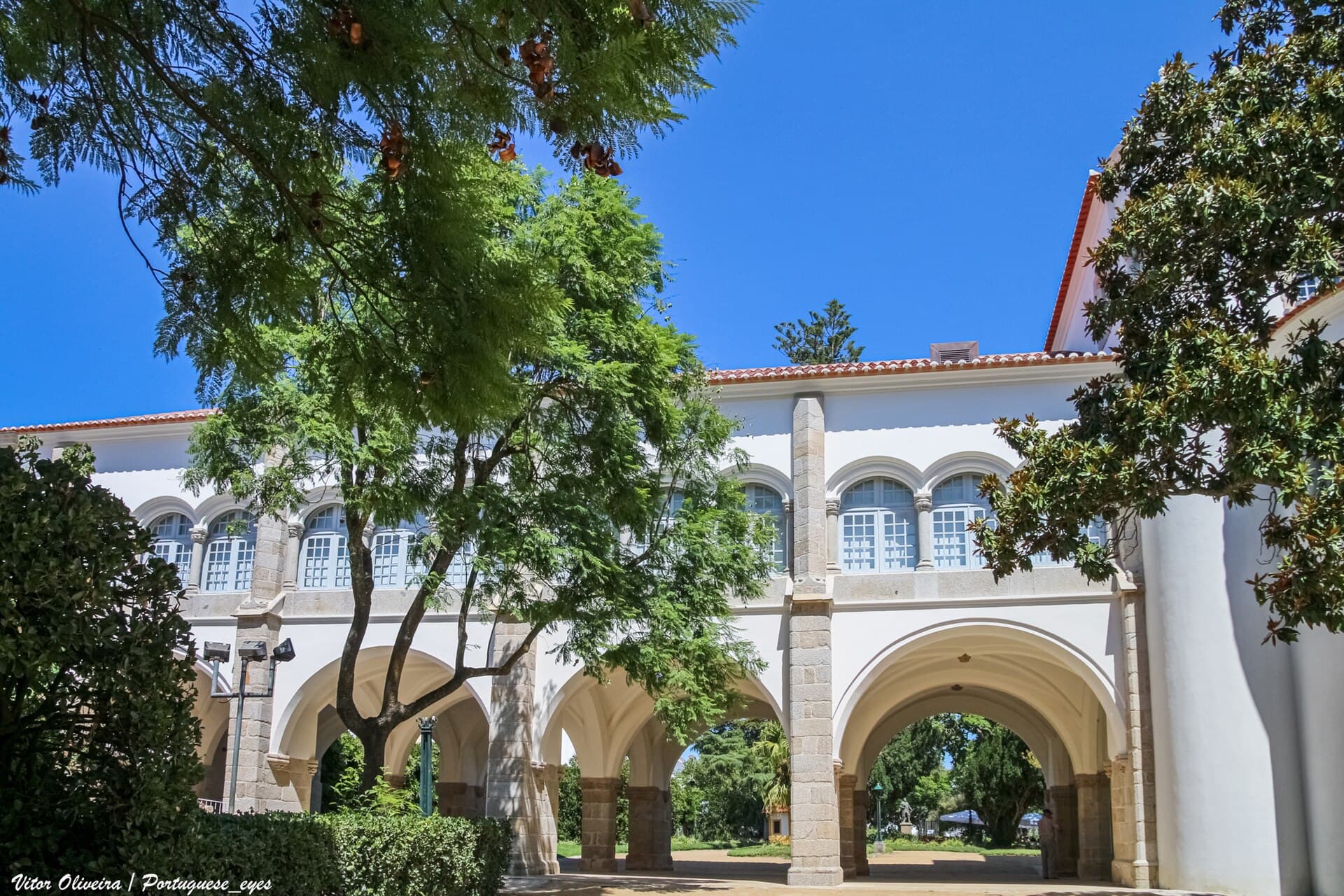
When the afternoon sun starts beating down mercilessly, the best refuge is Jardim Público — the main public park on the southern edge of the historic centre. This spacious green area offers dense shade from mature trees, plenty of benches, and refreshingly cool air. You’ll share the space with dozens of freely roaming peacocks who love showing off for visitors.
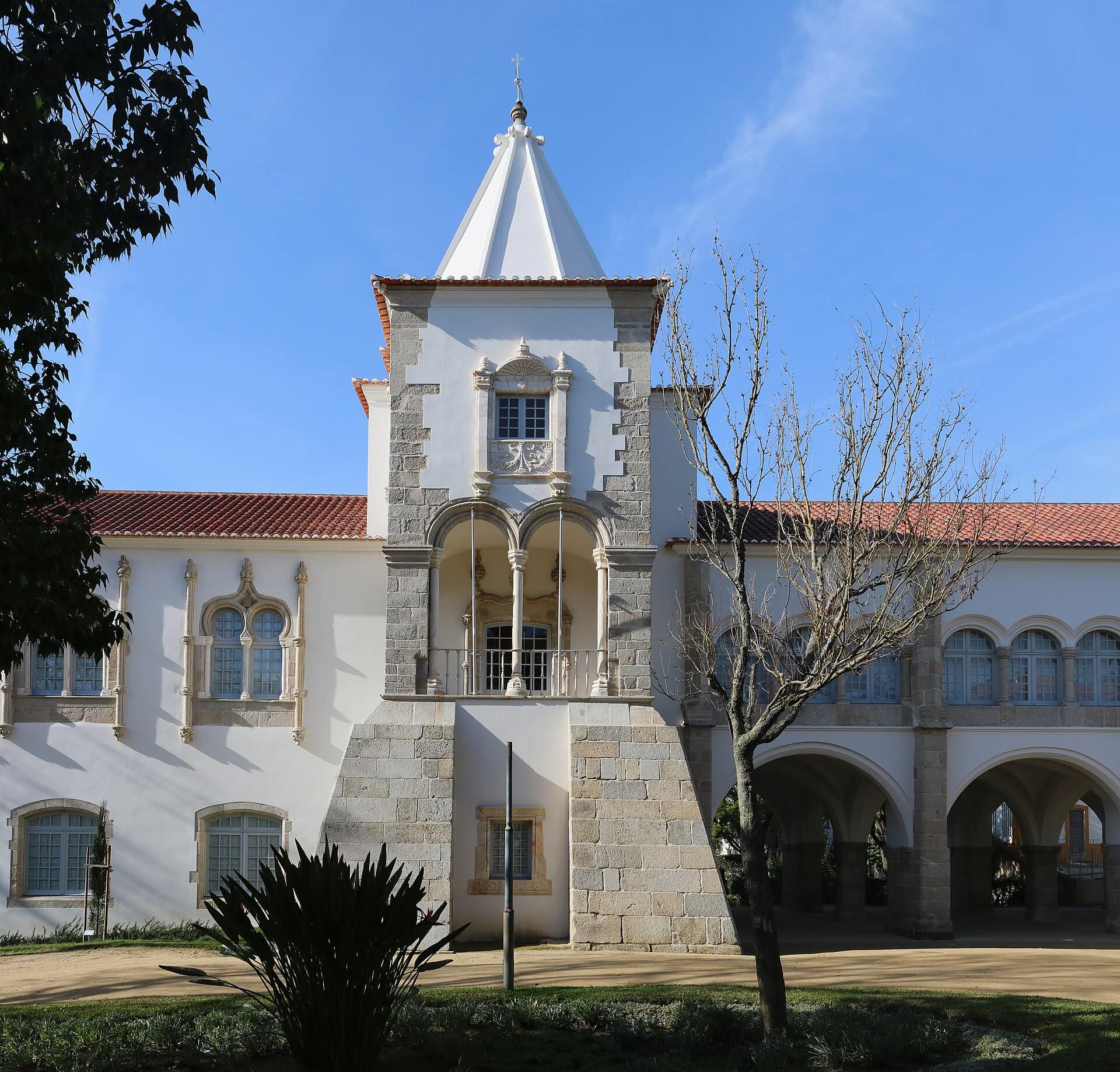
Within the park, you’ll discover the remains of the once-lavish royal Palácio de Dom Manuel. It was a favoured residence of Portuguese kings, and it’s said that right here Vasco da Gama received command of his famous maritime expedition. What survives today is a handsome pavilion with distinctive Manueline and Moorish windows, now used as a space for occasional exhibitions.
Another charming feature of the park is its romantic faux ruins (Ruínas Fingidas), built in the 19th century using genuine stones and architectural fragments salvaged from demolished city palaces and convents. It’s the perfect spot for an afternoon picnic.
10. Cromeleque dos Almendres Megaliths
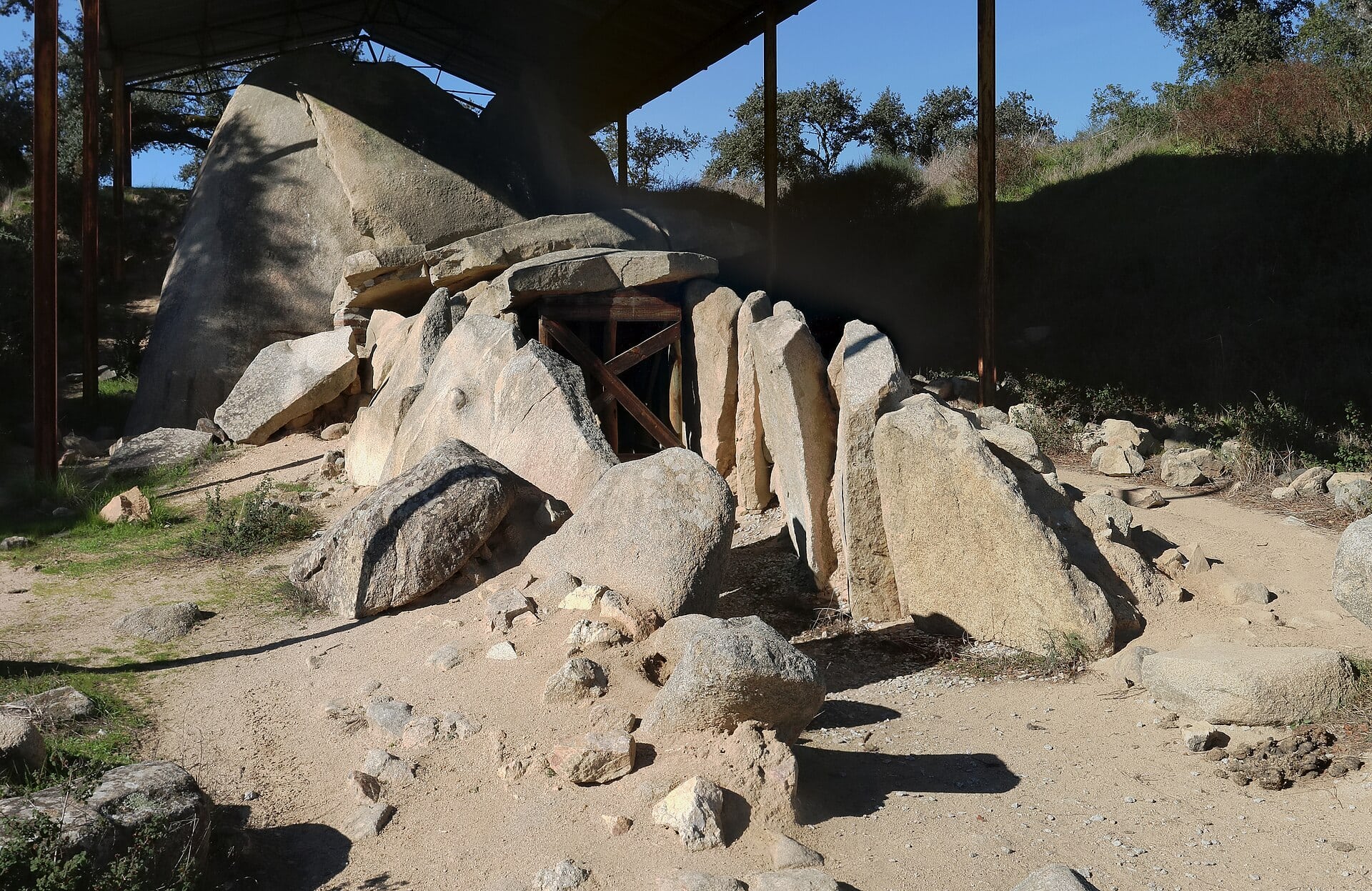
This is an experience you absolutely cannot miss, even though it lies about fifteen kilometres outside the city. Cromeleque dos Almendres is the largest megalithic complex on the entire Iberian Peninsula and one of the most significant monuments of its kind in Europe. To put it in perspective, these stones were erected thousands of years before Stonehenge was even a twinkle in anyone’s eye.
The complex consists of nearly a hundred massive oval granite stones arranged in two large ellipses on a hillside amid an idyllic cork oak grove. The site was most likely used by ancient civilisations for astronomical observations and religious rituals tied to the solstices and agriculture.
Access to the megaliths is via a dusty unpaved road, so expect your car to pick up a layer of dust. The most powerful atmosphere here is at sunrise or in the late afternoon, when the long shadows cast by the stones create an incredibly mystical spectacle. Entry is completely free and the site is unfenced.
💡 Insider tip: On your way to the main stone circle, stop at the solitary Menir dos Almendres. This four-metre giant supposedly served as a directional marker pointing towards the main sanctuary.
11. Évora Museum (Museu Nacional Frei Manuel)
If you’re keen on a deeper dive into the region’s history — or simply need to escape the midday heat — head to the main museum, housed in a former bishop’s palace right next to the Roman temple. The collections are surprisingly rich and brilliantly chart the city’s evolution from prehistory to the modern era.
The ground floor’s biggest draw is its superbly preserved Roman and Islamic artefacts, including beautiful classical statues and intricate mosaics unearthed during excavations right here in the city. History practically seeps from every stone.
Upstairs, you’ll find an impressive painting gallery housing valuable Renaissance canvases, including rare works by Flemish masters that the wealthy Portuguese nobility had shipped here during the city’s golden age. The museum is fairly extensive, so set aside at least an hour and a half.
12. Alentejo Gastronomy
Exploring Alentejo without diving into the local food scene would be an absolute travesty. The cuisine here is rustic, hearty, and built on outstanding local ingredients — primarily olive oil, garlic, and fresh herbs. A wonderful vegetarian experience is the traditional açorda alentejana, a thick garlic soup made with soaked country bread, generous amounts of coriander, and a poached egg.
The region is also celebrated for its superb cheeses, particularly the soft sheep’s cheese Queijo de Serpa, which has protected designation of origin status and pairs perfectly with fresh bread and a glass of wine. Locals swear by the various specialities made from black Alentejo pork (porco preto), free-range pigs that roam the cork oak groves feeding exclusively on acorns — producing some of the finest cured meats and sausages you’ll ever taste.
Make sure to leave room for dessert. Convent sweets here are the stuff of legend. Be sure to try Sericaia, a fluffy egg-and-cinnamon pudding traditionally served with sweet candied plums from the nearby town of Elvas.
13. Full-Bodied Red Wine Tastings
Alentejo is one of the most respected wine regions in all of Portugal. Thanks to an abundance of sunshine and the hot climate, grapes ripen to high sugar levels, producing bold, full-bodied, and intensely fruity red wines that regularly scoop medals at international competitions.
If you don’t have the time or a car to tour the rural wine estates (known as herdades), head straight to Rota dos Vinhos do Alentejo in the city centre. This tasting room and information centre offers samples from various regional producers for a very reasonable fee, with knowledgeable staff on hand to walk you through each one.
The white wines from this region are also surprisingly fresh and pair brilliantly with light lunches on scorching summer days. And a bottle of quality Alentejo wine is hands down the best souvenir you can bring home from your trip.
14. Day Trip to the Whitewashed Village of Monsaraz
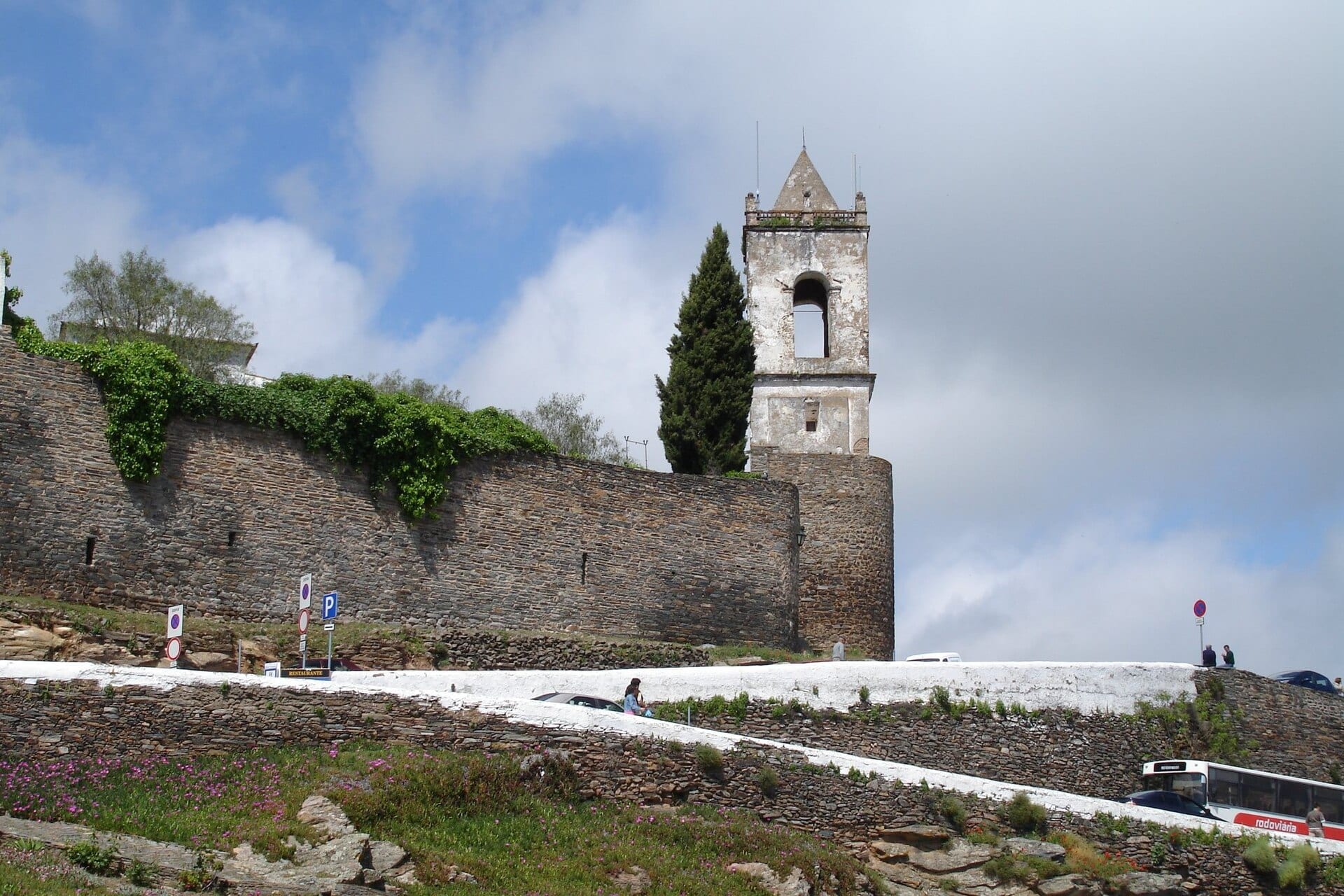
If you have a car and a bit of extra time, an absolutely unmissable day trip is the medieval village of Monsaraz, roughly an hour’s drive towards the Spanish border. This tiny settlement perches high on a steep hilltop, entirely composed of dazzlingly white houses and narrow slate lanes where cars are not allowed.
At the far end of the village stands an old castle, whose towers and walls you can freely climb. From up there, you’re rewarded with a truly epic and unforgettable view of the vast Alqueva Reservoir — one of the largest artificial lakes in Europe, forming a natural border with Spain.
This entire area is also a designated Dark Sky Reserve, meaning light pollution is minimal. If you stay until after dark, you’ll experience some of the most spectacular stargazing you can find anywhere. It’s the perfect way to cap off your exploration of the Alentejo interior.
Map of points of interest for your phone
Where to Go Next from Évora
The city’s central location in Portugal makes it a perfect stop on a longer road trip through the country. If you’re heading back to the coast for busier city life and more sights, be sure to read our comprehensive Lisbon guide — it’s less than two hours away. Lovers of romantic palaces shouldn’t miss the fairy-tale town of Sintra, either.
If you’re heading straight south from the interior for beaches and dramatic cliffs, check out our tips for the most beautiful spots in Lagos or discover the historic centre of the Algarve’s capital in our Faro guide. For a quieter southern escape, the charming town of Tavira is also an excellent choice.
Frequently Asked Questions
How do I get from Lisbon to Évora?
The journey is very straightforward. Regular buses run from Lisbon (Sete Rios station) operated by Rede Expressos, and the trip takes about an hour and a half. Tickets cost around 12 euros. You can also take comfortable trains from Oriente station, which take about the same time, though there aren’t as many daily connections as with the buses.
How much time do I need to see the city?
One full, packed day is enough to see the main highlights in the historic center. However, if you want to soak up the atmosphere, visit the megaliths outside town, and leisurely sample the local wines, I’d recommend staying at least one night and setting aside two days.
Where’s the best place to park?
Definitely don’t try to drive into the historic center within the walls—the streets are extremely narrow. You’ll find large, often free parking lots just outside the walls near the aqueduct or close to the university. From there, it’s only a five-minute walk to the center.
Is it suitable to travel here with small children?
The city is very safe and has lovely parks (like Jardim Público with its peacocks). However, the historic center is paved with very rough cobblestones, so getting around with a regular stroller can be quite bumpy and tiring. You’ll definitely appreciate a baby carrier instead.
What are the opening hours for monuments?
Most museums and monuments open around nine or ten in the morning. Keep in mind, though, that especially smaller churches and some shops still observe an afternoon siesta and may be closed from around 1:00 PM to 3:00 PM. Many museums are completely closed on Mondays.
Can I pay by card at smaller establishments?
You’ll have no problem paying by card at large hotels and major monuments. However, many small family-run cafés and traditional restaurants still don’t have card terminals or only accept local Multibanco network cards. Always carry some cash with you.
Do I need to reserve a table for dinner?
I’d definitely recommend it during peak summer season and on weekends, especially if you’ve got your eye on one of the better-rated traditional restaurants. These places tend to be small and fill up quickly. Portuguese people dine quite late—restaurants don’t start getting busy until after 8:00 PM.
Tips and Tricks for Your Vacation
Don’t Overpay for Flights
Search for flights on Kayak. It’s our favorite search engine because it scans the websites of all airlines and always finds the cheapest connection.
Book Your Accommodation Smartly
The best experiences we’ve had when looking for accommodation (from Alaska to Morocco) are with Booking.com, where hotels, apartments, and entire houses are usually the cheapest and most widely available.
 🚗 Car rental on the roadVerified car rentals in Portugal
Search with the DiscoverCars comparison engine — it compares prices from dozens of local and international rental companies, and most bookings come with free cancellation.
Compare car prices in Portugal →Don’t Forget Travel Insurance
Good travel insurance will protect you against illness, accidents, theft, or flight cancellations. We’ve had a few hospital visits abroad, so we know how important it is to have proper insurance arranged.
Where we insure ourselves: SafetyWing (simple monthly subscription) and TrueTraveller (for extra-long trips).
Find the Best Experiences
Get Your Guide is a huge online marketplace where you can book guided walks, trips, skip-the-line tickets, tours, and much more. We always find some extra fun there!