

Istria & Kvarner is probably the easiest slice of Croatia to reach from Central Europe — and that’s exactly why the same questions keep spinning around in our heads. It’s easy to picture a pretty town above the sea, pine trees, an olive grove and a plate of fresh fish. The practical side is trickier: how much do we really need for it, when should we go to avoid the crush, and is a package worth it — or are we better off driving ourselves?
We built this hub for exactly that. You’ll find three things here: up-to-date package and flight prices that we refresh every morning; our own hands-on tips from trips and articles about places we’ve actually been; and a plan for when and what to book so you don’t overpay for nothing.

What to see and do in Istria & Kvarner
Istria & Kvarner isn’t about a single spot — it’s a mosaic of old towns, islands and wild coastline where you could spend three holidays back to back and still keep discovering something new. Here’s our pick of what you shouldn’t miss.
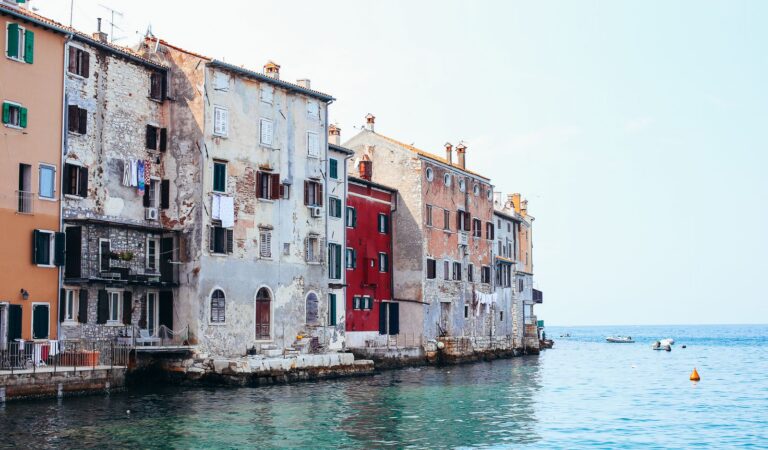
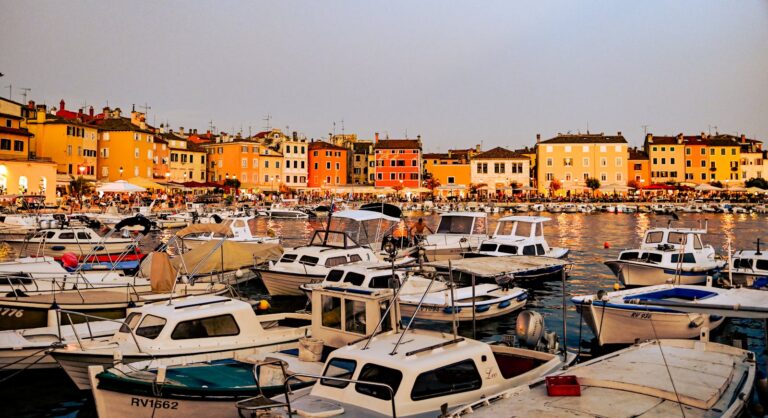
- Rovinj — the most photogenic little town in all of Istria, with narrow lanes climbing up to the Church of St Euphemia. Perfect for sunset and a laid-back dinner by the water.
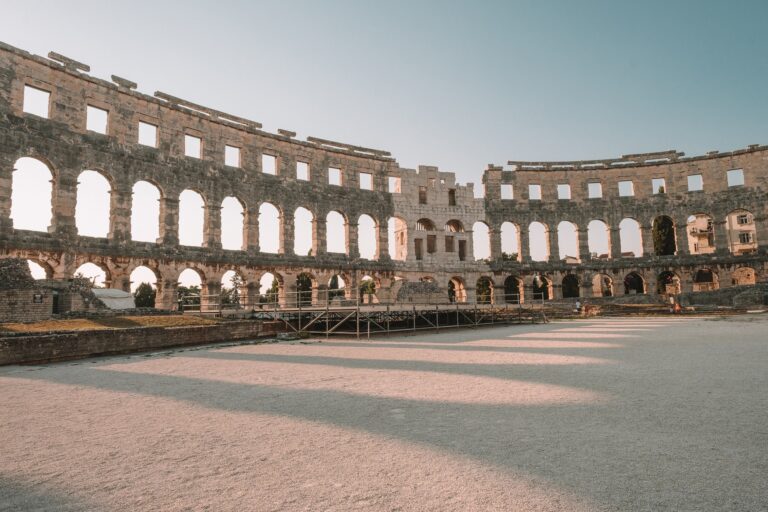
- Pula — Istria’s largest city, and its headline act is the beautifully preserved Roman amphitheatre, one of the biggest in the world.
- All of Istria as a region — an interior of hilltop towns (Motovun, Grožnjan), truffles, olive oil and wineries. When you tire of the beach, you won’t be bored here.
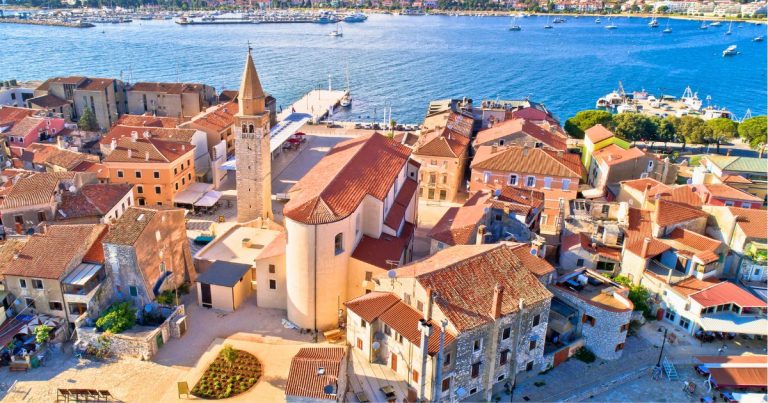
- Umag on the west coast — the gateway to Istria just over the Slovenian border, a quieter, family-friendly spot with long beaches.
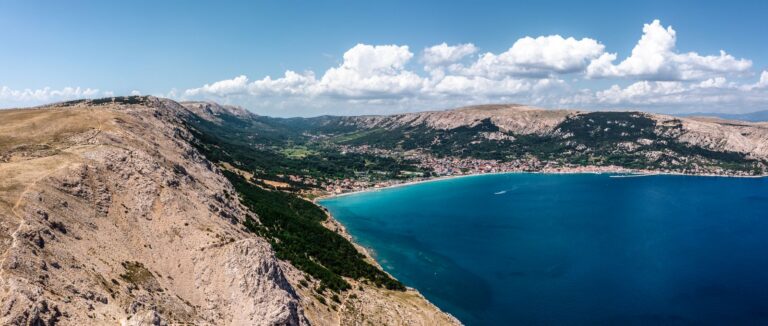
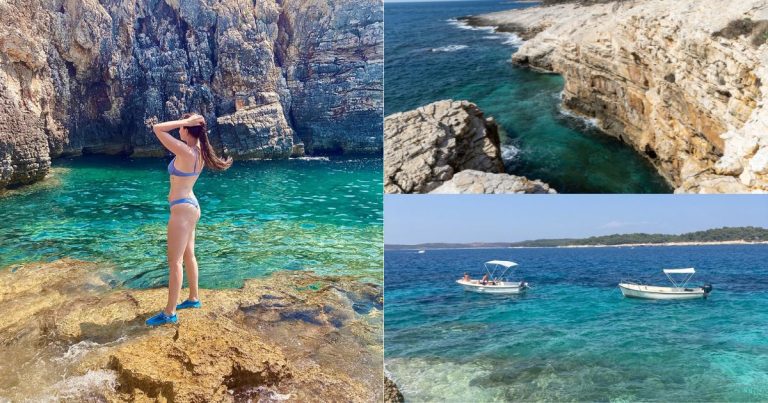
- Kamenjak National Park at the very southern tip of the peninsula — wild coastline, rocky coves and some of Istria’s most beautiful beaches with no concrete in sight.
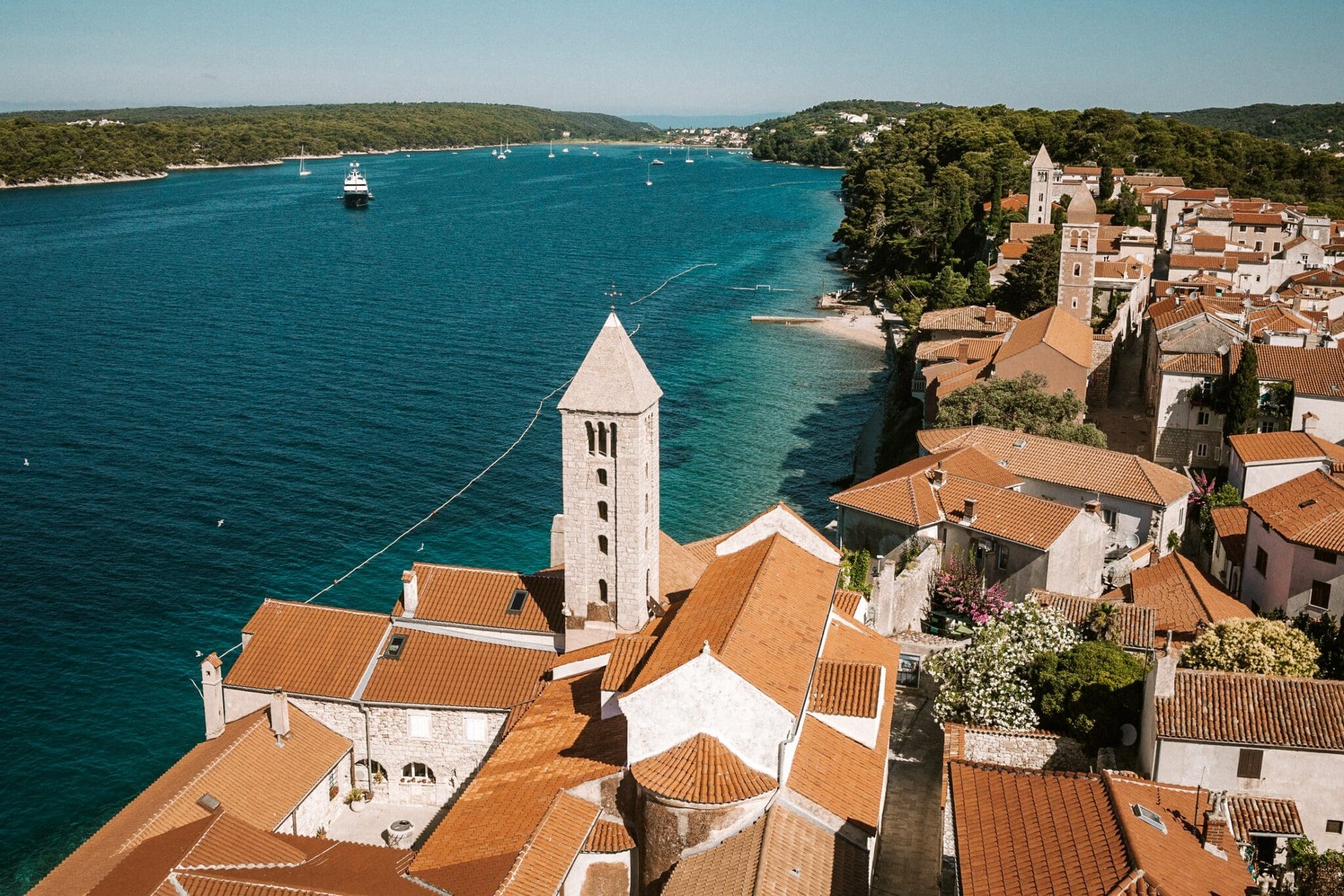
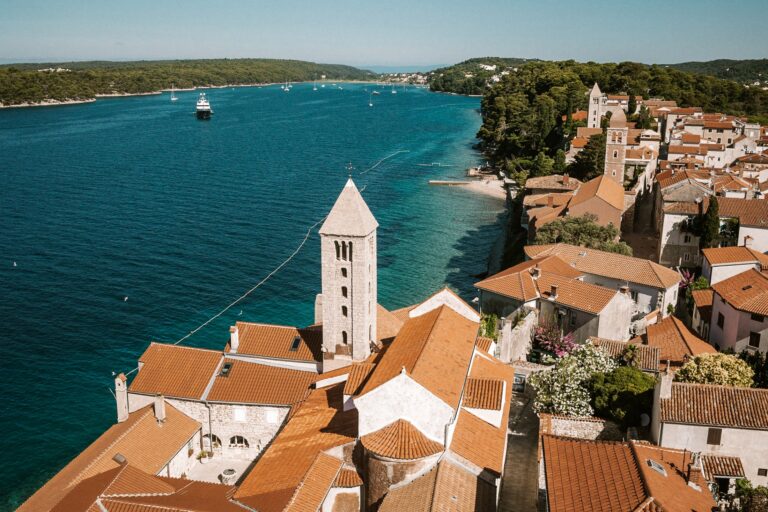
- The Kvarner islands: the island of Krk, linked to the mainland by a bridge (you can drive straight over), and the island of Rab with its sandy beaches and an old town crowned by four bell towers.
When to visit Istria & Kvarner
Peak season is obvious — July and August, when the sea is warmest (around 24–26 °C) and everything is in full swing. But these are also the priciest and busiest months: packed beaches, accommodation prices sky-high, and queues for ferries and car parks. If you’re not tied to the school holidays, we’d steer clear of them.
Our favourite window is June and September — the sea is pleasantly warm, the weather is settled, but the crowds and prices are noticeably lower. September has an extra bit of magic, too: the grape harvest is on and truffle season is just starting in the Istrian interior.
Spring (May) and early autumn (October) are great for exploring towns, the interior and hiking — though the water tends to be on the brisk side for swimming by then. Over winter most coastal resorts wind down, but Pula and Rovinj stay open year-round and have their own quiet charm.
How to get to Istria & Kvarner
The biggest advantage of Istria & Kvarner is how easy it is to reach by car. From Prague, Istria is roughly 900–1,000 km, about 9–11 hours of driving through Austria and Slovenia. The whole route is motorway (budget for an Austrian and a Slovenian motorway vignette plus Croatian tolls), and a car is a clear win once you’re there — getting around the islands and the interior without one is a hassle.
If you’d rather not drive, you can fly. Direct air links to the region are seasonal and limited, though — the most common option is flying into Pula, or via larger Croatian airports (Zagreb, Rijeka) with an onward transfer. You can reach the islands of Krk and Rab by car over a bridge or by ferry respectively — Krk is connected to the mainland by a bridge, so you don’t need a ferry there at all.
Renting a car
Most people drive to Istria & Kvarner in their own car, so a hire car is really only on the radar for those who fly in. And if you do fly in, a car is definitely worth it here — getting around the Istrian interior, between the islands and out to remote beaches is slow and awkward on public transport. Without a car you’ll manage maybe one town and its surroundings; with one, the whole region opens up.
- Book ahead via a rental comparison site — in season, cars on the spot are pricier and often sold out.
- Keep an eye on the insurance and deposit amount (the hold on your card) — basic cover often excludes the underside of the car and the tyres, which is exactly what you risk on the stony tracks down to the beaches.
- Budget for Croatian motorway tolls and ferry fees if you’re heading to islands without a bridge.
- Return the car with a full tank, and photograph its condition at both pick-up and drop-off — it saves arguments.
Where to stay in Istria & Kvarner
Accommodation in Istria & Kvarner is very much about apartments and private rooms — there’s a huge range, and for families and couples they usually work out better than a hotel. Where you base yourself depends on what you want from the trip:
- Rovinj and Poreč — for those who want old-town atmosphere, cafés and harbour life on the doorstep.
- Pula and southern Istria — a mix of city, historic sites and easy access to Kamenjak’s beautiful beaches.
- Umag and the west coast — quieter, family-friendly, with good connections to Slovenia and Italy.
- The islands of Krk and Rab — if you’re after peace, swimming and island pace; thanks to its bridge, Krk is ideal for a road trip.
Our tip: in peak season, sort your accommodation several months ahead — the best apartments in Rovinj and on the islands go first. Out of season it’s the opposite: you can improvise and even haggle on the spot.
Package tour or independent travel?
With Istria & Kvarner the decision is simpler than for far-flung destinations — it’s close and it’s a great drive. Even so, both options have their pros and cons.
A package (or a bundle with transport) makes sense when…
- you don’t want to deal with your own car or a long drive behind the wheel,
- you’re flying and want your transfer and accommodation sorted in advance,
- you value the certainty of a fixed price and a single point of contact if something goes wrong.
Go it alone when…
- you have a car and want to roam around more places — the interior, the islands, different beaches,
- you want the freedom to choose where you sleep and what you do each day,
- you’re travelling outside peak season, when accommodation can be had cheaply and flexibly.
For the two of us, the self-drive road trip has always won here — the region is made for it, and flexibility counts for more in Istria than almost anywhere. A package mainly makes sense for those who don’t want to drive, or who fly in and appreciate having everything handled in one go.
Budget: daily costs in Istria & Kvarner
| Level | Accommodation | Food | Transport & activities | Total/day |
|---|---|---|---|---|
| Backpacker | 30 €–45 € (room/hostel, off-season) | 14 €–20 € (self-catering, bakery) | 8 €–16 € (parking, the odd attraction) | 55 €–80 € |
| Standard | 55 €–85 € (apartment for 2) | 25 €–35 € (lunch out, dinner at a konoba) | 16 €–30 € (day trips, ferry, car hire) | 95 €–155 € |
| Comfort | 110 €+ (seaside hotel) | 45 €+ (restaurants, fish, wine) | 40 €+ (boat trips, tastings) | 200 €+ |
These prices are a rough guide, per person per day, and swing a lot with the season — in July and August, expect accommodation to be easily a third more expensive than in June or September. Fish at a seaside restaurant can be surprisingly pricey (it’s charged by weight), so check the price per kilo up front.
How to save when planning
- Book flights for summer ideally 3–5 months ahead — seasonal services to Pula fill up and rarely drop in price. Search for flights in our finder.
- Book accommodation well in advance in peak season; the best apartments in Rovinj and on the islands go first. Out of season, do the opposite and wait for last-minute deals — our accommodation tips.
- Where people overpay: fish charged by weight without agreeing the price per kilo first, parking in old-town centres, and paid beaches with sun loungers. Avoiding it is simple — ask up front and park a little further out.
- Packages to this region from Central Europe aren’t really a big thing (most people drive), but if there is an offer, an early-bird deal for spring is usually the best value — take a look at current packages.
- Book activities and boat trips online in advance during the season — on the spot they’re pricier and sell out fast — what to book early.
Practical information
- Currency and payments: Croatia uses the euro, and you can pay by card almost everywhere, but a little cash comes in handy at markets, car parks and smaller konobas.
- Language: the official language is Croatian, but in tourist areas you’ll get by easily in English, German and Italian. Plenty of locals have even picked up a bit of Czech.
- Connectivity: you’re in the EU, so roaming works with no surcharge. If you’re going for longer or your plan has a small data allowance, an eSIM is a handy backup for navigation and bookings.
- Safety: the region is very safe; the biggest hazard is sharp rocks and sea urchins on the beaches — pack water shoes, they’ll save your holiday.
- Parking: in the old towns (Rovinj, Rab) parking in season is expensive and far out — plan for it and be ready to walk.


