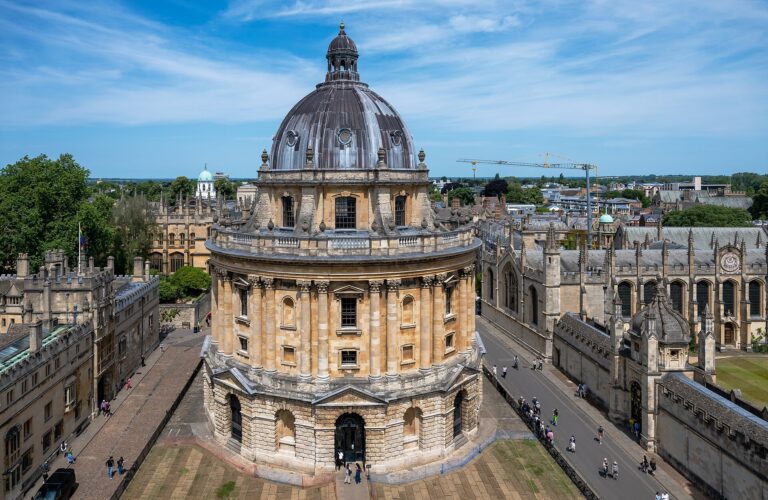

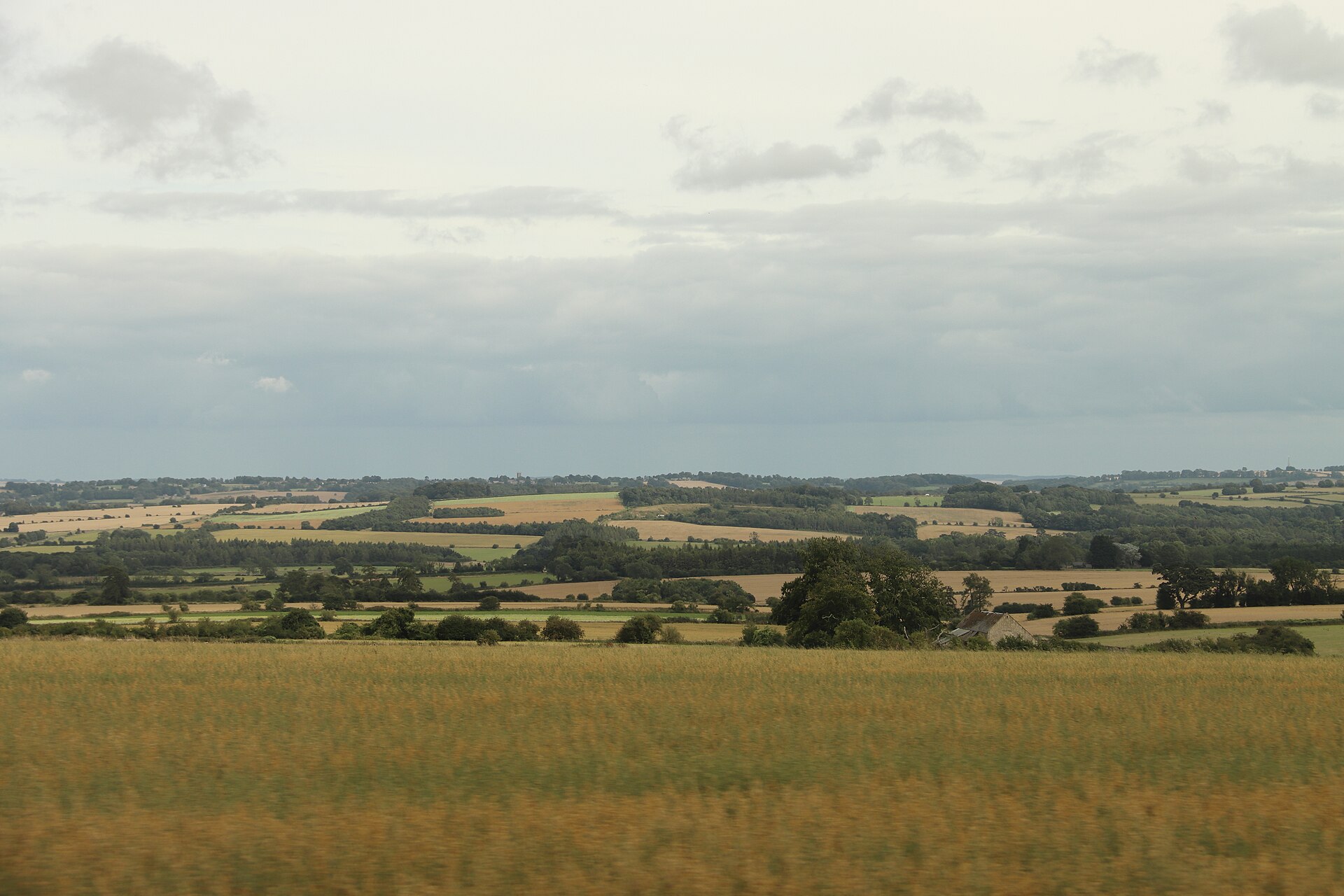
The prettiest village in the Cotswolds, England may well be whichever one the tour coaches aren’t stopping at right now. Lots of travellers come here picturing a single photogenic village where you just hop out of the car, snap a cottage and drive on. In reality, this is a vast stretch of English countryside spread across six counties, where cottages built of golden limestone are linked by narrow lanes, old churches surrounded by yew trees and footpaths winding between pastures.
Plenty of people treat the area as just a quick day trip from London. That’s a shame, because the calmest atmosphere by the little stone bridges comes early in the morning and after the day-trippers have left. I’ve put together a guide and a long-weekend itinerary that lets you enjoy the towns, gardens and country lanes at a relaxed pace, whether you’re travelling by car or by train and bus. ☺️
At a Glance
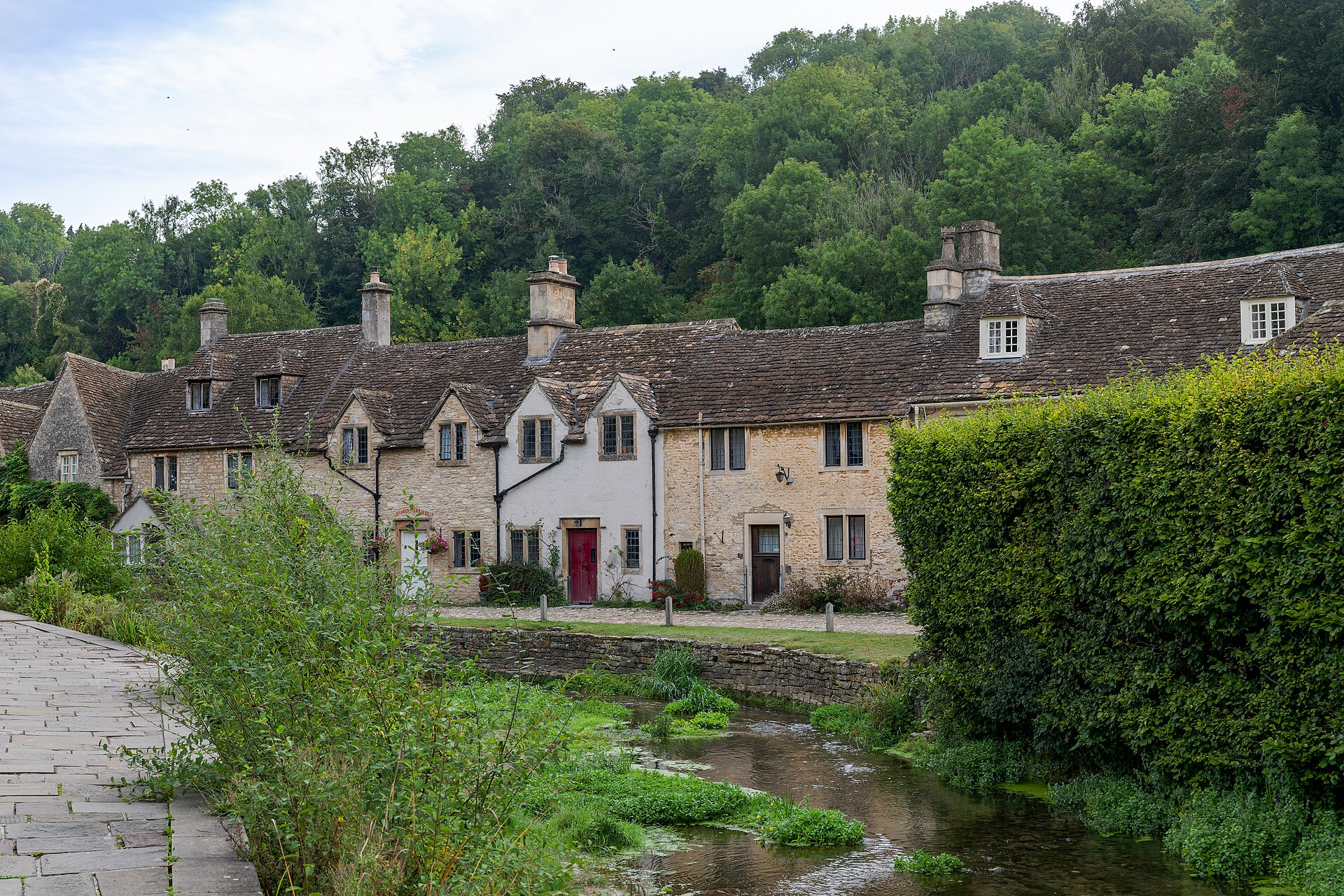
- Size and status: The protected Cotswolds National Landscape (2,038 km², not a national park) covers parts of six counties.
- Getting there from London: Trains from London Paddington take about 1.5 hours to Moreton-in-Marsh and 1 hour 20 minutes to Kingham.
- Travelling without a car: From Moreton-in-Marsh, the Pulhams 801 bus (Sundays included) runs via Stow and the Slaughters to Bourton.
- Where to base yourself: With a car, pick Stow-on-the-Wold or Bourton; without one, Moreton-in-Marsh by the station.
- Ideal length of stay: 2 to 3 days are enough for the main villages, gardens and walks.
- Entry requirements: You need a passport and an electronic ETA costing £20 (children too – without it you won’t be allowed to board).
- When to go: May, June and September are best, thanks to open gardens and smaller crowds.
- Winter closures 2026/27: Sudeley Castle is closed until March 2027, Kelmscott for the whole of 2026, and the lavender fields won’t open until June 2027.
The full destination guide: United Kingdom — guide and what to see
Where the Cotswolds in England Are and What to Expect
The area lies in south-west and central England, about 2 hours by car or 1.5 hours by train from London, between the cities of Oxford, Bath and Stratford-upon-Avon. Its signature look comes from rolling hills and honey-coloured Jurassic limestone, used to build the churches, houses and dry-stone walls. In the Middle Ages the region grew rich on the wool trade, which you can still see in its market squares and weavers’ cottages. Accommodation here is among the priciest in England, so book well ahead – for example via Booking.com.
A Region, Not a National Park
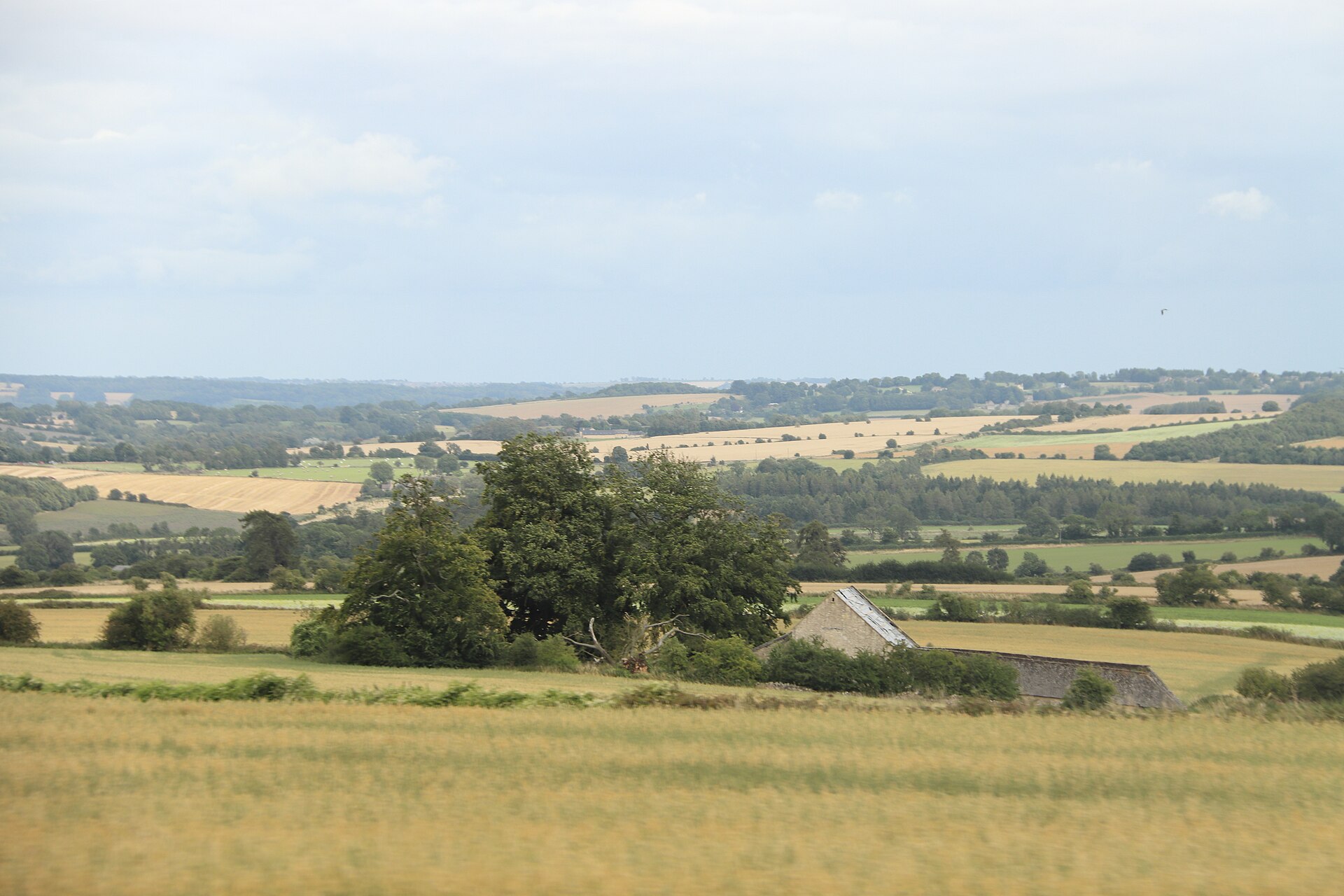
Calling it “Cotswolds National Park” is a mistake. The area’s official name is the Cotswolds National Landscape, and at 2,038 km² (790 square miles) it is England’s third-largest protected landscape after the Lake District and the Yorkshire Dales, according to the Cotswolds National Landscape website. Legally, it has been an AONB (Area of Outstanding Natural Beauty) since 1966. The managing body adopted the new name in September 2020, and in November 2023 the other AONBs in England and Wales were renamed too. The area stretches across six counties and unitary authorities: Gloucestershire, Oxfordshire, Warwickshire, Worcestershire, Wiltshire and Bath & North East Somerset.
How Many Days You Need
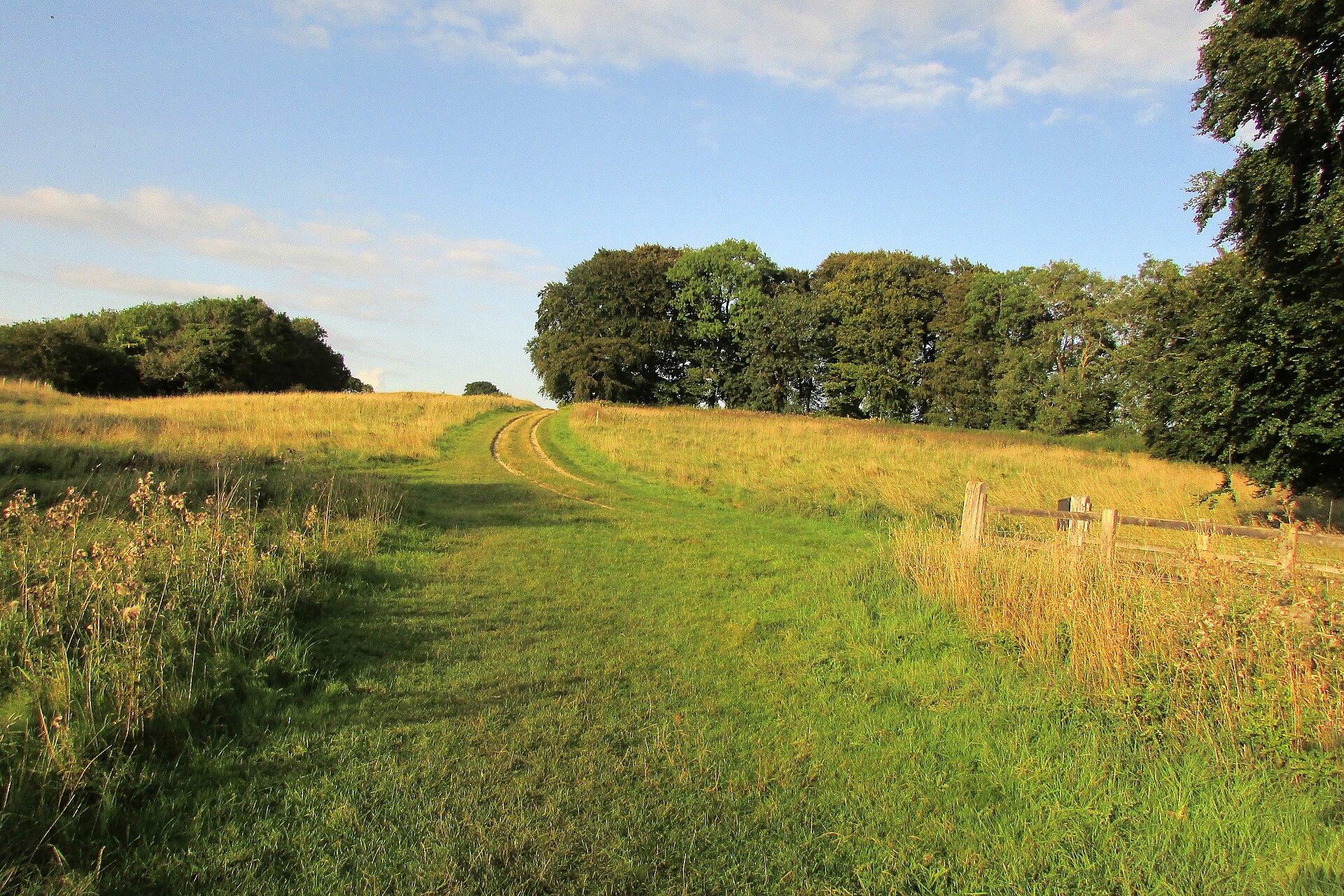
A long weekend of 2 to 3 days is ideal. On a single day trip from London you’ll only manage two or three stops, and at the very hours when tour groups are packing the lanes. If you stay at least two nights, you can wander Bourton-on-the-Water or Bibury in peace in the morning or evening and head out on the footpaths around midday. Walking the entire long-distance Cotswold Way, on the other hand, calls for a longer holiday.
When to Visit the Cotswolds (Summer to Winter)
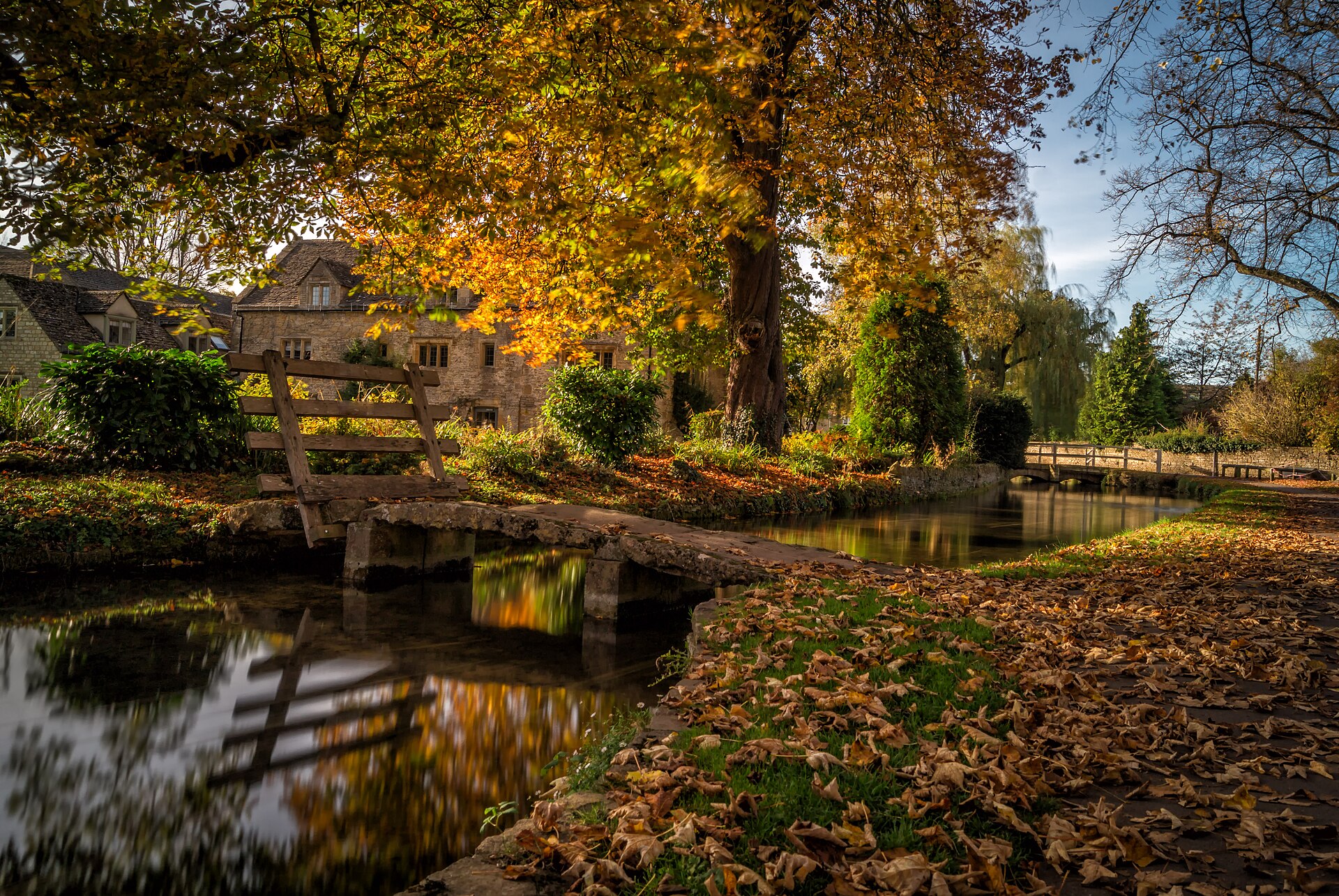
Your timing affects both garden opening hours and how many people you’ll meet. I recommend May, June and September, when the days are long, the gardens are open and the villages aren’t as crowded as during the summer school holidays. English weather means it can rain at any time of year, so always pack a waterproof jacket and an umbrella, even if the forecast promises sunshine. 😅
| Month | Average max. °C | Average min. °C | Seasonal notes |
|---|---|---|---|
| January | 6.4 | 1.3 | Short days, many sights and gardens closed |
| April | 12.2 | 3.8 | Spring blossom, most seasonal houses reopen |
| May | 15.8 | 7.4 | Fresh greenery, watch out for bank holidays (see below) |
| June | 18.9 | 10.6 | Lavender starts flowering mid-month |
| July | 20.7 | 12.6 | Peak lavender season, biggest tourist crowds |
| September | 17.8 | 10.4 | Calmer after the school holidays, gardens still open |
| October | 13.8 | 7.9 | Autumn colours, end of the main season for sights |
| December | 7.6 | 3.2 | Christmas markets and illuminated castles, limited opening |
The purple fields of Cotswold Lavender near Snowshill are open from 11 June to 5 August in 2026 (peak bloom 27 June to 22 July). Keep an eye on bank holidays, when crowds of locals head for the countryside. In 2027, the bank holidays fall over Easter (26–29 March) and on the Mondays of 3 May, 31 May and 30 August. On the second May bank holiday Monday (31 May), the famous cheese-rolling race takes place on Cooper’s Hill.
In winter, Sudeley Castle is closed until March 2027 (except for the evening Spectacle of Light show from 20 November to 30 December 2026), Kelmscott Manor is closed for the whole of 2026, and the lavender fields won’t reopen until mid-June 2027. Properties run by the British charity National Trust have reduced opening in winter. Blenheim Palace is closed from 8 to 12 November 2026 ahead of its Christmas tours (13 November 2026 to 3 January 2027).
Getting from London to the Cotswolds and Around the Region
You can manage just fine without a car. With a base on the railway line, you can cover the main string of northern villages by train and bus. A car makes life easier mainly in the south, for places like Castle Combe.
By Train from Paddington
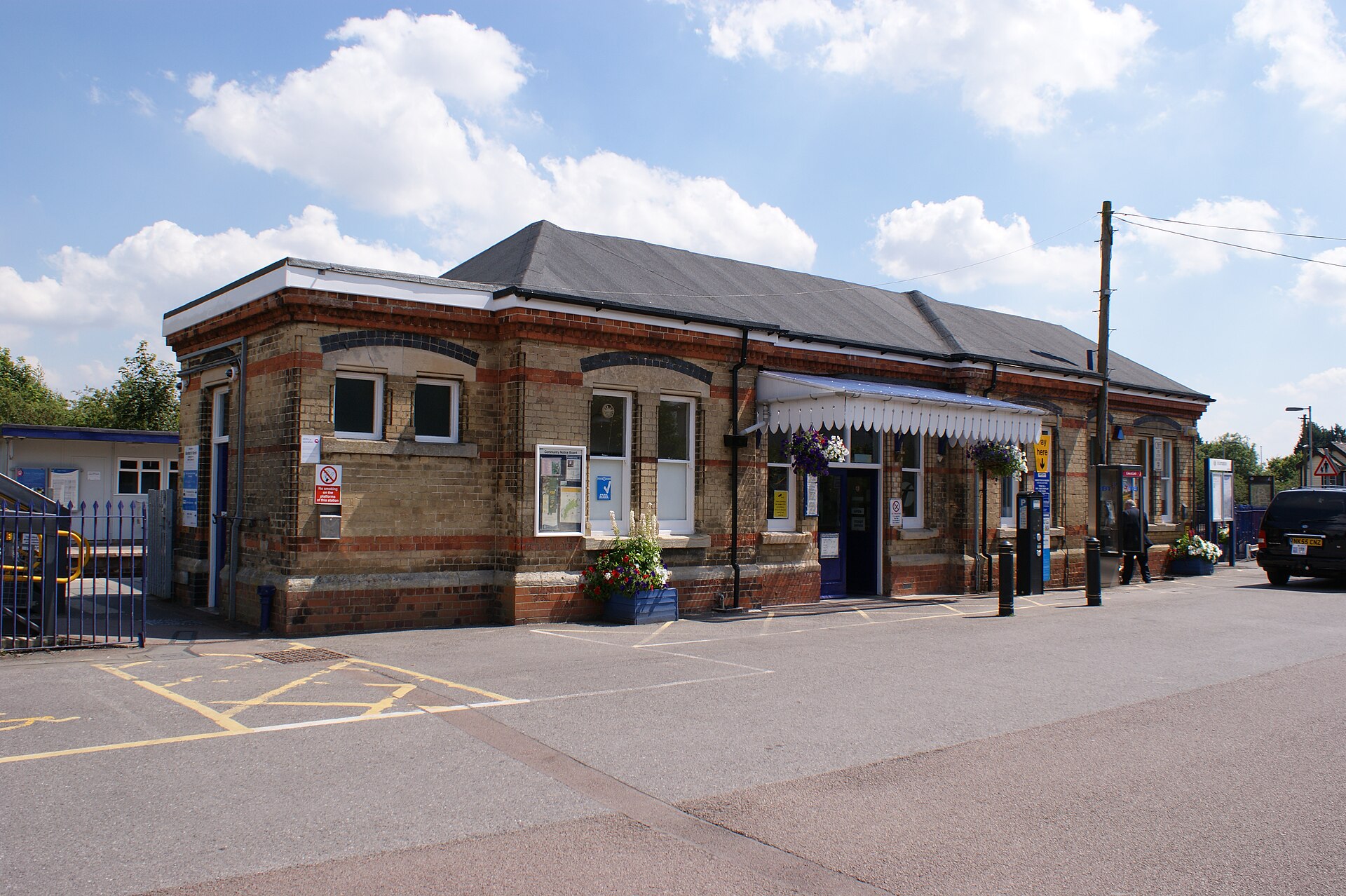
Great Western Railway (GWR) trains run from London Paddington; check tickets and exact timetables on the GWR website or with National Rail. For the northern and central Cotswolds, the main station is Moreton-in-Marsh, which takes about 1 hour 24 to 30 minutes, with trains running roughly every hour. Another option is Kingham (about 1 h 20 min). For the southern part, use Kemble near Cirencester (about 1 h 8 min) or Bath Spa (about 1 h 18 min). In the east, you can go via Oxford (about an hour’s ride).
💡 Tip: Advance tickets bought early are usually much cheaper. If there are two of you, look into the Two Together Railcard, which costs roughly £35 a year in 2026, doesn’t require a UK address and cuts fares by a third after 9:30 am on weekdays (buying online with a foreign card can occasionally be fiddly).
Buses 801, 855 and X52
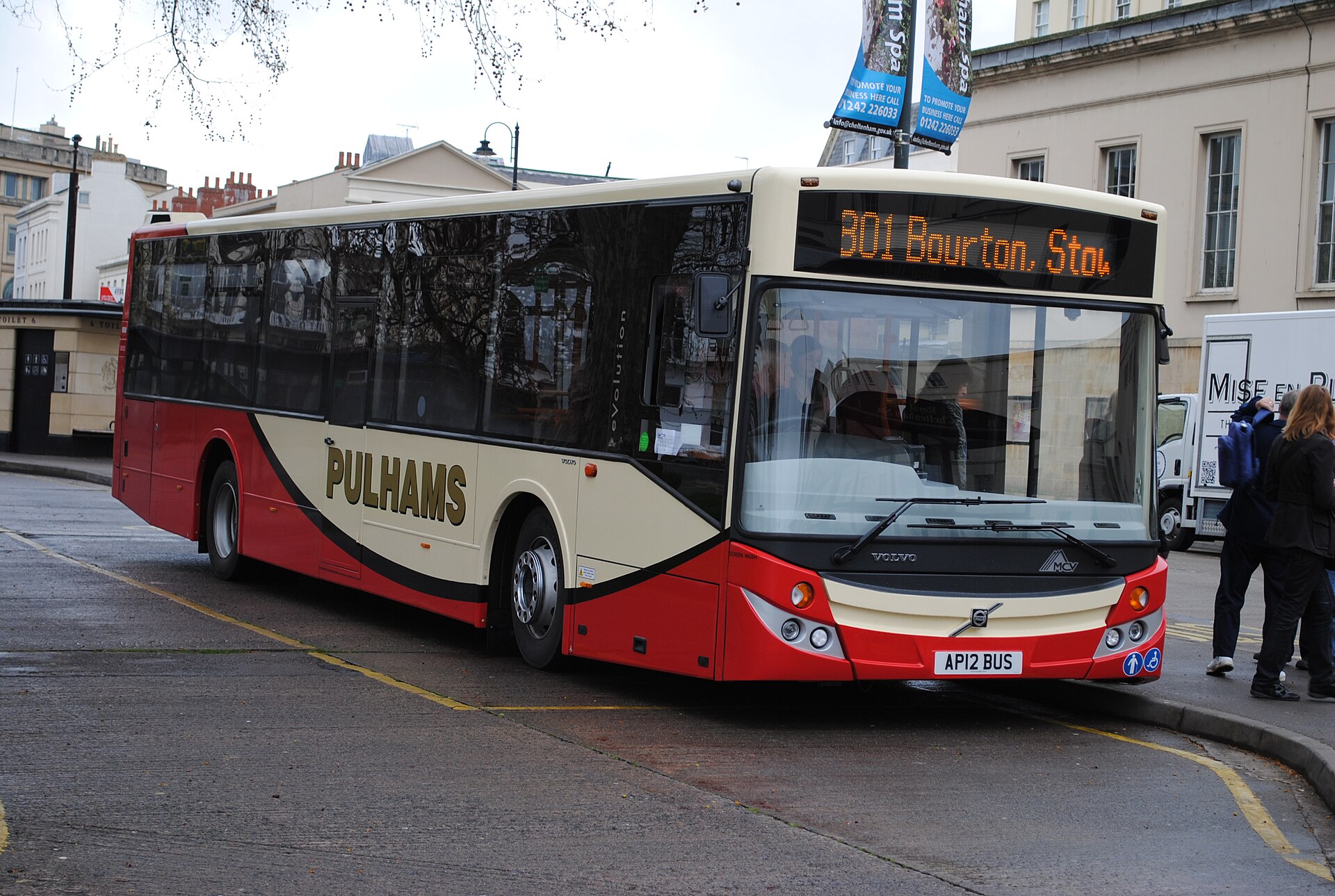
In Moreton-in-Marsh you can connect to the Pulhams 801, which links Moreton, Stow-on-the-Wold, the turn-off for Lower Slaughter, Bourton-on-the-Water and Cheltenham. It runs hourly, all year round, Sundays included. Since 3 May 2026 there have been extra evening services, and the last bus from Moreton station leaves at around 9:40 pm; check timetables with Pulhams Coaches. From Bourton, the Pulhams 855 continues to Bibury and Cirencester (hourly Monday to Saturday), but it most likely doesn’t run on Sundays, so plan Bibury for a Saturday or a weekday.
Between Cheltenham, Northleach, Burford and Oxford you’ll find the Pulhams X52 (it replaced the Stagecoach S2; Monday to Saturday up to every 2 hours, and on Sundays outside the summer season just two services each way). Between Stratford, Chipping Campden and Moreton, Stagecoach runs routes 1 and 2 (a few services a day; they may not run on Sundays, so factor in a taxi). For Castle Combe in the south, you’ll need a car or a taxi.
By Car: Driving on the Left, Narrow Lanes and Parking
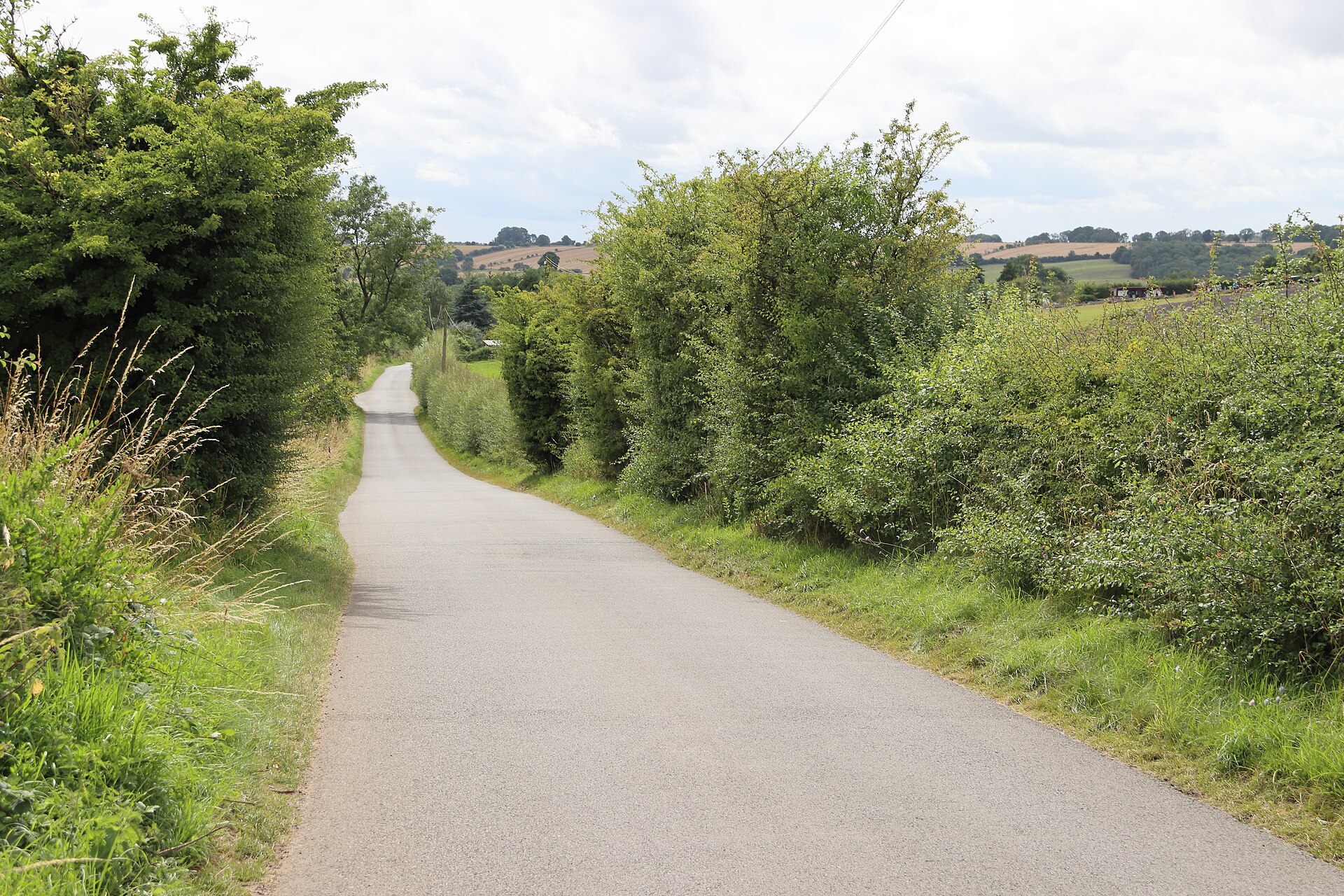
In Britain you drive on the left, and you’ll need to concentrate on your first few roundabouts. Speed limits in England are 30 mph (about 48 km/h) in built-up areas, 60 mph outside them on single carriageways and 70 mph on motorways. On narrow lanes, cars pull into passing places: according to the Highway Code (rule 155), the driver who has the passing place on their left should stop. On hills, the car driving uphill has priority.
There’s no motorway vignette (toll sticker) system here, as you’d find in Austria or Switzerland – tolls only apply outside the region, e.g. the Dartford Crossing at £3.50 or the M6 Toll. I recommend not renting a car in central London because of the Congestion Charge (£18 a day) and the ULEZ low-emission zone inside the M25 (£12.50 a day for non-compliant vehicles). Foreign-registered cars must be registered with Transport for London (TfL) in advance. Pick up your car at Heathrow Airport or in Oxford, allow 30 to 50 percent extra time for journeys, and download the PayByPhone app for parking.
Travel Documents: Passport and ETA
To enter the UK you need a valid passport; EU national ID cards haven’t been accepted since October 2021 (the exception is people with UK residence rights, i.e. settled or pre-settled status). Since 2 April 2025, EU citizens – like visitors from other visa-exempt countries – need an ETA (Electronic Travel Authorisation), which has cost £20 since 8 April 2026 (previously £16 and £10). From 25 February 2026, the “no permission, no travel” rule is strictly enforced: without an approved ETA, your carrier won’t let you board.
Apply through the UK ETA app or at gov.uk/eta. Approval takes a few minutes (up to three working days), and every traveller needs one, including babies and children. The ETA is valid for 2 years or until your passport expires for multiple entries, with each stay lasting up to six months.
Where to Stay in the Cotswolds
Pick the right base in the Cotswolds and you’ll save yourself a lot of time on the winding country lanes. If you’d like to combine your stay with some wellness (Whatley Manor or Calcot Manor, for example), check out our guide to spa hotels in England.
| Base | Why stay here | Best for |
|---|---|---|
| Moreton-in-Marsh | Train from London, bus 801 and routes 1 and 2, 15 min by car to Bourton | Travellers without a car |
| Stow-on-the-Wold | Right in the middle of the region, 6 to 8 min to the Slaughters and Moreton | Drivers staying 2 to 3 nights |
| Bourton-on-the-Water | Early-morning and evening strolls without the crowds | Couples, families |
| Chipping Campden | Quiet north, start of the Cotswold Way, close to Broadway Tower | Hiking |
| Burford | The region’s eastern gateway (coming from Oxford), close to Bibury and Bampton | Arriving from London |
| Cirencester | Larger town, Kemble train station, easy reach of the south | No car (south), Bibury |
| Castle Combe / Bath | Southern edge, close to Lacock and the spa town of Bath | Combining with Bath |
| Oxford | Big city, frequent trains and buses | Day trips |
The Manor House Hotel
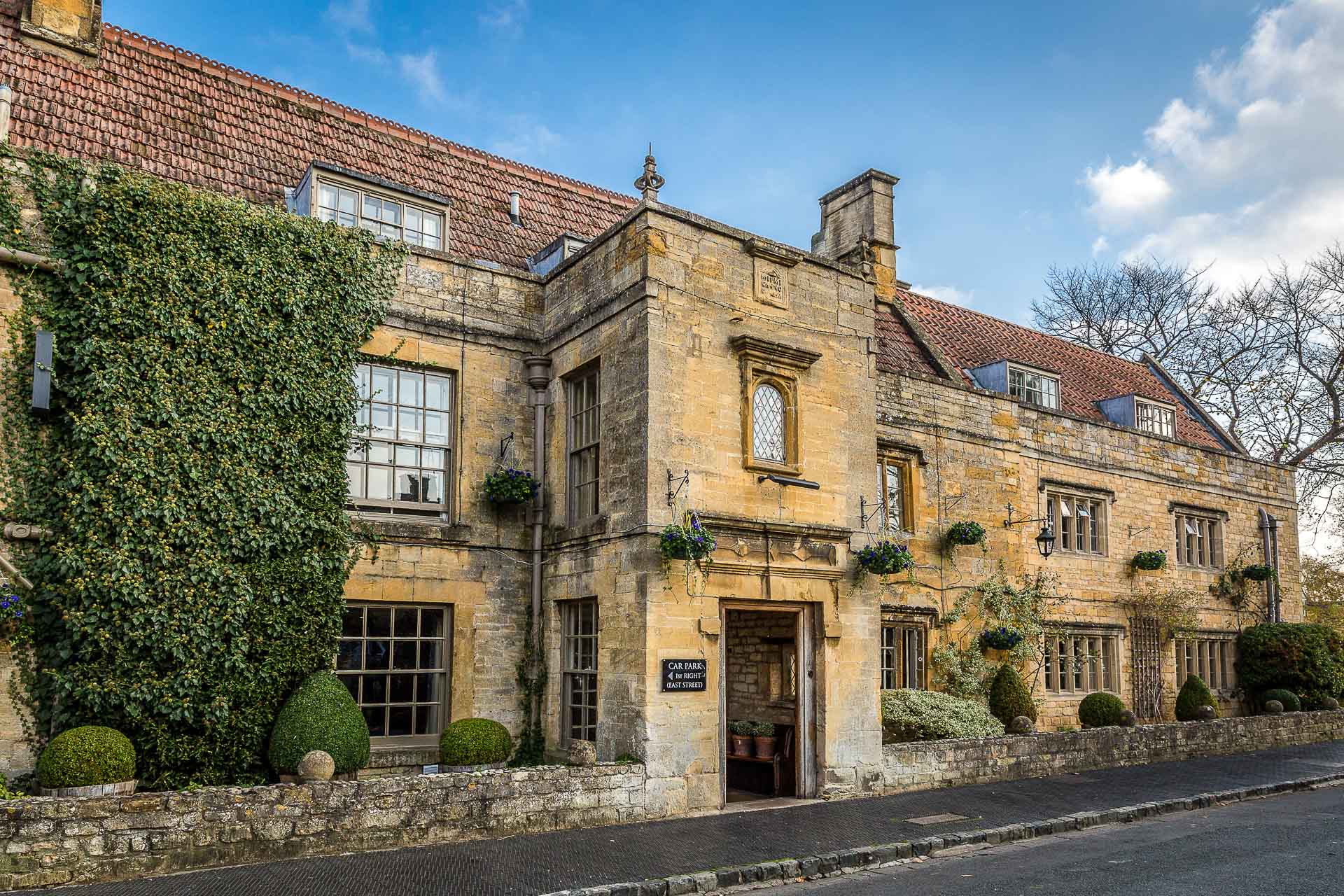
Just a few minutes’ walk from Moreton-in-Marsh station, The Manor House Hotel sits on the High Street. This historic stone house dating from 1545 is Grade II listed (a British heritage protection grade) and hides its own peaceful garden.
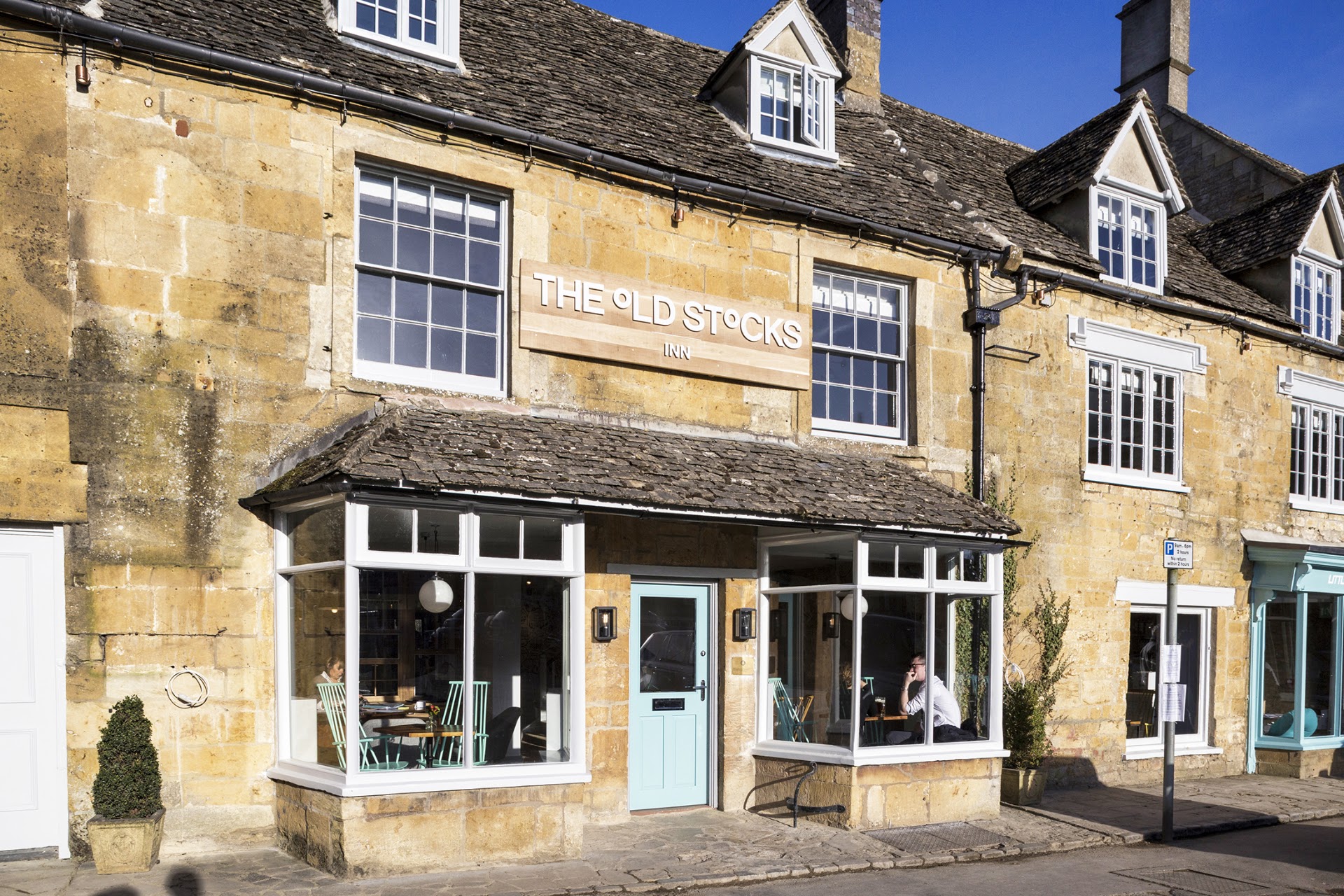
The Old Stocks Inn
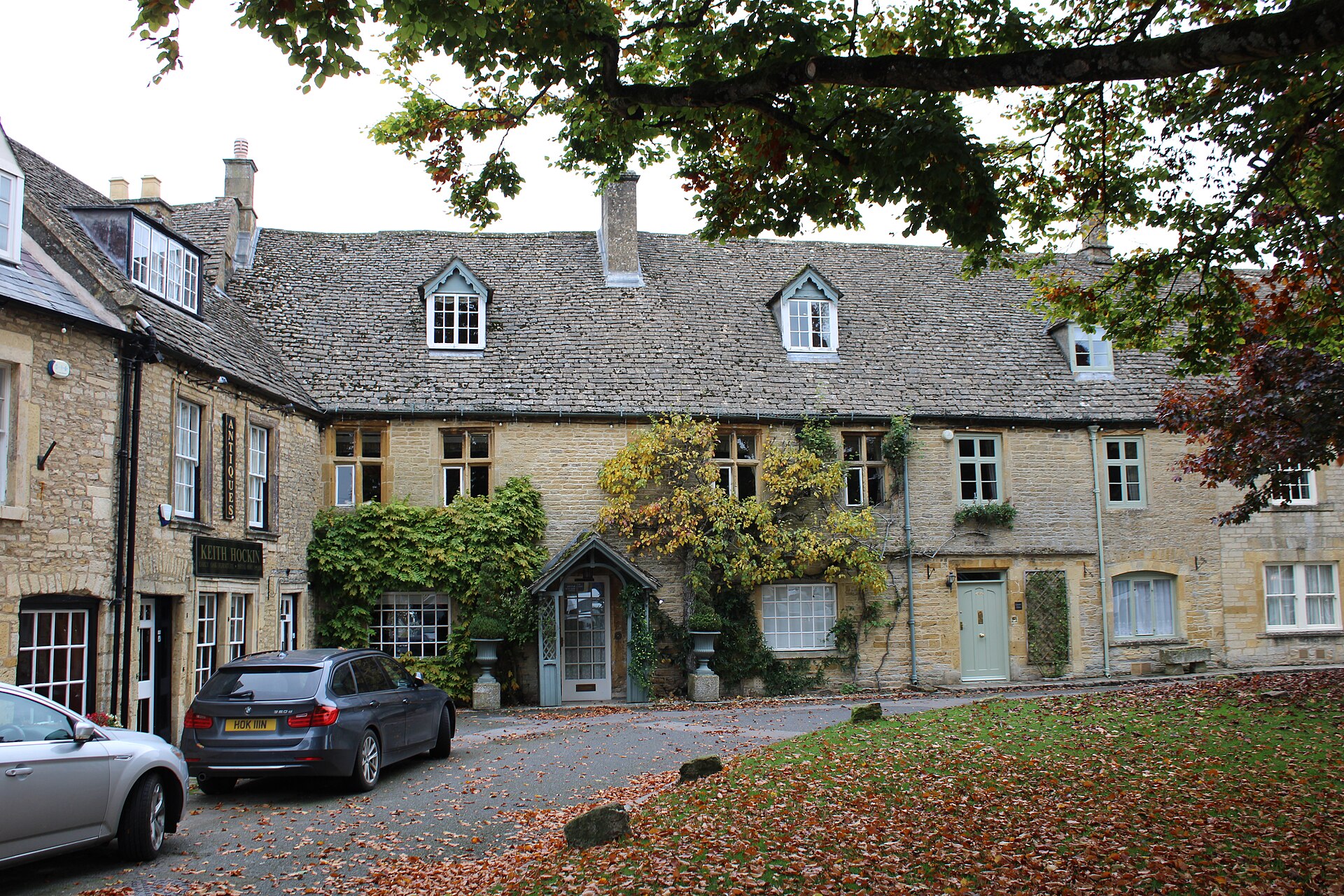
Right on Market Square in Stow-on-the-Wold you’ll find the 17th-century The Old Stocks Inn. Inside, expect wooden beams, stone walls and quirky, irregularly shaped rooms.
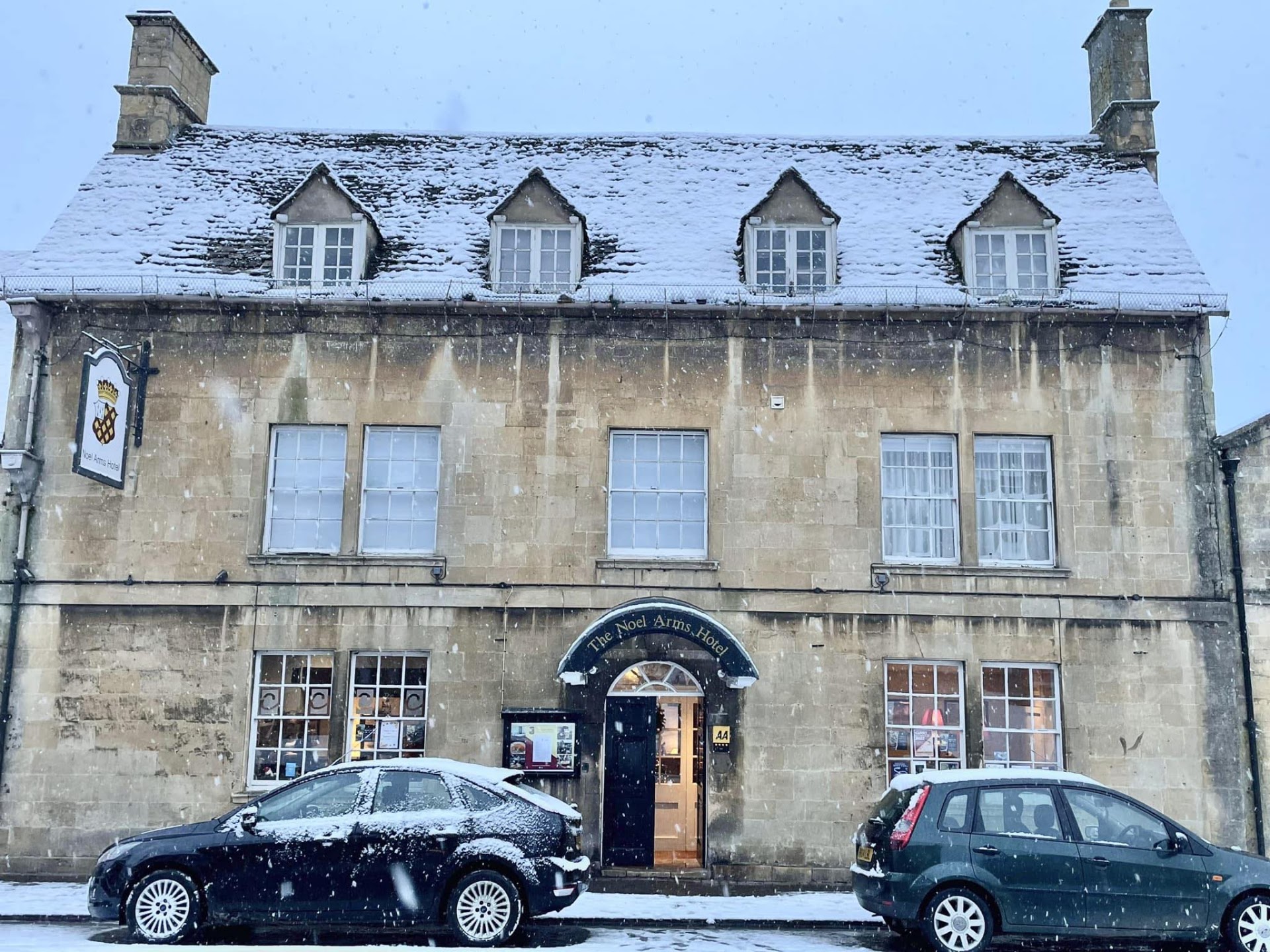
The Noel Arms Hotel
For walks from Chipping Campden, The Noel Arms Hotel on Lower High Street is ideally placed. This former coaching inn (Grade II) was originally called “The George” and has carried its current name since 1819.
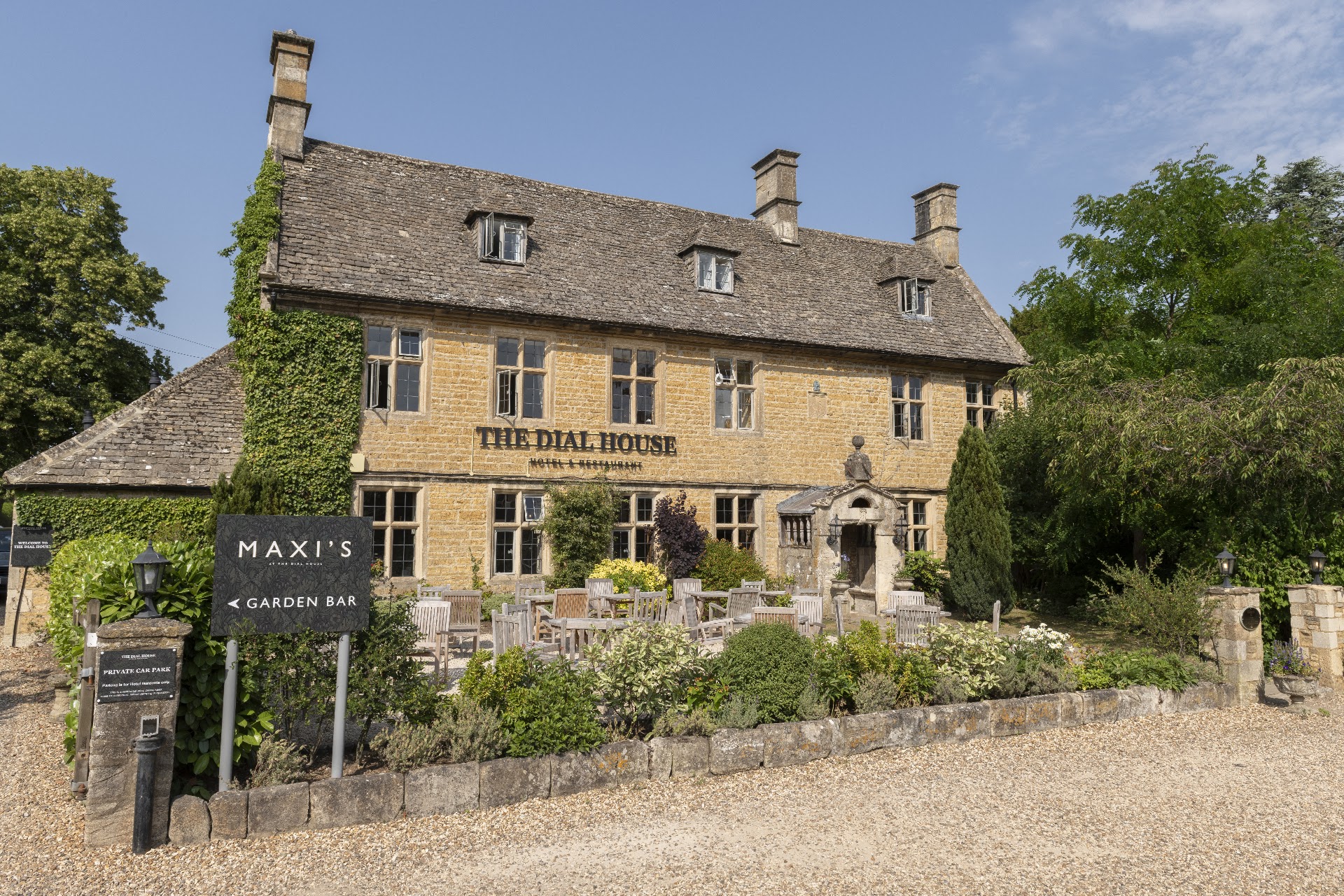
The Dial House Hotel & Restaurant
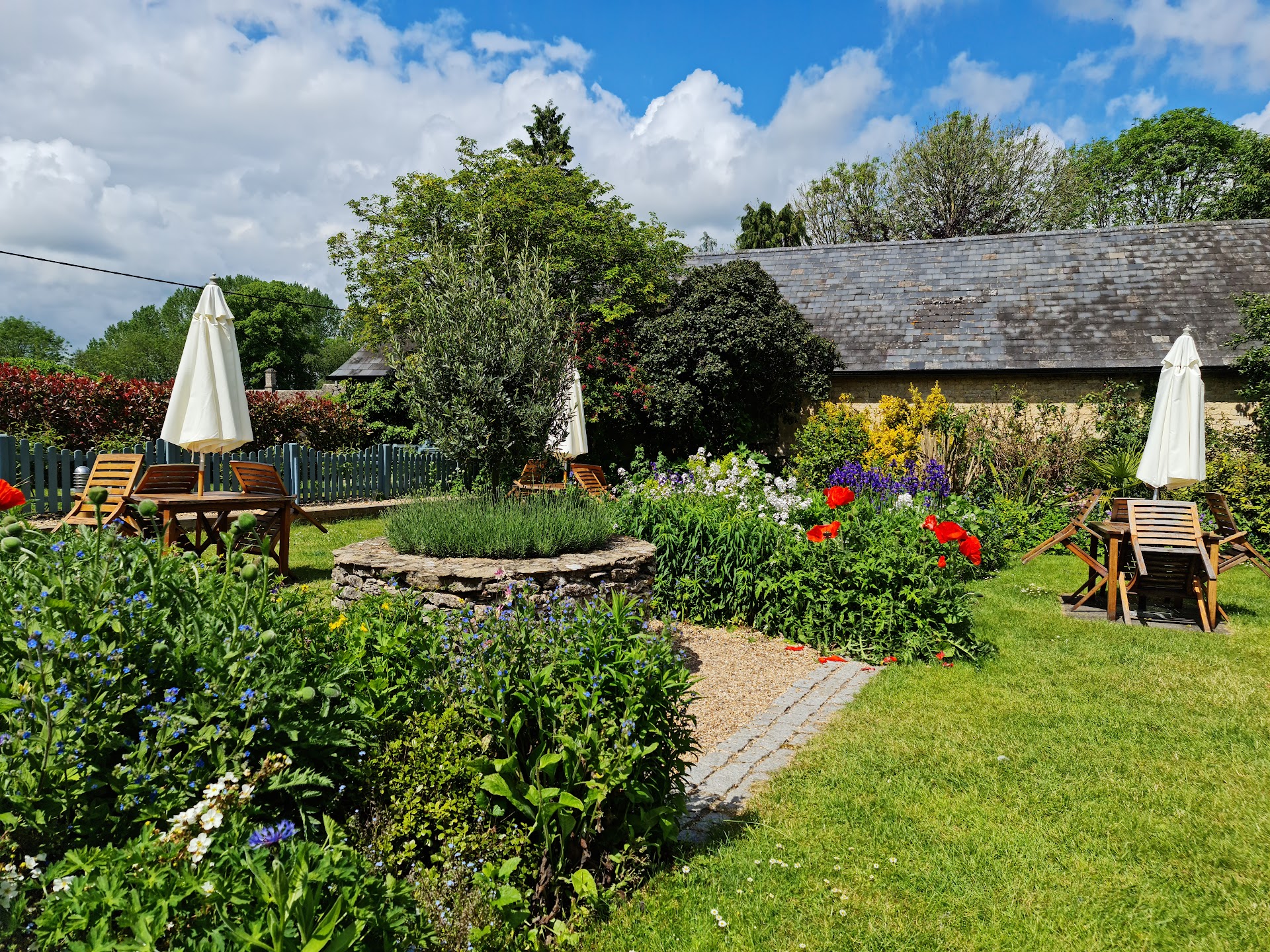
If you want to experience Bourton-on-the-Water once the coaches have left, book a room at The Dial House Hotel & Restaurant on the High Street. The house bears the date 1698 (Grade II) and takes its name from the sundial above the entrance.
The Lamb Inn
In the little town of Burford, you’ll find The Lamb Inn on Sheep Street. This historic inn occupies a row of former weavers’ cottages.
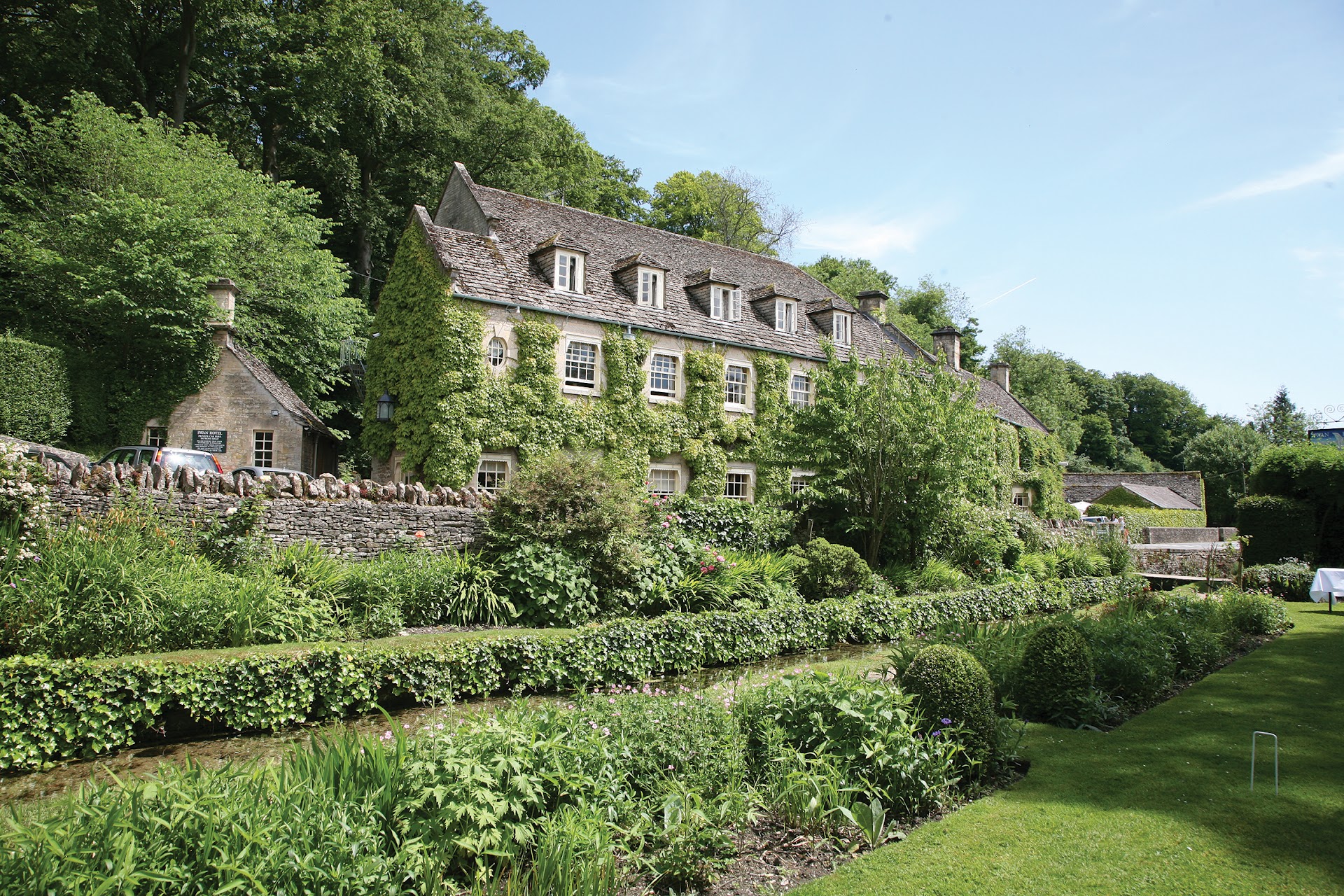
The Swan Hotel
For crowd-free walks around Bibury, stay at The Swan Hotel on the banks of the River Coln. This former coaching inn is just a few steps from Arlington Row.
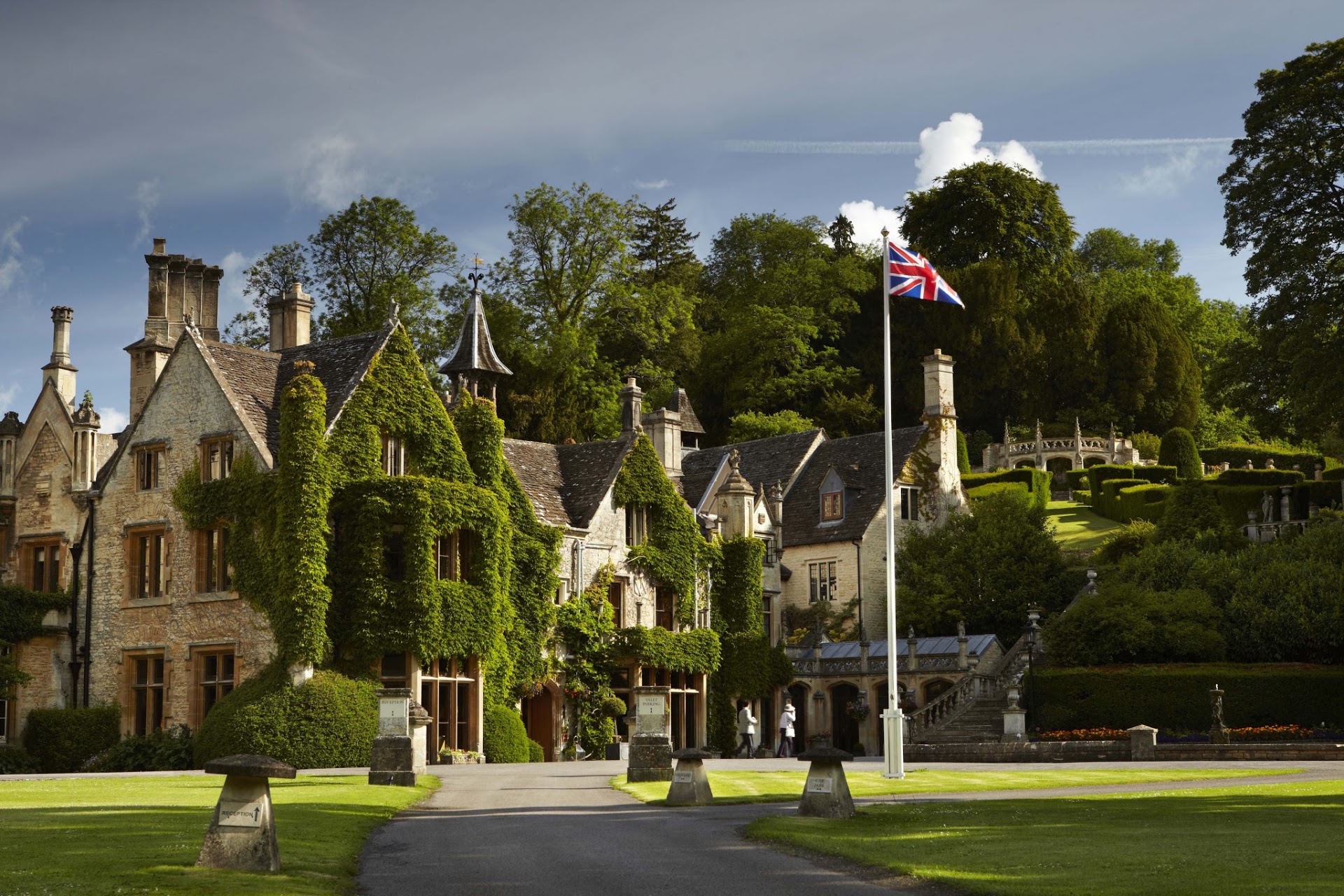
The Manor House Castle Combe
Down south, on the edge of Castle Combe, stands the country house The Manor House. The estate is surrounded by its own 365-acre (approx. 148 ha) parkland.
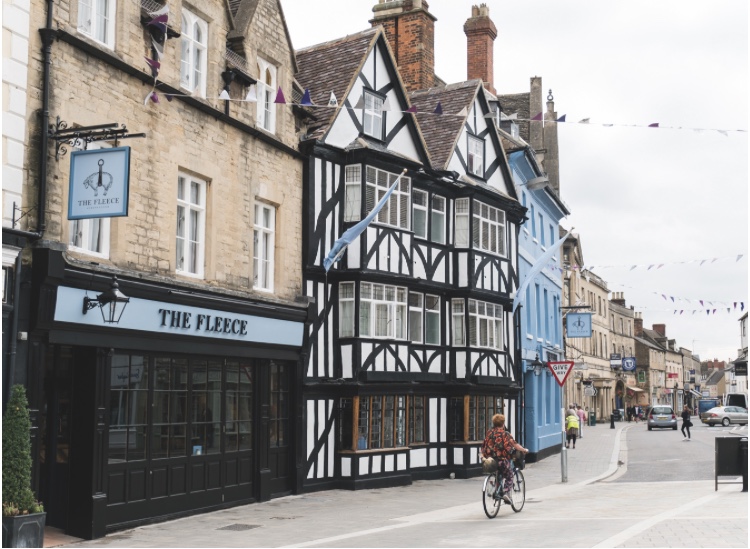
The Fleece at Cirencester
Right on the Market Place in Cirencester, The Fleece at Cirencester makes a handy base. King Charles II reportedly hid in this mid-17th-century inn (Grade II) in 1651.
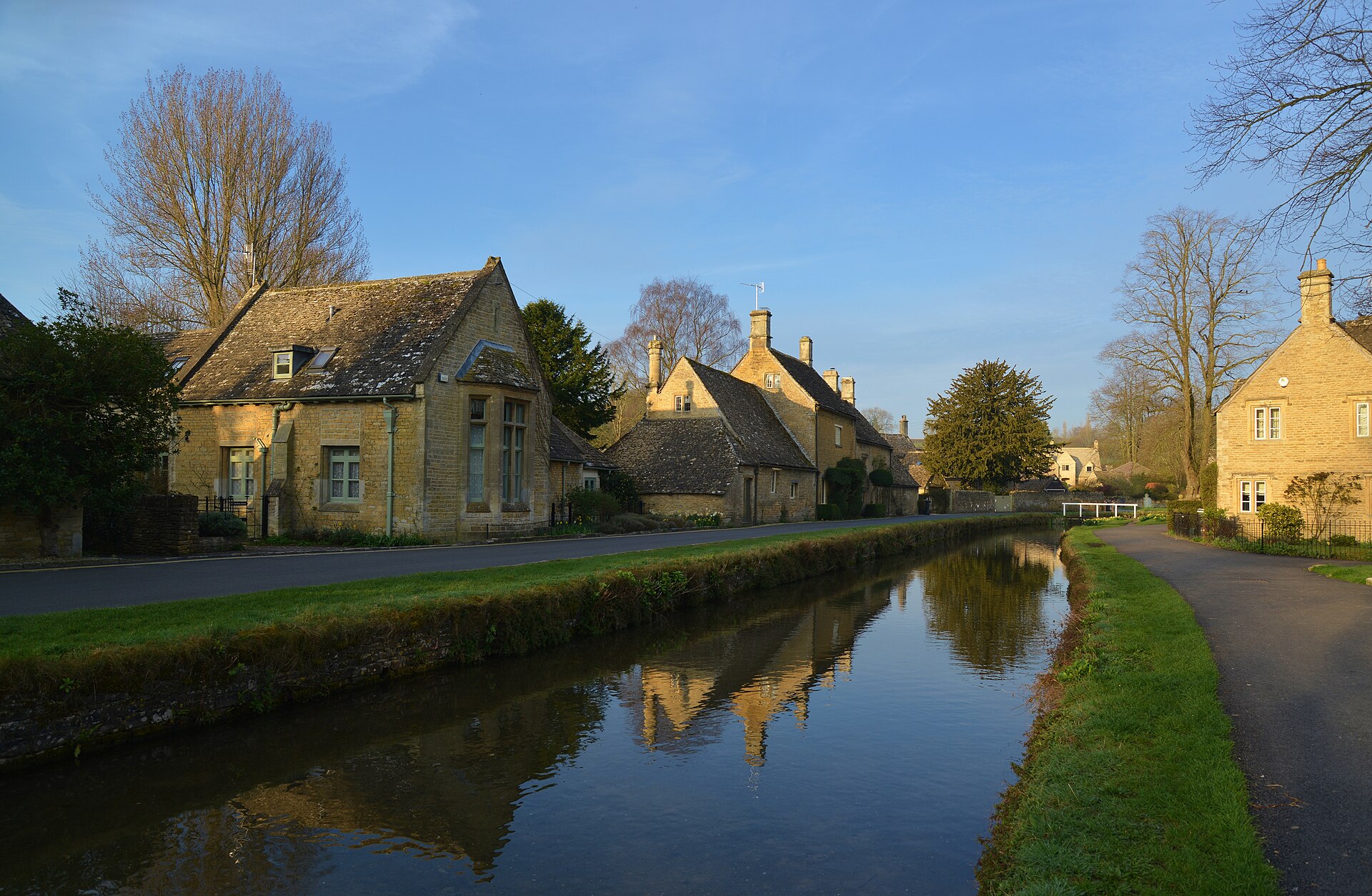
Prettiest Villages in the Cotswolds
Every village in the Cotswolds, England has its own atmosphere, from lively market towns to sleepy hamlets. Here are ten places for a weekend route, including parking tips. You’ll find more inspiration at cotswolds.com.
Bibury and Arlington Row
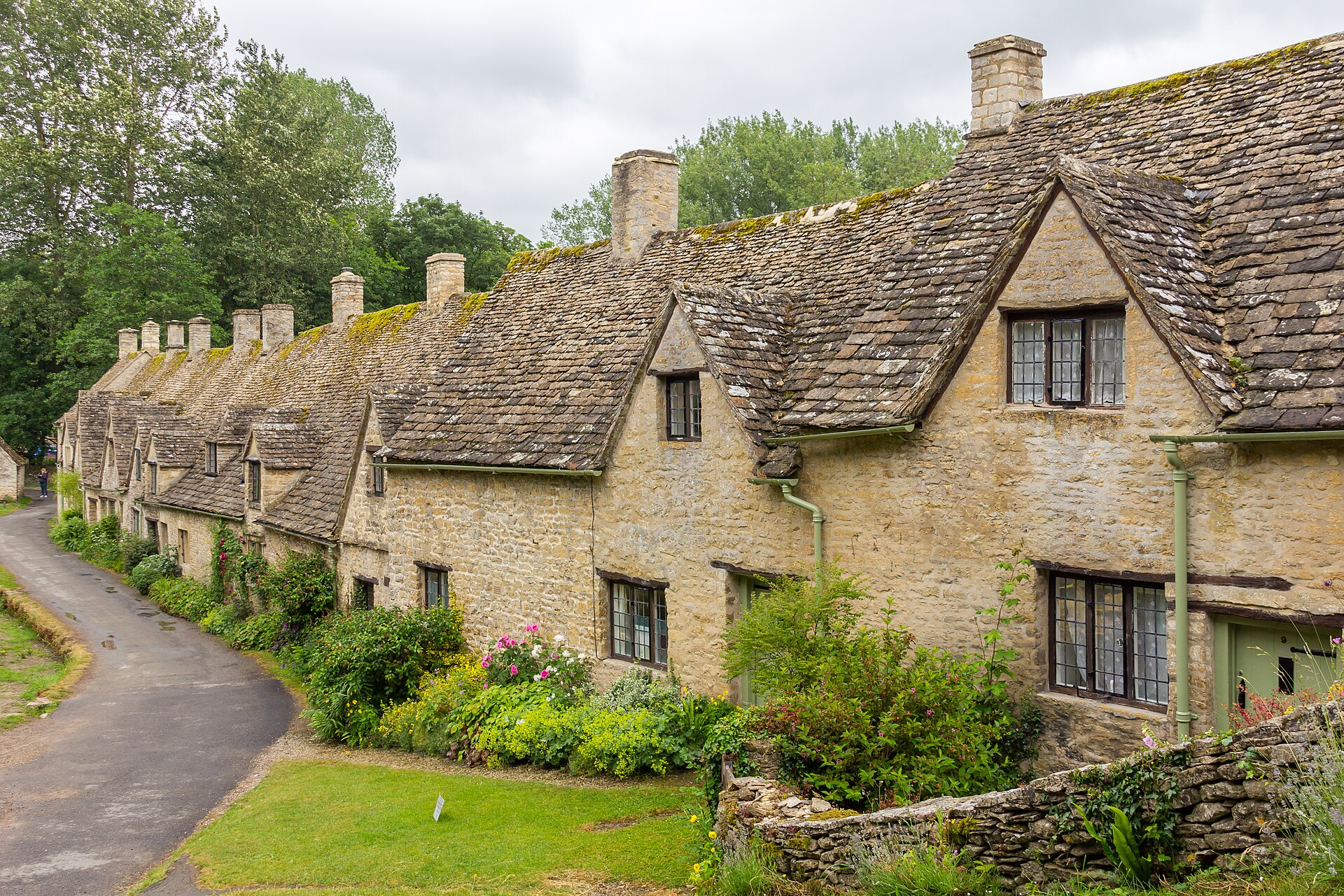
William Morris wrote that Bibury was “surely the most beautiful village in England”. The main draw is Arlington Row, a row of cottages built around 1380 as a monastic wool store and converted into weavers’ homes in the 17th century. Between the cottages and the River Coln lies the water meadow of Rack Isle, where wool was once hung to dry and where water voles live today. Stroll past it to St Mary’s Church (Grade I, the highest level of heritage protection) and to Bibury Trout Farm (founded in 1902 by Arthur Severn).
The cottages are looked after by the National Trust (Grade I since 1952), but they’re private homes with residents’ parking, so you can’t go inside or into the gardens. The exceptions are Nos. 1 and 9, which you can rent as holiday cottages, according to the National Trust page for Bibury. According to Time Out, the village has faced up to 50 coaches a day and 20,000 visitors per weekend in high season. Since May 2025, Gloucestershire County Council has been trialling restrictions on tour coaches. From 18 May 2026, a no-stopping ban applies on the B4225 by The Vicarage, and paid parking on The Street is being considered. Make sure you come early in the morning or towards evening – otherwise, instead of a peaceful little village, you’ll find yourself under siege from tour buses.
Castle Combe
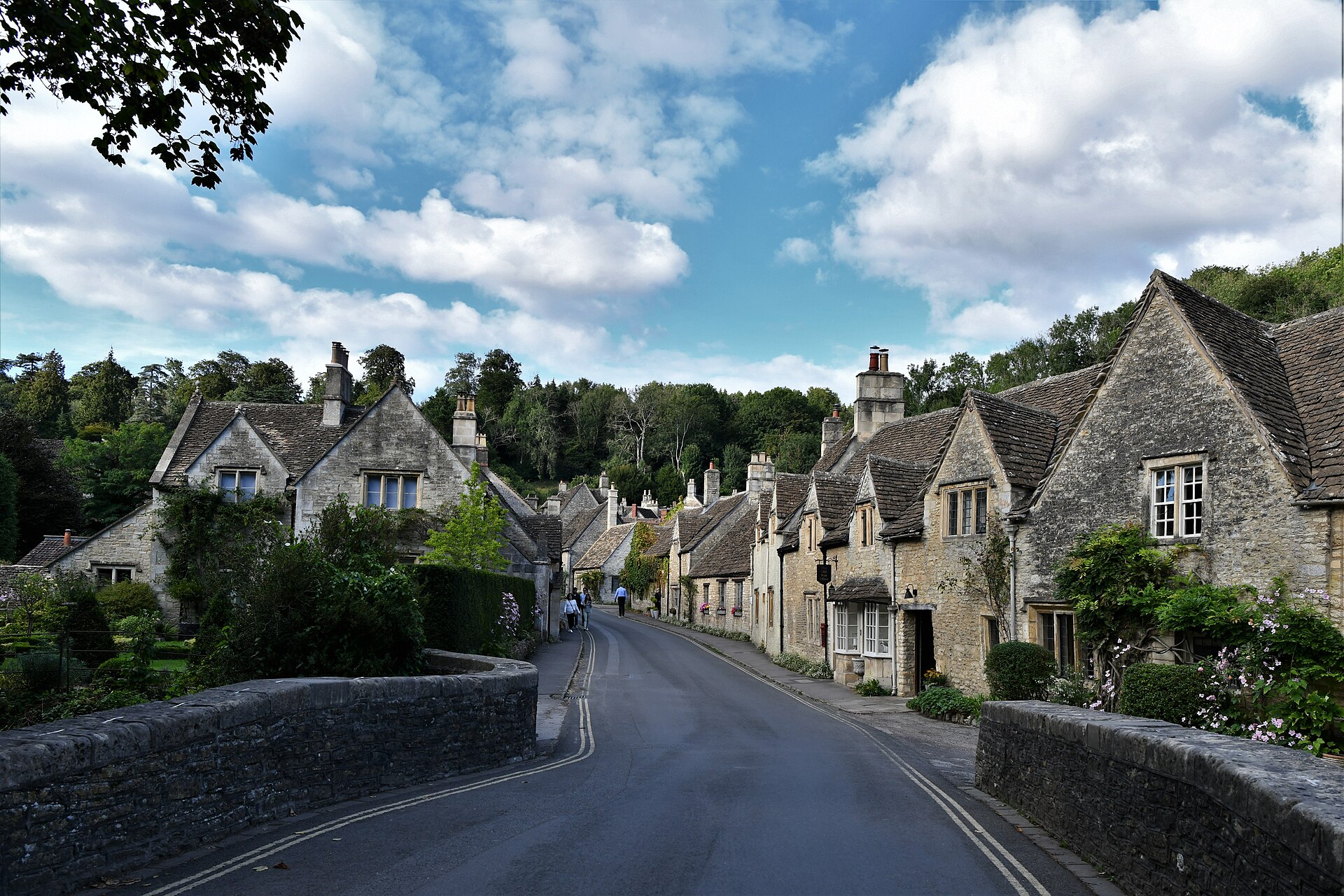
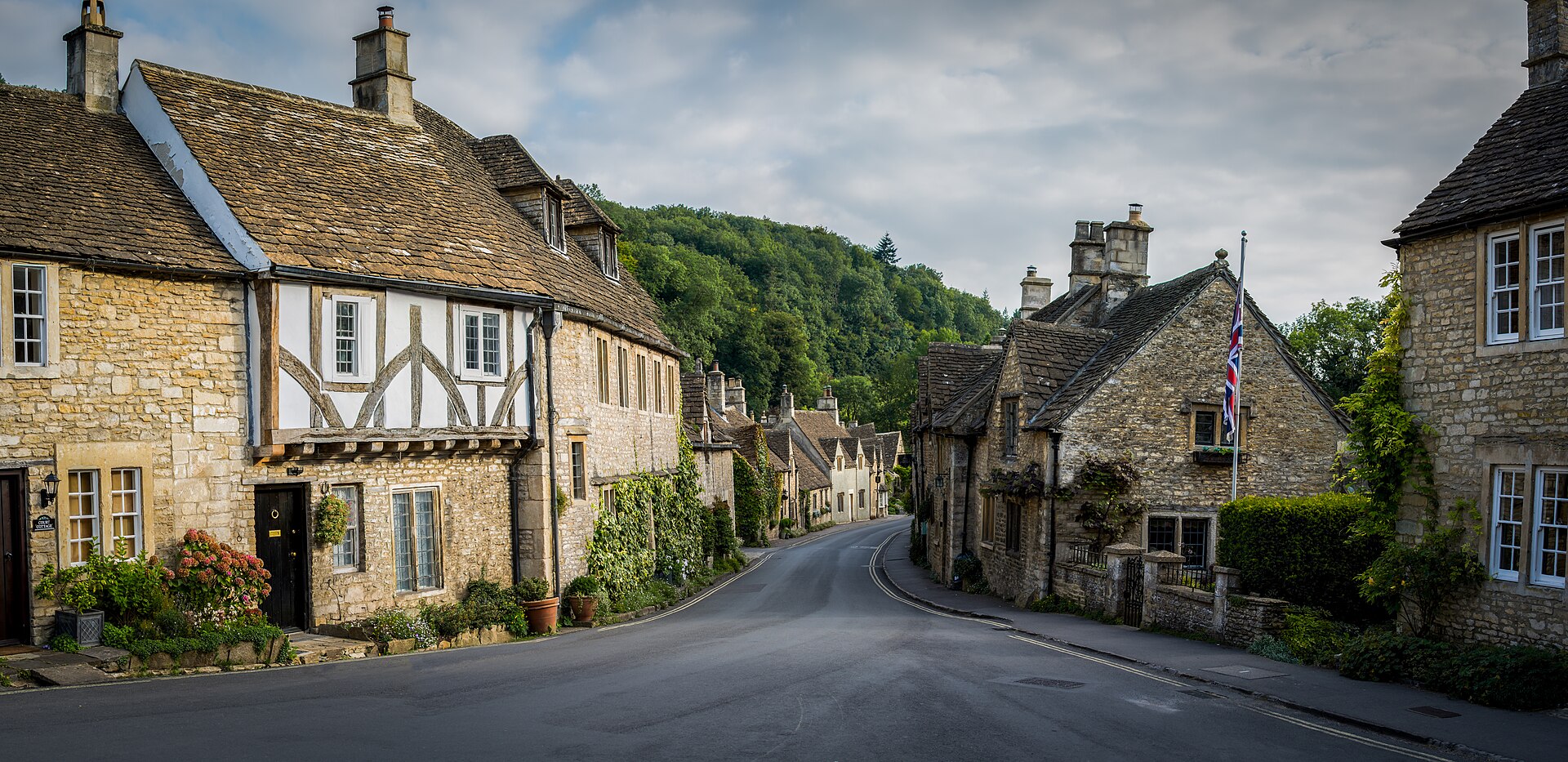
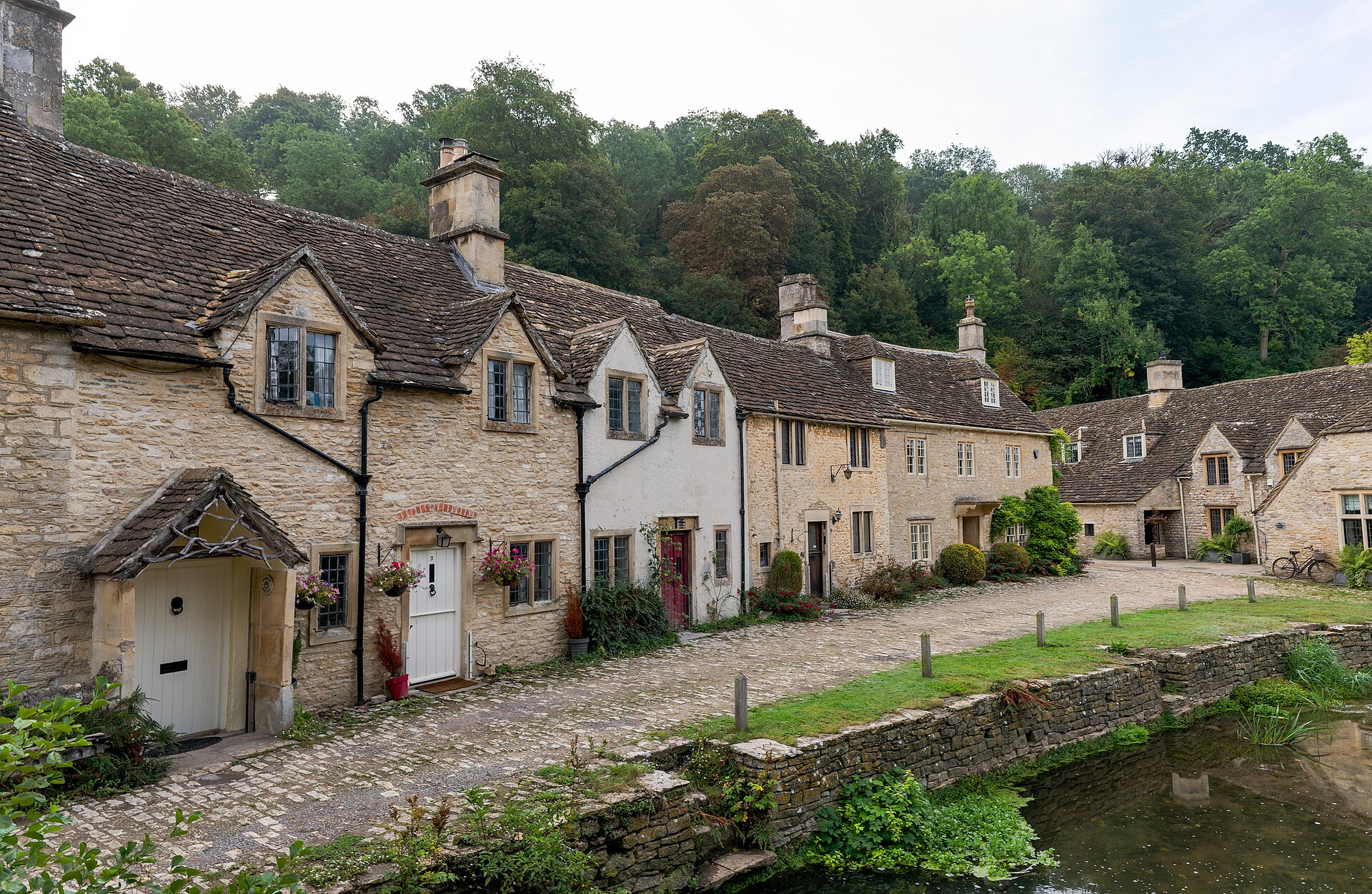
Down south in Wiltshire lies Castle Combe, home to around 356 people (2021 census). The village was named “the prettiest village in England” by the British Travel Association in 1962, and films shot here include War Horse (2011), Stardust (2007), The Wolfman (2010) and Doctor Dolittle (1967). Stop by the 14th-century Market Cross and St Andrew’s Church (Grade I), whose tower dates from 1434–1435 and houses a faceless clock from the late 15th century.
Don’t even think about driving down into the village – there’s no parking in the village and it’s enforced. Park up top at Dunns Lane (around 90 spaces), from where it’s a 7 to 20-minute walk along a road with no pavement into the centre, and please follow the “responsible visiting” guidelines. Watch your sat nav, too, so you don’t end up among roaring engines at the Castle Combe Circuit racetrack on a former RAF (Royal Air Force) airfield. 😉
Bourton-on-the-Water
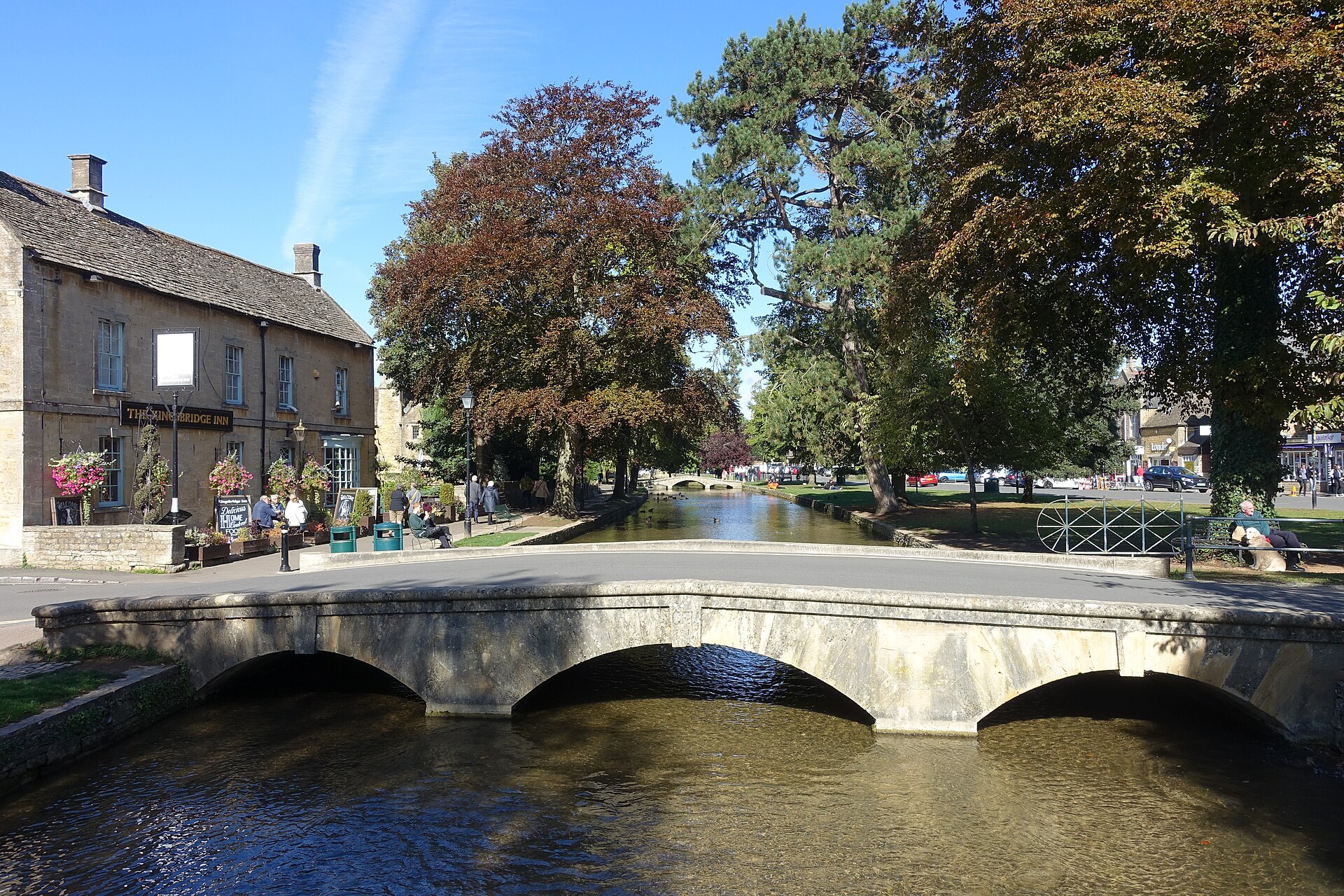
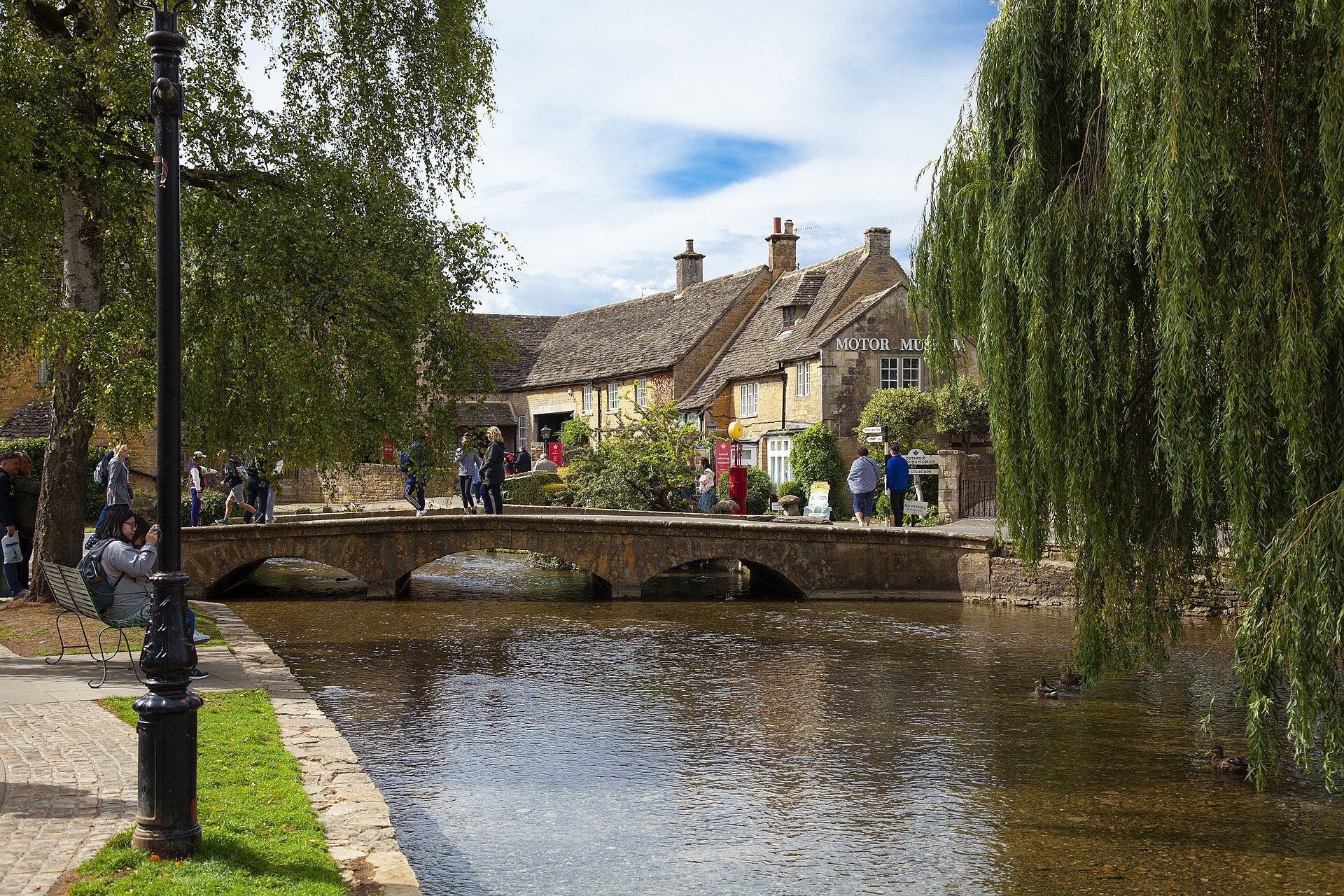
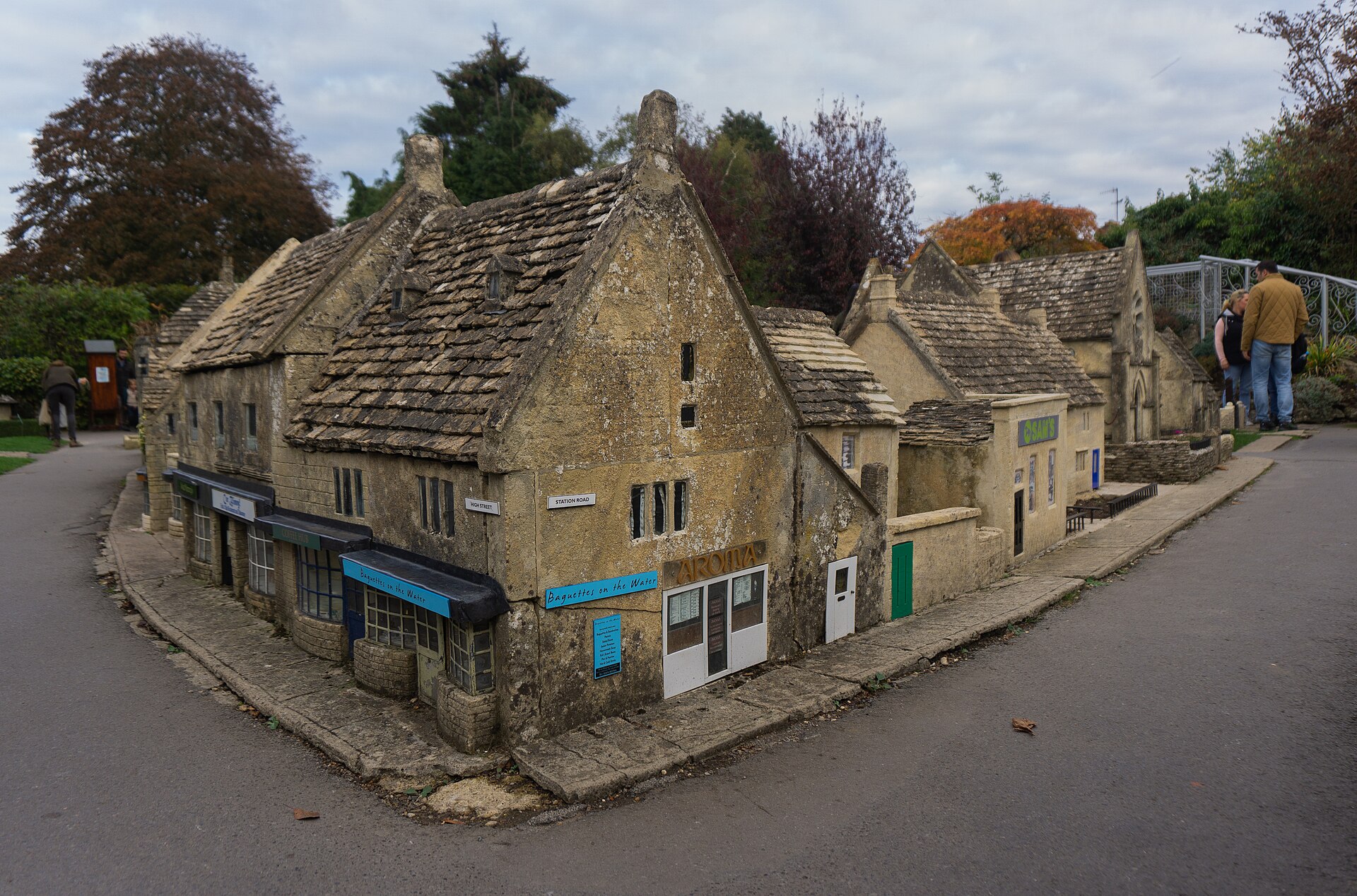
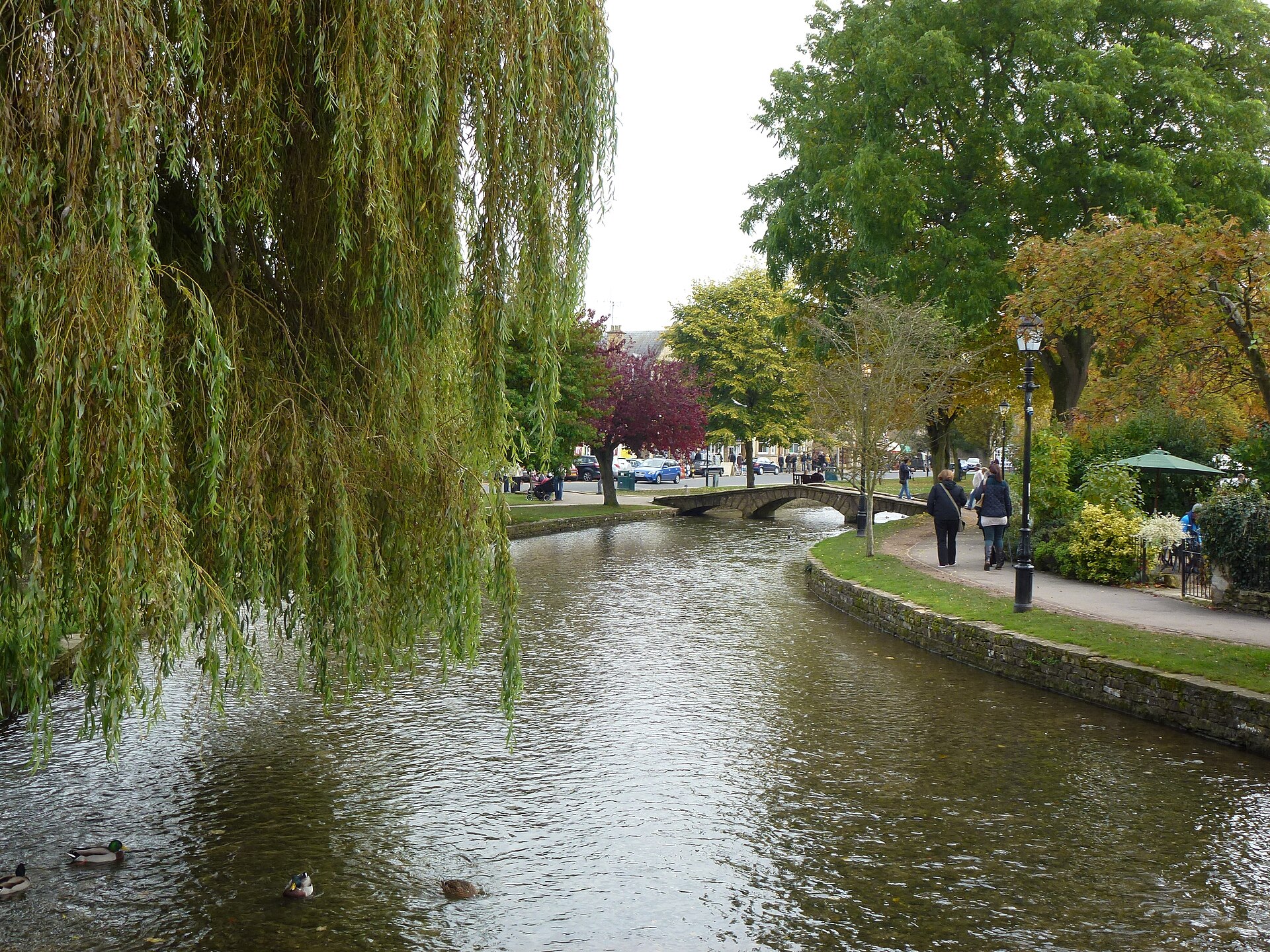
Bourton-on-the-Water is nicknamed “the Venice of the Cotswolds” because five low bridges, built between 1654 and 1953, cross the River Windrush here. Visit the Model Village, a 1:9 stone replica of the village built in 1937 (Grade II; admission roughly £4.95, see the table below for other prices, card payment only). With kids, try the Cotswold Motoring Museum (closed roughly December to February), the Birdland bird park or the Dragonfly Maze from 1997.
💡 Tip: Arrive before 9 am and park on Rissington Road, where parking is free until 10:00 (paid after that until 20:00, around £10.60 for the whole day, £4.40 for two hours).
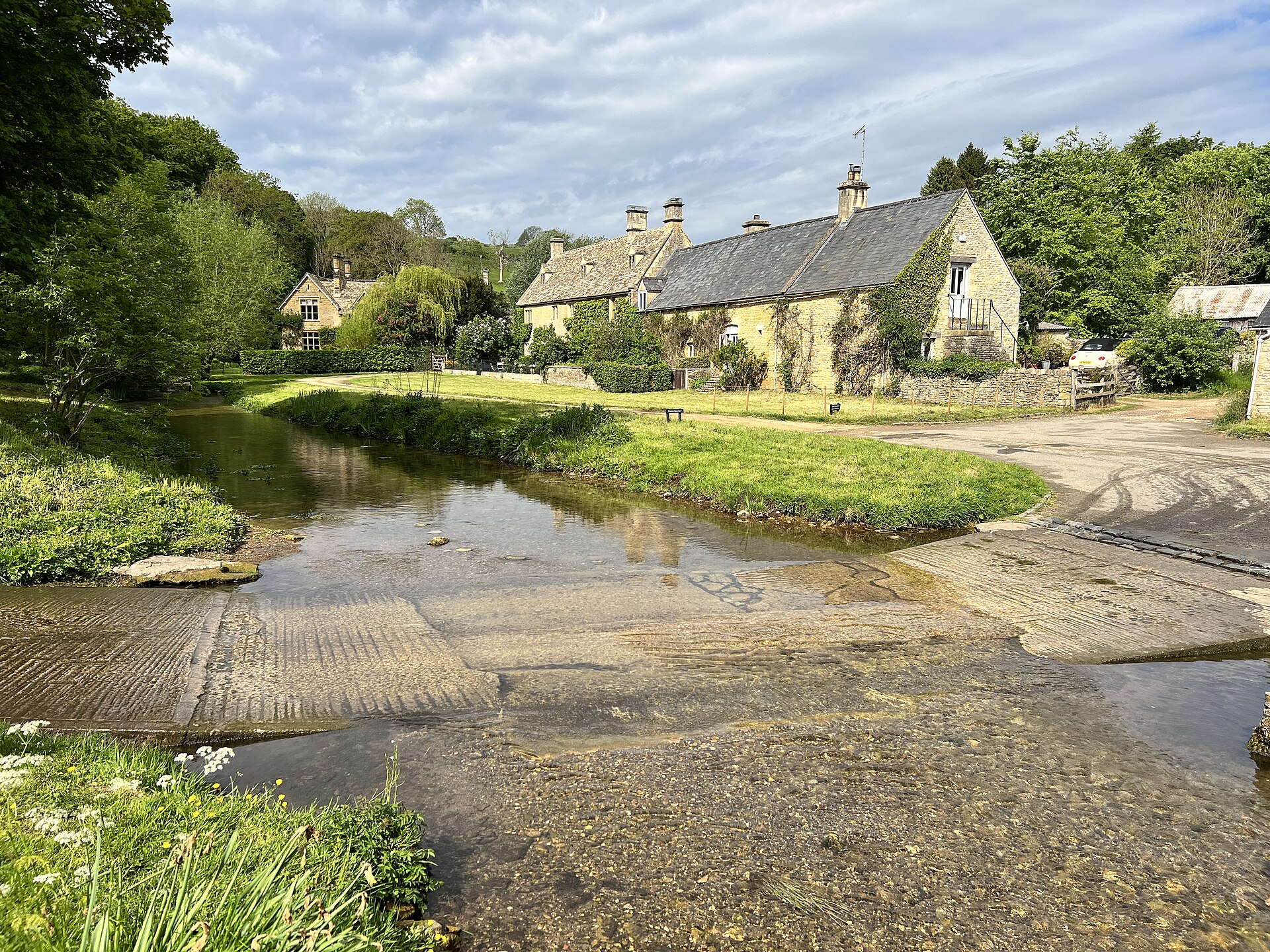
Lower and Upper Slaughter
About 3 km from Bourton lie the peaceful villages of Lower Slaughter and Upper Slaughter. In Lower Slaughter, the River Eye flows past the Old Mill with its waterwheel. Neighbouring Upper Slaughter is one of the “Doubly Thankful Villages”, where every soldier came home alive from both the First and Second World Wars. A short walk across the meadows links Bourton and Lower Slaughter, so leave the car in Bourton and come here on foot.
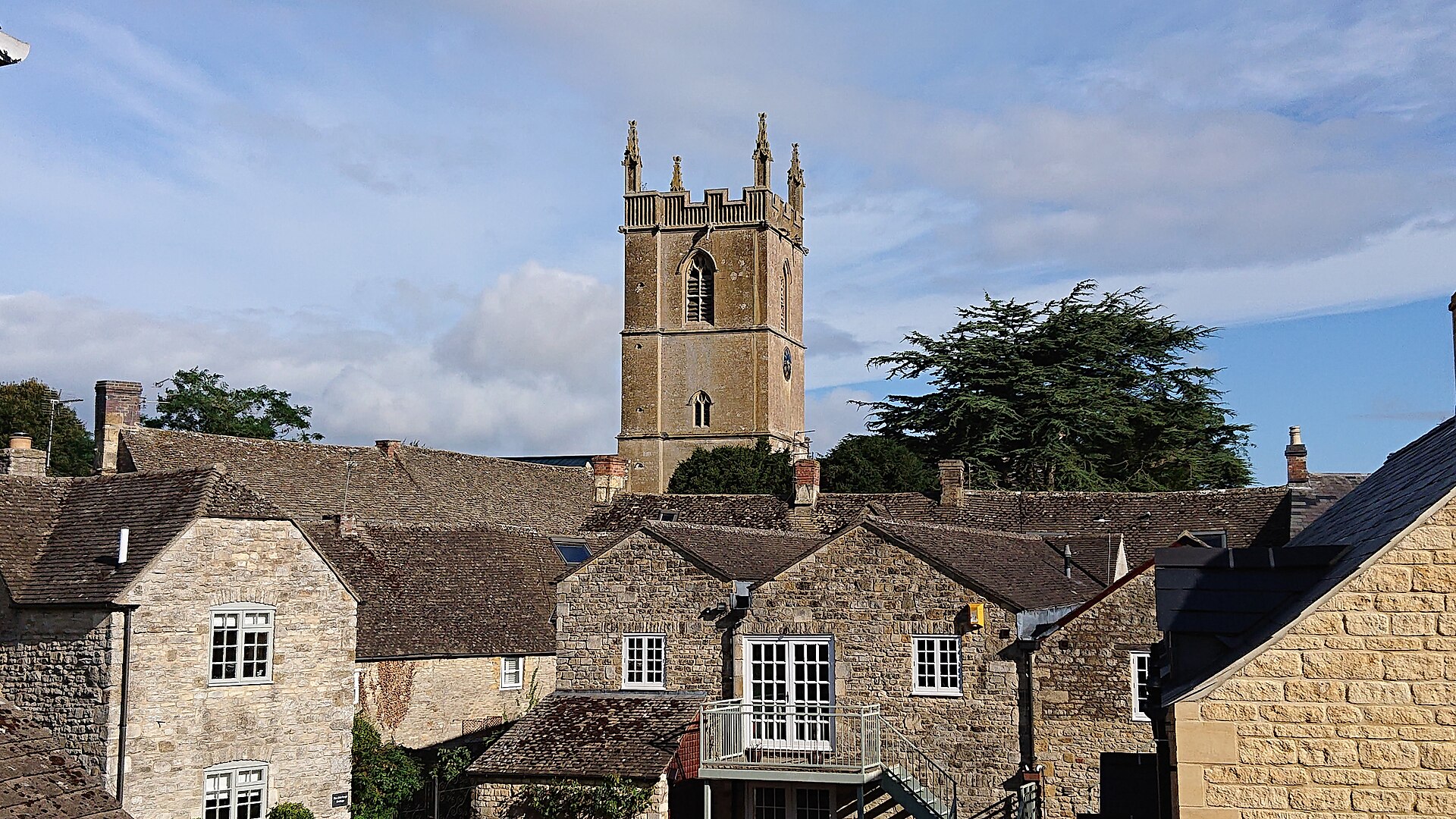
Stow-on-the-Wold
The market town of Stow-on-the-Wold sits on a hilltop at 244 metres. On 21 March 1646, a battle of the English Civil War was fought here, after which the victors held their prisoners in the church. Head to St Edward’s Church, whose North Door is framed by ancient yew trees. They’re said to have inspired J. R. R. Tolkien’s Doors of Durin in The Lord of the Rings, but according to the Stow Civic Society it’s just an unverified legend (“nobody has so far authenticated it”). Bus 801 stops in Stow, so it’s easy to get here without a car too.
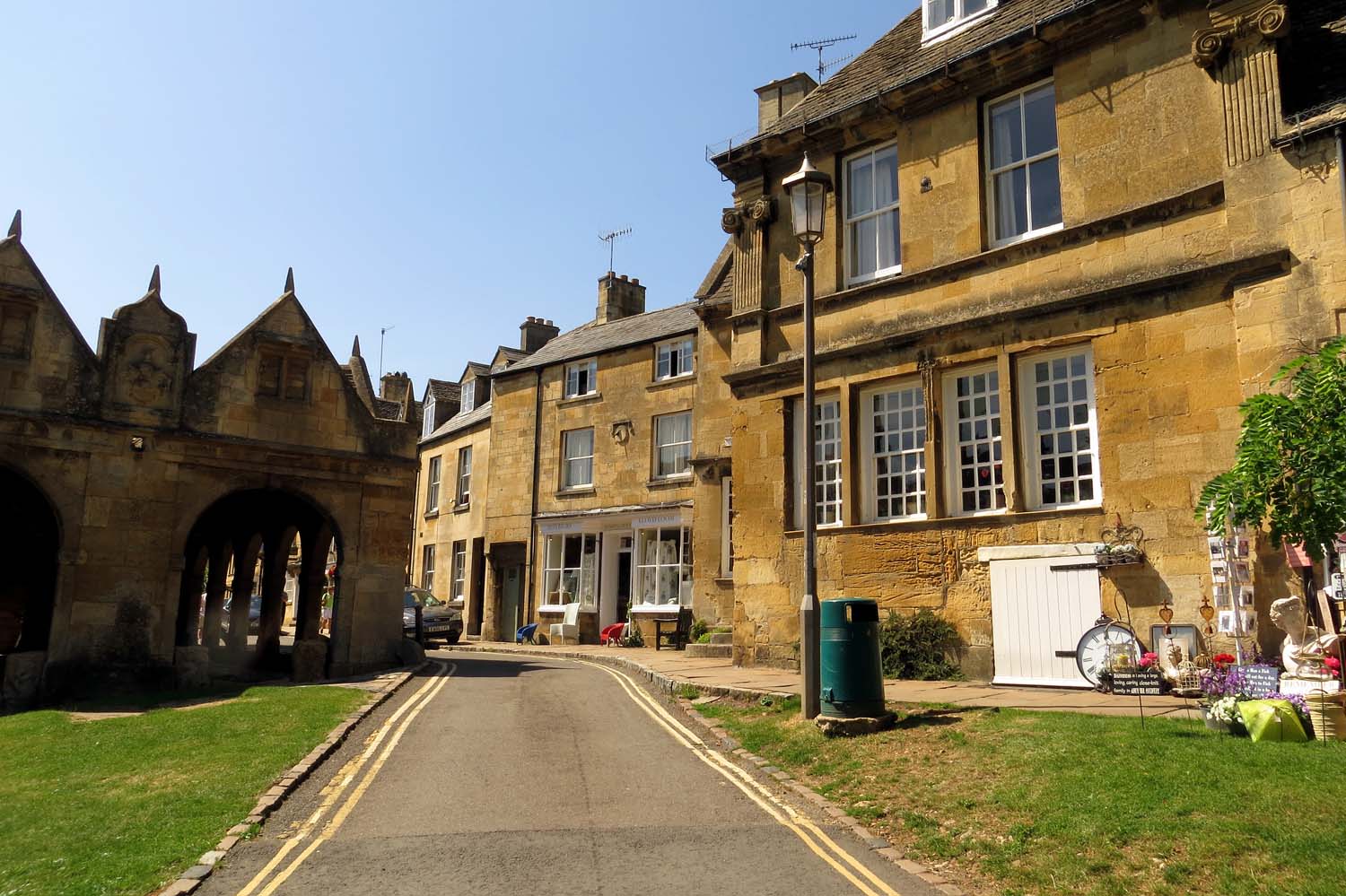
Chipping Campden
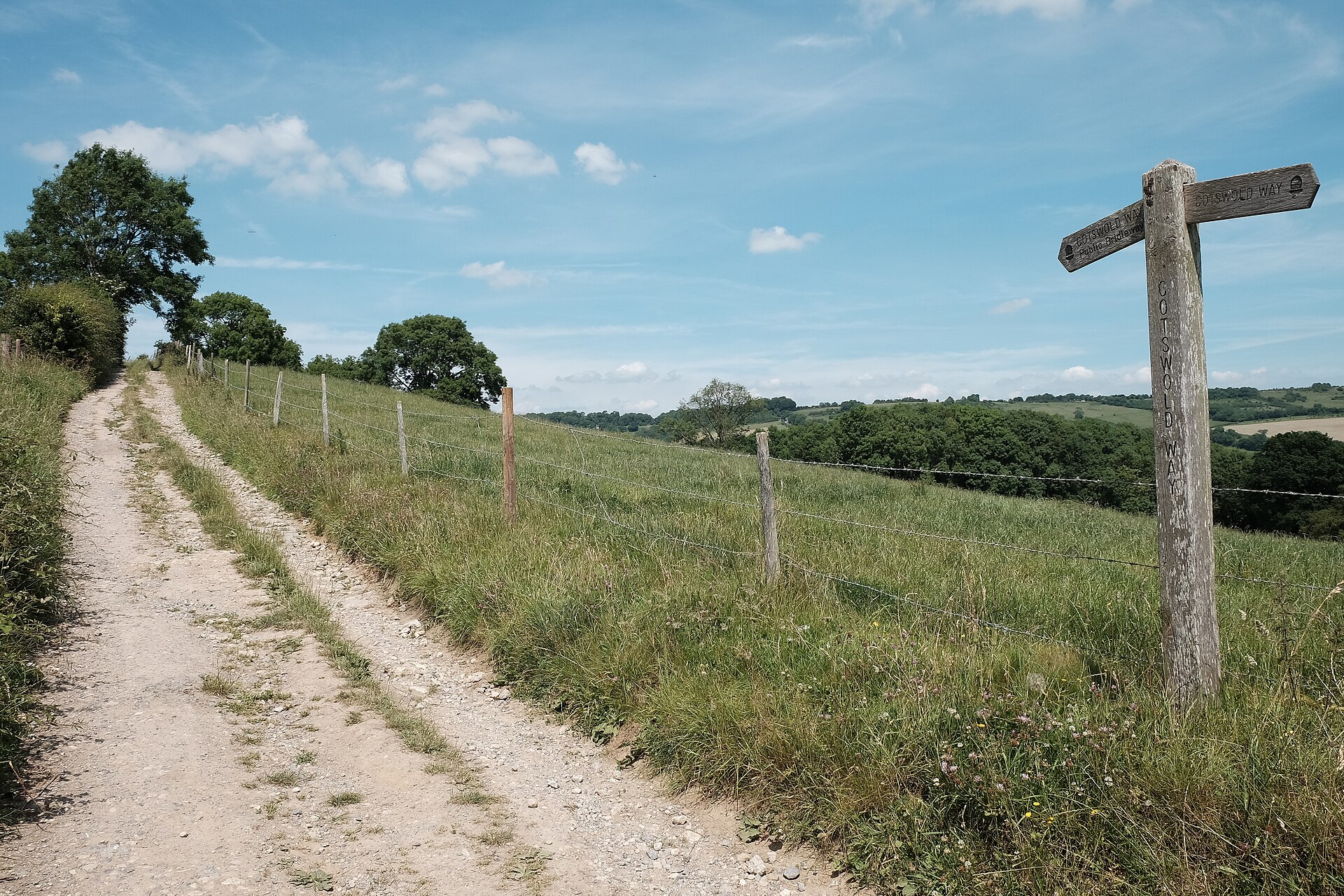
Up north you’ll find Chipping Campden with its open-arcaded Market Hall from 1627, built by Sir Baptist Hicks (now owned by the National Trust). Climb Dover’s Hill, where the Cotswold Olimpicks games have been held since 1612. The Cotswold Way trail (164 km, taking 7 to 10 days to walk end to end) starts in Chipping Campden, and its first stretch runs over Dover’s Hill. Routes 1 and 2 run here from Moreton (a few services a day, which may not run on Sundays – plan on a taxi), and by car from Stow you’ll be here in 16 minutes.
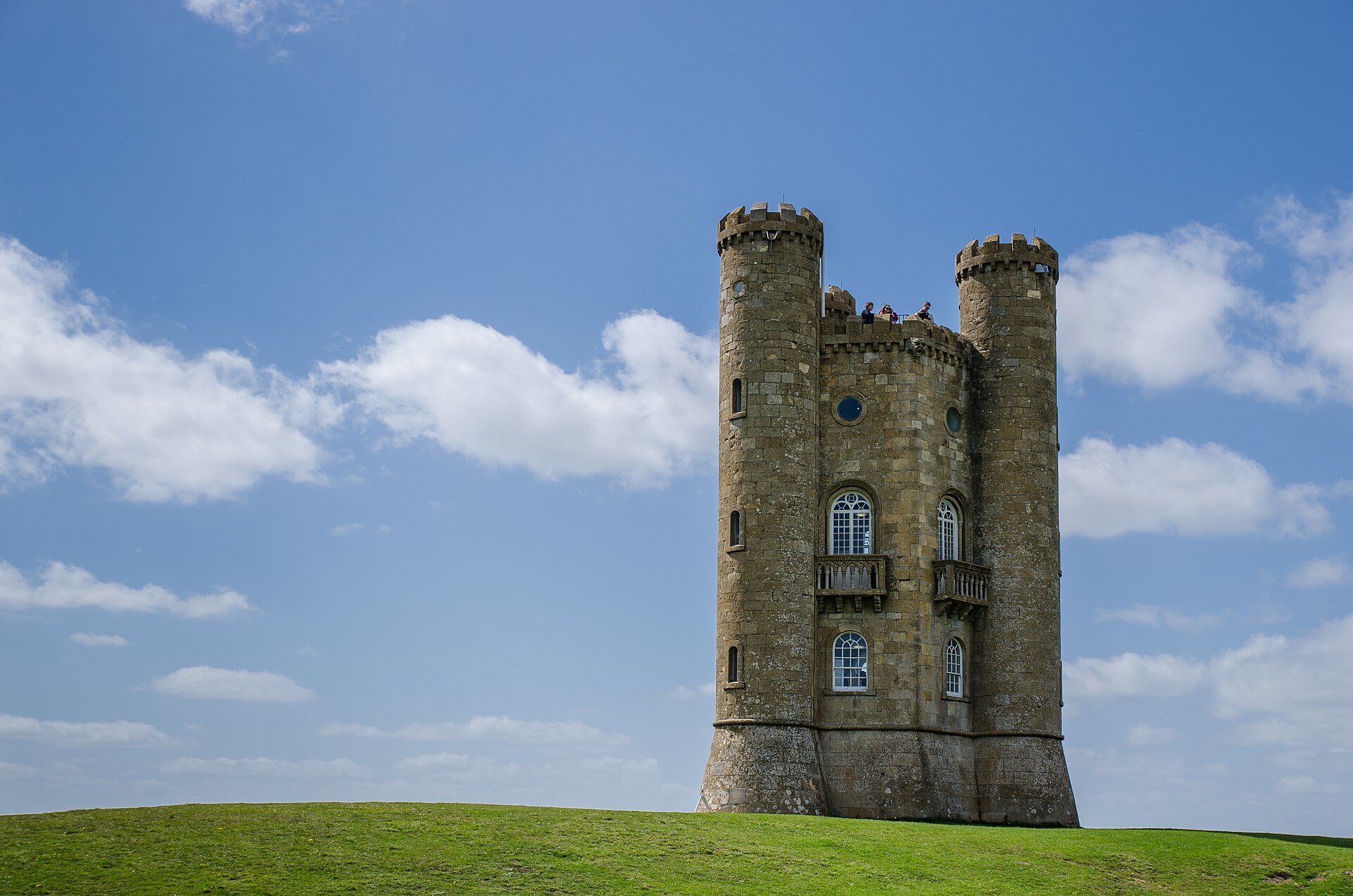
Broadway and Broadway Tower
High above the village of Broadway, at 312 m above sea level, rises Broadway Tower: based on an idea by Capability Brown, it was designed by James Wyatt for the 6th Earl of Coventry and completed in 1798. The tower is linked with William Morris, and a Royal Observer Corps bunker operated next to it from 1960 to 1991. It isn’t the highest point in the Cotswolds, though: that’s Cleeve Hill (330 m above sea level). It’s open from April to October, 10:00 to 17:00, with shorter hours in winter (2026 admission from around £14).
Burford
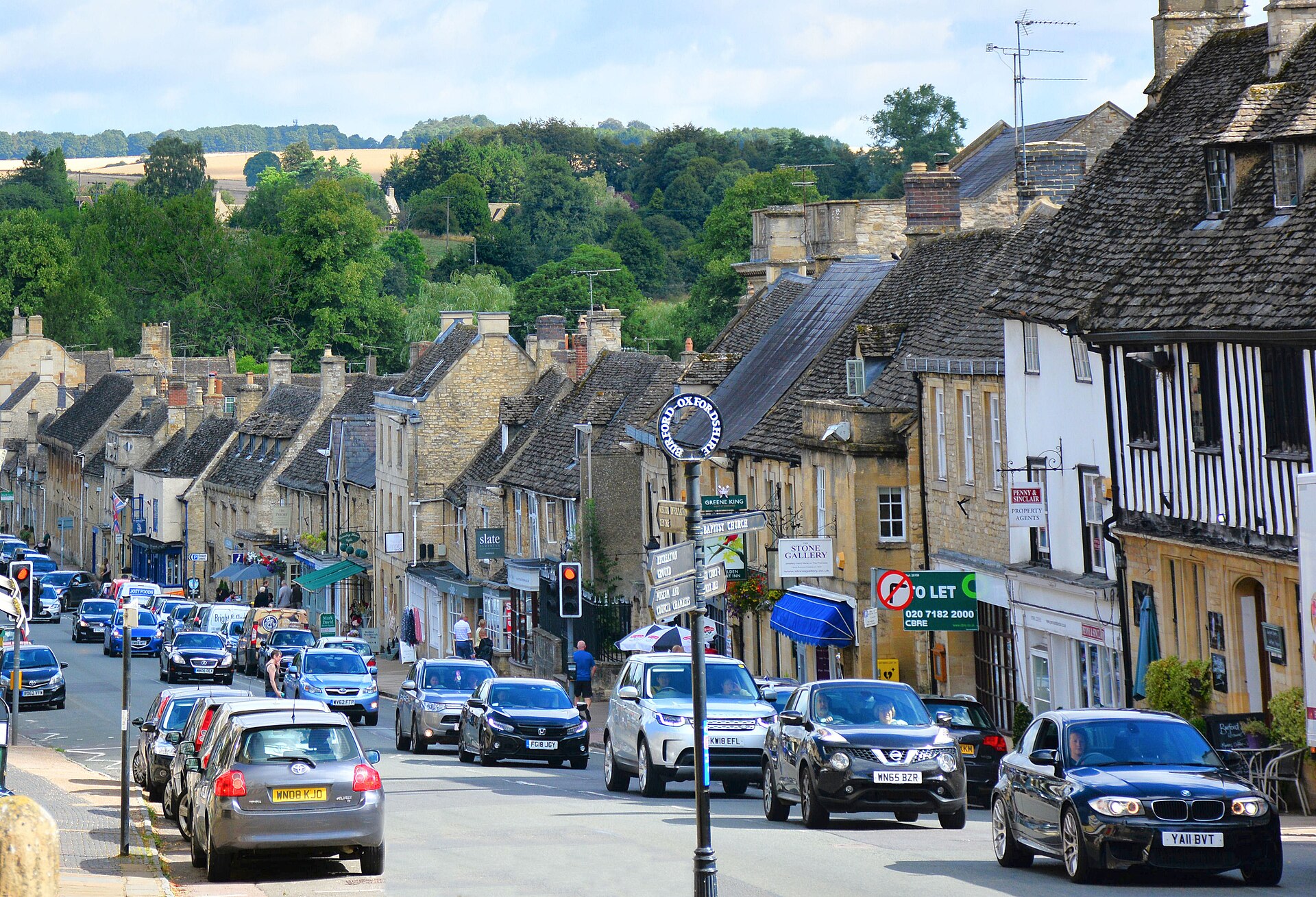
Burford is known as the “Gateway to the Cotswolds”. Its steep High Street runs down to the River Windrush and the parish Church of St John the Baptist (Grade I). It’s a great place to stop when you’re arriving from Oxford (32 km from Oxford, around 33 minutes by car; the X52 bus takes longer). From here, Bibury is 16 km away.
Painswick and Bisley
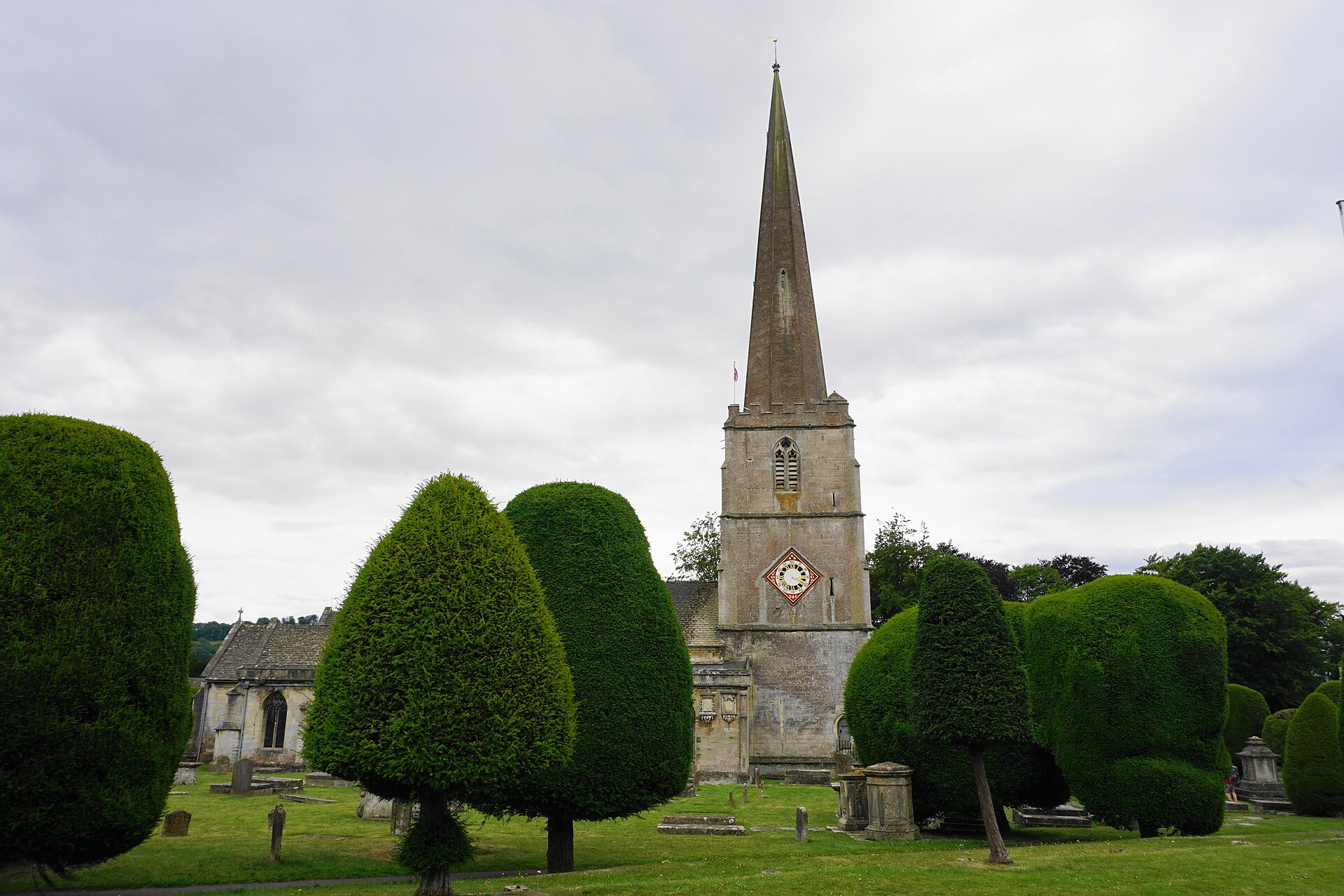
Near the town of Painswick, visit Painswick Rococo Garden, dating from the 1740s (the season usually runs until early November, open daily 10:00 to 17:00 for around £12.80; snowdrops bloom here from January to March – check the 2027 dates). In neighbouring Bisley, the churchyard is home to the 13th-century Poor Souls’ Light, a stone lantern for the dead.
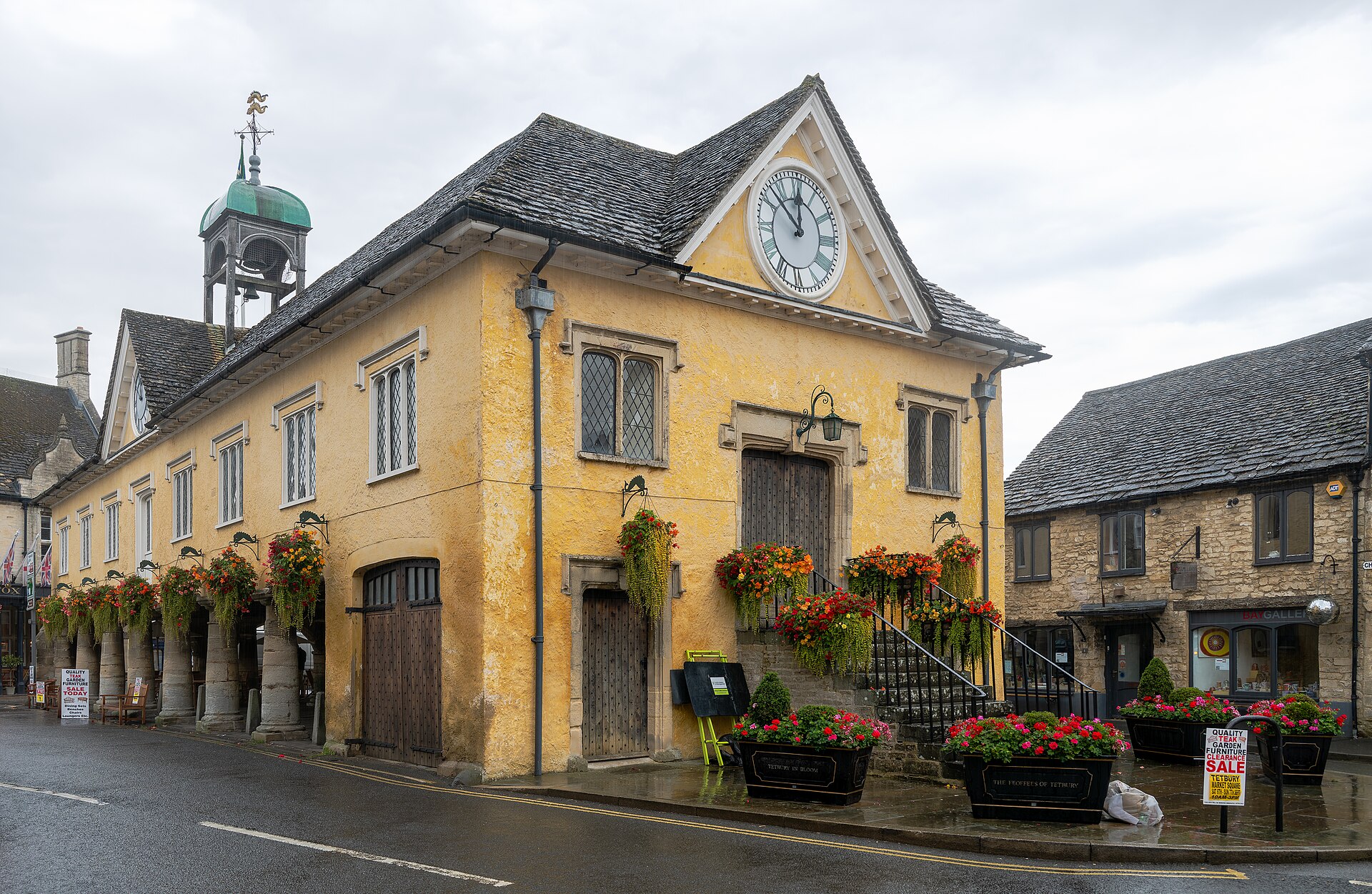
Cirencester and Tetbury
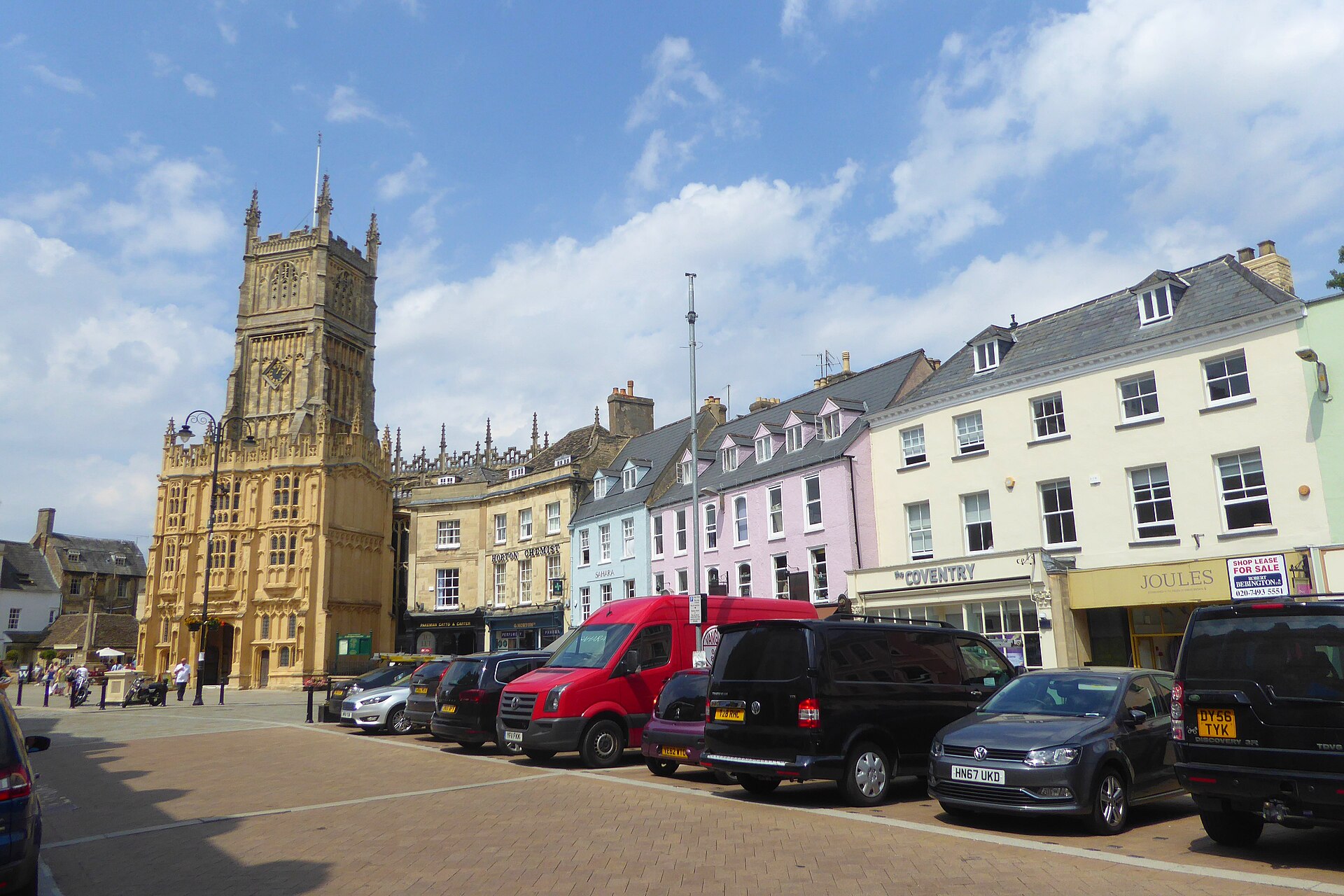
Cirencester, nicknamed “the capital of the Cotswolds”, has plenty of historic sights. On a rainy day, the Corinium Museum with its Roman mosaics is a good bet (around £8.70 online). At the end of the year, there are Advent markets (28–29 November 2026) and Christmas markets (5–6 December 2026). About 17 km away lies Tetbury, and near it Highgrove, the private residence of King Charles III. You can visit the gardens from April to September with a booking and photo ID (photography is restricted, and bookings for the 2027 season open in March 2027), or pop into the Highgrove Shop in Tetbury at 10 Long Street (Mon–Sat 9:30 to 17:00).
On the Edge of the Cotswolds: Palaces and Filming Locations
Right next to the hills you’ll find palaces and film locations that slot easily into a weekend route.
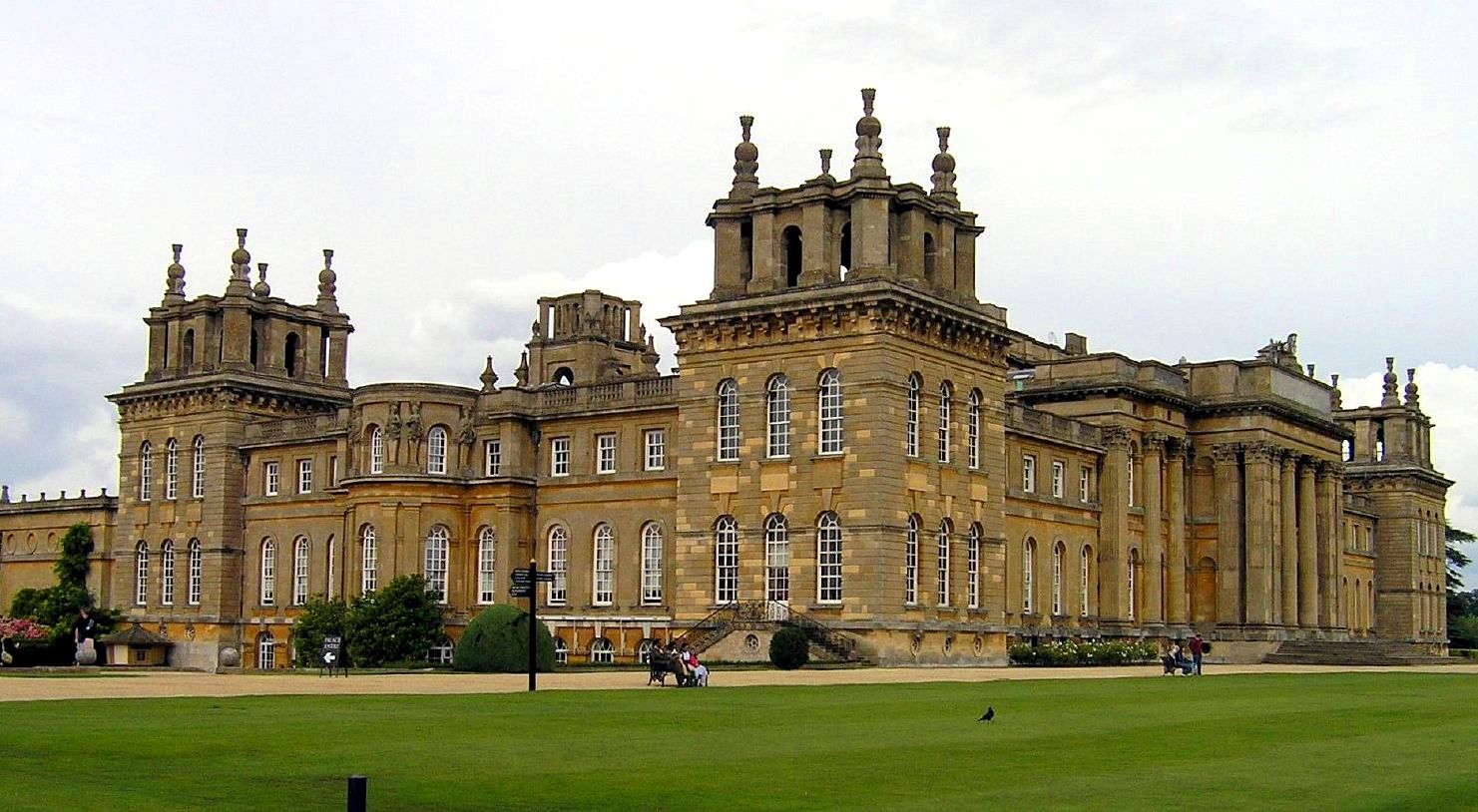
Blenheim Palace
Near Woodstock (23 km from Oxford, 25 km from Burford) stands the Baroque Blenheim Palace, a UNESCO World Heritage Site and the birthplace of Winston Churchill. A ticket to the palace, park and gardens (in 2026 roughly £44 on the day / £41 online, park and gardens only £34 / £31) doubles as an annual pass. The State Rooms are open from 10:30 am to 3:45 pm. The palace is closed from 8 to 12 November 2026, and from 13 November 2026 to 3 January 2027 there’s a Christmas programme (tickets via the Ticketek platform).
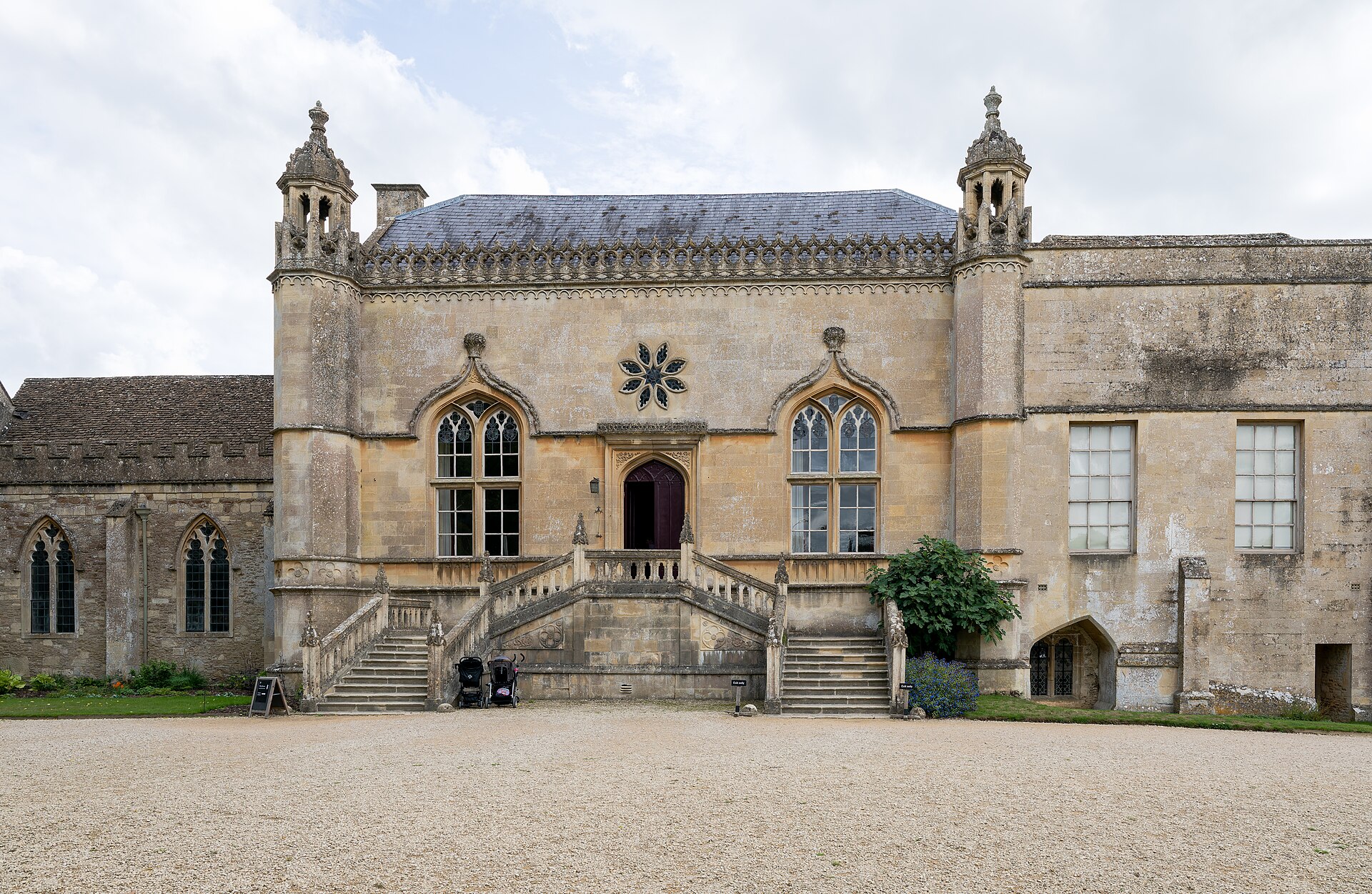
Lacock
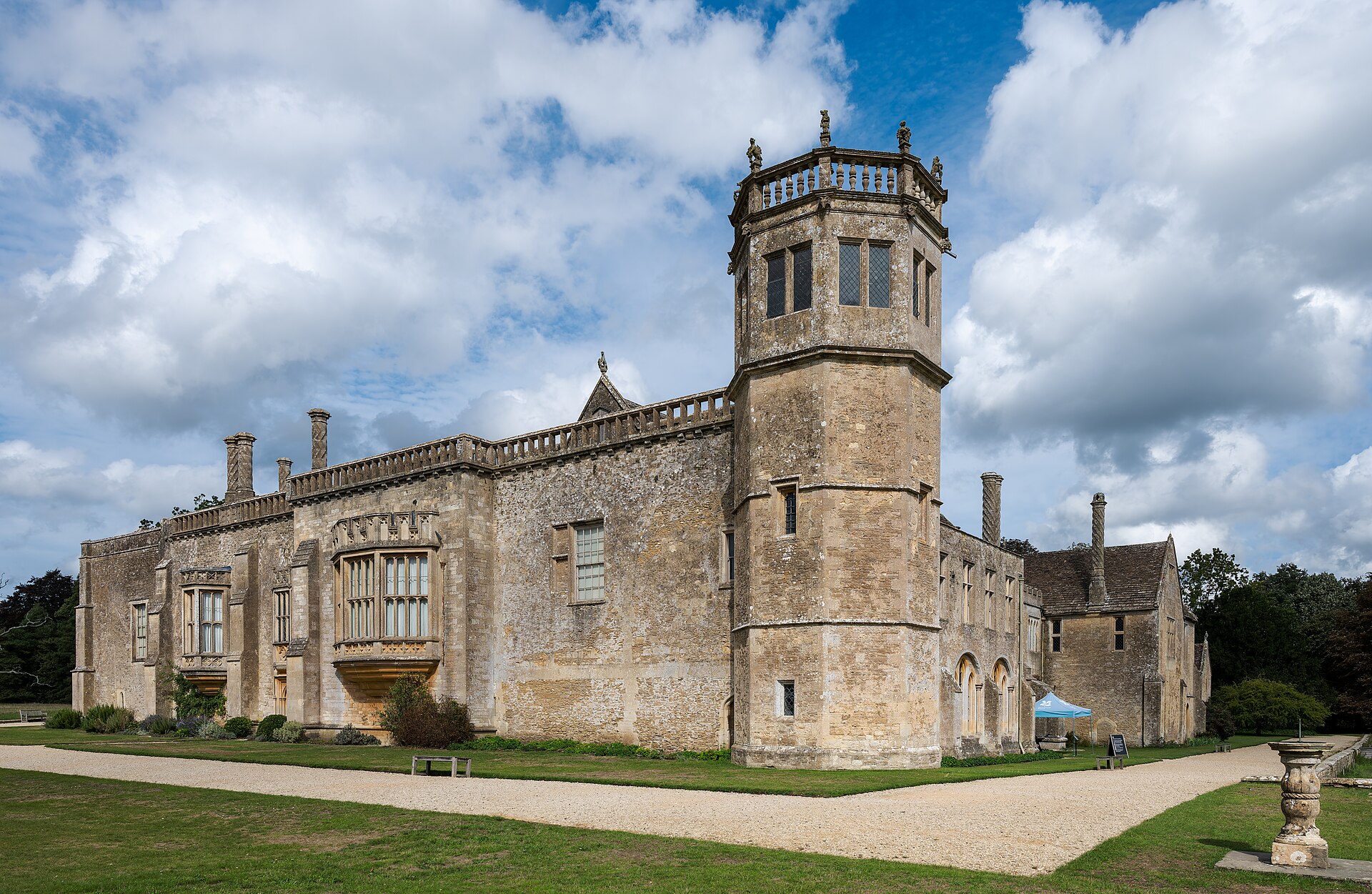
About 6 km beyond the region’s boundary (14 km from Castle Combe) lies the village and abbey of Lacock (National Trust). Its cloisters doubled as Hogwarts in the Harry Potter films (films 1, 2 and 6) and in Fantastic Beasts (2018), and Pride and Prejudice (1995) and Downton Abbey (2015) were filmed here too. You don’t need to book (parking costs around £5), according to the National Trust page for Lacock. The main studios are near London – see our article on the Harry Potter Studio in London.
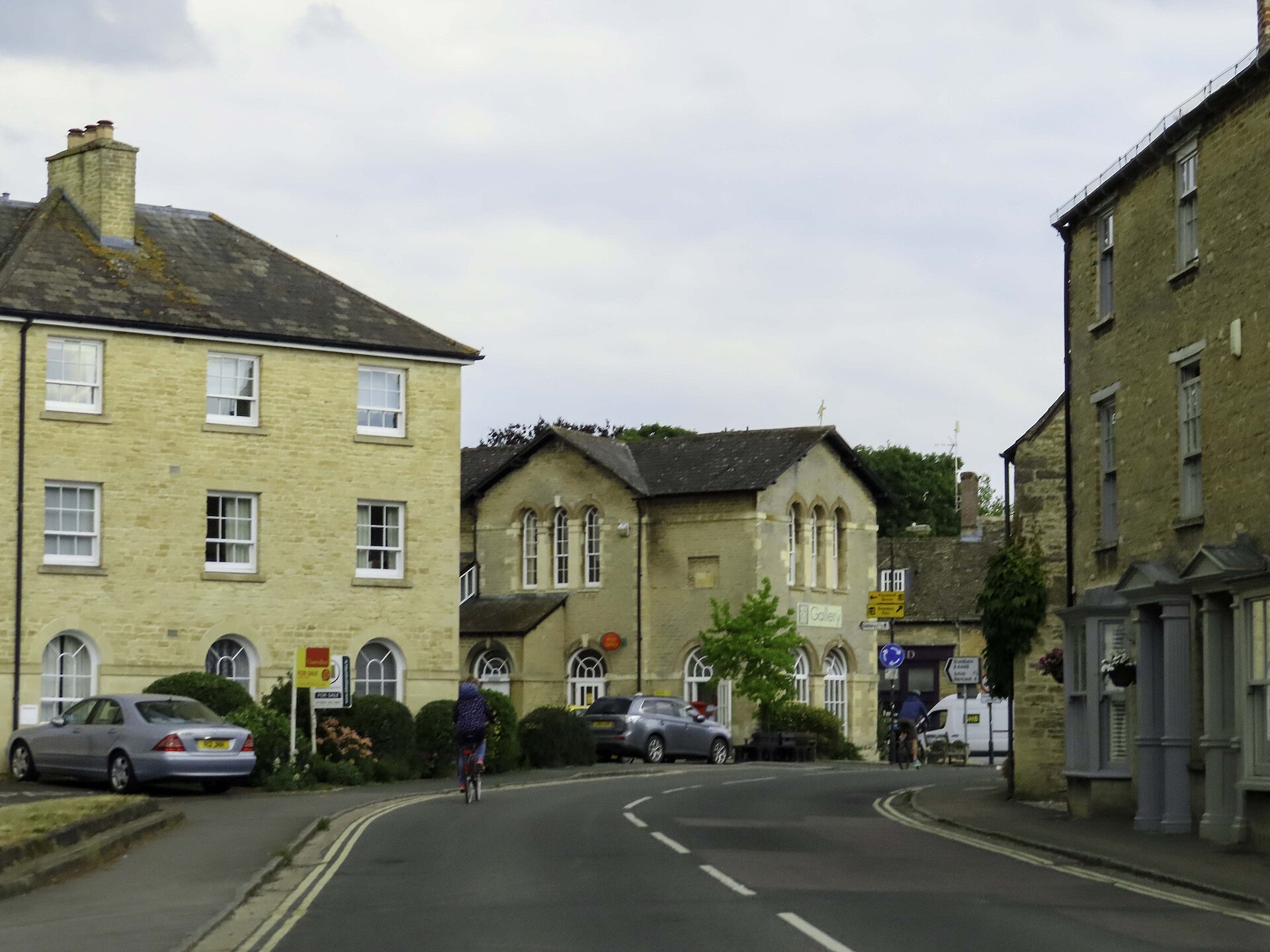
Bampton and Downton Abbey
Around 13 km (a 17-minute drive) from Burford is Bampton, which played the village of Downton in the TV series Downton Abbey. By the church of St Mary the Virgin you’ll spot Churchgate House (Crawley House in the series) and the old library (the show’s cottage hospital).
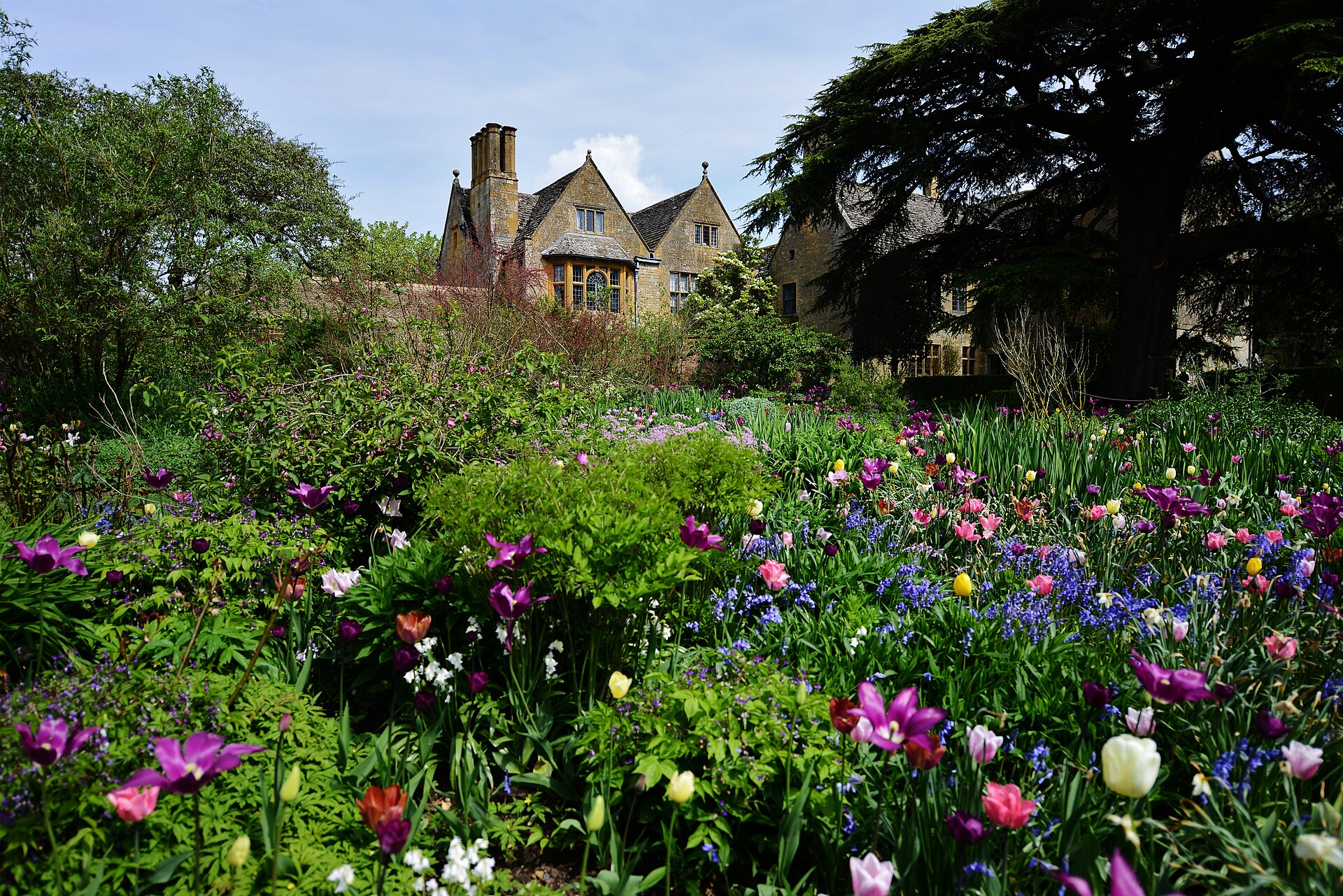
National Trust Gardens and Houses
Near Broadway you’ll find Snowshill Manor (reduced opening in November, closed in January and February) and Hidcote garden, created by Lawrence Johnston as a series of garden “rooms” (National Trust since 1948) – more on the National Trust page for Hidcote. Sudeley Castle near Winchcombe (where Catherine Parr is buried) is closed until March 2027, and Kelmscott Manor is closed for the whole of 2026.
A Long-Weekend Route: 3 Days in the Cotswolds
Here are two versions running from Friday to Sunday. Take the driving times with a pinch of salt (see above).
Option A: By Car
Pick a base for two nights (Stow-on-the-Wold, Moreton-in-Marsh or Bourton-on-the-Water) and collect your car at Heathrow (about 1 h 45 min to Moreton) or in Oxford.
| Day | Route | Notes |
|---|---|---|
| Day 1 (Friday) | Heathrow / Oxford → (optional Blenheim Palace, 2–3 h) → Burford → Bibury → your base | Around 150–170 km. Aim to reach Bibury (16 km from Burford) in the early evening. |
| Day 2 (Saturday) | Bourton-on-the-Water → on foot to Lower and Upper Slaughter → Stow-on-the-Wold → Chipping Campden → Broadway Tower and Broadway | About 50 km by car. In Bourton, park on Rissington Rd (free before 10 am) and walk to the Slaughters in the morning. |
| Day 3 (Sunday) | Base → Cirencester → Tetbury → Castle Combe → Lacock → Heathrow or Bath | Works well if you’re flying out of Heathrow (143 km from Castle Combe) or heading on to Bath (23 km) and Stonehenge. Alternatively, explore the north (Snowshill, Hidcote, Winchcombe; Sudeley is closed until March 2027). |
This way you’ll see the best-known villages outside the midday rush, and from Lacock you can carry on to Bath or Heathrow.
Option B: Without a Car
Base yourself in Moreton-in-Marsh, which has trains from Paddington. Since bus 855 most likely doesn’t run on Sundays, save Bibury for Saturday.
| Day | Route | Notes |
|---|---|---|
| Day 1 (Friday) | Train Paddington → Moreton-in-Marsh (about 1.5 h) → bus 801 to Stow-on-the-Wold and back | Bus 801 runs hourly. |
| Day 2 (Saturday) | Bus 801 to Bourton-on-the-Water → bus 855 to Bibury and back → walk to Lower Slaughter → bus 801 to Moreton | Bus 855 runs Monday to Saturday. Check the last bus back to Moreton with Pulhams. |
| Day 3 (Sunday) | Buses 1 and 2 (or a taxi) to Chipping Campden → Moreton → train to London | Buses 1 and 2 have several departures a day but may not run on Sundays, so plan on a taxi. It’s about 14 km from Moreton to Chipping Campden. |
If you’ve only got one day, consider an organised day trip from London or Oxford (GetYourGuide). For the southern Cotswolds without a car, base yourself in Cirencester or Bath and use taxis.
A Short Stretch of the Cotswold Way
The long-distance Cotswold Way trail runs from Chipping Campden to Bath. On a weekend trip, just walk the opening section from Chipping Campden via Dover’s Hill to Broadway Tower and down into Broadway – check the exact distance on a map before you set off.
Food and Drink in the Cotswolds
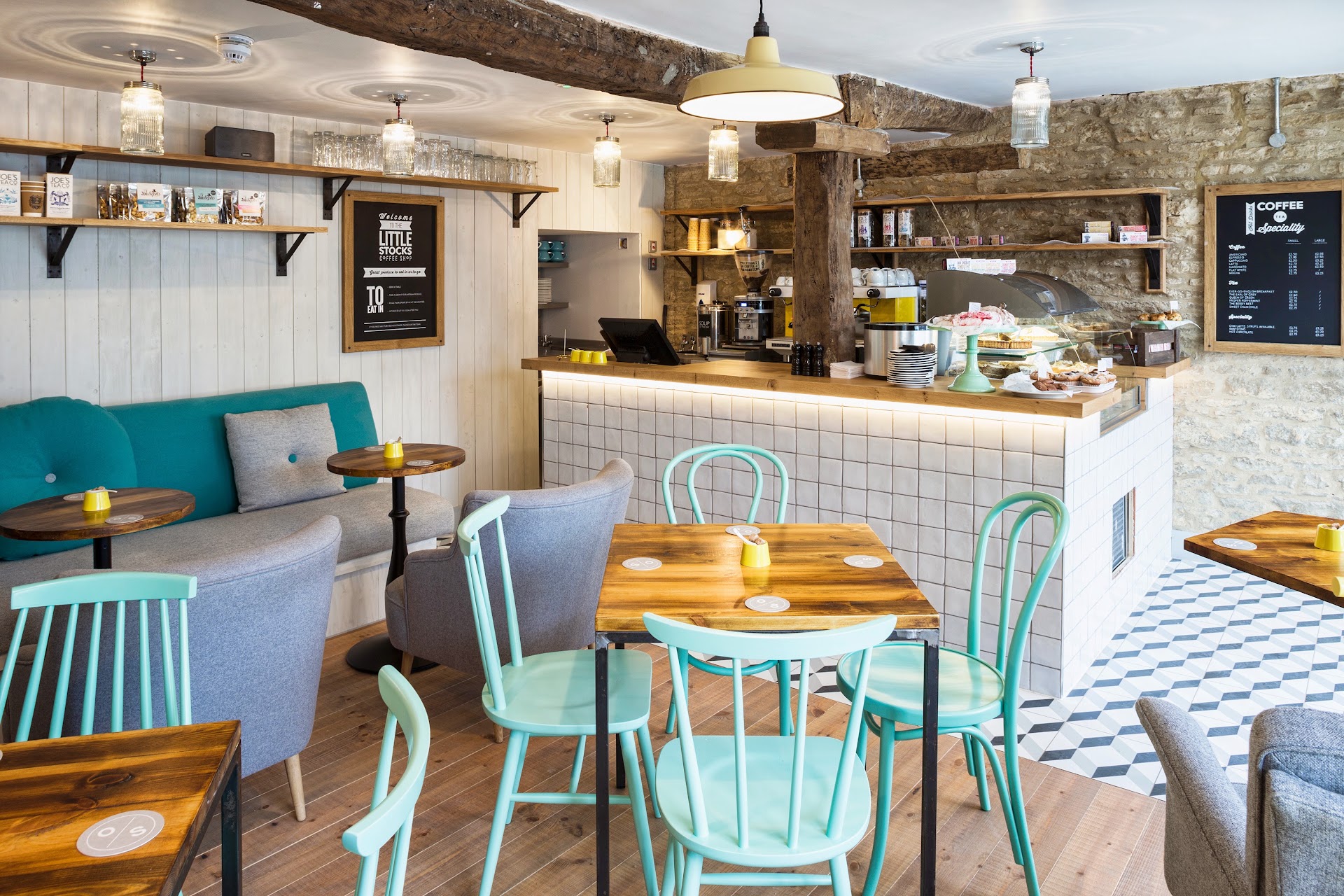
Since we’re vegetarian, I mostly list meat-free treats here. But I’m sure absolutely everyone will love these British classics. ☺️ A must is afternoon cream tea – tea with scones, jam and thick clotted cream. When it comes to cheese, try the local specialities: while the better-known Double Gloucester has no protected status, Single Gloucester carries a Protected Designation of Origin.
For lunch with vegetarian and vegan options, head to Daylesford Organic farm near Kingham, where they make wood-fired pizza. If you eat meat, the local speciality is trout from Bibury Trout Farm, and on Sundays the pubs serve a classic roast with all the trimmings (Sunday roast).
Practical Tips
Entrance fees are approximate, based on 2026 price lists (for National Trust properties, the standard price without the voluntary Gift Aid donation).
| Place / sight | Adult entrance fee (approx., 2026) | Season and notes |
|---|---|---|
| Model Village (Bourton) | approx. £4.95 | Card payment only, no booking needed |
| Birdland (Bourton) | £14.95 (on the day) | 10 am to 4 pm (online £13.95 + £1.50 fee, so pricier than on the day) |
| Cotswold Motoring Museum | £9.95 | 10 am to 6 pm, closed roughly December to February |
| Broadway Tower | from £14.00 | April to October 10 am to 5 pm, shorter hours in winter |
| Snowshill Manor (NT) | £18.00 (winter £13.00) | Reduced opening in November, closed January to February |
| Hidcote (NT) | £20.00 (winter £11.00–12.00) | Garden divided into “rooms” |
| Lacock Abbey (NT) | £21.00 (winter £14.00) | Harry Potter, parking £5.00 |
| Blenheim Palace | £44.00 on the day (£41.00 online) | Annual pass, closed 8–12 Nov 2026 |
| Sudeley Castle | £24.00 | Closed until March 2027 (except Spectacle of Light) |
| Kelmscott Manor | £15.50 | Closed throughout 2026 |
| Highgrove Gardens | from £45.00 (May to July £50.00) | April to September, booking required plus photo ID |
You’ll get by fine with a payment card (Model Village and Cotswold Lavender don’t take cash), and for parking in Cotswold District you can use the PayByPhone app.
Where to Go Next
Combine your trip with the British capital – on the blog you’ll find 50 tips on what to see and do in London. From the south, near Lacock and Bath, carry on to Stonehenge. If you’re heading north by train, take a look at our guide to Edinburgh or our itinerary for a holiday in Scotland.
Frequently Asked Questions
Where exactly are the Cotswolds located?
The region lies in southwest and central England, roughly 2 hours by car or 1.5 hours by train from London, between the towns of Oxford, Bath and Stratford-upon-Avon. This protected landscape covers 2,038 km² and spans six counties.
Are the Cotswolds a national park?
No, officially it’s the Cotswolds National Landscape (an AONB category designated in 1966). Formally, it isn’t a national park.
How do you get to the Cotswolds from London without a car?
Take a direct GWR train from London Paddington to Moreton-in-Marsh (about 1.5 h) and transfer onto the Pulhams bus 801, which runs hourly, even on Sundays, to Stow, Lower Slaughter and Bourton. Route 855 to Bibury most likely doesn’t run on Sundays.
How many days are enough for the Cotswolds?
2 to 3 days are enough to see the main villages, gardens and take a short walk. On a day trip from London you’ll only manage 2 to 3 stops, which makes more sense as part of an organized tour.
Where should you stay in the Cotswolds?
Without a car, choose Moreton-in-Marsh, right by the train and bus connections. With a car, the central Stow-on-the-Wold or Bourton-on-the-Water work well, while for a quieter atmosphere go for Chipping Campden further north.
Which Cotswolds village is the prettiest?
The ones most often mentioned are Bibury, with its Arlington Row cottages (William Morris called it “surely the most beautiful village in England”), and Castle Combe (awarded the title back in 1962). For fewer crowds, try Lower Slaughter or Chipping Campden.
Can you park in Bibury?
Only to a limited extent: since May 2025, Gloucestershire County Council has been trialling restrictions on coach tours, and from 18 May 2026 a no-stopping rule applies on the B4225 near The Vicarage. Arrive early in the morning or in the evening, never park in resident-only spots, and don’t step into the gardens by Arlington Row.
Do I need an ETA to travel to England?
Yes, in addition to a valid passport, EU citizens need the electronic ETA, costing £20, which also applies to children and can be arranged via the UK ETA app or on gov.uk. From 25 February 2026, you won’t be allowed to board without an approved travel authorization.
What’s the best time to visit the Cotswolds?
May, June and September are ideal, when the gardens are open and crowds are smaller than in summer. In winter, some attractions are closed, for example Sudeley Castle until March 2027 and Kelmscott Manor throughout all of 2026.
Where nearby were Harry Potter and Downton Abbey filmed?
Both locations are on the edge of the region: the Hogwarts corridors can be found at Lacock Abbey in the south, while the village of Downton is represented by Bampton, near Burford. The Harry Potter film studios themselves are near London, in Leavesden.
Tips and Tricks for Your Vacation
Don’t Overpay for Flights
Search for flights on Kayak. It’s our favorite search engine because it scans the websites of all airlines and always finds the cheapest connection.
Book Your Accommodation Smartly
The best experiences we’ve had when looking for accommodation (from Alaska to Morocco) are with Booking.com, where hotels, apartments, and entire houses are usually the cheapest and most widely available.
 🚗 Car rental on the roadVerified rental cars in Great Britain
Search with the DiscoverCars comparison engine — it compares prices from dozens of local and international rental companies, and most bookings come with free cancellation.
Compare car prices in Great Britain →Don’t Forget Travel Insurance
Good travel insurance will protect you against illness, accidents, theft, or flight cancellations. We’ve had a few hospital visits abroad, so we know how important it is to have proper insurance arranged.
Where we insure ourselves: SafetyWing (simple monthly subscription) and TrueTraveller (for extra-long trips).
Find the Best Experiences
Get Your Guide is a huge online marketplace where you can book guided walks, trips, skip-the-line tickets, tours, and much more. We always find some extra fun there!