Cairo is a city that will engulf you with its energy and won’t let you catch your breath for even a moment. The Egyptian metropolis is experiencing a huge tourist boom and has rightfully become one of the world’s biggest travel hotspots for 2026. It’s no wonder, because after years of waiting, the beautiful Grand Egyptian Museum has fully opened with the complete furnishings from Pharaoh Tutankhamun’s tomb.
In addition to modern museums, you’ll also find a completely new entrance system at the Giza pyramids, which makes your visit much more pleasant and organized thanks to electric buses. Although entrance fees for foreigners to major monuments have recently jumped significantly, thanks to the current exchange rate, Cairo remains a very affordable destination. A typical day with monument visits and excellent food will only cost you a few dozen euros.
Getting around the city is also easy and cheap with Uber, where you pay by card in advance, so you can completely avoid complicated negotiations with local taxi drivers. Be prepared for a bustling, noisy, but amazing ride full of ancient history, the aroma of spices from markets, and unforgettable experiences from this pulsating Arab metropolis.
TL;DR
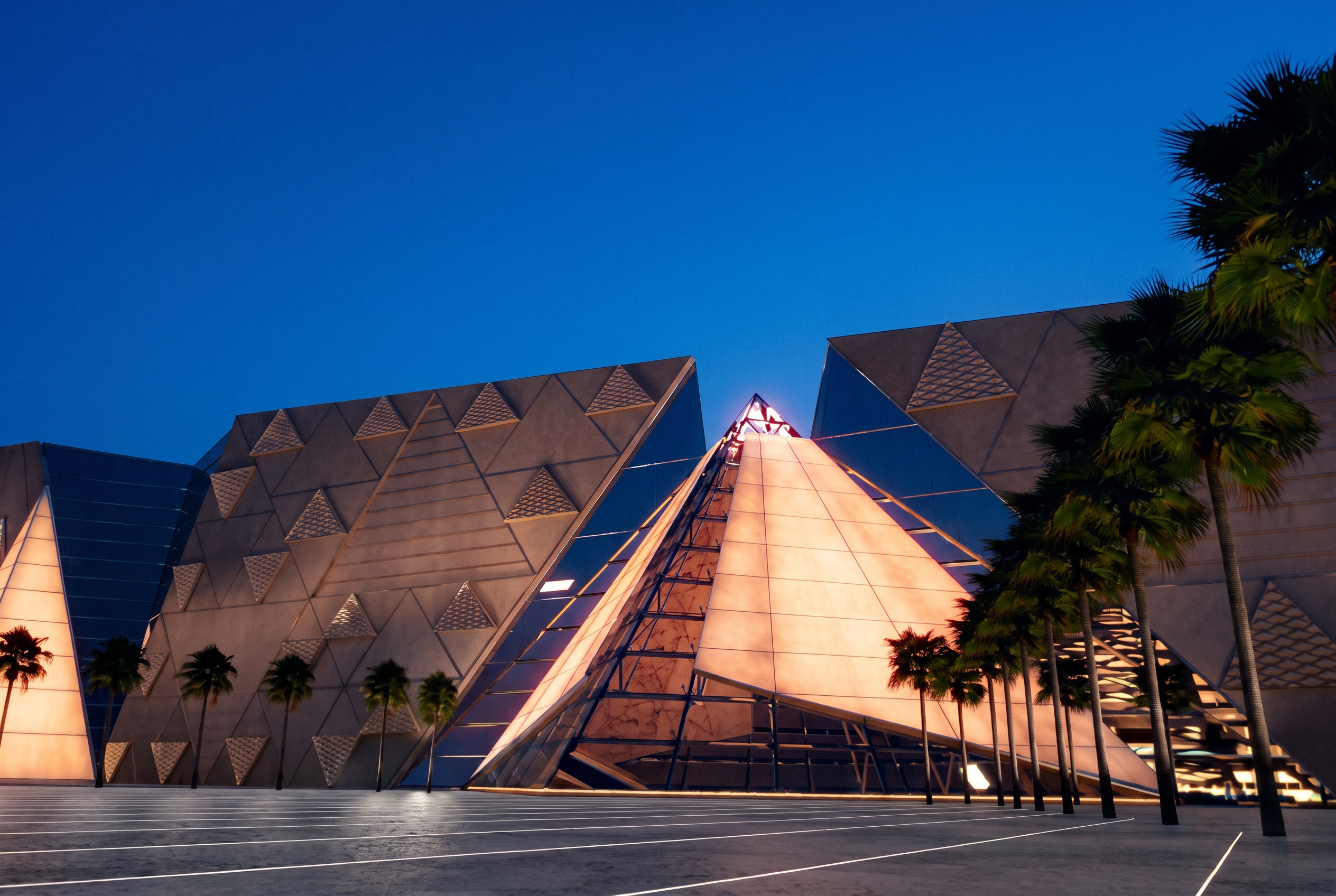
- New GEM museum: Since November 2025, the giant museum at the pyramids has been fully open, where you’ll find the famous Tutankhamun mask. Buy tickets exclusively online.
- Pyramids without stress: Since April 2025, a new entrance on the south side of the complex has been operating. Air-conditioned buses take you around the site and are included in the entrance ticket price.
- Transport from the airport: The most reliable option is Uber or Careem, with rides to the center costing around 290 EGP (about €5). Ignore touts who claim Uber doesn’t come to the airport.
- Card payments: Entrance to the vast majority of monuments is now paid cashlessly through e-ticketing. You’ll mainly use cash for tips (baksheesh) and at markets.
- When to go: The ideal period is from October to April, when temperatures range between pleasant 20 and 31 °C. Cairo is unbearable in summer.
- What to taste: Try the national meatless dish koshary (a mix of rice, lentils, and pasta), or excellent Egyptian falafel made from fava beans called ta’ameya.
The full destination guide: Egypt — guide and what to see
When to Visit Cairo
The best time to visit the Egyptian metropolis is definitely from October to April, when daily highs range between a pleasant 20 and 31 °C. During these months, the weather is ideal for exploring monuments and you won’t risk collapsing from the heat. If you want to learn more about temperatures by the sea, check out our article about weather in Egypt.
On the other hand, avoid the summer months, because from June to August temperatures climb to 39 °C and the city’s hot concrete surface makes it feel even hotter. In spring, most commonly in April, the khamsin may appear. This is a hot desert wind with dust that usually lasts one or two days and can turn the sky yellow.
When planning your trip, also check the dates of Ramadan, which in 2027 falls approximately from February 8 to March 9. During the holy month, monuments close noticeably earlier (pyramids at 3:30 PM), but the nightlife at markets pulses until two in the morning. You can get to Cairo comfortably from major European hubs with airlines like Lufthansa or EgyptAir, with flights taking around four hours. Before you start packing, definitely check out our tips on what to take on vacation to Egypt.
Where to Stay in Cairo
For your first days in Cairo, it makes a lot of sense to stay right in Giza or the Nazlet el-Semman district, where you’re just steps away from the pyramids in the morning and avoid the traffic jam from the center. Then definitely spend the rest of your stay in the quieter island district of Zamalek full of greenery and cafes, or strategically in the Downtown and Garden City areas near Tahrir Square, where you have great access to the metro. Hotel prices usually don’t include tax and service charge, which together add about 27% on top of the quoted price.
If you’re looking for an icon with history, stay at Marriott Mena House, Cairo. This famous palace from 1869 offers luxurious rooms with stunning views directly onto Khufu’s pyramid and beautiful gardens.
For a stay right in the city center, the circular tower Sofitel Cairo Nile El Gezirah is an excellent choice. It’s located on the southern tip of Gezira Island, offers fantastic views of the Nile River, and ranks among the best-rated large hotels in the city.
If you prefer modern accommodation right in the heart of the action, choose Steigenberger Hotel El Tahrir. You’ll find it just three minutes’ walk from the Egyptian Museum and it’s a perfect starting point for exploring all of Downtown.
For travelers on a smaller budget who want to look at the Sphinx right from breakfast, Great Pyramid Inn is ideal. It’s located just five minutes from the Sphinx Gate and boasts a rooftop terrace where you can watch the light show for free in the evening. You’ll find more detailed neighborhood tips in our article where to stay in Cairo.
💡 On this map you can compare what’s currently available — you’ll immediately see how much the price changes a few blocks away.
22 Tips for What to See and Do in Cairo
1. Pyramids of Giza and the New Entrance System
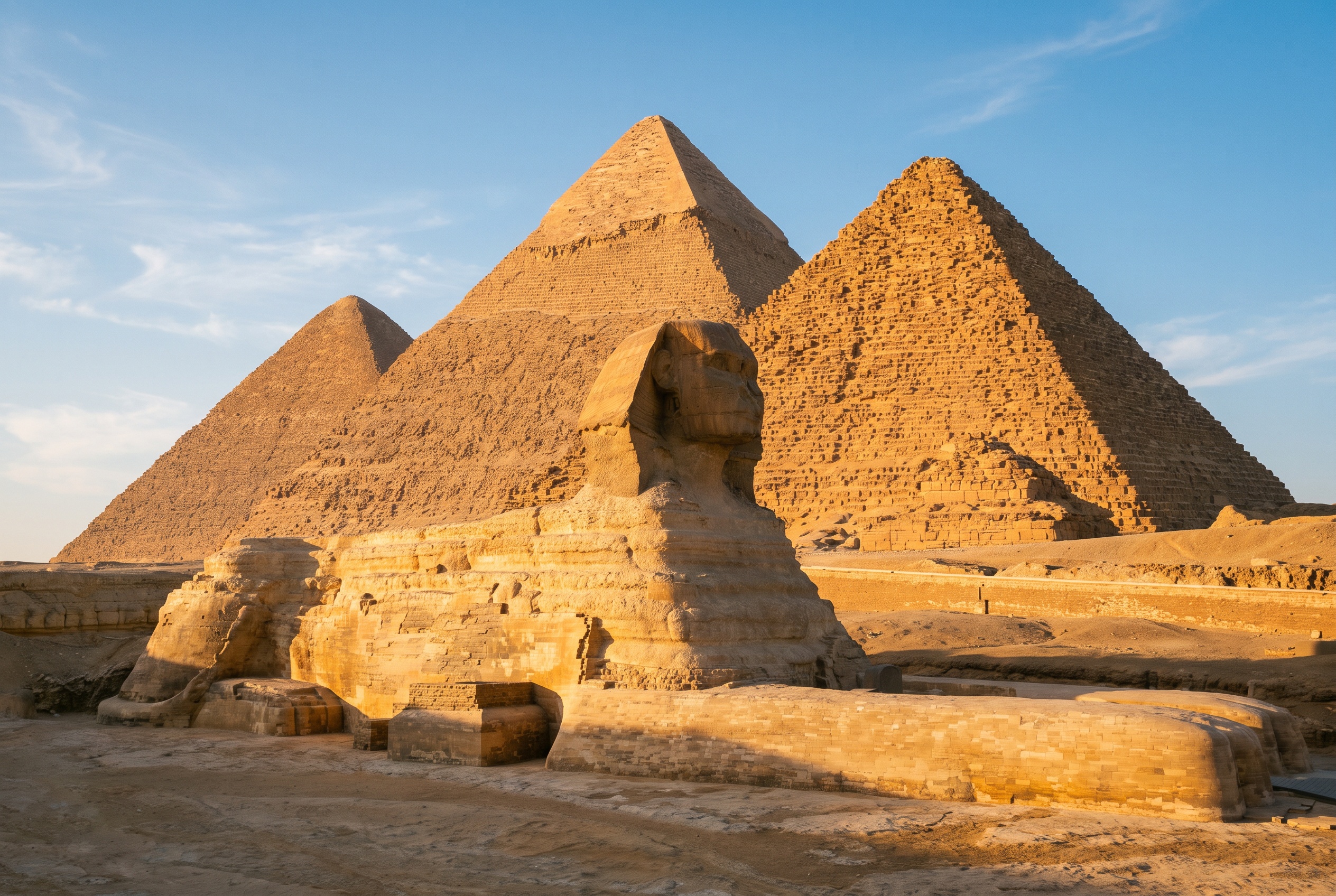
Visiting the last remaining wonder of the ancient world is a must, and thanks to recent innovations, it has become much more pleasant. Since April 2025, the main entrance has moved to the south side of the complex near Fayoum Highway. A ticket to the complex costs 700 EGP (about €12), students pay half, but this doesn’t include entrance inside the pyramids themselves.
A truly fundamental change is that private cars are now banned from the complex and air-conditioned electric buses now run throughout the site, which are included in your entrance ticket. Camel and horse handlers have been relocated to designated zones, so you can walk around the plateau in much greater peace. The original famous Sphinx Gate no longer functions as a ticket office; you must buy tickets online there.
At the pyramids, be very careful of typical tourist traps that still persist here. They’ll often offer you a camel ride “for free for good luck,” but then charge an outrageous amount to get down. Also ignore anyone who tells you the entrance is closed and you must go with them another way.
💡 Tip: Once you pass through the turnstiles, don’t show your official ticket to anyone else. Scammers roam the site pretending to be inspectors and will try to extract money from you.
2. Great Pyramid from Inside and Sound & Light Show
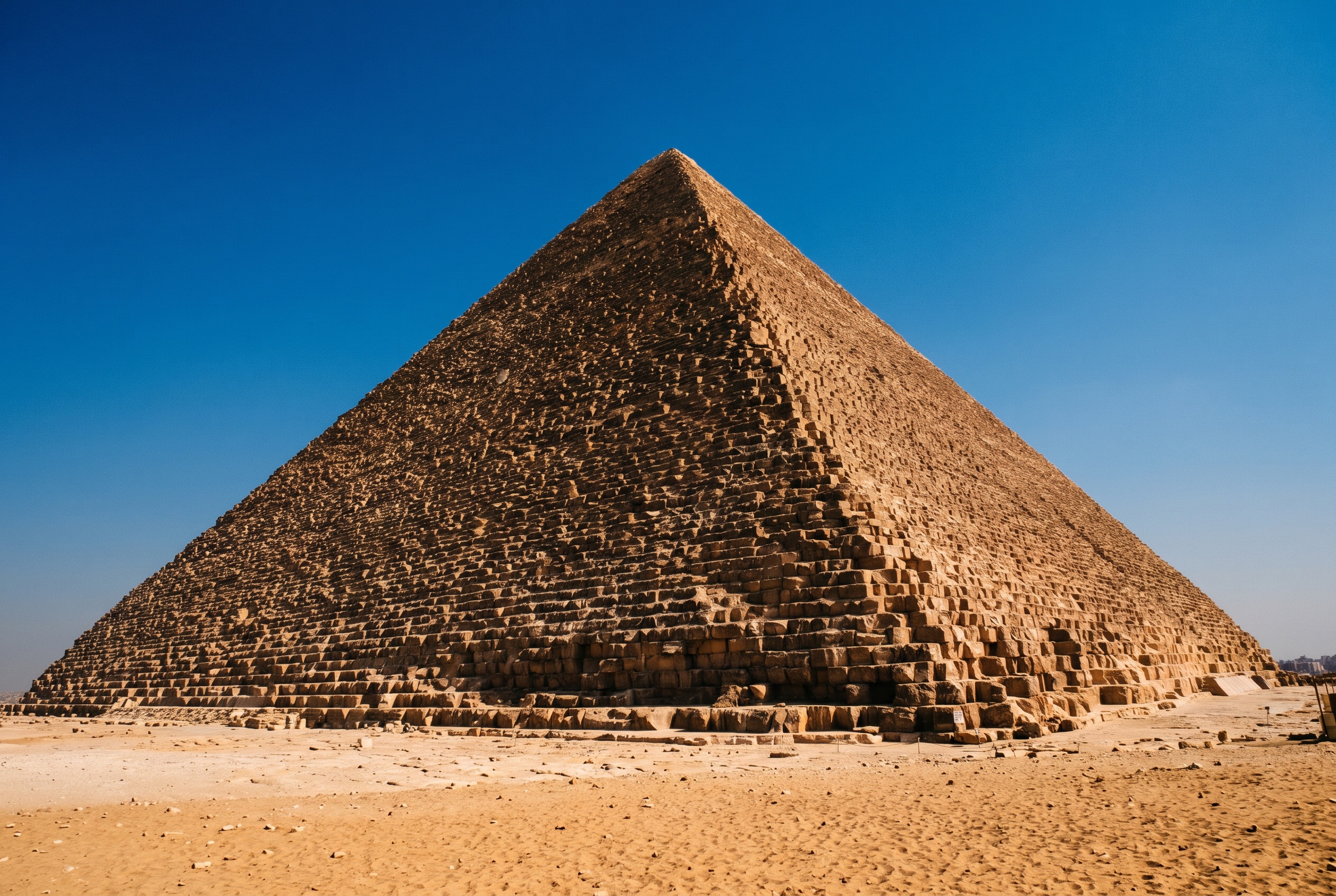
The view of Khufu’s (Great) Pyramid from outside is stunning, but the brave can venture into its mysterious interior. Entry inside has cost 1,500 EGP since January 2025 (over €25), and be prepared that it’s hot and stuffy inside with a climb through a narrow shaft. Between 12:00 and 13:00, the interior spaces are also closed.
If you prefer an evening atmosphere, head to the Sound & Light show, which is projected directly onto the pyramids and sphinx. An official ticket costs 20 USD, or you can get it at the local ticket office for around 400 EGP. The first show starts at 6:30 PM in winter, with the English version following shortly after.
There used to be a smaller museum with the famous solar boat near the Great Pyramid, but you won’t find it here anymore. The unique boat has been completely relocated to the new Grand Egyptian Museum, where you must go to see it.
💡 Tip: You can watch the evening light show excellently and for free from the rooftop terraces of hotels and restaurants in the Nazlet el-Semman district directly opposite the sphinx.
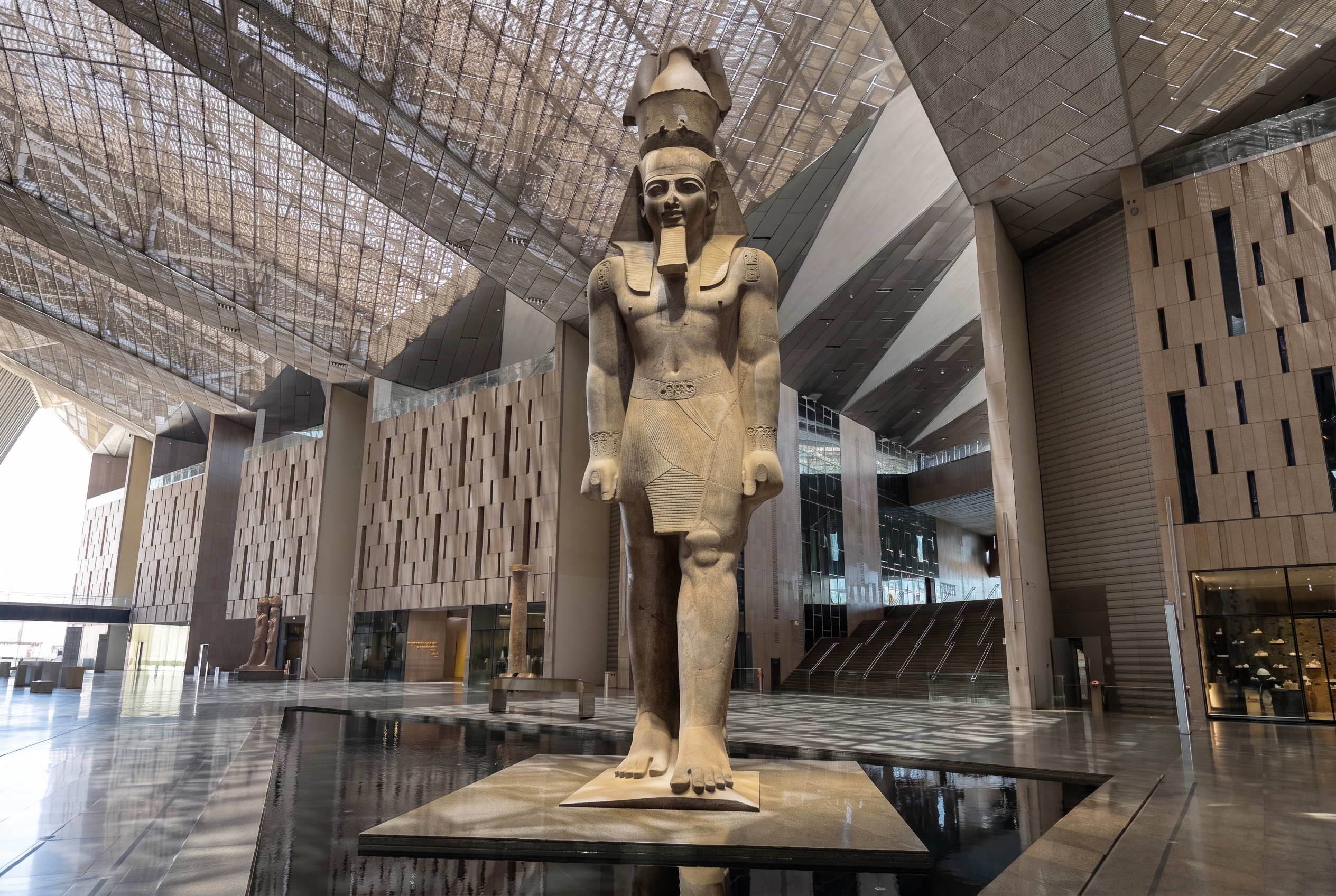
3. Grand Egyptian Museum (GEM)
This is undoubtedly the biggest development in recent years, as the massive museum housing 100,000 artifacts fully opened in November 2025. The main attraction is without question the complete collection from Pharaoh Tutankhamun’s tomb, which comprises over 5,300 objects, including his legendary golden mask.
Standard admission for an adult foreigner is set at 1,450 EGP (from November 2026, the price will be fixed at the equivalent of 35 USD). It’s crucial to know that tickets cannot be purchased on-site at the box office; you must buy them exclusively online with a specific time slot. The galleries are open from 9:00 AM to 6:00 PM, with extended hours until 9:00 PM on Wednesdays and Saturdays.
Unfortunately, no metro line currently serves the museum, although this is planned for the future. Your best bet is to take the metro to the Giza terminal station and catch an Uber from there. From central Cairo, the drive will take you roughly 35 to 50 minutes. If you get hungry during your visit, you’ll find a branch of Zooba bistro right inside the museum, serving vegetarian street food.
💡 Tip: Set aside at least half a day for visiting this colossal museum. You can take photos of Tutankhamun himself on your phone, but traditional large cameras are prohibited in this exhibition.
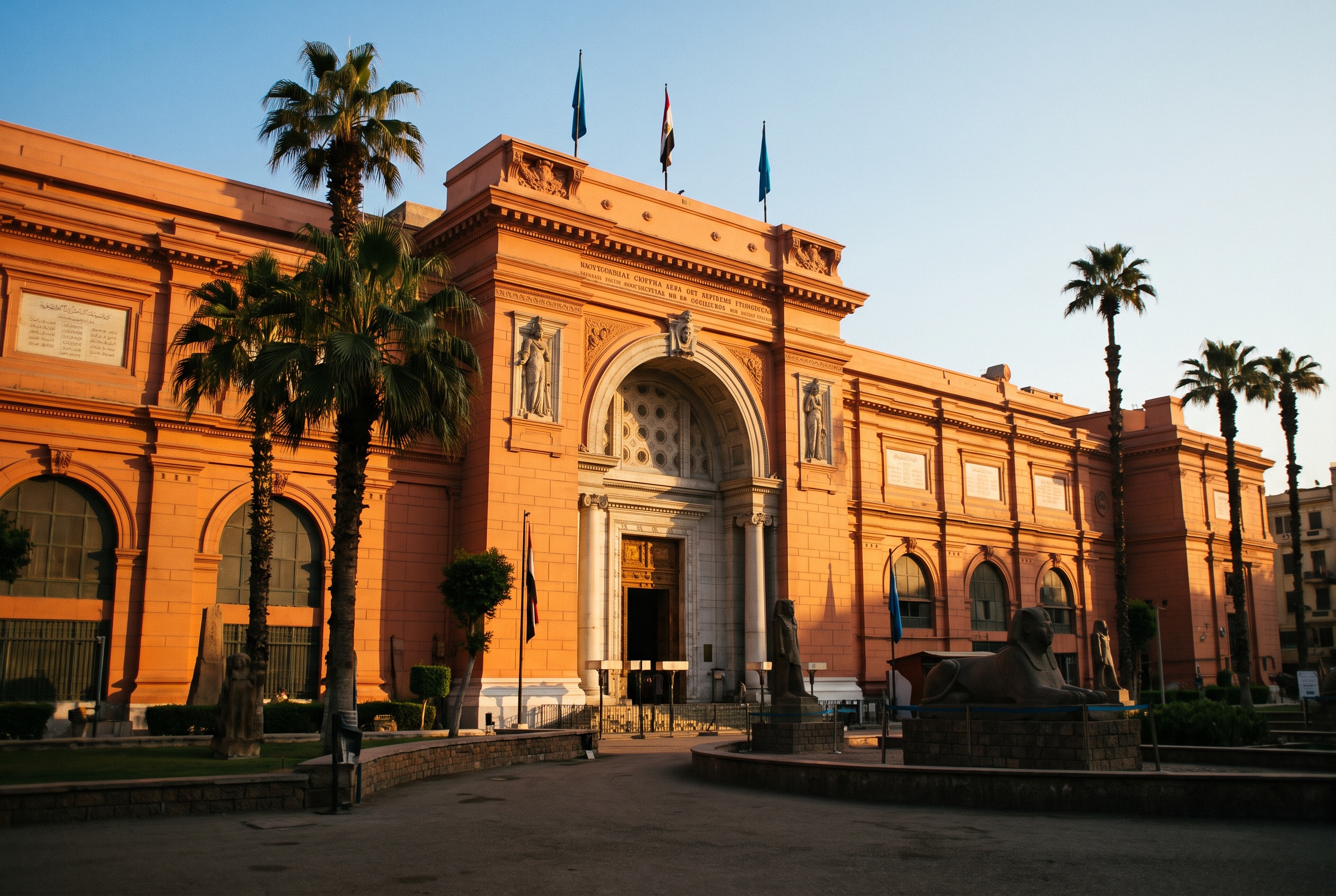
4. Egyptian Museum at Tahrir
The old pink museum on Tahrir Square may have lost its greatest treasures, but it still houses collections well worth seeing. A ticket will cost you 550 EGP, students pay 275 EGP, and for a small extra fee you can rent an audio guide.
Bear in mind that Tutankhamun’s golden mask is truly no longer here (it moved to GEM), and you won’t find the famous royal mummies either. Nevertheless, you can browse unique artifacts in peace and with much smaller crowds, such as the Narmer Palette, statues of the heretic pharaoh Akhenaten, or the exquisite Meidum Geese.
The building has its own old-world charm, and the artifacts are often stacked one on top of another like in an old dusty library. It’s open daily from 9 AM to 5 PM, and you can reach it most easily by metro at Sadat station.
💡 Tip: If you’re specifically interested in the pyramid-building era, definitely don’t miss the tiny statuette of Pharaoh Khufu, which is paradoxically the only known likeness of the builder of the largest pyramid.
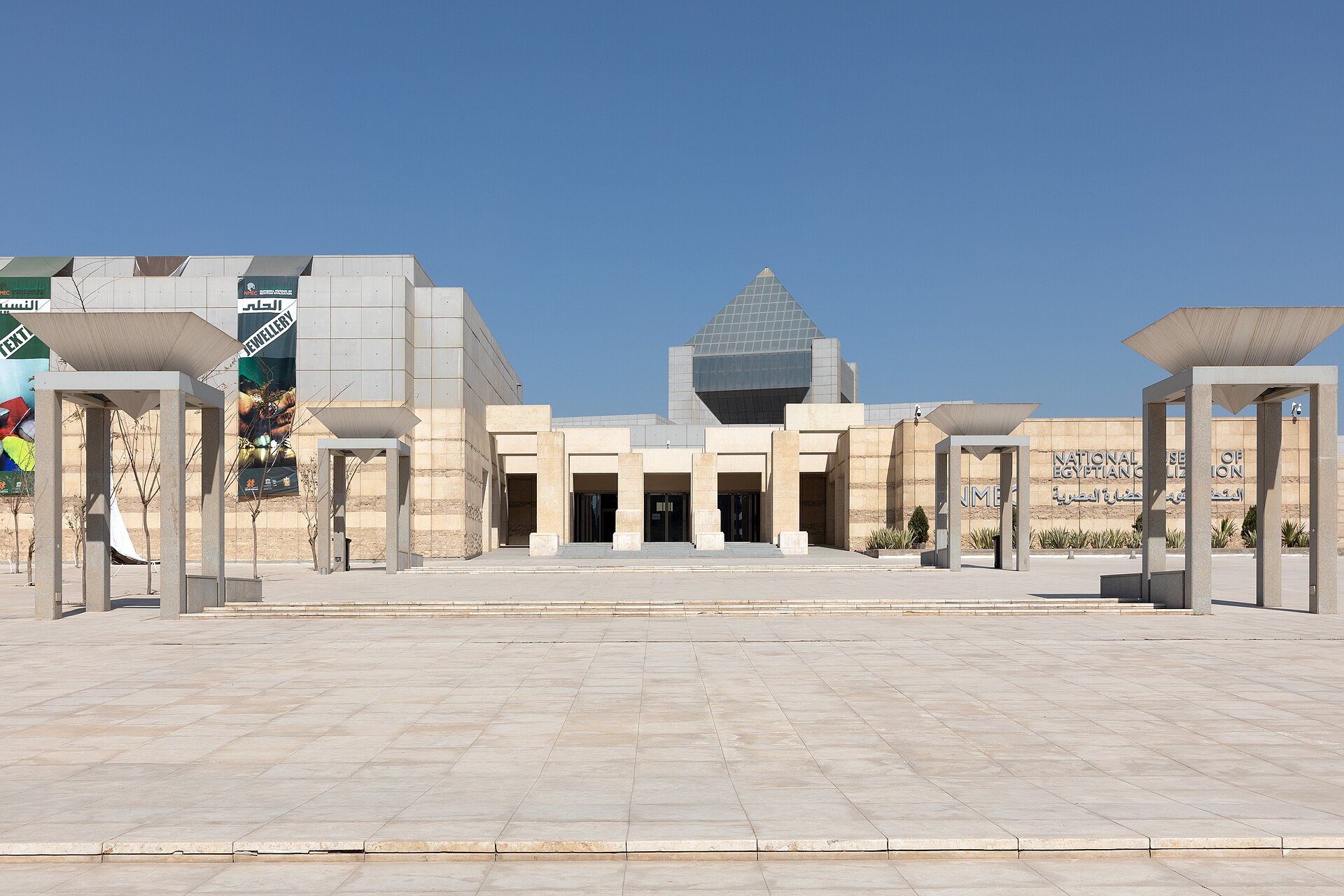
5. NMEC (National Museum of Egyptian Civilization)
If you want to see the mummies of famous ancient rulers, head to the Fustat quarter and the modern NMEC. A ticket costs 550 EGP for adults and 300 EGP for students, with children under 6 admitted completely free.
The main attraction is the special underground Royal Mummies Hall, where 18 kings and 2 queens were transferred in a grand procession in spring 2021. The atmosphere in the dimly lit hall is beautiful, and mummies of giants like Ramesses II or Queen Hatshepsut rest here in perfect climate-controlled conditions.
The museum is excellently organized chronologically from prehistory through the Islamic period. It’s open from Saturday to Thursday from 9 AM to 5 PM, but on Friday it’s also open in the evening between 6:00 PM and 9:00 PM. The nearest metro station is Mar Girgis, from where it’s about 1.5 kilometers on foot or a short Uber ride.
💡 Tip: Combine your visit to this museum with a tour of nearby Coptic Cairo; from Mar Girgis metro you can manage both locations in a single half-day.
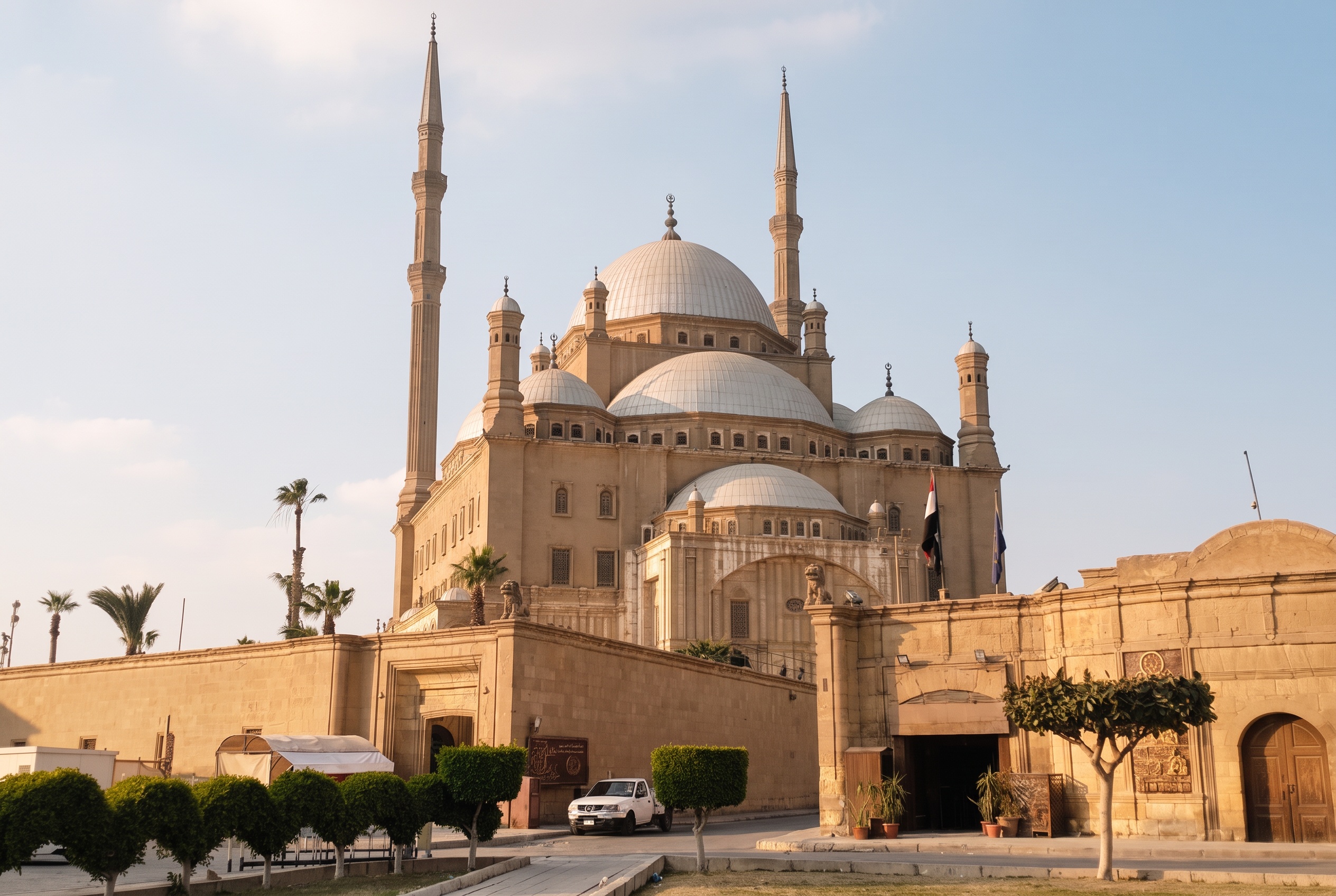
6. Saladin Citadel and Muhammad Ali Mosque
This imposing medieval fortress rises on the Mokattam hill and forms an integral part of the Cairo skyline. Admission to the entire complex costs 550 EGP (students 275 EGP), and the grounds are accessible to visitors daily from 8 AM to 5 PM.
Within the walls, the dominant feature is the stunning Muhammad Ali Mosque, often nicknamed the Alabaster Mosque due to its cladding. Its tall slender minarets in Ottoman style are visible from nearly every corner of Islamic Cairo, and the inner courtyard with the clock offers a wonderful interplay of light and shadow.
In addition to mosques, the complex houses the Military and Police museums, which will appeal more to enthusiasts of modern history. The main reason to come here, though, is the fantastic panoramic view over the entire city, from which on a clear day you can see all the way to the pyramids at Giza.
💡 Tip: When entering the mosque, you must remove your shoes. You can either carry them in your hand or leave them with the attendant, who will expect a small baksheesh when you leave.
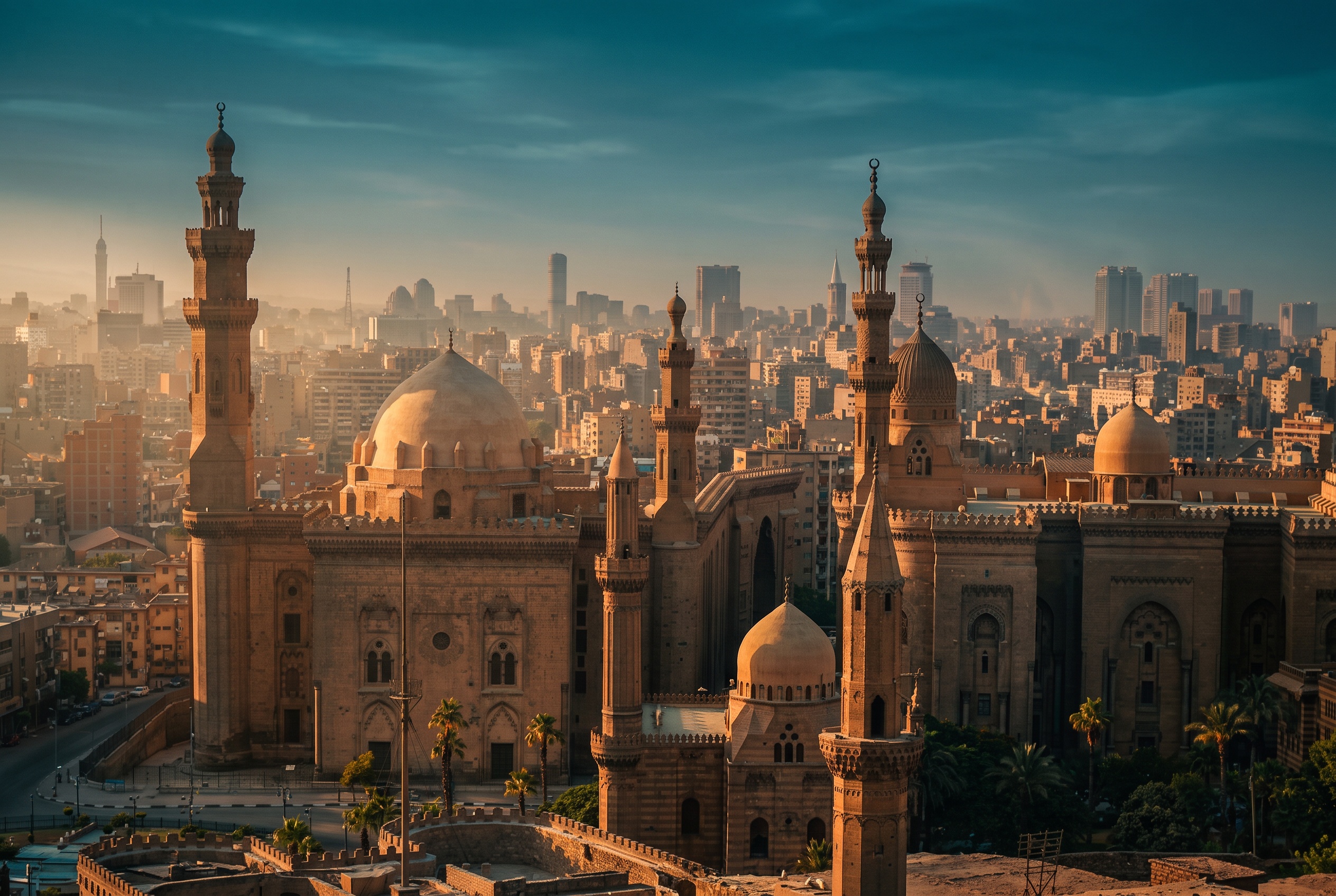
7. Sultan Hassan and Al-Rifa’i
Directly below the Citadel stand two massive mosques that at first glance look like twins, even though centuries separate them. You’ll pay 220 EGP for a combined ticket to both buildings, with students again entitled to a 50% discount.
The 14th-century Mosque of Sultan Hassan is a masterpiece of Mamluk architecture and will surprise you with its massive scale. The open courtyard with four huge vaulted iwans (niches) creates a peaceful impression in the midst of the noisy city.
The Al-Rifa’i Mosque standing directly opposite dates only from the turn of the 19th and 20th centuries. It’s the final resting place not only of several members of the Egyptian royal family, but you’ll also find the tomb of the last Shah of Iran, who had to leave his country during the revolution.
💡 Tip: If you love photography, come here in the afternoon hours when the sun beautifully illuminates the details on the facades and courtyards of these monumental structures.
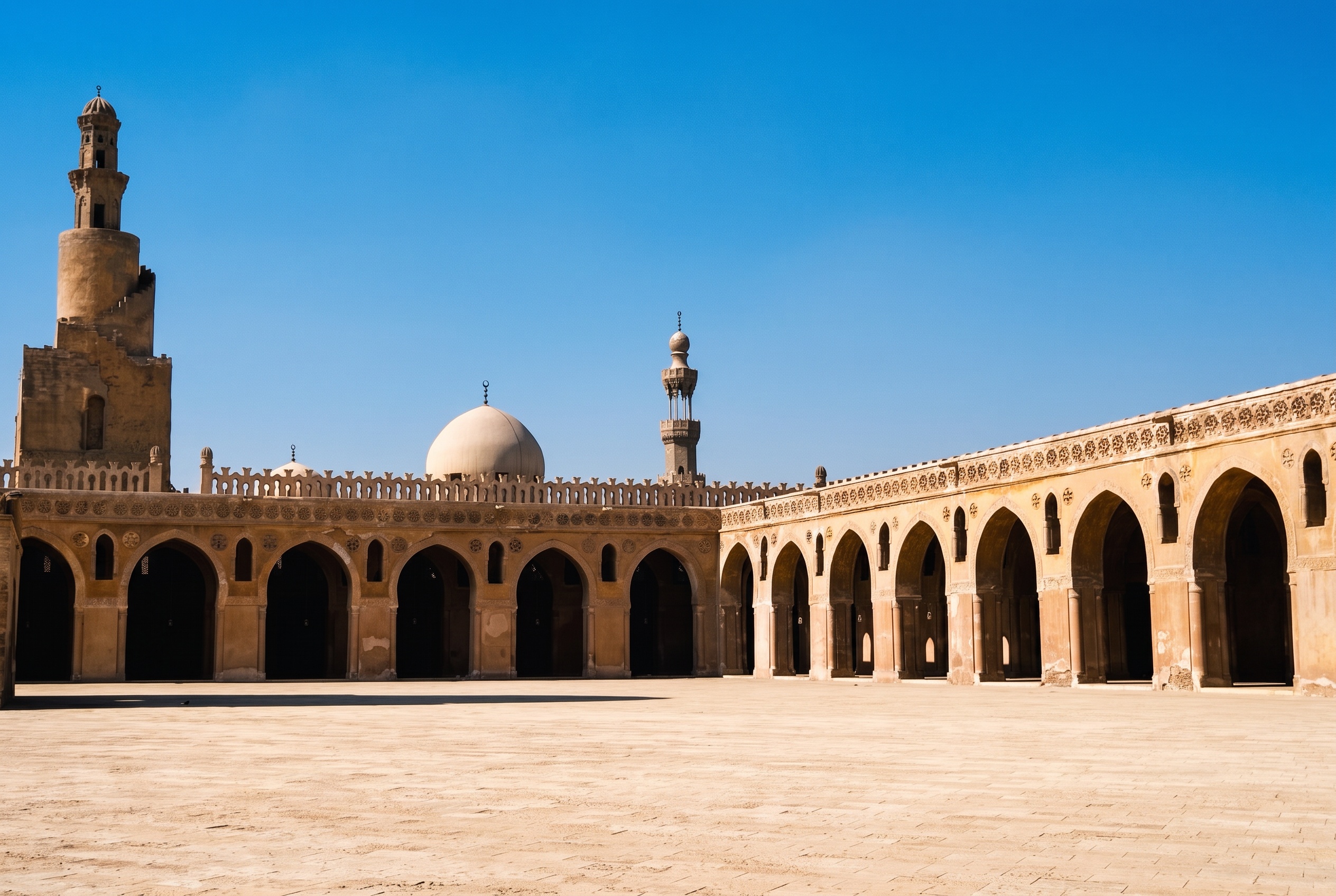
8. Ibn Tulun Mosque and Gayer-Anderson Museum
The Ibn Tulun Mosque is the oldest mosque in Cairo that has been preserved in its original form. Entry to the mosque is completely free, it’s usually open from 9 AM to 5 PM, but have some small baksheesh ready for the attendant who will lend you shoe covers.
Completely unique is the spiral-shaped winding minaret, which you can climb for a small fee. From its top you’ll get a wonderful view of the vast square courtyard surrounded by magnificent arcades and offering an oasis of tranquility.
Right by the mosque’s outer wall sits the Gayer-Anderson Museum, with an admission fee of 100 EGP. It consists of two perfectly preserved historic houses popularized by the James Bond film (The Spy Who Loved Me) and houses a collection of Oriental art.
💡 Tip: Sitting on the ground in the expansive courtyard of Ibn Tulun and listening to nothing but silence interrupted by the occasional call to prayer from surrounding minarets is one of the best experiences in Cairo.
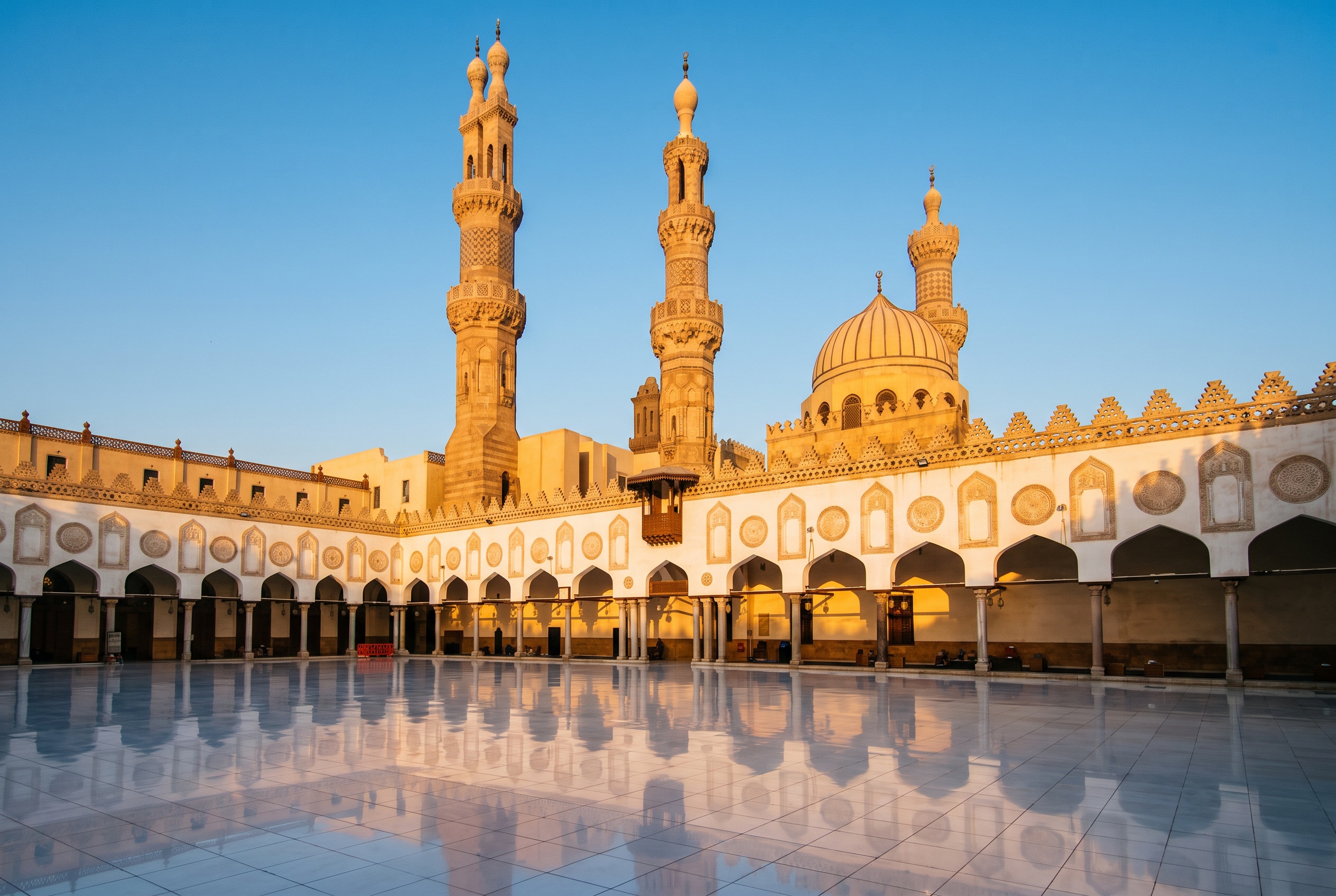
9. Al-Azhar Mosque and Al-Azhar Park
Al-Azhar Mosque is the spiritual heart of the entire Islamic world and home to one of the oldest universities ever. Entry is free, but appropriate clothing with long sleeves and trousers is strictly required, and women must wear a headscarf.
If you want to escape the smog and dust, head a little further to the beautiful Al-Azhar Park. For foreigners, entry costs 150 EGP from Sunday to Thursday and 200 EGP on Friday and Saturday, with children aged 2 to 8 receiving a slight discount.
This expansive green park was built on the site of a former massive landfill and today offers some of the most beautiful views of the Citadel and minarets of Islamic Cairo. It’s open until 10 PM, making it an ideal spot for watching the sunset and an evening stroll.
💡 Tip: In the park you’ll also find several restaurants and cafes by the artificial lake, where you can enjoy excellent tea with fresh mint while taking in the city views.
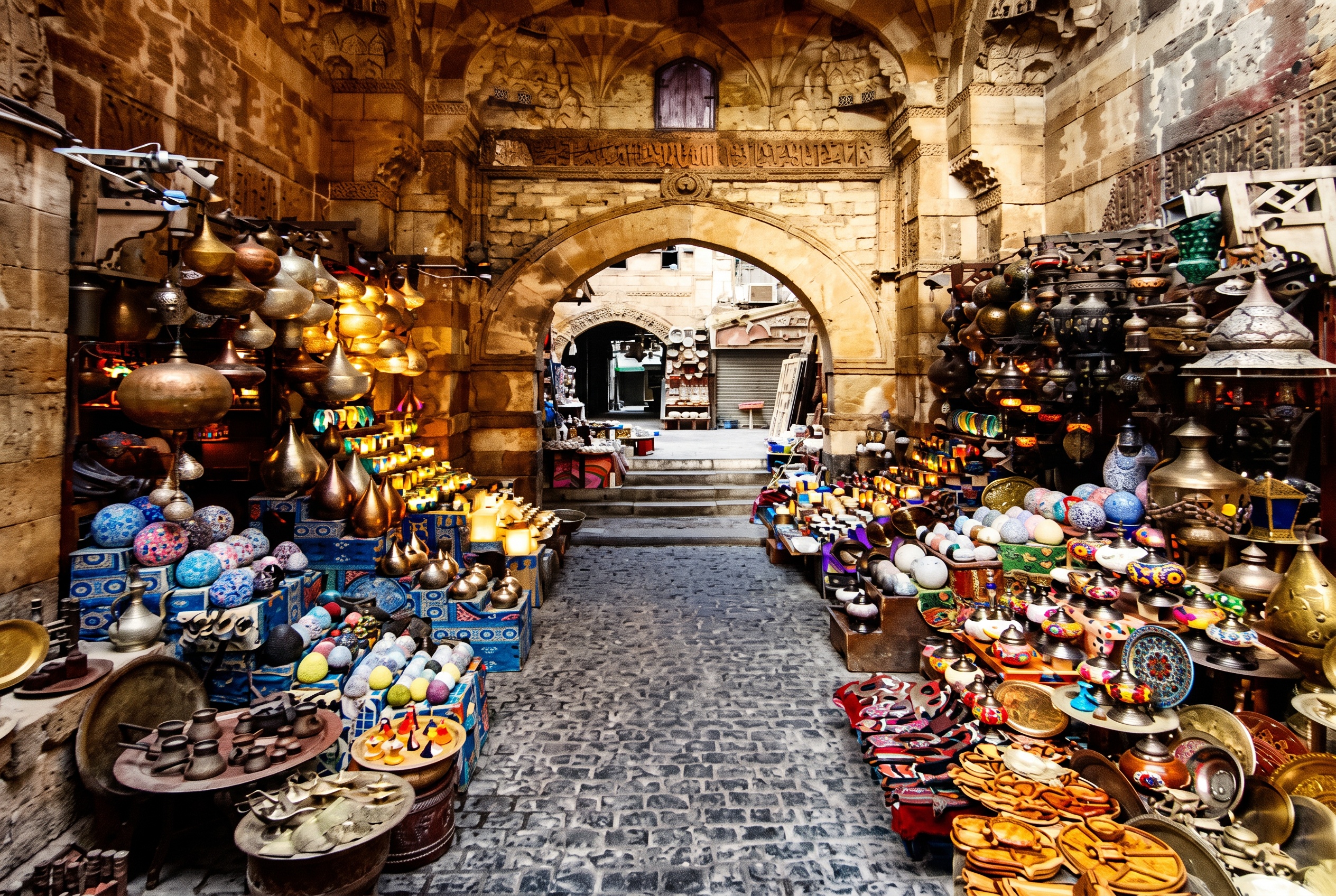
10. Khan el-Khalili and El Fishawy
The Khan el-Khalili market is a labyrinth of narrow alleyways where trading has been happening since the 14th century. Most shops open around ten in the morning and the evening buzz pulses deep into the night until about 11 PM (on Friday mornings and Sundays, some shops tend to be closed).
While wandering the market, definitely stop at El Fishawy, which is the oldest café in Cairo from 1797. It’s a magical place full of mirrors in wooden frames that is open practically non-stop, so you can pop in for strong mint tea and a water pipe (shisha) even at two in the morning.
If you’re looking for something a bit calmer and more refined, try the nearby Naguib Mahfouz Café. It’s named after the famous Egyptian Nobel Prize winner in literature and offers excellent vegetarian Egyptian mezze and great coffee.
💡 Tip: At the market, be prepared for hard bargaining. The first price a seller quotes you is usually three to five times the actual value of the goods.

11. Al-Muizz Street (Qalawun, Bayt al-Suhaymi)
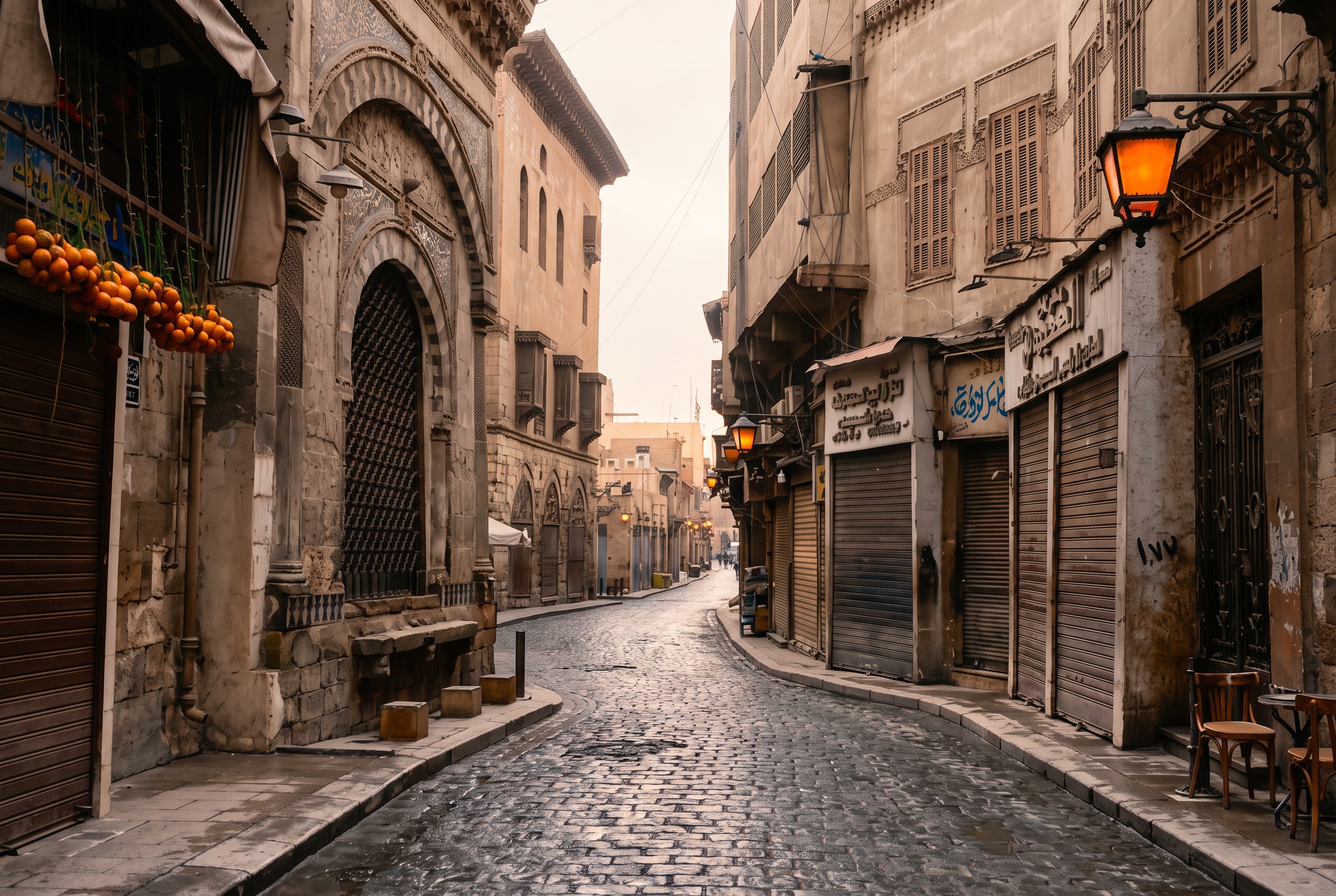
Al-Muizz Street is a living museum of Islamic architecture under the open sky and is among the most beautiful things in Cairo. The walk itself along this one-kilometer pedestrian zone is free, but if you want to look inside the monuments, buy a combined ticket for 220 EGP.
The ticket gets you into beautiful historic buildings like the monumental Qalawun complex with its former hospital and madrasa. Another great stop is the beautifully restored merchant house Bayt al-Suhaymi, where you’ll see how the local elite lived in the 17th century behind carved wooden windows.
The nearest metro station is Attaba, from where you need to walk about 1.5 kilometers through busy streets. The entire Al-Muizz avenue gains its real charm after dark, when all the historic buildings are beautifully lit and the street is full of local families strolling after 8 PM.
💡 Tip: Walk the street from the northern Bab al-Futuh gate heading south, gradually passing dozens of mosques, schools, and historic palaces without having to search for anything complicated.
12. Bab Zuweila and Tanura at Wekalet El Ghouri
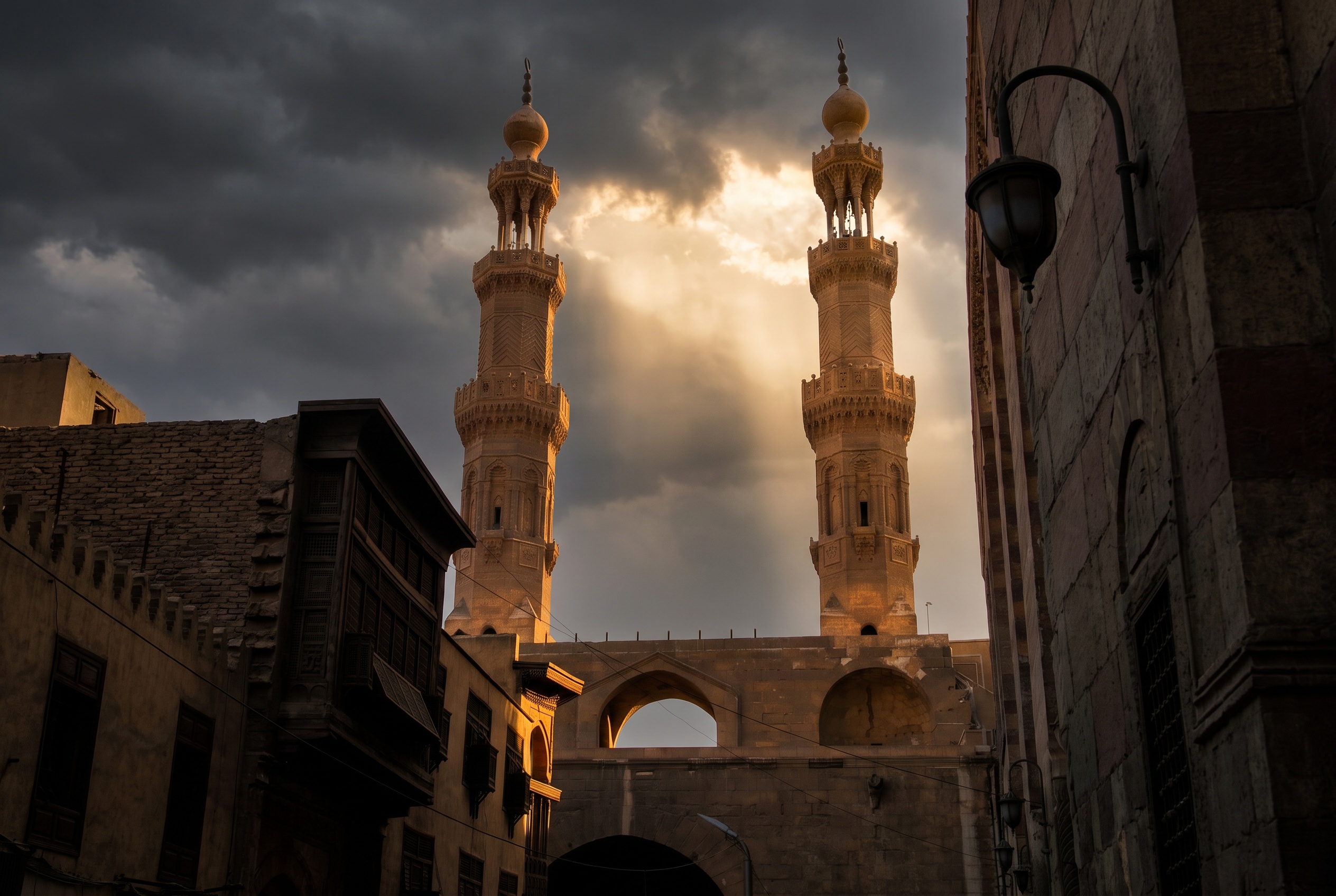
The southern gate of the old city, Bab Zuweila, is a fantastic place to go for views. For an entrance fee of 100 EGP (students 50 EGP), you can climb the steep stairs right to the top of its two minarets, from where you’ll have medieval Cairo in the palm of your hand.
Near the gate is the historic merchants’ inn Wekalet El Ghouri. A daytime tour of this architectural gem costs 100 EGP, but much more interesting is to come here in the evening for the traditional tanura dance performance, which takes place on Saturday, Monday, and Wednesday from 8:00 PM.
Tanura is a Sufi dance where men in heavy colorful skirts constantly spin around and fall into a trance. Tickets are bought on-site in cash and usually cost a few dozen pounds (check the exact price for foreigners on-site during the day to be sure).
💡 Tip: The staircase to the minarets of Bab Zuweila gate is extremely narrow and steep, so if you suffer from claustrophobia or vertigo, it’s better to stay only on the main rampart.
13. Coptic Cairo
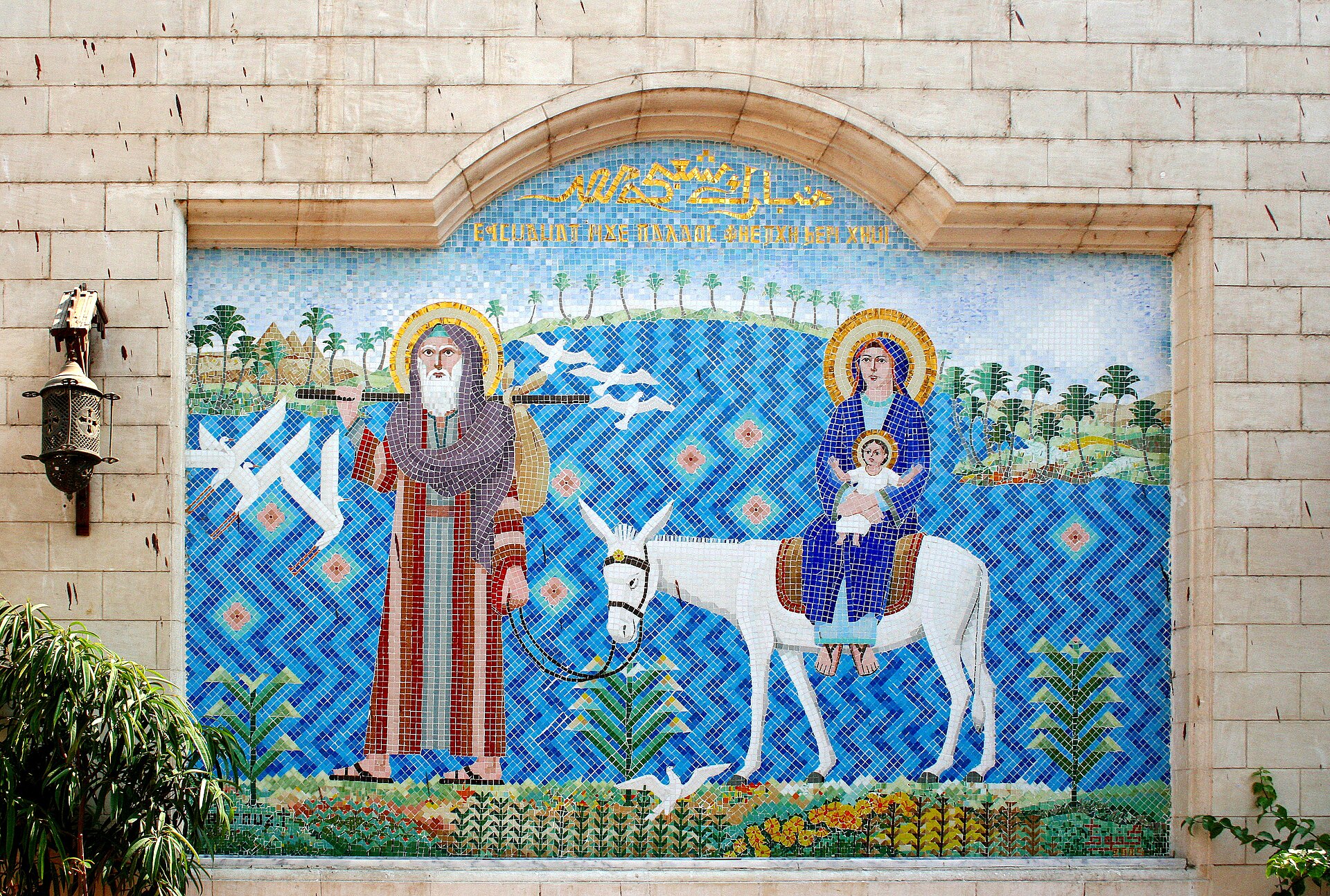
The old Christian quarter is a quiet and picturesque contrast to the rest of the noisy city and is conveniently located right at the Mar Girgis metro station. The most famous monument is the Hanging Church, which was built directly on the ruins of an old Roman fortress and entry is free from 9 AM to 4 PM.
Just a bit further is the Ben Ezra Synagogue, which also has free entry and is associated with the legend that this is where baby Moses was found in a basket. The alleyways of Coptic Cairo are full of small shops with books and small Christian souvenirs.
The entire history of this community is mapped in the excellent Coptic Museum, where you need to buy a ticket for 280 EGP. You’ll find the most beautiful examples of Christian art, wood carvings, and textiles in all of Egypt here (the museum ticket office closes at 4:00 PM).
💡 Tip: Go to Coptic Cairo by metro—you’ll exit a few steps from the main monuments. You can easily combine the visit with the nearby NMEC (National Museum of Egyptian Civilization).
14. Saqqara
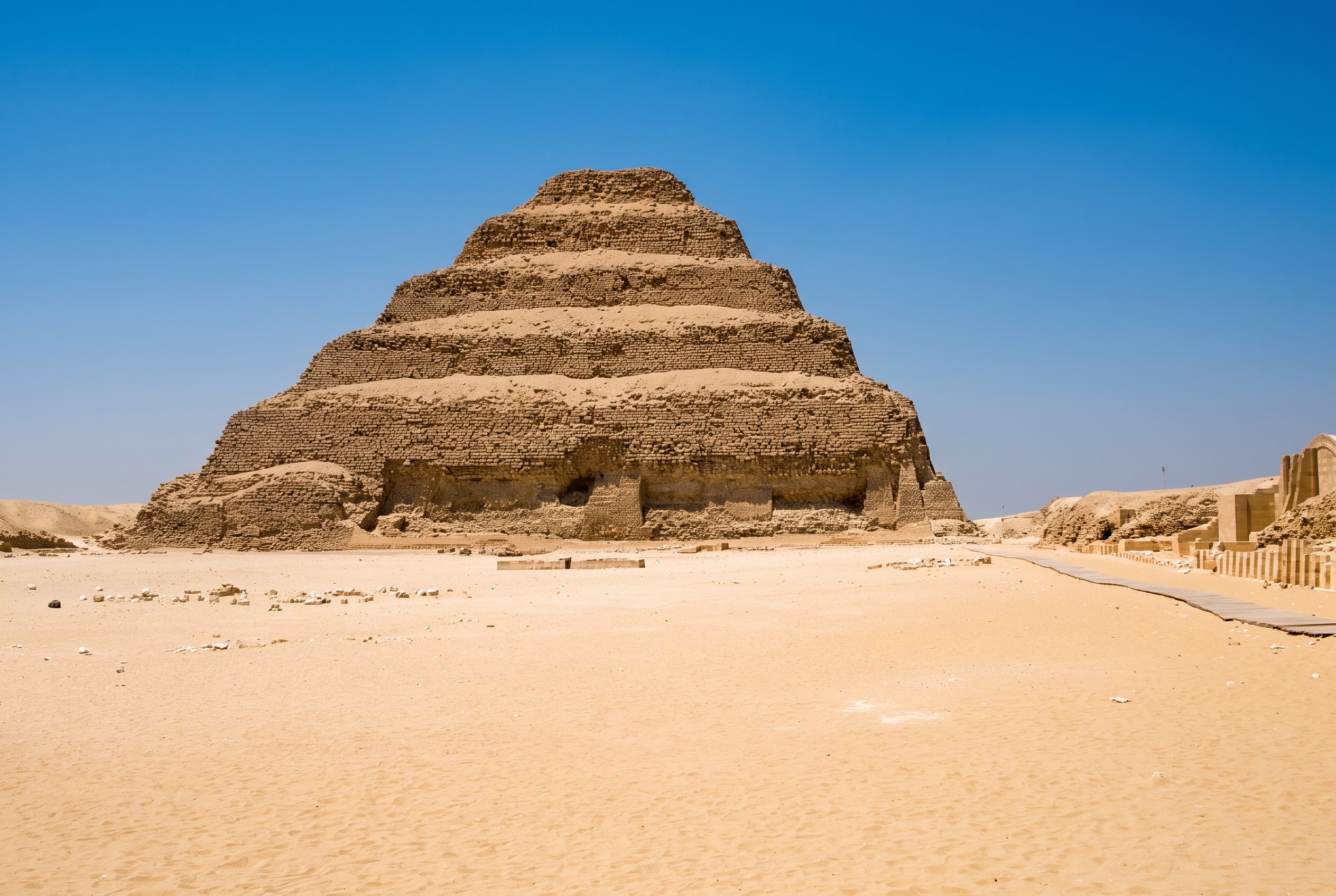
Just a few dozen kilometers south of Cairo lies the vast necropolis of Saqqara, dominated by the famous Djoser’s Step Pyramid. It’s the oldest stone pyramid in the world, which kicked off the entire era of giant tombs.
The entrance fee system to the site has gotten a bit more expensive, so today the all-inclusive ticket for 1,400 EGP is worth it (students 700 EGP). It guarantees you access to the basic area, inside Djoser’s pyramid, the underground burial site of the sacred bulls (Serapeum), and the beautifully decorated tombs of nobles.
The site is open daily from 8 AM to 4 PM and the basic ticket price includes access to the interesting Imhotep Museum right at the entrance. Because Saqqara is huge and the monuments are scattered across the desert, it’s best to hire a car with a driver.
💡 Tip: Don’t miss the interior of the nobles’ tombs (such as Ti or Ptahhotep), which are decorated with detailed reliefs from the life of ordinary Egyptians—something you won’t see in the pyramids at Giza.
15. Dahshur
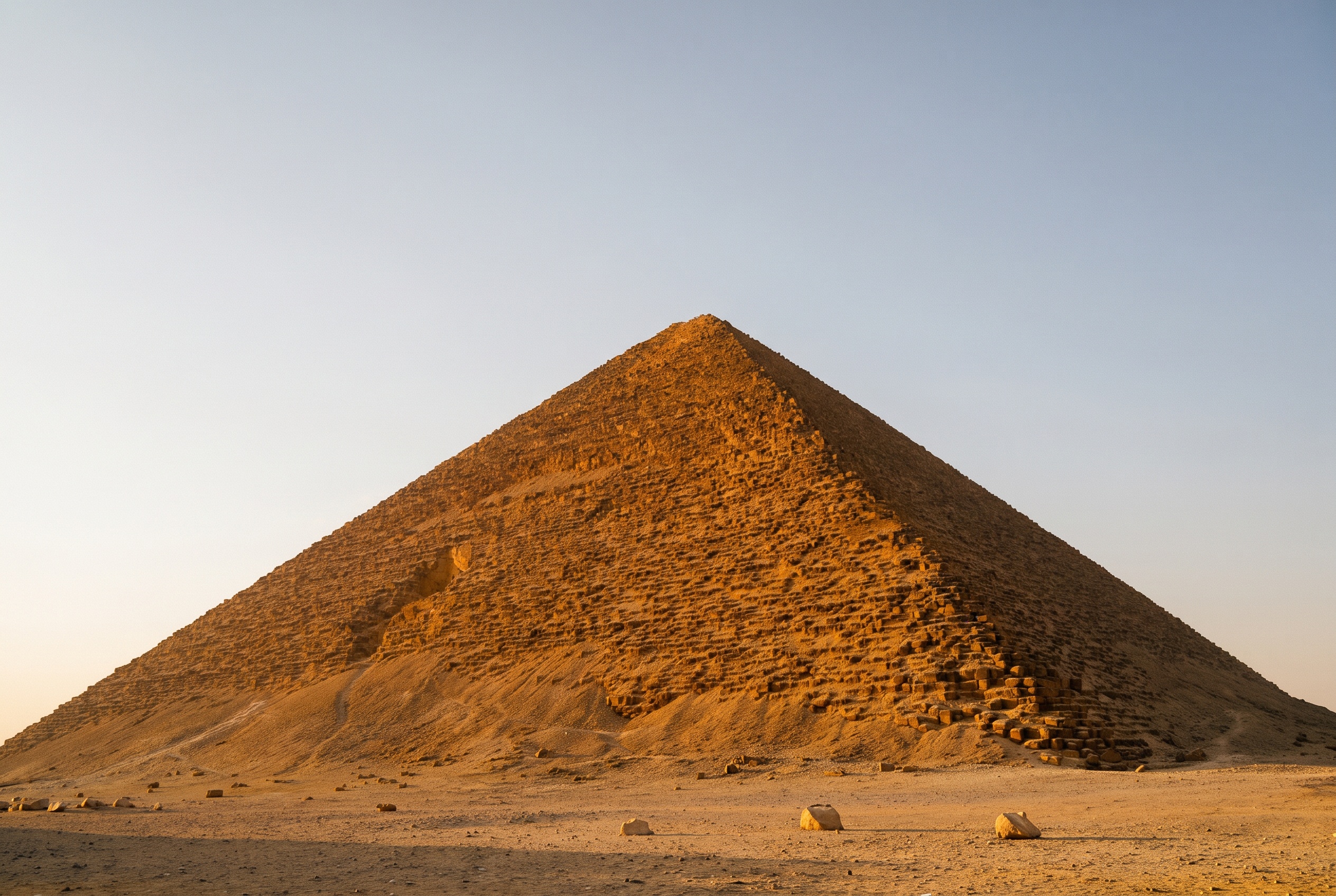
If you want to see pyramids without crowds of tourists and camel touts, head a bit further south to Dahshur. For an entrance fee of 200 EGP for adults (don’t be fooled by old blogs that say 60 EGP), you get access to the most interesting construction experiments from antiquity.
The biggest draw is the giant Red Pyramid, which is the first true pyramid with smooth walls. You can even descend deep into its bowels, where you’ll reach huge chambers with impressive vaults, and unlike Giza, you’ll quite possibly be completely alone here.
The ticket price also includes a view of the nearby Bent Pyramid, where builders changed the angle of ascent halfway through construction to prevent it from collapsing. The site is open from 8 AM to 5 PM and you can only get here by car or as part of an organized trip.
💡 Tip: The descent into the Red Pyramid is physically quite demanding due to the low ceiling and steep stairs. If you have knee problems, it’s better to just view it from outside.
16. Memphis (Mit Rahina)
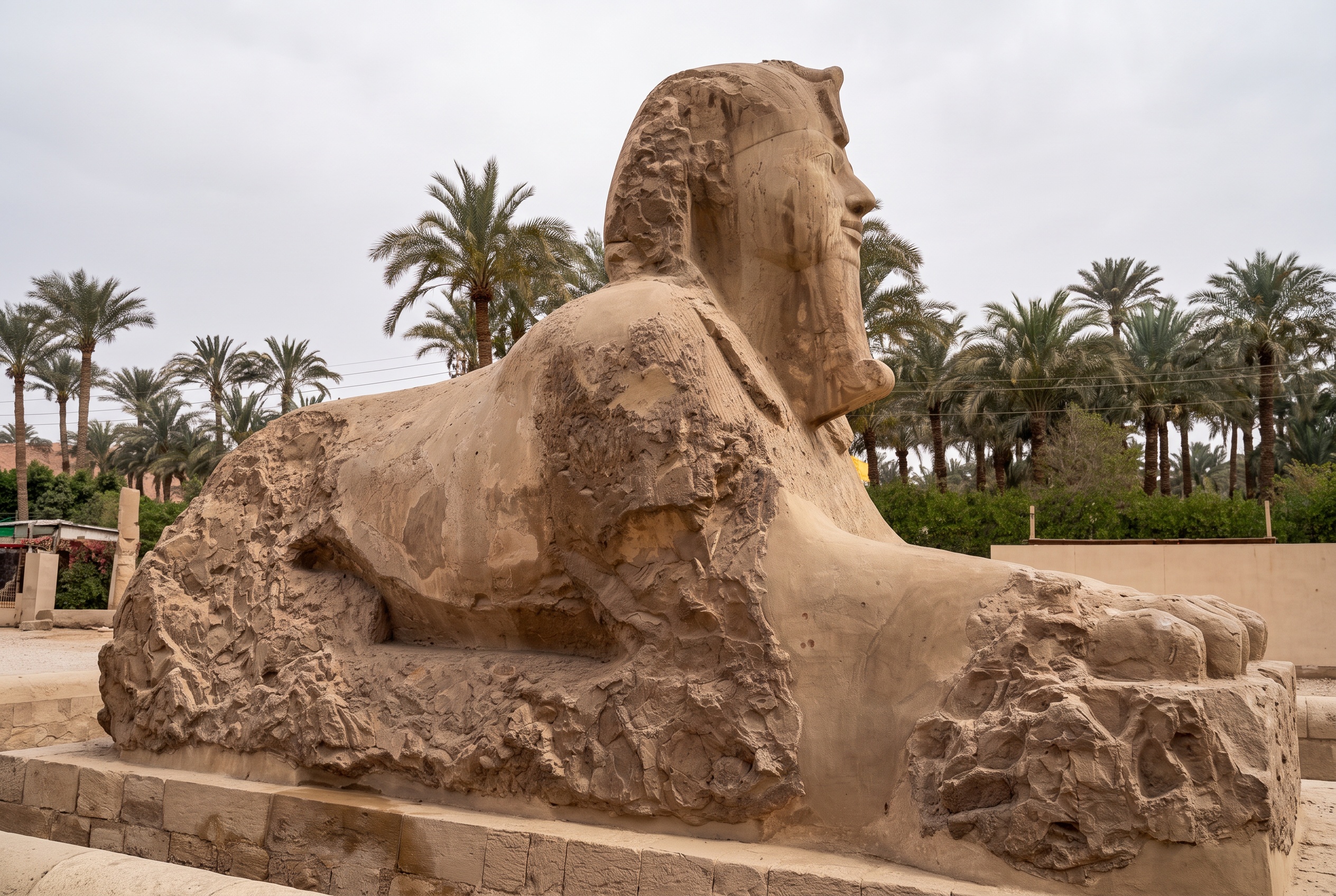
The original capital of the Old Kingdom, Memphis, has long been swallowed by history and palm groves, but you can find its remains in today’s village of Mit Rahina. A ticket to the small open-air museum costs 200 EGP and the site is accessible from 8 AM to 4 PM.
The greatest treasure of the site is the gigantic colossus of Pharaoh Ramesses II, which lies inside a building on its back, and you can examine it in detail from the gallery. Outside in the garden, you’ll find a beautifully preserved alabaster sphinx and other statues scattered among the trees.
The tour won’t take you more than an hour and it ideally combines into one full-day trip with Saqqara and Dahshur. For this, you’ll need a car with a driver, to whom it’s appropriate to leave a tip of around 50 to 100 EGP at the end of the day depending on how satisfied you were.
💡 Tip: If you can’t manage all three southern sites (Saqqara, Dahshur, Memphis), Memphis is the least impressive of them and can be skipped with a clear conscience.
17. Zamalek, Cairo Tower and Opera
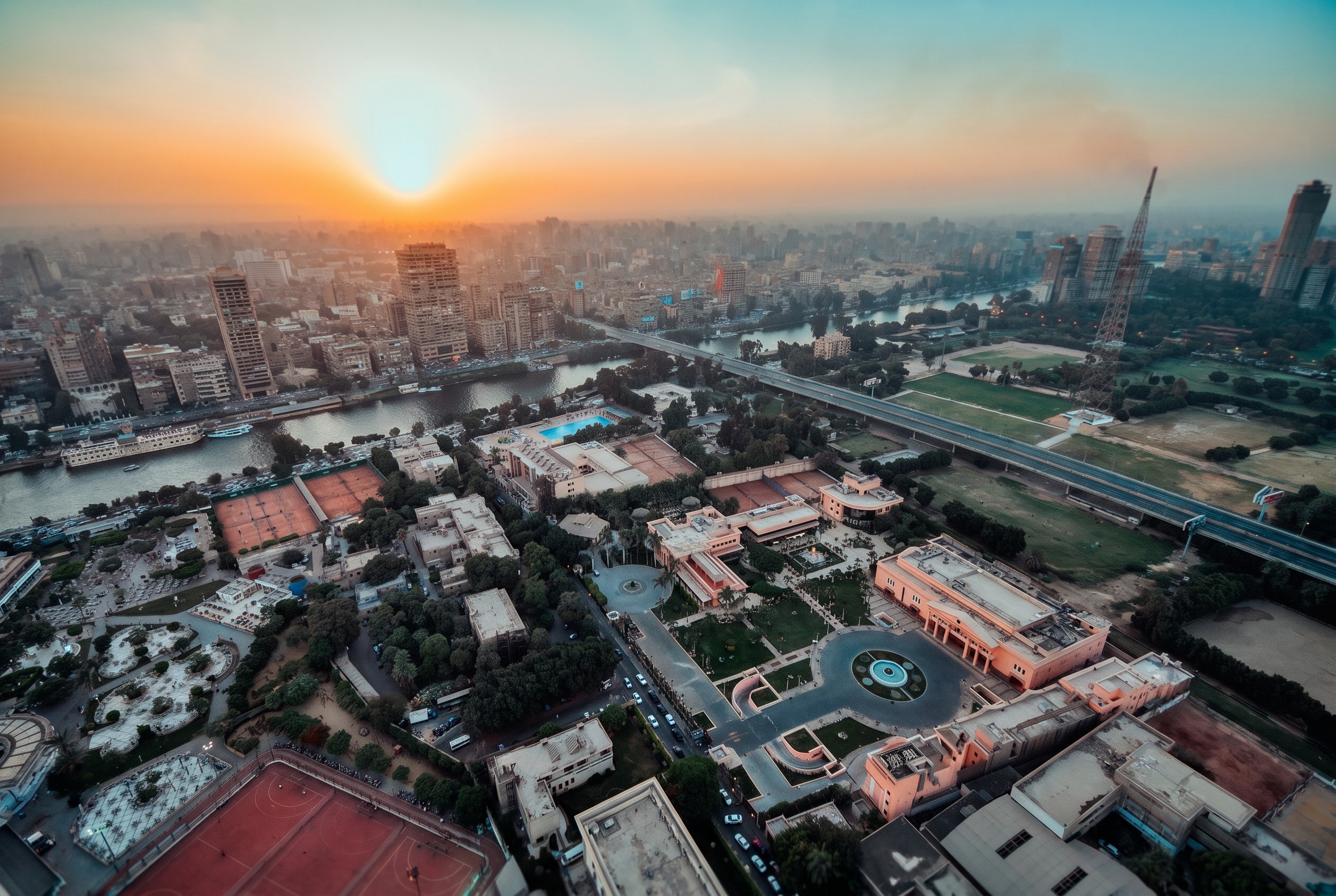
The island district of Zamalek is a green oasis of calm, home to many embassies and excellent cafés. The most prominent landmark is the Cairo Tower observation deck, where a ticket costs 350 EGP and an elevator takes you all the way up for spectacular nighttime views of the Nile River (open 9 am to 11 pm).
On the southern part of the island, you’ll find the impressive Cairo Opera House, where you can catch an evening cultural performance. The district’s main artery is 26th July Street, lined with plenty of excellent European-style establishments and cafés, though keep in mind that no metro line reaches the island (the closest station is Opera to the south).
If you want to taste modern Egyptian cuisine, head to the excellent bistro Zööba, where they make fantastic meatless ta’ameya (falafel) and ful. Also worth trying is Cairo Kitchen, focused on home cooking and salads. The touristy favorite Abou El Sid offers beautiful interiors, but the menu relies heavily on meat dishes like kofta or stuffed pigeon.
💡 Tip: Zamalek is one of the few places in Cairo where you can walk along sidewalks fairly safely and pleasantly on foot under tree canopies.
18. Felucca Ride on the Nile
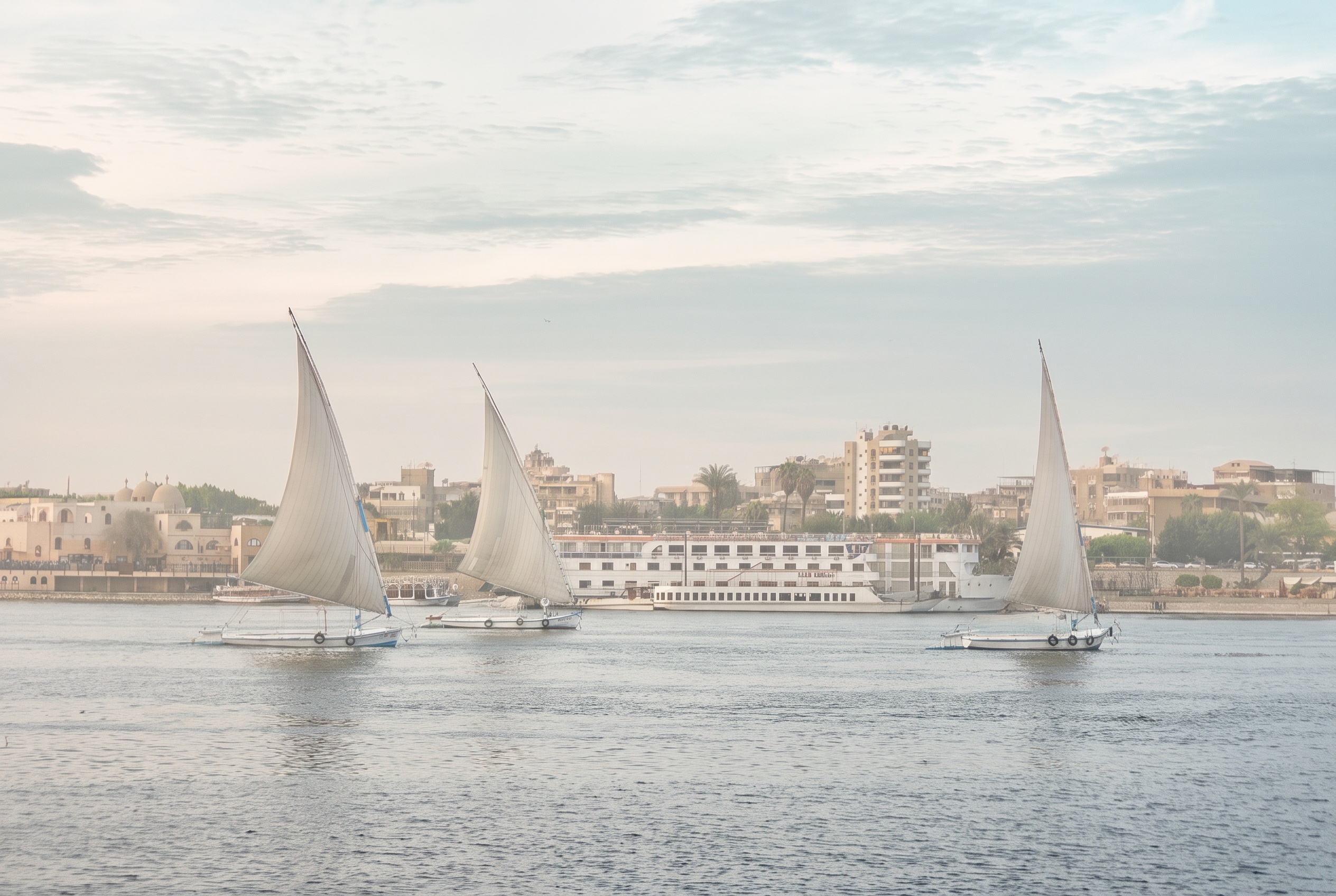
When visiting Cairo, you can’t miss a traditional Nile River cruise on an old wooden sailboat called a felucca. You’ll most often find these boat moorings around Zamalek Island, in the Garden City district, or in the residential Maadi area in the south of the city.
The price isn’t fixed, so you’ll need to negotiate the amount with the captain on the dock. Currently, prices hover around 200 EGP per person per hour, or you can rent the entire boat just for yourself for about 400 EGP. You can also book the cruise in advance online with certainty, where prices start around 15 USD.
The most beautiful experience is to set out on the river just before sunset, when the city noise dies down a bit and the Nile’s surface turns orange. The ride is silent, relying only on the wind, and offers a different perspective on Cairo’s skyscrapers.
💡 Tip: Bring your own drinks and even light snacks aboard. Some captains will play traditional music from their phone during the cruise.
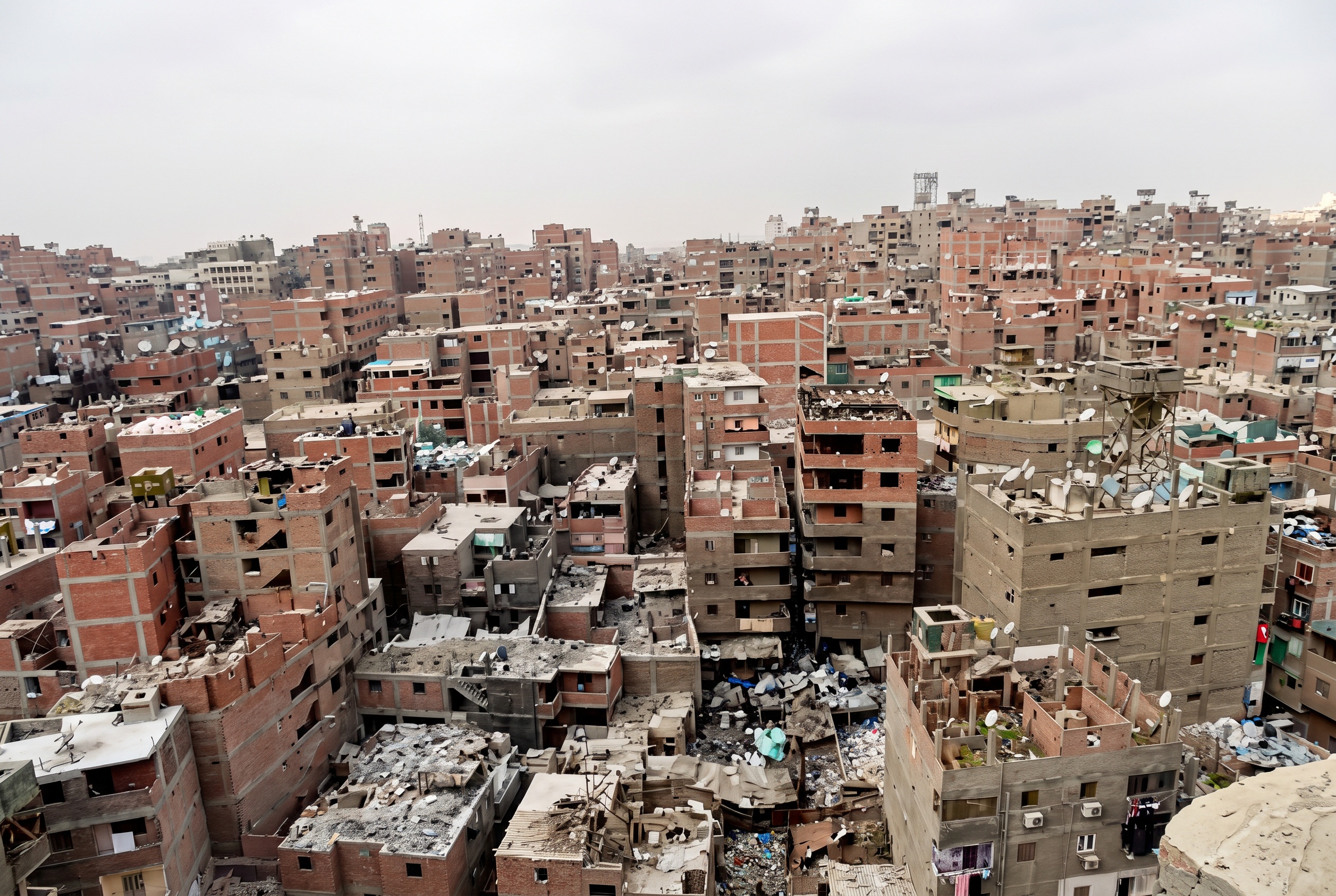
19. Garbage City and the Cave Church of St. Simon (Mokattam)
The Manshiyat Naser district, known by the unflattering name Garbage City, is home to the Zabbaleen community, which for decades has collected and hand-sorted waste from all of Cairo. Driving through this district is a powerful experience, but it’s essential to show the utmost respect to the locals and not photograph them as a tourist attraction.
At the very top of this district, carved into the rock, lies the stunning Cave Church of St. Simon. It’s an enormous amphitheater hewn into the mountain for thousands of worshippers, and entry is completely free (open 9 am to 8 pm).
No public transport reaches this area, so the only sensible option is to take an Uber or taxi. Have the driver take you all the way up to the church, and after your visit immediately call another car for the return trip—don’t walk down through the district on foot.
💡 Tip: The church is enormous, so if you can, avoid Sunday mornings when large masses are held and the place is packed.
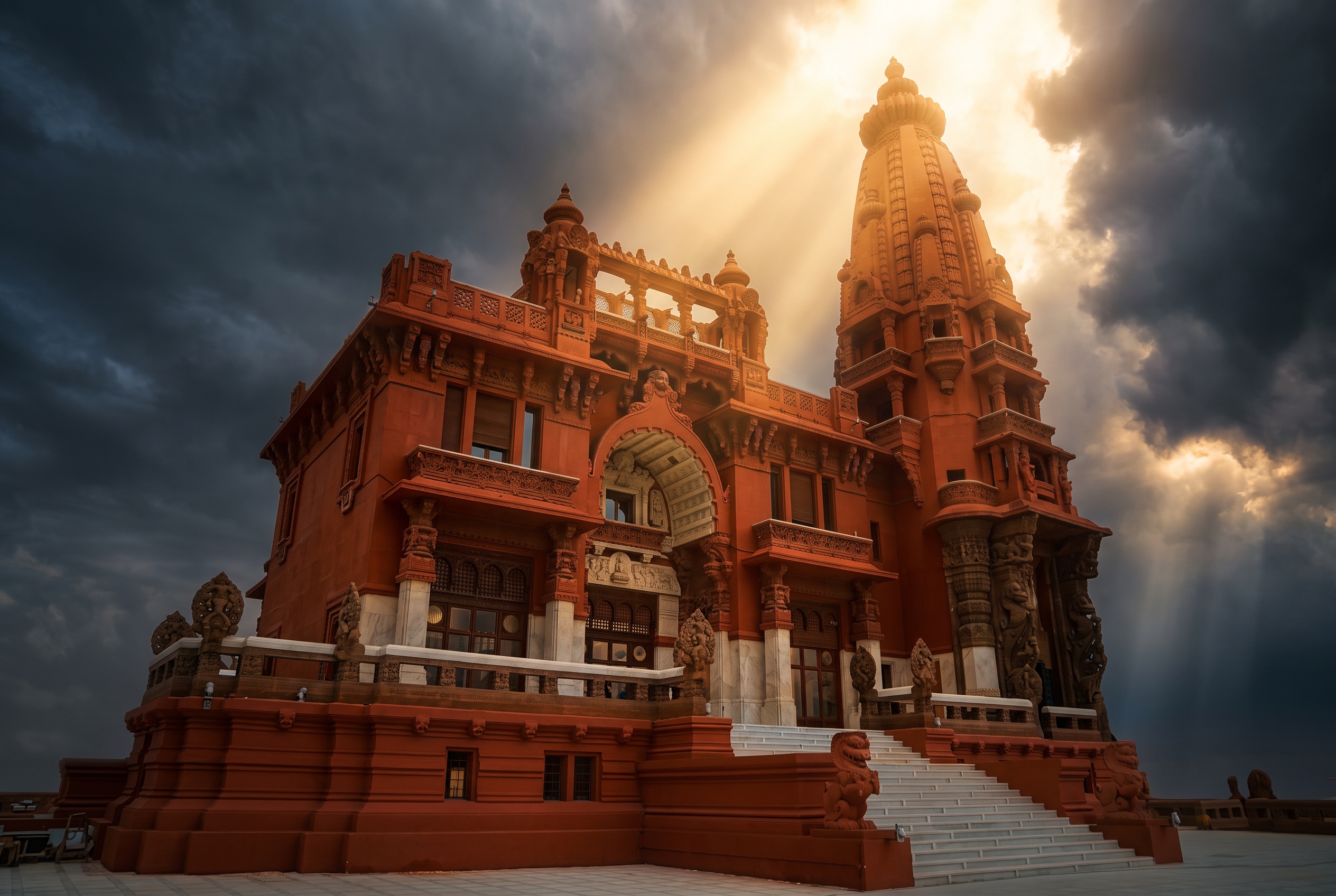
20. Baron Empain Palace (Heliopolis)
In the Heliopolis district, not far from the international airport, stands an architectural gem. Baron Empain Palace looks like it fell from another planet, built in a wild Hindu style reminiscent of Cambodia’s Angkor Wat.
It was built in the early 20th century for a Belgian industrialist and recently underwent complete restoration. A basic ticket costs 220 EGP (students 110 EGP), and if you want to climb up to the rooftop with views over the district, you’ll pay an additional 120 EGP.
It’s open daily from 9 am to 6 pm, and inside you’ll find an exhibition about how the entire luxury Heliopolis district came to be. A stop at the palace is perfect for your last day if you’re staying at one of the airport hotels and have a few hours before your flight.
💡 Tip: The palace’s interior is relatively empty; you’ll spend most of your time admiring the elephant and snake sculptures on the facade from the adjacent garden.
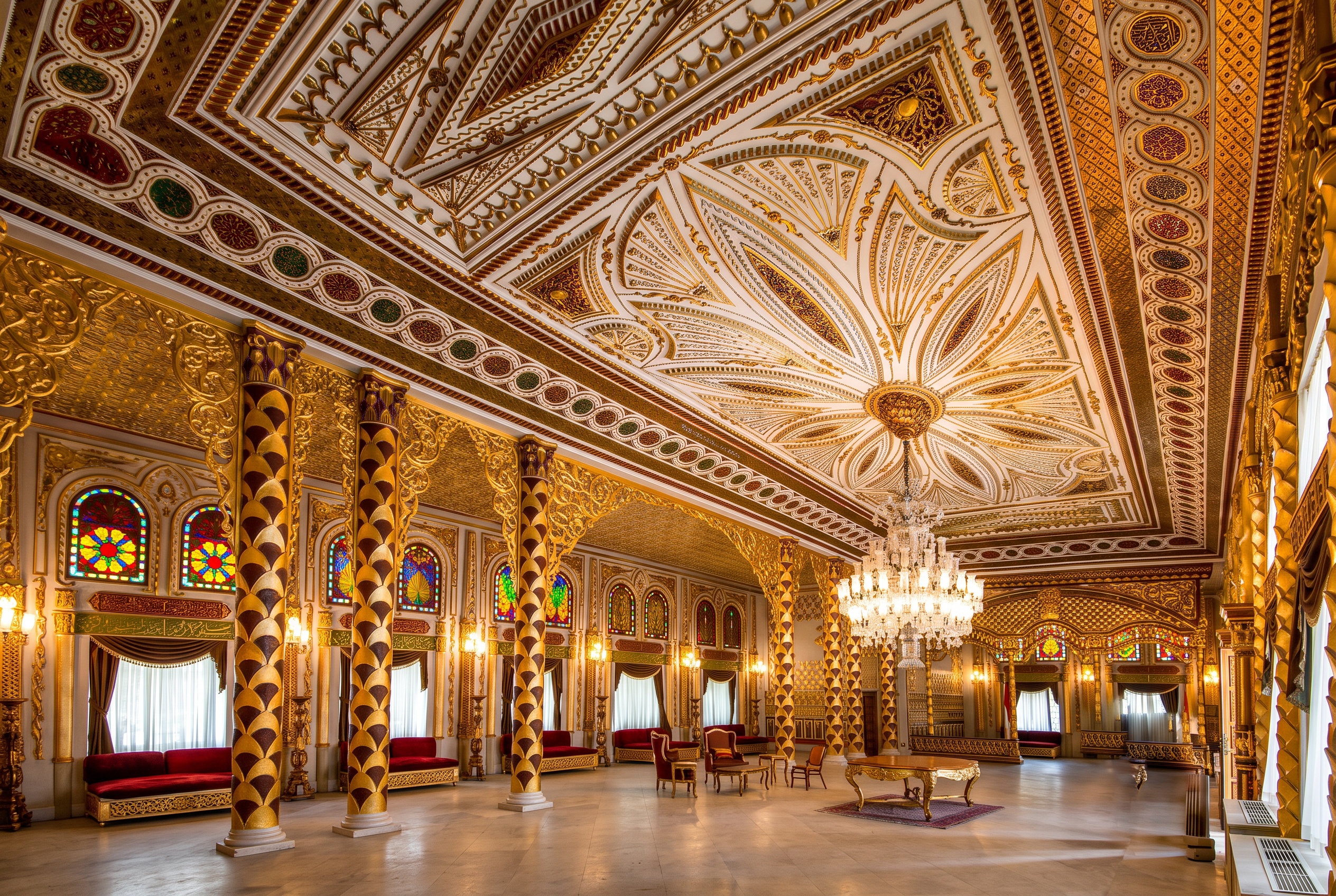
21. Manial Palace and the Nilometer (Rhoda Island)
On the smaller Nile island of Rhoda lies the beautiful Manial Palace, which belonged to Prince Muhammad Ali. A ticket to the richly decorated halls with stunning chandeliers and Oriental carpets costs 220 EGP (the ticket office closes at 4 pm).
At the southern tip of the same island stands an unassuming but historically vital structure, the ancient Nilometer. For an entrance fee of 120 EGP, you can peer into the deep stone shaft that for centuries measured the Nile’s water level and determined tax calculations for farmers (open 9 am to 3:45 pm).
This island lies a bit off the main tourist routes, so you’ll encounter very few foreigners here. The Manial Palace gardens unfortunately aren’t part of the standard tour, but the interiors alone are worth the minor logistics challenge with an Uber, as the metro doesn’t reach the island directly.
💡 Tip: The palace blends Ottoman, Persian, Andalusian and European styles, so it especially appeals to architecture and interior design enthusiasts who find pharaonic excavations a bit monotonous.
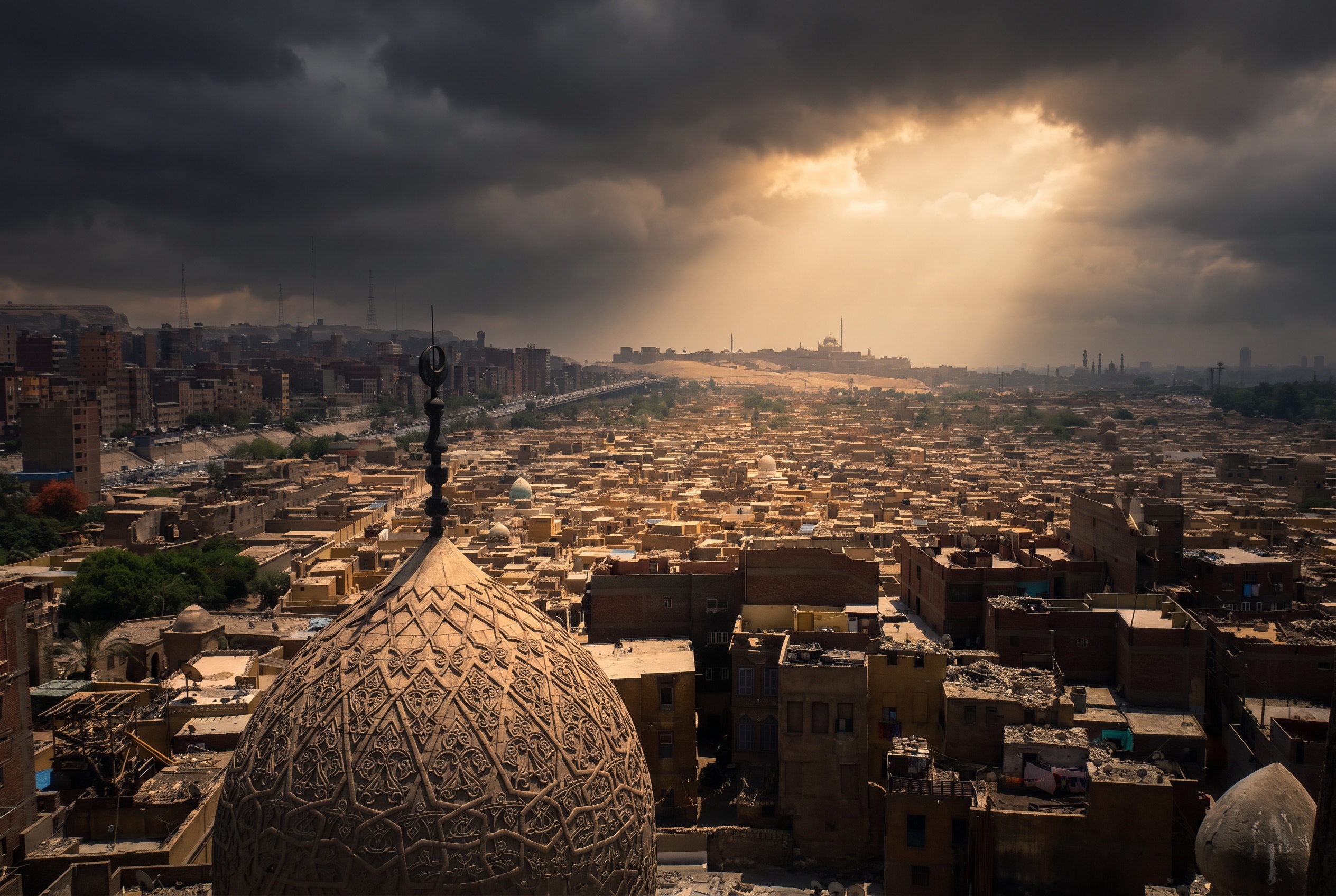
22. City of the Dead (Qaitbay) and Museum of Islamic Art
The so-called City of the Dead (Qarafa) is a vast historic cemetery where living people have gradually settled among the mausoleums and tombs. The most beautiful structure in the area is the complex of Sultan Qaitbay, whose dome with intricate geometric patterns is considered the pinnacle of Mamluk art (open 9 am to 5 pm).
If you want to understand the context of Islamic art, definitely visit the excellent Museum of Islamic Art on Port Said Street. Admission costs 340 EGP (students 170 EGP), and the collections of woodcarvings, ceramics, and ancient manuscripts are displayed in a modern, beautifully lit space.
You can best reach both the City of the Dead and the museum by Uber. While walking through the cemetery district is possible for foreigners even without a guide, it’s essential to maintain decorum and respect for the local residents, for whom the alleys between tombs are their everyday home.
💡 Tip: The Islamic Art Museum is often empty and pleasantly air-conditioned, making it a great escape from the afternoon heat in the city center.
Where to Go from Cairo
If you have an extra day in the city, take a peek at Abdeen Palace, the former residence of Egypt’s royal family in the city center (entrance fees for foreigners often change, check on site—word is it’s around 100 EGP). Don’t miss a walk through the newly reconstructed Tahrir Square, now dominated by an obelisk of Ramesses II and four stone rams brought all the way from Karnak.
You can also take longer trips from Cairo—by train you can easily reach the historic seaside city of Alexandria. If you want to head south to the temples in Luxor or Aswan, definitely study our comprehensive pillar article on what to see in Egypt. Travelers combining flights around Europe with budget carriers (such as Ryanair or easyJet) can also use the smaller Sphinx International Airport located behind the pyramids.
Before heading to the country, don’t forget to sort out the paperwork. You can get a visa (called VOA) upon arrival at the airport for 30 USD, or you can apply for an e-visa in advance for 25 USD. We’ve compiled all the details and procedures in a clear article Visa to Egypt.
Frequently Asked Questions
How many days do you need for Cairo?
For the main highlights, 3 to 4 days will be enough. Dedicate one day to the pyramids in Giza and the new GEM museum, spend the second day wandering through Islamic and Coptic Cairo. On the third day, rent a car to Saqqara and Dahshur, and leave the fourth day for the remaining museums, Tahrir Square, and an evening Nile cruise.
How much does entry to the pyramids cost?
A ticket to the Giza complex itself costs 700 EGP (around €12). If you want to go inside the Great Pyramid (Khufu’s), you’ll pay an additional 1,500 EGP. Since April 8, 2025, a new entrance from Fayoum Highway has been open, where your complex ticket also includes rides on air-conditioned buses between the monuments.
Should I go to GEM or the Egyptian Museum at Tahrir?
The clear priority is the new GEM museum (entry 1,450 EGP), where the complete Tutankhamun collection and thousands of other artifacts are displayed. Visit the old museum at Tahrir (550 EGP) if you want to see unique items like the Narmer Palette. For the royal mummies, you need to go to a third museum – NMEC in Fustat (550 EGP).
How do you get from the airport to central Cairo?
By far the best option is to call an Uber or Careem. The trip to Tahrir costs around 290 EGP, to the pyramids in Giza about 460 EGP, and you pay securely by card in the app. You can also use public bus number 356 for 15 EGP. Unfortunately, the metro doesn’t go to the airport.
Is Cairo safe for tourists?
Cairo is not located in any risk zone and most travelers feel very comfortable here. The biggest real danger is the chaotic traffic and crossing streets. Be very careful about tourist traps (scams) at the pyramids and pickpockets at crowded markets. Drones are strictly prohibited in the country.
Does Uber work in Cairo?
Yes, both Uber and the local app Careem work legally and perfectly here. Never agree to offers from drivers who ask you to cancel the ride and pay cash outside the app (so-called Off-app). Have payments set up automatically from your card.
When is the best time to go to Egypt?
You’ll experience the most pleasant weather from October to April, when temperatures range between 20 and 31°C. In the summer months, extreme heat prevails, from 36 to 39°C. Keep in mind that in 2027, Ramadan falls from February 8 to March 9, when monuments close earlier.
Tips and Tricks for Your Vacation
Don’t Overpay for Flights
Search for flights on Kayak. It’s our favorite search engine because it scans the websites of all airlines and always finds the cheapest connection.
Book Your Accommodation Smartly
The best experiences we’ve had when looking for accommodation (from Alaska to Morocco) are with Booking.com, where hotels, apartments, and entire houses are usually the cheapest and most widely available.
 🚗 Car rental on the roadVerified rental cars in Egypt
Search with the DiscoverCars comparison engine — it compares prices from dozens of local and international rental companies, and most bookings come with free cancellation.
Compare car prices in Egypt →Don’t Forget Travel Insurance
Good travel insurance will protect you against illness, accidents, theft, or flight cancellations. We’ve had a few hospital visits abroad, so we know how important it is to have proper insurance arranged.
Where we insure ourselves: SafetyWing (simple monthly subscription) and TrueTraveller (for extra-long trips).
Find the Best Experiences
Get Your Guide is a huge online marketplace where you can book guided walks, trips, skip-the-line tickets, tours, and much more. We always find some extra fun there!