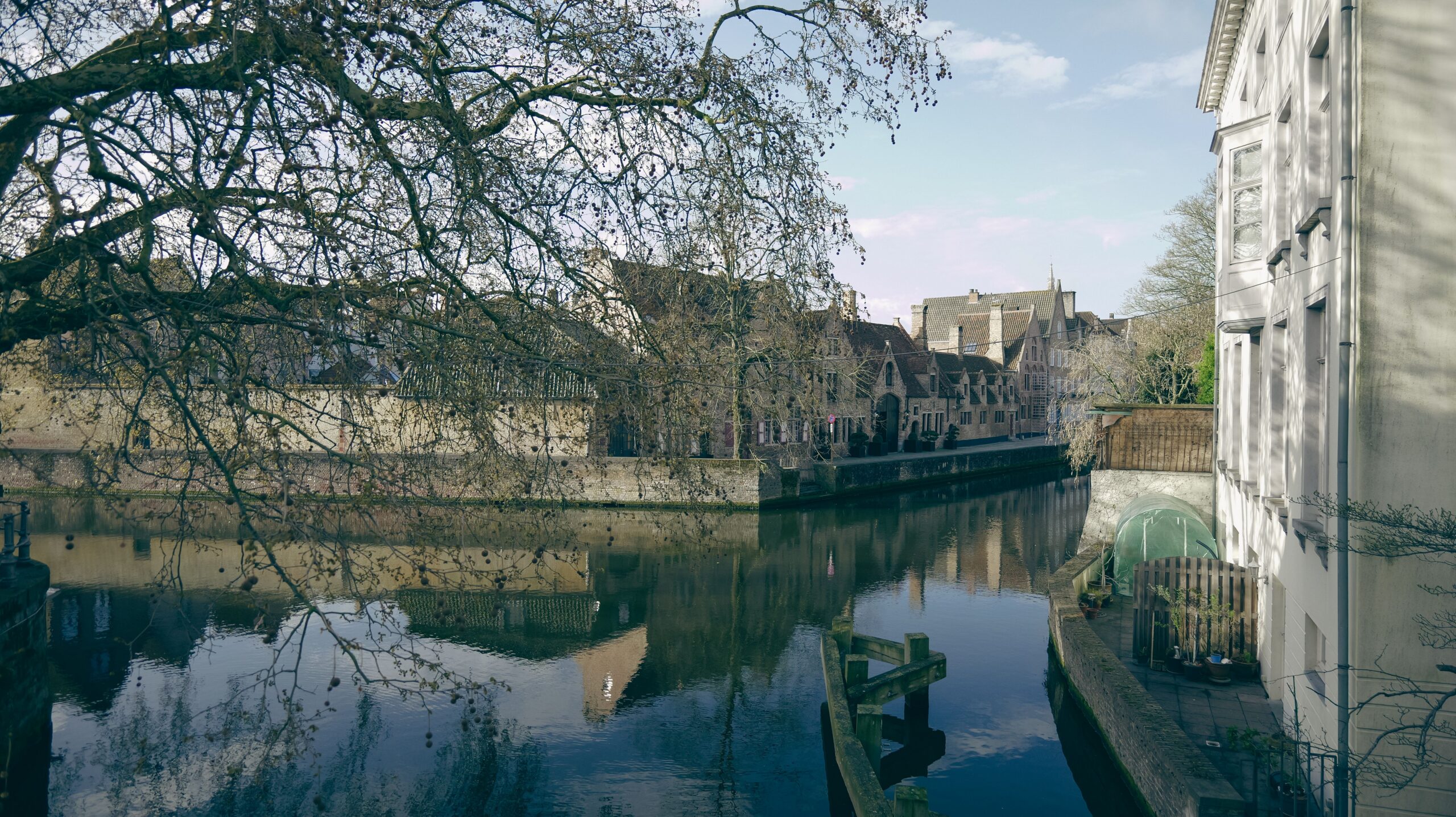
Often nicknamed the Venice of the North, Bruges, Belgium is the kind of place where time seems to stand still. If you’ve seen the cult black comedy In Bruges with Colin Farrell, this picture-perfect Belgian city has probably been on your travel radar for ages. It’s a place where you can wander for hours among historic gabled houses, watching the reflection of Gothic spires shimmer on the calm surface of the canals.
In this article I’m bringing you 16 of the best things to see and do in Bruges, so you can get the absolute most out of your visit and discover its hidden corners too. You’ll quickly notice that, unlike the hectic capitals of Europe, a far more laid-back atmosphere reigns here, even though the main square can get seriously packed with eager tourists during the day.
I’ll also help you figure out the best time to go, how to get here easily by train from the airport, and why it pays to stay overnight right in the historic centre. And I’ll throw in a few practical tips on where to satisfy your taste buds, whether you’re craving proper Belgian chocolate or an excellent local beer.
TL;DR
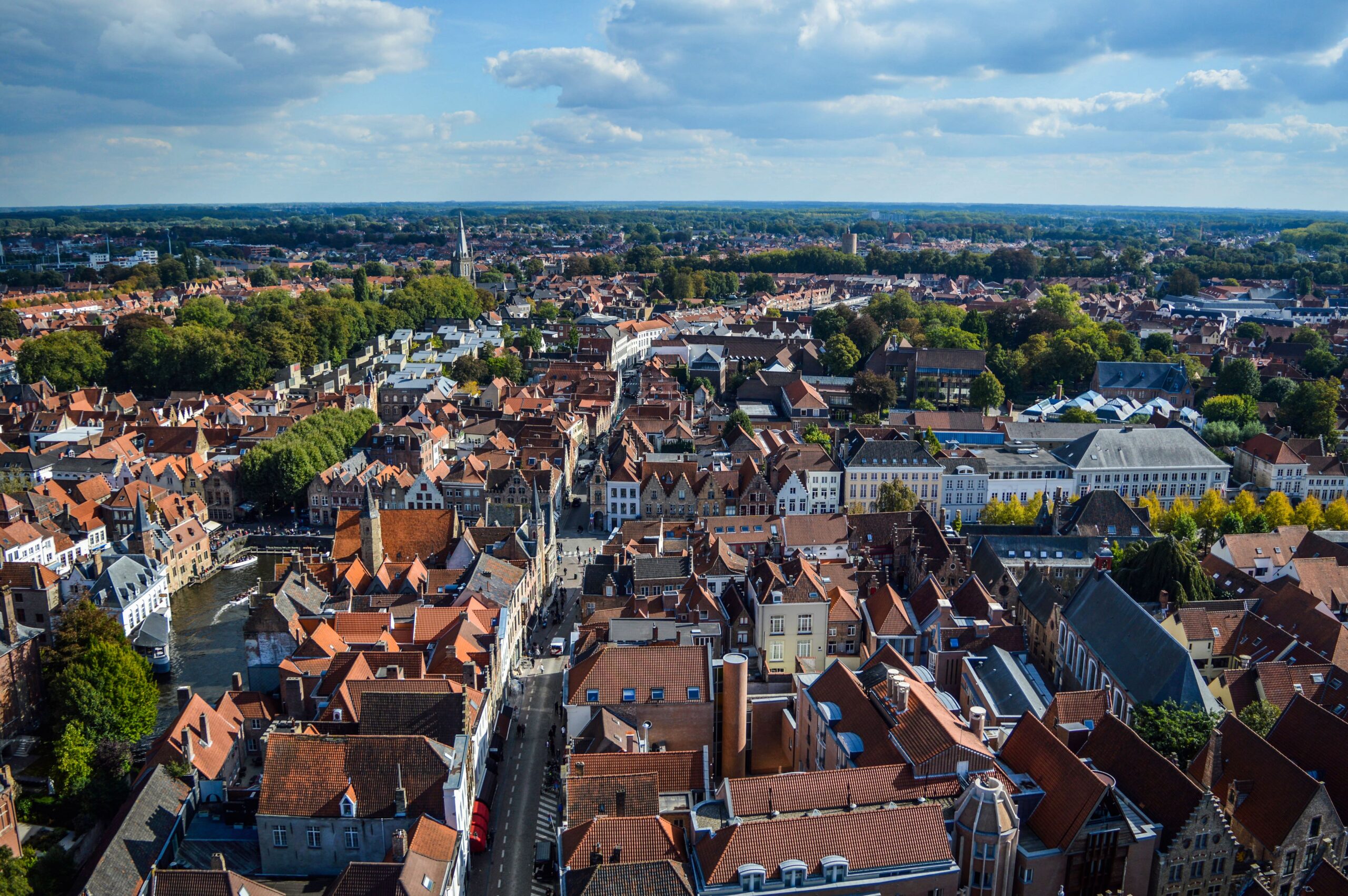
- Best view: Climb the 366 steps up the iconic Belfort bell tower, where you’ll have the entire historic centre laid out before you.
- Key experience: A boat ride through the winding canals shows you the city from a completely different perspective and is an absolute must.
- Best photo: Head to the corner of Rozenhoedkaai early in the morning, where the historic buildings reflect perfectly in the water without the crowds.
- Where to find calm: The Begijnhof convent courtyard offers a quiet oasis in the heart of the city, and in spring it’s carpeted with gorgeous daffodils.
- What to taste: Don’t miss a visit to the family-run De Halve Maan brewery and try the local Brugse Zot beer or some fresh waffles.
- Why stay overnight: Most tourists only come for a day trip, so if you stay the night you’ll have the magical lanes all to yourself in the morning and evening.
- How to get here: Very comfortable, fast trains run here from Brussels in about an hour, and at the weekend you even get a discount on the ticket.
The full destination guide: Belgium — guide and what to see
The weather in Bruges, Belgium, and when to visit
Belgium has a mild oceanic climate, and you should bear in mind that it rains fairly often, so packing a reliable rain jacket or umbrella is essential whatever the season. The summer months tend to be very pleasant and mild; in August temperatures hover around a comfortable 23°C, which is ideal for full days of sightseeing without sweltering heat.
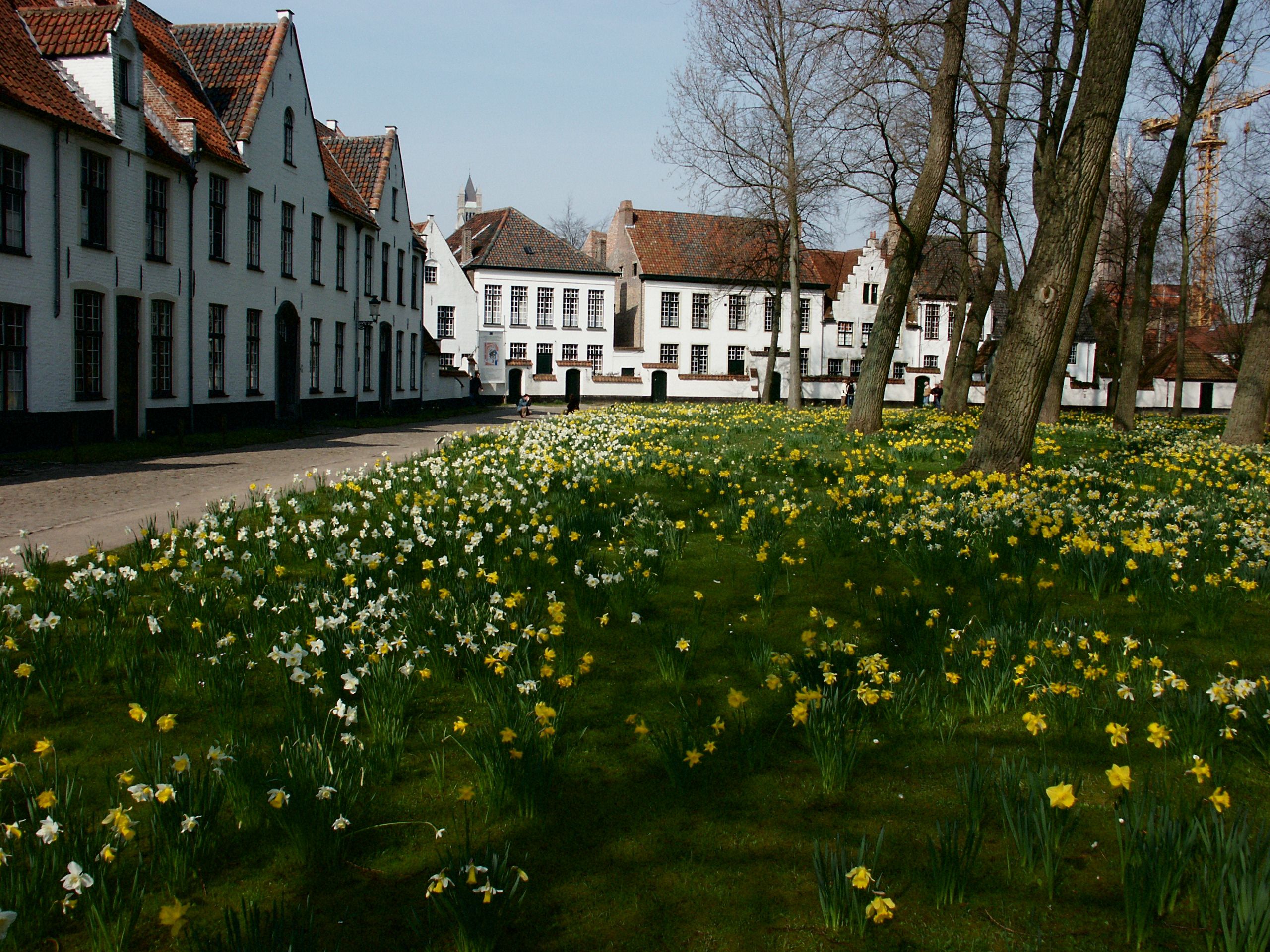
The loveliest time to visit is from April to the end of September, when the days are longer and the city is fully alive. If you come in April, the Begijnhof courtyard treats you to an absolutely breathtaking spectacle of blooming carpets of yellow daffodils that contrast beautifully with the white facades of the historic houses.
From November to early March it’s low season and the streets are much quieter, although some outdoor attractions such as the historic windmills may be closed. A chapter all of its own is the much-loved Christmas season, when the city is wrapped in the Winter Glow festival of lights and the Christmas markets fill the whole square with the scent of mulled wine — Bruges in winter is genuinely magical.
The biggest challenge for any traveller is the crowds of day-trippers who fill the historic centre roughly between 10am and 4pm. If you want the most famous sights to yourself and you’d like to take lovely photos without strangers in the frame, it really pays to get up early and hit the streets before 9am.
Where to find a hotel in Bruges, Belgium
💡 Tip for accommodation and experiences: We like to look for places to stay on Booking.com, which usually has the best cancellation policies. Tickets, tours and activities are then worth comparing and booking through GetYourGuide.
The vast majority of visitors make the mistake of coming just for a quick day trip, which often ends up rushed and robs you of the true atmosphere. If you decide to stay overnight in the historic centre, you gain a huge advantage: once the afternoon coaches full of day-trippers leave, the city empties out beautifully and the floodlit lanes at night have an incredible charm.
Accommodation here is also often a little cheaper than in nearby Brussels, so it makes sense financially too, especially if you’re after quieter surroundings. The historic core is very compact and you can comfortably reach everything on foot, so it makes the most sense to look for a hotel within walking distance of the main square or the romantic canals.
For lovers of pure luxury and history, the clear choice is the five-star Hotel Dukes’ Palace, set in a beautifully restored 15th-century palace with royal breakfasts. If you’re after something truly special and cinematic, book a room at the boutique Relais Bourgondisch Cruyce, which sits right on the edge of a canal and featured in the film In Bruges.
Great value for money comes from the cosy guesthouse B&B Old Bruges, where you’ll find a personal touch from the owners and a fantastic location just steps from the main sights. Travellers on a slightly tighter budget rave about the clean and pleasant Hotel Asiris, or the very popular backpacker hostel St Christopher’s Inns – The Bauhaus Hostel, where you’ll easily meet fellow travel enthusiasts from all over the world.
16 Best Things to See and Do in Bruges, Belgium
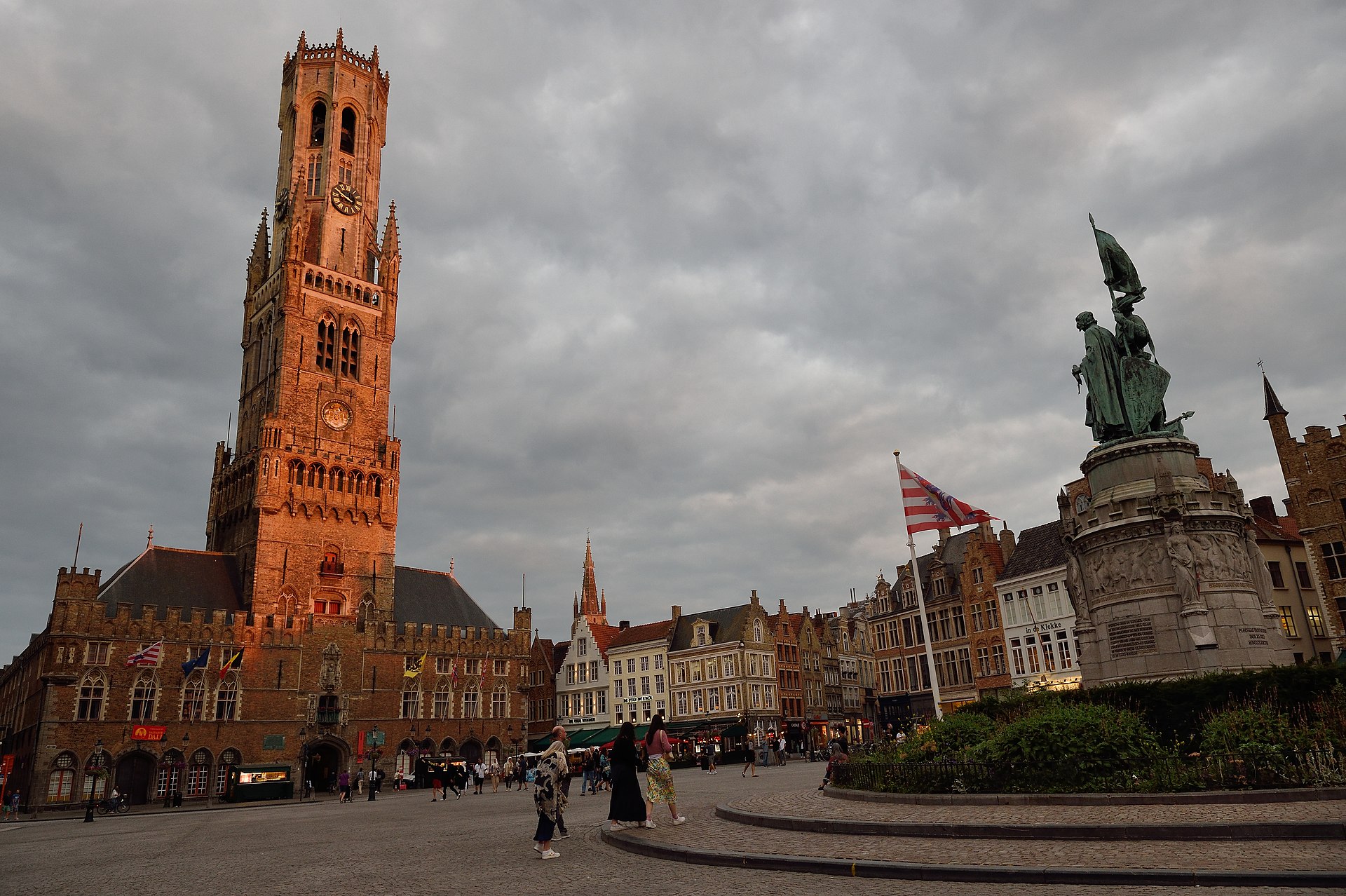
Let’s take a look together at the most interesting sights and activities you definitely shouldn’t miss during your visit. From majestic Gothic buildings and canal cruises to secret corners and superb chocolate shops, this city has something interesting for everyone and is guaranteed to win you over with its one-of-a-kind atmosphere.
1. Markt Square and Its Guild Houses
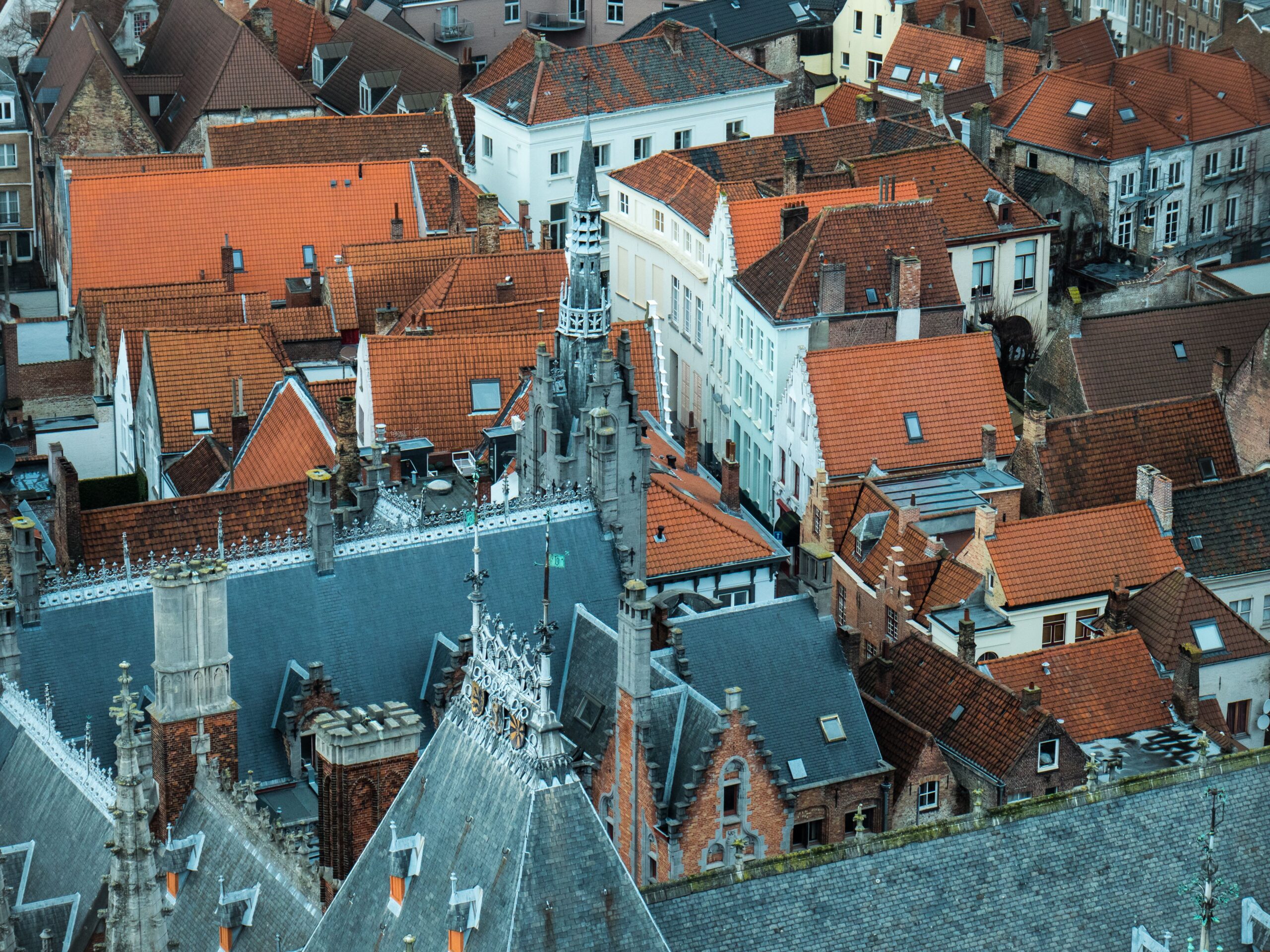
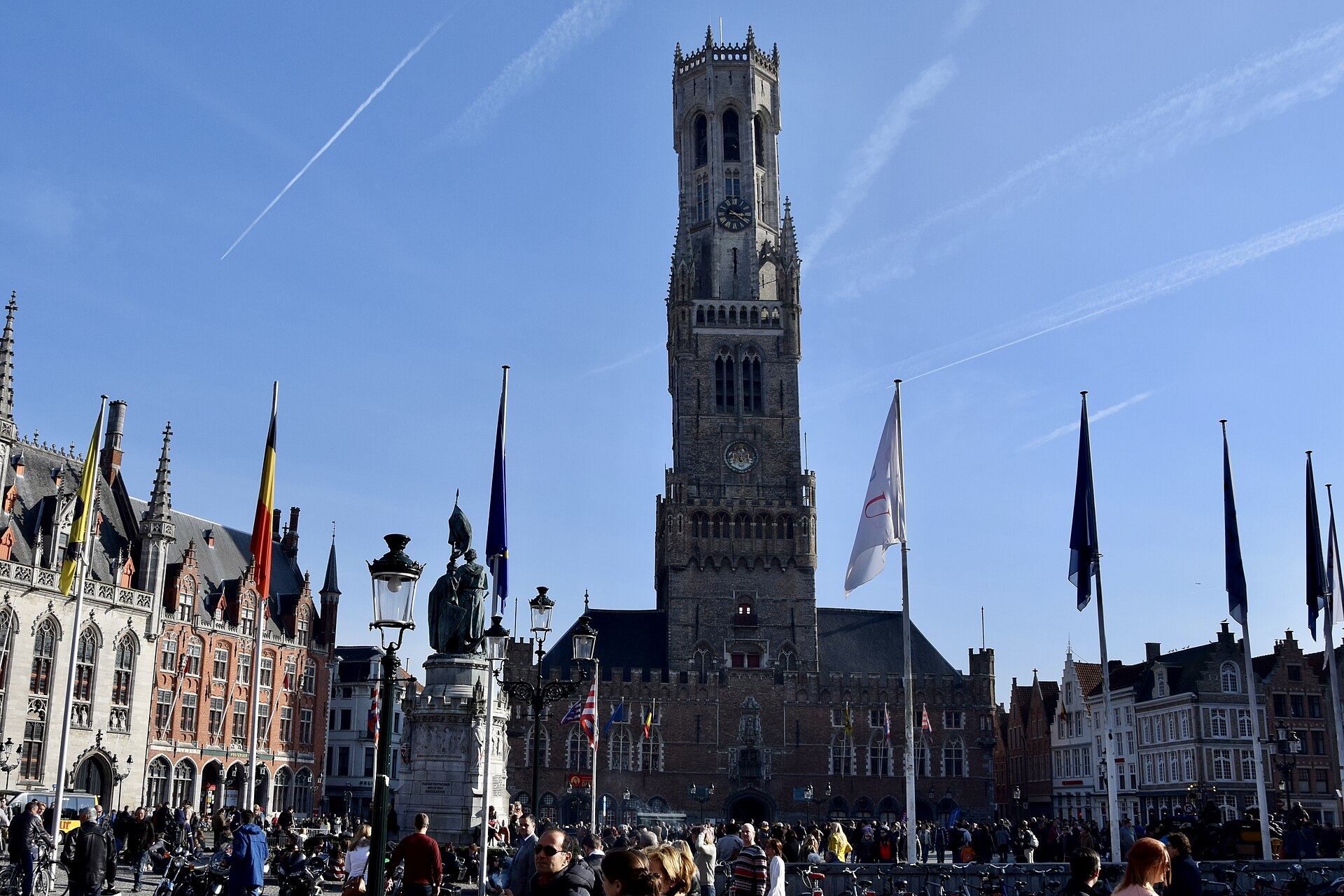
The main Markt square is the very pulsing heart of the city and is probably the first place you’ll head for after arriving. You’ll be instantly captivated by the row of gorgeous, colourful gables of the old guild houses, which look straight out of a fairy tale and today house mostly bustling restaurants and cosy cafés.
In the middle of this expansive open space stands a striking statue of two local heroes, Jan Breydel and Pieter de Coninck, who led a successful 14th-century uprising against French rule. The square is reserved mostly for pedestrians and cyclists, so you can stroll around calmly and safely and soak up that genuine historic atmosphere.
💡 Tip: If you want to photograph the square without hundreds of other tourists and the ever-present horse-drawn carriages, arrive early in the morning around 8am, when the sun is just hitting the colourful facades.
2. Climbing the Iconic Belfort Bell Tower
Right on the main square, rising to an impressive height of 83 metres, stands the imposing medieval Belfort bell tower, which for centuries served as both a lookout and the city treasury. If you don’t suffer from claustrophobia and you’re reasonably fit, definitely make your way to the top via the 366 very narrow, spiralling steps — your reward is an absolutely fantastic panoramic view over the whole surroundings.
During the demanding climb you can rest on several mezzanine floors, where you’ll get a close look at the huge, intricate clock mechanism and the famous carillon made up of 47 bells. Admission costs roughly 15 €, and given the enormous interest and the tower’s limited capacity, it’s absolutely essential to buy your tickets online well in advance.
You may well remember this striking building as the main setting for the grand finale of the aforementioned film In Bruges, which only adds to its popularity with tourists. In high season the tower is open until 8pm, so you can plan your climb for late afternoon and enjoy the city bathed in the golden light of the setting sun.
3. Burg Square and the Historic Town Hall
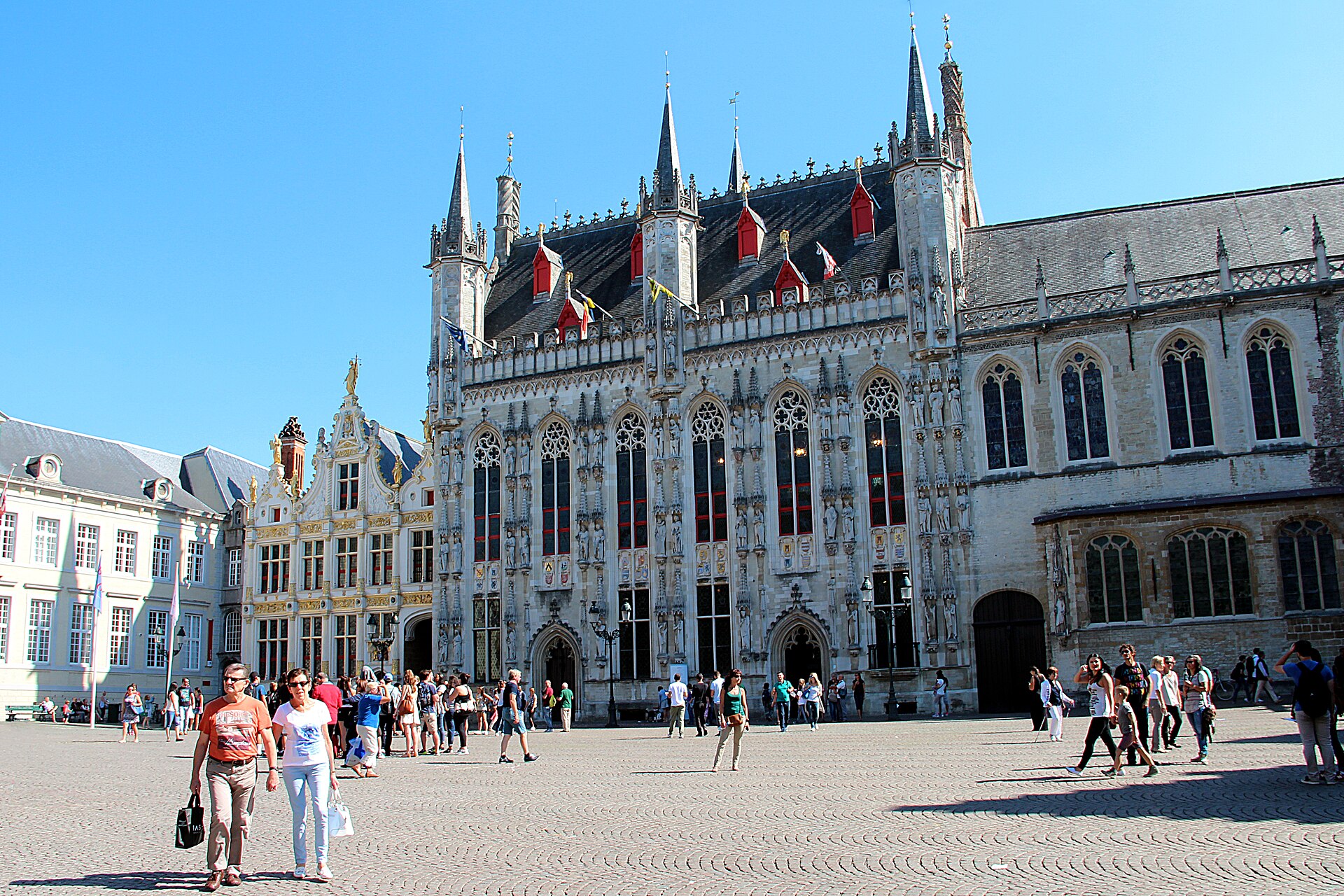
Just a few dozen steps from the bustling Markt, you’ll pass through a narrow lane and emerge onto the far more elegant Burg square, which for centuries served as the main political and religious centre of the whole region. This space is literally a parade of different architectural styles and feels much more dignified and peaceful than the neighbouring market square.
The undisputed landmark of the whole space is the beautiful Gothic town hall, the Stadhuis, built back in 1376, which makes it one of the very oldest town hall buildings in the entire region. Its richly decorated facade is full of elaborate statues and fine stone details that tell the long, complex history of the city and command the well-deserved admiration of every passer-by.
If you love historic interiors, definitely pay to go inside and admire the magnificent Gothic Hall with its wooden vault, decorated with striking wall paintings from the late 19th century. The whole square is surrounded by other important buildings, such as the old court of justice with its Renaissance facade adorned with golden details that shine beautifully in the afternoon sun.
4. The Mysterious Basilica of the Holy Blood
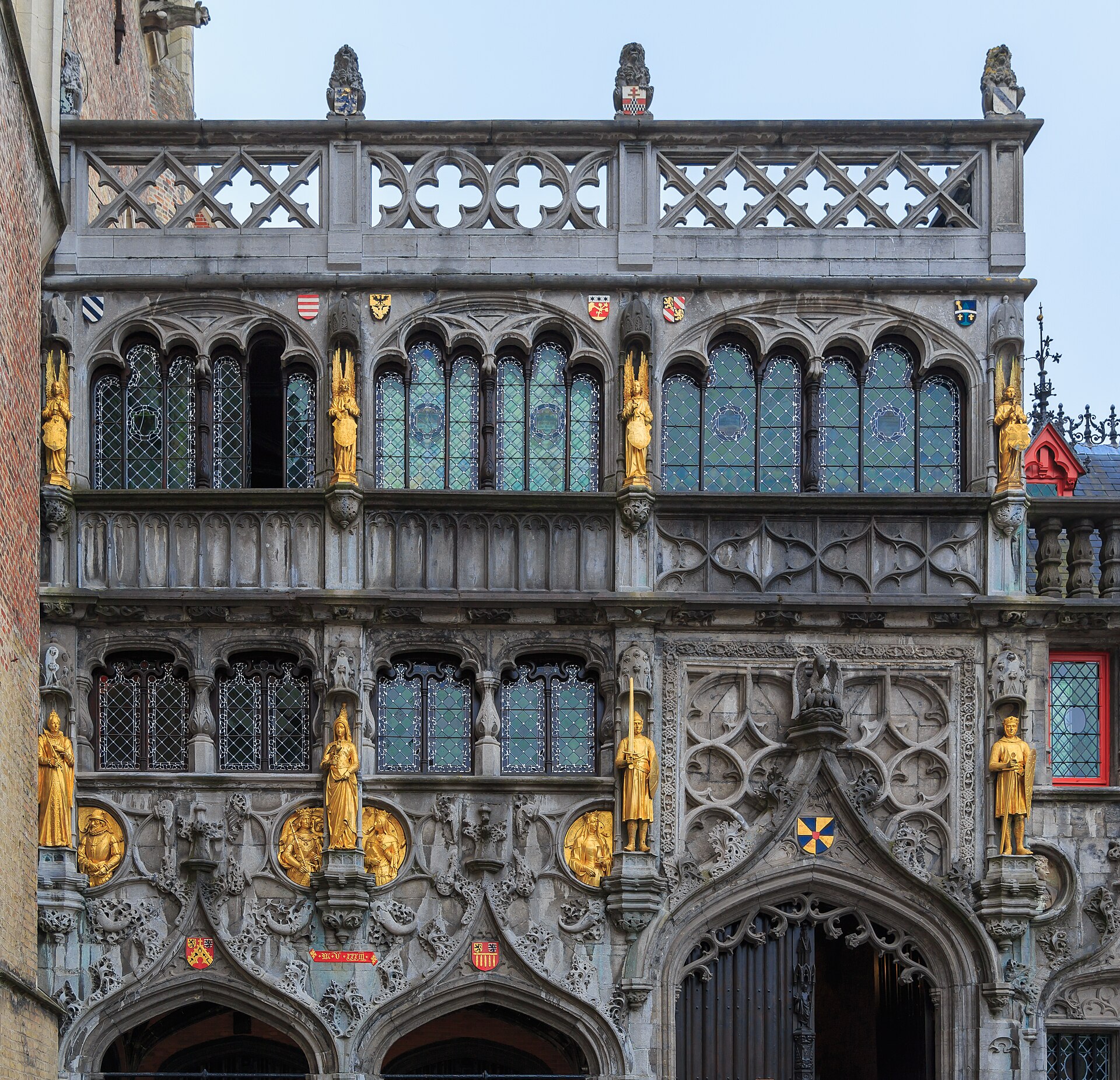
Tucked into the right-hand corner of Burg square is the unassuming yet all the more significant Romanesque-Gothic Basilica of the Holy Blood, which guards one of the most sacred Christian relics in all of Europe. Its dark, richly decorated facade with gilded statues stands in sharp contrast to the surrounding pale buildings and instantly draws your attention.
The interior of the church is divided into two completely different parts: the lower Romanesque chapel from the 12th century is very plain and dark, while the upper neo-Gothic section blazes with colour and is adorned with gorgeous stained-glass windows. Entry to the basilica itself is completely free, but if you want to visit the adjoining little museum full of rare historic artefacts, you’ll pay a symbolic admission of around 5 €.
The biggest draw for pilgrims from around the world is the ornate crystal vial said to hold a drop of Christ’s blood, which, according to legend, was brought here by Count Thierry of Alsace after the Second Crusade. You can see and venerate this revered relic with your own eyes only between 2pm and 4pm each day, when it is ceremonially displayed for the public in the presence of local clergy.
5. A Boat Ride Through the Romantic Canals
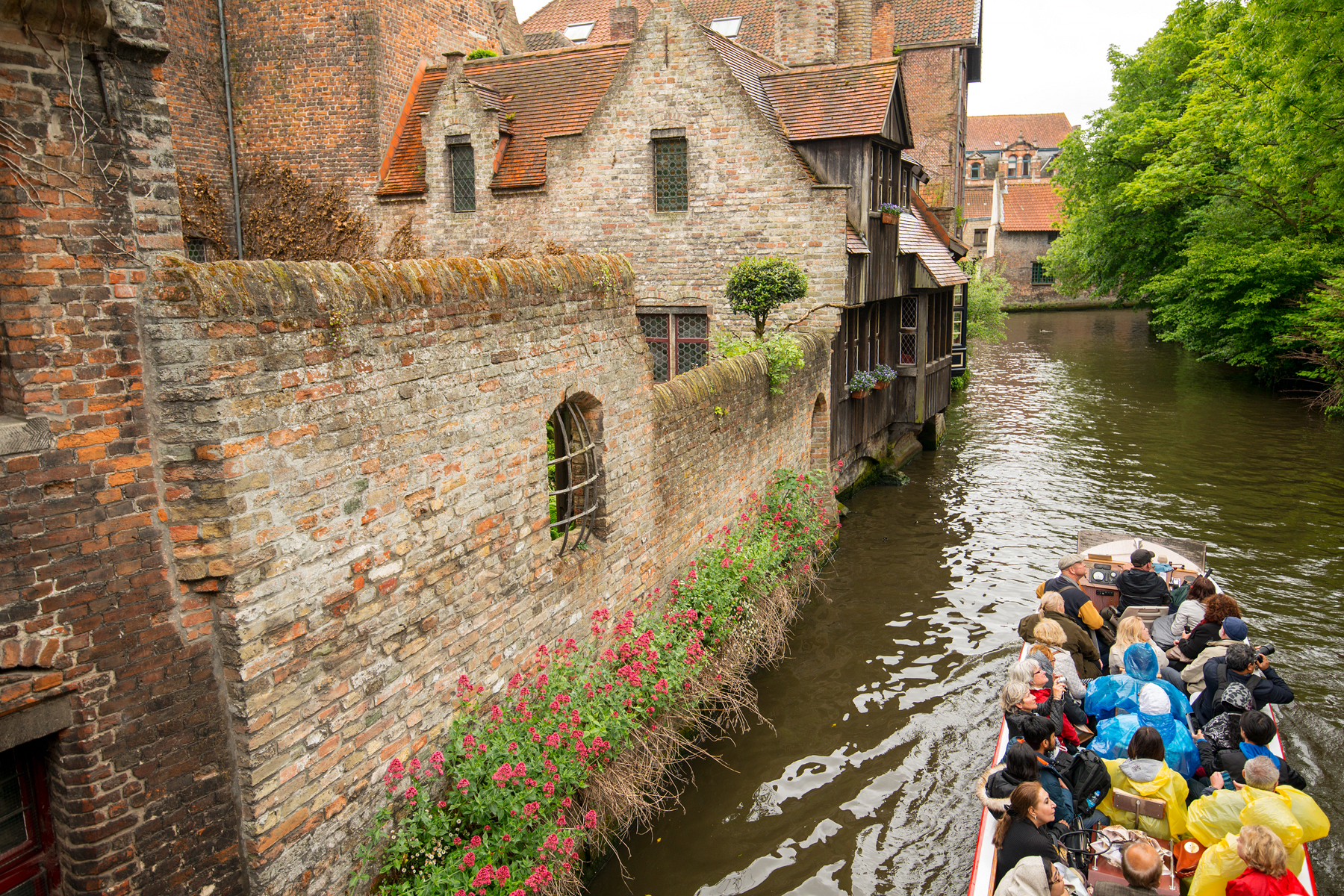
However long you spend in the city, a classic boat ride along the winding waterways is an absolutely key experience that would be a sin to skip. From the low deck of an open little boat you’ll see the city from a completely different and far more romantic angle, gliding under dozens of old stone bridges and discovering secret gardens you’d never reach on foot.
The cruise lasts roughly 30 minutes and costs 15 € per adult; there are five different boarding points in the city, all located close to the main square. It’s important to know that these traditional city cruises cannot be booked online at all — you always pay on the spot, and in high season you’ll likely queue for quite a while.
💡 Tip: Even though you can’t buy boat tickets online, you can use GetYourGuide to book a combined walking tour with a local guide, which often includes a canal cruise in the programme and saves you a lot of planning hassle.
6. Rozenhoedkaai for the Best Photo
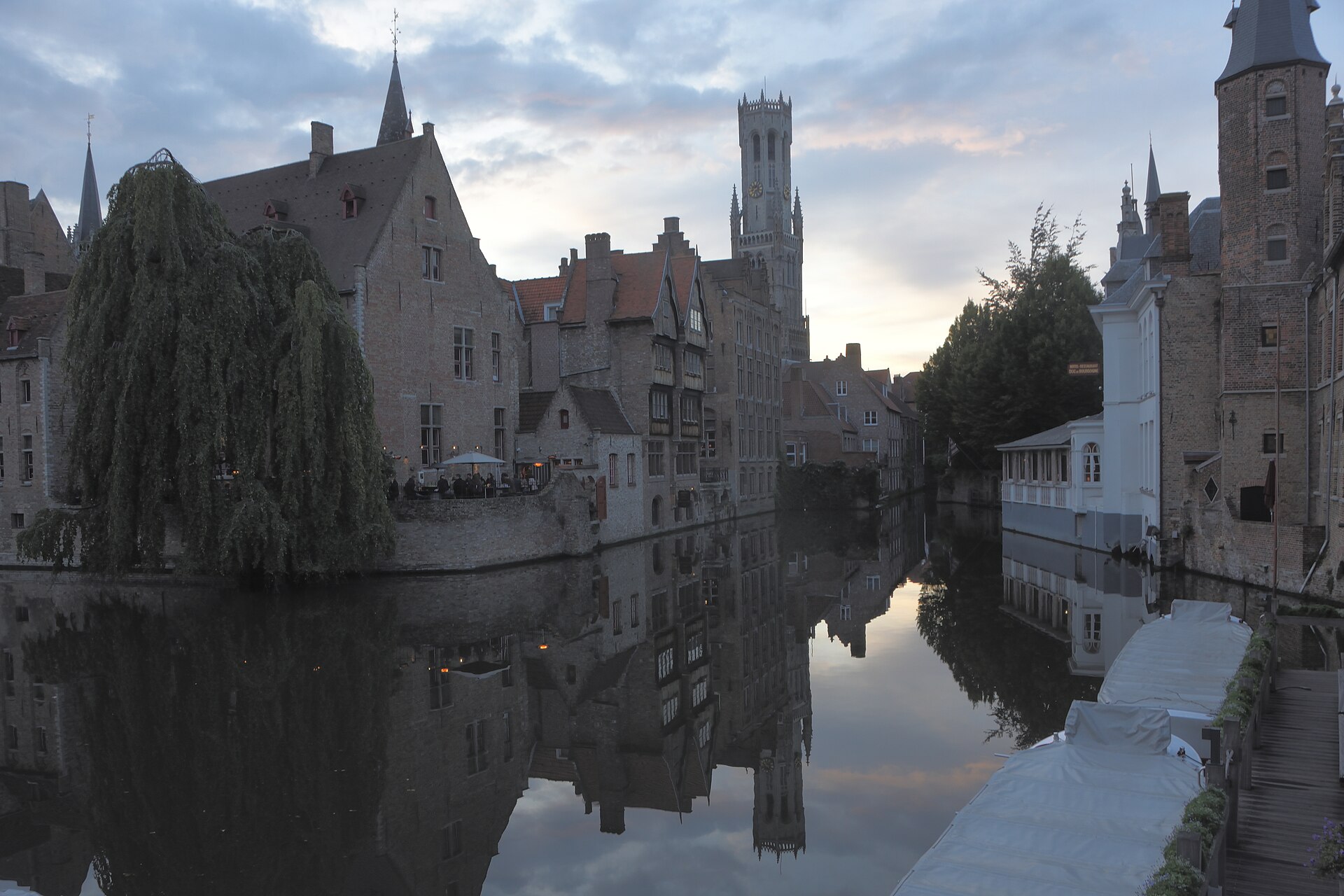
If you’re looking for that one particular spot that graces all the postcards and travel brochures, punch the magical quay called Rozenhoedkaai into your navigation. This is exactly where the two main city canals meet, creating an utterly iconic composition in which the old brick houses, a weeping willow and the tall Belfort tower in the background reflect perfectly on the calm water.
The name of this picturesque spot translates as the Quay of the Rosaries, because in the Middle Ages rosaries were sold here in bulk, made of Baltic amber and cut glass. Today it’s without a doubt the most photographed and busiest corner in the whole city, where during the day crowds of tourists with cameras and phones constantly jostle for the best spot at the railing.
For your photos to truly be worth it and to avoid the frustration of the crowds, you really have to come here very early in the morning, ideally just after sunrise, when a light mist still hangs over the water. This spot is just as magical late in the evening, when the surrounding historic buildings and trees are beautifully and sensitively floodlit, creating an incredibly romantic and mysterious atmosphere.
7. The Lake of Love and Romantic Minnewater Park
On the southern edge of the historic centre, just a short walk from the main train station, lies the beautiful and peaceful Minnewater park, centred on the so-called Lake of Love. According to an old, sad local legend, the lake is named after a girl called Minna, who died of exhaustion in the arms of her beloved while fleeing an arranged and unwanted marriage.
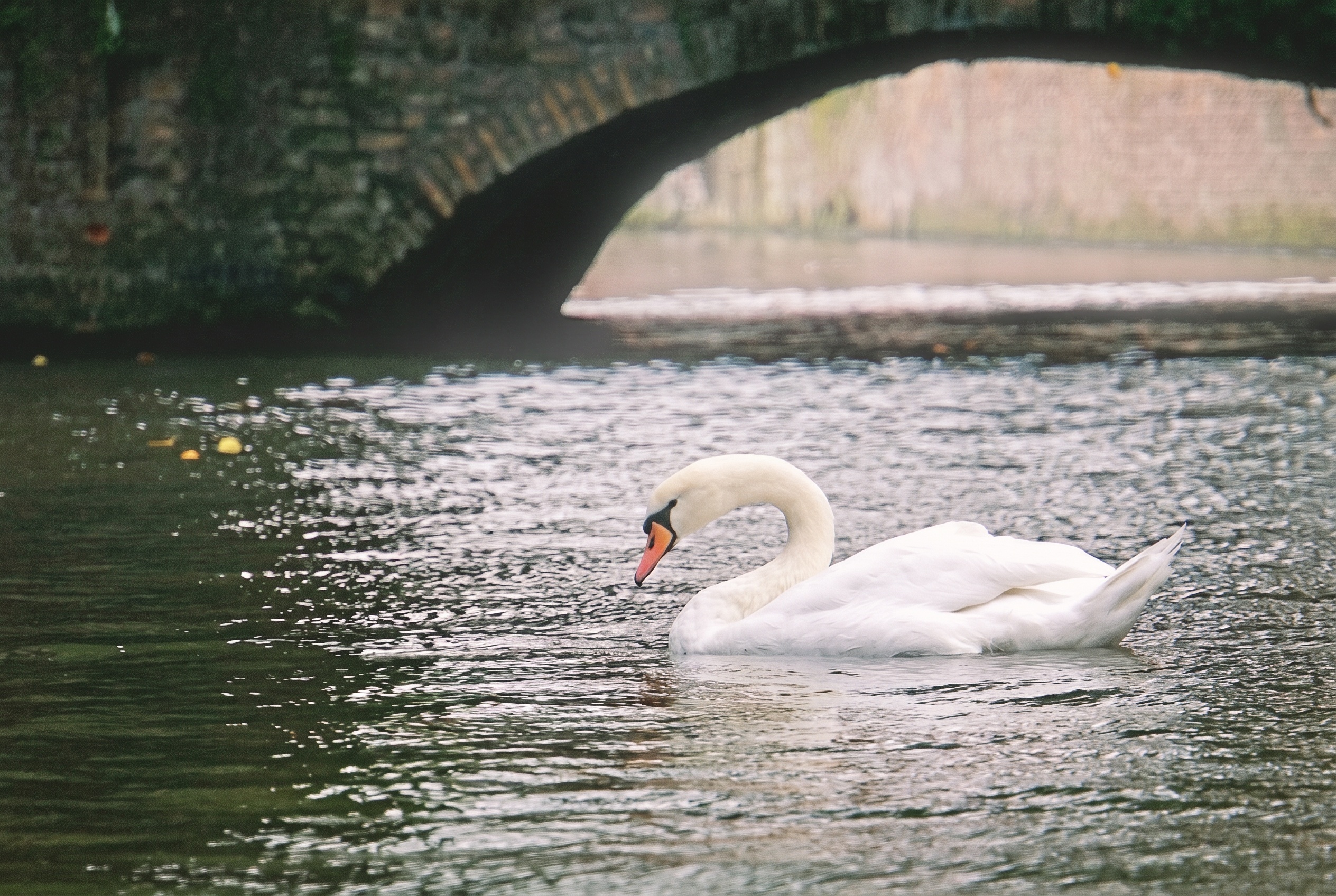
Today it’s an immensely popular spot for quiet walks and picnics on the grass, as it offers an escape from the busy streets in the centre, and you’ll find plenty of benches under mature trees. The lake and its surroundings are home to dozens of beautiful white swans that glide majestically across the surface and have been an official, protected symbol of the city since the late 15th century.
A stroll along the calm water naturally leads you to an imposing old defensive tower of red brick, which once served as the main watchtower at the city’s entrance. The place has enormous charm, especially at dusk, when the lake’s surface calms to a mirror and the surrounding trees turn warm hues in the setting sun.

8. The UNESCO-Listed Begijnhof Convent Courtyard
When you pass through the ornate gate near the Lake of Love, you’ll find yourself in a completely different world and discover the unique Begijnhof convent courtyard, founded back in 1245. This enclosed complex of snow-white houses arranged around a spacious grassy courtyard with mature trees rightly belongs on the UNESCO World Heritage list and breathes pure tranquillity over you.
Originally this was home to the Beguines, emancipated and pious women who, although they pledged a life of chastity and obedience, did not take lifelong vows like classic nuns and could leave the community at any time. Today these historic houses are home to Benedictine sisters, and during your visit you’re expected to respect the strict rule of silence and not disturb the peaceful atmosphere.
A visit to this magical place is completely free; you only pay a symbolic admission to a small house that serves as a period museum and shows the original way of life of the local women. If you’re lucky enough to arrive during March or April, you’ll witness the most beautiful sight of all, when the entire inner courtyard lights up with an enormous carpet of blooming yellow daffodils.
9. Art at the Prestigious Groeningemuseum
For every lover of classical fine art, a visit to the Groeningemuseum is an absolute and unavoidable must, as it’s the most important art gallery in the entire area. The collection is carefully arranged in modern, bright spaces and charts more than six hundred years of visual art in this very rich and cultured Belgian region.
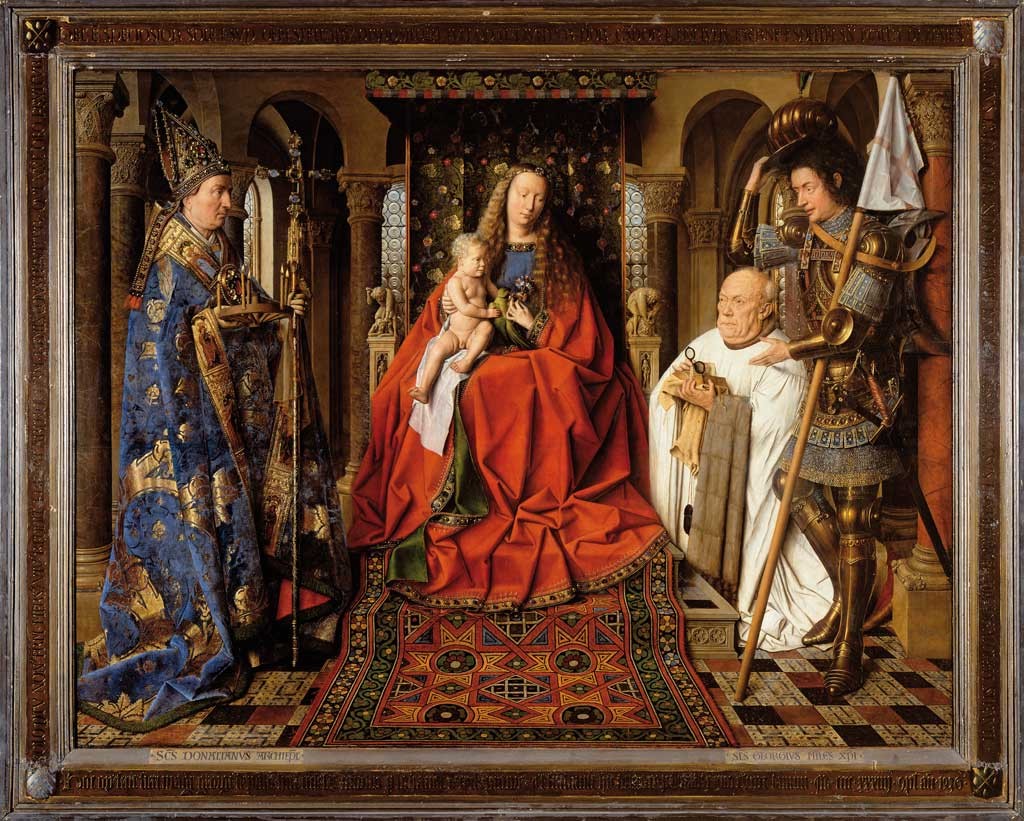
The museum’s main and most precious highlight is its world-famous collection of works by the so-called Flemish Primitives, among whom names like the masterful Jan van Eyck, Hans Memling and the mysterious Hieronymus Bosch stand out. On display, for example, is the famous painting Madonna with Canon van der Paele, which astonishes visitors with its incredible detail and masterly handling of light and fabric textures.
Besides the old masters, you’ll also find very interesting and valuable works from the Renaissance and Baroque periods, as well as representative examples of modern Belgian expressionism. If you plan to visit several similar institutions and you’re into history, it pays to get the 72-hour Musea Brugge card, which gives you very good-value access to most of the city’s museums.
10. The Church of Our Lady and Michelangelo’s Madonna
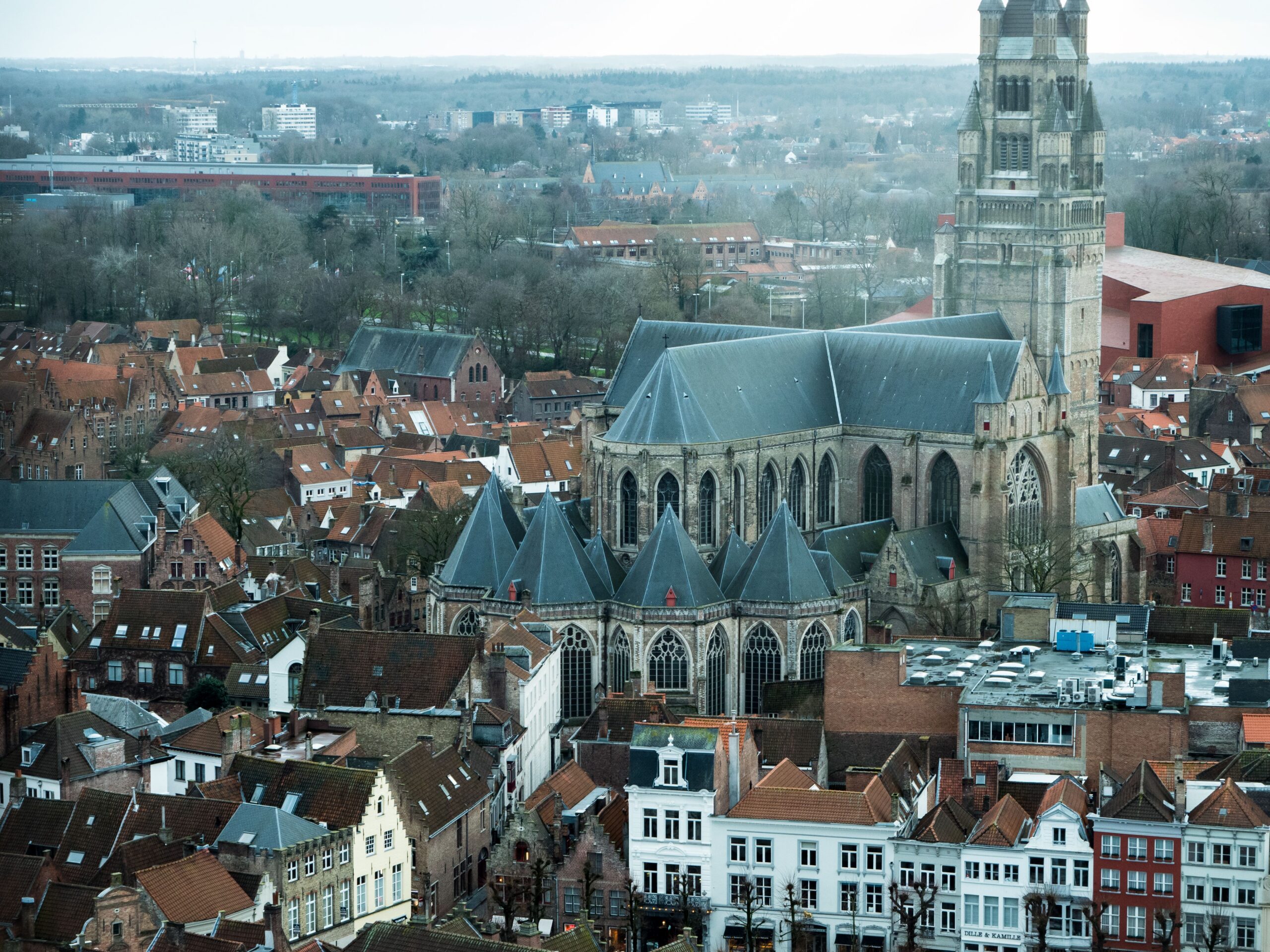
As you wander the city, your gaze will constantly be drawn to the huge brick tower of the Church of Our Lady, rising to an impressive 115.5 metres — a reliable way to know exactly where you are. It’s actually the second-tallest brick tower in the entire world, and its construction took an incredible two hundred years, which only proves the enormous wealth and power of the medieval merchants here.
Entry to the main nave of this majestic church is completely free, but the greatest and most precious treasure is hidden in the paid museum section, where you’ll pay around 6 €. There awaits a treasure of immeasurable value: a beautiful marble sculpture of the Madonna and Child by the legendary Italian sculptor Michelangelo Buonarroti.
This incredibly finely carved sculpture is all the more precious because it’s the only sculptural work by Michelangelo that demonstrably left his native Italy during his own lifetime. Besides this Italian masterpiece, you can also quietly admire the richly decorated and very well-preserved bronze tombs of the powerful Burgundian Duke Charles the Bold and his daughter Mary of Burgundy.
11. A Stop at the Romantic Bonifaciusbrug
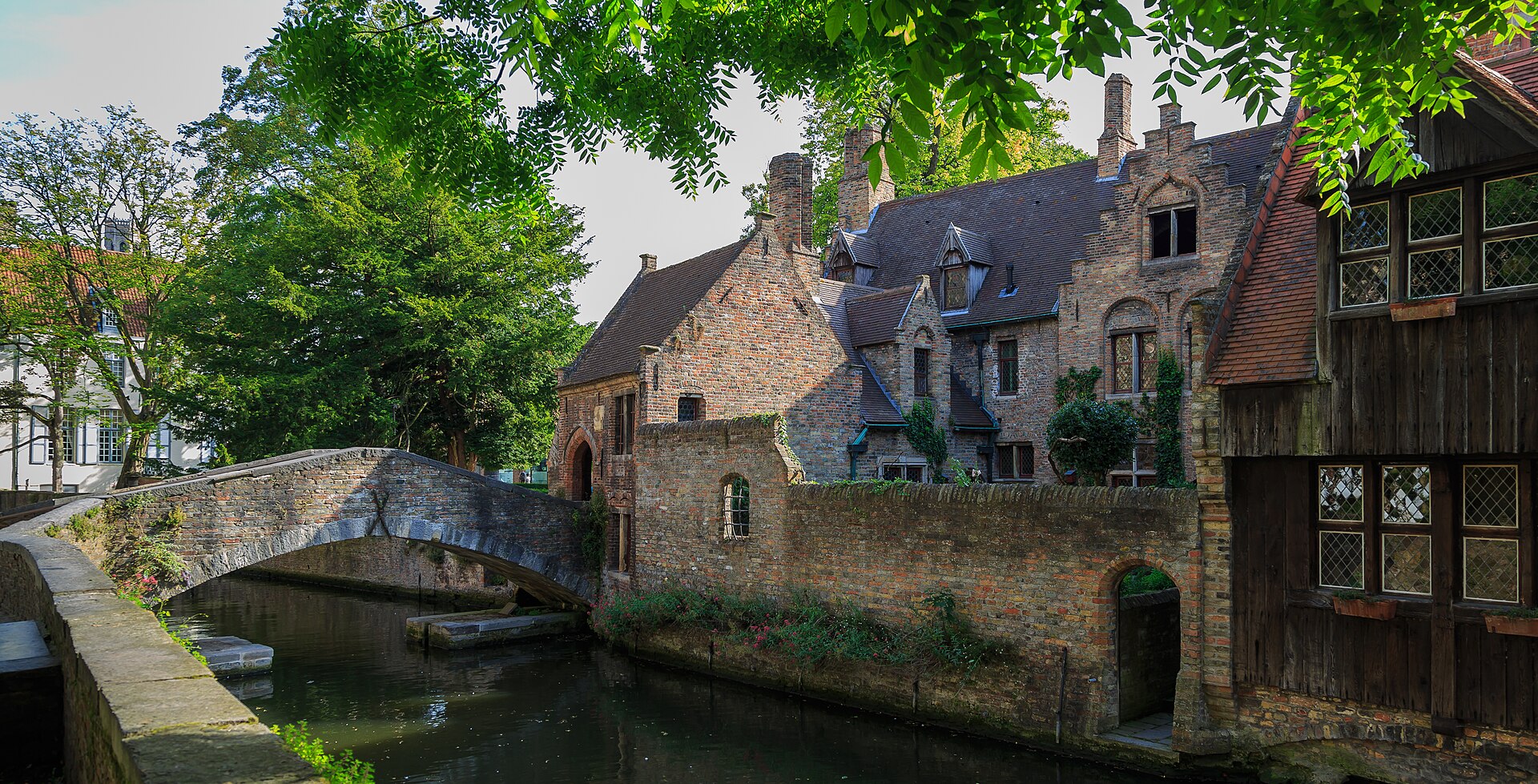
Right behind the Church of Our Lady hides the very inconspicuous yet all the more beautiful and incredibly picturesque stone Bonifacius bridge, one of the most enchanting corners in the city. Although its rough stones and architecture make it look like an original medieval structure, don’t be fooled — it was only built at the start of the 20th century as a very convincing historic replica.
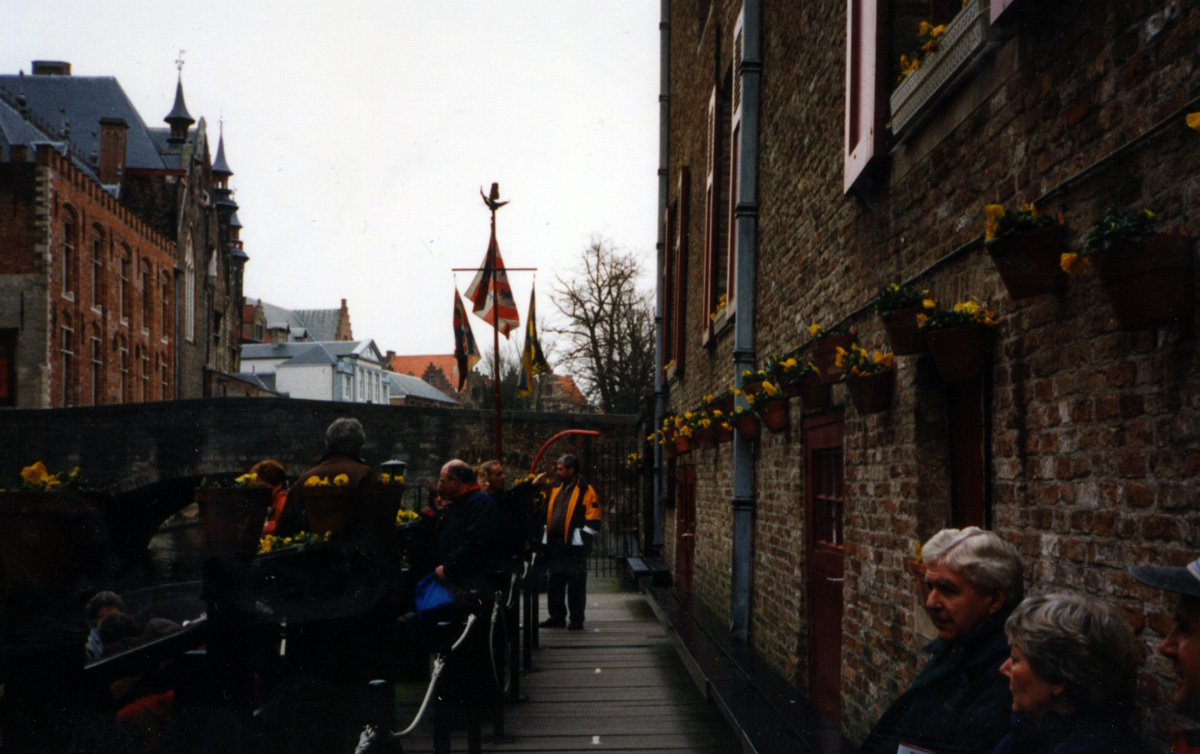
The bridge arches elegantly over a narrow, dark bend in the canal, hemmed in on all sides by old brick houses and partly shaded by the overhanging crowns of mighty trees. Standing in the middle of the bridge and simply watching the tour boats glide beneath your feet is an immensely calming experience and a great opportunity for lovely portrait photos.
💡 Tip: Because this spot is very popular with travellers and professional photographers alike, it gets quite crowded during the day and you’ll have to wait your turn. Once again, it pays to plan your walk this way for very early morning or, conversely, late evening, when the lamplight gives the place an almost fairy-tale feel.
12. The History of Medicine at Sint-Janshospitaal
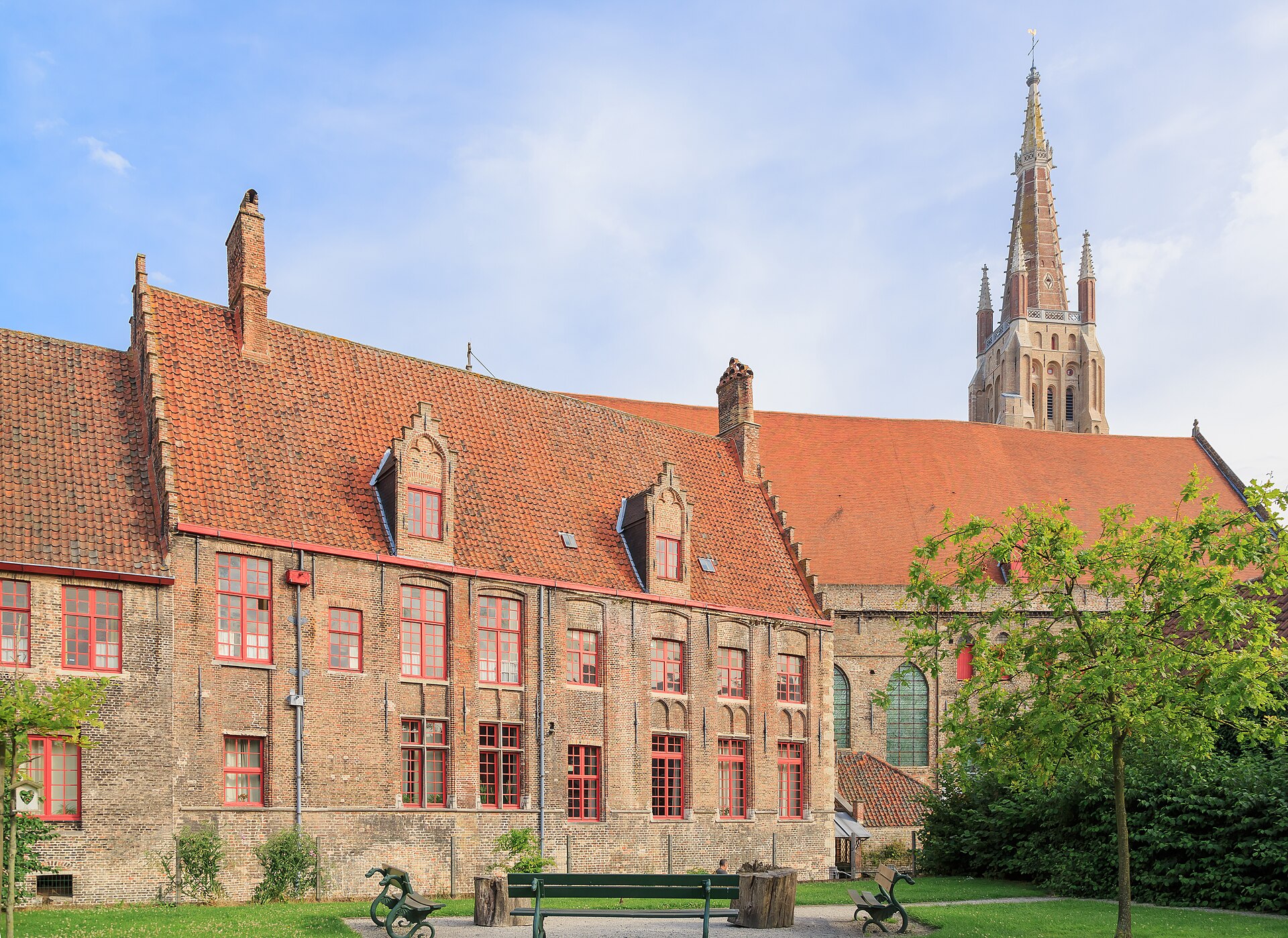
Directly opposite the famous Church of Our Lady stands a sprawling historic complex of buildings that hides one of the very oldest surviving hospitals in all of Europe. This venerable complex, known as Sint-Janshospitaal, tirelessly served sick pilgrims, poor townsfolk and travellers for a full eight hundred years, cared for by devoted sisters and monks.
Today these fascinating medieval spaces house a captivating museum where, for an 8 € entry fee, you’ll get a glimpse into the everyday life of old doctors and nurses through period instruments and apothecary jars. The old hospital pharmacy, with its wooden shelves and the scent of dried herbs, is superbly preserved and feels incredibly authentic, as if the apothecary had just stepped out for a moment.
But this historic hospital is also famous for one more very important reason: the masterpieces of the renowned painter Hans Memling, which are displayed here very sensitively and beautifully. On show are huge, detailed altarpieces and, above all, the famous reliquary shrine of St Ursula, which ranks among the absolute pinnacles of 15th-century Flemish art.

13. The De Halve Maan Family Brewery and Local Beer
Belgium is world-renowned for its huge, diverse beer culture, and a visit to the historic centre wouldn’t be complete without a stop at the authentic family-run De Halve Maan brewery. This much-loved brewery has operated on the same spot since 1856 and is the last truly working brewery right in the heart of the old town, where excellent beer is still lovingly brewed to this day.
I definitely recommend booking the very entertaining 45-minute guided tour, which costs around 11 € and walks you through both old and modern brewing technologies. The route even takes you high up onto the building’s roof, where you’ll get a completely unique and unspoilt view over the historic skyline, and the ticket price includes a proper tasting at the end.
An absolute technical curiosity here is the fascinating three-kilometre-long underground beer pipeline, which the owners had built in 2017 and which connects the brewhouse in the centre with the bottling plant in the suburbs. Thanks to this very unique and innovative solution, heavy tanker lorries no longer have to drive through the narrow lanes of the centre, which has greatly eased local traffic and protected the well-preserved cobblestones.
💡 Tip: Tours in different languages tend to sell out very quickly, so book yours online via GetYourGuide, where you’ll also find all kinds of beer tastings at local bars. Be sure to try their famous and excellent Brugse Zot beer, which has a lovely golden colour, is pleasantly fruity and is perfectly fine for committed vegetarians too.
14. History in Chocolate at Choco-Story
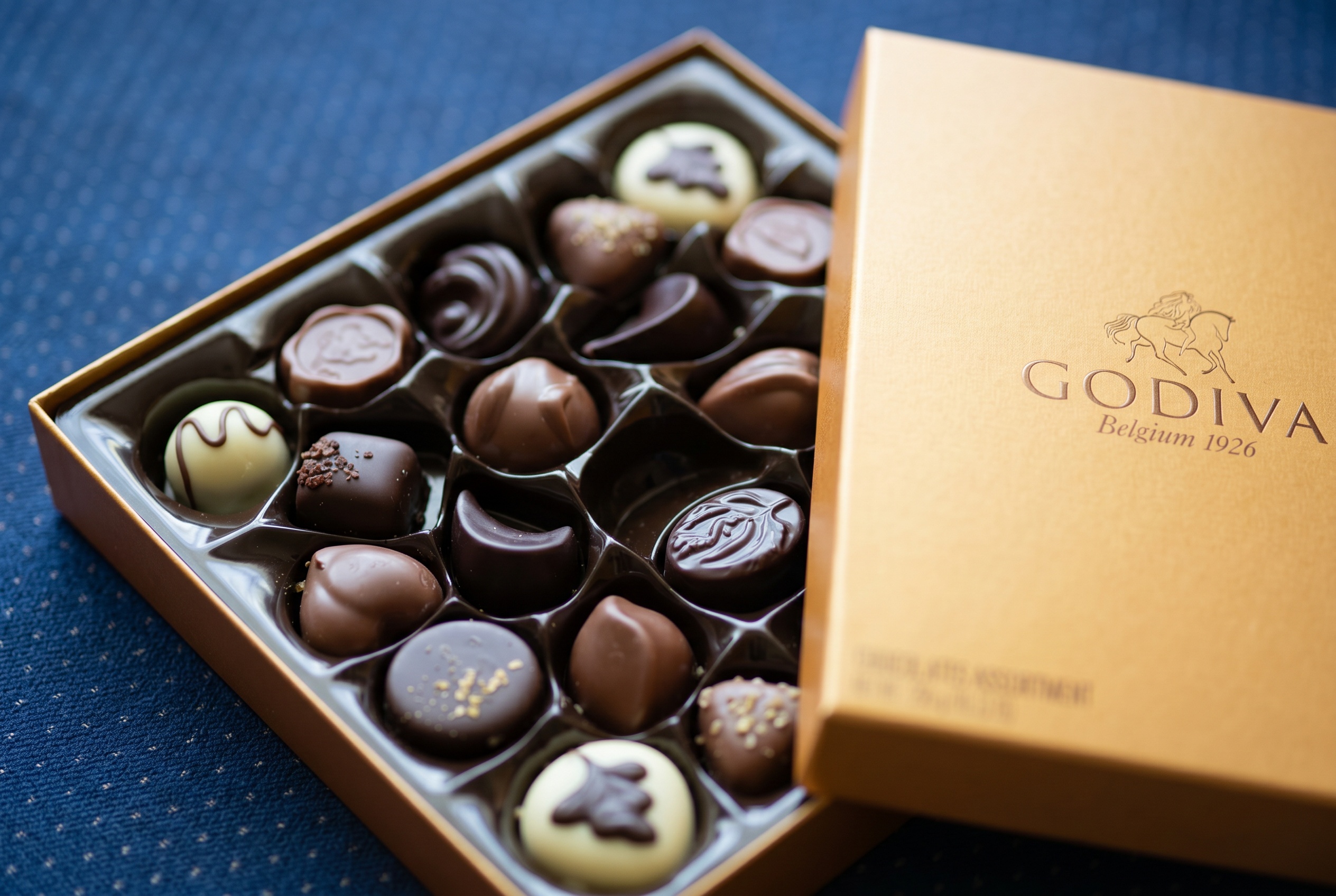
When it comes to sweets, Belgium is an absolute world superpower, and the local pralines are renowned far and wide for their smooth texture and delicious flavour. For an entry fee of around 9.5 € the whole family can visit the very interactive Choco-Story chocolate museum, which takes you through the long history of growing cacao from the ancient Maya and Aztecs all the way to modern factory production.
Part of the engaging tour is also a live demonstration by an experienced master chocolatier, who right before your eyes crafts the finest pralines with enormous skill, and you can then taste them straight away. It’s an absolutely ideal and very fun stop, especially when you get caught outside by a typical rain shower and need to warm up somewhere dry.
For buying edible and beautifully wrapped souvenirs to take home, I recommend skipping the most ordinary tourist shops and heading instead to the celebrated artisan chocolatiers that have a huge tradition here. An absolute legend is the daring The Chocolate Line, or the very traditional family-run Dumon, where you can be sure you’re buying the highest-quality sweet treat made with honest ingredients that will please vegetarians too.
15. The Frietmuseum Dedicated Entirely to Chips
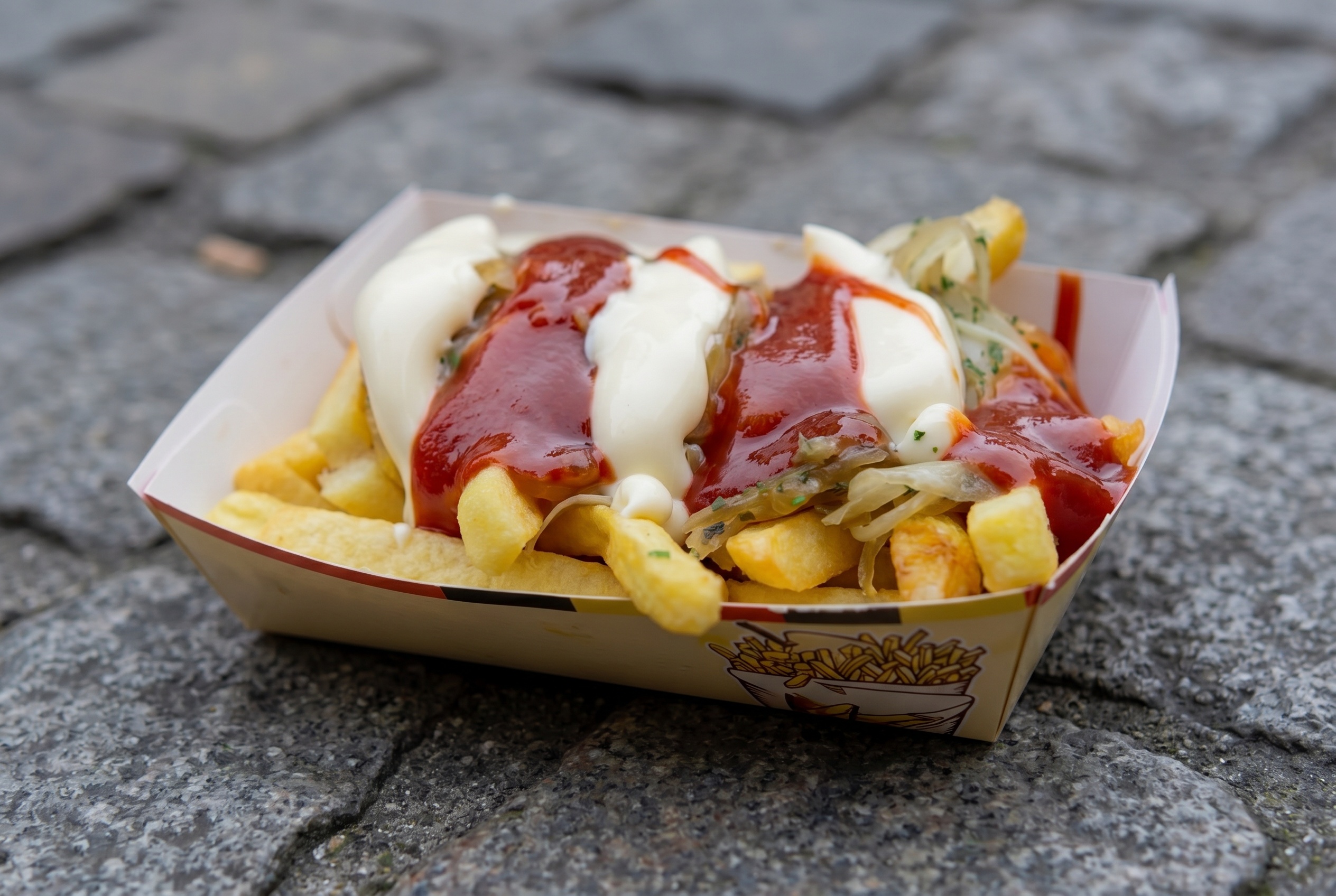
Another gastronomic stop, but this time a huge and slightly bonkers curiosity, is the completely unique Frietmuseum, said to be the only museum in the whole world devoted purely to humble chips. For just under 11 € you’ll learn everything essential about the long history of growing potatoes in South America and discover exactly how the beloved chip became a Belgian national treasure.
Even if the theme might seem a little amusing, the exhibition is put together very carefully, full of historic fryers and peeling machines, and children absolutely love it for its playfulness. At the end of the tour you can of course buy a portion of fresh, twice-fried chips down in the basement, which are beautifully crispy on the outside and perfectly fluffy inside, exactly as old Belgian tradition demands.
⚠️ Important warning: If you’re vegetarian or vegan, be extremely careful, because traditional Belgian chips are fried exclusively in beef fat, not vegetable oil. So before buying at street stalls, always double-check with the staff which fat is used, or for lunch opt for the great and proven vegetarian restaurant De Bron, which has been running for over a quarter of a century and cooks absolutely fantastically. A little further on is the much-praised vegan spot De Brugsche Tafel, where among other things they make amazing meat-free waffles. (You can admire the typical meat dishes like carbonnade flamande — beef stewed in beer — on your fellow diners’ plates, but you’ll be enjoying something better.)
16. The Sint-Janshuismolen Windmills and the Jerusalem Chapel
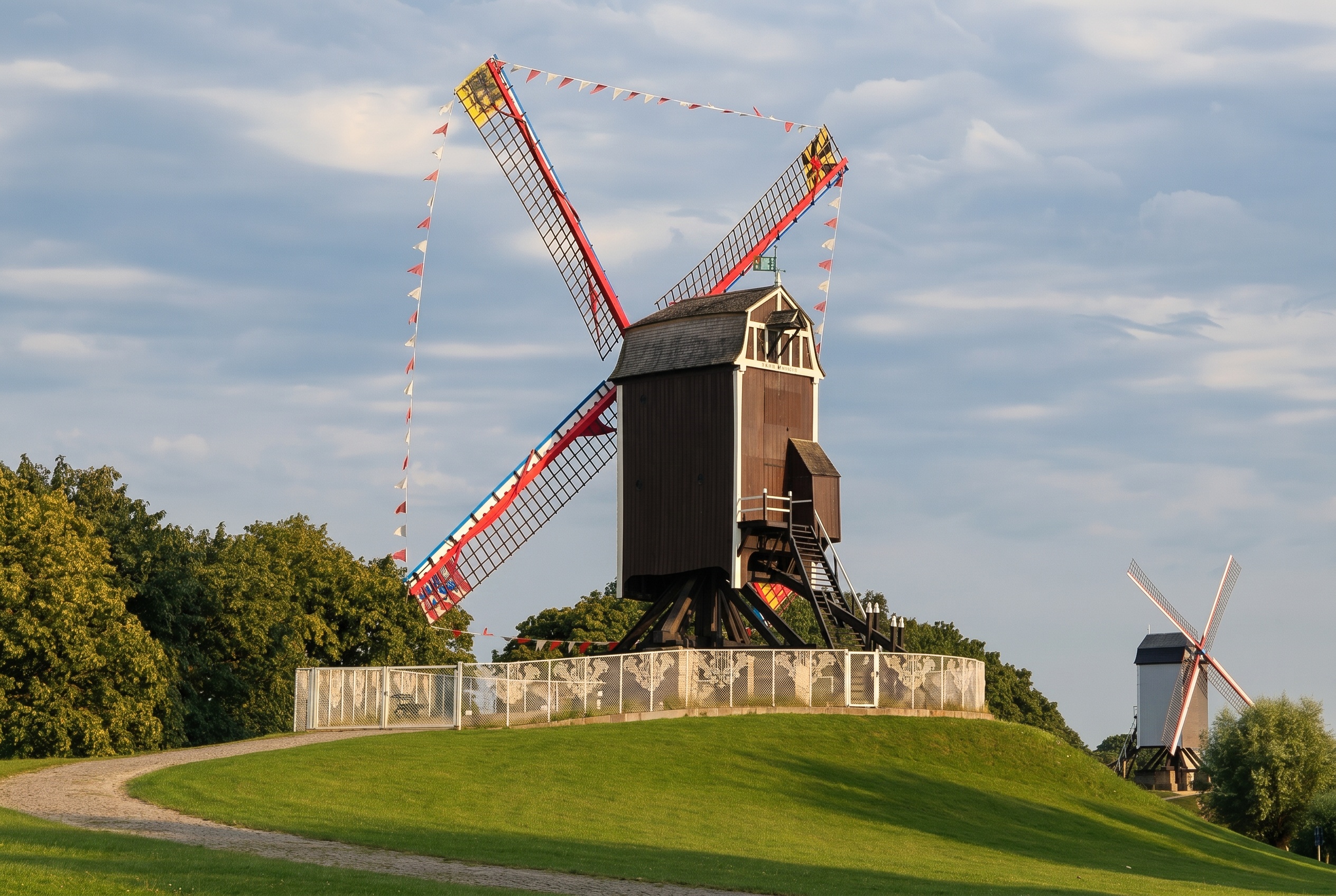
If you take a very pleasant walk just a few minutes from the busy historic centre along the old grassy ramparts, you’ll discover an unexpectedly calm and beautiful spot with windmills. Dozens of them once stood here to defend and feed the city; today four lovely historic structures remain, and they look absolutely idyllic on their green hillocks.
Of these windmills, only the Sint-Janshuismolen is still fully functional; you can visit it inside for around 5 €, but bear in mind it’s only open during the summer season, roughly from April to October. From the outside, though, you can admire and photograph them for free anytime, and it’s a great place for a peaceful afternoon rest away from the main tourist trails.
On the way back into the whirl of the old town, be sure to stop at an unassuming hidden gem: the very unusual and quiet Jerusalem Chapel from the early 15th century. It was built by the wealthy and influential merchant Adornes family precisely after the model of the Church of the Holy Sepulchre in Jerusalem, and its dark interior with a unique altar studded with skulls will leave a very strong and slightly mysterious impression on you.
Map of points of interest for your phone
Where to go next from Bruges
If you have more days to explore Belgium, it would be a huge shame not to also head to its capital, which is full of surprises and incredible architecture. From the famous peeing little boy to the majestic Atomium monument, this metropolis offers so many highlights that you should definitely read our detailed guide Brussels: 19 Things to See and Do, where you’ll find all the practical information for your trip.
Keep in mind, too, that Belgium and its neighbouring countries are absolutely famous for their festive, magical end-of-year atmosphere, when the streets fill with the scent of roasted chestnuts and mulled wine. If you’re planning to set off for some winter romance and you’re looking for the right inspiration, definitely browse our big roundup of the Best Christmas Markets in Europe, so you know exactly where to soak up the most beautiful festive mood.
Frequently Asked Questions
How many days do I need to explore the city?
To see the most important sights and take a boat ride, one packed day will be enough, but it tends to be very rushed. Ideally, plan to spend at least one night and around a day and a half there, so you can enjoy the illuminated evening streets and manage to visit museums without stress and crowds.
How does transportation from the airport work?
If you fly into Brussels’ main airport (Zaventem), it’s super straightforward because comfortable direct trains run right from the terminal. The journey takes about an hour and a half, they run very frequently, and a ticket will cost you between 25 and 35 euros depending on how far in advance you buy it.
Can I explore the city on foot?
Definitely yes, the historic center is very compact and flat, so you can easily get everywhere on foot. From the main train station, you can reach the main square Markt with a pleasant and easy walk in about twenty minutes, or you can take the frequent city buses, which will get you there in five minutes.
Is the city safe?
The city is one of the very safe and peaceful destinations and serious crime is practically non-existent here, so you’ll feel comfortable even in the evening. Nevertheless, be aware of pickpockets as usual in the huge crowds around Markt square or at Rozenhoedkaai, who try to take advantage of excited tourists’ lack of attention.
Can I get by with English here?
Although Flemish (which is a dialect of Dutch) is the official and main local language, you won’t have the slightest problem with English here. The locals, restaurant staff and guides speak English completely fluently and very willingly, so communication here is an absolute pleasure.
Where should I park the car?
Driving your car directly into the narrow streets of the historic center is a very bad idea full of restrictions and one-way streets, plus parking here is expensive and limited. Much smarter is to leave your car at cheap park-and-ride lots on the outskirts of town or right by the main train station, from where you can reach the center on foot or by bus.
Is the tap water drinkable?
Yes, tap water here is completely safe, clean and drinkable, so feel free to bring your own reusable bottle. However, restaurants often won’t offer you tap water for free and will want to sell you more expensive bottled water, so always ask politely and directly.
Tips and Tricks for Your Vacation
Don’t Overpay for Flights
Search for flights on Kayak. It’s our favorite search engine because it scans the websites of all airlines and always finds the cheapest connection.
Book Your Accommodation Smartly
The best experiences we’ve had when looking for accommodation (from Alaska to Morocco) are with Booking.com, where hotels, apartments, and entire houses are usually the cheapest and most widely available.
Don’t Forget Travel Insurance
Good travel insurance will protect you against illness, accidents, theft, or flight cancellations. We’ve had a few hospital visits abroad, so we know how important it is to have proper insurance arranged.
Where we insure ourselves: SafetyWing (simple monthly subscription) and TrueTraveller (for extra-long trips).
Find the Best Experiences
Get Your Guide is a huge online marketplace where you can book guided walks, trips, skip-the-line tickets, tours, and much more. We always find some extra fun there!