

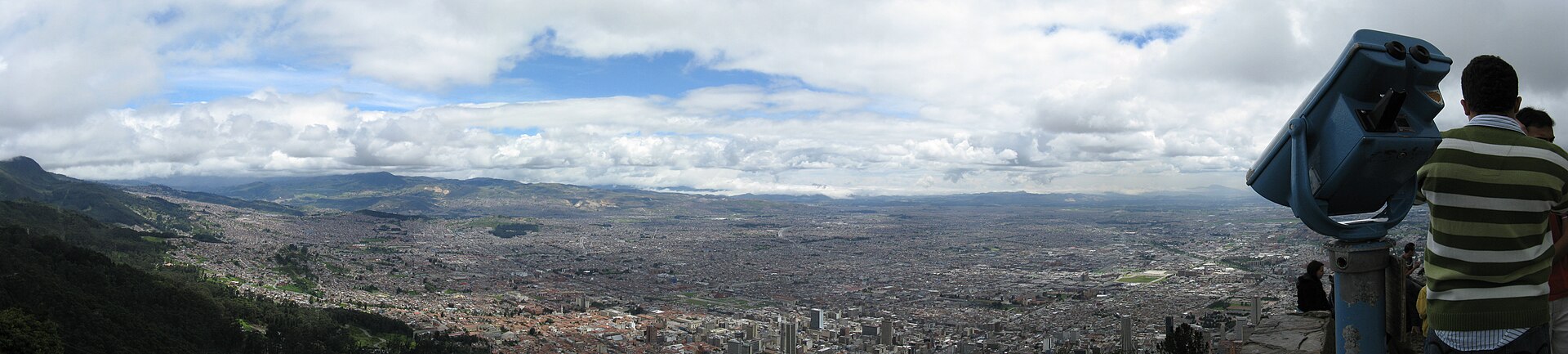
The Colombian capital of Bogotá sits at an altitude of 2,640 meters, making it a city positioned higher than any mountain peak in many European countries. For the first day after arrival, it’s recommended to take it easy, drink plenty of water, and skip alcohol entirely. The city is also currently changing at a rapid pace, as the first metro line is under construction with a planned opening in March 2028. For now, you’ll mainly see a massive viaduct under construction above the important artery Avenida Caracas.
Did you know that foreign tourists with a tourist stamp in their passport don’t pay the 19% VAT in hotels? Just show your passport when checking in and you’ll get a nice discount, at least according to the rules valid for 2026. On the other hand, be prepared that at many attractions, foreign tourists pay higher entrance fees than locals. This applies, for example, to the famous Gold Museum or the botanical garden, where you’ll simply pay a bit more for entry.
Bogotá is often called the city of eternal autumn because daytime temperatures year-round hover around a pleasant 18 to 20 degrees Celsius. At night, however, the mercury drops to around six degrees, and morning fog reigns about 220 days a year. Don’t forget to pack warm layers and a reliable raincoat in your suitcase, as heating in hotel rooms isn’t exactly a standard here.
TL;DR
- Acclimatization is key: Plan only a light schedule for your first day at 2,640 meters altitude and save the trip up Monserrate mountain for later.
- Tourist stamp saves money: Check for the PIP-5 stamp in your passport after arrival, which exempts you from the local nineteen percent tax in hotels.
- Tap water is drinkable: Unlike many other South American cities, in Bogotá you can drink water straight from the tap without worry.
- Sundays belong to cyclists: During the weekly Ciclovía event, over 138 kilometers of streets are closed to cars and the city comes alive with thousands of cyclists and runners.
- Entrance fees cost more: Expect that foreigners pay higher prices at major attractions, so bring enough cash for admissions.
- Golden safety rule: Colombians say “don’t give papaya,” which in practice means don’t flash expensive phones on the street and only use verified ride-hailing apps after dark.
When to Visit Bogotá
Weather in the Colombian metropolis doesn’t follow classic seasons and is governed more by rainfall amounts. The driest months run from December to March, when you’ll also get the most sunshine. January boasts an average of 183 hours of sunshine, making it an ideal time to explore the city. However, you must account for the fact that December and January mean peak domestic holiday season in Colombia. Popular tourist spots tend to be packed with local families and accommodation prices shoot up noticeably.
If you want to avoid the heaviest rains, don’t plan your trip for April to May or October to November. During these months, it rains about thirteen days per month and the clouds hang very low. On the other hand, September is considered low season, when you’ll save on accommodation and avoid the crowds. The El Niño phenomenon is currently playing a major role in the weather, which according to forecasts should bring drier and warmer days at the turn of 2026 and 2027.
Definitely check the Colombian calendar of public holidays before buying your flight tickets. Most of the nineteen holidays are moved to Monday, creating long weekends full of traveling Colombians. Absolutely avoid Holy Week (Semana Santa), which in 2027 falls at the end of March. Over 53,000 pilgrims climb Monserrate mountain in a single day during this time.
Where to Stay in Bogotá
Choosing the right neighborhood is crucial for your stay in Bogotá. The historic La Candelaria district attracts visitors with charming streets and walking distance to major sights. You’ll find the lovely Hotel de la Ópera, which offers a stunning rooftop terrace right above the old town. However, you must keep in mind that after dark these streets empty out quickly and you’ll definitely need a ride-hailing app for evening returns from restaurants.
If you’re looking for an excellent compromise between safety and gastronomy, focus on Chapinero and the adjacent Zona G area. The heritage-protected Four Seasons Casa Medina from 1945 is located here and will charm you with its historic architecture. Right next door in the quiet Quinta Camacho neighborhood sits the boutique Casa Legado with excellent breakfasts and a very family-friendly atmosphere. From this area, you can walk comfortably to the city’s best restaurants.
For travelers seeking vibrant nightlife and maximum sense of security, the northern part of the city around Parque 93 and Zona T fits the bill. The design-forward The Click Clack Hotel Bogotá has a rooftop bar and is steps away from the park and luxury shopping centers. From this area, you’ll be thirty to forty-five minutes by car from the historic monuments, but in the evening you can walk around freely. More detailed tips for choosing the right location can be found in our article Where to Stay in Bogotá.
22 Things to See and Do in Bogotá
Let’s take a look together at the best that the Colombian capital has to offer. Get your comfortable shoes ready, because you’re in for some exploring of history, art, and spectacular views from high mountains.
1. La Candelaria
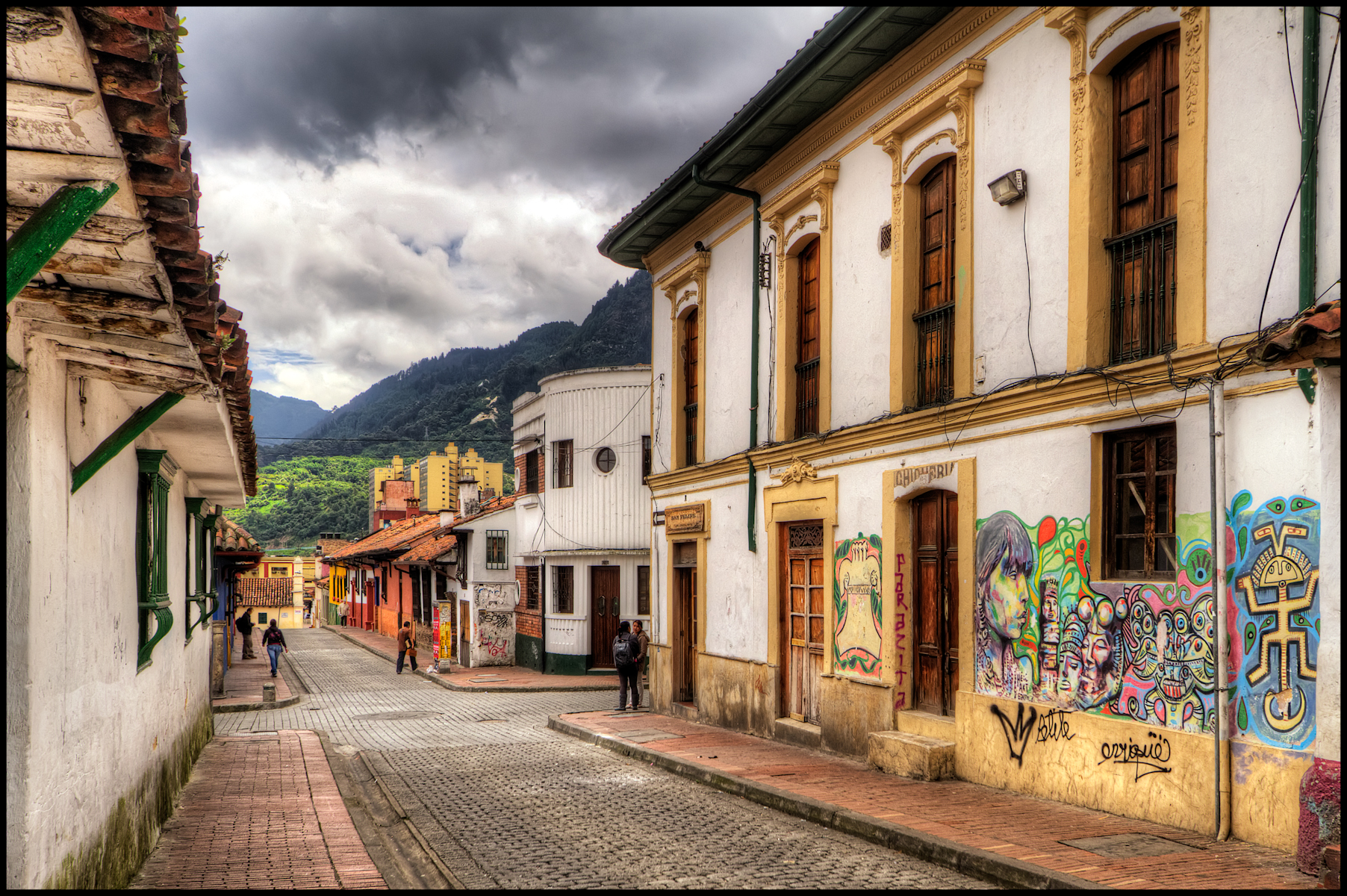
The historic city center stretches between Seventh Street and the busy Avenida Jiménez. This is where Bogotá was officially founded on August 6, 1538 by Spanish conquistador Gonzalo Jiménez de Quesada. Today you’ll find beautiful colonial houses with ochre and blue facades, through which crowds of university students weave. The entire neighborhood has a very bohemian feel and at every turn you’ll encounter elaborate street graffiti or cozy cafés.
During your walk, definitely don’t miss the Centro Cultural Gabriel García Márquez, designed by renowned architect Rogelio Salmona. A short walk away stands the picturesque Museo de Bogotá in Casa Sámano, where you’ll learn plenty of interesting facts about the city’s development and entry is completely free. For orientation, it’s helpful to know that streets marked as Carrera run from north to south, while Calle streets cross the city from east to west.
The British Embassy and local authorities agree that during the day it’s safe here. However, as soon as it gets dark, the entire area south of Seventh Street and toward the mountains empties out very quickly. After nine p.m., it’s therefore strongly recommended to use only Uber or another app directly from the restaurant door to your hotel.
💡 Tip: Mornings are peaceful here and the streets belong only to locals, so plan your colonial facade photography for nine o’clock sharp.
2. Plaza de Bolívar, Cathedral and Palaces of Power
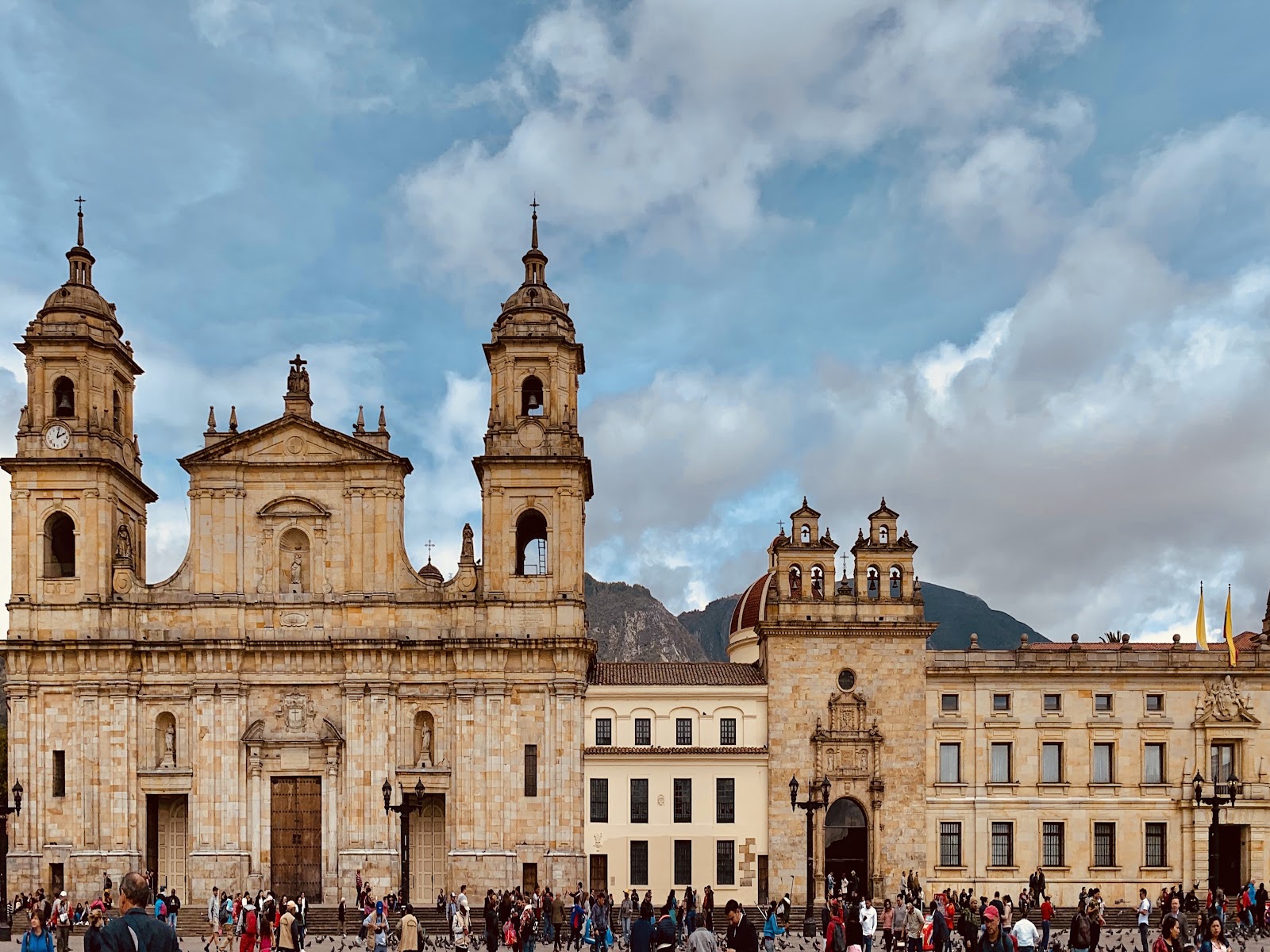
The main square represents the very political and religious heart of all Colombia. In the center stands a statue of Simón Bolívar, which was the very first public monument in the city in 1846. The entire space is surrounded by the most important government buildings, from the city hall through the congress building to the grand Palace of Justice. The Palace of Justice attracts particular attention, as it had to be completely rebuilt after the tragic occupation by guerrilla movement in November 1985.
On the eastern side of the square rises the Catedral Primada with its beautiful neoclassical façade, whose construction took place between 1807 and 1823. This is already the fourth church built on this specific spot and you can look inside completely free of charge. Just around the corner, the Colombian president resides in the Casa de Nariño palace from 1908, which houses richly decorated reception halls and beautiful gardens with a historic astronomical observatory.
If you want to see the presidential palace from the inside, you must reserve a free tour in advance through the official website. Don’t forget to bring your passport and arrive at least twenty minutes before the start due to very strict security checks. On the square itself, you’ll be tempted by vendors selling pigeon food or owners of decorated llamas hoping for a small coin for a photo.
💡 Tip: This crowded square is where the “don’t give papaya” rule applies most of all, so turn your backpack to the front and don’t unnecessarily pull your phone out of your pocket.
3. Museo del Oro
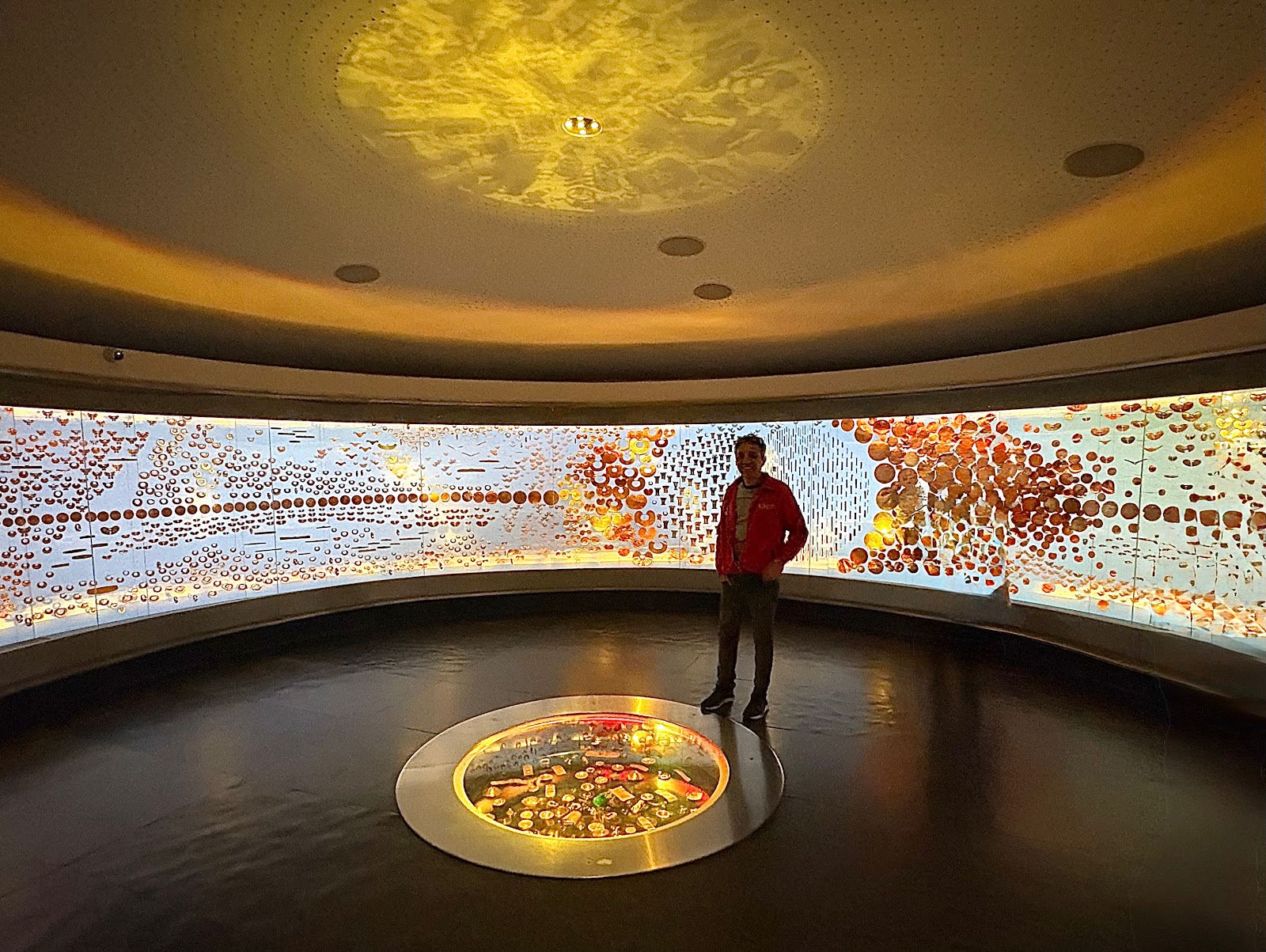
This museum, managed by Colombia’s central bank, houses one of the world’s largest collections of pre-Columbian gold. Display cases glitter with thousands of golden objects, beautiful ceramics, and ancient textiles. The exhibition takes you through the history of ancient cultures for whom gold didn’t represent financial wealth but served primarily for religious and spiritual rituals.
The crown jewel of the entire collection is the so-called Muisca Raft, a famous golden raft discovered in 1969 in a cave near the town of Pasca. This small object dating from between 1295 and 1410 depicts in detail the ritual that gave birth to the legend of the mythical city of El Dorado. During the ceremony, a new tribal chief would be covered in gold dust and throw precious offerings into the lake from a raft.
Foreign visitors pay 21,000 COP for admission, which is around €6, while locals pay just under half that amount. For an additional eight thousand pesos, you can rent a high-quality English audio guide that beautifully connects the context of the various cultures. On Sundays, all visitors get free admission, but the museum is packed to the rafters as a result.
💡 Tip: Plan your visit for Wednesday through Saturday if possible, as the Gold Museum is closed on Mondays, and allow at least two full hours to explore all the halls.
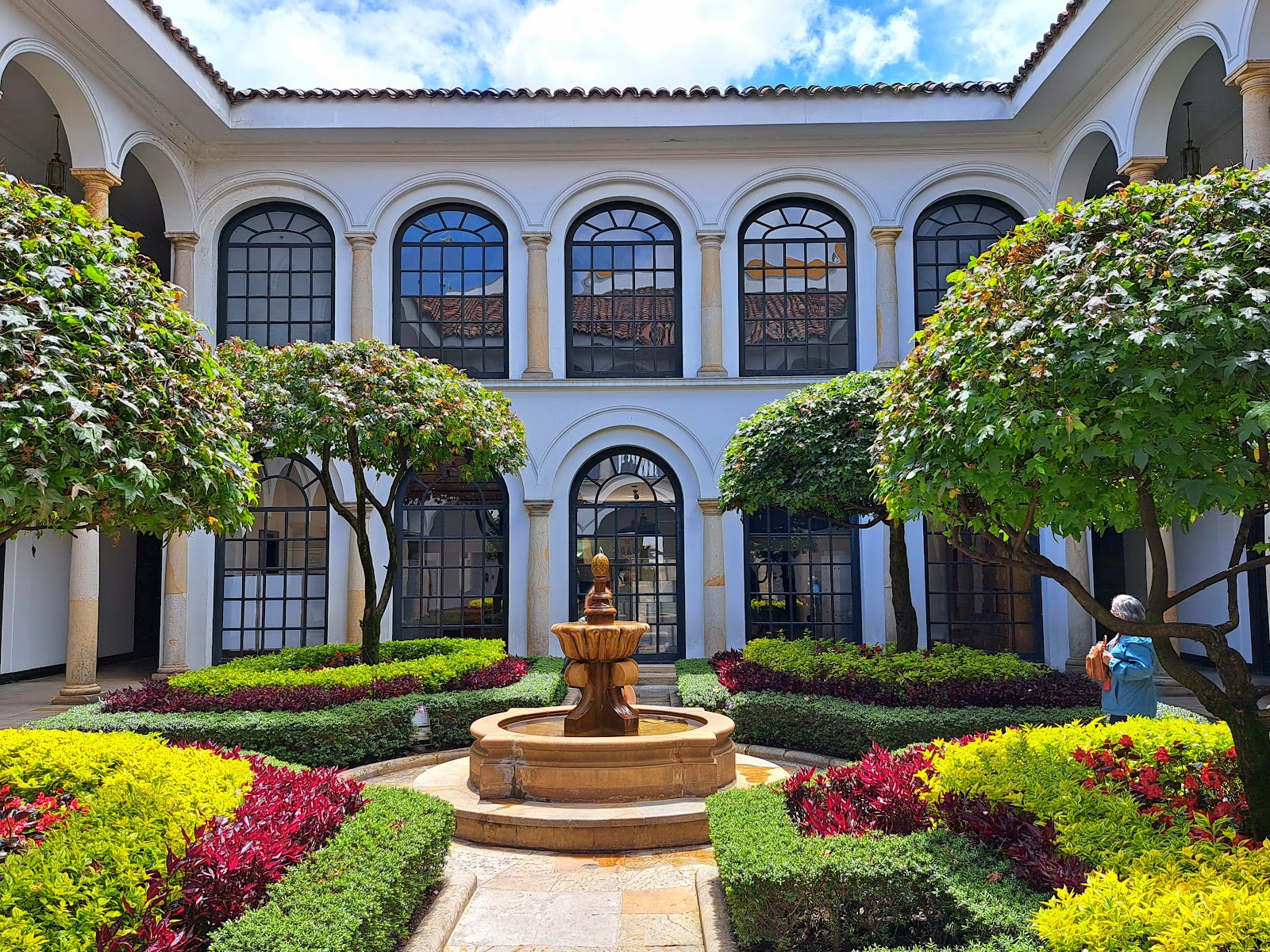
4. Museo Botero and Manzana Cultural
The famous Colombian artist Fernando Botero donated an enormous art collection to the central bank in 2000, creating this unique museum. In a beautiful colonial house with a peaceful inner courtyard hang 123 of his own paintings plus 87 rare works from his private collection. You can admire original canvases by masters like Pablo Picasso, Claude Monet, and Marc Chagall, completely free of charge.
Right next door sits the historic Casa de Moneda, an old mint that has been operating since 1622, where you’ll learn everything about the history of money on the South American continent. The complex is rounded out by the modern MAMU gallery, which focuses on contemporary Colombian and Latin American art. All three institutions form what’s called the Manzana Cultural block and are connected by internal passageways and small gardens.
The greatest advantage of the entire complex is that admission to all three museums is free year-round. For those interested, there’s also a free guided tour in English that starts every Friday, Saturday, and Sunday at three o’clock. Just pay close attention to opening days, as the entire block remains closed to the public on Tuesdays.
💡 Tip: The air-conditioned museums are an ideal refuge on a rainy afternoon, of which you’ll get plenty in Bogotá during April or October.
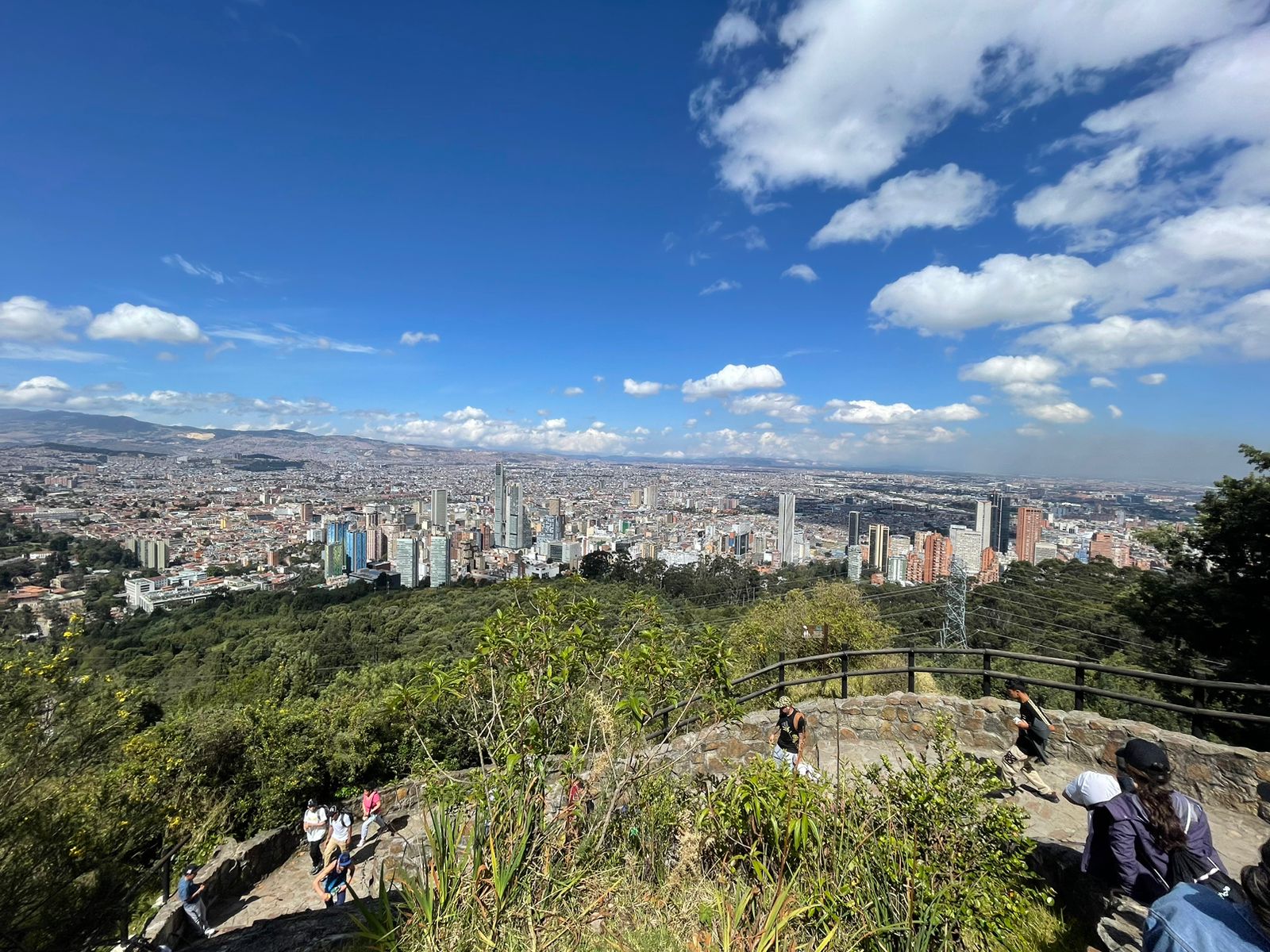
5. Monserrate
This iconic mountain rises to 3,152 metres above sea level and forms the unmistakable backdrop of the entire city. At its very summit stands a white 17th-century church dedicated to the Fallen Christ, where crowds of believers still flock today. You can get to the top either by the historic funicular railway from 1929 or by the classic cable car that’s been operating since the mid-1950s.
A return ticket costs 35,000 COP from Monday to Saturday, which works out to around €10. On Sundays the fare is reduced to 21,000 pesos, but you’ll have to contend with a huge influx of local pilgrims and tourists. For fitter individuals, there’s also a walking trail with more than 1,600 steps that’s open from Wednesday to Monday only during morning and late morning hours.
At the top you’ll find two renowned restaurants, Casa San Isidro and Casa Santa Clara, which offer beautiful sunset views. But food prices here climb really high, and in July 2026, local media covered a major scandal involving extremely overpriced meals. If you want to sit down for coffee here, make sure to carefully check the current menu with prices beforehand.
💡 Tip: For the trip up, choose a weekday morning if possible, as the summit often gets shrouded in thick clouds in the afternoon and you won’t see anything of the city view.
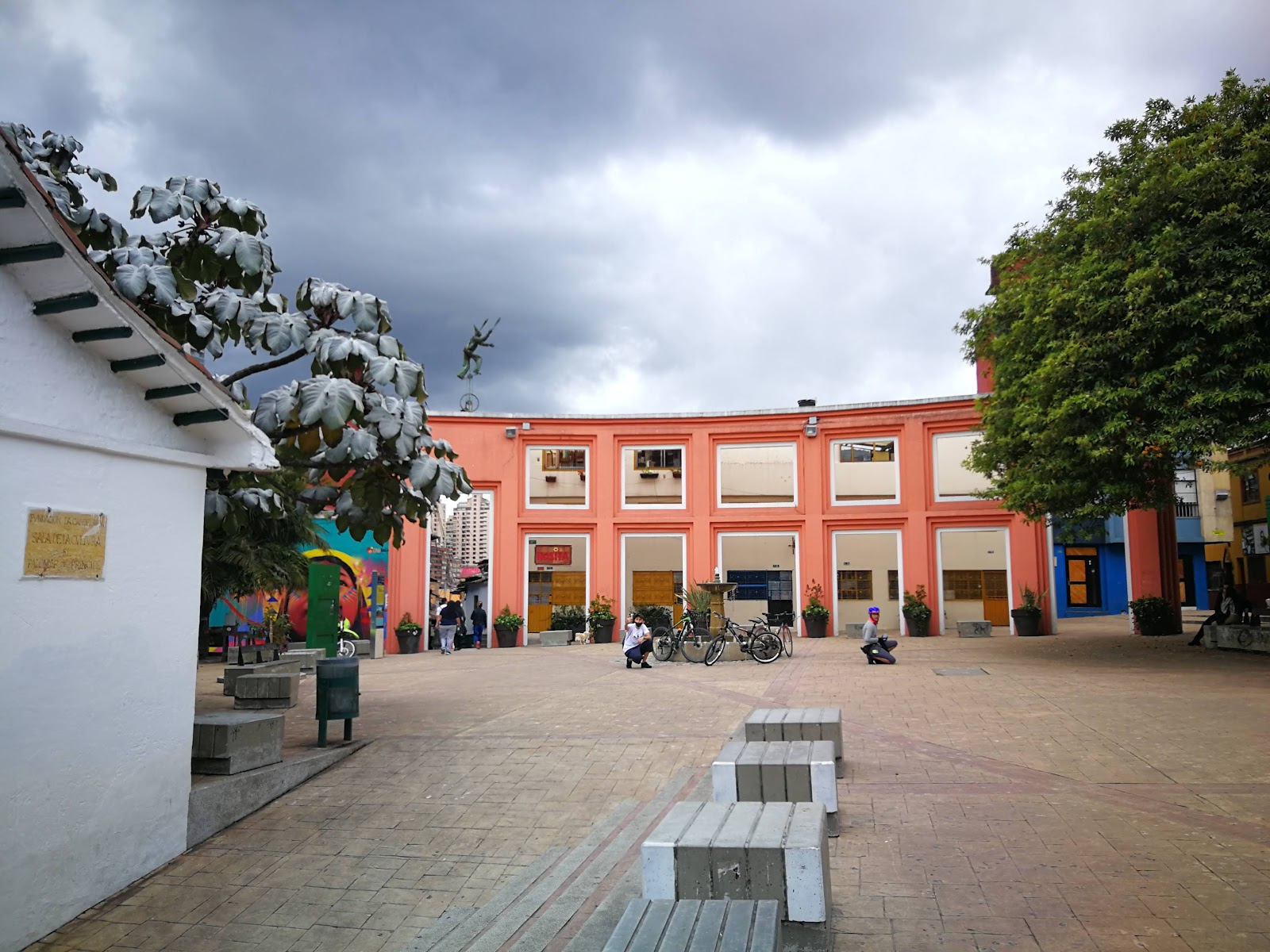
6. Chorro de Quevedo and Graffiti Tour
The small cobblestoned square Plazoleta Chorro de Quevedo feels like it’s from another world, and local tradition marks it as the very first settled spot in Bogotá. Today an incredibly relaxed atmosphere reigns here, with groups of university students sitting on the steps in the evenings and street performers playing. In the adjacent narrow alley Callejón del Embudo, they pour plenty of chicha, a traditional fermented corn drink with a very distinctive flavour.
The area around the square serves as a huge open-air gallery, as Bogotá not only tolerates street art but often subsidises it itself. The best way to understand the stories behind individual murals is the acclaimed Bogotá Graffiti Tour, which departs every day at ten in the morning and two in the afternoon. Guides will take you through the best pieces over two hours and explain the country’s complex political situation.
The meeting point for this popular tour is usually Parque de los Periodistas, and you’ll recognise it by the guides with blue umbrellas. The tour operates on a voluntary contribution basis, and it’s recommended to give the guide at least 60,000 COP or around 17 US dollars. The guides’ English is typically excellent, and you’ll also get plenty of practical tips from them for the days ahead.
💡 Tip: On the square itself, be very careful of fake police officers or seemingly lost tourists asking for directions, as it’s a common trick used by local thieves.
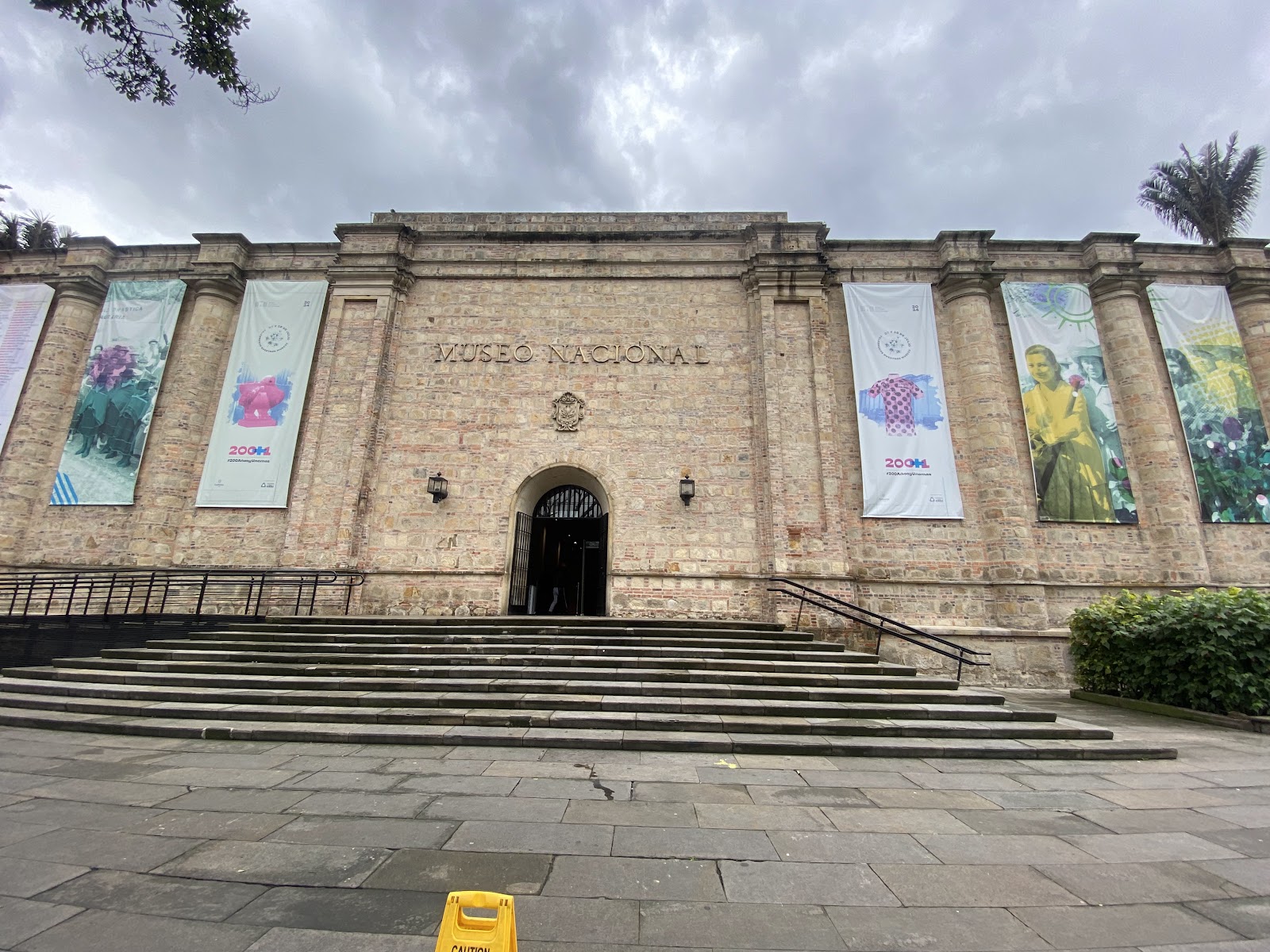
7. Museo Nacional de Colombia
The country’s oldest museum is housed in an impressive building that originally served as the feared Panóptico prison. Architect Thomas Reed designed it so guards could see into all wings from a central point, and since 1948 the old cells have been transformed into unique exhibition halls. Just walking through the long corridors of heavy stone and brick is a tremendous architectural experience in itself.
In seventeen sprawling halls you’ll find around two and a half thousand displayed objects from a total of twenty thousand in the museum’s collection. The exhibition takes you through the country’s history from the first inhabitants through Spanish colonisation to modern art. You can see archaeological finds and personal belongings of famous figures from Colombian history.
Foreigners pay 15,000 COP for admission, but you need to have cash ready as they really don’t accept cards here. Every Wednesday from two to five in the afternoon and also on the last Sunday of the month, you can get in for free. The museum is located near a TransMilenio rapid transit station, and from the historic centre you can easily walk there in about twenty minutes along the main avenue during daylight hours.
💡 Tip: Don’t forget to plan your visit outside of Mondays, when the museum’s gates remain firmly closed to the public, even on national holidays.
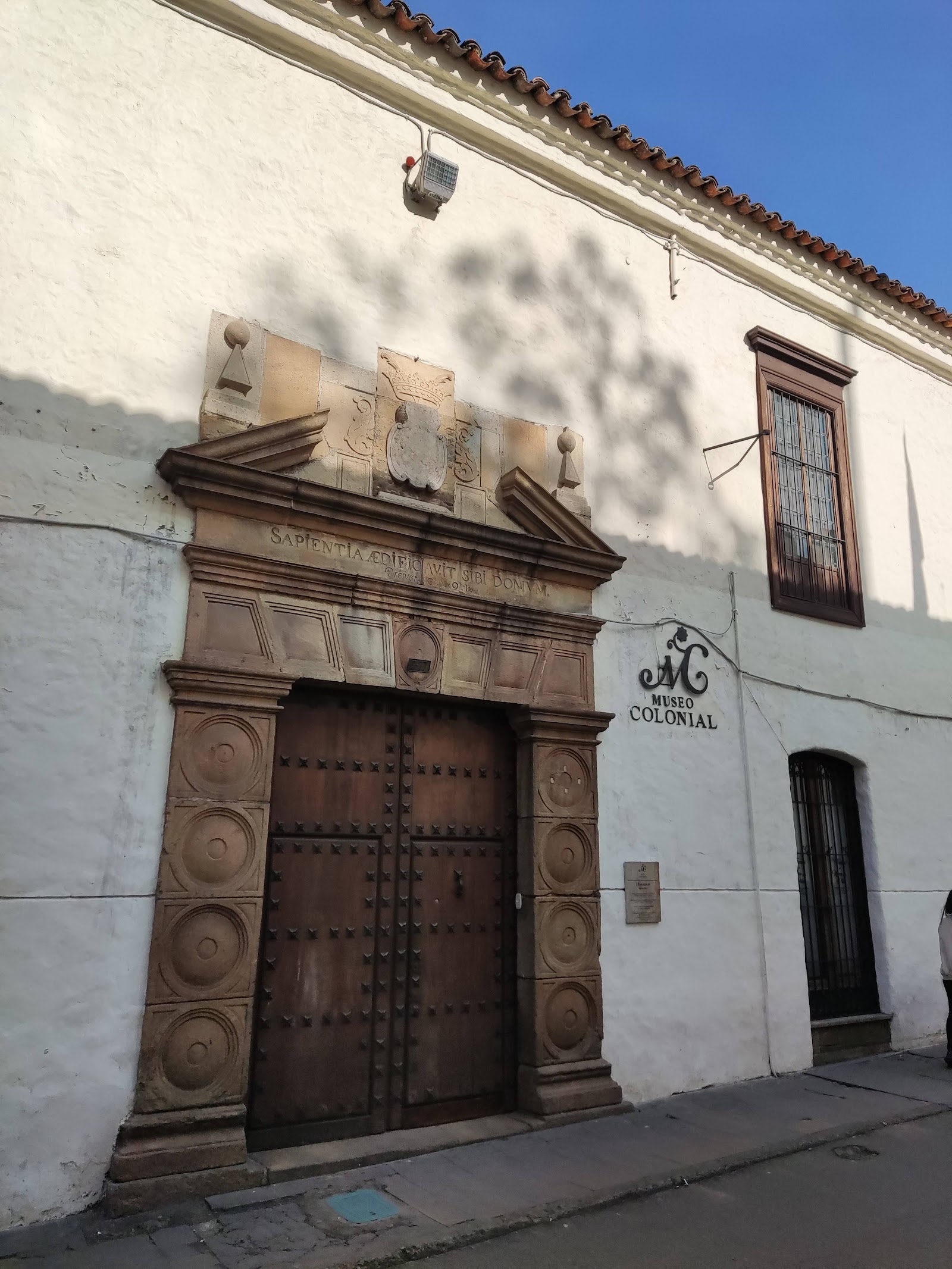
8. Museo Colonial and Museo Santa Clara
A short walk from the main square you’ll find two smaller institutions that instantly transport you several centuries back to the days of Spanish rule. Museo Colonial houses over 1,600 historical objects and is located in a beautiful 17th-century Jesuit house. You can see period furniture, silver liturgical objects, and gorgeous paintings that decorated the lavish residences of the time.
Right opposite the back wing of the presidential palace stands Museo Santa Clara, a former convent church of the Poor Clares from 1647. Its Baroque interior is breathtaking, as the walls from floor to the gilded wooden ceiling are covered with dozens of beautiful paintings. You’ll see works by the most famous Colombian masters such as Gregorio Vásquez de Arce y Ceballos and Baltasar de Figueroa.
Both museums charge foreigners 15,000 COP for admission, and the Monday closing day applies here too. You can often enjoy the golden decoration and magical atmosphere of Santa Clara church almost by yourself, as most tourists unfortunately miss this unassuming spot. The numerous presidential guard also patrol around the entrance, so you’ll feel really safe on this street.
💡 Tip: The interior of Santa Clara church is one of the most photogenic places in all of Bogotá, so bring your camera and take advantage of the free admission on Wednesday afternoons.
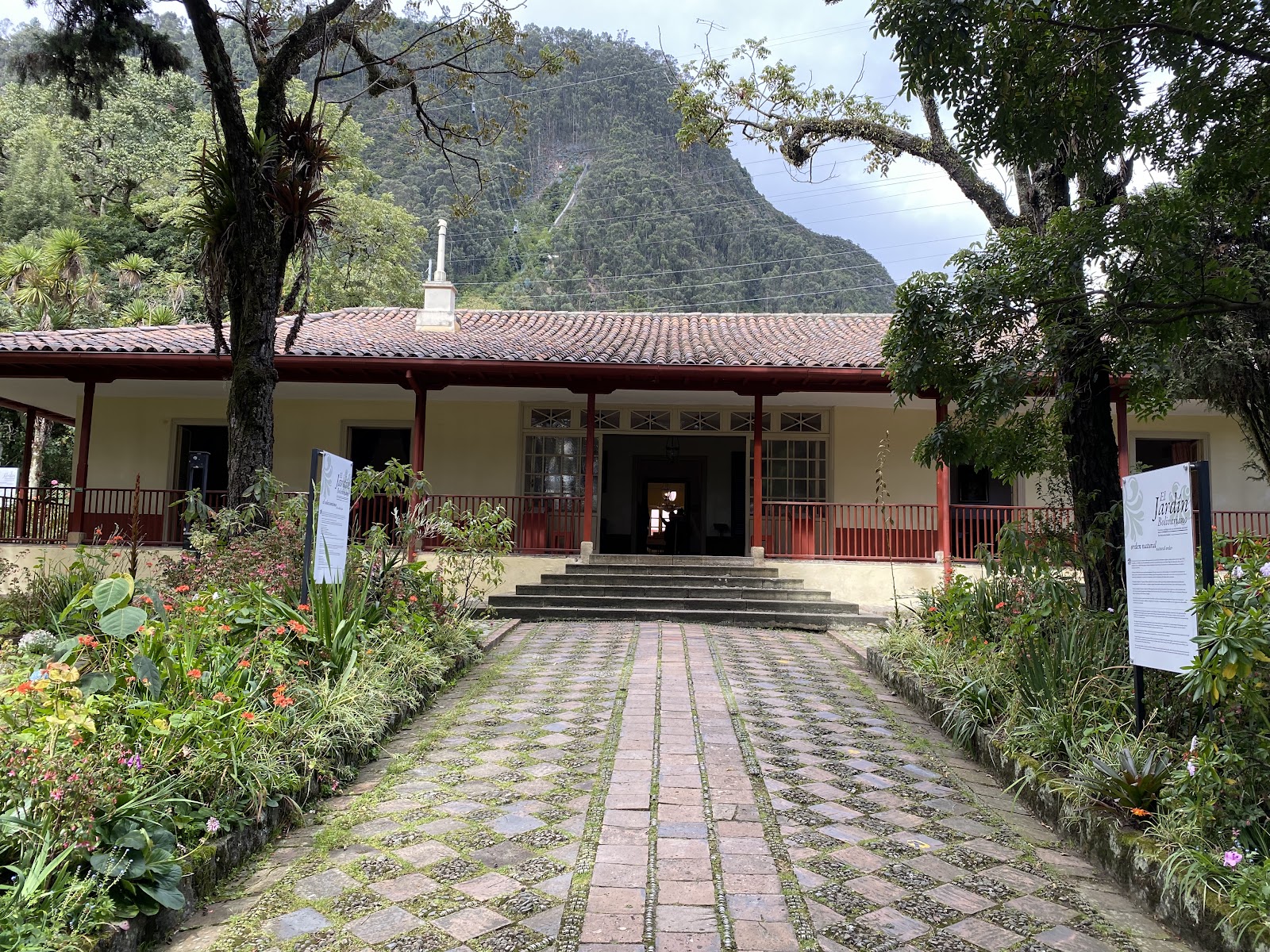
9. Quinta de Bolívar
Nestled directly below the cable car station to Monserrate hill lies a beautiful country house surrounded by mature trees and lush gardens. This stunning estate from 1800 was purchased by the state specifically for Simón Bolívar, who lived here intermittently alongside his partner Manuela Sáenz. The liberator of several South American nations spent the years 1821 and later 1827 to 1830 here before he had to leave for exile.
Today this house functions as a perfectly preserved museum with period interiors, where you’ll get a clear picture of the life of the elite at that time. You can explore Bolívar’s original dining room, reception hall, private garden bathroom, and even his famous military saber. The garden full of fragrant herbs and old trees offers a pleasant escape from the noise of the busy nearby street.
Foreign visitors pay an admission fee of 15,000 COP, and it’s customary to leave a small two-thousand-peso donation for maintenance. Just like other state museums, you can visit for free on Wednesday afternoons or the last Sunday of the month. Here too, be aware of the Monday closing day, which is strictly observed under all circumstances.
💡 Tip: Combine a tour of this historic house with a trip to Monserrate – from the cable car station you can comfortably walk down to the museum gate in less than five minutes.
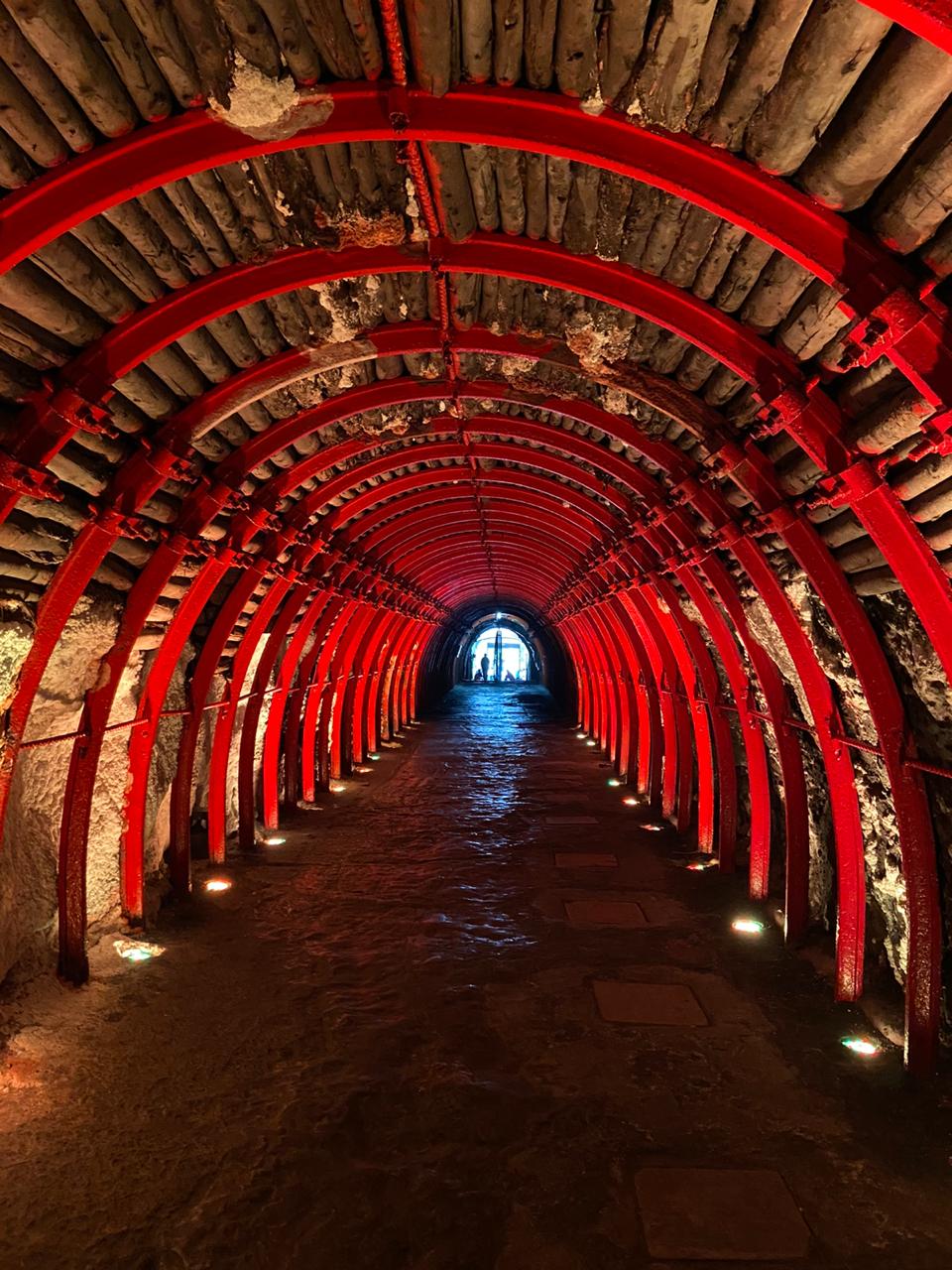
10. Catedral de Sal in Zipaquirá
About fifty kilometers north of the capital lies one of the country’s greatest engineering feats, a massive underground temple carved directly into a salt mine. You reach the spaces 180 meters below the surface through a dark tunnel lined with fourteen beautifully illuminated stations of the cross. The temple itself consists of three enormous naves symbolizing birth, life, and death, and the entire atmosphere feels mystical.
The current form of the mine dates back to 1995, but formally it’s not actually a cathedral because no bishop resides there. To visit the underground spaces, you need to pay 125,000 COP at the foreign visitors’ counter for the Basic package, which includes admission, a working audio guide, and a film screening. A standalone ticket to the underground is currently not sold at all, which since March 2026 is even being investigated by the Colombian consumer protection office.
The cheapest way to get here is by regular bus from the Portal del Norte terminal for about 10,500 COP, the journey takes about forty-five minutes and from the stop you’ll walk another fifteen minutes. On weekends and holidays, there’s also a romantic but significantly more expensive ride on the historic tourist train Tren Turístico de la Sabana directly from central Bogotá. The underground maintains a constant temperature of around fourteen degrees, so definitely bring a light jacket.
💡 Tip: Don’t let yourself be talked into buying the more expensive Standard or Premium packages at the ticket counter – the cheapest Basic option is perfectly adequate for the full experience.
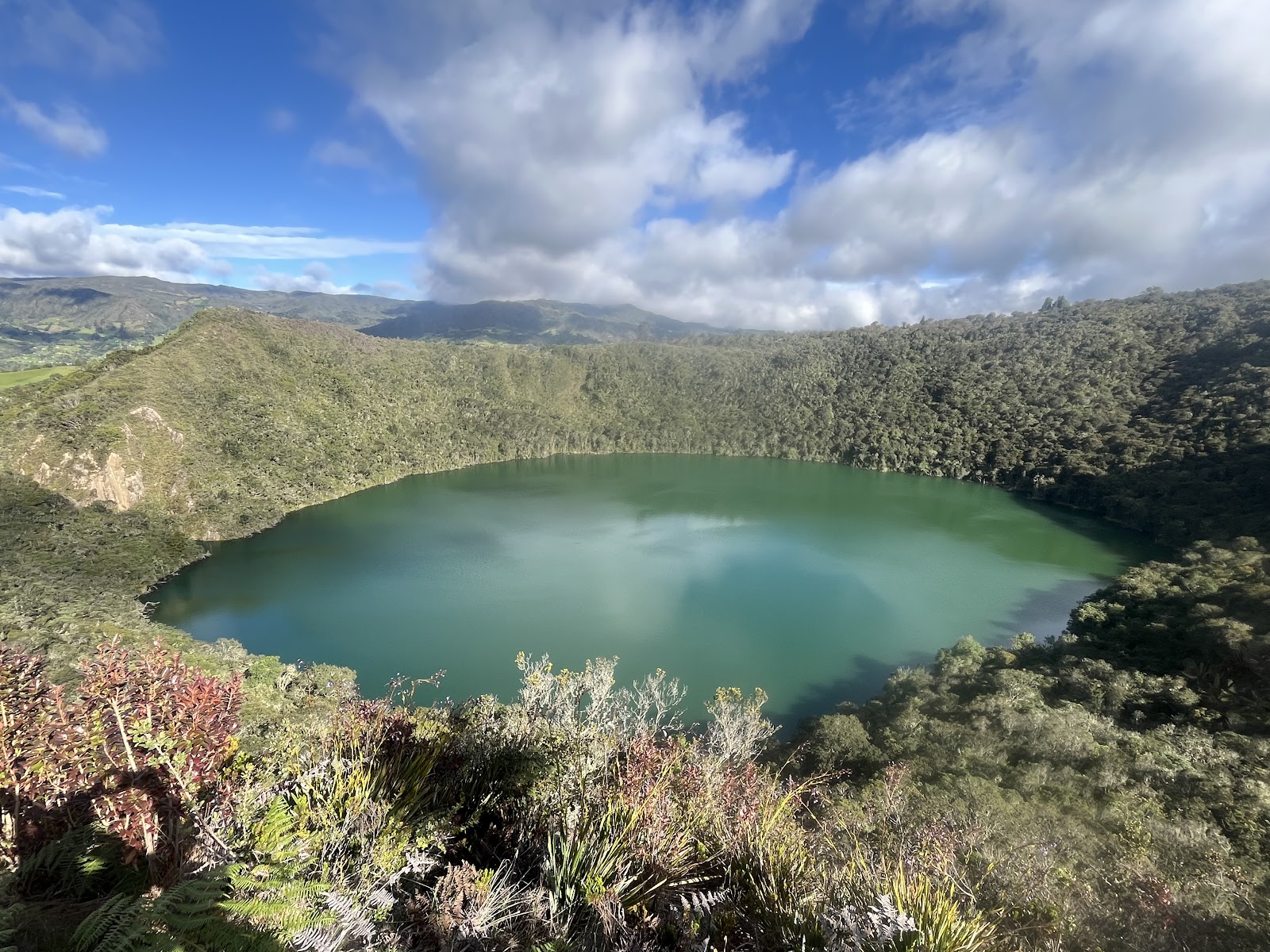
11. Laguna de Guatavita
At an altitude of around three thousand meters lies a perfectly circular lake that gave birth to the world-famous legend of the mythical land of El Dorado. It was into these emerald-green waters that the chiefs of the Muisca tribe threw gold offerings for their gods. Today this sacred site is managed by a regional nature protection agency and visits are only possible in a group with an assigned local guide.
Foreign visitors pay according to the current 2026 price list an admission fee of 31,000 COP, which you must have ready in exact cash, because the signal for payment terminals doesn’t work here at all. The tour takes about two hours, during which you’ll climb a forest trail to the very edge of the crater. Guides depart approximately every fifteen minutes and the last group sets out at three o’clock sharp in the afternoon.
Getting there on your own requires some patience, as you need to catch a bus from the Salitre terminal to Guatavita for about 12,000 pesos and then find local transport. A far more convenient option is to purchase an organized tour directly from Bogotá, which often combines the lake with the salt cathedral. The lake is regularly closed on the first working day of the week, which usually falls on Monday.
💡 Tip: The weather at three thousand meters can be quite treacherous and windy, so pack a warm sweater and waterproof jacket in your backpack even if you have a clear sunny morning.
12. Usaquén and Sunday Flea Market
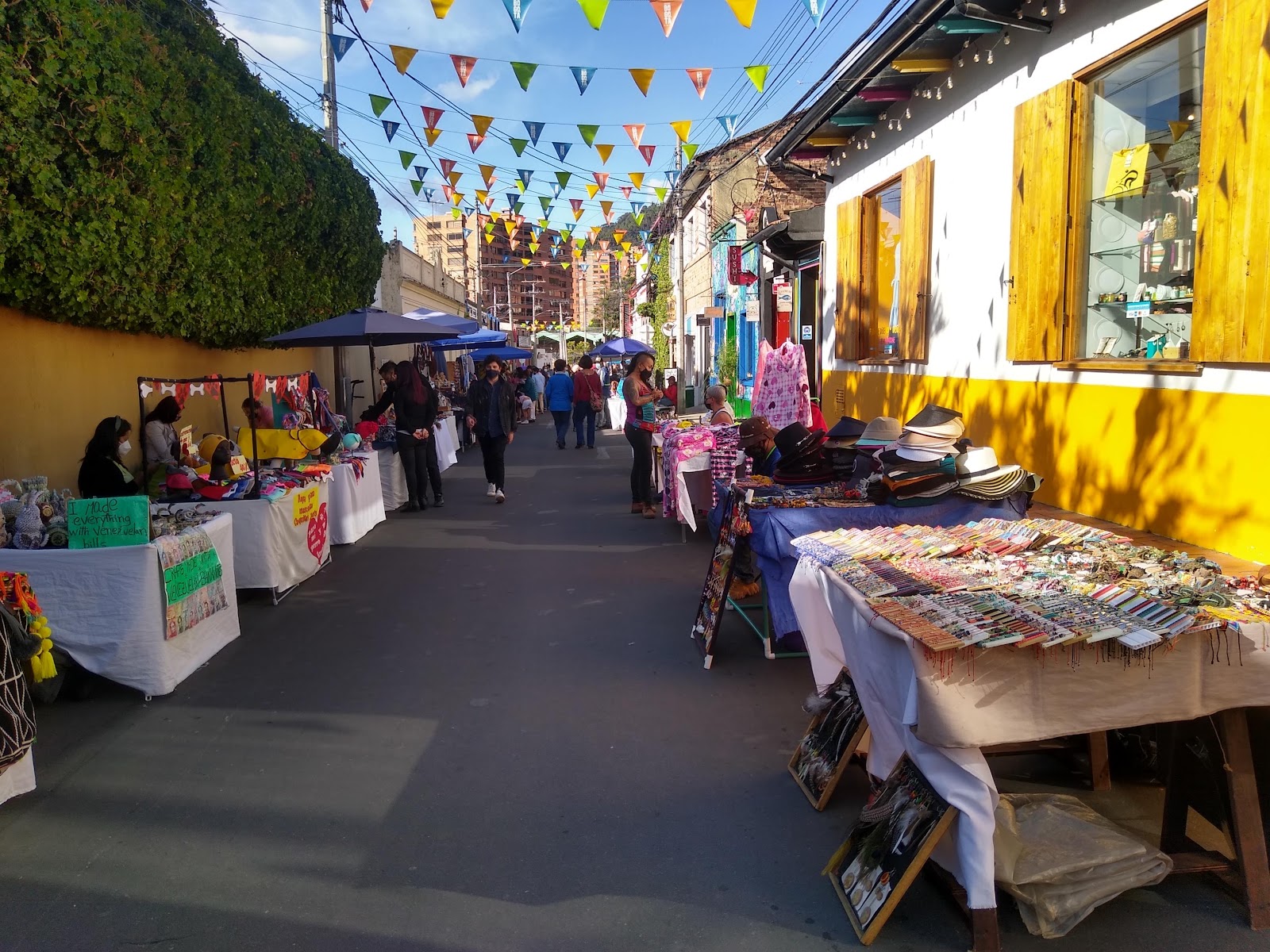
On the northern edge of the capital lies the charming Usaquén neighborhood, which once functioned as an independent peaceful village before being swallowed by the expanding city in 1954. Its colonial square with the pretty white Santa Bárbara church offers a safe and quiet refuge from the noise of the central streets. The surrounding lanes are lined with first-class restaurants, and right on the square you’ll find the Catación Pública coffee laboratory with specialty coffee.
The biggest draw of this neighborhood is the popular Sunday flea market Mercado de las Pulgas, which comes alive from ten in the morning until five in the afternoon. At several scattered stalls, hundreds of vendors offer beautiful handmade crafts, leather bags, wool ponchos, and fresh refreshments. The atmosphere is enhanced by street musicians and the aroma of freshly roasted coffee wafting from surrounding establishments.
If you get hungry, head to the Asian chain WOK, which delights with an excellent separate section featuring specialties just for vegetarians. A short walk from the square also stands the Hacienda Santa Bárbara shopping center, which architects have very sensitively integrated with an old colonial estate. Although this is one of the safest areas in the city, still watch your personal belongings for pickpockets in the Sunday market crowds.
💡 Tip: Plan your Sunday smartly and spend the morning on the closed streets during Ciclovía, shop for souvenirs in Usaquén in the afternoon, and head to Monserrate in the evening with the cheaper ticket.
13. Plaza de Mercado de Paloquemao
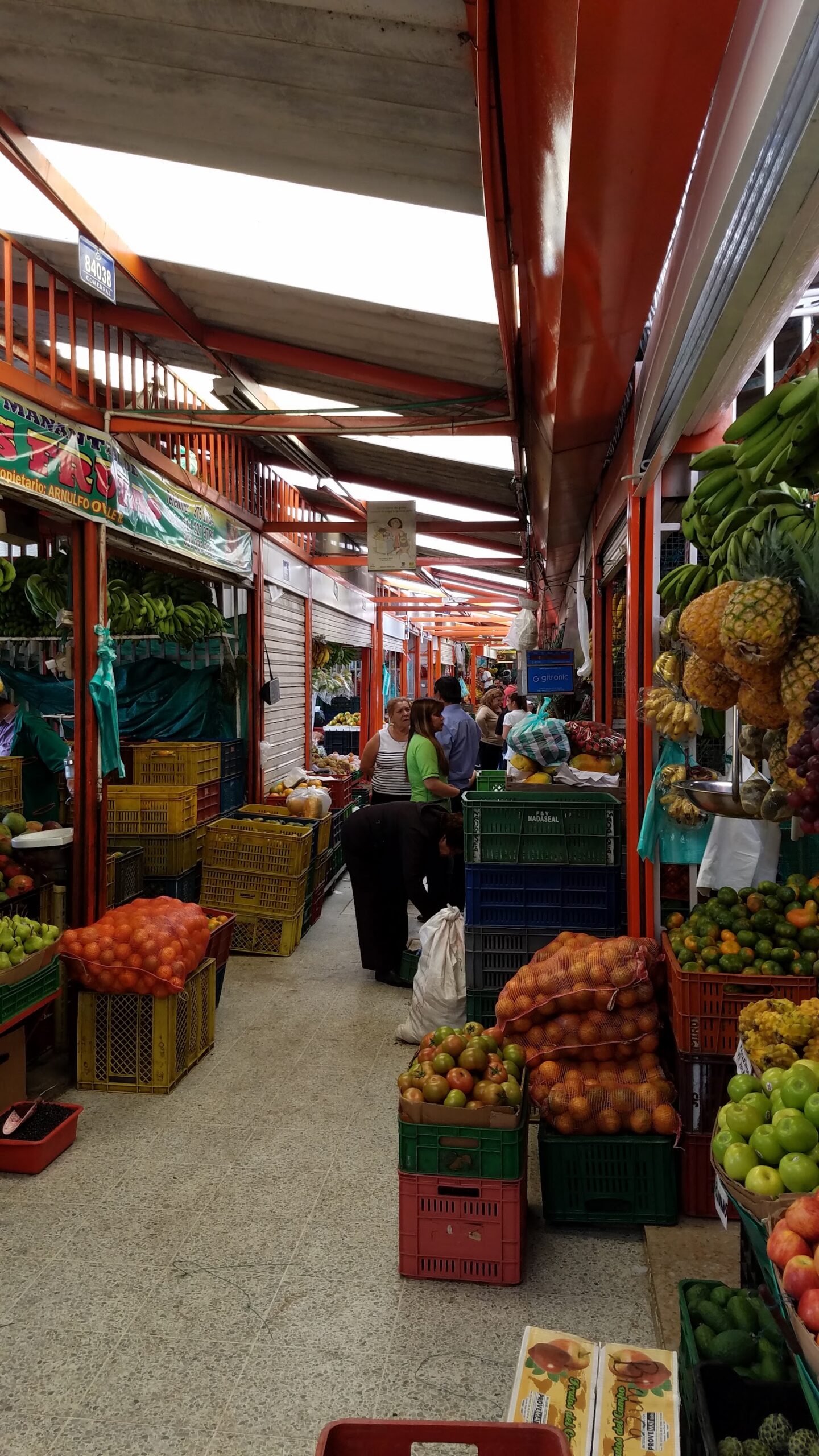
Want to see, smell, and taste the most exotic fruits that Colombian nature has to offer? Then head to the huge central Paloquemao market, which opens its gates every day from the early morning hours. In the endless aisles you’ll encounter fruit you’ve probably never heard of before, whether it’s sour lulo, spiky guanábana, sweet pitahaya, or refreshing uchuvas.
The best thing about the whole market is that vendors often give you a small piece to taste and will gladly prepare you a cheap and fresh juice from any fruit. Besides fruit and vegetables, there’s also a huge flower hall where beautiful bunches of export Colombian roses and orchids are sold. Inside there are also plenty of small eateries that cook mainly hearty meat broths and dishes that are quite heavy for most international visitors.
The market is located in a busier and less polished part of the city near Calle 19, so definitely don’t walk there with a map in your hand. The safest choice is to order an Uber directly to the main entrance and tuck your phone deep into your pocket right after getting out. On Sundays it quiets down quickly after noon, so plan your visit for weekday mornings right after breakfast instead.
💡 Tip: Head out around seven or eight in the morning, when the market pulses with the most life and for vegetarians there’s the smell of freshly baked cheese rolls almojábanas or sweet corn cakes arepa de choclo.
14. Ciclovía
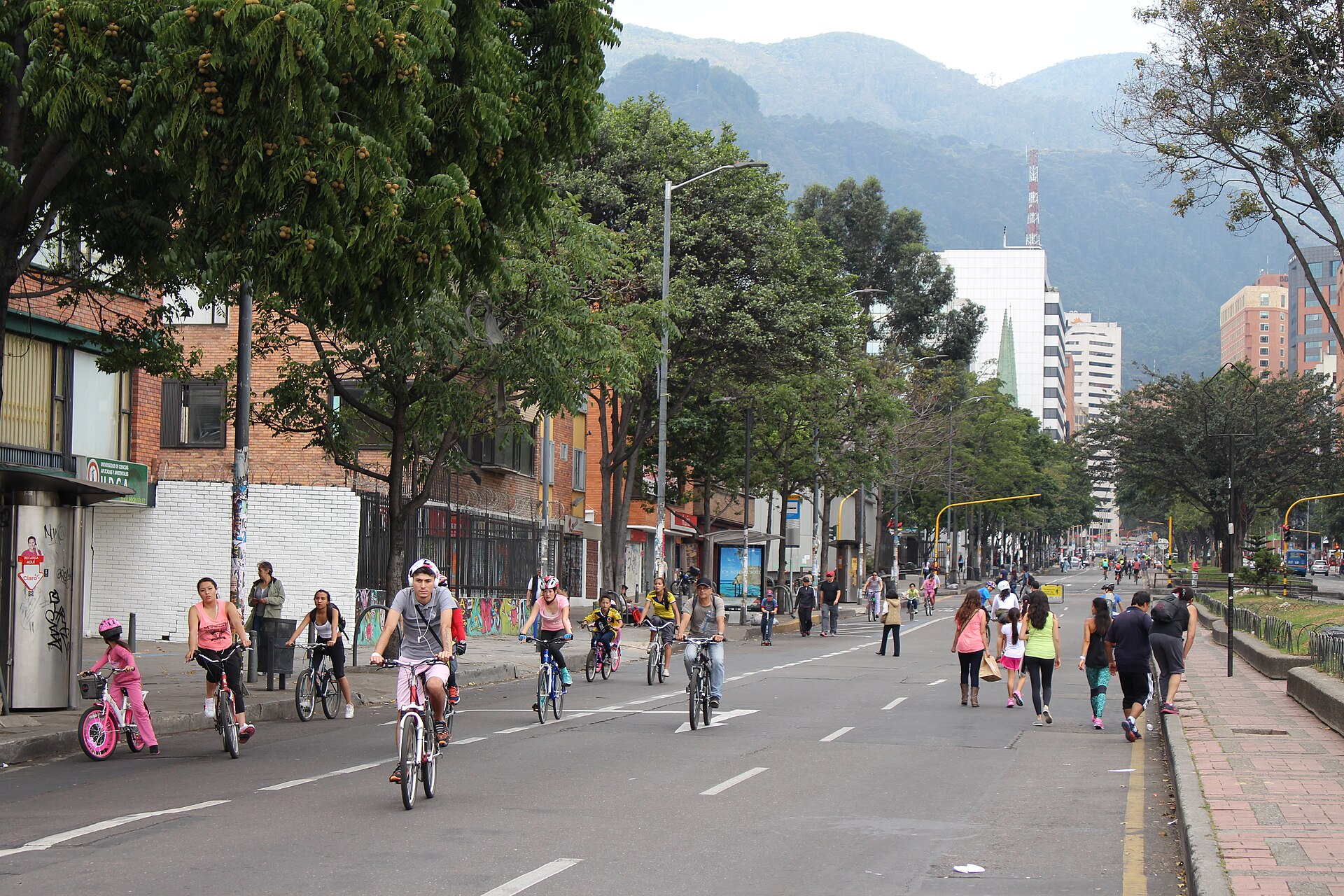
Every Sunday and public holiday, a small miracle happens in Bogotá when approximately 140 kilometers of main traffic arteries are completely closed to cars from seven in the morning until two in the afternoon. Over a million residents head out into the streets on bicycles, inline skates, with strollers, or simply on foot. For a few hours, the city transforms into a massive safe park full of movement and good vibes.
This is the oldest regular event of its kind in the world, running without interruption since 1974. The main corridor is the famous seventh street Carrera 7, which connects the historic Candelaria with the northern neighborhoods of Chapinero and Usaquén. Along the route, events called Recreovía are regularly held—mass zumba and aerobics sessions in adjacent parks that you can join without hesitation.
You can easily rent a bike from one of the many specialized rental shops or directly through your accommodation’s reception. At several points along the route, including intersections with major roads, volunteers direct traffic, so crossings are smooth and safe even for small children. Just be aware that due to the closures, getting to the airport by taxi on Sunday morning takes significantly longer and becomes more complicated.
💡 Tip: Even if you don’t rent a bike, definitely go for at least a walk along the main Séptima avenue, because it’s a unique chance to see this noisy street in peace.
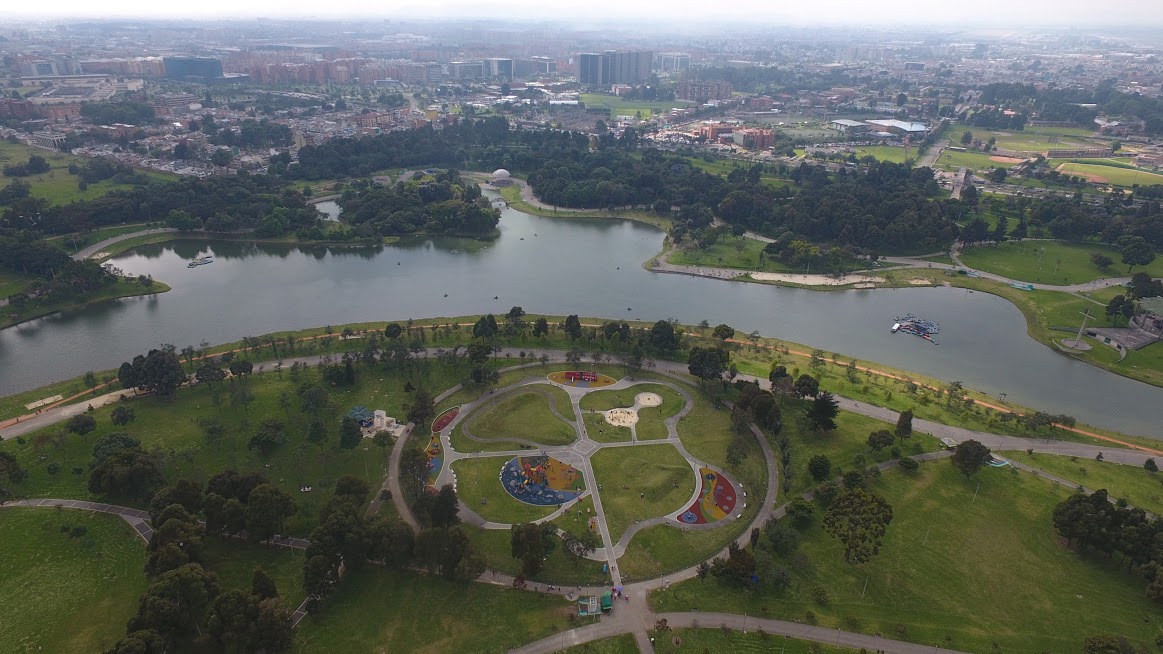
15. Parque Simón Bolívar and Botanical Garden
While exploring the city, sooner or later you’ll stumble upon the giant complex of central parks dominated by Parque Metropolitano Simón Bolívar with an impressive area of nearly 400 hectares. This green lung of Bogotá offers a huge lake with boats, cycling paths, and open spaces that host gigantic music festivals like Rock al Parque. Right next door, you can admire the beautiful brick building of the Virgilio Barco public library designed by architect Rogelio Salmona.
Within walking distance lies the fantastic botanical garden Jardín Botánico José Celestino Mutis, founded back in 1955. On an area of just under twenty hectares, you’ll see over nine hundred species of plants from different climate zones of Colombia. Foreigners pay 38,000 COP for entrance including a tour of the beautiful Tropicario greenhouse, while locals get significantly cheaper tickets.
The modern greenhouse complex Tropicario represents the biggest attraction of the entire botanical garden. You’ll walk through it from hot tropical rainforests to high-altitude ecosystems full of curious plants called frailejones. Like many museums, the botanical garden is closed on Mondays and typically opens from eight in the morning until five in the afternoon.
💡 Tip: A visit to the cold greenhouse with highland páramo vegetation serves as excellent preparation before a potential trip to Chingaza National Park, where you’ll see these rare plants in the wild.
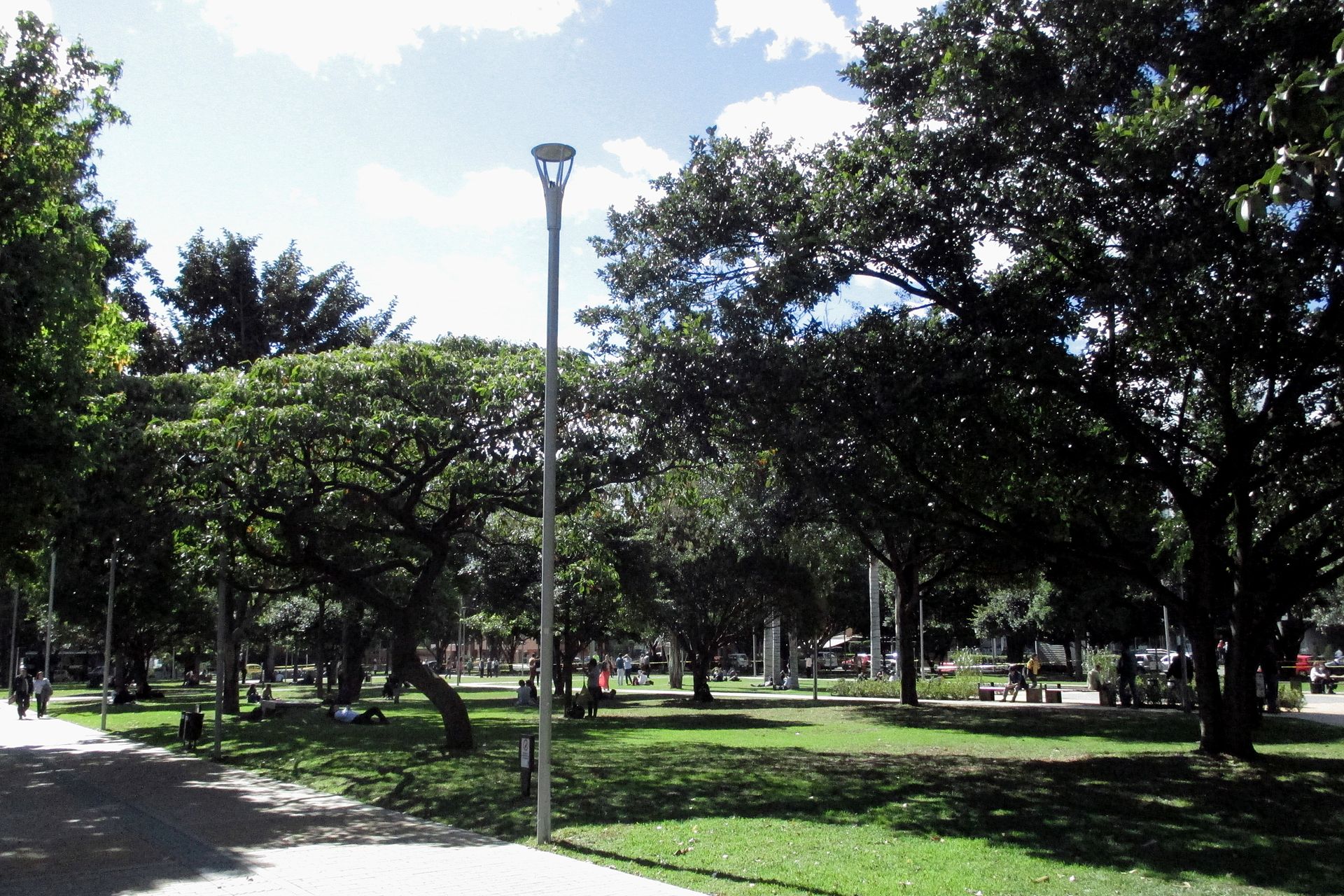
16. Zona T, Zona Rosa and Parque de la 93
If you’re looking for a safe haven for an evening out, the modern neighborhoods in the north of the city definitely won’t disappoint. The heart of this area is the so-called Zona T, an exclusive pedestrian zone shaped like the letter T, lined with the most expensive boutiques, bars, and loud nightclubs. You’ll also find the luxury shopping centers Andino and El Retiro, where Bogotá’s elite go shopping.
A bit further north lies the quieter Parque de la 93, a neat park surrounded by glass-fronted cafés and top-tier restaurants. You’ll find the excellent Azahar Coffee or the popular branch of the pancake house Crepes & Waffles, which became famous for exclusively employing women breadwinners. In the immediate vicinity stretches the long green strip of Parque El Virrey, a favorite spot for morning runners and dog walkers.
Locals and tourists agree that this is an area where you’ll feel safest after dark, though prices here reach standard European levels. Even here, however, isolated cases of drugging with a substance called scopolamine have occurred in luxury bars. Therefore, the clear rule applies: never take your eyes off your drink and only go on dating app meetups to public and well-lit establishments.
💡 Tip: Always order your ride back to the hotel through the verified Uber or Cabify app, and under no circumstances hail a taxi directly from the street, even in these luxury neighborhoods.
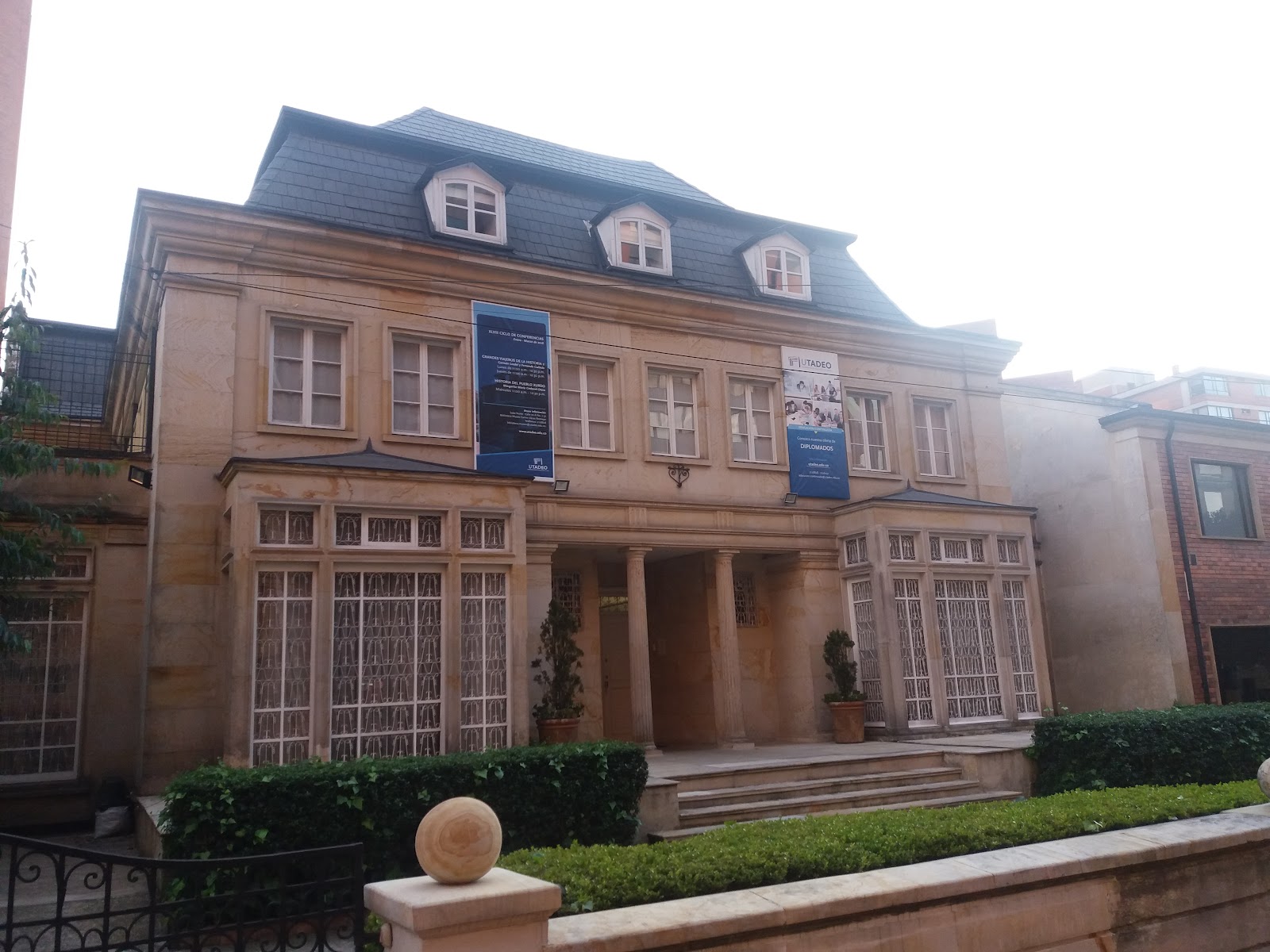
17. Zona G and Quinta Camacho
All roads for lovers of good food lead to the Chapinero neighborhood, specifically to the so-called Zona G, where the letter G naturally stands for gourmet. You’ll find culinary stars here like El Chato restaurant, which topped the Latin America’s 50 Best ranking in 2025. Another standout is the tasting venue Leo by chef Leonor Espinosa or the excellent Mini-Mal restaurant, where they masterfully conjure with local Colombian ingredients.
Besides luxury dinners, this area is also devoted to the best coffee beans from across the country. You can absorb caffeine in the designer spaces of cafés like Casa Café Cultor, Libertario, or Amor Perfecto, where baristas will gladly explain the differences between individual regions. Around the corner lies the picturesque section called Quinta Camacho, full of brick “English” cottages from the 1940s.
In prestigious establishments with tasting menus, a completely meat-free option can be arranged with advance notice, but you must report it when making the table reservation. The entire area east of the seventh street is pleasant for walks and relatively safe. However, it’s better to avoid the neglected strip along the noisy Avenida Caracas, where the sense of security drops rapidly after dark.
💡 Tip: In the morning, head for breakfast to the renowned MASA 70 bakery, which offers excellent crispy pastries and vegetarian treats, but be prepared that it gets really crowded on weekends.
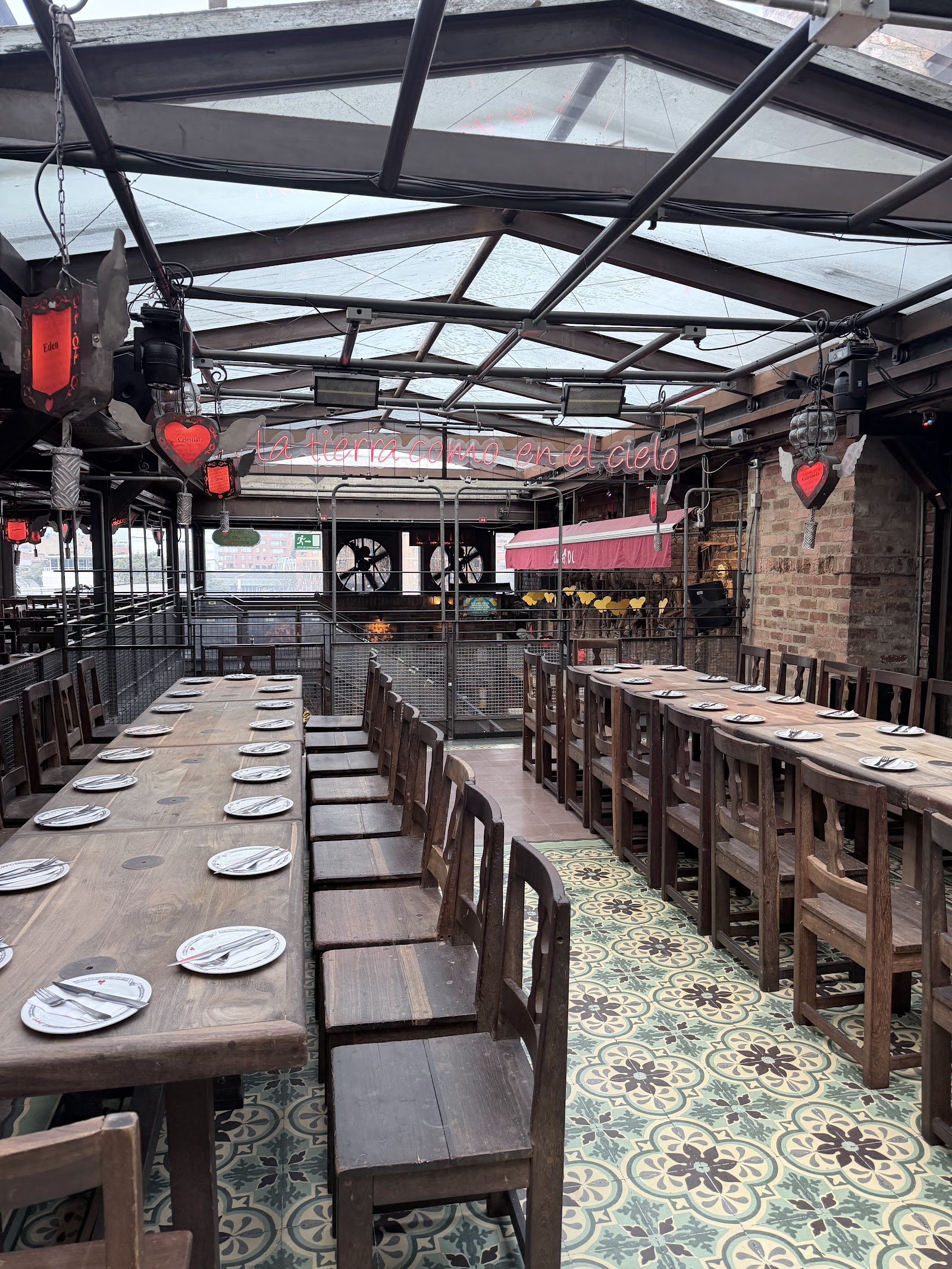
18. Andrés Carne de Res
This Colombian phenomenon balances somewhere on the border between giant restaurant, wild disco, and slightly surreal amusement park. The original branch is located in the town of Chía about twenty-five kilometers north of Bogotá and has been operating since 1982. The venue holds thousands of guests and has walls and ceilings covered with kitschy decorations, flashing lights, and all sorts of bizarre objects.
The main star of the entire menu is beef meat specialties—after all, the word “res” is right there in the establishment’s name. Besides those, they make huge corn arepas, fried plantain patacones, and plenty of traditional sauces. The atmosphere is electrifying, people routinely dance right on the tables, and loud live music or local DJs play throughout.
Opinions about this place are fundamentally divided, because while some consider it the best party experience of their lives, others complain about pretty average food at extremely high prices. For those who don’t want to travel all the way out of town, there’s a four-story city branch Andrés D.C. right in the luxury Zona T neighborhood, where you’ll experience a very similar carnival circus.
💡 Tip: If you decide on a wilder evening at the original Chía branch, definitely reserve a table for Friday or Saturday in advance and arrange your ride back to the city through a reliable app.
19. La Macarena, MAMBO and Torre Colpatria
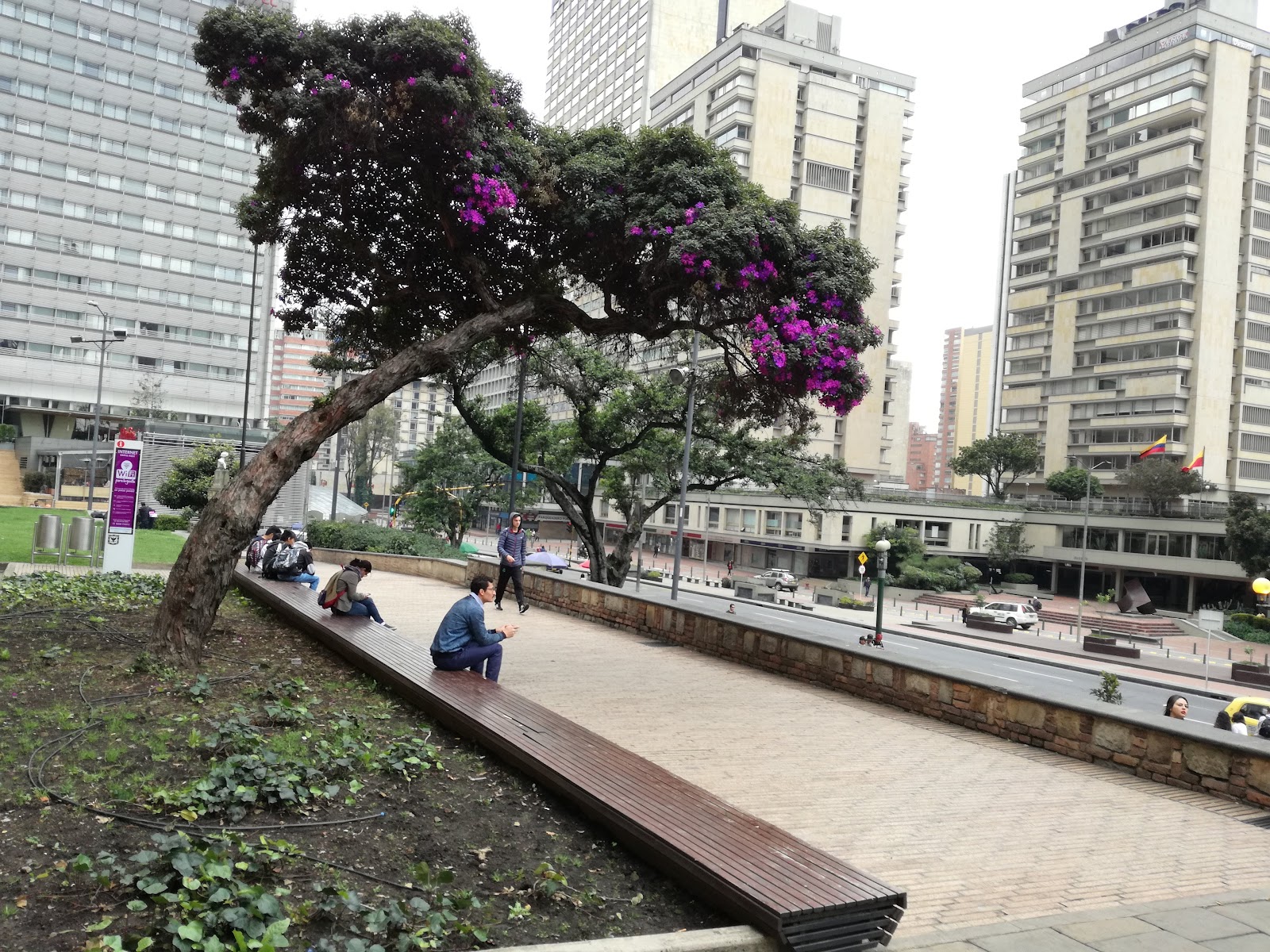
Between the historic center and the modern neighborhoods nestles the bohemian La Macarena district, which hides many small art galleries and independent restaurants. Its landmark is the famous Plaza de Mercado La Perseverancia market, where people go for the best traditional soups in all of Bogotá. A short distance away sits the Museum of Modern Art MAMBO, whose beautiful brick building was designed in the 1980s by architect Rogelio Salmona.
The MAMBO museum is usually open Tuesday through Sunday, and entrance for foreigners ranges between 25,000 and 30,000 COP, with last tickets sold as early as quarter past five. The main attraction of this area, however, is the Torre Colpatria skyscraper at 196 meters tall, which held the title of Colombia’s tallest building until 2016. At its very top sits a fantastic open viewpoint.
The observation deck’s opening hours are quite limited, though, and you can only access it Thursday to Friday between five and nine in the evening, Saturday afternoon, and Sunday during the day. It’s better to always verify the current entrance price directly on site. In the immediate vicinity of the skyscraper, you’ll also find the reconstructed Bogotá planetarium from 1969, which offers interesting projections about the starry sky.
💡 Tip: If you head to the Colpatria tower on Friday right at six o’clock in the evening, you’ll catch the beautiful transition between day and night and see how the Monserrate church on the mountain gradually lights up over the city.
20. Teatro Colón and Old Town Churches
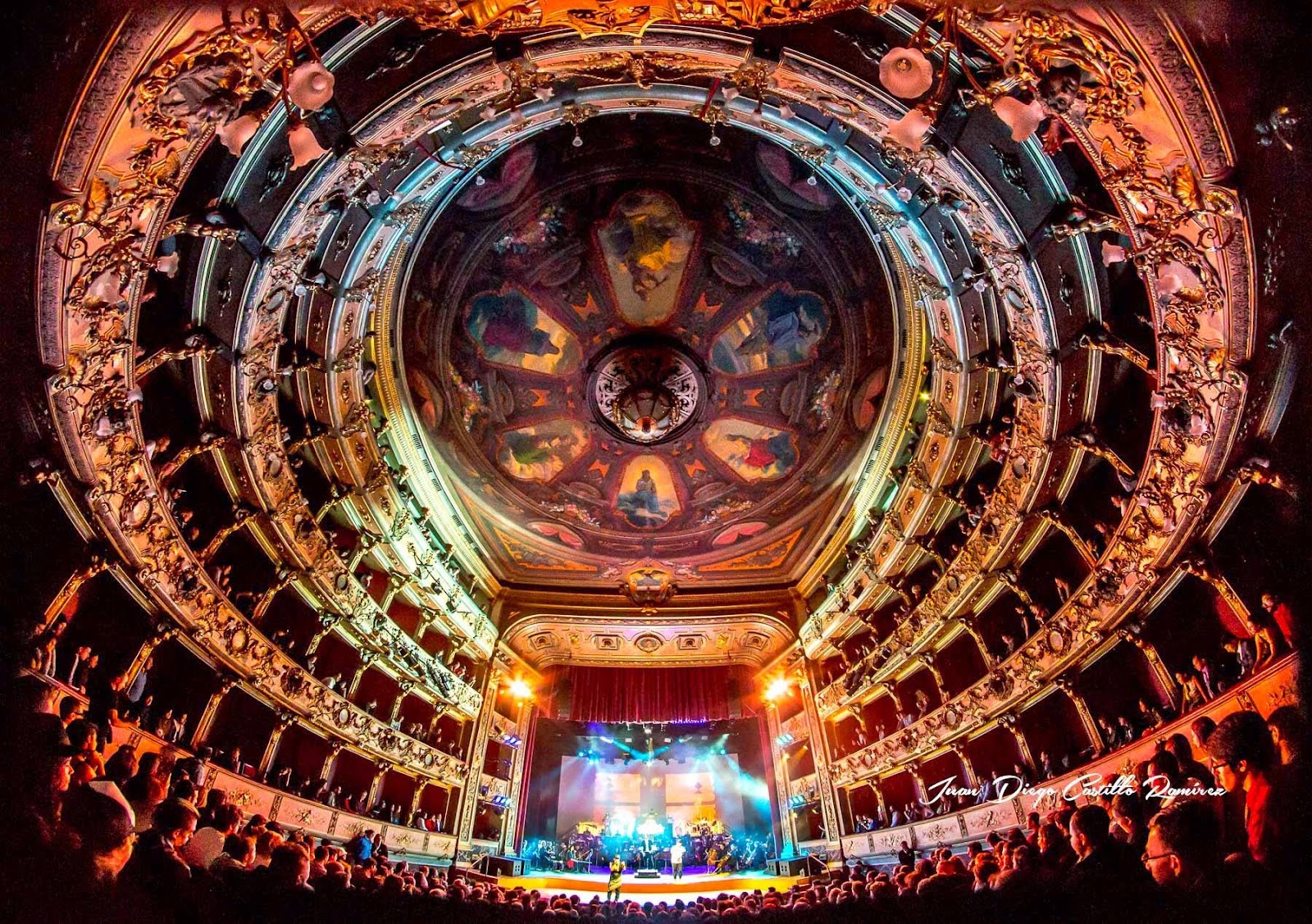
Bogotá hides beautiful architectural treasures right in the heart of the old town. The most stunning is undoubtedly the national theater Teatro Colón, designed by Italian architect Pietro Cantini, which opened in October 1892 to mark the four-hundredth anniversary of the discovery of America. It was in these magnificent halls seating nine hundred spectators that the revised peace agreement with the FARC rebel group was ceremoniously signed in November 2016.
The theater also offers guided tours, but their schedules and prices change very frequently, so definitely check the official website teatrocolon.gov.co beforehand. Just a short walk from the theater, you’ll come across the incredibly striking Santuario Nuestra Señora del Carmen church, whose Florentine Gothic facade plays with red and white stripes. You can look around inside mainly during regular masses.
Also worth mentioning is the oldest surviving church in the city, Iglesia de San Francisco from the sixteenth century, which boasts a massive gilded altar. Of the historic buildings on the main square, you can also explore the Independence Museum Casa del Florero, where foreigners pay an entrance fee of 15,000 pesos. If you’re drawn to precious stones, an interesting international emerald museum is hidden on the 23rd floor of the Avianca building.
💡 Tip: Buy emeralds exclusively in official shops with certificates of authenticity at the nearby Emerald Trade Center, and cheerfully ignore the street vendors who will try to stop you near Avenida Jiménez.
21. Cerros Orientales
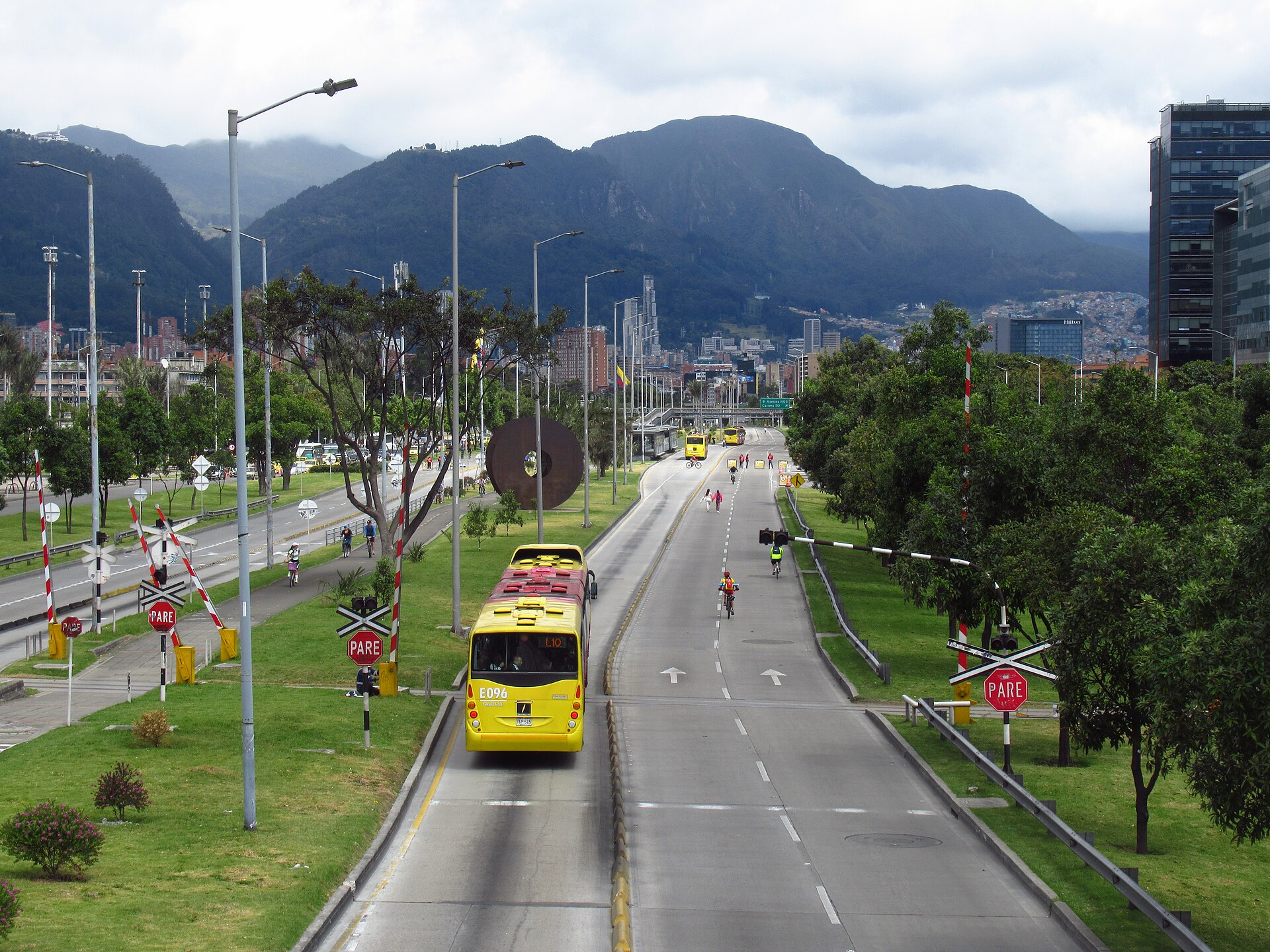
The eastern mountains not only form a magnificent city backdrop but also offer excellent opportunities for active recreation in nature. Very popular is the guarded Quebrada La Vieja trail, which climbs directly from the Chapinero Alto neighborhood into the mountains. The ascent takes about two hours, but you need to register in advance for free and set off early in the morning, as the gate closes at three in the afternoon on weekdays and as early as eleven in the morning on weekends.
Another significant peak is Cerro de Guadalupe, reaching an elevation of 3,360 meters, which has been crowned by a huge white statue of the Virgin Mary since 1946. Hiking here is recommended exclusively on weekends, when larger groups of believers and tourists head to the hill; otherwise, it’s better to take a car ride. The view from this mountain is often much clearer and more photogenic than from the more popular Monserrate.
At dusk, locals love to head to Mirador La Calera, a night-time viewpoint above the city located on the road to the neighboring valley. Along the road, small Los Hornitos stands operate, where from four in the afternoon they pour hot alcoholic drink canelazo and bake sweet thin wafers called obleas. Always travel to this viewpoint by reliable Uber, both for the journey there and the return trip.
💡 Tip: Make your trip to Guadalupe hill ideally on a Sunday morning, when the path is safe thanks to the crowds of locals and there’s a very authentic neighborhood atmosphere.
22. Parque Nacional, Parque El Virrey and Cementerio Central
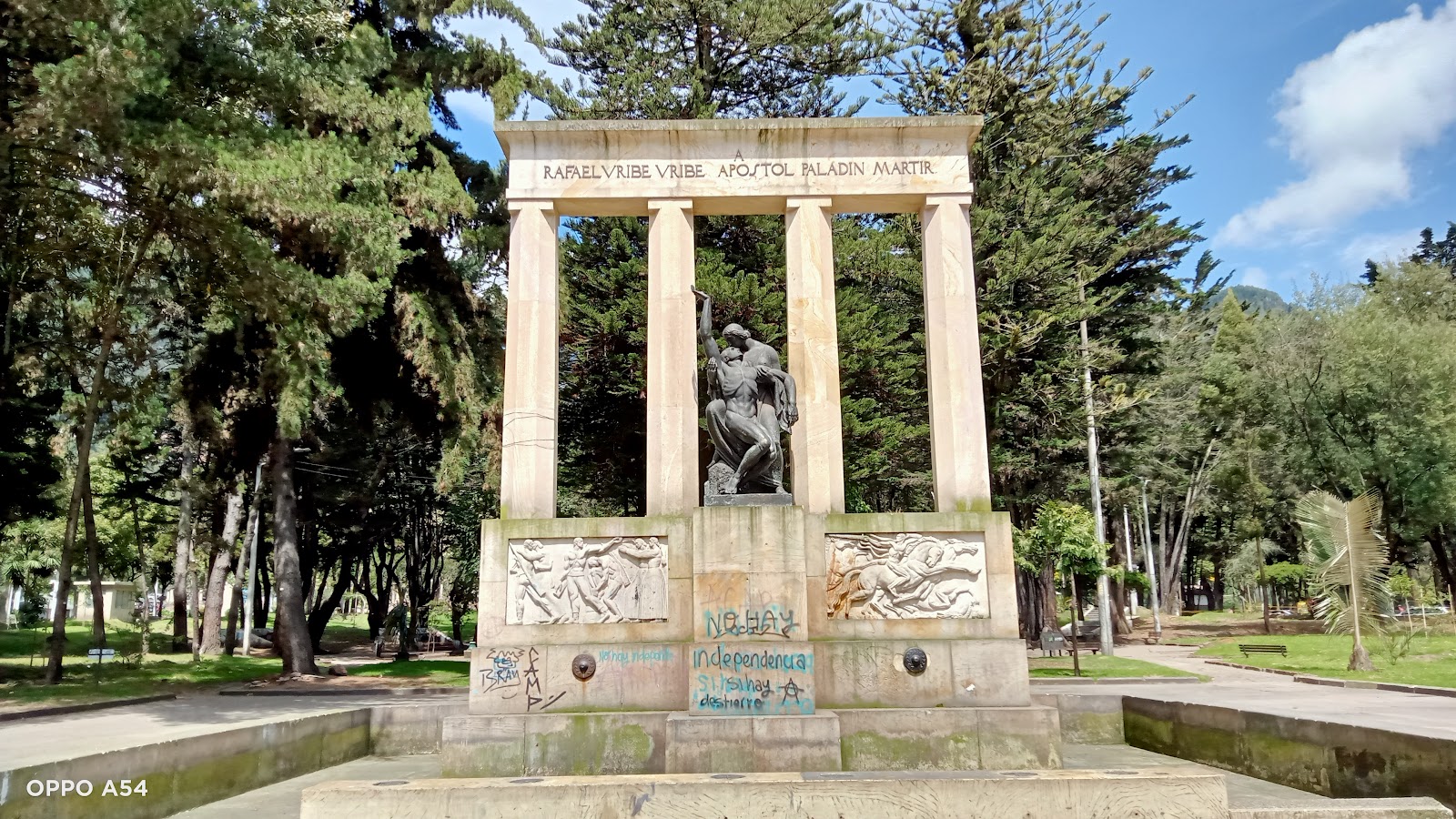
Green spaces play a huge role in the lives of Bogotanos, and the most traditional is Parque Nacional Enrique Olaya Herrera, founded in the 1930s. It lies on the border between the center and the Chapinero neighborhood, and every Sunday it fills with hundreds of families who come here for picnics or sports. A bit further north lies the long linear park El Virrey, which is considered the most popular safe spot for evening runs.
History lovers and fans of melancholic walks will appreciate the main city cemetery Cementerio Central, which has been operating since 1836. Colombian presidents, famous writers, and significant figures from national history rest here. Paradoxically, the most visited place is the tomb of German immigrant Leo Kopp, founder of the famous Bavaria brewery, to whom people come to pray for financial miracles and leave whispered wishes.
The cemetery opens every day from eight in the morning until half past four in the afternoon, and entry is free. However, the surrounding Los Mártires neighborhood is not among the safest areas, so head here exclusively in full daylight and order your Uber precisely in front of the main gate. Definitely don’t move around here after dark, and keep your phone hidden in your backpack.
💡 Tip: Plan your visit to the large national park for Sunday morning, as it seamlessly connects with the closed road during the Ciclovía event and there’s a great sporting atmosphere.
Where to Go from Bogotá
Bogotá serves as a fantastic jumping-off point for discovering other corners of Colombia. A great tip for a weekend escape is the colonial town of Villa de Leyva in Boyacá department, which you can reach by bus from Salitre station in just under four hours. The town, protected since 1954, boasts a huge cobblestone square, and you’ll also find local high-altitude wineries here. On the bus journey, you’ll also pass the Puente de Boyacá monument commemorating the famous battle of August 1819.
For nature lovers, there’s the beautiful cloud forest Parque Natural Chicaque, located just 30 kilometers from the city. An even wilder experience is promised by Chingaza National Park with high-altitude páramo full of frailejones plants, though you can only get there with prior registration and a guide. Just outside the city near the village of Choachí, the Cascada La Chorrera waterfall also roars, which is often described as the tallest in the entire country.
If you love antiques, every Sunday in the center of Bogotá, the Mercado de las Pulgas de San Alejo awaits you on Seventh Street. When you’ve had enough of the cold Andean weather, a flight to the warm Caribbean takes just an hour and a half. We’ve compiled all the practical tips for your stay on the coast in our article Cartagena, Colombia: 22 Things to See and Do, and we’ll also advise you on where to stay in Cartagena.
Frequently Asked Questions
How many days for Bogotá?
For a comfortable exploration of the city, I recommend setting aside three full days. You’ll spend one day in Candelaria and the museums, dedicate the second to the cable car up Monserrate and the Quinta de Bolívar estate, and save the third for modern Chapinero, the Zona T area, and the weekend market in Usaquén. A fourth day can then be devoted to a trip to the Salt Cathedral in Zipaquirá or to Lake Guatavita. Be very careful about closing days, because on Mondays you won’t be able to get into the Gold Museum, and on Tuesdays the Botero Museum is closed.
Is Bogotá safe?
If you follow basic rules, you can move around calmly. The golden rule is never show your mobile phone on the street and after dark always use a reliable ride app. In Candelaria, avoid walking around on foot after nine in the evening, and never accept drinks from strangers. Although the number of robberies in the first half of 2026 fell by eighteen percent, authorities continue to warn about the danger of substances like scopolamine and scams through dating apps.
How much does Monserrate cost and when should you go?
Foreign tourists and locals alike pay 35,000 COP for a round-trip cable car ticket from Monday to Saturday; a one-way ride costs 21,000 pesos. On Sundays the price is better and you’ll pay only 21,000 pesos for the round trip, but you’ll have to deal with huge crowds of pilgrims. The cable cars run on weekdays from half past six in the morning until ten at night, and you’ll encounter the fewest people from Tuesday to Thursday, ideally during the off-season in September.
How do you get from the airport to the center?
The most reliable option from El Dorado airport is the official Taxi Imperial cars, which have stands right at gates 5 and 9 in the international terminal T1. The trip to Candelaria or Chapinero costs according to 2026 rates roughly 30 to 38 thousand COP, with a small surcharge at night and on Sundays. During the day you can also safely use Uber or DiDi apps, which will pick you up on the departures level and tend to be a bit cheaper.
When should you go?
You’ll experience the most pleasant weather and the least rain in the months from December to March. Conversely, April to May and October to November bring really heavy rainfall. Bogotá has essentially unchanging temperatures year-round between 18 and 20 degrees during the day and 6 to 9 degrees at night, so you won’t get by without warm layers and a good raincoat. In December and January, also expect higher prices due to domestic holidays.
Is Bogotá suitable for vegetarians?
No problem—the city now has over ninety purely vegetarian and vegan establishments. Among the best are Quinua y Amaranto, Loto Azul Vegano, Naturalmente Vegano, and Herbívoro in Chapinero. Local cheese buns called almojábanas or the sweet chocolate completo at the historic café La Puerta Falsa are meatless, and in many places they’ll prepare an excellent vegan version of the popular ajiaco soup. You’ll taste the classic ajiaco with chicken or the meat-filled tamal wraps more at street stalls, but at established Asian chains like WOK you’ll find great separate plant-based menus.
Do I need a visa?
For trips to Colombia for tourism purposes, visitors from many countries don’t need visas and receive a PIP-5 entry stamp valid for 90 days. However, a return or onward ticket out of the country is required—without one you’ll very likely not even be allowed to board the plane. To be safe, also fill out the free Check-Mig form before departure, and don’t forget to show your tourist stamp at the hotel to save nineteen percent on tax.
Tips and Tricks for Your Vacation
Don’t Overpay for Flights
Search for flights on Kayak. It’s our favorite search engine because it scans the websites of all airlines and always finds the cheapest connection.
Book Your Accommodation Smartly
The best experiences we’ve had when looking for accommodation (from Alaska to Morocco) are with Booking.com, where hotels, apartments, and entire houses are usually the cheapest and most widely available.
Don’t Forget Travel Insurance
Good travel insurance will protect you against illness, accidents, theft, or flight cancellations. We’ve had a few hospital visits abroad, so we know how important it is to have proper insurance arranged.
Where we insure ourselves: SafetyWing (simple monthly subscription) and TrueTraveller (for extra-long trips).
Find the Best Experiences
Get Your Guide is a huge online marketplace where you can book guided walks, trips, skip-the-line tickets, tours, and much more. We always find some extra fun there!


