

Cartagena, Colombia is a city of total extremes and quite possibly the most beautiful and the most exasperating place you’ll visit in South America. On one hand, you’ll find breathtaking colonial alleys, balconies buckling under a flood of colorful bougainvillea, and a Caribbean atmosphere that instantly sweeps you up. But be prepared: none of this romance comes for free or without constant interruptions.
The moment you arrive, you’ll notice that the city is packed with street vendors offering everything from hats and “gift” bracelets to massages that are definitely not free. Anyone who knows this in advance and learns to say a firm no with a smile will take home the best possible memories of Cartagena. But if it catches you off guard, the endless haggling with meterless taxi drivers can wear you down pretty quickly, so it’s a good idea to mentally prepare for this reality beforehand.
Here we’ve put together 22 tips for you — from the old city walls to secret corners and trips out to the Caribbean islands. And yes, we’ve also included why you should be very careful with dating apps. 😅
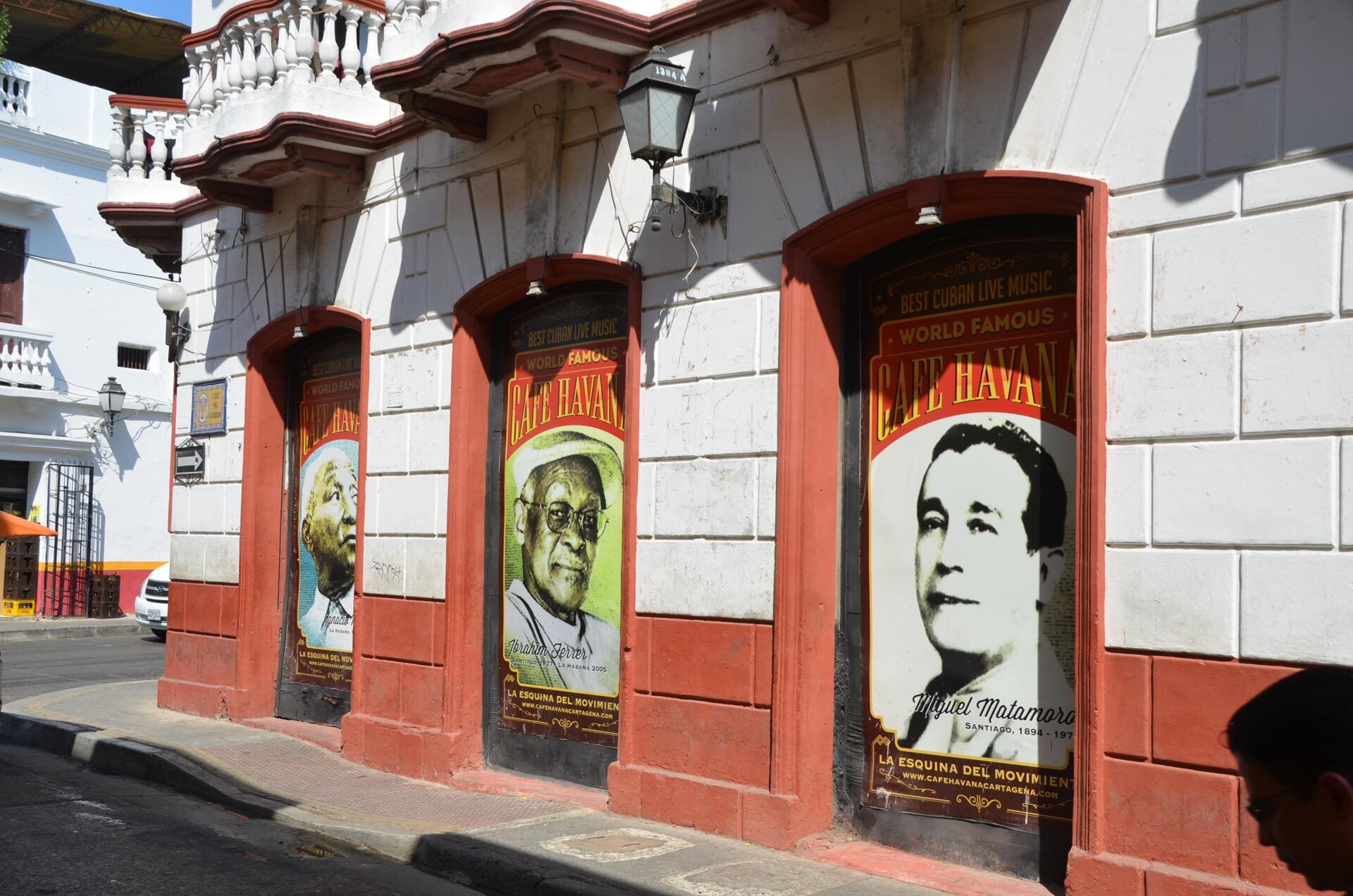
TL;DR
- Tax break for foreigners: If your passport has the PIP-5 tourist stamp, you don’t pay the 19% VAT (IVA) at hotels. Always double-check this on your final bill, though — some hotels try to charge it anyway.
- Hidden island fees: Trips to the Islas del Rosario have a catch — the national park entrance and insurance (around 40,000 COP) are paid in cash at the dock and are not included in the tour price.
- Beauty that takes patience: Cartagena is a visual paradise, but brace yourself for persistent street vendors whom you’ll need to turn down politely but very firmly.
- Beaches with reservations: The city beach at Bocagrande has brown water, so you’ll have to head out to the islands for white sand — but watch out for the midday crowds at Playa Blanca.
- Safety first: Never use taxis without an agreed price in advance (or better yet, choose Uber or InDriver), and be extremely careful with nightlife and blind dates.
- Getting from the airport: Rafael Núñez Airport is just 10 to 15 minutes from the center, which is a huge advantage over other big cities.
When to Visit Cartagena, Colombia
Cartagena is a classic Caribbean destination with a steady temperature of 31 to 33 °C all year round, so you can safely leave your sweaters at home. The only difference in the weather is whether the air hangs heavy and still, or whether a pleasant cooling breeze blows in from the sea. When it comes to Cartagena, Colombia weather, the main and most popular season runs from December to April, when the city is dry, a refreshing trade wind blows, and the sun shines practically every day. During this period, though, the city bursts at the seams under the influx of international tourists and vacationing Colombians, which naturally pushes hotel prices to their annual peak.
If you don’t like heavy, muggy heat and high humidity, avoid the period from September to November, which is the main rainy season on the Caribbean coast. September in particular is statistically the wettest month of the year, when the historic alleys can turn into deep puddles within minutes. High humidity turns an ordinary stroll into a fairly demanding workout that has you sweating instantly. You can still visit the city then, of course, but expect to duck into air-conditioned cafés and museums far more often.
For the best possible balance of good weather and slightly more bearable prices, the turn of November and December is a great compromise, or the spring months right outside the Easter holidays (Semana Santa). Always keep in mind that the Caribbean sun here is truly harsh and unforgiving, so a wide-brimmed hat, liters of bottled water, and quality sunscreen are absolute must-haves in absolutely any month. Pack some light linen clothing too — you’ll feel most comfortable in it.
Where to Stay in Cartagena
Where you stay really matters — and in Cartagena more than anywhere else, because the difference between neighborhoods is brutal. The most enchanting option is to stay right in Centro Histórico, where all the famous sights and excellent restaurants are within arm’s reach, though prices here are naturally the highest in all of Colombia. For a more bohemian atmosphere full of street art and lively nightlife, choose the popular Getsemaní neighborhood, which is a huge hit these days. If, on the other hand, you’re mainly after modern high-rise hotels with pools and direct sea views, the Bocagrande peninsula is ideal for you.
A crucial piece of information for your travel budget is the fact that foreigners in Colombia don’t pay the 19% value-added tax (IVA) on accommodation. The main condition is that you enter the country on the standard tourist stamp, the so-called PIP-5, which you normally get in your passport right at the airport. To apply this discount, the hotel has to make a copy of your passport with this exact stamp, otherwise they’ll charge you the tax without mercy. Unfortunately, the practice across the city is that roughly half the hotels deduct the discount automatically, while the other half will quietly try to charge it. Always carefully check your final bill at checkout and don’t be afraid to speak up at reception.
Among the tried-and-tested, gorgeous hotels is, for example, Hotel Casa San Agustin, a luxury boutique hotel right in the heart of the old town that will charm you with its quiet inner courtyard and a pool built into the ancient walls. If you’re looking for something more modern with panoramic views, try GHL San Lazaro Art Hotel, which offers a breathtaking view straight onto the San Felipe fortress. For a completely peaceful colonial-style stay with first-class service, the absolute legend is Sofitel Legend Santa Clara, set in a carefully restored former convent.
💡 On this map you can compare what’s available right now — you’ll see straight away how much cheaper Getsemaní is than the walled city.
22 Things to Do in Cartagena, Colombia
Before you dive into the whirl of Colombian alleys, take a look at our pick of the most interesting things the city has to offer. These 22 tips will show you Cartagena with all the trimmings, from the polished landmarks to the most tucked-away corners, and help you avoid the pointless tourist traps.
We’ve combined the classic must-see spots with a few hidden gems so you can mix your own perfect cocktail of experiences.
1. Centro Histórico and Its Iconic City Walls
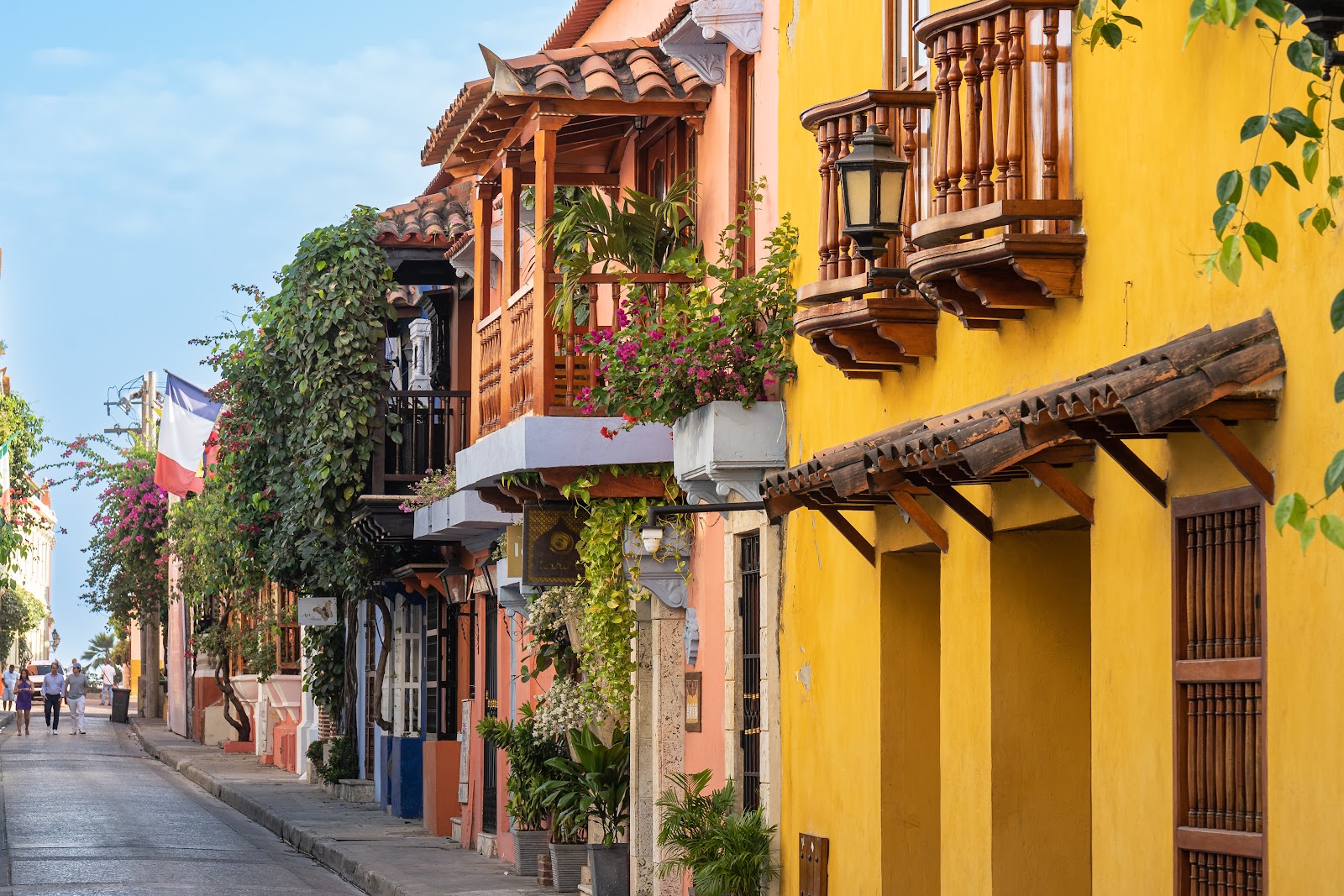
The main reason travelers from all over the world come here is the Centro Histórico de Cartagena, which boasts a fantastic rating of 4.8 from more than 4,000 reviews. Quite rightly, this architectural masterpiece has been on the UNESCO World Heritage list since 1984. The entire old town is enclosed by roughly 11 kilometers of massive stone walls, which once protected the city’s wealth from pirate raids and today serve as the best imaginable scenic walking route.
Do save the walls for early morning or late afternoon. Around noon the historic stones heat up under the Caribbean sun so much that you can barely breathe, and there’s no shade at all. Inside the walls themselves you’ll find the true Caribbean fairy tale — colorful colonial houses with wooden balconies draped in clusters of vivid bougainvillea in shades of pink, purple, and bright red.
As you wander these picturesque alleys, you’ll come across countless photogenic corners, but also a huge number of street vendors and smiling women in colorful dresses known as palenqueras. If you want to take the traditional photo with them, fruit balanced on their heads, expect to always pay a tip for it. 💡 Tip: Don’t get drawn into long conversations with street touts — just smile politely, say a firm “no, gracias,” and keep walking without stopping.
2. Castillo de San Felipe de Barajas
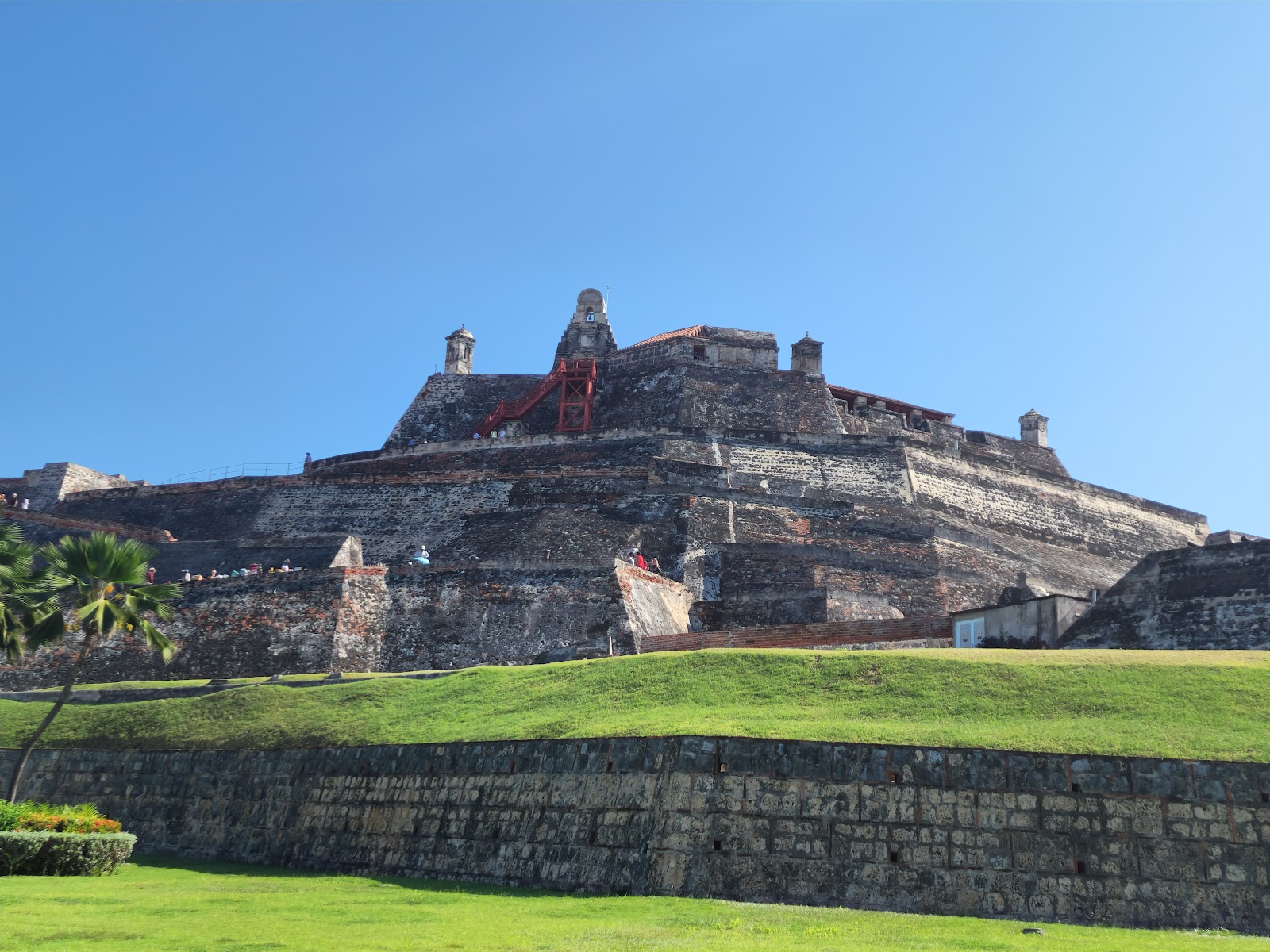
This is the absolute landmark of the whole city and, by number of reviews (nearly 68,000), the single most visited spot in all of Cartagena. Castillo de San Felipe de Barajas is the largest Spanish fortress on the American continent (and when you’re standing there, you really believe it looking at those massive stone walls). Its construction began back in 1657 on a strategic hill, and thanks to an ingenious system of defenses and underground tunnels, no enemy ever managed to capture it.
Exploring this enormous fortress can easily take two hours, and the biggest thrill is wandering through the dark, winding tunnels that the architects designed to deliberately amplify the sound of any attackers’ footsteps. The fortress is open to the public every day from 8:00 to 18:00, and the golden rule applies here too — don’t come at high noon, because there’s practically no shelter from the sun on the ramparts.
The basic ticket for foreigners costs 25,000 COP, while locals pay a bit less, roughly 20,000 COP. If you’re traveling with family, children under 6 and seniors over 62 get free entry to the entire complex. 💡 Tip for budget travelers: If the timing works out, definitely plan your visit for the last Sunday of the month, when entry is completely free for absolutely everyone (except during the busy months of January and December).
3. Plaza de Bolívar Square
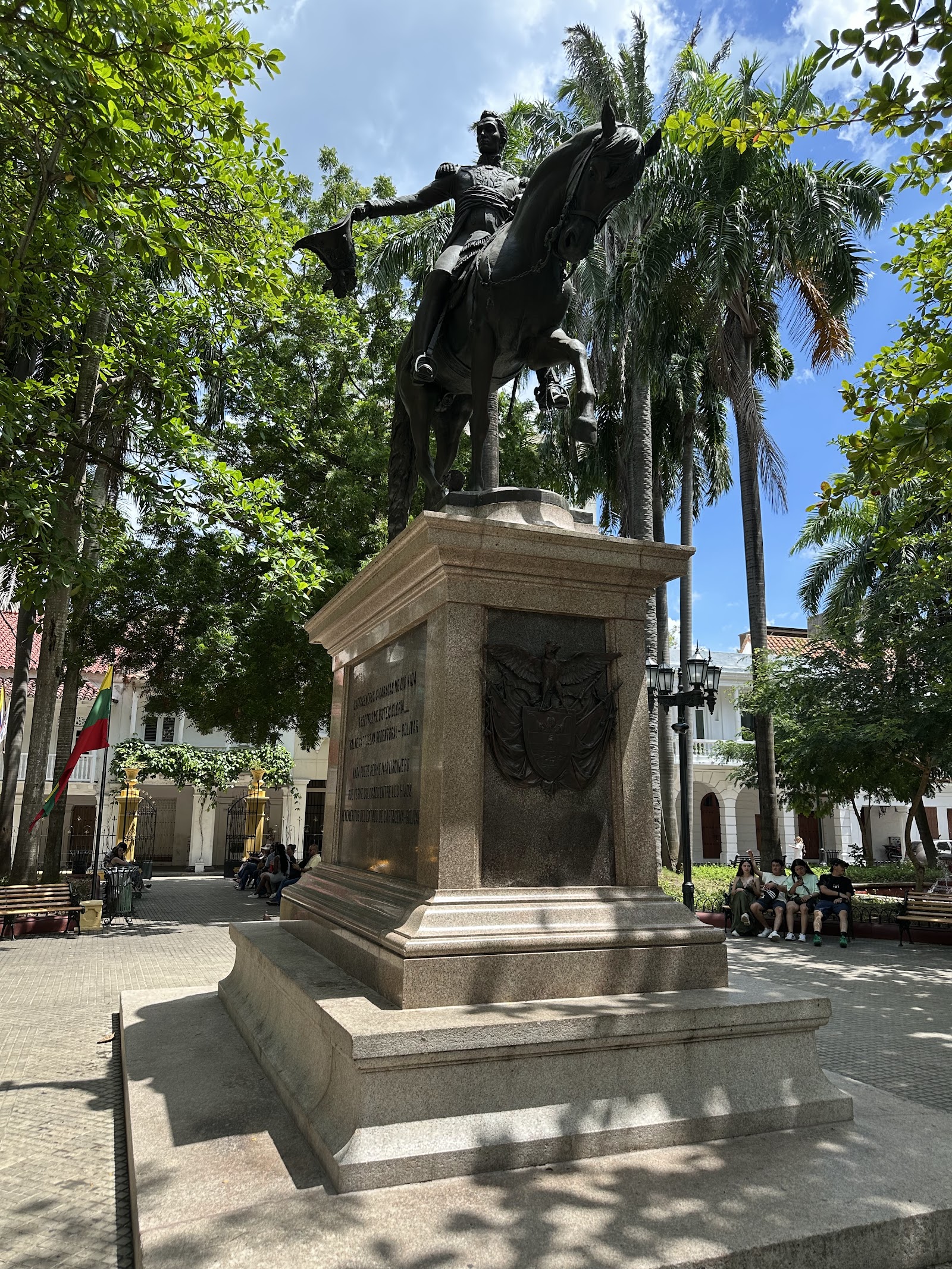
The green heart of the entire old town is Plaza de Bolívar (a lovely 4.6 rating), which works as a perfect oasis of calm. Unlike the surrounding sun-baked stone alleys, here you’ll find plenty of benches safely tucked in the shade of mighty old trees, where locals and weary travelers from all over the world sit and rest. In the middle of the square, of course, stands the equestrian statue of Simón Bolívar himself, the famous liberator of South America.
This square isn’t just a great place to rest after a long walk, it’s also a strategic starting point for visiting the city’s best museums. On one side, the park is lined by the beautiful historic cathedral; on the other, ornate colonial palaces with massive wooden doors and huge metal knockers shaped like animals.
When you sit down here for a while, definitely buy some fresh Caribbean fruit from the local cart vendors or an ice-cold drink. Just pick the vendors who peel and cut the fruit right in front of you — at least you know what you’re getting. It’s hands down the best refreshment after hours of walking in the tropical heat.
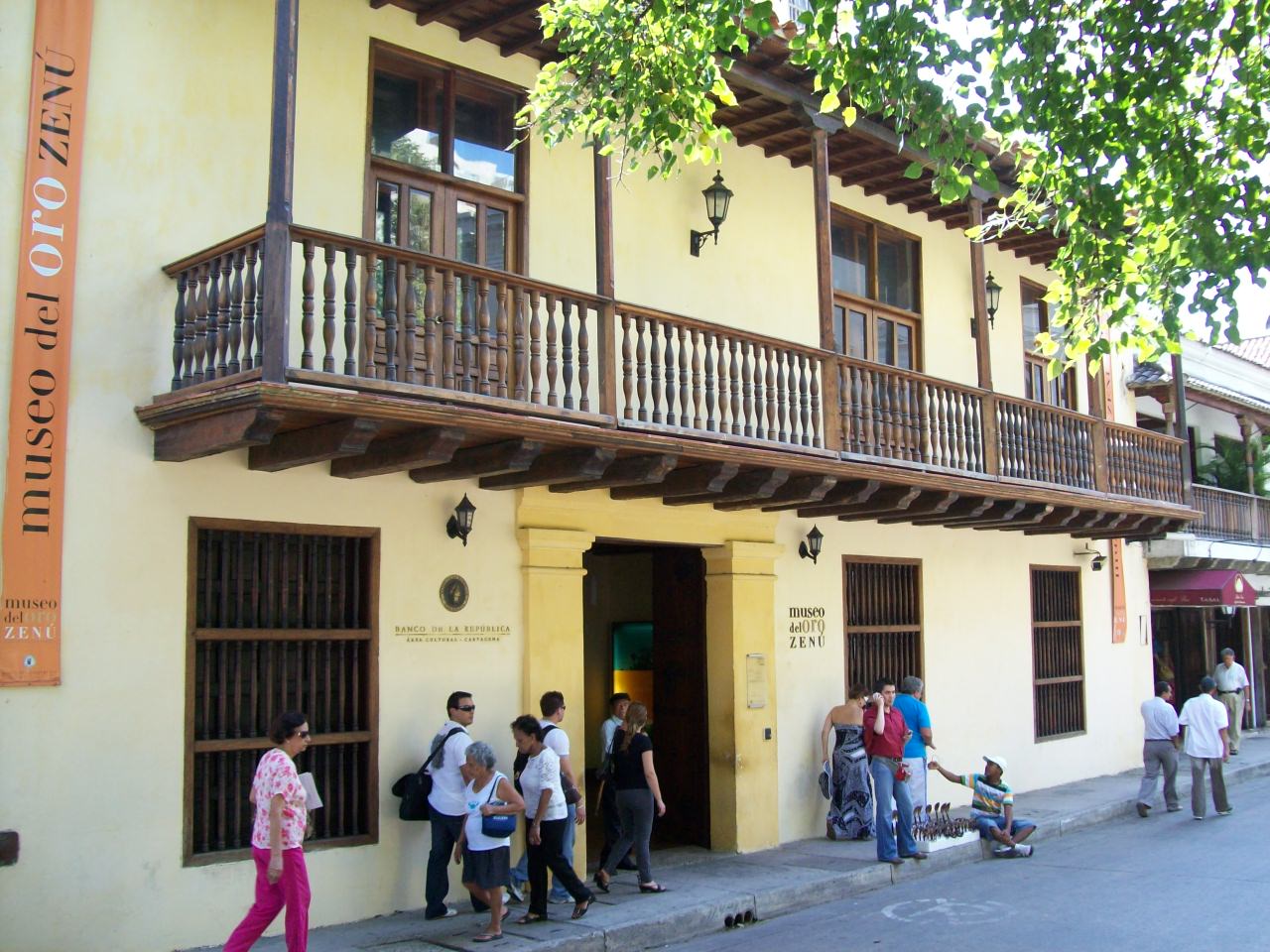
4. Museo del Oro Zenú
Right on the edge of the popular Plaza de Bolívar sits the Museo del Oro Zenú, a fascinating branch of the famous Gold Museum from the capital, Bogotá. Although it’s somewhat smaller than its huge main version, the exhibition is absolutely stunning, and on top of that entry to this fantastic museum is completely free — a rare exception in expensive Cartagena that you should take advantage of.
Inside you’ll see a breathtaking and highly valuable collection of gold objects created by the indigenous Zenú culture long before the Spanish colonizers arrived. This culture was known for its absolutely masterful goldsmithing techniques as well as sophisticated systems of drainage canals that allowed them to survive in flood-prone areas. The exhibition explains their deep connection with nature brilliantly and clearly, especially with amphibians and the rich aquatic world.
The museum is also pleasantly air-conditioned, so if the sun is scorching outside and you’ve had enough, this free refuge from the afternoon heat is simply a gift from heaven. 💡 Tip: Don’t forget to take a close look at the renowned gold breastplates and the incredibly fine filigree jewelry, whose precision still fascinates even modern jewelers today.
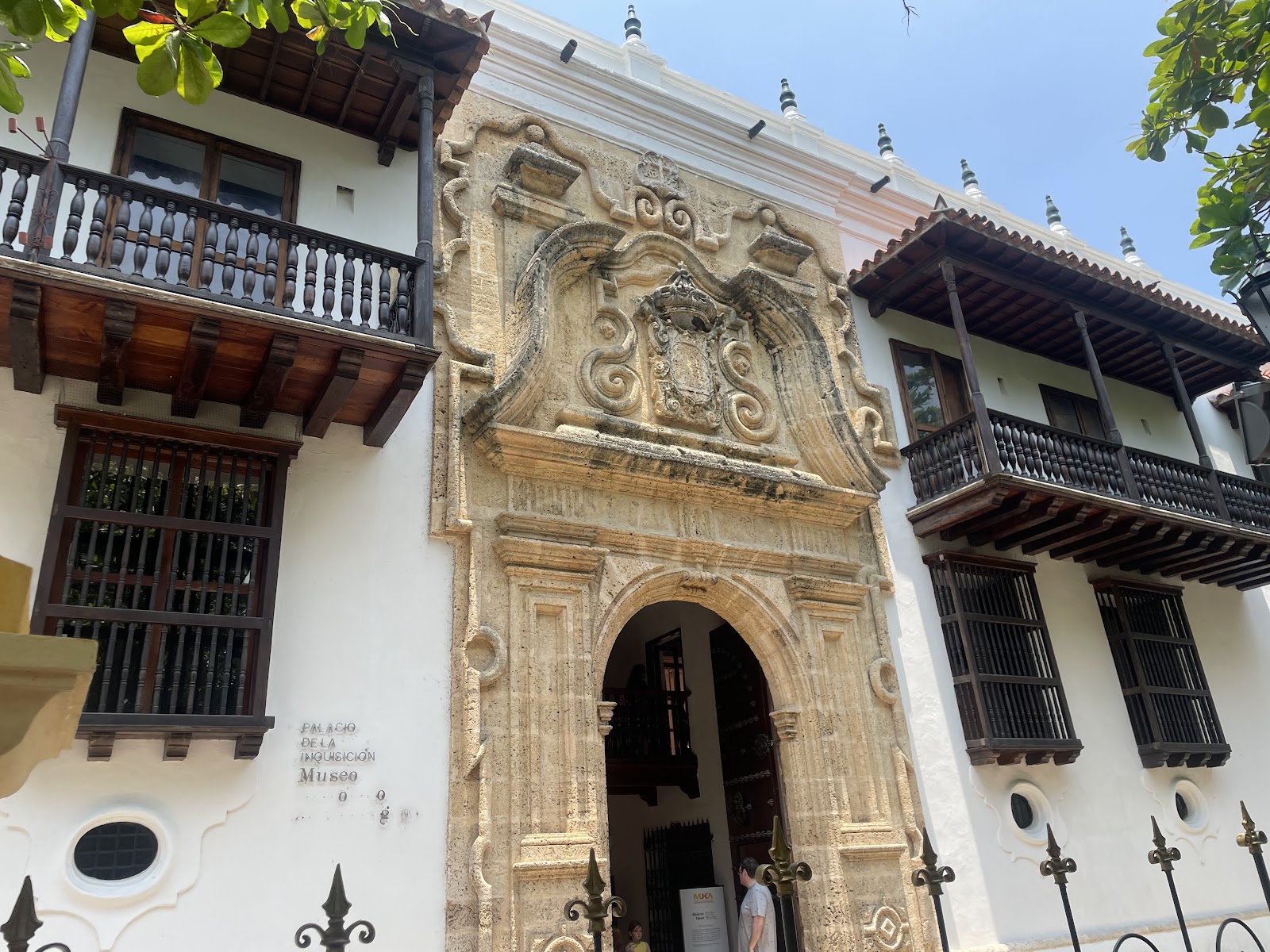
5. Palacio de la Inquisición (Palace of the Inquisition)
Right across the same square you’ll find the Museum of Cartagena de Indias, better known to most people as the Palacio de la Inquisición (rated 4.2). This majestic historic building with a gorgeous Baroque portal from 1770 hides a very dark history beneath its beautiful facade. It was the main seat of the Spanish Inquisition, which for centuries tried and harshly punished those accused of heresy and witchcraft here.
Inside awaits a rather chilling but very informative exhibition where you can view original torture instruments and learn in detail about the ruthless methods of the church courts of the time. At the same time, the upper floors house a very extensive section devoted to the overall history of the city since its founding, so the museum works as a great comprehensive introduction to Cartagena’s complex history.
The ticket price for foreign tourists usually ranges between 21,000 and 25,000 COP, but definitely verify the current amount right there at the box office, since it occasionally changes without notice. The experience of the shady inner courtyard, where cruel sentences were once handed down and where lush tropical vegetation now ironically grows, is truly powerful and worth seeing.
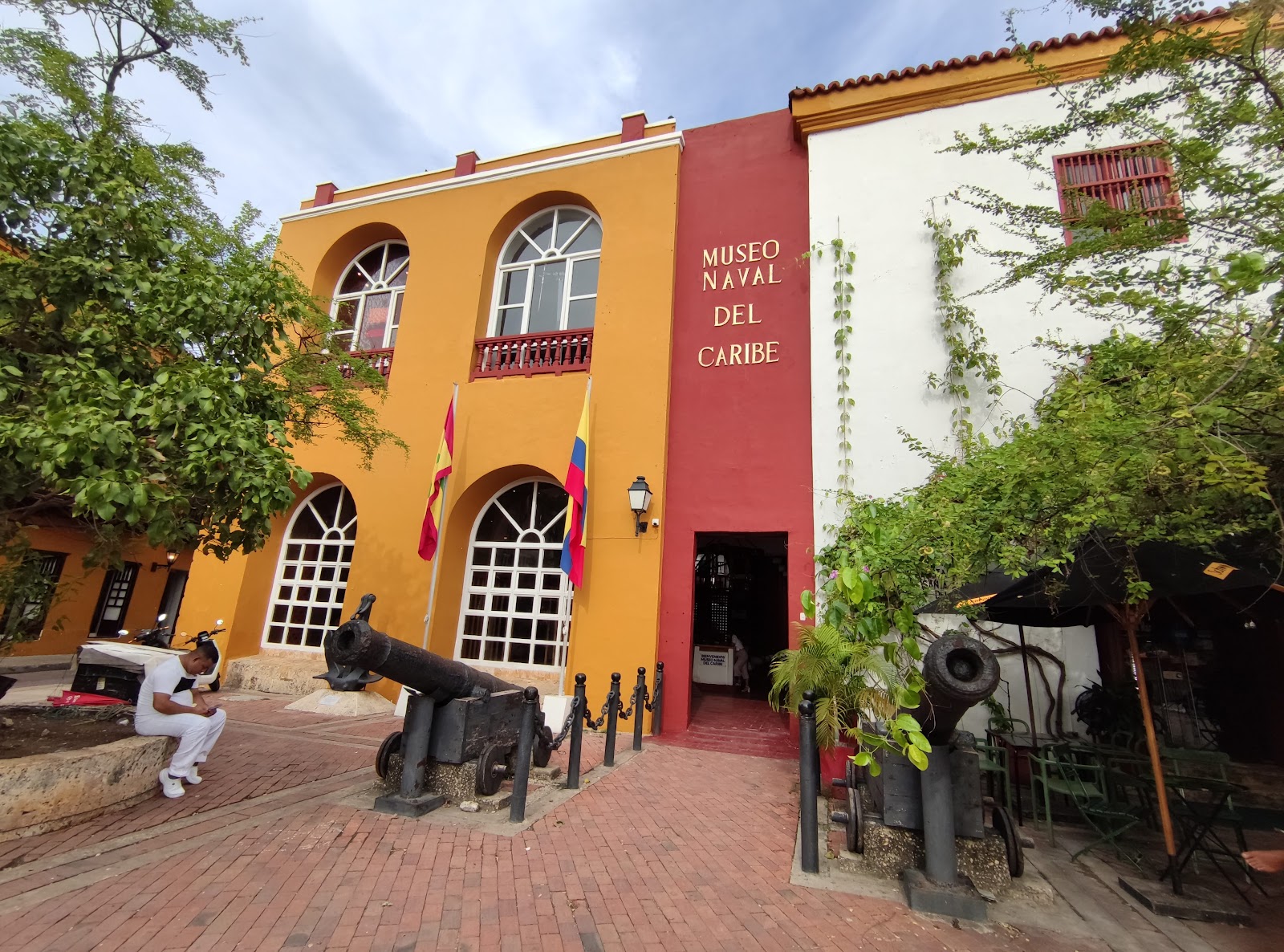
6. Museo Naval del Caribe
If you have even the slightest interest in old ships, pirates, and naval battles, the Museo Naval del Caribe (an excellent 4.6 rating) will absolutely thrill you. You’ll find it just a short walk from the main city walls, and its extensive exhibition is dedicated to the fascinating history of Caribbean pirates, sunken Spanish galleons full of gold, and the endless naval battles for control over this strategic Caribbean port.
The museum is genuinely well done and modern, offering plenty of interesting interactive models of fortresses and giant ships, which not only adult history lovers but also families with children will appreciate. You’ll learn a lot of unexpected details about how the city heroically defended itself against the famous and devastating attack by the English admiral Vernon.
⚠️ Important map warning: When searching for information and directions online, be very careful not to confuse the cities. Don’t mix it up with the ‘Naval Museum Cartagena’ that Google sometimes slips in — that one is in Murcia, Spain, and your navigation will send you to a different continent. 😅 Always carefully check that the address on Google Maps says Bolívar, Colombia.
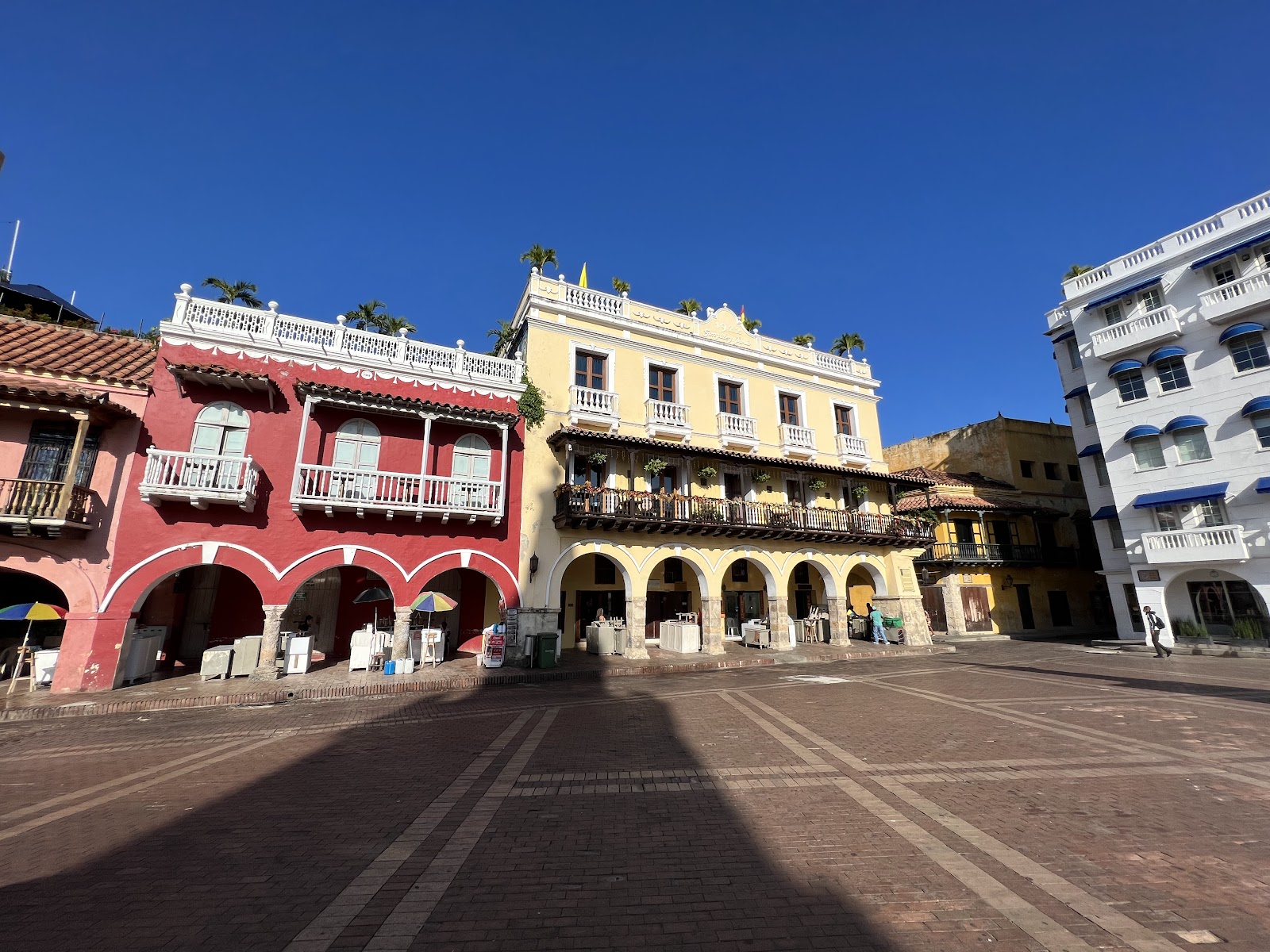
7. Plaza de los Coches and Torre del Reloj
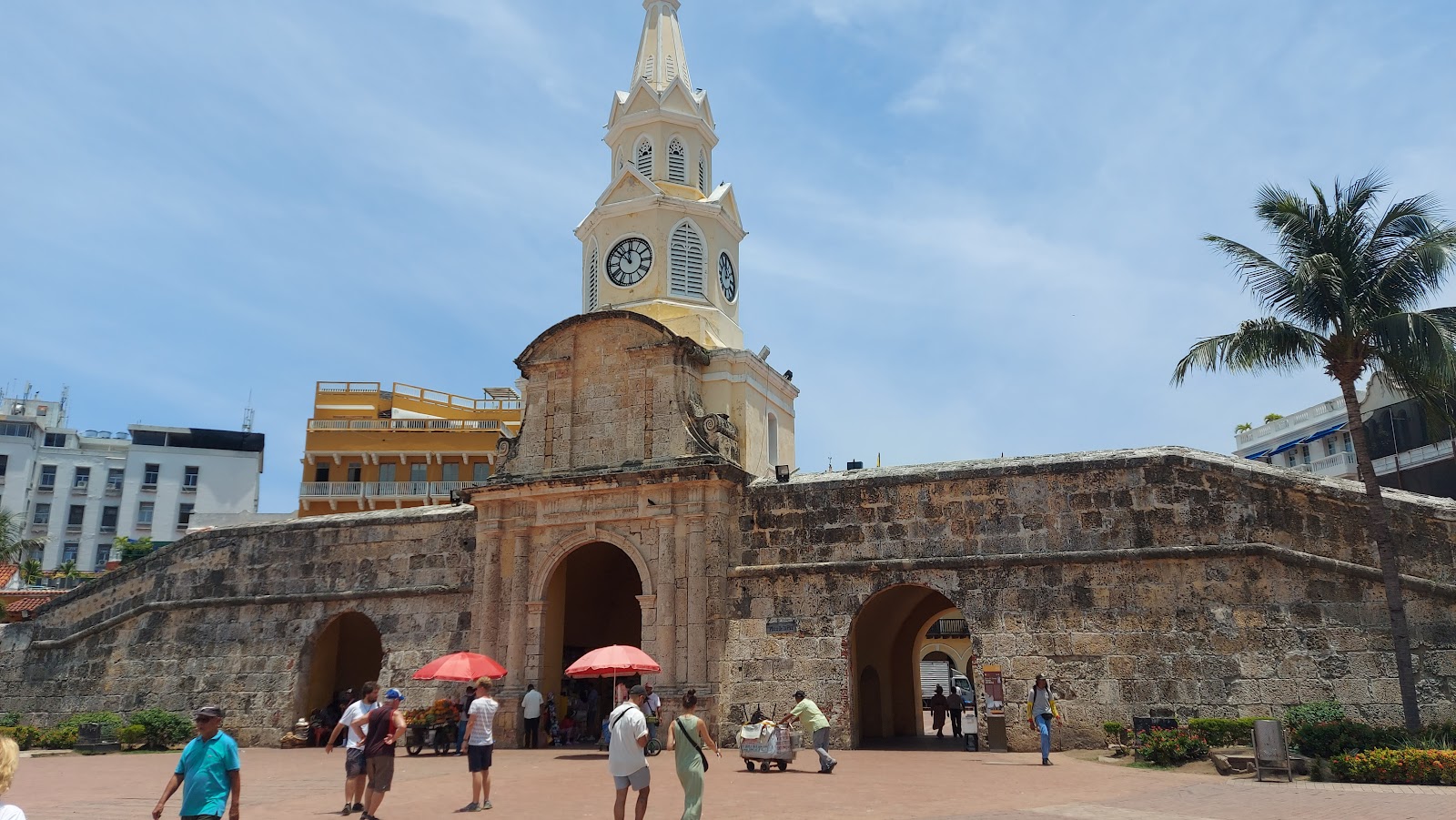
Your very first steps into the old town will probably lead right through Torre del Reloj, the iconic yellow clock tower that serves as the main and most beautiful gateway through the walls. Just beyond this gate, Plaza de los Coches (rated 4.5), or the Square of Carriages, opens up wide before you. It has a very dark past, as it once served as the main slave market, but today it’s full of colorful houses with the typical balconies.
Right on this bustling square you’ll find the famous shady arcade Portal de los Dulces. Here, dozens of small wooden stalls are crammed together, selling traditional Caribbean sweets for generations. Everything gleams with bright colors, and the air constantly smells of fresh coconut, burnt cane sugar, and exotic tropical fruit.
It’s the absolutely ideal place to sample local coconut balls (the so-called cocadas) or sticky tamarind sweets. 💡 Tip: These local sweets are extremely sugary and dense, so one or two pieces with a strong afternoon coffee will be plenty — definitely don’t expect any light, fluffy desserts.
8. Camellón de los Mártires
Right in front of the main yellow clock gate, before you even enter the old town, stretches a wide promenade known as Camellón de los Mártires (rated 4.6). This very elegant, well-maintained promenade lined with statues is one of the very best spots for an evening stroll, when it’s beautifully lit and pulsing with incredible local life.
The name of this promenade directly refers to a bloody history — here you’ll find busts of nine martyrs, brave leaders of the Colombian independence movement who were mercilessly executed here in 1816 by Spanish royalists. It’s a very important place of national pride that provides an interesting historical contrast to the otherwise carefree Caribbean mood of the whole area.
During the day you’ll come across countless smiling vendors of fresh juices and handmade crafts. It’s also the most popular spot to board the tourist horse-drawn carriages, although out of consideration for the animals in the huge Caribbean heat, it’s definitely better to get around the city on your own two feet.
9. Getsemaní and the Street Art
While the polished Centro Histórico is smooth and aristocratic, the neighboring Getsemaní district has a real, wild, and spirited soul. Until recently it was a fairly dangerous working-class and poor neighborhood outside the walls, where tourists were told not to go at all — but today it’s easily the most interesting, colorful, and photographed part of all of Cartagena.
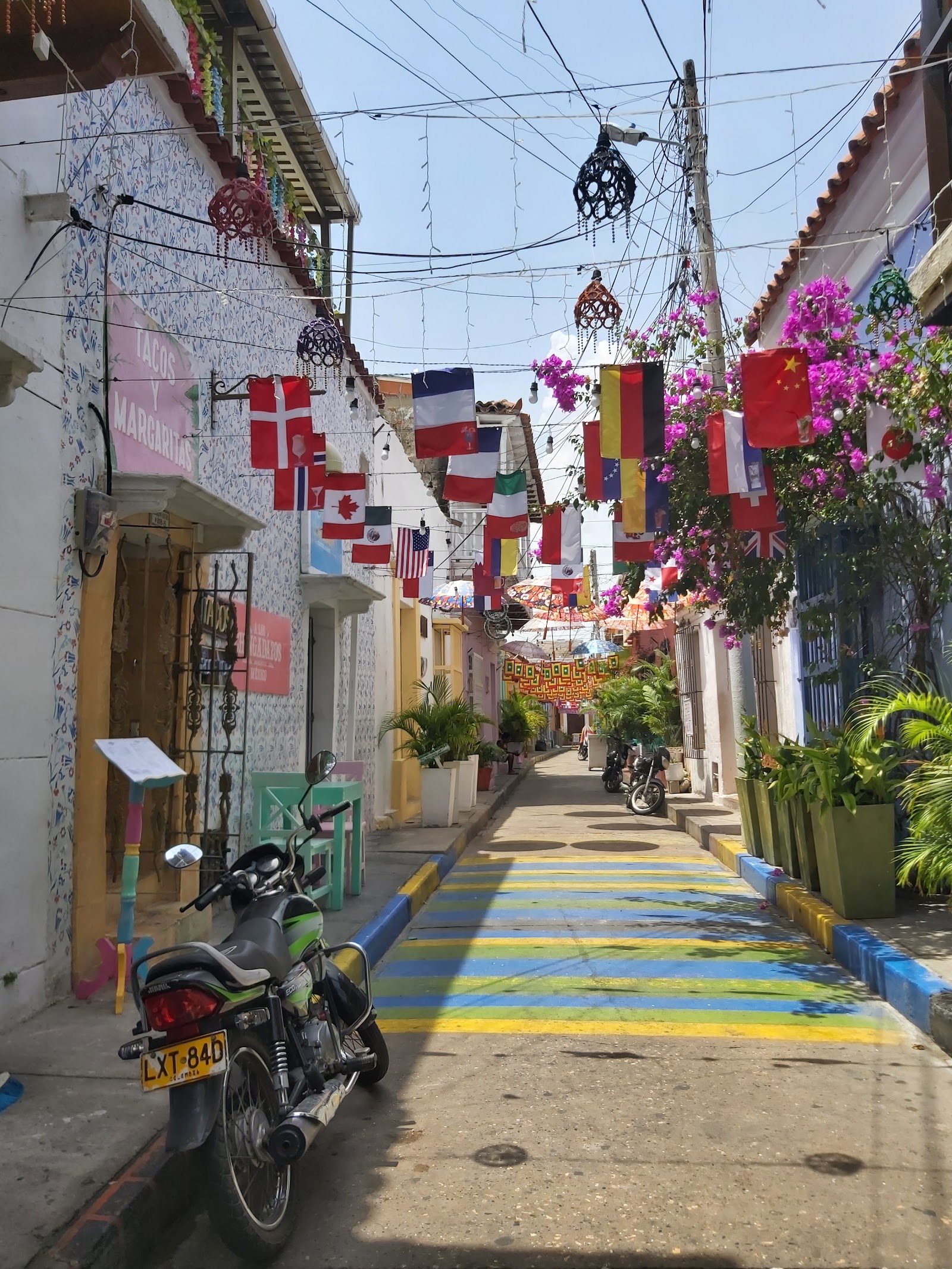
The alleys here are a bit narrower than in the center, and the peeling house facades serve as enormous painting canvases. You’ll find top-notch, thoughtful street art that reflects the city’s African roots, the palenquera culture, and the lush local flora. The most famous is the narrow Calle de la Sierpe, over which hundreds of colorful umbrellas hang, or the alley full of little flags where the very best vacation photos are taken.
During the day, Getsemaní is surprisingly calm (people sit in front of their houses on plastic chairs, passionately playing dominoes, and barely notice you — quite a relief after the constant hustling in the center). This is where you’ll still feel that genuine community atmosphere that has unfortunately faded a little from the shinier, pricier center.
10. Plaza de la Trinidad in the Evening
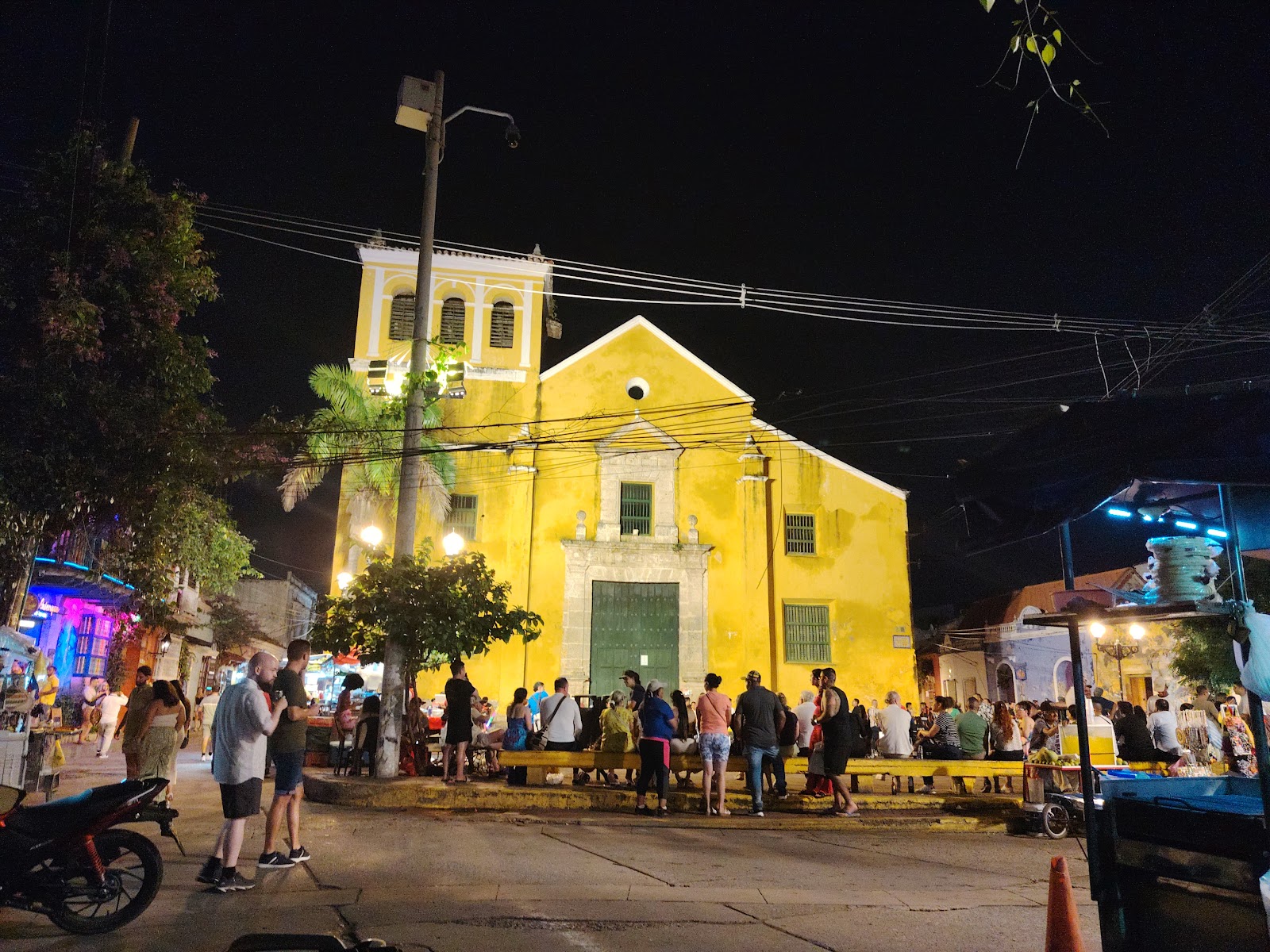
If you want to experience the real, genuine Caribbean revelry firsthand, you have to head to Plaza de la Trinidad after dark, right in the heart of the colorful Getsemaní district. During the day it’s a rather unremarkable little square in front of an old, peeling yellow church, but once the sun sets, the space transforms in the snap of a finger into the pulsing epicenter of the whole city.
Every evening, seemingly half the neighborhood gathers here — local families with children, backpackers from all over the world, and talented street performers. People sit right on the warm sidewalks, buy cheap chilled beer from the nearby shop, and sample excellent food from street carts. Around eight in the evening, thrilling improvised dance performances, fire juggling, or loud concerts by local bands regularly begin.
There’s no need to pay any expensive cover to get into fancy clubs, because the very best and most authentic party happens right out on the street. 💡 Tip: But be very careful with your personal belongings — pickpockets can move unnoticed through the dense crowd, so keep your backpack in front of you and leave valuables and your passport in the hotel safe.
11. Sloths in Centenario Park
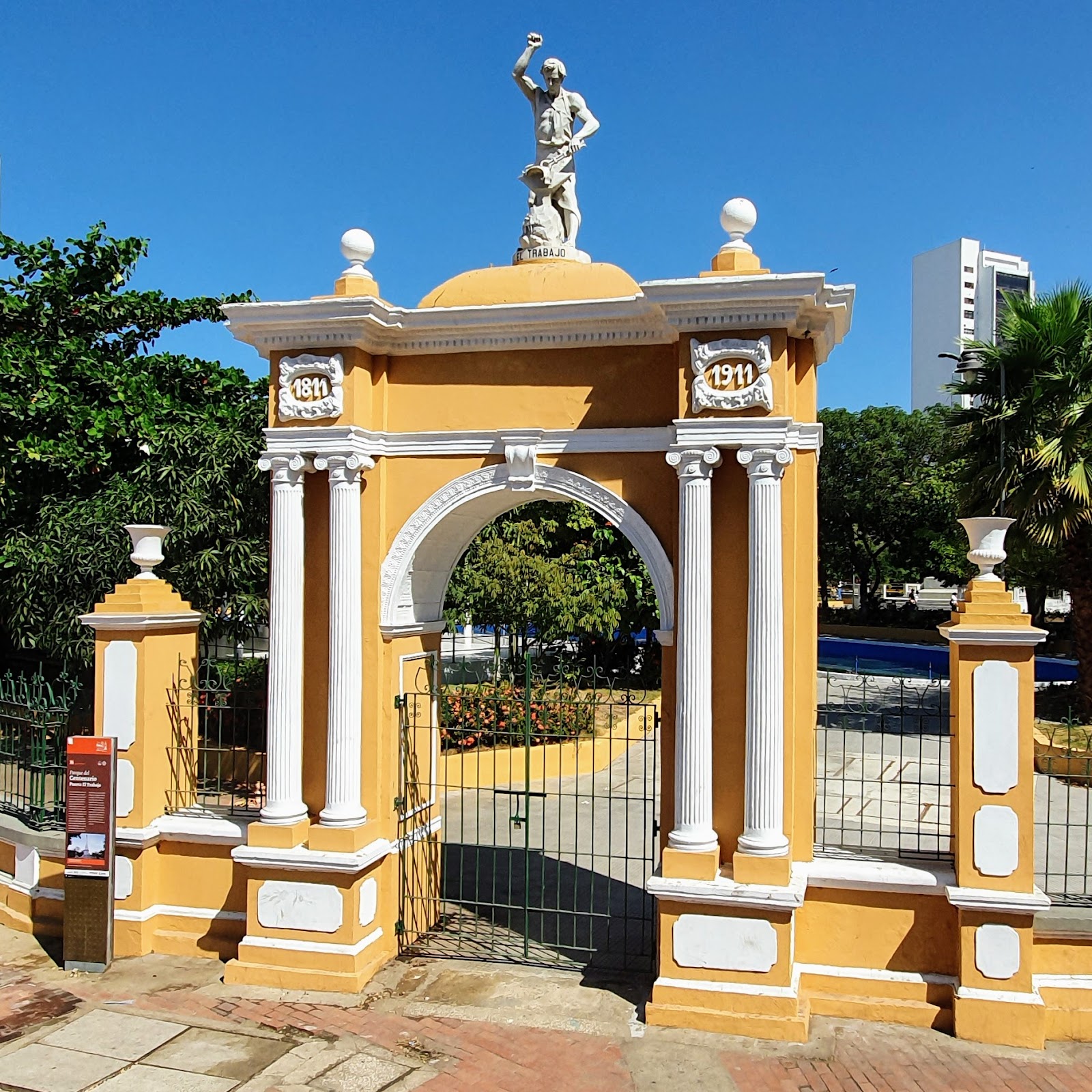
Right on the border between Getsemaní and the old town lies the seemingly ordinary Centenario Park (rated 4.4), which hides a huge and unexpected natural surprise. Most hurried tourists just pass quickly through it on their way to the walls, with no idea of the amazing thing hidden right above their heads in the dense crowns of the mighty trees.
Right in the center of the busy, noisy city, slow sloths, adorable little monkeys (tamarins), and huge prehistoric iguanas live here in the wild. All you have to do is stop for a moment, stand completely still, and carefully scan the tangled branches above you. You’ll often see iguanas lazily basking in the sun right by the path, while the sloths are usually fast asleep, hidden high up in the leaves.
If you can’t spot the animals in the dense greenery yourself, the local nut vendors or the park’s regular guards will often gladly point them out — they always know exactly which tree the whole sloth family is resting on. It’s an absolutely fascinating piece of wild jungle in the middle of busy concrete traffic.
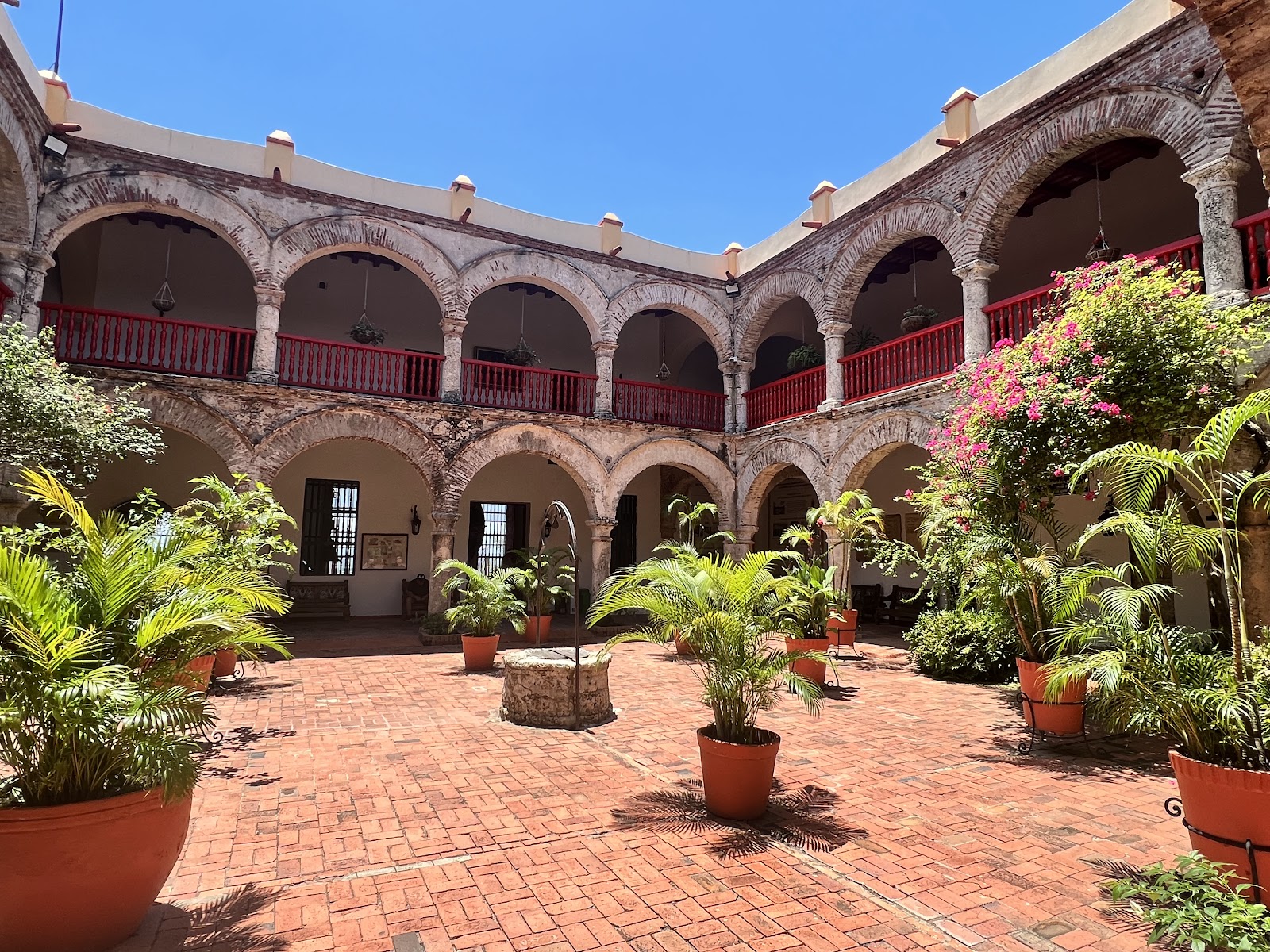
12. The View from Convento de la Popa
The best view over all of Cartagena? It’s on the highest hill in the city, where the old Convento de la Popa monastery stands. This gorgeous monastery dates all the way back to 1607 and rises roughly 150 meters above sea level, so from up here you can see the historic old town, the modern skyscrapers of Bocagrande, and the maze of waterways and poorer suburban neighborhoods all laid out before you.
The monastery itself has a beautiful, peaceful inner courtyard full of blooming flowers and a small but very richly decorated chapel. Entry to the whole complex ranges around 11,000 to 25,000 COP depending on the source and season, so definitely verify the current price on the spot. The experience of that enormous height is absolutely worth the money, though.
⚠️ Essential safety warning: The road up to the monastery leads through very poor and problematic neighborhoods, and walking up is strongly discouraged for foreigners for safety reasons. You go up exclusively on an organized tour or by yellow taxi — agree with the driver upfront that they’ll wait for you roughly 30 minutes at the top and safely bring you back down to the center.
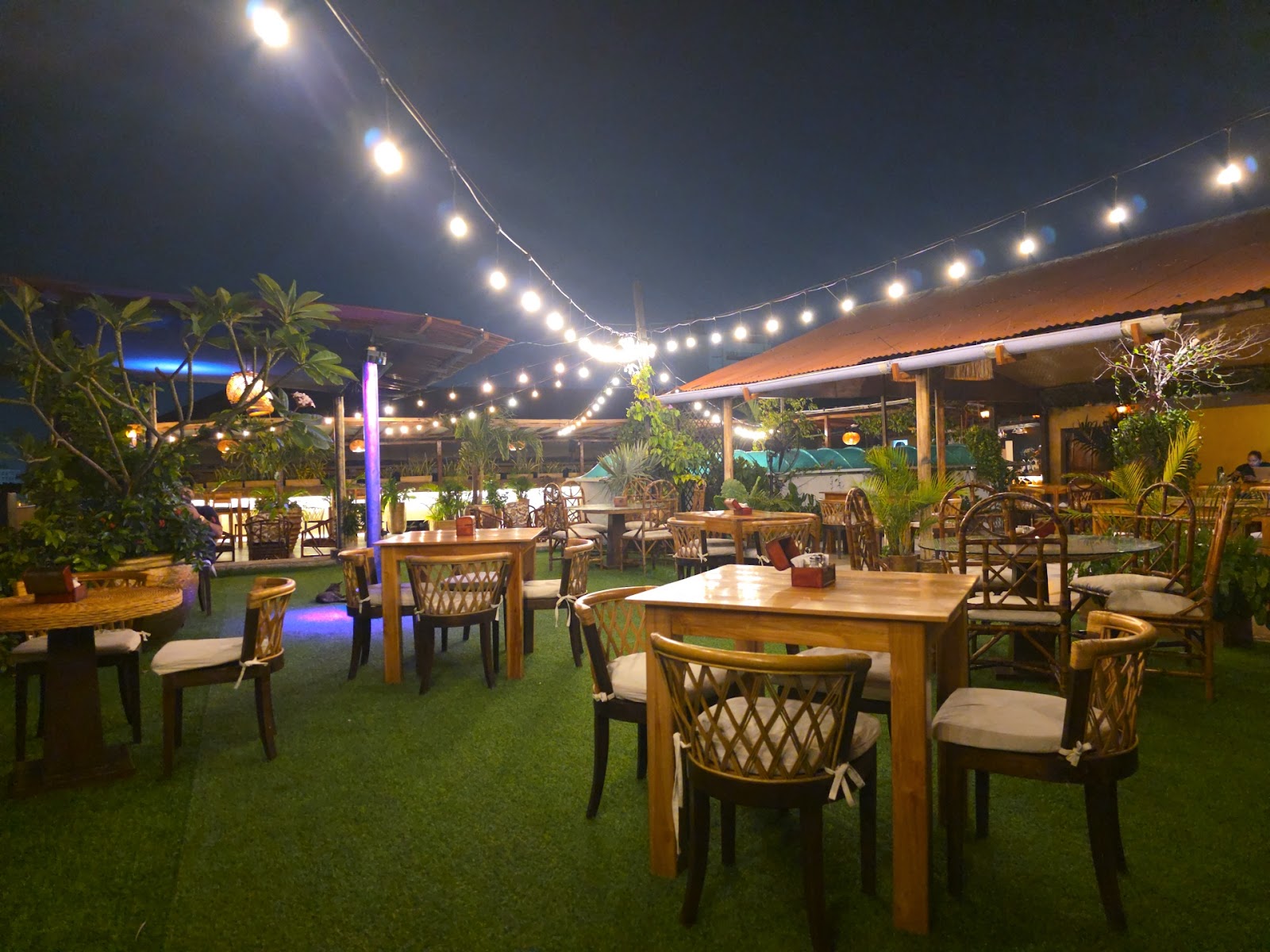

13. Rooftop Bars and Luxury Views
Cartagena is famous the world over for its well-developed rooftop bar culture, where the view of the illuminated night city is absolutely breathtaking. The best-rated viewpoint inside the old walls is Mirador Gastro Bar (a great 4.6 rating), where you can enjoy excellent signature drinks with a direct, unobstructed view of the Torre del Reloj tower and the never-ending buzz of the square right below you.
If you prefer the more relaxed, bohemian atmosphere of the Getsemaní district, definitely head to Baroca Sabor Ancestral (rated 4.8) or the stylish Casa Pura Rooftop (rated 4.6). Here, hot Caribbean rhythms mix completely naturally with modern mixology, and the evening sunsets are absolutely unforgettable.
For true lovers of extreme heights, there’s the exclusive 51 Sky Bar in the modern Bocagrande district (rated 4.2), which is easily the tallest bar in the entire city. The view from the 51st floor over the glowing old town and the dark, endless ocean is incredible, but be aware that the drink prices here fully match the luxury and exclusivity of this location.
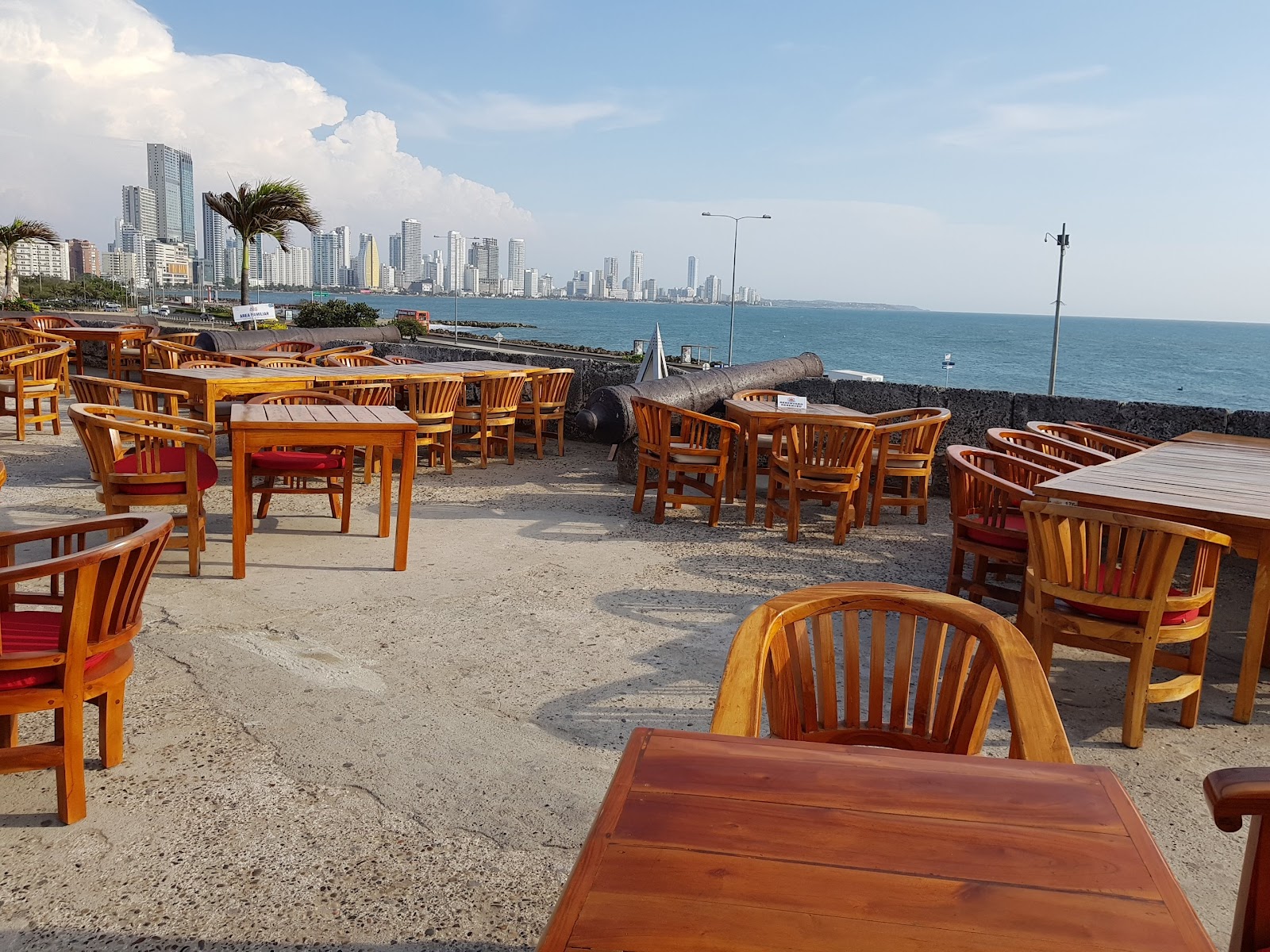
14. Sunset on the City Walls (Café del Mar)
There’s perhaps no more famous and iconic ritual in all of Cartagena than watching the early-evening sunset right from the massive historic city walls. The traditional centerpiece of this daily event is the famous Café del Mar, which occupies a huge, strategic tip of the fortifications with the absolute best view of the open ocean and the setting sun.
But let’s be honest — the drinks and food at this place are heavily overpriced, and there are often really long lines for a free table an hour before sunset. Fortunately, though, the view itself isn’t overpriced, and anyone can enjoy it. 💡 Tip: You don’t have to pay for an expensive restaurant table at all. Just comfortably sit on the wide stone parapet of the walls right next to the café, buy an ice-cold beer from a street vendor for a fraction of the price, and enjoy an absolutely identical — if not better and more authentic — experience alongside the locals.
Whether you choose a comfortable table at the venue or the romantic wall, always be there at least an hour before the actual sunset, because the spots with the best view fill up at incredible speed.
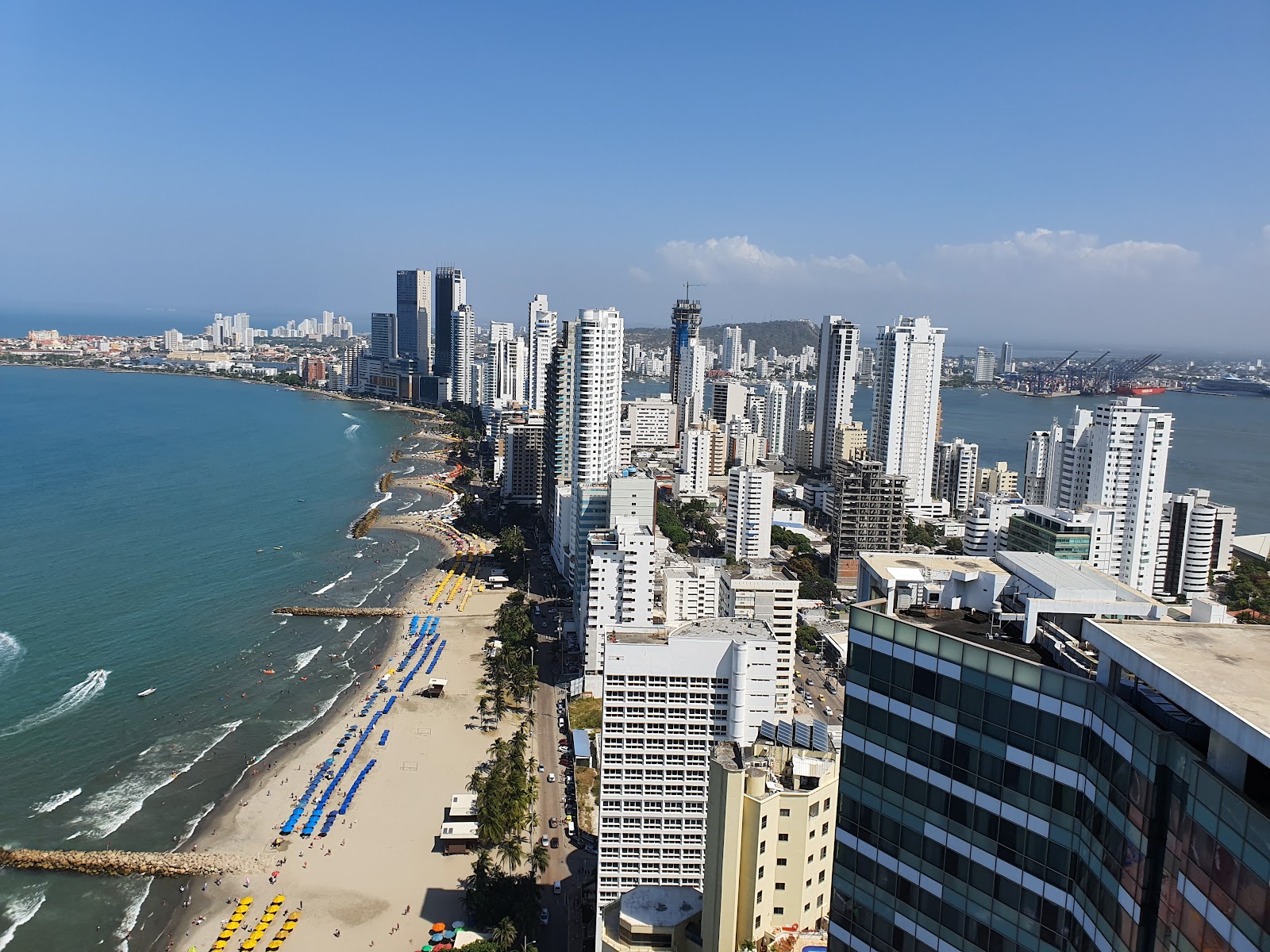
15. Bocagrande and Castillogrande Beaches (an Honest Review)
Guidebooks often write some pretty unrealistic romantic nonsense about the beaches right in the city, so here’s the plain, unvarnished truth. The city beach at Playa de Bocagrande may have a 4.3 rating online, but the water here is usually murky and brown. It’s an extremely practical spot if you just want a quick cool-off a short walk from your high-rise hotel, but visually it’s definitely no Caribbean paradise — and the beach is constantly besieged by dozens of massage sellers and pricey umbrellas.
Things are noticeably better and more bearable a little further along at Playa Castillogrande (rated 4.5). This particular part of the peninsula is much calmer — mostly local families come here to spend time, and the water tends to be a bit cleaner and calmer, though still don’t expect that true turquoise color. It’s an ideal spot for a peaceful morning walk along the sea, though.
If you want to spend a whole day on a beautiful beach with a book in hand, it really isn’t worth it right in the city. For those true Caribbean postcard beaches, you have to head a bit further out of town — either by boat to the coral islands, or by car to the popular Barú peninsula.
16. Islas del Rosario and the Money Trap
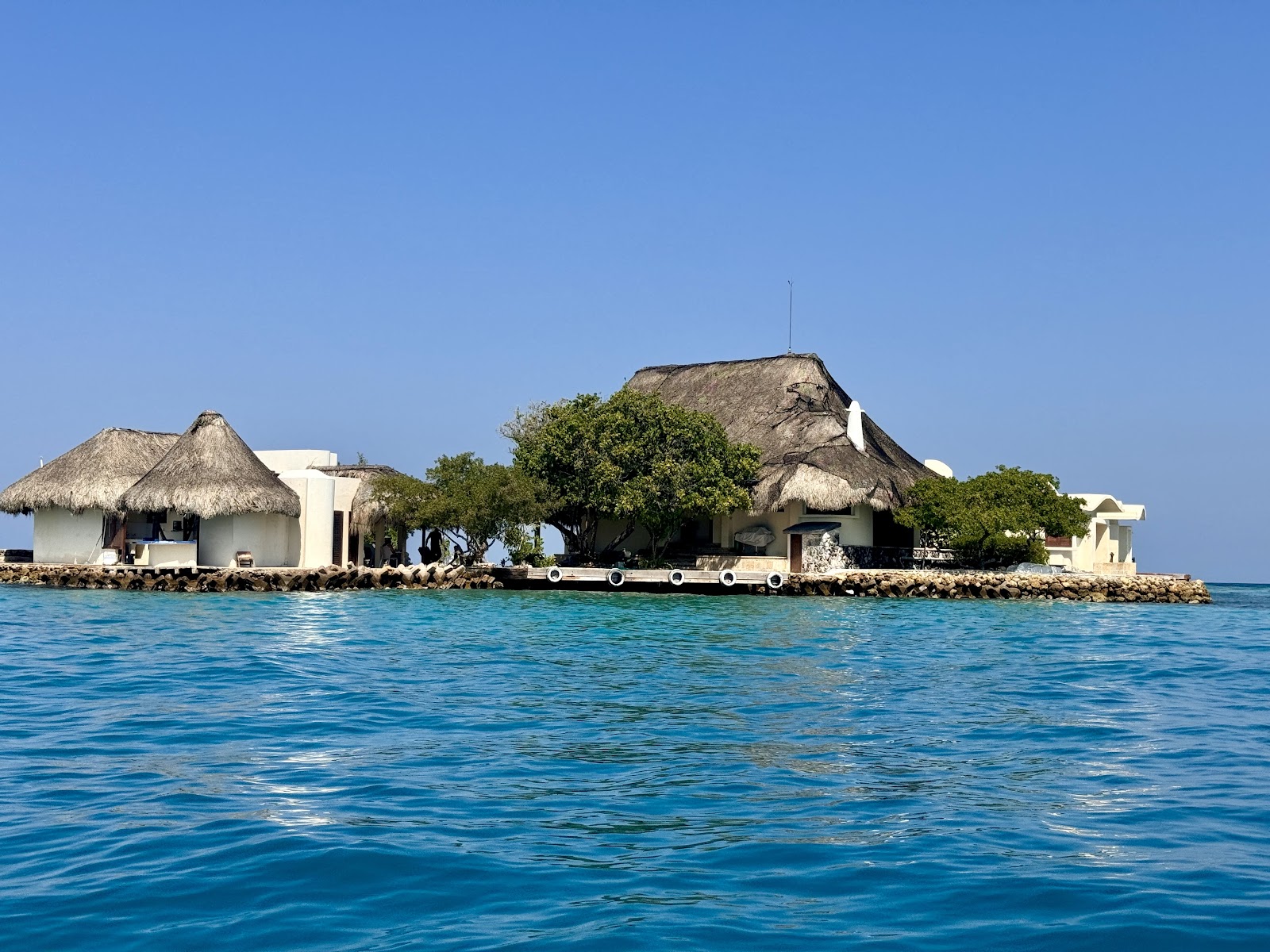
The gorgeous Islas del Rosario archipelago lies in a protected national park just under an hour’s speedboat ride from Cartagena, and it’s finally the real Caribbean dream with coral reefs and white sand. But there’s a huge tourist catch that most unprepared travelers fall for (unexpected hidden fees). No matter what price you pay for a tour in the city, the mandatory port fees are almost never included.
Entry to the national park itself will cost you roughly 25,000 to 31,500 COP per person, plus mandatory marine insurance of about 8,800 COP. Together that’s around 40,000 COP, which you must pay exclusively in cash right at the dock before boarding the boat. If you don’t happen to have the banknotes on you, they simply won’t let you on the boat and the trip falls through. 💡 Tip: Withdraw your money from ATMs (Bancolombia or Davivienda are reliable) calmly the day before, because in the morning the ATMs by the port are often completely empty.
The islands themselves are gorgeous and absolutely ideal for a full day of snorkeling. But you’ll spoil the whole experience quite a bit if you end up in an argument first thing in the morning at the noisy port over fees the agency told you nothing about beforehand.
17. Island Beach Clubs (Instead of Public Beaches)
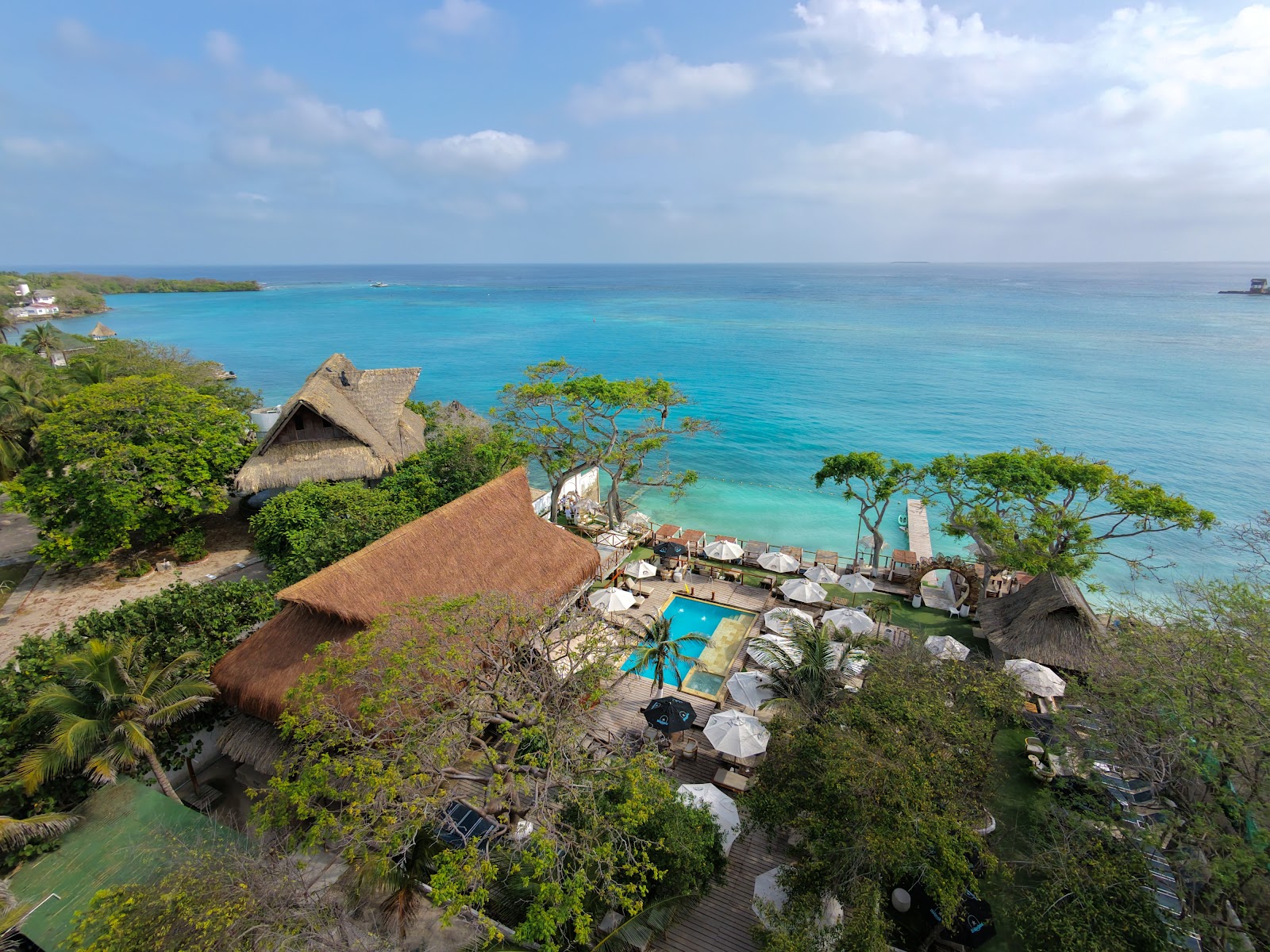
Instead of heading to the ordinary public and often extremely crowded island beaches, I warmly recommend booking a so-called day pass to one of the many private beach clubs. It’s pricier, but you’ll have your own lounger, clean water, and above all peace from the vendors who otherwise egg you on to buy souvenirs every two minutes.
An absolutely great choice is Capri Beach Club (a fantastic 4.9 rating) on Isla Grande, where you’ll find perfect calm, excellent service, and crystal-clear turquoise water. If you’re looking for more of a modern, stylish party atmosphere with excellent food and great drinks, definitely head to Blue Apple Beach (rated 4.7) on the closer Isla Tierra Bomba.
If you really don’t feel like traveling far by boat but still want to enjoy maximum beach comfort and drinks by the water, right in the city in the quieter Manga district there’s the urban club Bendita Beach (rated 4.7) with a beautiful pool, where they’ll pamper you all day long.
18. The La Boquilla Fishing Village and Its Mangroves
If you want to experience something completely different in the city from the polished colonial center, and at the same time want your money to directly support the local community, head north of the city to the authentic La Boquilla fishing village. Here you’ll finally get to know the rawer, far more traditional Afro-Colombian face of the whole Caribbean region, which has already vanished from the center.
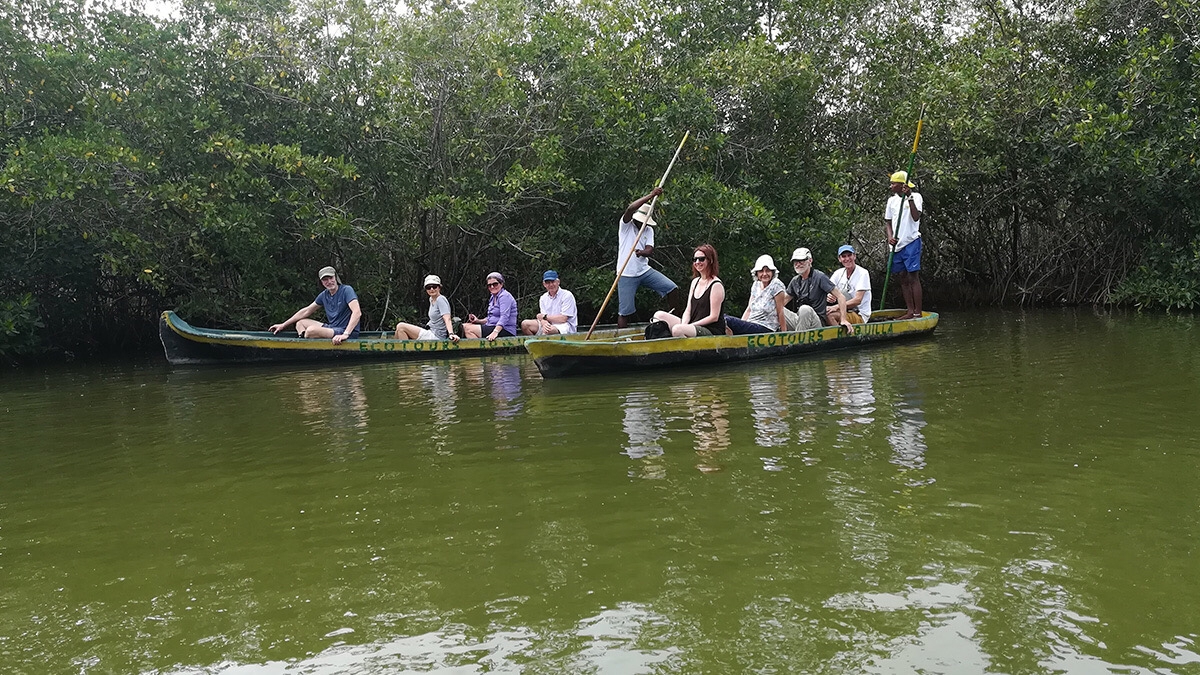
The main draw here is a fascinating ride in a traditional wooden canoe through very dense mangrove forests. Experienced local fishermen take you into the tangle of quiet waterways, where you can watch elegant herons up close, crabs hiding in the roots, and listen to absolute silence broken only by the gentle splash of wooden paddles.
This low-key ecological trip is one of the few experiences in Cartagena where your money stays directly in the hands of the local community, which is doing everything it can to keep its traditional fishing livelihood alive in the face of the aggressively expanding modern hotels nearby.

19. Bazurto Market (For the Strong-Willed Only)
Bazurto Market is huge, noisy, chaotic, and in places honestly quite dirty, and its average rating of 3.7 from more than 12,000 reviews says it all. It’s not a tourist attraction, it’s the everyday reality of Colombian life. They sell absolutely everything imaginable here, from raw meat hanging on hooks in the sweltering heat to enormous piles of exotic fruit and counterfeit brand-name clothing and electronics.
Heading here on your own is strongly discouraged for foreigners for safety reasons — the maze of stalls is incredibly confusing, and organized pickpockets often operate unnoticed in the crowd. If you want to see this authentic market, go only very early in the morning and exclusively with a licensed local guide who knows exactly how to navigate safely.
With a good guide, though, it can be an absolutely fascinating experience — you’ll taste strange exotic fruits you’ve never seen in your life and see the real, non-touristy face of the city without the gloss. But definitely don’t come here for ordinary shopping for nice souvenirs — for that, the markets in the center are better.
20. Museo del Chocolate and Colombian Cacao
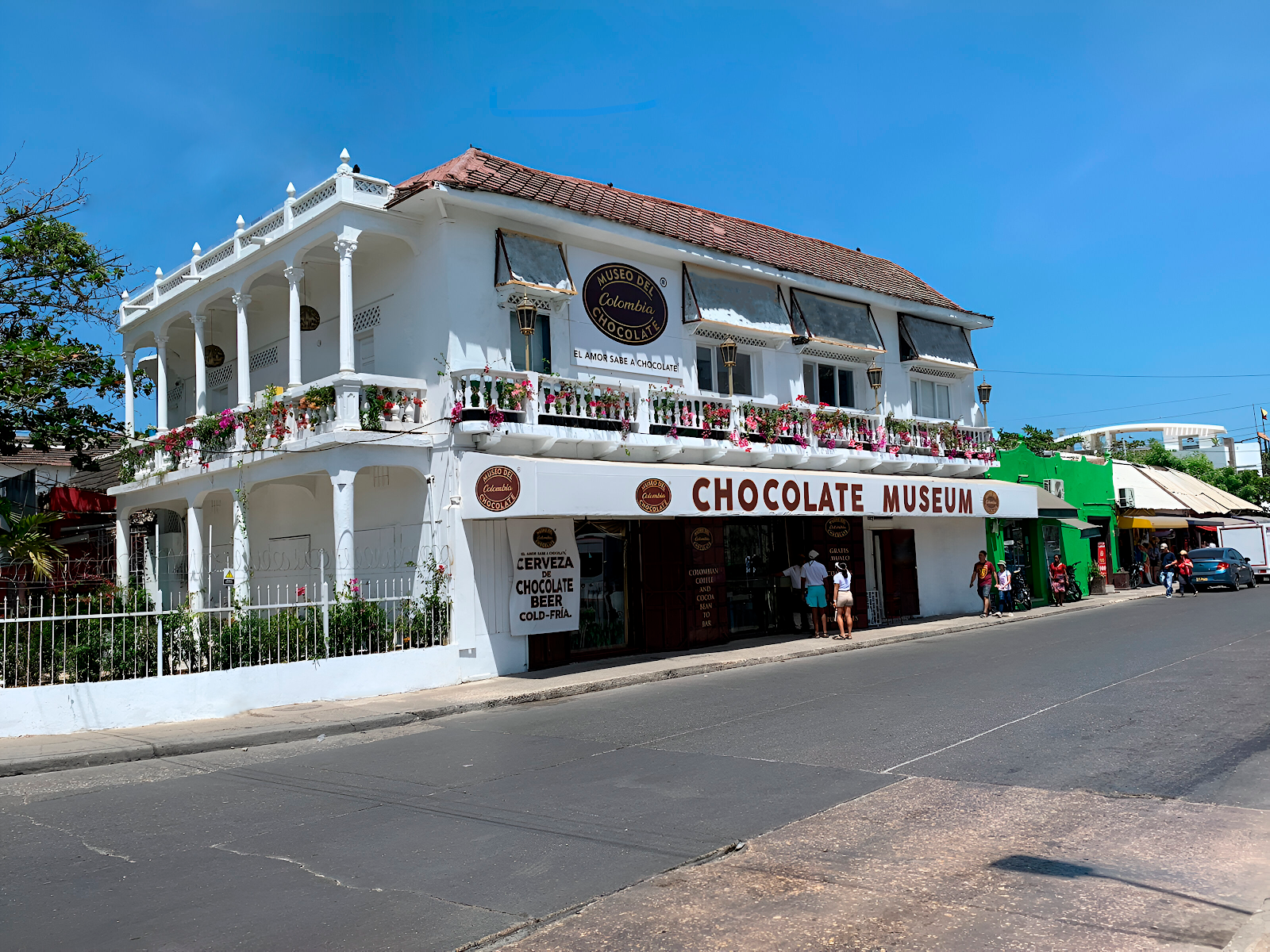
Colombia doesn’t just produce its famous, excellent coffee for the world — it also makes absolutely first-rate, high-quality cacao. If you’re looking for a great experience (not only) for families with children, definitely visit the Museo del Chocolate (an excellent 4.8 rating) right in the historic city center. It’s a smaller but beautifully interactive museum that engagingly guides you through the entire complex process, from growing the cacao beans to making a bar of delicious chocolate.
During the fragrant tour, you’ll learn plenty of surprising facts about the history of chocolate in pre-Columbian cultures, and at the end there’s of course a rich and very generous tasting of various kinds. Ideal for a hot afternoon, and neither vegetarians nor chocolate lovers will regret it.
At the little shop by the exit, you can also buy the very best edible souvenirs to take home for the family, from classic dark chocolates with a high cacao percentage to delicate pralines filled with exotic Caribbean fruit.
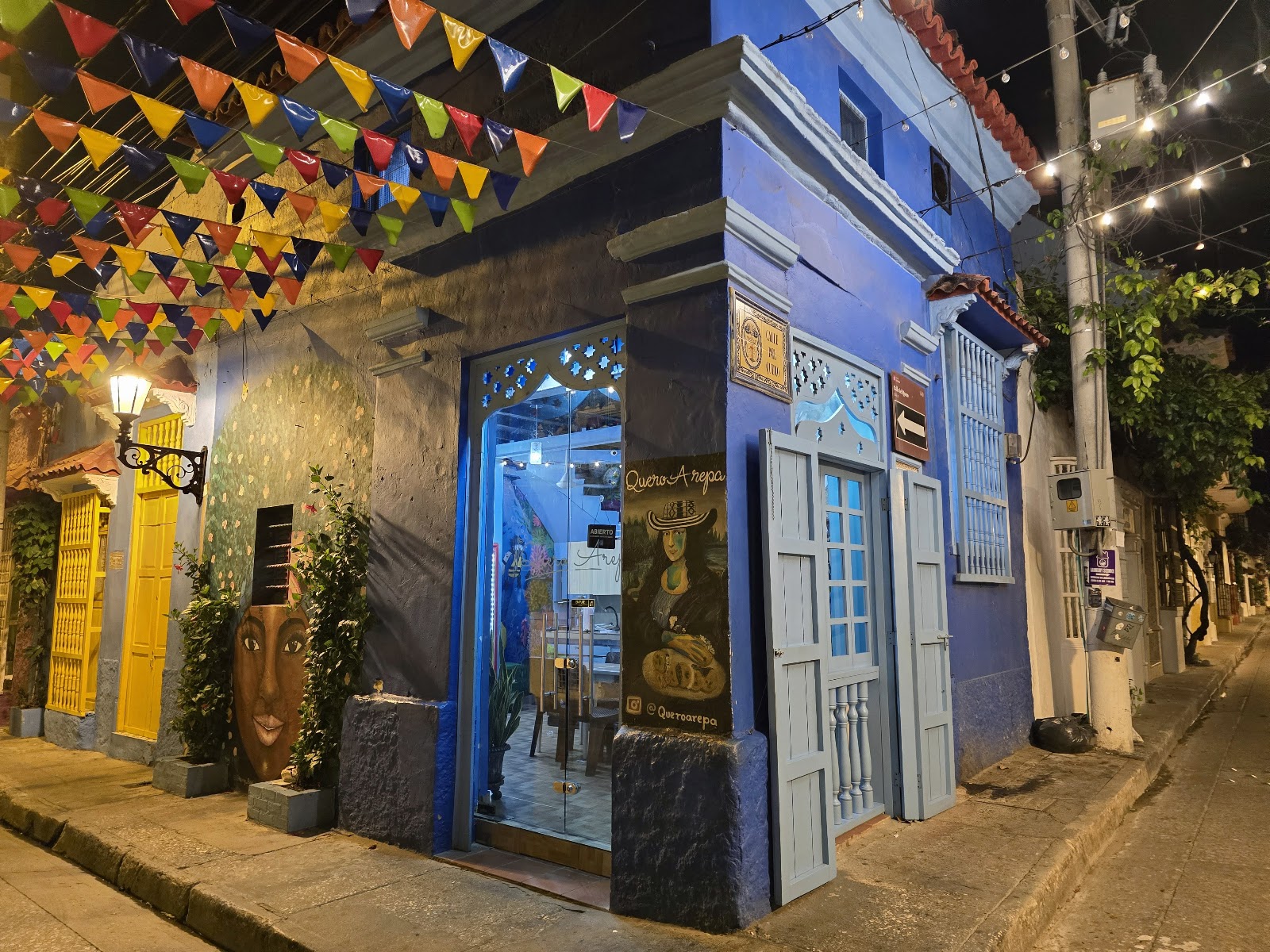
21. Street Food and Caribbean Flavors
Caribbean cuisine on the coast leans heavily on fish (sea bass, ceviche) and seafood, but even die-hard plant-based food lovers will easily find their fix here on the street. The absolute cheap sure thing you’ll find on every corner and that will save you from hunger is the arepa de queso (a thick corn flatbread grilled over fire until crispy and stuffed with lots of melted cheese).
Another absolutely perfect side dish or quick savory snack is patacones — twice-fried pieces of green plantain that are often served with garlic sauce or excellent tomato hogao. They’re incredibly filling, greasy, and very cheap.
The essential hydration in this crushing heat is best solved with jugos naturales (fresh fruit juices). I warmly recommend trying lulo (a peculiar sour taste similar to kiwi and citrus), fresh passion fruit, or the very sweet guanábana. If you’re after something thicker and creamier, limonada de coco (coconut lemonade with fresh lime) is the best and most refreshing Caribbean invention in the world. And of course, don’t forget the ever-present agua de panela (water with cane sugar and lemon).
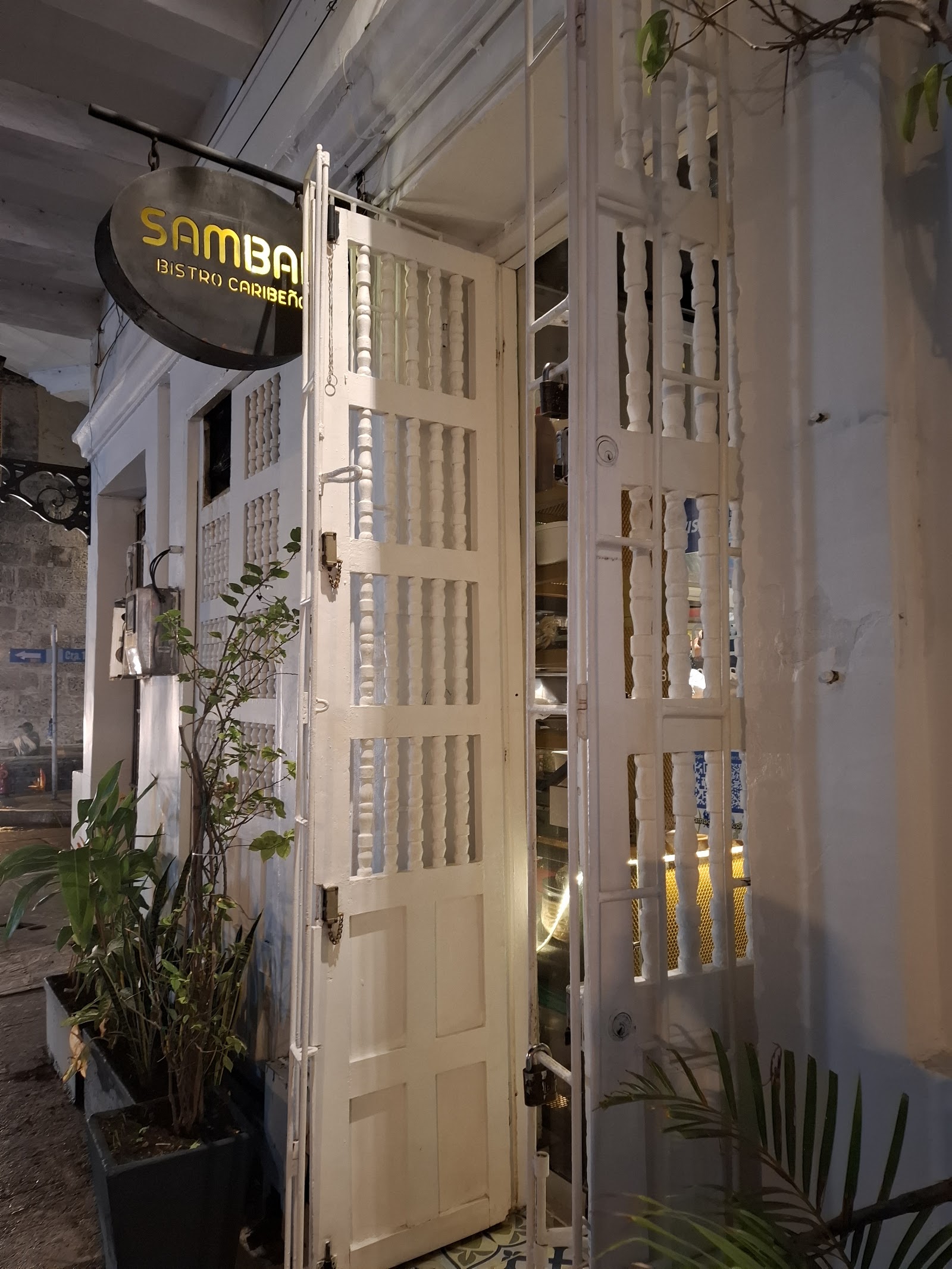
22. Where to Eat Meat-Free (Vegetarian Tips)
While most ordinary tourist restaurants in the center mainly serve pricey lobster and fried pork, the city has several fantastic and modern establishments with a purely plant-based focus. I warmly recommend trying Restaurante Sambal (an amazing 4.9 rating) in Getsemaní, an innovative Caribbean bistro that brilliantly and creatively reinvents traditional local flavors into purely plant-based dishes.
For a quick, colorful, and very healthy lunch, El Bololó | Bowls del Caribe (rated 4.8) is perfect, where they make huge, hearty bowls full of rice, beans, plantains, and fresh vegetables. Another absolute gem for vegetarians who want a break from fried street food is the bistro SANATOco (rated 4.9) in the quieter Manga district.
If you fancy something much more modern in the evening, the acclaimed Pezetarian (rated 4.8) is a great choice — it offers Asian-Caribbean cuisine with fish but also has a huge selection of fantastic, flavorful plant-based bowls. For a beautiful romantic atmosphere right in the center, visit Casa Bohême (rated 4.7) or the very stylish Restaurante Nami (rated 4.9).
Where to Go Next from Cartagena (Trips Nearby)
When you tire of the constant honking of taxis and the souvenir touts, the area around Cartagena offers a day or two of a completely different world.
- San Basilio de Palenque: This is an absolute historic gem protected by UNESCO. It’s the very first free settlement of escaped African slaves in all of the Americas, proudly founded back in 1691. Locals have preserved their own unique language (palenquero) and centuries-old African traditions to this day. It’s roughly an hour and a half from the city, and it’s absolutely essential to come here with respect and ideally with a guide from this local community.
- Volcán del Totumo: About an hour’s bus ride to the north you’ll find this utterly bizarre mud “volcano.” You climb up rickety wooden steps onto a small hill and plunge into a crater full of thick, warm mud in which you can’t sink thanks to its density. It’s a very mass-tourism affair, but the photos from here are incredibly fun.
- The Barú Peninsula and Playa Blanca: For that true fine white sand and turquoise water, you have to head roughly an hour out of the city. Playa Blanca is genuinely gorgeous, but at midday it suffers a huge influx of people from buses and boats, so you won’t get any rest there. You’ll have the best experience if you pay for simple accommodation here and enjoy the beach in peace early in the morning or at sunset, when all the crowds head back to the city.
- Santa Marta and Tayrona National Park: If you have more time in Colombia and aren’t just planning a quick stop, head about 4 hours east on a comfortable bus. It’s not a day-trip destination from Cartagena, but an amazing and essential next stop on your journey. There you’ll get access to the wild, untamed nature of the Sierra Nevada mountains and to the very most beautiful beaches of Tayrona National Park.
When planning your stay, definitely also check out our detailed article Where to Stay in Cartagena, where we break down the individual neighborhoods down to the last detail and advise you on the best hotels. Also take a look at our guide What to See in Colombia so you have your whole trip nicely planned, or read our tips on how to stay safe in South America.
Frequently Asked Questions
Planning a trip to Colombia always comes with plenty of question marks. Here are the answers to the most common questions that are bound to run through your head before you set off.
Is Cartagena safe?
In the historic center and bustling Getsemaní (where there’s a strong and visible tourist police presence), you definitely don’t need to worry during the day. The main risks here are common price scams and skilled pickpockets. However, the wild nightlife presents a serious problem. Drugging tourists with scopolamine (“devil’s breath”) for the purpose of robbery is an absolutely real threat. As warned by the Canadian government in a security alert from July 9, 2026, dating apps (Tinder, Bumble) pose an enormous risk, as organized groups use them to lure foreigners. Never leave your drink unattended and only go on dates at public and well-lit establishments.
What about taxis, do they have meters?
No, taxis in Cartagena usually don’t have meters at all and rely on tourists’ lack of knowledge. If you don’t agree on a price clearly and explicitly with the driver BEFORE getting into the car, you’ll definitely end up paying several times the normal local fare at the end of the trip. A much better and safer alternative is to use modern apps like Uber, InDriver, or DiDi, where you see the exact price upfront and avoid the stress of haggling on the street.
Should I go to the Rosario Islands or Playa Blanca?
It depends entirely on what you’re looking for from the trip. Playa Blanca on the Barú peninsula is longer, overall cheaper, and you can even get there by land, but at midday it’s absolutely packed and the beach is lined with crowds of vendors. The Islas del Rosario are incomparably better for snorkeling and offer a much more peaceful atmosphere in private beach clubs, but you must travel there by speedboat and you’ll pay those aforementioned high and annoying fees for the national park and insurance.
How do I effectively get rid of street vendors?
The key to surviving on the street is not to stop and not to show any interest whatsoever. Just say a very short but firm “no, gracias” and keep walking without eye contact. A crucial rule to remember: never take anything from them into your hands, not even if they claim it’s just a small free gift to try. Once you have the item firmly in your hand, the vendor considers the deal closed and will very aggressively demand payment.
Can you pay in US dollars in Cartagena?
No, the official currency is the Colombian peso (COP) and everything is calculated in it. Although some street vendors or taxi drivers might gladly accept dollars, the exchange rate they offer will be extremely unfavorable. Always withdraw money directly from ATMs (major brands like Bancolombia or Davivienda are reliable and safe), or exchange it at official certified exchange offices. Never under any circumstances exchange money with people directly on the street.
Can you drink tap water in Cartagena?
No, tap water is not at all recommended for drinking by foreign visitors and could ruin your entire vacation. Always buy bottled water and make sure the plastic cap has an intact seal. As for ice in drinks, you don’t need to worry about it at all in well-rated restaurants and bars, because they use exclusively safe purified water from barrels for making ice.
How many days do I need for Cartagena?
For exploring the historic center itself, walking the walls, and discovering the Getsemaní neighborhood, 2 to 3 days will be more than enough. However, if you want to add a full-day boat trip to the coral islands, a visit to the beach on Barú, or a fascinating historical trip to the village of Palenque, the ideal and recommended length of stay is 4 to 5 days so you can do everything at a relaxed pace.
Tips and Tricks for Your Vacation
Don’t Overpay for Flights
Search for flights on Kayak. It’s our favorite search engine because it scans the websites of all airlines and always finds the cheapest connection.
Book Your Accommodation Smartly
The best experiences we’ve had when looking for accommodation (from Alaska to Morocco) are with Booking.com, where hotels, apartments, and entire houses are usually the cheapest and most widely available.
Don’t Forget Travel Insurance
Good travel insurance will protect you against illness, accidents, theft, or flight cancellations. We’ve had a few hospital visits abroad, so we know how important it is to have proper insurance arranged.
Where we insure ourselves: SafetyWing (simple monthly subscription) and TrueTraveller (for extra-long trips).
Find the Best Experiences
Get Your Guide is a huge online marketplace where you can book guided walks, trips, skip-the-line tickets, tours, and much more. We always find some extra fun there!


