
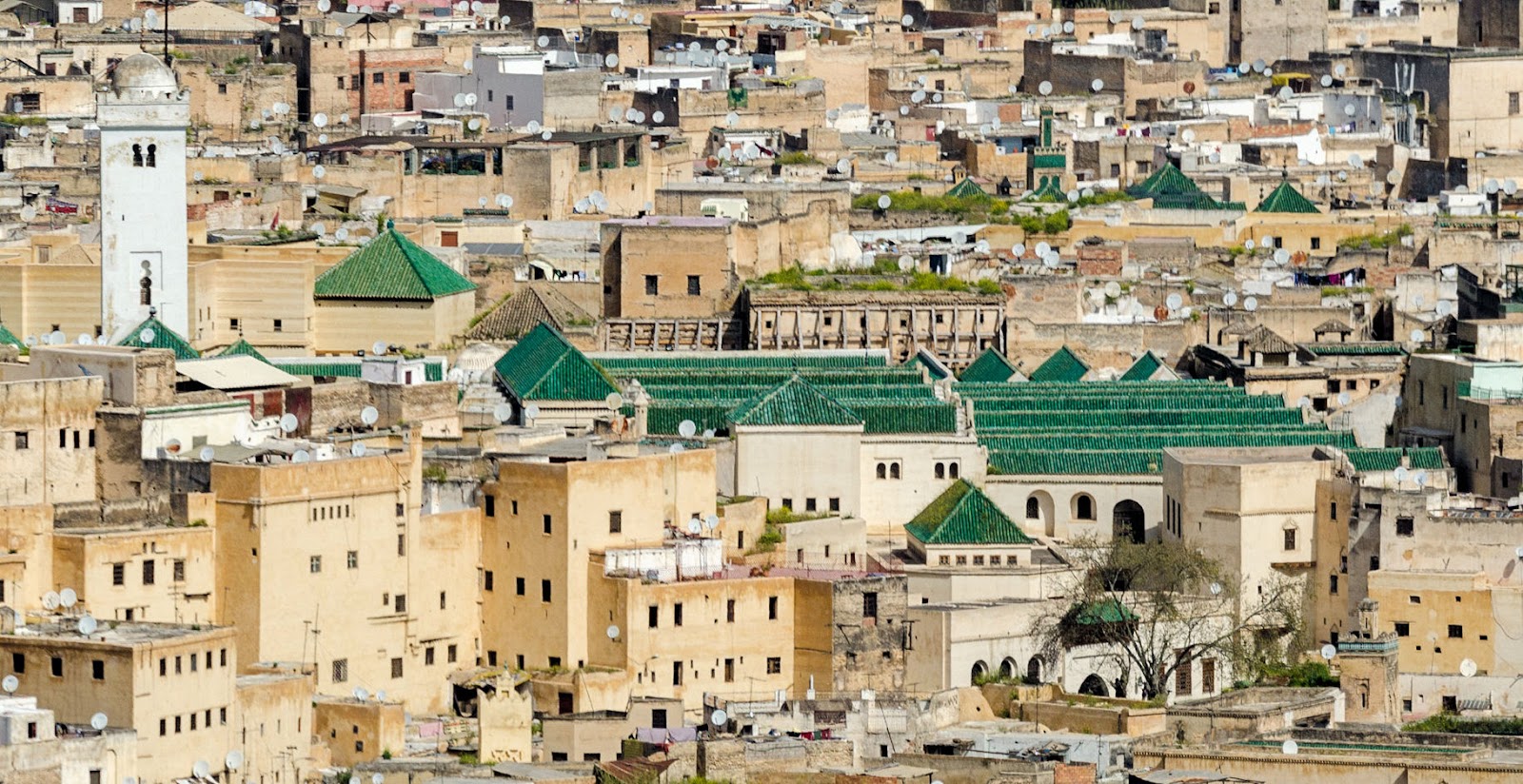
The sound of hammered copper mixes with the scent of spices as you press against a wall to let a donkey pass by. According to travel guides, the Fes medina, or old town, is the oldest and most authentic of Morocco’s major medinas. It instantly envelops you in color and bustle. The medina is a UNESCO World Heritage Site and reportedly forms the world’s largest urban car-free zone. You can easily lose yourself here, both in time and in the winding alleys.
When planning your trip, you’ll likely wonder whether to choose this city for your first visit. According to travel guides and visitor experiences, Fes is more authentic and cheaper than Marrakesh. However, it’s also much more challenging to navigate. If you want to compare, you’ll also find our guides to Marrakesh and Casablanca.
The city is coming back to life after years of extensive renovations. At the end of February 2025, Dar Batha Palace reopened following a long reconstruction. The historic madrasas, former Islamic schools, are also accessible. We’re giving you 22 tips for what to see and do in Fes, Morocco. We’re also including essential practical information about the best time to visit, transport, safety, and accommodation.
Direct flights to Fes from many international airports are limited. Munich offers the closest direct connection. From there, Discover Airlines flies every Sunday from October 25, 2026 through the end of March 2027. The flight takes about four hours. Another option is Ryanair from airports like Karlsruhe/Baden-Baden, Frankfurt-Hahn, Weeze, or Bergamo. Alternatively, you can fly via Casablanca or Marrakesh and continue by train.
For tourist stays up to 90 days, you don’t need a visa. A passport valid for at least three months from your entry date is sufficient. Remember that you can only bring in a maximum of 2,000 MAD (around €180) in Moroccan dirhams. You should leave your drone at home. Importing one requires special permission issued practically only to companies. If you don’t declare your drone at customs control, you risk confiscation and a fine.
TL;DR
- How many days: Reserve two full days for the medina itself and use the third day for a trip to the surrounding area.
- When to go: The best weather with temperatures around 22 to 26 °C is in April, May, late September, and October.
- Transport: Direct flights are available from Munich on Sundays or via Ryanair from German airports.
- Airport to medina: Take a taxi from the airport for 120 to 150 MAD (€11-14) during the day; you’ll need to walk to your hotel inside the medina.
- Guides and scams: The historic center is a maze where you’ll encounter fake guides and the common excuse that a street is closed.
- Safety at night: Tourist areas are safe during the day, but watch your belongings due to petty crime. After dark, exercise greater caution.
- Entrance fees and cash: Count on using cash in the medina, as card payments at ticket offices aren’t reliable.
The full destination guide: Morocco — guide and what to see
When to Visit Fes and Practical Information
The ideal time to visit falls in spring and autumn months, when you can expect very pleasant weather. During April, May, late September, and October, temperatures hover around 22 to 26 °C. Late September and May are the driest, while April and October see occasional rain. You’ll enjoy exploring the old town most without drowning in sweat.
Summer in the interior can be relentless and hotter than on the coast. Average July highs climb to 35 °C and heat waves regularly exceed forty degrees. The highest recorded temperature was 46.7 °C. Winter, conversely, surprises with cold weather—in January, average daily highs stay around 16 °C and nights drop to 4 °C. Some traditional riads, houses with interior courtyards, can be cold in winter according to guest reviews. Ask about heating when booking, or pack a warm sweater for sleeping.
An interesting addition to your trip could be the Festival of World Sacred Music (Festival de Fès des Musiques Sacrées du Monde). Its 29th edition took place in early June 2026. The date for 2027 hasn’t been announced yet, so check the current date at fesfestival.com. Your planning may also be influenced by the holy month of Ramadan, which in 2027 falls roughly from February 8 to March 9, with a possible one-day variance. During Ramadan, expect fewer establishments to be open in the medina during the day, and opening hours of some monuments may shift.
If you’re wondering how much time to allocate for the city, it’s recommended to reserve two full days for the medina. You can then spend the third day on an excursion to the ancient city of Volubilis or neighboring Meknes. Two days give you time to soak up the atmosphere and visit the main attractions without unnecessary rushing.
The local currency is the Moroccan dirham, and in markets and at monument entrances you can’t do without cash. You’ll find plenty of ATMs in the city, but according to travel guides, expect a withdrawal fee of around 30 MAD (€3). Bargaining is part of the local culture, but for ordinary goods, the final price typically differs from the first offer by only 20 to 30 percent. You don’t bargain for food at all. Tipping is customary in Morocco, typically 5 to 10% in restaurants and 10 to 20 MAD (€1-2) for small services. You can solve data connectivity with a local SIM card from Orange, Maroc Telecom, or inwi, or get an eSIM. You’ll manage with Moroccan Arabic (darija) or French here, and occasionally with younger people you’ll succeed with English.
When packing your suitcase, think about clothing that respects local customs. Outside resorts, modest dress is recommended, which in practice means covered shoulders and knees. You’ll appreciate sturdy, comfortable shoes on slippery pavement, steep stairs, and when avoiding donkey droppings. For hygiene reasons, drink only bottled water and always wash fruit from stalls thoroughly before eating.
Safety, Scams, and Transport
During the day, tourist areas are safe, but watch your belongings due to petty crime. At night, greater caution is advised. Fes specifically appears on lists of cities where this warning applies. After dark, stick to main streets and don’t venture into empty corners. You’re also strongly advised to use services of official guides and be careful of unofficial ones who offer services at unreasonable prices.
A specific feature of the local medina is the huge number of self-appointed guides. A classic is the claim that a street is closed or that you can’t go in that direction. The goal is to lead you to a shop that collaborates with such self-appointed guides. Similarly, you’ll encounter assurances that the famous tannery is closed today, but a helpful assistant will show you another terrace. At viewpoints above the vats, they may then demand fake entrance fees or excessive tips up to 50 MAD (€5) combined with pressure to buy leather goods.
Unsolicited accompaniment tests tourists’ patience quite often. Someone may approach you every ten minutes. Even a paid guide recommended by your accommodation may unexpectedly drag you into carpet and ceramics shops where they have an arranged commission. Vigilance pays off in restaurants too. According to guest reviews, unexpected kitchen charges of 50 MAD (€5) have appeared, and non-alcoholic beer was charged as beer for 70 MAD (€6). Always ask for a menu with prices and carefully check the final bill.
The best defense against touts is a polite but firm “la, shukran” (Arabic for “no, thank you”) and continuing to walk steadily. If you want to hire an official licensed guide, always ask to see the tourism ministry card. According to traveler discussions, expect to pay around 300 MAD (€27) for half a day and 400 to 600 MAD (€36-55) for a full day. Agree on the price, route, and clear rule of “no shops” in advance and only pay at the very end of the tour.
Navigation in the medina will challenge even experienced travelers. According to traveler reviews, Google Maps in the medina often misleads. Definitely download more reliable offline maps. Try to orient yourself using two main streets, Talaa Kebira and Talaa Sghira, which lead from Bab Boujloud gate down to the Al-Karaouine Mosque. The golden rule is simple: avoid empty dead-end alleys and stick to busier streets where locals are flowing.
Fes-Saïs International Airport is located about 13 kilometers from the center. A grand taxi will take you to the city during the day for 120 to 150 MAD (€11-14) according to travel websites. At night the rate increases to 200 to 250 MAD (€18-23). You can’t rely on a meter for this route; agree on the price in advance. Taxis won’t enter the medina and will usually drop you off at Bab Boujloud Blue Gate or at Bab Rcif square, where porters with carts will help you with your luggage. Cheaper is bus number 16 for 4 to 5 MAD. It takes about 40 minutes and ends at the train station. You’d search in vain for the Uber app here—it doesn’t work in the city. You can then easily move around Ville Nouvelle and to the ramparts in small red taxis called petit taxis, where you should insist on turning on the meter.
By train from Casablanca it takes about 3 hours and 50 minutes, and a second-class ticket costs 130 to 180 MAD (€12-16). The journey from Marrakesh takes 6.5 to 7 hours, or you can choose a one-hour domestic flight. From Tangier you’ll arrive on a direct Al Atlas connection in 4 hours and 13 minutes. Faster is to use the high-speed Al Boraq train to Kenitra and transfer there to Al Atlas, which takes about 3 hours and 25 minutes. Al Boraq doesn’t run all the way to Fes. Ticket prices are dynamic, seat reservations are mandatory, and purchase through oncf-voyages.ma is possible up to three months in advance. According to older traveler experiences, fake guides would board the train a station earlier to approach tourists along the way.
Drug possession carries very harsh penalties in Morocco, and alcohol may only be consumed in licensed establishments. In public it’s prohibited. Only photograph locals with their permission. In case of emergency, you can contact your country’s embassy. Before traveling, registration in your country’s citizen abroad system is recommended.
Where to Stay in Fes
For your first visit, accommodation on the edge of the medina near Bab Boujloud gate or Place Batha makes a good choice. A taxi will drop you at the gate. You then have to walk the rest of the way with heavy luggage. Alternatively, your hotel may send porters with a cart to meet you. This area is full of restaurants and makes a good starting point for morning explorations of the city.
If you don’t mind a bit of logistical inconvenience, you can choose a riad hidden deeper in the maze of the old city. There you might be woken in the morning by the call to prayer. A different experience awaits in the modern Ville Nouvelle quarter, the new town. It’s particularly suitable if you’re driving a rental car or prefer peace and quiet after dark.
In the medina, notable options include Riad Fès – Relais & Châteaux, Riad Laaroussa (five minutes from Batha gate, with its own spa), Dar Hafsa, and Riad Verus. For a classic hotel, there’s Barceló Fès Medina. However, it’s located in Ville Nouvelle, not in the medina.
You’ll find a more detailed comparison of neighborhoods and hotels in the article Where to Stay in Fes.
💡 On this map you can compare what’s currently available — you’ll immediately see how much the price changes just a few blocks away.
22 Tips for What to See and Do in Fes
If you’re planning to explore this ancient Moroccan gem, the following tips will help you organize your days in the city and its surroundings. The first fifteen points cover monuments within the city itself. The next four are experiences (hammam, cooking class, sunset, ceramic workshops), and the last three are excursions beyond the walls. Opening hours and prices change. Verify them before your visit.
1. Fès el-Bali Medina
Fes has approximately 1.26 million inhabitants, and its historic heart was inscribed on the UNESCO list as early as 1981. The city was founded by the Idrisid dynasty between 789 and 808. It reached its peak under the rule of the Marinids in the thirteenth and fourteenth centuries.
According to travel guides, this intricate maze consists of roughly 9,000 alleyways. Goods are still transported here by donkeys and hand carts. You’ll often have to dodge them. Soaking up the local atmosphere only makes sense on foot. Just be prepared that sooner or later you will get lost here.
In 2013, the medina added 308 signs (228 directional, 70 at monuments, 10 informational) and six color-coded thematic routes. However, you can’t rely on these alone. Download an offline map in advance. A proven tactic is also to stick to the two main arteries. These are the busier streets Talaa Kebira and Talaa Sghira.
💡 Tip: Both main thoroughfares, Talaa Kebira and Talaa Sghira, lead downhill from Bab Boujloud gate to the Al-Karaouine mosque. If someone tries to divert you elsewhere claiming your street is closed, don’t be fooled. The street is almost never closed.
2. Bab Boujloud
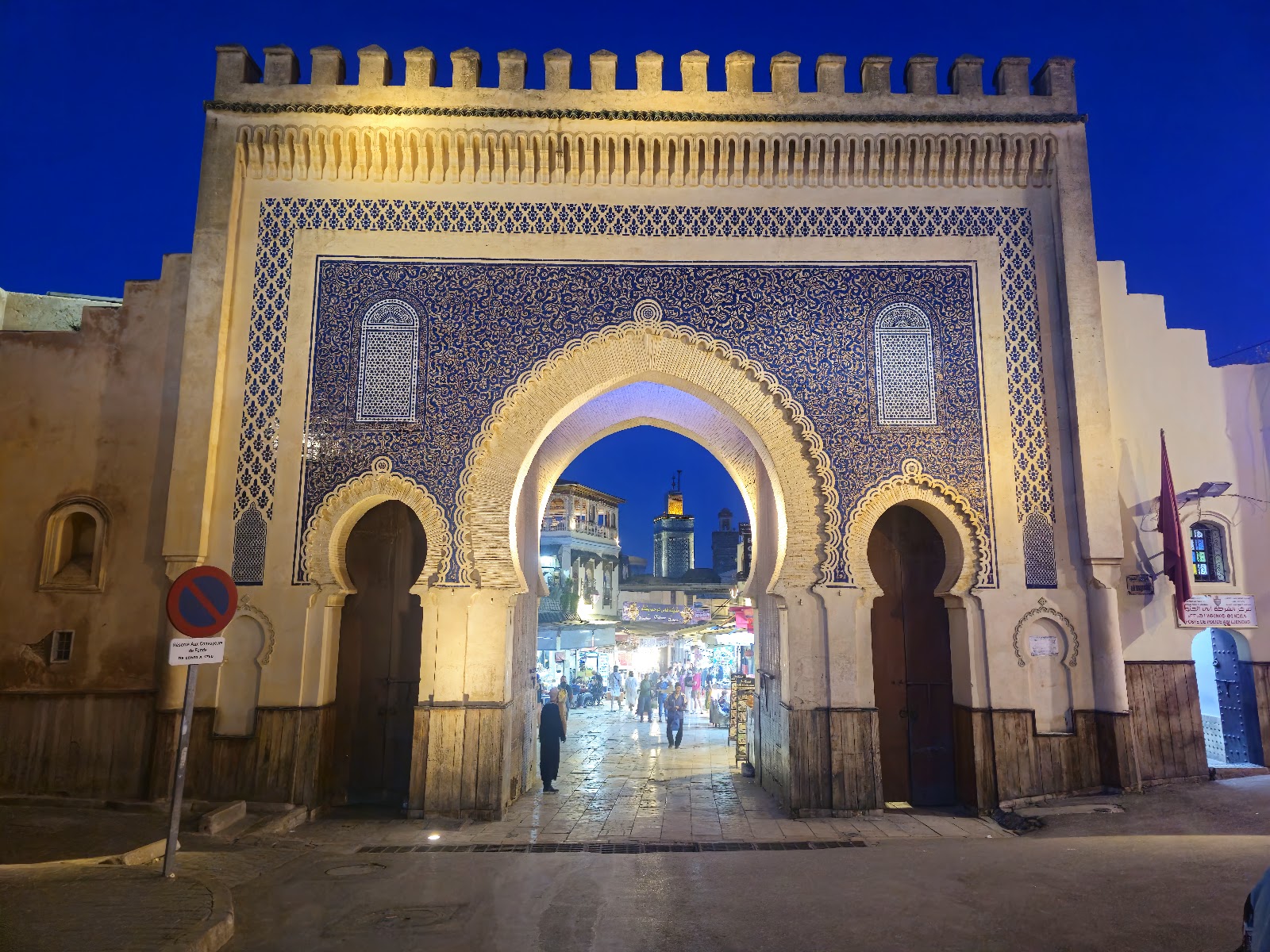
Today’s main western entrance to the medina dates from 1913. It was built as a representative gate by the French colonial administration. You can’t miss the monumental structure. Blue tiles decorate the outside, while the interior is clad in green. For many visitors, this spot represents their first contact with the pulsing old city.
Constant bustle surrounds the gate. Unfortunately, this is also where fake guides congregate in large numbers. According to traveler experiences, these self-appointed helpers are very persistent. They’ll often try to force their services on you or lead you straight to overpriced carpet shops. The best defense is a polite but firm refusal and a quick step toward the center of activity.
Just beyond the gate you’ll encounter countless restaurants and bistros. There you can gather your strength before diving into the alleyways. Vegetarians particularly recommend Veggie Pause. It lies just about a hundred meters from the gate and offers meat-free specialties.
💡 Tip: A classic red petit taxi from Ville Nouvelle will comfortably take you to Bab Boujloud gate. No cars are allowed into the historic medina itself.
3. Chouara Tannery and Viewing Terraces
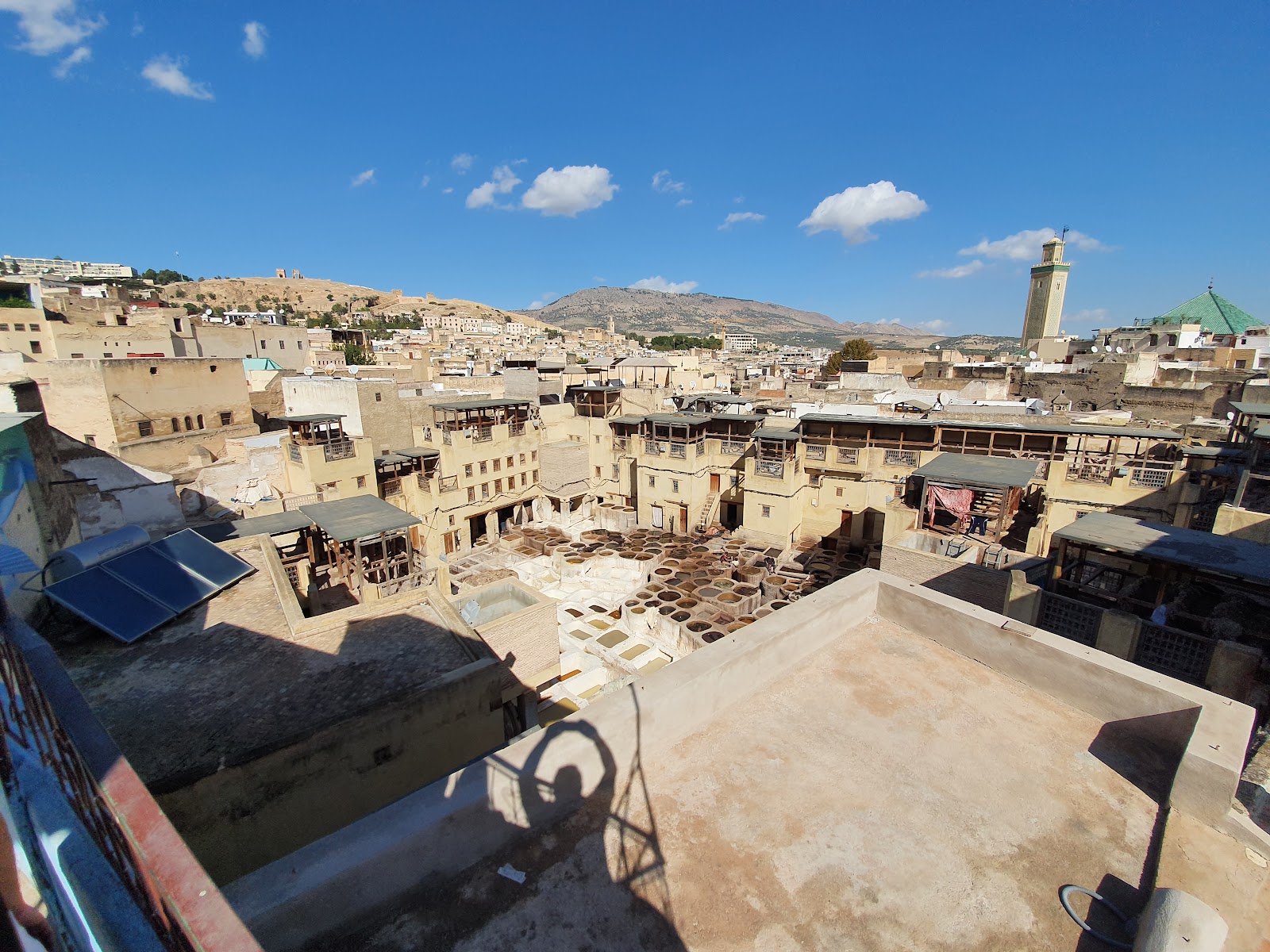
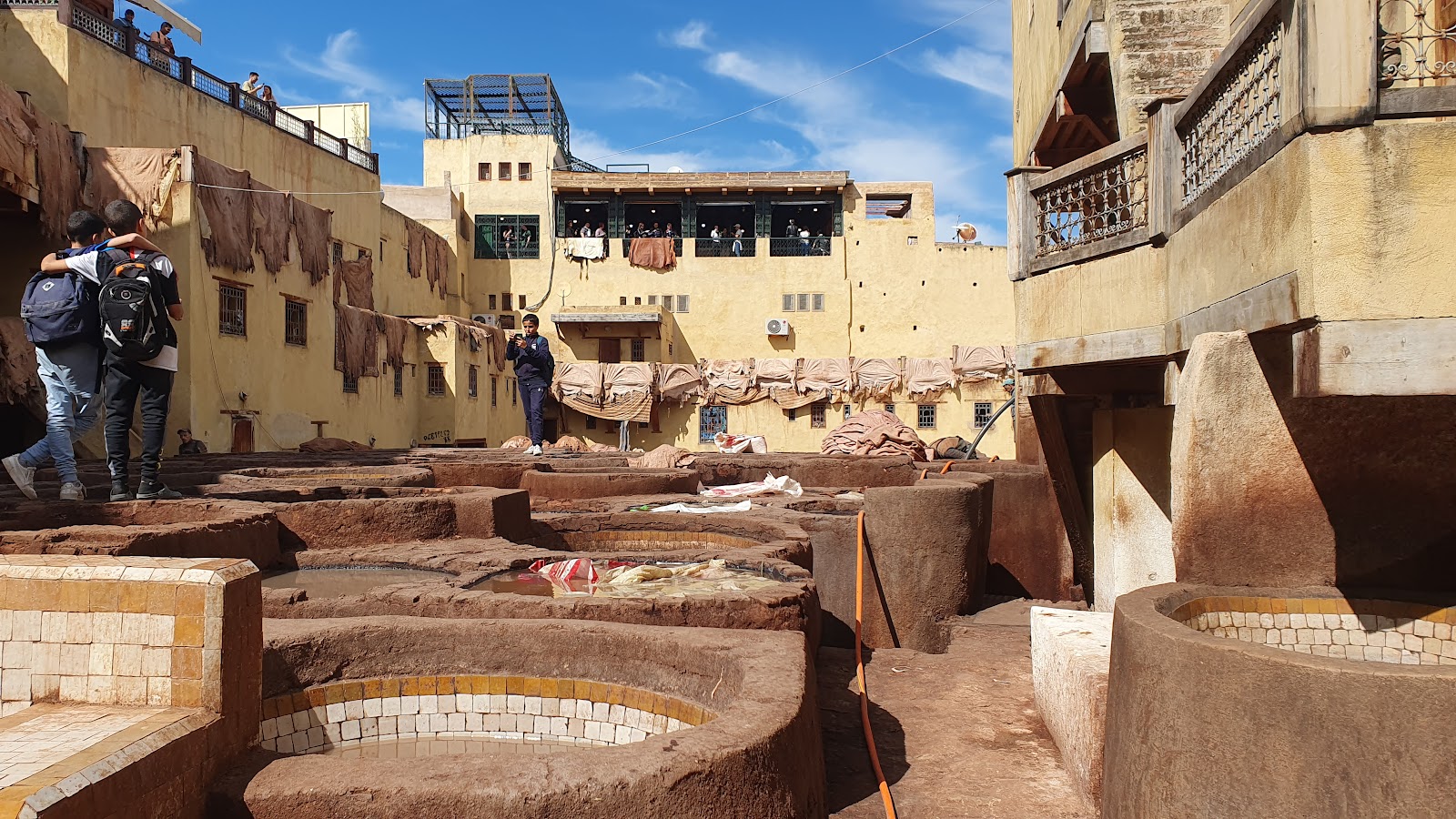
The tannery is one of Fes’s most famous sites. Chouara is the largest of three tanneries in Fes. The first phase of its extensive rehabilitation was completed in autumn 2015. You can observe leather processing from above. This offers a view of the daily hustle and bustle around the colorful vats.
Entry to the viewing terraces is free. However, you must reach them through winding corridors of leather shops. At the entrance you’ll probably receive a sprig of fresh mint against the pervasive smell. According to travel guides, simply pressing it to your nose is sufficient. If you don’t buy anything, a tip of 20 MAD (€2) is customary. According to reviews, vendors sometimes ask for as much as 50 MAD (€5). That’s too much.
Beware of touts who claim the tannery is closed today. They’ll take you to another terrace where the pressure to buy leather jackets is much greater. According to traveler experiences, leather prices there are five to ten times higher than elsewhere in the medina.
💡 Tip: According to travel advice, the colors in the stone vats are most vibrant in the morning.
4. Medersa Bou Inania
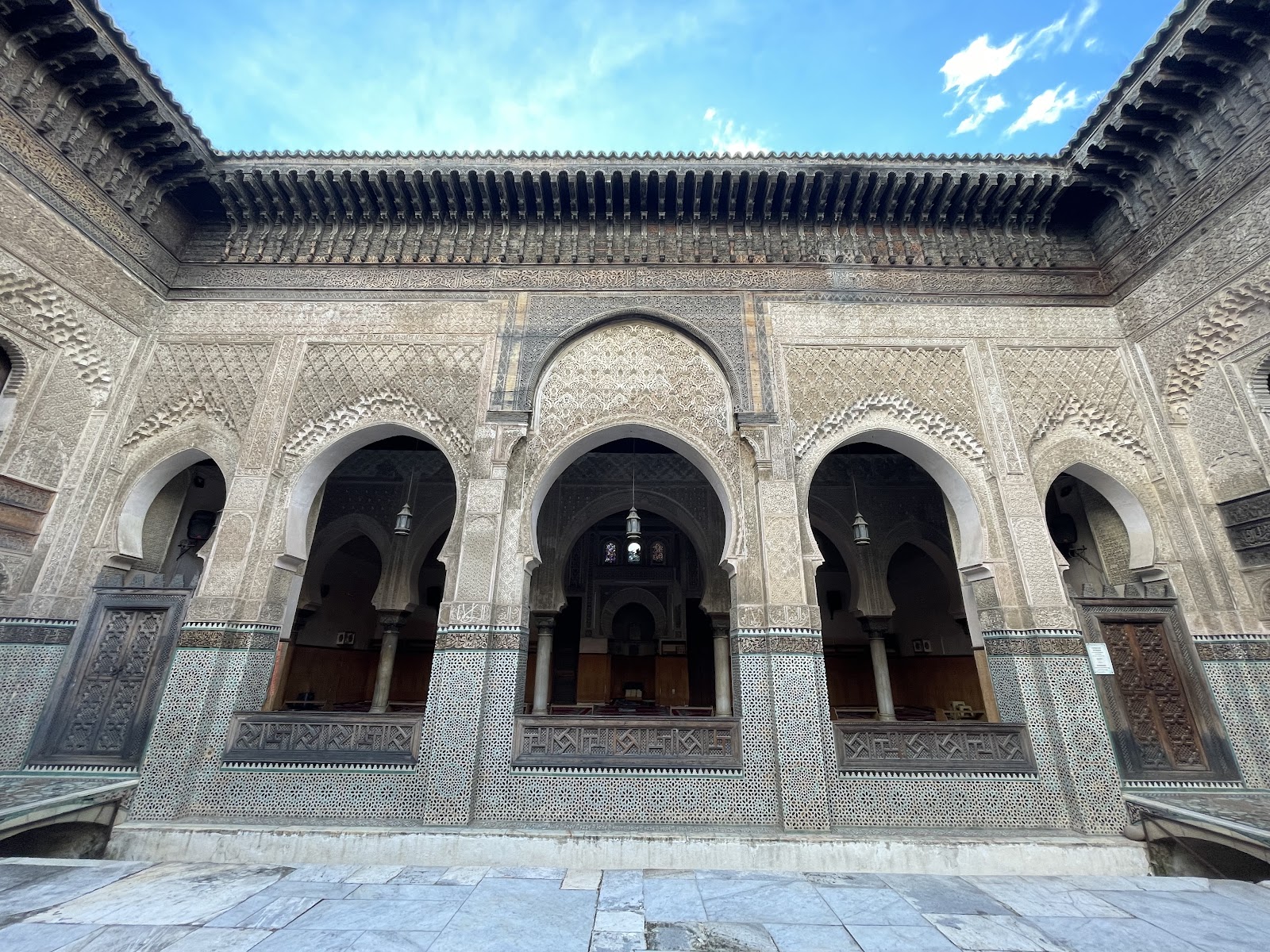
The historic building was constructed between 1350 and 1355 by Marinid sultan Abu Inan Faris. It is the only medersa in Morocco that served simultaneously as a Friday mosque.
The entrance fee is 20 MAD (€2). For this price you can explore the main courtyard at your leisure. Unfortunately, the upper floor is no longer accessible. According to travel guides, the medersa may be briefly closed during prayers. Right opposite the medersa entrance stand the remains of the Dar al-Magana water clock. You’ll find an explanation of it inside.
After your visit, the well-known cultural café Cafe Clock is convenient, just a two-minute walk from here. Vegetarians will find meat-free options on its menu. You can relax on the rooftop terrace with a view over the city.
💡 Tip: Payment cards at medersa and museum ticket offices aren’t always reliable. It’s better to always carry enough cash in dirhams.
5. Medersa Al-Attarine
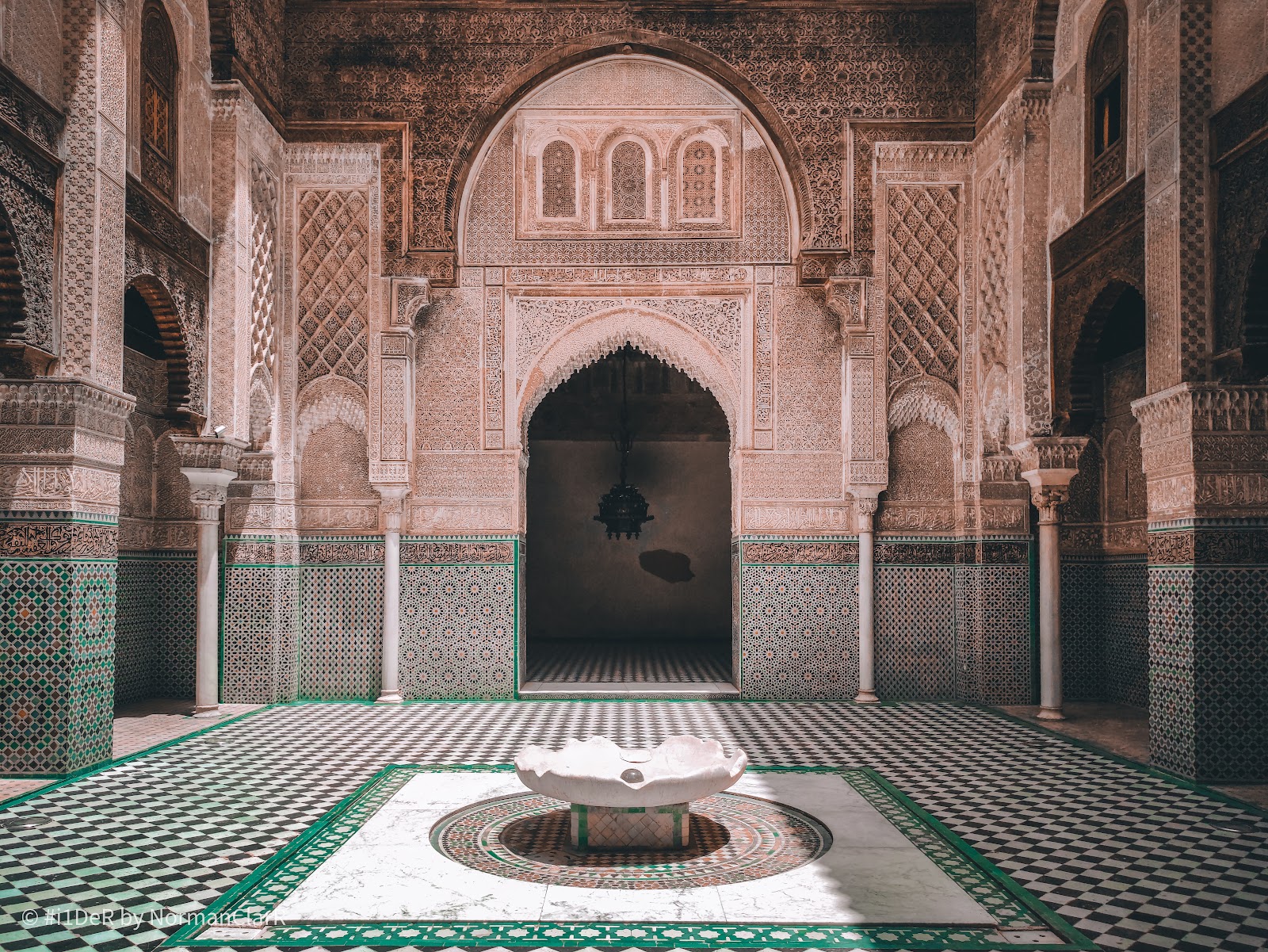
Sultan Uthman II built the medersa between 1323 and 1325. It’s considered the pinnacle of Marinid architecture. You’ll find it at Souk al-Attarine, the spice and perfume market, on Talaa Kebira street.
Entry costs 20 MAD (€2). After restoration work completed after 2013, the medersa is open.
Opening hours are roughly 9 AM to 5 PM. It may be closed at noon and during prayers. It’s best to come in the morning and verify the time in advance.
💡 Tip: Groups of ten or more reportedly get reduced admission of 15 MAD (€1.50).
6. Al-Karaouine
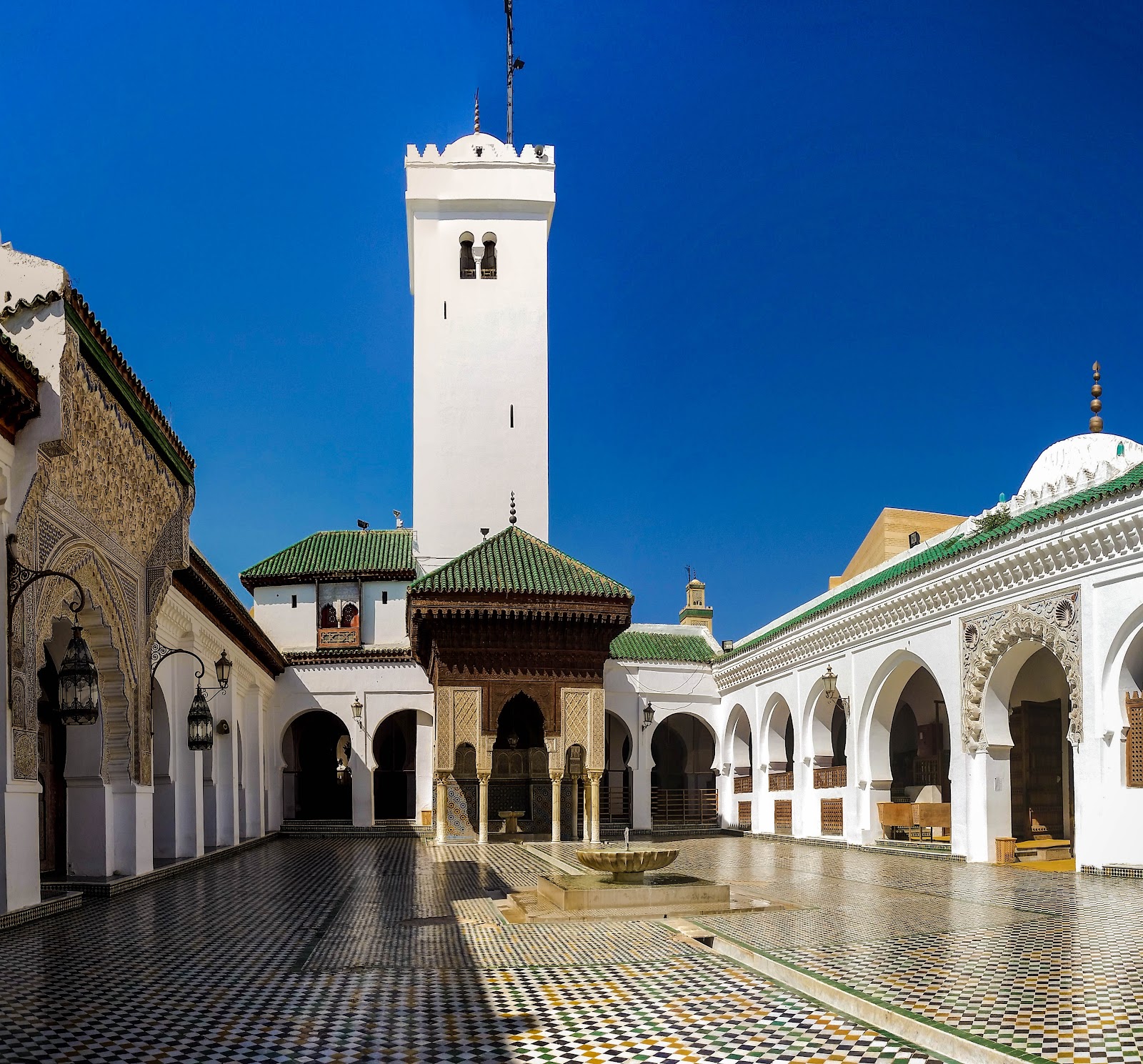
Fatima al-Fihri founded the mosque between 857 and 859. Over time, the institution grew into a university. According to UNESCO and the Guinness Book of Records, it now holds the title of the world’s oldest continuously operating university.
If you’re not Muslim, you can’t go inside. According to the Ministry of Foreign Affairs, all Moroccan mosques are off-limits to tourists, with the exception of the Hassan II Mosque in Casablanca and a few others. However, you can stand at one of the gates and at least glimpse the courtyard through the open doors.
The university also includes a historic library, whose restoration involved architect Aziza Chaouni. The library was closed from 2012, and its ceremonial reopening took place in May 2016.
💡 Tip: You can tour the Hassan II Mosque in Casablanca even as a non-Muslim, see Casablanca: What to See.
7. Place Seffarine and Medersa Cherratine
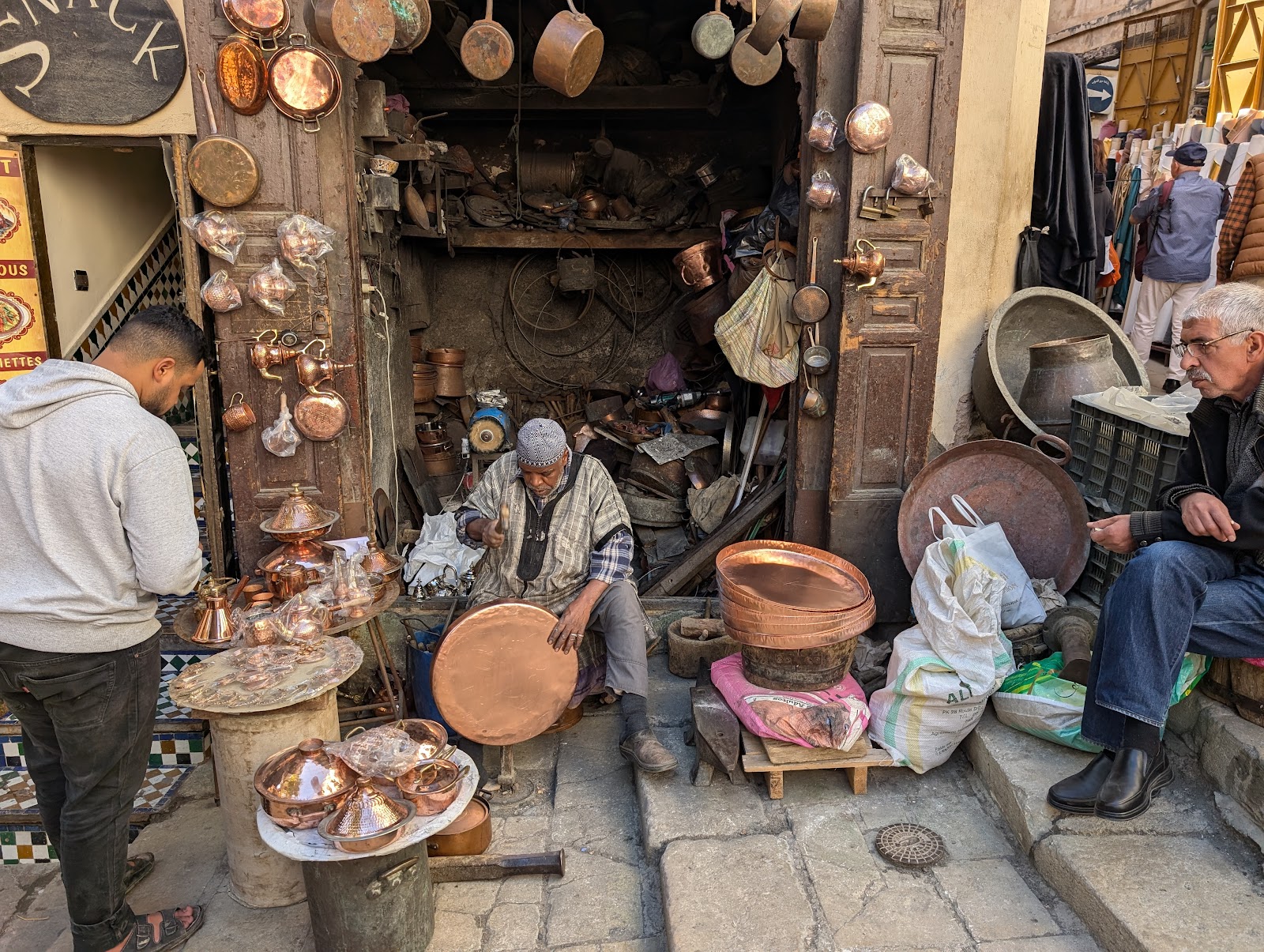
Place Seffarine is the traditional square of coppersmiths and metalworkers. The rhythmic hammering on metal can be heard from afar. Skilled craftsmen work right before your eyes, beating brass and copper into all kinds of vessels.
The square spreads out right next to the Al-Karaouine mosque and forms one of the liveliest spots in the entire medina. You can purchase some shiny souvenir right here, just don’t forget to haggle over the price.
A short distance from here lies Medersa Cherratine, which was commissioned by Sultan Moulay ar-Rashid of the Alaouite dynasty. Construction began on December 17, 1670. Compared to the better-known medersas, this school is a much less visited alternative. You can explore it in relative peace. Opening hours are roughly 9 AM to 3 PM. It’s better to verify them in advance.
💡 Tip: On Rue Jotuya, reviews praise the inexpensive Mister Falafel with falafel tacos (the establishment also sells meat). It’s about 900 m as the crow flies from Bab Boujloud gate.
8. Nejjarine Museum
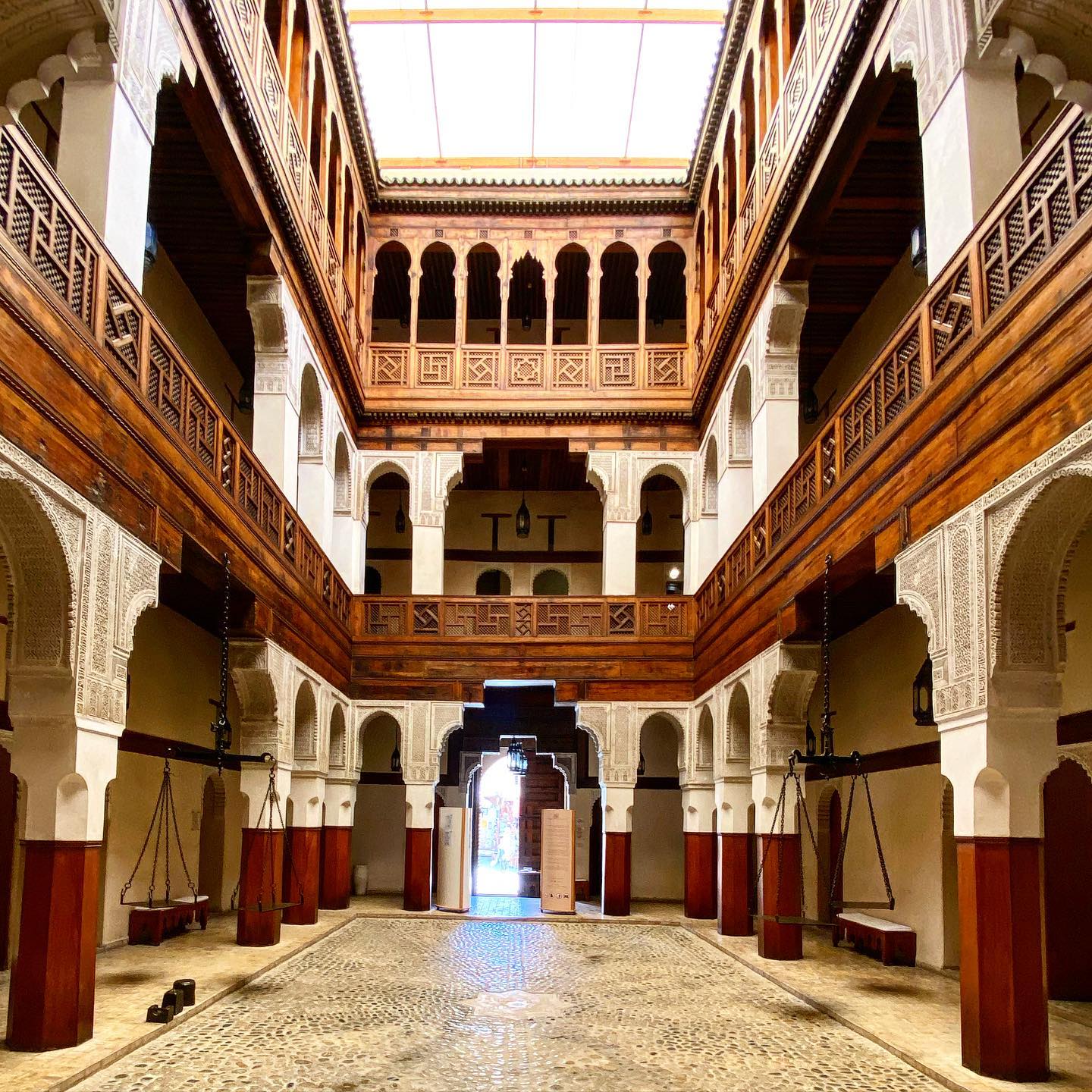
On Place Nejjarine stands a fondouk (a merchant’s caravanserai) from 1711. Today this building houses the private Museum of Wood Arts and Crafts. Entry costs 20 MAD (around €2). The museum has three floors and a rooftop café with views.
Opening hours are typically 10 am to 5 pm. Right next to the museum entrance stands the Nejjarine Fountain decorated with zellige mosaic of glazed tiles.
💡 Tip: Entry is cash only, and save the rooftop café as a reward after your visit.
9. Zaouia Moulay Idriss II
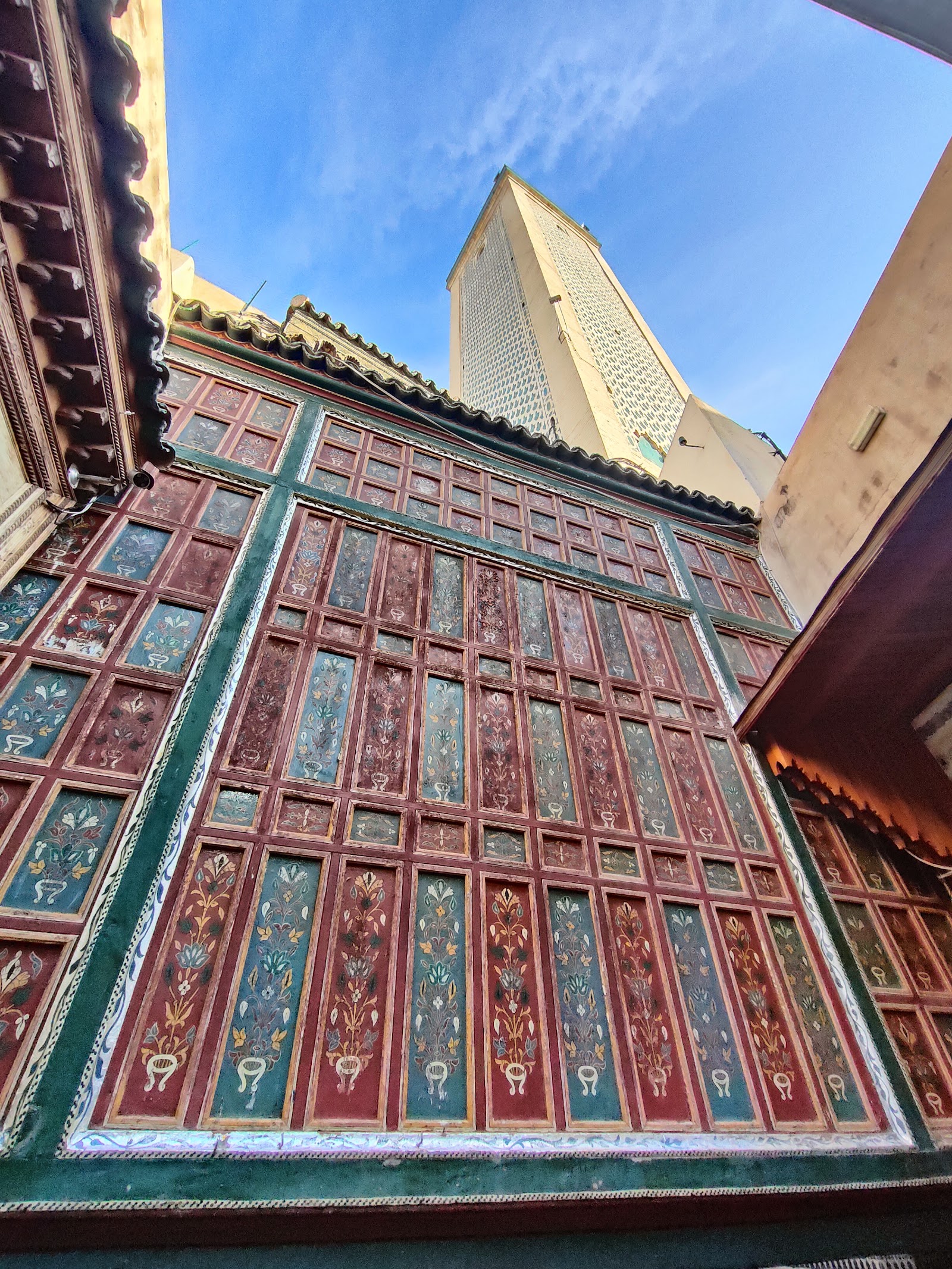
The tomb of the city’s founder, the shrine called Zaouia Moulay Idriss II, was once so strictly guarded that until 1912 no one of any faith other than Islam was allowed to set foot in the surrounding alleys. Today you can wander the area much more freely and at least view the monument from outside.
Non-Muslims are still not allowed inside, but you can walk right up to the doors. The visit takes just a moment and would be a shame to miss while exploring the medina.
You’ll find the shrine in the Souk Sebbat market area. Navigating this part of the city can be tricky, so it pays to follow signage or have an offline map downloaded.
💡 Tip: At the budget-friendly restaurant Chez Rachid on Talaa Sghira street, one guest praised the cheese omelette and eggplant salad.
10. Musée Al Batha and Dar Batha
The Dar Batha Palace, built in the late nineteenth century by Sultan Hassan I and completed by Sultan Abdelaziz, has awakened to new life. After extensive reconstruction begun in 2019, its gates reopened on February 26, 2025. It now houses the Musée Al Batha des arts de l’Islam, the Museum of Islamic Art.
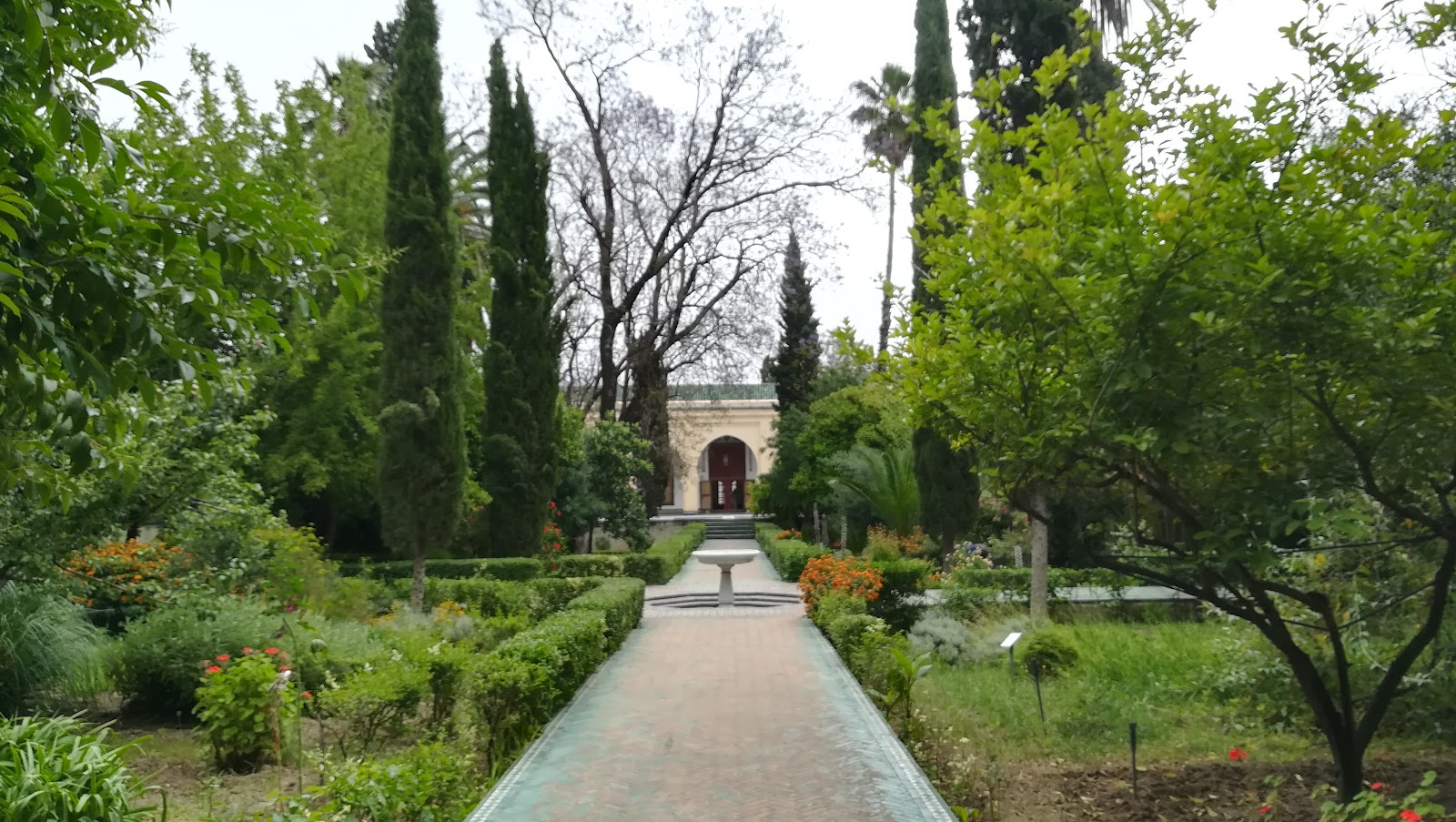
The complex covers 7,500 square meters, with ten thematic halls devoted to Islam in Morocco and more than half the space occupied by an Andalusian garden. In the middle stands an old, massive oak tree. Beneath its branches you’ll find shade.
Admission for foreigners is 60 MAD (around €5) and the museum is open from 10 am to 6 pm. Note that the entire complex is closed to the public on Tuesdays.
💡 Tip: Near the Bab Boujloud gate is the fully vegetarian restaurant Veggie Pause (see tip 2), where you can try halloumi skewers, lasagna, pizza, buddha bowls, or mint lemonade.
11. Jnan Sbil Gardens
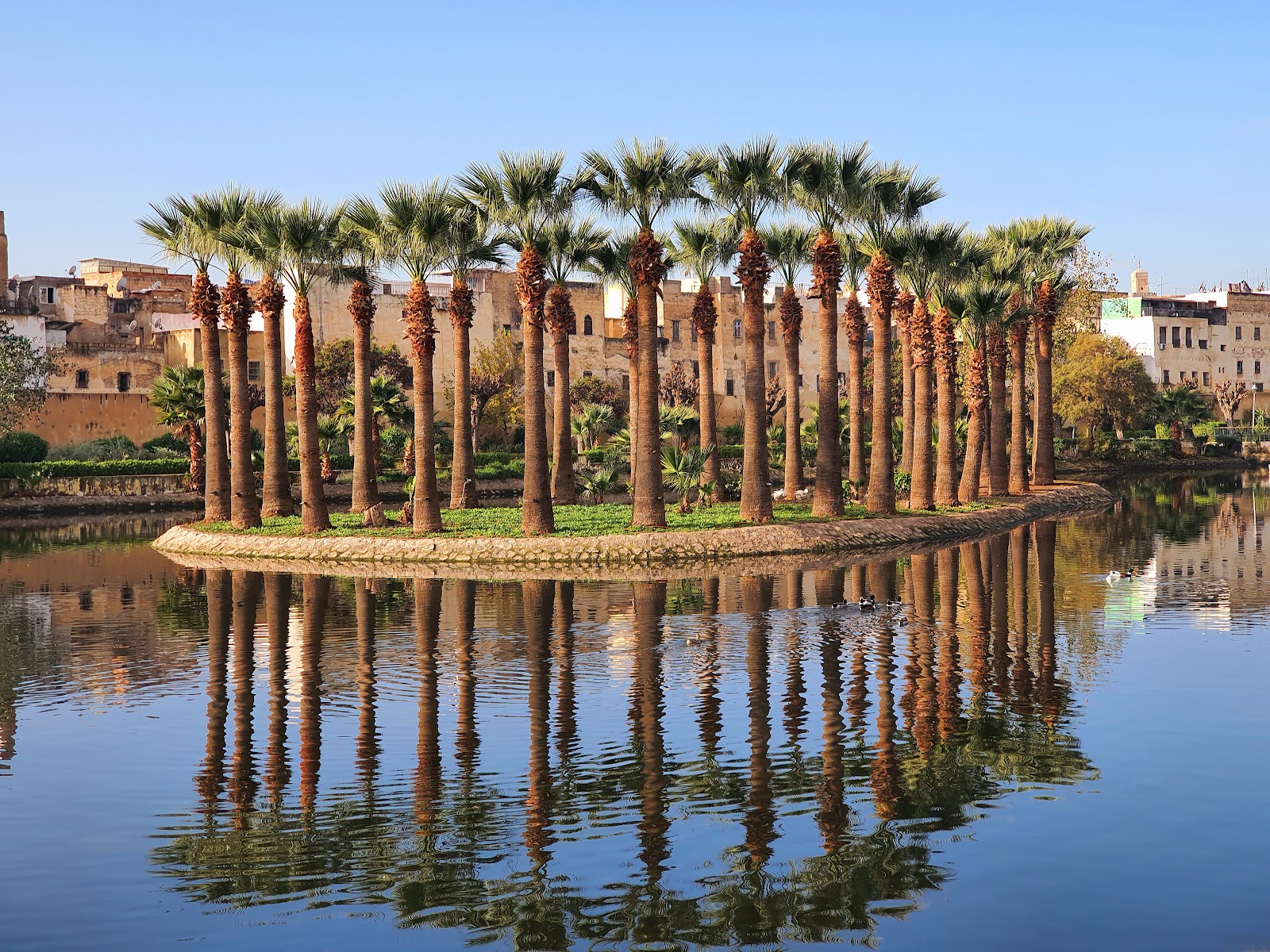
Right between the old medina of Fès el-Bali and the Fès el-Jdid quarter, you’ll discover gardens created during the reign of Sultan Hassan I (1873–1894). They cover 7.5 hectares and offer a pleasant place to rest. After extensive renovation between 2006 and 2010, the park reopened in 2011.
Entry to the complex is free (verify this before your visit). Opening hours are typically 8 am to 7 pm. The gardens were one of the venues for the Festival of World Sacred Music (June 4–7, 2026), so they occasionally serve as a cultural venue too.
Not everything in the park may be in perfect condition, though. According to reviews, smaller sections are being repaired. Even so, you’ll find it a good place to rest.
💡 Tip: According to reviews, there are clean, free toilets in the gardens, which always comes in handy during long city walks.
12. Royal Palace Dar al-Makhzen
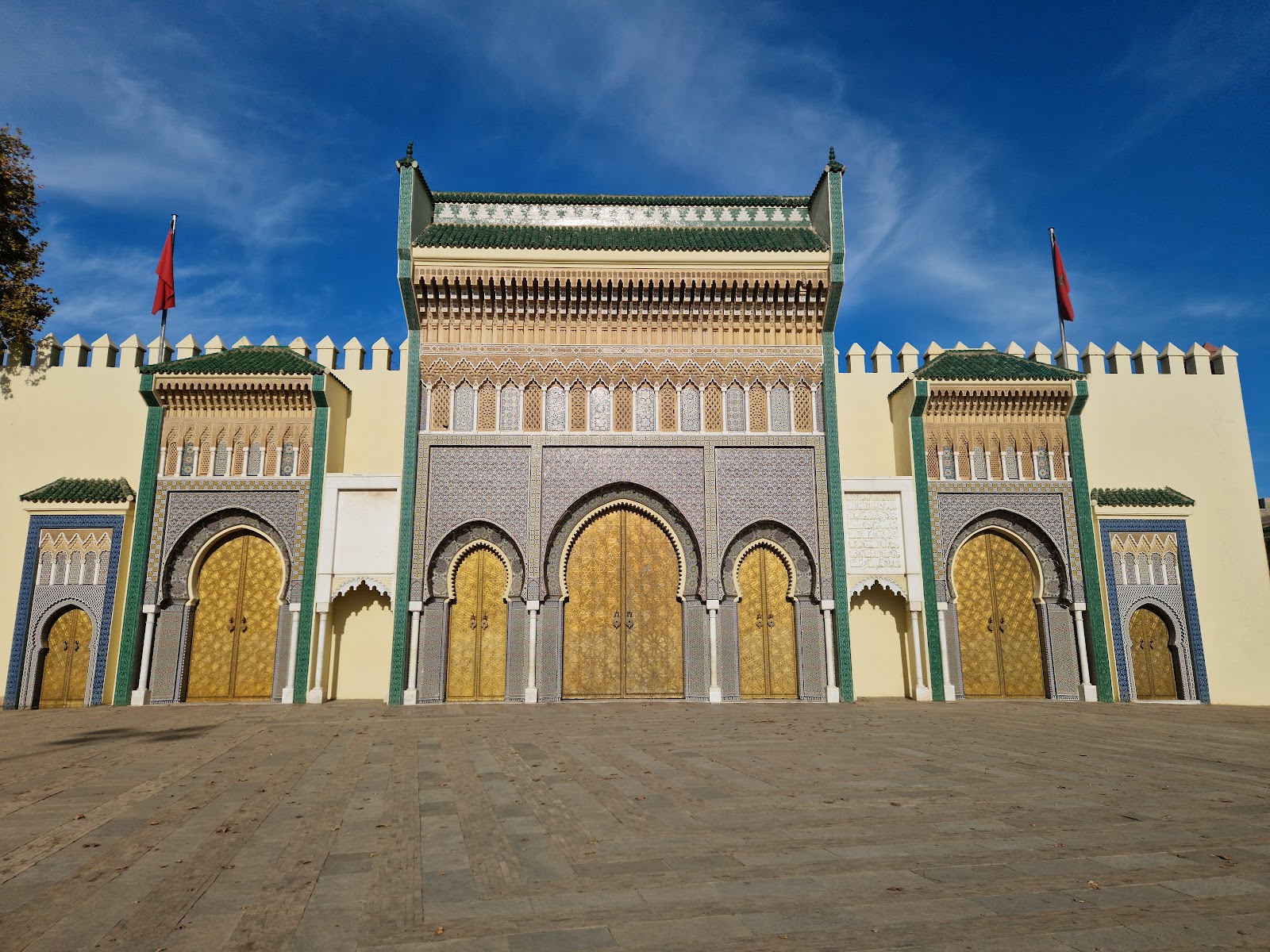
Although you can’t enter the interior of the palace on Place des Alaouites because the Moroccan royal family still uses it, you can view it from outside. The main attraction here is the gilded brass gates complemented by zellige mosaic. They make a beautiful backdrop for photos.
The palace complex sits in the Fès el-Jdid quarter. Fès el-Jdid (literally New Fes) was founded by the Marinids in 1276 as their citadel. Don’t confuse it with the modern new town Ville Nouvelle. The gates themselves, however, only date from the twentieth century. The square in front of the palace is accessible anytime, so you can visit first thing in the morning.
According to reviews, the Fès el-Jdid quarter feels much calmer than Fès el-Bali. It makes a good first stop before diving into the pulsing chaos of the old medina.
💡 Tip: After the palace gates, the neighboring Jewish quarter, the mellah, is worth a visit. It also lies in the Fès el-Jdid quarter and offers a different perspective on the city’s history.
13. Mellah and Aben Danan Synagogue
The Jewish quarter, or mellah, was established in the Fès el-Jdid quarter probably in the mid-fifteenth century. You’ll notice balconies facing the street, which are typical of the area.
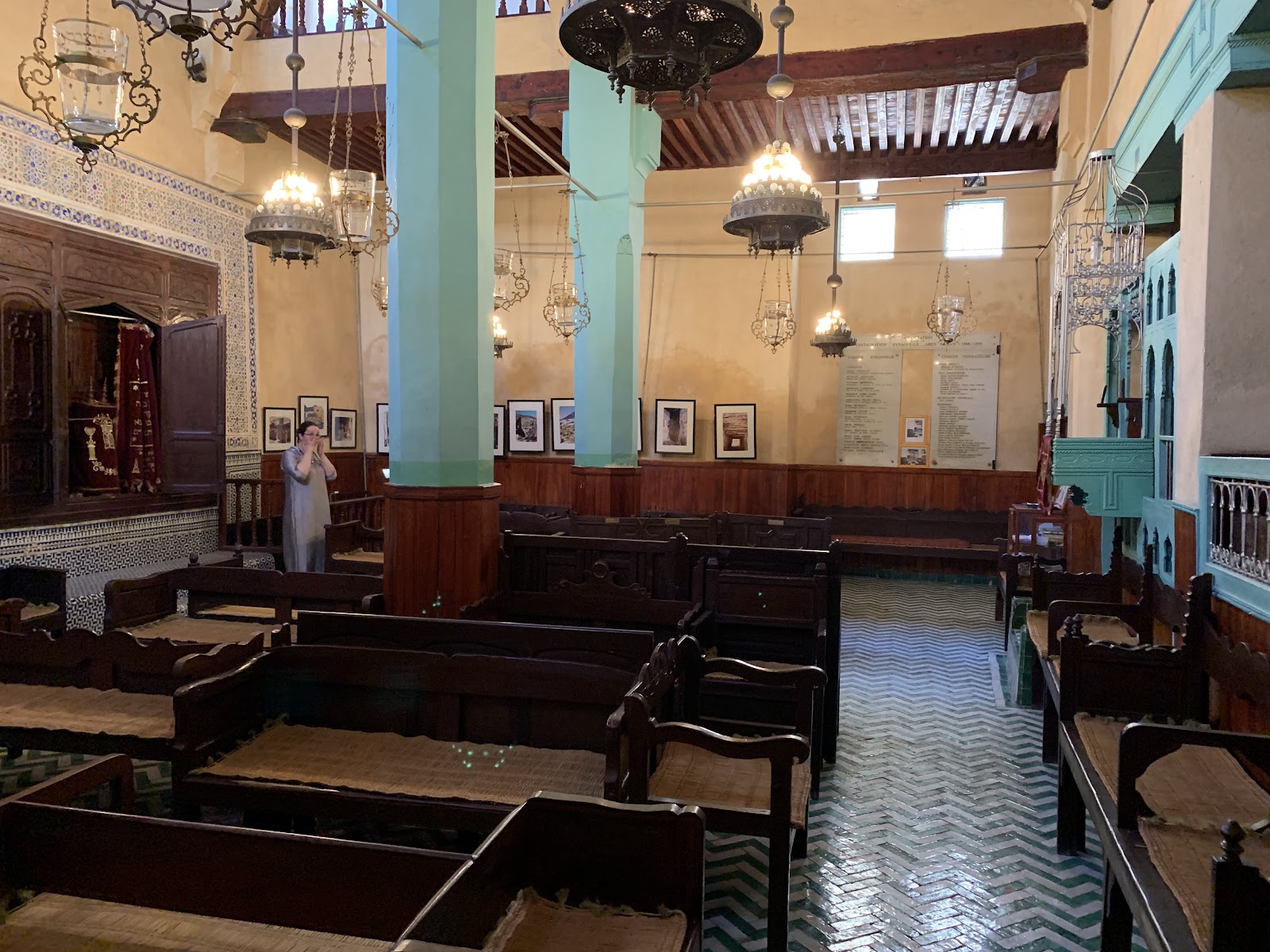
In this area you’ll also find Aben Danan Synagogue, whose original building dates from the seventeenth century. The monument underwent thorough restoration and reopened in 1999 to the public. Inside you can see the preserved ritual bath, the mikveh.
If you come here, go up to the roof of the building. According to reviews, there’s a view of the Jewish cemetery from there. Admission may vary, so ask at the entrance.
💡 Tip: When you get hungry, you can return to the Bab Boujloud gate. There you’ll find The Seventh Art restaurant, which offers halloumi curry and risotto.
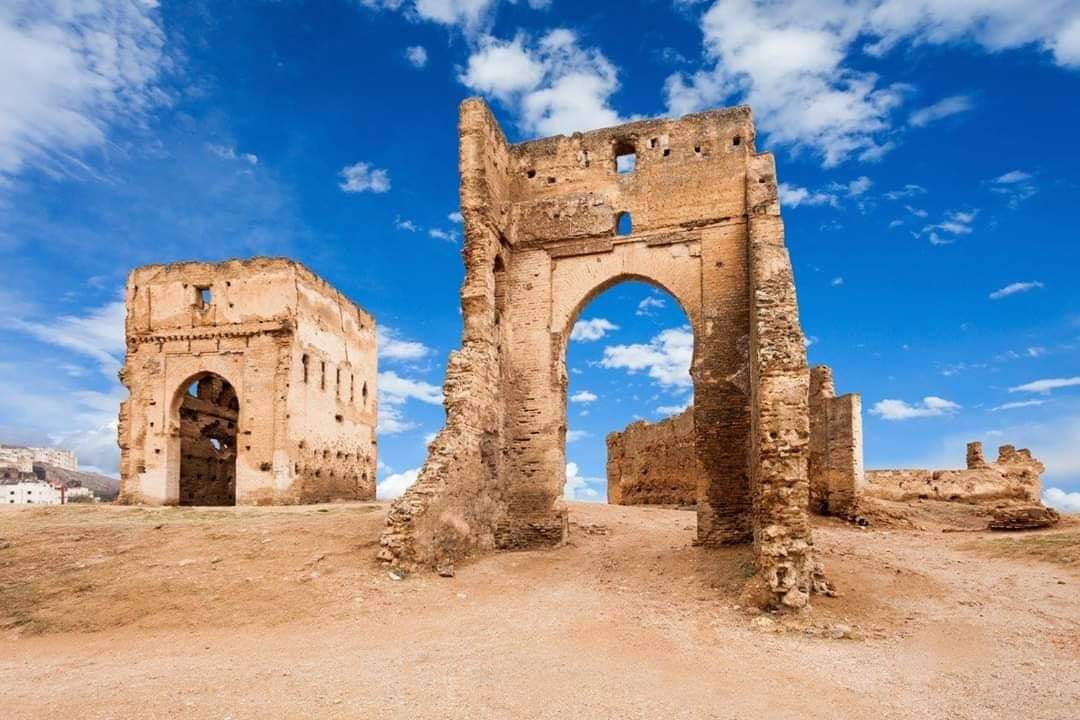
14. Marinid Tombs
High on a hill above the old medina of Fès el-Bali rise the ruins of fourteenth-century Marinid tombs. They’re currently under restoration, so you may not be able to get very close to them.
According to reviews, the view over the city from here is accessible and especially praised at sunset. On the way down you can check out the historic Bab Guissa gate, which stands just below the ramparts.
Despite all the romance, don’t forget about safety. The Ministry of Foreign Affairs recommends increased caution in Fes. Don’t walk alone to the hill at night, and after sunset head back down while there’s still light or with a group.
💡 Tip: Google lists the tombs as temporarily closed, but you can apparently walk around them. Check the current status before your visit.
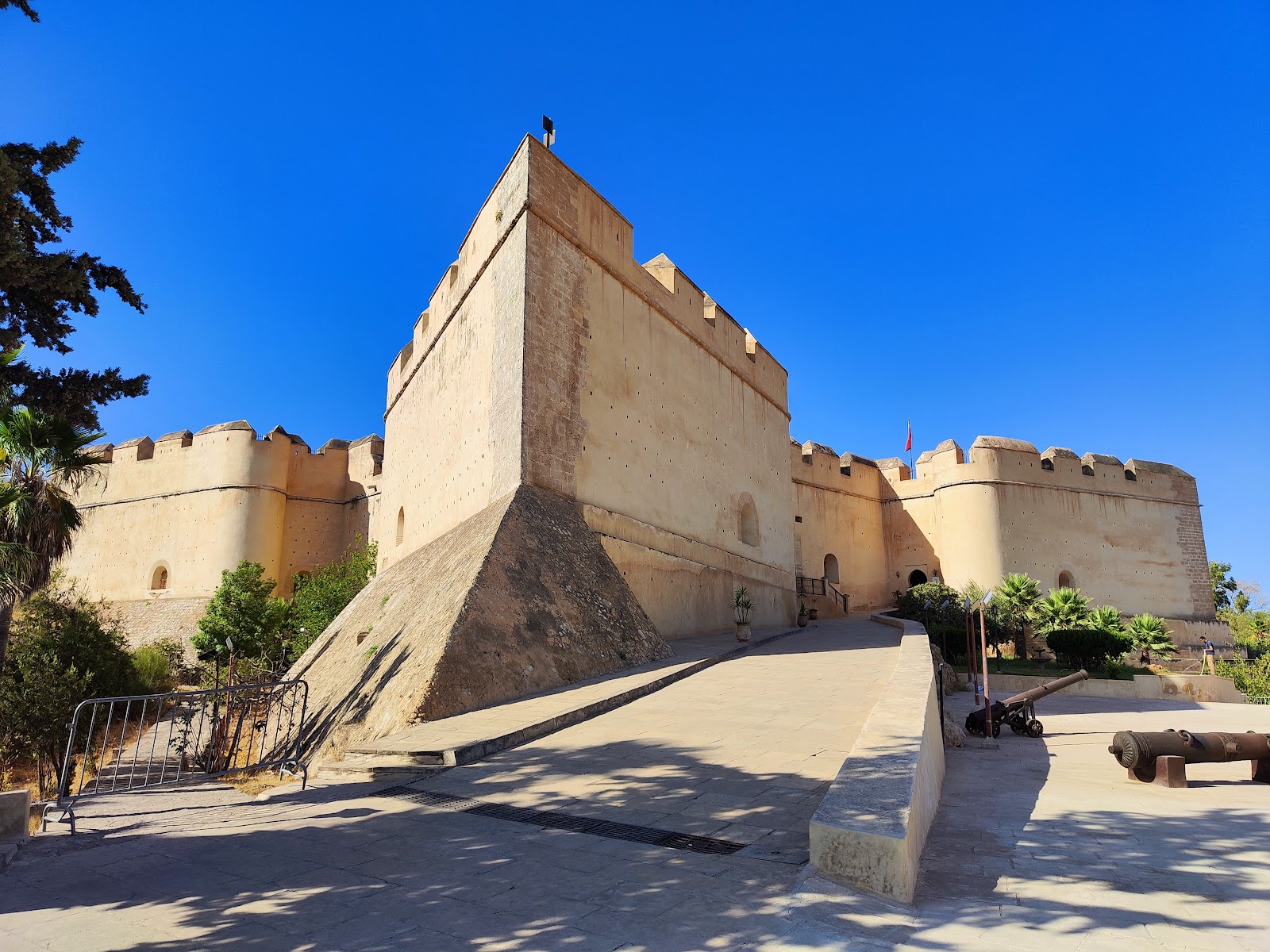
15. Borj Nord and Arms Museum
The military fortress of Borj Nord has overlooked the city since 1582, when it was built by Saadian Sultan Ahmad al-Mansur. Today its massive walls house the Arms Museum. According to press reports from 2022, the museum manages a collection of 6,245 pieces, of which 775 were on display at that time.
The tour is made easier by the fact that information labels are in Arabic, French, and also English. Admission works out to around 50 MAD (about €5). Check it in advance along with opening hours: the complex is closed on Mondays.
Besides historic cannons and muskets, visitors are also drawn by the view from the roof over the medina. You can walk to the northern fortress from Bab Boujloud gate in twenty to thirty minutes uphill. On the opposite southern hill stands the sister fortress, Borj Sud.
💡 Tip: The route from Bab Boujloud goes uphill; according to reviews, a petit taxi costs under 10 MAD (around €1).
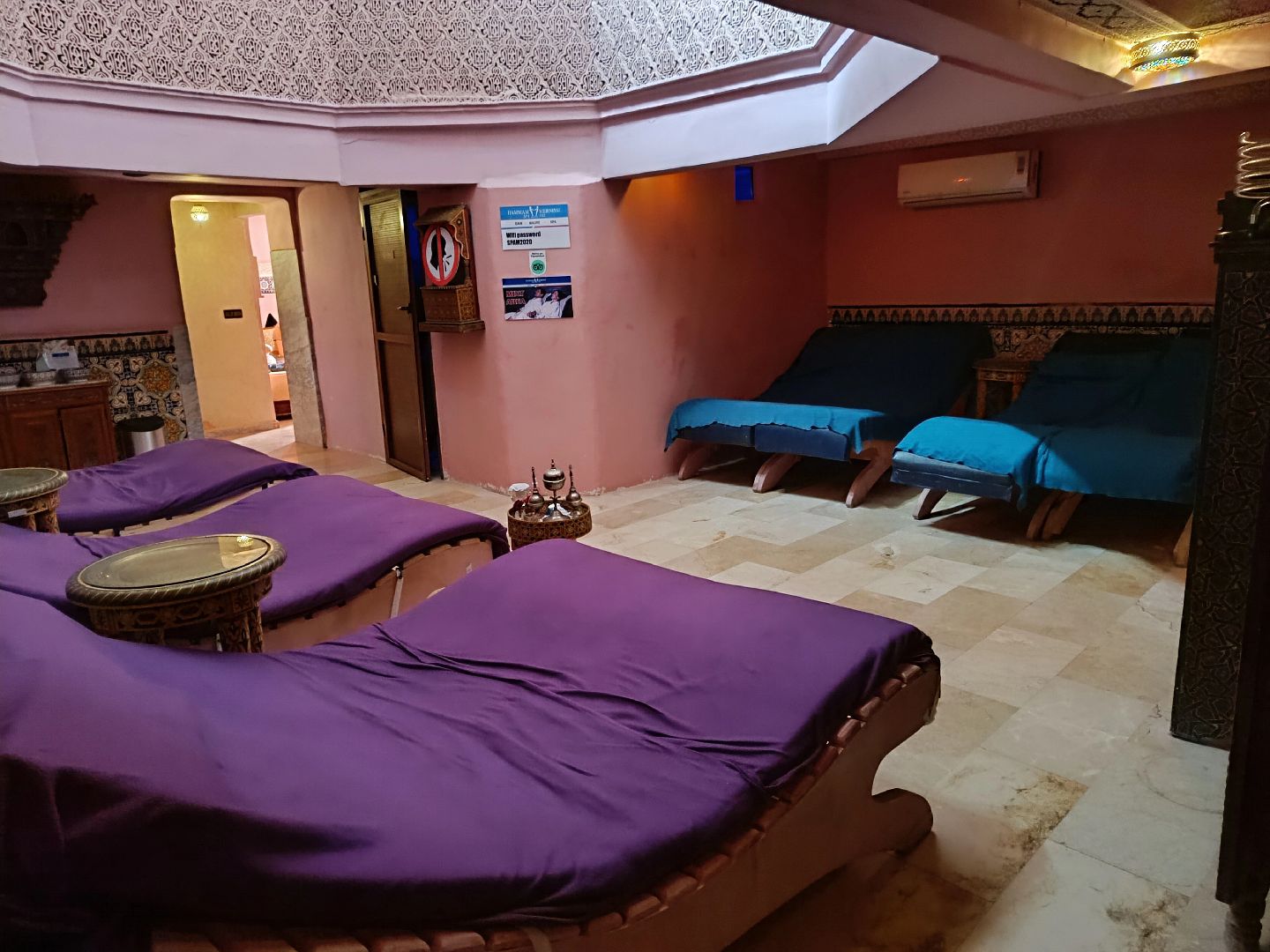
16. Traditional Hammam and Riad Spa
A hammam is a traditional Moroccan steam bath with washing and massage. For your first experience, a spa right in a riad is more suitable. These include Spa Laaroussa in Riad Laaroussa, according to reviews a luxury version of a hammam, or Hammam Mernissi & Spa near the Bab Boujloud gate.
You’ll pay more for a private treatment. According to one visitor, forty-five minutes in the hammam and thirty minutes of massage costs around 600 MAD (about €55) per person.
If you’re more adventurous, you can try public hammams, which work out significantly cheaper. Men and women have separate designated hours or rooms, and you usually bring your own mat and soap.
💡 Tip: Have your accommodation recommend a specific working public hammam for tourists, and ask about the exact price before entering.
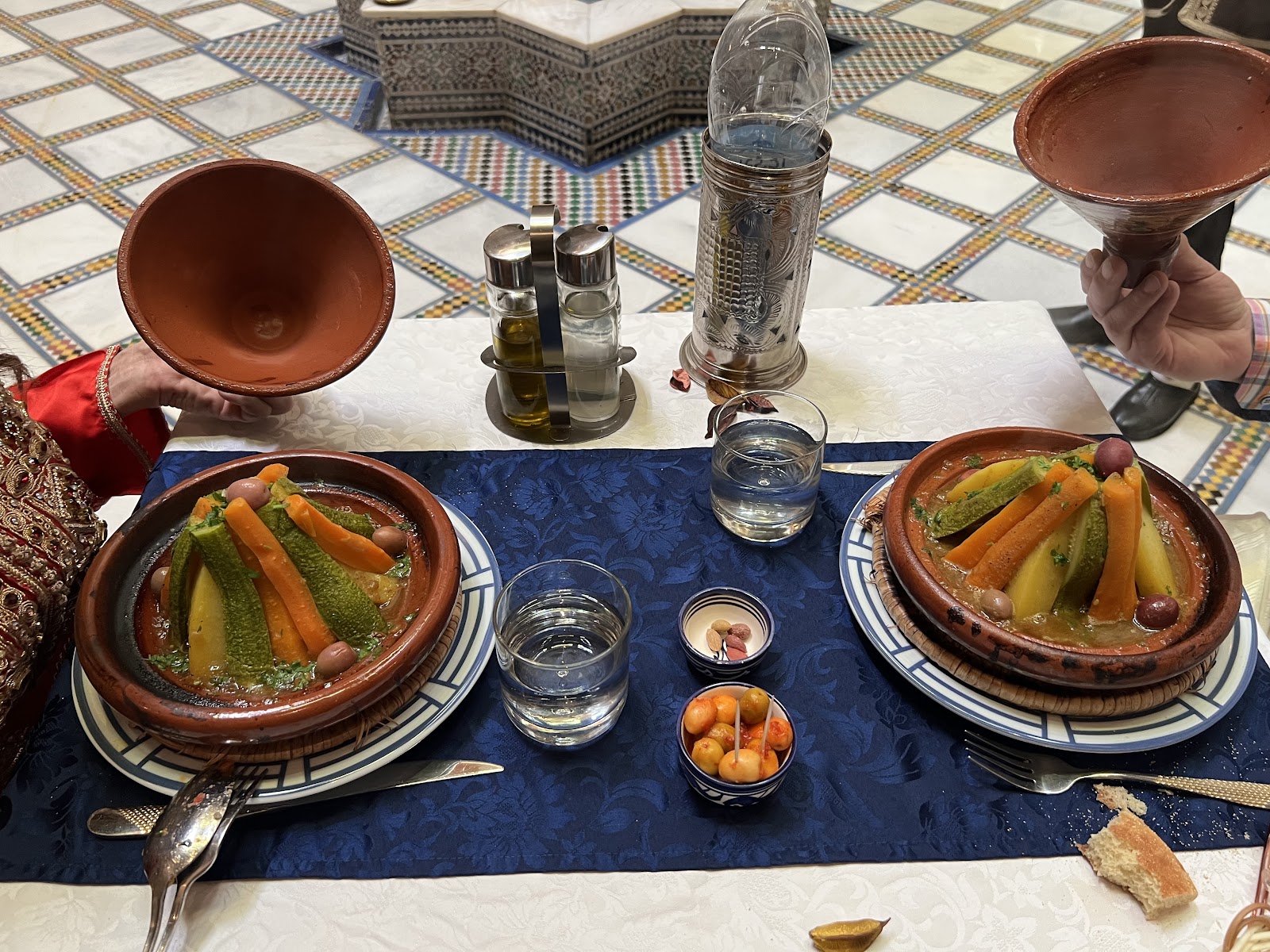
17. Moroccan Cooking Class
You can discover the traditional flavours of Moroccan cuisine through a cooking class. Palais Bab Sahra restaurant in Derb Tariana alley, which branches off from Talaa Kebira street, offers such classes. The experience begins with shopping for ingredients at the local market and continues with preparing a tagine. You then get to enjoy your culinary creation on the rooftop terrace overlooking the medina.
According to reviews, the class prepares chicken tagine. If you don’t eat meat, it’s best to arrange a vegetarian version when booking. Typical meatless dishes include aubergine zaalouk, pepper taktouka, fava bean purée bissara, or msemen flatbreads. The popular harira soup is often made with meat stock, so always ask about its ingredients.
A Fes speciality is pastilla, traditionally filled with pigeon or chicken. However, vegetarians praise the meatless version from El Forno.
💡 Tip: According to reviews, Le Tarbouche also sells vegetarian pastilla to take away.
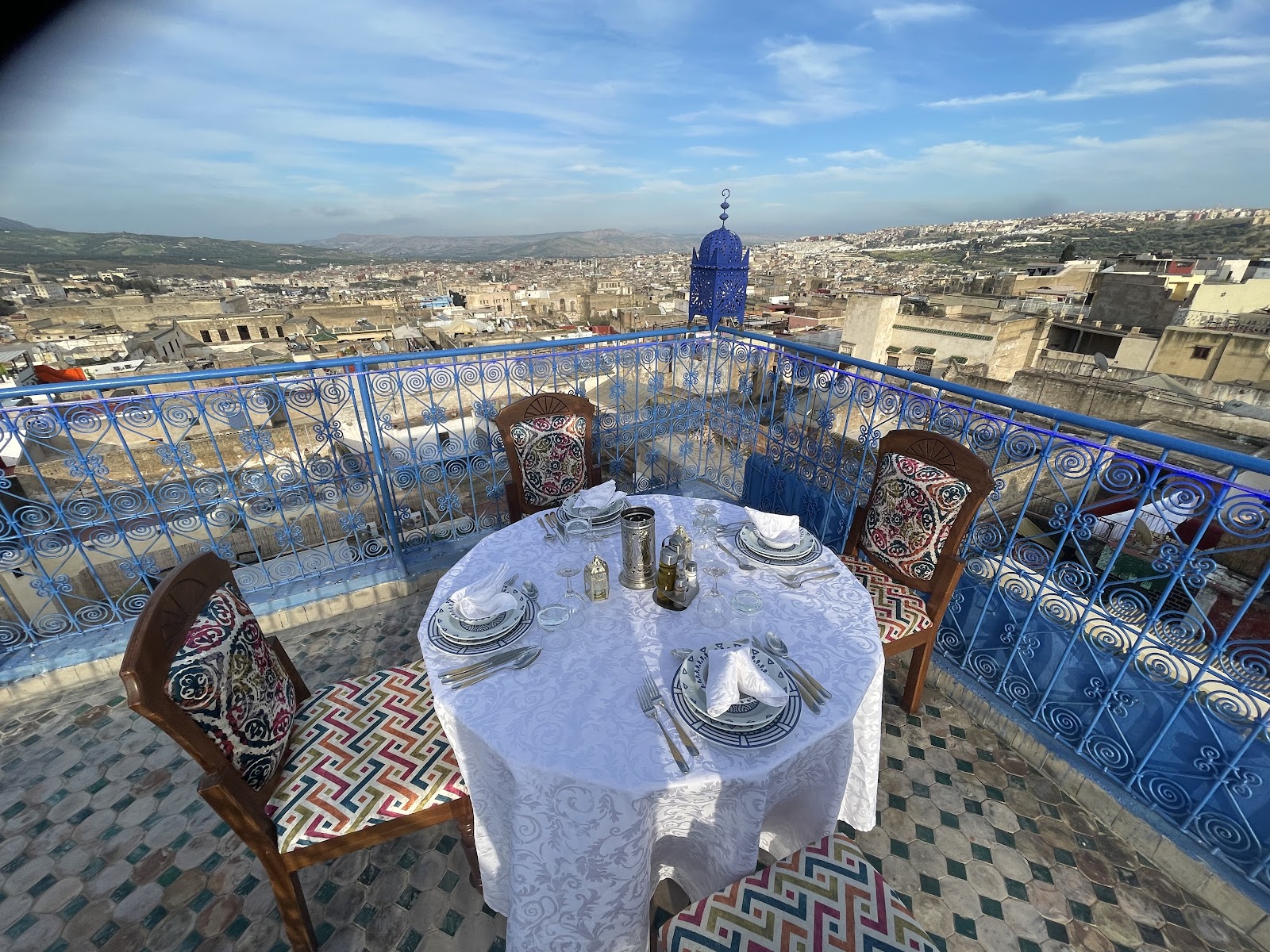
18. Sunset from a Rooftop Terrace
Watching the sun set over the labyrinth of the medina is a lovely way to end the day. Cafe Clock has three floors and a rooftop with views. The café is a bit tricky to find, so look out for the red sign. It’s about a two-minute walk from Medersa Bou Inania.
You’ll find more viewpoints near Place Iscesco by the Blue Gate. There’s Fez Medina Rooftop Restaurant & Lounge and La Casa Nagham Rooftop. From up high, you can watch the city sink into evening shadows.
If you enjoy a drink with your sunset, remember that alcohol is only available in licensed establishments. One such place is Fez Café, where according to one visitor, a beer costs 60 to 70 MAD (€6 to €7).
💡 Tip: When heading back from the terrace after dark, stick to the busy streets of Talaa Kebira and Talaa Sghira. The foreign ministry recommends extra caution in Fes at night.
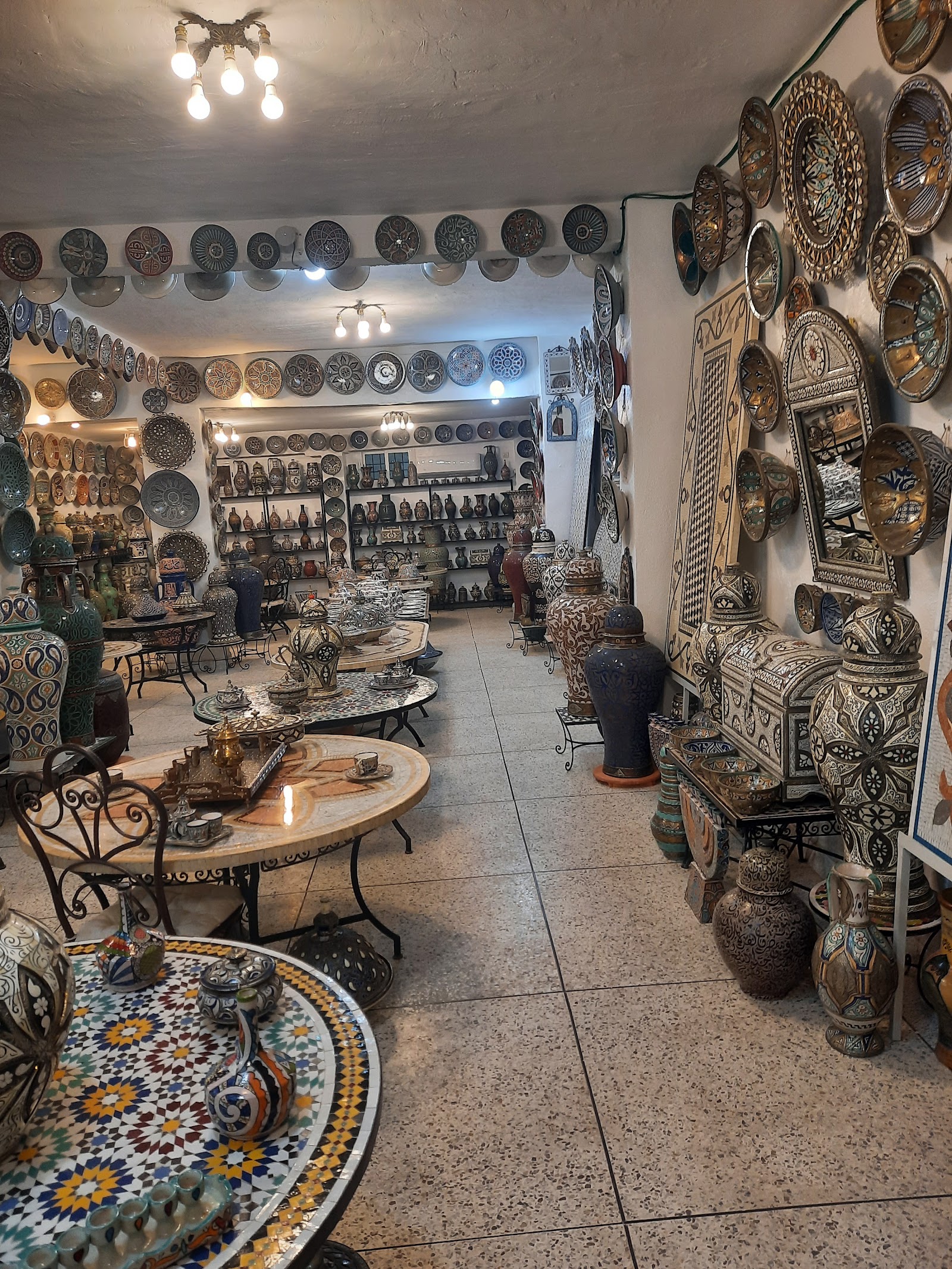
19. Aïn Nokbi Potters
Beyond the city walls lies the Aïn Nokbi quarter, where traditional pottery workshops are concentrated. This is where ceramics and hand-carved zellige mosaic tiles are made. You can watch skilled craftsmen at work.
One workshop is open roughly from 8:00 to 19:30, but check times for others.
Be careful of various middlemen and taxi drivers who will offer to take you to the workshops. Middlemen may add a hidden commission to the price of ceramics. Choose a workshop yourself and don’t let a middleman take you there.
💡 Tip: Ask your accommodation to recommend a specific workshop and agree the taxi price clearly in advance.
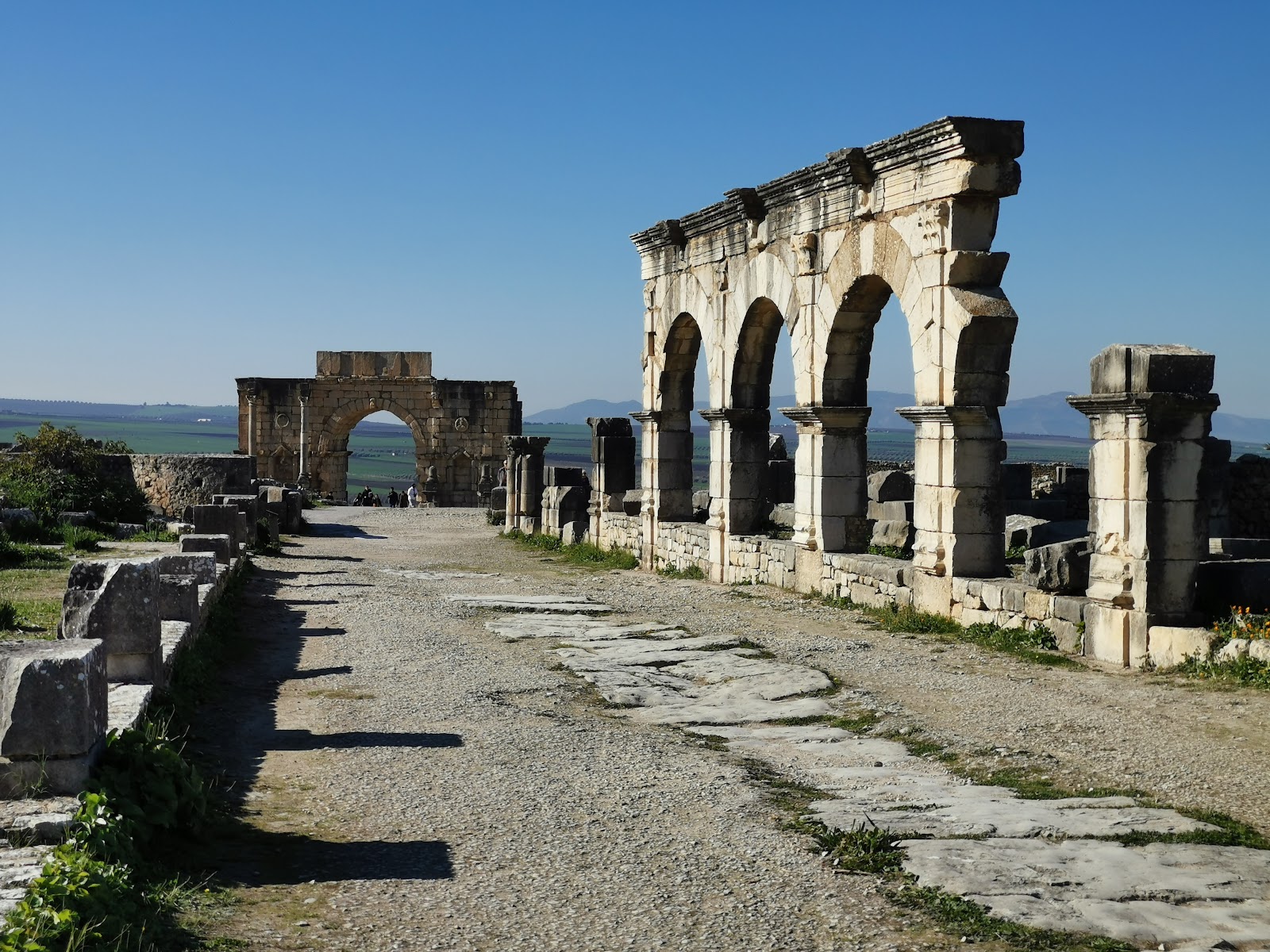
20. Volubilis and Moulay Idriss Zerhoun
About eighty kilometres from Fes lie the well-preserved ruins of the Roman city of Volubilis, a UNESCO World Heritage Site since 1997. Between 2024 and 2026, the Decumanus Maximus portico and the Labours of Hercules mosaic were being restored. Check before visiting that everything is accessible.
Foreign visitors pay 100 MAD (€10) for entry, while tickets for children aged 7 to 13 cost 50 MAD (€5). Bring cash for the ticket office, as card payments can be unreliable.
The trip is commonly combined with a visit to the holy city of Moulay Idriss Zerhoun. According to travel guides, non-Muslims have been allowed to spend the night in this city only since 2005. However, people of other faiths may not enter the mausoleum of Idris I, founder of the Idrisid dynasty.
💡 Tip: Official guides wait at the entrance to Volubilis, and their services cost approximately 120 to 300 MAD (€12 to €30) depending on group size.
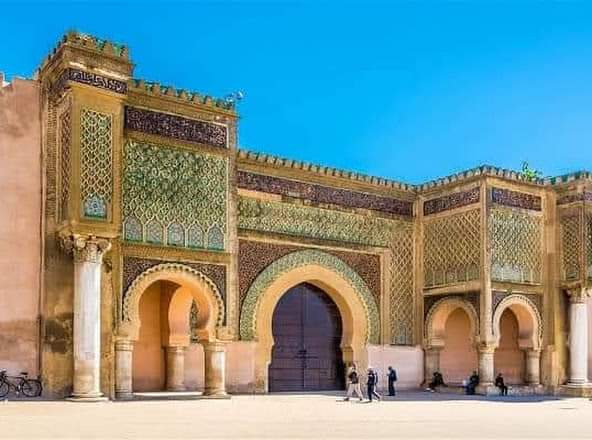
21. Meknes
Just thirty kilometres from ancient Volubilis lies the city of Meknes. According to travellers, the medina here is somewhat more manageable than the one in Fes. You can admire the famous Bab Mansour gate.
Also worth seeing is the mausoleum of Sultan Moulay Ismail, open from 9:00 to 12:30 and then from 15:00 to 18:00. According to travel guides, it’s one of the few sacred sites in Morocco accessible to non-Muslims, but check this before visiting. The historic granaries of Heri es-Souani are listed on Google as temporarily closed, and the adjacent Sahrij Souani reservoir is undergoing reconstruction.
The Dar Jamaï palace houses the National Museum of Music. An adult ticket costs 30 MAD (€3). The palace is open daily from 10:00 to 18:00 except Tuesday, when it remains closed.
💡 Tip: You can reach Meknes from Fes very comfortably by direct train, which continues on to Rabat and Casablanca.
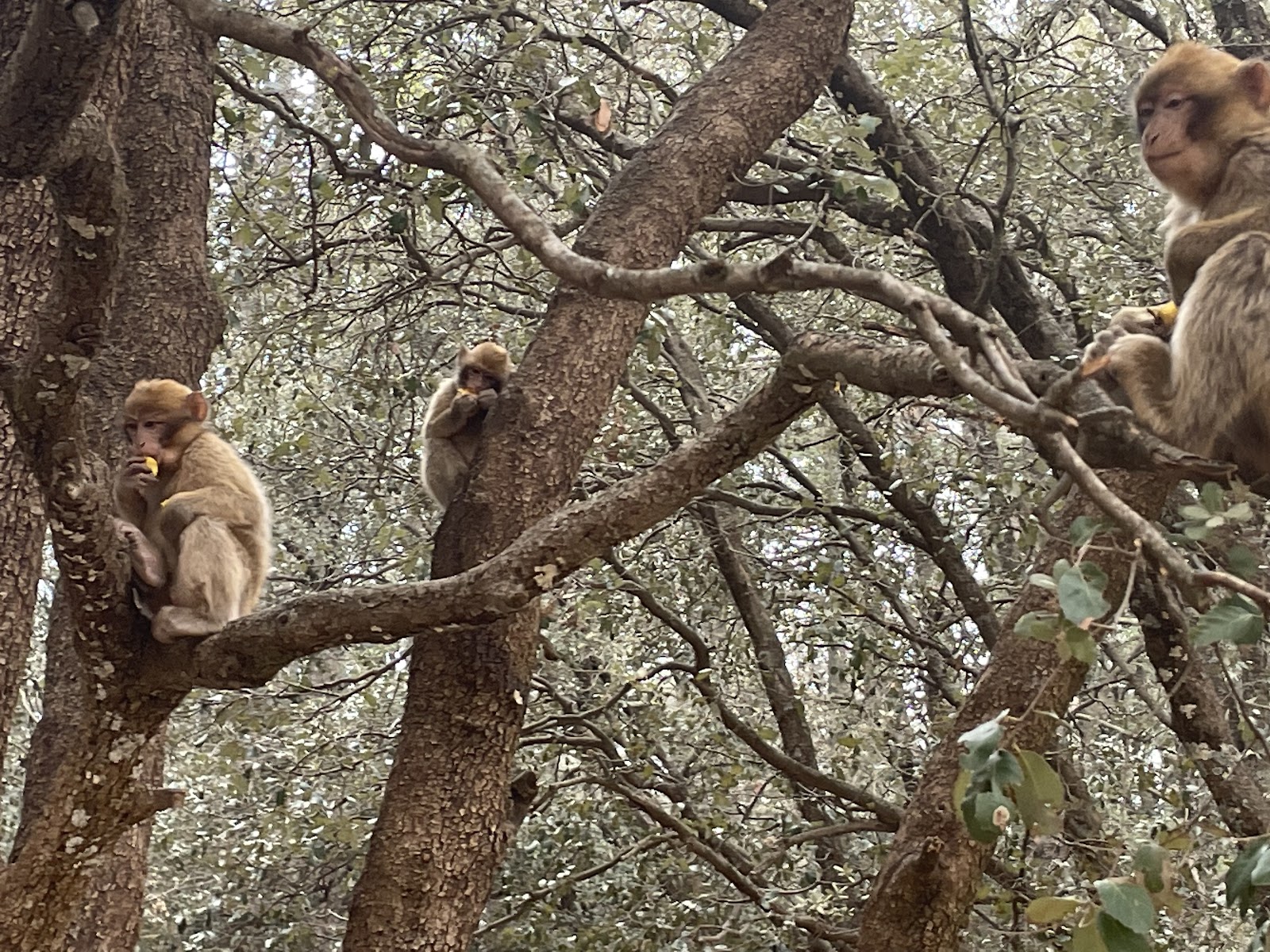
22. Ifrane, Cedars and Macaques near Azrou
About 65 kilometres south of Fes lies the mountain town of Ifrane. Thanks to its unusual alpine architecture and famous stone lion statue, it’s often called the Switzerland of Morocco. Near Azrou spreads the Cèdre Gouraud cedar forest.
In a location called Moudmame, according to travel guides, you can quite reliably spot a wild troop of Barbary macaques. This species of monkey has been listed as endangered since 2009. Watching them in their natural habitat is an interesting experience, but respect is essential.
A 2016 study by the Universities of Lincoln and Durham from Ifrane National Park showed that macaques fed by tourists experience higher stress levels, and only a third of females in these groups have young. Never feed the animals to avoid unnecessary stress.
💡 Tip: You can easily combine a trip to Ifrane with a visit to Azrou. Ideally set aside a full day for it.
Where to Go from Fes
- The blue city of Chefchaouen is more of a logical stopover than a comfortable day trip. CTM buses take about 4 hours and 10 minutes according to the Rome2Rio comparison site, with tickets costing 80 to 140 MAD (€8 to €14). Spending that much time travelling in one day would be quite exhausting, so it’s worth staying overnight. In Chefchaouen, don’t miss the local kasbah (fortress), where foreigners pay 80 MAD (€8) entry and children 40 MAD (€4).
- About 30 kilometres south of Fes you’ll find the smaller, quieter town of Sefrou with a pleasant medina. Nearby is the village of Bhalil, famous for houses carved directly into the rock.
- On the right bank of the Oued Fès river lies the historic Andalous quarter, founded by refugees from Andalusia. Its centrepiece is the Andalusian Mosque, though non-Muslims are not permitted to enter according to the rules.
You can also combine your Moroccan journey with other cities – see our tips for Marrakesh and Casablanca. The flight from Marrakesh to Fes takes about an hour, while the train journey takes 6.5 to 7 hours.
Frequently Asked Questions
How many days do you need for Fès?
Set aside two full days for the medina itself and its main sights. That way you’ll have time to explore the tanneries, historic medersas, Dar Batha Palace, Nejjarine Museum, Jnan Sbil gardens, and the Royal Palace at a leisurely pace. A third day is ideal for an excursion beyond the city walls, typically to ancient Volubilis, Meknès, and the holy city of Moulay Idriss Zerhoun.
Do I need a guide in Fès?
A guide is worth it for your first half-day. The medina resembles a giant labyrinth and fake guides can be very persistent. An official licensed guide will show you a ministry card. Based on traveler discussions, expect to pay around 300 MAD (€30) for a half-day and 400 to 600 MAD (€35 to €55) for a full day. Agree on the price, route, and the ‘no shops’ rule in advance. Official guides are also explicitly recommended by foreign ministries.
Is Fès safe?
During the day, tourist areas are safe, but watch your belongings due to petty crime. At night, foreign ministries recommend increased caution. In the evening, stick to main and busy streets like Talaa Kebira or Talaa Sghira. Don’t turn into empty alleyways and calmly ignore the favorite trick of local touts who will tell you that your street is closed.
How much are the entrance fees?
The Bou Inania and Al-Attarine medersas cost 20 MAD (€2), as does the Nejjarine Museum. Admission to Musée Al Batha will cost you 60 MAD (€6), and it’s closed on Tuesdays. A visit to the Borj Nord fortress runs about 50 MAD (€5), and a ticket to Volubilis costs 100 MAD (€9). Entry to the Chouara tannery terraces is free, but a tip of around 20 MAD (€2) is expected. Count on cash on-site; tickets to Volubilis can also be purchased online through the culture ministry’s e-shop.
How do I get from the airport to the medina?
A taxi ride will cost around 120 to 150 MAD (€10 to €15) during the day and 200 to 250 MAD (€20 to €25) at night, according to traveler websites. Agree on the price with the driver before getting in. The car will drop you off at Bab Boujloud gate or at Bab Rcif square, from where you’ll have to walk into the medina. A cheaper option is bus number 16 for 4 to 5 MAD (under €1). It goes to the train station, from where you can take a petit taxi. Uber doesn’t operate in Fès.
What are the flight options to Fès?
Direct flights to Fès are available from Munich, where Discover Airlines operates every Sunday starting October 25, 2026. Another option is Ryanair flights from airports like Karlsruhe, Frankfurt-Hahn, Weeze, or Bergamo. Alternatively, you can fly to Marrakesh and continue from there with a domestic flight that takes an hour, or by train, which takes 6.5 to 7 hours.
Fès or Marrakesh?
Based on traveler experiences, Marrakesh tends to be livelier and easier to navigate. It also feels more touristy. Fès, on the other hand, retains an older and more authentic character and is somewhat cheaper, but finding your way around its enormous medina can be quite challenging. If you have enough time, visit both cities. They’re connected by a domestic flight that takes an hour, as well as by rail with a journey time of 6.5 to 7 hours.
Tips and Tricks for Your Vacation
Don’t Overpay for Flights
Search for flights on Kayak. It’s our favorite search engine because it scans the websites of all airlines and always finds the cheapest connection.
Book Your Accommodation Smartly
The best experiences we’ve had when looking for accommodation (from Alaska to Morocco) are with Booking.com, where hotels, apartments, and entire houses are usually the cheapest and most widely available.
 🚗 Car rental on the roadVerified rental cars in Morocco
Search with the DiscoverCars comparison engine — it compares prices from dozens of local and international rental companies, and most bookings come with free cancellation.
Compare car prices in Morocco →Don’t Forget Travel Insurance
Good travel insurance will protect you against illness, accidents, theft, or flight cancellations. We’ve had a few hospital visits abroad, so we know how important it is to have proper insurance arranged.
Where we insure ourselves: SafetyWing (simple monthly subscription) and TrueTraveller (for extra-long trips).
Find the Best Experiences
Get Your Guide is a huge online marketplace where you can book guided walks, trips, skip-the-line tickets, tours, and much more. We always find some extra fun there!