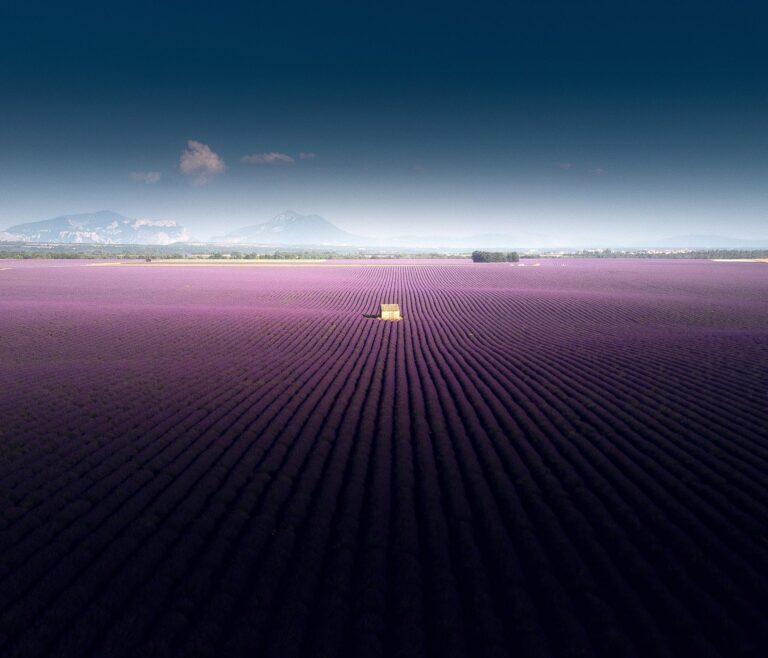
The sun in Provence burns with such intensity that by midday the colours often lose their outlines and fade to white. The air smells of pine resin, thyme and lavender, while the soundtrack is provided by the relentless chirping of cicadas. If you really want to understand this corner of southern France, you have to experience it in all its variety and beauty. Aix-en-Provence in France is the perfect starting point for any traveller.
While nearby Marseille is wild and raw, Aix-en-Provence is the very embodiment of refined bourgeois elegance. It’s a city of a thousand fountains, wide plane-tree avenues and ochre facades of historic houses. Nobody rushes here, and life flows at a slow, café-terrace pace. Today I’ll share the best things to do that will turn your visit into an unforgettable experience.
This city also has a wonderful youthful, student atmosphere that keeps it lively all year round. It’s not just a polished open-air museum for tourists, but a buzzing university town full of culture and art. Be prepared to fall head over heels for its narrow lanes and sun-drenched squares.
TL;DR
- Cours Mirabeau: The city’s main artery lined with giant plane trees and historic cafés where locals gather.
- City of fountains: You’ll discover dozens of beautiful fountains, with Fontaine de la Rotonde being the most famous.
- In Cézanne’s footsteps: Visit his preserved studio and head out to the majestic Montagne Sainte-Victoire.
- Provençal markets: Every morning the city comes alive with markets full of fresh cheeses, olives and lavender.
- Saint-Sauveur Cathedral: A fascinating architectural mix of styles from the fifth to the seventeenth century.
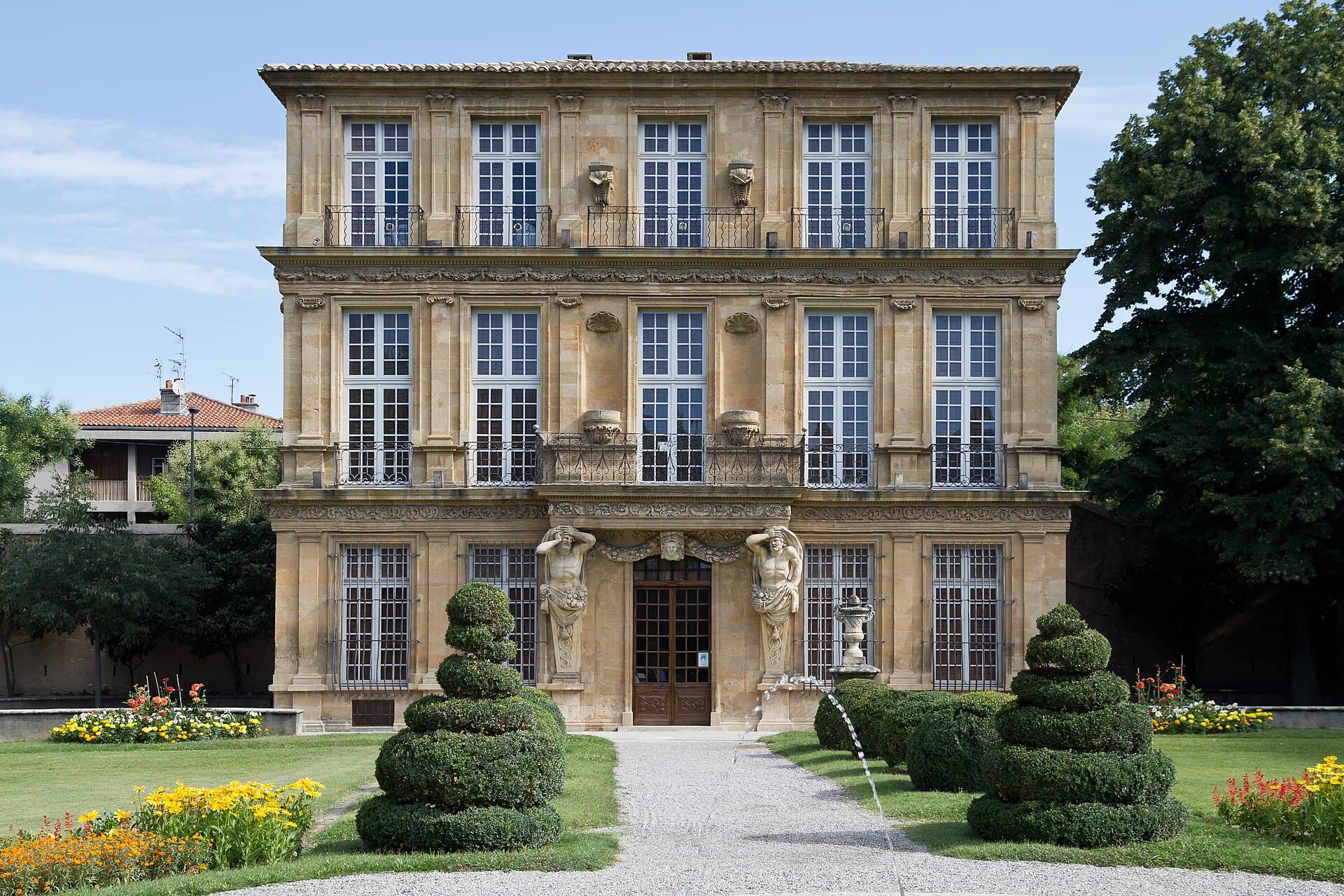
- Hôtel de Caumont: A former aristocratic palace that today serves as a prestigious art centre with a beautiful garden.
- Thermal roots: The city was founded by the Romans for its thermal springs, which you can still enjoy today at the Thermes Sextius spa.
The full destination guide: Provence — guide and what to see
When to visit Aix-en-Provence
Choosing the right time is absolutely crucial for a trip to southern France, because the local climate can be very unforgiving. The ideal months for exploring Aix-en-Provence are May, June and September, when the weather is most pleasant for all-day walks. The days are long, the sun shines, but you’ll avoid the worst heatwaves that regularly hit the whole region in midsummer and turn the stone streets into a furnace.
If you go in July or August, brace yourself for a real extreme, as temperatures in the south of France routinely reach 35 to 43 degrees Celsius and the city radiates heat even at midnight. Your only salvation on these days will be the shade of the plane trees and the omnipresent fountains, where you can at least cool off a little. If you drive here during this period, arm yourself with patience for the so-called “black days”, when the main A6 and A7 motorways are clogged with endless traffic jams of French holidaymakers.
The local gastronomic rhythm also plays a key role in planning, and it is utterly unforgiving. Traditional lunch is served strictly between noon and two o’clock, so if you walk into a restaurant with a rumbling stomach at three in the afternoon, the most you’ll get is some nuts and a drink. The kitchen only reopens for dinner, usually around seven in the evening, which is worth keeping in mind when planning a full day.
If you’re planning trips to see the purple splendour, you’ll need to plan your route precisely according to altitude. The main flowering season on the famous Valensole plateau runs roughly from mid-June to mid-July, with the absolute peak falling around the turn of these two months. Don’t be tempted by August dates for lavender festivals, as these often celebrate the harvest itself, and in the fields you’ll only be looking at cut, parched brown stubs.
Where to stay in Aix-en-Provence
💡 Accommodation and experiences tip: We prefer to look for accommodation on Booking.com, which usually has the best cancellation terms. For tickets, tours and activities, it pays to compare and book through GetYourGuide.
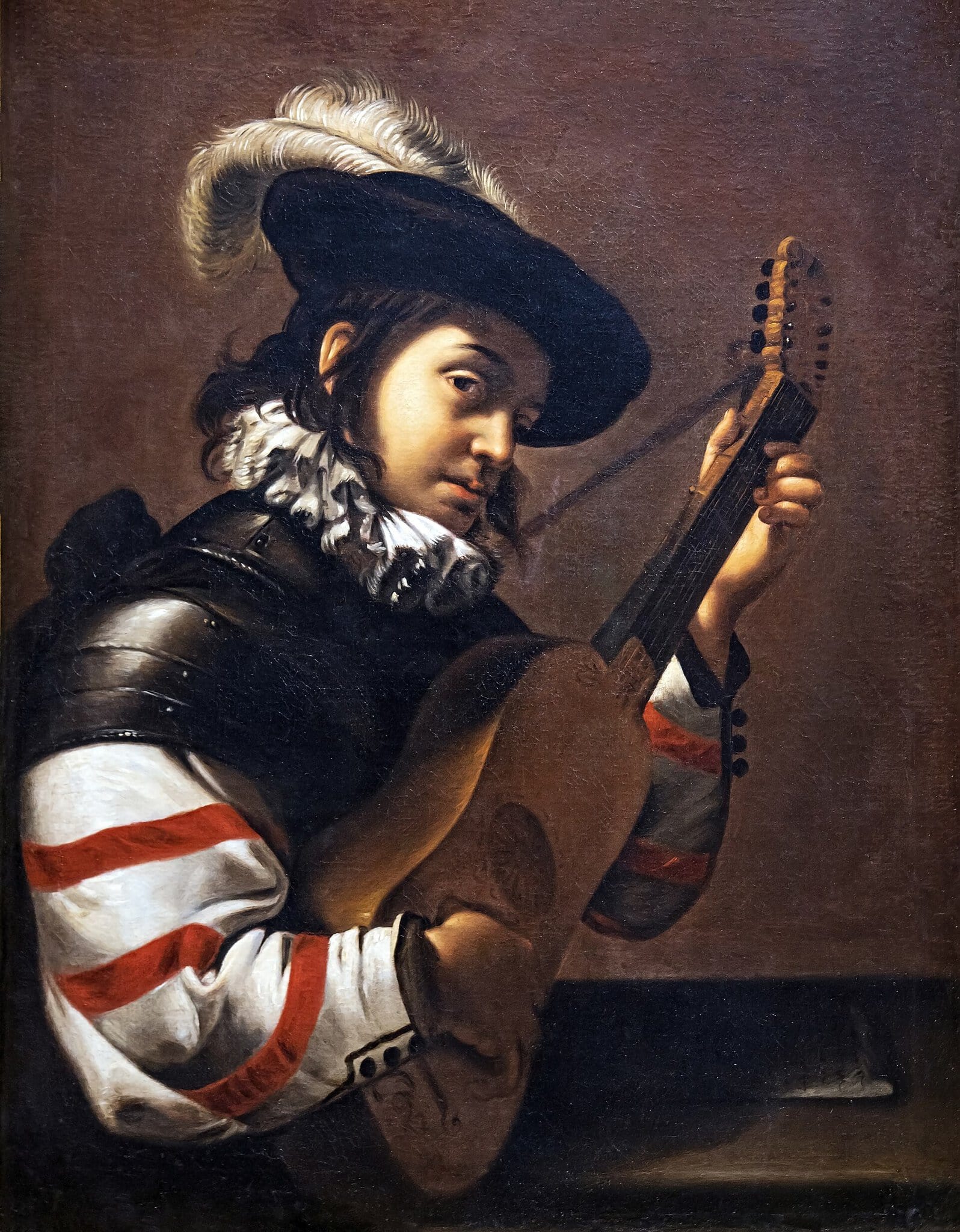
Accommodation in this elegant city doesn’t come cheap, but the experience of staying in the historic centre is well worth it. The best strategy is to find a hotel right on the edge of the pedestrian zone, so the sights are within reach yet you don’t have to deal with the nightmare of parking. The centre is very difficult to drive through and car parks are extremely expensive, so the ideal choice is to leave your vehicle at a Park & Ride on the outskirts of town.
If you’re travelling from the UK, the easiest option is to fly into Marseille Provence Airport, which is just a short transfer from Aix and well served by airlines such as British Airways, easyJet and Ryanair from London and other major UK cities. If you prefer to drive, French motorways are in great condition, but tolls at the péage barriers are fairly pricey, costing roughly €9.50 per hundred kilometres. For 2026, also bear in mind that the average price for a good double room in season starts at €150–200 per night, so it pays to book well in advance.
A great choice is, for example, the Hotel Aquabella, located right by the ancient walls and seamlessly connected to the thermal baths. It offers a lovely garden with a pool, which is an absolute lifesaver from the midday sun during the hot summer months. It also has its own car park, saving you plenty of hassle on arrival, and the staff are well used to international guests.
If you’re looking for something smaller with a personal touch, try the Boutique Hotel Cézanne, just a short walk from the main Cours Mirabeau. It offers a perfect blend of historic charm and modern comfort, with an outdoor terrace made for long Provençal breakfasts. Wherever you stay, remember one golden rule of French etiquette: when you arrive at reception, always start with a smile and a clear “Bonjour”, which will instantly earn you a much warmer welcome from the staff.
12 things to do in Aix-en-Provence
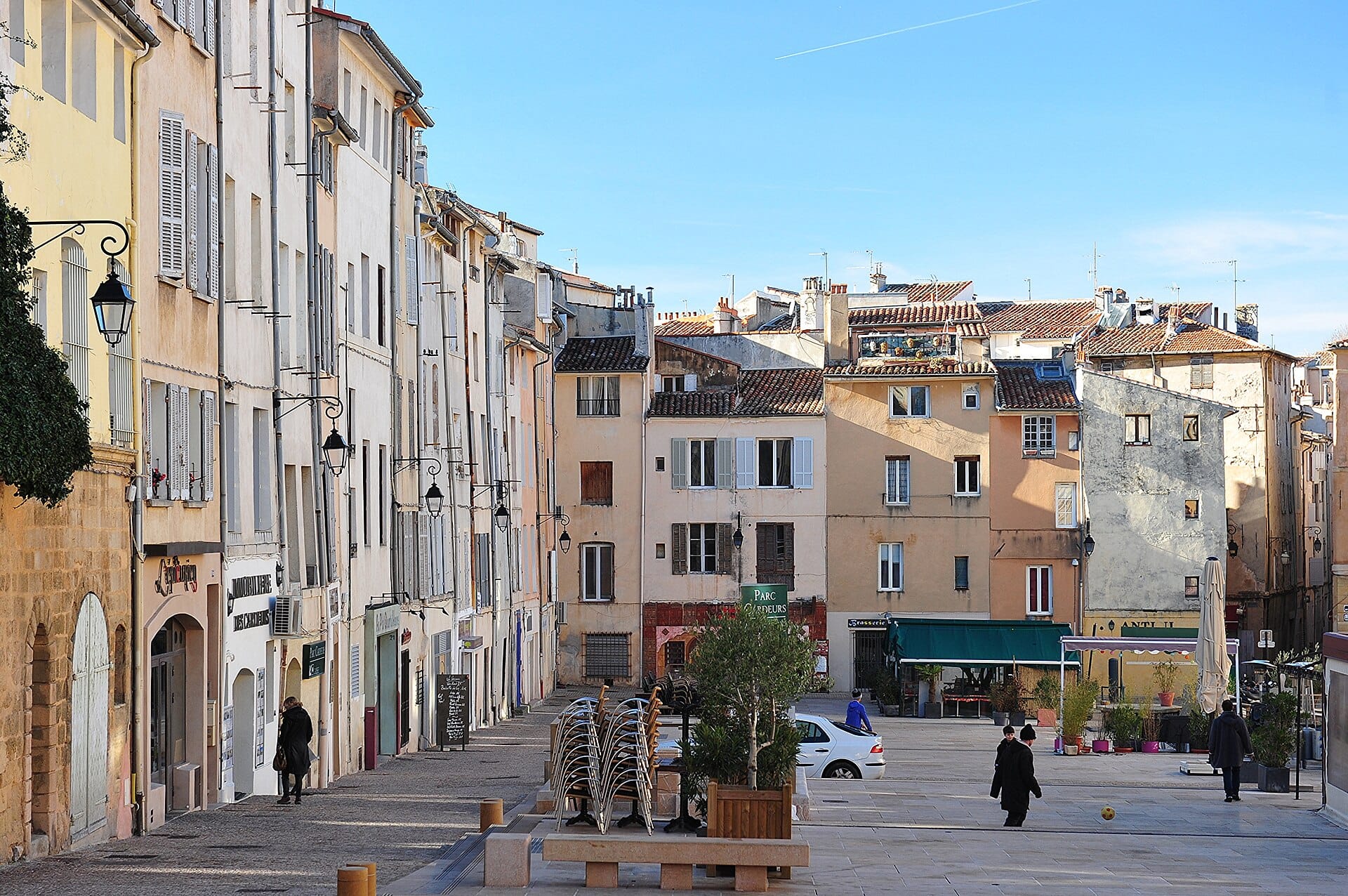
Let’s take a look together at the very best this charming city has to offer. A walk through history, art and unforgettable culinary experiences awaits you — the kind that are an inseparable part of southern France.
1. Cours Mirabeau and the plane-tree avenue
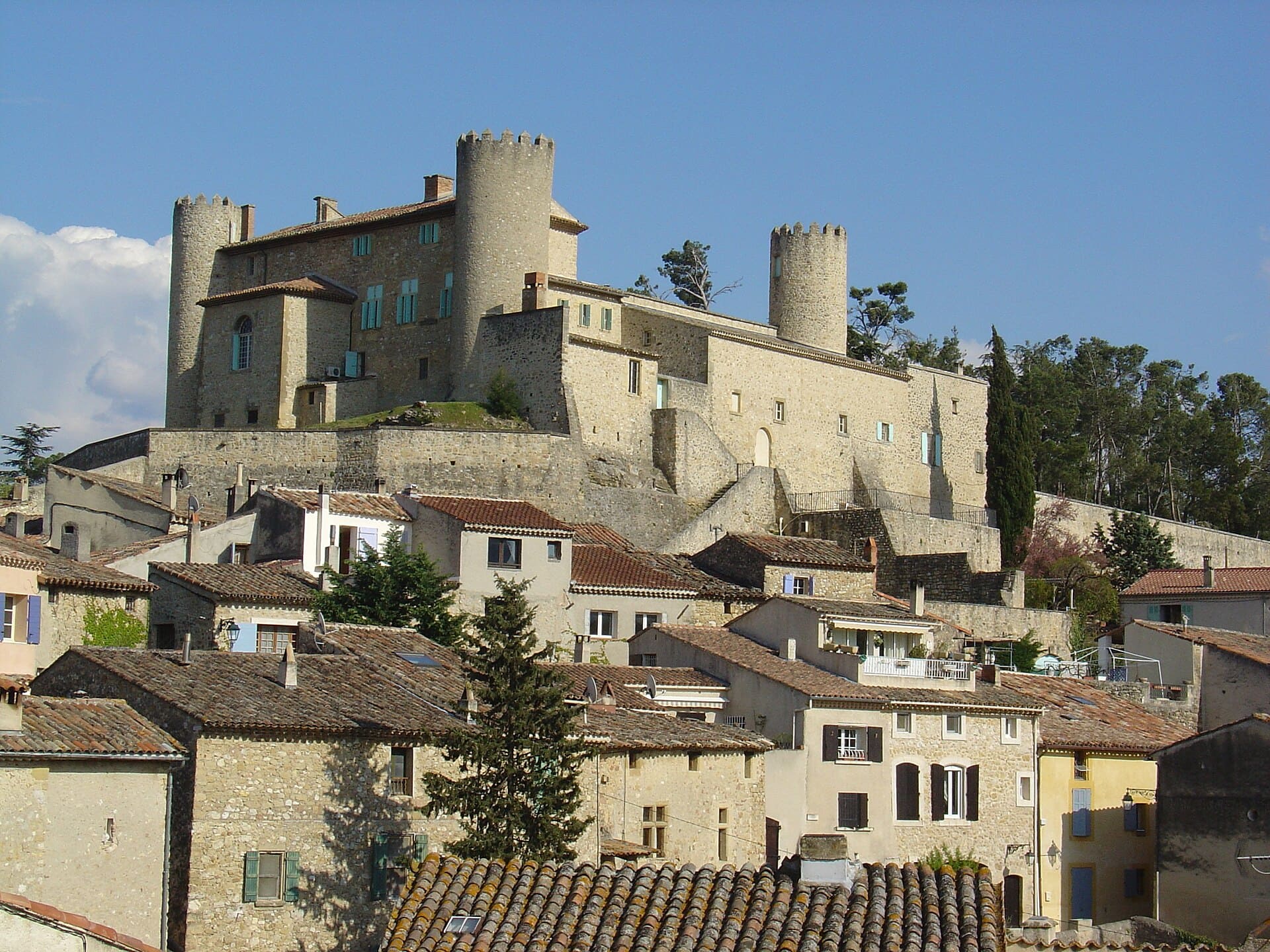
The wide Cours Mirabeau boulevard forms the very heart of the city and separates the historic centre from the aristocratic Quartier Mazarin. This stunning street is lined with huge, centuries-old plane trees that provide much-needed shade in the sweltering summer, creating a kind of natural green tunnel. A stroll down this avenue is an absolute must for every visitor and the ideal way to start getting to know the city.
On one side of the street you’ll find a row of grand mansions with richly decorated wooden doors and wrought-iron balconies, while the other side is full of elegant cafés and bistros with outdoor seating. Life here revolves around people-watching with an espresso in hand, which in 2026 will set you back roughly €2 to €2.50. The French can sit here for hours, reading the paper and simply soaking up the unique southern atmosphere.
The most famous establishment on the boulevard is undoubtedly the historic café Les Deux Garçons, which has been running since the late eighteenth century and boasts a gorgeous interior full of mirrors and gilding. It was a favourite haunt of many famous figures, including Paul Cézanne, Émile Zola and Pablo Picasso, who debated art and life here. Although the building recently underwent extensive reconstruction after a devastating fire, it still retains its unmistakable historic character.
💡 Tip: If you want the perfect photo of the whole avenue without crowds of tourists, come here early in the morning, around seven o’clock. The street is still beautifully empty, the shadows are long and the morning sun gives the ochre facades an incredibly warm glow. Also remember that a 15% service charge is included in the price by law in France, but it’s polite to leave a euro or two in coins on the table for good service, as it often can’t be added to a card payment.
2. The old town (Vieil Aix) and its lanes
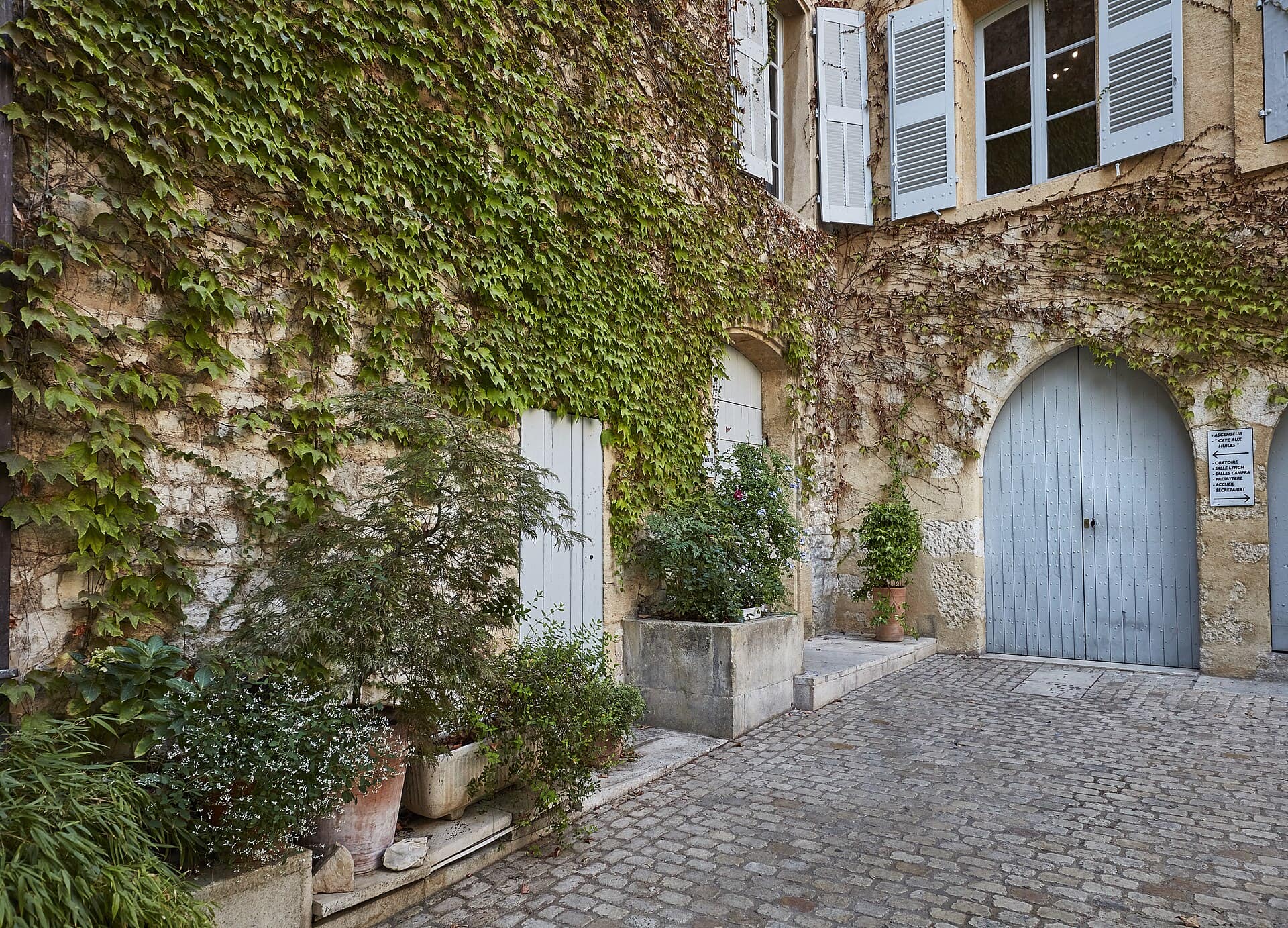
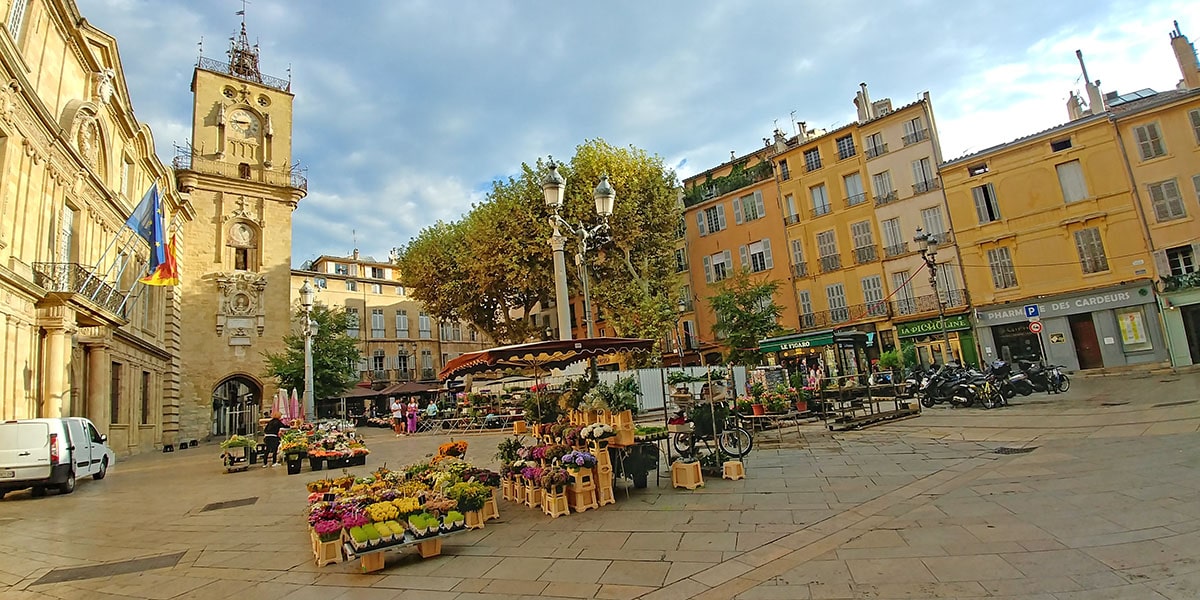
Just beyond the Cours Mirabeau lies Vieil Aix, the historic old town, which forms a labyrinth of narrow, cobbled lanes and small squares. Getting lost in this architectural tangle is actually the very best way to truly get to know the city and absorb its rhythm. Every corner hides a surprise, whether it’s a small statue of a saint in a niche, a tucked-away fountain, or historic wooden doors with masterfully forged details.
Unlike raw, wild and slightly chaotic Marseille, the old town in Aix is incredibly tidy, clean and far calmer. You’ll find hundreds of small local boutiques, craft workshops and elegant shops selling French fashion, cosmetics and perfumes. It’s a true paradise for lovers of shopping and discovering independent brands you definitely won’t find in ordinary shopping centres.
Look up now and then to admire the beautiful details on the facades of the eighteenth-century townhouses. Many buildings have retained their distinctive coloured wooden shutters, which protect the interiors from the summer heat and give the streets that perfect Provençal look. Late in the afternoon the lanes fill with people and the air begins to carry the tempting aroma of fresh herbs from dozens of small restaurants.
💡 Tip: The old town is full of temptations, but be very careful when choosing a restaurant right on the main tourist arteries, where prices tend to be needlessly inflated. The real culinary gems and excellent local vegetarian bistros are more likely to be found in the quieter back lanes towards the town hall. Order traditional Provençal ratatouille made from fresh vegetables, or a delicious salad with warm goat’s cheese and honey.
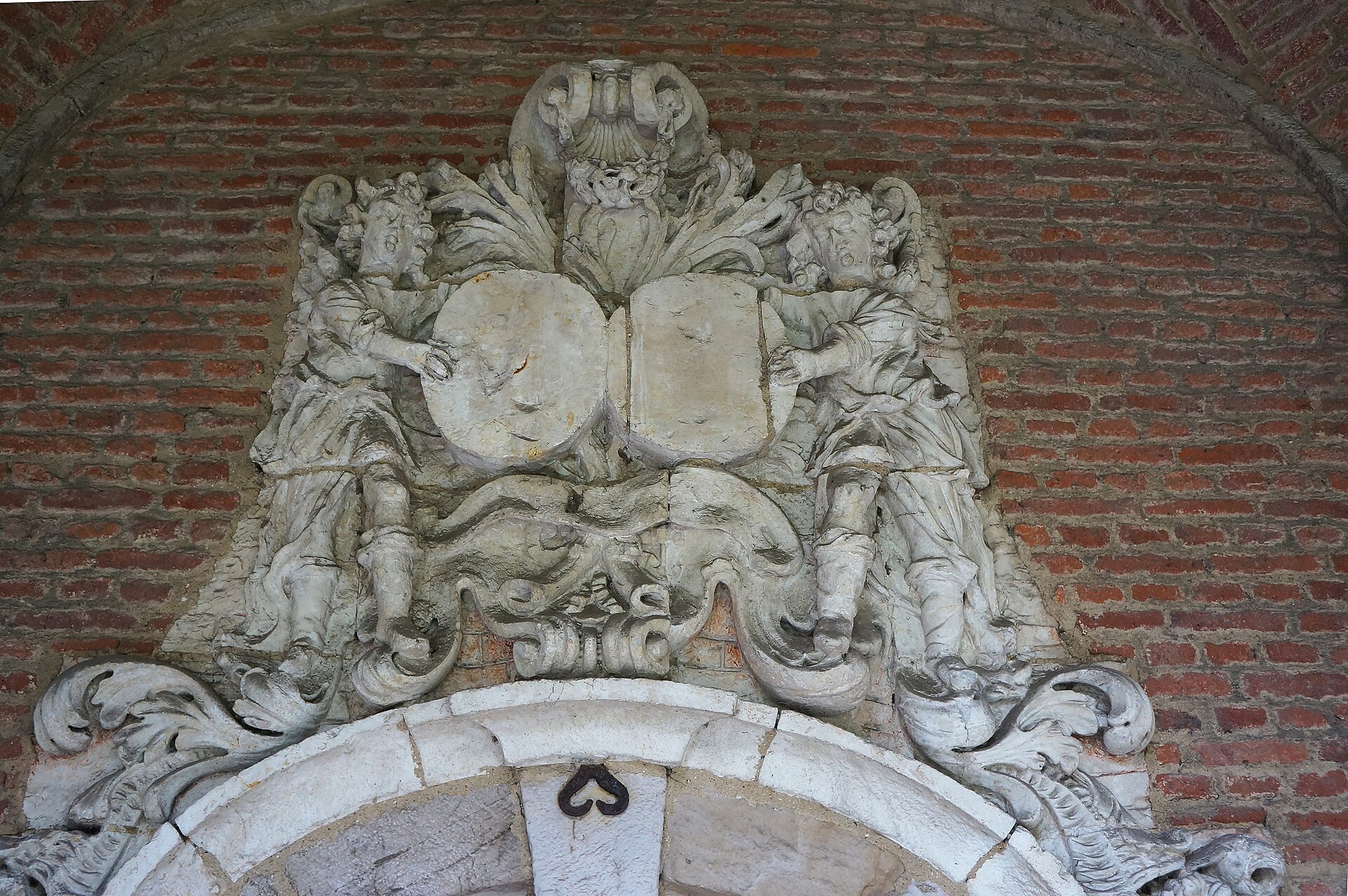
3. Saint-Sauveur Cathedral and its architectural mix
Saint-Sauveur Cathedral is not just an ordinary church but literally a fascinating textbook of architecture, built and constantly rebuilt from the fifth to the seventeenth century. Thanks to this incredibly long history, you’ll see Romanesque, Gothic and Baroque styles on a single building, blending here organically and very naturally. This utterly unique mix makes it one of the most interesting religious buildings in all of sunny Provence.
As soon as you enter the church, you’re sure to be struck by the richly carved walnut doors from the early sixteenth century, which represent the pinnacle of woodcarving art. They are so immensely valuable and delicate that they are often covered with protective wooden panels and revealed in their full glory only on exceptional religious occasions. The interior is surprisingly spacious, dark and offers very pleasant coolness during the sweltering summer days.
The oldest and historically most precious part of the whole complex is the early Christian baptistery dating back to the fifth century. The octagonal stone font is surrounded by massive ancient columns that the builders probably salvaged from older Roman temples nearby. It’s a magical place that exudes the incredible history of the beginnings of Christianity in Europe.
💡 Tip: Don’t miss the adjoining Romanesque cloister, hidden right next to the cathedral’s main nave. Its slender columns are decorated with masterful carvings of plant motifs and there’s a wonderful, almost otherworldly calm here. I recommend sitting on a stone bench and enjoying a moment’s rest after a whole day of walking on the scorching pavement.
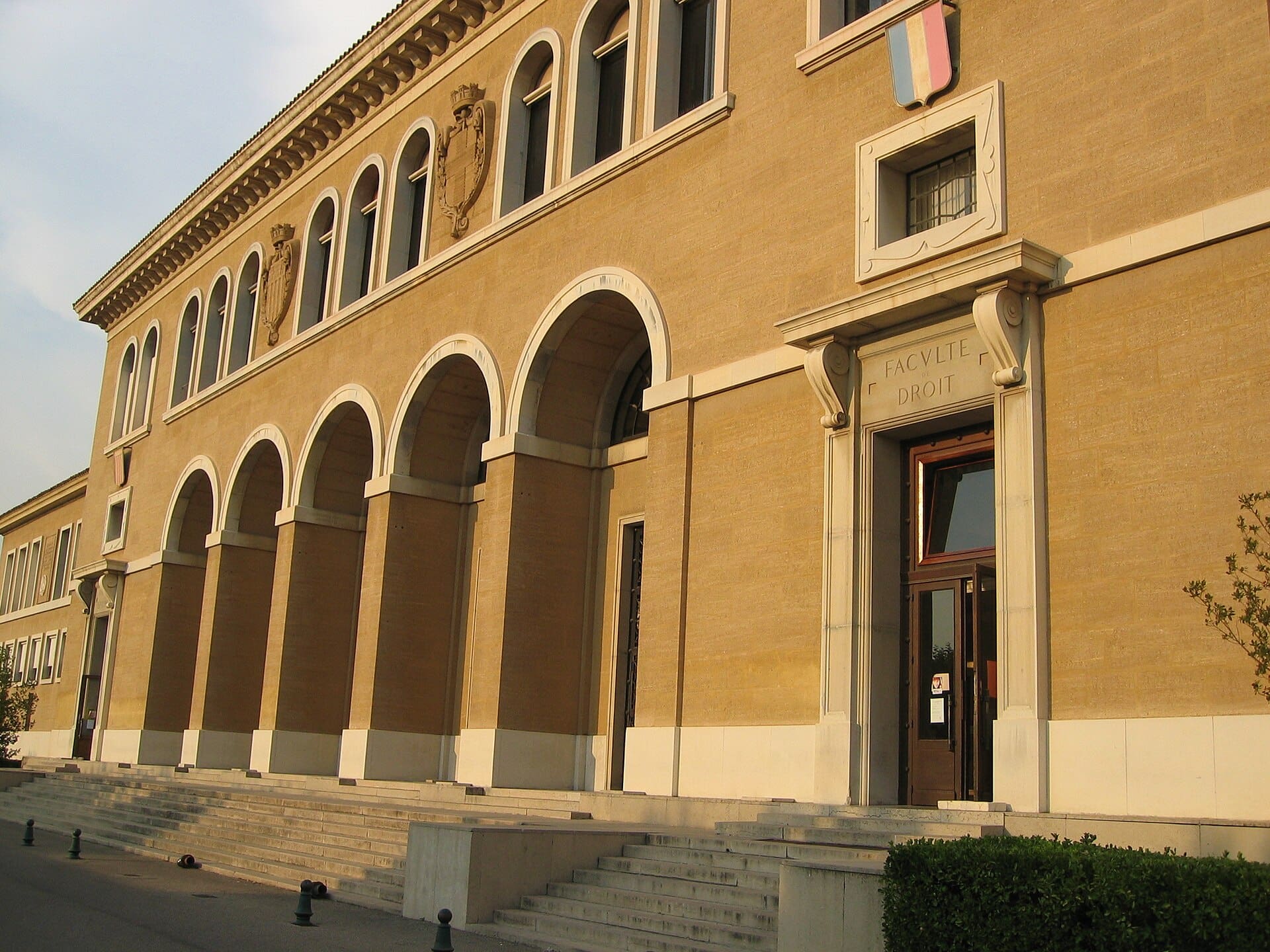
4. In the footsteps of Paul Cézanne (Atelier des Lauves)
In the eyes of the whole world, Aix-en-Provence is forever linked with the name of the father of modern art, the famous painter Paul Cézanne. The artist was born here, spent most of his life here and left an indelible artistic mark you can still discover today. There’s even a special and very popular walking trail through the city, marked with brass plaques bearing the letter C in the pavement, which will reliably guide you through places connected with his turbulent life.
The biggest and most personal experience is a visit to his last studio, known as the Atelier des Lauves. This vast, naturally lit space has been preserved exactly as the artist left it before his death. You’ll find his favourite brushes, canvas work coats, ceramic jugs and the plaster skull models he so often loved to paint. You can’t shake the feeling that the master has just nipped out for a coffee.
The second absolutely key stop is the family estate Bastide Jas de Bouffan, which has undergone extensive renovation in recent years and reopened to the public with great fanfare in 2025. In the beautiful gardens of this historic residence, Cézanne painted dozens of his early works, and the place itself has the wonderful atmosphere of old rural Provence.
💡 Tip: For 2026, definitely check the exact opening hours of these sights in advance on the official city website, as they often change unexpectedly depending on the tourist season. Tickets for the studio itself tend to sell out very quickly in summer due to limited capacity, so I recommend booking online at least a month ahead.
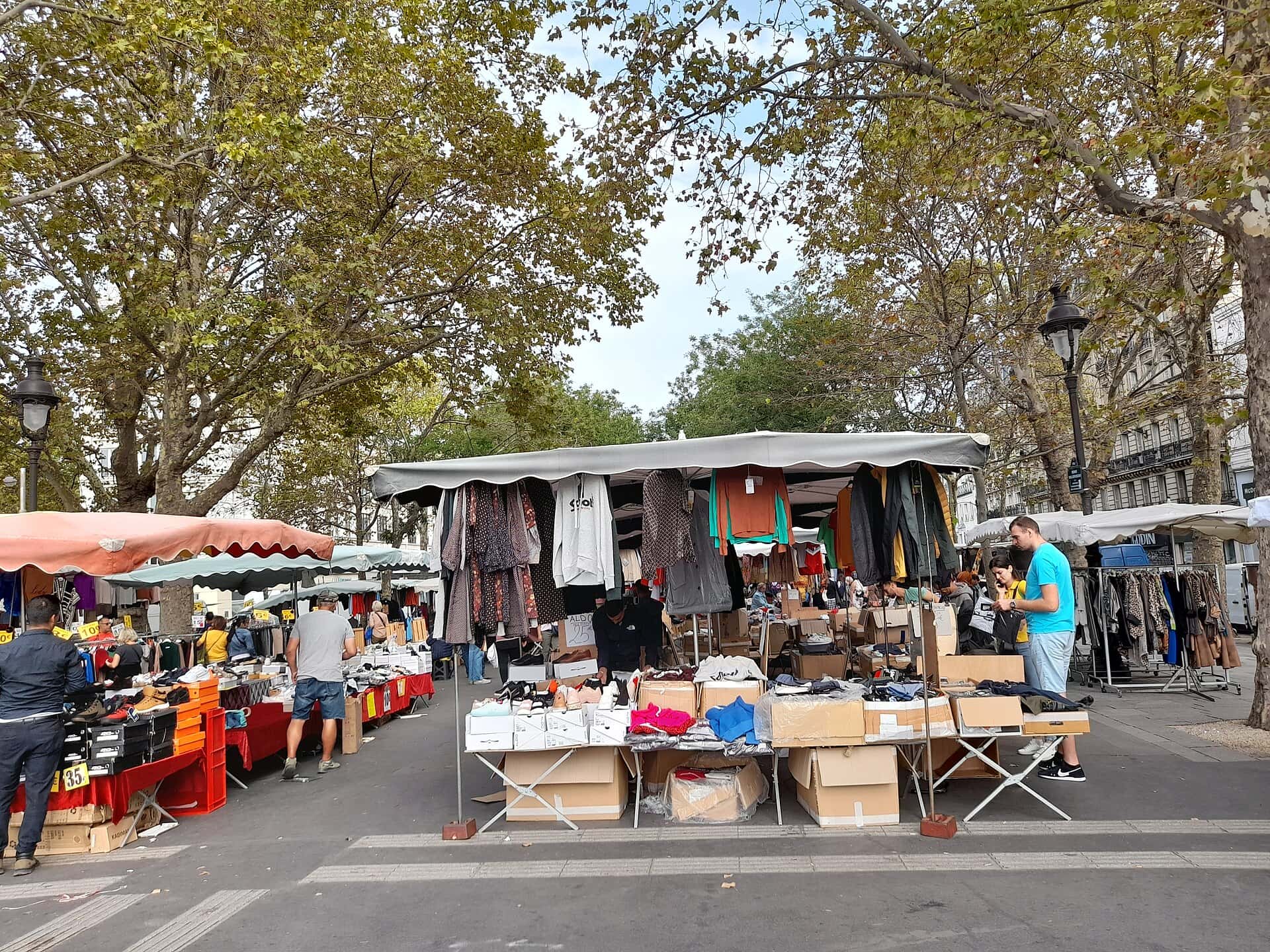
5. Markets with Provençal produce
If you want to experience the real, pulsing soul of the city and understand the local food culture, you have to head to the traditional morning markets. They are exactly what you probably picture under the romantic term “Provençal market”. You’ll find huge mounds of marinated olives, fresh seasonal vegetables, loaves of artisan cheese and bundles of dried lavender. The colours and scents blend into an incredible sensory experience that completely sweeps you away.
The most beautiful and authentic markets take place on the picturesque Place Richelme, pleasantly shaded each morning by huge plane trees. Local farmers bring their best produce here at dawn, and the atmosphere is incredibly lively, loud and friendly. The stallholders will happily let you taste their products with a smile before you decide to buy anything.
If you arrive on a Saturday, you’ll experience the local markets at their absolute biggest and grandest. They take over several connected squares, and besides food you can buy beautiful breathable linen shirts, hand-woven wicker baskets or traditional Marseille soaps. It’s the ideal opportunity to buy authentic souvenirs for the family and support local small-scale producers directly.
💡 Tip: Head to the market as early as possible, ideally right around eight or no later than nine in the morning. Before lunch the very best goods sell out at lightning speed, and around one o’clock the tired stallholders start packing up their stalls. Don’t forget to bring plenty of cash, as card terminals still aren’t a given here.

6. Hôtel de Caumont and its art exhibitions
Despite its name, the Hôtel de Caumont isn’t a classic hotel where you could stay, but a magnificent and incredibly well-preserved eighteenth-century aristocratic palace. After a recent, very costly and careful restoration, it has been transformed into one of the most prestigious art centres in the entire region. Even a slow stroll through its richly decorated historic interiors with period furniture is an enormous aesthetic treat.
In the spacious upper floors of the palace, top-class exhibitions of world-renowned painters rotate regularly and to great acclaim, covering everything from the Renaissance to modern art. The curators often bring in unique works that normally hang in the finest galleries in Paris or New York. You can also make your tour even more enjoyable with a detailed audio guide, which engagingly introduces the details of each painting.
The absolute jewel and pride of the whole estate, however, is the palace garden, which was restored a few years ago exactly according to the original historic plans. Geometrically precise clipped hedges, gently bubbling fountains and pleasantly shaded benches create a perfect oasis of calm in the otherwise fairly busy city centre.
💡 Tip: On the ground floor of the palace there’s a beautiful, elegant café, Café Caumont. I recommend stopping here for a strong coffee and a delicious French vegetarian dessert in the historic salons, or in fine weather sit right out on the terrace overlooking the manicured garden. It’s a refined experience that, at least for a while, transports you back to the days of the French aristocracy.
7. The city of a thousand fountains
Over the years of its existence, Aix-en-Provence has rightly earned the flattering nickname “city of a thousand fountains”, and you’ll soon understand why after arriving. Water is utterly omnipresent here, and the gentle bubbling of the fountains creates a very pleasant, natural soundtrack to your wanderings across the cobblestones. The very largest, most majestic and most photographed is undoubtedly the Fontaine de la Rotonde, whose three statues form a symbolic gateway to the historic centre.
Another iconic and much-sought-after stop is the Fontaine des Quatre-Dauphins, which you’ll find in the heart of the Quartier Mazarin. This elegant Baroque fountain with four dolphin-shaped spouts is one of the most charming corners in the city. Its perfect proportions and delicate details harmonise beautifully with the restrained aristocratic palaces surrounding it.
Completely unique, and for many very surprising, is the Fontaine Moussue, which stands right on the Cours Mirabeau. It essentially looks like a huge green boulder entirely overgrown with a thick layer of moss. The interesting thing is that thermal water at a constant temperature of eighteen degrees continuously flows from it, so on colder winter mornings it gives off a mysterious and highly photogenic steam.
💡 Tip: During extreme summer heat you can cool off very pleasantly at the many fountains, but never drink the water from them unless they clearly and visibly bear the marking “eau potable”, meaning drinking water. Most of the water comes from closed circuits, so for refreshment always carry your own filled bottle.
8. Thermal baths and Roman roots (Thermes Sextius)
The history of this enchanting city began back in 122 BC, when the famous Roman consul Sextius Calvinus founded a military settlement called Aquae Sextiae here. The main reason for the settlement’s creation was the local hot springs, which the Romans absolutely loved for their renowned bathing rituals. Water from these ancient springs still reliably supplies the city today and feeds some of its historic fountains.
On the site of the original ancient baths, discovered by archaeologists, now stands the very modern and luxurious Thermes Sextius spa complex. You can gaze in fascination at the remains of the old Roman pools and original masonry right through a glass floor in the entrance hall. It’s an absolutely fascinating and seamless fusion of ancient history and contemporary wellness luxury, proving that some human needs haven’t changed in millennia.
If you want to treat yourself to a little well-earned pampering after demanding travel, book a relaxing massage here or simply entry to the warm thermal pools. After several long days of walking on the scorching cobblestones, such deep rest will be an absolute blessing for your tired feet. The mineral-rich water also has proven healing effects on the skin and joints.
💡 Tip: Entry to these popular baths is in high demand, especially in summer, so I strongly recommend booking treatments well ahead — even several weeks in advance. What’s more, if you cleverly stay at the connected Hotel Aquabella, you’ll often get a discounted and far more convenient access to the hotel relaxation zones in your bathrobe.
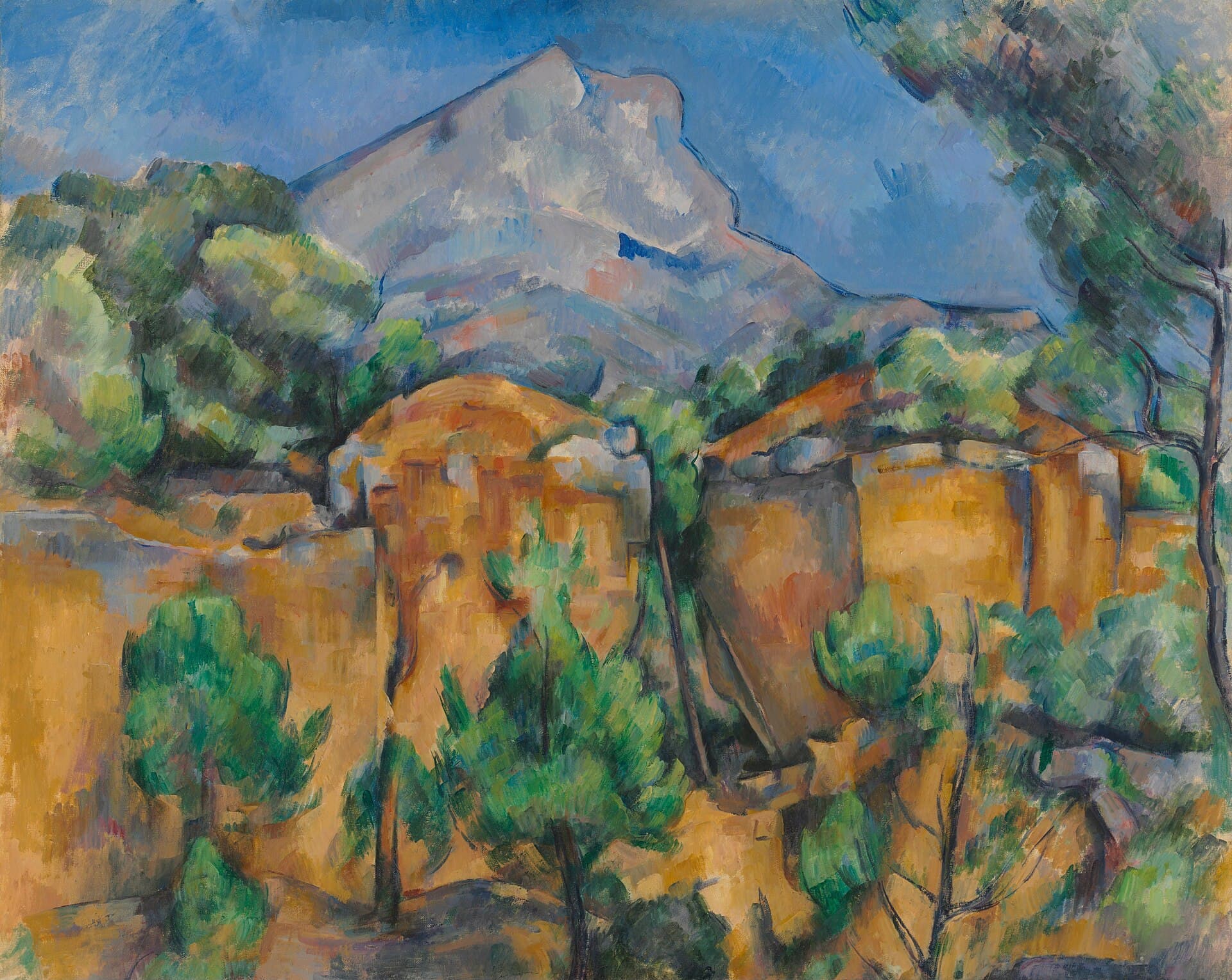
9. A trip to Montagne Sainte-Victoire
The Montagne Sainte-Victoire massif forms an utterly unmissable and majestic landmark of the entire Provençal region, its white limestone cliffs rising high above the rolling countryside. This rugged and beautiful mountain was the lifelong muse and obsession of the painter Paul Cézanne, who captured it on canvas in every possible colour more than eighty times. Today it’s a sought-after paradise for all lovers of wild nature and more demanding hiking.
You can reach the foot of the mountain very easily even without a rental car, as regular and reliable bus lines run there directly from the centre of Aix. You can choose from several marked hiking trails of varying difficulty. The easier, flatter ones lead you along the foothills among fragrant pines and wild rosemary, while the considerably tougher ones climb steep terrain all the way to the rocky summit and the historic Prieuré priory.
The climb up the rocky paths is physically quite demanding, but the panoramic view over the whole sun-drenched Provence is absolutely worth the sweat-soaked shirt. From up there you’ll see a beautiful mosaic of fields, vineyards and small stone villages scattered deep in the valley. Up top, though, the strong, cold mistral wind often blows, so don’t forget to pack an extra layer of clothing.
💡 Tip: In the hot summer months it’s absolutely essential to have sturdy hiking boots, a hat and a really large amount of drinking water, because the pale limestone reflects heat like a mirror and you won’t find any shade or natural springs along the route. It also often happens that the authorities ban access to the massif overnight due to high wildfire risk, so always keep an eye on the latest local information.
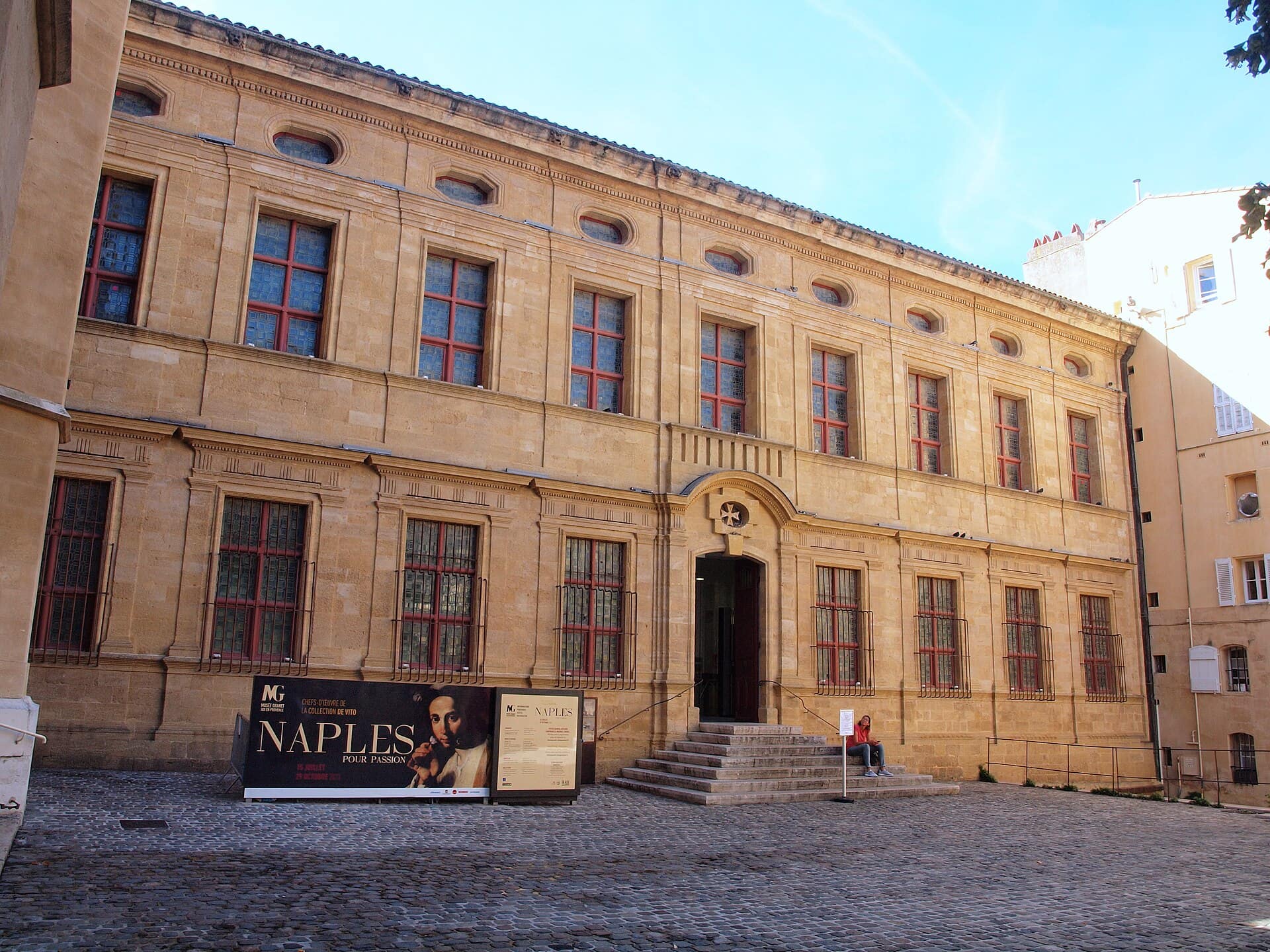
10. Musée Granet and its art collections
The Musée Granet is undoubtedly one of the most important cultural institutions in the entire region, and experts rank it among the very best fine art museums in France outside Paris itself. It’s housed in the beautifully restored premises of a former priory of the Knights of Malta and offers visitors a stunning, extensive collection of European art. You’ll find carefully curated exhibitions ranging from classical painting to modern masters.
The extensive collections include priceless works by such greats as Rembrandt, Rubens, Ingres, but also Picasso, Monet and Van Gogh. A surprising historical paradox is that for a very long time it lacked canvases by the local native Cézanne himself, because conservative local academics simply didn’t recognise him during his lifetime and rejected his work. Today, fortunately, you’ll find a small but all the more prized collection of his paintings in the hall of honour.
The museum recently also gained a second branch called Granet XXe, located nearby in a deconsecrated chapel and logically focused on twentieth-century art. In particular, the unique collection of the Swiss collector Jean Planque, with dozens of works by modern Impressionists, Post-Impressionists and Cubists, is absolutely breathtaking and you shouldn’t miss it.
💡 Tip: You can very easily buy a ticket to both museum buildings online without queuing, or use popular booking platforms like GetYourGuide. On these portals you can sometimes find very good-value combined tickets with an English-speaking guide, who will give you much broader artistic context and point out details you’d probably miss on your own.
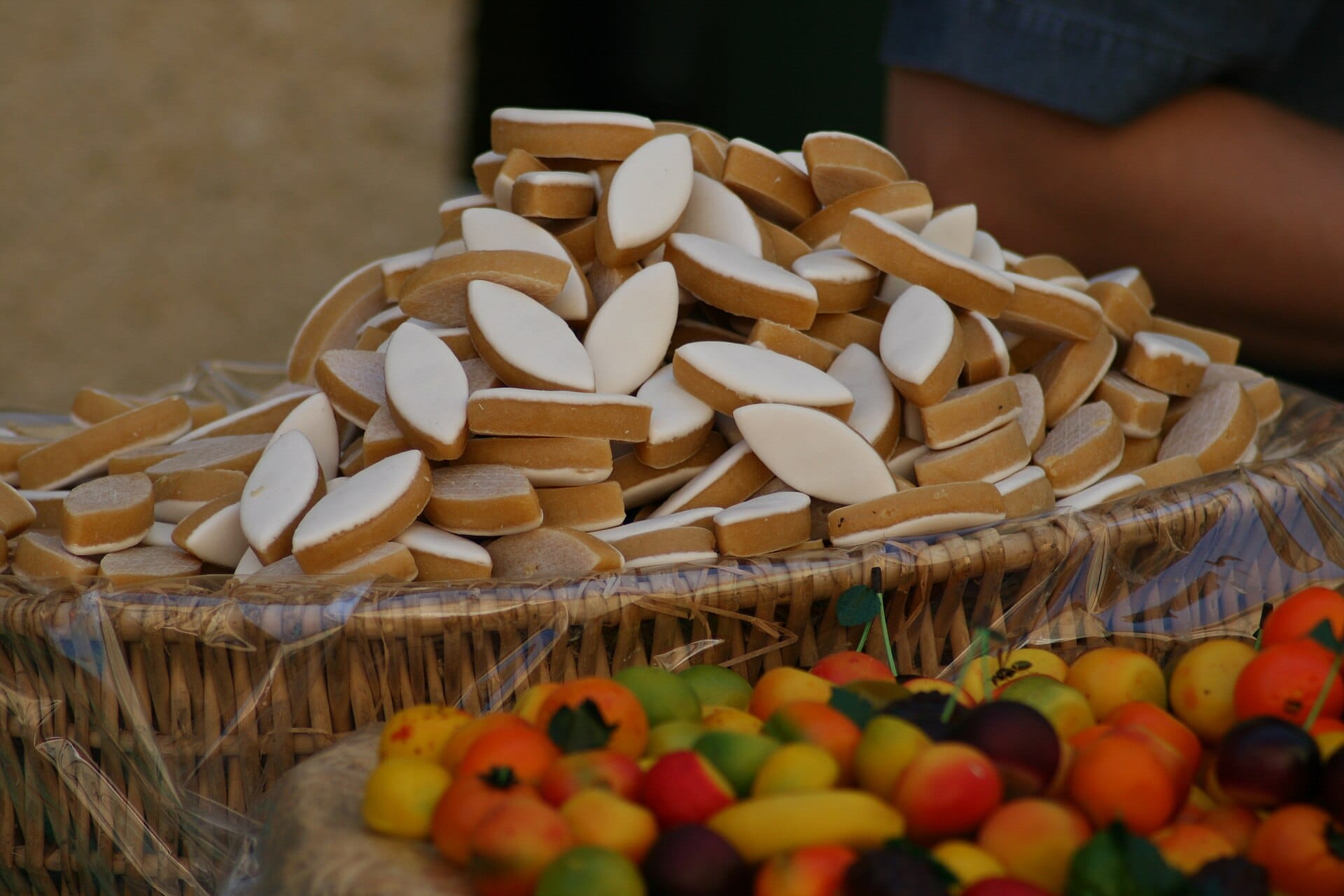
11. Tasting traditional Calissons d’Aix
While you’re spending time in Aix, you definitely can’t leave without tasting the greatest local culinary treasure — a small sweet called the Calisson. This tiny, incredibly delicate boat-shaped almond confection has been made here with pride according to a strictly guarded, unchanged recipe since the fifteenth century. It’s an absolute regional classic that the locals love and often give as a luxurious gift.
The base of a true calisson is very finely ground almond paste mixed with quality candied yellow melon and grated orange peel. This entire fruit-and-nut mixture sits on a wafer-thin base resembling a communion host, topped with a perfectly smooth, crisp royal icing made of sugar and egg whites. The taste is very distinctive, elegantly sweet and beautifully scented with fruit and sunshine.
By far the most famous and respected producer in the city is the company Le Roy René, which has several beautiful, luxurious-feeling boutiques in the historic centre. You can buy beautifully decorated, embossed tin boxes full of these treats, which make the absolutely perfect edible souvenir from your trip around Provence.
💡 Tip: With the exception of the egg-white icing, the composition of traditional calissons is purely plant- and nut-based, so it’s a perfect and completely safe vegetarian treat to go with your afternoon coffee. Besides the absolutely classic flavour, creative producers today also offer modern, colourful variations enriched with freeze-dried raspberries, quality dark chocolate or even fragrant culinary lavender.
12. The Quartier Mazarin and its quiet elegance
Just south of the busy, tourist-packed Cours Mirabeau lies the aristocratic Quartier Mazarin, which at first glance feels like it’s from a completely different world. It was generously designed in the seventeenth century in a strictly geometric grid layout and very quickly became a sought-after home for the wealthiest city aristocracy, influential politicians and judges.
Compared to the old town, the streets here are far wider, surprisingly quiet and lined with grand, enormous palaces with high stone walls and hidden inner gardens. A slow stroll through this quarter offers a wonderful, almost meditative contrast to the very lively and at times slightly noisy old town. It’s the ideal spot for moments when you need a break from the crowds and simply want to admire the architecture.
As you walk, you’ll also find a whole range of small private art galleries and prestigious antiquarian bookshops selling old historic maps, rare books and luxurious Provençal antiques. The overall atmosphere here is immensely cultivated and noble, and every step exudes the rich history of the old French families who shaped the region’s history.
💡 Tip: During your wanderings, be sure to stop at the church of Saint-Jean-de-Malte, which was the very first Gothic sacred building in all of Provence. Its fairly austere yet elegant facade and very tall slender bell tower form a striking landmark of this elegant quarter and offer a lovely counterpoint to the mostly Baroque palaces around it.
Map of points of interest for your phone
Where to go next from Aix-en-Provence
Aix has an absolutely strategic location, allowing you to easily explore the rest of the region. The widest range of options is offered by Provence, where picturesque villages in the Luberon or a visit to majestic Avignon await you. For 2026, I recommend trying the new HistoPad in Avignon’s Papal Palace, which transforms the empty halls back into their fourteenth-century form.
If you crave contrast and a sea breeze, head south to Marseille. This raw, fascinating city is the exact opposite of elegant Aix. Watch out for your car, though: in 2026 the ZFE-m low-emission zone has been tightened here, and without a valid Crit’Air environmental sticker you risk a hefty fine. Better to use the excellent train connection.
Unforgettable experiences are also offered by the nearby French Riviera and the associated Calanques National Park with its dazzling white fjords. Just remember that to visit the most famous Sugiton cove, you must have a free online reservation during the 2026 summer season, otherwise the park rangers won’t let you in.
Frequently asked questions
How many days do I need to visit Aix-en-Provence?
Two days will be more than enough for the historic center itself. However, if you’re planning to head out to Mount Sainte-Victoire or want to use the city as a base for trips to the surrounding lavender fields, I recommend setting aside three to four days.
Is dining in Provence expensive?
Yes, Provence isn’t among the cheap destinations. For a classic three-course lunch menu at a regular bistro, you’ll pay between 15 and 25 euros in 2026. Dinner will cost you roughly 20 to 35 euros, and that’s without wine or other drinks included. Remember that lunch is served only between noon and 2 PM.
How is parking in the center?
Parking in the historic center is an expensive nightmare. By far the best strategy is to use the Park & Ride parking lots on the outskirts of the city, from where you can get to the center comfortably and cheaply by special bus lines.
Is the city safe even after dark?
Unlike some neighborhoods in nearby Marseille, Aix-en-Provence is a very safe city at any time of day. You can stroll through the nighttime streets without any worries—the only thing to watch out for is the occasional pickpocket in crowded markets.
Can I get by with English in restaurants and shops?
Most younger people and staff in tourist areas speak English. However, the basic rule is to always greet with a smile “Bonjour” and only then ask about English. This small sign of respect for the French language will ensure much friendlier treatment.
When is the best time for shopping at the markets?
The largest and best markets take place every Tuesday, Thursday and Saturday morning. The vegetable markets at Place Richelme run daily, but I recommend you arrive right around eight in the morning, when the selection is best and the stalls aren’t yet overrun with tourists.
Can I drive to Aix-en-Provence in my own car from the Czech Republic?
Yes, the journey takes roughly 13 to 15 hours. The motorways in France are in excellent condition, but bear in mind that there are fairly expensive tolls at the toll gates (approximately 9.50 euros per 100 kilometres). Also be very careful about low-emission zones in the surrounding major cities.
Tips and Tricks for Your Vacation
Don’t Overpay for Flights
Search for flights on Kayak. It’s our favorite search engine because it scans the websites of all airlines and always finds the cheapest connection.
Book Your Accommodation Smartly
The best experiences we’ve had when looking for accommodation (from Alaska to Morocco) are with Booking.com, where hotels, apartments, and entire houses are usually the cheapest and most widely available.
 🚗 Car rental on the roadVerified rental cars in Provence
Search with the DiscoverCars comparison engine — it compares prices from dozens of local and international rental companies, and most bookings come with free cancellation.
Compare car prices in Provence →Don’t Forget Travel Insurance
Good travel insurance will protect you against illness, accidents, theft, or flight cancellations. We’ve had a few hospital visits abroad, so we know how important it is to have proper insurance arranged.
Where we insure ourselves: SafetyWing (simple monthly subscription) and TrueTraveller (for extra-long trips).
Find the Best Experiences
Get Your Guide is a huge online marketplace where you can book guided walks, trips, skip-the-line tickets, tours, and much more. We always find some extra fun there!