

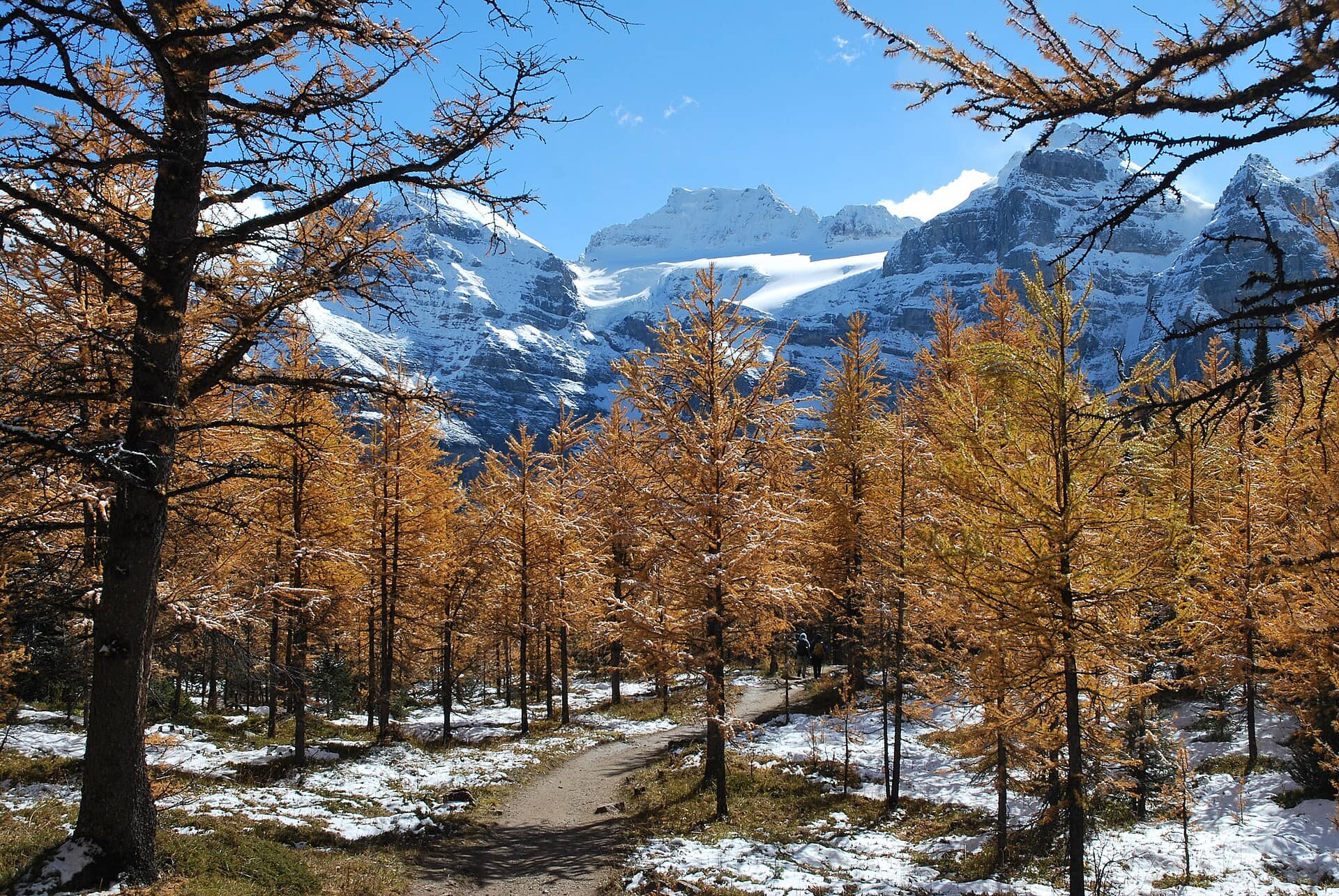
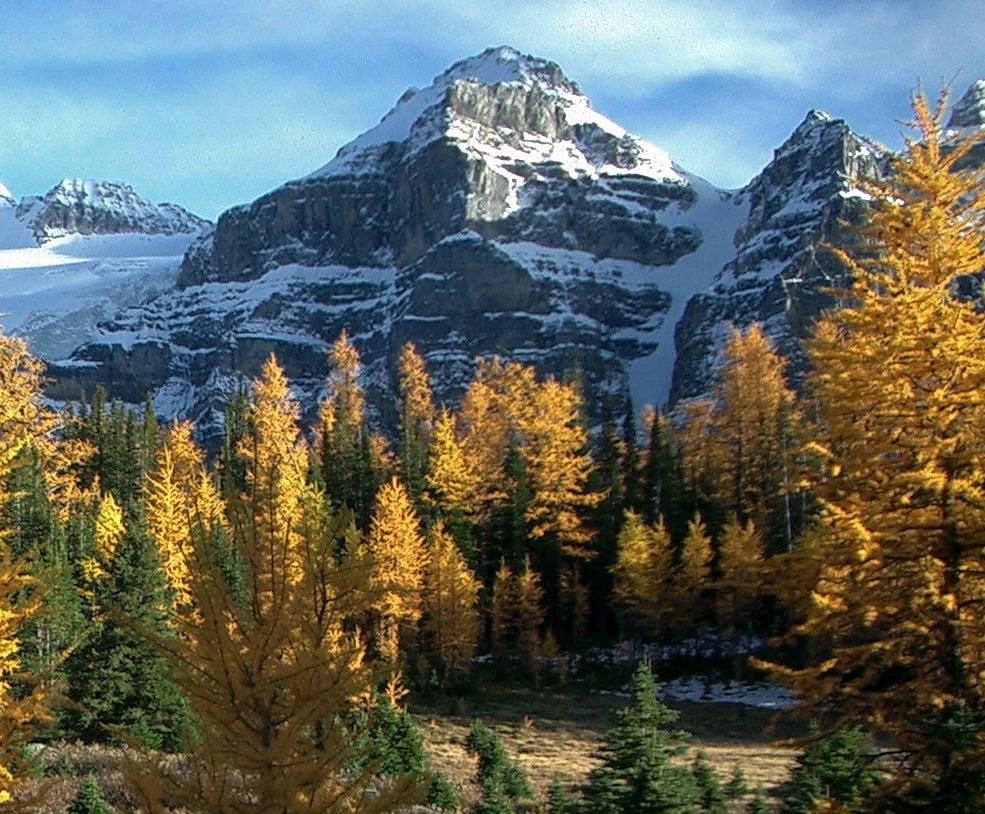
Larch Valley in Canada is hands down the most beautiful autumn hike in Banff National Park. Picture the perfect day: crisp mountain air mingling with the scent of pine needles while you stand in the middle of a valley that looks as though someone poured liquid gold over it. The Canadian Rockies put on an unbelievable show in autumn, but nothing compares to the phenomenon known as Larch Madness. The trail through Larch Valley up to Sentinel Pass is quite simply the most stunning place on earth to witness this explosion of colour with your own eyes.
If you’re planning a trip to Banff National Park in autumn 2026, this hike belongs right at the top of your itinerary. You’re looking at a route just under twelve kilometres long, leading you from the turquoise surface of Moraine Lake up steep forest switchbacks to a high alpine pass with breathtaking views. Be warned, though, you won’t have the trail to yourself at this time of year, and the whole logistics side demands careful planning well in advance.
Honestly, do yourself a favour and sort the logistics out beforehand — the booking system, the bears and the trail itself all come with rules worth knowing while you’re still at home on the sofa. I’ll walk you through the complicated transport reservation system, explain the strict rules for moving through bear territory and break down every section of the route in detail. You’ll see that, logistical hurdles aside, this Canadian classic is the kind of experience you’ll remember for the rest of your life.
The full destination guide: Rocky Mountains — guide and what to see
TL;DR
- Peak larch season: Typically lasts only a very short window, from 20 to 30 September, when the needles turn brilliant yellow.
- Key route stats: The hike is 11.6 kilometres there and back, with a total elevation gain of 725 metres, and takes roughly 4 to 6 hours.
- Getting to the trailhead: Private cars are banned from Moraine Lake all year round, so you’ll need to use the official Parks Canada shuttle or a private operator.
- Strict bear rules: During grizzly bear season, hikers are often required to travel strictly in groups of at least 4 adults (the rule applies all day).
- Essential gear: Sturdy boots for scree, warm clothing layers (it often snows up at the pass) and a bear spray always within reach.
- Alternative routes: If you want to dodge the biggest crowds, head for nearby Eiffel Lake or opt for the quieter Consolation Lakes.
When to visit Larch Valley
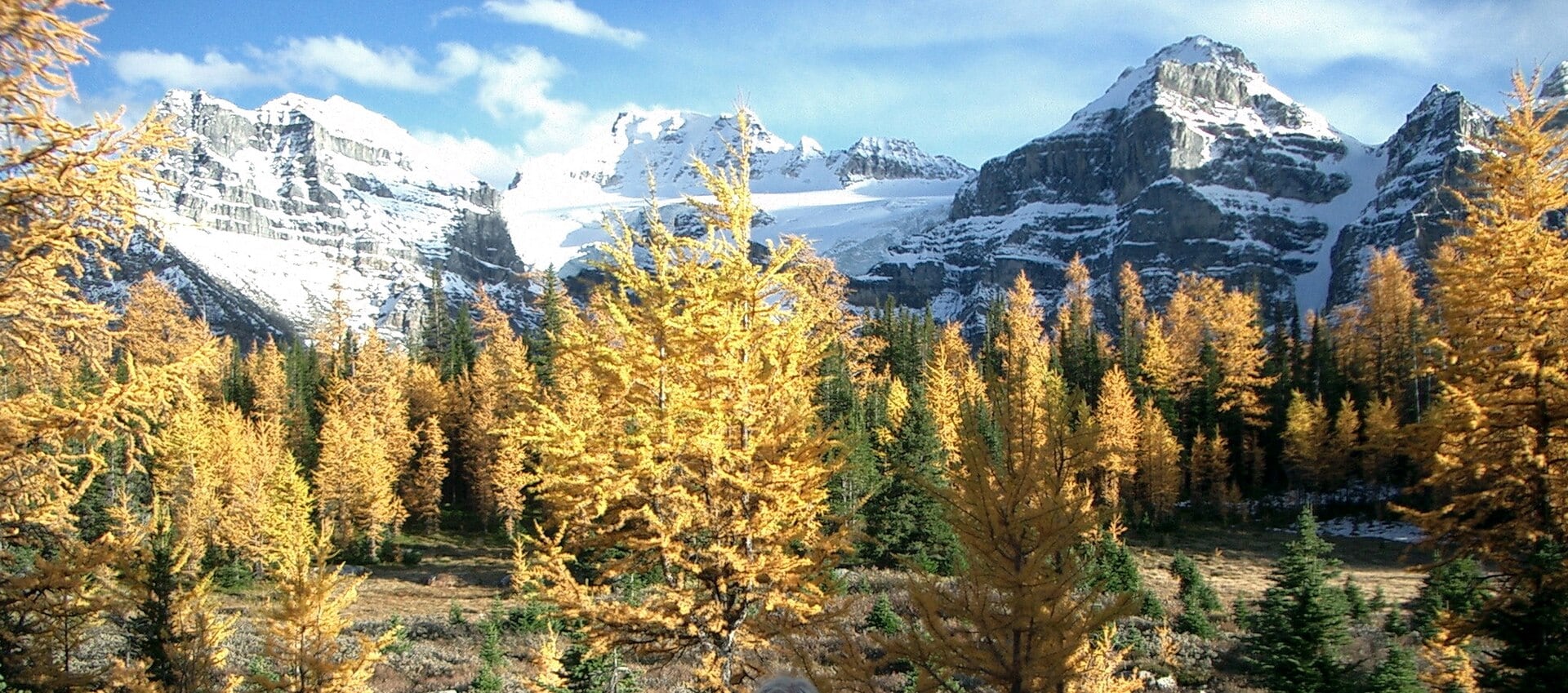
Show up three days early and you’ll see a green forest. Show up two days late and the golden needles are already on the ground. The window really is brutally short. The golden window for seeing the larches in full colour typically lasts just seven to ten days, with your best shot at perfect colours falling between 20 and 30 September. Nature doesn’t follow a calendar, though, so the exact start of the season always depends on the current temperature trend and the first morning frosts, which speed the turning along. The first trees usually start to yellow around mid-September and hit their absolute peak roughly ten days later.
Arrive too early and you’ll see nothing but an ordinary green forest only just beginning to wake into autumn tones. Turn up a few days after the main peak, on the other hand, and an autumn gale or early snow can knock all those gorgeous golden needles to the ground without mercy. Larch Valley sits at a fairly high altitude of around 2,400 metres, so the trees here are among the very first in all of Banff National Park to change colour. Down by the lakes it might still feel like a warm autumn, but up top the approaching winter is already calling the shots.
For the 2026 season it’s well worth following the latest reports from Parks Canada and keeping a close eye on social media. People routinely share photos from the trail under the hashtag LarchMadness, which is by far the best and most accurate indicator of exactly what stage the colours are at. There’s no point relying on a date in the calendar alone — much better to scroll through fresh photos from other hikers before you set off. For more on year-round weather and mountain conditions, see the detailed guide to when to visit Banff.
Where to stay in the Lake Louise area
💡 Accommodation and experiences tip: We like to find our accommodation on Booking.com, which usually has the best cancellation terms. For tickets, tours and activities, it pays to compare and book through GetYourGuide.
The ideal base for this hike is the little village of Lake Louise, the departure point for all the official buses heading to the lakes. Accommodation in this area is extremely limited, though, and for the autumn season it can sell out a good six months in advance. If you want to stay right in the heart of the action and avoid a long commute, sort your booking through a portal like Booking.com well, well ahead of time. Staying close is a huge advantage, because parking at Lake Louise itself costs over 36 CAD (around €24) a day, and in summer and autumn the car park is hopelessly full before six in the morning.
The absolute pinnacle of luxury is staying right on the lakeshore, where you’ll experience genuine Canadian romance with glaciers in view. The iconic Fairmont Chateau Lake Louise offers first-class service and views, but you’ll pay handsomely for them, as nightly rates often start at 1,000 Canadian dollars (roughly €680). Another exclusive option is the gorgeous Moraine Lake Lodge, sitting right at the start of our route — and its guests are among the very few permitted to drive a private car all the way to the lakeshore, which these days is an enormous privilege.
The Lake Louise Inn is a hugely popular choice with an indoor pool and good restaurants, where nightly rates fall into a more bearable mid-range bracket and you’ll often run into local mountain guides. If you can’t find anything available right by the lakes or in the adjacent village, you’ll have to look at staying in the town of Banff itself, about 40 minutes away by motorway, from where you can catch an early-morning bus to the Park and Ride.

Where to eat around Lake Louise
A proper mountain hike will work up a serious appetite, so once you’re back down from Larch Valley to civilisation, you’ll definitely appreciate a good dinner. Right in the centre of Lake Louise village you’ll find a handful of great spots. If you fancy something quick and local, give Trailhead Café a go — it does fantastic wraps and sandwiches that will set you right back on your feet.
For a heartier meal and a well-earned pint, I’d recommend Bill Peyto’s Cafe, a real local institution tucked away inside the HI Lake Louise hostel. The portions here are genuinely generous, the prices reasonable by Canadian standards, and the atmosphere is wonderfully laid-back — the perfect place to swap trail stories with other hikers.
9 tips for what to see and do in Larch Valley and around
Let’s break the whole route and its quirks down step by step. Anyone of average fitness can manage it. The biggest stress actually comes before you even start — sitting at your computer, hunting for bus tickets. The points below will guide you through everything from buying those bus tickets to getting safely back down from the high alpine pass.
1. The gold rush known as Larch Madness
For Canadians, this phenomenon is a huge event that sparks an absolute tourist frenzy in Banff National Park every single year. The reason is a unique tree called Larix lyallii, or the subalpine larch, one of the few conifers in the world that sheds its needles for winter to prepare for extreme cold. But before its soft needles fall, they turn an incredibly rich, brilliant yellow-gold that, set against a deep blue sky and snow-dusted peaks, creates an absolutely perfect picture. These larches grow exclusively at high altitudes near the tree line, mostly above 2,300 metres, which is why you have to tackle steep mountain trails to reach them.
During this brief window, thousands of enthusiastic hikers, photographers and families with children flock up into the mountains. The atmosphere on the trails during these days is very distinctive and friendly — everyone shares the same excitement over the colourful spectacle. Strangers take group photos for one another, someone hands out snack bars, nobody’s in a rush to get anywhere. It’s actually rather lovely, even with hundreds of other people milling about.
💡 Tip: For the best light to photograph in, head up into the valley either early in the morning with the first buses, or late in the afternoon. The golden colour of the larches glows even more in low, slanting sunlight and takes on a deeper hue, whereas at high noon the harsh light can make the colours look a touch washed out.
2. Booking transport to Moraine Lake in 2026
Getting to the trailhead itself is now often more complicated and stressful than the uphill slog. Private cars are banned from Moraine Lake all year round, with absolutely zero tolerance for any visitor. The road is closed off without compromise right at the turn-off from the motorway, and only official Parks Canada buses, certified commercial operators and intrepid cyclists who pedal up under their own steam are allowed access. This drastic move was necessary because the car park used to be bursting at the seams by three in the morning.
For the autumn 2026 season, the booking gates for the official buses open on Wednesday 15 April at exactly 8:00 am local time (MDT). At that moment only 40 percent of the total ticket capacity is released, and a huge virtual scramble erupts instantly, with thousands of people waiting in an online queue. The rest of the tickets are released by the system on a rolling basis, always exactly 48 hours before each departure day, again on the stroke of eight in the morning.
💡 Tip: An adult ticket costs 12.75 CAD (about €8.50) plus a non-refundable booking fee of 3.50 CAD (about €2.30). Definitely set up a Parks Canada account the day before and be logged in to the exact second, otherwise you’ve got no chance. If the official system fails you, you can try pricier private operators like Moraine Lake Bus Company. You’ll find more detail in the guide to the Moraine Lake and Lake Louise shuttle.
3. The four-person rule and grizzly bears
Banff National Park is most definitely not a zoo, but a vast, untamed wilderness where nature dictates its own harsh rules. Larch Valley and the adjoining Paradise Valley are prime grizzly bear territory, and in autumn the bears feed intensively on berries across the mountain slopes, building up the fat reserves they urgently need for the approaching winter sleep. Because of the very high risk of an unexpected encounter, Parks Canada often imposes strict safety measures during this period — measures you really shouldn’t take lightly.
Very often there’s a strict requirement to travel in a group of at least four adults. This rule carries the force of law, and breaking it can mean genuinely hefty fines or, in extreme cases, a court summons. Your group must stay tightly together for the entire hike, ideally making noise by talking or clapping, and at least one member must always have a special bear spray within reach. The sound of a human voice is a clear signal to a bear that a person is approaching, and in most cases it will give you a wide berth in good time.
💡 Tip: If you’re travelling as a pair or completely solo, don’t worry about it at all and don’t skip the hike. There are always other small groups and individuals hanging around at the start of the trail by the lake, and within a few minutes you’ll naturally team up to reach the required number and head safely up together.
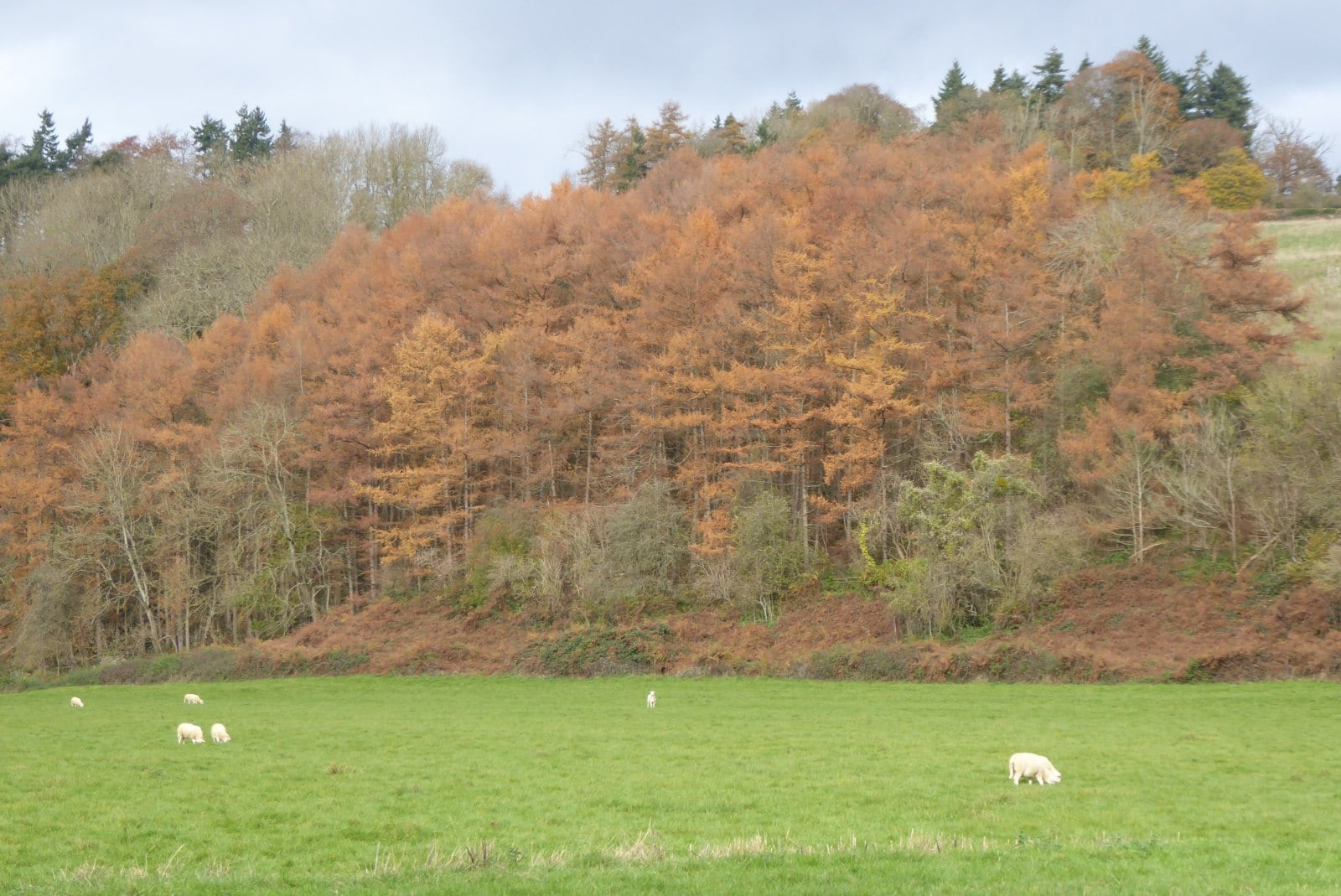
4. First section: the endless forest switchbacks
The hike itself begins innocently enough on the shore of the stunning Moraine Lake, but the trail soon shows its true, rather brutal face. As soon as you branch off the main path, you’re faced with about ten sharp switchbacks that bite mercilessly into the steep slope and don’t give you a moment to catch your breath. This section runs through dense spruce forest, where you won’t yet see any of those dreamed-of golden larches, and it’s without doubt the most physically demanding part of the whole day.
Over this opening hour and a half or so, you’ll climb a respectable 450-plus metres of elevation. It’s absolutely crucial not to burn yourself out by pushing the pace too hard at the start — take short breaks, breathe deeply and drink regularly. The upside of this steep climb is that it warms you up quickly even on a chilly autumn morning, and as you gain height, the first lovely glimpses of the turquoise lake far below start to open up between the trees.
💡 Tip: Do bring trekking poles for this section — they’ll save you a lot of precious energy on the way up and later, on the steep descent, they’ll really help protect your knees. The surface here tends to be riddled with exposed roots and can be unpleasantly slippery in the morning damp.
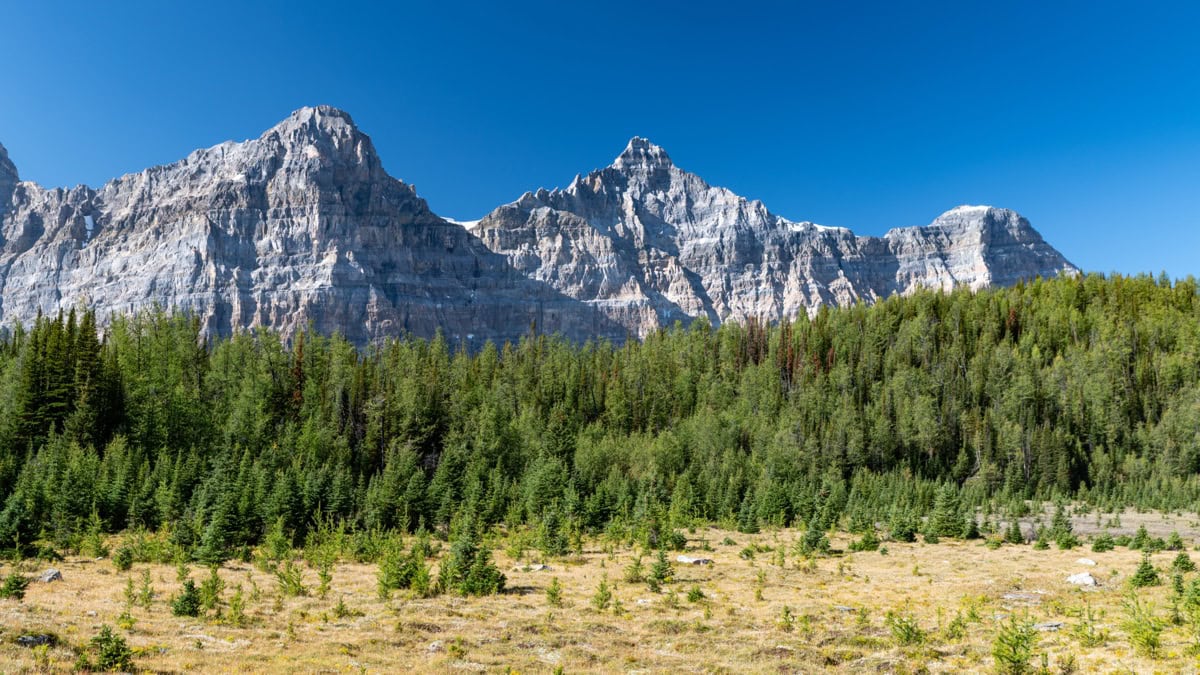
5. Entering the larch paradise of Larch Valley
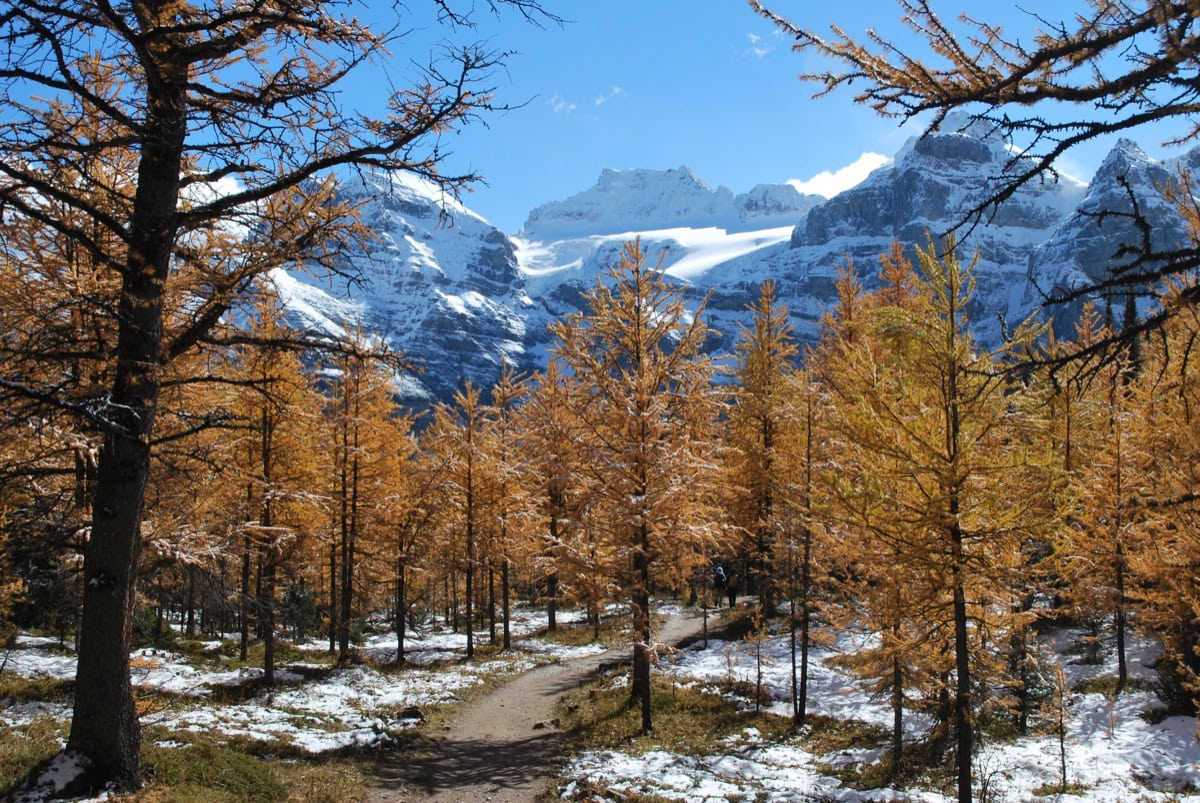
The moment you finally conquer that last gruelling switchback, the forest parts and a vast high-alpine valley full of brilliant yellow larches suddenly opens up before you, looking like a set from a fantasy film. The wonderful contrast of golden needles against the deep blue autumn sky is exactly why everyone weighed up that long and fairly demanding journey to get here.
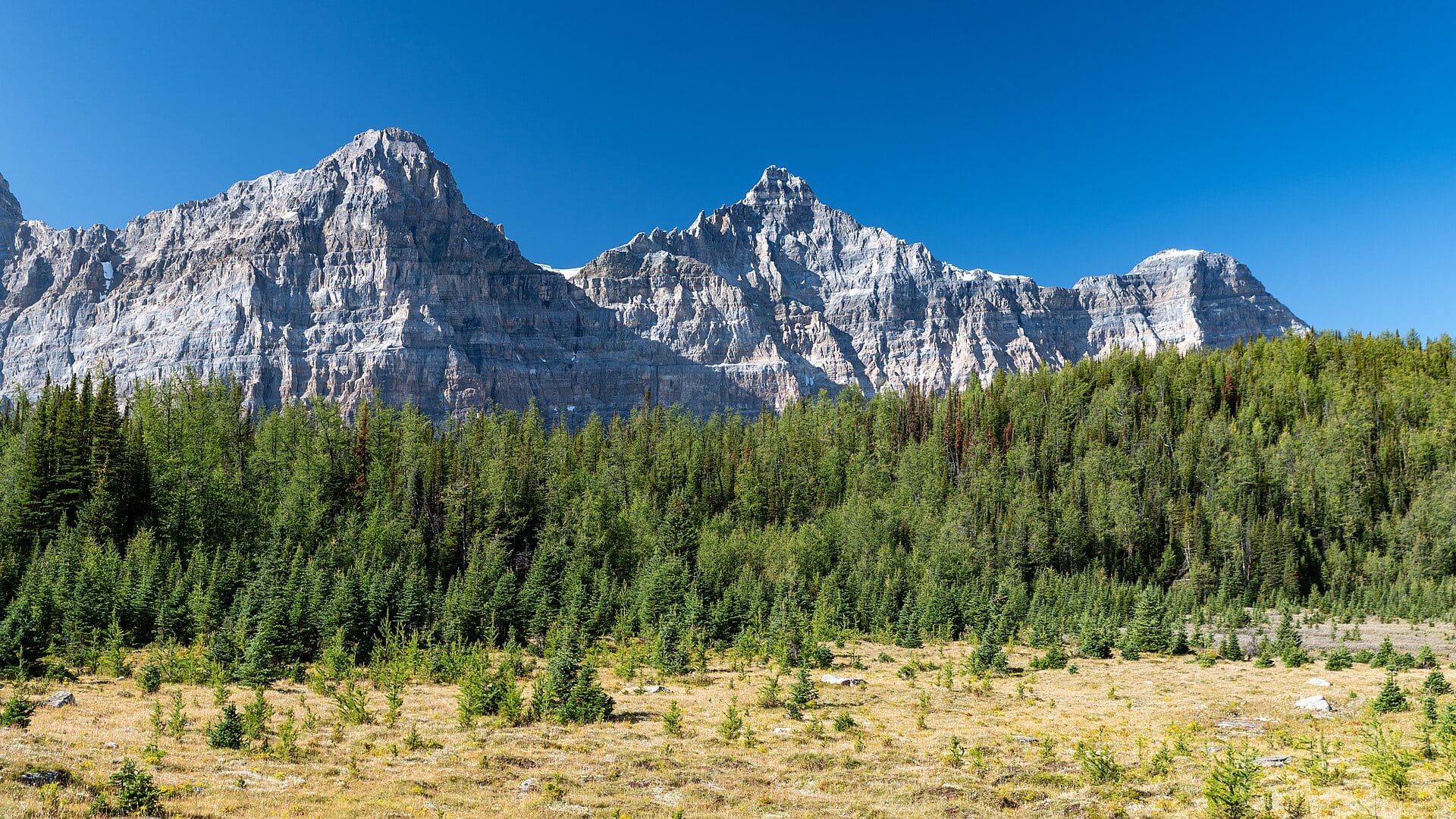
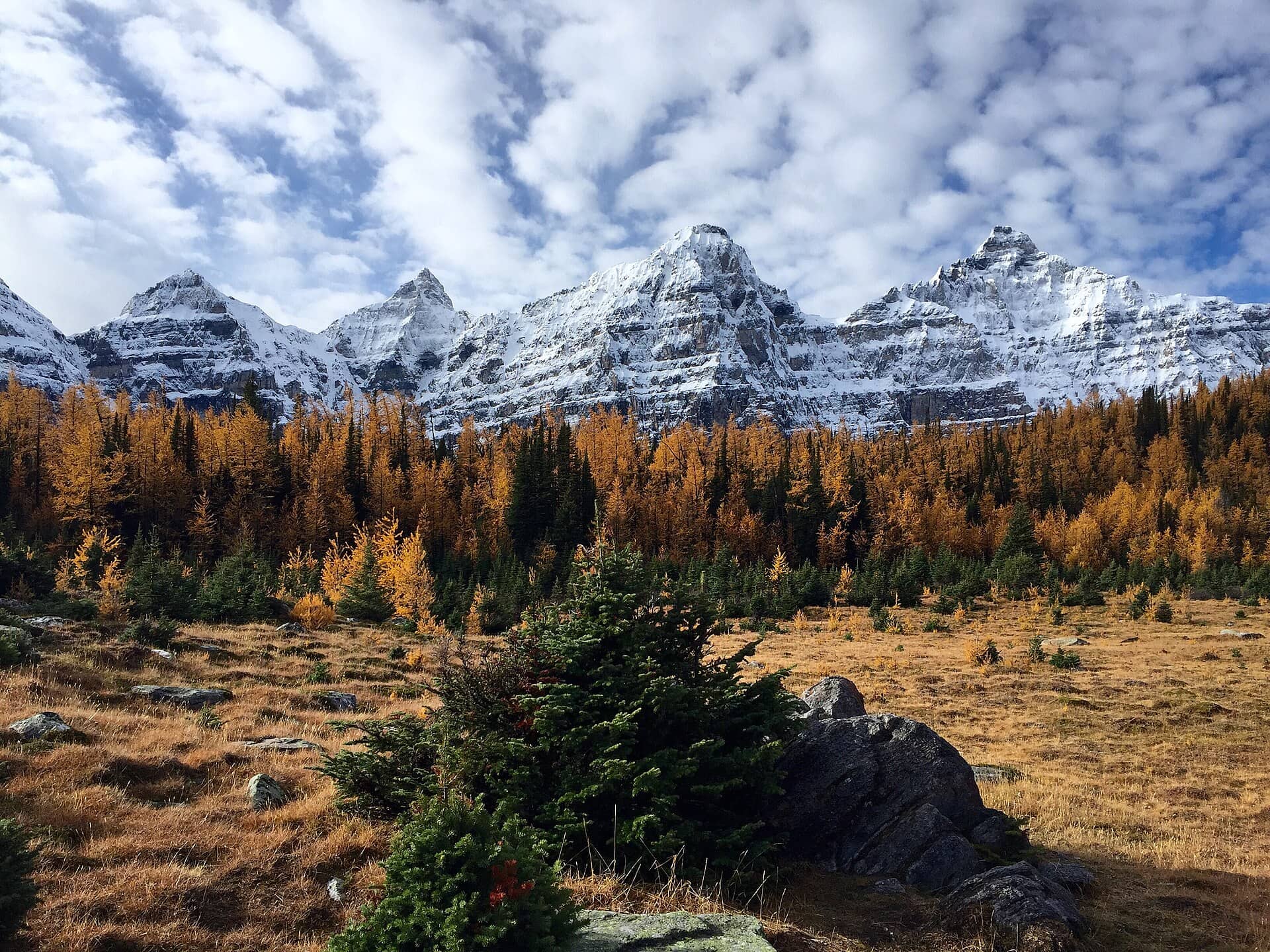
Beyond the trees themselves, you’ll be instantly bowled over by the backdrop of mighty mountains, aptly called the Valley of the Ten Peaks. These massive rock spires, hung with enormous glaciers, make the perfect backdrop for your photos and lend the whole place an incredibly majestic atmosphere. Here the trail winds pleasantly among the trees, offering plenty of beautiful spots to rest and enjoy a well-deserved snack with an unforgettable view across the landscape.
💡 Tip: Don’t rush — savour this flat section to the full, as it’s the prettiest stretch for quiet contemplation and photography. But please always stick strictly to the marked dusty trails: the fragile alpine tundra here is extremely sensitive, and it takes decades to recover from being carelessly trampled by crowds of hikers.
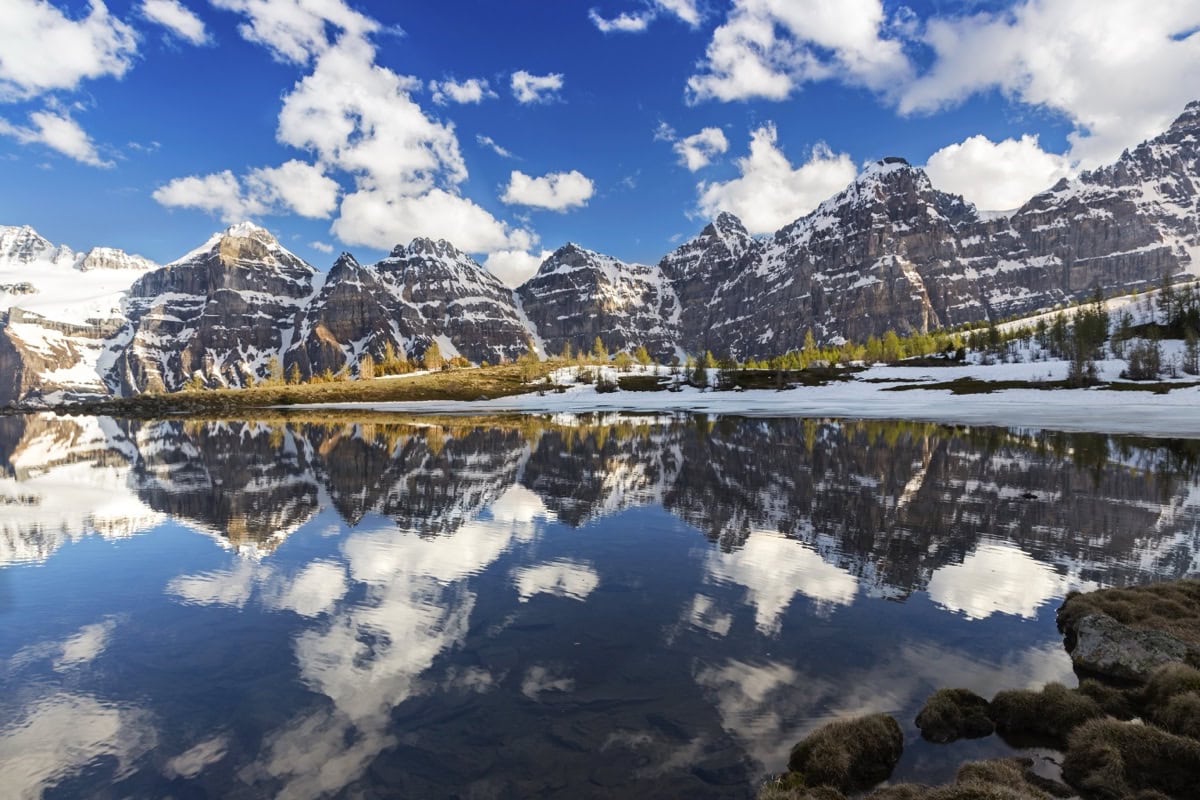
6. Reflections at Minnestimma Lakes
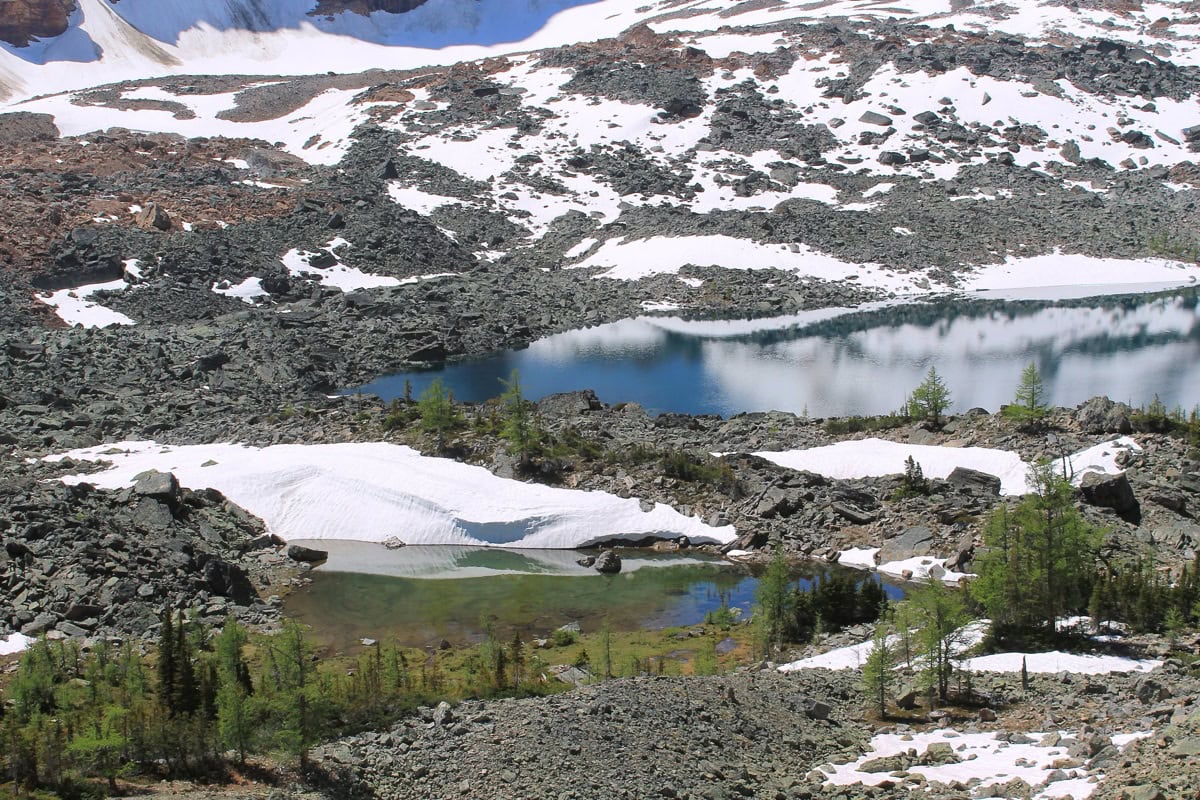
Once you’ve passed through the main, densest part of the larch forest, the trees slowly thin out and give way to rougher, rockier terrain. At this altitude you’ll come across a pair of small alpine tarns called the Minnestimma Lakes, a popular destination and often the final stop for many hikers. For a large share of visitors who, for whatever reason, don’t fancy the final steep climb to the pass, the whole hike comfortably ends right here by the water.
If you’re lucky enough to catch absolute stillness, the surface of these tarns acts as a perfect mirror. It reflects the surrounding golden trees and the mighty snow-capped peaks of the mountain massif, creating some of the best and most famous photo compositions in all of Banff National Park. The larger of the two tarns sits right at the foot of an enormous scree slope that looms menacingly overhead and leads up to Sentinel Pass.
💡 Tip: Your best chance of a calm, ripple-free surface is early in the morning or, conversely, in the early evening. During the day a fresh wind very often picks up in the valley and reliably breaks up the reflection, so it’s well worth timing your arrival at the tarns just right.
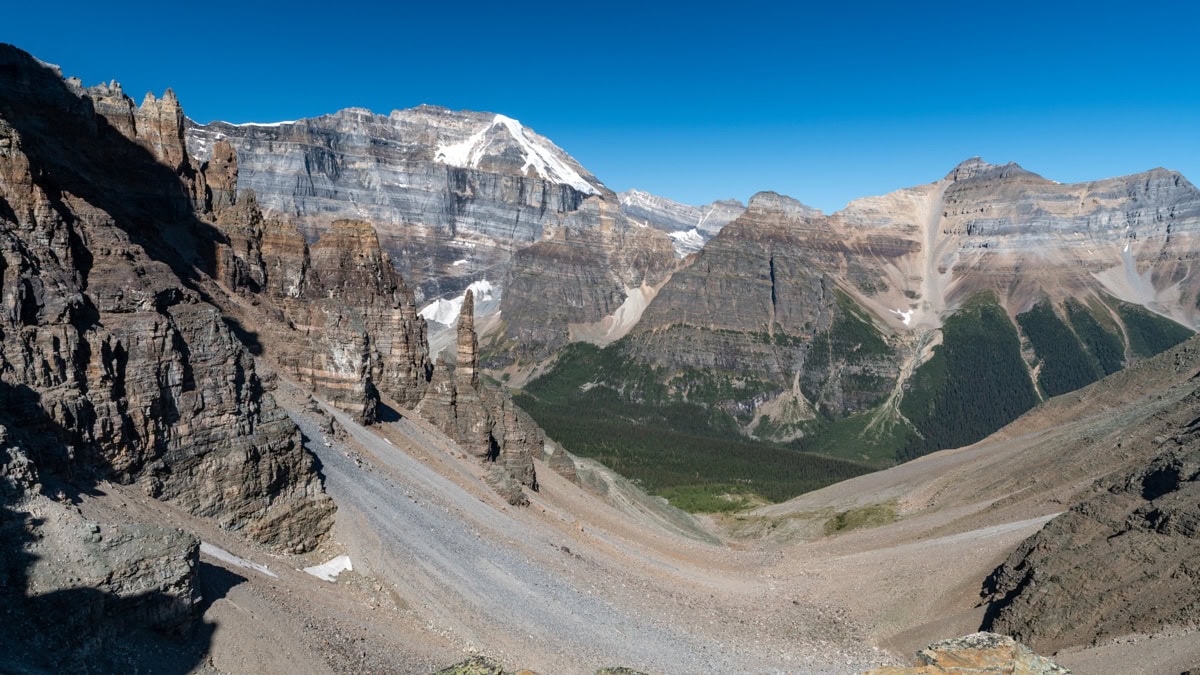
7. The final climb up to Sentinel Pass
For those who want to squeeze the absolute maximum out of the day and aren’t afraid of a bit of sweat, the trail continues on beyond the tarns. You’re looking at a roughly 1.5-kilometre climb up a large scree field, adding another 170 metres or so of elevation to your total. The trail here is clearly visible, though, zigzagging in wide, manageable switchbacks up the bare slope to the pass, which sits at a respectable altitude of 2,611 metres.
Although it looks fairly daunting and steep from down at the tarns, the climb takes around 30 to 40 minutes at an average pace and is nowhere near tricky technically — no scrambling required. Your reward for the effort is an incredible 360-degree panorama that opens up at the top of the pass. On one side you have the whole golden Larch Valley with the ten peaks laid out before you; on the other, a deep view down to the majestic Mount Temple and the wild Paradise Valley.
💡 Tip: Up at the pass there’s usually a very strong, icy wind, even when it’s pleasantly warm and sunny down in the valley by the lakes. Before you set off on this final exposed section, it’s best to pull on a windbreaker, hat and gloves right away, so you can enjoy those fantastic views up top in peace without your teeth chattering.
8. What to pack for the autumn mountains
Autumn in the Canadian Rockies is incredibly beautiful, but it’s also extremely unpredictable, and the weather here can turn in a matter of minutes. The absolute essential, then, is good clothing layers, because the morning by the lake can be below freezing, you’ll work up a sweat in just a T-shirt while climbing through the forest, and a sudden snow flurry can easily catch you out at the pass. Definitely pack a reliable hardshell jacket against the wind, a warm mid layer and, above all, don’t forget a winter hat.
As for gear, a good pair of hiking boots is an absolute must — they’ll support your ankle reliably on the scree and won’t slip on wet rocks. By late September you really shouldn’t be without microspikes in your pack either, since the upper sections just below the pass are very often iced over or covered in the first thin layer of snow at this time of year. And don’t underestimate water and snacks — there’s nowhere to refill along the trail, so what you carry is what you’ve got.
💡 Tip: Under no circumstances should your bear spray be buried somewhere at the bottom of your pack under your jacket. You need it within reach at all times, ideally clipped to your pack’s hip belt or in a special chest holster, so you can whip it out in a single second in an emergency.
9. Alternative larch trails without the crowds
If you happen not to land that coveted bus ticket to Moraine Lake, or you’re simply put off by the thought of hundreds of people on a single trail, there are some great alternatives. Right from Moraine Lake there’s an inconspicuous turn-off to Eiffel Lake, where you’ll meet maybe twenty people instead of two hundred, yet the views are every bit as gorgeous. This route is 11.2 kilometres long and offers fantastic panoramic views over the whole valley without that brutal climb to the pass, making it ideal for anyone seeking more peace and less steep terrain.
Another excellent option from a completely different starting point is the area around the nearby and very popular Lake Louise. Try the beautiful hike up to Saddleback Pass, around 7.2 kilometres long, which takes you through a dense larch forest with the tempting option of continuing on into the deserted Sheol Valley. For families with younger children, the very easy stroll to the Consolation Lakes is absolutely ideal — just 5.8 kilometres with minimal elevation gain.
💡 Tip: Whichever of these alternatives you choose, always check the current bear warnings on the national park’s official website beforehand. That mandatory group-of-four rule very often applies to these quieter, less-visited surrounding trails too.
Map of points of interest for your phone
Where to go next from Banff National Park
Once you’ve finished discovering the golden larches, western Canada has countless more adventures in store. Both Alberta and neighbouring British Columbia are made for long road trips, where a view that makes you pull over and reach for your phone waits around every bend. If you’ve got more time, you can combine high mountains with wild ocean and plan a grand Vancouver → Banff road trip.
Bear in mind that for any movement within the national parks you’ll need a valid pass (for 2026 that’s the traditional Canada Discovery Pass). When travelling through these remote areas, it also doesn’t pay to skimp on quality travel insurance. Any mountain rescue operation can climb into truly astronomical sums. We’ve had a good experience with the reliable SafetyWing travel insurance, for example. And to keep access to maps and bookings even high in the mountains, a reliable data connection via a Holafly eSIM will definitely come in handy.
Frequently asked questions
How difficult is the trail to Larch Valley?
Overall, the trek is rated as moderate difficulty. The biggest physical challenge is right at the beginning from the lake, where you have to tackle steep switchbacks through the forest with an elevation gain of roughly 450 meters. Once you reach the valley itself, the terrain flattens out significantly. The final ascent to Sentinel Pass is then just a short, albeit steep episode. With average physical fitness, it can be managed without any problems.
Is it worth going all the way up to Sentinel Pass?
Definitely yes. While Larch Valley itself is beautiful, from Minnestimma Lakes it’s only about 20 to 30 minutes of hiking up to the pass. For this little bit of extra effort, you’ll gain a fantastic 360-degree view, see the majestic Mount Temple up close, and peek into the deep Paradise Valley. It’s the cherry on top of the whole hike that would be a shame to miss.
How to best avoid the biggest crowds?
If you want to have the valley at least somewhat to yourself, you unfortunately have to sacrifice sleep. Book the special early shuttle (called Alpine Start), which departs at 4:00 AM, so you’ll be at the lake while it’s still dark. The second option is to hit the trail very late instead, around 2:00 PM, when most of the morning hikers are already heading back down to the buses. The time around lunch is absolutely the worst on the trail.
What to do when you can’t get tickets for the official Parks Canada shuttle?
You don’t need to panic right away and change your plans. You can use the services of commercial companies, such as Moraine Lake Bus Company. These private buses have permitted access to the road and often offer available tickets even when the state system is hopelessly sold out. Be prepared, however, that their services are considerably more expensive than the official state-subsidized transport.
Are dogs allowed on this trail?
Yes, dogs are allowed in Banff National Park and on this particular trail, but they must be kept strictly on a leash at all times. However, keep in mind that fall is a period of increased bear activity, and the valley is known grizzly territory. The presence of a dog (even on a leash) can make bears nervous or provoke them, so carefully consider whether it might be safer to leave your furry friend to rest at your accommodation for the day.
Where can I check the current bear regulations?
The most reliable source is always the official Parks Canada website, specifically the “Important Bulletins” section dedicated to Banff National Park. I also recommend checking the current “Trail Conditions”. If there’s a mandatory group of four requirement in effect, you’ll always find prominent yellow or red warning signs right at the trailhead by Moraine Lake.
Do I need a special permit for this trek?
# Translation
No special permit is needed for the hiking trek itself. For legal movement in the area, a standard national parks entry pass (Canada Discovery Pass or paid daily admission) is sufficient. The limitation and biggest obstacle is “only” that you need to purchase and reserve a seat on the bus in advance, which will transport you across the closed road to the starting point at the lake. EXCERPT: Discover the Larch Madness phenomenon and set out on the most beautiful Canadian autumn trek through a valley full of golden larches all the way to Sentinel Pass.
Tips and Tricks for Your Vacation
Don’t Overpay for Flights
Search for flights on Kayak. It’s our favorite search engine because it scans the websites of all airlines and always finds the cheapest connection.
Book Your Accommodation Smartly
The best experiences we’ve had when looking for accommodation (from Alaska to Morocco) are with Booking.com, where hotels, apartments, and entire houses are usually the cheapest and most widely available.
 🚗 Car rental on the roadVerified car rentals in the Rocky Mountains
Search with the DiscoverCars comparison engine — it compares prices from dozens of local and international rental companies, and most bookings come with free cancellation.
Compare car prices in the Rocky Mountains →Don’t Forget Travel Insurance
Good travel insurance will protect you against illness, accidents, theft, or flight cancellations. We’ve had a few hospital visits abroad, so we know how important it is to have proper insurance arranged.
Where we insure ourselves: SafetyWing (simple monthly subscription) and TrueTraveller (for extra-long trips).
Find the Best Experiences
Get Your Guide is a huge online marketplace where you can book guided walks, trips, skip-the-line tickets, tours, and much more. We always find some extra fun there!
More from Rocky Mountains
Full guide →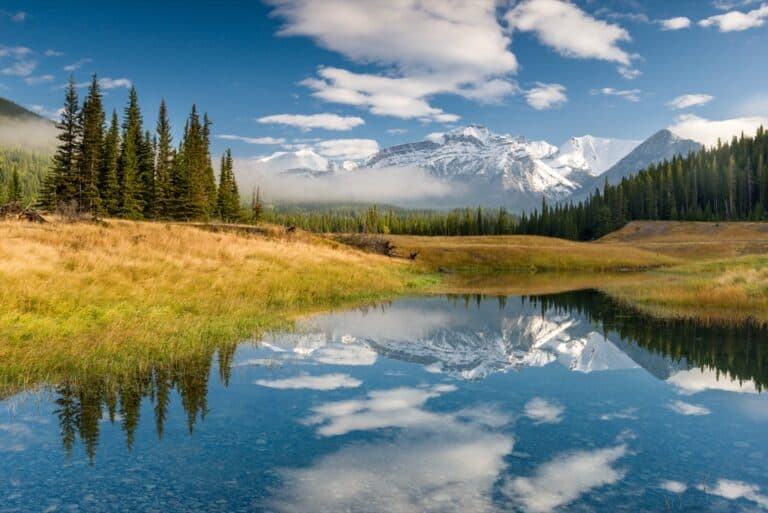 Travel story · most readWhat to Pack for the Canadian Rockies: Summer & Winter Packing List 2026
 ItineraryWestern Canada Road Trip: 14–21 Day Itinerary from the Rockies to the Pacific
 What to seeJasper, Canada: 15 Tips on What to See and Do (After the 2024 Fire)
 Where to stayCalgary, Canada: 23 Best Things to Do and See
 With kidsHow Much Does a Trip to Alberta & BC Cost in 2026: Budget for Couples, Families and Backpackers


