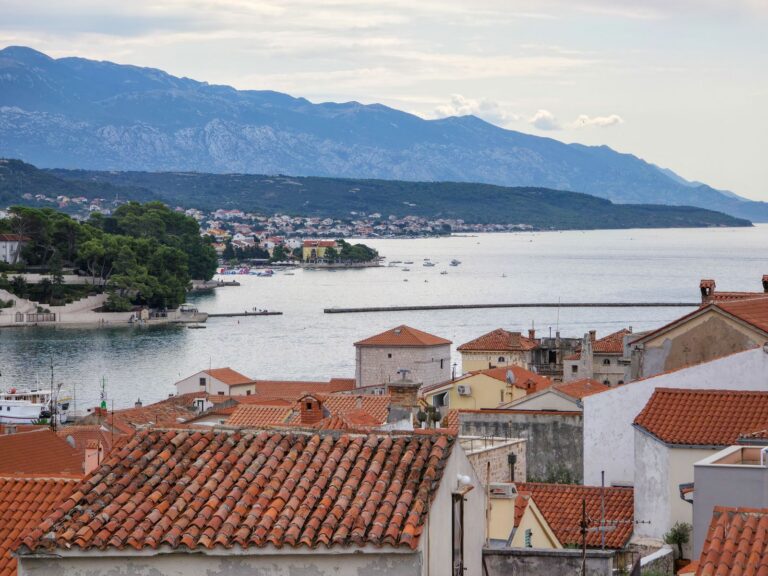
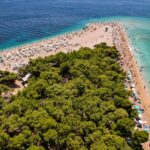
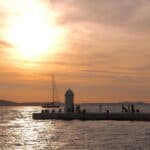
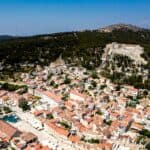
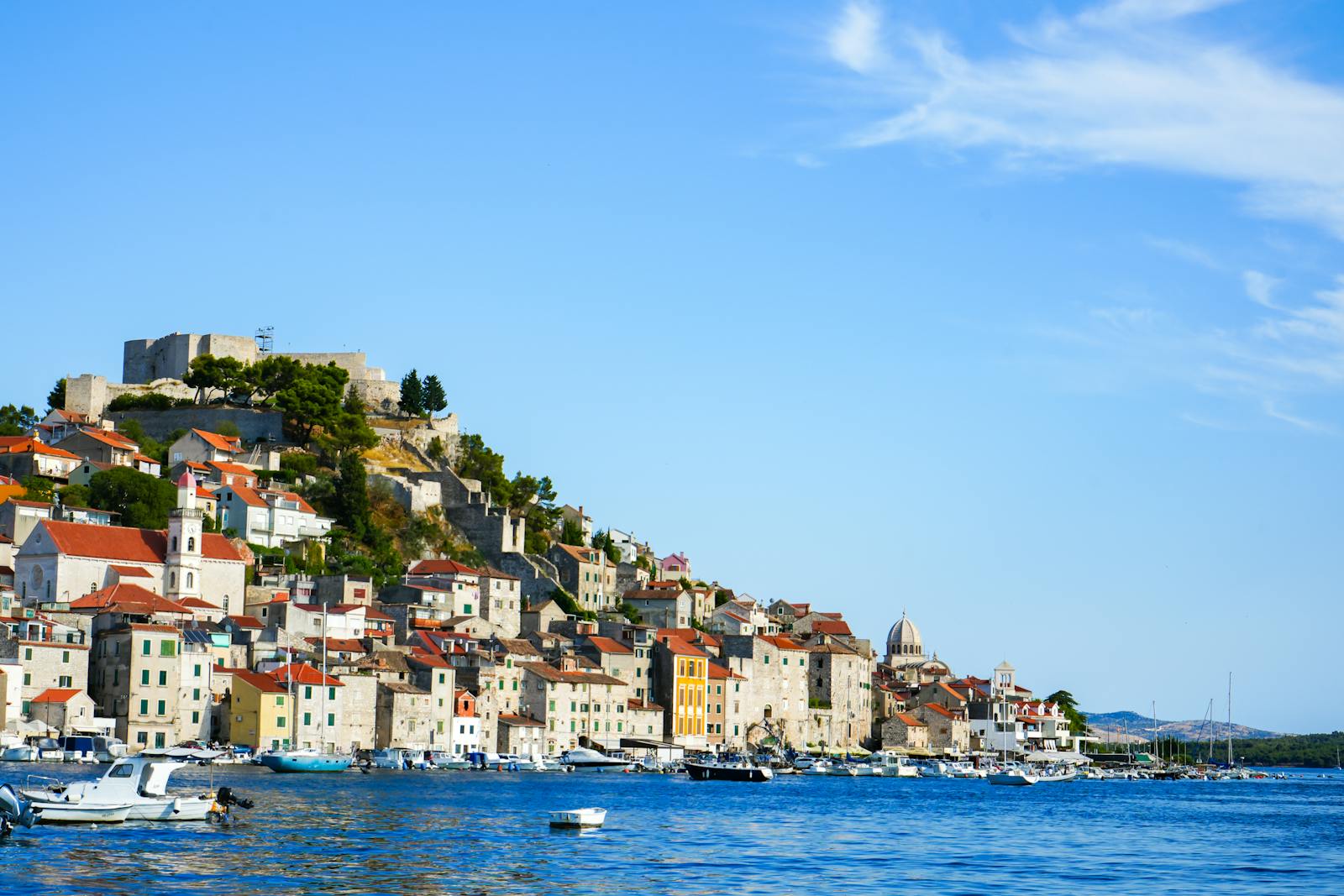
If you’re looking for a spot in Croatia that has held onto its authentic character and doesn’t groan under the crush of tourists like its more famous neighbours, you’ll fall head over heels for Šibenik, Croatia. This picturesque town sits in central Dalmatia right at the mouth of the Krka River, and it offers a near-perfect blend of history, narrow stone alleys and a relaxed, laid-back atmosphere. Unlike Split or Dubrovnik, which were founded by the Greeks and Romans, Šibenik is the oldest purely Croatian town on the Adriatic coast.
Wandering through the historic centre, you’ll breathe in a calmer and far more genuine slice of Dalmatian life. There are two unique UNESCO-listed monuments here, medieval fortresses tower above the rooftops with breathtaking views, and the cafés on the squares tempt you into a long, lazy morning over coffee. In short, it’s the ideal destination for anyone who wants to soak up the beauty of the Balkans without the stress and the constant elbowing through crowds.
Beyond the historic core itself, the town makes a brilliant base for exploring the surrounding area. It sits just a short hop from the entrance to the gorgeous Krka National Park, while boats set sail from the local harbour to the fascinating Kornati archipelago. Whether you’re after romantic evenings in the old town or an active holiday out in nature, Šibenik has a little something for everyone.
TL;DR
- The oldest Croatian town: Founded by the Croats themselves, first mentioned in 1066.
- Two UNESCO monuments: St James’s Cathedral and the impressive maritime St Nicholas Fortress.
- Four historic fortresses: Offering the finest panoramic views over the sea and islands.
- An ideal base for day trips: The best starting point for visiting Krka NP and Kornati NP.
- Fewer tourists: A more authentic and peaceful vibe than nearby Split or Zadar.
- Great access: A quick exit off the A1 motorway, with Split and Zadar airports both around an hour away.
The full destination guide: Dalmatia — guide and what to see
When to visit Šibenik
For the best experience, I’d recommend planning your visit for the shoulder months around the peak season — May, June or September. By then it’s pleasantly warm for long walks and your first dips in the sea, but you’ll safely dodge the fiercest summer heat. The town moves at a wonderfully easygoing pace in these months, every restaurant is open, and accommodation prices are considerably friendlier than at the height of summer. A huge bonus of spring and autumn is the entry fee to the nearby Krka National Park, which drops to a very reasonable twenty euros compared to forty in summer.
If you decide to come in July or August, be ready for the fact that the sun can turn the old town’s narrow stone alleys into a real furnace. In these months it’s ideal to head out for the sights early in the morning, while the air still has that fresh dawn coolness, and then spend the afternoon on a beach or by the hotel pool. You’ll also need to factor in that you’ll meet considerably more people at the popular waterfalls in the national parks, and boat trips need to be booked several days in advance.
The winter months and early spring, from November to March, have their own particular charm in the form of total peace and very cheap entry to the nature reserves. A ticket to the Krka waterfalls, for instance, costs just a symbolic seven euros in winter. That said, most smaller businesses and tourist attractions may have reduced opening hours or be closed altogether. The upside is that the magnificent historic fortresses and the famous cathedral are accessible all year round, and in the off-season you can even visit the high-perched Barone and St John fortresses completely free of charge.
Where to stay in Šibenik
💡 Tip for accommodation and experiences: We like to look for places to stay on Booking.com, which usually has the best cancellation terms. Tickets, tours and activities are then worth comparing and booking through GetYourGuide.
A lot depends on the kind of holiday you’re planning and whether you’ll have a car. If you want to soak up the romantic atmosphere and have all the wonderful sights within arm’s reach, look for apartments and small hotels right in the historic centre. Just bear in mind that the town’s core is entirely pedestrianised, laced with steep lanes and hundreds of steps. You’ll need to leave the car in a paid car park on the edge of the waterfront or in the underground garages beneath the fortresses, and carry your luggage the last stretch on foot.
For a guaranteed touch of luxury right in the heart of the old town, the beautiful Heritage Hotel Life Palace sits in a sensitively restored noble palace, blending centuries of history with modern comfort. For lovers of design and sea views, the stylish Armerun Heritage Hotel is a fantastic choice — just a few steps from the cathedral and the evening waterfront promenade. If you’d rather have your own private space, the booking portals list dozens of gorgeous stone apartments with a magical, authentic feel, where you’ll feel like a true local.
For families with children, or anyone who wants to combine sightseeing with lazing on the beach, the Solaris Beach Resort area is an ideal pick — it lies about six kilometres from the historic centre. Here you’ll find beautifully maintained Solaris Beach Resort beaches with a gentle slope into the sea, a huge water park and very convenient parking right by your accommodation. One option offering great, very comfortable facilities in this complex is the Amadria Park Hotel Ivan, with its enormous pools and perfect entertainment for the whole family. Getting into the centre of Šibenik from here takes just ten minutes by car or regular bus.
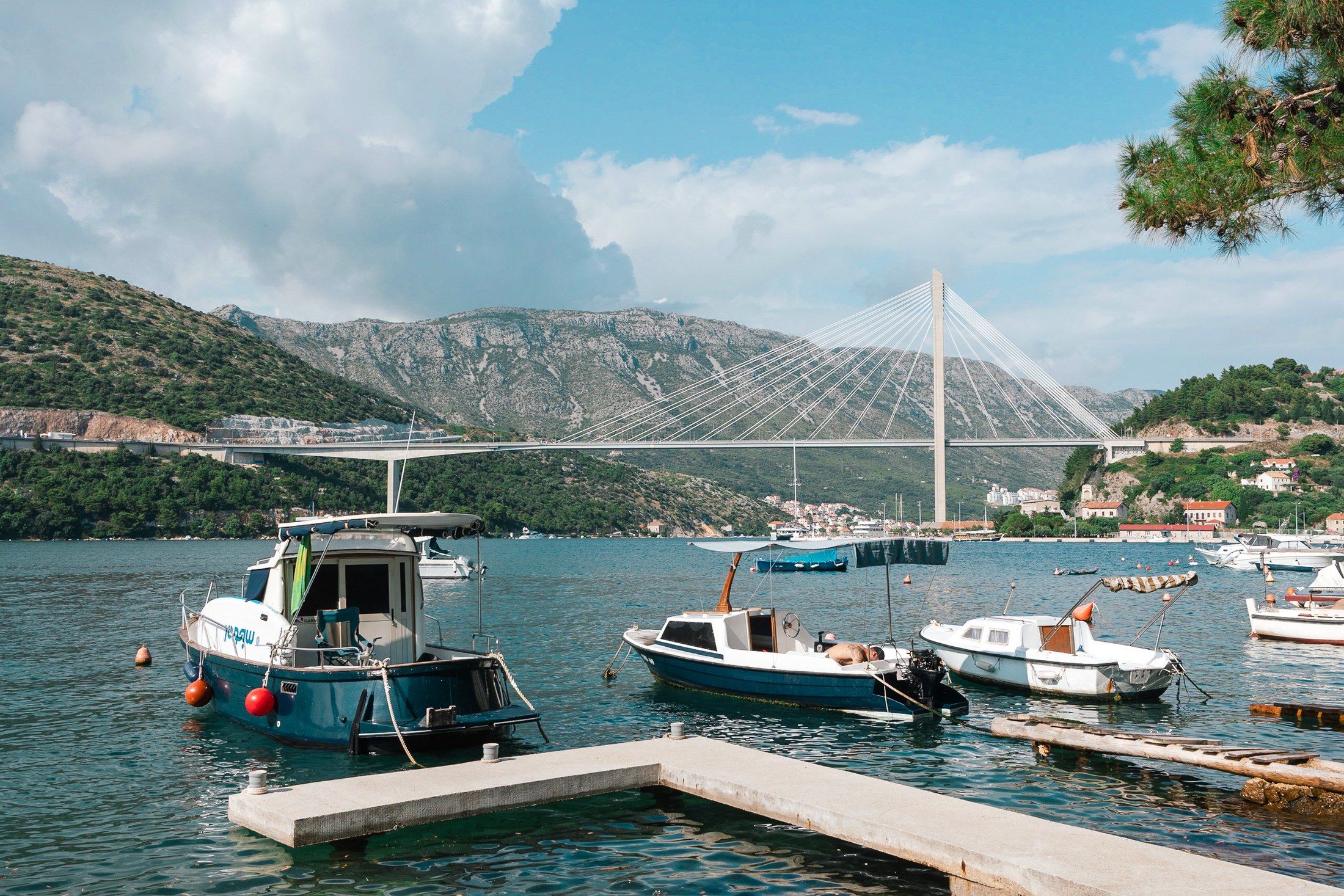
12 things to see and do in Šibenik
Let’s take a look together at the very best this Dalmatian town and its surroundings have to offer. You can explore the historic centre in one or two days, but thanks to the brilliant day trips on offer, you could easily spend a whole week here.
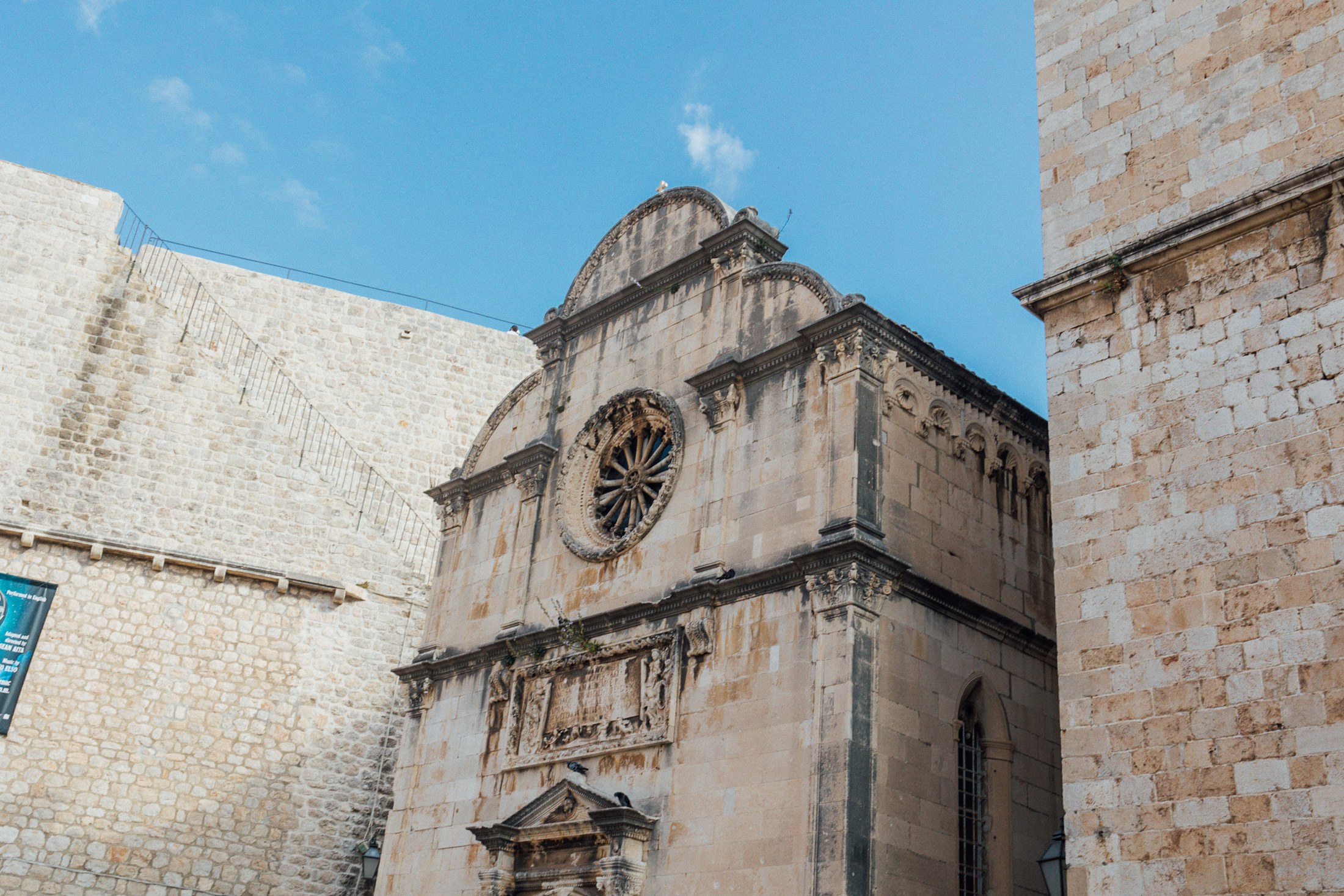
1. St James’s Cathedral (UNESCO)
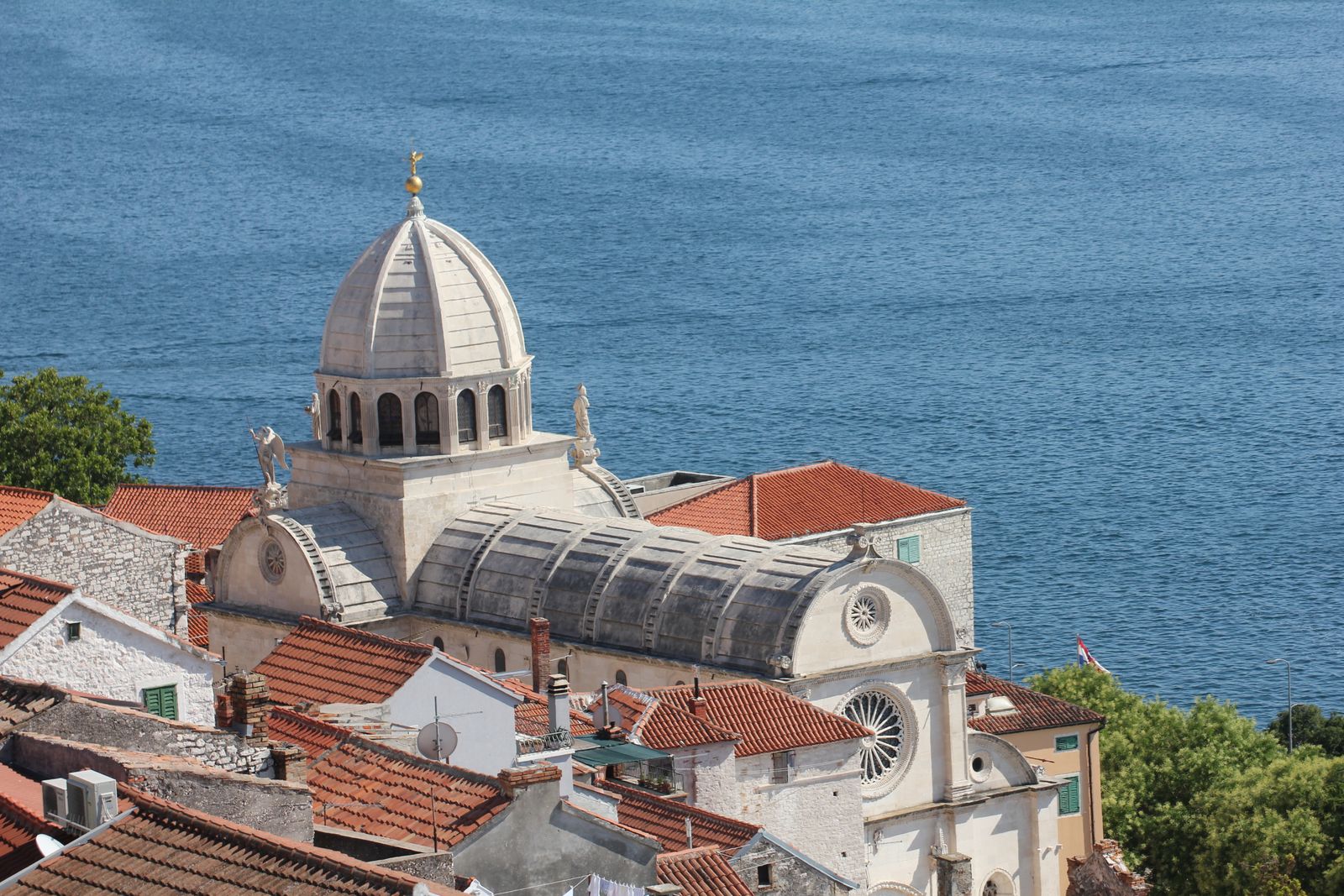
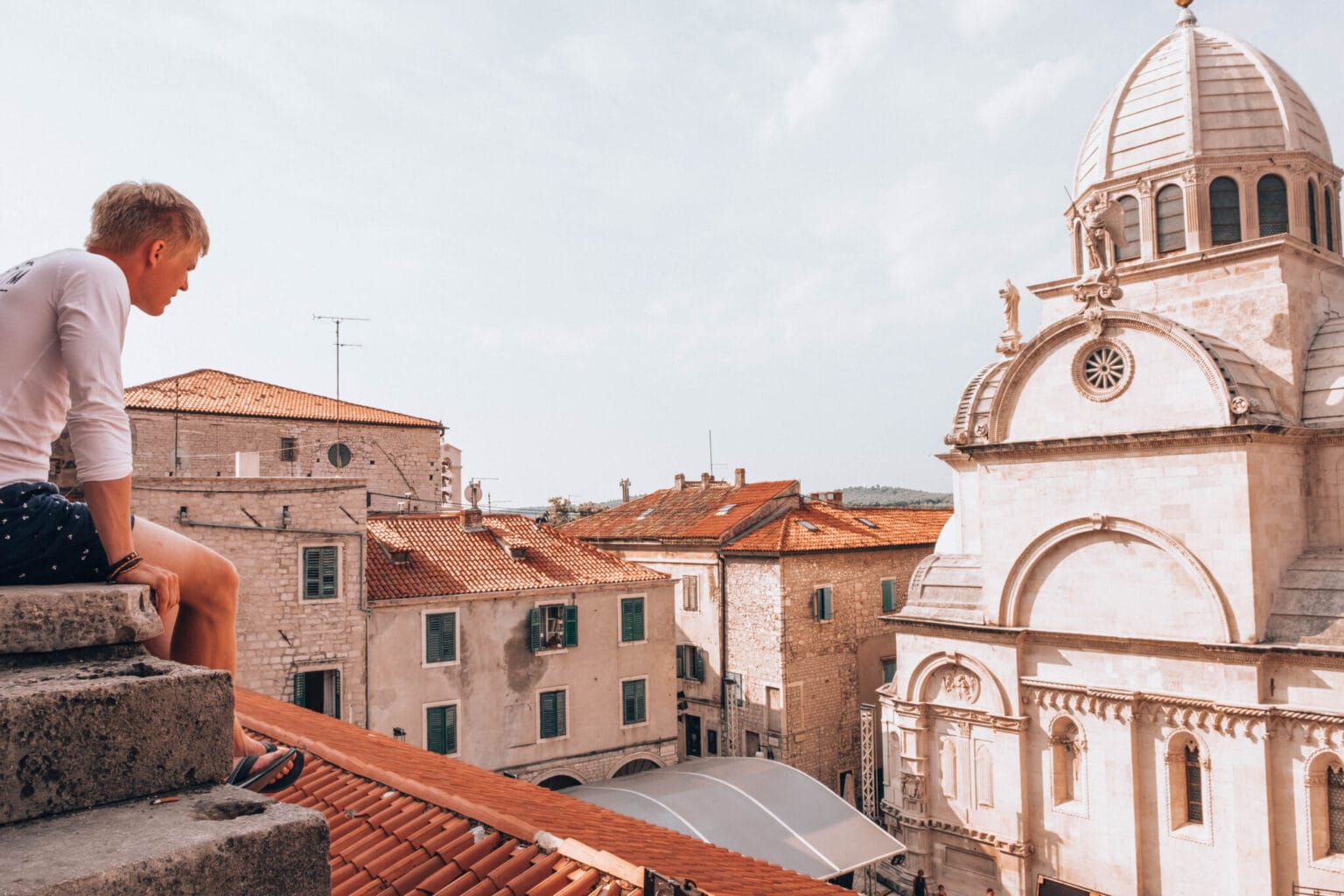
This monumental building is an absolute gem of late Gothic and Renaissance architecture, and it rightly boasts a place on the prestigious UNESCO list. Construction began in 1431, took more than a hundred years, and it’s a world first because it’s built entirely of stone. You won’t find a single piece of wood, mortar or brick in it. The brilliant architects Juraj Dalmatinac and, after him, Nikola Firentinac slotted the huge blocks together using a special groove-and-tongue technique. The stone dome itself rises to an impressive thirty-two metres and forms the unmistakable landmark of the whole town.
The stone for its construction was shipped in from the Dalmatian islands of Brač, Korčula, Rab and Krk. The cathedral’s most famous detail is, without doubt, the unique frieze of seventy-one carved stone heads adorning the outer wall of the apses. These are utterly realistic portraits of ordinary fifteenth-century Šibenik residents, whose varied expressions and moods you can still study with fascination today. Also worth your attention are the magnificent Lion Portal with figures of Adam and Eve, and the intricate baptistery inside.
💡 Tip: Entry to the cathedral runs around five to seven euros, and don’t forget to dress appropriately with shoulders and knees covered. Since the cathedral still functions as a working church and Masses are held here, visits for tourists aren’t possible during services. In high season it’s usually open daily from around half past eight in the morning until eight in the evening.
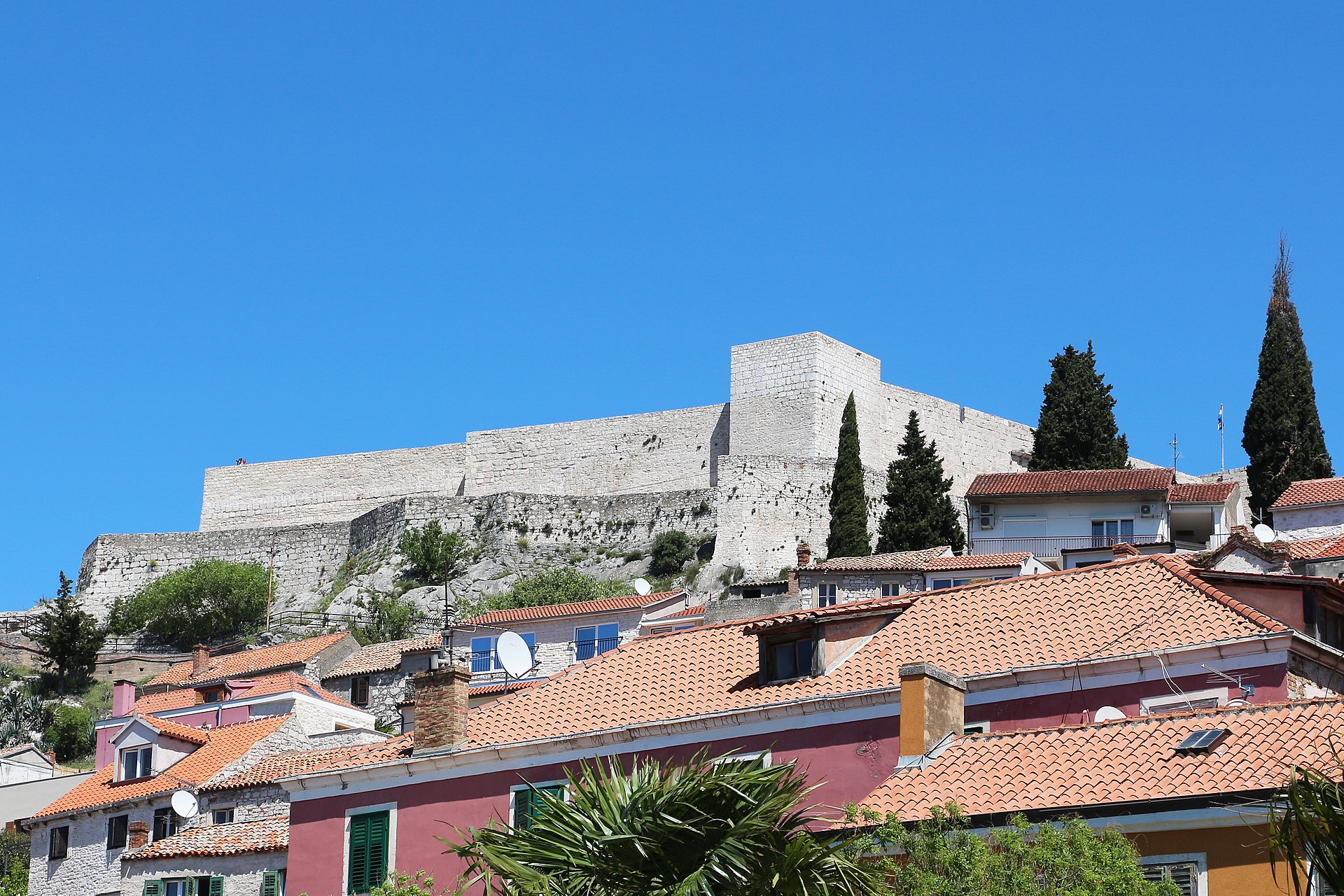
2. St Michael’s Fortress
St Michael’s Fortress, in Croatian Tvrđava sv. Mihovila, is the oldest of Šibenik’s four fortresses and stands proudly right above the historic centre. The way up to the main gate at Zagrađe 21 winds through tangled alleys and up many stone steps, but the more demanding climb is well worth it. Once you stand on its mighty ramparts, you’re greeted by an indescribably beautiful view over the red rooftops of the old town, the famous cathedral and the broad scattering of islands across the Adriatic Sea.
Today this stunning historic space comes alive above all with culture and music. Inside the old walls, a unique open-air summer stage was recently created, hosting fantastic concerts and theatre performances throughout the tourist season. Listening to live music as the sun slowly sinks into the sea behind the stage is an experience of epic proportions.
💡 Tip: A single entry to St Michael’s Fortress costs an adult 11.50 euros in high season. But if you’re planning to explore more of the historic sites, it’s worth getting the combined ticket for fifteen euros, valid for the three land fortresses over seven days. Tickets can only be paid for in euros, and it’s usually open daily from nine in the morning until eight in the evening.
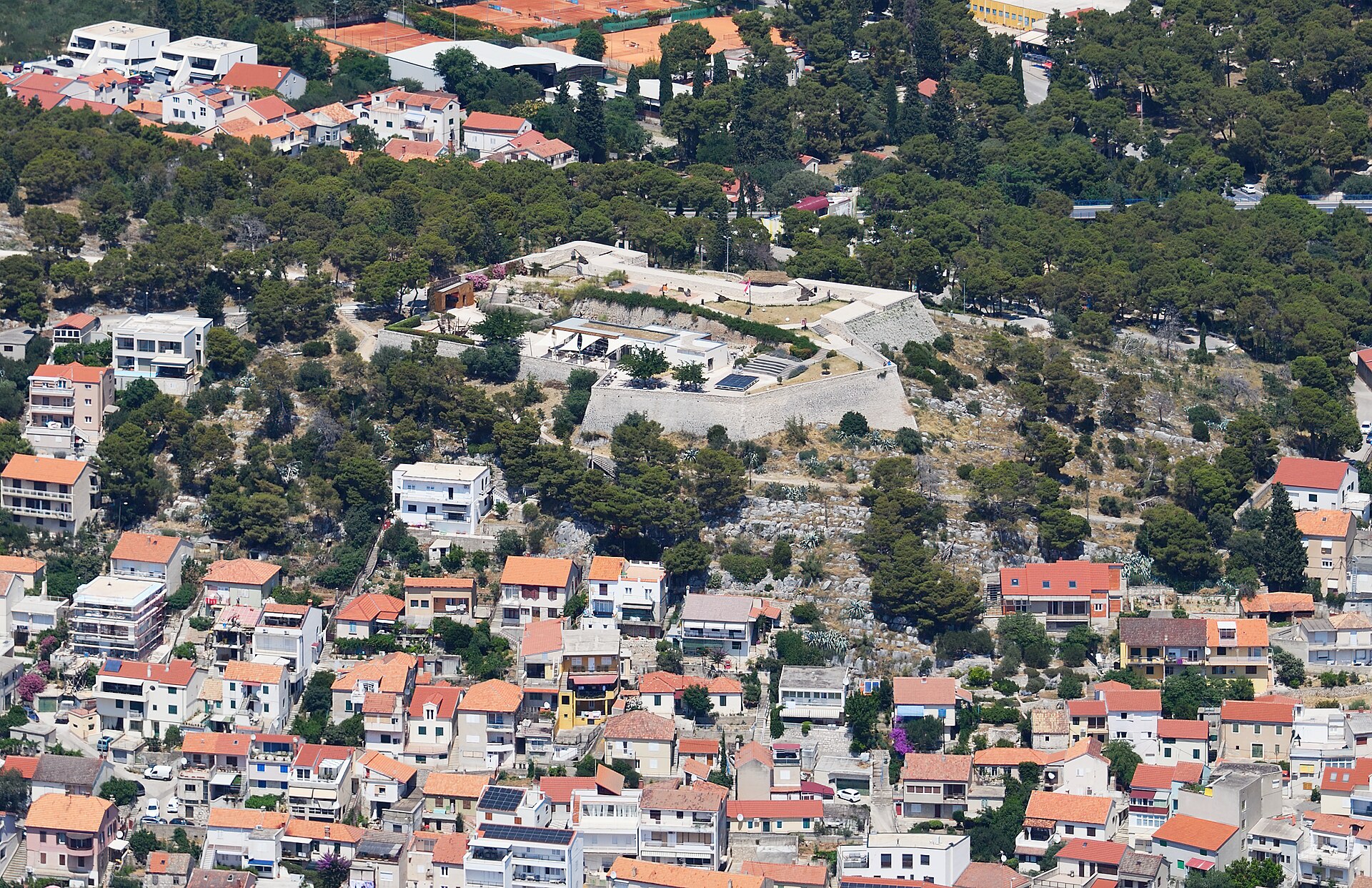
3. Barone Fortress and St John’s Fortress
These two fortresses were built in 1646 as a swift and desperate defence against the looming Ottoman raids, and they sit a little higher above the town. Barone Fortress, on Put Vuka Mandušića 28, recently underwent a beautiful restoration and now lures visitors with modern augmented reality. Using special tablets, lent out at the entrance, you can peer straight into history and watch with your own eyes how the dramatic siege of the town unfolded centuries ago.
A little further along and slightly higher still stands St John’s Fortress, in Croatian sv. Ivana, which is the highest defensive point in all of Šibenik. It offers a slightly different perspective and total peace, as far fewer tourists make it up here than to the main fortresses closer to the centre. It too has been extensively restored and invites you on lovely walks along the ramparts with views deep into the hinterland.
💡 Tip: While the main season from spring to autumn charges standard entry to these fortresses, in the off-season during the winter months, entry to the Barone and St John fortresses is completely free. What’s more, Barone Fortress has a very pleasant bistro open all year round, where you can enjoy a coffee with one of the best views over the entire town.
4. St Nicholas Fortress (UNESCO)
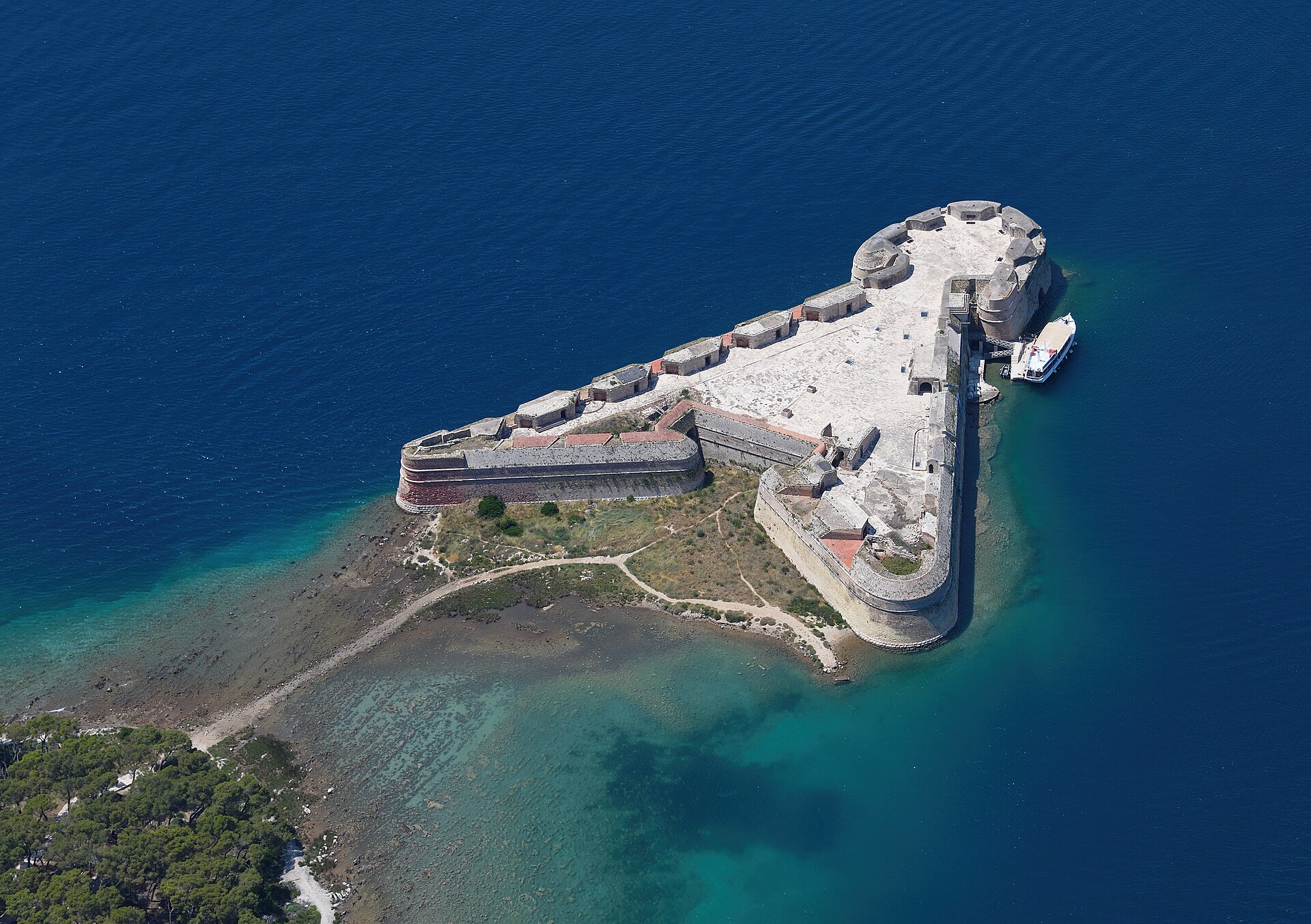
Unlike the previous three fortresses, which stand firmly on the hills above the town, St Nicholas Fortress is an imposing maritime structure from the sixteenth century. It sits on a small islet right at the entrance to the St Anthony Channel, and its garrison was tasked with protecting Šibenik from attacks by sea. Its distinctive Venetian defensive architecture and immense historical significance earned it a place on the prestigious UNESCO World Heritage list in 2017.
The fortress has a very characteristic, and for its time innovative, triangular shape. It was built from massive bricks and stone according to a carefully thought-out design by famous Venetian military architects. You can reach it either on an organised boat trip directly from Šibenik harbour, or on foot along a long scenic trail that runs along the channel’s shore and ends right opposite the walls.
💡 Tip: The fortress interiors are open to the public only during the main tourist season, and in the summer months it really is better to book your tickets for the official boat tour in advance. If you decide to walk to the fortress from the mainland along the maintained trail, be prepared that you’ll only get to see this beautiful structure from the outside.
5. Getting lost in the old town
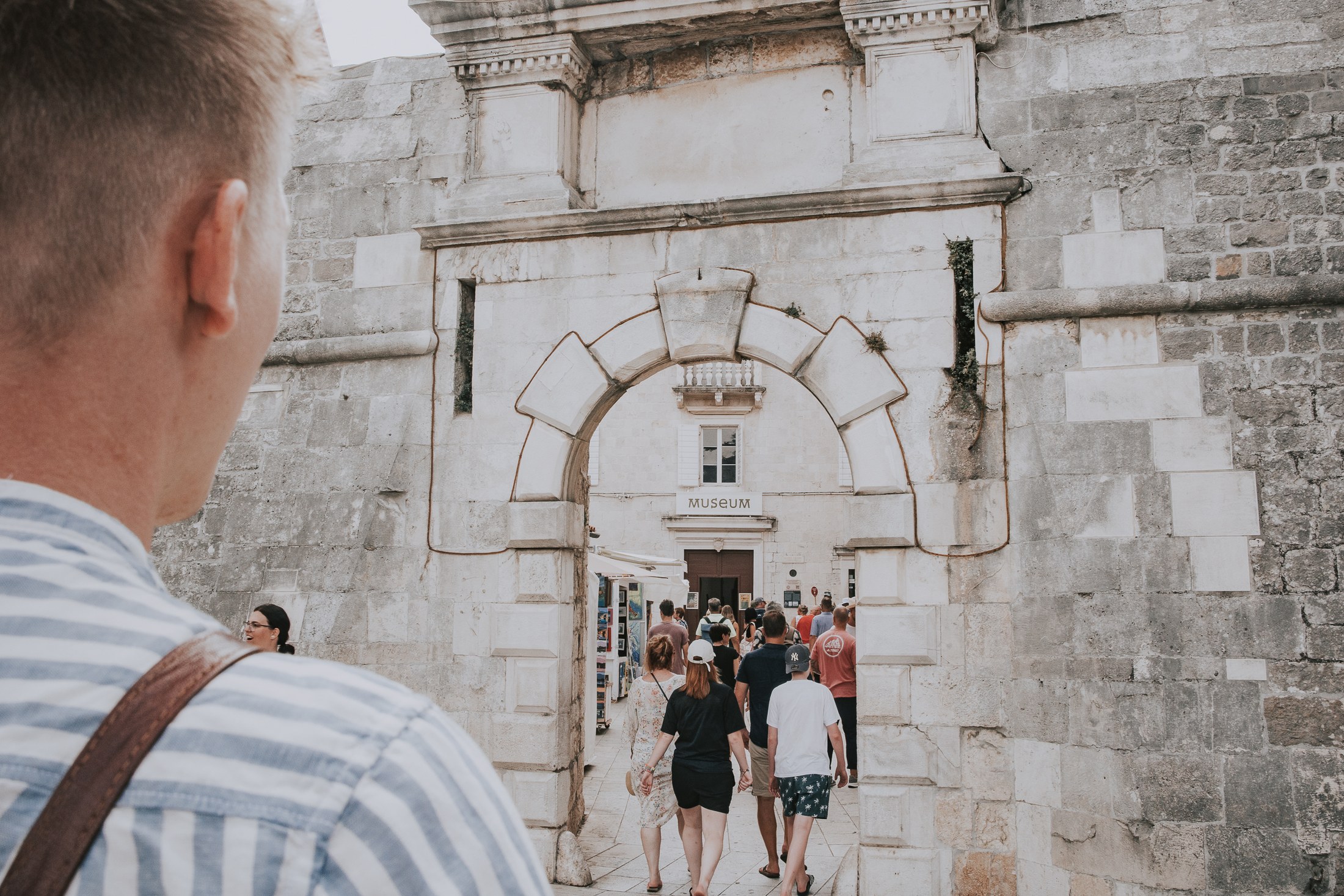
Šibenik’s historic centre is made for aimless wandering and discovering hidden corners. Because the whole town is built on a fairly steep slope, you won’t find the classic wide streets here, but rather an endless network of steep stairways and narrow stone alleys. This is where you’ll best absorb the real, slightly raw but all the more romantic Dalmatian atmosphere — laundry hanging out to dry overhead, locals chatting across the street, and the smell of fresh lunch drifting from open windows.
On your stroll, you definitely won’t miss the Prince’s Palace on the waterfront, which today houses an interesting town museum full of historical artefacts. Stop too at the elegant sixteenth-century City Loggia, designed by the famous master builder Firentinac. Take in the picturesque Republic Square, peek into the churches of St Barbara and St John with its Renaissance clock, or seek out the quiet historic Square of the Four Wells, which once served as the main reservoir of drinking water for the whole town.
💡 Tip: Exploring the old town is fairly demanding thanks to the ever-present steps, so don’t forget to put on really comfortable shoes with a sturdy sole. The stone paving in the alleys has been polished smooth by centuries of footsteps and can be very slippery and treacherous, especially after morning rain or in sandals.
6. The scenic trail along the St Anthony Channel
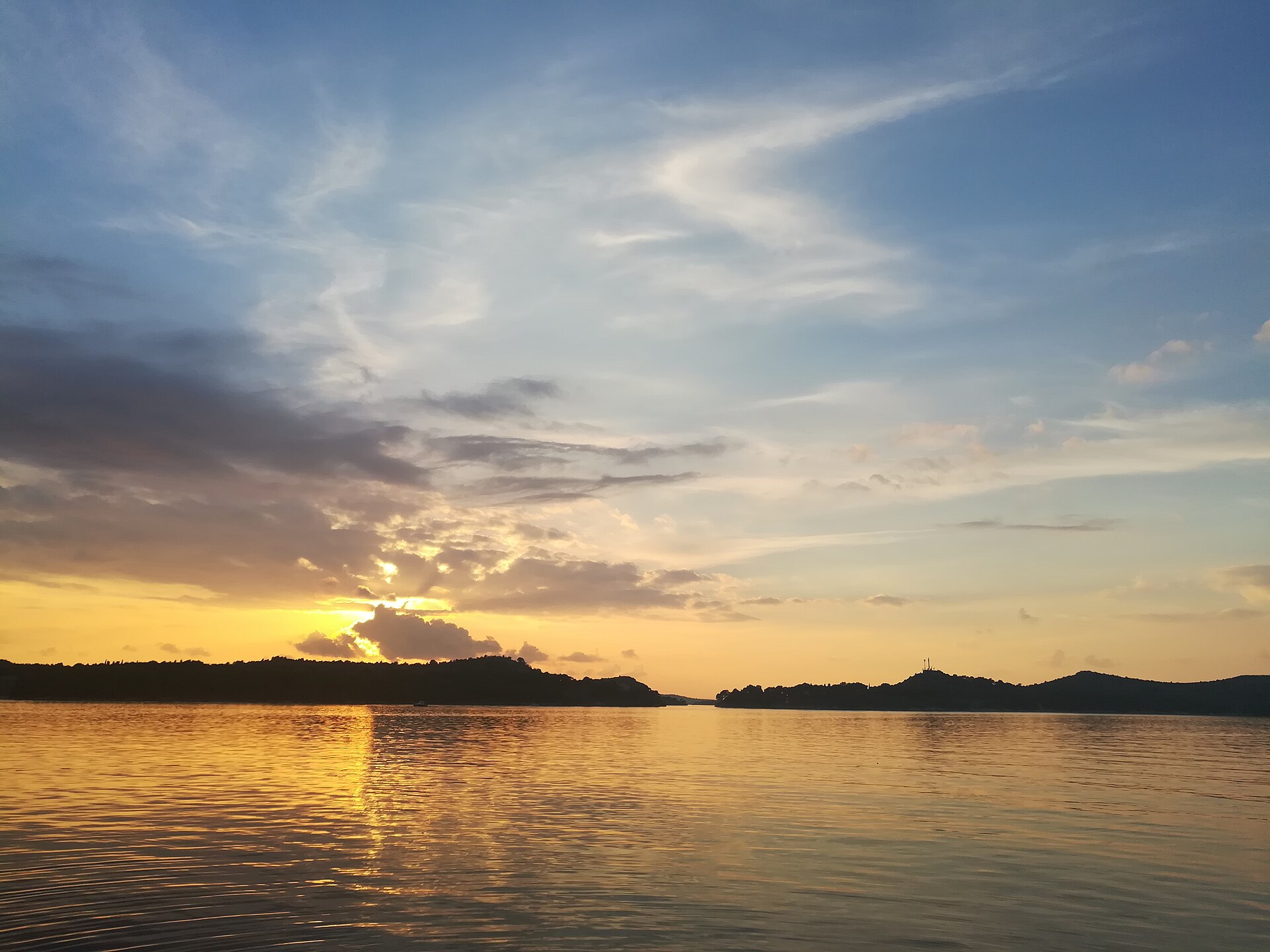
If you want a break from the bustle of the town and a bit of pure nature, head out for a walk along the narrow sea strait that every boat heading into Šibenik harbour has to pass through. A well-maintained trail runs about four and a half kilometres along the crystal-clear St Anthony Channel, perfect for an easy hike or a morning run wrapped in the intense scent of pine and sea salt.
Along the way you’ll come across several informative panels, small pebble coves ideal for cooling your feet, and old abandoned military bunkers carved deep into the rock. But your greatest reward on the walk will be the magnificent panoramic views over the entire sea bay and, above all, of the majestic St Nicholas Fortress, which is essentially where this popular trail leads.
💡 Tip: The trail starts in the peaceful Paninkovac bay, which you can easily reach by car from the town centre in under ten minutes and where you’ll park comfortably. In the summer months I really recommend setting off early in the morning or, conversely, in the early evening, because along much of the route there’s nowhere to hide from the scorching Dalmatian sun.
7. Banj beach with a view of the town
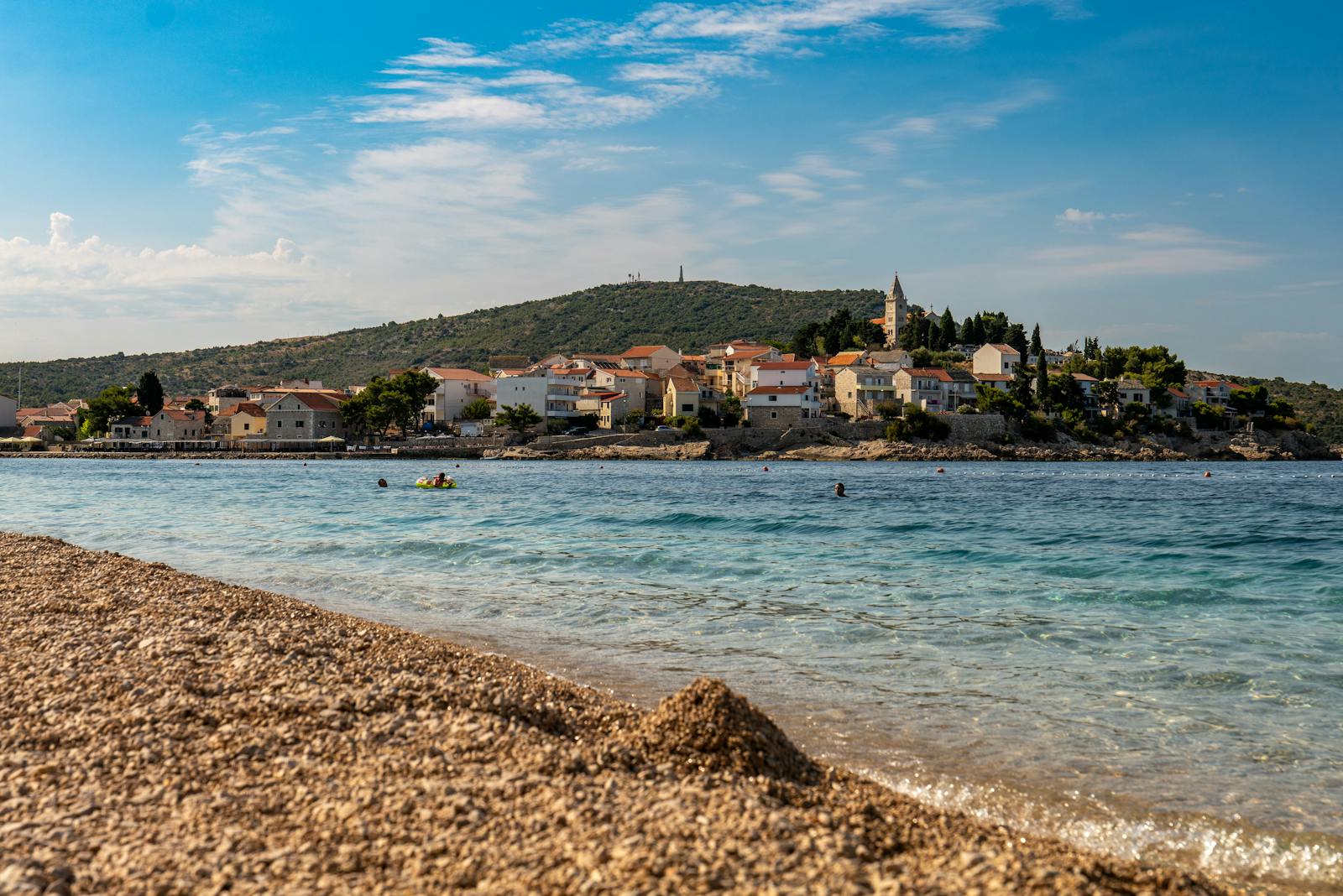
At first glance, Šibenik isn’t your typical beach destination, but it still offers a brilliant spot for swimming right in the town. The town beach of Banj lies just a comfortable walk from the historic centre and is utterly iconic for its incredible view. As you lie on the small white pebbles or swim in the clear sea, you have the entire old town laid out before you, including the famous stone cathedral of St James.
The beach has a well-kept shore with a pleasantly gentle slope into the water, which families with children and non-swimmers will especially appreciate. You’ll find all the facilities you need here, including showers, changing rooms and a very popular beach bar, where you can grab a chilled drink and watch the gorgeous sunset in the evening.
💡 Tip: During the main summer season, Banj beach naturally gets fairly crowded with locals and tourists alike. If you’re after quieter swimming and a bit more privacy, it’s worth driving a short way out of town to the smaller rocky coves, or taking the regular boat service to the nearby tranquil islands of Zlarin, Krapanj and Prvić.

8. A day trip to Krka National Park
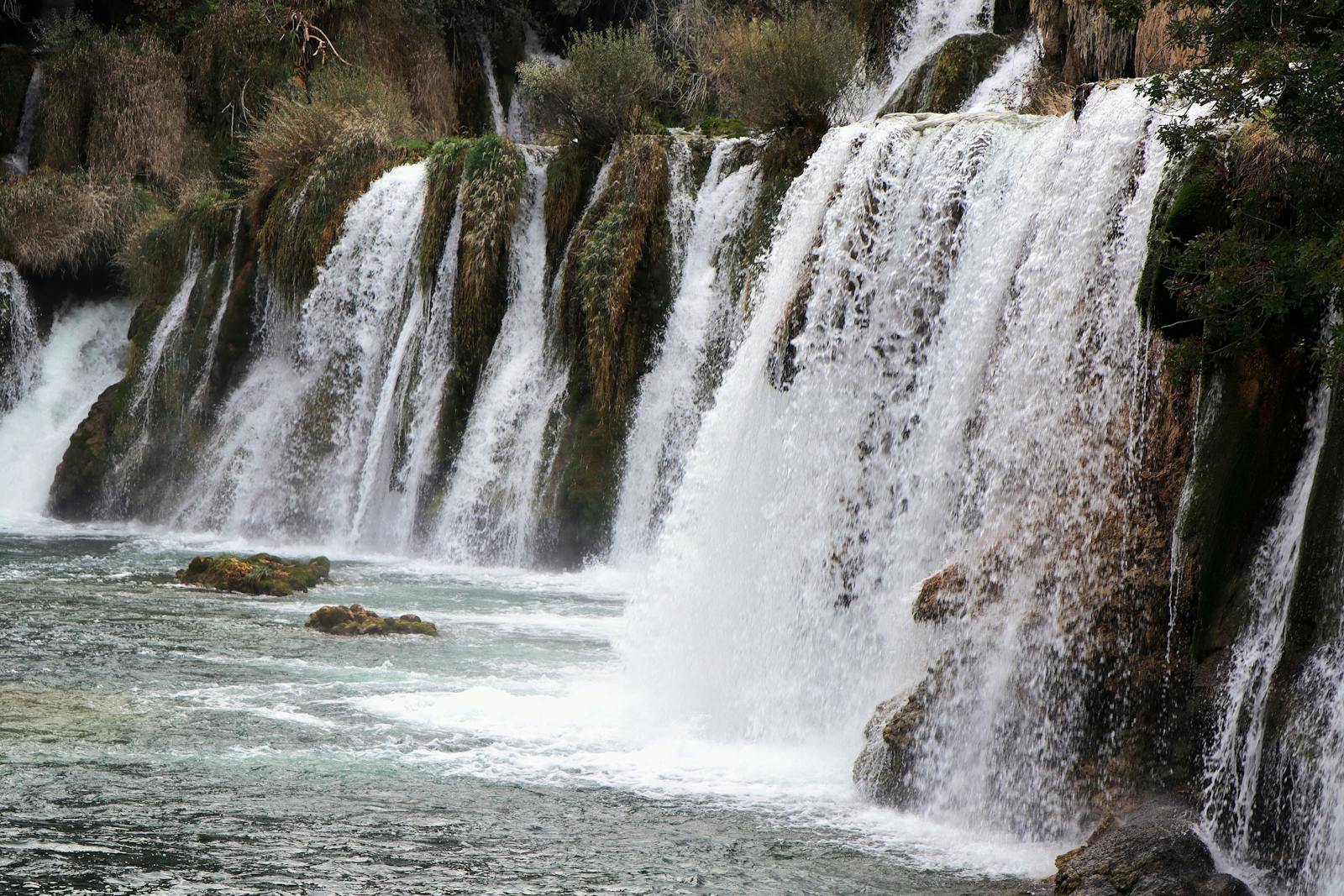
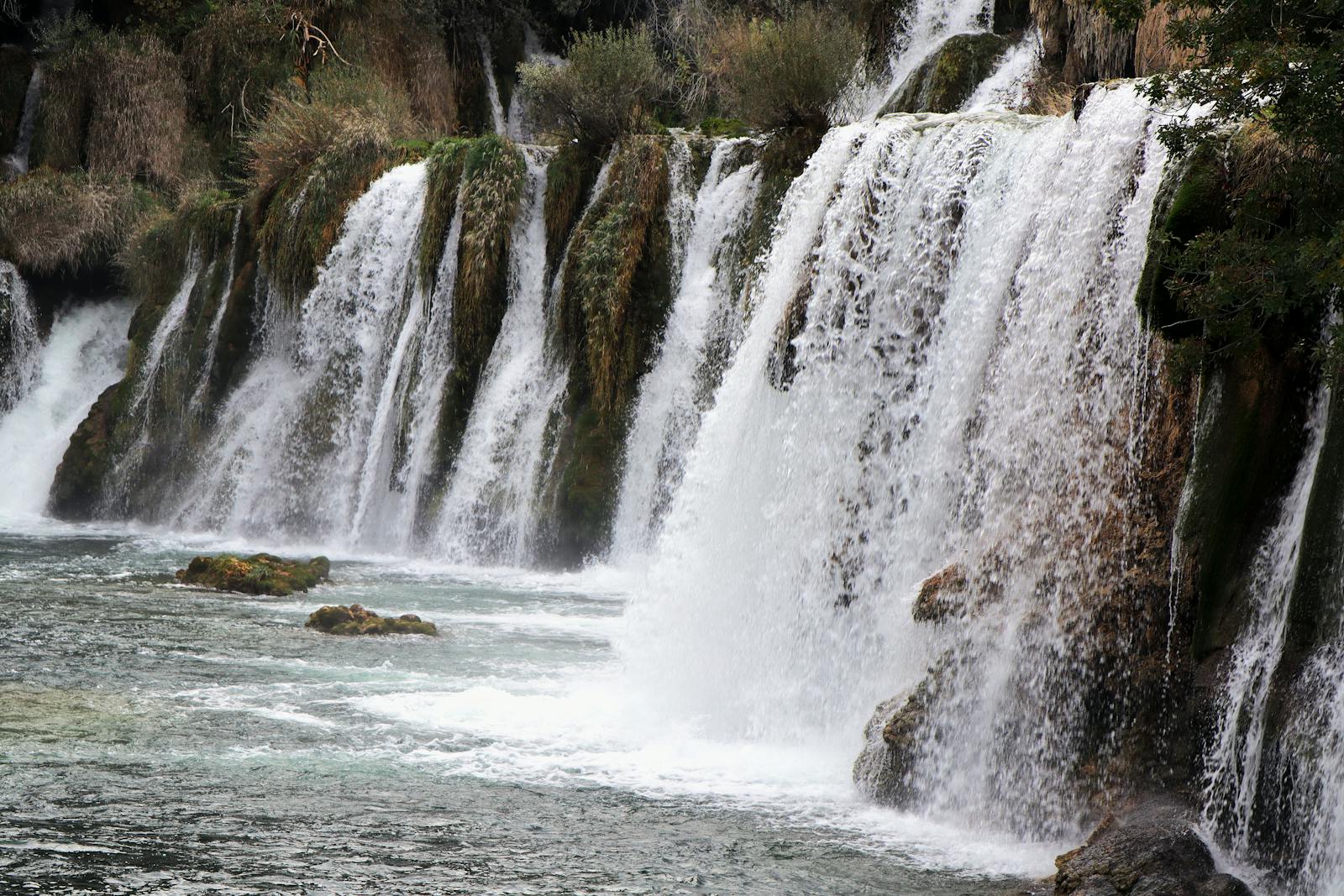
To be in Šibenik and not visit Krka National Park would be a real travel sin. The town is by far the best and closest base for this trip — it’s a mere half-hour drive to the park’s entrance gates. The most famous and most-visited spot is, without doubt, the wide cascading Skradinski buk waterfalls, around which a magical system of wooden walkways and bridges leads right above the crystal-clear water teeming with fish.
The easiest way into the park is via the main entrances in the picturesque little town of Skradin or from the huge Lozovac car park. If you choose the Skradin entrance, your ticket also includes a lovely boat ride straight through the deep river canyon right up to the waterfalls themselves. From April to October, you can also set off from the falls on further paid boat trips, for instance to the incredibly photogenic islet of Visovac with its Franciscan monastery.
💡 Tip: The entry fee varies dramatically throughout the year. In the summer months adults pay 40 euros, but if you arrive at the park after three in the afternoon, you get a discount and the ticket costs 30 euros. In the shoulder months in spring and autumn a full-day entry costs 20 euros, and over winter just a symbolic 7 euros.
9. A boat trip to the Kornati Islands
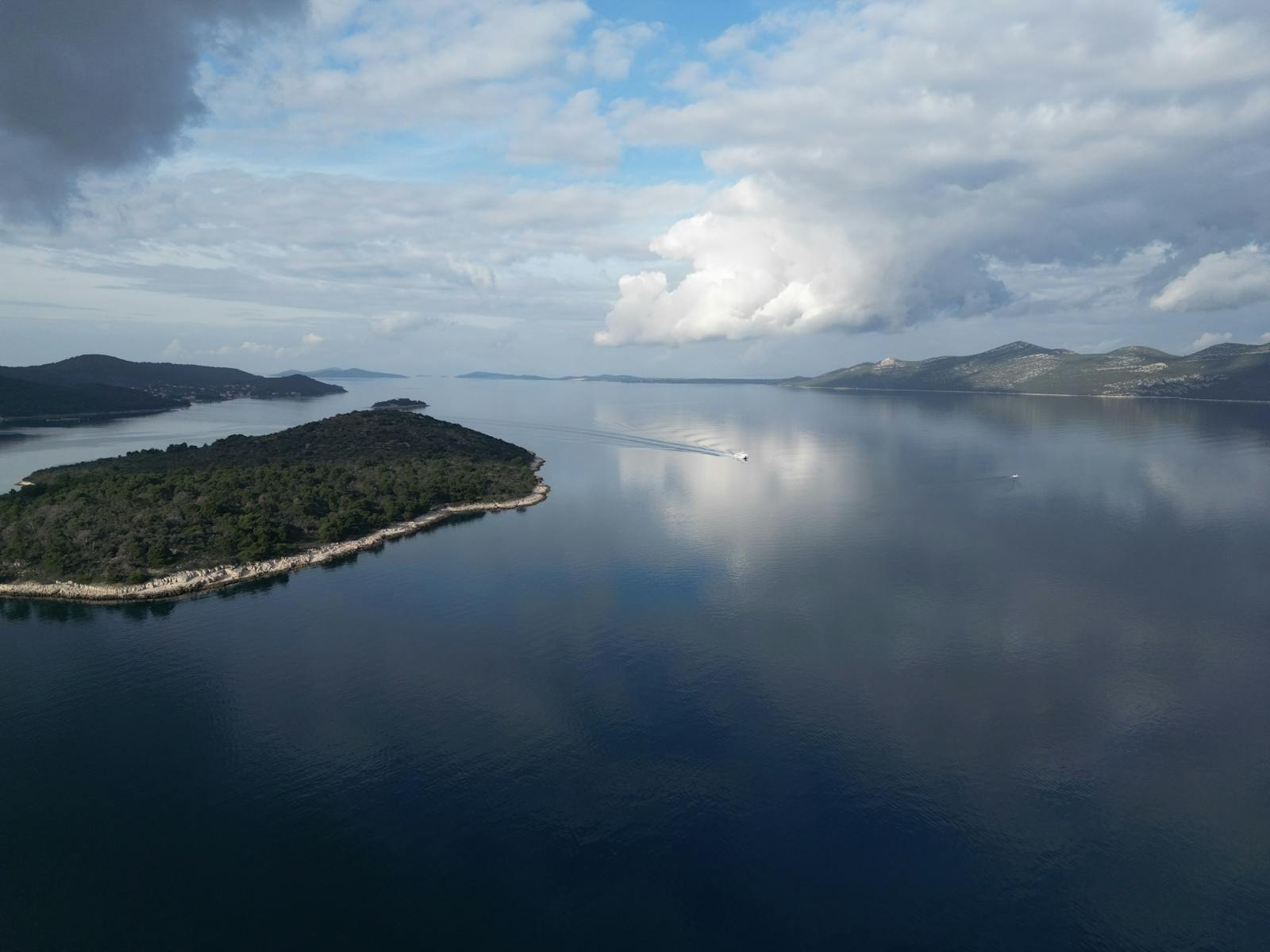
Another natural gem you have literally within reach of Šibenik is the incredible Kornati National Park. This fascinating sea labyrinth is made up of roughly a hundred and fifty limestone islands and islets, almost entirely bare of vegetation, giving them an almost otherworldly, lunar look against the blue water. The park is accessible only by sea and no individual tickets are sold for it — the entire entry fee is always tied directly to a specific vessel.
The easiest and most comfortable way to see this raw beauty with your own eyes is to book a full-day organised boat trip right on the Šibenik promenade. These trips usually last around nine hours, start early in the morning, and the boats don’t return to the harbour until early evening. During the long voyage you can look forward to stunning views of the cliffs and swimming stops in deserted coves with perfectly turquoise water.
💡 Tip: The price of a full-day trip usually ranges from around 35 to 40 euros per person and most of the time already includes the compulsory national park entry fee, a local guide and lunch served right on board. The trips are also very easy to find and book through the popular GetYourGuide platform.
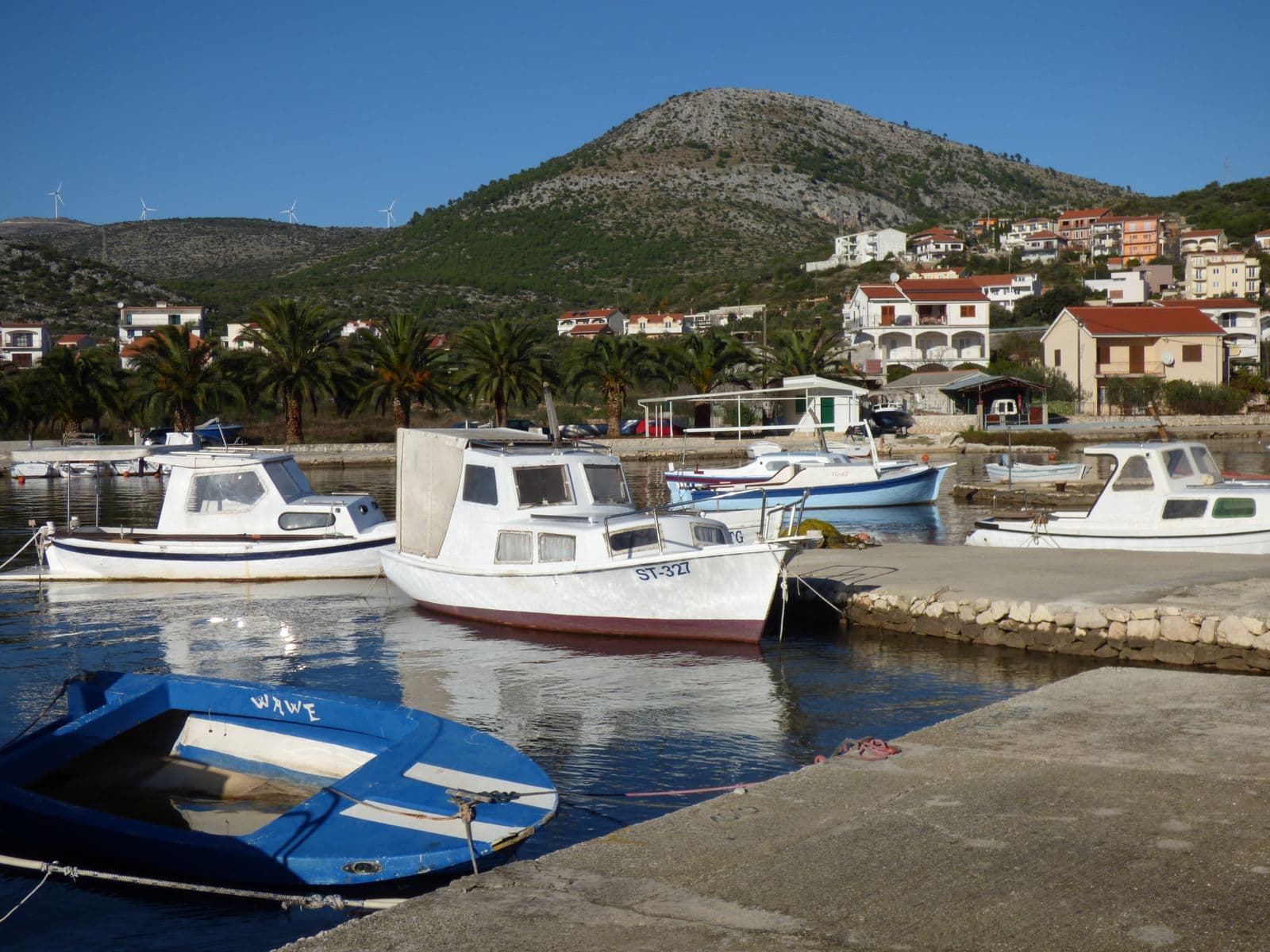
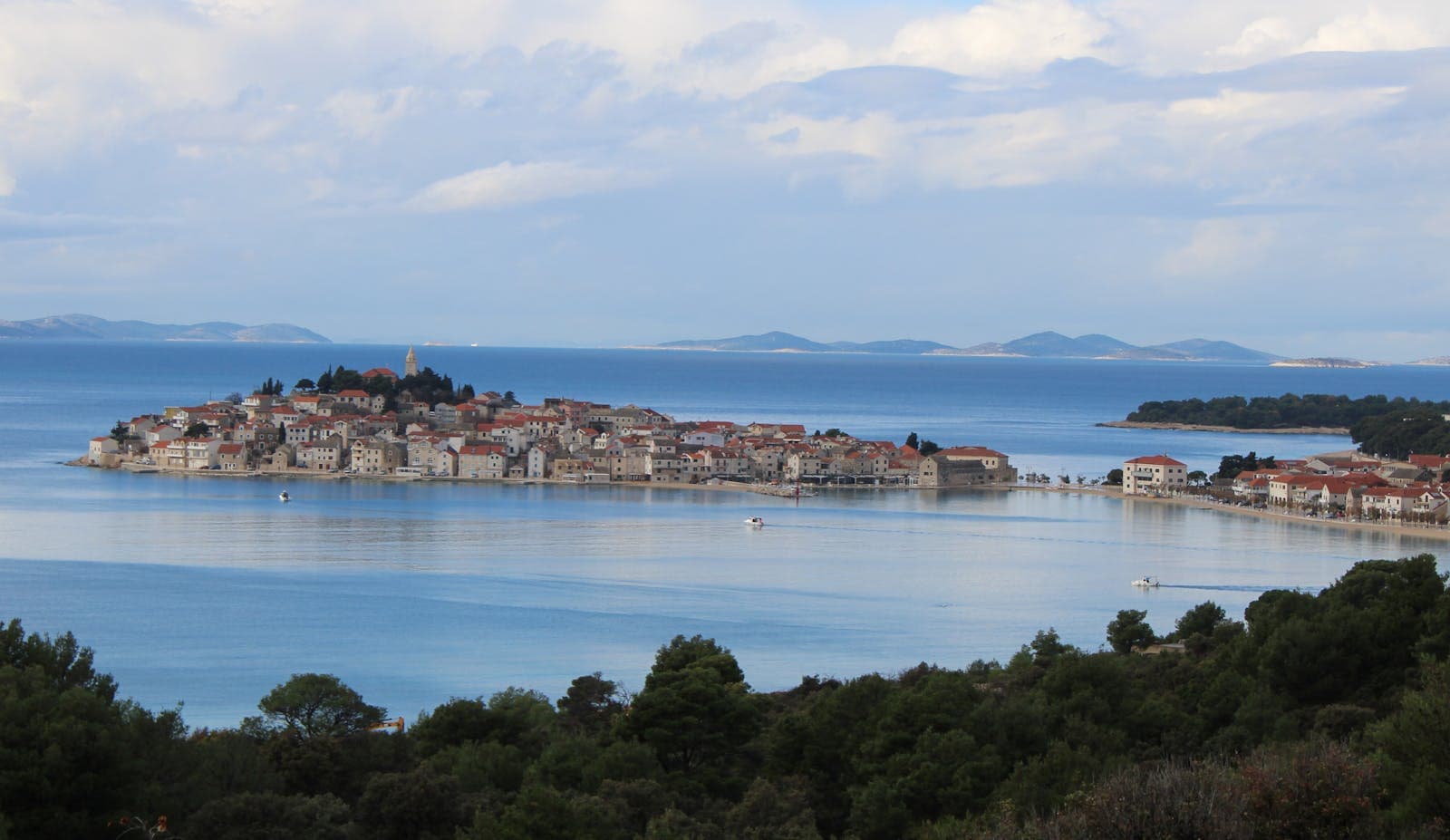
10. A visit to the picturesque Primošten
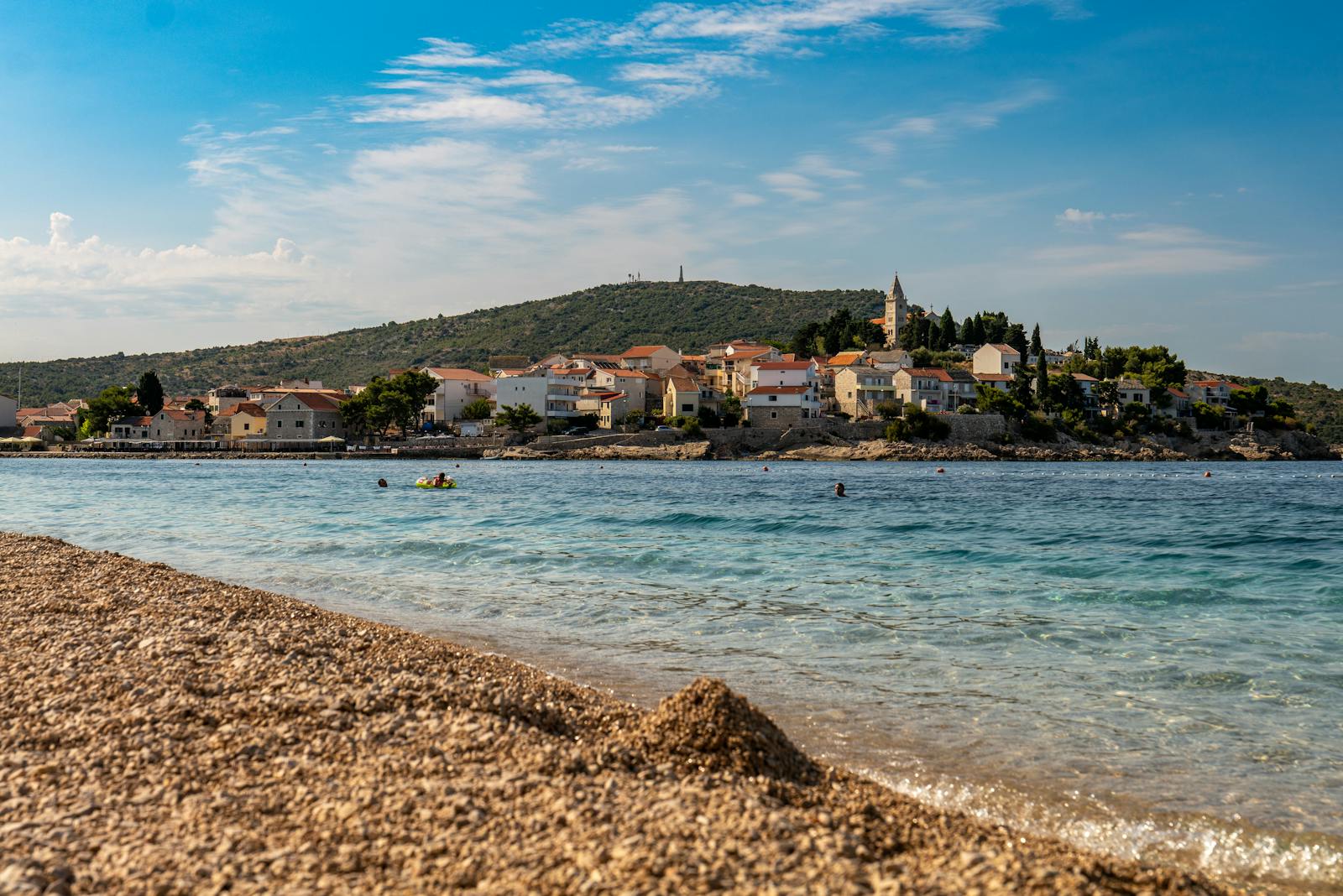
About twenty-eight kilometres south of Šibenik, along a comfortable coastal road, lies one of the most photogenic little towns in all of Dalmatia — the beautiful Primošten. Originally it was a small stone islet separated from the mainland, only much later artificially connected by a narrow causeway. Today its ancient lanes, full of blooming flowers and stone houses, climb all the way up to a little church at the very top of the hill, from where there’s an absolutely gorgeous view of the open sea.
This sun-drenched area is also famous far and wide for its excellent winemaking. Just outside the town you’ll find the famous Bucavac stone terraces, where the local variety of strong red Babić wine is grown on incredibly poor soil. These unique vineyards, bounded by low stone walls, are even on UNESCO’s tentative list, and an enormous photograph of them hangs in the UN headquarters in New York as a symbol of human tenacity and hard work.
💡 Tip: I’d highly recommend timing your visit to Primošten for late afternoon, when the lanes aren’t so baking hot. Stroll along the maintained promenade that wraps around the entire peninsula town, enjoy a glass of the excellent local Babić wine and wait for one of the most beautiful sunsets in all of Croatia.
11. Beaches and fun at the Solaris resort
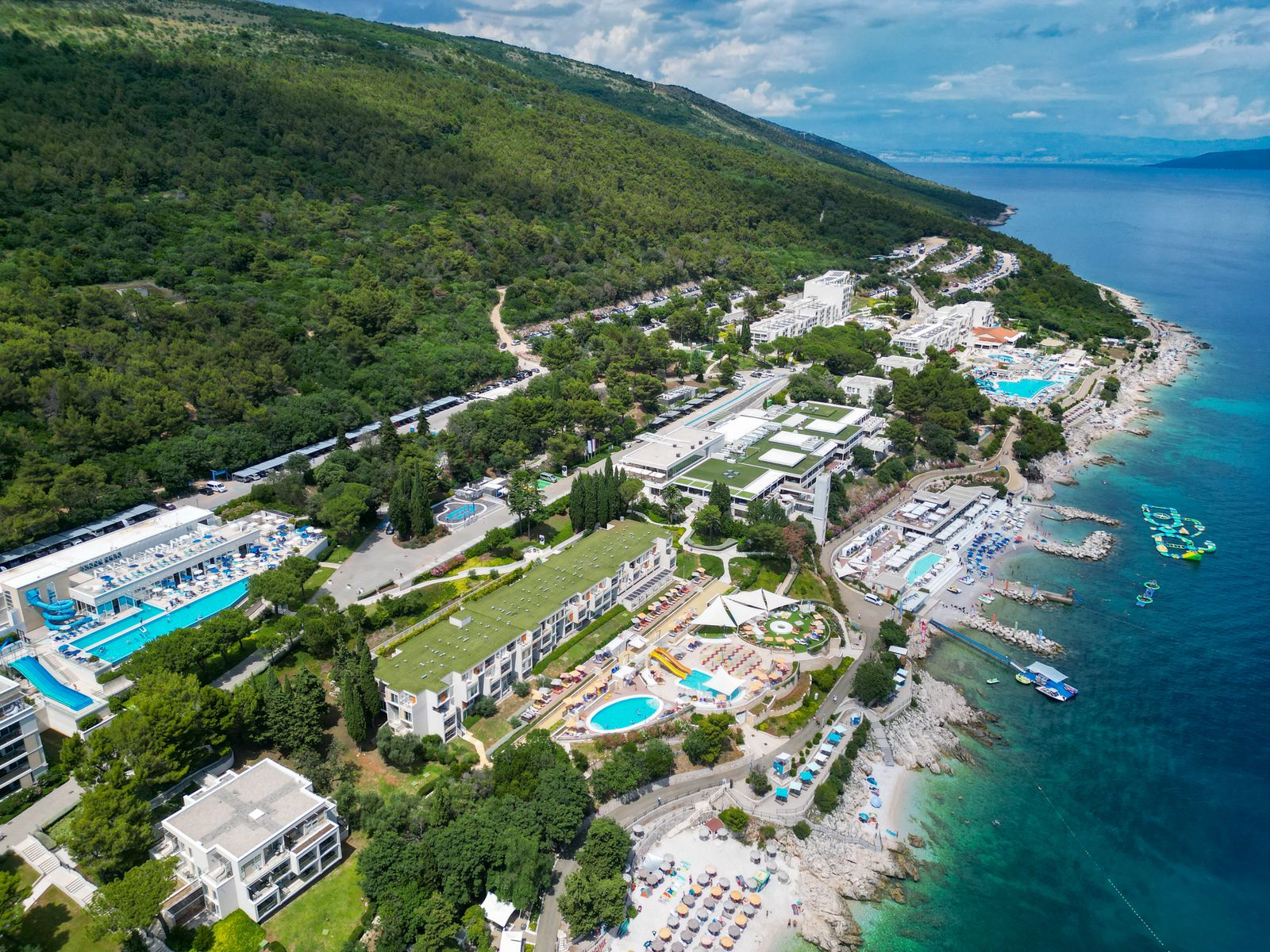
If you want a break from doing the rounds of historic sights and are after some carefree summer fun, head a short way out of town to the huge Solaris Beach Resort complex. Here you’ll find kilometres of beautifully maintained beaches, from the classic pebble kind to those with imported fine sand, all with a perfect gentle slope into the sea, making them absolutely ideal and safe even for the very littlest children.
The resort doesn’t just offer sea swimming, though — there’s also a huge water park full of adrenaline-pumping slides, lazy rivers and water attractions, which will keep the whole family entertained for a full day without the slightest trouble. On top of that there are plenty of modern sports facilities, a mini-golf course, a themed Dalmatian village showcasing traditional life, and lots of beach bars with very comfortable loungers and parasols.
💡 Tip: Even if you’re not actually staying in this giant resort, you can come here for a day trip without any problem at all — the complex is freely open to the public. Of course, you’ll need to factor in a sizeable fee for parking by the beaches and a separate entry fee for the water park itself.
12. Tasting Dalmatian cuisine
To be in the very heart of Dalmatia and not taste the local cuisine would be a huge shame. The whole regional gastronomy revolves above all around top-quality olive oil, fresh local ingredients and fragrant herbs. For lovers of meat-free food, the local restaurant offering is absolutely superb — you can look forward to wonderful fresh pasta prepared a hundred different ways, beautifully creamy vegetable and mushroom risottos, or refreshing Dalmatian salads with local sheep’s cheese and olives.
An absolute and incredibly healthy classic you simply have to try, either as a side or as a light lunch, is the traditional blitva with potato — soft-cooked chard with plenty of garlic and a generous splash of olive oil. If you’re keen on local meat specialities, the region’s typical dish is fresh fish, shellfish or octopus prepared the so-called “peka” way, a very slow and gentle braising under a cast-iron bell covered in hot embers.
💡 Tip: Good, hearty food naturally goes hand in hand with a good drink. Be sure to taste the strong red Babić wine already mentioned, from the stony vineyards around Primošten, whose full flavour pairs wonderfully with an evening spent over a cheese board and a bowl of crusty bread.
Map of points of interest for your phone
Where to go next from Šibenik
Once you’ve explored the town and its immediate surroundings, Dalmatia offers plenty of other gorgeous places worth a day trip or a stop on your road trip. If you’re planning to discover the waterfalls, be sure to read our detailed article on how to visit Krka National Park.
Heading south along the coastal motorway, in less than an hour you’ll reach another historic gem — the island town of Trogir with its beautiful architecture. If you’re drawn to larger cities buzzing with life and ancient monuments, you definitely shouldn’t skip Split with its famous Diocletian’s Palace, or head north instead to explore nearby Zadar with its world-unique Sea Organ. For general tips on travelling around the country, our guide on where to go on holiday in Croatia will come in handy, and if you still haven’t sorted your accommodation, take a look at our tips for accommodation in Croatia.
 🚗 Car rental on the road
Verified rental cars in Croatia
🚗 Car rental on the road
Verified rental cars in Croatia
Search with the DiscoverCars comparison engine — it compares prices from dozens of local and international rental companies, and most bookings come with free cancellation.
Compare car prices in Croatia →Frequently asked questions
How to best get to Šibenik?
If you’re travelling by car, the journey from Prague usually takes eleven to thirteen hours and the town has a huge advantage in that it lies just about five kilometres from the exit off Croatia’s main A1 motorway. If you prefer to fly, the airports in both Split and Zadar are roughly an hour’s drive away. From both cities there are fairly frequent direct bus connections with no need to change, with prices ranging from six to ten euros per trip.
Where to park in the city?
The historic center of Šibenik is made up of steep alleyways and hundreds of stairs, so it’s completely closed to car traffic and you must explore it on foot. Parking needs to be arranged at paid parking lots and underground garages, which are located along the main waterfront or beneath the city fortresses. From there it’s just a short walk to the heart of the old town, but be prepared that during peak season the capacity can fill up quickly.
How many days do I need for Šibenik?
For the historical center itself, a cathedral tour and a visit to one or two fortresses with views, one to two days at a very relaxed pace will be more than enough. However, if you want to use Šibenik as an excellent base for visiting the nearby Krka and Kornati National Parks and add a few days of swimming at the beaches, I recommend setting aside three to five days for the entire area.
Is the city suitable for small children and strollers?
A stroll along the wide main waterfront promenade and flat squares in the lower part of town is absolutely no problem with a stroller. However, once you venture deeper into the old town and towards the fortresses, be prepared for hundreds of stone steps and steep narrow streets where a stroller becomes a huge burden. For families with children, the nearby flat Solaris Resort with sandy beaches is therefore much more practical for a longer stay.
How far is it to Krka National Park?
Šibenik is the nearest larger town to the entrance of the national park, which makes it an absolutely strategic base for trips. By car, you’ll reach the main entrance in the small town of Skradin or the huge car park in Lozovac in a very pleasant twenty to thirty minutes’ drive on a well-signposted and well-maintained road.
Where to swim in the city?
Right within comfortable walking distance from the historic center, you’ll find the popular city pebble beach Banj, which offers an amazing view of the city’s entire silhouette including the cathedral dome. If you’re looking for more beach activities, water attractions, and sand, you’ll find kilometers of well-maintained beaches at the Solaris complex, located about six kilometers outside the city with convenient parking available.
Is it worth buying a combined ticket to the fortresses?
If you’re a true history and views enthusiast and you’re planning to visit at least two of the three land fortresses, the combination ticket is definitely worth it financially. For fifteen euros, you get access to the stunning St. Michael’s Fortress, the modern Barone, and the highest St. John’s Fortress, with the ticket valid for a generous seven days, so you don’t have to rush through all the sights in one afternoon.
Tips and Tricks for Your Vacation
Don’t Overpay for Flights
Search for flights on Kayak. It’s our favorite search engine because it scans the websites of all airlines and always finds the cheapest connection.
Book Your Accommodation Smartly
The best experiences we’ve had when looking for accommodation (from Alaska to Morocco) are with Booking.com, where hotels, apartments, and entire houses are usually the cheapest and most widely available.
Don’t Forget Travel Insurance
Good travel insurance will protect you against illness, accidents, theft, or flight cancellations. We’ve had a few hospital visits abroad, so we know how important it is to have proper insurance arranged.
Where we insure ourselves: SafetyWing (simple monthly subscription) and TrueTraveller (for extra-long trips).
Find the Best Experiences
Get Your Guide is a huge online marketplace where you can book guided walks, trips, skip-the-line tickets, tours, and much more. We always find some extra fun there!