You know that feeling when you want to see the famous city from Home Alone 2 with your own eyes? Winter transforms the concrete jungle into one enormous, glowing film set. Experiencing New York in winter means weaving through the crowds on Fifth Avenue, but also sipping hot chocolate right beneath the skyscrapers. The first frost brings a special kind of magic to the streets.
The tourist brochures promise a flawless fairy tale. Reality, however, delivers an icy wind off the ocean, pricey tickets and thousands of people surrounding you at every turn. I’ll tell you the exact times to head to Rockefeller Center so you’re not stepping on fellow tourists’ toes. Good planning saves you hours of waiting in queues — and a fair bit of money too.
You’ll get exact rink prices, tips on spots the locals love, and a realistic look at what tourists get wrong. We’ll cover the best holiday markets across the different neighbourhoods worth visiting. We’ll break down New Year’s Eve on Times Square in full detail, no rose-tinted glasses. And I’ll show you why January and February can be a smarter choice than a jam-packed December. Grab your warmest coat and let’s start planning.
TL;DR
- Bryant Park has the only free ice rink in the city.
- Rockefeller Center lights its tree in early December.
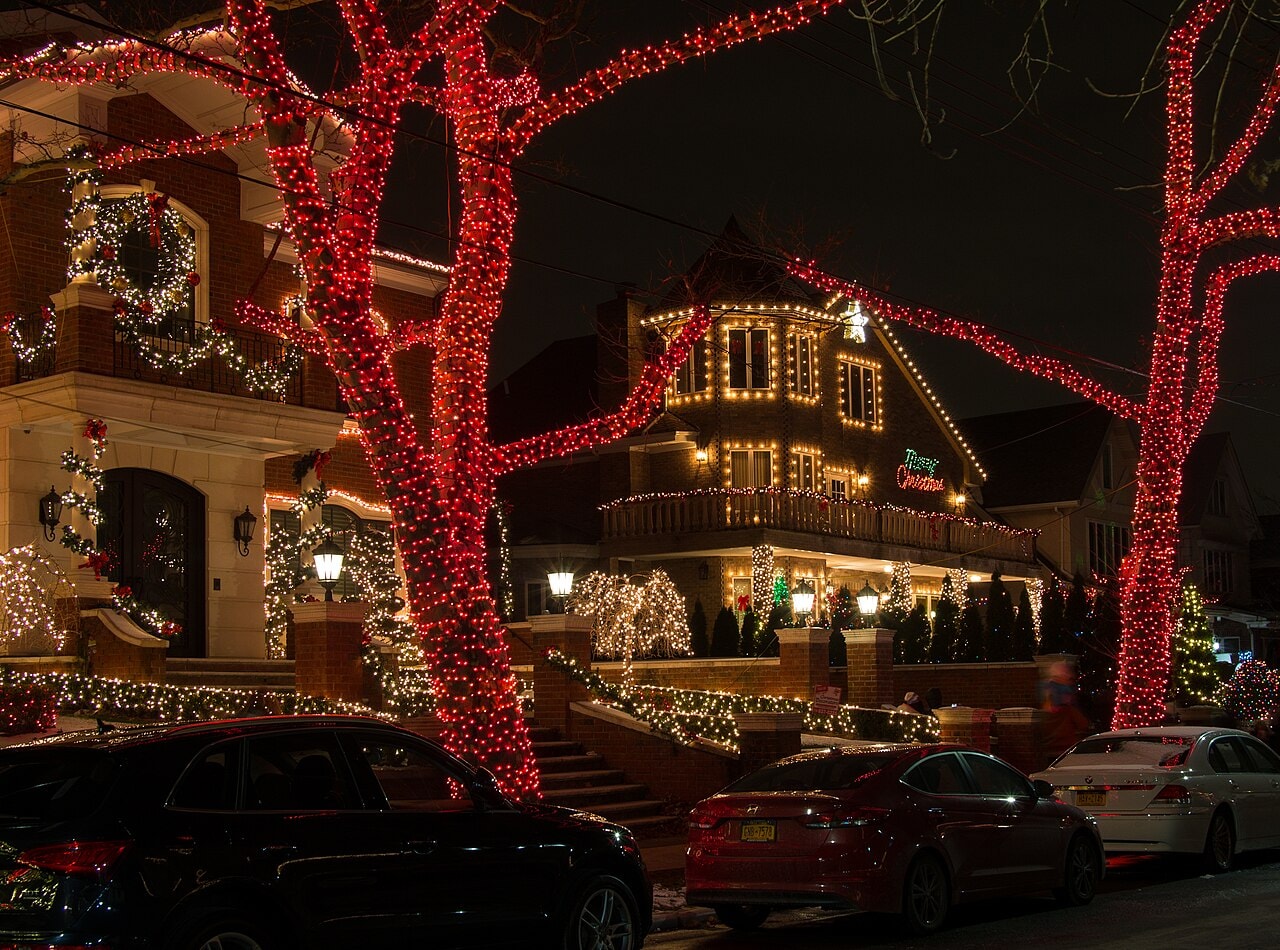
- Dyker Heights in Brooklyn hides the most lavish home light displays.
- Times Square on New Year’s Eve requires arriving eight to ten hours early.
- Wollman Rink in Central Park offers the most beautiful skyscraper views.
- Radio City Music Hall hosts the legendary Rockettes dance show.
- NYC Restaurant Week in January slashes lunch prices at luxury venues.
The full destination guide: New York — guide and what to see
The Christmas Tree and Icons of Festive New York
The ceremonial lighting of the tree at Rockefeller Center kicks off the entire winter season. This grand moment takes place in 2026 around the second of December. The NBC network broadcasts the whole event live into millions of homes. Finding a good spot to stand means arriving in the early afternoon.
The spruce itself usually stands over twenty metres tall and weighs several tonnes. Gardeners select it a year in advance from the surrounding states. More than fifty thousand coloured lights shine across its branches. The tree stays lit daily from six in the morning until midnight, right through to early January.
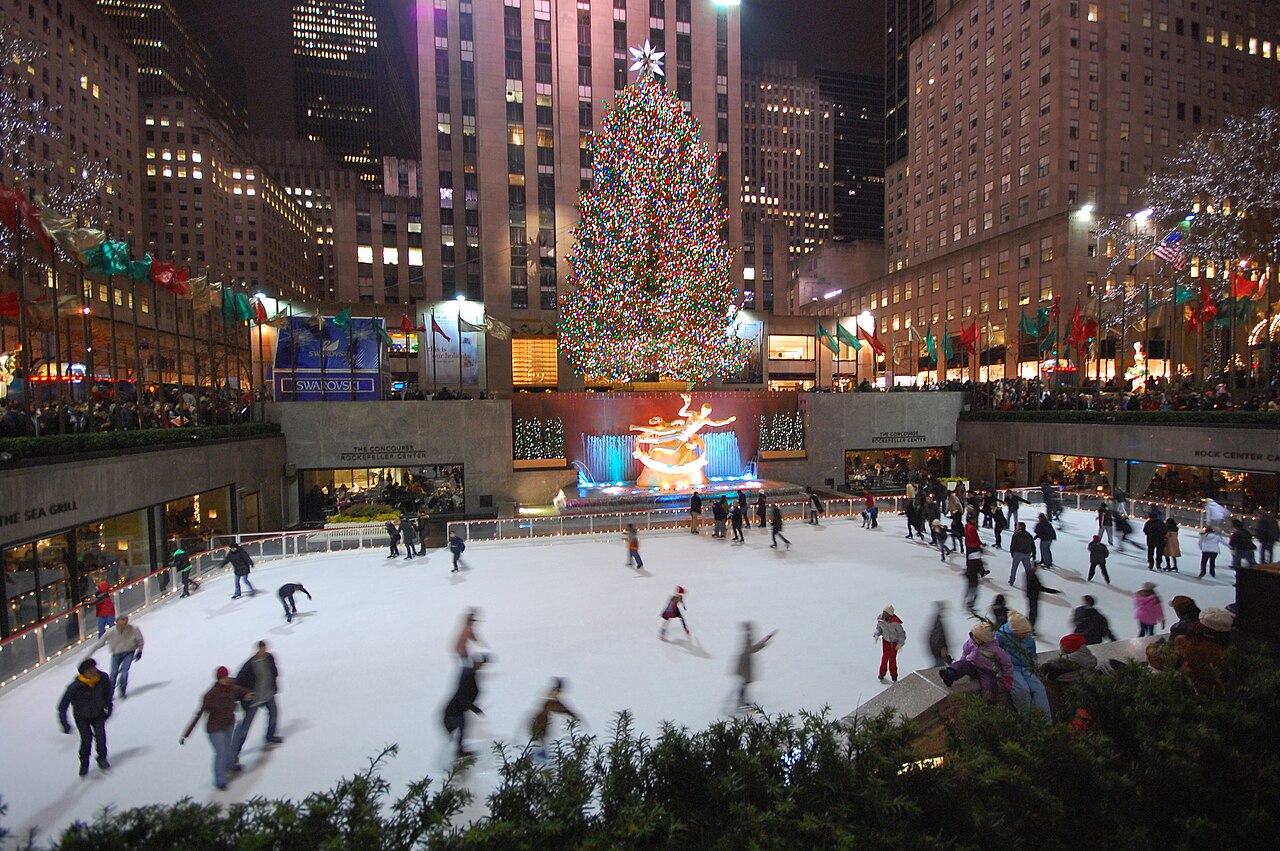
Directly beneath the tree lies the famous The Rink. Beside it towers the gilded statue of Prometheus, dominating the entire plaza. The Channel Gardens promenade leads you here straight from Fifth Avenue. The path is lined with glowing wire angels holding trumpets.
You’ll find the whole complex at 30 Rockefeller Plaza in the heart of Midtown Manhattan. The nearest subway stations are served by the B, D, F and M lines. Getting your bearings here can be tricky in the evening thanks to the enormous crowds. Police often funnel the crowd into one-way corridors.
💡 Tip: Head to the tree early in the morning around seven, or late in the evening after ten. That way you’ll dodge the worst crowds and snap photos without strangers’ elbows in the frame.
The Channel Gardens will point you towards the main tree. This two-hundred-metre avenue of eight gardens connects Fifth Avenue directly with Rockefeller Center. The path is lined with eighteen wire angels holding trumpets, with nine four-and-a-half-metre statues guarding each side of the promenade. The whole installation plays festive music and forms the most photographed spot in December Manhattan.
You can walk the promenade free of charge any time, day or night. 💡 Tip: You’ll get the most beautiful view from the Fifth Avenue end — you’ll see the whole row of glowing angels with the twinkling tree behind them.
Where to Skate Under the Open Sky
Ice skating is one of the city’s headline winter activities. Wollman Rink sits in the south-eastern corner of famous Central Park. It offers an incredible panorama of Lower Manhattan’s skyscrapers rising above the bare trees. It’s the single largest outdoor rink in all of New York.
Admission to Wollman Rink costs roughly twenty dollars. Skate hire will set you back another ten to twelve dollars. The rink stays open from late October all the way to April. To warm up, you can grab a hot apple cider at the stand next door.
The rink is easy to reach: enter from the southern part of Central Park at 63rd Street, or from Midpark. In December and January it’s usually open seven days a week from ten in the morning. Book tickets online in advance for weekend afternoons, otherwise you risk a long queue at the box office. Skating after dark in the evening offers a completely different experience to daytime.
The Rink at Rockefeller Center is the most famous, but also the priciest option. Admission ranges from 33 to 55 dollars depending on the exact date in the season. Skate hire costs a fixed fourteen dollars extra. Your time slot on the ice lasts exactly ninety minutes.
The experience beneath the golden Prometheus is hugely iconic. The Rockefeller rink is, however, surprisingly small and often crowded. You’ll need to book tickets online well ahead — you’ll almost never get them on the day. While you skate, hundreds of tourists snap photos from the upper terrace.
The best value for money goes to Bryant Park with its rink. You’ll find it in Midtown right on Sixth Avenue behind the public library. Getting onto the ice is completely free — you pay nothing. You only pay for skate hire, around twenty dollars.
💡 Tip: If you have your own skates, Bryant Park is entirely free. The surrounding Winter Village stalls also create a far cosier atmosphere than the commercial Rockefeller Center.
- Wollman Rink (Central Park): admission ~$20 + skates $10–12, largest rink in NY, skyscraper views, October–April.
- Bryant Park Rink: free admission + skates ~$20, cosy Winter Village atmosphere, October–March.
- Rockefeller Rink: admission $33–55 + skates $14, most famous, smallest and priciest, online booking essential.
Holiday Window Displays and Lights
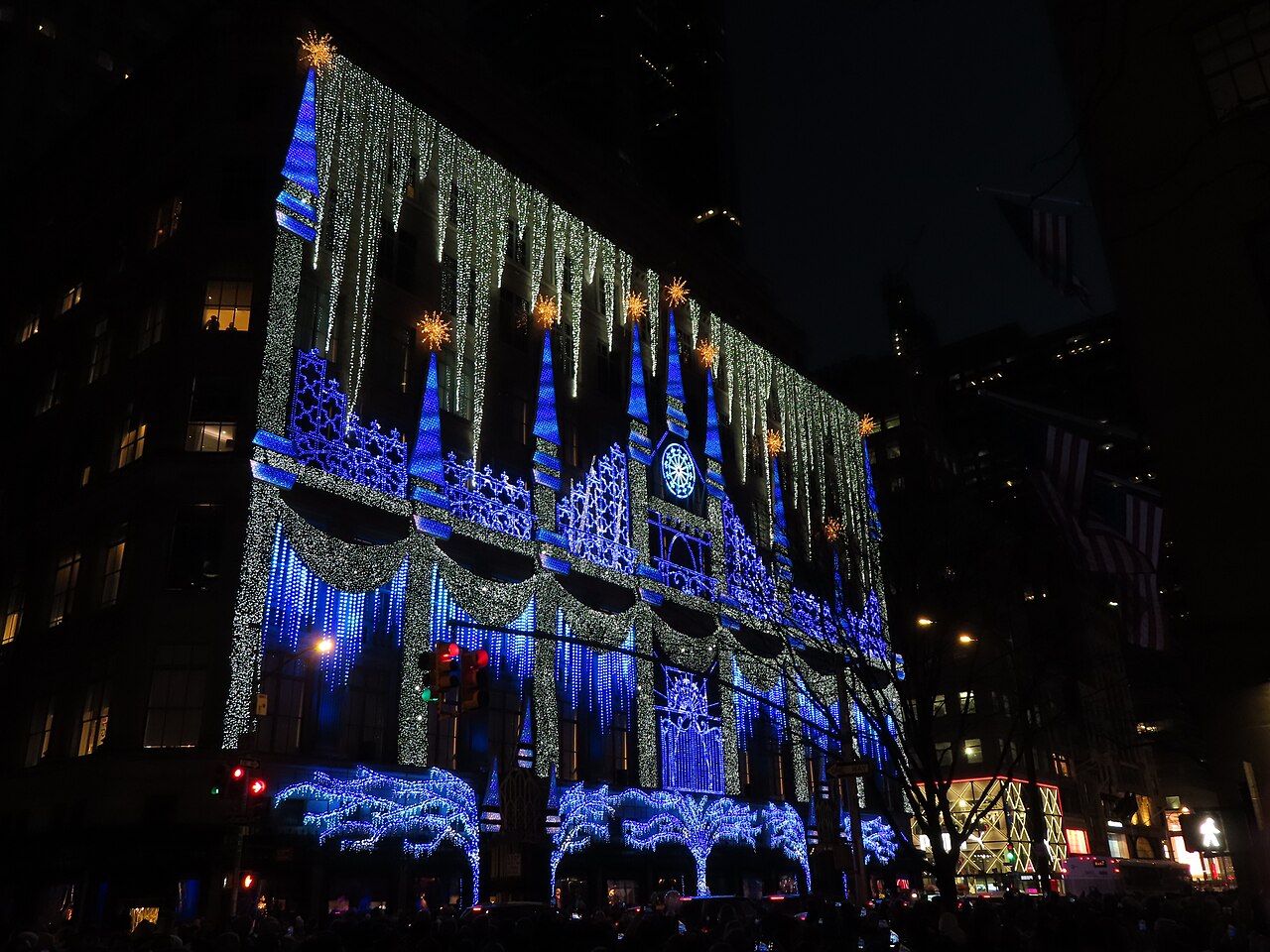
Department stores compete for the most beautiful winter display in the city. Saks Fifth Avenue at the corner of Fifth Avenue and 50th Street puts on a stunning light show. The building’s facade turns into a giant canvas full of flashing LEDs. The show lasts five minutes and repeats every twenty minutes after dark.
Watching this music-and-light show costs nothing. People gather right on the pavement across from the store. Macy’s Herald Square on 34th Street is billed as the world’s largest department store. Its windows traditionally tell a complete story using moving mechanical figures.
If you’re after something more artistic, head to Bergdorf Goodman. This luxury house sits on the corner of 58th Street and Fifth Avenue. Their windows feel more like museum exhibits, full of antiques and haute couture fashion. It’s a completely different style to the playful approach at Macy’s.
Another lovely stop is Bloomingdale’s on 59th Street and Lexington Avenue. This store on the edge of the Upper East Side often goes for interactive displays. Sometimes you can control the lights through the glass or play music using special buttons from outside. The crowds here tend to be smaller than on Fifth Avenue.
The whole of Fifth Avenue turns into a giant Christmas wonderland in December. From 34th Street with Macy’s all the way to 59th Street by Bloomingdale’s, every window glows and thousands of light strings hang above the heads of passers-by. By the Plaza hotel on 59th Street and Grand Army Plaza, vintage horse-drawn carriages park up too. Walk the whole of Fifth Avenue on foot from south to north.
This two-and-a-half-kilometre route takes about an hour at a slow stroll. You’ll skip the crush of the subway and soak up New York’s true festive atmosphere.
⚠️ The neighbourhood of Dyker Heights in Brooklyn is a chapter all of its own. It lies between 83rd and 86th Streets and 11th to 13th Avenue. Local residents decorate their homes with absurdly over-the-top displays. You’ll see three-metre inflatable Santas and tens of thousands of lights on a single house.
You can reach this Brooklyn neighbourhood on the D or N subway lines. Get off at the Dyker Heights or Bay Ridge stations. The best time to visit is around half past five in the evening, just after dark. At weekends the streets jam up with cars, so head over on a weekday and walk instead.
Holiday Markets and Radio City Christmas Spectacular
The markets bring the scent of roasted nuts and hot cider to the cold streets. Bryant Park Winter Village lies on Sixth Avenue between 40th and 42nd Streets in Midtown. Entry to the area is free. You’ll find over a hundred and seventy wooden stalls surrounding a central ice rink.
This market opens as early as Thanksgiving and runs until the end of January. You can pick up handmade crafts, winter clothing and great vegan waffles. Union Square Holiday Market on 14th Street in Greenwich Village has a slightly different feel. It tends to be smaller, more authentic and the locals prefer it.
The Union Square market runs from November to Christmas Eve. Columbus Circle Holiday Market is found on 59th Street, right by the south-western entrance to Central Park. It focuses heavily on original gifts and local New York products. It usually wraps up in the final days of December.
If it’s freezing outside, the Grand Central Holiday Fair will save you. This market takes place inside the famous Grand Central Terminal in Midtown. It’s one of the smaller ones, but its gorgeous historic architecture gives it a wonderful atmosphere. It’s only open until Christmas Eve.
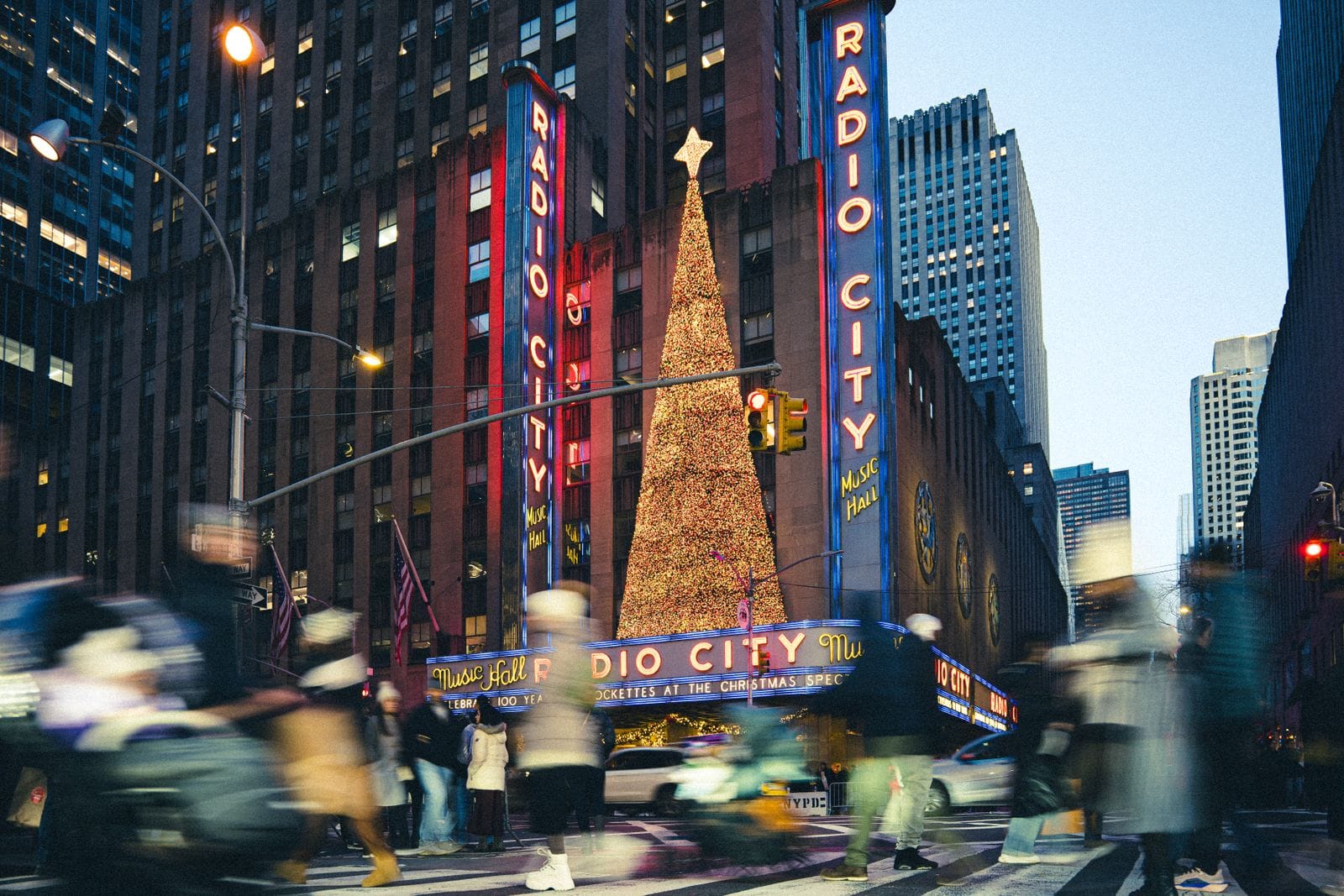
The Radio City Christmas Spectacular is an inseparable part of the winter city. The show runs at Radio City Music Hall on the corner of Sixth Avenue and 50th Street. The night’s main stars are the Rockettes, a legendary female dance troupe famous for their flawless synchronisation. The show runs from November to early January.
Ticket prices for the Rockettes start at 65 dollars and climb past 200 dollars for better seats. Tickets disappear at lightning speed. I’d recommend buying them in advance through platforms like GetYourGuide or directly on the theatre’s official website. At the box office you’ll only find overpriced leftovers.
At the markets you can easily bag original Christmas gifts and local souvenirs. Stallholders sell handmade jewellery, boxed New York photographs, scented candles and indie clothing. You can also buy hand-painted Christmas ornaments or bottles of local craft cider. The stalls in Bryant Park tend to be a touch pricier than those at Union Square.
You can fend off hunger without meat just fine. The markets offer great vegetarian food: fresh falafel, vegan waffles and pancakes. Grab a cup of hot apple cider and warm yourself up a little.
💡 Tip: When visiting the markets, keep an eye on your belongings. Pickpockets work the dense crowds around the food stalls. Best to swing your backpack round to your front. Bank cards survive far better in the front pocket of your jeans than in a shoulder bag.

New Year’s Eve and New Year in New York
The end-of-year celebrations on Times Square are known the world over from TV. The famous crystal ball begins its descent exactly thirty seconds before midnight. This tradition started way back in 1907. Watching this moment live, though, demands a huge amount of physical stamina.
⚠️ The real experience of the Times Square Ball Drop is plain to see. You have to arrive eight to ten hours early. Police close the surrounding streets as early as three in the afternoon. Once they let you into the security zone, you can’t leave it, or you’ll lose your spot.
There are no portable toilets in these closed sections. Temperatures often drop to minus five or even minus ten degrees Celsius. Thousands of people stand crammed together with no room to move. If you know what you’re getting into, you’ll come away with an unforgettable experience for life.
If you don’t fancy standing out in the cold all night, opt for a New Year’s Eve bar crawl. Plenty of venues in Brooklyn, Greenwich Village or Hell’s Kitchen sell tickets for an all-night bar tour for $50–80. You’ll get priority entry to multiple bars and meet people from all over the world. No queues, no frost.
A much calmer alternative is the midnight fireworks in Central Park. Entry costs nothing and the crowds here are far more bearable. Another great display takes place in Prospect Park in Brooklyn, frequented mainly by local families. That way you skip the stress in the middle of the skyscrapers.
New York’s New Year’s Eve has another side too: the cultural programme. Carnegie Hall, Lincoln Center and the Brooklyn Academy of Music host special New Year concerts. Tickets cost $40–150 and guarantee you a warm, elegant way to celebrate. The individual venues’ programmes are published on their websites each October.
You could also book a festive dinner with a view at one of the high-rise restaurants. You’ll need to reserve your table many months ahead, though, and prices tend to be astronomical. Many New Yorkers spend midnight in their favourite bar in neighbourhoods like Greenwich Village or Williamsburg. The mood there is relaxed and friendly.
New York in Winter Beyond the Holidays: January and February
Once the Christmas tourists leave, the city quietens down noticeably. January and February rank as the cheapest and emptiest months of the year. Flight and hotel prices tumble steeply. If you want to save a small fortune, plan your trip for exactly this period.
January brings the famous NYC Restaurant Week. This event lets you visit top-tier restaurants for a fraction of the usual price. Three-course lunch or dinner menus cost from 30 to 45 dollars. Dozens of luxury venues across the city take part — places that would otherwise wreck your budget.
The winter months offer ideal conditions for visiting New York’s museums. Famous spots like MoMA, the Metropolitan Museum of Art and the Guggenheim are practically empty. You won’t have to stand in hour-long queues for tickets. You’ll browse the artworks in peace, without other people’s heads in your view.
The observation decks behind glass are a great experience too. Observatories like One World Observatory, Top of the Rock and Edge have perfect visibility. The crisp air clears the sky and the views are at their best. Plus you stay warm inside the buildings.
Black Friday discounts are often overrated. The real, massive sales only kick off in January after the main season ends. The shops need to clear out their winter collections. So you’ll find fantastic pieces at half price right on Manhattan.
January brings the sprawling Winter Jazz Fest to the city. Hundreds of bands fill the clubs across Manhattan and Brooklyn, and you can grab tickets to individual concerts for $15–30. If you arrive at the turn of January and February, you’ll catch the Chinese New Year celebrations in Manhattan’s Chinatown on Canal Street — with street parades, dancing dragons and fireworks, the largest of their kind in the USA.
What should you wear for New York in winter? Temperatures range from minus five to plus five degrees, but the icy wind drives the feels-like temperature down. The basics are good thermal underwear, a warm fleece and a waterproof jacket. Waterproof boots with chunky soles are a must, and a hat and gloves will save your fingers.
Tips and Visitor Experiences
Seasoned travellers agree on a few basic rules for a winter visit. They share their insights on how to enjoy the city without losing your mind in the crowds. Here are the ones that come up most often and genuinely work.
- Visit the tree and the Fifth Avenue windows early in the morning before nine, or late in the evening after nine.
- Skate at Bryant Park or Wollman Rink rather than the pricey Rockefeller rink.
- New Year’s Eve on Times Square is a once-in-a-lifetime experience. Anyone who doesn’t fancy freezing for ten hours picks another option.
- January and February work out cheapest. Flights and hotels cost considerably less than in December.
Travellers also recommend planning your window-display visit in two rounds. By day you’ll see the details, by night the lit-up atmosphere. Both are worth it and each takes just an hour. Hit Fifth Avenue on a Monday or Tuesday — at weekends the pavements are almost impassable.
For family outings, off-Broadway Christmas theatre shows work very well. The Theater District around 42nd Street offers over fifty different productions in December. Tickets to the smaller theatres go for $20–40. You’ll warm up and experience New York from a different angle than the street.
Before you travel, it’s worth checking current opening hours and any transport changes. A great source of information is the official NYC tourism website. You’ll find precise maps of closures and a calendar of local events there.
Where to Stay for Christmas in New York
Staying in Midtown Manhattan gives you the best access to Rockefeller Center and Fifth Avenue. You’ll save time on subway commutes. I’d recommend the Upper West Side or Midtown West as a great compromise between accessibility and price. In December, hotel prices hit their yearly peak, so book your room many months ahead.
Anyone keen to save opts for Long Island City in Queens or Williamsburg in Brooklyn. Both spots are one subway stop from Midtown. Hotel prices here are considerably lower and yet you still have a direct connection to all the main attractions. Williamsburg also offers a great evening scene of independent bars and restaurants.
For the festive atmosphere, it pays to stay close to Rockefeller Center and Fifth Avenue. Check out hotels in Midtown or compare all accommodation in New York.
Where to Go After New York
 🚗 Car rental on the road
Verified rental cars in New York
🚗 Car rental on the road
Verified rental cars in New York
Search with the DiscoverCars comparison engine — it compares prices from dozens of local and international rental companies, and most bookings come with free cancellation.
Compare car prices in New York →Frequently Asked Questions
When does the Christmas tree light up in New York?
The ceremonial lighting of the tree at Rockefeller Center will take place this year around December 2, 2026. NBC announces the exact date every year in October. The tree then lights up daily until early January.
Where to go ice skating in New York?
You’ve got three main options. Bryant Park offers free ice rink admission, you only pay for skate rental (around 20 USD). Wollman Rink in Central Park has a beautiful skyline panorama (admission around 20 USD). The ice rink at Rockefeller Center is the most famous, but also the most expensive (33 to 55 USD) and the smallest.
Where are the most beautiful Christmas window displays and lights in New York?
You can’t miss the light show on the facade of Saks Fifth Avenue (every 20 minutes after dark), the window displays at Macy’s on Herald Square, and Bergdorf Goodman on 58th Street. For an extravagant experience, head to the Dyker Heights neighborhood in Brooklyn, where residents decorate their homes with thousands of lights.
Is New Year’s Eve at Times Square Worth It?
It depends on your priorities. Expect to arrive eight to ten hours early, freezing cold, overcrowded sections with no possibility to leave, and practically no toilets. It’s an unforgettable experience, but physically demanding. A calmer alternative is the fireworks in Central Park or a festive dinner with a view.
What’s the weather like in New York in winter?
In December, temperatures range between minus two and plus eight degrees, and snowfall is not uncommon. January and February are the coldest: averaging minus three to plus four degrees, but the Atlantic wind makes it feel significantly colder. Bring thermal underwear, waterproof boots, and a hat.
Is New York cheap in January?
January and February are the cheapest months for New York. After the holidays end, hotel and flight prices drop by 30 to 50 percent compared to the December peak. Plus, NYC Restaurant Week is running with special prix-fixe menus and museums are less crowded. The only downside is the colder weather.
Tips and Tricks for Your Vacation
Don’t Overpay for Flights
Search for flights on Kayak. It’s our favorite search engine because it scans the websites of all airlines and always finds the cheapest connection.
Book Your Accommodation Smartly
The best experiences we’ve had when looking for accommodation (from Alaska to Morocco) are with Booking.com, where hotels, apartments, and entire houses are usually the cheapest and most widely available.
Don’t Forget Travel Insurance
Good travel insurance will protect you against illness, accidents, theft, or flight cancellations. We’ve had a few hospital visits abroad, so we know how important it is to have proper insurance arranged.
Where we insure ourselves: SafetyWing (simple monthly subscription) and TrueTraveller (for extra-long trips).
Find the Best Experiences
Get Your Guide is a huge online marketplace where you can book guided walks, trips, skip-the-line tickets, tours, and much more. We always find some extra fun there!