The first time you approach along the motorway and a wall with fifty-two towers and pointed roofs suddenly rises on the horizon, your jaw will probably hit the floor. Carcassonne is the largest preserved medieval fortress in Europe, and it’s the absolute embodiment of how a small child would draw an impregnable castle. The south of France isn’t just one face full of lavender fields and superyachts on the Côte d’Azur — it also offers this rawer, historically profound region of Occitania.
While Provence dazzles on the covers of lifestyle magazines, historic Languedoc welcomes you with endless vineyards and rugged castles clinging to limestone cliffs. And it’s right here that you’ll run into the biggest paradox of French tourism, because travel forums endlessly argue over whether the old walled town is an absolute historical treasure or an overpriced tourist trap. It comes down entirely to how cleverly you plan your visit and which lanes you avoid at high noon.
I’ve put together a detailed guide for 2026 to help you discover the very best of the whole region without unnecessary stress. You’ll find everything here, from ticket prices to tips on escaping the crowds, right through to fascinating trips out to the mysterious Cathar castles perched high in the mountains.
TL;DR
- Entry to the fortress is free: You won’t pay a penny just to wander the lanes of the old town of La Cité — the gates are open around the clock.
- You only pay for the inner castle: A tour of the inner core of Château Comtal and a walk along the main ramparts costs exactly €19 in the 2026 season.
- Avoid the August midday: Between 11am and 4pm the town gets unbearably crowded in summer — far better to get up early and arrive at 8am.
- Accommodation works wonders: If you stay right inside the walls or just below them, you’ll enjoy the magical atmosphere of the evening floodlights without the crowds.
- Combine history with nature: Set aside time for the nearby Canal du Midi or a trip to the sea in the picturesque little town of Gruissan.
- Mark 14 July in your diary: On Bastille Day there’s a gigantic fireworks display that draws over 700,000 people, so the logistics demand nerves of steel.
The full destination guide: Occitania — guide and what to see
When to Visit Carcassonne
Choosing the dates of your trip is by far the most important step, because the summer heat in Occitania can be downright brutal and catches inexperienced travellers off guard. Temperatures in July and August regularly hit 35 to 40 degrees Celsius, which — combined with the baking stone streets and the total lack of shade on the ramparts — borders on pure masochism. Being outdoors over midday in these months is physically exhausting, there’s a real risk of heatstroke, and the enormous car parks in front of the fortress are bursting at the seams under the onslaught of French families on holiday. If you absolutely must come in the middle of summer, plan your sightseeing for around 8am and spend the afternoon hiding in the shade of the mighty plane trees by the canal.
The ideal time to visit, by contrast, is the spring months from April to June, or the autumn period in September and October, when the whole region turns into gorgeous warm hues. In these months you get pleasant temperatures of between 20 and 28 degrees, the sea is still beautifully warm in autumn, and the crowds noticeably thin out after the start of September, so you can relax over a drink on the outdoor terraces. A very specific date for 2026 is 14 July, when all of France celebrates its national holiday and around 700,000 spectators descend on the town. In the evening the spectacular Embrasement de la Cité show takes place, when the walls plunge into darkness and then explode in the country’s biggest fireworks display. It’s an absolute visual frenzy that’s well worth seeing, but you’ll have to reckon with huge traffic jams, hopelessly full restaurants, and the need to arrive in town several hours in advance.
Where to Stay in Carcassonne
💡 Tip for accommodation and experiences: We love to look for places to stay on Booking.com, which tends to have the best cancellation terms. As for tickets, tours and activities, it pays to compare and book them through GetYourGuide.
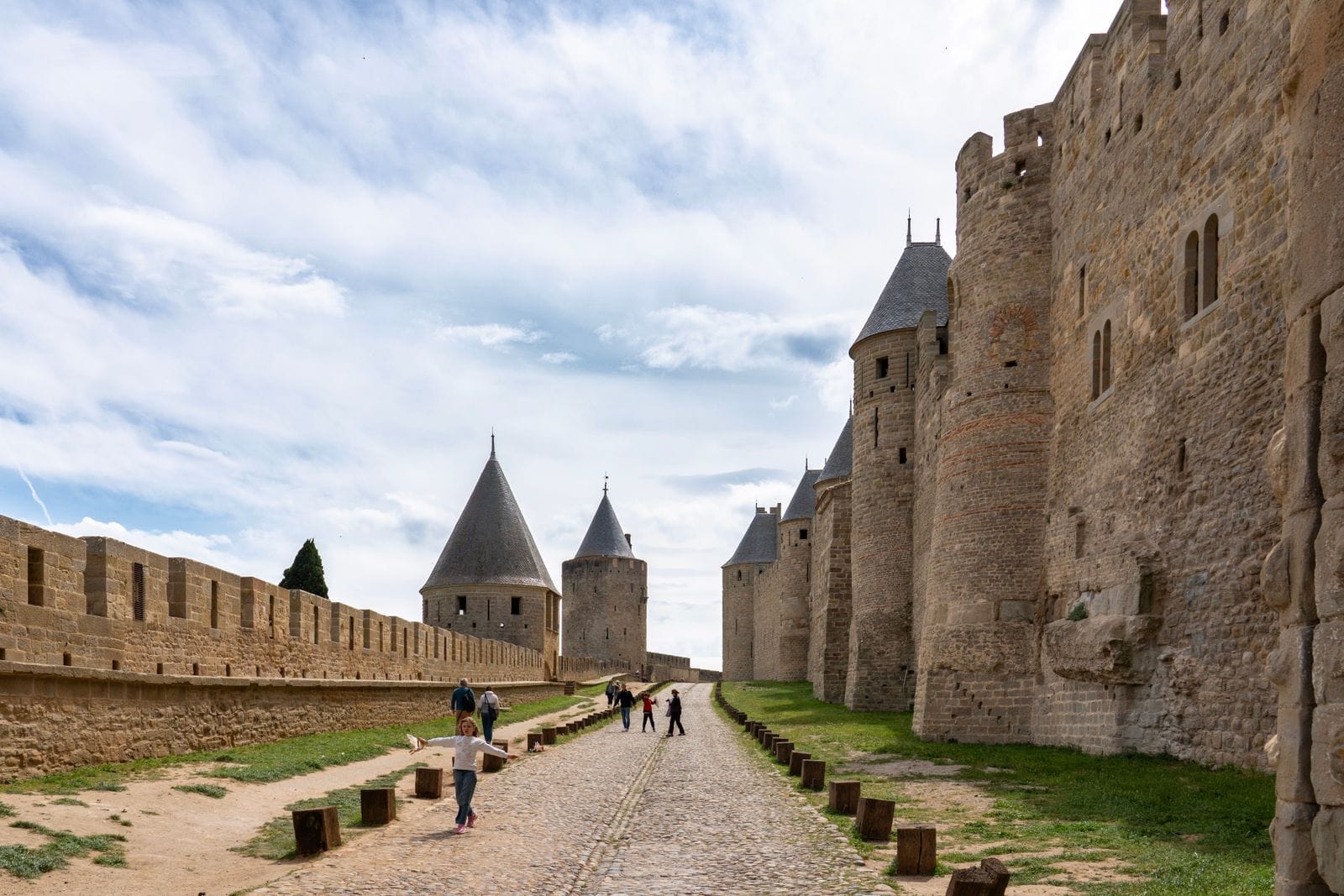
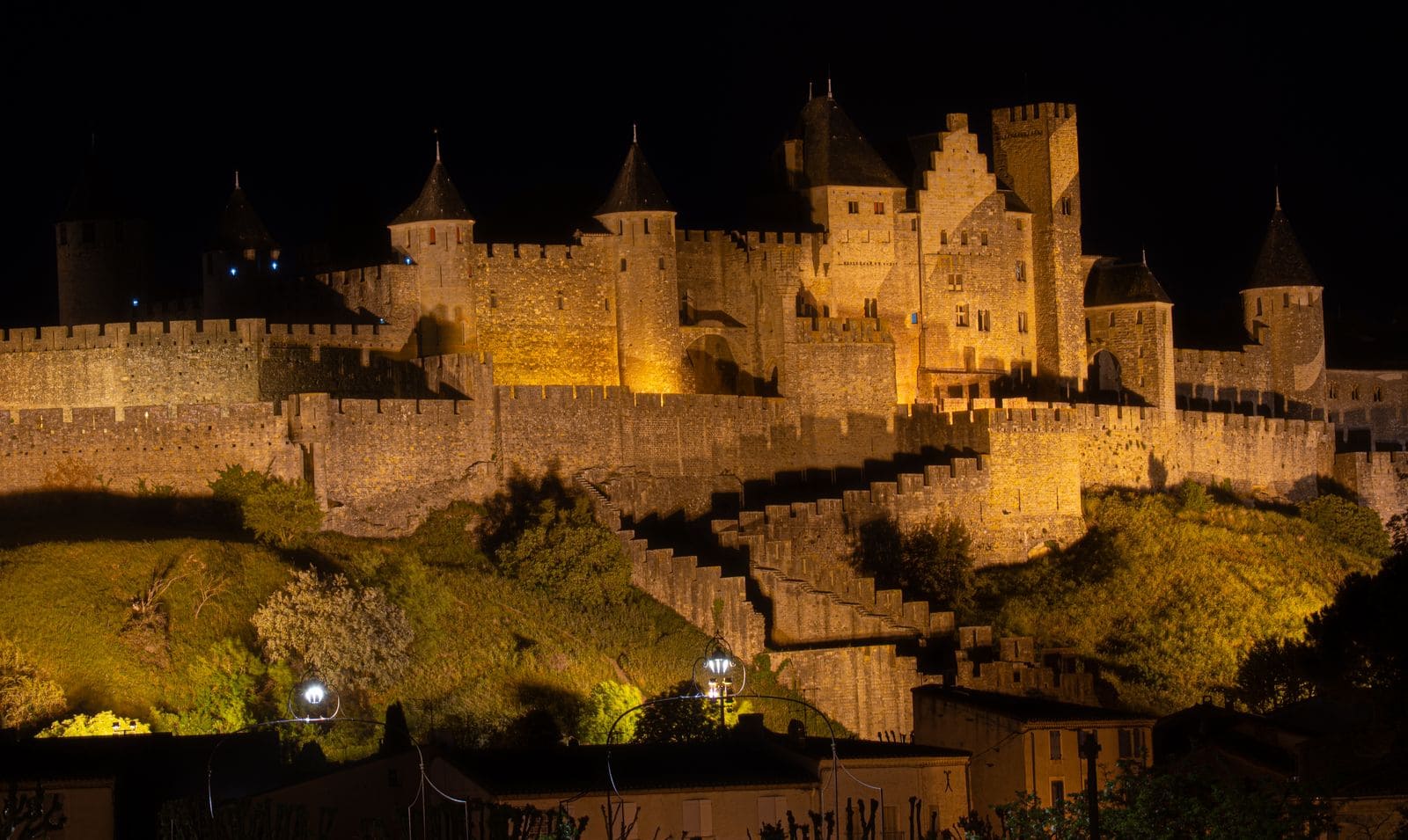
Your accommodation strategy will fundamentally shape your overall impression of this historic gem and decide whether you fall in love with the town or want to flee it as fast as possible. The best option is to book a room right inside the medieval town of La Cité or within easy walking distance of it, so you can wander the empty lanes early in the morning and late in the evening. Once the last coach tours leave after 5pm and the day-trippers vanish, the fortress empties out, the walls light up under yellow floodlights, and the place takes on an incredibly romantic atmosphere.
If you’re after an exceptional experience and don’t mind paying a little extra for it, try the iconic Hôtel de la Cité, which offers unrivalled luxury right among the ancient walls and is just a few steps from the main sights. An excellent and more affordable alternative just below the ramparts is the Mercure Carcassonne La Cité, a mere five-minute walk from the main gate that also offers the much-needed convenience of parking. Be sure to book well in advance, because the best rooms with a view disappear a full six months before the summer season starts.
If you prefer a quieter setting, lower prices, and don’t necessarily need to sleep with a view of the towers, focus on the lower town known as Bastide Saint-Louis. Accommodation across the river is significantly cheaper and offers more authentic contact with local life, and you can reach the fortress on a pleasant twenty-minute walk across the old stone Pont Vieux bridge. On top of that, you’ll find a much better selection of local bakeries, farmers’ markets and small cafés where the town’s own residents come for breakfast, and where you’ll pay a fraction of the price for a coffee and a fresh croissant compared with the restaurants up in the fortress.
12 Best Things to See and Do in Carcassonne, France
1. The Medieval Fortress of La Cité and Its Maze of Lanes
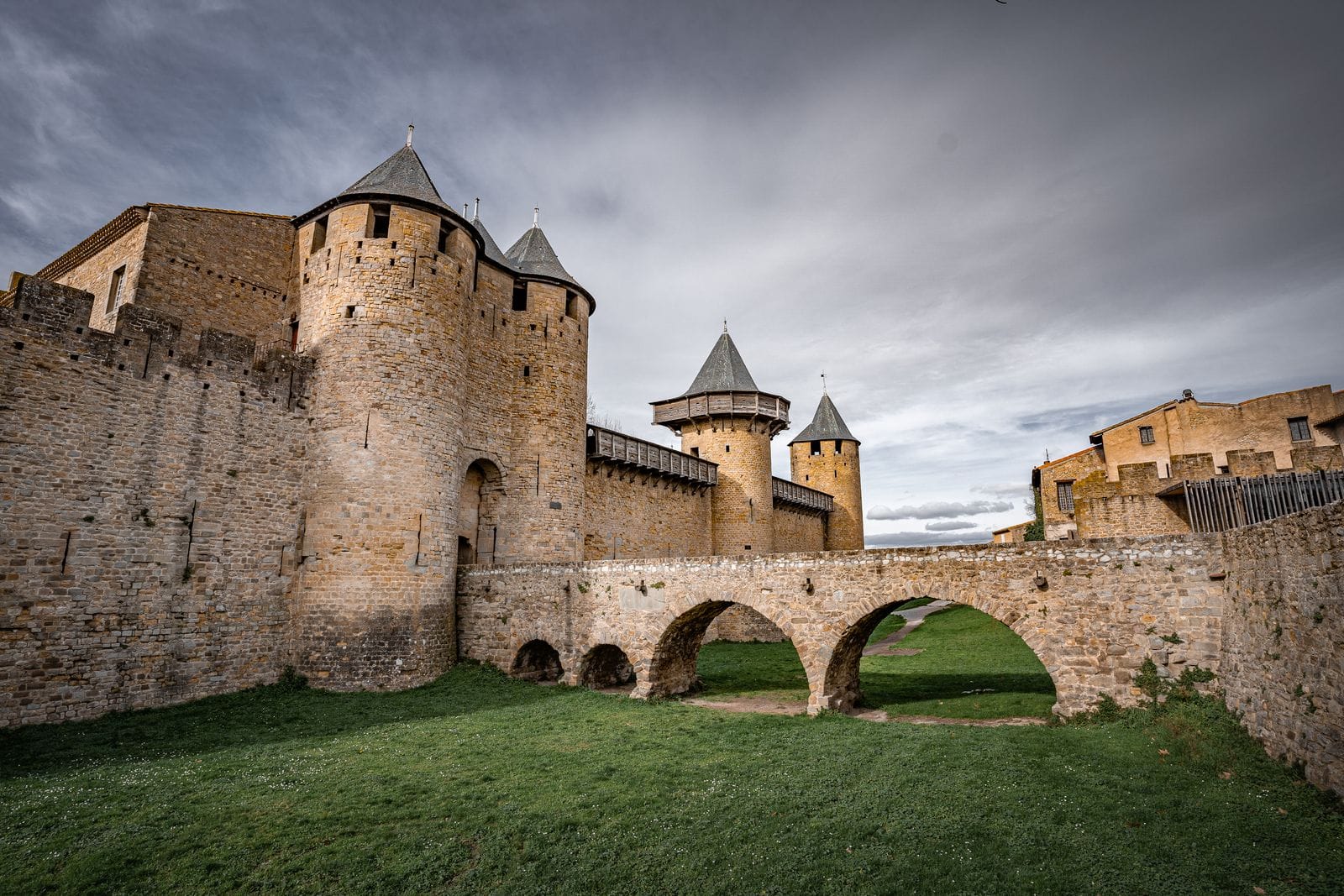
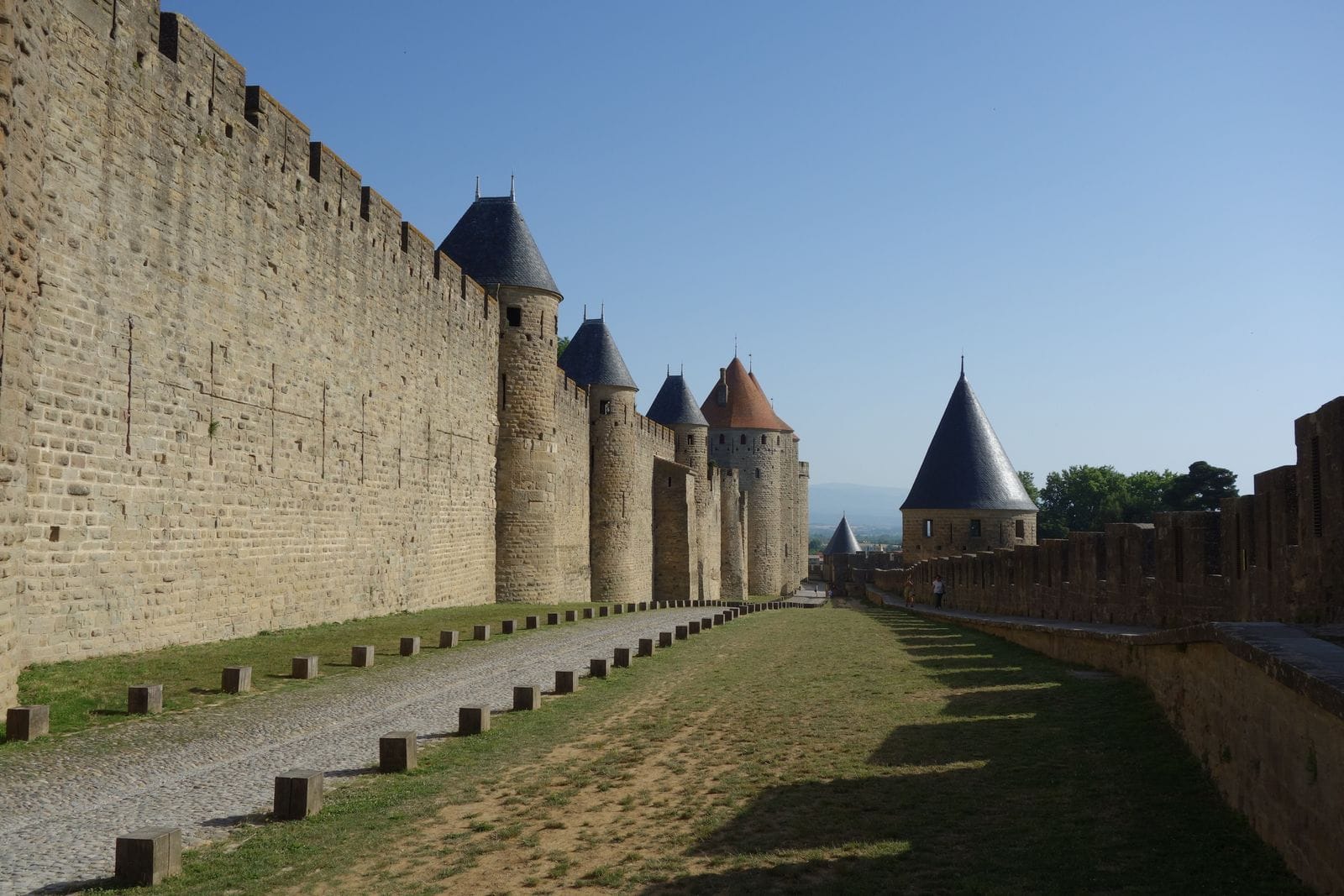
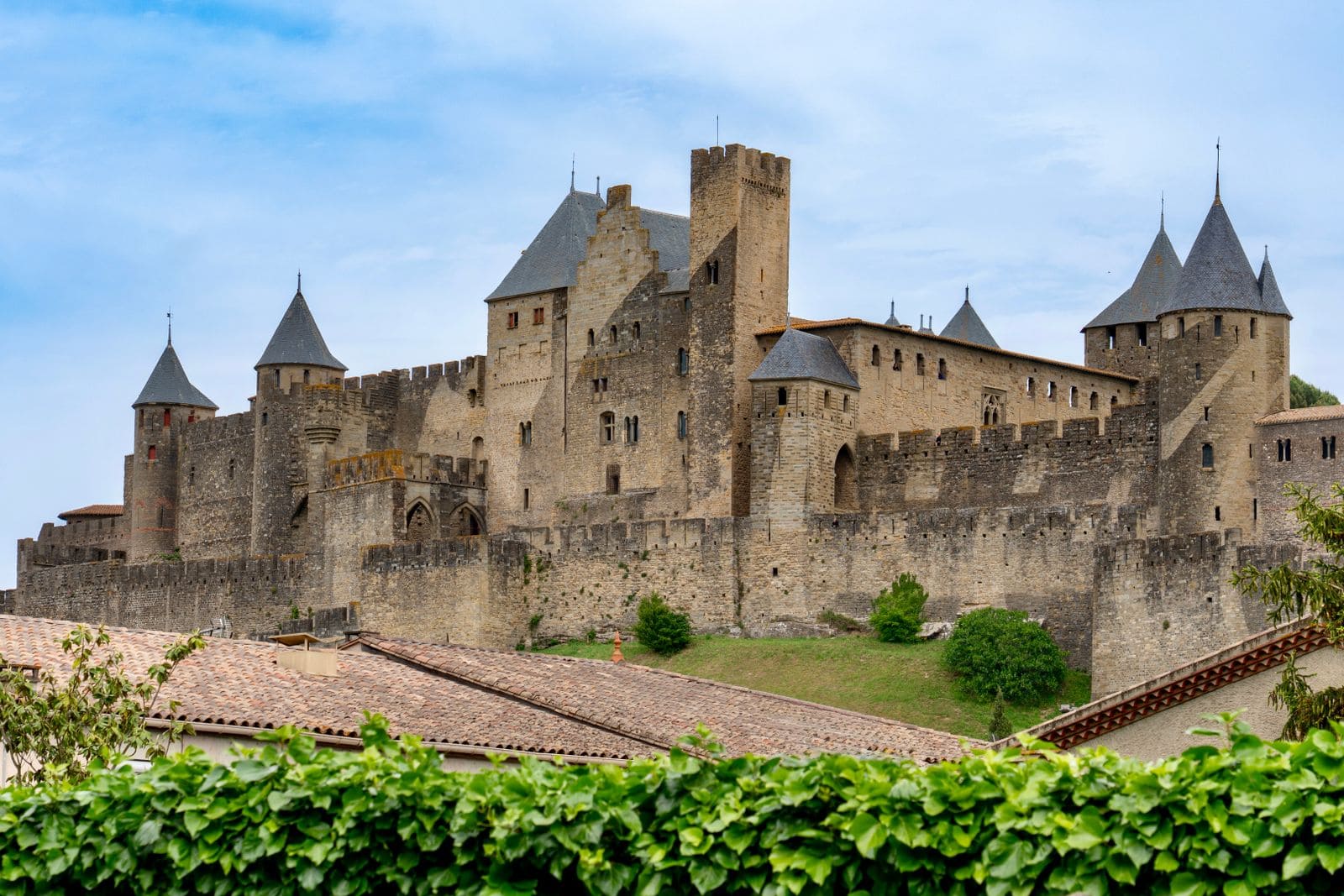
The fortified old town is the main reason millions of people from all over the world flock to this unassuming corner of France, and it has to be said that the sight of it will completely disarm you. Entry to the sprawling area behind the walls is entirely free, so you can wander freely, admire the massive stone walls and soak up the historic atmosphere without spending a penny. The fortress is encircled by an impressive double ring of walls a full three kilometres long, dotted with an incredible fifty-two pointed-roofed towers.
When you walk through the main Porte Narbonnaise gate, you find yourself in a network of narrow cobbled streets that instantly transport you several centuries back to the age of fearless knights. Unfortunately, vendors of plastic swords and cheap souvenirs will be shouting at you from every doorway, the inevitable price of this place’s enormous popularity and the reason travel forums so often host heated debates over whether it’s a historical wonder or just an overpriced tourist trap. If you want to preserve the illusion of the Middle Ages and not let the crowds spoil your mood, I recommend ignoring the main tourist routes entirely and turning down the most out-of-the-way side lanes.
💡 Tip: The fortress is most magical just after dawn, when the morning mist lingers lazily over the valley and the only people you’ll meet in the streets are bakers delivering fresh baguettes. Get up early for 7am and you’ll have the whole majestic town almost to yourself.
2. The Inner Castle of Château Comtal
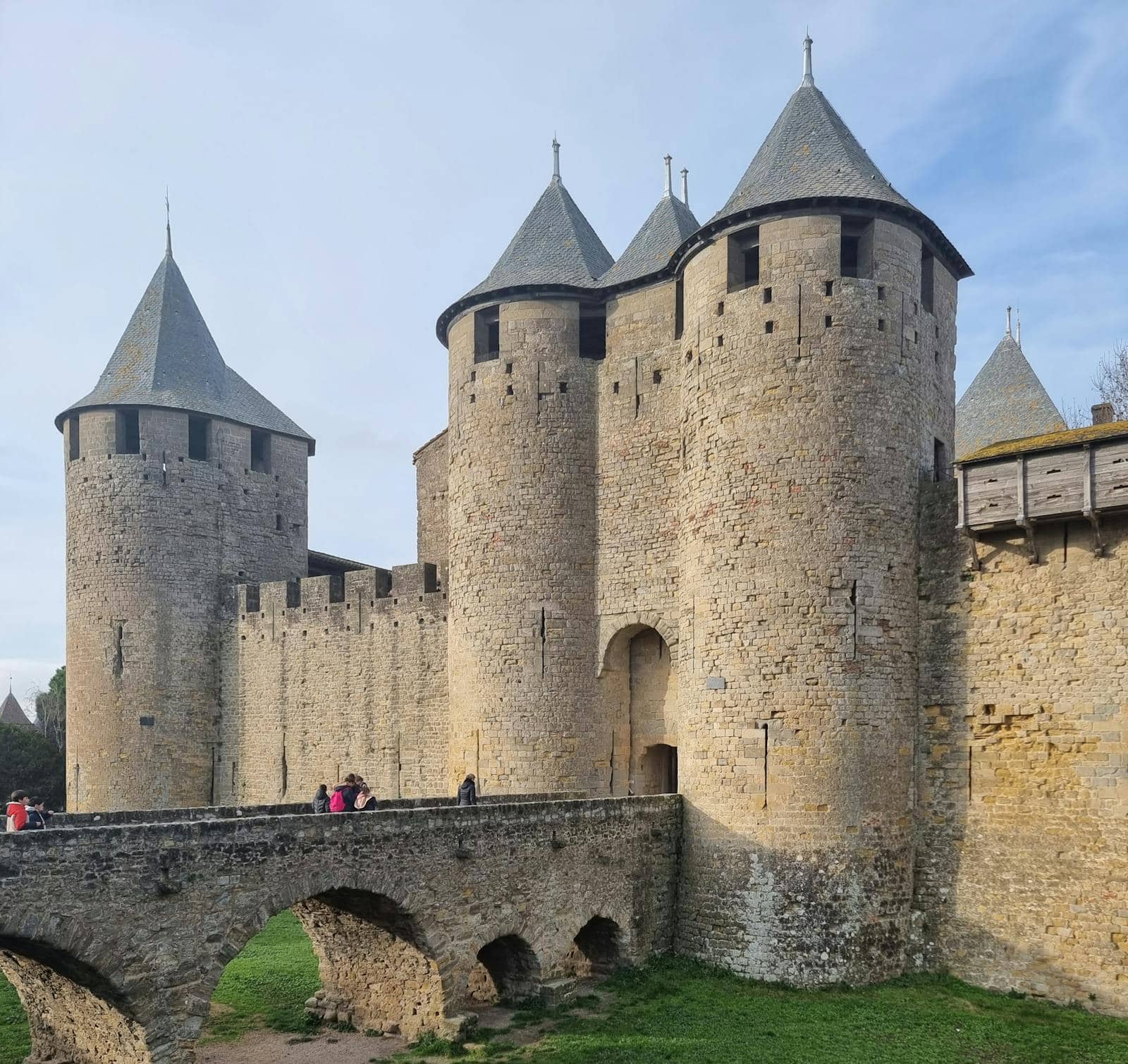
While you can enter the old town itself completely freely, the heart of the whole fortress comes at a price, is carefully guarded, and requires a valid ticket to visit. Château Comtal is a perfectly protected fortress within the fortress, and it once served as the main seat of the powerful Trencavel dynasty, which controlled much of the southern lands of the time. From April to September 2026 you’ll pay exactly €19 for the tour circuit, while in the cooler months from October to March the price drops pleasantly to €13.
The tour leads you through an ingenious system of defensive courtyards, deep moats and labyrinthine passages, all designed to reliably confuse and delay any attackers. You’ll learn fascinating details about the incredible engineering of the defenders of the time, who managed to withstand even the most ferocious sieges during the bloody Crusades thanks to their clever architecture. The extensive exhibition also includes a very interesting lapidarium, which boasts a unique collection of medieval sculptures and richly decorated stone crosses.
Definitely buy your tickets online well in advance to avoid the endless queues that form at the ticket offices from mid-morning and become a real test of patience in the summer heat. For tickets and a variety of tours with a local guide, you can use the GetYourGuide portal, which will save you a lot of precious time and frayed nerves spent waiting in the baking sun.
3. A Breathtaking Walk Along the Ramparts
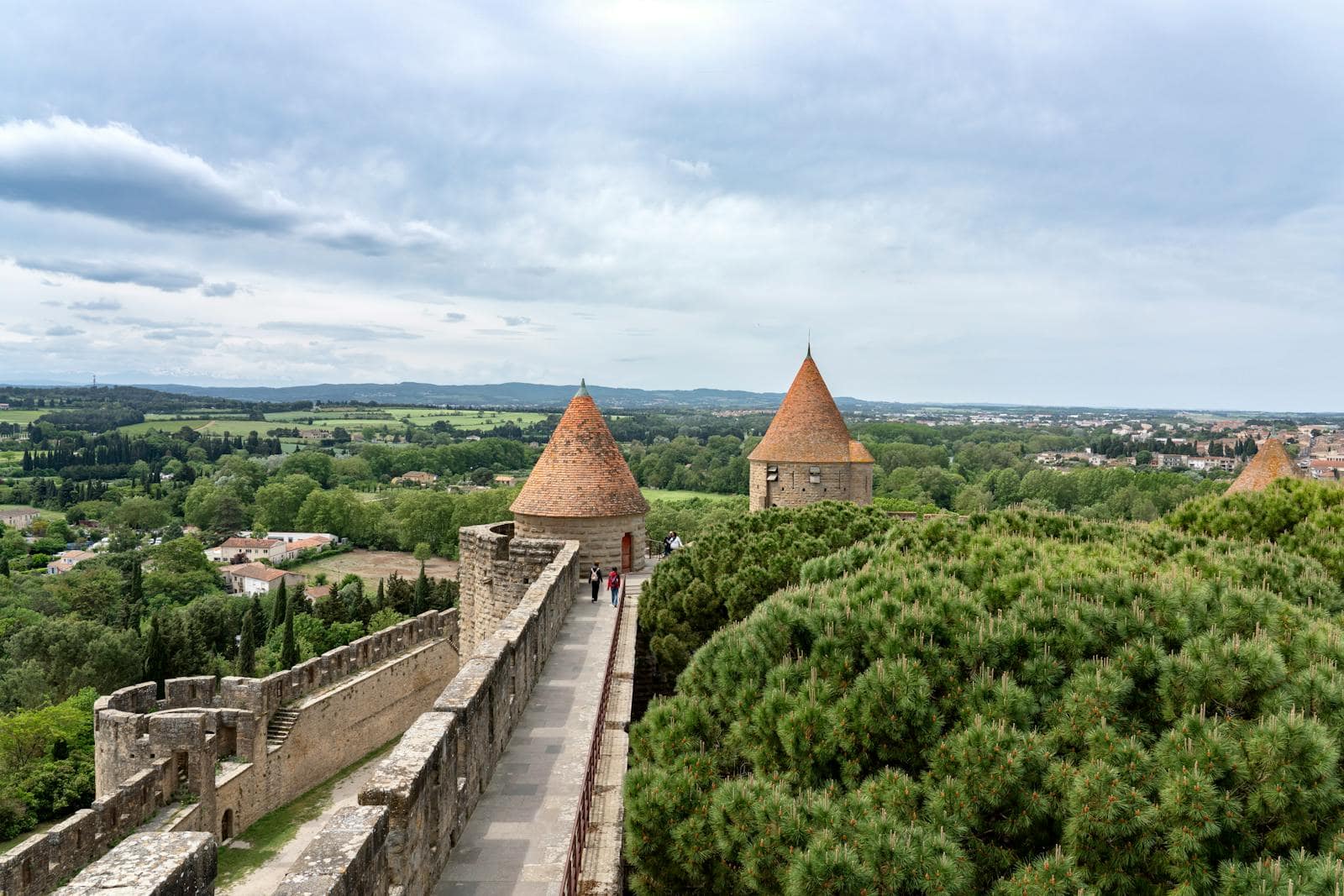
A ticket to the inner castle also gives you access to one of the very best experiences in the whole town, one you definitely shouldn’t skip on your visit. It grants you exclusive access to the elevated walkways of the main ramparts, where you can stroll at length and enjoy panoramic views that ordinary visitors down in the crowded streets never get to see. The route is surprisingly long, leading across several massive defensive towers with their typical wooden hoarding, and it lets you grasp the true scale of the entire fortification.
On one side you get a fantastic view of the red roofs of the old town and the narrow winding lanes lying far below you. Look the other way and you’ll see the modern part of town, Bastide Saint-Louis, and green vineyards stretching into the distance, framed on the horizon by the dark silhouette of the Montagne Noire (Black Mountain). It’s an absolutely ideal spot for photography, especially in the late afternoon, when the setting sun paints the old stones in incredible golden shades.
Just be aware that the historic ramparts aren’t entirely accessible, and you’ll face plenty of narrow spiral staircases that demand at least a basic level of agility. In the summer months, bring plenty of water, because you’ll find almost no shade on the baking stone walkways, and the afternoon sun up there can be downright merciless.
4. The Magical Basilica of Saint-Nazaire
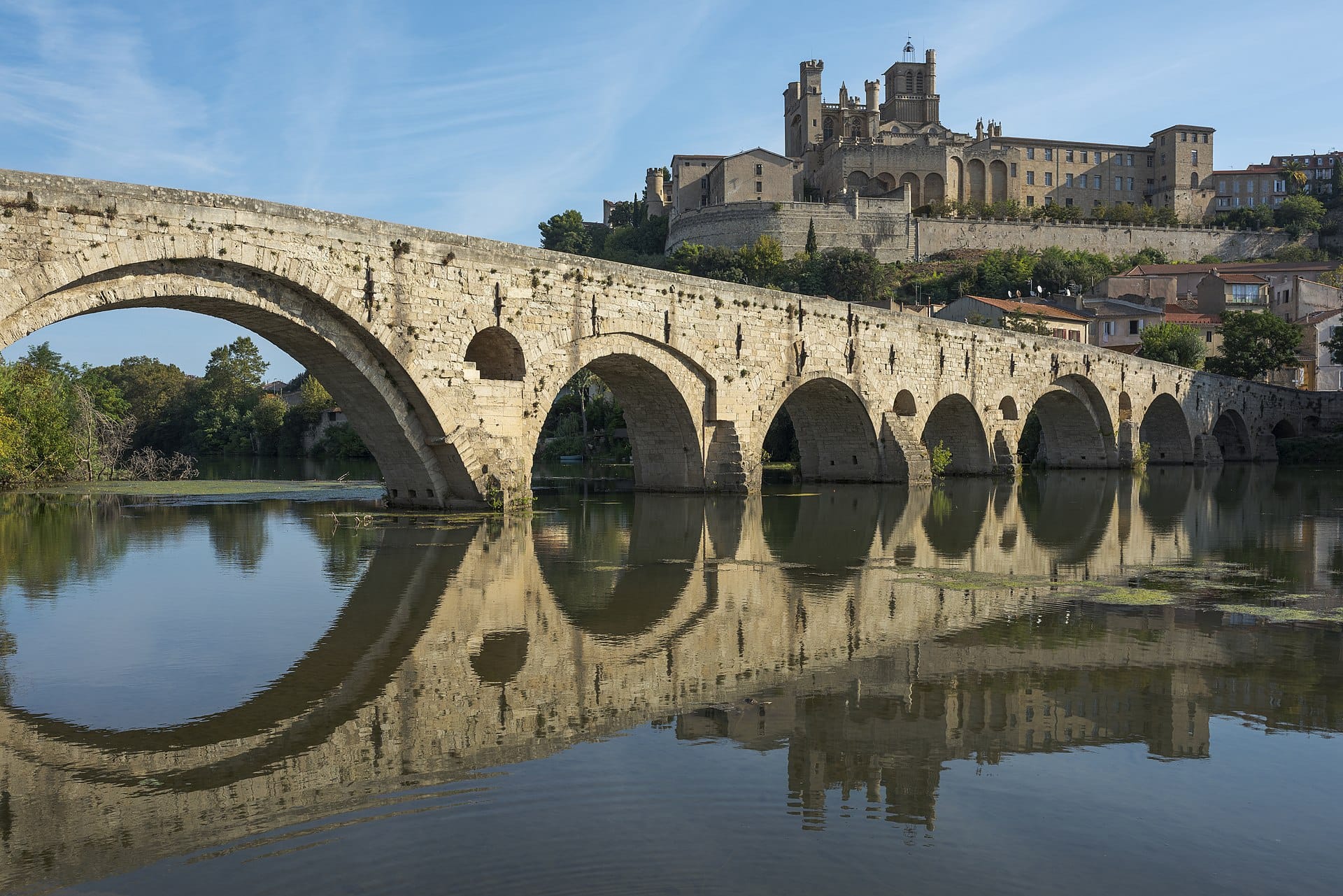
Even if you’re not exactly a passionate admirer of sacred architecture and find church visits a bit boring while travelling, this particular building is one you really shouldn’t miss. The Basilica of Saint-Nazaire is a unique and incredibly harmonious mix of Romanesque and Gothic styles, because it was built and gradually rebuilt over several long centuries. It sits in the somewhat quieter rear part of the fortress, where fewer tourists venture, and entry to its stunning interior is completely free for everyone.
What will absolutely amaze you inside and force you to look up are the enormous, incredibly detailed stained-glass windows, rightly counted among the most beautiful in all of southern France. When the sun’s rays pass through them in the late afternoon, the interior lights up in a thousand colours and creates a magical atmosphere that gives even the biggest pragmatists goosebumps. Many of these fragile stained-glass panes date all the way back to the thirteenth and fourteenth centuries and miraculously survived all the turbulent wartime conflicts.
Stop by the monumental historic organ too, and on your way out don’t forget to take a careful look at the intriguing stone gargoyles on the exterior facade, shaped like all manner of terrifying mythical monsters. In the summer season, evening choral concerts are often held here, which — thanks to the absolutely perfect acoustics of the stone church — make for an unforgettable cultural experience.
5. The Old Pont Vieux Bridge and Views of the Fortress
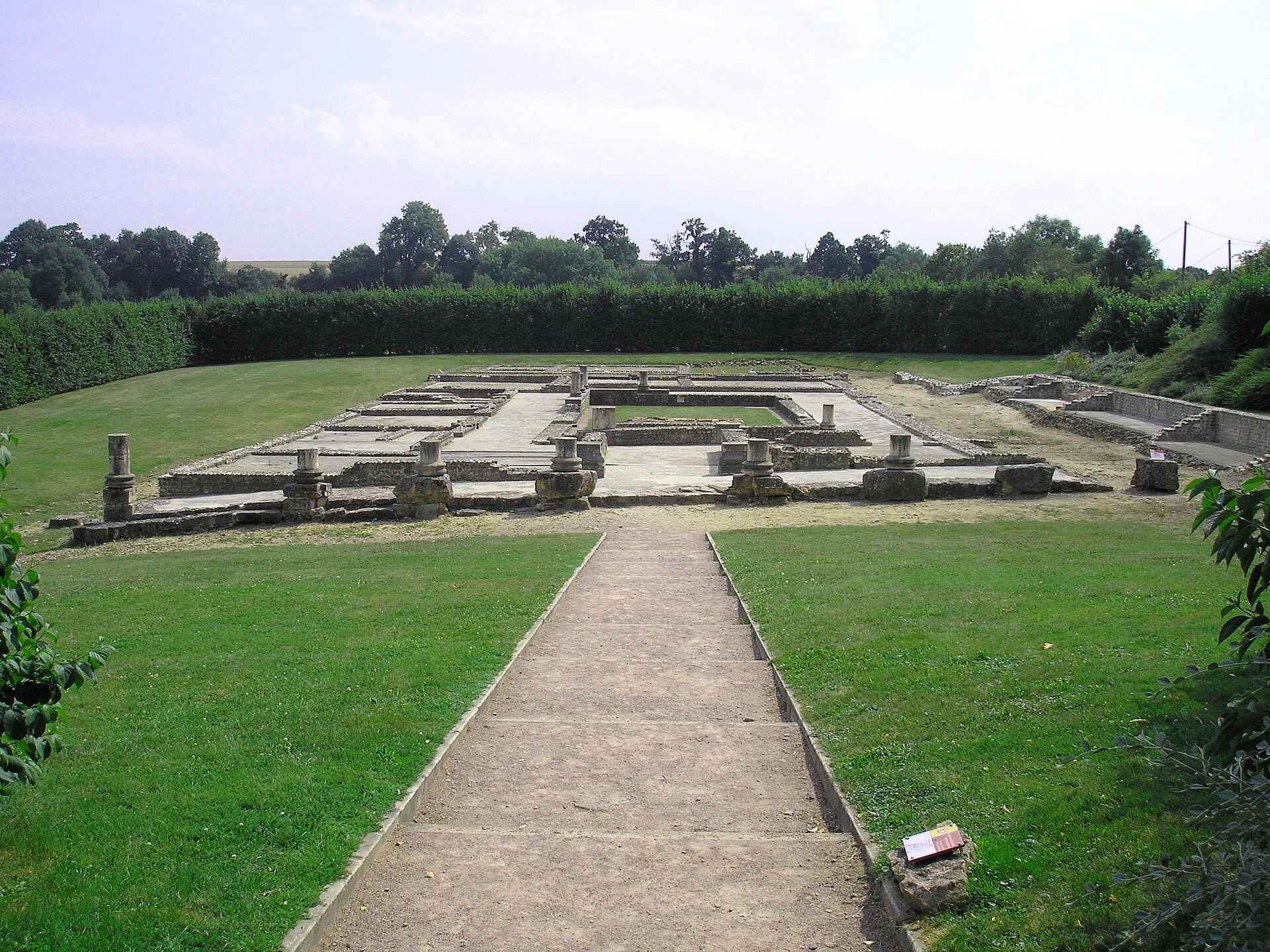
When you want to cross from the historic fortress to the more modern part of town below the hill, your steps should clearly lead across the River Aude on this gorgeous stone bridge. Pont Vieux was built in the fourteenth century and, thankfully, today serves pedestrians only, so you can stroll across it with no worry of busy traffic or honking cars. It’s made up of twelve elegant stone arches, forms a natural and very photogenic link between two different worlds, and is itself a beautiful example of medieval engineering.
It’s from this exact spot that you’ll capture the most iconic photos of the entire La Cité fortress, the kind that will look perfect in your travel album. The silhouette of the old town rises up on the hill here in all its majesty, and in the evening, when the powerful yellow floodlights come on, the walls reflect beautifully on the calm surface of the lazily flowing river. Stop here for a moment, lean on the old stone railing and enjoy that unforgettable view, known to millions from postcards and travel books.
💡 Tip: A short way from the bridge on the lower-town side you’ll find small grassy banks, where locals come to sit with a book in the afternoon or have a little early-evening picnic. It’s an absolutely great spot to rest when your feet are aching from a full day of walking the fortress’s uneven cobbled streets.
6. The Lower Town of Bastide Saint-Louis
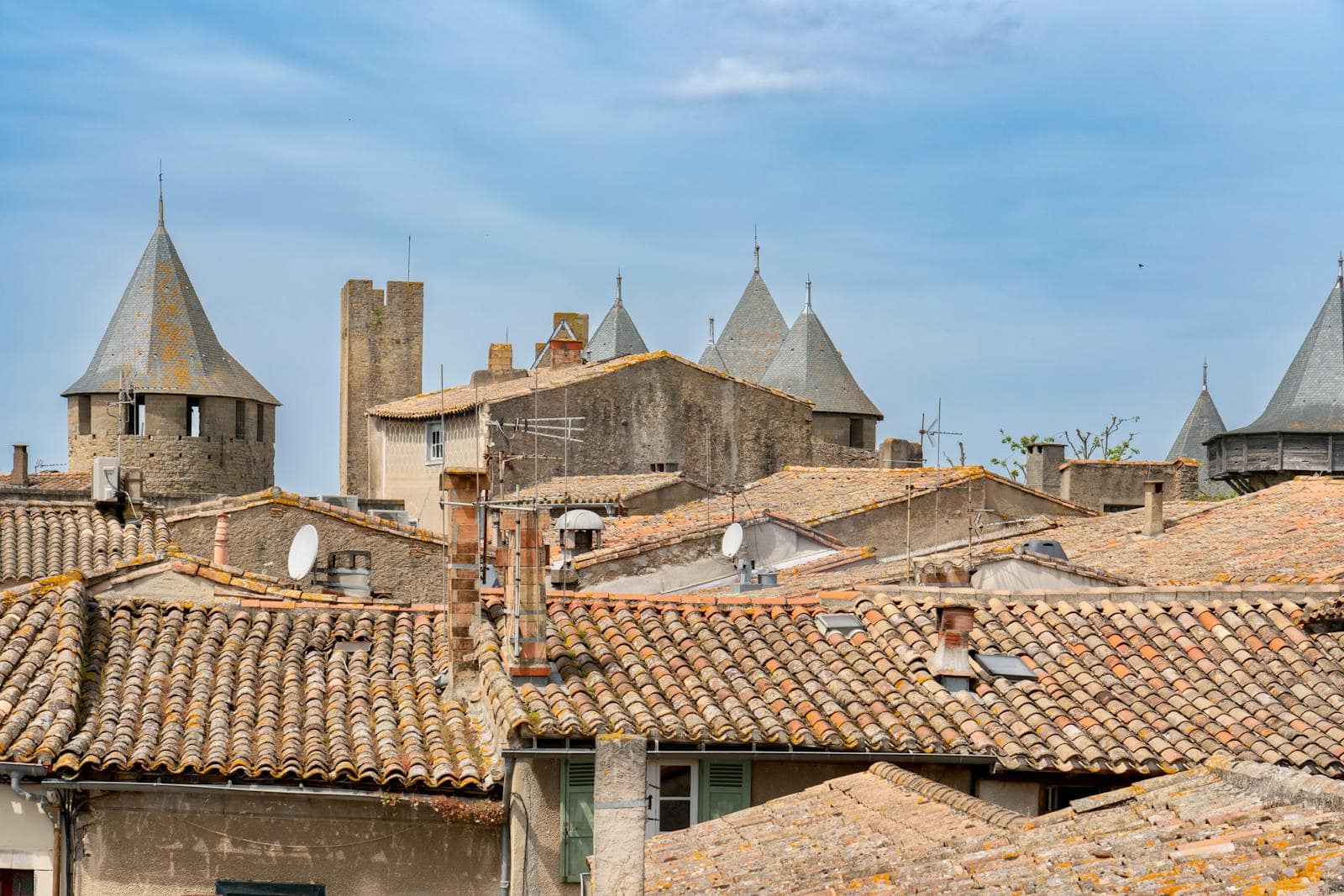
Most foreign tourists make the huge mistake of jumping straight back into their cars after a quick look at the walls, completely ignoring the more modern part of town below the hill. Yet Bastide Saint-Louis hides the real, pulsing life of ordinary French people, which you’ll no longer find up in the overcrowded fortress full of souvenir sellers. This quarter was founded in the thirteenth century and is surprisingly laid out in a strict grid of streets, resembling a giant chessboard in which you simply can’t get lost.
At the centre of all the local action is the picturesque Place Carnot, dominated by a beautiful marble fountain of Neptune and constantly buzzing with life beneath the trees. Every Tuesday, Thursday and Saturday morning, fantastic farmers’ markets are held here, where you can buy the very freshest cheeses, Provençal olives, sweet local fruit and incredibly crusty bread straight from local producers. It’s the absolutely ideal opportunity to stock up on quality provisions for an afternoon snack or an evening picnic.
You’ll also find much friendlier prices here in the restaurants and cosy cafés, which cater primarily to local residents rather than day-trippers with bulging wallets. Order a coffee on one of the many outdoor terraces, listen to the chatter in French and soak up the wonderfully relaxed southern atmosphere that reigns here from early spring to late autumn.

7. Relaxing by the Canal du Midi
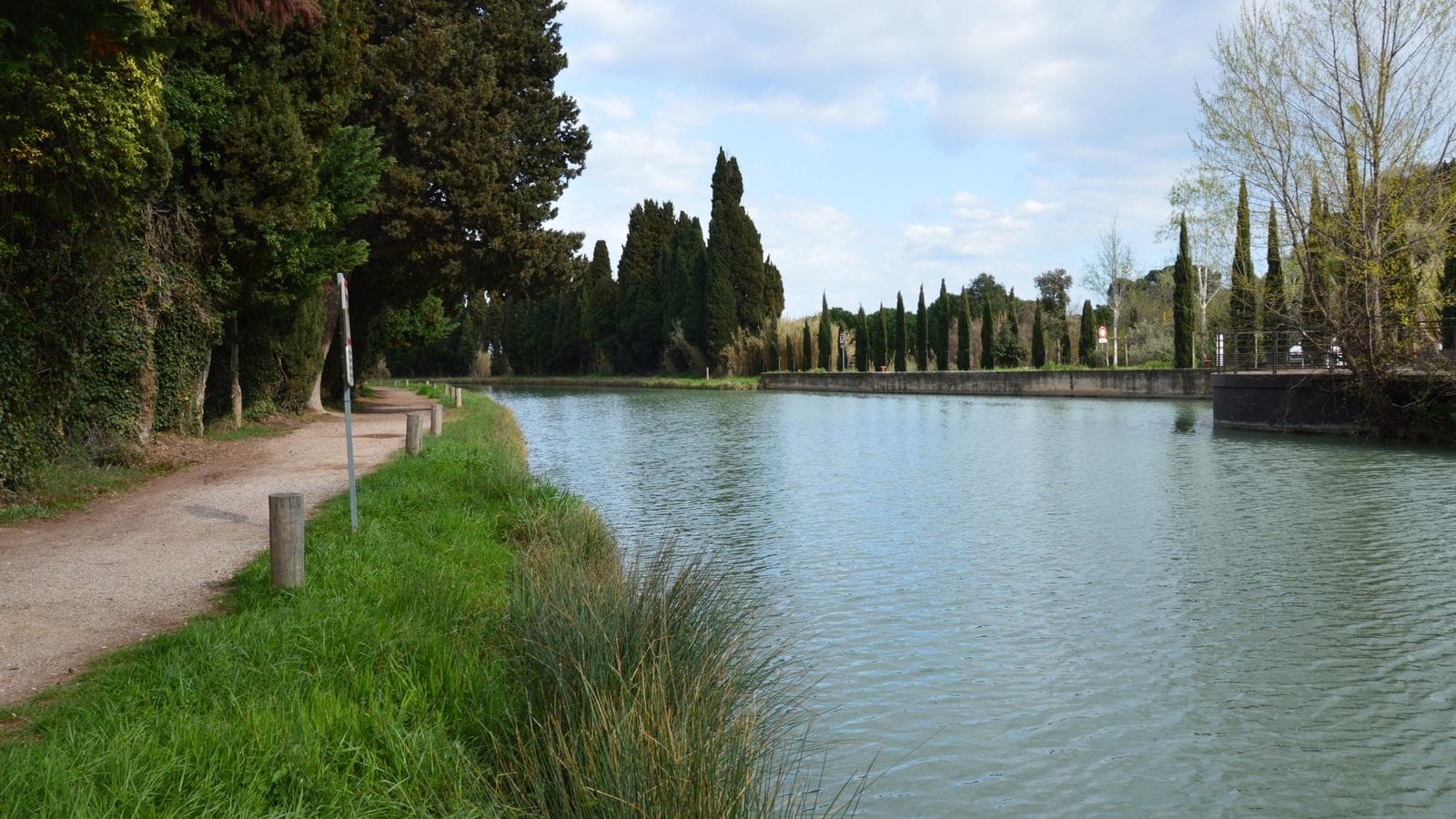
Right along the edge of the lower town flows a fascinating seventeenth-century engineering marvel, rightly inscribed on the UNESCO World Heritage list for its historical value. The Canal du Midi is a 240-kilometre artificial waterway linking the Atlantic with the Mediterranean, offering a perfect and very welcome escape from the brutal summer heat. The banks of this narrow canal are lined with hundreds of mighty old plane trees, which form a beautiful green tunnel over the water and provide vital shade at the very time the sun is mercilessly scorching the baking streets of the town.
The most popular and most relaxing activity is to rent a small motorboat or buy a ticket for a sightseeing cruise, which takes you at a leisurely pace through several historic locks. Watching the boat slowly rise or fall in the narrow stone chambers is a fascinating experience for adults and children alike, and gives you the chance to admire the precise work of long-ago engineers. The water in the canal is calm, there are no waves to expect, and the cruise is the best possible rest for tired feet.
If you prefer to move on land and like to spend your time more actively, a perfectly maintained and safe cycle path runs along the entire length of the canal. Hire bikes in town and head out on an easy trip into the surrounding countryside — the route is completely flat, you won’t hit a single hill, and even occasional weekend cyclists will manage it without the slightest trouble.
8. Evening Wanders and the Magic of the Floodlit Ramparts
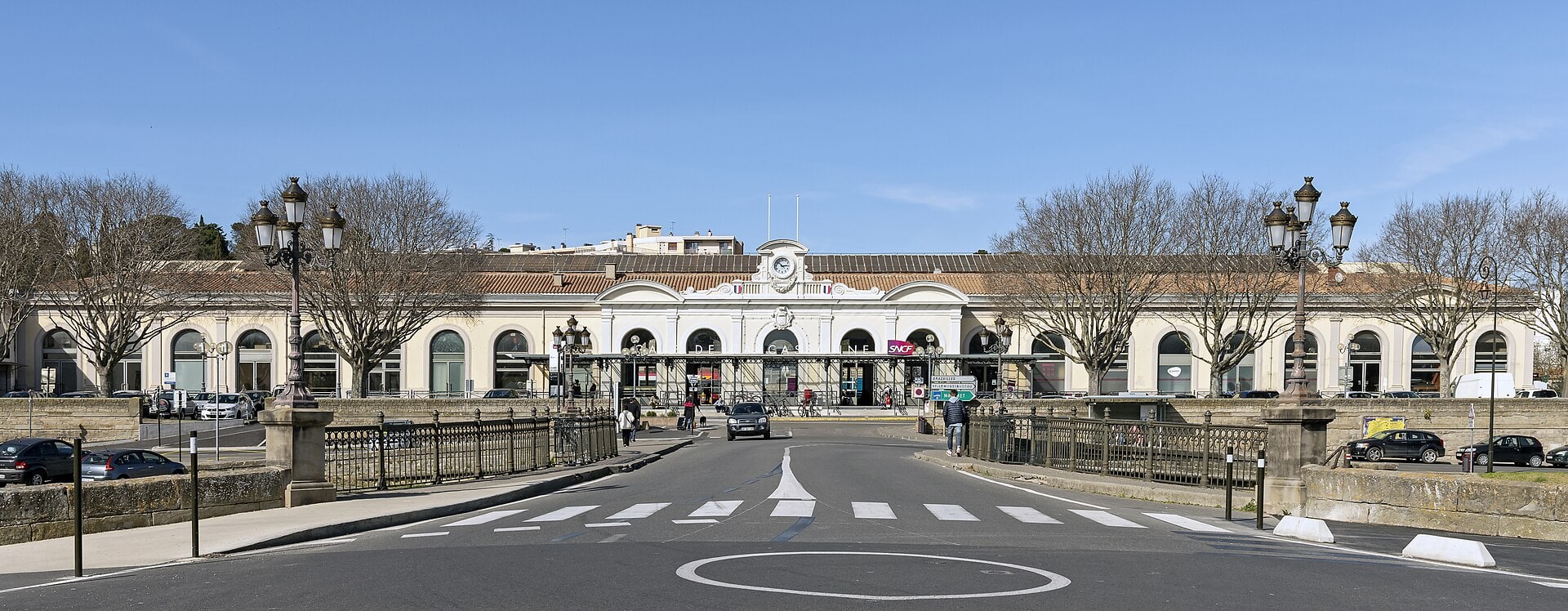
As I mentioned at the start of this guide, the truly absolute magic arrives the moment the sun finally sets below the horizon and the hot air slowly begins to cool. When darkness falls, the entire sprawling fortress of La Cité lights up under hundreds of powerful floodlights, which beautifully bring out the rough texture of the old stones and the majesty of each pointed tower. The shop-lined streets empty out surprisingly fast, the noisy tour groups board their coaches, and the medieval town finally begins to breathe deeply in immense peace and silence.
Take a walk around the outside of the walls in the area known as the Lices, a wide, well-kept grassy strip lying exactly between the inner and outer rings of the massive fortification. It’s an immensely romantic walk during which you’ll feel like a hero from a sweeping historical novel, and the only thing you’ll hear is the echo of your own footsteps on the gravel path. Try to find a deserted bench with a view of the night-time lower town, open a bottle of local wine and just soak up the wonderful atmosphere on offer here.
It’s precisely because of these quiet evening moments that it pays to splash out on accommodation near the walls. While the other weary tourists are long since stuck in queues on the road to the coast, you have all that endless stone beauty to yourself and don’t have to rush off anywhere at all.
9. A Trip into Cathar History: Peyrepertuse and Quéribus
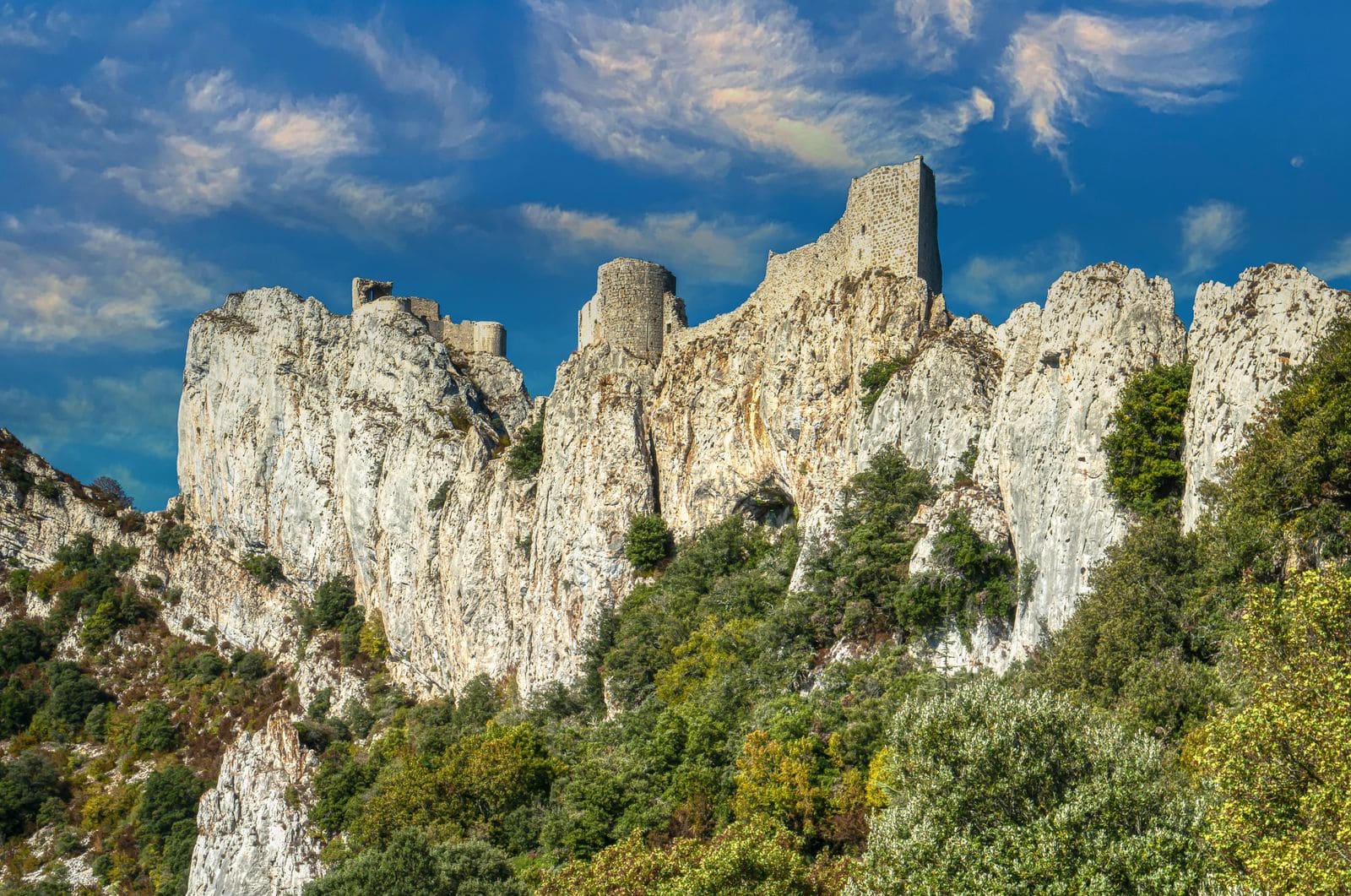
If you have a hire car at your disposal and aren’t afraid to drive along narrow mountain roads, it would be a huge shame not to head into the hills, where the so-called “citadels of vertigo” lie hidden. This whole rugged region is deeply defined by the dark and bloody history of the Cathars, a religious movement that the powerful Catholic Church uncompromisingly and brutally suppressed in the thirteenth century. The Cathars left behind a unique network of rugged defensive castles, which don’t just sit on ordinary hills but are literally fused with the steep rocky ridges high among the clouds.
The most impressive and best known of them are the fortresses of Peyrepertuse and nearby Quéribus, located very close to today’s Spanish border and looking utterly impregnable. The climb up to them is definitely no Sunday stroll through a rose garden and requires preparation — you’ll need genuinely sturdy shoes, plenty of drinking water and at least a basic level of fitness. The path up is very steep, stony and slippery, and the sun beats down on you at full strength in the open terrain.
But the reward for the sweat-soaked shirt and aching muscles is absolutely phenomenal. When you clamber through the old ruins and stand at the highest point of the castle, with a view stretching from the snow-capped Pyrenees all the way to the sea, you’ll instantly understand why the defenders chose this extreme spot. You can drive here from Carcassonne in about an hour and a half, and it’s a visual experience to last a lifetime.
10. Escaping to the Sea and the Fishing Villages
Although the historic town of Carcassonne itself doesn’t sit right on the coast, the Mediterranean is barely an hour’s comfortable drive away along the fast motorway, which makes it a great destination for a bit of relaxation. Set off on an easy day trip via the beautiful historic town of Narbonne, where you can take a leisurely look at the stunning unfinished Gothic cathedral and the old Roman underground store, the Horreum, which recalls the days of the Roman Empire’s greatest glory and served as extensive underground granaries. Narbonne has a much more relaxed atmosphere overall and far fewer tourists than the better-known Provençal centres, so you can wander here at ease without elbowing through crowds.
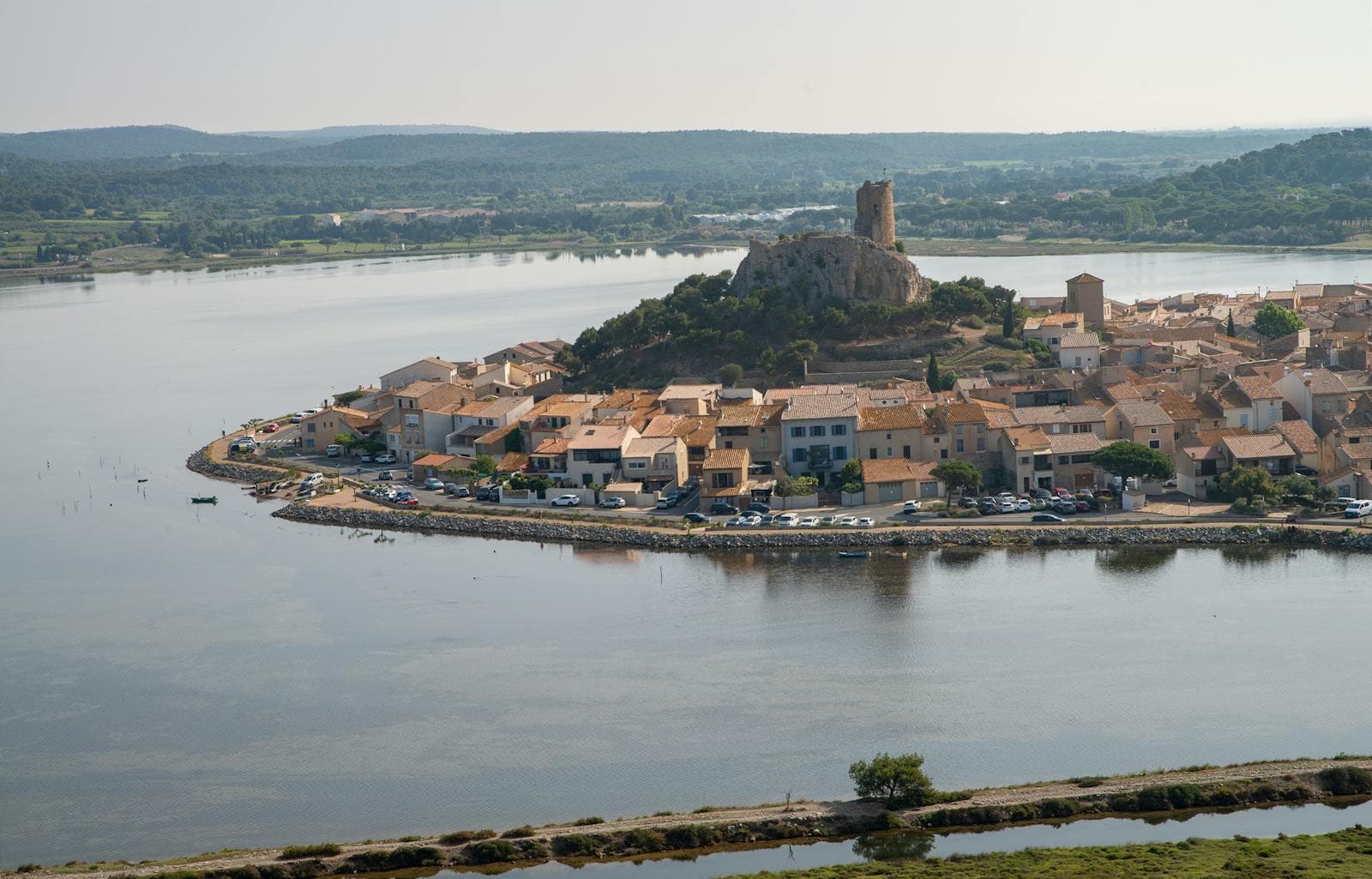
From here it’s only a short hop to the seaside resort of Gruissan, which thankfully differs sharply from the impersonal concrete monsters of the 1970s that sadly sometimes mar the rest of the Languedoc coast. Gruissan is an immensely picturesque little town where the old houses are built in interesting concentric circles around the dominant ruins of the medieval Barbarossa castle. In the small local bistros you’ll find a great selection of fresh local ingredients and regional meat-free specialities, such as excellent cheese tarts and delicious vegetable tapenades prepared carefully to old family recipes.
Be sure not to miss the nearby iconic Plage des Chalets beach, famous far and wide for its unique wooden houses built high on sturdy stilts right above the sand. The beaches here are endlessly long, purely sandy and often whipped by a pleasant breeze, which brings much-needed refreshment in the sweltering summer heat and draws watersports lovers. It’s an absolutely ideal spot for afternoon relaxation with a good book in hand after a demanding morning of sightseeing and steep castles.
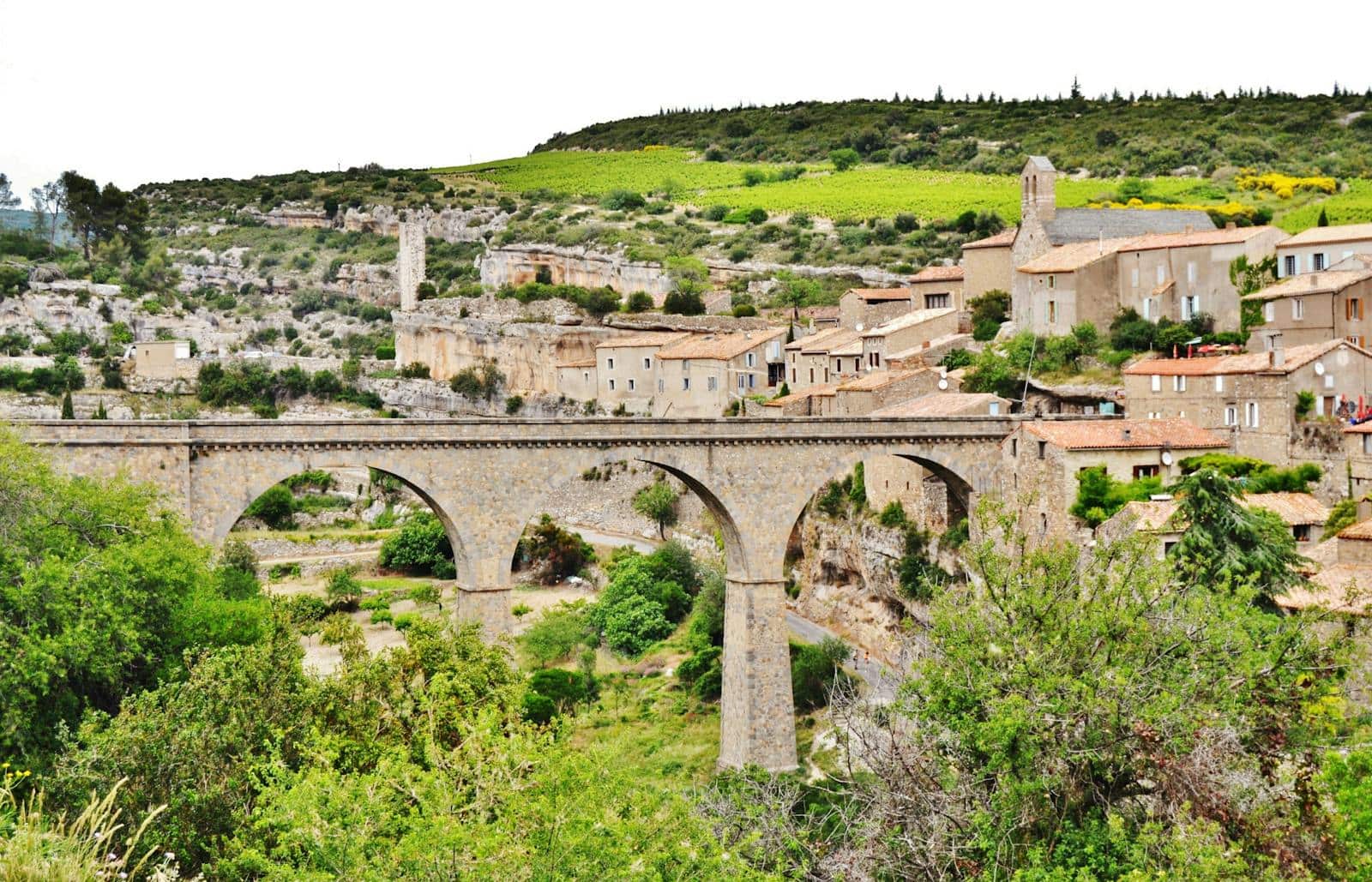
11. Hidden Gems of the Interior: Minerve and Lagrasse
Languedoc is literally strewn with fascinating places that most foreign tourists have not the slightest clue about, and which ordinary guidebooks often don’t even mention. Seasoned travellers rightly call these remote spots insider tips, perfect for those of you who love to explore the world your own way, off the main beaten track. One such absolute gem is the ancient medieval village of Minerve, set dramatically on a narrow limestone spur in the middle of wild, untamed nature.
This tiny village is surrounded on all sides by the deep gorges of two raging rivers, which over millennia have carved impressive natural tunnels beneath the rock — tunnels you can even safely walk through in the dry summer months. Minerve has a fairly dark history firmly tied to the Crusades against the Cathars, but today it’s an absolutely perfect oasis of calm, where cats lazily roam the narrow cobbled lanes and time passes far more slowly than in the big bustling cities.
The second hidden treasure in the immediate area is the picturesque village of Lagrasse, tucked away in a deep green valley of the gentle River Orbieu and a regular fixture on lists of France’s most beautiful villages. Walk across the old stone bridge to the majestic abbey, which has stood proudly here since the eighth century, and then simply get lost in the winding lanes full of cosy studios and small galleries belonging to skilled local craftspeople and artists.
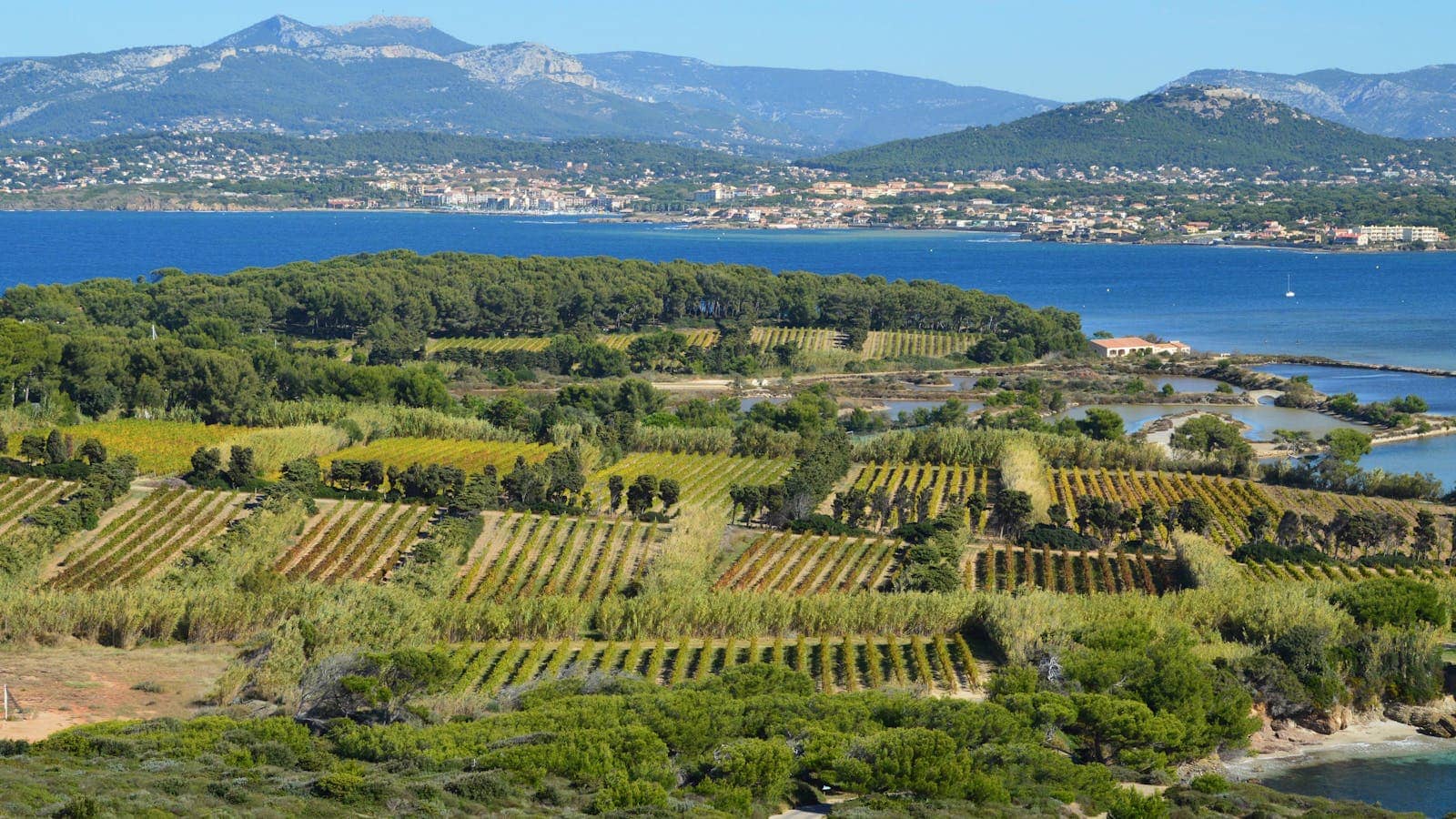
12. Discovering the Local Vineyards and Wineries
To be in the sun-drenched south of France and not take at least a passing interest in wine would be almost a sin, even if you’re not exactly a seasoned sommelier and can’t tell one vintage from another at first taste. The vast region of Occitania and historic Languedoc make up one of the absolute largest and oldest wine-growing areas in the entire world, where you’ll find an incredible number of small, honest family-run businesses. The gently rolling countryside around the town is literally dotted with neat rows of vines, radiating intense heat and sun in the summer months.
Drive out to the renowned Corbières area or the neighbouring Minervois region, both just a few dozen minutes’ drive from Carcassonne’s mighty walls. Many traditional wineries offer tempting tastings and interesting tours of their cool cellars, and very often without any need for an advance reservation or complicated planning. The hard-working local winemakers are incredibly proud of their daily work and will happily explain, with a smile, all the intricate differences between the grape varieties and the gentle methods of processing the harvest.
💡 Tip: Buy a bottle of excellent local wine, which here surprisingly often costs less than an ordinary coffee in central Paris, add a crusty fresh baguette and a piece of good cheese from the morning farmers’ market. Have a relaxed early-evening picnic somewhere with a lovely view over the open countryside, because it’s in exactly these ordinary, quiet moments that the absolute greatest magic of the whole south of France lies.
Map of points of interest for your phone
Where to Go Next from Carcassonne
If you have more time to explore France, Occitania offers plenty of other fascinating destinations that combine easily into one big road trip. The region is so varied that within a few days you’ll switch between ancient Rome, modern student towns and wild nature.
- The eastern edge of the region is pure ancient Rome, and it would be a huge mistake to skip Nîmes and the Pont du Gard. Here you’ll find the best-preserved Roman amphitheatre in the world and a monumental three-tier aqueduct that utterly defies the engineering laws of its day.
- If you’re looking for an ideal, lively base for exploring the coast, consider the buzzing Montpellier. The city has a huge student population, beautiful historic lanes full of independent boutiques and great tram links right to the sun-soaked beaches.
Frequently Asked Questions
Is there an entrance fee to Carcassonne?
Entry to the fortified medieval town of La Cité itself and endless strolls through its cobbled streets are completely free, and the historic gates remain open at all times. You only pay for entry to the inner castle Château Comtal and for the opportunity to walk along the main elevated ramparts, where you’ll pay €13 to €19 depending on exactly which season you visit.
How to avoid the worst tourist crowds?
The absolute basic rule is to avoid the city in the summer months between eleven in the morning and four in the afternoon, when the largest bus tours arrive. The best possible strategy is to spend the night right inside or just below the walls and set out to explore the alleyways early in the morning or, alternatively, late in the evening, when the entire fortress is beautifully and romantically illuminated by spotlights.
How much time should you set aside for the visit?
On the old town itself, a detailed tour of the inner castle and a leisurely walk along the ramparts, you’ll easily need half a day, so roughly four to five hours. However, if you want to soak up the true southern atmosphere, explore the lower town of Bastide and take a boat ride on the canal, I recommend setting aside a full day for Carcassonne with a comfortable overnight stay.
How’s the weather in summer?
Summer heat in Occitania is truly very intense, and temperatures in July and August commonly exceed a sweltering 35 degrees Celsius. Walking along the scorching stone ramparts without a single bit of shade is physically extremely demanding around midday, so always bring plenty of drinking water, a reliable head covering, and apply strong sunscreen.
How to best get here from Czechia?
The best entry airport gateway is the international airport in Toulouse, with convenient direct flights from Prague, or the somewhat more distant airport in Montpellier. Budget carrier Ryanair also flies directly to Carcassonne, but in that case you usually have to count on an annoying layover or departure from one of the surrounding European airports, such as Vienna.
Where can you park?
Right below the main city walls, you’ll find several large paid parking lots, from which you can reach the historic gates in just a few minutes of comfortable walking. During peak summer season, however, these spots fill up very quickly, so it’s a good idea to arrive early in the morning, or cleverly take advantage of the cheaper parking in the lower town and enjoy a pleasant walk across the river.
What are Cathar castles?
It’s a fascinating network of rugged and barely accessible stone fortresses built high in the inaccessible mountains near the Spanish border. These so-called vertigo-inducing citadels served as the last safe refuge for persecuted members of the Cathar religious movement in the thirteenth century, and among the most famous and impressive in the entire area are the fortresses of Peyrepertuse and Quéribus.
Tips and Tricks for Your Vacation
Don’t Overpay for Flights
Search for flights on Kayak. It’s our favorite search engine because it scans the websites of all airlines and always finds the cheapest connection.
Book Your Accommodation Smartly
The best experiences we’ve had when looking for accommodation (from Alaska to Morocco) are with Booking.com, where hotels, apartments, and entire houses are usually the cheapest and most widely available.
 🚗 Car rental on the roadVerified rental cars in Occitanie
Search with the DiscoverCars comparison engine — it compares prices from dozens of local and international rental companies, and most bookings come with free cancellation.
Compare car prices in Occitanie →Don’t Forget Travel Insurance
Good travel insurance will protect you against illness, accidents, theft, or flight cancellations. We’ve had a few hospital visits abroad, so we know how important it is to have proper insurance arranged.
Where we insure ourselves: SafetyWing (simple monthly subscription) and TrueTraveller (for extra-long trips).
Find the Best Experiences
Get Your Guide is a huge online marketplace where you can book guided walks, trips, skip-the-line tickets, tours, and much more. We always find some extra fun there!