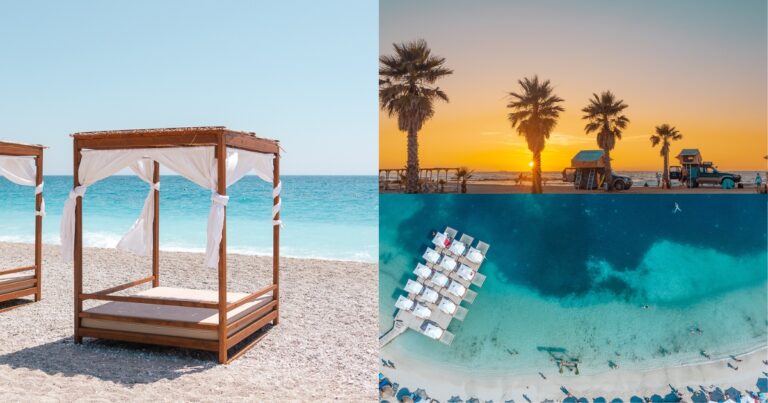
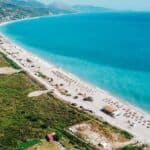
Fine white gravel that looks just like sand, shallow and incredibly crystal-clear water, and three small wooded islets just off the shore that you can easily swim to. You’ve probably already seen photos of Ksamil, Albania – it’s nicknamed the “Maldives of Europe”, and its natural setting really is unique by European standards.
But this is often where the idyll ends. Ksamil has become a textbook example of overtourism: in season the beaches are hopelessly packed, almost every inch of sand is covered with paid sunbeds, and part of the village looks like one big building site. That doesn’t mean it isn’t worth visiting – it just means you need to know when to come, where to lie down and where to escape the crowds.
In this guide you’ll find 12 tips for Ksamil and the surrounding area – from the islets and the prettiest beaches to day trips to ancient Butrint and the Blue Eye, plus some honest advice on when to skip Ksamil and where to go instead. We’ll also help you with sunbed prices and how to avoid getting stung by a bad exchange rate.
TL;DR
- When to come: May, the first half of June, or late September and October. ⚠️ Avoid August (heat, crowds, traffic chaos).
- Where to stay: Best in Saranda (cheaper, lively base) and visit Ksamil only on a half-day trip, ideally early in the morning.
- Sunbeds ⚠️: A set of two sunbeds with a parasol costs €20–40/day, luxury beds even €70–100. Pay in lek, not in euros.
- The islets: You can swim or pedal a pedalo to the three islets; in the morning you’ll have them almost to yourself.
- Best day trips: Butrint (UNESCO antiquity) and the Blue Eye – both just a short hop from Ksamil.
- Beat the crowds: Be on the beach before 9 a.m., when the water is calm and the islets are empty.
- Instead of Ksamil: Quieter and cheaper Borsh, Himara or Dhërmi further north along the riviera.
The full destination guide: Albania — guide and what to see
When to visit Ksamil
The golden rule of the Albanian riviera is simple: avoid August. August here means extreme crowds, peak prices, traffic jams and exhausted staff; temperatures push 35 °C and Ksamil turns into more of a test of patience than a paradise. The ideal months are June and September, when the Ionian Sea is a pleasant 24–26 °C, the beaches are half-empty and accommodation prices drop by tens of percent. May and October are borderline for swimming, but they offer Ksamil almost without crowds and in all its glory.
If you’re heading here in high season, there’s one foolproof trick: get up early. Be on the beach before nine in the morning, when the water is mirror-calm, you have the islets to yourself for a while and the beach touts are still setting out their sunbeds. By midday Ksamil turns into an anthill.
💡 Tip: Ksamil pairs nicely into one loop with ancient Butrint and the Blue Eye. Set aside at least two to three days for the southern tip of Albania so you’re not rushing.
How to get to Ksamil
Ksamil sits on the southern tip of Albania and there are several ways to reach it. The fastest shortcut is via the Greek island of Corfu: a fast ferry runs from the island to Saranda in roughly half an hour, and from there it’s just 12 kilometres to Ksamil (taxi, local bus or hire car). If you’re flying in, the nearest major airport is in Tirana, from where you can reach Saranda by car or long-distance bus in about 4–5 hours along the new coastal route.
For travellers from the UK, the easiest option is a direct or connecting flight to Tirana (or to Corfu in summer, then the ferry across). A road trip through the Balkans (typically Croatia – Montenegro – Albania) is another popular way to arrive. Having your own car is by far the most comfortable way to explore the riviera and nearby sights, because public transport in the south is slow and irregular. Around Saranda and Ksamil you can also hop on cheap furgons (shared minibuses), but for trips to Butrint and the Blue Eye a car or an organised tour works best.
Where to stay: base yourself in Saranda, treat Ksamil as a day trip
💡 Tip for accommodation and experiences: We love searching for places to stay on Booking.com, where the cancellation terms tend to be best. Tickets, tours and activities are then worth comparing and booking through GetYourGuide.
This might be the single most important piece of advice in the whole article. Stay in Saranda rather than directly in Ksamil. Saranda (about 12 kilometres north) is the south’s main town, works as a cheap and well-equipped base, and comes alive in the evening along its seafront promenade. Ksamil, by contrast, is expensive, noisy and dug-up in season, so it’s best treated as a half-day trip rather than a home.
If you still want to sleep right by the Ksamil beaches, choose accommodation with its own beach or pool and check the reviews carefully for construction noise. Either way, book well in advance – capacity is limited in season and prices climb fast.
Specific accommodation picks (mostly in Saranda as a base), chosen on the basis of real reviews (on Booking go for ratings of 8.5+ and plenty of reviews):
- Cheap and central in Saranda: Hotel Brilant (Saranda) – an affordable hotel in the centre of Saranda, a few steps from the promenade and the sea.
- Pool and comfort: SG Premium Resort (Saranda) – a modern resort with a pool and sea views, loved for its great value for money.
- Resort right on the beach: Santa Quaranta Premium Resort (Saranda) – an established resort with its own beach just outside the centre of Saranda.
- Views and calm for couples: Bougainville Bay Hotel & Spa (Saranda) – an elegant hotel with a spa and panoramic views over the bay.
- Right in Ksamil by the sea: Hotel Joni (Ksamil) – a hotel by the beach right in Ksamil, for when you want to sleep next to the turquoise water.
💡 Tip: When booking on Booking, go for a rating of 8.5+ with lots of reviews, and for Ksamil places read the comments about noise and nearby building sites. Breakfast is usually included, and the Albanian version (cheese, olives, eggs, honey) is well worth it.
12 best things to do in Ksamil and around
Ksamil is small, but the southern tip of Albania offers beaches, antiquity and natural wonders. Here are twelve places that make the trip worth it.
1. The Ksamil islets
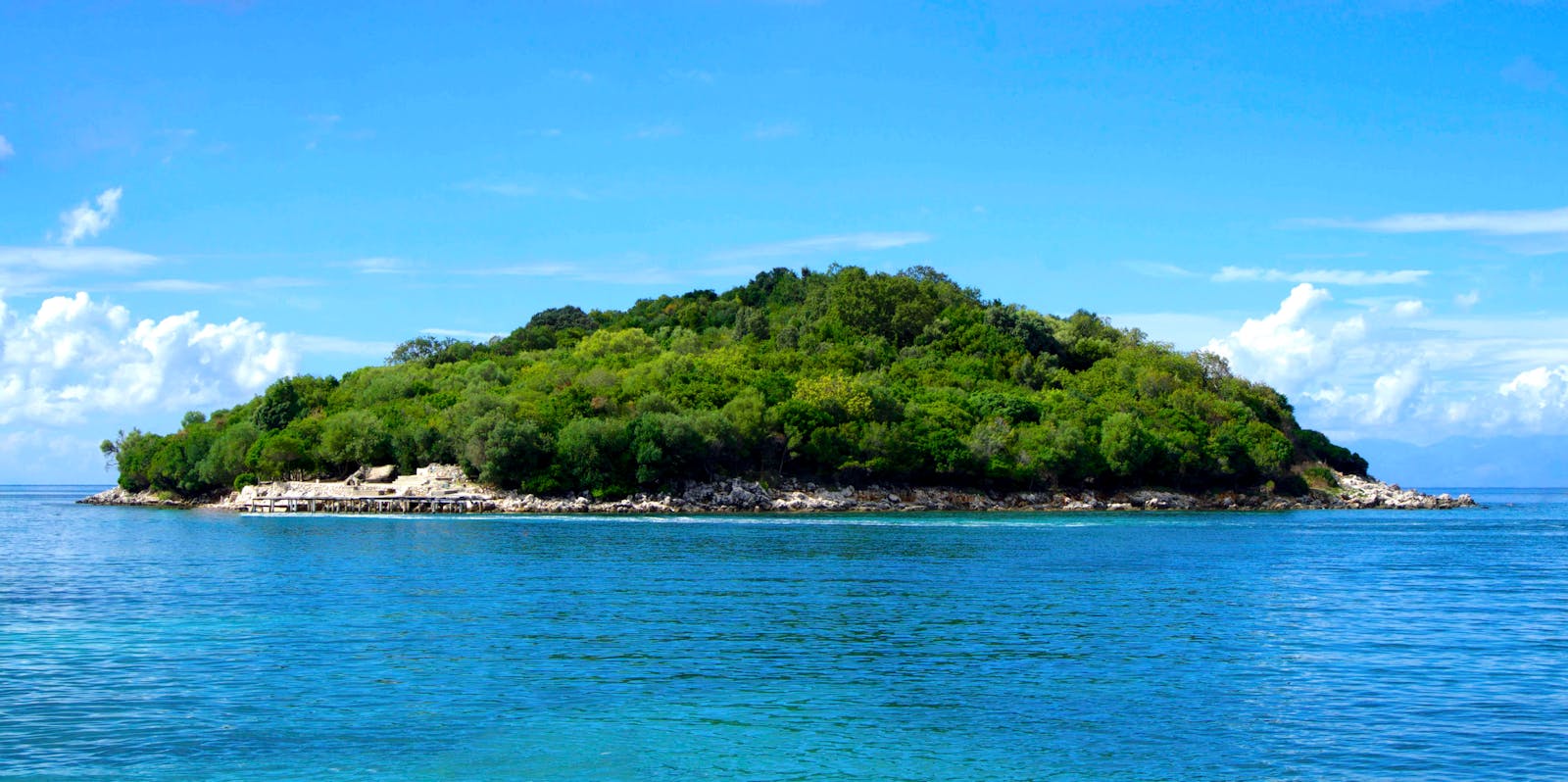
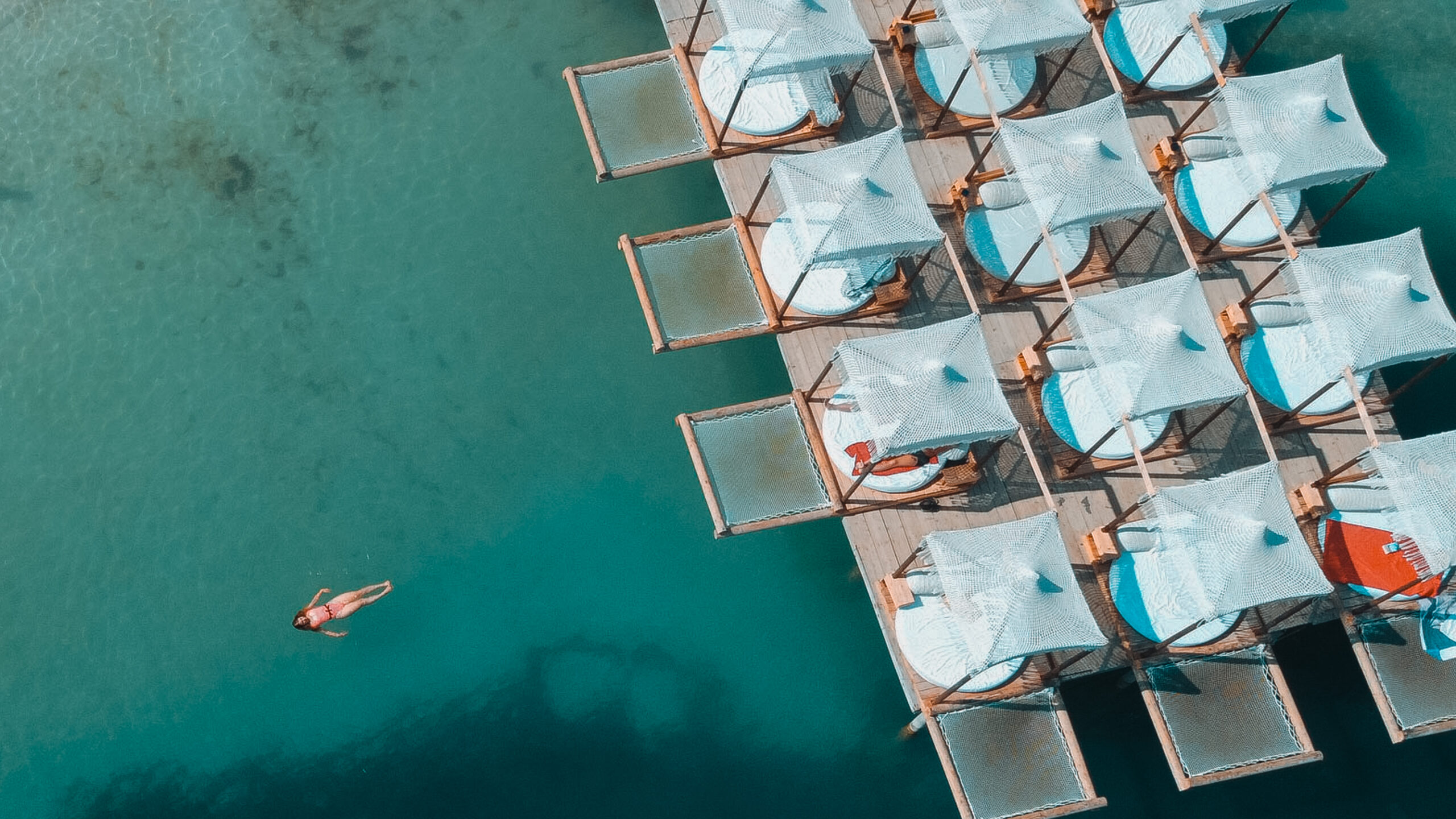
The main stars are the three (or four, depending on how you count) small wooded islets just a few dozen metres from shore. The water is so shallow and calm that you can swim to the nearest one, or take a pedalo or kayak. The largest even has a little bar. In the morning, before the crowds arrive, this is as close to the real “Maldives” as Ksamil will ever get.
2. Ksamil’s beaches and the sunbed reality
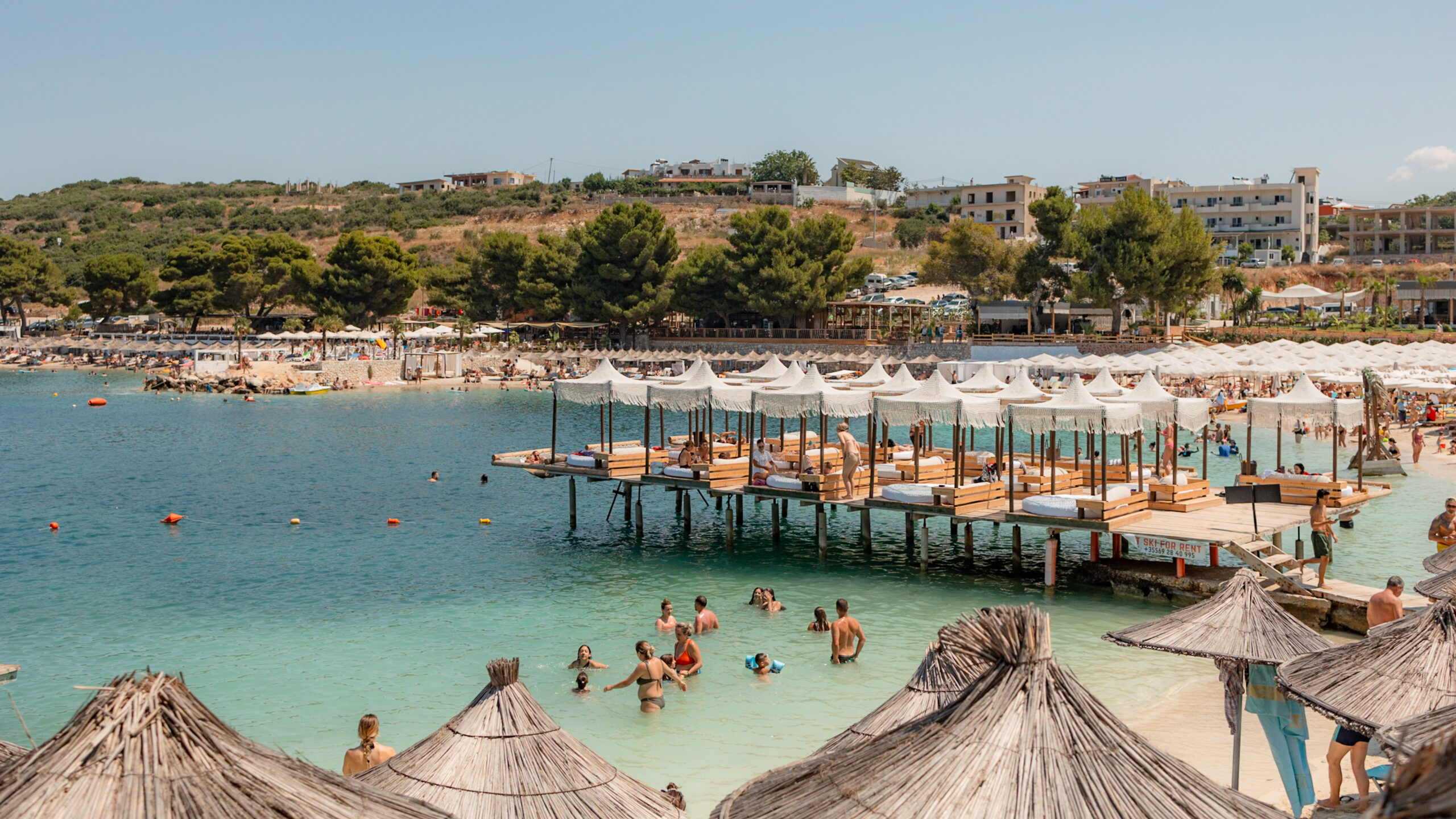
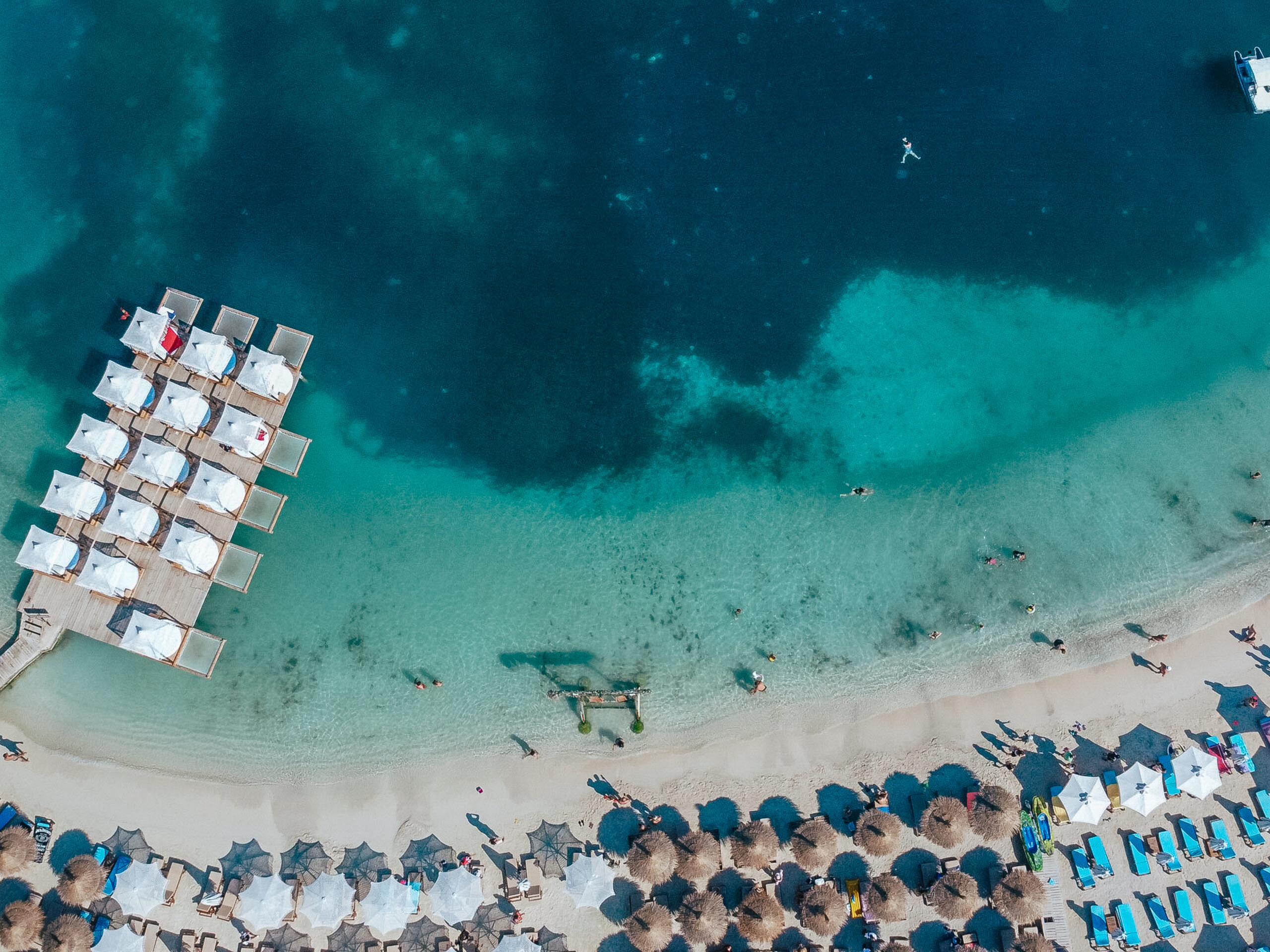
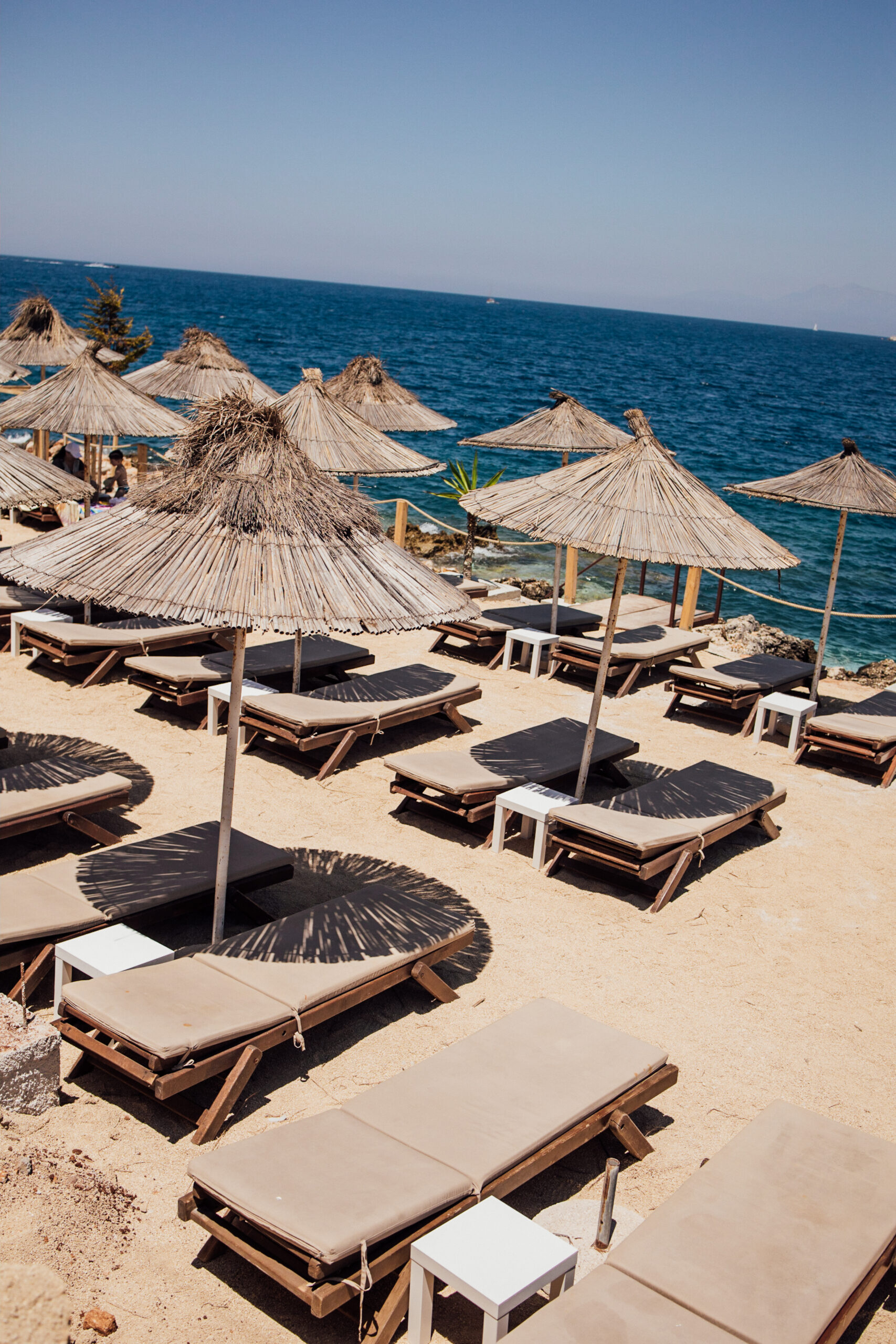
The main Ksamil beaches have fine white gravel and dazzling turquoise water, but almost the whole of them is covered with paid sunbeds. Albanian law says beaches are public, yet reality is different: a set of two sunbeds with a parasol will cost you €20–40 a day, and at luxury beach bars even €70–100. If you turn up with just a towel, staff will probably move you on. Insist on paying in lek and look for a patch of free sand at the edges of the coves.
3. Pulebardha (Seagull Beach)
Just south of the centre lies Pulebardha (Pigeon / Seagull Beach), a slightly smaller and calmer cove tucked beneath the cliffs. The water is just as clear as in the centre, but the atmosphere is a notch more relaxed. You still pay for sunbeds here, so arrive early and grab your spot before the day-trip groups roll in from Saranda.
4. Manastir and the mirror-still coves
For peace-seekers, there are tiny coves a little further along, such as Manastir Beach, reached via a dusty track or by boat. They’re smaller and harder to get to, which is exactly why they tend to have far more space and less music blaring from speakers. Bring your own water and snacks – facilities here are minimal.
5. Butrint: 2,500 years of history in a single forest
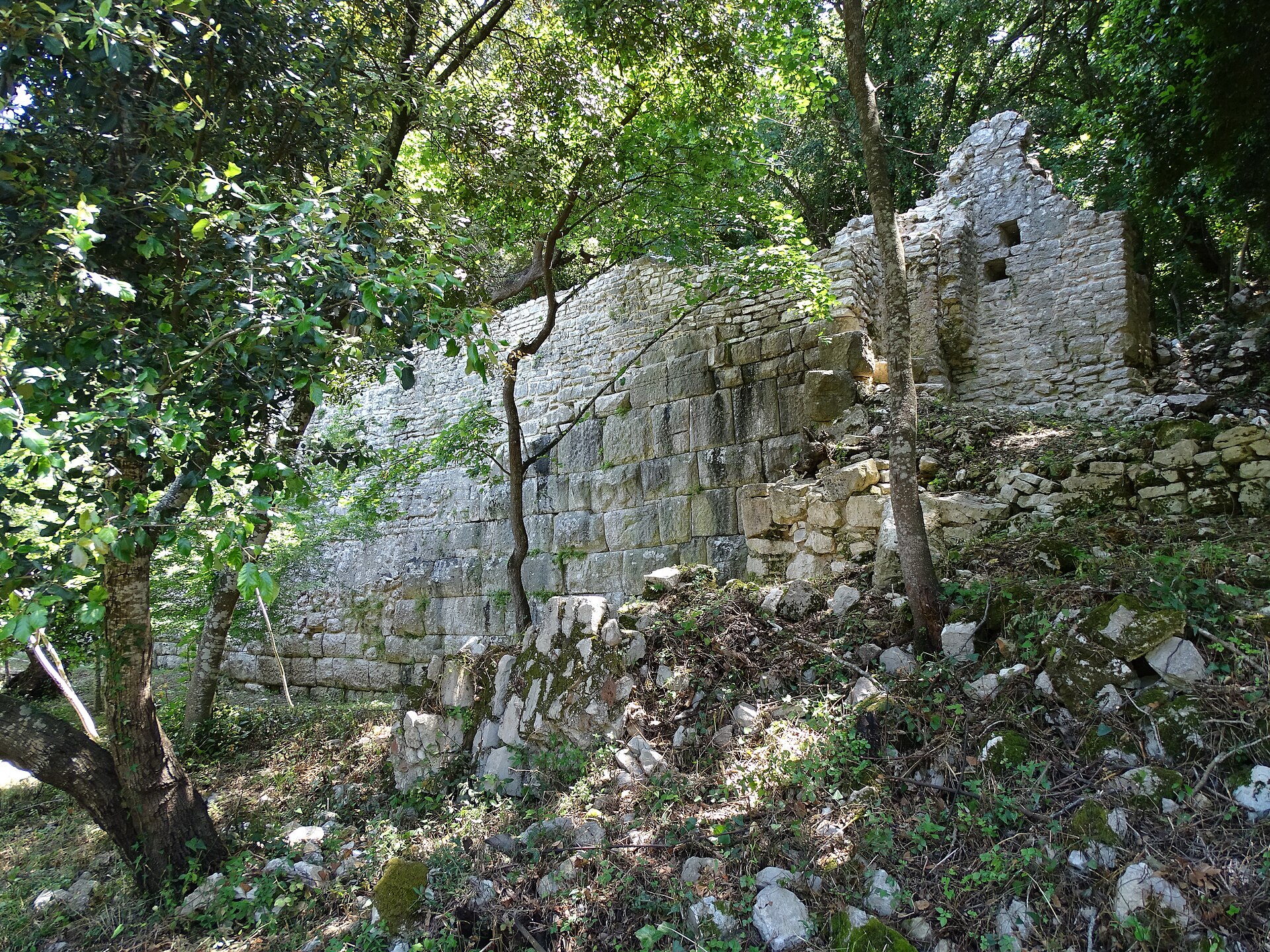
Just a few kilometres south of Ksamil, on a peninsula surrounded by a lagoon, lies Butrint – Albania’s first UNESCO-listed site and perhaps the most beautiful archaeological park in the Balkans. Layers of Greek, Roman, Byzantine and Venetian history overlap here, all swallowed up by a lush national park: an ancient theatre, a Christian baptistery with mosaics, the monumental Lion Gate and a Venetian tower. The shade of mature trees makes the visit a pleasure even in the heat.
- Admission: 1,000 ALL (roughly €8–10), tickets can be bought online (valid for a month, non-refundable).
- Opening hours: In season (April–October) 8:30–20:00, last entry at 18:00. Allow 2–3 hours for a relaxed visit.

6. The Blue Eye (Syri i Kaltër)
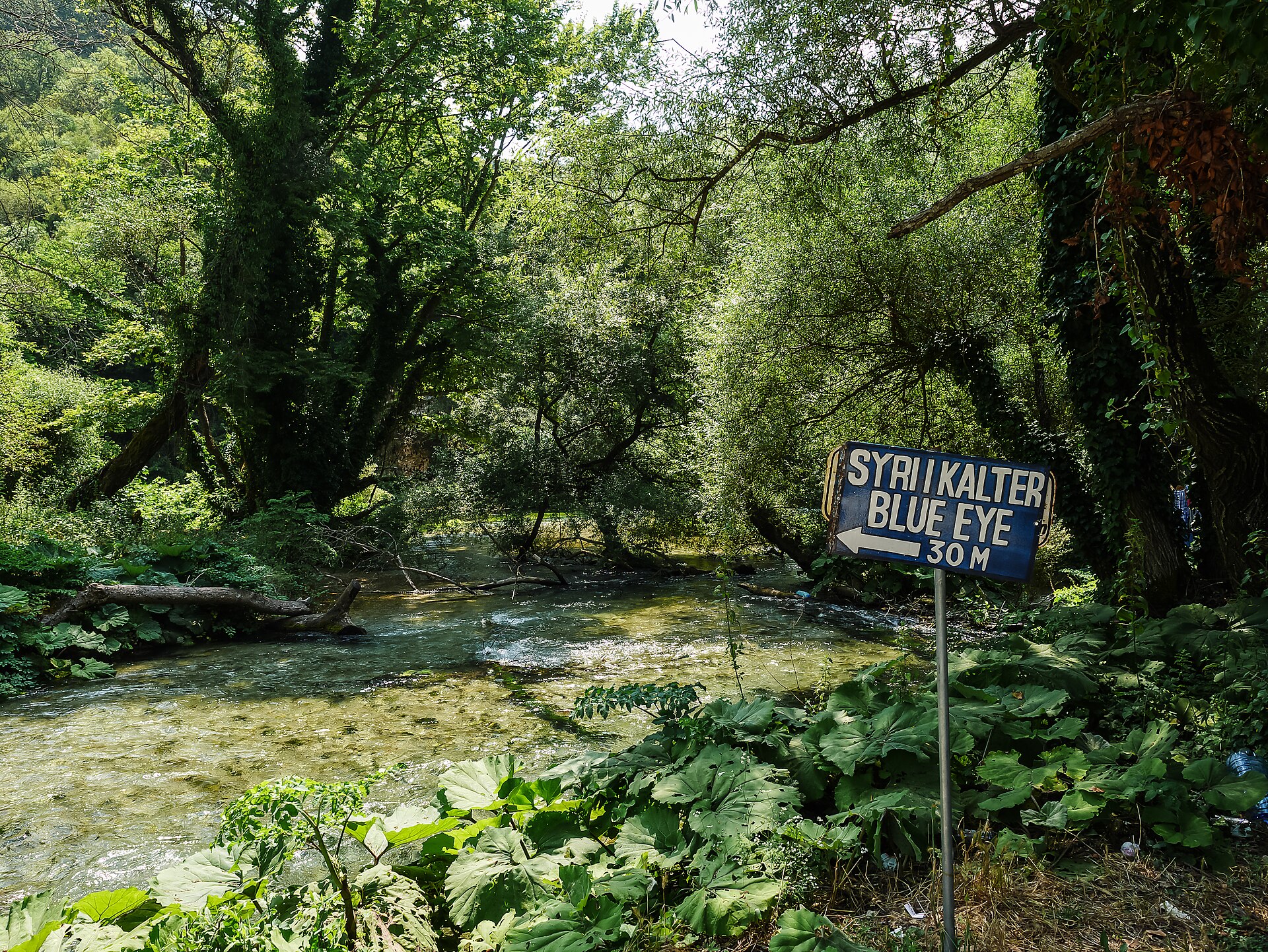
About 40 minutes’ drive inland, a natural phenomenon called the Blue Eye bubbles up from the ground – a powerful karst spring in dense forest. The water gushes from an unexplored depth (divers have gone past 50 metres without reaching the bottom) and creates a hypnotic effect: a deep blue “pupil” ringed by brilliant turquoise edges.
- Admission: a symbolic 50 ALL (cash only), parking 100–200 ALL.
- From the car park it’s just under 2 km to the spring (on foot, by tourist train or by scooter).
- ⚠️ The water is an icy 10 °C all year round and swimming in the spring is officially banned to protect the ecosystem.
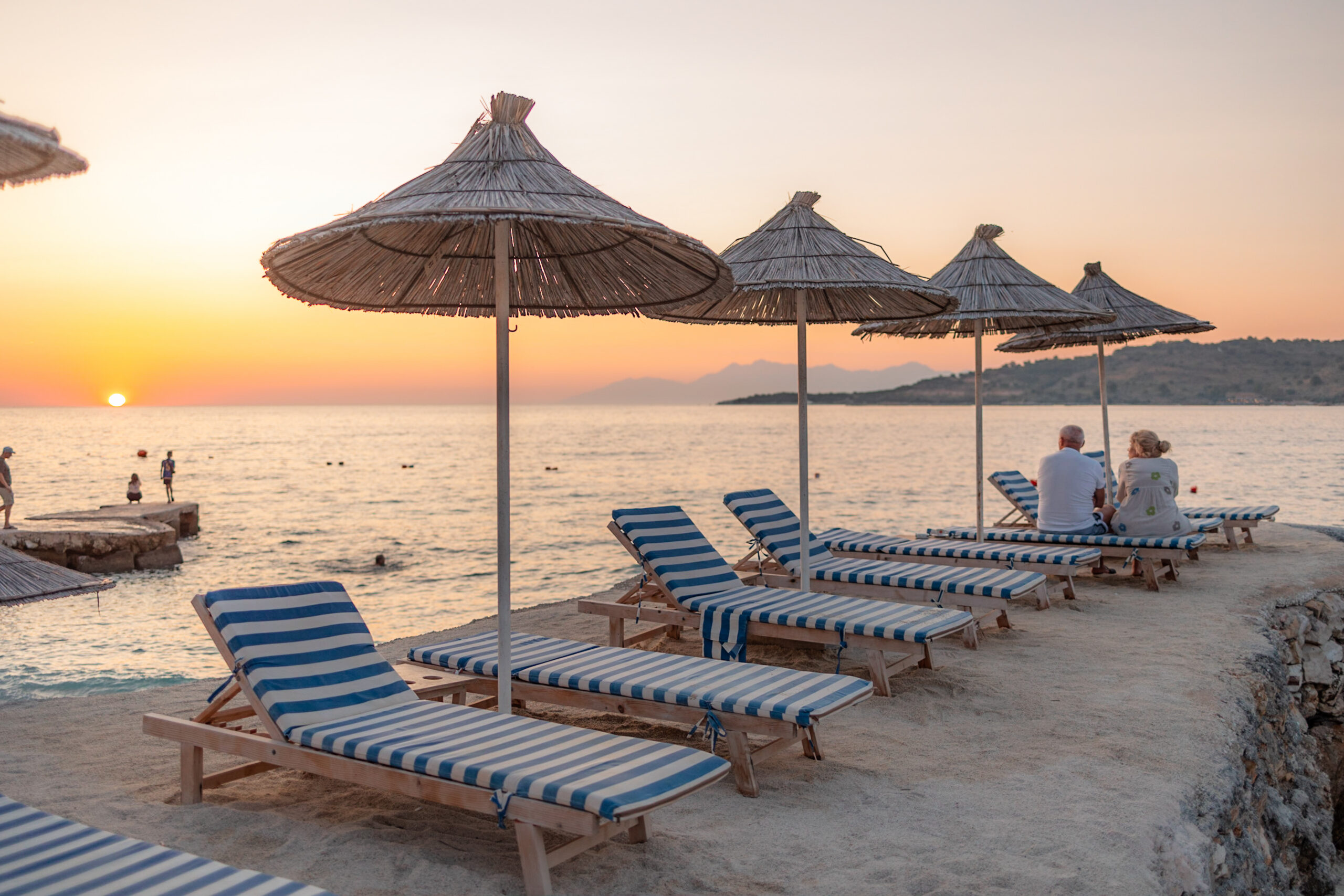
7. Lëkurësi Castle above Saranda
Before sunset, head up to Lëkurësi Castle, a 16th-century Ottoman fortress on a hill above Saranda. Entry to the grounds is free, and the view of Saranda, Ksamil and Corfu glowing orange is one of the finest on the whole coast. On foot it’s about 45 minutes of fairly steep climbing; by car just a few minutes.
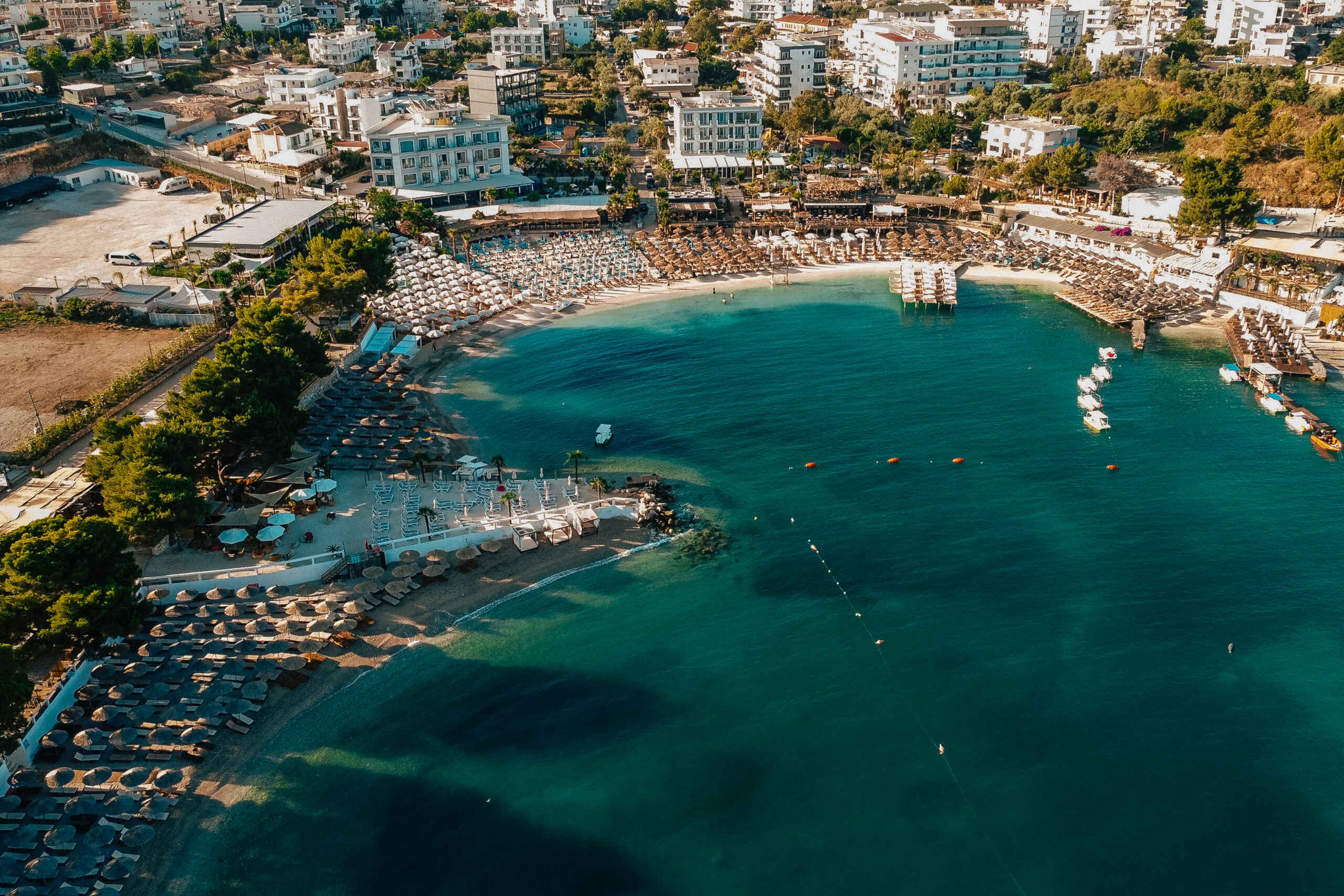
8. Saranda and the evening xhiro
Saranda itself is no architectural gem – a wall of concrete apartments sprang up here in the 1990s – but as a base it works brilliantly and comes pleasantly alive in the evening. The kilometre-long seafront promenade fills with people doing the traditional xhiro, an evening social stroll from roughly 6 p.m. to 10 p.m. Sit by the sea, grab an ice cream or a coffee, and soak up the rhythm of southern Albania.
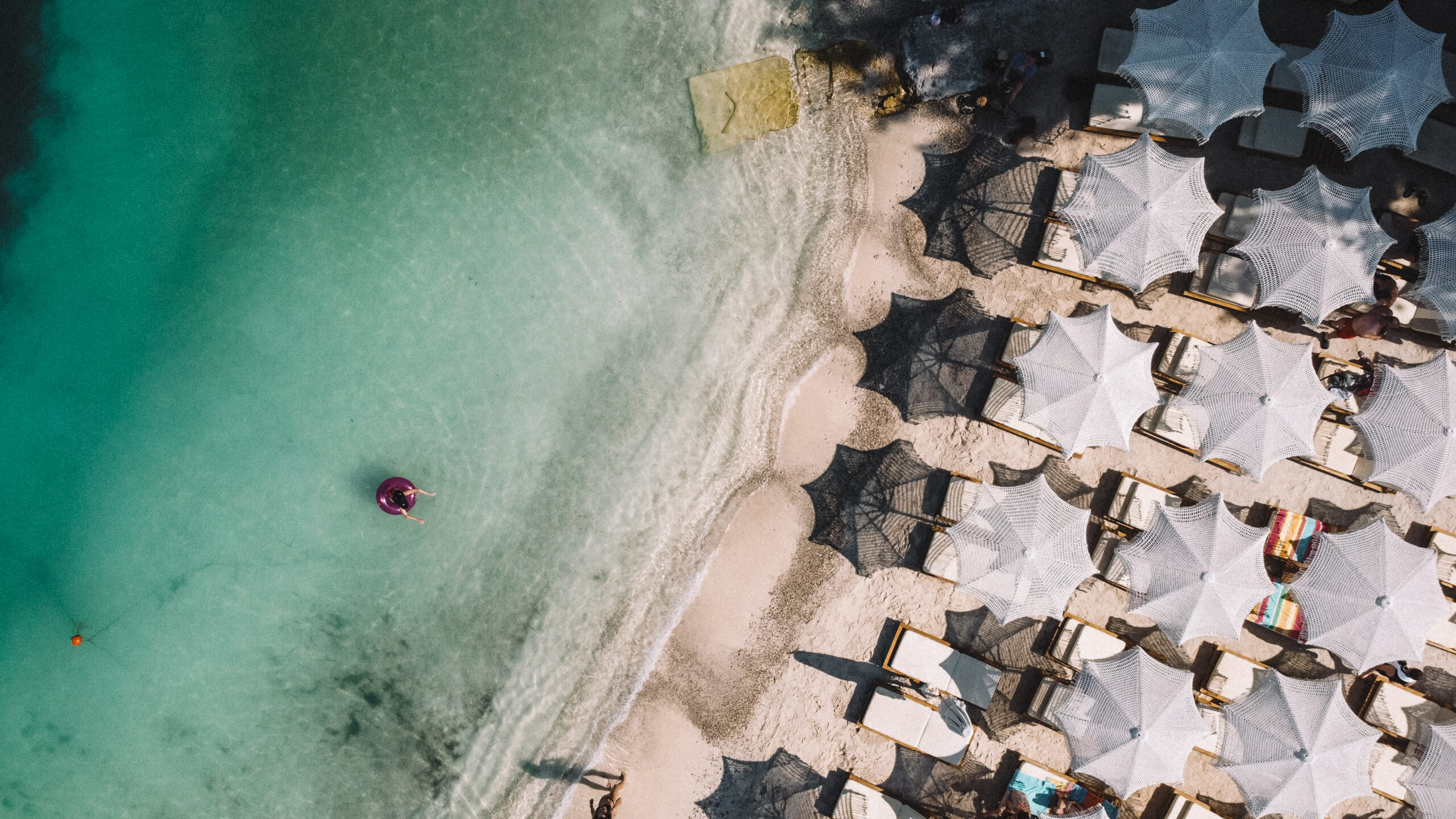
9. Boat trips and pedalos around the coves
The best view of the Ksamil coastline is from the water. Boat trips set off from the beaches and from Saranda along the coves and out to the islets, and you can also hire a pedalo, kayak or paddleboard. It’s only from the water that you truly appreciate how incredibly clear and turquoise the sea around Ksamil is, and you can easily find a quieter, crowd-free cove.
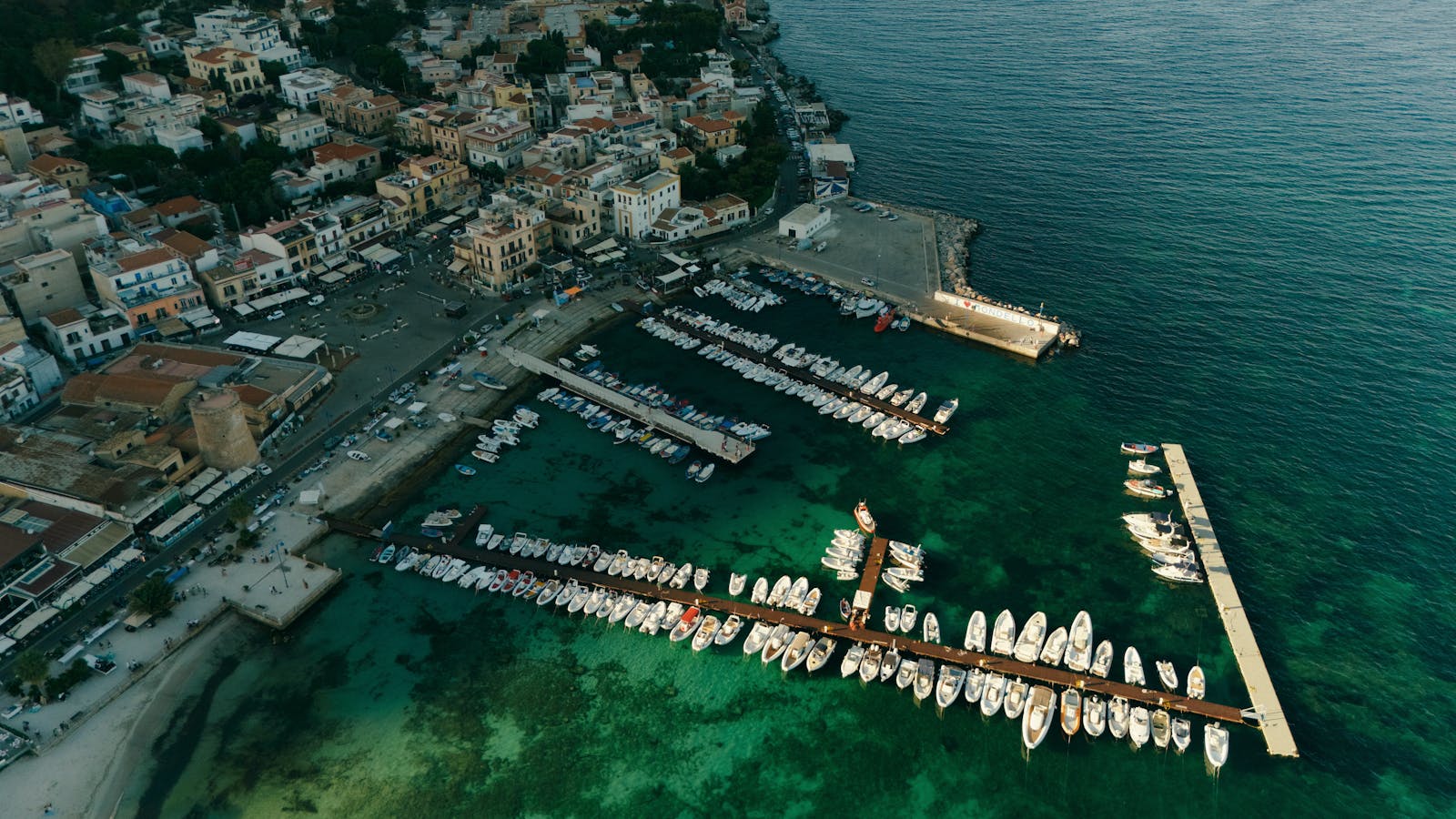
10. Himara and Porto Palermo
Drive north along the coast road and you’ll reach Himara – a pleasant compromise between buzz and calm, with an authentic old town on the hill and lovely beaches (Livadhi, Llamani). A little further on lies Porto Palermo bay with its photogenic fortress of Ali Pasha on an islet connected to the mainland by a narrow isthmus (entry 300 ALL, lek only). It makes a great full-day trip from Ksamil or Saranda.
11. Borsh: the longest and cheapest beach
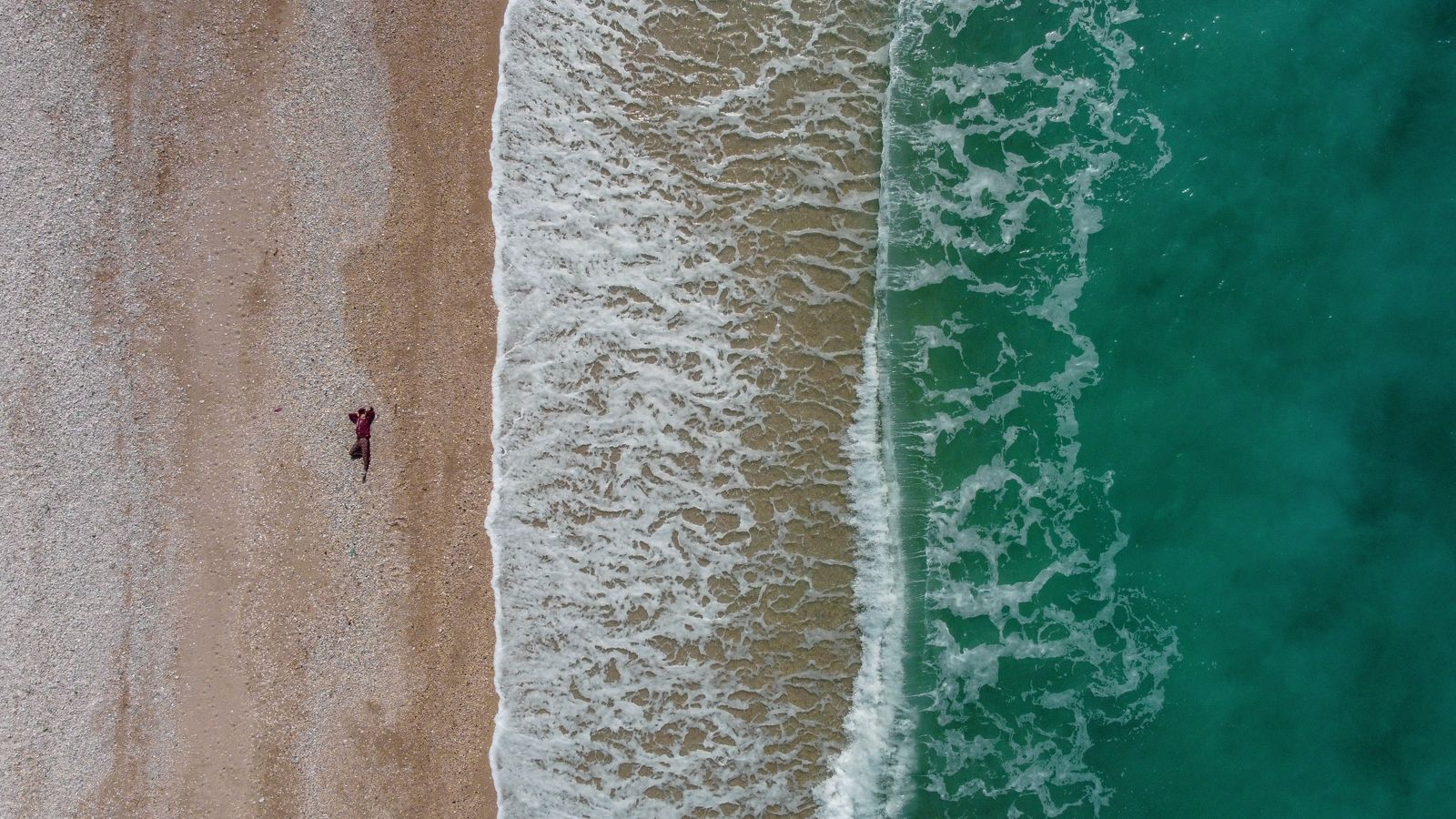
If you can’t stand fighting for a spot to lay your towel, head to Borsh. At around seven kilometres it’s the longest beach on the Albanian riviera, fringed by old olive groves, less commercial and considerably cheaper than the rest of the coast. There’s always space here, and you’ll still feel that old, peaceful Albania.
12. Dhërmi and the Gjipe canyon
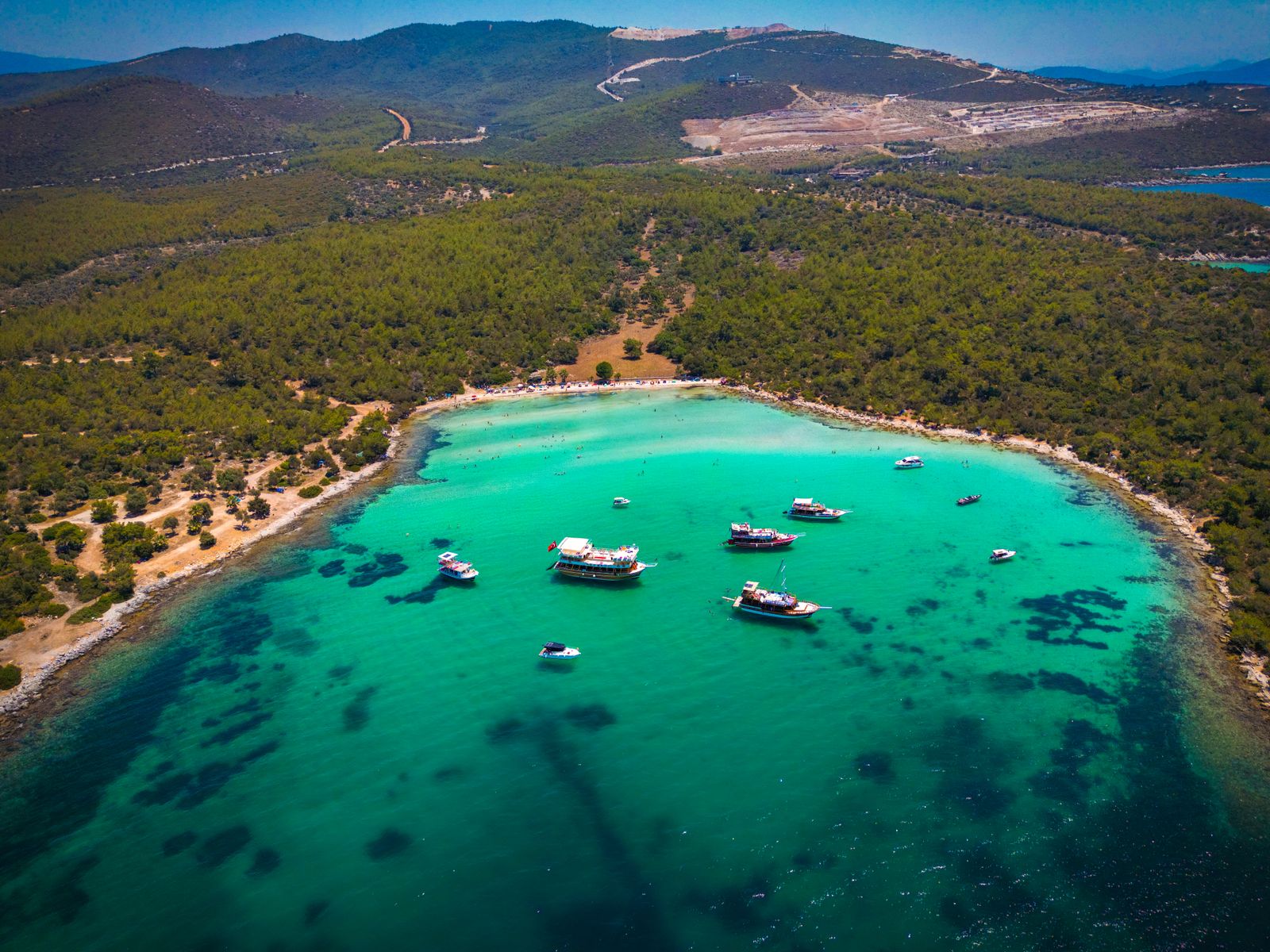
The most stylish beaches of the central riviera are around the village of Dhërmi and neighbouring Drymades – clear water, a scene of modern beach clubs and a younger crowd (in August, a wild party vibe too). For adventure, head above the Gjipe canyon: the beach lies at the end of a rocky gorge, you can’t get there by car, and you face a roughly 40-minute descent on foot. The reward is a wild, isolated cove with no rows of sunbeds.
Map of points of interest for your phone
What to eat in Ksamil and Saranda
Southern Albania is strongly influenced by Greek cuisine, so you’ll find plenty of fresh vegetables, olive oil, cheeses and herbs. Good news for vegetarians – there’s plenty to choose from even without meat and fish.
- Byrek – crispy layered pastry filled with cheese or spinach, the king of Albanian street food, cheap and filling.
- Fërgesë – a baked creamy mix of peppers, tomatoes and curd cheese (gjizë), perfect for dipping bread. An absolute vegetarian classic.
- Greek-style salads – with feta, olives and tomatoes; everywhere and refreshing in the heat.
- Grilled vegetables and gjiro alternatives – many tavernas also offer meat-free versions of baked vegetables and tzatziki.
- Seafood – Saranda is famous for fresh fish and seafood; for non-vegetarians it’s a local speciality worth raving about, while vegetarians can leave it to others.
To finish, have an ice cream on the promenade or a strong Albanian coffee – it’s as much a part of the evening xhiro as the view of the sea.
Practical tips to survive and enjoy Ksamil
- Pay in lek (ALL). Euros are accepted everywhere, but at a poor exchange rate. ⚠️ When paying by card, always choose the local currency (ALL), not “home currency” – otherwise your bank skims 5–10 % off via a hidden fee (the DCC scam).
- Carry cash. Admission to Butrint, the Blue Eye and the Porto Palermo fortress is often cash-only, and small businesses don’t take cards.
- Don’t drive at night. The coastal road SH8 is good quality but full of sharp bends and unlit; after dark you’ll often meet stray dogs and livestock on it.
- Don’t drink the tap water. Use bottled water all along the riviera (60–150 ALL for 1.5 l), ideally even for brushing your teeth.
- ⚠️ Solo female travellers: While the rest of Albania is very safe, there are growing reports of harassment from local men in Saranda and Ksamil. Use common sense, ignore catcalling and don’t tell people where you’re staying.
Where to go next in southern Albania
Ksamil is just the tip of what southern Albania has to offer. For a complete overview of the coast, see our guide on where to go to the seaside in Albania, and for inspiration for the whole country read what to see in Albania. And before you head north, take a look at Tirana, the buzzing capital and gateway to the whole country.
Frequently asked questions
💡 Tip for tours: Full-day boat trips to the islets and along the riviera, Butrint tickets and transfers from Corfu can all be compared and booked in advance online via GetYourGuide – in season the best slots fill up early.
When is the best time to go to Ksamil?
Best in June or September, when the sea has a pleasant 24–26 °C, beaches are half-empty and accommodation prices significantly lower. May and October offer Ksamil almost without people, but the water is cooler. Avoid August – it means extreme crowds, heat over 35 °C, traffic chaos and the highest prices.
How much do beach loungers cost in Ksamil?
A set of two sunbeds with an umbrella costs roughly 20–40 € per day, while luxury beach beds at premium beach bars can run 70–100 €. Albanian law does guarantee free access to the water, but in practice sunbeds cover almost the entire beach. Insist on paying in Albanian lek, not euros, so you don’t lose out on a poor exchange rate.
Is Ksamil really the “Maldives of Europe”?
The natural setting – fine white gravel, shallow turquoise water and small islands just a few metres from the shore – lives up to that nickname. During high season, however, Ksamil suffers from overtourism: overcrowded beaches, paid sunbeds, loud music and a village under construction. If you come outside of August and early in the morning, you’ll get closer to the “Maldives”; otherwise, expect more of an anthill.
Is it worth staying in Ksamil or in Saranda?
For most travelers, it’s better to stay in Saranda and visit Ksamil only for a half-day trip. Saranda is cheaper, livelier and better equipped, and in the evening offers a promenade and restaurants. Ksamil is expensive in season, noisy and often dug up, so it’s less suitable as a base for an entire vacation.
What can you do around Ksamil?
Right next door lies the ancient Butrint (UNESCO) and a bit inland the natural spring Blue Eye. Head to Lëkurësi Castle above Saranda for sunset, or north to Himara, Borsh or Dhërmi for quieter beaches. Boat trips to the small islands and along the coast are also popular.
Tips and Tricks for Your Vacation
Don’t Overpay for Flights
Search for flights on Kayak. It’s our favorite search engine because it scans the websites of all airlines and always finds the cheapest connection.
Book Your Accommodation Smartly
The best experiences we’ve had when looking for accommodation (from Alaska to Morocco) are with Booking.com, where hotels, apartments, and entire houses are usually the cheapest and most widely available.
 🚗 Car rental on the roadVerified rental cars in Albania
Search with the DiscoverCars comparison engine — it compares prices from dozens of local and international rental companies, and most bookings come with free cancellation.
Compare car prices in Albania →Don’t Forget Travel Insurance
Good travel insurance will protect you against illness, accidents, theft, or flight cancellations. We’ve had a few hospital visits abroad, so we know how important it is to have proper insurance arranged.
Where we insure ourselves: SafetyWing (simple monthly subscription) and TrueTraveller (for extra-long trips).
Find the Best Experiences
Get Your Guide is a huge online marketplace where you can book guided walks, trips, skip-the-line tickets, tours, and much more. We always find some extra fun there!