On the coast of the English Channel you’ll discover a pair of towns that belong together inseparably, even though they couldn’t be more different. On one bank lies elegant Deauville France, while on the other you’ll be charmed by the authentic fishing town of Trouville. Endless sandy beaches, grand architecture and the scent of the salty ocean are all waiting for you here.
The Normandy coast isn’t about tropical lounging — it offers raw beauty and that ever-changing light which once captivated the Impressionists. The air smells of apple cider, the morning wakes you with the cry of gulls, and evening strolls have a magic all their own. Both towns will win you over fast with their particular brand of nostalgia.
In this guide you’ll find the top highlights these two sister towns have to offer. You’ll get tips on where to base yourself strategically, how to enjoy the famous film-star promenade, plus plenty of practical advice for planning. That way you’ll get absolutely the most out of your Normandy trip.
TL;DR
- Seaside twins: Deauville is a luxury resort with boutiques and a casino, while Trouville offers more historic fishing-town charm and quieter streets.
- The famous promenade: The wooden Les Planches boardwalk in Deauville is lined with beach huts bearing the names of Hollywood stars — an absolute must for every visitor.
- Crossing between the towns: The River Touques divides the two; you can cross by bridge, or better still by the little historic ferry for a few coins.
- The weather is unpredictable: The Normandy coast is famous for sudden shifts, so you may well need both a waterproof jacket and sunglasses in the same day.
- A paradise for cheese lovers: The cuisine revolves around superb Camembert, Neufchâtel cheese and apple specialities led by sparkling cider.
- When to go: July and August are warmest, but to dodge the biggest crowds, plan your trip for late spring or early autumn.
- Getting there: From the UK, fly to Paris and take the train from Gare Saint-Lazare — it’s a comfortable two-hour ride, making the area an ideal weekend escape.
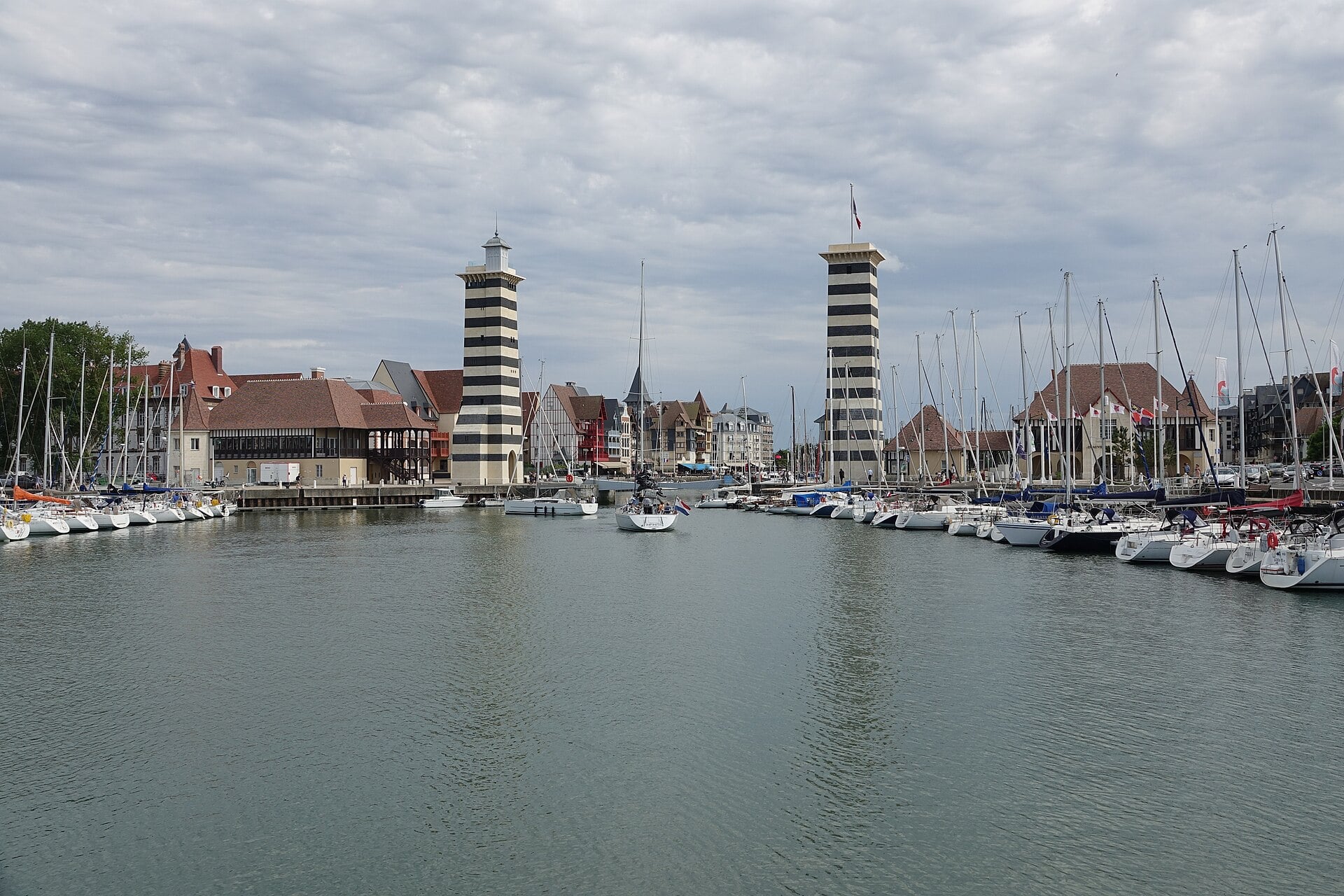
The full destination guide: Normandy — guide and what to see
When to Visit Deauville and Trouville
Normandy certainly won’t leave you indifferent, and the local climate is a fair way off the steady Mediterranean idyll. Your best bet for warm weather is, of course, July and August, when temperatures usually hover around a pleasant 22 to 25 degrees Celsius. Bear in mind, though, that this is when half of Paris heads here and the beaches get fairly packed. What’s more, even in high summer the Channel rarely warms above 18 degrees, so swimming is really for the hardy — most visitors prefer the pools.
If you’d rather enjoy romantic walks without the ever-present crowds, the ideal time to visit is May, June and September. In spring everything bursts into bloom and the towns are only just stirring towards the main season. September, on the other hand, still has an ocean that hasn’t fully cooled, plus Deauville hosts its famous American film festival, which gives the whole region an incredible sparkle. Always pack a light windbreaker and an umbrella, though, because quick showers blown in on a stiff wind are a perfectly normal part of daily life here, and the weather can turn from one minute to the next.
Winter on the Normandy coast has its own melancholic charm, but it comes with a few catches. Many smaller family-run businesses, cafés and hotels shut completely out of season, reopening only around Easter. On the upside, you get absolute peace, the streets to yourself, and accommodation prices drop to a fraction of summer rates. If you’re craving an escape from the world and don’t mind the damp, a walk along a deserted, wind-lashed beach followed by hot tea in a cosy café is guaranteed to recharge you. Just check the opening hours of the sights you want to see in advance, so you don’t end up at a locked door.
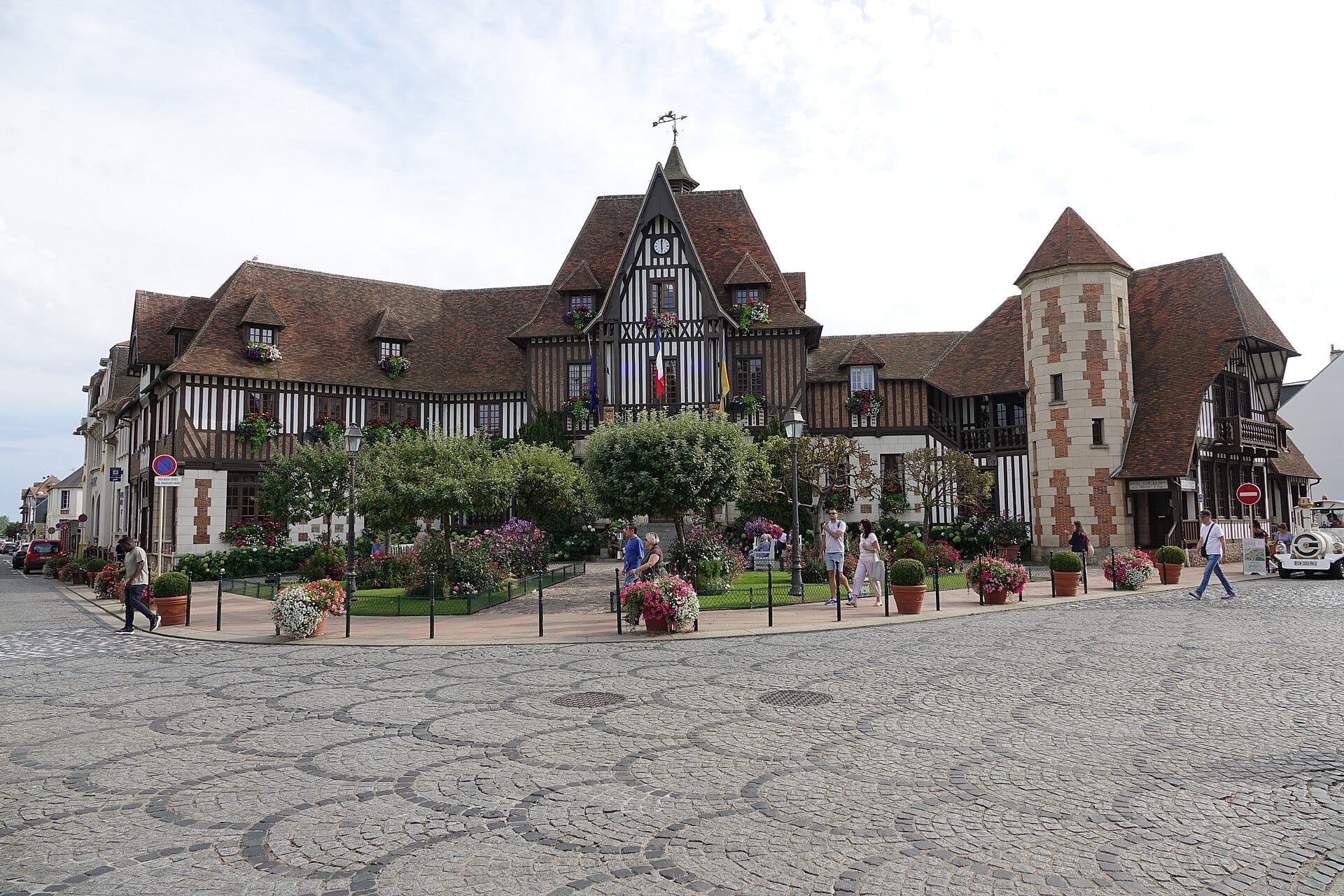
Hotels in Deauville France: Where to Stay
💡 Tip for accommodation and experiences: We like to look for places to stay on Booking.com, which usually has the best cancellation policies. For tickets, tours and activities it pays to compare and book through GetYourGuide.
Choosing your base depends mainly on your budget and the kind of atmosphere you expect from your holiday. Deauville is generally far more expensive and more luxurious — here you’ll find lavish five-star hotels overlooking the ocean and streets lined with premium boutiques. In high season, a night in a double room commonly starts at around €250 and can climb to astronomical heights. If you want to indulge in genuine luxury and experience the Belle Époque atmosphere first-hand, staying right by the famous promenade is your best choice.
For a more authentic and more affordable experience, I’d recommend choosing neighbouring Trouville-sur-Mer, which has kept the character of a picturesque fishing port. You’ll get a much more personal welcome, cosy family guesthouses, and the chic resort across the bridge is only a few minutes’ walk away. A night in a pleasant hotel in Trouville will cost you roughly between €120 and €180. Both towns are so compact that wherever you stay near the centre, you can easily walk everywhere and happily leave the car parked up.
When hunting for the perfect room, take a look at the wide range online, where you’ll find everything from private apartments to large hotel complexes. An iconic experience in Deauville is the famous Hôtel Barrière Le Normandy, whose signature half-timbered façade and green shutters define the look of the whole town. If you prefer Trouville, a very stylish option is the boutique Cures Marines Hotel & Spa, set in a beautiful historic building right by the beach. For a mid-range budget with a friendly atmosphere, the romantic Hôtel Le Flaubert, tucked into the narrow lanes of the fishing town, fits the bill perfectly.
11 Things to See and Do in Deauville France and Trouville
Let’s take a look together at the very best both coastal towns have to offer, so you can plan your trip down to the last detail. I deliberately alternate elegant landmarks with natural highlights, so you get to enjoy every face of this enchanting area.
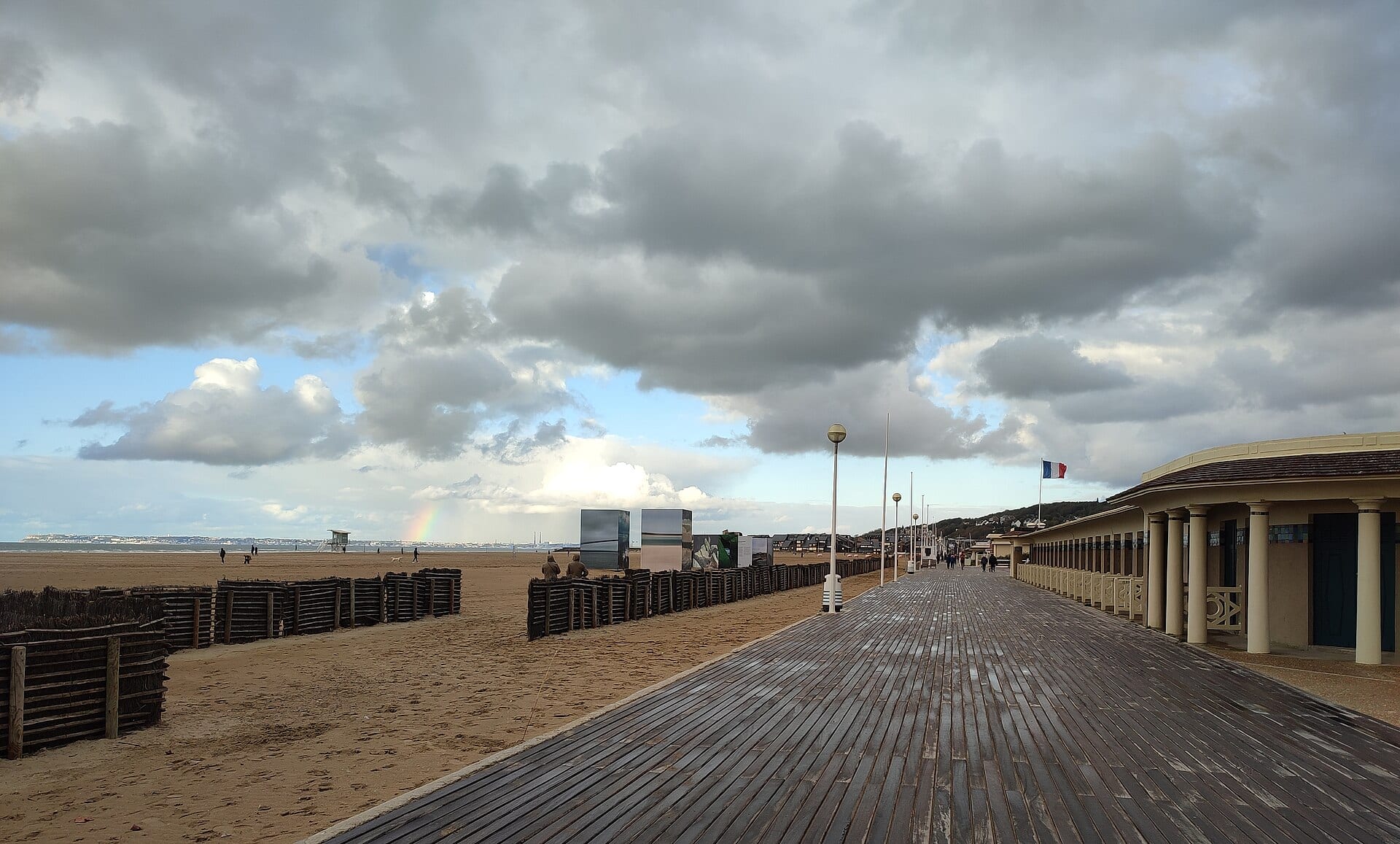
1. The Les Planches Promenade in Deauville
If there’s one place that instantly springs to mind at the mention of Deauville, it’s the renowned wooden Les Planches boardwalk. It was built in the 1920s from hard African azobé wood, so that ladies of high society could stroll along the sea without getting sand on their expensive dresses. Today it’s a stretch of roughly 650 metres that lives a life of its own and offers the most beautiful views over the endless ocean.
This historic walkway was created in 1923 together with the adjoining Pompeian baths, which were meant to lend the resort an ancient feel. As you stroll, you’ll surely notice the gorgeous mosaics and small architectural details that still adorn the individual courtyards and the entrances to the cabins. The promenade is wide enough for everyone, so even at the height of summer you can find your own quiet spot to watch the waves and unwind.
What makes the boardwalk so special are the legendary changing cabins running its entire length, each bearing the name of a famous actor or director. Everyone who has ever attended the local film festival has their own little stall here. You can wander past names like Clint Eastwood, Harrison Ford or Morgan Freeman, turning the whole promenade into a fascinating open-air gallery.
💡 Tip: The best time for a walk along Les Planches is early morning, when a light mist hangs over the sea and the wooden planks aren’t yet baked by the sun. Stop at one of the beach kiosks for a fresh coffee and a warm croissant, settle onto a bench and watch the locals before the town fills with day-trippers.
2. The Beach and Iconic Colourful Parasols
Deauville’s beach is huge, broad and covered in fine sand that practically begs you to take long afternoon walks along the shore. Unlike the crowded resorts of southern France, even at the peak of the season you’ll find plenty of personal space here, because at low tide the sea retreats hundreds of metres, revealing a vast expanse of land. It’s an absolutely ideal spot for flying kites, collecting shells, or just gazing endlessly at the soothing horizon.
But the most iconic feature of the whole beach is undoubtedly the beautiful multicoloured parasols with their distinctive way of being tied, which have become the town’s official symbol. They’re made by hand right in local workshops, and their intricate knot — known as the Deauville knot — is something of an unwritten signature of the local lifeguards. Every morning they’re installed in the sand with absolute precision, in perfect geometric rows.
You can’t simply buy these parasols in a shop, because they’re the exclusive property of the town and a strictly protected design feature. They create an incredibly photogenic backdrop that draws photographers from all over the world and appears on most postcards from Normandy.
💡 Tip: Rather than lugging your own gear, I’d recommend renting one of these famous parasols for the day right at the beach kiosks. A full-day rental costs around €20 and gives you not only much-needed shade on hot days, but above all the perfect photo and the feeling of becoming part of local history, if only for a moment.
3. The Casino and Luxury Hotels of the Belle Époque
The heart of all the luxury and social life in Deauville is undoubtedly the majestic Casino Barrière, whose dazzling white façade dominates the seafront promenade. This architectural gem opened in 1912 and has retained its original charm from the days when the Parisian elite came here to gamble away their fortunes. Even if you’re no gambler, the interior alone — with its enormous crystal chandeliers, velvet carpets and gilded ceilings — is worth a quick look.
Right next to the casino you’ll come across the grandest hotels in the region, which have been pampering guests with their opulent service for more than a century. The façades of these buildings represent the pinnacle of the so-called Anglo-Norman style, defined by fake wooden beams, turrets and extraordinarily elaborate roofs. This is precisely where European aristocracy gathered in search of seaside entertainment.
Looking at these palaces, it’s easy to picture Coco Chanel strolling here in the town’s heyday. It was in Deauville, after all, that the legendary designer opened her very first fashion boutique in 1913, forever changing the history of world fashion.
💡 Tip: If you decide to visit the casino’s interior in the evening, remember that a fairly strict dress code applies. You don’t necessarily need a suit and tie, but in beach shorts and flip-flops you definitely won’t get in, so for an evening out in town it’s best to pack something a little smarter and closed-toe shoes.
4. The American Film Festival
Every year in early September, the sleepy coastal town transforms into a buzzing European hub of Hollywood glamour. The Festival du Cinéma Américain de Deauville is one of the most prestigious film events, focusing exclusively on both independent and big-budget American productions. Over ten days the streets fill with film fans, international journalists and the biggest stars of the silver screen.
Compared with the more formal festival in Cannes, the whole event has a much more intimate and relaxed feel. There’s a fairly good chance of spotting your favourite actors up close, sipping coffee in local bistros. The red carpet rolls out right in front of the main CID convention centre on the promenade, and for the occasion the town even sets up giant outdoor screens for free evening screenings.
The festival experience is open to everyone, and during these days the whole of Deauville breathes incredible energy. The restaurant terraces are packed late into the night, and there’s a palpable buzz of anticipation in the air ahead of new film premieres.
💡 Tip: If you’re planning a visit in the first half of September, book your accommodation well in advance — even six months ahead — because hotels are bursting at the seams and prices shoot up. Regular tickets for public screenings can be bought fairly easily online directly on the festival’s website and usually cost a very reasonable €15 to €20 per film.
5. Horse Racing and Horses Everywhere
Deauville isn’t just a town of film and fashion — it’s also the uncrowned capital of French equestrianism. You’ll find not one but two enormous racecourses here, the more famous being the Hippodrome Deauville-La Touques, set practically in the very heart of town. Horse culture runs incredibly deep, and locals love to boast that the area stables more horses than it has permanent residents.
Races take place all year round, but the absolute highlight of the season is the August meeting. It attracts the best jockeys and the wealthiest stable owners from around the world, who come to show off their finest thoroughbreds. A day at the races is surprisingly affordable even for ordinary visitors — grandstand admission tends to be very symbolic, often just around €5 to €10 for a day ticket.
The atmosphere of betting tension, thundering hooves and elegant ladies in extravagant hats makes for an absolutely gripping spectacle, even if you know nothing about equestrian sport and have never placed a bet in your life.
💡 Tip: For the most beautiful equestrian experience, you’ll need to get up early and head straight to the main beach. Morning training sessions are held here regularly, right after sunrise, and the sight of dozens of magnificent horses galloping across the sand in the morning mist, against a backdrop of breaking waves, is utterly breathtaking and incredibly photogenic.
6. Villa Strassburger
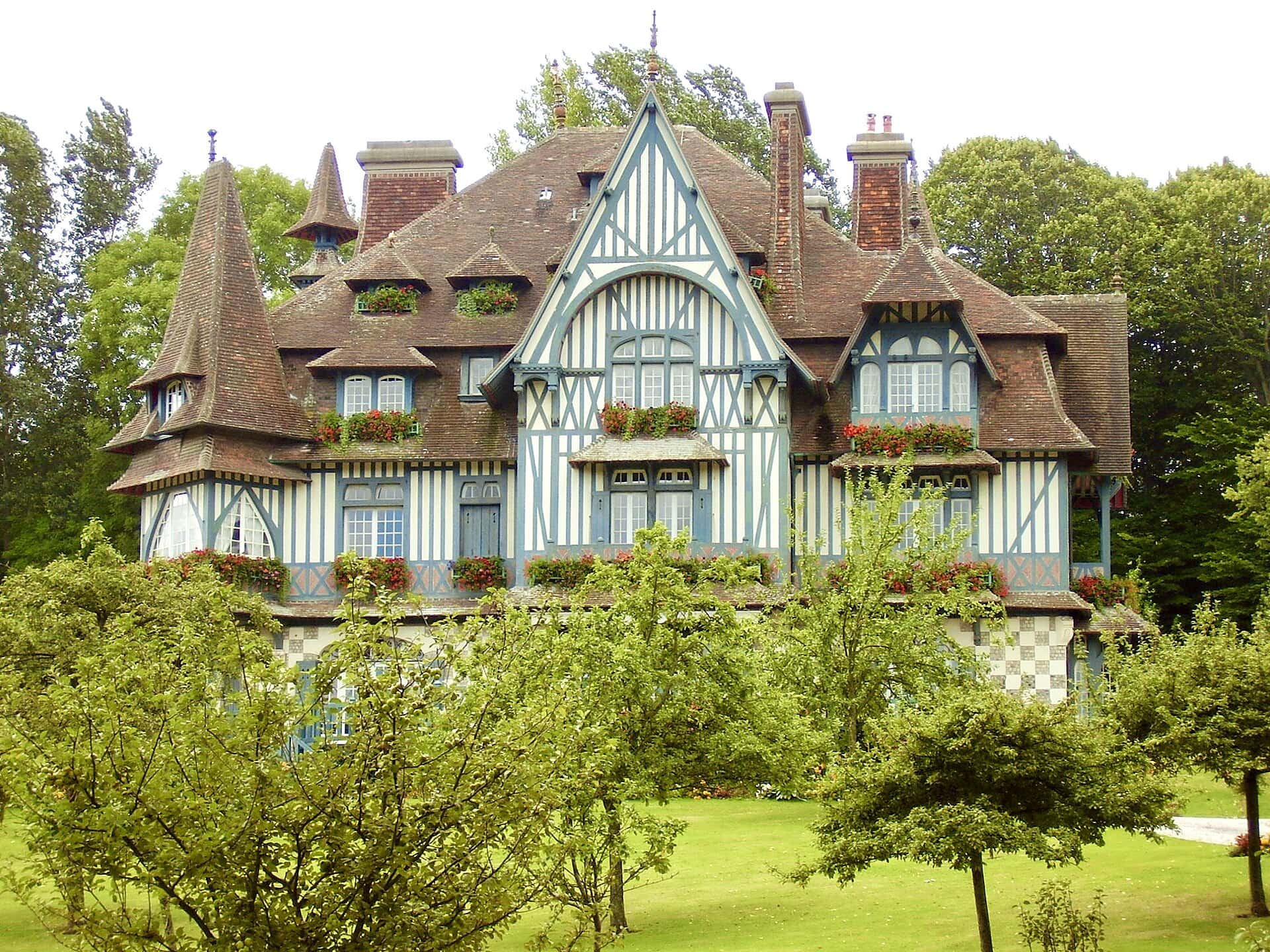
If you want to see how the wealthiest high society lived at the turn of the twentieth century, you have to visit the enchanting Villa Strassburger. This imposing residence was built in 1907 for Baron Henri de Rothschild on land that once belonged to the family of the famous writer Gustave Flaubert. It’s probably the most beautiful example of traditional Norman architecture in the entire wider area.
The villa is surrounded on all sides by a sprawling apple orchard, and its façade of brick patterns and carved wood looks like something straight out of a fairy tale. The interiors have kept their original furniture and rich decorations, so during the tour you feel as if the owners have simply popped out for afternoon tea at the casino and might return at any moment.
Today the building is used, among other things, for luxury weddings and major social events, but in the summer months it opens its gates to curious tourists wanting to glimpse the history of the French elite.
💡 Tip: The villa belongs to the town and is open to the public only during the summer months, usually from June to September. I’d definitely recommend booking a guided tour through the local tourist office in advance, as group capacity is strictly limited and it’s often sold out on the day. Admission costs roughly €7 to €8.
7. Belle Époque Architecture and Half-Timbered Villas
Wandering the streets of Deauville, you’ll constantly feel as though you’re in some carefully maintained film set. In the nineteenth century the town was essentially built from scratch on a green field, precisely to the taste of the wealthy Parisian bourgeoisie who longed for an elegant seaside refuge. The result is an incredibly cohesive townscape, with no jarring modern eyesores or tasteless tower blocks.
Pay particular attention to the grand villas, which blend elements of the English countryside with French ornamentation. Fake wooden half-timbering painted in pastel colours, intricate roof dormers and turrets adorn almost every other house. The architects here practically competed to design the most ornate and elaborate façade.
Every villa has its own name, carefully painted on a ceramic plaque by the front gate. This small detail gives the whole town a very personal, homely character that you’ll come to love.
💡 Tip: You’ll find the most beautiful concentration of these historic villas in the streets around the casino, on Rue Eugène Colas and towards the main racecourse. Set aside a free afternoon, switch off your sat-nav and just wander aimlessly through the residential quarters, admiring the neatly trimmed gardens and soaking up the all-pervading calm.
8. Trouville-sur-Mer: The Charming Fishing Neighbour
While Deauville was artificially created for high society, neighbouring Trouville-sur-Mer has a far longer and more natural history as a working fishing port. Just cross the bridge over the River Touques and you suddenly find yourself in a completely different world — noisier, noticeably more colourful and far more laid-back. No wonder it was this authentic atmosphere that drew the first painters and writers here in the nineteenth century.
Trouville’s winding lanes, led by the famous Rue des Bains, are full of little bistros, antique shops and independent boutiques that invite endless exploring. The town’s focal point is the lively quayside, where fishing boats constantly come and go and the locals spend their days chatting over coffee. It’s a place where you needn’t worry about whether you’re wearing the right designer labels.
In short, the vibe here is all easy-going seaside charm that wins you over instantly with its genuine honesty and the warm welcome of the long-time locals.
💡 Tip: Instead of walking between the two towns over the road bridge, use the little historic ferry known as “Le Bac”, which has been running since 1889. For a small fee of around €2, the little boat ferries you across to the other bank in a matter of minutes, which is a lovely, romantic experience in itself, complete with beautiful views of both harbour piers.
9. The Iconic Fish Market (Marché aux Poissons)
The heart and soul of all Trouville is undoubtedly the local fish market, so important that it was even added to the list of historic monuments in 1991. This beautiful neoclassical building from 1936 resembles an ancient temple more than a classic market hall. It has become the stage for a daily ritual that is utterly inseparable from the Normandy coast. You’ll find it right on the main quay, and its pulsing energy is impossible to miss.
Inside, a remarkable spectacle awaits, full of colours and the distinctive scents of the ocean. Vendors display the morning’s catch in carefully arranged icy cabinets, and the whole place hums with brisk, noisy trade. Even if, as a vegetarian, you don’t go for seafood and won’t be tasting any, it’s fascinating to watch the bustle from a distance. It’s a great chance to glimpse the everyday workings of a fishing town.
The region is simply deeply tied to the sea, and the market acts as the main social hub where locals meet for long chats.
💡 Tip: The market comes most alive in the mornings at weekends, when people flock here from far and wide. Sit down on a bench nearby for a while and just soak up the incredibly vibrant atmosphere that you simply won’t experience back home. Afterwards you can head off for lunch at one of the nearby crêperies for a delicious cheese galette.
10. Trouville Beach and the Savignac Promenade
Trouville’s beach is noticeably more down-to-earth and lively than its posh neighbour across the river. The local sand is renowned for its softness and the beach is hugely popular with families, because the water deepens gently and is safe for children. You won’t find the legendary colourful parasols here, but you will enjoy plenty of open space and a lovely view of the distant cliffs lining the horizon.
A wide promenade runs along the entire length of the beach, named after the famous French illustrator Raymond Savignac. He spent a large part of his life in Trouville and gave the town a number of his witty, iconic posters, which today decorate the walls along the whole walking route. A stroll along the promenade thus turns into a kind of fun outdoor gallery full of colourful mid-twentieth-century advertisements.
The atmosphere here is simply more relaxed — children run around with giant ice creams while the grown-ups play pétanque on the nearby pitches until dusk.
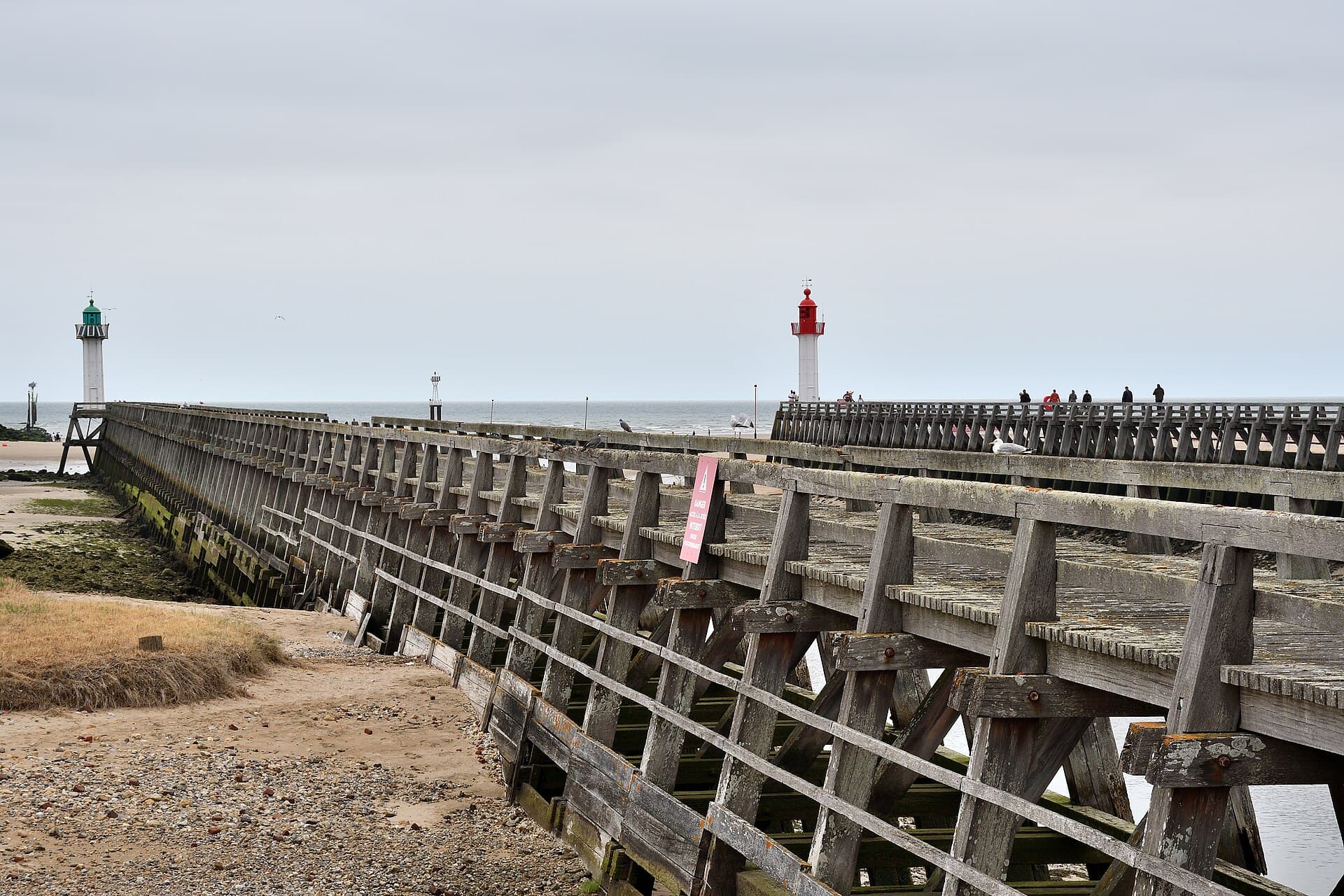
💡 Tip: At the very end of the beach you’ll come across a small lighthouse and a long stone pier protecting the harbour entrance. If you take a walk out here at sunset, you’ll be rewarded with a fantastic view of the whole coastline bathed in golden light — the perfect moment to capture the best photos of your trip.
11. A Taste of Normandy: Cheeses, Cider and Sweets
Normandy is a gastronomic paradise that smells of butter, apples and cream. You’ll find an endless array of local specialities that will delight even those of you who aren’t keen on seafood. The foundation of it all is the phenomenal cheese with protected designation of origin, the best known being genuine Camembert de Normandie, made exclusively from raw milk. The supermarket version back home simply can’t compare.
Besides Camembert, be sure to try the bold square Pont-l’Évêque and the rounder Livarot. A real rarity is Neufchâtel cheese, traditionally shaped into a heart, which makes it a lovely edible souvenir from your travels. Normandy’s cows graze on lush green grass full of sea salt carried on the wind, and that gives the local milk an utterly distinctive, unmistakable flavour you’ll come to love.
Since no vines grow here, the locals swear by their apple orchards instead. Every meal here must be washed down with superb sparkling cider, served in traditional ceramic cups. You can choose between a sweeter version (doux) and a dry one (brut). For those with a sweet tooth, the wafer-thin crêpes filled with salted caramel are an absolute must, while for a savoury lunch the buckwheat galettes with melted cheese and mushrooms hit the spot perfectly.
💡 Tip: If you fancy something stronger, ask for a glass of Calvados after dinner. This famous apple brandy ages for years in oak barrels and works as the perfect digestif. A great compromise for lighter drinking is also Pommeau, a delicious sweeter aperitif made by blending fresh apple must with one-year-old Calvados.
Map of points of interest for your phone
Where to Go Next from Deauville and Trouville
- Normandy: Discover what else this stunning north-western region has to offer, from the famous D-Day landing beaches and American cemeteries to the magical island monastery of Mont-Saint-Michel and the chalk cliffs of Étretat.
- Honfleur: Take a short trip east along the coast and discover this incredibly photogenic little town with its historic harbour, wooden church and narrow lanes that once inspired Claude Monet himself.
Frequently Asked Questions
How to best get to Deauville from Paris?
The journey is incredibly easy and comfortable. Direct SNCF trains run from Paris’s Saint-Lazare station all the way to Trouville-Deauville station, which sits right on the border between both towns. The journey takes roughly 2 hours and 10 minutes, and a one-way ticket can be purchased in advance for around 35 euros, so you don’t need your own car at all for this trip.
Are both cities suitable for families with children?
Absolutely yes. While Deauville may seem a bit uptight at first glance, the wide beaches in both towns are absolutely ideal for children. Trouville in particular offers very pleasant facilities, plenty of playgrounds and a gentle entrance to the sea where children can safely play around.
Is the region expensive?
Yes, you should expect that Deauville is one of the most expensive resorts in all of France, and the prices for coffee or a drink on the promenade reflect that. Trouville is slightly cheaper and offers more affordable family bistros, but overall the northern coast is financially somewhat more expensive than inland Normandy.
Can you swim normally in the sea?
It depends purely on your hardiness. The water in the English Channel rarely exceeds 18 to 19 degrees even in the middle of hot summer. It’s more than enough for a quick refreshment, but usually not for long soaking in the water. Locals come here more for the fresh air and long walks on the beach.
Do I need a car to get between cities?
Not at all. Deauville and Trouville are just a few minutes’ walk from each other across the Touques River, and both town centers are very compact and perfectly walkable. You’ll only need a car if you’re planning to explore the more remote corners of Normandy or take a trip to the D-Day landing beaches.
How does it work with high and low tide?
The differences between high and low tide are enormous along the Normandy coast, and the sea retreats hundreds of metres from the shore. It’s a fascinating sight, but if you set off on a longer walk across the exposed seabed, always keep a close eye on the time and the warning signs so you can make it safely back to land.
When is the film festival held and can I attend?
The American Film Festival takes place annually in the first half of September. The general public can normally purchase tickets for individual film screenings through the official website. However, you must expect that the city will be hopelessly sold out and full of film fans during this time.
Tips and Tricks for Your Vacation
Don’t Overpay for Flights
Search for flights on Kayak. It’s our favorite search engine because it scans the websites of all airlines and always finds the cheapest connection.
Book Your Accommodation Smartly
The best experiences we’ve had when looking for accommodation (from Alaska to Morocco) are with Booking.com, where hotels, apartments, and entire houses are usually the cheapest and most widely available.
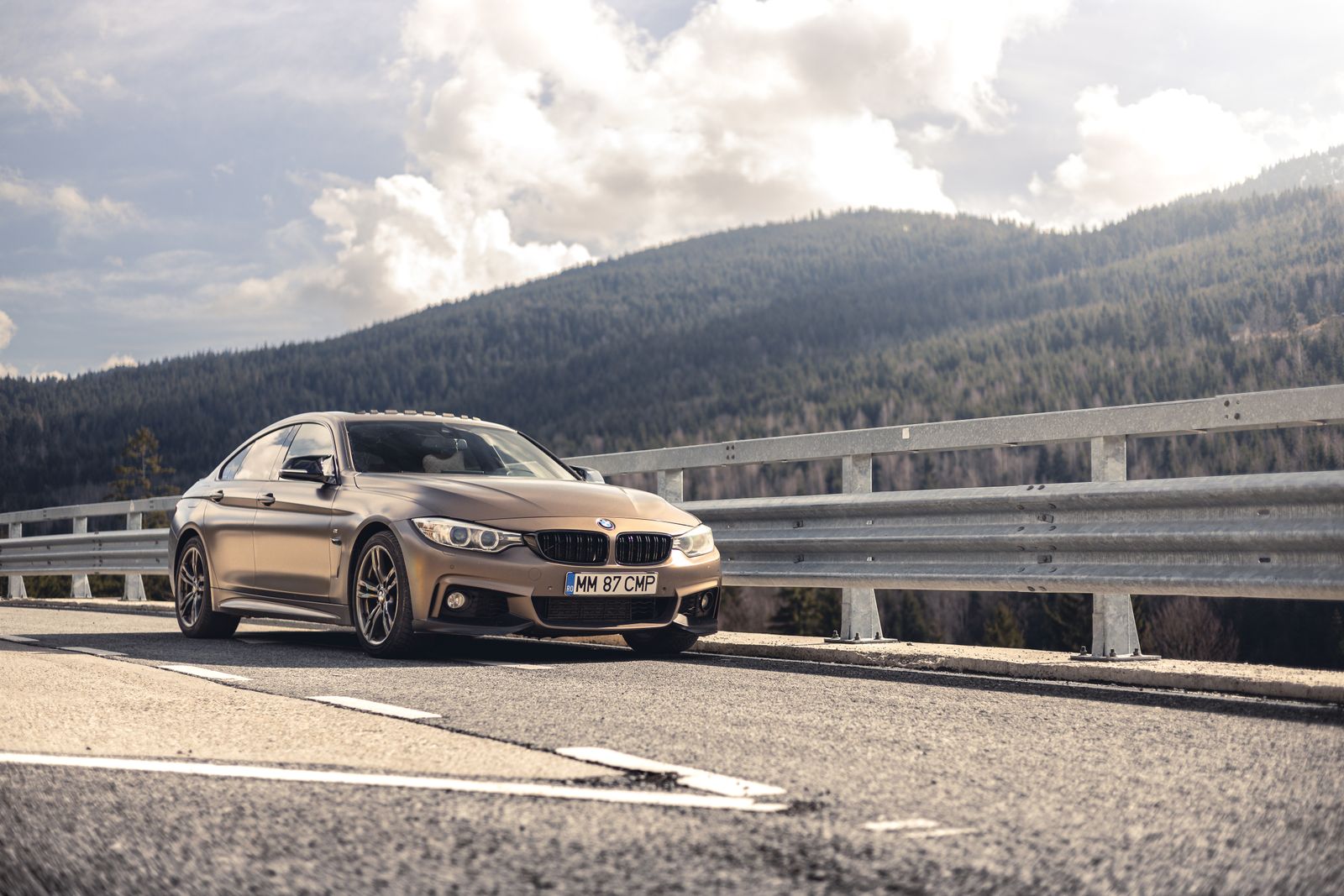 🚗 Car rental on the roadVerified car rentals in Normandy
Search with the DiscoverCars comparison engine — it compares prices from dozens of local and international rental companies, and most bookings come with free cancellation.
Compare car prices in Normandy →Don’t Forget Travel Insurance
Good travel insurance will protect you against illness, accidents, theft, or flight cancellations. We’ve had a few hospital visits abroad, so we know how important it is to have proper insurance arranged.
Where we insure ourselves: SafetyWing (simple monthly subscription) and TrueTraveller (for extra-long trips).
Find the Best Experiences
Get Your Guide is a huge online marketplace where you can book guided walks, trips, skip-the-line tickets, tours, and much more. We always find some extra fun there!