Normandy and Brittany are nothing like the polished lavender fields and lazy rosé afternoons you might picture when you think of France. The northwest hits you with raw, windswept beauty from the moment you arrive. Expect endless clifftops, a churning ocean, and history that literally redrew the map of the world — this Normandy and Brittany road trip has it all.
Get ready for air thick with sea salt, fermenting apple cider, and that feeling of pure freedom behind the wheel. This road trip takes you from the beaches where the famous D-Day landings changed the course of history, all the way to mystical Celtic monuments at the very edge of the continent.
All you really need to pack is a waterproof jacket, a good mood, and an appetite for discovery. You’ll find yourself wandering into hidden corners that most tourists never bother to reach — and that’s exactly what makes this route so special.
TL;DR
- Total distance: Roughly 1,200–1,400 kilometres depending on detours.
- Ideal duration: Set aside exactly 10 days so you’re never rushing and can enjoy a slow coastal afternoon whenever the mood strikes.
- Best time to go: June or September are the sweet spots — you’ll dodge the peak-summer crowds while still having a decent chance of good weather.
- Highlights to look forward to: The chalk cliffs at Étretat, the island abbey of Mont-Saint-Michel, the mysterious standing stones at Carnac, and kilometre after kilometre of wild coastline.
- Key tip: If you’re not specifically coming for the commemorations, avoid early June around the D-Day anniversary — hotels across Normandy sell out months in advance.
- Budget: Prices have nudged up in 2026, so budget around €1,200–€1,500 per person for 10 days including accommodation and car hire.
The full destination guide: Normandy — guide and what to see
When to go
Timing is everything on this road trip, because the weather in northern France follows its own unpredictable rules. Your best bet for comfortable temperatures is late May through mid-September, when the ocean takes the edge off the air. That said, Atlantic winds and sudden rain showers can catch you out even in the height of August. Locals say cheerfully that Brittany can have four seasons in a single day — and they’re not exaggerating.
If you’re travelling in 2026, be very careful around early June, when the grand commemorations for the 82nd anniversary of the D-Day landings take place. The main ceremonies fall between 5 and 7 June, bringing road closures, security checks, and fully booked hotels across the region. If you’re not specifically coming for the military history angle, give that particular weekend a wide berth. Another 2026 quirk: the Bayeux Tapestry is closed while its museum undergoes renovation and heads to an exhibition in London from September.
Autumn has its own moody charm in northern France, though the days shorten noticeably and many smaller businesses close up for the season. If dramatic scenery is your priority, March or late September are worth considering — these months bring the strongest tidal surges, when Mont-Saint-Michel becomes a truly water-encircled island.
Practical info: car hire, getting there, and budget
This itinerary is built around having a car — without one, reaching the best clifftops and deserted beaches would be a real struggle. You can pick up a hire car at Paris Charles de Gaulle or at Nantes Airport, both of which have good connections from UK airports. Ryanair, easyJet, and British Airways all fly from London to Paris, while Ryanair and Flybe serve Nantes from various UK regional airports. We’d always recommend choosing a smaller car — the narrow lanes lined with stone walls and the tight historic town centres are simply not designed for large SUVs. Bear in mind that French motorways use a toll system (péages), and on a route of this length you should budget around €90–€110 in tolls.
France has tightened up its low-emission zones (ZFE) in many larger cities, which is worth knowing even when driving a hire car. Foreign-registered vehicles — including hire cars — are subject to the mandatory Crit’Air environmental sticker, which you need to order online in advance for under €5. Getting caught driving into central Rouen or Nantes without one in 2026 carries an on-the-spot fine of €68. Parking in tourist centres can be a nightmare, so always look for large park-and-ride car parks on the outskirts and walk or take a shuttle from there.
For a rough budget guide for two people over 10 days in 2026: Normandy and Brittany are not cheap. A decent guesthouse or hotel room will run you €90–€130 per night. A set lunch menu (menu du jour) at an ordinary restaurant costs around €20–€25, and entry to major attractions is typically €10–€20. Coffee at the bar is about €2, but sit down on a seaside terrace and the price immediately doubles. All in, expect to spend around €1,500 per person if you want to eat well and not count every euro.
Day-by-day itinerary
This detailed plan is designed so you see the very best of both regions without ever feeling rushed — there’s always time for a slow coastal afternoon or a spontaneous roadside stop.
Day 1: Rouen and Impressionist Normandy
Your journey begins in historic Rouen, a city with a turbulent past and a stunning old quarter full of well-preserved half-timbered houses and crooked lanes. Make your way through the medieval centre to Place du Vieux-Marché, where Joan of Arc was burned at the stake in 1431. A striking modern church now stands on the spot, its roof designed to evoke leaping flames. The city buzzes with life, and charming little cafés seem to appear on every corner.
The morning’s unmissable sight, though, is the magnificent Notre-Dame Cathedral — a masterpiece of Flamboyant Gothic architecture whose elaborate western facade so captivated Claude Monet that he painted it more than thirty times in different lights and weather conditions. After exploring the city, get back in the car and head northwest towards the coast for your first encounter with the Atlantic. You’ll spend the afternoon at the famous chalk cliffs of Étretat.
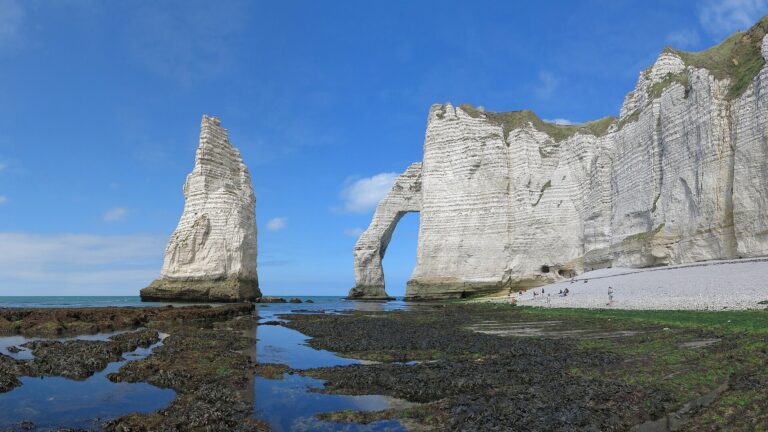
Arriving at Étretat, you’re confronted with scenery shaped by wind and sea over millions of years — and it’s immediately clear why the Impressionists kept coming back. Walk up the clifftop path to the Falaise d’Aval for the iconic view of the natural arch and the needle of rock jutting from the waves. Late afternoon light turns everything golden, so leave yourself plenty of time to take it all in. You’ll spend around two hours driving today, covering roughly 100 kilometres.
💡 Tip: Head to one of Rouen’s bistros for lunch and try a leek and Neufchâtel cheese quiche — the local soft cheese melts beautifully in the pastry. Those who enjoy meat will find traditional duck dishes a constant feature on menus throughout Normandy.
We recommend staying overnight in the nearby picture-postcard harbour of Honfleur, where Booking.com turns up plenty of romantic little rooms overlooking the water. An evening stroll around the illuminated harbour basin is absolutely magical.
Day 2: Honfleur and the D-Day beaches
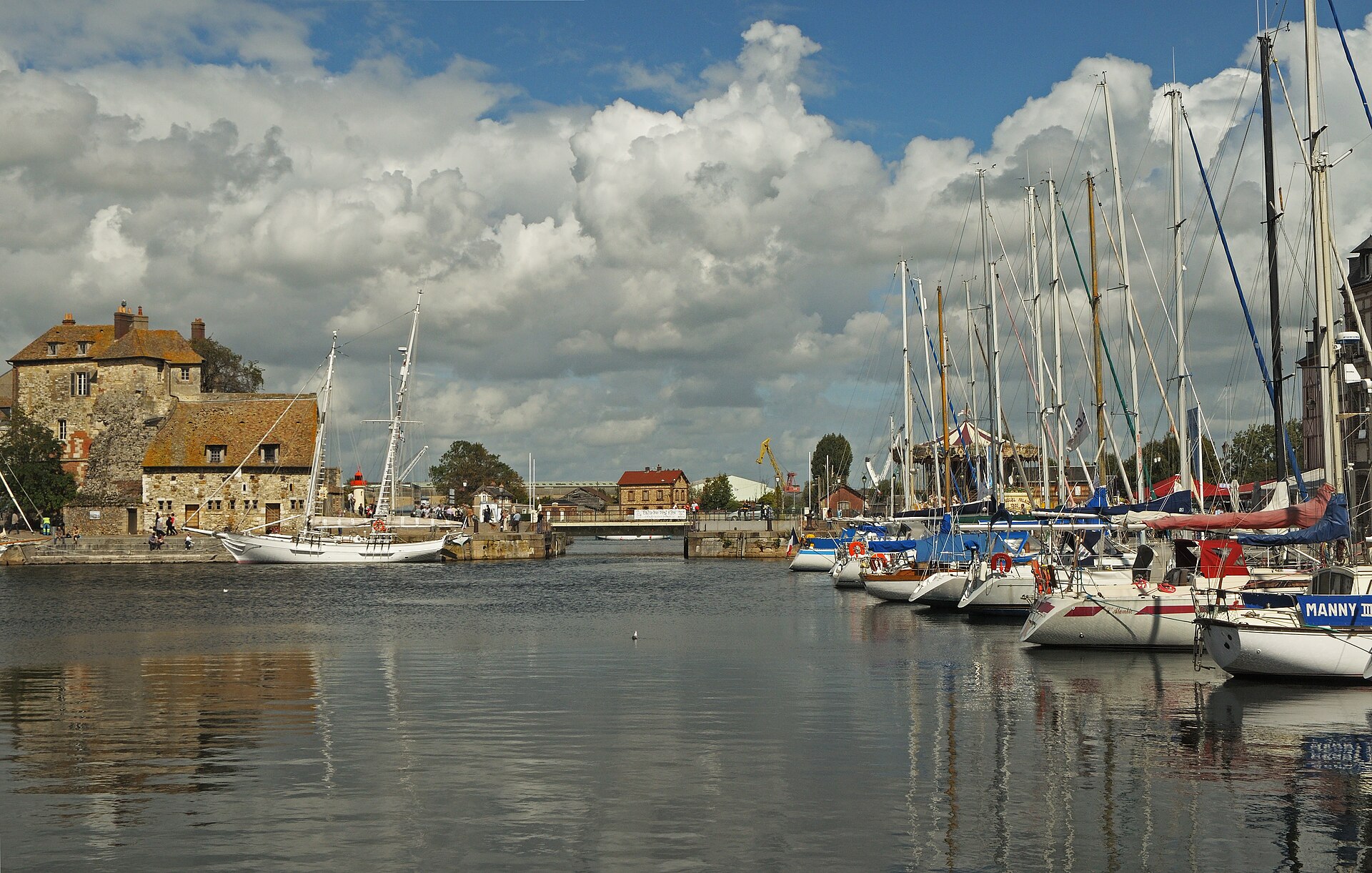
Waking up in Honfleur — arguably the most photogenic harbour town in all of France — you’ll immediately understand the fuss. Its heart is the Vieux Bassin, the old harbour basin ringed by tall slate-fronted houses that mirror themselves in the still water below. Make time for the unique Sainte-Catherine church, built by local shipwrights after the Hundred Years’ War, its wooden ceiling looking exactly like two upturned boat hulls.
Around midday, cross the sweeping Pont de Normandie bridge and head into the Calvados region, where world history was written more than eighty years ago. Your first stop on the D-Day beaches will be the British sector at Gold Beach near Arromanches-les-Bains. Enormous concrete blocks still protrude from the sea here — the remains of the Mulberry Harbour, without which Allied supply lines could never have been sustained. The local museum, which you can book in advance through GetYourGuide, brings this feat of wartime engineering to vivid life.
Continue west along the coast as the landscape opens up to the Atlantic winds. Stop at the German artillery battery at Longues-sur-Mer, one of the few places where original guns still sit inside their massive concrete casemates. You’ll cover around 120 kilometres today, but expect to stop constantly at memorials and information boards along the way.
💡 Tip: For dinner in Bayeux, seek out a traditional crêperie and order a buckwheat galette filled with Camembert and caramelised apples — then wash it down with a bowl of crisp, dry local cider. It’s a combination that sums up Normandy on a plate.
The ideal base for tonight is historic Bayeux, which miraculously escaped wartime bombing. Booking.com has a good selection of small family-run guesthouses tucked into stone lanes near the majestic Gothic cathedral.
Day 3: The American Cemetery and on to Mont-Saint-Michel
This will be the most emotionally powerful day of the entire trip. You’ll head into the American sector of the D-Day beaches, starting at Omaha Beach itself, which today feels almost impossibly peaceful given that it witnessed the bloodiest fighting of 6 June 1944. On the bluffs directly above at Colleville-sur-Mer, the American military cemetery stretches across immaculate green lawns with 9,387 gleaming white crosses and Stars of David.
A short drive west brings you to the dramatic headland of Pointe du Hoc, one of the most striking spots on the entire coast. The ground here is still cratered from the heavy naval bombardment, and it was these sheer thirty-metre cliffs that US Army Rangers had to scale under constant fire. The bunkers lie broken exactly as the battle left them, slowly being reclaimed by nature.
After lunch, you leave the D-Day zone and head roughly two hours southwest, watching the landscape gradually shift. Today’s drive of around 140 kilometres takes you all the way to the border between Normandy and Brittany. Along the way, enjoy the views of narrow country lanes lined with typical bocage hedgerows and old apple orchards.
💡 Tip: If you need something to eat on the road, stop at a village bakery and pick up a fresh crusty baguette, a wedge of Pont-l’Évêque cheese, and some tomatoes for the perfect roadside picnic. It’s simple, utterly French, and costs almost nothing.
Stay overnight in one of the smaller villages near Mont-Saint-Michel bay, such as Beauvoir. Booking.com lists plenty of converted farmhouse guesthouses here, from which the abbey is only a few minutes’ drive in the morning.
Day 4: Mont-Saint-Michel and corsair Saint-Malo
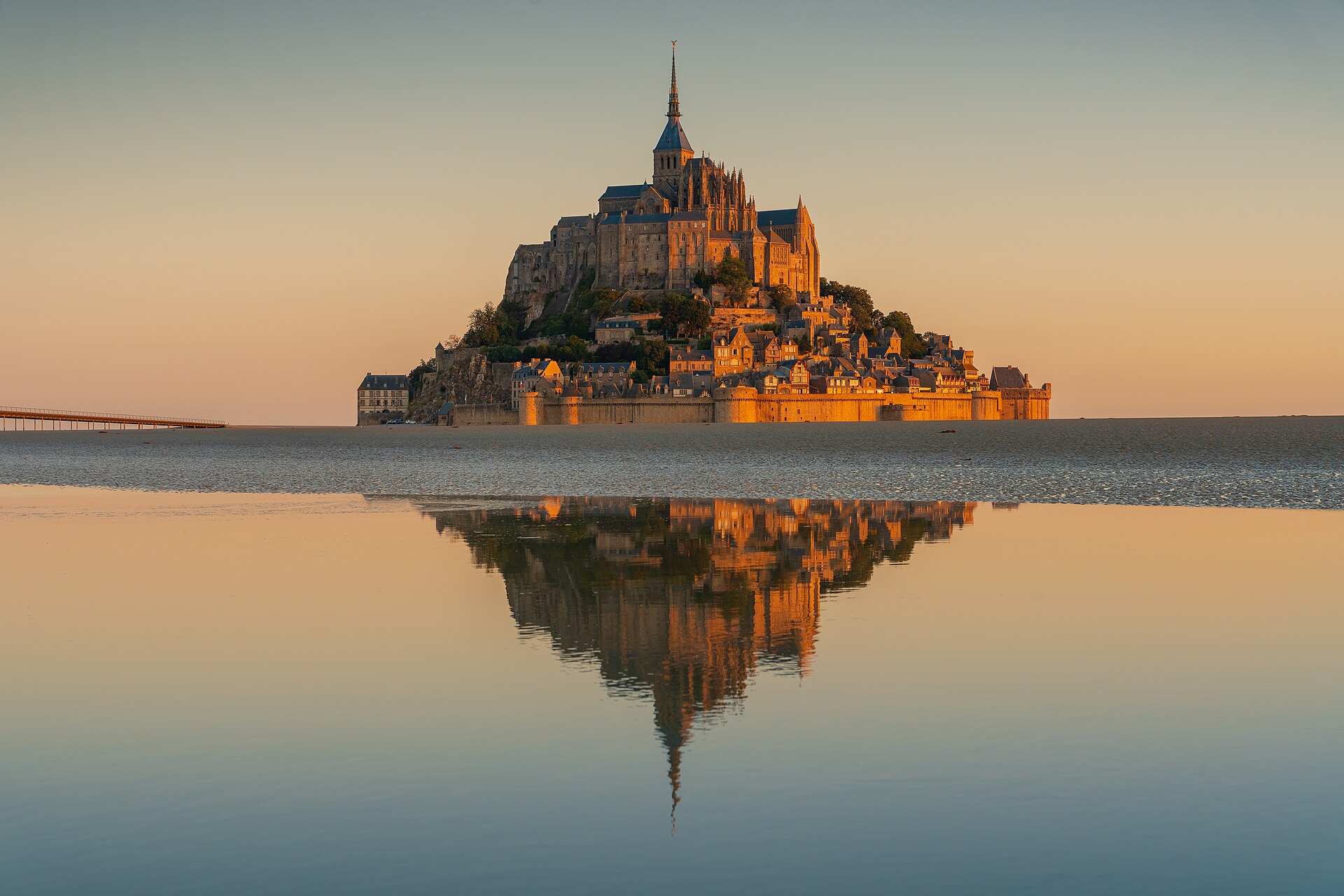
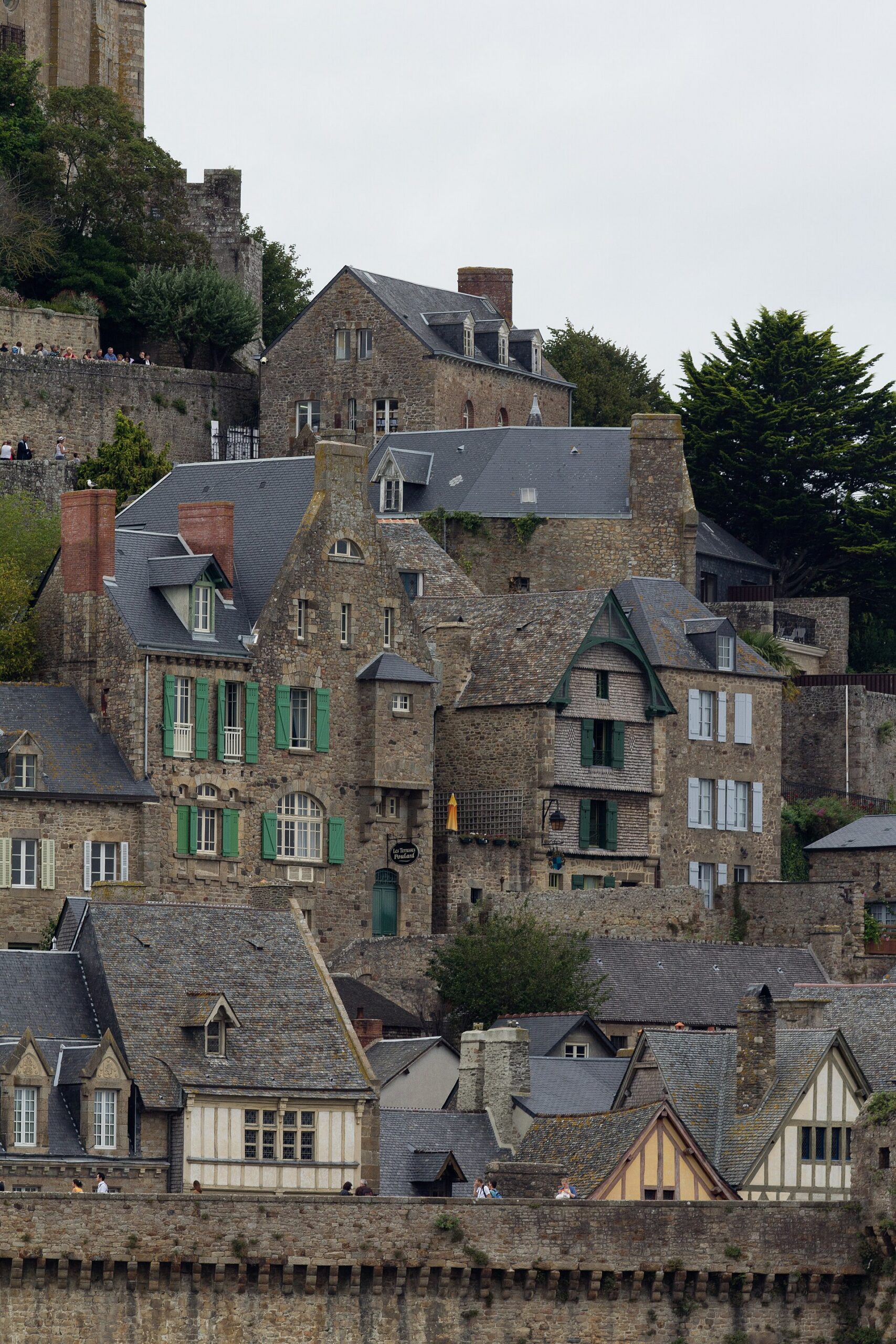
Set your alarm early, because today you’re visiting the place the French often call the eighth wonder of the world. The Gothic abbey of Mont-Saint-Michel rises from its treacherous bay like something out of a dream, drawing millions of visitors every year. To get ahead of the crowds, leave your car in the vast car park before 9am and hop on the free shuttle bus that drops you at the foot of the mount.
Admission to the abbey at the summit costs €16 in 2026, and the route up winds through a narrow, steep lane of stone steps. You’ll work up a sweat, but the views across the bay — where the tide retreats for kilometres — make every step worthwhile. ⚠️ One important note for summer 2026: the abbey is reportedly due to close temporarily from 1 June for operational reasons, so do check the official website before you go.
After lunch, cross into Brittany and make for Saint-Malo, the famous home of privateers and corsairs, surrounded by massive granite ramparts. Walking the walls (Les Remparts) is an absolute must — on one side you look down into the narrow streets of the old town, on the other straight out over the churning Atlantic. At low tide, you can walk across the sand to the small island of Grand Bé, but keep a very close eye on the time: the sea comes back fast. Today’s drive is a gentle 60 kilometres or so.
💡 Tip: Find a small restaurant inside the ramparts and try the classic moules-frites — enormous pots of mussels steamed in white wine, served with a heap of chips. It’s the iconic dish of the northern French coast, and in Saint-Malo it doesn’t get better.
For tonight, stay inside the walls of Saint-Malo itself — the atmosphere after dark is completely unique. Booking.com has a range of boutique hotels in historic buildings, some just seconds from the sea wall.
Day 5: Oysters at Cancale and medieval Dinan
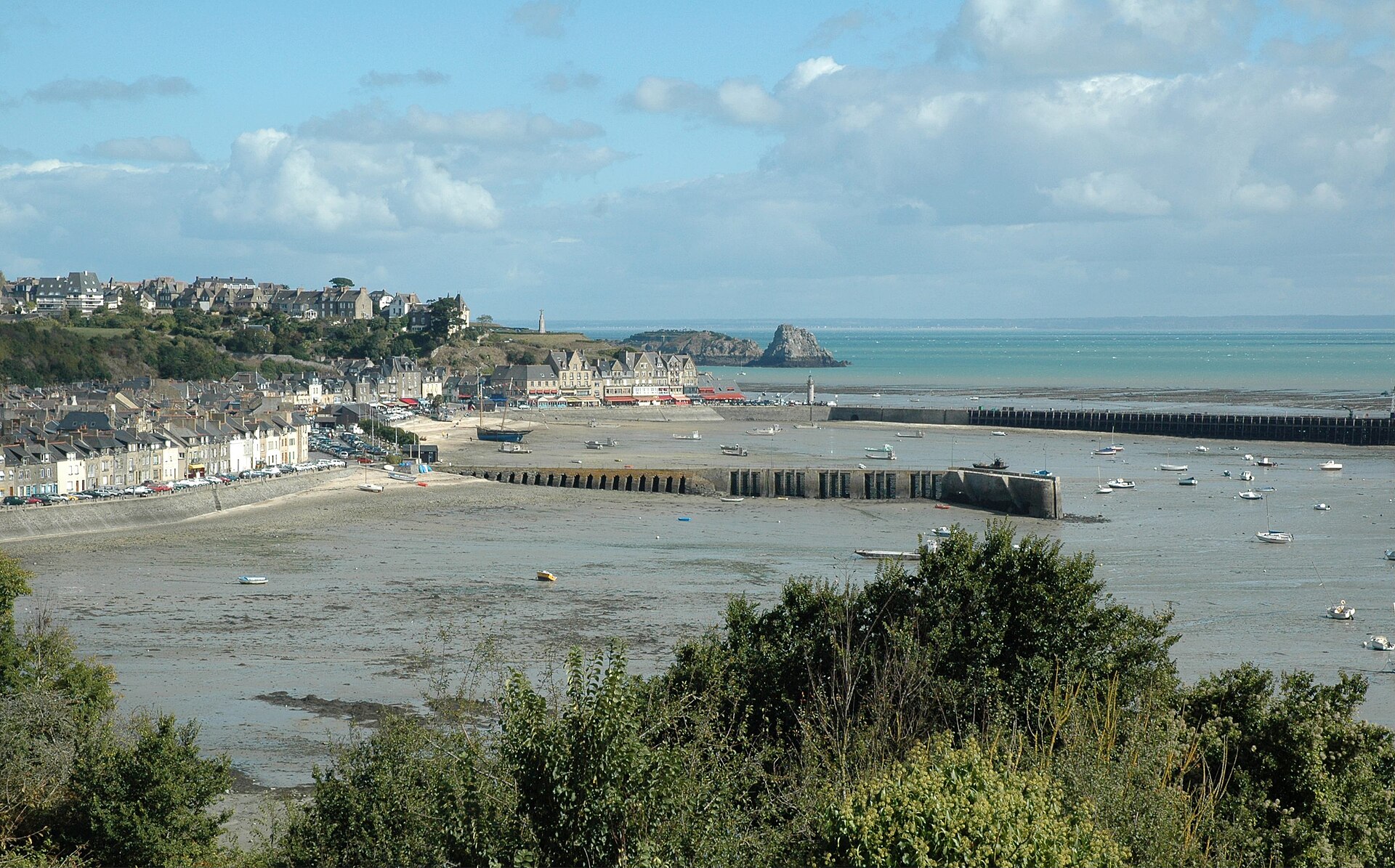
Start the morning with a short drive to Cancale, a small harbour town that proudly bills itself as the oyster capital of France. Even if seafood isn’t your thing, the quayside market (Marché aux Huîtres) is a brilliant spectacle — you’ll see vast nets and oyster beds stretching far out to sea. The sight of locals perching on stone walls, cracking oysters open and tossing the shells straight onto the beach below, is gloriously authentic.
From Cancale, follow the coast road to Cap Fréhel, where the wind genuinely tries to knock you off your feet. These sheer pink sandstone cliffs plunge seventy metres into the swirling Atlantic, and beautiful purple heathland stretches back from the lighthouse. Nearby, the medieval Fort la Latte sits perched on its own rock stack — it looks straight out of a film set and is well worth a closer look.
In the afternoon, head a little inland to Dinan, one of the most beautiful medieval towns in all of Brittany. It escaped serious wartime damage and retains its original character in a way few towns in the region can match. Wander the winding streets of half-timbered houses and make your way down the steep Rue du Jerzual to the pretty River Rance below. Today’s driving totals a relaxed 80 kilometres.
💡 Tip: In Dinan, duck into a side-street restaurant and try a buckwheat galette filled with mushrooms and vegetables — hearty, warming food after a blustery day on the cliffs. Those who prefer meat will find traditional pork sausages, fragrant and perfectly cooked, all over the town.
Staying in Dinan is noticeably quieter and often better value than the coast. Through Booking.com you can book a room in an old half-timbered house with creaking stairs and an atmosphere you simply won’t find in a chain hotel.


Day 6: The Pink Granite Coast
This morning you’ll drive west to discover one of northern Brittany’s geological wonders. The Côte de Granit Rose — the Pink Granite Coast — runs through the villages of Perros-Guirec and Ploumanac’h, where the shoreline is strewn with enormous boulders of an extraordinary rosy hue. This geological oddity occurs in only three places on Earth, making it an absolute magnet for photographers.
The best way to soak it all up is to walk the Customs Officers’ Path (Sentier des Douaniers), a trail that winds right between the boulders along the water’s edge. Wind and sea have sculpted the rocks into the most fantastical shapes over millions of years — with a little imagination you’ll spot a sleeping tortoise, Napoleon’s hat, and much more besides. The path is manageable for anyone of reasonable fitness, but arrive early as the car parks near the lighthouse fill up fast.
In the afternoon, you can either relax on one of the hidden sandy beaches tucked between the rocks, or take a boat trip around the Sept-Îles seabird reserve just offshore. Various cruises in this area are easy to book in advance through GetYourGuide. Today’s drive is a longer one — around two and a half hours covering roughly 140 kilometres.
💡 Tip: Treat yourself to a crêpe with salted caramel — Brittany’s signature sweet, perfected here — alongside your afternoon coffee. Local fishermen’s taverns serve freshly caught lobster and crab with homemade mayonnaise in the evenings, which is as good as it sounds.
Stay the night in Perros-Guirec or nearby Ploumanac’h. Booking.com has modern apartments with sea views where you can watch the setting sun turn the granite boulders a deep, glowing copper.
Day 7: Wild Finistère and Pointe du Raz
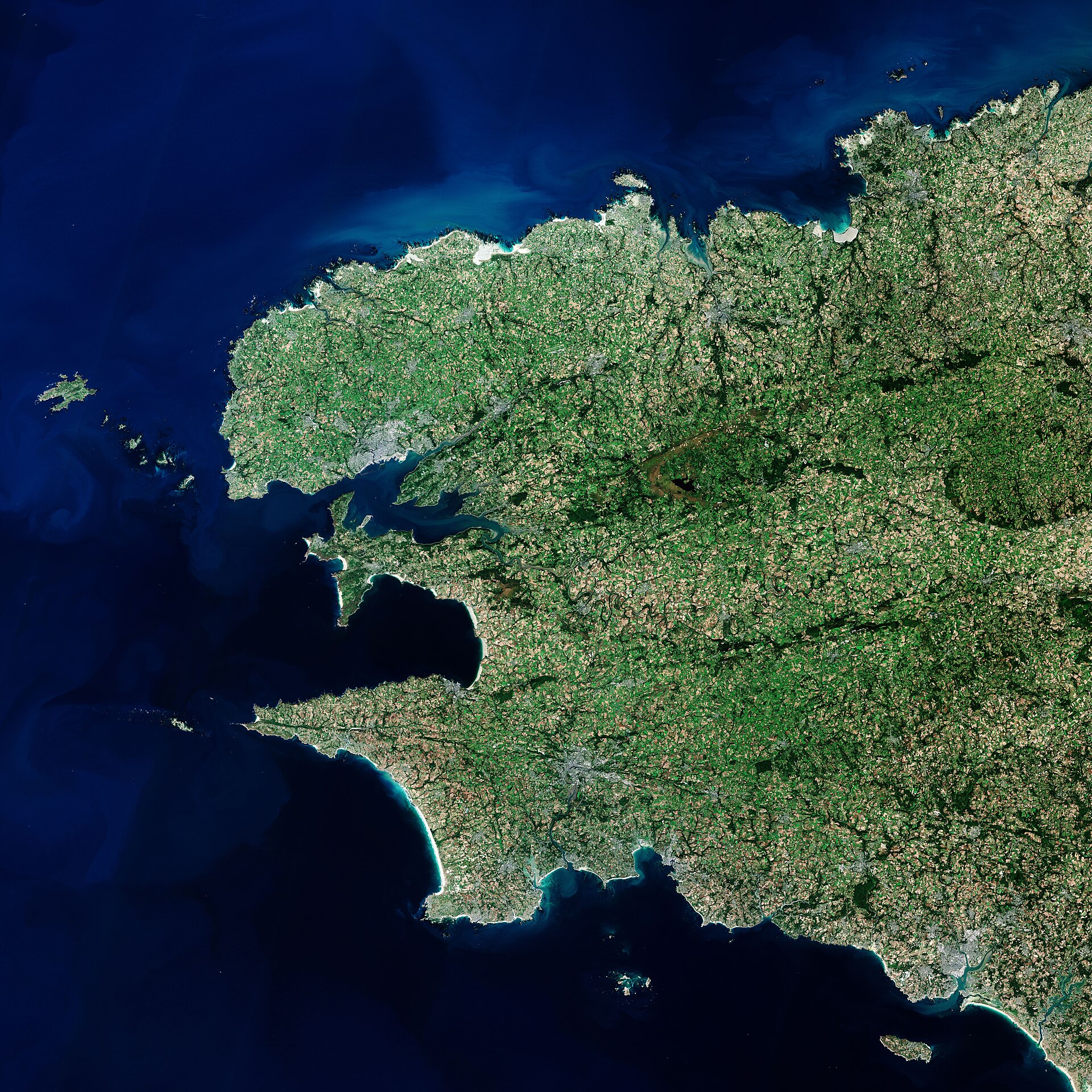
Today you drive to the very end of the world — or at least to the département of Finistère, whose name comes from the Latin Finis Terrae. This is France’s westernmost point, defined by its wildness and its fierce Celtic identity. You’ll pass across rough heathland, past ancient stone churches, and feel the wind building steadily as you head west.
Your destination is Pointe du Raz, a jagged headland that thrusts deep into the restless Atlantic. Standing here, you feel genuinely small — waves crash into the cliffs with such force you can feel the ground tremble beneath you. Out to sea, the lonely Vieille lighthouse stands defiantly on a bare rock against the elements. The whole area around the headland has been beautifully restored: the commercial sprawl was cleared away years ago and nature has reclaimed the landscape.
After your windswept clifftop experience, warm up in the visitor centre and then begin a long, scenic drive south. Today is the biggest driving day of the trip — around 160 kilometres — but the views of wild ocean scenery keep it from feeling like a slog.
💡 Tip: Stop at a village bakery and pick up a slice of Kouign-amann — a gloriously indulgent Breton cake made with layers of buttery pastry and caramelised sugar, best eaten while still warm. It’s a revelation.
For tonight, choose the regional capital Quimper as your base. Booking.com offers great value here, and you’ll have the evening to stroll through the beautifully lit old centre with its many bridges crossing the River Odet.
Day 8: Quimper and walled Concarneau
Spend the morning exploring Quimper, which is full of narrow streets and shops selling the town’s famous blue-and-yellow decorated pottery. The Gothic Cathédrale Saint-Corentin dominates the skyline and hides a fascinating architectural quirk — its nave is slightly bent, traditionally said to represent Christ’s head inclined on the cross. After the rugged drama of the previous days, Quimper feels calm and quietly elegant.
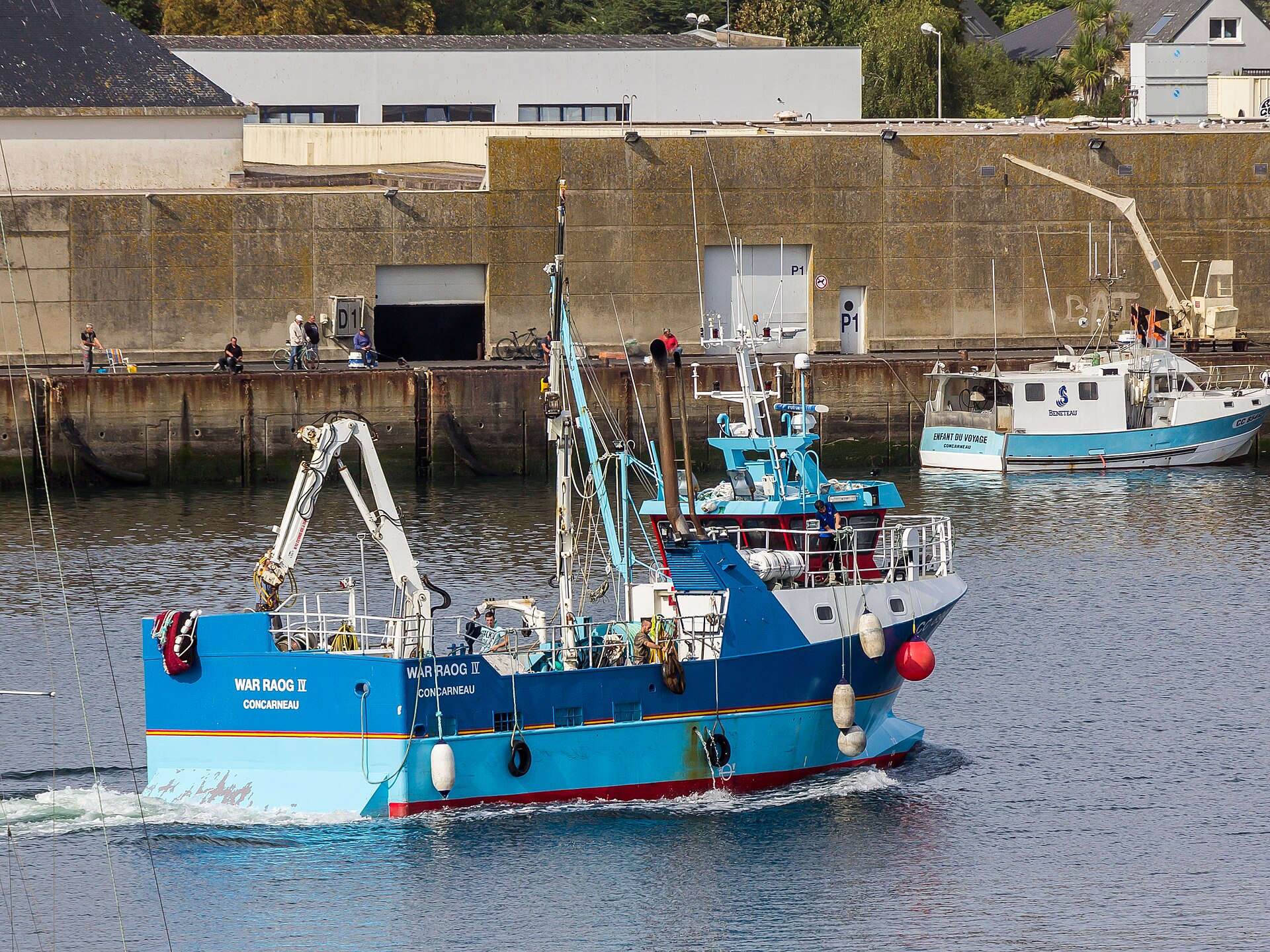
Around midday, head down to the south coast and the nearby town of Concarneau. Its main draw is the Ville Close — a fortified old town sitting on a small island in the middle of a large working harbour. You enter across a massive stone bridge over a moat and find yourself in a world of little shops, crêperies, and well-preserved medieval ramparts.
Walking the ramparts gives you great views over the fleet of fishing boats and across the bay. In the afternoon, it’s back in the car heading east along the coast towards the Gulf of Morbihan. Today’s drive is a gentle 110 kilometres on comfortable dual carriageways.
💡 Tip: In the Ville Close, seek out a quiet corner restaurant and try moules marinières — mussels steamed in white wine and garlic — served in a bucket with crusty bread. Seafood lovers are truly in their element here, with restaurants offering enormous sharing platters of prawns, crab, langoustines, and oysters.
Use Vannes as your base for the next couple of nights. Booking.com makes it easy to find a cosy hotel in the medieval centre or close to the lively harbour promenade.
Day 9: Gulf of Morbihan and mysterious Carnac
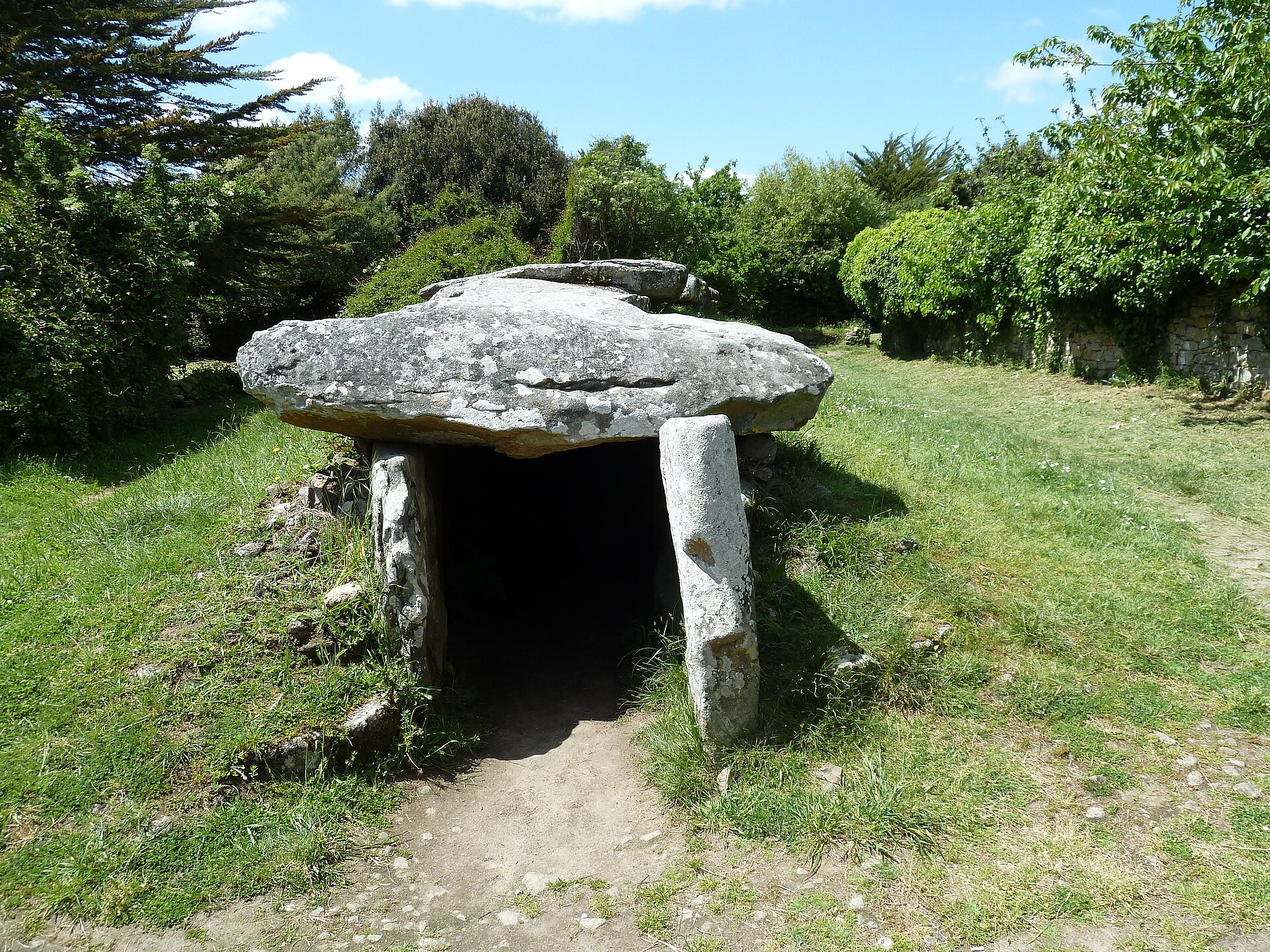
Southern Brittany has a noticeably milder climate, and today’s itinerary reflects that gentler mood. Your first stop is Carnac, home to the world’s largest concentration of megalithic monuments. More than 3,000 standing stones (menhirs) are arranged in long parallel rows here, dating back over 6,000 years. Nobody knows for certain why they were put here — and that lingering mystery gives the place an extraordinary, otherworldly atmosphere.
⚠️ Since 2025, Carnac has been inscribed as a UNESCO World Heritage Site and strict new visitor rules apply. From April to September, walking freely among the stones is prohibited — access is only possible on guided tours. You can always see them from outside the fence, but booking a guided visit is well worth it for the full experience. In winter, access is considerably more relaxed.
In the afternoon, head back to Vannes and explore the Golfe du Morbihan — which means “little sea” in Breton. It’s a huge semi-enclosed gulf dotted with dozens of small pine-covered islands. Hop on a cruise boat from the harbour and see the quieter, more poetic side of Brittany from the water. Today is an easy day with only around 60 kilometres of driving, so leave plenty of time to simply relax.
💡 Tip: On the Vannes waterfront, try a salad with warm grilled goat’s cheese on a croûton, drizzled with honey and scattered with walnuts. Light, fresh, and perfectly French — exactly what you need after two weeks of buttery Breton pastry.
Stay a second night in your Vannes base — no need to pack and move. Use the free time for an evening walk along the intact medieval ramparts and the beautifully tended French gardens just outside the walls.
Day 10: The final leg through Nantes
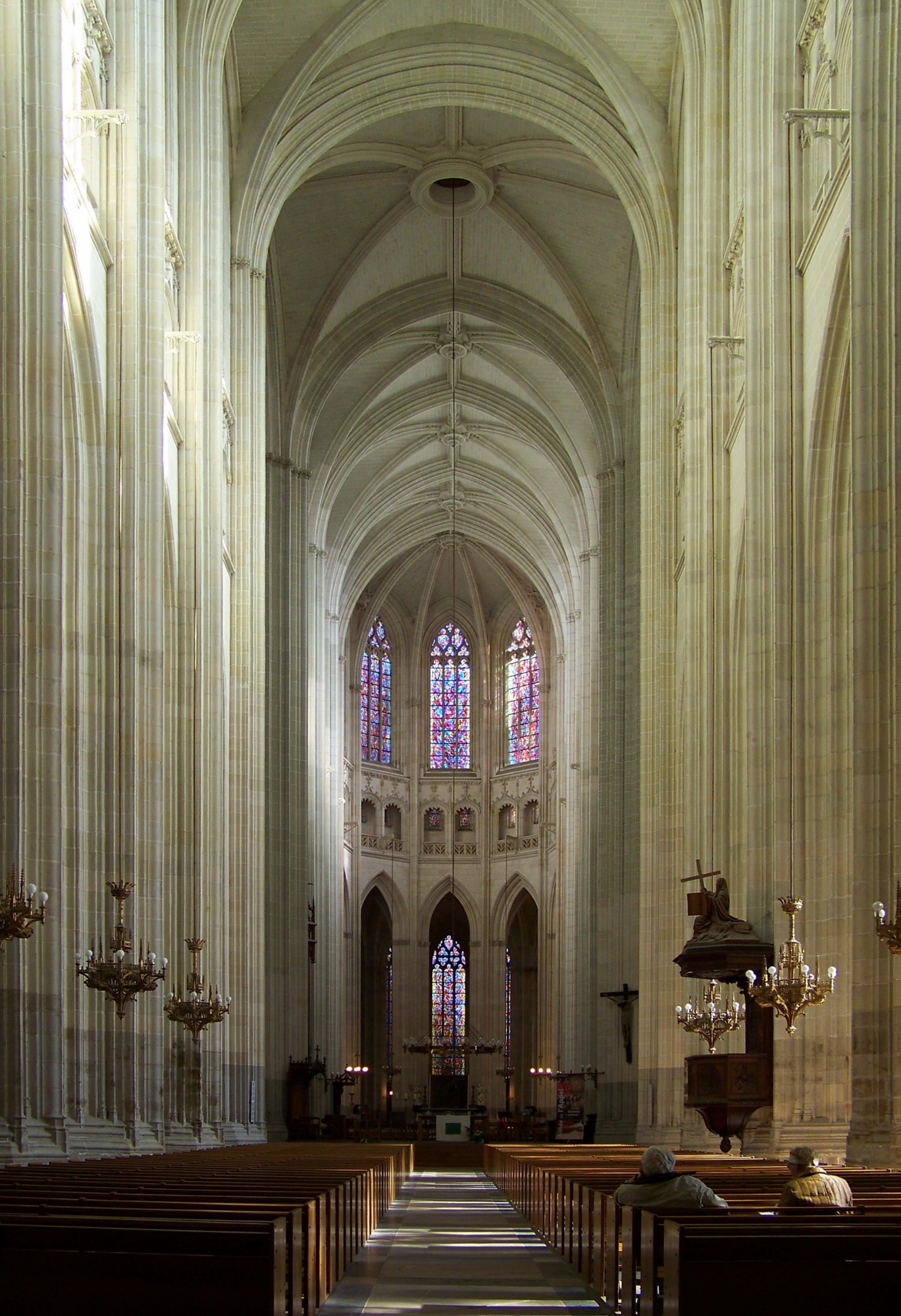
The road trip is drawing to a close, and your last day takes you southeast towards home. From Vannes, jump on the motorway and after about an hour and a half you’ll roll into vibrant, creative Nantes — a city that was historically part of Brittany, even though it now sits in a neighbouring administrative region. Its energy feels completely different from anything you’ve seen on the coast: industrial, artsy, and full of surprises.
The one thing you absolutely cannot miss here is the extraordinary Les Machines de l’île project, installed in the city’s former shipyards. Artists have created enormous mechanical creatures inspired by Jules Verne’s novels — the star of the show is a twelve-metre-tall mechanical elephant that lumbers along the waterfront spraying water on delighted onlookers. You can book a ride through GetYourGuide in advance.
In the afternoon, stroll over to the imposing Château des Ducs de Bretagne — the fortress of the Dukes of Brittany — which makes a striking contrast against the modern city skyline. And with that, your 10-day circuit is complete. From Nantes you can fly back to the UK directly, or return your hire car and jump on a high-speed TGV train to Paris for onward connections. Today’s final driving total is around 120 kilometres.
💡 Tip: Round off your trip in a relaxed bistro with whatever looks good — you’ve earned it. Nantes has an excellent food scene beyond the tourist trail, so ask a local for their recommendation rather than heading for the most obvious spot near the château.
If you’re flying home the following morning, book a hotel near Nantes city centre or the train station through Booking.com — transport links to the airport and to Paris are excellent from here.
Map of points of interest for your phone
Where to stay along the route
💡 Accommodation & activities tip: We always search for accommodation on Booking.com — the cancellation policies are hard to beat. For tours, tickets, and activities, it’s worth comparing options on GetYourGuide.
On a road trip like this, we recommend keeping the same base for two to three nights at a time — it means less packing and unpacking, without forcing you to make long daily drives back to your hotel. The best strategic bases are historic Bayeux, corsair Saint-Malo, coastal Perros-Guirec, and medieval Vannes. Guesthouses and chambres d’hôtes are almost always better value — and far more atmospheric — than big hotel chains.
- Bayeux: The ideal base for the D-Day area. The family-run Hotel d’Argouges occupies a beautiful 18th-century townhouse and offers genuine tranquillity right in the centre.
- Saint-Malo: For the full corsair experience, try Hotel La Cité, which sits inside the massive ramparts just a short walk from the crashing waves.
- Vannes: A short stroll from the harbour and historic gardens, Kyriad Vannes Centre-Ville offers clean, comfortable rooms with easy parking — a real bonus when you’re on a road trip.
Where to go next
If you have extra time or want to extend your French adventure, here are some of our other guides to help you plan your next epic journey:
- Mont-Saint-Michel: Complete Guide and Tips
- Brittany: A Guide to the Most Beautiful Places
- D-Day Beaches in Normandy: What to See and Visit
- Étretat: Tips for Visiting the White Cliffs of Normandy
Frequently asked questions
Can I manage this road trip without a rental car?
France does have a great high-speed train network, but it only connects the big cities like Rouen, Rennes, or Nantes. Without a car you’ll find it very hard to reach the cliffs, the landing beaches, and the small Breton villages, because the local buses run infrequently and often don’t connect with each other at all. If you really don’t want to drive, you’ll have to rely on expensive organised tours from the major centres.
Is the weather in Brittany really always so bad?
The weather in the northwest of France is extremely changeable due to the influence of the Atlantic, so yes, it can rain even in August. But these aren’t persistent downpours, more like quick showers that are immediately followed by bright sunshine. All you need is to dress in layers, keep a good waterproof jacket handy, and take the strong wind as part of the local rugged character.
What about the crowds at the World War II memorials?
During the summer holidays, and especially at the beginning of June when the annual D-Day commemorations take place, there’s a huge influx of tourists and veterans on Omaha and Utah beaches. If you want to experience a quiet and solemn atmosphere at the American cemetery without the crush, plan your visit for September or October instead, once the biggest tourist fever has subsided.
Do I have to pay for a guide in Carnac?
Since 2025, when the Carnac menhirs were added to the UNESCO list, the rules for their protection have been tightened. In high season, from April to September, you can only get in among the stones with a paid guide, so as not to damage the monument. But you can view and photograph them from behind the low fence free of charge all year round.
Where can I best taste real French cidre?
You’ll find cidre absolutely everywhere in the north of France, from luxury restaurants to the most out-of-the-way crêperies. You’ll get the most authentic experience in the local crêperies, where the sparkling drink is served to you in traditional ceramic bowls (bolées). Don’t be afraid to also try the dry variety (brut), which goes brilliantly with hearty savoury galettes.
Will all the attractions be open in autumn too?
While the large museums and cathedrals stay open year-round, a lot of the smaller restaurants and attractions on the coast close after 30 September. Also be prepared for the opening hours of castles and visitor centres to be significantly shortened. On the upside, you’ll often have the cliffs and beaches all to yourself.
How much are tolls on French motorways?
The toll-gate system (péages) is very widespread in France and fairly costly. On a route over a thousand kilometres long, reckon on spending around 90 to 110 euros on fees alone. In Brittany itself, however, the situation is more pleasant, because most of the express roads there are completely free for passenger cars, which gives your budget a bit of a break.
Where do I arrange the environmental Crit’Air sticker?
You have to order the sticker exclusively in advance on the official French government website, even for a car with Czech licence plates. It costs just under five euros and arrives in the post at your home within roughly two weeks. Without it, you risk hefty fines when entering the low-emission zones in Rouen or around Nantes.
Tips and Tricks for Your Vacation
Don’t Overpay for Flights
Search for flights on Kayak. It’s our favorite search engine because it scans the websites of all airlines and always finds the cheapest connection.
Book Your Accommodation Smartly
The best experiences we’ve had when looking for accommodation (from Alaska to Morocco) are with Booking.com, where hotels, apartments, and entire houses are usually the cheapest and most widely available.
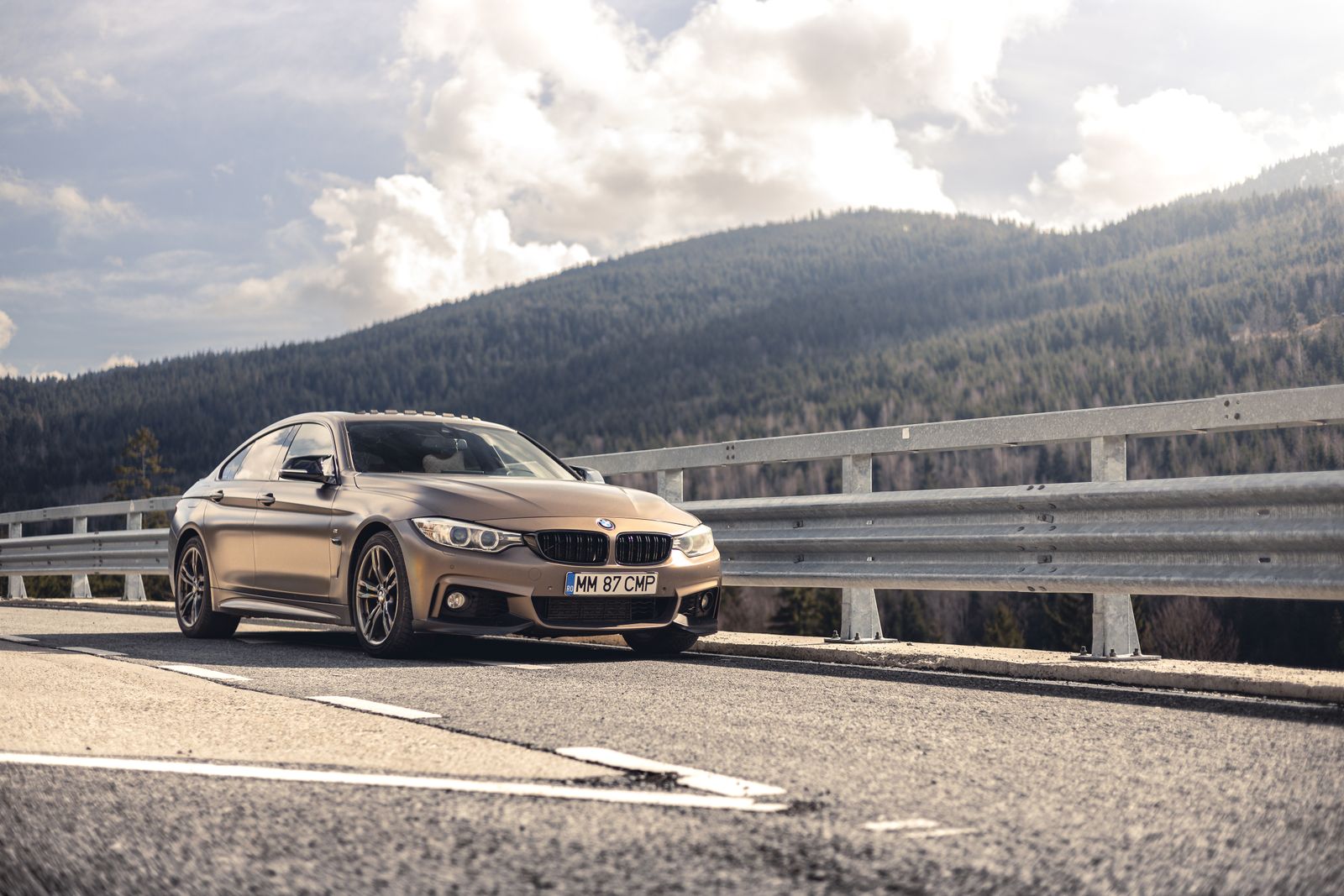 🚗 Car rental on the roadVerified car rentals in Normandy
Search with the DiscoverCars comparison engine — it compares prices from dozens of local and international rental companies, and most bookings come with free cancellation.
Compare car prices in Normandy →Don’t Forget Travel Insurance
Good travel insurance will protect you against illness, accidents, theft, or flight cancellations. We’ve had a few hospital visits abroad, so we know how important it is to have proper insurance arranged.
Where we insure ourselves: SafetyWing (simple monthly subscription) and TrueTraveller (for extra-long trips).
Find the Best Experiences
Get Your Guide is a huge online marketplace where you can book guided walks, trips, skip-the-line tickets, tours, and much more. We always find some extra fun there!