

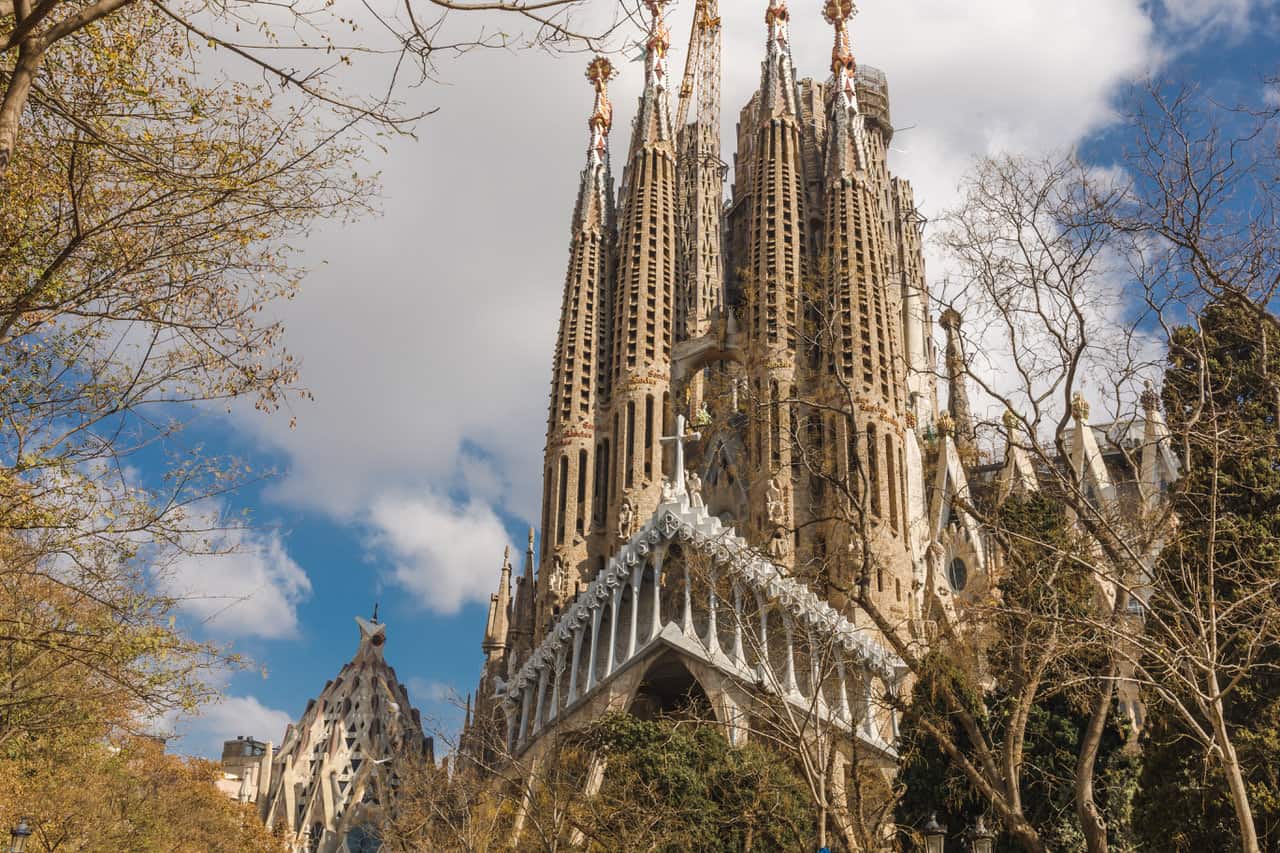
When Lukáš and I first stepped out of the metro and looked up, we were completely speechless — because even though we’d seen photos of this architectural marvel a thousand times, nothing truly prepares you for the real thing. The Catalan capital pulses with an energy that’s arguably unmatched anywhere in Europe, where Gothic shadows seamlessly blend into sweeping Art Nouveau boulevards. 2026 is a landmark year for the whole of Spain, marking exactly one hundred years since the tragic death of visionary architect Antoni Gaudí, and his life’s work has finally reached its magnificent completion. In this article, I’m bringing you a complete guide to the Basílica de la Sagrada Família, covering everything about Sagrada Família tickets, prices, and our personal tips for visiting in this extraordinary year. If you arrive prepared with your tickets safely stored on your phone, this building will reward you with an unforgettable atmosphere and architecture that defies every law of gravity and logic.
TL;DR
- Buy tickets online only: Physical ticket offices on site no longer exist, and due to the huge demand in 2026, tickets sell out even two months in advance.
- 2026 is exceptional: The final section of the Tower of Jesus Christ was installed on 20 February 2026, bringing the basilica to its full height of 172.5 metres, making it the tallest church in the world. It’s not finished yet, though — the Glory Façade is expected to be completed around 2034 to 2035.
- The towers are worth it: You can choose between the older Nativity Façade (city views) and the newer Passion Façade (sea views). A lift takes you up, but you have to walk down the narrow stairs. You can’t yet access the central Tower of Jesus Christ — according to secondary sources, the viewing platform isn’t set to open until 2027.
- Watch out for Saturdays: The basilica closes at 6 p.m. on Saturdays all year round, even in high season. A lot of people get caught out by this detail.
- Allow plenty of time: You’ll need roughly 1.5 to 2 hours to comfortably explore the interior, your chosen tower, and the underground museum.
- Don’t forget the dress code: This is a consecrated church, so your shoulders must be covered and shorts or skirts should reach at least mid-thigh, otherwise security will mercilessly turn you away.
- Come by metro: Barcelona has introduced very strict low-emission zones and parking nearby is a nightmare, so the purple or blue metro line right to the basilica is your best bet.
The full destination guide: Catalonia — guide and what to see
When to Visit Sagrada Família
When planning your visit to this architectural masterpiece, timing is absolutely key — sunlight plays a huge role inside the basilica and can elevate your experience to a completely different level. Gaudí designed the stained-glass windows to create a mesmerising light show that shifts throughout the day, transitioning from cooler tones to fiery warm hues. We always try to avoid the biggest tourist crowds by choosing strategic time slots when the atmosphere is calmer and the light is absolutely perfect for photography.
If you head there first thing in the morning at opening time, you’ll dodge the worst of the crowds and enjoy the morning sun filtering through the blue and green stained glass on the eastern Nativity Façade side. This cooler light gives the interior an incredibly calm, almost mystical atmosphere that the two of us always love savouring in relative peace. On top of that, the city hasn’t heated up yet in the early hours, which you’ll really appreciate during summer months when street temperatures quickly climb to uncomfortable levels.
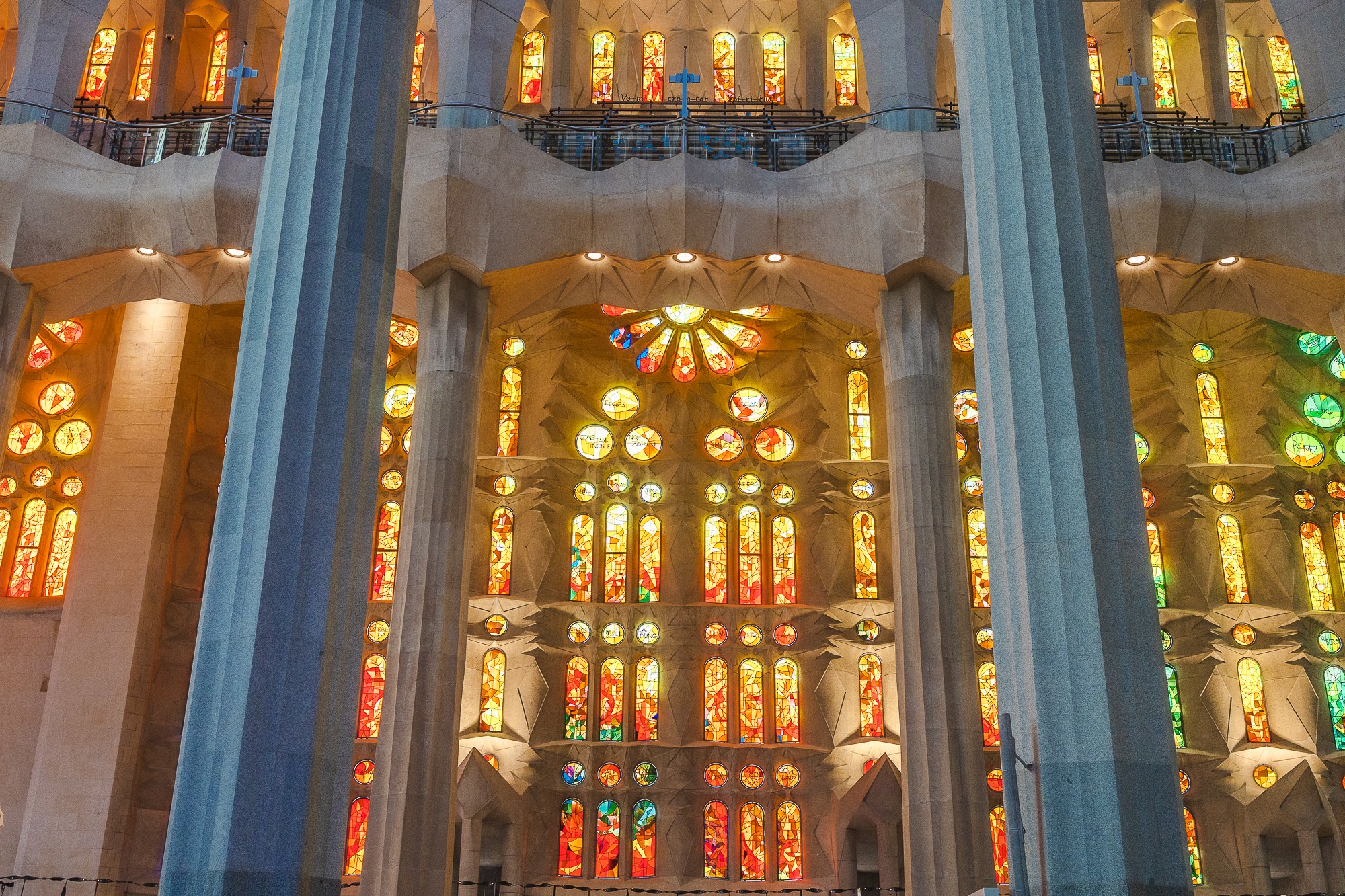
On the other hand, late afternoon offers an entirely different spectacle, as the setting sun hits the western Passion Façade and floods the entire space with fiery shades of red, orange, and gold. This warm light literally sets the stone forest of columns ablaze, and we have to admit it’s probably the most romantic and breathtaking sight you can witness inside. In terms of seasons, the best months for visiting Barcelona are the shoulder months — May, June, September, and October — when you’ll avoid the extreme heatwaves that have increasingly plagued the city in recent years.
Where to Stay Near Sagrada Família
💡 Accommodation & experiences tip: We love searching for places to stay on Booking.com, which usually has the best cancellation policies. For tickets, tours, and activities, it’s worth comparing options on GetYourGuide.
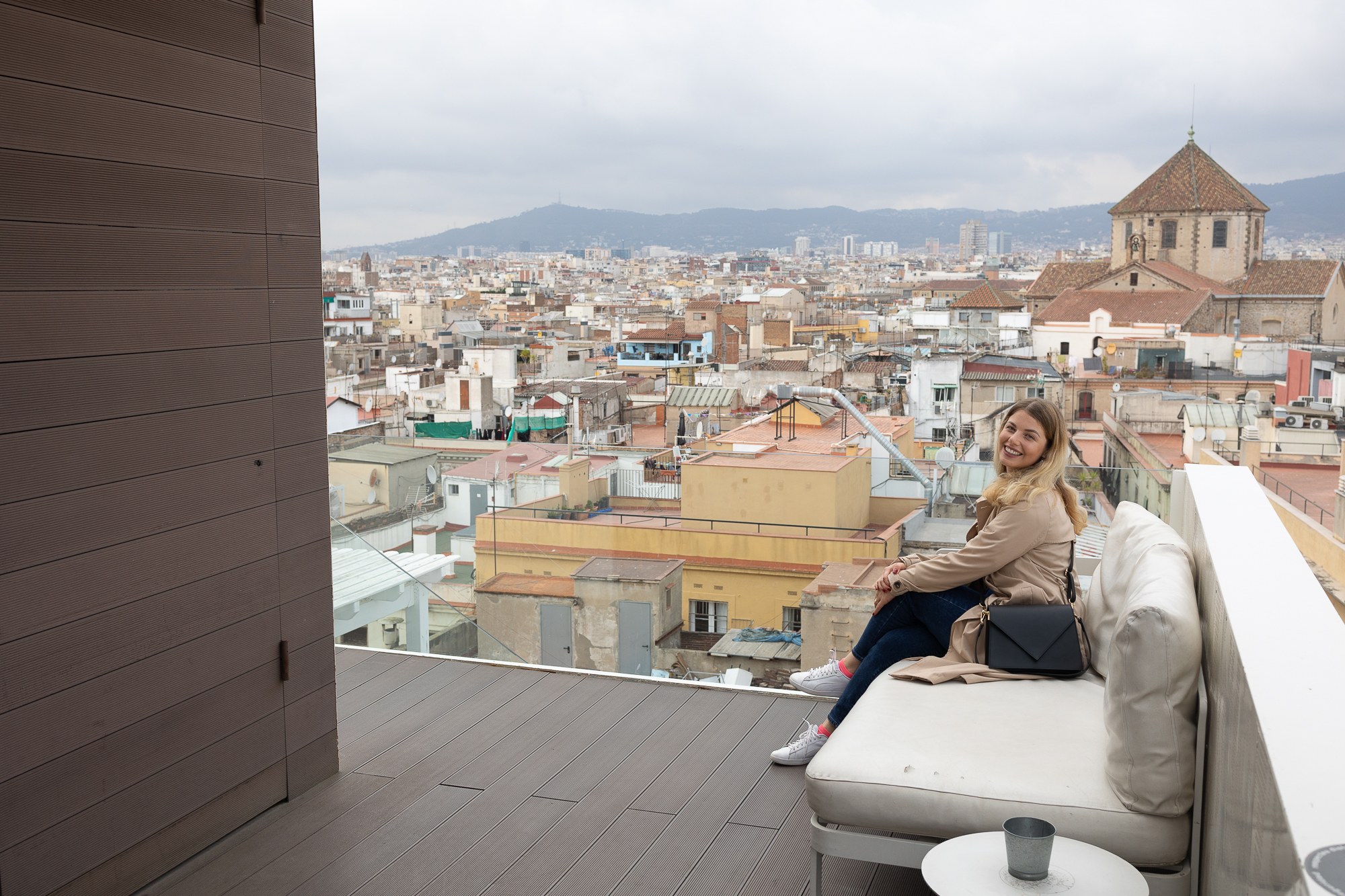
Staying within walking distance of the basilica is incredibly convenient, as the Eixample district where it’s located is full of excellent cafés, wide avenues, and surprisingly peaceful inner courtyards. However, you should be aware that from April 2026 the city has dramatically increased the tourist tax, so you’ll pay an extra €8.40 per person per night at a four-star hotel, which adds up over a longer stay. On top of that, there’s a major crackdown on short-term rentals, so we prefer booking traditional hotels — they’re reliable and often offer unforgettable views.
Our absolute favourite is Sercotel Rosellón, which sits just a stone’s throw from the church and boasts a rooftop terrace with arguably the most iconic view of the towers in all of Barcelona. Staying here means you can enjoy your morning coffee or evening drink with a direct view of Gaudí’s masterpiece — an experience that many people pay premium bar admission for. The rooms are modern and spotless, and the staff are incredibly helpful with questions about getting around or finding vegetarian restaurants nearby.
Another excellent choice is Ayre Hotel Rosellón, which also benefits from a fantastic location and offers very comfortable facilities for exploring the entire city. If you’re after something a bit more intimate, check out listings on Booking where you can find smaller boutique hotels with wonderful character tucked into the surrounding streets of Eixample. Just remember that in 2026 the city is genuinely packed, so book your accommodation ideally six months in advance to have any chance of snagging a reasonable price.
12 Tips You Need to Know Before Visiting Sagrada Família
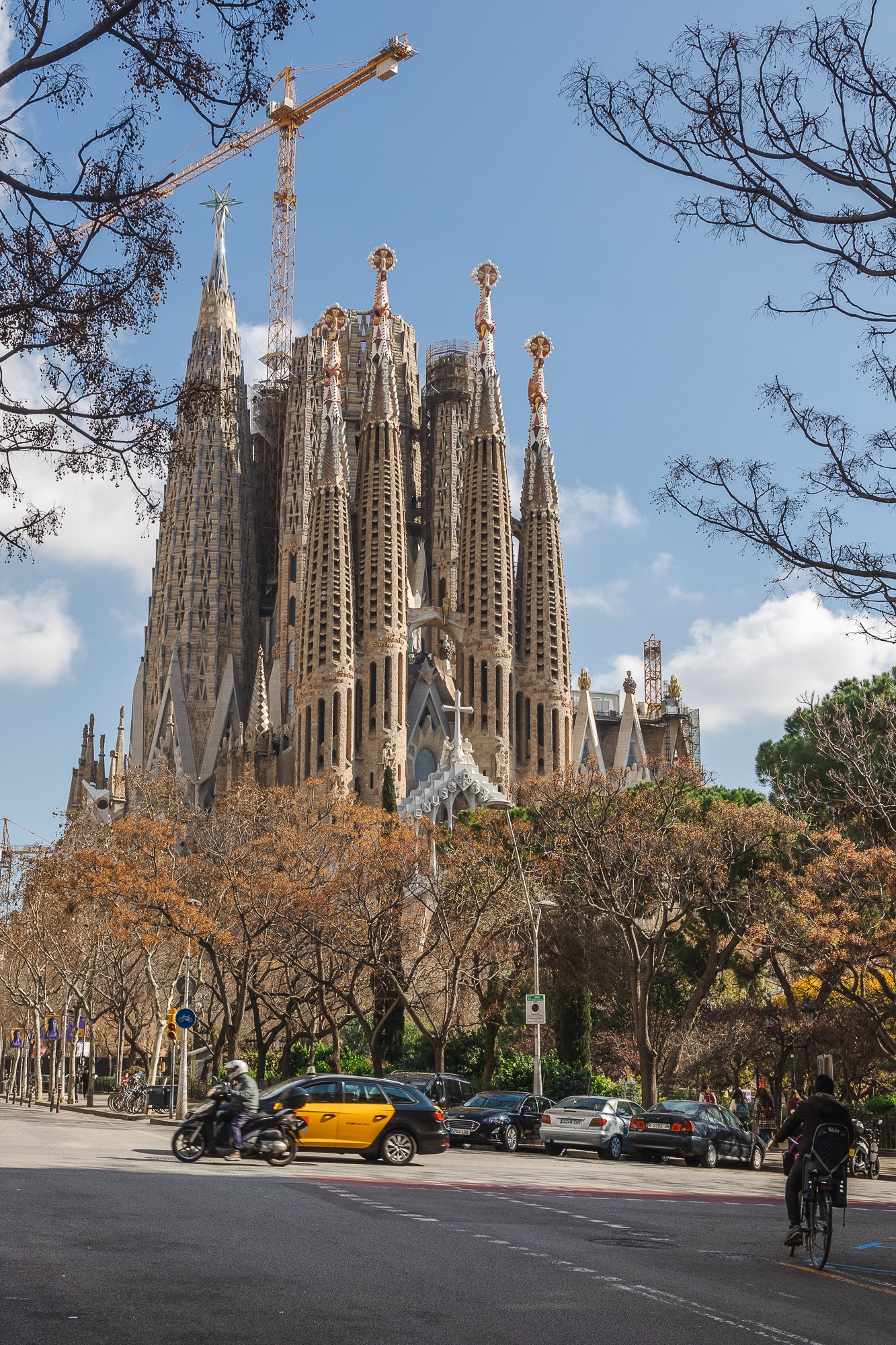
Let’s dive into twelve specific tips that will help you plan a flawless visit, because with the centenary celebrations and the final completion of the building, Barcelona has become an absolute whirlwind. I’ll walk you through how to navigate the ticket options, what to look out for when choosing a tower, and what you absolutely shouldn’t miss once you’ve cleared the strict security check at the entrance.
1. Buy Your Sagrada Família Tickets Online and Well in Advance
If you take away just one thing from this entire article, let it be this — banking on buying tickets at the door is a surefire way to see this marvel from behind the fence on the pavement. Physical ticket offices simply don’t exist, and all sales have moved exclusively to the official website or verified booking platforms. As soon as you know the exact dates of your trip to Spain, set a reminder in your calendar and grab your tickets the moment they become available.
The 2026 price list has four options, and it’s worth not mixing them up. The basic ticket costs €26 and includes the basilica, the official app, and an audio guide. A tour with a live guide is €30, a ticket with the lift up to one of the towers is €36, and a combination of guide and tower is €40. We warmly recommend a guide to anyone who wants to delve into the complex symbolism that Gaudí carved into every stone.
Tickets are released a maximum of two months in advance, and in high season from spring to autumn the best time slots vanish at an incredible pace. According to available data, between May and September slots sell out ten to fourteen days ahead, and tower tickets easily three weeks in advance. By the way, there’s no centenary surcharge, even though some sales websites mention one. It simply isn’t on the official price list.
2. How to Choose the Right Tower to Visit
When purchasing the pricier ticket, you’re faced with a crucial decision: do you want to visit the towers on the Nativity Façade side or the Passion Façade side? You can’t visit both on a single entry, so you’ll need to think carefully about what you’re hoping to see from up there. From our experience, it’s always a bit of a gamble depending on the weather and visibility over the city that day.
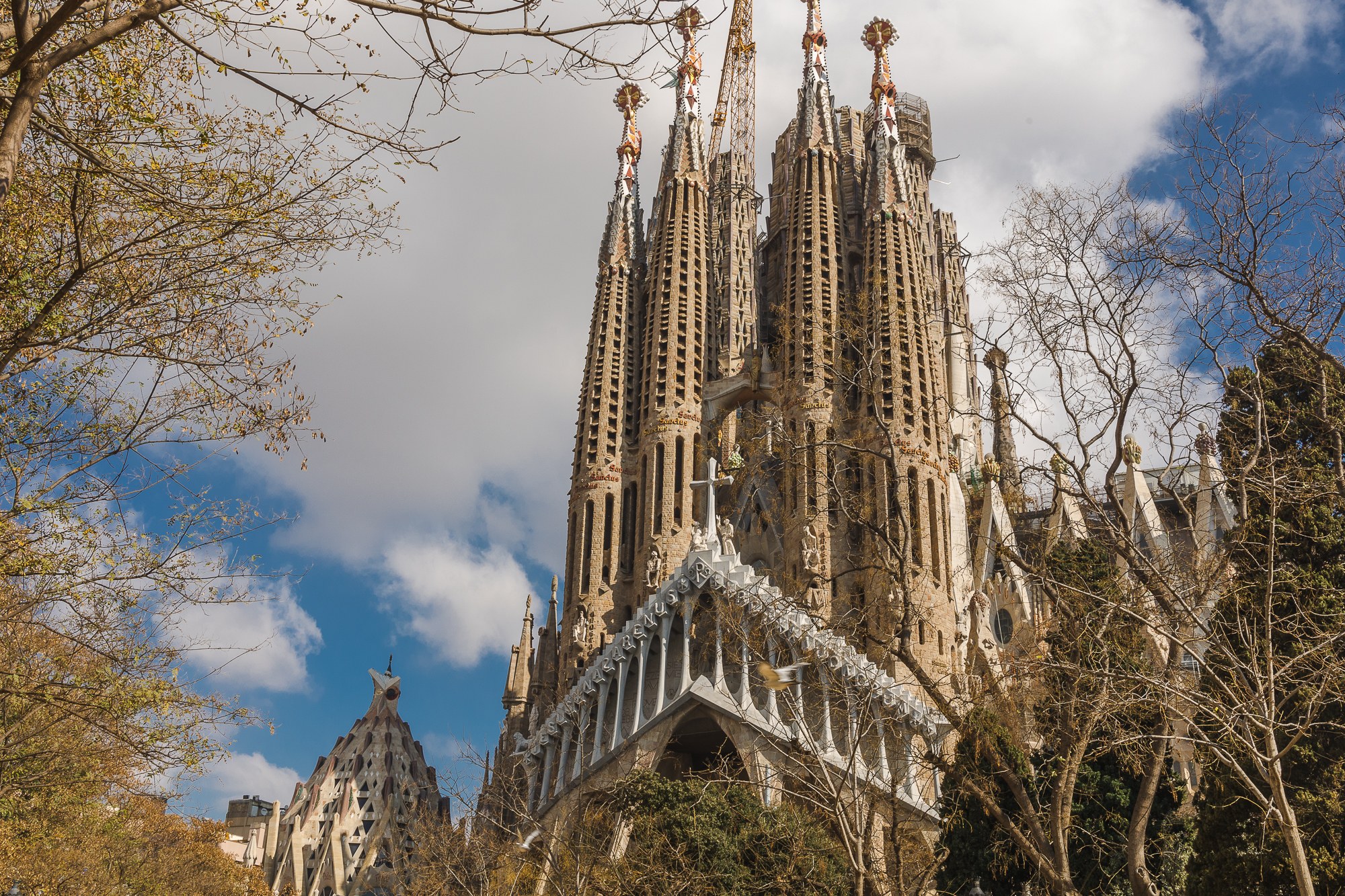
The towers on the Nativity Façade date back to Gaudí’s own lifetime and offer beautiful views towards the east of the city, plus you get an up-close look at the stunning ceramic mosaics adorning the spire tops. Meanwhile, the towers on the Passion Façade are newer and provide a sweeping panorama westward towards the sea and Barcelona’s city centre. Whichever side you choose, I can guarantee that the view of the city — hemmed in by hills on one side and the Mediterranean on the other — will be utterly unforgettable.
3. Be Prepared to Walk Down on Your Own Two Feet
This is an incredibly important detail that many travellers overlook when buying their tickets, only to face an unpleasant surprise at the bottom of the lift. The lift will comfortably whisk you to the top, so there’s no need to worry about an extreme physical feat on the way up — but getting back to solid ground is entirely on foot. For safety and logistical reasons, the lifts aren’t used for the descent.
What awaits you is a narrow, spiral, and at times rather claustrophobic staircase that winds like a snail shell, with more than 400 stone steps. Lukáš and I actually love these descents, because through the small windows along the way you catch glimpses of architectural details you’d never spot from ground level. However, if you suffer from vertigo or have knee problems, think very carefully before booking the tower visit. Unfortunately, for people with reduced mobility or wheelchair users, tower access is entirely closed off for safety reasons.
4. The Nativity Façade Reveals Gaudí’s Original Vision
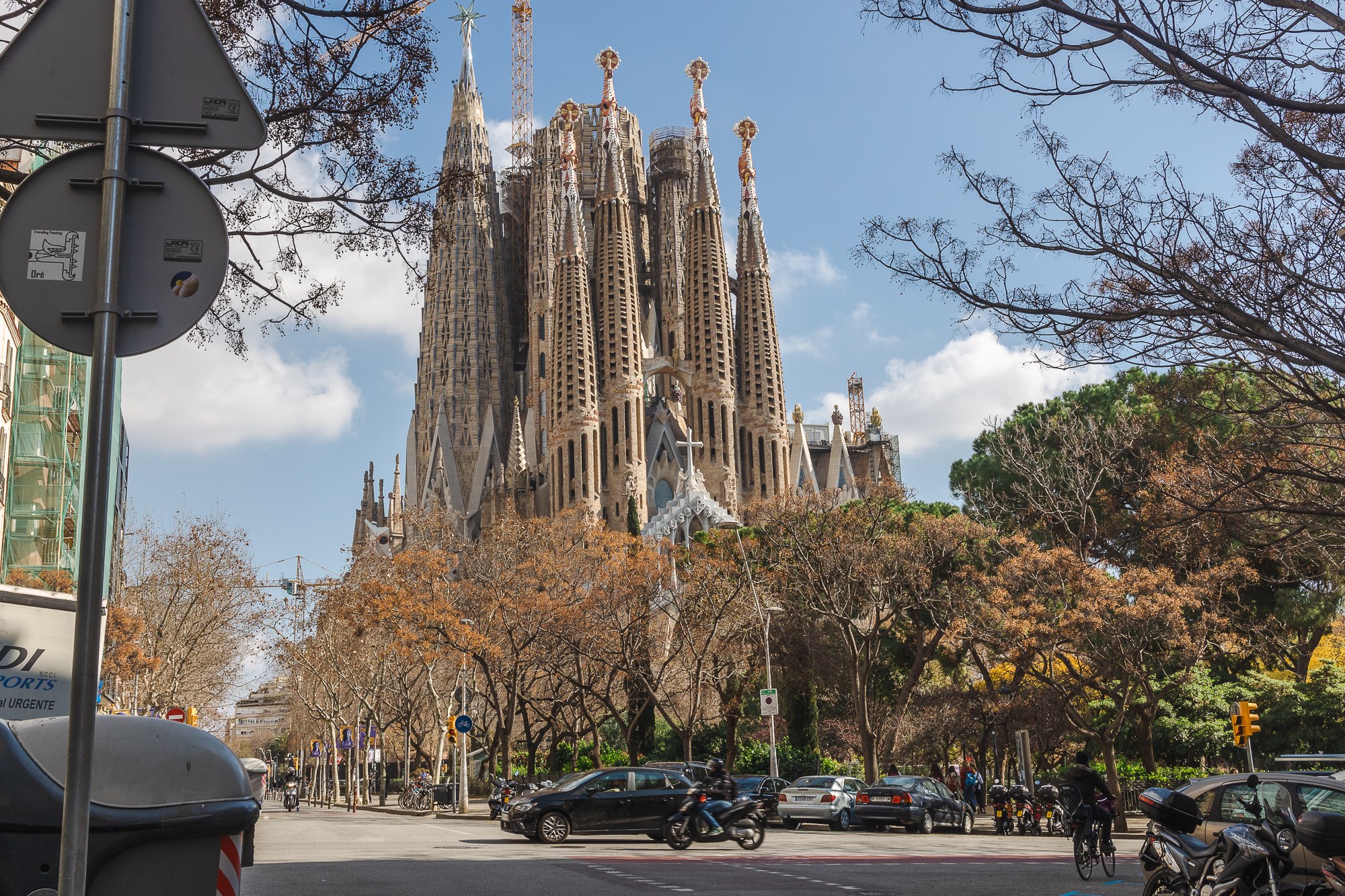
When you’re standing in front of the basilica, make sure to spend plenty of time on the eastern side — the Nativity Façade — which is the only part of the building largely completed during Gaudí’s own lifetime. This façade is truly unique: from a distance it looks like a melting candle or a waxy cliff face, but as you get closer, an astonishing wealth of organic detail reveals itself. Gaudí drew his deepest inspiration from nature here, so everywhere you look you’ll spot leaves, animals, and intertwining botanical motifs.
Every single scene on this façade tells the story of the birth and childhood of Jesus — it’s a celebration of life and joy that practically bursts from the stone. A fascinating detail is that Gaudí used real people from Barcelona’s streets, and even animals, as models for the sculptures to achieve maximum realism. If you bring binoculars or zoom in on your phone camera, you’ll spot even the tiniest details, like little tortoises bearing enormous columns on their shells.
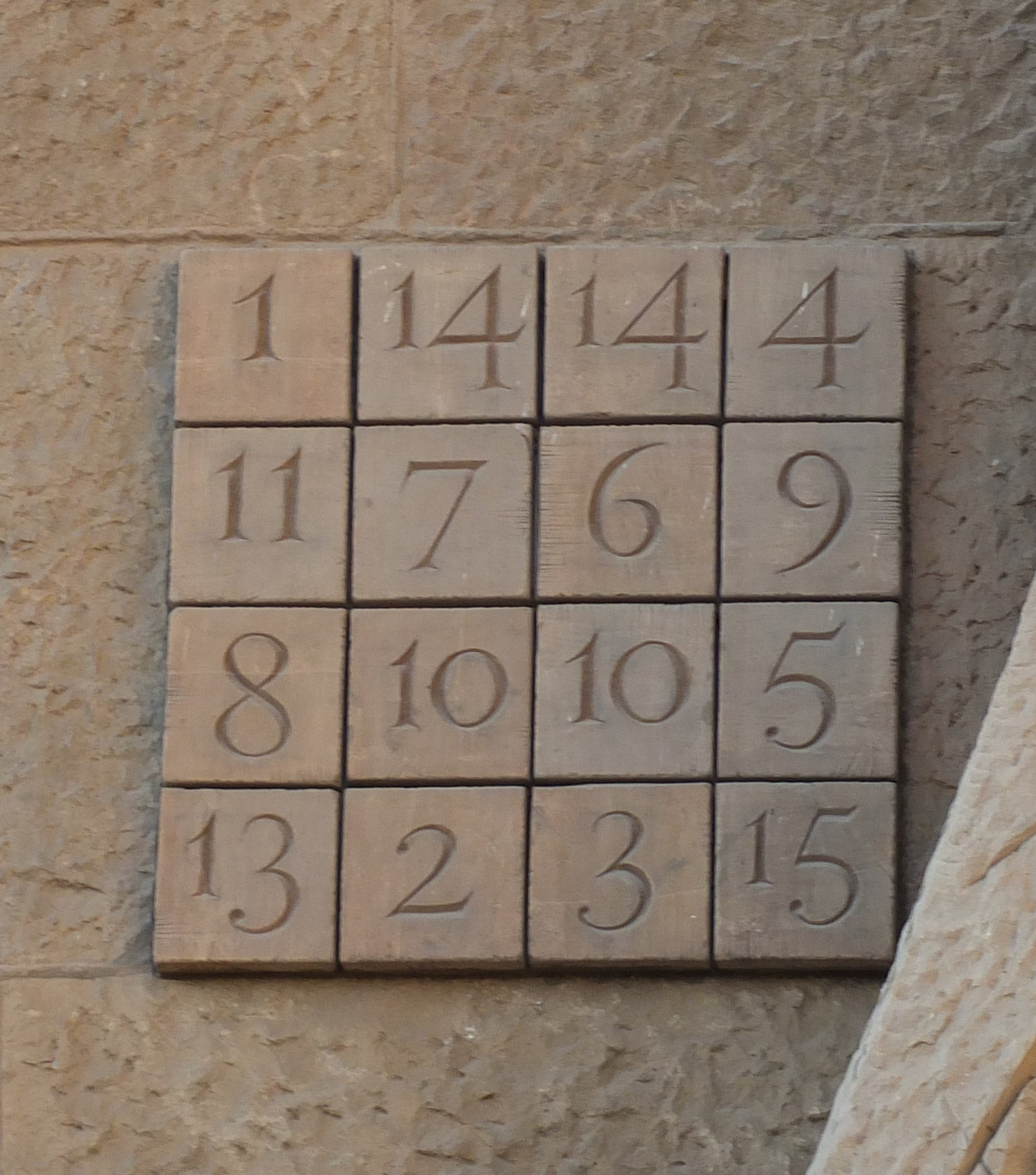
5. The Passion Façade Sparks Justified Controversy
When you walk around to the western side, you’ll likely experience a bit of visual shock, because the Passion Façade looks as though it was built by someone else entirely. And in a sense, it was — the sculptural decoration here was created by Josep Maria Subirachs, who chose a radically different, very angular and austere style. The intention wasn’t to create beauty, but rather to evoke pain, suffering, and sorrow — and in our opinion, he absolutely nailed it.
The contrast between the ornate older section and the stark newer one has sparked enormous passionate debate in Barcelona, with some locals even demanding that Subirachs’ work be removed. But we believe it’s precisely this evolution over time — this blending of different artistic visions — that makes the Sagrada Família such a unique building, one that truly has a life of its own. The skeletal figures and sharp geometric column lines will get under your skin and make you think.
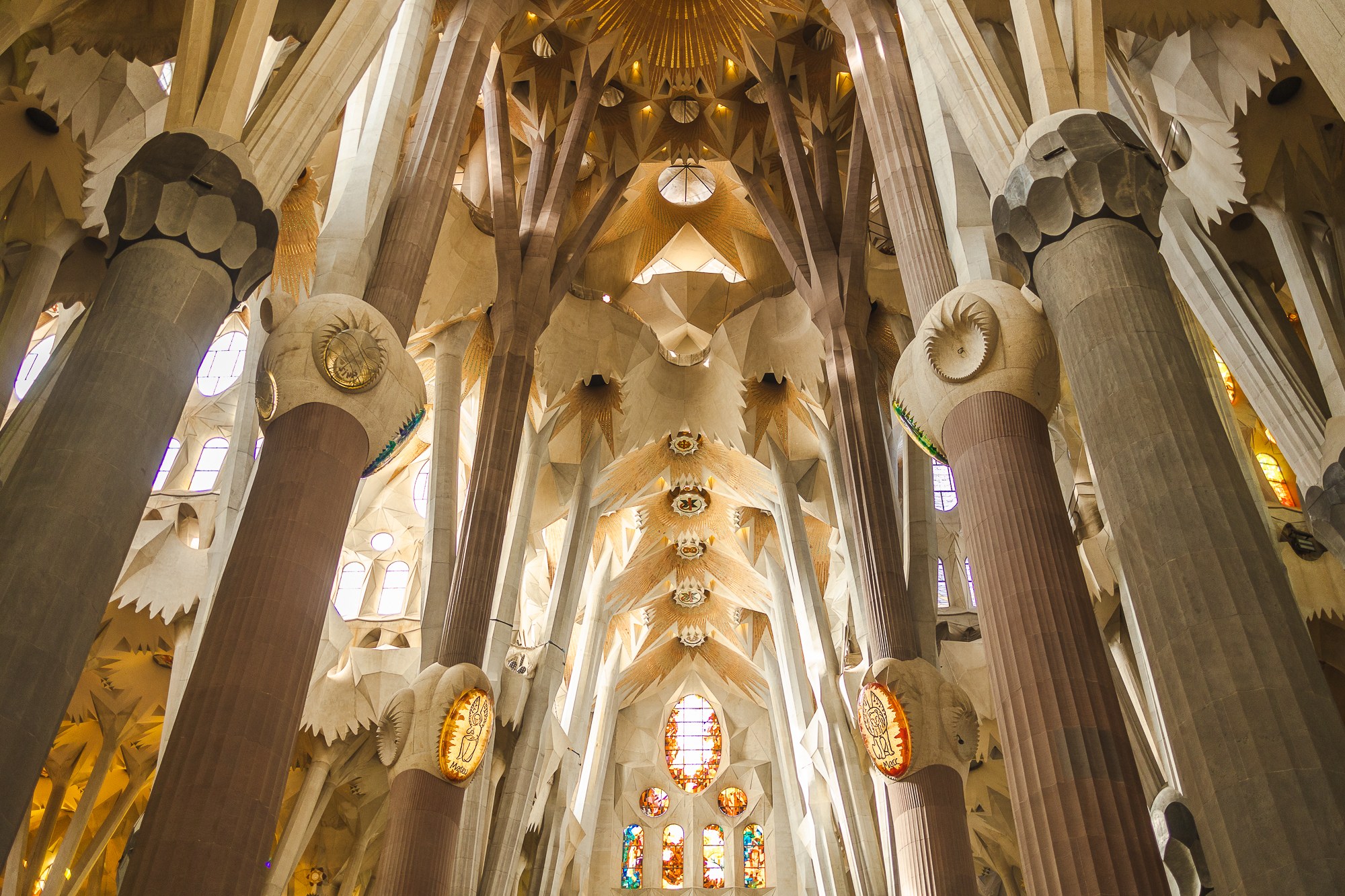
6. Inside, a Stone Forest and a Symphony of Light Await
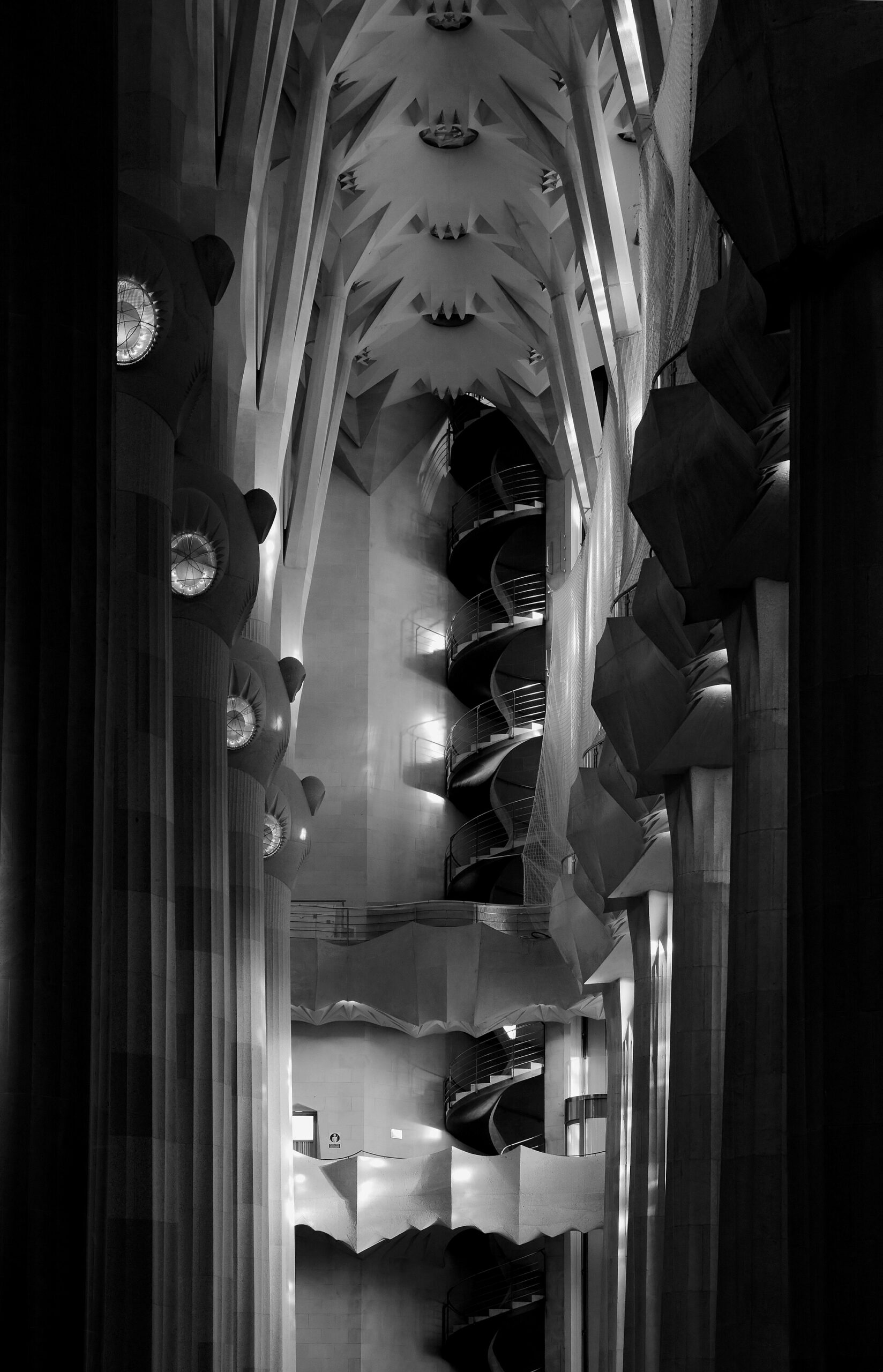
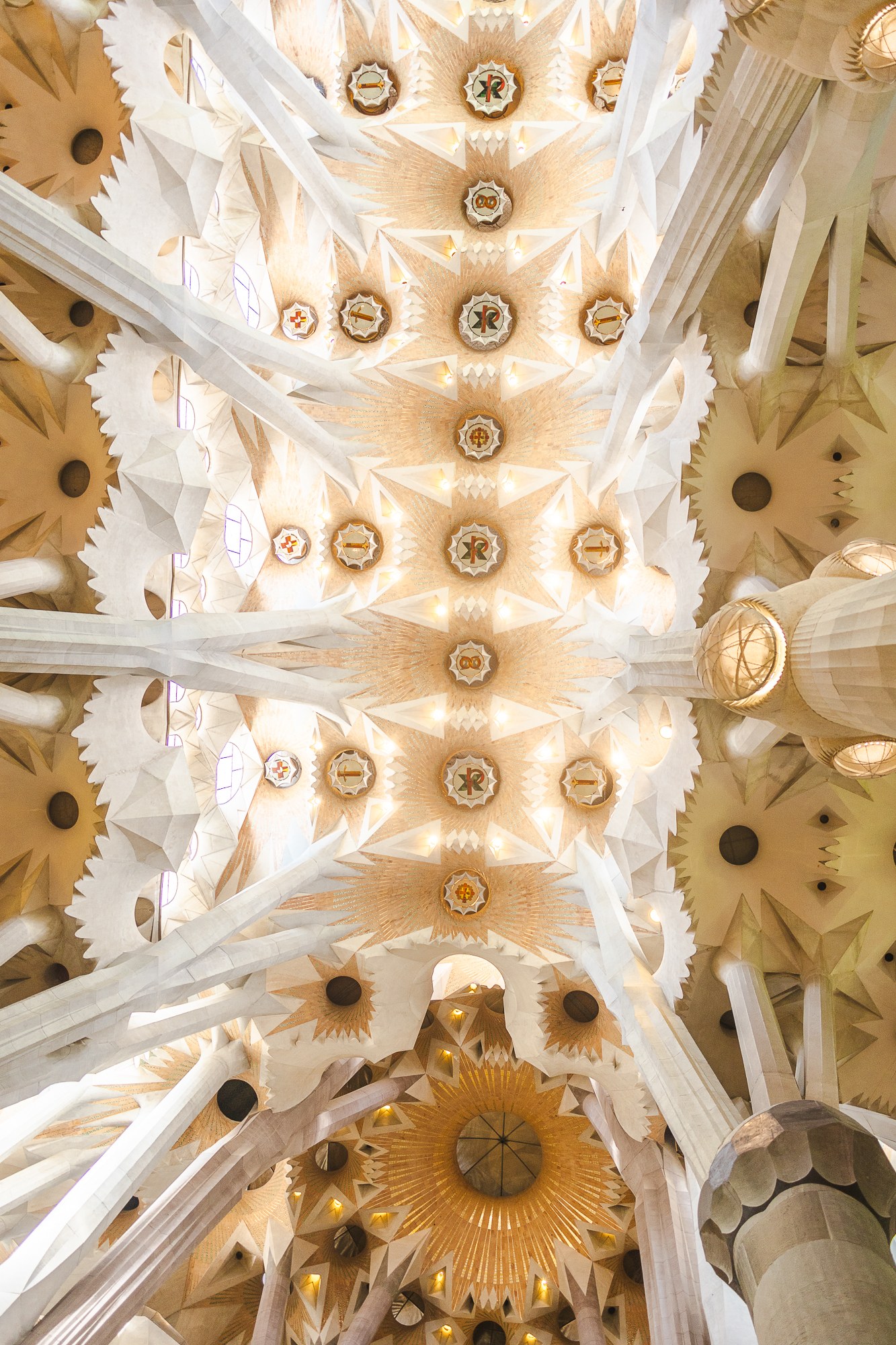
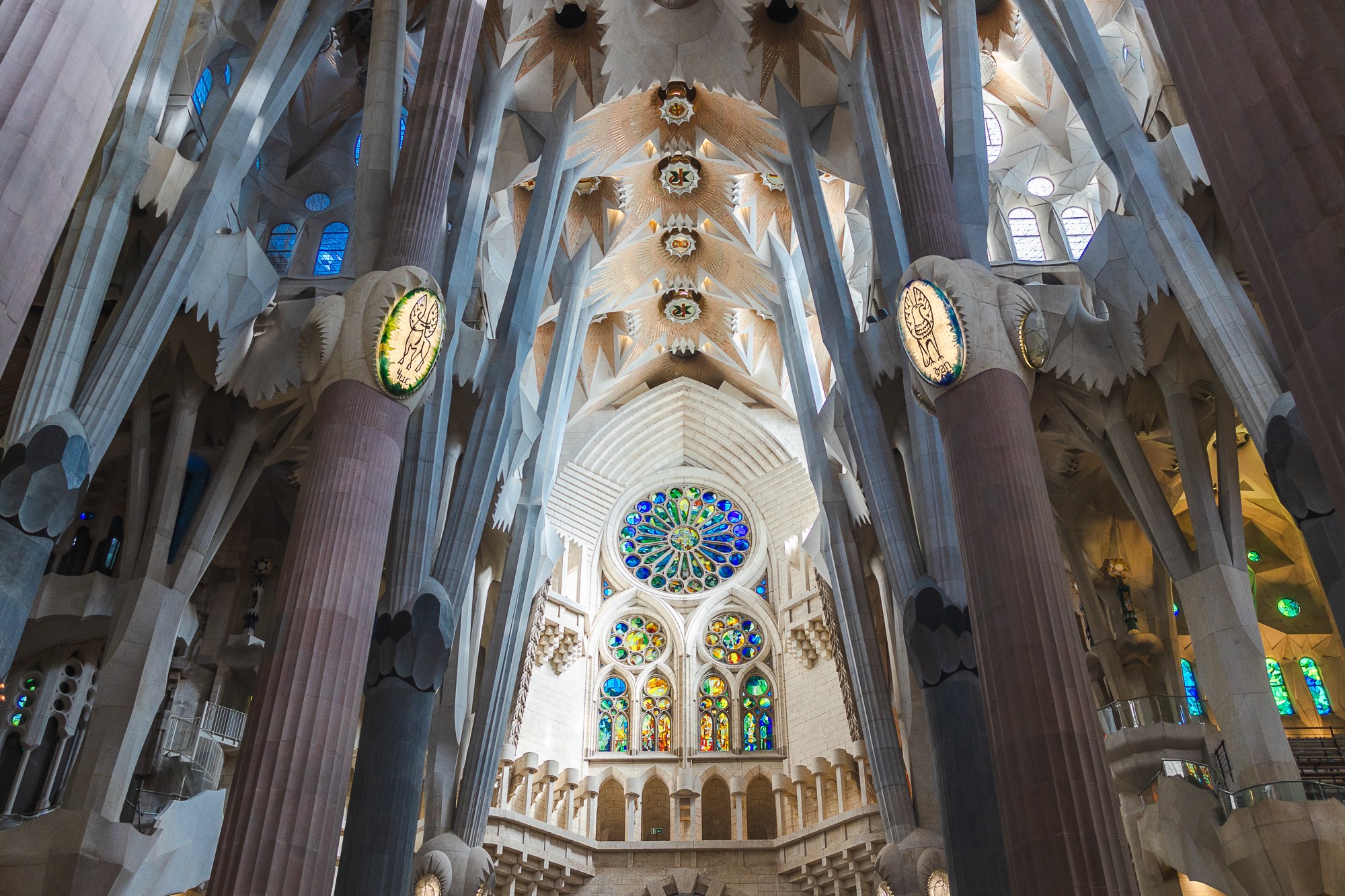
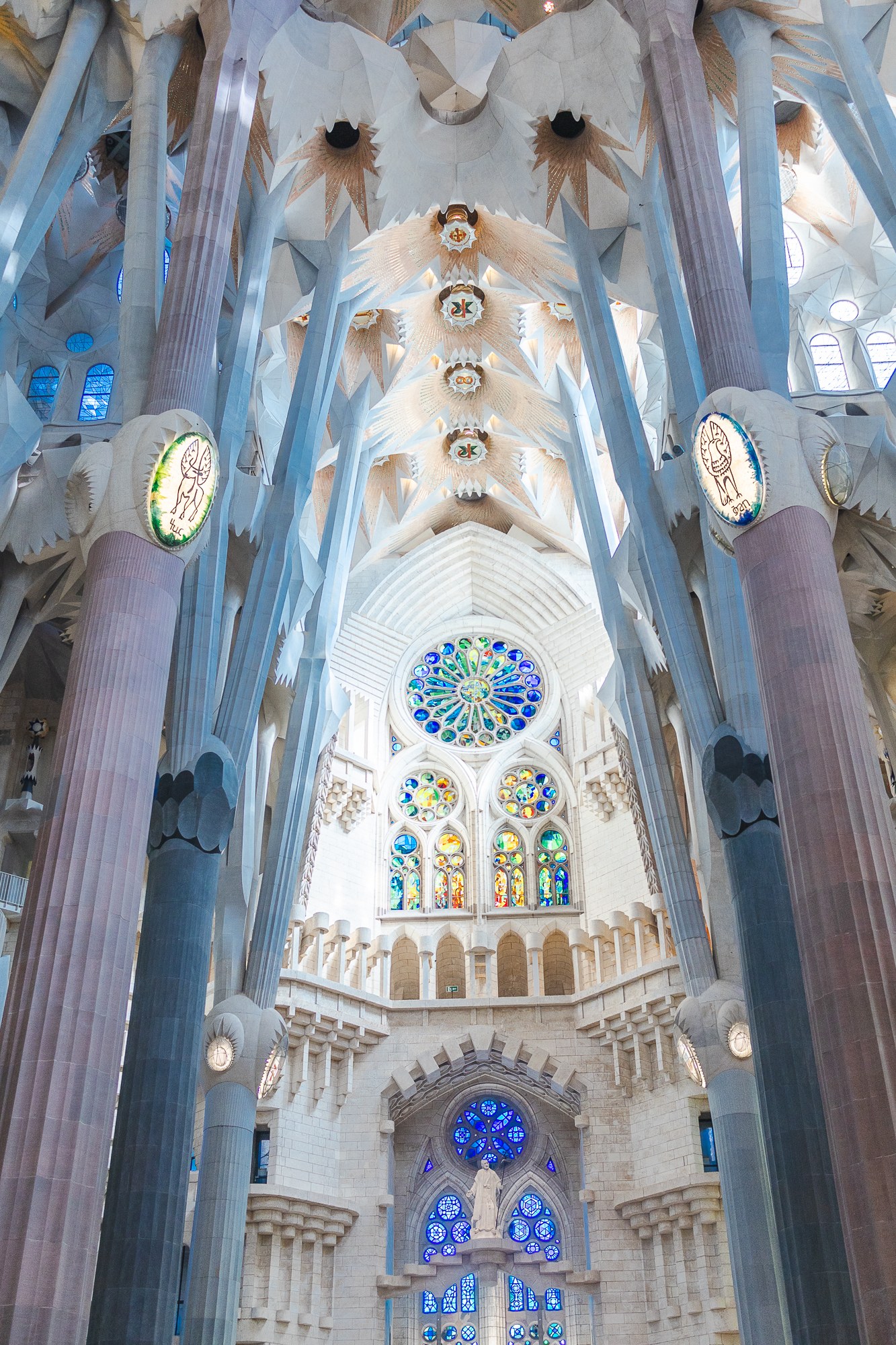
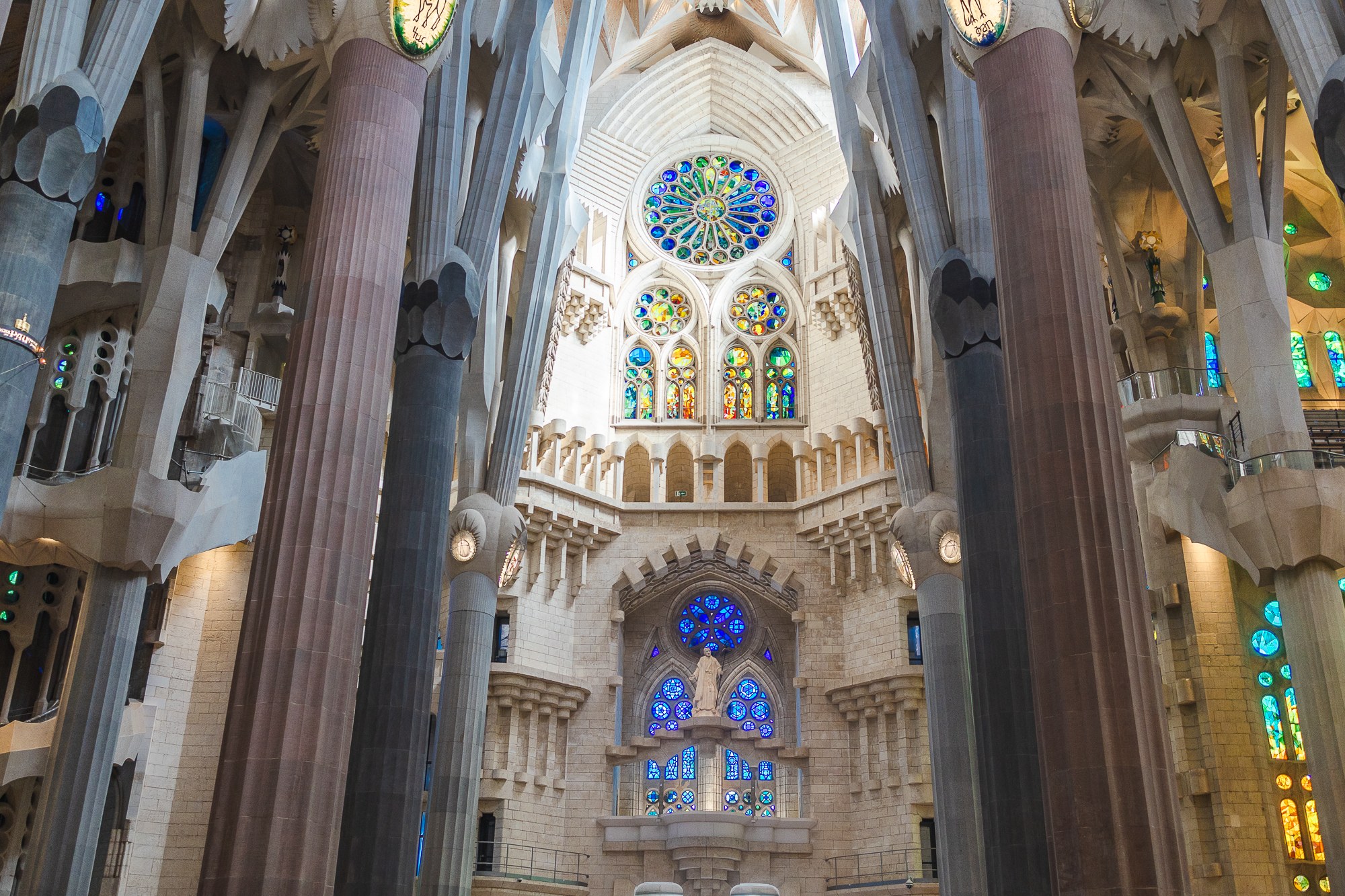
However impressive the exterior may be, I can guarantee that what you see inside will surpass all your expectations — the interior is genuinely otherworldly. Gaudí wanted worshippers to feel as though they were standing in a deep, quiet forest, so he designed colossal columns that branch towards the ceiling like the crowns of enormous trees. This architectural solution isn’t just visually stunning — it cleverly distributes the immense weight of the roof and towers, making it possible to build such an extraordinarily high vault without massive external flying buttresses.
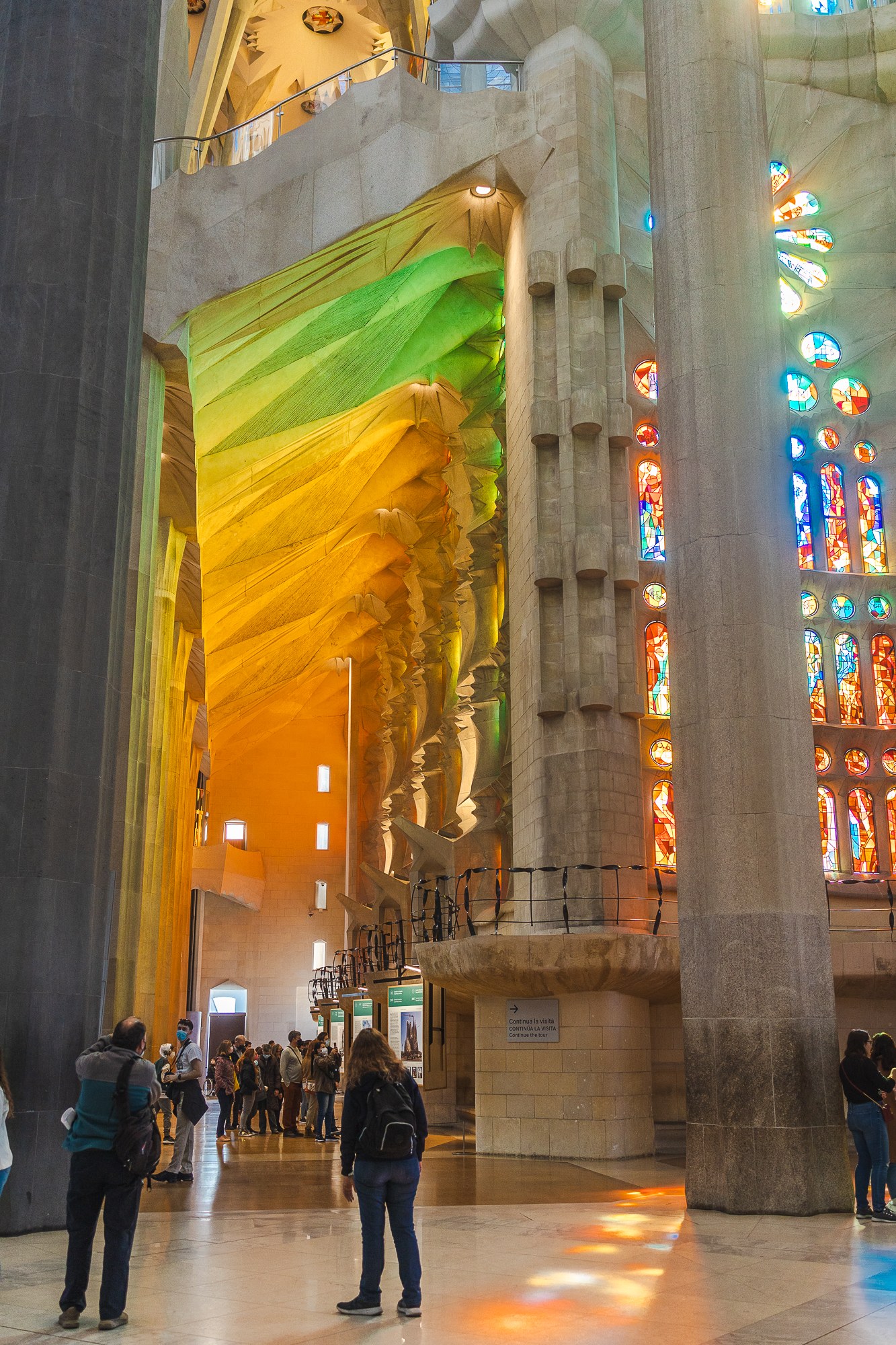
What truly gives the space its magic, though, is the genius use of natural light through the enormous stained-glass windows. There are no specific biblical scenes depicted on them — just pure colour gradients transitioning from cool blues and greens on the east side to intense reds and oranges on the west. Throughout the day, light sweeps across the columns and floor, creating a gorgeous rainbow atmosphere that Lukáš and I could happily sit and absorb in silence for a solid hour.
7. Don’t Miss the Crypt and Museum Beneath the Basilica
Many visitors wander out in a daze after seeing the main nave, never realising that beneath their feet lies another fascinating world well worth exploring. In the basement, you’ll find an extensive museum that meticulously documents the entire epic history of construction from 1882 right through to its completion in 2026. There are original Gaudí sketches, extraordinary plaster models salvaged from his workshop after it was destroyed during the Civil War, and historical photographs from an era when the surrounding area was nothing but open fields.
One level further down lies the crypt itself, which — unlike the rest of the basilica — is built in a much more traditional neo-Gothic style, since construction began before Gaudí took the reins. It’s in this very crypt that Antoni Gaudí is buried, so you can pay your respects to the man who sacrificed his entire life savings and personal life to turn this dream into reality. Access to the crypt is sometimes restricted during Mass services, but even peering down through the glass panels from above is well worth it.
8. Respect the Strict Dress Code
Although Barcelona’s climate practically begs you to wear the lightest clothing possible, and plenty of tourists wander the city in little more than beachwear, you’ll hit a wall at the basilica entrance. The Sagrada Família is still a fully functioning, consecrated Roman Catholic church, which means security at the door will absolutely enforce a proper dress code with zero exceptions. Break the rules and they’ll send you packing with your valid ticket in hand — you’ll lose your timed entry slot.
The rules are thankfully quite straightforward, but you need to think about them when packing your day bag in the morning. Your shoulders must be covered, so spaghetti-strap tops are out — we usually solve this with a light scarf thrown over a T-shirt just before entering. Shorts and skirts must reach at least mid-thigh, and obviously swimwear, see-through clothing, or non-religious head coverings aren’t permitted either.
9. How to Get to the Basilica
Driving around Barcelona has been an absolute nightmare in recent years, and in 2026 it’s doubly so — the entire city operates as a strict low-emission zone (ZBE). Even foreign vehicles must be registered in the system beforehand; otherwise you face fines ranging from €100 to €1,800, handed out mercilessly by the camera network. We left our car well outside the city and relied entirely on Barcelona’s excellent public transport.
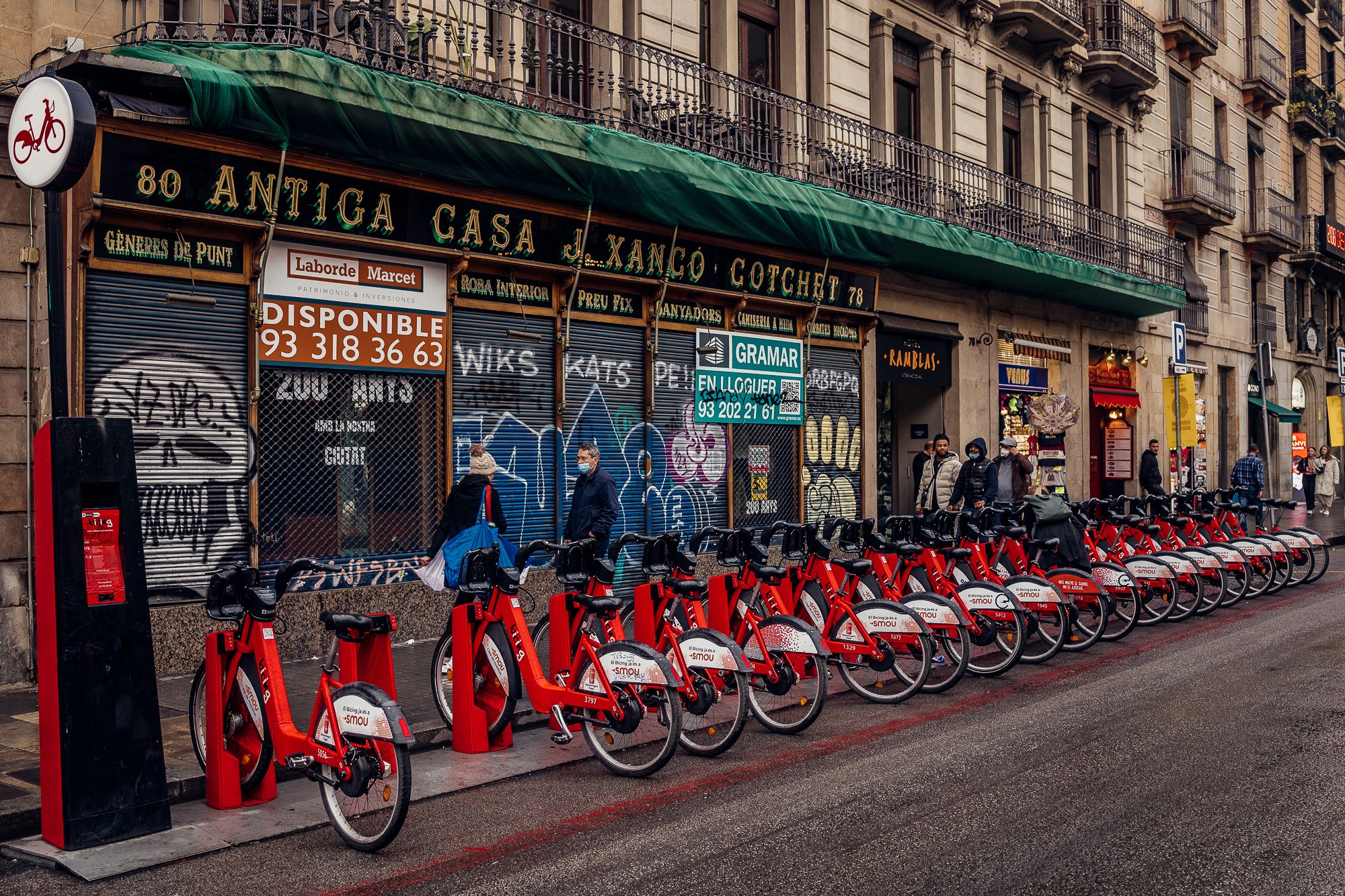
The easiest and fastest way to get there is undoubtedly the metro, as Sagrada Família station (lines L2 and L5) is literally steps from the main entrance. When you ride the escalators up to street level, the church looms into view so suddenly and at such scale that it’s guaranteed to take your breath away. Just keep a very close eye on your belongings in the metro and at the exit — this station is unfortunately one of the pickpockets’ favourite hunting grounds.
10. Allow the Right Amount of Time
People often ask us how long the whole visit actually takes so they can plan the rest of their packed Barcelona itinerary. If you have a basic ticket for just the main nave, count on spending at least an hour inside — there’s an incredible amount of detail to take in. We personally recommend setting aside roughly 1.5 to 2 hours for the entire visit, so you don’t have to rush and can truly soak up the atmosphere.
If you’ve got a ticket that includes a tower visit, add another 30 to 40 minutes for queuing at the lift, marvelling at the views, and the slow descent down the spiral staircase. The security check at the entrance also eats into your time — it works much like an airport scanner where bags go through an X-ray machine. It’s definitely not worth trying to squeeze in a visit to Park Güell on the same morning, because the journey across the city and processing all those impressions needs its own space.
11. Photos That Will Make Everyone Jealous
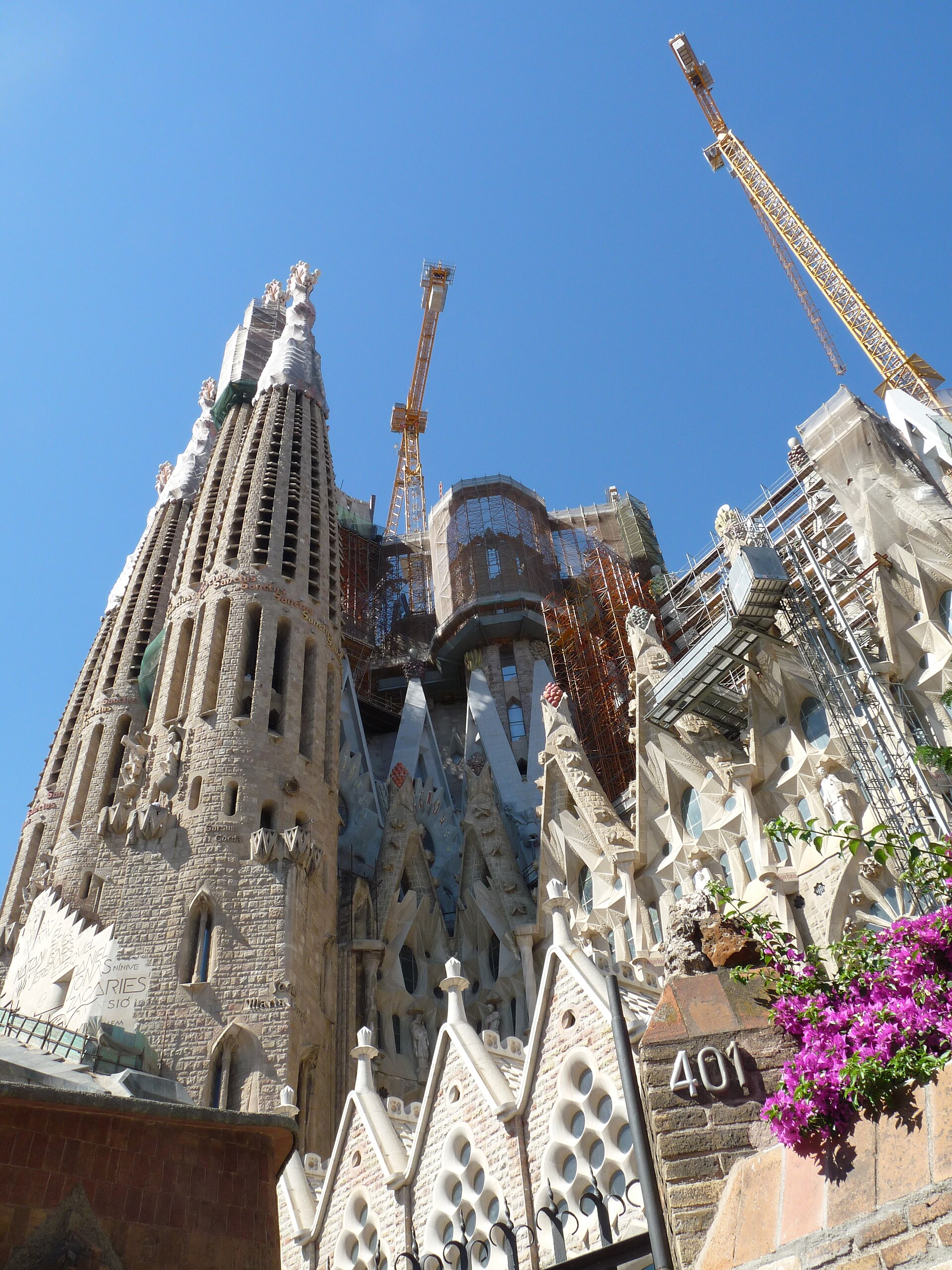
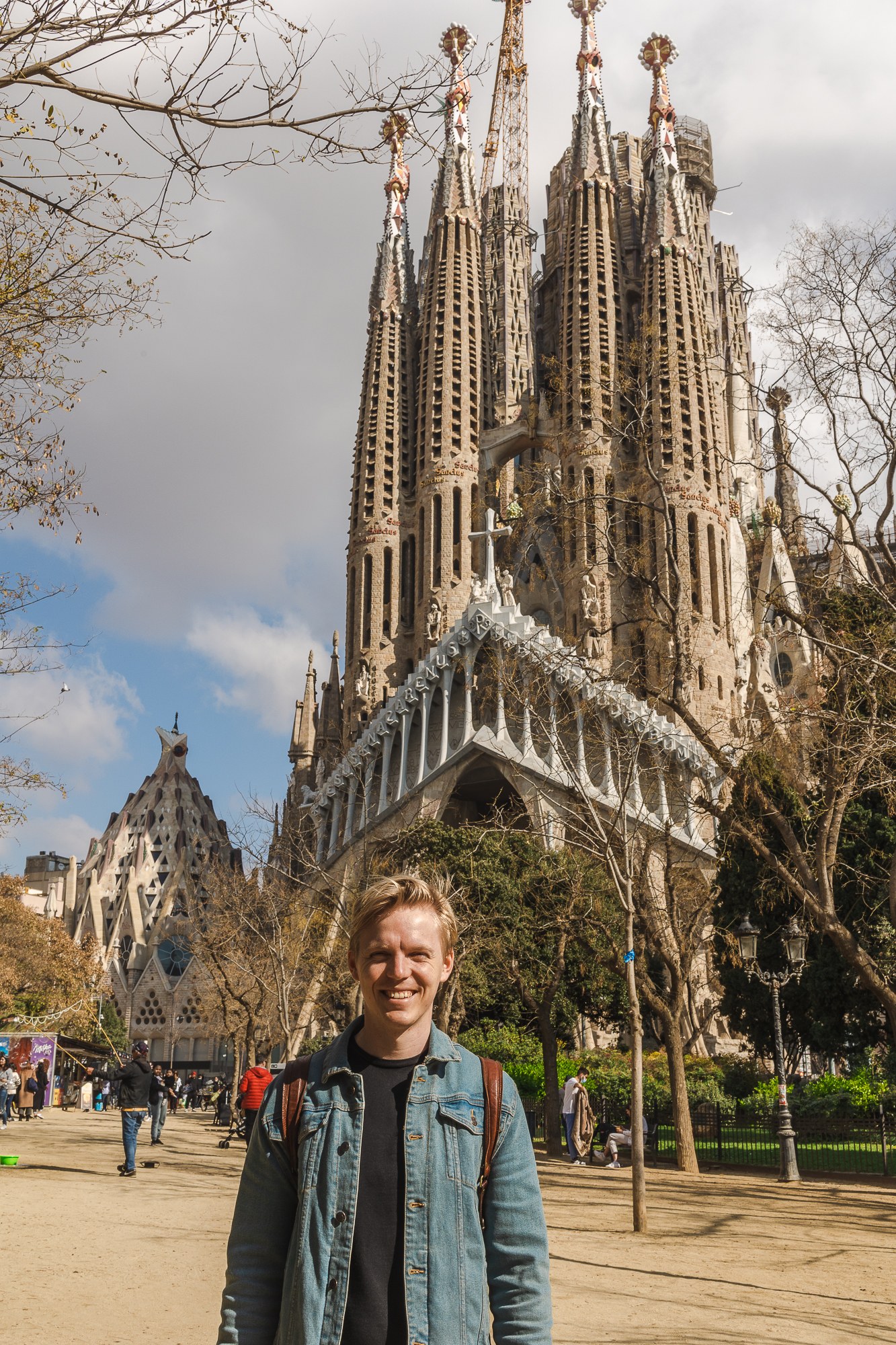
Getting a good photo of such an enormous building hemmed in by Barcelona’s tightly packed city blocks is quite a challenge, because it rarely fits entirely into a single frame. The secret behind those stunning shots you’ve seen on Instagram isn’t right at the entrance — it’s in the nearby parks. Head to the small park called Plaça de Gaudí, located opposite the Nativity Façade.
In the middle of this park there’s a small pond, and if you position yourself on the far side, the entire basilica is beautifully reflected in the water’s surface. This is exactly the spot where those iconic shots are taken, but be prepared to jostle for the prime position on the bank with other keen photographers. For a slightly different perspective, the park on the opposite side — Plaça de la Sagrada Família, facing the Passion Façade — also offers lovely views.
12. Where to Eat Well After Your Visit
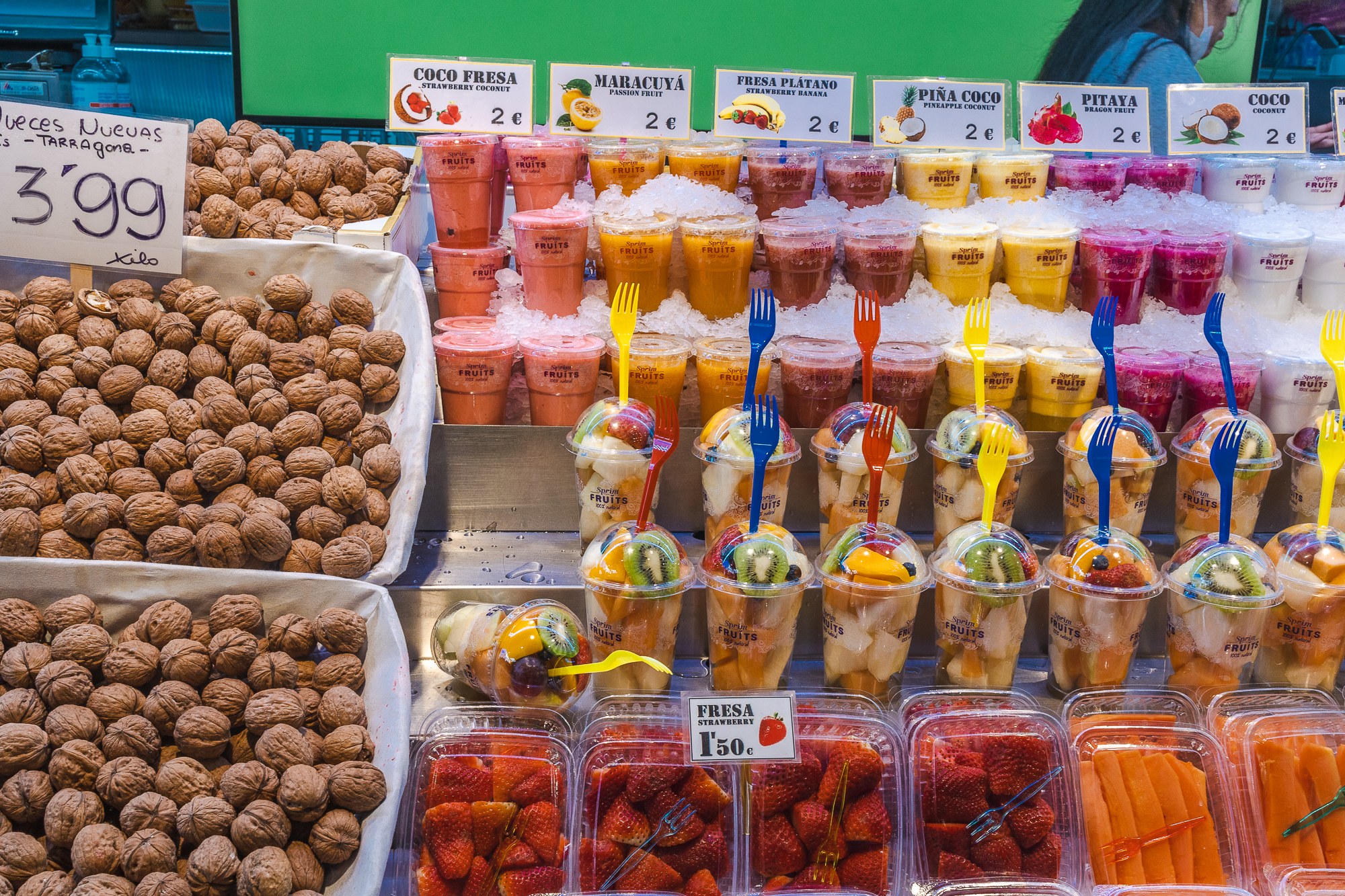
The streets surrounding the basilica are absolutely packed with restaurants sporting oversized picture menus, which in most cases are classic tourist traps with inflated prices and mediocre food. We give a wide berth to any place where touts are calling out to you from halfway down the block, and instead walk a few blocks further into the quieter side streets of Eixample. Catalan cuisine is fantastic, so it would be a real shame to ruin it with a reheated paella from a packet.
💡 Local tip: Seek out the tucked-away side streets for excellent tapas. As vegetarians, Lukáš and I always order a generous plate of patatas bravas (crispy potatoes with spicy sauce) and the utterly divine green peppers called pimientos de padrón, simply roasted with coarse salt. Add some local cheeses and olives, and for a sweet finish you can’t miss crema catalana — a gorgeous custard cream with a crunchy caramelised crust. Remember that since 2022, restaurants in Barcelona are required by law to serve free tap water on request, so don’t let anyone pressure you into buying expensive bottled water.
Map of points of interest for your phone
Where to Go Next from Barcelona
We’ve also got these detailed guides to Barcelona:
- What to See in Barcelona: 25+ Tips
- Gaudí in Barcelona: Buildings Worth Visiting
- Park Güell: Tickets, Prices & Visit Tips
- Prices in Barcelona: Budget and Tourist Tax
- Barcelona in 3 Days: Itinerary
Once you’ve explored Barcelona and its Gaudí-esque wonders inside out, Spain offers a wealth of other stunning destinations that are beautifully accessible thanks to AVE high-speed trains. We’ve absolutely fallen in love with travelling around this sun-drenched country, because every region has its own distinct soul. Here are a few ideas for where to head next from Catalonia:
- In just three hours the high-speed train takes you to the capital, so be sure to read our tips on what to see in Madrid, where you’ll be amazed by the majestic royal palace and wonderful museums.
- If you’re longing for true southern passion, head south and get inspired by our guide to Seville, the cradle of flamenco that smells of oranges.
- For lovers of history and breathtaking Moorish architecture, we’ve put together 15 tips on what to see in Córdoba, home to the famous Mezquita mosque.
- And if you’re planning a bigger adventure, our itinerary and map for the 20 most beautiful places in Andalusia will definitely come in handy, guiding you from the beaches to the mountain villages.
- More interested in the east coast? Then you can’t miss Valencia, a city of modern architecture and the home of traditional paella.
- Or before you go, brush up on everything you have to try in our article on typical Spanish food, so you know what to order in the tapas bars.
Frequently Asked Questions
How far in advance do I need to buy tickets?
You should definitely buy them immediately once you know the dates of your Barcelona trip. Tickets are released for online sale about two months in advance, and due to the enormous demand in 2026 when the centenary is being celebrated, the best time slots disappear within just a few hours, especially if you want to go up the towers.
Can I buy tickets on-site?
No, the physical ticket offices in front of the basilica were permanently closed some time ago. All sales are exclusively online through the official website or mobile app. Without a pre-purchased ticket with a specific time slot, security won’t let you through the turnstiles at all.
Is visiting the towers worth the extra money?
We definitely think so, because the view of sprawling Barcelona from above and the detailed exploration of the upper mosaics is an amazing experience. Just be aware that you won’t use the elevator going down—you’ll have to descend about 400 narrow spiral stairs, which isn’t suitable for people with reduced mobility.
Which tower should I choose?
It depends on your preferences. The towers on the Nativity facade offer beautiful views of the eastern part of the city and you can see Gaudí’s original work up close. The towers on the Passion facade face west, so from them you’ll see toward the sea and into the city center itself.
Is there a strict dress code inside?
Yes, dress code rules are enforced very strictly because it’s a consecrated church. All visitors must have their shoulders covered, bare tank tops are not allowed, and shorts or skirts must reach at least mid-thigh. If you violate this, you most likely won’t be allowed inside.
How much time will the entire visit take?
For a leisurely tour of the main nave, soaking in the atmosphere, and taking photos, you’ll need about an hour. If you plan to visit the towers and the underground museum with the crypt as well, we recommend setting aside a total of 1.5 to 2 hours.
Can I bring a backpack and food inside?
A small backpack or purse isn’t a problem, but be prepared to go through security screening with an X-ray machine at the entrance, similar to an airport. Consuming any food or drinks inside the basilica is strictly prohibited, so save your snacks for a park bench outside.
Tips and Tricks for Your Vacation
Don’t Overpay for Flights
Search for flights on Kayak. It’s our favorite search engine because it scans the websites of all airlines and always finds the cheapest connection.
Book Your Accommodation Smartly
The best experiences we’ve had when looking for accommodation (from Alaska to Morocco) are with Booking.com, where hotels, apartments, and entire houses are usually the cheapest and most widely available.
 🚗 Car rental on the roadVerified rental cars in Catalonia
Search with the DiscoverCars comparison engine — it compares prices from dozens of local and international rental companies, and most bookings come with free cancellation.
Compare car prices in Catalonia →Don’t Forget Travel Insurance
Good travel insurance will protect you against illness, accidents, theft, or flight cancellations. We’ve had a few hospital visits abroad, so we know how important it is to have proper insurance arranged.
Where we insure ourselves: SafetyWing (simple monthly subscription) and TrueTraveller (for extra-long trips).
Find the Best Experiences
Get Your Guide is a huge online marketplace where you can book guided walks, trips, skip-the-line tickets, tours, and much more. We always find some extra fun there!
More from Catalonia
Full guide →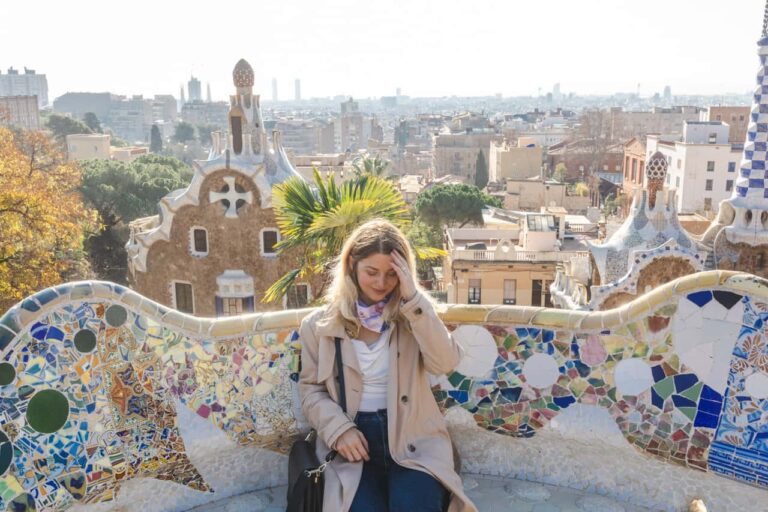 What to see · most readWhat to See in Barcelona Spain 2026: 25+ Must-Do Experiences
 Day tripsDay Trips from Barcelona: 12 Ideas for a Perfect Day Out in 2026
 What to seeBest Viewpoints in Barcelona: 12 Spots for 2026
 Where to stayWhere to Stay in Barcelona, Spain: 10 Neighborhoods & the “Cheap by the Beach” Trap 2026
 Day tripsMontserrat Spain: A Day Trip from Barcelona to the Monastery in the Mountains


