

Alaska isn’t some manicured national park in Utah where you cruise in on perfect tarmac and grab an overpriced coffee at the entrance. This is a raw, unforgiving ecosystem, and you’re stepping straight into the living room of the planet’s largest predators.
A lot of visitors arrive with this romanticised catalogue fantasy of sitting on a log and photographing Alaska bears catching salmon from five metres away. The reality, though, is that bears, Alaska, and safety are three words you absolutely must take deadly seriously here. So here’s everything we’ve learned over the years — told straight, and sometimes with our hearts genuinely in our throats. You’ll find out how to make the most of this incredible wilderness, how to avoid being eaten alive by mosquitoes (or something bigger), and what to prepare for, because this state will test you in every possible way.
The full destination guide: Alaska — guide and what to see
TL;DR
- Best time to visit: Mid-June to late August if you want to see bears catching salmon.
- Top spots for bears: Katmai National Park (the legendary Brooks Falls) and Lake Clark. Bear in mind you can only get there by bush plane, and it costs a fortune.
- Essential gear: Bear spray (buy it when you arrive — it’s not allowed on planes) and insect repellent with at least 40% DEET.
- Grizzly vs. black bear: With a grizzly, play dead. With a black bear, fight for your life.
- Biggest danger: Surprisingly, it’s not bears — it’s moose, which aren’t afraid of people, attack without warning, and frequently cause fatal road accidents.
- Budget: Alaska is an extremely expensive destination. Bear viewing trips cost between $1,200 and $3,000 (roughly £950–£2,400) per person, so start saving well in advance.
When to Go and How to Get to Alaska
Planning a trip to Alaska is not something you leave to the last minute — the tourist season is incredibly short and the best excursions sell out months in advance. We learned that the hard way. Focus on a very specific window during summer.
If you want to witness those famous scenes of bears snatching leaping salmon, you need to be there between mid-July and early August. That’s when the salmon run peaks and the rivers are teeming with fish. May and June are beautiful — the mountaintops are still capped with snow and nature is waking up — but bears are only just emerging from their dens and tend to forage in meadows instead. September brings stunning autumn tundra colours, but winter is already knocking at the door and many tourist services start winding down.
The journey from the UK is a long one and usually requires at least two connections. We’re big fans of hunting down cheap flights through Kiwi, which is probably our favourite tool for piecing together more complex itineraries. You’ll typically fly from London via a US hub on the west coast — Seattle is a popular option — and then catch a connecting flight straight to Anchorage. The whole journey takes at least 18 to 24 hours, so definitely pack a good book and some compression socks for the plane.
Because Alaska is enormous and public transport is practically non-existent (apart from trains between a few main towns), you’ll absolutely need a car. We typically use DiscoverCars.com to compare prices across different rental agencies. Make sure you book a 4×4, because many of the most interesting spots sit at the end of gravel roads where a standard saloon would struggle — or the rental company simply won’t allow it. We always reserve our car as soon as we’ve bought our flights, because during Alaska’s summer season vehicles vanish before your eyes and prices skyrocket.
Where to Stay and How Much It All Costs
When planning a trip to Alaska, you need to brace yourself for one uncomfortable fact: it’s seriously expensive. Most goods have to be shipped in, the season is short, and locals try to earn their entire year’s income in just three months.
As a rough guide, a decent motel room in peak season will easily set you back $250 to $350 a night (around £200–£280). A main course at a restaurant typically runs about $30 (£24), and excursions are a whole chapter unto themselves. If you want to fly out on a bush plane for a bear viewing trip, expect to pay at least $1,200 to $1,500 (£950–£1,200) per person for a single day. We saved a fair bit by cooking our own meals from groceries bought at local supermarkets like Fred Meyer or Walmart. Booking.com is our go-to hotel search engine — we’d recommend booking your accommodation a good six months in advance.
Anchorage will most likely be your gateway. It’s a pragmatic sort of city that won’t wow you with historical beauty at first glance, but it has everything you need before heading into the wilderness. You could stay at The Lakefront Anchorage, which offers stunning views of floatplanes landing on Lake Hood — the atmosphere is incredible. If you’re after something more budget-friendly and functional, try Qupqugiaq Inn, though good luck pronouncing the name on your first go 😅.
If you head south to the Kenai Peninsula, you’ll almost certainly end up in Homer. It’s a gorgeous fishing town at the end of the road with views of volcanoes and glaciers. Homer is famous for the narrow strip of land jutting out into the sea known as Homer Spit. Try staying at Land’s End Resort right at the tip, where you can watch sea otters straight from your room window.
Alaska Bears: 12 Tips for Safe Bear Viewing & What to See
Right, now for the main event. Turning up here unprepared would be genuinely foolish, so here are our most important tips for getting close to bears, making the most of it, and — crucially — coming home in one piece. The wilderness here does not forgive mistakes.
1. Katmai National Park and the Legendary Brooks Falls
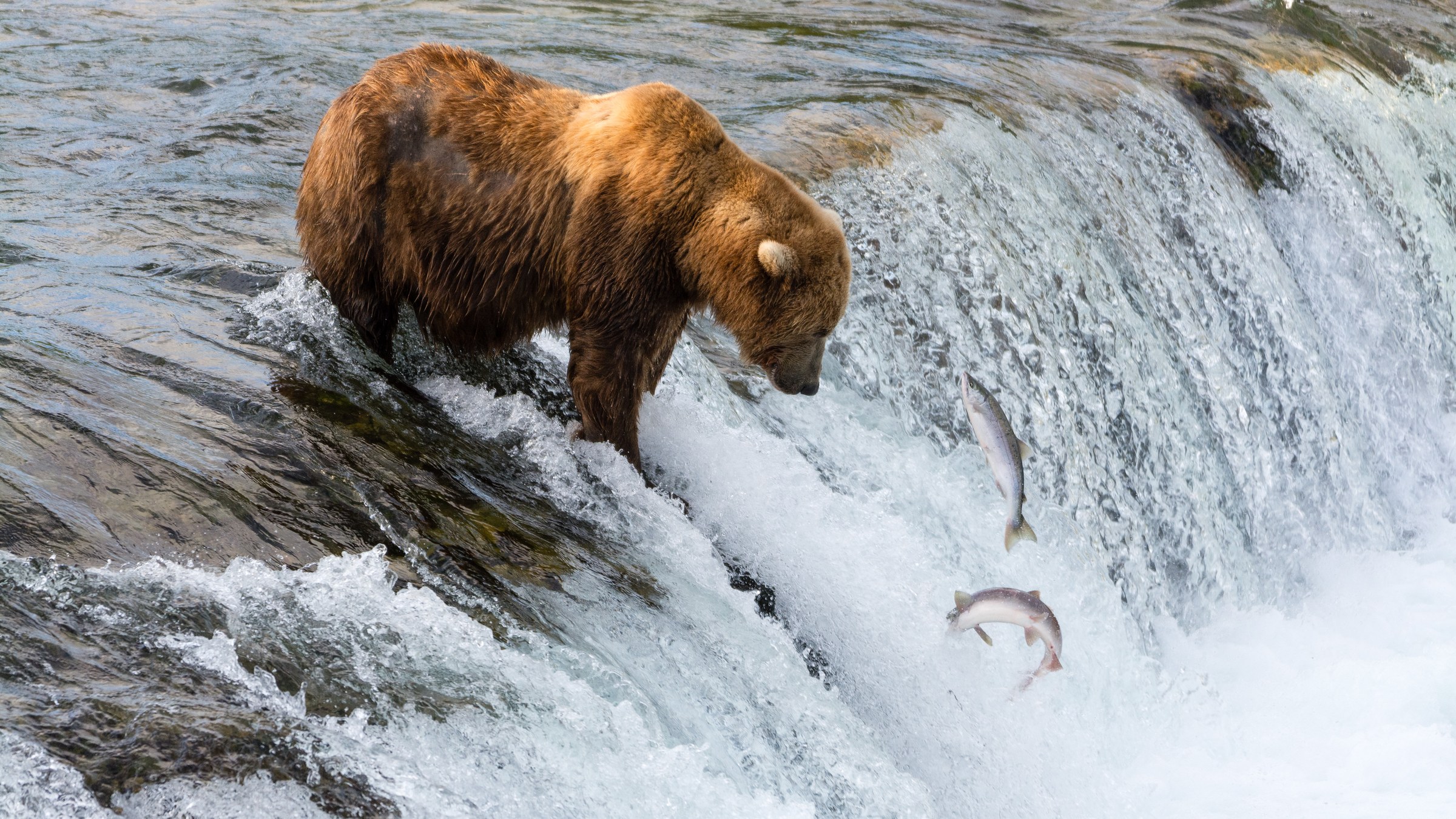
This is the absolute epicentre of bear viewing on the entire planet. Those iconic photographs of brown bears standing on the edge of a waterfall catching leaping salmon mid-air? They come from right here. Katmai National Park alone is home to an estimated 2,200 brown bears, and in July dozens of them congregate along the Brooks River.
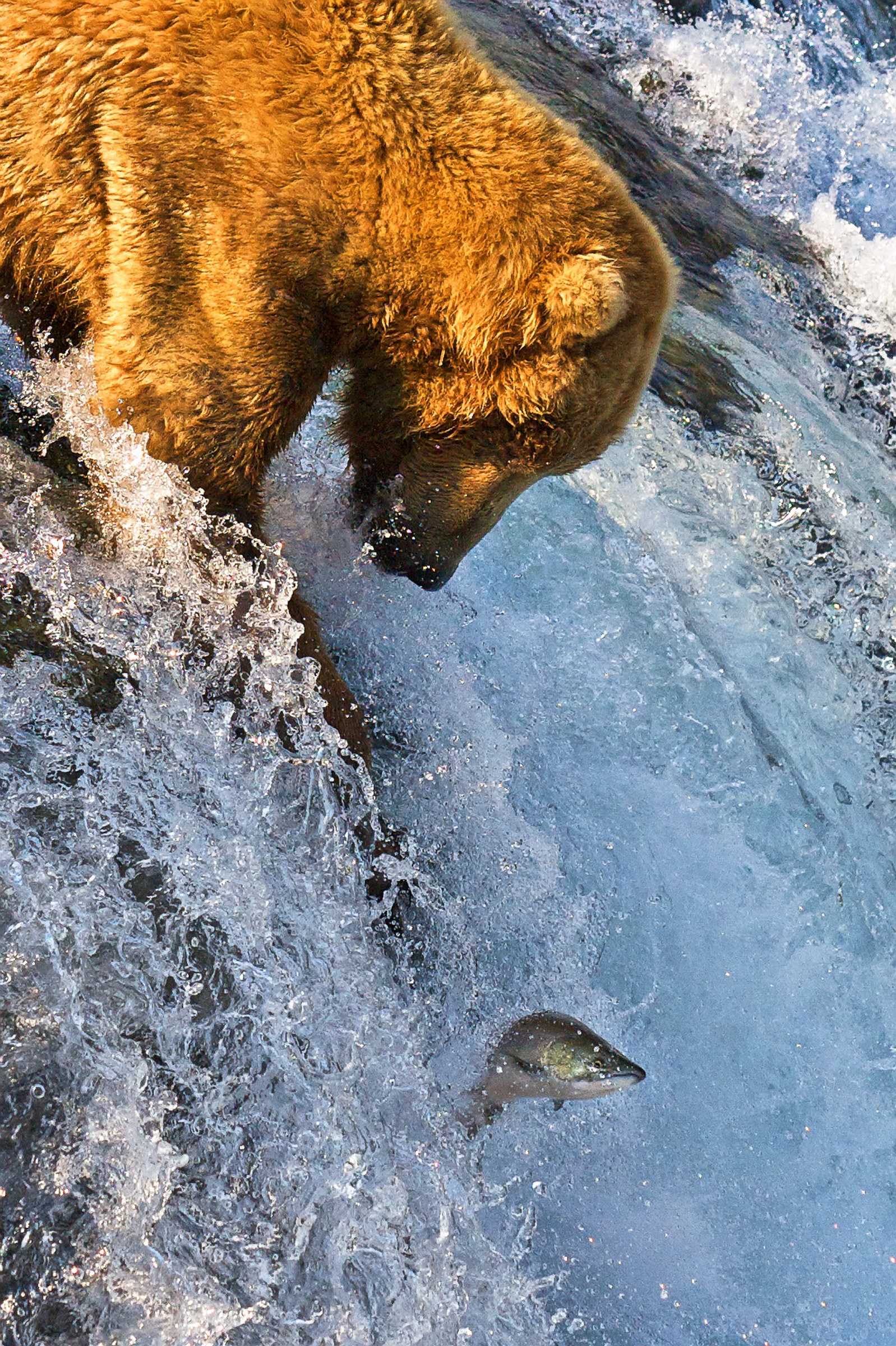
There’s no road into the park, so the only way in is by floatplane — which is a mini-adventure in itself. A day trip from Homer costs around $1,255 (roughly £1,000), while from Anchorage it’s about $1,540 (£1,230). Be aware that the viewing platform at the falls has a strict limit of 40 people and a one-hour-per-person time slot, so there’s nearly always a queue.
If you’d like to stay overnight, you can try your luck in the lottery for a spot at the legendary Brooks Lodge. A cabin runs between $1,200 and $1,600 per night, and spots are drawn years in advance. The area is also home to the famous online phenomenon Fat Bear Week, where people vote each autumn for the fattest bear. These incredible animals can pack on a staggering 300 kilograms before winter hibernation — in 2025, the winner was a male bear named 32 Chunk, who triumphed despite having suffered a broken jaw during the summer.
2. Lake Clark: A Crowd-Free Alternative
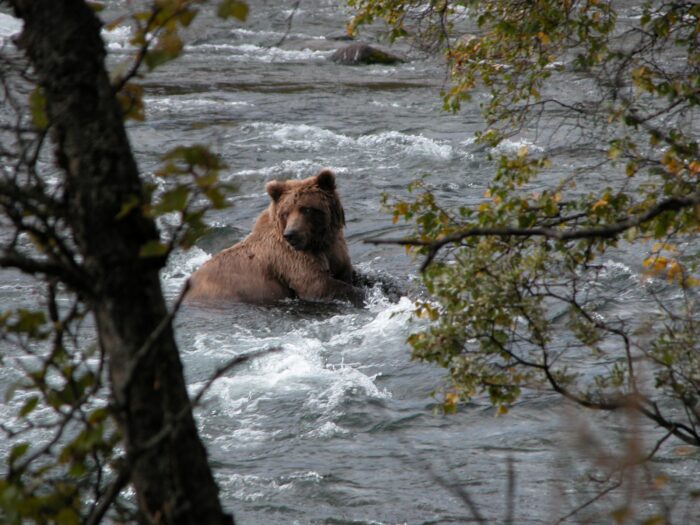
If the thought of queuing on a viewing platform in Katmai fills you with dread, Lake Clark is a stunning and far more intimate alternative. This national park sits slightly off the main tourist radar and offers truly premium bear viewing, mostly in the Silver Salmon Creek area. The key difference is that there are no elevated wooden walkways here — you observe the bears from ground level, accompanied by highly experienced armed guides.
The atmosphere is completely different — much wilder and calmer. You’ll often find yourself walking through tall grass or across muddy beaches while bears graze nearby, completely unbothered by your presence. It does, of course, come with an even heftier price tag.
A three-day all-inclusive stay at a local lodge (Silver Salmon Creek Lodge, for example) starts at $2,950 from Anchorage (around £2,350). It’s a huge investment, but if you love wildlife photography and don’t want to just briefly glimpse the bears in passing, it’s probably the best experience we’ve ever had in Alaska.
3. Denali National Park and the Quest for the Mountain
Denali National Park is a legend in its own right, drawing visitors with Alaska’s famous “Big Five.” If you’re lucky, you could spot a grizzly, a moose, a caribou, a Dall sheep, and a wolf — all in a single day. Wolves, though, are incredibly rare; there are roughly 1,800 across the whole of Alaska and they tend to steer well clear of people. The park is dominated by North America’s tallest peak, which has been officially renamed back to Mt. McKinley (though the park itself retains the name Denali).
The catch with the mountain is a bit of a running joke 😅. It’s so massive that it creates its own weather and spends most of its time shrouded in thick cloud. Locals even have a name for it — “The 30% Club” — because only about 30 percent of park visitors are lucky enough to see the mountain fully clear. On our first visit, all we saw was a wall of thick grey mist, and we finally understood the frustration of all those people lugging expensive cameras around.
There’s one crucial practical detail you need to know before visiting. Since 2021, the only road leading deep into the park has been closed roughly at its midpoint (mile 43) due to a massive landslide called the Pretty Rocks Landslide. The park service has confirmed that repairs will take a long time, with full bus service not expected to resume until around 2027. You can still drive the shorter section, but you won’t be able to reach the most remote corners of the park.
4. Kaktovik and Polar Bears in Alaska (With an Important Warning)
This is an experience in a completely different league. The village of Kaktovik on Barter Island lies far above the Arctic Circle and has become world-famous for autumn polar bear viewing. The local Iñupiat community has permission to conduct traditional whale hunts, and the remains attract dozens of hungry polar bears, which tourists then photograph from small boats. So yes — there are polar bears in Alaska, and Kaktovik has long been the place to see them.
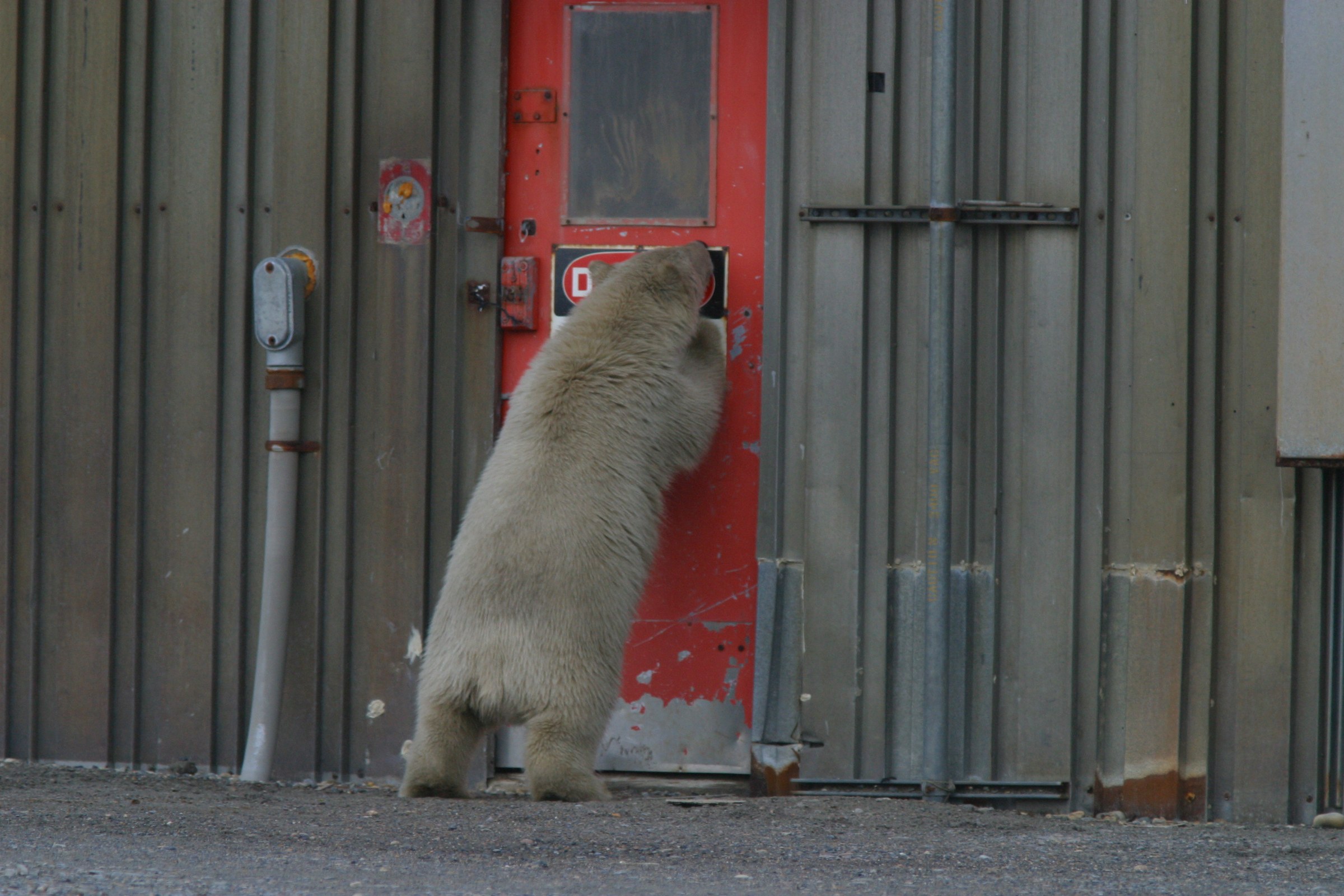
For a long time, it was the mecca of Arctic photography, but there’s a major development you need to be aware of. For the 2026 season, commercial tourism to Kaktovik has been completely suspended. The village was struggling under the weight of tourist numbers and is now working to establish a new, more sustainable model — premium operators are planning a return no earlier than 2027.
If you’re planning a trip in the near future, cross this one off your itinerary straight away and invest the (considerable) savings into a grizzly trip further south instead. Polar bears simply require enormous planning with several years’ lead time.
5. Alaska Brown Bear vs Grizzly: How to Tell Them Apart
A lot of people get confused by the terminology, but biologically, we’re talking about the exact same species (Ursus arctos). The difference is purely about where they live and what they eat. The coastal brown bear has access to unlimited supplies of fatty salmon, which is why it grows to enormous proportions — typically weighing between 350 and 450 kilograms. The inland grizzly is its leaner cousin, surviving mainly on roots, berries, and small mammals, and usually weighing “only” 200 to 350 kg.
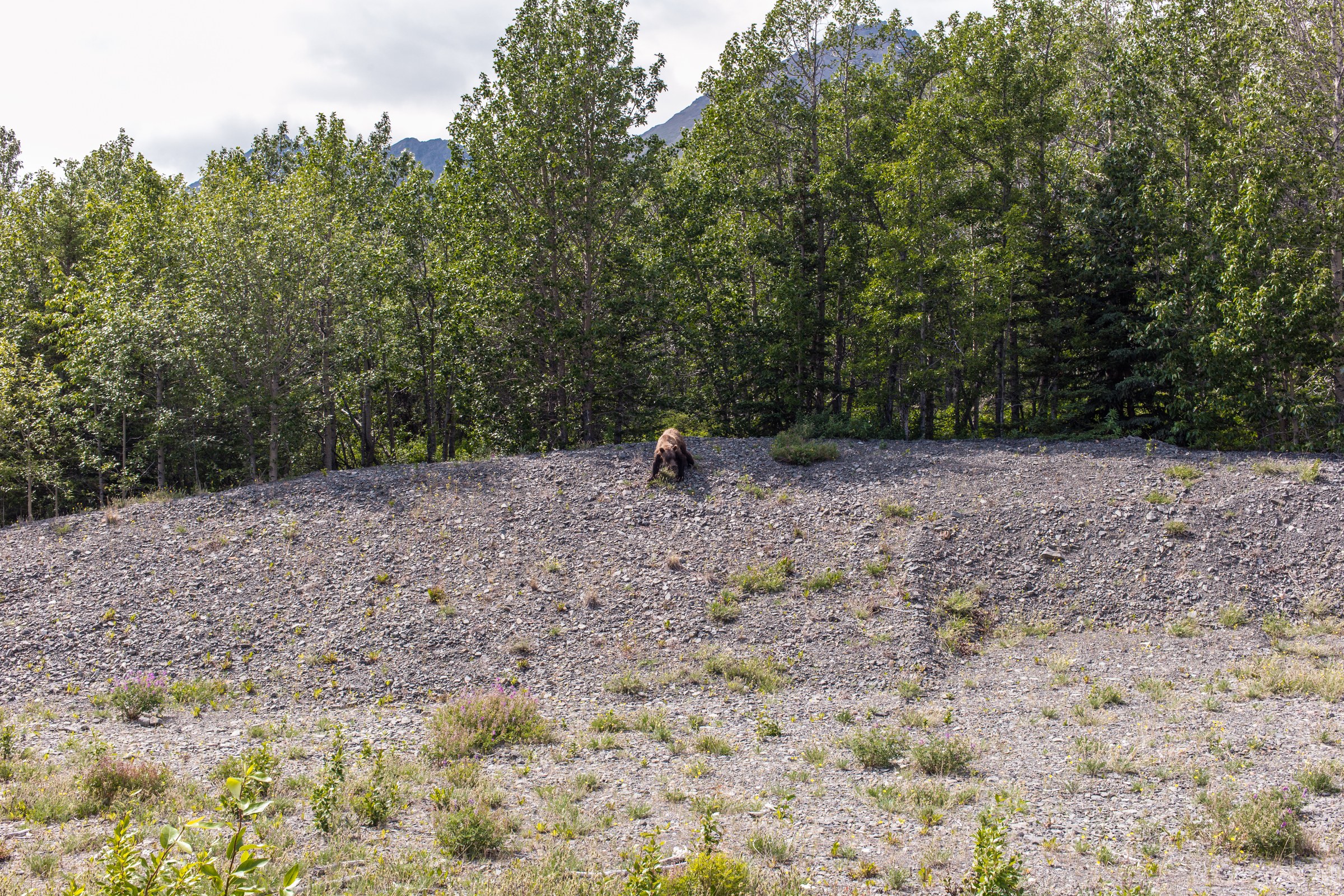
What really matters, though, is being able to tell a grizzly from a smaller black bear, because the way you should react in an attack depends entirely on which one you’re facing. The single most important identifying feature is the massive muscular hump between the shoulders, which grizzlies use for digging. Black bears simply don’t have it.
Grizzlies also have a distinctly concave facial profile — almost dish-shaped — while black bears have a straighter profile. And if you come across tracks in the mud, just look at the claws. Grizzly claws are astonishingly long, easily five to ten centimetres, leaving deep imprints well in front of the pad itself.
6. Black Bear: The Smaller, More Agile One
The black bear (Ursus americanus) is a far more adaptable creature, and it’s the one you’re most likely to encounter near the edges of towns or at campsites. Don’t be fooled by the name, though — in Alaska, their fur colour varies wildly, and you can easily come across a “black” bear that’s a bright brown or even cinnamon.
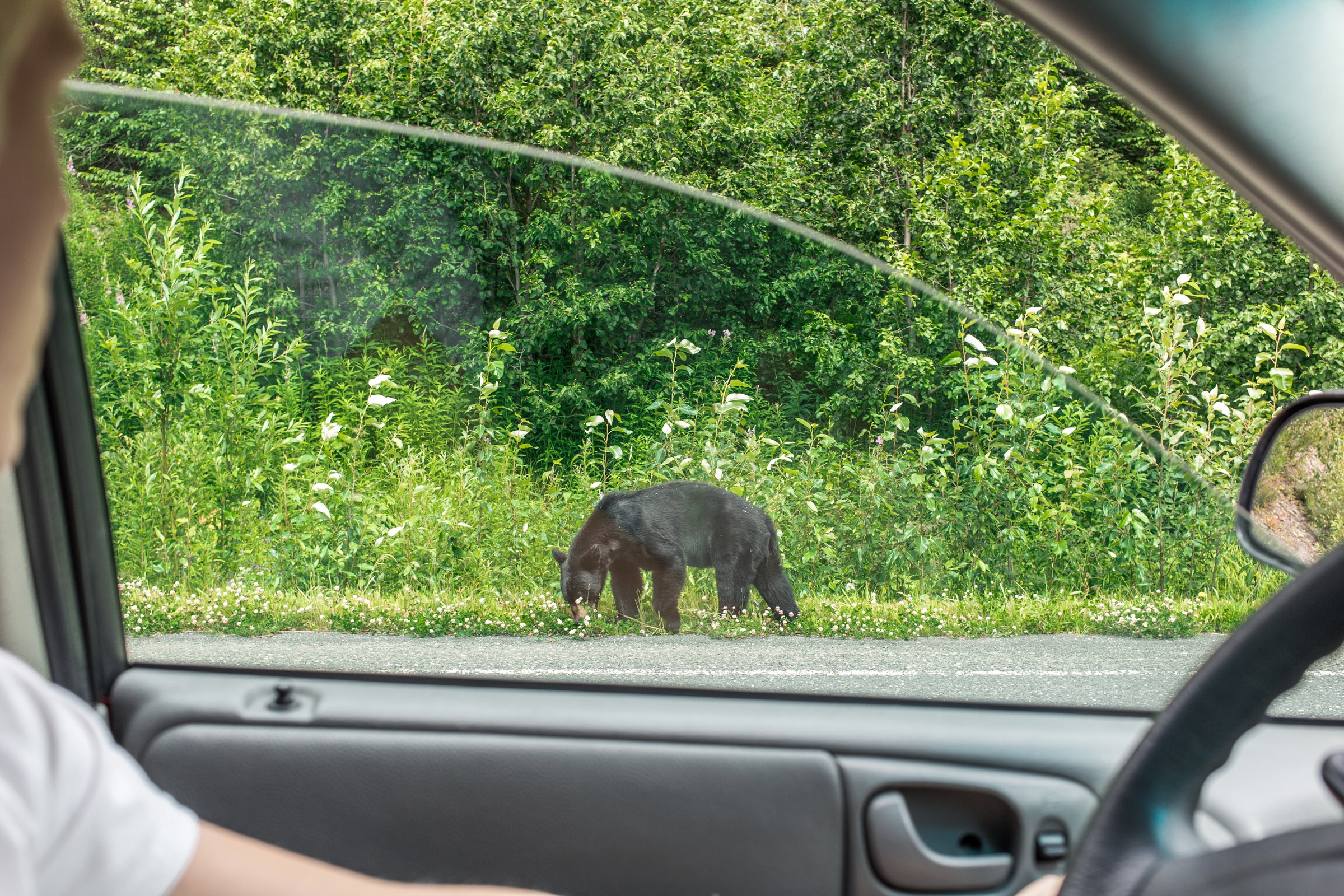
As I mentioned, they lack that distinctive shoulder hump, and their nose runs in a straight line from the forehead when viewed in profile. What’s really important for your safety, though, are their claws. They’re only about three centimetres long, curved, and perfectly designed for climbing. Thanks to these claws and their lighter weight, a black bear can scramble up a tree with astonishing speed.
That’s a huge difference compared to a heavy adult grizzly, which generally doesn’t climb trees (though exceptions do exist, so don’t bank on it as your only escape plan). A black bear might seem slightly cuter than a one-tonne giant from Katmai, but it’s still a wild and dangerous predator that deserves your utmost respect.
7. Bear Spray Is an Absolute Must
Heading into the Alaskan wilderness without bear spray is gambling with your life, plain and simple. If you’re tempted to save a few dollars on this, you’re risking far more than it’s worth. Bear spray is essentially an oversized pepper spray — a highly concentrated capsaicin aerosol that fires an orange cloud under extreme pressure, reaching seven to nine metres. It costs between $50 and $60 (£40–£48) and is sold everywhere; we picked ours up at an REI store.
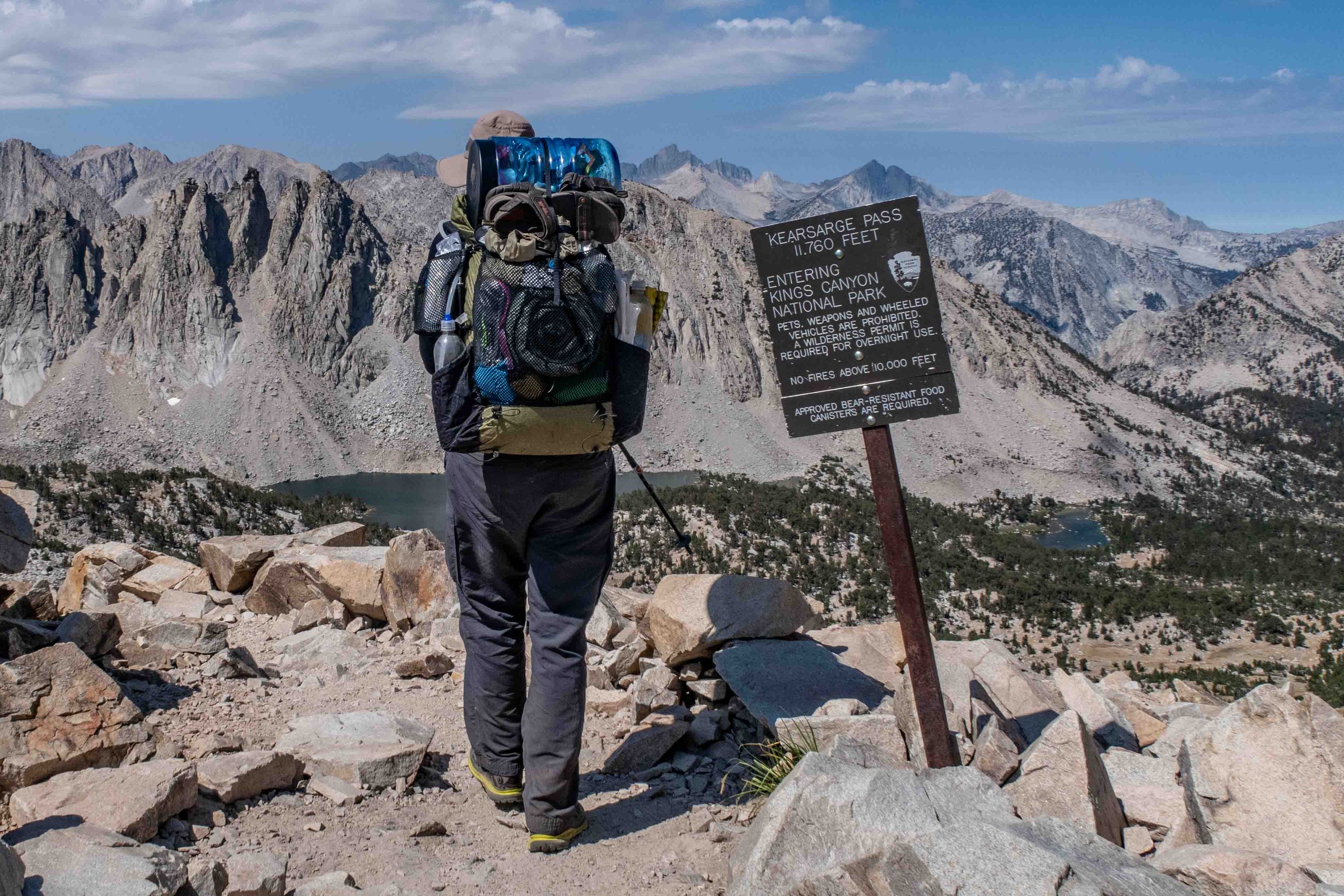
The biggest trap for tourists is that bear spray is classified as a pressurised weapon. In practice, this means you cannot take it on a plane — not in hand luggage, not in checked luggage. You simply have to buy it when you arrive and leave it at your hotel for the next traveller before you fly home, or hand it in at the airport’s dedicated disposal point.
For the spray to be of any use whatsoever, you must carry it on your chest in a dedicated holster or on your belt. If you’ve cleverly buried it at the bottom of your rucksack under a rain jacket and your packed lunch, it’s completely useless during a bear charge — which unfolds in seconds. Experts also recommend practising your draw regularly, because under stress, people often forget to flick the safety catch with their thumb. If the worst happens, fire short one-second bursts aimed slightly downward in front of the animal, so the bear runs into the stinging cloud itself.
8. Encounter Rules: What to Do When Things Get Serious
I’ll be completely honest with you — bear attacks in Alaska are not just horror stories designed to scare city tourists. Between 2023 and 2026, there were several very serious and, sadly, fatal incidents, including people who were simply out for an early morning jog on their own driveway near Kenai. You need to keep a cool head at all times and know exactly what to do depending on the type of bear and the situation.
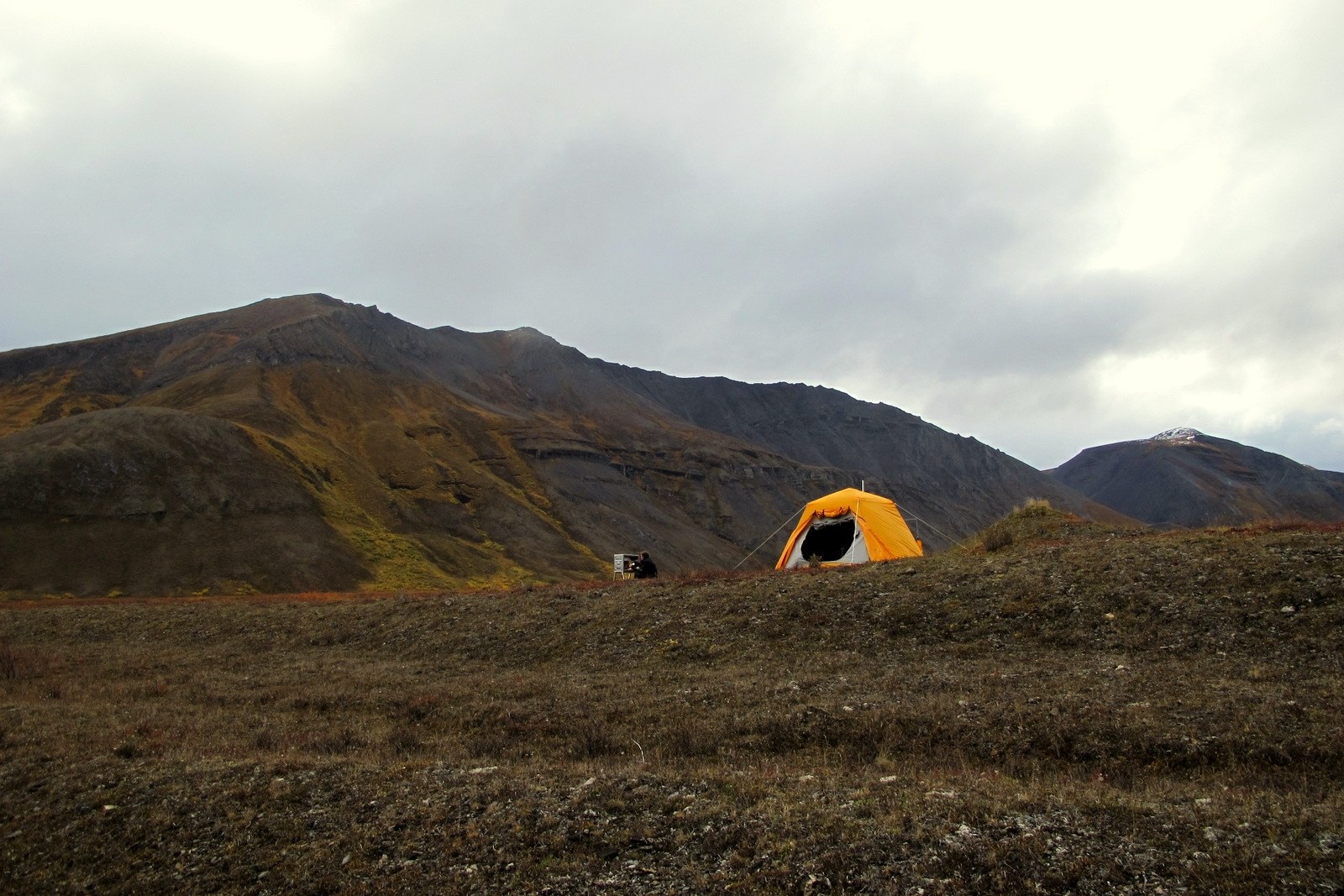
If you spot a bear from a distance (more than 100 metres) and it hasn’t noticed you yet, simply back away quietly the way you came. There is one absolutely paramount rule: never, under any circumstances, run. Running instantly triggers a predator’s chase instinct, and since a bear can match the speed of a racehorse, you haven’t got a chance of outrunning it.
Sometimes a bear will perform what’s known as a bluff charge — an intimidation rush. It will sprint at full speed directly towards you and slam on the brakes just before reaching you. In that moment, you have to overcome the greatest fear of your life, stand your ground, speak in a calm, deep voice, and have your spray unsafetied and ready.
With a grizzly, the attack is usually defensive (it’s been startled or is protecting cubs), so curl into a ball, hands behind your neck, legs spread so it can’t flip you, and play dead. Keep your backpack on — it acts as excellent spine protection. Conversely, if a black bear attacks, or if any bear is silently stalking you (known as predatory behaviour), never play dead. In that situation, you must fight for your life with absolutely everything you have, aiming for the nose or eyes.

9. Alaskan Moose: Surprisingly the Most Dangerous Resident
This might surprise you, but the animal responsible for by far the most human injuries and fatalities in Alaska each year isn’t a toothy bear — it’s the moose. This half-tonne giant on long legs with enormous sharp hooves moves through the wilderness and cities in near-total silence, and it has absolutely zero fear of humans. They regularly graze on front lawns right in the middle of Anchorage.
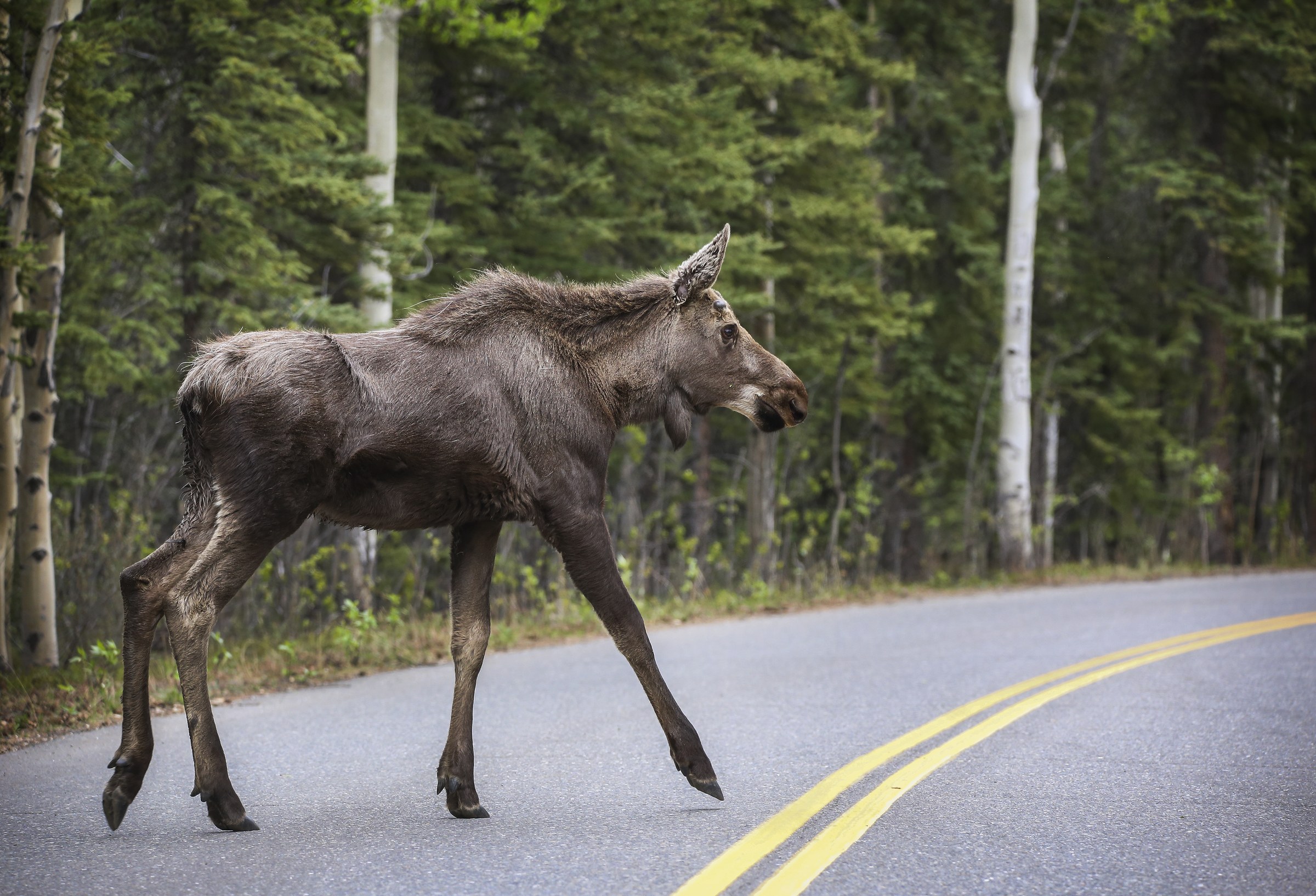
The first danger window is the autumn rut, when bulls with massive antlers are pumped full of hormones and extremely aggressive. The second — and arguably even more dangerous — period is spring, when cows fiercely protect their calves. A mother with a calf can charge without any warning whatsoever. A safe observation distance for moose is at least 30 metres, and the moment the animal pins its ears back or the hair on its neck bristles, you’re in serious trouble and need to get behind a sturdy tree immediately.
The hidden and very common killer is vehicle collisions with moose. Hundreds of such crashes happen in Alaska every year. A moose’s dark, massive body perfectly absorbs headlight beams at night, so you only see it at the very last moment. Because the animal stands on such long legs, the impact takes its legs out and the entire half-tonne body comes crashing through the windscreen onto the front seats. If you’re driving after dark, you need to be on maximum alert.
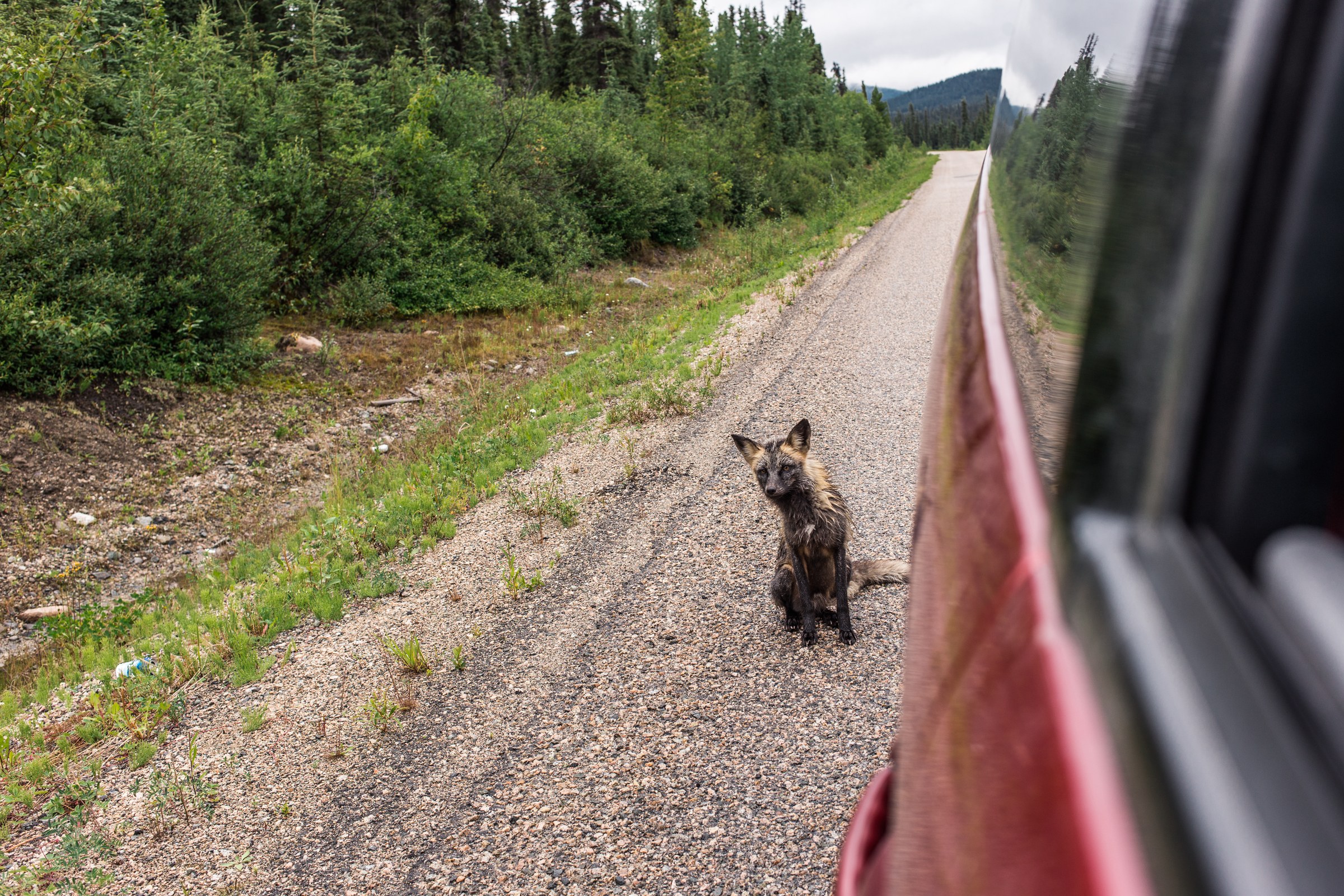
Fox by the roadside in Alaska — a typical road trip scene
10. Mosquitoes: Alaska’s Unofficial State Bird
Alaskan mosquitoes are the stuff of legend, and locals jokingly refer to them as the unofficial “state bird.” Tourists who think they know annoying summer bugs — whether from the south of England or a lakeside holiday — are often left in absolute shock at the sheer aggression with which mosquitoes descend on anything that moves here. As someone aptly put it on a local forum: “Alaska doesn’t have mosquitoes. Alaska has bloodthirsty dragons that are immortal and infinite.” 😅
Those lovely lemon-scented repellents you pick up at Boots back home? You can chuck them straight in the bin — they fail spectacularly here. You need the hard stuff. Look for products containing at least 40% DEET, though locals heading into the backcountry routinely use the 100% formulations. A great and slightly less toxic alternative is Picaridin.
What will truly save not just your skin but your sanity while trekking is a head net (mosquito net that goes over your cap). It costs a few dollars, you pop it over your hat, and suddenly you can breathe without swallowing a handful of mosquitoes. Especially if you’re heading to the interior or the swampy areas of Denali National Park, don’t even think about venturing out without one.
11. Whales and Bald Eagles: Rulers of Sea and Sky
Once you’ve had your fill of bears, make sure you head to the coast, because watching cetaceans in their natural habitat is pure magic. Humpback whales are probably the crowd favourite, and they can be spectacularly observed during August around Kenai Fjords or Glacier Bay. From a boat, you might witness the unique behaviour known as bubble-net feeding, where whales create a net of bubbles and cooperatively herd shoals of fish.
If you want to see orcas, head to the town of Seward and take a cruise into Resurrection Bay. Orcas frequently hunt salmon and marine mammals here, and the sight of that enormous dorsal fin slicing through the water is utterly mesmerising. Critically endangered belugas can sometimes even be spotted from your car as you drive along the Seward Highway south of Anchorage, following the shores of Turnagain Arm.
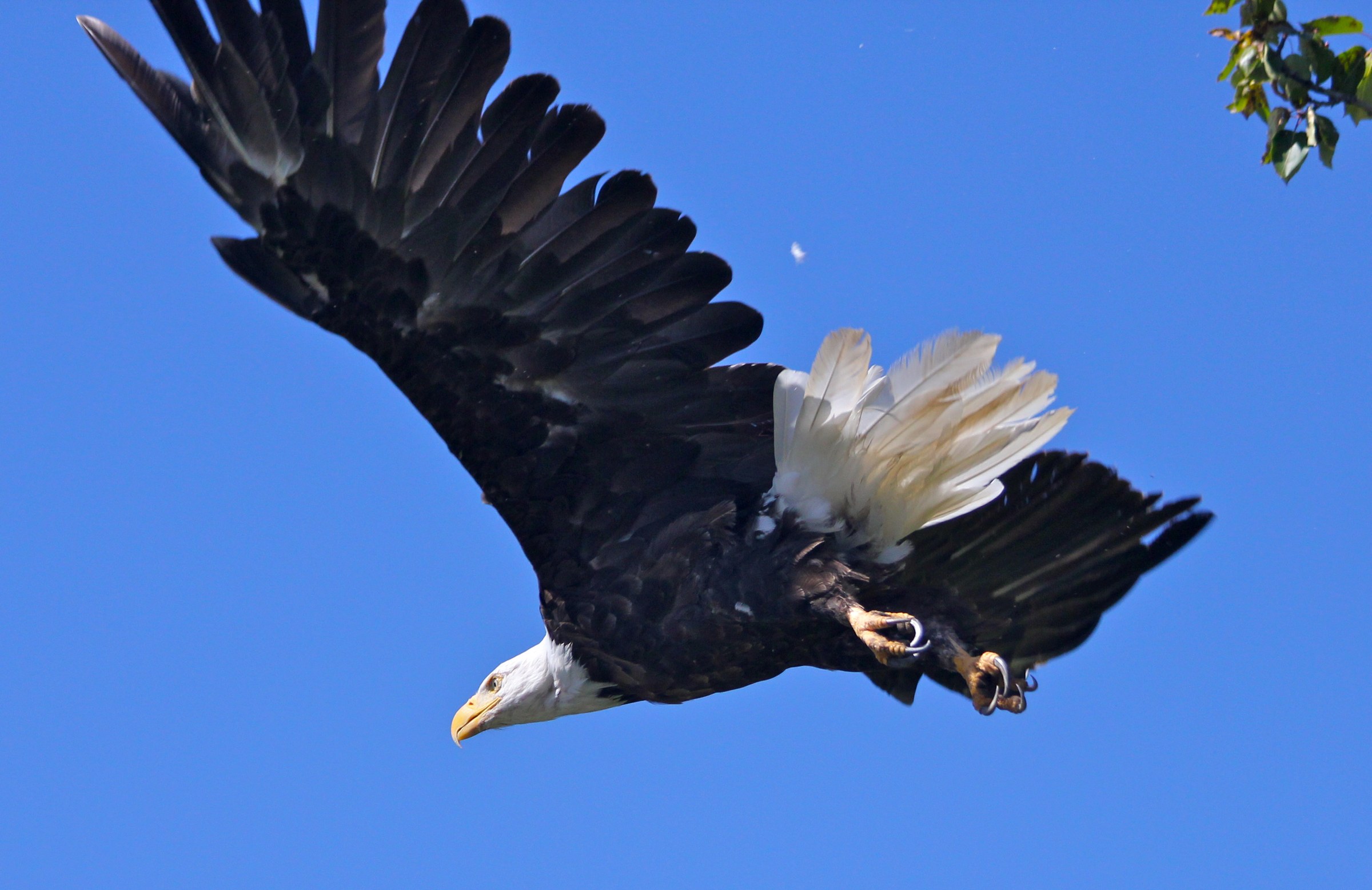
And while you’re watching the water, don’t forget to look up. Alaska is home to an estimated 50,000 bald eagles. They’re everywhere — literally perched on lampposts along the highways like pigeons. If you’re a real fan, head to the Chilkat Bald Eagle Preserve near the town of Haines, where thousands gather in autumn for the late salmon run.
12. Salmon: The Beating Heart of Alaska
Alaska’s entire ecosystem — and particularly the lives of its top predators, led by bears — depends on the jaw-dropping annual spectacle of the salmon run. These fish dictate the rhythm of life, and if you want to connect with locals (or understand animal behaviour), you need to learn to recognise the five key Pacific species.
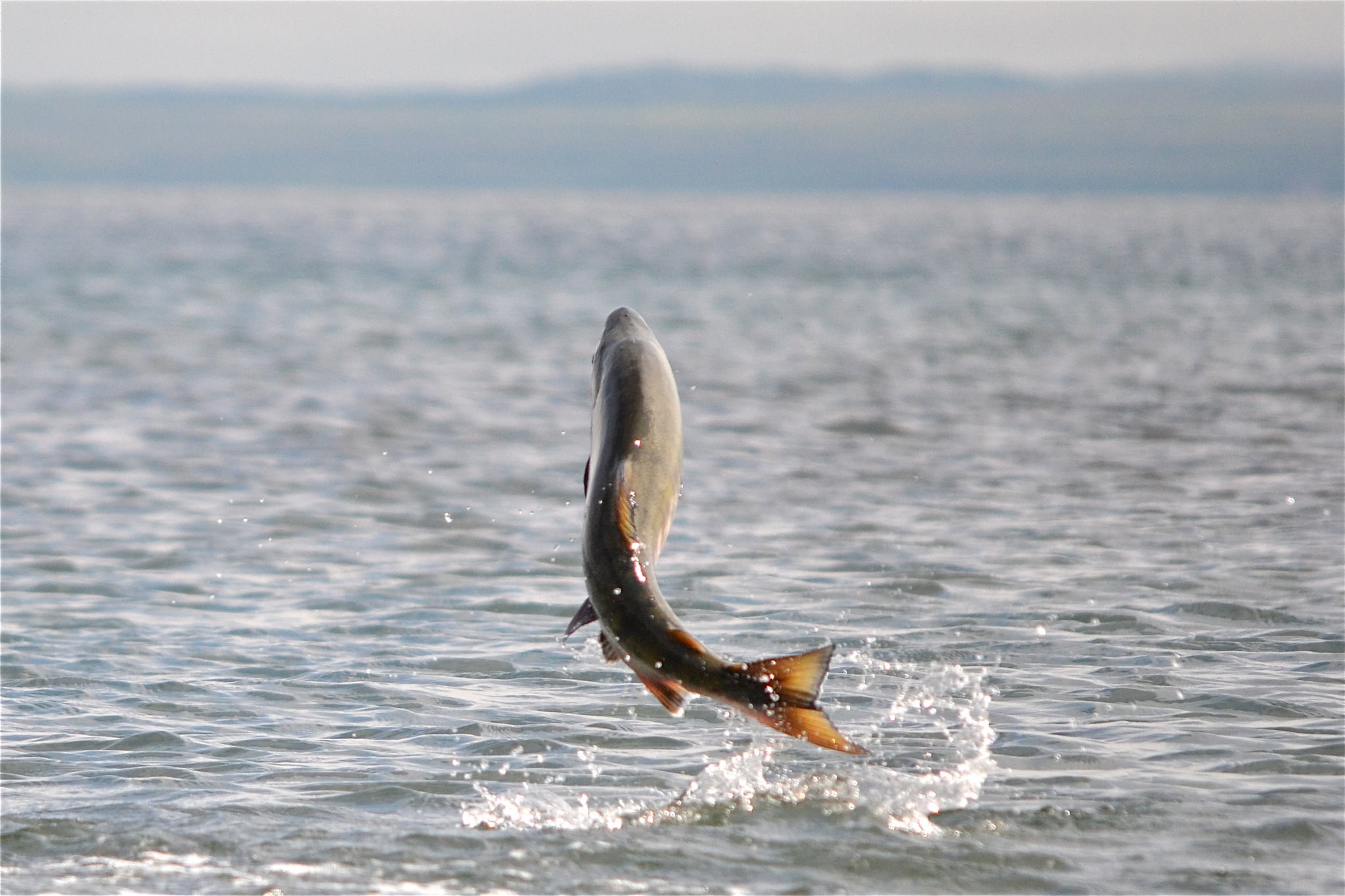
The largest is the majestic King (Chinook), which can weigh anywhere from 10 to 50 kilograms and runs from May to July. The most famous — the one you’ll recognise from every documentary thanks to its vivid red colour during spawning — is the Sockeye (Red). It runs from June to August and is the primary, most calorie-dense food source for the giant bears at Brooks River in Katmai.
Then there’s the Silver (Coho), a feisty, hard-fighting fish beloved by sport anglers, with its run peaking in late summer through August and September. This is the one bears gorge on last to pack on their final fat reserves before winter hibernation. Rounding out the list are the small Pink salmon (which arrive in massive shoals every odd year) and the autumn-running Chum. When bears manage to feast on these fish, they survive the brutal winter. When fish numbers are low, the whole ecosystem suffers.
Where to Eat Well in Alaska
Alaska’s food scene probably isn’t the reason foodies fly in from around the globe, but if you love fish and seafood, you’re in heaven. Any half-decent coastal restaurant will serve fantastic fresh halibut. This enormous flatfish gets turned into absolutely everything here — from luxurious steaks to the best fish and chips I’ve ever had.
In Anchorage, definitely check out Moose’s Tooth Pub & Pizzeria. Don’t be put off by the name — they do serve excellent pizza, but they also have their own superb beer from Broken Tooth Brewing, and the vibe is wonderfully laid-back. There’s always a massive queue of locals and tourists alike. And if you head south to Homer, don’t miss a stop at the legendary Salty Dawg Saloon right on the beach. This little wooden shack is completely covered inside with thousands of dollar bills left by visitors from around the world, and it has this brilliantly dark, friendly, seafaring atmosphere.
Alaska is full of tiny drive-through coffee huts — often just charming little wooden shacks by the roadside — and we once got a better flat white from one in the middle of absolute nowhere than from half the cafés in London. Lukáš still doesn’t believe me. ☺️
Further Reading
If Alaska has captured your heart the way it captured ours, here are some articles we wrote while the experiences were still fresh and our boots were still caked in mud. They’ll be a huge help for specific planning and on-the-ground logistics:
- Katmai National Park: How We Witnessed the Legendary Brooks Falls
- Homer, Alaska: The Most Beautiful Fishing Town at the End of the World
- Denali National Park: A Practical Guide to Seeing the Big Five
Before you head off into this rugged wilderness, don’t forget to sort out decent travel insurance — we use AXA for our trips (where we get a 50% discount) and True Traveller for longer expeditions. You can find a detailed comparison in our SafetyWing review here. And since mobile coverage outside major towns can be patchy, we’d recommend sorting your data in advance with our favourite eSIM from Holafly. For trekking through swamps and tundra, make sure you pack proper footwear — find inspiration in our hiking boots guide.
 🚗 Car rental on the roadVerified rental cars in Alaska
Search with the DiscoverCars comparison engine — it compares prices from dozens of local and international rental companies, and most bookings come with free cancellation.
Compare car prices in Alaska →FAQ — Frequently Asked Questions About Bears in Alaska
I’ve gathered the most common questions I get from readers planning an encounter with Alaska’s bears. If something’s missing, don’t hesitate to drop me a message.
When are bears most active?
Bears are most active early in the morning (at dawn) and in the late afternoon through dusk. During hot summer days, they usually lounge in the shade, so your best chance of spotting them is early after waking up.
When should I fly to Alaska to see bears?
The ideal window for visiting is from mid-June through the end of August. If your primary goal is to see bears catching salmon in the rivers, you’ll need to go between mid-July and early August.
How expensive is Alaska?
Extremely. Expect an average motel during the summer season to cost $250–350 (around €230–320) per night, and a full-day bear-viewing trip by small plane will run you $1,200 to $1,500 (up to €1,400) per person. Flights and car rentals will significantly increase this budget even further.
How many people live in Alaska?
Alaska is the largest but also one of the least populated states in the US. It’s home to just under 740,000 residents, with the vast majority (roughly half) concentrated in the greater Anchorage metropolitan area.
Can I pack bear spray in my luggage on the plane?
No, absolutely not. Bear spray falls under the category of pressurized weapons and is not allowed in either carry-on or checked baggage. You’ll need to purchase it after arriving in Alaska at local stores (REI, Walmart).
What should I do if a moose attacks me?
If you encounter an aggressive moose (especially in fall during rutting season or in spring with mothers and calves), immediately take cover behind a sturdy tree, building, or car. These animals are fearless and attack with their massive weight.
Can I drink water straight from rivers in Alaska?
Even though the water may look crystal clear at first glance, never drink it without filtering. Due to wildlife, it can contain parasites and bacteria that cause severe intestinal problems. Always use a travel water filter.
Tips and Tricks for Your Vacation
Don’t Overpay for Flights
Search for flights on Kayak. It’s our favorite search engine because it scans the websites of all airlines and always finds the cheapest connection.
Book Your Accommodation Smartly
The best experiences we’ve had when looking for accommodation (from Alaska to Morocco) are with Booking.com, where hotels, apartments, and entire houses are usually the cheapest and most widely available.
Don’t Forget Travel Insurance
Good travel insurance will protect you against illness, accidents, theft, or flight cancellations. We’ve had a few hospital visits abroad, so we know how important it is to have proper insurance arranged.
Where we insure ourselves: SafetyWing (simple monthly subscription) and TrueTraveller (for extra-long trips).
Find the Best Experiences
Get Your Guide is a huge online marketplace where you can book guided walks, trips, skip-the-line tickets, tours, and much more. We always find some extra fun there!
More from Alaska
Full guide →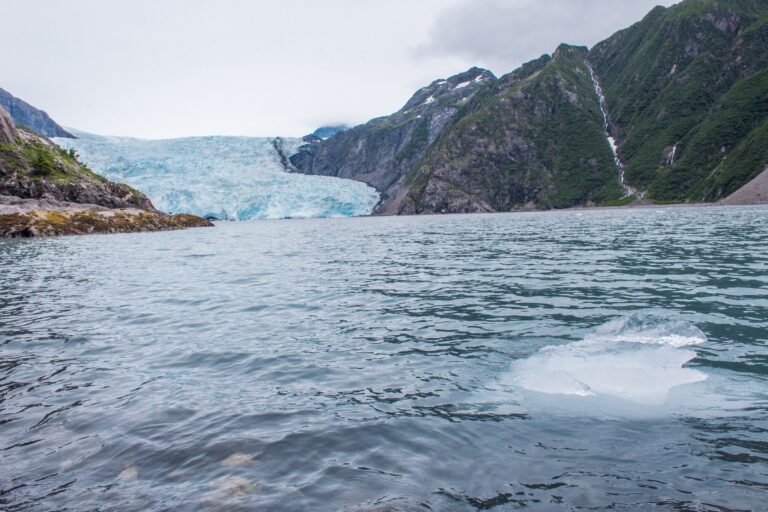 ItineraryAlaska Road Trip: The Best Itinerary for 7, 10, 14 and 21 Days
 When to goNorthern Lights in Alaska: When, Where and How to See Them
 What to seeSitka, Alaska: 12 Things to See and Do (Russian Heritage of the Inside Passage)
 What to seeHomer, Alaska: 12 Best Things to See and Do (End of the Road on the Kenai Peninsula)
 What to seeJuneau, Alaska: 12 Things to See and Do (The Capital With No Road)


