

Thinking about a trip to Oman and wondering whether the capital is worth more than just a quick dash from the airport? Trust me, Muscat will completely charm you with its blend of ancient tradition and modern luxury. But right off the bat, I have to let you in on one absolutely crucial thing that catches almost every traveller off guard. Muscat, you see, is not a compact city at all in the way we’re used to in Europe.
In reality, the whole urban sprawl stretches a good fifty to seventy kilometres along the coast, with individual districts constantly separated by dramatic rocky mountains and wide motorways. So forget the idea of lacing up your trainers in the morning and strolling through the whole centre on foot. Without a rental car or the reliable Careem app, you simply won’t get far here, because the distances between the sights are enormous.
In this article we’ll take a look together at 15 tips on what to see and do in Muscat so you can squeeze the most out of it. I’ll guide you from the breathtaking Sultan Qaboos Grand Mosque through the fragrant alleys of the old souq all the way to the most beautiful beaches and day trips. I’ll also advise you on which district to base yourself in strategically and what to watch out for from a practical point of view.

TL;DR
- Getting around: Muscat is spread out along the coast, so rent a car right at the airport, or download the Careem app for booking rides.
- Sultan Qaboos Grand Mosque: The city’s main landmark is open to non-Muslims only Saturday to Thursday, from 8:00 to 11:00 in the morning.
- Dress code: Oman is a very conservative country, so always keep your shoulders and knees covered (this applies to both women and men).
- Where to stay: If you want history, choose the area around Mutrah. For beach relaxation, Qurum or the luxury bay of Barr Al Jissah are ideal.
- Trips around the area: Definitely set aside a whole day to visit the wadi (Wadi Shab) and the turquoise Bimmah Sinkhole.
- When to go: Ideally plan your trip between October and April; in summer the heat here is unbearable, well over 40 degrees.
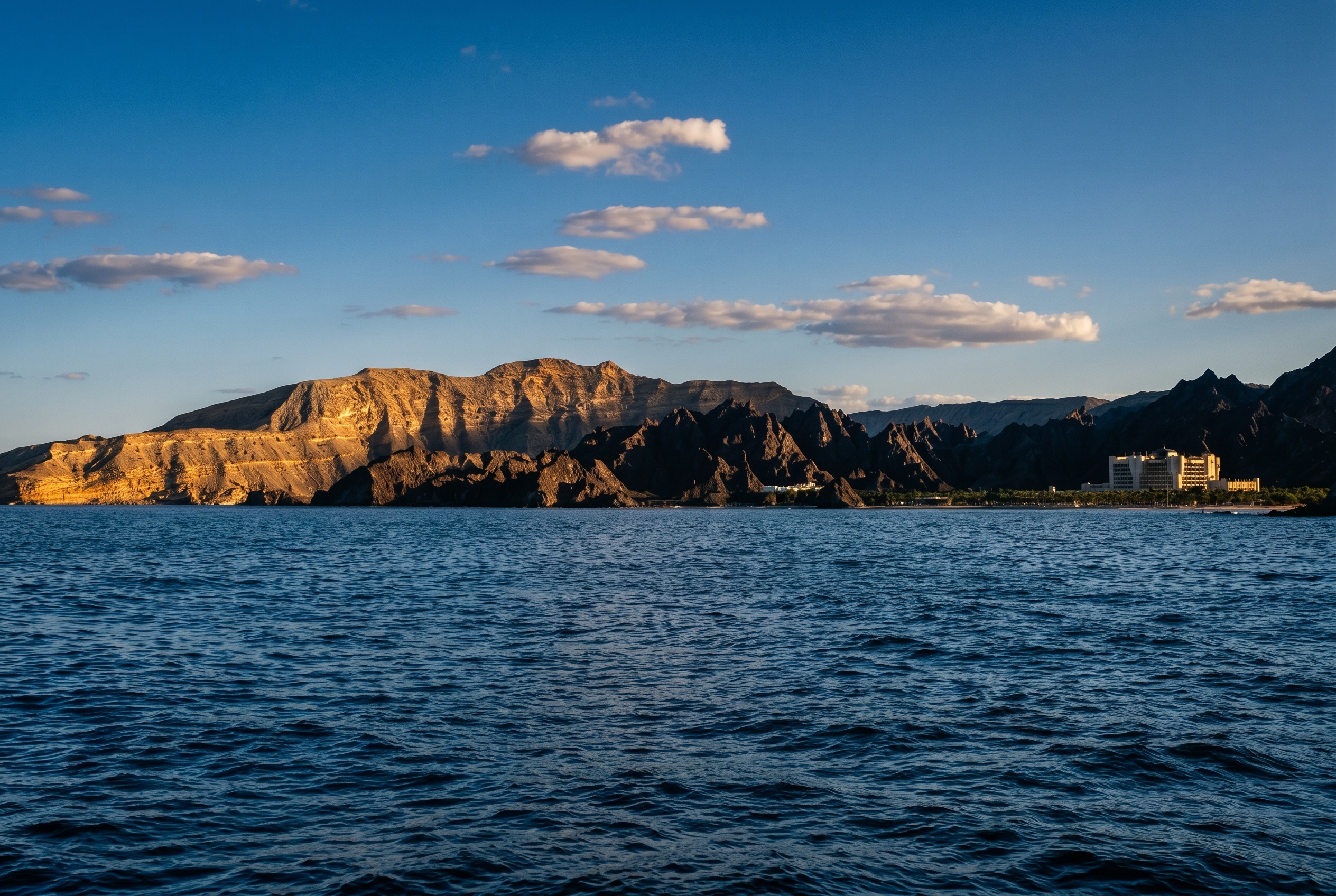
The full destination guide: Asia — guide and what to see
When to Visit Muscat
If you’re planning a holiday in Oman, timing is absolutely key. The best period to visit Muscat runs from October to April, when temperatures hover around a very pleasant 25 to 30 degrees Celsius. In these months the sea is calm, the sky a clear blue, and you can fully enjoy sightseeing and swimming without bathing in your own sweat.
Conversely, you’re better off avoiding the country from May to September unless you genuinely love extreme heat. Summer temperatures in the capital regularly climb above 40 degrees and the humidity along the coast is often unbearable. During this period life moves exclusively into air-conditioned shopping malls, and outdoor activities are practically impossible during the day.
When choosing your dates, also check the timing of the holy month of Ramadan, which moves each year. During Ramadan most restaurants and cafés are closed during the day, and there’s a strict ban on eating and drinking in public until sunset. Travelling at this time does have its own distinctive spiritual charm, but from a practical standpoint it’s quite restrictive for tourists.
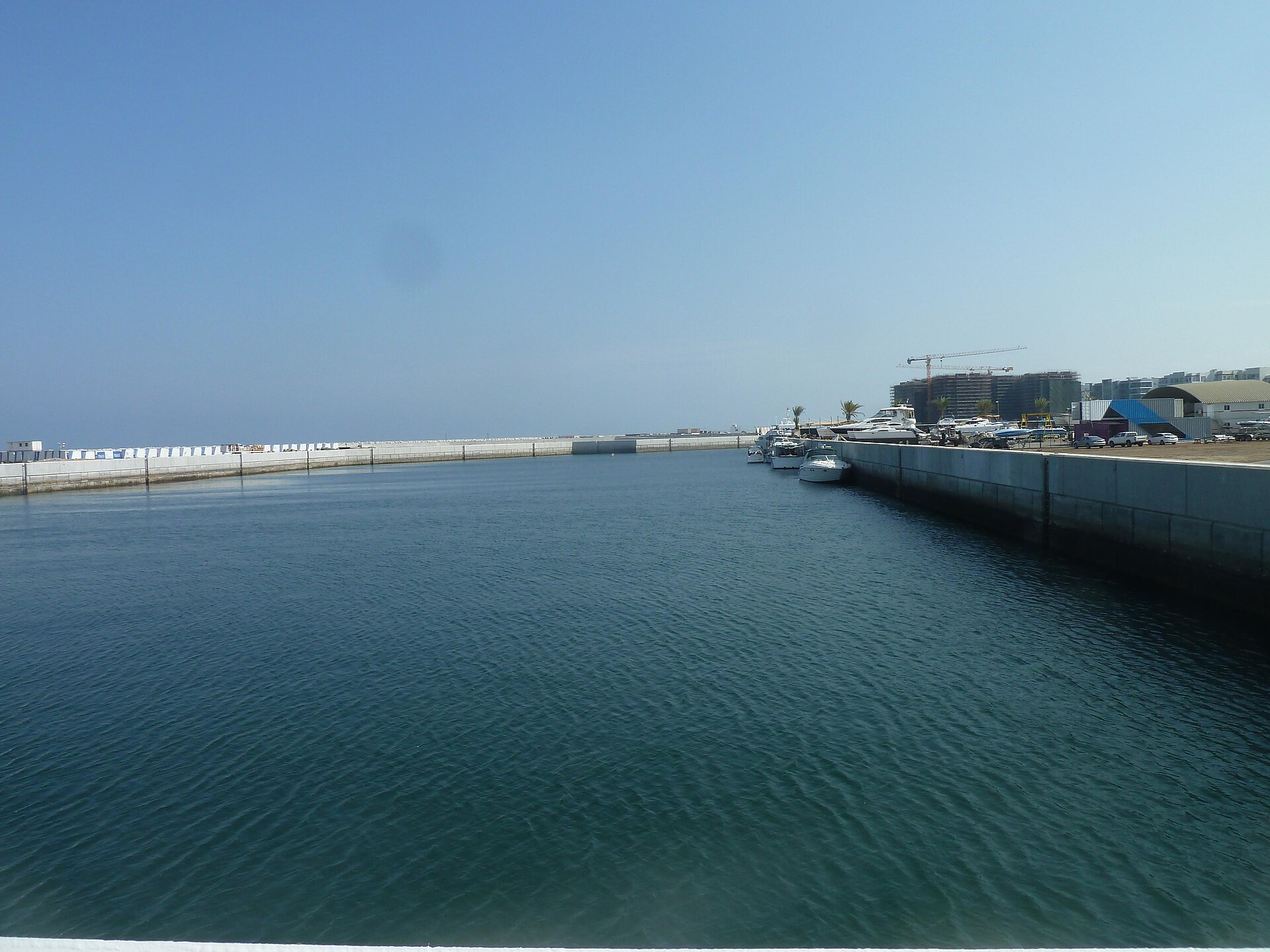
Where to Stay in Muscat
💡 Tip for accommodation and experiences: We like to look for places to stay on Booking.com, which usually has the best cancellation terms. For tickets, tours and activities, it pays to compare and book through GetYourGuide.
Given how sprawling the city is, choosing the right district is absolutely essential. If you want to be as close as possible to the historic sights and markets, look for accommodation in the Mutrah area or Old Muscat. For modern amenities, beaches and Western-style restaurants, on the other hand, the diplomatic district of Qurum works brilliantly, as does the newly built Al Mouj area just a short distance from the airport.
Most travellers handle hotel bookings the usual way through Booking, where you’ll find the widest selection from cheaper guesthouses to five-star palaces. Be prepared, though, that Oman isn’t exactly a cheap destination, and even decent three-star hotels often start at around 80 euros per night. Here’s a selection of tried-and-tested places, sorted by traveller type.
For lovers of absolute luxury and design, the obvious choice is The Chedi Muscat, which offers vast gardens, minimalist architecture and a stunning hundred-metre pool. Another iconic option is the Shangri-La Al Husn (or the family complex Shangri-La Barr Al Jissah), set in a private bay southeast of the city, where peace and quiet and first-class beach service are guaranteed.
If you’re travelling with children or looking for modern facilities near the airport, take a look at the Kempinski Hotel Muscat in the Al Mouj community, which has a gorgeous beach and pools. In the same modern district you’ll also find the trendy W Muscat, which younger couples in search of a livelier atmosphere and great lounge bars will especially appreciate.
For a happy middle ground and excellent value for money, I recommend the Crowne Plaza Muscat in the Qurum district, which gives you great access to the longest public beach in the city. If you’re on a tighter budget but still want clean, reliable accommodation in a good location, you won’t go wrong with the Mysk Al Mouj or the proven classic of the Ibis, which offer all the comfort you need without the inflated price tags.
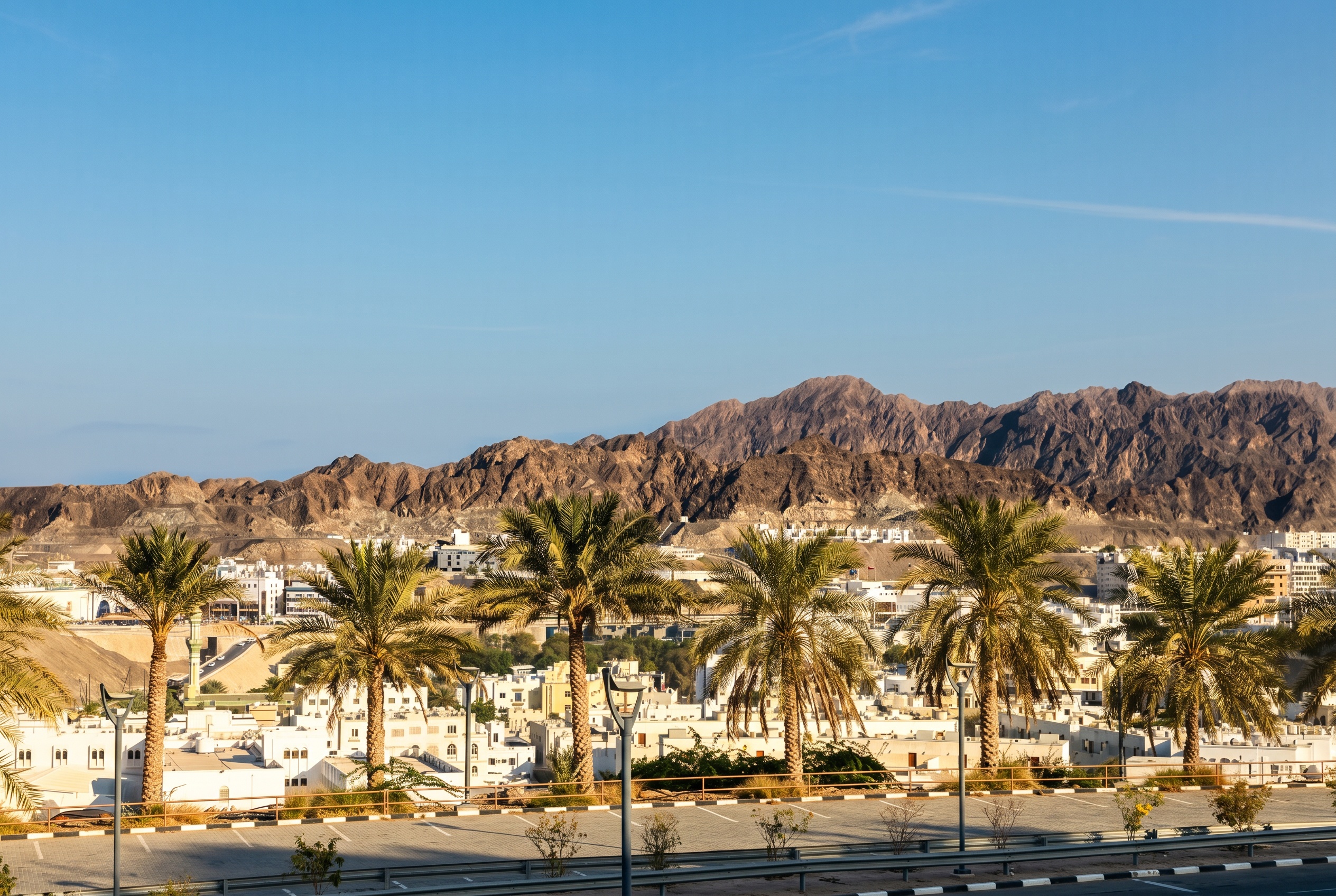
15 Things to See and Do in Muscat
Let’s take a look together at the very best the capital has to offer. Whether you love history, fragrant markets or empty beaches, Muscat is guaranteed to keep you busy for several days.
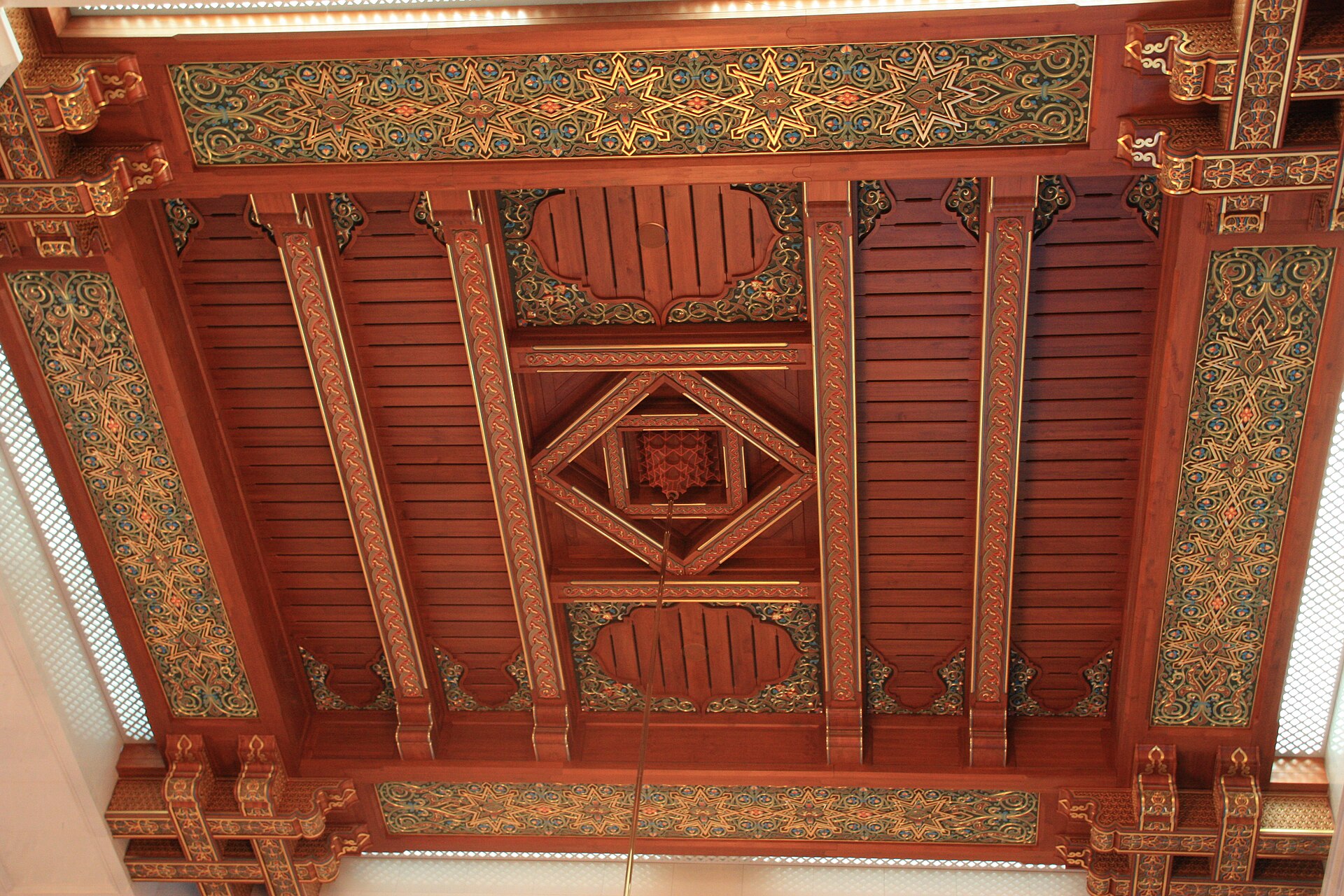
1. Sultan Qaboos Grand Mosque
This breathtaking building, completed in 2001, is the city’s absolute landmark and one of the few mosques on the Arabian Peninsula that non-Muslims can enter. Its grandeur will amaze you right at the entrance, as the complex can hold an incredible twenty thousand worshippers. The polished marble courtyards literally gleam in the sun, and the architectural details are honed to perfection.
Inside the main prayer hall you’ll stare at the second-largest hand-woven Persian carpet in the world, which took six hundred women a full four years to make. Above it hangs a giant crystal chandelier studded with Swarovski crystals, weighing an incredible twenty-five tonnes. Entry is completely free, although you’ll find donation boxes at the entrance for voluntary contributions.
For tourists, the mosque is open only from Saturday to Thursday, between 8:00 and 11:00, while on Fridays it’s strictly closed for the main prayers. The golden rule is to arrive right at eight in the morning; that way you’ll avoid the crowds from the cruise ships and enjoy the best light for photos. The dress code is very strict — both men and women must have their shoulders and knees covered (no shorts), and women must also have their hair completely tucked under a scarf. If you don’t have suitable clothing, you can rent a traditional abaya at the entrance for a small fee.
2. Mutrah Souq
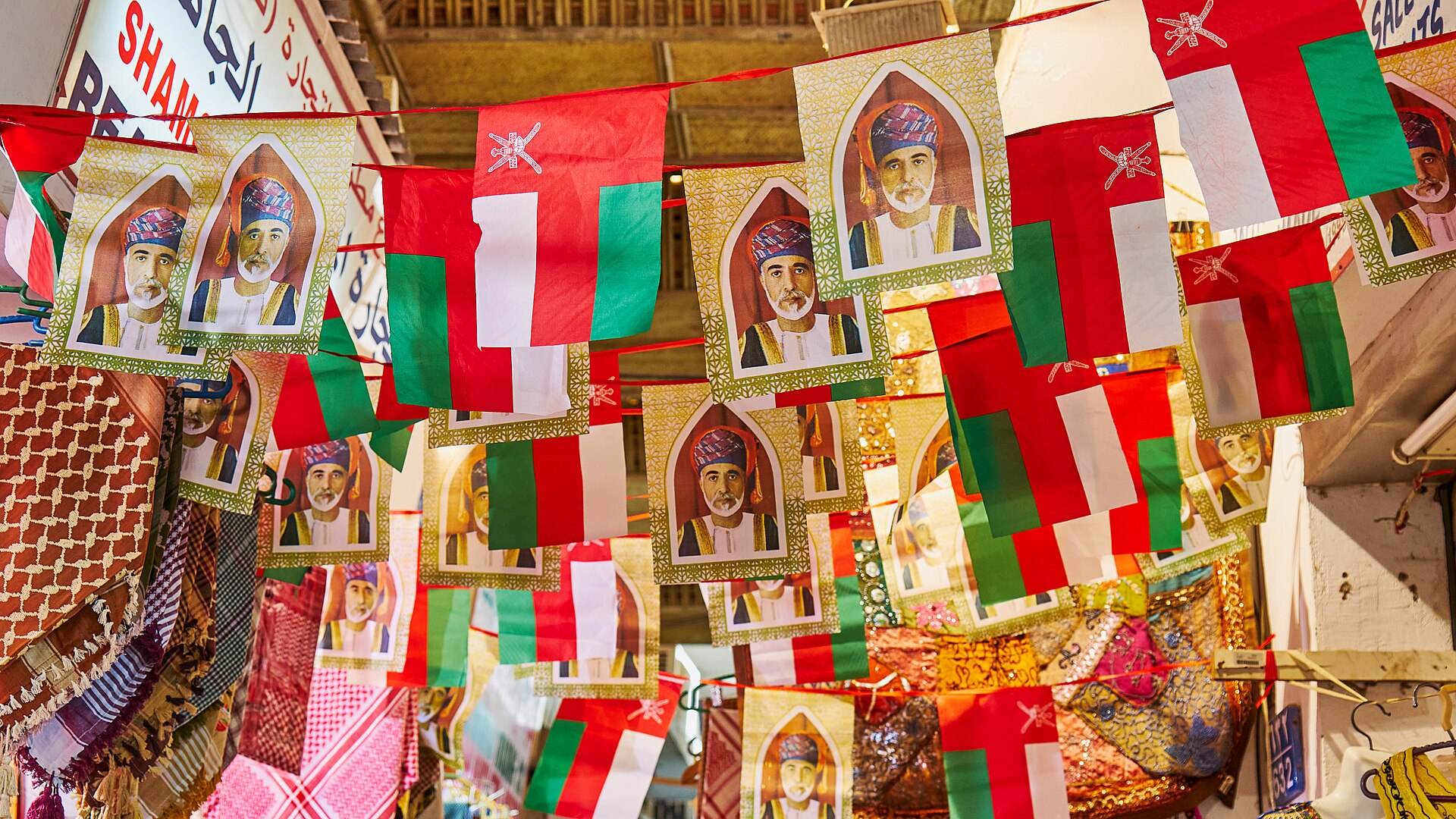
A visit to Muscat wouldn’t be complete without a stroll through the oldest market in all of Oman. Mutrah Souq is an endless maze of covered alleys where the scents of frankincense, rare spices and sandalwood mingle. It’s a place where the genuine atmosphere of the Thousand and One Nights tales washes over you.
These days the market is admittedly heavily touristy, but it still retains enormous charm. You’ll find absolutely everything here, from traditional silver daggers (khanjars) through colourful pashminas and lamps to fresh dates. Some vendors can be a little pushy, but it’s all in a friendly spirit, and haggling over prices is an absolute must here.
The best time to visit is late afternoon or early evening, when the market comes back to life after its afternoon break and fills up with locals too. Get lost in the tucked-away alleys further from the main entrance — that’s exactly where you’ll often stumble upon the most authentic little shops selling antiques and silver.
3. Mutrah Corniche Promenade
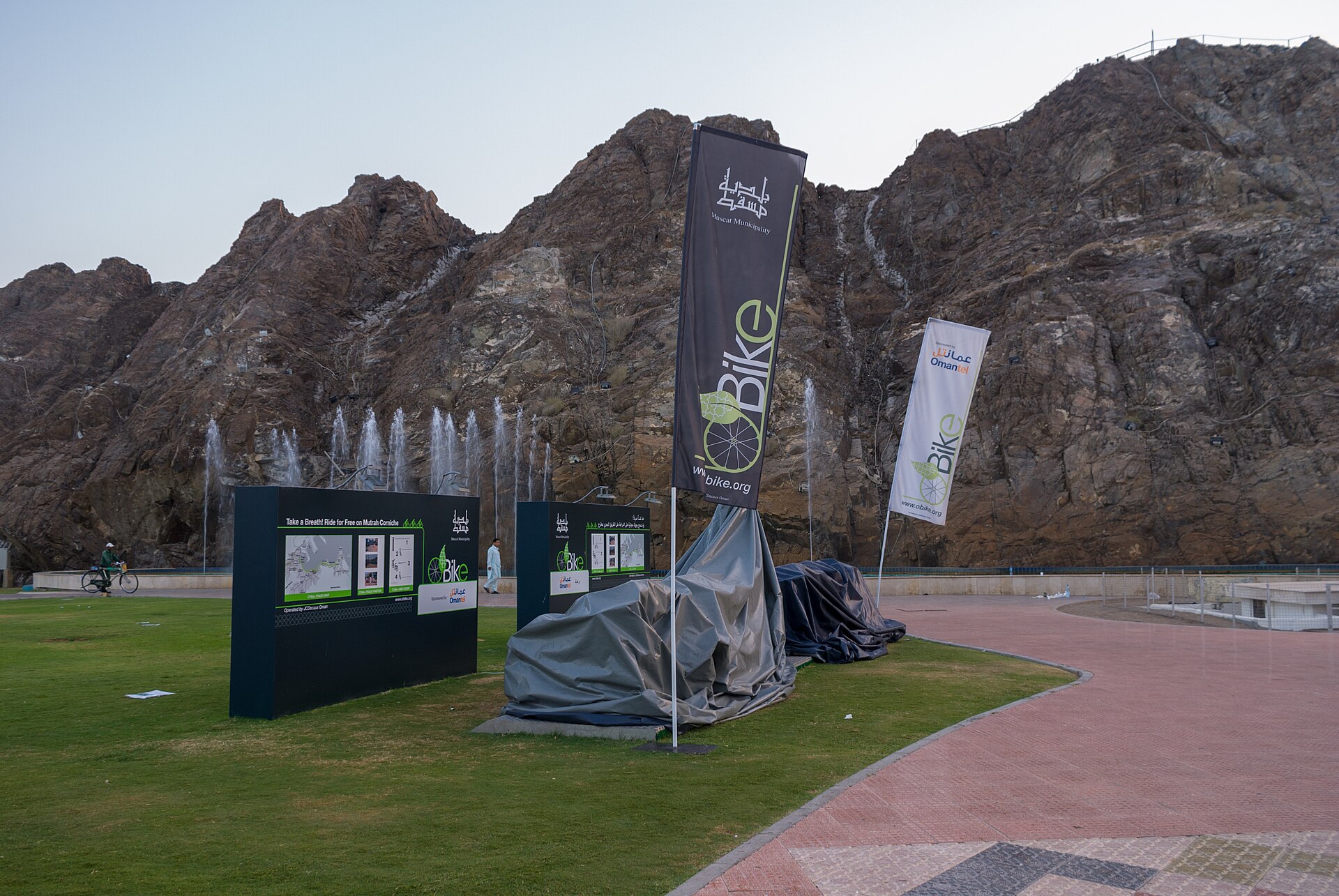
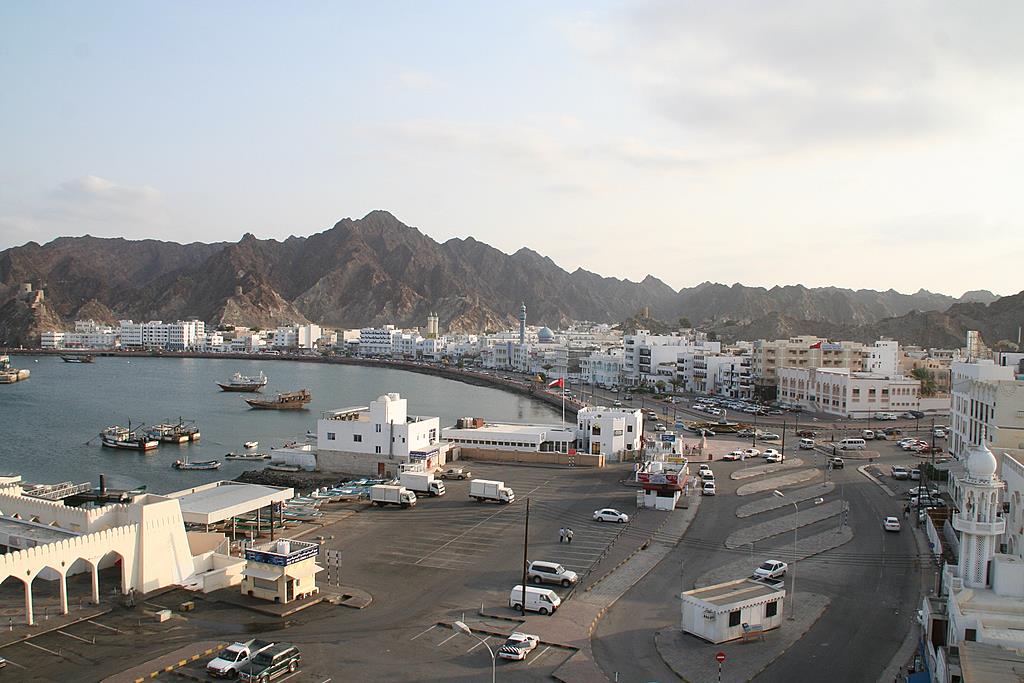
Right by the main entrance to the souq stretches the photogenic Mutrah Corniche seafront promenade, which elegantly lines the bay. It’s surrounded by tall palms and offers a gorgeous view of the traditional wooden dhow boats anchored nearby. On one side you have the deep blue sea, on the other white houses with carved windows and dramatic cliffs in the background.
This spot is absolutely ideal for a relaxed early-evening stroll. I recommend buying a fresh pomegranate juice or an ice cream here and simply watching the bustle of the harbour. As soon as the sun starts to set, the surrounding mountains and the old Portuguese forts on the horizon glow in incredible shades of gold and red.
The promenade also serves as a great orientation point and starting base. At its western end you’ll find the renowned fish market, while heading east you’ll pass through parks all the way to historic Old Muscat.
4. The Mutrah Fish Market
Although it might not sound like a typical tourist attraction, the fish market at the end of the Corniche promenade is, according to many travellers, one of the most authentic experiences in the city. It’s housed in a modern, architecturally very interesting building with a louvered roof that provides pleasant shade.
To experience the market in full swing, you have to get up early and arrive between six and seven in the morning. It’s at this time that the fresh catches are unloaded from the boats and the noisy bargaining begins over the best cuts of tuna, rays and giant prawns. It’s a fascinating spectacle full of shouting, colours and the scent of the ocean.
For vegetarians it’s of course more of a photographic and cultural experience than a gastronomic stop, but it’s still well worth it. Watching the skilled fishermen filleting enormous fish and soaking up the raw atmosphere of harbour life is simply something that belongs inseparably to seaside towns.
5. Royal Opera House Muscat
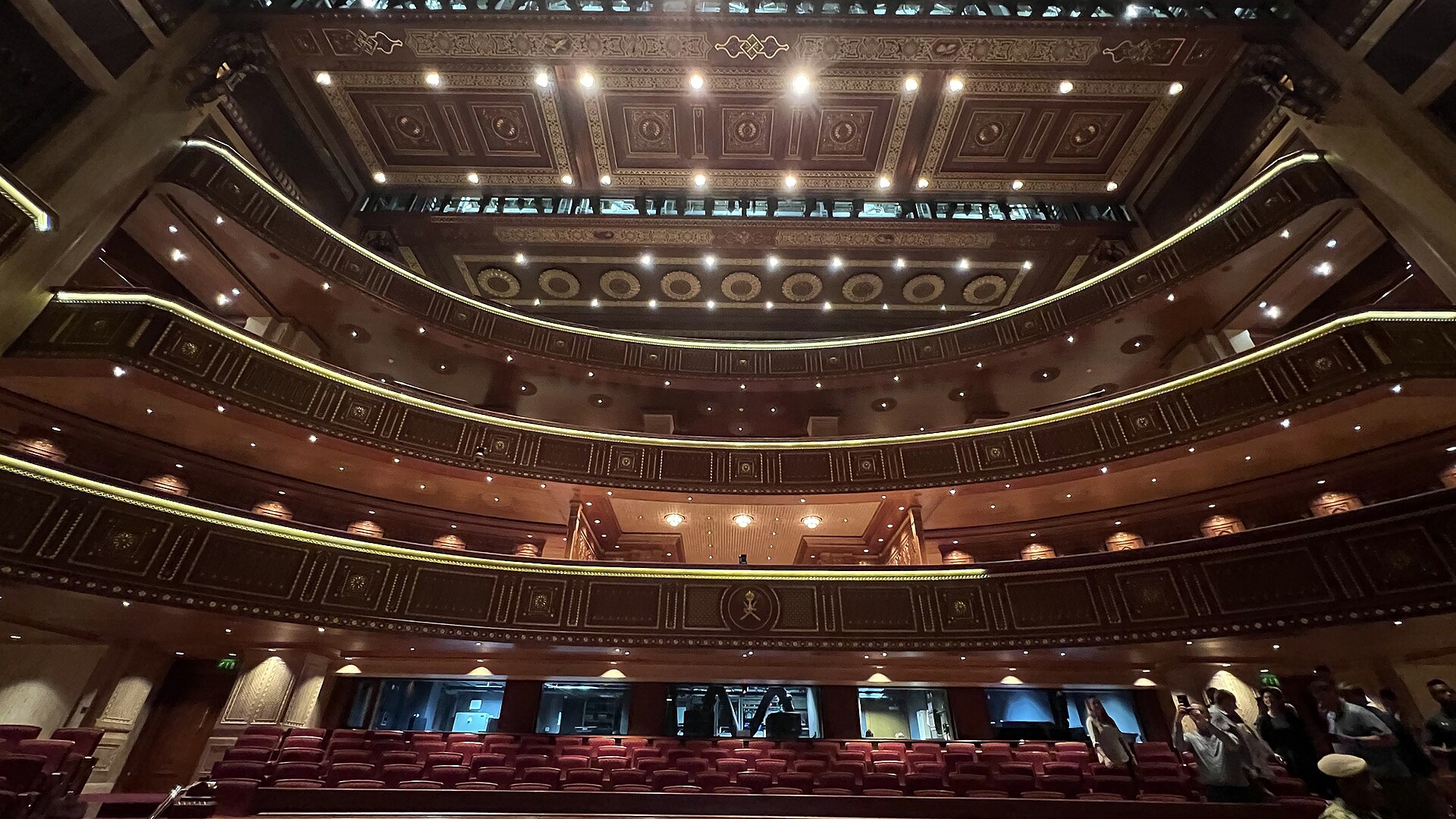
This elegant building of polished marble and intricately carved wood is a perfect example of modern Omani architecture. From the outside it looks like a grand palace surrounded by immaculate gardens, while inside it hides top-class stage technology and world-level acoustics.
Even if you’re not heading to an evening performance, definitely don’t miss the daytime tour of the building. These usually run at 11:00 and 15:00 (Saturday to Thursday, closed on Fridays) and take about half an hour. Admission for an adult costs roughly three Omani rials, and you’ll see beautiful interiors and a luxurious auditorium.
If you’d like to buy tickets for a concert (the season runs from September to June), bear in mind that a strict dress code applies to evening events. Gentlemen must wear a suit and ladies formal below-the-knee dresses, otherwise security will turn you away at the door without mercy.
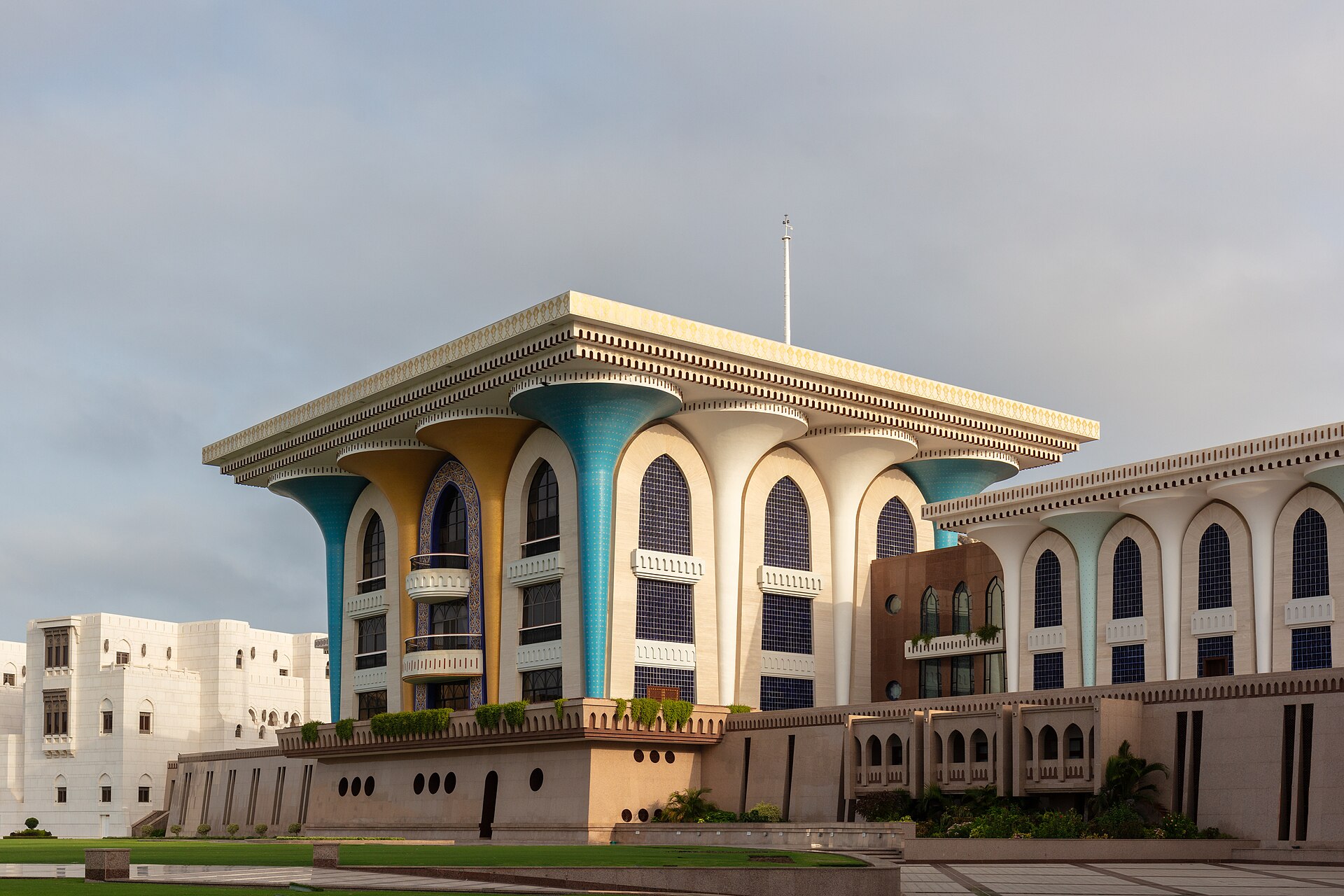
6. Al Alam Palace (The Sultan’s Palace)
In the very heart of the historic Old Muscat district stands the ceremonial Al Alam Palace, which catches the eye with its unconventional façade. Its striking gold and turquoise columns, shaped like giant mushrooms, look a little like something out of a fairy tale or a sci-fi film, creating a fascinating contrast with the ancient buildings around it.
Sadly, ordinary mortals don’t get to go inside the palace, as it serves exclusively for official state visits and ceremonies. You can, however, freely wander around the huge open plaza in front of it, lined with perfectly trimmed gardens and marble paving.
The whole area is also enclosed by the bay and feels very calm, almost majestic. Entry to the square in front of the palace is free, and it’s one of the best photo spots in the entire city, especially when you get the surrounding mountains and watchtowers into the frame as well.
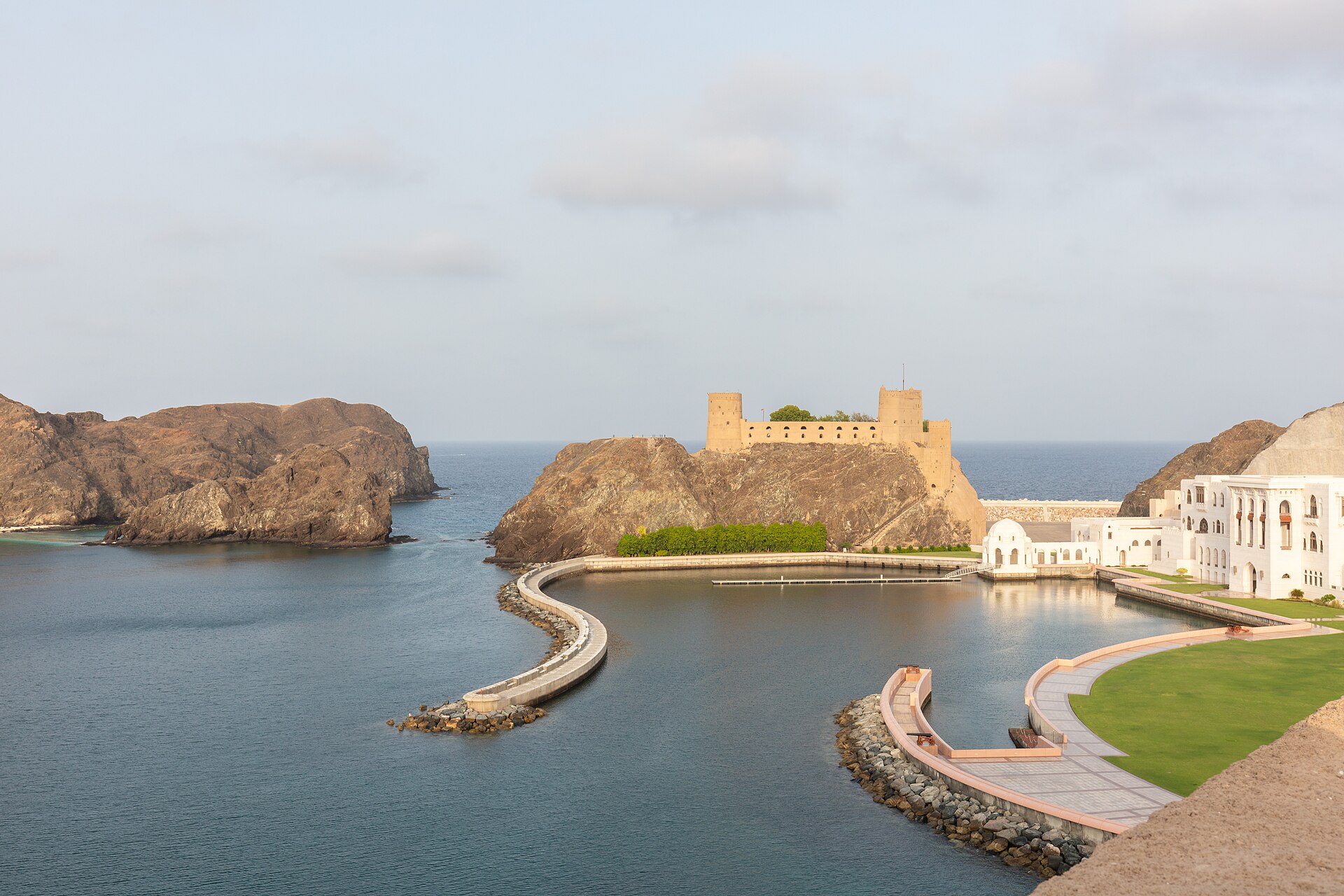

7. The Al Jalali and Al Mirani Forts
When you look at the Sultan’s Palace, you can’t help noticing two dramatic forts rising on the cliffs to its left and right. These massive stone structures were built here by the Portuguese in the 16th century to protect the strategic harbour from attacks from the sea.
As with the palace, the rule is that you can’t get inside as a tourist, since to this day they retain military and historic status. That doesn’t matter at all, though, because their main charm lies precisely in how fantastically they complete the backdrop of all of Old Muscat from the outside.
The most beautiful view of them comes just before sunset, when their rough stone walls light up in orange. If you walk all the way to the waterfront behind the palace, you’ll have both forts and the dark ocean laid out before you.
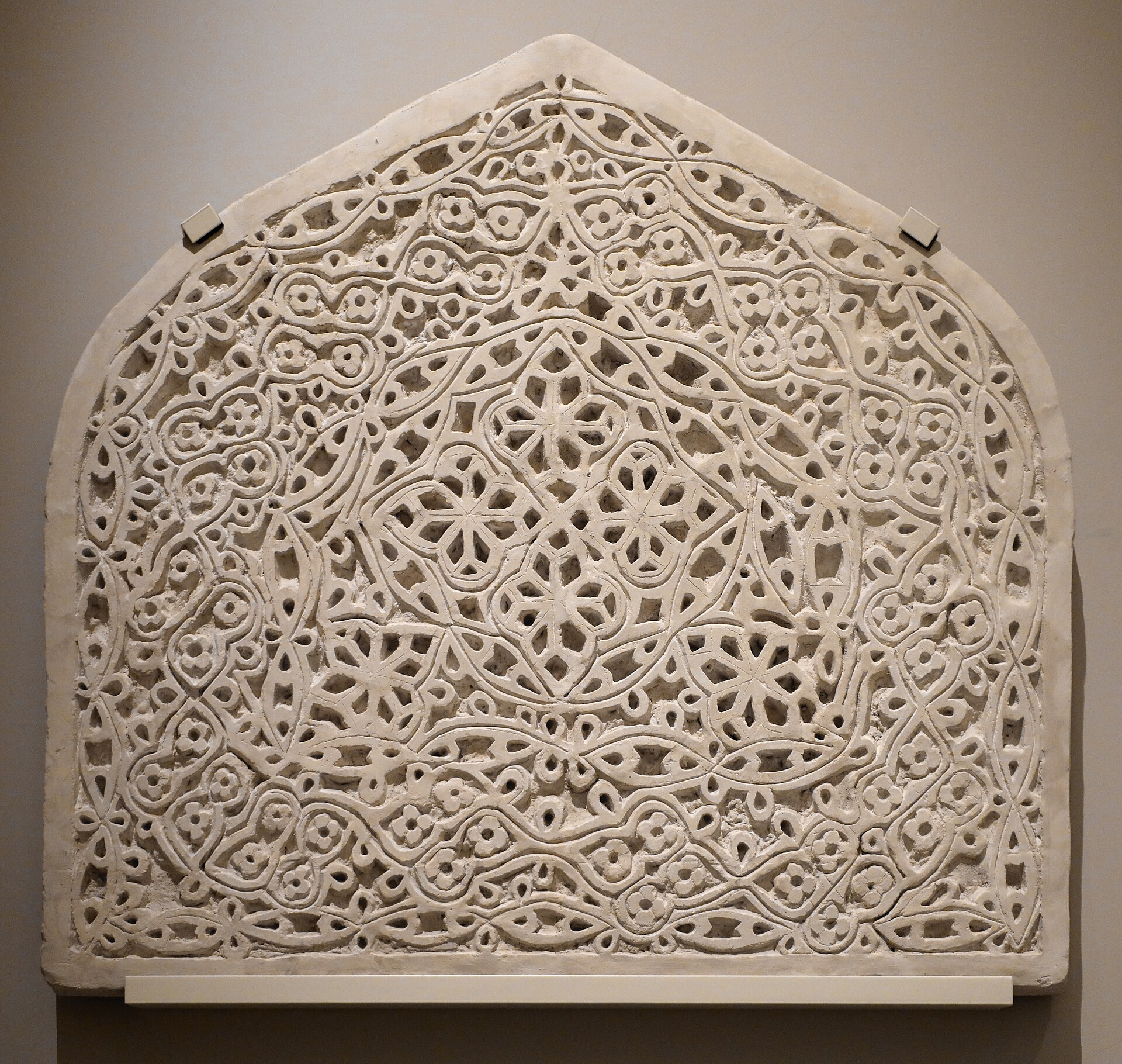
8. The National Museum of Oman
Directly opposite the Al Alam Palace, the modern National Museum building rose in 2013, and it’s an absolute must for all history lovers. If you want to learn how Oman evolved from a maritime power into a modern state, you won’t find a better place.
The museum is divided into several themed galleries that engagingly chart Omani civilisation, maritime history, rare coins and the renaissance period under the beloved Sultan Qaboos. Everything is very clearly laid out, modernly lit and accompanied by quality English captions.
A tourist ticket costs five Omani rials (roughly 12 euros), and the museum is open Saturday to Thursday between 10:00 and 17:00 (until the afternoon on Fridays). It’s an ideal first stop before you set off to explore the surrounding Old Muscat on foot, as it gives you great context for what you’ll see.
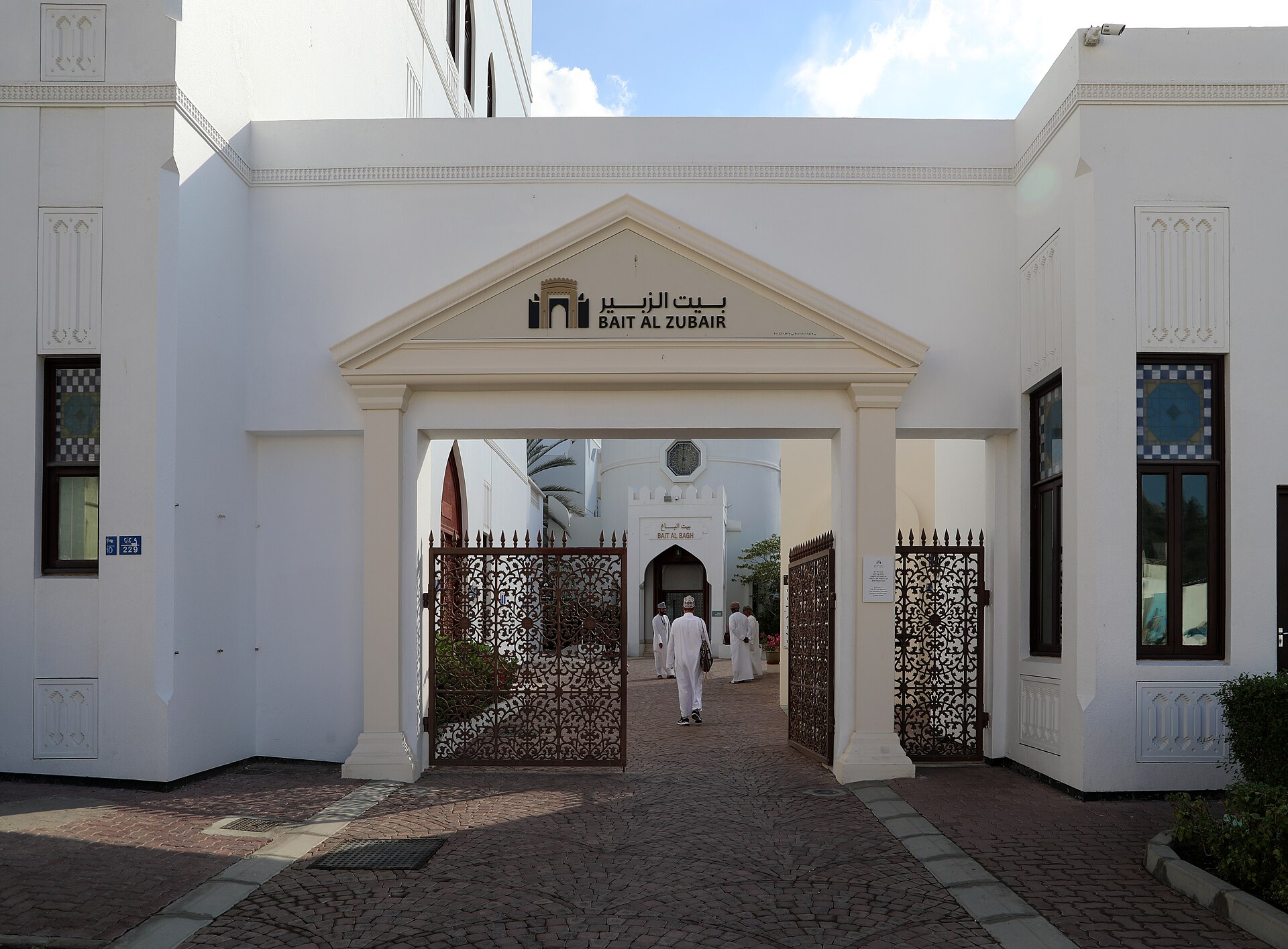
9. The Bait Al Zubair Museum
A short walk from the National Museum, a beautifully renovated historic house hides the private Bait Al Zubair Museum. While the National Museum is more grand and official, this place has a much more intimate and personal atmosphere about it.
Here you’ll find a stunning collection of Omani silver, traditional jewellery, ornate daggers, historic weapons and colourful textiles from various regions of the country. The grounds also include a faithful reconstruction of a traditional Omani house and a very pleasant café in a shady garden.
Admission for an adult comes to about three rials, and it’s open the usual Saturday to Thursday. It’s a great choice for a hot afternoon, when you need to hide from the scorching sun for an hour while admiring the incredible skill of local craftsmen.
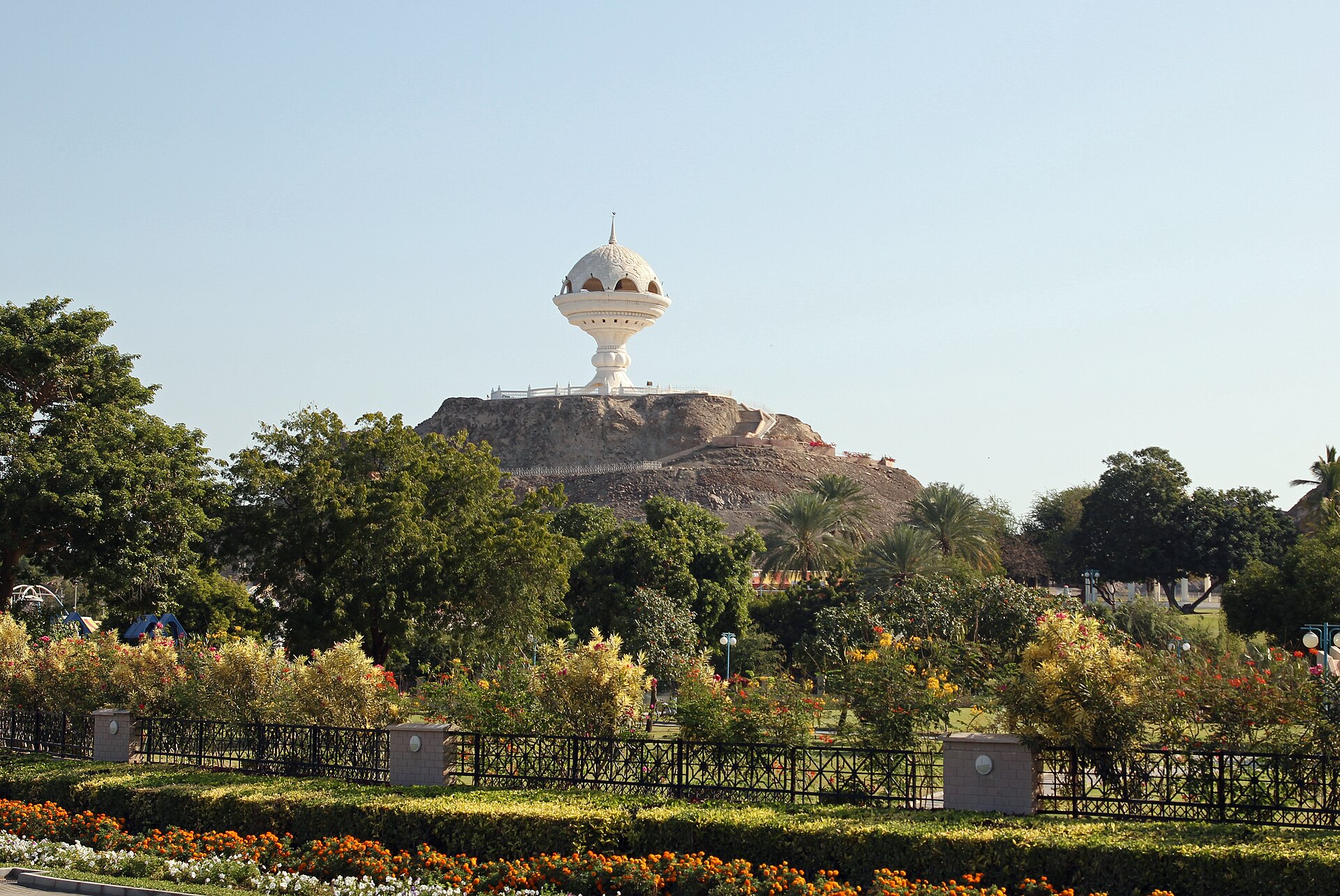
10. Al Riyam Park and the Giant Incense Burner
At the eastern end of the Corniche promenade, exactly halfway between Mutrah and Old Muscat, you’ll come across Al Riyam Park. Its main draw is the huge white structure shaped like a traditional Omani incense burner (mubkhar), which proudly towers on a steep hill above the sea.
This unusual monument was built to mark the twentieth anniversary of Oman’s National Day, and today it functions as a great viewing tower. After a short but steep climb, you’ll be rewarded with a fantastic panoramic view of the whole bay, the harbour and the surrounding jagged mountains.
Entry to the park and the monument is completely free. On weekends (in Oman that means Friday and Saturday) the park fills up with local families heading here for picnics and a small amusement park, so there’s a very lively, friendly atmosphere.
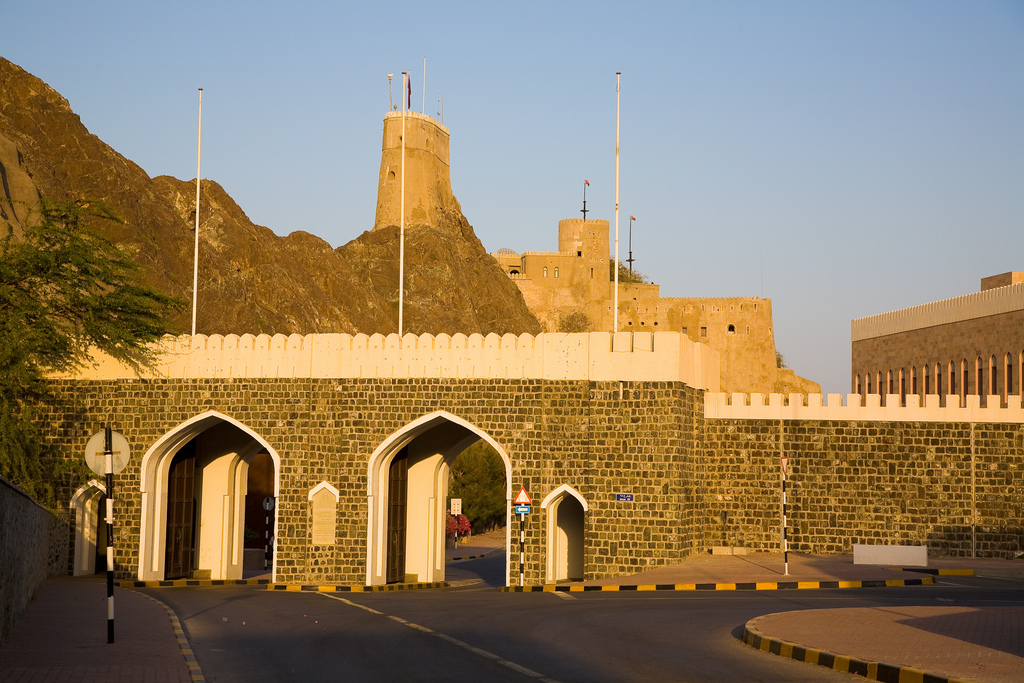
11. Historic Old Muscat
While most of the city is sprawling and full of modern roads, the Old Muscat district has retained a compact, almost fairy-tale character. It was once a fortified core surrounded by mighty walls, from which photogenic entrance gates survive to this day.
Here you’ll find incredible calm, clean alleys lined with bright-white buildings and official villas that are literally wedged between the dark ocean and steep cliffs. This is exactly where the Sultan’s Palace and both of the museums mentioned above are located, so you can easily walk the whole district on foot.
Set aside at least two to three hours in the late afternoon for a stroll through Old Muscat. The atmosphere here is completely different from busy Mutrah; you feel more as if you’re in a luxurious, very quiet open-air museum where time has stood still.
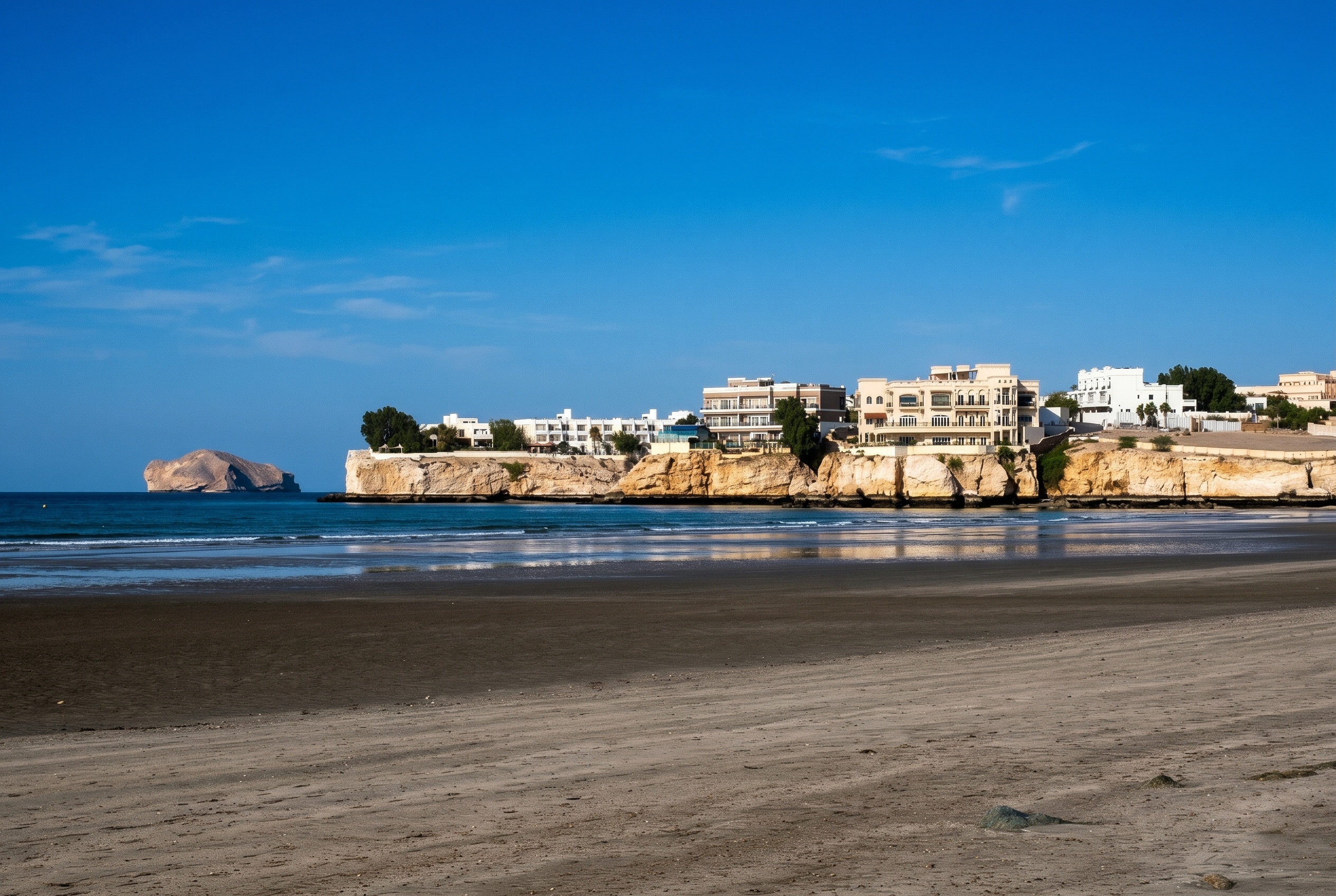
12. Qurum Beach and Park
Once you’re worn out by history, head to the diplomatic district of Qurum, home to the longest and cleanest public beach in the city. It’s a vast strip of golden sand lined with palms, cafés and modern Western-style restaurants.
Qurum Beach is hugely popular with locals and expats, who come here in the afternoons to run, walk their dogs or go kayaking. The sea here is usually very calm, making it an ideal spot for safe swimming with children. Right next to the beach lies Qurum Natural Park, the largest green oasis in the city, with a small lake and an enormous number of mature trees.
💡 Tip: Since this is a public beach in a conservative country, women should opt for more modest swimwear (ideally board shorts and a T-shirt) and save the classic bikini for the hotel pool.
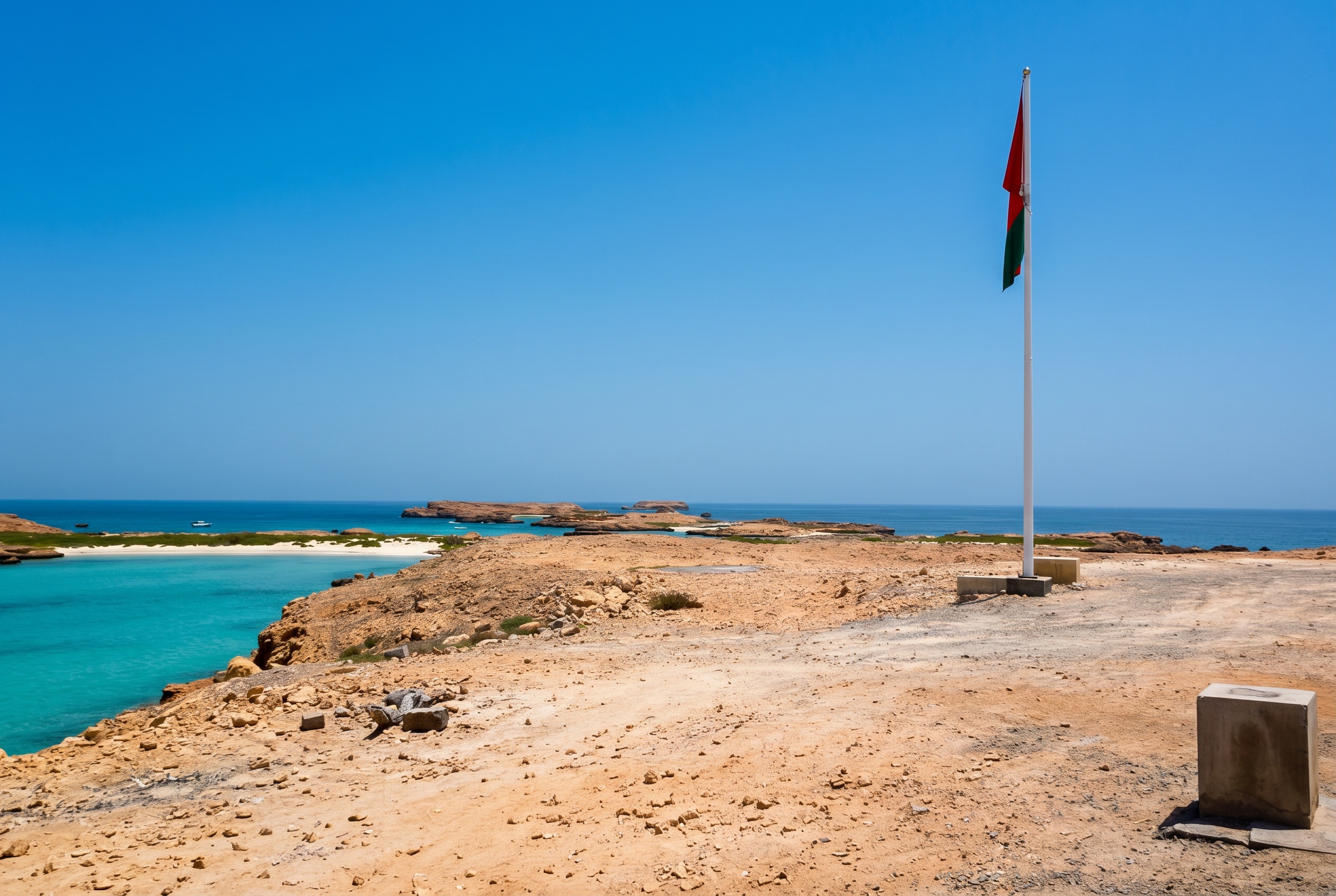
13. Snorkelling at the Daymaniyat Islands
If you love the underwater world, this is the absolute highlight of your trip. The Daymaniyat Islands are a protected marine reserve, which you reach after roughly an hour’s ride by speedboat from the local marinas. Crystal-clear water, well-preserved coral reefs and white sand await you there.
Snorkelling here you’ll commonly come across dozens of sea turtles, colourful clownfish, rays and even harmless reef sharks. On the boat journey, too, huge schools of playful dolphins very often appear, racing alongside the bow of the boat.
💡 Tip: Opera tickets, boat cruises and snorkelling trips to Daymaniyat can all be easily booked in advance online through GetYourGuide, so you’re sure of a place in high season. To be fair, though, if you arrange the trip on the spot directly at the marina with local operators, you can often haggle a slightly lower price (a half-day trip usually comes to around 95 dollars).
14. Bandar Jissah Beaches and Qantab Bay
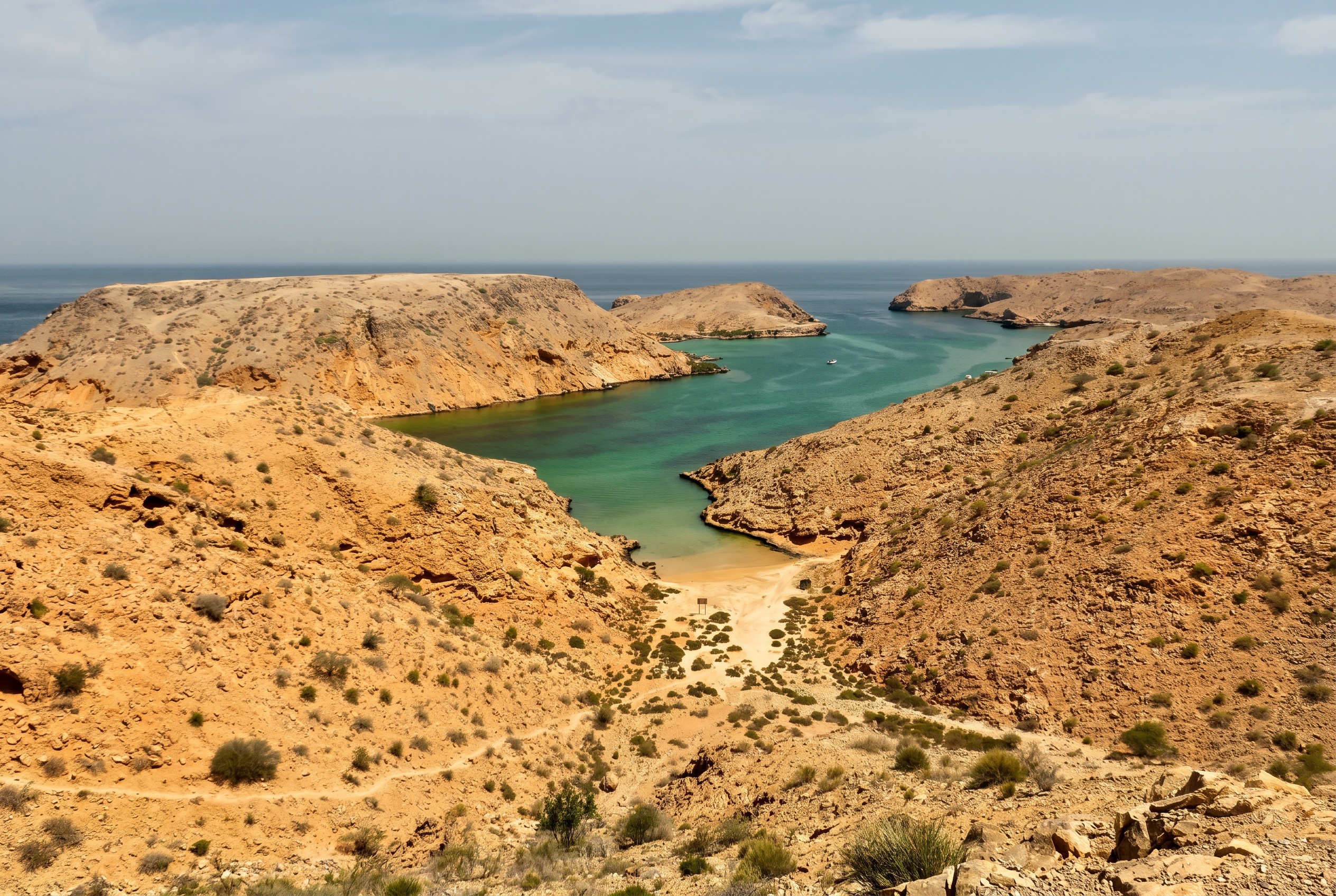
While Qurum is the urban beach, for slightly wilder scenery you’ll need to head about twenty-five minutes’ drive southeast of the centre. The Bandar Jissah area will captivate you with its amazing rocky cliffs and sapphire water — it’s one of the most photogenic parts of the Omani coast.
A short distance away lies the little fishing village of Qantab, which feels as if it sits at the end of the world. Traditional wooden boats rest on the beach here, and for a few rials the local fishermen will happily offer you a short cruise along the coast, showing you hidden caves and deserted mini beaches.
These coves are absolutely fantastic for photography and quiet relaxation far from the bustle of the city. The water here is wonderfully clear, and thanks to the rocks beneath the surface you’ll also find pretty decent conditions for snorkelling straight from the shore.

15. Omani Coffee and Vegetarian Feasts
Muscat is home to a huge Indian community, which means that if you love Indian cuisine, you’ll be in seventh heaven here. For vegetarians it’s an absolute gold mine. From my own experience, definitely head to purely vegetarian spots like Saravana Bhavan or Kamat, where they make incredibly good crispy dosas, lentil soups and generous thalis for next to nothing.
When it comes to traditional Omani flavours, everything revolves around the famous coffee known as kahwa. It’s a lightly roasted coffee strongly scented with cardamom, often with saffron or rose water too. It’s served in tiny cups and always comes with a full bowl of sweet dates. The traditional sweet finish is then halwa, a dense, gelatinous dessert made of rose water and nuts, which is naturally vegetarian and absolutely delicious.
In the markets and luxury restaurants, of course, local meat specialities also fill the air. Traditional shuwa is meat marinated in a blend of spices and roasted all day in an underground oven, while majboos is richly spiced rice served with huge cuts of meat. These dishes have an enormous tradition, but as a vegetarian you’ll get by perfectly well here with fresh breads, hummus, Lebanese mezze and the fantastic Indian scene mentioned above.
Where to Go Next from Muscat
Muscat is an absolutely ideal base for exploring the rest of the country. If you have a rental car, set off on day trips that will show you the true face of Oman’s nature.
An absolute classic is the trip southeast, where the famous Wadi Shab is located. After a short boat ride and a roughly forty-minute trek through a deep canyon, you’ll reach turquoise pools. From there you have to swim through a narrow crevice in the rock until you discover a hidden cave with a waterfall. On the way back to Muscat, definitely stop at the Bimmah Sinkhole, a giant sinkhole with crystal-clear water you can swim in. Both these places lie roughly 130 kilometres from the city and can comfortably be done in one long day.
If history and mountains appeal to you, after about two hours’ drive inland you’ll reach the historic town of Nizwa. Here you’ll find a beautifully restored circular fort and a huge souq selling pottery. If you arrive early on a Friday morning (before seven o’clock), you’ll witness the incredibly authentic cattle and goat market that has been held here for centuries. From Nizwa you can then continue by off-road vehicle high into the mountains to Jebel Akhdar (the Green Mountain) or Jebel Shams (the Sun Mountain).
For an experience straight out of the movies, head to the sandy Wahiba Sands desert, about three hours away. The golden dunes here are breathtaking, but rather than turning it into a day trip, I recommend booking an overnight stay in a traditional desert camp and enjoying the night sky without any light pollution.
You’ll find more inspiration and practical tips for planning the whole trip in our Oman Holiday: The Complete Guide. If you have more time in the country and are considering a flight south for greenery and beaches, take a look at the article Salalah and Southern Oman. And for those combining the trip with the Emirates, the Dubai: Holiday and Tips guide will come in handy.
Frequently Asked Questions
How does transportation from the airport to the center work?
The easiest way is to download the Careem or OTAXI app and call for a ride; the trip to the center takes about 20 minutes and costs roughly 10 rials. You can also use airport taxis, but always agree on the price beforehand, as they often don’t use meters. An alternative is the public bus line 41.
Can you buy alcohol in Muscat?
Oman is a conservative Muslim country, so you won’t find alcohol in regular supermarkets or cafés. Drinking is only permitted in licensed establishments, which are mostly upscale restaurants and bars inside large international hotels.
How much do you need to worry about the dress code?
Very much so. Even though Muscat is a modern city, respect for local culture is essential. Shoulders and knees should always be covered, even for men. Save your swimwear (ideally one-piece or with shorts) for the beach or hotel pool only.
How many days to allocate for Muscat?
For the city itself – the mosque, palace, old town, souk, and relaxing on the beach – two to three days will be more than enough. However, if you’re planning day trips to the mountains or camping in the desert, set aside at least four to five days.
Is it safe to rent a car and drive?
Yes, absolutely. Roads in Muscat and on the main routes to the mountains are modern, excellently signposted and in great condition. Local drivers drive quite briskly, but smoothly. Just pay extra attention to the ubiquitous fixed speed cameras.
How do you pay at markets and in restaurants?
In hotels, shopping centers and better restaurants you can pay by card without any problems. For shopping at Mutrah Souq, in smaller cafes or on remote beaches, always carry cash (Omani rials) with you.
Is tap water drinkable?
Tap water is desalinated and technically drinkable, though most locals and tourists prefer to drink bottled water. You can safely use tap water for brushing your teeth or cooking.
Tips and Tricks for Your Vacation
Don’t Overpay for Flights
Search for flights on Kayak. It’s our favorite search engine because it scans the websites of all airlines and always finds the cheapest connection.
Book Your Accommodation Smartly
The best experiences we’ve had when looking for accommodation (from Alaska to Morocco) are with Booking.com, where hotels, apartments, and entire houses are usually the cheapest and most widely available.
Don’t Forget Travel Insurance
Good travel insurance will protect you against illness, accidents, theft, or flight cancellations. We’ve had a few hospital visits abroad, so we know how important it is to have proper insurance arranged.
Where we insure ourselves: SafetyWing (simple monthly subscription) and TrueTraveller (for extra-long trips).
Find the Best Experiences
Get Your Guide is a huge online marketplace where you can book guided walks, trips, skip-the-line tickets, tours, and much more. We always find some extra fun there!
More from Asia
Full guide → When to go · most readSri Lanka Travel Guide: 21 Best Things to See in 2026
 Where to stayWhere to Stay in Baku: 18 Hotels and Safe Neighborhoods in 2026
 Where to stayWhere to Stay in Doha: 18 Tips for the Best Hotels and Areas in 2026
 Where to stayWhere to Stay in Mumbai: 18 Best Hotels and Neighborhoods in 2026
 Where to stayWhere to Stay in Kuala Lumpur: 18 Best Hotels in 2026


