Spain: Spanish Food You Must Try

TL;DRSpanish food runs to 18 essential dishes, including paella valenciana with chicken and rabbit (no seafood in the original version), potato tortilla, patatas bravas, gazpacho, salmorejo from Córdoba, Manchego cheese, jamón ibérico, croquetas, Galician pulpo a la gallega, plus sweet churros con chocolate and Catalan crema catalana. Lunch (comida) typically runs between 2pm and 4pm, and dinner (cena) doesn’t start before 9pm — in Andalusia, more like 10.15pm. Free tapas culture is still going strong in Granada, while in the Basque Country (San Sebastián) you pay for each pintxo. Since 2022, restaurants have had to serve free tap water on request, and the Andalusian town of Jerez de la Frontera holds the title of Spain’s Gastronomic Capital for 2026.

What is typical Spanish food? That’s exactly what we’ll talk about in today’s article. To Spain we traditionally go to Spain on our car trip to Portugalwe usually stop here for one or two weeks every year.

As far as food is concerned, it tends to be quite problematic for us because there is not much choice for vegetarians in traditional cuisine. That’s also why we have become quite expert in Spanish food. 😁

History of Spanish cuisine

Spanish cuisine is a Mediterranean cuisine, which means it is relatively healthy, rich in fruits, vegetables, salads, seafood and good quality olive oil. It was strongly influenced by the Arabs and Jews who lived on the Iberian Peninsula, as well as by the discovery of America and the arrival of new ingredients from the New World.

The Arabs brought rice to Spain, on which the most famous Spanish dish stands today – paella . Their influence is also evident in the use of spices, especially saffron and cumin, sweetening with honey, and the addition of almonds and fruit to traditional Spanish dishes.

After the discovery of America, Spanish cuisine was enriched by potatoes, which became part of two famous dishes – patatas bravas and tortilla de patata.

By the way, we recommend trying the great food tours and tapas tours right in Spain that you can book on GetYourGuide.

What to buy in Spain: traditional Spanish products

If you went to Spain on holiday , you should definitely try some traditional Spanish products. Here we have prepared a selection of the most popular ones.

Spanish olive oil and Spanish olives

Olive oil and olives are an essential part of Spanish cuisine and culture, not only an essential ingredient in many traditional dishes, but olives and olive oil are a symbol of Spanish gastronomy and history.

Spain is the largest producer of olive oil in the world, with most of its production coming from the southern region Andalusia.

Of course, you can buy different types of olive oils in Spain – light and fruity oils ideal for salads to more intense and spicy variants that enrich the flavour of baked dishes.

Olives themselves, whether green or black, are also deeply rooted in Spanish gastronomy. They are served as tapas, added to salads, sauces and are an essential part of many regional specialties, which we will talk about later.

This humble crop, grown on the sunny slopes of Spain, is a real treasure that reflects the richness and diversity of the Spanish culinary tradition. So if you want to take something back from Spain, I recommend investing in a good quality Spanish oil.

Spanish ham

As vegetarians, we didn’t have Spanish ham, of course, but if you eat meat, you should definitely not forget about it when visiting Spain.

In the cities, you’ll find shops with hams hanging from the ceiling, and you’ll often find them in restaurants and bars, served as an appetizer. I find the cafes that are also ham shops the most bizarre. That’s how much they love her. 😁
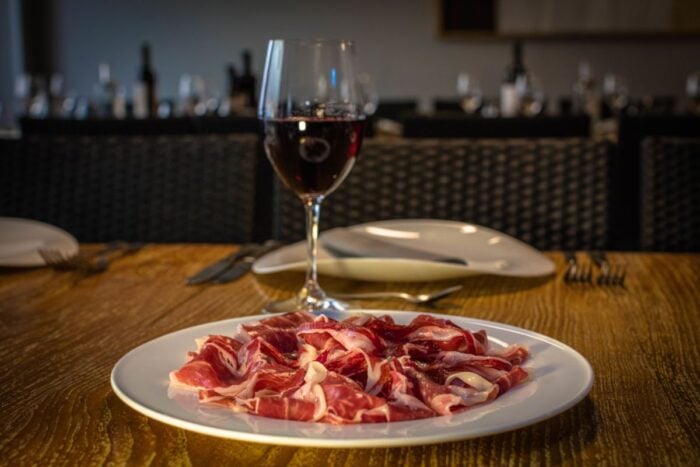
  • Jamón ibérico is made from black Iberian pigs and takes up to 48 months to dry. The Spanish maestros cortadores specialise in cutting ham.
  • Jamón serrano comes from white pigs and is more affordable.

Spanish cheeses

Lukáš is a big cheese lover, so he never forgets to try some new interesting ones he finds in the shops when he visits Spain. Spanish cheeses are as varied as the Spanish landscape itself.

Manchego, probably the most famous Spanish cheese, comes from the La Mancha region. It is made from the milk of Manchego sheep and is characterised by its rich and, for me, perhaps too intense flavour and firm texture. It takes between 60 days and two years to mature.

Another important cheese is Cabrales, a strong blue cheese from Asturias. Aged in limestone caves, this cheese has a distinctive savoury flavour and is ideal for lovers of stronger cheeses. Its unique taste is the result of traditional production methods and the specific microclimate of the caves where the cheese is aged.

In Catalonia, we find Garrotxa, a semi-hard goat’s cheese with a mild, nutty flavour, which is a great example of Catalan cheese-making skills. Its grey, velvety rind hides a delicate but distinctive flavour that is popular with gourmets.

For those looking for something truly unique, there’s Queso de la Serena, a soft cheese from Extremadura made from sheep’s milk and renneted with a plant enzyme from thistle. It has a creamy texture and a slightly bitter taste.

Spanish sausages

Spanish sausages are also an essential part of Spanish culinary art, offering an incredible variety of flavours and textures that reflect the richness and diversity of Spanish gastronomy.

Chorizo

One of the most famous is Chorizo, a traditional cured sausage made from porcine meat, which is known for its distinctive flavour and can be quite spicy. Its characteristic red colour and spicy taste are due to the addition of paprika.

Salchichón

Another popular Spanish sausage is salchichón, a smoked sausage that is similar in many ways to chorizo, but differs in that it does not contain paprika, which gives it a milder flavour. This sausage is popular for its versatility and is great both in a sandwich and as part of tapas. At least that’s what the Spanish say.

Sobrasada

Finally, the Sobrasada, from the Balearic Islands, is a soft, spreadable sausage made from pork, bacon and paprika. Its creamy texture and rich flavour make it ideal for spreading on bread or as part of more sophisticated dishes.

Morcilla

Morcilla, the Spanish version of blood sausage, is usually flavoured with rice, onions or pine nuts.

Spanish wine

Spain, a country with one of the oldest wine traditions in the world, is a wine lover’s paradise. With a variety of landscapes from the green valleys of Galicia to the sunny plains of Andalusia, each region contributes its own unique style and character to the rich palette of Spanish wines.

Among the most popular varieties is Tempranillo, the queen of Spanish red wines, which is the basis of the famous wines of Rioja and Ribera del Duero. This variety is known for its dark colour and complex flavours with notes of red fruits and spices.

Another important variety is Airén, widely grown in central Spain, especially in Castilla-La Mancha, and the basis of many excellent Spanish white wines.

For those who love bubbles, there’s Cava, a sparkling wine produced mainly in Catalonia that rivals the best champagnes.

Let’s not forget Sherry, a wine from Andalusia, made from white grapes grown in Spanish Andalusia in the triangle between Jerez de la Frontera, Sanlúcar de Barrameda and El Puerto de Santa María.

Spanish oranges

Who can resist freshly squeezed orange juice? In Spain, it is available everywhere and can be found on the drinks menu under the name “zumo de naranja naturale”.

And you can also find an orange press in the shops that allows you to squeeze your own juice into a bottle. It works the same way in Portugal. 😁 We always manage to get through it in the month and a half.

Typical Spanish dishes: What to eat in a restaurant

And now we’re finally at the part where we tell you what you should try for typical Spanish food in restaurants in Spain.

Paella – the national Spanish dish

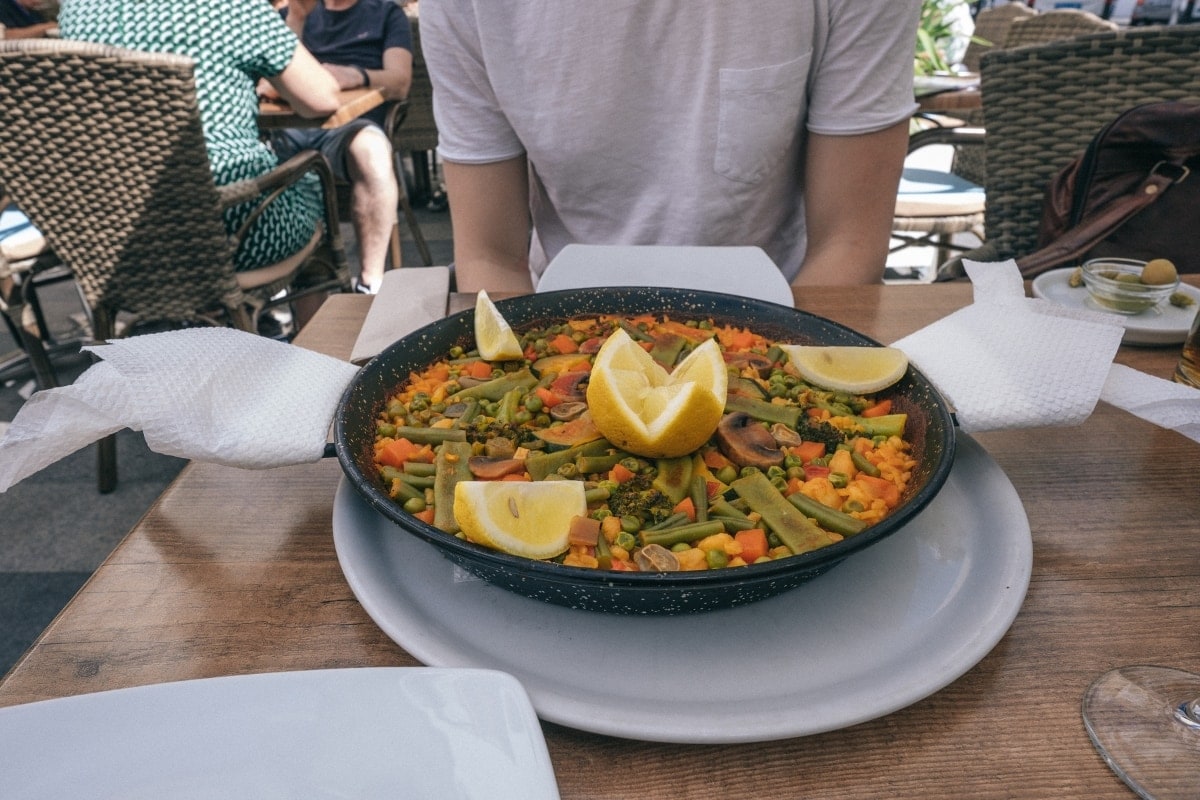
Paella is probably the most famous Spanish dish, which gets its name from the pan on which it is prepared. It is prepared with rice and various ingredients such as vegetables, chicken or seafood. An important spice is saffron, which also gives paella its characteristic yellow colour.
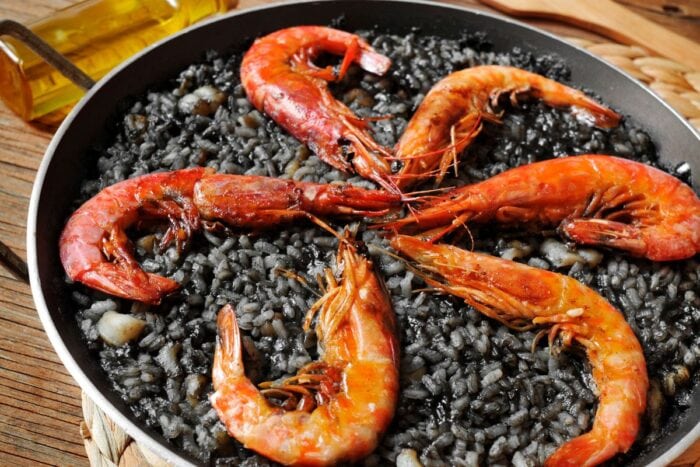
Arroz negro

A variant of paella where the rice is cooked with octopus or cuttlefish and their ink, giving it its characteristic black colour and distinctive marine flavour.
Fideua

A traditional Spanish dish similar to paella, but noodles are used instead of rice. It often contains seafood and is a typical dish for the region of Valencia.

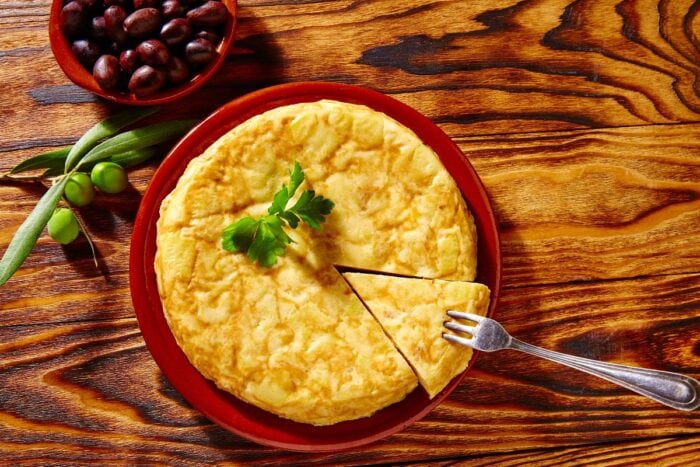
Tortilla de patata

This is a Spanish omelette made with potatoes, eggs, onions and olive oil. Sometimes chorizo is also added.

There’s nothing special about it, it’s a very basic traditional Spanish dish that you can find even in Spanish gas stations in cold form. It is one of the typical Spanish dishes that is meatless.
Tapas

Tapas are one of the most characteristic elements of Spanish gastronomy and culture. The word “tapa” means “lid” or “cover” in Spanish, and one theory is that tapas originated as a small piece of food that was placed on top of a glass of wine or other beverage to keep insects or dust from falling in.

Nowadays, tapas are small dishes that can be very varied, from simple olives, pieces of cheese or ham, to more sophisticated preparations such as shrimp in garlic oil (gambas al ajillo), spicy potatoes (patatas bravas), meatballs (albondigas) and more complex dishes such as small portions of paella.

Tapas are served in bars and restaurants all over Spain and are often eaten as an appetizer, snack or even as a main course.

Tapas are not just about food; they have an important social aspect. Sharing tapas with friends or family over a glass of wine or beer is a cornerstone of Spanish social life.

For Lukáš, tapas is a bit of a dirty word, because for a lot of money you get a single dish. 😁 So we don’t go to them much.

Pintxos

Pintxos (sometimes spelled “pinchos”) are actually a type of snack that is particularly popular in the Basque Country and Navarre in northern Spain, although you can find them all over the country today.

The word “pintxo” comes from the Basque word “pinchar”, which means “to pierce”, referring to the typical way these snacks are often presented – like Czech one-hubky, where you have a piece of pastry with vegetables, cheese, ham or other ingredients and it’s pierced with a skewer.

The main difference between pintxos and tapas is in their presentation and often in their complexity. While tapas can be any small dish served in a small bowl or on a plate, pintxos are usually more focused on the combination of flavours and textures in one small but carefully prepared piece. Pintxos are often visually appealing and can be considered a form of culinary art.

Another difference is the method of consumption. While tapas are often shared between table members, pintxos are usually meant for individual consumption. In many bars serving pintxos, diners choose from a variety of options displayed on the counter, and are charged at the end according to the number of skewers they have on their plate. Often the price is also determined by the length of the skewer.

Patatas bravas

It is fried potato cubes served with red spicy tomato sauce and white garlic alioli.

Croquettes – Croquetas

Small croquettes, which can contain, for example, cheese, chicken, fish or ham.

Empanadas

Deep-fried bags filled with meat, cheese or vegetables.

Gambas al ajillo

Sauteed shrimp in oil with garlic, usually served in a small bowl.

Gazpacho and Salmorejo soups

Gazpacho is a cold vegetable soup made of tomatoes, peppers, onions, garlic and olive oil. Salmorejo is prepared in a similar way, but with the addition of a blended baguette, which makes it thicker in consistency.

Calamares a la Romana

Octopus rings coated in batter and fried, often served with lemon or aioli. It is a popular Spanish dish served as tapas in bars.

Fabada Asturiana

This very rich dish of white beans, chorizo, morcilla (blood sausage) and ham is typical of the Asturias region.

Pimientos de Padrón

Small green peppers, lightly fried in olive oil and sprinkled with coarse salt, some are spicy and some are not, which adds to the fun of eating them.

Typical Spanish desserts

As we’ve said before, as vegetarians, it’s hard to choose traditional Spanish restaurants, but when it comes to Spanish desserts, we’re right at home here.

Churros con Chocolate

One of the most famous Spanish desserts is churros, which is a fried dessert often served with hot chocolate for dipping. They are crispy on the outside and soft on the inside. It’s a great little piggy bank, which is also common throughout Latin America, where we first came across this Spanish dessert.

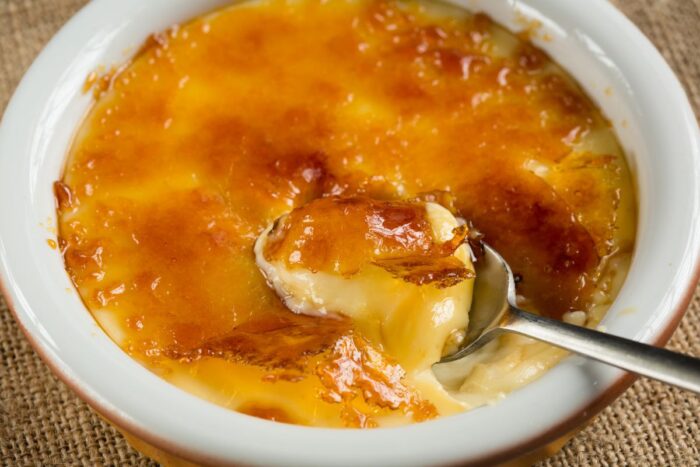
Crema Catalana

Similar to the French crème brûlée, crema catalana is a creamy dessert with a layer of caramelized sugar on top. This dessert originates from Catalonia and is often flavoured with cinnamon or lemon zest.
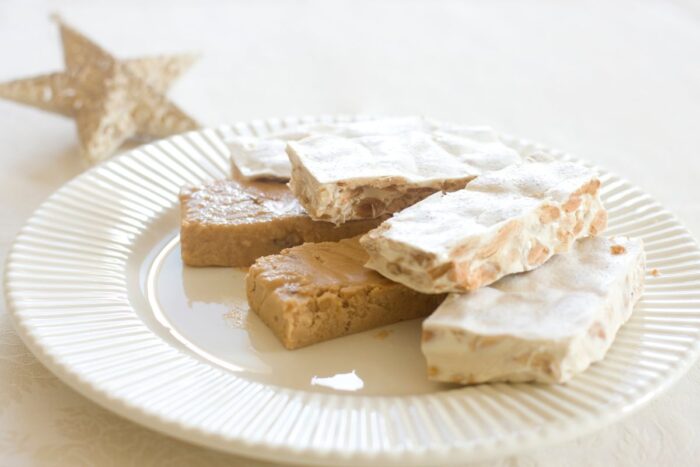
Turrón

Turrón is a traditional Spanish Christmas delicacy made with almonds, honey and egg whites. There are different types of turrón, from soft and oily to hard and crunchy, and it is an essential part of a Spanish Christmas.
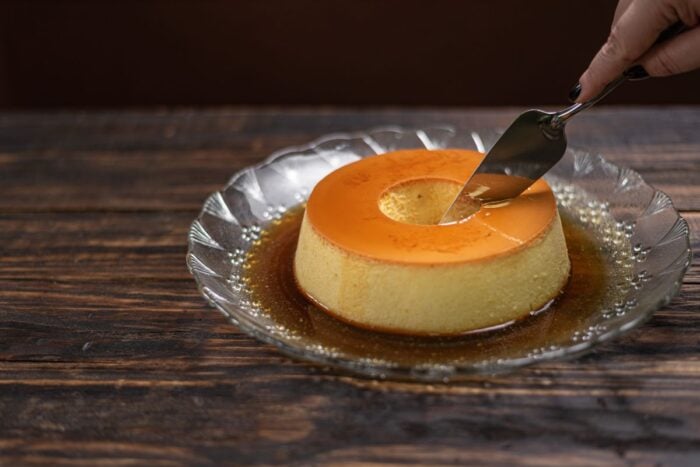
Flan

Flan, the Spanish version of caramel pudding, is another popular Spanish dessert. It’s a simple but elegant dessert with a distinct vanilla flavour and smooth texture and is covered in a layer of sweet caramel.
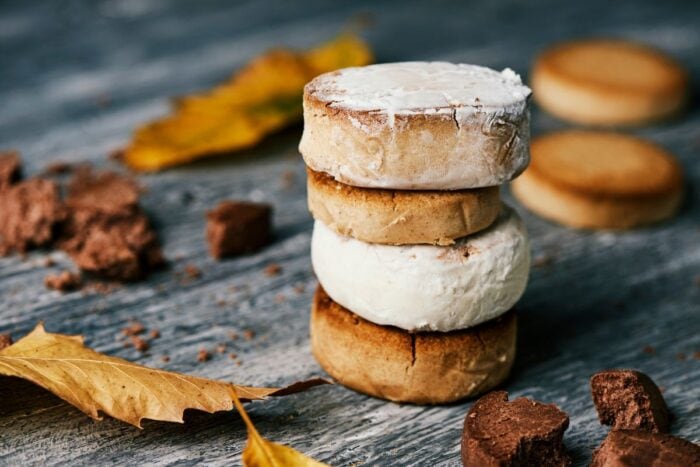
Polvorones and Mantecados

These traditional Spanish Christmas cookies are popular all over the country. Polvorones are soft, crumbly biscuits, while mantecados are a bit more oily. Both are made with plenty of lard and are usually flavored with cinnamon, almonds or lemon zest. So vegetarians beware of this. They’re not vegetarian. At least not the traditional ones.
Natillas

Natillas is a Spanish creamy dessert – similar to vanilla pudding.

Arroz con Leche

Arroz con leche, the Spanish version of rice pudding, is another classic Spanish dessert. It is a mixture of cooked rice, milk, sugar, vanilla and cinnamon, making it a very popular dessert during the winter months.

Spanish drinks – what to drink in Spain

What is drunk in Spain? Everyone’s favourite sangria probably comes to mind, but traditional Spanish drinks are much more varied.

Coffee

In Spain, as in Italy, they like strong coffee. The most common drinks are café con leche (coffee with milk), cortado (espresso with a little milk, similar to a macchiato) or café bombón (espresso with condensed milk).

On the other hand, “hipster cafes” offering flat white, filter coffee and the like are not as common as they are here, and sometimes it’s very difficult to find a cafe we like. 😁

Sangria

The most famous and perhaps the most popular Spanish drink is undoubtedly sangria, the symbol of the Spanish summer.

This refreshing drink is a mixture of red wine, fruit (such as oranges, lemons and other seasonal fruits), a little sweetener and sometimes a little brandy or sparkling wine. Personally, I’ve never really liked sangria, but it’s all about preference.

Cava: Spanish variation on champagne

For bubbly lovers, there’s cava, a Spanish sparkling wine produced mainly in Catalonia. Like champagne, cava is mainly drunk on special occasions and celebrations.
Horchata

Horchata de chufa, originating in Valencia, is a sweet, non-alcoholic drink made from ‘chufa’ (almonds). It is a refreshing drink, usually served cold, and is very popular during the hot summer months. Horchata is also popular in Mexico.

Sherry from Andalusia

Sherry, or also Jerez, is a roasted wine from southern Spain, from the area around the town of Jerez de la Frontera in Andalusia. This wine is produced in several styles from very dry to sweet liqueur variants and is an essential part of the Spanish winemaking tradition. If you are going to Andalusia, be sure to book a tour on GetYourGuide.

Kalimotxo

Kalimotxo is an unusual drink that combines two seemingly incompatible ingredients – red wine and cola. This drink is – not too surprisingly – popular among young people. It is supposedly very refreshing, but we did not dare to try it. 😁

Anise

Anís del Mono, a sweet anise-flavoured liqueur, is popular throughout Spain, especially during the winter months. This liqueur is drunk on its own or used as an ingredient in coffee or desserts.

How regional Spanish cuisine differs

Spain is quite large and culturally and geographically diverse, so it’s no surprise that this is reflected in the regional gastronomy. Each region has its own unique specialties and culinary traditions based on the location and culture of the region.

Northern Spain: the Basque Country and Galicia

The Basque Country is known for its high gastronomic culture, including world-famous restaurants and pintxos, a sophisticated version of tapas. Local specialties include fish and seafood such as bakalao (cod) and txangurro (crab). In Galicia, famous for its green landscapes, seafood dishes such as mussels, octopus (pulpo a la gallega) and empanadas dominate the menu.

Catalonia

Catalan cuisine combines elements of both land and sea, known as “mar i muntanya”, meaning “sea and mountain”. Typical dishes include pa amb tomàquet (bread with tomatoes and olive oil) and Catalan versions of cured sausages such as fuet and butifarra. This is where the dessert mentioned above comes from: Crema catalana.

Andalusia

Andalusia is home to gazpacho, a cold vegetable soup that is perfect for hot summer days. Very popular here, as well as in southern Portugal, are fried fish, you can find them under the name pescaíto frito. Andalusia is also the home of sherry.

Madrid and central Spain

Madrid is famous for its cocido madrileño, a stew of meat and chickpeas. In Castilla-La Mancha we find manchego, the world-famous cheese made from the milk of Manchego sheep. Central Spain is also home to excellent red wines such as those from the Ribera del Duero region.

Valencia and the east coast

Valencia is the home of paella, the national dish of Spain. The traditional paella valenciana combines rice with rabbit, chicken and vegetables. The coastal areas offer a wide variety of seafood and this is reflected in the menus of the local restaurants.

Balearic and Canary Islands

In the Balearic Islands, such as Mallorca and Ibiza, we find specialities such as sobrassada, a soft sausage made from pork. The Canary Islands are famous for their papas arrugadas (“mashed potatoes”), which are served with mojo, a spicy sauce.

Spanish eating habits – why restaurants are open “so weird”

If you’re visiting Spain for the first time, you’ll probably be surprised to learn that you can’t just go out for lunch at 12:00. And you can wait for dinner. Why? Let’s take a look at how Spaniards traditionally eat.

Small and quick breakfast – desayuno

Unlike Czech breakfasts, Spaniards enjoy a quicker and smaller breakfast. Most often they have pan con tomate, which is toasted bread with crushed tomato, olive oil and sometimes accompanied by cheese or ham.

If you look closely at the breakfast menu in the hotel, you’ll probably find just the smashed tomatoes you need to enjoy this typical Spanish breakfast.

Morning and afternoon snacks – almuerzo y merienda

Spaniards have almuerzo (morning snack) and merienda (afternoon snack), which include cheese, baguettes, toast and salads. These snacks often appear on menus as bocadillos, tostas or montaditos.

Late and longer lunches

The most important meal in Spain is lunch, which takes place later (about 14 – 16h) and lasts longer than in the Czech Republic. The Spanish, like other southern nations, are in no hurry to get anywhere.

Smaller dinners – comida y cena

Dinner is usually smaller and starts around 20 – 21h. Most restaurants are only open for lunch and dinner, roughly between 13:00 and 19:30. If you would like to eat outside of these times, you can visit the cafés, bakeries or tapas bars that tend to be open. Or go to a fast food joint.
How it works in restaurants in Spain

Now that you know when you’re likely to get to the restaurant, let’s take a look at the tipping situation and whether you have to wait for the waiter to seat you.

Waiting to settle in Spain?

It’s the same as in the Czech Republic, if you find a sign that says you have to wait to be seated, the waiter will seat you, otherwise sit wherever you want. In Spain, there is often a wait for a table in the famous tapas bars, it is normal for Spaniards to buy a drink standing up and wait outside the bar. That explains the crowds of people with a drink in their hand outside the businesses you’re sure to encounter.

The waitress doesn’t notice you

If you feel that the waitress is unprofessional because she doesn’t notice you or ask you if you want anything, it’s not true. It’s quite normal that if you don’t attract the waitress’s attention, they’ll just let you sit at the table for as long as you want.

Paying by card after the pandemic is commonplace

Many businesses had to switch to card or even QR payments during the pandemic, so there are very few businesses in Spain that only require cash.

Do they tip in restaurants?

Tipping doesn’t really work in Spain, so it’s perfectly fine not to tip or to round up a penny. We’re used to giving 10-15% everywhere, but if you give just a few cents, it’s not a problem.

Is the menu in English?

When it comes to English, in tourist areas, it’s a given, but in the countryside not so much, and even the menu isn’t in English. But nowadays it’s not a problem, just download the Google Translator app on your phone and then just point the camera at the menu and it will translate it for you.

Still, if you’re a vegetarian like us, it’s a good idea to learn the Spanish phrase that you don’t eat meat, fish or chicken. Some Spaniards consider vegetarian food to be that which contains only fish. 😁

Frequently Asked Questions

Do they tip in restaurants?

Yes, but just round up. It is not necessary to give 10% or 15% like in the USA.

When are restaurants open in Spain?

Most restaurants are only open for lunch and dinner, roughly between 13:00 and 19:30.

What about the national Spanish dish?

The national Spanish dish is paella, which is based on rice and is usually served with seafood, meat or vegetables.

What are the most popular Spanish tapas?

Popular tapas include patatas bravas (spicy potatoes), jamón (Spanish ham), olives, gambas al ajillo (prawns in garlic oil) and a variety of cheeses and sausages.

Is there a traditional Spanish drink I should try?

You should definitely try the traditional sangria, sparkling cava wine or the soft drink horchata.

What is “tapas”?

Tapas are small appetizers that are served with drinks in Spain. In some businesses, it’s even free.

What are the typical ingredients of Spanish cuisine?

Typical ingredients include olive oil, garlic, saffron, tomatoes, peppers, rice, seafood, various meats and a wide variety of vegetables.

Is Spanish cuisine suitable for vegetarians?

Spanish cuisine is very meat-oriented, but you’ll also find some vegetarian dishes such as gazpacho (cold vegetable soup) and tortilla española (Spanish potato omelette).

What is a typical Spanish dessert?

Typical Spanish desserts include churros with chocolate, flan (caramel pudding), turrón (almond delicacy) and crema catalana.

Tips and Tricks for Your Vacation

Don’t Overpay for Flights

Search for flights on Kayak. It’s our favorite search engine because it scans the websites of all airlines and always finds the cheapest connection.

Book Your Accommodation Smartly

The best experiences we’ve had when looking for accommodation (from Alaska to Morocco) are with Booking.com, where hotels, apartments, and entire houses are usually the cheapest and most widely available.

Don’t Forget Travel Insurance

Good travel insurance will protect you against illness, accidents, theft, or flight cancellations. We’ve had a few hospital visits abroad, so we know how important it is to have proper insurance arranged.

Where we insure ourselves: SafetyWing (best for everyone) and TrueTraveller (for extra-long trips).

Why don’t we recommend any Czech insurance company? Because they have too many restrictions. They set limits on the number of days abroad, travel insurance via a credit card often requires you to pay medical expenses only with that card, and they frequently limit the number of returns to the Czech Republic.

Find the Best Experiences

Get Your Guide is a huge online marketplace where you can book guided walks, trips, skip-the-line tickets, tours, and much more. We always find some extra fun there!
Andalusia, Spain: 20 Most Beautiful Places for Your Holiday

TL;DRAndalusia’s 20 finest spots run from Seville, with its Alcázar palace and cathedral, through Córdoba’s Mezquita mosque to Granada’s Alhambra, plus whitewashed villages like Ronda, Zahara de la Sierra and Arcos de la Frontera, the Costa del Sol coastline with Málaga, Marbella and Nerja, and the wild landscapes of Cabo de Gata. The best time to visit is spring (March to June) or autumn (September to November), since inland temperatures push past 40°C in summer. Book tickets for the Alhambra and Alcázar online months ahead, take the AVE high-speed train between cities like Seville, Córdoba and Madrid, and hire a car to explore the white villages properly. It’s best to split your stay between Seville, Granada and the Costa del Sol as your bases.

Andalusia is one of the most popular destinations for both sightseeing tours and seaside relaxation. The Costa del Sol, located near Malaga, is a beautiful coastline full of beaches in Spain, and Granada, Seville, and Cordoba are historical and architectural gems of Europe.

Let’s look at when to go to southern Spain – to Andalusia, what to see, and where to stay.

When to Go to Andalusia: Weather in Southern Spain

If you’re going for a summer vacation and want to swim, it’s ideal to plan your vacation between May and September. On the other hand, those of you who prefer a sightseeing vacation should completely avoid the summer months.

Cordoba is one of the hottest cities in Europe, and during the summer months, exploring Andalusian cities can be more of a punishment than a reward. 😁 So when should you go? We had beautiful weather even at the end of January, but the best time for pleasant weather is March-May or October-November.

Andalusia: weather and sea temperature by month

🌡️ Warmest: August (daytime 32 °C) · 🌊 Warmest sea: August (26 °C) · ☔ Least rainfall: July

MonthDayNightSeaRainy days
January17 °C9 °C15 °C5
February18 °C11 °C15 °C4
March20 °C12 °C15 °C10
April21 °C13 °C17 °C8
May25 °C17 °C19 °C4
June28 °C20 °C21 °C3
July31 °C23 °C25 °C0
August32 °C24 °C26 °C1
September28 °C20 °C25 °C4
October25 °C17 °C20 °C5
November21 °C13 °C18 °C4
December18 °C11 °C17 °C6

Source: climate normal 2019–2024 (Open-Meteo, measured data)

Malaga Weather – when to Go for a Swim

Although I mentioned that Cordoba can be unbearably hot in summer, it’s not the case on the coast in Malaga. Thanks to its location, Malaga and its surroundings are pleasant even during the summer months. And it is therefore ideal for a seaside holiday. Average summer temperatures hover around 32 °C, while in the coldest winter months, they rarely drop below 17 °C.

Malaga: Car Rental

In Malaga, you can easily rent a car at the airport; we usually find most cars through DiscoverCars. The same international chains are available in Malaga as elsewhere in Europe (Hertz, Europcar, and Avis). In addition, local companies such as malagacar.com are also available.

lukas a lucka
Lukáš and Lucie recommend
Where to stay in Andalusia
2 accommodations — hotels and other lodging options

Andalusia Vacation – with a Travel Agency or Independently?

I’ve tried both, and everything has its pros and cons. If you simply don’t want to worry about anything, it’s easier to go with a travel agency (you can find interesting tours on the Invia portal). Those of you who want freedom should rather buy plane tickets, rent a car through DiscoverCars, and go. It will take some time and planning, or you can get inspired by our itinerary and have a worry-free trip.

Usually, it’s cheaper to go independently, but that’s not always the rule. Travel agencies get better prices on accommodation and flights, and if their tours aren’t fully booked, they can offer interesting discounts. So, if price is your main concern, try calculating both options.

Don’t Forget Insurance – SafetyWing Travel Insurance

Many unpleasant surprises can occur while traveling, so never forget travel insurance. For us, a great option is long-term insurance from SafetyWing, which offers travel and health insurance for frequent travelers and digital nomads worldwide.

SafetyWing offers insurance in two different plans (Essential and Complete), paid monthly, so if you’re not traveling, it can be easily paused. It can be easily arranged online, even if you’re already abroad, and you don’t have to return to the Czech Republic after a certain period.

The basic plan for individuals aged 10-39 (Essential) starts from $56.28 for 28 days (extended coverage for the USA or hazardous sports can be added), and coverage includes medical treatment, hospitalization, hospital transfer, lost luggage, trip interruption, and flight delays. The total coverage is limited to $250,000 per incident.

The Complete option provides more comprehensive coverage. The main advantage of this plan is a high overall coverage limit of $1,500,000. It covers not only unexpected medical issues but also ongoing medical care and preventive doctor’s check-ups. Other included services are:

  • Transfer to a better-equipped hospital.
  • Lost luggage coverage.
  • Psychological assistance.
  • Theft insurance.
  • Reimbursement of costs for travel delays or interruptions due to family reasons.
  • Coverage of transfer or funeral costs in case of death.

The price for individuals aged 18–39 starts at $150.50 for 28 days, with the option to add extended coverage for the USA or hazardous sports.

20 Tips: What to See in Andalusia

Now let’s look at the 20 most beautiful places to visit in Andalusia.

What to See in Granada: Alhambra

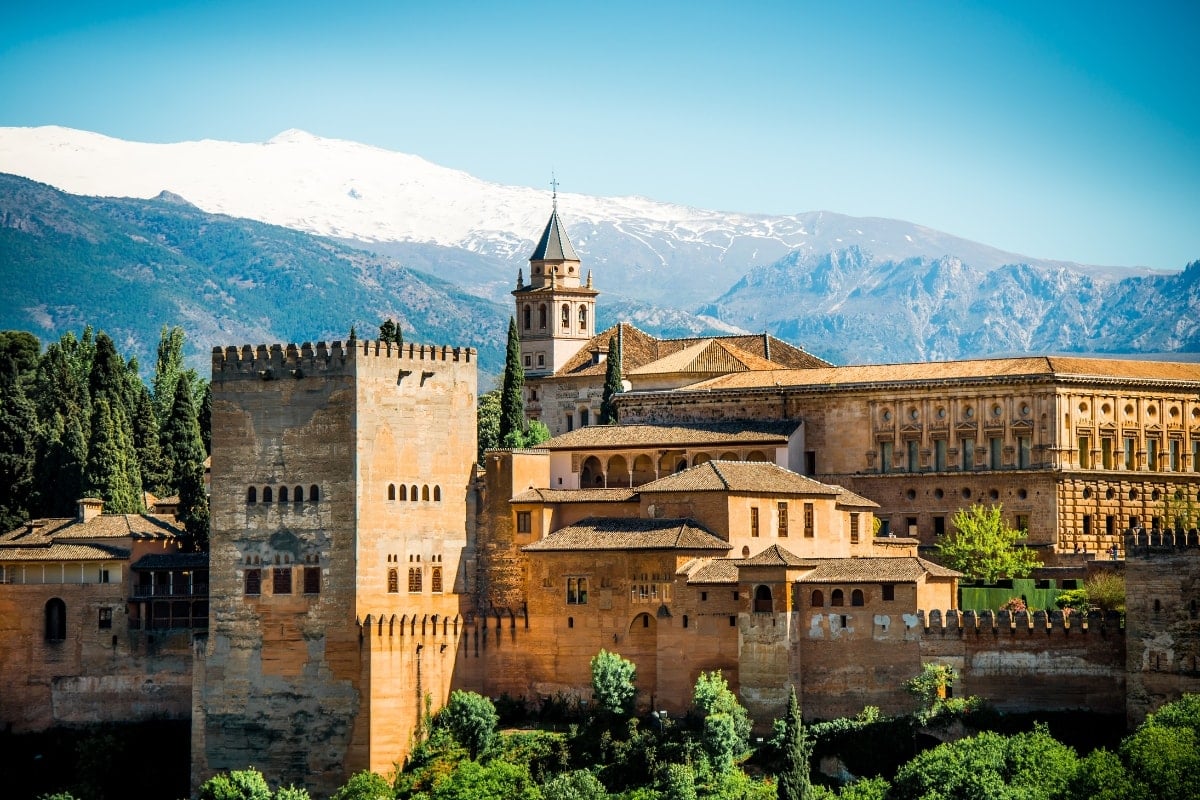
The Alhambra is the most visited tourist attraction in Andalusia and one of the most significant historical monuments in Spain. This impressive fortress and palace complex was built in the 14th century by Moorish rulers and offers visitors stunning views of the city of Granada and the surrounding mountains.

The interior of the palaces is adorned with magnificent mosaics and decorative elements that reflect Mediterranean, Islamic, and Christian cultural influences.

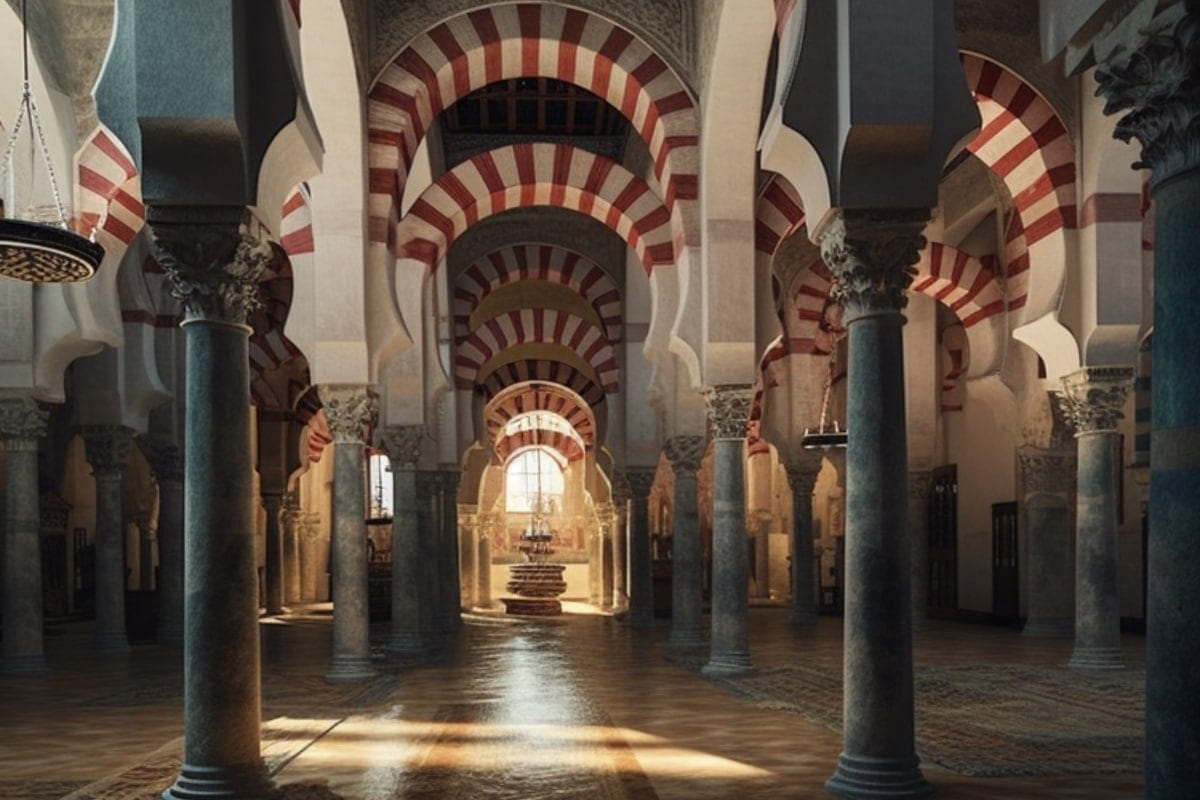
What to See in Cordoba: Mezquita

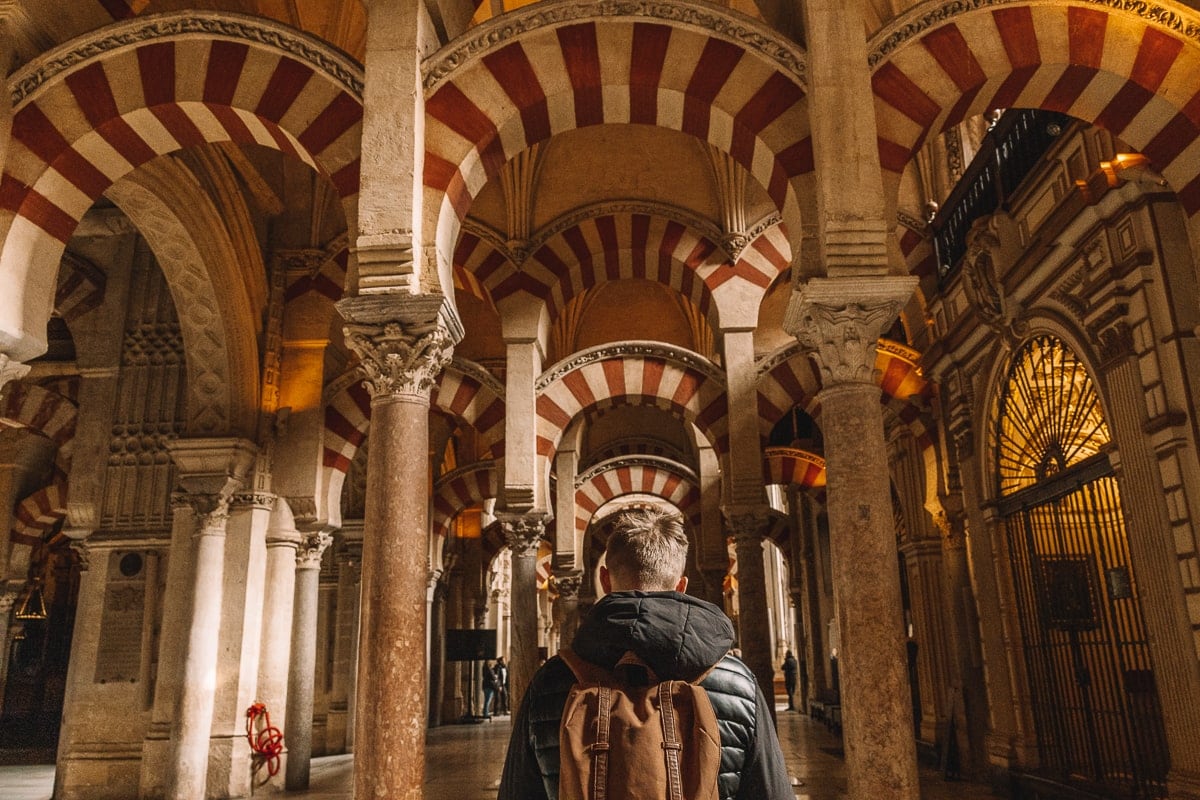
The Mezquita, or Mosque, in Cordoba is a unique monument that reflects the city’s rich history. Originally built as a mosque, it was later converted into a cathedral after the city was conquered by Christian forces. For this reason, the Mezquita is an incredible combination of Islamic and Christian architecture.

What to See in Seville: Real Alcázar

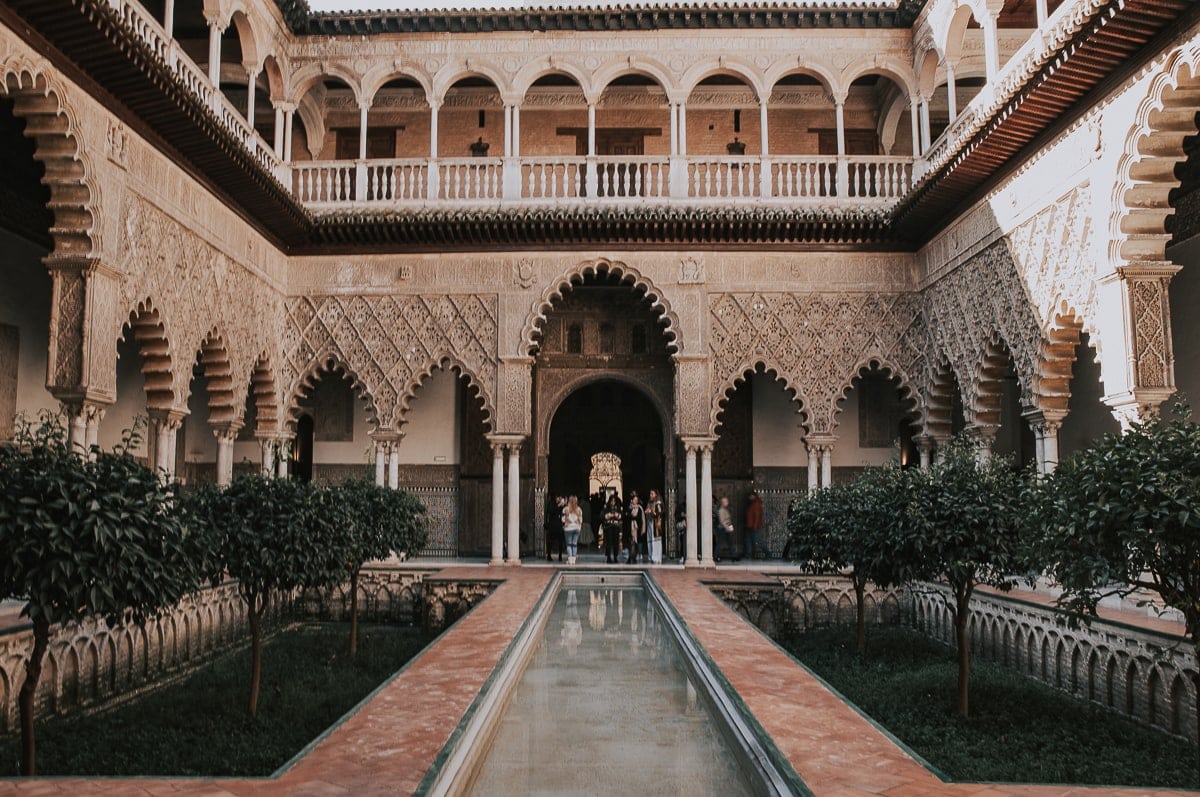
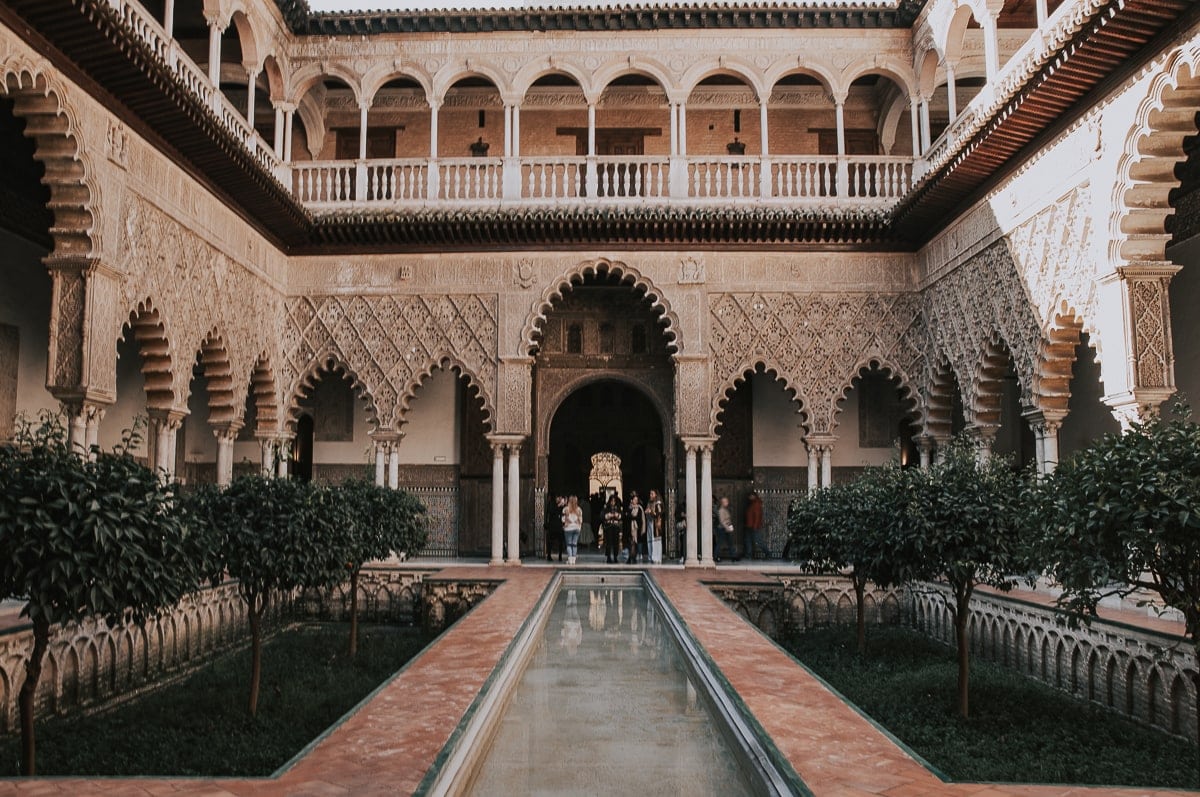
The Real Alcázar is the oldest royal palace in Europe, still used by the Spanish royal family as an official residence. The palace is a magnificent example of Mudéjar architecture, and its extensive gardens are beautiful and full of greenery and flowers.

Plaza De España in Seville

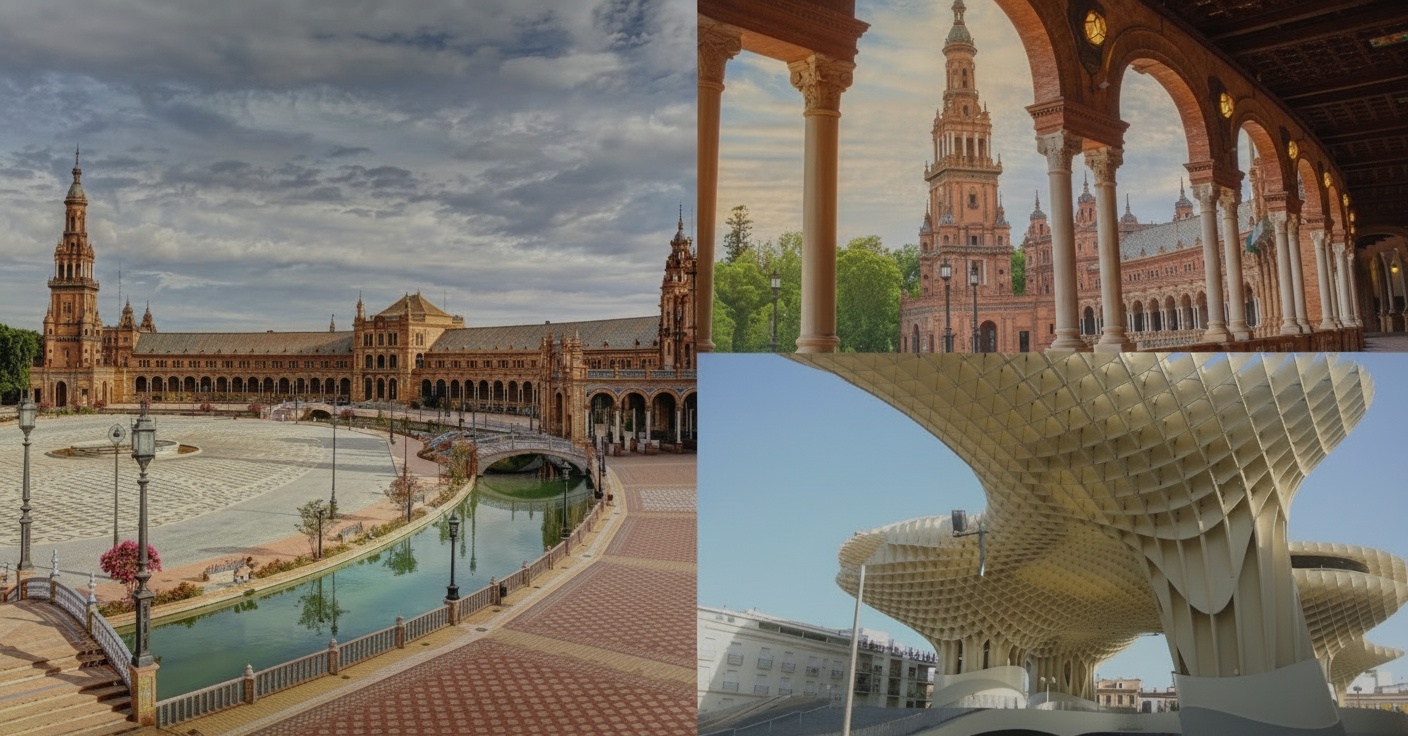
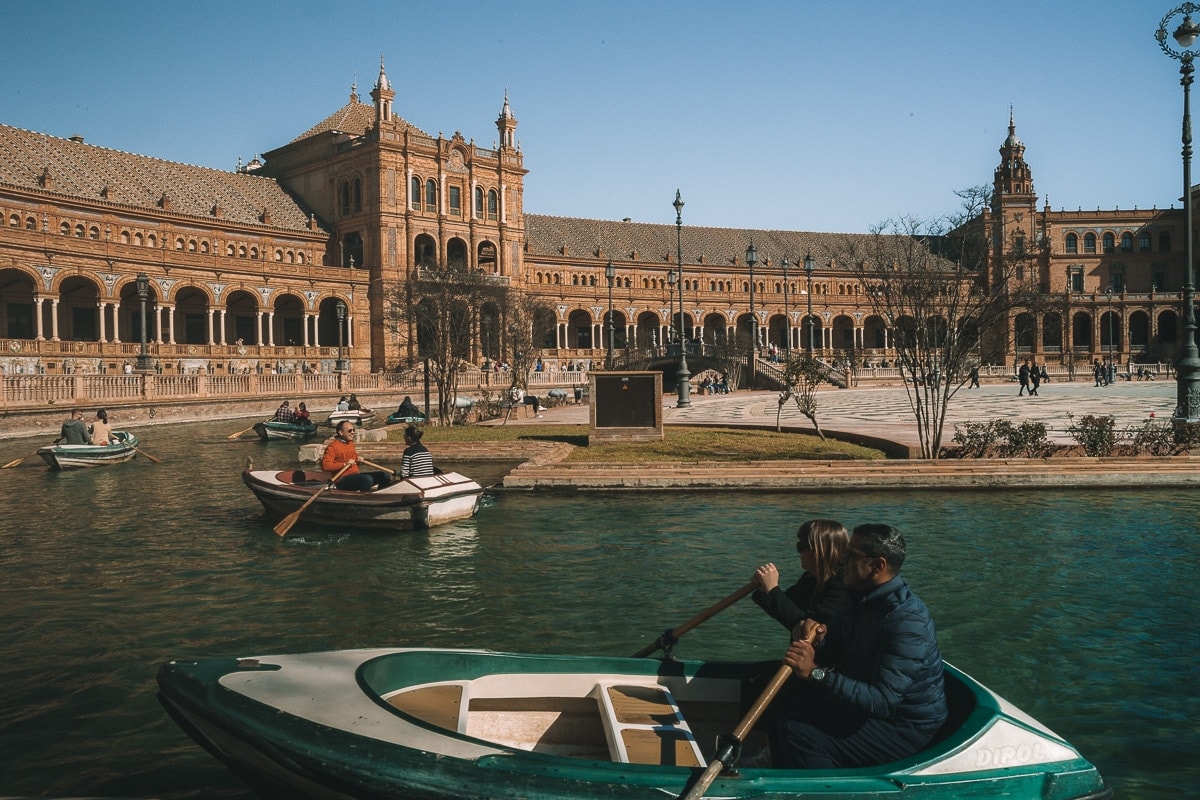
Plaza de España is the largest square in Seville, symbolically commemorating Spanish culture and history. You’ll be most captivated by the enormous colonnade, the fountain in the middle, and the canals where you can rent a boat.

Giralda in Seville

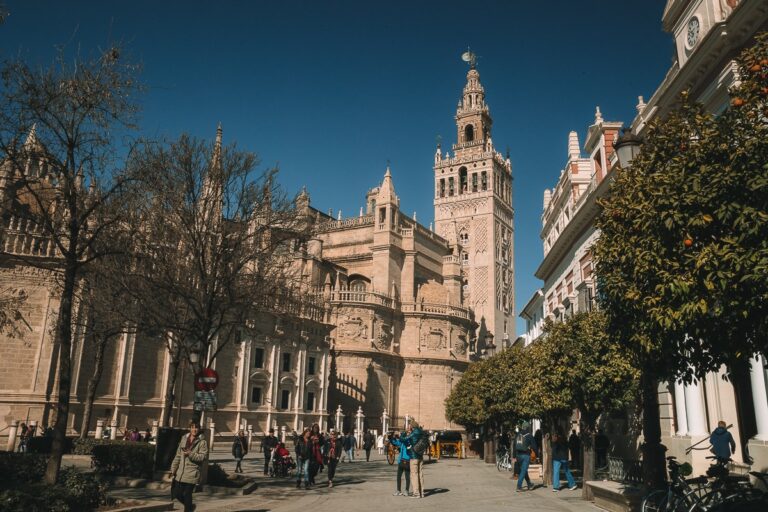
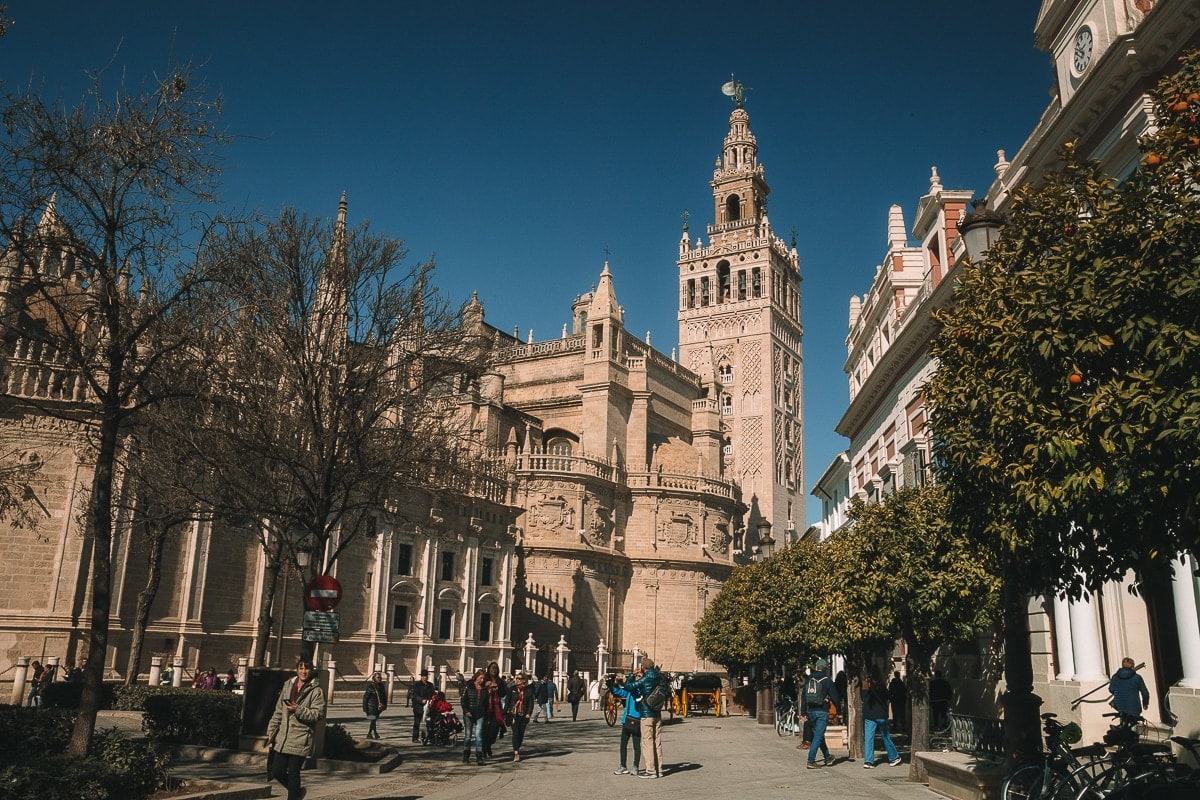
The Giralda is an iconic tower in Seville that once served as a minaret of a mosque. The tower was later converted into the bell tower of Seville Cathedral but still retains much of its original design and architecture. Be sure to visit it; it’s a place with panoramic views of the city and the surrounding landscape.

What to See in Ronda: Ronda and its El Tajo Canyon

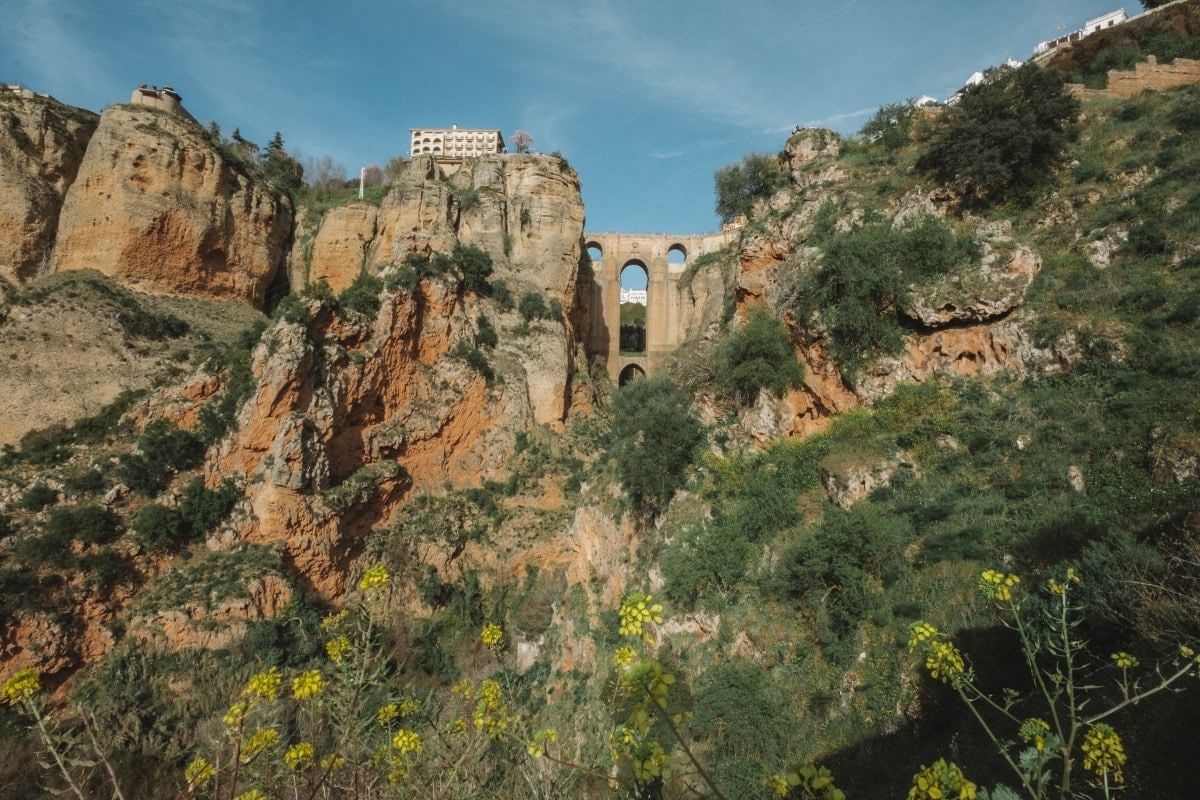
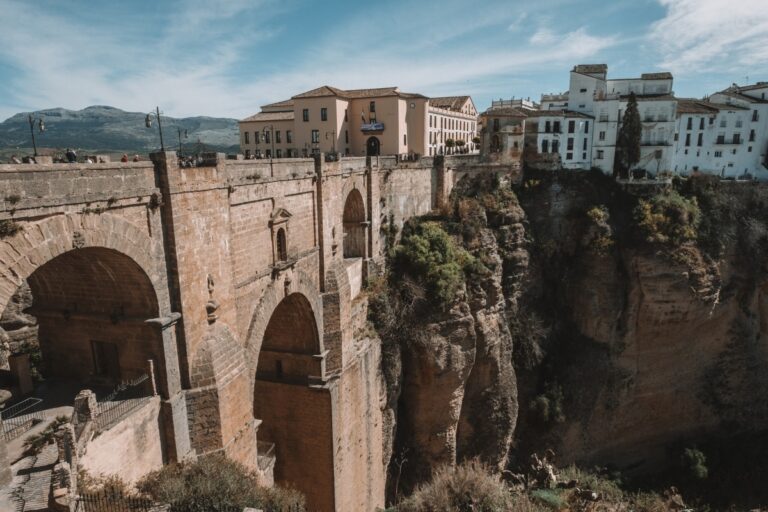
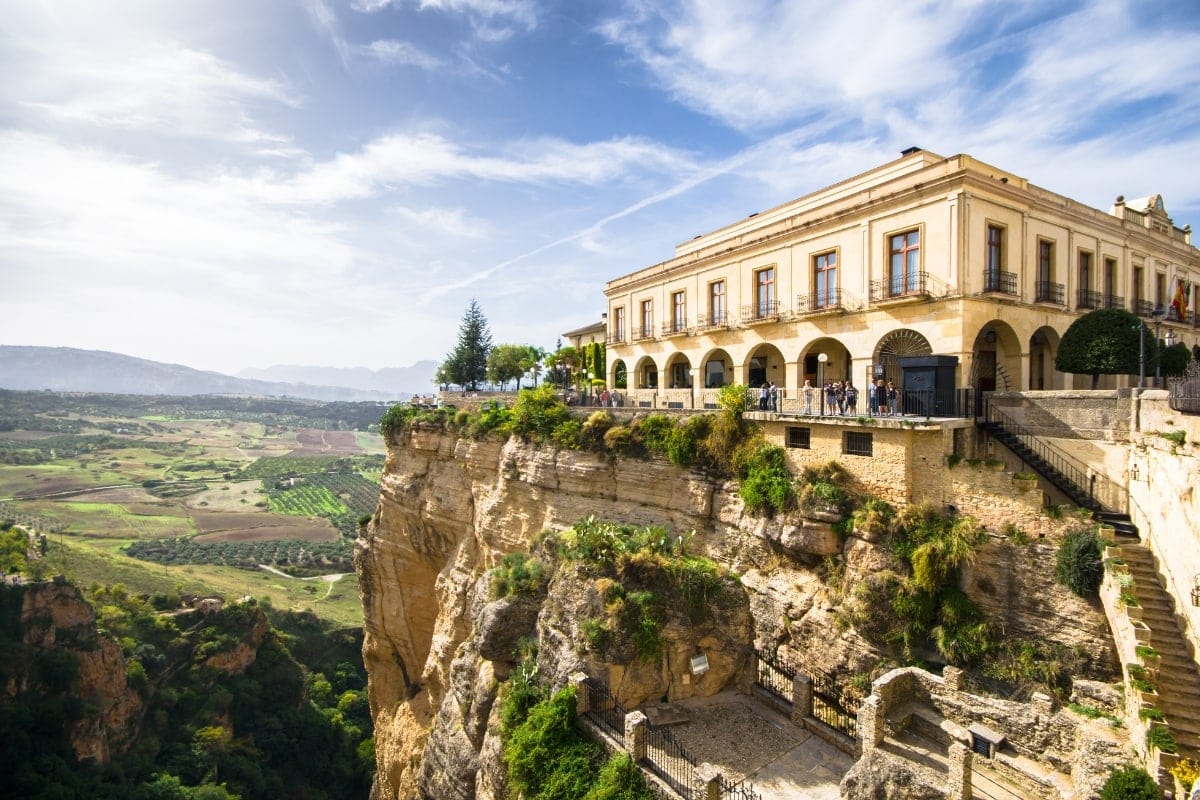
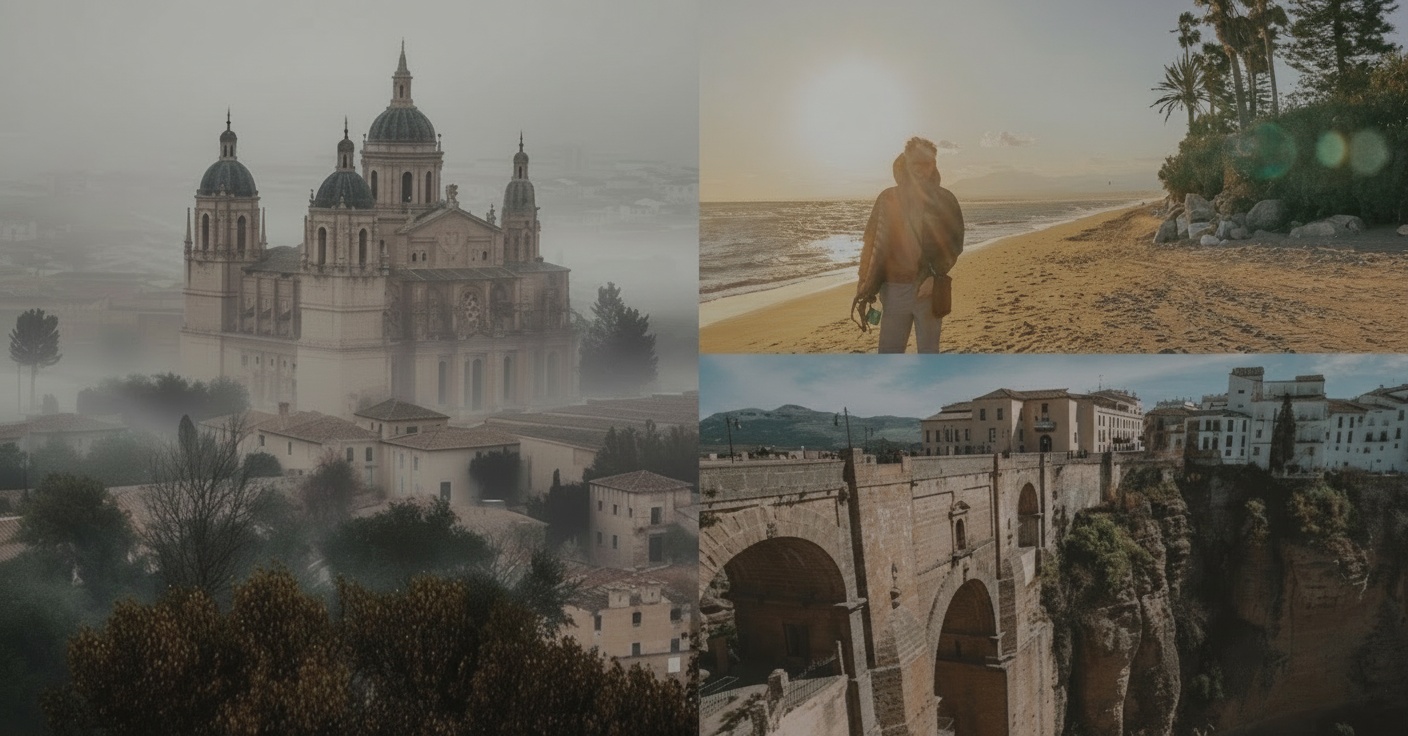
Ronda is a historic town in Andalusia, situated atop a cliff above the deep El Tajo canyon. The town offers magnificent views of the surrounding landscape and is full of historical monuments, such as the Puente Nuevo bridge—a bridge that connects the two parts of the town. It is a popular spot among tourists, especially due to its historical and cultural significance.

What to See in Malaga: Caminito Del Rey

Caminito del Rey is an amazing tourist attraction located in the El Chorro mountains in Malaga. This rocky pass was once a dangerous place, but now it serves as one of the most visited tourist attractions in Andalusia. The Caminito del Rey path offers spectacular views of the surrounding landscape and is popular among tourists seeking an adrenaline rush. You can find more information in our article.

Costa Del Sol

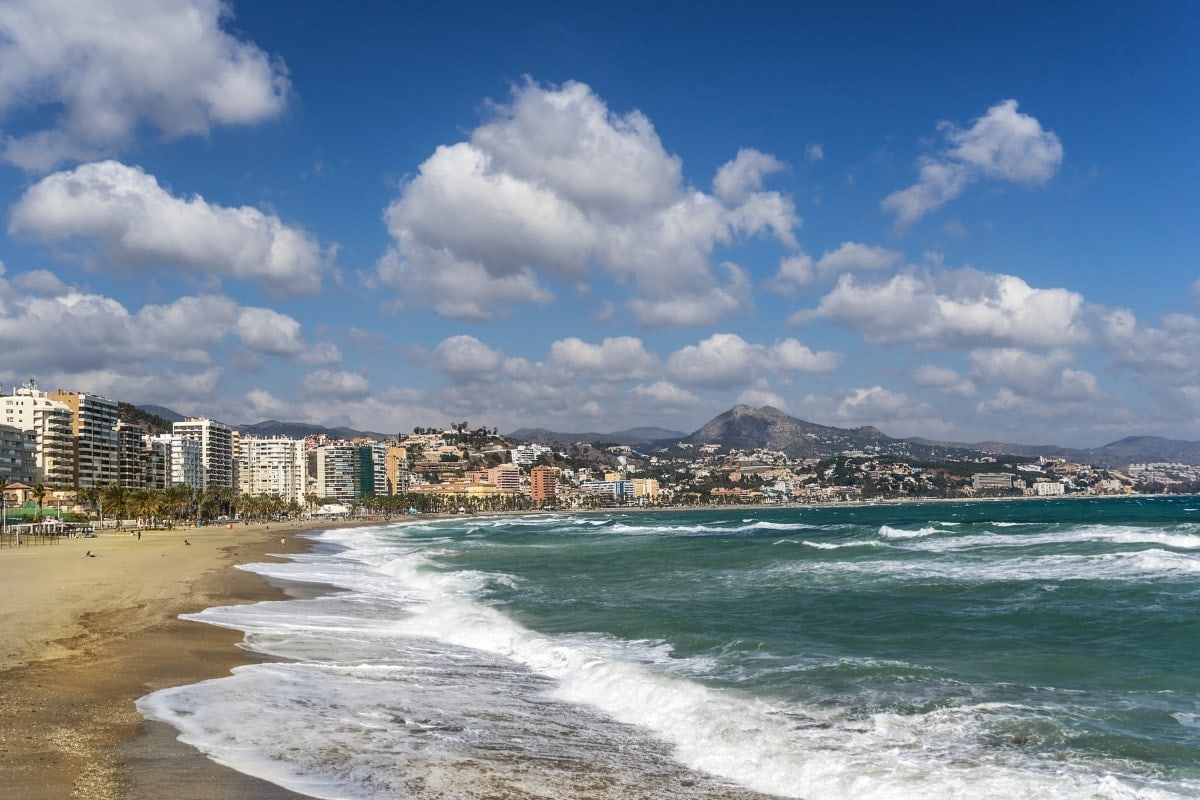
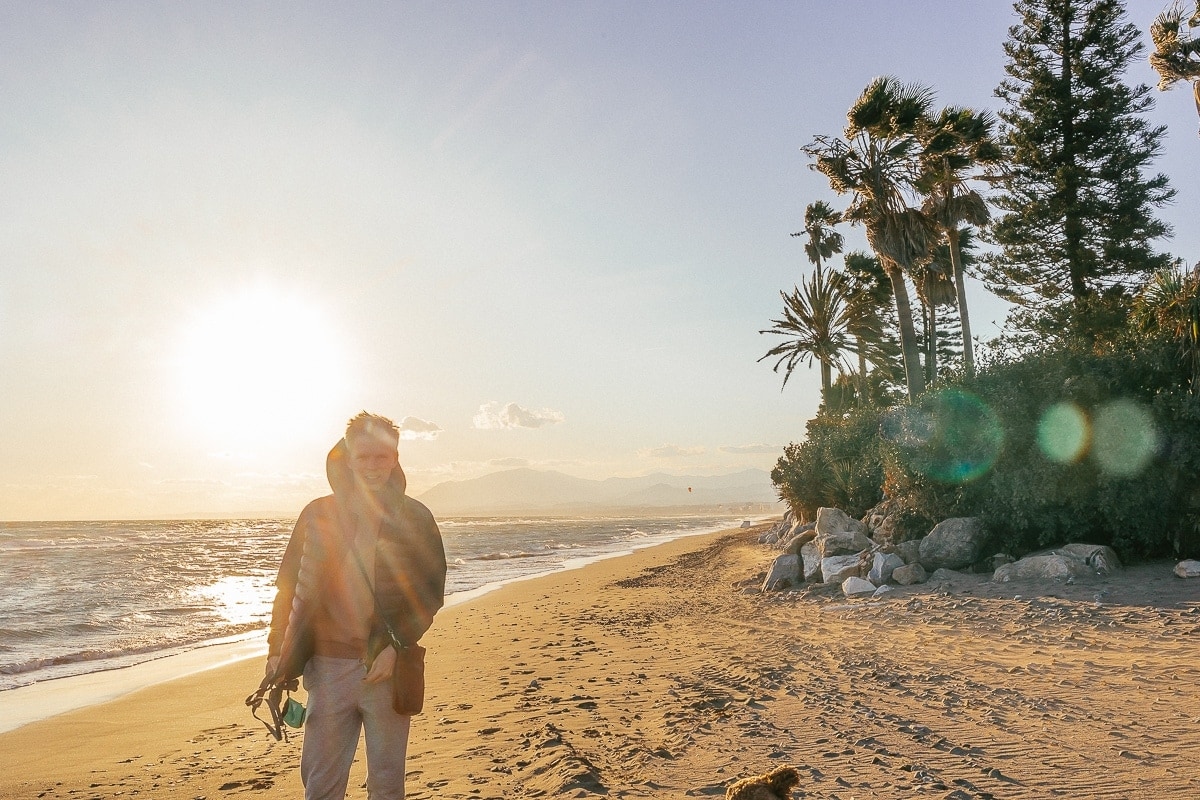
The Costa del Sol is a popular tourist destination in Andalusia, offering beautiful beaches and sunny weather for most of the year. The Costa del Sol region stretches along the Mediterranean coast and is full of attractions for tourists, including restaurants, bars, and shops.

Cabo De Gata in Almeria

Cabo de Gata is a national park in Almeria, known for its breathtaking beaches and untouched nature. The park offers many tourist activities, such as hiking, diving, and bird watching. Cabo de Gata is an ideal place for those seeking a peaceful vacation in nature.

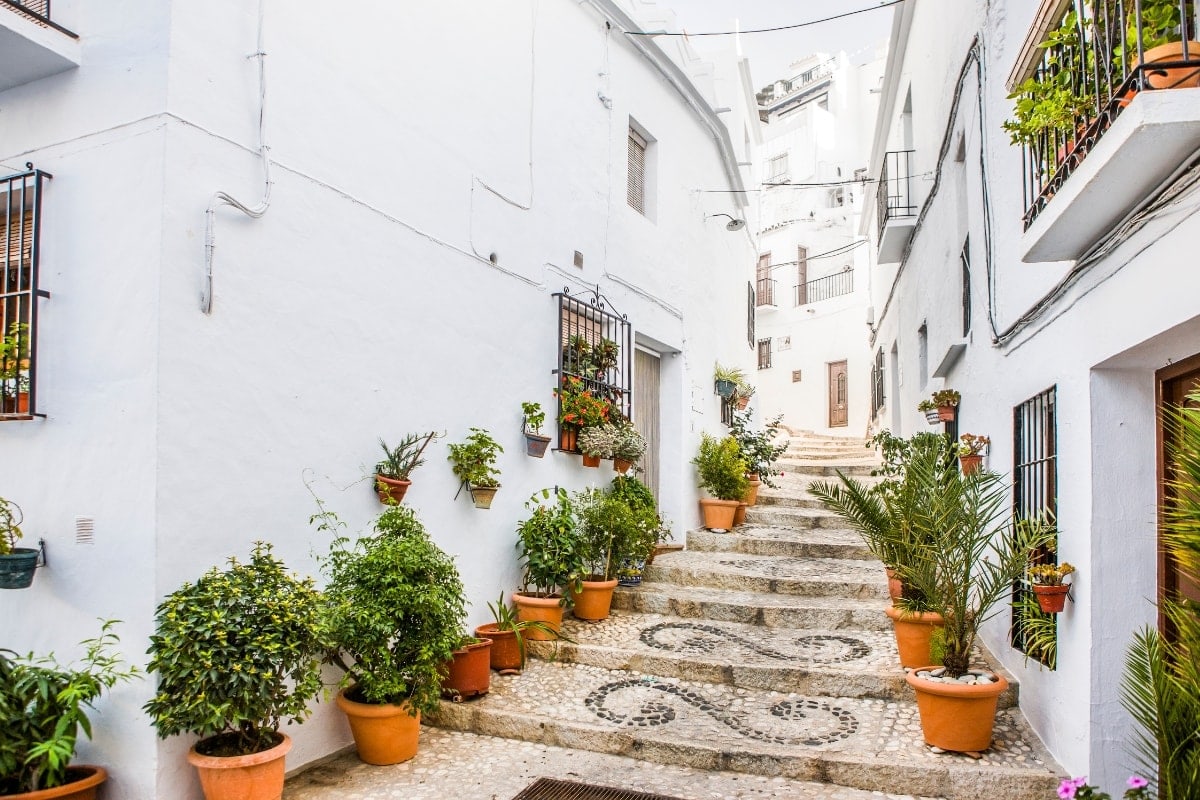
Frigiliana

A picturesque white village with narrow streets lined with flowers, offering breathtaking views of the surrounding landscape and the sea.

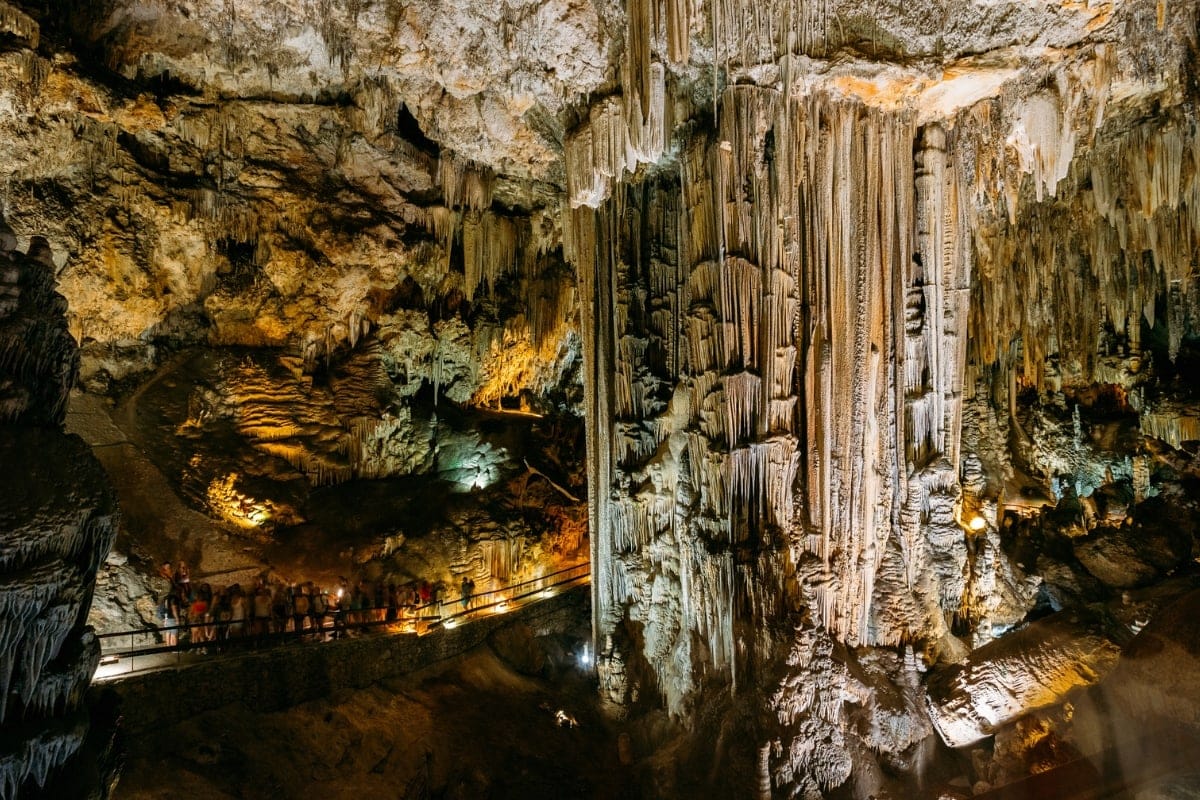
Cueva De Nerja

An impressive cave with many stalactite and stalagmite formations and one of the largest cave chambers in the world.

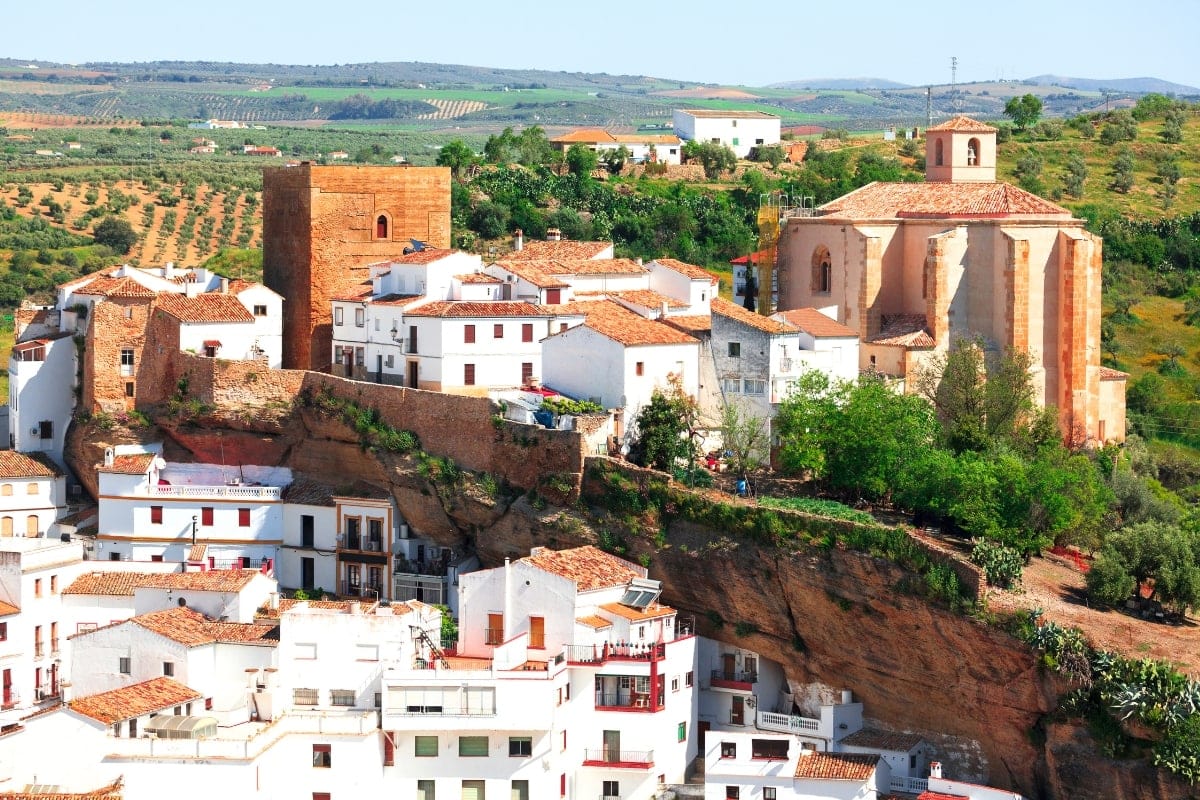
Setenil De Las Bodegas

A unique town built into the rock, which forms the roofs of its houses and streets.

Parque Nacional De Doñana

An extensive national park with rich flora and fauna, including rare bird species and Iberian lynx.

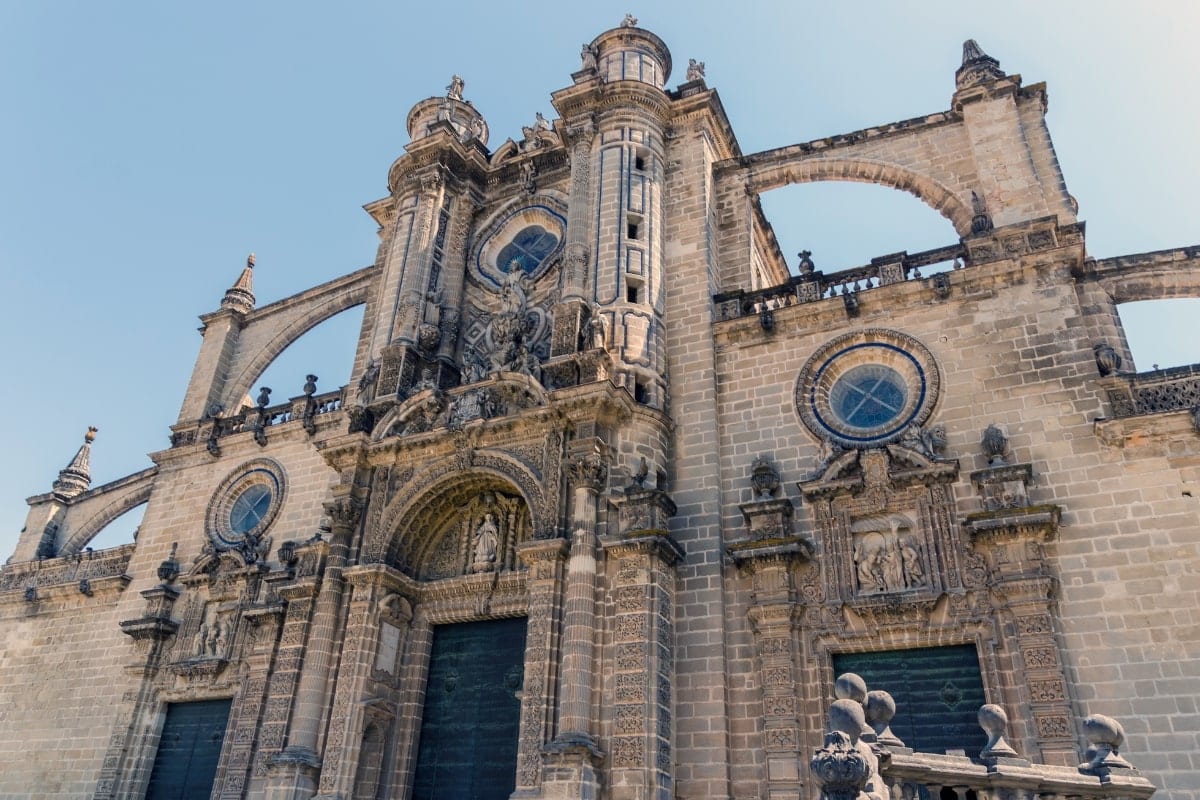
Jerez De La Frontera

A city famous for its wine and sherry. Visit the bodegas, the beautiful Alcázar, and experience Flamenco.

Cadiz

An ancient port city with a rich history, a cathedral, and beautiful beaches. Famous for its carnival and seafood.

Ubeda and Baeza

Two neighboring cities that are UNESCO World Heritage sites thanks to their Renaissance monuments. A stroll through the streets of both cities is like a journey back in time.

Sierra Nevada

A majestic mountain range offering skiing in winter and hiking or cycling in summer. Its highest peak is Mulhacén, the highest point in mainland Spain.

Marbella

A luxurious resort on the Costa del Sol, famous for its beaches, golf courses, and Puerto Banús marina, where yachts are moored.

Antequera

A city with a wealth of historical monuments, such as the Alcazaba fortress, the Dolmen de Menga, and El Torcal, a natural park with fascinating limestone rock formations.

What is Flamenco?

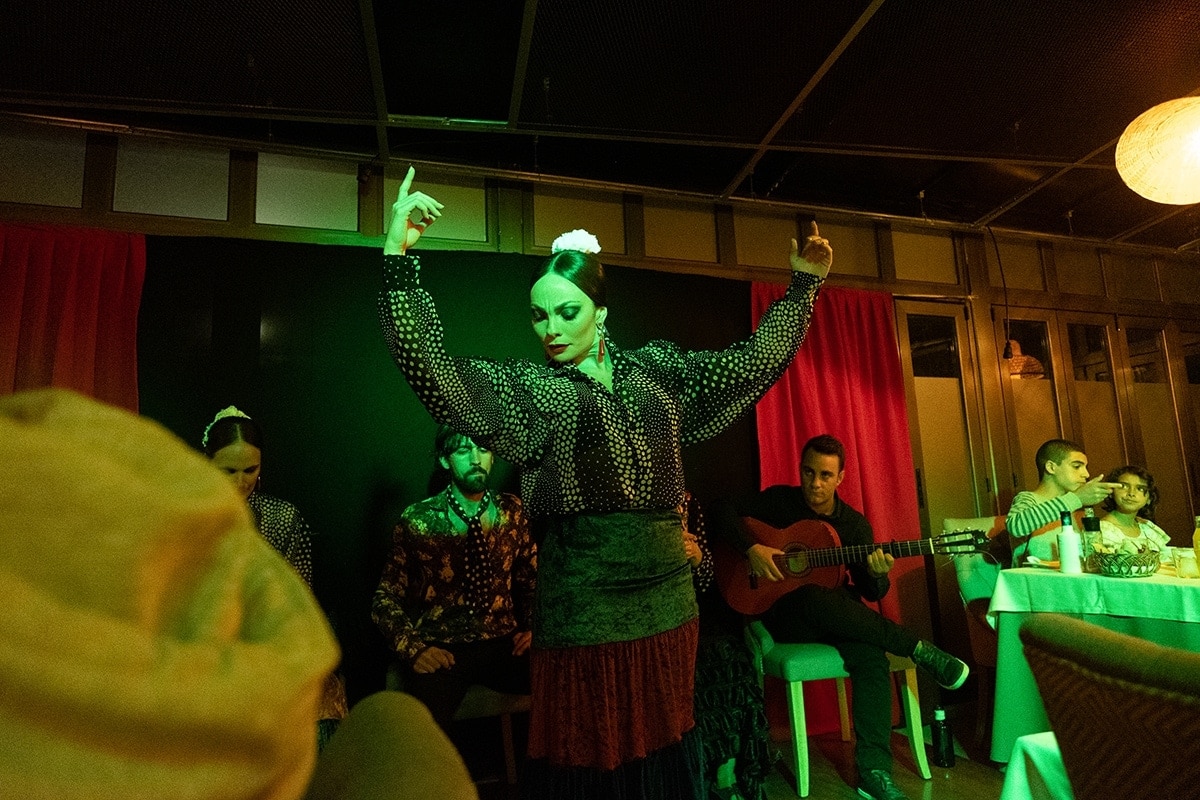
Flamenco is a live performance that showcases the traditional Andalusian dance and music genre called flamenco. Flamenco originated in Spain, particularly in the Andalusia region, and is characterized by emotional singing, energetic dancing, guitar music, and rhythmic clapping.

Flamenco typically involves dancers (bailaores and bailaoras), singers (cantaores), and guitarists (guitarristas) who collectively perform various forms and styles of flamenco. The performance is dramatic and passionate, emphasizing emotional expression and improvisation.

Flamenco shows are often seen in traditional Andalusian cities such as Seville, Granada, or Córdoba, and can be part of the cultural program in restaurants, theaters, or special flamenco clubs called “tablaos.”

Typical Food in Andalusia – What to Taste on your Spanish Vacation

Spanish cuisine is very meat-based, so we must admit we don’t seek it out much, but we do enjoy the wide selection of Indian restaurants. Traditional dishes in Andalusia include:

  • Gazpacho, a cold soup made from tomatoes, cucumbers, peppers, onions, and olive oil.
  • Salmorejo, another cold soup similar to gazpacho, often served with a piece of ham or an egg.
  • Pescaíto frito, fried fish pieces served as tapas.
  • Jamón ibérico, exquisite ham from Iberian pigs, fed high-quality diets and roaming freely in nature.
  • Tortilla española, Spanish potato omelet, often served as tapas.
  • Flamenquín, fried meat rolls filled with ham and cheese.
  • Rabo de toro, stewed oxtail, often served with rice or potatoes.
  • Porra antequerana, another cold soup, similar to gazpacho and salmorejo, but with more bread and garlic.

Andalusia Road Trip: 7-Day Itinerary

Andalusia is certainly one of the most visited regions in Spain. It’s no wonder; you’ll find beaches, beautiful cities, and nature to explore here. If you’re planning a trip to Andalusia, we’ve prepared a 7-day itinerary with the best places to visit.

Day 1: Malaga

Where to stay: Highly rated are ESTUDIO EN TORREMOLINOS CENTRO and B&B Casa Rubí.

Flights from the Czech Republic most often go to Malaga, so it will likely be your starting point.
Upon arrival in Malaga, check in and head to the Alcazaba, an impressive fortress that towers over the city and offers magnificent views of the surrounding landscape.

You can also visit the Picasso Museum to learn about the work of this famous painter and his influence on the art scene. Malaga is an ideal starting point for Caminito del Rey, but you need to book it well in advance.

In the evening, book a Flamenco dance performance.

Where to stay in Malaga: If you’re looking for something more luxurious, check out H10 Croma Málaga; a more affordable hotel in the center of Malaga is Carlos V Malaga.

Day 2: Malaga – Ronda (1 Hour 45 Minutes)

Leave early to avoid the crowds of tourists. On the way, you can stop in the town of Setenil de las Bodegas. Upon arrival in Ronda, head straight to Puente Nuevo, this impressive bridge spans a deep valley that divides the city into two parts.

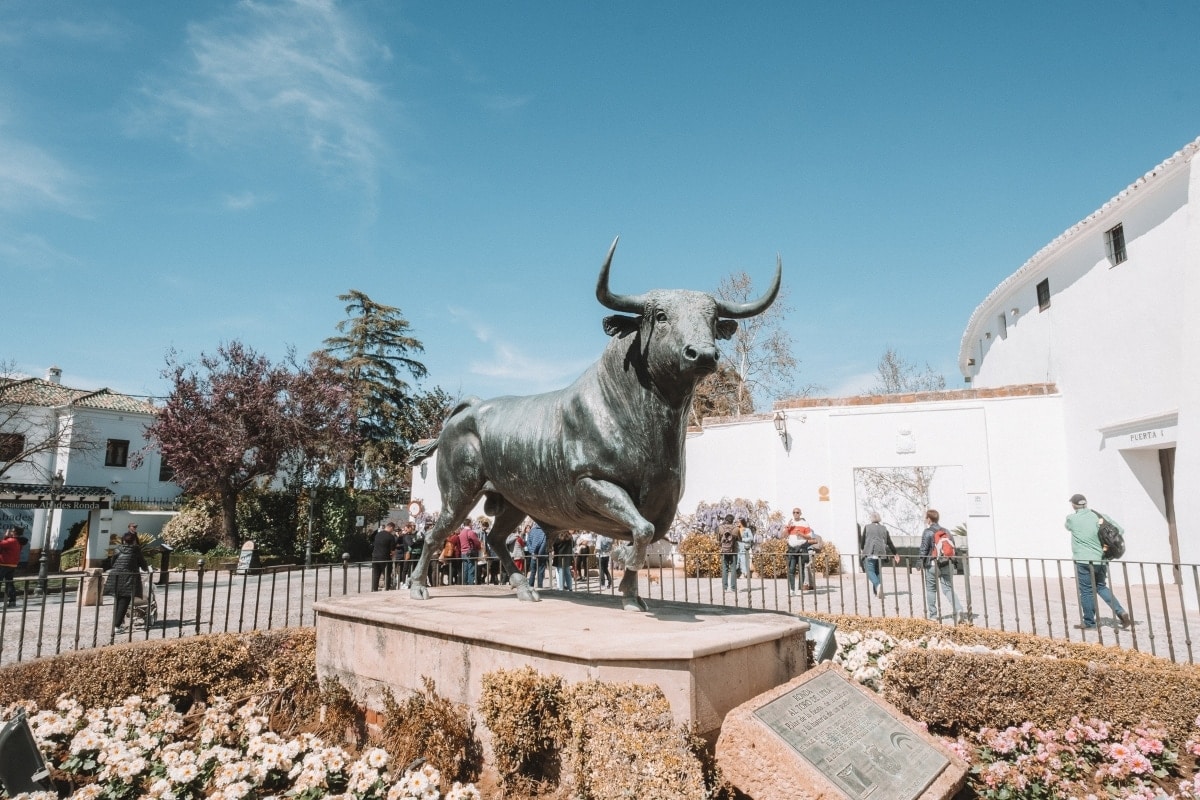
Puente Nuevo is the most visited place in Ronda. You can also visit Plaza de Toros, one of the oldest bullfighting arenas in Spain, or Baños Árabes, Palacio de Mondragón, or Alameda del Tajo. You can find more tips in our article about Ronda.

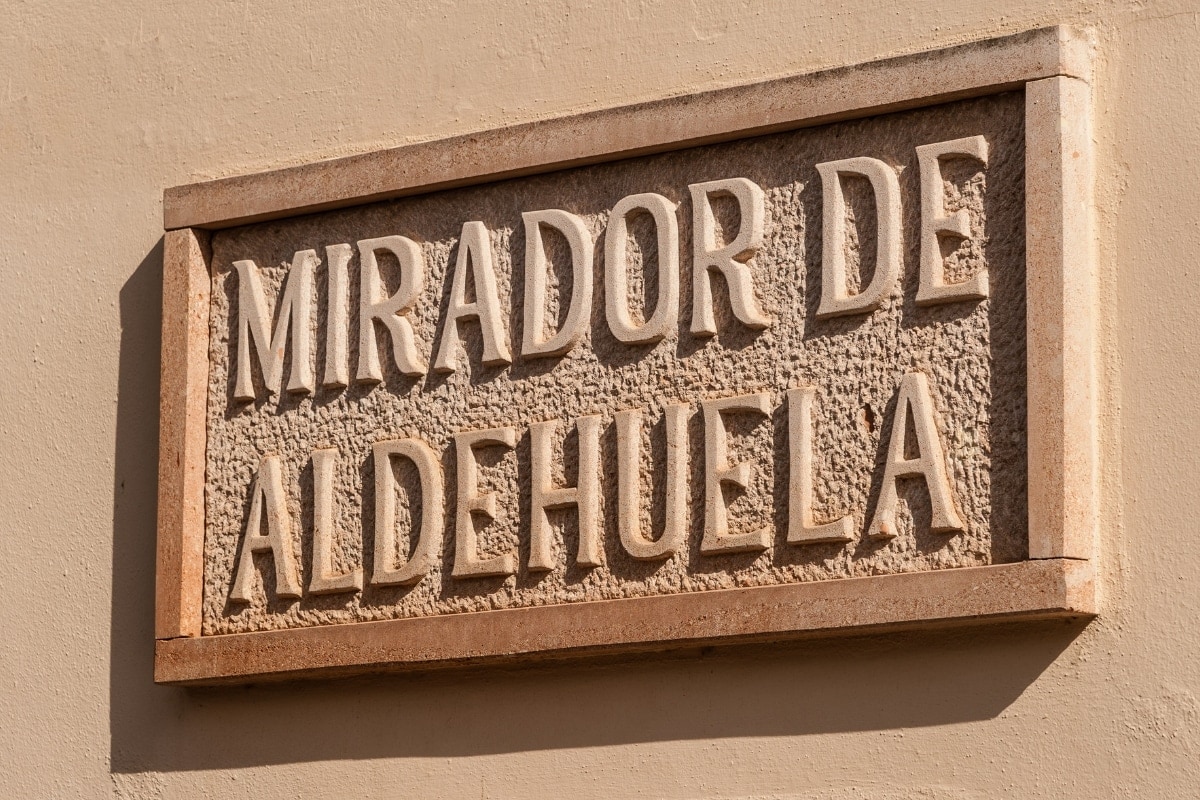
Don’t forget to visit Mirador de Aldehuela, from where you have a panoramic view of the surrounding landscape. Then, stay overnight in Ronda or head to Seville. We recommend the latter, as it will allow you to get ahead of the tourist crowds in the morning.

Where to stay in Ronda: If you do decide to stay in Ronda, one of the best-rated accommodations is La Escondida Ronda, B&B.

Day 3: Ronda – Seville (2 Hours)

In Seville, first head to Santa Maria de la Sede, the largest Gothic cathedral in the world and the third largest cathedral overall. Don’t forget to visit the Giralda, a former minaret that was converted into a bell tower, from where you have a breathtaking view of the entire city.

Then head to the Royal Alcázar Palace. This magnificent palace has been rebuilt and expanded several times and is one of the best examples of Mudéjar art in Spain.

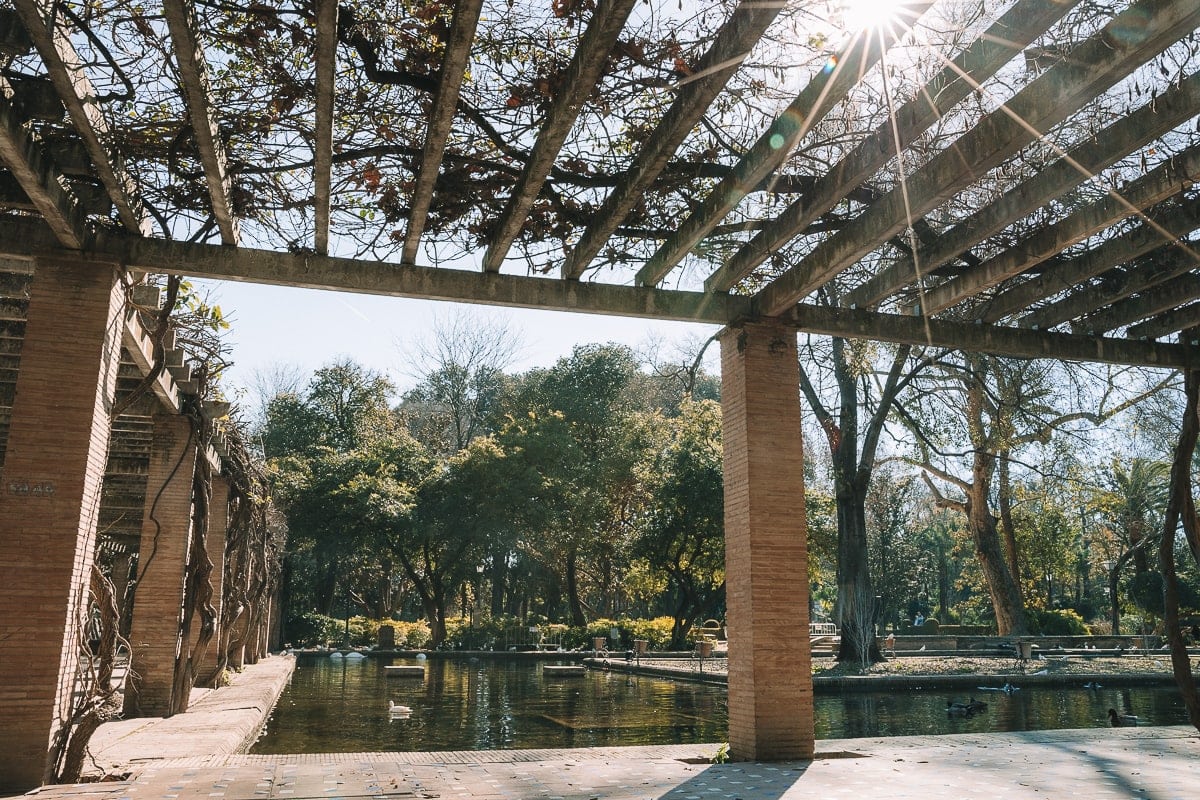
After lunch, head to Plaza de España, a monumental square built for the Ibero-American Exposition in 1929. Opposite Plaza de España is a huge park where you can cool off and relax.

Finally, today, visit Barrio Santa Cruz, the former Jewish quarter, which is now a picturesque neighborhood with narrow streets, white houses, and squares. You can find more information in our article 32 tips on what to see in Seville.

Where to stay:

Day 4. Seville – Cordoba (45 Minutes)

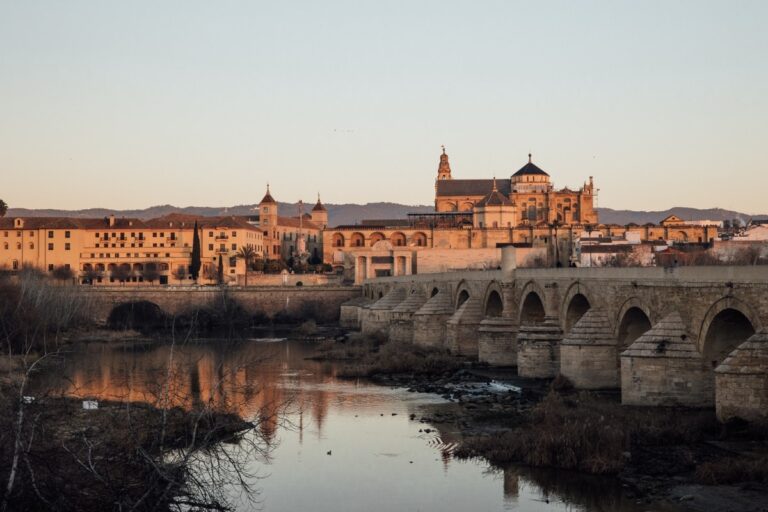
Head to Cordoba early; honestly, I would recommend heading to Cordoba the evening before and staying there. First, visit the Mezquita, which is a symbol of Cordoba’s Moorish heritage.

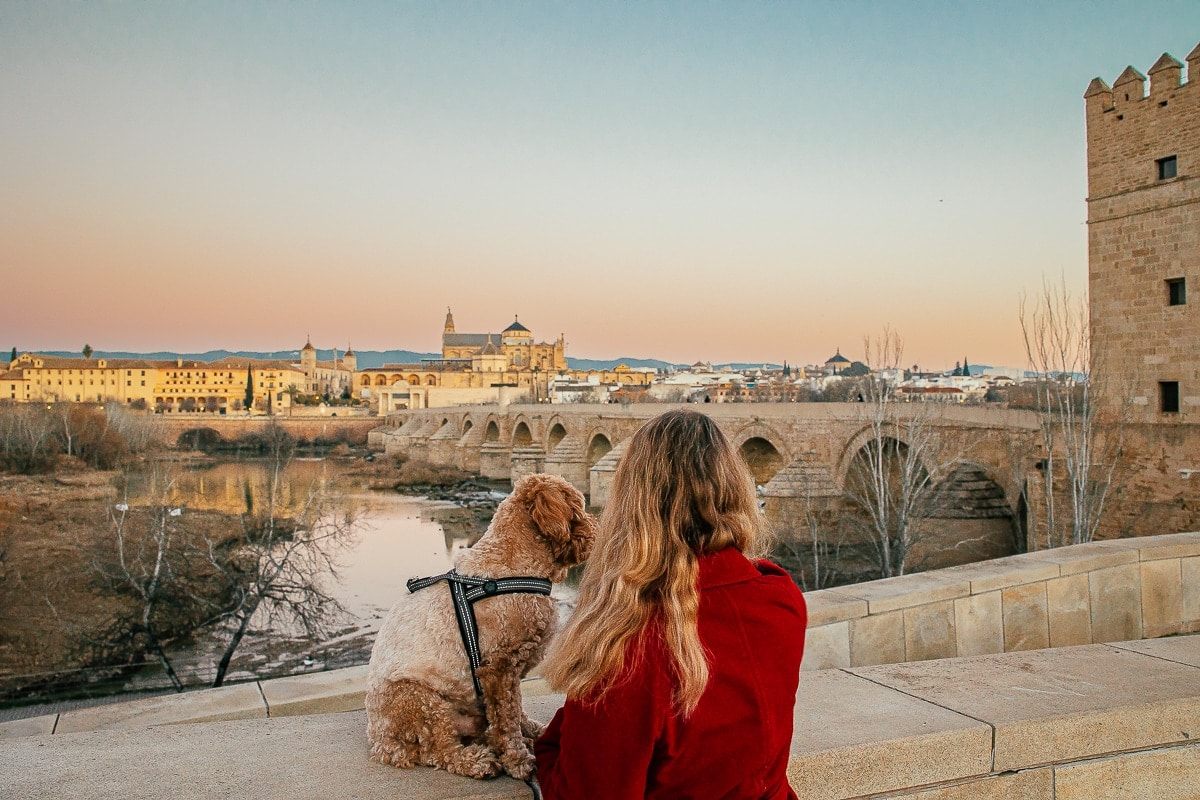
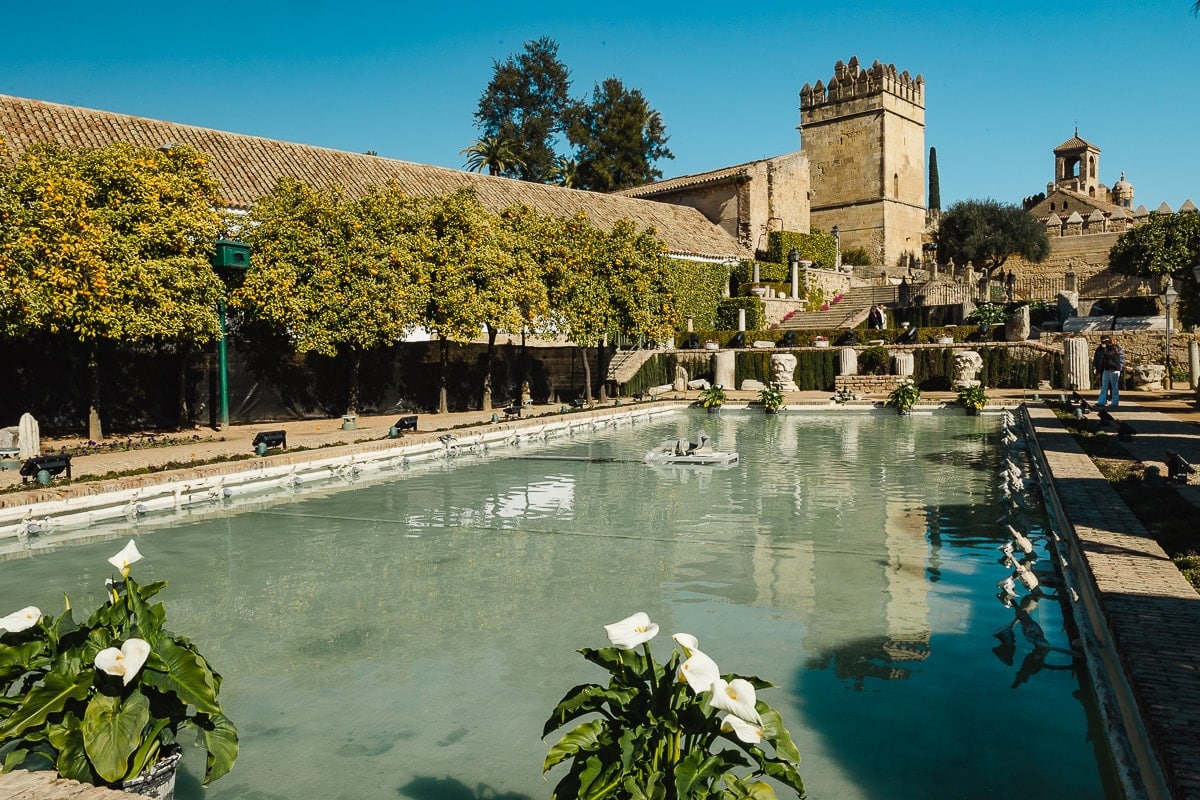
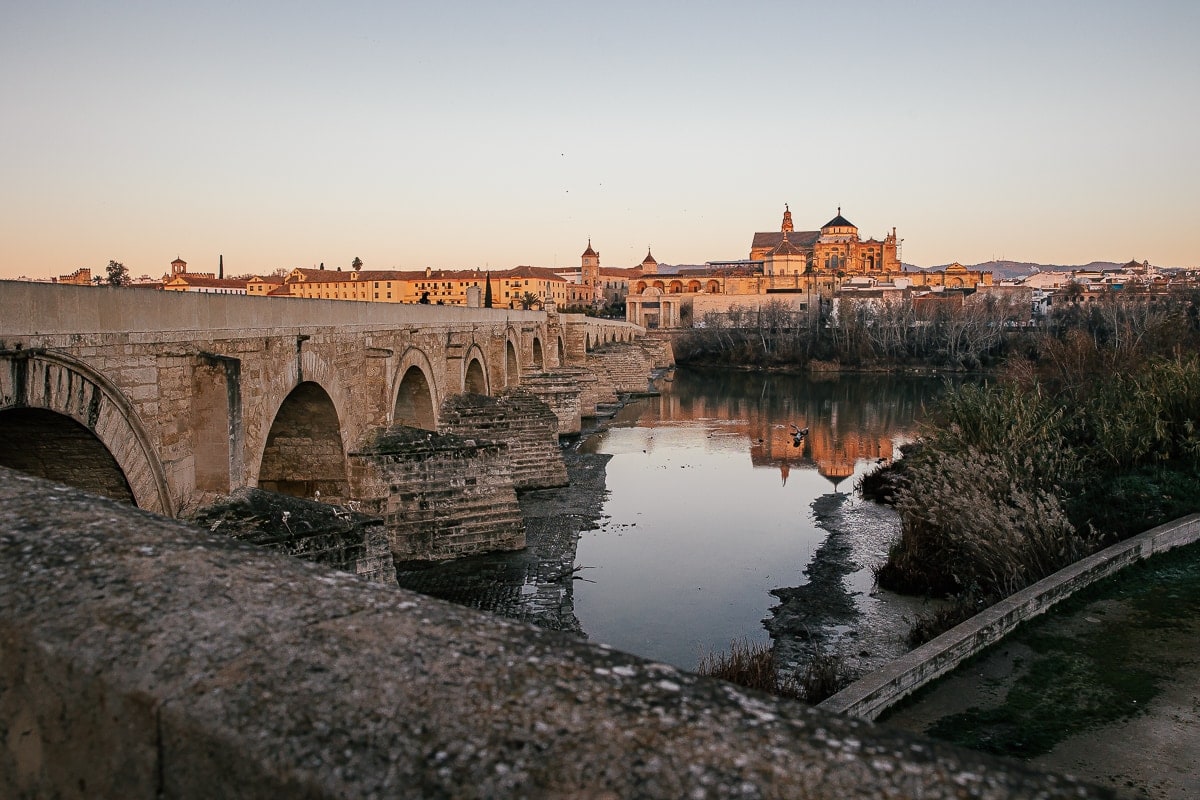
In Cordoba, be sure to visit the Jewish Quarter, Alcázar de los Reyes Cristianos, the royal palace with beautiful gardens and views of the Guadalquivir River, and the Roman Bridge and surrounding parks and gardens, such as Jardines de la Victoria and Jardines Juan Carlos I.

Enjoy dinner at one of the traditional Andalusian restaurants, where you can taste local specialties, such as salmorejo, flamenquín, or rabo de toro.

Find more tips in our article about Cordoba.

Where to stay:

We recommend accommodation right in the center at Hotel Hesperia Cordoba, where you can bring your dog and easily park your car at the hotel. The hotel has a rooftop bar in summer and offers a magnificent view of the city.

Day 5: Cordoba – Granada (2 Hours 7 Minutes)

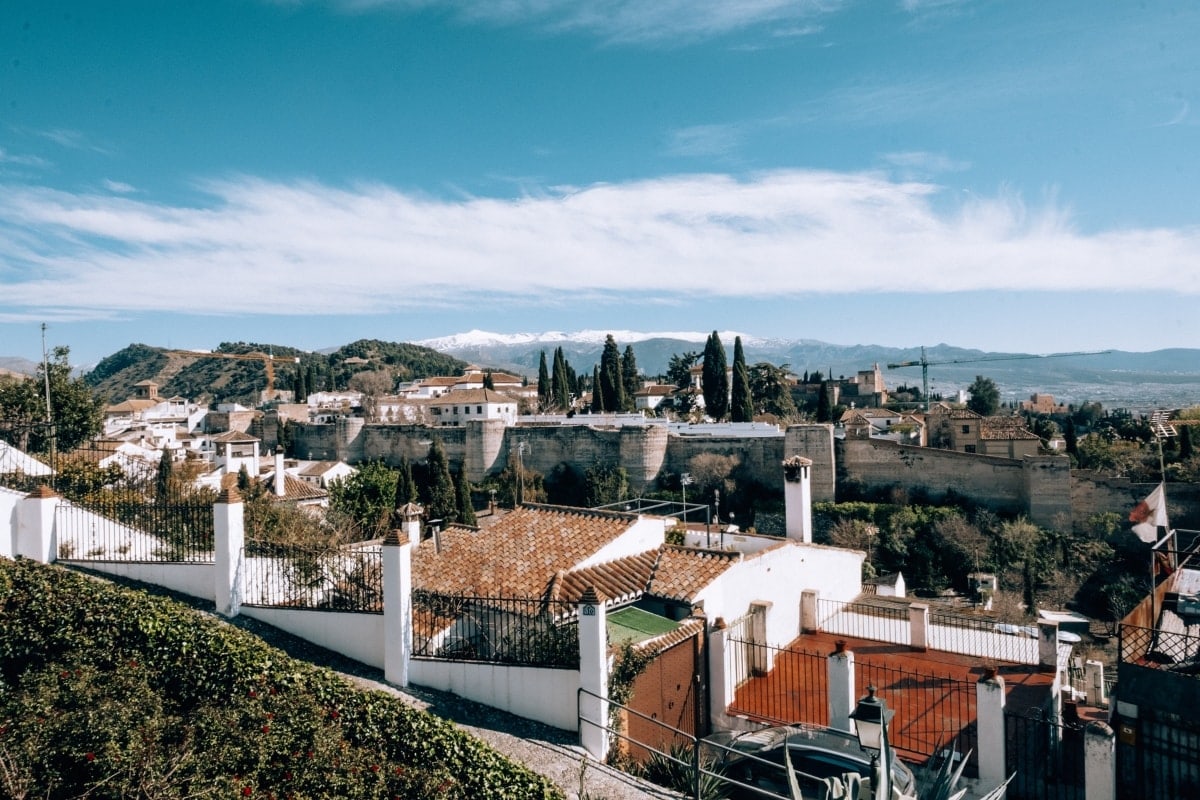
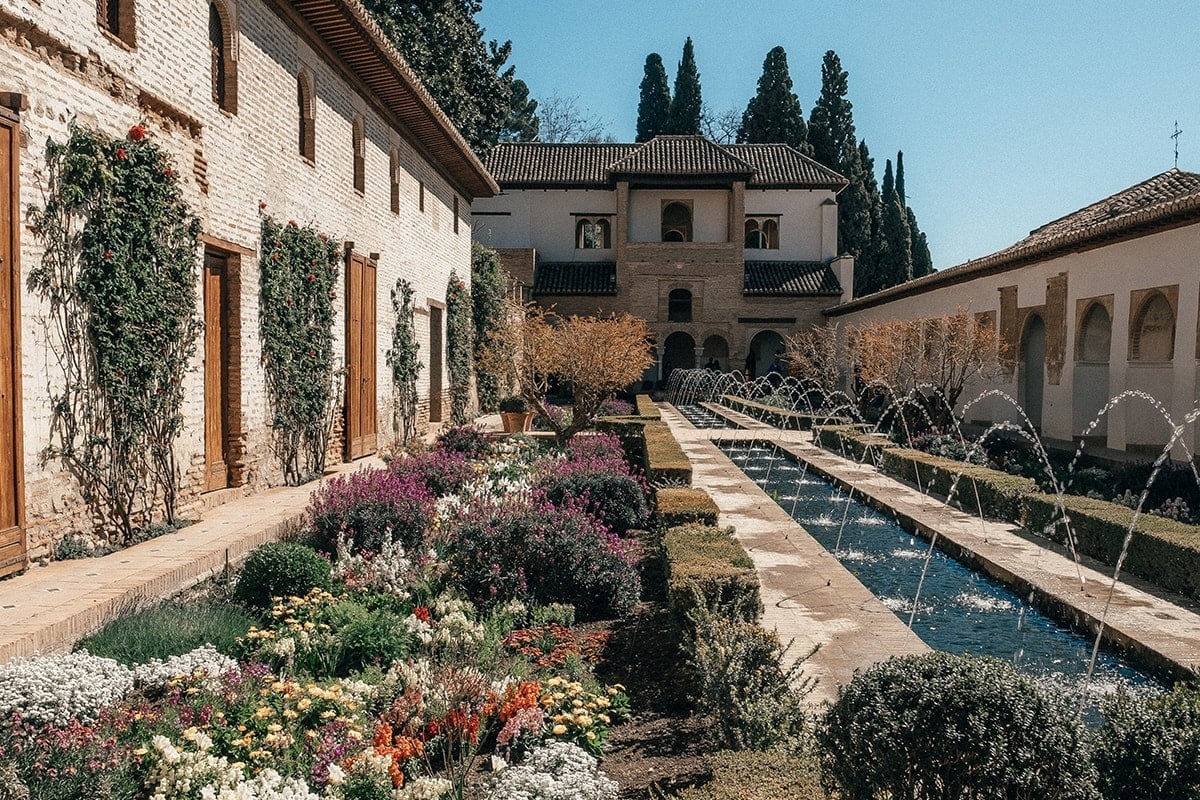
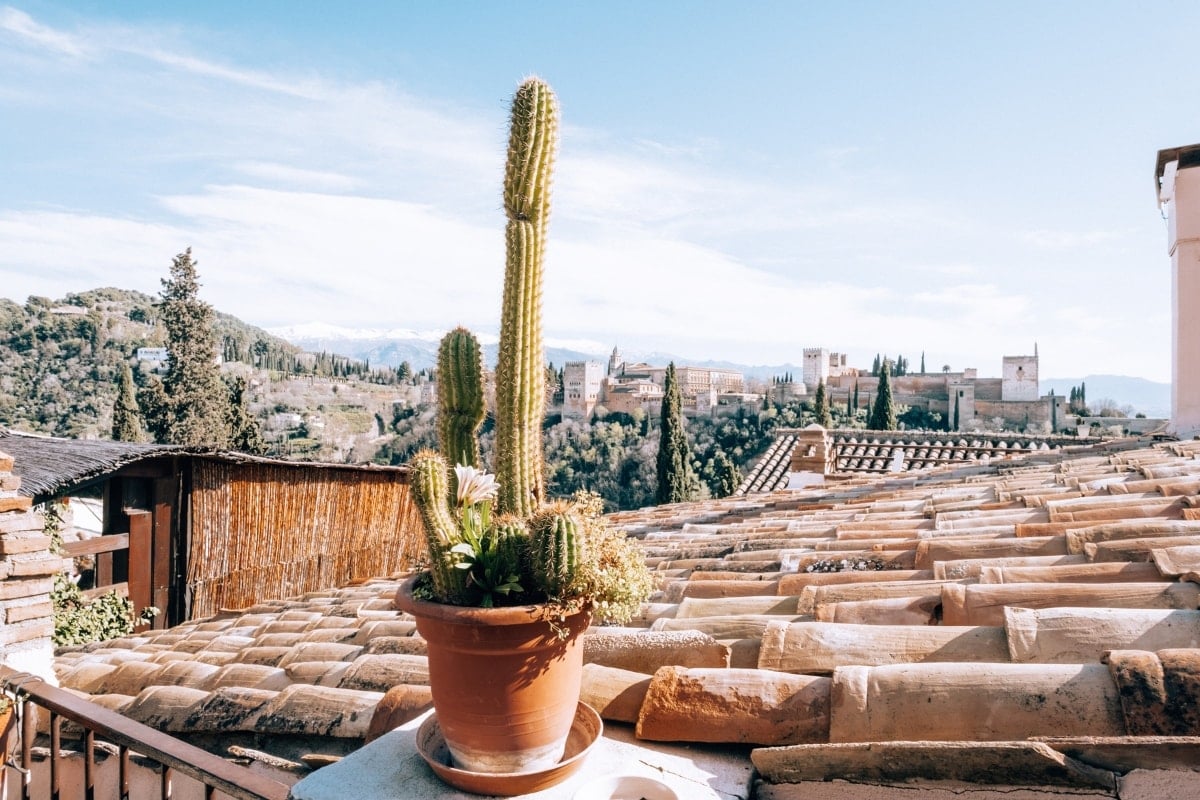
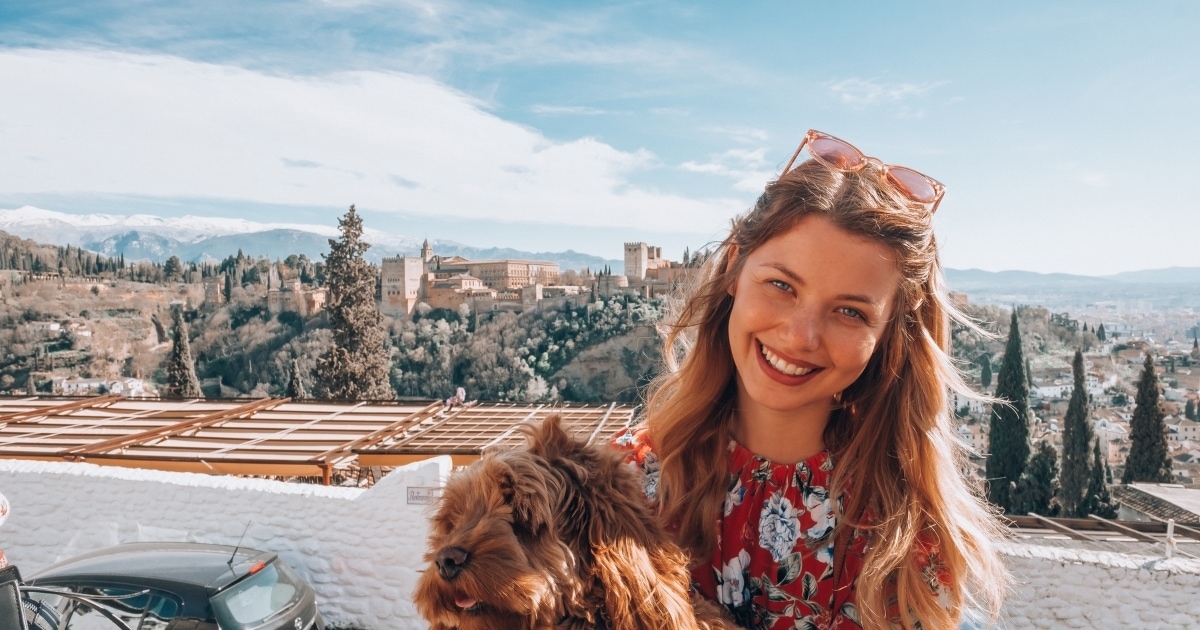
Granada is once again one of Spain’s most visited places, so be prepared for a relatively large number of tourists (even in the off-season). The most popular is the Alhambra, where you should go right at opening time. Furthermore, you shouldn’t miss the Generalife, the summer palace of the Nasrid rulers with gardens and fountains, and definitely take a walk through the historic Albayzín quarter at the end of your visit, with its narrow streets, white houses, and magnificent views of the Alhambra.

Read our article on what to see in Granada.

Where to stay:

  • Budget accommodation: Hotel Macià Real De La Alhambra
  • Luxury accommodation: Boutique Hotel Luna Granada Centro

Dinner at a local restaurant

Day 6: Granada – Jaén (1 Hour 15 Minutes)

Jaen is not that big, and a visit won’t take more than 3-4 hours, so I recommend dedicating the morning to Granada. After lunch, head to Jaén, where there’s a magnificent cathedral in the center, one of the most significant examples of Spanish Renaissance architecture.

Explore Castillo de Santa Catalina, a fortress with magnificent views of the city and surrounding landscape. You can also visit Baños Árabes, well-preserved Arab baths located in Palacio de Villardompardo.

Enjoy dinner at one of the local restaurants, where you can taste traditional dishes from Jaén and its surroundings, such as pipirrana, ajo blanco, or taste the local olive oil, which the locals are very proud of.

Where to stay:

  • Budget option: Hotel Europa
  • Luxury option: Parador de Jaén

Day 7: Jaén – Malaga (2 hours 30 minutes)

Depart from Jaén towards Malaga; the journey takes about 2 hours and 30 minutes. If you’re not flying out yet and plan to relax on the Costa del Sol, check out our tips, what to do in Malaga.

South of Spain: Andalusia Road Trip for 10-14 Days

Day 1: Arrival in Malaga

What to do in Malaga can be read briefly above in the 7-day itinerary or in our article about Malaga.

Where to stay: Highly rated are ESTUDIO EN TORREMOLINOS CENTRO and B&B Casa Rubí.

Day 2: Malaga – Ronda (1 Hour 45 Minutes)

After breakfast, depart from Malaga towards Ronda; the journey takes about 1 hour and 45 minutes. Visit Puente Nuevo, an impressive bridge connecting two parts of the city, Plaza de Toros, a historic bullring, and Mirador de Aldehuela, a viewpoint with magnificent views of the surrounding landscape.

Read what to do in Ronda in our article.

Where to stay in Ronda: If you do decide to stay in Ronda, one of the best-rated accommodations is La Escondida Ronda, B&B.

Day 3: Ronda – Seville (2 Hours)

What to do in Seville can be read above in the 7-day itinerary or directly in our article 32 tips on what to see in Seville.

Where to stay:

Day 4: Day Trip from Seville to Cordoba

Cordoba is only 45 minutes away from Seville, so stay in Seville and use the local train or bus for a day trip to Cordoba. Read what to do there in our article.

In the evening, return to Seville, from where you will continue to Cadiz the next day.

Day 5: Seville – Cadiz (1 Hour 30 Minutes)

After breakfast, head to the ancient port city of Cadiz. Visit the cathedral, which is a mix of Baroque and Neo-Gothic styles, Torre Tavira, a watchtower with a camera obscura, and Playa de la Caleta, a picturesque beach between two fortresses.

Where to stay in Cadiz: For example, stay at Hotel Pinomar.

Day 6: Cadiz – Tarifa – Gibraltar (2 Hours with a Stop in Tarifa)

Head to Gibraltar, which belongs to Britain (so don’t forget your documents), but is an ideal place for a trip. On the way, stop in Tarifa, a picturesque town on the southernmost tip of Spain, where the Mediterranean Sea meets the Atlantic Ocean. This unique location makes Tarifa a popular destination for water sports enthusiasts, especially kitesurfing and windsurfing.

Gibraltar is a British Overseas Territory located on the southern tip of the Iberian Peninsula. Its dominant feature is the Rock of Gibraltar, an impressive limestone formation that offers magnificent views of the Strait of Gibraltar and the African coast.

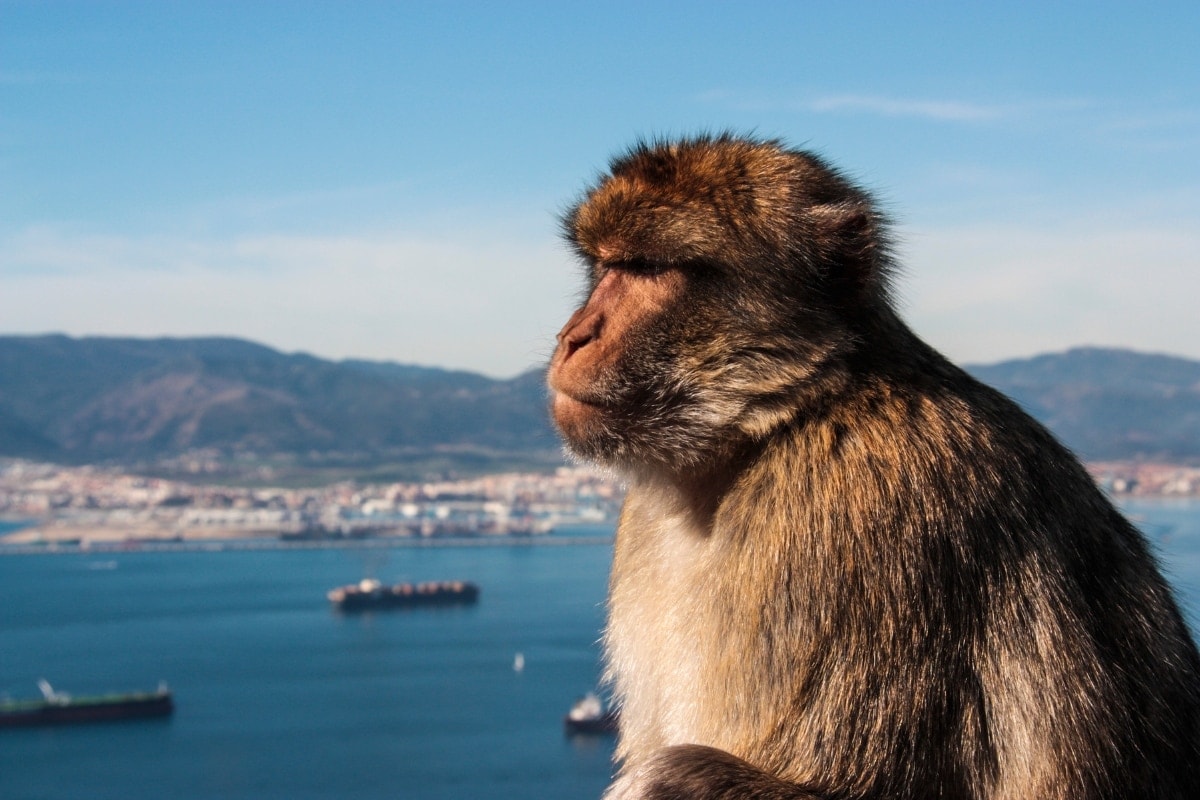
When visiting Gibraltar, you can visit St. Michael’s Cave, which is located inside the Rock and served as a military shelter in the past. Here you can also encounter the famous Gibraltar monkeys, which are the only wild primates in Europe. Watch out for your snacks.

End the day in Estepona or in Marbella.

Where to stay: Enjoy your stay at the luxury resort Amàre Beach Hotel Marbella – Adults Only or at the more affordable B&B Boutique Tribeca.

Day 7: (Optional) Marbella

Enjoy the sun and sea on one of Marbella’s beautiful beaches, such as Playa de la Fontanilla or Playa de Puerto Banús. Recharge for further travels. If you’re not the type to lounge by the sea, book a trip to Caminito del Rey.

Day 8: (Optional) Exploring the Surroundings of Marbella

Marbella is an excellent starting point for exploring nearby towns. For example, you can head to Estepona and walk around the picturesque harbor and visit the traditional fish market there.

If you go further south, you can visit Casares, one of the most beautiful “pueblos blancos” (white villages) in Andalusia. Stroll through the narrow, steep streets and visit the castle and the Church of Nuestra Señora de la Encarnación, and enjoy panoramic views of the surrounding landscape.

On the way back to the coast, you can stop in Manilva and taste traditional Andalusian dishes, such as tapas or paella, at one of the local restaurants. And then you can continue further east to Ojén; this charming mountain town is known for its traditional white houses, wine museum, and Cueva de las Columnas cave.

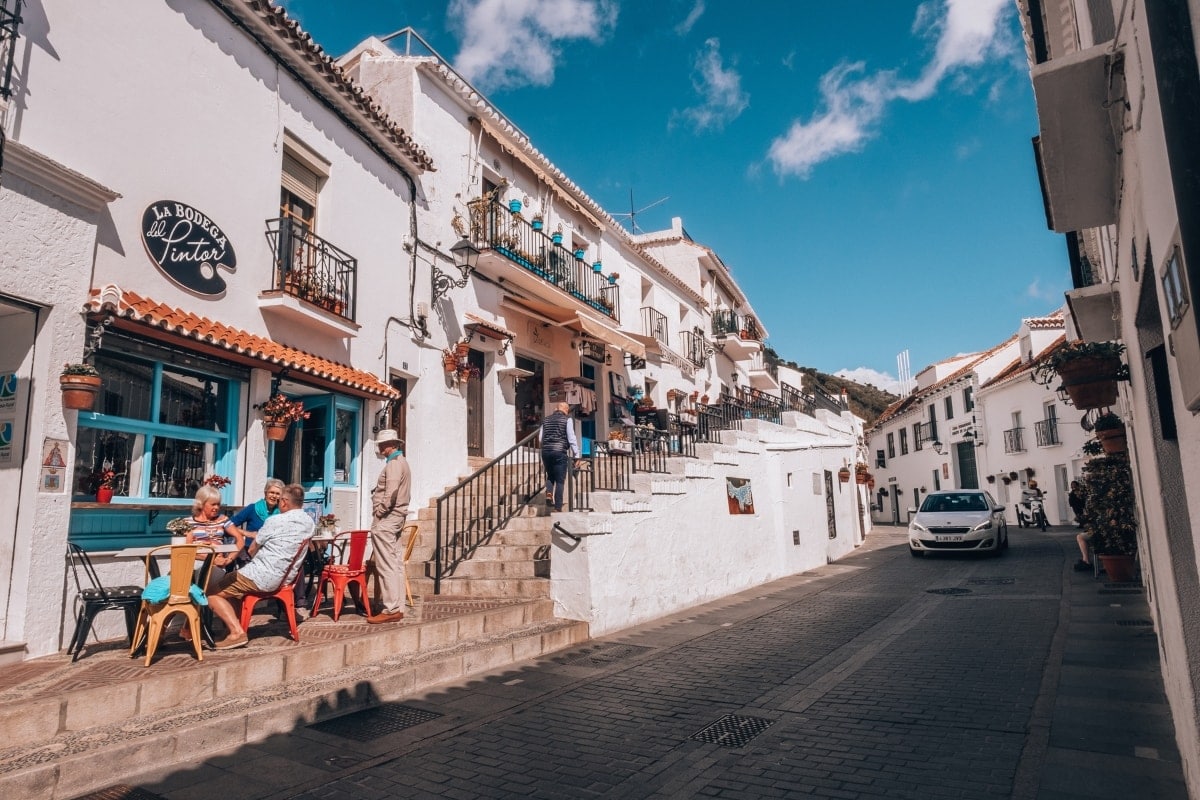
Mijas, nestled on the mountainside, is also a very popular white village to visit. Visit the Church of Nuestra Señora de los Remedios here and enjoy magnificent views of the Mediterranean Sea.

To conclude the day, you can stop in Fuengirola, a port city with long beaches and vibrant nightlife.

Day 9: Marbella – Sierra Nevada – Granada (2.5 Hours + 1.5 Hours)

Explore Sierra Nevada, a majestic mountain range where you can ski in winter and go cycling or hiking in summer. Its highest peak is Mulhacén, the highest point in mainland Spain. What to see in Sierra Nevada, Spain

  1. Alpujarras Mountains: Visit the picturesque mountain villages in the Alpujarras Mountains, such as Pampaneira, Bubión, and Capileira.
  2. Trevenque Peak: Go on a hike to the summit of Trevenque, which offers magnificent views of the surrounding landscape and mountain ranges.
  3. Mulhacén: You can head to the highest mountain in mainland Spain, Mulhacén.
  4. Mountain Biking: Sierra Nevada is a paradise for mountain biking enthusiasts.
  5. La Calahorra: Visit the historic La Calahorra Castle, located in the village of the same name. The castle stands on a hill and offers magnificent views of the Sierra Nevada.

In the evening, travel to Granada and check in. This way, you’ll be able to set out early in the morning for the sights, which are extremely popular with tourists.

Where to stay: Stay in Granada.

  • Budget accommodation: Hotel Macià Real De La Alhambra
  • Luxury accommodation: Boutique Hotel Luna Granada Centro

Day 10: Granada

What to do in Granada can be found briefly above or in our article. Stay in Granada or move to Malaga. It depends on whether you prefer to spend more time on sightseeing or an extra day by the sea.

Day 11: Granada – Malaga (1 Hour 30 Minutes)

Head back to Malaga and explore the local beaches, or if beaches don’t appeal to you at all, you can explore the surrounding towns you missed during your stay in Marbella. What to do in Malaga can be read in our article.

Where to stay in Malaga: If you’re looking for something more luxurious, check out H10 Croma Málaga; a more affordable hotel in the center of Malaga is Carlos V Malaga.

Day 12-14: Malaga

Enjoy a seaside vacation on the most popular Costa del Sol.

The most Beautiful Beaches of Andalusia

We have selected for you the most beautiful beaches in Andalusia, that you definitely shouldn’t miss.

1. Playa De Bolonia (Cadiz)

This beach is one of the most beautiful and authentic in Andalusia. Located near the town of Tarifa, it is known for its extensive dunes, crystal-clear waters, and the remains of the ancient Roman city of Baelo Claudia.

2. Playa De Los Muertos (Almeria)

This beach is located in the Cabo de Gata Natural Park and is renowned for its wild charm. Its fine pebble surface, turquoise water, and steep rock walls make it one of the most photogenic beaches in the area. Access is more challenging, but it’s worth it!

3. Playa De Mónsul (Almeria)

Another treasure of Cabo de Gata, which appeared in the film Indiana Jones and the Last Crusade.

4. Playa De La Victoria (Cadiz)

One of the best urban beaches in Andalusia, located in Cadiz itself. Its long promenade, fine sand, and excellent facilities make it a great choice for families and active leisure enthusiasts.

5. Playa De La Herradura (Granada)

A hidden gem on the Costa Tropical. Popular among divers and water sports enthusiasts, thanks to its calm waters and rich underwater life.

6. Playa De Zahara De Los Atunes (Cadiz)

This expansive beach is located near the picturesque fishing village of Zahara de los Atunes. It offers a long, tranquil coastline with fine sand and incredible sunsets.

What to Do in Andalusia with Kids?

In Andalusia, there are several water parks that offer fun for the whole family, such as Aquatropic in Almuñécar or Mijas Water Park on the Costa del Sol.

Frequently Asked Questions

When is the best time to visit Andalusia?

The best time to visit is spring (April – June) and autumn (September – November), when temperatures are more pleasant than in the hot summer.

How to get to Andalusia?

The most common way to get to Andalusia is by flying to airports in Malaga, Seville, or Granada. You can also travel by train, bus, or car.

Are the beaches in Andalusia suitable for families with children?

Yes, many beaches in Andalusia offer gradual entry into the sea and good facilities for families with children, for example, Playa de la Victoria or Playa de la Herradura.

What are the best activities besides swimming?

You can go diving, surfing, hiking in natural parks, or explore historical monuments.

Tips and Tricks for Your Vacation

Don’t Overpay for Flights

Search for flights on Kayak. It’s our favorite search engine because it scans the websites of all airlines and always finds the cheapest connection.

Book Your Accommodation Smartly

The best experiences we’ve had when looking for accommodation (from Alaska to Morocco) are with Booking.com, where hotels, apartments, and entire houses are usually the cheapest and most widely available.

Don’t Forget Travel Insurance

Good travel insurance will protect you against illness, accidents, theft, or flight cancellations. We’ve had a few hospital visits abroad, so we know how important it is to have proper insurance arranged.

Where we insure ourselves: SafetyWing (best for everyone) and TrueTraveller (for extra-long trips).

Why don’t we recommend any Czech insurance company? Because they have too many restrictions. They set limits on the number of days abroad, travel insurance via a credit card often requires you to pay medical expenses only with that card, and they frequently limit the number of returns to the Czech Republic.

Find the Best Experiences

Get Your Guide is a huge online marketplace where you can book guided walks, trips, skip-the-line tickets, tours, and much more. We always find some extra fun there!

Málaga, Spain: 18 Best Things to See and Do

TL;DRMálaga, Spain offers 18 specific tips on what to see and do, from the Moorish fortress Alcazaba and Gibralfaro Castle to the unfinished cathedral La Manquita and the Museo Picasso, plus La Malagueta beach and the Mercado de Atarazanas market. The best months to visit are May, June, September and October, when temperatures stay around 25–28 °C, while summer can bring scorching heat over 35 °C. From the airport you can reach the historic centre by the Cercanías suburban train in just 12 minutes. For better swimming, head further west along the Costa del Sol, home to spots like Torremolinos and Benalmádena. Dinner is served late here — there’s no point going to an authentic restaurant before 8 p.m.

Say the word Málaga and plenty of people still picture nothing more than a busy airport terminal, where they grab their bags after landing, jump into a rental car and instantly vanish somewhere to the west into the giant beach resorts. For years that’s exactly what most tourists thought too, but I’m thrilled to tell you that Málaga, Spain has undergone an absolutely incredible transformation over the past decade. This once dull transit stop has blossomed into a confident cultural metropolis that wins you over instantly with its shady marble lanes, fantastic museums and laid-back Andalusian vibe.

Lukáš and I absolutely love coming here, especially in autumn or spring, when back home people are already pulling on their winter coats while here you can happily stroll along the beach in nothing but a sweater. Málaga has a truly wonderful mix of ancient history — it was founded way back by the Phoenicians — and buzzing modern life, all underscored by the ever-present legacy of its most famous son, Pablo Picasso. I’ve put together a genuinely detailed guide full of personal experiences that’ll show you why this city deserves far more than a single afternoon before your flight home.

Summary

  • Best time to visit: Spring and autumn are absolutely ideal; in summer, expect extreme heat and huge crowds of tourists.
  • Getting from the airport: The most convenient option is the Cercanías suburban train, which whisks you to the historic centre in just twelve minutes.
  • Main sights: Don’t miss the Moorish Alcazaba fortress, the unfinished cathedral, and the famous Picasso Museum.
  • Where to swim: La Malagueta beach is right in the centre, but for nicer, quieter swimming head a short way along the Costa del Sol.
  • Buying tickets: Book tickets for the main attractions and popular trips well in advance online — you’ll usually be out of luck at the door.
  • Food: Dinner is served very late here; there’s no point turning up at an authentic Andalusian restaurant before 8 p.m.

When to visit Málaga: weather guide

Picking the right dates is absolutely key for a visit to southern Andalusia, and Lukáš and I are very clear on this. Unless you genuinely dream of spending your entire holiday soaking in the water, definitely avoid the peak summer season. The summer months bring extreme temperatures to the whole region, which regularly climb over thirty-five degrees and can shoot well past forty in the interior.

The year 2025 brought truly massive heatwaves, and wandering the city’s baking streets in July or August is more of a punishment than a pleasure. The coast is a little more bearable thanks to the cooling sea breeze, but you’ll have to contend with huge air humidity and the fact that both the beaches and the sights will be bursting at the seams. The sun here beats down incredibly hard, so you simply can’t function outdoors without a hat and strong sunscreen.

The ideal time to visit, whether you’re planning a city-hopping loop or a relaxing beach break, is May and June, and then September and October. During this period the Mediterranean is already very pleasant for swimming (or still beautifully warm after summer) and temperatures hover around an ideal twenty-five to twenty-eight degrees. The city enjoys a wonderful three hundred sunny days a year, so even in autumn you’ll most likely have a gorgeous cloudless blue sky.

Winter — January and February — is hugely popular in Málaga among digital nomads and people from northern Europe who flock here in droves to escape the frost and snow. Winter temperatures sit around a pleasant fifteen to eighteen degrees, which is absolutely perfect weather for a full day of sightseeing, lounging in cafés and taking long walks along the seafront promenade. It’s certainly not swimming weather, but if you’re looking to escape the grey central-European winter, sun-drenched Andalusia will recharge your lost energy for sure.

Where to stay in Málaga

Choosing accommodation in Málaga depends a lot on your goal and how much you want to be in the thick of the evening buzz. If you’re visiting for the very first time and want all the main sights within easy walking distance, I’d recommend looking for a place right in the historic centre (Centro Histórico). It’s incredibly romantic here, the narrow cobbled lanes are full of life, and everything is literally a few steps away. Just bear in mind that Spaniards live mainly at night, so the streets can be very noisy until the early hours.

If you’re after a slightly quieter but still very central location, definitely check out the modern Soho district. This area lies right next to the port and the historic centre, is known for its amazing street art and plenty of specialty cafés, and has a lovely relaxed, hipster atmosphere. For those of you coming primarily for the beach, it makes sense to stay in the La Malagueta district near the city beach of the same name, where you get sea views yet can stroll into the centre in a leisurely quarter of an hour.

As for specific tips, one place with excellent reviews is ESTUDIO EN TORREMOLINOS CENTRO — it’s a short way west along the coast in the resort of Torremolinos, but thanks to the excellent train connection you’re in the centre of Málaga in no time at all. It’s the ideal compromise if you want to combine the city with a full day of lazing on the beach.

If you’d rather stay right in the city, a very cosy and popular choice is B&B Casa Rubí, where you’ll find the peace and quiet you crave along with a great base for your daily sightseeing trips. We recommend sorting out reservations the usual way through Booking.com, where you can easily filter for places with air conditioning. From May to October, air con is an absolute non-negotiable necessity — without it you simply won’t sleep at night.

lukas a lucka
Lukáš and Lucie recommend
Where to Stay in Málaga
3 accommodations recommended for your holiday

18 best things to see and do in Málaga, Spain

Málaga has so many interesting spots that you definitely won’t be bored for a single minute, whether you come for a long weekend or a full two weeks. I’ve put together eighteen specific tips on sights, culinary experiences and hidden corners that you really shouldn’t miss during your visit.

1. The Moorish Alcazaba fortress

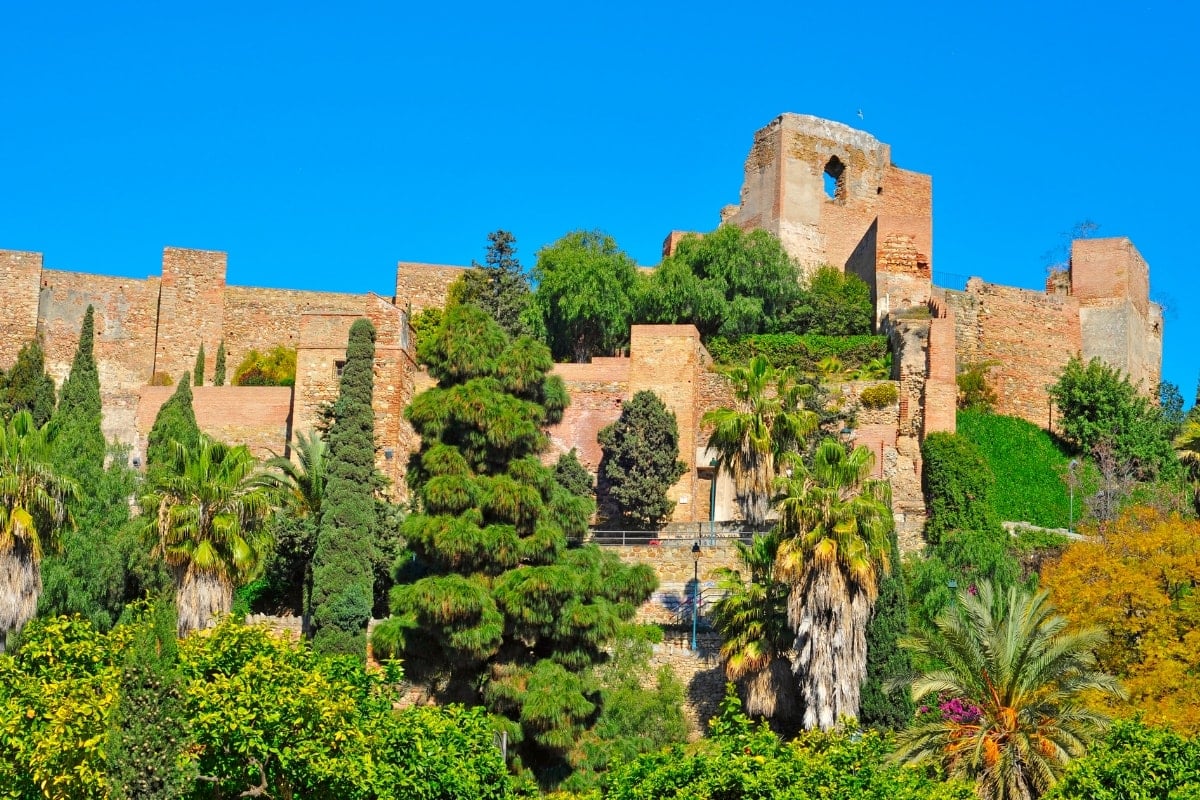
The Alcazaba is without a doubt one of the most important and visually stunning landmarks in the entire city, which you can see towering over the centre from afar. This gorgeous eleventh-century Arab fortress served as both a luxurious royal palace and a military citadel, so it combines impregnable ramparts with delicate Andalusian architecture.

It’s often compared to Granada’s famous Alhambra, and although it’s noticeably smaller, in my opinion that gives it an even more intimate, more enclosed atmosphere. As you wander its carefully tended courtyards, you can hear water trickling from little fountains everywhere, smell the intoxicating scent of blooming jasmine, and admire the intricate geometric patterns on the walls.

The climb up is lined with beautiful terraced gardens, and from the mighty ramparts you get absolutely fantastic views of the modern port, the open sea and the nearby bullring. The complex is surprisingly extensive and hides plenty of picturesque nooks, shady arcades and ornate arches typical of Moorish architecture, so set aside a good two hours for your visit.

💡 Tip: You can buy tickets in a very good-value combination with entry to the nearby Gibralfaro Castle. What’s more, on Sunday afternoons entry to the fortress is completely free for all visitors — but naturally you’ll have to reckon with much longer queues and bigger crowds.

2. Castillo de Gibralfaro

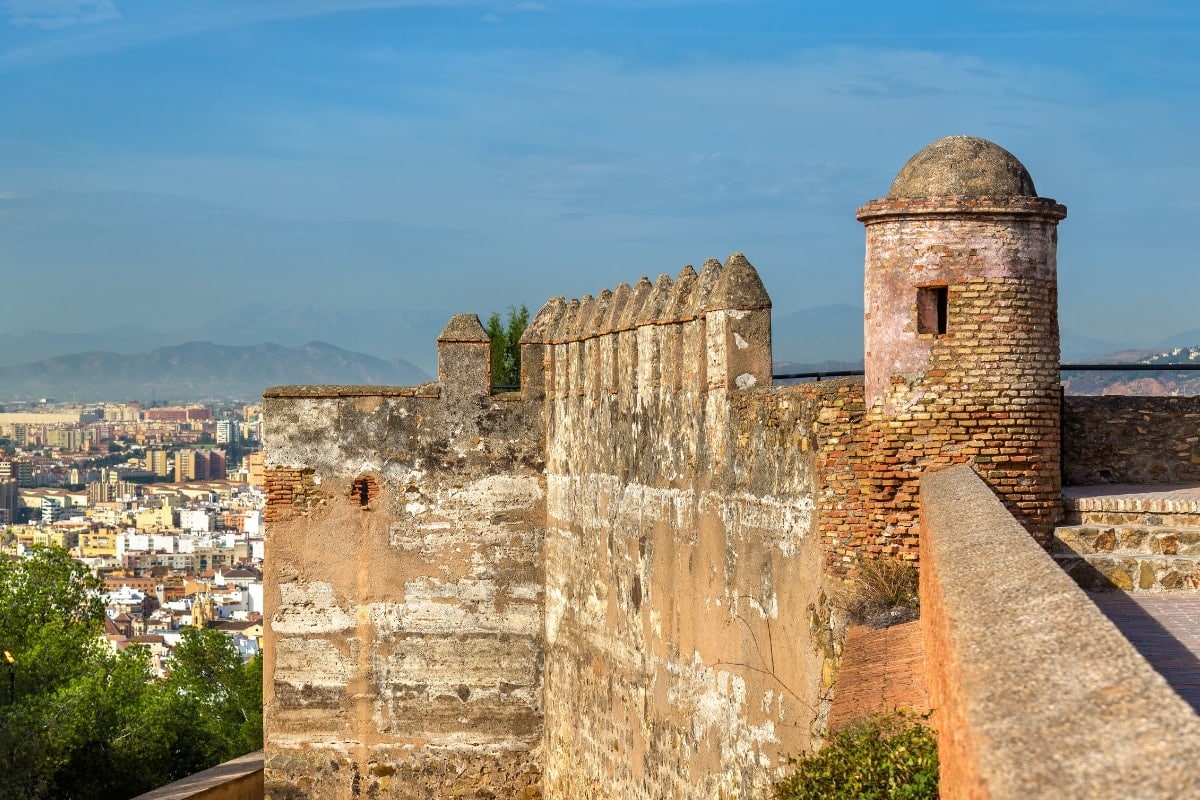
Right above the Alcazaba, on a steep wooded hill, rises another impressive structure — the ancient fourteenth-century Gibralfaro Castle. This castle was built by a powerful Nasrid caliph primarily to protect the lower-lying Alcazaba, to which it’s still connected by a long fortified corridor running along the hillside.

Unlike the palatial Alcazaba, the castle itself is a purely military fortress, so don’t expect any ornate tiled halls inside — but your reward for the climb is the very best panoramic views of the whole of Málaga and the endless Costa del Sol coastline. Getting up there takes a bit of fitness, as the path from the historic centre is fairly steep and takes roughly twenty to thirty minutes of brisk walking.

On hot summer days it can be quite a demanding hike, so don’t forget to bring plenty of water and a hat, because there isn’t much shade along the way. If you don’t fancy walking and sweating, you can hop on local bus number 35, which comfortably takes you right up to the main entrance.

A walk along the mighty stone ramparts under the fragrant pines is especially magical just before sunset, when the whole city below turns beautiful golden hues. Inside the castle you’ll also find a small military museum charting the tangled history of the local garrison, but honestly, those incredible views over the surroundings are the main reason everyone heads up here.

3. La Manquita Cathedral

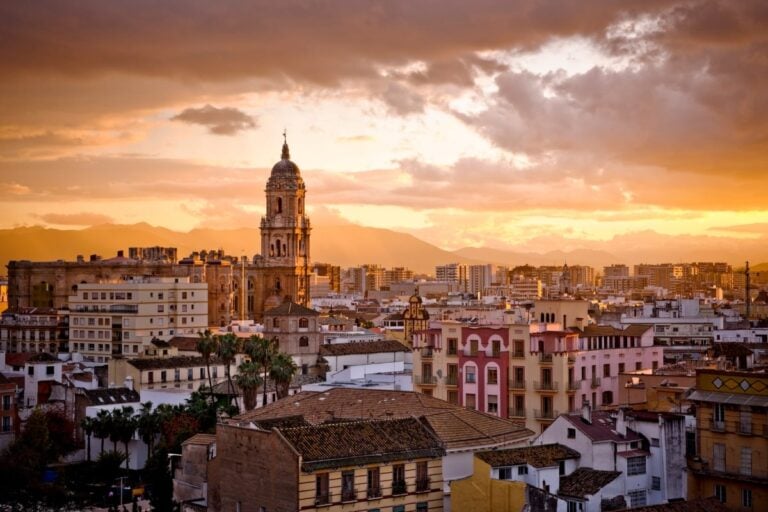
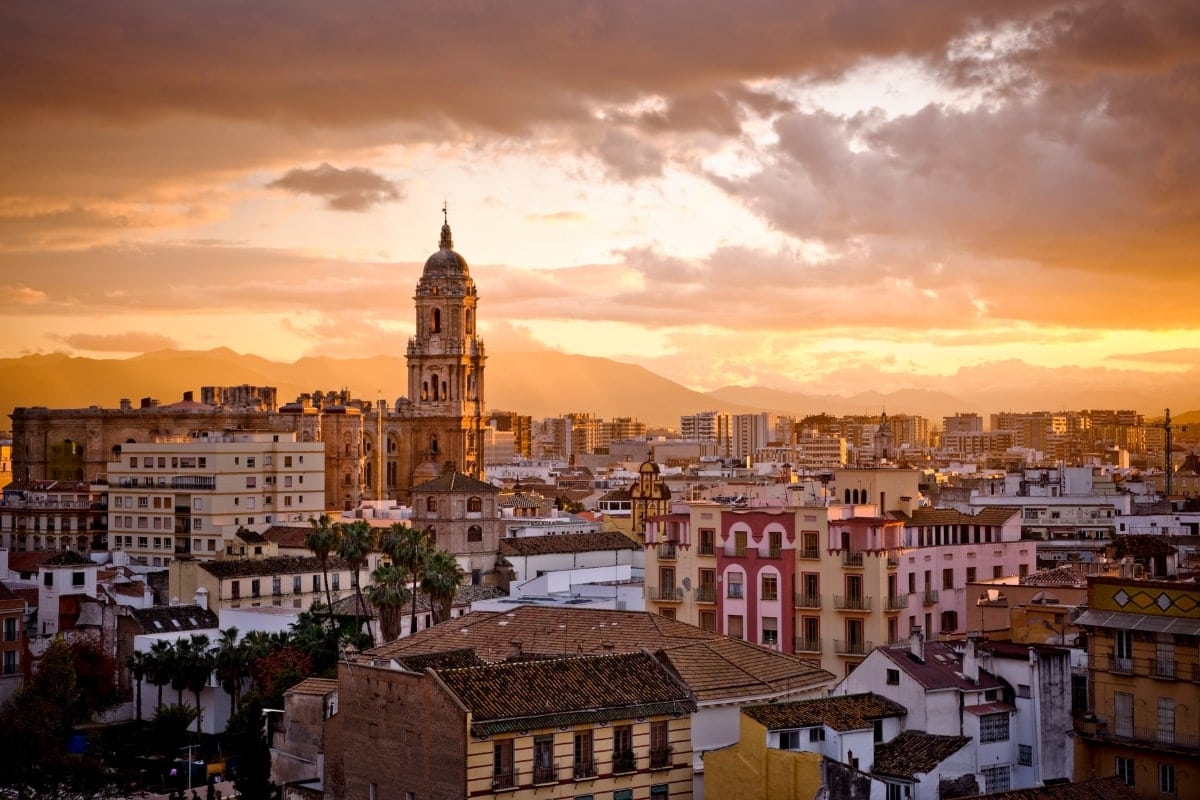
The Cathedral of Nuestra Señora de la Encarnación is one of the city’s best-known symbols, and once you see it with your own eyes you’ll understand why. Construction began in the sixteenth century on the site of the former main mosque, and its complicated build lasted more than two hundred years, which understandably left its mark in a fascinating mix of Gothic, Renaissance and Baroque styles.

Locals affectionately nickname it La Manquita, which literally means the One-Armed Lady. This witty nickname came about because the cathedral’s south tower was never completed due to a critical lack of funds at the end of the eighteenth century, so from afar the building looks slightly asymmetrical.

The money originally meant for finishing it was reportedly sent to America to support the American War of Independence, a story locals still love to tell. From the outside the building looks incredibly majestic, and its interior is no less stunning, with enormous stone columns and a beautifully carved wooden choir that’s a true masterpiece.

I’d definitely recommend paying extra for the exclusive chance to climb up to the cathedral roof with a guide. There are roughly two hundred spiral steps, but the experience is absolutely worth it, because walking directly across the roof vaults and looking at the city from this unusual perspective is something you’ll remember about Málaga for a long time.

4. Teatro Romano (the ancient Roman theatre)

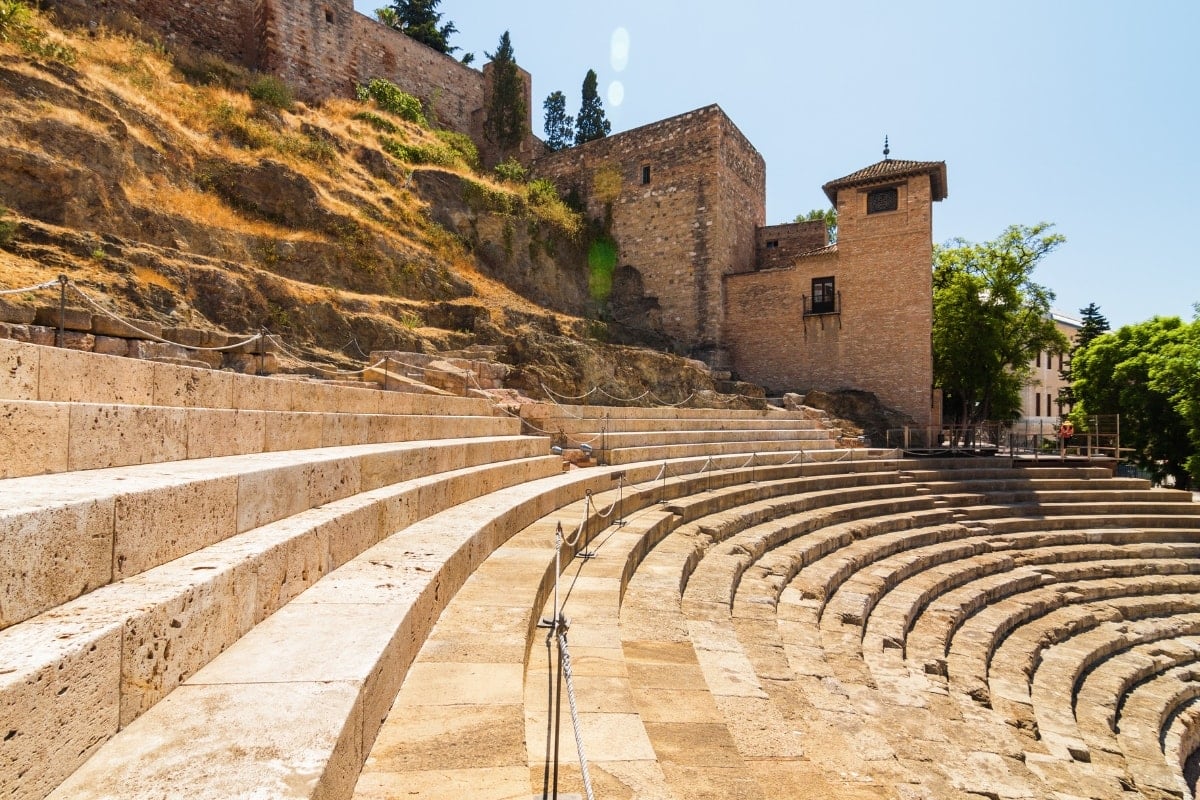
Right at the foot of the hill below the Alcazaba fortress you’ll come across an incredible historical treasure — the ancient Roman theatre from the first century AD. It was built during the golden era of Emperor Augustus and is today considered one of the oldest and best-preserved Roman theatres in all of sunny Andalusia.

What’s fascinating about it is above all its modern story, because the theatre lay buried under layers of earth and hidden beneath the city for centuries, so construction workers discovered it completely by accident only in the 1950s. Until then, no one had any idea what treasure lay hidden beneath the streets.

Visiting this unique archaeological site is completely free for all visitors, which these days is a very welcome bonus. You can take your time exploring the modern, renovated visitor centre, where you’ll learn the details of the excavation history, and then walk right across the ancient stone steps.

The atmosphere of this place is absolutely unique, as the theatre sits literally in the very beating heart of the modern city, surrounded by restaurants and bars. In the warm summer months evening theatre performances and concerts are often held here under the open sky, giving these ancient stones a whole new life and magically connecting distant history with the present.

5. Museo Picasso Málaga

Málaga is the proud birthplace of one of the greatest and most influential artists of the twentieth century, Pablo Picasso, and you’ll encounter his unmistakable legacy quite literally at every turn. The main cultural draw is without a doubt the magnificent Museo Picasso, housed in the beautifully renovated Renaissance Palacio de Buenavista right in the centre.

Even if you’re not the biggest fan of Cubism and modern art, this is one museum you really shouldn’t leave off your plan, because it has an incredibly personal and intimate atmosphere. It’s not just a cold gallery full of famous paintings, but rather a cross-section of the artist’s entire fascinating life.

The collection of over two hundred works was donated to the museum directly by members of Picasso’s closest family, specifically his daughter-in-law and grandson. Thanks to this you’ll see not just the most famous commercial paintings, but a huge number of personal drawings, quick sketches, ceramics and early works that span his entire career and brilliantly reveal his gradual artistic development.

💡 Tip: Absolutely buy your tickets online a few days in advance. The queues outside the museum can be truly endless, especially in high season, and it would be a huge shame to lose an hour of precious time waiting in the scorching sun.

6. Picasso’s birthplace on Plaza de la Merced

If you’re fascinated by Pablo Picasso’s life and want to go even deeper, your next steps should take you to the nearby spacious Plaza de la Merced. It was in one of the townhouses with typical green shutters on this sunny square that the famous painter was born in 1881.

Today these rooms house the Museo Casa Natal de Picasso, which works as a small but very engaging museum bringing his early childhood and complex family background to life. It’s a great complement to the main museum, as it focuses more on the man himself than just his art.

Inside you can take your time browsing period black-and-white photographs, personal belongings of the Ruiz Picasso family, and everyday objects that surrounded and artistically shaped young Pablo from childhood. It’s incredibly interesting to see the authentic environment that produced the man who later completely rewrote the history of world painting.

Plaza de la Merced itself is a gorgeous shady spot to rest after a long day. All around the square you’ll find plenty of pleasant cafés with outdoor seating where you can grab a coffee and, most importantly, snap a memento photo with the bronze statue of Picasso, who sits inconspicuously on one of the benches with a sketchpad.

7. The Muelle Uno waterfront promenade

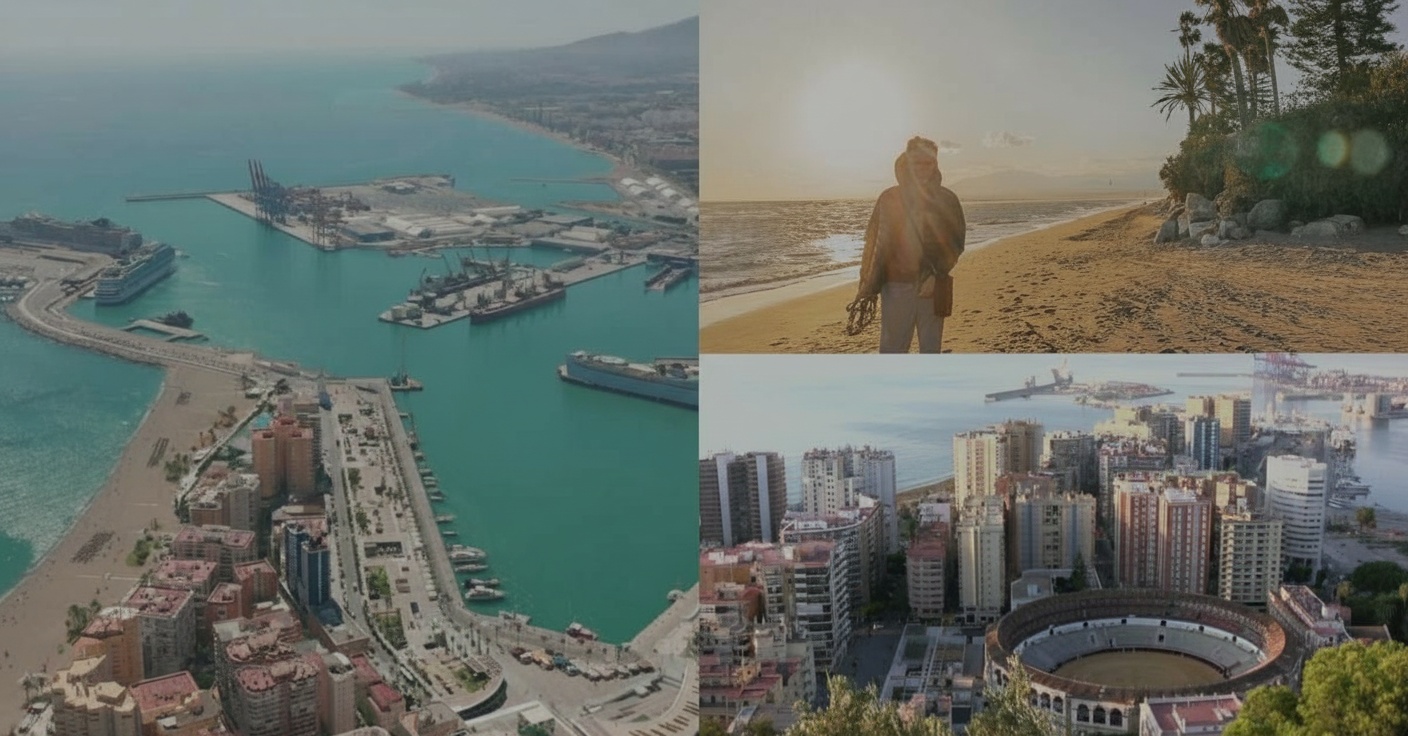
Málaga’s transformation from a dull industrial port into a dazzling modern metropolis is by far most visible in the area around the central harbour. Muelle Uno is a luxurious shopping and leisure promenade that elegantly lines the calm water and offers an absolutely perfect spot for an evening stroll with sea views.

Here you’ll find dozens of upscale shops, local design boutiques and excellent restaurants with direct views of the millionaires’ yachts moored nearby. It’s a huge contrast to the narrow historic lanes in the centre, and it perfectly shows just how beautifully varied Málaga is.

Strolling here in the early evening, as the sun slowly sets behind the tall hill with Gibralfaro Castle and gently lights up the white boats in the harbour, is a truly deeply romantic experience. The promenade is very wide, tastefully lined with tall palm trees, and dotted with plenty of comfortable benches and shady spots to rest.

Lukáš and I love coming here — we often buy a big scoop of Italian ice cream and just quietly watch the colourful bustle around us. At the very end of the promenade you’ll reach the iconic snow-white La Farola lighthouse, one of the few working lighthouses in Spain to bear a traditional female name.

8. The colourful Centre Pompidou cube

On a leisurely walk around the Muelle Uno harbour you definitely won’t miss the huge, multi-coloured glass cube that seems to sprout right out of the concrete paving. This eye-catching visual feature has become a favourite photo spot for all tourists and makes an interesting contrast against the blue sky.

It’s a prestigious branch of the famous Paris museum of modern art, the Centre Pompidou — the very first institution of its kind outside France. This bold architectural landmark became, within a few years, a new proud symbol of modern, cultural Málaga.

While the colourful cube itself serves mainly as a giant entrance skylight, the sprawling underground spaces hold fantastic exhibitions of contemporary world art. The displays here are very interactive, provocative, playful and often change, so even if you were here years ago, your next visit is guaranteed to have something completely new to discover.

If you love modern art, spatial installations and unconventional artistic approaches, you’ll be absolutely in your element here and could easily spend a whole morning. The museum is also excellently and powerfully air-conditioned, which makes it a perfect refuge from the relentless hot midday sun in the summer months.

9. The Mercado de Atarazanas market

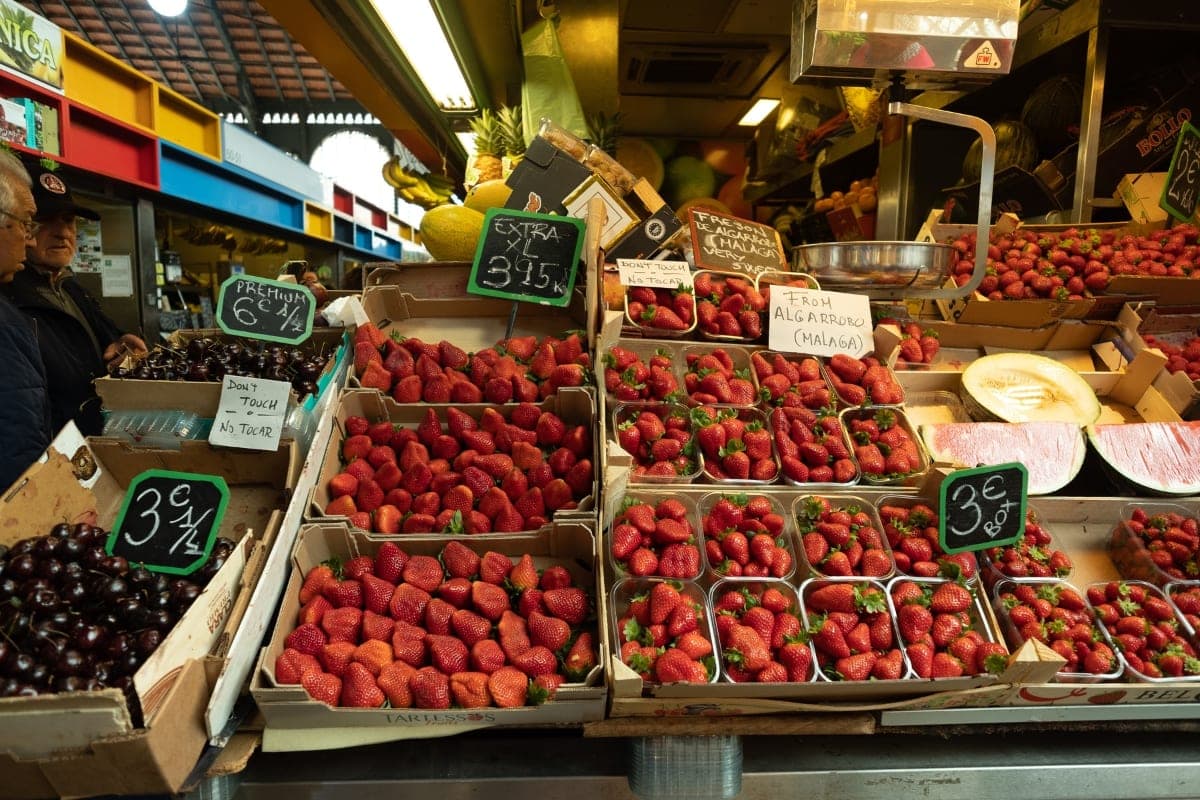
Visiting a bustling local market is always an absolute must for me in any foreign city I visit, and Málaga’s Mercado de Atarazanas is definitely one of the most beautiful in all of Spain. Just approaching the building is an experience that engages all your senses.

The market building catches your eye from the outside with its enormous colourful stained-glass window depicting historic ships in detail, and its gorgeous stone Moorish gateway. Originally this strategic spot was home to a medieval shipyard, which architects sensitively rebuilt into a magnificent central market at the end of the nineteenth century.

Inside there’s absolutely incredible bustle, rich colours and strong aromas mingle together, and the lively local vendors loudly extol their fresh produce. The market is logically divided into several sections, and you’ll find huge piles of sweet fruit, crisp vegetables, fragrant spices, roasted nuts and local cheeses.

Lukáš and I regularly come here to buy the best marinated olives and cheeses, which we then take on an afternoon picnic, while the locals stock up on fresh seafood. Among the stalls there are several small bars where you can eat standing at the counter and soak up the truly authentic Spanish atmosphere.

10. The hipster Soho district and street art

Right next to the historic centre and the luxury port lies the Soho district, which just a few years ago was among the fairly neglected and uninteresting parts of the city that tourists never visited. Today it’s completely the opposite, and Soho is one of the trendiest districts.

Thanks to a brilliant initiative by local young artists and financial support from the city, the whole of Soho has been transformed into a huge free open-air gallery of street art, familiarly known as Barrio de las Artes. It feels a little like Berlin or London’s Shoreditch here.

As you wander the local lanes you’ll come across huge murals covering entire building façades by world-renowned street artists such as the legendary Obey or D*Face. The visual side of this district is absolutely breathtaking, and on quite literally every corner you’ll discover some new colourful and photogenic detail.

Besides the fantastic graffiti, you’ll find plenty of great specialty cafés, independent little galleries, vintage clothing shops and craft breweries. It’s an absolutely ideal place to head for an afternoon coffee or an evening drink if you want to escape the main tourist crowds in the historic centre for a while.

11. The Carmen Thyssen Museum

If you’re more interested in classic Spanish and traditional Andalusian art, definitely add the Museo Carmen Thyssen to your programme. This prestigious museum sits in the beautifully renovated sixteenth-century Renaissance Palacio de Villalón, right in the heart of the historic centre, and hides an absolutely exquisite collection of paintings.

This entire private collection focuses mainly on the nineteenth century and presents, in a cohesive form, the very best of Andalusian painting. It’s a very different experience from the modern Picasso or the abstract Pompidou — here, old romantic Andalusia breathes from every frame.

You’ll see incredibly detailed canvases depicting traditional village festivals, dramatic bullfights, passionate flamenco dancers in colourful dresses and romantic rural landscapes. It’s like peering through an imaginary window deep into the region’s history and seeing how people really lived here a hundred and fifty years ago.

Unlike the Picasso Museum, it tends to be noticeably calmer here, so you can view all the exhibited works in complete peace and quiet. The palace courtyard itself is also a gorgeous example of traditional Andalusian architecture with richly decorated columns and a pleasantly serene atmosphere.

12. The Jardines de Picasso and Parque de Málaga gardens

At a quick first glance Málaga might come across as a rather concrete, densely built-up city, but if you know where to go, you’ll find its gorgeous green oases here too. One of them is the Jardines de Picasso, smaller quiet gardens dedicated to the famous painter, where you can rest beneath the crowns of enormous old ficus trees.

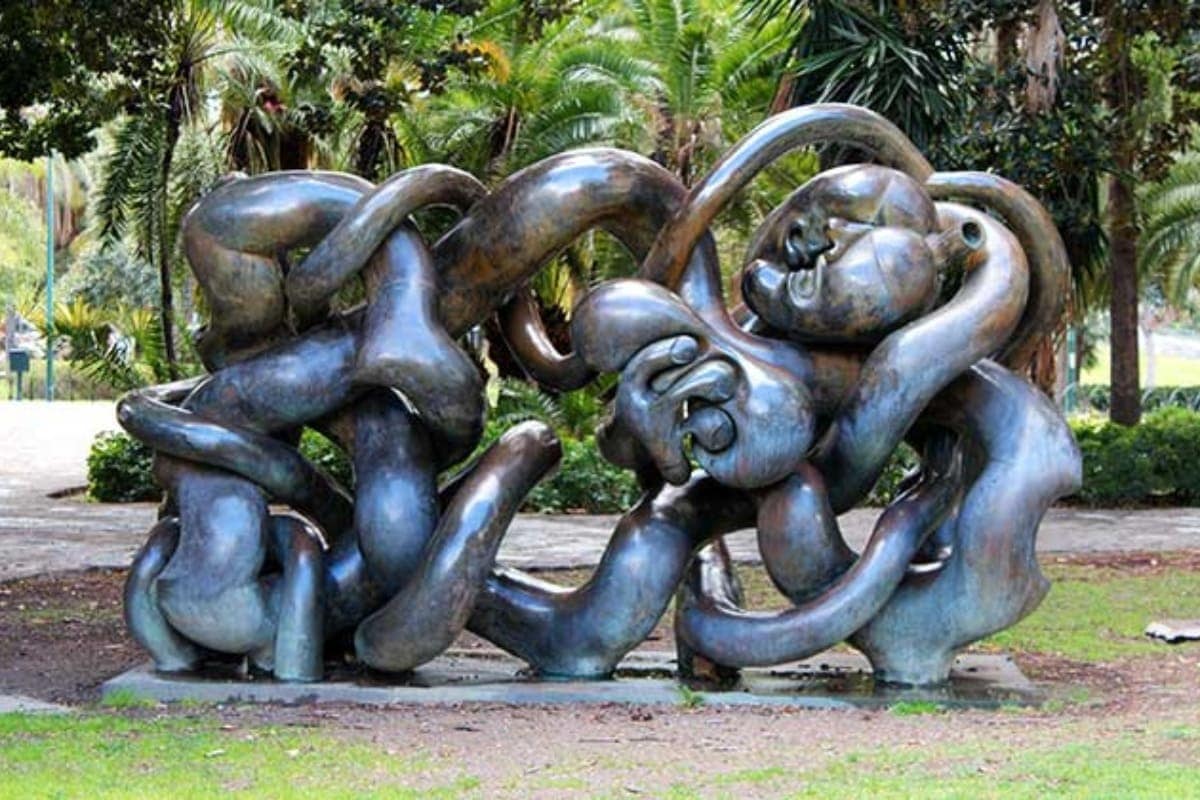
The city’s real green heart, though, is the huge Parque de Málaga, which stretches in a long strip right along the main harbour. This sprawling, carefully tended park feels more like an exotic botanical garden than an ordinary city park, and it’s an absolute feast for the eyes.

Here you stroll beneath towering date palms, enormous broad banana trees and hundreds of species of tropical plants that were brought in by sailors from all over the world. The branches of the mighty trees weave together so densely that they form perfect cooling shade, which in the summer months you’ll appreciate more than anything else.

The park is full of beautiful marble statues, small trickling fountains and romantic benches lined with traditional colourful azulejo ceramic tiles. It’s a perfect spot for an afternoon walk, small flea markets are held here from time to time, and you’ll meet plenty of green parrots flitting freely — and quite loudly — through the treetops.

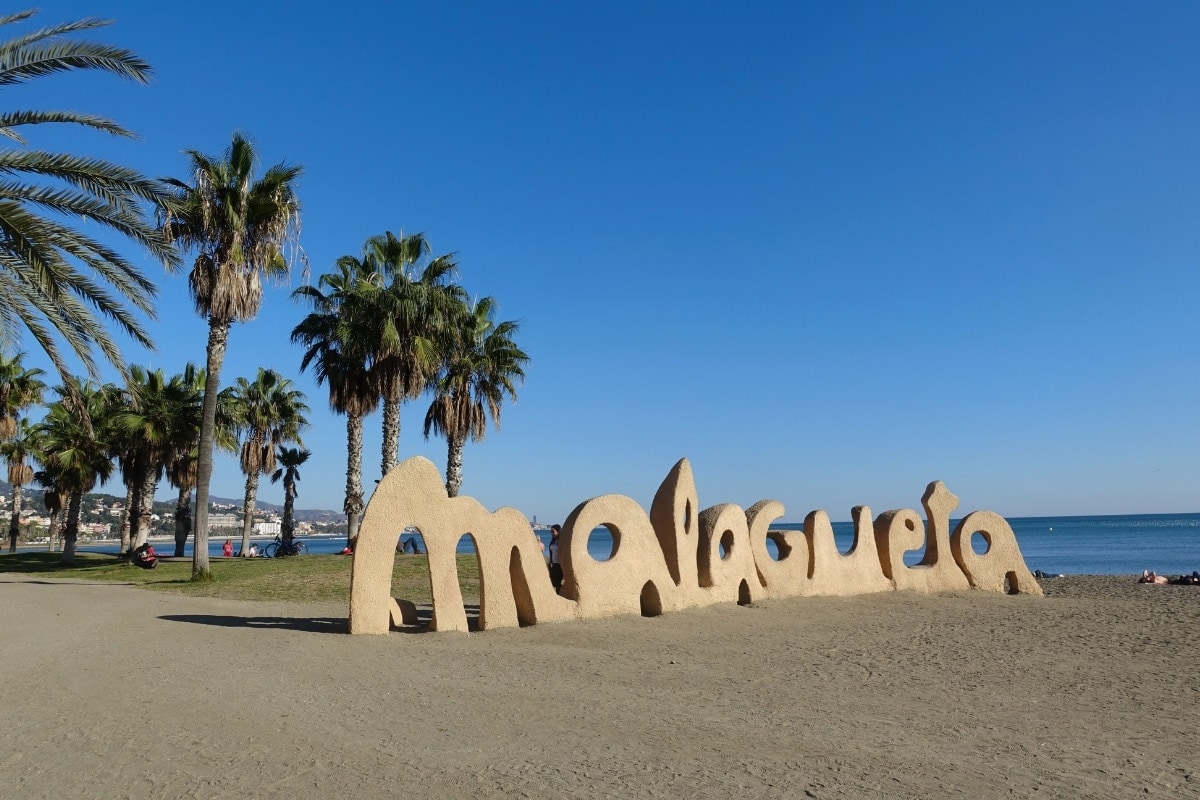
13. La Malagueta city beach

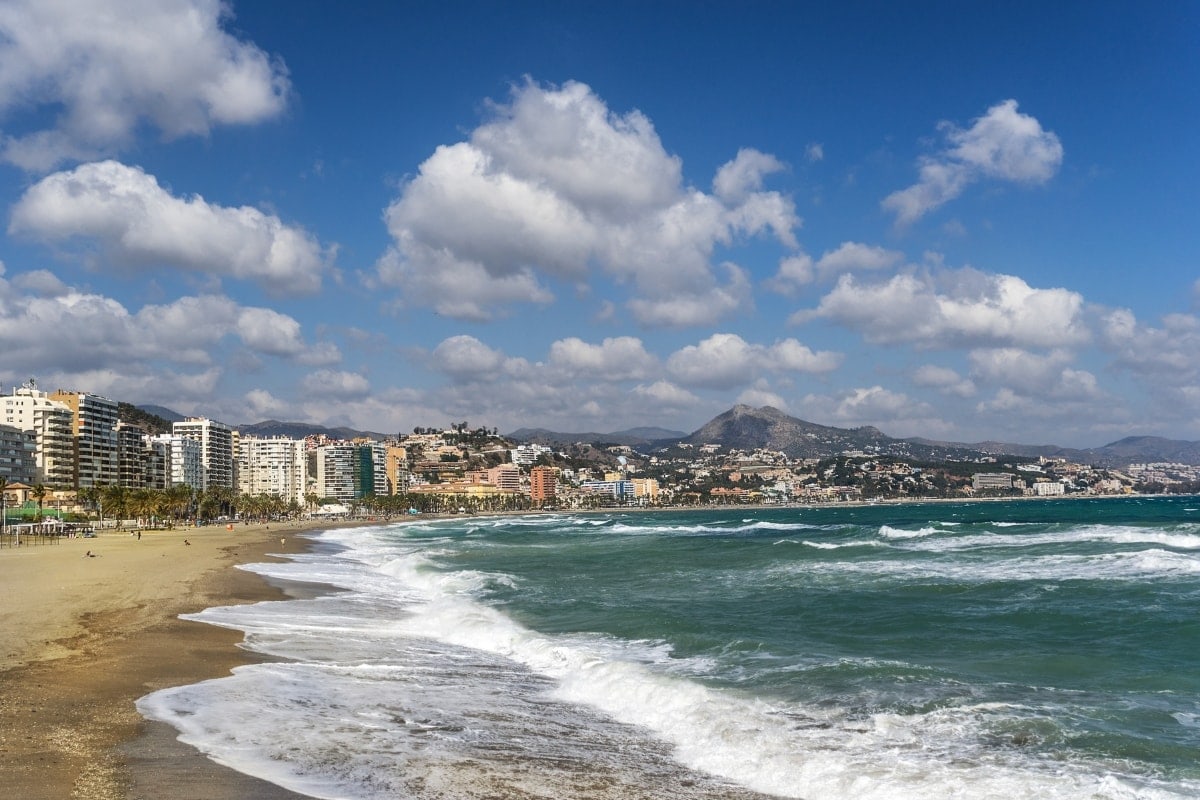
Although you’ll find the best and cleanest swimming a little further out of town, right in Málaga you’ll find the iconic La Malagueta city beach, which you simply mustn’t miss during your visit. This beach over a kilometre long, with fine, darker sand, begins right behind the Muelle Uno harbour and is hugely popular.

Here you’ll find absolutely everything you need for a comfortable beach day, from clean showers to affordable sunbed and parasol rentals and lovely children’s playgrounds. The atmosphere here is very lively from morning to evening, with athletes jogging along the water, playing beach volleyball, and kids building giant sandcastles.

Naturally, a huge draw for tourists is the enormous iconic Malagueta sign carved from sand and concrete, in front of which just about every visitor to the city has to get their photo taken — otherwise it’s as if they were never here.

Along the full length of the beach runs a wide paved promenade lined with plenty of small traditional beach bars and restaurants called chiringuitos. In these you can easily hide from the midday sun, order an ice-cold drink, listen to the murmur of the waves and simply gaze contentedly out to sea.

14. The view from the AC Malaga Rooftop Bar

Seeing a foreign city from a bird’s-eye view is always an absolutely wonderful experience, and in Málaga you have a perfect and very stylish chance to do just that. If you’re longing for a luxurious view of the city centre, the illuminated cathedral and the buzzing harbour in the background, head to the top of the AC Malaga Palacio hotel.

You’ll find this elegant tall hotel just a short walk from the main harbour on Calle Cortina del Muelle. On its rooftop terrace on the fifteenth floor there’s a wonderful open-air bar with a restaurant and a small pool that looks like something out of a lifestyle magazine.

You don’t need to be staying here at all — just confidently walk into the lobby, pay a small entry fee (which is often then deducted from the price of your drink) and let the fast lift take you all the way up. The panoramic view in every direction over the whole city will quite literally take your breath away as you step out of the lift.

The best time for this visit is just before sunset, when the sky turns orange and the city below slowly begins to light up. Lukáš and I love having a non-alcoholic cocktail here and just quietly soaking up the incredible calm high above the evening noise of the streets.

15. Relaxing at the Hammam Al Ándalus Arab baths

Andalusia is historically hugely influenced by its long Moorish past, and one of the most beautiful ways to experience this oriental history first-hand is a visit to the traditional Arab baths. Hammam Al Ándalus in Málaga is an architectural gem full of horseshoe arches and beautiful tiles.

Inside, a wonderful sensory experience awaits, full of dim candlelight and the strong scent of oriental essential oils that calm you instantly. There are several pools at different water temperatures, from hot through pleasantly warm to refreshingly icy, a steam bath and a relaxation room where you’re served sweet mint tea.

You can also add on a traditional massage with essential oils, which after several days of clocking up the kilometres on hard pavements is an absolute lifesaver for your feet and back.

It’s also an absolutely ideal activity for the rare days when it happens to rain, or conversely for the peak midday heat in summer when you simply need to escape somewhere cool. The baths require an online booking in advance without exception, as capacity is very strictly limited to preserve the intimate, calm atmosphere.

16. Evening tapas and local churros

Food culture is absolutely sacred across all of Spain, and Málaga is certainly no exception. Lukáš and I savour the local cuisine to the fullest, but we did have to get used to the basic rule that people eat really very late here.

Don’t try to find a good, authentic dinner at six in the evening, because the real restaurants open no earlier than eight and only truly start filling up with locals after nine. Dinner here is most often done in the form of tapas — small portions of varied dishes that are shared liberally in the middle of the table with friends.

As vegetarians, we always order with great delight patatas bravas (fried potatoes with a spicy sauce), mature manchego cheese, classic tortilla de patatas (potato omelette) or the absolutely delicious fried aubergine with cane honey. It’s common here to go from bar to bar, having something small to drink and a bite to eat at each, and carrying on into the night.

And what would a trip to Spain be without a proper taste of churros? These long fried doughnut sticks are traditionally dipped into a cup of incredibly thick, hot chocolate so dense the spoon almost stands up in it. In Málaga the most famous spot is Casa Aranda, which is buzzing from early morning, as locals commonly have churros even for a sweet breakfast.

17. Beaches and resorts on the Costa del Sol

While the city beach right in Málaga is fine for a quick afternoon refresh after sightseeing, the real sprawling beach paradise begins to the west of the city, in the iconic stretch known as the Costa del Sol. The individual resorts here blend seamlessly one into the next, forming essentially a giant seventy-kilometre-long conurbation dedicated to summer holidaymaking.

To move quickly and comfortably between them you can use the excellent Cercanías suburban train, which runs really often, is cheap and reliably air-conditioned. Closest to Málaga is Torremolinos, a very lively resort with kilometres of well-kept sandy beaches and a shallow entry into the sea, which families with small children especially appreciate.

Right next door you’ll find Benalmádena, which offers a slightly more rugged coastline and the huge Puerto Marina yacht harbour, whose distinctive architecture resembles a mix of an Arab palace and a modern shopping mall. It’s a very popular spot for evening strolls and shopping.

Go a bit further and you’ll reach Fuengirola, with its long beaches and the medieval Sohail Castle. Whichever resort you pick along this coast, you can count on perfect tourist infrastructure, hundreds of beach bars, sunbed rentals and guaranteed sunshine for most of the year.

18. A taste of coastal culture: espeto de sardinas

On long walks along the beaches, especially in the originally fishing district of Pedregalejo or in the surrounding resorts, you’re sure to catch the strong smell of smoke and grilling in the air. Locals absolutely love the traditional treat known as espeto de sardinas, an outright symbol of the whole region’s coastal cuisine.

These are fresh sardines (usually five or six), which skilled fishermen skewer onto a long reed cane and roast at an angle right on the beach over hot embers. To build the fire, old wooden fishing boats filled with sand are often used on the beaches, which looks incredibly photogenic.

Another fish specialty you’ll see at every turn is pescaíto frito, a mix of small fish and calamari flash-fried in olive oil. Lukáš and I don’t eat seafood or meat at all, but even so we have to admit that watching the local fishermen at work and seeing how this tradition brings whole families together is simply a beautiful cultural experience that’s inseparable from the Costa del Sol.

It’s simple, quick, and for locals it’s just a ritual they can’t imagine a weekend at the beach without. If you’re travelling with someone who eats fish, definitely take them to one of the beach chiringuitos — apparently it tastes exactly as amazing as it smells.

Where to go next from Málaga

Thanks to its strategic location and excellent airport, Málaga is an absolutely perfect base for exploring the rest of fascinating Andalusia. If you have a car, I’d recommend heading east to the town of Nerja, where you’ll find an impressive cave system with enormous stalactites (buy tickets online, or you won’t get in) and the gorgeous Balcón de Europa viewing terrace, which towers right above the cliffs and the sea.

In the opposite direction, to the west, lies luxurious Marbella and its famous Puerto Banús marina. People come here to gaze at the world’s most luxurious superyachts, shop in Dior and Gucci boutiques and watch the latest Ferrari models slowly cruise the streets. This whole western coast is also known as the “Costa del Golf”, as you’ll find more than seventy top golf courses here.

A very popular but specific trip is British Gibraltar with its giant limestone rock and free-roaming, cheeky macaques. ⚠️ But here I have to add a huge warning: Gibraltar is not part of the Schengen area, and after Brexit the rules have tightened considerably, so without a valid passport you won’t be let across the border, and the car queues here can last for many hours in summer (it’s better to park on the Spanish side in La Línea and walk across). If you love history and don’t mind a longer drive to the ocean, head to Cádiz, the oldest continuously inhabited city in Europe, with an absolutely fantastic February carnival.

For lovers of adrenaline and nature, it’s an absolute must to book a trip to the famous Caminito del Rey trail, which runs along wooden walkways suspended high on sheer cliffs above a deep gorge. And if you’re longing for more Andalusian gems, just a few hours by train or car separate you from passionate Seville, historic Córdoba with its stunning mosque, fairy-tale Granada or romantic Ronda, perched on the very edge of a deep gorge. If you want to see the best of the whole region, take inspiration from our article 20 most beautiful places in Andalusia + itinerary.

Frequently asked questions

When is the best time to visit Málaga?

From our experience, the best time to go is in spring (May, June) or autumn (September, October), when temperatures are very pleasant around twenty-five degrees and the sea is perfect for swimming. In summer, the heat can be extreme, well over thirty degrees.

What’s the fastest way to get from the airport to the city centre?

Use the Cercanías commuter train (line C1), whose station is located directly opposite the arrivals hall. The train runs roughly every twenty minutes, tickets cost a few euros, and you’ll be in the city centre at Málaga Centro-Alameda station in just twelve minutes.

Is Málaga safe?

Málaga is generally a very safe tourist city and even evening walks through the centre are completely problem-free. However, as everywhere in Spain, be extremely careful of pickpockets, especially in crowds at markets, on the beach, and around the main sights.

Do I need to rent a car in Málaga?

If you’re planning to stay only in Málaga and the resorts along the Costa del Sol, you don’t need a car at all, because trains and buses work perfectly here. A car only makes sense if you want to take trips deep into the interior or to more remote villages.

Can you drink tap water in Málaga?

Yes, tap water throughout Málaga is safe and drinkable. However, many people still buy bottled water because the local tap water can sometimes have a slightly chlorinated or saltier taste, which international visitors may not be entirely used to.

Where can I park if I arrive by car?

Parking in the historic centre is literally a nightmare. I definitely recommend using the large underground paid car parks, for example under Plaza de la Marina square or at the Muelle Uno port. Finding a free spot on the street is very rare.

When do shops in Spain have siesta?

Smaller shops and services are usually closed between two and five in the afternoon, when the heat outside is at its peak. However, large supermarkets and international brand stores on the main shopping streets (like Calle Larios) usually operate without a break throughout the day.

Do I need to buy tickets to attractions in advance?

For the biggest attractions such as the Picasso Museum, the Alcazaba, or trips to the nearby caves in Nerja or the Caminito del Rey trail, you should definitely buy tickets online in advance. During peak season, capacity is often completely sold out and you’ll save yourself hours of queuing.

Tips and Tricks for Your Vacation

Don’t Overpay for Flights

Search for flights on Kayak. It’s our favorite search engine because it scans the websites of all airlines and always finds the cheapest connection.

Book Your Accommodation Smartly

The best experiences we’ve had when looking for accommodation (from Alaska to Morocco) are with Booking.com, where hotels, apartments, and entire houses are usually the cheapest and most widely available.

Don’t Forget Travel Insurance

Good travel insurance will protect you against illness, accidents, theft, or flight cancellations. We’ve had a few hospital visits abroad, so we know how important it is to have proper insurance arranged.

Where we insure ourselves: SafetyWing (best for everyone) and TrueTraveller (for extra-long trips).

Why don’t we recommend any Czech insurance company? Because they have too many restrictions. They set limits on the number of days abroad, travel insurance via a credit card often requires you to pay medical expenses only with that card, and they frequently limit the number of returns to the Czech Republic.

Find the Best Experiences

Get Your Guide is a huge online marketplace where you can book guided walks, trips, skip-the-line tickets, tours, and much more. We always find some extra fun there!
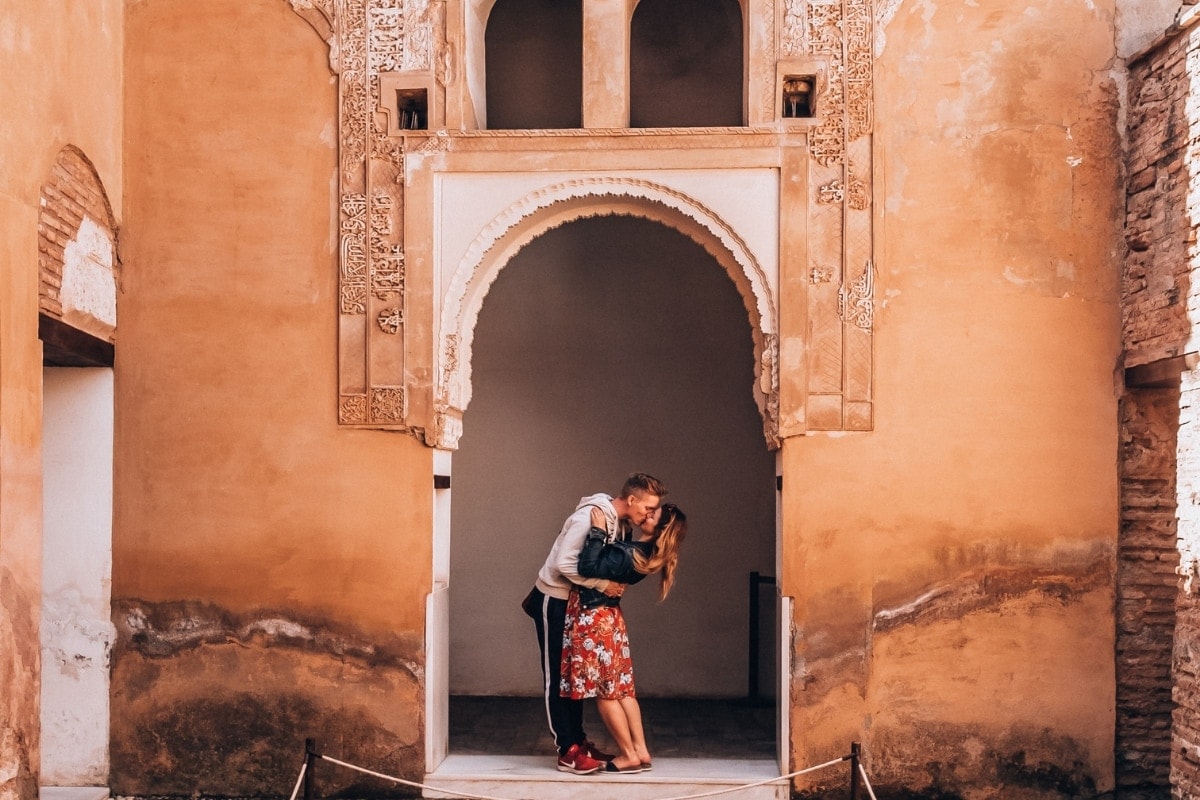
Granada, Spain: 15 Best Things to Do and See

TL;DRGranada packs in 16 essential tips, topped by the Alhambra palace complex with its Nasrid Palaces, the Generalife gardens and the Alcazaba fortress. Add the old Moorish quarter of Albaicín with its Mirador de San Nicolás viewpoint, the cave district of Sacromonte, Granada Cathedral and the Royal Chapel. Set aside two to three full days for a visit, ideally in spring (April to mid-June) or autumn, since summer temperatures hit 35 to 40°C. Only 6,500 to 8,500 visitors are allowed into the Alhambra each day, so book tickets through the official website up to three months ahead. Granada is one of the last places where every drink at 2 to 3 euros still comes with free tapas, and it’s an easy base for day trips to the Sierra Nevada or the white villages like Zahara de la Sierra.

Granada is one of the most visited cities in Andalusia, primarily thanks to its rich history and beautiful sights. If you’re planning a trip to Granada, we have some tips for what you should see and experience Granada, Spain: 15 Best Things to Do and See. In this article, we’ll focus on when to visit Granada, where to stay, 15 tips on what to see in Granada, and where to take a day trip from Granada.

When to Visit Granada?

Granada is located in southern Spain and enjoys warm and sunny weather for most of the year. The best time to visit Granada is from April to June and from September to October, when temperatures are pleasant and tourist crowds are not yet at their peak. However, if you want to see snow in the Sierra Nevada mountains and visit ski resorts, then the best period to visit Granada is from December to March.

Where to Stay in Granada?

Granada offers many accommodation options, including hotels, apartments, and hostels. The best areas to stay are the historic city center and the vicinity of the Alhambra. In the historic center, you’ll find beautiful ancient buildings and narrow streets full of shops and restaurants. Many hotels and apartments with magnificent views of the palace complex are located near the Alhambra.

  • Budget Accommodation: Hotel Macià Real De La Alhambra
  • Luxury Accommodation: Boutique Hotel Luna Granada Centro

Granada, Spain: 15 Best Things to Do and See

Alhambra

This famous fortress is located on a hill above Granada and is the most visited monument in all of Spain.. It covers an area of 140,000 square meters and offers magnificent views of the city. The Alhambra was built at the end of the 13th century and served as the seat of the Moorish rulers. .

Generalife

This palace and gardens are part of the Alhambra and were built as a summer residence for the Moorish rulers. Generalife is known for its beautiful fountains, gardens, and terraces, offering magnificent views of the city.

Albaicín

This is the oldest part of Granada, full of narrow streets and white houses. It’s a place where you can taste traditional Andalusian cuisine and enjoy beautiful views of the Alhambra.

Granada Cathedral

This cathedral was built on the site of a former mosque and is one of the largest cathedrals in Spain. Its construction began in 1523 and lasted over 180 years.

Royal Chapel

Located next to the cathedral, it is the tomb of the Catholic Monarchs Ferdinand and Isabella. In the chapel, you’ll also find many other works of art and relics.

Monastery of La Cartuja

This monastery was founded in 1506 and is known for its magnificent frescoes and Baroque architecture. The monastery also houses a museum with many valuable works of art.

Corral Del Carbón

A former commercial center and coal warehouse, built in the 14th century. Today, it serves as a cultural center where you can see various exhibitions and concerts.

Science Park

If you’re looking for a place to go with kids, visit the Science Park. It offers interactive exhibitions and activities that will guide you through the world of science and technology.

Granada Cathedral Museum

The museum is located within the cathedral and features many works of art and relics. Among the most famous are the Holy Scripture and the relics of St. John the Baptist.

Mirador De San Nicolas

The best spot for magnificent views of the Alhambra.

Casa-Museo Federico García Lorca

This house was once the home of the famous Spanish poet Federico García Lorca. Today, it serves as a museum showcasing the life and work of this important literary figure.

Arab Baths

If you want to unwind and relax, visit the Arab Baths in the city center. These baths are inspired by traditional Arab style and offer various treatments, such as massages and aromatherapy.

Paseo De Los Tristes

This street, whose name can be translated as “walk of the sad people”, is a beautiful place for a stroll and to stop at one of the many local cafes or bars. The street is located in the historic part of the city and offers magnificent views of the Alhambra.

Carmen De Los Mártires

This beautiful estate is located within a sprawling garden in the city center. The garden is filled with various types of plants and flowers, as well as old statues and fountains. Here, you can relax and enjoy the peace and beauty of nature.

Monastery of San Jerónimo

This monastery is an example of Renaissance architecture and is located near the city center. Inside, you can visit a magnificent chapel and church, as well as the monastery museum, which displays valuable artifacts and works of art.

lukas a lucka
Lukáš and Lucie recommend
Where to stay in Granada
3 accommodations — wellness hotels, hotels and other accommodation options

Where to Take a Day Trip from Granada?

If you’re staying in Granada, you’ll find many options for beautiful day trips. Below are a few tips that might interest you:

  • Sierra Nevada: If you want to visit the mountains, it’s a really short drive from Granada, taking approximately 45 minutes.
  • Costa Tropical: This area is about a 1-hour drive from Granada and offers beautiful beaches, sea views, and opportunities for water sports.
  • Cordoba: One of the most beautiful cities in Spain, located about a 2-hour drive from Granada.
  • Malaga: If you want to head to the beach, go to Malaga or Marbella. Malaga is about a 1.5-hour drive from Granada and offers beautiful beaches, cultural sights, and museums.

If you want to read more tips on what to see in Andalusia, read our article.

Tips and Tricks for Your Vacation

Don’t Overpay for Flights

Search for flights on Kayak. It’s our favorite search engine because it scans the websites of all airlines and always finds the cheapest connection.

Book Your Accommodation Smartly

The best experiences we’ve had when looking for accommodation (from Alaska to Morocco) are with Booking.com, where hotels, apartments, and entire houses are usually the cheapest and most widely available.

Don’t Forget Travel Insurance

Good travel insurance will protect you against illness, accidents, theft, or flight cancellations. We’ve had a few hospital visits abroad, so we know how important it is to have proper insurance arranged.

Where we insure ourselves: SafetyWing (best for everyone) and TrueTraveller (for extra-long trips).

Why don’t we recommend any Czech insurance company? Because they have too many restrictions. They set limits on the number of days abroad, travel insurance via a credit card often requires you to pay medical expenses only with that card, and they frequently limit the number of returns to the Czech Republic.

Find the Best Experiences

Get Your Guide is a huge online marketplace where you can book guided walks, trips, skip-the-line tickets, tours, and much more. We always find some extra fun there!
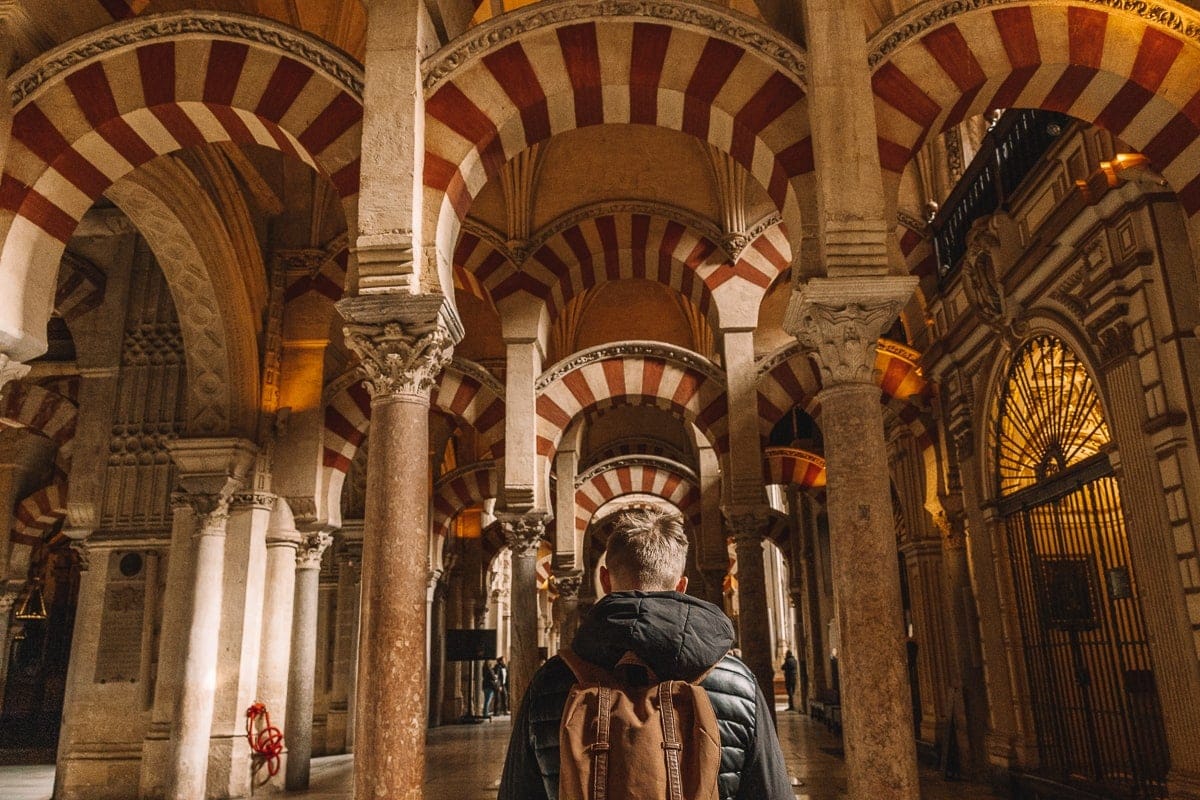
Ronda, Spain: 10+ Best Things to Do and See

TL;DRRonda is a dramatic Andalusian town split clean in two by the deep limestone gorge of El Tajo, spanned by the famous Puente Nuevo bridge. Whitewashed houses cling to the cliff edge and narrow lanes smell of orange blossom. You’ll find one of Spain’s oldest bullrings here, the old Moorish town, and some breathtaking viewpoints. Ronda makes a great day trip from Málaga or Seville, though it deserves more than just a few hours. Spring and autumn are the best time to come, before the heat sets in. The guide has 15 tips on what to see, where to explore nearby, and what to eat.

Ronda is a picturesque town in Andalusia, famous for its historical monuments, impressive views and unique atmosphere. In this article “Ronda, Spain: 10+ Best Things to Do and See” you’ll find out when it’s best to go to Ronda, where to stay, what the main tourist attractions are, and where to go on day trips in the area.

When to go to Ronda

Ronda is beautiful all year round, but the best time to visit is spring and autumn when the weather is pleasant and there are not so many tourists. It can get hot in Spain in the summer, so be prepared for high temperatures. Winters are mild, but can be cooler and rainy. The ideal is to get a to see all the interesting cities of Andalusia at once.

Where to stay in Ronda

One of the top-rated accommodations is La Escondida Ronda.

Ronda, Spain: 10+ Best Things to Do and See

Ronda is not so extensive and is ideal for day visits. Check out our list of what you should definitely not miss.

Puente Nuevo

The imposing stone bridge is the most famous and largest of the three bridges in Ronda and connects two parts of the city, located on either side of a deep canyon called El Tajo.

Plaza de Toros

Ronda is considered the cradle of modern bullfighting, and the local arena, the Plaza de Toros, is one of the oldest and most famous in Spain.

Casa del Rey Moro

Casa del Rey Moro is a historic building in Ronda, Andalusia, Spain. It is a former palace and gardens that are now open to the public as a museum.

The Casa del Rey Moro was originally built in the 18th century. century as a private palacebut was later sold and converted into a hotel. In 1904 it was purchased by the Larios family, who carried out extensive renovations to the building and transformed it into a beautiful residence.

One of the most interesting features of Casa del Rey Moro is its historic well, which is connected to an underground river. According to legend, the Moors who lived in Ronda in the Middle Ages were supposed to have had their home here.

Baños Árabes

A well-preserved Arab bath dating from z 13. and 14th century and represent an example of Moorish architecture in Ronda.

Palacio de Mondragón

The Palacio de Mondragón is now home to the Ronda Museum and has an interesting collection of archaeological and ethnographic exhibits.

Alameda del Tajo

The Alameda del Tajo has a beautiful view of the Serranía de Ronda ridge and the city of Ronda. There are also several monuments and statues in the park that commemorate important events in the history of the town and its famous inhabitants.

Iglesia de Santa Maria la Mayor

The Iglesia de Santa Maria la Mayor is one of the most important religious buildings in Ronda, combining elements of Gothic, Renaissance and Baroque architecture.

La Ciudad

The old town of Ronda, known as La Ciudad, is full of narrow streets, whitewashed houses and picturesque squares. A walk through this historic centre is like a journey back in time.

Mirador de Aldehuela

The Mirador de Aldehuela viewpoint offers some of the best panoramic views of El Tajo Canyon and Puente Nuevo. It is named after the architect who designed Puente Nuevo, José Martin de Aldehuel.

Jardines de Cuenca

Located along the steep slopes of El Tajo Canyon, these terraced gardens offer a peaceful space to walk and relax, with spectacular views of the city and surrounding countryside.

lukas a lucka
Lukáš and Lucie recommend
Where to stay in Ronda
3 accommodations — wellness hotels, hotels and other lodging options

Where to go on a trip from Ronda

  • Granada (about 170 km from Ronda): Granada Granada is best known for its magnificent Alhambra palace complex, a masterpiece of Moorish architecture and one of the most visited monuments in Spain.
  • Córdoba (about 160 km from Ronda): Córdoba is a city rich in history and culture, famous for its beautiful Mezquita, a former mosque that has been converted into a cathedral. This architectural gem is one of the most important examples of Islamic architecture in Spain.
  • Seville (about 130 km from Ronda): Seville, the capital of Andalusia, is known for its impressive monuments such as the Cathedral with the famous Giralda Tower and the magnificent Royal Palace of Alcázar, another jewel of Moorish architecture.

Frequently Asked Questions

How to get to Ronda?

Ronda is easily accessible by car, bus or train from Spanish cities such as Málaga, Seville and Córdoba.

How much time should I spend in Ronda?

We recommend spending at least one or two days in Ronda to allow enough time to see the main sights and take a few excursions into the surrounding area.

What language is spoken in Ronda?

The main language spoken in Ronda is Spanish, but many residents and staff in the tourist industry also speak English and sometimes other languages.

Is Ronda suitable for families with children?

If your kids like beautiful views and don’t mind walking around cultural sights, Ronda is a great place for a family outing. The city is not so large, so there is no risk of children being overwhelmed from the long march.

What are the typical foods and dishes I should try in Ronda?

In Ronda, you can sample traditional Andalusian cuisine such as gazpacho (cold tomato soup), salmorejo (a thicker version of gazpacho with bread), jamón ibérico (Iberian ham), rabo de toro (beef tail cooked in red wine) or tapas, small portions of different dishes that you can sample in local bars and restaurants.

Tips and Tricks for Your Vacation

Don’t Overpay for Flights

Search for flights on Kayak. It’s our favorite search engine because it scans the websites of all airlines and always finds the cheapest connection.

Book Your Accommodation Smartly

The best experiences we’ve had when looking for accommodation (from Alaska to Morocco) are with Booking.com, where hotels, apartments, and entire houses are usually the cheapest and most widely available.

Don’t Forget Travel Insurance

Good travel insurance will protect you against illness, accidents, theft, or flight cancellations. We’ve had a few hospital visits abroad, so we know how important it is to have proper insurance arranged.

Where we insure ourselves: SafetyWing (best for everyone) and TrueTraveller (for extra-long trips).

Why don’t we recommend any Czech insurance company? Because they have too many restrictions. They set limits on the number of days abroad, travel insurance via a credit card often requires you to pay medical expenses only with that card, and they frequently limit the number of returns to the Czech Republic.

Find the Best Experiences

Get Your Guide is a huge online marketplace where you can book guided walks, trips, skip-the-line tickets, tours, and much more. We always find some extra fun there!
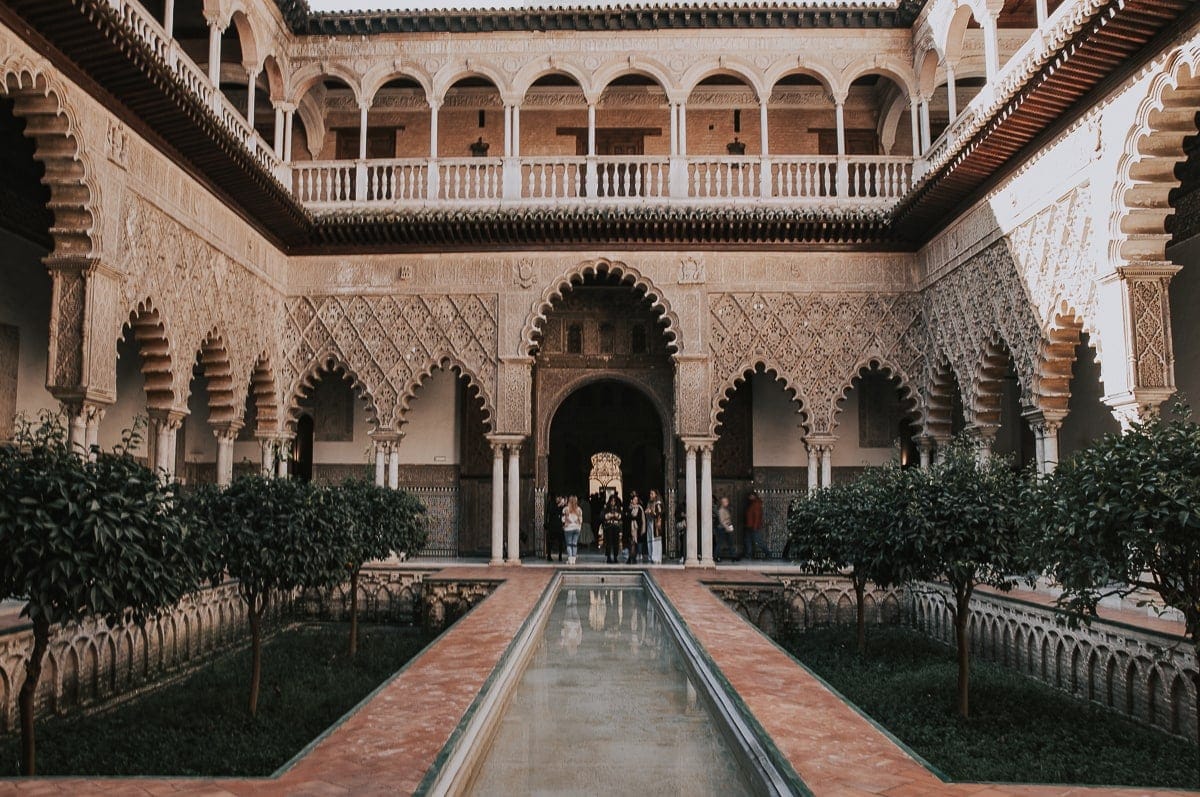
Seville Guide: 32 Great Tips on What to See and Do

TL;DRSeville comes with 22 key tips on what to see and do, from the Real Alcázar and Seville Cathedral with its Giralda tower to Plaza de España, the Barrio de Santa Cruz and Triana with its authentic flamenco. Set aside at least two full days, ideally between March and June or September and November, when temperatures sit at a pleasant 20 to 25 degrees – summer, by contrast, pushes towards 40°C. Book tickets for the Alcázar and cathedral online in advance, or you’ll be stuck in long queues. The city’s an easy trip on the high-speed AVE train from Madrid, taking around two and a half hours, and makes a great base for a day trip to Córdoba, 45 minutes away by train.

The capital of Andalusia is one of the most beautiful cities in southern Spain. So if you’re heading to Andalusia, you definitely shouldn’t miss it. Seville is just across the border from Spain and Portugal and is almost always on our itinerary when we go to the Algarve. Let’s take a look at what to see in Seville not to miss, where to stay, eat and where to go with the kids.

Where to stay in Seville

One day in Seville is enough, but if you really want to enjoy it in peace, we recommend spending at least one night there. Where to stay:

  • The cheap option: Santacruz Hostal Plaza
  • The golden mean: Apartamentos Reyes Catolicos
  • Hotel Colón Gran Meliá – The Leading Hotels of the WorldOpens

Where to eat in Seville

Like Cordoba, Seville is full of excellent Indian restaurants, but if you’re looking for something healthier and more modern, try Biomio Brunch ecológico or Naturalmente – Real Food. Both places are great for lunch, brunch and great coffee.

The most beautiful places: Things to see in Seville

Seville is truly breathtaking, but be prepared for a large number of tourists in the centre even in low season. We therefore recommend buying tickets online in advance to avoid queuing for tickets and wasting time.

Seville Cathedral

“Let’s build a church so big they’ll think we’re crazy,” said the founder of the project to build one of the world’s largest cathedrals. Construction began in 1402 and was completed in 1507. When it was completed, it surpassed in size the then largest cathedral, Hagia Sophia, which held its title for more than a thousand years. Seville Cathedral is still the largest Gothic cathedral and the fourth largest church in the world.

Even if you know this, the scale of the cathedral will surprise you when you enter. Don’t miss the tomb of Christopher Columbus in the cathedral. It will take you approximately 1.5 to 2 hours to visit the cathedral.

How to avoid ticket queues?

You can either buy a combination ticket at the Iglesia Colegial del Divino Salvador, which is a 10-minute walk from the cathedral (but beware of the church’s opening hours, it’s usually open after 11am). With a ticket, you can skip the line.

It’s much easier to buy a ticket online, we usually use GetYourGuide where it’s the most straightforward.

Tip: Before 11:00 am (the official opening time of the cathedral) during Mass, you can enter for free through the small door on the left side of the cathedral. Of course, you cannot walk around the cathedral afterwards.

La Giralda – panoramic views from the bell tower

If you like views, be sure to visit the cathedral’s bell tower. This minaret of the former mosque was modified by Christians: they added the top part to add bells (more than 24).

Real Alcázar – the oldest royal palace in Europe

Next to the cathedral is the second most important monument (and in our opinion the most beautiful) in Seville: The Alcázar of Seville (Real Alcázar in Spanish). Again, don’t forget to buy your tickets online, we had a gloating radpst when we skipped a queue that would have been two hours long thanks to them. And we were in Seville in January, which is completely out of season!

Alcázar is still a royal residence: When the King of Spain comes to Seville, he stays here. In fact, it is the oldest royal palace in Europe.

This Arab and Moorish palace itself is a breathtaking example of the Mudéjar style (the decoration used in Iberian Christian kingdoms, especially between the 13th and 16th centuries). There are stunning gardens full of orange trees, fountains and flowers.

It will take you approximately 2 hours to visit Alcázar.

Tips for skipping the ticket queue:

Simply buy your ticket online at GetYourGuide.

Indian Archive in Seville (Archivo General de Indias)

In addition to the cathedral and the Alcázar, there is another less touristy place in Seville that is worth a visit: the Indian Archive of Seville (Archivo General de Indias). The visit is free and the main attraction is the remarkable architecture of the building. The interior is really beautiful.

The archive was founded in 1785 by King Charles III of Spain, who intended to collect in one place all available information about the Spanish colonies. Unfortunately, the famous archives are hidden, so all the cardboard files in the libraries are empty!

The visit is only 15 minutes.

Barrio Santa Cruz

The historic quarter is one of the most touristic in Seville. In addition to the most important sights, there are also many cafés and restaurants. Don’t forget to visit the Plaza Patio de Banderas, which offers a beautiful view of the cathedral.

Casa de Pilatos

Casa de Pilatos is a palace built in 1540 by the first Marquis of Tarifa. Inspired by Italian architecture, the palace combines several styles such as the Mudéjar, Gothic and Renaissance styles. Don’t let the not-so-attractive facade put you off, Casa de Pilatos is well worth a visit! At least the first floor, where, in addition to a courtyard with a fountain in the middle, you will find two small gardens where you can relax.

Spain’s most beautiful square – Plaza de España

I’m not exaggerating when I say that this is the most beautiful square in Spain. And maybe even in Europe. It was built in 1928 for an exhibition on the anniversary of the discovery of America by the Spanish conquistadors. The square has a semicircular shape, with 4 bridges symbolizing the 4 ancient kingdoms of Spain. There are beautiful arcades, fountains and 48 azalea benches, each representing a province of Spain.

If you’re a Star Wars fan, this is where the scenes for Episode II were filmed. The clones are attacking.

The largest park in Seville: Parque de María Luisa

You’ll find it just outside the Plaza de España, and you’ll especially appreciate it during the hot summer weather. Hide for a while in the shade of the trees and enjoy the local fauna and flora. There’s a bunch of ponds, fountains and you’ll come across Plaza América, nicknamed “Pigeon Square”, you can imagine why.

At the southern end of the park you will find the Seville Archaeological Museum and the Museum of Folk Arts and Traditions.

Seville Arena (Plaza de toros de la Real Maestranza de Caballería de Sevilla)

I have always disliked Korida, so I avoided the arena again during this year’s visit. The arena is only accessible with a guide and every year the Plaza de Toros hosts one of the most important festivals in the world: the Feria de Abril.

The corrida tradition is still very strong in Andalusia and is part of their culture. If you’ve never been to the corrida and you have the stomach for it, you can buy tickets.

To avoid waiting in line for tickets, you should book your Arena Seville tickets in advance. These skip-the-line tickets include a 1-hour guided tour of Plaza de Toros.

Torre del Oro

A short walk from the Plaza de Toros you will find the Torre del Oro (Golden Tower in English). It stands on the banks of the Guadalquivir River and was built in the early 13th century. century to strengthen the military defenses of the city. Today the tower serves as a maritime museum with miniature ships and historical instruments. At the top of the tower you have a beautiful view of the cathedral, the river and the Triana district on the other side of Guadalquivir.

Triana district

In the past, this neighbourhood was home to many sailors, gypsies, singers and flamenco dancers. If you have the opportunity to go flamenco in Spain, I definitely recommend it. We did this from Malaga a few years ago and it was absolutely great.

You can start your visit to Triana at the market, which is located just at the end of the bridge on the right hand side. You can sample local specialities at the market. In Triana, you will also find the ceramic workshops that are typical of the neighbourhood.

Calle Betis has a beautiful view of Torre del Oro and the centre of Seville. There are also plenty of bars and restaurants. But count on the fact that it’s 2-3 times more expensive here than elsewhere.

Metropol Parasol

The Metropol Parasol, also known as Las Setas (“the mushrooms”), is a special monument of Seville. It was only built in 2011 and was extremely criticized at the time. As the name suggests, the buildings resemble mushrooms. At the top of one of them, you have supposedly the best view of the whole city and you can still have a coffee in the rooftop cafe. So it’s a bit like the Žižkov Tower in Prague. 😂

lukas a lucka
Lukáš and Lucie recommend
Where to stay in Seville
4 accommodations — wellness hotels, hotels and other accommodation options

Tips for museums in Seville

  • Museo de Bellas Artes with a collection of paintings by great Andalusian and Spanish painters.
  • Museo del Baile Flamenco, where you can enjoy performances by flamenco dancers.
  • Museo de Artes y Costumbres populares with an exhibition of traditional Andalusian clothing.
  • Museo Palacio de la Condesa de Lebrija with mosaics, paintings and tapestries.
  • Centro Andaluz de arte contemporáneo with a collection of paintings and ceramics.
  • Museo arqueológico de Sevilla: visit it for the beautiful Roman exhibits.
  • Museo de la inquisición, it’s dedicated to the Inquisition.
  • Museo de la cerámica, which is dedicated to ceramics.
  • Centre for Contemporary Art in Seville, built in a former convent

Churches in Seville

In addition to the cathedral, be sure to check out these churches:

  • Iglesia de Santa Ana in Triana
  • Iglesia Colegial del Divino Salvador
  • Parroquia de San Lorenzo
  • Basilica de la Macarena
  • Real parroquia de Santa María de Magdalena
  • Parroquia de Santa Catalina
  • San Salvador Seville
  • El Divino Salvador

Things to do in Seville with children

If you’re heading to Seville with young children, the attractions below are sure to interest you:

Aquarium of Seville

The very recently opened Seville Aquarium (Acuario de Sevilla) in 2014 is a great place to visit with children. What you will see: exotic fish, sharks, turtles, octopuses and starfish. It’s also the perfect place to escape the heat for an hour if you’re heading to Seville in the summer.

With children, we always recommend buying tickets in advance to avoid standing in queues.

Aquopolis Sevilla

If your kids are like me when I was a kid, they will love you for visiting the Aquapolis Water Park. You can find it about 20 minutes from Seville.

La Isla Mágica

La Isla Mágica is another amusement park that is divided into two parts, a theme park with attractions and a water park with slides (so something like Liberec’s Babylon). Again, we recommend that you to book tickets in advance so you don’t have to queue with your children.

Where to go on a trip from Seville?

Seville is a great base for visiting other places in Andalusia or for a trip to Portugal. Which cities in Andalusia you can still visit:

  • Córdoba (about 1 hour by train) – If you liked Seville, you’ll love Cordoba. We had to extend our stay there, there is no stranger building than the local Mosque-Cathedral.
  • Granada (about 3 hours by train) – Granada is a concept in Andalusia and you won’t want to miss it. If you should only visit one monument, head to the famous Alhambra.
  • Ronda (about 2 hours by bus or train) – Ronda is famous for its bridge, which you must have seen in many pictures from Andalusia. Overall, it’s a really picturesque town.
  • Jerez de la Frontera (about 1 hour by train) – If you like sherry and Andalusian culture, Jerez de la Frontera is the perfect destination for you. You can visit one of the many wineries and taste some of Spain’s best sherry.
  • Costa de la Luz (about 1.5 hours by train) – If you’re looking for sun and beaches, the Costa de la Luz offers beautiful white sands and turquoise sea. Beaches around towns such as. Cadiz or Tarifa are very popular with surfers and kiteboarders.

Tips and Tricks for Your Vacation

Don’t Overpay for Flights

Search for flights on Kayak. It’s our favorite search engine because it scans the websites of all airlines and always finds the cheapest connection.

Book Your Accommodation Smartly

The best experiences we’ve had when looking for accommodation (from Alaska to Morocco) are with Booking.com, where hotels, apartments, and entire houses are usually the cheapest and most widely available.

Don’t Forget Travel Insurance

Good travel insurance will protect you against illness, accidents, theft, or flight cancellations. We’ve had a few hospital visits abroad, so we know how important it is to have proper insurance arranged.

Where we insure ourselves: SafetyWing (best for everyone) and TrueTraveller (for extra-long trips).

Why don’t we recommend any Czech insurance company? Because they have too many restrictions. They set limits on the number of days abroad, travel insurance via a credit card often requires you to pay medical expenses only with that card, and they frequently limit the number of returns to the Czech Republic.

Find the Best Experiences

Get Your Guide is a huge online marketplace where you can book guided walks, trips, skip-the-line tickets, tours, and much more. We always find some extra fun there!
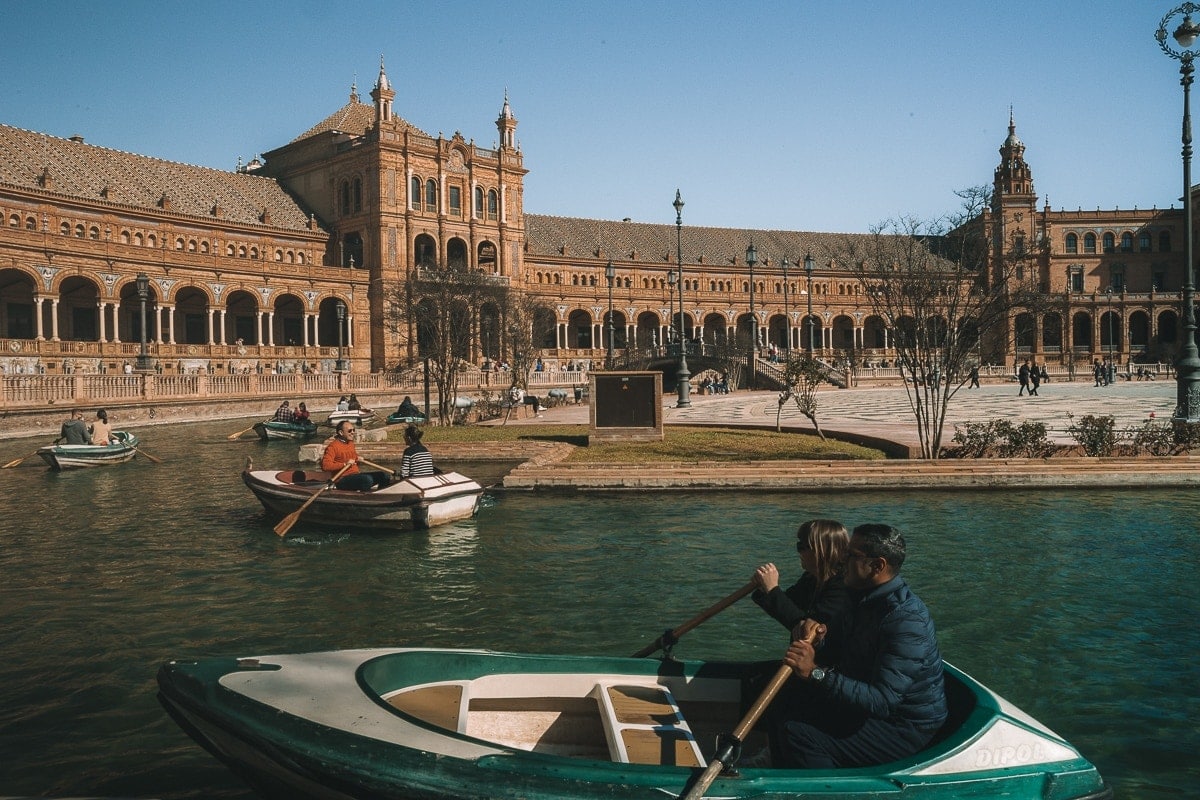
Cordoba: 15 Great tips on What to See

TL;DRCórdoba comes with 18 concrete tips on what to see and do, from the Mezquita cathedral-mosque, which is free to enter in the morning (Monday–Saturday 8:30–9:30am, otherwise €13), to the Roman Bridge and the Judería quarter with its Calleja de las Flores, right through to the Alcázar de los Reyes Cristianos and the ruins of Medina Azahara, 8km outside the city. Plan your trip for spring (March–June) or autumn (September–November), and steer well clear of summer, when temperatures hit around 40°C. One intense day is enough to cover the essentials, but it’s worth staying at least one full day and night. The AVE train gets you there from Madrid in an hour 45 minutes, or 45 minutes from Seville, and if you time it for the first half of May, you’ll catch the unique Fiesta de los Patios. Don’t leave without trying the local salmorejo.

Are you planning a trip to Cordoba when you visit Spain? Cordoba together with Seville and Granada are among the most beautiful and most visited cities in Andalusia. We spent two days in Cordoba and totally fell in love with it. Lots of gorgeous views, great food, amazing gardens and architectural gems everywhere. Let’s take a look at what you shouldn’t miss when visiting Cordoba.

History of Cordoba – What you should know

The history of the town dates back to Roman times when it was known as Corduba. During 8. and the 9th century, Cordoba became the capital of the Caliphate and the centre of the Islamic world. Cordoba is therefore mainly known for its architecture, which consists of a mixture of Roman, Islamic and Christian elements. Among the most famous landmarks is the Mezquita, a mosque cathedral where you will find a literal cathedral built inside a mosque.

Cordoba – the best accommodation

We were really excited about our choice of hotel this year. We stayed right in the centre at Hotel Hesperia Cordóba, where you can take your dog and park your car in the hotel. Parking is paid, but when we researched it, even hotels outside the centre wanted a parking fee. Parking is also available under the hotel in the garage, which is much safer than parking on the street.

The Hesperia Cordóba also has an absolutely amazing breakfast. What I regretted was that in February there was no open roof overlooking Cordoba, but we could see the sunrise directly from our room and watch the sunrise almost from the bed.

When to go to Cordoba

Cordoba is one of the hottest places in Europe, so spring and autumn are the best times to visit. But most of us go to the seaside in the summer and explore Andalusia during the hottest temperatures. It can be done, I’ve been to Andalusia once during the summer too, it’s important to go sightseeing early, plan your visits to attractions well so you’re inside during the worst of the heat and most importantly always carry water with you. Andalusia also sees a lot of tourists during the summer, so buy your tickets online in advance to avoid queues. We visited Cordoba last time in February and it was great.

lukas a lucka
Lukáš and Lucie recommend
Where to stay in Córdoba
4 accommodations — wellness hotels, hotels and other accommodation options

How long to go to Cordoba for

Cordoba is ideal for 2-3 days with a trip to the neighbouring Seville for a day trip. But the most interesting things can be done in one day.

15 tips on what to do and see in Cordoba

You won’t get bored just walking around in Cordoba, but to make sure you don’t miss anything, use our list of places to visit and things to do in Cordoba.

1) Cordoba’s Jewish Quarter (La Judería), the heart of the city

Cordoba’s historic centre is entered through the Almodovar Gate, which is surrounded by high walls and bastions. This also leads you to La Judería, the old Jewish quarter of Cordoba.

Here, stroll along typical Andalusian streets with white-plastered facades and floral balconies. Don’t forget the calleja de las Flores, the most famous little street in Cordoba, which leads to a nice view of the Cordoba Mosque-Cathedral.

This district is a UNESCO World Heritage Site and includes most of the historical monuments that you should not miss. Here you will find the cathedral mosque and the Alcázar. We will talk more about them below.

2) Mosque-Cathedral of Cordoba

Cordoba’s Mosque-Cathedral (sometimes called the Mezquita) is the city’s emblematic monument and undoubtedly the most imposing of the city. There are very few stranger architectural creations than this hybrid structure. First it was a pagan temple, then a basilica, then a mosque and finally a cathedral. When you walk in today, at first you feel like you’re in a mosque, because the space is dominated by a long, grand column. There are 850 columns, previously there were over 1200. But in the middle of it all is the cathedral.

Tip on how to avoid queues

Avoid the queues and buy your tickets in advance via GetYourGuide, like we did. During the tourist season, you’ll appreciate it even more because you can skip the queue with them.

3) Alcázar de los Reyes Cristianos

Just a few blocks from Mezquita is the Alcázar de los Reyes Cristianos, or Palace of the Christian Kings. This palace was built in the 1300s as a fortress and later used as the residence of Queen Isabel and King Ferdinand when they set out to defeat the last remaining Moorish states in southern Spain. Today, it is one of Cordoba’s proud UNESCO heritage sites.

Inside the castle, only the structure remains. Especially the gardens are beautiful, where during our visit there was a wonderful smell of oranges everywhere.

History lovers must not forget the amazing frescoes from the 4th. century, discovered in the 1950s. You can also climb the tower for a beautiful view. Again, you can buy tickets in advance via GetYourGuide (even with a guide) or on the spot.

4) Jewish Synagogue in Cordoba

It can be found – not surprisingly – in the Jewish quarter and is the only existing synagogue in Andalusia and the third best preserved in Spain. Although small, it is worth a visit, especially for the interesting decorations made of stucco plaster in the main hall.

Until the expulsion of the Jews, the Jewish synagogue in Cordoba served as a temple. Later it was used as a hospital and school before being closed in the 19th century. century declared a national monument.

5) Chapel of St. Bartholomew

Very close to the synagogue you can find the chapel of St. Bartholomew. This chapel is a perfect example of Mudéjar art and architecture. It is located inside the Faculty of Arts and was built in 14. century. Inside you can admire the vaulted ceiling and walls decorated with typical ceramic tiles.

6) Royal Stables in Cordoba

On the land belonging to the Alcázar you will also find the royal stables ( Las Caballerizas Reales in Spanish), founded in 1570 by the horse-loving King Philip II. This is where the famous Andalusian horse breed originated. There are also horse shows every Wednesday, Friday, Saturday and Sunday.

7) Puerta del Puente

Puerta del Puente, or the gateway to the bridge, is located directly opposite the Roman Bridge in Córdoba. It was built in 16. century on the site of ancient Roman and Moorish gates and is built of large blocks of sandstone.

8) Roman bridge from the 1st century BC.

Now we’ll head to the Roman Bridge, the next obligatory stop in Cordoba (if you’re staying in the same hotel as us, you can’t miss it, you might even be looking at it from your window). The most beautiful pictures of the old town are taken from here, especially at sunrise or sunset.

When you cross the bridge from Puerta del Puenta, you will have a view over the Guadalquivir River with a view of the mosque-cathedral. It was built in 1. century BC and was for almost 2000 years the only bridge in the city and the main entrance to Cordoba. If you cross enough, you will reach the Calahorra Tower.

9) Calahorra Tower

At the end of the Roman bridge is a defensive tower from the Muslim era, called the Calahorra.

Formerly a school and prison, it is now the Al-Andalus Museum. This museum is about the coexistence of Jews, Muslims and Christians. From the tower you also have a nice view of the bridge and the river.

10) Viana Palace

We were absolutely blown away by the Viana Palace, which has 12 beautiful courtyards and gardens. Lovers of flowers – especially monsters – will find something to love here. If you love art, you will also be delighted by the impressive collection of paintings, old vessels and canvases that can be found in many of the palace’s buildings. But we left them out. 🙂

11) Check out the view from Calleja de las Flores, the street of flowers.

As you wander the narrow streets of Cordoba’s old town, make a quick stop at Calleja de las Flores. It’s more of an alley than a street, but it’s lined with hanging planters along the walls of houses and shops that are typical of Cordoba. Once you’re there, walk all the way to the end and look towards the cathedral for an amazing view.

12) Explore Cordoba’s flower-filled courtyards

In addition to the pots hanging on the white walls of the old town, Córdoba also has hidden inner patios full of flowers. Córdoba is one of the hottest places in Europe, and this patio was designed to keep cool even in the hot summer months. Some of the courtyards are just full of flowers and the walls are sometimes decorated with tiles, elsewhere you will find some water features. Most of them are open to the public in May, when the competition for the most beautiful patio takes place (more below).

13) Roman temple

The Roman temple in Córdoba is located in front of the town hall and is not to be missed. It was only discovered in the 1950s. years 20. century during the expansion of the town hall. It is located on the corner where Claudio Marcelo and Capitulares streets intersect. It was not the only temple the city had, but it was probably the most important of all and the only one we have reports of from archaeological excavations. It is a temple with six columns and a Corinthian order, 32 metres long and 16 metres wide. Unfortunately, you can only see it from the street as there is no tour available.

14) Plaza de las Tendillas

The Plaza de las Tendillas is nothing special at first glance, but itis extremely popular for relaxing on hot summer days. Here you’ll find a number of bars, restaurants and terraces where you can grab a bite to eat and just hang out. It’s especially lively in the evening, when people head out for tapas and sangria.

15) Medina Azahara

Medina Azahara is located about eight kilometres west of Córdoba and is a UNESCO World Heritage Site. The town was built in the middle of the 10th century. century by Abd-ar-Rahman III as a manifestation of the power and strength of his kingdom. Medina Azahara was an Arab Muslim medieval city and the capital of al-Andalus – Muslim Spain.

In 1010 it was plundered during the Civil War and then abandoned. The first excavations began in 1910 and so far only 10% of the 112 hectares have been excavated and restored.

How to see everything in a short time

We used our popular Hop-on Hop-off buses in Cordoba to take you around all the sights. There are two routes in Cordoba, so we recommend doing both as we did. Please note that the audio guide is in English only.

Interesting events in Cordoba

  • Festival de los Patios Cordobeses: competition for the most beautiful flower courtyard (May)

In Cordoba, people are fond of tending the beautiful courtyards full of flower pots and amphorae with plants. To make watering easier, the owners use a long stick with a can, which allows them to reach pots at great heights. And which is the most beautiful patio in Córdoba?

This is decided by the annual flower competition Festival de los Patios Cordobeses, whose tradition dates back to 1921. Since 2012, it has even been part of the UNESCO Intangible Cultural Heritage. Usually about 50 courtyards participate. There are two categories: traditional patios and modern patios. The 8 most beautiful courtyards from each category will be selected to win a cash prize.

Tip for a day trip from Cordoba:

Cordoba is also a great base for visiting Seville , this city is only 40 minutes away by train! Alternatively, you can go to Seville by car, but I’d recommend the train as you won’t have to worry about parking, which is quite difficult in any city.

Tips and Tricks for Your Vacation

Don’t Overpay for Flights

Search for flights on Kayak. It’s our favorite search engine because it scans the websites of all airlines and always finds the cheapest connection.

Book Your Accommodation Smartly

The best experiences we’ve had when looking for accommodation (from Alaska to Morocco) are with Booking.com, where hotels, apartments, and entire houses are usually the cheapest and most widely available.

Don’t Forget Travel Insurance

Good travel insurance will protect you against illness, accidents, theft, or flight cancellations. We’ve had a few hospital visits abroad, so we know how important it is to have proper insurance arranged.

Where we insure ourselves: SafetyWing (best for everyone) and TrueTraveller (for extra-long trips).

Why don’t we recommend any Czech insurance company? Because they have too many restrictions. They set limits on the number of days abroad, travel insurance via a credit card often requires you to pay medical expenses only with that card, and they frequently limit the number of returns to the Czech Republic.

Find the Best Experiences

Get Your Guide is a huge online marketplace where you can book guided walks, trips, skip-the-line tickets, tours, and much more. We always find some extra fun there!
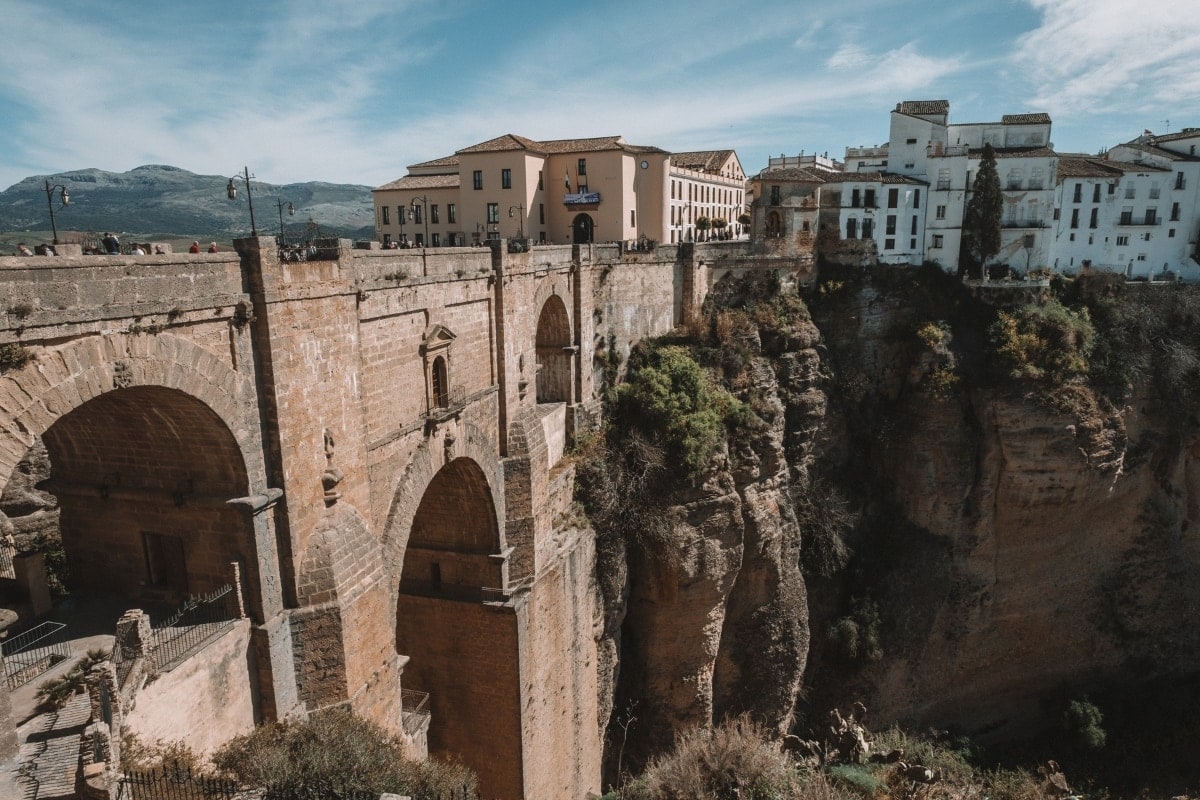
Northern Lights in Alaska: When, Where and How to See Them

TL;DRThe Northern Lights over Alaska are visible from late August through to mid-April, with peak season running December to March, when nights are longest and skies clearest. Fairbanks is your best bet as a base — it sits right under the auroral oval, giving you better than 80% odds of a sighting over three clear winter nights, well ahead of more distant Anchorage. Popular spots include Murphy Dome, Cleary Summit with its Skiland, or the glass-domed igloos at Borealis Basecamp ($625 per person, per night). Expect temperatures down to -30 to -40°C, with accommodation running $150 to $400 a night, or over $600 for the luxury option.

If you’ve been dreaming of witnessing the northern lights in Alaska with your own eyes, now is the best possible time. You just need to get the timing right — unlike us. Between 2024 and 2026, the Sun is at the very peak of its twenty-fifth solar cycle (the so-called solar maximum).

Scientists report that solar flares and massive coronal mass ejections are hammering our atmosphere with an intensity we haven’t seen since 2003. It’s an absolute wild ride. To make sure you don’t make the same mistake we did, I’ve put together a complete guide. I’ll tell you exactly when to go, where to stay, how much it all costs, and I’ll throw in some carefully researched photography tips so you don’t come home with nothing but black photos 😅.

TL;DR

  • Best time to go: You can see the northern lights from late August to mid-April, with the absolute peak season running from December to March. In summer, Alaska has far too much daylight.
  • Where to look: The city of Fairbanks is the undisputed king. It sits directly beneath the auroral oval, and if you spend three clear winter nights here, you have over an 80% chance of success.
  • Weather and cold: Brace yourself for extremes. Temperatures regularly plunge to -30 to -40 °C (-22 to -40 °F), so a quality down jacket and insulated trousers are absolutely essential.
  • Car hire: To chase the aurora independently, you’ll need a car from a reputable hire company with winter tyres. However, some roads (like the Dalton Highway) are strictly off-limits for standard rental vehicles.
  • Budget: Alaska isn’t cheap. Expect accommodation from $150 to $400 per night, while luxury glass igloos can easily exceed $600.

When to Go to Alaska and How to Get There

The fundamental rule for chasing the northern lights is beautifully simple, yet people often forget it: you need absolute darkness. Although geomagnetic storms occur high in the atmosphere year-round, during the summer months (May to July) the Alaskan sun shines for up to twenty-two hours a day and the sky never truly goes dark.

The official aurora season therefore doesn’t kick off until late August and runs through mid-April. If you want to play it safe, however, plan your trip during the absolute peak season from December to March. Winter brings the clearest and darkest skies, though you’ll pay the price with brutal cold. The town of Fairbanks is the coldest American city with a population over ten thousand, and temperatures in January and February regularly drop to -40 °C (-40 °F). For context, the all-time record from 1934 was a staggering -54 °C (-65 °F) — so do dress warmly 😁.

September and March are also particularly interesting — the autumn and spring equinoxes. Thanks to the specific tilt of Earth’s axis relative to the solar wind, so-called “equinox spikes” occur, statistically boosting your chances of a strong aurora display even further. I’d recommend searching for flights well in advance. From the UK, you’ll typically fly into Seattle and then catch a direct domestic flight with Alaska Airlines to Fairbanks’ small airport. British Airways, Virgin Atlantic, and various other carriers serve the London–Seattle route, and you can often find good deals by booking early.

Where to Stay in Fairbanks and How Much It Costs

When planning your budget, I have to warn you — Alaska can seriously dent your wallet. Most people choose Fairbanks as their base because the city offers all the amenities you need: supermarkets and plenty of hotels from which you can head out into the dark surroundings each evening for aurora hunting. Price-wise, expect a basic motel to run around $100 to $150 (roughly £80–£120) per night, while nicer hotels or wilderness cabins start at $250 (about £200).

If you fancy a touch of luxury — lying in bed gazing up at the sky — speciality igloo accommodations or resorts will set you back $400 to $650 per night (up to around £520). A typical week-long trip for a couple including car hire and food can easily swallow over £4,000.

Where to Strategically Stay

  • Comfortable city-centre base: Westmark Fairbanks Hotel is an absolute stalwart, frequently used by organised tour groups. A brilliant alternative right by the river near the airport is Pike’s Waterfront Lodge, which has an excellent restaurant.
  • Aurora-focused hotels: If you’re after total tranquillity, check out the cabins at A Taste of Alaska Lodge. They offer stunning views of the Alaska Range with zero light pollution from the city. Another hugely popular option is Borealis Basecamp — those famous glass igloos you’ve seen all over Instagram.
  • Middle ground for families and couples: A great compromise is the spacious apartment complex Wedgewood Resort or the well-established Best Western Plus Pioneer Park Inn.
  • Budget-friendly options: If you don’t mind cutting a few corners, consider the no-frills Days Inn Fairbanks or the iconic Billie’s Backpackers Hostel, where you’ll meet fellow travellers from around the world.

Northern Lights in Alaska: 12 Tips on Where to Go and How to Photograph Them

Let’s dive into twelve specific spots and tips for chasing the northern lights in Alaska and avoiding disappointment. Alaska offers countless options — from luxurious hot springs to remote hilltops where you’ll need to bring your own tea in a thermos. I’ll also share advice on how to properly photograph this celestial spectacle, so your aurora snaps look just as stunning as the real thing.

1. Fairbanks — The Ultimate Starting Point

Fairbanks doesn’t sit at the heart of this guide by accident. It lies just under 320 kilometres (200 miles) south of the Arctic Circle, directly beneath the auroral oval — the zone where aurora activity is most concentrated. It’s hardly a metropolis that’ll wow you with its architecture, but its location makes it a geographic jackpot for anyone chasing the night sky.

Local authorities actually keep detailed statistics, and the numbers speak for themselves. If you spend at least three nights here during the peak winter season and get clear weather, your chances of seeing the northern lights exceed eighty percent. Simply hire a car, drive twenty minutes out of town away from the light pollution, and start looking up. Most activity occurs between 10 PM and 2 AM.

2. Murphy Dome (Pitch-Black Darkness)

Ask any local aurora enthusiast where they go to watch the sky, and they’ll almost certainly point you here. Murphy Dome is a former US Air Force radar station that was decommissioned back in the 1980s, located about 45 kilometres (28 miles) northwest of Fairbanks. At an elevation of 879 metres (2,884 feet), it’s the highest point you can comfortably reach by car in the area.

With no houses or streetlights around, you’ll enjoy absolutely perfect darkness. When the aurora kicks into high gear, it dances from horizon to horizon. There’s one major catch I need to flag, though. The road up is steep and frequently icy in winter, so don’t attempt it without a proper vehicle with winter tyres and four-wheel drive.

3. Cleary Summit and Skiland (Viewing in Warmth)

Another beloved hilltop, found roughly 32 kilometres (20 miles) northeast of the city along the famous Steese Highway. Cleary Summit sits at 682 metres (2,238 feet) and offers gorgeous panoramic views across the Tanana River valley and the White Mountains ridge. Parking at the top is completely free, and you’ll always bump into a group of photographers huddled around their tripods.

A huge advantage of this spot is nearby Skiland — a ski resort that happens to have the northernmost chairlift in all of North America. After dark, their lodge doubles as an aurora viewing centre. You can sit inside in the warmth, sip coffee, and dash outside into the freezing air only when someone shouts that the sky has started to light up with colour.

4. Borealis Basecamp (Luxury From Your Bed)

This is exactly the place you keep seeing on Instagram and drooling over. The resort is tucked away in the boreal forest outside the city, comprising modern heated igloos with enormous glass ceilings. The concept is utterly brilliant — no need to freeze outside in the snow. You simply lie under a warm duvet and watch the green ribbons fly overhead.

As you’ve probably guessed, this kind of fun doesn’t come cheap. Prices during the season typically hover around $625 per person per night, and you often have to book a two-night package for two, which comes to an eye-watering $2,500 (roughly £2,000). Despite the price tag, it’s perpetually sold out, so if you’re seriously considering this experience, book your room at least six months ahead.

5. Chena Hot Springs (Bathing in the Freezing Cold)

This hot springs resort about 90 kilometres (56 miles) from Fairbanks is a massive draw — people either love it or absolutely hate it. The main attraction is a large outdoor rock lake filled with natural geothermal water that stays around 41 °C (106 °F) year-round. Imagine sitting in steaming hot water, your hair freezing into white icicles, while the aurora ripples overhead. It’s genuinely magical.

In the interest of total honesty, though, I have to mention the downsides. The resort is reached via the long Chena Hot Springs Road, and you’ll need to drive back to Fairbanks at 2 AM, exhausted and with wet hair. The resort itself has seen better days. Pool admission costs extra if you’re not a guest, the changing rooms are reportedly grubby according to many reviews, and the vibe is more like a 1990s public swimming pool than a luxury spa. Even so, the feeling of soaking in hot water under a freezing Alaskan sky is probably worth it.

6. Aurora Pointe (A Smart Compromise)

If you’d rather not freeze by the roadside but don’t fancy spending hundreds on luxury accommodation either, head to Aurora Pointe. It’s a private viewing centre set on a vast property about fifteen minutes’ drive from central Fairbanks. For a reasonable $50 (around £40), you get four hours of access (from ten in the evening until two in the morning) to modern, beautifully heated facilities.

The price includes local pastries and, crucially, guidance from resident aurora enthusiasts. A huge bonus is that they’ll give you loads of photography tips, and if you don’t have a decent camera, they’ll rent you one for the evening for an additional $50. For beginners, it’s an absolutely ideal stress-free option.

7. Birch Hill Recreation Area (When There’s No Time)

Sometimes you’ll be sitting in your hotel in central Fairbanks, checking the forecast, and suddenly a notification pops up telling you the aurora is blazing at full strength right now. At that moment, there’s no time to drive an hour to some remote hilltop. For these last-minute dashes, Birch Hill Recreation Area — a city park just a short hop from the centre — is perfect.

You’ll have to contend with some light pollution from the city, and the view isn’t as pristine as Murphy Dome, but you can be on site within minutes. The park has plenty of space, and even in the deepest cold, access is easy along a well-maintained road.

8. Dalton Highway and Coldfoot Camp (For True Adventurers)

If you’re seeking the darkest skies and crave the ultimate extreme, you need to hit the Dalton Highway (also known as The Haul Road). This is a dusty, often ice-covered route originally built for lorries heading to the oil fields in the far north. At mile 175 lies the rugged Coldfoot Camp, a waypoint for truckers and aurora chasers heading into the Brooks Range.

Fair warning: most standard car hire companies explicitly state in their contracts that you’re not allowed to drive on this road. If you get caught or need a tow, it’ll cost you a fortune. A bit further along lies the settlement of Wiseman, one of the best aurora viewing spots anywhere — but the nearby area (specifically Prospect Creek) is also where the lowest temperature in US history was recorded in 1971: an unbelievable -62 °C (-80 °F). This isn’t a holiday anymore — it’s an expedition 😅.

9. Anchorage and Southern Alaska

We often get asked whether it’s possible to see the aurora near Alaska’s largest city, Anchorage. The answer is yes, but your chances are much slimmer than in Fairbanks. Anchorage sits too far south, and for the aurora to reach this far down, the solar storm needs to be genuinely powerful (the Kp index must jump to at least 5 or higher). During the current solar maximum, though, that’s not as rare as it used to be.

If you’re in the south and a strong storm hits, get as far from the city lights as possible. Locals love heading to Eklutna Lake, which is tucked away in the mountains, or driving all the way to the picturesque town of Talkeetna. You can also enjoy stunning light-pollution-free viewing near the visitor centre in Denali National Park, though winter services there are considerably limited.

10. Aurora Tours with the Pros (A Safe Bet)

Chasing cloud breaks at two in the morning on icy roads can be utterly exhausting. Sometimes it’s just better to pay the professionals, hop into a heated van, and let someone else do the driving. Local guides know the microclimate of every valley and exactly which hilltop to head for to escape the clouds blanketing Fairbanks.

A very popular option is Greatland Adventures, which offers eight-hour overnight aurora hunts for around $345 (about £275) per person. The price includes professional portrait photos with the aurora in the background and, crucially, a strong cancellation guarantee — if the evening looks hopeless, you can cancel without penalty. For those who want the full works, Salmon Berry Tours offer multi-day packages upwards of $5,000 that include dog sledding and absolute luxury. You can also browse a range of northern lights Alaska tours on GetYourGuide.

lukas a lucka
Lukáš and Lucie recommend
Where to Stay in Alaska
6 accommodations — wellness hotels, resorts and other lodging options

11. How to Track the Northern Lights Forecast

If you decide to go it alone, monitoring the Kp index will become your daily — and nightly — obsession. It’s a scale from 0 to 9 that measures the strength of geomagnetic activity. For Fairbanks, a Kp value of just 3 is enough for a beautiful show overhead. If it jumps to 5, you’re in for a spectacular display visible right down to the horizon.

The most reliable information for the Alaska region comes from the University of Alaska Geophysical Institute on their website. Out in the field, you’ll definitely appreciate the mobile app My Aurora Forecast Pro, which sends you a notification when things start firing. But always remember the single most important rule: if there’s a thick layer of cloud above you, not even the strongest storm of the decade will help. The northern lights are above the clouds, not below them.

12. Gear and How to Photograph the Northern Lights

Waiting for the celestial show demands plenty of patience and even more warmth. Layer up like an onion, invest in quality mittens (your fingers will freeze far faster in gloves), and don’t forget a headtorch. Crucially, switch it to the red-light setting — white light will ruin your night vision for several minutes and annoy every photographer nearby by blowing out their long exposures.

As for photography, the gold standard is a full-frame DSLR or mirrorless camera with a wide-angle lens of at least f/2.8 and a sturdy tripod. Set manual focus to infinity, push your ISO to around 3200, and set the exposure time to 5–15 seconds depending on how fast the aurora is moving. Keep your spare batteries in an inside pocket close to your body — the cold will drain them within five minutes otherwise. And here’s good news for smartphone owners: grab a small phone tripod and the latest iPhones in night mode can produce incredibly impressive shots even without expensive kit!

Where to Eat Well in Fairbanks

The winter cold will reliably leave you ravenous. While Alaska is generally pricey — even a basic supermarket shop costs more than in the rest of the US — it’s worth treating yourself to a proper restaurant meal now and then. Here are a few spots right in Fairbanks that consistently earn great reviews and are popular with locals too.

The Pump House Restaurant & Saloon (For a romantic evening) — This is an absolute classic, established in 1978, located on Chena Pump Road. The interior immediately transports you back to the rough-and-tumble Gold Rush era of the late nineteenth century. They specialise in top-quality Alaskan seafood and certified Angus beef, so steak lovers are in for a treat (a massive Ribeye comes in at just under $49 / about £39). We’re vegetarians, so we tend to appreciate the sides and homemade bread, but it’s still a pricier establishment worth visiting for the atmosphere and service alone.

Big Daddy’s BBQ & Banquet (For a serious appetite) — If you’re craving proper American barbecue, this is your spot. It’s a completely casual restaurant with a fantastic Southern vibe and enormous portions — alongside grilled meats, they serve side dishes like cornbread, beans, and mac and cheese. A perfect place for families with kids or a group returning frozen from the hilltops. Mains run from a very reasonable $15 to $30 (£12–£24).

The Crepery (Quick lunch in the centre) — We love places that locals flock to, and The Crepery is exactly one of them. Sitting right in the heart of Fairbanks, they make absolutely divine crêpes — both sweet versions with fruit and savoury ones stuffed with cheese and meat. It’s a brilliant choice for a quick lunch or afternoon coffee, with prices between $10 and $18 (£8–£14).

Sam’s Sourdough Cafe (The morning reviver) — A local legend serving the best and biggest breakfasts for miles around. Their speciality is giant sourdough pancakes, made from old Gold Rush-era recipes. A hearty breakfast with coffee will set you back around $10 to $20 — which by Alaskan standards is actually quite a bargain.

Tips and Tricks Before You Go

Whenever we plan a trip up north, we rely on a handful of tried-and-tested services that save us both hassle and money. To make your planning a bit easier, here’s a rundown of the most important things to sort before you fly.

Finding Flights

You can fly to Seattle (and onward to Fairbanks) with a whole range of airlines from the UK, including British Airways, Virgin Atlantic, Icelandair, and various other carriers. To hunt down the best deals, we love using Kiwi — it’s our go-to flight comparison tool where we often find the best combinations of connecting flights.

Car Hire

Without a car, you’re stuck in Alaska — especially if you don’t want to fork out for pricey organised tours. We’ve had consistently good experiences with DiscoverCars, which we use on trips all over the world. Try to book as early as possible — four-wheel-drive vehicles vanish first during the winter season.

Don’t Forget Insurance and Data

The US has extremely expensive healthcare, so don’t even think about going without solid travel insurance. For shorter trips, we go with AXA (we have a 50% discount for you), while for longer stays we swear by True Traveller. As for phone data, the easiest solution by far is to download a virtual eSIM from Holafly — you’ll have data the moment you land without needing to hunt for a plastic SIM card at the airport.

Clothing

As I’ve already mentioned, the cold out there is truly relentless. If you’re looking for footwear advice, we’ve written a dedicated article on hiking boots — though for -40 °C you’ll really need proper heavy-duty snow boots like Sorels.

Read Next

If this article has whetted your appetite and you’re thinking that the northern lights in Alaska are exactly what you want to experience, we’ve got more detailed guides on the blog for you.

Frequently Asked Questions (FAQ)

When is the best time to see the Northern Lights in Alaska?

The absolute peak season is from December to March, when the nights are longest and the skies are clearest. However, you can see them from late August through mid-April.

Can you see the Northern Lights in summer?

Unfortunately not, which my husband and I learned the hard way. When we arrived at the end of July and beginning of August, there was the midnight sun and the sky never got dark enough for us to have any chance of seeing the aurora. Solar storms happen year-round, but without darkness you simply won’t see them.

How much does a Northern Lights trip cost?

It’s quite an expensive affair. A standard hotel in Fairbanks costs around 150 to 250 USD per night, with luxury resorts running over 400 USD. Add to that expensive car rentals, flights, and relatively high food prices.

Do I need a guide to see the aurora?

It’s not necessary. If you rent a car and drive a bit outside the city (like to Murphy Dome), you can manage on your own. However, guides are worth it when it’s cloudy, as they know how to outrun the clouds and know all the best spots.

Is it safe to drive in Alaska in winter?

The roads are maintained fairly well, but you’ll be driving on a layer of snow and ice. If you’re renting a car, make sure it has good winter tires. Always keep spare blankets, hot tea, and a full tank of gas in the car.

Is it better to go to Anchorage or Fairbanks?

Definitely Fairbanks. This city is located much further north, directly under the auroral oval, and your chances of seeing clear Northern Lights are significantly higher than in Anchorage to the south.

Do I need a professional camera?

A DSLR with a tripod is ideal, but it’s not absolutely necessary anymore. iPhones 14, 15, and 16 have amazing night mode that, with the help of an inexpensive phone tripod, can capture incredibly beautiful photos.

Tips and Tricks for Your Vacation

Don’t Overpay for Flights

Search for flights on Kayak. It’s our favorite search engine because it scans the websites of all airlines and always finds the cheapest connection.

Book Your Accommodation Smartly

The best experiences we’ve had when looking for accommodation (from Alaska to Morocco) are with Booking.com, where hotels, apartments, and entire houses are usually the cheapest and most widely available.

Don’t Forget Travel Insurance

Good travel insurance will protect you against illness, accidents, theft, or flight cancellations. We’ve had a few hospital visits abroad, so we know how important it is to have proper insurance arranged.

Where we insure ourselves: SafetyWing (best for everyone) and TrueTraveller (for extra-long trips).

Why don’t we recommend any Czech insurance company? Because they have too many restrictions. They set limits on the number of days abroad, travel insurance via a credit card often requires you to pay medical expenses only with that card, and they frequently limit the number of returns to the Czech Republic.

Find the Best Experiences

Get Your Guide is a huge online marketplace where you can book guided walks, trips, skip-the-line tickets, tours, and much more. We always find some extra fun there!
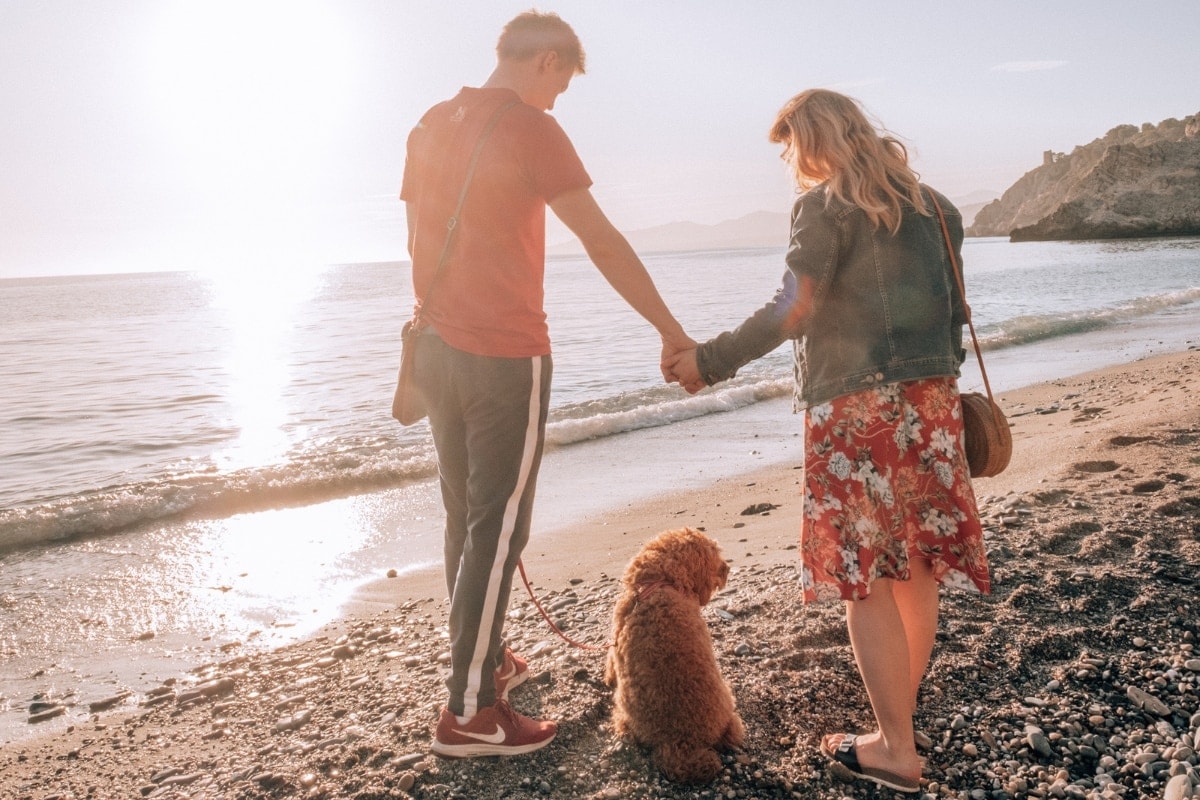
Cinque Torri & Lagazuoi, Dolomites Italy: 10 Things to See & Do

TL;DRCinque Torri (the Five Towers) and Monte Lagazuoi (2,778m) sit side by side near the Passo Falzarego in the Dolomites. Both are easy to reach: a cable car whisks you from Passo Falzarego up to Lagazuoi in under three minutes (around 30 EUR), while a chairlift from Bai de Dones takes you to Cinque Torri (around 15 EUR). The whole area was front line during the First World War (1915–1918) and is now a vast open-air museum, with trenches, guns and tunnels still in place — and free to visit. There are ten tips here, including Rifugio Lagazuoi for its panoramic views, the Galleria del Lagazuoi tunnel (a 600m descent, only for fit adults — no children under 8 or dogs), and the hike up to Rifugio Nuvolau. Cortina d’Ampezzo, about 15 minutes away by car, makes the best base. Late June to mid-September is the best window, ideally early September once the Ferragosto crowds of mid-August have cleared off.

The Dolomites Italy are a paradise we’ve written about in our guide to the Italian Dolomites, but this spot near the famous Cortina d’Ampezzo has a completely different atmosphere. It’s actually Europe’s largest open-air museum of the First World War. While Lukáš and I used to scramble up hillsides on our own two feet, we now have a little one in tow and have come to truly appreciate the local cable cars. The large gondola up Lagazuoi from Passo Falzarego and the chairlift to Cinque Torri from Bai de Dones are absolute lifesavers when you’re travelling with a small child (or for anyone with limited mobility).

TL;DR

If you’re already packing your bags and just need the quick facts, here are the key takeaways from our guide:

  • Two separate sites close together: Cinque Torri (Five Towers) and Mount Lagazuoi sit near each other by the Passo Falzarego pass. Both are easily reached by cable car with zero effort.
  • History everywhere you look: The entire area served as a frontline between Italy and Austria-Hungary during WWI. You’ll find reconstructed trenches, artillery positions, and tunnels carved into the rock.
  • Best base: Cortina d’Ampezzo, hands down — it’s only about 15 minutes by car to the cable car stations.
  • Who is it for: Thanks to the cable cars, this is a perfect destination for families with small children, older visitors, and dog owners. You ride to the top without breaking a sweat.
  • Watch out for the tunnels: The famous Galleria del Lagazuoi (a war tunnel through the rock) is a brutal 600-metre descent in darkness and damp conditions. It’s absolutely not suitable for children or dogs — a helmet and headtorch are mandatory.

What Are Cinque Torri and Lagazuoi?

To get our bearings, we’re in the Veneto region near the mountain passes of Passo Falzarego and Passo Giau. This is an area that takes your breath away before you even step out of the car, and we bring every visitor who comes to see us in the mountains here.

Cinque Torri — “Five Towers” in English — is an absolutely iconic rock formation that looks as though it was placed into the landscape from another planet. As the name suggests, it’s made up of five main massifs, the tallest being Torre Grande, along with Torre Inglese, Romana, Quarta, and Quinta. Rock climbers love these crags, but regular hikers do too, because you can walk around them on comfortable, well-maintained paths. Directly across the valley rises the majestic Mount Lagazuoi, its summit reaching 2,778 metres above sea level, looking like an impregnable stone fortress.

Bloody History in Paradise: The Great War 1915–1918

Looking at those lush green meadows and white rock faces, it’s hard to believe the horrors that unfolded here. Whenever Lukáš and I walk among the Cinque Torri, we’re struck by a profound sense of humility. Between 1915 and 1918, some of the most senseless and brutal battles of the First World War took place on this very ground.

Mount Lagazuoi was riddled with kilometres of tunnels as Italian and Austro-Hungarian forces tried to undermine each other’s positions and blow them sky-high. The madness reached its peak in 1917, when the Italians literally detonated a massive mine directly beneath the Austrian positions — when our guide described it on site, we honestly didn’t know whether to laugh or cry. At Cinque Torri, you’ll find reconstructed Italian artillery positions, because the rocks provided perfect cover. Today, the whole area has been beautifully restored and functions as a vast open-air museum with completely free entry, where you can experience for yourself what it must have felt like to huddle in a freezing trench.

When to Visit and What Weather to Expect

Planning a trip to the Dolomites is always a bit of a gamble, because mountain weather does whatever it pleases — and that very much applies to the dolomites italy weather around Cinque Torri. We always check the webcams in the morning to make sure the summit isn’t sitting in cloud.

The ideal window for hiking and exploring the museums is from late June to mid-September. If you can, though, avoid August — and especially the Italian holiday Ferragosto on 15 August. That’s when half of Italy heads for the mountains; car parks fill up completely and you’ll queue for ages at the cable cars. We personally love early September, when the weather is usually more settled, the air is crystal clear, and the autumn sun paints the rocks in incredible shades of gold and pink — an absolute dream for photography. In the dolomites italy winter, the entire area transforms into a brilliant ski destination within the Cinque Torri ski area.

How to Get to the Cable Cars and Where to Park

Getting around this part of the Dolomites is fairly straightforward, especially if you have a car — which we’d say is pretty much essential. If you’re flying in from the UK, the nearest airports are Venice Marco Polo or Treviso, both roughly a two-hour drive away. We can heartily recommend the comparison site DiscoverCars.com for sorting out your hire car — it’s what we use everywhere we travel.

If you’re heading to Lagazuoi, your destination is the Passo Falzarego pass, where there’s a large car park right by the bottom station of the big gondola. If you’re aiming for Cinque Torri, you’ll stop a few hairpin bends lower down at Bai de Dones, where the chairlift begins. Parking at both spots is usually paid — expect roughly 5 to 10 EUR per day. Bring cash, as the card machines occasionally play up. During the main summer season, a reliable bus (number 27) also runs from Cortina directly to Passo Falzarego, which is a great alternative if you fancy a glass of wine with lunch or simply want to skip the parking stress.

Where to Stay Nearby and How Much It Costs

Our long-standing favourite base for this area is Cortina d’Ampezzo. It’s only about 15 minutes by car to the cable cars, you can stroll through the gorgeous town centre packed with boutiques and cafés in the evening, and there’s excellent infrastructure whether you’re after luxury or something more modest. We usually search for accommodation on Booking.com.

If Cortina is bursting at the seams (which happens regularly in season), a great alternative is the charming little town of Alleghe, sitting right beneath the majestic Marmolada, or the village of Arabba, from where you can easily explore the famous circuit of Passo Pordoi and Passo Sella. A happy middle ground are the apartments scattered around the Falzarego pass itself. There’s not exactly a buzzing nightlife up there, but you’ll be first in line at the cable car in the morning.

  • Best places to stay in Cortina: We can wholeheartedly recommend Hotel de la Poste right in the centre, which oozes historic charm, or the more upscale Rosapetra SPA Resort if you fancy some post-hike pampering.

10 Things to See and Do at Cinque Torri and Lagazuoi

This really isn’t a place you can just drive through and tick off. Every couple of minutes you’re bouncing between jaw-dropping views and chilling history, and it changes you a little. Below are ten things Lukáš and I have done ourselves and honestly recommend.

1. Cable Car to Lagazuoi in Three Minutes

This is an experience in itself. You step into the big red gondola at Passo Falzarego and in under three minutes you’re whisked up to an incredible 2,778 metres above sea level. It’s fast, steep, and for our little Jonášek it was his first big mountain adventure — he watched the whole thing wide-eyed from his baby carrier. At the top, you find yourself in a world of rock and ice where even in August you might need a down jacket. You can buy tickets online too; find more info on the official Lagazuoi cable car website.

When we first stepped out at the top with our little one, we immediately appreciated the barrier-free access right up to the viewing platform. Don’t hesitate to bring grandma along — the ride is incredibly smooth and the views over the Ampezzo valley are truly worth it, even if you’re not much of a mountaineer.

2. Galleria del Lagazuoi: For the Brave Only

Here I need to give one big, honest warning. The tunnels carved into the heart of the mountain by Italian soldiers are a breathtaking feat of engineering, but this is absolutely not a casual stroll. It’s a descent of over 600 metres through solid rock, down steep, wet steps made of iron and stone, with water dripping everywhere and pitch blackness all around. Lukáš and I did it years ago and it took us nearly three hours. It’s for fit adults ONLY — completely unsuitable for dogs, and small children are rightly not allowed.

If you do decide to go for it, make sure you hire a proper helmet and headtorch at the bottom cable car station or at the rifugio. The steps are incredibly slippery and you’ll be grateful for every solid handhold. But that feeling when you finally emerge back into the sunlight? Absolutely priceless.

3. Views from Rifugio Lagazuoi

Whether you hike up or take the cable car, your reward is Rifugio Lagazuoi — a mountain hut perched right on the cliff edge like an eagle’s nest. The terrace is legendary. Sit down with a hot tea and gaze into the distance, and you’ll have the glaciated Marmolada, the Sella massif, and nearby Tofana spread out before you like a relief map. On a clear day, you can supposedly see all the way to Austria.

We usually spend at least an hour here, because you simply can’t tear yourself away from those views. Inside the hut there’s heating, and on cooler days it fills with the smell of hearty food and coffee — making it the perfect refuge when the sky suddenly clouds over and that icy mountain wind kicks in.

4. Chairlift to Cinque Torri

While a big gondola whisks you up Lagazuoi, the route to the Five Towers uses a classic open chairlift, which you board at the Bai de Dones station. The ride is wonderfully relaxing — you float gently above the trees as the rock towers gradually grow larger before your eyes. Dogs are welcome on board too; our Kája and Baby had no issues at all.

The staff at the chairlift are usually incredibly helpful — they assisted us getting on even with a baby strapped to Lukáš’s chest in a carrier. The whole ride is pure bliss for the soul: peace and quiet everywhere, the forest rustling below, and already in the distance you can see the five majestic stone fingers towering above you.

5. Open-Air Museum at the Five Towers

As soon as you step off the chairlift, you’re right in the middle of the historic site. You can freely wander through reconstructed trenches and peer into shelters where original cannons and firing positions are still preserved. Entry is completely free, and the whole area is brilliantly explained on information boards — so even Lukáš and I, who don’t exactly study history on a daily basis, quickly understood the full picture. You can read more on the open-air museum website.

It was an incredibly powerful experience, especially when it hit us just how brutal the conditions were that those poor soldiers had to endure. The trenches are quite narrow in places, so you have to squeeze through a bit, but thankfully everything is safely reinforced and you can manage it perfectly well even in trainers.

6. Panoramas from Rifugio Nuvolau

If you don’t just want to potter around Cinque Torri, take the roughly one-kilometre walk up to Rifugio Nuvolau. The path is a bit steeper and rocky, but you can manage it in decent trainers or proper hiking boots. Your reward is a classic 360-degree panorama across the entire Dolomites. This hut, incidentally, is one of the oldest in the region and has bags of character.

I have to say, the climb is worth every drop of sweat. The surrounding lunar landscape creates a beautiful contrast with the distant massifs, and when you reach the top you feel like you’re standing on the roof of the world. We’d definitely recommend heading up early in the morning to beat the crowds.

7. Relaxing at Rifugio Cinque Torri and Scoiattoli

When hunger strikes during our wanderings, we usually drop anchor at Rifugio Cinque Torri or at the neighbouring, more modern Scoiattoli hut, which sits right by the top chairlift station. From their terraces you can watch climbers tackling the sheer tower walls while you tuck into apple strudel and coffee. They also have great facilities for dog owners.

8. Easy Trek to Cima Falzarego

This is a genuinely easy trek with gentle inclines and clearly marked paths. Best of all, you escape the main crowds, so you finally feel like an explorer rather than a sheep on a guided tour — just bring plenty of water.

For Jonášek in his carrier, it was the ideal nap-inducing stroll — no giant boulders to clamber over, just a gentle walk across soft grass. If you want to wander away from the cable cars for a bit and enjoy the mountain silence without the clinking of trekking poles, this is exactly the right direction.

lukas a lucka
Lukáš and Lucie recommend
Where to Stay near Cinque Torri and Lagazuoi
6 accommodations — wellness hotels, hotels and other lodging options

9. Via Ferrata for Experienced Mountaineers

Lukáš and I came here back in our carefree pre-baby days specifically for the via ferratas, and this area is an absolute paradise for them. If you’re travelling without a little one, definitely try the route that leads directly through the Galleria Lagazuoi.

This particular route takes you not only along exposed ledges with mind-blowing views, but also partly through the mountain’s interior — so you get that historical dimension first-hand. Just please don’t underestimate it: afternoon thunderstorms are common here in summer, so always set off as early as possible.

10. Winter Fun and Dolomiti Superski

Although we were here in summer this time, Cinque Torri is an absolute paradise in winter too. The whole area is connected to Cortina’s ski network, and you can pick up a combined pass on the Dolomiti Superski website. The pistes run right beneath those enormous rock towers, and when the winter sun hits them, it’s an experience you’ll never forget.

Skiing among these rocky giants has a strange, almost mystical atmosphere that can’t be compared to your typical overcrowded resorts. The local runs are usually beautifully wide and perfectly groomed, so even recreational skiers will find their sweet spot and can carve away until sunset.

Cinque Torri and Lagazuoi with Kids

Travelling with children to the mountains always raises a lot of questions — I know that all too well now. Honestly, we were a bit worried about how Jonášek would cope, but it turned out to be unnecessary. The cable cars handle the worst of the climbing for you, and you reach the top without breaking a sweat.

The open-air museum at the Five Towers is a genuine adventure for older kids. They can safely run through the trenches (under your supervision, of course, so they don’t trip on the rocks) and explore the bunkers. At Rifugio Scoiattoli there’s also a lovely outdoor playground where Jonášek enjoyed his first Italian mountain sand on his hands, while we soaked up the views. Just don’t forget to pack warm layers for the little ones — the wind above two thousand metres can be bitterly cold even in August.

Where to Eat

High-altitude hiking wouldn’t be the same without proper food — let’s be honest. And the local mountain cuisine will surprise you, because the Dolomites are still just a stone’s throw from Austria, and the menus make that abundantly clear.

  • Rifugio Lagazuoi: They make an absolutely phenomenal wild goat stew here that melts on the tongue — you simply have to try it.
  • Traditional mountain huts in the area: If you’re after something more traditional, treat yourself to a hearty portion of polenta baked with local cheese or Tyrolean dumplings (canederli).
  • Local Ampezzo wine: And because we’re in Italy, wine is a must — order a glass of the local stuff with lunch. After a day in the fresh mountain air, it tastes like nectar of the gods. Just don’t overdo it if you still need to drive back down to the valley. 😁

Practical Tips, Prices, and Things to Watch Out For

To make sure nothing catches you off guard, we’ve put together a few practical tips — most of which we learned the hard way. Italy can be surprisingly strict about rules, and a bit of preparation goes a long way. If you don’t have travel insurance sorted, have a look at our travel insurance article, because trust us — you do not want to pay for a helicopter rescue out of the Dolomites. And don’t forget about mobile data; we recommend grabbing an eSIM from Holafly beforehand so you can translate Italian signs on the go.

  • Cable car prices: A return ticket on the Lagazuoi gondola costs around 30 EUR, while the Cinque Torri chairlift comes to roughly 15 EUR. For flights to Italy (ideally Venice or Treviso), we usually search on Kiwi — it’s our go-to flight comparison site.
  • Galleria del Lagazuoi: If you do decide to tackle the tunnel descent, you MUST have a helmet and a strong light. You can hire them at the entrance (or at the bottom cable car station) for around 5 EUR. And remember, children are officially only permitted from the age of 8.
  • Leave your drone at home: Lukáš was gutted about this (poor thing), but there’s a strict no-fly zone across the entire area, as it sits within a protected national park and UNESCO natural heritage site. Fines can reach up to 3,000 EUR, so those aerial shots will have to wait.

Where Else to Go in the Dolomites

If you have more time in the area, definitely check out our other articles from the region, because Cinque Torri and Lagazuoi are just the beginning of all the mountain riches the Dolomites Italy have to offer. Try the iconic trek to Tre Cime di Lavaredo, the ultimate Dolomites landmark, or explore the queen of the mountains herself — the glaciated Marmolada. And if you’re still firming up your itinerary, browse our article on What to Do in the Dolomites.

Frequently Asked Questions (FAQ)

We know full well that planning a trip to such a specific mountain area can throw up loads of practical questions — especially when you’ve got kids, dogs, or limited time. So we’ve rounded up the most common questions our friends ask when we send them here.

How do I get to Cinque Torri?

The easiest route is from Cortina d’Ampezzo along the winding road toward Passo Falzarego. Park your car at the Bai de Dones parking lot and from there take the chairlift straight up, which only takes a few minutes and costs around 15 EUR per person.

What should I see around Cortina d’Ampezzo?

Besides Cinque Torri and Mount Lagazuoi, definitely visit the stunning Lago di Sorapis, which has an absolutely incredible turquoise color, head to Tre Cime di Lavaredo, or explore Passo Giau, which offers beautiful views.

Are dogs allowed on the cable cars?

Yes, they’ll let you bring dogs on both the Lagazuoi gondola and the Cinque Torri chairlift without any problems. Our dogs Kája and Baby managed it several times. Just make sure you have a leash with you, and for larger breeds, it’s better to bring a muzzle as well to keep other passengers comfortable.

Where can I find a Cinque Torri webcam?

You can find live webcam feeds to check the weather on the official Dolomiti Superski website or on the Cortina d’Ampezzo portal. Always check them before leaving your accommodation, because it might be sunny down below while thick fog sits up top.

Is there an entrance fee for the WWI museum?

No, the entire outdoor museum around the Five Towers and the tunnels on Mount Lagazuoi are freely accessible with no entrance fee. You basically only pay for transportation to get there, meaning the cable car and possibly parking.

Can you walk through the Lagazuoi tunnels with children?

No, the descent through the dark, wet, and steep tunnels (Galleria del Lagazuoi) is only permitted for children over 8 years old, and it’s definitely not a pleasant walk. For younger children, just show them the open-air trenches at Cinque Torri.

Do I need via ferrata equipment at Cinque Torri?

It depends on what you’re planning to do. If you just want to walk among the rocks and admire the trenches, regular hiking gear and good boots are enough. But if you’re planning to climb the towers themselves or tackle secured routes, then a harness, climbing gear, and helmet are absolutely essential.

Tips and Tricks for Your Vacation

Don’t Overpay for Flights

Search for flights on Kayak. It’s our favorite search engine because it scans the websites of all airlines and always finds the cheapest connection.

Book Your Accommodation Smartly

The best experiences we’ve had when looking for accommodation (from Alaska to Morocco) are with Booking.com, where hotels, apartments, and entire houses are usually the cheapest and most widely available.

Don’t Forget Travel Insurance

Good travel insurance will protect you against illness, accidents, theft, or flight cancellations. We’ve had a few hospital visits abroad, so we know how important it is to have proper insurance arranged.

Where we insure ourselves: SafetyWing (best for everyone) and TrueTraveller (for extra-long trips).

Why don’t we recommend any Czech insurance company? Because they have too many restrictions. They set limits on the number of days abroad, travel insurance via a credit card often requires you to pay medical expenses only with that card, and they frequently limit the number of returns to the Czech Republic.

Find the Best Experiences

Get Your Guide is a huge online marketplace where you can book guided walks, trips, skip-the-line tickets, tours, and much more. We always find some extra fun there!
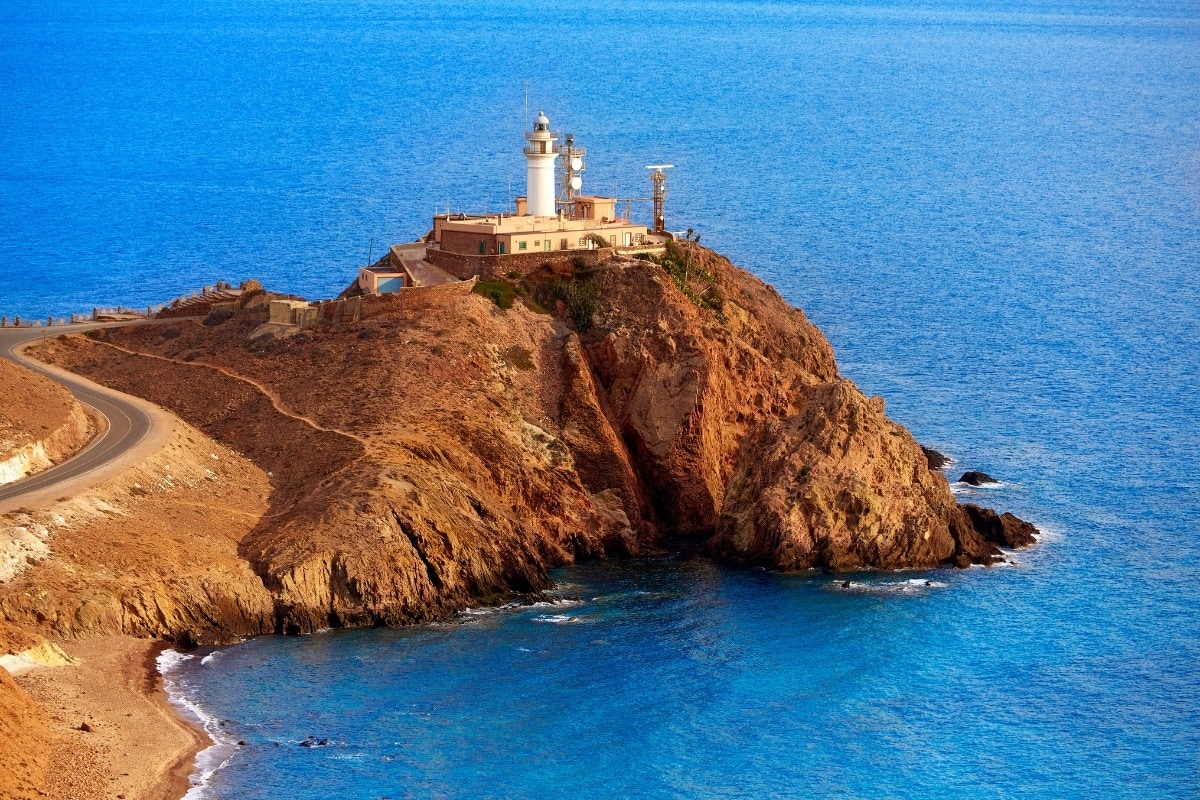
Via Ferrata in the Dolomites for Beginners: 5 Best Routes

TL;DRThe five best beginner via ferratas in the Dolomites are Sentiero Bonacossa (grade A, 1–2 hours), Cesare Piazzetta on Sass Pordoi (A/B, 2–3 hours), Innerkofler-De Luca near Tre Cime (C, with a guide, 4–5 hours), Ferrata delle Trincee on the Marmolada (B/C, 2–3 hours) and Ferrata Possnecker on the Sassolungo (B/C). July to September is the best window — start early and be back by 1pm to dodge the afternoon storms. You can hire a full via ferrata set (helmet, harness, shock-absorbing lanyard) in Cortina d’Ampezzo for 30 to 50 EUR a day, and Cortina makes the best base for the whole trip. For the tougher grade C routes, it’s worth hiring a certified mountain guide, which runs 200 to 300 EUR a day for a group.

The Italian Dolomites are a paradise for anyone who loves mountains, but if you want an experience that’s truly unforgettable, you should try a via ferrata in the Dolomites. These are permanently secured routes that use steel cables, iron rungs, and ladders to take you to places you’d never reach without serious climbing gear and years of experience.

Here’s a little preview of what’s coming: five routes where you’ll be just the right amount of scared, the gear you absolutely must not skip, and a tip on where to grab a beer after you’ve made it back down.

TL;DR

If you’re in a hurry and just need a quick overview before your trip, here are the key takeaways. Feel free to screenshot this summary so you’ve got it handy on the go:

  • What is a via ferrata: Italian for “iron path” — a mountain route secured with steel cables, iron rungs, and ladders. They were invented right here in the Dolomites during World War I.
  • Difficulty ratings: Italy uses letters from A (easy) to D (extremely difficult). Complete beginners should stick to routes rated A or B.
  • Essential gear: Never set out without a helmet, climbing harness, and a certified via ferrata lanyard (energy absorber). You can easily rent everything on site.
  • Best time to visit: July to September. Always start early in the morning — afternoon thunderstorms are deadly on steel cables (aim to be off the route by 1 PM).
  • Base camp: Cortina d’Ampezzo is our favourite base and probably the most convenient starting point for most of the famous routes.
  • Guided tours: For your first experience or harder routes (C), definitely hire a certified IFMGA mountain guide. It’s worth every penny for the peace of mind.

What exactly is a via ferrata and where did it come from?

You’ve probably heard the term before, but what does it actually mean in practice? Via ferrata — Italian for “iron path” — is a mountain route permanently equipped with steel cables, iron rungs, ladders, or even suspension bridges. This means you can safely move through extremely steep or even vertical terrain that would otherwise be reserved for experienced climbers with their own ropes and protection. You simply clip your carabiners onto the cable that’s already fixed into the rock and make your way up.

What’s fascinating is that via ferratas were actually invented right here in the Dolomites. During World War I, brutal fighting raged between the Italian and Austro-Hungarian armies at extreme altitudes. Soldiers needed to move men, weapons, and supplies safely and quickly across steep ridgelines, so they started drilling iron rungs into the rock and stringing cables. We’ve spent a good half hour on some of these old wartime paths just trying to imagine how those men managed it over a hundred years ago — in horrific conditions, weighed down by heavy gear, in the dead of winter. It makes you feel a bit out of place on a modern ferrata in lightweight boots with a shiny new carabiner. Today, the Dolomites boast the densest network of via ferratas in all of Europe, and many routes pass through old bunkers and tunnels carved straight into the rock. Trust me, the atmosphere will give you goosebumps.

How hard is it? The Italian difficulty rating system

When choosing your first route, the most important thing to look at is the difficulty rating. The Italian Dolomites use their own classification system, graded with letters from A to D, or sometimes numbers 1 to 5 (where 1 is the easiest). In practice, the letter grading is far more common. As a complete beginner, stick strictly to A and B routes — and honestly, there’s absolutely no shame in that.

  • A (Easy): Essentially a hiking trail on steeper terrain that’s equipped with a cable for extra safety. You often don’t even need to hold the cable — it’s more for peace of mind. Perfect for your first time getting familiar with the gear, or if you’re heading out with older kids and want to try it without unnecessary stress.
  • B (Moderate): Here you’ll encounter steeper sections and more rock. You’ll actively use the cable to make progress, and you might break a sweat, but anyone with a reasonable level of fitness can handle it.
  • C (Difficult): Vertical walls, overhangs, and sections where you need real upper body strength and good balance. For beginners, this difficulty is only suitable with an experienced mountain guide — otherwise it can turn into a genuinely terrifying experience.
  • D (Extremely Difficult): Requires excellent physical fitness and prior experience. Long overhanging sections where you’re holding on by arm strength alone. Not for novices — we happily leave these routes to the most seasoned alpinists.

Essential via ferrata gear (and where to get it)

When researching via ferrata in the Dolomites, you’ll often read that you can bring your own gear — but fortunately, that’s not a must. If you’re flying in or don’t fancy buying expensive equipment for a one-off adventure, everything can be rented on the spot. I know all too well what it’s like to lug an enormous suitcase full of unnecessary stuff, so rental shops are a real lifesaver.

If you don’t have your own gear, you can easily rent it in almost every mountain town. In Cortina d’Ampezzo, for example, you’ll find several rental shops (such as Snow Service or local mountain guide offices) where a complete via ferrata set costs roughly 30 to 50 € per day. The staff will happily adjust everything to your size, so there’s no need to worry about getting anything wrong.

What exactly you need to wear and bring:

  • Climbing helmet: Never — and I mean never — climb a via ferrata without a helmet. It’s not just about bumping your head on the rock; the main danger comes from people above you who might accidentally dislodge a stone.
  • Climbing harness: It needs to fit perfectly — not too tight, not too loose.
  • Via ferrata lanyard (Y-lanyard with energy absorber): A specialised set of two elastic lanyards with carabiners and a tear-out energy absorber. Please don’t attempt to use ordinary climbing slings on a via ferrata — in a fall, the consequences could be catastrophic (the energy absorber is there to dissipate the massive impact force).
  • Via ferrata gloves: Steel cables are rough, sometimes with loose wires poking out, and trust me — after two hours of climbing without gloves, your hands will be covered in blisters. Sturdy leather gloves from a hardware shop or fingerless cycling gloves will do in a pinch, though dedicated via ferrata gloves are obviously the best option.
  • Sturdy boots: Leave the trainers at the hotel. You need quality hiking boots, ideally with a stiffer toe (a so-called climbing zone) so you can stand securely on small rock ledges.
  • Water and a first aid kit: Don’t forget to bring plenty of fluids. The sun hammers down on exposed rock with incredible force, and we always carry at least two litres of water per person. A small first aid kit with plasters is also handy, because even the best gloves won’t always prevent the odd blister.

When to visit the Dolomites and what to watch out for

The via ferrata season in the Dolomites is relatively short. In winter, the routes are buried under snow and ice, so the ideal window is from July to the end of September. Autumn brings cooler temperatures, but the days can be beautifully sunny — and best of all, you won’t be queuing on the cables.

The biggest danger on a via ferrata, though, is the weather. Clipping yourself onto a steel cable that runs all the way to a mountain summit during a summer thunderstorm is about the worst idea imaginable — the cables act as a giant lightning rod. The golden rule in the Alps is: by 1 PM, you should be sitting with a beer in a mountain hut or back down in the valley. Afternoon heat storms build incredibly fast, so always set off early in the morning — seven or eight o’clock at the latest. On our first trip to the Dolomites, Lukáš had to drag me out of bed at five in the morning, which I absolutely despise. But when we watched dark clouds massing above the peaks at midday, I had to admit he was right. An early alarm is genuinely a matter of survival here. For safety, don’t forget to arrange proper travel insurance that covers mountain sports. For shorter European trips we go with AXA, and for longer journeys or specific sports we use SafetyWing.

5 best via ferrata in the Dolomites for beginners

These routes are tried-and-tested classics for beginners — we’ve had them recommended by experienced climbers and mountain guides we trust. We deliberately chose them so you’ll feel confident, yet still experience that healthy dose of respect (that’s the sweet spot 😉). Always honestly assess your abilities, though, and if you’re in any doubt, hire a guide.

1. Sentiero Bonacossa (Grade A)

If you’re brand new to via ferratas and not even sure whether you suffer from vertigo or whether you’ll enjoy it at all, Sentiero Bonacossa is the perfect starting point. It’s really more of a stunning high-altitude trail with cables fitted on the steeper sections for extra support.

The route starts near the famous Tre Cime and follows ridgelines towards Rifugio Bossi. There are no vertical walls or gruelling strength sections here — instead, you’ll be soaking in jaw-dropping views of jagged peaks and relishing the feeling of being high in the mountains. I remember standing there for the first time, gazing down into the valley — it was pure magic. The whole outing takes just 1 to 2 hours, so you won’t even have time to get exhausted.

2. Cesare Piazzetta on Sass Pordoi (Classic A/B)

The Sella massif and the spectacular summit of Sass Pordoi offer brilliant options for beginner climbers. The Cesare Piazzetta route, in its easier beginner variant, sits at a comfortable A/B grade. The starting point is fairly easy to reach, and the route follows a very logical line along rocky blocks.

The climb takes roughly 2 to 3 hours and rewards you with truly magnificent views of the surrounding ridgelines. It’s the kind of via ferrata where you need to use both hands and feet, but you still feel completely safe throughout. That feeling when you reach the top and take off your helmet is simply priceless. And as a bonus, you can treat yourself to a superb Italian espresso at the summit with a panorama of the entire Sella group — which is just unbeatable.

3. Innerkofler-De Luca near Tre Cime (Grade C: with a guide)

Although this via ferrata is graded C, it’s incredibly popular even among sporty beginners — though we strongly recommend tackling it with a certified guide on your first go. It’s located right on Monte Paterno, which neighbours the iconic Tre Cime di Lavaredo, so the views are straight off a postcard.

What makes this route truly fascinating is its history. It passes through long, carved-out WW1 tunnels, so definitely pack a headtorch. When the lights go out in those dark passages, it’s quite the adrenaline rush in itself. The climb takes roughly 4 to 5 hours, and a guide will help you through the trickier sections and boost your confidence — because at times there’ll be a rather serious drop beneath you 😅.

4. Ferrata delle Trincee on Marmolada (Grade B/C)

While you’re in the Dolomites, you really shouldn’t miss the queen of these mountains — Marmolada. Directly opposite her majestic glacier rises the Padon ridge, along which runs the stunning historical Ferrata delle Trincee. The B/C rating means you’ll work up a sweat in places, but mostly it’s smooth, flowing climbing on varied rock.

As the name suggests (Trincee means trenches), this route is steeped in wartime history. You’ll walk past old gun slits, bunkers, and trenches. It’s incredible to see first-hand where soldiers once sheltered and to feel the sheer weight of history radiating from the rock. The views of the highest peak in the Dolomites, draped in glacier ice, are so breathtaking that you’ll have to stop and take photos every few minutes. The full circuit takes about 2 to 3 hours of climbing, plus some time for the approach and descent.

5. Ferrata Possnecker on Sassolungo (Grade B/C)

Our final recommendation is an absolute classic in the Sassolungo massif. Possnecker is one of the oldest via ferratas in the Dolomites — a beautiful historic line that cleverly uses natural cracks and chimneys in the rock. Despite its B/C rating, there are no unreasonably tough overhangs here; instead, expect smart, technical climbing.

It leads through gorgeous limestone terrain, alternating between cable-assisted sections and walking along ledges. Most people set off first thing in the morning to leave plenty of time for a relaxed descent, and the whole time you’ll feel like a proper alpinist — even if you’re just getting started with this sport. This was actually the route that first made me think Lukáš and I should make via ferratas a regular thing, because the connection with the rock here is simply magical.

Guided tour or self-guided via ferrata?

This is a question many beginners wrestle with. If you’re considering a self-guided via ferrata in the Dolomites, you need to approach it responsibly. For very easy routes (A or A/B), as long as you don’t suffer from vertigo, you’re reasonably fit, and you know how to handle carabiners safely, you can go on your own. But always make sure someone in your group has at least some experience.

On the other hand, for routes graded C — or if you’re simply not confident — we wholeheartedly recommend hiring a certified IFMGA mountain guide. These guys and gals know the local mountains like the back of their hand. They know how to dodge the crowds, they’ll help you with technique, and they’ll tell you stories that’ll make the hairs on the back of your neck stand up. Hiring a guide typically costs 200 to 300 € per day for a small group, which is absolutely worth it when split between friends.

Where to stay (the best base for via ferratas)

If you want the best via ferratas and day trips within easy reach, we recommend choosing the picturesque town of Cortina d’Ampezzo as your base. Cortina sits right in the heart of the most beautiful peaks, and you can drive to the start of most popular routes in just a few minutes.

It is a somewhat upmarket resort (expect to pay around 150 to 250 € per night for a decent double room in season), but the location pays for itself many times over. You’ll find gear rental shops in town, and best of all, in the evening you can sit on terraces with Aperol Spritzes and watch other hikers limping back from the rocks. Solidarity 😁. If you’re after something with real character, the traditional Hotel de la Poste right in the centre is superb. When we’d rather save some cash and have the mountains right on our doorstep, we go for the lovely Hotel Passo Tre Croci, perched just above town — the trailheads for the via ferratas are literally minutes away.

Where to eat well in the Dolomites

Since I’ve mentioned accommodation and excursions, I can’t leave out the most important thing of all: food. Lukáš and I rarely finish a full day on the rocks without being absolutely ravenous. And the Italian mountains are quite possibly the best place on Earth to satisfy that hunger.

Right in Cortina d’Ampezzo, we have an absolute favourite that we return to every trip: Ristorante Pizzeria Croda Cafe. They make divine thin-crust pizza, and when we stumble in still wearing our hiking boots, nobody bats an eyelid. It’s always buzzing, cheerful, and the prices are surprisingly reasonable by Cortina’s posh standards.

If you want to really treat yourself and taste something more local and artisanal, definitely book a table at El Brite de Larieto. It’s a wonderful mountain farm and restaurant just outside Cortina, where they make their own cheeses and cured meats. Sitting down to a board of their homemade cheese with a glass of local wine as the sun sets — that, my friends, is the real reason we haul ourselves up those mountains. 😁

lukas a lucka
Lukáš and Lucie recommend
Where to stay in the Dolomites
3 accommodations — hotels and other lodging options

Training at home before you go

Before heading to Italy for the really big walls, it’s incredibly sensible to practise with your gear somewhere closer to home first. A paralysing fear of heights is best discovered ten metres off the ground in the UK rather than two hundred metres above an Italian abyss 😁. Getting comfortable with the cable at a low-pressure, local spot is always a good idea.

The UK has some excellent options for getting your first taste. Honister Slate Mine in the Lake District is arguably the most famous via ferrata in Britain and offers several routes right above the valley — perfect for total beginners. There’s also the Via Ferrata Xtreme at the same location for those wanting a bigger challenge. Many outdoor centres across the country run introductory courses where you can learn to use all the gear safely, and most places offer equipment rental on site. It’s a fantastic way to build confidence before tackling the Dolomites.

What to do when you’re not climbing

Obviously, you can’t spend your entire holiday dangling from cables — your arms and legs will need a rest. Italy is about so much more than mountains; it’s about food and indulgence, and we always love to let loose a little in the Dolomites.

After a tough day on the rock, you’ll discover that South Tyrolean cuisine is nothing short of miraculous. Italian pasta meets Austrian heartiness, which means you’ll eat three times more than planned while telling yourself you’ve earned every last bite. You’ll fall head over heels for canederli (bread dumplings) in every variety, rich polenta with meat, and sweet apple strudel. And in the evening, to warm up those aching muscles, we highly recommend a bombardino or an Aperol Spritz on a terrace. Most of the nicer hotels in Cortina also offer gorgeous spa facilities and saunas — exactly what your body craves most after a full day on the rock.

Beyond food, we also enjoy some history and relaxation on our rest days. The Dolomites are dotted with stunning mountain lakes, like the iconic Lago di Braies, which you can drive to and simply soak up the scenery when your hands are too worn out for climbing. You can even rent a little rowing boat and have a properly romantic afternoon. One more thing: if you like filming with a drone, leave it at home. Flying is strictly banned in most national parks in the Dolomites, and the fines are seriously hefty 😅.

Read next

Tips and tricks before you go

Every mountain trip requires a bit of boring planning from the comfort of your sofa. After years of travelling together, Lukáš and I have our own well-oiled system that saves not just our nerves, but usually a fair bit of money too. Here are a few of our personal hacks that have served us best on trips to Italy.

Flights and transport

From the UK, the easiest way to reach the Dolomites is to fly into one of northern Italy’s airports — Milan, Venice, or Verona all work well — and then rent a car for the drive into the mountains. Having your own wheels gives you total flexibility and means you won’t have to rely on Italy’s rather patchy rural bus network. We’ve had consistently great experiences renting through DiscoverCars, which we use all over the world.

For finding cheap flights, we always check Kiwi — it’s our go-to flight comparison site and usually digs up the best connections. From London, you can often find direct or low-cost flights to Venice or Verona with carriers like easyJet, British Airways, or Ryanair. Picking up a hire car at the airport and driving up into the Dolomites is hands down the best combination for maximum freedom in the mountains.

Don’t forget reliable internet

Even though you’re in Europe, mobile signal in the mountains often drops out, and it’s handy to have a backup — especially if you need to check the weather radar for incoming storms. There’s nothing worse than hanging on a rock face wondering whether that dark cloud overhead is about to burst or pass you by.

For longer trips, or if you want plenty of data without the hassle and want to share photos with family straight away, we highly recommend an eSIM. Our top pick is Holafly (check out our review). You install it at home before you leave, and the moment you land, you’re online without any fiddling with physical SIM cards.

Frequently Asked Questions (FAQ)

Where can I find a reliable Dolomites via ferrata map?

The best and most accurate maps for the Dolomites are published by the Italian Tabacco publishing house. You can buy them at any newsstand or bookshop right on the spot. They’re at a scale of 1:25,000, and the via ferratas are clearly marked in them with black crosses along the routes. There’s also a Tabacco app for smartphones, which we recommend downloading for easier orientation in the terrain.

Can I download a via ferrata dolomites map to my phone for free?

Yes, great helpers include apps like Mapy.cz, which work offline and have via ferratas very well marked. We also recommend apps like Fatmap or Komoot, where you’ll find specific elevation profiles and reviews from other users. For beginners, this is an absolutely invaluable source of information for planning your route properly.

Are via ferratas safe for children?

It depends on the child’s age and experience. For kids from about 10 years old, there are special easy children’s via ferratas (difficulty A), but the child must have a special children’s harness (full-body) and an appropriate shock absorber adapted to their low weight. We definitely recommend doing the first climb with children exclusively with an instructor, so you can be sure and avoid any potential tears from fear.

Do I need climbing rope for via ferratas?

For regular secured routes, you don’t need a rope—you just proceed using a via ferrata set with two carabiners. Climbing rope is only carried by mountain guides for potentially securing children or nervous clients in particularly exposed sections, so you can safely leave this piece of equipment down in the valley.

What happens if I run out of strength on the route?

This is one of the most important things to keep in mind. It’s very difficult to turn back from a via ferrata, and there’s no escape until you climb to the top or reach an exit trail. That’s why it’s crucial not to overestimate yourself, choose a route with easy difficulty, and rest in sections where you can comfortably stand. Don’t rush anywhere and feel free to take breaks—the mountains aren’t going anywhere.

What kind of shoes should I wear?

Definitely don’t wear running shoes or soft sneakers. You’ll be standing on rungs and steel pegs, and through a thin sole, your feet would be unbearably painful within an hour. Lukáš and I once met a guy on a route in regular sneakers, and the sight of his battered feet still haunts me to this day. Ideal are low-cut or ankle-high hiking boots with a so-called ‘climbing zone’ on the toe—that’s a hard, flat rubber section designed precisely for standing on small bits of rock.

Can I go on a via ferrata right after rain?

Better not. Limestone rock in the Dolomites becomes extremely slippery after rain. Even if you have good boots, the iron rungs and cables will be wet and cold, which significantly makes climbing harder and reduces your sense of security. Always carefully check not only the storm radar before your trip, but also precipitation totals from the previous night. A wet via ferrata really isn’t worth the stress.

Tips and Tricks for Your Vacation

Don’t Overpay for Flights

Search for flights on Kayak. It’s our favorite search engine because it scans the websites of all airlines and always finds the cheapest connection.

Book Your Accommodation Smartly

The best experiences we’ve had when looking for accommodation (from Alaska to Morocco) are with Booking.com, where hotels, apartments, and entire houses are usually the cheapest and most widely available.

Don’t Forget Travel Insurance

Good travel insurance will protect you against illness, accidents, theft, or flight cancellations. We’ve had a few hospital visits abroad, so we know how important it is to have proper insurance arranged.

Where we insure ourselves: SafetyWing (best for everyone) and TrueTraveller (for extra-long trips).

Why don’t we recommend any Czech insurance company? Because they have too many restrictions. They set limits on the number of days abroad, travel insurance via a credit card often requires you to pay medical expenses only with that card, and they frequently limit the number of returns to the Czech Republic.

Find the Best Experiences

Get Your Guide is a huge online marketplace where you can book guided walks, trips, skip-the-line tickets, tours, and much more. We always find some extra fun there!