Lago di Misurina & Cadini, Dolomites Italy: 10 Things to See and Do

TL;DRLago di Misurina is worth the trip mainly for its easy loop around the lake (2.6 kilometres, barely any climbing, doable with a pushchair in under an hour) and for the walk up to the Cadini di Misurina viewpoint, which takes 30 to 45 minutes on foot. The lake sits at 1,754 metres, just 15 minutes’ drive from Cortina d’Ampezzo, and doubles as a starting point for Tre Cime di Lavaredo. Among ten other tips are the Cosmolab Misurina observatory (entry around €8), winter skating on the frozen lake (€8–10), the cable car up to Rifugio Col de Varda, and the quieter Lago d’Antorno nearby. Parking by the lake costs about €5 for three hours, swimming is banned, and flying a drone can land you a fine of up to €3,000.

You know that feeling when you’re heading to some incredibly famous spot and something unexpected steals your heart along the way? That’s exactly what happened to us with our beloved Lago di Misurina in the Dolomites Italy. Lukáš and I keep stumbling upon it whenever we’re driving towards the iconic peaks of Tre Cime. Every single time we tell ourselves we’ll just stop for a quick photo, and every single time we end up spending half the day here. ☺️

And honestly, it’s no wonder — this place is an absolute paradise, rightfully nicknamed the pearl of the Dolomites. While you certainly can’t get a pushchair up to Tre Cime or the turquoise waters of Lago di Sorapis, Lago di Misurina gave us the most relaxed family stroll of our entire trip.

So come along — I’ll show you everything we’ve explored around Misurina over the years, from a leisurely pushchair-friendly walk and a mysterious observatory to the hike up to the Cadini viewpoint that has absolutely taken Instagram by storm in recent years. I’ll also share tips on where to park and how to avoid astronomical fines. 😉
TL;DR

  • Location & orientation: The lake sits at an altitude of 1,754 metres, just a 15-minute drive from the famous Cortina d’Ampezzo towards Tre Cime.
  • Walk around the lake: The loop is 2.6 kilometres, almost completely flat, and takes under an hour — perfect with a pushchair or small children.
  • Cadini di Misurina: A stunning group of rocky towers with an iconic viewpoint, reachable in roughly 30 to 45 minutes on foot.
  • Health phenomenon: The air here is so clean and unique that the shores are home to the Istituto Pio XII, a one-of-a-kind sanatorium for children with asthma.
  • Parking: The official Lago di Misurina car park costs around €5 for three hours, but it fills up fast in peak season.
  • Drone ban: You’re inside a national park — flying a drone here can land you with a no-nonsense fine of up to €3,000.

What is Lago di Misurina and why you need to visit

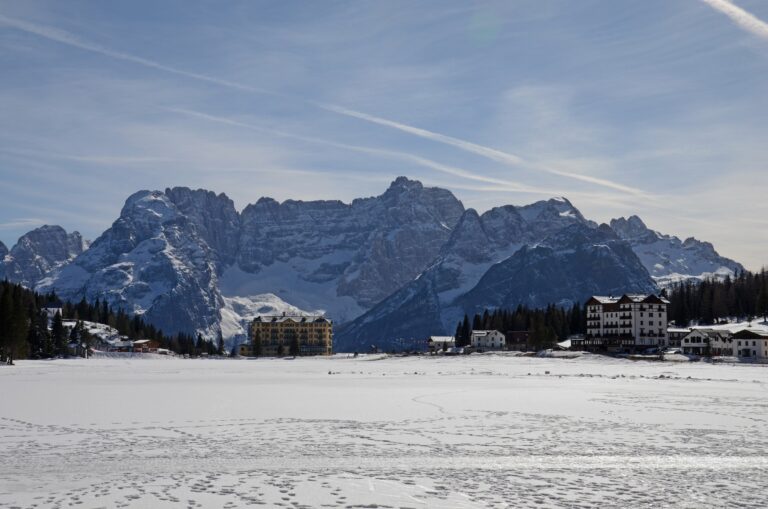
When people think of the Dolomites mountains in Italy, they usually picture jagged peaks and gruelling climbs, but the area around Lago di Misurina offers a different, more tranquil experience. Be prepared for this place to win you over with its hauntingly beautiful atmosphere — especially when the lake’s surface mirrors the massive mountain ranges all around it.

The lake is surprisingly large and deep. It sits at a full 1,754 metres above sea level, so even in the height of summer it’s noticeably cooler than the valleys below. Compared to nearby Cortina d’Ampezzo, our favourite base in the region, it’s a fair bit chillier up here. But what fascinates me most about Misurina is its microclimate. The air is so uniquely clean and pure that people with respiratory conditions have been coming here for treatment since the last century. To this day, the Istituto Pio XII operates on the lakeshore — a globally unique high-altitude sanatorium for children suffering from asthma. Take a deep breath here and you can almost feel your lungs clearing out.

Cadini di Misurina: a viewpoint worth every step

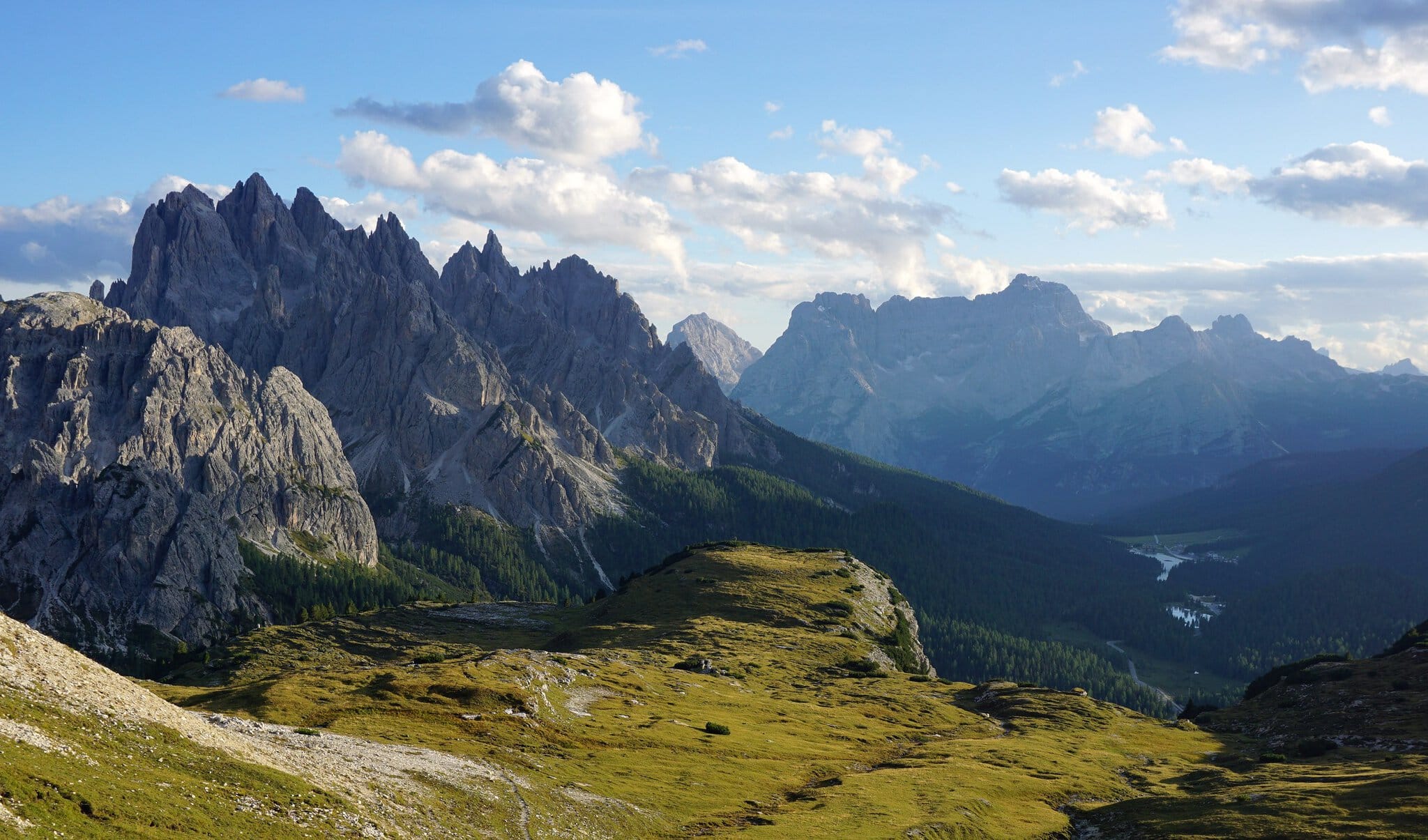
Beyond the lake itself, there’s another huge draw to this area — the dramatic rock towers known as Cadini di Misurina. Just a few years ago, barely anyone outside of locals and die-hard mountaineers knew about this viewpoint. Then the photographers found it, and the rest is Instagram history.

It’s an incredibly dramatic vantage point on a narrow rocky ridge, with jagged peaks rising behind you. If you’re prone to vertigo, your knees will definitely wobble — but the view is absolutely worth it. From the lake, the hike up takes roughly 30 to 45 minutes depending on how often you stop to soak in the scenery. We ended up carrying our little one, Jonášek, in an ergonomic carrier, because a pushchair simply won’t make it over the rocky terrain.

When to visit and how to get there

If you’re wondering what time of year to plan your trip, I have to say Misurina has charm all year round — even though the experience changes dramatically with the seasons. The road to the lake is straightforward and well signposted from multiple directions.

Getting there by car and bus

From Cortina d’Ampezzo, you’ll reach the lake in about 15 minutes along the scenic SR48 road — just be prepared for heavier traffic during the summer months. If you’d rather not drive, local transport works brilliantly: bus number 30 runs regularly from Cortina and drops you right at the Misurina-Lago stop. The main paid car park is right by the lake — expect to pay around €5 for three hours. If it’s full, you can drive a bit further along the road towards Tre Cime, where you’ll sometimes find free overflow spaces.

If you’re flying in from the UK, the nearest airports are Venice Marco Polo and Treviso. From there, hiring a car is by far the easiest way to explore the Dolomites. Several airlines including easyJet, British Airways, and Ryanair operate regular flights from London and other UK cities to Venice.

Which season to choose

Summer is obviously the most popular time, as you can tackle high-altitude hikes and enjoy the sunshine — though the tourist crowds can be exhausting. If you love colours and photography, come in October when the surrounding larches turn incredible shades of gold and orange. Winter, however, is a chapter all its own. Thanks to its altitude, the lake freezes completely and transforms into a vast natural ice rink. At the local Forte de Misurina club, you can even hire ice skates and glide beneath the Alpine peaks — a truly fairy-tale experience.

Where to stay near Lago di Misurina

Whenever we plan a trip to this part of the Dolomites, we always face the same dilemma: stay in a livelier town with restaurants and shops, or opt for the peace and quiet of the mountains? Both have their merits, and a lot depends on whether you’re travelling as a couple or, like us, with the whole family in tow.

If you want tranquillity, falling asleep under a blanket of stars and setting off on a morning hike without getting in the car, stay right by the lake. There are some lovely smaller hotels — for example, the historic Hotel Lavaredo, where the hospitality feels genuinely personal, or the family-run Hotel Sorapiss right on the shore. If you prefer more buzz — great restaurants and shops — I’d recommend making your base in Cortina d’Ampezzo. It’s only a 15-minute drive to the lake, and you’ll have hundreds of apartments and luxury hotels to choose from. A cheaper and very pleasant alternative is the little town of Auronzo di Cadore, nestled a bit further down in the valley. You can search and compare accommodation easily on Booking.com.

Lago di Misurina & Cadini: 10 things to see and do

There’s plenty around the lake and its immediate surroundings to make it worth extending your visit. Let’s dive into the best of what awaits you here — whether you love long treks or prefer soaking up the atmosphere with a good Italian coffee in hand.

1. Walk around the lake — pushchair-friendly
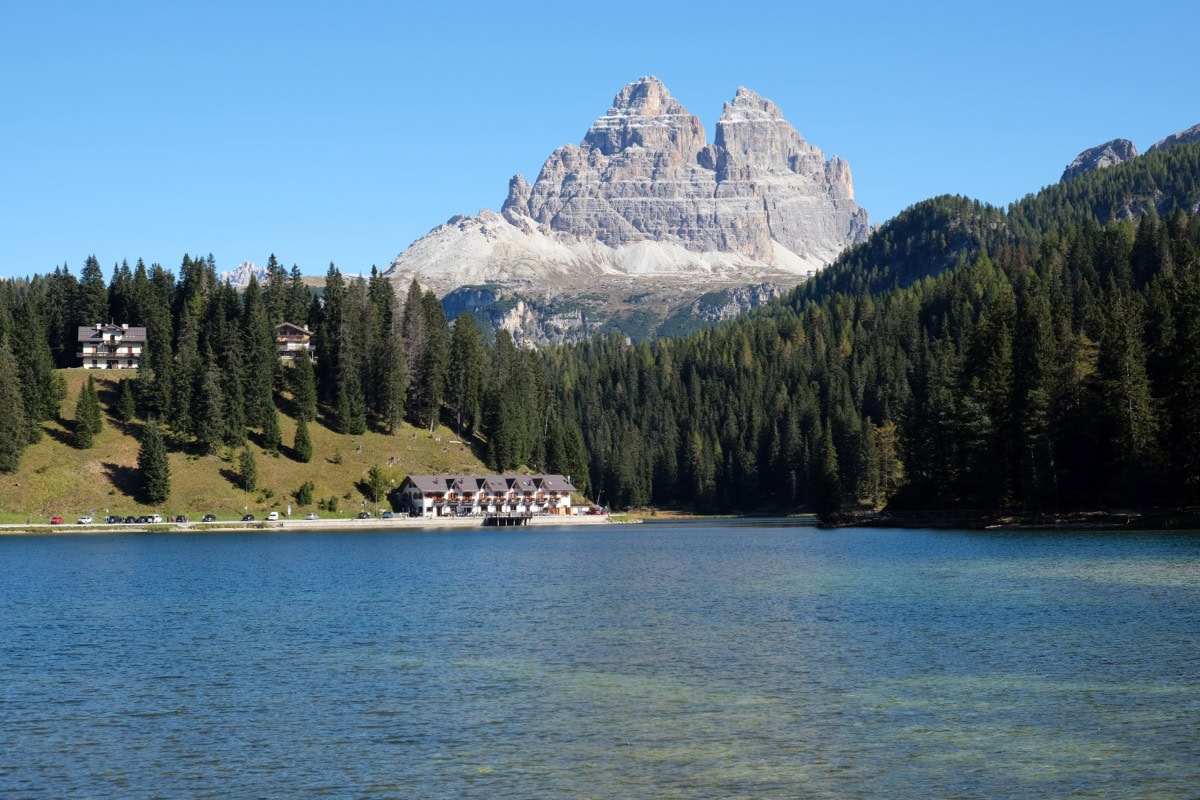
Our favourite activity is, surprisingly, the simplest one. The trail around the entire Lago di Misurina is about 2.6 kilometres long and runs mostly on flat ground. At a leisurely pace, it took us around 40 minutes — and Jonášek happily slept through almost the entire thing in his pushchair, while our dogs Kája and Baby enthusiastically sniffed every bush along the shore. It’s a beautifully maintained path, and the views of the Sorapis range from the opposite bank are simply breathtaking.

Along the way, you’ll find plenty of benches perfect for a snack break. If you’ve got dogs like us, you’ll also appreciate that the path is largely lined with grass and trees, giving them room to run around and cool off in the shade.

2. The iconic Cadini di Misurina viewpoint
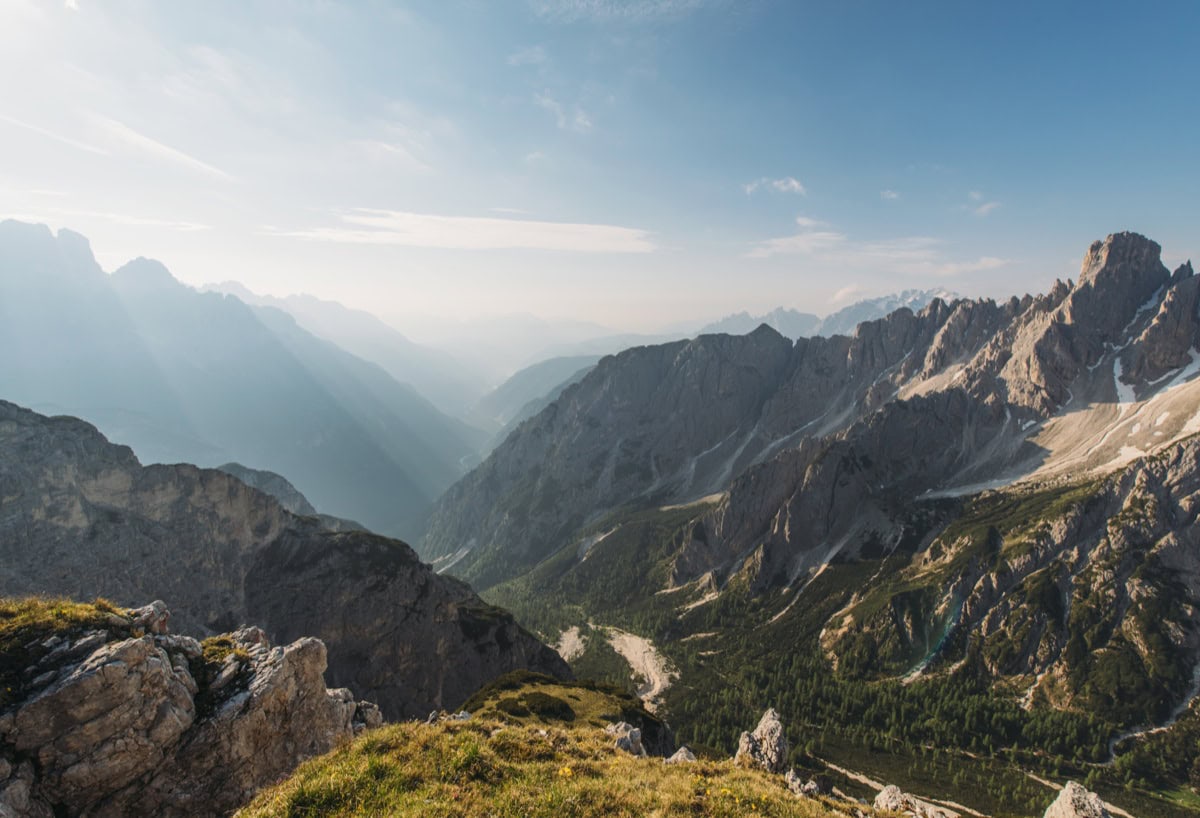
As I mentioned earlier, this is the view that practically everyone recognises from photos. The trail starts near Rifugio Auronzo and follows the ridge towards the sharp rocky spires. It’s not a particularly strenuous climb — about 30 to 45 minutes one way — but the path is rocky and exposed in places, so proper hiking boots are an absolute must.

I’d strongly recommend heading out either very early in the morning or later in the afternoon. During the summer season, literal queues form during the day as everyone waits for their turn to snap the perfect people-free photo.

3. The wooden jetty photo spot

As you walk along the promenade on the eastern shore, you’ll come across a small wooden jetty with little boats gently bobbing beside it. Early in the morning, before the wind picks up and ripples the surface, the lake perfectly mirrors the Sorapis range and the Cadini towers. This is exactly where those stunning postcard shots are taken.

For the best photo, though, you really need to get up early. By ten o’clock the tour buses start rolling in, and the magical morning calm quickly turns into a bustling promenade.

4. Cosmolab Misurina observatory

This was a massive surprise for us. Right by the lake, you’ll find a working astronomical observatory — the Cosmolab Misurina. Admission is around €8, and it’s a brilliant backup plan when the mountains throw bad weather at you — which, in the Dolomites, happens more often than you’d like. The local dark skies, free from light pollution, guarantee spectacular stargazing.

They sometimes hold evening sessions too, when viewing conditions are at their best. Make sure to check the opening times in advance though, as they frequently change depending on the season and lunar phases.

5. Winter ice skating on the frozen lake

If you’re visiting in winter, this is something you simply cannot miss. Part of the lake is officially maintained as the Pista Misurina — for around €8 to €10 you can hire skates and glide across the ice. Please stick to the designated rink area only, as the ice beyond it can be unstable — and a dip in freezing water is something nobody wants to deal with.

Make sure you wrap up properly, too. The mountains surrounding the lake often block the sun in winter, and temperatures plunge well below zero. A stop for hot chocolate or a bombardino at the nearest bar will sort you right out afterwards.

6. Escape the crowds at Lago d’Antorno
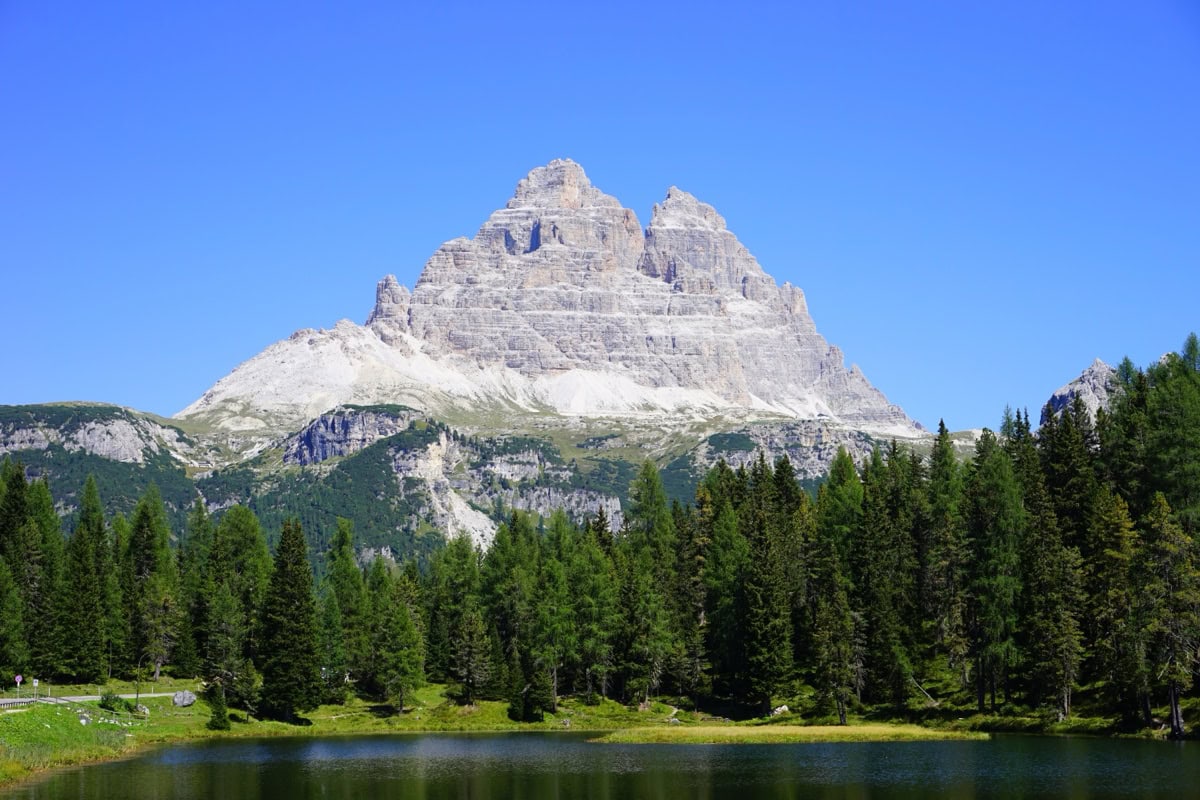
When the summer crowds at Misurina get a bit much, Lukáš and I have a secret tip. We drive a few minutes further along the road towards Tre Cime and stop at the tiny Lago d’Antorno. It’s surrounded by dense forest, far fewer people come here, and the view of Tre Cime is arguably even more poetic than from below.

A simple wooden boardwalk and gravel path loop around the little lake. It’s the perfect spot for a picnic away from the main hustle, and the reflections of the peaks on the still water make for incredible photographs.

7. Cable car up to Rifugio Col de Varda
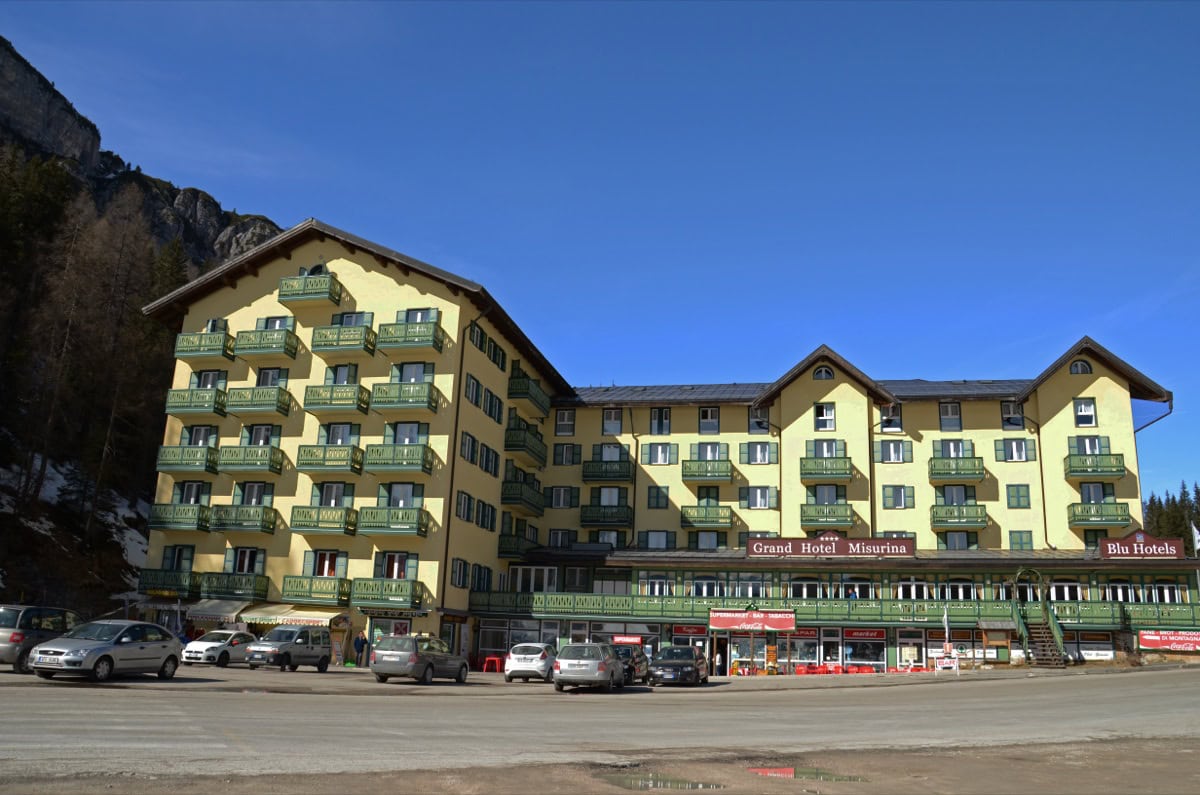
A chairlift runs right from the lake and whisks you up in minutes to Rifugio Col de Varda. If you don’t fancy a steep uphill walk, it’s the perfect way to get gorgeous panoramic views of the entire lake from above. The food at the rifugio is fantastic too — we always treat ourselves to something sweet up there.

The ride up only takes a few minutes, but the vista it reveals is something you simply won’t get from the water’s edge. And if you’ve got a bit of energy to spare, I’d recommend walking back down — it’s a lovely, gentle stroll through a pine forest.

8. Hike up to Forcella Misurina

For those of you craving a bigger challenge beyond a flat lakeside stroll, a steeper trail leads from the Col de Varda hut up to the Forcella Misurina saddle. This one is aimed at more experienced hikers — the path is loose and quite steep — but once you scramble to the top, you’ll find yourself in utter peace, far from all the tourists.

Don’t forget to pack trekking poles — they’ll save your knees big time on the descent through the loose terrain. Your reward will be panoramas shared with only a handful of fellow enthusiasts.

9. The Istituto Pio XII sanatorium

Although it’s a medical facility and you can’t go inside, the enormous yellow sanatorium building is impossible to miss — and its story is well worth knowing. The sight of this vast structure on the shores of an Alpine lake is genuinely fascinating and gives you goosebumps.

What particularly intrigues us is that it was originally established under the patronage of the world-famous Padre Pio — the combination of an Alpine sanatorium and a place of pilgrimage has something almost mystical about it. Apparently, the unique climate helps children breathe so much better that families from across Italy return several times a year.

lukas a lucka
Lukáš and Lucie recommend
Where to stay near Lago di Misurina and Cadini
5 accommodations — hotels and other lodging options

10. Launchpad for Tre Cime di Lavaredo

Misurina serves as the unofficial base camp for a trip to Tre Cime di Lavaredo. The bus stop here is the main departure point for buses number 30 and 31, which take you up the steep toll road. If you’d rather not pay the hefty toll for a private car, leaving it down at Misurina and hopping on the bus is by far the smartest option.

In peak season, expect the bus to be pretty busy, so it pays to arrive at the stop with time to spare. Tickets can usually be bought via an app or directly from the driver.

Where to eat and what to try

After a hike, we’re always absolutely ravenous — and in the Dolomites, that’s a wonderful problem to have. The local Italian cuisine carries a subtle Austrian influence, and the result is nothing short of genius. We usually rely on mountain huts, which may look unassuming but cook with brilliant local ingredients.

Our top tip is the aforementioned Rifugio Col de Varda, reachable by chairlift. They make utterly divine casunziei — traditional ravioli filled with beetroot, sprinkled with poppy seeds, and drenched in an obscene amount of melted butter. A bit further along the route towards Tre Cime, you’ll find the renowned Lavaredo hut. If you prefer a more conventional sit-down meal by the lake, the restaurant at Hotel Misurina delivers excellent Italian cooking. And as a sweet finale after your lap of the lake, don’t skip proper Italian gelato from one of the many stands along the promenade.

Practical tips and rules to keep in mind

Nature in the Dolomites is fragile and protected, and because hundreds of thousands of visitors descend on the area each year, the Italian authorities have introduced some fairly strict rules. Here are a few things that might catch you off guard.

Lots of people ask about swimming, because the sight of crystal-clear water on a hot summer’s day is seriously tempting. Unfortunately, I have to disappoint you — swimming in the lake is officially banned. And honestly, the water is so cold that you probably wouldn’t fancy getting in voluntarily anyway. Dogs can dip their paws and cool down at the water’s edge, but humans should stay out.

Now for a genuinely important warning for photographers. Since you’re within a nature park, there’s a strict ban on flying drones. If you’re caught filming aerial footage here, you face a crushing fine of up to €3,000 — and local park rangers apparently enforce it very seriously. Before heading out from your hotel, I’d definitely recommend checking the current weather by searching for “Lago di Misurina webcam live” or “webcam Lago di Misurina.” Mountains are unpredictable, and sunshine in Cortina doesn’t mean a storm isn’t brewing at the lake.

Final tips and tricks (not just for the Dolomites)

A few practical things that save Lukáš and me plenty of stress (and money) before every trip to Italy:

Finding flights from the UK

The most convenient airports for the Dolomites are Venice Marco Polo and Treviso. Airlines like easyJet, British Airways, and Ryanair all operate regular flights from various UK airports. We like comparing routes and fares on Kiwi to find the best deals.

Hiring a car on arrival

If you fly in, getting around the Dolomites without a car is tricky — especially for reaching the lakes and smaller viewpoints. Lukáš and I have had consistently good experiences with DiscoverCars, which we use pretty much everywhere around the world.

Don’t forget proper travel insurance

Italian hospitals and mountain rescue services can be seriously expensive, especially if you take a tumble on the rocky path to the Cadini viewpoint. We swear by SafetyWing, which we’ve reviewed in detail. Even though your EHIC or GHIC card provides some cover in the EU, a dedicated travel insurance policy gives you much better peace of mind for adventure activities.

Data and internet

Since Brexit, UK mobile users no longer benefit from free EU roaming on most plans, so data charges in Italy can add up fast. If you want reliable connectivity — even in the mountains — have a look at our guide to using an eSIM from Holafly.

What to wear in the mountains

While the path around the lake is flat, you’ll definitely need sturdy footwear for the Cadini viewpoint hike. Check out our guide on choosing the right hiking boots so you don’t end up suffering in trainers.

Where else to go in the Dolomites

Northern Italy is the kind of place you could return to for a decade straight and still not see everything. If you’ve already ticked off Lago di Misurina, make sure you don’t miss our other favourite spots in the area.

Straight up the road from the lake you’ll reach the three iconic pinnacles — our favourite Tre Cime di Lavaredo trek. If you’re looking for a base with incredible atmosphere for further adventures, check out our guide to Cortina d’Ampezzo. If you love jaw-dropping lakes with impossibly turquoise water, don’t forget to add the more challenging hike to Lago di Sorapis to your itinerary. And for a comprehensive overview of the best the entire region has to offer, I’d recommend reading our big article on what to do and see in the Dolomites.

Frequently Asked Questions (FAQ)

Can I swim in Lago di Misurina?

Although many tourists search for lago di misurina swimming, I have to disappoint you. Swimming in the lake is prohibited due to nature conservation, and more importantly, the water is extremely cold year-round, so it wouldn’t be an enjoyable experience anyway.

How much does parking cost at the lake and where’s the best place to park?

You’ll find the official lago di misurina parking right by the lake, so have some cash or a credit card ready. The standard rate is around 5 EUR for three hours. In summer, I recommend arriving as early as possible in the morning, as the parking lot fills up very quickly.

Is the trail to the Cadini di Misurina viewpoint difficult?

It’s not an extreme climb, but expect rocky terrain and some slightly exposed sections that require sturdy footwear. The path from Auronzo hut to the viewpoint takes roughly 30 to 45 minutes one way.

Where can I find current weather information before my trip?

Before any mountain excursion, I strongly recommend checking the current conditions. Just search for lago di misurina webcam or look for a live stream from the area, as weather in the Dolomites can change within minutes from bright sunshine to severe thunderstorms.

Can we manage the lake trip with a baby stroller?

Yes, it’s an absolutely ideal destination for families with young children. The loop around the lake measures 2.6 kilometers and runs mostly flat on a paved and well-maintained surface, so you can manage it even with a regular city stroller.

Can I fly a drone at the lake?

Absolutely not—there’s a strict ban on drone flying throughout the entire area. If the local park authorities catch you, you risk an astronomical fine that can reach up to 3000 EUR.

Can you ice skate here in winter?

Yes, it’s one of the most popular winter activities. Once the lake freezes sufficiently, the maintained Pista Misurina rink opens, where you can rent skates for around 8 to 10 EUR and glide across natural ice beneath the Dolomite peaks.

Tips and Tricks for Your Vacation

Don’t Overpay for Flights

Search for flights on Kayak. It’s our favorite search engine because it scans the websites of all airlines and always finds the cheapest connection.

Book Your Accommodation Smartly

The best experiences we’ve had when looking for accommodation (from Alaska to Morocco) are with Booking.com, where hotels, apartments, and entire houses are usually the cheapest and most widely available.

Don’t Forget Travel Insurance

Good travel insurance will protect you against illness, accidents, theft, or flight cancellations. We’ve had a few hospital visits abroad, so we know how important it is to have proper insurance arranged.

Where we insure ourselves: SafetyWing (best for everyone) and TrueTraveller (for extra-long trips).

Why don’t we recommend any Czech insurance company? Because they have too many restrictions. They set limits on the number of days abroad, travel insurance via a credit card often requires you to pay medical expenses only with that card, and they frequently limit the number of returns to the Czech Republic.

Find the Best Experiences

Get Your Guide is a huge online marketplace where you can book guided walks, trips, skip-the-line tickets, tours, and much more. We always find some extra fun there!
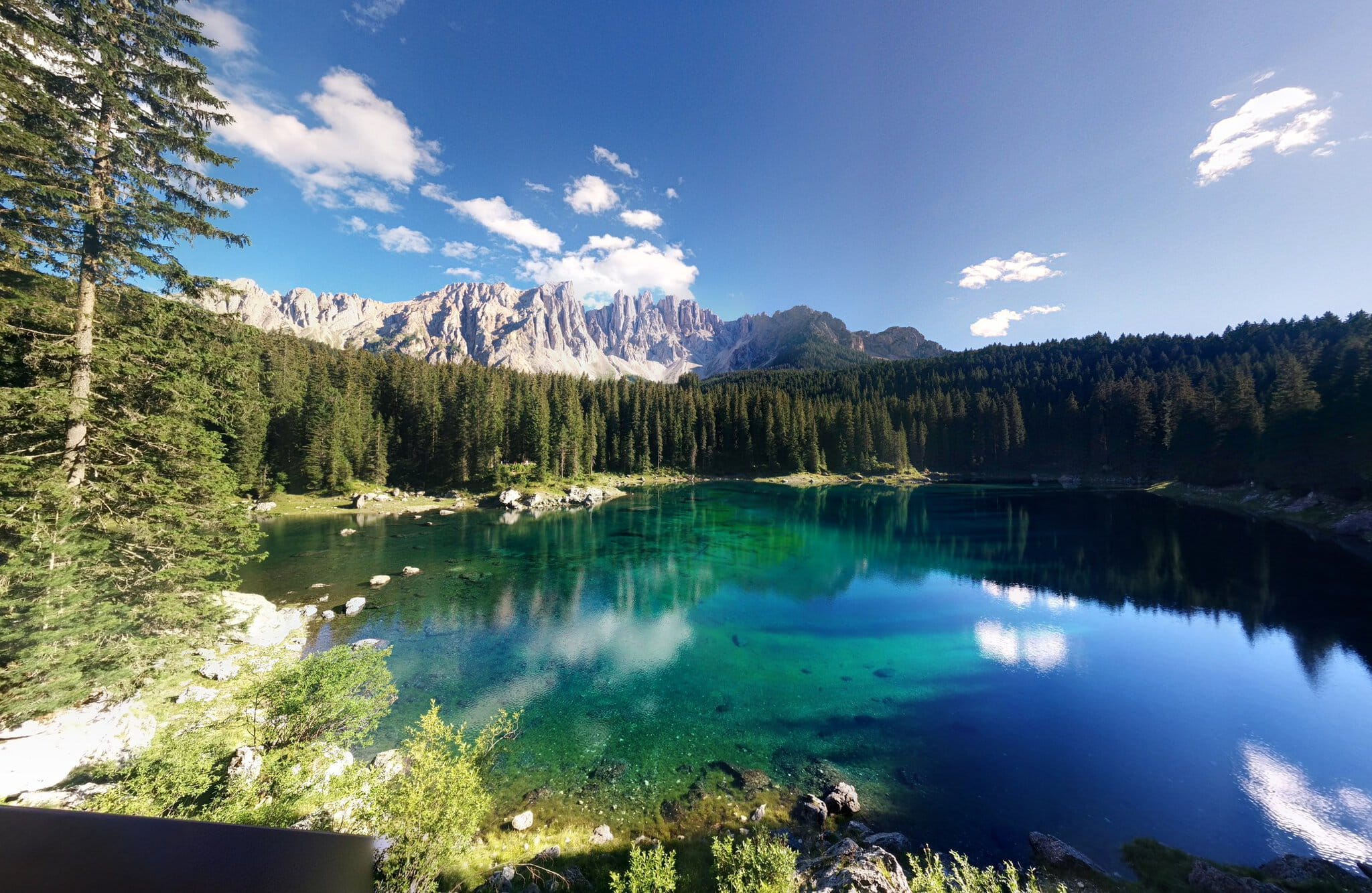
Lago di Carezza (Karersee), Dolomites Italy: 10 Tips on What to See and Do

TL;DRLago di Carezza (Karersee) is an alpine lake sitting at 1,520 metres in South Tyrol, famous for its intense emerald-turquoise water beneath the Latemar massif. The best time to go is early morning or autumn around October, when the surrounding larches turn gold, whereas summer brings crowds. A step-free walking tunnel leads to the lake from the paid car parks P1 or P2 (€5–7 for the first two hours, booking required online), followed by a one-kilometre loop around the water that takes 20–30 minutes, even with a pushchair. Among the 10 tips on what to see and do here are the main viewing platform, a ride up the Paolina cable car to 2,125 metres, a trek to the Rifugio Roda di Vael hut at 2,283 metres, and a stop at the Carezza Center for toilets and local cheeses. Swimming and drone flying are strictly banned year-round, as this is a protected natural monument.

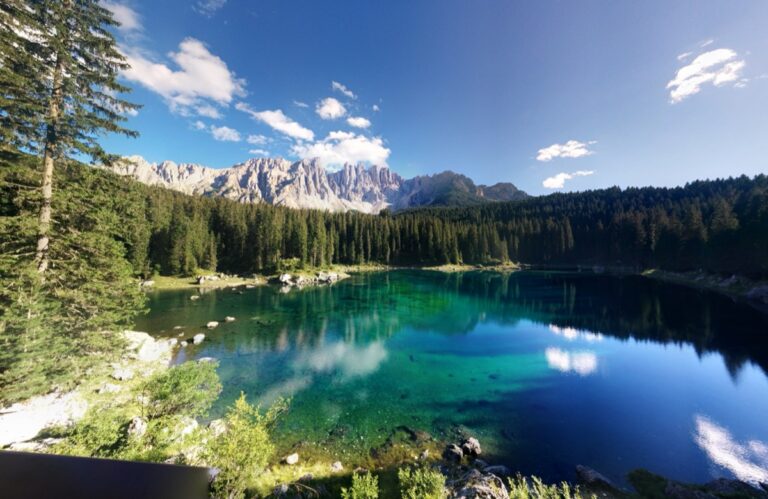
You’ve almost certainly stumbled across a photo of Lago di Carezza on social media at some point. Its impossibly vivid turquoise-emerald colour looks so unreal that you’d swear someone went overboard in Photoshop. But they didn’t. Karersee, as it’s called in German, is one of those rare gems in the Dolomites Italy that actually looks even more magical in real life than it does on screen.

In this article, I’ll share where to stay strategically and what to expect. You can’t drive directly to the lake, but there’s a brilliantly designed, flat five-minute tunnel walkway from the car park that’s completely pushchair-friendly.

TL;DR

If you’re already in the car heading for the Italian Dolomites, here are the key things I wish someone had told me before we went:

  • Major parking update: A reservation system for cars has been introduced — similar to the one at the legendary Tre Cime — so book your spot at car parks P1 or P2 online in advance, or you risk being turned away at the barrier.
  • Pushchairs and kids: The entire loop around the lake and the access path from the car park are fully accessible and perfect for families with young children.
  • Dogs: Our pups loved the outing, but remember that dogs must be kept on a lead at all times.
  • Swimming: The crystal-clear water might tempt you, but the answer to the common question “can you swim in Lago di Carezza?” is a firm no — the lake is strictly protected.
  • Best time to visit: The water is at its most vibrant early in the morning or in autumn, when the surrounding larches turn golden. Expect crowds during summer daytime hours.

What is Lago di Carezza and its Rainbow Lake legend

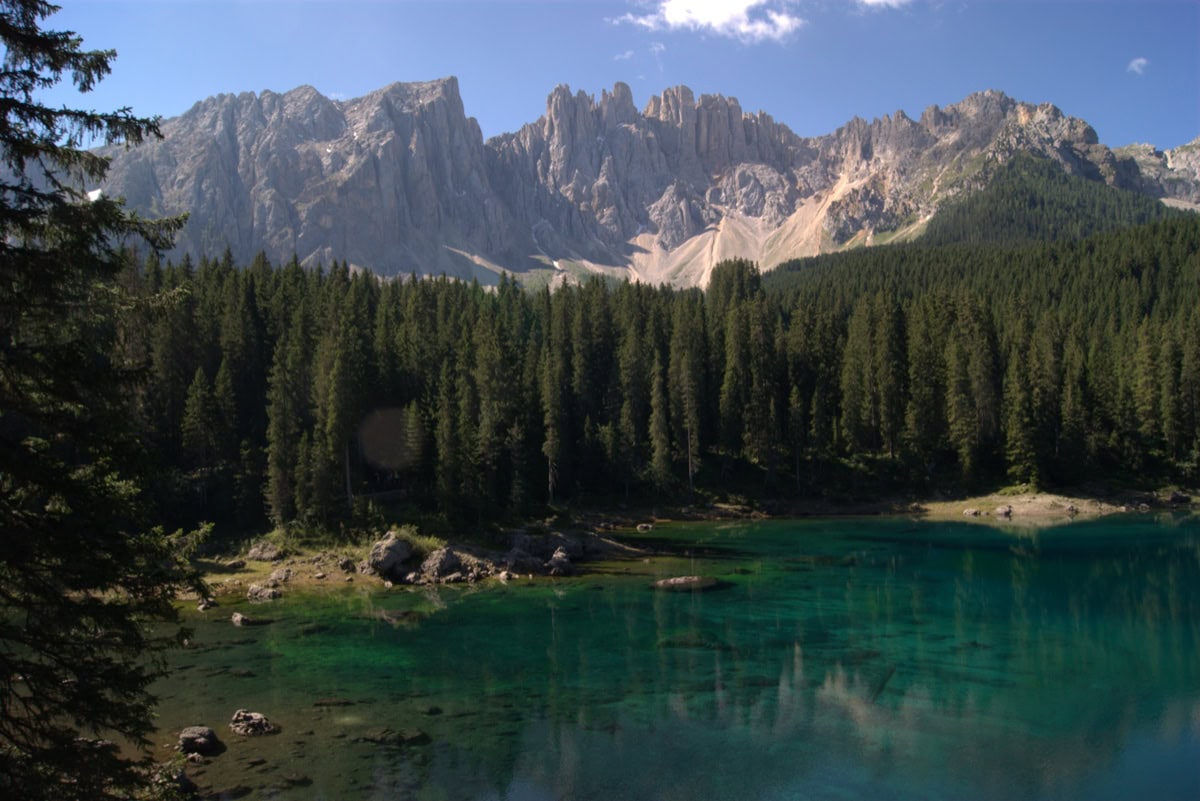
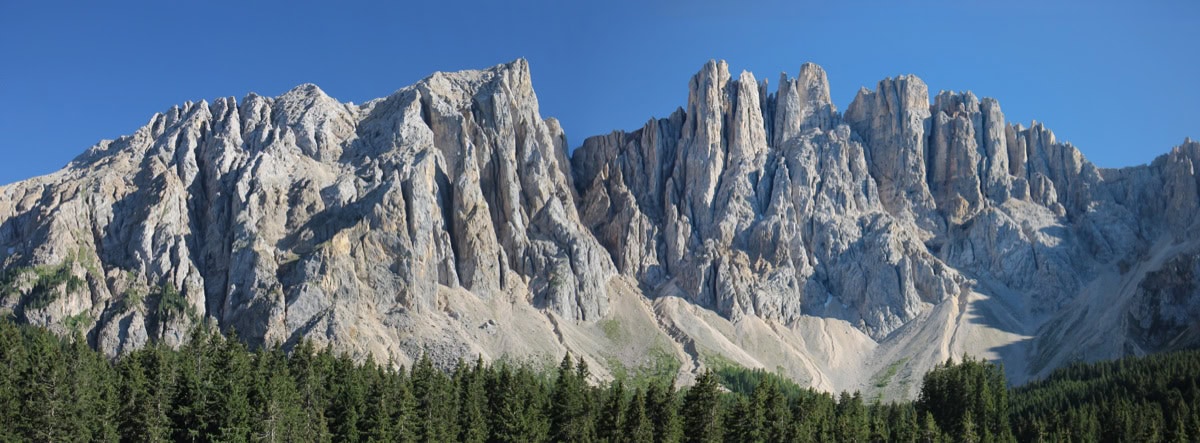
But first, a bit of context that makes this place truly special: why on earth does the lake have such an extraordinary colour, and where does the name “Rainbow Lake” come from? Lago di Carezza is a relatively small alpine lake sitting at an elevation of 1,520 metres in the province of South Tyrol (Trentino-Alto Adige). What makes it so remarkable is its colour and the dramatic backdrop of the jagged limestone peaks of the Latemar massif towering behind it.

The water shifts in the most mesmerising way from pale green through deep emerald to rich turquoise. The explanation is wonderfully prosaic: limestone bedrock plus the right angle of sunlight equals a natural emerald. Science is all well and good, but the local legend is far more romantic, if you ask me.

The story goes that a beautiful water nymph called Ondina once lived in the lake. A sorcerer from the nearby Masarè range fell hopelessly in love with her. To lure her out of the water and win her heart, he conjured a spectacular rainbow over Mount Latemar. But he forgot one small detail — he hadn’t disguised himself as a witch from another mountain had advised. When Ondina spotted the hideous sorcerer, she was so frightened that she vanished into the depths for good. The sorcerer flew into such a rage that he tore the rainbow apart and hurled the pieces into the water. And that, so locals say, is why Lago di Carezza is still known as the “Rainbow Lake” (Lec de Ergobando in the local Ladin dialect). ☺️

Best time to visit and Dolomites Italy weather

Planning a trip to the Dolomites always revolves around picking the right season. If you’re wondering when to visit Lago di Carezza, it largely depends on what you’re after and whether crowds bother you more than cooler temperatures. From our experience, every season here has something going for it.

The most popular window is, unsurprisingly, summer — roughly July to September. The lake is beautifully full from melting spring snow and the whole area bursts with lush colours. The catch? Thousands of tourists. If you’re visiting in summer, I strongly recommend arriving early in the morning — ideally by seven or eight o’clock. Not only will you dodge the crowds and have the viewing platforms to yourselves, but the morning light creates perfect photography conditions and the surface is mirror-still.

Autumn in the Dolomites is a personal favourite for me and Lukáš. Around October, the larches surrounding the lake transform into incredible shades of gold and orange. If you check the Lago di Carezza weather forecast before setting out and hit a sunny autumn day, you’ll witness a total visual explosion. Just bear in mind that the water level tends to be noticeably lower by autumn.

And what about winter? Searching for “Lago di Carezza winter” is absolutely worth it. In the colder months, the lake often freezes solid and disappears under a thick blanket of snow — you won’t see the famous turquoise, but the fairy-tale winter landscape more than makes up for it. If you’re into skiing, there’s a popular ski resort just a stone’s throw from the lake, making a visit to the frozen Carezza an ideal afternoon stop after a day on the slopes.

How to get to Lago di Carezza and new parking rules

Transport and parking are probably the single most important topic to cover for Lago di Carezza, because the rules have tightened considerably in recent years to protect the area from overtourism. Most visitors drive here from larger hubs like Cortina d’Ampezzo, nearby Bolzano, or from the Val di Fassa valley via the town of Canazei. The route typically winds through the scenic Passo di Costalunga pass and is an experience in itself, with jaw-dropping views the whole way.

If you’re travelling from the UK, the easiest option is to fly into Venice, Treviso, Verona, or Milan — you’ll find plenty of direct flights from London, Manchester, and other major UK airports with carriers like easyJet, Ryanair, and British Airways. From there, it’s roughly a two-to-three-hour drive north into the Dolomites. Search for cheap flights on Kiwi, which is our go-to flight comparison tool.

Right by the lake there are large paid car parks labelled P1 and P2 — and this is where it gets important. Since spring 2024, the system works much like the one at the famous Tre Cime: capacity is capped and during peak season you must reserve your spot online in advance. Imagine the nightmare of driving all the way into the mountains with your family, only to be told at the barrier that it’s full and there’s nothing they can do. Sort it out a few days ahead. Parking costs roughly 5–7 € for the first two hours, which is plenty of time for a relaxed visit and a walk around the lake. For car hire on mountain trips, we often use DiscoverCars.com, which we’ve had consistently good experiences with.

If you’d rather skip the parking hassle entirely, the Italian public transport network serves this area well. From Bolzano, direct bus line 180 runs here — the ride takes just under an hour and drops you practically at the visitor centre. If you’re staying on the other side of the mountains in Canazei, hop on bus number 480, which crosses the Passo di Costalunga.

Once you’ve parked or stepped off the bus, you’ll find a surprisingly modern gateway to nature. A safe pedestrian tunnel has been built under the road, leading you straight from the car park to the main viewing platform at the lake. It’s a five-minute stroll, completely flat, so when we unloaded Jonášek’s pushchair and set off with our dogs this year, there were no rocks or roots to wrestle with.

Where to stay near the lake + how much it costs

If you want to properly explore the Latemar area rather than just popping by the lake for an hour, it’s well worth finding accommodation nearby. Let’s be honest — the Dolomites aren’t a budget destination, and prices in August or February make that abundantly clear. A week for two including food and fuel can easily run to 1,200–1,800 €, which Lukáš and I offset by packing our own lunches like true mountain folk and not splurging on fancy hotels. We usually search for accommodation on Booking.com, where we often grab good deals through the loyalty programme.

The closest and most iconic option is to stay right above the lake. Just across the road from the car park sits the renowned Carezza Hotel Latemar, which offers lovely wellness facilities and jaw-dropping mountain views. It’s on the pricier side (expect from around 160 € per night upwards), but the sheer bliss of wandering down to the lake at sunrise with a coffee in hand, before the first cars even arrive, is sometimes worth every penny.

Another excellent strategic base is the nearby village of Nova Levante (Welschnofen), just a few kilometres below the lake in the valley. You’ll find classic Tyrolean charm, plenty of small family-run guesthouses (garni), and traditional restaurants serving the best dumplings you’ll ever taste. Prices tend to be a little gentler on the wallet, and you’re still just minutes from the mountains.

If you prefer a bit of urban buzz or want to combine nature with some history and shopping, consider staying in Bolzano. It’s only about a 30-minute drive from the lake, and in the evening you can stroll under the arcades of the old town with a gelato in hand. For serious hikers and high-mountain enthusiasts, Canazei in the Val di Fassa valley is a superb choice — you can reach the lake via the pass in about 20 minutes, and from Canazei you can also ride cable cars up to the Sella massif or the Marmolada glacier.

Lago di Carezza: 10 best things to see and do

Lago di Carezza isn’t just about snapping one photo from the viewpoint and rushing back to the car. The whole Latemar area offers loads of ways to fill an entire day or a long weekend. Here are the things that have genuinely impressed us at Carezza over the years — plus a few that took a bit of effort before we fell in love with them. 😅

1. First impressions from the main viewing platform

When you emerge from the tunnel on the car-park side, you step straight onto a large wooden viewing platform. This is exactly where 99% of those picture-perfect shots are taken — and you’ll instantly understand why. Arrive in the morning or early evening when the surface is mirror-still, and the reflection of Latemar’s jagged peaks in the turquoise water will genuinely stop you in your tracks. Don’t forget the obligatory family photo, but be considerate of other visitors — in summer it gets quite cramped and everyone wants their own slice of the view.

2. Take the easy loop walk around the lake

A trail starts right at the main viewpoint and circles the entire lake. Although people often ask about a complicated Lago di Carezza route, this particular loop is as easy as it gets — anyone can manage it. It’s roughly one kilometre long and takes a leisurely 20 to 30 minutes, even with frequent photo stops.

The path winds through an enchanting coniferous forest, occasionally drawing closer to the water’s edge (though you’re not allowed past the wooden fence). You’ll discover completely different angles of the lake along the way. The surface is compacted gravel, so pushchairs won’t be a problem.

3. Stop at the Latemar mountain viewpoints

As you walk around the lake, you’ll come across several additional wooden platforms and benches strategically positioned to face the Latemar range. This mountain chain forms a natural wall between South Tyrol and the province of Trentino, and its limestone towers are utterly fascinating.

4. Tackle the more challenging Hirzelweg hike

If a one-kilometre lakeside stroll doesn’t satisfy your appetite for adventure, look up “Lago di Carezza hike.” One of the more beautiful and moderately challenging trails in the area is the Hirzelweg (Hirzel Path). You can join it near the lake — many people take the Paolina cable car (more on that shortly) to reach the starting point.

This trail leads directly beneath the colossal rock walls of the Latemar massif, partly heading towards the Catinaccio (Rosengarten) group. Along the way you’ll encounter a completely different landscape of scree fields, alpine flora, and the occasional marmot. This route is definitely not pushchair-friendly — you’ll need proper hiking boots and a reasonable level of fitness, as you’ll be walking at altitudes above 2,000 metres.

5. Relax at the modern Carezza Center

Right by the car park you’ll find the recently renovated Carezza Center visitor hub. Don’t expect just a ticket booth — it’s a surprisingly handsome timber building that blends beautifully into the landscape. Inside, you’ll find everything you need for a comfortable return to civilisation.

Beyond the clean public toilets (something you appreciate immensely when travelling with a small child), there are souvenir shops, a deli selling local cheeses and speck, and several small bistros. We love stopping here for an afternoon bombardino or Aperol Spritz while the dogs rest in the shade on the terrace. The upper floor even houses a small wellness area and an exhibition on the history and geology of this unique spot.

6. Enjoy winter fun and skiing

Although most people know this spot from summer photos, don’t overlook the fact that the Lago di Carezza winter season is a huge draw for snow lovers. Just above the lake and the village of Nova Levante lies the family-friendly Carezza Dolomites ski resort (often linked with the Latemar / Cinquantore area). It boasts over 40 kilometres of beautifully groomed pistes that are far less crowded than the more famous Sella Ronda circuit.

A massive bonus is that the slopes sit right at the foot of the Latemar and Catinaccio mountains, so you carve your way downhill with these limestone giants constantly in front of you.

7. Wait for the best photography light

Photographers already know this, but it’s worth stressing: light makes the photo, and at Lago di Carezza that’s doubly true. Around midday, when the sun blazes straight down, the lake may look pretty enough, but it loses that magical depth — you’ll get glare bouncing off the surface rather than mountain reflections.

Evening light in the Dolomites is famous for a phenomenon called “Enrosadira” (Alpenglow), when the limestone cliffs catch an incredibly intense pink to fiery red glow. It’s in the evening, after the tour buses leave, or right after dawn that you’ll capture the most iconic shots. Morning mist lingering over the water adds a mysterious air straight out of the Ondina legend.

8. Walk the themed Sentiero del Latemar trails

If you’re travelling with slightly older kids and looking for something more engaging than “just walking through the forest,” definitely try the Sentiero del Latemar. It’s a network of themed and educational trails (such as Latemar.Natura, Latemar.Panorama, and Latemar.Art) scattered across the slopes above the lake.

The trails are packed with wooden sculptures, interactive stations, and information boards that draw children (and, let’s be honest, adults too) into the world of alpine nature in a way that’s far more fun than simply trudging from A to B. The routes typically start at the upper stations of the cable cars, so you skip the toughest uphill and enjoy a gentle, rolling terrain with gorgeous valley views.

lukas a lucka
Lukáš and Lucie recommend
Where to stay near Lago di Carezza (Karersee)
2 accommodations — wellness hotels and other lodging options

9. Ride the Paolina cable car into the sky

This is our absolute favourite tip for anyone who wants to experience the high mountains without a full day’s slog from the valley. A short way from Lago di Carezza you’ll find the lower station of the Paolina cable car (used by skiers in winter, hikers in summer). The open chairlift whisks you from roughly 1,600 metres up to 2,125 metres, right to the Rifugio Paolina mountain hut.

The ride up is an experience in itself — your legs dangle in the air and with every metre the panorama widens across valleys and ridgelines in the distance. From the hut at the top, you can set off on shorter one-to-two-hour trails along the mountainside. Incidentally, you’ll get a superb bird’s-eye view of Lago di Carezza itself, which from up here looks like a tiny blue jewel dropped in the forest.

10. Trek to the Rifugio Roda di Vael mountain hut

Our final tip is for the serious mountain lovers out there. From the upper station of the Paolina cable car, you can set off on a fantastic trek to the Rifugio Roda di Vael (Rotwandhütte), which perches at 2,283 metres directly beneath the dramatic rock face of the Catinaccio massif.

The path leads through the so-called “Eagle’s Pass” (Passo dell’Aquila) and includes some fairly exposed sections. It’s not quite a via ferrata, but there are stretches where you’ll need to watch your step carefully. Your reward is phenomenal food at the hut (their Kaiserschmarrn is legendary) and the satisfaction of ticking off a proper high-mountain achievement. If you’d rather not retrace your steps, you can complete a loop via other trails back down into the Carezza valley.

Visiting the lake with kids and dogs (our experience with baby Jonášek)

As I’ve mentioned a few times, the Dolomites can be pretty unforgiving terrain — sharp rocks and steep drop-offs everywhere. That’s precisely why we were so pleasantly surprised by how family-friendly Lago di Carezza turned out to be in 2024. When you’re planning an outing with a toddler and two curious dogs, your priorities shift dramatically.

💡 Local tip: On virtually every cable car and bus, dogs are required to wear a muzzle (you can buy one almost anywhere, including at the lower stations). It was honestly a bit annoying — they insisted even when we had the cabin entirely to ourselves. On days with multiple cable-car rides planned, we ended up leaving our two dogs resting back at the campsite.

With Jonášek, everything went smoothly. The entire loop around the lake is properly surfaced with fine gravel — no steps or tree roots to snag the pushchair wheels. Dogs are allowed at the lake but must stay on a lead at all times, which makes perfect sense given the sheer number of people passing through daily. One extra thing to watch: dogs must not drink from the lake, and letting them swim is strictly forbidden — it’s a protected natural monument. Bring drinking water for your four-legged friends in a bottle from the car park.

What to eat in the Latemar region

Travel for me is never just about sights and scenery — food plays an enormous part. South Tyrol (Alto Adige) has a fascinating cuisine that blends classic Italian cooking with the heavier, heartier tradition of Austrian-Tyrolean mountain fare. What should you absolutely not miss?

The absolute staple that we order at every mountain hut — including our favourite Rifugio Paolina — is homemade Apfelstrudel. Forget dry puff pastry: this is a proper, generous roll packed with apples, raisins, and pine nuts, drenched in warm vanilla sauce. I always pair it with a strong Italian espresso, because otherwise the sweetness would simply floor me. ☺️

For a post-hike lunch, we go straight for the local Knödel — dumplings prepared a thousand different ways (cheese, spinach, speck) — served either in a rich broth or simply with melted butter and grated local cheese. And if you’re really ravenous, go for polenta. The local polenta con grigliata (creamy cornmeal porridge served with porcini mushrooms and mountain cheese — or with grilled meat if you prefer) will keep you fuelled for the rest of the day. Before you leave, pop into the shop at the Carezza Center and pick up some superb local sheep’s or cow’s cheese from Latemar-area farms — absolutely divine with a glass of wine in the evening.

Practical tips to finish

So nothing catches you off guard on the day, here’s a quick roundup of rules and practical info to keep in mind:

  • No swimming: One of the most common questions online is “can you swim in Lago di Carezza?” Unfortunately (or rather fortunately for nature), swimming is strictly prohibited year-round. The water is ice-cold even in mid-August, so you probably wouldn’t enjoy it much anyway. Wooden fences protect the shoreline and crossing them has carried a hefty fine since 2019.
  • Water isn’t drinkable: The lake water is not safe for drinking — not for you, and not for your dogs.
  • Leave the drone at home: As with most high-profile spots in the Dolomites, drone flying is strictly banned here — for wildlife protection and fellow visitors’ privacy. Those breathtaking aerial shots will have to stay in your memory (or be captured from a cable car).
  • Getting there from the UK: Fly into Venice, Treviso, Verona, or Milan — all well-served by airlines like easyJet, Ryanair, and British Airways from major UK airports. Compare flights on Kiwi, our go-to search tool.
  • Don’t forget travel insurance: Mountains can be unpredictable. For shorter European trips, a good option is True Traveller, which offers excellent cover for hiking and adventure sports.
  • Mobile data: If you need reliable connectivity in remote mountain areas or want to avoid roaming issues, try an eSIM from Holafly — we’ve had great results with them all over the world.

Where else to go in the Dolomites Italy

Lago di Carezza should be just one stop on your broader journey through this stunning part of the Dolomites in Italy. If you’re looking for further inspiration, I highly recommend visiting the breathtaking Alpe di Siusi (Seiser Alm) plateau, which is just a short drive to the north. For a completely different, far more dramatic feel, check out the ridge hike at Seceda, which I personally consider the most photogenic peak in the entire Dolomites.

You’ll find loads more specific trails and tips on places that even less experienced hikers can tackle in our comprehensive guide to things to do in the Dolomites.

Frequently Asked Questions (FAQ)

Whenever readers message me about trips to the Dolomites, the same questions about Carezza come up again and again. So I’ve gathered the most common ones in one place, so you can plan with confidence and without any unnecessary surprises.

Can you swim in Lago di Carezza?

No, swimming, bathing, and even crossing the wooden fence barriers near the water are strictly prohibited to protect the lake’s fragile ecosystem.

What’s the entrance fee and how much does parking cost?

Entry to the lake itself is free. You only pay for parking at the official P1 and P2 lots, where the first two hours cost roughly 5 to 7 EUR. During peak season, you’ll need to book your parking spot online in advance.

Can we do the lake loop with a stroller?

Yes, the path around the lake is absolutely perfect for families with children. Both the tunnel from the parking lot and the loop itself (about 1 km) have a fully accessible, paved surface that works great with any type of stroller.

Can we bring our dog to the lake?

Dogs are welcome at Lago di Carezza, but due to nature protection and the high concentration of visitors, they must be kept on a leash at all times. They’re also strictly forbidden from going into the lake for a dip or drinking from it.

Can you fly a drone at Lago di Carezza?

No, there’s a strict ban on flying drones here, just like at many other protected sites in the Dolomites. Please respect this for the sake of wildlife and other visitors’ privacy.

Are there any refreshments available at the lake?

Yes, right by the parking lot you’ll find the modern Carezza Center, which has pleasant bistros, restrooms, and even a shop selling local cheeses and cured meats.

Is it worth visiting the lake in winter?

Absolutely, but keep in mind you won’t see its famous emerald color. In winter, the lake typically freezes solid and gets covered with a layer of snow, creating a romantic winter atmosphere near the popular ski slopes.

Tips and Tricks for Your Vacation

Don’t Overpay for Flights

Search for flights on Kayak. It’s our favorite search engine because it scans the websites of all airlines and always finds the cheapest connection.

Book Your Accommodation Smartly

The best experiences we’ve had when looking for accommodation (from Alaska to Morocco) are with Booking.com, where hotels, apartments, and entire houses are usually the cheapest and most widely available.

Don’t Forget Travel Insurance

Good travel insurance will protect you against illness, accidents, theft, or flight cancellations. We’ve had a few hospital visits abroad, so we know how important it is to have proper insurance arranged.

Where we insure ourselves: SafetyWing (best for everyone) and TrueTraveller (for extra-long trips).

Why don’t we recommend any Czech insurance company? Because they have too many restrictions. They set limits on the number of days abroad, travel insurance via a credit card often requires you to pay medical expenses only with that card, and they frequently limit the number of returns to the Czech Republic.

Find the Best Experiences

Get Your Guide is a huge online marketplace where you can book guided walks, trips, skip-the-line tickets, tours, and much more. We always find some extra fun there!
Caminito Del Rey, Andalusia: All About the World’s Most Dangerous Path

TL;DRThe Caminito del Rey is now a safe, one-way boardwalk barely 8 kilometres long, clinging to the cliffs above the Guadalhorce river canyon in Málaga province, Andalusia — once billed as the world’s most dangerous path. Tickets (from €10, or from €18 with a guide) need booking online up to two months ahead, since numbers are strictly capped and you can’t just buy them on the day. Málaga makes the best base, an hour’s drive or 45 minutes by train from the walkway, and spring and autumn are the best times to come, particularly May, September and October. The route takes you through the restful Hoyo valley, the dramatic Gaitanes gorge, a glass-floored viewing platform and a suspension bridge roughly 105 metres up, with the whole walk taking three to four hours — set aside at least half a day for it. Children under eight aren’t allowed on the path, and everyone has to wear a safety helmet the whole way round.

The world’s most dangerous path, the path of death, the suicide path, or even the King’s Path. These are all names for the famous Caminito del Rey trail clinging to cliffs hundreds of meters above vast canyons. You’ll find Caminito del Rey in southeastern Andalusia, ideally as a day trip from Malaga. So, do you want to experience a bit of adrenaline? In this guide I will share with you everything about Caminito Del Rey, Andalusia: All About the World’s Most Dangerous Path.

If you don’t have an extreme fear of heights and want to experience this exceptional scenery, then definitely don’t hesitate and head to this trail in Spain. The trail winds around high rock walls, through narrow gorges above the river canyon, and don’t worry, today it is completely safe.

TIP: Where to go on holiday in Spain

Caminito Del Rey: Basic Information

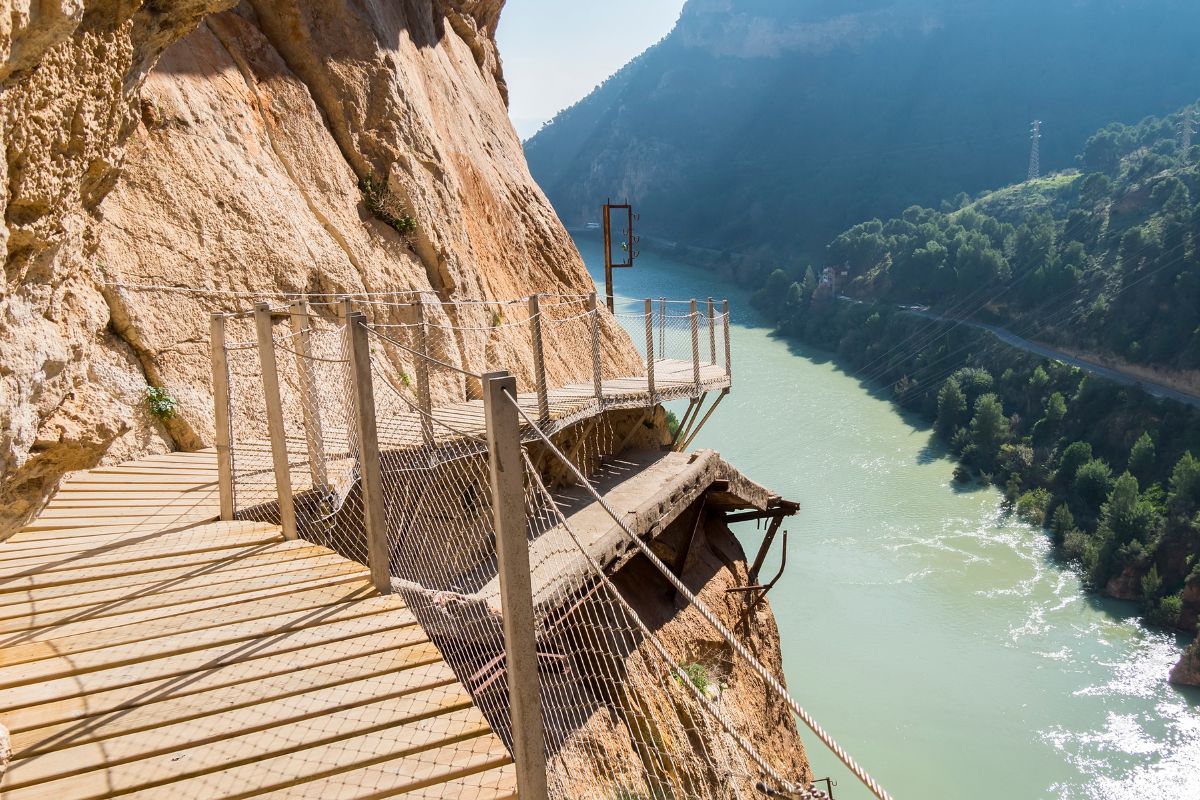
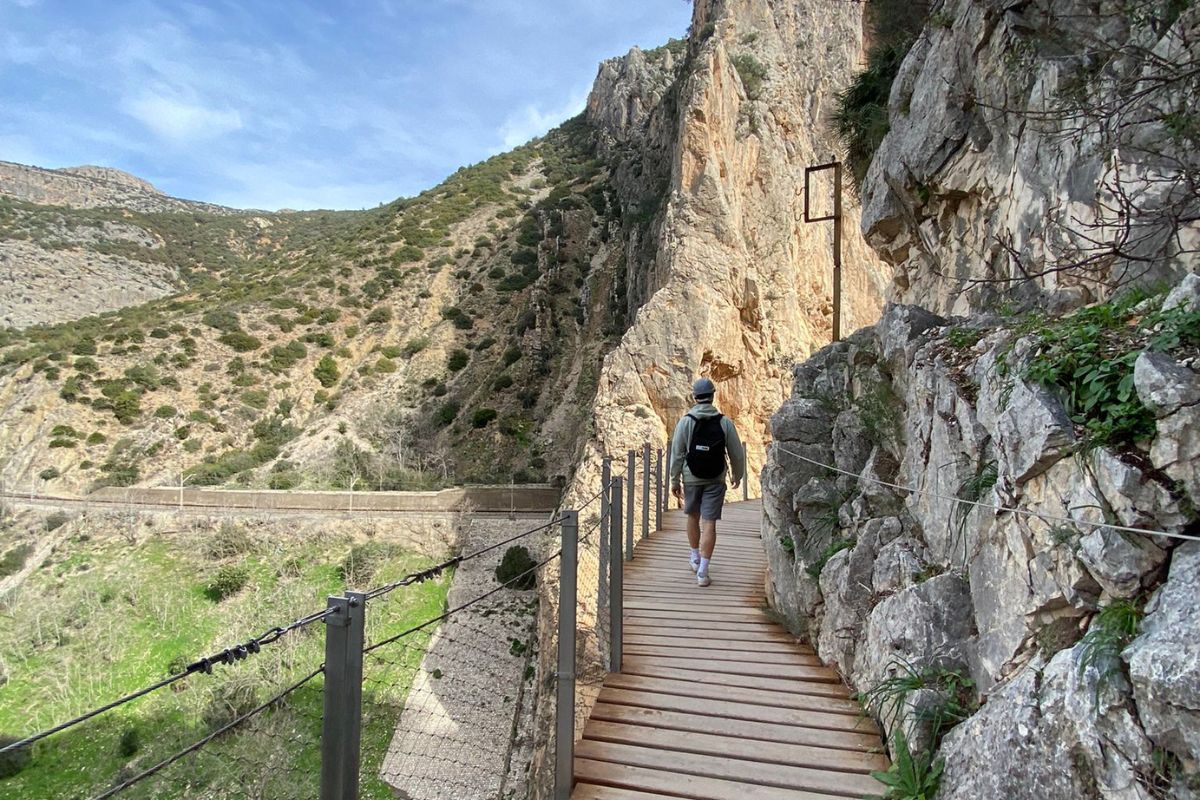
Caminito del Rey is an approximately 8 km long trail, which was formerly considered one of the most dangerous in the world, even earning the nickname path of death. Today, however, it is no longer so dangerous and offers tourists a unique experience in the form of a walk along a path hanging over 100 meters high on a vertical rock face with views of breathtaking nature and a canyon-like valley.

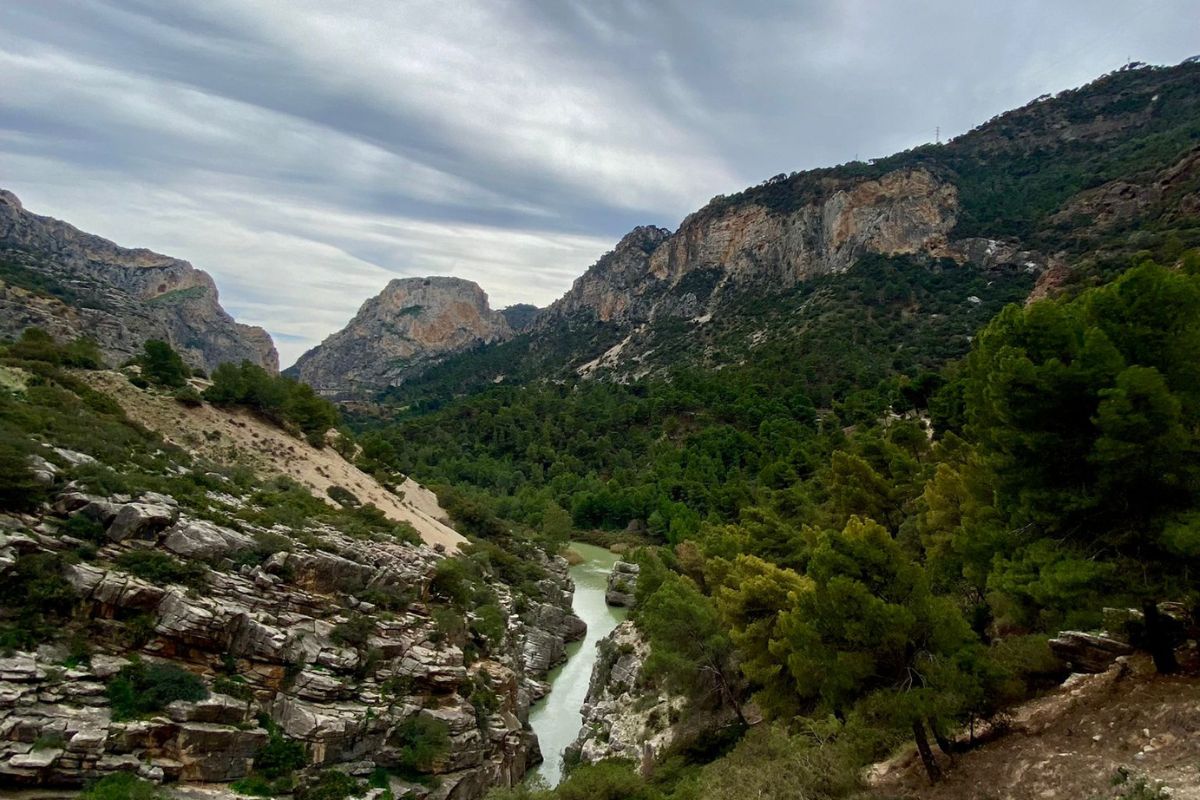
The trail leads through cliffs, canyons, and the Guadalhorce River valley, full of beautiful nature. You might notice flying birds of prey, fish in the river, and if you’re lucky like us, you’ll even see a family of chamois. However, snakes, lizards, and spiders also live in the area. You probably won’t encounter them during your visit.

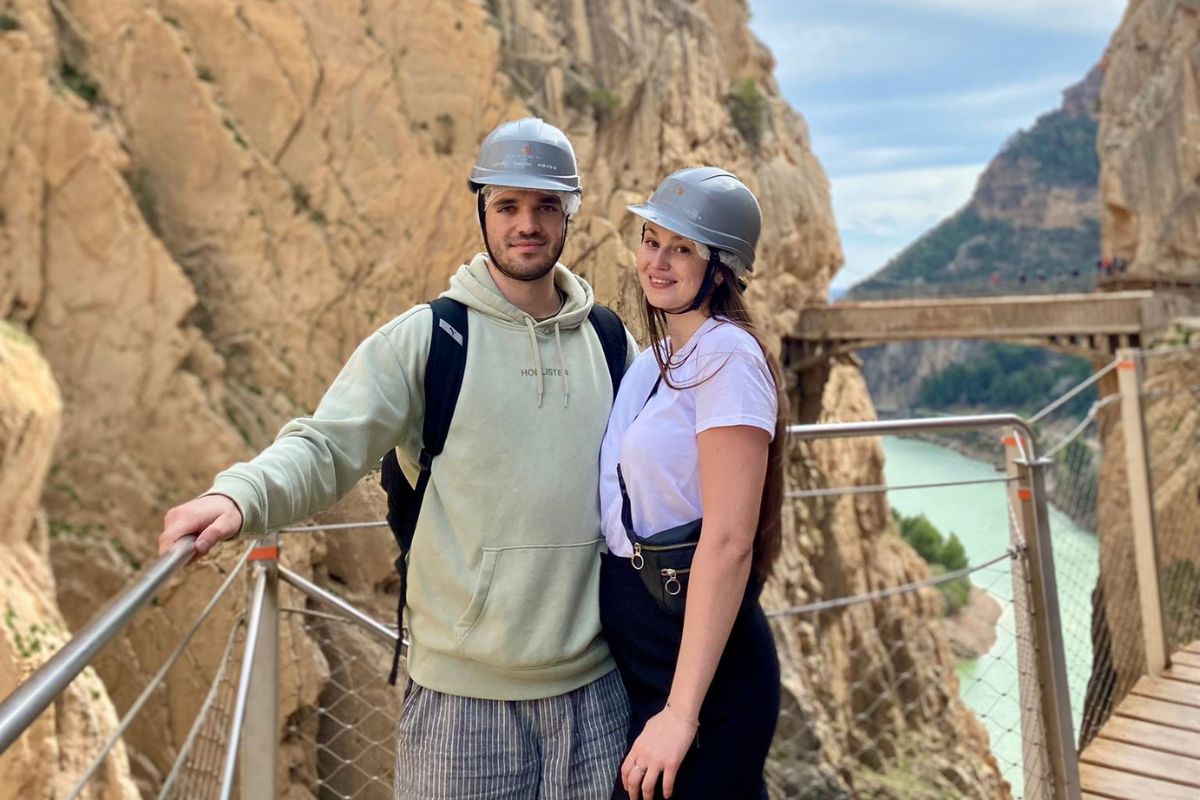
At the start of the trail, you’ll be given a hygienic hairnet and a safety helmet, which you must not remove from your head throughout the entire journey. And if you have children under 8 years old, unfortunately, they are not allowed on the trail.

TIP: Read our article about holidays in Andalusia.

History of the Trail

The Caminito del Rey trail, literally ‘King’s Path’, was built in 1905 and served to provide access for employees to the hydroelectric power plants in the area.

It is named after King Alfonso XIII., who came to the trail in 1921 to inaugurate the construction of the El Chorro hydroelectric power plant. This was intended to ensure sufficient water and electricity for the residents of Malaga. However, the King only walked 700 meters along the trail.

Over time, however, the trail began to deteriorate due to insufficient maintenance, and this caused several falls and tragic deaths. Concrete sections collapsed, railings were missing, and in some places, only iron beams remained.

Thus, in 1999, the trail was closed to the public. However, this only added to its exclusivity and did not prevent further fatal accidents. The Spanish authorities thus decided to reconstruct the trail, and in 2015 it reopened to tourists (the renovation cost 138,000,000 CZK).

Interesting fact: Underneath the new trail, you can notice the remnants of what the trail looked like before. It’s a chilling sight.

Difficulty and Length of the Route

At first glance, it might seem that Caminito del Rey is only for adrenaline junkies. But that’s not the case. The entire route from the tunnel to the end of the scenic section is approximately 8 kilometers long and is almost entirely flat. Therefore, it’s easily manageable even for people with lower physical fitness.

You can complete the entire route in approximately 3 hours, but of course, it depends on your abilities, pace, and number of stops.

It might be more challenging for those who are afraid of heights. The walkways are at a great height, but you can’t fully see beneath them, so you don’t feel like you’re hanging in mid-air. However, I see a problematic part towards the end of the trail, where a suspension bridge awaits you, through which you can see down and which sways a bit. Another attraction is the “balcony” with a glass floor, which only four people can access at a time.

Caminito Del Rey: 3 Parts of the Trail

The trail itself begins in front of the Gaitanejo hydroelectric power plant area, where you will show your valid ticket. You should be at this location at the time indicated on your purchased ticket. We were about half an hour late because we had trouble finding parking and the entrance, but they still let us in without any issue. (However, for the easier work of local staff and tour organization, I do not recommend this approach. 😄)

Subsequently, you will receive a helmet from the staff and listen to a brief safety briefing. After that, you will either be admitted to the route or you will set off into the area with a guide (depending on the type of ticket you purchase).

The first part of the route leads along the rocks above the river, and the passage is not at such a great height. The rock crevice will eventually open up, giving you a view of the Hoyo valley. While walking through the first part, you might notice pigeons nesting in the narrow rocks and birds of prey circling above the cliffs.

The second part of the route is the Hoyo valley, where you will find yourself back “on solid ground”. Along the way, you can enjoy magnificent views of the river valley, rocks, and nature. This part of the route is suitable for rest or a snack. If you’re lucky, you might encounter some animals.

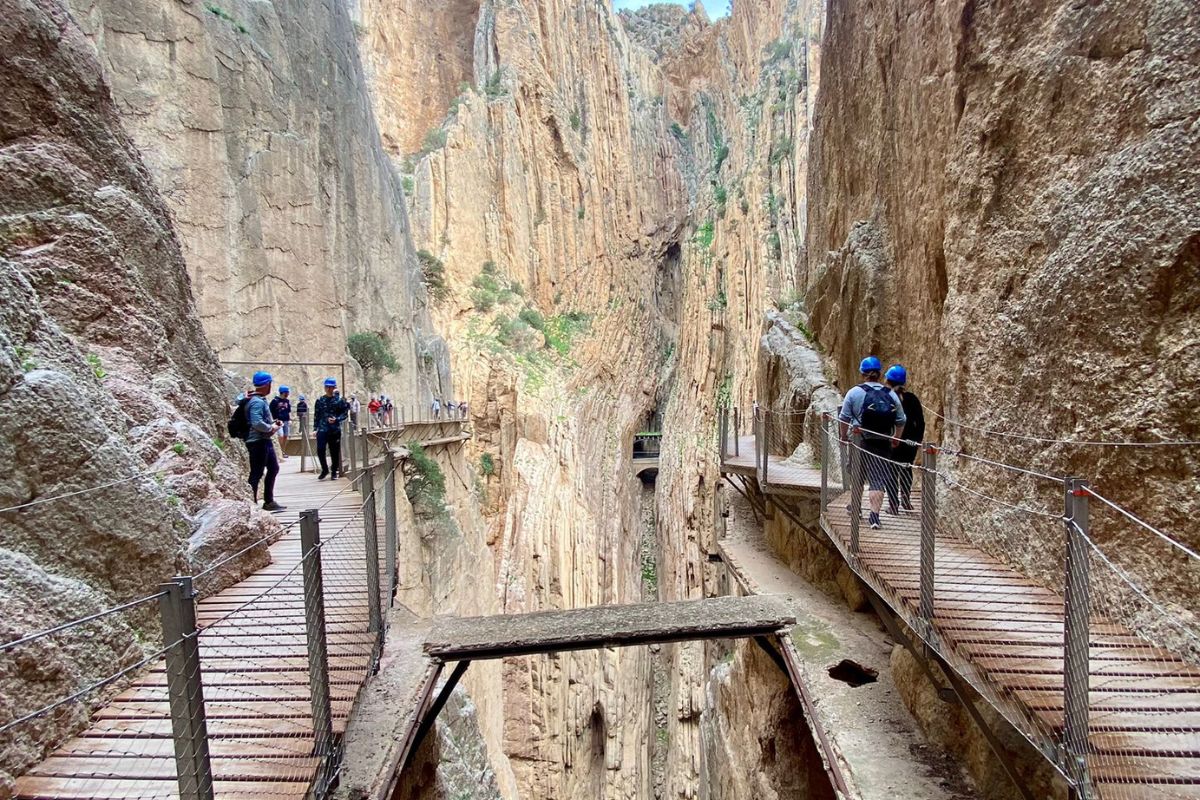
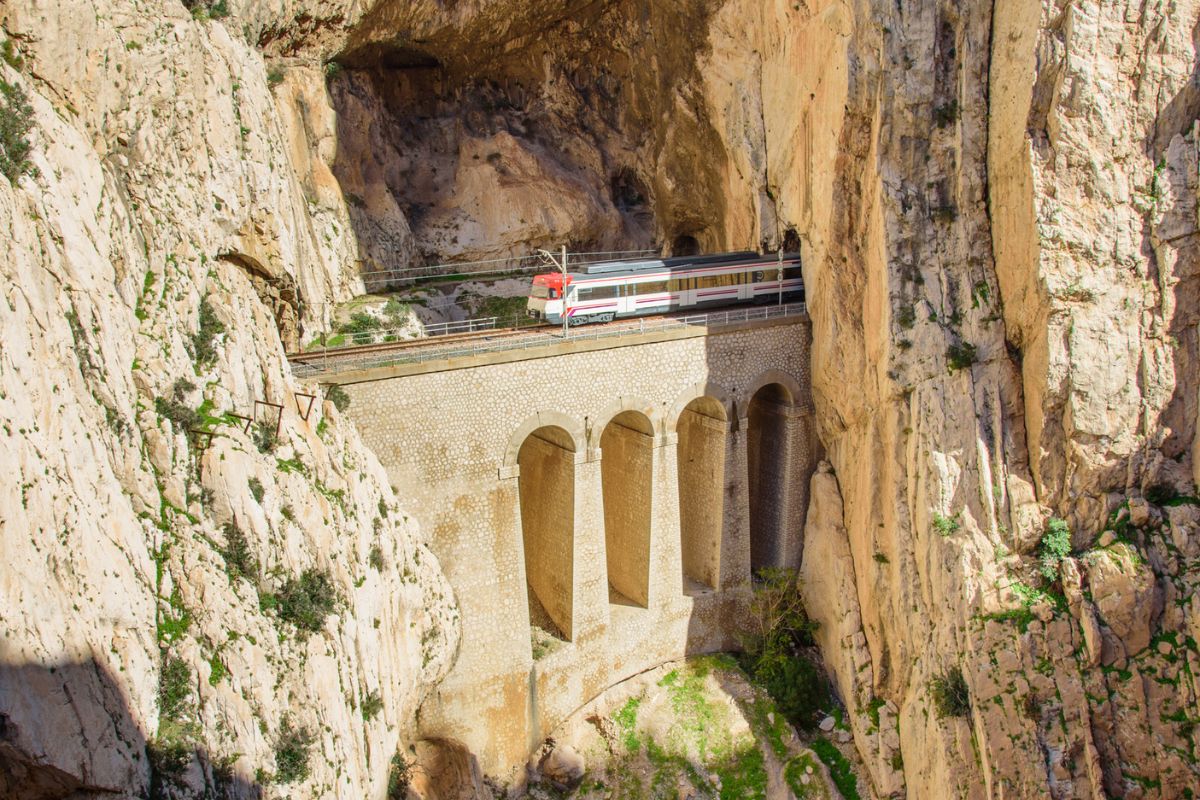
The third, and probably most beautiful, part of the trail is the Gaitanes Gorge. You’ll find yourself back on wooden walkways, but this time they are much higher and offer magnificent views. You’ll reach a spot where the rocks are truly enormous, and a scenic train railway runs through them. It was at this very spot that we encountered much bolder adventurers — a pair of climbers.

Continuing along the path, you’ll reach the “balcony” with a glass floor, which offers perhaps the best angle for photos.

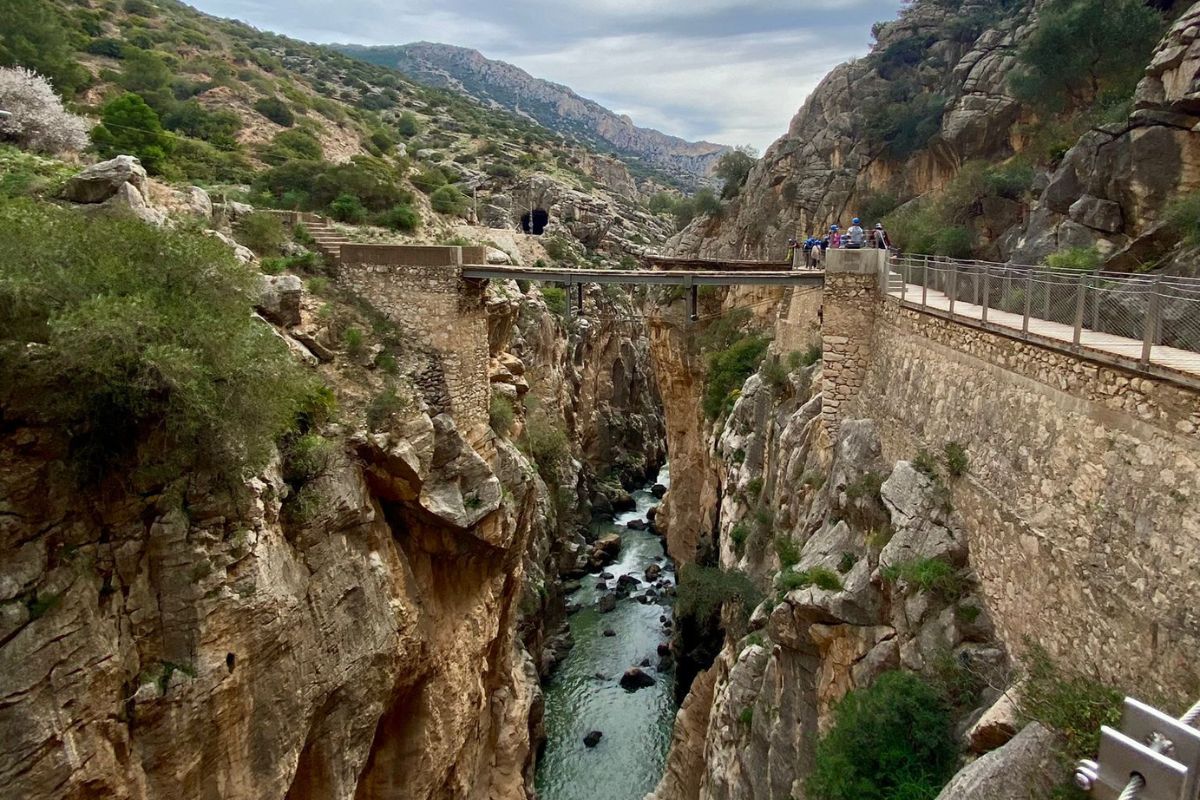
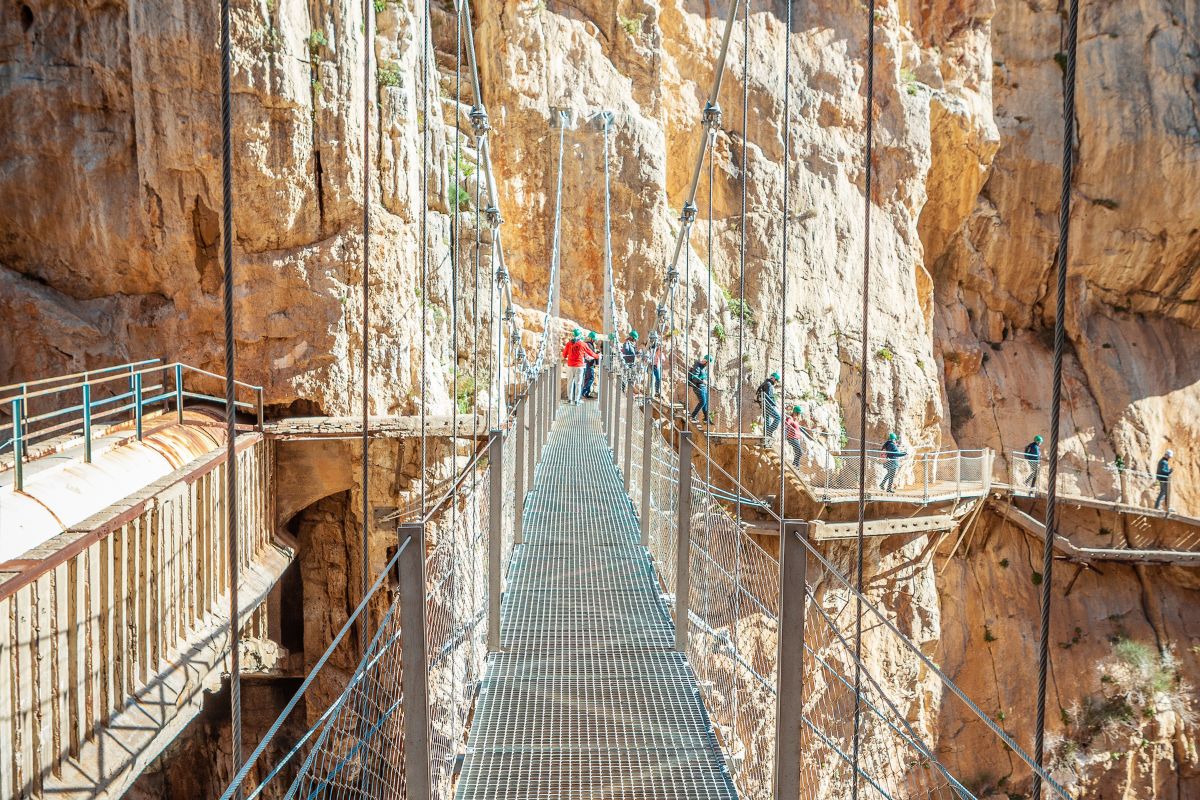
Soon you’ll reach the suspension bridge, which is the real adrenaline rush. The bridge is suspended at a height of 105 meters and is built from a metal grid, so you can see all the way to the ground. Unfortunately, for the faint-hearted, there’s no turning back, and you simply have to cross the bridge.

After the adrenaline-pumping crossing, only the rest of the route, a few tens of meters, awaits you. You will arrive at the village of El Chorro, where you’ll return your helmets, can refresh yourself, and use the restroom. Subsequently, you’ll board a bus that will take you back to the start of the route. That is, unless you’re parked in El Chorro.

TIP: Read what to see in Córdoba.

When to Visit the Trail

Caminito del Rey is open every day from 9:00 AM to 3:30 PM (last possible entry) except Mondays (Monday entries are only sometimes available, check availability on the website).

Caminito del Rey is a trail through nature, so it’s a good idea to check the weather forecast before you plan your trip. The best time to visit depends on your preferences.

However, if there’s a risk of strong winds or heavy rain, the organizers may close the trail for safety reasons. If the weather is unfavorable, you will be given an alternative date for your visit. However, this is not very convenient for tourists. Visits are permitted during occasional rain.

Where to Buy Tickets

Before tackling the trail, you’ll need tickets, as the route is subject to a fee. You can purchase them online via the official website, where you can also purchase parking and a shuttle bus ticket.

Or you can choose one of the organized tours to Caminito del Rey on the travel portal GetYourGuide.

But beware, tickets need to be secured well in advance. It is recommended at least 2 months in advance, because only a specific number are sold for a certain day and time, so they tend to sell out very quickly.

You can purchase admission in two forms, namely:

  • basic for 10 euros,
  • or with a guide for 18 euros.

Basic admission means you only pay for entry to the trail and then walk it yourself at your own pace. With a guide, you’ll have a guided tour in a group.

I bought tickets a month before flying to Malaga, and of course, the basic tickets were already sold out. But since we really wanted to go on the trail, we had no choice but to pay for a guide as well.

If you pay extra for tickets with a guide, at the entrance, in addition to a helmet, you’ll receive headphones with a radio and listen to the commentary along the way. The commentary about the trail is interesting and in English, but the group’s pace is quite slow. Fortunately, the guide announced at the very beginning that we could leave the group anytime and walk the trail at our own pace. Which we did right after the first part of the trail.

How to get to the Trail

Caminito del Rey is located in Spanish Ardales in southeastern Andalusia. Therefore, you can take a trip to the King’s Path from Malaga, Ronda, or even further afield Seville. However, the closest major city is Malaga, from where you can drive along the A-357 road or take a train to the village of El Chorro.

We had a rental car, and the journey from Malaga took us about an hour. By train, it takes 45 minutes, and a one-way ticket costs 6 euros.

TIP: Read the article about what you must taste in Spain.

Where to Park

If you go on a trip to Caminito del Rey by car, then you have several parking options.

Assuming you purchase parking as part of your ticket (for 2 euros), your parking lot will be the very first one you encounter upon arrival and is called Visitors’ Reception Centre Parking. However, from there it’s quite a distance to the trail entrance, and you’ll need to arrive at least an hour in advance and then approach the entrance tunnels by bus.

The second option near the shorter tunnel is the smaller Ardales car park, which also costs 2 euros but tends to fill up quickly. The third option is several parking spaces near the El Kiosko restaurant, but again — they are usually already taken.

Another option is to park at the end of the trail in the village of El Chorro. From there, you can use bus transport to get to the entrance of Caminito del Rey. The last and free option is the edges of the local roads.

Where is the Entrance?

Personally, I found the trail entrance quite confusingly marked, and at first, we had no idea where to go. Caminito del Rey actually has two entrances in the form of tunnels. One is located next to the El Kiosko restaurant and is longer (2.7 km), the second is about 250 meters higher right next to the main road, and that one is shorter (1.5 km).

Take the shorter tunnel if you have a ticket with a guide. If you’re going alone, the choice of path is up to you. However, keep in mind that the time on your purchased ticket is counted from the entrance to the trail, not from the tunnel. Therefore, allow enough time for the walk to the main entrance (approx. 30 minutes).

If you’re wondering which direction to walk the trail, you can forget about it right away. The trail is one-way and a shuttle bus runs between its beginning and end, which will take you back and forth as many times as you need.

Understand it this way: if the exit of the route in El Chorro is closer for you, you can park your car there, and a bus, which runs every half hour, will take you to the trail entrance.

Caminito Del Rey Shuttle Bus

The shuttle bus runs between the entrance and exit of the trail every day when Caminito del Rey is open, at 30-minute intervals. A ticket costs 2.50 euros and can be purchased from the driver or at the stop’s booth.

Payment is only possible in cash. The advantage is that for 2.50 euros, you can ride between stops as many times as you wish.

The bus has a total of four stops, namely at the Visitors’ Reception Centre Parking, El Kiosko restaurant, Ardales car park, and the village of El Chorro, where the trail ends.

Tips for Visiting the Caminito Del Rey Trail

Here are a few final tips for you:

  • You can bring drinks and a snack for refreshment on the trail.
  • Wear suitable and comfortable footwear; it doesn’t have to be trekking boots, but they won’t let you in with flip-flops.
  • Don’t forget sunscreen or, conversely, a raincoat (depending on the weather forecast).
  • Selfie sticks are not allowed on the trail.
  • There are no restrooms available on the trail.
  • If you plan your Caminito del Rey visit for the morning, you can still fit in another trip.
lukas a lucka
Lukáš and Lucie recommend
Where to stay near Caminito del Rey
4 accommodations — hotels and other lodging options

Frequently Asked Questions:

What is Caminito del Rey?

Caminito del Rey is a famous mountain trail on the El Chorro cliffs in Andalusia, Spain. The trail is built on cliffs and offers magnificent views of the surrounding landscape.

How to get to Caminito del Rey?

The nearest airport is Malaga. From Malaga, it’s possible to get to El Chorro by train or car. There are also organized tours.

Do I need to buy tickets in advance?

Yes, it is recommended to book tickets in advance, as the number of visitors is limited. Tickets can be purchased online on the official website.

How long is the Caminito del Rey route?

The total length of the route is approximately 7.7 kilometers and it leads through beautiful mountain scenery and over cliffs.

Is the trail suitable for everyone?

No, the trail is not suitable for people with physical disabilities or those who are afraid of heights. Children under 8 years old are not allowed on the trail.

What should I bring with me?

Comfortable clothing, comfortable walking shoes, sunglasses, a hat, and sufficient water are recommended. It’s also advisable to have something warmer, as the weather can be changeable.

Tips and Tricks for Your Vacation

Don’t Overpay for Flights

Search for flights on Kayak. It’s our favorite search engine because it scans the websites of all airlines and always finds the cheapest connection.

Book Your Accommodation Smartly

The best experiences we’ve had when looking for accommodation (from Alaska to Morocco) are with Booking.com, where hotels, apartments, and entire houses are usually the cheapest and most widely available.

Don’t Forget Travel Insurance

Good travel insurance will protect you against illness, accidents, theft, or flight cancellations. We’ve had a few hospital visits abroad, so we know how important it is to have proper insurance arranged.

Where we insure ourselves: SafetyWing (best for everyone) and TrueTraveller (for extra-long trips).

Why don’t we recommend any Czech insurance company? Because they have too many restrictions. They set limits on the number of days abroad, travel insurance via a credit card often requires you to pay medical expenses only with that card, and they frequently limit the number of returns to the Czech Republic.

Find the Best Experiences

Get Your Guide is a huge online marketplace where you can book guided walks, trips, skip-the-line tickets, tours, and much more. We always find some extra fun there!
Valladolid, Spain: 11 Best Things to Do and See

TL;DRValladolid, once Spain’s capital and now the heart of Castilla y León, packs fifteen top tips into one guide — from the red-arched Plaza Mayor to the Gothic Iglesia de San Pablo and the unfinished cathedral, La Inconclusa, with its lookout tower. High-speed AVE trains from Madrid take under an hour, and a day is enough for the historic centre — allow two to three if you want museums and vineyards too. Don’t miss the wines of Ribera del Duero, Miguel de Cervantes’s house, the Columbus museum, or a wander through Campo Grande park, home to peacocks and the Playa de Las Moreras river beach. A room in the centre runs €70–€110 a night, and spring or autumn — with temperatures of 15–25°C — is the best time to go.

Valladolid, the capital of Castile and León, is a bit of a hidden gem, less talked about among tourists, but all the better for those of us who appreciate authenticity and a calmer atmosphere. In this guide I will share with you Valladolid, Spain: 11 Best Things to Do and See. Let’s take a look at the sights to see, where to grab a coffee, and where to stay.

When to Go to Valladolid

When to visit Valladolid? Spring or autumn are ideal, when you’ll find pleasant temperatures between 15 and 20 °C.

Summer is sunny and hot, with temperatures regularly exceeding 30 °C, so you’ll only manage to be out on the streets in the evening at most.

Winter is colder, with temperatures around 5–10 °C, so it’s suitable for those who want to avoid tourists entirely and don’t mind it being quite cold.

Valladolid, Spain: where to Stay

If available, staying at Hotel Boutique Gareus is a sure bet. Luxurious but not snobby, modern but still cozy – exactly the kind of hotel that offers everything you need after a long day of wandering around the city.

The rooms are spacious, clean, and the location is absolutely perfect, as you’re right in the heart of the action. And breakfast? Excellent! Sure, parking in the city center is a bit of a challenge, but the hotel has it sorted – even if you have a larger car, you’ll manage.

We always appreciate great staff, and here they are absolutely wonderful – friendly but not intrusive, and happy to help with anything.

lukas a lucka
Lukáš and Lucie recommend
Where to stay in Valladolid
3 accommodations — wellness hotels, hotels and other accommodation options

Valladolid, Spain: 11 Best Things to Do and See

Let’s now look at what to see and do in the city of Valladolid. One full day will be enough for a city tour, but if you want to take it easy, we recommend at least two days.

Plaza Mayor

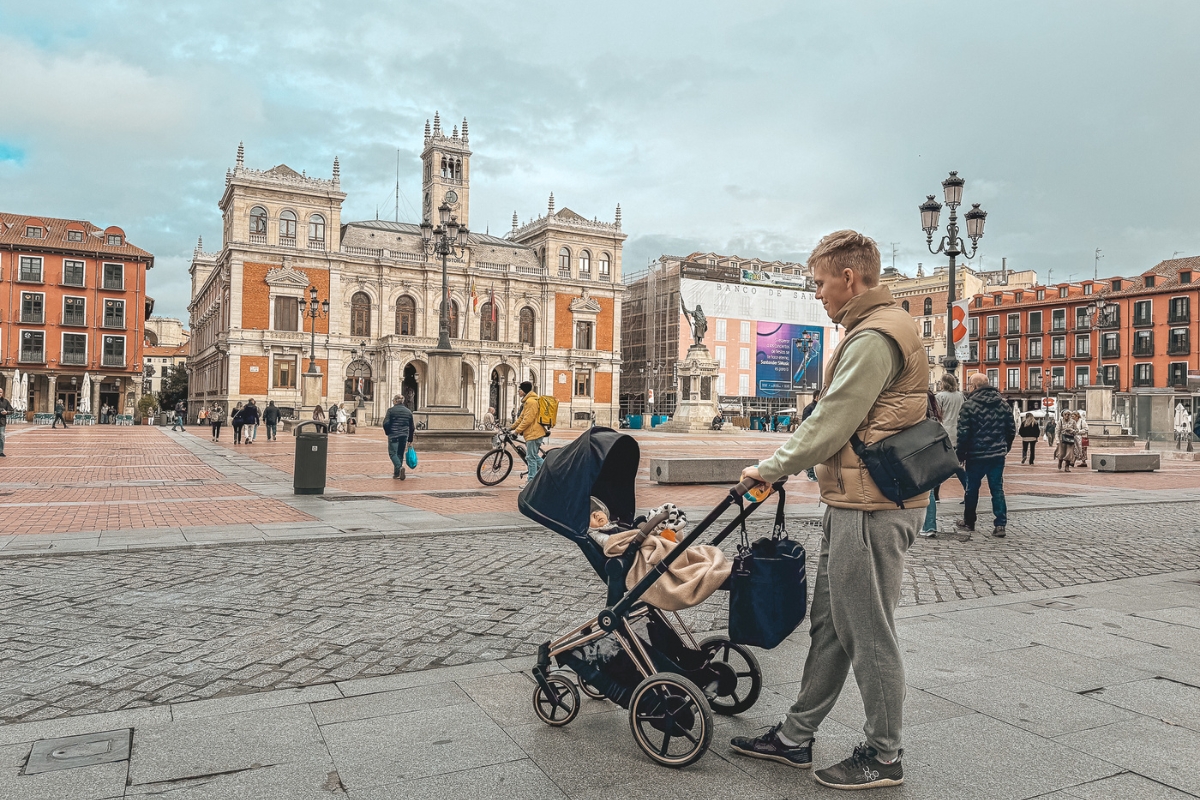
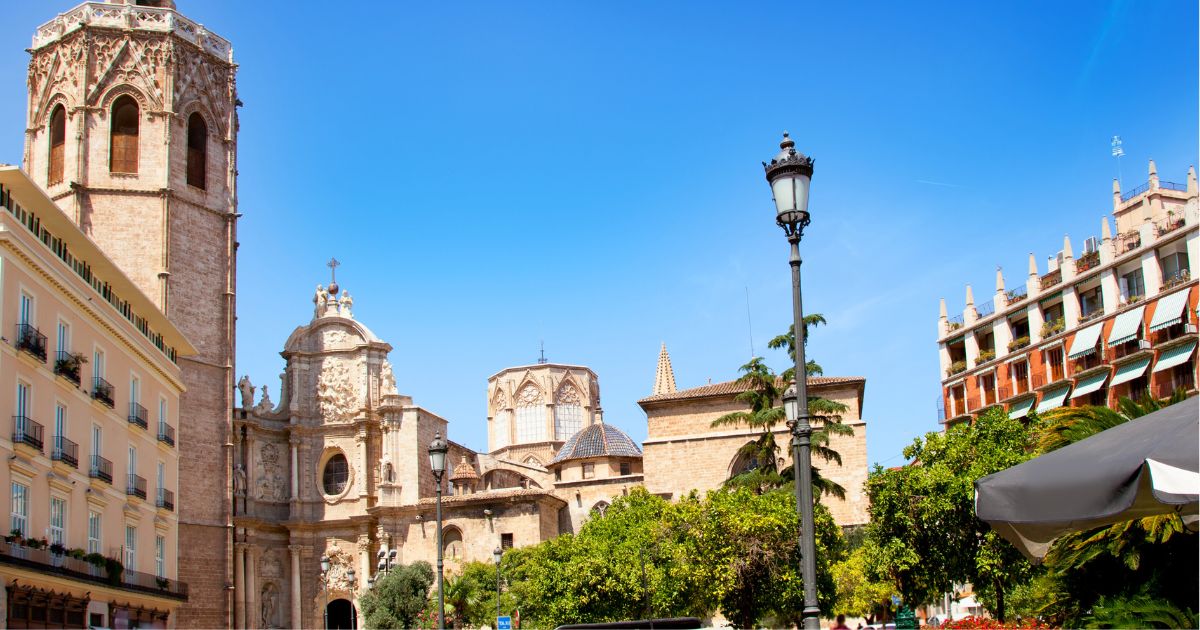
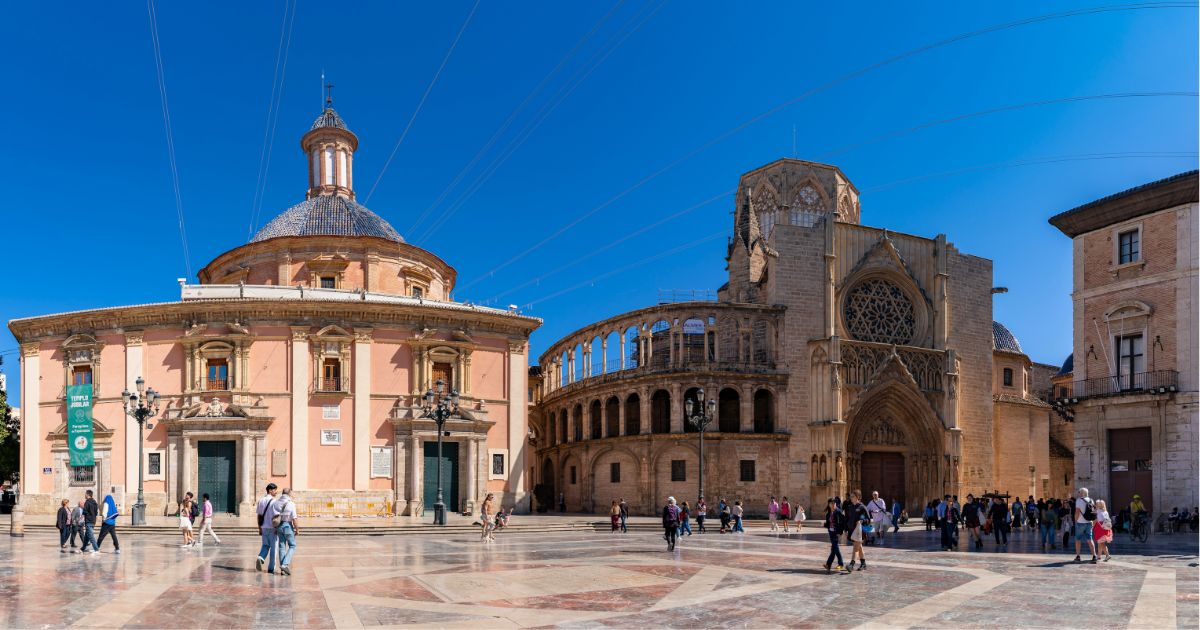
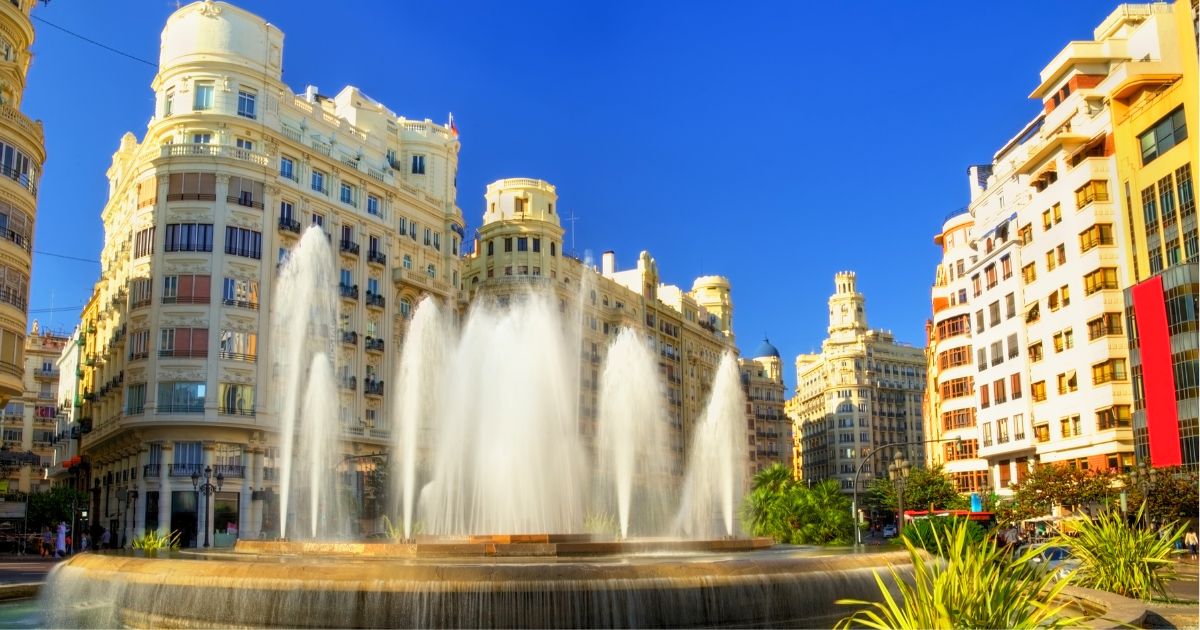
Start your walk at Plaza Mayor – yes, this square is not hard to find, almost every city in Spain has a Plaza Mayor, but Valladolid’s was the first to have a rectangular layout, and it was here that the architecture of squares we now know from Madrid or Salamanca was born.

Plaza Mayor in Valladolid has a rich history dating back to the 13th century, when it served as a market place.

After a devastating fire in 1561, the square was rebuilt according to the design of architect Francisco de Salamanca. This made it the first regular square in Spain with a rectangular layout and arcades, which later became a model for other Spanish squares.

Iglesia De San Pablo

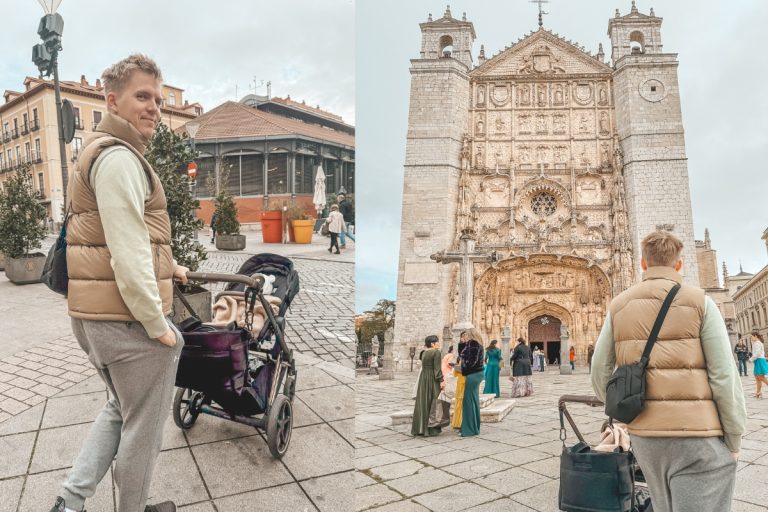
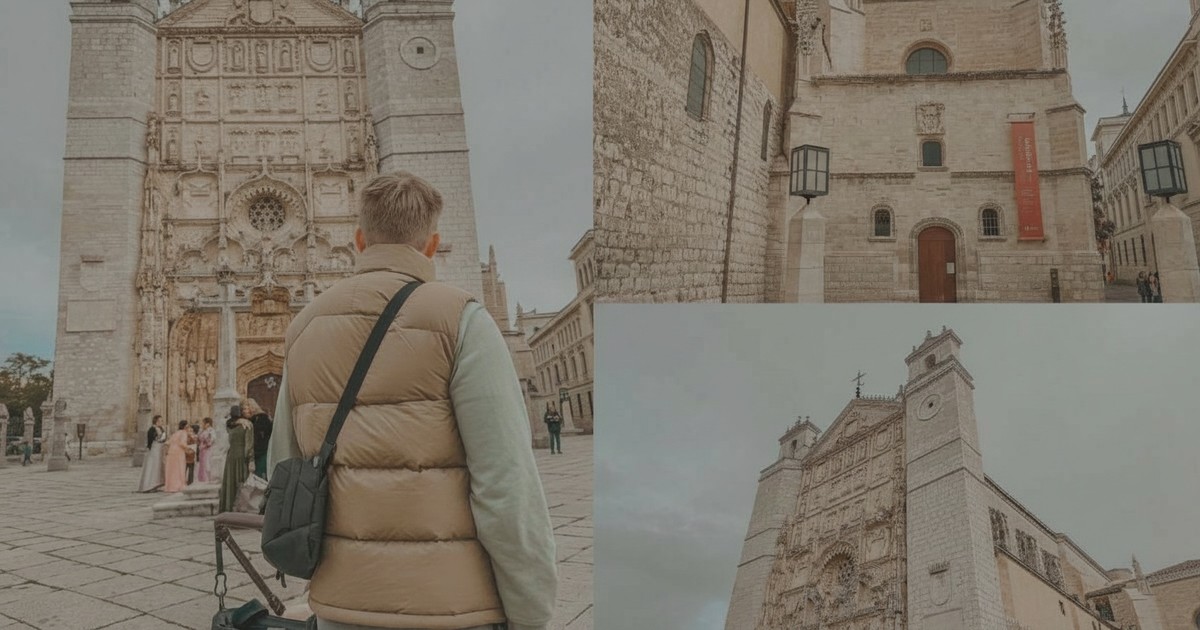
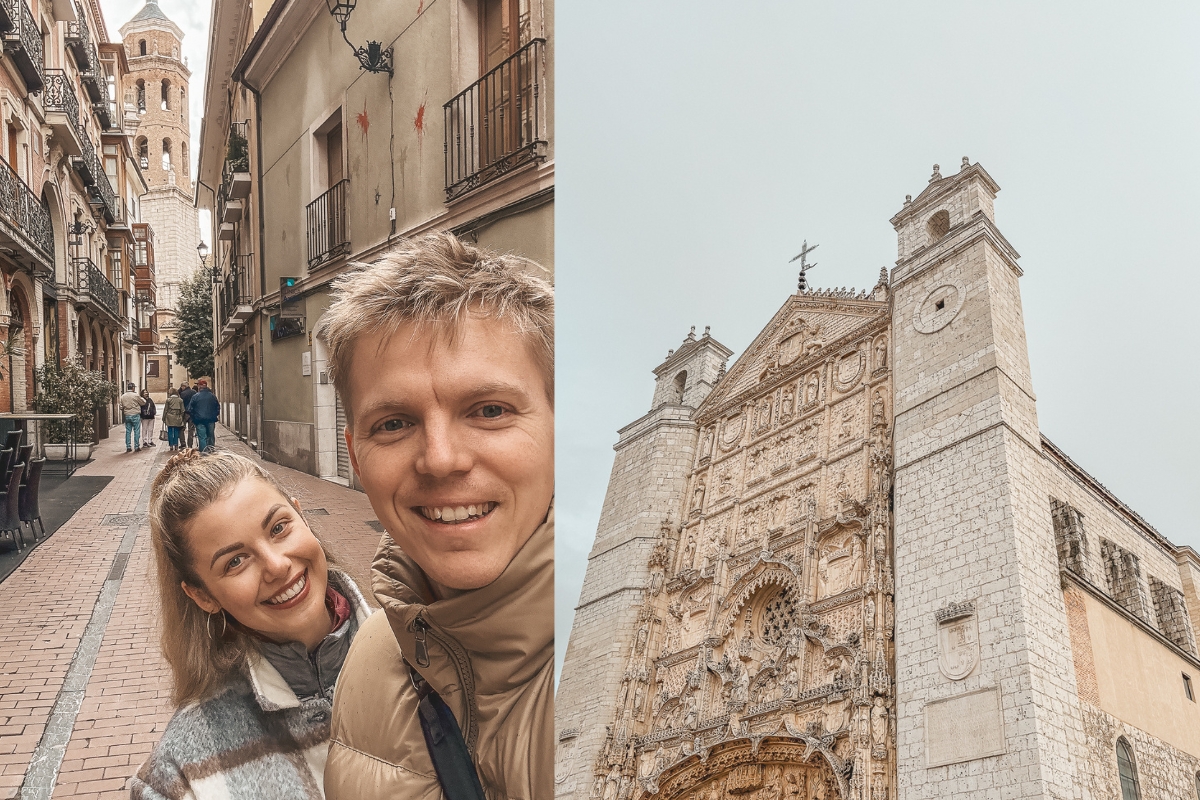
If you are a lover of Gothic architecture, a visit to the Iglesia de San Pablo in Valladolid is an absolute must. This church, whose construction began in 1445 at the behest of Cardinal Juan de Torquemada, is a true jewel of Isabelline Gothic.

What will captivate you at first sight is its imposing facade. Imagine a stone altarpiece in the open air, where statues of saints, heraldic emblems, and rich ornaments intertwine.

This facade, completed around 1500 under the direction of architect Simón de Colonia, is considered a masterpiece of Gothic sculpture.

When you step inside, you’ll find yourself in a space with a single nave, typical of late Gothic, with side chapels between the buttresses. The interior is adorned with ribbed vaults, which were added around 1540, and Renaissance consoles. In the transept, you’ll find two stone portals by Simón de Colonia, dated around 1490.

This church is not only an architectural gem but also a place rich in history. It witnessed significant events, including the baptisms of Kings Philip II and Philip IV. Moreover, it was visited by Napoleon during his stay in Valladolid in 1809.

Valladolid Cathedral

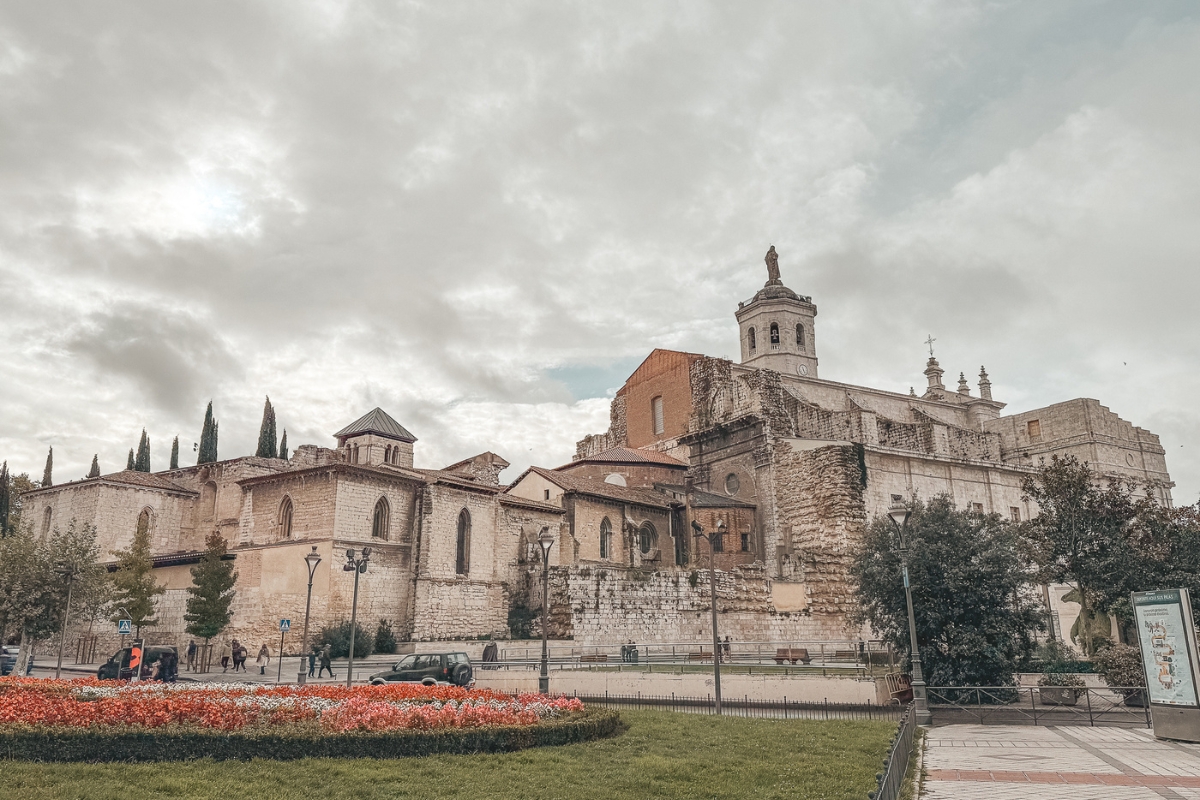
The Valladolid Cathedral was never completed. And yet, it is amazing. When you look at it, you can imagine how monumental it would have been if it had actually been finished.

Originally designed by architect Juan de Herrera in the 16th century, it was intended to be the largest cathedral in Europe. However, fate had other plans – when the royal court moved to Madrid, funds for construction dried up, and only about 40–45% of the grand project was completed.

Today, the cathedral is known as “La Inconclusa” – “The Unfinished”. Although incomplete, its architecture is impressive. The lower part of the main facade, designed by Herrera, is in the Renaissance style, while the upper part, added by Alberto Churriguera in the 18th century, features Baroque elements.

Inside, you’ll find treasures such as a 16th-century altarpiece by Juan de Juni, originally from the church of Santa María La Antigua. The cathedral also houses a rich musical archive with over 6000 works.

Not into history at all? No problem, you can climb the tower and enjoy the view of the city from there.

Parque Campo Grande

This triangular park, covering approximately 11.5 hectares, is bordered by Acera de Recoletos, Paseo de los Filipinos, and Paseo de Zorrilla.

It was established in the 15th century, when it was an important urban space, and in 1787 it was transformed into a garden area.

Today, it is home to diverse fauna, including peacocks, pheasants, and pigeons, which roam freely among visitors.

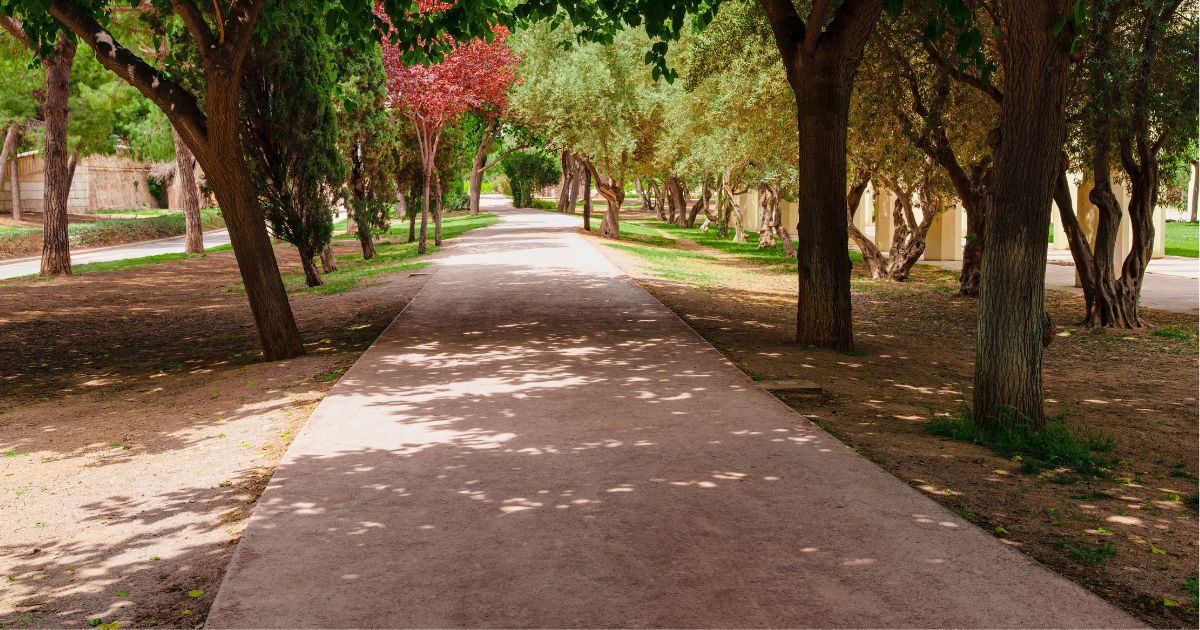
The park is also a botanical garden with a wide variety of trees and plants that provide shade and a peaceful refuge from the hustle and bustle of the city.

Mercado Del Val

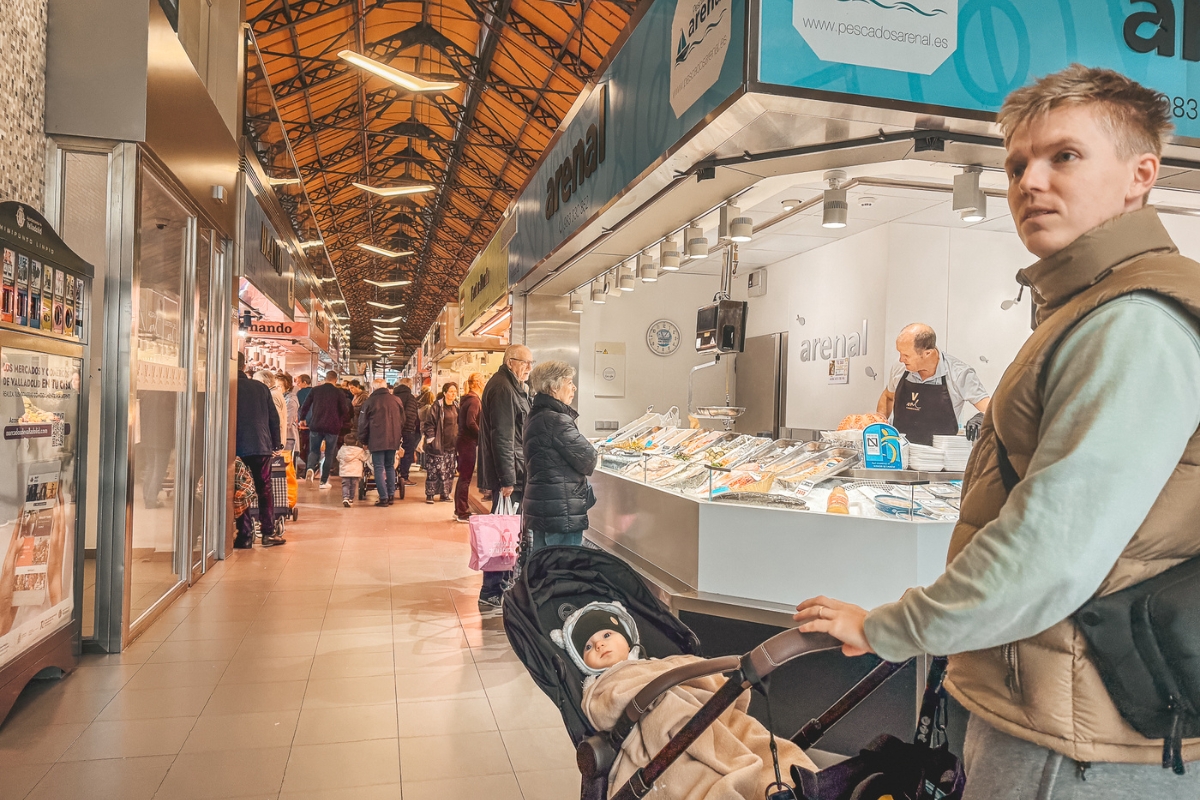
No Spanish city would be complete without a market where you can buy everything from fresh vegetables and fruits to gourmet specialties. I recommend tasting wine here too; Valladolid is known for its quality wines, especially from the Ribera del Duero, Rueda, and Cigales regions.

And what to taste here? Mantecados de Portillo, traditional sweet pastries from the town of Portillo, perfect with coffee.

Playa De Las Moreras

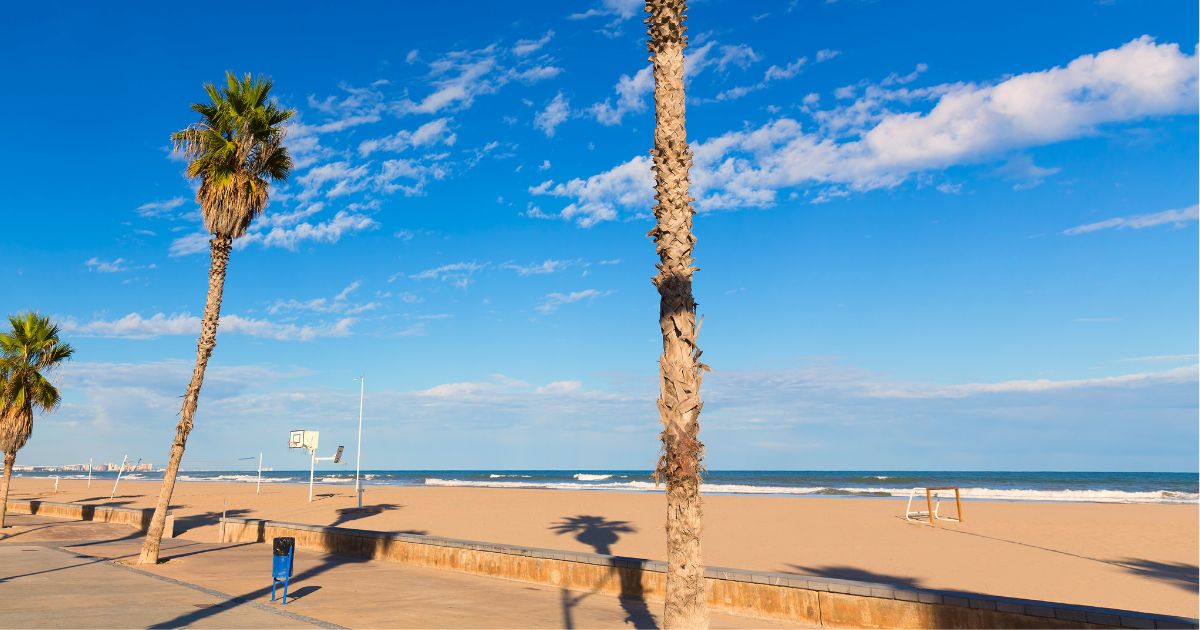
Yes, Valladolid is not by the sea, but it still has its own beach – Playa de Las Moreras. A pleasant spot by the Pisuerga River where you can sunbathe, stroll, or play volleyball.

National Sculpture Museum

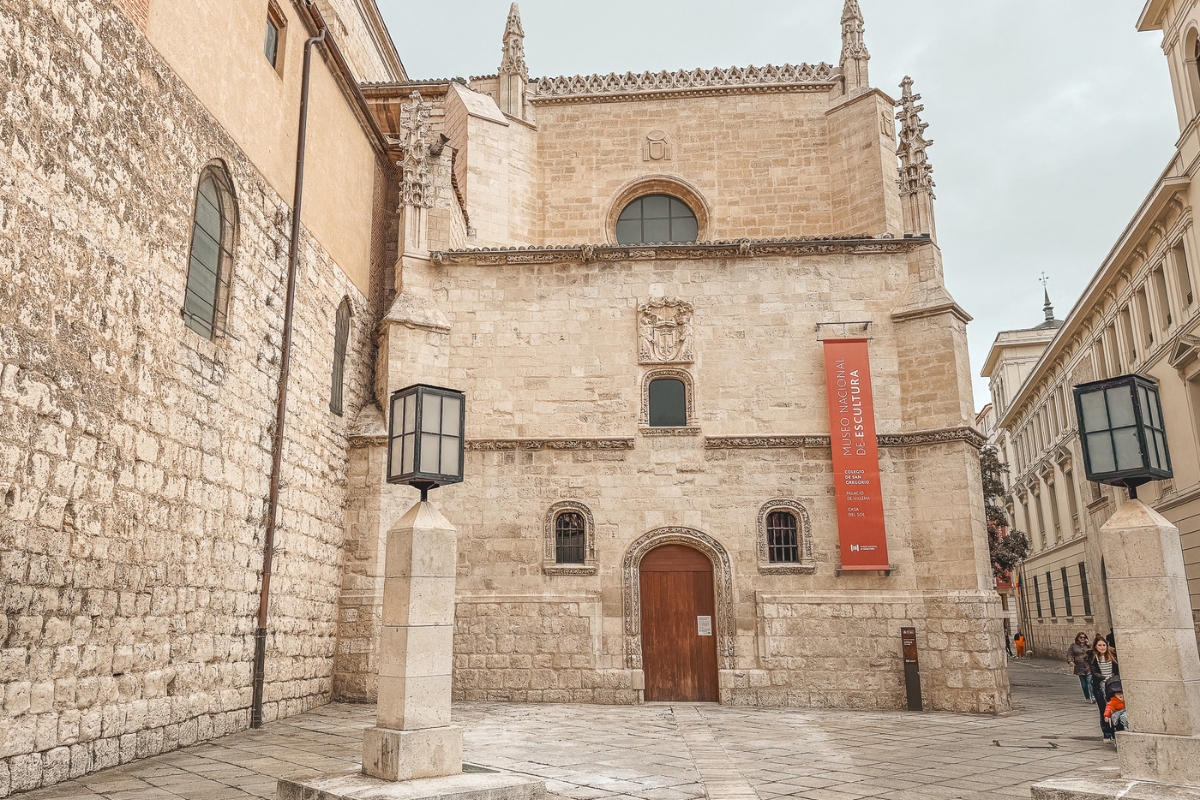
This museum, founded in 1842, is housed in the historic Colegio de San Gregorio, which is worth a visit in itself thanks to its magnificent Gothic architecture.

The museum boasts one of the most important collections of Spanish sculpture, covering the period from the Middle Ages to the 19th century. Among the most valuable exhibits are works by masters such as Alonso Berruguete, Juan de Juni, and Gregorio Fernández, who are considered pillars of Spanish sculptural art.

In addition to the permanent exhibition, the museum regularly hosts temporary exhibitions and cultural events that enrich the visitor experience.

Cúpula Del Milenio

So you don’t think Valladolid isn’t modern, let’s look at the Cúpula del Milenio – a futuristic structure that stands somewhat in contrast to the rest of the city. T

his impressive structure was originally built as the Pabellón de la Sed for Expo Zaragoza 2008 and subsequently relocated to Valladolid, where it opened to the public in May 2011.

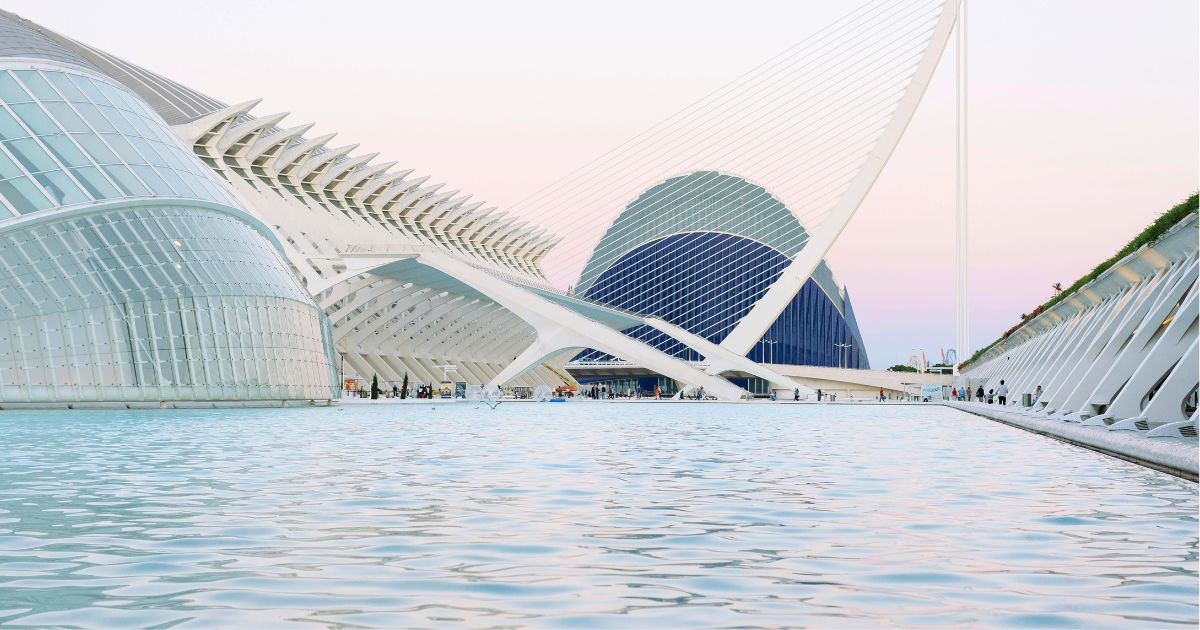
The Cúpula del Milenio is a multifunctional space with a diameter of 46.5 meters and a height of 15 meters, offering 1,500 m² of area.

It is designed to host various events, from sports competitions to concerts, exhibitions, and fashion shows. The pavilion’s capacity allows it to accommodate over 1,000 spectators, with flexible seating arrangements and a stage ensuring versatility for different types of events.

Coffee Shop Tips

If you need to take a break and love good coffee, be sure to visit Franela Café de Especialidad or try ADELAIDA Sweet & Coffee, where you can also get something tasty, and if you crave something more traditional, you’ll find a Starbucks here too.

Plaza Del Viejo Coso

This square, originally built in 1833 as Valladolid’s first permanent bullring, is one of the few surviving examples of octagonal arenas in Spain.

With a capacity of up to 8,000 spectators, Plaza del Viejo Coso served as the main venue for bullfights until 1890, when a new arena was built on Paseo de Zorrilla. After the bullring closed, the building was adapted into a Guardia Civil barracks and later, in the 1980s, converted into residential spaces.

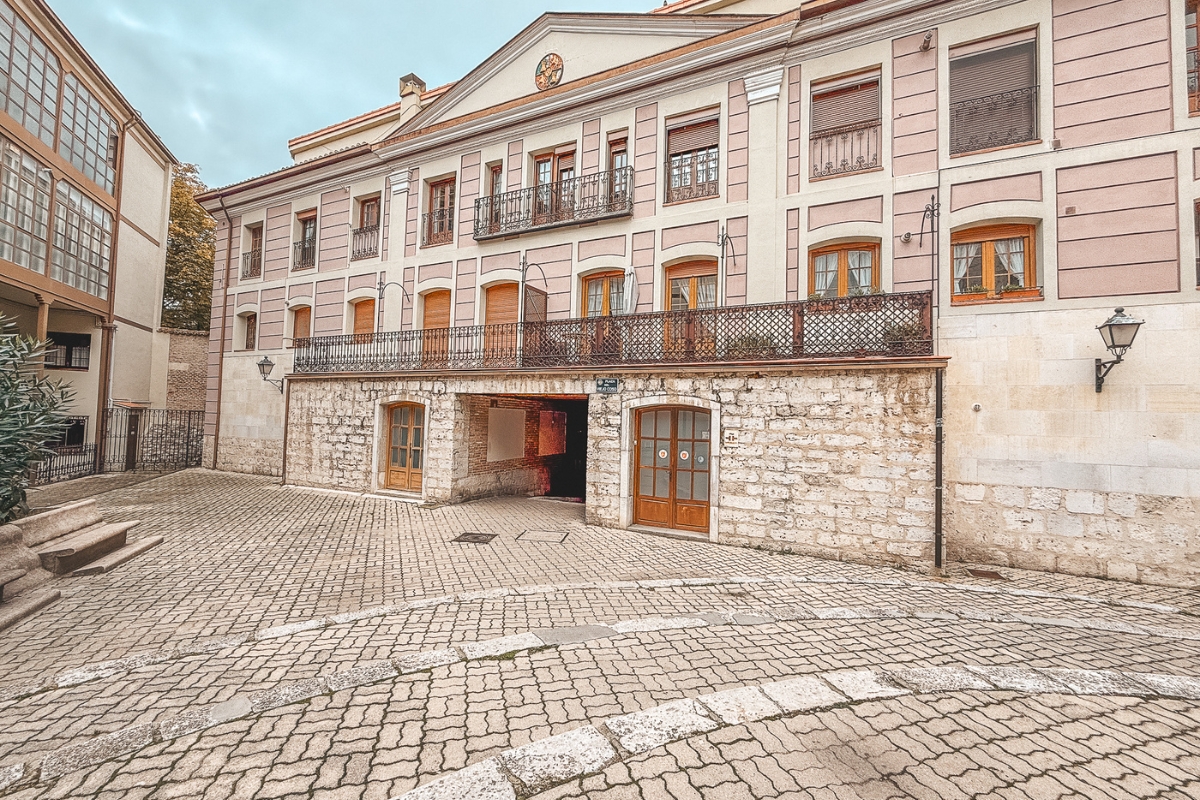
Today, Plaza del Viejo Coso is a peaceful and picturesque place that has retained its historical charm. The original palcos, where important citizens of the city used to sit, have been converted into apartments, and the former ruedo now serves as a small square with a park.

Access to the square is possible from San Quirce and San Ignacio streets.

Pje. De Gutierrez

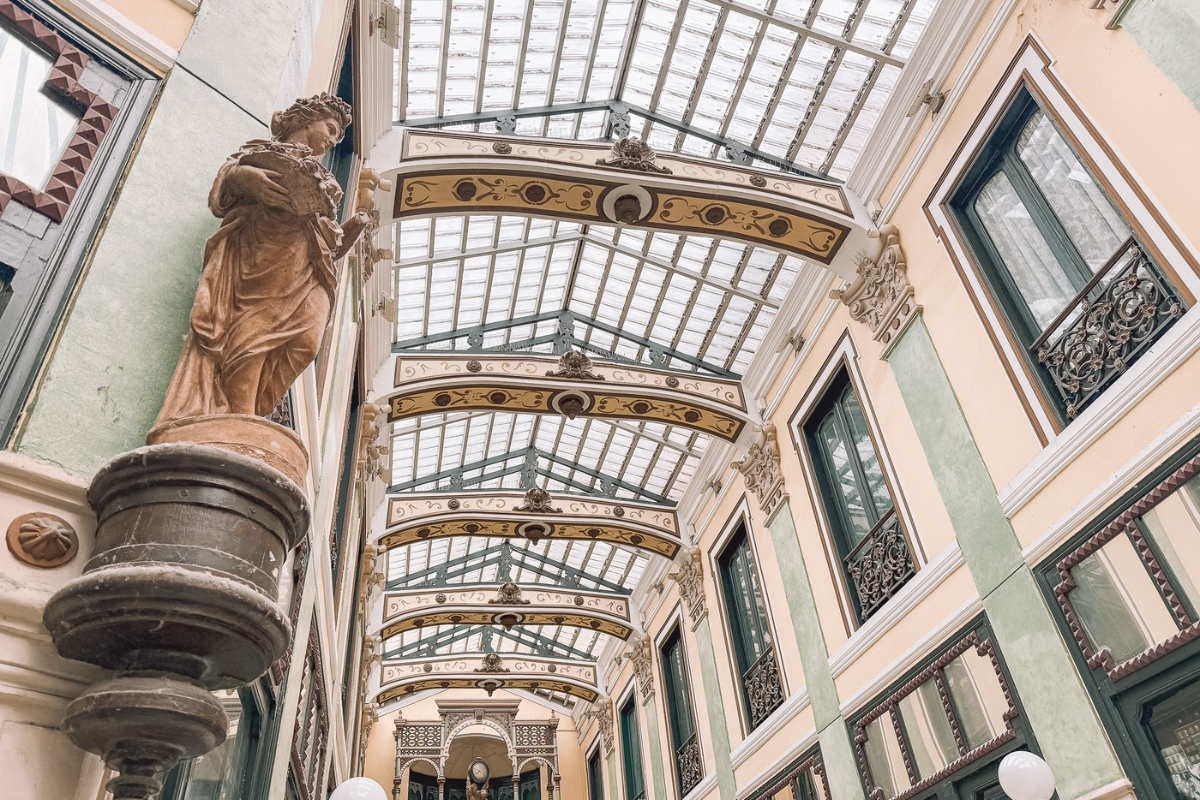
This covered shopping arcade, located between Fray Luis de León and Castelar streets, was opened in 1886 at the initiative of merchant Eusebio Gutiérrez, after whom it is named.

The arcade was designed by architect Jerónimo Ortiz de Urbina, who was inspired by similar galleries in Paris, Italy, and Germany. It is a great example of Beaux-Arts architecture, combining classical elements with modern technologies of the time, such as iron structures, glass roofs, and gas lighting.

As you walk through the arcade, you’ll be captivated by the ceilings adorned with paintings by Salvador Seijas, depicting mythological and allegorical motifs, and rich stucco decorations with plant motifs.

In the central rotunda, there is a statue of Mercury, the god of commerce, which commemorates the original purpose of this place.

After years of decline, the arcade was restored at the end of the 20th century and declared a cultural monument in 1998. Today, you’ll find various shops, cafes, and bars here, where you can enjoy a peaceful atmosphere away from the bustling city streets.

Tips and Tricks for Your Vacation

Don’t Overpay for Flights

Search for flights on Kayak. It’s our favorite search engine because it scans the websites of all airlines and always finds the cheapest connection.

Book Your Accommodation Smartly

The best experiences we’ve had when looking for accommodation (from Alaska to Morocco) are with Booking.com, where hotels, apartments, and entire houses are usually the cheapest and most widely available.

Don’t Forget Travel Insurance

Good travel insurance will protect you against illness, accidents, theft, or flight cancellations. We’ve had a few hospital visits abroad, so we know how important it is to have proper insurance arranged.

Where we insure ourselves: SafetyWing (best for everyone) and TrueTraveller (for extra-long trips).

Why don’t we recommend any Czech insurance company? Because they have too many restrictions. They set limits on the number of days abroad, travel insurance via a credit card often requires you to pay medical expenses only with that card, and they frequently limit the number of returns to the Czech Republic.

Find the Best Experiences

Get Your Guide is a huge online marketplace where you can book guided walks, trips, skip-the-line tickets, tours, and much more. We always find some extra fun there!
Bilbao, Spain: 23 Best Things to Do and See

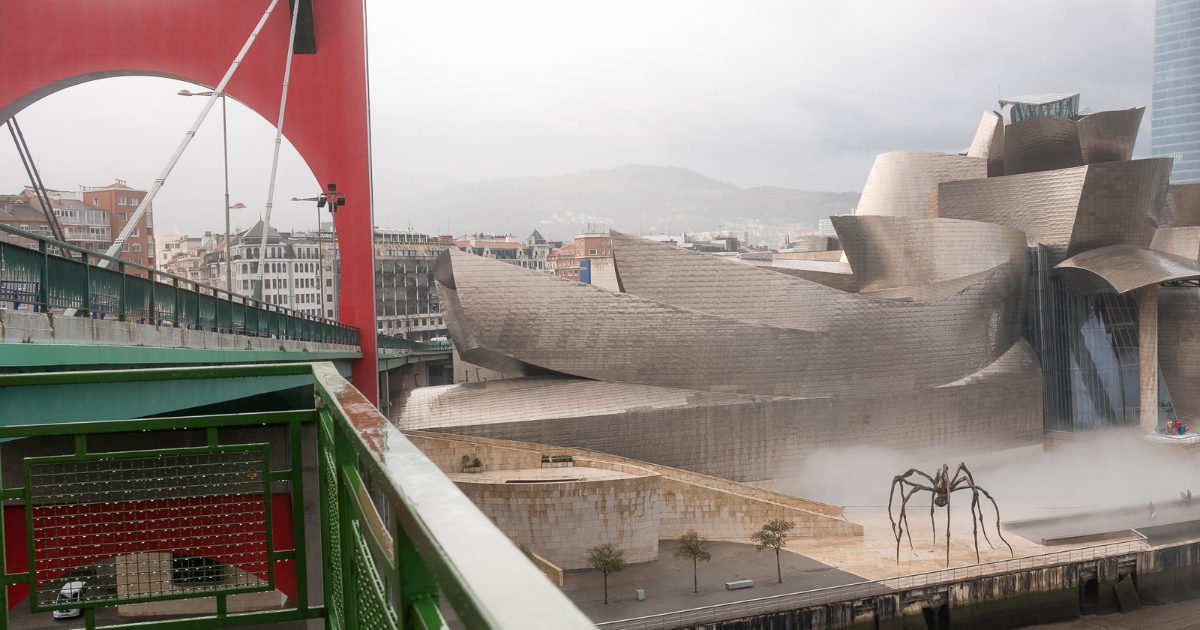
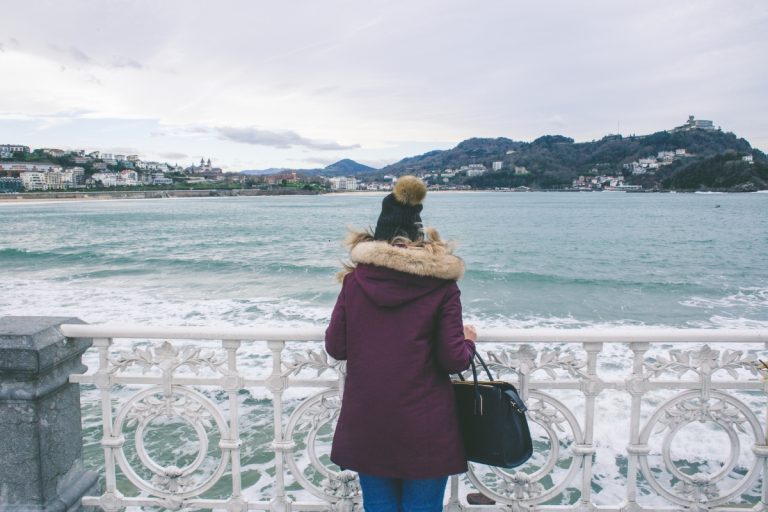
TL;DRBilbao has 23 solid tips to work with, from the titanium-clad Guggenheim Museum to the old quarter of Casco Viejo, Santiago Cathedral, the Mercado de la Ribera food market, the Mirador de Artxanda viewpoint and the Zubizuri bridge. Two to three days covers the city itself, but allow 4 to 5 days if you want to fit in San Sebastián (under an hour away) and Rioja (an hour and a half). June to September is the best time to come, with temperatures rarely climbing past 25°C, though northern Spain’s damp, oceanic climate means rain is never far off. Don’t skip the pintxos and a glass of txakoli in the bars around Plaza Nueva.

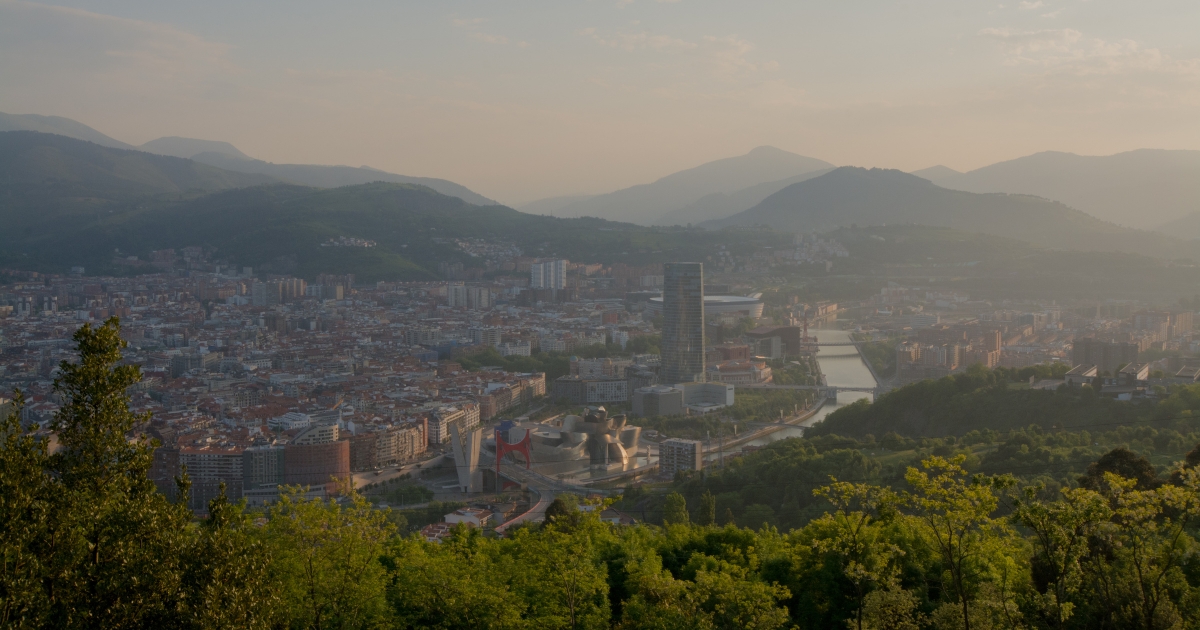
Bilbao is a true gem of northern Spain. I was very glad that last year, during our trip to Portugal, we had time to stop there. It is a city that has perfectly managed to combine Basque tradition with modern architecture. In this guide I will share with you Bilbao, Spain: 23 Best Things to Do and See.

From a once industrial city, it has become a cosmopolitan metropolis that attracts visitors from all over the world with its unique atmosphere, excellent gastronomy, and impressive architecture. Let’s take a look together at the most interesting things you can see and do in the Spanish city of Bilbao.

When to Visit Bilbao?

Bilbao has a mild climate with pleasant temperatures throughout the year. The best time to visit is from April to October, when temperatures are ideal for exploring the city. In summer, temperatures rarely exceed 25°C, which is pleasant for city tourism. Spring and autumn offer pleasant weather with fewer tourists.

Winter months are colder and rainier, but the city has its charm even then. Additionally, you can take advantage of lower accommodation prices and shorter queues at major attractions.

Where to Stay in Bilbao: Tips for the Best Hotels

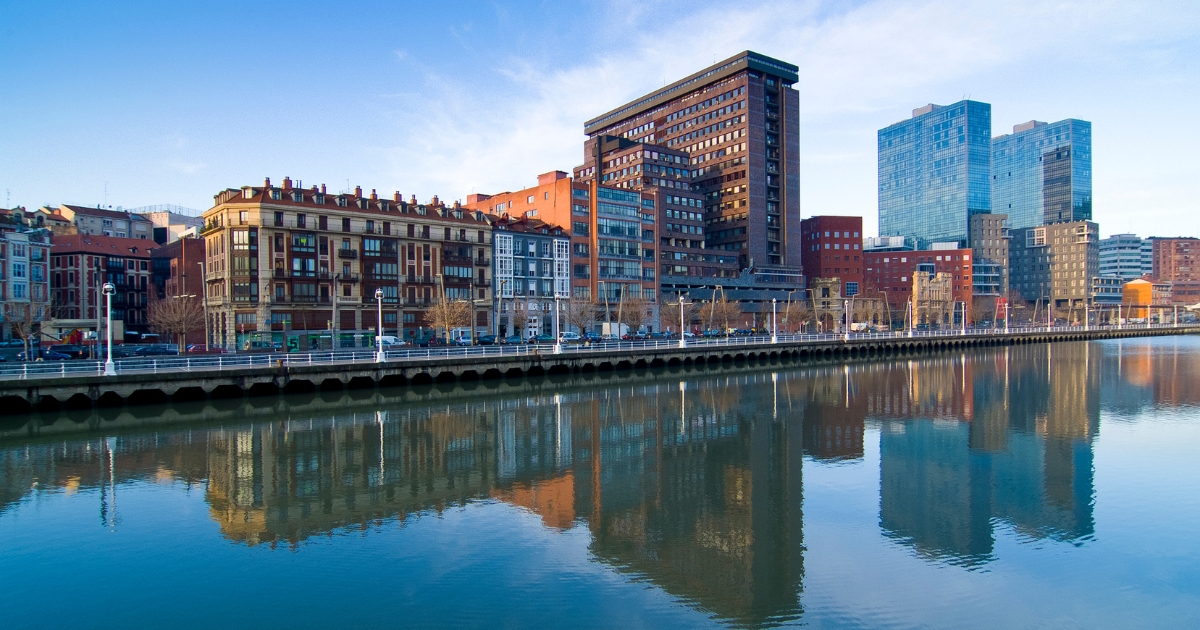
Bilbao offers accommodation for every taste and budget. For those who want to be in the heart of the action, the Casco Viejo (Old Town) area or the Abando district is ideal.

Right in the center, I recommend Letoh Letoh Bilbao or BYPILLOW Bilbo.

For a more luxurious vacation, I recommend the area around the Guggenheim Museum, where you’ll find several five-star hotels, but you can also find more affordable accommodation there, such as Vincci Consulado de Bilbao.

If you’re looking for a more authentic experience, consider staying in the Deusto area, which offers a more local atmosphere and is popular among young travelers.

Sights, Museums, and other Must-See Places

Bilbao is a paradise for all art and architecture lovers like myself, but I believe every traveler will fall in love with it. Let’s take a look at the most interesting sights, artworks, and viewpoints.

Guggenheim Museum

The symbol of modern Bilbao, the Guggenheim Museum, is a masterpiece by architect Frank O. Gehry (you can find his Dancing House in Prague). The building’s titanium facade shimmers in the sunlight, creating an unforgettable spectacle.

Inside, you’ll find an extensive collection of contemporary art, including Richard Serra’s permanent installation “The Matter of Time”. The museum is a must-see for every visitor to the city, even if modern art doesn’t particularly interest you. Even in the off-season, there are often queues for tickets, but you can use the GetYourGuide online portal, which we used, to save a lot of time.

Puppy by Jeff Koons

In front of the Guggenheim Museum, you can’t miss the unique flower sculpture of a dog named Puppy. This unusual installation has become one of the city’s symbols. The Puppy sculpture is the work of American artist Jeff Koons. It is a 12.4-meter-tall sculpture of a West Highland Terrier created from living flowers on a steel structure.

Its “coat” changes with the seasons thanks to the living flowers that cover it, making it an ever-changing work of art and a popular photo subject – begonias, petunias, lobelias, and other types of flowers are used, a total of over 38,000 plants.

Maman

In front of the Guggenheim Museum, you’ll find not only the flower dog Puppy but also the monumental bronze spider sculpture titled “Maman by French-American artist Louise Bourgeois. This impressive sculpture is over 9 meters tall, and its leg span is over 10 meters. It is made of bronze and stainless steel.

The name “Maman” means “mother” in French and symbolizes motherhood and protection. The artist was inspired by her own mother, who was a tapestry restorer, and chose the spider as a symbol of protector, patience, and creativity. Under the spider’s belly are marble eggs, which further enhance the theme of motherhood.

The sculpture in Bilbao is one of several cast versions – other examples can be found, for instance, in front of the Tate Modern gallery in London or at the National Gallery in Ottawa. Since its installation, it has become one of the most prominent artworks in front of the museum and creates an impressive contrast with the titanium facade of Gehry’s building.

Doña Casilda Park

Near the Guggenheim Museum lies one of Bilbao’s most beautiful city parks. Doña Casilda Park is an oasis of calm with a romantic fountain in the center, a place where you can escape if you’re in Spain during the summer heat.

Museum of Fine Arts

This prestigious museum is one of the most significant in Europe. It is located in the beautiful Doña Casilda Park, and its history dates back to 1908. The museum’s current form was established in 1945 by merging the original Museum of Fine Arts and the Museum of Modern Art.

What makes this museum exceptional is its extensive collection of over 10,000 artworks. Here you will find artworks from the Middle Ages to the present day, including works by world-renowned artists such as El Greco, Goya, Van Dyck, Paul Gauguin, Mary Cassatt, and Francis Bacon. The museum also boasts the largest collection of Basque art in the world.

The museum building combines classical architecture with modern elements. The original neoclassical building from 1945 was expanded with a modern wing in 1970 and underwent another significant renovation in 2001. Currently, another expansion is underway under the direction of the architectural firm Foster + Partners, which will add over 2000 m² of new exhibition space.

If you visit the museum, be sure not to miss the works by Paul Gauguin, José de Ribera, or Francisco Goya.

For art lovers, the collection of Flemish and Dutch painting from the 15th-17th centuries is particularly interesting, as well as a unique collection of Oriental art and Etruscan bronzes. The museum also houses an extensive collection of prints by artists such as Albrecht Dürer, Rembrandt, and Picasso.

Casco Viejo

The Old Town, also known as the “Seven Streets”, is the historical heart of Bilbao. This labyrinth of narrow streets hides some of the city’s oldest buildings, traditional Basque restaurants, and lively pintxos bars. It’s an ideal place to immerse yourself in local culture and gastronomy.

Santiago Cathedral

The Gothic Santiago Cathedral is the most significant religious building in the Basque Country. Although it was built in the 14th century, it only gained cathedral status in 1950. Its architecture is characterized by a unity of style due to uninterrupted construction, which, as you know, doesn’t happen very often.

Plaza Nueva

This neoclassical square surrounded by arcades is the center of the city’s social life. On Sundays, you can visit a traditional market with antiques, books, and coins here. Under the arcades, you’ll find a number of bars and restaurants serving excellent pintxos.

Gran Vía

The city’s main shopping street offers a combination of elegant architecture and modern shops. It is lined with impressive buildings, including the Palacio de la Diputación. A stroll along Gran Vía will give you a good overview of city life in Bilbao.

Mercado De La Ribera

The largest covered market in Europe offers not only fresh local produce, but also the opportunity to taste Basque cuisine in one of the local restaurants. The building itself is an architectural gem in the Art Deco style.

Vizcaya Bridge

This unique suspension bridge, a UNESCO World Heritage site, connects the banks of the Nervión River. It is the oldest transporter bridge of its kind in the world and still serves its purpose.

Mirador De Artxanda

The viewpoint at the top of Artxanda mountain offers a panoramic view of the entire city. You can get here by historical funicular and enjoy views of the city and the surrounding landscape.

Begoña Basilica

This Gothic basilica, dedicated to the city’s patron saint, stands on a hill above the city. There are 213 steps leading to the basilica, but the city view is worth the effort.

Teatro Arriaga

This Neo-Baroque theater from the late 19th century is the center of the city’s cultural life. Its richly decorated interior and regular program of theatrical performances and concerts make it an important stop for art lovers.

Iglesia De San Nicolás

This 18th-century Baroque church is a beautiful example of ecclesiastical architecture. Originally, a chapel dedicated to Saint Nicholas of Bari, the patron saint of sailors, stood here from 1490. After its destruction by floods, the current church was built in 1756.

The building features an interesting architectural design on a Greek cross plan with a dominant dome. The interior is dominated by five magnificent Baroque and Rococo altars from 1754, created by the court sculptor Juan Pascual de Mena.

The church underwent several reconstructions – in 1882, a sacristy was added, and in 1891, it received a new facade with a bronze tympanum by Josep Llimona. Even today, it serves as an active parish church and is one of Bilbao’s significant landmarks.

Also worth mentioning is the church’s eventful history – during wars, it served as a military warehouse, and in 1816, it was even struck by lightning. Despite this, it has retained its beauty and is a popular destination for city visitors.

Bilborock

This cultural center, housed in a historic building, is a hub for contemporary art and music in Bilbao. It regularly hosts concerts, exhibitions, theater performances, and dance nights. If you enjoy going to concerts, you can follow them on Instagram to stay informed about what’s on before your visit, and most importantly, buy your tickets in advance.

Basque Museum

The museum offers a fascinating insight into the history and culture of the Basque Country. Its collections include traditional costumes, tools, and other artifacts documenting the region’s rich history. The museum is housed in a historic building in the old part of the city and offers both self-guided tours and guided tours.

San Mamés

The home stadium of Athletic Bilbao is a modern sports arena with a capacity of 53,000 spectators. Opened in 2013, it represents the pinnacle of contemporary sports architecture.

If you’re football fans, you probably shouldn’t miss a visit to the stadium, also known as “La Catedral”. We’re not into football at all, so we just watched the video I’ve included below.

Bilbao City Hall

The impressive City Hall building in the city center is a beautiful example of urban architecture. It offers interesting views of the surrounding landmarks and is an important administrative center of the city.

La Salve Bridge (Puente De La Salve)

This iconic red bridge over the Nervión River is one of Bilbao’s most photographed landmarks. It was designed by the French engineer Gustave Eiffel, creator of the famous Parisian tower. The bridge is named after the Virgin Mary, whose image you can find on it. From the bridge, there are breathtaking views of the river and the city skyline, including the Guggenheim Museum.

Zubizuri Bridge

Of course, there are more bridges in the city, and one of them is this impressive white bridge, a masterpiece by architect Santiago Calatrava. Its elegant arched structure has become one of the symbols of modern Bilbao.

Azkuna Zentroa (Alhóndiga)

The former wine warehouse now houses one of the city’s most interesting cultural centers. The building underwent a complete reconstruction under the direction of designer Philippe Starck and was transformed into a multifunctional space offering exhibitions, film screenings, concerts, and other cultural events. It also features a modern fitness center and a pleasant cafe.

The center is dominated by the impressive “Atrium of Cultures” with 43 unique columns. Admission is affordable, and children under 12 have free entry.

Torres Isozaki (Isozaki Atea)

Torres Isozaki are two high-rise buildings designed by Japanese architect Arata Isozaki. These symmetrical towers have become a significant part of Bilbao’s modern architecture. Together with the Zubizuri Bridge, they form an impressive architectural complex that represents the city’s modern face.

lukas a lucka
Lukáš and Lucie recommend
Where to stay in Bilbao
4 accommodations — hotels and other lodging options

Where to Eat in Bilbao

Bilbao is a paradise for food lovers. The local specialty is pintxos, the Basque version of tapas. The best pintxos bars can be found in Casco Viejo and the Abando district. Don’t forget to taste the local txakoli wine and fresh seafood.

FAQ

How Many Days Do I Need to Visit Bilbao?

For a basic city tour, 2-3 days are enough, but if you want to explore the surroundings as well, I recommend at least 4-5 days.

Is Bilbao Expensive?

Compared to other Spanish cities, Bilbao is slightly more expensive, but still cheaper than most Western European metropolises.

How to Get to Bilbao?

The city has an international airport and good train connections to other Spanish cities. From the airport, you can reach the city center by bus in approximately 30 minutes.


Tips and Tricks for Your Vacation

Don’t Overpay for Flights

Search for flights on Kayak. It’s our favorite search engine because it scans the websites of all airlines and always finds the cheapest connection.

Book Your Accommodation Smartly

The best experiences we’ve had when looking for accommodation (from Alaska to Morocco) are with Booking.com, where hotels, apartments, and entire houses are usually the cheapest and most widely available.

Don’t Forget Travel Insurance

Good travel insurance will protect you against illness, accidents, theft, or flight cancellations. We’ve had a few hospital visits abroad, so we know how important it is to have proper insurance arranged.

Where we insure ourselves: SafetyWing (best for everyone) and TrueTraveller (for extra-long trips).

Why don’t we recommend any Czech insurance company? Because they have too many restrictions. They set limits on the number of days abroad, travel insurance via a credit card often requires you to pay medical expenses only with that card, and they frequently limit the number of returns to the Czech Republic.

Find the Best Experiences

Get Your Guide is a huge online marketplace where you can book guided walks, trips, skip-the-line tickets, tours, and much more. We always find some extra fun there!
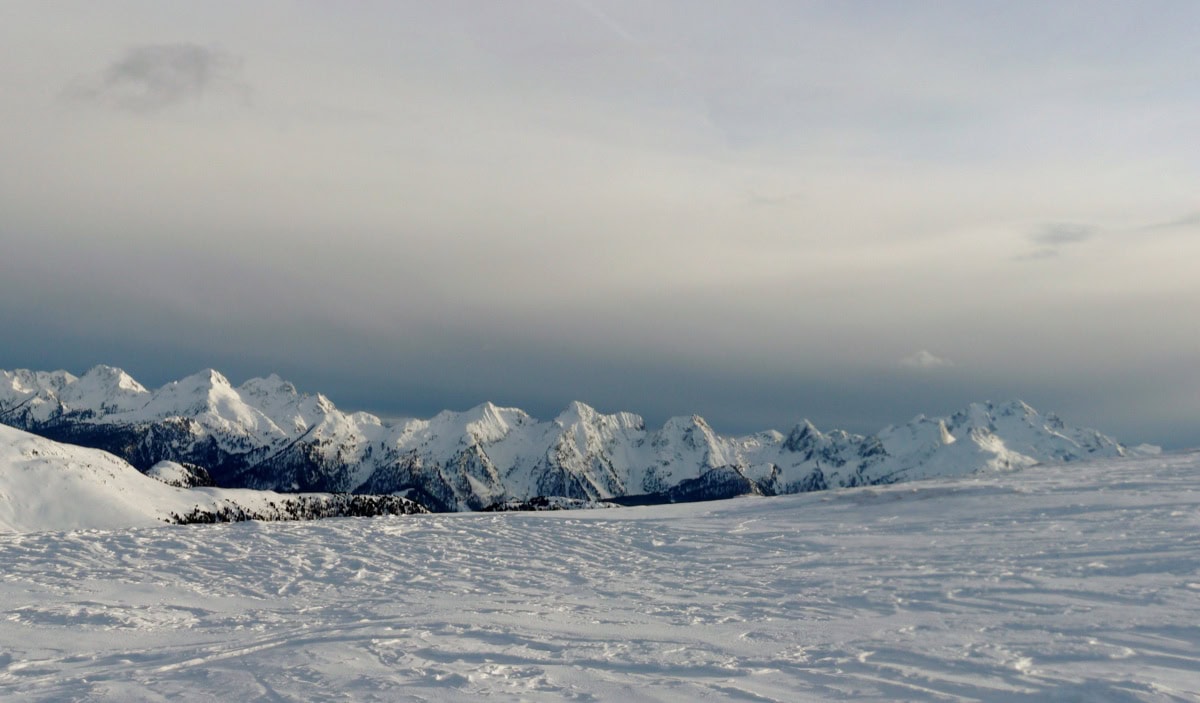
San Sebastian, Spain: 21 Best Things to Do and See

TL;DRSan Sebastián (Donostia in Basque) is an elegant seaside city in the Basque Country, known for its stately architecture, lush green hills and, above all, world-class food. One of Europe’s most beautiful city beaches, La Concha, curves along the bay, and the old town is packed with pintxos bars. Head up Monte Igueldo or Monte Urgull for the views. May to September is the best time to come, with warm-enough water for swimming and lovely seafront walks. The guide includes 21 tips on what to see and do, the best pintxos bars, and where to stay.

San Sebastian is a city that has grown on us during our trips to Portugal. In this guide, San Sebastian, Spain: 21 Best Things to Do and See, I share why we regularly pass through here and always make at least a two-day stop. This Basque city won us over with its elegance, beautiful architecture, and especially its amazing gastronomy. It’s nicknamed La Bella Easo, and it’s no wonder – its beauty will charm you at every turn.

When is the Best Time to Visit San Sebastian

We prefer to come here in spring or autumn, when temperatures are around 20 degrees and there are fewer tourists. In summer, you can enjoy swimming, but you have to expect crowds on the beaches and higher accommodation prices. In winter, it’s colder and rainy, but still pleasant for walks around the city and tasting pintxos.

Where to Stay in San Sebastian

We’ve tried accommodation in various neighborhoods, and the area around La Concha beach proved to be the best for us. For example, Room Mate Gorka has an excellent location. It’s pricier, but everything is within reach. For young travelers, we recommend the Gros neighborhood, for example, Pension Kursaal; in this neighborhood, you’ll find cheaper hostels and apartments. Avoid staying directly in the old town – it can be noisy at night due to the bars.

21 Best Things to Do and See

If you’re planning a trip to San Sebastian, I’ve prepared a list of my favorite places for you.

1. La Concha Beach – Europe’s most Beautiful City Beach

La Concha is probably the most popular spot in San Sebastian and is rightly considered one of the most beautiful city beaches in the world. The more than a kilometer-long beach with fine white sand is lined with an elegant promenade featuring a characteristic white railing over 100 years old.

Along the beach, you’ll find the historic La Perla baths, reminiscent of the famous Belle Époque. In summer, you can rent sun loungers and umbrellas here, or enjoy water sports. At high tide, the beach is smaller but more intimate; at low tide, a wide strip of sand opens up, ideal for long walks.

2. Monte Urgull – the City’s Green Lungs

This strategic hill has been a historical landmark of the city since the 12th century. At its summit, you’ll find Mota Castle, which guarded the city from enemies for centuries and today offers a fascinating glimpse into the region’s history.

Four different hiking trails will lead you around old walls, cannon batteries, and watchtowers. Each route offers a different perspective of the city, the bay, and the Cantabrian Sea. For photographers, Monte Urgull is a paradise – especially at sunset, when golden light bathes all of San Sebastian.

3. Monte Igueldo and the Historic Funicular

For 4 euros, the historic wooden funicular from 1912 will take you to the top of the mountain. We usually go an hour before sunset, when conditions are best for photography. At the top, there’s a small amusement park, but most importantly, magnificent views of the entire bay. At the Karrusel restaurant, you can have an excellent dinner with a view – we recommend booking in advance.

4. El Peine Del Viento – Art Embraced by the Sea

One of the most dramatic places in San Sebastian. Three enormous steel sculptures by local artist Chillida are set directly into the rocks, and in strong winds, they create an amazing spectacle together with the waves. We recommend coming here at high tide, when the waves crash against the sculptures most powerfully. On the way back, you can stop at one of the cafes on the promenade.

5. El Kursaal – the Modern Face of the City

In daylight, these two glass cubes might seem a bit strange, but wait until evening! The building’s lighting creates a breathtaking light show. If you have time, visit the Ni Neu restaurant on the ground floor – they have a great lunch menu for 25 EUR.

6. Miramar Palace and its Gardens

We’ve spent many an afternoon in the park around the palace with a picnic basket. Admission is free, and the views of the bay are magnificent. We recommend coming during rose blooming season (May-June). For the best photos, stand at the main gate – from there, you have the palace and the sea at your fingertips.

7. Santa Clara Island – a Secret Tip

You can get to the island by boat for 4 EUR (runs from June to September every 30 minutes) or you can rent a kayak. We prefer the second option – it’s more fun and you can paddle around the island. On the island, there’s a small beach and a bar that makes excellent mojitos.

8. The Old Town is a Paradise for Gourmets

This is where the real fun begins! In the evening, we go from bar to bar, tasting pintxos. Our favorite spot is La Cuchara de San Telmo. During the day, explore the narrow streets and visit Santa María Church – admission is 3 EUR.

9. San Telmo Museum

On a rainy day, which we sometimes have here, this museum is a great refuge.. Admission is 6 EUR, free on Tuesdays. The most interesting are the frescoes in the former church and the exhibition on Basque culture. The cafe on the ground floor makes excellent hot chocolate.

10. City Hall – Former Casino

We admired this magnificent palace while walking through the Alderdi Eder gardens. In summer, live music often plays here. Inside, there’s a small exhibition on the city’s history – admission is free, and guides speak English.

11. Cathedral of the Good Shepherd Buen Pastor

During our last visit, we went to an organ concert here, and it was an unforgettable experience. Admission to the cathedral is free, and we recommend coming in the morning when the most light passes through the stained glass. A tower tour can be arranged at the information center for 5 EUR. From a height of 75 meters, you’ll see the entire city at your fingertips.

12. Victoria Eugenia Theatre

We discovered this beautiful theater from 1912 by chance and fell in love with its Art Nouveau facade. If you’re lucky like us, you might catch one of the performances – tickets start at 15 EUR. Even if you don’t go inside, be sure to at least check out the foyer, which is freely accessible.

13. Gros Neighborhood – Surfer’s Paradise

Our favorite neighborhood! Every Thursday, they have “pintxo-pote” – you get a free pintxo with a drink. The best atmosphere is on Peña and Goñi streets. If you’re tempted by surfing, you’ll find board rentals along Zurriola beach (15 EUR/2 hours). We recommend the Pukas surf school – beginner lessons cost 35 EUR.

14. Pintxos Tour – a Gastronomic Experience

Here’s our tried-and-tested plan: start at 7:30 PM at La Espiga bar on Boulevard, continue to Borda Berri, and end the evening at Gandarias, where they have the best beef steak. For an evening, expect to pay 25-30 EUR per person, including wine. Don’t be deterred by queues – they move quickly.

15. Aquarium – an Underwater World

We spent the whole morning at the aquarium with the kids. The main attraction is the 360° tunnel, where sharks swim above you. Admission is 13 EUR for adults, 6 EUR for children. Tip: buy tickets online to save queuing at the ticket office.

16. Tabakalera – Cultural Center

The former tobacco factory has been transformed into a cool place for art and culture. We mainly come here for the rooftop cafe – the city view is amazing, and the coffee is excellent. Exhibitions are mostly free, and they often have interesting workshops.

17. Cristina Enea Park – a Green Oasis

The most beautiful park in the city, where you’ll encounter peacocks freely roaming the lawn. Come here with a picnic basket and enjoy an afternoon in the shade of centuries-old trees. We usually buy fresh pastries and cheeses at the nearby La Bretxa market.

18. Basilica of our Lady

You’ll find this church in the old town, and we recommend combining your visit with a walk through the surrounding streets. Inside are beautiful frescoes, and every Wednesday at noon, they have a short organ concert. Admission is free, but a contribution for maintenance is welcome.

19. Ondarreta Beach – a Quieter Alternative

When La Concha is crowded, we come here. The beach is smaller but quieter and great for families with children. You’ll find showers, toilets, and several beach bars here. We recommend La Rotonda bar for a light lunch with a sea view.

20. Zurriola Beach – Surf Spot

An ideal place for beginner surfers. Board rentals are right by the beach, and the waves here are milder than elsewhere. After surfing, head to Kultu bar for hot chocolate – they have the best in town. In summer, there are often beach volleyball tournaments here.

21. Santa Clara Beach – a Hidden Gem

Our favorite beach on the island! It’s small, but it has its charm. Be aware that it almost disappears at high tide, but you can use the natural pool. The beach bar has a limited selection, so we recommend bringing your own snacks.

lukas a lucka
Lukáš and Lucie recommend
Where to stay in San Sebastián
3 accommodations — hotels and other accommodation options

Where to Eat in San Sebastian

San Sebastian is a true gastronomic paradise, and it’s no wonder – the city boasts the highest concentration of Michelin-starred restaurants in the world per capita. We’ve discovered several establishments here that you must visit. For the best pintxos, head to the old town to La Cuchara de San Telmo bar, where they make popular beef cheeks, which we as vegetarians didn’t appreciate, but our friend still raves about them.

Another tip, which isn’t for us now, but might be for you: At Borda Berri, try the grilled octopus – it’s one of the most famous dishes.

If you crave a fine dining experience, reserve a table at the legendary Arzak restaurant (3 Michelin stars). However, expect prices from 250 EUR for a tasting menu. A more affordable alternative is Bodegón Alejandro restaurant, which serves modern Basque cuisine at reasonable prices – the lunch menu for 35 EUR is great value.

For a quick lunch, we recommend La Bretxa market. On the upper floor, you’ll find several bars serving fresh seafood – Bar Azkena is popular. And if you eat fish, don’t forget to try the local specialty – grilled sardines. They say the best ones are made at a street stall by the harbor, which only opens in summer.

Where to Go for a Trip?

A short distance from San Sebastian is another beautiful city, Bilbao, which we definitely recommend visiting.

FAQ

How many days do you need for San Sebastian? At least three days, ideally four to five. We spent a week here and still haven’t seen everything.

What are the prices in restaurants? Pintxos cost 2-4 EUR per piece, a main course in a restaurant 15-25 EUR. A daily menu (menú del día) costs 12-15 EUR including wine.

How to get around the city? The city is compact and most places can be reached on foot. A bus costs 1.80 EUR per ride; you can also buy a day ticket for 5 EUR.

Are restaurant reservations necessary? On weekends, definitely yes, especially in more famous establishments. Reservations are not made in pintxos bars.

When is the best weather? June and September are ideal – pleasant temperatures and fewer tourists than in high season. In winter, it often rains, but temperatures rarely drop below 10°C.

Experiences & tickets
traveler-rated · GetYourGuide
San Sebastian Food Tour with Pintxos & Drinks with a Local
★★★★★ 4.8 · 63 reviews
from €98
I want this experience →
🔗 These are affiliate links — they don't change your price and help us create content. · All experiences →

Tips and Tricks for Your Vacation

Don’t Overpay for Flights

Search for flights on Kayak. It’s our favorite search engine because it scans the websites of all airlines and always finds the cheapest connection.

Book Your Accommodation Smartly

The best experiences we’ve had when looking for accommodation (from Alaska to Morocco) are with Booking.com, where hotels, apartments, and entire houses are usually the cheapest and most widely available.

Don’t Forget Travel Insurance

Good travel insurance will protect you against illness, accidents, theft, or flight cancellations. We’ve had a few hospital visits abroad, so we know how important it is to have proper insurance arranged.

Where we insure ourselves: SafetyWing (best for everyone) and TrueTraveller (for extra-long trips).

Why don’t we recommend any Czech insurance company? Because they have too many restrictions. They set limits on the number of days abroad, travel insurance via a credit card often requires you to pay medical expenses only with that card, and they frequently limit the number of returns to the Czech Republic.

Find the Best Experiences

Get Your Guide is a huge online marketplace where you can book guided walks, trips, skip-the-line tickets, tours, and much more. We always find some extra fun there!
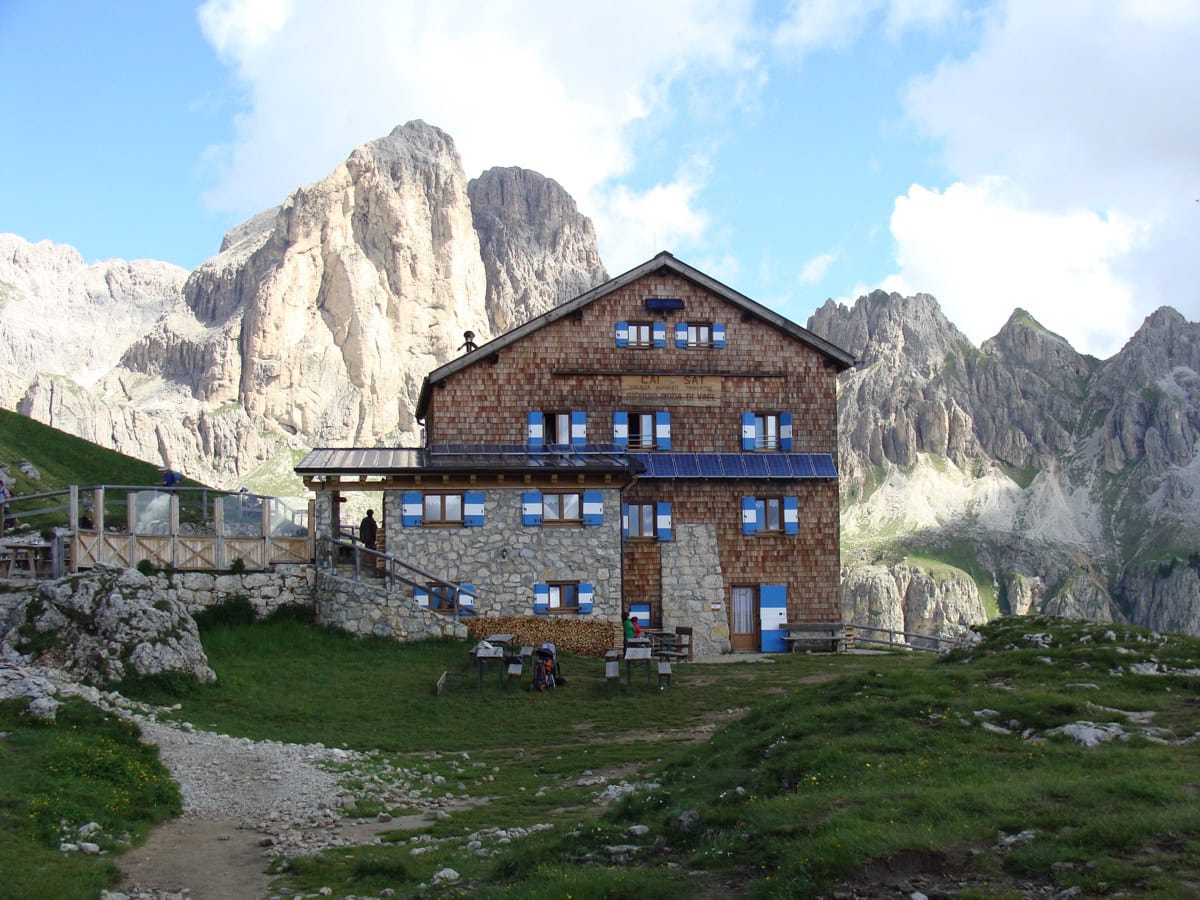
Ibiza, Spain: 25 Best Things to Do and See

TL;DRIbiza isn’t just an island of clubbing and superstar DJs. This Balearic island has a rich history going back to Phoenician times, wild landscapes and genuine Spanish culture. You’ll be stopped in your tracks by crystal-clear waters, hidden coves fringed with pines, and the medieval walls of the old town of Dalt Vila (a UNESCO World Heritage Site). Spend the morning wandering through pine woods, then unwind at a beach club by evening. May to October is the best time to come. Inside you’ll find 25 ideas for what to see and do beyond the parties, plus the best beaches.

Ibiza is not just an island of endless parties and world-famous DJs, as many think. This island in the middle of the Mediterranean Sea boasts a rich history dating back to Phoenician times, breathtaking nature, and authentic Spanish culture. The crystal-clear waters, hidden coves, and medieval walls of the ancient town of Dalt Vila will literally take your breath away. A place awaits you where traditional Spanish villages coexist with the most modern beach clubs, and where you’ll marvel at every sunset. Let’s take a look at 25 tips on what to see and do in Ibiza.

Summary for those Short on Time

  • Best Time to Visit Ibiza: May-September for the party scene and beaches, March-May and October for a quieter exploration at more favorable prices.
  • Accommodation: Playa d’en Bossa, if you want to go dancing or party; Santa Eulària des Riu for families; Dalt Vila for a historical atmosphere; Cala Comte for romantics.
  • Most Beautiful Beaches: Cala Comte for sunsets; Ses Salines for a trendy atmosphere; Cala Saladeta for privacy; Benirràs for hippie culture.
  • Parties Start: Around midnight in main clubs (Pacha, Amnesia, DC-10, Ushuaïa); pre-parties from 3:00 PM in beach clubs.
  • Watch Out For: High drink prices in clubs (€20-40); pickpocketing; difficult parking near beaches.

Ibiza Weather: when to Go to Ibiza

Ibiza has a Mediterranean climate with hot summers and mild winters, making it an attractive destination almost all year round. However, each season offers something different, and choosing the right time depends on your preferences.

  • Spring Months (March-May) bring pleasant temperatures around 20-25°C and blooming nature. This period is ideal for exploring the island without the summer tourist crowds. Many clubs are not yet in full operation, but they are starting to host their opening events. Accommodation prices are significantly lower than in the high season, and you can enjoy the island in a quieter atmosphere. The sea is still somewhat cooler (18-20°C), but spring is an excellent choice for an active holiday.
  • Summer Season (June-September) represents the peak of tourism. Temperatures range between 25-35°C, and the sea reaches a pleasant 24-26°C. It is at this time that Ibiza comes alive with its famous nightlife – all major clubs are open, and the most important events of the season take place. However, beaches are crowded, and accommodation prices reach their maximum. August is usually the hottest and most expensive month.
  • Autumn Months (October-November) offer a pleasant compromise. Temperatures drop to a comfortable 20-25°C, the sea is still warm from the summer sun, and tourist crowds have dispersed. Many clubs host their closing events, so you can still experience some of Ibiza’s nightlife, but at more favorable prices. October is especially popular among those who want to combine beach relaxation with exploring the island.
  • Winter Period (December-February) is the quietest part of the year, with temperatures around 15-20°C. Most clubs and many restaurants are closed, but Ibiza offers a different face: an authentic Spanish atmosphere, walks on empty beaches, and exploring local culture. Accommodation is the cheapest, and you can enjoy the island almost to yourself.

You might also like: What to See in Granada

Where to Stay in Ibiza

Each area of the island has its own atmosphere and offers different options for entertainment and relaxation.

  • Playa d’en Bossa is the epicenter of Ibiza’s nightlife. This area in the south of the island hosts the most famous clubs like Ushuaïa and Hï Ibiza, where day and night parties with the world’s best DJs take place. The long sandy beach offers a variety of beach bars and water sports. Accommodation here includes luxury party hotels as well as more affordable options, but expect higher prices and noise until the early hours. This location is ideal for young people who come primarily for the club scene.
  • San Antonio on the west coast is another significant party destination, but with a different atmosphere than Playa d’en Bossa. The town is known for its legendary Sunset Strip, home to iconic spots like Café del Mar and Café Mambo. The sunsets here are among the most beautiful in the world, and every evening hundreds of people gather on the coastal rocks. San Antonio offers a wide selection of hotels in all price categories and is more suitable for those who prefer a quieter atmosphere than in Playa d’en Bossa.
  • Ibiza Town (Eivissa), with its historic center Dalt Vila, is the cultural heart of the island. Accommodation here allows easy access to UNESCO sites, museums, and authentic Spanish restaurants. Evening life focuses more on stylish lounge bars and restaurants rather than massive clubs. This area is ideal for couples and more sophisticated travelers who want to experience the real Ibiza beyond the party scene.
  • Santa Eulària des Riu on the east coast represents the most family-oriented area of the island. The town has a quieter atmosphere, a beautiful promenade, and some of the cleanest beaches in Ibiza. Here you’ll find excellent restaurants not solely focused on tourism, and an authentic Spanish atmosphere. Accommodation is generally more affordable, and the area is ideal for families with children or seniors.
  • The North Coast around the towns of Portinatx and San Miguel offers the quietest environment on the island. The dramatic landscape with cliffs, hidden coves, and pine forests creates an almost untouched atmosphere. Accommodation here is limited, but authentic and often with magnificent views. This area is perfect for those seeking privacy and contact with nature.

We recommend the following accommodation:

lukas a lucka
Lukáš and Lucie recommend
Where to stay in Ibiza
4 accommodations — hotels and other lodging options

25 Tips on What to See in Ibiza

If Ibiza is on your bucket list, then I’ve put together 25 tips on what to see and do there.

Also read: What to Do in Córdoba

Dalt Vila

The fortified city of Dalt Vila, a UNESCO World Heritage site, is Ibiza’s most important historical monument. Its massive 16th-century walls, built to defend against pirates, conceal a labyrinth of narrow streets with white houses, a cathedral, and an archaeological museum. The climb to the top rewards you with panoramic views of the entire island and the sea. An evening stroll along the illuminated walls is one of the most romantic experiences in Ibiza.

Es Vedrà

This 381-meter-high limestone rock rising from the sea is surrounded by legends of UFOs, magnetic fields, and spiritual energy. The best views are offered by the Torre des Savinar viewpoint or Cala d’Hort beach. Es Vedrà is the third most magnetic place in the world, and at sunset, it creates an unforgettable silhouette that you surely know from thousands of photos.

Cala Comte

Cala Comte is considered Ibiza’s most beautiful beach, charming visitors with its incredible shades of blue and turquoise water. The beach consists of several smaller coves separated by rocky outcrops, each with a different character. Sunsets here are among the most breathtaking on the island, and local restaurants offer perfect seating with a view.

Benirràs

This pebble beach in the north of the island is famous for its Sunday sunset drumming. Dozens of drummers of various nationalities gather here every Sunday to celebrate the end of the week with rhythmic melodies. The bizarre rock formation of Cap Bernat rising from the sea creates a dramatic backdrop for this unique ritual, which has continued for over half a century.

Ses Salines

This beach in the natural park of the same name is a magnet for the fashion world and celebrities. Fine white sand, clear water, and pine forests create a perfect setting for stylish beach clubs like Sa Trinxa. Nearby salt lakes attract flamingos, creating a surreal landscape that contrasts with the luxurious beach environment.

Santa Gertrudis

This charming village in the heart of the island is the center of Ibiza’s art scene. Here you’ll find galleries, antique shops, and some of the best restaurants on the island. A white church dominates the central square, surrounded by cafes where locals gather for evening tapas.

Cova Can Marca

This more than 100,000-year-old cave in the north of the island offers tours with lighting and sound effects. Originally, it served as a hideout for tobacco smugglers, but today you can admire stalactites, stalagmites, and underground lakes during an hour-long guided tour.

Las Salinas Natural Reserve

Las Salinas Natural Park includes not only the famous beach, but also the entire area of salt lakes, sand dunes, and protected coastline extending to the island of Formentera. It’s an ornithologist’s paradise – in addition to flamingos, you can spot dozens of species of migratory birds here. The historic Torre de ses Portes tower offers views of the entire park.

Atlantis (Sa Pedrera)

This former quarry in the southwest of the island has become a cult spot thanks to its natural pools carved into the sandstone. The descent is challenging and takes about 30 minutes, but the reward is crystal-clear natural pools and unique rock formations somewhat resembling an ancient amphitheater.

Cala Saladeta

A small beach adjacent to the more famous Cala Salada, it is only accessible on foot, which is why it retains an intimate atmosphere. Its clear turquoise water and white cliffs create a perfect environment for snorkeling and relaxation away from the crowds. It is one of the most photogenic beaches on the island.

Portinatx

This northern area offers three beautiful coves with sandy beaches surrounded by cliffs. The local lighthouse, Far des Moscarter, is the tallest lighthouse in the Balearic Islands and offers breathtaking views of the rocky coast. The area is ideal for hiking and discovering hidden coves.

Es Canar

Every Wednesday, one of Ibiza’s most famous hippie markets takes place here – Punta Arabí. Here you’ll find handmade jewelry, clothing, artworks, and live music. The market has existed since the 70s and retains an authentic bohemian atmosphere.

Cala d’Hort – Es Vedrà Viewpoint

This beach offers the best view of the mystical Es Vedrà rock. The Es Boldado restaurant on the cliff above the beach serves excellent fresh fish with panoramic views. At sunset, Es Vedrà transforms into a magical silhouette that has inspired countless artists.

Santa Eulària Des Riu

The island’s third-largest town is a center of culture and art. The Puig de Missa church on the hill above the town offers magnificent views, while the ethnographic museum showcases traditional island life. The town’s palm-lined promenade and harbor invite you for a stroll.

Cala Benirrás

Besides the famous Sunday drumming, this northern beach also offers excellent snorkeling among the rocks and several pleasant restaurants. Pine forests provide shade, and the surrounding cliffs hide small caves.

Torre Des Savinar

This 18th-century watchtower, nicknamed Pirate Tower, provides the most beautiful view of Es Vedrà. The path up is rocky and a bit challenging, but the reward is an iconic view of Ibiza that you know from postcards. The best time to visit is late afternoon for good photos.

Cala San Vicente

This northeastern beach is surrounded by steep cliffs and provides excellent conditions for snorkeling. The promenade along the beach offers restaurants and hotels with sea views. It is one of the least touristy beaches, yet with good infrastructure.

Las Dalias

Every Saturday, the oldest and largest hippie market in Ibiza takes place in Sant Carles de Peralta. Since 1954, handmade products, clothing, jewelry, and souvenirs have been sold here. An evening version of the market with live music also takes place during the week in the summer season.

Cala Mastella

This small cove in the east of the island has retained its authentic fishing village atmosphere. The only local restaurant, El Bigotes (The Moustache), serves fresh fish right by the shore. Reservations are essential as capacity is very limited, but the experience is worth the effort.

Puig De Missa

The fortified church on the hill above Santa Eulària was built in the 16th century as a refuge from pirates. Its white walls and ramparts, along with the view of the town and the sea, are magnificent. Nearby, there is an ethnographic museum with traditional costumes and crafts.

Cala Llentia

This small cove on the west coast is only accessible after a challenging drive and then on foot. This is precisely why it retains an almost untouched character. But breathtaking sunsets and minimal crowds await you here.

Es Portitxol

This secluded cove in the north of the island is only accessible via a challenging hike or by boat. Dramatic cliffs, clear water, and absolute tranquility reward only the most adventurous travelers. It is one of the last truly wild places in Ibiza.

Can Marca

Besides the famous cave, this area also contains remnants of ancient civilizations. Archaeological findings attest to the presence of Phoenicians, Romans, and Moors. A walk along the surrounding trails reveals the remains of old terraces and wells.

Sa Caleta

This Phoenician archaeological site from the 8th century BC is a UNESCO World Heritage site. The remains of the oldest Phoenician colony on the island are located on a cliff above the beach of the same name. It offers a fascinating glimpse into the island’s 3000-year-old history.

Stonehenge of Ibiza

This stone sculpture near Cala Llentia beach is the work of a Canadian artist and creates an interesting contrast with the natural environment. Locals call it the Ibiza Stonehenge, and it has become a popular spot for photography, especially at sunset.

When Do Parties Start in Ibiza + which Clubs to Visit

Ibiza’s nightlife has its own rhythm, which differs significantly from typical European cities. The party scene is divided into several phases throughout the day and night, with each offering a different experience.

  • Day Parties (Pool Parties) start as early as 1:00 PM-2:00 PM in beach clubs and hotels. Ushuaïa Ibiza pioneered this concept with poolside parties where world-renowned DJs perform for thousands of dancers in swimwear. O Beach in San Antonio or Blue Marlin in Cala Jondal offer a similar atmosphere. These events usually end around 10:00 PM-11:00 PM.
  • Pre-Parties and Sunset Bars start around 6:00 PM in bars along the coast. Café del Mar and Café Mambo in San Antonio are legendary spots where thousands watch the sunset accompanied by music. Entry is free, but drinks are more expensive. Sunset Ashram or Kumharas offer a similar atmosphere.
  • Main Club Scene starts truly late – around midnight to 1:00 AM. The Spanish tradition of late dinner means people arrive at clubs only after 2:00 AM, and parties peak around 4:00 AM-6:00 AM. Closing time is officially 6:00 AM, but many afterparties continue.
  • The Most Famous Clubs each have their own character. Pacha, the oldest club on the island, open since 1973, is synonymous with luxury and style, featuring its iconic cherry logo. Amnesia hosts some of the season’s biggest parties, including the legendary Foam Party. DC-10, near the airport, is a cult spot for lovers of underground electronic music. Hï Ibiza (formerly Space) showcases the latest technology with crystal-clear sound and impressive lighting effects.
  • The weekly schedule is precisely structured. Mondays are for DC-10 and their Circo Loco party, Tuesdays for Pacha with F*** Me I’m Famous, Wednesdays are ruled by Amnesia with Together, Thursdays offer a selection of several clubs, Fridays and Saturdays are the peak with the biggest events across all clubs, and Sundays wrap up the week at Amnesia with Elrow or at DC-10 with Circo Loco.
  • Ticket prices range from €40 to €100 depending on the club, event, and season. Drinks in clubs cost €20–€40 per cocktail, VIP tables start at €500 and can run into the thousands per night.

What to Watch out for in Ibiza

Ibiza is generally a safe destination, but its popularity and party vibe come with specific risks you should be prepared for. Knowing about these will help you avoid hassles and enjoy your holiday to the fullest.

  • High prices are a fact of life in Ibiza, especially in summer and in touristy areas. A cocktail in a club can cost €20–€40, and lunch at a beach restaurant €40–€60 per person. Taxis are expensive, especially at night — the ride from the airport to Playa d’en Bossa can cost €25–€30. Groceries in supermarkets are 30–50% pricier than on the mainland.
  • Fake and dangerous drugs are unfortunately a common problem. Never buy drugs from strangers on the street — they’re often dangerous counterfeits or entirely different substances. Many tourists have ended up in the hospital due to poisoning from unknown chemicals. Spanish laws are strict, and possession can land you in prison.
  • Pickpocketing and petty crime occur mainly in crowded areas such as clubs, beaches, and markets. Never leave your belongings unattended on the beach, carry your wallet in a front pocket, and keep valuables in the hotel safe. In the evening, stick to well-lit, busy areas.
  • Traffic conditions can be challenging, especially in the summer season. Roads to popular beaches are narrow and often crowded. Parking by the beaches is limited and expensive — in some places you’ll pay €20–€30 per day. Many tourists scratch their rental cars on narrow roads or chaotic parking lots. Renting scooters is popular but requires caution due to unpredictable drivers.
  • Sun and hydration are other underestimated risks. The Mediterranean sun is very strong, and combined with alcohol and dancing it can lead to overheating. Always use high-SPF sunscreen, drink plenty of water, and seek shade. Many visitors end up with severe sunburns on day one.
  • Tourist traps are common — from wildly inflated prices at some restaurants to fake club tickets and rogue taxi services. Always check your bill before paying, buy tickets only from official sources, and use licensed taxis with a meter.
  • Travel insurance is essential — treatment at a hospital can cost thousands of euros. The European Health Insurance Card covers basic care, but for activities like diving or extreme sports you’ll need specialized coverage. We recommend travel insurance from SafetyWing.

Frequently Asked Questions

When is the best time to visit Ibiza?

For the club scene and full access to all the beaches, the best period is June to September, when every club is open and the weather is perfect for swimming. If you prefer a calmer vibe and lower prices, choose May, October, or even the winter months, when the island offers a more authentic Spanish atmosphere.

How much money should I bring for a week in Ibiza?

Your budget depends heavily on your travel style. As a minimum, plan for €100–€150 per person per day for basics (food, transport, entry fees). For a more upscale stay with clubbing and quality restaurants, budget €200–€300 per day. Club entry is around €50–€100, cocktails €20–€45.

How do I get from the airport to my hotel?

The airport is 7 km from Ibiza Town. A taxi costs €25–€35 depending on your destination and time of day. Bus no. 10 runs to town for €4 every 15–30 minutes. Many hotels offer transfers, or you can book a private transfer online for €20–€25.

What are the safest areas to stay in?

All main tourist areas are relatively safe. Santa Eulària des Riu is the quietest and best for families. Playa d’en Bossa and San Antonio have more nightlife but also more noise. Ibiza Town offers cultural experiences but can be busier. The northern areas are the most tranquil but have limited infrastructure.

Tips and Tricks for Your Vacation

Don’t Overpay for Flights

Search for flights on Kayak. It’s our favorite search engine because it scans the websites of all airlines and always finds the cheapest connection.

Book Your Accommodation Smartly

The best experiences we’ve had when looking for accommodation (from Alaska to Morocco) are with Booking.com, where hotels, apartments, and entire houses are usually the cheapest and most widely available.

Don’t Forget Travel Insurance

Good travel insurance will protect you against illness, accidents, theft, or flight cancellations. We’ve had a few hospital visits abroad, so we know how important it is to have proper insurance arranged.

Where we insure ourselves: SafetyWing (best for everyone) and TrueTraveller (for extra-long trips).

Why don’t we recommend any Czech insurance company? Because they have too many restrictions. They set limits on the number of days abroad, travel insurance via a credit card often requires you to pay medical expenses only with that card, and they frequently limit the number of returns to the Czech Republic.

Find the Best Experiences

Get Your Guide is a huge online marketplace where you can book guided walks, trips, skip-the-line tickets, tours, and much more. We always find some extra fun there!
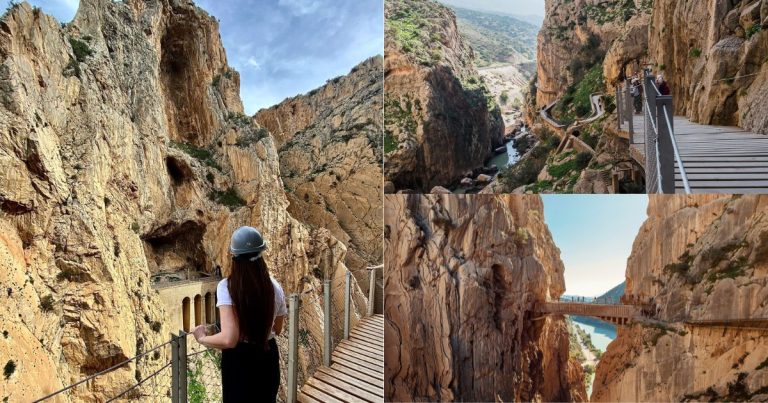
Valencia, Spain: 27 Best Things to Do and See

TL;DRValencia, Spain’s third-largest city on the east coast, is all about variety: a historic centre of palaces and palm trees sits comfortably alongside the futuristic City of Arts and Sciences, traditional markets and neighbourhoods packed with tapas bars. It’s the birthplace of proper paella, and the sun shines here more than 300 days a year. Don’t miss the huge park in the old riverbed and the city beaches. Spring and autumn are the best times to visit. The guide has 27 tips on what to see and do, and where to stay.

Valencia is the third largest city in Spain, yet it feels like home. You’ll fall in love with this city on the country’s east coast at first sight, mainly due to its diversity. Its beautiful historic center, full of palm trees, coexists with the futuristic complex of the City of Arts and Sciences, traditional markets, and lively neighborhoods full of tapas bars and pitchers of sangria.

Valencia is also home to authentic paella and horchata, a local drink made from chufa nuts. The city is also known for its healthy lifestyle – locals reportedly live to an average age of 83.5 years, which is certainly no coincidence. The sun shines here over 300 days a year, the air is clean, and the Mediterranean cuisine (and plenty of sangria 🤭) benefits health, heart, and soul. Let’s explore 27 tips on what to see and do in Valencia.

Summary for those Short on Time

  • Top Sights: City of Arts and Sciences with the largest aquarium in Europe, historic cathedral with the Holy Grail, Torres de Serranos, and the UNESCO-listed Silk Exchange.
  • Ideal Time to Visit: May to September for swimming, March to November for exploring the city without large tourist crowds.
  • Accommodation Recommendations: In the historic center of Ciutat Vella or in the modern Ruzafa district with an excellent culinary scene.
  • Transport: The Valencia Tourist Card includes unlimited public transport and entry to attractions, and the metro from the airport costs 4.80 EUR.
  • Local Specialties: Authentic Valencian paella, horchata with fartons, and the Agua de Valencia cocktail with fresh orange juice.
Experiences & tickets
traveler-rated · GetYourGuide
From Valencia: Hot Springs + Waterfalls + Surprise Stop
★★★★★ 4.7 · 842 reviews
from €42
I want this experience →
🔗 These are affiliate links — they don't change your price and help us create content. · All experiences →

Valencia Weather – when to Go to Spain

Valencia has a Mediterranean climate with mild winters and warm summers. The city is ideal for visiting practically any time of year, but each season has its unique characteristics.

  • Spring (March–May) is one of the most pleasant times of the year. Temperatures range between 18–25 °C, flowers bloom, and a fresh atmosphere prevails everywhere. In March, the famous Las Fallas festival takes place, when the entire city transforms into a huge celebration full of fireworks, processions, and traditional cardboard sculptures.
  • Summer (June–August) is ideal for sun and sea lovers. Temperatures reach 28–35 °C, and the sea is a pleasant 24–26 °C. This period is the liveliest, but also the most expensive and busiest. Beaches are full of life, and evenings stretch long into the night.
  • Autumn (September–November) offers a happy medium. September is still warm with temperatures around 25 °C, but tourist numbers are already decreasing. October and November are ideal for sightseeing with temperatures around 20 °C and significantly fewer tourist crowds.
  • Winter (December–February) is the calmest period with temperatures around 15 °C. The sun often shines, so you can enjoy pleasant walks through the city. Prices are lowest, and attractions are almost empty.

💡You might be interested: Malaga Vacation

Where to Stay in Valencia

Valencia offers diverse accommodation options for every traveler. However, choosing the right neighborhood will significantly impact your experience of the city. I recommend staying near the center:

💡TIP: Where to Go on Vacation in Spain

lukas a lucka
Lukáš and Lucie recommend
Where to stay in Valencia
4 accommodations — hotels and other lodging options

Valencia and Public Transport

Getting around Valencia is quite easy and convenient thanks to its well-developed public transport system. The city has a modern network of metro, trams, buses, and city bikes. But beware, public transport in Valencia does not work like in Prague. You need a different ticket for each mode of transport.

  • Metro and Trams form the backbone of Valencia’s transport. Six metro lines and four tram lines will get you practically anywhere. A single ticket costs 1.50 EUR for zone A, but multi-day passes are more advantageous. From the airport to the city center, the metro costs 4.80 EUR, and the journey takes 25 minutes.
  • Valencia Tourist Card is the best investment for tourists. A 24-hour card for 15 EUR includes unlimited transport throughout the city, including the journey from the airport, and discounts or free entry to most attractions. There are also 48-hour (20 EUR) and 72-hour (25 EUR) options.
  • Valenbisi is a bike-sharing system with 275 stations throughout the city. Weekly use costs 13 EUR, and you can use bikes unlimitedly for 30-minute intervals. Valencia is ideal for cycling thanks to its flat terrain and dense network of bike paths.
  • EMT Buses complement the metro and trams. Red buses operate throughout the city; a ticket from the driver costs 1.50 EUR. Night buses (CorreNIT) run from 10:30 PM to 2:30 AM.

For getting around the historic center, walking is best. All main attractions are within walking distance, and you’ll discover hidden corners of the city you might otherwise miss.

💡See also: What to See in Seville

Valencia Sights: 27 Things to See and Do in Valencia

If you’re planning a trip to Valencia, then I’ve put together 27 tips on what to see and do there.

City of Arts and Sciences (Ciudad De Las Artes Y Las Ciencias)

The futuristic complex by architect Santiago Calatrava is a symbol of modern Valencia. Its white sculptural buildings surrounded by water features have an atmosphere straight out of a science fiction film. The complex includes the Hemisfèric planetarium with an IMAX cinema, an interactive science museum, the Umbracle botanical garden, an opera house, and the largest aquarium in Europe.

Definitely plan your visit for a full day, and feel free to return in the evening when the buildings are beautifully lit. Admission varies by attraction; combined tickets are more advantageous.

Oceanogràfic

The largest aquarium in Europe is home to over 500 species of marine animals. You’ll explore the Arctic with beluga whales, tropical waters with sharks, Antarctica with penguins, and the Mediterranean with its typical fish.

The main attraction is the underwater tunnel, where huge sharks and rays swim above you. Don’t miss the dolphin show in Europe’s largest dolphinarium. Admission is around 34–40 EUR depending on the season, and a visit takes 3-4 hours.

Valencia Cathedral

The Gothic cathedral is home to the most famous relic of the Christian world – the Holy Grail. The agate chalice in the Santo Cáliz chapel is, according to tradition, the actual cup from which Jesus drank at the Last Supper. The interior is adorned with magnificent frescoes and a Baroque altar.

The cathedral’s architecture combines Romanesque, Gothic, and Baroque elements, developed over more than 200 years of construction. Admission is 9 EUR, reduced 6 EUR.

El Miguelete Bell Tower

The cathedral’s octagonal bell tower, 51 meters high, offers the most beautiful view of Valencia. The climb up 207 steps is challenging, but the reward is a panoramic view of the entire city, the sea, and the surrounding mountains.

The bell tower was originally a separate structure and was later connected to the cathedral. Admission is 2.50 EUR, and opening hours vary by season.

Plaza De La Virgen

The main square of the historic center is the heart of Valencian life. It is dominated by the Turia Fountain with Neptune surrounded by eight maidens symbolizing the river and its irrigation channels. The Basilica of Our Lady stands on the square, and vehicle access is prohibited here.

The square is the center of all major festivities, especially during the Las Fallas festival, when the traditional ofrenda de flores – the offering of flowers to the giant statue of the Virgin Mary – takes place here.

Torres De Serranos

The majestic 14th-century Gothic gate was the main entrance to the city. Its massive towers also served as a prison for nobles. Today, it offers an excellent view of the historic center and Turia Park.

The gate is one of the last preserved sections of the city’s medieval fortifications. Admission is 2 EUR, free on Sundays and holidays.

Silk Exchange (Lonja De La Seda)

This Late Gothic building, a UNESCO World Heritage site, is one of the most beautiful civil constructions in Europe. It served as the center for silk trade, which brought immense wealth to Valencia.

The main hall with its twisted columns and richly decorated ceiling is an example of architectural perfection. The courtyard with orange trees is also beautiful. Admission is only 2 EUR, and it’s free on Sundays.

Central Market (Mercado Central)

One of the largest covered markets in Europe is housed in a beautiful modernist building of glass and iron. Here you’ll find the freshest fish, meat, fruits, vegetables, cheeses, and local specialties like horchata or fartons. It is open from Monday to Saturday from 7:30 AM to 3:00 PM.

Turia Gardens (Jardí Del Túria)

The largest urban park in Spain was created in the former riverbed of the Túria River. Nearly 10 kilometers of greenery stretches through the entire city from the zoo to the City of Arts and Sciences.

The park offers bike paths, running tracks, playgrounds, a botanical garden, and the unique Gulliver Park with a giant statue of Gulliver serving as a slide for children. The Bridge of Flowers (Pont de les Flors) is one of the most beautiful bridges in the city.

Bioparc Valencia

This modern zoo, focusing on African fauna, offers animals an environment as similar as possible to their natural habitat. You won’t see cages here, but open enclosures where multiple species live together, just as in the wild.

You’ll see elephants, giraffes, lions, gorillas, and penguins here. Bioparc actively participates in conservation programs. Admission starts from 28.90 EUR, and a visit takes at least half a day.

Plaza Del Ayuntamiento

The main city square, with its impressive City Hall and fountain, is the center of Valencia’s life. The City Hall can be visited for free, including the balcony with a view of the square. The square is the epicenter of the Las Fallas festival, where the Mascletà fireworks display takes place daily. Surrounding buildings like the Palacio de Correos with its beautiful dome are worth admiring.

Malvarrosa and Patacona Beaches

The kilometer-long sandy Malvarrosa Beach is the most popular in the city. A wide promenade with palm trees, chiringuitos (beach bars), and excellent paella restaurants create a typical Spanish atmosphere.

The smaller Patacona Beach is a quieter alternative, just a few minutes by tram from the center. Both beaches have all amenities, including sunbed and umbrella rentals.

Mercat De Colón

This modernist market has transformed into a gastronomic paradise with selected restaurants and cafes. Its beautiful architecture with ceramic tiles is worth a visit in itself. You’ll find both traditional Valencian cuisine and international specialties here. It’s an ideal spot for horchata with fartons or an evening cocktail.

Torres De Quart

The second preserved city gate, in the style of Naples’ Castel Nuovo, served to defend the city. Traces of cannonballs from the Wars of Independence are still visible on the towers. A climb to the towers will reward you with views of the western part of the city. Admission is 2 EUR, free on Sundays.

Church of San Nicolás

The Church of San Nicolás in Valencia is a kind of “Sistine Chapel of Valencia” which will amaze you with magnificent frescoes covering the entire interior. From the outside, this unassuming church hides one of the most beautiful ecclesiastical interiors in Spain.

The 17th-century frescoes depict the lives of Saint Nicholas and Saint Peter Martyr. Admission is 11 EUR, including an audio guide.

National Ceramics Museum

The Palace of the Marqués de Dos Aguas is a work of art in itself, with a richly decorated Baroque facade. Inside the museum, you’ll find the largest collection of Valencian ceramics and applied arts. Admission is only 3 EUR, and it’s free on Saturday afternoons and Sundays.

Plaza De Toros

The bullring, inspired by the Roman Colosseum, is an important part of Valencian tradition. Although corridas are no longer regularly held here, you can visit the museum and explore the arena. This 19th-century neoclassical building can accommodate up to 10,000 spectators. Admission costs 2 euros.

Institut Valencià d’Art Modern (IVAM)

One of the most important modern art museums in Spain is housed in an impressive modernist building. Its collections include works from Picasso to contemporary Valencian artists.

Regular exhibitions showcase contemporary Spanish and international art. The museum is located in a cultural district near other galleries.

El Carmen Neighborhood

This bohemian neighborhood in the historic center is full of narrow streets, street art, alternative bars, and galleries. The combination of medieval architecture with modern art creates a unique atmosphere. A stroll through this district is a small adventure full of discoveries. You’ll find the Portal de Valldigna, remnants of medieval walls, and the city’s liveliest nightlife here.

Estació Del Nord

The main train station is one of the most beautiful in Europe thanks to its modernist style. Its facade is adorned with mosaics featuring Valencian oranges and orange blossoms.

Even if you’re not traveling anywhere, the building is worth a visit for its architectural beauty. The station is right next to the city center.

Plaza De La Reina

One of the city’s liveliest squares, surrounded by cafes and shops. In the center of the square is a small park with orange trees, where you can relax in the shade. The square is an excellent starting point for walks through the historic center, and street artists perform here regularly.

L’Eixample District

This elegant part of the city, with its wide boulevards and modernist architecture, resembles Barcelona’s Eixample. You’ll find luxury shops, design hotels, and excellent restaurants here.

The area is ideal for leisurely strolls and shopping in large malls as well as boutique stores.

Palau De La Generalitat

This Gothic palace, the seat of the Valencian government, can be visited during special tours. Its interiors, adorned with frescoes and tapestries, showcase the best of Valencian art.

The building combines Gothic and Renaissance elements and is among the city’s most important civil constructions. Tours must be reserved in advance.

Albufera Natural Park

The “little sea” south of the city is Spain’s largest freshwater lake. The wetlands are home to hundreds of bird species and rice fields where rice for paella is grown.

A boat trip on the lake at sunset is one of the most romantic experiences. You can get here by bus no. 25 in 40 minutes.

Assut De l’Or Bridge

This bridge by architect Calatrava resembles a giant harp and has become an icon of modern Valencia. Its white pylon, 125 meters high, is visible from a great distance. The bridge connects different parts of the city and offers beautiful views of the City of Arts and Sciences.

Port Saplaya

“Little Venice,” eight kilometers from the center, is a small town built around canals. Colorful houses, restaurants, and a peaceful atmosphere offer a pleasant excursion away from the city’s hustle and bustle. You can get here by bus no. 32 or by walking along the beach from Malvarrosa.

The Narrowest House in Valencia

One of Valencia’s most curious attractions is hidden at Plaça de Lope de Vega 6, right next to the popular Tasquita La Estrecha bar. It is a house just 107 centimeters wide, which long held the title of the narrowest house in Europe. Although it was later connected to the adjacent building and thus lost its independence, its characteristic narrow facade has been preserved.

Frequently Asked Questions

How long to visit Valencia?

A minimum of three days is enough for the main sights and the city’s atmosphere. Five to seven days is ideal if you want to combine sightseeing with beach relaxation and excursions to the surroundings. The city isn’t huge, but it offers so many experiences that you definitely won’t get bored.

What is the best way to get around Valencia?

The best way is a combination of walking in the historic center and using public transport for longer distances. The Valencia Tourist Card, costing 15 EUR for 24 hours, includes unlimited transport and discounts on attractions. For active travelers, renting a bike through the Valenbisi system is ideal.

How much does food cost in Valencia?

A ‘Menu del día’ (set lunch menu) in a typical restaurant costs 12-15 EUR, a good paella for two costs around 30 EUR, coffee 1.50 EUR, and beer 2-3 EUR. Valencia is significantly cheaper than Barcelona or Madrid, but more expensive than smaller Spanish cities.

Is it necessary to buy tickets for attractions in advance?

For the Oceanogràfic, definitely yes, especially on weekends and in summer. Other attractions have shorter lines, but buying online will save you time. The Valencia Tourist Card often includes free entry or discounts.

What to try in Valencia?

Authentic Valencian paella (with chicken, beans, and rabbit, not seafood), horchata with fartons, an Agua de Valencia cocktail, tapas in one of the traditional bars, and fresh fish from the Central Market. Don’t forget to visit one of the traditional horchaterías like Santa Catalina.

Tips and Tricks for Your Vacation

Don’t Overpay for Flights

Search for flights on Kayak. It’s our favorite search engine because it scans the websites of all airlines and always finds the cheapest connection.

Book Your Accommodation Smartly

The best experiences we’ve had when looking for accommodation (from Alaska to Morocco) are with Booking.com, where hotels, apartments, and entire houses are usually the cheapest and most widely available.

Don’t Forget Travel Insurance

Good travel insurance will protect you against illness, accidents, theft, or flight cancellations. We’ve had a few hospital visits abroad, so we know how important it is to have proper insurance arranged.

Where we insure ourselves: SafetyWing (best for everyone) and TrueTraveller (for extra-long trips).

Why don’t we recommend any Czech insurance company? Because they have too many restrictions. They set limits on the number of days abroad, travel insurance via a credit card often requires you to pay medical expenses only with that card, and they frequently limit the number of returns to the Czech Republic.

Find the Best Experiences

Get Your Guide is a huge online marketplace where you can book guided walks, trips, skip-the-line tickets, tours, and much more. We always find some extra fun there!
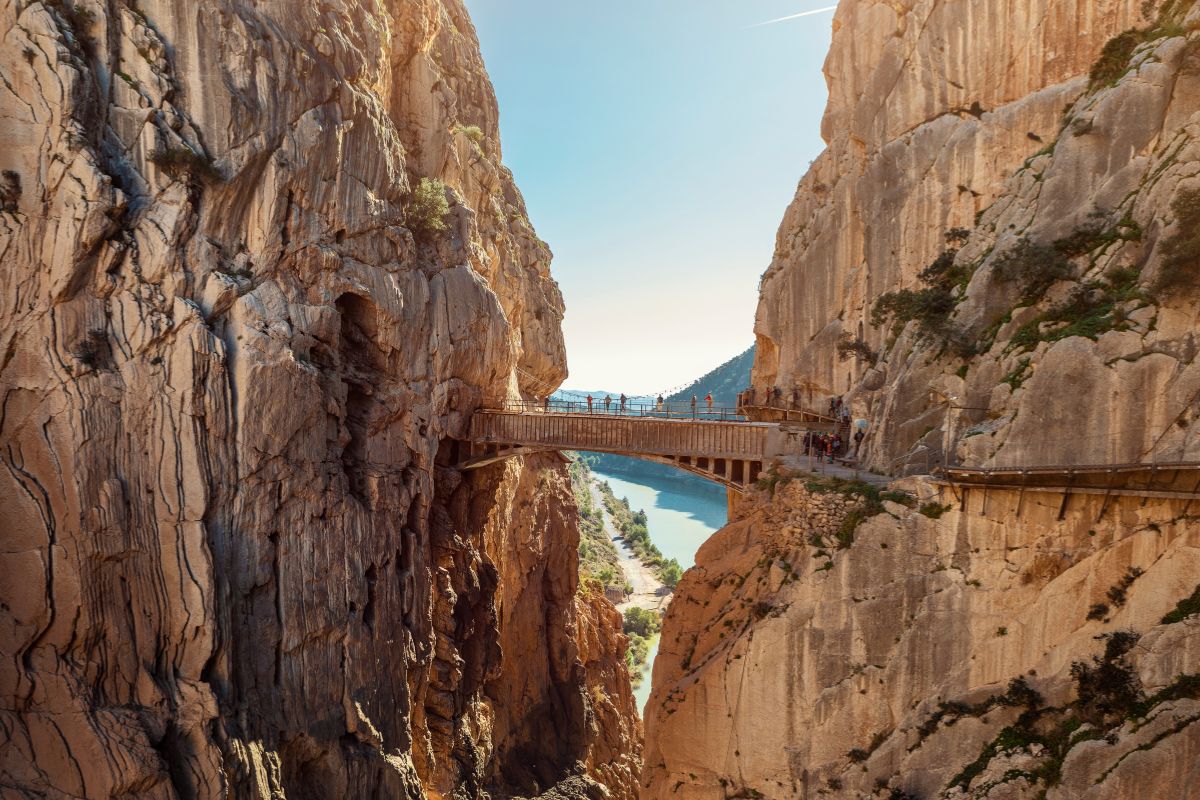
Porto, Portugal: 22 Best Things to Do and See

TL;DRThere are 22 solid ideas here for what to see and do in Porto: the iconic Ribeira waterfront, the Dom Luís I Bridge, Livraria Lello bookshop, Porto Cathedral, São Bento station with its thousands of azulejo tiles, and the Graham’s and Taylor’s wine cellars over in Vila Nova de Gaia. Three to four days is enough for a proper look round the centre, a trip out to the Douro Valley, and one further excursion (Guimarães or Braga). The best time to come is spring (May, June) or early autumn in September, when temperatures sit between 20 and 25 degrees. From Francisco Sá Carneiro airport, the metro gets you into the centre in around 40 minutes, and as of 2026 Porto charges a tourist tax of 3 euros per person per night, capped at 21 euros for the whole stay.

It’s easy to fall in love with Porto. Breathtaking views, romantic streets filled with beautiful tiled buildings, and Port wine. I can guarantee that whether you spend three days or even a whole week here, you probably won’t get enough of this Portuguese port city.

But how to make the most of your time in Porto? In this article, I’ve compiled a list of the best things to do in Porto, what to see, taste, and where to go for a good coffee and a bite to eat.

How to get to Porto

If you don’t want to drive for three days like we did, the easiest way to get to Porto is by plane. You can read about how to find cheap flights in our article: 15 tips for cheap flights.

Generally, we recommend searching for flights via Skyscanner.

How to get to Porto City Center from Francisco Sá Carneiro Airport

  • From Francisco Sá Carneiro Airport, you can easily reach the city center via the local metro’s purple Line E. The price depends on your exact destination, but to the city center, the usual fare is around two euros and the journey takes approximately 40 minutes. The metro operates from 6:00 AM until approximately 1:00 AM. If you’re interested in specific times, check the website Metro do Porto.
  • To use the metro and city buses, you need to purchase an Andante card, which costs €0.60 and on which you always load individual zones. However, we comfortably walked around the city center. For trips to the beach and more distant points of interest, you can buy a single ticket or a day pass.

Note: The Andante card is not valid for cable cars and historic tram rides – you must buy individual tickets for those. A historic tram ticket costs 3.5 euros one way. A two-day ticket costs 10 euros.

Porto Accommodation: where to Stay in Porto

If you travel frequently and use discounts and benefits from Accor Group hotels, you’ll find several accommodations in Porto.

  • Novotel Porto Gaia, which is further from the center but has good parking, excellent breakfasts, and a pool you can use in the summer. Next to Novotel, there’s also Ibis Porto Gaia (cheaper) and Ibis Budget Porto Gaia (cheapest).
  • In the city center, you’ll find Ibis Porto Centro. At these hotels, we always had excellent breakfast, and they accommodated us with our dog. Breakfast is usually key for us when we go on shorter trips, so we don’t waste time looking for food in the morning.
  • For those of you staying in Porto for a longer period, who want to cook for yourselves or try one of our recommended cafes in the morning (further down in the article), check out Vitoria’s Terrace Apartments, which are in the city center, as is Cozy Studio Apartment.
  • For those looking for cheap hostel-type accommodation in Porto, The Passenger Hostel is very stylish and located in the iconic S. Bento railway station, which is a UNESCO site.
lukas a lucka
Lukáš and Lucie recommend
Where to stay in Porto
4 accommodations — hotels and other lodging options

Weather in Porto: when to Go to Portugal?

Thanks to its coastal location, Porto is pleasant all year round. In summer, there aren’t extreme heatwaves (although now, as the planet warms, that’s changing quite a bit) and in winter, don’t expect sub-zero temperatures.

However, it rains heavily in winter (October – January), so the most ideal time to visit is spring, summer, and early autumn (May – September). We visited Porto in mid-February and had a beautiful 17 degrees Celsius and partly cloudy sky.

TIP: You can also walk the legendary Camino de Santiago de Compostela from Porto. A great place to start is the Camino pro radost blog.

Porto Guide: 22 Tips on What to See in Porto

The introduction is behind us, and let’s take a look together at what you definitely shouldn’t miss seeing in Porto. A map of all the places mentioned below follows.

1) Livraria Lello

Whether you love Harry Potter, are a bookworm, or simply an enthusiast of beautiful interiors, you probably won’t be able to resist this magical bookstore.

To get in, you need to buy a ticket. We recommend purchasing it online in advance. On-site, it’s purchased at the shop around the corner to the right of the bookstore. Admission costs five euros, and you can use the ticket as a discount on a book purchase.

When we were reading about Porto, many foreign travelers advised us to avoid the bookstore. It’s true that there are a lot of people there. Definitely don’t go during the day; we walked past about 10 times, and each time there was a queue of over 50 people.

If you wish to see the bookstore, come half an hour before opening time (it opens at 9:30 AM). We arrived at 9:07 AM and were fourth in line. We managed to explore the bookstore among the first and enjoy it to the fullest.

In the bookstore, you’ll find, for example, a first edition of Oliver Twist; on the second floor, on the books, you’ll find busts of various philosophers, artists, and writers, and you can buy special editions of classic works published directly by Livraria Lello.

When Rowling lived in Porto, she reportedly came here very often, and Livraria Lello bookstore became a great inspiration for her. Today, there is one room in the bookstore dedicated specifically to Harry Potter.

  • Opening hours: 9:30 AM – 7:00 PM
  • Admission: 5 EUR (this is a voucher that you can deduct from a book purchase)

2) Igreja Do Carmo Church

The Baroque Igreja do Carmo church will likely catch your eye on your way to Livraria Lello with its magnificent tiled facade. Upon closer inspection, you’ll realize it’s not one church, but actually two. Only a narrow one-meter alley separates it from Igreja dos Carmelitas.

3) Igreja E Torre Dos Clérigos (Church and Tower)

If you’re in Porto for several days and dedicate one morning to Livraria Lello, dedicate another to the view from the Clérigos Tower. The viewpoint is very popular, so by 10 AM, you’ll be squeezing in with a large group of people at the top.

Admission is 6 euros; if you’re here on Valentine’s Day, you might get 1+1 FREE admission, just like we did. The admission also includes a tour of the church and a small exhibition about the construction of the tower and the Baroque church.

  • Opening hours: 9:00 AM – 7:00 PM
  • Admission: 6 EUR

4) Taste Pasteis De Nata at Manteigaria

It’s hard to avoid the traditional egg custard tart, pastel de nata, in Portugal. But you won’t easily find one as delicious as at Manteigaria, not far from the Clérigos Tower. Although I was on a low-carb diet in Porto, I had to break it for once, and I was glad I did.

The traditional dessert is perfected to true mastery here. The puff pastry along with the filling will simply melt in your mouth. Plus, you can watch the bakers in action as they make pasteis de nata.

One piece will cost you 1.30 euros.

5) Sao Bento Railway Station

Those who are crazy about blue tiles will have to visit Sao Bento station. The blue paintings on the tiles depict historical events of the country, and you’ll also find rural scenes from the regions here.

Their author is Jorge Colaco, and he completed them in 1916. The station itself was built only 12 years earlier, in 1904.

6) Mercado De Bolhao

Lukáš and I love going to markets all over the world (even at home, in fact, since we live close to Holešovice Market). Nothing tells you as much about a place as its food.

Mercado do Bolhão was temporarily moved to another provisional location in February 2020 because the market building is undergoing reconstruction. If it’s still ongoing during your visit, don’t be discouraged!

At the market, you’ll find fruits, vegetables, and you can buy freshly caught fish and meat. If you prefer vegetarian or vegan food, definitely stop by the NaturaBolhao Cafe stall, where they have a great selection of vegan food. We had an excellent spinach quiche and a tempeh wrap.

7) Capela Das Almas

Near Mercado do Bolhão is the city center’s main pedestrian shopping street: Santa Catarina. You’ll find many shops, restaurants, and cafes here, and it will also lead you to the Capela das Almas church, which is decorated with 16,000 blue tiles. On them, you’ll find depicted the death of Francis of Assisi.

8) Santo Ildefonso Church

It’s hard to miss the Church of Saint Ildefonso, which is adorned with magnificent blue and white tiles.

The church was built in the 18th century in Baroque style, and the altar was created by the Italian artist and architect Nicolau Nasoni, who contributed to many other buildings in Porto, for example, designing the Clérigos Tower and Church.

9) Sé Do Porto Cathedral

Porto’s main cathedral was built in the 12th century, and Portuguese kings resided here. It was here in 1387 that the parents of the famous King Henry the Navigator, John I and Philippa of Lancaster, were married.

Henry the Navigator was baptized here in 1394. There’s also a magnificent view of the city from the cathedral.

10) Mercado Ferreira Borges

In Praça do Infante D. Henrique square, there’s a building where you can discover a small market with local products. From what I’ve read in reviews, it’s not always there, but when we were there, they had jewelry, spices, clothes, and also handmade dreamcatchers.

Everything was stylish and at a good price. However, I can’t guarantee that the same vendors will be there when you go. But definitely take a look when you’re in the area.

11) Palácio Da Bolsa

A magnificent palace that you’ll only truly appreciate once you step inside. You’ll find breathtaking interiors here that were very richly furnished.

The most beautiful part of the entire tour is the magnificent hall decorated in an Arabian style with stucco work reminiscent of the Alhambra and Moorish-style furnishings. It was built in the 19th century as a stock exchange palace.

  • The tour lasts 45 minutes
  • Admission: Adult 11 euros / Student / Senior 7.5 euros
  • Children under 12 free

12) Igreja Monumento De São Francisco

Next to the stock exchange palace, you’ll find the 14th-century Franciscan church. It is Porto’s most significant Gothic building and one of the most important religious churches in the city. The church is a UNESCO World Heritage site.

13) Cais Da Ribeira Promenade

Lukáš and I joked that this is a much better riverside embankment than the one in Prague. Your visit to Porto wouldn’t be complete without a stroll along the Douro River.

The boats sailing on the river directly invite you to pay for a ride, while the colorful houses make you constantly raise your camera, making you realize right then that you’ll have to come back several times to fully absorb the beauty.

Take your time to admire the view of the Dom Luís I Bridge, the Douro River, and the opposite bank of Vila Nova de Gaia.

14) Dom Luís I Bridge (Ponte De Dom Luís I)

After walking along the Cais da Ribeira promenade, you’ll reach the beginning of the Dom Luís I Bridge, which strikingly resembles the Eiffel Tower in Paris with its construction. The bridge was designed by his student, Théophile Seyrig.

When I was looking for information about the bridge, I found out that originally, another bridge was designed here by Gustave Eiffel himself, but his proposal was rejected.

The bridge has two decks, and you can reach the upper deck either on foot or by cable car. If you have a dog with you, you can certainly take it on the cable car. There’s a great view from the upper deck of the bridge, so I recommend walking across it one way on the top and the other way on the bottom.

15) Claustros Do Mosteiro Da Serra Do Pilar (Serra Do Pilar Monastery)

On the other side of the bridge, at the top, you’ll find the Serra do Pilar Monastery, which offers a magnificent view. However, also dedicate your time to the monastery building itself.

This is another building that is a UNESCO World Heritage site. It dates from the 17th century and was built at the intersection of Renaissance and Mannerist styles.

16) where to Go in Porto: Porto Cable Car – Teleférico De Vila Nova De Gaia

If you enjoy cable car rides, or if you’re a bit tired, a short distance from the Serra do Pilar Monastery, there’s a cable car that can take you to the end of Av. de Diogo Leite promenade.

From the cable car, you have a view of the Douro River, and you can buy a ticket in combination with a boat trip. However, the cable car is somewhat expensive for a ride that only lasts a few minutes.

17) Port Wine – where to Go for It

If you like Port wine or wine in general, you should definitely dedicate at least one evening to visiting the local cellars or wine bars located in Vila Nova de Gaia.

Among the most famous are: Cálem, Taylor “s”, Grahams, Porto Cruz, Offley, Quevedo, Ferreira, and Ramos Pinto. Cellar tours and wine tastings are not expensive; prices don’t vary much and range between 10-20 euros.

If you don’t feel like taking a cellar tour, but would like some wine, don’t worry. Every restaurant has a wine list, and usually a glass of wine costs around 3-6 euros.

18) Day Trip to the Douro Valley

Day trips are also organized from the city to the wine region around the Douro River. If you go with an organized tour, wine tasting is always included in the price. However, expect to pay tens of euros per person.

However, you can organize the trip yourself, with your own or a rented car. We fell in love with this picturesque, hilly wine region during our drive and plan to return. It’s a magical winding valley where vineyards alternate with villages of clean white houses and churches.

19) Beach Trip

Although the beach isn’t directly in the city center, you can easily reach Praia de Matosinhos beach by bike, car, or public transport.

It’s up to you whether you spend the day swimming, surfing, or just come here for the sunset.

You might be interested in: Surfing in Portugal

20) Jardins Do Palacio Cristal

An oasis of calm and greenery, where we experienced a beautiful sunset, it’s located a bit further from the city center. If you have more time or your own car, definitely come here for a pleasant walk.

The gardens are large enough to accommodate many people, so even when they’re busy, you’ll always find a quiet spot for yourself. Admission is free.

21) Casa Da Musica

A modern building located far from the city center, offering city-wide views from its roof. If you appreciate modern architecture, it’s definitely worth a visit. The ground floor houses a cafe with frequent live music, and there’s a restaurant on the upper floor.

Tours are also available, though I couldn’t find their times online; they are posted on the building’s ground floor.

22) What to Visit in Porto: where to Eat and Find Good Coffee

  • Esquires Coffee Porto – A very modern interior offering comfortable seating, food, and good coffee. You can come here for breakfast or a light lunch, and if you’re looking for specialty coffee, they serve excellent flat whites and lattes.
  • Zenith Brunch & Coctails Bar – A very popular bistro a short walk from Igreja do Carmo. Excellent, beautifully presented food attracts both locals and tourists, so queues often form, and you might wait up to half an hour for a table. They offer plenty of vegetarian and vegan dishes. No reservations.
  • Moustache – A cafe located near Zenith. If you enjoy eggs for breakfast, they have a pretty decent selection. Their coffee is excellent, and alternative milk is a given.
  • D Norte Café by Hungry Biker – A cafe with a hipster interior where you can enjoy waffles with your specialty coffee. It’s often busy, so be prepared for a short wait.
  • Mesa 325 – Excellent coffee and breakfast. You can enjoy oatmeal or yogurt with fruit, a croissant, or even a light lunch here.
  • Combi Coffee – You’ll find one of the best specialty coffees in Porto right here. Alternative milk is a given, and you can also try the Portuguese specialty pastel de nata.
  • O Paparico – Those who want to experience Portuguese cuisine of the highest quality should make a reservation at O Paparico. This is a high-end establishment where it’s immediately clear what you’re paying for: high-quality, masterfully presented food, a beautiful setting, and excellent service.

Where else to Go for a Vacation in Portugal?

Our favorite destination in Portugal is Algarve, where we go every year for a whole month and still can’t get enough! However, we also recommend spending 2-3 days in Lisbon.

Day Trips from Porto

Porto is an excellent starting point for various trips around northern Portugal. You can head to the town of Guimarães, considered the cradle of the Portuguese nation, or visit historic Braga with the magnificent pilgrimage site Bom Jesus do Monte.

Wine lovers shouldn’t miss the Douro Valley, where they can taste the famous Port wine directly at wineries with breathtaking views. For a seaside getaway, consider a trip to the town of Aveiro, nicknamed “the Portuguese Venice”, or to the surfing paradise of Espinho.

You can find more day trips from Porto on the GetYourGuide portal.

Porto with Kids

Although Porto is known more for its history and wine, it also offers plenty of activities for families with children. Kids will enjoy interactive exhibits at the planetarium or at the World of Discoveries interactive science center, which transports them to the age of Portuguese explorers. Sea Life Porto is also a major attraction, where they can admire the underwater world.

If you’re looking for outdoor activities, it’s definitely worth visiting beautiful city parks like Parque da Cidade, or taking a ride on a historic tram to the beach.

Things to Do in Porto when it Rains

Rain doesn’t have to ruin your plans in Porto, as the city offers many indoor attractions. You can visit one of the museums, such as the Serralves Museum of Contemporary Art or the World of Discoveries interactive museum. A great option is also a tour of the wine cellars in Vila Nova de Gaia, where you can learn more about Port wine production and taste various types.

Literature lovers shouldn’t miss a visit to the famous Livraria Lello bookstore, one of the most beautiful in the world. And if you’re looking to relax, traditional cafes and restaurants offer an ideal refuge from the rain, where you can enjoy local specialties.

Interesting Facts about Porto

We’ve compiled some interesting facts about Porto for you:

  • Porto gave its name to the entire country: The name Portugal originates from Porto. In the Middle Ages, the city was known as Portus Cale, and it was from this name that the word Portugal evolved.
  • The inhabitants of Porto are called “Tripeiros”: People from Porto are proud of their nickname “Tripeiros”, which means “tripe eaters”. The name originated from a time when the city’s inhabitants donated all their quality meat to the army and ate only offal themselves. To this day, tripas à moda do Porto – stewed tripe with beans – remains a traditional dish.
  • The oldest wine appellation in the world: Porto is home to the famous Port wine, produced in the Douro Valley. In 1756, the world’s very first official wine region with regulated production rules was established here.
  • Local cafes inspired J.K. Rowling: Writer J.K. Rowling lived in Porto in the early 90s and reportedly began writing the first chapters of Harry Potter here. She often visited Majestic Café, one of Europe’s most beautiful literary spots.
  • Porto is a city of graffiti and street art: While Lisbon is known for its traditional tiles, Porto boasts a rich street art scene. Throughout the city, you’ll find magnificent murals and artistic graffiti by local and international artists, such as Hazul or Vhils.
  • The city has its own version of the “French sandwich”: Porto is home to Francesinha, a sandwich filled with ham, sausage, and steak, topped with cheese and a thick beer sauce. It’s said to be the best hangover food, but also a real calorie bomb.
  • Public transport includes funiculars and historic trams: In Porto, you can travel not only by metro or bus but also by the Funicular dos Guindais, which connects the city center with the riverside, or by historic trams, which add a retro atmosphere to the city.
  • Porto was once the capital of Portugal: Although Lisbon is the capital today, Porto briefly became the capital in 1807. This was during the time when the Portuguese royal family fled to Brazil from Napoleon.
  • Beer culture is growing, but wine is still king: Although Porto is primarily known for wine, more and more craft breweries have emerged here in recent years. Among the most popular are Letraria or Fábrica Nortada, where you can enjoy original Portuguese beers.
  • Porto is a city of music and festivals: Every June, the São João festival takes place here, the biggest celebration of the year. People gather in the streets, grill sardines, dance, and playfully hit each other on the head with plastic hammers – a local custom that gives the festival a unique atmosphere.

Lisbon or Porto

Sophie’s Choice – Lisbon or Porto? Deciding between Porto and Lisbon isn’t easy, as both cities have their charm. Lisbon is larger, busier, and sunnier, while Porto gives a calmer and more authentic impression.

If you’re looking for nightlife, wide boulevards, and iconic trams, Lisbon will be a better choice. However, Porto is ideal for those who want romantic walks along the Douro River, exploring historic districts, and tasting Port wine. Moreover, Porto is more compact and easier to navigate.

What to See in Portugal

And since Portugal isn’t just about Porto and Lisbon, let’s take a look at what else to see in Portugal.

  • Lisbon – a vibrant capital
    Lisbon will charm you with its atmosphere, iconic yellow trams, and the narrow streets of the Alfama district. Don’t forget to visit Belém with the Belém Tower and Jerónimos Monastery, a UNESCO World Heritage site. The best city views can be enjoyed from the Miradouro de Santa Catarina viewpoint.
  • Porto – city of wine and bridges
    Portugal’s second-largest city offers magnificent views of the Douro River and famous wine cellars in the Vila Nova de Gaia district. Stroll through the historic center, visit the beautiful São Bento railway station hall with its azulejos, and stop by the unique Livraria Lello bookstore.
  • Algarve – a paradise for beach, surfing, and nature lovers
    The southern coast of Portugal is known for its stunning beaches with dramatic cliffs. Among the most beautiful places are Praia da Marinha, Benagil Cave, or the coast around Lagos. If you enjoy an active holiday, try surfing or dolphin-watching boat trips.
  • Sintra – fairytale palaces and nature
    Just a short distance from Lisbon lies Sintra, a town full of magical palaces. The most famous is the colorful Palácio da Pena, which looks like something out of a fairytale. Also worth seeing is the mysterious Quinta da Regaleira with its labyrinths of underground passages and wells. The surrounding forests and hills are ideal for hiking.
  • Coimbra – a university city with soul
    Coimbra is home to one of Europe’s oldest universities. The main attraction is the magnificent Baroque Biblioteca Joanina library. In the city, you’ll also find beautiful old churches and can enjoy the traditional Portuguese musical style of fado.
  • Madeira – island of eternal spring
    This island in the Atlantic Ocean is ideal for nature lovers. It offers magnificent hiking trails along levadas (irrigation channels), breathtaking views from the Cabo Girão cliff, and exotic vegetation. The capital, Funchal, is known for its gardens and tropical fruit markets.
  • Azores – wild nature and volcanoes
    The Azores are a hidden gem of Portugal. Here you’ll find green volcanic craters, thermal springs, and amazing whale-watching spots. The main island, São Miguel, is home to the famous twin lake Sete Cidades.

FAQ

How Long to Visit Porto?
3 to 4 days are ideal, during which you’ll manage to see the main sights and take day trips to the surroundings.

Is Porto Expensive?
Compared to Lisbon, Porto is a bit cheaper, especially regarding accommodation and dining.

Is English Spoken in Porto?
Yes, in tourist areas, most people speak English, especially in restaurants and hotels.

When Is the Best Time to Visit Porto?
The best time is spring (April–June) and autumn (September–October), when the weather is pleasant and there are fewer tourists.

Is Porto Safe?
Yes, Porto is among the safest European cities. However, it’s advisable to watch out for pickpockets in tourist areas.

Portugal Travel Tips and Tricks

What to Pack

Check out our travel packing guide, which will help you prepare. Choose the right travel backpack, check out travel gadgets, and don’t forget anything important at home.

Where to Find Flights

Look for cheap flights on Kiwi, it’s our favorite portal. Be sure to read our guide on how to find cheap flights.

Car Rental

We commonly use the comparison site DiscoverCars.com, which helps us choose a car provider.

Accommodation Booking

Booking.com is our favorite hotel search engine. We always compare hotels with local apartments and rooms offered on Airbnb (725 CZK discount). Read how we find cheap accommodation.

Don’t Forget Travel Insurance

Travel insurance is an absolute must. For shorter trips, we choose AXA (50% discount), and for longer trips, the British insurance company True Traveller or SafetyWing. Check out our comparison of all insurance companies and choose the one that suits you best. For longer stays, get long-term travel insurance.

Tips and Tricks for Your Vacation

Don’t Overpay for Flights

Search for flights on Kayak. It’s our favorite search engine because it scans the websites of all airlines and always finds the cheapest connection.

Book Your Accommodation Smartly

The best experiences we’ve had when looking for accommodation (from Alaska to Morocco) are with Booking.com, where hotels, apartments, and entire houses are usually the cheapest and most widely available.

Don’t Forget Travel Insurance

Good travel insurance will protect you against illness, accidents, theft, or flight cancellations. We’ve had a few hospital visits abroad, so we know how important it is to have proper insurance arranged.

Where we insure ourselves: SafetyWing (best for everyone) and TrueTraveller (for extra-long trips).

Why don’t we recommend any Czech insurance company? Because they have too many restrictions. They set limits on the number of days abroad, travel insurance via a credit card often requires you to pay medical expenses only with that card, and they frequently limit the number of returns to the Czech Republic.

Find the Best Experiences

Get Your Guide is a huge online marketplace where you can book guided walks, trips, skip-the-line tickets, tours, and much more. We always find some extra fun there!
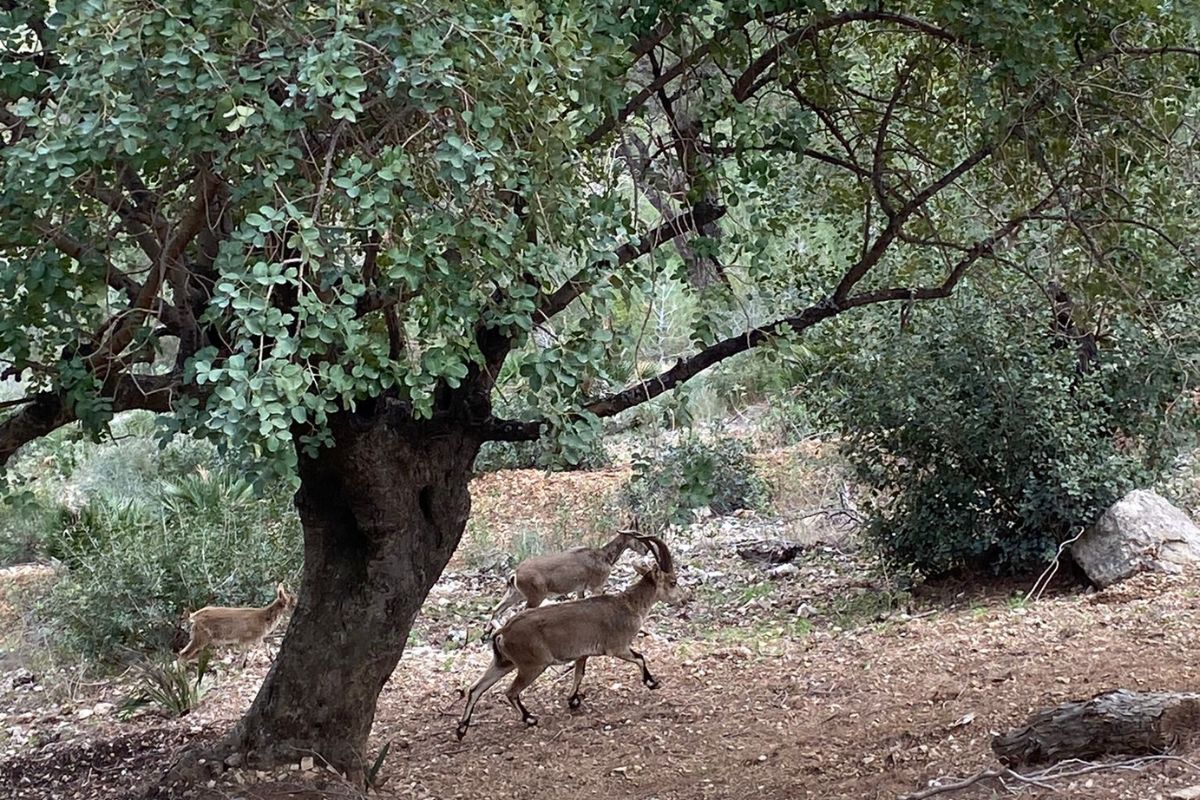
Portugal Lisbon: 41 Great Tips for Your Visit

TL;DRLisbon comes with 25 solid tips on what to see and do, from Praça do Comércio and Castelo de São Jorge to the Alfama district and the Jerónimos Monastery, plus day trips to Sintra, Cascais or Nazaré. Give the main sights at least two to three full days, or ideally four to five if you’re fitting in trips out of the city. The best months to visit are May, June, September and early October, with temperatures of 22–26 degrees, while July and August bring heat above 30 degrees and winter months come with damp and wind. Entry to Castelo de São Jorge costs €15, the Jerónimos Monastery €12, and in 2026 the tourist tax runs to €4 per person per night. It’s worth steering clear of the packed number 28 tram and pricey tuk-tuks, which can set you back up to €80 an hour.

The capital of Portugal, Lisbon, is the westernmost capital city in Europe. It is a popular tourist destination for its monuments, museums, nature, and good food. But when is the best time to go to Lisbon? What’s the weather like there? And how to get there in the best possible way?

Accommodation Lisbon: where to stay

Lisbon is not that big, so it is advisable to choose strategically located accommodation in the centre. Most of Lisbon can then be explored on foot. And what accommodation in Lisbon do we recommend?

If you book well in advance, you may be able to find LR Guest House or Memmo Príncipe Real. If you’re looking for cheap accommodation in Lisbon, you could try a fairly popular hostel right in the centre The Gateway – Lisbon Eco Hostel .

When to go: Weather in Lisbon

Lisbon is an ideal destination all year round. In summer, you can take advantage of the warm days and explore the city on foot, while in winter you can take advantage of the less busy season and visit museums and historical sites without the crowds. Spring and autumn are ideal if you want to enjoy pleasant weather while avoiding the main tourist season.

Moon

Average temperature

January

14 °C

February

16 °C

March

18 °C

April

19 °C

May

22 °C

June

25 °C

July

28 °C

August

28 °C

September

27 °C

October

22 °C

November

18 °C

December

15 °C

Average monthly temperatures in Lisbon

How to travel to Lisbon

By car to Lisbon

We go to Portugal every year by car, but mainly because we take our dogs with us and go for more than a month. If you go by car, you have to take into account that you will probably travel for at least 3 days, Lisbon is 3000 kilometres away from the Czech Republic. We mostly sleep in Germany, France and Spain before we arrive in Portugal.

By car to Portugal from Prague

You’ll head through Pilsen to Nuremberg, Heidelberg and then down through Karlsruhe and Bordeaux to Lisbon. The journey takes 26 hours and covers 2,703 kilometres.

By car to Portugal from Brno

The fastest way from Brno is to take the motorway to Prague, and then take the same route to Lisbon. You’ll spend 28 hours in the car and drive just under 3,000 kilometres.

It’s not worth driving to Lisbon unless you really want to stay overnight and take a little side trip.

lukas a lucka
Lukáš and Lucie recommend
Where to stay in Lisbon
3 accommodations — hotels and other lodging options

By bus to Portugal

Probably the worst way to go to Portugal is by bus. You can take the Flixbus to Lisbon, but it’s not worth the trip at all. For a one-way ticket you will pay an average price of CZK 5,000 and spend 50 hours on the journey. Moreover, there are only a minimum of such connections to Lisbon.

By train to Portugal

Even by train it is not very comfortable, you will have to change trains at least 3 times and you will be on the road for more than a day. A one-way ticket costs an average of CZK 3,500. The train is definitely a more comfortable option than the bus, and you can sleep well at night, but it will still take you longer than a day to travel.

By plane to Lisbon

The most affordable and fastest option is only by plane. TAP and CSA fly from Prague to Lisbon every day and a return ticket will cost you between CZK 3,500 and CZK 5,000. Best of all, you’ll only spend 3.5 hours on the journey. Read, how to get cheap flights.

How to get around Lisbon: How public transport works

Lisbon isn’t such a big city that you can’t walk it, but if you need to cover some longer distances, public transport in Lisbon works great.

Tickets and where to buy them

You can buy a Viva Viagem card from the machines in the metro lobbies. You’ll then top it up at vending machines or newsagents, depending on how much you drive. Either a 60-minute or 24-hour ticket is valid for all types of public transport.

However, if you don’t want to use public transport but need to make a one-off transfer, e.g. by tram, you don’t need to buy a card. Single tickets can be bought directly from the driver or from ticket machines.

Trams

Lisbon is characterised by the ubiquitous yellow trams. They can get you almost anywhere and run from 5:30am to 11:00pm. Moreover, under the number 28 there is an old historic tram that will take you to the most beautiful places.

Buses

You can also get anywhere in Lisbon by bus. It is the buses that also provide night transport through the city. You have to buy your bus ticket in the metro lobby, and a single ticket can be bought from the driver for EUR 2. Boarding and alighting is always on signal only, so be sure to wave to the driver if you want to get in the car, or they won’t stop for you.

Metro in Lisbon

The metro has a total of 4 lines that connect the city centre with the airport or train station. It doesn’t start running until 6:30am and finishes at 1:00pm and runs every 5 minutes all day.

Ropeways

A special mode of transport in Lisbon is the cable car. Lisbon is a hilly city, so you can ride up to six cable cars. These cable cars run on rails, are located mainly in the city centre and are subject to the normal tickets you have purchased for other public transport.

Lisbon in 3 days: 39 places to visit

Lisbon is a city with a rich history dating back to pre-Roman times, and its streets are full of stories. Whether you’re a history buff or just a traveller looking for an unforgettable experience, Lisbon is definitely worth a visit. Keep in mind that once you set foot on its historic cobblestones, you may fall in love with it like we did.

Lisbon holidays: The best historical sights of Lisbon

In 1755, Lisbon experienced one of the most devastating disasters in its history. On All Saints Day, 1. In November, the city was hit by a strong earthquake that reached a magnitude of 8.5-9.0 on the Richter scale. The subsequent tsunami and fire outbreak caused further devastation.

This event, known as the Great Lisbon Earthquake, destroyed most of the city and caused the deaths of thousands of people. The affected area extended up to 200 km inland, where strong seismic activity was recorded.

After the earthquake, Lisbon was rebuilt under the leadership of the Marquis de Pombal, who designed a new octagonal structure for the city. This event marked a major turning point in the history of Lisbon and influenced its further development and architecture. Let’s take a look at what you can see of Lisbon’s historical sights today:

1) Tower of Belém

The Tower of Belém is an example of Portuguese late Gothic, or Manueline, style. It comes from 16. century and stands in the Belém district of the city. Today, this symbol of Lisbon is a UNESCO World Heritage Site.

The tower formed part of the defensive system at the point where the Tejo River empties into the sea. The defence system was very important to the people of Portugal at this time, as the country was one of the major maritime powers of the world.

For this reason, this monument has become the main symbol of the city. The tower is also richly decorated not only with turrets and battlements, but also with statues and reliefs. Here you can see, for example. the likeness of the first rhinoceros imported into Europe.

The tower is 30 metres high, has a total of 4 floors and from its terrace you can enjoy breathtaking views of the surroundings. Opening hours and prices can be found here.

2) Jeronymite Monastery

Another of Lisbon’s UNESCO sites not to be missed on your list of places to visit, this is some of the most beautiful architecture in all of Portugal. The building, in the Manueline Gothic style, is richly decorated with ornamental elements and took approximately 100 years to build (1501-1605).

Once you have seen the exterior facade and the surrounding gardens, be sure to visit the interior of the monastery. The monastery is also the final resting place of some of Portugal’s famous personalities, including. King Manuel I and his wife.

Opening times and tickets can be found at here.

3) Sao Jorge Castle

Castelo de Sao Jorge originally served as a defensive Moorish citadel, and also as the fortress of St. Not until 12. century, after reconstruction, it became the residence of the kings. The castle stands on a hill and majestically towers over the town.

If you don’t feel like walking up the hill, you can take the bus or tram. In winter, the castle is only open until 18:00, but in high season you can visit it from 9:00 to 21:00. You will pay 8.50 EUR for the entrance.

4) Royal Palace of Queluz

Located 15 kilometres from Lisbon, the Royal Palace will delight you with its architecture and gardens. Originally a hunting lodge stood on the site, which was destroyed in the 18th century. century, reconstructed into a summer palace, later it became a royal palace.

For some time it also served as a prison for Queen Mary I. of Portugal at the time of her insanity. You can visit the palace from Wednesday to Monday 9:00 – 17:00, its chambers are worth seeing

5) National Pantheon

The Church of St. Engracia was declared a National Pantheon and its construction lasted from 17. until after 20. century. In the past the church was also used for military purposes, today there are memorials to national heroes. The interior is made of coloured marble, but the exterior is no less interesting.

The white façade is topped with a large dome, to which you can take the elevator to enjoy the beautiful view. It is open from Tuesday to Sunday 10:00 – 17:00. Tickets cost EUR 3, but entry is free on Sundays and public holidays.

6) Convento do Carmo

Originally a Carmelite monastery, it is now just a ruin in Lisbon’s Largo do Carmo Square , preserved here as a reminder of the devastating earthquake of 1755, during which many of the faithful perished on the site. Today there is an archaeological museum.

7) Monument to the Discoverers – Padrão dos Descobrimentos

The shape of the Monument to the Explorers is intended to resemble the prow of a ship and was created to commemorate the period when Portugal was an important centre of seafaring and exploration and was erected on the anniversary of the death of Henry the Navigator. It is decorated with statues, the Portuguese emblem on the sides and a relief of the sword of the royal family of Avis above the entrance.

A statue of Henry the Navigator himself stands facing the river, along with statues of 33 other prominent personalities. From the top of the monument you can enjoy the view of the river, inside there is an exhibition about the history of Lisbon.

Also interesting is the mosaic on the ground in front of the monument, which depicts a map of the world with the routes of Portuguese sailors. From October to February it is open 10:00 – 18:00, from March to September the opening hours are extended to 19:00.

Interesting neighbourhoods in central Lisbon

If you like to wander the romantic streets, or you want to know where the party life is or where the bohemians gather, below you will find the most famous and popular neighbourhoods in Lisbon.

8) Alfama Historic District

Alafama is an urban district and one of the oldest areas of Lisbon. It is famous for its steep, narrow, winding streets, which give you several amazing views of the city from the top.

There are plenty of small shops selling traditional art, you can relax in one of the many cafés and the historic Tram 28 takes you to Sao Jorge Castle.

9) Bohemian neighbourhood of Bairro Alto

A bohemian area known for its cheap restaurants and beautiful architecture, but also mostly for its party nightlife. Bairro Alto is the heart of Lisbon’s nightlife, but you can also visit places like. Church of St. Rocha or one of several beautiful viewpoints.

10) The elegant Chiado district

This bohemian neighbourhood is also known as Lisbon’s most elegant . After a fire in 1988, it had to be rebuilta. It is also very traditional, full of museums, theatres and cafes, but also luxury shops. As it is located almost in the centre of Lisbon, it is also suitable as a place to stay.

11) Lisbon city centre: Rossio Square

Officially named King Pedro IV Square, it is located right in the centre of the city and was the main square for many centuries. In the past it was the site of celebrations and executions, bullfights and uprisings, but today it is still a popular meeting place. There are several cafés dating back to the 18th century and the Column of Pedro IV.

12) Commerce Square

The most important square in Lisbon is the main square, Praça do Comércio. It is located on the site of the original royal palace, which was destroyed in the great earthquake of 1755. The square played a crucial role during the maritime trade. From the open southern end of the square you can enjoy the view of the river.

13) LX Factors Art and Industrial Centre

This artistic industrial centre is an “experience factory”. Formerly an industrial factory, today you will find hundreds of shops, cafes, galleries and studios. It hosts a variety of cultural events related to fashion, art, advertising and music, making it one of Lisbon’s most visited venues.

You can enjoy concerts at night and flea markets on Sundays. It’s a place you should definitely visit at least for a while and enjoy the wild atmosphere. LX Factors can be found in the Alcantara area

14) Time out market

A place where you’ll find 28 restaurants, 8 bars, 12 shops, a music venue and some of the best: the best steak, the best burger, the best sushi and the best live concerts. It also houses fresh food and flower vendors.

Various events, even private ones, or cooking classes are held here. If you want to have a great meal and take away a culinary experience, visit the Time Out Market. Open every day 10:00 – 0:00.

The most beautifulparks and gardens in Lisbon

When you’ve had enough of the historical sights, museums and shopping, you can relax in one of the local parks or gardens.

15) Edward VII Park

Edward VII Park. takes its name from King Edward VII of the United Kingdom, who came to Portugal in 1903 to strengthen relations. The gardens include the Carlos Lopes Pavilion, the Estufa Fria greenhouse garden, the largest Portuguese flag in the world, and an annual book fair.

16) Monsanto Forest Park

As the name suggests, this park is a protected forest and the largest green space in the city. An ecological park has been established within the forest, which serves mainly to educate visitors about climate, geology, flora and fauna. The park is home to Portugal’s largest environmental organisation.

17) Gulbenkian Park

The park was created as part of Lisbon’s cultural centre, and you can visit the Gulbenkian Museum or the José de Azeredo Perdigao Centre for Modern Art. There are also beautiful lakes, lots of flowers and birds, statues and an amphitheatre. The park is especially suitable for beautiful walks.

18) Jardim da Estrela

A park full of waterfalls, greenhouses with interesting plants and a landscaped garden with many trees. Families with children will especially appreciate the local playground.

19) Parque das Nações

The park on the banks of the Tagus River is ideal for active relaxation. Here you will find not only nature, but also street art, modern buildings and a large oceanarium.

Guests can also relax in the restaurants and Vasco da Gama Shopping Centre. The park is also suitable for children, not only thanks to the aforementioned ocanário, but also thanks to the Pavilhão do Conhecimento Museum, where exhibitions are also held for children.

Lisbon guide: where to go for sunrise and sunset

If you want to watch the sunset from somewhere, be sure to head to one of the many viewpoints you’ll find in Lisbon.

20) Miradouro de Santa Luzia

One of the most popular sights in Lisbon is the Miradouro de Santa Luzia. This romantic viewpoint is covered by a pergola and offers beautiful views of the whole of Alfama along with the river. It is open every day 10:00 – 0:00. In addition to the observation deck itself, you can relax in the on-site café.

21) Miradouro Santa Catarina

This viewpoint is especially popular with the local youth, enjoying not only beautiful sunsets but also weekend concerts. You’ll have a view of Bridge 25 from here. April.

23) Miradouro da Graça

Overlooking the river and the city, this is Miradouro da Graça. It’s not the most visited place, so you can enjoy the sunset from here undisturbed and have a snack at a local stand. In addition, it is also an artistic place full of street art.

24) Elevator/lift Santa Justa

The lift is located in the city centre on Santa Justa Street and takes you to Carmo Square on the hill. The elevator is in neo-Gothic style, made entirely of iron. It is 45 metres high and has a total of two cabins with a capacity of 24 people. You can climb the staircase to the top floor and at the top you can enjoy views of the castle, Rossio Square or the Baixa district.

What to taste in Lisbon: Traditional Portuguese food and drink

Do you also like to taste local delicacies? If you’ve been to Portugal and haven’t eaten pastel de nata, it’s not like you haven’t (Luke has during our annual trip to Algarve eats like 20 a week). But there are other delicacies to try in Lisbon (and you may never find them anywhere else)

25) Pastel de Belém

Pastel de Belém is a traditional Portuguese custard tart, consisting of a pastry ‘shell’ filled with a cream of milk, eggs, sugar, lemon and cinnamon. The first recipe for this delicacy appeared in 1837, when it was created by the monks of the Jerónimos Monastery. In 2009, the pies were listed by The Guardian as one of the 50 best foods in the world. Supposedly the best ones are in Pastelaria San Antonio and Manteigaria.

26) Bifana

Another traditional dish is pork steak seasoned with garlic, hot pepper paste, lemon and other spices, then sandwiched between Portuguese papo secos. All is topped with sautéed onions and sweet peppers. This traditional sandwich is nicknamed bifana. As vegetarians, we can’t tell you if it’s good.

27) Caldo Verde

A very popular local soup is Caldo Verde, a cabbage soup with potatoes. Since this is a local specialty, you should definitely try the soup even if you are not a fan of kale. You might be pleasantly surprised (and if not, you’ll have a story to tell).

28) Ginjinha

If you leave the ginja berries, or cherries, in alcohol and add sugar, cloves or cinnamon, you get Ginjinha, the Portuguese cherry liqueur. It’s so popular here that you’ll find several bars in Lisbon dedicated specifically to this drink. It is often served in a small chocolate cup, which you can eat after drinking the contents.

29) Vinho Verde

The green wine comes from the north of Portugal from the historic province of Minho, now Vinho Verde. The wines are dry or semi-dry and have a relatively low alcohol content. If you have visited Lisbon once, be sure to try the traditional green wine.

The best museums and galleries in Lisbon

Yes, we like to go to museums, you’ve probably noticed that already. We have some favourites in Lisbon too.

30) Fado Museum

The museum is located in the heart of Lisbon and has several functions – it hosts permanent and temporary exhibitions, an auditorium, a documentation centre and a Museum School.

The permanent exhibition is dedicated to the unique musical style of Fado, which is inherently linked to Portuguese culture. Fado is a traditional Portuguese music characterized by sad melodies and lyrics full of nostalgia, longing and love.

31) National Museum of Azulejos

If you love the local colourful tiles, this museum will probably catch your eye. The collection at the Azulejo Museum is dedicated to traditional Portuguese ceramic tiles called azulejo. P

Here you can see decorative ceramic tiles dating back to the 15th century. century, but also porcelain, ceramics and faience z 19. and 20th century. The museum is located in the Madre de Deus Monastery. It is open from Tuesday to Sunday 10:00 – 13:00 and then 14:00 – 18:00.

32) Museu Nacional de Arte Antiga

The gallery’s collection includes Portuguese and European art from the Middle Ages to the 19th century. century. There are all kinds of fine arts here. In addition to Portuguese masters, you can see works such as The miracle of St. Eusebia of Cremona from Raffaele, The temptation of St. Anthony H. by Bosch, or perhaps a vase from the Ming dynasty. Open Tuesday to Sunday 10:00 – 18:00.

33) MAAT

The Museum of Art, Architecture and Technology is located on the Tagus River and is one of the most visited museums in Portugal. The project is designed for all ages, you will enjoy an educational multidisciplinary programme about art, architecture and technology. Open Wednesday to Monday 10:00 – 19:00.

34) MUDE

The Fashion Museum is located in the former Lisbon Bank building on Rua Augusta. You can’t miss the building, its facade is decorated with fashionable pieces, but the exhibition itself is worth a visit. After the tour, you can also relax in the café and lounge area.

35) Berardo Collection Museum

Clean white long walls with exhibits of modern art, this is the Berardo Collection, or Museum of Contemporary Art. The exhibition was inaugurated in 2007 and includes works from the José Berardo Collection.

The works are arranged in chronological order and include pieces of abstract expressionism, action painting, body art, digital and experimental art, as well as photography, pop art and much more. Notable works include Jackson PollocksThe Leader, Pablo Picasso’s Head of a Woman , Salvador Dali’s White Aphrodisiac Telephone and works by Andy Warhol.

Lisbon in two: Tips for romantic trips

If you’re heading to Lisbon in summer or late spring and want to try a romantic getaway, you can book a yacht or boat cruise through GetYourGuide.

Where to go on a trip from Lisbon?

If you’re in Lisbon for more than two days, you might also want to take some interesting trips around the area. Let’s take a look at the best things to see and experience around Lisbon.

36) Sintra

Portuguese city in the district of Lisbon, located 20 km from Lisbon. The first sources about this city date back to 11. century. Sintra was the summer residence of the royal family, and today it is home to many palaces, castles, gardens and parks and is known as the “fairytale city”. It is a UNESCO World Heritage Site. If you want, you can take a trip from Lisbon directly through GetYourGuide.

37) Cascais

The coastal town 30 km from Lisbon is one of the richest municipalities in Portugal. You can enjoy the sights, the cliffs and the beaches. The Seixas Palace, the old lighthouse and the citadel are worth a visit.

38) Cabo da Roca

This cape is beautiful by nature. It is the westernmost tip not only of Portugal, but of Europe. There is a lighthouse and a beautiful view of the sea and the cliffs. The Cape is 40 km from Lisbon.

39) Obidos

The town of Obidos is a little further from Lisbon, you will have to drive 80 km to visit it. It is a fortified historical town with a large castle as its dominant feature. The castle dates back to the 12th century. century. Narrow cobbled streets lead through the town.

40) Fatima

This important city in Portugal lies 123 kilometres from Lisbon. According to legend, the Virgin Mary appeared to the three little shepherds here, and since then Fatima has been a Catholic hermitage, attracting mainly the faithful.

In the Cova da Iria there is a chapel where many pilgrims meet every day. A large basilica of Our Lady of the Rosary was also built here, where the three children, later declared saints, are buried.

41) On the biggest waves to Nazaré

Waves as tall as skyscrapers? You can see exactly that in Nazaré. This small fishing village is one of the most popular places in Portugal. Many-metre waves attract travellers and surfers from all corners of the world. It is said that Nazaré is the Everest of the sea – every experienced surfer wants to climb it. The biggest surfing waves in the world are formed here.

But it depends when you go, in general the “Big Waves” form from October to March and even then you are not guaranteed to see them. We recommend checking the website before your trip Nazare Waves to see if the waves are there.

How to get to Nazaré from Lisbon

It takes about an hour and a half to get there by car, but if you don’t want to rent a car, you can drive for example FlixBus. The price ranges from 179 to about 349 CZK depending on the time you go.

What else to see in Portugal?

You can fly from Lisbon to a Portuguese island Madeira which is one of Europe’s most beautiful islands. Lisbon is also a great base for exploring the south of Portugal – Algarve which offers some of the most beautiful beaches in Europe. You can also head further north to the amazing town of Porto.

FAQ – Frequently Asked Questions

Can I take the ferry from Lisbon to Madeira?

There is no direct connection between Lisbon and Madeira by ferry. So it is necessary to fly.

What to do in Lisbon with children?

Take the Eléctrico 28 tram and the Telecabine Lisboa cable car, visit the Oceanário De Lisboa, the largest aquarium in Europe, and head to the Lisboa Story Centre.

Tips and Tricks for Your Vacation

Don’t Overpay for Flights

Search for flights on Kayak. It’s our favorite search engine because it scans the websites of all airlines and always finds the cheapest connection.

Book Your Accommodation Smartly

The best experiences we’ve had when looking for accommodation (from Alaska to Morocco) are with Booking.com, where hotels, apartments, and entire houses are usually the cheapest and most widely available.

Don’t Forget Travel Insurance

Good travel insurance will protect you against illness, accidents, theft, or flight cancellations. We’ve had a few hospital visits abroad, so we know how important it is to have proper insurance arranged.

Where we insure ourselves: SafetyWing (best for everyone) and TrueTraveller (for extra-long trips).

Why don’t we recommend any Czech insurance company? Because they have too many restrictions. They set limits on the number of days abroad, travel insurance via a credit card often requires you to pay medical expenses only with that card, and they frequently limit the number of returns to the Czech Republic.

Find the Best Experiences

Get Your Guide is a huge online marketplace where you can book guided walks, trips, skip-the-line tickets, tours, and much more. We always find some extra fun there!