TL;DRMindflow Focus is a Czech nootropic with caffeine (100 mg), dry green tea extract (220 mg), ginseng (150 mg), guarana (130 mg) and vitamins B3, B6 and B12. A reviewer who’s taken it for over a year says it sharpens focus, memory and productivity, with no sugar, preservatives or artificial colours. It kicks in around 30 minutes after one capsule and lasts 2–3 hours; the recommended dose is 1–3 capsules a day, with a maximum of two at once. The maker offers a money-back guarantee if it doesn’t work for you, say if you’ve built up a tolerance to the active ingredients. Alongside Mindflow Focus, there’s also been a hangover-cure version, Mindflow Hangover, since 2020.
I love exploring ways to be more productive and I enjoy trying new methods of getting into the “flow”. Mindflow is one of the few supplements I’ve stuck with long term — I’ve been using Mindflow for well over a year now. In this article I’ve carefully broken down everything Mindflow contains and how each ingredient affects the human body. You’ll find out what you can expect from Mindflow, when to take the pills, and whether they’re even right for you.
Search for flights on Kayak. It’s our favorite search engine because it scans the websites of all airlines and always finds the cheapest connection.
Book Your Accommodation Smartly
The best experiences we’ve had when looking for accommodation (from Alaska to Morocco) are with Booking.com, where hotels, apartments, and entire houses are usually the cheapest and most widely available.
Don’t Forget Travel Insurance
Good travel insurance will protect you against illness, accidents, theft, or flight cancellations. We’ve had a few hospital visits abroad, so we know how important it is to have proper insurance arranged.
Where we insure ourselves: SafetyWing (best for everyone) and TrueTraveller (for extra-long trips).
Why don’t we recommend any Czech insurance company? Because they have too many restrictions. They set limits on the number of days abroad, travel insurance via a credit card often requires you to pay medical expenses only with that card, and they frequently limit the number of returns to the Czech Republic.
Find the Best Experiences
Get Your Guide is a huge online marketplace where you can book guided walks, trips, skip-the-line tickets, tours, and much more. We always find some extra fun there!
TL;DRThe ideal Morocco road trip for 7–9 days runs from Marrakech via Aït Benhaddou, Ouarzazate (the CLA and Atlas film studios), the Dades Gorges and the desert near Merzouga, where a 3-hour camel trek and a night in a desert camp costs 40 EUR, then back via the Bin el Ouidane dam and the Ouzoud Falls. You’ll cover around 1400 km in total, and the best time to go is October to May, before the desert heat turns extreme. An eight-day trip for two came to 23,260 CZK all in — flights, food, accommodation, car hire and the night in the Sahara. The standout stop is the UNESCO-listed ksar of Aït Benhaddou, along with the Game of Thrones castle at the CLA studios, where entry costs 40 MAD.
Are you tempted by Morocco? Would you like to take a look from Marrakech at desert on your own and at the same time explore the Atlas Mountains, the beautiful Dades Gorge, see the castle where the famous Game of Thrones series was filmed and visit the historic town of Aït Benhaddou? Our article will make planning easier, give you tips on cheap and beautiful accommodation and advise you on which company to go camel trekking in the Sahara with. At the end of the article you will find out how much the whole trip cost us.
Search for flights on Kayak. It’s our favorite search engine because it scans the websites of all airlines and always finds the cheapest connection.
Book Your Accommodation Smartly
The best experiences we’ve had when looking for accommodation (from Alaska to Morocco) are with Booking.com, where hotels, apartments, and entire houses are usually the cheapest and most widely available.
Don’t Forget Travel Insurance
Good travel insurance will protect you against illness, accidents, theft, or flight cancellations. We’ve had a few hospital visits abroad, so we know how important it is to have proper insurance arranged.
Where we insure ourselves: SafetyWing (best for everyone) and TrueTraveller (for extra-long trips).
Why don’t we recommend any Czech insurance company? Because they have too many restrictions. They set limits on the number of days abroad, travel insurance via a credit card often requires you to pay medical expenses only with that card, and they frequently limit the number of returns to the Czech Republic.
Find the Best Experiences
Get Your Guide is a huge online marketplace where you can book guided walks, trips, skip-the-line tickets, tours, and much more. We always find some extra fun there!
TL;DRMorocco is, on the whole, a safe country to visit, but there are 18 specific risks worth knowing about — from pickpockets and fake fossil scams to sketchy night-time wandering through the Medina in Fez and Marrakesh. Skip the tap water, leave the backpack at home (a bumbag or moneybelt is a better bet), and don’t buy SIM cards off street vendors — at the airport you’ll get 5 GB for 5 EUR. Haggle hard at the markets too; knocking 30–50% off the first price quoted is completely normal. Women shouldn’t walk around alone, especially after dark, and should keep shoulders and knees covered. Police checkpoints on the roads are routine in Morocco, popping up roughly every 50–100 kilometres, and fake fossils often go for as little as 20–40 euros.
Morocco and security is a sensitive subject, some say there is nothing to worry about, others would not travel here again. The truth is that travellers who are reckless and careless can easily become the target of scams.
Driving is choatic in cities and theft is also rampant here. Although it is not very likely that someone will physically harm you, it is important to remember that this does happen. There are certain rules that a person travelling to Morocco must follow. Let’s take a look at how to travel safely in Morocco.
1) Plastic, no plastic, drink bottled water at all costs
Maybe you’re the kind of traveller who carries your own bottle and refills it with tap water. But leave it at home for the trip to Morocco.Even locals don’t drink tapwaterhere and it’s not recommended to brush your teeth with it.
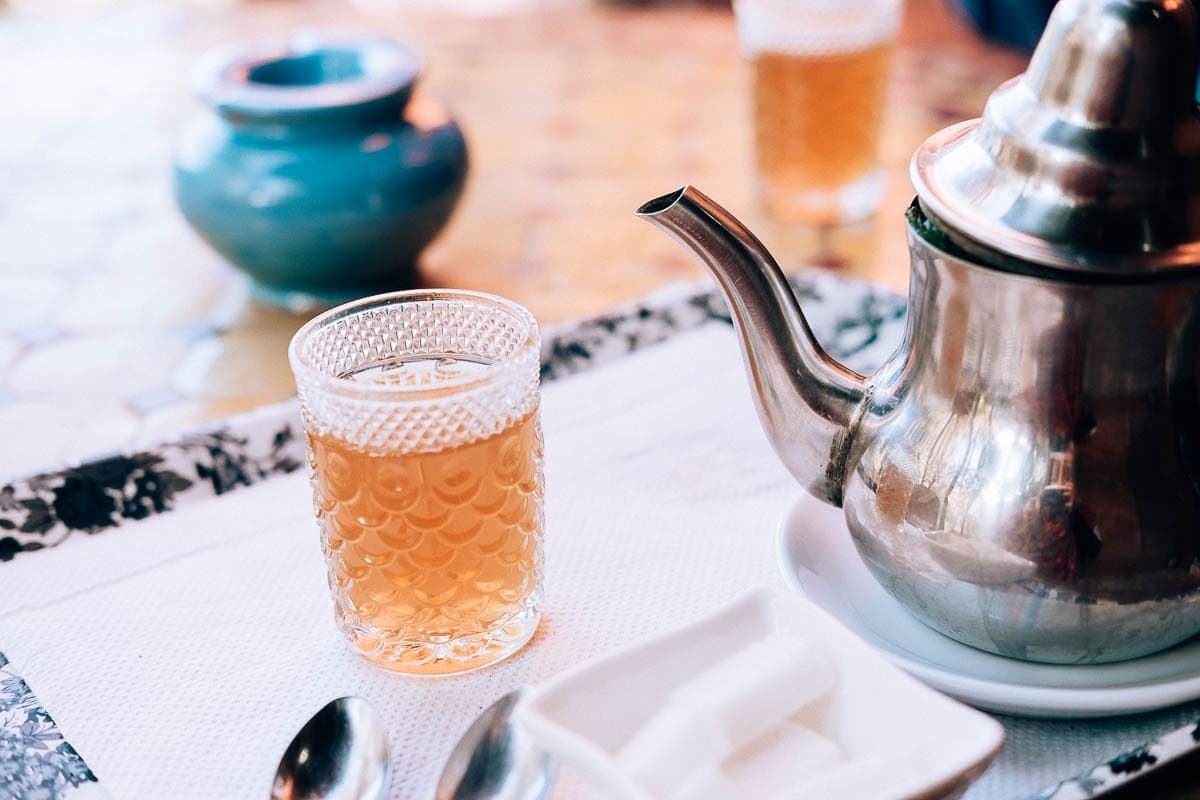
Don’t even use the local water for tea
2) If you don’t ask for advice, don’t listen to it
Especially in Marrakech and the big cities, you can easily be targeted by groups of scammers. Locals will tell you that the roads/streets are closed and impassable, offer you help and chase you to places you definitely don’t want to go.
Never tell them where you’re going. Don’t ever go to them or go to them. Pretend you know where you are going and don’t use a paper map. If you don’t ask for advice, it’s no good listening to it. Conversely, if you need advice, ask in a shop or restaurant, Moroccans are generally nice people and happy to help.
3) Don’t go to the Medina at night
The medina, or old part of the cities, is dangerous in Fes and Marrakech. I have heard many stories from Czechs and Slovaks who have been robbed in Medina, some allegedly by groups with knives. Therefore, do not walk in the Medina at night.
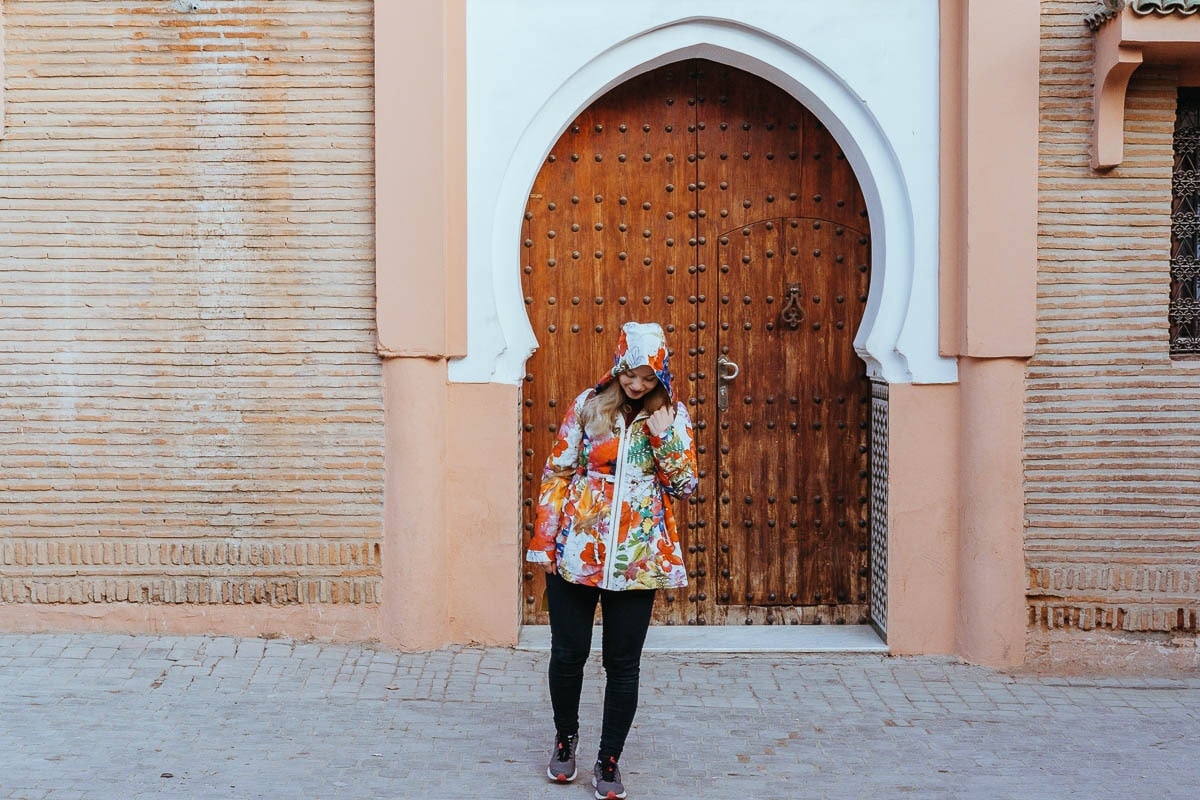
Women should not walk alone in Marrakech
4) Don’t walk alone at night
Even if you are in a safe part of Morocco, don’t go alone at night. Tourists here are targeted by scammers and thieves. Always move in groups.
5) Women should never walk alone
Unveiled women and Europeans attract a lot of attention in Morocco. Many Moroccan women even voluntarily cover themselves because they feel freer. Why?
It’s called “male gaze”, I would translate it as male gazing. Luke would say that they just stare at you like a piece of meat. Women are often sexually harassed in Morocco, and although various associations and politicians are trying to change this, it is slow.
Don’t be afraid to haggle
6) Eat where the locals eat
If you see restaurants full of tourists, go away. Eat where you see the locals. We followed this rule, which we had read on English discussions, and we always had a great meal at a good price. We broke it once at the falls and regretted it. The food was not only overpriced but also almost inedible.
Eat where the locals eat
7) Proceedings in Morocco
Although we have driven in both Uganda and Thailand, the traffic in Marrakech was a pain. You need to be alert at all times, it’s best to either avoid driving in Marrakech altogether or to take it at the end. Someone is always yelling at you, “wanting to give you advice” and drag you somewhere, and no mobile navigation works properly here.
Whenever you stop somewhere, a Moroccan comes up to you and asks for money. We’ve read that he doesn’t always have the right to collect money. Often they will just try it on you and you will pay.Park where youare advised by your accommodation or in marked car parks.
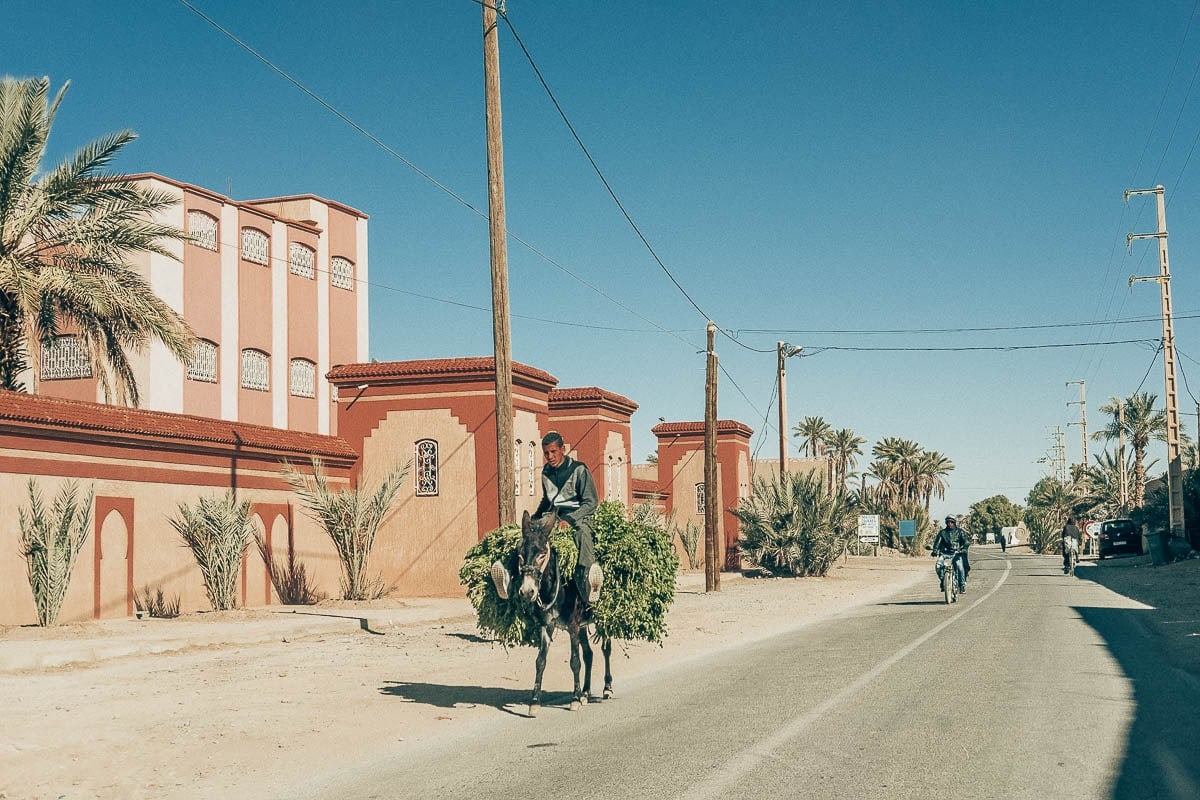
Donkeys and camels ride here
8) Never leave anything in the car
Even in a secure parking lot, it’s not a good idea to leave valuables in your car. On an unguarded one, you’re just asking to be robbed. It’s best to leave your belongings locked in your suitcase at the hotel or carry them with you.
9) When it pays not to speak French
In Moroccoyou can speak more French than English. It worked out well for us, though, because we both know only very rough rudiments of French and refuse to communicate in it.
In Morocco, there are police officers on the roads every 50-100 km. In five days on the road we were stopped about 20 times, and I’m not exaggerating. You don’t have to worry, as long as you don’t break the rules, they just tell you to keep going.
But we broke them once, there was a badly visible line on the road that looked like a dashed line. Turns out she just looked like one. And so we overtook the car and the police probably saw us through binoculars (we can’t explain it any other way).
But the policemen didn’t speak English and we didn’t speak French. They tried to explain to us for five minutes what we had done (which we understood but did not) and wanted to fine us 40 euros (400 dirhams). After a while they gave up and let us go.
10) Careful with the backpack, prefer a kidney
Right after arriving in Marrakech, we noticed that nobody carries a backpack in the centre, although they sell them everywhere. We soon found out why.
After five minutes of marching, someone tried to open Lukas’ backpack. Luckily we use a lock on the backpack and don’t carry anything in the front pocket. I have a buckle backpack that’s hard to get into.
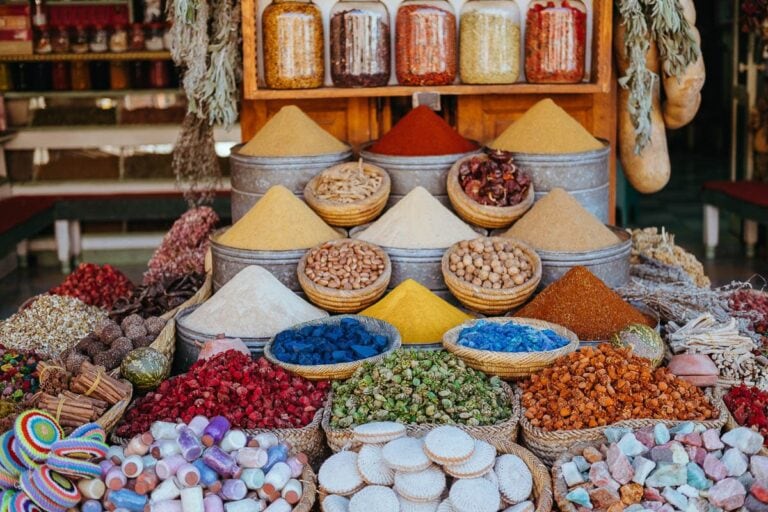
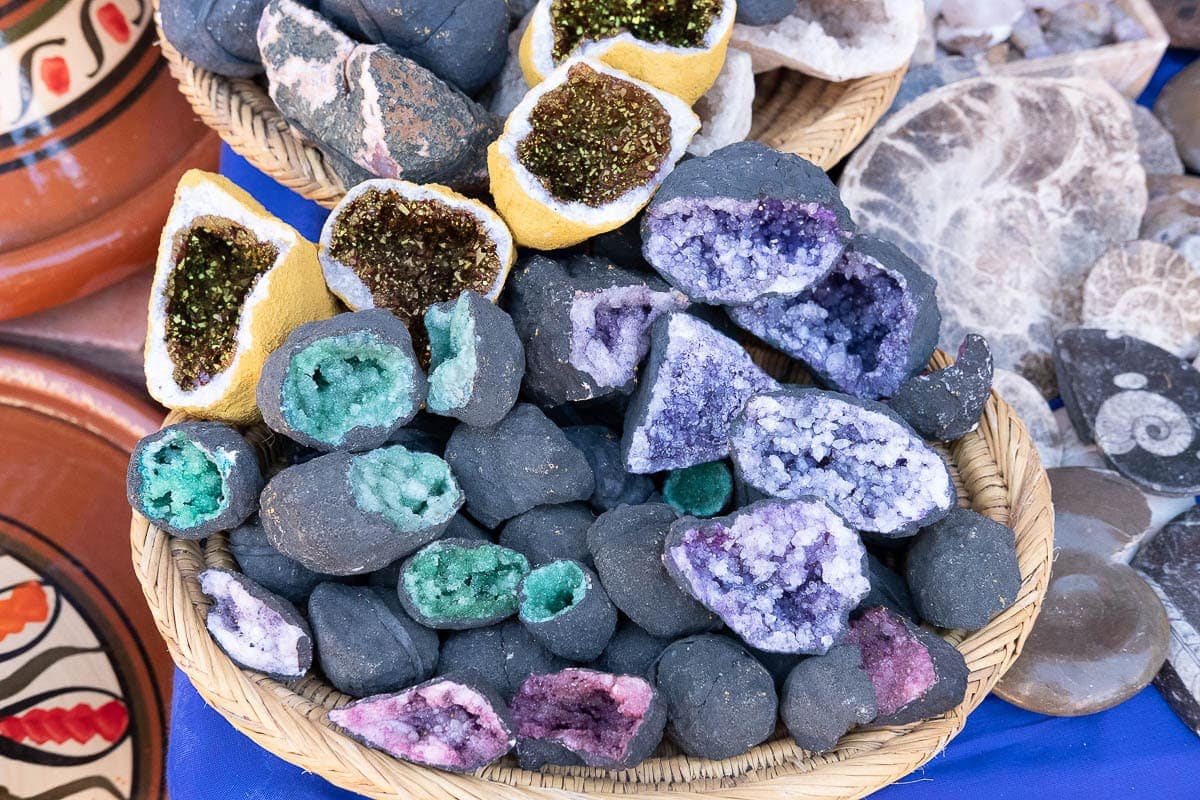
Morocco is a hugedeposit of minerals and fossils, even dinosaur teeth are said to be found here, but when you see the glittering minerals playing in all colours, don’t be fooled. In fact, the only minerals to be found here are mostly plain grey minerals, which the locals often dye with very cheap paints. Some travelers claim that the paints are so cheap that they start to melt when you spit on them. So we didn’t try it, but we didn’t buy any minerals either.
Marketers often want to turn you
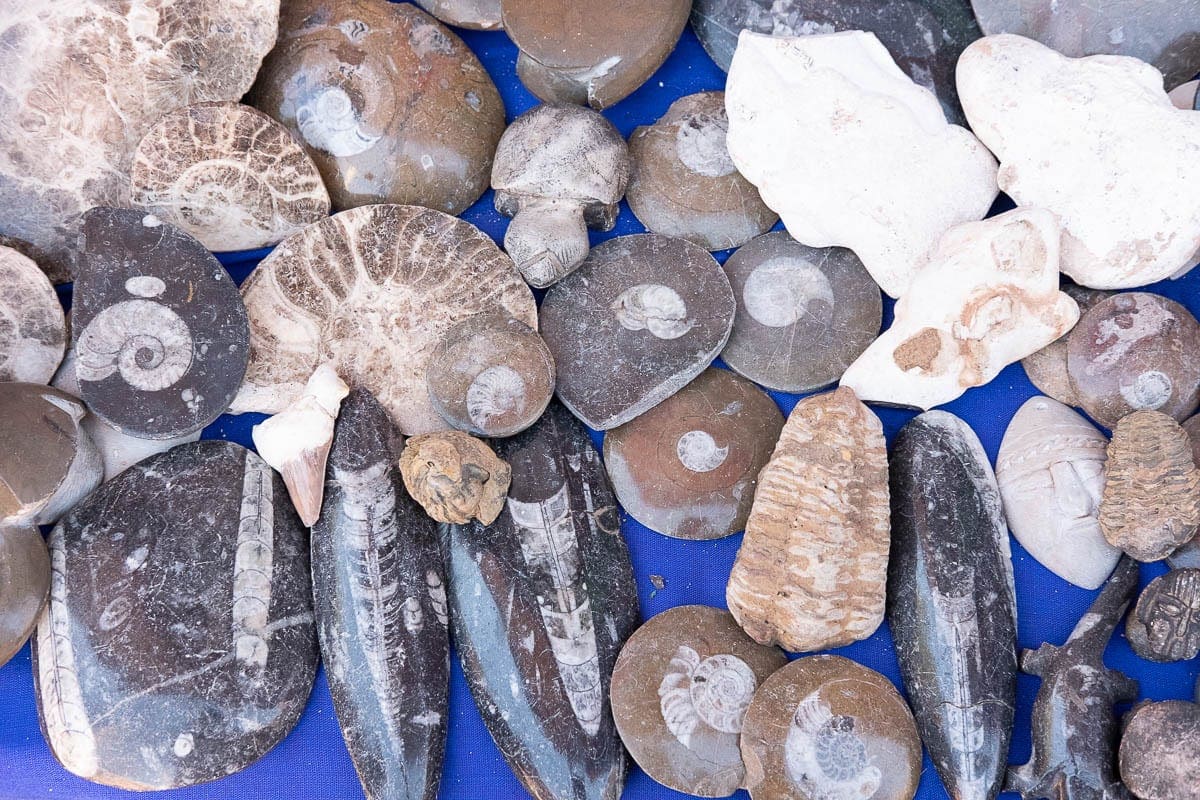
Another common scam is fake fossils. They say an expert can tell at a glance, but we laymen don’t stand a chance. But if the price is said to start at 20-40 euros (200-400 dirhams), it is already clear that it is fake.
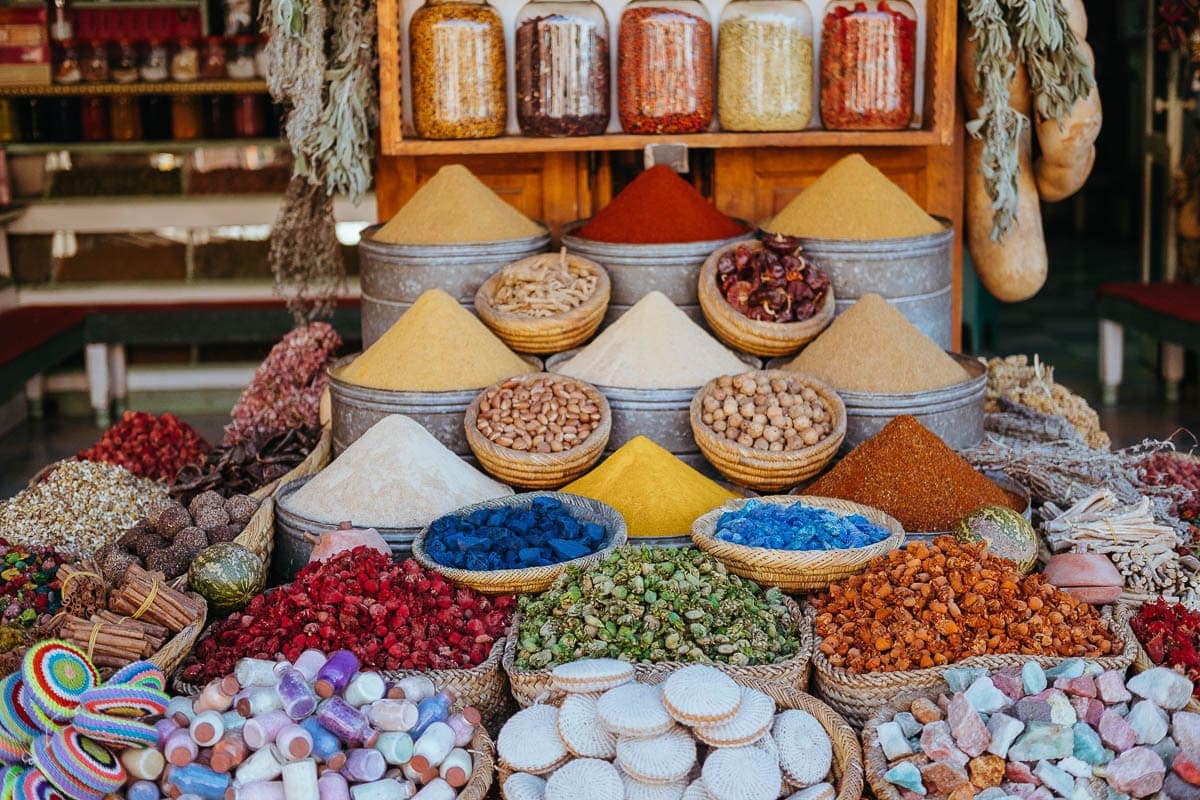
Local market vendors reportedly compete with each other to see who can sell worthless fakes to tourists for more. If you want to bring something, reach for spices, tea or a plate. And don’t forget to bargain.
Minerals are painted with cheap colors
12) Poor quality liquid gold
Argan oil is another item the Moroccans will be happy to hook you on. You can tell good quality argan oil by its clarity and slightly yellowish colour. It should have a light nutty scent and the price for 100 ml should be somewhere around 200 dirhams.
13) Don’t fall for “enticements”
Often you may be invited to the shop for tea. This is to create a psychological sense of reciprocity, so that you are more likely to buy something. Also beware of the request to “read the view from your niece”, which is written in English/French.
Fossils are often fake
14) Don’t buy a sim card on the street
Simcards are free in Morocco. You just have to buy credit for those. But many scammers get free sims from companies and then try to sell them to tourists for money. Porder your sim card directly at the airport, 5 GB of internet costs EUR 5. In Morocco, they can’t stretch you in any way because of the strict telecommunications laws.
15) Don’t draw unnecessary attention to yourself
Morocco is a Muslim country and they are happy for tourists, but that doesn’t mean you shouldn’t respect their culture at least a little. Some things that are quite normal for us can be completely shocking and offensive to the locals!
It’s different in every place in Morocco (even in towns just a few dozen kilometres apart, it’s completely different!) but in general, it should women should not expose their knees, shoulders or arms at any cost. You won’t see shorts on Moroccans either, and it’s much better to wear loose, light trousers and long-sleeved shirts.
You don’t have to cover up in Morocco, but don’t draw unnecessary attention to yourself.
16) Always use your right hand
Whether you eat or hand the merchant money, use your right hand. For Muslims, the left hand is unclean, so if you pay with the left, you will often see the merchant get puzzled or even angry.
17) Do not hold hands, grope or kiss
In Morocco, love is not expressed in public. It’s completely taboo for them and it offends them. But you can see the men holding hands. These are not homosexuals (homosexuality is a crime in Morocco), but deep friends. Therefore, you may find that a man will take your hand when he goes to show you the room!
18) How not to get ripped off when shopping at markets
Bargaining is an art and Moroccans love it. Therefore, you can always knock 30-50% off the first price the market gives you. If you like something in a shop, don’t let it show, ask the price of other things first, then ask casually for the thing you like. If you show too much interest, it’s a foregone conclusion that you’ll get ripped off. 🙂
Markets in Marrakech
Morocco is a beautiful country that is definitely worth exploring. But always remember that although Morocco is considered one of the safest countries in Africa, it is not a European country.
🔗 These are affiliate links — they don't change your price and help us create content. · All experiences →
Tips and tricks for travelling
What to pack
Take a look at our travel packing guideto help you prepare. Choose the right travel backpack, check out the travel gadgets and don’t forget anything important at home.
Search for flights on Kayak. It’s our favorite search engine because it scans the websites of all airlines and always finds the cheapest connection.
Book Your Accommodation Smartly
The best experiences we’ve had when looking for accommodation (from Alaska to Morocco) are with Booking.com, where hotels, apartments, and entire houses are usually the cheapest and most widely available.
Don’t Forget Travel Insurance
Good travel insurance will protect you against illness, accidents, theft, or flight cancellations. We’ve had a few hospital visits abroad, so we know how important it is to have proper insurance arranged.
Where we insure ourselves: SafetyWing (best for everyone) and TrueTraveller (for extra-long trips).
Why don’t we recommend any Czech insurance company? Because they have too many restrictions. They set limits on the number of days abroad, travel insurance via a credit card often requires you to pay medical expenses only with that card, and they frequently limit the number of returns to the Czech Republic.
Find the Best Experiences
Get Your Guide is a huge online marketplace where you can book guided walks, trips, skip-the-line tickets, tours, and much more. We always find some extra fun there!
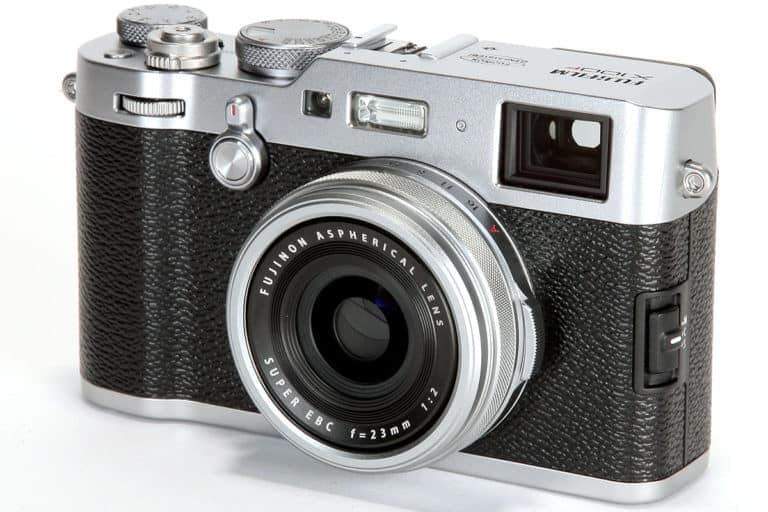
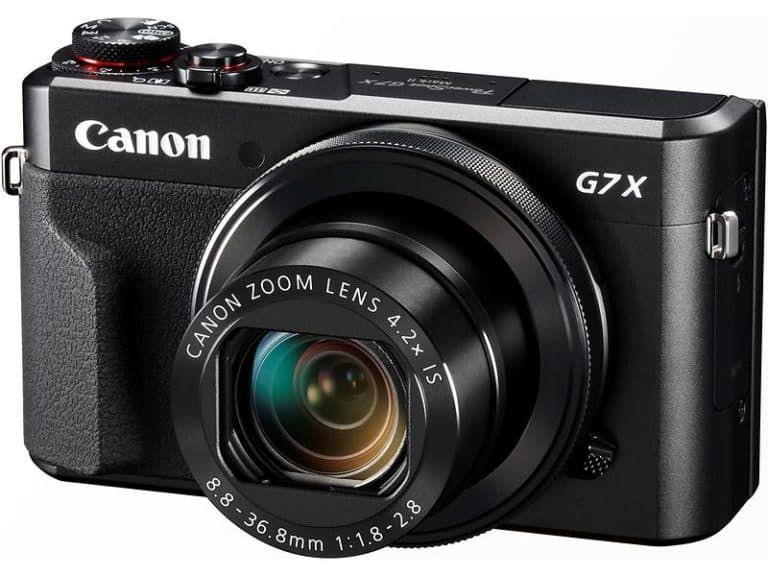
TL;DRThere’s no single best camera for bloggers — it comes down to weight, whether you need interchangeable lenses, and how much video you shoot. Among fixed-lens compacts, the Fujifilm X100F (24,999 CZK) stands out for lifestyle and street photography, while the Canon PowerShot G7 X Mark II (13,990 CZK) is a favourite for video too. If you’re starting out with interchangeable lenses, look at the Sony Alpha A6000 (11,990 CZK) or Nikon D3500 (12,990 CZK); more advanced shooters might prefer the Fujifilm X-E3 or Canon EOS 80D. Cameras bought online in the Czech Republic can be returned within 14 days, no questions asked, so you can properly try one out at home before committing.
We all know how much great photos matter when it comes to blogging. But how do you choose the best camera for bloggers when there’s an overwhelming number of options on the market? A camera isn’t exactly a cheap investment, and the last thing you want is to be kicking yourself a month later for making the wrong choice. So which one should you buy?
Disclaimer: I don’t consider myself an expert and I certainly don’t have all the answers. This guide is based on my own months-long research. I’ve deliberately avoided photography jargon and tried to explain everything in a way that anyone can understand.
Why I Left the DSLR World Behind
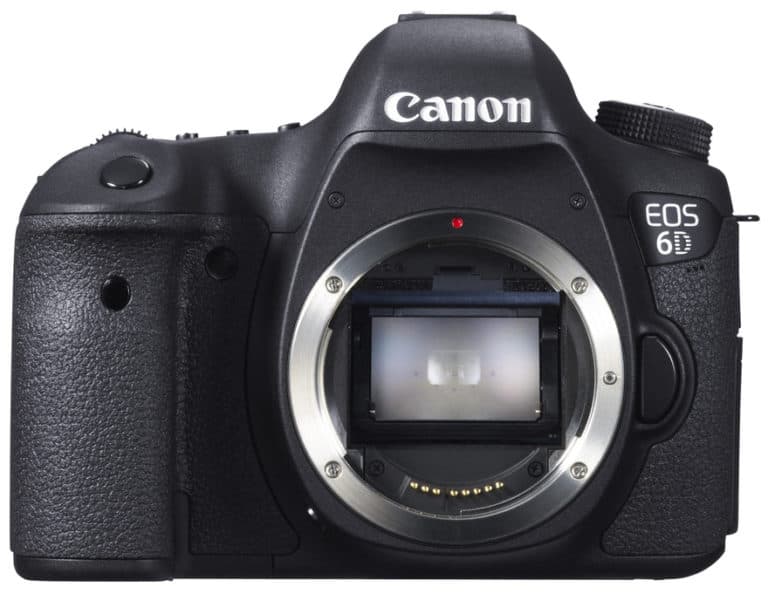
My Canon 6D was a love affair — I was completely happy with it, which is exactly why I was terrified of making a mistake when choosing a new camera. I didn’t want to downgrade. You might be thinking — well, then why did you want a different one?
I had an entire drawer full of accessories for my Canon, including multiple lenses and a set of flashes. But the moment we started travelling, I realised it wasn’t the most practical setup — my camera with all the gear weighed several kilos!
Even when I travelled light with just the camera body and one lens, my shoulders still ached from carrying it around, and I knew the time had come for a change (I nearly cried about it, honestly). The Canon 6D is a legend among photographers, and its newer version is truly brilliant — but for travelling, for lugging around every single day as a petite woman, it’s a legendary nightmare.
I needed a smaller camera for travelling
DSLRs take gorgeous photos, and there will always be bloggers and travel creators who swear nothing can replace them. I used to be one of those people, so I don’t blame them. But for bloggers today, the clear choice should be a mirrorless camera or a high-end compact. And as I’ll show you at the end of this article, you can even take stunning photos with just your phone.
How to Choose a Good Camera for Everyday Shooting
I’ll tell you straight away — there’s no single best camera that works for every blogger. There’s no one-size-fits-all answer. However, if you ask yourself the following questions, you can get much closer to finding the ideal camera for you.
How Will You Use Your Camera?
Camera weight
If you want a camera for everyday shooting, weight will be one of your main criteria. You definitely don’t want to haul something around the city or on your travels that turns your bag into a dumbbell. However, if you blog about cooking or beauty, weight might not be as big a concern.
Do you need interchangeable lenses?
This is a question only you can answer. A camera with interchangeable lenses has obvious advantages — you can get a lens that takes stunning portraits, a telephoto lens for wildlife, or a wide-angle lens for landscapes. They say the lens matters more than the body. And there’s a lot of truth in that. But extra lenses add weight, and a quality lens is an investment of hundreds to thousands of pounds.
Quick tip: if you decide to buy a camera with interchangeable lenses, in 90% of cases it’s better to buy just the body and choose your lens separately. Why? The kit lens that comes bundled with the body is usually the worst thing you can put on your camera. If you don’t plan on investing in lenses, you’re better off getting a camera with a fixed lens, like the Canon G7X or Fujifilm X100F.
If you’re getting a camera that supports interchangeable lenses, research the availability and prices of accessories for each brand. An equally good lens from one brand can cost three times as much as from another. I recommend checking second-hand marketplaces too — for example, Canon accessories are much easier to find used than Sony gear.
Camera Recommendations Without Interchangeable Lenses
Fujifilm X100F – around £700 / €800
If I were going for a fixed-lens camera, this would probably be my pick with its 35mm lens. It’s an absolute gem for photography, especially if you focus on lifestyle and street photography.
CANON PowerShot G7 X Mark II – around £400 / €450
This camera is brilliant for video, but it also takes perfect photos without you needing to put in much effort.
Popular Cameras with Interchangeable Lenses Among Bloggers
1) For Beginners
Nikon D3500 – around £370 / €420
Fujifilm X-F10 – around £280 / €320
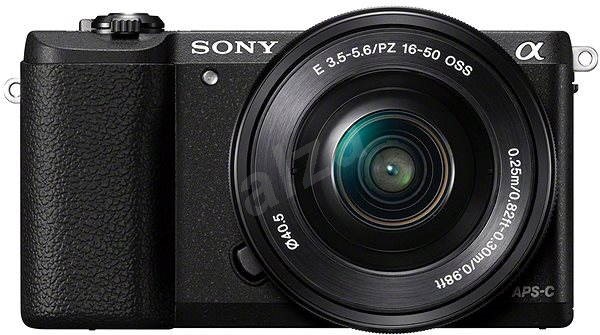
Sony A5100 – around £280 / €320
Sony Alpha A6000 – around £340 / €390
Olympus E-M10 – around £480 / €550
2) For Those Who Want More from Their Camera
Fujifilm X-E3 – around £650 / €740
Canon EOS 80D – around £810 / €920
3) When Budget Is No Object
Sony Alpha a7S II – around £2,000 / €2,250
Sony Alpha a9 – around £3,100 / €3,500 (Lucky’s dream camera :))
Which Lenses Should You Look At?
Prime lenses (the ones that can’t zoom) have a fixed maximum aperture and focal length, which results in sharper, higher-quality, and more professional-looking photos.
1) Portrait Lens
Most people start with a 50mm f/1.8 — this lens creates gorgeous portraits with beautifully blurred backgrounds. You might run into trouble when photographing larger groups or landscapes, though, because you simply can’t fit everything in the frame without backing up quite far. This lens is ideal for portraits.
2) Street and Fashion Photography Lens
Another popular choice is the 35mm f/2. It’s perfect for beautiful lifestyle shots and street photography.
3) Landscape Lens
If you want to focus on landscapes, you’ll probably reach for a wide-angle lens. This could be a zoom, for example a 16-35mm, or one of the prime wide-angle options — such as a 16mm or 28mm. These are rough guides, as each brand offers slightly different focal lengths. The lower the number, the more you can fit into the frame. However, the lowest numbers also bring the most distortion. Personally, I shot landscapes at 28mm because 16mm was just too distorted for my taste.
You don’t need to know how to create your own presets — basic Lightroom edits are enough. You can learn them through an online course, and you’ll find a detailed review here.
Will You Be Filming with Your Camera?
If you’re planning to use one camera for both photos and video, your options might narrow down. Ask yourself: will you be filming from a tripod, capturing moving shots, or will you want to film yourself handheld?
If you only film from a tripod — for example, if you’re a beauty blogger — pretty much any camera will do.
But if you want to film without a tripod, you’ll want to look into image stabilisation. And if you want to film yourself while walking, a camera with a flip-out screen would be incredibly useful.
The king among bloggers’ video cameras is the CANON PowerShot G7 X Mark II, which often surprises users with not only great video but also impressive photos. We know people who bought it for filming and ended up ditching their DSLR altogether, using it for photos as well.
Another excellent choice is the affordable and compact mirrorless Sony Alpha A5100, which experts consider a guarantee of “optimal performance”. Plus, it’s the smallest and lightest camera with interchangeable Sony E-mount lenses and a built-in flash in the world.
Another camera that’s well-suited for all types of video is the Canon EOS 200D.
How Does the Camera Handle?
You might think you’ll get used to any controls, and yes, that’s true. You can even reassign buttons on some cameras. But it can simply happen that despite your best efforts, a camera just doesn’t feel right in your hands.
Take Advantage of the 14-Day Return Period
If you buy a camera online, you’re legally entitled to return it within 14 days without giving a reason (this doesn’t apply to in-store purchases). If you find that the controls just don’t work for you, returning it is straightforward. Of course, you can always pop into a shop first to get a feel for the camera (which is worth doing if you have the time), but trust me — most issues only become apparent once you’re at home with it.
Can You Take Great Photos with a Phone?
Absolutely! Modern smartphones take incredible photos these days. Whether you’re using the latest iPhone or a flagship Android device, you can achieve stunning results. The photos below were all taken with a phone. Beautiful photos aren’t just about the camera anymore — they’re also about editing. You can read about how to edit photos like a pro in Lightroom here.
Don’t Buy from Dodgy Online Shops Just to Save a Few Quid
After some bad experiences, I decided to include this section in the article. Like everyone else, I hunt for the best prices online and order wherever it’s cheapest. But not when it comes to tech. It’s too big an investment, so I only buy from trustworthy retailers where I know returns and warranties won’t be a hassle, and where I’m confident the shop will still exist next year.
I absolutely despise drawn-out warranty claims, and after terrible experiences with small online shops, I no longer take the risk. For that same reason, I don’t buy electronics from anywhere I can’t easily reach if something goes wrong.
For UK-based readers, sticking with reputable retailers like Amazon, John Lewis, Currys, or specialist camera shops like MPB (for second-hand) and Wex Photo Video is the safest bet. These retailers offer solid return policies and reliable customer service. John Lewis, for instance, offers a generous 2-year warranty on electronics.
I’d again recommend ordering online so you have the option of returning within the 14-day cooling-off period if the camera doesn’t suit you. If you want to try before you buy, most high street camera shops will let you handle the gear in store — it’s always worth a visit if you have the time.
Search for flights on Kayak. It’s our favorite search engine because it scans the websites of all airlines and always finds the cheapest connection.
Book Your Accommodation Smartly
The best experiences we’ve had when looking for accommodation (from Alaska to Morocco) are with Booking.com, where hotels, apartments, and entire houses are usually the cheapest and most widely available.
Don’t Forget Travel Insurance
Good travel insurance will protect you against illness, accidents, theft, or flight cancellations. We’ve had a few hospital visits abroad, so we know how important it is to have proper insurance arranged.
Where we insure ourselves: SafetyWing (best for everyone) and TrueTraveller (for extra-long trips).
Why don’t we recommend any Czech insurance company? Because they have too many restrictions. They set limits on the number of days abroad, travel insurance via a credit card often requires you to pay medical expenses only with that card, and they frequently limit the number of returns to the Czech Republic.
Find the Best Experiences
Get Your Guide is a huge online marketplace where you can book guided walks, trips, skip-the-line tickets, tours, and much more. We always find some extra fun there!
TL;DRGrammarly checks your English grammar, spelling, punctuation and vocabulary in real time, plagiarism included, and it’s free. It works as a browser plugin, a web app and a desktop app built into your system — there’s no mobile version yet. The free tier needs no card, has no adverts, and covers most people who only write in English now and then. Corrections and style suggestions come back in under a second. It’s worth having even if you only write two English sentences a year, whether that’s a work email or homework.
We’ve all been there — someone asks you to write something in English. Whether it’s a report for an international client, an email, or a university assignment, the pressure is real. Let us show you a simple free grammar checker called Grammarly that we use every day. It catches spelling mistakes, checks grammar and style — and it doesn’t stop there. It even suggests how to rewrite your text to make it sound more professional and polished.
Search for flights on Kayak. It’s our favorite search engine because it scans the websites of all airlines and always finds the cheapest connection.
Book Your Accommodation Smartly
The best experiences we’ve had when looking for accommodation (from Alaska to Morocco) are with Booking.com, where hotels, apartments, and entire houses are usually the cheapest and most widely available.
Don’t Forget Travel Insurance
Good travel insurance will protect you against illness, accidents, theft, or flight cancellations. We’ve had a few hospital visits abroad, so we know how important it is to have proper insurance arranged.
Where we insure ourselves: SafetyWing (best for everyone) and TrueTraveller (for extra-long trips).
Why don’t we recommend any Czech insurance company? Because they have too many restrictions. They set limits on the number of days abroad, travel insurance via a credit card often requires you to pay medical expenses only with that card, and they frequently limit the number of returns to the Czech Republic.
Find the Best Experiences
Get Your Guide is a huge online marketplace where you can book guided walks, trips, skip-the-line tickets, tours, and much more. We always find some extra fun there!
TL;DRHere are 21 Christmas gift ideas for travellers from 2018, ranging from stocking-fillers costing next to nothing to bigger splurges worth several thousand crowns. The picks include an Aeropress travel coffee maker, a Kindle Paperwhite, a Fitbit Charge 2, a Bagind leather backpack, a Ravpower RP-PB095 power bank with 20,000 mAh capacity, a 55x40x20 cm cabin bag and The Travel Book, packed with 850 photos and covering 230 countries. Each entry comes with advice on who the gift suits best and where to pick it up.
Are your friends passionate travellers and you have no idea what to get them? Or maybe you have a family member who loves exploring the world and you’d like to surprise them with a themed present?We’ve put together a list of our favourite travel gifts — things we either love and use ourselves, or would be thrilled to receive. Of course, not everything suits everyone. If your mate doesn’t camp, there’s no point buying them camping gadgets, and a pink Polaroid probably won’t thrill most blokes.
We’re well aware of that, which is why we’ve noted who each gift is best suited for. And to give our own loved ones a hint, we’ve also mentioned whether we already own each item. You’ll find travel gifts here ranging from just a few pounds to several hundred.
We’ve also included links to where you can buy each item. When shopping for gifts online, always use websites with easy return policies — that way there’s no stress if something doesn’t fit.
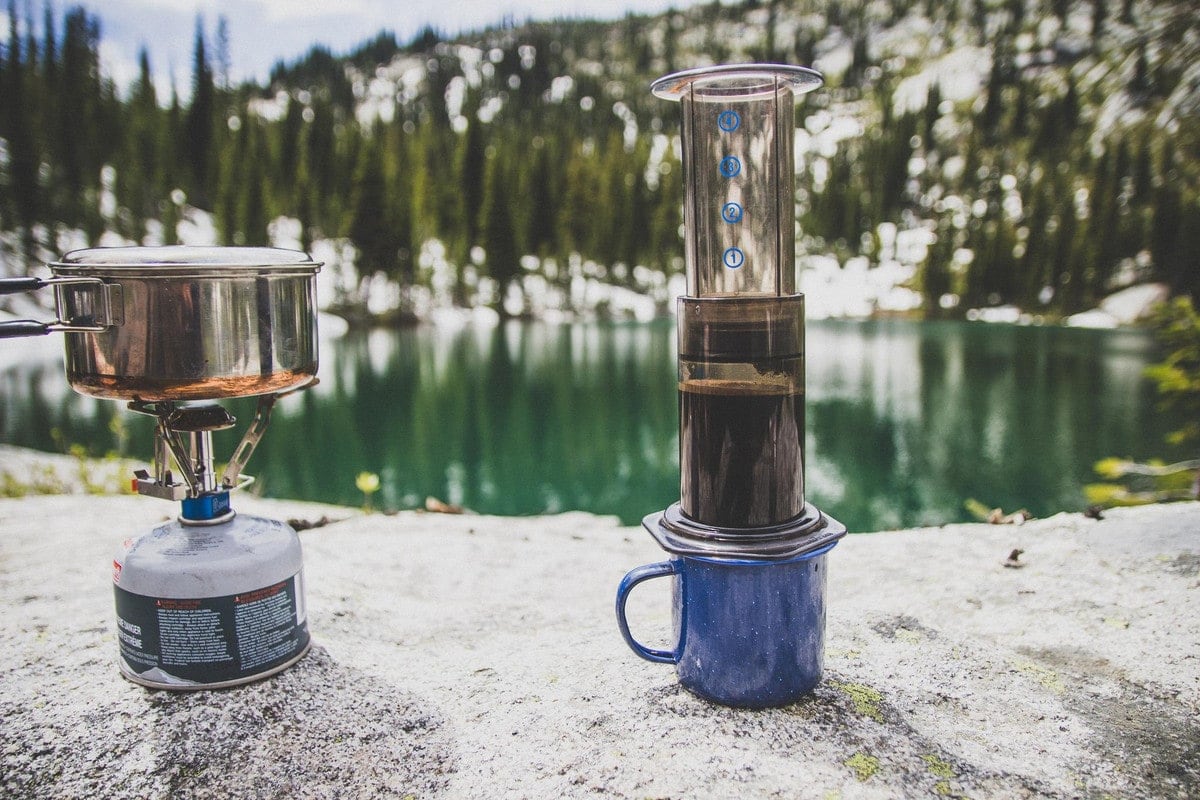
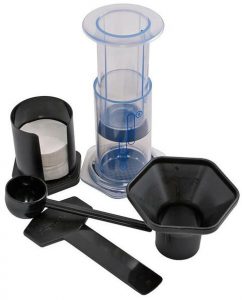
Who it’s for: Any traveller who loves quality coffee
Do we own one? Not yet, but it’s already been ordered as a Christmas present 🙂
We’d also recommend picking up a hand grinder and some good travel-friendly coffee to go with it.
As we write this, we’re sitting in our little beach house on Koh Samui, absolutely suffering. We can’t find filter bags for our coffee maker anywhere. We’ve gotten so desperate that we actually bought instant coffee. Although Thailand is a budget-friendly destination, a decent coffee at a restaurant costs a surprising amount — especially if you don’t want their overly sweet concoctions. An Aeropress would solve all our coffee woes in an instant.
2) A Travel Book That Everyone Will Envy
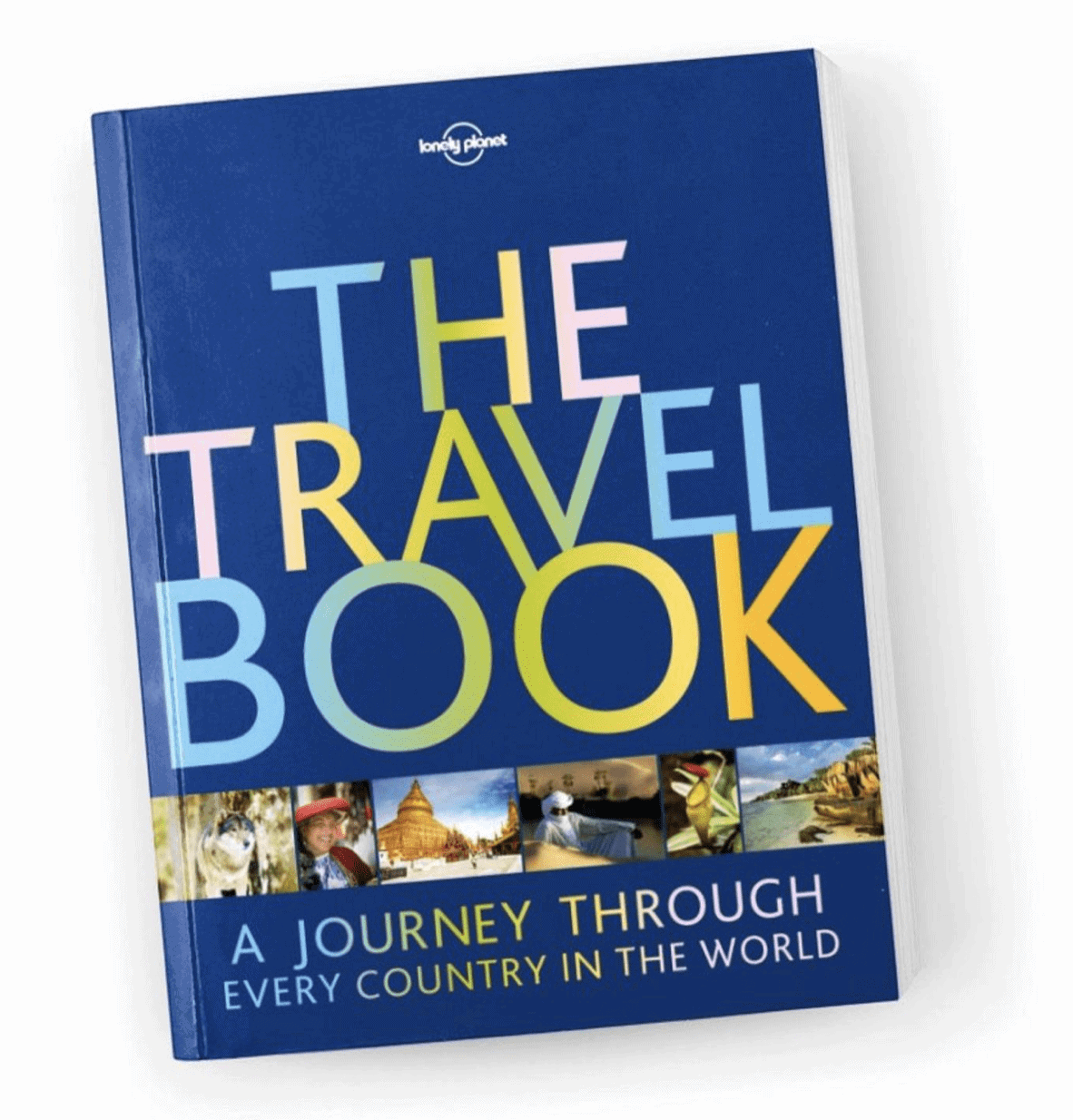
Last Christmas, my dad surprised me with a gorgeous book — The Travel Book. I couldn’t actually sit down and enjoy it properly until several days after Christmas Day, because everyone kept borrowing it. Since then, it sat on our coffee table in Prague and I couldn’t put it down — nor could any of our guests. It features 850 photographs and covers 230 countries. And the images are truly spectacular.
Where to buy it? I’d recommend ordering from Book Depository or Amazon. Book Depository offers FREE worldwide shipping, which is a nice bonus.
Who it’s for: Anyone who loves stunning photography. However, I’d recommend gifting it to someone who has a settled home. If your friend is constantly on the move, save this one for later.
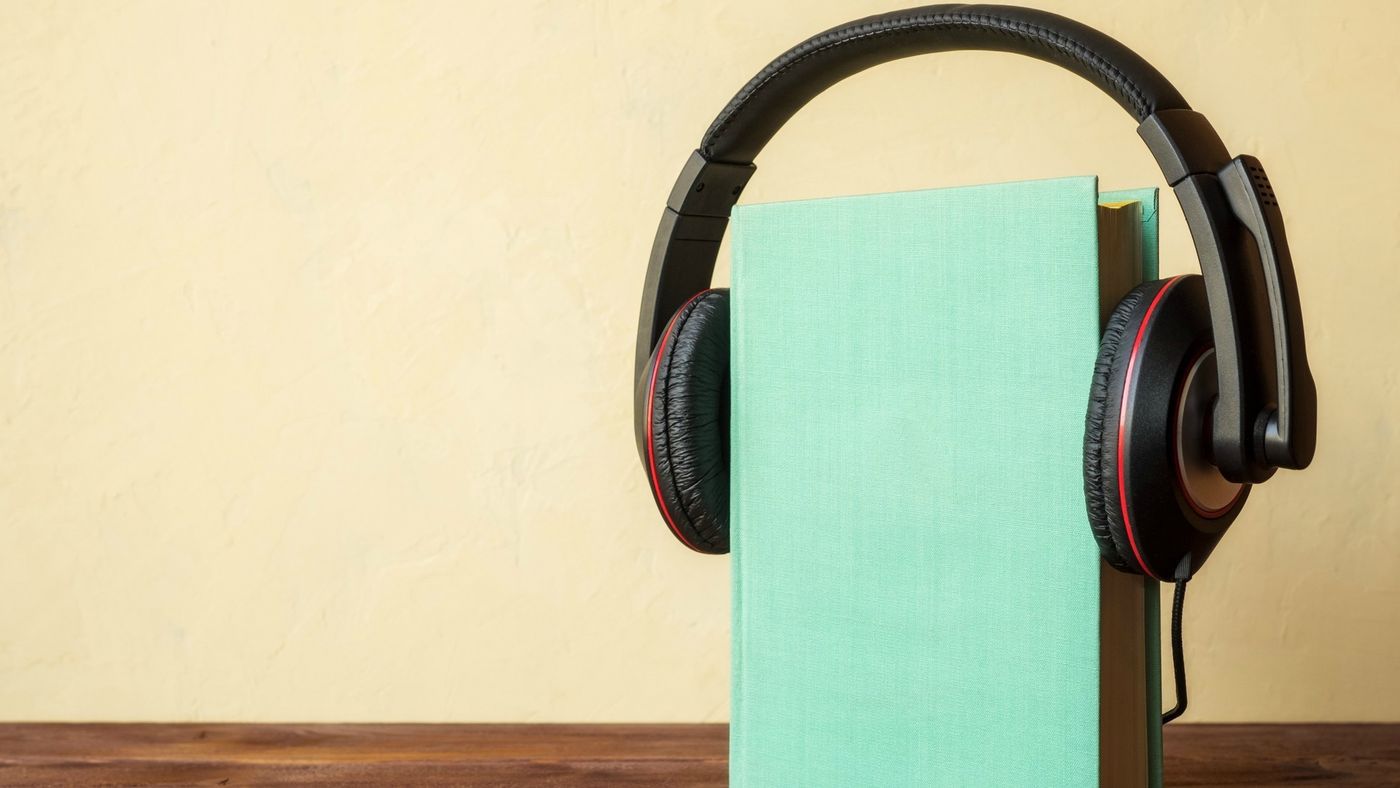
I always tell everyone: please don’t buy me paper books for reading (unless they’re photography books). Instead, get me audiobooks or e-books for my Kindle.
Travel Audiobooks and E-books:
For hilarious travel writing, you can’t go wrong with authors like Bill Bryson or Paul Theroux. Whether it’s Bryson’s “Neither Here Nor There” about travelling through Europe, or any of his other travel memoirs, we promise you won’t be bored.
“A Walk in the Woods” by Bill Bryson (book, audiobook, and e-book available)
“Neither Here Nor There: Travels in Europe” by Bill Bryson (book, audiobook, and e-book available)
“The Great Railway Bazaar” by Paul Theroux (book, audiobook, and e-book available)
An Audiobook for Very Long Journeys:
This one isn’t travel-themed, but it’s brilliant and will keep them entertained for ages. If your friend owns an iPhone, there’s a good chance they’ll love this too. Steve Jobs by Walter Isaacson is probably the best biography I’ve ever read (well, in this case, listened to).
Who it’s for: Anyone heading on longer trips who you know listens to audiobooks or podcasts — or owns an e-reader if you’re buying the e-book.
Do we own them? Yes.
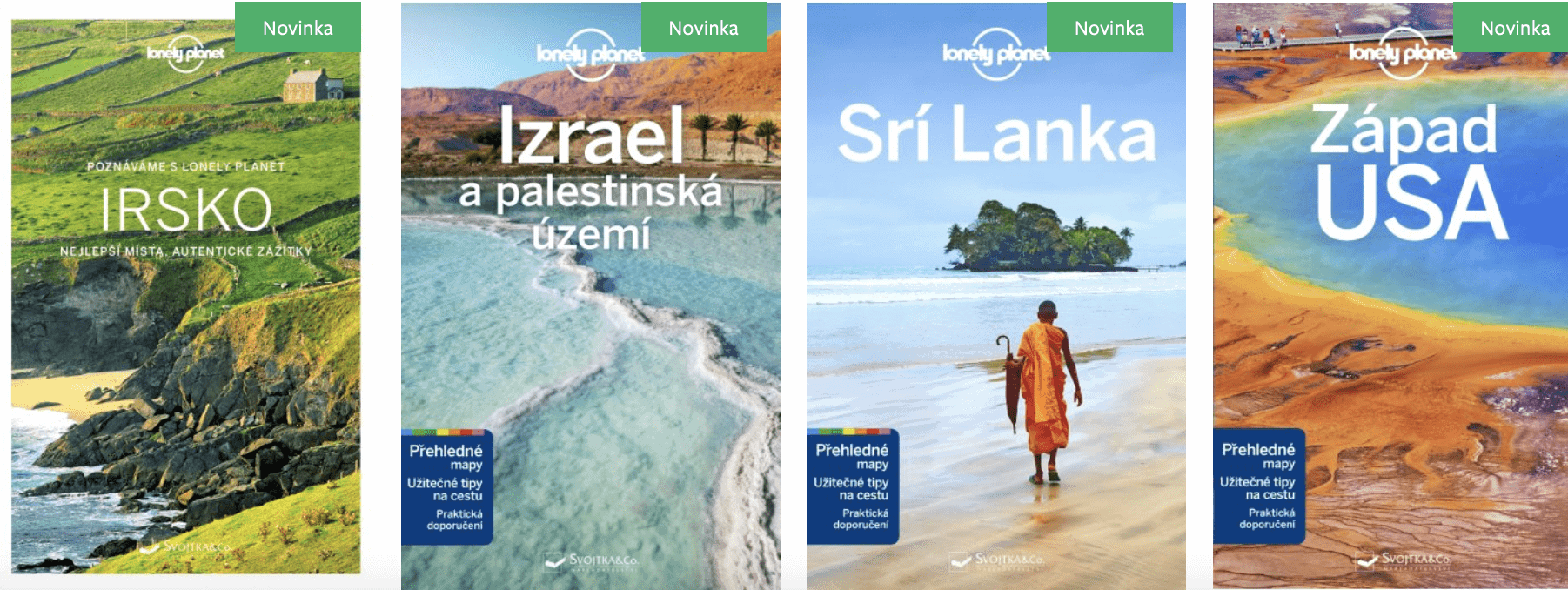
4) Know Where They’re Heading? Get Them a Map or Guidebook
We never plan our days too far in advance, but we love reading up on the history of places, exploring where to go, and most importantly, figuring out what potential issues might crop up along the way. In Asia and Africa especially, it’s all too easy to fall victim to scams — guidebooks usually cover all of this. A good guidebook from Lonely Planet or Rough Guides can genuinely make your trip smoother and safer.
That said, some guidebooks are frankly useless — particularly if they try to cover too broad an area. There’s no point buying a general guide to the western USA, where you won’t learn much because there’s simply too much to cover. It’s better to go for country-specific or region-specific guides. We had amazing Lonely Planet guides for Hawaii and Alaska, for instance.
Where to buy: Amazon and Waterstones have the widest selection of Lonely Planet and Rough Guides.
Who it’s for: Anyone who loves planning and learning fascinating facts about the places they visit
Guides we still don’t have: Mexico, Latin American countries, Vietnam, Myanmar, Kenya, and more.
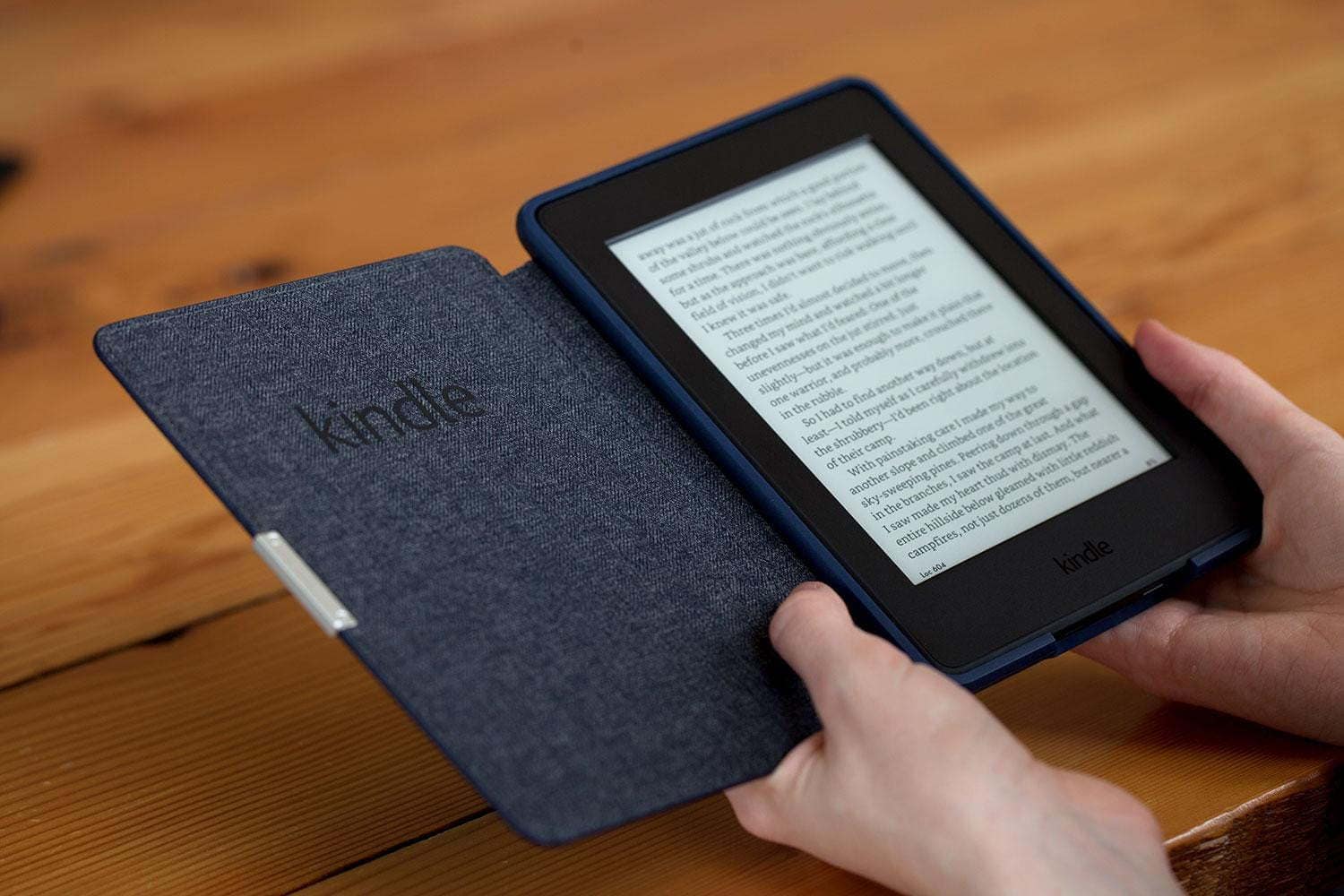
5) A Bookworm’s Best Friend – The Kindle
Speaking of books, Lukáš and I absolutely swear by our e-readers. Every year I devour dozens of books on my Kindle, and it goes with me everywhere. Yes, I used to be a die-hard paper book fan too — but do you know how heavy those things are when you’re travelling?
Which one to buy: I’d recommend the Kindle Paperwhite — it has a backlit display, which is brilliant for reading in bed or on night flights
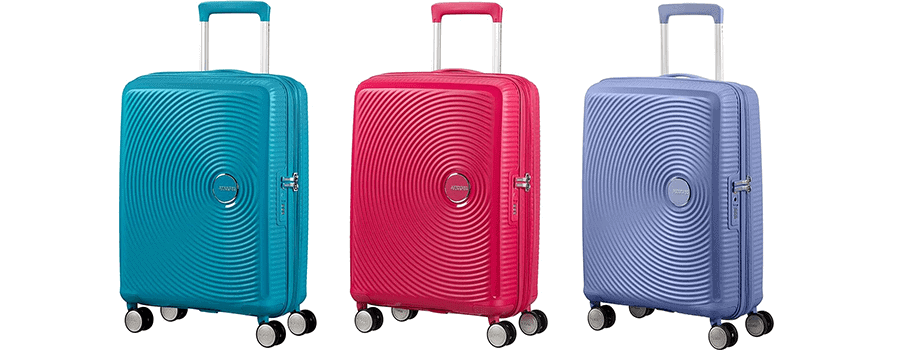
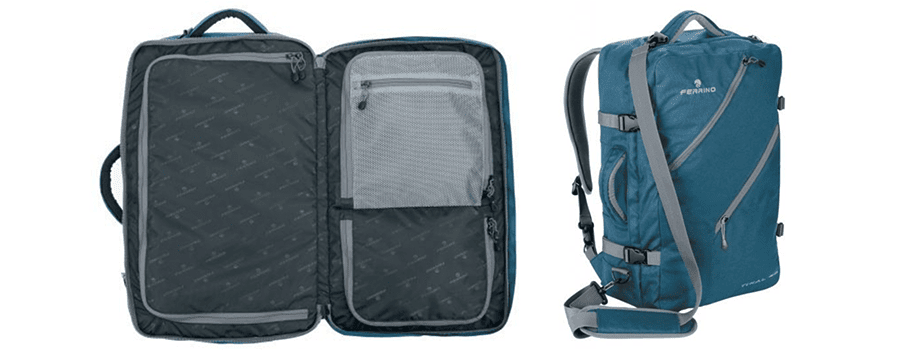
If you’re looking for a gift for a family member whose suitcase or backpack has seen better days, we’ve got some tips. Don’t buy a backpack without consulting them first — ideally, they need to try it on. What every traveller will appreciate, though, is a quality carry-on suitcase or bag. I’m putting heavy emphasis on the word quality, because nobody wants a cabin bag with dodgy wheels or one that weighs a ton even when empty.
We recommend two brands. The more affordable American Tourister and the pricier Samsonite. Both come with a lifetime warranty on the wheels as standard, which is reassuring. You could also go for a specialist travel bag from Osprey or Ferrino.
How to Choose the Right Size?
Airlines keep shrinking their cabin baggage allowances, so I’d recommend going for the smallest standard size (55x40x20 cm), especially if your friend flies with budget airlines like Ryanair or easyJet. Also pay attention to weight — the lighter, the better.
Who it’s for: All travellers — except those who fly ultra-light with hand luggage only (7 kg limit, no cabin bag).
Do we own one? We have several American Tourister suitcases, but we’ve been struggling with one of our cabin bags recently — the wheels stick out past the size limits — so we’re planning to replace it.
7) Packing Cubes
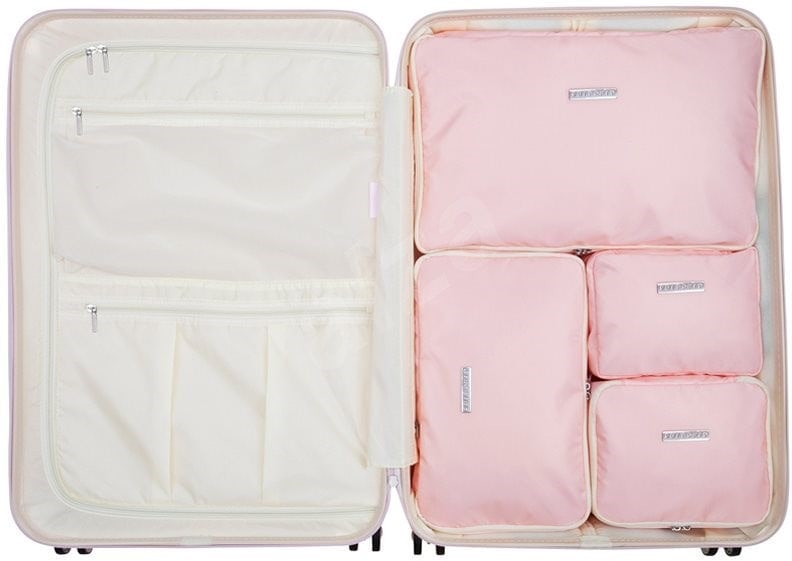
This year I used packing cubes in my backpack for the first time and I’m absolutely hooked. No more rummaging through everything — I just pull out the cube with trousers or underwear, depending on what I need. Even Lukáš, who’s a master at folding, has been eyeing them up and thinking about getting some.
Where to buy them? A quality packing cube set is available here. If you’d prefer individual cubes, check this link. Amazon also has excellent budget-friendly sets.
Who it’s for: Any traveller — they work brilliantly in both backpacks and suitcases
Do we own them? Yes, though currently we’re using a borrowed set from mum. She got them from Tchibo (but they’re not always in stock).
8) Quality Outdoor Clothing
If you camp, hike, or cycle, you know full well how much quality clothing can make or break your experience.
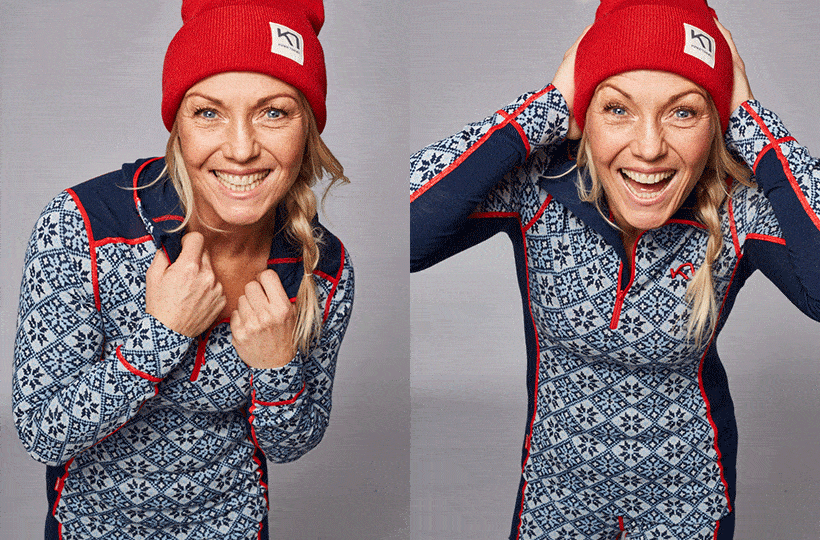
That said, be careful before you dive into shopping. Ask yourself whether you know for certain what size your friend or family member wears. Have a scroll through their social media to get an idea of their style. Generally, it’s safest to buy items without big logos or busy patterns — a simple quality base layer or black leggings always works. If you’re worried about getting the wrong thing, go for base layers or high-quality socks. Yes, socks can genuinely be a brilliant gift.
Where do we recommend shopping?
Merino wool socks from brands like Smartwool or Darn Tough are fantastic — we cycled in merino socks for six weeks and you can wear a single pair for four days without any smell issues
For beautiful, high-quality outdoor clothing, check out specialist retailers and brands on outdoor shops
My absolute favourite brand is Kari Traa — it’s a bit pricier, but nothing does your bum quite as much justice as their leggings
Who it’s for: Anyone who loves camping, hiking, and outdoor sports.
Do we own some? Yes, we wear all the brands we recommend. And we’re always happy to receive more.
9) Fitness Trackers
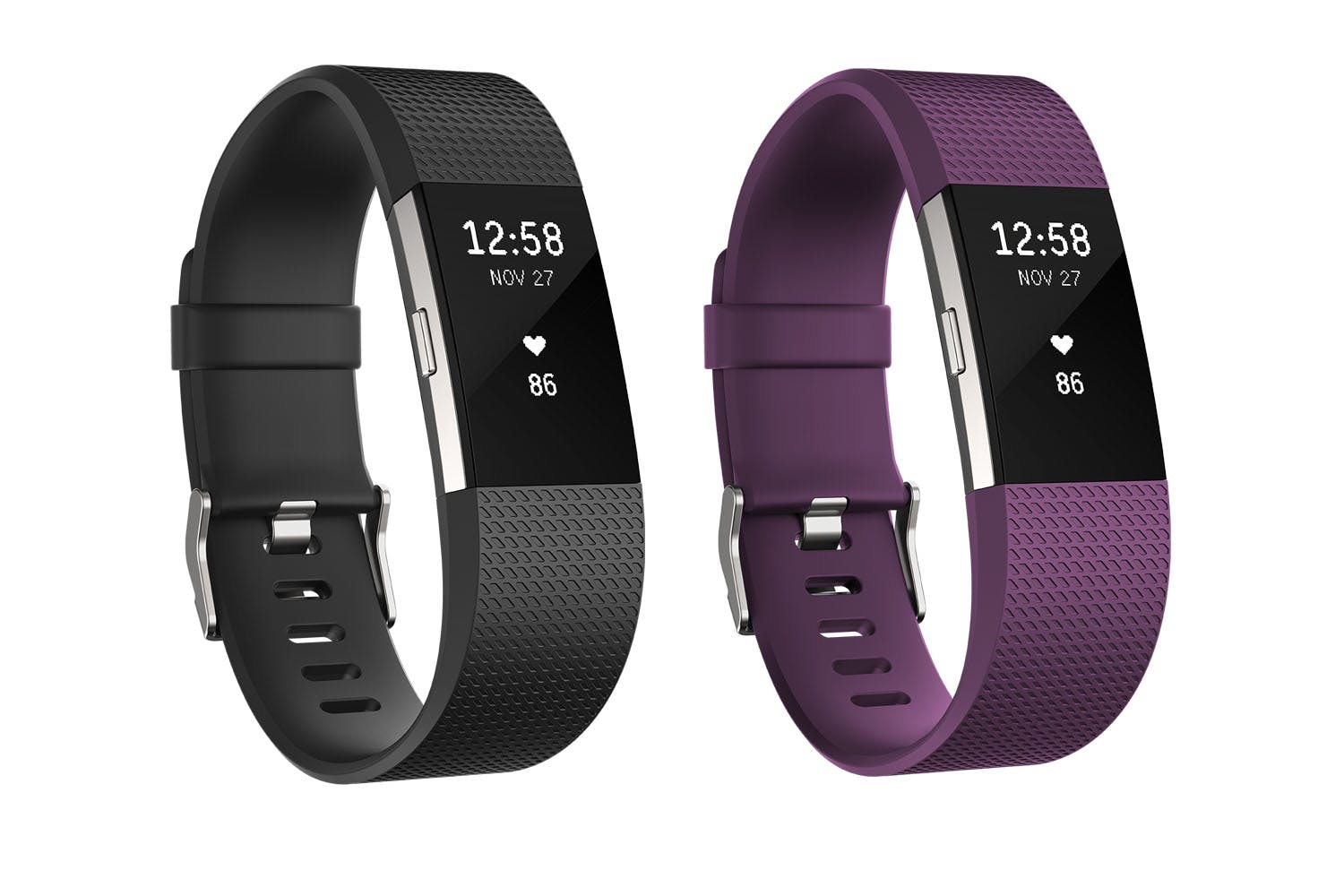
This one’s a classic. A fitness tracker is our best travel companion — we love checking how many steps we’ve taken, calories burned, and how well we slept. Modern fitness trackers don’t just count steps; they also monitor your sleep quality.
What we recommend: Personally, we’ve been loyal Fitbit fans for years. We currently own the Fitbit Charge 2, which works seamlessly with both iPhone and Android. I also think it’s one of the most stylish fitness trackers out there, with some gorgeous colour options — great travel gifts for women especially.
Who it’s for: Any traveller who hikes and enjoys staying active on the road.
Do we own one? Yes, we both have a Fitbit Charge 2.
10) A Personal Gift for Your Travel Companion
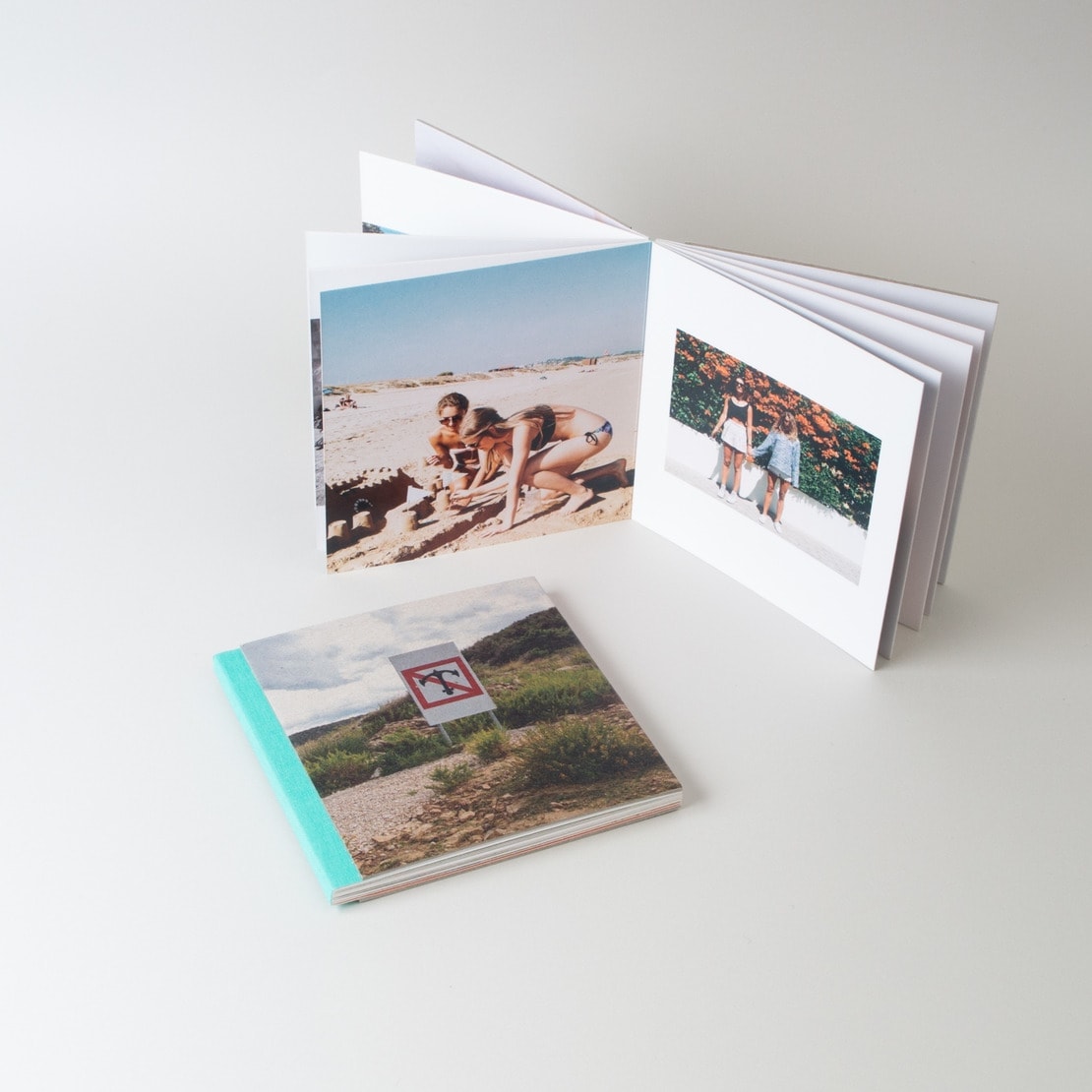
Want a beautiful and deeply personal gift for the friends, partner, or family you travel with? It’ll take a fair bit of effort, but the result is absolutely worth it. Photo book services like Photobox or Shutterfly let you create some of the most tasteful albums around. Using their easy online tools, you can create a keepsake that’ll last a lifetime. Take your time, pick your best photos, and add funny captions or memories from your trips together.
Where to get one: Services like Photobox, Shutterfly, or Vistaprint Photo Books are all great options.
Lukáš and I can wholeheartedly recommend custom photo books — we even used them for our wedding. Everything always arrives beautifully packaged, too.
11) Polaroid Camera
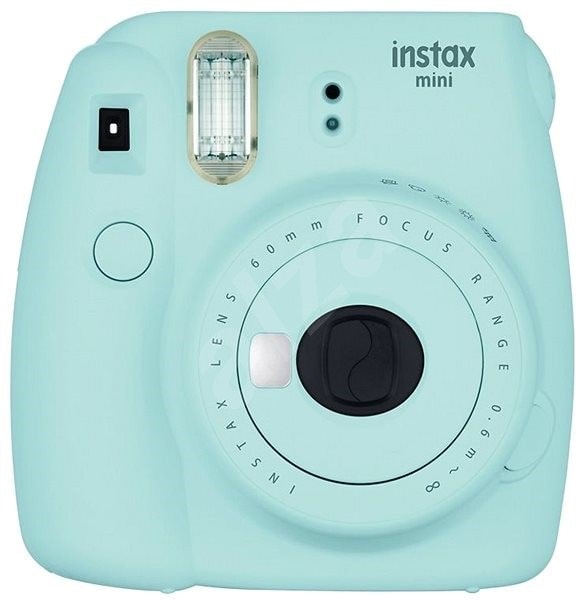
This is another gift that Lukáš and I have been enjoying for years. The Instax is the perfect companion for trips with friends, parties, and even weddings. We still pull it out whenever someone visits, and it’s always a great laugh.
Who it’s for: If your friends love hipster cafés, enjoy photography, and make scrapbooks — they’ll adore this too
Do we own one? Yes.
12) Mini Photo Printers
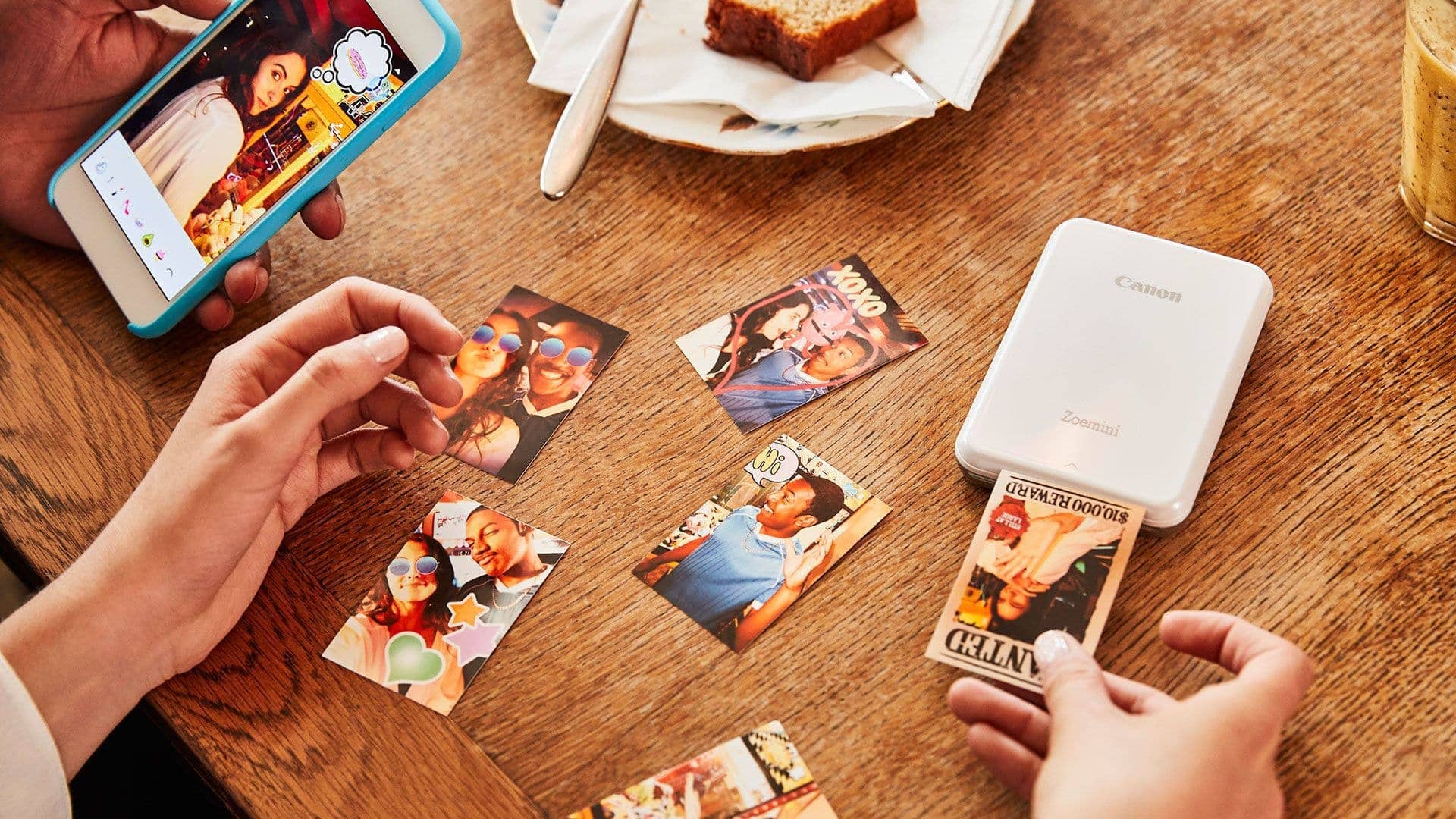
They’re all over social media this year, but we’ve actually owned one for several years already. Mini printers produce photos in that lovely Polaroid and Instax style, and they’re brilliant for creating albums. It’s a fun little gadget.
Where to buy: The most popular option is the Canon Zoemini
Who it’s for: Friends who love photography, scrapbooking, and that vintage aesthetic
Do we own one? Yes.
13) More Than a Tripod: Gorillapod
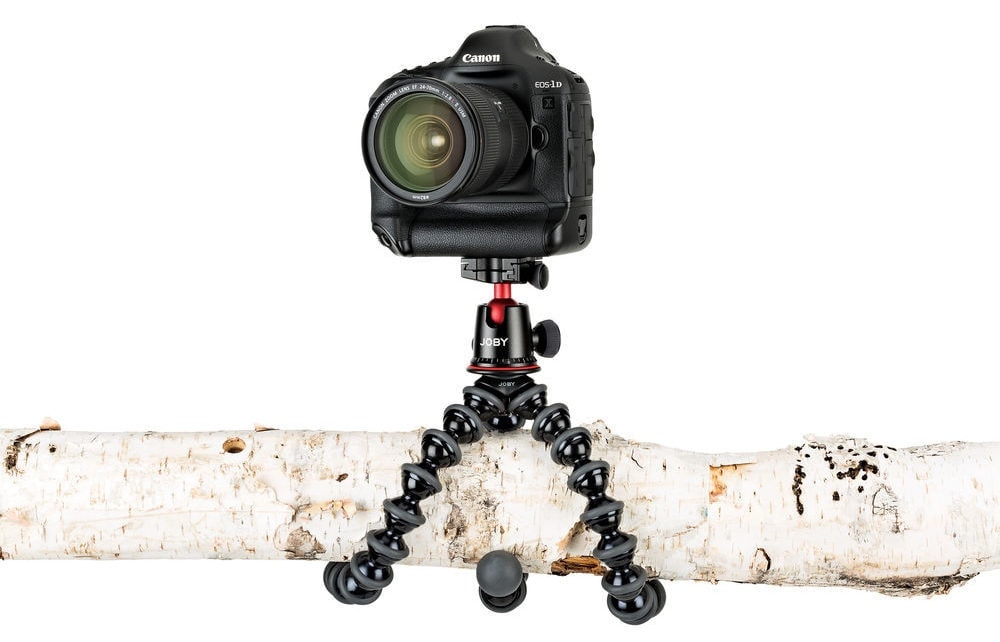
My greatest travel love is the Gorillapod. It’s a flexible tripod you can attach to practically anything — a massive chunk of ice (yes, I’ve actually done that), a tree branch, a metal railing. Literally anywhere.
How to Choose the Right Gorillapod
Pay attention to the weight capacity when choosing. If your friend shoots with a DSLR, go for the 3 kg or 5 kg capacity.
For mirrorless cameras, a 3 kg capacity is sufficient, and for compact cameras, 1 kg will do. It also works brilliantly with smartphones — you’ll just need to add a phone adapter.
Who it’s for: Solo travellers and couples alike — anyone who likes taking photos
Do we own one? Yes.
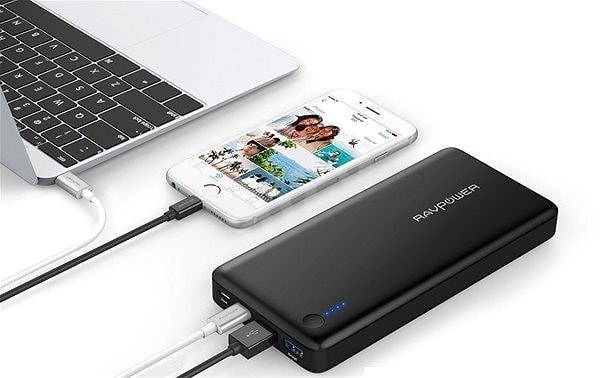
14) A Power Bank — The Gift You Can’t Go Wrong With
Every traveller uses a power bank. That makes it a safe bet as a gift for absolutely anyone who travels. But do be careful when choosing — we once bought a cheap one and binned it after a single trip (specifically, a Yankee brand started making a worrying buzzing noise while charging after just a month of use — trust us, you don’t want your external charger frying your phone).
A good power bank can even charge a MacBook
Which Ones Do We Recommend?
Premium option: Ravpower RP-PB095 20,000mAh — The best power bank we’ve ever owned. Ours is a proper veteran at this point and still going strong. We’ve thrown away plenty of others over the years, but this one seems to survive absolutely everything.
Budget option: Xiaomi Mi PowerBank 2C 20,000mAh — We haven’t used this one personally, but it’s one of the most recommended power banks by fellow travellers we know.
Do we own one? Yes, but we could definitely use a new one :))
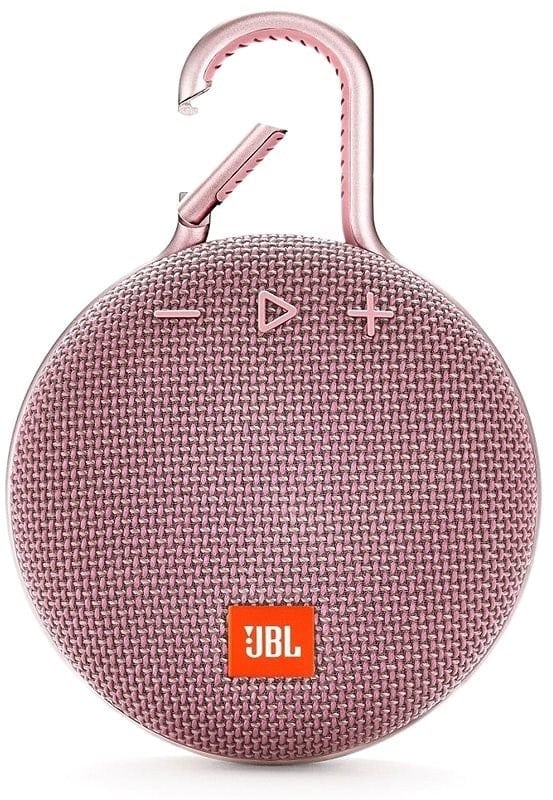
15) Portable Bluetooth Speaker for the Beach
We never thought we needed one, but ever since we received a portable speaker as a gift, we use it every single day. We take it outdoors for meditation, bring it to the beach, and blast music in the kitchen while cooking. We were genuinely surprised by how good the sound quality is from such a tiny speaker.
There are hundreds of options out there, but we’ve picked two that are truly worth it:
JBL Clip 3 — the pink version makes a lovely gift for her
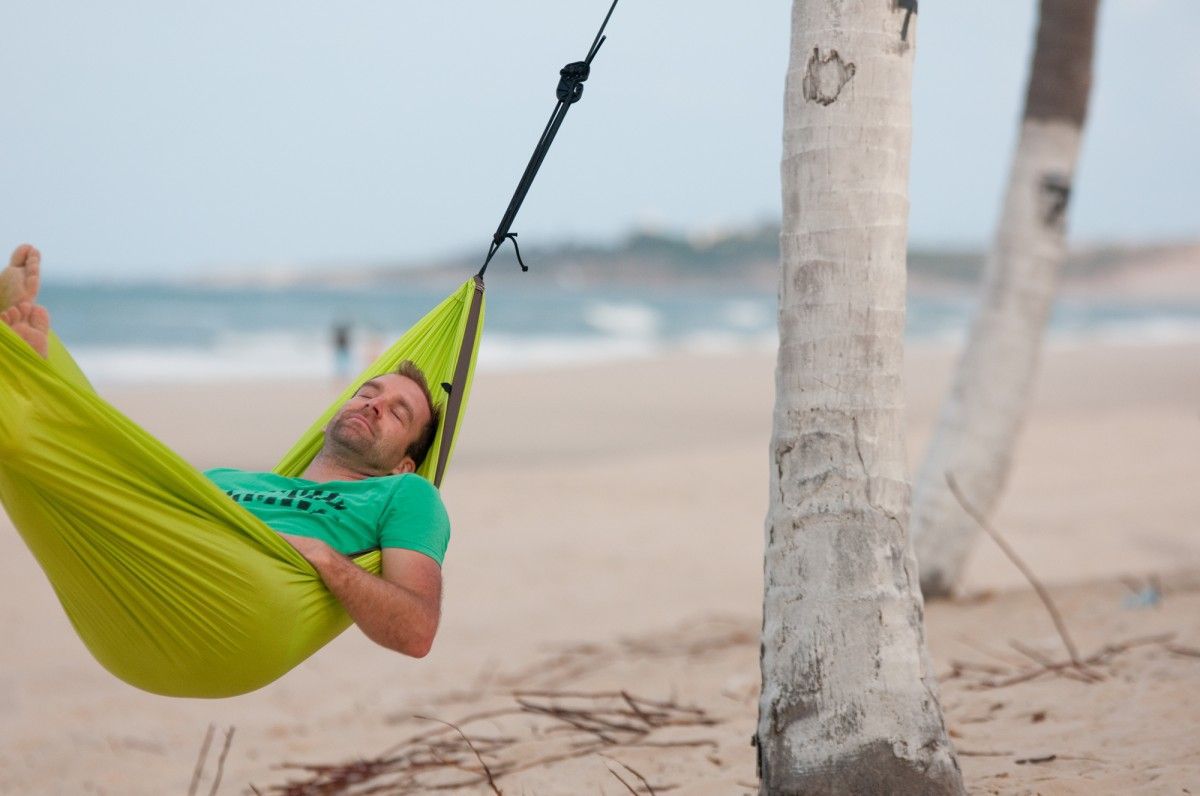
Who it’s for: Anyone who loves camping, or if you know a dedicated hammock enthusiast…
Do we own one? Not yet, but we’d love one (well, I would — Lukáš isn’t quite as obsessed with hammocks)
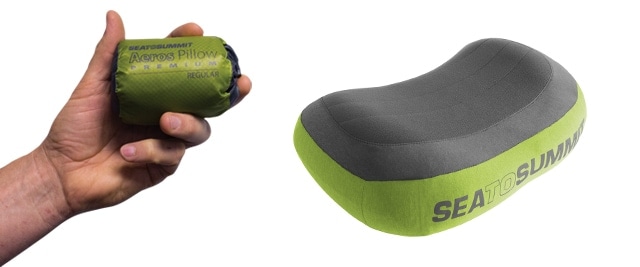
17) Inflatable Travel Pillow
Yes, I absolutely love mine. I finally treated myself to an inflatable travel pillow and my journeys by plane, coach, and train have never been more comfortable. My only regret is that I didn’t buy one sooner — or that nobody bought me one as a gift.
Where to buy: I personally use the Sea to Summit Aeros Premium Traveller, but you can find more affordable options on Amazon too.
Who it’s for: Anyone who frequently travels by plane (economy class!), coach, or train.
Do we own one? Yes.
18) Water Bottle
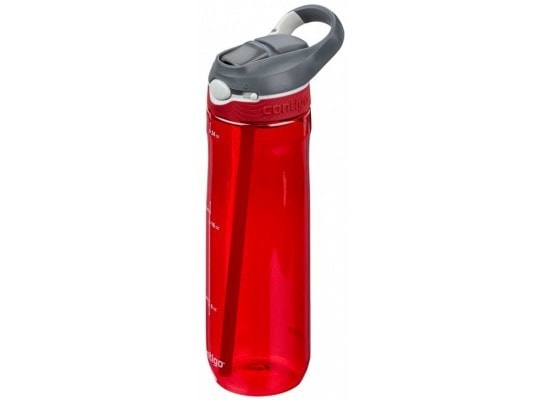
Wait — seriously? Everyone already has one! Well, that’s what we thought too, but our supposedly indestructible Contigo bottle finally gave up the ghost after years of use and started leaking. Not all bottles are created equal. For travel, you need a quality bottle that’s lightweight and absolutely won’t let you down. A really good water bottle will be genuinely appreciated as a gift. It certainly would be by us.
Which one to get?
We’ve recently been most impressed by the Hydrapak Stash, particularly because it folds down to fit in your pocket when empty. But the real game-changer is that you can fill it even under those annoyingly small bathroom taps (you know the eternal struggle of trying to wedge a bottle under a tiny sink, right?).
Although our Contigo eventually wore out after many years (and honestly, the biggest issue was probably that we’d been using it for protein shakes), we still believe it’s one of the most reliable brands on the market.
Where to buy: This time around, we’d go for the Contigo Ashland 750. You can also find it on Amazon.
Or the Hydrapak Stash 750ml — these tend to sell out quickly, so check Amazon or specialist outdoor retailers for availability.
Who it’s for: Literally everyone
Do we own one? Yes, but we need another one.
19) A Leather Backpack That Can Handle Anything
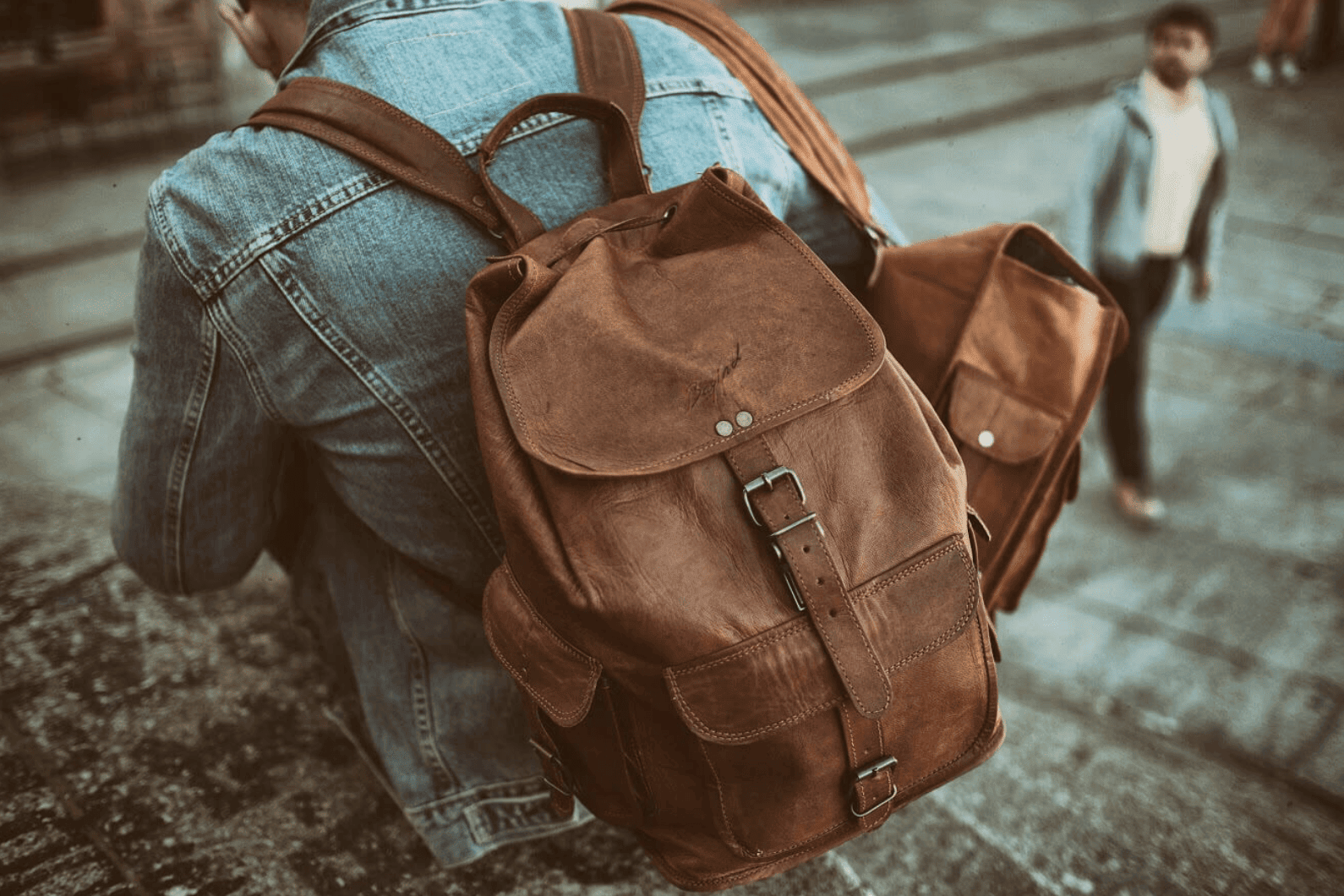
I thought long and hard about going for leather. It’s always been a complicated relationship for me, because I genuinely value every animal’s life — we don’t even kill spiders or beetles at home. But after years of travelling, I’ve come to reassess my view on leather. The problem with faux leather is that it takes around 150 years to decompose. What I love about Bagind is that their backpacks are made from goat leather in India. In developing countries, goats are incredibly important — people care for them, value them for their milk, and when the time comes, it’s a significant event when the goat is eaten. I’ve been asked many times, in Uganda and Albania alike, whether I have a goat at home. In many parts of the world, goats are simply central to daily life.
What’s also great about a leather backpack is that it goes with everything — dresses, sportswear, you name it — which wasn’t really the case with my old Herschel. And it looks absolutely stunning in photos.
Who it’s for: Any traveller — just make sure they’re comfortable with leather first
Do we own one? Yes, we both have a Bagind.
20) Metal and Collapsible Straws
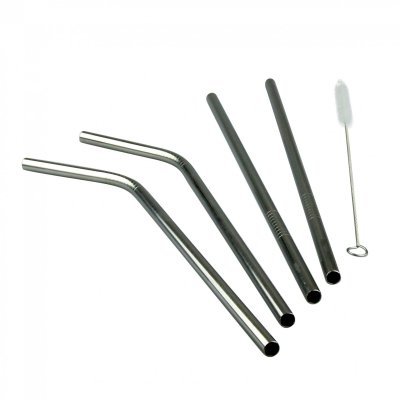
We’ve been on the hunt for a proper reusable straw for months. The amount of plastic waste generated by single-use straws worldwide is truly staggering.
Bamboo option: Mobake Set of bamboo straws (10 pcs)
But the best option for travellers, in my opinion, is a collapsible straw — compact enough to keep on your keyring
21) Bum Bag — An Essential for Asia
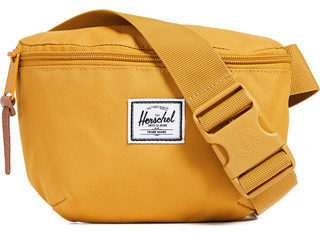
Before we travelled to Asia, we never thought we’d need one. Now we can’t imagine travelling without one. After reading about how easily pickpockets operate in busy cities — some thieves can even scan your card details wirelessly without touching your wallet — we never leave the door without a bum bag or money belt.
Where to buy: Even better than a standard bum bag is a money belt that you can tuck under your shirt. We got ours from an outdoor shop, but it wasn’t great (the clasp was annoying), so we’d recommend looking for a better one from Herschel.
For women, I’d recommend a proper bum bag — especially if you often wear dresses. I’d pick either this pink one or this bright yellow one.
Who it’s for: Anyone who travels to big cities — and an absolute must for trips to Asia
Do we own one? Yes, we have money belts, but we’re not entirely happy with them. We bought them in a rush and will probably swap them out at some point — me for a bum bag, and Lukáš for a better money belt.
Search for flights on Kayak. It’s our favorite search engine because it scans the websites of all airlines and always finds the cheapest connection.
Book Your Accommodation Smartly
The best experiences we’ve had when looking for accommodation (from Alaska to Morocco) are with Booking.com, where hotels, apartments, and entire houses are usually the cheapest and most widely available.
Don’t Forget Travel Insurance
Good travel insurance will protect you against illness, accidents, theft, or flight cancellations. We’ve had a few hospital visits abroad, so we know how important it is to have proper insurance arranged.
Where we insure ourselves: SafetyWing (best for everyone) and TrueTraveller (for extra-long trips).
Why don’t we recommend any Czech insurance company? Because they have too many restrictions. They set limits on the number of days abroad, travel insurance via a credit card often requires you to pay medical expenses only with that card, and they frequently limit the number of returns to the Czech Republic.
Find the Best Experiences
Get Your Guide is a huge online marketplace where you can book guided walks, trips, skip-the-line tickets, tours, and much more. We always find some extra fun there!
TL;DRIceland’s must-sees include the glacier lagoon Jökulsárlón, the waterfalls Goðafoss, Skógafoss, Detifoss, Gullfoss and Dynjandi, the geothermal area of Krýsuvík, Thingvellir National Park, the headland Dyrholaey, the mountains Eystrahorn and Vestrahorn, the village of Seydisfjördur and the hot river at Reykjadalur. Summer (June–August) is best for travelling, with temperatures of 10–15°C and up to 24 hours of daylight, while winter (December–March), hovering around 0°C, is your best bet for the northern lights. Geysir, the hot spring that gave its name to geysers everywhere, sits roughly 80 km from Reykjavík, and the 128-metre Hengifoss waterfall is reached via a 30-minute hike. Entry to most natural sights is free, though parking at Skógafoss will cost you around 1,000 ISK from 2025.
Iceland is probably the most beautiful and photogenic country that Lukas and I visited. I’m not exaggerating at all when I tell you that you can simply drive somewhere and stare. Still, there are places you shouldn’t miss.
Search for flights on Kayak. It’s our favorite search engine because it scans the websites of all airlines and always finds the cheapest connection.
Book Your Accommodation Smartly
The best experiences we’ve had when looking for accommodation (from Alaska to Morocco) are with Booking.com, where hotels, apartments, and entire houses are usually the cheapest and most widely available.
Don’t Forget Travel Insurance
Good travel insurance will protect you against illness, accidents, theft, or flight cancellations. We’ve had a few hospital visits abroad, so we know how important it is to have proper insurance arranged.
Where we insure ourselves: SafetyWing (best for everyone) and TrueTraveller (for extra-long trips).
Why don’t we recommend any Czech insurance company? Because they have too many restrictions. They set limits on the number of days abroad, travel insurance via a credit card often requires you to pay medical expenses only with that card, and they frequently limit the number of returns to the Czech Republic.
Find the Best Experiences
Get Your Guide is a huge online marketplace where you can book guided walks, trips, skip-the-line tickets, tours, and much more. We always find some extra fun there!
TL;DRYou can handle most photo edits in Adobe Lightroom with the basic tools — exposure, contrast, shadows, highlights, temperature and saturation — all in the “Basic” panel once you switch from Library to Develop. To create your own presets, click the “+” next to Presets in the side panel, save them under a name of your choice, then apply them to other photos using “Apply on Import” or “Copy/Paste Settings”. You can load other people’s presets, such as those from Travel In Her Shoes, via Lightroom → Preferences → Show Lightroom Presets Folder. Lightroom CC costs €12.09 a month, while the mobile version of Lightroom Classic is free but has limited features. For a deeper dive, the author also offers a detailed online course with 12 lessons and 2.5 hours of content.
How do you edit photos quickly, easily, and most importantly, make them look professional? Adobe Lightroom is the most efficient — and I’d dare say the best — program for professional photo editing, and Lightroom presets are the secret weapon that makes it all possible. It’s no wonder photographers and bloggers alike swear by it.
What Are Lightroom Presets and Why Use Them?
Thanks to presets, you can edit a whole batch of photos in just a few seconds — and even if you don’t have the best eye for it, they can still look stunning. And you’ll be surprised: it’s actually pretty straightforward.
In this article, I’ll first show you how to import photos into Lightroom, then give you a quick overview of basic edits, walk you through editing with presets, and finally cover how to create your own custom presets. I’ll also explain how to batch-edit all photos taken under the same conditions and how to easily export them.
Think of this article as an introduction to working with Lightroom — no single article can cover everything the program offers. If you want to learn Lightroom properly, I’d recommend finding a comprehensive online course that walks you through it step by step. I wrote a detailed review of one such course here.
Also, keep in mind that I don’t claim to know everything — this is simply how I do it. 🙂 But if it helps even one person out there, we’ll be happy.
But First — Where to Get Lightroom?
Adobe Lightroom Classic is free on mobile, but I should warn you that its features are quite limited. That’s why most photographers and bloggers use Lightroom CC on desktop. If you don’t have Adobe Lightroom CC yet and would like to get it, check out the Photography Plan for €12.09 per month.
I won’t encourage you to pirate the software — especially if you plan to sell your photos, I strongly recommend owning Lightroom legally.
How to Import Photos into Lightroom
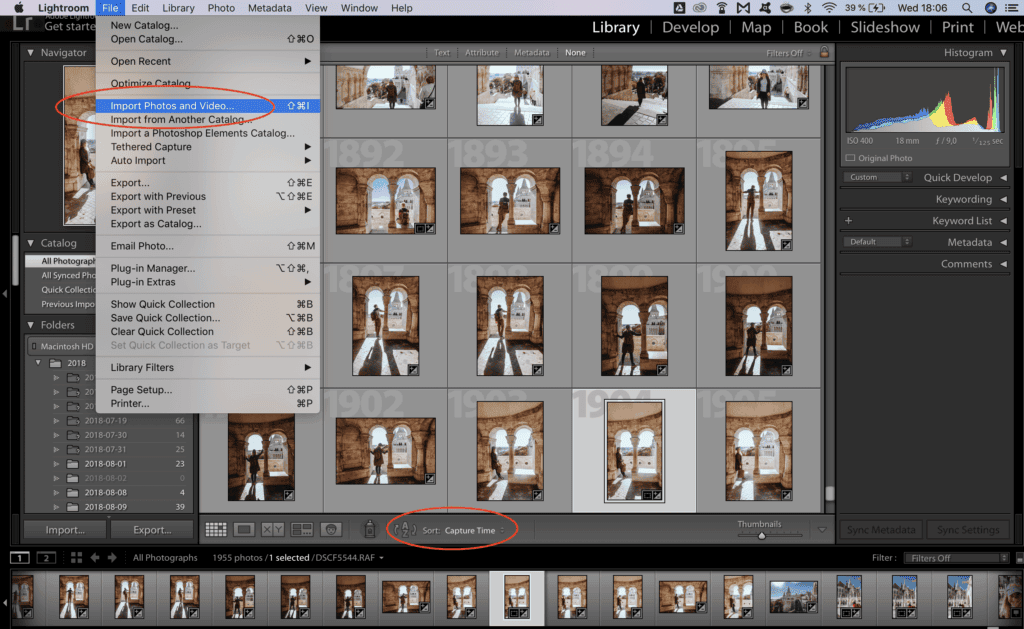
Importing photos into Lightroom is just as easy as in any similar program. From the top menu bar, select File -> Import Photos and Video and choose the folder you want to import from. You can decide whether to copy the originals to your computer or simply add them to the Lightroom catalogue (in that case, the source drive must be connected every time you want to edit them).
Always make sure they’re sorted by capture time — “Sort: Capture time” — because you want all photos taken under the same lighting conditions to appear next to each other.
Importing photos into Lightroom works just like any other program
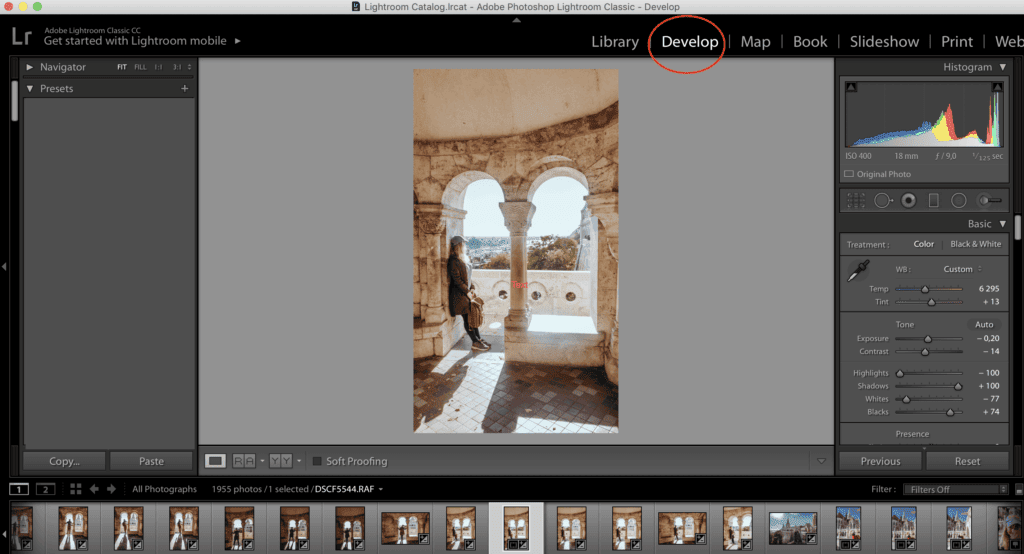
Once your photos are in the Lightroom catalogue, switch from Library to Develop. Without this step, you won’t be able to start editing.
After importing your photos, switch to the Develop module
Basic Photo Editing in Lightroom
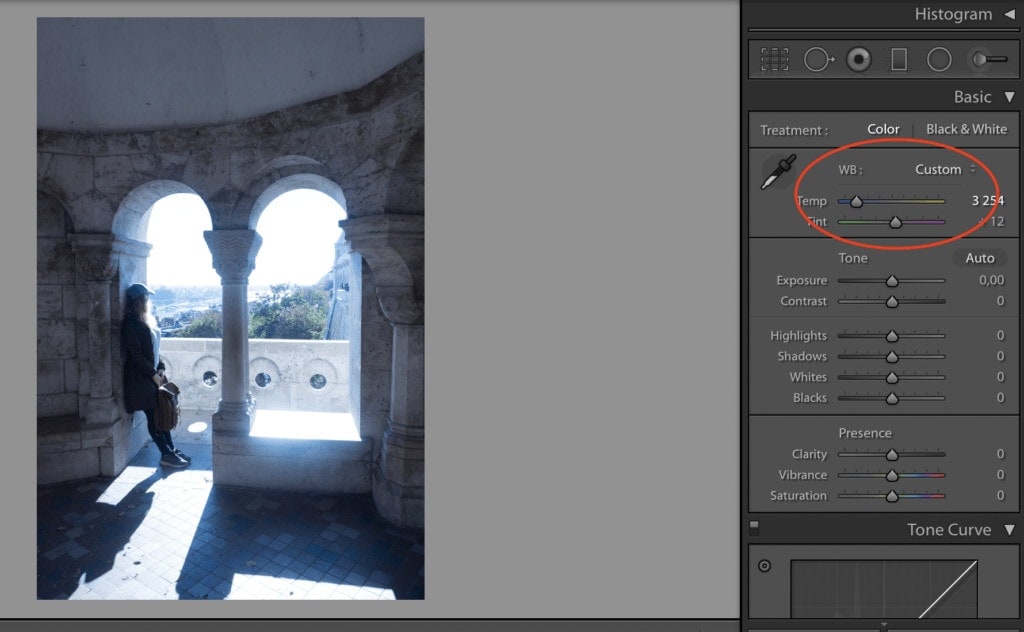
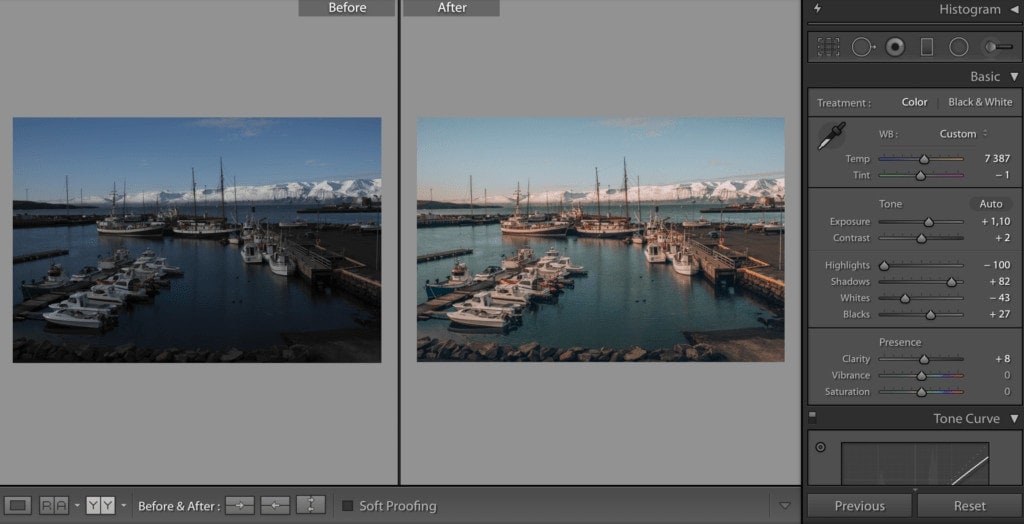
In the side panel, under “Basic,” you’ll find the fundamental adjustments Lightroom offers. You can tweak the temperature and tint of your photo. If your camera spat out photos that are too blue or too yellow (who hasn’t been there!), a subtle — okay, sometimes not-so-subtle — slider adjustment can fix the issue.
Of course, this tool is also great for stylising your photos. If you want to give them a warmer or cooler feel, this is where you can have a play around.
An overly blue photo can be easily corrected
Adjusting Light, Contrast, and Recovering Dark Areas
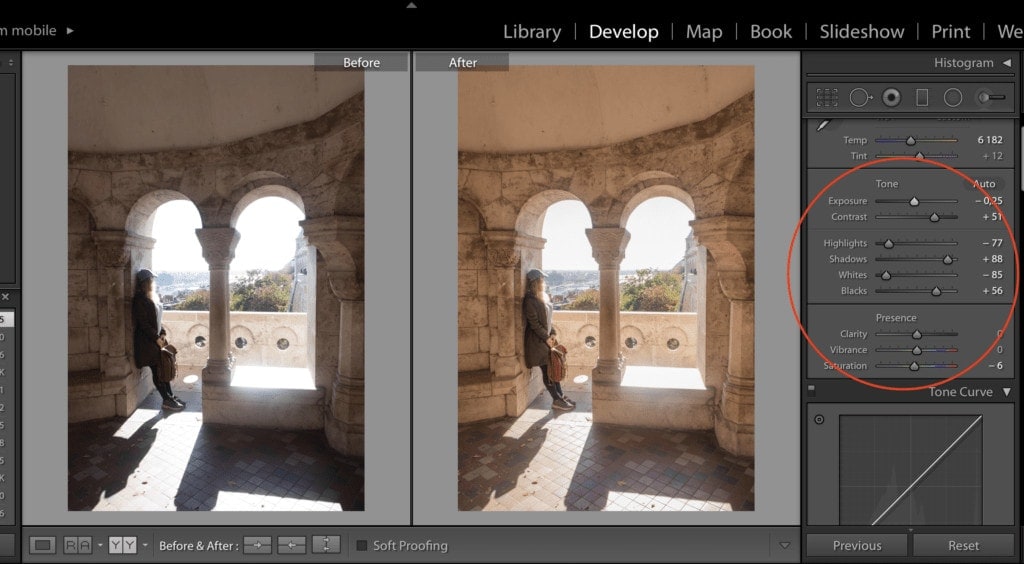
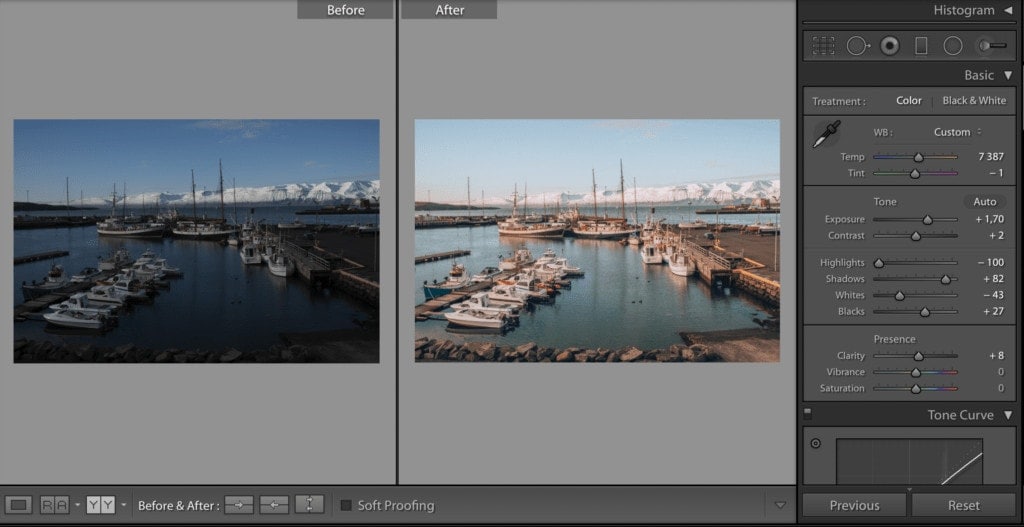
The most common adjustment you’ll need is exposure — either the photo is too bright and needs darkening, or it’s too dark and needs brightening. Under basic adjustments, you’ll also find contrast. You can fine-tune individual tonal ranges too. For instance, if the shadows are too dark, you can lift them slightly, or pull back the brightest spots using highlights.
Exposure, contrast, and shadows are the most commonly adjusted settings
The Difference Between Saturation and Vibrance
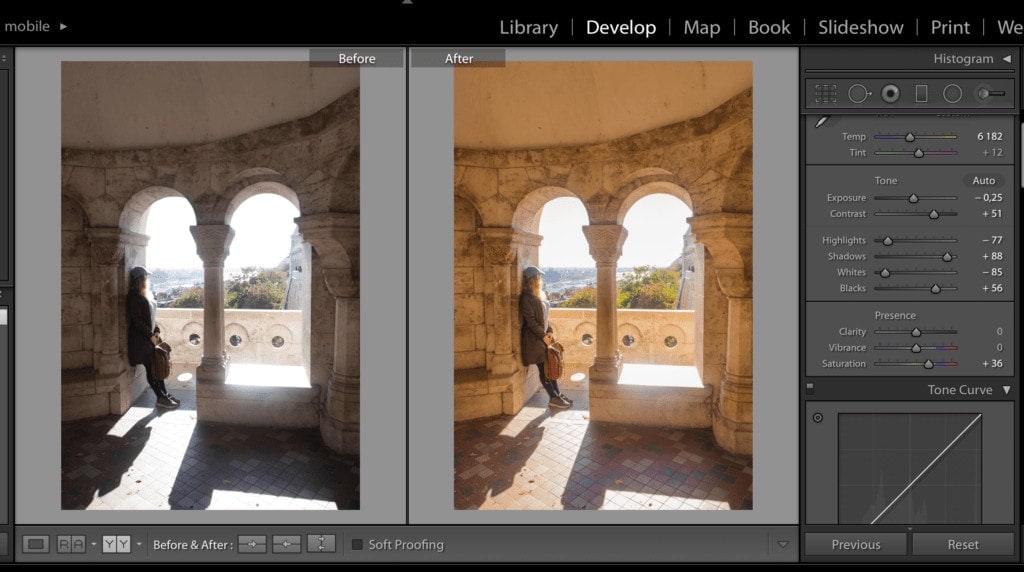
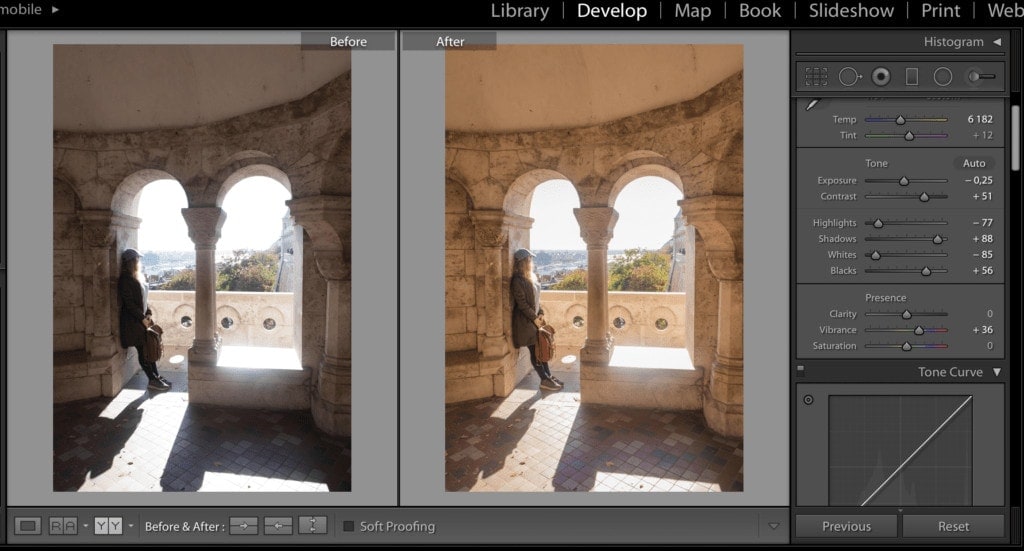
Yes, there is a significant difference between saturation and vibrance, and you shouldn’t confuse the two — at least when it comes to photo editing. When you increase saturation, you’re boosting the intensity of all colours equally. Vibrance, on the other hand, only increases the intensity of muted colours, leaving already-saturated tones largely untouched.
Saturation vs. Vibrance in Practice
Photo saturation set to +36Vibrance set to +36
Editing Individual Colours
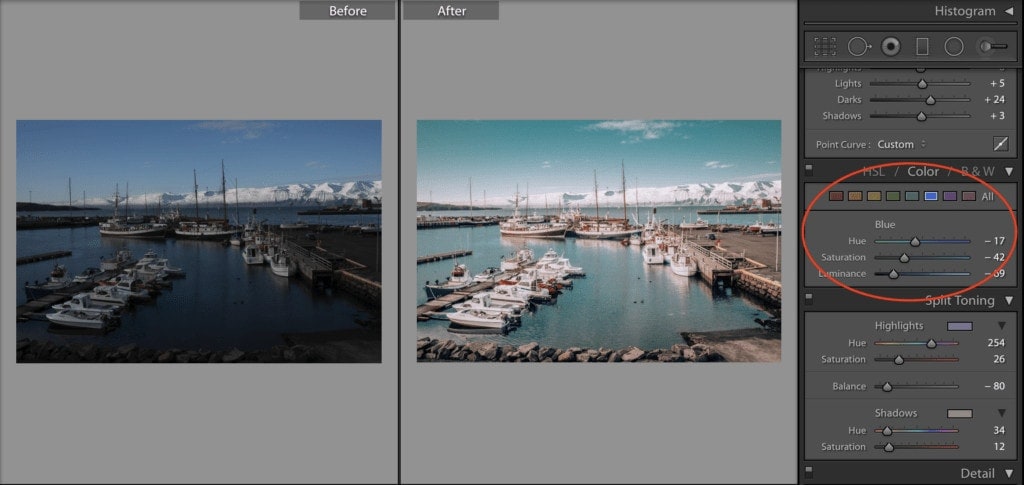
In Lightroom, you can also adjust individual colours present in your photo. Need to make the sky a deeper blue? No problem. Want to shift the hue of a lake to make it more turquoise? It takes just a few seconds.
Adjusting the blue hue to turquoise
Sharpening Your Photos
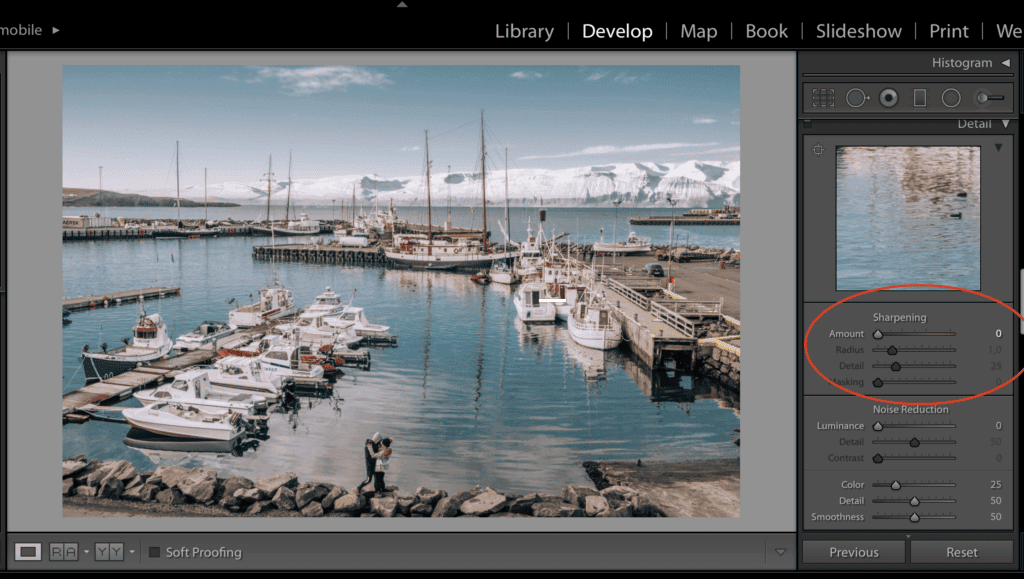
If you scroll further down the panel, you’ll find “Detail,” which naturally offers even more adjustment options. I recommend only light sharpening — around 25 or so. 🙂
Be careful with sharpening — less is more
Creating Your Own Lightroom Presets
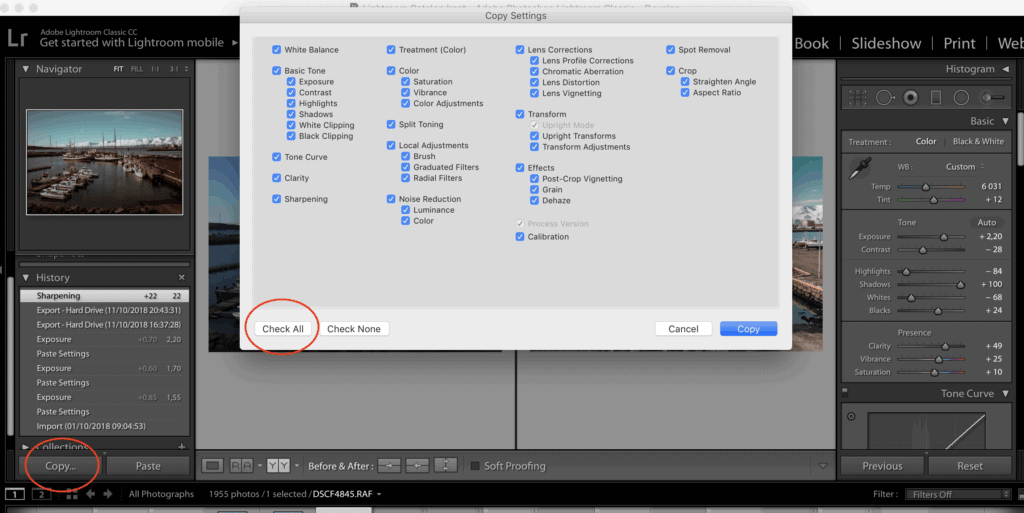
If you nail an edit and want to apply it to other photos, simply click “Copy” in the bottom-left corner, tick all the settings you want to carry over, and then hit “Paste” — and voilà! If the photo was taken under the same lighting conditions, you won’t need any further tweaks.
You can easily copy your edits and apply them to another photo
If the conditions differ, you’ll usually need to fine-tune the exposure, highlights, and shadows.
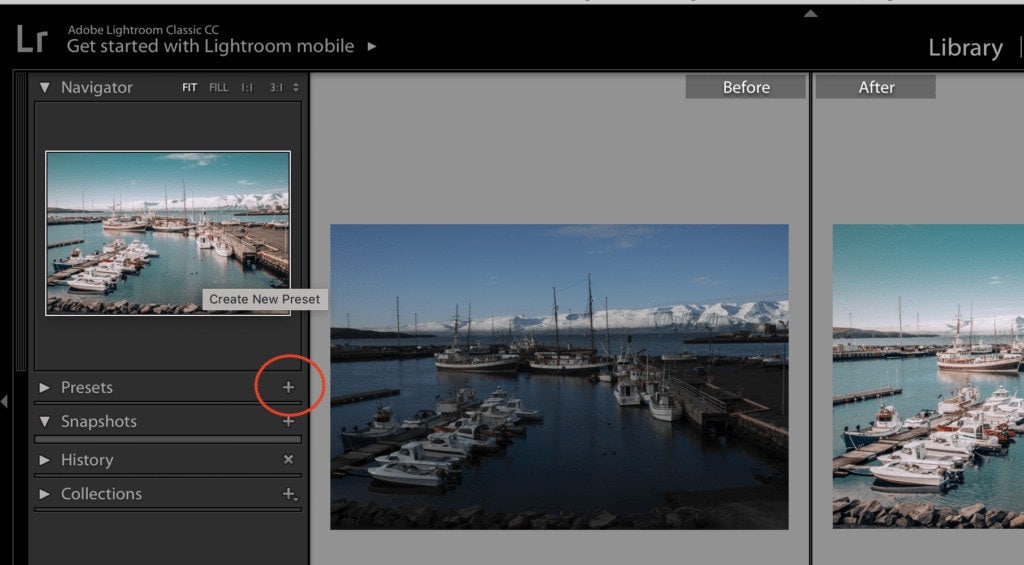
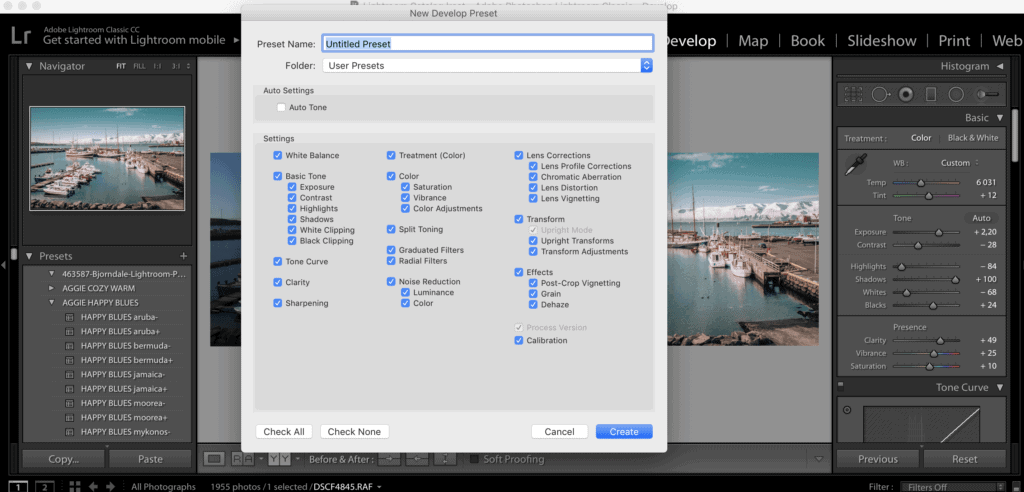
You can save your edits as a “preset” that you can then apply to any photos you import into Lightroom in the future. To create a preset, click the “+” button in the left-hand presets panel.
Create your own custom presetDon’t forget to name it something that’ll remind you what it does later. Most people name their presets after locations. So I’ve got things like “Iceland,” “Iceland Fjord,” and “Iceland Rubbish Weather” 🙂
How to Get Beautiful Photos When You’re Still Learning Lightroom
Don’t despair if you can’t create gorgeous presets like those professional photographers or your favourite bloggers. Most of them went through the exact same struggle. The easiest way to learn how to create your own presets is to download or buy presets from creators you admire for inspiration (yes, everyone does it — they just don’t tell you). I’ve personally bought dozens of presets that I use as inspiration for creating my own. And sometimes I use them exactly as they are.
If you want Instagram-worthy photos straight away, I’d recommend the Travel In Her Shoes presets. The price is quite steep, but they’re absolutely worth it.
How to Install Presets in Lightroom
If I can do it, anyone can. Once you’ve downloaded your presets, open Lightroom and go to the top menu bar -> Lightroom –> Preferences -> Show Lightroom Presets Folder -> Lightroom -> Develop Presets. Simply move the preset files in as a whole folder.
After applying the MAGIC SUNSET New York preset from Travel In Her Shoes, the photo looks like this:
After applying the Magic Sunset preset by Travel In Her Shoes
All that’s left is a quick exposure tweak, and the photo is done!
The photo after adjusting the exposure
How to Batch Edit Multiple Photos at Once
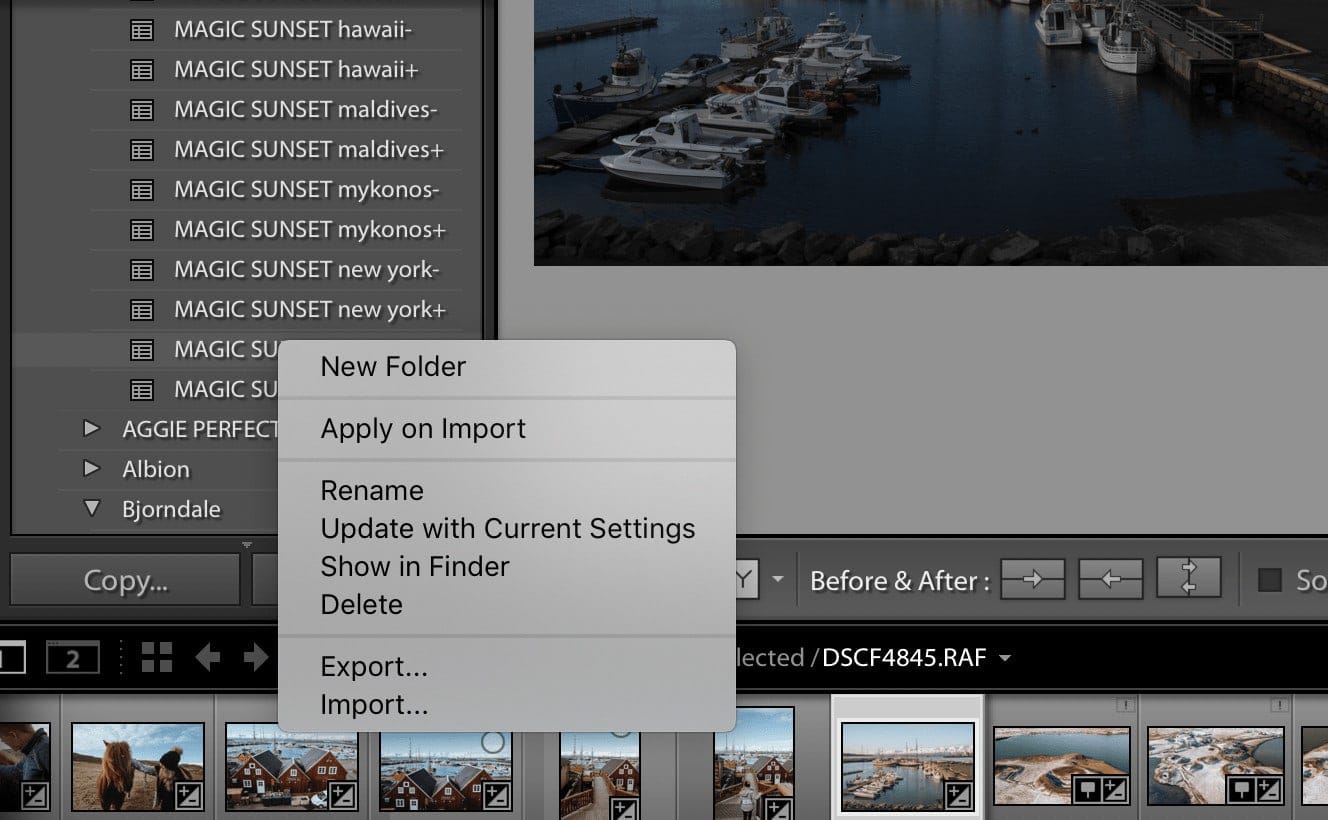
You’ve got a few options here. You can apply a single preset to all photos upon import. Simply right-click on a preset and select “Apply on Import.”
How to apply a preset to all imported photos
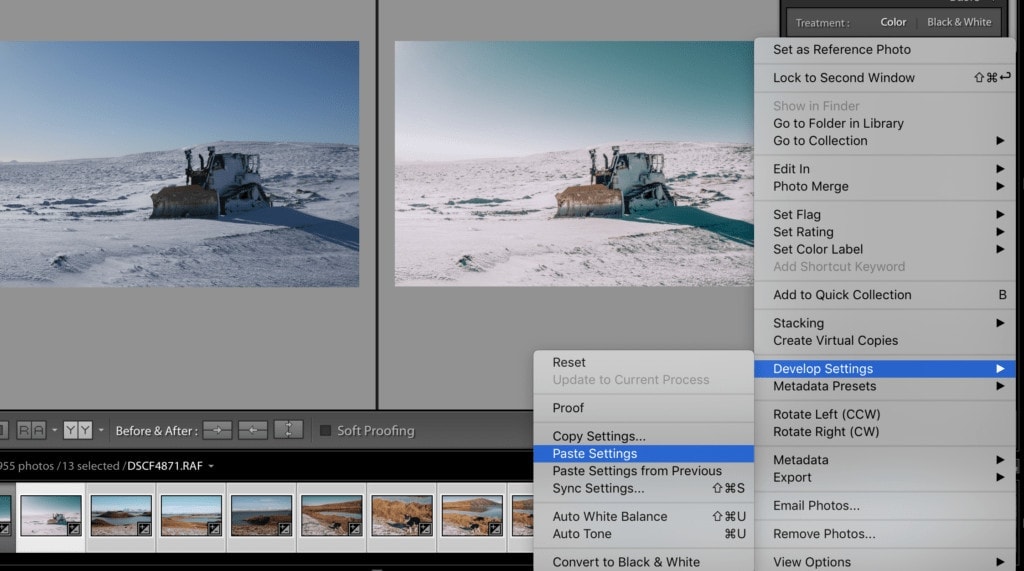
If your photos weren’t all taken under the same lighting conditions, edit one first, copy the settings, then select all the photos you want to apply the same edit to. Right-click -> Develop Settings –> Paste Settings.
Apply edits to selected photos
How to Export Your Edited Photos
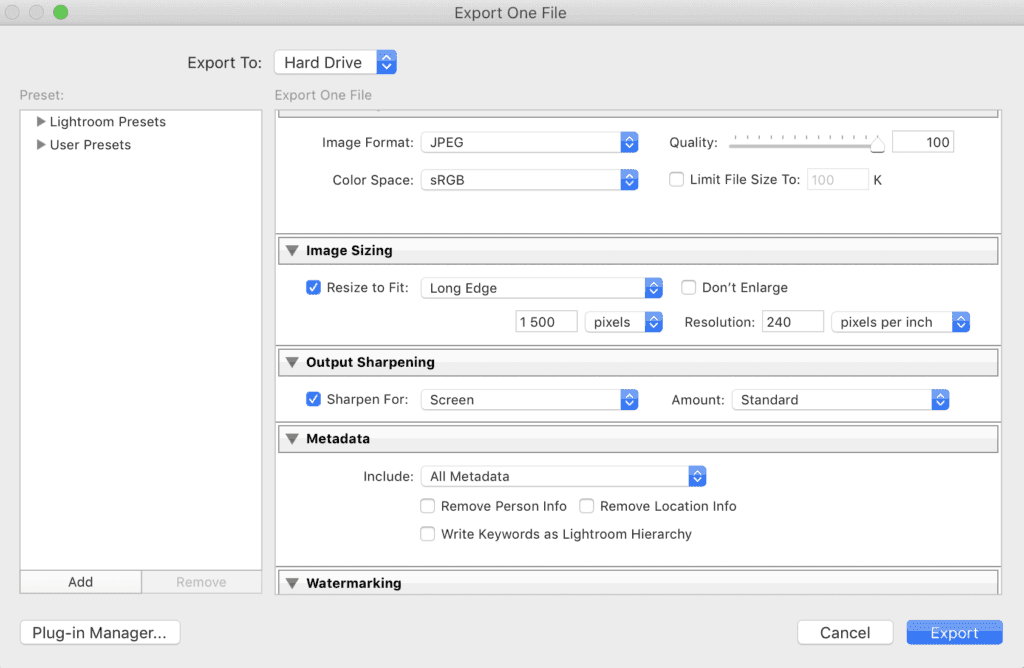
Exporting your photos is dead simple. From the top menu bar, select File -> Export Photos, choose your destination folder, and click Export.
For Instagram, I recommend resizing your photos — you don’t want them eating up all the storage on your phone
That’s all for today! If you’d like a follow-up, let me know in the comments. Next time, we could tackle how to create a cohesive Instagram feed.
Bonus: Online Photo Editing Course for Lightroom
Want to edit photos like a professional photographer? Master one of the best photo editing tools out there and try an online Adobe Lightroom photo editing course from A to Z.
What the course covers:
12 lessons — 2.5 hours of content
You want to edit photos but don’t know where to start
You’re drawn to the idea of making a living from photography
You need to organise your photos on your drive and in Lightroom
You want to learn new local adjustments
You’re not sure how to efficiently sort and manage photos
You want to know the essential Lightroom features and settings
You’re interested in creating your own presets
You want to sync photos with your phone
Tips and Tricks for Your Vacation
Don’t Overpay for Flights
Search for flights on Kayak. It’s our favorite search engine because it scans the websites of all airlines and always finds the cheapest connection.
Book Your Accommodation Smartly
The best experiences we’ve had when looking for accommodation (from Alaska to Morocco) are with Booking.com, where hotels, apartments, and entire houses are usually the cheapest and most widely available.
Don’t Forget Travel Insurance
Good travel insurance will protect you against illness, accidents, theft, or flight cancellations. We’ve had a few hospital visits abroad, so we know how important it is to have proper insurance arranged.
Where we insure ourselves: SafetyWing (best for everyone) and TrueTraveller (for extra-long trips).
Why don’t we recommend any Czech insurance company? Because they have too many restrictions. They set limits on the number of days abroad, travel insurance via a credit card often requires you to pay medical expenses only with that card, and they frequently limit the number of returns to the Czech Republic.
Find the Best Experiences
Get Your Guide is a huge online marketplace where you can book guided walks, trips, skip-the-line tickets, tours, and much more. We always find some extra fun there!
TL;DRIceland in October sits around 0 to 5°C (we even saw -1°C), but the biting wind makes it feel far colder, so skip the umbrella and pack waterproofs, a hat, gloves and proper layers instead.
Four of us spent two weeks in Iceland and got through 111,529 CZK in total, working out at 27,882 CZK a person. That covered accommodation at 47,795 CZK (around 12,000 per person), 20,200 CZK in petrol and 15,493 CZK to hire a Suzuki Grand Vitara. Cooking for ourselves kept food costs down to just 120 CZK a day per person, since restaurant meals in Iceland run at least three times pricier than back home. From 1 October, plenty of restaurants and services in the less touristy spots shut down for winter, so it’s worth keeping a stash of food in the car.
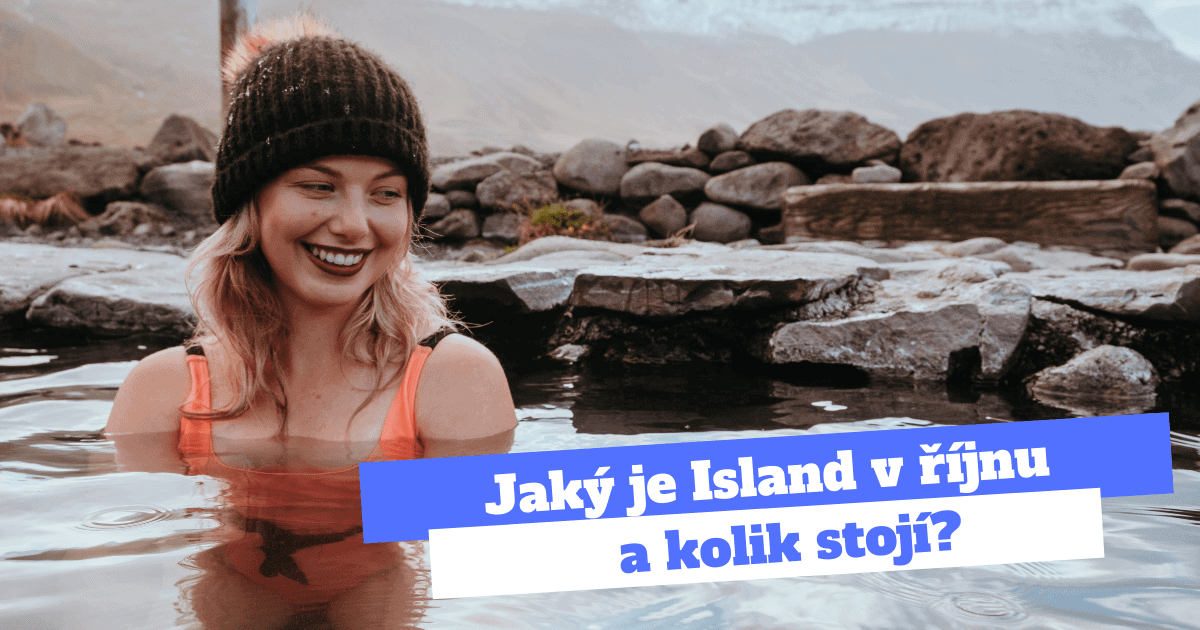
At the end of September we went to Iceland for two weeks, we were a bit worried because on the first of October winter officially starts in Iceland. No, I’m not making this up, it’s common to find signs on restaurant shops saying “closed for winter, opening in April.” So what was Iceland like in October? What clothes to pack and how much did it cost for the four of us when we weren’t even camping?
Did you know that we prepare travel itineraries for you from roadtrips we have taken ourselves? And that includes the cost! We started with Canada and the USA, Uganda, you can come with us to the Tatras or Australia.
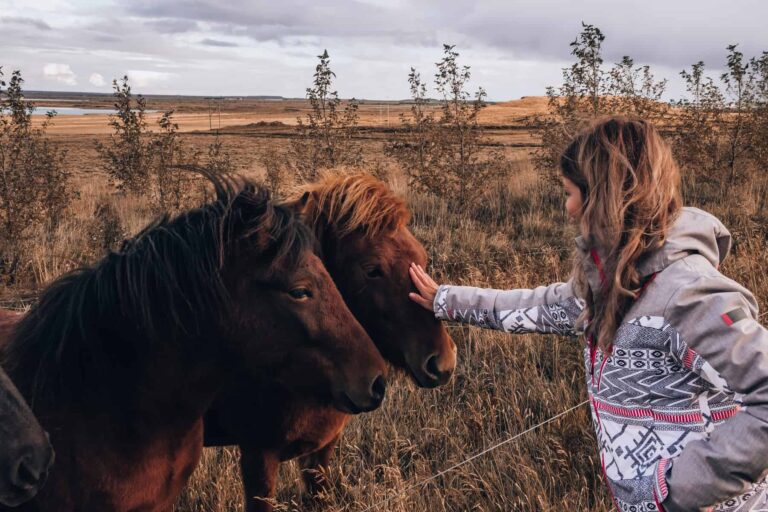
Right at the airport in Reykjavik, I picked up a newspaper with a huge headline that read “thank God summer is over.” I laughed a little, got a little scared and put my hat on my head. But when I read the article in detail, I realized it was just sarcasm. The Icelandic man wrote that he was glad it was already winter because there was no summer.
The glaciers may be melting, but they’re still there, so it’s still cold in Iceland!
What may surprise you is that Iceland doesn’t experience extreme temperatures in winter thanks to the warm Gulf Stream. Average temperatures range from -10° to 0°, depending on whether you are in the Lowlands or the Highlands.
In October the thermometer showed the lowest temperature at -1 degree, but it was still terribly cold. Why? It doesn’t really matter what time the thermometer reads, the wind in Iceland is so freezing cold all year round that the temperature feels as low as -30°.
What clothes to wear
Don’t even think about leaving your winter jacket at home. S waterproof clothing you can’t go wrong in Iceland. Themoney you invest in aproper raincoat, waterproof trousers and boots will literally warm your heart in Iceland. Forget the umbrella, there’s a reason you won’t see them anywhere in the shops in Iceland. Yes, you guessed right, the reason is the wind. Hats and gloves will be your best friends.
Swimwear and hats are a must in Iceland
Everyone will advise you to layer. Instead of thick warm clothes , reach for several layers of thermal clothing. Again, you won’t regret it. And don’t forget your swimsuit, because Iceland is the land of hot springs. And it would be an eternal shame not to enter at least one.
To tent or not to tent
Yes, there are people who go camping in Iceland in October and November. But if they don’t have the right equipment, they talk about sleepless nights in the unreal cold and sleeping on heated toilets. If you’re travelling in a car with two people, sleeping in the car is an option, you’ll be cold, but you’ll survive the week that way. I wouldn’t go for more days. I would only really reach for a tent with good equipment and experience with camping in winter and extreme conditions. And don’t take a sleeping bag with a comfortable temperature below -10°. It won’t be enough anyway. If you decide to go camping, be sure to read Radka and Ivar’s article about it, what the rules are for sleeping in a car and camping in Iceland.
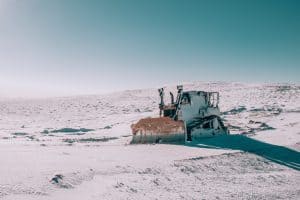
Under a tent, you might wake up in the morning under the snow like this digger.
How “expensive” is the accommodation?
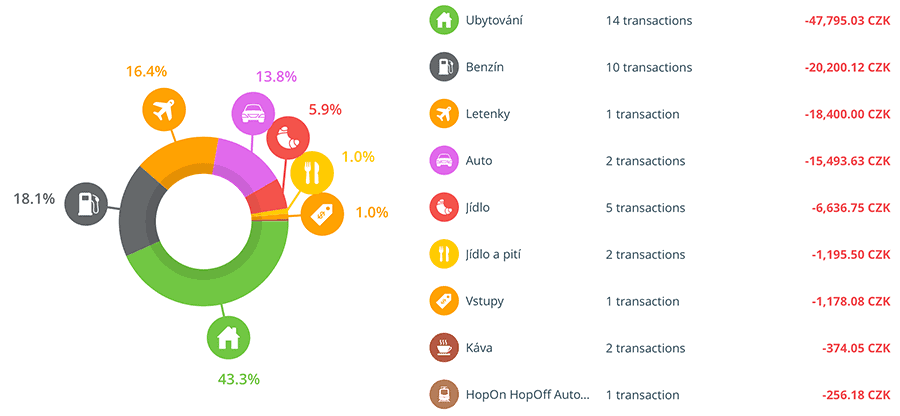
Accommodation for four people can be found for 700-1000 CZK per person. For four people for 14 days it cost us 47 795 CZK, i.e. about 12 thousand per person. You will sleep in cabins, cheap hotels or hostels. Don’t worry about hostels in Iceland, most of them were luxurious.
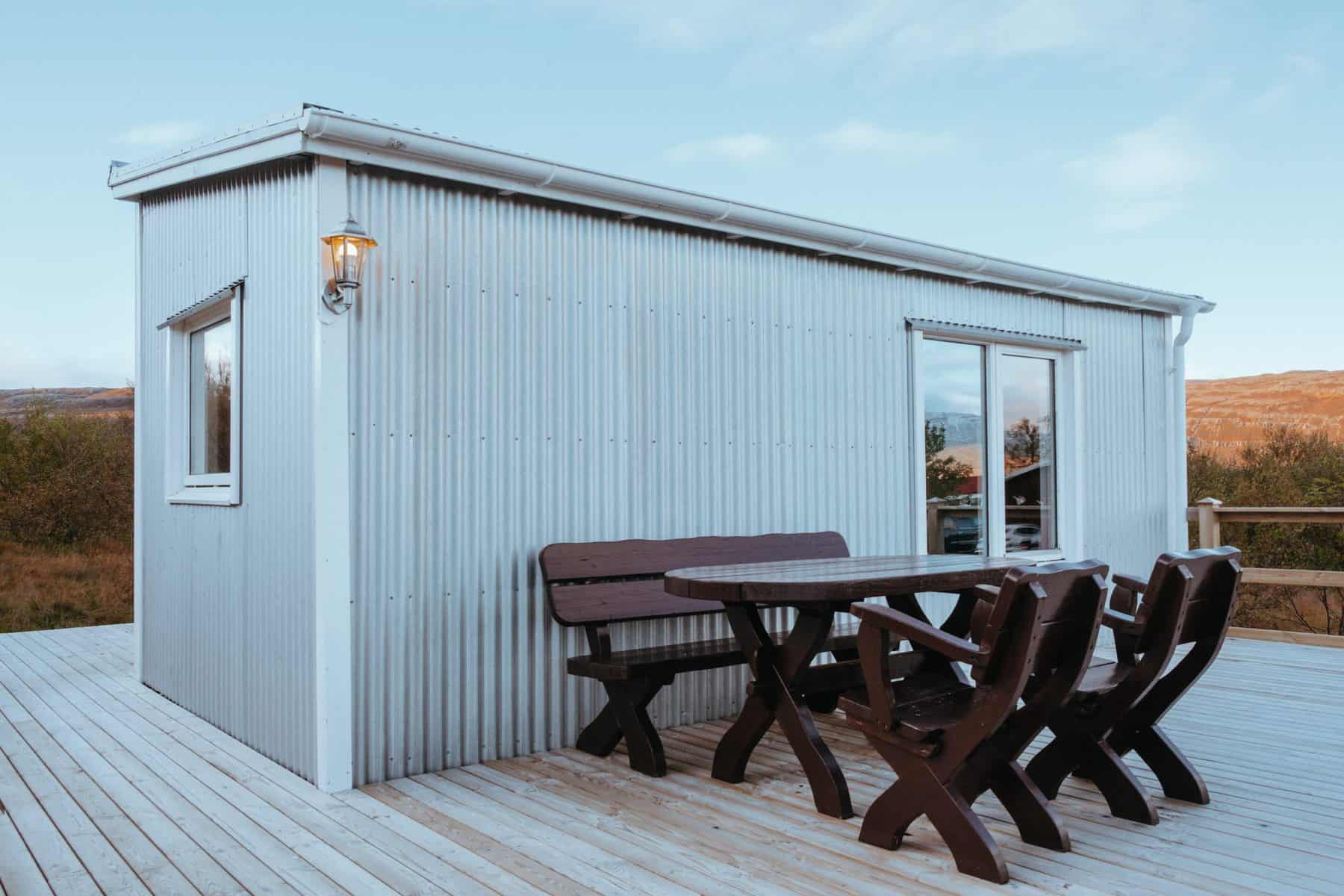
You can get a shack like this in the middle of nowhere for 2500 CZK a night
Why make snacks even if I don’t want to save
In Iceland, food in restaurants is three times more expensive (at least) than here. If you don’t mind, still keep a sufficient supply of food in the car.Restaurants are definitely not at every turn (well, not every other turn either) and in the winter, the less touristy places, which is most of Iceland, are closed (yes, winter starts on October 1).
How much does food cost in supermarkets
If you cook and prepare your own snacks, you can save quite a bit on food. There is no point in bringing too much stuff from Bohemia. Supermarkets have very similar prices to ours, only fresh food is much more expensive, but you can’t bring that in your suitcase anyway.
We were in the restaurant only once, it cost us for four people 1 195 CZK, the rest of the time we cooked and made snacks and the total cost of the meal was only 6 636 CZK. That’s 1 659 CZK per person (for 14 days), that’s 120 CZK per person per day!
What did we cook?
We cooked Mexican tacos with avocado, lentil soup, chickpea soup, but also classic pasta with pesto or tomato sauce. For breakfast we used to have bread with hummus, jam, yoghurt with muesli or we used to make eggs and pancakes.
What is the most expensive in Iceland
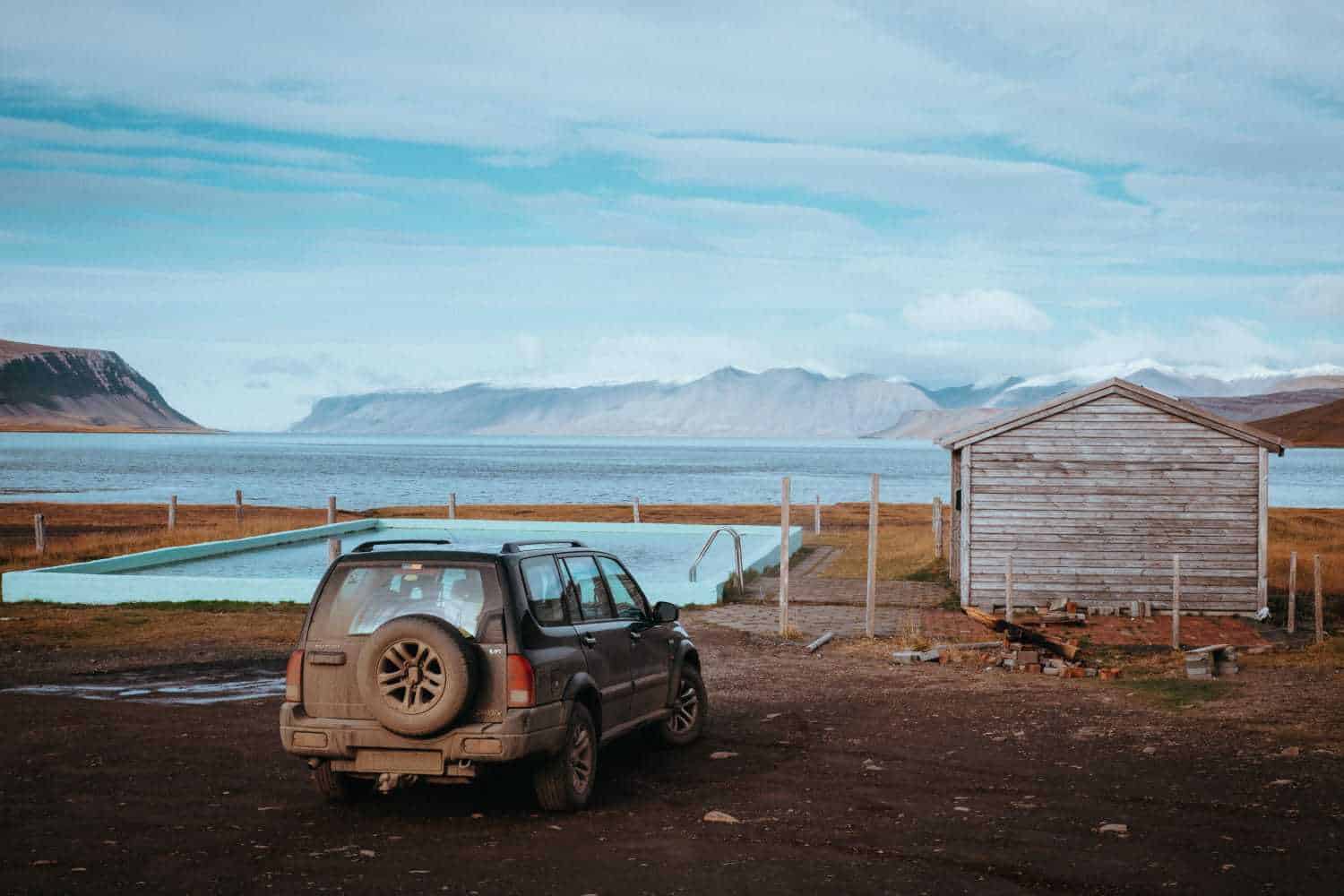
Petrol and car rental. Make sure you get a quad bike in Iceland, especially if you’re not heading here in the summer and want to go somewhere other than the main circuit. Yes, you’ll hear of people driving a small car, but trust us, some of the roads are of similar quality to those in Uganda and it’s not worth the risk. Renting a Suzuki Grand Vitaraa XL cost us 15 493 CZK.
Car rental in Iceland Suzuki Grand Vitara
Petrol in Iceland costs 43-45 CZK per litre, if you want to drive around Iceland, count on 3500 km. Petrol cost us a total of 20 200 CZK.
So how much did it cost in total?
Iceland for two weeks cost us 111 529 CZK for four people, that is 27 882 CZK per person. If you are going to Iceland and are thinking about how to save money, we recommend going with as many people as possible. We looked at the budget Gabiinwanderland who went as a couple for 9 days (largely camping) and came up with 31k for Iceland! So you can sleep comfortably in hotels, hostels and airbnb with four people and have Iceland cheaper. Gasoline and car is the most expensive.
Tips and tricks for travelling around Iceland
What to pack
Take a look at our travel packing guideto help you prepare. Choose the right travel backpack, check out the travel gadgets and don’t forget anything important at home.
Search for flights on Kayak. It’s our favorite search engine because it scans the websites of all airlines and always finds the cheapest connection.
Book Your Accommodation Smartly
The best experiences we’ve had when looking for accommodation (from Alaska to Morocco) are with Booking.com, where hotels, apartments, and entire houses are usually the cheapest and most widely available.
Don’t Forget Travel Insurance
Good travel insurance will protect you against illness, accidents, theft, or flight cancellations. We’ve had a few hospital visits abroad, so we know how important it is to have proper insurance arranged.
Where we insure ourselves: SafetyWing (best for everyone) and TrueTraveller (for extra-long trips).
Why don’t we recommend any Czech insurance company? Because they have too many restrictions. They set limits on the number of days abroad, travel insurance via a credit card often requires you to pay medical expenses only with that card, and they frequently limit the number of returns to the Czech Republic.
Find the Best Experiences
Get Your Guide is a huge online marketplace where you can book guided walks, trips, skip-the-line tickets, tours, and much more. We always find some extra fun there!
TL;DRThe essential kit for tent camping includes a fire starter that works even in damp or rainy conditions (around £4, with Pinguin a recommended brand), an inflatable or self-inflating sleeping mat, a travel pillow (from £6), at least three torches or headlamps, and a quick-drying outdoor towel in size L or XL. Worth packing too: travel-sized toiletry bottles, spices and salt in resealable bags, folding camping cutlery and cookware, and wet wipes for when a shower isn’t an option. If you’re camping with a car, you can go for extra comfort with folding camp furniture, portable grills, stoves or even a full camping kitchen setup.
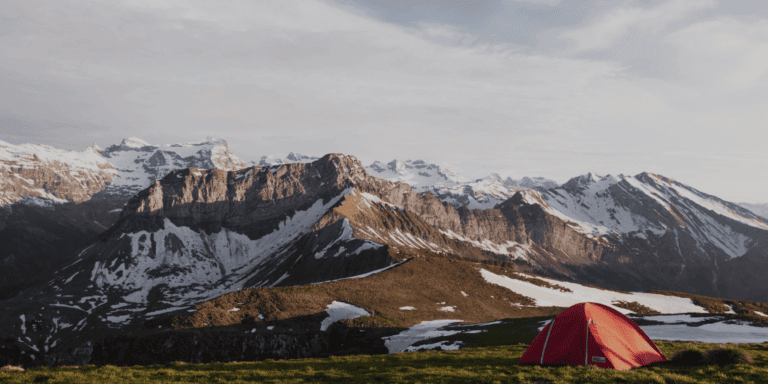
We’re passionate campers who’ve been fortunate enough to camp in the USA, Canada, Uganda, and across Europe. We’ve camped with a campervan and on bikes. Over the years, we’ve figured out which camping gear is truly worth bringing along. We don’t claim to be experts, but if this article helps even one person pack smarter, we’ll be happy. Take our tips with a pinch of salt and let us know in the comments — what’s the one piece of camping gear you can’t live without?
Fire Starter for Lighting a Stove or Campfire
If you’re just getting into camping, a ferro rod fire starter might seem unnecessary. After all, you’ve got matches, right? But matches can get damp overnight. A plastic lighter can leak or even explode. That’s why it’s always better to have a reliable fire starter on hand — it works in wet conditions, even in the rain, and will likely last you a lifetime. For around 4 €, it’s an absolute no-brainer.
I still remember how Lukáš talked me out of bringing an inflatable mattress when we went camping in Hawaii for two weeks. To this day, I blame him for the fact that we only brought basic foam sleeping pads. My back was killing me the entire time (yes, I’m a princess) and I could barely sleep.
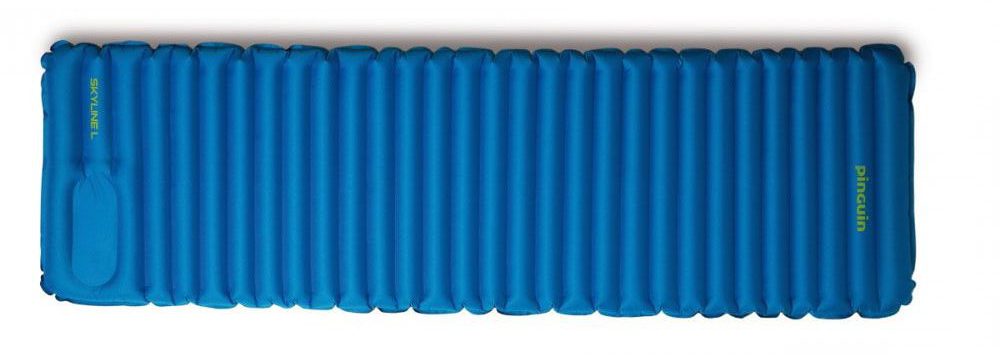
Pinguin inflatable sleeping pad
Self-Inflating or Inflatable Sleeping Pad?
If you’re cycling or trying to keep your pack weight down, go for an inflatable pad (don’t worry — you won’t need to blow it up by mouth or use a special pump; you simply inflate it by stomping with your foot). Inflatable pads weigh less than self-inflating ones. You can pick up a basic inflatable mattress for around 15–20 €, but if you want proper quality, we recommend the Czech brand Pinguin. Each pad comes with a repair kit, just in case you manage to puncture it (yes, it’s happened to us).
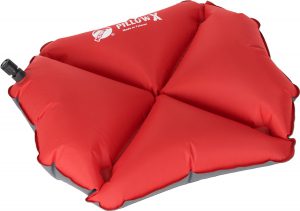
Travel Pillow
I don’t own one yet and I long for it every single time we camp. Most travel pillows pack down into a tiny 10-centimetre pouch and weigh around 50 g. I honestly can’t believe we still don’t have one. Anyway, I’m planning to order one before our trip to Thailand — an inflatable pillow like this is useful on every trip, and prices start from around 8 €.
Lukáš and I always carry at least three torches. We hang one inside the tent, and then we each have one for the walk to the loo so we don’t trip over anything. When we were camping in the USA in our campervan, we also brought a lantern along.
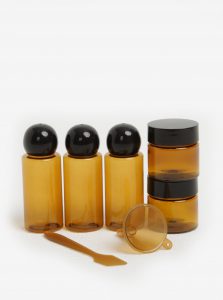
I’m surely not the only one who’s had shampoo leak all over their suitcase, backpack, or rucksack (and yes, I triple-checked the cap was on tight — I swear). I started using travel bottles pretty early on, but tried several brands and they all started leaking before long.
In the end, I invested in some fairly pricey ones from Kikkerland, and so far they haven’t let me down. The one downside? They’re hard plastic, so squeezing out the last bit of shampoo is a pain — you end up having to shake it out. Some people have told me IKEA does decent ones, but I haven’t tried them personally.
I personally have a larger set with spray bottles, but right now I could only find this one available.
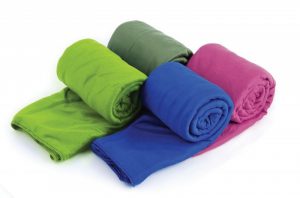
Quick-Dry Towel
This is one of those items that practically every camper owns. Having an antibacterial, quick-drying, ultra-lightweight outdoor towel is a game changer — not just for camping but also for staying in hostels.
My advice? Go for the largest size you can. We underestimated the size the first time (trying to save a few quid) and ended up having to buy another one anyway. Go for a size L or XL. There are loads of brands on the market. We personally use a quick-dry towel from Sea To Summit.
Spices and Salt in Small Bags
This might be my favourite tip for any trip where you plan to cook. Pack some salt and spices in small resealable bags. They take up virtually no space, and suddenly you can turn a plain pot of red lentils into several completely different meals.
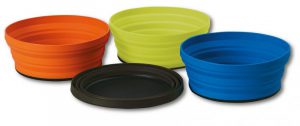
Collapsible Camping Cookware
We stumbled across collapsible containers by accident in a supermarket and took two with us to Iceland. It’s certainly not a must-have, but once you try it, you’ll wonder how you managed without. You can adjust the container size to fit its contents, collapsible mugs fit much better into a rucksack or bike pannier, and you can even get collapsible kettles and pots (though I still can’t quite picture how those work).
You’ll find a great selection of camping cookware here.
We’ve been really getting into collapsible camping cookware lately
Travel Coffee Maker
We love good coffee, and we’ve been eyeing up the AEROPRESS travel coffee maker for months. If you’ve got a recommendation for a great brand, let us know! And if you haven’t heard of the Aeropress yet, definitely check it out. 🙂
Aeropress — the ideal travel coffee maker
Wet Wipes
Wet wipes are my best friend on every trip. I usually carry one pack for my hands and another for my face (cleansing wipes — yes, I’m a girl). Whether you’re cycling in 40-degree heat or you simply couldn’t find a shower, having something that gives you that fresh, clean feeling always comes in handy. 🙂
Got Plenty of Space? Treat Yourself to Some Comfort
Camping isn’t just about what you can squeeze into a backpack. More and more people are heading out to camp by car. In that case, you might as well treat yourself to proper comfort — after all, the car can carry it! Great additions include folding camping furniture (tables, chairs, or loungers), portable grills and stoves, or even compact camping cupboards and full camp kitchens.
Search for flights on Kayak. It’s our favorite search engine because it scans the websites of all airlines and always finds the cheapest connection.
Book Your Accommodation Smartly
The best experiences we’ve had when looking for accommodation (from Alaska to Morocco) are with Booking.com, where hotels, apartments, and entire houses are usually the cheapest and most widely available.
Don’t Forget Travel Insurance
Good travel insurance will protect you against illness, accidents, theft, or flight cancellations. We’ve had a few hospital visits abroad, so we know how important it is to have proper insurance arranged.
Where we insure ourselves: SafetyWing (best for everyone) and TrueTraveller (for extra-long trips).
Why don’t we recommend any Czech insurance company? Because they have too many restrictions. They set limits on the number of days abroad, travel insurance via a credit card often requires you to pay medical expenses only with that card, and they frequently limit the number of returns to the Czech Republic.
Find the Best Experiences
Get Your Guide is a huge online marketplace where you can book guided walks, trips, skip-the-line tickets, tours, and much more. We always find some extra fun there!