
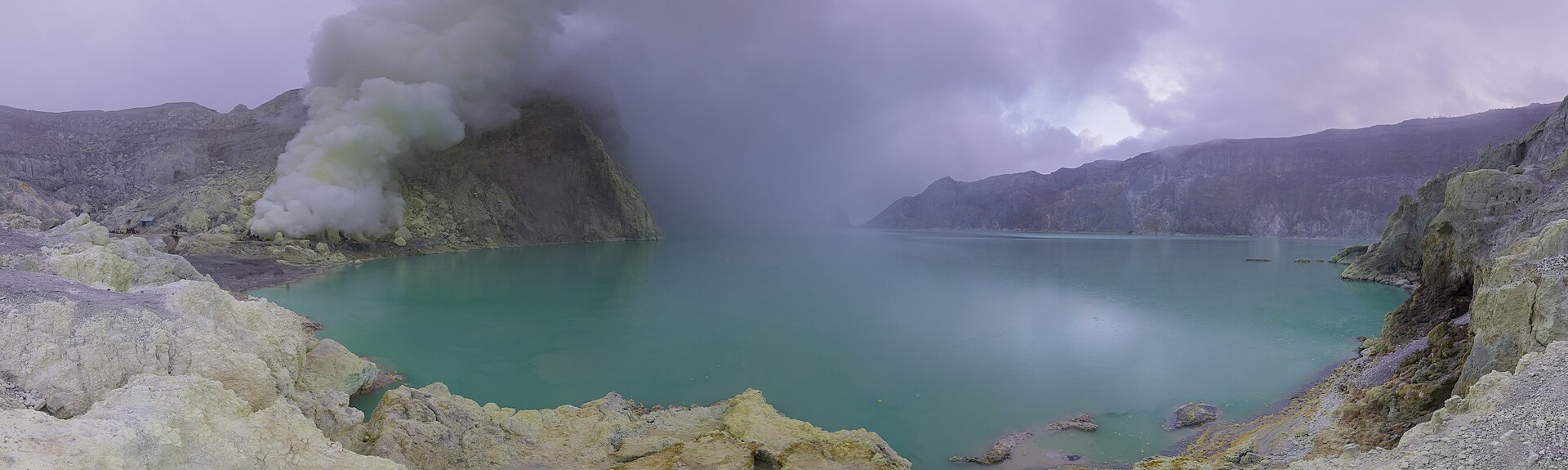
At sunrise, the lake below you is such an unreal shade of turquoise that it looks like a tropical lagoon – yet you’re actually staring into a giant cauldron full of acid. This harsh contrast is exactly what turns the East Javan crater of the Kawah Ijen volcano, Indonesia‘s great natural spectacle, into a place that could easily join the world’s most famous volcanoes. Travellers set off here in the middle of the night with a head torch, because they want to catch a glimpse of the legendary blue fire in the darkness of the crater before dawn breaks.
Right at the start, though, it’s only fair to be upfront with you so you don’t end up disappointed 😅. Despite the internet myths, there’s no blue lava waiting for you here – just burning sulphur gases which, because of wind, fog or work in the mine, may not be visible at all. Even if the flames aren’t burning or you’re not allowed down to the crater floor, the view of the smoking caldera and meeting the miners hauling baskets of sulphur will take your breath away.
The hike doesn’t require any climbing experience, but expect 500 to 600 metres of elevation gain in the dark. Because of the pungent sulphur fumes, the climb is not recommended at all for people with asthma, breathing problems or heart conditions. In this article you’ll find everything you need to plan your trip stress-free, from choosing a starting point and sorting out your medical certificate and online ticket to staying safe on the mountain.
Summary
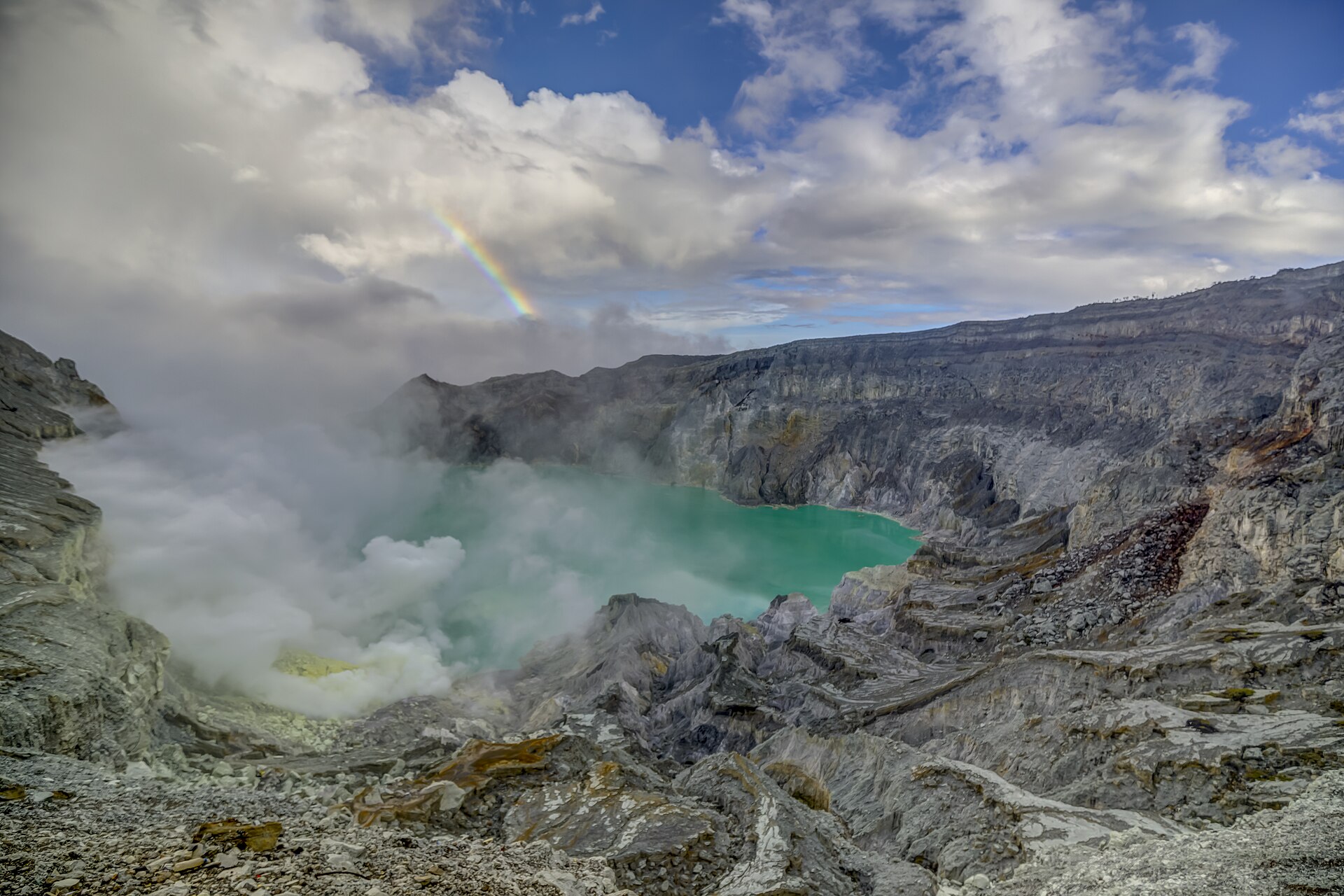
- Route and altitude: The crater rim sits at roughly 2,380 m above sea level. The climb from the Paltuding trailhead is 3 to 3.5 km long with 500 to 600 m of elevation gain and takes 1.5 to 2 hours.
- Opening hours: The gate is open from 2:00 to 12:00 WIB (Western Indonesian Time, UTC+7) and closed on the first Friday of the month for clean-up.
- Entrance fee: Foreigners pay a flat 150,000 IDR (Indonesian rupiah, about €7). Payment is cashless via QRIS (Indonesia’s QR code payment system), and online tickets are non-refundable.
- Medical certificate: A doctor’s certificate no more than 3 days old is checked when you exchange your online code for a paper ticket. You can get one from a clinic in the town of Banyuwangi.
- Volcano status: As of November 2026, the alert is at Level I (Normal, the lowest activity level) according to MAGMA Indonesia (the Indonesian volcanological service). The authorities advise against descending to the crater floor and against staying overnight or camping within 500 m of the crater – check the current status before you go.
- Best time to go: The driest weather for the night hike is from April to October.
- Gear: A gas mask is compulsory (you can rent one at the gate), plus sturdy shoes and warm clothes – towards dawn the air on the rim is only 9 to 11 °C.
The full destination guide: Indonesia — guide and what to see
What Awaits You at the Kawah Ijen Volcano in Indonesia
Over the course of a single night, Ijen transforms from a dark landscape into a dazzlingly colourful show. In the dark, the little blue flames in the crater steal the spotlight; once day breaks, the view opens up over the turquoise crater lake and the sulphur mining.
Blue fire: what it is and why it isn’t lava
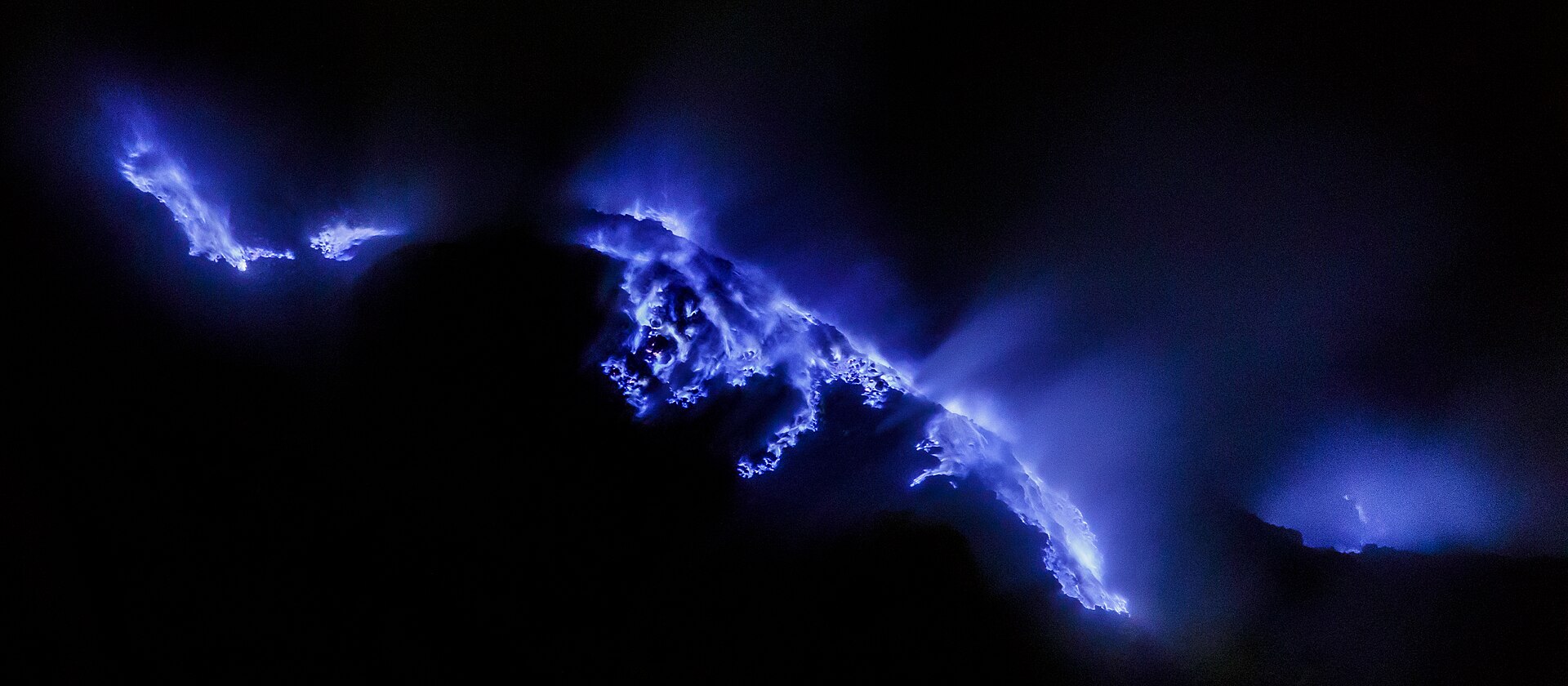
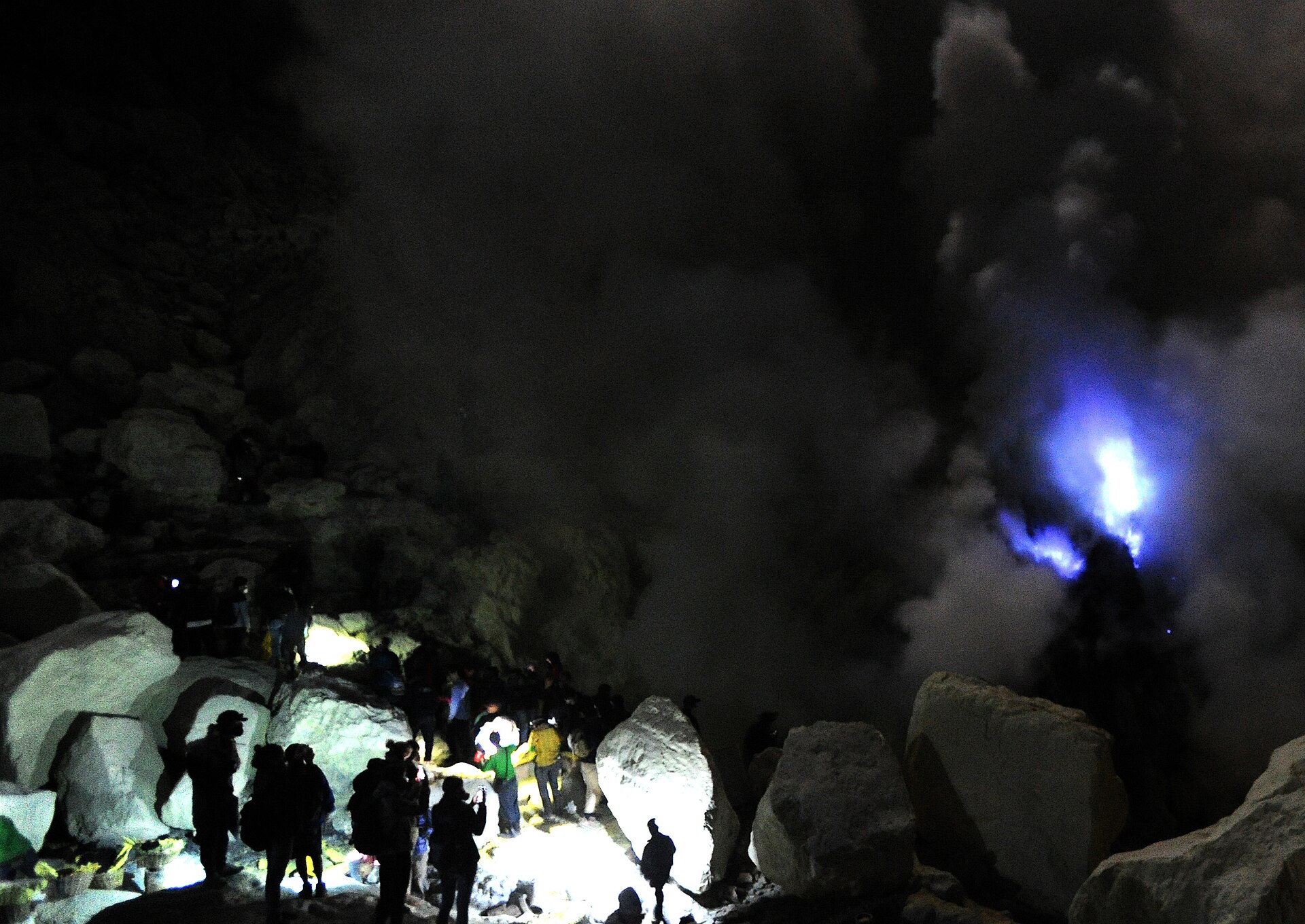
Even though headlines love to talk about blue lava, no molten rock flows at Ijen. Sulphur gases at temperatures of up to around 600 °C escape from cracks and ignite on contact with the air, and some of them condense into liquid sulphur that burns blue. During the day it burns invisibly – you’ll only see the flames in the dark, roughly between 2:00 and 4:30.
Don’t expect the wall of fire you see in older photos, where the effect was boosted by a long camera exposure. According to some reports from 2026, the reality today looks more like faint little blue flames. From the crater rim you might not see the blue fire at all, at most a distant glow down in the depths. If guides feed the flames for photos, BBKSDA Jawa Timur (the regional nature conservation authority that runs the park) condemns it.
The fire doesn’t always burn. From November 2025 until roughly spring 2026 it wasn’t visible because of pipe replacement work in the sulphur mine, during which the descent was closed too. According to guiding websites, the fire has been visible again since around March 2026, though there’s no official confirmation. The flames also go out naturally, and the miners themselves regularly put them out so their sulphur doesn’t burn away.
The acidic lake and the crater at sunrise
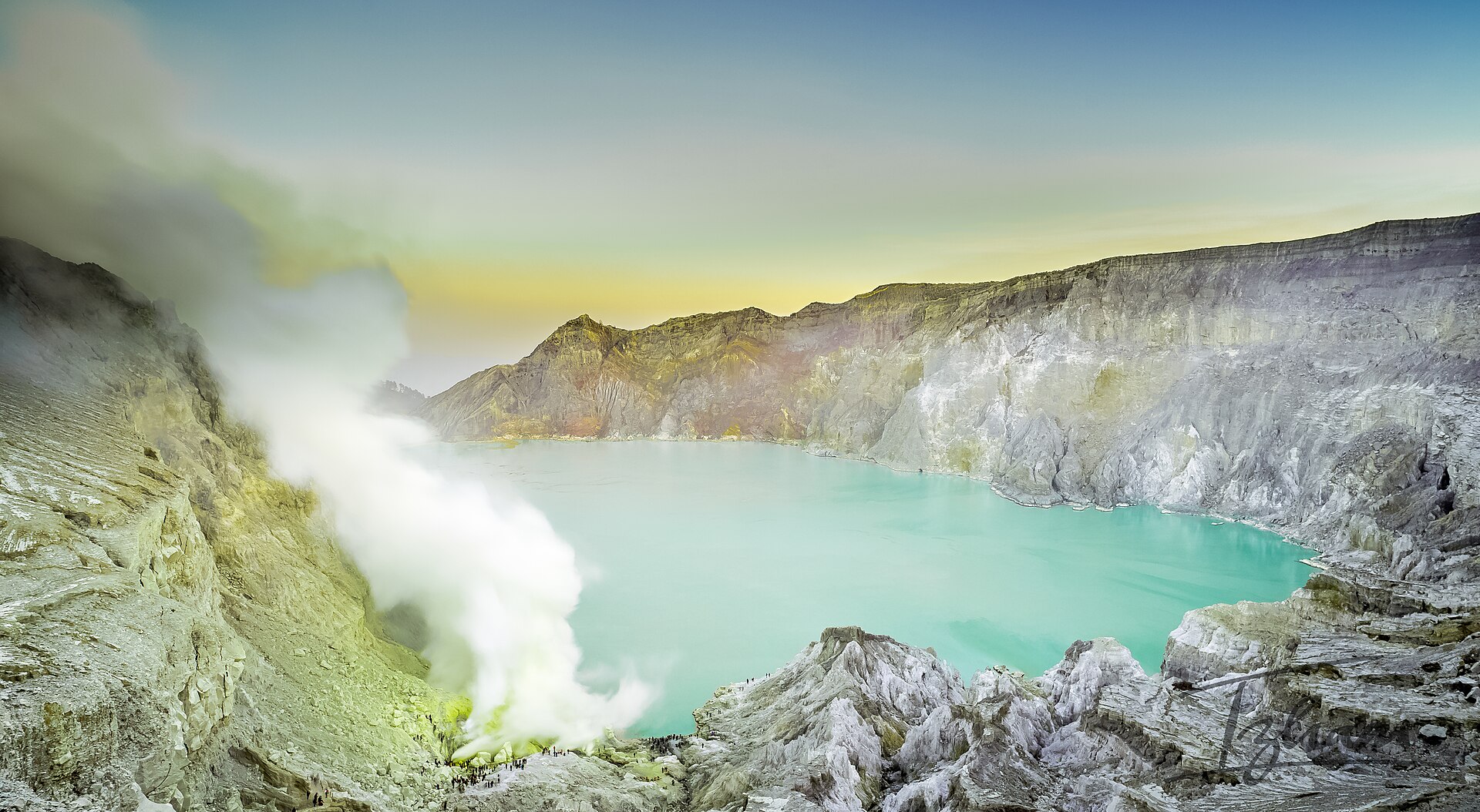
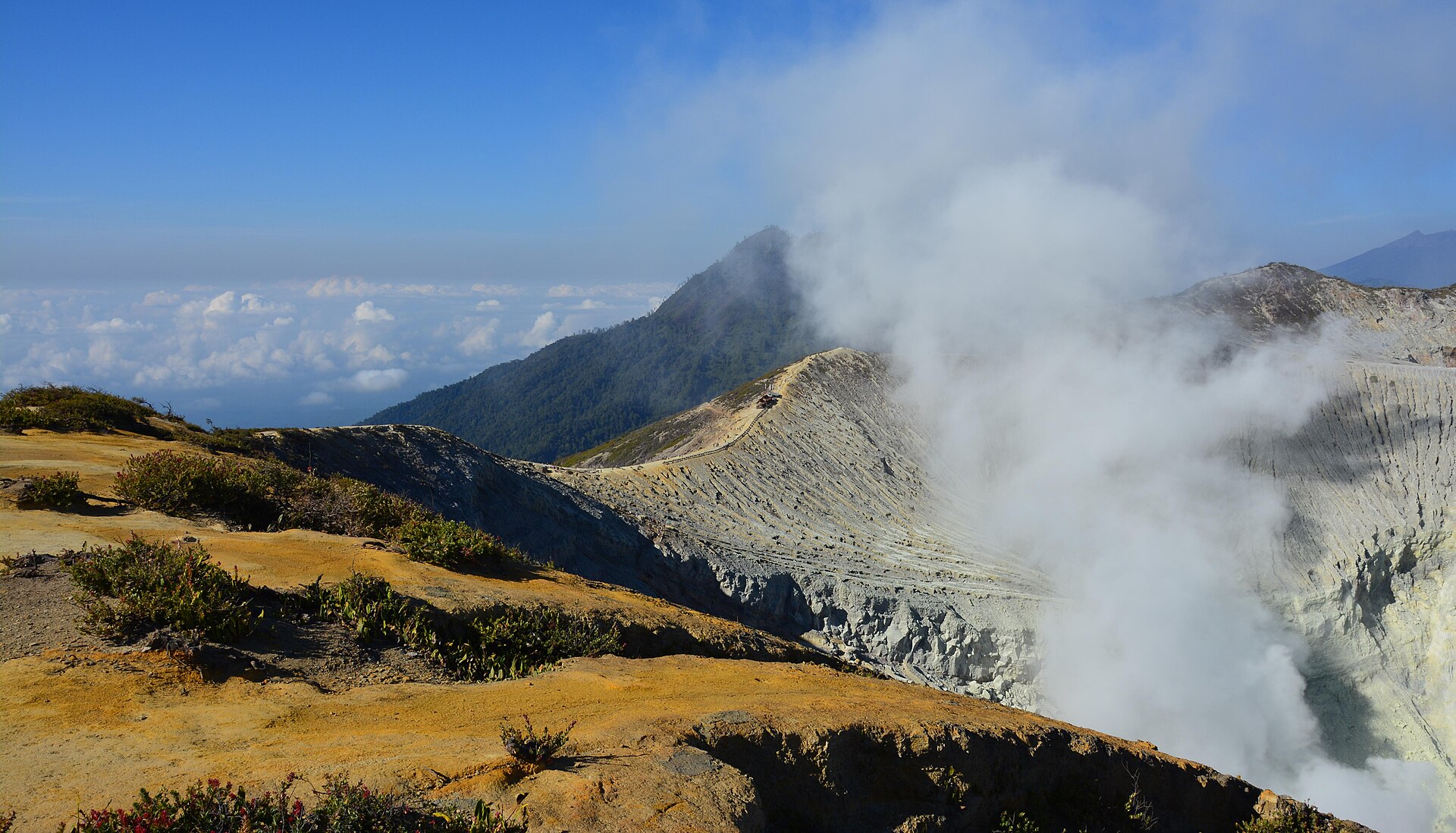
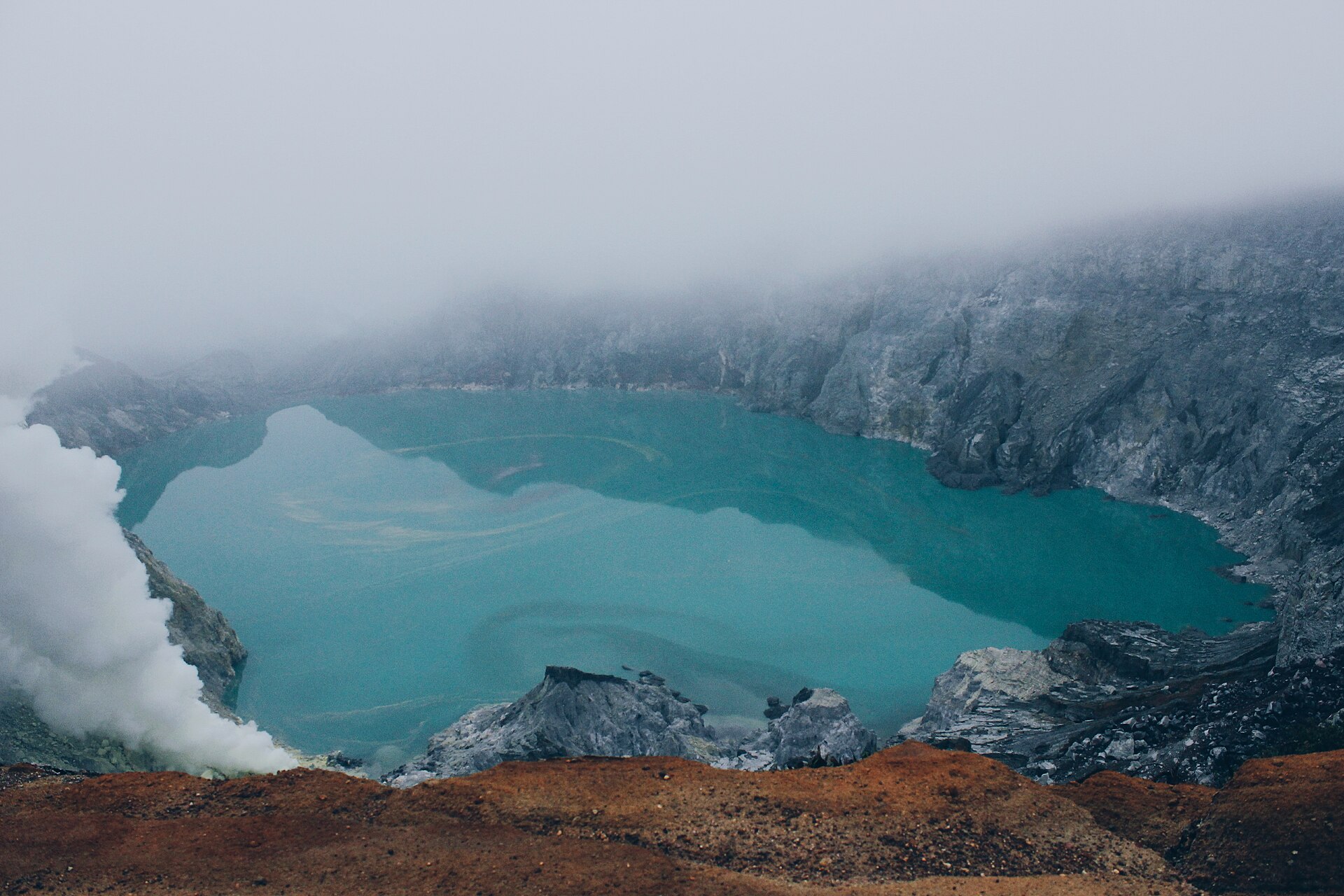
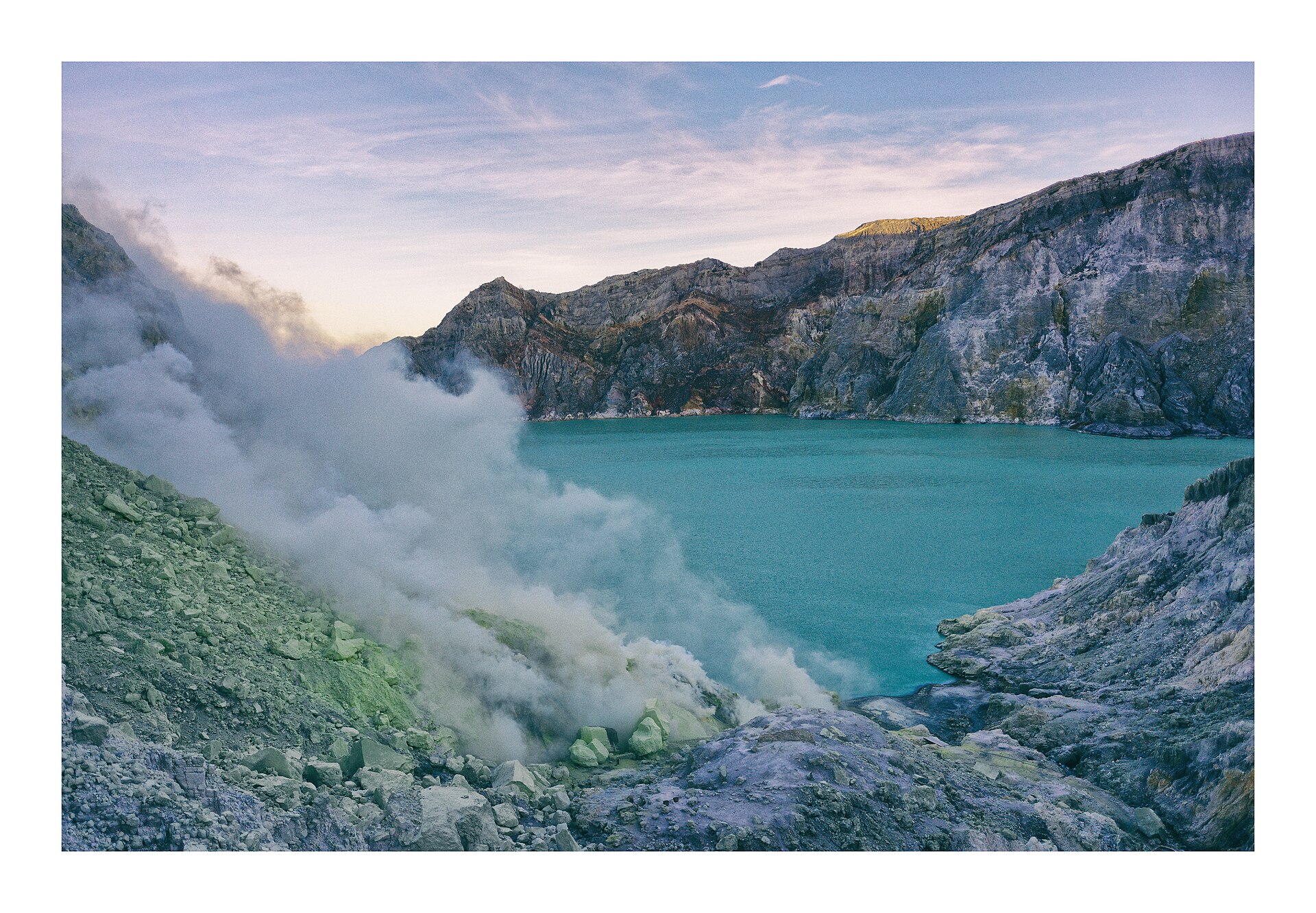
At around five in the morning you’ll catch sight of one of the most acidic lakes in the world. Measurements put the water at a pH of around 0 to 0.5, because it contains sulphuric and hydrochloric acid. The lake is roughly 1 km wide and reaches an approximate depth of 180 to 200 m.
The view from above looks peaceful, but the rules are clear: don’t touch the water, don’t swim in it and don’t drink it ☺️. In clear weather, the ridge offers views of the neighbouring volcanoes Raung and Ranti. Since 2023, the area has also been one of the UNESCO Global Geoparks.
Sulphur miners: how to behave around them
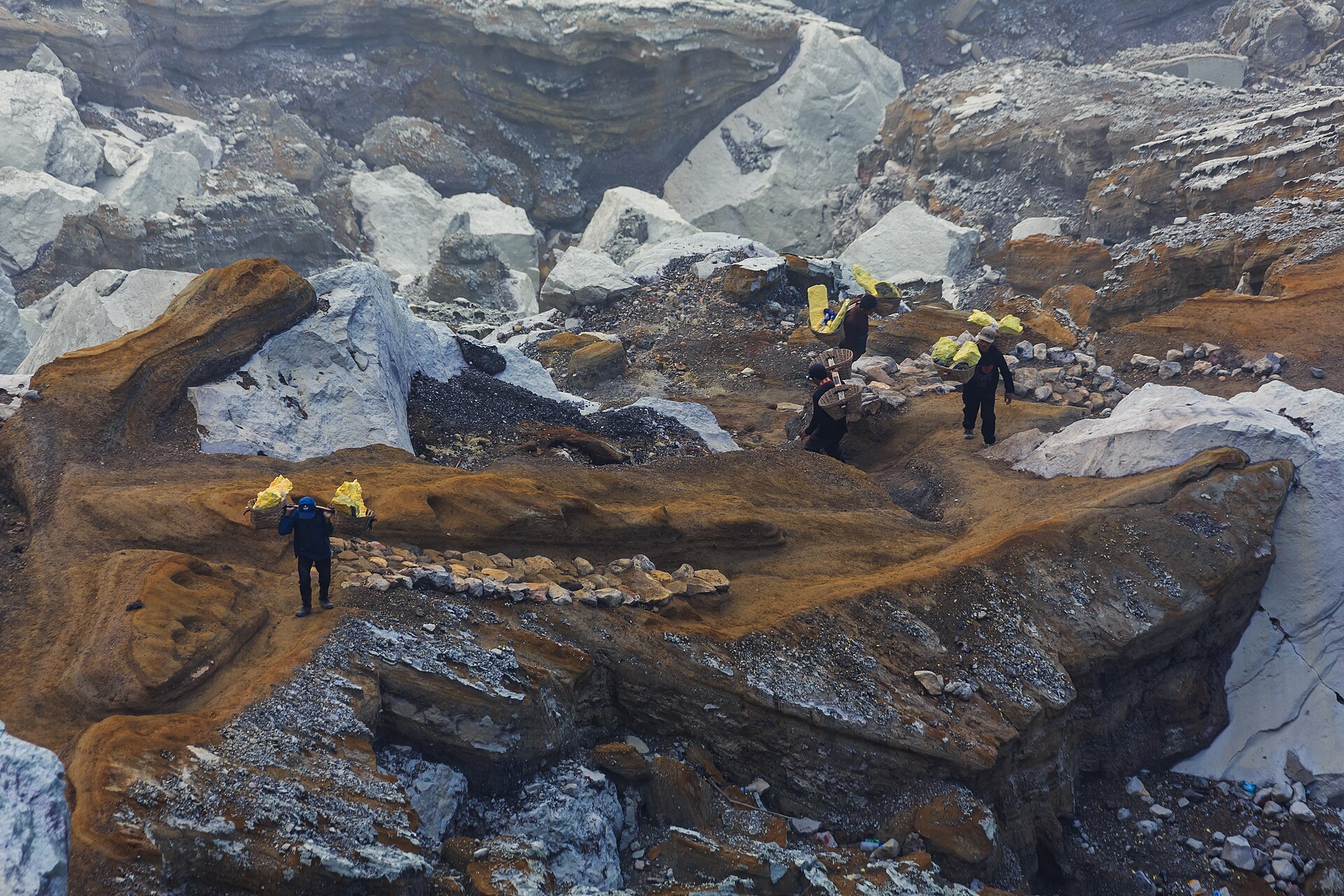
Kawah Ijen is still a workplace where, according to older figures, around two hundred people mine sulphur every day. The men carry loads weighing 70 to 90 kg out of the crater in baskets. On the narrow path, step aside to let them pass, and never block them while they’re carrying a load just to get a photo.
Before photographing the miners, ask for their permission. Many of them sell small figurines cast from sulphur – buying one or leaving a tip is a common way to support them.
Kawah Ijen Volcano Indonesia: Rules and Tickets
The entrance fee is cashless only and your medical certificate is checked at the gate, so simply turning up with cash no longer works.
Entrance fee, online tickets and QRIS
Since the end of October 2024, foreigners have paid a flat entrance fee of 150,000 IDR (about €7) per person per day, on weekdays and weekends alike. Older information about dual pricing and cash payments is no longer valid. Since 31 January 2025, the ticket office has accepted cashless payments only via QRIS (Indonesia’s QR code payment system).
Online sales through the AyoKeTamanNasional portal, where you enter your name exactly as it appears in your passport, have been running in trial mode since May 2026, and the old app still works for now. By buying a ticket, you agree to the operator’s terms:
- online tickets are non-refundable and non-transferable,
- commercial photography and filming are charged separately.
Only buy your ticket through the official portal or a trusted travel agency so you don’t fall for fake tickets – for example, you can find vetted Kawah Ijen volcano Indonesia tours on GetYourGuide. Agencies often quote a time around midnight, but that’s just the pick-up in Banyuwangi, not the gate opening; the gate is open from 2:00 to 12:00 WIB (Western Indonesian Time).
Medical certificate
When you exchange your code for a paper ticket, you’ll need to show a doctor’s certificate, which has been compulsory since January 2024 and must be no more than 3 days old. The check-up is done by a clinic or a Puskesmas (public health centre) in Banyuwangi, where they’ll measure your blood pressure, oxygen saturation (blood oxygen level) and pulse.
The examination costs roughly 25,000 to 100,000 IDR (about €1–5), and agencies often include it in the price. There’s probably a night-time medical post at Paltuding (the trailhead), but don’t count on it – get your certificate sorted in advance. The operator doesn’t recommend the climb for people with asthma, heart disease or respiratory infections. Pregnant women and people prone to dizziness should also be careful.
Closures: Ijen Rijik, weather, fires
On the first Friday of every month, the crater is closed for a regular clean-up (known locally as Ijen Rijik). At the end of 2026 this falls on 6 November and 4 December; further dates are announced by the BBKSDA authority on its portal.
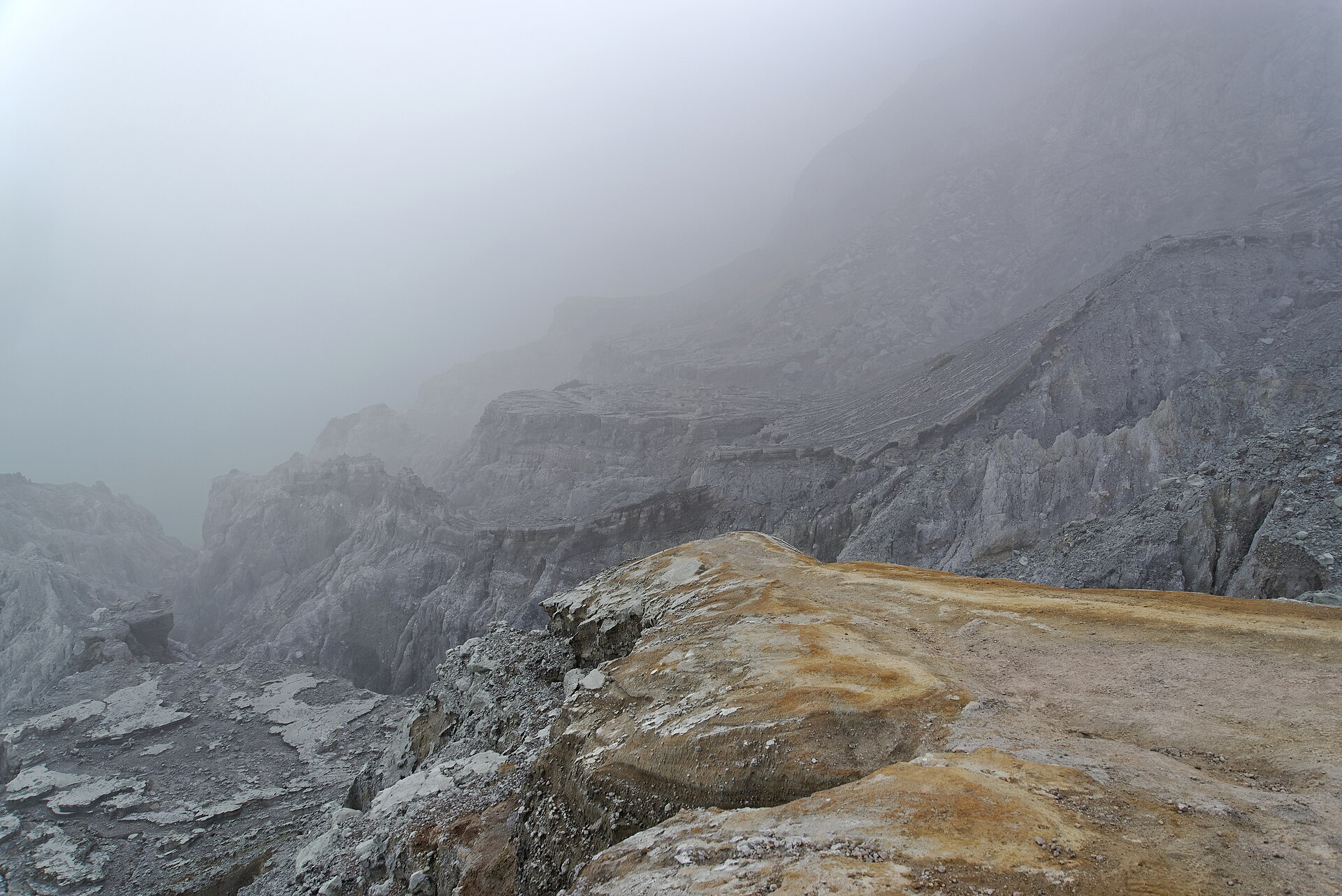
The trail also closes depending on the weather or volcanic activity. In 2026 the trail was closed until 26 February due to landslides and CO₂ gas. It closed again from 4 to 28 September because of a fire that spread all the way to the Pos 4 post (one of the rest stops along the route).
💡 Tip: In the driest months, especially August and September, there’s a risk of fires, and in September 2026 Bromo was closed too. If you’re combining both volcanoes, build in a spare day.
Can you go down to the blue fire?
The authorities advise against descending to the crater floor – both PVMBG (the Indonesian volcanological service) and the park management point this out. Whether you’re allowed down on a given night is decided by the park management and your guide based on the gas levels.
In practice, agencies do sell the trip down to the floor, and people do go down. You can’t rely on it, though, so be prepared that you might only see the lake and the sunrise from the rim.
Is a guide compulsory?
A guide isn’t required by law, but the BBKSDA authority strongly recommends one, especially at night and for the descent. A guide for 1 to 5 people costs roughly from 250,000 IDR (about €12). Watch out for fake “compulsory” guides who approach you in the car park.
What is compulsory is a gas mask, non-slip shoes and a warm jacket. You can rent a mask at the gate for roughly 25,000 to 50,000 IDR (about €1–2.50). Neither a face mask nor an N95 respirator will protect you against sulphur gases, so beware of overpriced “masks” that are really just a respirator.
How the Hike Works: A Timeline of the Night
Keep a close eye on your watch when you set your alarm, because Bali runs on WITA time (Central Indonesian Time, UTC+8), which is one hour ahead of Java’s WIB. Itineraries for trips from Bali often mix the two up, so ask whether the agency is quoting Javanese time, since that’s what the gate opening follows.
| Time (WIB) | Bali time (WITA) | What happens |
|---|---|---|
| 23:00 to 00:30 | 00:00 to 01:30 | hotel pick-up in Banyuwangi or Ketapang (from Licin it can be as late as 01:00 WIB, i.e. 02:00 WITA) |
| 00:30 to 01:30 | 01:30 to 02:30 | arrival at Paltuding, ticket exchange, medical certificate check, mask rental and toilets |
| 02:00 | 03:00 | gate opens |
| 02:00 to 03:30/04:00 | 03:00 to 04:30/05:00 | 3 to 3.5 km climb to the crater rim |
| 03:30 to 04:30 | 04:30 to 05:30 | only if the descent is permitted: down to the blue fire and back |
| approx. 04:54 (November) to 05:38 (July) | approx. 05:54 (November) to 06:38 (July) | sunrise |
| 05:00 to 06:30 | 06:00 to 07:30 | the lake and crater in daylight, viewpoints (an optional walk along the rim adds 1 to 2 km) |
| 06:30 to 08:00 | 07:30 to 09:00 | descent back to Paltuding |
| 08:30 to 10:00 | 09:30 to 11:00 | return to Banyuwangi (or departure for the ferry to Bali) |
Bear in mind that it starts getting light about 20 minutes before sunrise, so in November the window of darkness for watching the flames is shorter than in summer.
The trail from Paltuding to the crater rim
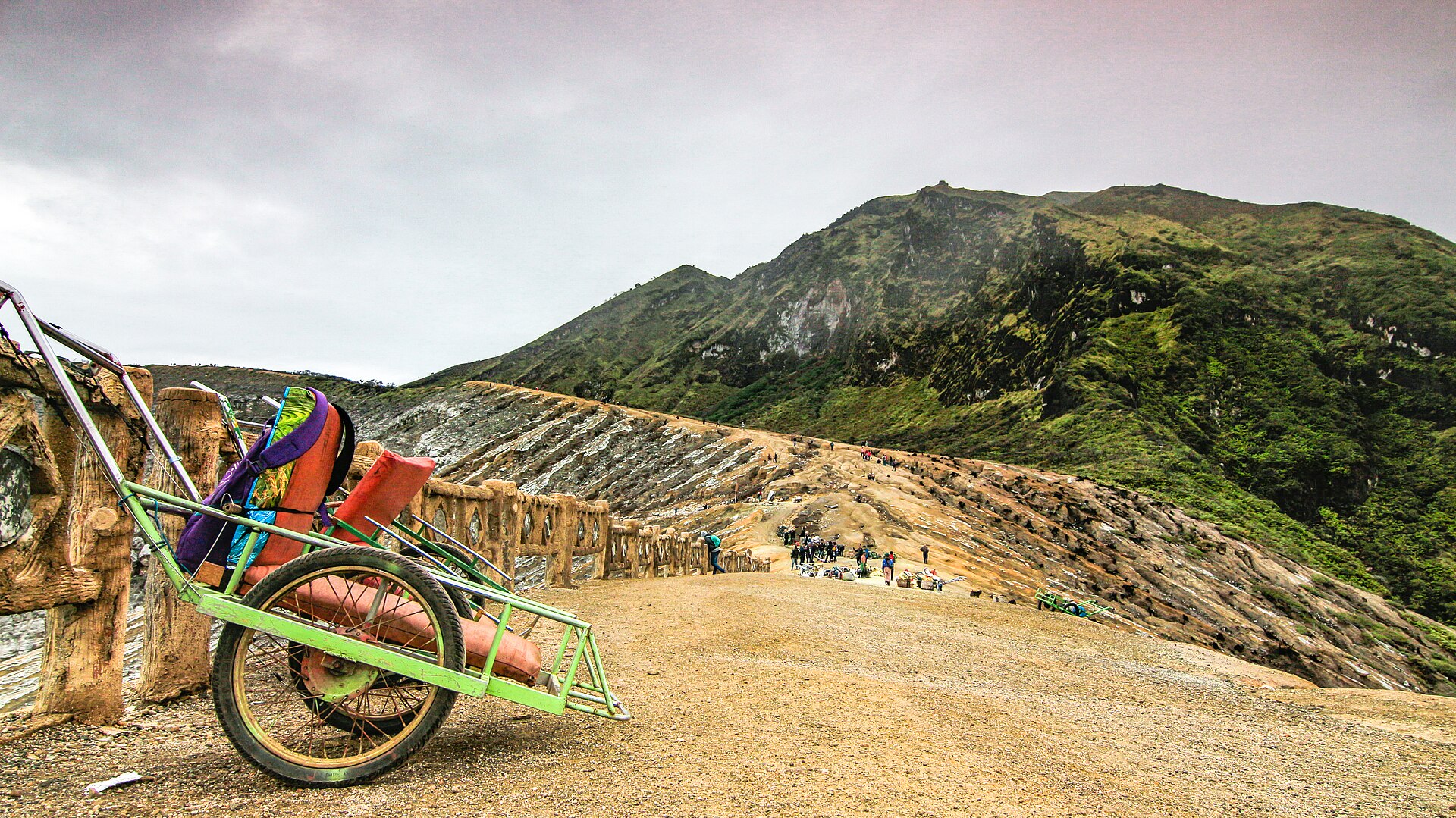
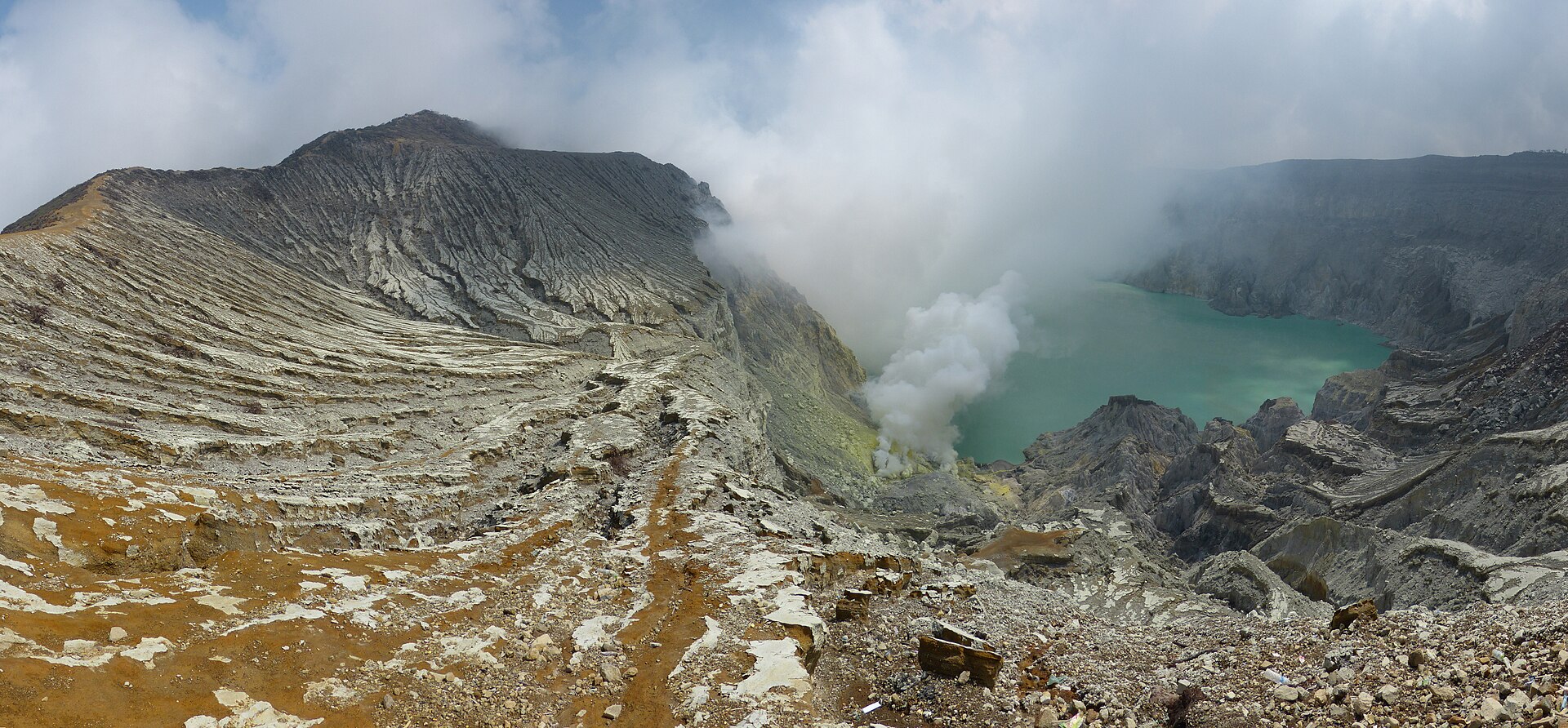
The hike starts at Paltuding, at an altitude of around 1,850 m, and at 02:00 you set off into the darkness with your headlamp on. Ahead of you is a wide, sandy path that climbs gently at first, but the gradient gradually steepens to around 25%. At a normal pace you’ll reach the top in 1.5 to 2 hours; slower walkers will need a bit longer.
Along the way you’ll pass several rest stops, and at roughly the two-kilometre mark you’ll reach the Pos Bunder station (about 2,200 m above sea level), where the baskets of sulphur are weighed and there’s a café with a toilet.
If your legs give out, you can hop on a cart called a troli (a cart pushed by people), jokingly nicknamed the “Lamborghini”. These carts are run by teams of 3 to 5 people with a permit from the park authority. The price is negotiable: expect to pay roughly IDR 300,000 to 800,000 to go up (about €15 to €40) and around IDR 80,000 to 400,000 to come down (about €4 to €20).
Descending to the crater floor (only if permitted)
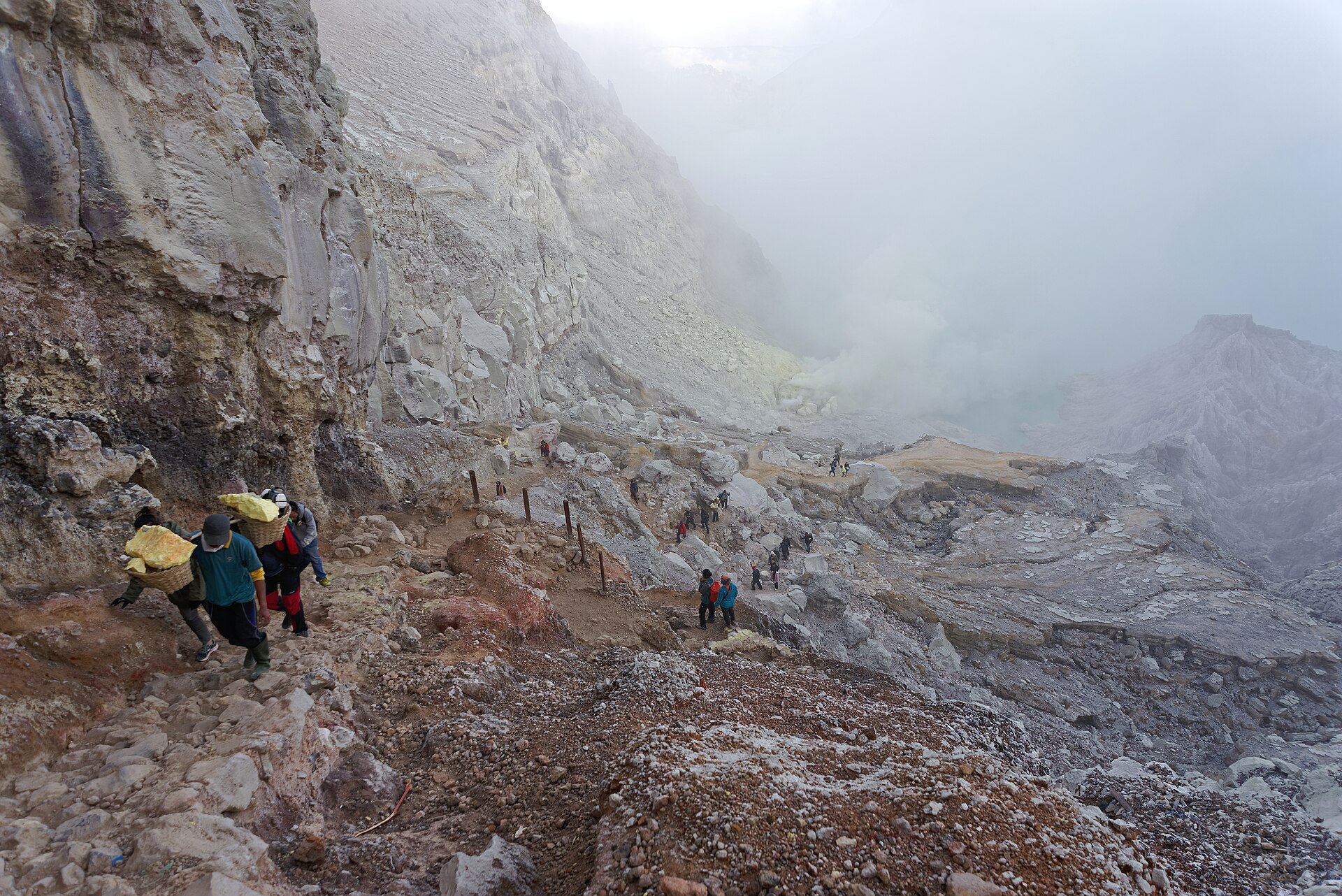
If the park authority and your guide give you the green light that night, a steep, rocky path with no railings leads from the ridge down to the lake. It’s 800 m to 1 km long, takes roughly 25 to 45 minutes each way, and you share it with the miners, who carry heavy loads up in the opposite direction.
Down by the vents where the gas escapes, keep your gas mask on and stay close to your guide – if the wind shifts, sulphurous smoke can fill the crater floor in an instant. As soon as you start coughing or your eyes begin to sting, climb higher into fresh air straight away.
💡 Tip: Contact lenses are uncomfortable in smoke and dust, so for the night hike you’re better off bringing your prescription glasses.
Sunrise and the way back
Whether or not you went down into the crater, you can continue from the ridge for another 1 to 2 km along the rim to a viewpoint with the best views at dawn. With the first rays of sun, the turquoise surface of the lake lights up below you and the silhouettes of the Raung and Ranti volcanoes rise on the horizon.
The walk back down to Paltuding in daylight takes about 1 to 1.5 hours. By around nine in the morning you’ll be back at your hotel in Banyuwangi or Licin, where after a sleepless night breakfast and a nap will feel like pure bliss.
Kawah Ijen Volcano Indonesia Tours: Where to Start and What It Costs
You can climb the volcano independently from the town of Banyuwangi, book a trip from Bali, or combine the hike with a journey across other Javanese volcanoes. The table gives you an overview of the most common tour options, including price ranges based on indicative offers from November 2026.
| Option | Programme | Approximate price, November 2026 | Best for |
|---|---|---|---|
| Independently from Banyuwangi | driver or ojek (motorbike taxi) to Paltuding, ticket online, mask on site | driver approx. IDR 300,000 (about €15), car from Banyuwangi airport (BWX) IDR 450,000 to 550,000 (about €20 to €25) plus entrance fee | independent travellers who want to set their own schedule |
| Shared tour from Banyuwangi | night-time hotel pick-up, return transport, guide, mask | IDR 350,000 to 500,000 on the spot (about €17 to €25), online from approx. USD 19 to 25 | most solo travellers and couples |
| Private tour from Banyuwangi | your own car with driver and a guide just for your group | from approx. USD 83 to 86 | anyone who wants privacy and a more relaxed pace |
| 1 day from Bali (approx. 24 h) | early-evening departure from Bali, ferry to Java, night hike and return | from approx. USD 38 to 100, ferry sometimes extra | those with only a few free days on holiday |
| 2 days and 1 night from Bali | ferry to Java, overnight stay in a hotel in Banyuwangi, night hike | approx. USD 209 to 299, private USD 250 to 450 | a more comfortable option with a rest in a proper bed |
| Bromo and Ijen, 3 days and 2 nights | sunrise at Mount Bromo, transfer to Ijen and night hike to the crater | from approx. USD 169 to 183 shared, other offers USD 320 to 420, private approx. USD 600 | those travelling between Java and Bali |
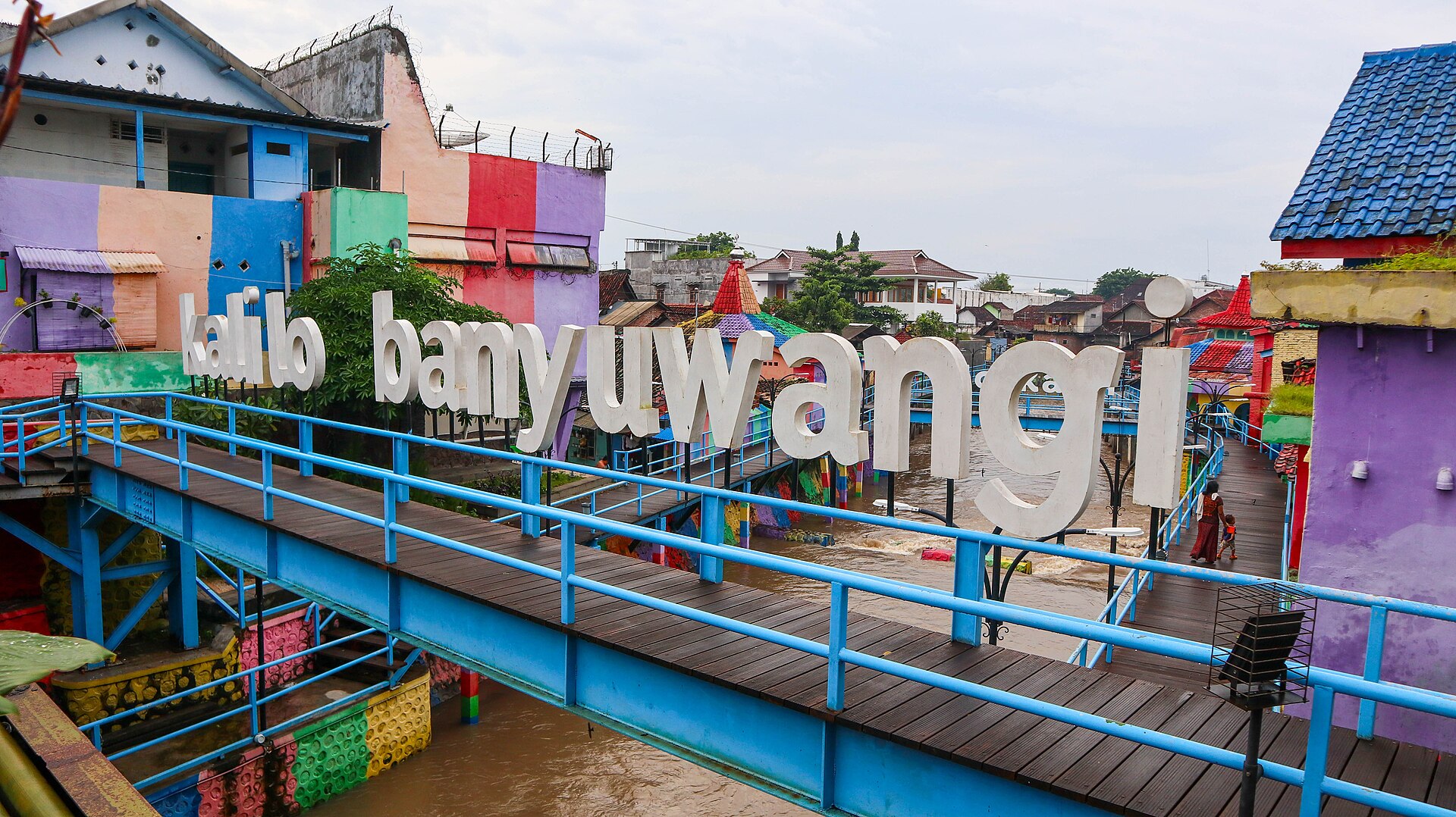
From Banyuwangi: independently, shared tour or private
Banyuwangi is the main base for trips to Ijen: it’s 32 km from Paltuding, which realistically means a 1 to 1.5-hour drive. The port and train station in Ketapang are 41 km from Paltuding (1 to 1.5 hours), while from the mountain village of Licin you’ll cover the 16 km to Paltuding in 30 to 45 minutes. Route planners often underestimate travel times on mountain roads, so leave yourself some slack.
You can reach Banyuwangi by train from inland Java, for example on the Tawang Alun service from Malang. There’s also a public DAMRI bus (the state-run operator) coming from the direction of Bondowoso and Jember – check its timetables in the DAMRI app.
Before you pay an agency, run through this quick checklist:
- Does the price include the ticket (IDR 150,000), the medical certificate and mask rental?
- Who buys the online ticket in the name shown on your passport?
- What happens if the descent to the crater floor is banned or the park is closed?
- Does the price cover the ferry and the Bali tourist levy?
- Which time zone are the departure times given in?
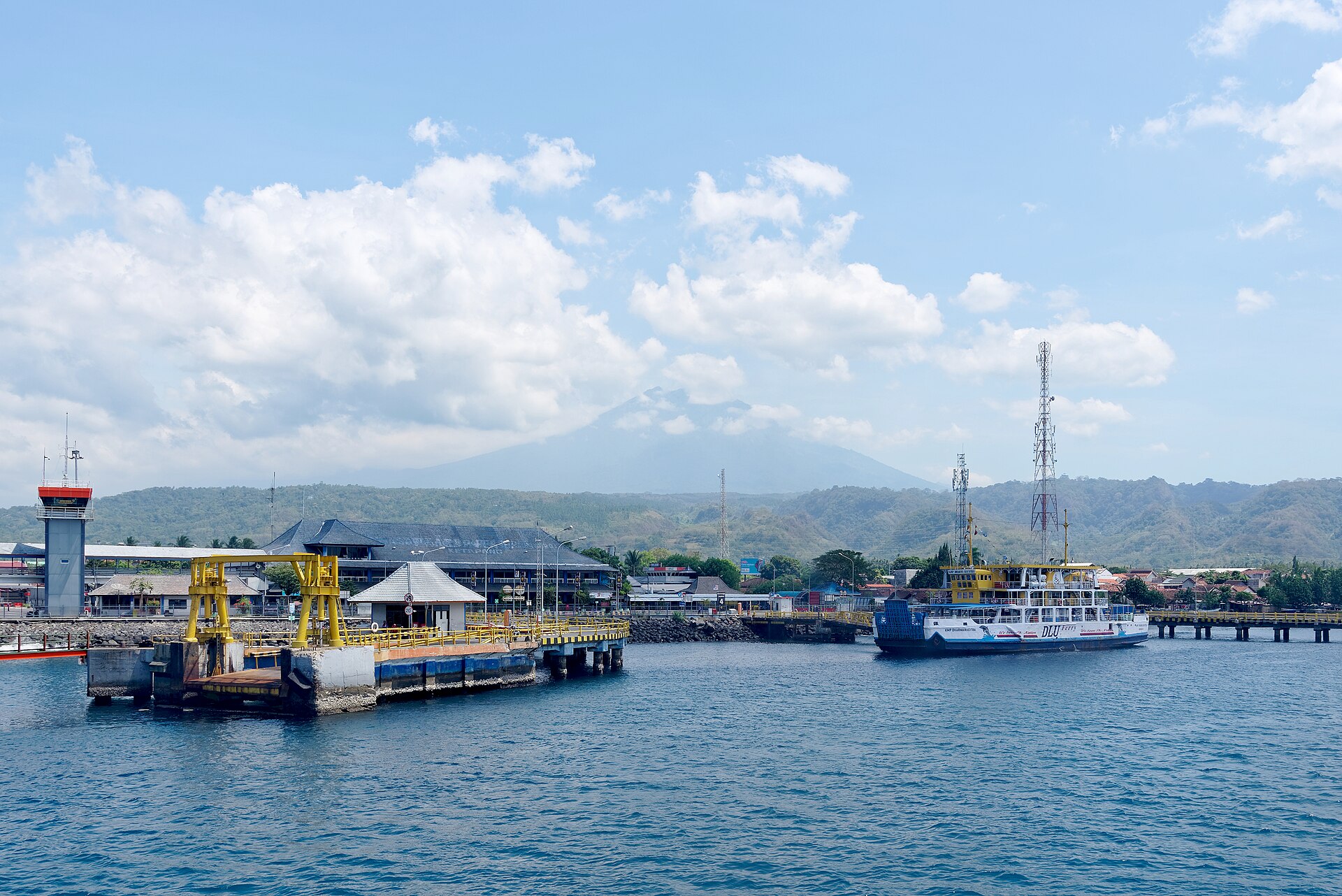
Ijen from Bali via Gilimanuk
The journey starts at the port of Gilimanuk, where ferries leave for Ketapang around the clock. The crossing and a foot-passenger ticket are cheap, but waiting to board can drag on for 2 to 2.5 hours.
When you return to Bali, you’ll have to pay the IDR 150,000 tourist levy (about €7), and according to available information it’s also checked at the port. Pay the fee in advance, and only on the official website lovebali.baliprov.go.id.
A same-day round trip means 20 to 24 hours without any proper sleep, because just getting from Ubud to the ferry takes 3.5 to 4.5 hours. The two-day option with an overnight stay in Banyuwangi is far more comfortable. Once you’re back, you can recover at one of the hotels and resorts in Bali.
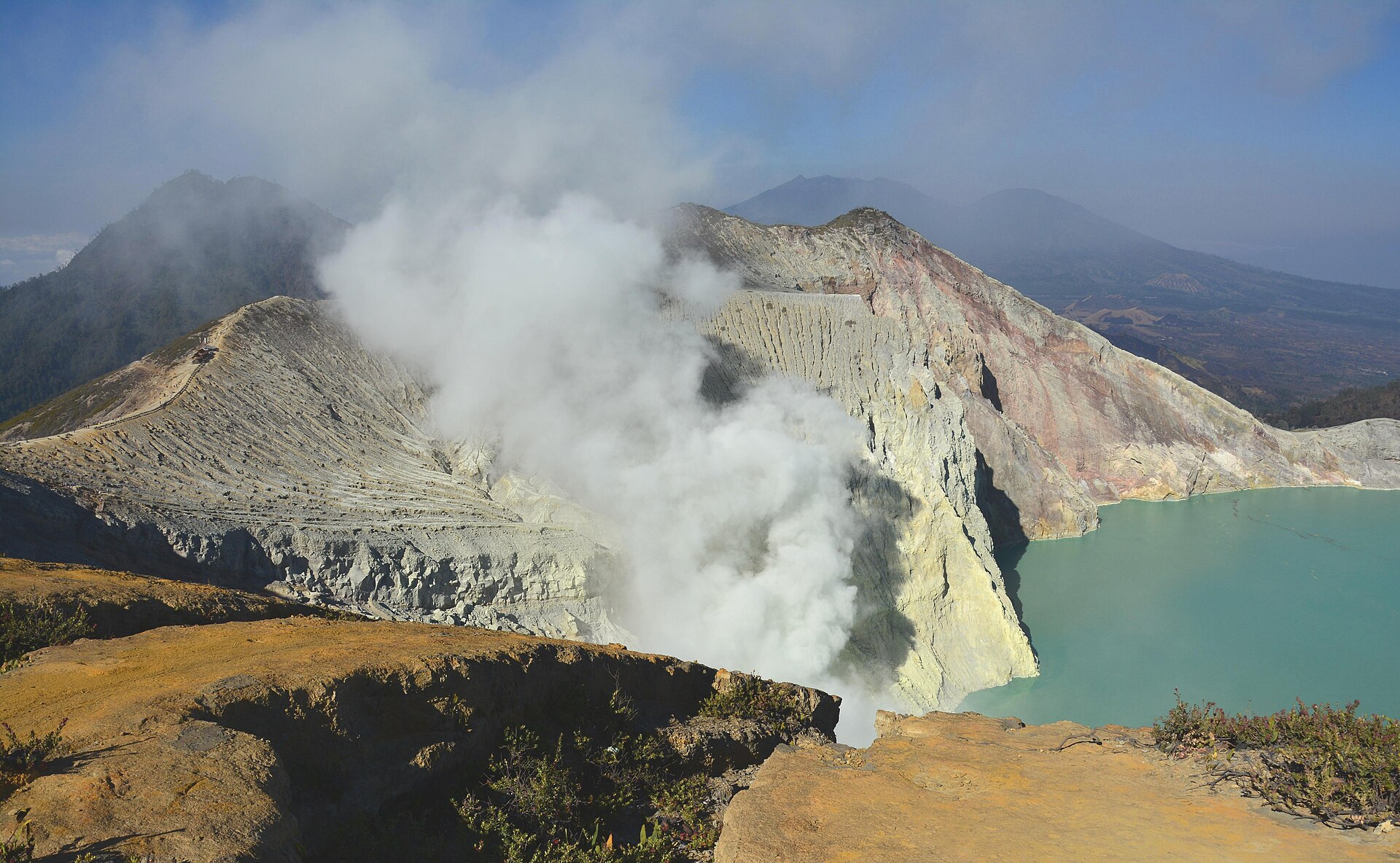
Bromo and Ijen in one trip
The three-day trip combines two volcanoes. On the first day you stay overnight near Mount Bromo; on the second, a jeep picks you up between 00:30 and 01:00 for sunrise, followed by a 5 to 9-hour transfer to Banyuwangi. On the second night – or rather in the early hours of the third day – you climb Kawah Ijen.
You can also do the programme the other way round, starting with Ijen and finishing at Bromo. A spare day is well worth it – see the closures above.
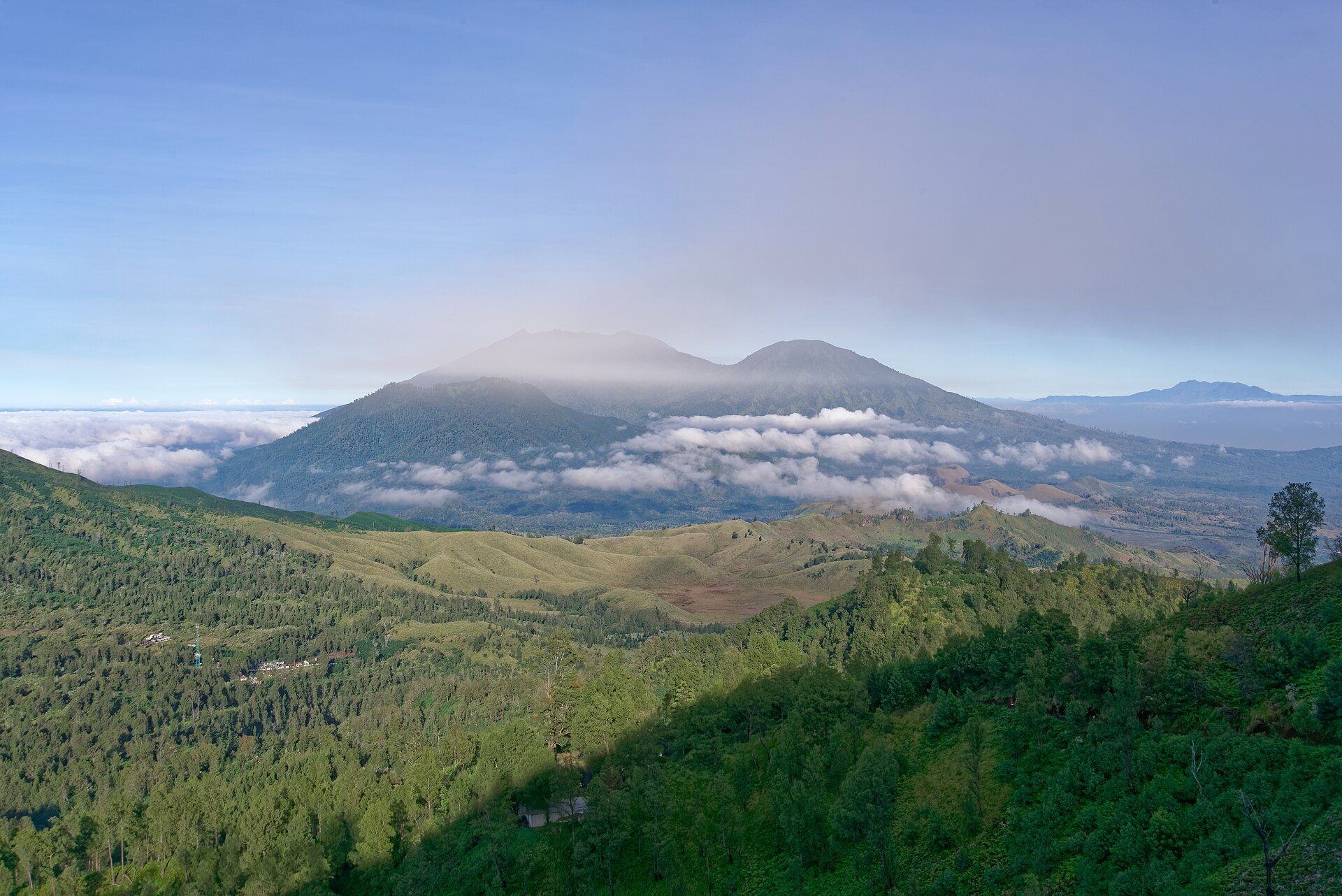
From Sempol and the coffee plantations
The town of Bondowoso is roughly 65 km from Paltuding, a 1.5 to 2-hour drive. A closer base is the Sempol area, just 15 km from Paltuding, which you can cover in 30 to 45 minutes – and nearby you’ll find the Kalisat and Blawan coffee plantations.
What to Pack
The night hike up the volcano starts at a car park at around 1,850 m and ends in a cold wind thick with sulphur fumes. Your entrance fee most likely doesn’t include insurance, so check in advance that your travel insurance covers mountain hiking. Also keep in mind that since September 2026, following a fire, there has been an explicit ban on lighting fires. Pack the following gear in your backpack:
- Passport and medical certificate: carry both your passport and the certificate with you, plus a copy on your phone.
- Online ticket: save the booking code on your phone so you can exchange it at the ticket office.
- Gas mask: compulsory gear with sulphur filters – you can rent one at the gate.
- Non-slip footwear: compulsory shoes with a good tread for the loose, rocky trail.
- Warm jacket and layers: a compulsory layer to throw on over your sweaty T-shirt once you’re up in the wind.
- Windbreaker or rain poncho: against rain from November to March, against wind the rest of the year.
- Gloves: they’ll warm up your numb fingers on the windy ridge in the chilly early morning.
- Hat or buff: keeps your head and neck warm while you wait for sunrise.
- Headlamp: you’ll want both hands free for the climb in the dark.
- At least 1 l of water: you may not be able to buy drinks at the crater rim.
- Cash in rupiah: small change for toilets, coffee at Pos Bunder, tips or sulphur figurines.
- Trekking poles: optional support on steeper terrain and on the way down.
When to Visit Ijen: Weather by Month
Java’s tropical climate splits the year into a dry and a rainy season, but on a night hike up the volcano the weather behaves differently than down on the beach. Most of the rain falls in the afternoon, so you can get a clear night even in the wetter months. The table below gives you a simplified overview of night-time conditions based on the public ERA5 database (the European archive of reconstructed historical weather) for 2016 to 2025.
| Month | Rain 1:00 to 6:00 (share of hours with rain) | Temperature at the rim at 5:00 | Sunrise (WIB) |
|---|---|---|---|
| January | 14% | 11 °C | 5:16 |
| February | 16% | 11 °C | 5:26 |
| March | 8% | 11 °C | 5:27 |
| April | 4% | 11 °C | 5:25 |
| May | 4% | 11 °C | 5:27 |
| June | 4% | 10 °C | 5:34 |
| July | 3% | 9 °C (cold mornings around 7 °C) | 5:38 |
| August | 2% | 9 °C (cold mornings around 7 °C) | 5:31 |
| September | 2% | 9 °C (cold mornings around 7 °C) | 5:16 |
| October | 4% | 10 °C | 5:00 |
| November | 8% | 11 °C | 4:54 |
| December | 14% | 11 °C | 5:01 |
The data shows that nights tend to be mostly dry even in the rainy season: between 1:00 and 6:00 am it rains in only 8 to 16% of hours, while the downpours arrive in the afternoon. Besides rain, the blue fire can also be hidden by thick fog or strong wind.
The best time to go is April to October, with the driest mornings from July to September. In July, August and during Lebaran (the end of the Muslim fasting month), though, expect crowds – and in August and September the risk of fires goes up too.
Thanks to the wind and your sweat-soaked clothes, the wind chill at the crater rim feels even colder, so a windbreaker and a warm fleece will save you from chattering teeth at the viewpoint.
Is Ijen Safe?
Kawah Ijen may be breathtaking, but don’t forget you’re standing on an active volcano. As of November 2026, Indonesia’s volcanological service MAGMA Indonesia reports the lowest alert level, Level I, meaning normal conditions – even so, the authorities advise against getting close to the crater floor. Don’t spend the night or camp within 500 m of the crater (an official recommendation). After rain, there’s also a risk of landslides on the slopes and CO₂ gas in the Banyupait riverbed.
The sulphur fumes irritate your eyes and airways, so you won’t manage in the smoke without a mask. You also need to be careful moving around up top: in April 2024, a foreign tourist sadly died after falling from the crater rim while taking photos. Never walk up to an unstable edge for a picture, and stick to the marked trail.
People with asthma, heart problems or a respiratory infection should skip the hike, and it isn’t recommended for pregnant women or anyone prone to vertigo either. Make sure your insurance covers mountain hiking, and check the current status of the volcano before you set off.
If you don’t skimp on preparation, wear sturdy shoes and listen to your guide, you’re in for one of the most powerful experiences in East Java. The sight of the steaming turquoise lake at sunrise will more than make up for the early alarm.
Where to Stay Near Ijen
When choosing accommodation, you have two main options, depending on whether you’d rather get more sleep before the night hike or have easier transport connections. The mountain villages of Licin and Tamansari sit on the volcano’s slope, about 16 km from Paltuding. By car you’ll reach the gate in 30 to 45 minutes, which buys you extra time in bed. If you’re arriving by train or by ferry from Bali, the more practical base is Banyuwangi and Ketapang port, from where the night drive to the entrance takes 1 to 1.5 hours.
Jiwa Jawa Resort Ijen
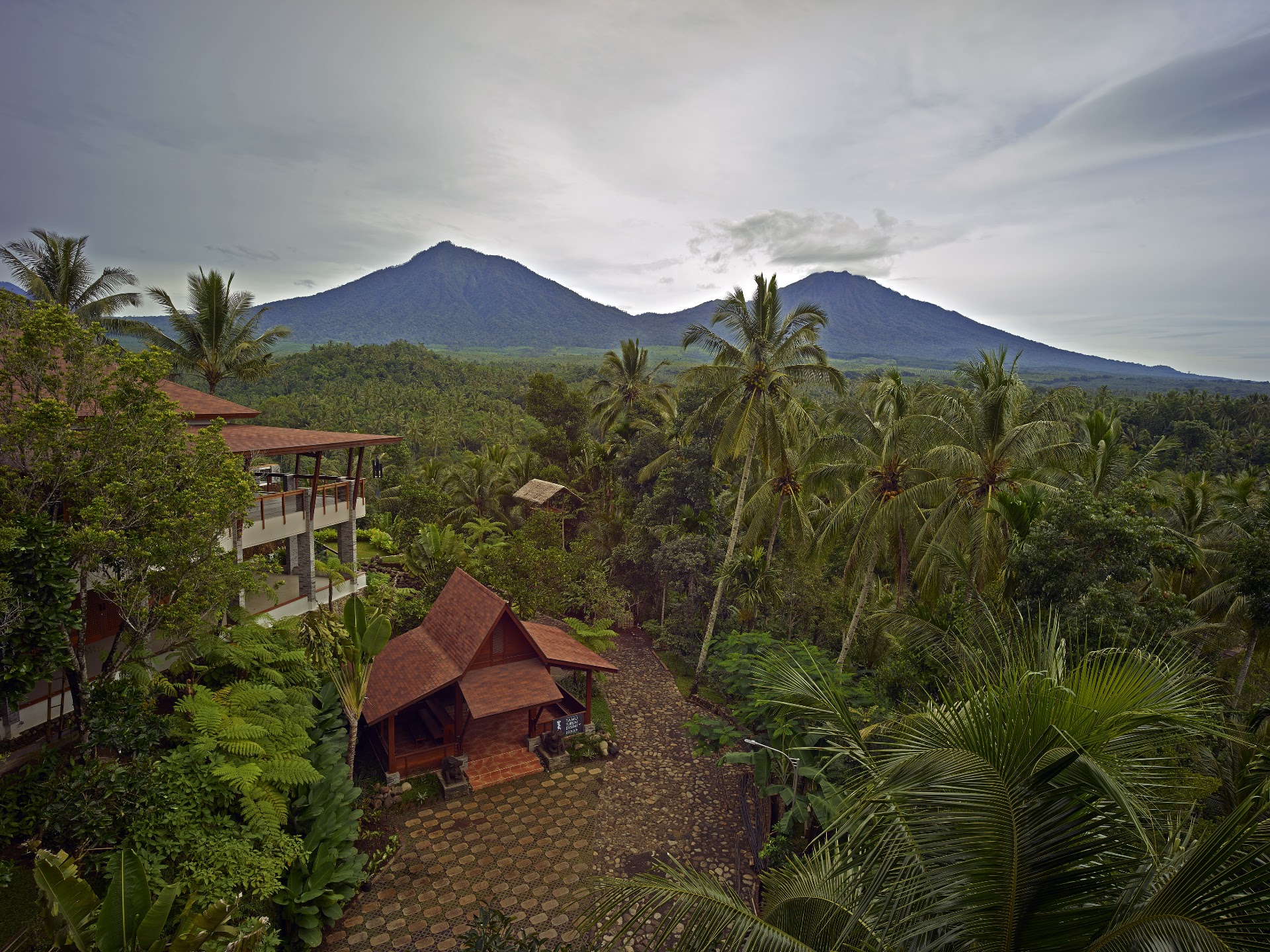
Jiwa Jawa Resort Ijen is a peaceful retreat on the slopes in the Tamansari area and the sister property of Jiwa Jawa Bromo. The grounds are surrounded by an art-filled garden that makes for a pleasant natural setting before the night trek.
Ijen Resort and Villas – The Hidden Paradise
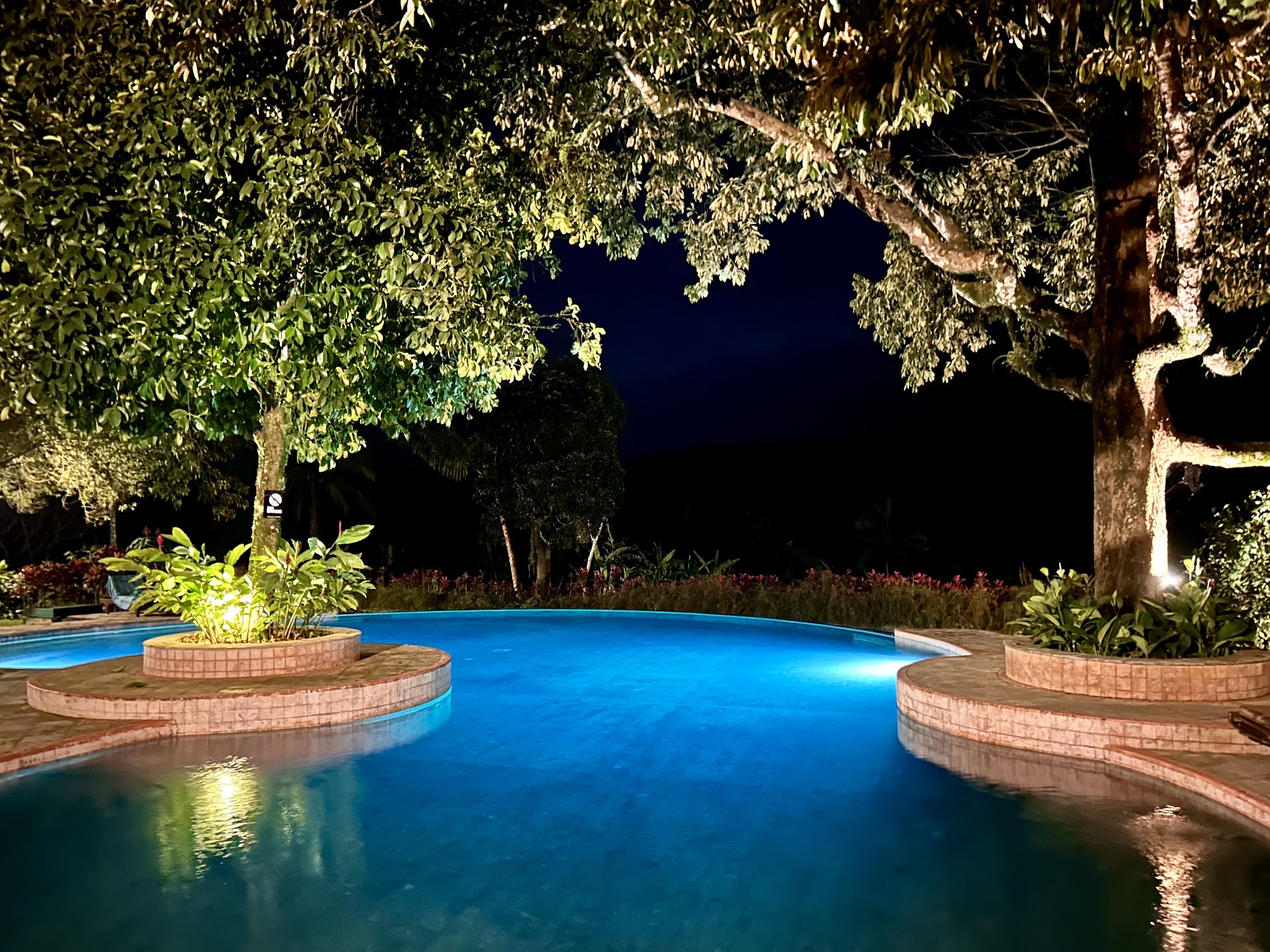
Ijen Resort and Villas – The Hidden Paradise lies in part of Licin, right among the rice terraces below the volcano. The villas are tucked away in a quiet setting, making them ideal for a calm evening before the hike.
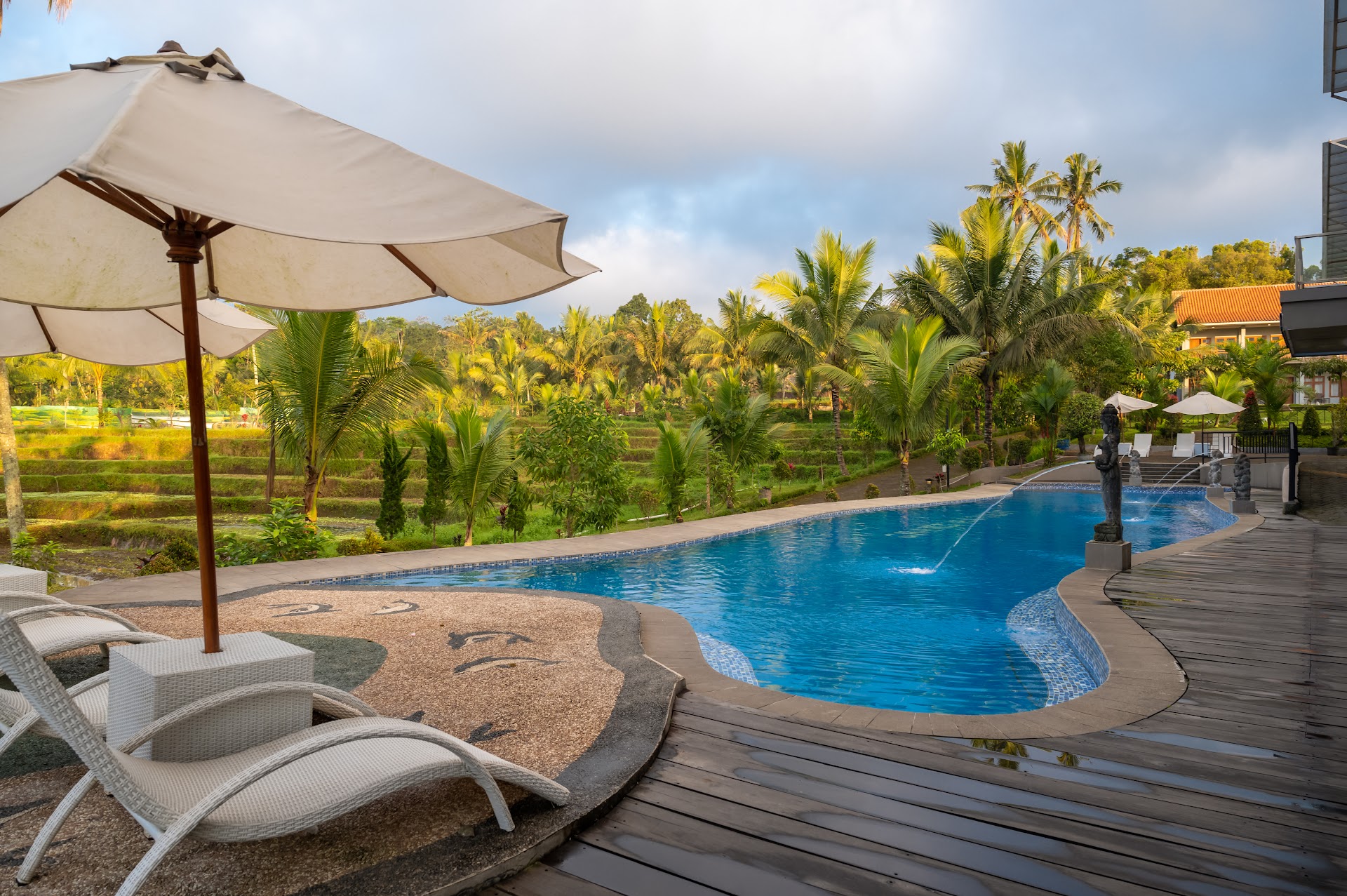
Grand Harvest Resort Banyuwangi
You’ll find Grand Harvest Resort Banyuwangi in the village of Tamansari, and it comes with swimming pools. According to the owners, it’s about 20 minutes from here to Ijen – something you’ll really appreciate when the alarm goes off in the middle of the night.
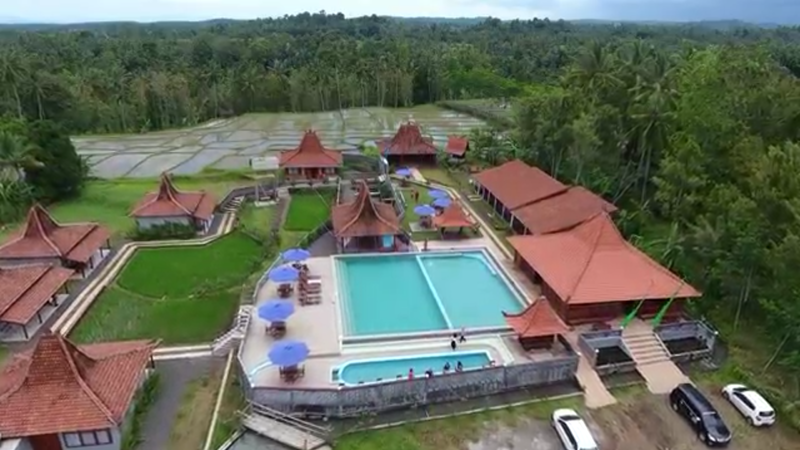
Kampoeng Joglo Ijen
Kampoeng Joglo Ijen is all about traditional Javanese architecture, offering stylish stays in joglo houses in the village of Licin. Next to the joglo houses there’s a pool with mountain views.
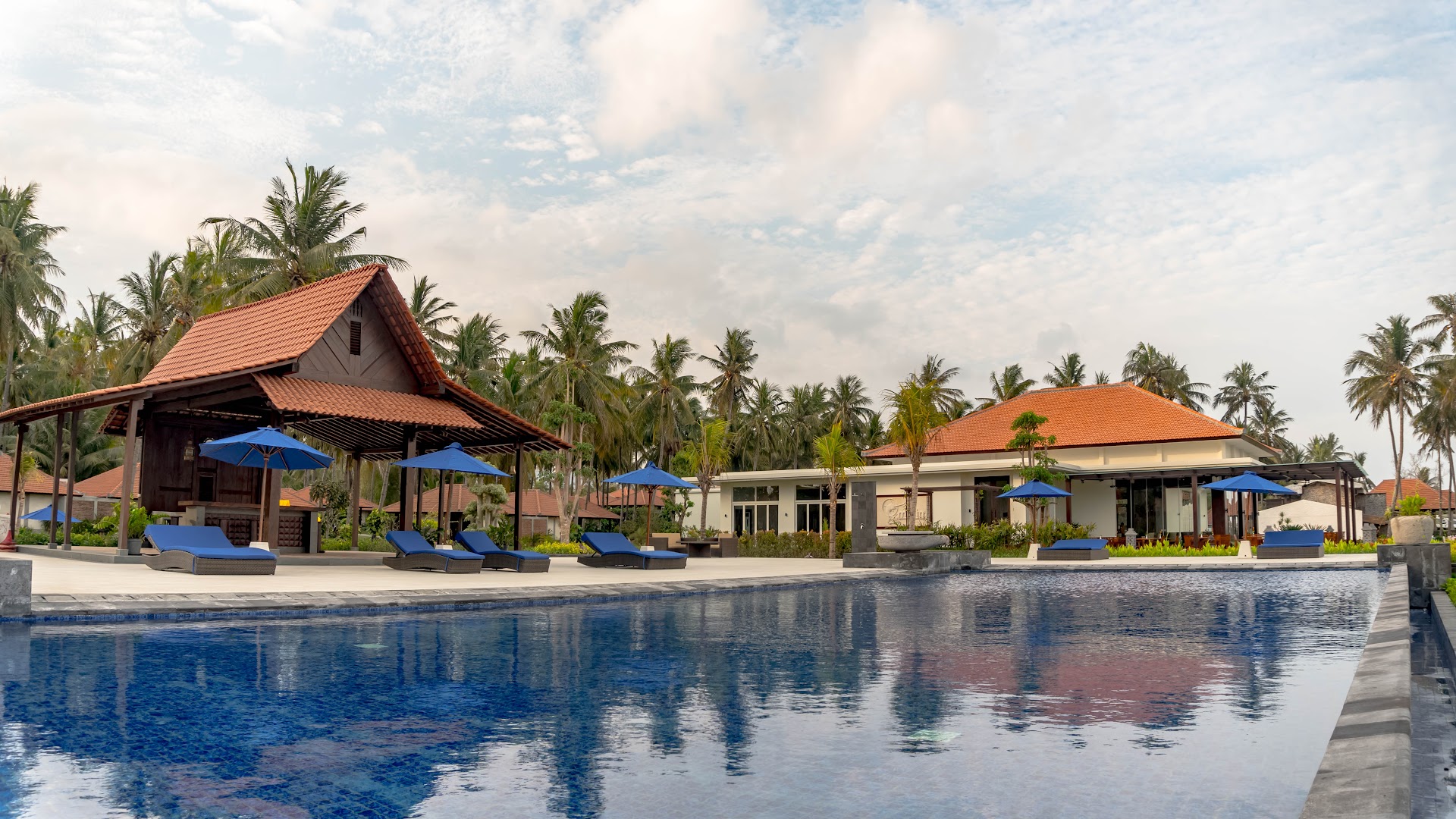
Ketapang Indah Hotel
Ketapang Indah Hotel offers rooms and cottages set in a tropical garden by the sea. Located a short walk from Ketapang port, it’s a practical choice if you’re arriving in Java by ferry from Bali or continuing on by train.
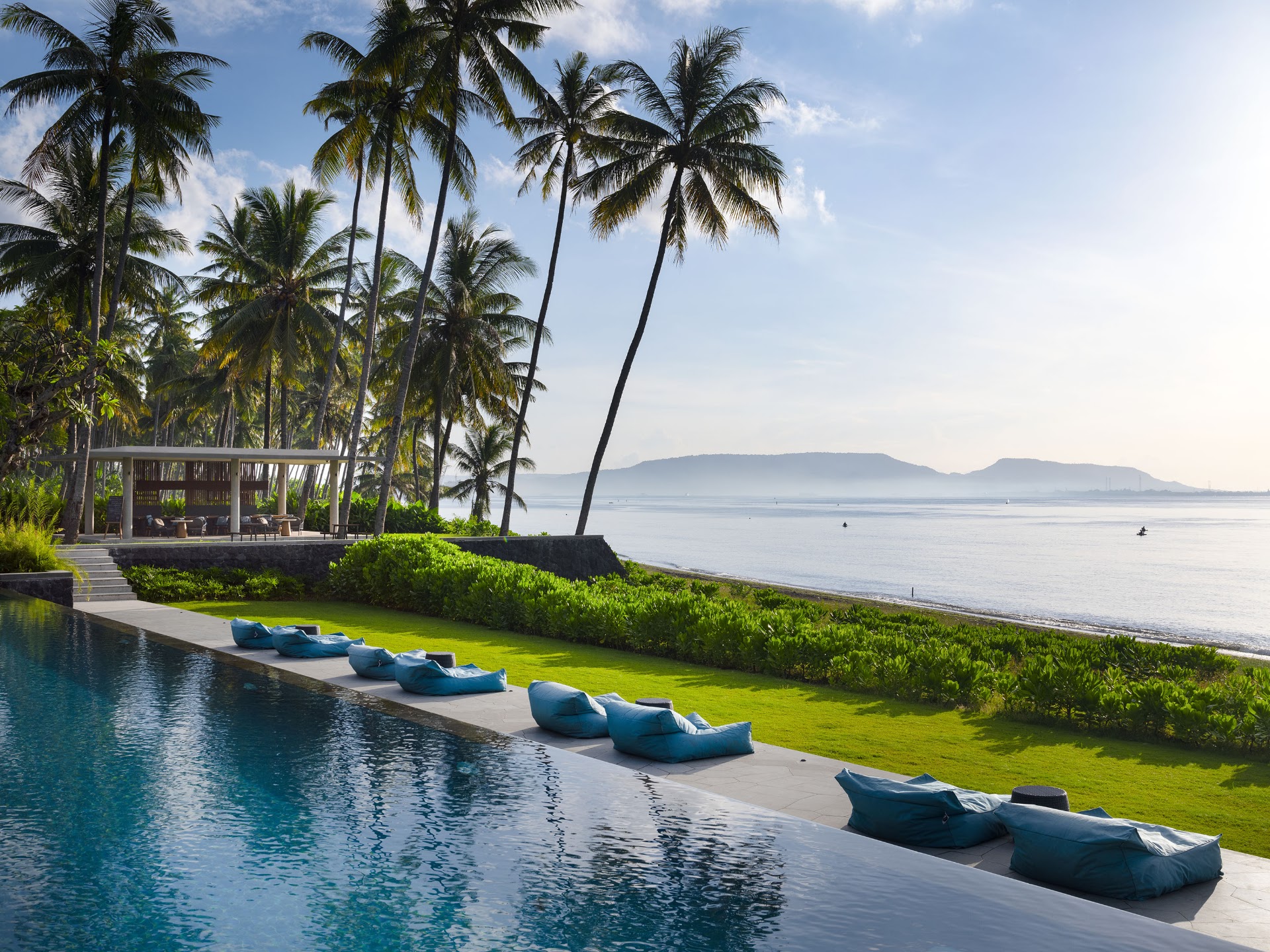
Dialoog Banyuwangi
Dialoog Banyuwangi is a modern beach resort in the coastal Kalipuro area. You can spend the time before your night departure by the pool with a direct view of Bali, which rises just across the strait.
Frequently Asked Questions
When can you see the blue fire at Ijen?
You’ll catch the blue flames only in the dark, roughly from 2:00 to 4:30 am, and according to guide websites they should be visible again from around March 2026. Keep in mind, though, that the fire may not burn every night, and whether you’re allowed down to the crater floor depends on the gas concentration.
Is the blue fire lava?
No. No molten lava flows down the crater slopes — what you’re seeing is burning sulfuric gases reaching up to 600 °C, which escape through cracks and ignite on contact with air.
How much does it cost to enter Ijen?
International visitors pay a flat entry fee of 150,000 IDR (around €9) per person per day, whether on a weekday or weekend. Online tickets from the official portal are non-refundable and non-transferable, while on-site payment is cashless via QRIS.
Do you need a medical certificate for Ijen?
Yes, the fitness certificate must be no more than 3 days old, and you can get one from clinics or Puskesmas health centers in Banyuwangi. People with asthma, heart conditions, or respiratory infections are advised not to attempt the climb.
How long does the hike up Ijen take?
The trail from Paltuding to the crater rim is 3 to 3.5 km long, and with an elevation gain of 500 to 600 meters it takes 1.5 to 2 hours. The whole trip from Banyuwangi roughly runs from midnight until 9:00 to 10:00 in the morning.
Do you need a guide for Ijen?
There’s no legal requirement for foreign visitors, but park management strongly recommends hiring a guide, especially at night and when descending into the crater. Just watch out for fake guides at the parking lot who claim you can’t go further without them.
When is Ijen closed?
The park closes every first Friday of the month for the Ijen Rijik cleanup. The trail can also close unexpectedly due to weather, gas levels, or fires, like the ones that hit the area in September 2026, so check the current status before you go.
Can you visit Ijen from Bali?
Yes, via the ferry between the ports of Gilimanuk and Ketapang, though doing it as a one-day round trip means a grueling 20-to-24-hour marathon with no sleep. It’s more comfortable to spend the night in Banyuwangi, and remember that Bali time (WITA, UTC+8) is an hour ahead of Java time (WIB, UTC+7).
What’s the temperature like at Ijen?
Around 5 am at the crater rim, temperatures average 9 to 11 °C, dropping to around 7 °C on the coldest mornings from July to September. Wind and sweat-soaked clothing make it feel even colder, so bring a warm jacket, a windbreaker, and gloves.
When’s the best time to visit Ijen?
The best period runs from April to October, with the driest nights typically from July to September — though that’s also when you’ll run into the most crowds. From November to March nights are usually still dry, but the risk of fog and mud increases.
Tips and Tricks for Your Vacation
Don’t Overpay for Flights
Search for flights on Kayak. It’s our favorite search engine because it scans the websites of all airlines and always finds the cheapest connection.
Book Your Accommodation Smartly
The best experiences we’ve had when looking for accommodation (from Alaska to Morocco) are with Booking.com, where hotels, apartments, and entire houses are usually the cheapest and most widely available.
 🚗 Car rental on the roadVerified rental cars in Indonesia
Search with the DiscoverCars comparison engine — it compares prices from dozens of local and international rental companies, and most bookings come with free cancellation.
Compare car prices in Indonesia →Don’t Forget Travel Insurance
Good travel insurance will protect you against illness, accidents, theft, or flight cancellations. We’ve had a few hospital visits abroad, so we know how important it is to have proper insurance arranged.
Where we insure ourselves: SafetyWing (simple monthly subscription) and TrueTraveller (for extra-long trips).
Find the Best Experiences
Get Your Guide is a huge online marketplace where you can book guided walks, trips, skip-the-line tickets, tours, and much more. We always find some extra fun there!
More from Indonesia
Full guide → What to seeSanur, Bali: 21 Things to See and Do in 2026
 BeachesLombok, Indonesia: Guide to Beaches, Gili & Rinjani in 2026
 Day tripsMalang, Indonesia: How Many Days, Mount Bromo and Onward Travel in 2026
 What to seeBorobudur, Indonesia: Tickets, Climbing the Temple and Sunrise in 2026
 What to seeMount Bromo Indonesia: Sunrise, Entrance Fee and Jeep Guide for 2026


