

When Lukáš and I first drove into Marrakech, Morocco, in a Fiat Panda rented from the local AirCar agency, we assumed that after driving in Uganda and Thailand nothing could possibly surprise us anymore. The reality of the local traffic quickly proved us wrong, and it still holds true that driving in Marrakech will test even the most hardened drivers, so if you’re planning to come here by car, arm yourself with enormous patience. Even so, the city is absolutely stunning, full of dazzling colours, the scent of spices and historic palaces that instantly transport you to a completely different world.
Our trip took place in December, which turned out to be an absolutely ideal choice for exploring the sights and wandering the alleys without exhausting summer heat. During the day, temperatures hovered around a very pleasant 18 °C, though the nights were cooler and the thermometer dropped to around five degrees. If you head here, be prepared for the fact that Marrakech is a gorgeous but incredibly intense city that calls for a little caution and common sense.
In this article we’ll look together at 25 tips on what to see and do in Marrakech, so you can get the very most out of your visit without needless stress. We’ll walk through the most beautiful palaces, I’ll show you where to stay strategically, and we’ll break down in detail the most common tourist traps and scams you really need to watch out for.
TL;DR
- Main square: Jemaa el-Fnaa is the heart of the city — by day you’ll find market traders here, and in the evening it turns into a giant open-air canteen.
- Best sights: Don’t miss the gorgeous Bahia Palace, the fascinating Ben Youssef Madrasa and the Jardin Majorelle garden.
- Safety at night: The medina itself is harder to navigate after dark and can be dangerous — women shouldn’t walk here alone at night.
- Transport and taxis: Petits taxis are legally required to use the meter — always insist on it before getting in, otherwise you’ll pay ten times as much.
- Watch out for scams: Refuse “free henna”, don’t let fake guides lead you off, and don’t believe claims that your street is closed.
- Car rental: If you’re renting a car, make sure you have a credit card in the driver’s name (we ran into big trouble putting down the deposit with a debit card).
- Day trips: Marrakech is a great base for trips to the Atlas Mountains, the Ouzoud waterfalls or even the Sahara.
When to visit Marrakech: weather and the best time to go
Choosing the right season is absolutely key for a trip to Morocco, because the local climate can be very unforgiving. The best times to visit are the spring months (March to May) and autumn (September to November), when you can expect pleasant temperatures ideal for exploring the city all day long. In these months you avoid the extremes, the days are beautifully sunny and the evenings bring a pleasant cool-down. In summer, Marrakech turns into a scorching oven, with temperatures routinely climbing well above 40 °C. Walking through the narrow, airless alleys of the medina then becomes more a battle for survival than a pleasant holiday experience.
We set off to Morocco in December, and for sightseeing it was absolutely ideal, because daytime temperatures stayed around a lovely 18 °C. For a full day of walking around the sights, that’s the most comfortable weather of all — you don’t sweat and you manage to see far more in a day than in the summer heat. You do need to bear in mind, though, that nights in winter are genuinely cold and temperatures drop to around 5 °C, so definitely pack some warmer clothing in your suitcase. A warm jacket and layering will save you, especially on early-morning walks to breakfast.
If you’re planning to spend just a long weekend in Marrakech, set aside ideally two to three full days for the city itself, which will be plenty for all the main sights and soaking up the atmosphere. But if you also want to head out on day trips such as the Atlas Mountains, the Ouzoud waterfalls or the coast, definitely extend your stay to five to seven days. Morocco is a huge country full of contrasts, and having enough time for everything means sparing yourself a lot of unnecessary stress.
Where to stay in Marrakech, Morocco
💡 Tip: You can compare accommodation options in Marrakech all in one place — check availability and prices in Marrakech. It pays to book ahead, as the best value-for-location spots go first.
💡 Tip for accommodation and experiences: We prefer to look for accommodation on Booking.com, which usually has the best cancellation terms. For tickets, tours and activities, it’s worth comparing and booking through GetYourGuide.
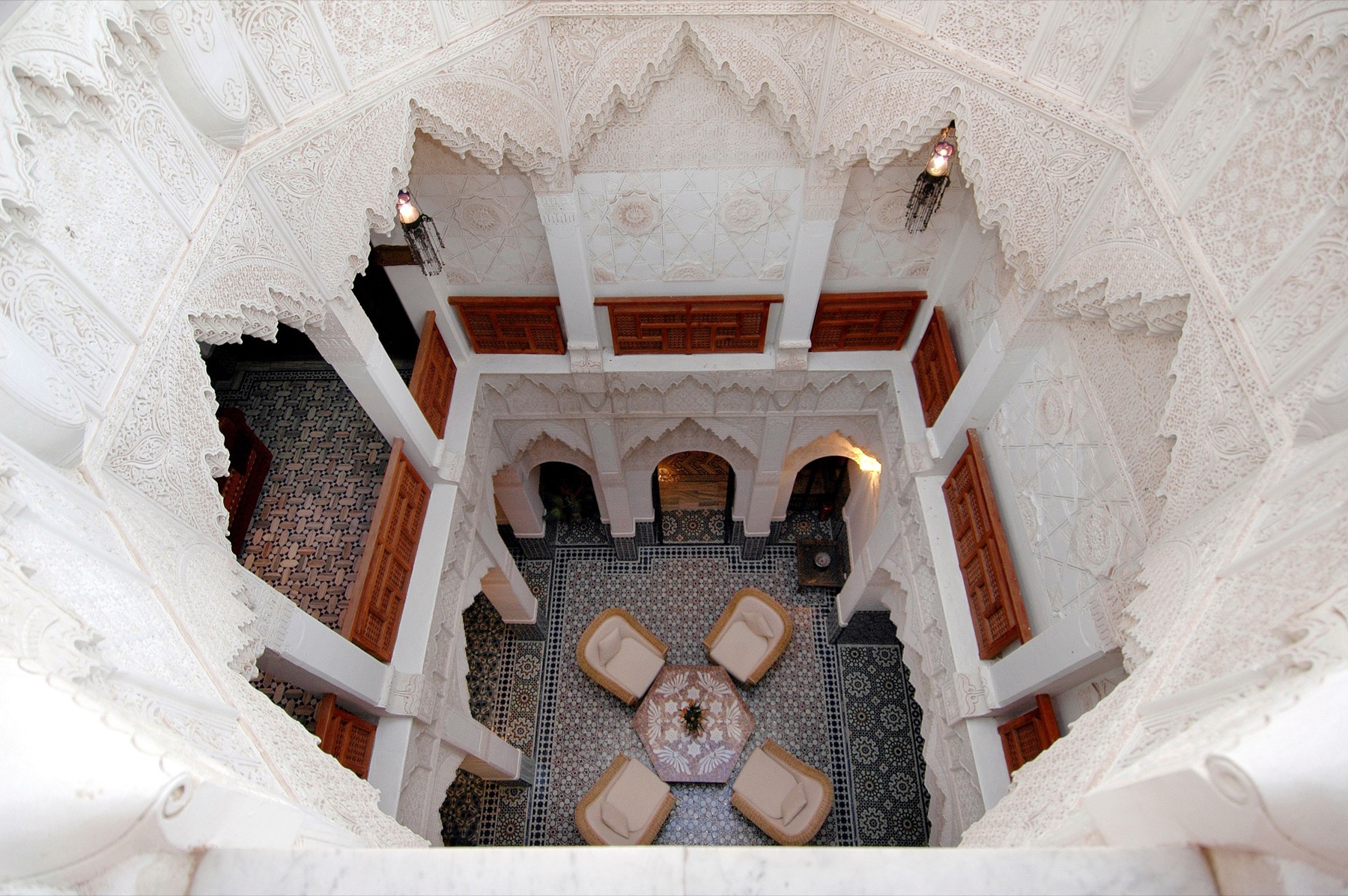
When choosing accommodation in Marrakech, you’ll mostly be deciding between three main districts, each offering a completely different experience. The most authentic choice is staying right in the medina (the old town), where most of the sights, the traditional markets and Jemaa el-Fnaa square are located. Life here plays out on the beautiful rooftop terraces of hidden riads — traditional Moroccan houses built around an inner courtyard. These homes offer an incredible oasis of calm amid the urban chaos and deliver the true Moroccan experience you’ll remember for a long time.
If, like us, you’re planning to rent a car straight at the airport, we strongly recommend staying outside the medina centre itself. We really struggled to drive through the narrow, chaotic alleys. For drivers, a far better choice is the modern Guéliz district, built by the French, with wide streets, hassle-free parking and plenty of modern cafés. A third option is the upscale Hivernage district, home to the best resorts and elegant restaurants, where it stays perfectly quiet during the day.
Whichever district you choose, definitely book a traditional riad for at least a couple of nights, because it’s simply part of a visit to Morocco. Prices for a nice mid-range riad typically run around €80 to €220 per night, while the most luxurious palaces climb into the hundreds of euros. If you’re after a cheaper option in the medina, the more modest Riad Sijane is very popular, for example. Here are some more specific accommodation tips with excellent reviews:
- Riad BE Marrakech: A beautifully renovated riad in the southern part of the medina, famous for its stunning indoor pool and breathtaking décor (price around €120–220).
- Riad Yasmine: One of the most photogenic riads in the city, with just 10 rooms, a gorgeous green pool with an orange tree and a wonderfully personal touch (price around €80–150).
- Riad Dar El Bahja & Spa: Traditional accommodation offering a very pleasant setting close to the main action and great value for money.
- El Fenn: If you’re after absolute luxury, this complex of interconnected riads offers several pools, rooftop terraces and amazing art collections (price from €400 and up).
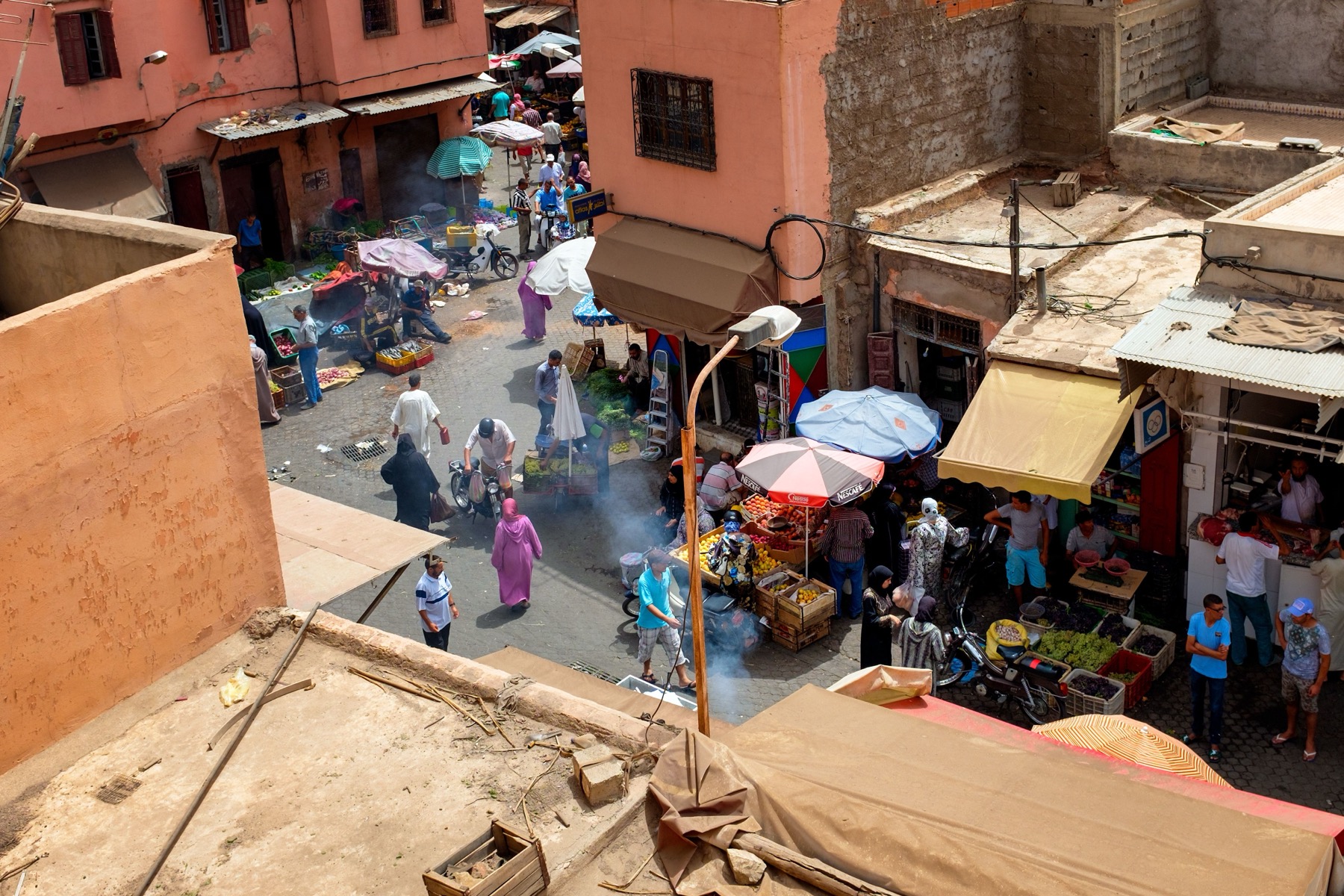
You’ll find a detailed overview of the districts and specific riads in our separate article Where to stay in Marrakech, which has 14 tips from hostel to luxury palace, including guide prices.
25 things to do in Marrakech, Morocco
Marrakech is a city of huge contrasts, where deep history mingles with bustling modern life. Let’s take a look at 25 specific tips and places you definitely shouldn’t miss during your visit, along with detailed advice on how to avoid needless hassle.
1. Jemaa el-Fnaa square during the day
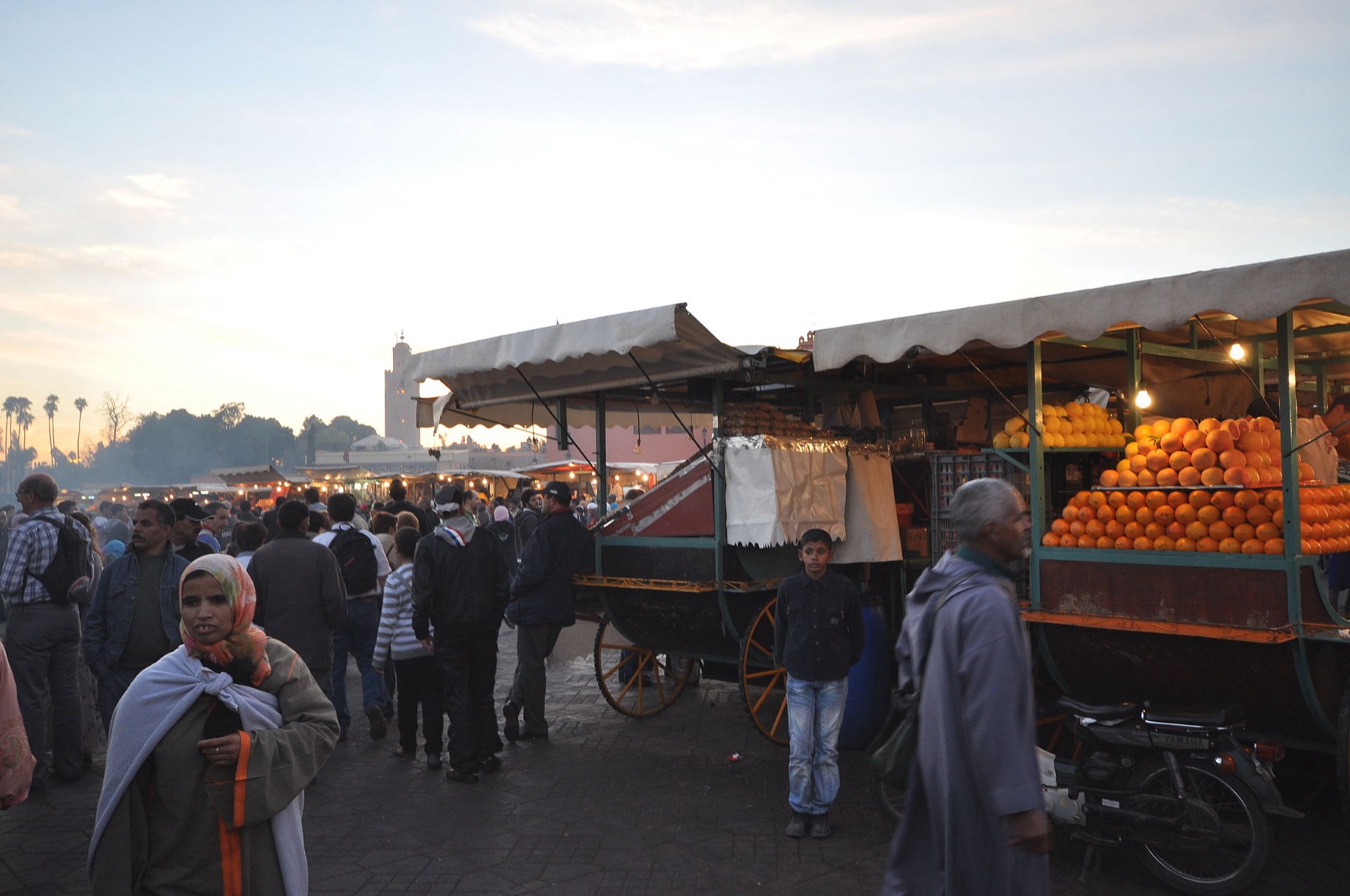
The heart of all Marrakech is the huge Jemaa el-Fnaa square, which serves as the main landmark of the entire medina. During the day there’s an incredible buzz here — you’ll find dozens of stalls selling freshly squeezed orange juice for a few dirhams, along with sellers of spices, nuts and traditional Moroccan sweets. It’s a place where something is always happening and where, sooner or later, every single visitor to the city ends up, map or no map.
The square is, by the way, a UNESCO-listed site, and by day it also serves as the main gathering point for all sorts of performers, musicians and entertainers. A walk here is a real assault on all the senses, as someone is calling out to you from every direction, trying to grab your attention. 💡 Tip: Watch the goings-on from a distance instead. Sit down in one of the many rooftop cafés (Café de France is a popular choice, for example), from where you’ll have a perfect view over all the organised chaos and no one will keep approaching you.
2. The evening transformation of Jemaa el-Fnaa
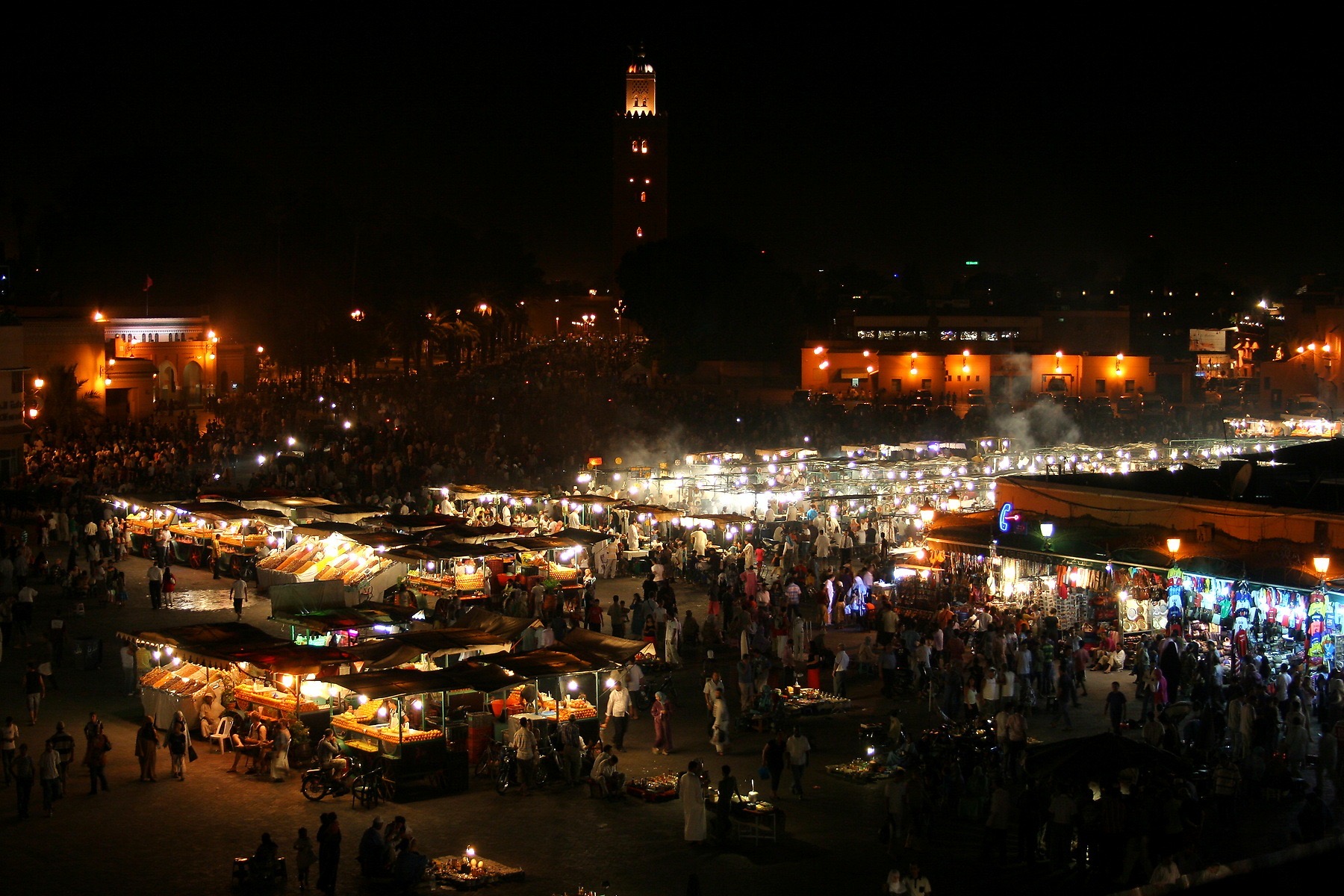
Once the sun sets, Jemaa el-Fnaa square undergoes an absolutely incredible transformation that you simply have to see with your own eyes. The whole space fills up with dozens of giant mobile food stalls, thick smoke rising from the hot grills, and the square instantly turns into the biggest open-air restaurant under the stars. Traditional music plays everywhere, drummers set the rhythm, and the overall atmosphere is simply magical and utterly captivating.
If you head here for dinner, be very cautious with the local restaurants right on the square, because the touts can be unbelievably persuasive. The moment you sit down, the waiters automatically bring you bread, olives and little bowls of various starters. Keep in mind, though, that these starters are definitely not free and will unfailingly appear on your bill at the end. The best defence is to have everything you didn’t order yourself taken away immediately, and always ask clearly about the price of any dish in advance.
3. Jardin Majorelle garden and the legacy of Yves Saint Laurent
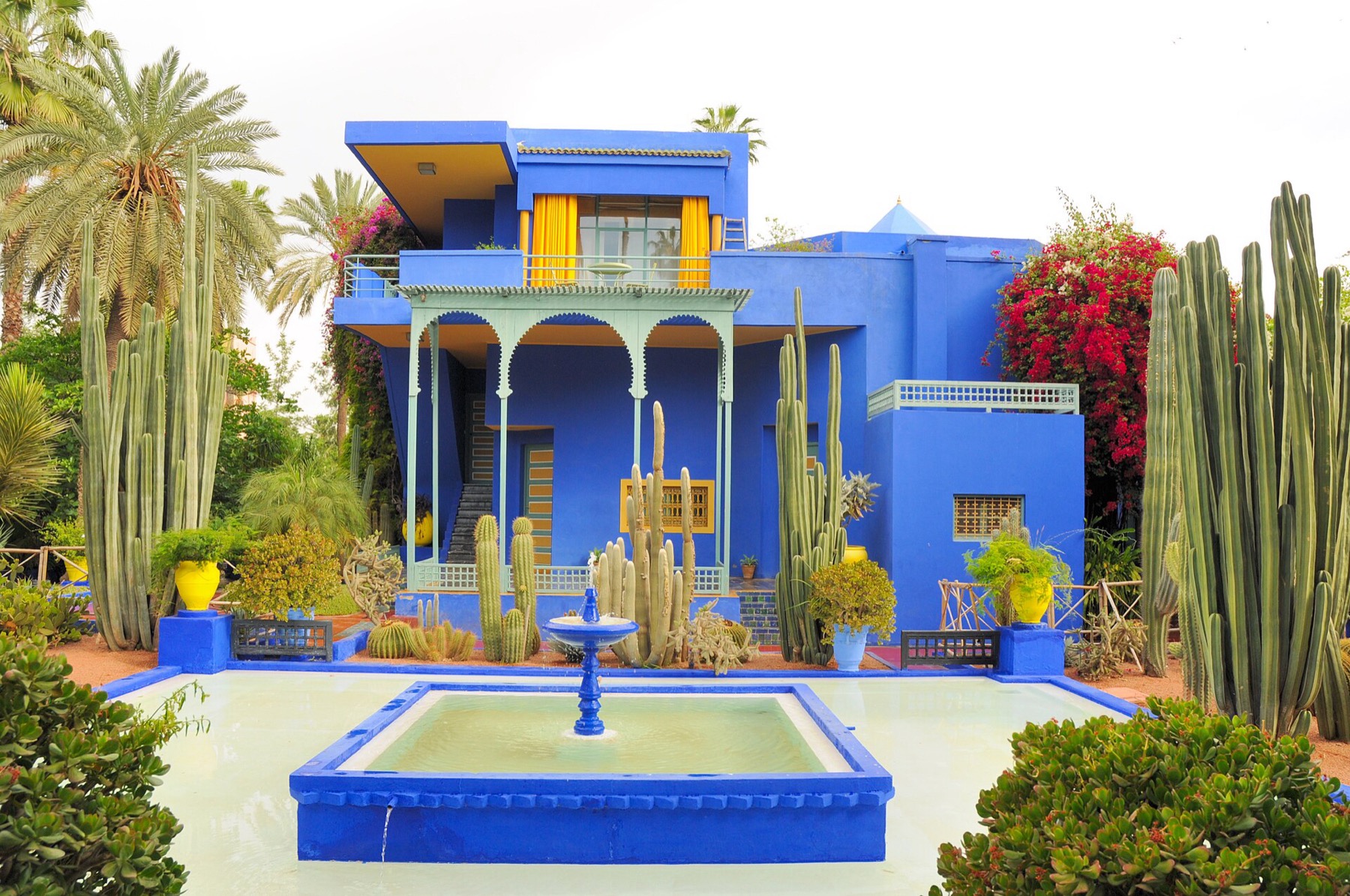
Jardin Majorelle is one of the most beautiful and most visited attractions in all of Marrakech, and it definitely shouldn’t be missing from your itinerary. This stunning botanical garden lies a short walk outside the main centre (about 45 minutes on foot from the medina) and is a perfect oasis of calm. It’s full of exotic plants, giant cacti and ponds, all dominated by the iconic cobalt-blue colour that became known as “Majorelle blue”.
The garden was originally created by the French painter Jacques Majorelle, but it was later saved from destruction by the famous fashion designer Yves Saint Laurent, whose ashes were even scattered here after his death. 💡 Tip: Given the enormous popularity of this spot, buy your tickets (which cost around 150 MAD) online well in advance. Ideally arrive right at opening time, otherwise you’ll be pushing through crowds of tourists and queuing endlessly for every photo.
4. The gorgeous Bahia Palace
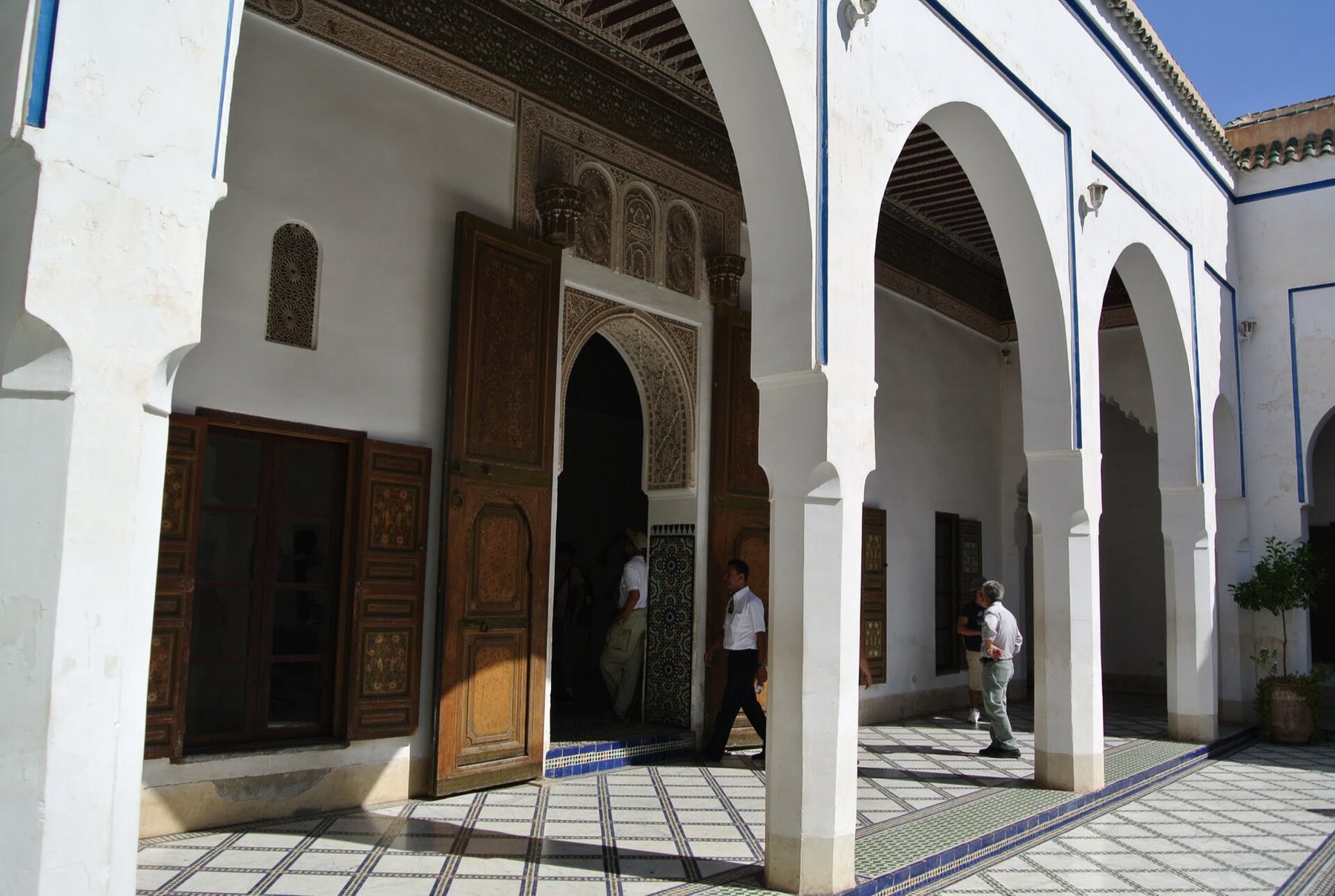
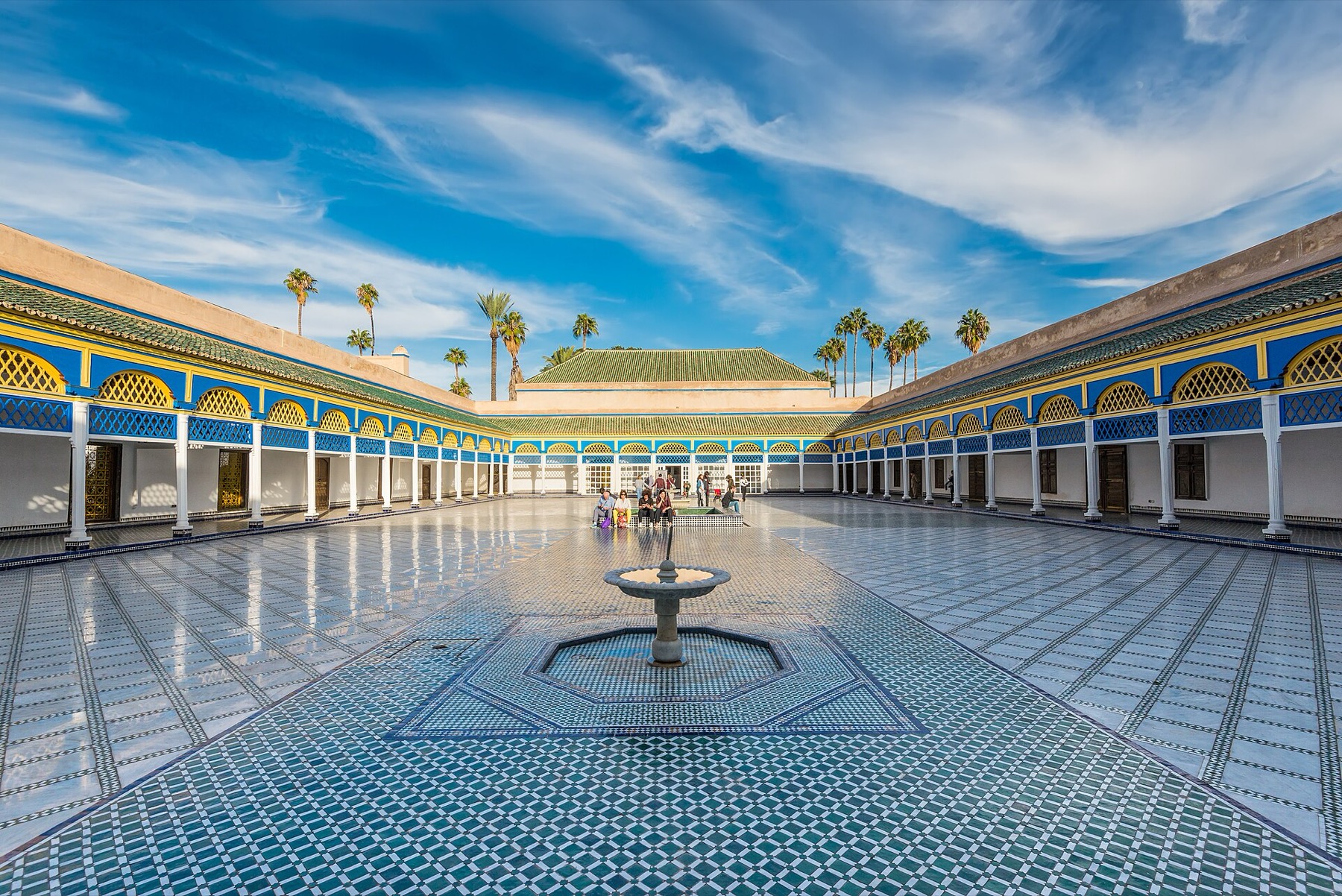
The Bahia Palace is an absolute masterpiece of late-nineteenth-century Moroccan architecture and a showcase of the incredible wealth of that era. Admission is 100 MAD (roughly €9) for an adult, while children under seven get in completely free. It’s open every day from 8:00 to 17:00, and this sprawling complex offers dozens of beautifully decorated rooms, huge courtyards with marble fountains and shady gardens.
The palace’s name translates as “Brilliant”, and its builders had one clear goal: to create the most magnificent palace of its time. Walking through the empty halls with their incredibly detailed carved cedar ceilings and zellige mosaic floors is an experience you really mustn’t miss. Once again, the golden rule here is to arrive as early in the morning as possible, before the big organised tour groups from the coastal resorts turn up.
5. The fascinating Ben Youssef Madrasa
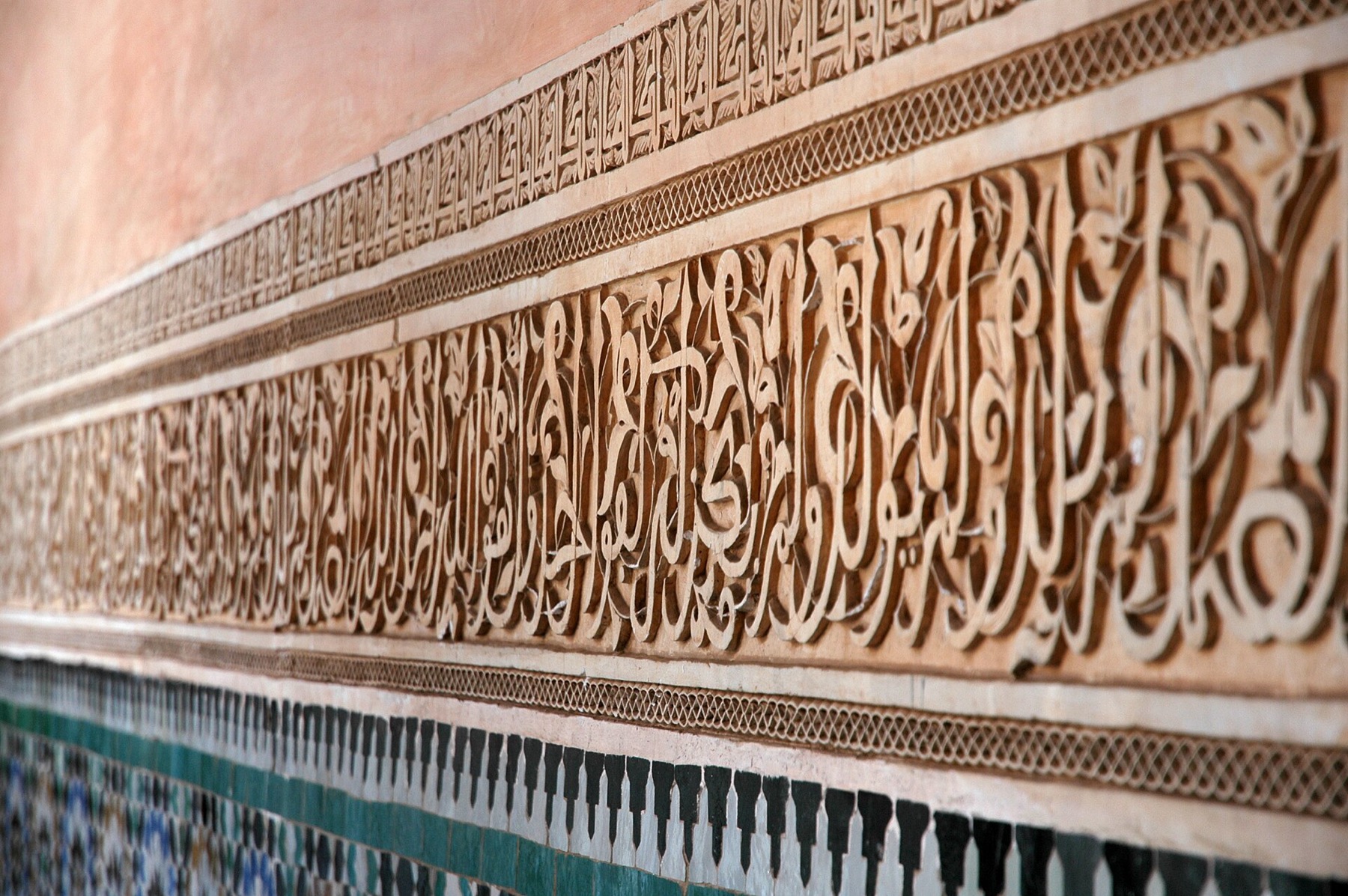
The Ben Youssef Madrasa was once the largest Islamic university in all of Morocco, and to this day it rightly ranks among the absolute gems of Islamic architecture in Marrakech. After a fairly extensive and demanding renovation, this fourteenth-century historic school has reopened to visitors, and its intricate details will literally take your breath away. The main courtyard, with its large shallow pool, is surrounded by walls covered in complex geometric patterns, wood and stucco.
You can also take a detailed look at the tiny student cells on the upper floors, where up to 900 students of the Quran once lived and studied diligently. The contrast between the utterly silent, sacred atmosphere inside the madrasa and the bustling souk right outside its walls is truly fascinating. 💡 Tip: Combine a visit to the madrasa with a stroll around the surrounding markets and the nearby photography museum, giving you a great programme for a whole morning.
6. El Badi Palace and a magical sunset
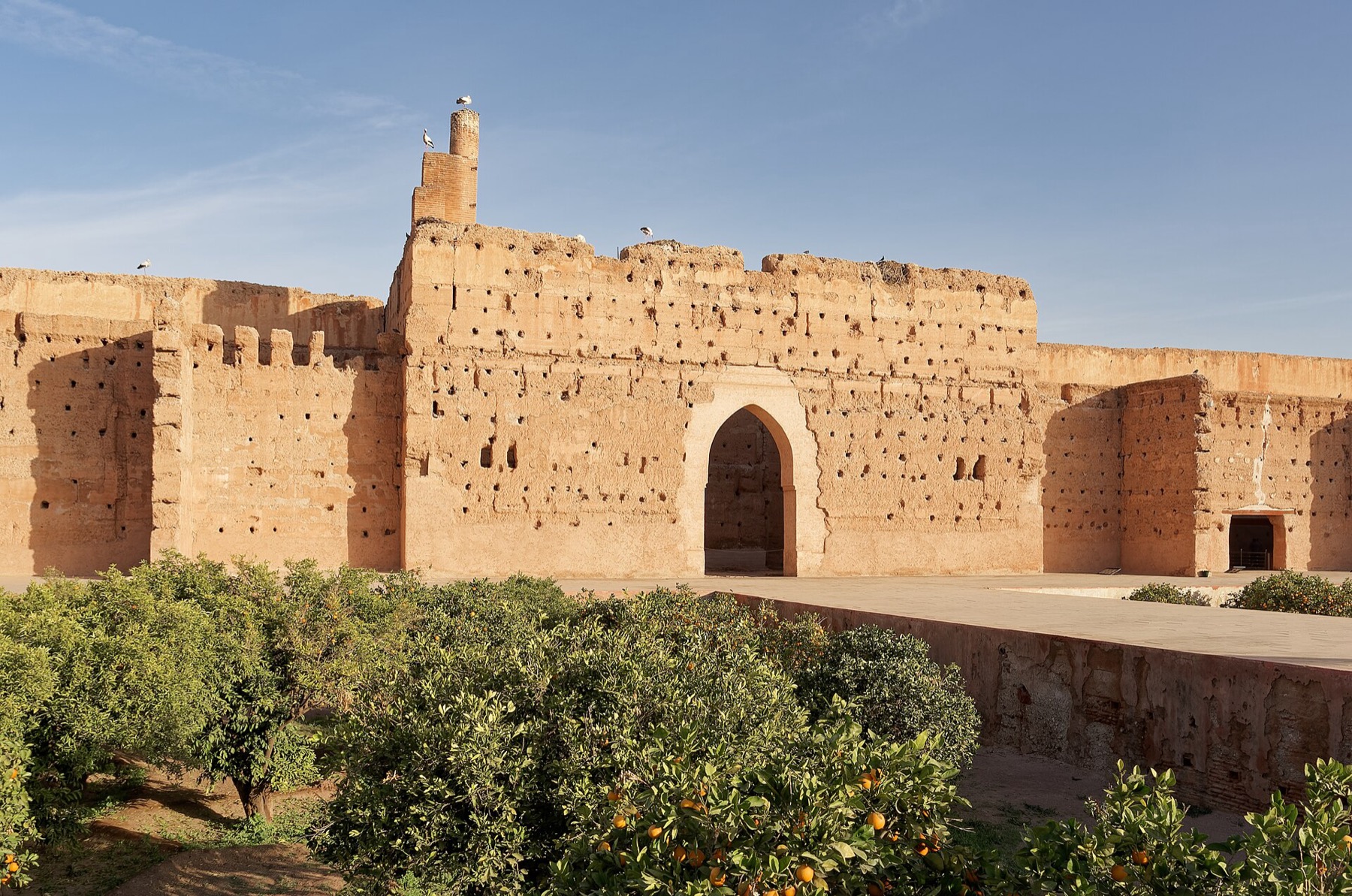
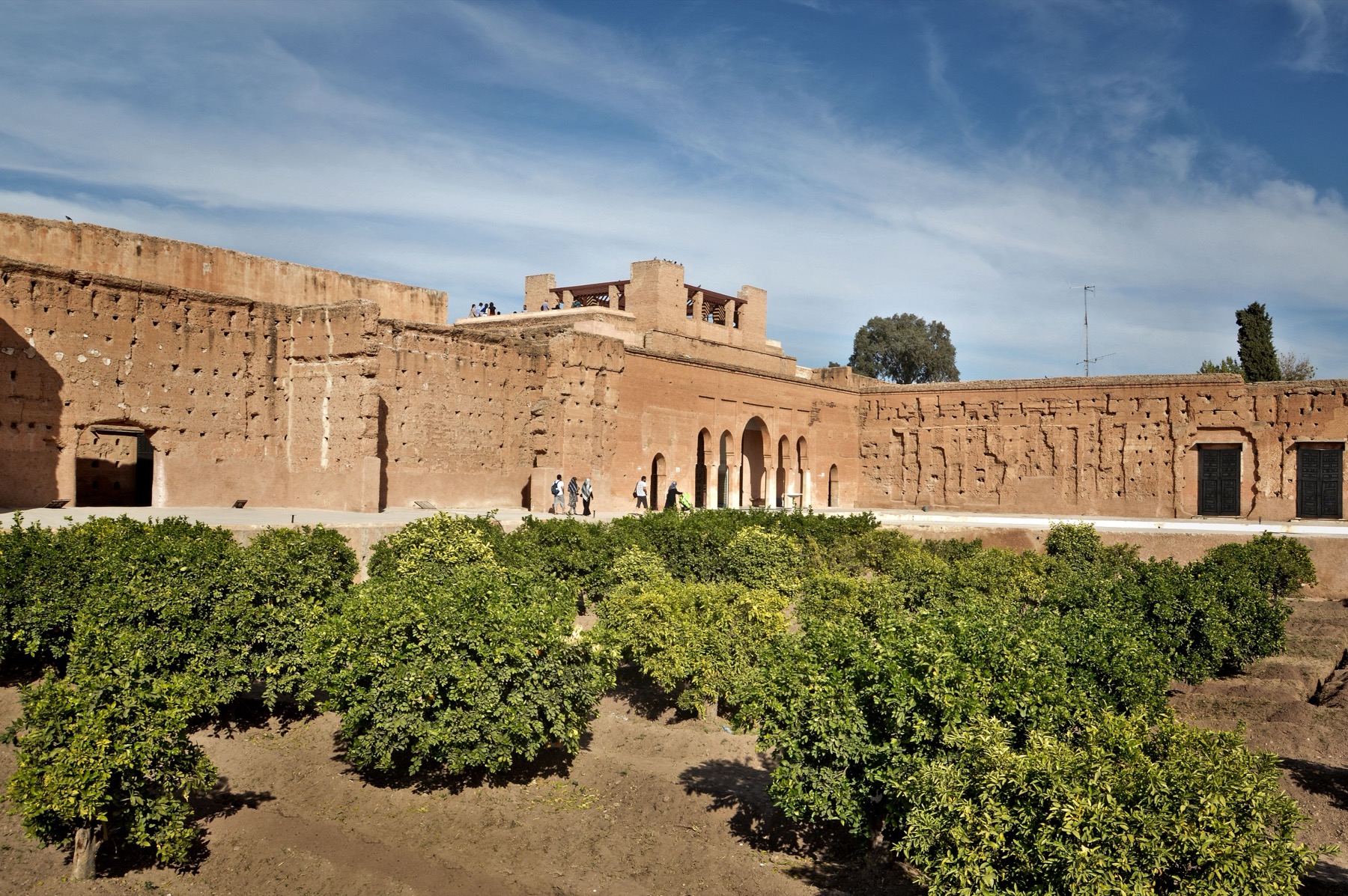
While the nearby Bahia Palace reliably impresses with its perfectly preserved details, the El Badi Palace is today more of a monumental ruin — yet one that clearly hints at its former, enormous glory. This sixteenth-century palace was built by Sultan Ahmad al-Mansur and was generously financed at the time with gold from Sudanese conquests. Today you can wander among the massive earthen walls and vast empty courtyards.
Perhaps the most interesting thing about the whole palace today is that dozens of storks have settled on its high walls, building their huge nests and circling above the ruins. 💡 Tip: Come here in the late afternoon just before closing time. From the palace terrace you’ll get an absolutely fantastic view of the city at sunset, when the brick walls take on an incredibly rich red-orange colour and the photos from here look amazing.
7. The majestic Koutoubia Mosque
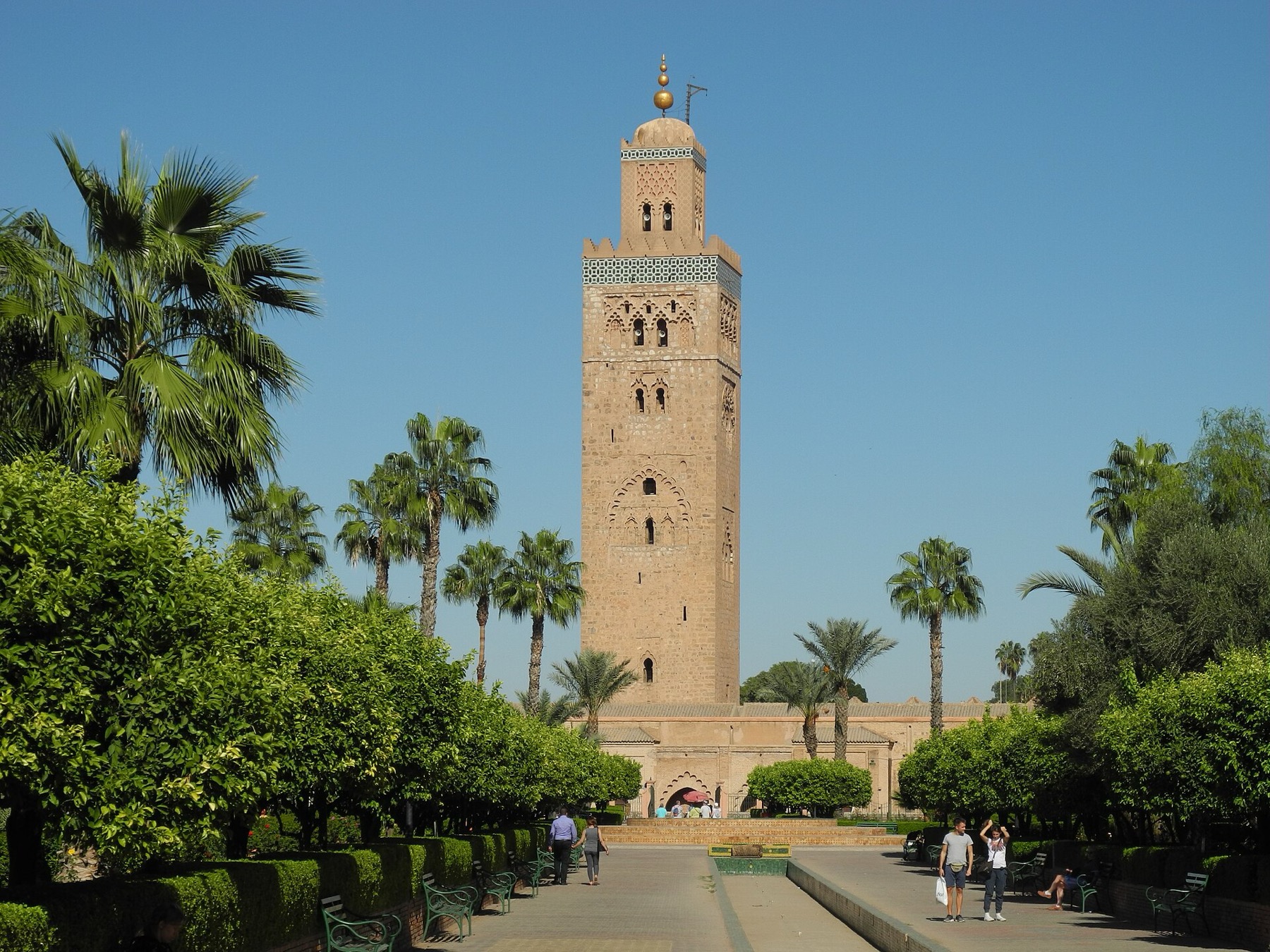
The Koutoubia Mosque is without doubt the best-known landmark and main reference point of all Marrakech, by which you can always reliably get your bearings. Its almost seventy-metre-tall minaret rises proudly above the city and is visible from just about every rooftop terrace in the wider area. The mosque’s name originally derives from the word for booksellers, because in the past dozens of stalls with historic manuscripts stood in its immediate vicinity.
It’s very important to know that only practising Muslims are allowed inside the mosque, so as an ordinary tourist you can admire this imposing twelfth-century structure only from the outside. The best thing to do is stroll through the beautifully kept rose-filled gardens surrounding the mosque and listen from there to the deafening yet incredibly captivating call to prayer, which echoes across the whole city and lends it that true oriental atmosphere.
8. The labyrinth of souks in the medina
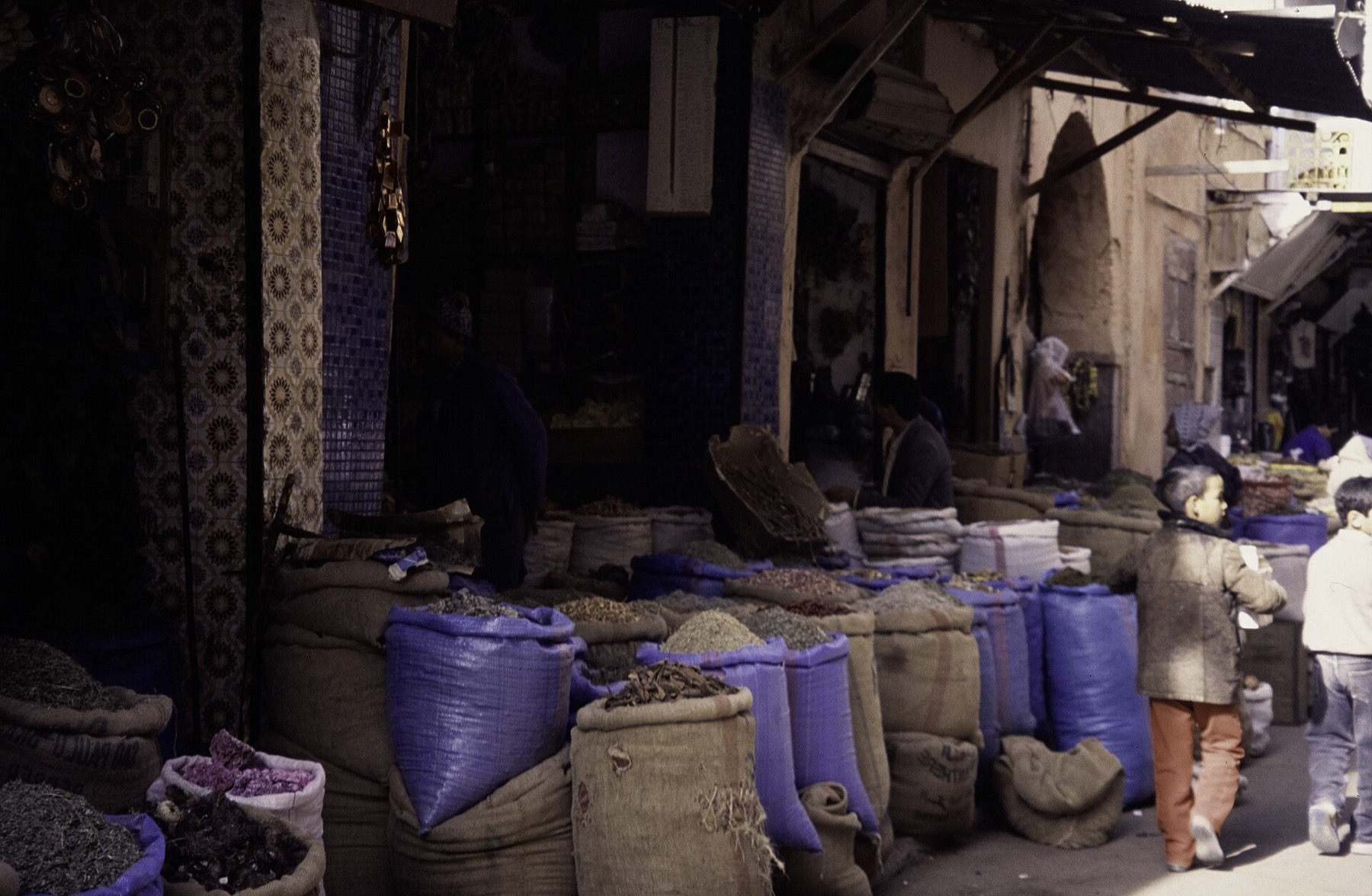
Getting lost in Marrakech’s souks (markets) isn’t just highly likely — it’s practically inevitable, and it’s one of the main and best experiences the whole city has to offer. The souks form a huge labyrinth of narrow, partly covered alleys boasting more than three thousand years of history, logically divided by individual crafts. You’ll find lanes full of leather goods, hand-hammered lamps, carpets, painted ceramics and colourful spices.
The atmosphere here is incredibly dense and all-enveloping at every turn. From every corner someone calls out to you offering the guaranteed best price, you constantly have to dodge passing scooters weaving inexplicably through metre-wide gaps between people, and the strong scent of mint tea drifts in from all sides. Don’t be afraid to get lost and put your map away for a while, because in the end every larger alley will sooner or later spit you back out onto the central square.
9. The art of haggling and how to do it
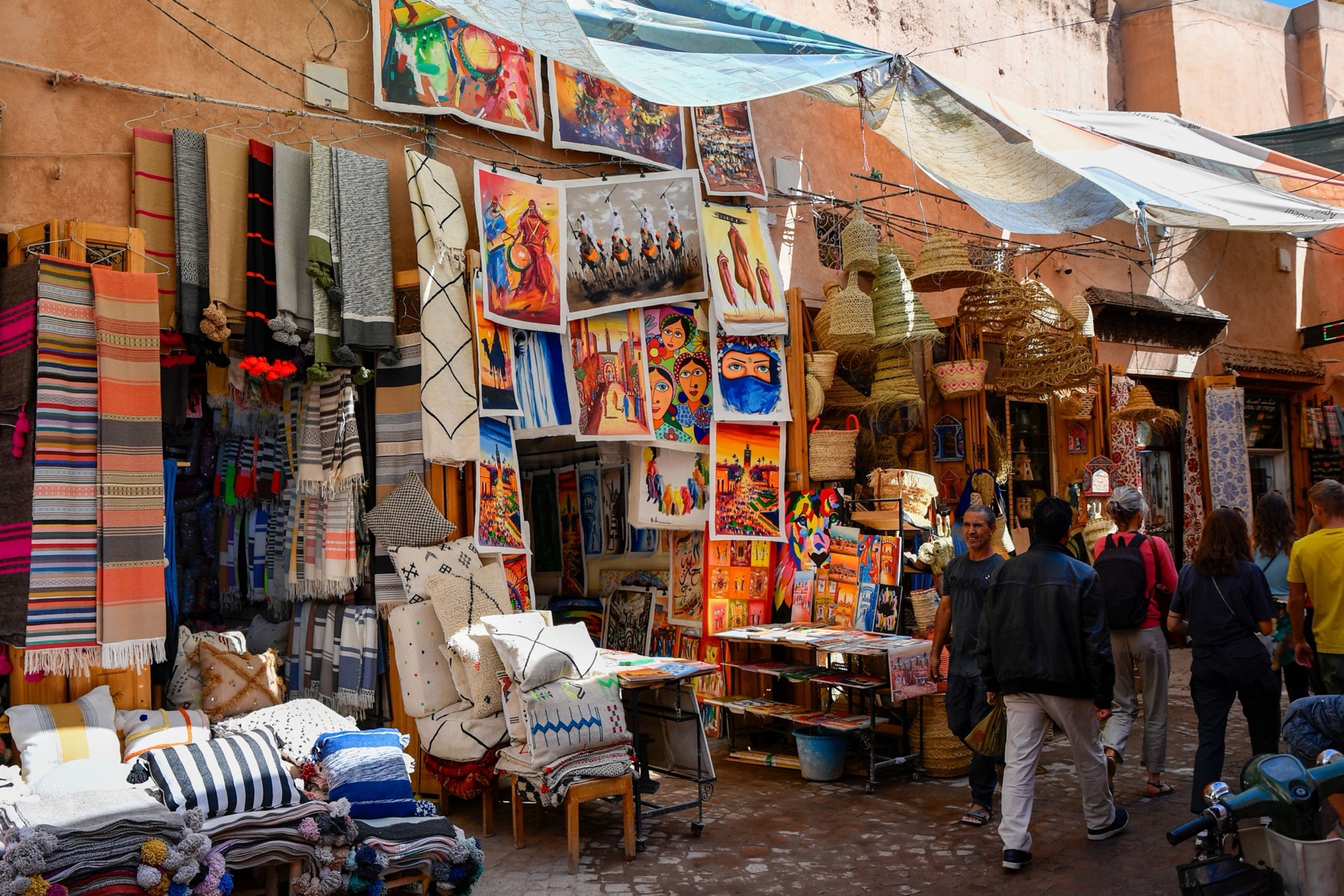
Shopping in Morocco has its clear, unchanging rules, and haggling here is an absolute necessity, not just an optional choice for the brave. If you see goods without a price tag, expect the first price the vendor confidently quotes to be heavily inflated — often three or even four times over. So never accept the first offer, or you’d be offending the trading spirit of the local sellers.
The basic rule for a successful purchase is this: offer roughly 30% of the originally requested amount and work your way, with a smile and some joking, towards a mutual compromise. 💡 Tip: If the price still seems too high, use the very effective walk-away technique. Thank them with a smile and start slowly leaving the shop. In nine out of ten cases the seller will immediately call after you with a much better offer.
10. A traditional cleanse at the hammam
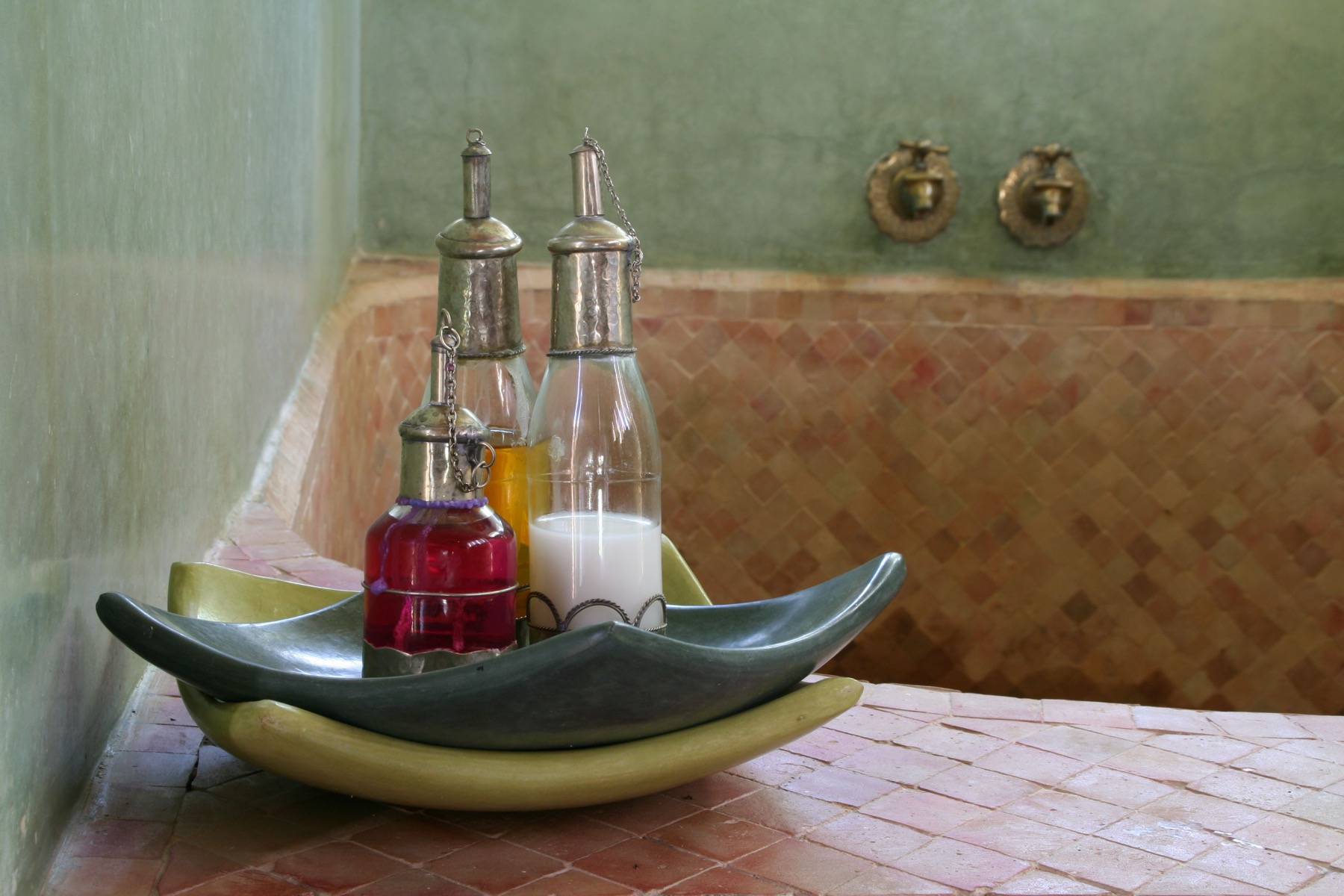
If you want to experience something genuinely local while also resting after a demanding day walking around the city, a visit to a traditional Moroccan hammam (public bathhouse) shouldn’t be missing from your list. The experience involves a longer stay in a hot steam room, followed by an incredibly thorough full-body scrub using a special black soap paste (known as savon noir) and a rough scrubbing mitt called a kessa.
You essentially have two main ways to approach it. Either you head to an authentic local hammam where ordinary Moroccans go (it’s very cheap, but you only get a plastic bucket and have to bring your own soap and towel), or you pay a bit more for a tourist spa hammam. There, the staff take care of you, you get a lovely massage and everything takes place in a luxurious setting. For your very first visit, we’d recommend the second option.
11. The mysterious Saadian Tombs
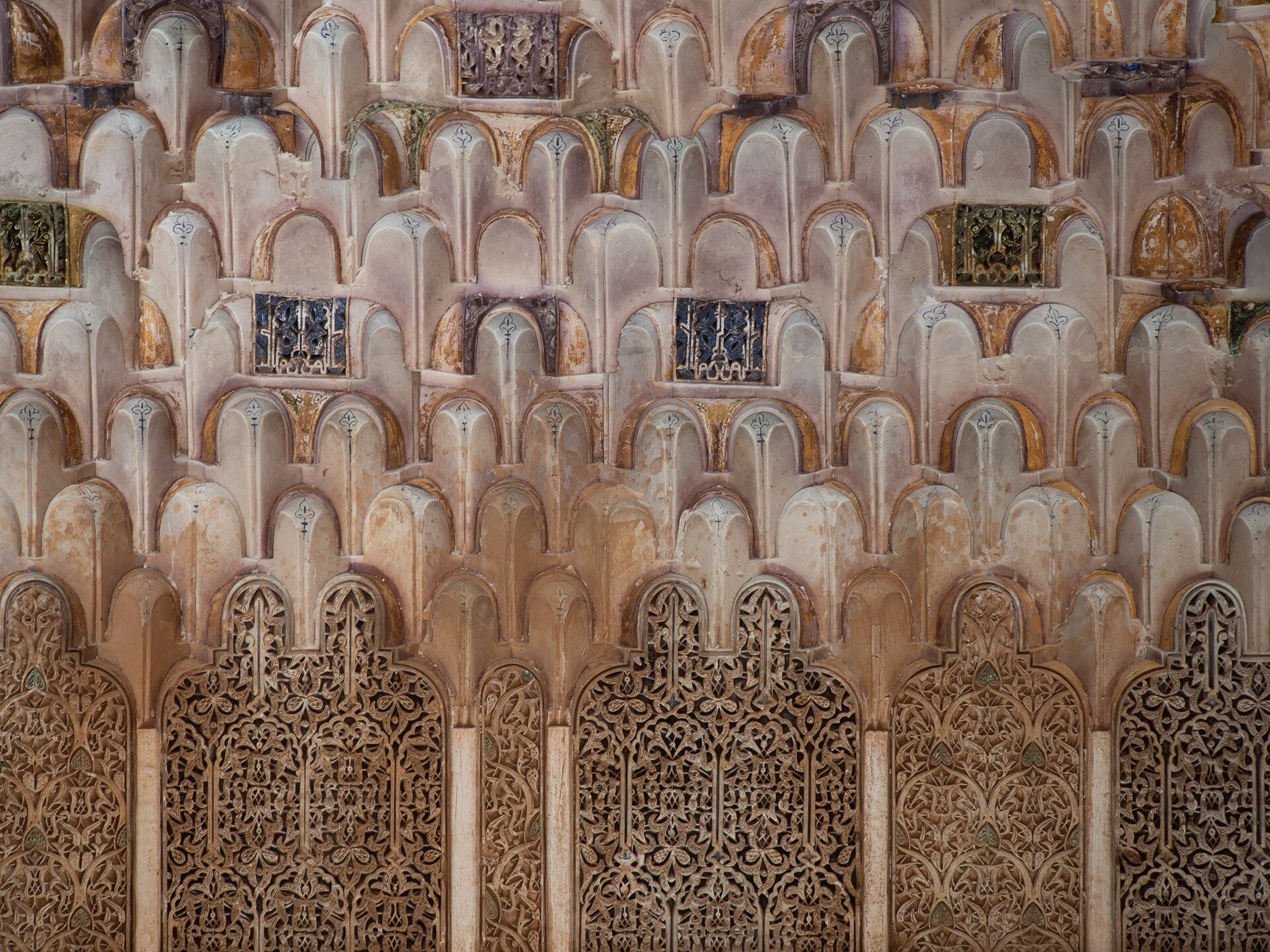
The Saadian Tombs are a fascinating and beautiful monument from the late sixteenth century, which were completely forgotten for hundreds of years and hermetically walled up by one of the later rulers who wanted to erase the legacy of his predecessors. They were rediscovered entirely by chance in 1917, during aerial photography of the city by the French army. Today you can calmly admire the beautifully decorated mausoleums here.
The most famous and by far the most beautiful part of the whole complex is the so-called Hall of the Twelve Columns, where the powerful Sultan Ahmad al-Mansur is buried. The room is decorated with incredibly precise stucco and zellige tiles, supported by massive columns of pure Carrara marble. The complex itself isn’t particularly large and you’ll walk through it fairly quickly, but the decorative details rank among the finest in all of Morocco.

12. Maison de la Photographie (Museum of Photography)
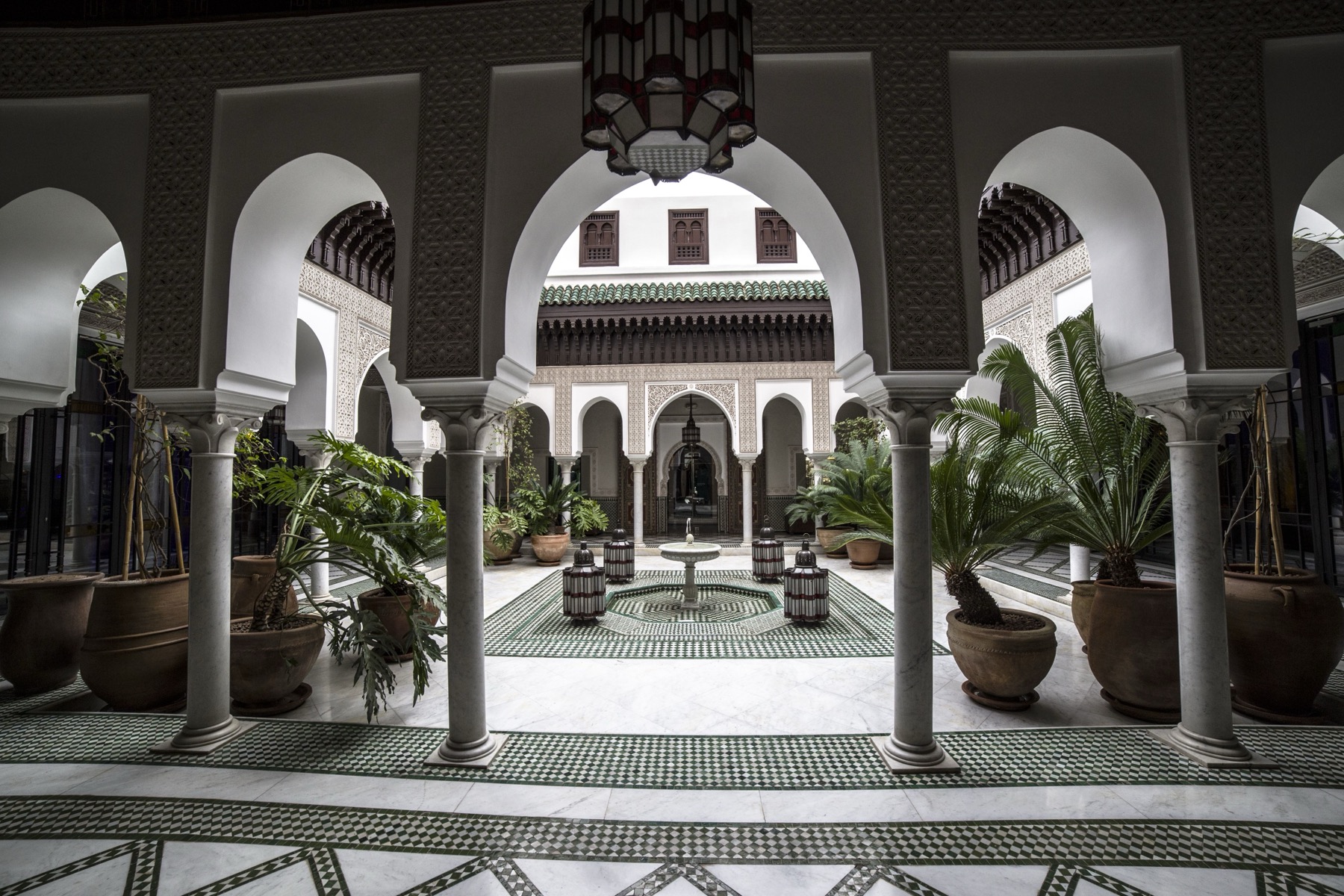
This wonderful museum is a real hidden gem of Marrakech that a lot of tourists completely forget about, which is a huge shame. The Maison de la Photographie is housed in a beautifully renovated traditional riad and holds a stunning collection of historic photographs of Morocco from 1870 to 1950. The photos on display beautifully and rawly document how the local culture, the Berber tribes and the city itself gradually evolved over the decades.
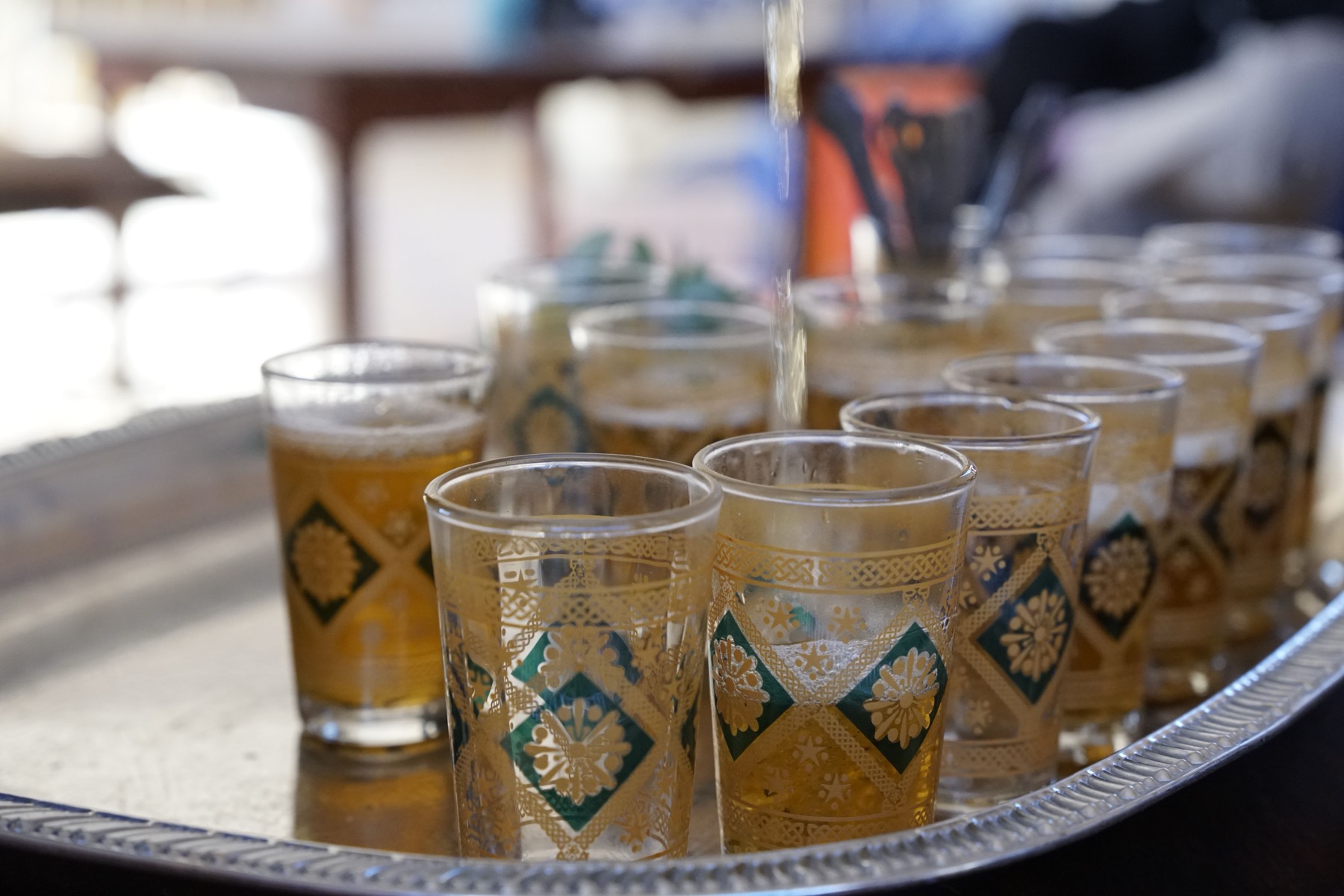
Beyond the exhibition itself, the museum has one more huge draw that makes paying the entrance fee well worth it. On its roof there’s one of the best cafés in the medina, offering a fantastic panoramic view over the whole city and, in the distance, the snow-capped peaks of the Atlas Mountains. It’s an absolutely ideal spot to enjoy a refreshing sweet mint tea after your visit and relax for a while in the shade.
13. Safety in the medina after dark
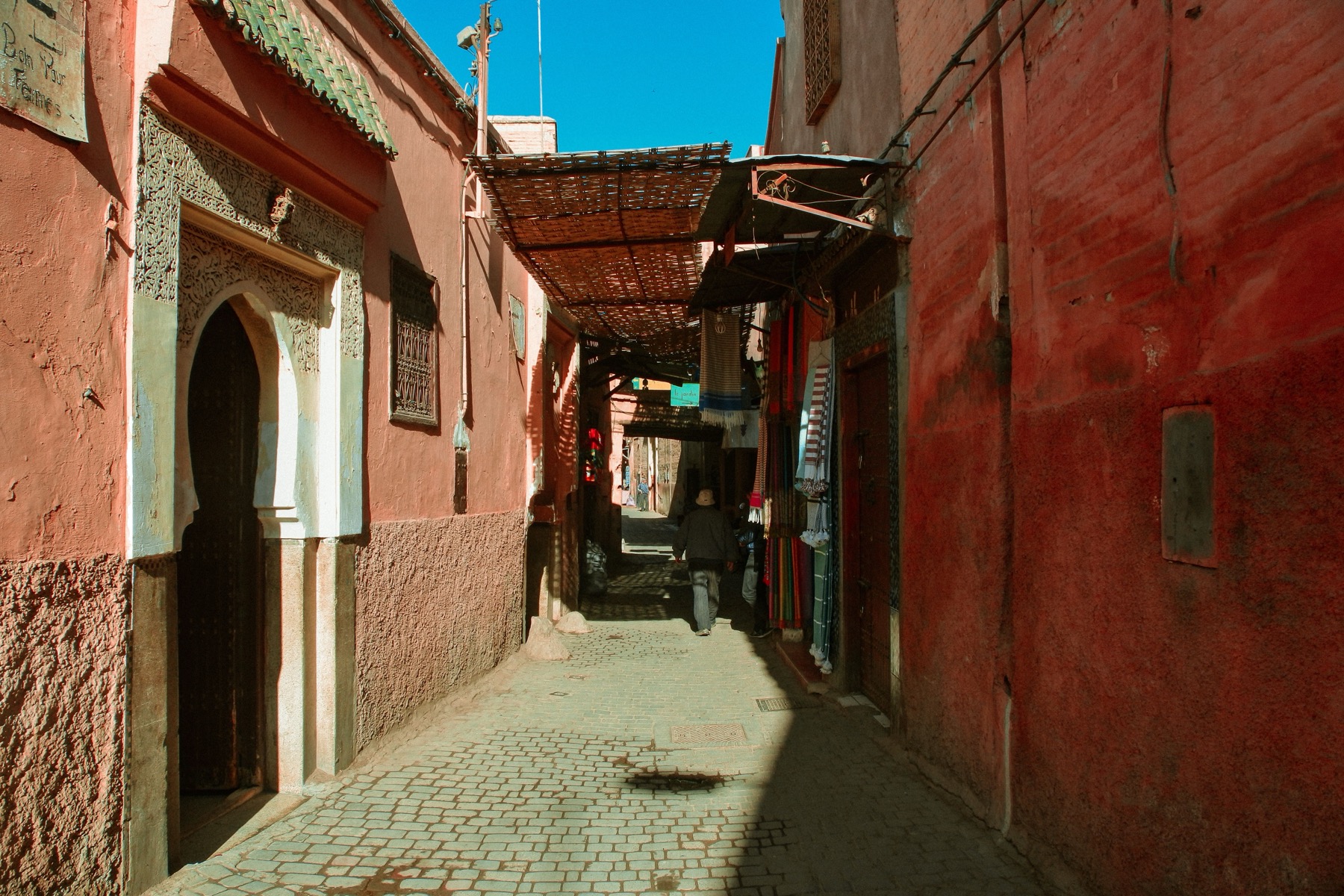
Although Marrakech is bustling by day and, in terms of personal safety, a relatively reliable place, after dark the atmosphere in the narrow medina alleys changes significantly. During our trip we very quickly confirmed that finding your way through the dark alleys is far more difficult, and the medina itself can be dangerous at night. The crowds vanish quickly, and you can very easily end up in empty, dark corners with no way to get help.
Special, heightened caution applies especially to women. Women should definitely not walk around the medina alone at night. If you’re heading back to your riad after dinner once it’s dark, stick to the main, well-lit routes, don’t take any dodgy shortcuts, and ideally always have someone from the hotel staff accompany you. For detailed information on overall safety in the country, be sure to read our extensive article Morocco safety: 18 things to watch out for.
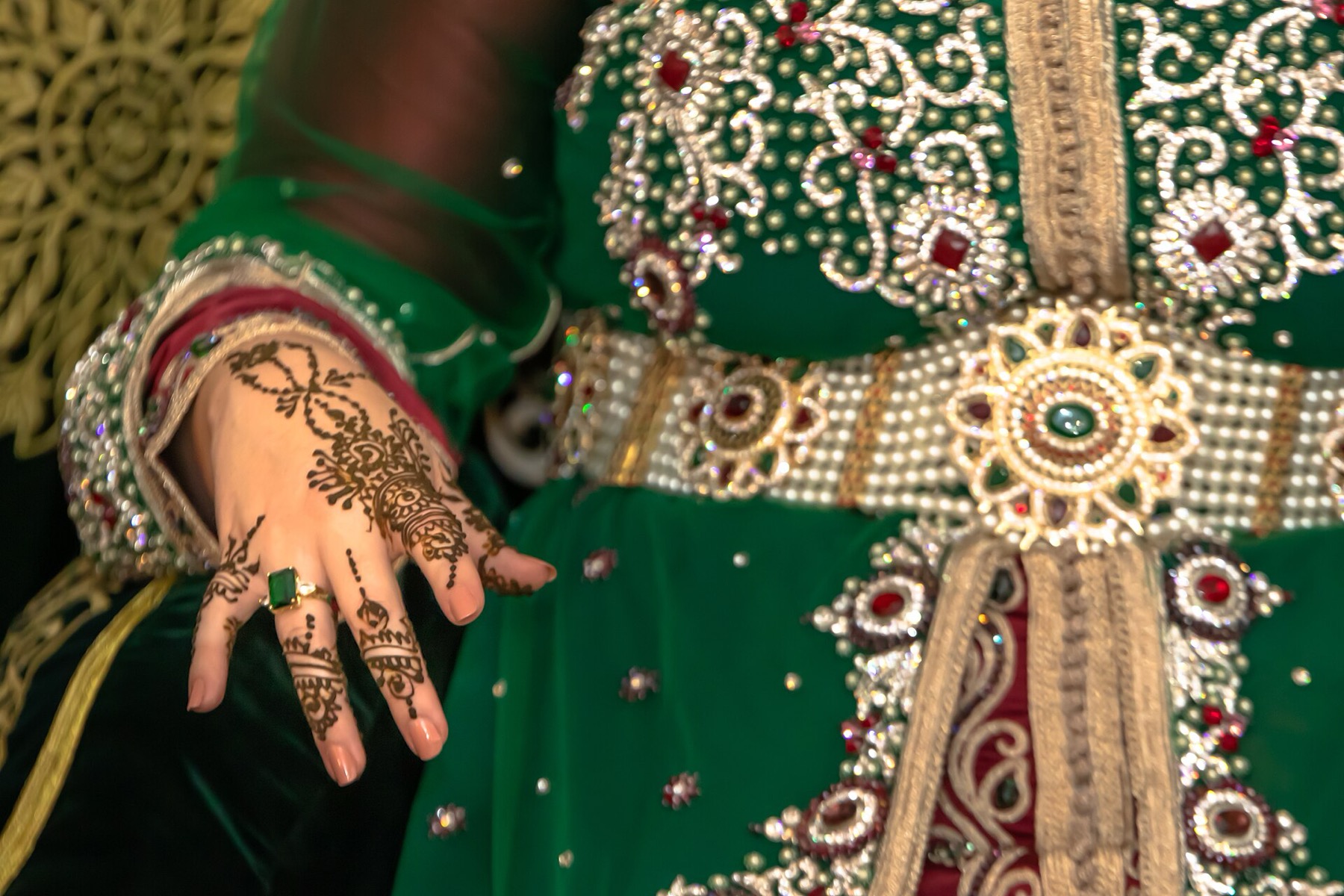
14. Scam: Watch out for “free henna” on the square
One of the most common and most insidious scams tourists will almost certainly encounter in Marrakech plays out right on the central Jemaa el-Fnaa square. Local women grab your hand out of nowhere and start rapidly painting a henna pattern on it, telling you it’s “free” or a welcome gift. But as soon as the pattern is done, they immediately and very aggressively demand amounts in the range of 200 to 500 MAD, making a huge scene.
And it’s not just about the wasted money and a spoiled mood — there’s also a huge health risk involved that many people forget about. Many of these women use so-called “black henna”, which contains the toxic substance PPD. It can cause severe allergic reactions, burns and, in rare cases, even permanent scarring. 💡 Tip: If someone approaches you with henna, hide your hands behind your back and say very firmly “La, shukran” (No, thank you).
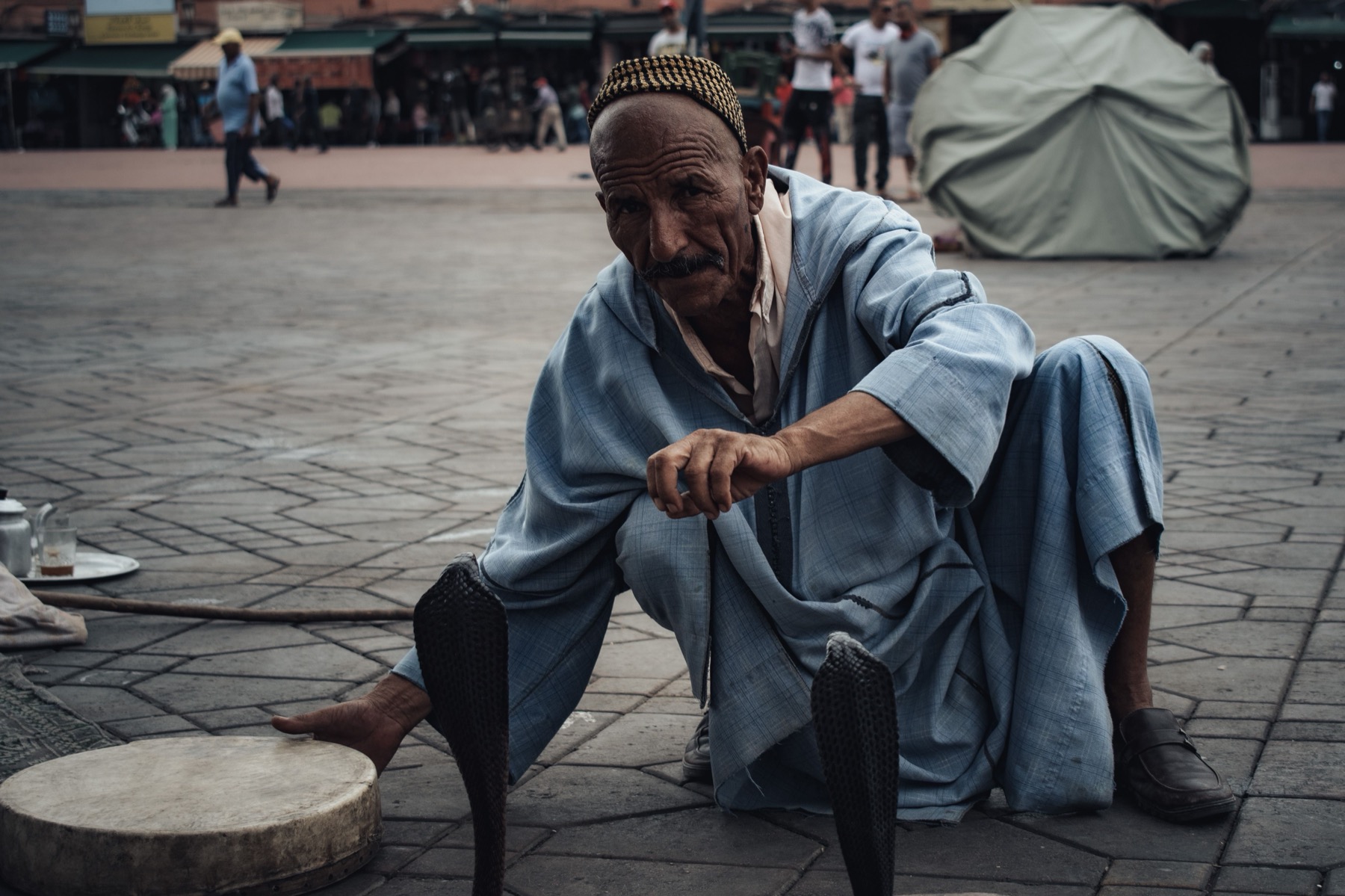
15. Scam: Animals as photo props
Walking across Jemaa el-Fnaa square, you’ll unfortunately keep seeing plenty of men with small monkeys on chains or snake charmers sitting on carpets. These animals are often kept in absolutely appalling conditions and serve purely as visual props for the amusement of naive tourists. It often happens that they suddenly plonk a monkey on your shoulder or drape a snake around your neck without you asking for it at all.
Once you’ve photographed the animal, or they’ve photographed you with it, they immediately start demanding absurdly high amounts for the photo and can be very unpleasant about it. For ethical reasons and to protect the animals, we strongly recommend paying no attention whatsoever to these attractions. Don’t make eye contact with these people, and definitely don’t photograph the animals, even from a great distance. Any pointed camera is an instant signal to them to ask for money.
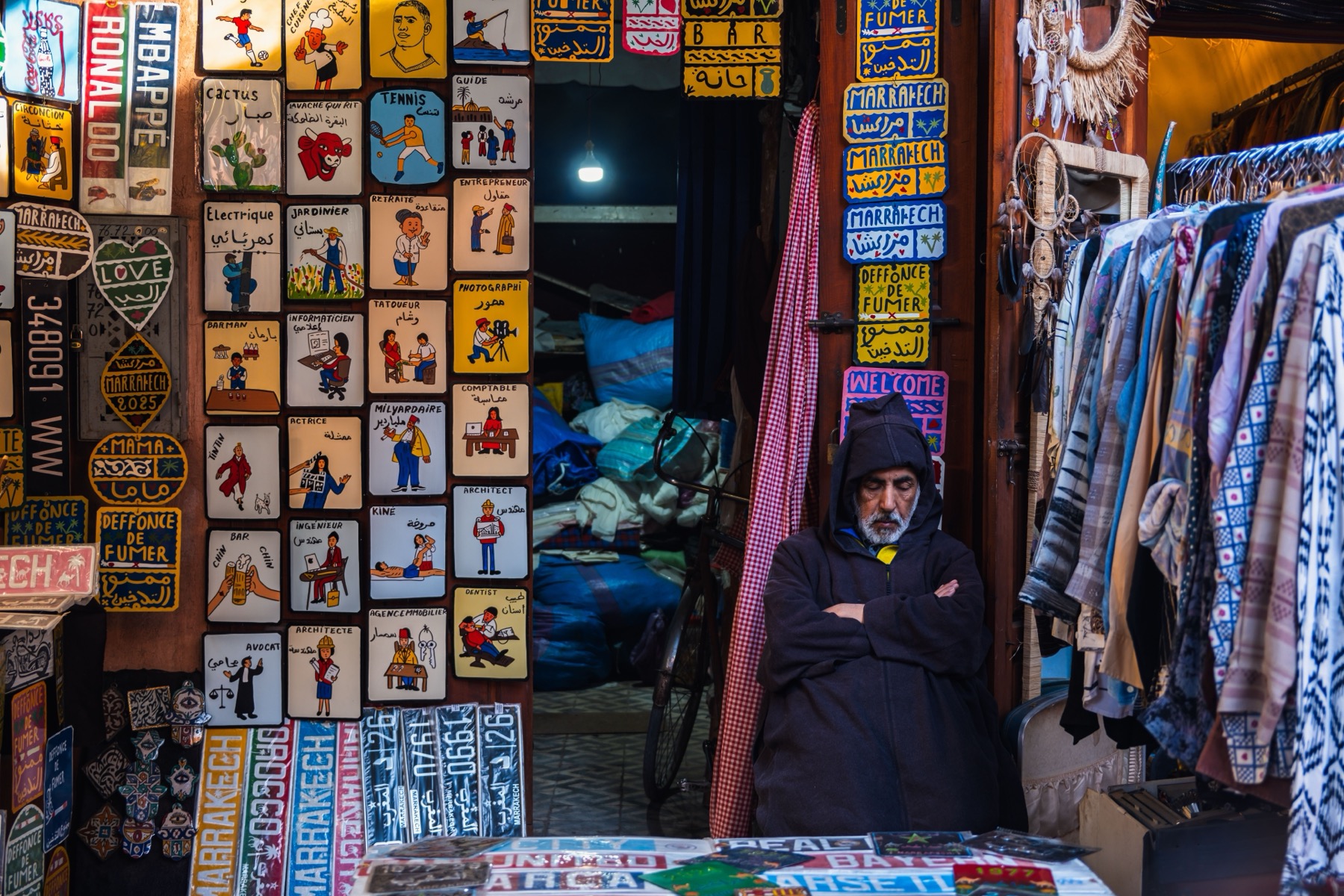
16. Scam: Fake guides and “helpers”
In the bustling medina, it’s practically a certainty that sooner or later some stranger will attach themselves to you. Local young men start walking casually beside you, pointing you towards the sights or eagerly explaining the city’s history. At the end of this unsolicited tour they’ll of course very bluntly ask for money, even though at the start they kept insisting they only wanted to help you find your way in a friendly, selfless manner.
Remember very well that official licensed guides always carry a visible ID badge, and you have to arrange a tour with them in advance on top of that. You must refuse any self-appointed guide on the street within the very first seconds — politely but absolutely firmly. If they keep sticking to you and talking, just ignore them and step into the nearest shop or café until they leave.
17. Scam: “You can’t go this way, the street is closed”
This is perhaps the oldest and most-used trick in the book of Marrakech street con artists. As you try to find your way to your riad with navigation in hand, someone with a serious face approaches you claiming that your street is closed today, blocked off, or that an important prayer is happening there right now. They’ll then of course helpfully offer to lead you along another, supposedly “better” route.
But this other route almost always ends with them leading you somewhere completely different, pushing you into a friend’s shop, or taking you to your destination via a huge detour and then aggressively demanding a hefty payment for the navigation. 💡 Tip: Download offline maps before you leave home and remember that streets in the medina are almost never closed. Just thank them with a smile and keep walking confidently in your original direction.
18. Scam: Redirection to the tanneries
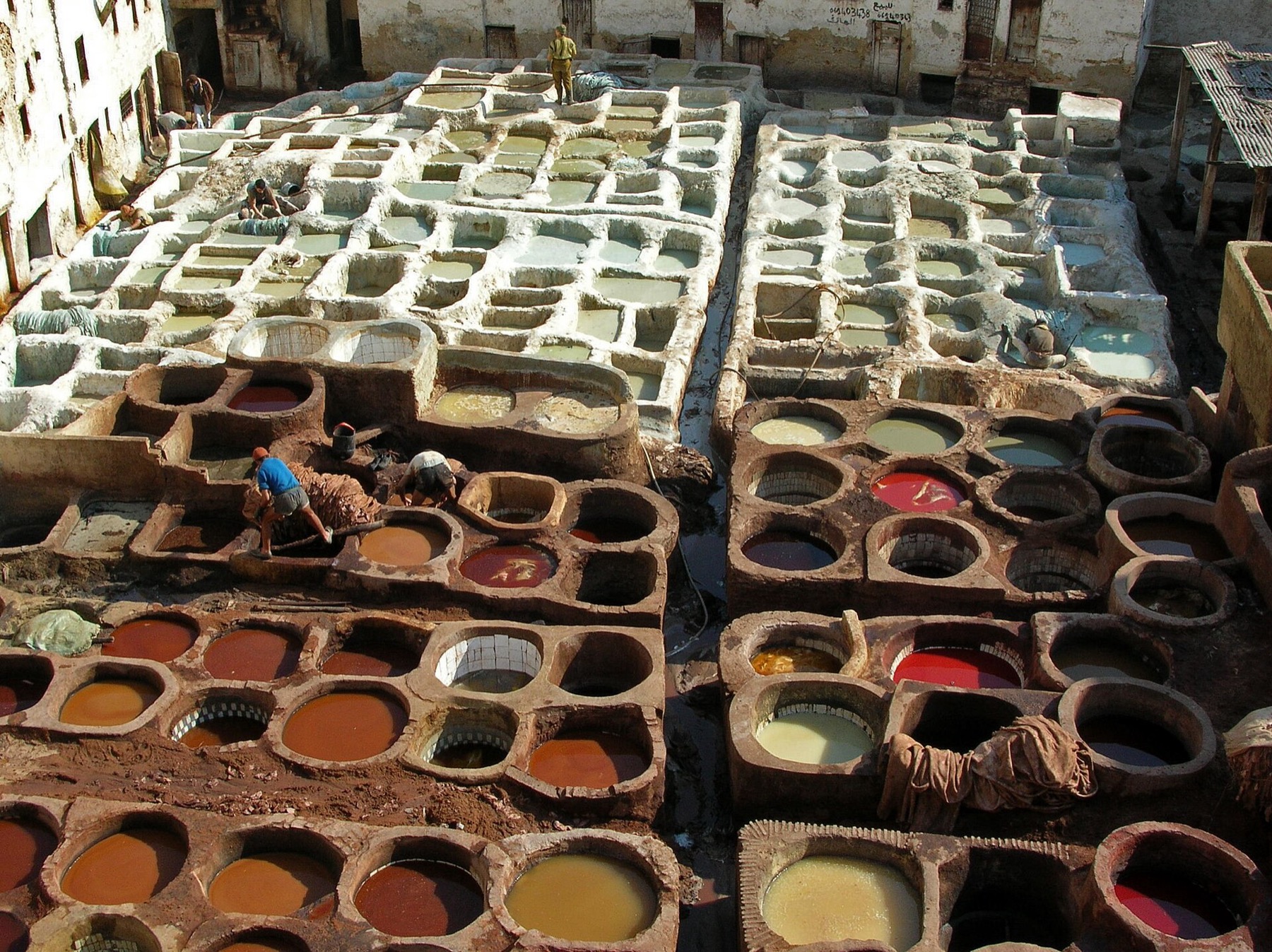
This very common scam is often closely linked to the previous point about closed streets. Con artists deliberately stop you on your way to a major sight (most often the palaces or the madrasa) and sadly inform you that “the site is unfortunately closed to all tourists today”. In the same breath, though, they add that today, exceptionally, a big Berber market is being held at the tanneries and that they’d be delighted to take you there.
The tanneries in Marrakech do genuinely exist and are visually interesting, but this trick serves only to pressure you into buying overpriced leather goods in a particular friendly shop from which your fake “guide” gets a big commission. Always verify the opening hours of the sights from official sources and don’t believe anyone who tries to convince you otherwise on the street.
19. How to handle taxis and meters
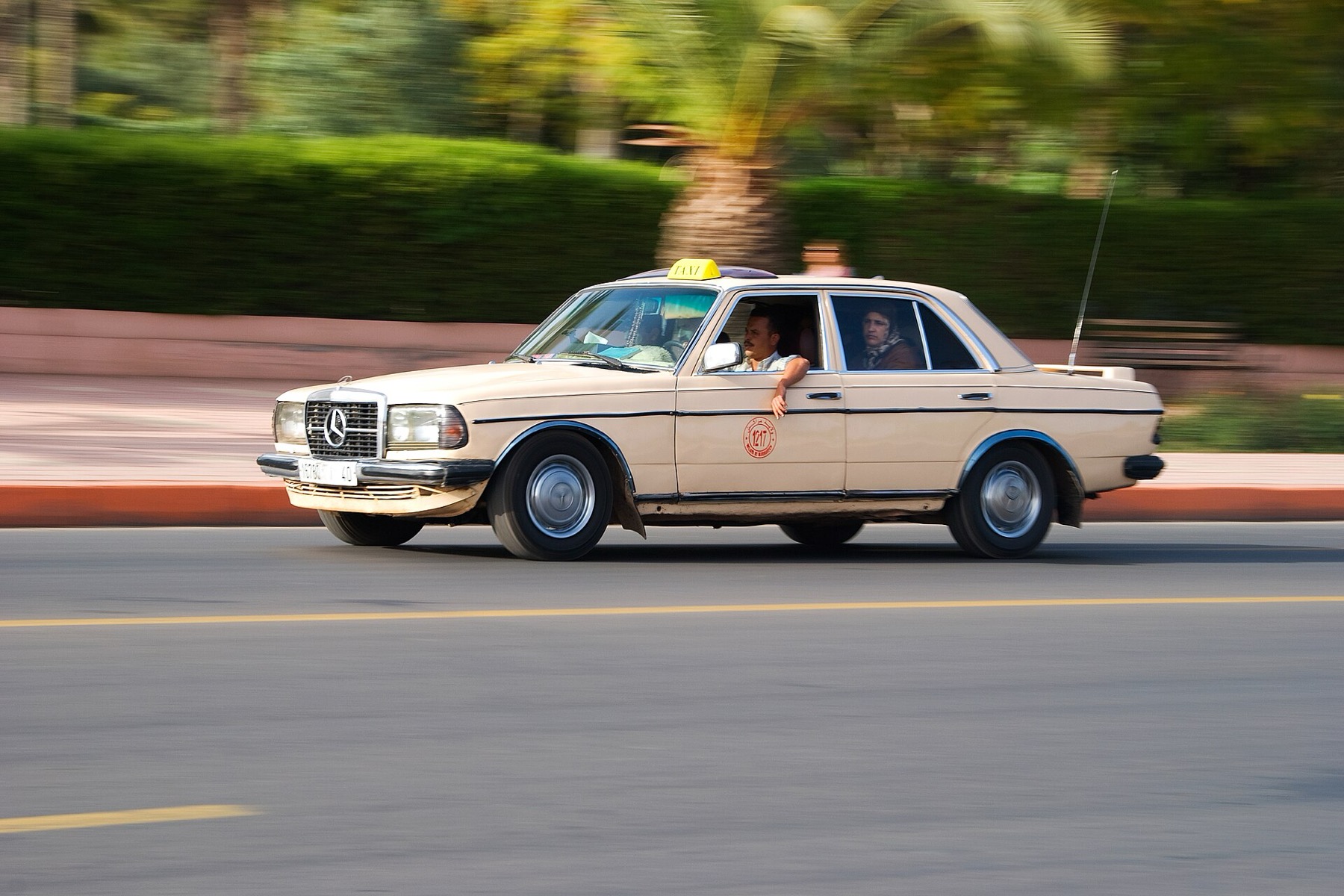
Getting around the city can be a huge test of the nerves, not just behind the wheel but also on a seemingly simple taxi ride. The small city taxis, the so-called “petits taxis”, are legally strictly obliged to always run the meter. Unfortunately, the reality is that as soon as the driver sees a tourist, he’ll immediately declare that “the meter is broken”, or straight through the rolled-down window offer you an absurdly high flat fare for the trip.
The real difference in price is absolutely enormous. A normal ride across the city on the meter costs around 15 to 20 MAD, whereas tourists are routinely offered a ride for 100 to 200 MAD. 💡 Tip: Always firmly insist on switching on the meter before you even get into the car. If the driver refuses, simply thank him, slam the door and flag down the next one. Thousands of taxis run in Marrakech, and sooner or later you’ll come across an honest driver.
20. Watch out for backpacks and pickpockets
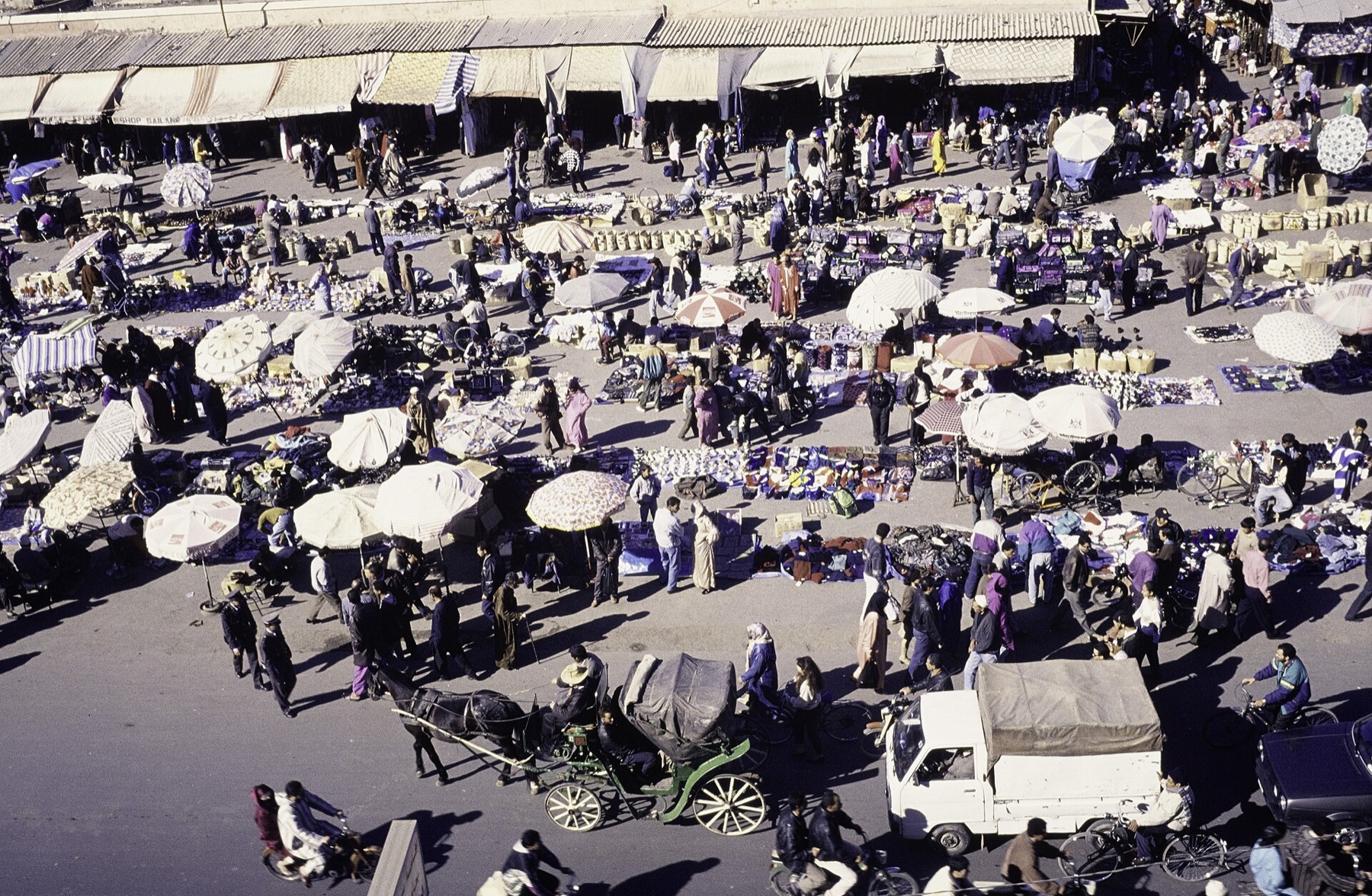
In the packed souks and on the central Jemaa el-Fnaa square, conditions are absolutely ideal for skilled pickpockets, who perfectly exploit the confusion and close contact in the crowd. During our trip we very quickly noticed one crucial thing: in the centre of the medina none of the locals carry a backpack, even though they’re sold there in huge quantities on every corner. Wearing a backpack simply makes you an instant target for thieves.
We ourselves handled the safety of our belongings by using a small lock on the backpack and carrying absolutely nothing valuable in the front, easily accessible pocket. If you can, better not take a classic backpack into the medina at all and go for a small bum bag or a trusty crossbody bag that you’ll keep in front of you on your chest at all times, under complete control.
21. Police checks and driving in Morocco
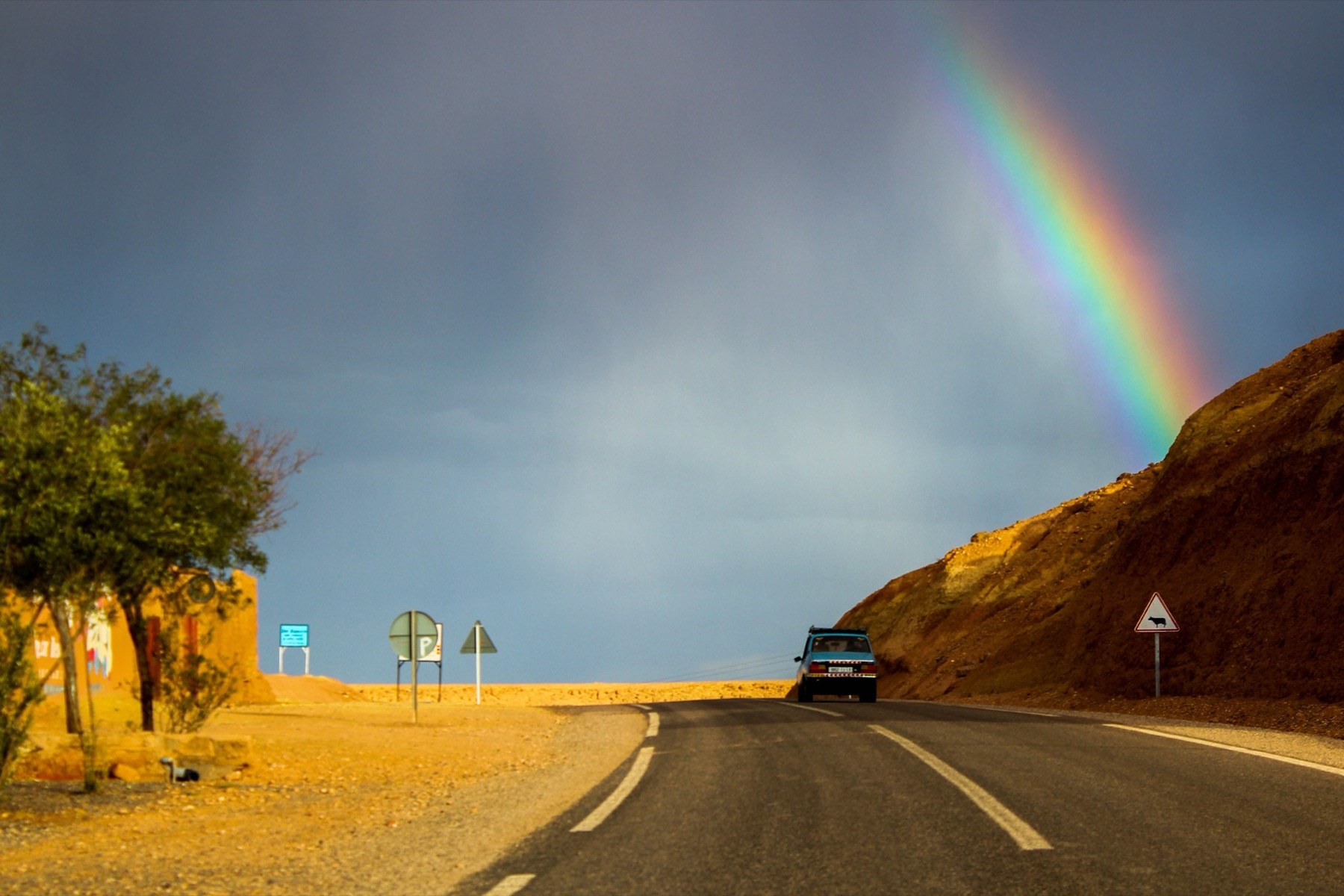
If, like us, you decide to drive through Morocco in a rental car, be ready for very frequent encounters with the local traffic police. In just five days the police stopped us about twenty times, often just a routine check at the entrances to bigger cities. An important note for renting a car: you must have a credit card in the driver’s name. We only had an ordinary debit card and then had a huge problem putting down the deposit with our AirCar rental agency.
On one trip we unfortunately overtook across a poorly visible solid line, and the police stopped us immediately (they’d probably been watching the whole thing from a distance with binoculars). They wanted a €40 fine on the spot, i.e. about 400 MAD. In the process, though, we discovered a very useful thing: it paid off enormously not to speak French and to stubbornly refuse to communicate in it at all. Trying to sort it out in English led nowhere, so the whole situation just dragged on into a long five minutes of arguing.
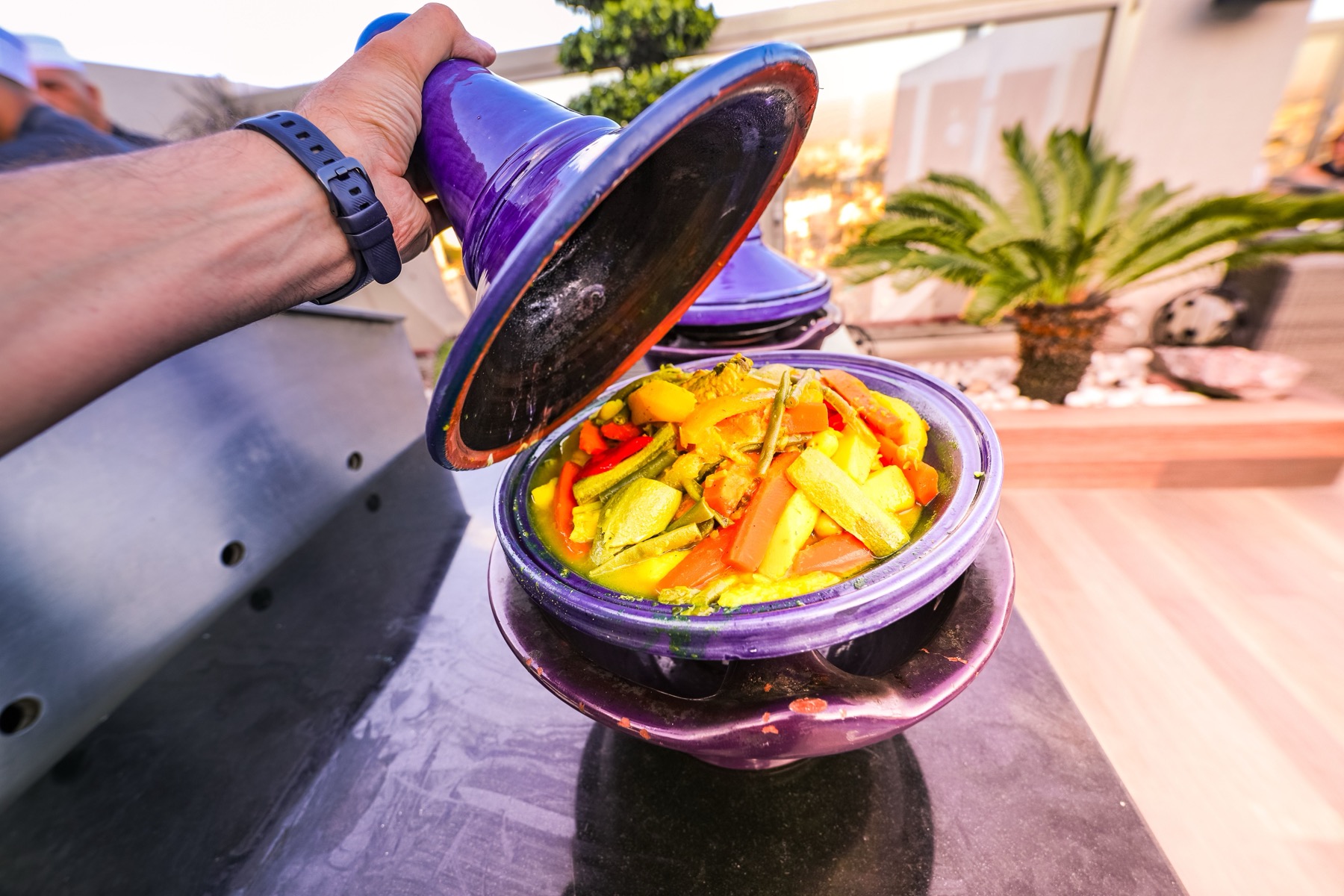
22. Vegetarian food and restaurants (and one big mistake)
Moroccan cuisine is full of incredible flavours, and although it’s generally quite meat-heavy, there are luckily plenty of genuinely great options for vegetarians. Local restaurants routinely and lovingly prepare an excellent vegetable tagine (stewed vegetables with potatoes and spices served in the typical clay pot), vegetable couscous or fresh Moroccan salads. The golden rule we read about in English-language forums and stuck to strictly is: “eat where the locals eat”. It always paid off wonderfully — we ate brilliantly and for next to nothing.
Unfortunately, we broke this rule just once and really regretted it afterwards. On a trip to the Ouzoud waterfalls we gave in to the temptation of a quick lunch with a lovely view in a clearly touristy, over-polished restaurant. It was disproportionately expensive and was the only meal in all of Morocco we genuinely didn’t enjoy at all. So better stick to the inconspicuous local eateries that lie off the main tourist trails.
23. Marrakech with kids
Visiting Marrakech with small children is possible, but it definitely calls for a very specific approach and extremely steady nerves from everyone involved. The city is extremely noisy, chaotic and dusty, which can be very tiring and stressful for smaller children after a few hours. Walking through the old medina with a classic pushchair is practically impossible because of the narrow alleys, steps and constantly passing scooters, so a baby carrier or sling is an absolute must here.
If you’re heading here with kids anyway, definitely invest in accommodation in a quiet riad with an indoor pool or a hotel outside the busy medina with large gardens. After a few hours in the hustle and bustle of the city, children will inevitably need a calm refuge where they can rest and safely cool down. It also proved very worthwhile to avoid the afternoon rush at the markets and explore the city early in the morning, when relative calm reigns.
24. Prices and budget in Morocco
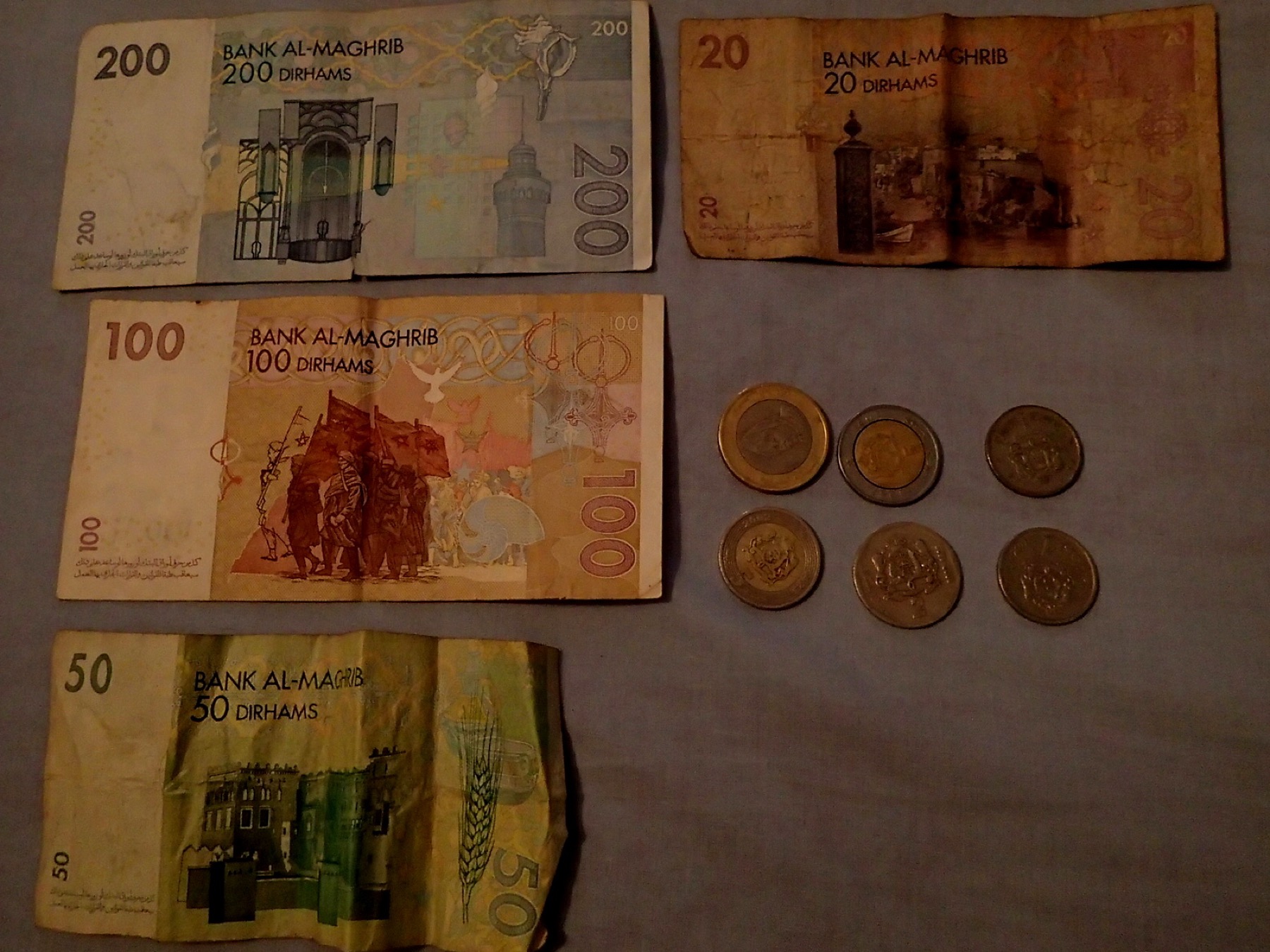
Morocco is generally a very affordable and welcoming destination, but in Marrakech itself prices can vary dramatically depending on how much you give in to the ever-present tourist traps. To give a clear idea of overall travel costs: our entire eight-day road trip through Morocco (including car rental, accommodation, food and petrol) came to around €950 for two people. In Marrakech you can live very cheaply if you eat at local eateries (where a meal costs around 30–50 MAD) and sleep in ordinary riads outside the luxury districts.
On the other hand, entry to popular sights, luxury rooftop cafés and dinners at touristy restaurants with music can drain your budget very quickly. The key to a smooth trip is always having enough cash on you (the Moroccan dirham, MAD for short), because even though better hotels and restaurants now commonly accept cards, at the markets, small stalls and for taxis you’ll always pay in cash and cash only.
25. Etiquette and local customs: the right hand rules
Respecting long-standing local customs will open plenty of doors for you in Morocco and is guaranteed to save you many an unpleasant look from locals. A key, very practical rule you need to remember even before you fly out is that you must always pay, hand things over and eat exclusively with your right hand. In Muslim culture, the left hand is traditionally considered unclean. If you hand money to a vendor with your left hand, they may take it as a serious personal insult. On top of that, we deliberately didn’t bring back any dyed minerals or fake fossils from the markets, which are everywhere by the ton, because they’re simply not worth it.
Also don’t forget appropriate, modest clothing. Although Marrakech has long been used to floods of tourists, you’re still in a deeply conservative Islamic country. Bare shoulders, plunging necklines or overly short shorts aren’t suitable for men or women. Dress lightly but modestly instead — that way you show the much-needed respect for the local culture, which Moroccans really appreciate.
Where to go next from Marrakech
Marrakech is an absolutely ideal base for exploring other corners of Morocco. During our week of travelling, we set off from the city on a superb road trip, whose complete outline and map you’ll find in the article Morocco road trip: a 7–9 day itinerary. Here are the best day-trip tips:
Before you start planning your programme, sort out where to sleep: in the article Where to stay in Marrakech we compare the medina, Guéliz and Hivernage and recommend specific riads by budget.
- Ouzoud waterfalls: Gorgeous cascades lying about 2.5 hours from the city. 💡 Tip: On site, locals kept pushing a so-called “non-touristy back route” on us. We found, though, that the normal “tourist” route actually had far fewer people, so don’t be fooled and take the classic trail.
- Aït Benhaddou: A famous earthen kasbah (fortified village) where Gladiator and Game of Thrones were filmed. Getting here from Marrakech is a gorgeous drive over the Atlas Mountains.
- Expedition to the Sahara (Merzouga): If you have more days, head for the sand dunes at Merzouga. We rode camels through a great company called Mohou Tours. The owner was, in our opinion, probably the kindest Moroccan we met at all, and the desert trip cost only a brilliant €25.
Frequently asked questions
Is Marrakech a safe city for tourists?
Yes, during the day the city is very safe, but you must be very careful of the ubiquitous pickpockets in crowds and expect pushy street vendors and various scams. The medina itself is harder to navigate at night and women should definitely not walk around alone. Always stay alert and use common sense.
What’s the best clothing for Marrakech?
Choose primarily light and breathable clothing that fully respects the local culture. Both women and men should keep their shoulders and knees covered at all times. Ideal choices are loose linen trousers, long skirts and shirts. In winter months, don’t forget to pack a warm sweater or jacket for the evening, when temperatures drop sharply after sunset.
Can I drink tap water in Marrakech?
We definitely don’t recommend drinking tap water in Morocco, as you could get very unpleasant stomach problems that would ruin your entire holiday. Always buy bottled water and use it to be safe even for brushing your teeth. Also watch out for ice in drinks you order from street stalls.
Do I need a visa for Morocco?
Most international visitors don’t need a visa for regular entry to Morocco if their tourist stay doesn’t exceed 90 days. However, your passport must be valid for at least 6 months after your date of entry into the country, so carefully check this requirement before departure.
How do I get from Marrakech airport to the city center?
The cheapest and fairly reliable option is airport bus number 19, which runs every 20 to 30 minutes and a single ride costs 30 MAD. The alternative is of course taxis, but you must negotiate the price before getting in. The standard price to the center should be around 70 to 100 MAD, although drivers will certainly ask for much more at first.
Can you easily buy alcohol in Marrakech?
Morocco is an Islamic country, so alcohol is not commonly sold in ordinary shops or in most traditional restaurants. However, you can find it in licensed international hotels, better tourist restaurants in the Guéliz district and in specially separated sections of large supermarkets, such as Carrefour.
What money should I take to Morocco?
The local currency is the Moroccan dirham (MAD), which cannot be easily or favorably purchased abroad. Take euros or dollars with you and exchange them on site at official exchange offices (but definitely avoid the unfavorable rate at the airport), or withdraw dirhams directly from reliable local ATMs.
Tips and Tricks for Your Vacation
Don’t Overpay for Flights
Search for flights on Kayak. It’s our favorite search engine because it scans the websites of all airlines and always finds the cheapest connection.
Book Your Accommodation Smartly
The best experiences we’ve had when looking for accommodation (from Alaska to Morocco) are with Booking.com, where hotels, apartments, and entire houses are usually the cheapest and most widely available.
 🚗 Car rental on the roadVerified rental cars in Morocco
Search with the DiscoverCars comparison engine — it compares prices from dozens of local and international rental companies, and most bookings come with free cancellation.
Compare car prices in Morocco →Don’t Forget Travel Insurance
Good travel insurance will protect you against illness, accidents, theft, or flight cancellations. We’ve had a few hospital visits abroad, so we know how important it is to have proper insurance arranged.
Where we insure ourselves: SafetyWing (best for everyone) and TrueTraveller (for extra-long trips).
Why don’t we recommend any Czech insurance company? Because they have too many restrictions. They set limits on the number of days abroad, travel insurance via a credit card often requires you to pay medical expenses only with that card, and they frequently limit the number of returns to the Czech Republic.
Find the Best Experiences
Get Your Guide is a huge online marketplace where you can book guided walks, trips, skip-the-line tickets, tours, and much more. We always find some extra fun there!


