

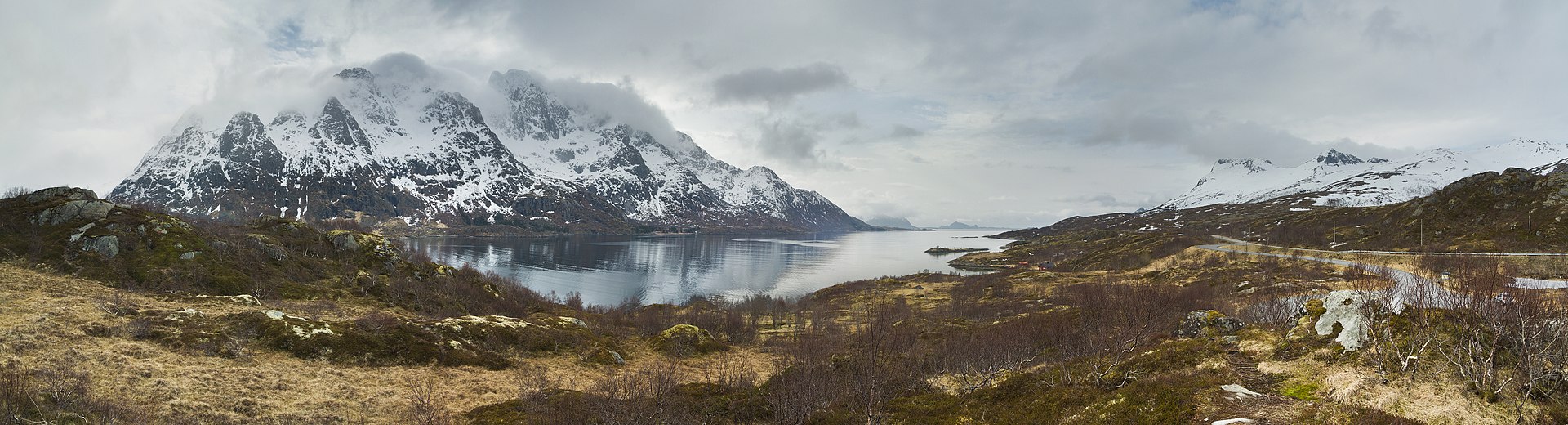
If you’re thinking about a trip beyond the Arctic Circle, there’s something I have to warn you about in advance. The Lofoten archipelago in Norway will win you over so completely that every other mountain and beach will suddenly seem somehow ordinary. The first time you lay eyes on those dramatic granite peaks rising straight out of the deep blue ocean, you’ll feel like you’ve landed in an entirely different world.
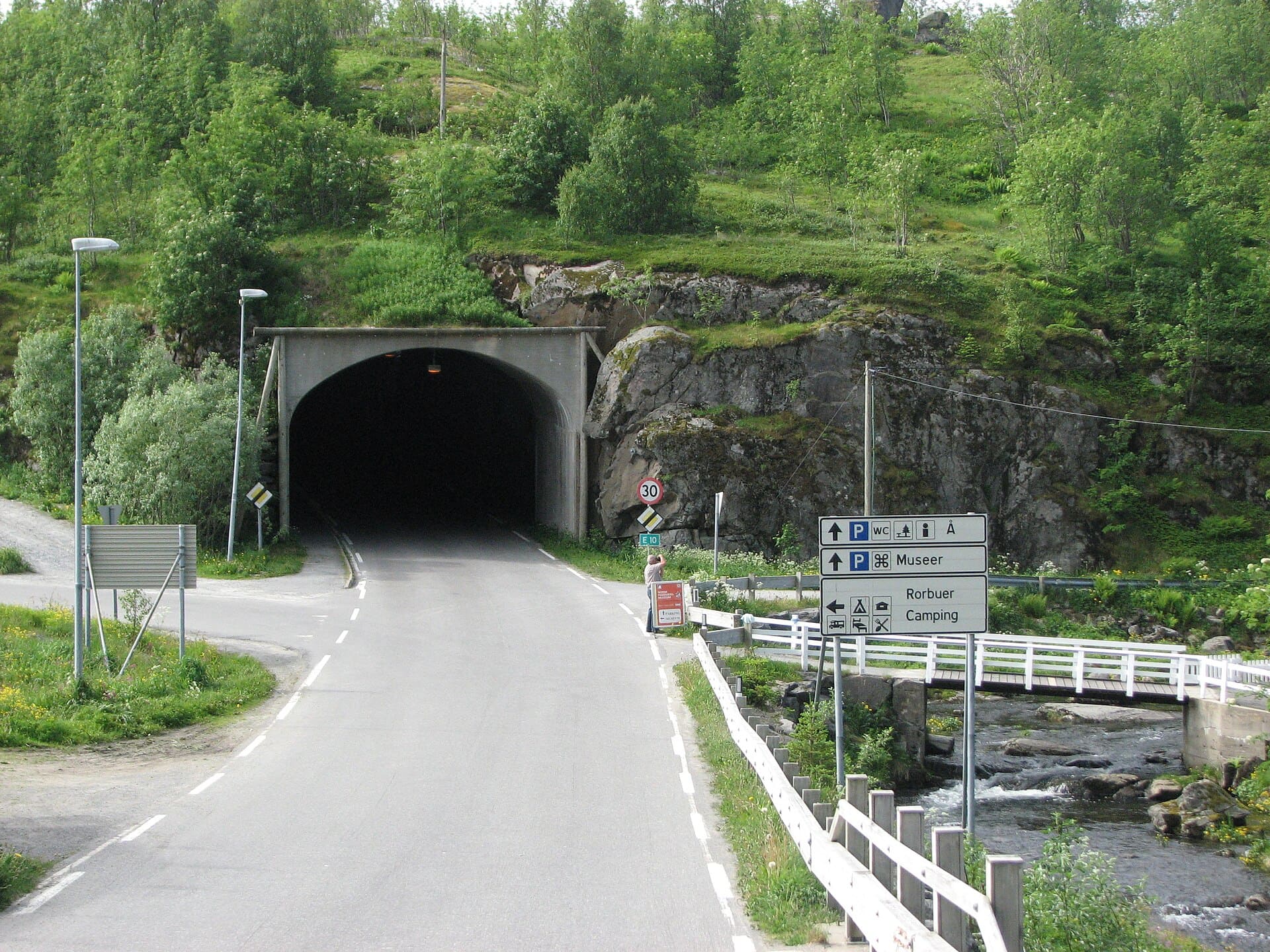
The backbone of this whole Nordic wonder is the iconic E10 road. This legendary route connects the individual islands via elegant bridges and deep undersea tunnels, serving up breathtaking views around every bend. Exploring Lofoten in Norway by car is simply an experience every nature lover should have at least once in their life.
Don’t expect a wide, fast motorway, though. The Norwegian E10 is often a very narrow two-lane road, where in summer you’ll have to squeeze past dozens of caravans and campervans. That’s exactly why it’s so important to have a plan worked out in advance and to understand how the traffic here works. It gives you a huge advantage over tourists who arrive unprepared.
In this article I’ll show you in detail how to plan the best Lofoten road trip. You’ll learn realistic driving times, I’ll help you choose the ideal base, and we’ll also break down the tricky Norwegian weather. Grab a warm jumper, comfy shoes, and let’s head off to the far north together.
TL;DR
- Ideal trip length: For a Lofoten road trip, set aside exactly 7 days, which gives you enough of a buffer in case of bad weather.
- Driving times: In Norway, distances aren’t measured in kilometres but in hours of actual driving. The average speed on the E10 during the summer season hovers around 40 to 50 km/h.
- Transport and flights: The best option is to fly to Oslo and then on to the northern airport of Evenes (EVE), from where you can set off straight away by car without needing a ferry.
- Accommodation strategy: Don’t try to sleep somewhere different every night; instead pick one or two strategic bases in the middle of the islands (for example around Leknes or Ballstad).
- Ferries and tolls: If you choose the route via the port of Bodø, you have to book the ferry to Moskenes months in advance. Tolls are paid automatically through the AutoPass system in your rental car.
- Budget: Norway is an expensive destination, and in 2026 you should expect to pay at least 7,000 to 11,000 NOK for a week’s rental of a smaller car.
- Basic rule: Download the Yr.no app to your phone for an accurate weather forecast and the EasyPark app for paying for parking in remote spots.
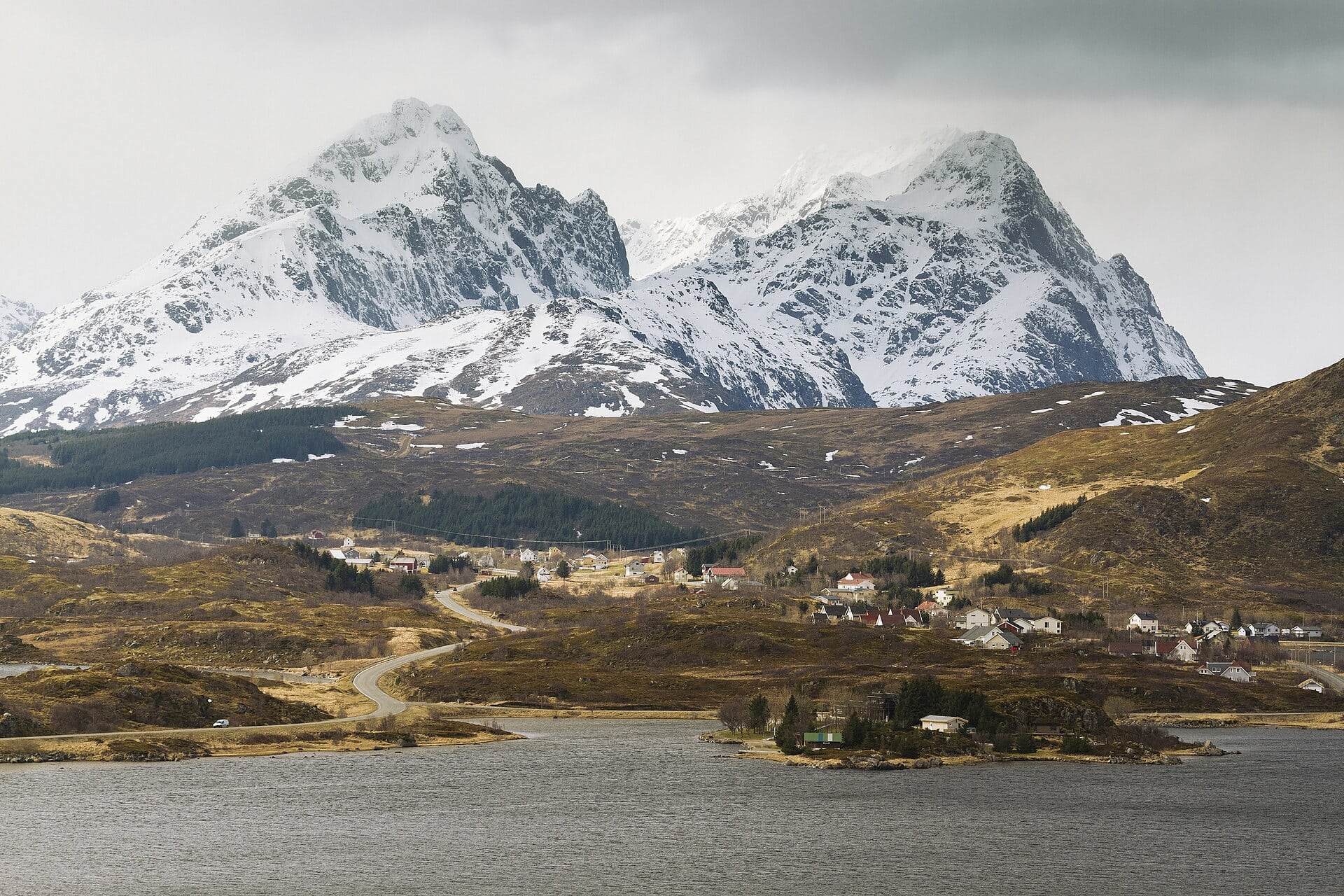
The full destination guide: Lofoten — guide and what to see
When to Go and How to Plan Your Days
Choosing the right time to visit Lofoten is absolutely key. The main summer season runs from mid-June to mid-August, when the islands are bathed in the midnight sun. In practice this means the sun never dips below the horizon, and you can admire the natural scenery in full daylight at two o’clock in the morning.
This summer idyll has its downside too, namely the sheer number of tourists. July is the absolute peak of the season in Lofoten, when the narrow E10 is bursting at the seams and the price of staying in those traditional red cabins climbs to astronomical heights. If you have the option, I’d recommend aiming for late August or early September instead, when the crowds slowly disappear and the roads are a little quieter.
The weather in Lofoten, Norway, is a chapter all of its own and can test even the most seasoned travellers. Although the islands lie beyond the Arctic Circle, the warm Gulf Stream makes summers here surprisingly pleasant. Typical summer temperatures sit between 12 and 16 degrees Celsius, but if you’re lucky with a sunny day it can feel more like twenty. Before your trip, be sure to download the Norwegian weather app Yr.no and pair it with the Windy app for a detailed wind radar.
It’s absolutely essential to allow plenty of time, because Lofoten doesn’t forgive being rushed. Four days is woefully short for exploring the islands, because the first heavy rain front means you’ll see nothing at all and won’t have time to react. Ten or fourteen days, on the other hand, is a huge strain on your wallet, since Norway is one of the most expensive countries in the world. After studying plenty of travel plans, the clear consensus is that seven days is the absolute sweet spot for this road trip.
Over a week-long stay you’ll get a big enough window to outsmart the unpredictable Nordic conditions. When the whole afternoon turns to rain, you can happily duck into a cosy café or visit a museum without feeling like you’re wasting precious time. Seven days simply gives you the right balance between exploring, resting, and waiting for that perfect light.
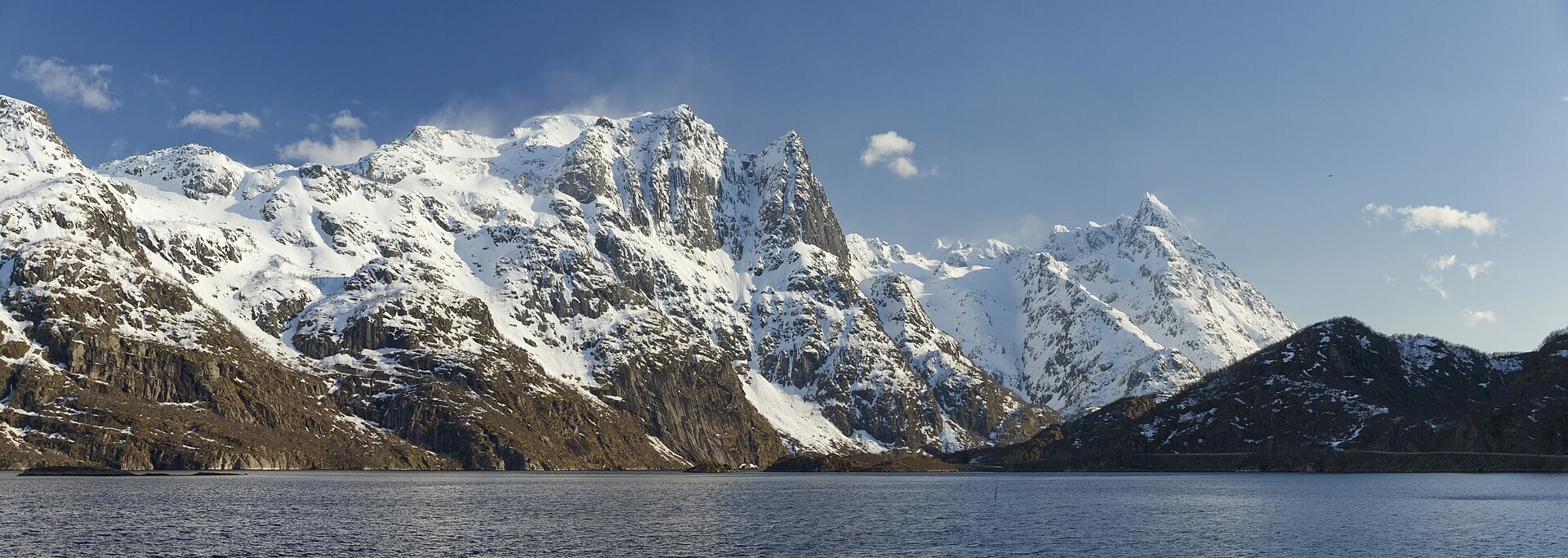
Practical Info: Car, Transport and Budget
Don’t be afraid of an electric car. A little surprise for newcomers: in Norway today electric cars make up around 97% of new car sales, so when you rent a car it’s fairly likely you’ll get an electric one. There’s nothing to worry about — the charging network is dense even up here in the north. Charging cost us roughly £30–60 depending on whether we wanted fast charging or left the car to charge overnight.
Getting to Lofoten is hardly a weekend getaway to a neighbouring country and takes careful logistics. There’s no direct flight from the UK to the islands, so you’re looking at a full day of travel with at least one connection. From London you can fly to Oslo with Norwegian or SAS, and from the Norwegian capital you then have two main gateways into the north. Flights in summer cost roughly £250 to £500 per person.
The first and very popular option is Evenes airport (EVE), which lies on the mainland just off the northern edge of Lofoten. This choice is incredibly practical, because once you’ve landed you simply pick up your car keys and roll straight onto the famous E10. You skip the stress of waiting for ferries, and you can reach the picturesque town of Svolvær comfortably in two and a half hours.
The second option is to fly into the port city of Bodø (BOO), from where you continue by ferry to the south of Lofoten. The crossing, run by Torghatten, to the port of Moskenes takes around three and a half hours and in summer a car with passengers costs 764 to 1,710 NOK (roughly €65–145). Exactly half the ferry’s capacity is sold online, and you should secure your ticket right after booking your flights. Without a reservation you risk hours of waiting in the lane for non-reserved vehicles — something you really don’t want to experience in the rain.
Once your transport is sorted, the next thing on the list is the car rental, without which you won’t get anywhere on the islands. Book your car at least two to three months in advance, because in summer rental companies often sell out completely. For a plain small hatchback you’ll pay around 7,000 to 11,000 NOK (roughly €600–950) a week in Norway, while a larger SUV can easily set you back 17,000 NOK.
All the main roads in Lofoten have a very good tarmac surface, so you don’t necessarily need four-wheel drive in summer. Driving the E10 requires huge patience, because the road is full of blind bends and passing bays. Speed limits in Norway are strict, and thanks to slow caravans you should expect a fifty-kilometre stretch to take an easy hour and a half. The average speed here rarely tips over 50 km/h.
Tolls and assorted fees are a routine part of any Norwegian road trip. All cars from local rental companies are fitted with an AutoPass chip, so tolls for the newer tunnels and bridges are charged completely automatically and deducted from your card after you get home. If you were to drive your own car all the way from the UK, you’d need to register an AutoPass account online before crossing the border.
Parking in the middle of the wilderness may surprise you with its prices. Tourist hotspots have introduced steep fees to rein in the enormous crowds of visitors. For example, at the popular Reine Outer Harbour you’ll pay 35 NOK an hour, and at Ryten or Haukland beach a full day’s parking will cost you 100 to 200 NOK. Be sure to download the EasyPark and Parka apps, through which most of these fees can be paid conveniently.
When it comes to food, Norway is among the most expensive countries in the world. If you want to keep your budget in check, it pays to buy your ingredients at supermarkets like Kiwi or Rema 1000. Prices here are around three times higher than back home, but it’s still far cheaper than eating out every day. Plus, in the traditional cabins you can cook exactly what you fancy.
Day-by-Day Itinerary
This itinerary is designed as a smooth road trip from north to south and back again, assuming you arrive at the strategic Evenes airport. The route follows the iconic E10 and is laid out so you never spend too many hours in the car at a stretch. In Norway, the journey itself is the destination.
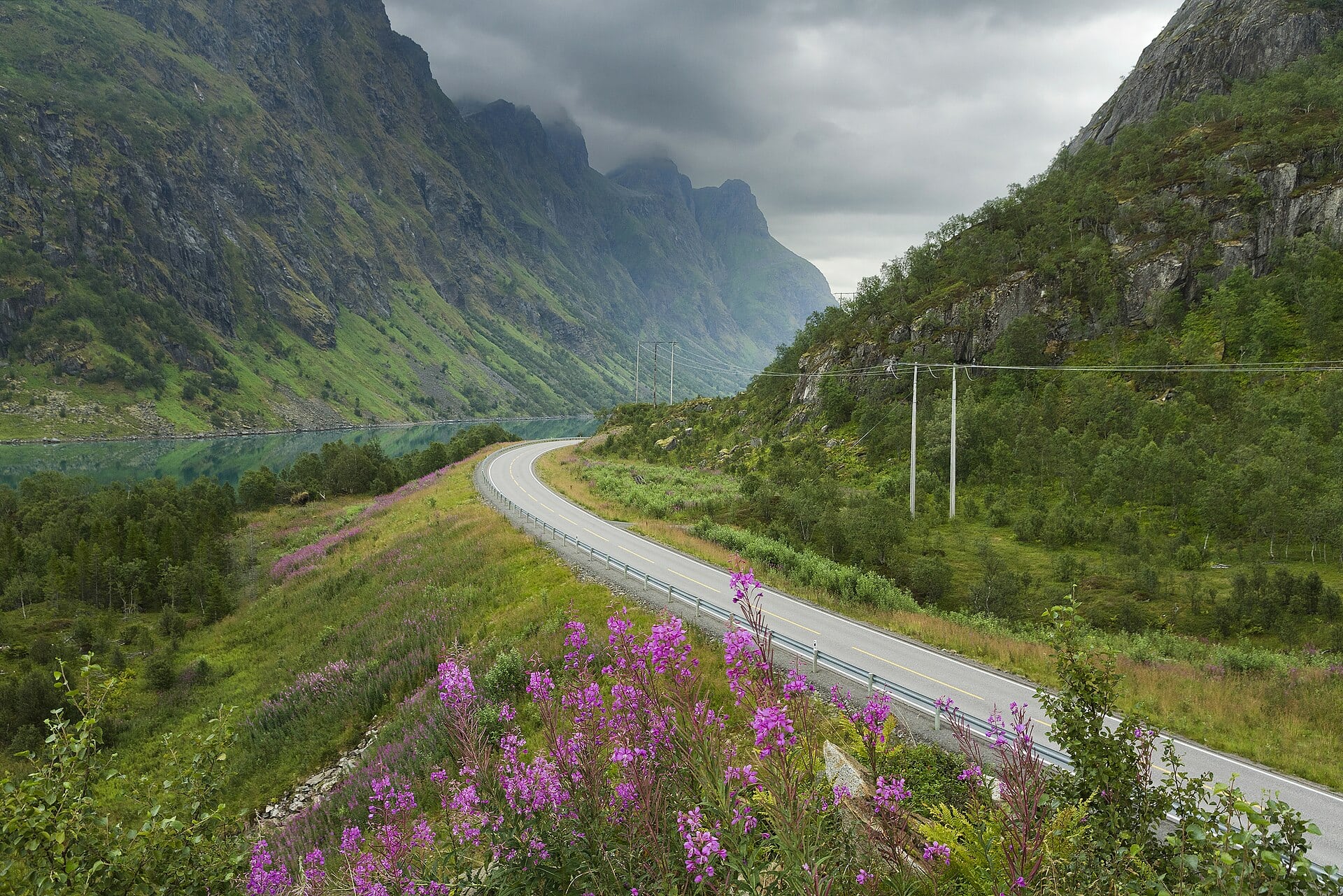
Day 1: Arrival at Evenes Airport and the Gateway Town of Svolvær
Your Nordic adventure begins with landing at Harstad/Narvik airport, which nobody ever calls anything but Evenes. As soon as you’ve picked up your reserved car you’ll join the E10 and head west towards the Lofoten islands. The first kilometres pass through relatively calm countryside, but once you cross the majestic Tjeldsundbrua bridge, the landscape slowly turns more dramatic and the mountains start rising straight out of the ocean.
The drive to Svolvær, the largest town in Lofoten, takes around two and a half hours of actual driving, covering some 160 kilometres. I deliberately say actual driving, because you’re guaranteed to be stopped by several stunning viewpoints where you’ll want to photograph your first snow-dusted peaks. Svolvær is the ideal place to acclimatise after a tiring flight — you’ll find big supermarkets for your first stock-up, pharmacies, and plenty of cosy cafés.
After a long day on the road you’ll definitely be hungry and on the hunt for something good to eat. I’d recommend ducking into one of the local bakeries and treating yourself to a proper vegetarian sandwich with local cheese and fresh vegetables, or trying some traditional Norwegian pastries. In the evening you can stroll around the harbour, soak up that genuine Nordic atmosphere, and watch the boats setting off for the nearby Trollfjord.
For your first night, Svolvær or its immediate surroundings make the most logical sense. Stay in one of the modern apartments, which are easy to find through Booking, and enjoy a quiet evening. The town may lack the wildest scenery you’ll see in the south, but after a tiring flight you’ll appreciate all the comforts of civilisation and the chance to shop quickly.
💡 Tip: If you still have a bit of energy after arriving, stop by the popular Magic Ice bar in Svolvær. You’ll get a warm poncho and can admire the detailed sculptures carved from crystal-clear ice.
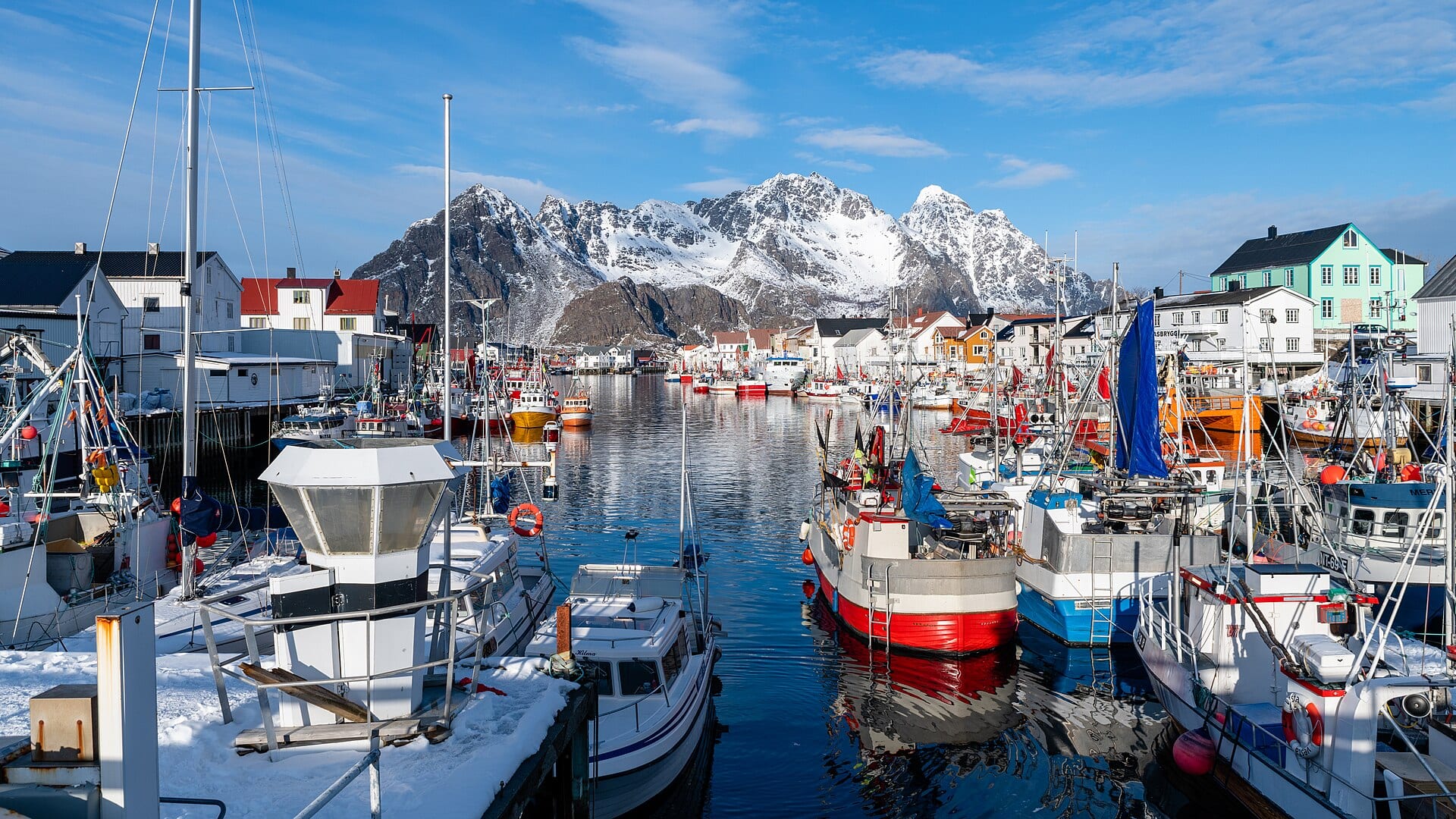
Day 2: The Venice of the North and Magical Viking History
In the morning you’ll wake to crisp Norwegian air and, after a hearty breakfast, head further southwest. Today’s first stop is the picturesque village of Henningsvær, often nicknamed the Venice of the North for the way it spreads across tiny islets. The turn-off from the main E10 crosses several narrow bridges, and the drive here is a pure visual treat you’ll want to film.
In Henningsvær you’ll find plenty of charming art galleries, hipster cafés, and above all that famous football pitch. This green rectangle literally carved into the rocky cliff, surrounded by cod-drying racks, is one of the most photographed spots in all of Norway. Wander the narrow lanes, peek into the local design shops, and enjoy the wonderfully laid-back pace of the village.
In the afternoon you’ll move on, about an hour’s drive, to the village of Borge, where the fantastic Lofotr Viking Museum awaits. Here you’ll travel back in time more than a thousand years and explore a meticulously reconstructed chieftain’s house — the largest Viking-era building ever discovered anywhere in the world. The exhibition is beautifully done and draws you right into the harsh history and everyday life of the islands’ first inhabitants.
When you get hungry after touring the museum, you can take a seat in the local Viking feasting hall. I’d recommend trying their hearty vegetarian root-vegetable soup, which warms you beautifully on a cooler day, alongside some traditional flatbread. For the night, move on to the area around Ballstad or Leknes, where you can find a cosy rorbu on Booking with a view straight onto the water.
💡 Tip: The access road into Henningsvær is genuinely very narrow, and in the summer months unpleasant traffic jams build up here. Set off as early in the morning as you can, so you stand a chance of parking calmly and avoiding the biggest crush of caravans.
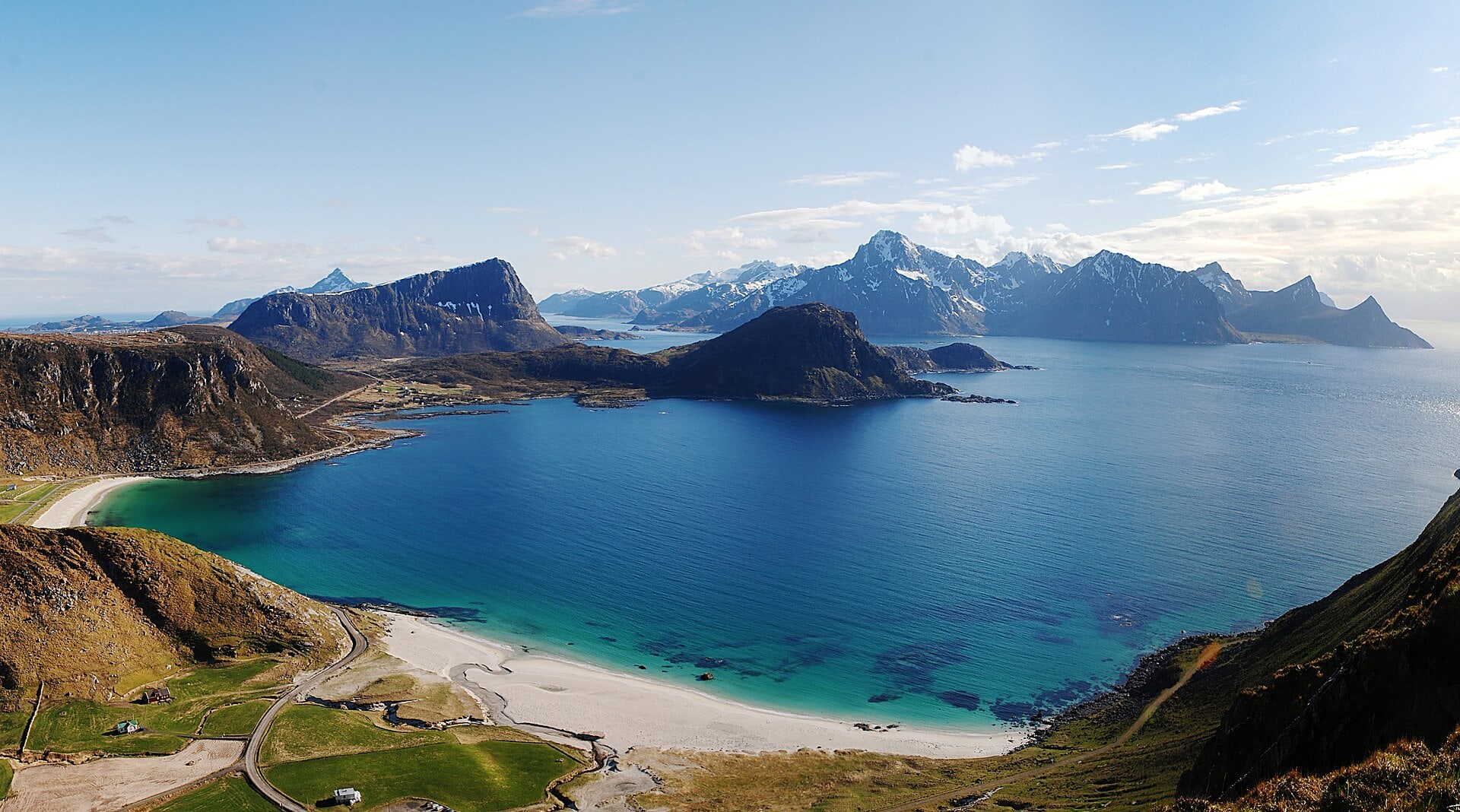
Day 3: The Arctic Caribbean and the Islands’ Most Beautiful Beaches
Today you’ll get a break from long drives, as you explore the central part of Lofoten, famous for its stunning sandy beaches. The area around the town of Leknes offers incredible scenery, where steep green mountains slope straight down into the turquoise ocean. If your base is in nearby Ballstad, all these natural gems are literally fifteen minutes’ drive away, which gives you enormous freedom.
Your first stop will be the legendary Haukland beach, which is regularly — and quite rightly — voted the most beautiful beach in all of Norway. The snow-white sand and crystal-clear water will instantly make you feel like you’ve landed somewhere in the Caribbean, until you dip a toe in the water. Even in high summer the ocean temperature sits around just 10 to 12 degrees Celsius, so swimming here is reserved for true cold-water enthusiasts and surfers in wetsuits.
From Haukland beach you can walk through an old pedestrian tunnel or drive over to the neighbouring Uttakleiv beach. This beach is far wilder and more romantic, strewn with large round boulders against which the ocean waves break very dramatically. It’s an absolutely perfect spot for an afternoon picnic, watching the rugged Nordic nature in all its glory, and photographing the beautiful detail of the stones.
For lunch or dinner in this area, your own supplies bought at the big supermarket in Leknes work brilliantly. Pack some fresh baguettes with local Jarlsberg cheese for the beach, slice up plenty of vegetables, and have a feast right on the cliff above the waves. You’ll sleep once again at your trusty base in Ballstad, so you avoid any packing of suitcases and the stress of constantly moving on.
💡 Tip: Parking at Haukland beach costs around 100 to 200 NOK a day depending on your car and the spot, and the spaces disappear very fast. You can pay the fee easily through the EasyPark app, but ideally arrive in the morning.
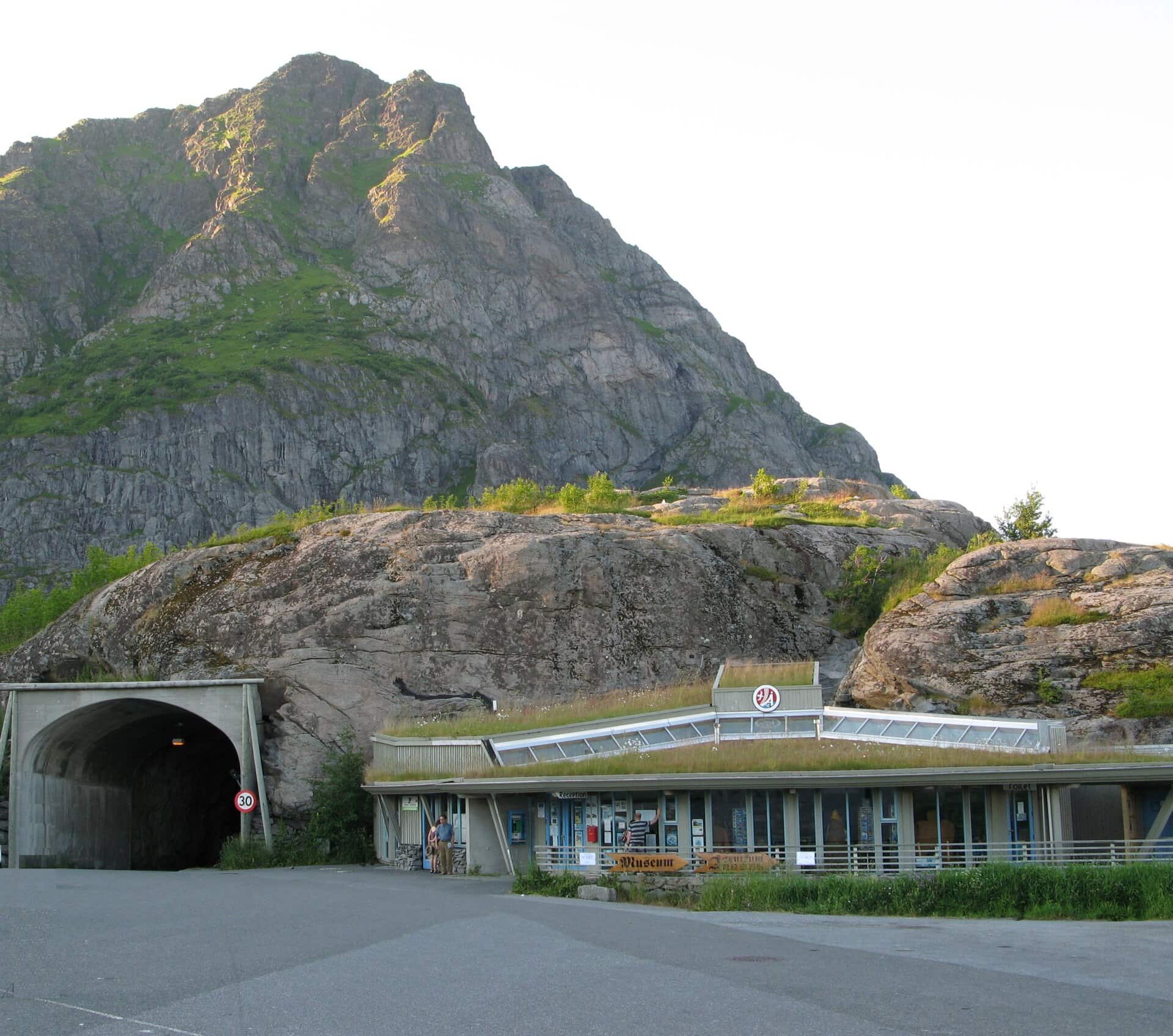

Day 4: The Journey to the Wild South and Iconic Views
On day four you’ll move on to the most famous and most dramatic part of all Lofoten. You’ll head along the E10 towards the southwest, where the mountains grow taller and sharper and the road winds along the jagged coastline. The drive from Leknes to Reine takes about an hour and ten minutes of actual driving over a sixty-kilometre route, but with all the constant stopping and squeezing past caravans you’ll be on the road for at least two hours.
On the way south you mustn’t miss the short detour to the hidden fishing village of Nusfjord. It’s one of the best-preserved fishing settlements in Norway, which today operates as a living open-air museum. For a modest fee you can stroll along the historic wooden jetties between the yellow and red cabins and soak up the quiet atmosphere of times long gone.
In the afternoon you’ll finally reach the village of Hamnøy, where the single most famous view in all of Lofoten opens up before you. The sight from the bridge of the red cabins huddled beneath the mighty Festvågtind mountain is one you’ll recognise from just about every travel guide, and in real life it’s an even more striking experience. This is exactly the magical spot you travelled all the way to the far north for.
For dinner in the Reine area, treat yourself to something special and head to the cosy local pizzeria. They make an absolutely fantastic vegetarian pizza with thin crispy dough, a generous helping of tomato sugo, and fresh basil, which hits the spot after a whole day in the cold wind. In the evening, stay right in Reine or Hamnøy — through Booking you’ll find the most iconic rorbu cabins standing on their wooden stilts.
💡 Tip: Although Lofoten is famous for its dried cod (skrei), which you’ll see hanging on wooden racks on literally every corner, the good news is that vegetarian and vegan options in the local restaurants are constantly growing.
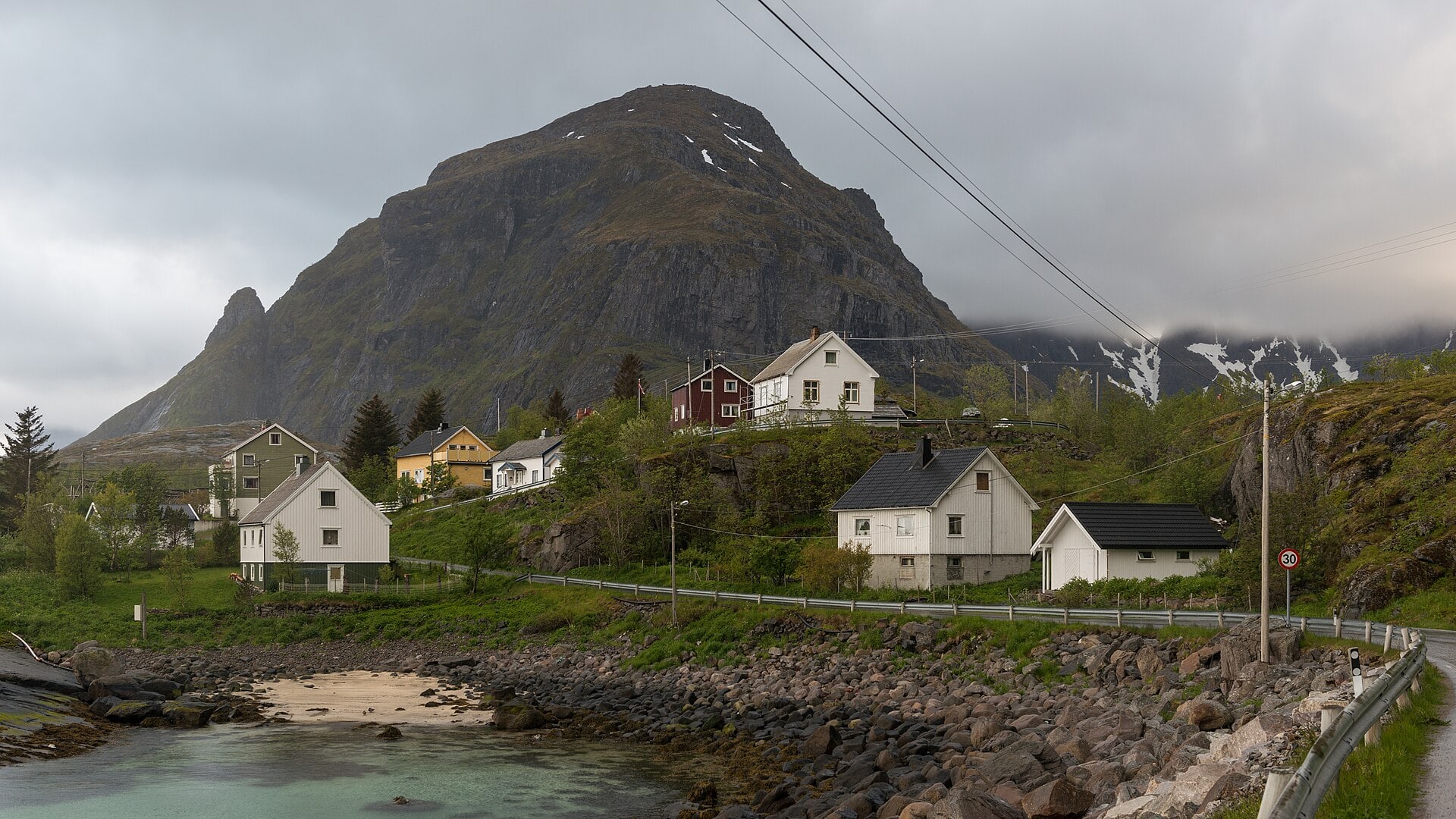
Day 5: The End of the E10 in the Village of Å and Hidden Gems
This morning you’ll wake right in the heart of the Lofoten postcards and set off to explore the very end of the famous road. You’ll drive just a few kilometres further south until you reach a sign bearing a single letter. The village of Å (pronounced like a long “oh”) is the very last point you can reach by car — beyond it lies nothing but the churning ocean and impassable cliffs.
The village of Å is wonderfully enchanting and anxiously guards its rugged character. You can walk the narrow trails along the rugged coast, watch the circling gulls, and explore the old fishing museum, which faithfully shows the hard life of the locals in the last century. It’s a place where you genuinely feel like you’ve reached the end of the world.
On the way back to Reine, be sure to stop at the yellow islet of Sakrisøy, which contrasts beautifully with the surrounding red villages. You’ll find a very charming and slightly bizarre toy museum here (Dagmar’s Museum of Dolls and Toys), which offers an unexpected break from the ever-present monumental landscape and is definitely worth a quick stop and a look around.
If a craving for something sweet hits you in Å, you have to visit the old local bakery with its enormous oven. I’d recommend their legendary cinnamon buns (kanelboller), which are huge, fluffy, and smell so perfect that you definitely won’t stop at just one. You’ll spend the night again at your fairy-tale accommodation in Reine, so you can enjoy the evening with a mug of hot tea on the terrace jutting out over the water.
💡 Tip: Parking in Reine is extremely tricky in summer and there are no free spaces. Reckon on paying 35 NOK an hour at the Reine Outer Harbour car park, and you’ll often have to circle for ages before a space even frees up.
Day 6: A Slow Return North and the Surf Beach of Skagsanden
On the penultimate day of your road trip you’ll start making your way slowly back to the wild north of the islands. The journey back offers a completely different perspective — you’ll see the mountains from new angles and notice roaring waterfalls you missed entirely on the way south. The E10 is no less impressive in this direction, and it pays to set off early in the morning before the first crowds of tourists appear on the route.
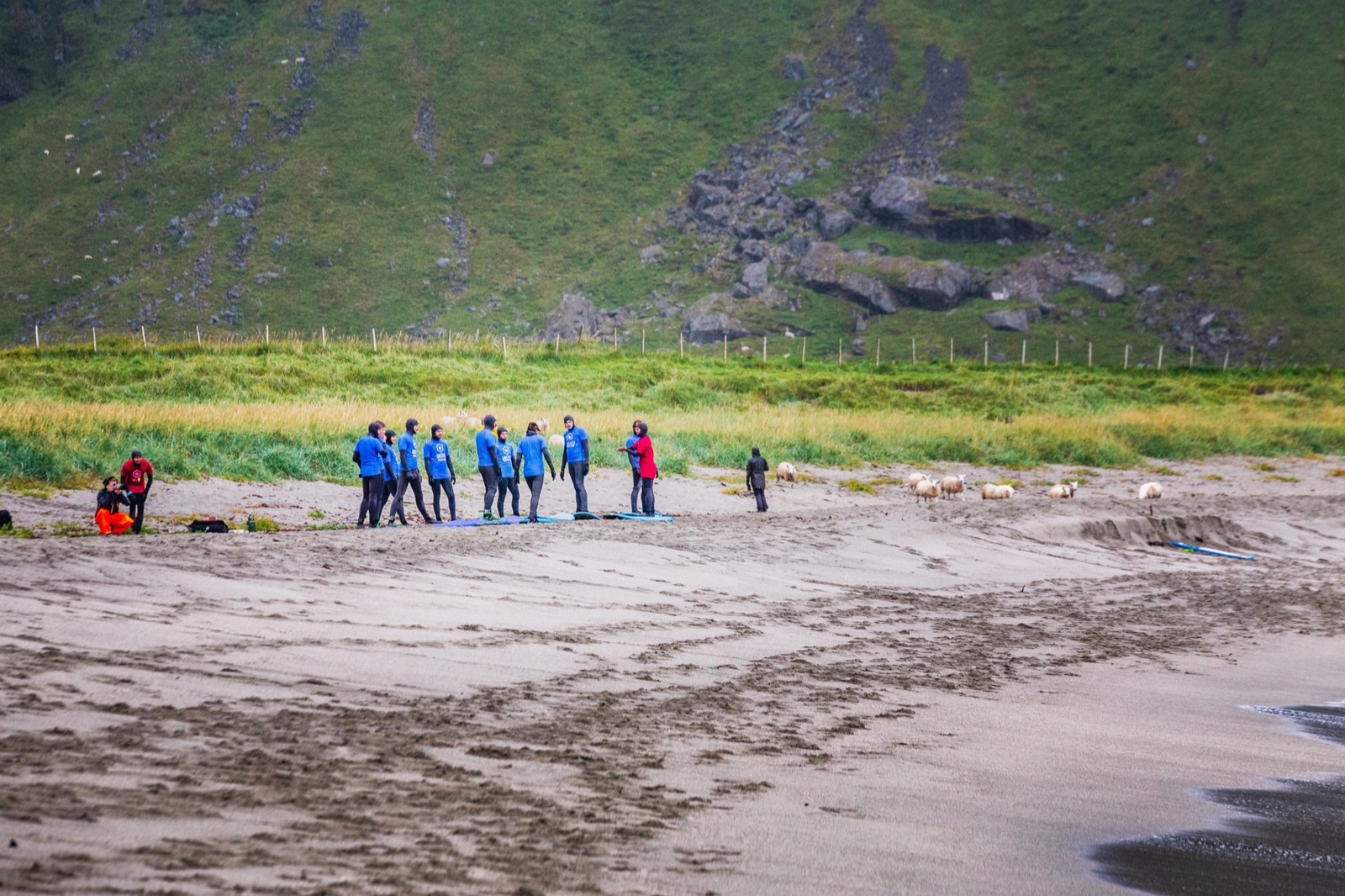
Your main morning stop will be the stunning Skagsanden beach near the village of Flakstad. This beach is renowned for its dark volcanic sand, which mixes with the lighter sand to create fascinating abstract patterns. Skagsanden is also a very popular spot for Arctic surfers, so from the cliff you can watch the daredevils in thick wetsuits bravely taming the icy waves.
Further north, drive past a hidden gem called Storsandnes, a smaller and far quieter beach without the crowds. The scenery here, looking out over the steep cliffs of a deep bay, is absolutely breathtaking and makes the perfect spot for a short walk and a chance to stretch your legs after a longer stint in the car.
For lunch, stop around Leknes, where there’s a fairly good choice of modern bistros. I’d recommend trying a proper vegetarian burger with grilled halloumi and homemade chips, which will give you plenty of energy for the rest of the journey. In the evening you’ll arrive back in Svolvær, where you should book accommodation for your last night in Lofoten and get a good rest.
💡 Tip: Don’t forget to top up on petrol or charge your EV along the way. Petrol stations are fairly sparse in the south of the islands, and distances on the map can be genuinely deceptive.
Day 7: Saying Goodbye to Lofoten and the Drive to the Airport
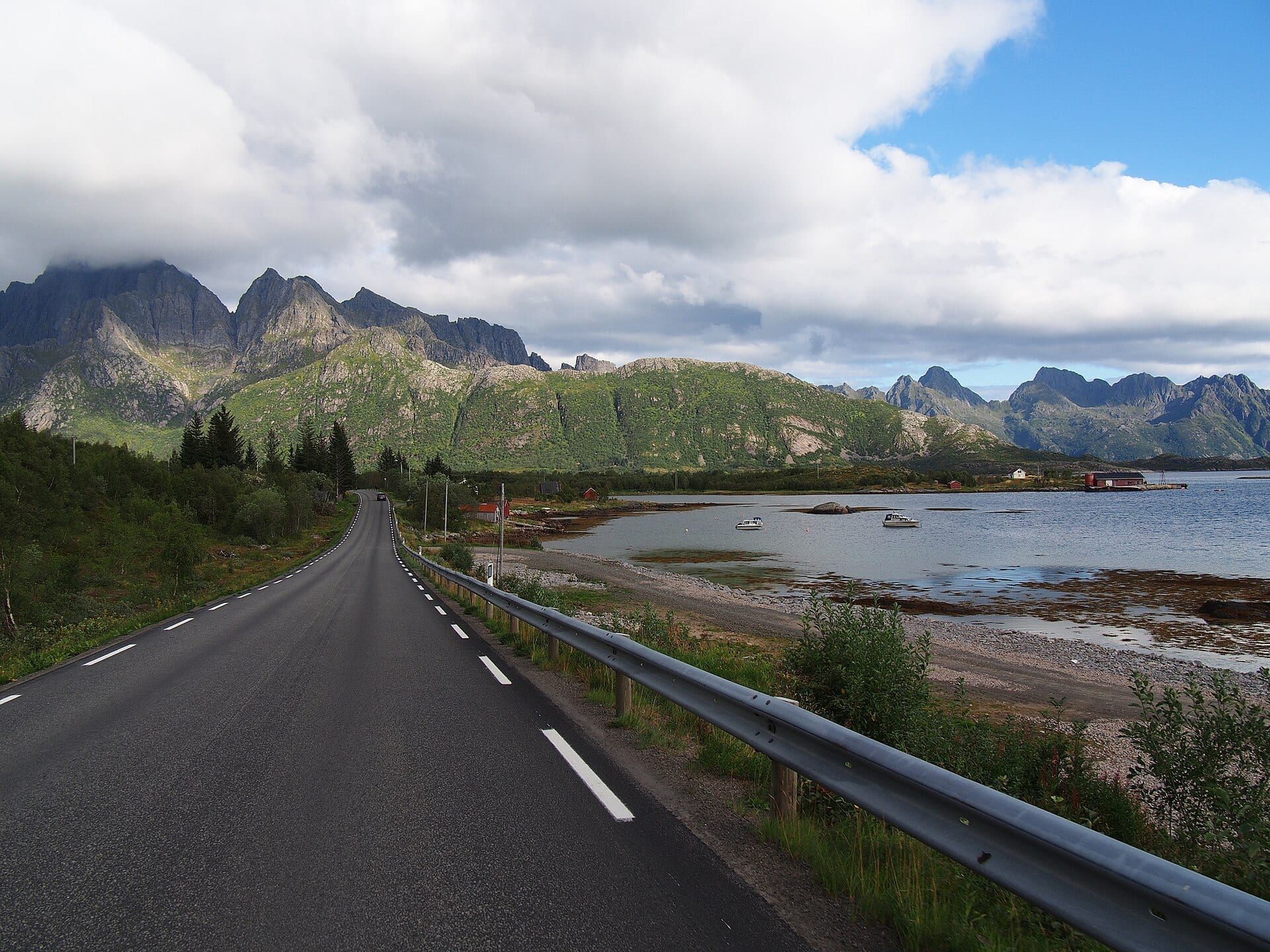
The last day is all about taking stock and packing up. From Svolvær you’ll head east towards Evenes airport, which means driving the famous E10 one more time, this time with the feeling that you now know this rugged landscape intimately. The drive from Svolvær takes around two and a half hours of actual driving, since you have to cover 160 kilometres, but leave yourself a generous buffer in case of unexpected jams, slow vehicles, or a sudden change in the weather that could hold you up on the route.
Even though you’re already heading home, nature won’t let you catch your breath and will keep serving up beautiful views of the deep fjords all around. Stop at one of the rest areas along the way, take your last photos, and fill your lungs with that wonderfully clean Nordic air. Norway will say goodbye to you in exactly the same way it welcomed you a week ago — utterly monumental.
Before you actually reach the airport, you’ll need to sort out the practical matters of returning the car. Rental companies usually require the car to be returned with a full tank, so find the nearest petrol station before the airport and fill up. Handing back the keys at the small Evenes airport is usually very quick and free of pointless bureaucracy, so you’ll save yourself a lot of stress.
If you have a little time left before your flight, you can spend your last Norwegian kroner in the airport hall. Grab one more excellent cinnamon bun and a filter coffee to pass the time while you wait for your domestic flight to Oslo. After that, all that’s left is a comfortable flight home with your head full of unforgettable memories.
💡 Tip: Even though Evenes is a fairly small airport, unexpected queues at security can build up in summer. It’s best to be at the terminal a bit earlier so you don’t stress yourself out needlessly.
Where to Stay Along the Route and How to Choose a Base
💡 Tip for accommodation and experiences: We like to look for places to stay on Booking.com, where the cancellation terms tend to be the best. For tickets, tours and activities, it’s worth comparing and booking through GetYourGuide.
If you want to get the most out of Lofoten without going mad over logistics, forget about sleeping in a different town every day. A far better strategy is to set up so-called base camps, from which you make star-shaped day trips depending on what the weather happens to be doing. Packing your bags every morning is a huge drag, especially when rain catches you out in the afternoon and you’d rather stay warm with a book. Lofoten simply demands flexibility.
For a seven-day road trip, splitting your stay across two strategic bases works out as the absolute ideal. The best approach is to spend three nights in the far south around Reine or Hamnøy and devote the remaining four nights to the more northern part, for example in Svolvær or peaceful Ballstad. That gives you enough time for the southern icons like Bunes beach or the village of Å, without having to endure tiresome two-hour drives back and forth along a single road.
For fans of maximum calm and logistical perfection, there’s one more option: a single base right in the middle of the archipelago. The town of Leknes may not be the most photogenic, but it sits dead centre among the islands, so north and south are roughly the same distance, and you can reach the gorgeous Haukland beach in fifteen minutes. On top of that, you’ll find huge supermarkets here, the only large hospital in nearby Gravdal, and accommodation prices are often friendlier than in the famous south.
Here are some specific accommodation tips you can easily book through Booking:
- Reine and Hamnøy (South): The absolute postcard classics are the red fishermen’s cabins of Eliassen Rorbuer or Sakrisøy Rorbuer. You stay right on stilts above the ocean and get the best possible view from your window. In summer, though, the price matches the huge popularity and often reaches around 3,300 NOK per night.
- Ballstad (Centre): This authentic fishing port is a great compromise. You can stay, for example, at the cosy Kræmmervika Havn, where you’ll soak up the raw Nordic atmosphere for slightly more reasonable money than in the south, while still being right in the middle of the action.
- Svolvær (North): For the reassurance of a town and maximum amenities, go for the islands’ capital. It offers modern apartments, plenty of restaurants and perfect accessibility right after you land at Evenes airport, so you’ll save loads of time.
Where to Go Next
If Norway has captured your imagination and you’re planning more details of your trip, I’ve put together some more useful articles from our blog. You’ll find in-depth information in them to help you polish your Scandinavian dream to perfection.
- If you want to know what else the islands have to offer, read our big guide to Lofoten.
- For a detailed breakdown of transport and flights, check out the article on how to get to Lofoten.
- If you’re still unsure which base to choose, our overview of where to stay in Lofoten will help.
- And if you’re looking for more inspiration on how to lay out your days, study our alternative 7-day itinerary.
Frequently Asked Questions
How do you pay tolls in Lofoten and Norway in general?
In Norway, an automatic AutoPass system is in place, so there are no traditional toll booths where you’d have to stop and pay cash. All cars from local rental companies already have this chip installed, cameras photograph your license plate when you drive through a tunnel or over a bridge, and the rental company will simply charge the amount to your credit card later, usually about a month after your return.
Do I really need a car in Lofoten, or can I manage with the bus?
Although public transport operates on the islands, for a proper road trip and discovering hidden spots, a car is an absolute must. Buses run very infrequently, their timetables aren’t ideal and they won’t get you to remote beaches or trailheads, so you’d lose a huge amount of freedom and waste loads of precious time waiting around at bus stops.
When is the best time to book a ferry from Bodø?
If you decide on the route via the port city of Bodø, you need to book the ferry to Moskenes immediately once you have your flights, even three months in advance. Exactly half of the ship’s capacity is sold online, and if you don’t make it in time, you’ll face many hours of waiting at the port in the lane for non-reserved vehicles, which can completely ruin the start of your holiday.
Can you find free parking in Lofoten?
In the main summer season, free parking at popular spots is practically impossible and you definitely shouldn’t count on it. Towns like Reine or popular beaches require fees through mobile apps EasyPark or Parka, because otherwise they wouldn’t be able to handle the tourist crowds, so definitely factor these costs into your budget. Fines for improper parking are, moreover, truly astronomical in Norway.
How is it with vegetarian food on the islands?
Even though the Lofoten Islands are historically linked to fishing and the famous dried skrei cod, vegetarians certainly won’t go hungry here. Most cafés and restaurants offer great meat-free alternatives, plus Norwegian supermarkets like Kiwi or Rema 1000 have a huge selection of fresh vegetables, cheeses and quality vegetarian ready meals, so you can easily cook a delicious meal right in your accommodation.
How long does it take to travel from the north to the very south of the islands?
The distance from the town of Svolvær to the village of Å is roughly 130 kilometers, but don’t be fooled by looking at the map. Due to winding roads, frequent fjords and heavy summer traffic full of caravans, this route will take you at least two and a half hours of pure driving. In reality, expect to spend easily half a day on the road with photo stops.
Can you rent boat trips directly on-site?
Yes, from larger towns like Svolvær, plenty of boats depart daily, for example the very popular cruises to the tranquil Trollfjord, where you can observe sea eagles. You can easily search for and book these experiences through the GetYourGuide app, but during the summer months, it’s better to do so several days in advance to ensure you actually get a spot on board.
Tips and Tricks for Your Vacation
Don’t Overpay for Flights
Search for flights on Kayak. It’s our favorite search engine because it scans the websites of all airlines and always finds the cheapest connection.
Book Your Accommodation Smartly
The best experiences we’ve had when looking for accommodation (from Alaska to Morocco) are with Booking.com, where hotels, apartments, and entire houses are usually the cheapest and most widely available.
 🚗 Car rental on the roadVerified rental cars in Norway
Search with the DiscoverCars comparison engine — it compares prices from dozens of local and international rental companies, and most bookings come with free cancellation.
Compare car prices in Norway →Don’t Forget Travel Insurance
Good travel insurance will protect you against illness, accidents, theft, or flight cancellations. We’ve had a few hospital visits abroad, so we know how important it is to have proper insurance arranged.
Where we insure ourselves: SafetyWing (simple monthly subscription) and TrueTraveller (for extra-long trips).
Find the Best Experiences
Get Your Guide is a huge online marketplace where you can book guided walks, trips, skip-the-line tickets, tours, and much more. We always find some extra fun there!
More from Lofoten
Full guide →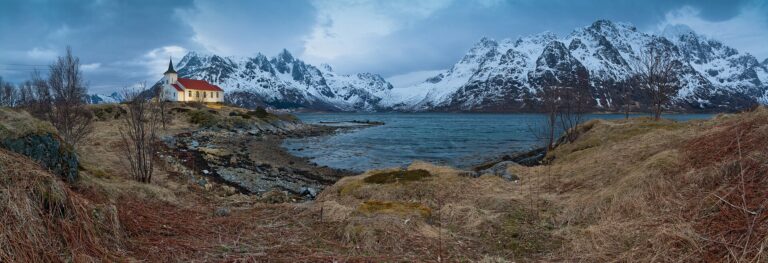 When to go · most readWhen to Visit Lofoten, Norway: Weather Month by Month and the Midnight Sun 2026
 ActivitiesReinebringen Norway: 6 Things to Know — The Hike, Steps & Current Status
 Travel storyWhat to Pack for Lofoten, Norway: A Packing List for Every Season
 What to see7 Things to Do in Lofoten, Norway When It Rains: Your Backup Plan
 Getting thereLofoten Islands by Campervan: Parking & Rules for 2026


