

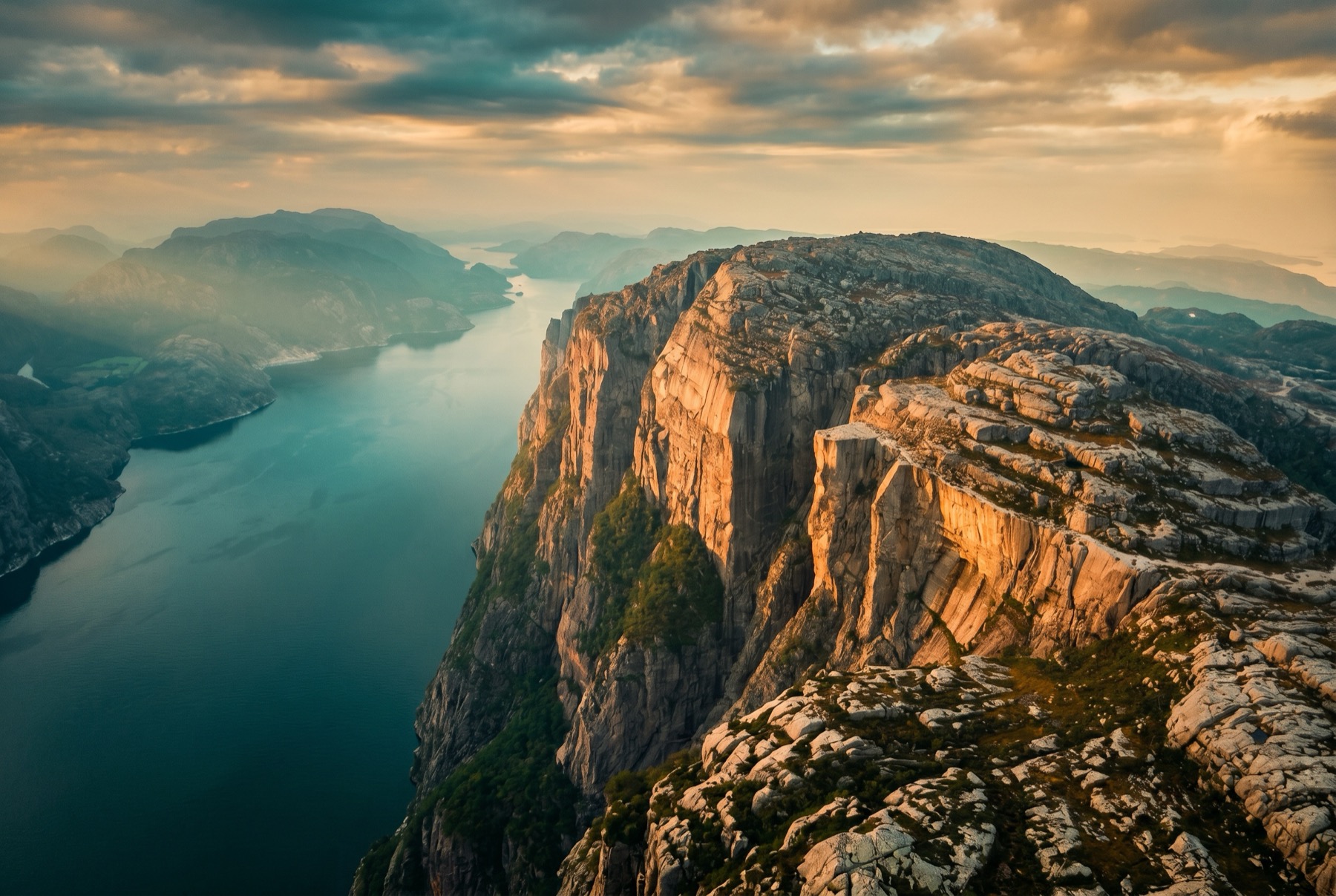
Norway is full of natural extremes, but few places command as much respect as the legendary Kjerag in Norway, perched high above the majestic Lysefjord. This iconic boulder, wedged firmly between two sheer cliff walls almost a kilometre above the fjord’s surface, draws travellers and mountain-hiking enthusiasts from all over the world. If you’re after a challenge that’s guaranteed to get your heart racing and put your fitness to the test, you’ve come to the right place.
In this guide we’ll take a detailed look at 7 tips on what to see and do around Kjeragbolten and Lysefjord. You’ll learn how to prepare for the demanding climb across granite slabs, why a trip out on the water is well worth it, and where to find the longest wooden staircase in the world.
I’ll also give you advice on where to base yourself strategically, how to plan the journey from Stavanger, and what to watch out for the most. You’ll get all the information you need to enjoy this breathtaking corner of Norwegian nature safely and without any unnecessary stress from unexpected surprises.
TL;DR
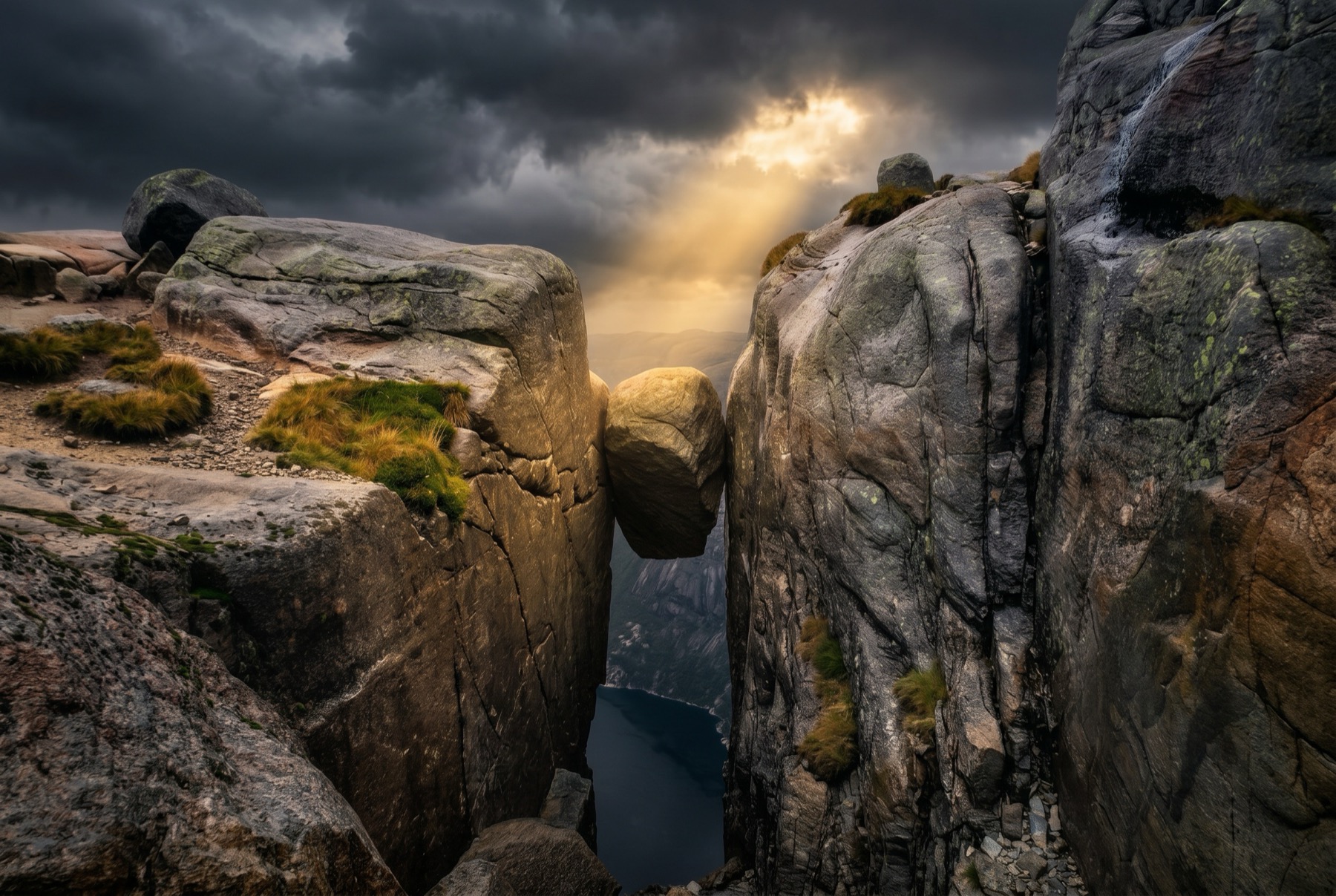
- Kjeragbolten is a roughly five-metre-wide boulder wedged into a crevice 984 metres above the surface of Lysefjord.
- The hike up to the Kjerag plateau is around 12 kilometres there and back and takes 6 to 7 hours of walking.
- The route is fairly demanding — expect steep climbs across smooth granite slabs where you’ll need to haul yourself up using steel chains.
- Actually stepping onto the boulder is optional, but in peak season long queues form, and in rain or wind it’s strongly discouraged.
- The area is best visited during the summer season from June to September — ideally set off first thing in the morning.
- A great addition to the hike is a boat trip along Lysefjord, which departs from Stavanger or Forsand and costs around 500 NOK.
- Make Stavanger your base for day trips, or stay right in the tiny hamlet of Lysebotn at the very end of the fjord.
When to Visit the Kjeragbolten and Lysefjord Area
Norwegian mountains can be unpredictable, so choosing the right time to visit is absolutely crucial. The main tourist season runs from June to September, when most of the snow has long melted and the mountain roads are safely passable. If you try to go earlier in spring or later in autumn, you’ll likely run into closed roads and very unfavourable conditions for a safe climb to the plateau.
Even in the middle of a sunny summer, it pays to set off on the hike really early in the morning. Not only will you neatly avoid the biggest crowds that gather at the boulder around midday, but you’ll also minimise the risk of unpleasant afternoon thunderstorms. The weather at Lysefjord can change within a matter of minutes, so it’s vitally important to keep an eye on the latest forecast and always have decent waterproof layers packed in your rucksack.
Where to Stay Near Lysefjord
💡 Tip for accommodation and experiences: We like to look for places to stay on Booking.com, which tends to have the best cancellation terms. For tickets, tours and activities, it’s worth comparing and booking through GetYourGuide.
When planning a trip to this area, you essentially have two main options for where to rest your head and recharge. Most travellers choose nearby Stavanger as their base, from where it’s an easy commute to the fjord and where you’ll find a rich choice of restaurants and cafés. But if you want to be right in the thick of things and save precious time on morning transfers, you can stay right in the small hamlet of Lysebotn at the very end of the deep fjord.
I’d recommend booking your accommodation well in advance through Booking, as availability disappears at incredible speed during the summer season. Here are some specific tips for tried-and-tested places:
- Thon Hotel Stavanger: A highly rated hotel right in the lively centre of Stavanger, serving really generous and tasty breakfasts. It’s an ideal choice if you want to combine mountain hikes with evenings out in the city’s streets.
- Radisson Blu Atlantic Hotel, Stavanger: Another excellent option with gorgeous views over Lake Breiavatnet. The rooms are very modern, and the location a stone’s throw from the main harbour is absolutely perfect for early-morning ferry departures.
- Lysefjorden Turisthytte: Simple but incredibly authentic accommodation right in the hamlet of Lysebotn. You’ll be just a short distance from the very start of the hike, and after a demanding day you’ll be guaranteed to appreciate the peace and quiet and the views of the surrounding steep mountains.
Kjerag in Norway and Around Lysefjord: 7 Tips on What to See and Do
The Lysefjord area offers far more than just one famous rock — there’s a whole string of fascinating spots and activities worth adding to your itinerary. Let’s take a detailed look at 7 specific tips for putting together your stay in this dramatic landscape. You’ll learn how not to miss anything important while not underestimating the difficulty of the local terrain.
1. What Exactly Is the Kjeragbolten Rock?
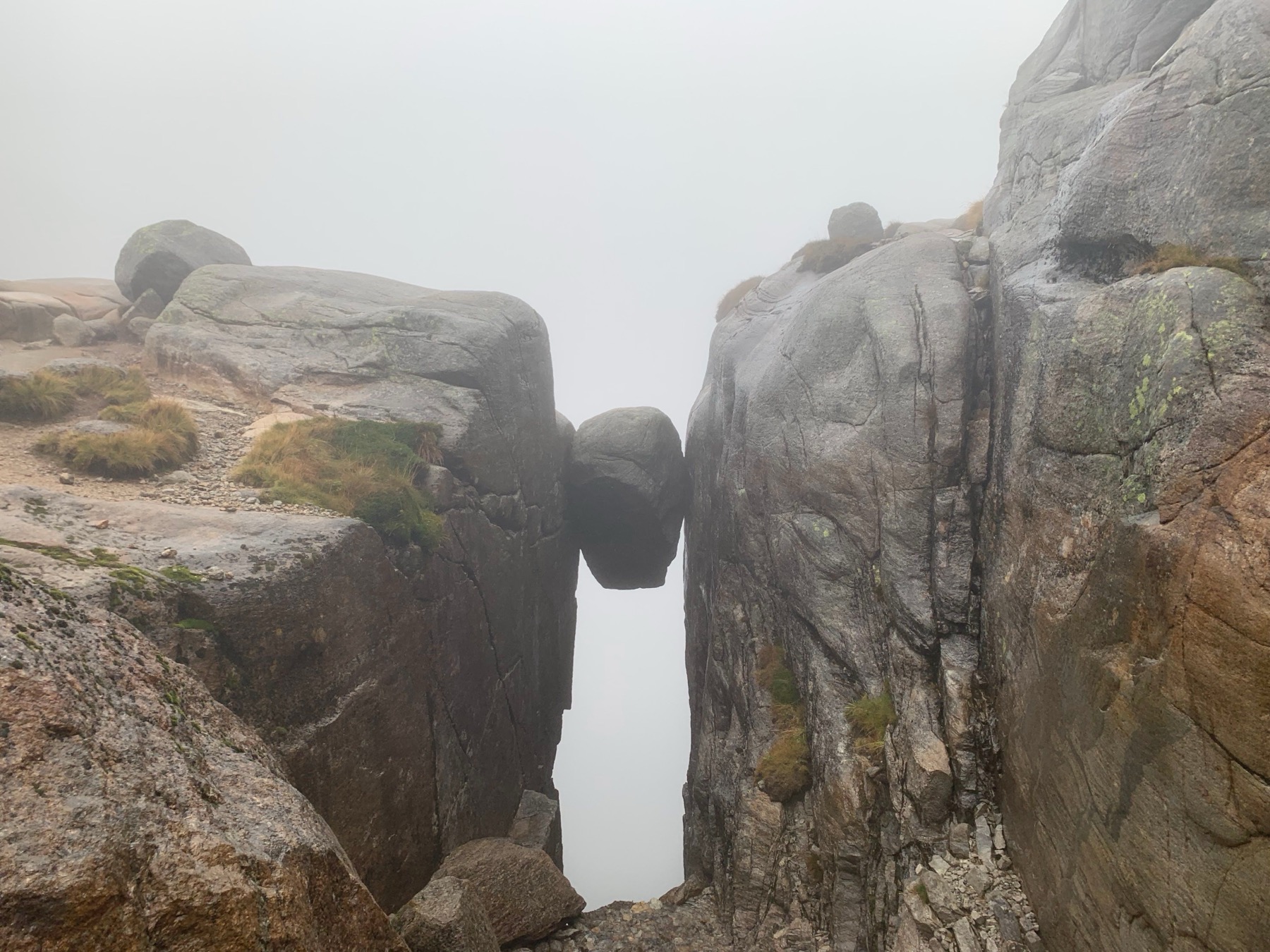
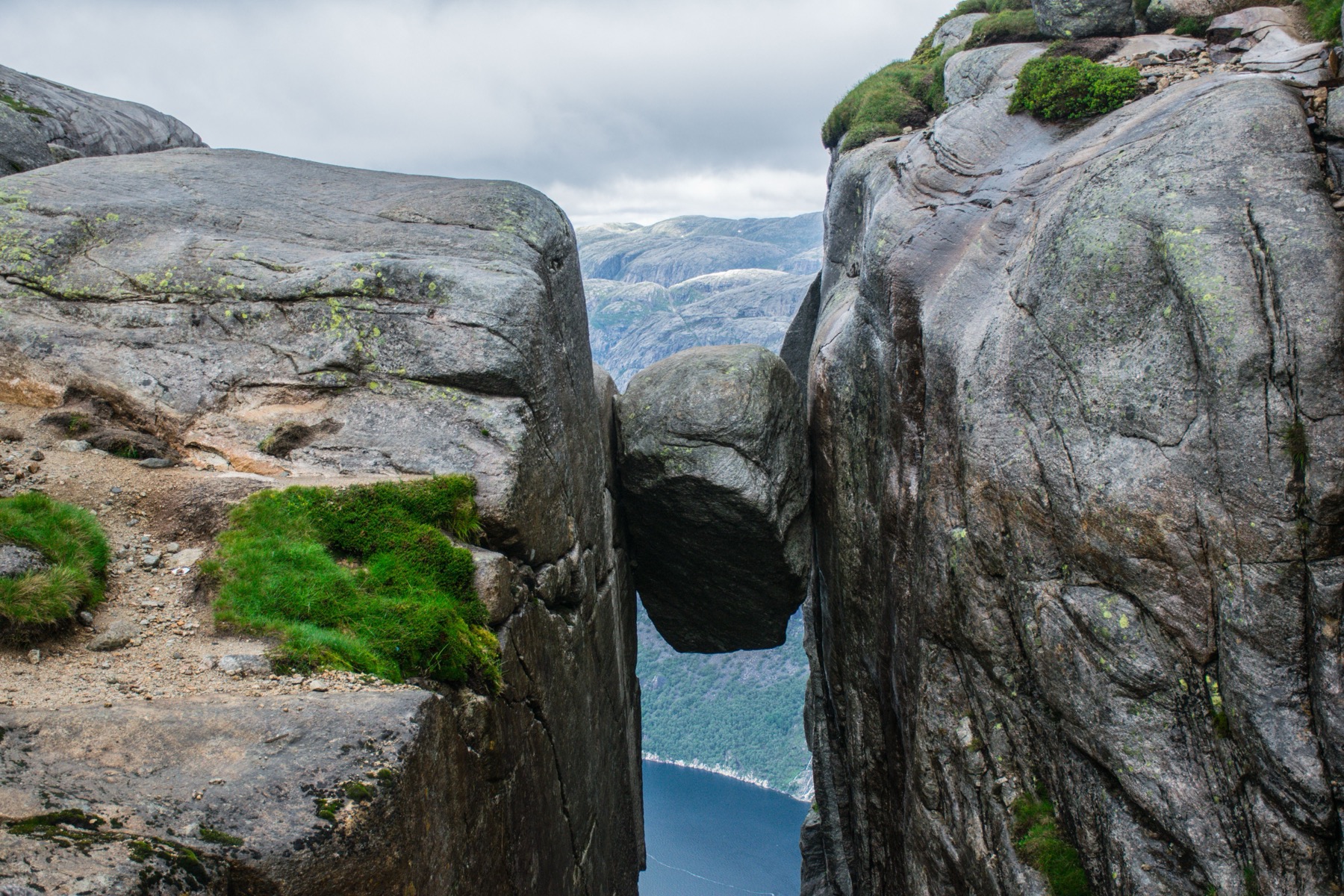
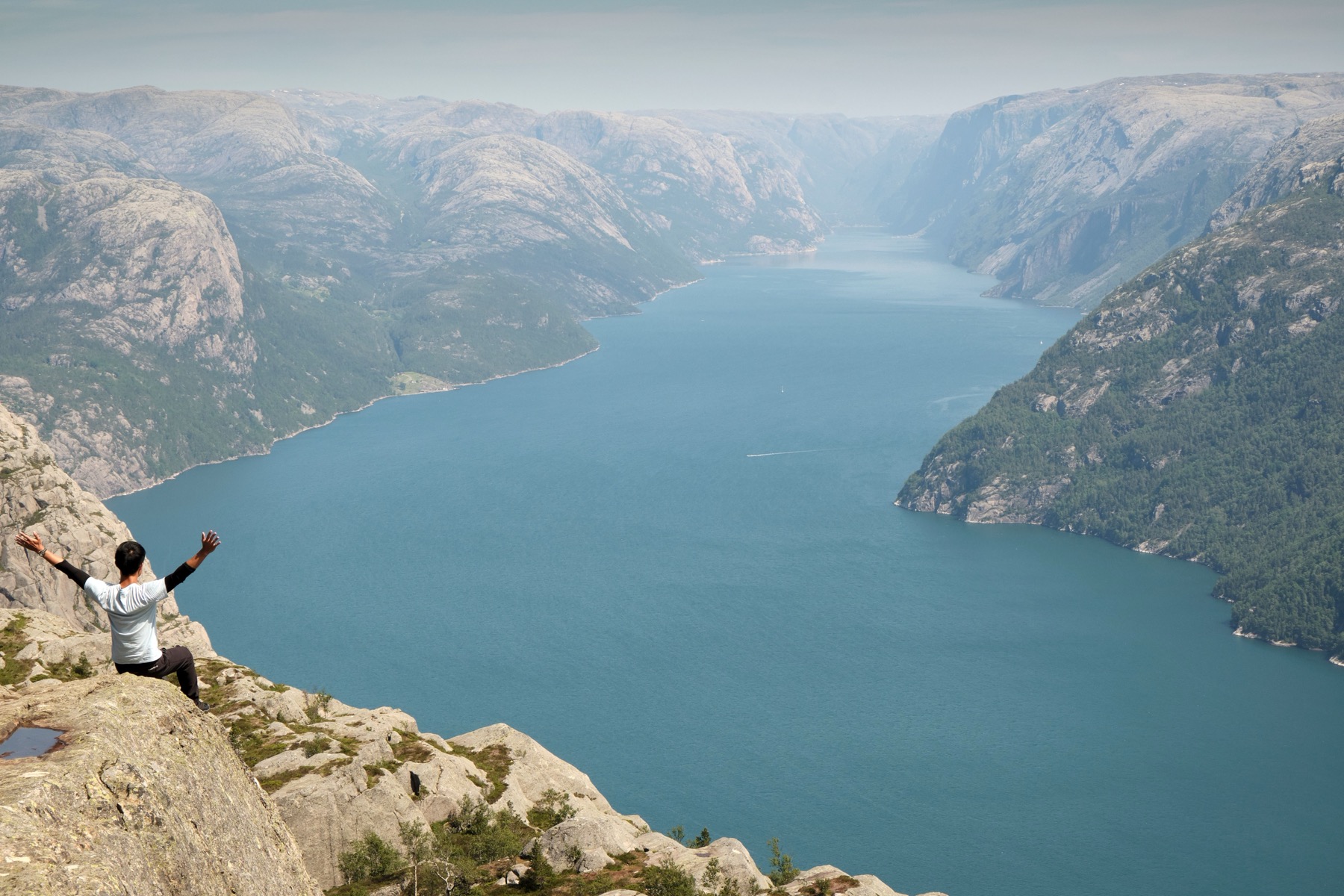
Kjeragbolten is a natural phenomenon that probably has no equal anywhere else in the world, and it draws the gaze of thousands of curious visitors. It’s a huge round boulder roughly five metres in diameter that became firmly wedged into a narrow rock crevice during the last ice age. You’ll find it right on the edge of the majestic Kjerag mountain plateau, which towers high above the water.
Looking down over the edge may well make your head spin, because directly beneath the boulder yawns a 984-metre-deep drop, with the blue surface of Lysefjord glittering far below. Standing on it has become an absolute travel classic, although it’s definitely not an experience for anyone who suffers from a fear of heights. That said, simply seeing this geological wonder is worth the effort even for those who wisely decide to keep both feet planted firmly on the safe surrounding rock.
2. The Demanding Kjerag Hike up to the Plateau
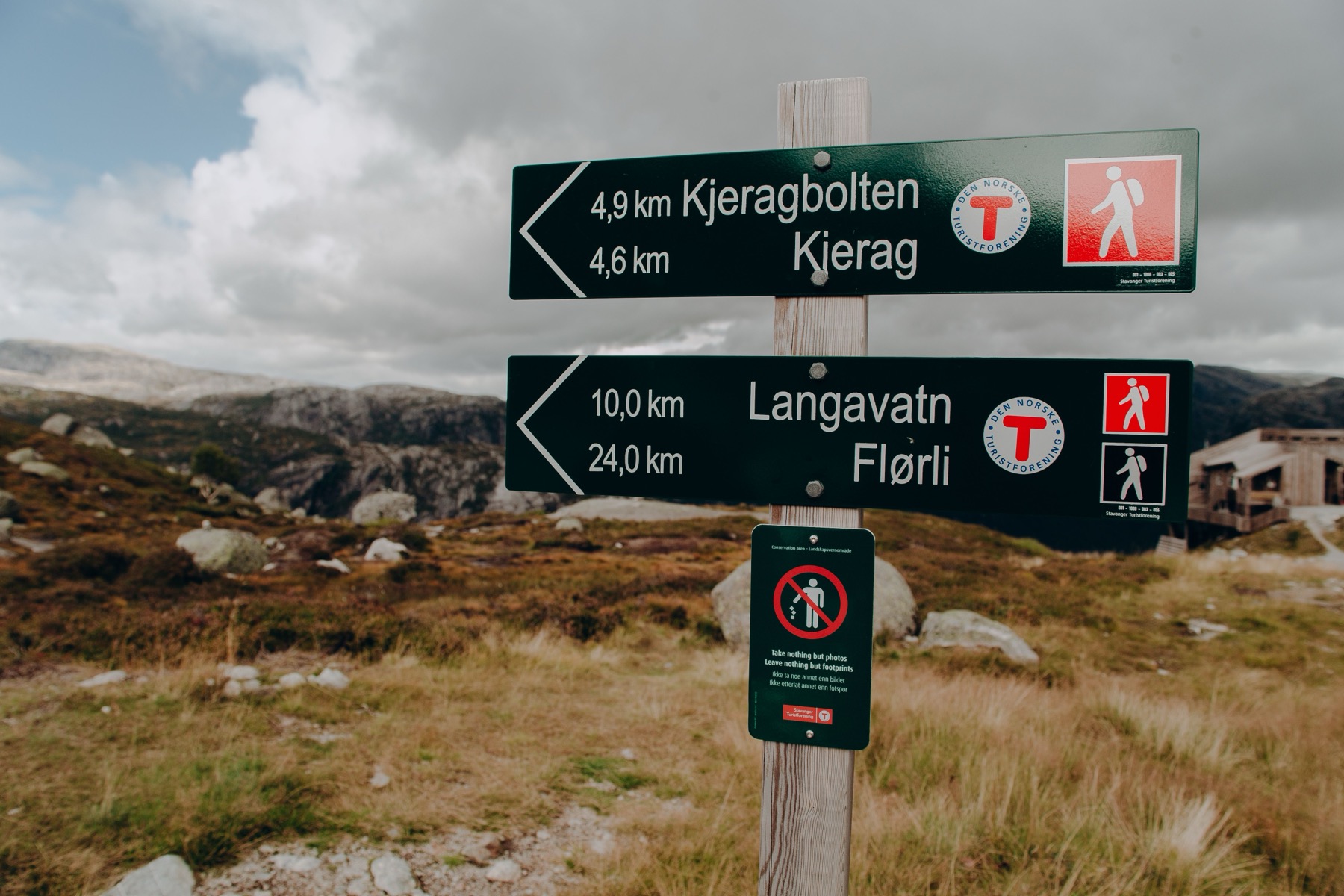
The route to the boulder begins at the restaurant and car park at Øygardstøl, which sits at an altitude of around 640 metres. From there you face a route of roughly 12 kilometres (there and back), for which you should definitely set aside about 6 to 7 hours of actual walking time. The climb is made up of three fairly steep and strenuous ascents, between which you thankfully get a bit of a breather in shallow mountain valleys.
The toughest sections of the route lead across very smooth granite slabs, where sturdy steel chains have been installed to keep hikers safe. Especially after morning dew or rain, the rock can get extremely slippery, so solid hiking boots with a good non-slip sole are absolutely essential for this trip. Don’t skimp on your Kjerag shoes — they make all the difference on those slick slabs.
| The Kjerag Hike | Route Information |
|---|---|
| :— | :— |
| Distance (there and back) | ~12 km |
| Time required | 6 to 7 hours |
| Total elevation gain | ~570 metres |
| Difficulty | Demanding (steep sections, chains) |
| Height above the fjord | 984 metres |
3. The Photo Queue and the Question of Safety
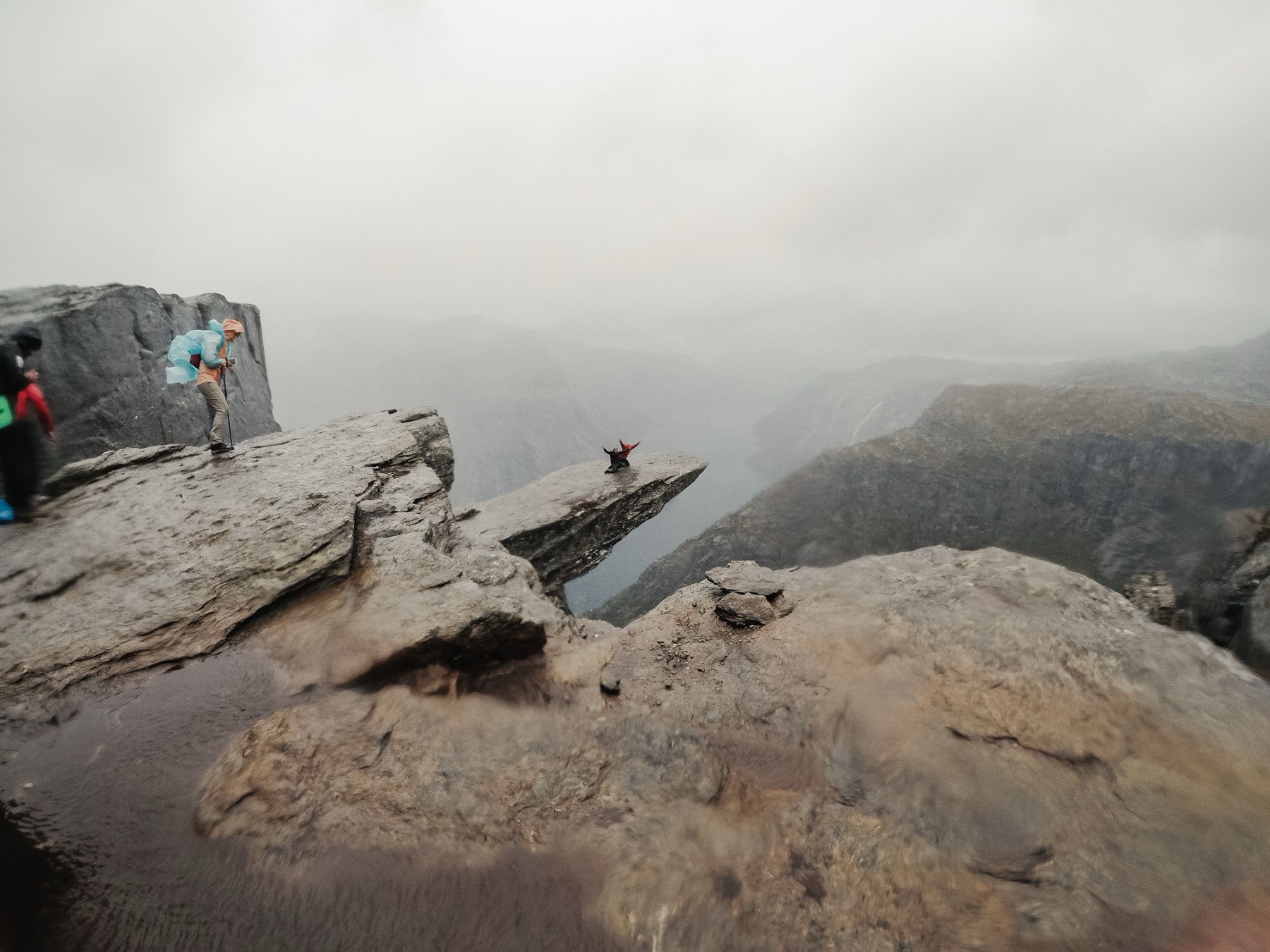
When you finally reach your dream spot after several hours of physical effort, you’ll probably be greeted by a long line of fellow enthusiasts. The queue for that iconic photo on the boulder can take more than an hour in peak summer season, so arm yourself with plenty of patience. Be sure to pack enough warm clothing, because waiting around in a cold mountain breeze can get pretty unpleasant.
It’s really important to stress that actually stepping onto the boulder is always entirely optional, and no one is forcing you to do it. Although it looks terrifying from certain angles in photos, the approach from behind is slightly wider than it first appears. Even so, one absolutely fundamental rule applies: never step onto Kjeragbolten in wet, snowy or strongly windy conditions. There have sadly been Kjeragbolten deaths and accidents over the years, and a slip would have utterly fatal consequences — no photo for social media is worth such an enormous risk.

4. Lysefjord and Boat Trips from Stavanger
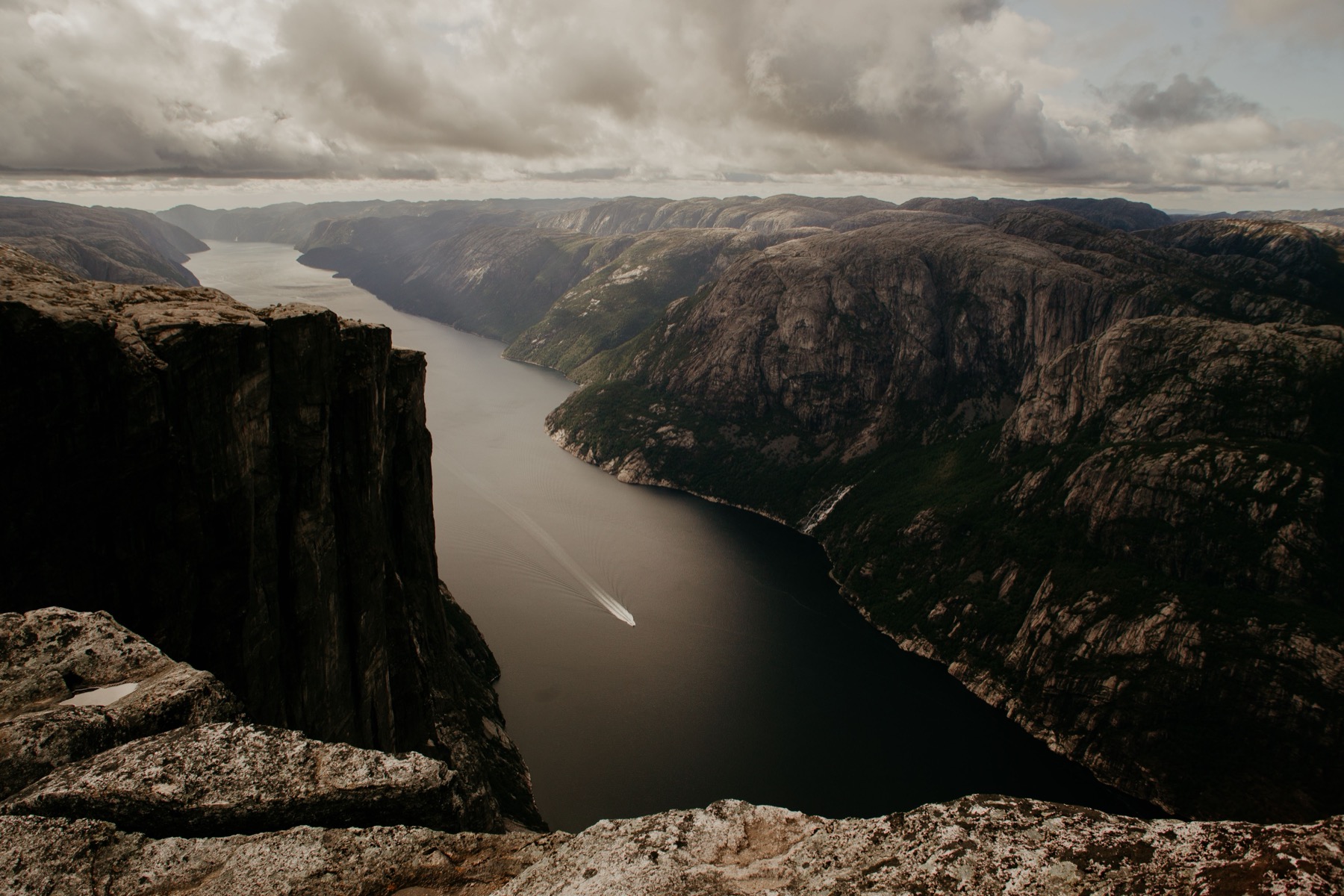
If you want to relax pleasantly after a demanding hike, or you’d rather discover Norwegian nature in comfort, a boat trip along Lysefjord is a phenomenal and hugely popular experience. These cruises most often set off from the large harbour in Stavanger or from the smaller town of Forsand. You can easily buy tickets online, and I’d recommend exploring GetYourGuide, where you’ll find various departure times.
From the deck of a sightseeing boat you get a completely different perspective on the whole fjord and fully appreciate its enormous scale. Among other things, you’ll see the famous Kjeragbolten from far below (it’ll look like a tiny pebble stuck high up in the rock), sail right beneath monumental cliffs, and get a close-up look at majestic waterfalls plunging straight into the fjord. The price for a classic sightseeing cruise is around 500 NOK, which works out at roughly 45 €.
5. The Flørli Staircase: 4,444 Steps to the Sky
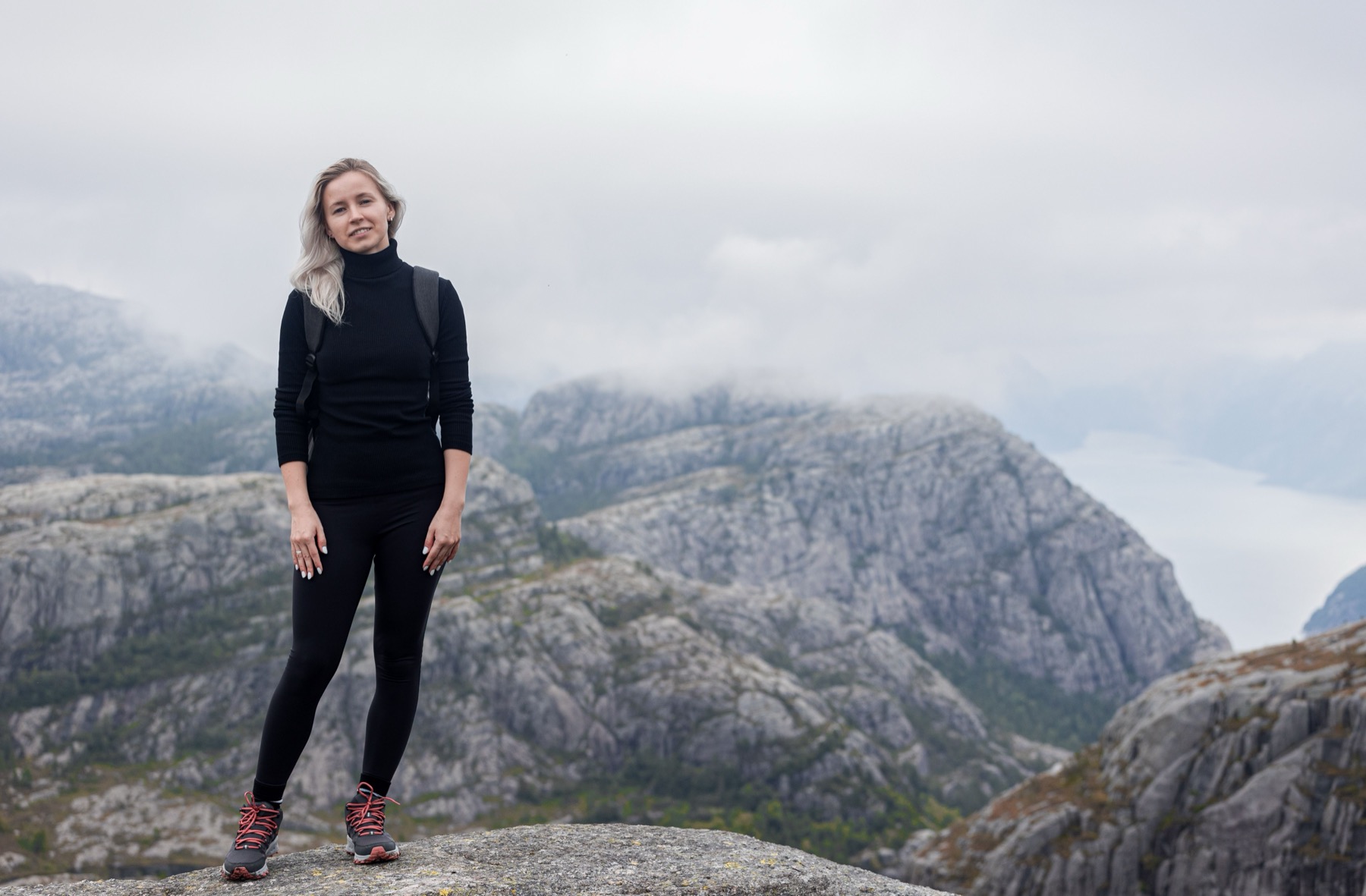
A lesser-known but all the more fascinating destination in the Lysefjord area is the picturesque and very peaceful village of Flørli. It hides an absolute technical marvel — the longest wooden staircase in the world. It climbs steeply upward alongside an old water pipeline that once supplied the local power station, and it counts exactly 4,444 wooden steps.
This vertical climb is an extreme test for your legs and lungs, but your well-earned reward at the top will be breathtaking views over the whole of Lysefjord. You can’t reach Flørli by car — you’ll need to take the local passenger ferry. 💡 Tip: Many experienced travellers combine a visit to this staircase with a boat trip along the fjord, neatly tying two great experiences together in a single day.
6. The Lysevegen Road and Its 27 Hairpin Bends
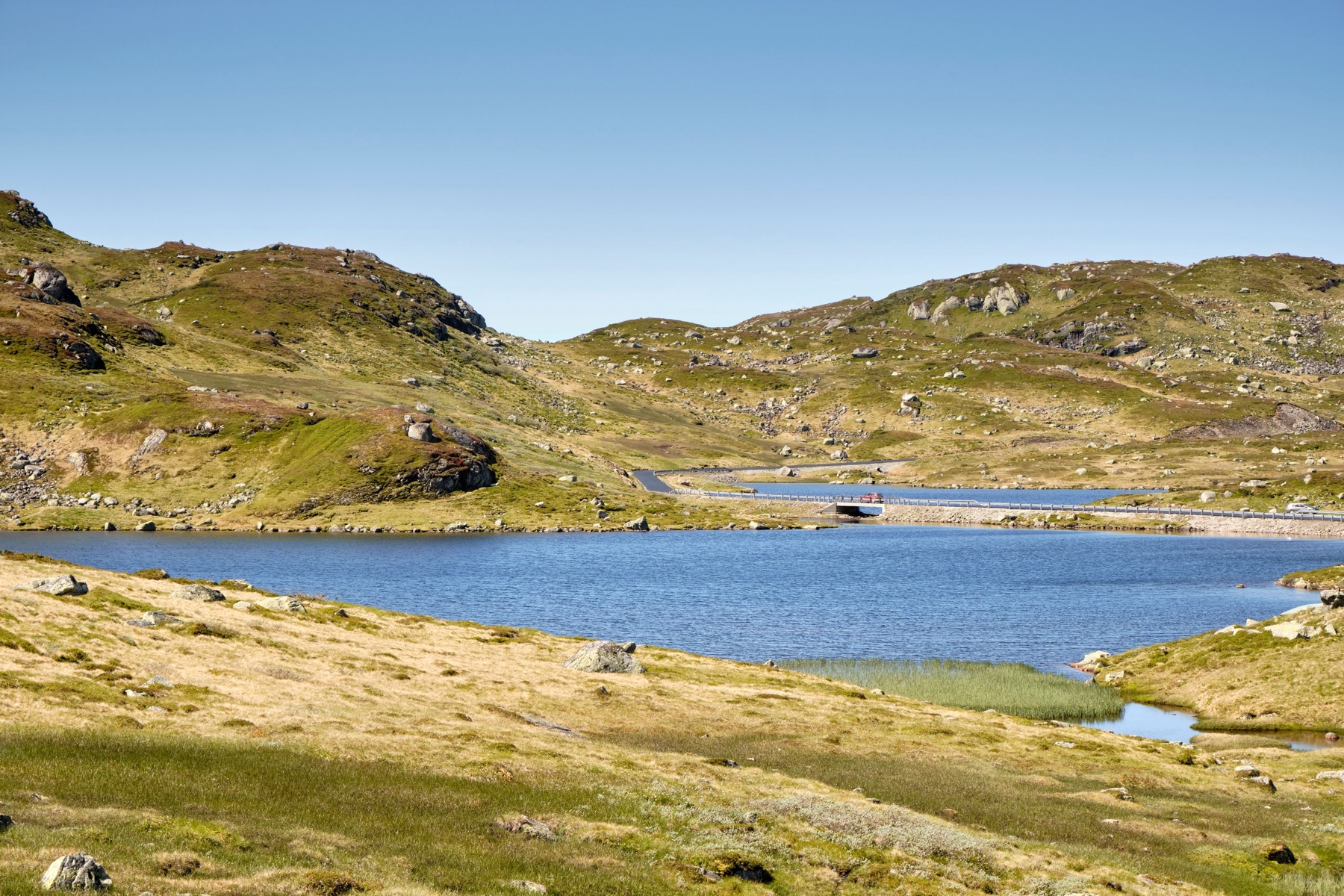
The very drive to the starting point of the Kjeragbolten hike is an unforgettable adventure behind the wheel. The mountain road called Lysevegen, which connects the high-altitude area with the hamlet of Lysebotn down at fjord level, is a genuine engineering masterpiece. Over a very short stretch it overcomes huge differences in altitude and twists through a total of 27 sharp hairpin bends.
The biggest surprise on this dramatic route is a roughly kilometre-long tunnel that curves into an unexpected spiral inside the massive mountain. Driving on this narrow road takes plenty of caution and steady nerves, especially when you have to squeeze past large oncoming campervans on the bends. Before the descent into the valley, be sure to stop for a moment at the viewpoint near the Øygardstøl restaurant — that panorama over the valley is truly worth it. If you’re hiring a car for the trip, remember that Norwegian mountain roads demand confident driving.
7. Kjerag as a Mecca for Base Jumping
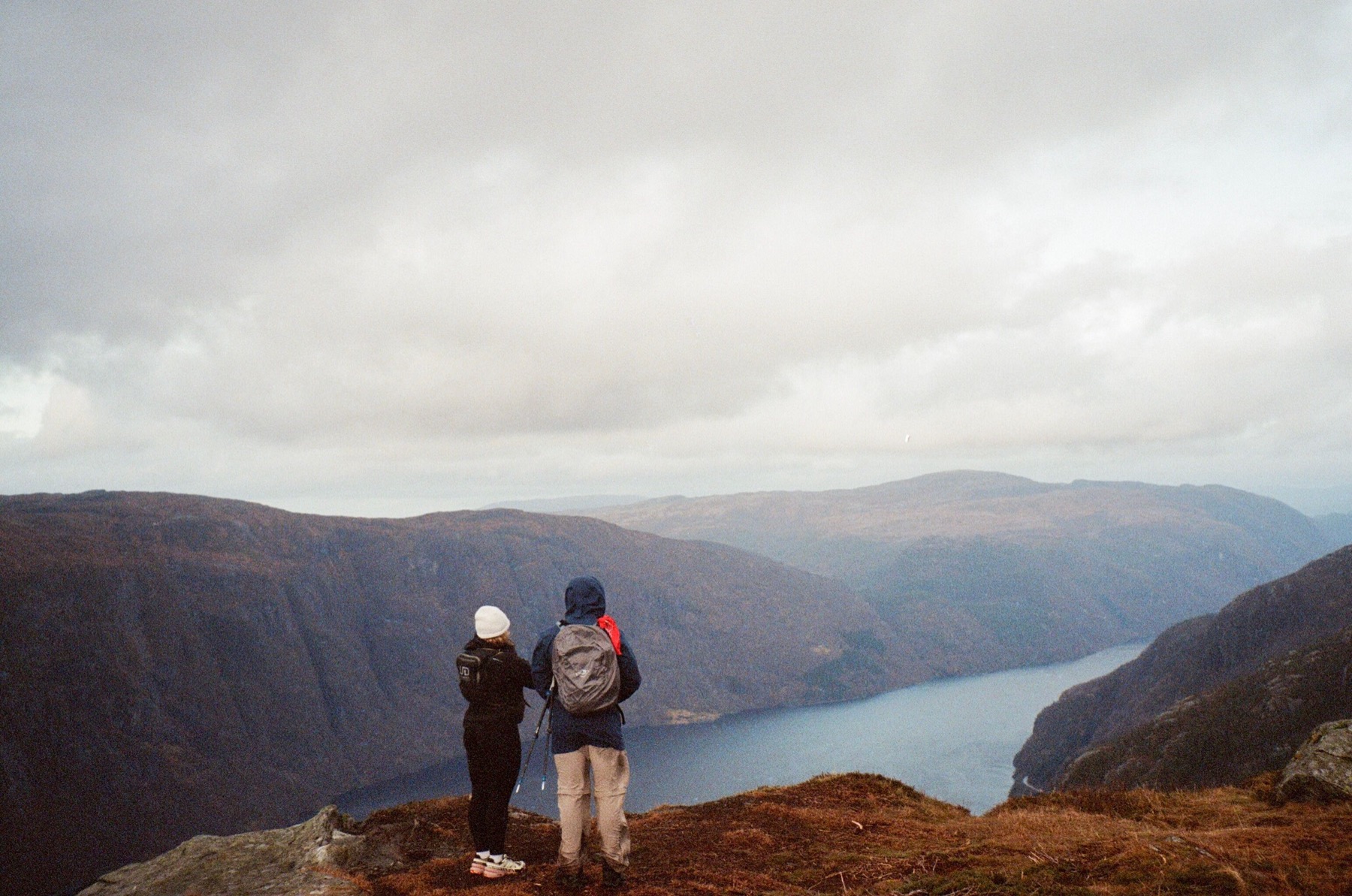
Besides ordinary hikers, on the Kjerag plateau you’ll also come across a far more specific and daring group of people. Thanks to the enormous sheer drop and favourable air currents, this spot has become a world Mecca for base jumping in Norway — that is, extreme parachute jumps from fixed rock objects.
During the summer months you can watch enthusiasts from a safe distance as they hurl themselves into the deep abyss in special wingsuits and, after a few seconds of dangerous free fall, open their parachutes low above the fjord’s surface. It’s an absolutely fascinating spectacle that injects the whole place with a serious dose of adrenaline, without you having to take on any personal risk yourself.
Map of points of interest for your phone
Where to Go Next from Lysefjord
Once you’ve thoroughly explored Kjerag and its immediate surroundings, there are plenty of other great options for where to continue in Norway. Here are a few more of our guides that are sure to help you plan the rest of your trip:
- If you want a comprehensive overview of the whole country, read our extensive article Norway: 50 Things to See.
- Your main base will probably be the big city we’ve put together a handy guide to in Stavanger — Gateway to the Fjords.
- Directly across from Kjerag rises another famous Norwegian cliff, which we cover in detail in Preikestolen — The Hike Step by Step.
- For lovers of dramatic, wild nature, we’ve also prepared a more general overview in Norwegian Fjords — A Guide.
Frequently Asked Questions
How difficult is the hike to Kjeragbolten?
The route is generally considered quite challenging. It measures approximately 12 kilometers round trip, conquers a total elevation gain of around 570 meters, and takes 6 to 7 hours of hiking. The most difficult parts are the very steep sections over smooth granite slabs, where hikers must physically assist themselves using installed steel chains.
Is it safe to stand on the Kjeragbolten boulder?
“`html
Stepping onto the boulder itself is completely voluntary and up to you. In dry and windless conditions, it can be managed quite safely, as the rear access is wider than it appears in photos. However, in rain, snow, or strong gusty winds, it is very strongly discouraged for obvious reasons.
“`
Is a boat trip on Lysefjord worth it?
Absolutely yes, it’s a totally amazing way to relax and see the rugged nature from a completely different perspective. A leisurely cruise will show you Kjeragbolten itself, the impressive Preikestolen rock, and numerous roaring waterfalls from directly below. Ticket prices are around 500 NOK (approx. €45).
Is it better to go to Kjeragbolten or to Preikestolen?
Preikestolen is much more accessible and an easier hike that takes only about 4 hours and can be managed even by fitter families, although it tends to be significantly more crowded with tourists. Kjeragbolten, on the other hand, is much more challenging, longer, and offers a somewhat greater adrenaline rush for more physically experienced hikers.
When is the best time to visit the area?
Ideal conditions for the ascent are during the main summer season, from June to September, when there’s the best chance of stable weather and safely passable mountain roads. It’s strongly recommended to set out on the hike very early in the morning to avoid large crowds and frequent afternoon thunderstorms.
What is the Flørli staircase?
Flørli is a very small and peaceful village located right on the shore of Lysefjord, which is world-famous for the longest wooden staircase in the world. It counts an incredible 4,444 steps and follows the route of an old water pipeline. From its top, absolutely fantastic views of the entire fjord open up.
How to get to the starting point of the ascent?
From nearby Stavanger you can drive and use the passenger ferry, which will take you directly to the small settlement of Lysebotn. From there you just drive up the dramatic serpentine road Lysevegen to the large car park at Øygardstøl. Another convenient option is to use special tourist buses.
Tips and Tricks for Your Vacation
Don’t Overpay for Flights
Search for flights on Kayak. It’s our favorite search engine because it scans the websites of all airlines and always finds the cheapest connection.
Book Your Accommodation Smartly
The best experiences we’ve had when looking for accommodation (from Alaska to Morocco) are with Booking.com, where hotels, apartments, and entire houses are usually the cheapest and most widely available.
 🚗 Car rental on the roadVerified rental cars in Norway
Search with the DiscoverCars comparison engine — it compares prices from dozens of local and international rental companies, and most bookings come with free cancellation.
Compare car prices in Norway →Don’t Forget Travel Insurance
Good travel insurance will protect you against illness, accidents, theft, or flight cancellations. We’ve had a few hospital visits abroad, so we know how important it is to have proper insurance arranged.
Where we insure ourselves: SafetyWing (best for everyone) and TrueTraveller (for extra-long trips).
Why don’t we recommend any Czech insurance company? Because they have too many restrictions. They set limits on the number of days abroad, travel insurance via a credit card often requires you to pay medical expenses only with that card, and they frequently limit the number of returns to the Czech Republic.
Find the Best Experiences
Get Your Guide is a huge online marketplace where you can book guided walks, trips, skip-the-line tickets, tours, and much more. We always find some extra fun there!


