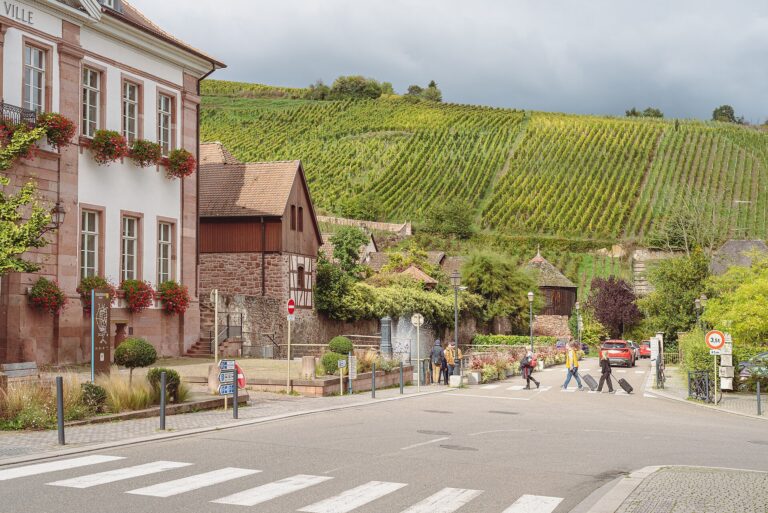
Welcome to a region that looks as if someone accidentally cut it out of a Brothers Grimm fairy tale and planted it in eastern France. The Alsace wine route in France is pure visual overload, the result of centuries of French charm blending with German precision to create something entirely unique. You’ll find dozens of historic half-timbered houses painted in every colour imaginable, with storks clattering confidently on their chimneys. Windows here can barely stay on their hinges under the enormous weight of geraniums, and the crooked little lanes practically beg you to get lost forever.
While the rest of France usually breakfasts on a croissant and sips a light wine, here you’ll discover hearty country cooking that the locals love to wash down with an excellent, mineral-rich Riesling. People travel here from all over the world for two main reasons. The first is the legendary Alsace wine route, lined with the sun-drenched slopes of the Vosges mountains. The second is the magical Advent season, when the whole region flips into incredible Christmas madness and the air smells of cinnamon. In this article I’ll point you to the prettiest stops so you take home the very best of Alsace.
TL;DR
- Alsace wine route: Around 170 kilometres long, it’s one of the oldest in France and offers breathtaking views over the vineyards and medieval villages.
- Christmas markets: From late November through December, Strasbourg and Colmar host some of the most beautiful and oldest markets in all of Europe.
- Fairy-tale architecture: You’ll enjoy the colourful half-timbered façades most in Eguisheim, Riquewihr or romantic Kaysersberg.
- Haut-Koenigsbourg: A majestic 12th-century mountain castle that dominates the region and offers an unforgettable view all the way to the Swiss Alps.
- Vegetarian treats: Be sure to try the traditional, aromatic Munster cheese or the popular crispy Tarte Flambée in its meat-free version.
- Book accommodation early: If you’re visiting during the busy Advent period, reserve your hotel at least six months in advance.
The full destination guide: Alsace and Burgundy — guide and what to see
When to visit Alsace, France
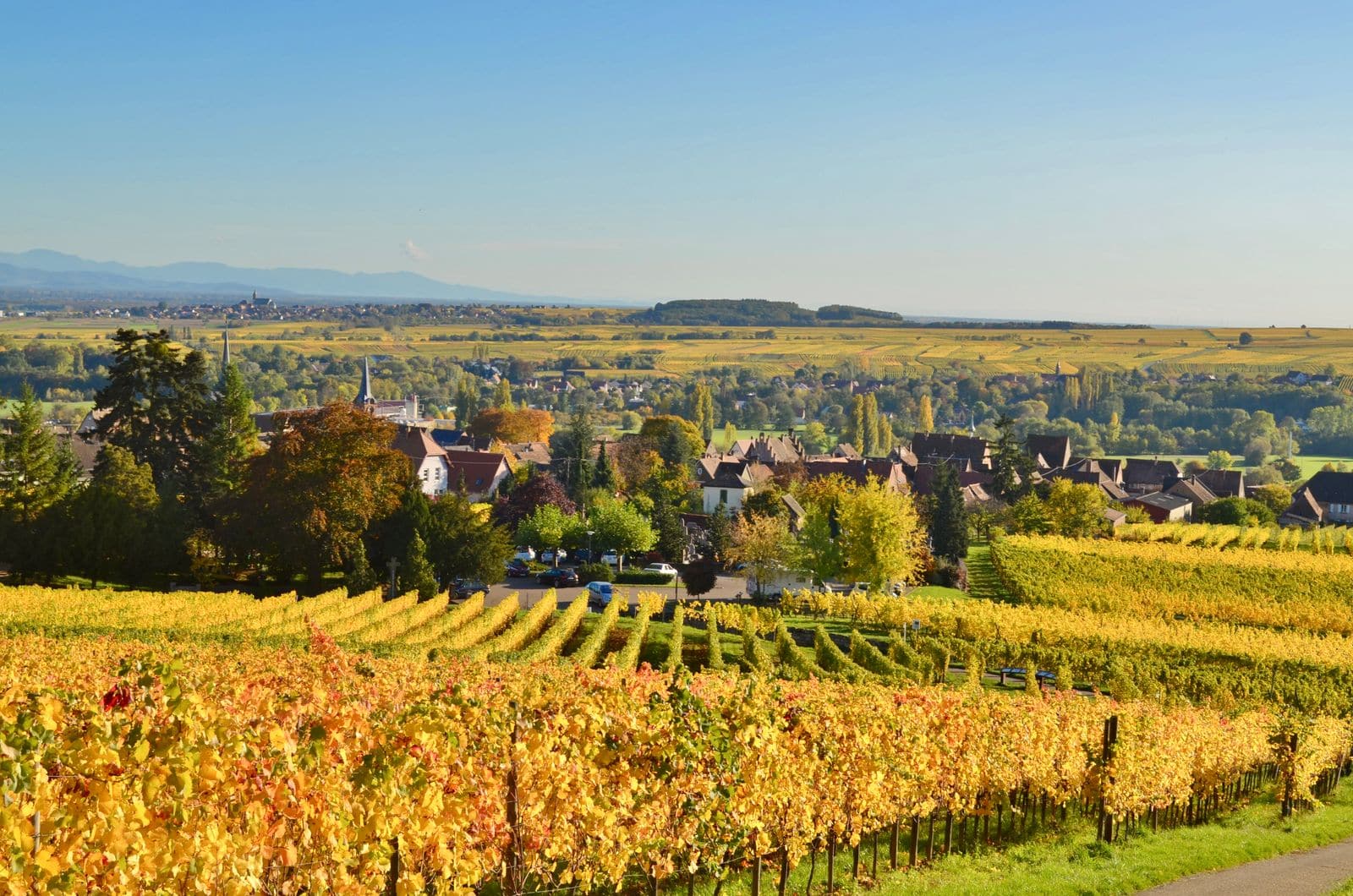
Alsace has two main seasons that draw huge crowds from across the globe, and each has its own very specific magic. The first peak is undoubtedly autumn — September and October in particular — when the traditional grape harvest kicks into full swing and the whole valley buzzes with unusual energy. The leaves on the endless vineyards turn gorgeous shades of gold and red, and the settled weather is perfect for long walks and easy cycling. The Vosges mountains reliably hold back the rain clouds rolling in from the Atlantic, so this is one of the driest microclimates in all of France, with temperatures absolutely ideal for tasting young wine straight from the local growers.
The second — and perhaps even more famous — period is the magical Advent season, which usually begins in the last week of November and runs right up to Christmas. Alsace doesn’t hold back here, rolling out the heavy artillery: millions of fairy lights, the scent of mulled wine, and ancient historic markets with no rivals in Europe. Just be ready, mentally, for the fact that at weekends the lanes of the best-known towns turn into a slow-moving river of excited people, and finding a quiet spot becomes a real challenge. If you’d love to experience this winter wonderland, pencil in late November to late December 2026, when the towns shine their brightest.
From the UK, Alsace is surprisingly easy to reach. The closest airport is Strasbourg (via EuroAirport Basel-Mulhouse, which serves both France and Switzerland), with easyJet flying from London and other UK cities to Basel year-round. From there it’s a short drive or train hop into the heart of wine country. If you’d rather make a road trip of it, the high-speed TGV connects Paris and Strasbourg in under two hours — pair it with the Eurostar from London and you’ve got a seamless rail journey. For those who want more peace and quiet and don’t mind missing the Christmas markets or the September harvest, come in spring or early summer, when you can soak up sunny days strolling between the vineyards completely free of crowds.
Where to stay in Alsace
💡 Tip for stays and experiences: We love searching for accommodation on Booking.com, where you usually get the best cancellation policies. For tickets, tours and activities, it pays to compare and book through GetYourGuide.
Choosing the ideal base camp depends mainly on the kind of holiday you prefer and whether you’re driving or relying on public transport. If the Alsace wine route is your main draw, I’d suggest staying right in one of the smaller villages, like picturesque Kaysersberg or livelier Ribeauvillé. You’ll get a wonderfully authentic atmosphere with historic landmarks right on your doorstep, and every evening you can walk to a nearby tasting cellar. The village setting is perfect for anyone who wants to hop on a bike first thing in the morning and head out onto the paved cycle paths that wind between the endless rows of vines.
For those who want to combine fairy-tale villages with more services and quality restaurants, the town of Colmar is the ideal choice. It sits strategically at the southern edge of the wine route and makes a great base for day trips around the whole area without much driving. Look for accommodation right next to the Petite Venise quarter, where you’ll find plenty of lovely boutique hotels tucked into historic half-timbered houses, easily booked through Booking.com. Colmar is a touch busier than the surrounding villages, but it offers the perfect setting for evening strolls along the floodlit canals.
If, on the other hand, you prefer big-city buzz and grand architecture, make Strasbourg your main base. The city has excellent TGV connections from Paris and a great park-and-ride system on its outskirts, so you can leave the car parked safely. Bear in mind, though, that in December accommodation vanishes at rocket speed and prices across the region soar to astronomical heights. For an Advent trip, secure your room ideally six months ahead, or you’ll be stuck with a hotel out in the suburbs or commuting in from the German side of the border.
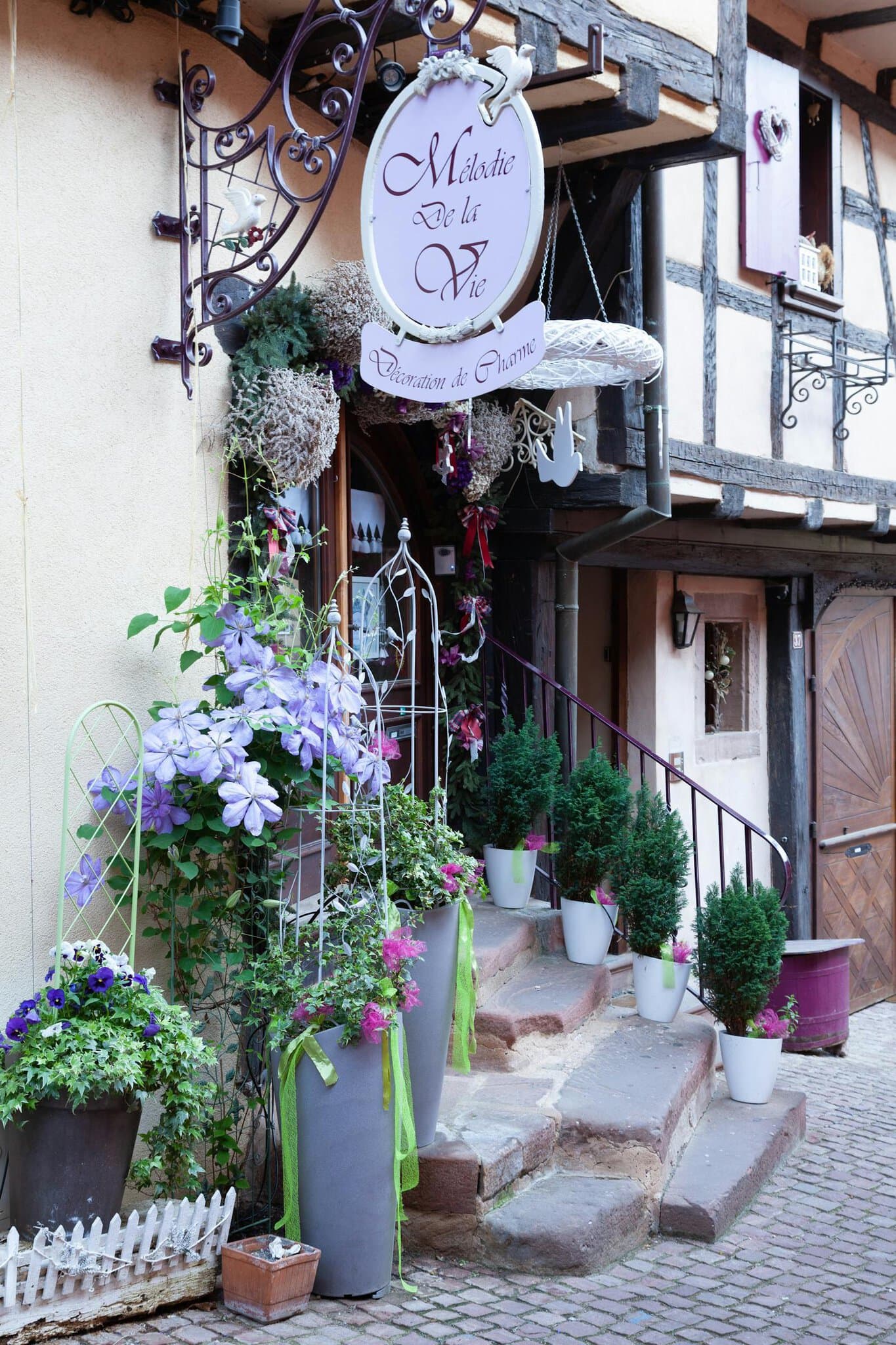
12 best things to see and do on the Alsace wine route, France
The Alsace wine route winds for 170 kilometres and hides dozens of enchanting places competing for your attention. I’ve picked out the 12 most beautiful stops you really shouldn’t miss as you travel through this region. If you’d rather not worry about driving, you can book an organised tour through the vineyards via GetYourGuide.
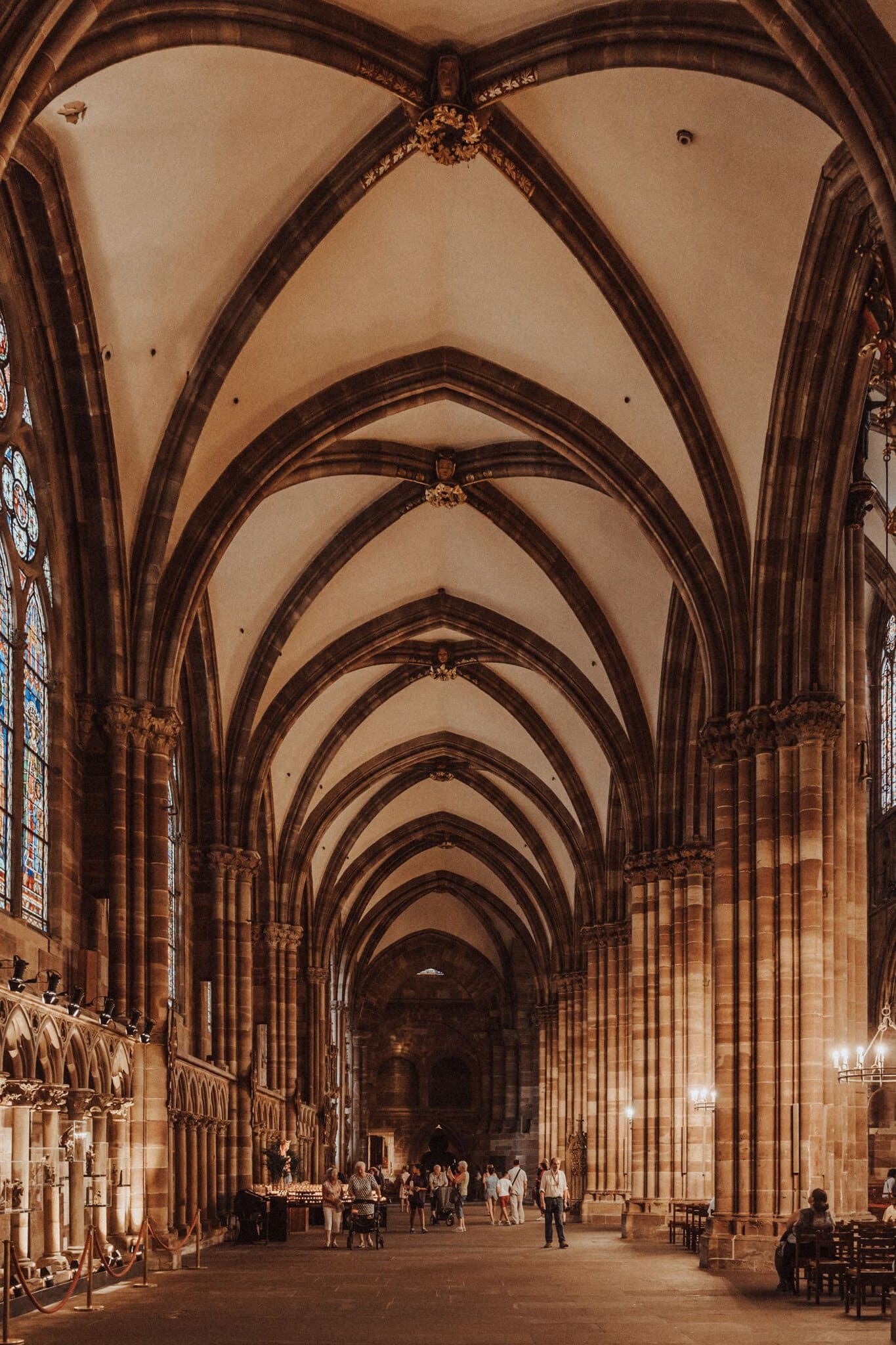
1. Strasbourg and its majestic cathedral
Strasbourg serves as an important administrative centre of Europe and, at the same time, the proud beating heart of all Alsace. The entire historic centre, known as the Grande Île, is rightly listed by UNESCO and ringed by the picturesque River Ill, with everything comfortably reachable on foot or by bike. Getting your bearings is surprisingly easy, because the Notre-Dame cathedral works like a giant Gothic compass. Inside, don’t miss the fascinating astronomical clock, where every day at exactly half past noon a complex mechanism of apostles and the figure of Death springs into motion.
The most photographed part of the city is, without any debate, the Petite France quarter, once the domain of tanners and millers. Here the river splits into several smaller canals, with a fantastic view over them from the historic Vauban Dam near the Ponts Couverts covered bridges. Centuries-old half-timbered houses with steep roofs lean over the water, their ground floors now home to cosy traditional taverns called winstubs.
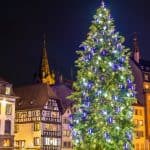
If you’re heading here in December, brace yourself for a huge event, because the city officially claims the title of Capital of Christmas. The local markets have been running since 1570 and in 2026 will take place from late November to late December, with more than three hundred wooden stalls. At the heart of it all stands a giant, lavishly decorated Christmas tree on the central Place Kléber, where the air is thick with the scent of mulled wine and roasted almonds.
💡 Tip: Head to the markets first thing in the morning so you can browse all the stalls in peace before the lanes fill up with crowds in the afternoon.
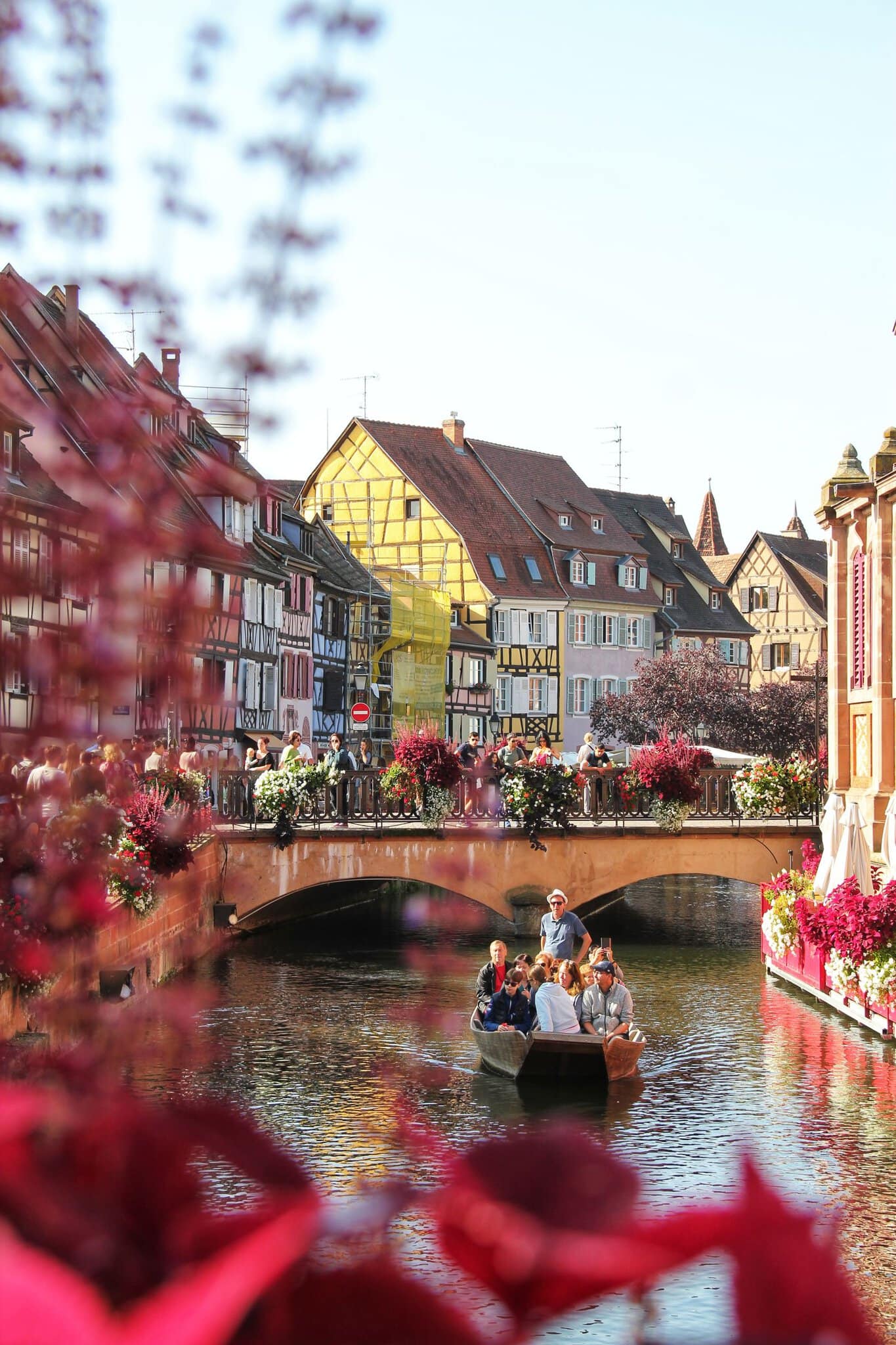
2. Colmar and the romantic Petite Venise quarter
If Strasbourg is grand and overwhelming, Colmar is the concentrated essence of pure prettiness. It’s much smaller, more compact, and its historic centre looks so unbelievably perfect that you half expect it to be locked away in a glass display case at night. Colmar sits at the southern edge of the Alsace wine route, and visiting it is an absolute must on any trip through the region, because here you’ll feel that genuine, warm countryside atmosphere combined with urban elegance.
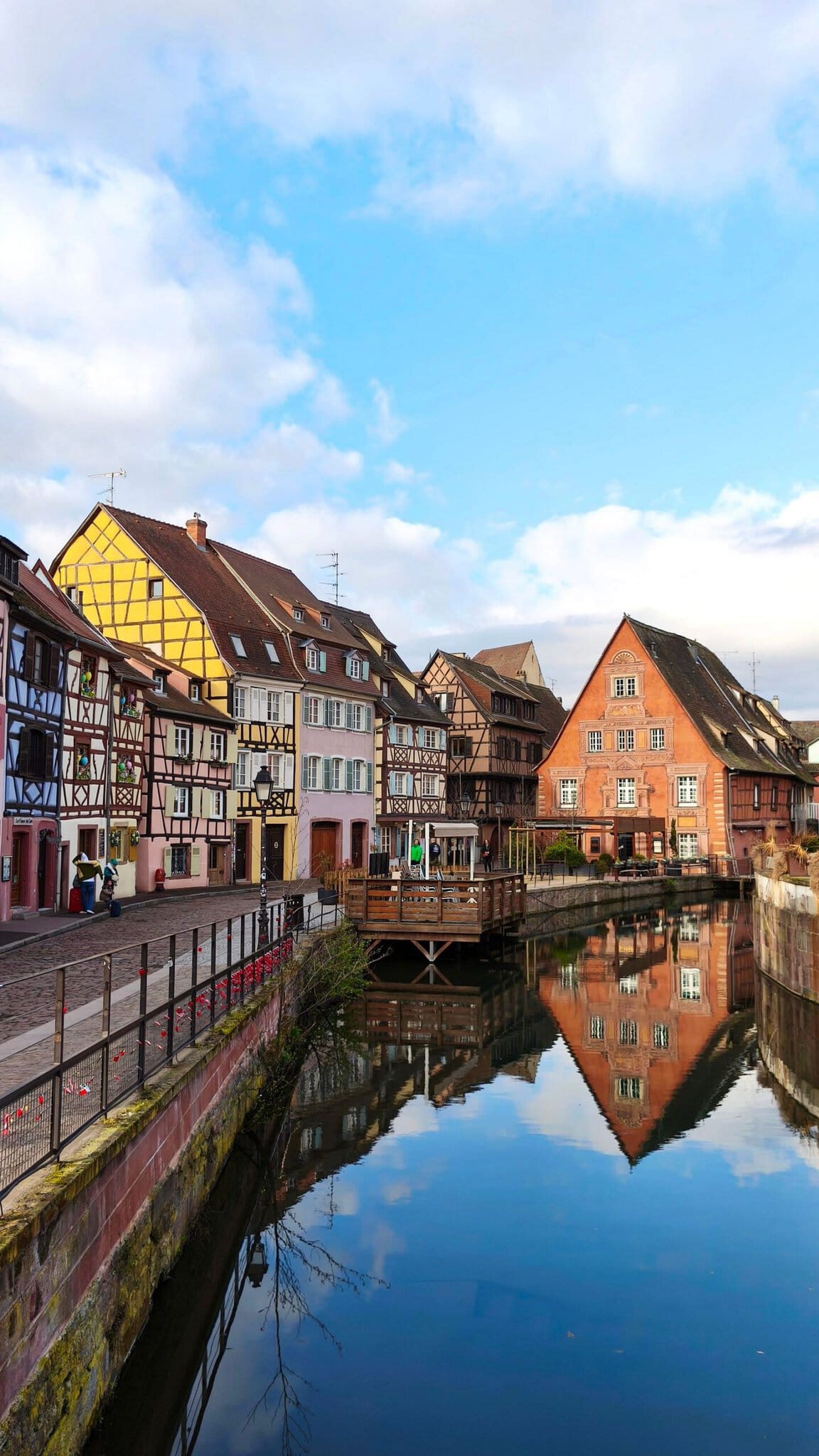
The biggest magnet for visitors is undoubtedly the Petite Venise (Little Venice) quarter. Pastel-coloured houses line the narrow canal of the River Lauch and create a scene straight off a postcard. Their colours once reliably indicated the owner’s trade — blue belonged to fishermen, yellow to bakers. Today you can rent a little boat and glide slowly along the canal, which is admittedly a tourist cliché, but the flower boxes on the façades simply look their absolute best from the water.
The centre of Colmar is a tangled labyrinth of cobbled lanes that lead you to the most beautiful architectural gems. Stop by the gorgeous Maison Pfister from 1537, whose oriels and wooden galleries make it look more like a Renaissance château than an ordinary townhouse. A short walk away stands the imposing Koïfhus building, an old customs house with a typical Alsatian roof made up of colourful tiles.
The Christmas markets in Colmar have a completely different, far more intimate feel than the enormous ones in Strasbourg. The town hosts six separate markets, sensitively set within the tight backdrops of medieval lanes and squares such as the charming Place des Dominicains. The 2026 dates are planned roughly from 23 November until the end of December, so you’ll have plenty of time to soak up the unique atmosphere beside the fairy-tale-lit canals.
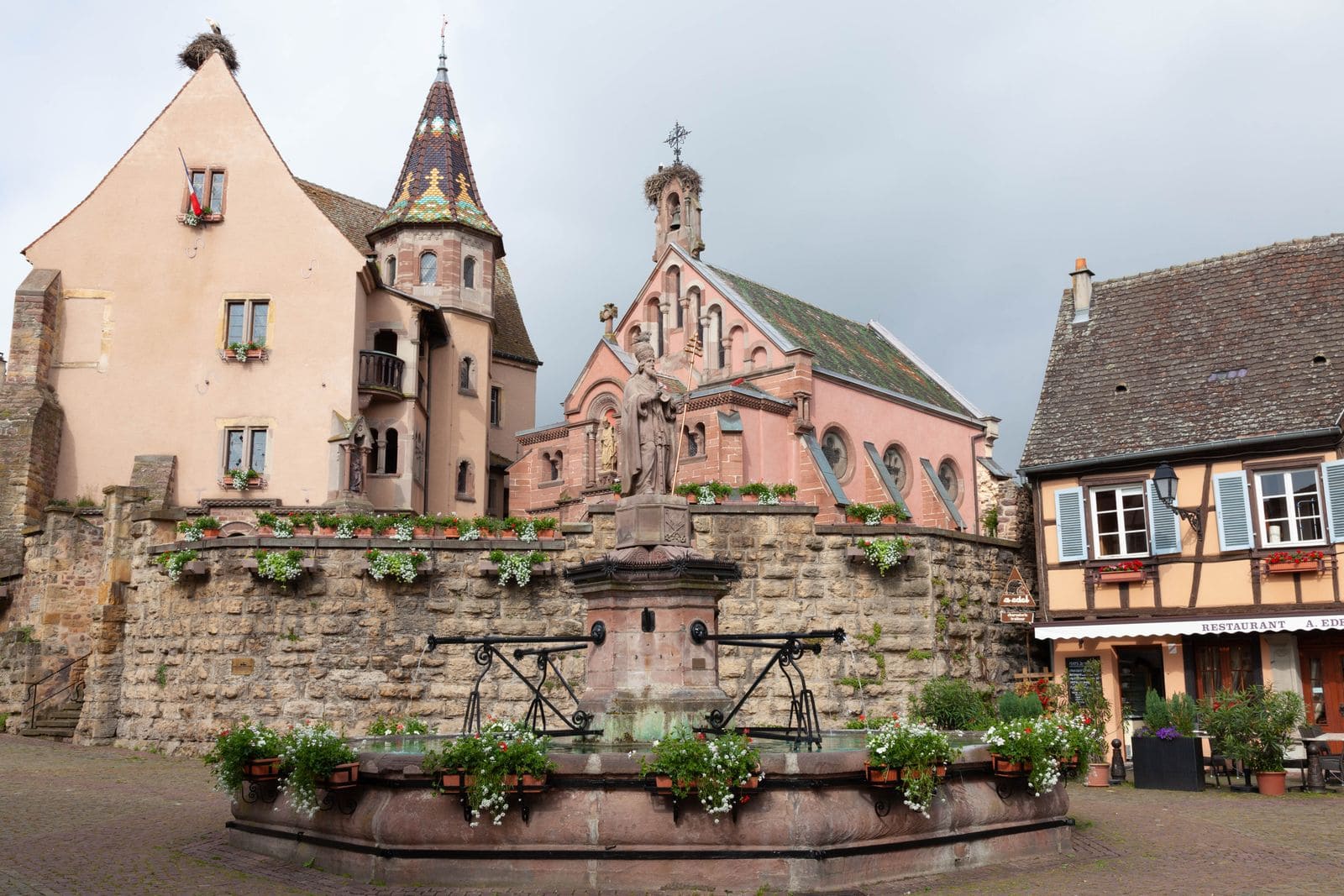
3. Eguisheim, the village of concentric circles
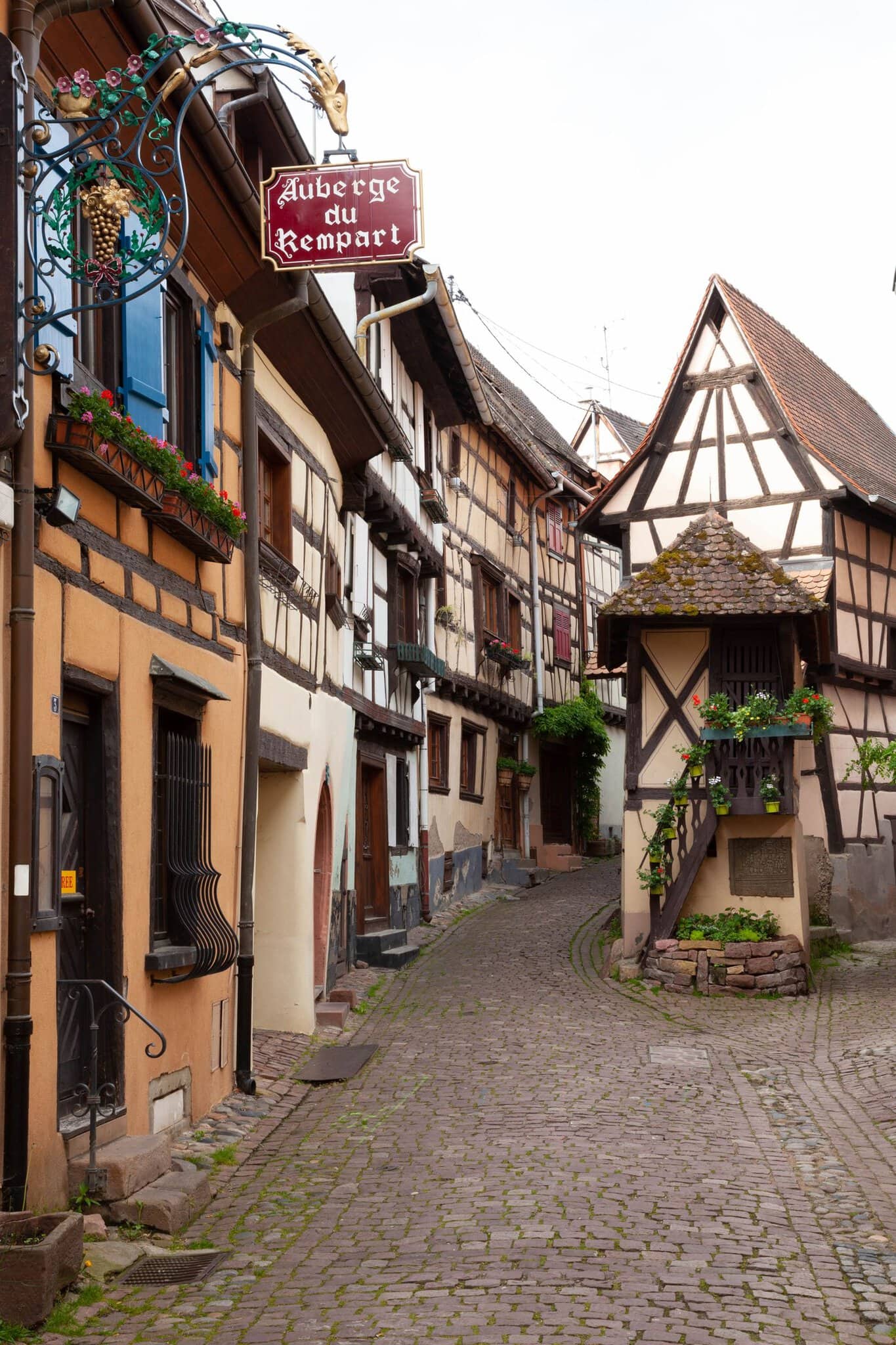
Just a few kilometres south of Colmar lies tiny Eguisheim, which will charm you at first sight with its unusual layout. Look at it from above and you’ll see that it’s built in three concentric circles around a central square with a castle. The lanes here are forever curving, so you never gaze off into the distance, and around every corner a new, even more crooked colourful façade appears — practically inviting you to wander aimlessly forever.
The village boasts a rich history and regularly ranks at the top of polls for the most beautiful village in France — entirely understandable when you see its lanes. It’s even the birthplace of Pope Leo IX, whose majestic statue stands right in the middle of the main historic square. In summer the façades all but disappear under enormous cascades of blooming geraniums, creating an utterly perfect backdrop for romantic photos and slow strolls.
As you explore the village you’ll come across plenty of small family wineries inviting you in for a pleasant tasting in their cool stone cellars. Try the local mineral dry Riesling, grown with enormous care on the surrounding sun-soaked slopes and among the very best in the entire region. Eguisheim is very compact, and you’ll comfortably walk the whole village in about an hour and a half.
💡 Tip: Try visiting the village in the late afternoon, once most of the tour buses have left and the setting sun beautifully lights up the warm pastel colours of the façades.
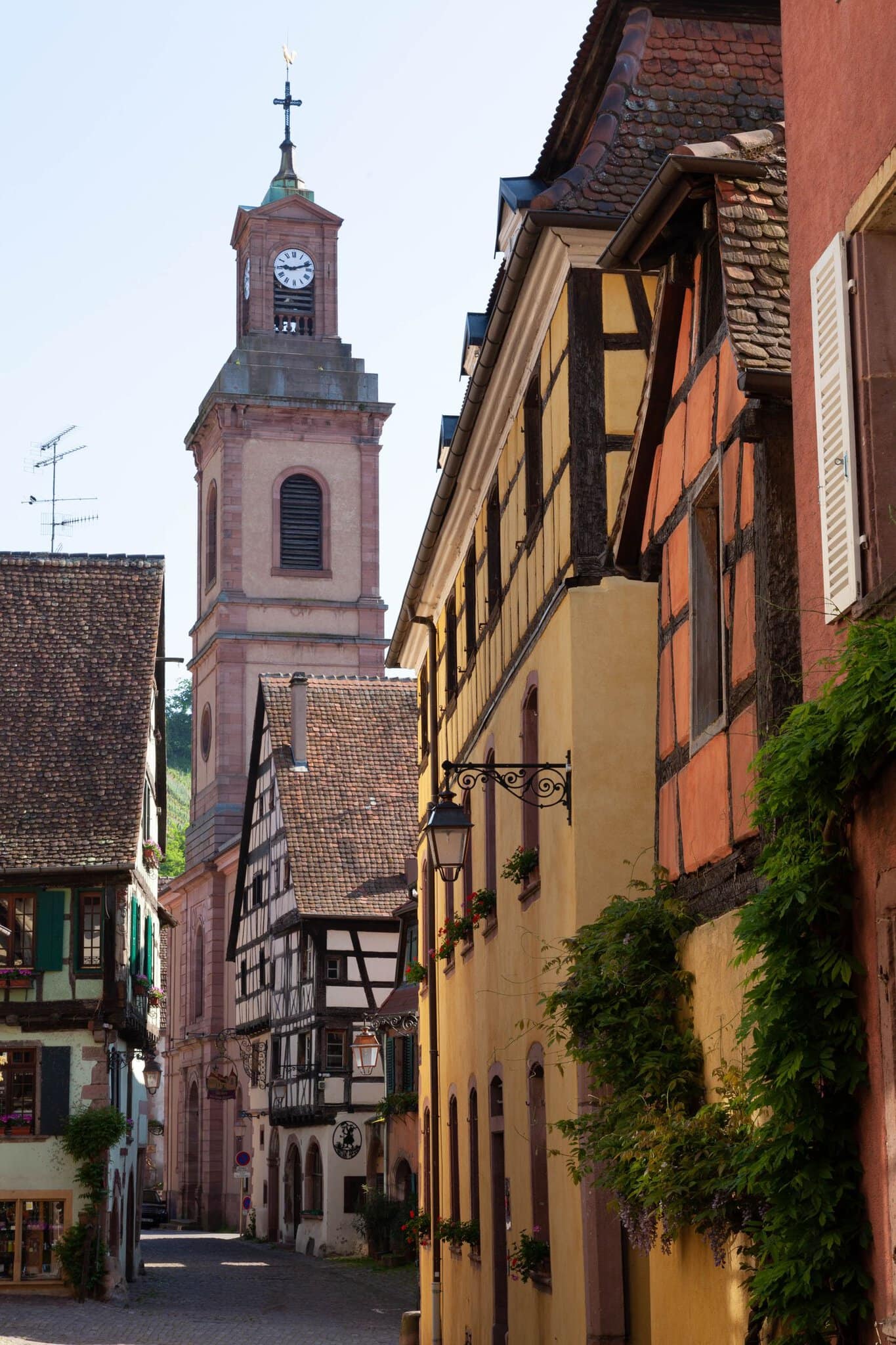
4. Riquewihr, surviving medieval charm among the vines
Riquewihr is often described by guidebooks as the absolute pearl of the Alsatian vineyards — and that’s no exaggeration at all. This enchanting place had incredible historic luck, escaping almost entirely unscathed through both world wars and keeping its original face. As a result, you’ll find some forty stunning historic landmarks packed into an area you can stroll across, without rushing, in just fifteen minutes.
The landmark and guardian of the whole village is the famous Dolder, a mighty 13th-century defensive tower that forms the town’s majestic upper gate and rises high above the surrounding rooftops. Riquewihr lives mainly off tourism and quality wine, so in every other house you’ll find a so-called caveau — a traditional open tasting cellar. The local winemakers are delighted to let you sample their wares and will explain, with huge enthusiasm, all the intricate differences between the varieties grown on the surrounding hills.
Strolling along the main street, you’ll spot plenty of picturesque little shops offering traditional Alsatian specialities and handmade crafts. Although the local cuisine is full of hearty meat dishes, you can pop into one of the bakeries for delicious salty pretzels or a huge slab of sweet gingerbread, which is inseparable from Alsace. Take it to a bench just outside the ramparts and enjoy the soothing view over the endless rows of vines that hug the village tightly from every conceivable side.
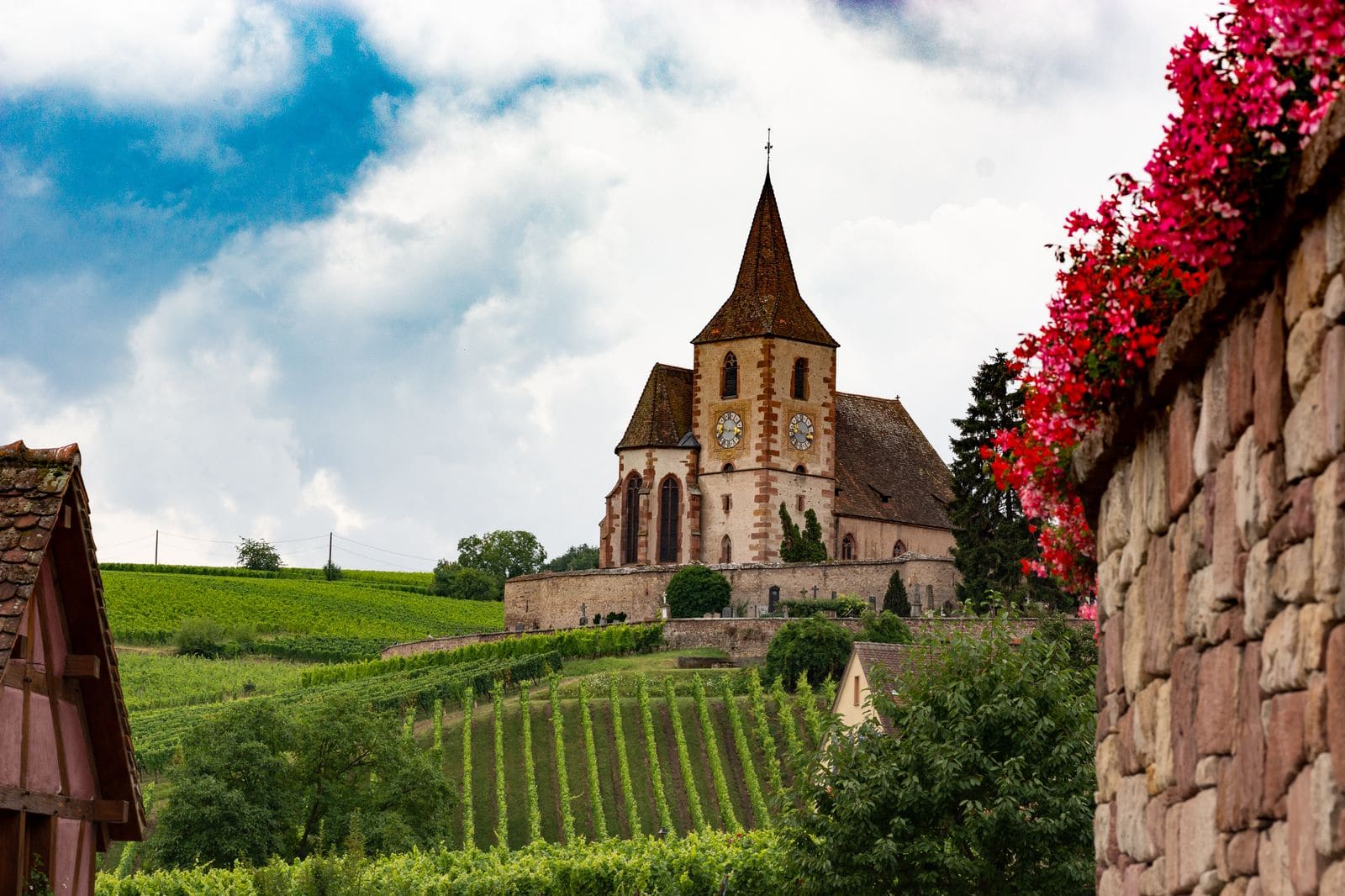
5. Ribeauvillé with breathtaking views over the stork nests
Neighbouring Ribeauvillé is a touch larger, more spread out, and feels far livelier than the surrounding smaller villages. The main street, the Grand Rue, runs the length of the town and is flanked on both sides by gorgeous Renaissance fountains and historic houses with richly decorated façades. One striking feature is the huge number of stork nests, which locals lovingly maintain high on the roofs of their houses and churches, since the stork is the sacred symbol of the whole region.
If you enjoy more active relaxation and don’t mind a bit of a climb, Ribeauvillé offers a brilliant hiking experience. Above the village rise the ruins of three castles, reached by a very well-marked and maintained forest trail. The climb to the Château de Saint-Ulrich, Girsberg and Haut-Ribeaupierre castles takes about an hour and a half and rewards you not only with fresh air but also the chance to explore the old ramparts.
Once you reach the highest ruin, the best possible reward for your physical effort awaits. A breathtaking panoramic view opens up over the entire broad plain of Alsace, reaching as far as the German Black Forest on a clear day. Back down in the village, you’ll have well and truly earned a rest in one of the local cafés over a great coffee and a slice of traditional crumbly fruit tart.
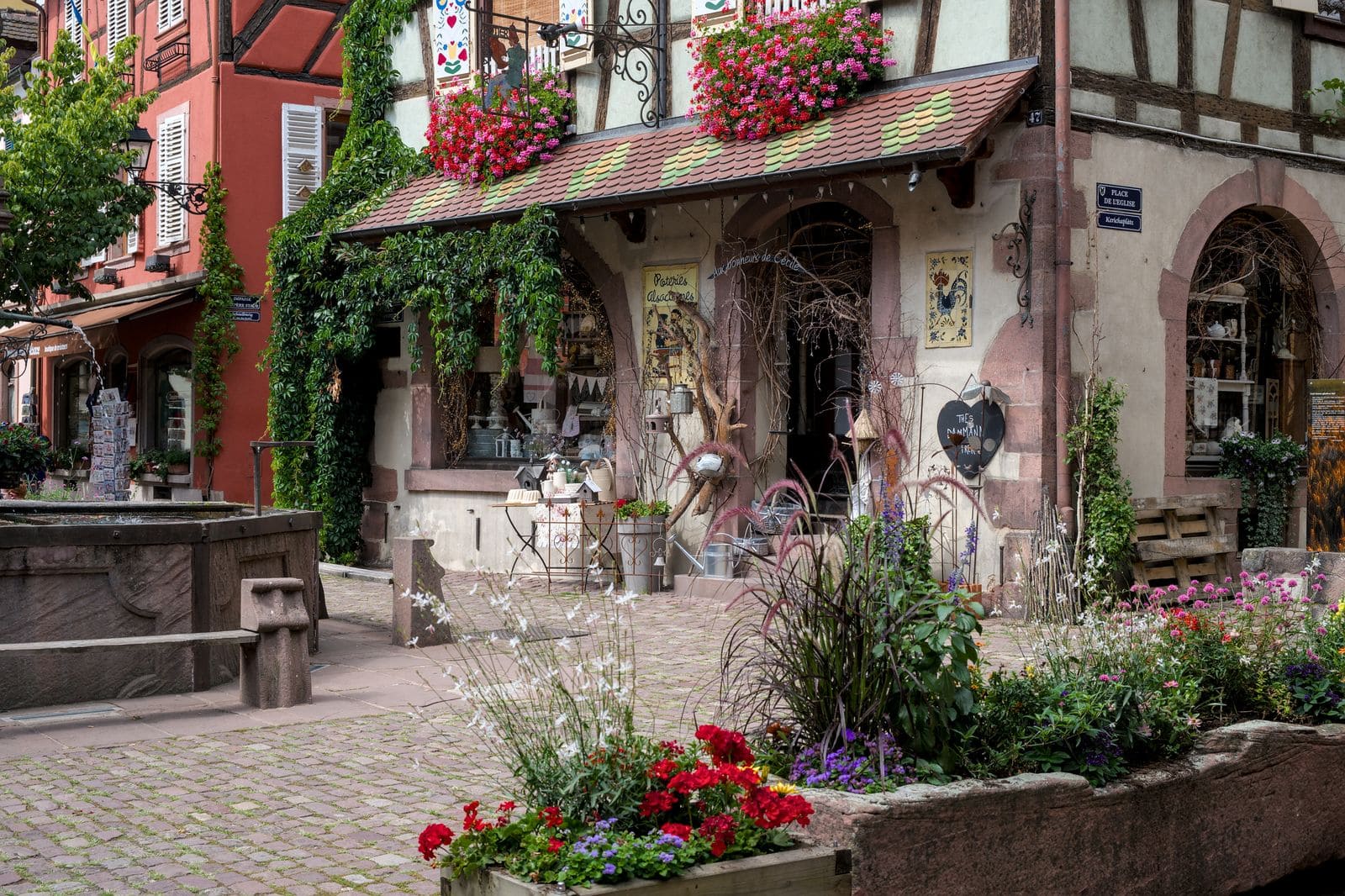
6. Kaysersberg, the French favourite
Kaysersberg, whose grand name translates as “Emperor’s Mountain,” holds a place of honour in the hearts of the French themselves. This picturesque village often, and deservedly, wins nationwide TV competitions for the country’s favourite village — and the moment you step in, you immediately understand why. Unlike flatter Eguisheim, Kaysersberg burrows dramatically into the wooded valley of the wild River Weiss, giving it a unique mountain character and a wonderfully fresh climate.
The town is proudly dominated by a beautiful fortified stone bridge dating from the 16th century, beneath which the river rushes wildly to create a gorgeous soundtrack. It’s also the proud birthplace of Albert Schweitzer, the famous doctor and Nobel Peace Prize laureate, whose legacy the locals carefully commemorate in a small but engaging museum. High above the town keeps watch the majestic ruin of the old imperial castle, reached by a short but fairly steep path lined with carefully tended vineyards. The view from the ramparts over the river valley and endless hills is well worth the bit of physical effort and will leave a strong impression.
If you’re after the ideal spot for a romantic dinner, Kaysersberg has an excellent concentration of quality eateries with a traditional Alsatian atmosphere. The local speciality here is aromatic Munster cheese, which has such a strong, pungent aroma you’ll probably smell it from a distance. Don’t let the distinctive whiff put you off, though, because the flavour of this washed-rind cow’s-milk cheese is surprisingly mild and beautifully creamy. Order it in a local tavern melted over hot boiled potatoes with crushed caraway and fresh bread, and you’ll experience vegetarian heaven — perfectly complemented, of course, by a glass of spicy local wine.
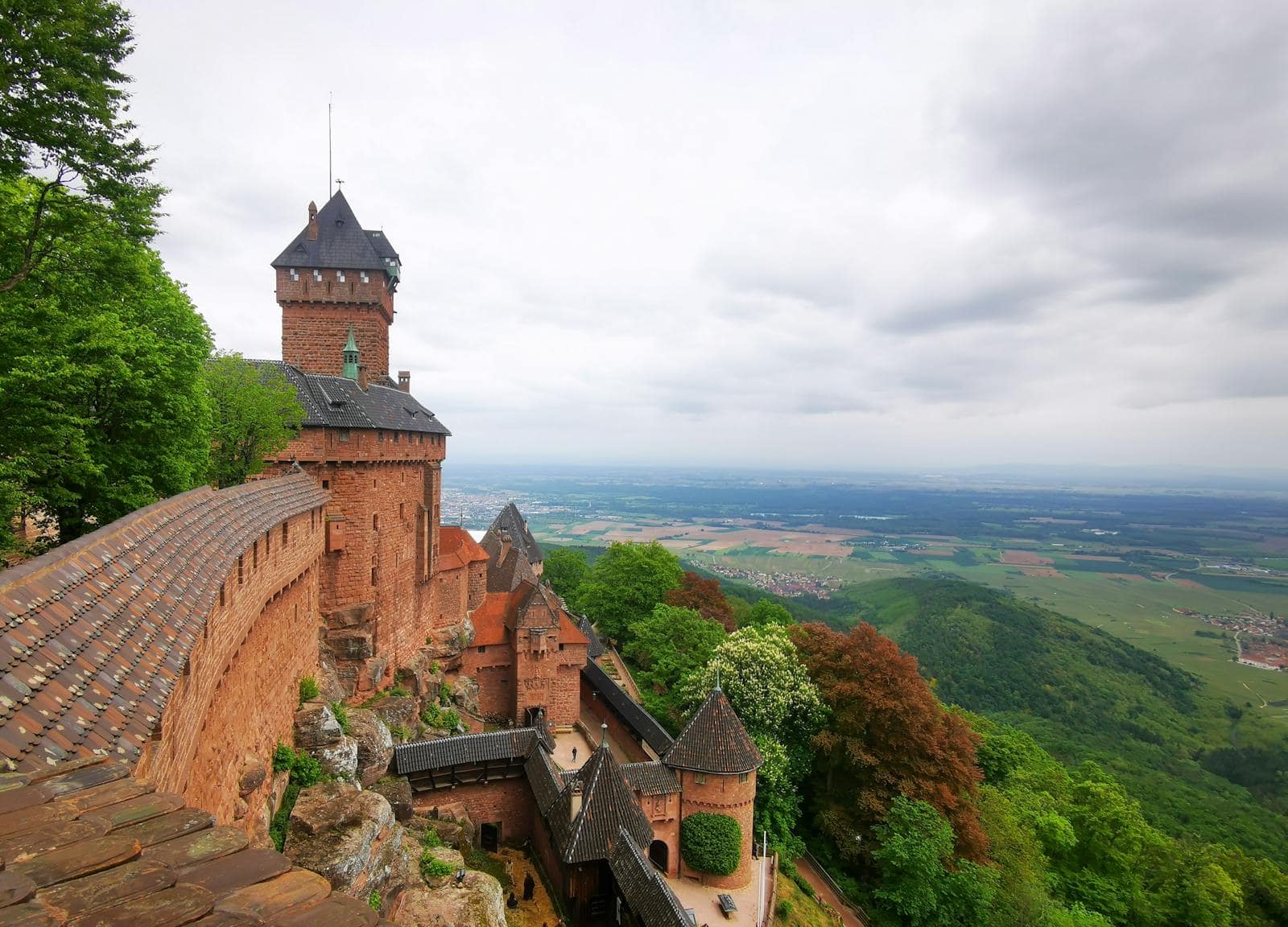
7. Haut-Koenigsbourg, the eagle’s nest above the Rhine
As you drive along the wine route, sooner or later you’re guaranteed to spot this majestic landmark. Haut-Koenigsbourg castle rises on a rocky spur at an altitude of 757 metres and, from a distance, really does look like the impregnable fortress of some dark lord. The original 12th-century structure was sadly burned and razed to the ground by Swedish troops during the Thirty Years’ War, after which it quietly decayed for two hundred years, overgrown by deep forest.
The turning point came in the early 20th century, when the nearby town of Sélestat gifted the abandoned ruin to the German Emperor Wilhelm II. He decided to turn the castle into a grand symbol of his power and the German presence in Alsace, and had it completely rebuilt from the ground up. While some puritanical historians often criticise this costly reconstruction for being overly romanticised, the overall visual result will simply take your breath away the moment you step into the main courtyard.
During your visit you’ll cross massive drawbridges, admire mighty defensive bastions and marvel at lavishly furnished chambers with rich wood panelling and beautiful tiled stoves. The view from the main Great Bastion is absolutely phenomenal: on a clear day you’ll see the entire Alsatian plain, the German Black Forest opposite, and even the snow-capped peaks of the Swiss Alps on the horizon. Admission for 2026 is set at €16 for adults and €12 for a concession ticket.
💡 Tip: A winding mountain road leads up to the castle, and in summer or at weekends roadside parking gets very tight, so set off right when it opens in the morning.
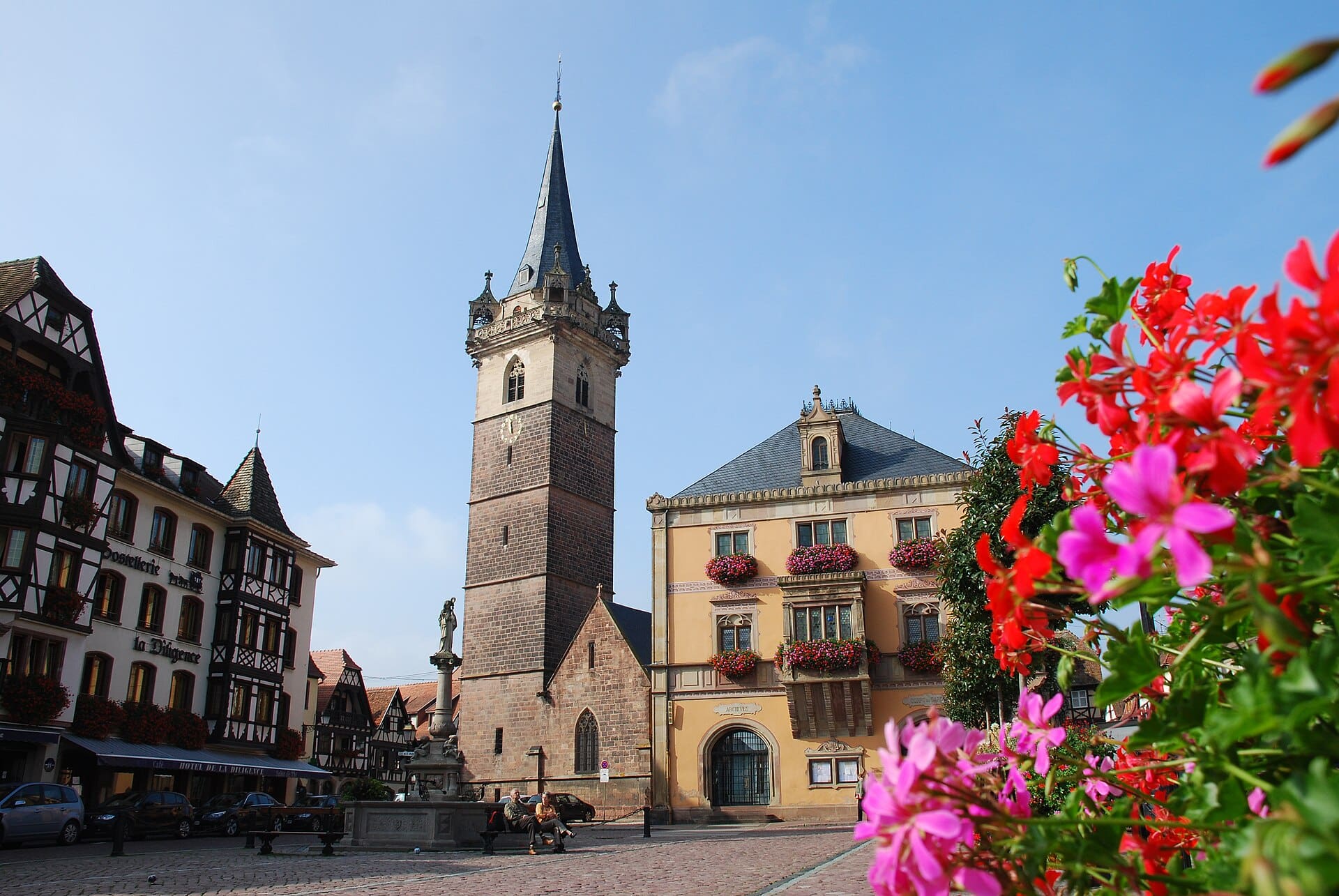
8. Obernai and its enchanting market atmosphere
The little town of Obernai lies at the northern end of the wine route and is a perfect example of a thriving Alsatian market town. Unlike the smaller villages, it has kept a very lively character, because it doesn’t sit on a purely tourist route but serves as an important natural hub for the wider area. Here you’ll find the gorgeous Place du Marché, where popular morning markets regularly overflow with fresh vegetables and fragrant local cheeses.
Dominating the whole square is a tall clock belfry called the Kappelturm, which in the past served as both an important watchtower and a small chapel. Take a walk along the perfectly preserved medieval ramparts, which still largely encircle the town and create an incredibly pleasant promenade in the shade of mighty old trees. The architecture of the houses in the centre, meanwhile, boasts richly decorated oriels and masterfully worked timber that speaks of the wealth of the local merchants.
Obernai is also an excellent starting point for a trip to the nearby Mont Sainte-Odile, home to a famous pilgrimage monastery with a gorgeous view. If you’re peckish after your walk, drop into a local winstub and order the traditional Alsatian dish Tarte Flambée, also known as Flammekueche. It looks a bit like a pizza, but the dough is extremely thin and crispy. In the luxurious vegetarian version it’s generously spread with thick crème fraîche, scattered with coarsely chopped onion and lovely cheese, then baked in a blazing wood-fired oven for just a few minutes until the edges start to char slightly. You eat it with your hands, and with a glass of wine it’s absolute perfection.
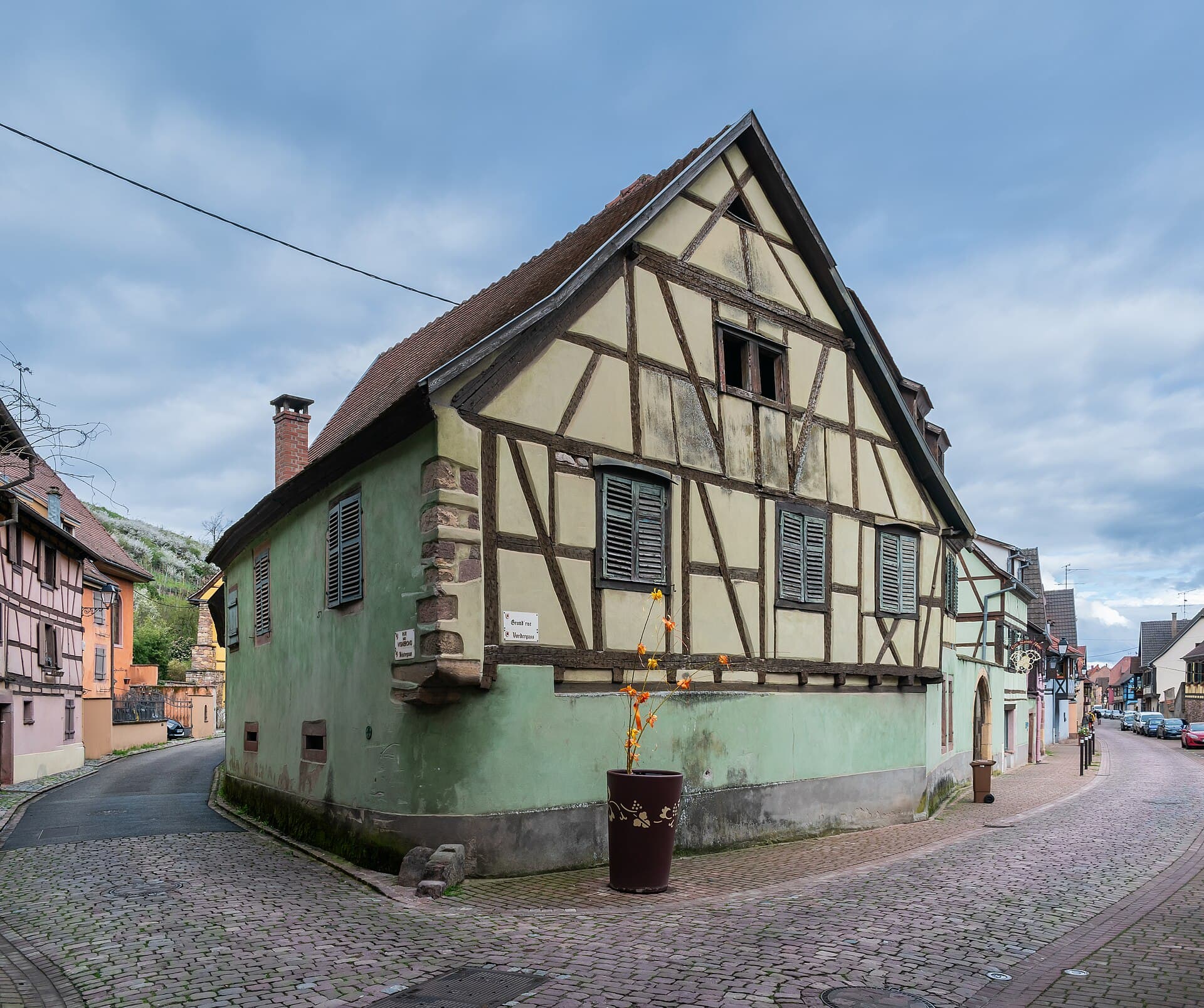
9. Turckheim and the traditional night watchman
Turckheim lies just a short hop from bustling Colmar, yet many tourists unjustly skip it on their wine-route journey — a huge shame. The town is encircled by mighty historic ramparts, entered to this day through three stunning, beautifully preserved stone gates. The most famous of them, the Porte de France, greets you the moment you arrive and makes it clear you’re stepping into a place with an immensely rich and protected history.
Turckheim’s greatest tourist curiosity is the ancient tradition of the night watchman, which has been kept up continuously here for centuries. Every summer evening, on the stroke of ten, the watchman sets off into the darkened lanes dressed in a historic costume, carrying a lit lantern and a halberd. On his rounds he sings a traditional Alsatian song and wishes all the townsfolk a peaceful night — and as a visitor you can easily, and completely free of charge, join him and walk the whole hushed town at his side.
During Advent, Turckheim turns into an utterly magical and peaceful place thanks to a giant Advent calendar set up right on the historic square. Each December evening one window is ceremonially opened, accompanied by the joyful presence of children and locals, creating an unforgettable atmosphere. It’s a very touching, intimate spectacle that contrasts beautifully with the crowded, noisy markets in the nearby big towns.
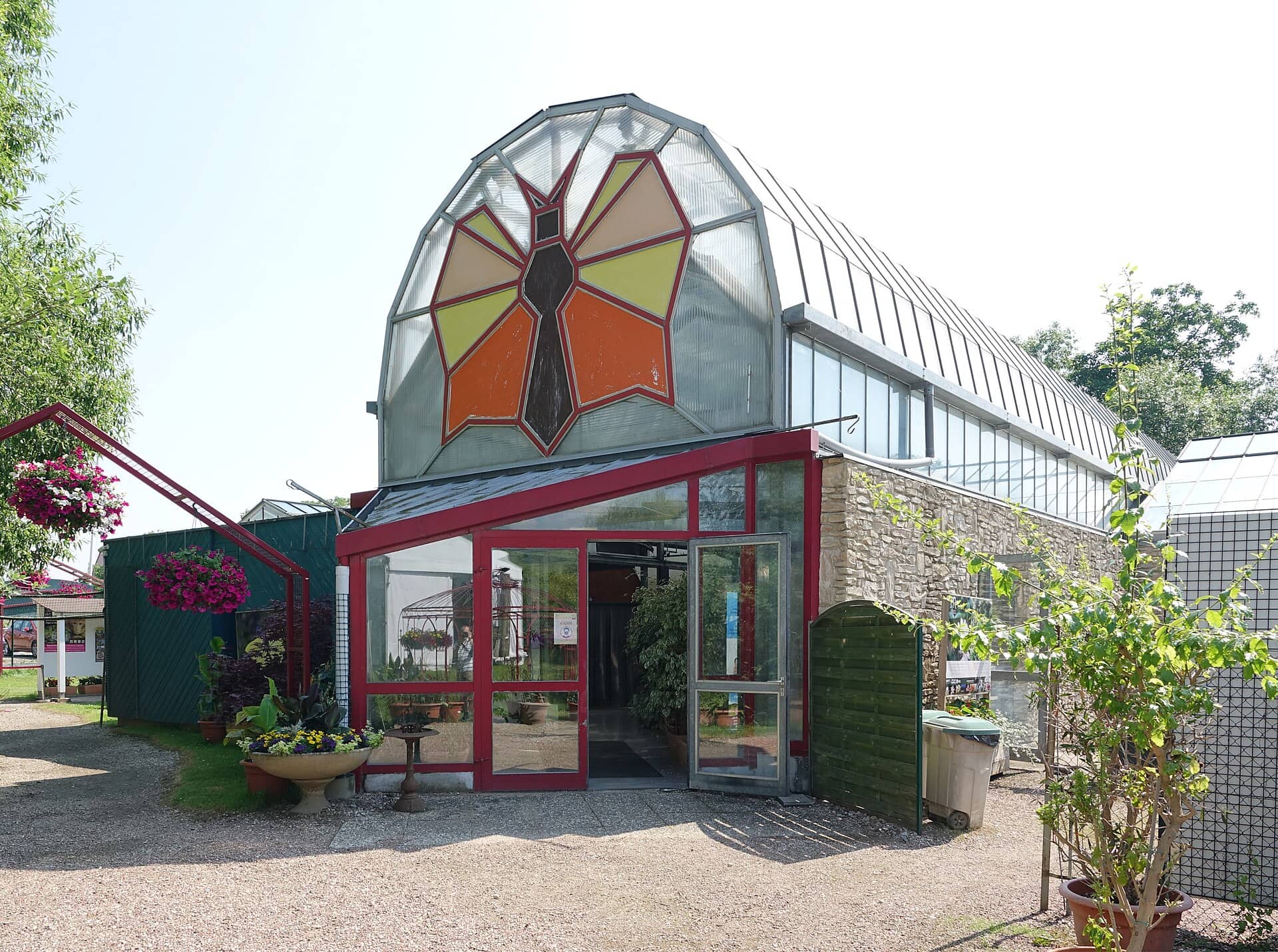
10. Hunawihr, the perfect refuge for storks
Tucked between its more famous and busier neighbours lies the unassuming village of Hunawihr, which offers all visitors a far calmer, more contemplative atmosphere. Its main, unmissable landmark is the mighty fortified Church of St James, standing proudly on a gentle hill amid the endless vineyards. This unique 14th-century church served in times of danger as a safe refuge for all the village’s inhabitants, who hid behind its unusually thick walls along with their supplies.
But Hunawihr is famous for one other very specific and lovely thing, which families with small children especially adore. Here you’ll find a sprawling rescue park for storks and otters called NaturOparC, which played an absolutely key historical role in saving the endangered white stork across Alsace. In the 1970s, storks had all but vanished from this region, and it was thanks to the enormous efforts of this specialist centre that their population was, thankfully, successfully restored.
On a leisurely stroll through the village you’ll fully enjoy the sight of the gorgeous old winemakers’ houses, built mostly in the 16th and 17th centuries. There may not be huge crowds of tourists with cameras here, but that only makes the place’s genuine, authentic character shine all the more. I’d suggest buying a fresh, crusty baguette and a piece of good cheese from the little local bakery and having an unforgettable little picnic right among the vines, with a view of the ancient church.
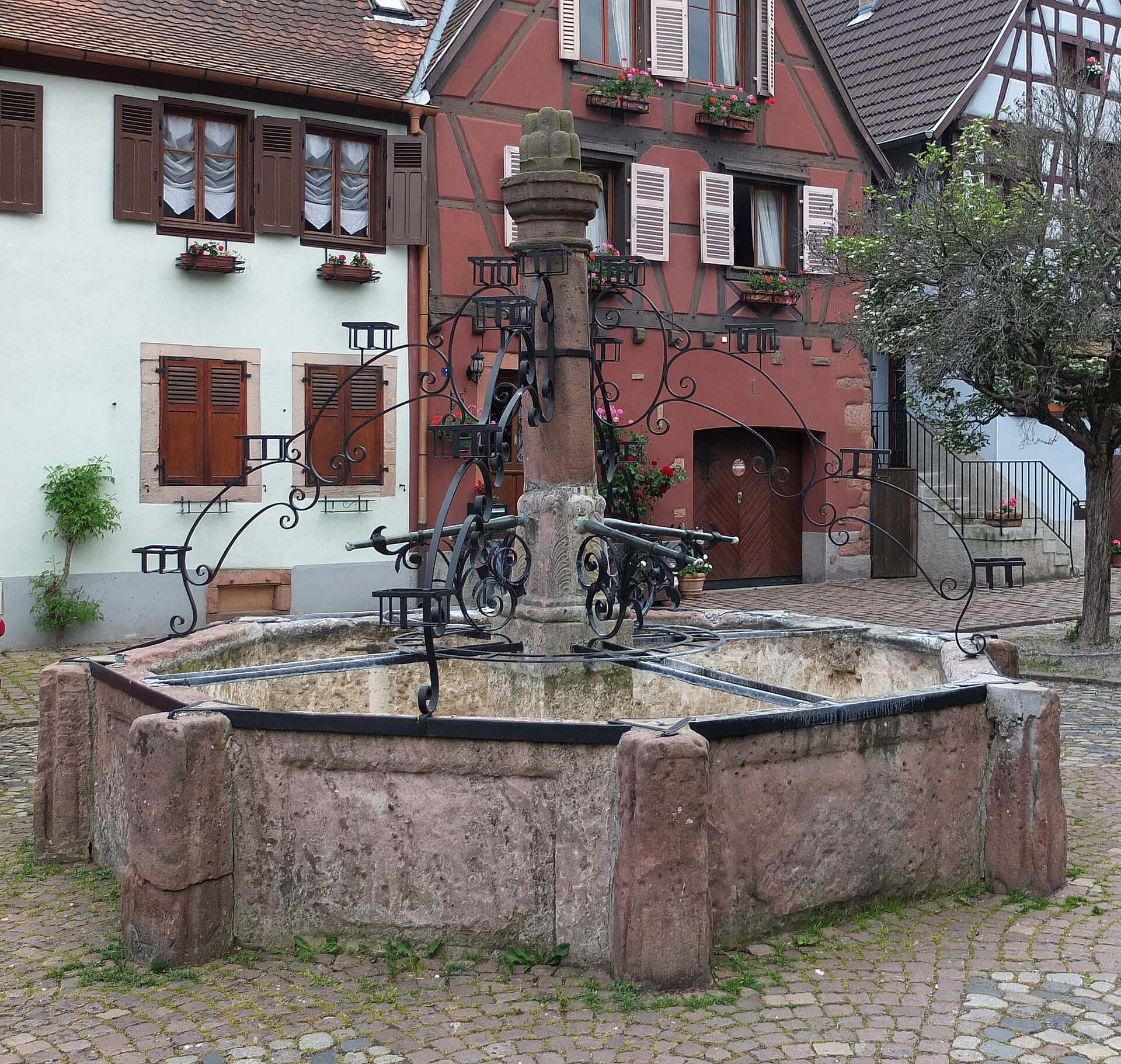
11. Bergheim and its preserved town walls
Bergheim is an absolutely fascinating medieval town and one of the very few to have preserved its complete fortifications almost intact to this day. Here you can take a leisurely walk along the entire ring of town walls, lined on the outside by a very pleasant moat and old defensive towers. This easy stroll takes you barely an hour and offers a truly unique look at the rear sections of the historic half-timbered houses and the romantic hidden private gardens of the locals.
Bergheim’s history also has its rather dark and disturbing side, which you’ll learn about in more detail at the town’s fascinating museum. In the 16th and 17th centuries the town was the scene of cruel witch trials, during which several dozen entirely innocent women were burned at the stake after rigged trials. Today this is solemnly commemorated by a small exhibition, the Maison des Sorcières, which seeks to map this shadowy and painful chapter of history objectively and with the utmost sensitivity for future generations.
After this historic walk you’ll surely appreciate the soothing atmosphere of the local square with its beautiful stone fountain. Try dropping into one of the traditional local winstubs, incredibly cosy Alsatian taverns with solid wood panelling. Order a well-earned glass of the local spicy Gewürztraminer, intoxicatingly fragrant with sweet lychee and exotic spices, and enjoy a relaxed afternoon completely stress-free.
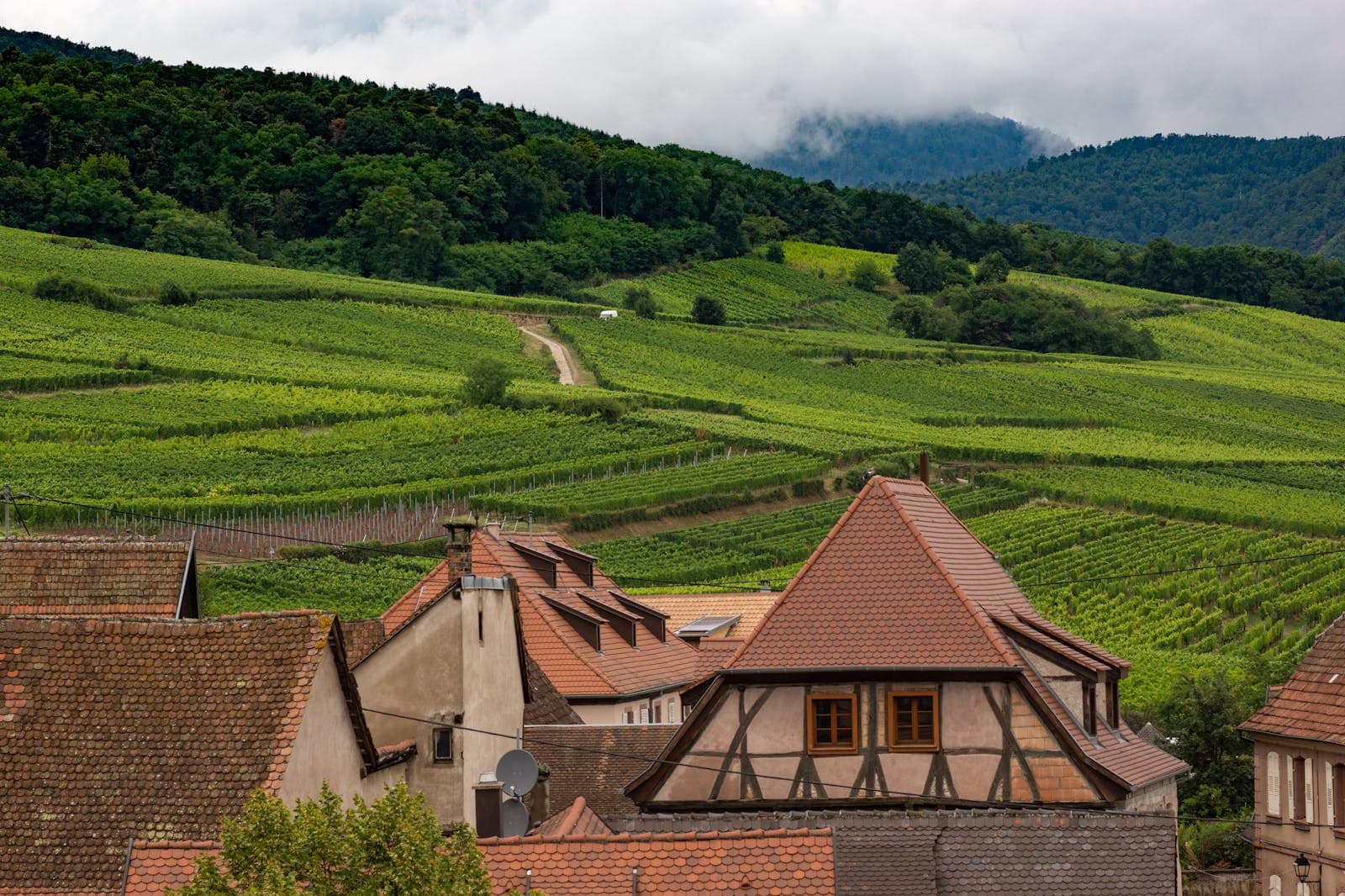
12. Dambach-la-Ville and its rich winemaking history
We’ll wrap up our journey through the most beautiful places in enchanting Dambach-la-Ville, a little town surrounded by some of the very best vineyards in the whole area. What makes this place special is its unique granite bedrock, which gives the local white wines an utterly distinctive character and a highly prized, delicate minerality. This is the home of the famous prestige-category Grand Cru wine called Frankstein, traditionally bottled in the typical tall, slender bottles known as flûtes d’Alsace — a wine no enthusiast should miss.
The moment you enter the town you’ll pass through one of the stunning medieval stone gates that once carefully guarded the safety of all the inhabitants. All around you’ll see perfectly preserved half-timbered houses, many of which proudly bear on their colourful façades the old guild emblems of bakers, blacksmiths or skilled coopers. The square itself is dominated by a beautiful Renaissance town hall, and the whole atmosphere here flows at a much slower, more relaxed pace than in bustling Strasbourg or Colmar.
Dambach-la-Ville is thus the perfect place for anyone wanting to discover the true soul of Alsatian winemaking and steer clear of the commercial scene. The local family wineries here are often passed down through many generations, and their owners will tell you, with enormous passion, all about the demanding year-round work in the vineyard. It’s the best possible finishing touch to a journey through a region whose colours, wonderful flavours and fairy-tale architecture are guaranteed to win you over for life.
Map of points of interest for your phone
Where to go next from Alsace
Fancy exploring more beautiful places or learning more about the towns here? Be sure not to miss our detailed article on everything romantic Colmar has to offer. And if you’re planning a winter trip to France and love the festive atmosphere, our practical guide to the Strasbourg Christmas markets will come in incredibly handy.
Frequently asked questions
How long is the Alsace Wine Route?
This famous route measures approximately 170 kilometers and stretches from Marlenheim in the north all the way to Thann in the very south. It’s actually the oldest wine route in all of France, having been officially opened to tourists back in 1953, and since then it has been attracting wine lovers from around the world with its breathtaking views of the Vosges.
How many days do I need to visit Alsace?
If you want to see the most beautiful places in peace and without rushing, ideally set aside three to five days. During a long weekend, you’ll have time to visit both main cities, Strasbourg and Colmar, and explore several of the most famous wine villages such as Eguisheim, Riquewihr, or the romantic Kaysersberg.
When do the Christmas markets in Alsace start?
For the Advent season in 2026, dates are scheduled roughly from November 23rd in smaller Colmar and from November 27th in magnificent Strasbourg. The markets then typically end just after the Christmas holidays. The cities naturally experience the biggest influx of tourists during Advent weekends, so it’s worth heading out to browse the stalls on a weekday morning instead.
Is Alsace suitable for cycling?
Yes, Alsace undoubtedly ranks among the very best cycling regions in all of France. Right through the vineyards winds a huge number of excellently maintained and safe paved cycle paths. The elevation gain in the valleys is also absolutely minimal and the distances between individual villages are very short, so the route can easily be managed even by occasional cyclists or families with children.
What to taste from Alsatian gastronomy as a vegetarian?
The locals may love their traditional choucroute filled with various cured meats above all else, but you should definitely order the popular Tarte Flambée or Flammekueche in its vegetarian version with cheese and onion at the restaurant. Another excellent meat-free choice is the famous and very aromatic cow’s milk cheese Munster, which is traditionally served melted with warm potatoes and crushed caraway seeds.
Where to park at Haut-Koenigsbourg Castle?
Parking is available primarily along the winding mountain access road directly in front of the castle itself. However, during peak summer season and on weekends, these spots fill up very quickly with tourists, so it’s absolutely best to head to the castle right at opening time in the morning to avoid lengthy searches for a free spot and unnecessary stress.
How much does admission to the Christmas markets cost?
Entry to all Christmas markets in Strasbourg, Colmar, and all the surrounding smaller villages is completely free, and there’s no general admission fee. On site, you only pay for what you actually buy at the wooden stalls – food, cups of mulled wine, or beautiful handcrafted souvenirs.
Tips and Tricks for Your Vacation
Don’t Overpay for Flights
Search for flights on Kayak. It’s our favorite search engine because it scans the websites of all airlines and always finds the cheapest connection.
Book Your Accommodation Smartly
The best experiences we’ve had when looking for accommodation (from Alaska to Morocco) are with Booking.com, where hotels, apartments, and entire houses are usually the cheapest and most widely available.
 🚗 Car rental on the roadVerified rental cars in Alsace and Burgundy
Search with the DiscoverCars comparison engine — it compares prices from dozens of local and international rental companies, and most bookings come with free cancellation.
Compare car prices in Alsace and Burgundy →Don’t Forget Travel Insurance
Good travel insurance will protect you against illness, accidents, theft, or flight cancellations. We’ve had a few hospital visits abroad, so we know how important it is to have proper insurance arranged.
Where we insure ourselves: SafetyWing (simple monthly subscription) and TrueTraveller (for extra-long trips).
Find the Best Experiences
Get Your Guide is a huge online marketplace where you can book guided walks, trips, skip-the-line tickets, tours, and much more. We always find some extra fun there!