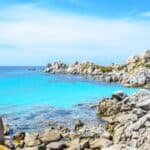
The moment you step off the plane or ferry and take your first deep breath in the northwest of Corsica, you’ll catch that unmistakable blend of wild thyme, rosemary and myrtle. Locals call this dense, impenetrable scrubland the maquis, and legend has it that Napoleon Bonaparte himself could have recognised his native island blindfolded, purely by this distinctive scent. Corsica, rightly nicknamed the Island of Beauty, is about far more than fragrant herbs, though — it’s essentially a towering mountain range dropped into the middle of the Mediterranean. If you’re heading to Calvi, Corsica, you’re in for a treat.
If you’re after a destination that combines rugged nature with gorgeous swimming, the Balagne region and its main hub of Calvi will completely win you over. Don’t expect a polished French Riviera with promenades for the jet set, because Corsica is proud, wild and utterly itself. In this article I’ll guide you through the very best the northwest coast has to offer, and show you places where you can hike mountain trails in the morning and unwind in turquoise coves come afternoon.
TL;DR
- Best base: Calvi offers the perfect mix of history, fantastic beaches and great accessibility thanks to its own airport.
- Genoese Citadel: The historic heart of Calvi, with the most stunning views over the entire bay and surrounding mountains.
- Beach and pine forest: A six-kilometre sandy beach lined with the shade of fragrant pines, ideal for families with children.
- Hilltop village of Sant’Antonino: One of the most beautiful villages in all of France, perched like an eagle’s nest high on a hill.
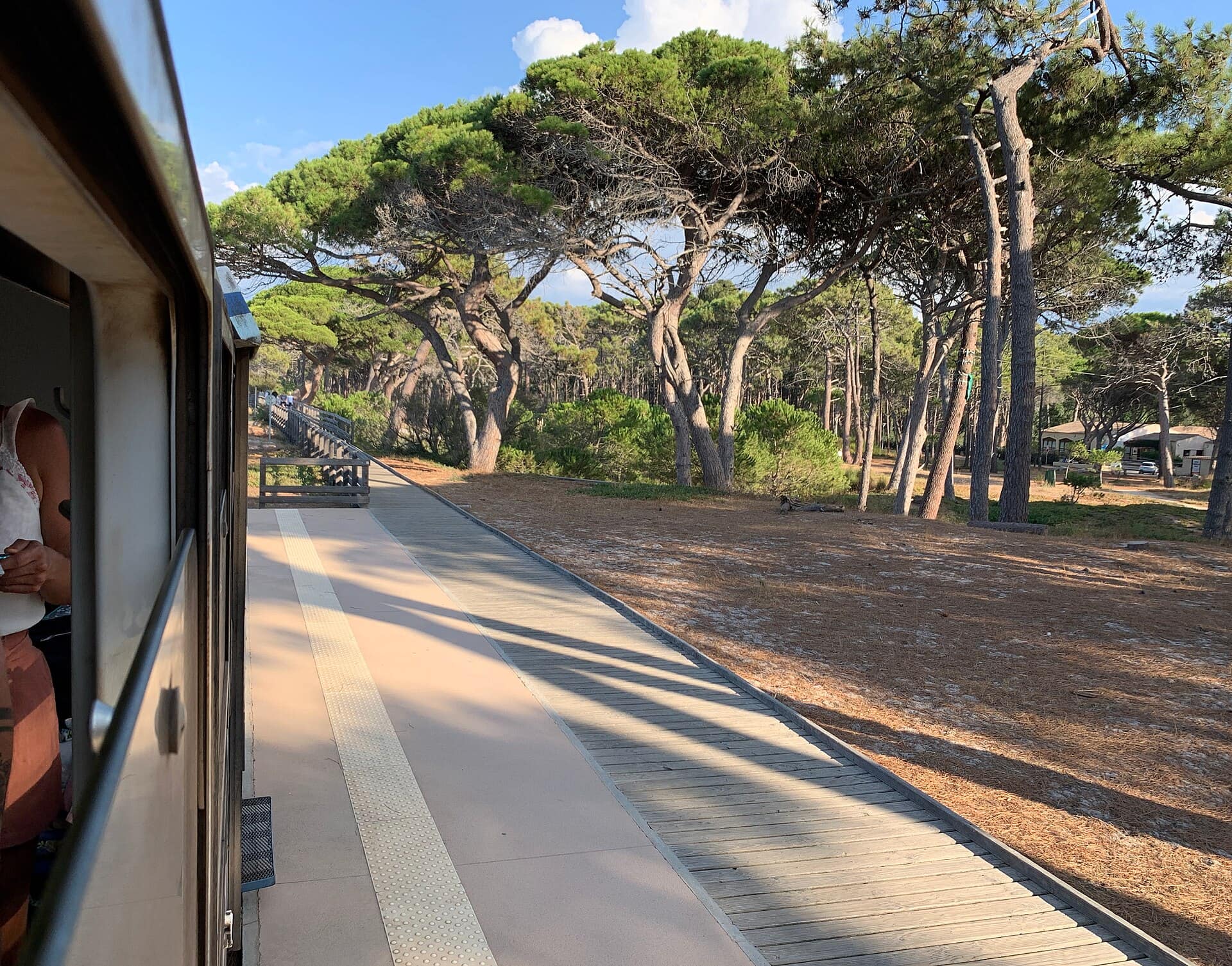
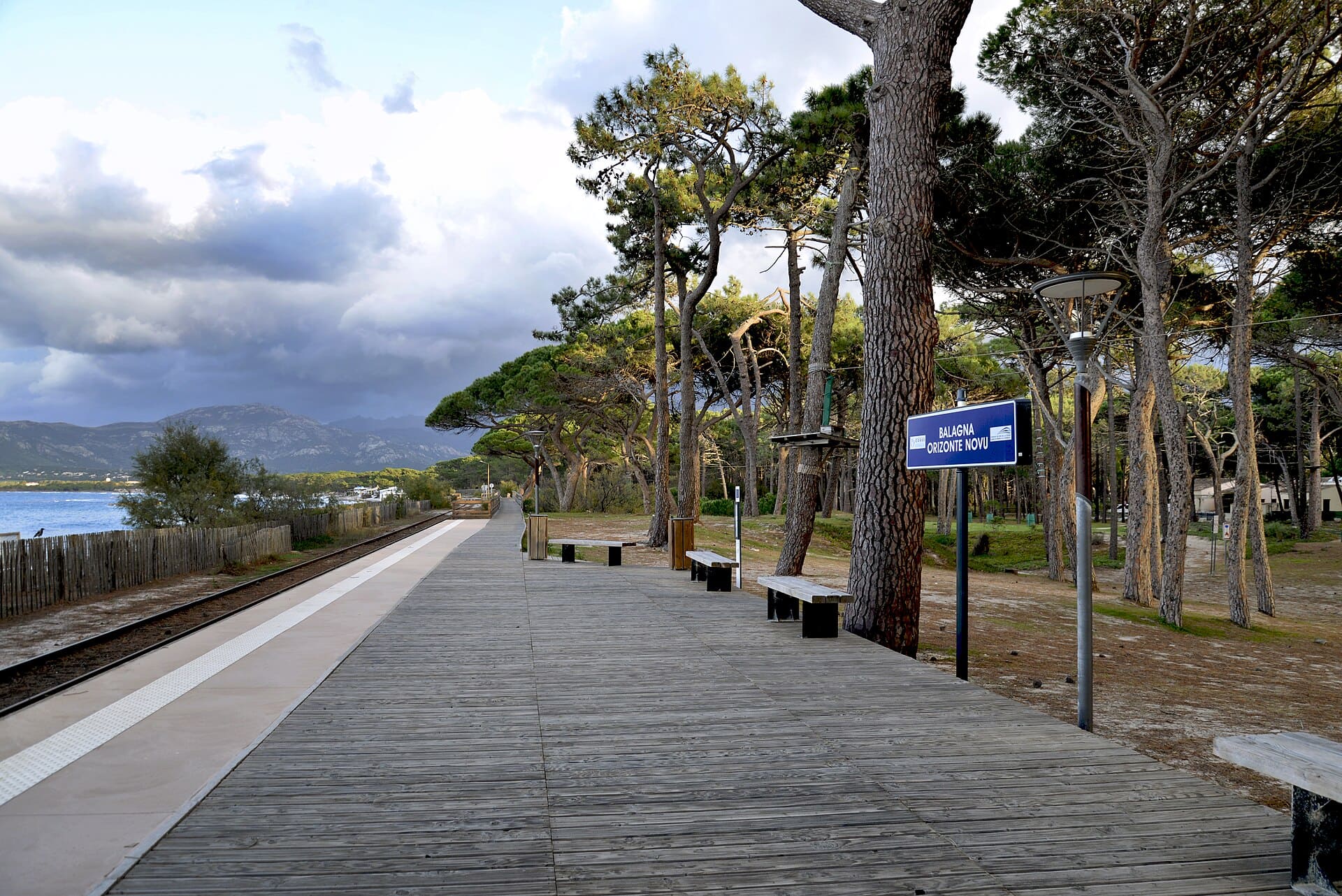
- Coastal train: The iconic U Trinighellu train carries you along a scenic coastal ride from Calvi all the way to the town of Île-Rousse.
- When to go: Avoid August, when the island is bursting at the seams, and plan your trip for June or September instead.
- Getting around: A car is an absolute must for exploring the more remote villages and wild beaches.
The full destination guide: Corsica — guide and what to see
When to visit Calvi and the Balagne region
Getting the timing right is absolutely key for a visit to Corsica, as the island sees huge swings in visitor numbers. The ideal months for a trip are May, June and September, when air temperatures hover around a very pleasant 25 degrees and the sea is finally inviting for a swim. In these months you’ll fully enjoy nature in bloom, emptier roads and far more reasonable accommodation prices. September in particular is wonderful — the weather in Calvi, Corsica stays warm and the Mediterranean has had all summer to heat up, making it perhaps the very best time for lovers of lazy beach days.
There’s one absolutely crucial rule you should always keep in mind, though. Give August a very wide berth, because this is when the island gets stormed not only by the French but the Italians too. Compared with early summer there are two to three times as many tourists, the narrow mountain roads turn into never-ending car parks, and the prettiest beaches are hopelessly packed. Prices for accommodation and car hire in 2026 climb to absurd heights during August, so if you can, save your trip for the autumn.
When it comes to getting to the Balagne region itself, you have two main options. Calvi has its own small airport, Sainte-Catherine, served in season by flights from mainland France and other European cities — from the UK you’ll usually connect via Paris, Nice or Marseille, with British Airways and easyJet operating to the mainland gateways. If you prefer to bring your own car, you can take a Corsica Ferries crossing into the nearby port of Île-Rousse. The ferry from Nice in France takes roughly six to seven hours, and an off-season return ticket for two people with a car runs between 250 and 400 euros.
Where to stay in Calvi and around
💡 Tip for accommodation and experiences: We love searching for places to stay on Booking.com, which usually has the best cancellation terms. For tickets, tours and activities, it pays to compare and book through GetYourGuide.
The Balagne region offers a huge range of accommodation, but for a first visit the most strategic choice is the town of Calvi itself or its immediate surroundings. Staying right in the centre below the citadel means all the famous restaurants, bakeries and the harbour promenade are literally a few steps from your room. If you’re travelling by car, though, make very sure your accommodation has its own parking, because finding a free space in the narrow lanes can be nerve-wracking in season.
For those of you after peace and the perfect seaside relaxation, I’d recommend looking at hotels along Pinède beach. This area is lined with pine forest and offers direct access to soft sand, which you’ll especially appreciate when travelling with younger children. Prices per night for a double room in 2026 hover around 120 to 180 euros, but at the shoulder edges of the season you can find very welcome discounts. Don’t forget to book your stay through Booking well in advance — even half a year ahead is no exaggeration.
Among the tried-and-tested favourites is the Hotel Mariana, which boasts a rooftop pool and an absolutely fantastic view over the whole bay and the historic citadel. If you’re looking for something truly special and don’t mind paying a little extra, the luxury resort La Villa Calvi, set in the hills above town, offers perfect privacy and first-class service. A great middle-ground option is the historic Hotel l’Abbaye, housed in a beautifully restored former monastery just a short walk from the harbour.
11 things to see and do in Calvi, Corsica and Balagne
The Balagne region is often called the garden of Corsica, and it offers an incredibly varied mix of experiences. Let’s take a look at the most interesting things you definitely shouldn’t miss on your visit.
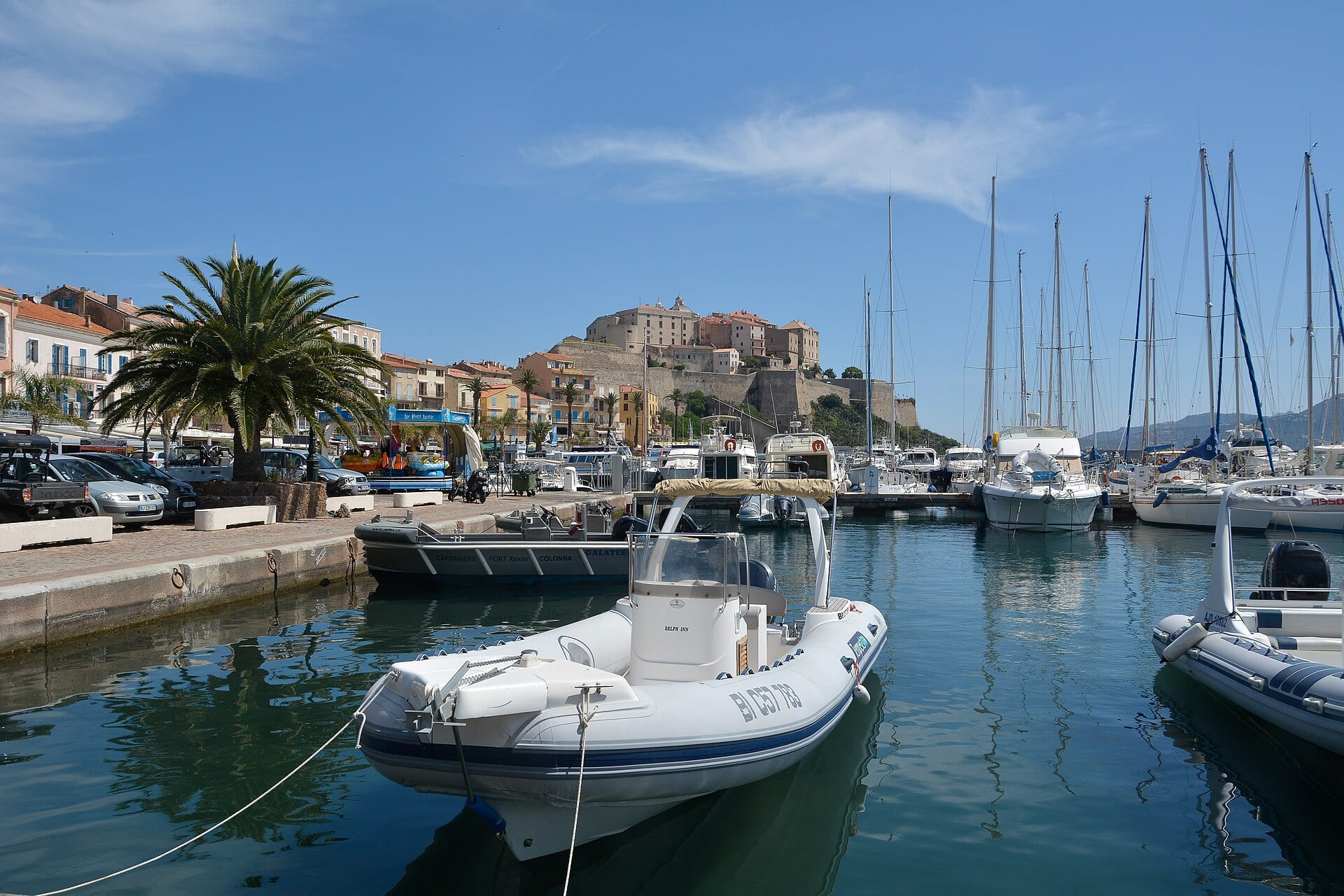
1. The Genoese Citadel in Calvi
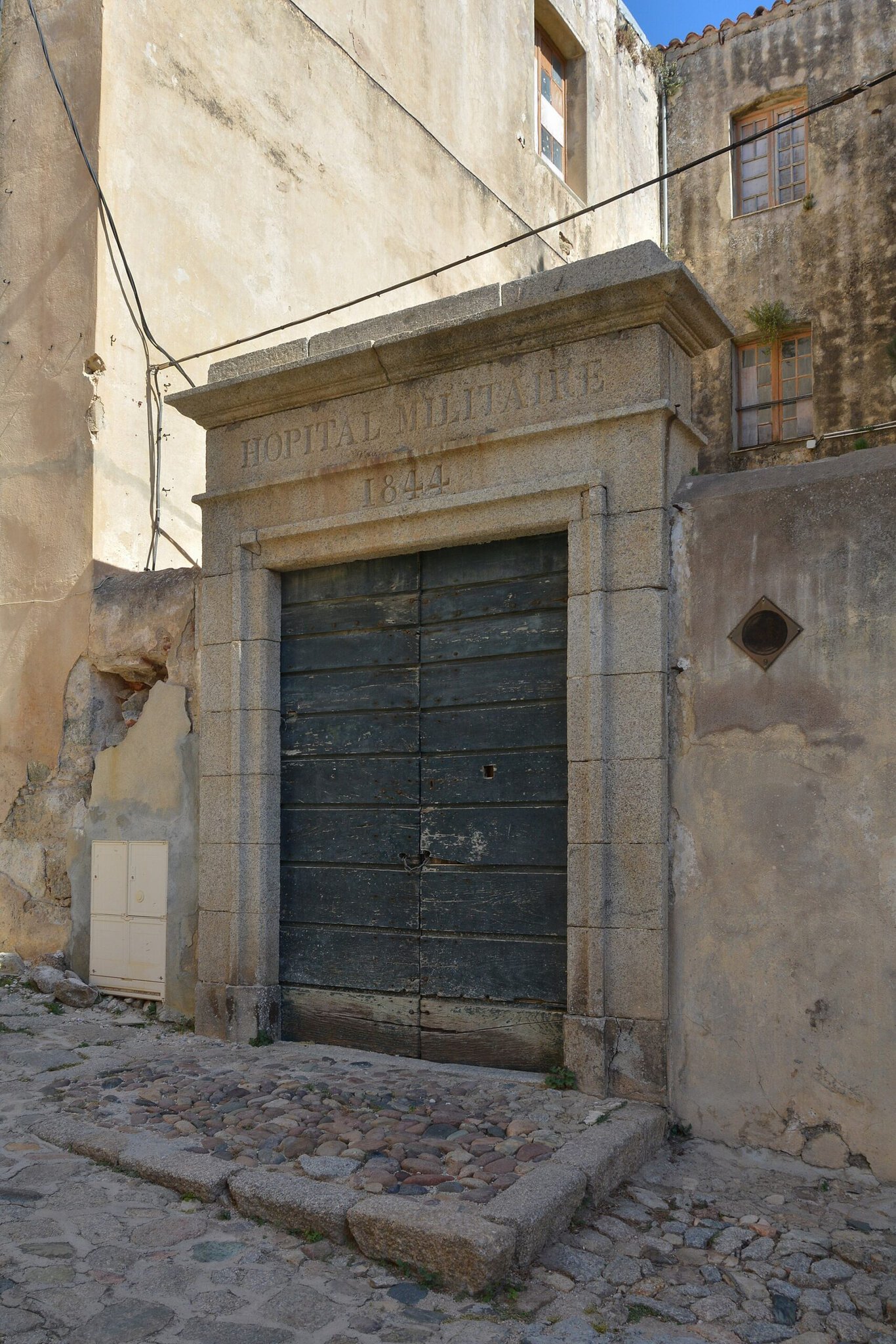
As you arrive in town, your eye is instantly drawn to the mighty fortress that rises majestically on a rocky promontory above the sea, forming the unmistakable landmark of the entire bay. The Genoese Citadel was built in the thirteenth century, its massive walls designed to protect the strategically important harbour from raids by pirates and enemy fleets. Today its interior is a fascinating maze of cobbled lanes, off-limits to cars, where time seems to have stopped.
A stroll through the citadel is like a journey into the past, where you’ll come across picturesque little squares, ancient houses with peeling shutters and hidden cafés. Be sure not to miss the Cathedral of Saint-Jean-Baptiste, which holds a precious wooden cross said to have once saved the town from ruin. Locals are also immensely proud of the legend that the famous navigator Christopher Columbus was born in one of the houses inside the citadel, though historical sources differ quite a bit on this point.
The citadel offers its most beautiful moment at dusk, when the blazing sun begins to slowly sink below the horizon and tints the stone walls in glorious golden and orange hues. From the bastions, the views are absolutely breathtaking — the whole town below you, the turquoise sea, and the high peaks of the Corsican mountains in the distance.
💡 Tip: Entry to the citadel itself is completely free, but if you’d like to learn more about its turbulent history, you can rent an audio guide at the local tourist centre for around 10 euros.
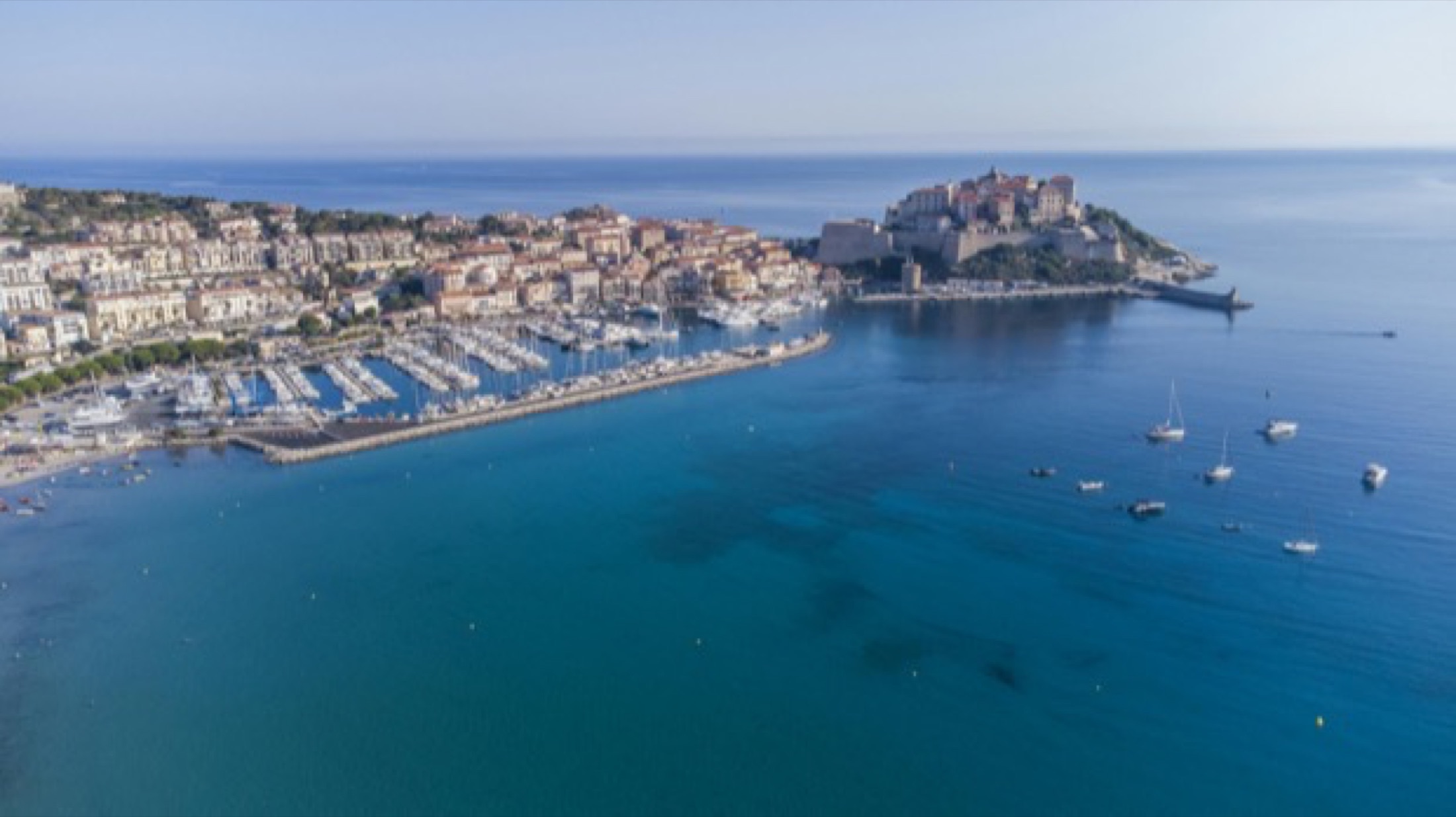
2. The harbour and Marina waterfront
Right below the citadel’s historic walls lies the pulsing heart of the whole town: the harbour promenade known as Quai Landry. This place perfectly captures the contrasts of modern Corsica, as you’ll see luxury millionaires’ yachts moored right next to old, weathered fishing boats. The waterfront is lined with mature palms and makes an ideal spot for a slow morning stroll or an evening sitting over a glass of good wine.
The entire promenade is dotted with dozens of restaurants, bistros and cafés with outdoor terraces, where you can watch the harbour bustle for hours on end. If you get hungry, I’d recommend trying the excellent vegetarian pizza topped with fresh herbs from the maquis, hearty pasta, or traditional Corsican cheeses, which are served here with fig jam. Locals are fond of various wild-boar cured meats, but even without meat you’ll find plenty of delicious, filling dishes.
The atmosphere on the waterfront changes dramatically as the hours pass, turning a sleepy morning harbour into a buzzing centre of nightlife. In the evening, street musicians often play here, and the air carries the scent of roasted chestnuts and a salty sea breeze.
💡 Tip: Come down here early, around eight in the morning, when local fishermen return from their night’s catch and sell their haul straight from the boats — it’s an incredibly authentic spectacle even for those who don’t eat fish.
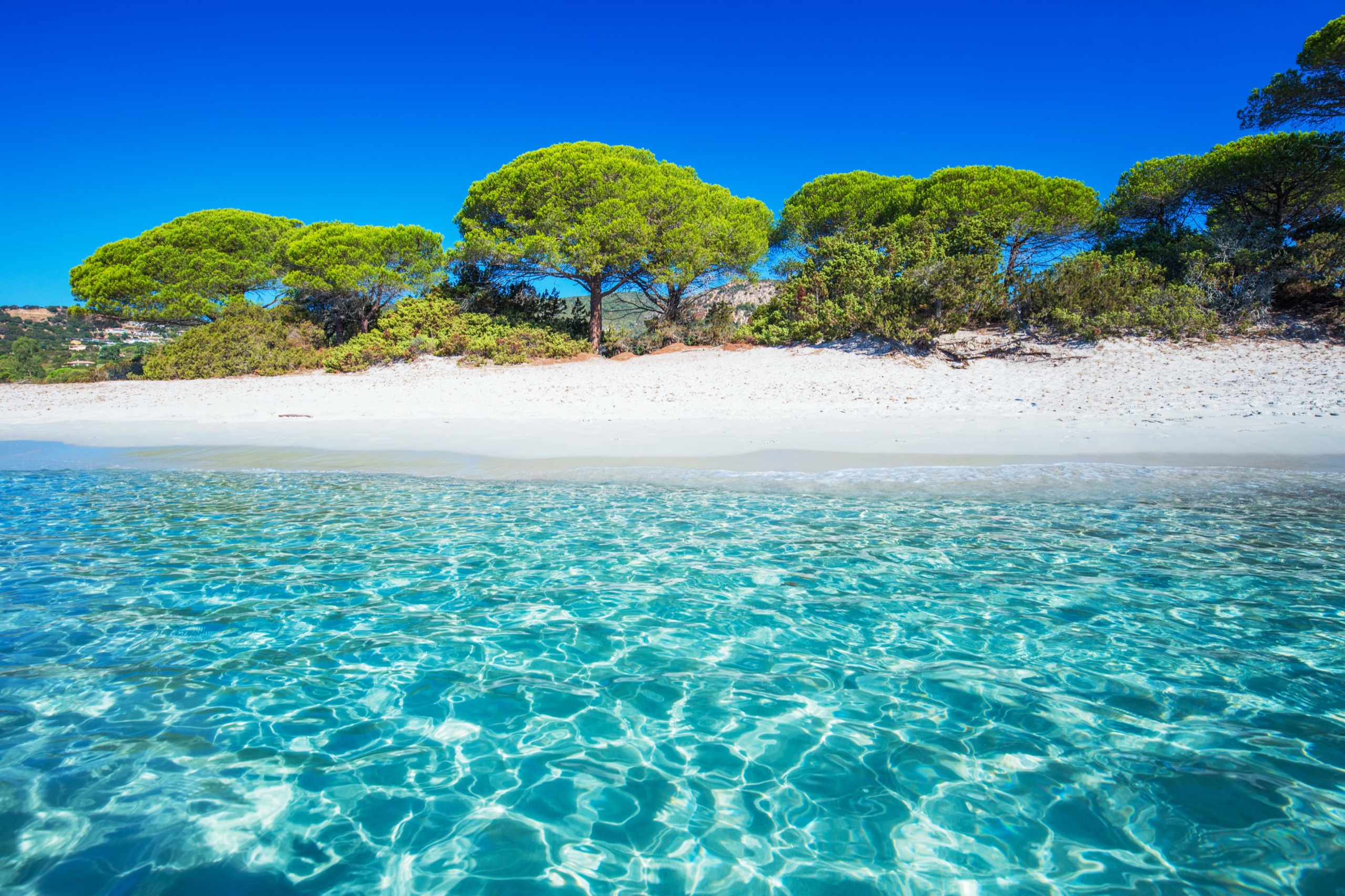
3. Pinède beach and pine forest
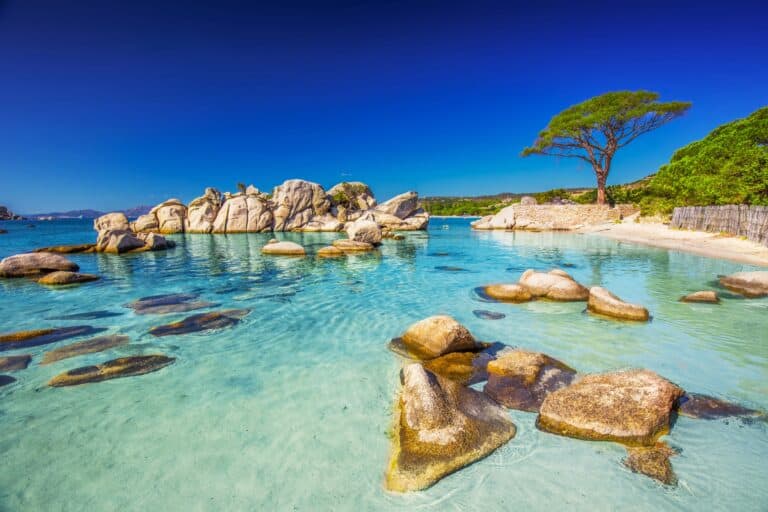
Once you’ve had your fill of wandering among the monuments, just take a few steps from the centre and you’ll find yourself on one of the loveliest town beaches on the island. Plage de Calvi stretches an impressive six kilometres, and its fine white sand combined with incredibly clear, turquoise water feels more like the exotic Caribbean than a European resort. The sea here shelves very gently and stays shallow for a long way out, which you’ll appreciate most when travelling with small children. It’s easily one of the best beaches in Calvi, Corsica.
What makes this beach truly unique is the dense pine forest called the Pinède that lines its entire length. The tall pines provide merciful natural shade on hot summer days, so you don’t necessarily have to lug along a parasol. A pleasant wooden boardwalk also runs beneath the trees, leading all the way to the far end of the bay, and along the way you’ll come across several agreeable beach bars and restaurants.
On the beach you can rent sun loungers with parasols, with 2026 prices hovering around 25 to 35 euros for a set for the whole day. If you prefer a more active kind of relaxation, you’ll find several rental outlets for paddleboards, kayaks and pedal boats, which offer an unusual view of the citadel from the water.
💡 Tip: Although the beach is enormous, in peak season the best spots in the shade of the pines fill up fast, so I’d recommend heading to the water ideally before ten in the morning.
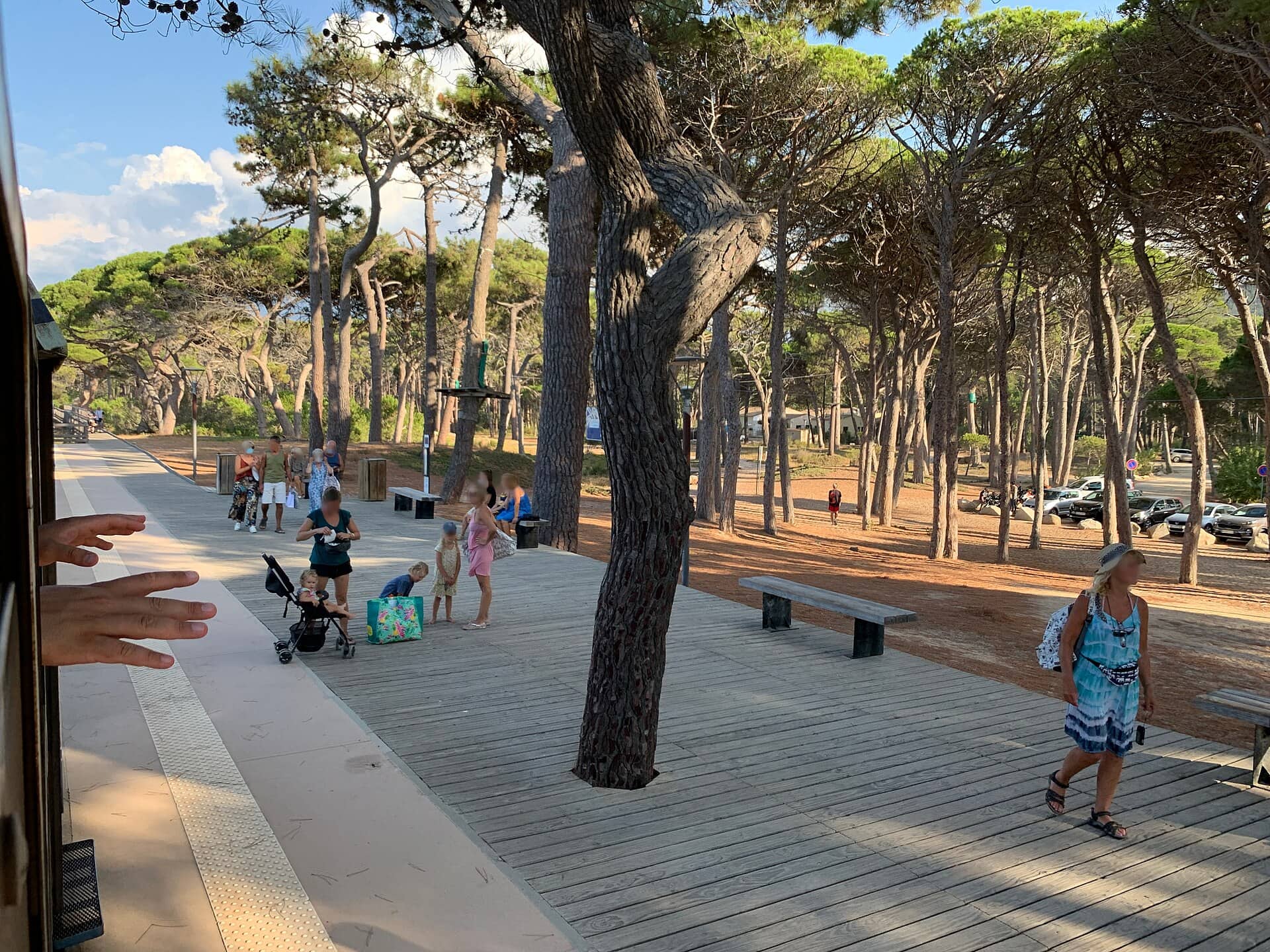
4. The U Trinighellu coastal train
The link between Calvi and Île-Rousse isn’t just the road — there’s also the legendary narrow-gauge train fondly nicknamed U Trinighellu, or the Rattler. This historic railway runs right along the very edge of the cliffs and passes close to the seashore, offering views you simply have no chance of seeing from a car. The ride on this little, slightly noisy train is a huge experience in itself and ranks among the very best things to do in the Balagne region.
The train essentially works like a kind of beach tram, stopping at all the major coves and beaches around the bay. You can easily explore more remote swimming spots, such as the beautiful Algajola or Bodri beaches, without having to wrestle with expensive parking. The train runs fairly often in the summer season, and the entire route from Calvi to Île-Rousse takes roughly fifty minutes of very easy-going rattling.
You can buy tickets directly from the conductor on the train or at the larger stations, with a one-way trip between the two towns costing around 7 euros in 2026. The trains tend to be quite full, especially in summer, so arm yourself with a little patience and try to grab a window seat on the left-hand side heading out of Calvi for the best sea views.
💡 Tip: If you want to be sure of a seat, board at the starting station in Calvi well in advance and don’t leave reaching the platform until the last minute.
5. Île-Rousse and the covered market
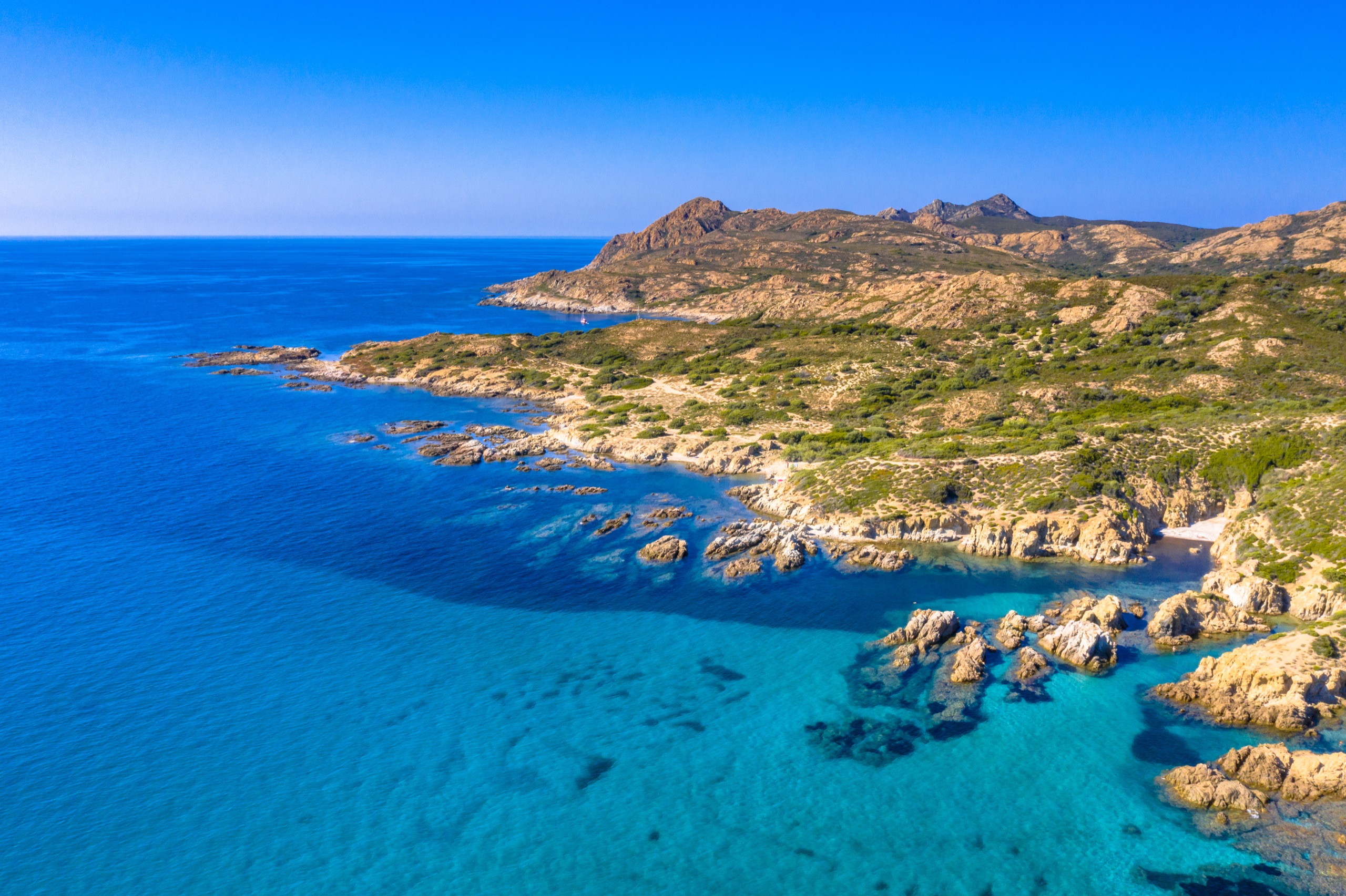
If you head east on that train or by car, you’ll reach the immensely likeable little town of Île-Rousse, founded in the eighteenth century by the Corsican national hero Pasquale Paoli. The town takes its name from the red porphyry islets that lie just off the coast and which, at sunset, literally glow a deep crimson. Compared with historic Calvi, Île-Rousse feels far airier, has a regular grid of streets and exudes a relaxed spa-town atmosphere.
The main hub of all the action is the spacious Place Paoli, dominated by the shade of plane trees, cafés and a statue of the founder himself. Right next to the square you’ll find a stunning covered market built using mighty ancient columns, looking like a classical temple. Every morning local farmers sell the best of the island here, so you can stock up on superb goat’s cheeses, wildflower honey, olive oil or fresh fruit for the beach.
After visiting the market, be sure to walk out to the lighthouse on the Pietra peninsula, connected to the mainland by a short causeway. The path to the lighthouse winds between red rocks and offers a marvellous view of the whole town and the high mountains rising right behind it.
💡 Tip: On Place Paoli, don’t forget to join in a game — or at least watch the local older gentlemen playing pétanque — it’s an absolutely perfect snapshot of slow island life.
6. The village of Sant’Antonino
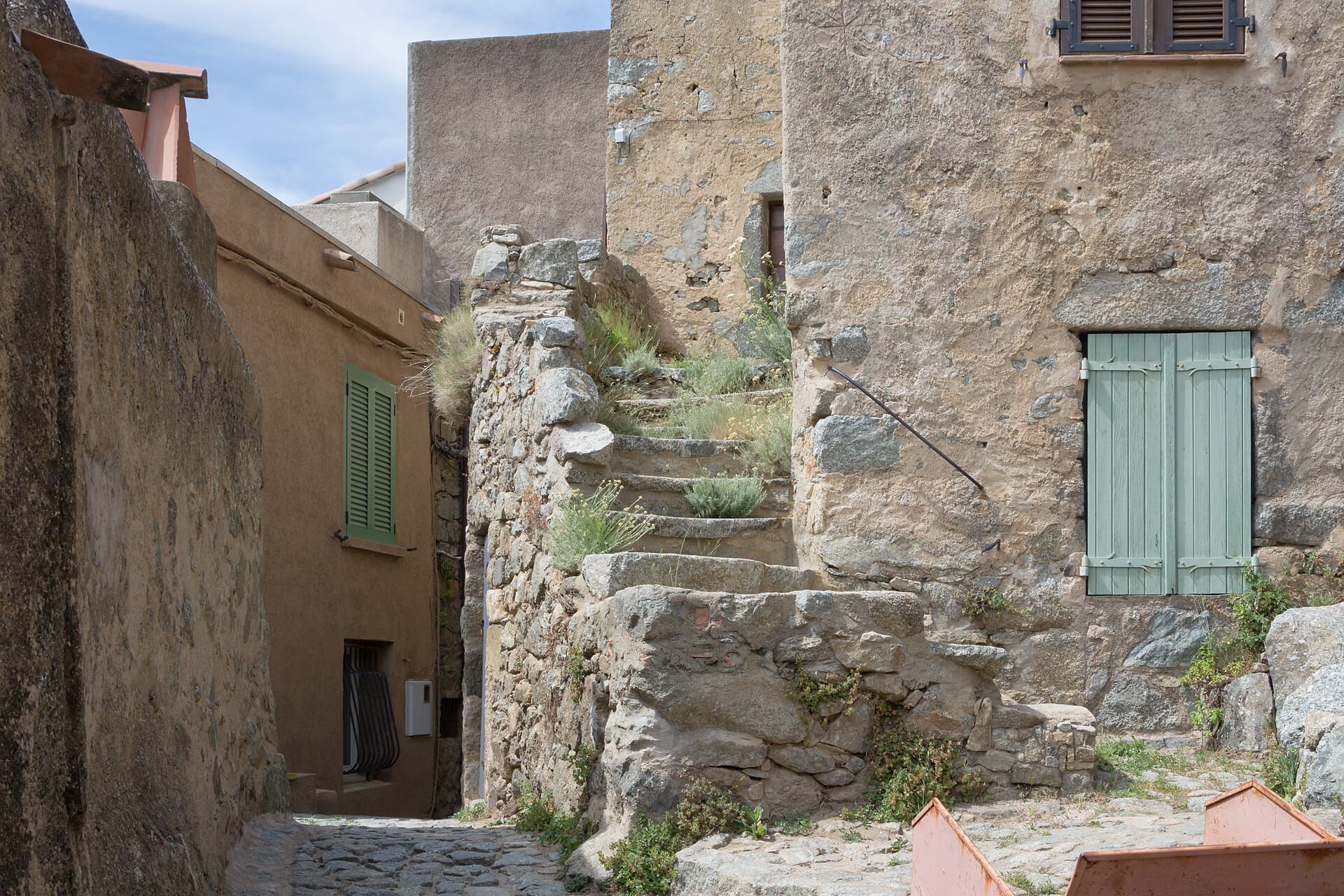
The Balagne region isn’t only about the coast — above all it’s about the picturesque little villages scattered high in the hills above the sea. Sant’Antonino holds the title of one of the most beautiful villages in France and, seen from a distance, resembles an impregnable eagle’s nest perched on the very top of a steep hill. This settlement is among the oldest on the island, founded as far back as the ninth century, and its circular layout was meant to protect inhabitants from Moorish raids.
The moment you step inside the village, you’ll instantly understand why no cars are allowed. A tangle of impossibly narrow, steep, cobbled lanes awaits you, weaving between old stone houses, passing under vaulted arches and climbing right up to the summit. The walk calls for fairly good footwear and a bit of fitness, but your reward is the utterly unique atmosphere of a place where nothing has changed in hundreds of years.
From the highest point of the village a sweeping panorama opens up in every direction. You’ll see the entire Balagne coastline, valleys full of olive trees and the snow-capped peaks of the highest Corsican mountains. In a few small cafés here you can also try a local speciality: a refreshing lemon juice made from fruit grown right on the surrounding terraces.
💡 Tip: Parking below the village is paid and fills up very quickly in summer, so I’d recommend visiting Sant’Antonino early in the morning, while the air isn’t yet so hot and the lanes are empty.
7. The village of Pigna
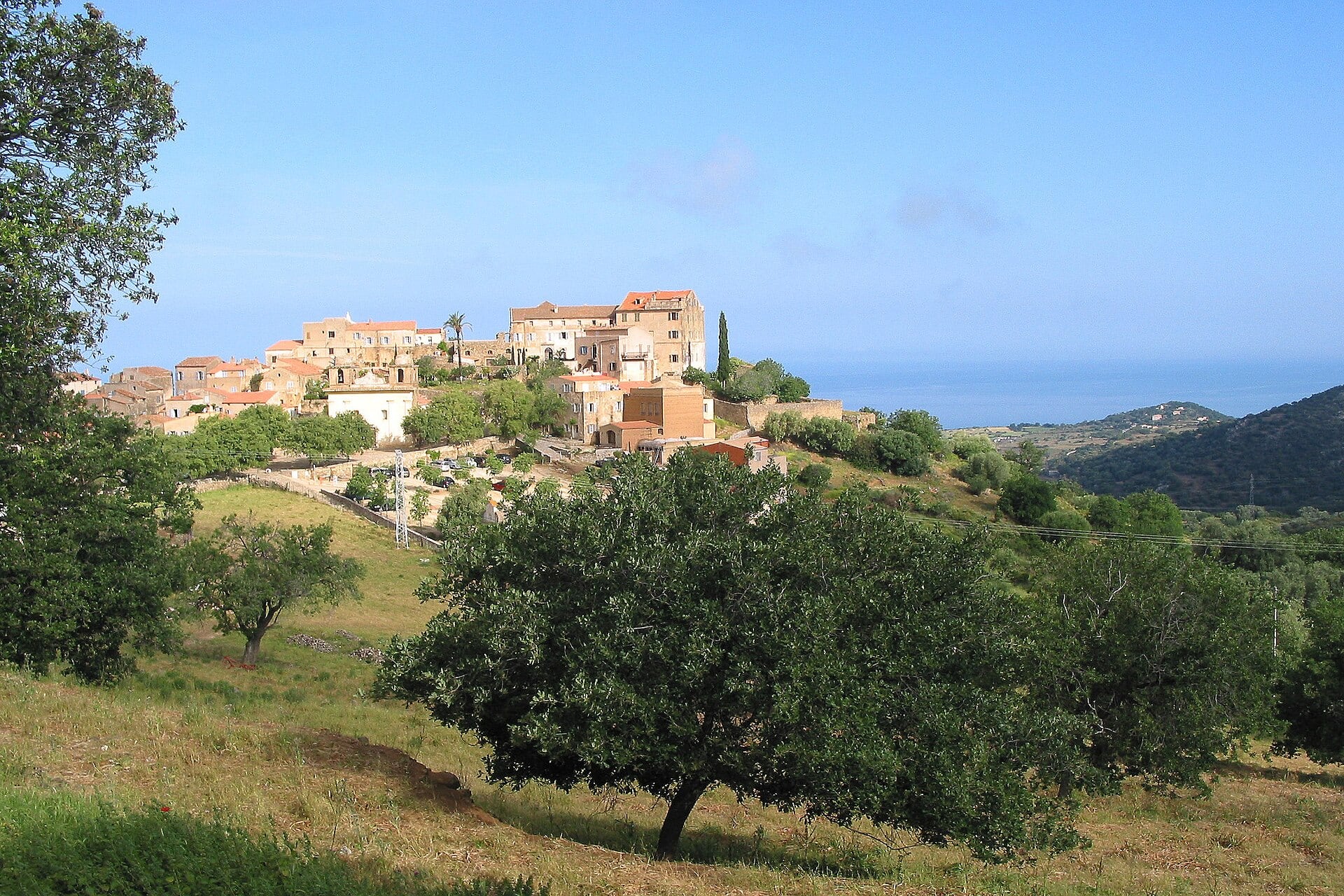
Just a few kilometres from Sant’Antonino lies another inland gem: the charming village of Pigna. This place is best known for its bright blue shutters, which, combined with the ochre stone walls of the houses, create an absolutely perfect photographic backdrop. Unlike other villages, Pigna has held on to a very strong artistic and craft tradition, giving it an incredibly lively, creative feel.
In the narrow cobbled lanes you’ll come across dozens of small workshops and studios. Pigna is home to potters, painters, sculptors and, above all, makers of traditional Corsican musical instruments, so from the open windows you’ll often hear the sound of carving chisels or the testing of new wooden flutes and music boxes. You can watch master craftsmen at work and pick up a genuinely original, authentic souvenir that has nothing to do with cheap imports from Asia.
The village is also surrounded by old olive groves and has a strict ban on cars, so you can wander it in complete peace. The local church with its lovely square is also worth a visit, offering yet another fantastic view down towards the blue sea and the coastal town of Algajola.
💡 Tip: If you’re after an out-of-the-ordinary experience, try one of the local little restaurants, which often cook exclusively with local ingredients grown on the terraces below the village.

8. Crafts and music of the Balagne region
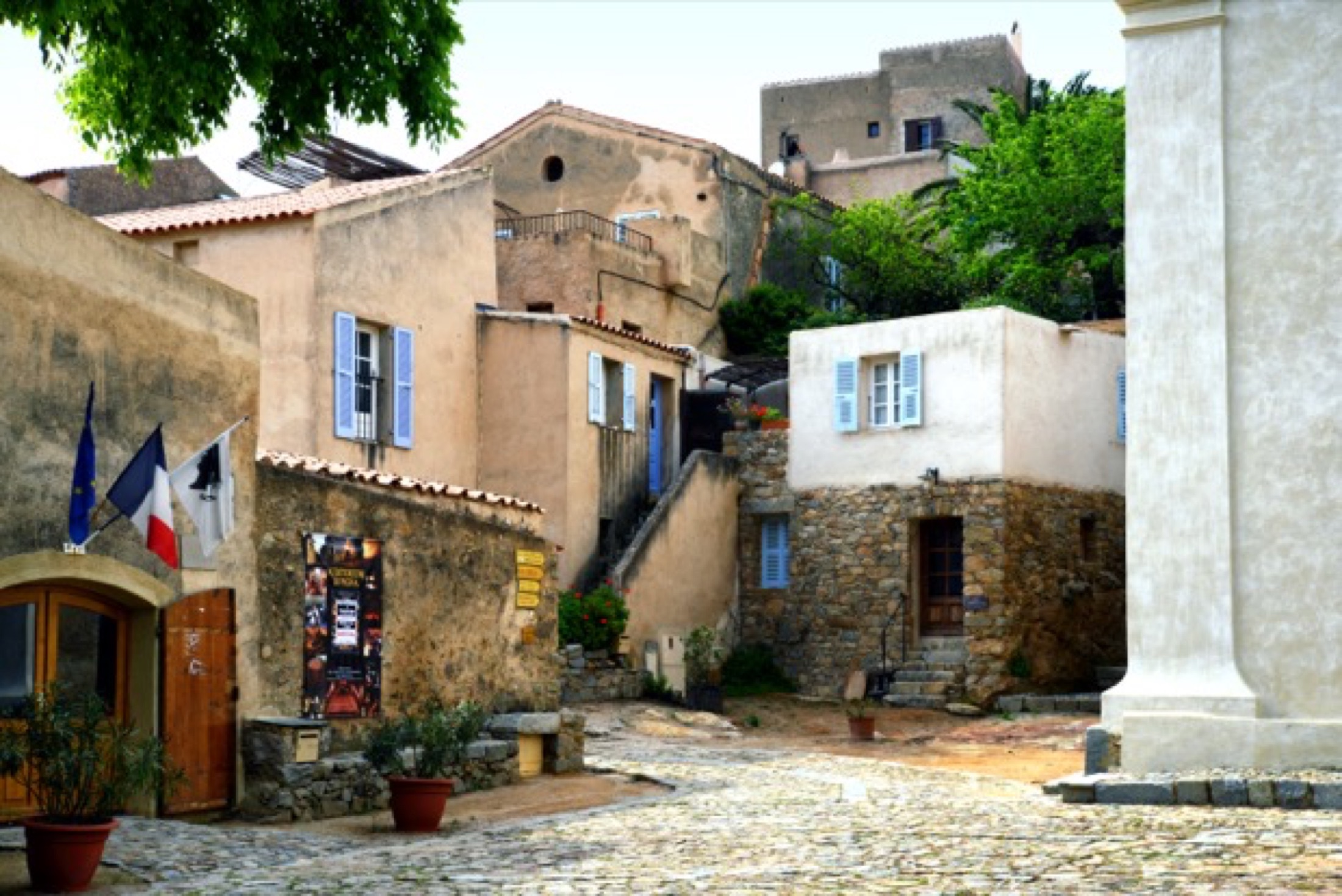
While you’re driving through the mountain villages, you should know that this entire area is linked by a special tourist route called the Route des Artisans, or the Craftsmen’s Trail. This route leads you through the most interesting studios and workshops scattered across the Balagne region. This is no artificially created open-air museum for tourists, but a living tradition that the locals are working hard to preserve for future generations.
Beyond fine and applied arts, Corsica — and the Balagne region in particular — is renowned for its utterly unique musical heritage. These are traditional polyphonic chants, sung exclusively by men without any musical accompaniment. These deep, resonant voices, weaving together in incredible harmonies, have their roots in ancient shepherding traditions and still give listeners goosebumps today.
Concerts by polyphonic choirs take place fairly often in the summer months, and the most powerful experience comes from performances in old stone churches. Thanks to the superb acoustics of these historic places of worship, the sound literally fills the entire space and you feel as though you’ve touched the very soul of the island. You’ll find concert details on posters stuck to lampposts or at local information centres.
💡 Tip: Tickets for evening polyphonic concerts usually cost around 15 to 20 euros, and I’d recommend getting them in advance, as the local churches have very limited capacity and sell out fast.
9. Hiking on the Revellata peninsula
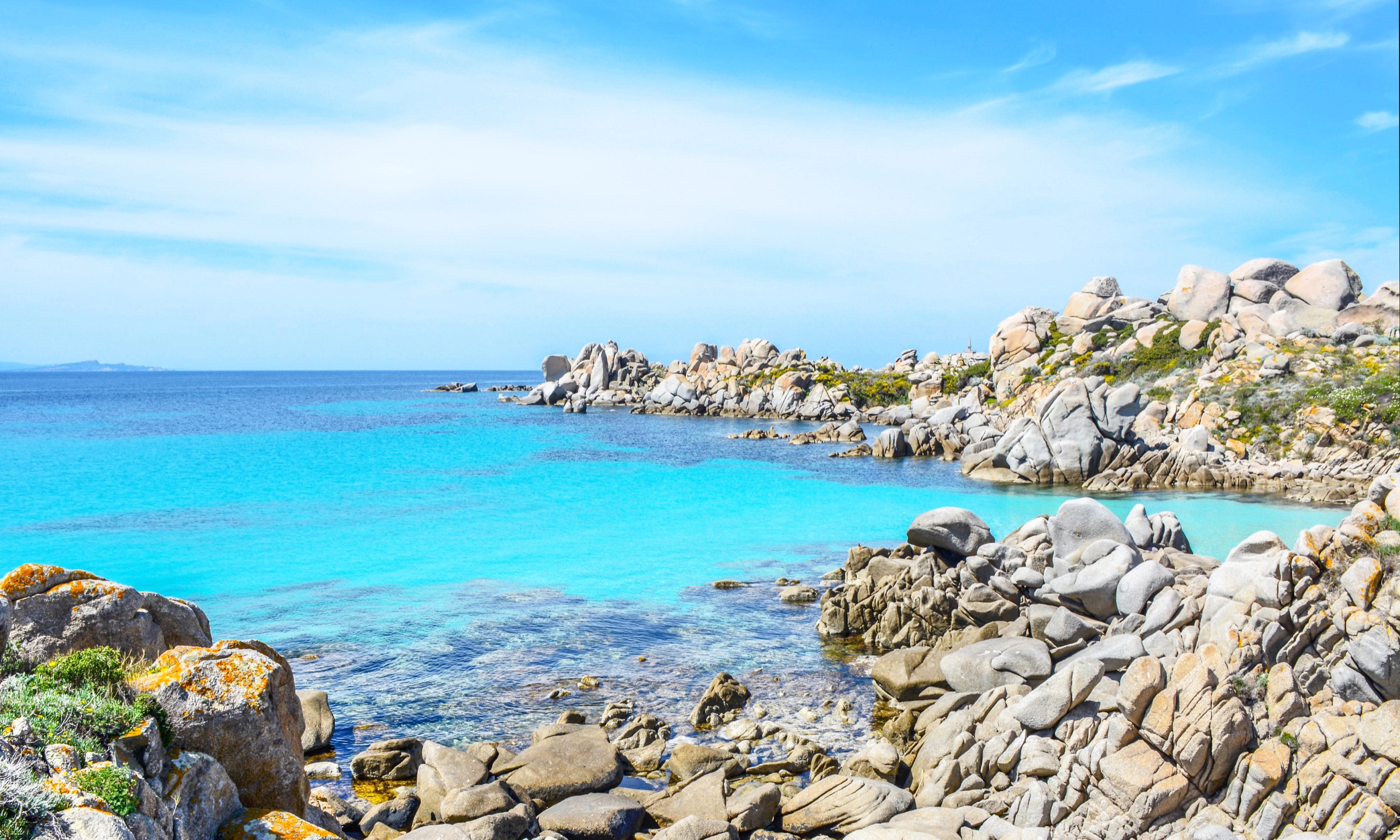
If you love wild nature and don’t mind a little physical effort, head west out of Calvi to the Pointe de la Revellata peninsula. This rocky headland is the absolute opposite of the polished town beach, offering a raw landscape of lashing winds, sharp cliffs and lonely coves. You can reach the peninsula on foot straight from the town’s citadel, and the whole loop trail will take you roughly three to four hours of very pleasant walking.
The route follows rutted dusty tracks that wind between the fragrant maquis bushes, constantly serving up stunning views of the turbulent sea far below you. At the very tip of the peninsula you’ll come across a lonely white lighthouse, which has stood here since the nineteenth century, watching over the safety of ships passing the treacherous reefs. This is where you grasp the true power of nature and the vastness of the Mediterranean.
As you walk you’ll come across several small, pebbly coves accessible only on foot or by boat. The water here is incredibly clear and teeming with marine life, so if you have room in your backpack, definitely pack a diving mask and snorkel. These little beaches tend to be almost deserted even in the middle of summer.
💡 Tip: There’s no shade at all on the whole peninsula and nowhere to top up supplies, so take sturdy footwear, a hat and at least two litres of water per person.
10. The Notre-Dame de la Serra viewpoint
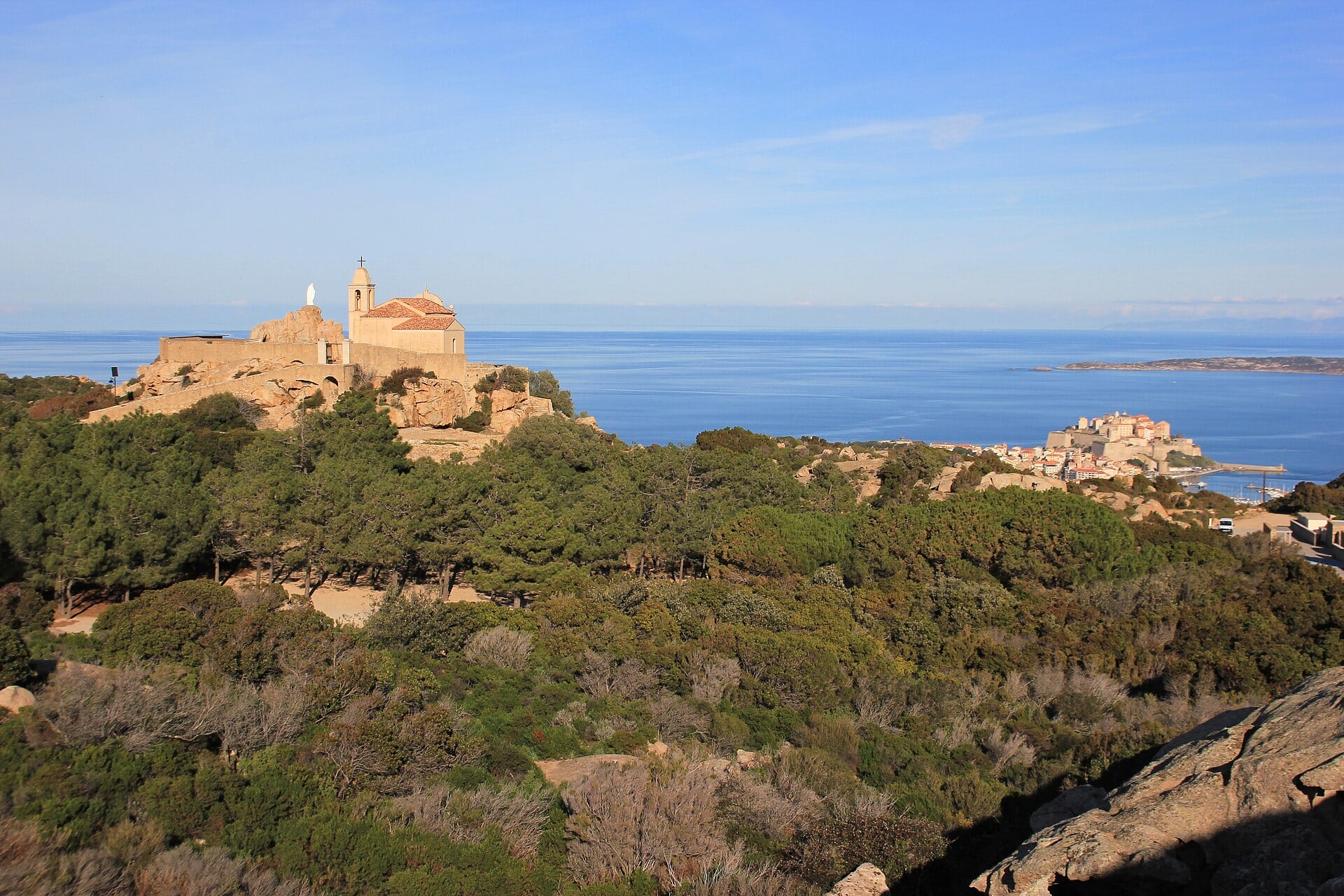
If you’re looking for the spot to take the very best photos of the whole bay, you’ll need to climb up to the little chapel of Notre-Dame de la Serra. This sanctuary stands high on a hill behind Calvi, reached by a fairly steep, narrow road you can drive up — though for the more adventurous it’s also a lovely walking challenge. Locals deeply revere this place and regard it as a kind of guardian angel watching over the whole town and its surroundings.
On the courtyard in front of the chapel stands an unmissable statue of the Virgin Mary, arms spread wide as if protecting the entire bay below. According to local legend, a visit to this place brings luck in love, and if you come here with your better half, you’ll supposedly stay together for the rest of your lives. Whether or not you believe the tale, that breathtaking view won’t be leaving your mind any time soon.
From the viewpoint you’ll see the whole town of Calvi laid out before you, the imposing citadel and the six-kilometre ribbon of beach stretching to the horizon. The most beautiful atmosphere reigns during the golden hour just before sunset, when the surrounding mountains are wrapped in soft light and the sea begins to gleam like a giant mirror.
💡 Tip: If you decide to walk up to the chapel straight from the centre of Calvi, allow about an hour of fairly steep climbing, and again don’t forget plenty to drink.
11. Swimming in the natural pools of the Fango valley
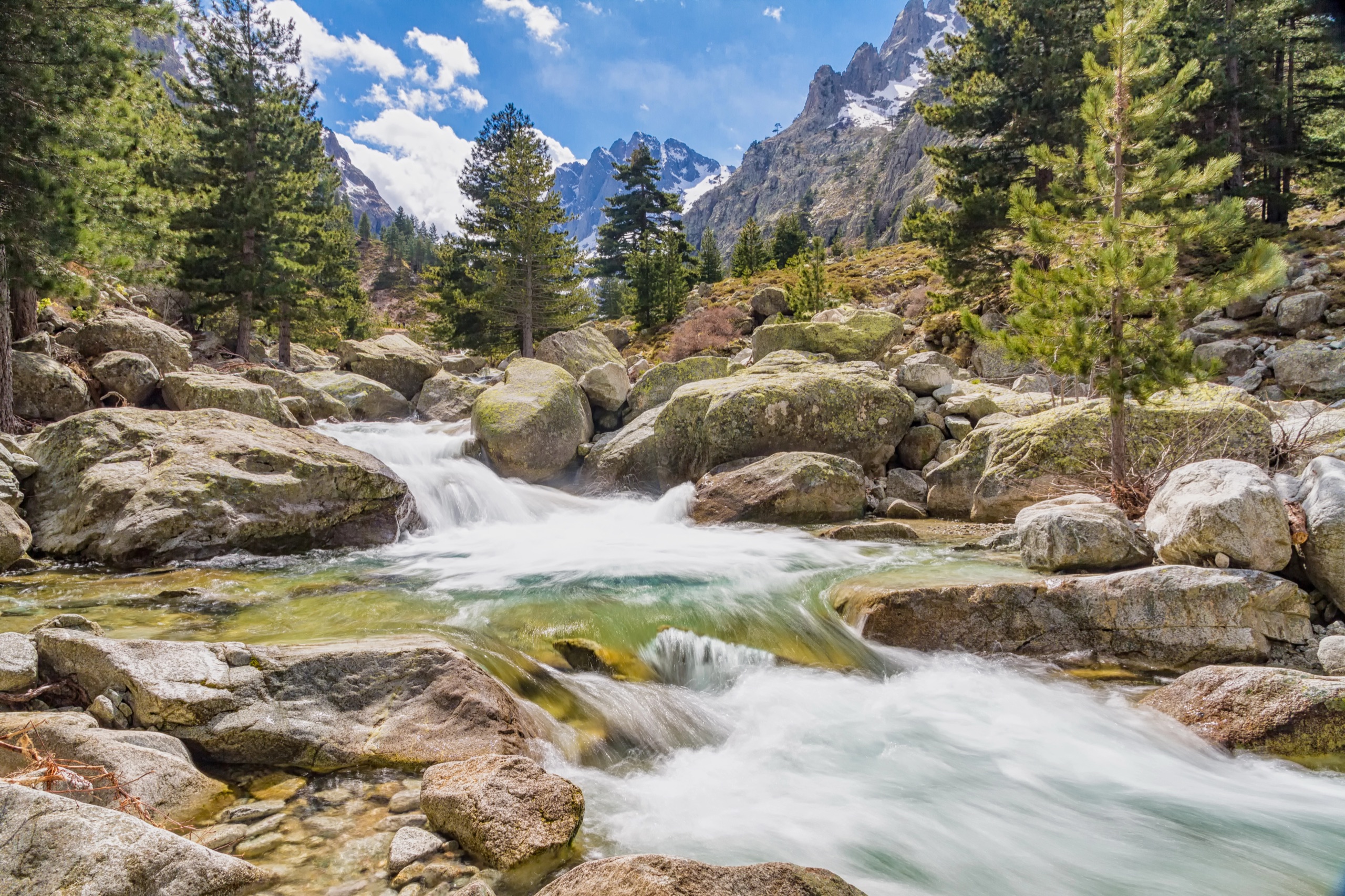
When you’ve had enough of salt water and sand finding its way everywhere in your swimsuit, the Balagne region has one more huge ace up its sleeve. About forty minutes’ drive south of Calvi lies the gorgeous valley of the Fango river, listed as a UNESCO biosphere reserve. Over the millennia the river has carved dozens of natural pools into the red granite, making a perfect alternative to the crowded coastal beaches.
The water in these mountain pools is crystal clear, pleasantly refreshing in summer and an incredible emerald colour. You can hop across enormous sun-warmed boulders, swim in the deeper pools, or let yourself be massaged by the little waterfalls that form between them. The valley is also surrounded by dense oak forests, with the steep slopes of the highest Corsican mountains completing the scene.
A fairly good road leads to the valley, with several car parks from which it’s only a few minutes’ walk to the water. The further upstream you go, the fewer people you’ll meet and the better your chances of finding your own private pool all to yourself. Many tours and outdoor activities in this area can also be easily searched for and booked through the popular GetYourGuide platform.
💡 Tip: The stones in and around the river tend to be very slippery, so definitely take water shoes or sturdy sandals to avoid an unnecessary ankle injury.
Map of points of interest for your phone
Where to go next from Calvi
Once you’ve thoroughly explored the northwest coast, Corsica offers plenty of other places to take your breath away. If you’re planning to drive across the whole island, be sure to read our comprehensive guide to Corsica, where you’ll find more detailed information about the other regions. The biggest draw of the entire island, though, is undeniably the south — specifically a town teetering on the edge of an abyss. Find out why you definitely shouldn’t skip Bonifacio on your trip, with the most dramatic scenery in the whole Mediterranean.
From Calvi you can also set out on a full-day boat trip to the strictly protected Scandola nature reserve, which can only be reached by water, or head off to explore the rugged Cap Corse peninsula in the northeast of the island, which looks like a raised finger and is studded with old Genoese watchtowers.
Frequently asked questions
How to get from Calvi Airport to the city center?
Sainte-Catherine Airport is located about seven kilometers from the city center. There’s no regular public transport service here, so you’ll need to rely on either a pre-booked rental car or local taxis. A taxi ride to the center takes about fifteen minutes, and in 2026 you’ll pay a fixed rate of around 20 to 25 euros depending on the time of day.
Do I need a car in the Balagne region?
Yes, a car is an absolute necessity for exploring Corsica. Public transport does exist, but buses run very infrequently and most picturesque mountain villages or wild beaches are completely inaccessible by bus. Without a car, you’d be limited to just the town of Calvi and the train to Île-Rousse.
Is Corsica an expensive destination?
Compared to mainland France, prices on the island are roughly 10 to 20 percent higher, as most goods have to be brought in by ferries. The most expensive items are usually car rental and the ferry itself if you’re travelling with your own vehicle. You can save money by travelling outside the main summer season and buying local produce at markets.
Can I manage visiting mountain villages with a stroller?
Visiting villages like Sant’Antonino or Pigna with a classic stroller is very challenging and I rather don’t recommend it. The streets here are extremely narrow, steep, full of bumpy stones and often interrupted by stairs. For traveling with smaller children in these places, a baby carrier or backpack carrier is much more practical.
Will I be able to communicate in English in Corsica?
In main tourist centers, hotels, and larger restaurants, you can usually get by with English, although the level may vary. However, Corsicans are very proud and will appreciate it if you learn at least basic phrases in French like bonjour, merci, or s’il vous plaît, which will often open the door to a much friendlier approach.
Is it hard to find vegetarian food in restaurants?
Korsika may be famous for its cold cuts and meaty dishes, but finding vegetarian food is no problem at all. Most restaurants offer excellent vegetarian pizza, pasta with fresh herbs, hearty salads, or dishes made from outstanding local cheeses, such as the famous brocciu cheese.
Where to park when visiting Calvi?
In the city center, you’ll find several paid parking lots, of which the largest and closest to the citadel is the parking lot along the harbor. During the summer months, these spots tend to fill up very quickly, so it’s better to arrive early in the morning or use the park-and-ride facilities a bit further from the center and walk that short distance on a pleasant stroll.
Tips and Tricks for Your Vacation
Don’t Overpay for Flights
Search for flights on Kayak. It’s our favorite search engine because it scans the websites of all airlines and always finds the cheapest connection.
Book Your Accommodation Smartly
The best experiences we’ve had when looking for accommodation (from Alaska to Morocco) are with Booking.com, where hotels, apartments, and entire houses are usually the cheapest and most widely available.
 🚗 Car rental on the roadVerified rental cars in Corsica
Search with the DiscoverCars comparison engine — it compares prices from dozens of local and international rental companies, and most bookings come with free cancellation.
Compare car prices in Corsica →Don’t Forget Travel Insurance
Good travel insurance will protect you against illness, accidents, theft, or flight cancellations. We’ve had a few hospital visits abroad, so we know how important it is to have proper insurance arranged.
Where we insure ourselves: SafetyWing (simple monthly subscription) and TrueTraveller (for extra-long trips).
Find the Best Experiences
Get Your Guide is a huge online marketplace where you can book guided walks, trips, skip-the-line tickets, tours, and much more. We always find some extra fun there!