When people think of northern Portugal, their minds usually jump straight to famous port wine and the melancholic lanes above the Douro River. But if you’re looking for the very essence of this beautiful country, you need to venture a little further — right into its historical heart. Guimarães Portugal is a proud, ancient, and incredibly photogenic town that’s rightfully known as the birthplace of the entire Portuguese nation. This is where the first kings were born and where the history of a country that once explored the world began to be written.
The historic centre is a UNESCO World Heritage Site, and it’s an utterly enchanting labyrinth of cobbled lanes, medieval houses, and small picturesque squares. Forget the hustle of big cities for a while and let yourself be swept away by the atmosphere of a place where a thousand years of history breathes from every stone. Pack sturdy shoes with good grip, because the traditional cobblestone paving known as calçada can be treacherous, and come explore the most beautiful corners with us. I’ve put together a detailed guide so you won’t miss a thing in this magical town.
TL;DR
- Birthplace of Portugal: Guimarães is where the first Portuguese king, Afonso Henriques, was born and where the independent Portuguese state was formally established.
- Easy access from Porto: The town is roughly an hour’s train ride from Porto, making it an absolutely ideal destination for a day trip.
- Top attractions: Don’t miss the medieval Castelo de Guimarães and the monumental Palace of the Dukes of Braganza (Paço dos Duques de Bragança).
- Historic centre: A UNESCO World Heritage Site full of medieval houses, narrow lanes, and romantic cafés with outdoor seating.
- Cable car to Penha: If you fancy a break from the history, take the cable car up to Penha hill for enormous granite boulders and stunning panoramic views.
- Tourist tax: Budget for a city tax of €3 per person per night, collected on-site by your hotel.
- Northern weather: Northern Portugal is lush and green — which means more rain. Pack an umbrella even in the spring months.
The full destination guide: Portugal — guide and what to see
When to Visit Guimarães
Weather is absolutely crucial when planning a trip to northern Portugal. While the south often battles extreme summer heat, the north is influenced by the Atlantic and significantly wetter. From November to March, ocean fronts sweep in and it can rain for several days straight. The green hills surrounding the town aren’t green by accident, so don’t set off without a waterproof jacket and a decent umbrella during the winter months.
The best time to visit is undoubtedly spring and early autumn. In months like May, June, or September, temperatures hover around a very pleasant 20–25°C, which is perfect for a full day of sightseeing. Mornings can be a little misty, but you’ll enjoy plenty of sunshine during the day without the oppressive heat. July and August, on the other hand, bring excellent sunny weather with minimal rain, but also the biggest tourist crowds and higher accommodation prices.
If you’re planning a trip during the grape harvest season (September to October), you’ll experience a wonderful atmosphere, but from mid-October onwards you need to factor in a higher chance of rain showers. The town has its charm in every season — even in misty November, when it takes on a slightly mystical air. It all comes down to whether you prefer sunny afternoons on café terraces or romantic strolls through an autumnal town.
Where to Stay in Guimarães
💡 Tip for accommodation and experiences: We usually search for places to stay on Booking.com, which tends to have the best cancellation policies. For tickets, tours, and activities, it’s worth comparing options on GetYourGuide.
Guimarães offers plenty of lovely places to rest your head, from luxurious historic buildings to smaller family-run guesthouses. However, overtourism and the housing crisis in Portugal have pushed the government to act, meaning stricter new rules for short-term private apartment rentals came into force from May 2026. The supply of classic Airbnb-style rentals in the historic centre has shrunk and prices have naturally risen, so travellers increasingly opt for traditional hotels or so-called pousadas (heritage hotels).
When looking for the perfect place to stay, I’d recommend using Booking.com, where you can easily filter hotels within walking distance of the centre. Also keep in mind that the town charges a tourist tax of €3 per person per night, which you’ll pay directly at reception (usually in cash or by card at check-in). An excellent choice is the elegant Hotel Toural, which offers spacious rooms and a brilliant location right on the square of the same name.
If you want to treat yourself to something truly special, check out Pousada Mosteiro de Guimarães. This luxury hotel was converted from a 12th-century Augustinian monastery and boasts breathtaking views over the town, beautiful gardens, and top-notch service. Another fantastic option right in the heart of the historic centre is Casa do Juncal, a smaller boutique hotel that blends historical architecture with modern, tasteful design.
13 Things to See and Do in Guimarães
Let’s take a look at the very best this ancient town has to offer — from rugged medieval ramparts and ornate noble palaces to cosy little squares where the aroma of fresh coffee and sweet pastries fills the air. Get your cameras ready, because you’re absolutely going to fall in love with this place.
1. Castelo de Guimarães (The Castle)
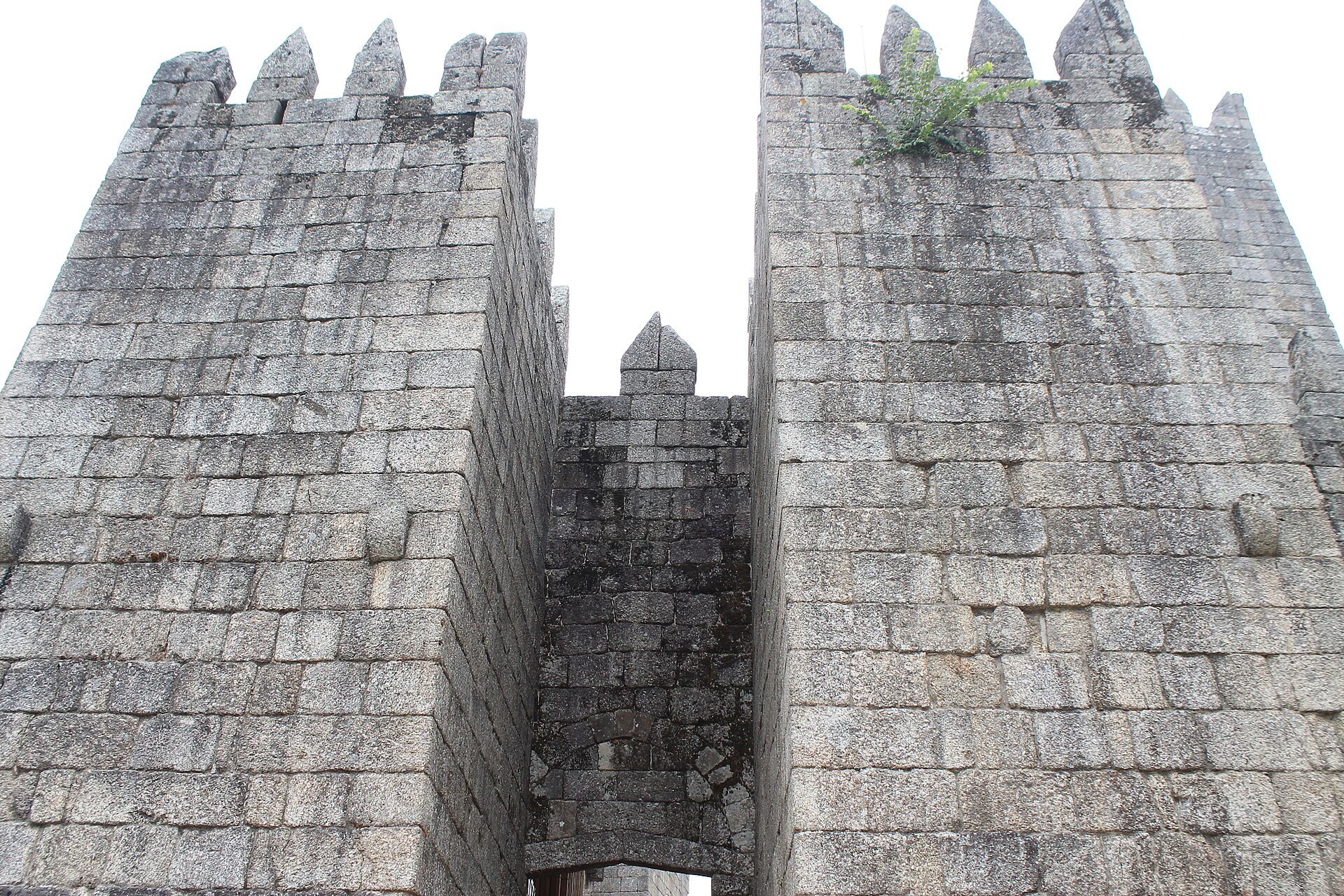
Your first steps should lead to the small hilltop above the town, where the landmark of the entire region towers above everything else. Castelo de Guimarães is a robust 10th-century medieval fortress that originally served to defend the local monastery from Moorish and Norman raids. Its raw granite form with imposing battlements and a tall central keep (Torre de Menagem) looks exactly like the impenetrable knights’ castle you’d picture from a fairy tale.
According to historical sources, it was at this very castle in the early 12th century that the first Portuguese king, Afonso Henriques, was born. As you walk along the ancient walls, you’ll be rewarded with gorgeous views over the entire historic centre spread out below. Access to the castle grounds and the ramparts is often free, but you’ll need to purchase a ticket to enter the main keep, which houses a small exhibition on the town’s history.
💡 Insider tip: If you’re planning to visit several attractions in the area, ask at the ticket office about a combined ticket. They often sell a discounted pass that covers both the castle and the neighbouring Palace of the Dukes, saving you a few euros.
2. Paço dos Duques de Bragança (Palace of the Dukes)
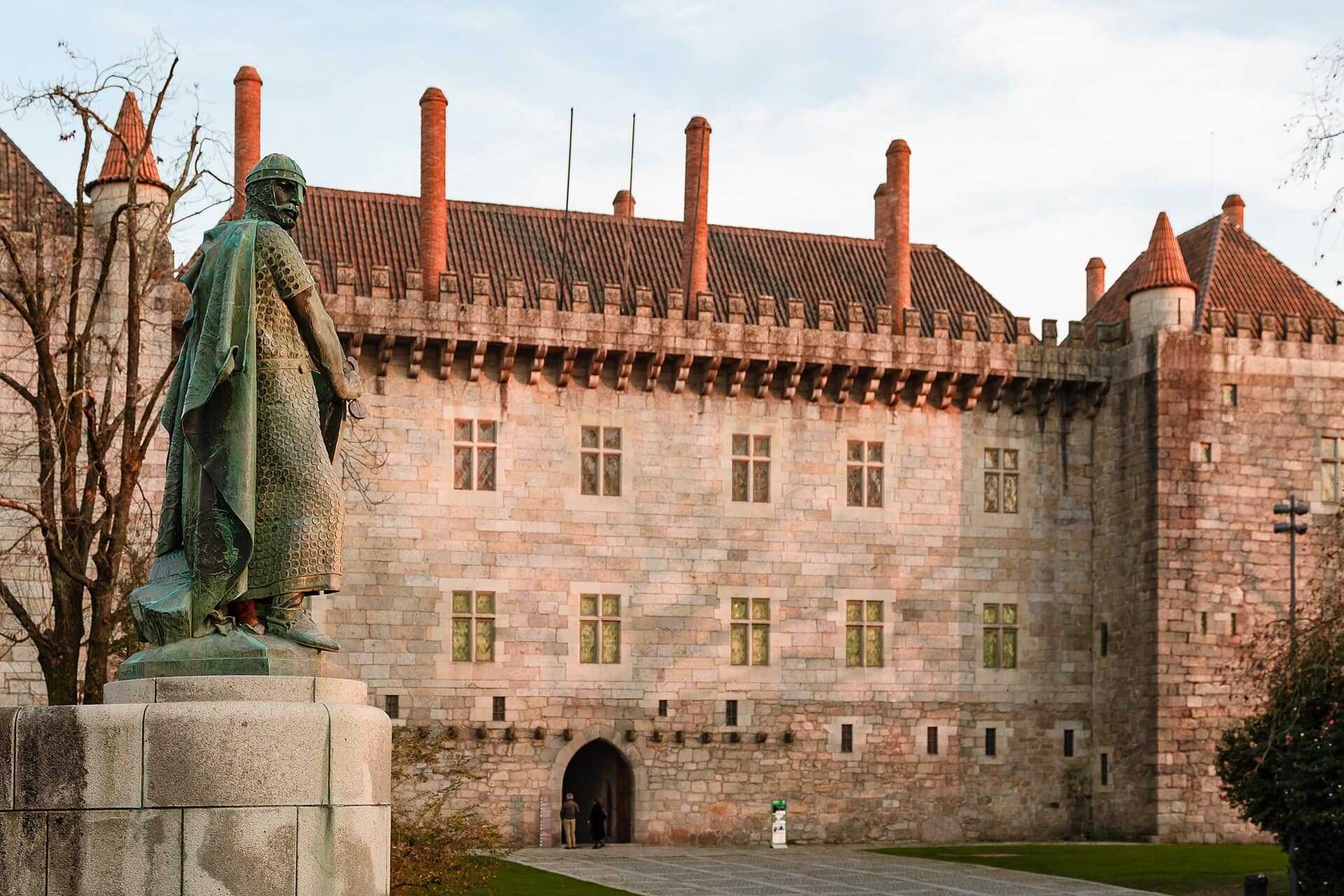
Just below the castle, you can’t miss the enormous and highly unusual building with dozens of brick chimneys jutting into the sky. This imposing palace was built in the 15th century by Afonso, the first Duke of Braganza, as his lavish residence. The architecture is heavily influenced by a northern European style that the duke admired during his diplomatic journeys across the continent.
Inside, a fascinating walk through history awaits. The tour takes you through vast halls with wooden ceilings that resemble inverted ship hulls. The walls are adorned with stunning collections of weapons, antique furniture, and enormous tapestries depicting in detail the Portuguese campaigns in North Africa. The atmosphere inside the palace is rather dark and majestic, which only amplifies the sense of the immense power the House of Braganza once wielded.
Don’t forget to peek into the inner courtyard, which is surrounded by Gothic arcades and radiates an incredibly serene feel. Admission to the palace is around €5, and the visit will take you roughly an hour to an hour and a half, depending on how long you linger over the details of the historical tapestries.
3. Igreja de São Miguel do Castelo
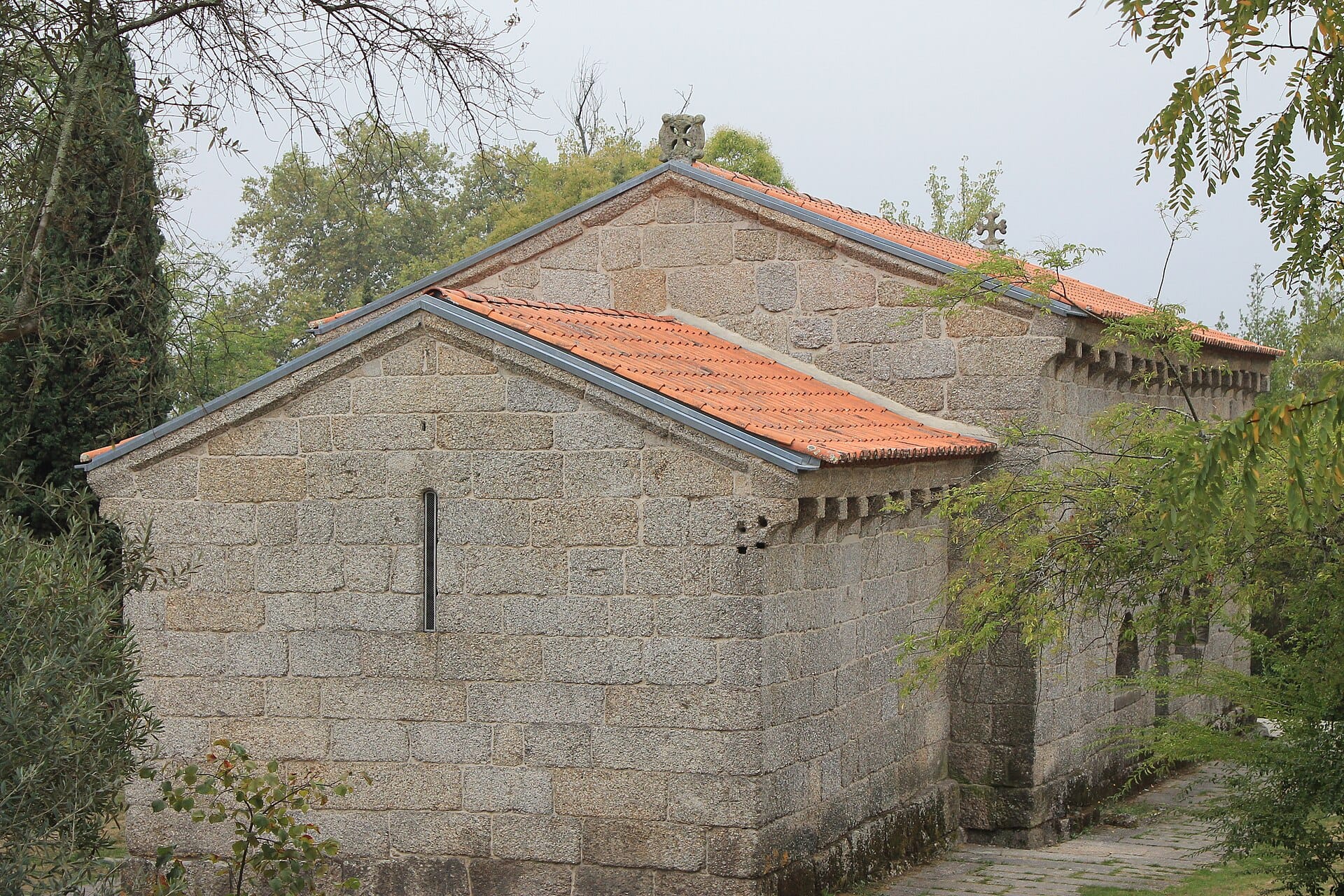
Tucked between the castle and the Palace of the Dukes, there’s a small, unassuming Romanesque church that you might walk right past on a quick visit. That would be a huge mistake, though. Igreja de São Miguel do Castelo is, from a historical perspective, one of the most important sacred buildings in all of Portugal. From the outside it looks plain and austere, but its significance lies in what took place inside.
Legend and historical records claim that it was in this little church that the first king, Afonso Henriques, was baptised. Inside, you’ll find the old stone baptismal font believed to have been used for this very purpose. The interior is dark, lit only by narrow windows, and the floor is made up of dozens of tombstones of medieval knights and nobles.
Admission to this small church is free and a visit takes no more than a few minutes. Yet it’s a profoundly moving place where you can truly feel the depth of Portuguese history and the pride that locals hold for their first ruler.
4. Largo da Oliveira Square
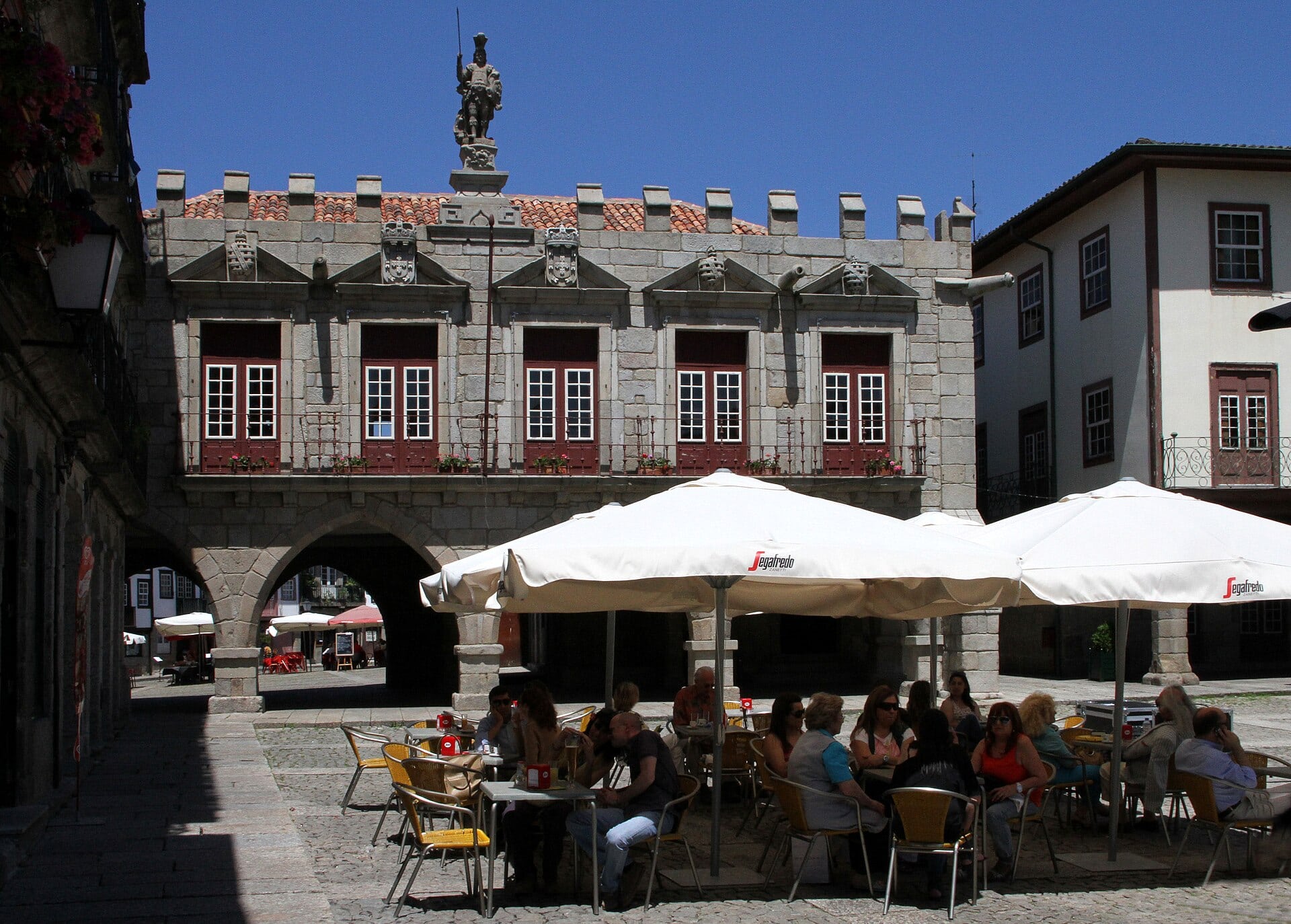
Once you descend from the castle hill into the old town, you’ll find yourself on one of the most picturesque squares you’ve ever seen. Largo da Oliveira is the beating heart of the historic centre and a place where history meets the laid-back lifestyle of today’s Portuguese. The square is surrounded on all sides by beautiful old houses with their characteristic wooden balconies and narrow windows.
The square takes its name from the old olive tree (oliveira) that has stood here for centuries. Legend has it that the original tree miraculously sprouted leaves to affirm the significance of this spot. Today, the square is packed with the terraces of cosy cafés and restaurants, where you can sit down, order a coffee or a glass of local wine, and simply watch the world go by.
It’s the perfect spot for a short rest after exploring the castle. Prices at the cafés on the square are admittedly a touch higher than in the hidden back streets, but the view of the historic backdrop is absolutely worth the extra few cents.
5. Padrão do Salado
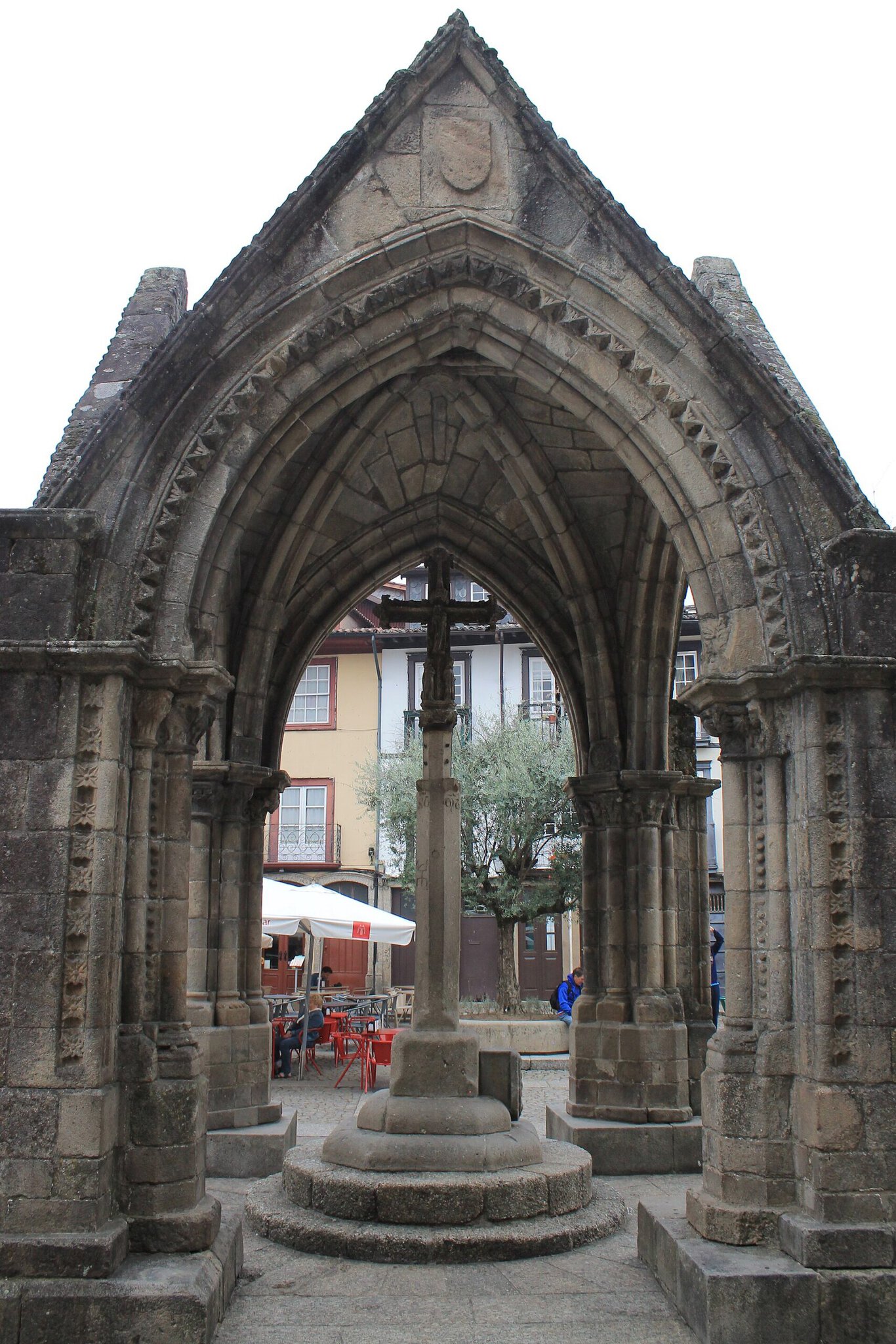
Right in the middle of Largo da Oliveira, your attention will immediately be drawn to a remarkable Gothic monument. The Padrão do Salado is a unique stone shrine formed by four pointed arches sheltering an old stone cross. This memorial was erected in the 14th century to commemorate the victory of Portuguese and Castilian forces over the Moors at the crucial Battle of Salado.
It’s one of the most photographed landmarks in town and a rare example of Portuguese Gothic architecture in its purest form. If you look closely, you’ll spot delicate stonework details and ancient coats of arms adorning the vault of this open chapel. The monument has stood here for centuries and serves as the perfect gateway to the neighbouring church.
💡 Insider tip: The best photos of the monument can be taken early in the morning or in the late afternoon, when the setting sun paints the granite stones in warm golden tones and the square isn’t yet overrun with tourists.
6. Igreja de Nossa Senhora da Oliveira
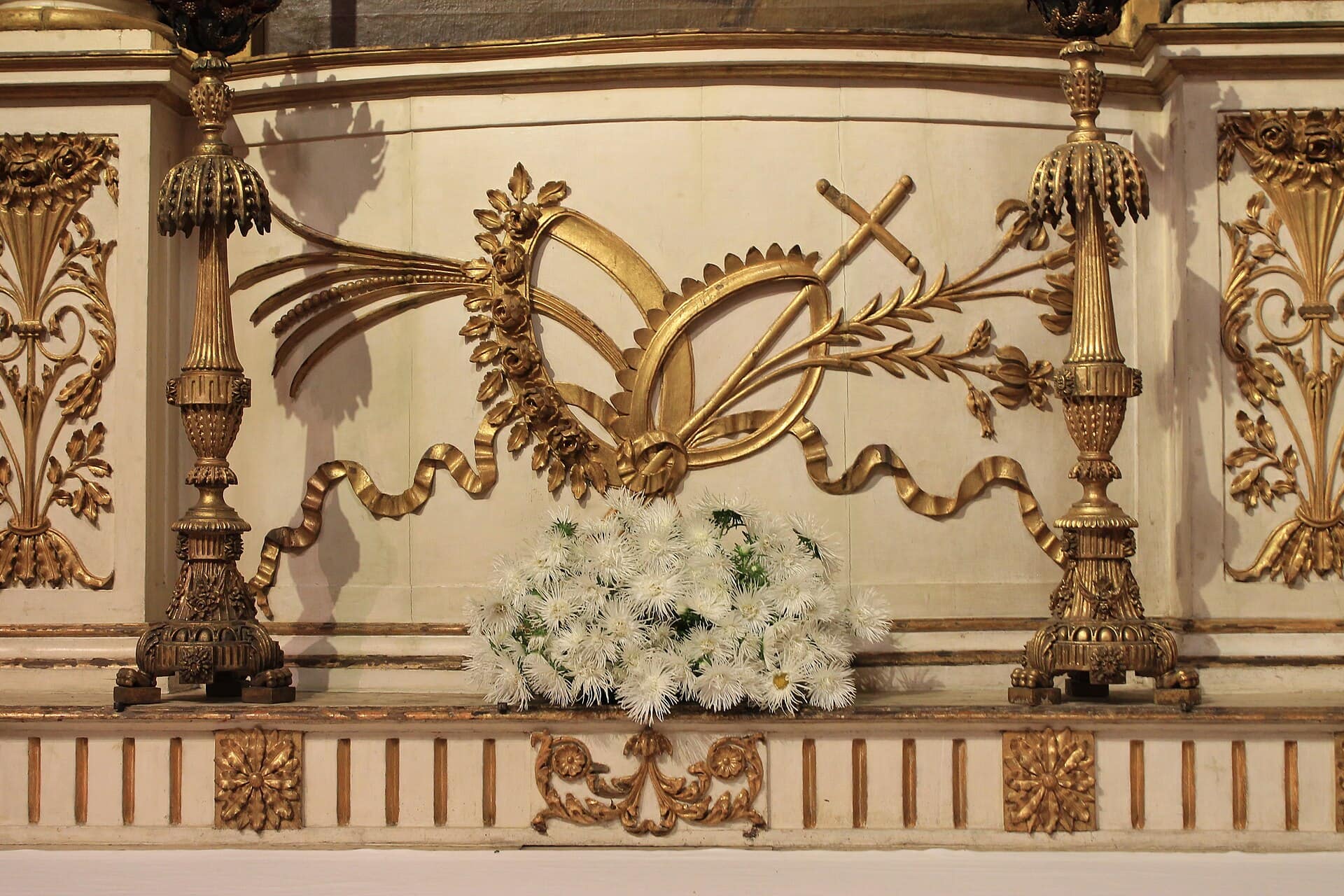
Just behind the Gothic monument rises the beautiful church of Nossa Senhora da Oliveira, which dominates the square. This church has a complex history — a monastery originally stood here as far back as the 10th century, but the current structure dates primarily from the 14th century, during the reign of King João I. He had the church rebuilt as a thanksgiving to the Virgin Mary for the victory at the Battle of Aljubarrota.
The exterior features a striking Gothic bell tower and a richly decorated main portal. Inside, you’ll find majestic spaces with magnificent silver altars and intricate woodcarvings. The church is dedicated to Our Lady of the Olive Tree, referencing the legend of the miraculous olive tree on the square outside.
Entry to the main nave is free. If you’re a fan of sacred architecture, be sure to spend a moment exploring the side chapels, where you’ll discover gorgeous examples of traditional blue-and-white azulejo tiles — an essential feature of any significant Portuguese church.

7. Praça de São Tiago
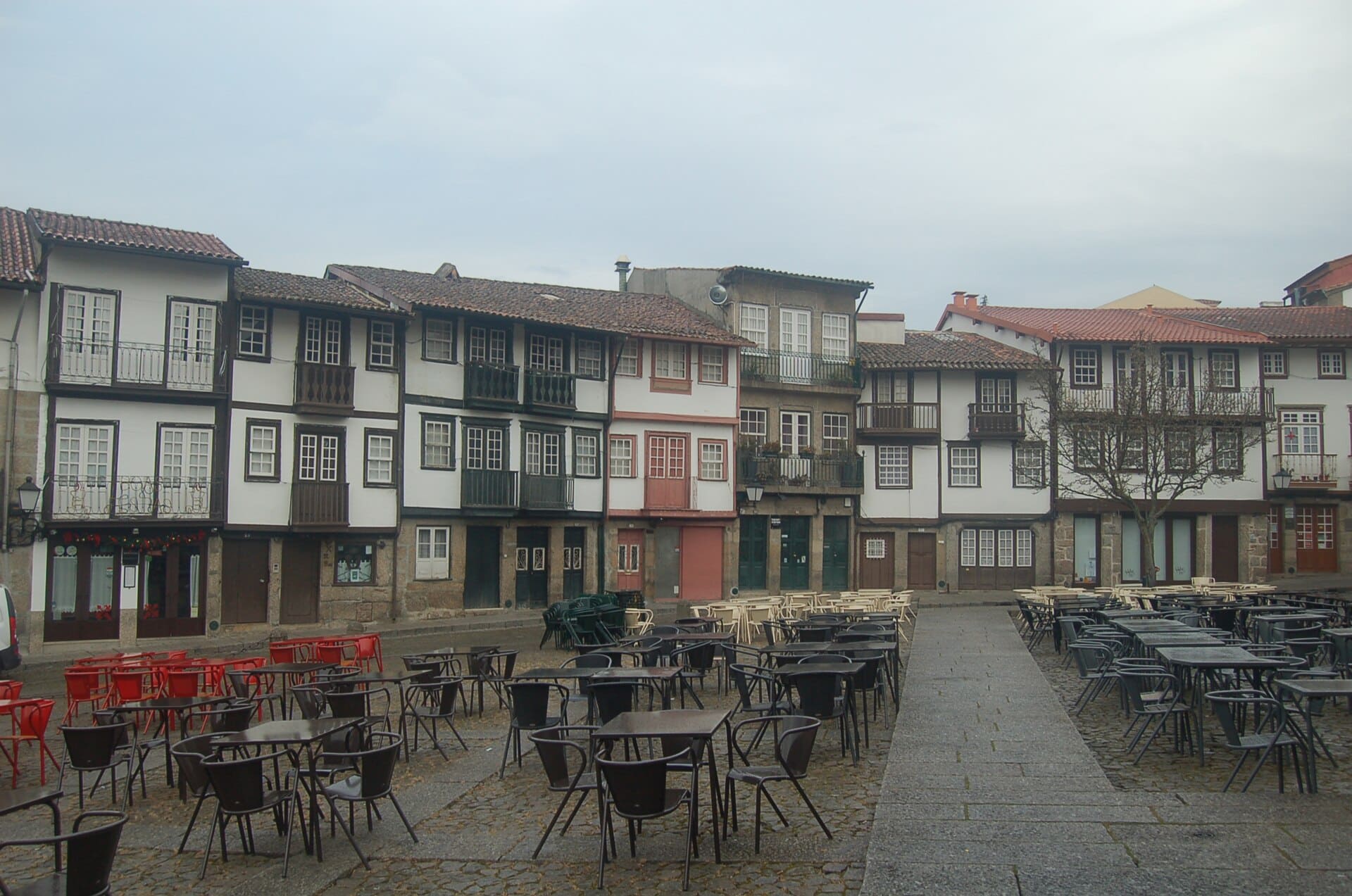
Just a few steps from Largo da Oliveira, connected by a short passageway under ancient arcades, lies another enchanting little square. In my opinion, Praça de São Tiago is perhaps even more romantic than its larger neighbour. The square is ringed by old houses with overhanging upper floors that lean towards each other as if whispering secrets from ages past.
According to old tradition, it was to this very square that the apostle Saint James (São Tiago) brought a statue of the Virgin Mary, turning the spot into an important stop for pilgrims heading to Santiago de Compostela in Spain. You won’t find many pilgrims here nowadays, but the square comes alive in the evening thanks to a cluster of small bars and bistros.
I’d recommend visiting after dark, when the old lanterns flicker on and their soft light reflects off the polished cobblestones. The atmosphere is absolutely unforgettable, and you’ll easily lose track of time over a glass of fine Portuguese wine.
8. A Stroll Along Rua de Santa Maria
If you want a genuine taste of the Middle Ages, you need to walk along Rua de Santa Maria. It’s one of the oldest streets in the town, connecting the castle complex on the hill with the lower monastery as far back as the 12th century. Today it’s a charming pedestrian zone lined with narrow stone houses, many of which still boast beautifully preserved Renaissance and Baroque façades.
As you stroll, make sure to look up. You’ll see gorgeous wrought-iron balconies overflowing with flowers, ancient coats of arms carved into stone, and wooden shutters that have witnessed centuries. The street is also home to plenty of small shops selling local artisan crafts, galleries, and cosy bakeries where the scent of cinnamon and freshly baked pastry drifts into the air.
Halfway along the street, you’ll come across the lovely Convento de Santa Clara, which now houses the town hall. Pause to admire the façade details — this street is like a living open-air museum that perfectly transports you to the days when Portuguese knights walked these very cobblestones.
9. Cable Car to Penha Hill (Teleférico de Guimarães)
When you’ve had your fill of wandering through historic lanes and fancy a change of scenery, head to the edge of the centre and the lower cable car station. The Teleférico de Guimarães whisks you up in a few minutes, climbing roughly 400 metres to the forested Penha hill that towers high above the town. The ride itself offers superb views and gives your feet a welcome rest.
At the top, a completely different world awaits. The Penha area (Santuário da Penha) is a huge wooded park filled with enormous granite boulders, hidden caves, and shady trails. In the middle of it all stands a modern sanctuary dedicated to Our Lady of Penha, an important pilgrimage site. You’ll also find picnic spots, small cafés, and endless nooks for a peaceful nature walk.
The real draw, though, is the absolutely breathtaking panoramic view. From the viewing terraces, you can see the whole of Guimarães laid out below, and on a clear day you can spot the ocean in the distance. A return cable car ticket costs around €7, and the excursion will take at least two hours.
10. Largo do Toural and the Famous Inscription
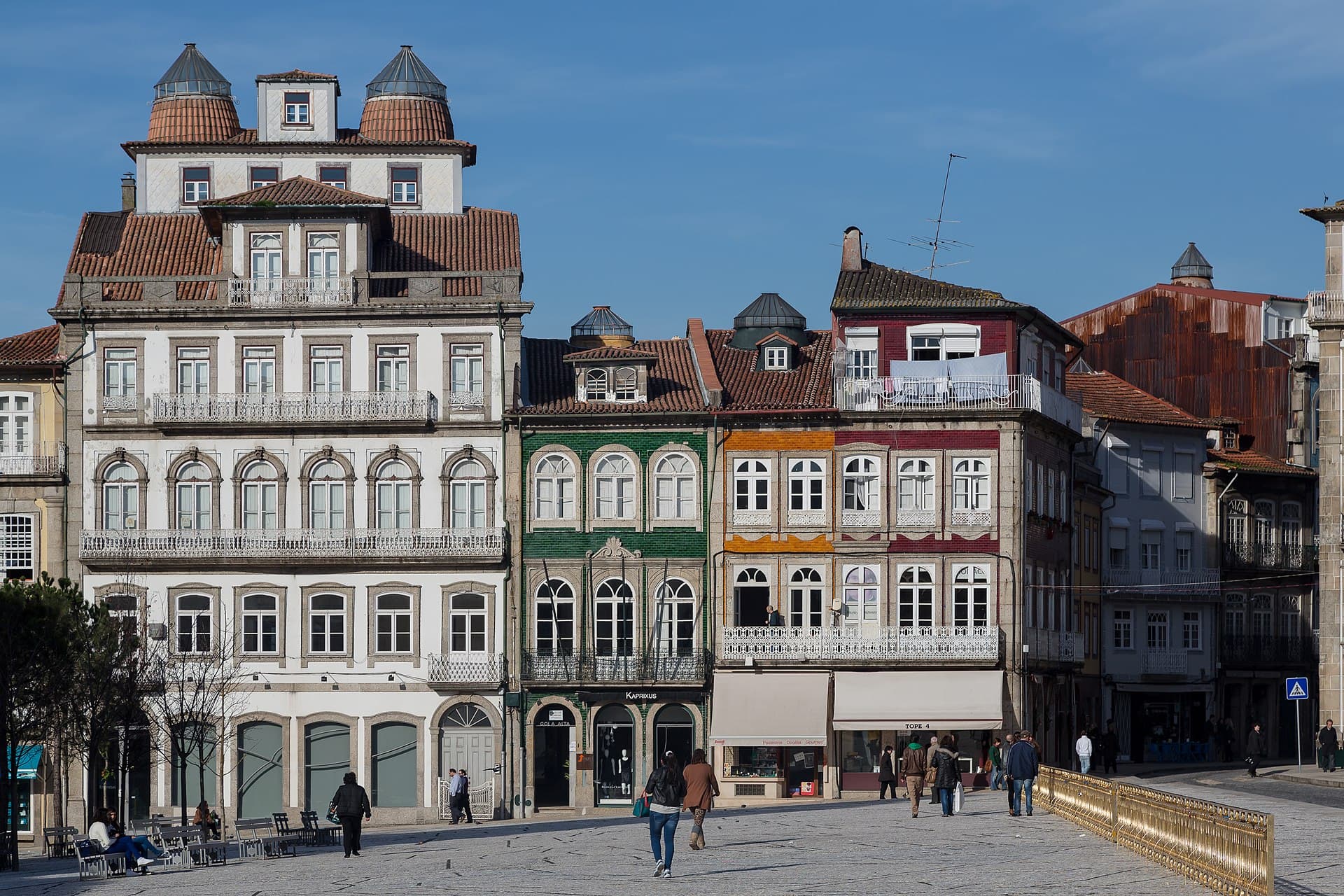
Largo do Toural is the largest and most important square in the newer part of the centre. In the past, it served as a cattle market and hosted bullfights; today it’s an elegant, spacious area surrounded by 18th- and 19th-century buildings with uniform façades and beautiful wrought-iron balconies. The square marks the symbolic boundary between the old medieval town and the more modern district.
Right on the edge of this square, on the remains of the old defensive walls at the Torre da Alfândega, you’ll find the most photographed spot in the entire town. A huge white inscription — “Aqui nasceu Portugal” (Portugal was born here) — proclaims the fierce pride locals feel about their history. Getting a photo in front of this sign is practically a rite of passage for every visitor.
The square is a great starting point for shopping or a morning coffee at one of the local pastelarias (pastry shops). Take a moment to admire the decorative pavement of black and white cobblestones, which creates striking geometric patterns underfoot.
11. Museu de Alberto Sampaio
If you love art and history, the Museu de Alberto Sampaio is a must. It’s housed in the former cloister buildings beside the Igreja de Nossa Senhora da Oliveira on Largo da Oliveira. The museum was established back in the 1920s and holds one of the finest collections of sacred art in all of northern Portugal.
The exhibition takes you through old cloister walkways where you can admire unique silver chalices, reliquaries, ancient sculptures, and stunning liturgical vestments embroidered with gold and silver thread. The most prized exhibits are a silver processional cross donated to the town by King João I after the Battle of Aljubarrota, and the tunic allegedly worn by the king during the battle itself.
The museum is wonderfully peaceful and beautifully curated. Admission is around €3, and a visit gives you a deeper insight into the religious and cultural richness of this region through the centuries.
12. Convento de Santo António dos Capuchos
Slightly off the main tourist trail, about a 15-minute walk from the centre, lies a hidden gem — the former Capuchin monastery, Convento de Santo António dos Capuchos. This 17th-century building has undergone a sensitive restoration and now partly serves as a museum and hospital. It looks unassuming from the outside, but inside a real surprise awaits.
The main draw is the stunning inner courtyards and corridors, which are lavishly decorated with traditional blue-and-white azulejo tiles from the 18th century. The tiles depict scenes from the life of Saint Anthony and are preserved in absolutely pristine condition. It’s an incredibly quiet and peaceful spot that only a handful of tourists ever find.
During your visit, you can peek into the historical monastic cells and the old sacristy. If you’re looking to escape the summer crowds and you love Portuguese tile art, a visit to this monastery is an excellent choice.
13. Sampling the Local Food and Wine
No visit to northern Portugal would be complete without exploring the local flavours. The Minho region, where the town is located, is home to the renowned Vinho Verde (green wine). Don’t be fooled by the name — the wine isn’t green in colour, but in age. It’s a young, slightly sparkling, wonderfully refreshing, and mildly tart wine that’s best served well chilled and is absolutely perfect for hot summer days.
Although northern Portugal is famous for hearty meat dishes, there are plenty of great options if you prefer a meat-free diet. Try the excellent local cheeses, olives, or the traditional Caldo Verde soup (just ask the waiter to leave out the ring of chouriço sausage that’s typically added as a garnish). You can also order various vegetarian tapas to go with your wine, such as roasted peppers or fried cheese croquettes.
💡 Insider tip: Make sure you save room for dessert! The town is famous for its convent sweets. Try Tortas de Guimarães (puff pastry filled with almonds and pumpkin jam) or the incredibly sweet Toucinho do Céu (literally “bacon from heaven” — but don’t worry, it’s a dense cake made from egg yolks, sugar, and almonds, with not a scrap of meat in sight). Pop into any pastelaria on the square and treat yourself to a sweet finale.
Map of points of interest for your phone
Where to Go from Guimarães
If you have more time in northern Portugal, there are plenty of brilliant options for your next stop. The surrounding region is incredibly rich in both history and natural beauty, and excellent infrastructure means you can get everywhere with ease.
- Porto: The granite heart of the north and home of port wine is an absolute must. You can be there by train in about an hour, where you can marvel at the iconic Dom Luís I Bridge, take a boat trip along the Douro River, or lose yourself in the lanes of the Ribeira quarter. While Lisbon is sunny and grand, Porto has a rawer, more melancholic atmosphere that you’ll fall in love with.
- Braga: Just a short hop north lies the so-called “Portuguese Rome.” Braga is a city full of students and churches, with the star attraction being the monumental pilgrimage site of Bom Jesus do Monte and its breathtaking Baroque stairway. It’s even possible to visit both Guimarães and Braga on one very packed day.
- Douro Valley: If you love wine and nature, take the train from Porto into the Douro Valley. Terraced vineyards plunging steeply towards the river are a UNESCO World Heritage Site and form one of the most dramatic wine-growing landscapes on Earth.
- Aveiro Portugal: If you’re heading south again, make a stop in Aveiro — often dubbed the “Portuguese Venice.” The town is laced with canals plied by colourful moliceiro boats and is known for the charming striped houses on the nearby Costa Nova beach.
- Nazaré Portugal: Love the ocean and wild nature? Head to Nazaré, the fishing town that became world-famous for the biggest waves on the planet, surfed only by the bravest souls.
More interested in central Portugal and romantic castles? Read our article about what to see in Sintra, or explore our comprehensive Lisbon Guide for all the practical tips you need to visit the capital.
Frequently Asked Questions
How long does a visit to Guimarães take?
For a relaxed tour of the entire historic centre, the castle, the Palace of the Dukes, and possibly the cable car trip up to Penha hill, one full day will be enough. The town is fairly compact and all the main sights are within comfortable walking distance of one another. If you’re not in a hurry, I recommend staying one night and enjoying the magical evening atmosphere.
How do I get to the town from Porto?
The journey is incredibly easy and cheap. From São Bento station in Porto, regular suburban trains (Urbanos) run directly to the main station in Guimarães. The trip takes roughly an hour and ten minutes and a one-way ticket costs just a little over 3 euros. The station is about a 15-minute pleasant walk from the historic centre.
Is the town very hilly?
It depends on exactly where you go. The historic centre itself (around Largo da Oliveira and Largo do Toural squares) is relatively flat and very easy to walk. A gentle climb awaits you only on the way up from the centre to Castelo de Guimarães and the Palace of the Dukes of Bragança. Be sure to bring comfortable shoes, though, because of the old cobblestones.
Is there an entrance fee for the monuments?
Yes, there’s an entrance fee for the main historic buildings. Entry to the Palace of the Dukes costs around 5 euros, entry to the castle’s main tower about 2 euros. It’s well worth buying a combined ticket, which usually covers the castle, the palace, and the nearby Alberto Sampaio Museum, saving you money. Entry to all the churches in the centre and strolling through the squares is, of course, free.
When are there the fewest tourists in the town?
If you want to enjoy the empty lanes and take beautiful photos without the crowds, head out early in the morning, ideally before 9:30, before the first organised coach tours from Porto arrive. Another great time is the late afternoon and evening, when the day-trippers head back to their hotels on the coast and the town takes on a more intimate, local atmosphere.
What is Vinho Verde?
Vinho Verde (green wine) is a wine typical of northern Portugal. The name doesn’t refer to the colour but to the fact that it’s drunk very young. It’s a light, slightly sparkling, very refreshing and drier wine with a lower alcohol content (usually around 8-10%). Most often you’ll come across white Vinho Verde, which is absolutely perfect for sitting out on a summer terrace.
Can you combine a visit to Guimarães with Braga in one day?
Yes, plenty of travellers do it this way, but you have to expect a very packed schedule. There’s a fairly frequent bus connection between the two towns (the trip takes about 40 minutes). I recommend starting in the morning in Guimarães, seeing the castle and the centre, and after lunch moving on to Braga to tour the Bom Jesus do Monte sanctuary.
Is the destination suitable for travelling with children?
Absolutely! Kids will be thrilled exploring the medieval castle, and a big highlight for them will surely be the cable car ride up to Penha hill, where they can run around among the giant boulders in the forest. What’s more, the centre is largely a car-free pedestrian zone, so getting around the town is very safe. With a stroller, just expect some bumping along the cobblestones.
Tips and Tricks for Your Vacation
Don’t Overpay for Flights
Search for flights on Kayak. It’s our favorite search engine because it scans the websites of all airlines and always finds the cheapest connection.
Book Your Accommodation Smartly
The best experiences we’ve had when looking for accommodation (from Alaska to Morocco) are with Booking.com, where hotels, apartments, and entire houses are usually the cheapest and most widely available.
 🚗 Car rental on the roadVerified car rentals in Portugal
Search with the DiscoverCars comparison engine — it compares prices from dozens of local and international rental companies, and most bookings come with free cancellation.
Compare car prices in Portugal →Don’t Forget Travel Insurance
Good travel insurance will protect you against illness, accidents, theft, or flight cancellations. We’ve had a few hospital visits abroad, so we know how important it is to have proper insurance arranged.
Where we insure ourselves: SafetyWing (simple monthly subscription) and TrueTraveller (for extra-long trips).
Find the Best Experiences
Get Your Guide is a huge online marketplace where you can book guided walks, trips, skip-the-line tickets, tours, and much more. We always find some extra fun there!