

When I was given the assignment to photograph contrasts in Prague’s streets during my photojournalism course at Charles University, I already knew that Prague architecture hides far more than just gleaming office towers — so my first steps didn’t lead to the Old Town Square.
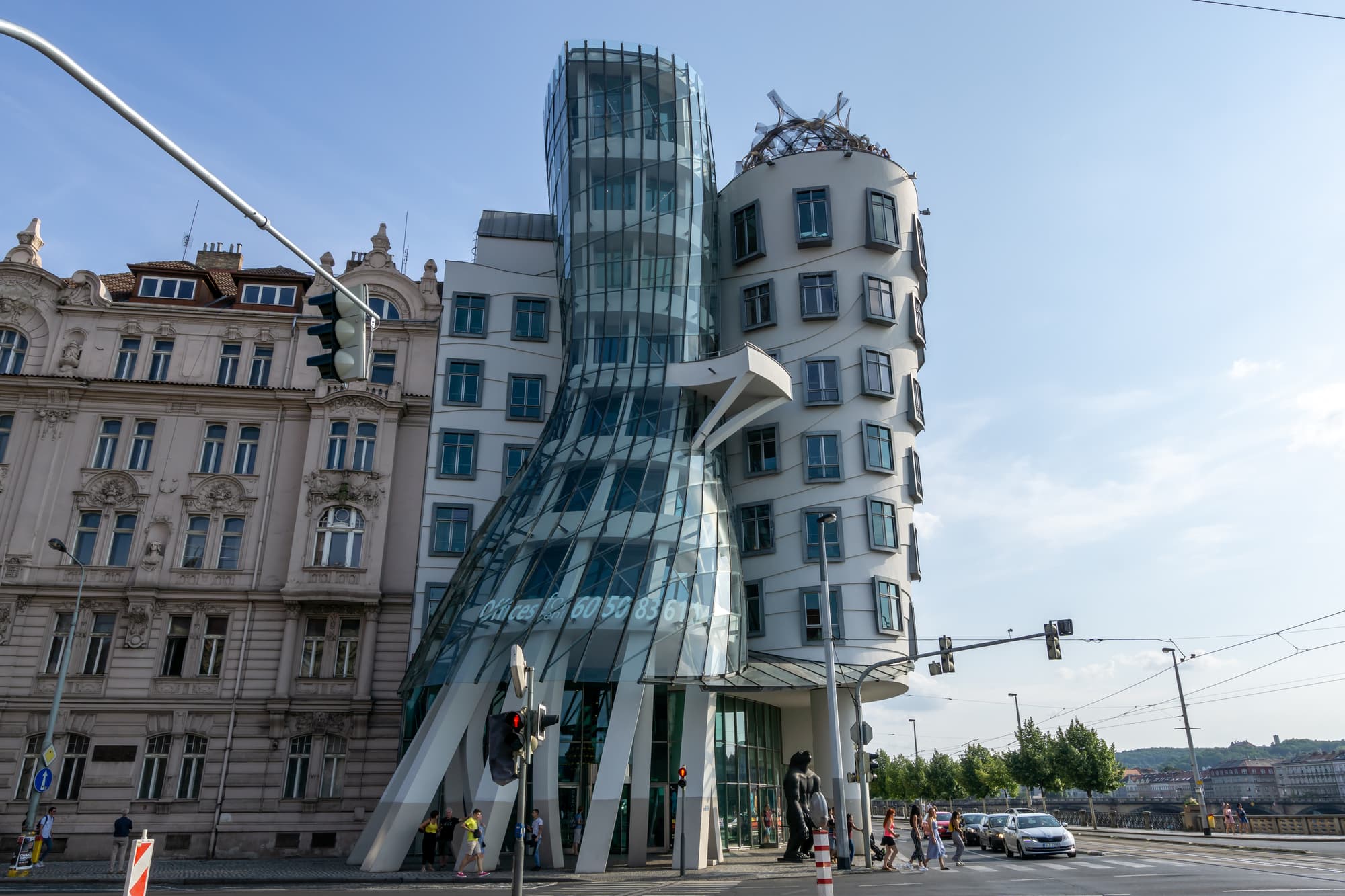
With a heavy DSLR around my neck, I stood at Jiráskovo náměstí, watching the morning sun bounce off glass panels and waiting for tram number 17 to pass the building that split Prague into two irreconcilable camps in the nineties. The Dancing House was, for me, the perfect symbol that this city isn’t some frozen open-air museum full of Baroque cherubs and Gothic spires, but a living organism that breathes, grows, and occasionally provokes.
Thanks to years spent at a grammar school in Malá Strana, I knew Prague through the lens of history textbooks. Teachers dragged us around palaces and churches, so I developed a relationship with Renaissance sgraffito while still in my teens. But a real fascination with the city only came when I started discovering its contemporary face. Modern architecture carries a completely different charge in Prague than in Berlin or Rotterdam. Here, every new building must fight a quiet battle with the thousand-year-old history surrounding it. The deconstructivist Dancing House, the glass-clad brutalist Nová Scéna, and the unexpectedly serene cubist villas below Vyšehrad are all shining examples of this tension.
My husband Lukáš and I return to Prague every year, and our routes keep evolving. While we used to spend Friday evenings in half-empty Holešovice galleries debating contemporary art, these days we navigate the city with our two-year-old Jonáš in a pushchair. I’ve discovered that the generous open spaces around brutalist department stores and the accessible riverside embankments are far more family-friendly than the narrow cobbled lanes of Malá Strana. We spend a lot of time along Rašínovo nábřeží in particular — Jonáš watches the boats while we enjoy coffee from the beautifully renovated vaults in the embankment wall.
So come along — from the Dancing House through brutalist department stores to cubist villas where I tried to convince Jonáš that a hexagonal railing is totally an attraction. Together we’ll explore raw brutalism, revitalised public spaces, and art that makes the Czech capital so much more than a backdrop for period dramas.
TL;DR
- Don’t just admire the Dancing House (officially Ginger & Fred) from the outside — instead of paying the pricey observation deck fee, grab a drink at the Glass Bar on the top floor.
- The Ginger & Fred restaurant in the Dancing House offers stunning views of Prague Castle, but expect premium prices for the location.
- The Žižkov Television Tower with David Černý’s crawling babies is the city’s tallest structure and a showcase of high-tech architecture that locals hated for years — and now take for granted.
- For contemporary art and architecture, head to DOX in Holešovice, where a giant wooden airship called Gulliver perches on the roof.
- Nová Scéna of the National Theatre by Karel Prager is a fascinating example of glass brutalism, right where modern Czech history was written during the protests on Národní třída.
- CAMP (Centre for Architecture and Metropolitan Planning) in the Emmaus complex is a brilliant, free venue for understanding how Prague is evolving urbanistically.
- If you want to see a truly unique Czech architectural phenomenon, explore the cubist buildings — from the House of the Black Madonna to Kovařovic Villa below Vyšehrad.
- Rašínovo nábřeží (the Náplavka embankment) has undergone a superb modernisation, with old ice cellars in the embankment wall replaced by designer cafés behind unique elliptical glass doors.
- The Jižní Město (South City) phenomenon reveals the harsh reality of socialist-era panel housing — a massive urban project built for hundreds of thousands of people.
The full destination guide: Czechia — guide and what to see
Prague Architecture: When to Visit
Finding the right angles for photographing concrete and glass surfaces demands specific light. Modern buildings in Prague often stand along busy thoroughfares or open plazas, so timing your walk makes a real difference to the overall experience. I’ve learned from personal experience that each season gives these structures a completely different context.
Spring and Autumn: Golden Light and Festivals
April, May, and then September and October are the clear winners in my book. The sharp spring sun reflects beautifully off the glass blocks of Nová Scéna, while the soft autumn light flatters raw concrete like nothing else.
If you’re planning an autumn visit, definitely pencil in the Signal Festival, running from 15 to 18 October 2026. During the festival, both modern and historic façades transform into enormous canvases for light-based video mapping, and the streets come alive with contemporary digital art.
Winter and Early Mornings: The City’s Raw Face
January and February strip the city down to its toughest layer. The tourists vanish and you have space to appreciate the scale of buildings without distractions. Brutalist structures shrouded in freezing fog look exactly as dystopian as their 1970s architects may have intended.
An early morning stroll along the empty embankment, with mist rising from the Vltava and the entire Dancing House scene all to yourself, more than makes up for the biting cold. You can always warm your frozen fingers in one of the many galleries afterwards.
Where to Stay
When Lukáš, little Jonáš, and I were looking for a base last year that would give us comfort, space, and a design aesthetic we’d appreciate, we chose The Julius Hotel on Senovážné náměstí. The hotel occupies a historic building, but the interior was designed by Milan-based studio Matteo Thun & Partners, so inside you’ll find clean, modern, functional design in earthy tones. We stayed in a One Bedroom Suite, which I wholeheartedly recommend for travelling with a toddler. We had a separate bedroom, a fully equipped kitchenette, and a huge bathroom. In the mornings I brewed specialty coffee right in the room while Jonáš explored the plush carpets. The hotel is just a few steps from Masaryk Station, which recently gained a super-modern façade designed by Zaha Hadid — so your Prague architecture tour begins the moment you step out of the lobby. Check prices and availability at The Julius Hotel on Booking.com here.
Where to Eat in Prague
When you’re pushing a buggy around the city admiring concrete curves, sooner or later hunger strikes. Fortunately, Prague has plenty of places where fantastic food meets stunning interiors and design, so you don’t have to interrupt your architectural experience even at lunchtime.
Lukáš is more of a meat person, while I’m a vegetarian looking for something lighter — but in the modern bistros around galleries we always find common ground. Here are a few of my favourite stops where you’ll not only eat well but also sit in a beautiful space.
My Favourite Bistros and Cafés
If you’re exploring around Nová Scéna and the National Theatre, definitely duck into the surrounding streets for lunch. I’m a big fan of the light bistros towards Národní třída, where you’ll often find fantastic vegetarian options and specialty coffee. There’s been a massive leap in Prague’s food scene — even the most unassuming café looks like it belongs in a design magazine.
My second insider tip is to combine a visit to Emmaus and CAMP with a late brunch. The café there is great for a quick espresso, but just around the corner you’ll find loads of brilliant modern restaurants with floor-to-ceiling windows and open kitchens. When we’re sitting there and Jonáš finally dozes off in his pushchair for at least five minutes, that’s my version of Prague nirvana.
Dancing House: From Controversy to Icon
No other contemporary building sparked such passionate debate in Prague. Today we walk past it as if it’s always been there, but I remember older friends telling me about the uproar this deconstructivist curiosity on the riverbank caused when it first appeared.
Architecture and the Story Behind It
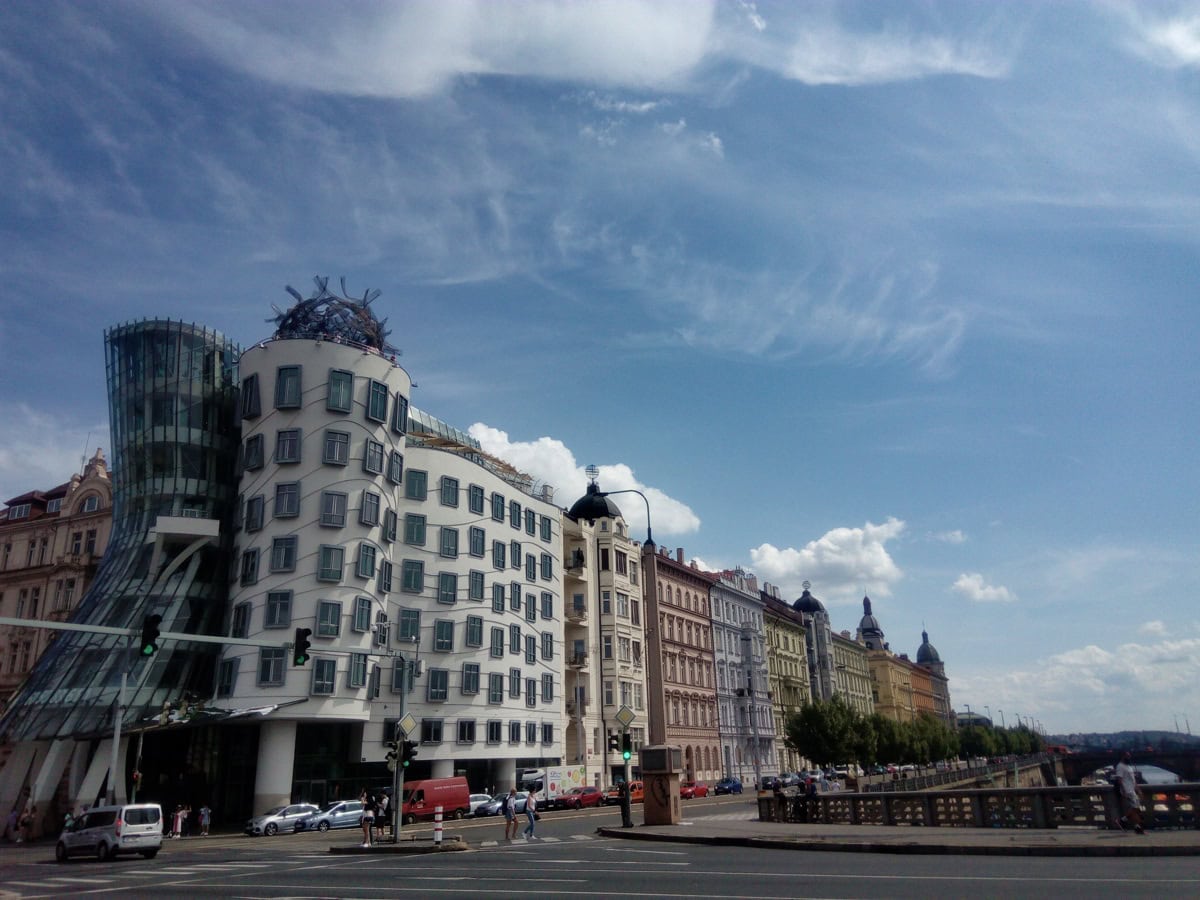
On the corner of Jiráskovo náměstí and Rašínovo nábřeží, there once stood a tenement building destroyed by an American bomb in 1945. The gap remained empty for decades until Václav Havel, who lived next door, entered the picture. Together with Croatian-Czech architect Vlado Milunić, he dreamed of a building with cultural significance. Eventually, the world-renowned Canadian-American architect Frank Gehry joined the project, and the building was completed in 1996. Two towers — one static and stone, the other dynamic and glass — symbolise the famous dancing duo Fred Astaire and Ginger Rogers. The contrast between rigid history and dynamic future is tangible in every detail. The building rewards a close exterior inspection — notice the asymmetrical windows protruding from the façade, designed to resemble framed paintings.
Getting here is easy: take a tram to Jiráskovo náměstí or walk along the river from the National Theatre. The exterior is accessible around the clock, and the best photos can be taken from the opposite corner of the square or from the Náplavka embankment below.
💡 Insider tip: The most beautiful light for photographing the glass “Ginger” tower comes in the late afternoon, when the sun setting over Smíchov hits the glass head-on.
Observation Deck and Glass Bar
Many tourists pay the hefty admission just to ride the lift to the top floor and snap a photo. If you want a bird’s-eye view, the Dancing House observation deck offers a panoramic vista of Prague Castle, Petřín Hill, and the Vltava that is genuinely impressive. The rooftop terrace is accessed through the bar on the top floor.
My personal approach to this attraction is a bit different, though. The rooftop entrance costs around 12 €, but I always prefer to invest that money in a drink at the Glass Bar — and get the same view. Buy a drink and access to the outdoor terrace is free. The bar itself has a fascinating interior — you sit beneath the glass dome that forms the imaginary “head” of Fred from the outside. It’s a little cramped, but perfectly fine for a quick coffee or an evening cocktail. Open daily from 10:00 to midnight.
💡 Insider tip: Go just before sunset. The bar fills up quickly, but watching the sky turn crimson over Prague Castle with a drink in hand is worth so much more than ticking off the observation deck at high noon.
Ginger & Fred Restaurant and Gallery
On the seventh floor of the building you’ll find the Dancing House restaurant, officially called Ginger & Fred. It regularly appears in guidebook recommendations, though it doesn’t have a Michelin star (and frankly, I think it does just fine without one). The draw is French and international cuisine paired with a fantastic view. As a vegetarian, I always hold my breath wondering whether upscale restaurants will offer more than overpriced creamy risotto — but here they handle meat-free dishes surprisingly well. Their menu typically features sophisticated seasonal vegetable preparations or truffle pasta.
It’s worth being upfront: the prices clearly reflect the exclusive address. Main courses regularly push towards 32 €, and a tasting menu will set you back several hundred. This is a place for celebrating an anniversary, not for a quick lunch mid-wander.
On the lower floors, the Dancing House Gallery hosts temporary exhibitions focused on design, pop culture, or retrospectives of Czech artists. Gallery admission is around 8 €.
💡 Insider tip: If you want the restaurant’s luxury without blowing your budget, book a table on a weekday at lunchtime — they offer a more affordable set lunch menu.
Modern Art and Brutalism in the Streets
Prague’s modern face has also been shaped by raw concrete structures and provocative art installations that disrupt the historic context with audacious boldness — and that’s exactly what makes them so fascinating.
Žižkov Television Tower and the Babies
If you arrive in Prague by train or car, you’ll spot it from miles away. The Žižkov Television Tower, standing 216 metres tall, is the city’s highest structure and for years comfortably topped polls of the world’s ugliest buildings. Built in the late 1980s in the high-tech architectural style, part of an old Jewish cemetery had to be demolished for its construction. Locals have since warmed to it considerably. Sculptor David Černý played a big part in its rehabilitation when he installed giant fibreglass crawling babies with distorted faces (known as Babies) on its pillars in 2000.
A high-speed lift whisks you to the top for around 14 € (open daily 9:00 to midnight), where you’ll find an observatory with a 360-degree view, a restaurant, and even a single hotel room — the last one always makes me wonder who actually wants to sleep inside a TV tower.
💡 Insider tip: If you want to see the babies up close for free, three bronze casts of the same sculptures lie on the ground in Kampa Park, right next to the Kampa Museum — Jonáš loves climbing all over them.
Nová Scéna of the National Theatre
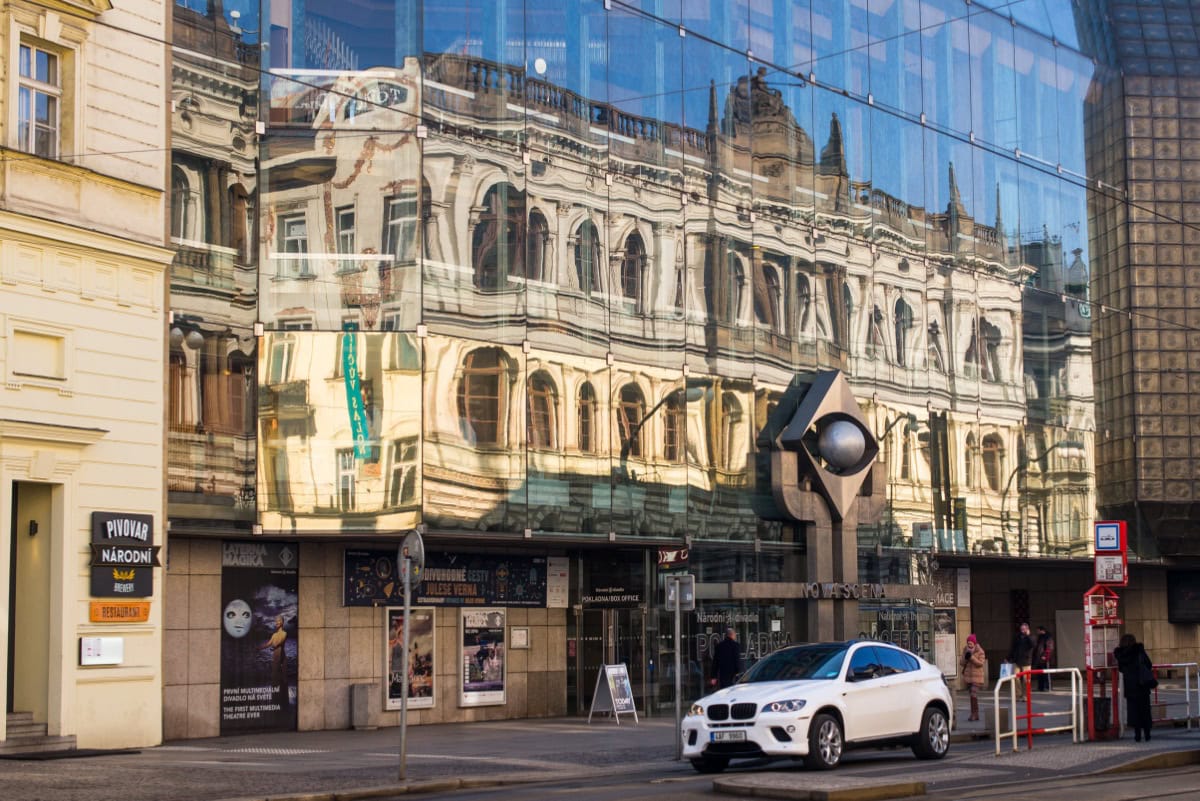
Right in the heart of the city, standing next to the Neo-Renaissance National Theatre building, is a block assembled from 4,306 glass bricks. Nová Scéna, designed by architect Karel Prager and opened in 1983, is a textbook example of how brutalism can aggressively — yet fascinatingly — insert itself into a historic urban fabric.
During my student years, I walked past it every day and was always struck by how it seems to absorb the noise from bustling Národní třída. It was on the piazzetta beneath this building — today Václav Havel Square — that students gathered during the 1989 protests, so the place carries enormous historical weight. Inside you’ll find the Nona café with views straight onto the street.
💡 Insider tip: The first-floor café has enormous windows directly above Národní třída — grab an espresso, sit down, and simply watch the buzz of the big city beneath you.

Kotva and Bílá Labuť Department Stores
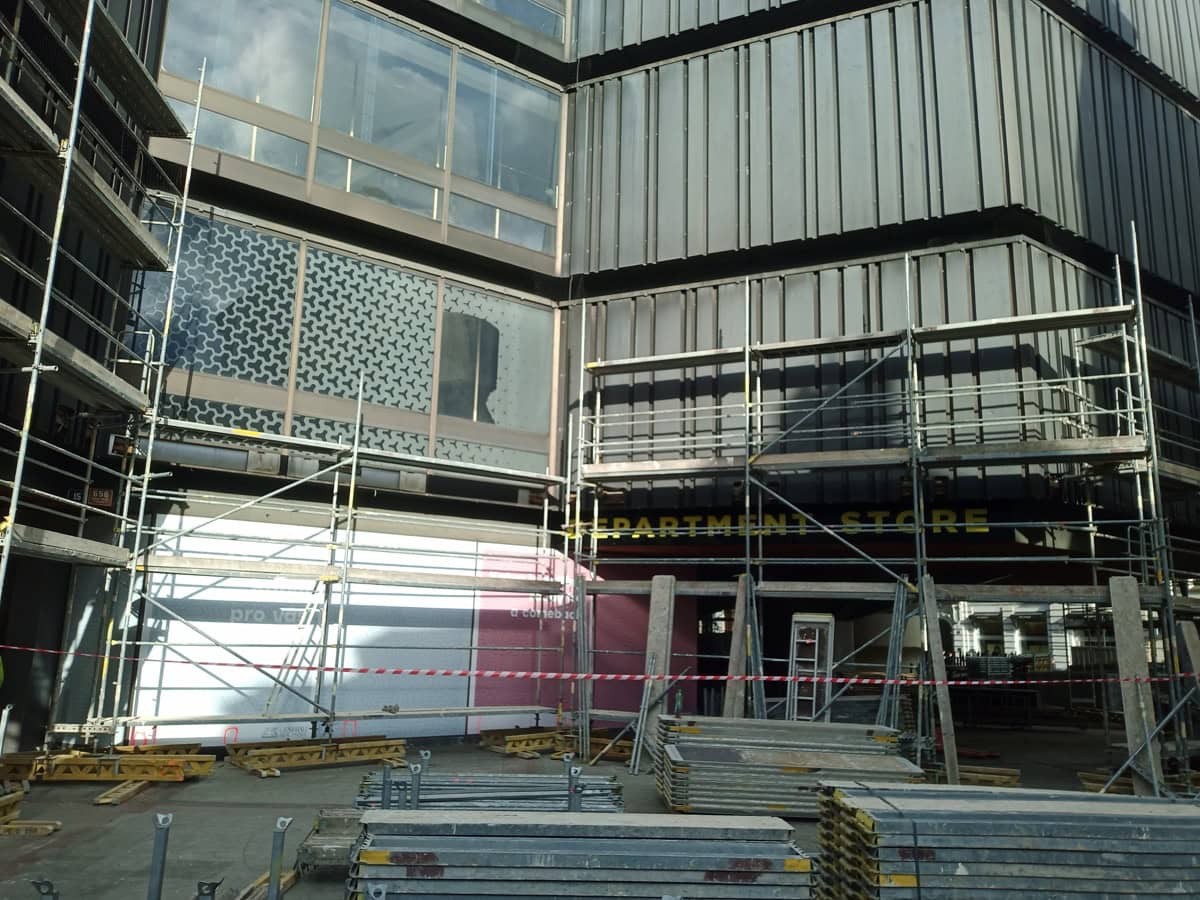
Discussions about modern architecture in Prague often overlook the buildings that serve everyday needs. The functionalist department store Bílá Labuť (White Swan) on Na Poříčí street was the most advanced of its kind in Central Europe in the 1930s, and even boasted Prague’s first escalator.
A short walk away at náměstí Republiky stands Kotva, an iconic brutalist structure from the 1970s designed by the Machonin couple. Its floor plan resembles a honeycomb. Today these buildings struggle a bit with their identity — unsure whether they’re a shopping centre or a museum — but for me they remain endlessly fascinating, regardless of what’s sold inside.
Jonáš and I sometimes wheel through the wide concrete terraces around Kotva, which offer a surprisingly peaceful space amid the otherwise crowded square. 💡 Insider tip: Try to spot the original details in Kotva’s interior, such as exposed concrete ceilings and massive staircases that have survived every modern refurbishment.
The Panel Housing Phenomenon and Jižní Město
If you want to understand how a large portion of Prague’s residents actually live, you need to leave the centre. Prefabricated panel housing estates represent a defining urban phenomenon of the second half of the 20th century. The biggest of them all is Jižní Město (South City, or “Jižák” in local slang) — a massive complex of concrete blocks that you can reach from the historic core via metro line C (stations Háje or Opatov).
It’s not a tourist attraction in the traditional sense, but from an architectural and urban planning perspective it’s a fascinating case study. What was once a grey concrete jungle has, through thermal insulation upgrades, become a colourful city-within-a-city with its own parks and infrastructure.
💡 Insider tip: Take a stroll through Centrální Park in Jižní Město. You’ll discover that, unlike the cramped centre, the communist planners left enormous green spaces between the buildings — spaces that families with children make full use of today.
Galleries and Revitalised Public Spaces
Holešovice once drew me in with its dark industrial atmosphere, and today it’s proof that an abandoned factory can become the cultural heart of a city — all it takes is a little courage and a good architect.
DOX Centre for Contemporary Art
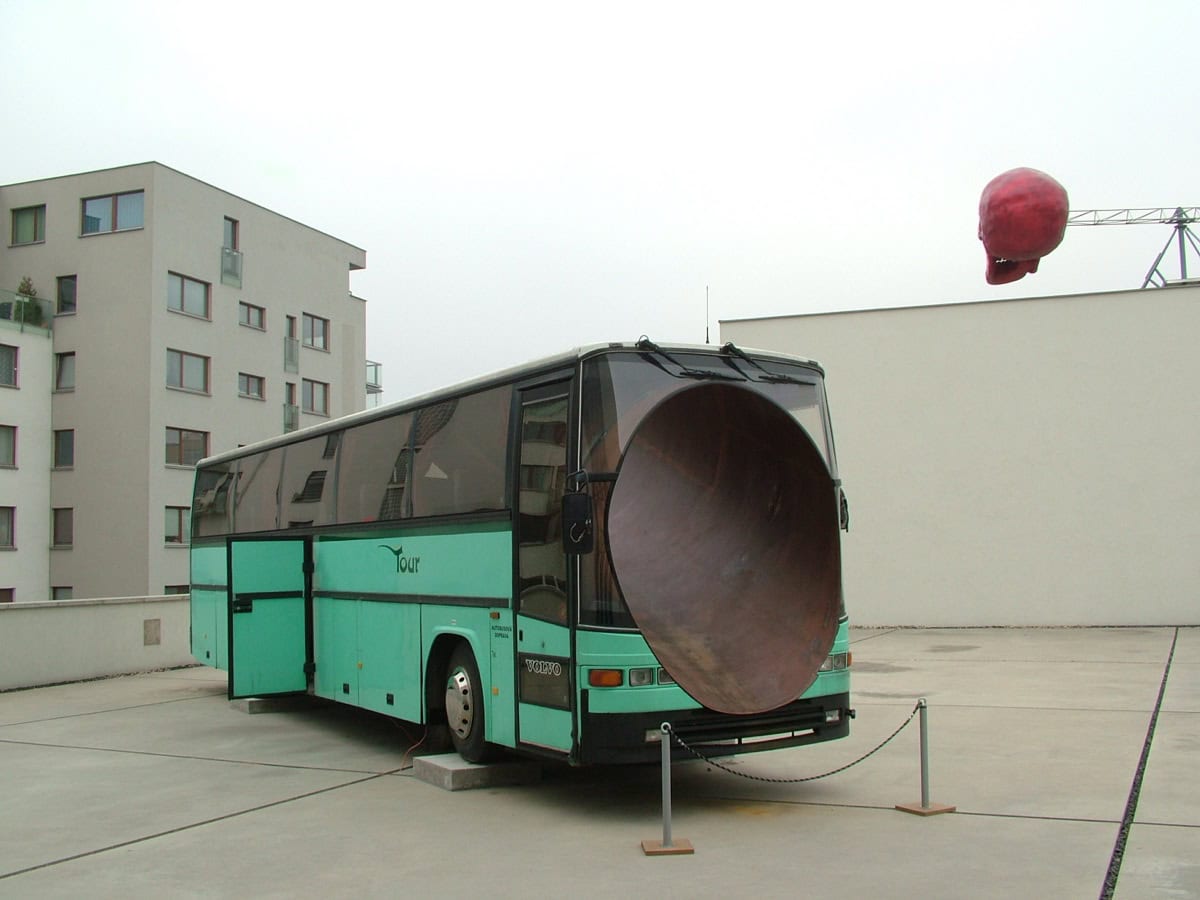
This place in Holešovice is close to my heart. A former factory has been transformed into a sprawling contemporary art gallery with a clean, industrial design. In 2016, a gigantic wooden airship called Gulliver was added to the roof, serving as a space for literary readings and discussions.
DOX shows how old industrial quarters can be rescued without losing their soul. A ticket costs around 11 €, and it’s closed on Mondays and Tuesdays. From the centre, take a tram to the Ortenovo náměstí stop.
💡 Insider tip: The DOX café has a wonderful summer terrace in the inner courtyard — absolute silence and the perfect place to read the book you just picked up in their superbly stocked design bookshop.
CAMP (Centre for Architecture and Metropolitan Planning)
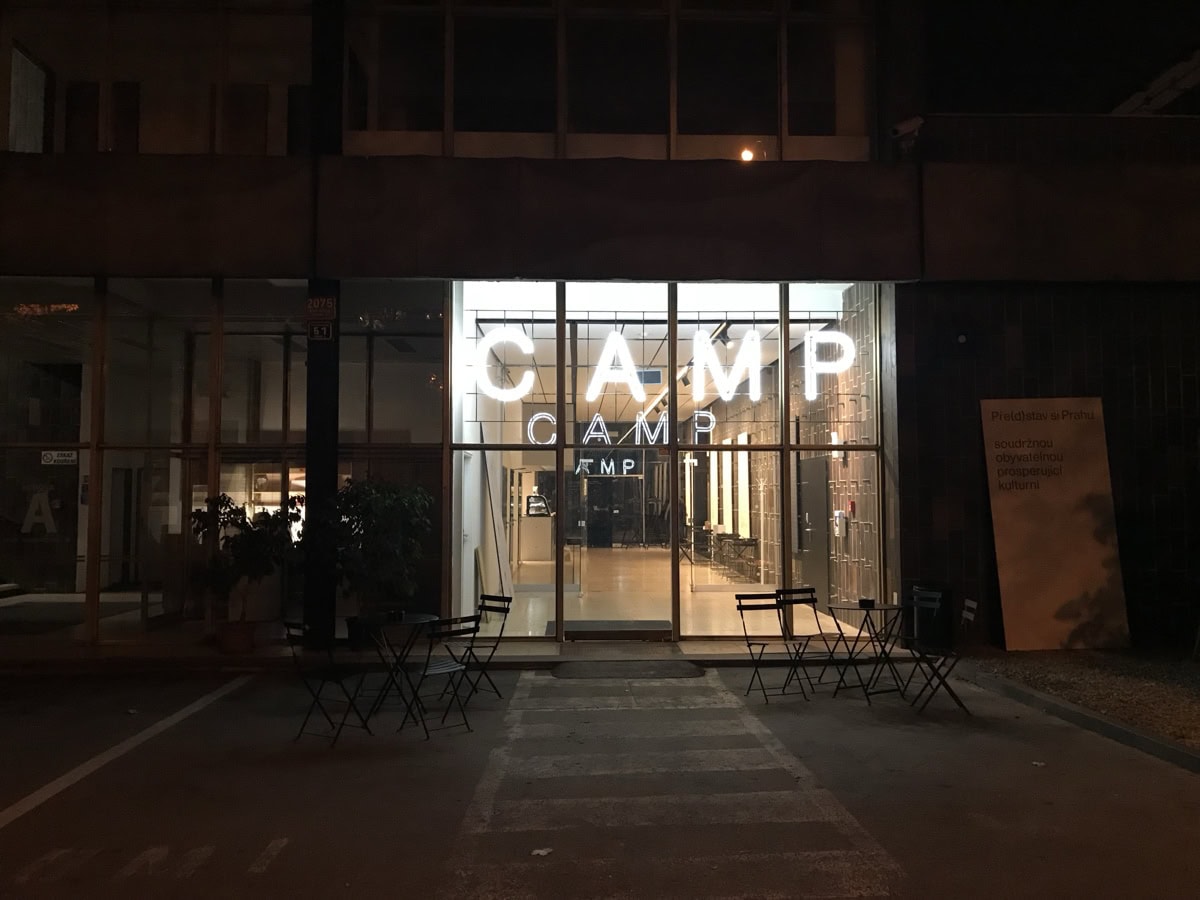
If you’re curious about how Prague will develop in the future, head to CAMP. It’s housed in the Emmaus Monastery complex, in 1960s buildings designed by Karel Prager. Inside you’ll find a vast hall with a 25-metre-long projection wall showing plans for future Prague neighbourhoods, bridges, and parks.
Admission to exhibitions is free, and it’s open Tuesday to Sunday. The space itself is an architectural experience — exposed concrete and dark wood throughout.
💡 Insider tip: They have one of the best specialty coffee spots near Karlovo náměstí, plus stacks of international architecture magazines you can browse at your table.
Rašínovo Nábřeží and the Náplavka Embankment
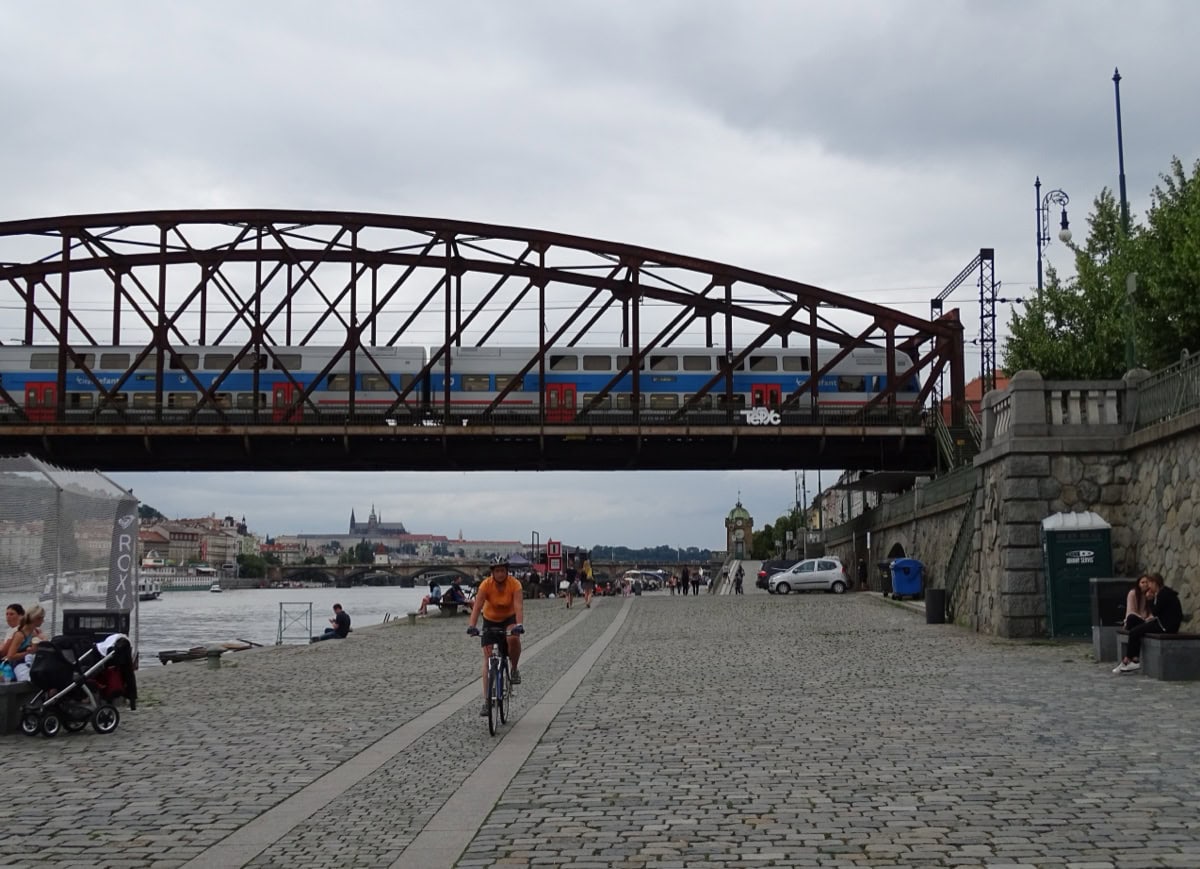
The area beneath the Dancing House, right at the Vltava’s waterline, underwent a brilliant architectural transformation a few years ago. The original vaults in the embankment wall — once used as ice storage — were renovated by architect Petr Janda. He fitted them with enormous elliptical glass doors that open by tilting outward.
Today they conceal cafés, bars, galleries, and even public toilets. The architecture here serves people in the most natural way. Náplavka is perfect for a pushchair stroll during the day and transforms into Prague’s biggest outdoor bar by evening.
💡 Insider tip: On Saturday mornings, a farmers’ market takes over the embankment. Buy fresh bread and cheese, sit on the edge with your legs dangling over the Vltava, and enjoy what is quite possibly the best weekend start in Prague.
Cubist Prague and the House of the Black Madonna
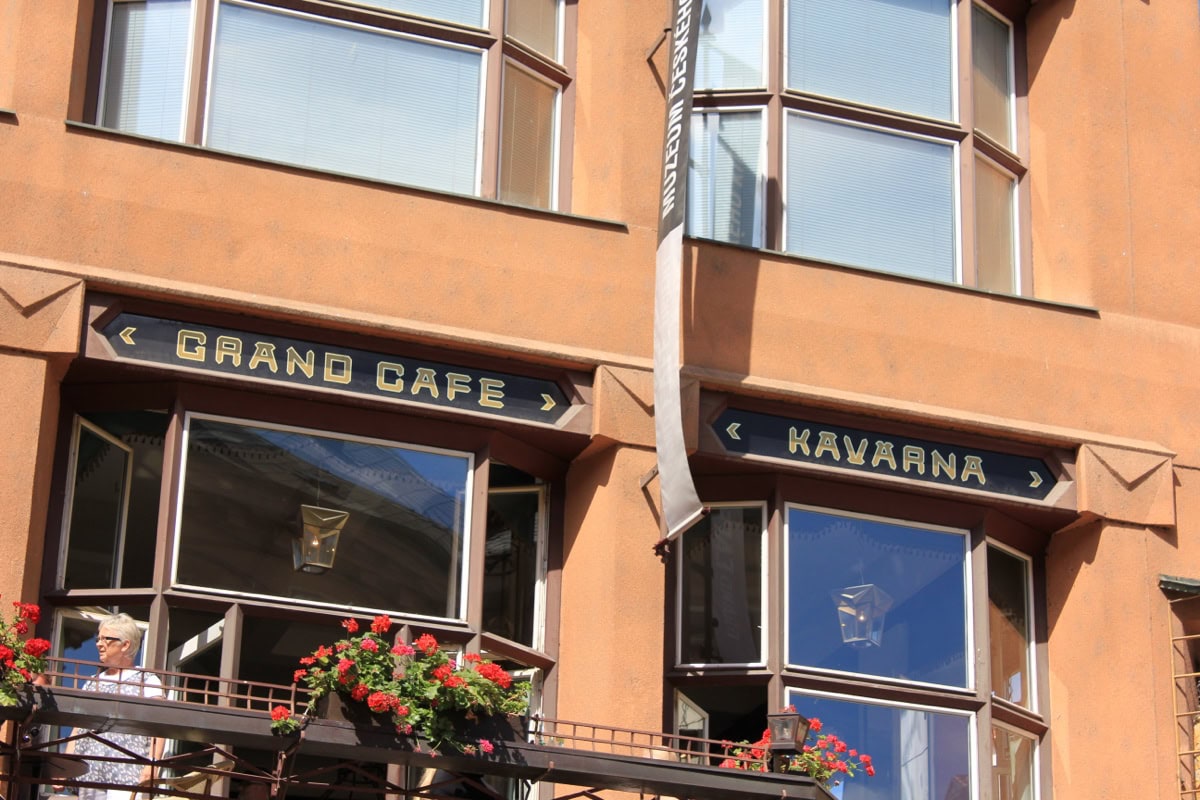
Cubist architecture is an absolute world rarity that you won’t find anywhere else outside Czechia. While Picasso was painting cubism, Czech architects like Josef Gočár decided to build it. The House of the Black Madonna on Ovocný trh is the most famous proof.
The façade fractures into crystalline forms, and inside you’ll find the world’s only cubist café, Grand Café Orient, where even the chandeliers and coat hooks have sharp geometric shapes. Another brilliant example is Kovařovic Villa below Vyšehrad, which we often pass on our walks.
💡 Insider tip: In the House of the Black Madonna, don’t miss the view from the ground floor looking up into the stairwell — the railing forms a perfect light-bulb shape. It’s a favourite target for every photographer.
Contrasts in Troja: Château vs. Trojský Most
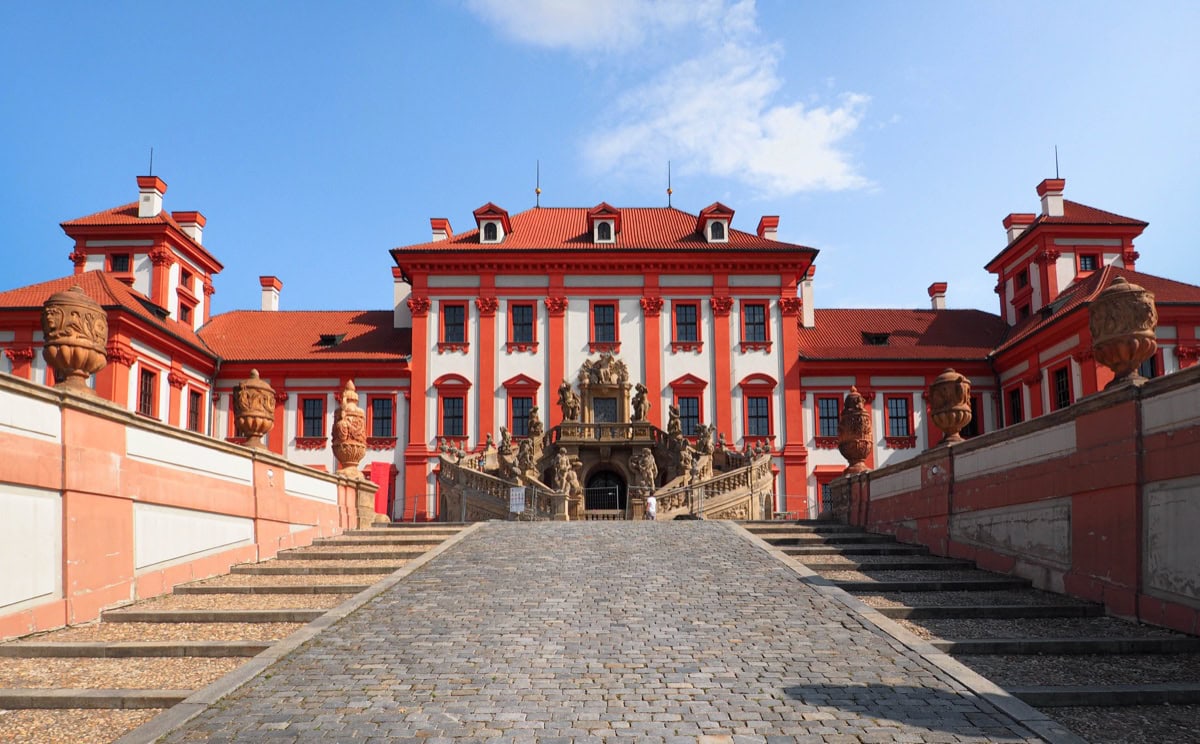
When you hear “Troja Château,” you picture a gorgeous 17th-century Baroque palace with a monumental staircase. So why am I mentioning it in an article about modern architecture? Because Troja is where you’ll experience one of the city’s finest urban contrasts.
Just a few hundred metres from the Baroque gardens, Trojský Most (Troja Bridge) spans the river — opened in 2014, this network-arch construction without a single pillar in the water is a masterpiece of modern engineering. And if you continue to the nearby zoo, you’ll encounter cutting-edge modern pavilions built in recent years.
💡 Insider tip: The best view of Trojský Most’s clean lines against the Baroque backdrop is from Císařský ostrov (Emperor’s Island) at dusk, when the bridge lights up in white.
Practical Information
Getting around and navigating between architectural highlights takes a bit of planning. Here are the essential practical tips for 2026.
- Transport and tickets: Most of the interesting buildings sit near tram stops or metro stations. It’s worth buying a 24-hour ticket for around 6 € or a 72-hour one for about 13 €. You can easily purchase tickets in the PID Lítačka app or by contactless payment at the orange terminals inside every tram.
- MAPY.CZ app: Forget Google Maps if you’re hunting for specific walking routes or building details. The Czech app Mapy.cz has far better coverage of pedestrian paths and shows you every passageway and the exact location of public sculptures.
- Tickets: For most state and municipal galleries (including those in modern buildings) you can buy tickets on the spot. However, for private venues like DOX or the TV tower observation deck, I’d recommend purchasing online to skip the queues.
- Coffee and snacks: Modern buildings often host excellent cafés (DOX, CAMP, National Theatre). Most of these now routinely offer oat milk and several vegetarian or vegan sandwiches, so you won’t have trouble finding something to eat.
Further Reading
If you’re interested in more tips on experiencing Prague beyond the main tourist trail, check out my other articles:
- What to See in Prague: 100+ Tips on Sights, Cafés, and Restaurants
- Best Prague Cafés: Where to Find Specialty Coffee
Frequently Asked Questions
Who designed the Dancing House?
The building was designed by Croatian-Czech architect Vlado Milunić in collaboration with the famous Canadian-American architect Frank Gehry. The interiors were partially designed by British architect of Czech origin, Eva Jiřičná.
How much does it cost to visit the Dancing House observation deck?
Entry to the rooftop observation deck costs around €12. However, a much better option is to visit the Glass Bar on the top floor, where purchasing any drink gets you free access to the viewing terrace.
Is there a restaurant in the Dancing House?
Yes, on the 7th floor you’ll find the upscale Ginger & Fred restaurant. It offers stunning views of Hradčany and serves international cuisine with French influences. Just be prepared for significantly higher prices.
Where can I find other modern architecture in Prague?
Key modern buildings include the New Stage of the National Theatre, the Žižkov Television Tower, DOX in Holešovice, the CAMP building in Emauzy, and the recently opened ultra-modern complex near Masarykovo nádraží by Zaha Hadid.
What is CAMP and where can I find it?
CAMP is the Centre for Architecture and Metropolitan Planning. It’s located in the Emauzy Monastery complex near Karlovo náměstí. It serves as a venue for public discussions about Prague’s development, and admission to its interactive exhibitions is free.
Where can I find Cubist architecture in Prague?
The most famous Cubist building is the House of the Black Madonna on Ovocný trh in the city center. Other excellent examples include the Kovařovic Villa on Rašínovo nábřeží below Vyšehrad, and the Cubist triple villa also on Rašínovo nábřeží.
When is the best time to photograph modern architecture?
For glass surfaces (like the Dancing House), late afternoon and sunset are ideal. Concrete and Brutalist buildings (like Kotva or the New Stage), on the other hand, look best early in the morning or during foggy winter days, when they take on a raw, atmospheric quality.
Tips and Tricks for Your Vacation
Don’t Overpay for Flights
Search for flights on Kayak. It’s our favorite search engine because it scans the websites of all airlines and always finds the cheapest connection.
Book Your Accommodation Smartly
The best experiences we’ve had when looking for accommodation (from Alaska to Morocco) are with Booking.com, where hotels, apartments, and entire houses are usually the cheapest and most widely available.
Don’t Forget Travel Insurance
Good travel insurance will protect you against illness, accidents, theft, or flight cancellations. We’ve had a few hospital visits abroad, so we know how important it is to have proper insurance arranged.
Where we insure ourselves: SafetyWing (simple monthly subscription) and TrueTraveller (for extra-long trips).
Find the Best Experiences
Get Your Guide is a huge online marketplace where you can book guided walks, trips, skip-the-line tickets, tours, and much more. We always find some extra fun there!
More from Czechia
Full guide → Day trips · most readMikulov, Czech Republic: 10 Best Things to Do and See
 With kidsBest Water Parks in the Czech Republic: 13 Family Tips for 2026
 When to goBrno Christmas Markets 2026 – Tree Lighting, Opening Hours & Programme
 FoodPrague, Czech Republic: 10 Best Things to Do and See with a Toddler
 Where to stayPrague, Czech Republic: 10 Best Family Hotels for Your Stay with Children


