If you’re dreaming of escaping the grey British winter for a place where eternal spring reigns and the ocean laps against endless beaches, let me introduce you to an absolute gem. The Canary Islands are a geographical paradox — while they politically belong to Spain, their geology and climate are far closer to the African continent. Fuerteventura, Spain is the closest of all the islands to the African coast, and warm air streams here constantly from the Sahara. The island may not look as dramatic and mountainous as neighbouring Tenerife, but it more than makes up for it with the most stunning sandy beaches in the entire archipelago.
While mainland Europe freezes, temperatures here hover between 20 and 28 °C year-round. It’s simply the perfect destination for those of you seeking relaxation, a love of water sports, or simply the chance to wander across endless dunes of fine sand. Fuerteventura is a kingdom of wind, freedom, and an unhurried pace where nobody rushes anywhere. I’ve put together a comprehensive guide to help you make the most of this island and discover even its most hidden corners.
TL;DR
- Most stunning nature: Don’t miss the sand dunes in Corralejo Natural Park and the wild Cofete beach on the remote south of the island.
- Water sports paradise: Playa de Sotavento is world-famous for its ideal windsurfing and kiteboarding conditions.
- History and culture: Stop by Betancuria, the historic former capital nestled in a green valley surrounded by barren mountains.
- Boat trips: Book a half-day trip to the uninhabited island of Lobos with crystal-clear water perfect for snorkelling.
- Local gastronomy: The island is renowned for majorero cheese, made from local goat’s milk and delicious paired with traditional Canarian potatoes.
- Getting around: You’ll absolutely need a rental car to explore all the hidden beaches, as public transport doesn’t cover everywhere.
The full destination guide: Canary Islands — guide and what to see
When to Visit Fuerteventura
Fuerteventura is a destination that simply doesn’t have an off-season. You can fly here twelve months a year and always find welcoming weather. The winter months from December to March mark the absolute peak of the tourist season, as travellers flock here to escape the European cold. During this period, expect pleasant temperatures around 22 °C — absolutely ideal for exploring the island, hiking, and sunbathing in sheltered spots. Flight and accommodation prices naturally climb to their highest during winter, though.
Summer holidays on the island are surprisingly bearable. Thanks to cooling ocean currents and constant trade winds, you’ll rarely experience the extreme heat that regularly paralyses mainland Spain in August. Summer temperatures hover around a lovely 28 °C, and the ocean warms to a refreshing 22–24 °C. The summer months are also when the island gets its strongest winds, which absolutely delights the surfing and kiting community.
If you want to avoid the biggest crowds and enjoy the ideal compromise between warm ocean water and a quieter atmosphere, I’d recommend visiting in autumn. September and October are the months when the ocean remains beautifully warm from the summer, the wind calms slightly, and the families with children have long since headed back to school. Ideally, allow yourself at least seven to ten days on the island so you can soak up that proper Canarian vibe without any rush.
Where to Stay in Fuerteventura
💡 Accommodation and experience tip: We love searching for accommodation on Booking.com, which usually offers the best cancellation policies. For tickets, tours, and activities, it’s worth comparing options on GetYourGuide.
Choosing the right area to stay in Fuerteventura is absolutely key, as the island is fairly long and each part offers a completely different atmosphere. The northern area around the town of Corralejo is ideal for those of you looking for a livelier vibe with plenty of restaurants, cafés, and close proximity to the sand dunes. The quieter south around the Jandía peninsula and the town of Morro Jable attracts lovers of endless beaches and large all-inclusive hotel resorts.
The middle of the island around the resort of Caleta de Fuste is a strategic base for day trips in all directions, and its sheltered bay makes it a popular choice for families with young children. When planning your trip, make sure to use Booking.com, where you’ll find the widest selection from luxury resorts to small authentic apartments. Prices vary hugely depending on the season, so book your accommodation well in advance.
Here are three specific hotel recommendations in different parts of the island:
- Barceló Corralejo Sands: A modern hotel right in the heart of Corralejo, just a short stroll from the town centre full of cafés and the gorgeous beaches.
- Hotel Riu Palace Jandia: Luxurious accommodation in the south of the island with breathtaking views of the endless beach, offering perfect tranquillity and first-class service.
- Eurostars Las Salinas: A highly rated hotel near Caleta de Fuste in the centre of the island, featuring beautiful pools and an ideal location for exploring all of Fuerteventura.
18 Best Things to See and Do in Fuerteventura
Fuerteventura might look dry and inhospitable at first glance, but the moment you start exploring, it reveals its fascinating secrets. Here’s a complete guide to the most interesting spots you absolutely shouldn’t miss during your visit. You can easily book many of these activities in advance through platforms like GetYourGuide, where you’ll find loads of local tours and activities.
1. Corralejo Dunes (Parque Natural de Corralejo)
Right in the north of the island, a natural wonder awaits that’ll make you feel as though you’ve been transported to the middle of the African Sahara. Corralejo Natural Park protects enormous sand dunes stretching for several kilometres alongside the brilliantly turquoise ocean. Wind carried this sand from the African continent over thousands of years, creating a landscape that truly takes your breath away.
A scenic road runs right through the dunes, with fine sand constantly drifting across the tarmac. I’d definitely recommend stopping at one of the designated car parks, kicking off your shoes, and heading barefoot straight to the top of the dunes. From up there, you’ll be treated to an incredible contrast of golden sand and deep blue water, with the silhouette of neighbouring Lanzarote visible in the distance.
💡 Local tip: The most stunning photos here are taken either early in the morning or just before sunset, when the sun paints the sand in rich orange tones and the shadows accentuate the rolling terrain.
2. Wild Cofete Beach
On the extreme southwest of the island hides a place that ranks among the most remote and magical in all of Europe. Cofete beach stretches for twelve kilometres of completely untouched sand, backed by the dark, towering mountains of the Jandía range. The atmosphere here is incredibly raw, wild, and melancholic, with Atlantic waves crashing against the shore with tremendous force.
The journey to the beach is an adventure in itself, as the only access is via a dusty and extremely bumpy track from the town of Morro Jable. Most standard car hire companies prohibit driving on this road, so you’ll either need to rent a special 4×4 or take the off-road bus service that runs several times daily from Morro Jable. Swimming here is extremely dangerous due to treacherous undertows — people come primarily for the overwhelming visual spectacle.
💡 Local tip: Just above the beach, have a look at the mysterious Villa Winter, surrounded by wild legends about secret submarine bases during the Second World War.
3. Playa de Sotavento and Water Sports
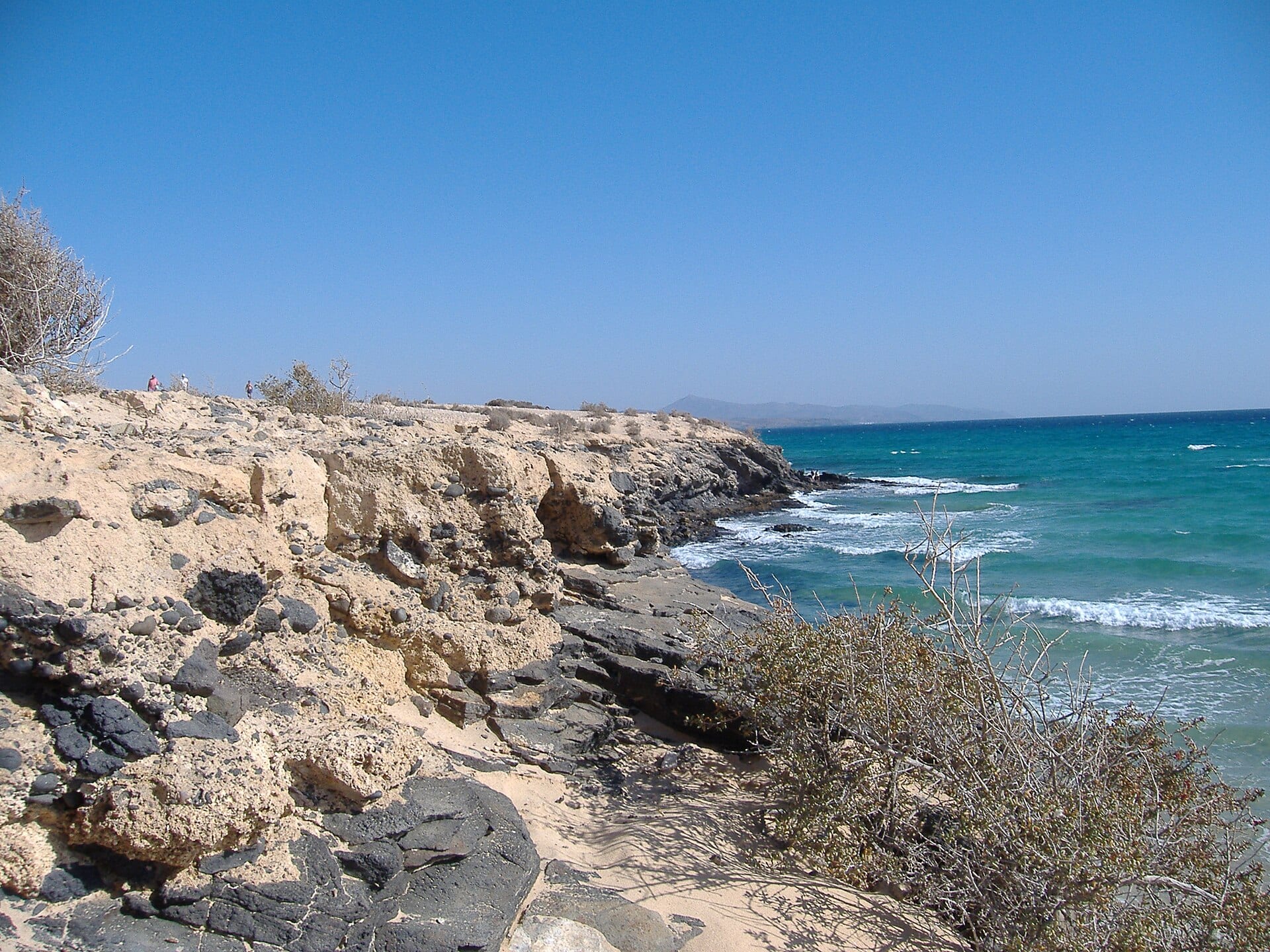
If you’re into windsurfing or kiteboarding, you’ve almost certainly heard the name Sotavento before. This enormous beach on the southeast of the island is quite literally a world mecca for water sports. The windsurfing and kiteboarding world championships are held here every year, as the local wind conditions rival even Hawaii.
What makes this spot truly unique is the huge natural lagoon that forms depending on the tides. The lagoon’s shallow, calm water is perfect for complete beginners who can safely try their first steps on a board under the guidance of instructors. Even if you’re not planning any sport, watching hundreds of colourful kites and sails dancing above the water is an absolutely mesmerising spectacle.
💡 Local tip: Check the tide tables in advance, as the lagoon only fills with water during certain phases of the day — at low tide, it transforms into a vast sandy plain.
4. Boat Trip to Isla de Lobos
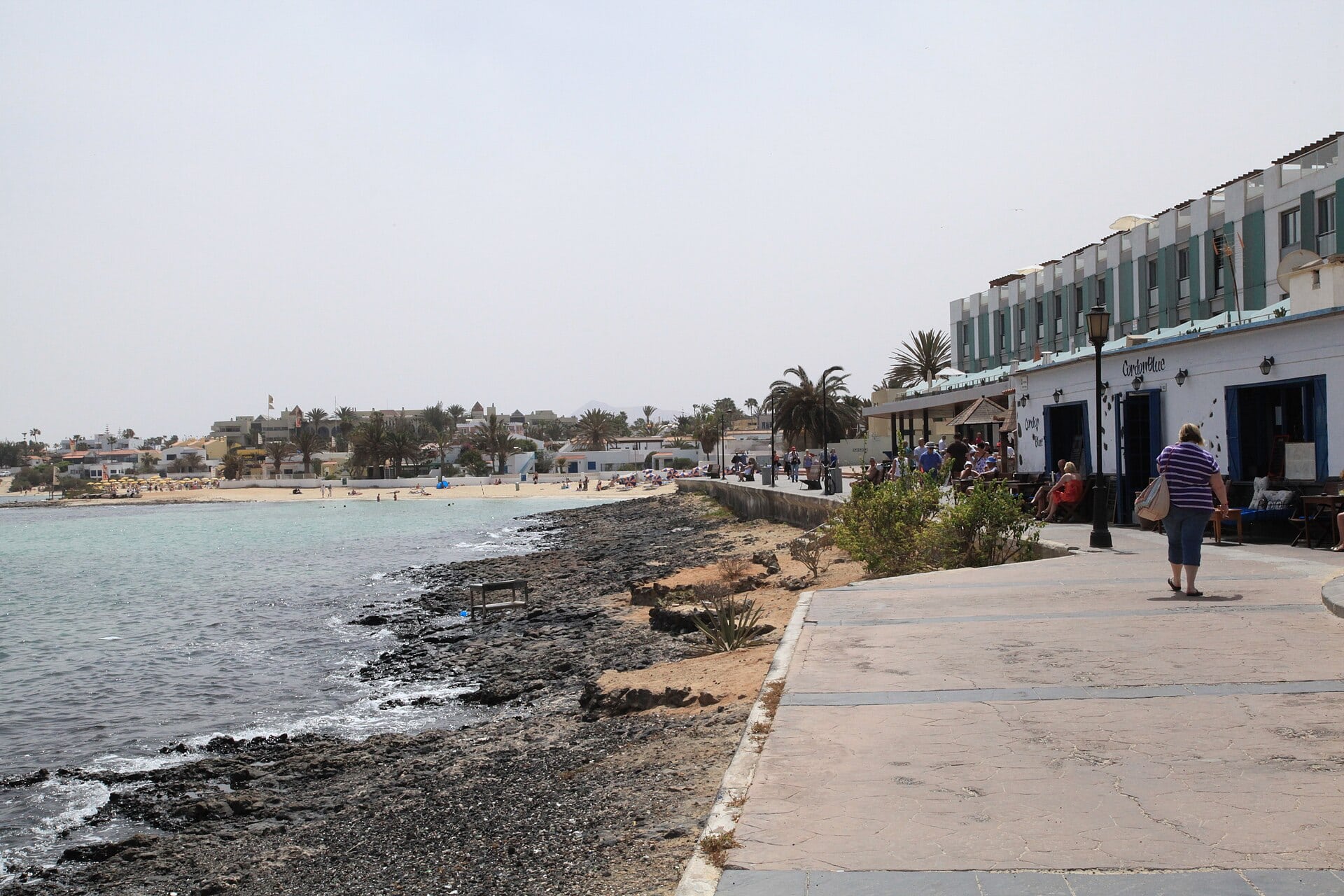
Just a short hop from Fuerteventura’s northern coast lies the small volcanic islet of Isla de Lobos, a nature reserve and an oasis of absolute tranquillity. Small ferries and water taxis run from Corralejo harbour, and the crossing takes just about fifteen minutes. The island is completely uninhabited and offers the perfect escape from civilisation.
I’d recommend putting on comfortable trainers and walking the entire islet along the marked trail, which takes roughly two to three hours. Don’t forget to pack your snorkelling gear, because the local bay of Puertito, with its crystal-clear turquoise water teeming with fish, is one of the most beautiful swimming spots in the whole area.
💡 Local tip: The island’s capacity is strictly limited to just 400 visitors per day, so you must obtain a free official entry permit in advance from the local government website.
5. Historic Betancuria
Fuerteventura isn’t all about beaches — the interior hides genuine historical treasures. Betancuria is the former capital of the island, founded at the beginning of the fifteenth century deep in a valley. It was deliberately built far from the coast to protect it from the relentless raids of bloodthirsty pirates.
Today, it’s easily the most picturesque village on the island, full of beautifully restored white houses with wooden balconies and palm trees. Make sure to visit the main church, Iglesia de Santa María, which will surprise you with its gorgeous interior and carved altarpiece. The green valley surrounding Betancuria sharply contrasts with the otherwise arid landscape of the rest of the island — it feels like a mirage.
💡 Local tip: Stop at one of the small tavernas on the square and try the local tapas — the atmosphere here is incredibly relaxed and authentic.
6. Majorero Cheese and Local Goats
While travelling around the island, you’ll quickly notice that Fuerteventura has more goats than actual residents. The local majorera breed goats roam freely across the arid hillsides, perfectly adapted to the harsh conditions. Their rich, fatty milk is used to produce the legendary Queso Majorero, which boasts an internationally recognised designation of origin.
This cheese is an absolute cornerstone of local cuisine, and you can try it at various stages of maturity. If you prefer a meat-free diet, you’ll be delighted — the cheese is often served grilled with a drizzle of palm honey, or as an accompaniment to traditional Canarian wrinkly potatoes (papas arrugadas) with spicy mojo rojo sauce. While locals certainly enjoy their fish and meat specialities, you can easily put together a satisfying meal from these wonderful local products.
💡 Local tip: Buy a wheel of cheese with the red rind — it’s rubbed with sweet paprika, giving the cheese an unmistakable spicy kick. It also makes a brilliant souvenir to take home.
7. Beaches on the Jandía Peninsula
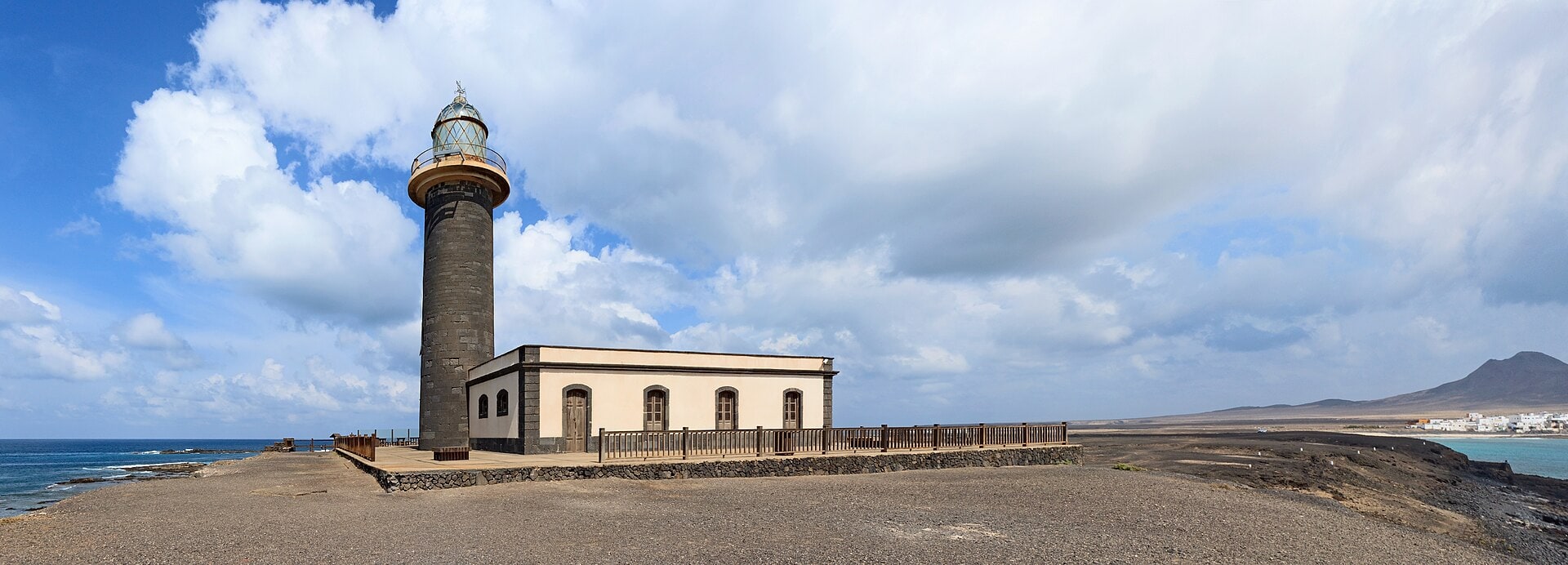
At the very southern tip of Fuerteventura stretches the Jandía Peninsula, renowned for its endless beaches of dazzlingly white sand. Around the resort of Morro Jable, kilometres of perfect coastline unfold, where everyone can find their own little patch of privacy. The water here is incredibly clear, with the most vivid shades of blue you can possibly imagine.
Right on the beach stands the iconic Faro de Morro Jable lighthouse, the highest point in the area and an excellent landmark for orientation. Surrounding the lighthouse are protected salt marshes that serve as a refuge for many species of migratory birds. A walk along the wooden boardwalks above these wetlands is a wonderfully calming experience.
💡 Local tip: If you walk far enough along the beach away from the hotel complexes, you’ll discover stretches where you’ll have the ocean practically all to yourself.
8. El Cotillo and Its Lagoons
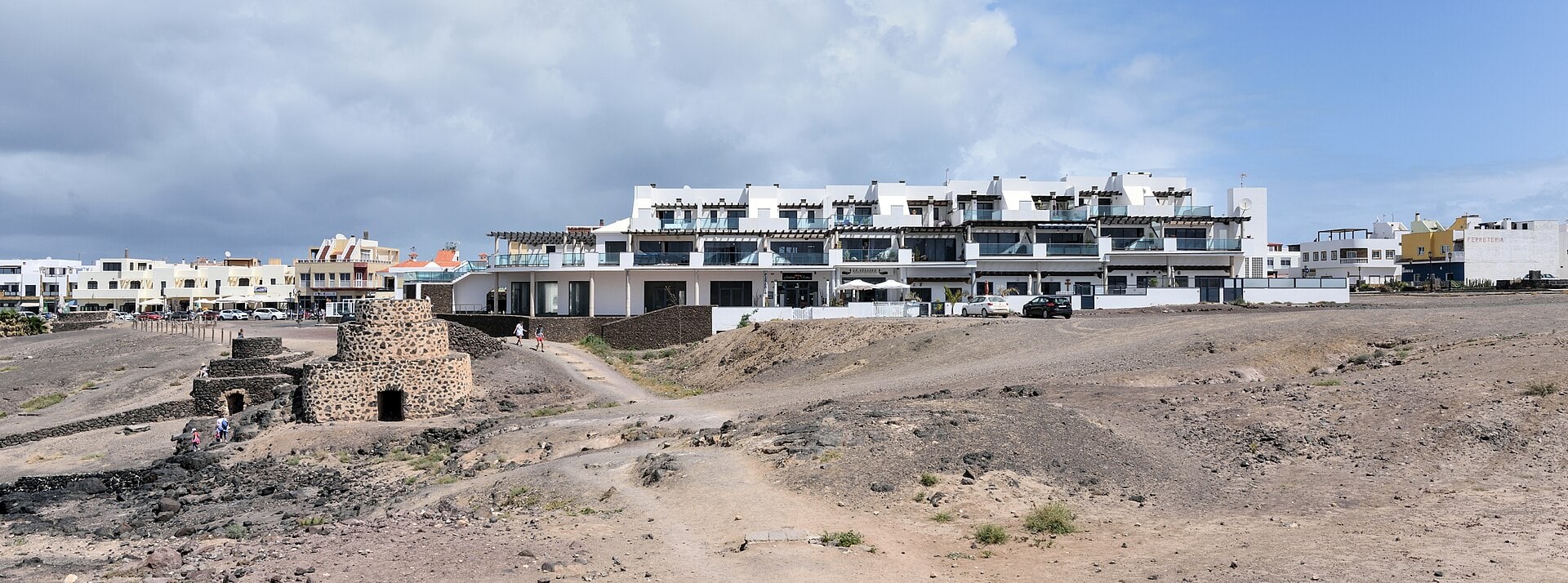
On the northwest coast sits the small fishing village of El Cotillo, which — unlike bustling Corralejo — has retained a much slower, bohemian character. The village is a hub for independent surfers and digital nomads, and you’ll find plenty of hipster cafés, vegan bistros, and small galleries. Life here flows at a typically Canarian unhurried pace.
To the south of the village, wild beaches with big waves attract experienced surfers, but head north from El Cotillo and you’ll find something entirely different. Here lies a system of natural shallow lagoons (Los Lagos) sheltered from the wild ocean by cliffs of black lava rock. The water in the lagoons is calm, very shallow, and beautifully warmed by the sun, making them a perfect spot for relaxation.
💡 Local tip: Head to the nearby Faro del Tostón lighthouse and wait for the sunset — they’re absolutely epic and unforgettable on this stretch of coast.
9. Ajuy Caves and Black Beaches

The tiny village of Ajuy on the west coast reveals Fuerteventura from a completely different, far darker and more dramatic perspective. The beach here is covered in fine black volcanic sand that sharply contrasts with the white foam of the churning ocean. I wouldn’t recommend swimming here due to the strong currents, but the place has an enormous charm.
The main attraction, however, is the enormous natural caves (Cuevas de Ajuy), reached via a safe, well-maintained path directly from the beach. These caves were carved into the coastal cliffs by the ocean itself over millions of years, and according to legend, pirates once used them to hide their plunder. The cliffs surrounding the caves are among the oldest geological formations in the entire Canary Islands.
💡 Local tip: The path to the caves can be slippery in places due to seawater, so definitely don’t go in flip-flops — wear sturdy footwear instead.

10. Hiking Calderón Hondo Volcano
Although Fuerteventura is the oldest island in the archipelago and its volcanoes long ago lost their youthful sharpness, you can still find fascinating craters here. The best-preserved volcano is Calderón Hondo, located in the north near the village of Lajares. The climb to the crater rim is fairly easy and manageable even for casual hikers.
A marked trail leads you right to the edge of an enormous pit some seventy metres deep. From the viewing platform, you’ll enjoy amazing panoramic views — not just into the crater itself, but also across the entire northern tip of the island and over to neighbouring Lanzarote.
💡 Local tip: Dozens of cheeky ground squirrels scurry around the crater, trying to beg food from tourists. Please don’t feed them under any circumstances — they’re an invasive species.
11. Iconic Windmills
The locals learned to harness the strong winds that blow across the island centuries ago. Scattered across the landscape, you’ll find beautiful old windmills that were used to grind roasted grain (known as gofio). Gofio remains a staple of Canarian cuisine to this day and is added to soups, milk, and desserts.
Interestingly, there are two different types of windmill on the island, nicknamed “male” and “female.” The male mill (el molino) is a traditional stone tower, while the female mill (la molina) has only a wooden structure on a single-storey stone base, which allowed the miller to work at ground level without constantly running up and down stairs. The finest preserved windmills can be found near the villages of Antigua and Tefía.
💡 Local tip: If you want to see a windmill with its original milling equipment still intact, visit the Centro de Interpretación de los Molinos near Tiscamanita.
12. Natural Pools of Aguas Verdes
Fuerteventura’s west coast is untamed, wild, and battered by powerful waves, yet nature has created some amazing swimming spots here. Aguas Verdes is a system of natural rock pools that fill with fresh ocean water. They’re located in the Playa del Valle area not far from Betancuria.
These pools offer safe, calm swimming in crystal-clear water, even though the dangerous ocean rages just metres away. The pools are set into jagged black cliffs and you’ll often spot small crabs and starfish in them. It’s a fantastic spot for those of you who want to escape the crowded sandy beaches and seek out raw, unspoilt nature.
💡 Local tip: Only visit the pools at low tide — during high tide the entire area is engulfed by the ocean and the huge waves can be deadly.
13. Faro de la Entallada
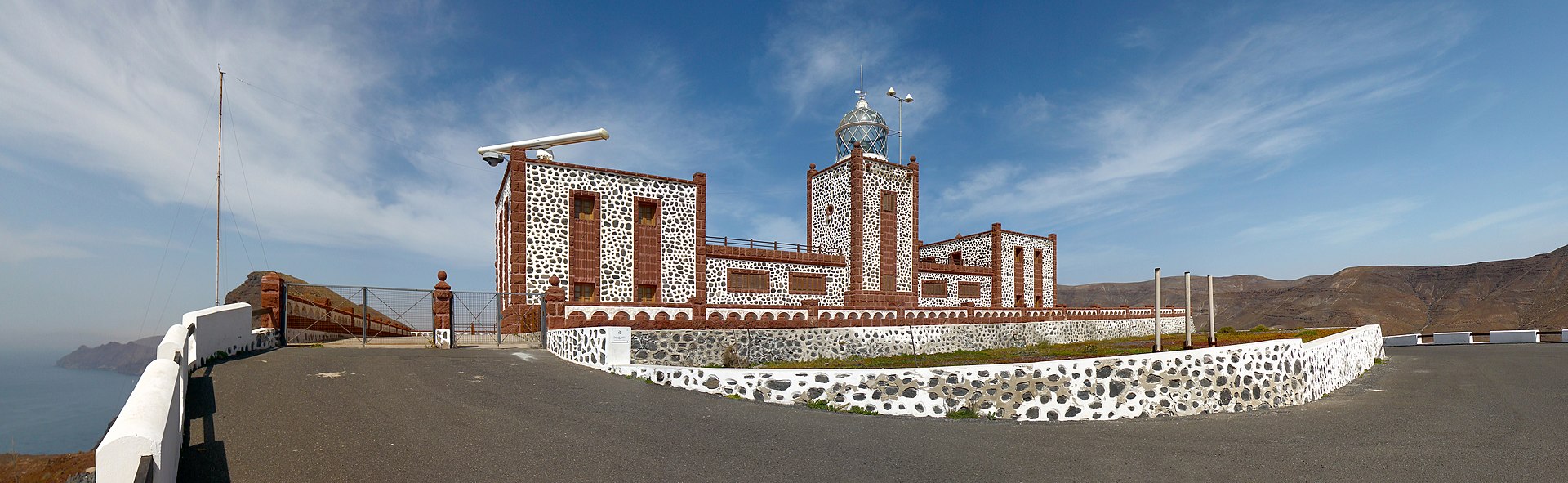
On the east coast of the island stands a lighthouse that’s architecturally unique, unlike anything else you’ll see in the Canaries. Faro de la Entallada is built in a striking Moorish style, with its façade adorned by red bricks forming geometric patterns. It perches on a steep cliff roughly two hundred metres above the ocean.
From the viewing platform by the lighthouse, a breathtaking vista opens up over the churning Atlantic. This spot is geographically the closest point to the African continent — the Moroccan coast lies just ninety-five kilometres away as the crow flies. The drive to the lighthouse along a narrow mountain road is quite an adrenaline rush, but the views are absolutely worth it.
💡 Local tip: Wild donkeys and goats roam the surrounding hills, so be extremely cautious when driving the narrow road to the lighthouse — they often stand right in the middle of it.
14. Mirador Morro Velosa Viewpoint
If you want to see Fuerteventura from a bird’s-eye perspective, head to the central mountains. Mirador Morro Velosa is an architectural gem designed by the celebrated César Manrique, the artist who shaped the look of neighbouring Lanzarote. The viewpoint blends harmoniously into the surrounding arid landscape.
The glass-fronted building offers panoramic views over the sun-scorched hills and the green valley of Betancuria. From this height, you’ll fully appreciate the harsh, almost otherworldly beauty of the entire island, dominated by shades of ochre, red, and brown. Inside the building there’s also a small café where you can enjoy a coffee with the finest view for miles around.
💡 Local tip: Just below the building you’ll find another viewpoint with enormous bronze statues of the ancient Canarian kings, known as Guise and Ayose.
15. Oasis Wildlife Botanical Garden and Rescue Centre
In the southern town of La Lajita, you’ll find a vast complex combining an expansive botanical garden with a unique wildlife park. Oasis Wildlife Fuerteventura primarily serves as a rescue centre for animals seized from smugglers or saved from unsuitable conditions. This isn’t your typical zoo — the focus is on education and protecting endangered species.
The park is incredibly spacious, a huge green oasis filled with thousands of species of cacti, palms, and tropical plants from around the world. You can admire elephants, giraffes, hippos, and hundreds of free-flying birds, plus the park boasts the largest camel reserve in Europe. You could easily spend an entire day here, and it’s a fantastic escape from the hot midday sun.
💡 Local tip: Skip the main restaurants inside the park and head instead to the small market stalls near the entrance, where local farmers sell fresh cheese and vegetables.
16. Salinas del Carmen Salt Flats
Sea salt harvesting has been an integral part of Fuerteventura’s history, and the ancient tradition continues to this day. Salinas del Carmen is a working museum and salt works in one, where you can witness the process of extracting “white gold” from seawater with your own eyes. It’s located on the coast just below the resort of Caleta de Fuste.
Walking among dozens of shallow evaporation ponds — shifting in colour from white through pink to rusty brown — is fascinating. Seawater is pumped in from the ocean and gradually evaporates thanks to the strong sun and wind, until only huge crystals of pure salt remain. The salt is still harvested exclusively by hand using traditional wooden tools.
💡 Local tip: A short walk from the salt works along the coast, you’ll find a huge twenty-metre whale skeleton washed ashore by the ocean — a truly striking reminder of nature’s power.
17. Surfing on the North Coast
While the south belongs to kites and sails, Fuerteventura’s north coast is dedicated to classic wave surfing. This area is often nicknamed the European Hawaii, and for good reason — the ocean here creates absolutely perfect waves breaking over volcanic reef. The villages of Lajares and Corralejo buzz with a laid-back surf culture.
Even if you’ve never stood on a board, the local conditions are brilliant for learning. Dozens of surf schools operate here, taking you to safer sandy beaches (beach breaks) where you can learn the basics without the risk of injury on sharp reef. If you’re an experienced rider, you’ll find world-class reef breaks that’ll keep you entertained for weeks.
💡 Local tip: The ocean is immensely powerful and the undertows can be unpredictable, so as a beginner always book a lesson with a certified school — don’t try going it alone.
18. Stargazing
Fuerteventura has remarkably low levels of light pollution, earning it the prestigious Starlight Reserve status. The island is one of the best places in Europe for stargazing. Once darkness falls and you drive just a short distance from the resorts, an incredible theatre of thousands of bright stars and nebulae unfolds above you.
The best spot for astronomical experiences is the purpose-built Sicasumbre viewpoint. Mirador Astronómico de Sicasumbre features information panels and mounts for professional telescopes, but even with the naked eye you can easily pick out the Milky Way and plenty of constellations. It’s a deeply calming and magical experience — the perfect way to round off your trip.
💡 Local tip: Bring a properly warm jacket for your nighttime stargazing session — the wind in the mountains gets very cold after dark, even during otherwise warm summer months.
Where to Go Next from Fuerteventura
Fuerteventura makes an ideal springboard for further Spanish adventures. If you have more time and fancy combining island beach relaxation with the buzzing energy of major cities, take advantage of cheap domestic flights to mainland Spain. In under three hours you could find yourself in the Catalan capital, where the famous Barcelona awaits with its architectural wonders, or you could head to the very heart of the country and explore the royal city of Madrid.
For those of you who love passion, history, and superb tapas, the south of Spain is the obvious choice. Fly to Andalusia, hire a car, and plan yourself a road trip through its most beautiful spots. Don’t miss our guide to Seville, explore the Moorish palaces hidden in Granada, and lose yourself in the flower-filled streets of Córdoba. If you prefer staying by the sea, the sun-drenched Málaga or the modern Valencia both offer a brilliant summer vibe with outstanding gastronomy.
Frequently Asked Questions
Do I really need to rent a car on the island?
Although public buses (called guaguas) run between the main towns and resorts, I very strongly recommend renting a car. Without one, you simply won’t be able to reach the wild beaches, the mountain villages, or most of the natural attractions that make up the real soul of the island. What’s more, rental prices in the Canary Islands are quite reasonable and the roads are in very good condition.
Is it really as windy on Fuerteventura as they say?
Yes, the wind (the trade winds) is an inseparable part of the island and it blows here practically constantly, most of all during the summer months. Most of the time it’s a very pleasant, refreshing breeze that keeps you from getting roasted in the sun. But if you want to read a book in peace on the beach, I recommend finding a spot in the lee behind the small stone walls that the locals commonly build on the beaches for exactly this purpose.
What’s the ocean temperature, can you swim in it year-round?
The Atlantic around the Canary Islands is refreshing and the water temperature ranges from 18 °C in February to 24 °C in September and October. For the average central European, that means you can easily take a dip in the ocean even in the middle of winter, although it’s not quite right for long hour-long swims without a wetsuit. The shallow lagoons (for example in El Cotillo) warm up much more in the sun than the open ocean.
How many days should I set aside to explore Fuerteventura?
For a relaxed exploration of the whole island, I recommend setting aside seven to ten days. Over the course of a week you’ll manage to visit the sand dunes in the north, the wild south, the historic inland, and even take a trip to the island of Lobos, all without stress and constant rushing. If you come just for a long weekend, you’ll have to make huge compromises.
Can I take a ferry from Fuerteventura to another island too?
Absolutely! The easiest and most common option is a day trip to the neighbouring island of Lanzarote. Ferries run by Fred Olsen and Naviera Armas depart from the northern port of Corralejo to the town of Playa Blanca on Lanzarote several times a day, and the fast crossing takes just under half an hour. Tickets can easily be bought on the spot, or in advance online.
Is the tap water on the island safe to drink?
On Fuerteventura there’s practically no natural fresh water, and all the tap water comes from huge desalination plants. Although it’s hygienically safe and you can brush your teeth or cook with it without worry, it’s not at all suitable for drinking directly, because it has an odd taste. All the locals and tourists buy bottled spring water in five-litre jugs at the shops for drinking.
What’s the situation with nudism on the beaches?
Fuerteventura is an utterly open and tolerant destination, where nudism is a completely common occurrence. On most of the large beaches outside the main hotel centres (such as the dunes in Corralejo or the beaches in the south in Jandía), naturists mingle entirely naturally with people in swimwear and no one makes any fuss about it. It’s part of the local free-spirited and laid-back culture.
Is the island suitable for digital nomads?
In recent years the island (especially the north around Corralejo and El Cotillo) has become a very popular haven for people working remotely. The cafés here offer decent connectivity, modern coworking centres are popping up, and the expat community is huge. What’s more, Spain has introduced an attractive nomad visa, thanks to which people from outside the EU can legally relocate here.
Tips and Tricks for Your Vacation
Don’t Overpay for Flights
Search for flights on Kayak. It’s our favorite search engine because it scans the websites of all airlines and always finds the cheapest connection.
Book Your Accommodation Smartly
The best experiences we’ve had when looking for accommodation (from Alaska to Morocco) are with Booking.com, where hotels, apartments, and entire houses are usually the cheapest and most widely available.
 🚗 Car rental on the roadVerified rental cars in the Canary Islands
Search with the DiscoverCars comparison engine — it compares prices from dozens of local and international rental companies, and most bookings come with free cancellation.
Compare car prices in the Canary Islands →Don’t Forget Travel Insurance
Good travel insurance will protect you against illness, accidents, theft, or flight cancellations. We’ve had a few hospital visits abroad, so we know how important it is to have proper insurance arranged.
Where we insure ourselves: SafetyWing (simple monthly subscription) and TrueTraveller (for extra-long trips).
Find the Best Experiences
Get Your Guide is a huge online marketplace where you can book guided walks, trips, skip-the-line tickets, tours, and much more. We always find some extra fun there!