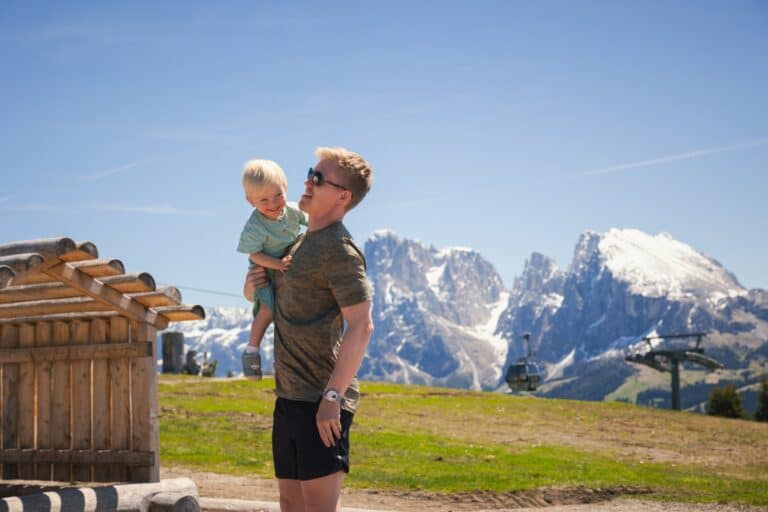
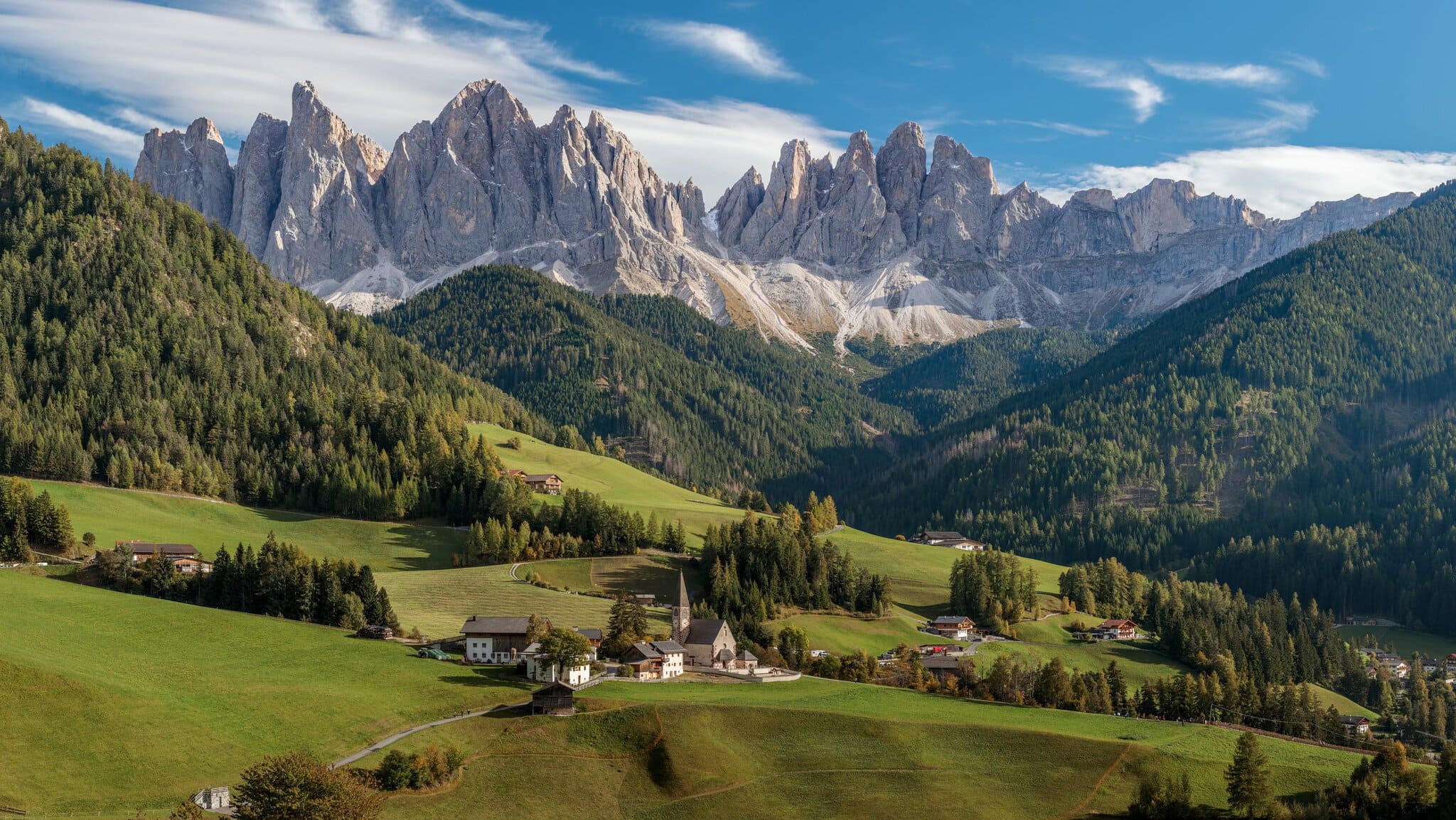
If you’ve ever seen that iconic postcard of a tiny church dwarfed by enormous rocky spires, chances are it was taken right here in the famous Val di Funes Italy. It’s arguably the single most iconic view you can take away from this corner of the Dolomites, and it never fails to take your breath away — no matter how many times you visit. Whether you’re an avid hiker looking for all-day treks or travelling with little ones and a pushchair, this place doesn’t lose an ounce of its magic. ☺️
You can tackle a solid three-hour hike right beneath the mountain peaks, but families with pushchairs will enjoy the valley just as much — Val di Funes truly has something to offer at every stage of life. I’ll share where to stay strategically, how parking works here, and why you should leave your drone safely stashed in your backpack unless you fancy parting with a hefty sum of money.
The full destination guide: Dolomites — guide and what to see
TL;DR
- Most famous photo spots: The Santa Maddalena church and the San Giovanni in Ranui church (the one with the striking red roof). Both offer perfect views of the Odle (Geisler) massif.
- For families and a relaxed visit: An easy 20–30 minute walk from the car park leads to both churches, and it’s perfectly doable with an all-terrain pushchair and small children.
- For active hikers: The most famous trek is the Adolf-Munkel-Weg, running right along the base of the jagged peaks (allow roughly 3 to 4 hours — the views are unforgettable).
- When to go: July to September is ideal for hiking, while late October to early November is a treat for lovers of golden larches. The golden hour for photographers is just after sunrise or before sunset.
- Parking and access: Unlike some other Dolomites destinations, there’s no toll to enter the valley, but budget around 8 € per day for parking.
What Exactly Is Val di Funes (Villnöß) and Why Should You Visit?
I’ll admit that before our first visit, one thing puzzled me: where exactly is Val di Funes and why does nobody seem to talk about it, given how stunningly beautiful it is? The valley sits within the Trentino-Alto Adige region (South Tyrol) and perfectly illustrates the local linguistic and cultural melting pot — you’ll hear German, Italian, and the ancient Ladin language spoken here.
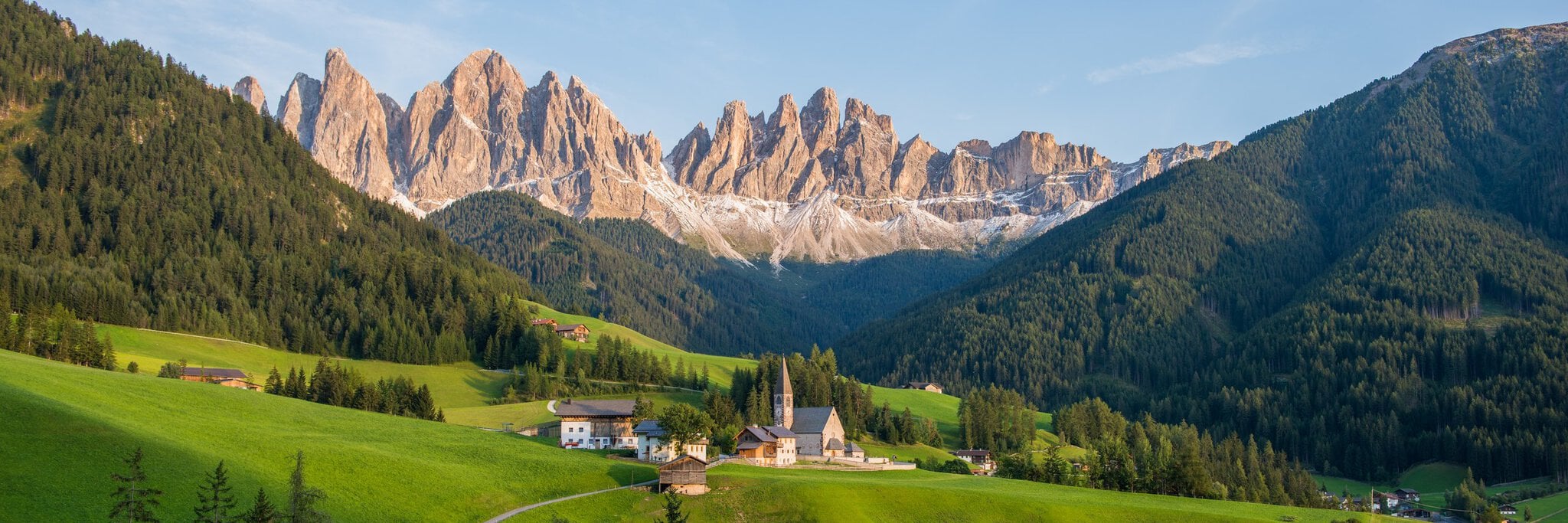
In German, you’ll find it listed as Villnöß, and it lies just a stone’s throw from the well-known town of Brixen (Bressanone). The entire valley is a UNESCO-listed site, and its defining feature is the Odle mountain group (Geisler Spitzen in German), which forms that dramatic jagged backdrop in every photograph. What makes Val di Funes in South Tyrol Italy so special is that, despite the huge interest from photographers worldwide, it still manages to retain a wonderfully peaceful, almost rural atmosphere — cows grazing on meadows, locals going about their quiet South Tyrolean lives. I still can’t fathom how this valley hasn’t become as overcrowded as Hallstatt. Perhaps those jagged peaks serve as a natural filter for anyone lacking a decent level of fitness.
When to Visit Val di Funes and How to Get There
Planning a trip to the Dolomites takes a bit of strategic thinking, especially if you want to catch the best conditions for hiking or photography. The valley is beautiful year-round, but each season offers a completely different experience and calls for different gear.
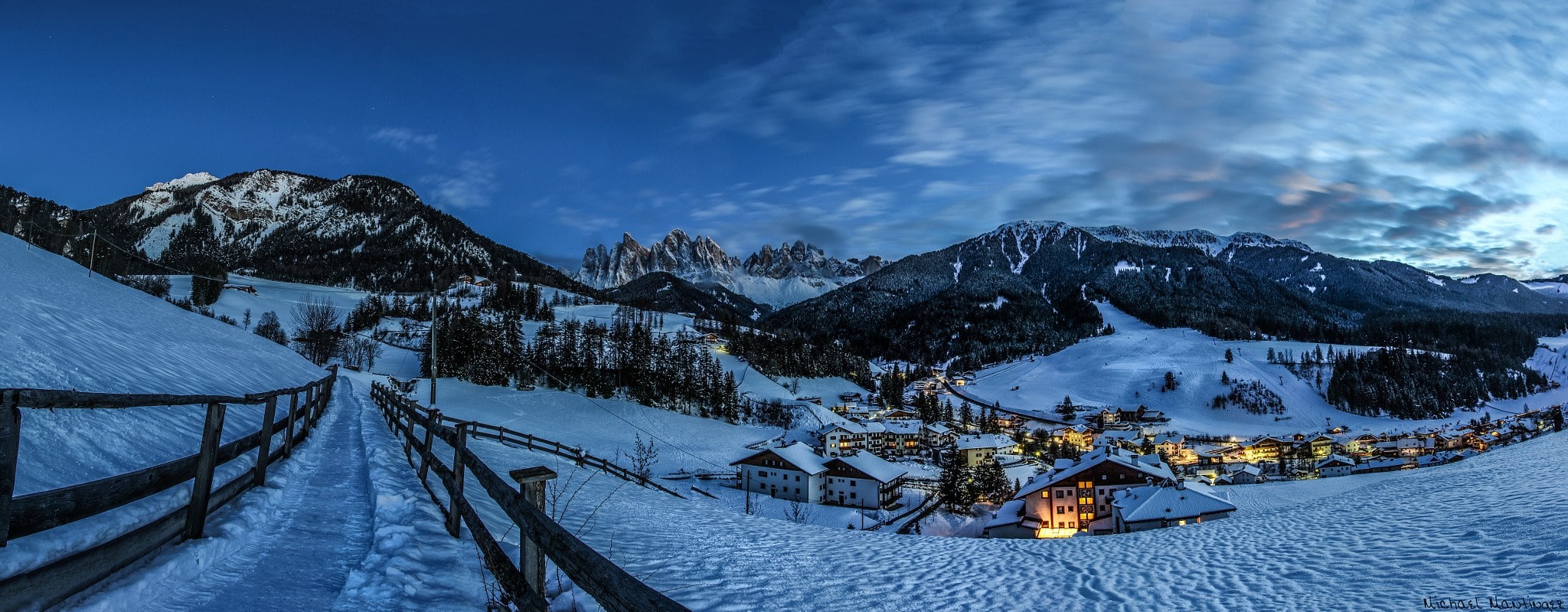
If you’re keen on conquering mountain huts and enjoying long hikes, the best time is from late June to early October, when the Val di Funes Italy weather is generally stable and the alpine meadows burst with colour (May and June are gorgeous thanks to carpets of wildflowers). The autumn months bring a magical spectacle of golden larches contrasting with white-capped peaks. In winter, the valley transforms into a paradise for ski touring and cross-country skiing — don’t expect huge downhill pistes, though; it’s more about winter walks and Nordic skiing. Getting here by car is straightforward: from the motorway near Brixen (Bressanone), you turn off and after just 15 kilometres of easy driving you’ve arrived. Thankfully, there’s no paid road-access system here like at Tre Cime — you simply pay for parking in the villages of Santa Maddalena or Ranui. If you’re flying from the UK, the nearest airports are Innsbruck, Verona, and Venice. Budget airlines like easyJet and Ryanair serve Verona and Venice from several UK cities, and from there it’s roughly a 2.5 to 3-hour drive to the valley. Hiring a car at the airport is the most practical option — public transport between Dolomite valleys is slow and infrequent.
Where to Stay and How Much Does It Cost
Accommodation is worth sorting well in advance — if you leave it to the last minute, you could easily end up paying more for a mediocre room in Brixen than a fantastic agriturismo right in the valley. Lesson learned: book as early as you can. Lodging options within the valley itself are limited and in very high demand, so don’t put it off.
The best base for exploring is the village of Santa Maddalena itself, where you’ll find traditional family-run agriturismos and small B&Bs with wooden balconies overflowing with geraniums. If you’d like specific Val di Funes Italy hotels recommendations, have a look at Proihof, which is an absolute gem with jaw-dropping views, or the cosy Fallerhof. Prices during peak season typically range from 120 to 250 € per night for two, but you’ll often get a fantastic homemade breakfast packed with local cheeses and cured meats included. If you prefer somewhere with more shops and restaurants, a great alternative is the town of Ortisei in the neighbouring valley (the family-friendly Cavallino Bianco is superb there), which is about a 40-minute drive away, or the historic Brixen, which offers a lovely urban setting and somewhat friendlier prices. You can easily compare current availability and rates around Val di Funes and Brixen on Booking.com.
12 Best Things to See and Do in Val di Funes
Twelve places and experiences ranging from gentle strolls to proper hikes that’ll leave your legs aching — but your memory bank overflowing. You’ll find easy walks ideal for families with pushchairs alongside more demanding trails for those who want to push themselves and experience the mountains up close.
1. Santa Maddalena Church: The Classic View
This little church, dedicated to Saint Mary Magdalene, is the famous landmark you know from Instagram and travel magazines. It sits on a gentle hillock above the village of the same name and creates an absolutely perfect composition with the Odle rock massif in the background. The church itself is quite small and unassuming, but its placement in the landscape is nothing short of genius.
The best photos, however, aren’t taken right next to it. You need to walk a bit further along the paved path towards the viewpoint (it’s signposted and leads uphill above the village), from where you’ll get just the right angle with the mountains appearing to sit directly behind the church tower. We recommend heading out early in the morning or in the late afternoon, when the sun beautifully lights up the tips of the peaks and you’ll avoid the biggest crowds of tripod-wielding photographers.
2. San Giovanni in Ranui Church
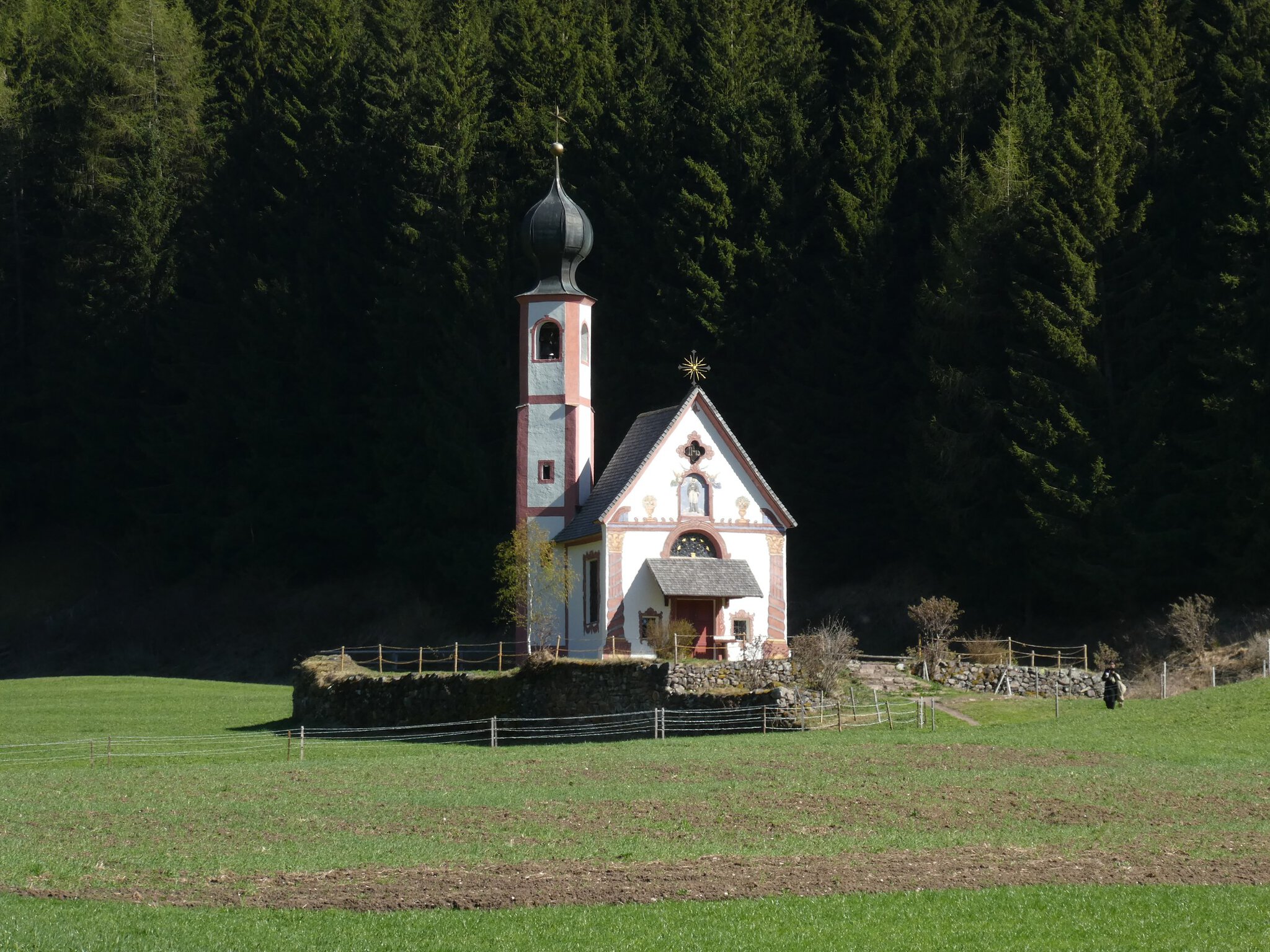
While we’re on the subject of iconic buildings, San Giovanni in Ranui is, in my opinion, perhaps even a touch more photogenic than Santa Maddalena — largely thanks to its unmistakable façade and strikingly red colour (technically cinnabar), which contrasts beautifully with the green forest and grey rock.
If you want to check the current cloud cover above the peaks before you leave your hotel, be sure to search online for a Val di Funes webcam — it can save you an early-morning disappointment if the rocks happen to be shrouded in thick fog. Beyond the viewpoint above Santa Maddalena and the meadow at Ranui, excellent photo spots can also be found right on the trail beneath the cliffs, where you can work old wooden fences and lone pine trees into your composition.
3. A Walk to the Churches with Kids and Dogs
One of the best things about Val di Funes is that its greatest beauty is accessible even to parents with small children and pushchairs. Not every route here has to be a demanding high-altitude climb.
From the central car park in the village, an easy circular walk links up views of both churches. The route takes roughly 20 to 30 minutes of actual walking, runs mostly on paved paths, and is perfectly manageable even with a standard pushchair. Dogs are welcome too, just keep an eye out for grazing cows in the meadows — they sometimes take a bit too much interest in four-legged companions. 😅
4. Adolf-Munkel-Weg: The Most Famous Trek Beneath the Odle Walls
This is exactly the kind of hike that ranks among the finest experiences in the entire Italian Dolomites. The Adolf Munkel Weg trail runs directly along the base of the northern walls of the Odle massif, delivering views that will literally leave you gasping.
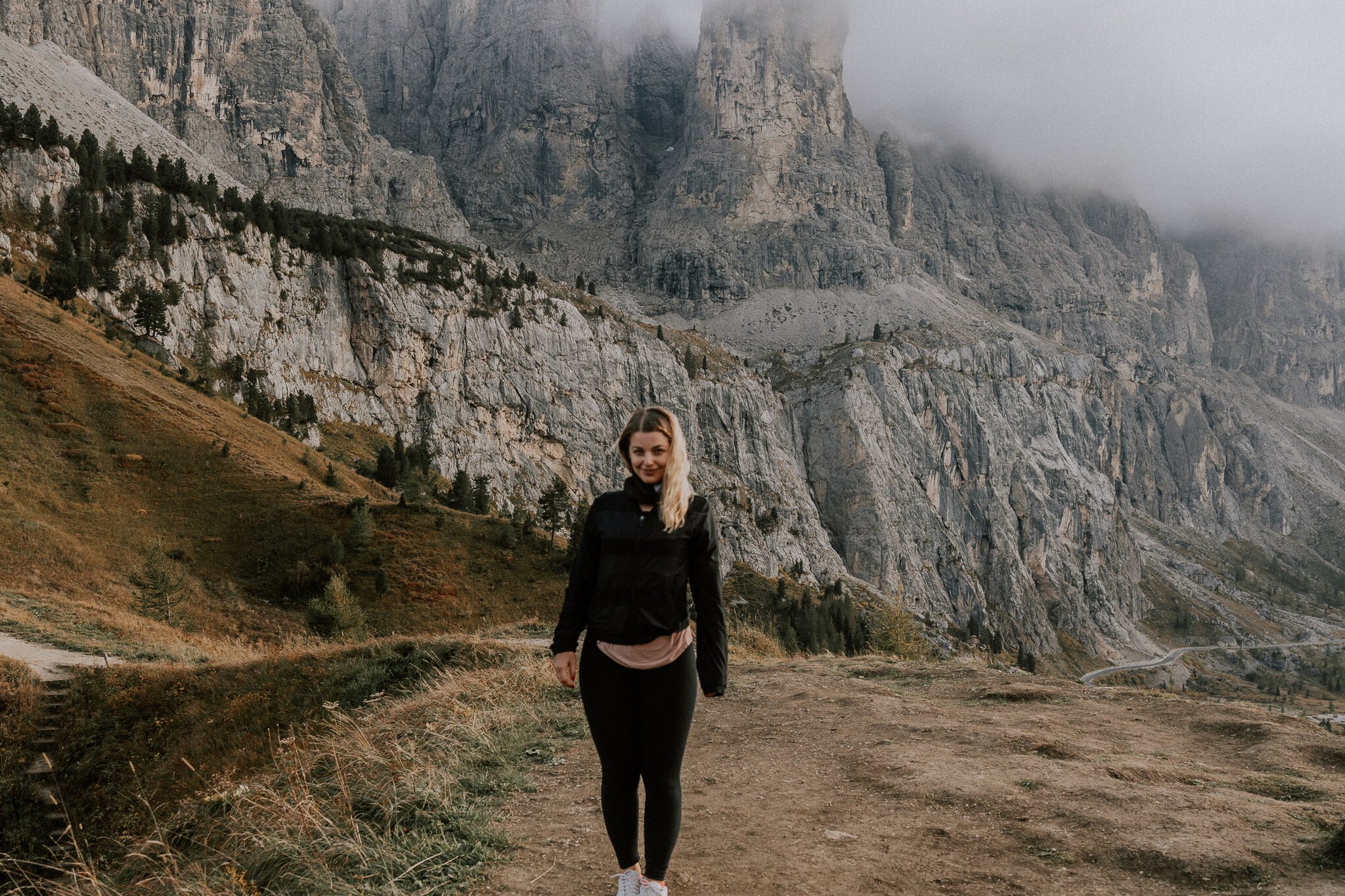
The full loop takes roughly 3 to 4 hours, and its huge advantage is the minimal overall elevation gain relative to the maximum visual reward. The path winds pleasantly through forest and across open scree fields, with the majestic rocks within arm’s reach the entire time. If you’ve got childcare sorted or you’re travelling without kids, this is absolutely not to be missed.
5. Hiking to the Geisler Alm Mountain Hut
A stop at the renowned Geisler Alm (Rifugio delle Odle) mountain hut features on many of the longer trails in the area (including the aforementioned Adolf Munkel Weg). This place is essentially the embodiment of Alpine bliss, and it’s an incredible spot to recharge after a more demanding hike.
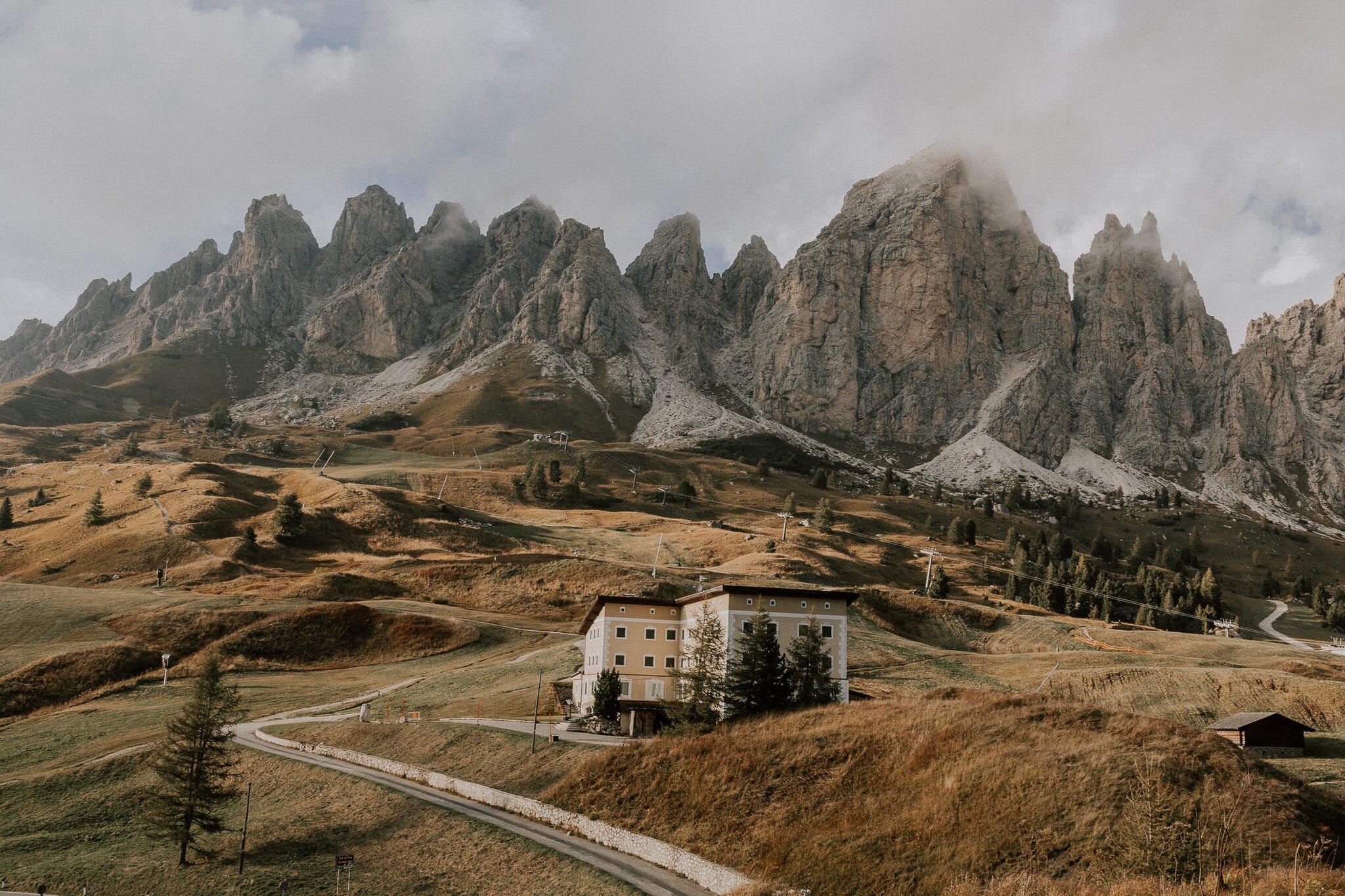
Sprawling green meadows surround the hut, dotted with large wooden sun loungers. There’s nothing quite like lying down in the sunshine after lunch and gazing up at those insane rock faces above. I spent nearly an hour doing exactly that before Lukáš had to call me to finally get moving. It can get busy in season, but there’s so much space that you’ll always find your own little spot.
6. The Final Stretch at Zanser Alm
If you set out towards the Adolf Munkel Weg, your starting and finishing point will most likely be Zanser Alm (Zannes). It’s a large car park at the very end of the valley road and a perfect launching pad for most of the major hikes.
You’ll find a tourist information centre here along with several mountain huts where you can fuel up before or after your trek. From Zanser Alm, a whole network of perfectly waymarked trails fans out, including several educational nature trails that are great for families with older children.
7. Golden Autumn Larches and the Cuecenes Area
If you’re considering a trip to the Dolomites in October or early November, you stand a chance of experiencing the Cuecenes area at its most photogenic. The local larch forests turn incredible shades of gold and orange during this period.
During golden hour, when the setting sun lights up these yellow trees against the backdrop of grey rock, you’re treated to a spectacle that no Instagram filter could ever replicate. It’s a favourite time for landscape photographers, and while the nights are already chilly, you can still enjoy a good day’s hiking in a lighter jacket.
8. Kreuzkofel Panoramic Viewpoint
For those of you seeking slightly less busy spots with fantastic views, I’d recommend the hike up to the Kreuzkofel viewpoint. From here, you get the entire valley laid out beneath you and can admire the Odle massif from a completely different angle.
The trail is a touch steeper, but the reward is near-total solitude — most visitors stay down by the churches or stick to the main hiking arteries. A morning coffee from a thermos with a view like this tastes completely different. If you can get there at dawn, you’ll come away with photos others can only dream of.
9. Best Photo Spots and Chasing the Perfect Light
Val di Funes is largely about photography, and finding the right angle and light is a bit of a science here. Given the orientation of the valley, the best time for shooting is genuinely very early morning or roughly an hour before sunset, when the tips of the peaks take on a deep orange glow.
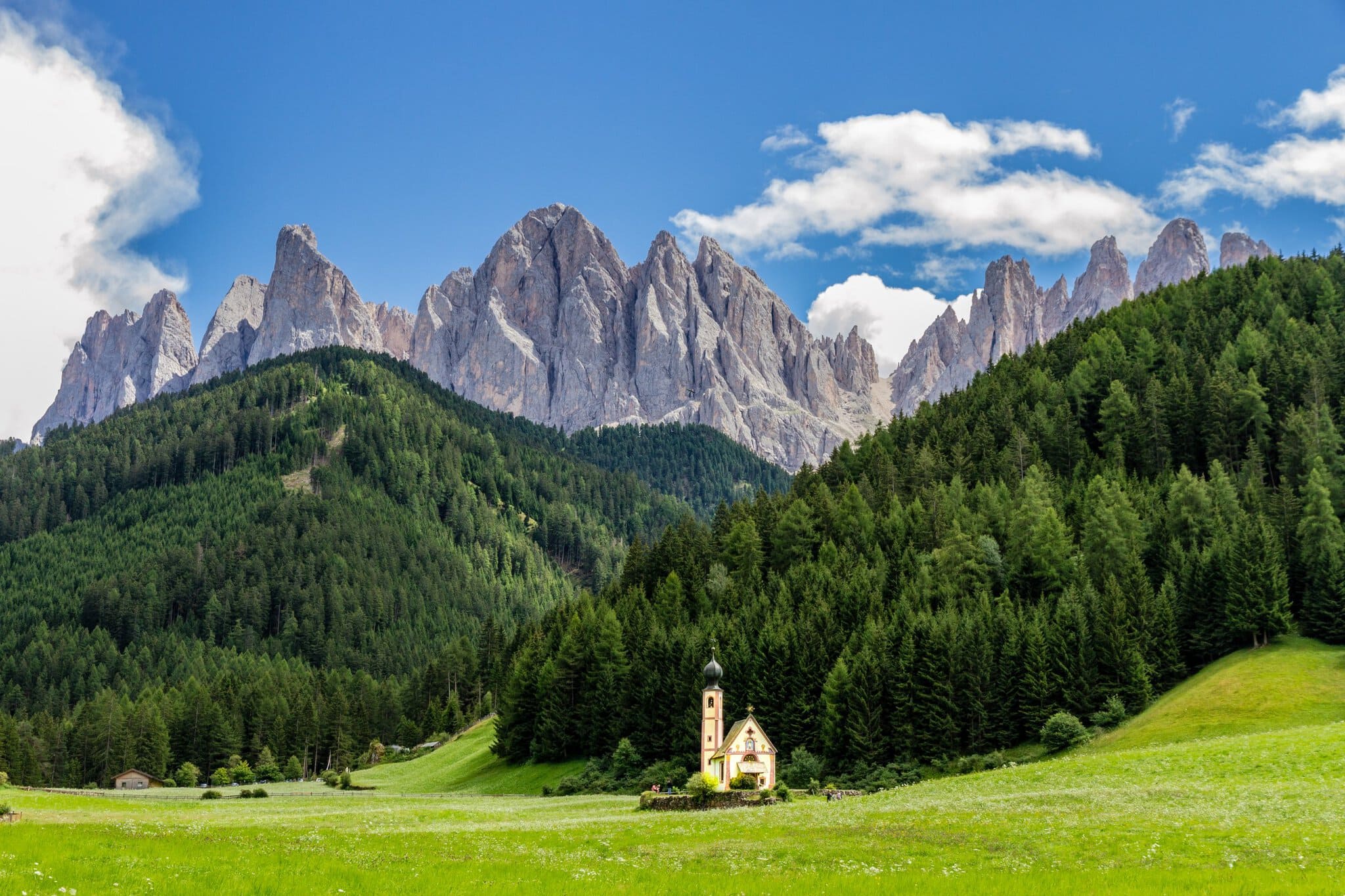
If you want to check the current cloud cover above the peaks before heading out, search online for a Val di Funes webcam — it can save you an early-morning disappointment if the rocks happen to be hidden in thick fog. Beyond the viewpoint above Santa Maddalena and the meadow at Ranui, excellent photo spots can also be found right on the trail beneath the cliffs, where you can incorporate old wooden fences and lone pine trees into your frame.
10. Val di Funes with Kids and a Pushchair
Exploring the mountains with a little baby in a carrier or pushchair is a whole different ball game, and Val di Funes provides an absolutely ideal setting for it. The village is very quiet, there are no busy main roads, and you’ll come across conveniently placed wooden benches all along the path to the church.
The tranquillity of the local meadows works wonders on small children — you can spend ages simply watching the world go by. If you check a Val di Funes Italy map, you’ll notice a tangled network of small farm tracks surrounding the village that are tailor-made for pushchair walks — just be prepared for a few fairly steep little hills along the way.
11. A Trip to See Alpacas at a Nearby Farm
This is an absolute hit, especially if you’re travelling with children — but it’ll delight childless adults just as much. Not far away in the Pueztal valley (a short hop from Val di Funes), there’s a small family farm where they keep gorgeous fluffy alpacas.
You can arrange a walk with these animals across the mountain meadows, and it’s an incredibly calming experience. Alpacas are wonderfully gentle and curious — one of them spent the entire walk peering over our shoulder at our phone, as if checking whether the photo turned out well. We’d recommend booking this experience in advance, as capacity is very limited.

12. Messner Mountain Museum (Sigmundskron)
If the weather turns on you and the mountains are hidden behind rain clouds, we’ve got a brilliant tip for a day trip just outside the valley. A short drive from nearby Bolzano stands the Sigmundskron Castle, home to the flagship museum from legendary mountaineer Reinhold Messner’s museum project.
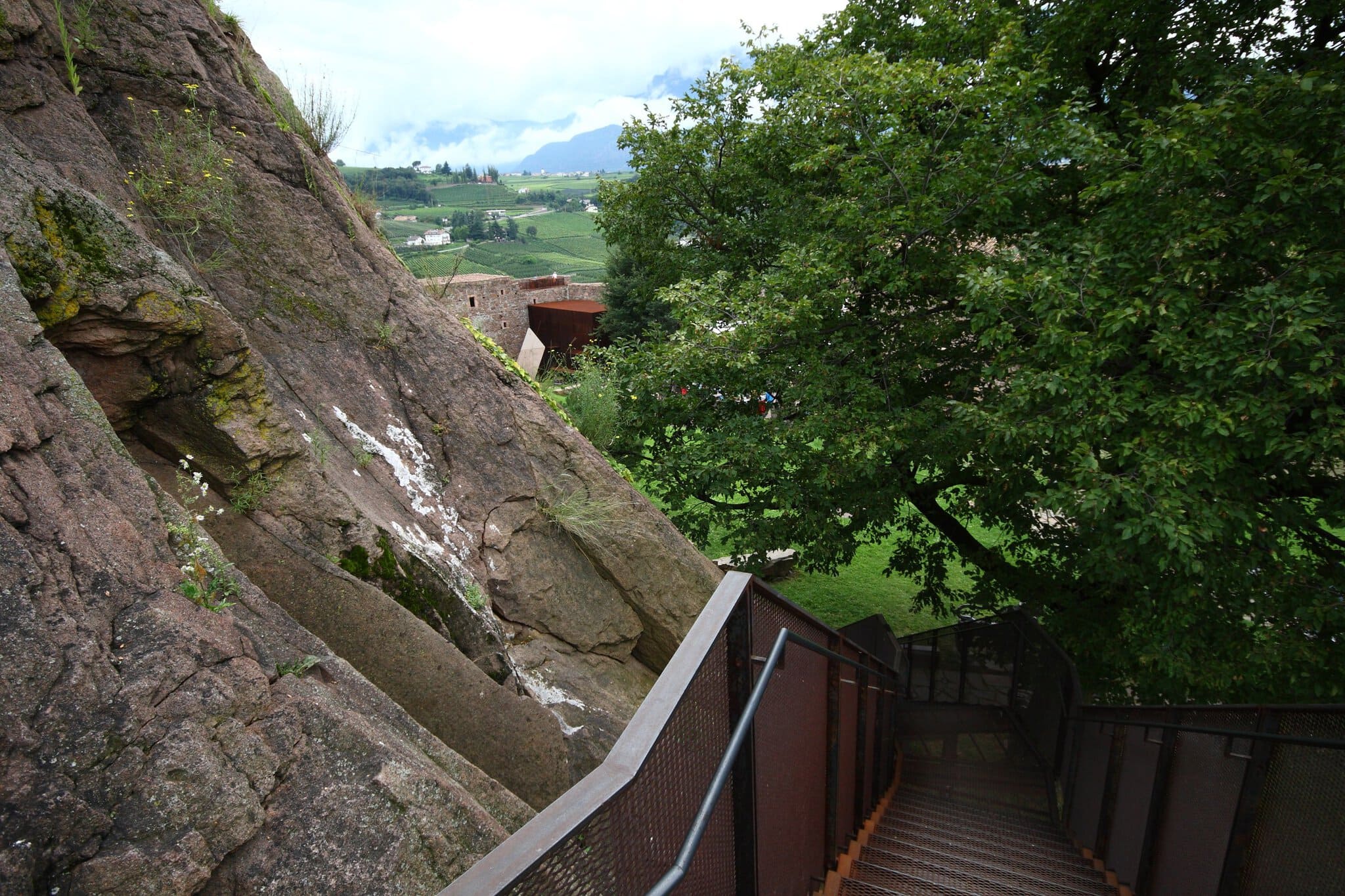
MMM Firmian is a vast complex dedicated to the relationship between humans and mountains. You’ll find outstanding exhibitions on the history of mountaineering, religion in the mountains, and a huge collection of Asian art. It’s the perfect rainy-afternoon rescue mission — little ones can nap in a carrier while you browse the exhibits in peace. Check the official MMM Firmian website for current opening hours. Allow at least half a day for the visit — it’s an architecturally stunning place that appeals even to people who never set foot on a mountain.
Map of points of interest for your phone
Where to Eat: South Tyrolean Gastronomy in Action
Being in South Tyrol and not sampling the local specialities would be a cardinal sin. The cuisine here blends an Italian love of pasta with hearty Tyrolean tradition, so portions are generous and seriously calorific — exactly what you’ll welcome after a day in the mountains.
The foundation of everything is, of course, the Knödel (dumpling). The local classic is Speckknödel made with speck ham, but the cheese version (Käseknödel) and spinach variety (Spinatknödel) are equally delicious — served either in broth or simply with a cabbage salad. Another must-try is creamy polenta with porcini mushrooms and mountain cheese. Be sure to order a local Vatschger beer with your meal, brewed nearby at the Hornschloss farmstead — it’s an unfiltered beauty.
If you’re after a specific recommendation, an excellent choice en route is Gasthof Schmiedwiesen, where the cooking is properly homely — and if you skip the Apfelstrudel after lunch, you’ll regret it. Make sure to bring home some Tre Larici cheese — best packed at the top of your suitcase so it doesn’t get squashed.
Practical Tips: What You Need to Know Before You Go
Val di Funes may seem idyllic, but there are a few important rules you absolutely must follow — otherwise your holiday could become unexpectedly expensive.
The most important warning: leave your drone at home! The entire Puez-Odle Nature Park area (including the iconic meadows by the churches) is a strict no-fly zone. Local park wardens and police patrol fairly rigorously, and if they catch you flying a drone, you’re looking at an astronomical fine of around 3,000 €. No photo is worth those nerves.
Another thing to watch out for is the ban on photography inside the churches themselves. You can snap away to your heart’s content from outside, but photographing inside is often prohibited out of respect for the sacred nature of the place — and it’s only polite to honour that. As for logistics, as I mentioned earlier, you won’t pay for road access itself, but expect a parking fee in Santa Maddalena of around 8 € per day — which, by Dolomites standards, is actually quite reasonable.
Where Else to Go in the Dolomites
Once you’ve explored Val di Funes, there are countless other amazing spots nearby. In the neighbouring Val Gardena, you’ll find the cable car up to the photogenic Seceda ridge walk. The views easily rival Val di Funes itself, and we’ve written a dedicated guide about it.
We’d also highly recommend visiting the historic town of Brixen, which is just a short drive away and offers great cafés and a lovely main square. If you’d like to explore the eastern Dolomites, check out our article on the town of Cortina d’Ampezzo, an excellent base for lakes and other celebrated hikes. And if you’re looking for a broader overview, our comprehensive Dolomites hiking guide covers the best trails for beginners and experienced hikers alike.
Final Tips and Tricks
To make planning your trip as smooth as possible, here’s a round-up of the tried-and-tested services we use on every trip — not just to Italy.
Finding Flights
If you’re not driving, look for cheap flights to Milan, Bergamo, Verona, or Venice. From the UK, airlines like easyJet, Ryanair, and Wizz Air frequently serve these airports. Use comparison sites like Skyscanner or Google Flights to snag the best fares.
Deals pop up from regional UK airports too, so it’s worth setting up price alerts a few months in advance. Even with a baby, a direct flight to Verona makes the onward drive much more manageable.
Hiring a Car
Getting around the Dolomites without a car is pretty tricky — public transport between valleys is slow and limited. We’ve had consistently good experiences using comparison sites to find the best deals from airport car hire desks.
We always try to pick up from a desk right in the terminal so we don’t have to wrangle a pushchair and luggage onto a shuttle bus. And a quick tip: always photograph the car from every angle before you drive out of the garage.
Booking Accommodation
Booking.com is our go-to hotel and apartment finder. In the Dolomites, it’s doubly true that the earlier you book, the better your options.
Alongside the big platforms, we also love browsing smaller local agriturismo websites, because the real hidden gems often aren’t listed on the major booking networks. If you spot a vacancy in peak season, don’t hesitate for a second.
 🚗 Car rental on the roadVerified rental cars in the Dolomites
Search with the DiscoverCars comparison engine — it compares prices from dozens of local and international rental companies, and most bookings come with free cancellation.
Compare car prices in the Dolomites →Don’t Forget Travel Insurance
Mountains are unforgiving, and healthcare in Italy can be expensive for visitors without proper cover. Your EHIC or GHIC card covers basic state healthcare, but for mountain rescue, repatriation, and cancellation cover, a dedicated travel insurance policy is essential. We recommend shopping around on comparison sites for the best deal.
Especially with small children and dogs, it pays not to leave anything to chance. Trip cancellation and liability cover have saved us so many times that we never leave home without insurance.
Frequently Asked Questions (FAQ)
We get loads of messages with questions about travelling to this area. Below you’ll find answers to the most common ones, which will hopefully make planning your own trip a little easier.
If you have any other questions, feel free to drop them in the comments — I’m always happy to help based on our experience of travelling around the Dolomites.
Where should I go in the Italian Dolomites?
The Dolomites are huge. For families and photographers, Val di Funes or Alpe di Siusi are ideal. For iconic treks and lakes, choose the area around Cortina d’Ampezzo, and for more upscale ski resorts, go for Alta Badia or Val Gardena.
Is there an entrance fee for Val di Funes?
No, unlike the road to Tre Cime di Lavaredo, there’s no toll to enter the valley. You only pay standard parking fees at designated car parks (around 8 EUR per day).
How long does the walk to the Santa Maddalena churches take?
From the central car park in the village, you can reach the viewpoint above the church in a leisurely 20 to 30 minutes. The path is paved and easily manageable even with a stroller.
Can I fly a drone in Val di Funes?
Absolutely not. The entire area is a strict no-fly zone due to nature protection in Puez-Odle National Park. Violations can result in astronomical fines of up to 3,000 EUR.
When’s the best time to photograph the churches?
The best light for both churches (Santa Maddalena and San Giovanni in Ranui) is early morning or late afternoon, roughly an hour before sunset, when the sun beautifully paints the mountain peaks orange.
Can we do the Adolf Munkel Weg with kids?
It depends on their age. It’s a 3 to 4-hour loop trail mostly through forest and rocky terrain at the base of the cliffs. It’s not suitable for strollers, but for older, experienced children (or with a good hiking carrier) it’s a beautiful and safe hike without much elevation gain.
What language is spoken in Val di Funes?
The valley is part of South Tyrol, so the main language is German (locals call the village Villnöß). However, you’ll have no problem communicating in Italian and of course English, as the area attracts tons of tourists.
Tips and Tricks for Your Vacation
Don’t Overpay for Flights
Search for flights on Kayak. It’s our favorite search engine because it scans the websites of all airlines and always finds the cheapest connection.
Book Your Accommodation Smartly
The best experiences we’ve had when looking for accommodation (from Alaska to Morocco) are with Booking.com, where hotels, apartments, and entire houses are usually the cheapest and most widely available.
Don’t Forget Travel Insurance
Good travel insurance will protect you against illness, accidents, theft, or flight cancellations. We’ve had a few hospital visits abroad, so we know how important it is to have proper insurance arranged.
Where we insure ourselves: SafetyWing (simple monthly subscription) and TrueTraveller (for extra-long trips).
Find the Best Experiences
Get Your Guide is a huge online marketplace where you can book guided walks, trips, skip-the-line tickets, tours, and much more. We always find some extra fun there!