

When you stand in Athens right below the Acropolis and gaze up at the majestic Parthenon, it’s incredibly easy to fall under the illusion that the ancient gods are still somewhere close by. Lukáš and I fell in love with Greece not just for its fantastic food and gorgeous beaches, but precisely because of this ever-present history that seems to breathe down your neck at every turn. This is the land where Greek mythology comes alive at every step, whether you’re strolling through the Athenian Agora, admiring the ruins at Delphi, or standing on a cliff above the stormy sea at Cape Sounion.
And let me tell you, Greek mythology and its Olympian gods, who according to legend ruled from the summit of Mount Olympus, are anything but boring. We’ll work our way through all twelve principal gods plus the mighty lord of the underworld, Hades, untangle their complicated stories, and I’ll point you towards exactly where in Greece you can still discover their sanctuaries today.
Whether you’re heading off on a summer holiday to the Greek islands, planning an adventurous road trip across the Peloponnese, or you simply want to finally sort out who was feuding with whom up on Olympus, let’s go through them one by one.
Who are the main Greek gods?
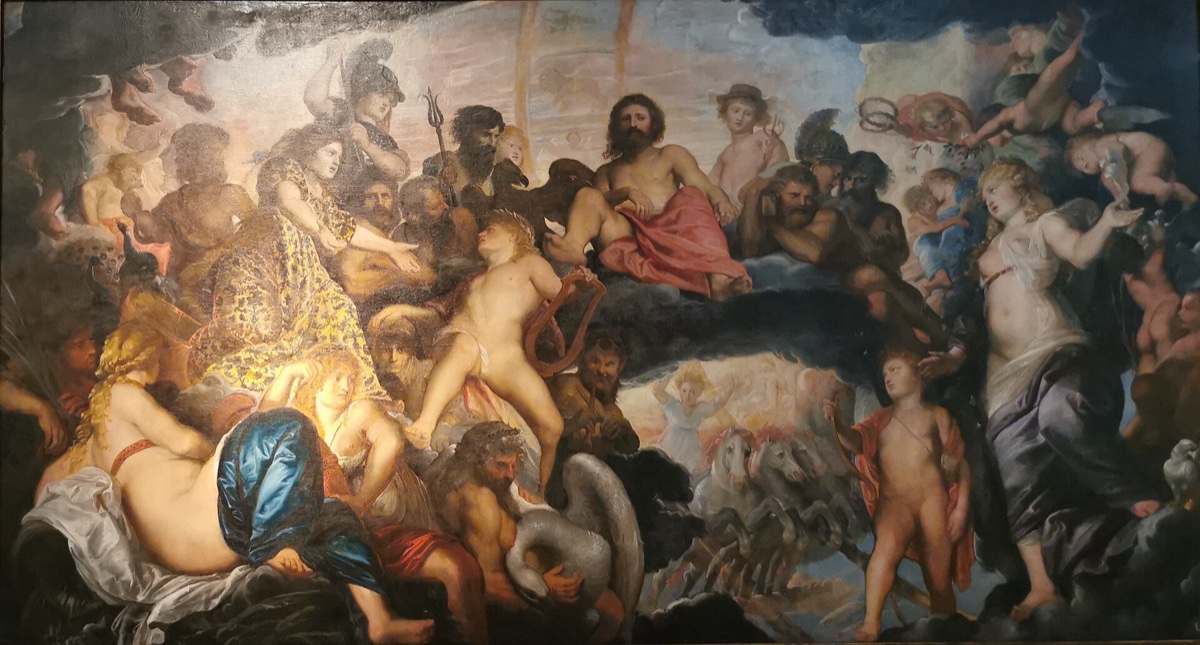
The main Greek gods make up the so-called Twelve Olympians (Dodekatheon), who according to mythology dwelled on Mount Olympus. At their head stands the mighty Zeus alongside his wife Hera, and other key figures include the god of the sea Poseidon, the goddess of wisdom Athena, the sun god Apollo, the goddess of the hunt Artemis, the goddess of love Aphrodite, the god of war Ares, the smith Hephaestus, the messenger Hermes, and the goddess of the harvest Demeter. The twelfth spot is held by either Hestia or Dionysus, while the powerful Hades rules the underworld and isn’t formally counted among the Olympian gods, since he doesn’t dwell in the heavens.
TL;DR
- There are traditionally twelve main Olympian gods, but the exact list isn’t entirely fixed (eleven names are constant, while Hestia and Dionysus share the twelfth spot).
- The most powerful god of the pantheon is Zeus, ruler of the sky and lightning, who managed to defeat the older generation of gods, the so-called Titans.
- After their great victory, the brothers Zeus, Poseidon, and Hades divided up rule over the world (Zeus took the sky, Poseidon commands the sea, and Hades the dark underworld).
- The Romans later adopted the Greek gods and gave them their own names (for example, Zeus became Jupiter, Aphrodite became Venus, and wise Athena became Minerva).
- The famous Pandora’s box is actually a translation error; in the original Greek myth it was a large clay jar called a pithos.
- The most important ancient monuments dedicated to the gods, such as the Parthenon in Athens or the famous oracle at Delphi, can still be admired in Greece today.
The 13 Most Important Gods and Goddesses of Greek Mythology
We’ll start with the mightiest Olympians and gradually work our way down to the lord of the underworld. For each god you’ll learn what they ruled over, their attributes and symbols, their best-known stories, and where the ancients built sanctuaries in their honour.
1. Zeus (Roman: Jupiter)
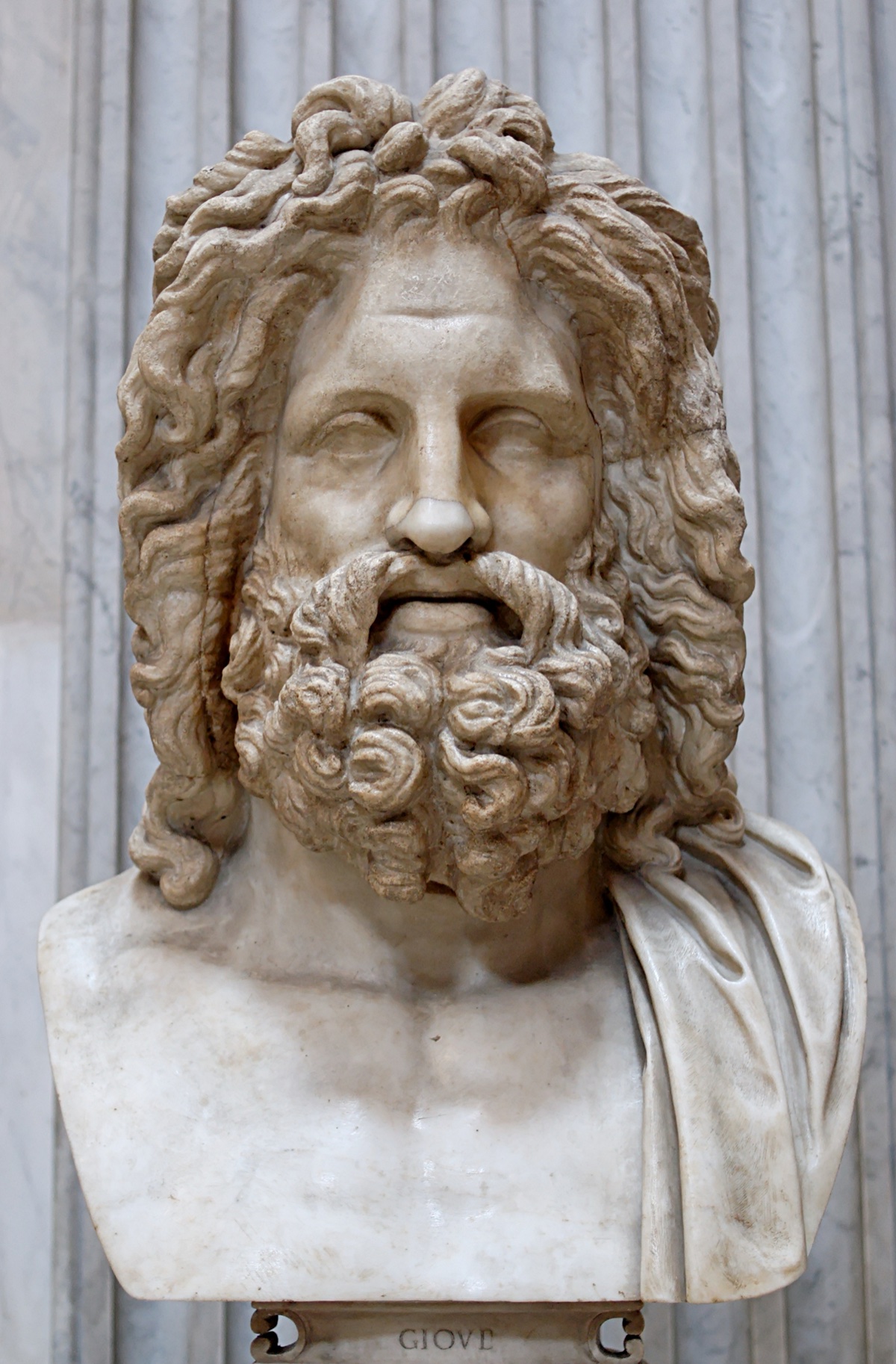
Zeus is the undisputed king of all the gods, the ruler of the sky, thunder, and lightning, who watches over justice, law, and the overall order of the world. His path to power, however, was far from easy, because he first had to overthrow his father Cronus, who had been swallowing his own children, and then lead the Olympian gods through a devastating ten-year war against the older Titans. His main symbols are, of course, the destructive thunderbolt, the eagle, the oak, and the royal sceptre.
Mythology is packed with tales of his countless love affairs, for which he took on all sorts of disguises, whether a white bull to seduce Europa or a majestic swan for Leda. In this way he became the father of many other gods and demigod heroes, including Apollo, Athena, the famous Heracles, and the beautiful Helen of Troy.
💡 Where to encounter him today: If you want to see the place of his greatest glory, head to Olympia on the Peloponnese, where the ancient Olympic Games were held in his honour and where his colossal gold-and-ivory statue, one of the Seven Wonders of the World, once stood. In the very centre of Athens you’ll find the enormous Temple of Olympian Zeus (Olympieion), of which fifteen monumental columns survive to this day.
2. Hera (Roman: Juno)
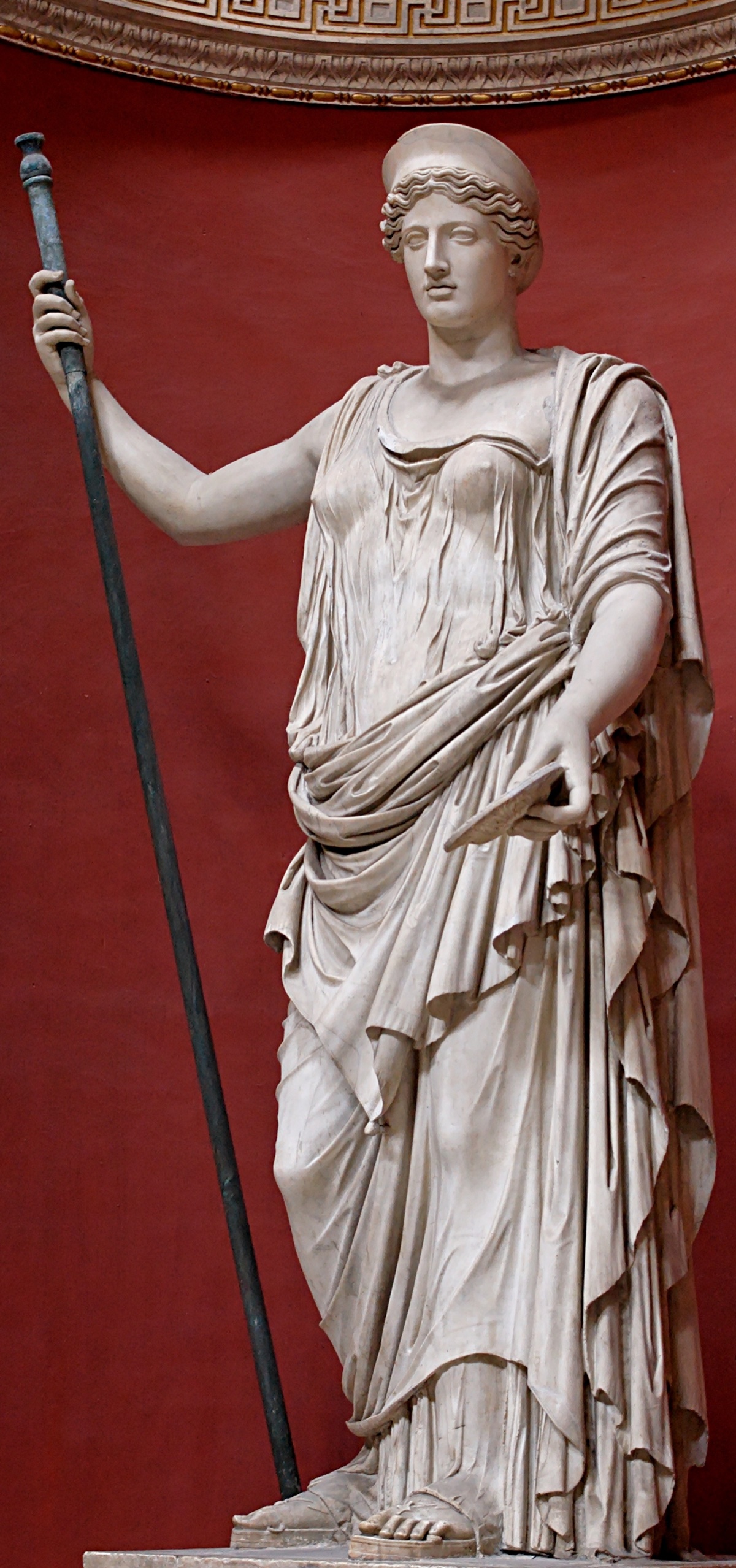
Hera is the queen of the gods, the powerful goddess of marriage, women, family, and childbirth, and at the same time the wife (and sister) of Zeus himself. In ancient art she is often depicted with a diadem or a tall crown on her head, and her best-known symbols are the peacock, the pomegranate, and the sacred cow. Her standing on Olympus was very lofty, yet her mythological life was full of constant conflict.
Most myths about Hera revolve around her immense jealousy and her persecution of Zeus’s lovers and his illegitimate children. The one who bore the brunt of her wrath was the famous hero Heracles, on whom she sent venomous snakes while he was still in the cradle and later set him his legendary twelve labours. Hera also played a key role in the so-called Judgement of Paris, the quarrel over the golden apple for the most beautiful goddess, which ultimately led to the outbreak of the Trojan War.
💡 Where to encounter her today: You can admire the remains of her ancient cult on the island of Samos, home to the Heraion, one of the oldest monumental Greek temples. A very old temple dedicated to Hera can also be seen in the archaeological site at Olympia mentioned above, where it stands right next to the sanctuary of her husband Zeus.
3. Poseidon (Roman: Neptune)
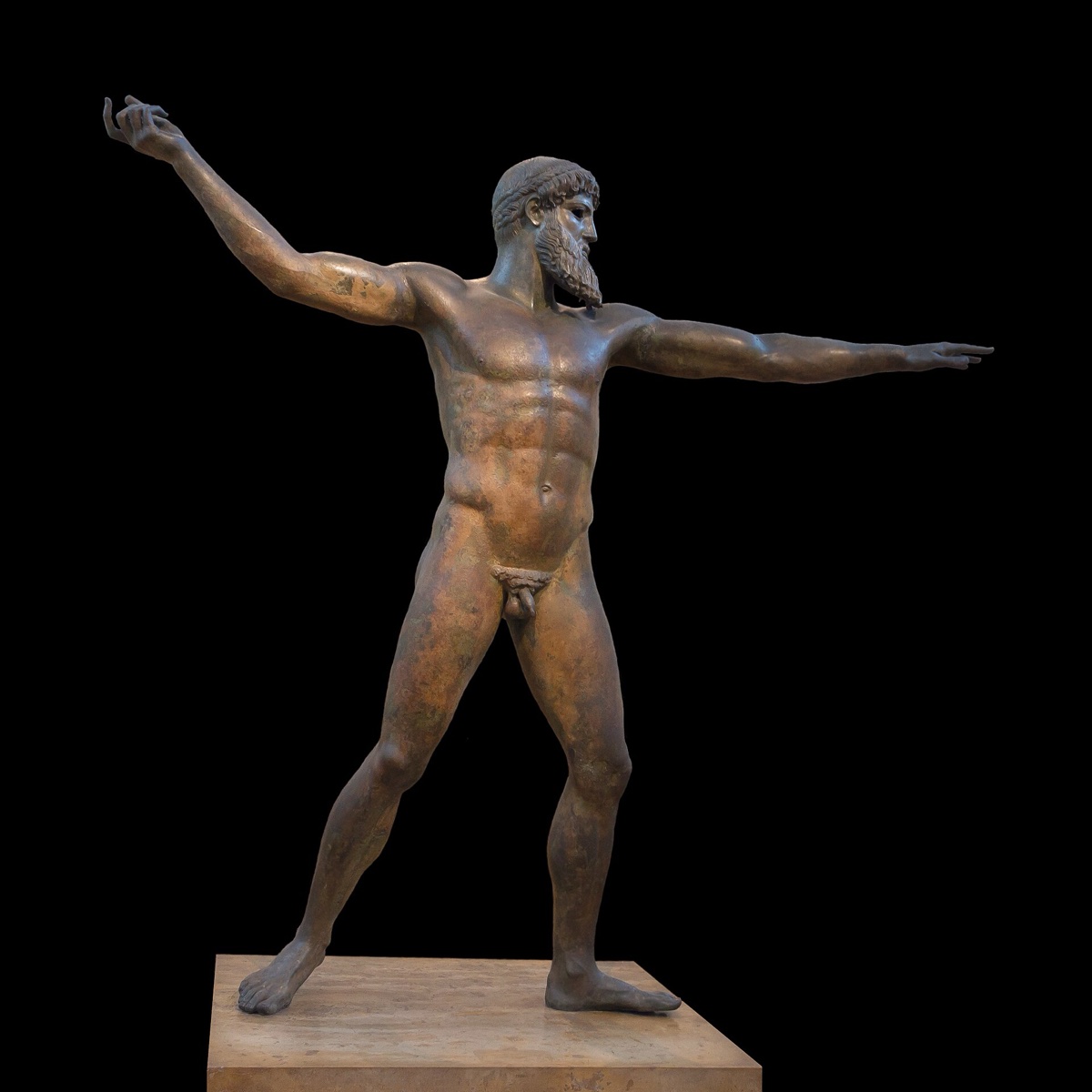
The mighty ruler of all the oceans, Poseidon, is the god of the sea, storms, destructive earthquakes, and also horses. As Zeus’s brother, he gained dominion over the watery realm after the defeat of the Titans and became one of the most feared gods, since the lives of all sailors depended on his mood. You’ll spot him easily by his iconic trident, with which he could whip up the sea’s waves or split a rock, and his symbols also include the dolphin, the horse, and the bull.
One of the most famous myths tells of his rivalry with the goddess Athena for control of Athens, when he gifted the city a salt spring while Athena offered the olive tree, and thanks to the more practical gift she ultimately won. Poseidon also features prominently in Homer’s Odyssey, where he relentlessly pursued the hero Odysseus with storms and left him wandering the sea for ten years as revenge for blinding his son, the Cyclops Polyphemus.
💡 Where to encounter him today: Definitely don’t miss the Temple of Poseidon at Cape Sounion, which lies about 70 kilometres southeast of Athens. This marble Doric temple perches on a dramatic cliff high above the Aegean Sea and still offers some of the most beautiful sunsets in all of Greece.
4. Demeter (Roman: Ceres)
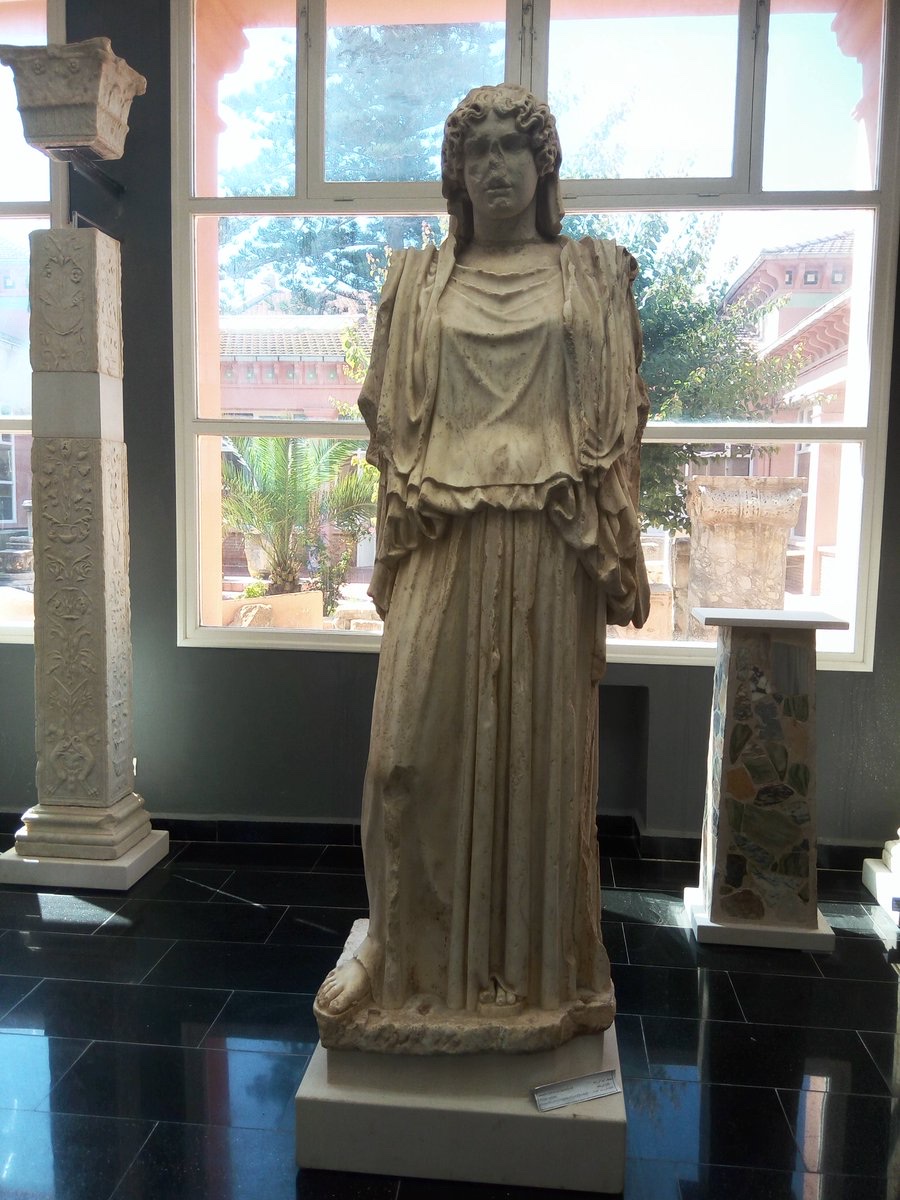
Demeter is an absolutely key goddess of the harvest, agriculture, grain, and the fertility of the earth, on whom the survival of all of ancient Greece depended. She made sure the fields yielded a bountiful crop, and her main attributes are therefore logically a sheaf of grain, a cornucopia, a torch, and poppy flowers. One of the most beautiful and profound myths is linked to her, one that explained to ancient people the changing of the seasons.
The myth tells how the lord of the underworld, Hades, abducted her beloved daughter Persephone, after which a grief-stricken Demeter let all the fields lie barren and a terrible famine fell upon the world. Zeus eventually had to step in and broker a compromise, by which Persephone spends part of the year in the underworld (when Demeter mourns and it is winter) and the rest of the year on earth with her mother (when nature blooms and spring and summer arrive).
💡 Where to encounter her today: The main centre of her worship was Eleusis (modern-day Elefsina) in Attica, where the so-called Eleusinian Mysteries were held. These were secret initiation rites promising a happy afterlife, and you can walk through their ruins in this archaeological site near Athens even today.
5. Athena (Roman: Minerva)
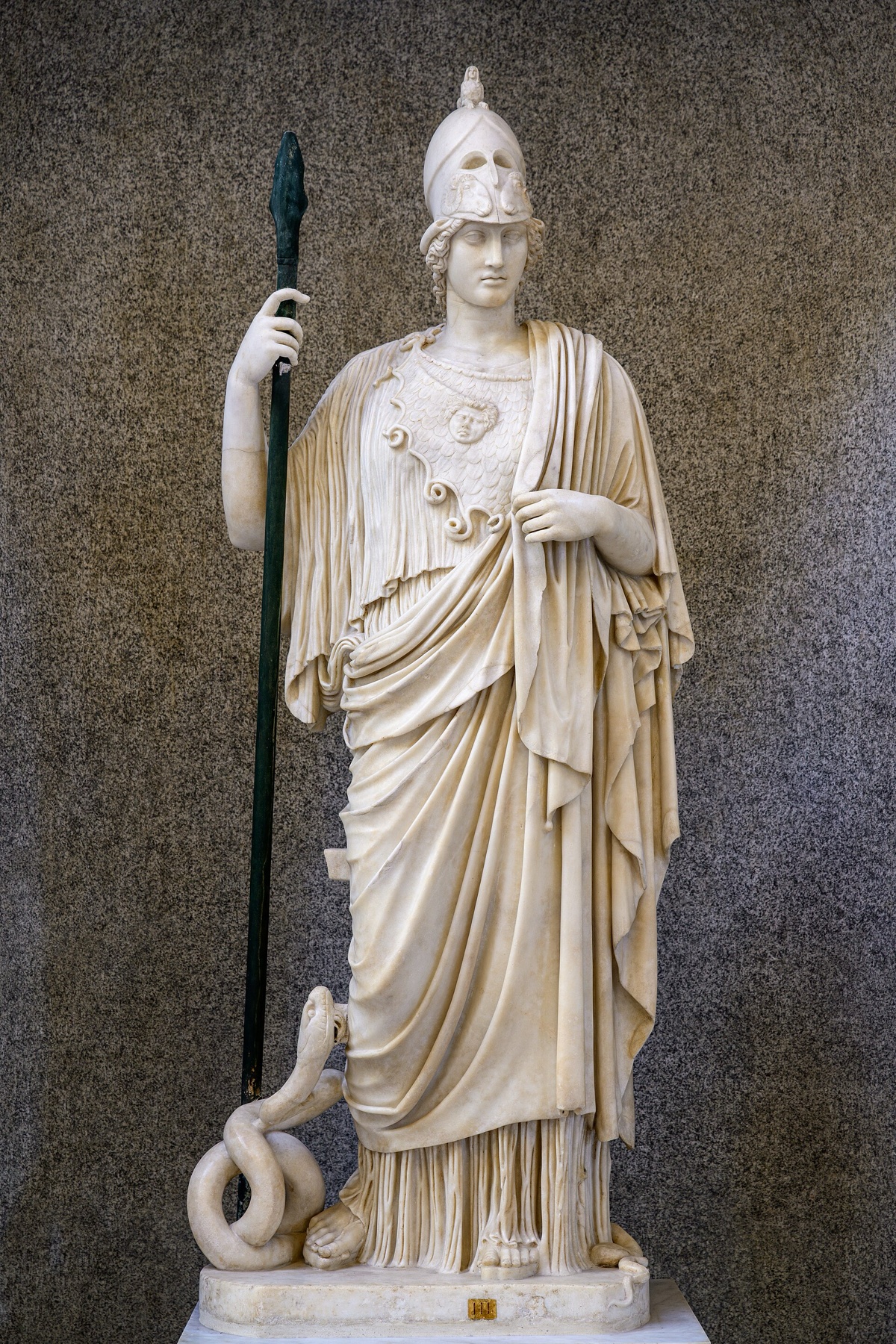
Athena is one of the most revered Olympian deities, the goddess of wisdom, strategic warfare, crafts, and the arts, and of course the proud patron of the city of Athens. Unlike Ares, who represented raw bloodshed, Athena embodied clever military tactics and fair combat. You’ll always recognise her by her symbols: the wise owl, the olive tree, the war helmet, the spear, and a special shield (the aegis) bearing the head of the terrifying Medusa.
Her birth is utterly unique, because according to legend she sprang straight from Zeus’s head, already fully grown and in full armour, after Zeus swallowed her pregnant mother Metis. She was the protector of many ancient heroes, and besides winning her dispute with Poseidon over control of Athens, she’s also famous for punishing the mortal Arachne, whom she turned into the first spider for boasting about her weaving (though this version of the myth is just one of many variants).
💡 Where to encounter her today: There’s no more iconic place than the Athenian Acropolis, where the monumental Parthenon proudly rises. This breathtaking marble temple was dedicated to the cult of Athena Parthenos (Athena the Virgin) and represents the absolute pinnacle of classical Greek architecture.
6. Apollo (Roman: Apollo)
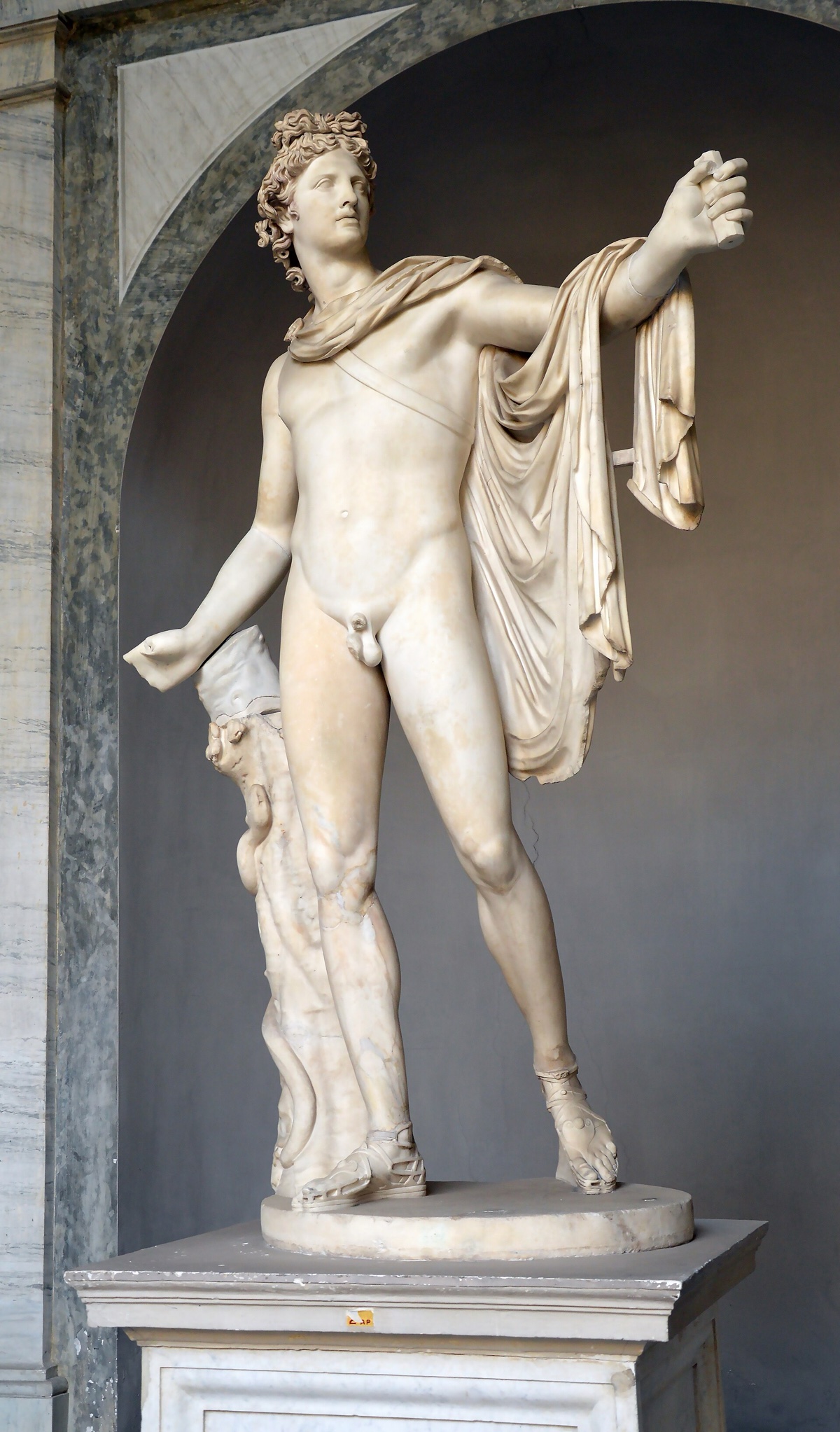
Apollo, son of Zeus and the goddess Leto, is an incredibly versatile god of music, poetry, prophecy, healing, archery, and radiant sunlight. He was one of the most popular gods of antiquity and, as an ideal of male beauty, was often portrayed as a beardless youth. His unmistakable attributes include the golden lyre (kithara), the silver bow with a quiver full of arrows, and the laurel wreath.
Mythology says he gained his exalted position after slaying the enormous serpent Python at Delphi, where he then founded his most famous oracle. Although he was the god of beauty, he often had bad luck in love, as shown by the famous myth of the nymph Daphne, who begged to be turned into a laurel tree rather than endure his relentless pursuit (which is why the laurel is Apollo’s sacred tree).
💡 Where to encounter him today: If you want to experience the true mystique of antiquity, head to the Sanctuary of Apollo at Delphi, set on the stunning slopes of Mount Parnassus. Here you can see the ruins of Apollo’s temple, where the famous Pythia once delivered her prophecies, as well as a magnificent ancient theatre and stadium.
7. Artemis (Roman: Diana)
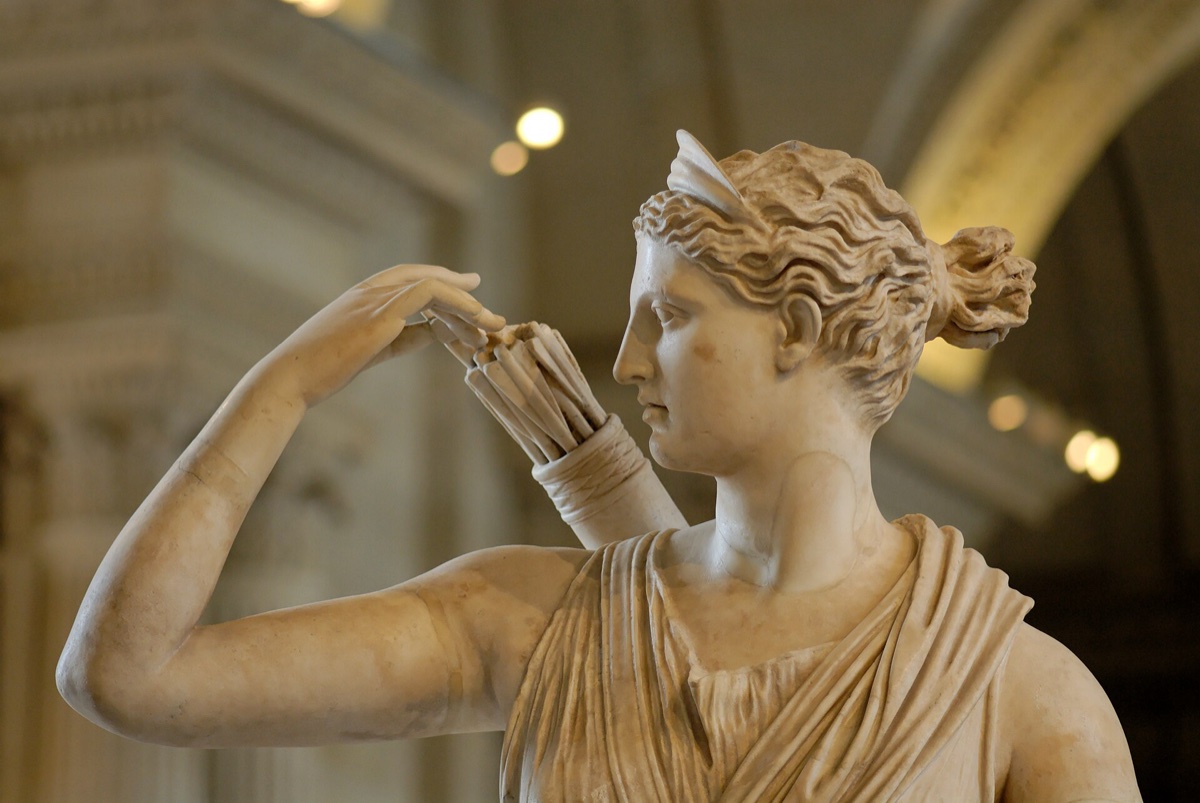
Artemis is Apollo’s twin and in the Greek pantheon she takes on the role of the goddess of the hunt, wild nature, wild animals, and virginity, and was later also associated with the magic of the Moon. Despite being a virgin goddess, she was paradoxically also regarded as a protector of women in childbirth. She roamed the forests accompanied by her nymphs, and her symbols are the bow, arrows, quiver, a forest deer or stag, and the crescent moon.
Myths often portray her as an uncompromising and stern goddess who harshly punished anyone who offended her. There’s the well-known tale of the hunter Actaeon, who by unfortunate chance caught sight of her bathing naked, for which she turned him into a stag and let his own hunting dogs tear him apart. Just as cruelly, together with her brother Apollo, she took revenge on Queen Niobe, whose children they all killed because she had boasted of having more than their mother Leto.
💡 Where to encounter her today: Her most famous building was the breathtaking Temple of Artemis at Ephesus in modern-day Turkey, one of the Seven Wonders of the ancient world. In present-day Greece you can visit the remains of her sanctuary at Brauron in the scenic region of Attica.
8. Ares (Roman: Mars)
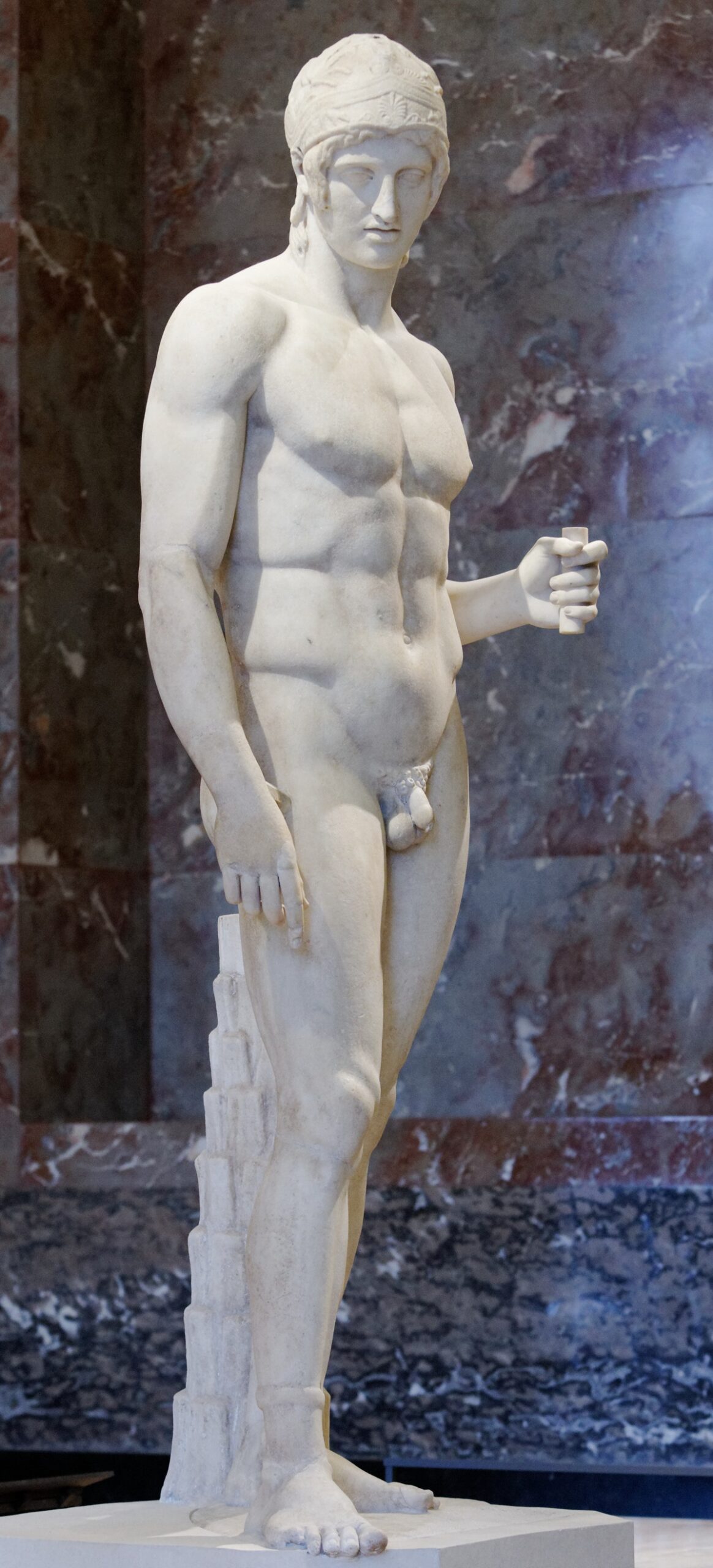
While Athena represented clever warfare, Ares was the god of raw violence, bloodshed, battle frenzy, and uncontrollable rage. As the son of Zeus and Hera, he was not particularly popular among the other gods or with ordinary Greeks, because he embodied the worst of armed conflict. His warlike attributes are above all the spear, helmet, heavy shield, sword, and animals such as the dog and the vulture.
His favourite pastime was stirring up fights, and he took part in the legendary Trojan War, where he was utterly humiliated when wise Athena and the hero Diomedes ignominiously drove him from the battlefield. He’s also known for his long-running love affair with the beautiful Aphrodite, which ended in an enormous scandal when her husband Hephaestus caught the pair in an invisible metal net and then exposed them to the ridicule of all Olympus.
💡 Where to encounter him today: Right below the Athenian Acropolis stands a massive rocky hill called the Areopagus, where according to myth Ares was tried by the other gods for murder. On the nearby ancient Agora once stood the Temple of Ares, which was moved here during Roman times.
9. Aphrodite (Roman: Venus)
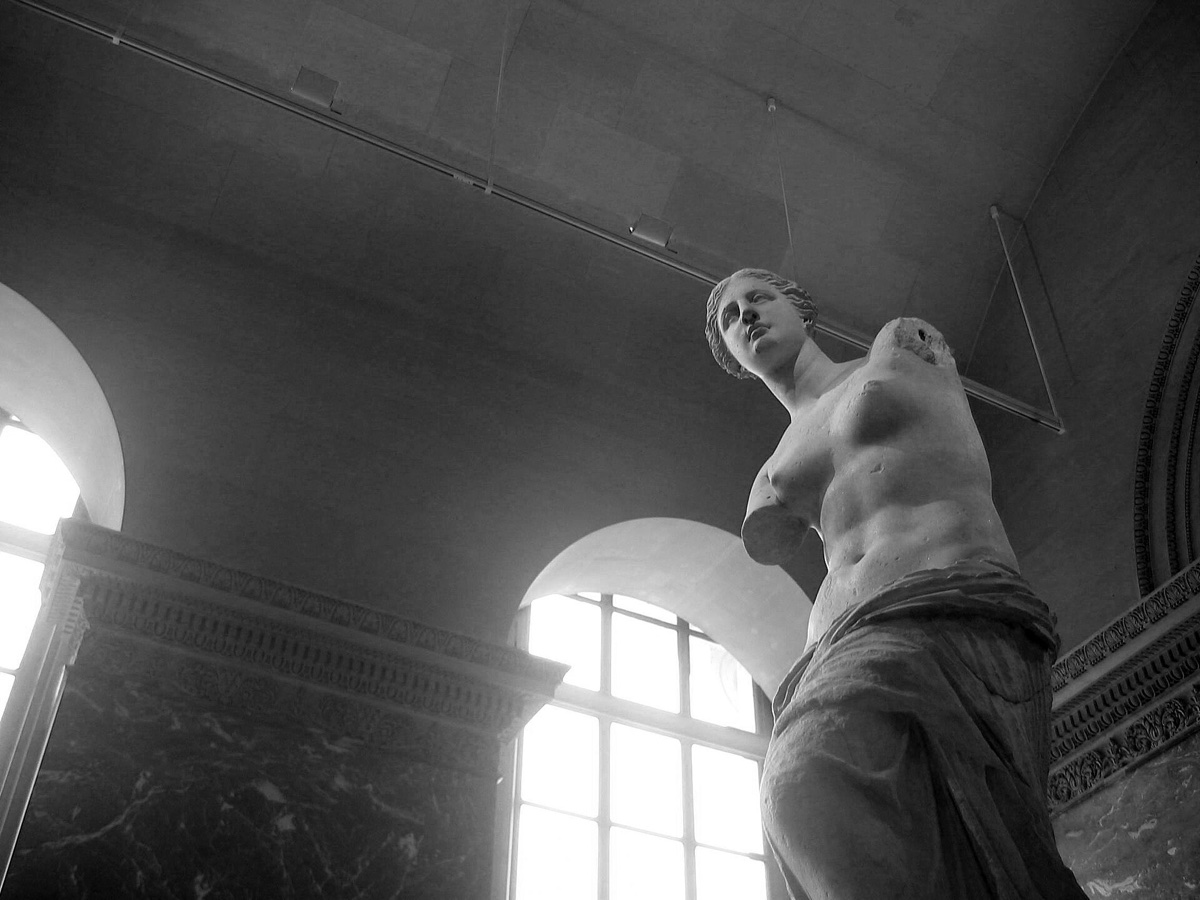
The beautiful Aphrodite is the Olympian goddess of love, beauty, desire, and fertility, who could enchant not only the gods but ordinary mortals too. Her best-known symbols reflect her delicacy and grace, including the white dove, the rose, a sprig of myrtle, the seashell, and a little sparrow. There are two different versions of her origin. According to one she is the daughter of Zeus and the goddess Dione, while in the more famous version by Hesiod she rose from the sea foam near the island of Cyprus.
Her influence on human fate was enormous and often deeply destructive. It was Aphrodite who, in the Judgement of Paris, promised the Trojan prince Paris the most beautiful woman in the world, Helen, thereby effectively unleashing the devastating Trojan War directly. Famous too is her tragic myth of the handsome youth named Adonis, whom she loved and who died on a hunt after being attacked by a boar. From his spilt blood, legend says, the first fragile anemones grew.
💡 Where to encounter her today: If you want to visit the supposed site of her birth, head to Cyprus and the so-called Aphrodite’s Rock. Cyprus was also home to the ancient Sanctuary of Aphrodite at Palaepaphos (modern-day Kouklia), and an important temple of hers once stood on the summit of the Acrocorinth fortress in mainland Greece.
10. Hephaestus (Roman: Vulcan)
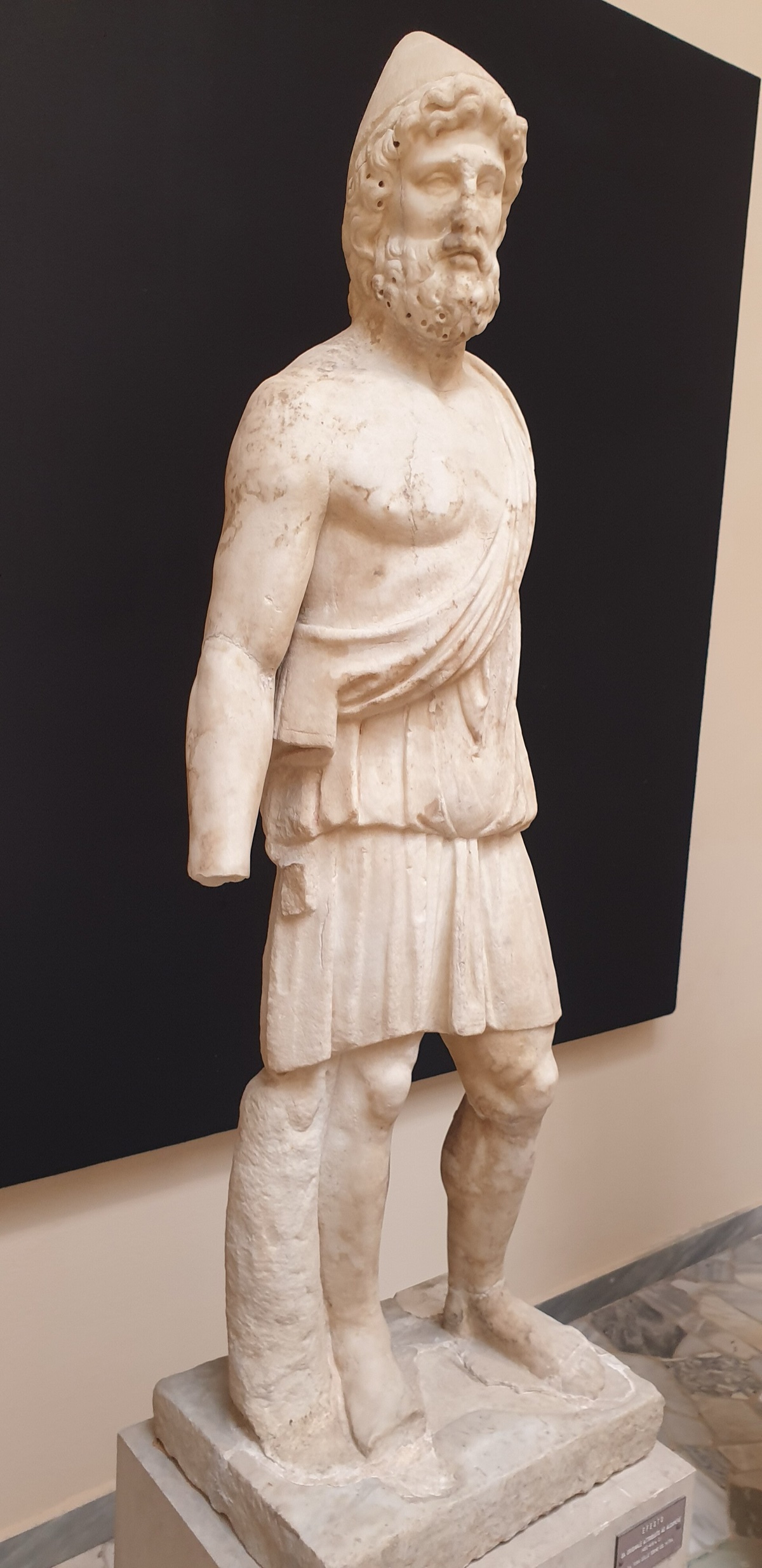
Hephaestus was the indispensable god of fire, metalworking, crafts, and volcanoes, who served as the court armourer and divine smith for all of Olympus. He forged not only perfect weapons for the gods but also magnificent palaces and magical objects. His symbols are entirely practical, including the blacksmith’s hammer, the massive anvil, and tongs. He differed from the other flawless gods in that he was lame.
There are two versions of how he was injured: according to one, his mother Hera threw him off Olympus because of a congenital defect, while in the other mighty Zeus threw him down when Hephaestus stood up for his mother, after which the smith crashed hard onto the island of Lemnos. He later took revenge on his mother by crafting a golden throne with invisible bindings, from which he refused to release her until he had forced his official acceptance back among the Olympian gods.
💡 Where to encounter him today: In Athens, on the edge of the ancient Agora, rises the Hephaisteion (Temple of Hephaestus). It’s an amazing experience, because this is one of the best-preserved Greek temples in the world, having retained most of its original columns and roof.
11. Hermes (Roman: Mercury)
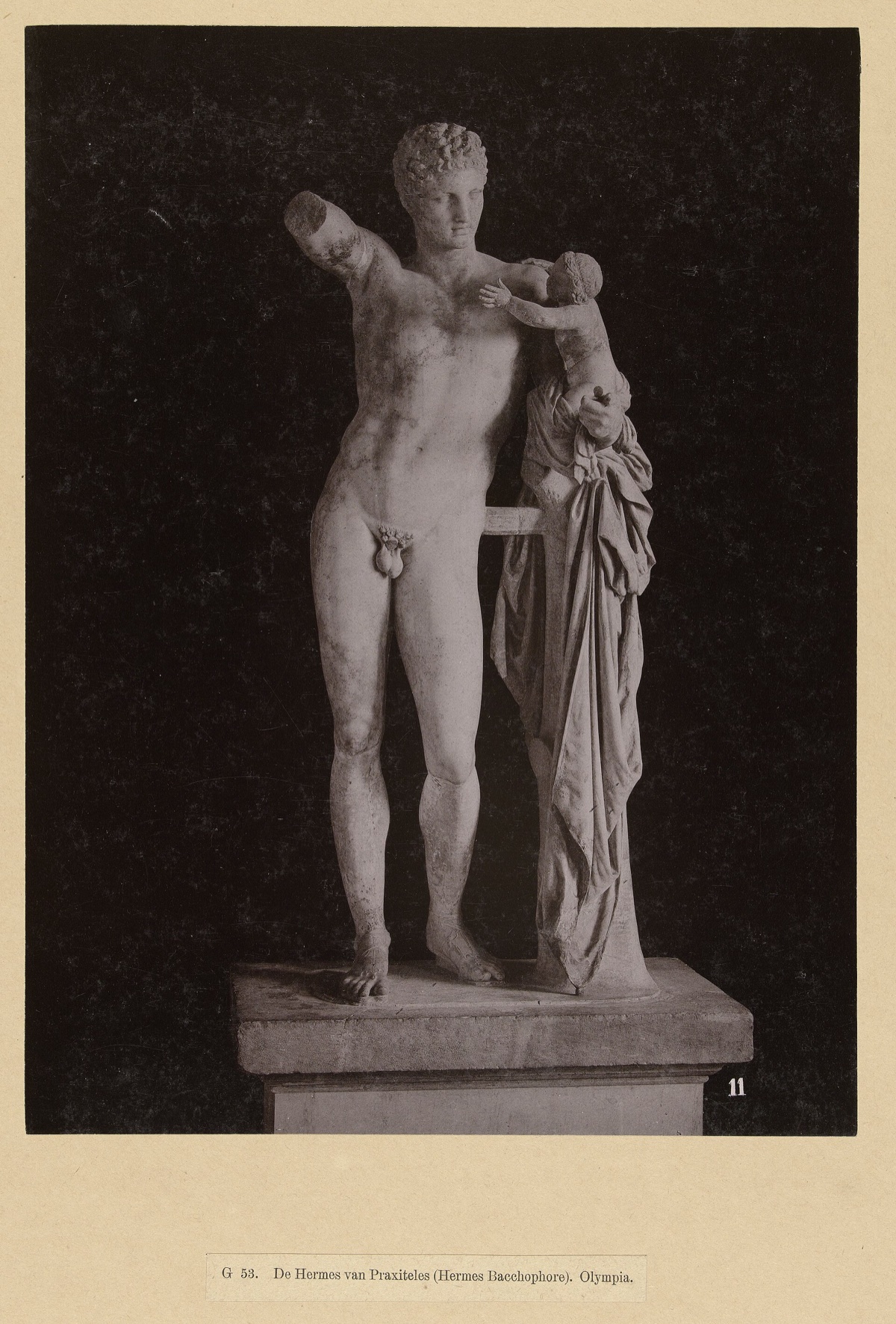
The swift and cunning Hermes served above all as the messenger of the gods, but he was also the god of travel, commerce, thieves, border crossings, and eloquence. He held the important role of the so-called psychopomp, which means he acted as a guide for the souls of the dead into the dark underworld. His appearance is utterly iconic: he always carries the caduceus (a winged staff with two entwined snakes), the petasos hat, and winged sandals on his feet.
He was a great trickster from birth. According to myth, as a newborn he stole the sacred herd of cattle from the god Apollo and then lightning-fast fashioned the first lyre from a tortoise shell, which he subsequently gave to Apollo to make peace with him. He also became famous for slaying the hundred-eyed giant Argus on Zeus’s orders, who had been guarding one of Zeus’s lovers turned into a cow.
💡 Where to encounter him today: In ancient Greece you’ll come across his traces everywhere in the form of so-called herms, stone pillars that served as signposts and boundary markers. One of his oldest sanctuaries stood on Mount Cyllene in the Arcadia region, where legend says he was born.
12. Hestia (Roman: Vesta) or Dionysus (Roman: Bacchus)
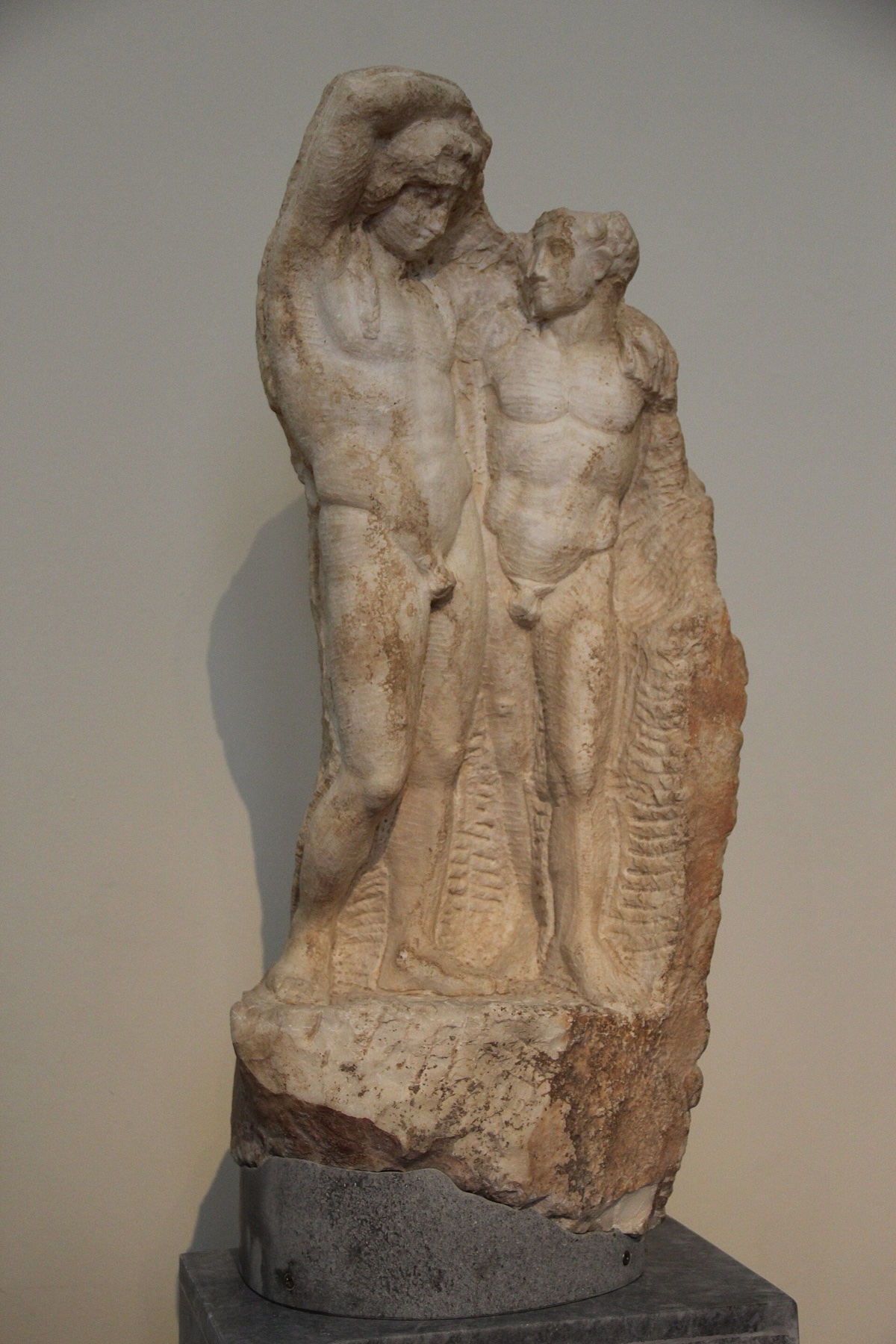
Two entirely different deities share the twelfth spot on Olympus in mythological lists. According to the older tradition, the place belongs to Hestia, goddess of the hearth, fire, family, and home. She was a virgin goddess and the eldest daughter of Cronus, who tended the sacred fire. According to a later tradition, however, as the immovable hearth she didn’t take part in the divine processions, and so her place among the twelve was often taken by Dionysus. (The modern notion that Hestia voluntarily gave up her seat on the throne to him is a modern invention, not an ancient myth.)
Dionysus was the god of wine, winemaking, ecstasy, and theatre. He was unique in that he was the only Olympian with a mortal mother (the princess Semele) and the youngest of all the gods. His symbols are the grapevine and the thyrsus (a staff wound with ivy). The myth of his birth tells how, when his mother died, Zeus carried the unborn child sewn into his own thigh, so that Dionysus was born twice.
💡 Where to encounter them today: Hestia was honoured by the so-called prytaneion (the town hall sanctuary) with its eternal flame in every Greek city. Dionysus, meanwhile, you can celebrate with a visit to the Theatre of Dionysus, which lies right on the southern slope of the Athenian Acropolis and is considered the very cradle of ancient drama.
13. Hades (Roman: Pluto)
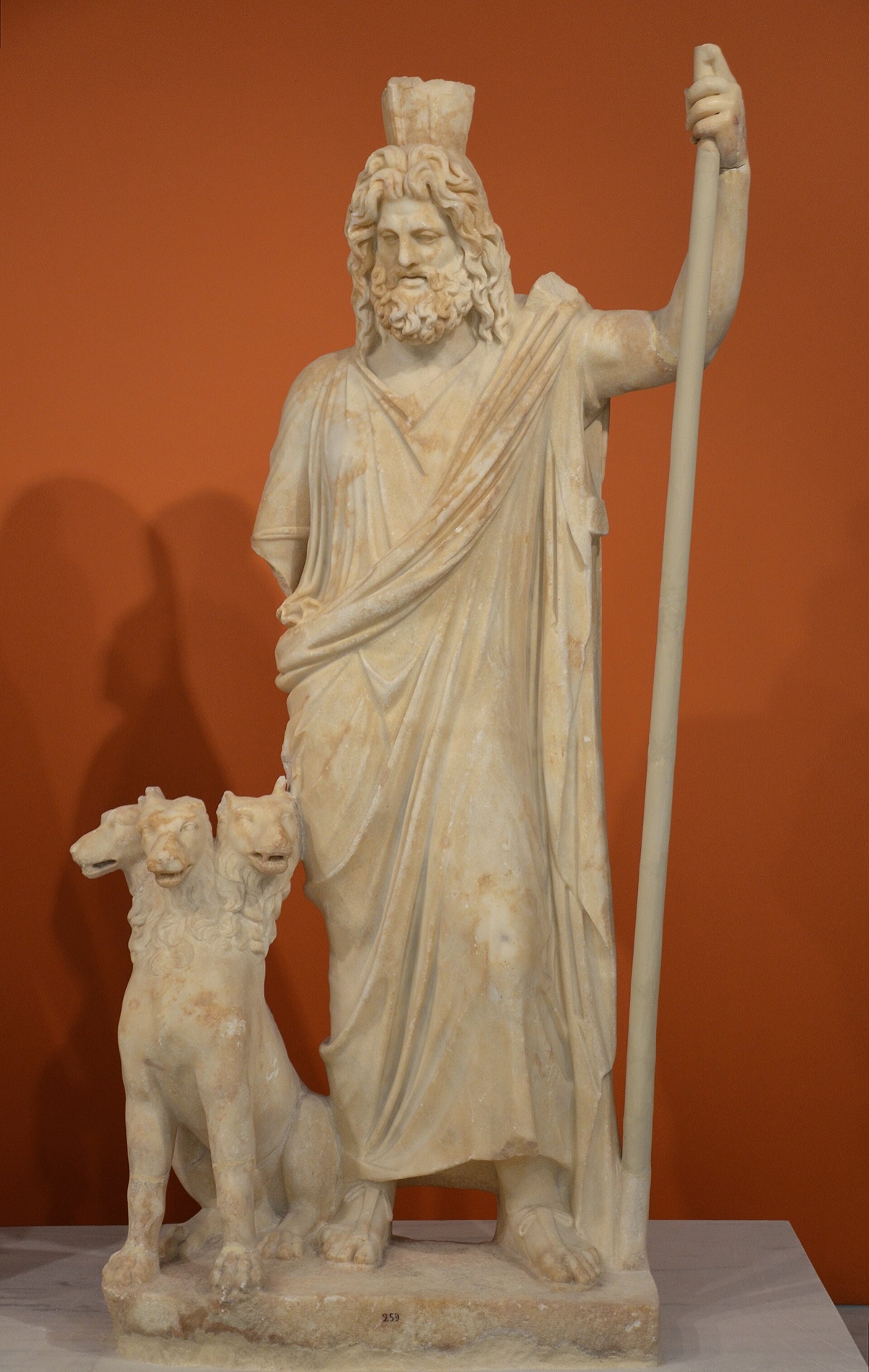
Although Hades isn’t counted among the twelve Olympian gods (because he doesn’t dwell on Olympus), he is an absolutely fundamental figure of Greek mythology. He is the brother of Zeus and Poseidon, the dark god of the dead, lord of the underworld and of subterranean wealth. The Greeks were afraid even to speak his name, so they often called him Plouton (“the Wealthy One”), since grain and precious metals came from beneath the earth. His main attributes are the helmet of invisibility and the terrifying three-headed dog Cerberus, who guards the gates to the realm of the dead.
His most famous story is the already-mentioned abduction of the goddess Persephone, whom he chose as his wife and carried off to his dark realm. Hades wasn’t seen as pure evil (unlike the Christian concept of hell), but rather as a strict, relentless, and just keeper of souls, from whom there is no escape.
💡 Where to encounter him today: His cult wasn’t very widespread, but in the Epirus region you can still find the archaeological site of the Necromanteion near the river Acheron. In antiquity this mysterious place was considered a genuine physical gateway to the underworld, where people went to commune with the souls of the dead.
A Handy Comparison Table
When the Romans conquered ancient Greece, they adopted the entire pantheon but gave the deities their own Latin names. Here’s a clear comparison of the main figures:
| Greek name | Roman name | God / goddess of | Main symbol |
|---|---|---|---|
| Zeus | Jupiter | sky, lightning, king of gods | thunderbolt, eagle |
| Hera | Juno | marriage, family | peacock, pomegranate |
| Poseidon | Neptune | sea, earthquakes, horses | trident |
| Demeter | Ceres | harvest, agriculture | sheaf of grain |
| Athena | Minerva | wisdom, strategy, crafts | owl, olive tree |
| Apollo | Apollo | music, prophecy, light | lyre, bow, laurel |
| Artemis | Diana | hunt, wilderness, the Moon | bow, deer |
| Ares | Mars | war, violence | spear, helmet |
| Aphrodite | Venus | love, beauty | dove, rose |
| Hephaestus | Vulcan | fire, metalworking | blacksmith’s hammer |
| Hermes | Mercury | messenger, commerce, travel | caduceus staff |
| Hestia | Vesta | hearth, family | hearth and fire |
| Dionysus | Bacchus | wine, theatre, ecstasy | grapevine |
| Hades | Pluto | underworld, the dead, wealth | dog Cerberus, helmet |
Fascinating Facts and Records from Greek Mythology
Before we say goodbye, let’s clear up a few things about the Greek gods that seem to intrigue just about everyone.
Titans vs. the Olympian generation
People often mistakenly assume the Olympian gods had always existed. In reality they were preceded by an older generation of gods called the Titans, who were the children of the primordial pair Gaia (Earth) and Uranus (Sky). Among them were figures such as Cronus and Rhea. The Olympians are actually their descendants, a younger generation that rebelled against their creators and, after a brutal struggle, took over rule of the world.
The ten-year Titanomachy
A key moment in mythology is the Titanomachy, an immense ten-year war between the old Titans and the young Olympians led by Zeus. The Olympian gods were greatly aided in battle by the terrifying Cyclopes, who forged Zeus’s first thunderbolts. After the Olympians’ crushing victory, the defeated Titans were cast into the deep abyss of Tartarus, and the giant named Atlas was given the cruel punishment of forever holding the entire vault of heaven on his shoulders.
The heroic Prometheus
The Titan Prometheus was a great friend of humankind, which according to some ancient sources he even created himself from clay. His most famous deed was that he stole fire from the gods, hidden in a hollow stalk, and gave it to humans, enabling them to survive and develop. The furious Zeus had him chained to a rock in the Caucasus mountains for this, where a giant eagle devoured his liver every day, only for it to regrow overnight, until he was finally freed by the mighty Heracles.
“Pandora’s box” is a mistake
As punishment for Prometheus’s theft of fire, Zeus had the first woman created, the beautiful Pandora. The gods gave her a mysterious vessel and forbade her to open it. The curious Pandora disobeyed, opened the vessel, and thereby released all the diseases, pains, and evils into the world, with only Hope remaining inside. Interestingly, the famous term “Pandora’s box” is a huge translation error. The original Greek texts speak of the word pithos, which means a large clay storage jar, not a small box.
The creation of the world from Chaos
According to Hesiod’s famous Theogony (Birth of the Gods), at the very beginning of everything stood only Chaos, a gaping void. From it other primordial forces then gradually emerged, such as Gaia (Mother Earth), dark Tartarus, and Eros (Love). From Gaia herself rose Uranus (Sky) and the deep seas, and only from the union of Earth and Sky was the first generation of Titans born.
Mount Olympus is real
The home of the gods isn’t just an imaginary place in the clouds. Mount Olympus lies on the border of Thessaly and Macedonia and is a completely real, and the highest, mountain massif in all of modern Greece. Its highest peak, Mytikas, soars to an impressive 2,917 metres above sea level. Today it’s a protected national park where you can set off on a superb high-mountain hike.
A travel note: Many tourists often mistakenly associate the Meteora complex in Thessaly with the ancient gods, but although these monasteries perched on sandstone pinnacles look absolutely otherworldly, they have nothing to do with ancient mythology. They are medieval Christian and Byzantine monuments dating only from the 14th century.
Frequently Asked Questions
Who is Zeus?
Zeus is the supreme Greek god, the mighty king of all gods and the unlimited ruler of the sky, lightning and thunder. He resided on the majestic Mount Olympus and his main symbols are the thunderbolt, the eagle and the oak tree. The Romans later identified him with their god Jupiter.
Who is Athena?
Athena is one of the most revered deities, goddess of wisdom, strategic warfare and artistic crafts, and also the patron of the city of Athens. She was born directly from Zeus’s head in full armor, her symbols are the owl and the olive tree, and the famous Parthenon is dedicated to her.
Who ruled the underworld?
The dark underworld was ruled by Hades (Roman Pluto), who was the brother of Zeus and Poseidon. He’s not usually counted among the twelve Olympian gods, because he doesn’t reside on celestial Mount Olympus, but permanently in the underworld. The gates to his realm are guarded by the terrifying three-headed dog Cerberus.
How many children did Zeus have?
Ancient myths attribute to Zeus literally dozens of offspring with various goddesses and ordinary mortal women, so the exact number varies from source to source and no fixed number exists. Among his most famous children are Athena, Apollo, Artemis, Hermes, Dionysus, Persephone, the hero Heracles, and the beautiful Helen of Troy.
What’s the difference between Greek and Roman mythology?
The Romans, after conquering Greece, largely adopted the Greek gods and their complex stories, but gave them their own Latin names (for example, they turned Zeus into Jupiter and Aphrodite into Venus). The Greeks humanized the gods more and developed their stories, while the Romans placed far greater emphasis on formal rituals, the state, and military virtue.
Who were the Titans?
The Titans represented the older generation of powerful gods, they were the giant children of the primordial Gaia (Earth) and Uranus (Sky), among whom were Kronos and Rhea. The Olympians bloodily defeated them in a massive war called the Titanomachy and subsequently cast them into the dark abyss of Tartarus.
What is Mount Olympus?
It’s not just a mythological place, but a real and the highest mountain in Greece with the peak Mytikas, which measures 2,917 meters. Located on the border of Thessaly and Macedonia, in ancient myths it served as the seat of the twelve main gods and today it’s a magnificent national park with hiking trails.
Who was Pandora?
Pandora was the very first woman, created by the god Hephaestus on Zeus’s strict command as a cruel punishment for mankind. Curiously, she opened the mysterious vessel (Greek: pithos) and released all imaginable evils into the world, with only Hope remaining inside. The term “Pandora’s box” arose from a later translation error.
Who was Prometheus?
Prometheus was a benevolent Titan who, despite a strict prohibition, stole fire from the gods and gave it to ordinary people. Zeus mercilessly punished him for this by chaining him to a high rock, where a giant eagle daily devoured his constantly regenerating liver, until Heracles freed him after centuries.
Why do the seasons change?
Ancient Greeks explained the changing of seasons through the abduction of Persephone by Hades, the ruler of the underworld. When Persephone spends part of the year down in the underworld, her mother Demeter (goddess of harvest) mourns and barren winter reigns on earth, while her return to earth symbolizes the arrival of blossoming spring and warm summer.
Tips and Tricks for Your Vacation
Don’t Overpay for Flights
Search for flights on Kayak. It’s our favorite search engine because it scans the websites of all airlines and always finds the cheapest connection.
Book Your Accommodation Smartly
The best experiences we’ve had when looking for accommodation (from Alaska to Morocco) are with Booking.com, where hotels, apartments, and entire houses are usually the cheapest and most widely available.
Don’t Forget Travel Insurance
Good travel insurance will protect you against illness, accidents, theft, or flight cancellations. We’ve had a few hospital visits abroad, so we know how important it is to have proper insurance arranged.
Where we insure ourselves: SafetyWing (simple monthly subscription) and TrueTraveller (for extra-long trips).
Find the Best Experiences
Get Your Guide is a huge online marketplace where you can book guided walks, trips, skip-the-line tickets, tours, and much more. We always find some extra fun there!


