

Poland offers an incredible variety of destinations — from the bustling Baltic coast and historic cities to the majestic Tatras. But if you’re looking for a region that hasn’t yet been overrun by mass tourism, set your sights on the country’s far southeastern corner. Ask any Pole about true wilderness and they’ll instantly point you towards Bieszczady Poland — a remote, rugged corner of the Eastern Carpathians that feels like stepping back in time.
And since you’re bound to have plenty of questions (bears, transport, where to sleep, how on earth to pronounce it), you’ll find everything you need right here — from getting there, to the best hikes, to why you should clip a bell to your backpack before heading into the mountains.
And a quick fun fact to kick things off. If you’ve been puzzling over the so-called “bieszczady pronunciation” and tying your tongue in knots, it’s roughly pronounced “Byesh-CHA-dy“. Trust us — after a few days tramping across these hills, the word will roll off your tongue like you’ve known it all your life.
TL;DR
- What it is: A stunning and wild mountain region at the tri-border of Poland, Slovakia, and Ukraine, forming part of the Eastern Carpathians.
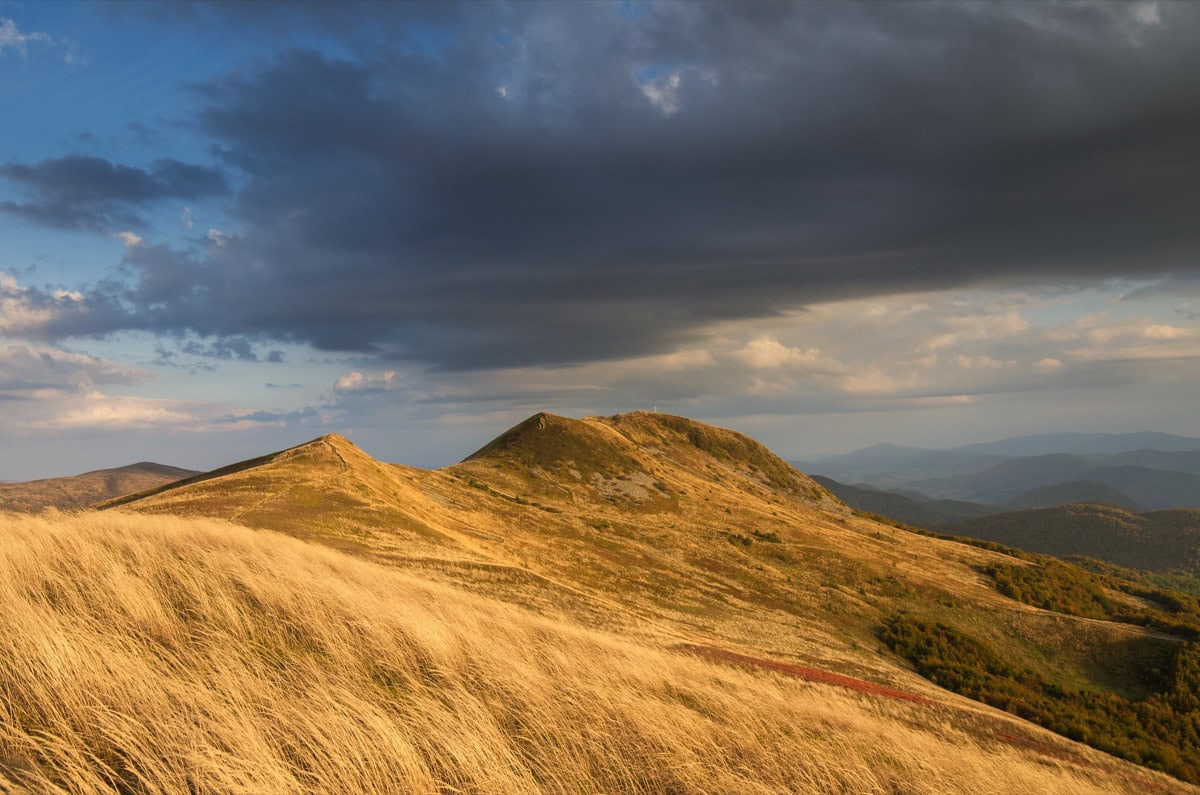
- Main draw: The iconic polonyny (high-altitude meadows above the treeline) offering jaw-dropping views and endless ridge treks.
- Getting there: Best reached by car. From London, fly to Rzeszów (Rzeszów-Jasionka airport, about 80 km from the national park entrance) and hire a car there — you’ll struggle without one.
- Where to stay: For hikers, the villages of Wetlina or Ustrzyki Górne are ideal. For lakeside relaxation, head to the spa town of Polańczyk on the Solina Reservoir.
- Must-sees: Climbing the highest peak Tarnica, ridge-walking across Polonyna Wetlińska, riding the forest narrow-gauge railway, and cruising on Solina Lake.
- Safety: You’re in genuine wilderness — registering at the national park and sticking to marked trails is absolutely essential for both nature conservation and your own safety.
- Entrance fee: Entry to the Bieszczady National Park costs a modest 12 PLN per person per day (roughly €3).
The full destination guide: Poland — guide and what to see
What are the Bieszczady Mountains and why visit?
Pull up a Bieszczady mountains map and you’ll find yourself in Poland’s most remote southeastern corner, where the borders brush up against Slovakia and war-torn Ukraine. The Bieszczady Mountains are an integral part of the Eastern Carpathians. Unlike the nearby Tatras or other popular Polish ranges, there are no jagged rocky peaks or tourist crowds here. The landscape is softer — hill after gentle hill rolling into the distance, everything quieter and more contemplative.
The most distinctive feature of the Bieszczady Mountains in Poland are the polonyny — vast alpine meadows high above the treeline, shaped partly by nature and partly by centuries of highland shepherds grazing their cattle. Walking across them feels like drifting through the clouds. The heart of the region is the Bieszczady National Park, a UNESCO biosphere reserve where nature reigns supreme. If you’re after a place to clear your head and lose your phone signal (often completely), this is it.
When to visit and how to get to Bieszczady Poland
The best time to visit the Bieszczady depends very much on what you’re looking for.
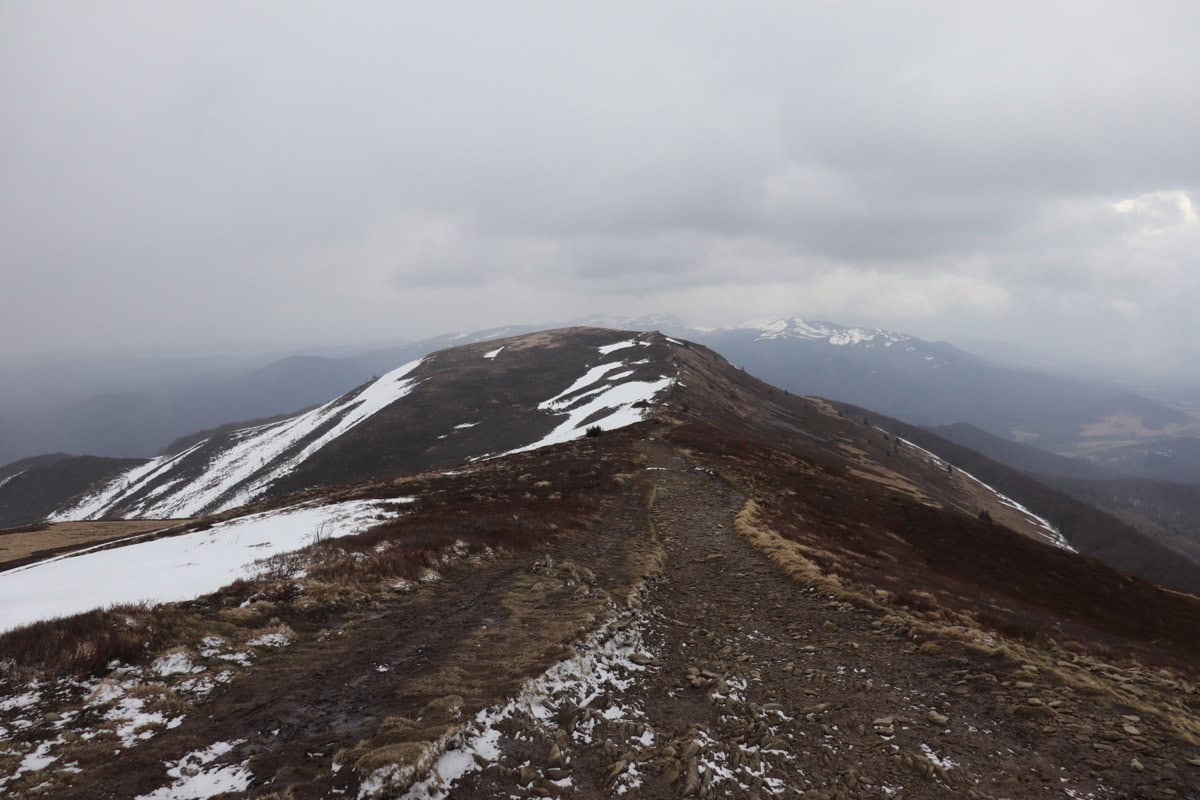
Spring and early summer (May to July) are absolutely ideal — the polonyny explode with colour, wildflowers bloom everywhere and the air smells of mountain herbs. August is peak season, so you’ll encounter more Polish hikers on the main trails, but it’s still nothing compared to the madness of Zakopane. Autumn brings a spectacular show as the endless deciduous forests turn gold and crimson — just bear in mind that days are shorter, cooler, and the ridges can be brutally windy. Winter in the Bieszczady is a chapter in itself. There is a small bieszczady ski scene, but the resorts are modest and heavy snowdrifts often leave remote villages completely cut off.
The best way to get here is undoubtedly by car. From the UK, the most practical option is to fly into Rzeszów-Jasionka airport, which is only about 80 km from the national park entrance, and hire a car there. Ryanair operates direct flights from London Stansted to Rzeszów, making it surprisingly easy to reach. Once you’re in the Bieszczady, public transport is sparse and you’ll really struggle without your own wheels. If you’d rather compare car hire deals, platforms like DiscoverCars are a reliable option. It’s also possible to reach the area by Flixbus to Krosno and then continue by infrequent local buses, but this requires patience and careful planning.
Where to stay in Bieszczady Poland (and how much it costs)
Your choice of accommodation depends mainly on what kind of holiday you’re planning. The charming Bieszczady villages offer everything from basic hikers’ hostels to luxurious spa hotels with pools. Prices are generally lower than in Western Europe, though you’ll naturally pay a premium for the best hotels during summer.
If hiking is your main goal, base yourself in the heart of the national park at Wetlina or Ustrzyki Górne. Ustrzyki Górne sits right at the foot of the highest peak and is the undisputed hub for trekkers. Wetlina is slightly larger, with more restaurants and shops — a solid middle ground. For a traditional atmosphere and excellent cuisine, consider Hotel Carpatia Bieszczadzki Gościniec in the artsy village of Cisna, which makes a great base for day trips by car.
If you’d rather unwind after those gruelling hikes, head to Polańczyk on the Solina Reservoir. It’s a proper spa town with healing springs and lovely wellness hotels that you’ll deeply appreciate after a day battling freezing winds on the ridges. A great choice for lakeside relaxation is Hotel Skalny Spa, known for its excellent massages and superb breakfasts.
Budget-wise, a standard guesthouse will set you back around €40–60 per night for two people, while more upscale spa hotels with half-board run about €100–160 per night. You’ll pay in Polish zloty (PLN), and although Poland is a modern country, card terminals often don’t work at remote mountain huts and park entrances — so carrying cash is absolutely essential.
12 Best Things to See in Bieszczady Poland
The Bieszczady National Park offers so much that you could easily spend two weeks here and still have plenty left to discover. Here are twelve of the most unmissable spots, combining physically demanding ridge walks, lakeside relaxation, and the fascinating cultural history of wooden churches hidden deep in the forests.
1. Climbing Mount Tarnica (1,346 m)
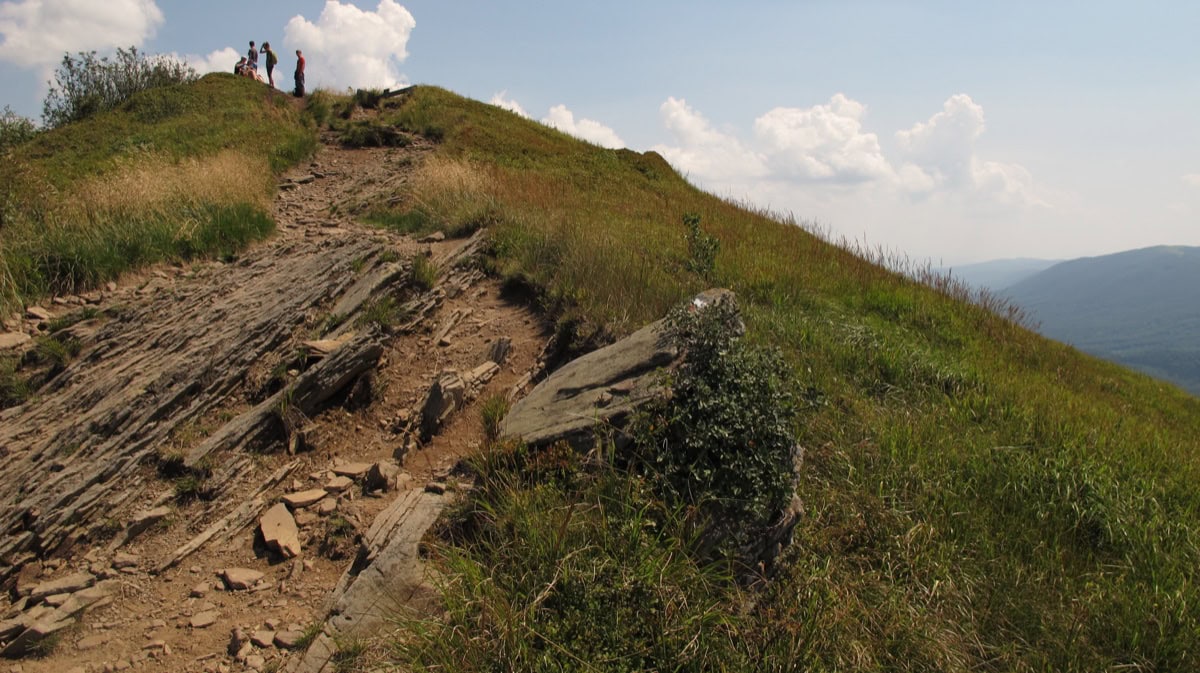
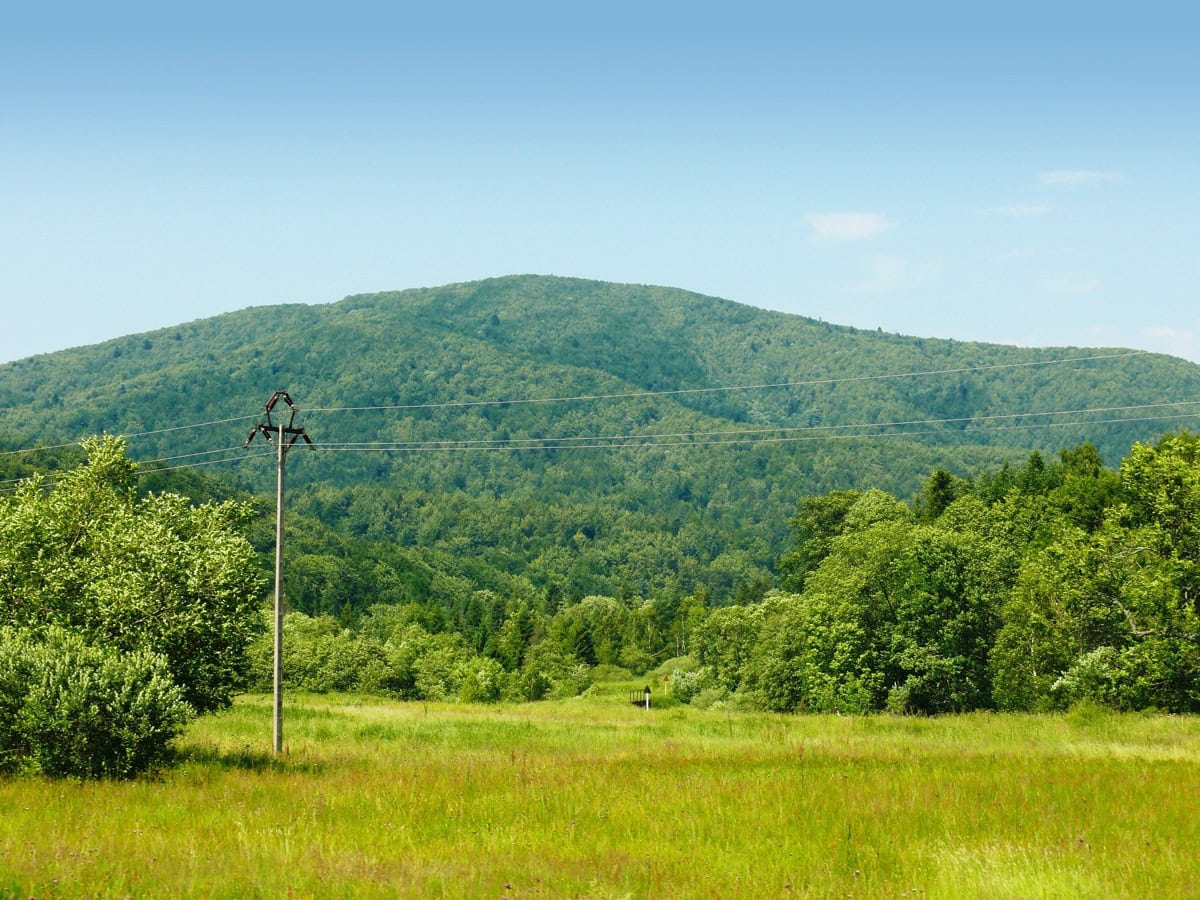
Tarnica is the highest peak in the Polish Bieszczady and conquering it should be on every itinerary. It’s no dramatic Alpine three-thousander, but given that you start from a fairly low elevation, you’ll work up quite a sweat. The ascent takes roughly three to four hours, with most of it being a relentless uphill slog.
The most exposed sections of the trail feature wooden steps. Hikers often grumble about the impact on their knees, but the park authorities installed them to combat erosion — so brace yourself for a proper workout and look forward to the reward at the top.
From the summit cross, you’re treated to a breathtaking 360-degree panorama stretching across Poland, Slovakia and deep into the Ukrainian Carpathians. It’s seriously windy up there though, so even in the height of summer, make sure you’ve got a windproof jacket in your pack. Bear in mind that the car parks at the trailheads in Ustrzyki Górne or Wołosate fill up early in the morning, and you’ll pay around 15 PLN (about €3.50) per day for parking.
2. Polonyna Wetlińska and its iconic mountain hut
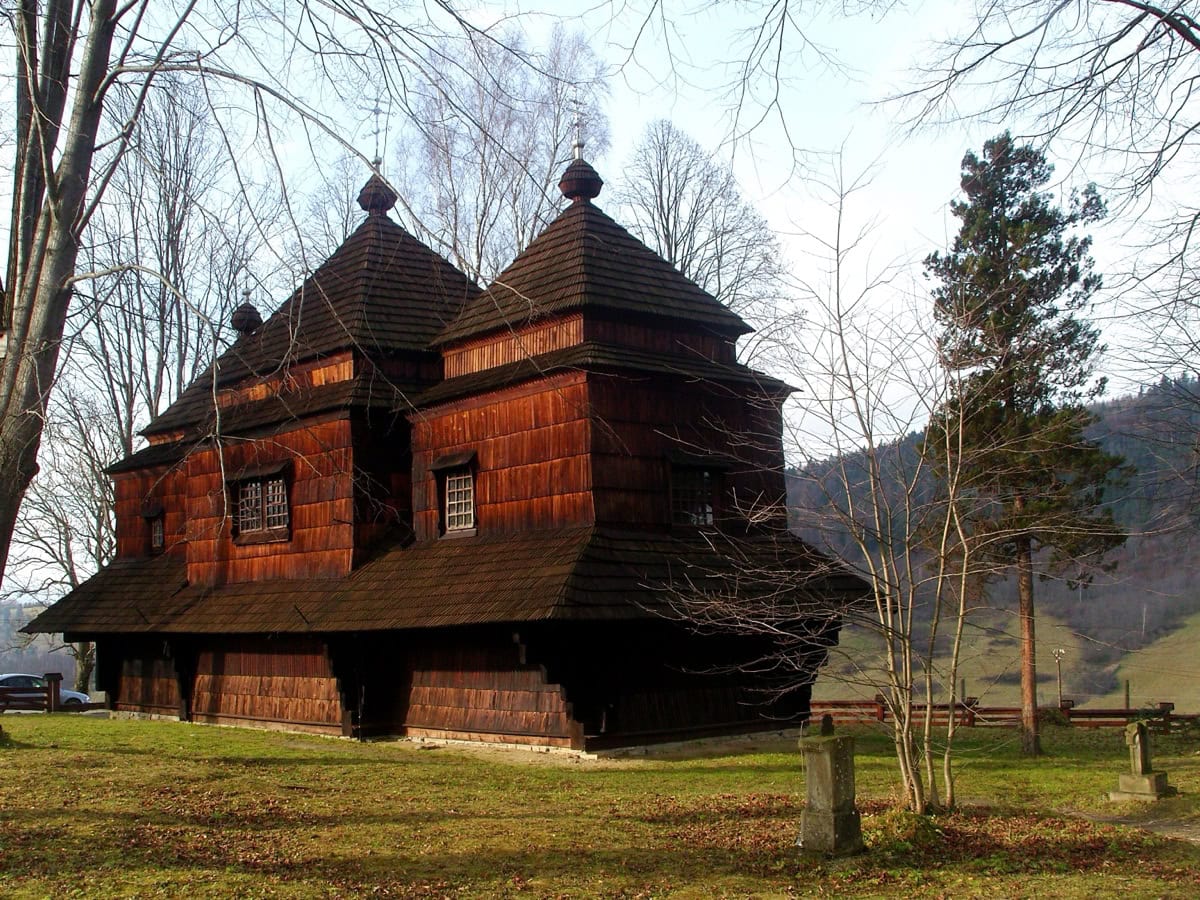
If you only had time for a single hike in the entire Bieszczady, I’d recommend the ridge walk across Polonyna Wetlińska — the quintessential postcard image everyone associates with these mountains. It’s a four to five-hour traverse along a wide, grassy ridge high above the treeline, with views that simply never get old.
The most iconic point along the route is the legendary Chatka Puchatka (Winnie the Pooh’s Hut). For decades it was a gloriously spartan shelter with no electricity or running water, heated only by a wood-burning stove. It’s recently undergone an extensive (and rather controversial) renovation, transforming it into more of a modern mountain refuge.
Even so, it’s a wonderful spot to sit down, warm up with a hot tea, and soak in the views of the deep valleys below. The best starting point is the Przełęcz Wyżna pass, from where the climb to the ridge is fairly short, followed by a gentle descent back to civilisation.
3. The steep and stunning Polonyna Caryńska
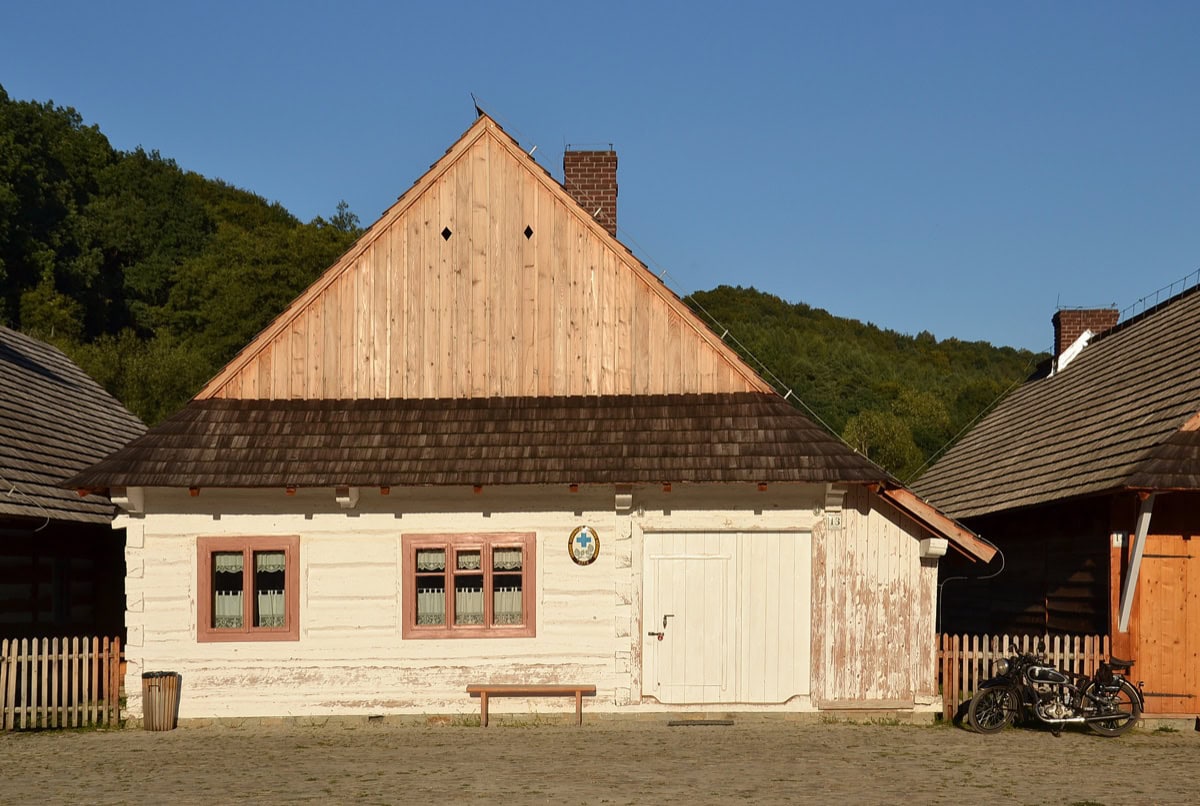
Directly opposite Wetlińska rises its smaller but steeper and wilder sister, Polonyna Caryńska. The ridge stretches just four kilometres, but the ascent is punchy and your knees will leave you in no doubt you’re in proper mountains. The reward is all the sweeter when you crest the treeline and a 360-degree panorama of the entire national park opens up before you.
This trail is noticeably less crowded than the popular Wetlińska, which only adds to its charm. In spring, the slopes are carpeted with tiny mountain wildflowers — an absolute paradise for nature photographers.
The best approach is from Ustrzyki Górne, following the red trail along the entire ridge towards Brzegi Górne. Once there, you can decide whether you’ve got the energy to press on or hop aboard one of the local minibuses that operate as reliable hikers’ taxis between the main trailheads.
4. Bieszczady Forest Narrow-Gauge Railway (Bieszczadzka Kolejka Leśna)
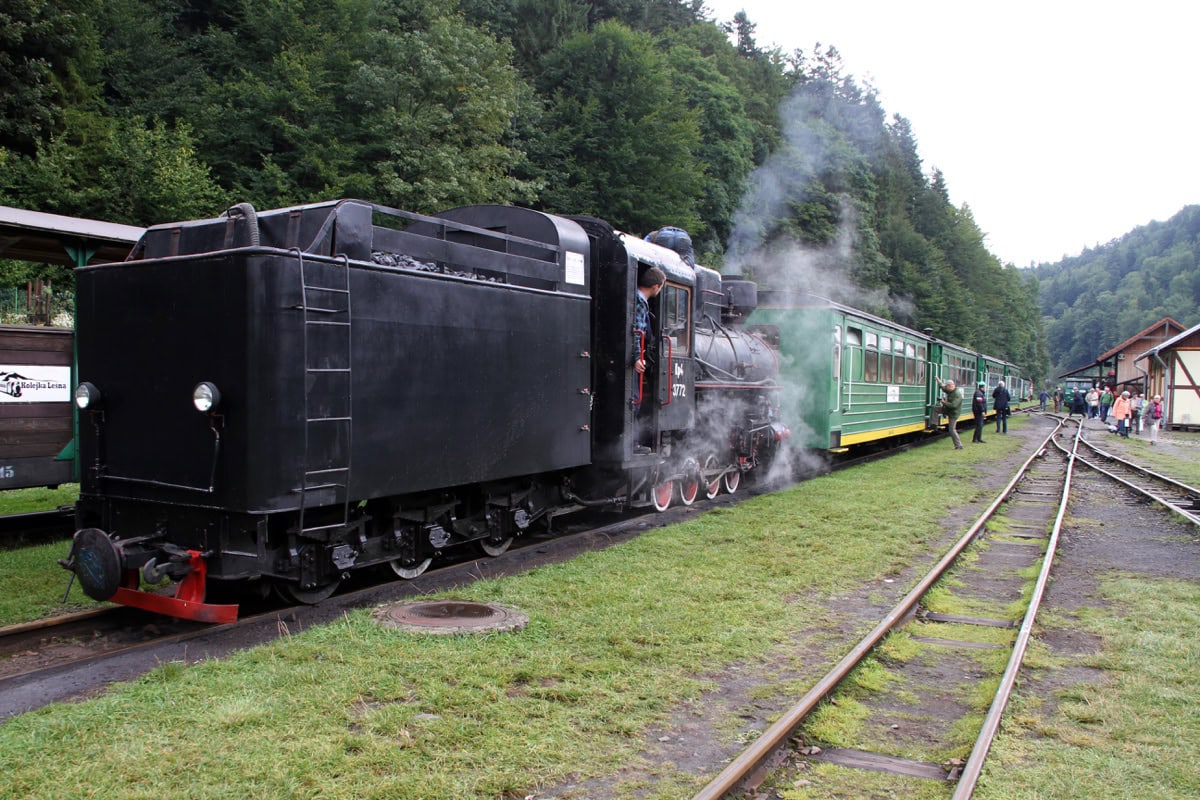
When your legs need a break from the climbs, it’s time for something a little more playful. The entire region was once criss-crossed by forest railways that hauled timber from the deep woods. Today, one wonderful narrow-gauge line survives as a tourist attraction.
The little train departs from Majdan station near the village of Cisna and winds through dense forests and along babbling streams at a pace you could easily outstrip on foot. There are two routes to choose from — I’d recommend the longer one to the village of Balnica, which runs right along the Slovak border and passes the haunting remains of abandoned Lemko villages.
In summer, the carriages are open-sided, so you can practically reach out and touch the forest. It’s tremendously photogenic and perfect for days when you want a rest from hiking. In peak season, book your tickets online in advance — they sell out fast.
5. Solina Reservoir: Swimming and sailing in the mountains
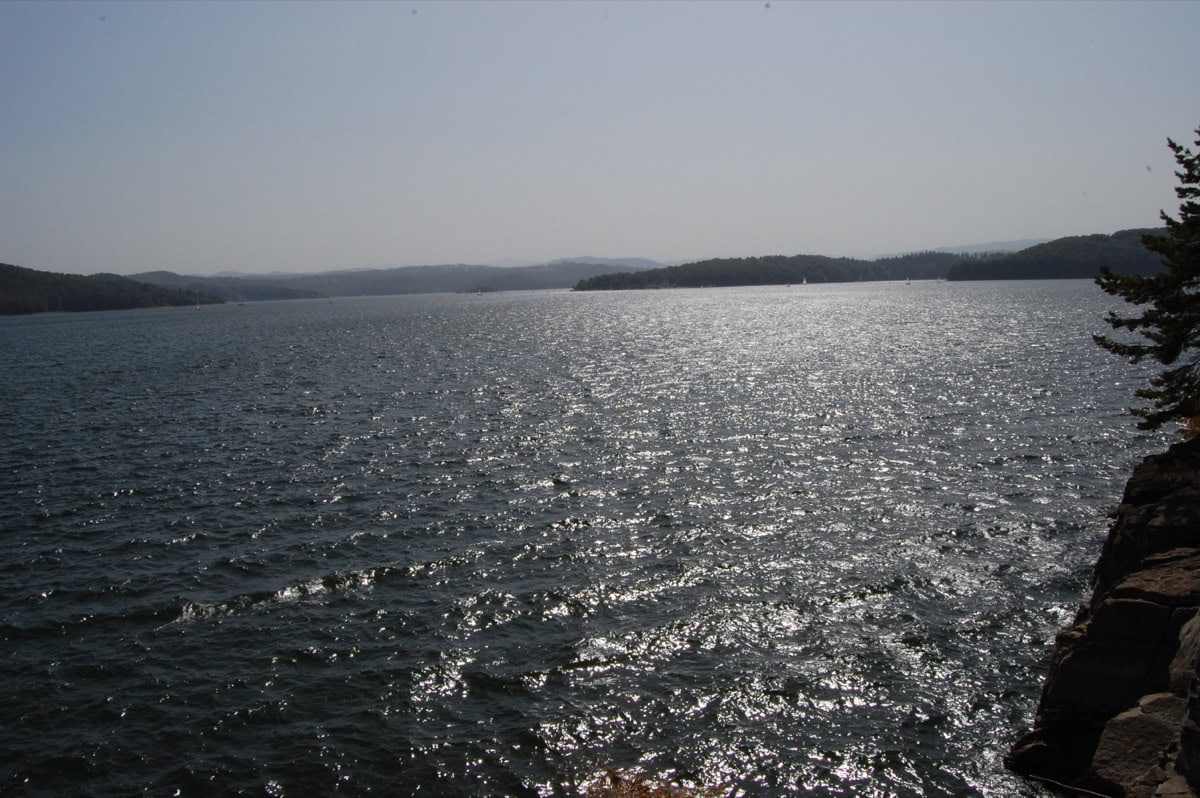
Jezioro Solińskie (nicknamed the Bieszczady Sea) looks more like a fjord at first glance. Its jagged shoreline is riddled with coves that are completely inaccessible from land, creating an utterly enchanting setting and absolute tranquillity. Head here when you need a break from the mountains and fancy some time by the water.
One fascinating detail: the entire lake enforces a strict ban on combustion engines, which means blissful silence and beautifully clean water. This makes Solina a celebrated sailing paradise. You can hire a small sailing boat, an electric craft, or a pedalo and spend the afternoon exploring hidden bays.
A modern cable car has recently been built near the reservoir, whisking you high above the dam to a glass-walled observation tower with spectacular views. There are also plenty of cycling trails in the area, so cyclists won’t be left out either.
6. The artsy village of Cisna and its legendary pub
Cisna is a bit different from the rest of the Bieszczady villages. It’s long been a haven for artists, poets, and lumberjacks who escaped the big cities for the wilderness. It retains a wonderfully bohemian atmosphere to this day.
The centrepiece of Cisna — and something of a Bieszczady legend — is the pub Siekierezada (roughly “The Axe Saga”). The interior is utterly unique — walls covered with axes, devils and bizarre woodcarvings. They serve excellent local beer and it’s an experience you absolutely shouldn’t miss.
Cisna is also home to a handful of small galleries and shops selling local artisan crafts. If you want to bring back a truly authentic souvenir, this is the place to do your shopping.

7. UNESCO Wooden Tserkva in Smolnik
This region isn’t just about nature — it’s also steeped in a poignant history. The area was originally home to the Boyko and Lemko peoples, ethnic groups who were forcibly displaced after World War II. They left behind old orchards and, most remarkably, unique wooden Orthodox and Greek Catholic churches known as tserkvas.
The most beautiful and precious of them all stands on a lonely hilltop above the village of Smolnik nad Sanem and is inscribed on the UNESCO World Heritage List. Dating from the 18th century, it looks like a giant wooden onion dome planted into the landscape.
A gently sloping path leads up to the church, and you’ll often need to borrow the key from the local caretaker, whose details are posted on a sign by the gate. I’d strongly recommend going inside to see the ancient frescoes and the beautifully preserved iconostasis.
8. Open-Air Museum (Skansen) in Sanok
If the Lemko and Boyko history fascinates you, make a detour to Sanok. Sitting on the northern edge of the region, it serves as the gateway to the Bieszczady. Right on the banks of the River San, you’ll find a huge open-air museum that is the largest skansen in all of Poland.
Spread across a vast area, it contains over 150 historic wooden buildings carefully relocated from surrounding villages. You’ll wander past old cottages, windmills, blacksmith workshops, and stunning wooden churches. It’s an enormous site — budget at least half a day to do it justice.
Beyond the skansen, Sanok’s castle is also well worth a visit. It houses an extensive collection of icons and, most notably, a major exhibition of works by Zdzisław Beksiński, the famous Polish surrealist painter who was born right here in Sanok.
9. Historic Krosno and its glassmaking heritage
Krosno doesn’t lie in the heart of the national park, but it’s a brilliant stop on the way. It’s a handsome historic town with a beautifully preserved old market square where you can stroll beneath the arcades of merchants’ houses and enjoy an excellent coffee.
The town is best known worldwide for its glass production. The glassblowing tradition here is so deeply rooted that Krosno has earned the nickname Poland’s Glass City. Don’t miss the modern, interactive Glass Heritage Centre (Centrum Dziedzictwa Szkła), where you can explore historical exhibits and watch master glassblowers demonstrate their craft right before your eyes.
Locally made cut and smooth glass from Krosno makes a wonderful and traditional gift to bring home from your trip.
10. Komańcza and the roots of Orthodoxy in Poland
The tiny village of Komańcza, nestled in the Osława river valley, is a place with an incredibly powerful spiritual atmosphere. Eastern Christian influences have historically permeated this area, and Komańcza stands as a symbol of cultural crossroads. Deep in the forest above the village hides an Orthodox convent dating from the 1920s.
The convent is famous as the place where Polish Primate Cardinal Stefan Wyszyński was interned during the 1950s for his opposition to the communist regime. It’s a fascinating place to explore, where Catholic history intersects with the Orthodox monastic setting.
Komańcza also serves as a starting point for several beautiful and lesser-known hiking trails through an untouched corner of the Bieszczady — perfect when you want to escape the crowds.
11. Bieszczady Wildlife Safari: Tracking bears and wolves
The Bieszczady wilderness is the real deal. The deep forests harbour a stable population of brown bears, wolf packs, and lynx. If the prospect of spotting these animals in the wild excites you, please don’t attempt to track them on your own.
Instead, book a professional wildlife safari with experienced local guides. These rangers and biologists take you into remote parts of the park at dawn or dusk, where you can observe wild animals from a safe distance using binoculars and camera traps.
Nobody can guarantee you’ll see a bear or a wolf, but the sheer thrill of being in a primeval forest at night, guided by someone who knows every rustle and track, makes it absolutely worth it.
12. Bieszczady Ski: Winter in Polańczyk and beyond
If you visit the Bieszczady in winter, you’ll find a raw but breathtakingly beautiful world. This isn’t an Alpine mega-resort — it’s more suited to lovers of gentle skiing and cross-country trails. Keep an eye on local weather reports during winter months, as roads frequently get buried under snowdrifts, so good winter tyres and snow chains are a must.
Around Ustrzyki Dolne and Polańczyk, you’ll find smaller ski areas like Laworta or Gromadzyń, which are great for families and beginner skiers. Lift pass prices are very reasonable and there are none of the long queues you’d expect at bigger resorts.
The absolute best winter activity in the Bieszczady, though, is cross-country skiing and ski touring. Skinning up to the snow-covered polonyny in good conditions is an unforgettable experience.
Map of points of interest for your phone
Bieszczady with children and dogs: Is it doable?
The short answer is yes, but with caveats. I wouldn’t recommend tackling long ridge treks like Tarnica with a baby in a carrier — the slopes are genuinely steep and the wooden steps treacherous. That said, local buses operate around the national park and can bring you close to shorter, easier walks. Older children will love the polonyny, and the Solina Reservoir is ideal for a family summer holiday.
As for dogs, you need to be very careful. By official regulation, dogs are banned on the high-altitude trails within the national park to protect local wildlife. Outside the protected zones (in forests and valleys) you can bring your dog, but I’d strongly recommend always keeping them on a lead. You’re on the territory of wolves and bears, and safety must come first.
What to eat: Bieszczady cuisine and highland food
Forget any thoughts of dieting — the mountain air burns calories and the local cuisine is hearty, warming, and absolutely delicious. The food here reflects both Goral (highland) and Ukrainian traditions.
Bigos (hunter’s stew) here tastes nothing like what you’d get from a tin. It’s traditionally served as slow-braised sauerkraut with several types of meat and sausage — the perfect antidote to cold weather. Make sure to try krupnik, a thick traditional soup made from barley groats, root vegetables and meat that’ll have you back on your feet after a full day’s hiking. For a snack, seek out local cheeses — especially the hard goat’s or sheep’s cheeses wrapped in herbs, sometimes whimsically called “wolf’s milk cheese”.
Poles love their beer, and you’ll stumble across several small local craft breweries in the region (the aforementioned Siekierezada pub serves an excellent pint). To warm up, don’t miss miód pitny — a traditional hot honey mead that’s been brewed in this part of the world for centuries.
Practical information and safety in the wilderness
The Bieszczady may be in Europe, but you need to treat them with enormous respect. This isn’t a city park — it’s genuine Carpathian wilderness. Here are some essential practical tips.
Entrance fees: The national park charges a daily fee of around 12 PLN per person (roughly €3). You can pay at booths at the start of each major trail or online in advance. Parking at popular trailheads costs about 15 PLN per day (€3.50), and you need to arrive really early or you won’t find a spot.
Safety first: If the visitor centre asks you to sign the hikers’ register or download the Polish mountain rescue app Ratunek, listen to them. Mobile signal on the ridges is abysmal and relying solely on your phone is a bad idea. Near the Ukrainian border, your phone will often latch onto Ukrainian networks — watch out for roaming charges on data! For UK visitors, note that since Brexit, many mobile providers charge extra for EU roaming, so check your plan before you go. To avoid sky-high data bills from accidentally connecting to Ukrainian networks, consider picking up an eSIM — providers like Holafly offer convenient Poland data plans.
One final important warning: Flying drones is strictly prohibited across the entire Bieszczady National Park. Rangers enforce this rigorously and will fine you, as drones disturb the protected wildlife.
Where next: More Poland travel inspiration
If Poland has won you over, here are some more ideas you won’t want to miss.
- Love history, great cafés, and romantic cobbled streets? Check out our guide to what to see in Kraków.
- Fancy a road trip? Discover our complete 7-day Poland road trip itinerary.
- Prefer flat landscapes, sailing, and swimming? Head to the stunning Masurian Lakes.
- If you love mountains but also want to sample the famous smoked cheese oscypek on the lively Krupówki street, check out our tips for Zakopane.
Tips and tricks (not just for the Bieszczady)
When planning your trips, it pays to stick with tried-and-tested services that save both time and money:
What to pack for the mountains
Don’t underestimate your footwear. For the polonyny you’ll need proper, sturdy hiking boots that can handle steep ascents and those tricky wooden steps.
Finding the best flights
If you’d rather fly into the area (to Rzeszów, for instance), cheap flights are easy to find on comparison sites like Kiwi or Skyscanner. Ryanair operates direct London Stansted–Rzeszów flights, making it the most convenient option from the UK.
Hiring a car for a road trip
Services like DiscoverCars offer a wide selection of vehicles and flexible cancellation policies in case your plans change.
Booking last-minute accommodation
Booking.com works brilliantly for the Bieszczady, covering everything from hotels to private rooms even in the tiniest villages.
Don’t forget insurance and data
For shorter trips, travel insurance from AXA is a solid choice; for longer stays, consider True Traveller or SafetyWing. And to avoid extortionate data charges from accidentally connecting to Ukrainian networks in the mountains, consider an eSIM — Holafly offers hassle-free data plans that keep you connected.
FAQ: Frequently Asked Questions about Bieszczady
Are the Bieszczady safe given their proximity to the border?
Yes, traveling in the region is absolutely safe for tourists. The border guard operates reliably and the area around the national park goes about its normal tourist bustle. It’s only recommended not to intrude on the marked border zone along the ridges.
What about bears and wolves, am I in danger?
The animals in the Bieszczady are shy and try to avoid people. If you stick to the marked hiking trails, don’t walk in the forest at night and don’t leave food scraps behind, the chance of a dangerous encounter is absolutely minimal. To be safe, you can pack a bear bell for your backpack.
Can I wild camp in the national park?
No, wild camping is strictly forbidden throughout the entire Bieszczady National Park and in the adjacent protected landscape areas. For accommodation you must use official campsites or huts.
How is the name Bieszczady read and pronounced?
For us it’s a bit of a tongue twister. The Polish Bieszczady is pronounced roughly like “Byesh-cha-dy“.
Is it necessary to have your own car?
I highly recommend it. Public transport in the remote areas doesn’t work very reliably and the connections often run only a few times a day. Without a car you’ll lose a lot of freedom and won’t manage to see the most interesting places.
Can I head into the mountains with small children?
For shorter walks in the valley and to the Solina reservoir, definitely yes. But the long ridge treks to the poloninas are steep, hard on the knees (you often go up stairs) and not suitable for very small children.
Do I need cash in the Polish mountains?
Absolutely yes. In bigger towns and hotels you can pay by card, but for parking below the mountains, national park entry fees and in mountain huts they either don’t have terminals or don’t have a strong enough signal to make them work. Cash in zloty is a must.
Tips and Tricks for Your Vacation
Don’t Overpay for Flights
Search for flights on Kayak. It’s our favorite search engine because it scans the websites of all airlines and always finds the cheapest connection.
Book Your Accommodation Smartly
The best experiences we’ve had when looking for accommodation (from Alaska to Morocco) are with Booking.com, where hotels, apartments, and entire houses are usually the cheapest and most widely available.
 🚗 Car rental on the roadVerified rental cars in Poland
Search with the DiscoverCars comparison engine — it compares prices from dozens of local and international rental companies, and most bookings come with free cancellation.
Compare car prices in Poland →Don’t Forget Travel Insurance
Good travel insurance will protect you against illness, accidents, theft, or flight cancellations. We’ve had a few hospital visits abroad, so we know how important it is to have proper insurance arranged.
Where we insure ourselves: SafetyWing (simple monthly subscription) and TrueTraveller (for extra-long trips).
Find the Best Experiences
Get Your Guide is a huge online marketplace where you can book guided walks, trips, skip-the-line tickets, tours, and much more. We always find some extra fun there!
More from Poland
Full guide → With kids · most readPoland: 11 Best Places for Your Holiday
 When to goKrakow Christmas Markets 2026 – Dates, Opening Hours & Programme
 Where to stayPoland: 15 Best Places for Your Holiday
 FoodPolish Food: 15 Tips on Pierogi, Bar Mleczny, Vodka & Everything You Must Try
 PricesPoland: Your Complete Guide to Driving – Tolls, Prices, Routes, Speed Limits, and Insurance


