
Few people head to Baku, Azerbaijan on a whim, but those who make the trip discover a contrast unlike almost anywhere else. The historic old town, a UNESCO World Heritage Site, flows seamlessly into a modern metropolis, above which the glass skyscrapers of the Flame Towers rise like tongues of fire — and not far from the city you’ll even find a hillside where flames burn without end. Getting here is more straightforward than you might expect: AZAL flies direct four times a week, Wizz Air already operates from Budapest, and from late October 2026 it’s set to launch from Bratislava too. Check the exact dates before you book.
Here are 22 tips on places and activities you shouldn’t miss in Baku and the surrounding area, along with all the practical essentials: the best time to visit for pleasant weather, how to enter the country without unnecessary hassle, and which neighbourhood to base yourself in — whether you’re drawn to the romance of winding medieval alleyways or modern luxury right by the sea.
In 2026, getting to Baku means flying is essentially your only option, as land borders have remained closed since 2020. The one reported exception is an overnight train from Tbilisi, Georgia, which reportedly resumed service in late May 2026 — but tickets are hard to come by, so you can only reliably count on flying. Before you depart, make sure to apply in advance for your e-visa through the ASAN portal, as the airport does not issue visas to regular tourists on arrival. If you stay longer than fifteen days, you’ll also need to register your stay with the authorities, which most hotels handle automatically.
The full destination guide: Asia — guide and what to see
TL;DR
- Easy connections and visa: Direct flights to Baku are available from various European airports, but you’ll need to arrange your e-visa before departure — the airport does not issue visas on arrival.
- Recommended length of stay: You can comfortably explore the city centre in two to three days; set aside one full day for Gobustan with its mud volcanoes and the fire sites of Yanar Dağ and Ateşgah — easiest done on an organised tour.
- Combo ticket: If you’re planning to visit both the burning mountain Yanar Dağ and the Fire Temple Ateşgah, a combined ticket will likely save you money.
- Airport transport: The Aeroexpress H1 bus takes you comfortably from the terminal to the city centre; you pay using the local BakıKart transport card.
- Best time to visit: The most pleasant temperatures are in May, June, September and October; the summer months turn the city into a furnace.
- Wind and mosque attire: Baku is windy throughout the year — be prepared for strong gusts at any time — and pack clothing that covers your shoulders and knees for visits to religious sites.
- Safety: Baku is safe for tourists with low crime rates, but given regional tensions monitor your government’s travel advisories before departure and register with your national traveller registration service.
When to Visit Baku and Practical Information
Planning your trip to the Azerbaijani capital is well worth organising around the weather above all else. The most pleasant conditions for sightseeing come in May, June, September and October, when daytime temperatures hover around 20–28°C. July and August are a different story — thermometers regularly push past 30°C and can occasionally top 40°C, meaning you’ll likely spend much of the day retreating into air-conditioned interiors. Winter brings temperatures of around 7–10°C, uncomfortable humidity, and reportedly even the occasional dusting of snow.
Baku isn’t called the City of Winds for nothing: a cold northerly wind called the khazri alternates with a warm southerly current known as the gilavar. According to historical weather data, you can expect gusts exceeding 50 km/h on roughly every third day of the year. Wind speeds tend to be lowest in August and September — but August is also the hottest month of the year.
When it comes to money, be prepared to pay in the local currency, the manat, whose exchange rate is pegged to the US dollar. Larger restaurants, hotels and modern shops generally accept credit cards, but for safety it’s best to withdraw cash from ATMs inside bank branches to reduce the risk of card skimming, and never exchange money with street touts. Having some cash on hand is especially useful for taxis, whose drivers reportedly often don’t carry enough change.
As a rough guide, a cappuccino will set you back around 6 AZN (about €3) and a main course at a restaurant around 15 AZN (about €8). On the subject of tipping, many establishments add a service charge of five to ten percent directly to the bill. If there’s no service charge, leaving around ten percent is the norm; for taxis, simply rounding up is sufficient.
Getting around the city is straightforward and you won’t need a car in Baku — local drivers are reportedly aggressive and frequently ignore lane markings. The Aeroexpress H1 bus runs day and night from the airport to the central 28 May metro station for just 1.30 AZN (under €1). Pick up a BakıKart transport card at the machine outside the terminal for 2 AZN (€1) — one card works just fine for your whole group.
If you prefer door-to-door comfort, Bolt or Uber from the airport will cost around 15 AZN (about €8), while the official Baku Taxi tends to be pricier. Watch out for the occasional scam where a Bolt driver cancels the ride in the app and demands a higher cash fare instead. With unmarked cars, always agree on the price upfront. Around the centre, the metro is your best bet: a single journey costs just 0.60 AZN (about €0.35).
When packing, keep in mind that Baku’s streets follow a mostly Western dress code — men wearing shorts are perfectly normal in summer — but stricter rules apply at religious sites. Women need a headscarf and everyone, regardless of gender, should have their shoulders and knees covered. Only drink tap water that has been boiled. Baku runs on Azerbaijan Time (AZT), which is UTC+4 year-round — four hours ahead of London and one hour ahead of Moscow.
Since roaming in Azerbaijan can be expensive, it’s well worth picking up an eSIM or a local SIM card before or on arrival; note that buying a physical SIM from a local carrier requires your passport and your accommodation address. The official language is Azerbaijani; older generations often speak Russian, while younger people tend to speak English. Although Azerbaijan is a Muslim-majority country, alcohol is freely available — but there is a strict zero-tolerance policy on drink-driving, so never get behind the wheel after drinking.
Safety and Entry Requirements
Baku is widely considered a safe city for tourists with low crime rates, including by the UK Foreign Office. The most common issues are typical big-city nuisances — pickpockets in crowded spots, bag snatching after dark in the centre — and at ATMs, watch out for card skimming. The regional picture is more complex: the US State Department has maintained a Level 3 advisory (Reconsider Travel) since 28 April 2026, in part due to regional tensions involving Iran. Before you fly, check the latest travel advisories from your country’s foreign ministry, register with your government’s traveller registration service, and factor in the possibility of unexpected changes to your travel plans.
Most nationalities require a visa to enter Azerbaijan, which is generally not issued on arrival, so you need to sort it out in advance at the official portal evisa.gov.az. The standard ASAN e-visa costs around $25 (approximately €23), processing usually takes up to three working days, and the express option — processed in as little as three hours — costs roughly double. The visa allows stays of up to 30 days; authorities recommend applying at least three days before your trip, and once approved, print it out and carry it alongside your passport. Your passport must be valid for at least three months beyond the expiry of your visa and have two blank pages — though to be safe, aim for six months’ validity from the date of arrival.
Watch out for third-party visa websites that charge excessive fees, and keep a close eye on your length of stay: overstaying carries a fine of 300–400 AZN (€155–210) and an obligation to leave the country within 48 hours. If you plan to stay in Azerbaijan for more than fifteen days, you must register your stay free of charge with the State Migration Service — and this has to be done promptly. If you’re staying in a standard hotel, reception will handle it for you automatically; if you’re renting a private apartment, the obligation falls on the property owner, so make sure to agree on this with them upfront.
Bear in mind that entering the territory of the former Nagorno-Karabakh and areas reclaimed after November 2020 without official authorisation from Azerbaijani authorities is a criminal offence. The border with Armenia remains closed, and travel within the five-kilometre zone near the Armenian border and the former conflict zone is strongly advised against due to the high risk of unexploded ordnance. Based on travellers’ accounts, an Armenian stamp in your passport alone will not bar you from entering Azerbaijan, but border officials may ask about the purpose of your previous trip there.
When moving around the city and its surroundings, follow basic photography etiquette — never point your camera at military installations, oil facilities in the Bibi-Heybat area, or oil fields on the Absheron Peninsula. Show particular respect at sensitive sites such as the memorial Martyrs’ Lane, where it’s best to refrain from photography altogether. Some travel guides recommend carrying your passport in case of a police check. LGBT+ travellers are advised to avoid public displays of affection, which are considered inappropriate in local culture. Should anything go wrong, the emergency number is 112 (police 102, ambulance 103, fire brigade 101).
Where to Stay in Baku
Your choice of accommodation can greatly influence your overall impression of the city, so first think about what you expect from your trip. For atmosphere, the old town is the best choice, where you’ll find the boutique hotel Qiz Qalasi Boutique Hotel. Just bear in mind that taxis can’t drop you at the door, because cars don’t enter the old town alleys, and you’ll have to haul your heavy suitcase over historic cobblestones.
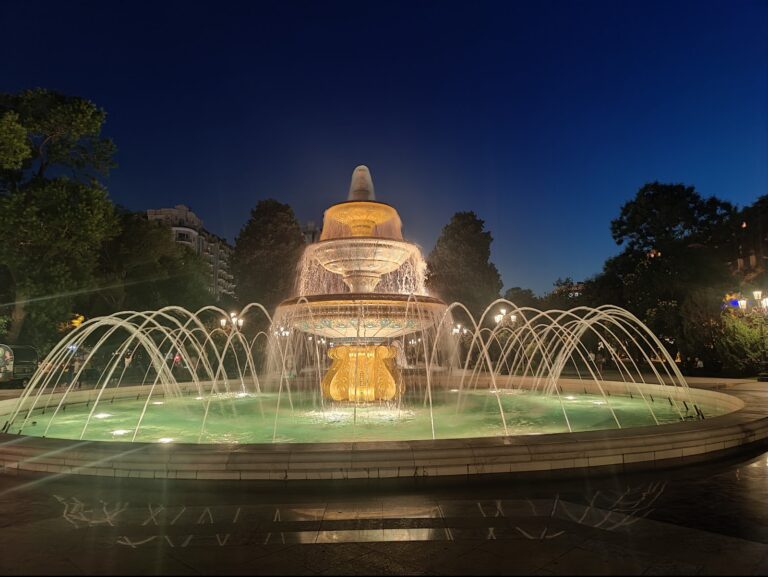
If you’re visiting the city for the first time and want everything within reach, look for hotels in the wider area around Fountain Square and the famous Nizami Street, for example the stylish The Merchant Baku on the border between Nizami and the old town. You’ll be staying in the immediate vicinity of a spacious pedestrian zone, surrounded by cafés and shops, and you can comfortably walk to all the important sights including museums. Those looking for luxury can head to the Four Seasons Hotel Baku by the old town walls, a short walk from the seaside boulevard, or stay right inside the Flame Towers at the Fairmont Baku Flame Towers.
Budget travellers will appreciate the area around the 28 May metro station. This is where the airport bus arrives, so you’ll avoid dragging luggage halfway across the city after landing. You’ll also find cheap accommodation here, such as Freestyle Hostel Baku. A more detailed comparison of neighbourhoods and hotels can be found in our article Kde bydlet v Baku.
💡 On this map you can compare what’s currently available — you’ll immediately see how much the price changes a few blocks away.
22 Things to See and Do in Baku
How should you plan your visit to the city? Tips one through thirteen will guide you through the centre and its immediate surroundings, fourteen through eighteen will take you to the nearby area, and the final points are dedicated to full-day trips. According to travellers on Reddit, the most beautiful part of the centre can be covered in half a day, but once you add museums and evening activities, you’ll make a wonderful two to three days out of it. Fire-related sites can be combined into one route: afternoon at Ateşgah, twilight at Yanar Dağ, and evening Flame Towers from Highland Park. Opening hours and prices change, so verify them before your visit.
1. Içərişəhər, the UNESCO-Protected Old Town
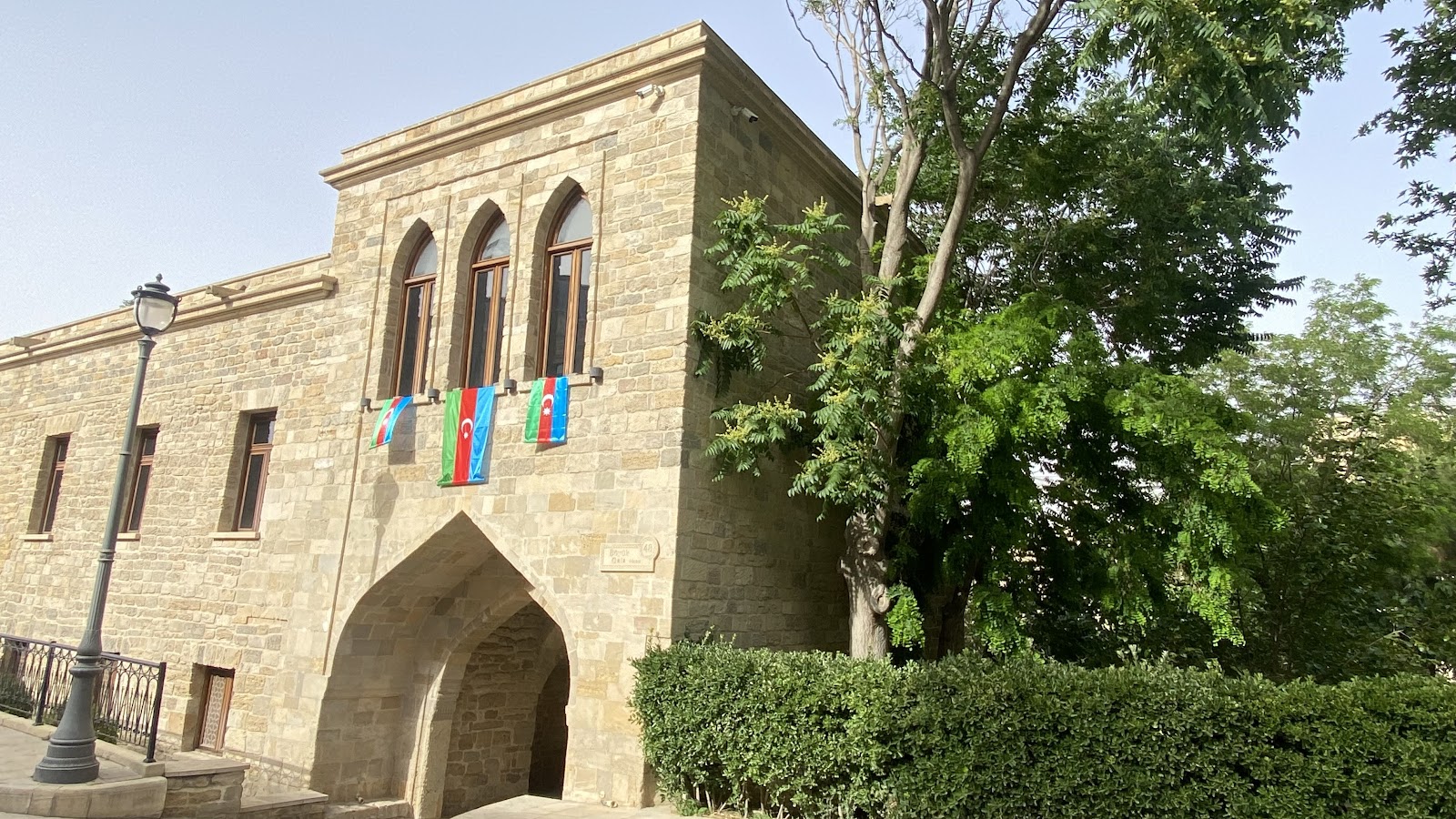
Start in the very heart of the city, where behind massive twelfth-century walls lies a historic quarter that still lives at its own pace and where people actually still live. In 2000, this historic core was inscribed on the UNESCO list, with the inscription covering the entire walled city together with the Palace of the Shirvanshahs and the Maiden Tower.
The good news is that according to guidebooks, strolling through the alleys is free, so you’ll probably only need your wallet at the entrances to individual museums. You can best enter the heart of the quarter through the main Qoşa Qala Qapısı gate (Double Castle Gate), and along the way you’ll come across the historic Multani Caravanserai, which is usually open Monday to Saturday from 9 am to 6 pm.
The Juma Mosque is also worth attention, and just outside the walls you can relax in the greenery of the Philharmonic Garden. The history of the old town is somewhat turbulent, however, because due to the consequences of earthquakes and illegal demolitions, the quarter ended up on the list of endangered heritage, from which it was fortunately successfully removed in 2009.
💡 Tip: Try to peek into the Museum of Miniature Books, where you’ll find a collection of tiny volumes from more than sixty countries, just don’t plan your visit for Monday, when it’s usually closed (other days it operates from 11 am to 6 pm).
2. Maiden Tower (Qız Qalası)
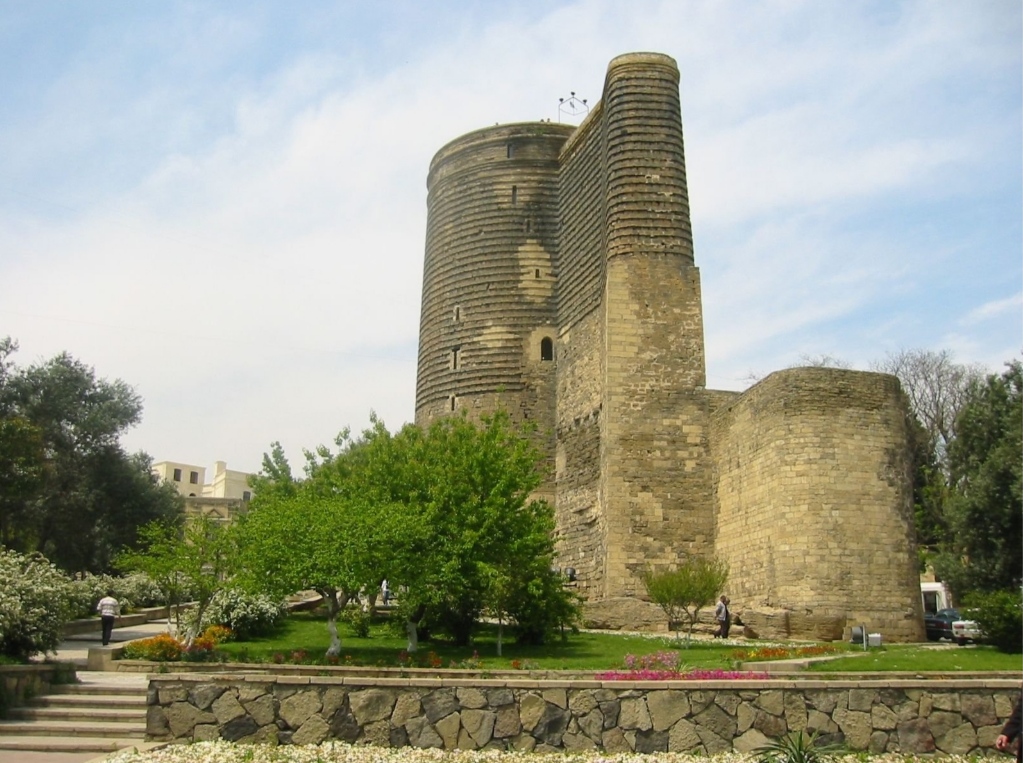
From the historic alleys, your steps will naturally lead you to a massive stone structure from the twelfth century, which stands on much older foundations from the 7th to 6th century BC. The Maiden Tower is part of the UNESCO inscription and you’ll reportedly even find it on Azerbaijani banknotes.
From the viewing platform at the very top, you’ll see both the old town and the vast bay. The exact entrance fee varies by source; travellers on forums mention about 30 AZN (€12) for a combined ticket that also lets you visit the palace, underground baths, and numismatic museum.
Verify the price and opening hours on site. The tower should be open daily, but sources differ on whether it closes at 7 pm or as late as 9 pm.
💡 Tip: A ticket for around 30 AZN is valid for multiple sites in the old town, so check what it includes before buying and don’t purchase the same sites separately.
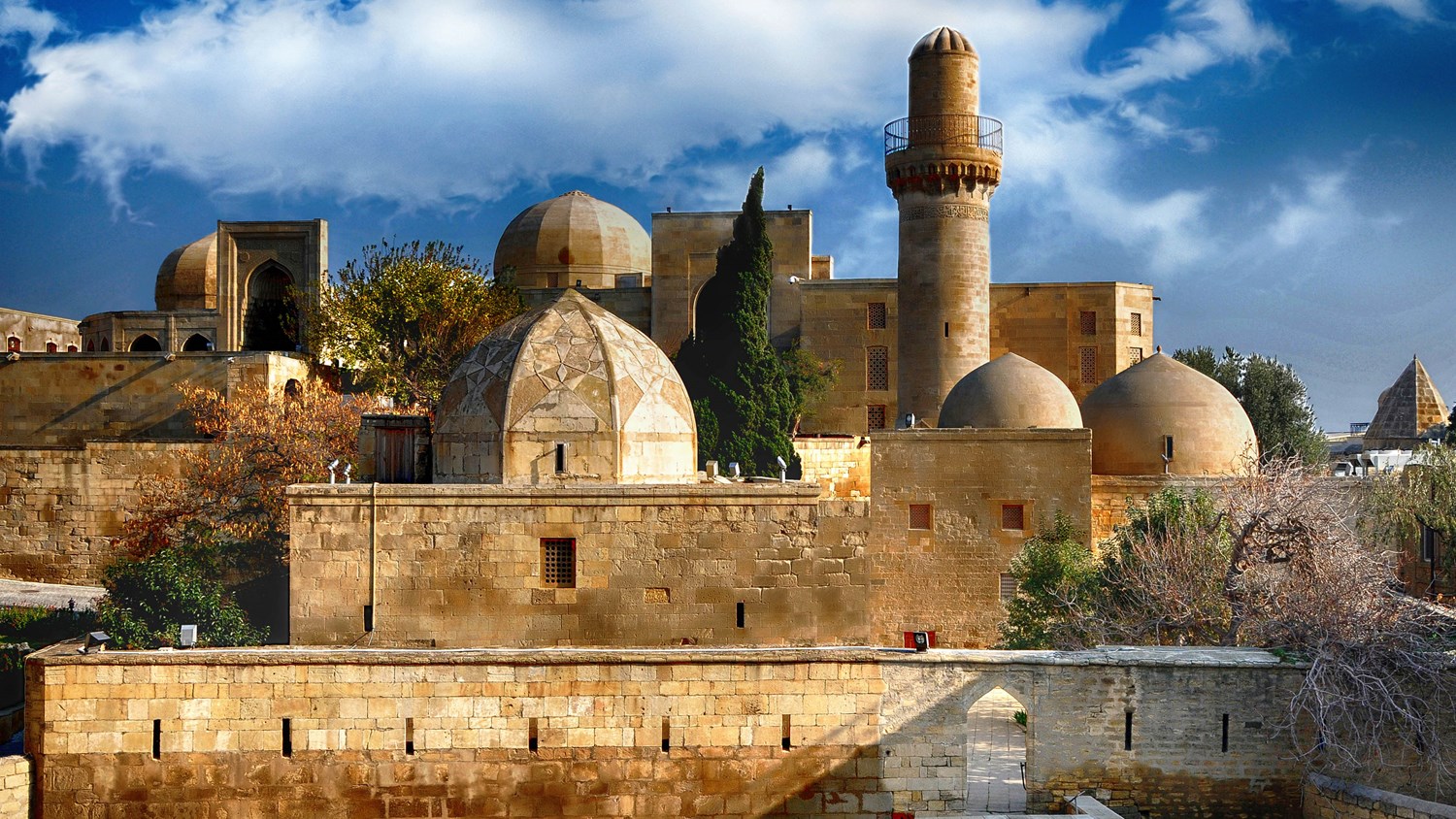
3. Palace of the Shirvanshahs
While wandering the old town, you’ll discover a complex from the fifteenth century that UNESCO describes as one of the pearls of Azerbaijani architecture. The entire site consists not only of the main building and the Divanxana, but also ancient tombs, the shah’s mosque with a slender minaret, the mausoleum of Seyid Yahya Bakuvi, the ornate Murad’s Gate, and the remains of bathhouses.
A ticket to the palace is offered by one online seller for 35 AZN (€14), which may include a markup, so check the current price on the website icherisheher.gov.az or at the ticket office.
The palace is open daily from approximately 10 am to 9 pm.
💡 Tip: The palace and tower are both in the old town close to each other, so it’s easy to combine them into one walk.
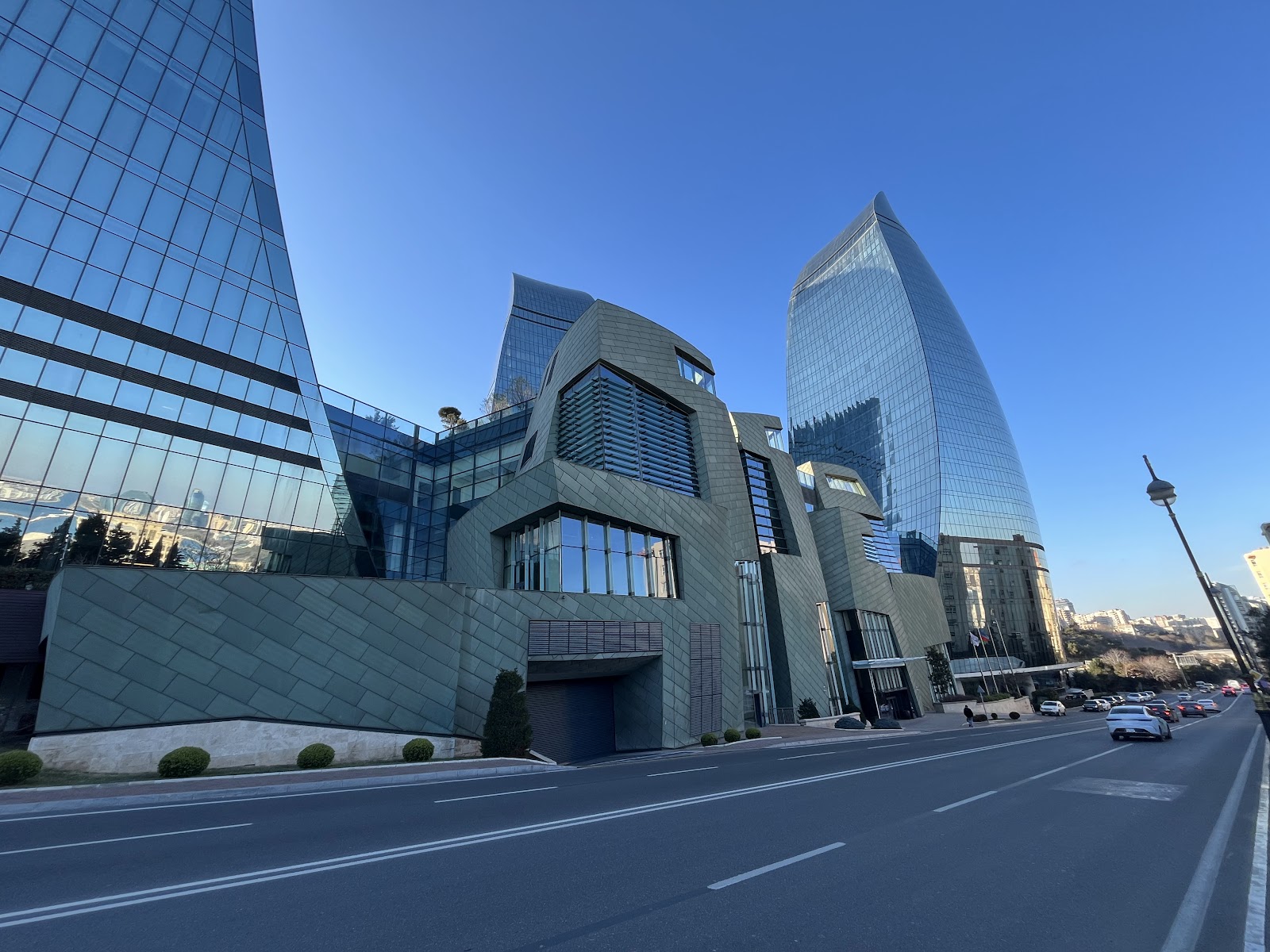
4. Flame Towers and Evening Light Show
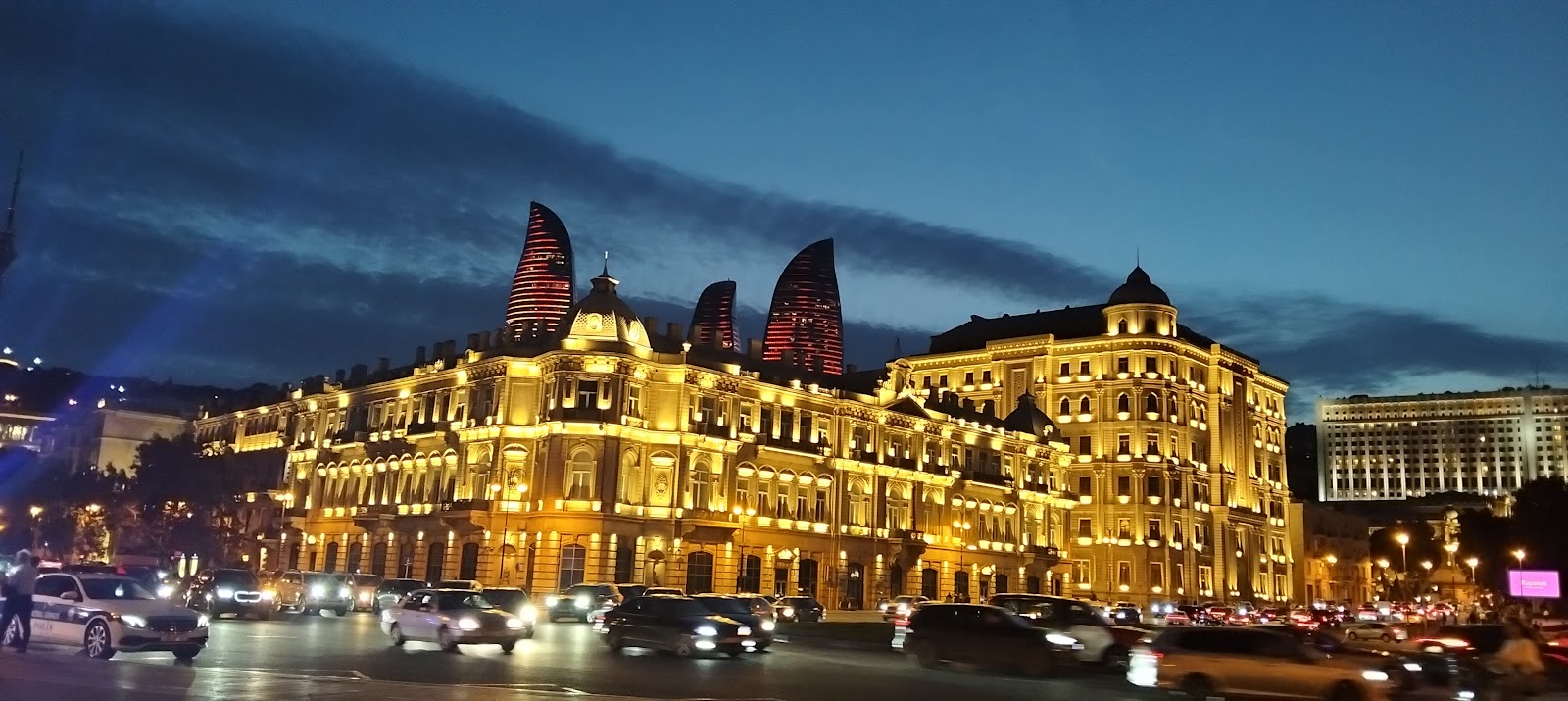
As a contrast to the medieval walls stand three modern flame-shaped skyscrapers that capture Azerbaijan’s reputation as the land of fire. The tallest of the towers measures about 182 metres, they were completed in 2012, and inside you’ll find the Fairmont hotel, office spaces, and private apartments.
The main spectacle begins after dark, when the towers light up with an evening LED show and transform into enormous blazing flames. The exact time may change; tour operators indicate a start around 8 pm.
The best view of this light show can be enjoyed from the viewing point in Highland Park, where you have the skyscrapers right in front of you. If you don’t feel like climbing the hill, you can also see them from the seaside boulevard or from below in the old town alleys.
💡 Tip: Verify the show start time on site or ask at your hotel.
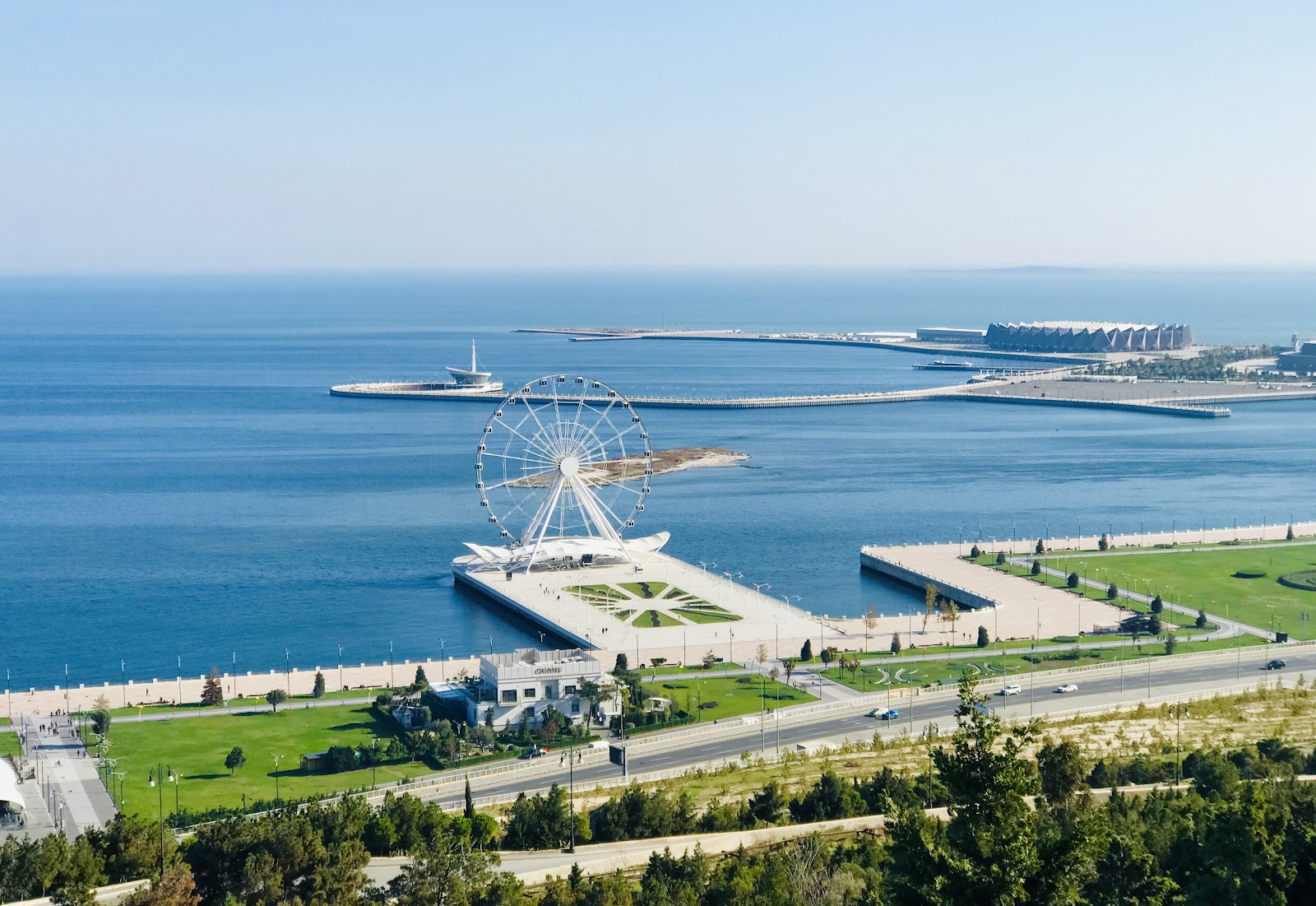
5. Highland Park, Martyrs’ Lane and the Funicular
For views over the entire bay, you need to head to Highland Park and the viewing terrace, which you can reach by climbing stairs, but it’s much more fun to take the local funicular. This funicular is reportedly the only one of its kind in the country, and according to traveller experiences from 2024, the ride cost about 1 AZN (€0.40); today you may even be able to pay by BakıKart.
The funicular runs Tuesday to Sunday from 10 am to 1 pm and then from 2 pm to 8 pm; it’s closed on Mondays. Highland Park is often combined in one trip with Martyrs’ Lane (Şəhidlər Xiyabanı), which is a cemetery and memorial dedicated to victims of the Karabakh War and the events of Black January 1990.
This space requires quiet respect; the British Foreign Office explicitly lists it as a sensitive site, so it’s better not to photograph the memorial areas. If you’re heading to Baku at the beginning of the year, bear in mind that 20 January is a day of national mourning, commemorating the anniversary of Black January.
💡 Tip: Go up before dusk so you catch the city in daylight and then the Flame Towers after dark.
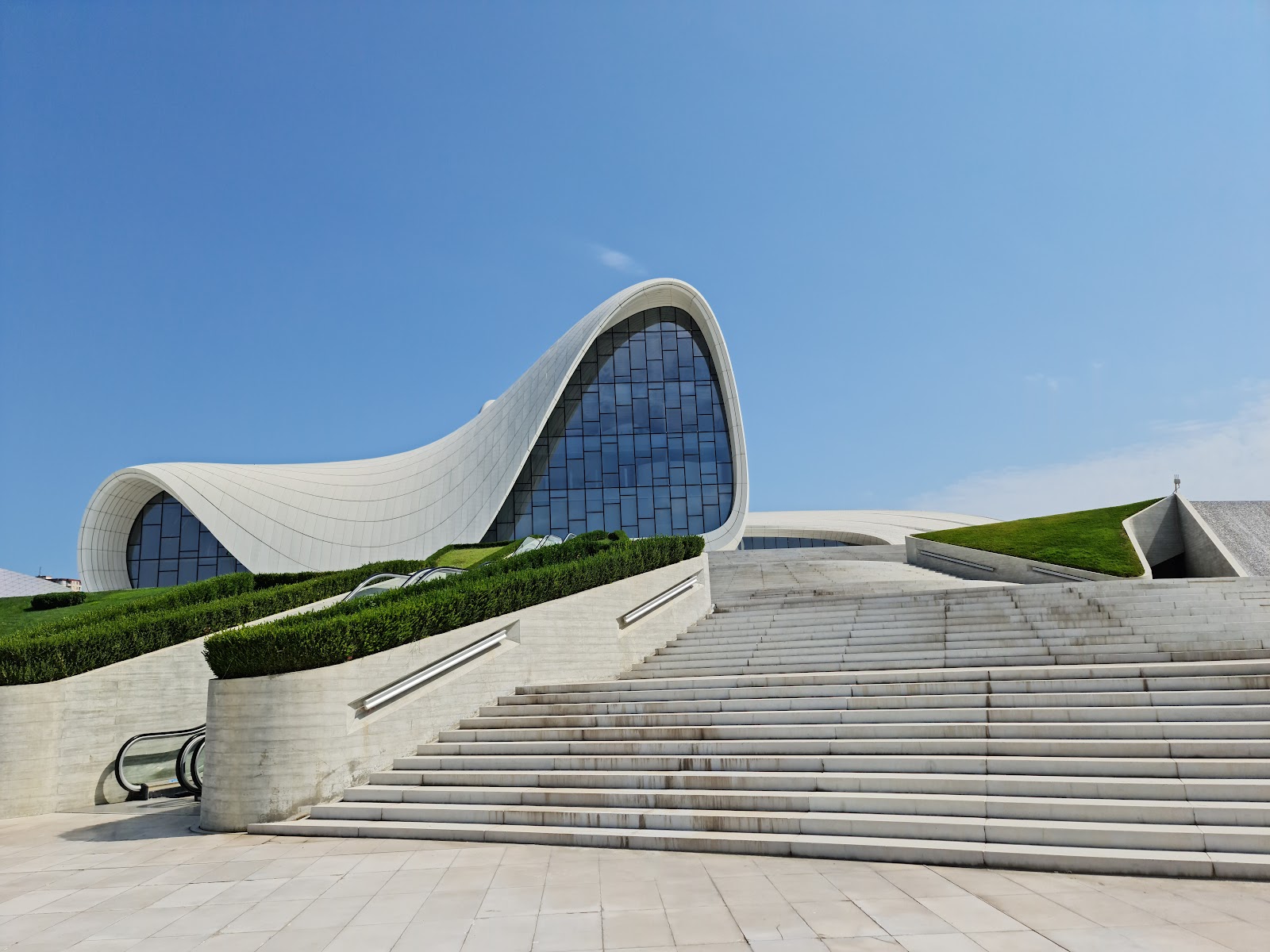
6. Heydar Aliyev Center
Lovers of modern architecture will appreciate a building without a single sharp angle, designed by Zaha Hadid. The sprawling structure covering over fifty-seven thousand square metres was opened in 2012 and, thanks to its flowing curves, appears to float above the surrounding space.
While you can explore the exterior and adjacent park for free and it’s more than enough for a good walk, entry to the interior exhibition spaces costs 10 to 15 AZN (€4–6); it’s better to verify the current price on site. Plan your visit for any day except Monday, when it’s closed.
The centre is named after the former president Heydar Aliyev, father of the current head of state.
💡 Tip: The exterior and park are free, so it’s worth walking around the building first and only then deciding whether the 10 to 15 AZN entry to the exhibitions is worth it for you.
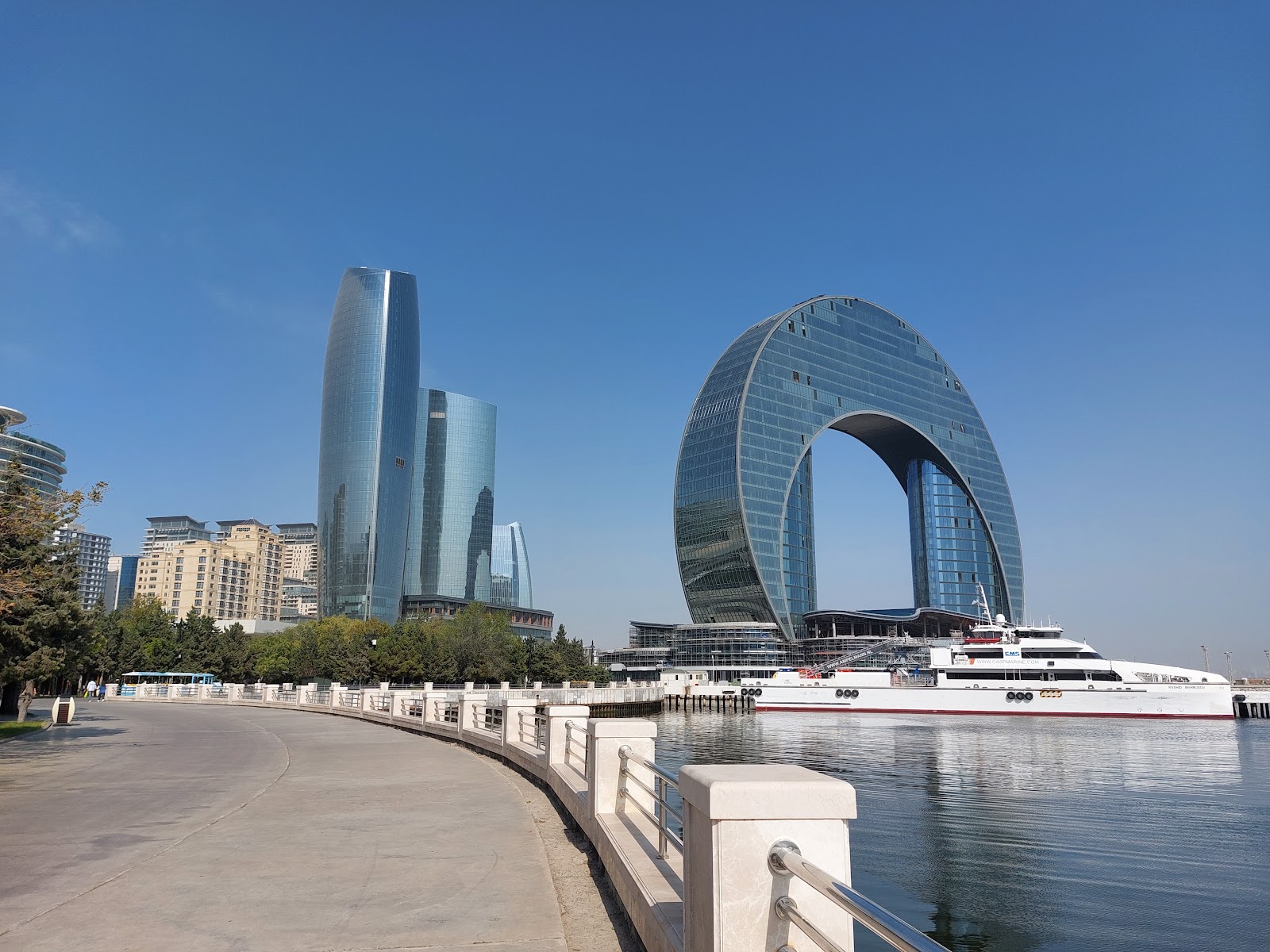
7. Seaside Boulevard
This wide promenade along the Caspian Sea was built back in 1909 and is now a popular spot for a stroll. Part of the boulevard includes Little Venice, artificial canals with boats where entry is free. A boat ride costs around 12 USD (approximately €11).
Little Venice is open daily from roughly 11 AM to 9 PM, and the boulevard is also home to the Baku Eye Ferris wheel, where you should check in advance whether it’s operating. During your walk, you’ll also come across Baku Crystal Hall, which hosted the 57th Eurovision Song Contest in 2012.
If you get the urge to shop, simply head to the Dəniz Mall or Port Baku Mall shopping centers, which are located right on the boulevard. For lovers of Indian cuisine, there’s Maaya Indian Restaurant on the promenade, which according to HappyCow also offers vegan dishes.
💡 Tip: The boulevard tends to be windy (gusts over 50 km/h occur roughly every third day of the year according to data), so bring a sweater even during warm months.
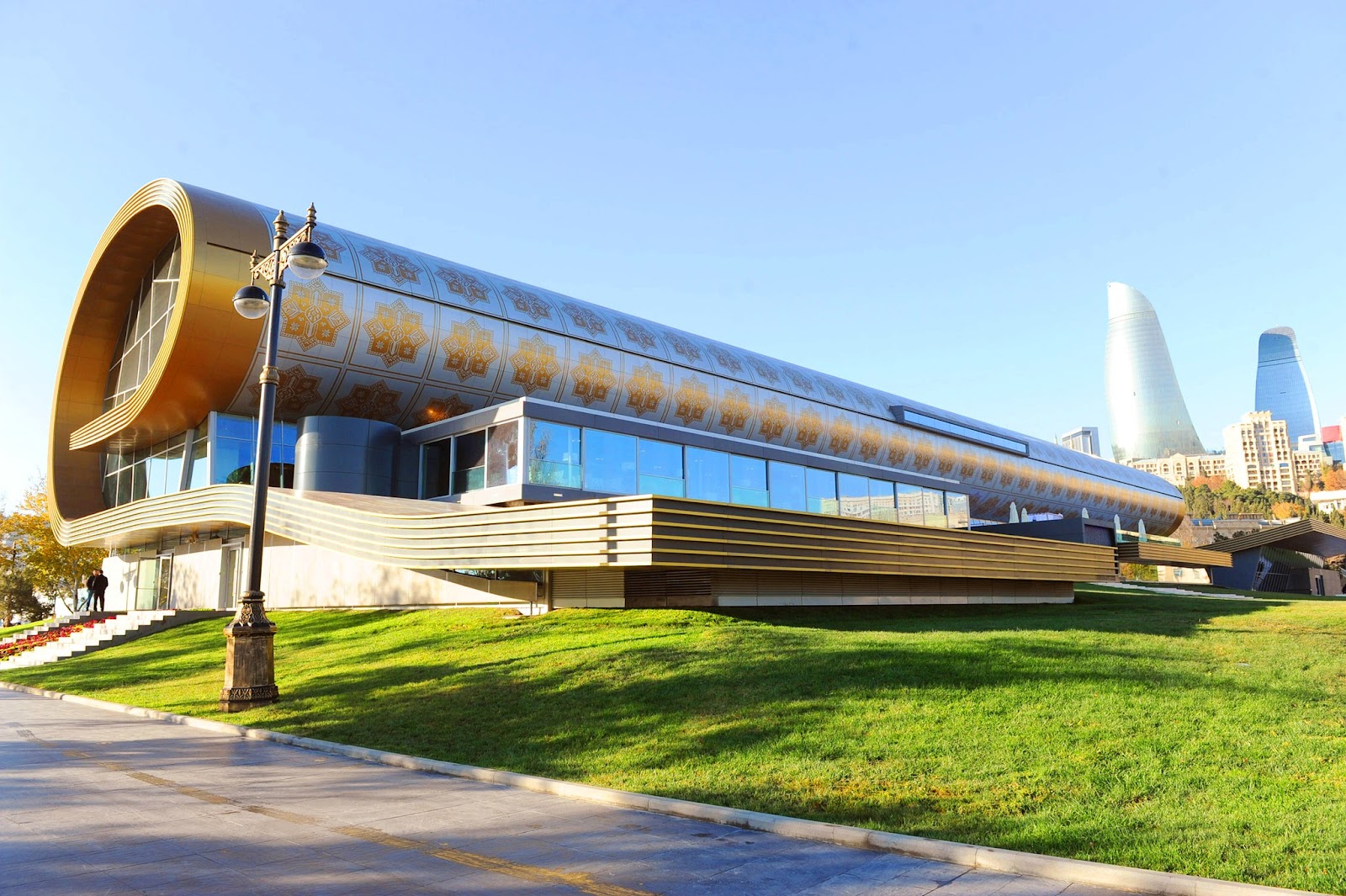
8. National Carpet Museum
As you wander through the city, you’ll notice an unusual building shaped like a half-rolled carpet, which this important institution founded in 1967 moved into in 2014. Inside, you’ll find a collection of Azerbaijani carpets.
Admission for foreign visitors costs 10 AZN (€5), locals pay 7 AZN, and students 3 AZN. If you visit here, be aware that the third floor is reportedly temporarily closed due to ongoing renovations, and the museum is completely closed on Mondays.
This institution has another very practical significance for travelers, as it officially issues export certificates. You’ll absolutely need this document if you want to take home a carpet, antique samovar, copper utensils, or historical paintings, though the seller will usually arrange the certificate for you.
💡 Tip: Before buying a carpet at a market or shop, ask the seller about the export certificate—without it, you can’t export a carpet or samovar from Azerbaijan.
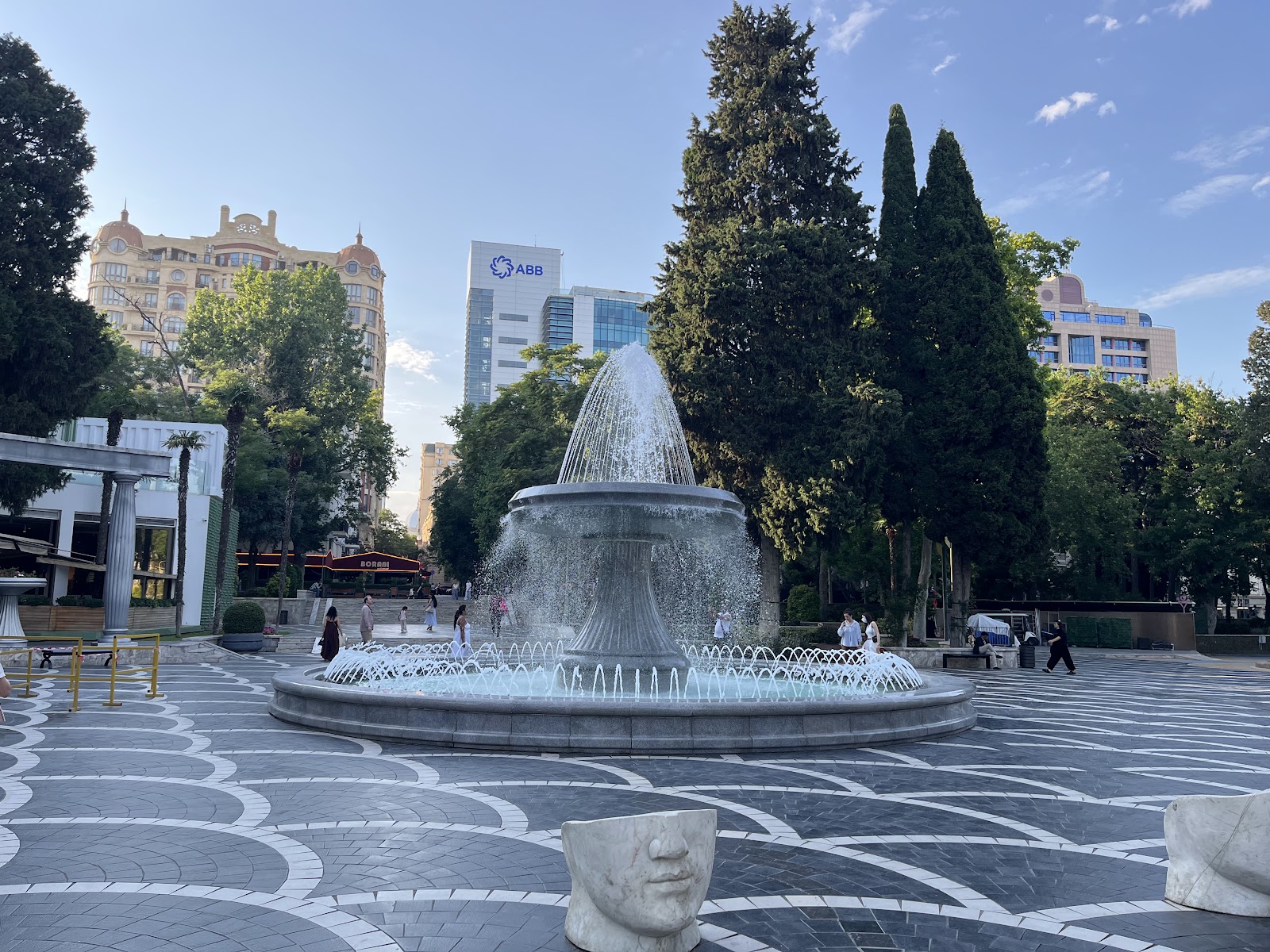
9. Fountain Square and Nizami Street
The heart of the newer part of the city is the 24-hour accessible Fountain Square, connected to the pedestrian Nizami Street with boutiques and buildings from the oil boom era. According to travelers, this part of the city can be explored in half a day, leaving you plenty of time for sitting in cafés or visiting the famous Ali & Nino bookshop.
You can eat well in Baku without meat. At the fully vegan Manipura (Həzi Aslanov 113), they serve plov, risotto, and dolma, open from 12 PM to 11 PM. Another purely plant-based option is Eden Cuisine (Zərifə Əliyeva 61B, roughly 11 AM to 8:30 PM). Meat-free dishes are also offered by the Indian restaurant Maharani, which closes around 10:30 PM.
Around the square, you’ll also find traditional Azerbaijani restaurants Nərgiz and Firuze, though ask directly about vegetable dishes there.
💡 Tip: Eden Cuisine closes around 8:30 PM and Manipura around 11 PM, so arrive for dinner on time and verify the hours.
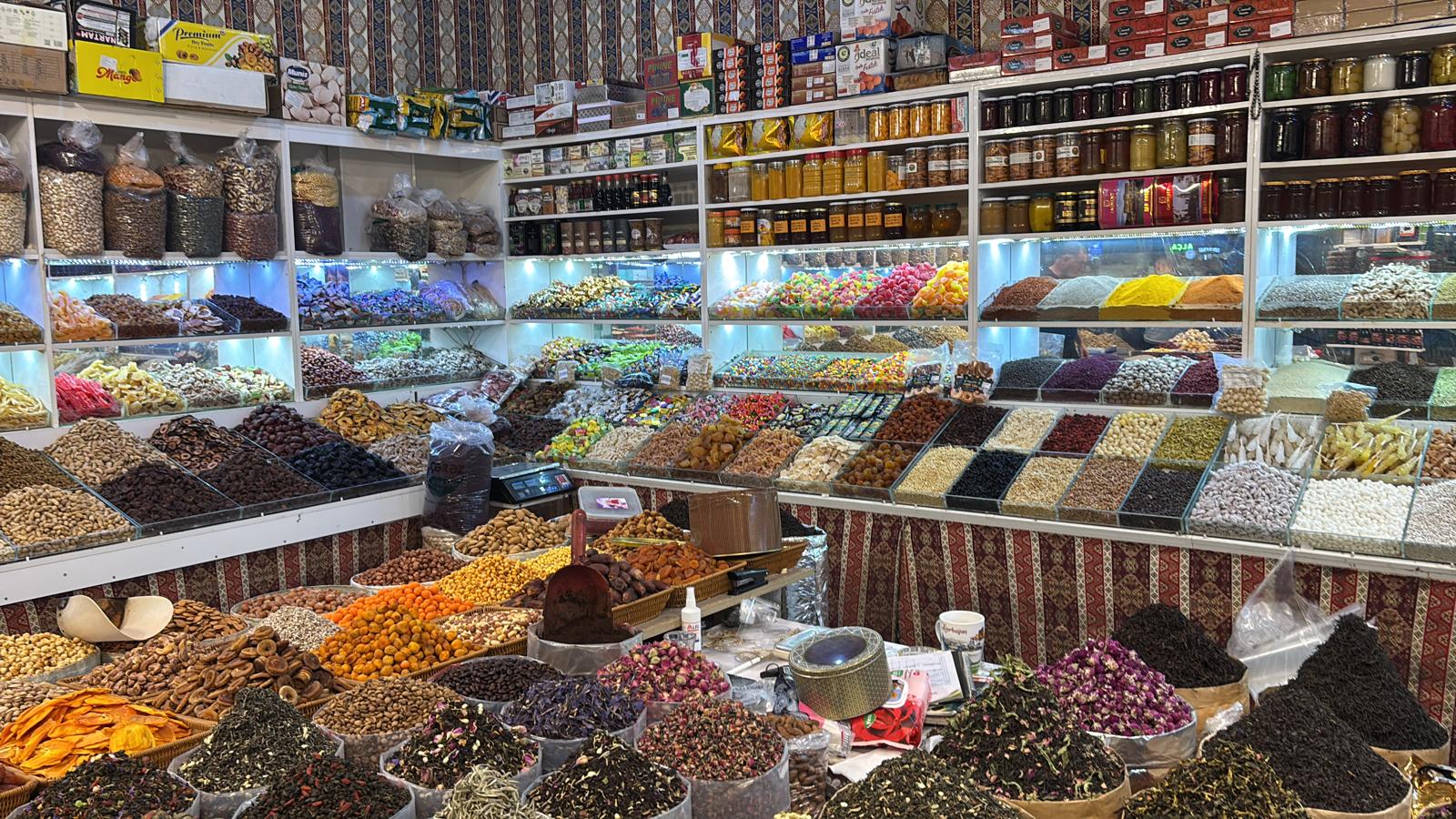
10. Tea with Jam and Yaşıl Bazar
The local tea culture runs deep. Tea is drunk from a small pear-shaped glass that locals call armudu and is served with jam. For sitting over a drink, try Tea Garden 145 in the Old Town at Kiçik Qala 3, open from 9 AM to 4 AM.
At Yaşıl Bazar, or Green Bazaar, you can stop by every day from roughly 8 AM to 9 PM. From the vegetarian Azerbaijani cuisine, look for the thin flatbread göyərti qutab stuffed with spinach and herbs or qutab with pumpkin, the herbed frittata kükü, yogurt soup dovğa (make sure it’s not made with meat), or grilled vegetable kebab for around 3 to 6.50 AZN (€1.50 to €3.50).
Among the meat specialties, local classics include plov with lamb, dolma with minced meat, or lula kebab. For something sweet, don’t miss the walnut shekerbura, pakhlava, and Sheki halva.
💡 Tip: Always ask about soups whether they’re made with meat broth, and for dovğa, whether it contains meat balls.
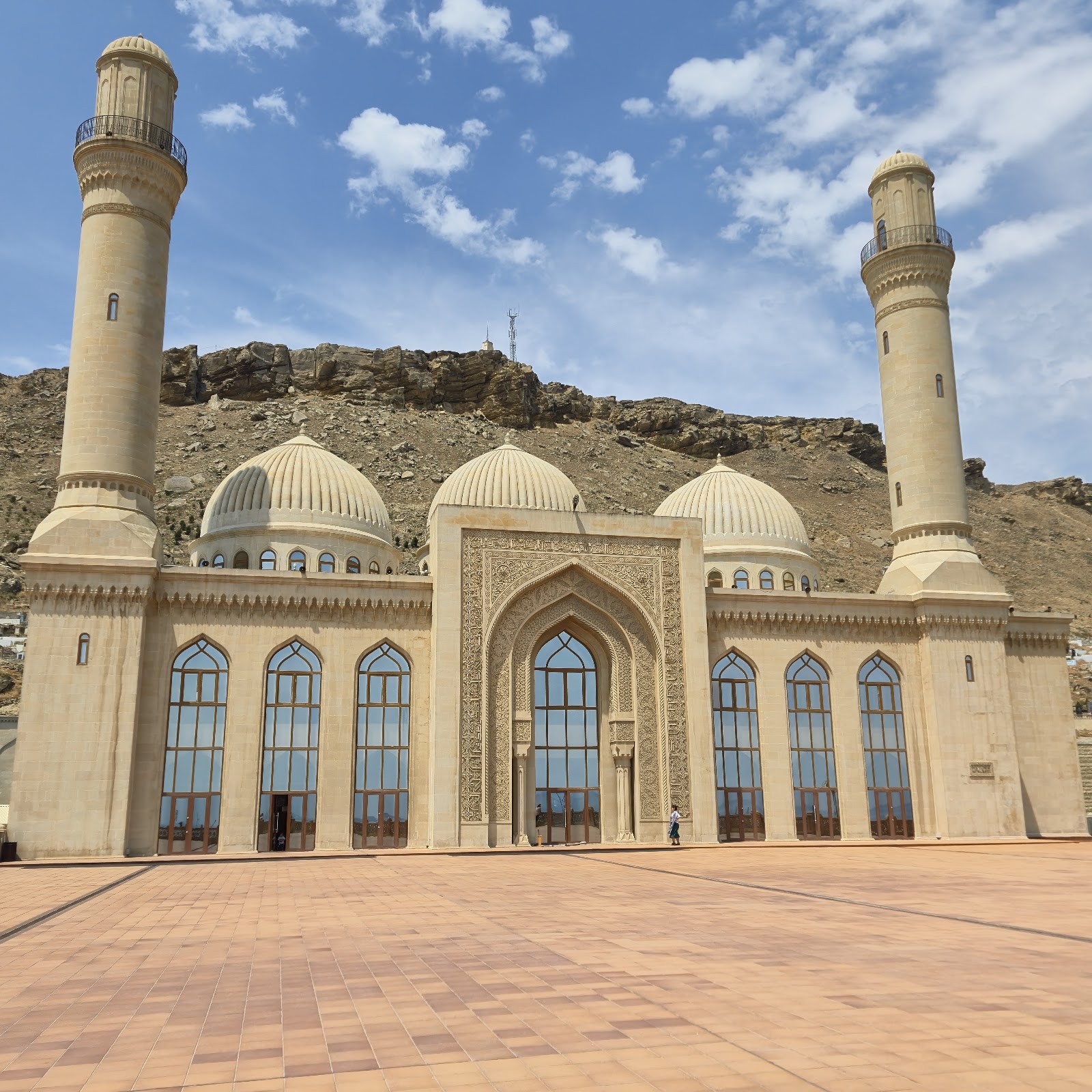
11. Bibi-Heybat Mosque
If you head south from the center toward Gobustan, you’ll come across an important Shiite pilgrimage site that houses the tomb of Ukeyma Khanum. The original 13th-century mosque was destroyed by the Bolsheviks in 1936, and today’s building is a replica completed in the 1990s.
Stricter dress rules apply for entering the sanctuary, so both men and women must have their shoulders and knees covered, with women additionally needing a headscarf. If you forget your own head covering, you can reportedly borrow one at the entrance, where scarves are prepared for visitors.
The area contains oil fields, and the Czech Ministry of Foreign Affairs strongly warns against photographing oil installations, which can lead to detention.
💡 Tip: The mosque lies south of the center on the way to Gobustan, so you can combine it with a trip to see the rock carvings on the same day.
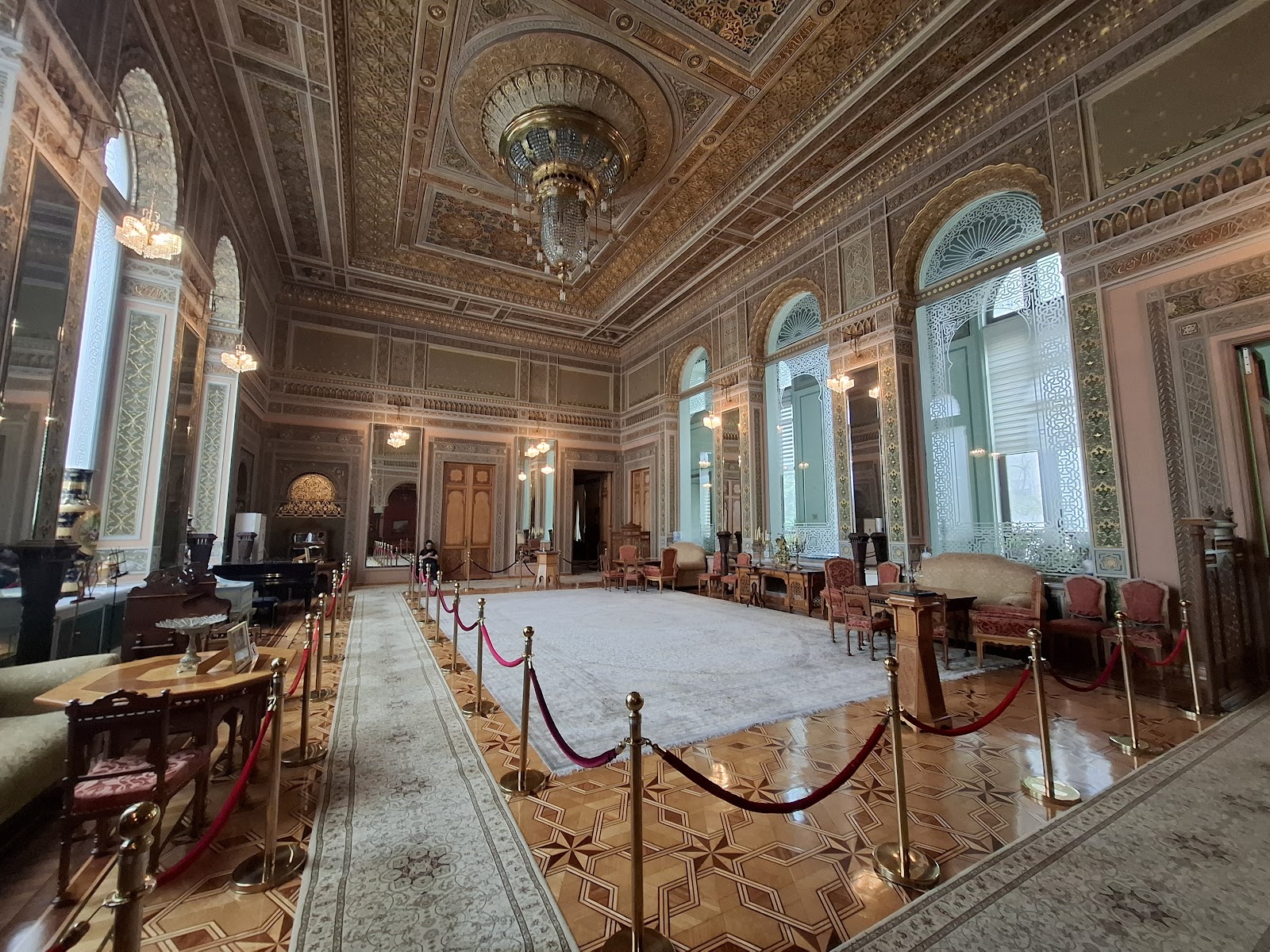
12. Museums in the Center
If you’re interested in history, you might be delighted by the National Museum of History of Azerbaijan, housed in the 19th-century palace of oil magnate Tağıyev. Also worth visiting is the Nizami Museum of Literature at Istiqlaliyyət 53, which you can visit Monday through Saturday from 11 AM to 5 PM.
Art lovers will likely enjoy the National Museum of Art, or the Museum of Modern Art, where according to descriptions works by Dalí, Picasso, and Chagall hang. Contemporary work is offered at the YARAT Contemporary Art Centre right on State Flag Square.
Visiting these exhibitions is a good idea for hot summer afternoons when you need to escape the sun, or conversely on a rainy day during Baku’s relatively wet winter. From the rich selection, just pick one or two museums so you can browse the exhibits at your leisure.
💡 Tip: Most museums are closed one day a week (the Literature Museum on Sunday, the National Museum of History, National Museum of Art, and YARAT on Monday), so check opening hours in advance.
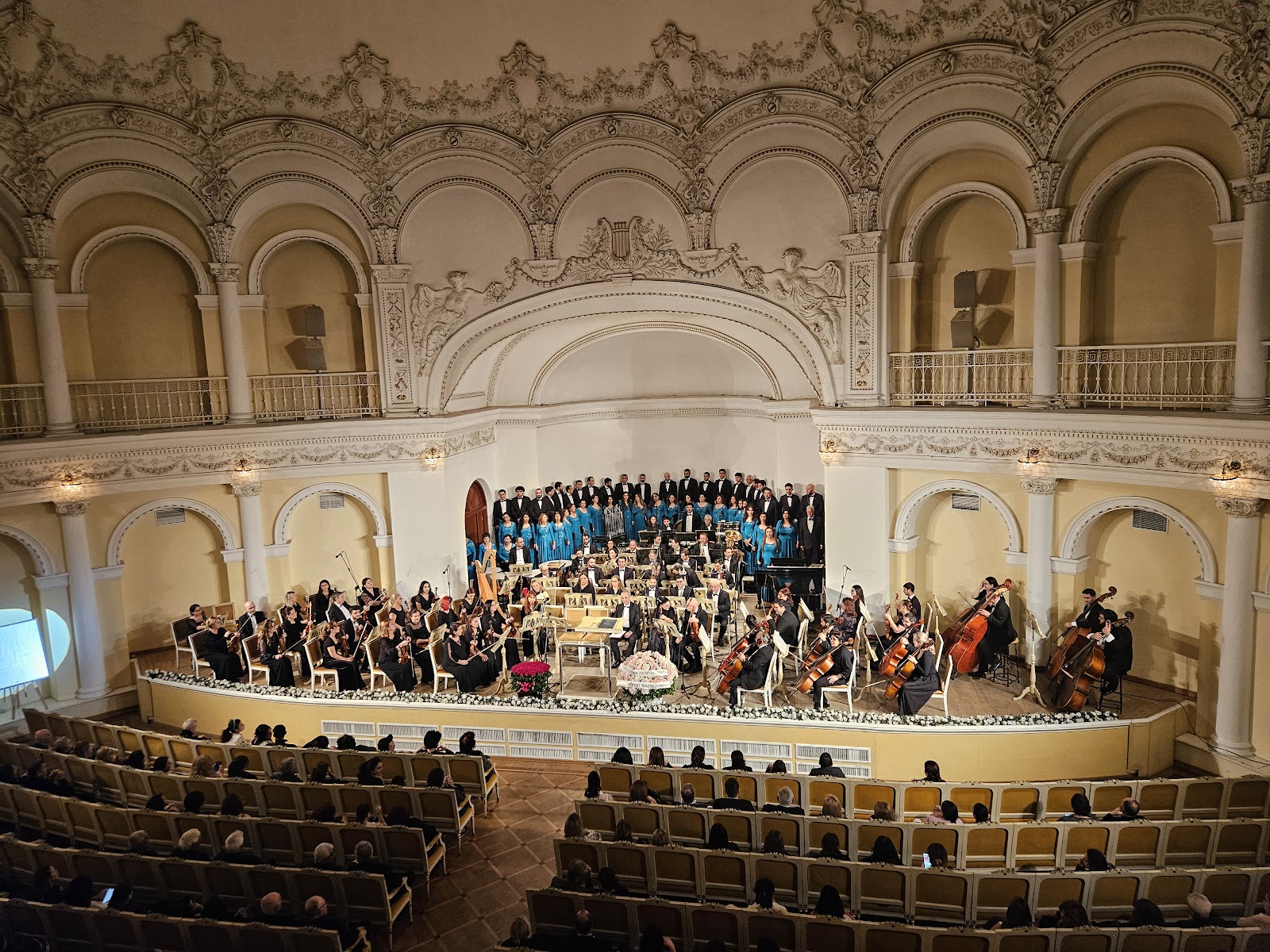
13. An Evening at the Opera or Philharmonic
When your feet are tired from a full day of exploring the city, you can head to the State Philharmonic by the Philharmonic Garden. Another option is the Opera and Ballet. You’ll find the program and prices on their website, so check them in advance.
If you crave something more exotic, seek out mugham, a traditional music genre inscribed on UNESCO’s intangible heritage list. Your hotel reception can likely advise you where to hear it live.
💡 Tip: Check the program and prices on the Opera and Ballet website a few days in advance, and ask at reception about mugham.
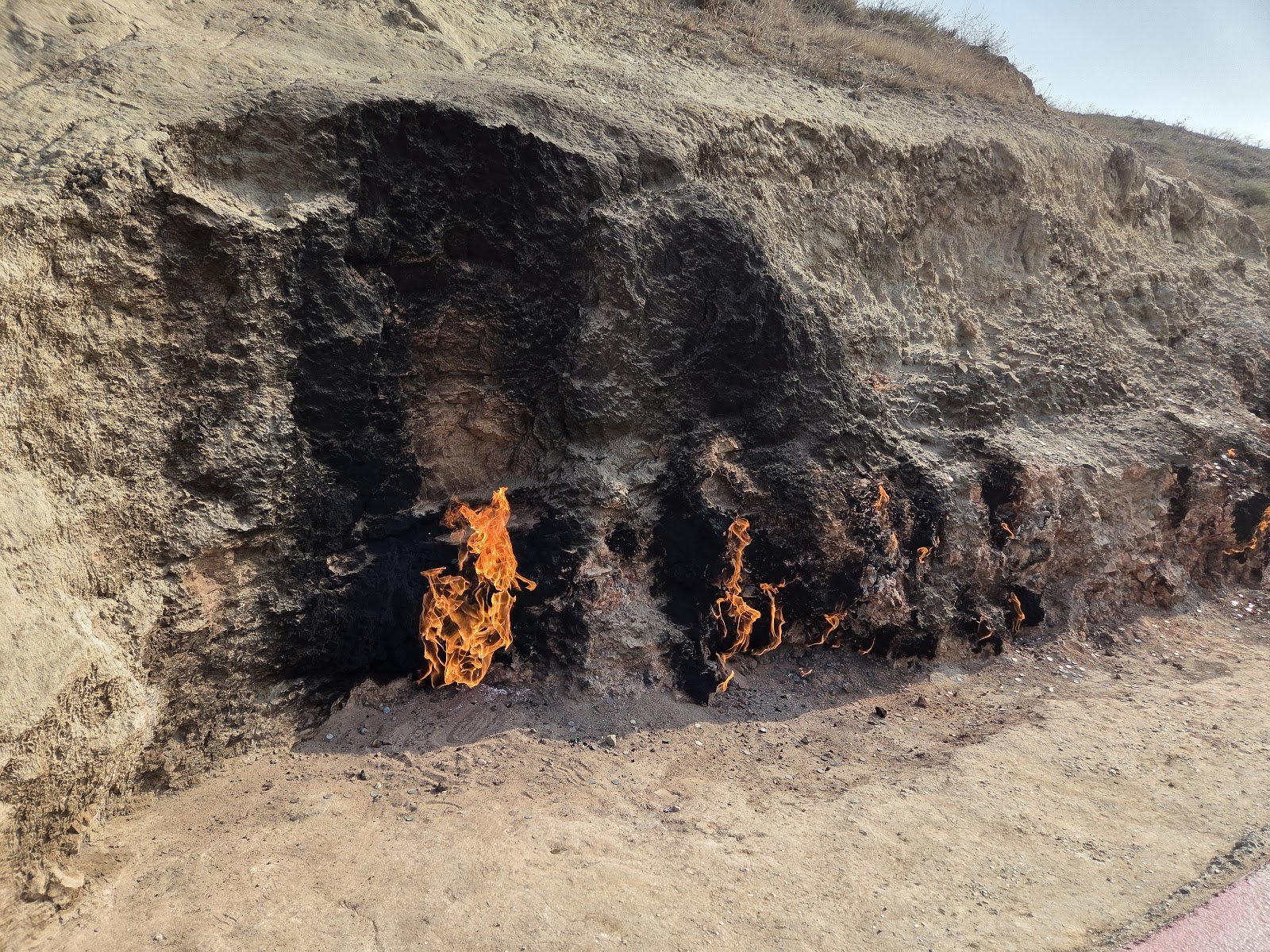
14. Yanar Dağ, the Burning Mountain
About twenty-five kilometers from the center on the Absheron Peninsula, you’ll find a natural phenomenon where gas burns continuously from the hillside and flames reportedly shoot up to three meters high. Travelers advise planning your visit after dark, when the fiery spectacle stands out best.
Since the beginning of 2026, foreigners pay 15 AZN (€8) for admission, while children under twelve enter free. If you want to explore the surroundings more thoroughly, it’s worth buying a combined ticket with Ateşgah temple for 25 AZN (€13) valid for 72 hours, or the large package including mud volcanoes for 35 AZN (€18).
Although photos promise a spectacular sight, according to visitor reviews, it’s more of a burning piece of hillside than an entire mountain in flames. Don’t be misled by older guides that list the combined ticket price as 20 AZN, as this information is now outdated.
💡 Tip: Put together your fiery route like this: Ateşgah in the afternoon, Yanar Dağ at dusk, and the Flame Towers in the evening from the viewpoint in Highland Park.
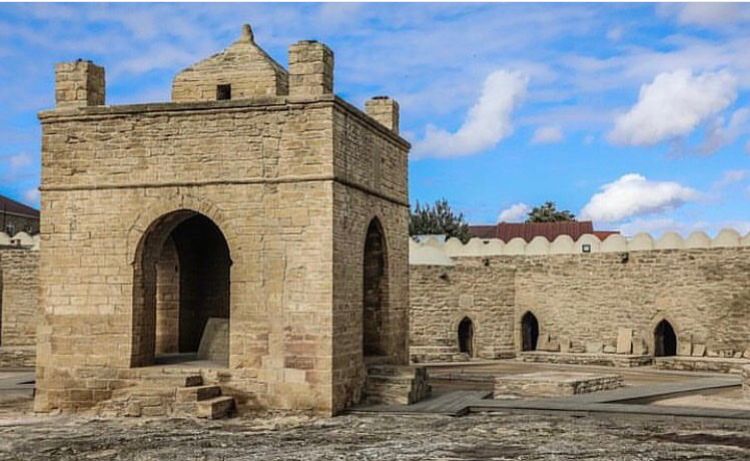
15. Ateşgah, the Fire Temple in Suraxanı
This fire temple in Suraxanı was used by both Hindus and Zoroastrians according to historical accounts. The structure itself dates back to the 17th and 18th centuries, and its history revolves around fire worship.
The complex is usually open daily from 10 AM to 7 PM, and entrance for foreigners costs 15 AZN (€8). You can get tickets through the online seller iTicket, or choose a combined ticket.
The trip can be combined with the burning mountain Yanar Dağ, as both sites are located on the Absheron Peninsula and share a joint ticket.
💡 Tip: The combined ticket with Yanar Dağ for 25 AZN is valid for 72 hours, so you can use it on two different days.
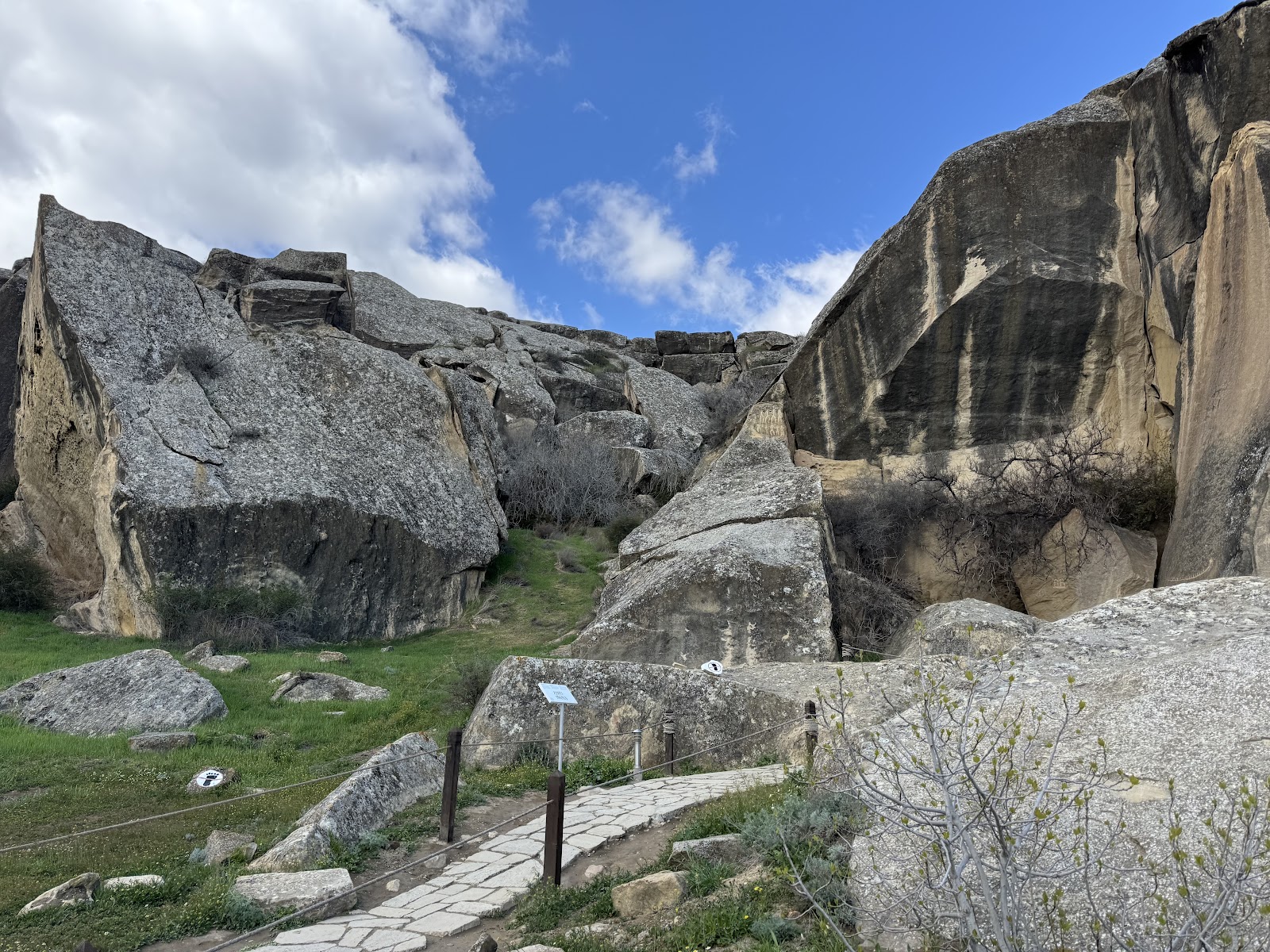
16. Gobustan Rock Carvings (UNESCO)
About sixty kilometers southwest of Baku lies a landscape that hides over six thousand prehistoric rock carvings documenting forty thousand years of human art. This vast area is inscribed on the UNESCO World Heritage list.
The local museum opens its doors daily from 10 AM to 5 PM, and entrance costs approximately 15 AZN (€8). Tickets work as QR codes through the online platform iTicket.
Since public transport to these areas is complicated, people usually go on an organized trip or order a Bolt or taxi. Plan your journey for morning hours or outside summer, because in summer it’s over 30°C (86°F) during the day.
💡 Tip: QR tickets through iTicket are non-refundable, so buy them only when you have a confirmed trip date.
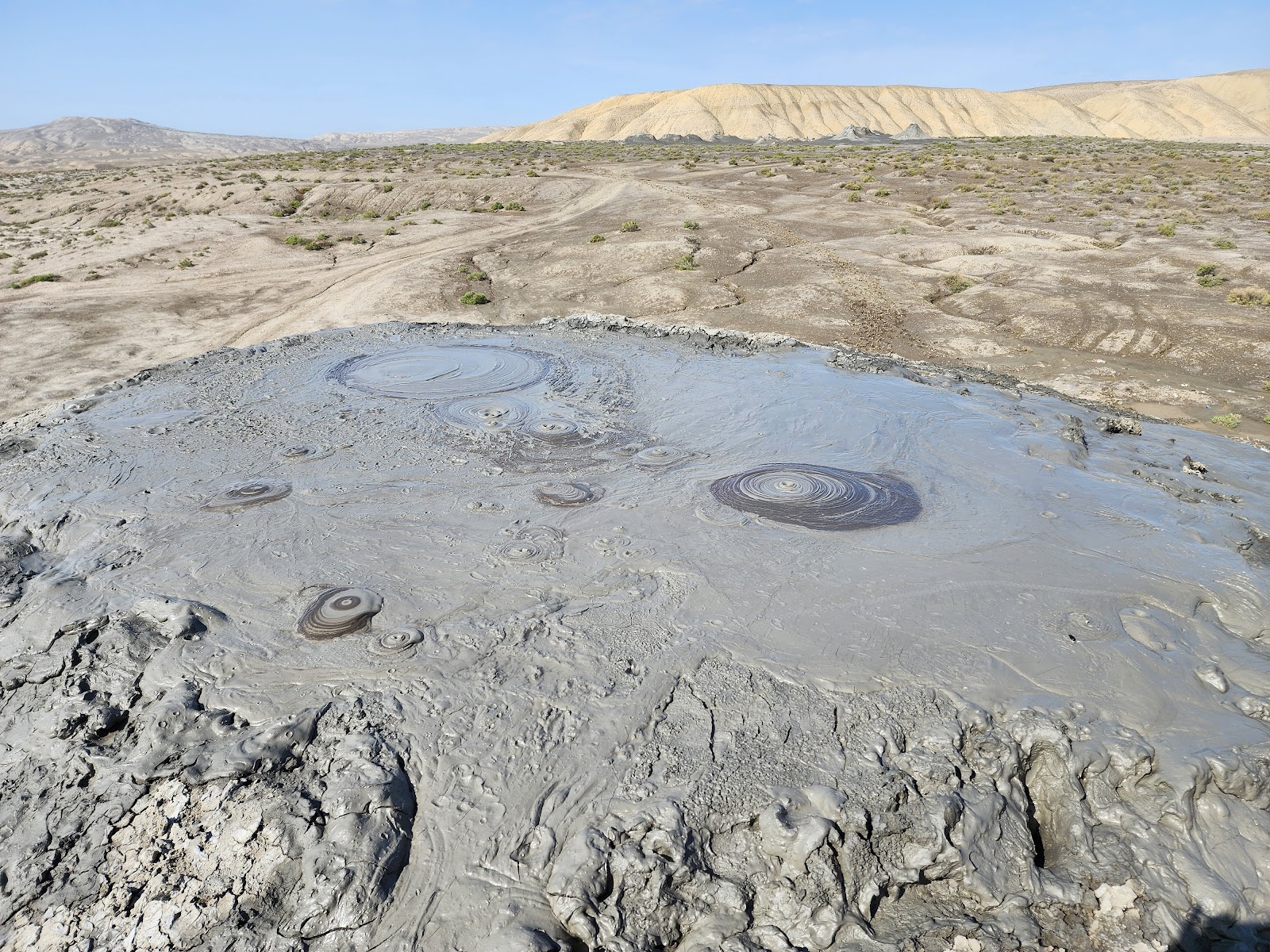
17. Mud Volcanoes Near Gobustan
Near the rock carvings bubbles another natural curiosity that one traveler on a forum described as the biggest surprise of the day. Since June 2024, there’s also been a new tourist complex Mud Volcanoes covering twelve hectares, where you’ll find a walkway, information center, café and the option to ride ATVs or golf carts.
The area lies about 59 kilometers from Baku, and entrance is available as part of the large combined ticket from tip 14 (Yanar Dağ, Ateşgah and mud volcanoes) for 35 AZN (€18). Public buses don’t go directly here according to travelers, so the last stretch will likely be in a Lada with a local driver, which costs roughly 10 to 30 AZN (€5 to €15).
According to travelers, these are small cones about two meters high where mud bubbles gently. Therefore, combine your visit with nearby Gobustan.
💡 Tip: The last stretch to the volcanoes follows a dusty road, and regular taxis reportedly refuse to go there, so it’s worth arranging transport in advance (a trip from Baku or Bolt/taxi by agreement).
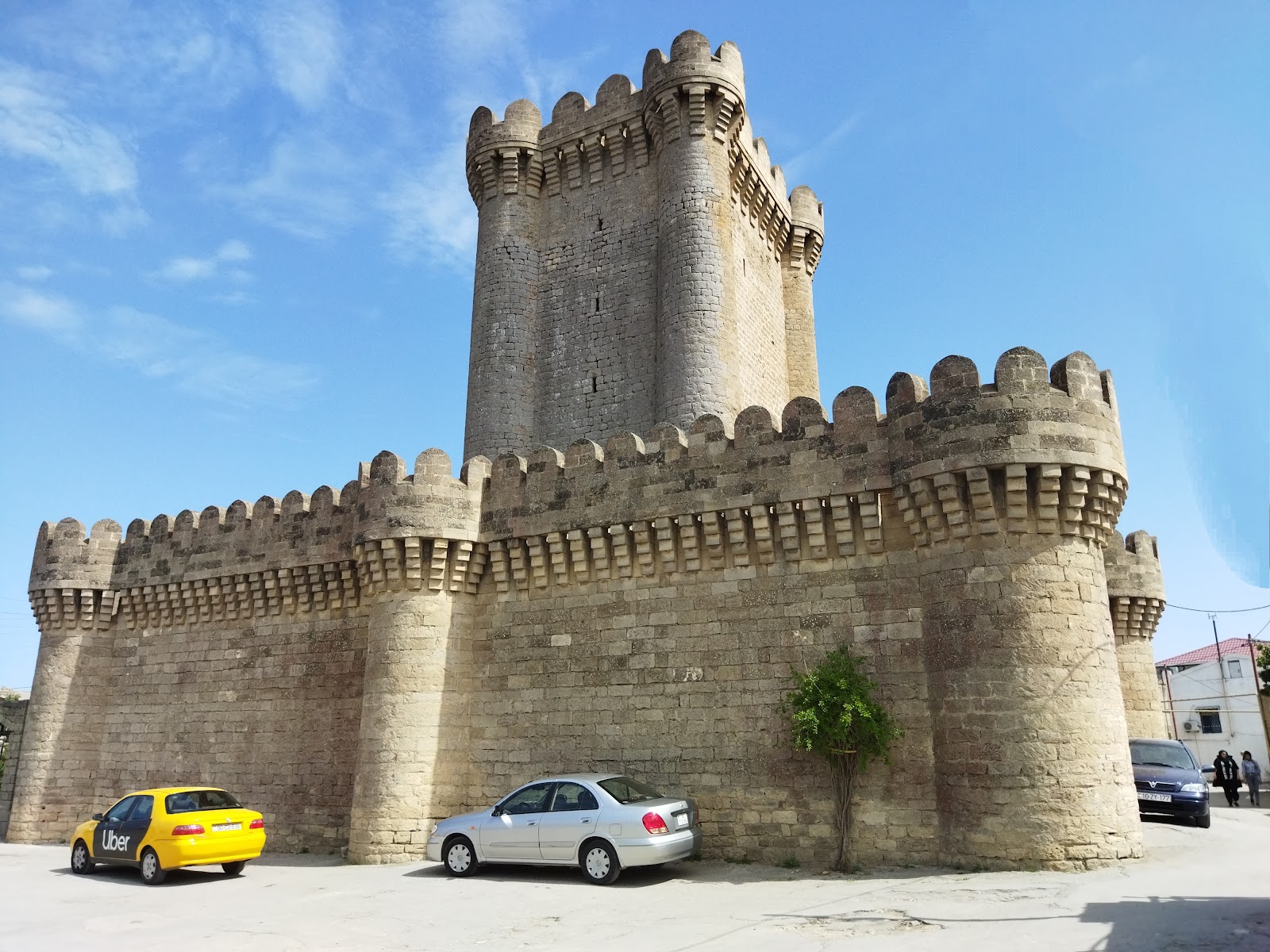
18. Absheron Peninsula: Mardakan, Gala and Beaches by the Caspian Sea
If you venture to explore the capital’s surroundings, don’t miss Mardakan Quadrangular Fortress, which dates back to around the fourteenth century. Also worth visiting is the Gala historical-ethnographic open-air museum with petroglyphs, open daily roughly from 9 AM to 6 PM (don’t confuse it with Gabala from tip 21).
Nature lovers should check the current availability and entrance fees for Absheron National Park, where over fifty bird species live and you might spot a Caspian seal. When you crave swimming, Sea Breeze Resort in Nardaran is an option, though you should carefully verify the water quality in the Caspian Sea beforehand.
When traveling around the peninsula, you’ll pass strategic oil fields, and the international foreign ministry warns that photographing oil facilities can end in detention (see tip 11). Nardaran is also a strongly conservative Shia community, so outside the beach wear modest and respectful clothing.
💡 Tip: People usually go to Absheron on an organized trip or by Bolt/taxi. In one day you can only manage a few stops, so choose beforehand which ones you want to see.
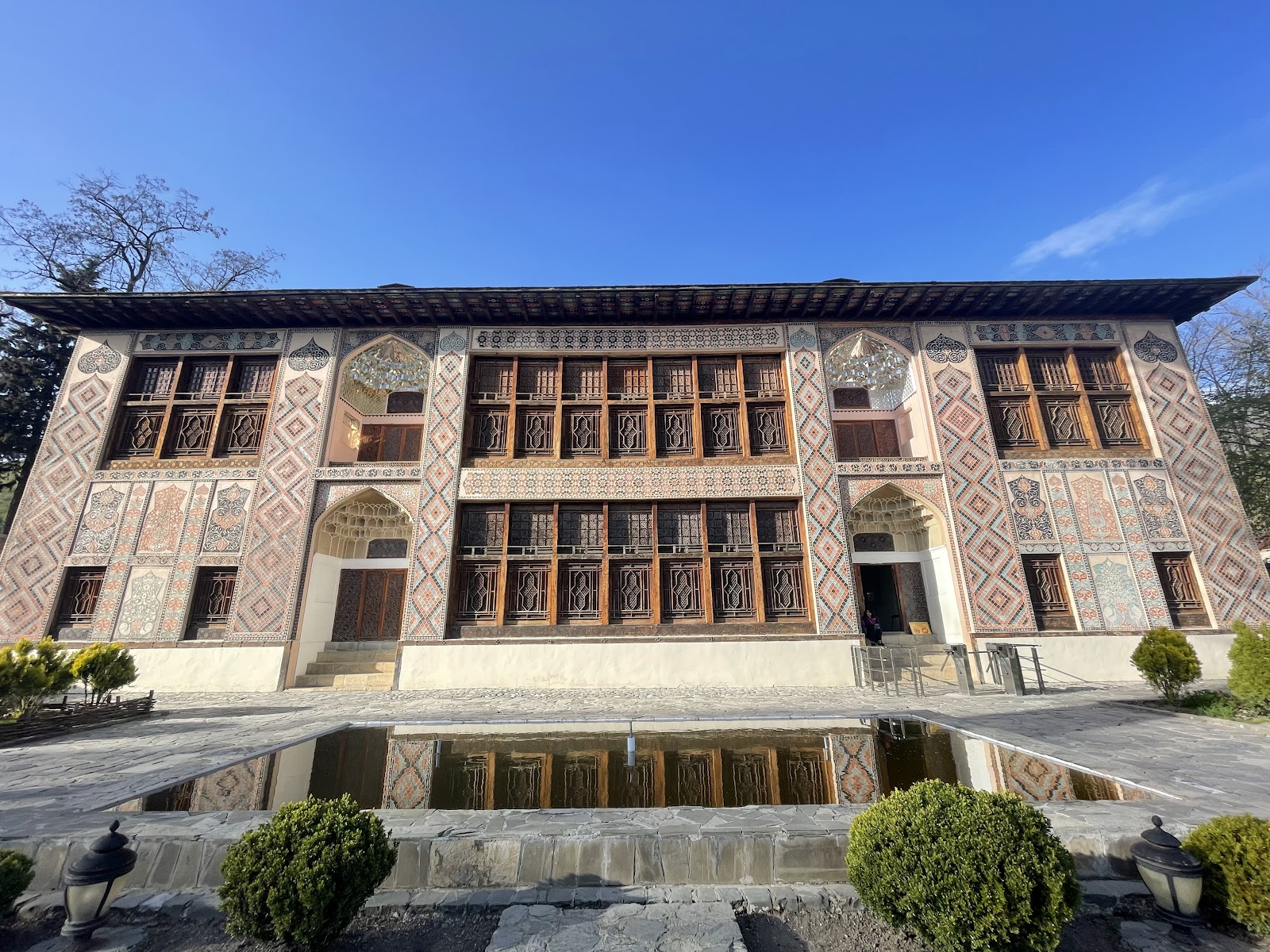
19. Sheki, Day Trip to the UNESCO City
The city of Sheki attracts visitors with its historic center, which is inscribed on the UNESCO World Heritage list and offers a different atmosphere than modern Baku. The main jewel here is the Palace of the Sheki Khans, which you can visit Monday to Saturday from 9 AM to 7 PM, Sunday until 6 PM.
Entrance to the palace costs foreigners 15 AZN (€8) from the beginning of 2026. From Baku you can get here by bus for about 8 USD (€7), or by night train. According to blogs from 2026, an ADY company train departs from the capital around 11:45 PM, the journey takes about six hours, and a bed in a compartment costs around 13.50 AZN (€7).
For a day trip it’s far and you’d spend more time traveling than exploring. Instead, plan at least one or two nights in Sheki so you can enjoy the city without rushing.
The local meaty specialty is piti, which vegetarians won’t enjoy.
💡 Tip: Train times and prices are from 2026 blogs, so verify them with carrier ADY before traveling.
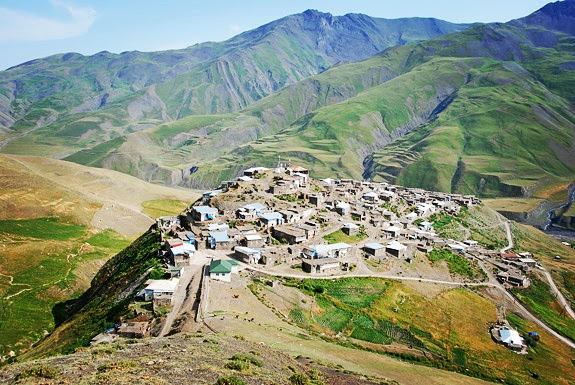
20. Quba, Qırmızı Qəsəbə and Xınalıq
From Baku you’ll head to the mountains near the town of Quba. About fifteen kilometers northeast lies Qırmızı Qəsəbə, the Red Settlement, a village of Mountain Jews. Even higher in the mountains you’ll find the village of Xınalıq, which in 2023 was inscribed on the UNESCO list as a cultural landscape of the local people along with the seasonal migration route Köç Yolu.
An organized full-day trip from Baku departs around nine in the morning and takes approximately eleven hours. The drive itself according to organizers takes about seven hours of your time.
Doing all this in one day is demanding and you’ll spend a lot of time in the car, so it’s worth relying on an organized trip where someone else handles the logistics.
💡 Tip: A full-day trip from Baku takes about 11 hours according to organizers with departure around 9:00 AM, so don’t plan anything else for the evening.
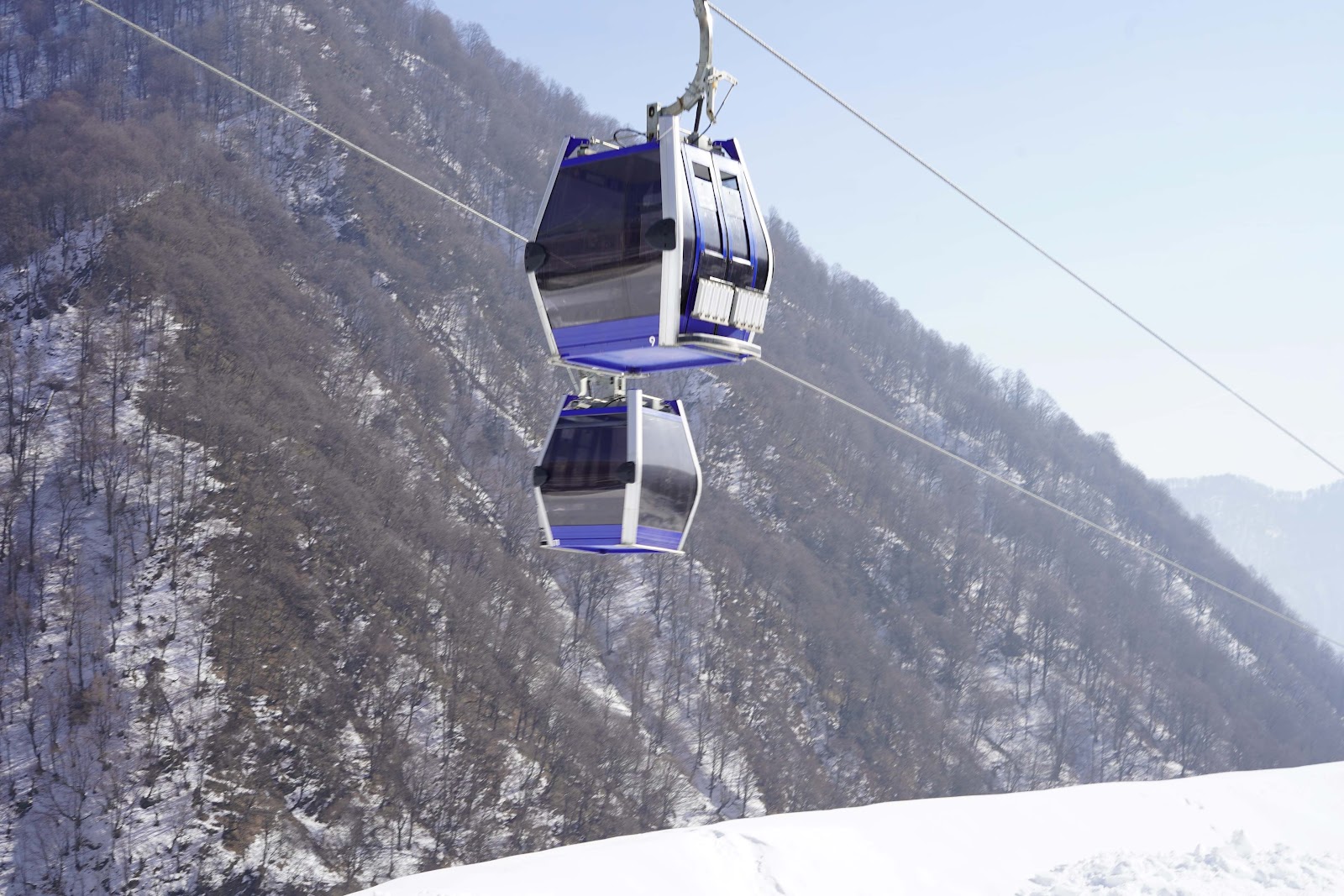
21. Gabala and Tufandağ
Another escape from the bustling city is the town of Qəbələ, commonly called Gabala. The main attraction here is the cable car to Tufandağ mountain resort, which runs daily roughly from 10 AM to 7 PM, and in travelers’ itineraries there’s also a trip to Lake Nohur.
Since January 2026, a new train runs from Gəncə to Gabala; the 139-kilometer journey takes just under two hours.
💡 Tip: Verify the cable car’s opening hours and operation according to season before traveling.
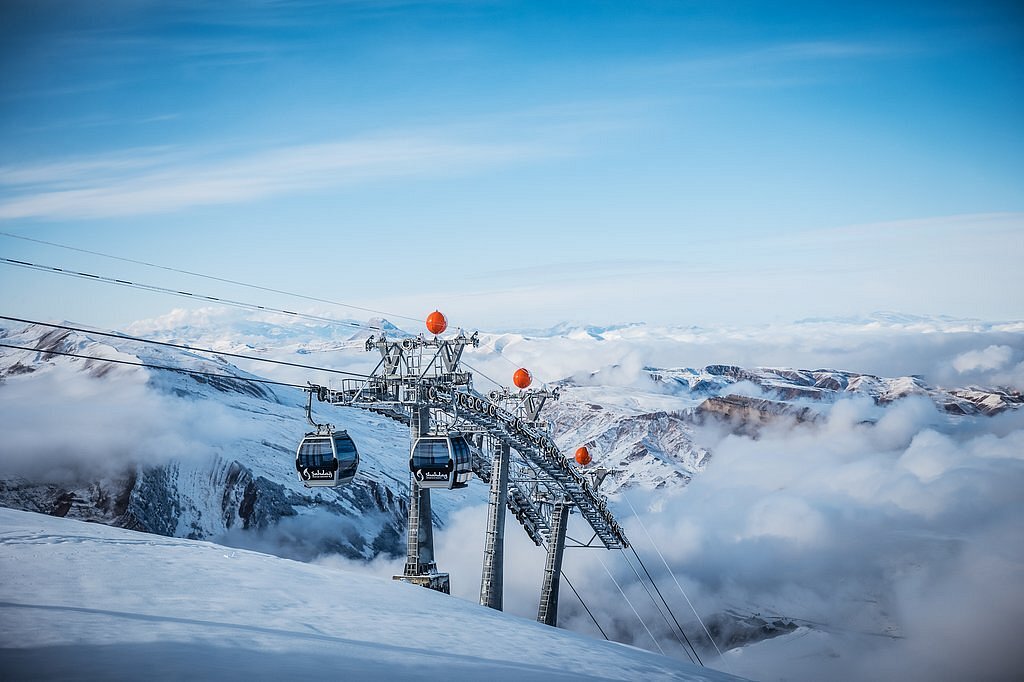
22. Shahdag, Mountains and Skiing
In the Qusar area awaits Shahdag Mountain Resort, where you can enjoy skiing in winter and hiking in summer. Accommodation prices, ski passes and summer activities can be found on the official resort website (shahdag.az).
Shahdag is among popular trips from Baku along with Gobustan, Yanar Dağ, Ateşgah and Sheki.
💡 Tip: Before booking, verify whether the resort has winter or summer operations during your dates and check current prices.
Where to Go Next from Baku
If you have extra time in Baku, head to the botanical garden (Badamdar şossesi 40), open daily roughly from 9 AM to 7 PM. Also worth seeing is Təzəpir Mosque (Mirzə Fətəli Axundzadə Street 7), built in the early 20th century.
Formula 1 fans can walk the Baku City Circuit winding around the old town. The Azerbaijan Grand Prix took place September 24–26, 2026, and the next one will be held September 24–26, 2027, with parts of the center reportedly closed during the race.
As a bonus to trips outside the city, there’s the craft village of coppersmiths Lahıc with a local museum.
If you want to combine your trip with Georgia, keep in mind that land borders are closed. The exception is only the night train from Tbilisi, for which tickets are hard to obtain.
Frequently Asked Questions
Do I need a visa for Azerbaijan?
Yes, you need to arrange an electronic visa before your trip via the official portal evisa.gov.az, as regular tourists cannot obtain one at the airport. This single-entry document allows a stay of up to thirty days and costs roughly 25 USD, about €22. Standard processing takes up to three business days, but for an extra fee you can get an express visa within three hours.
Will I be allowed into Azerbaijan if I have an Armenian stamp in my passport?
According to travellers’ experiences, an Armenian stamp alone does not prohibit entry, though you may be questioned at the border about the purpose of your trip. However, if you have previously visited Nagorno-Karabakh without official permission from Azerbaijan, you risk being denied entry and even facing criminal prosecution. The land border between Azerbaijan and Armenia remains closed.
Can I reach Baku overland from Georgia?
In 2026 it’s practically impossible, as the land borders have been closed since 2020. The only exception is the night train from Tbilisi to Baku, which resumed service in May 2026, but tickets are extremely hard to get. A far more reliable option is to fly directly with AZAL, or use Wizz Air from Budapest or – from late October 2026 – from Bratislava (check the date).
Is Baku safe?
The city is safe for tourists, with low crime rates. The Ministry of Foreign Affairs only advises against travel to the zone near the Armenian border and the former war zone due to the threat of unexploded landmines. Because of regional tensions surrounding Iran, it’s best to check current travel advisories before your trip and register with your consular travel registration system.
How do I get from the airport to the city centre?
The convenient option is the Aeroexpress H1 bus, which runs 24/7 and costs 1.30 AZN, about €0.65. Payment is by BakıKart. You can buy one at the vending machine in front of the terminal for 2 AZN, and it will serve your entire group since you can pass it around. If you choose the Bolt or Uber app, a ride to the centre costs roughly 15 AZN (€7.50).
When should I visit Baku?
The most pleasant weather awaits you in May, June, September and October, when temperatures hover between twenty and twenty-eight degrees. During July and August it’s usually above 30 °C. Also keep in mind that wind blows here all year round, so Baku isn’t called the City of Winds for nothing.
How many days in Baku are enough?
For the city itself, two to three days are comfortably enough. Set aside one full day for Gobustan with the mud volcanoes and the fire sites Yanar Dağ and Ateşgah, most easily done with an organized tour. If you’re drawn to more distant places like Sheki or the dramatic mountains around Quba, leave an extra one to two nights in your itinerary.
Tips and Tricks for Your Vacation
Don’t Overpay for Flights
Search for flights on Kayak. It’s our favorite search engine because it scans the websites of all airlines and always finds the cheapest connection.
Book Your Accommodation Smartly
The best experiences we’ve had when looking for accommodation (from Alaska to Morocco) are with Booking.com, where hotels, apartments, and entire houses are usually the cheapest and most widely available.
Don’t Forget Travel Insurance
Good travel insurance will protect you against illness, accidents, theft, or flight cancellations. We’ve had a few hospital visits abroad, so we know how important it is to have proper insurance arranged.
Where we insure ourselves: SafetyWing (simple monthly subscription) and TrueTraveller (for extra-long trips).
Find the Best Experiences
Get Your Guide is a huge online marketplace where you can book guided walks, trips, skip-the-line tickets, tours, and much more. We always find some extra fun there!