Do you know that feeling when you’re craving absolute peace, endless beaches, and a glass of good wine, but the thought of overcrowded resorts and noisy promenades fills you with dread? Portugal hides a massive treasure that the typical tourist crowds have largely overlooked — until now. Alentejo Portugal and the wild Costa Vicentina coastline represent the authentic, raw face of the Iberian Peninsula you may have only dreamed of. Here you’ll find dramatic cliffs plunging into a raging ocean, vast beaches without a single parasol, and endless plains dotted with fragrant cork oaks.
If you’re looking for a place where time has stood still and nature still calls the shots, you’ve come to exactly the right place. Alentejo covers nearly a third of Portugal’s entire landmass, yet only a fraction of the population lives here, making it a perfect oasis for lovers of slow travel. You can wander cobblestoned lanes of historic white villages, taste outstanding local cheeses, and gaze up at some of the clearest starry skies in Europe come nightfall. Pack your comfiest walking shoes and an open mind, because I guarantee this corner of Portugal will win you over with its quiet, understated beauty.
TL;DR
- The Costa Vicentina coast is a protected natural park with no massive hotel complexes — just wild beaches perfect for surfers and nature lovers.
- Historic Évora is the beating heart of the interior, and its famous Chapel of Bones and Roman temple are well worth a full-day visit.
- The Rota Vicentina trail offers some of the most spectacular coastal treks in Europe, easily manageable in shorter day-long sections.
- The ocean water is freezing even in the middle of a scorching summer, so expect a bracing dip rather than hours of Mediterranean-style swimming.
- White villages like Monsaraz transport you centuries back in time and reward you with stunning panoramic views over vast lakes and rolling countryside.
- A car is absolutely essential, as public transport between remote beaches and inland villages is extremely limited.
- Pay attention to new accommodation regulations — since 2026, unofficial holiday apartments have largely disappeared, so booking early is key.
The full destination guide: Portugal — guide and what to see
When to Visit Alentejo and the Coast
Timing your trip is absolutely crucial, because the climate in this region can be extreme. While the coast is constantly swept by strong Atlantic winds, temperatures inland climb to unbearable heights during the summer months. If you’re planning to explore historic sites and go on long hikes, avoid August — thermometers in Évora regularly hit over 40°C and the streets are completely deserted during the day. In summer, life shifts entirely to the coast, where cold currents and sea breezes make things far more bearable.
By far the best time to visit is September and October, when the worst of the heat has passed but the days are still beautifully sunny and long. The ocean is at its warmest after a full summer (which in practice still means a rather brisk 20–21°C), so the more adventurous among you can actually take a swim. Better still, the summer crowds of Portuguese holidaymakers who flock to the coast in August will have dispersed, leaving you with popular beaches and restaurants virtually to yourself. Spring from April to May is fantastic for botany lovers, as the whole of Alentejo bursts into bloom before the summer sun scorches it golden.
The winter months from November to March bring more frequent rain and temperatures around 15°C — not exactly swimsuit weather, but ideal for hiking the Rota Vicentina. Many cafés and smaller guesthouses on the coast close for winter, but that only makes encounters with locals over a cup of strong coffee all the more authentic. If you don’t mind packing a warmer jumper and a windbreaker, winter in Alentejo will charm you with its melancholic, utterly peaceful pace.
Where to Stay in Alentejo and on the Coast
💡 Accommodation & experiences tip: We love searching for places to stay on Booking.com, which usually has the best cancellation policies. For tickets, tours, and activities, it’s worth comparing options on GetYourGuide.
Your choice of base depends entirely on how independent you want to be and whether you prefer waking up to ocean views or wandering cobblestoned streets. Accommodation options here are vastly different from the busy south — don’t expect gigantic resorts with entertainment programmes, but rather small boutique hotels, renovated country estates, and stylish apartments. If you want to experience genuine rural romance, look for “Turismo Rural” properties — these are often beautifully restored farmhouses surrounded by cork oaks, where breakfast means homemade cheese and freshly baked bread.
For exploring the interior, the best strategic choice is historic Évora, from where you can easily take day trips to surrounding castles and vineyards. Consider the lovely Evora Olive Hotel, which offers modern comfort right in the heart of the old town, or smaller family-run guesthouses tucked away in narrow lanes. On the Costa Vicentina, the ideal base is the town of Vila Nova de Milfontes, which sits right at a river mouth and offers the perfect mix of beaches, restaurants, and a laid-back surf vibe. The popular Selina Milfontes complex here combines stylish accommodation with a community atmosphere and excellent facilities.
Bear in mind, though, that the accommodation market underwent a drastic shift in 2026 due to new European regulations. Platforms like Booking were required to remove unregistered and unofficial listings across the board, so the supply of super-cheap private apartments has essentially vanished. Only legal, professionally managed villas and flats remain, which guarantees higher quality and safety but has naturally pushed prices up. Especially if you’re planning a summer trip, booking well in advance — even six months ahead — is now absolutely essential if you don’t want to end up sleeping in your car.
14 Things to See and Do in Alentejo and Costa Vicentina
Let’s take a detailed look at the most exciting spots this vast region has to offer. You’ll find the perfect balance of wild nature, outdoor activities, and slow-paced exploration of Portugal’s rich history.
1. Walk a Section of the Rota Vicentina
This famous network of hiking trails ranks among the very best in all of Europe and attracts keen walkers from around the world. The route splits into two main paths — the Historical Way winds through the rolling interior among cork oaks, while the Fishermen’s Trail (Trilho dos Pescadores) hugs the dramatic clifftop edge where land tumbles into the ocean. The Fishermen’s Trail is absolutely breathtaking, but be warned: you’ll often be trudging through deep sand, which gives your legs quite the workout.
You certainly don’t need to tackle the full few hundred kilometres — just pick a single day section. A hugely popular stretch runs between the towns of Porto Covo and Vila Nova de Milfontes, where every bend reveals a new, even more dramatic view of the churning Atlantic. Make sure you wear sturdy footwear, because flip-flops or basic plimsolls simply won’t cut it on sandstone cliffs.
💡 Local tip: Always set off with a huge supply of water and a hat. There’s absolutely zero shade on the cliffs, and the cool ocean breeze easily tricks you — the sun burns far more fiercely than you’d realise at the time.
2. Praia de Odeceixe and the River Lagoon
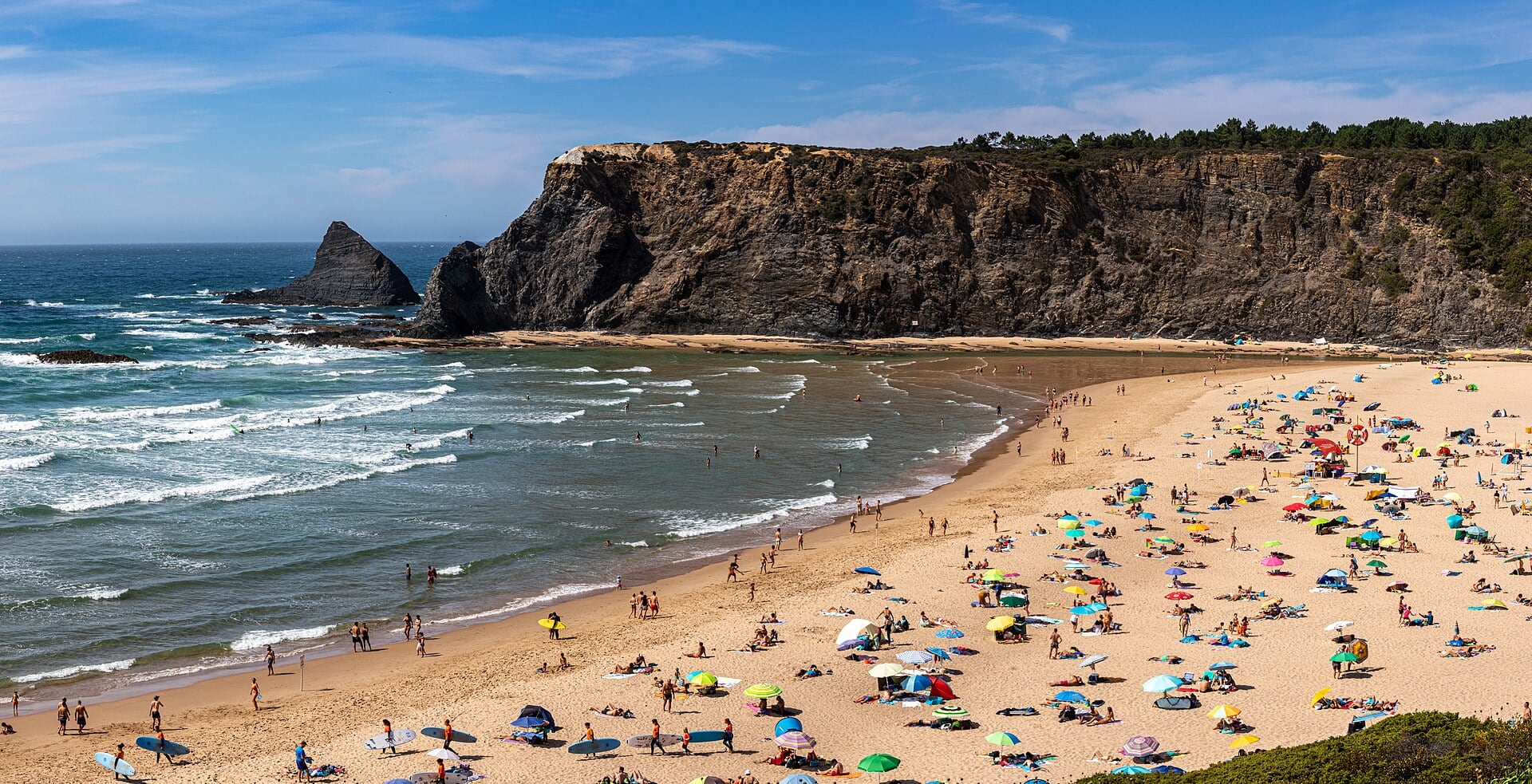
One look at aerial photos of this beach and you’ll immediately understand why it regularly tops lists of Portugal’s most beautiful spots. The River Seixe carves a gorgeous horseshoe bend around a wide sandy peninsula before finally pouring into the ocean waves. Thanks to this unique layout, you can choose between throwing yourself into the wild Atlantic surf or lounging in the calm, considerably warmer fresh water of the river.
It’s an ideal spot for families with children, who can safely splash about in the shallow lagoons on the river side while adults battle the surf a stone’s throw away. The little village of Odeceixe itself sits a few kilometres inland, and a small tourist train runs to the beach during summer — a brilliant alternative if you’d rather not fight for a parking space in the perpetually packed car park by the water.
💡 Local tip: Stay until late afternoon when the tide starts going out. The riverbed partially drains, little sandy islets appear, and the whole beach takes on an incredibly photogenic atmosphere in the soft golden light.
3. Surf Mecca: Praia da Arrifana
This bay sheltered by towering black cliffs is practically a sacred site for wave riders. Arrifana sits deep below a steep hillside, so the descent to the water alone is a mini adventure, rewarded by views of perfect waves breaking over the sandy bottom. The atmosphere is utterly relaxed — old campervans dot the car parks and people in wetsuits jog past with boards tucked under their arms, heading eagerly for the water.
Even if surfing isn’t your thing, it’s well worth sitting on the clifftop just watching the buzz. At the top of the hill near the car park, you’ll find the ruins of an old fortress with panoramic views stretching along the entire coastline and its long line of foaming surf. The surrounding lanes are also home to several excellent bistros and cafés serving great coffee and fresh fruit bowls.
💡 Local tip: You can technically drive down to the beach, but the road is extremely narrow and turning around at the bottom is nearly impossible in season. Leave your car at the large car park up top and simply walk down the hill — you’ll save yourself a lot of stress.
4. Magical and Macabre Évora
If you could visit only one inland city in Alentejo, it would have to be Évora — its historic centre is a UNESCO World Heritage Site. The city is dominated by a remarkably preserved Roman temple from the 1st century, standing proudly in the main square as a reminder of the region’s rich ancient past. Right next door you’ll find the Sé Cathedral, whose rooftop you can climb for sweeping views of the city’s white houses trimmed with yellow borders.
The biggest — and most chilling — draw, however, is the famous Capela dos Ossos, the Chapel of Bones. The walls and columns of this small chapel at the Church of St. Francis are meticulously lined with the skulls and bones of approximately five thousand monks. The inscription above the entrance, which translates as “We bones that are here, await yours,” is guaranteed to give you goosebumps — but it’s an incredibly powerful and thought-provoking experience.
💡 Local tip: Explore Évora in the early morning or late evening only. In summer, the midday heat is absolutely unbearable — the city sits in a basin and the stone walls amplify the heat relentlessly.
5. The Lost White Village of Monsaraz
High on a hill near the Spanish border sits a village that looks as though it stepped straight out of a historical fairy tale. Monsaraz consists of just a few cobblestoned lanes lined with dazzling white houses, all enclosed within imposing medieval walls. Cars are strictly banned, so the only sounds you’ll hear are swallows chirping and your own footsteps on the ancient paving.
At the very end of the village stands the ruin of an old castle with a bullring, from which you get a jaw-dropping panoramic view over the surrounding countryside. Directly below the hill spreads Lake Alqueva, the largest artificial lake in Europe, its deep blue surface contrasting beautifully with the parched golden landscape. A stroll along the ramparts at sunset is one of the most romantic experiences in all of Portugal.
💡 Local tip: If you can, book accommodation right in the village or its immediate surroundings. Monsaraz lies within an officially certified Dark Sky area, meaning there’s virtually no light pollution and you can see the Milky Way in all its glory at night.
6. Wild Praia do Amado
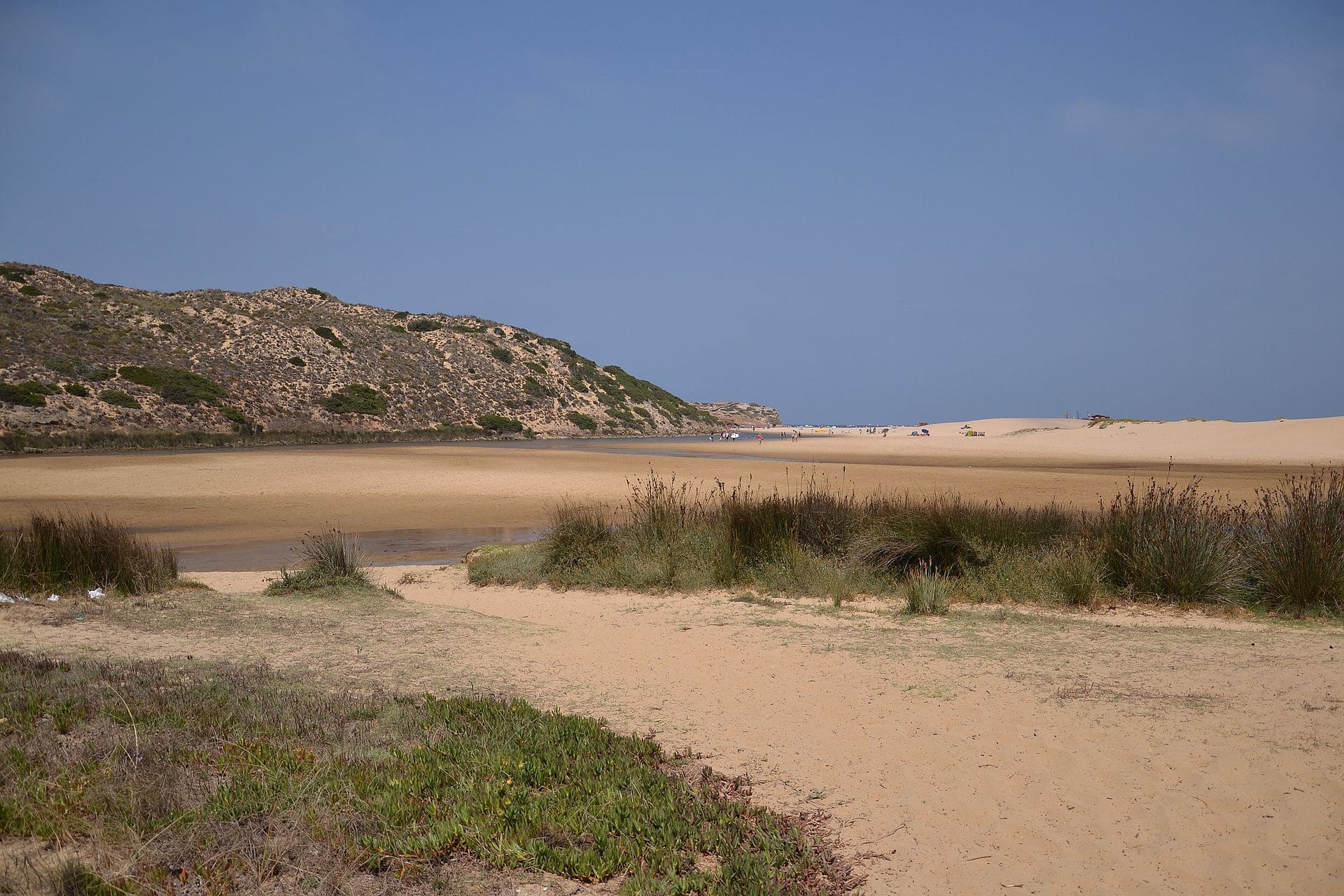
This enormous, sweeping beach surrounded by red and ochre cliffs is an absolute gem of the western coast. Praia do Amado is renowned for its strong, consistent waves, drawing an international surfing community year-round and hosting various competitions. The ocean displays its untamed power here, and while it makes for stunning viewing, swimming can be quite dangerous due to strong undercurrents.
A network of wooden boardwalks and viewpoints surrounds the beach, letting you admire the dramatic cliffs in comfort and safety. It’s also one of the best spots for watching the sunset, when the surrounding rocks turn incredible shades of crimson and orange. You’ll find a few simple wooden stalls selling cold drinks — grab one and just soak up the endless good vibes.
💡 Local tip: Dress warmer than you think you’ll need to. A very fresh wind blows off the ocean here even in summer, and once the sun drops, the wind chill plummets sharply.
7. Wandering Among Cork Oaks
Driving through inland Alentejo, you can’t help but notice the distinctive, wonderfully calming landscape. The farming system known as montado is a unique symbiosis of cultivated land and cork oak groves, forming a kind of Iberian savanna. Portugal is the world’s largest producer of cork, and the majority of this careful, sustainable harvest takes place right here in Alentejo.
The trunks of recently stripped oaks display a fascinating rich orange to deep red colour that contrasts sharply with the grey-green leaves. The bark is stripped by hand only once every nine years or so, and it doesn’t harm the tree at all. It’s well worth pulling over, stepping out of the car, and simply walking in silence beneath these majestic trees that have stood for centuries.
💡 Local tip: On freshly stripped trunks, you’ll often spot a number painted in white. It marks the year (e.g. 4 means 2024) when the cork was last harvested, so farmers know exactly when they can strip the tree again.

8. Zambujeira do Mar and Its Cliffs
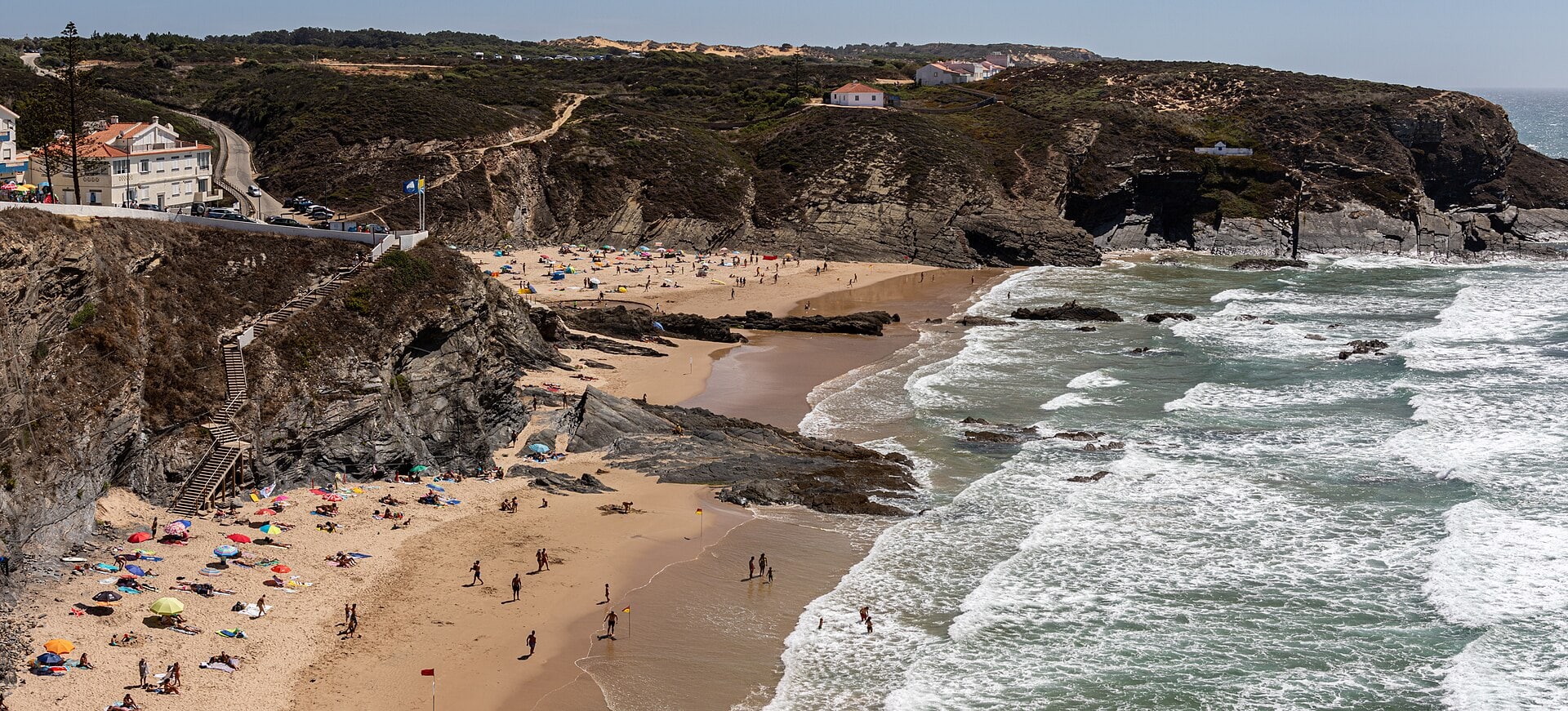
This tiny fishing village quite literally balances on the edge of a sheer cliff high above the ocean. Zambujeira do Mar is a cluster of classic white houses with blue trim and a small square from which a steep path leads down to a gorgeous sandy beach hemmed in by dark rocks. Compared to the busier towns further south, this place retains a wonderfully sleepy, authentic atmosphere where time moves only with the tides.
In August, a big music festival does jolt the village to life for a few days, but for the rest of the year it’s an oasis of absolute tranquility. A fantastic scenic path runs along the coastline, where you can stroll beside the cliffs and breathe in the freshest, saltiest air imaginable. Afterwards, grab a glass of local wine at one of the tiny clifftop restaurants and gaze out at the vast horizon.
💡 Local tip: Walk a short way north to the smaller Praia de Nossa Senhora do Mar, which is even wilder and often completely deserted even in the middle of summer.
9. Historic Mértola Above the River Guadiana
For a slightly different atmosphere, head towards the Spanish border to the town of Mértola, often described as the most Islamic town in Portugal. The town rises on a steep hill above the confluence of two rivers, its history shaped by long centuries of Moorish rule. The clearest proof is the local church, which was originally a mosque and still retains its unique Arabic architecture, complete with distinctive arches.
Walking through Mértola’s narrow, winding streets as they climb to the old castle ruins feels like stepping into a time machine. The local archaeological museum is scattered across the whole town, housing incredible artefacts from both the Roman and Islamic periods. The surrounding Vale do Guadiana Natural Park also offers excellent hiking and birdwatching opportunities for rare species.
💡 Local tip: Visit in May when the Islamic Festival takes over the town. The lanes fill with spice markets, oriental music, and artisan crafts, and the whole of Mértola transforms for a few days into a genuine Arabian medina.
10. Boating on Lake Alqueva
As mentioned with the village of Monsaraz, the Alqueva reservoir is a massive highlight of inland Alentejo. This gigantic body of water completely transformed what was once parched countryside, creating a vast network of bays, tiny islands, and hidden coves. Swimming in the fresh, pleasantly warm summer water is a fantastic contrast to the icy Atlantic on the western coast.
You can hire a small motorboat or a houseboat and explore the lake at your own pace — no boating licence required. Gliding between submerged hilltops and olive groves offers an entirely new perspective. Several well-equipped river beaches (praias fluviais) have also sprung up along the shores, complete with parasols, cafés, and paddleboard hire.
💡 Local tip: If you decide to hire a houseboat for a few days, make sure you stock up on all provisions well in advance from a bigger town. Shopping options directly on the lakeshores are pretty limited.
11. The Edge of Europe at Cabo de São Vicente
Although this iconic cape administratively belongs to the neighbouring Algarve region, geographically and visually it’s a natural extension of the wild Costa Vicentina. This majestic promontory was long considered the end of the world, and when you stand on cliffs tens of metres high staring into the infinite ocean, it’s easy to understand why. Fierce wind slams into the red rocks while enormous waves crash thunderously far below.
The cape is dominated by a red lighthouse whose beam is visible for dozens of kilometres. The site holds enormous historical significance — it was from here that Portuguese caravels set sail into the unknown during the Age of Discovery. The area around the lighthouse is freely accessible and offers the most epic views you can possibly imagine.
💡 Local tip: The sunset here is the stuff of legend, but it also attracts big crowds. Come early in the morning for sunrise instead — the cliffs glow pink and you’ll have this end of the world entirely to yourself.
12. Slow Days in Vila Nova de Milfontes
This laid-back holiday town is the heart of the Alentejo coast and a favourite retreat for Portuguese locals themselves. Milfontes sits at the mouth of the River Mira, which means you can choose between calm river swimming and diving into wild waves at Praia do Malhão. The historic centre around the Forte de São Clemente fortress is packed with excellent restaurants, cafés, and small shops selling local ceramics.
It’s the ideal spot to switch off completely for a few days and embrace the slow local pace. Mornings mean popping out for fresh pastries, afternoons are for paddleboarding upriver along the Mira, and evenings end with a glass of wine at one of the clifftop viewpoints. If you’re after the perfect balance between amenities and authenticity, you’ll absolutely love it here.
💡 Local tip: Be careful swimming right where the river meets the ocean. During tidal changes, extremely strong currents form here that can unexpectedly drag you far out to sea.
13. Stork Watching at Cabo de Sardão
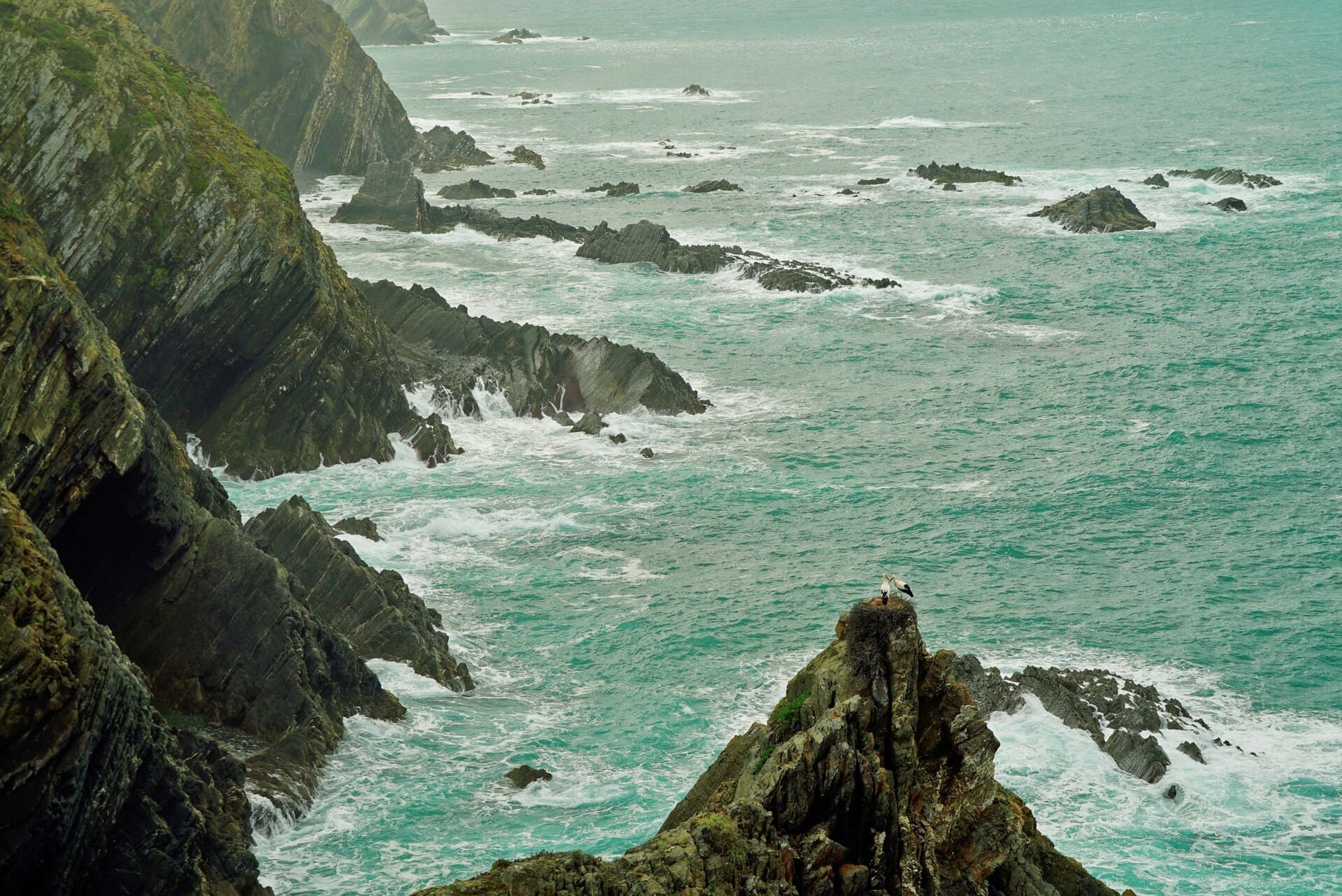
A short distance south of Zambujeira do Mar, you’ll stumble upon a fascinating natural anomaly that draws ornithologists and curious travellers alike. On the jagged, pointed sea stacks of Cabo de Sardão, white storks nest directly above the churning ocean. It’s said to be the only place in the world where these birds build their nests on cliffs rather than on chimneys or tall trees. Watching a stork circling high above foaming waves is utterly surreal.
Around the lighthouse — which, incidentally, is one of the few in Portugal that shines inland rather than out to sea (thanks to an architect’s blunder) — runs a gorgeous wooden boardwalk. You can stroll safely along the cliff edge, binoculars in hand, observing bird families feeding their chicks in nests perched on impossibly narrow rocky ledges.
💡 Local tip: Bring good binoculars or a camera with a telephoto lens. The nests are visible to the naked eye, but for detailed observation you’ll definitely appreciate the magnification.
14. Taste the Vegetarian Side of Alentejo
Alentejo’s gastronomy is famous for being hearty and generous, but that doesn’t mean meat-free fans will be left out. The foundation of everything here is the superb Alentejo bread (pão alentejano) — dense, with a gorgeously crispy crust, served with absolutely everything. Local cheeses, especially sheep’s varieties like Queijo de Serpa, have a very pronounced, sometimes pungent flavour and, paired with olives and olive oil, make for the best starter in the world.
A brilliant choice is traditional açorda soup — essentially a garlic and coriander broth into which stale bread is soaked and topped with a poached egg. Various versions of migas — mashed bread with garlic and olive oil — are also hugely popular. Of course, the region is equally renowned for dishes made with black Iberian pork (porco preto) and fish specialities cooked in a copper cataplana pot, but you’ll find more than enough vegetarian alternatives rooted in honest, quality ingredients.
💡 Local tip: Watch out for the sneaky custom known as the couvert. When you sit down in a restaurant, the waiter will automatically bring a basket of bread, cheese, and olives. It’s not a complimentary gesture! If you touch anything, you’ll be charged for it. If you don’t want it, simply say “Não, obrigado” and they’ll take it away.
Map of points of interest for your phone
Where to Go Next from Alentejo
If you’ve got more time and want to extend your Portuguese adventure, Alentejo is perfectly positioned for onward exploration. From the interior, it’s just over an hour’s drive to the capital, so our Lisbon Guide will help you plan the perfect finale wandering the lanes of Alfama. If romantic castles and palaces tempt you, don’t miss the gem that is Sintra, just a short hop north of Lisbon.
If you’re heading north in pursuit of port wine instead, check out our article on what Porto has to offer. And if you’ve fallen in love with the Atlantic waves and want to discover the rest of Portugal’s finest sandy stretches, browse our overview of the Most Beautiful Beaches in Portugal so you know where to lay your towel next time.
Frequently Asked Questions
How many days do I need to visit the region?
To properly explore Alentejo and Costa Vicentina, I recommend setting aside at least 5 to 7 days. Distances may look short on the map, but driving along narrow roads to beaches and wandering through the interior takes quite a bit of time. If you want to hike part of the Rota Vicentina trail, add another two days on top of that.
Is it safe to swim at Costa Vicentina beaches?
You need to be very careful. Even in August, the ocean is usually only around 19 to 21 degrees Celsius, and currents can be extremely strong. Many wild beaches don’t have lifeguards, and the waves are incredibly powerful. Unless you’re a very confident swimmer, it’s better to just cool off at the water’s edge or look for sheltered river lagoons (like the one in Odeceixe).
Do I absolutely need a car to get around?
Yes, renting a car is practically essential for exploring this area. While you can get to Évora from Lisbon by bus, there’s no meaningful public transport to the wild coastal beaches and small whitewashed villages. A car gives you complete freedom to stop wherever you fancy.
How does toll payment work in Portugal?
The main A22 motorway and other major routes use fully electronic tolling with no traditional barriers. When picking up your rental car, ALWAYS have them activate the small white box called Via Verde that sticks behind the rearview mirror. The rental company will charge you a small daily fee for it, and tolls will then be automatically and stress-free deducted from your credit card.
Are the coast and interior safe?
Portugal is generally a very safe country, but there’s one unpleasant epidemic: thefts from cars at remote beach car parks. Thieves specifically target rental vehicles. Don’t leave anything valuable in your car whatsoever, not even hidden in the boot. Whenever you head to the beach, always take your documents and money with you.
What are the opening hours for local restaurants?
Portuguese people eat quite late, and lunch and dinner times are strictly observed. Restaurants typically open for lunch between 12:30 and 3:00 PM, then close. For dinner, they open at 7:00 PM at the earliest, but locals don’t start dining until after 8:00 PM. If you’re hungry at five in the afternoon, only bakeries or cafés will save you.
What’s the situation with accommodation after the 2026 rule changes?
Following new European Union regulations in 2026, platforms had to remove a huge number of unofficial and cheap apartments. There are now fewer accommodation options on the market, but they’re all fully legal and regulated. Rental prices have increased due to reduced supply, and booking several months in advance is now absolutely essential.
Tips and Tricks for Your Vacation
Don’t Overpay for Flights
Search for flights on Kayak. It’s our favorite search engine because it scans the websites of all airlines and always finds the cheapest connection.
Book Your Accommodation Smartly
The best experiences we’ve had when looking for accommodation (from Alaska to Morocco) are with Booking.com, where hotels, apartments, and entire houses are usually the cheapest and most widely available.
 🚗 Car rental on the roadVerified car rentals in Portugal
Search with the DiscoverCars comparison engine — it compares prices from dozens of local and international rental companies, and most bookings come with free cancellation.
Compare car prices in Portugal →Don’t Forget Travel Insurance
Good travel insurance will protect you against illness, accidents, theft, or flight cancellations. We’ve had a few hospital visits abroad, so we know how important it is to have proper insurance arranged.
Where we insure ourselves: SafetyWing (simple monthly subscription) and TrueTraveller (for extra-long trips).
Find the Best Experiences
Get Your Guide is a huge online marketplace where you can book guided walks, trips, skip-the-line tickets, tours, and much more. We always find some extra fun there!