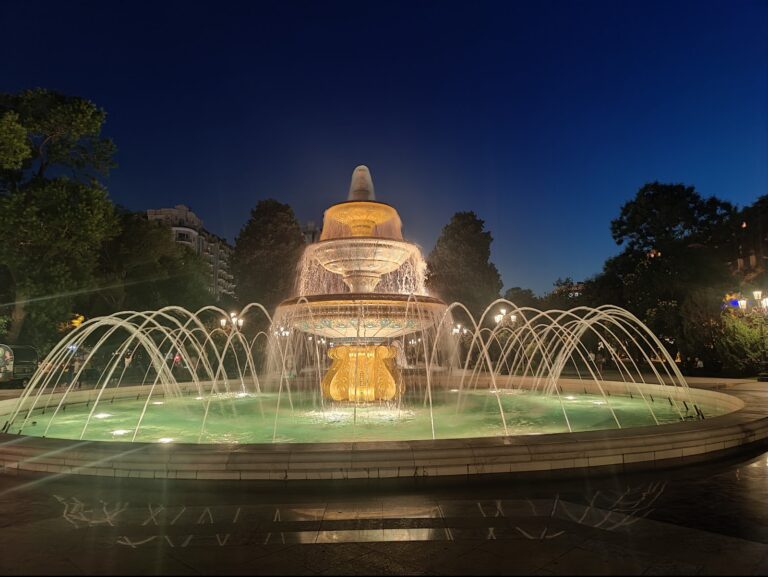

In Old Delhi, you squeeze through alleys lined with spice stalls dating back to Shah Jahan’s era. A bit further, a wide ceremonial avenue runs from India Gate to the presidential palace. Delhi is two cities in one.
The historic core is Old Delhi, originally Shahjahanabad from the seventeenth century. By contrast, New Delhi serves as the official capital and administrative district.
Below we present 22 tips on what to see and do in Delhi, connecting famous sites from the Red Fort through Humayun’s Tomb and Qutb Minar to a day trip by train to the Taj Mahal. We add practical information from the airport to safety and an overview of neighbourhoods where you can stay. The most pleasant temperatures from November to January coincide with the worst air quality. Smog season begins in late October. The Diwali festival falls on Sunday, 8 November 2026, and after it smog typically worsens. A reasonable compromise is therefore mid-February to March.
TL;DR
- When to go: The most pleasant temperatures from November to January bring the worst air quality. A reasonable compromise is mid-February to March. Details are in the weather section.
- Entry: The electronic e-Tourist Visa is mandatory and must be arranged in advance. Price and procedure are in the Entry for International Visitors section.
- Flights: No direct flights from major European hubs according to aggregators; you fly with a connection, for example via Istanbul or large European airports.
- From the airport: From Indira Gandhi Airport (IGI), the Airport Express metro runs to the centre, at night prepaid taxis.
- Entry fees and closing days: Foreigners pay around 600 rupees (€14) at monuments managed by the Archaeological Survey of India (ASI) for the Red Fort, Qutb Minar and Humayun’s Tomb. Akshardham has free entry to the grounds, exhibitions and shows for a fee; Lotus Temple and Bangla Sahib are free. Opening days for individual sites are listed at each tip.
- Taj Mahal: The train journey from Delhi to Agra takes around 1 hour and 40 minutes according to timetable aggregators. The Taj Mahal is closed on Fridays, details are in tip 21.
- Food and safety: Delhi is excellent for vegetarians, in the streets and around the station watch out for touts and fake tourist offices. Details are in the safety section.
The full destination guide: Asia — guide and what to see
When to Visit Delhi and Practical Information
Before travelling to the Indian capital, it’s worth going through the basic context, which will save time and unnecessary confusion on site. Prices in rupees (INR) are converted at the rate from 23 October 2026, when 100 rupees equalled €2.30; the same rate applies to all following text.
What to watch in 2026
- Air quality and smog: From 21 October 2026, the first stage of the GRAP anti-smog plan is in effect, details in the When to Go section.
- Taj Mahal: Closed on Fridays (tip 21).
- Red Fort: In summer it is usually closed for several weeks (tip 1).
- Rashtrapati Bhavan: The changing of the guard has a new time from October 2026 (tip 6).
- e-Arrival Card: An online arrival card is mandatory before landing (Entry for International Visitors section).
When to Go: Weather, Smog and Holidays
According to the Indian Meteorological Department IMD (Safdarjung station) and international travel advisories, conditions throughout the year look like this:
| Months | Daytime / Night Temperatures | What to Expect |
|---|---|---|
| January to March | January 20 / 7.5 °C, February 24 / 11 °C, March 30 / 16 °C | Heavy smog until March, worst air quality is usually November to January, improves in February and March; morning fog in January. |
| April to June | April 37 °C, May 40 °C (record 47.2 °C), June 39 °C | Extreme heat (40 to 50 °C for April and May). |
| July to September | – | Monsoon lasts until mid-September, August is the wettest. |
| October to December | November 28 / 13 °C, December 23 / 8 °C | October is usually warm, smog season begins late October; worst air is November to January, morning fog in December and January can delay trains and flights. |
The second factor remains air quality, which complicates planning winter trips. From 21 October 2026, the first stage of the GRAP anti-smog plan is in effect in the Delhi metropolitan area. It was declared by the Commission for Air Quality Management (CAQM) because the Air Quality Index (AQI) climbed to 244 (poor air category). The first stage applies roughly at AQI from 201 to 300. Delhi is the most polluted city according to international travel advisories. At the same time, advisories state that the suitable time for travelling in India is from November to March. This creates a paradox where the most pleasant outdoor temperatures accompany the worst air quality.
If you head to the city between November and January, plan outdoor monuments for the afternoon, because in the morning smog mixes with fog. In December and January, morning fog can cause delayed or cancelled trains and flights. Pack an FFP2 or N95 respirator and monitor the AQI index on portals cpcb.nic.in or aqicn.org. Asthmatics and people with respiratory issues will do better if they choose February or March. Mid-February to March works as a reasonable compromise, when the air is cleaner.
The festival of lights Diwali falls on Sunday, 8 November 2026. After Diwali, smog is typically worse due to firecrackers and stubble burning in surrounding fields. The spring festival of colours Holi 2027 falls on Monday, 22 March, preceded on 21 March by the ritual fire Holika Dahan. On Holi the metro starts running only in the afternoon (in 2026 from 14:30), check current operations. Travel advisories generally recommend avoiding crowds, so women should not go into crowds alone on Holi.
Republic Day falls on 26 January 2027. A parade proceeds along Kartavya Path and the surrounding area is usually extensively closed. The presidential palace Rashtrapati Bhavan is closed to the public roughly from 21 to 29 January. The Red Fort is usually closed around Independence Day on 15 August (tip 1). Amrit Udyan gardens are open only during the Udyan Utsav festival (tip 6).
Flights and Journey from the Airport
Direct flights from major European hubs to Delhi do not exist in 2026 according to booking aggregators, so you face a journey with a connection. Connections are available in Istanbul with Turkish Airlines or at large European airports. Flight comparison sites on 23 October 2026 advertised tickets to Delhi from €450. Before buying, check whether your chosen flight via the Persian Gulf is actually operating, because flight operations there are restricted in 2026.
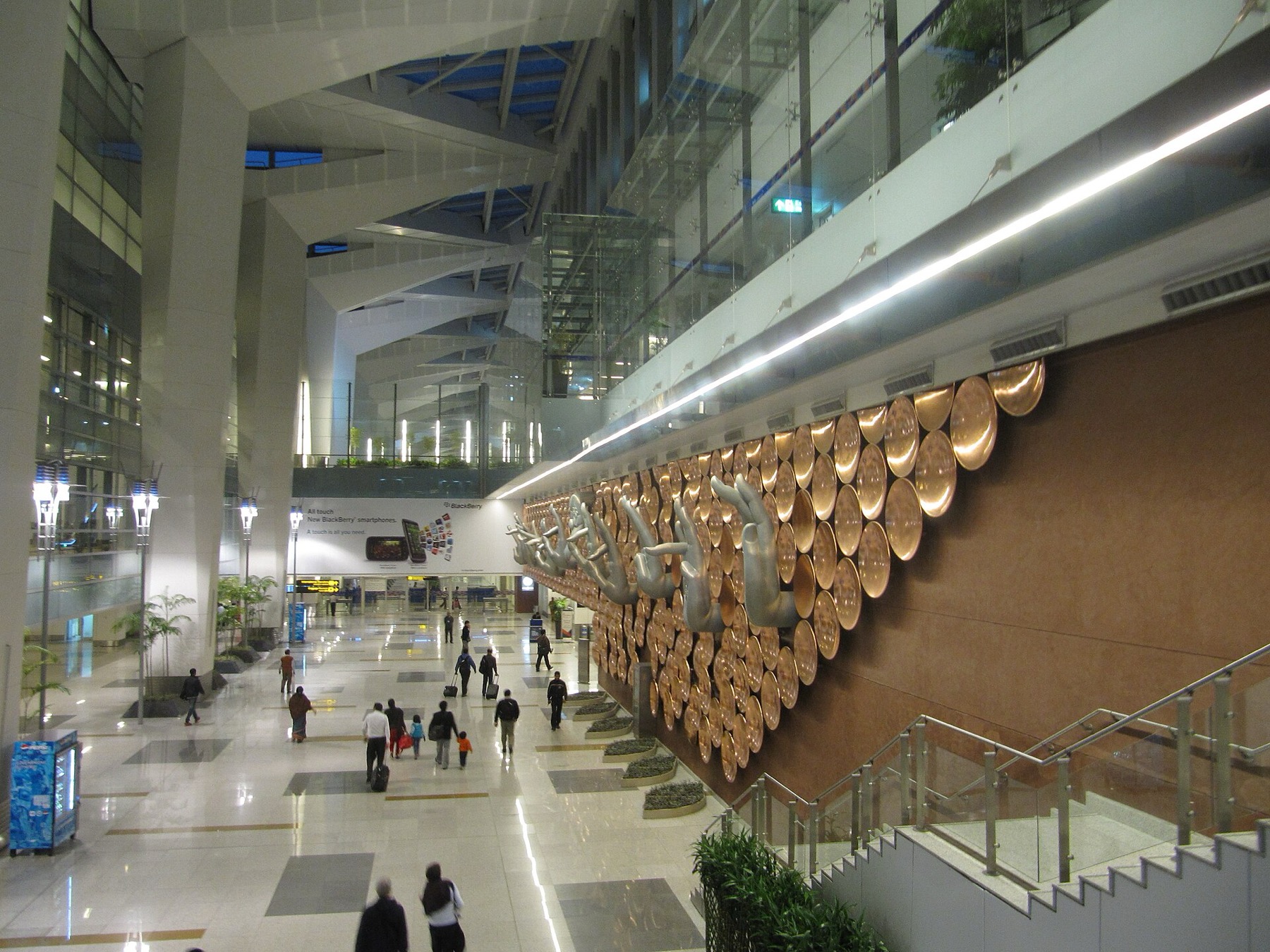
International connections from Europe arrive at Indira Gandhi International Airport (IGI, code DEL), where international flights are handled by Terminal 3. Noida Airport near the town of Jewar began operations on 15 June 2026, but so far handles only domestic flights, so from Europe you still fly to IGI.
| Option | Price | Note |
|---|---|---|
| Airport Express (orange metro line) | 64 rupees (€1.50) | From the station at Terminal 3 to New Delhi station; journey takes about 20 minutes, operates roughly 4:40 to 23:40. |
| Prepaid taxi | payment in advance | Official counter in the arrivals hall (also recommended by advisories); suitable for night flights when metro is not running. |
| Uber / Ola | according to app | Booking via app; suitable for night arrivals, watch out for touts in the terminal. |
One traveller on Reddit in January 2026 described how between landing and ordering an Uber at least five people tried to scam him. Some of them even posed as customs officials right after passport control. Don’t carry or hand over anything to strangers at the airport and only take a car from the official desk with advance payment or through an app.
Metro and Transport Around the City
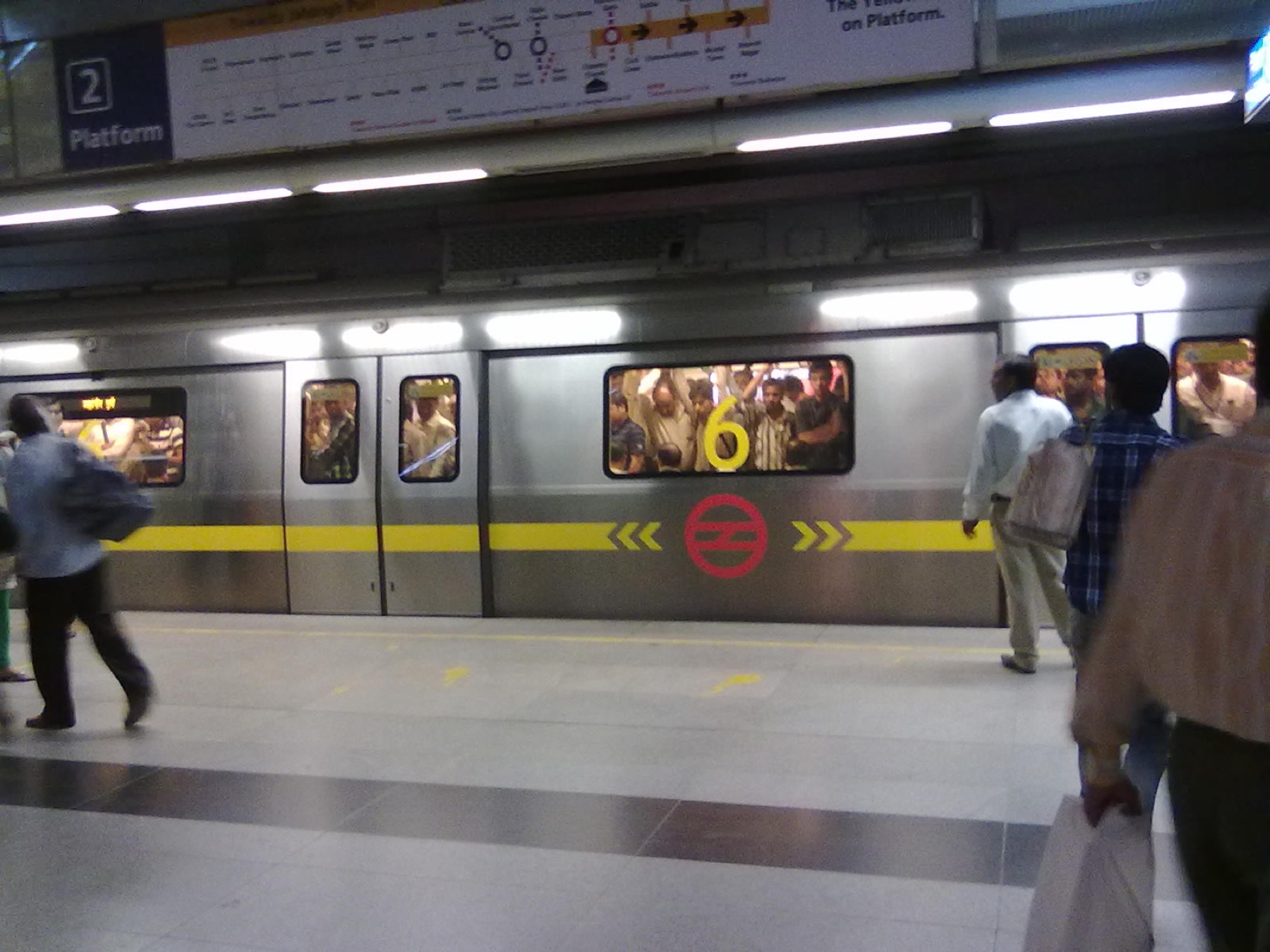
Delhi’s metro is operated by the Delhi Metro Rail Corporation (DMRC). A tourist card is worth it from roughly five rides per day compared to regular fares.
| Ticket | Price | Note |
|---|---|---|
| Single fare | 11 to 64 rupees (€0.10 to €0.60) | Regular metro lines. |
| One-day tourist card | 200 rupees (€2) | 150 rupees (€1.40) fare + 50 rupees (€0.45) refundable deposit; unlimited rides, not valid on Airport Express (according to metrogo.in). |
| Three-day tourist card | 500 rupees (€5) | 450 rupees (€4) fare + 50 rupees (€0.45) refundable deposit for undamaged card; not valid on Airport Express. |
The first carriage of every train is reserved for women, and expect security checks at stations. Uber and Ola apps also operate in the city. Auto-rickshaws and cycle-rickshaws usually negotiate the price upfront, and travel advisories note that drivers often try to charge foreign visitors significantly higher rates.
Visa Requirements for International Visitors
You need a visa for India in advance — you cannot obtain one on arrival. Apply for the e-Tourist Visa exclusively on the official website indianvisaonline.gov.in, 4 to 120 days before travel. Watch out for fake websites, such as indian-visa-online.org.
| Visa Type | Price (USD) | Price (EUR) |
|---|---|---|
| 30-day visa (July to March) | 25 USD | €22 |
| 30-day visa (April to June) | 10 USD | €9 |
| One-year visa | 40 USD | €35 |
| Five-year visa | 200 USD | €180 |
A 3% bank fee is added to each option.
- Your passport must be valid for at least six months from the date of application and have two blank pages.
- You can only pay with Visa or Mastercard; after three failed payment attempts, the application gets blocked.
- The decision arrives by email within 72 hours; print your approved visa.
- You can obtain a maximum of two e-visas per calendar year.
- The thirty-day visa allows two entries and cannot be extended or changed.
Since October 1, 2025, the e-Arrival Card is also mandatory before arrival — a free online arrival form that must be filled out no earlier than 72 hours before arrival. You may also need a visa for transit if you leave the transit zone.
You cannot bring satellite phones or GPS devices into India (regular mobile phones are allowed). Possessing them can result in up to three years in prison or a fine of up to 20 million rupees (approximately €190,000). Foreigners are not allowed to fly drones in India. Travel authorities recommend comprehensive travel health insurance including medical evacuation.
Money, SIM Cards and Tipping
UPI is India’s mobile payment system. According to travel guides, foreigners can use the prepaid wallet UPI One World, with kiosks typically available at the airport and accessed through CheqUPI or Mony apps. Payment cards work in larger cities and hotels according to travel advisories, but elsewhere prepare cash (rickshaws, markets, temples, Chandni Chowk).
In restaurants, travel guides suggest leaving 5 to 10% tip if the bill doesn’t already include a service charge. Packaged goods have a maximum retail price (MRP) printed on them. You don’t have to pay more than that.
Mobile roaming data is expensive, so a tourist SIM from Airtel or Vi, or an eSIM, may be worthwhile. When buying a SIM, you’ll need your passport and visa. An Indian number will then make UPI and confirmation SMS easier.
Safety, Dress Code and Health
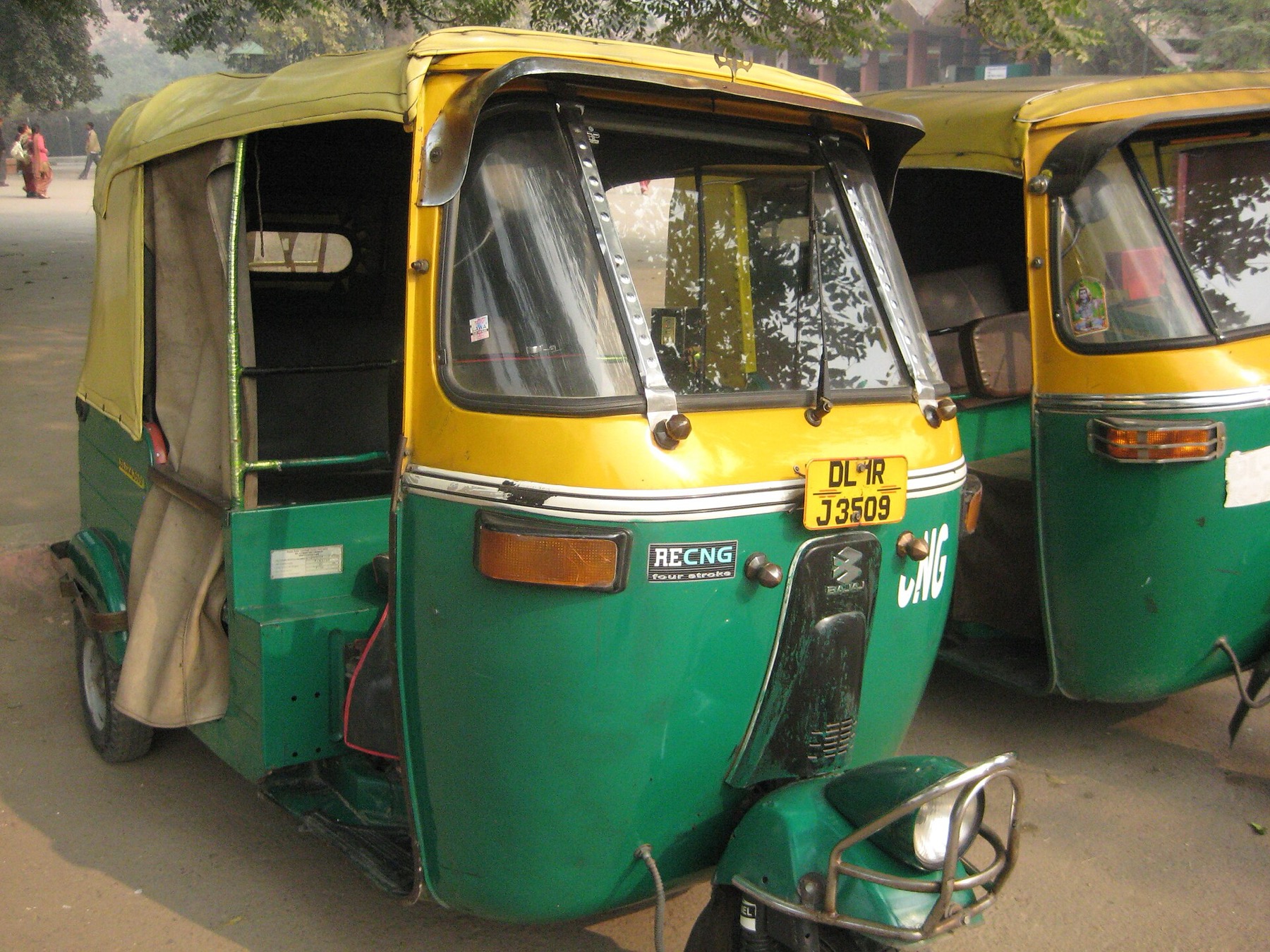
Safety and scams: Travel advisories do not warn against traveling to Delhi. Warnings concern Kashmir, Manipur, the border with Pakistan and Maoist areas. They advise avoiding crowds (markets, train stations); pickpocketing is reportedly most common in cheap hotels, on trains and during street money exchanges. Women are advised not to travel at night without accompaniment and to wear clothing that covers knees and shoulders. Following a car explosion near the Red Fort on November 10, 2025, security checks at monuments and metro stations are more thorough.
Watch out for claims that your hotel is closed, burned down or that roads are blocked. A taxi or rickshaw driver may take you to an establishment they work with, or to a fake travel agency. In 2019, a taxi driver convinced an American tourist that his hotel in Paharganj (the district opposite New Delhi station) had been shut down; a fake agency defrauded him of over 90,000 rupees (over €800).
Another trap is the fake “Government Tourist Office” opposite the entrance from Paharganj to New Delhi station. Touts claim the train isn’t running or the ticket office is closed, and offer overpriced tickets or non-existent private tours. According to blogs about scams from 2026, this remains an active trick. Also suspicious is an offer of a 10-rupee (€0.10) rickshaw ride for sightseeing that may end in shops where the driver gets commission.
Have your hotel address written down and book rides through an app or at an official prepaid taxi counter. At train stations, head straight to the platform with your electronic ticket from IRCTC (Indian Railway Catering and Tourism Corporation). Scams concentrate mainly in Paharganj near the station and around Connaught Place.
Dress code in temples and mosques: Travel advisories recommend covering knees and shoulders. Shoes are usually removed in temples and mosques. At Jama Masjid, women are typically lent a cloak at the entrance, and during prayer times, especially Friday at noon, tourists are usually not allowed inside. Shoes are also removed at the Lotus Temple and Raj Ghat memorial (tip 4). Further instructions are found in tips 4, 7, 17 and 18.
Health: Drink only bottled water. Mosquitoes transmit dengue, chikungunya and malaria. Travel authorities recommend buying repellent locally. Choose street food where food is sold quickly, because with pani puri (golgappa) the water used for filling can be a risk.
Important Numbers
| Service | Number |
|---|---|
| Unified emergency number in India | 112 |
| DMRC metro helpline | 155370 |
| Your country’s embassy | (check before traveling) |
Where to Stay in Delhi
Plan your choice of district according to what you want to see and how long you’re staying, with proximity to the metro playing a key role. Below we list individual areas from the most practical for a first visit to the transit area of Aerocity.
For a first visit to the city, Connaught Place and the adjacent Janpath street in central New Delhi work well. The area offers shops and restaurants. Rajiv Chowk station connects the yellow and blue metro lines, while Airport Express departs from Shivaji Stadium and New Delhi stations. Watch out for fake tourist offices. According to reviews, some cheaper hotels have rooms without windows.
Among more affordable options, Bloomrooms @ Janpath stands out, located about 300 meters as the crow flies from Patel Chowk station. Reviews praise clean rooms, 24-hour reception and complimentary drinks and toiletries on the floor, though the hotel doesn’t allow visitors to rooms. Historical atmosphere, a blend of Victorian style, art deco and Lutyens architecture plus an art collection are offered by The Imperial New Delhi, about 100 meters as the crow flies from Janpath metro station. The property includes gardens and restaurants named Spice Route and 1911.
The Paharganj district opposite New Delhi station attracts budget travelers with cheap beds near the station, but carries significant drawbacks. The local alleys can be noisy all night, cars don’t reach them, and touts operate there with scams about closed hotels. After a fire in south Delhi in June, Paharganj is also counted among fire-risk districts, where some hotels have sealed windows. If you stay here, choose only a proven establishment, insist on a room with a window and arrive during daylight.
In Old Delhi near Jama Masjid mosque and Chandni Chowk avenue, it makes sense to stay for one to two nights as a supplement. You can walk to the Red Fort, but the alleys are busy. Traditional accommodation is represented by Haveli Dharampura, a historic mansion (haveli, traditional town house) with fourteen rooms and a UNESCO award for heritage conservation from 2017. You’ll find peace in the courtyard, although a guest in August 2026 pointed out night noise.
If you prefer greenery and the diplomatic quarter, head to the Lutyens quarter or Chanakyapuri district. Many large hotels (Leela, ITC Maurya, Taj Palace) are 2.4 to 3.9 kilometers from the metro, so expect to take taxis. In January around Republic Day, road closures occur near Kartavya Path due to parade rehearsals. The Oberoi, New Delhi in the Golf Links district has been operating for sixty years. According to the official website, it offers advanced air purification with PM2.5 fine particle monitoring in rooms, which you’ll appreciate especially in November and December. The palatial The Leela Palace New Delhi in Chanakyapuri is about 10.6 kilometers as the crow flies from Terminal 3 and offers a rooftop pool, spa and four restaurants.
South Delhi consists of quiet residential districts like Hauz Khas, Green Park or Defence Colony; guests at some B&Bs describe the surroundings as gated communities. It suits longer stays, café lovers and solo female travelers, although the journey to Old Delhi takes roughly thirty to sixty minutes by taxi in traffic. After a fire at a B&B in south Delhi in June 2026, authorities ordered accommodation inspections, so choose a room with an openable window above ground level and ask about fire permits. Family-run Prakash Kutir Bed and Breakfast in Hauz Khas is about 900 meters as the crow flies from the metro. It provides home-cooked vegetarian meals, and a solo traveler in November 2025 wrote that the presence of the host family was reassuring.
For night arrivals, morning departures or January days when fog complicates transport, the Aerocity zone near the airport works well. The local station is on the Airport Express line, but it’s about twelve to seventeen kilometers to monuments. Pullman New Delhi Aerocity is about 600 meters from the Airport Express station and just under four kilometers as the crow flies from Terminal 3. A guest in November 2025 complained about facade renovation and a closed pool, so don’t count on the pool.
Hotels must report foreign guests to authorities within 24 hours, so keep your passport and visa handy. GST (goods and services tax) is often added to the price in the final step of booking.
A detailed overview of districts and hotels can be found in the article Where to Stay in Delhi.
💡 On this map you can compare what’s currently available — you’ll immediately see how the price changes a few blocks away.
22 Tips on What to See and Do in Delhi
We organize the tips roughly by district. Tips 1 to 4 are in Old Delhi, tips 5 to 9 in New Delhi, and tips 10 to 13 cover tombs, gardens and the fort. Tips 14 to 16 head to the southern part of the city, tips 17 to 20 include temples, the Tibetan quarter and food, and tips 21 and 22 present trips outside the city. Two to three days are enough to see the main sights, and set aside one full extra day for the Taj Mahal. Opening hours and prices change, so verify them before your visit.
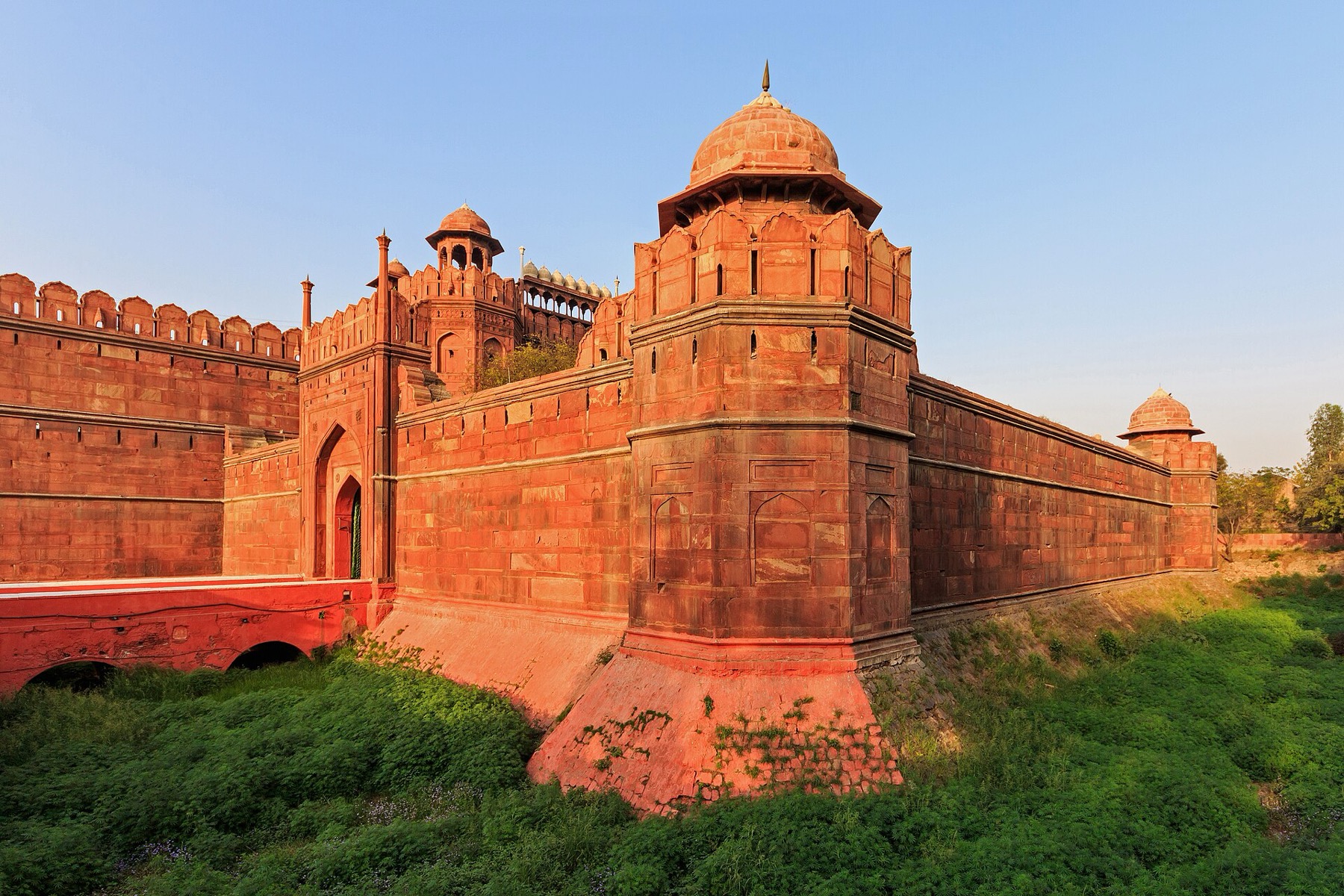
1. Red Fort (Lal Qila)
Mughal ruler Shah Jahan moved his capital from Agra to Delhi in 1638 and began construction of the fort a year later. Completion took nine years, resulting in an irregular octagon with Lahori Gate and Delhi Gate. According to ASI, the Archaeological Survey of India, in the hall of public audiences Diwan-i-Am you can see a marble canopy and pietra dura panels with Orpheus playing the lute. In the hall Diwan-i-Khas stood the Peacock Throne, which Nadir Shah carried away, and in the complex you’ll also see the palace Rang Mahal, the hammam baths, and the Moti Masjid mosque. From the balcony of Muthamman Burj, King George V and Queen Mary appeared in 1911.
The complex is usually closed from roughly July 15 to August 15 for Independence Day preparations. Entry for foreigners costs approximately 600 rupees (€6) at the ticket office and 550 rupees (€5.50) online; children under 15 enter free. The same prices apply to Qutb Minar and Humayun’s Tomb. Verify opening days, hours and current prices on the ASI website. The nearest metro station is called Lal Qila.
💡 Tip: The evening light and sound show “Jai Hind” runs according to BookMyShow from Tuesday to Sunday: in Hindi at 18:45, in English at 20:00 (only Tuesday to Thursday).
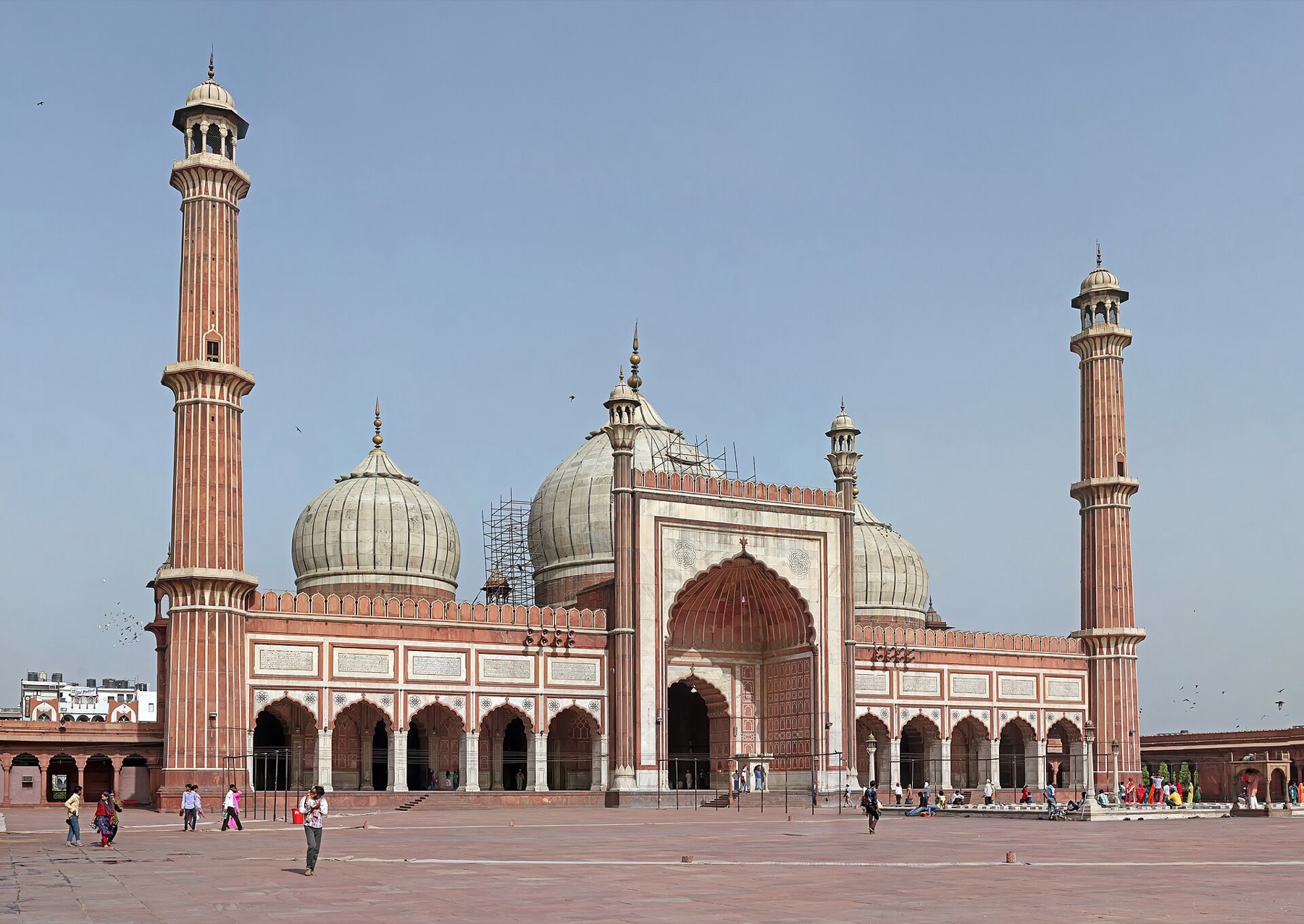
2. Jama Masjid (Friday Mosque)
The seventeenth-century mosque can reportedly hold up to 25,000 people, and its minarets stand 40 meters tall. Entry to the complex is free, but a fee is usually charged for photography with a camera or phone, and climbing the minaret is also typically charged. Watch out for self-appointed collectors: people sometimes ask for photography fees even when they have no authority to do so.
During prayers, especially Friday at noon, tourists are usually not allowed inside. We explain the rules about covering shoulders and knees and borrowing a cloak in the practical section of the article. Near the entrance stands the famous meat restaurant Karim’s with Mughal cuisine. For vegetarian food, see tip 20.
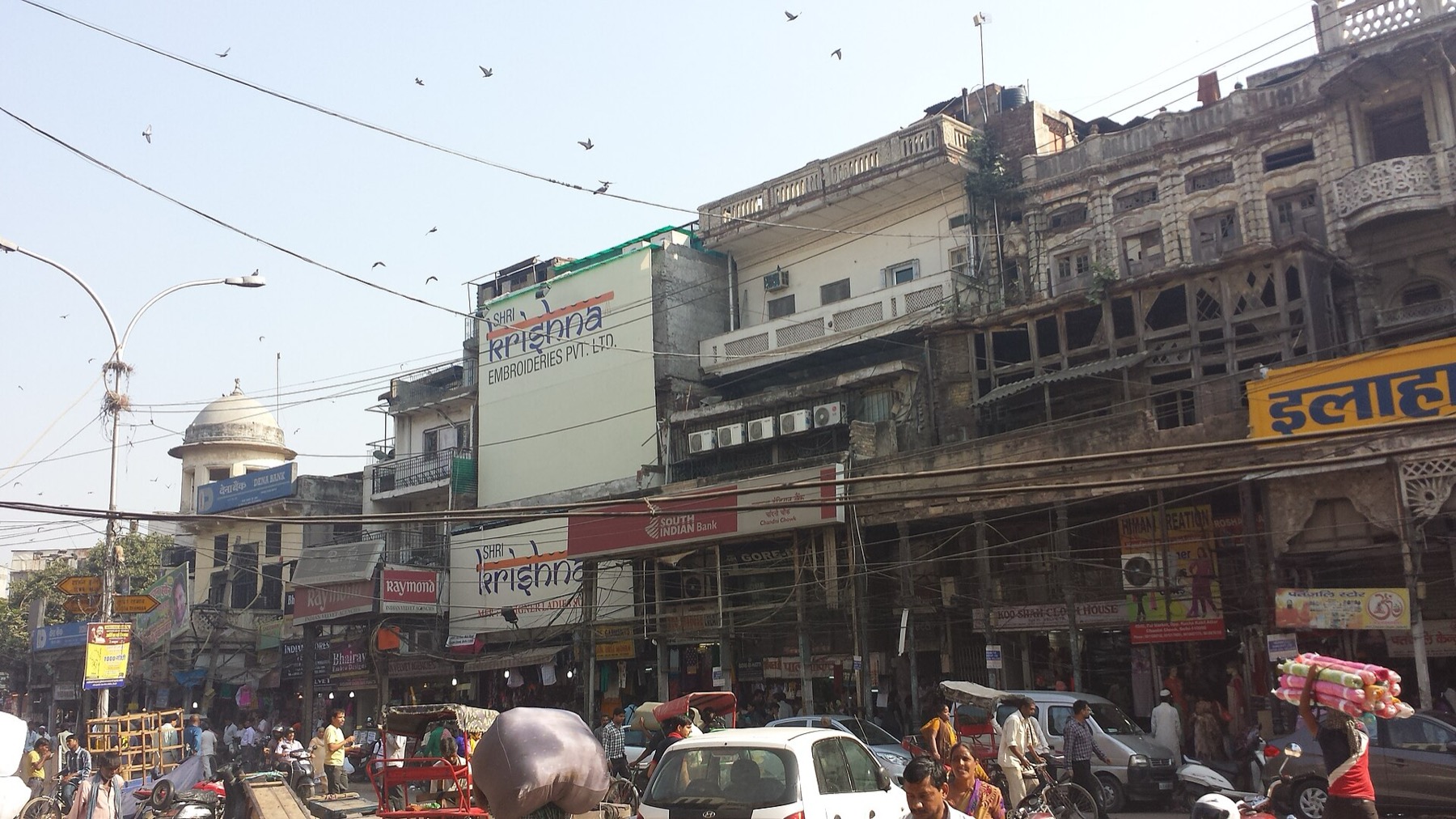
3. Chandni Chowk, Rickshaw and Khari Baoli Spice Market
The historic artery Chandni Chowk runs from the Red Fort to Fatehpuri Masjid. After reconstruction, a 2021 ordinance closed it to regular motor vehicles between 9 a.m. and 9 p.m., so now mainly cycle rickshaws and e-rickshaws move through. If you hire a cycle rickshaw and head into the maze of side streets Kinari Bazar, Dariba Kalan or Paranthe Wali Gali, agree on the price in advance.
Right on the main street connects the Khari Baoli market with spices, dried fruit and nuts, where stalls operate Monday to Saturday from 10 a.m. to 8 p.m. On Sundays the market is closed, and most surrounding shops are closed too. On Chandni Chowk you can also visit the Sikh temple Gurudwara Sis Ganj Sahib open around the clock, or the Jain shrine Shri Digambar Jain Lal Mandir (6 a.m. to 9:30 p.m.). An unusual stop is the Charity Birds Hospital, a Jain bird hospital. We discuss the local street food and sweets in tip 20.
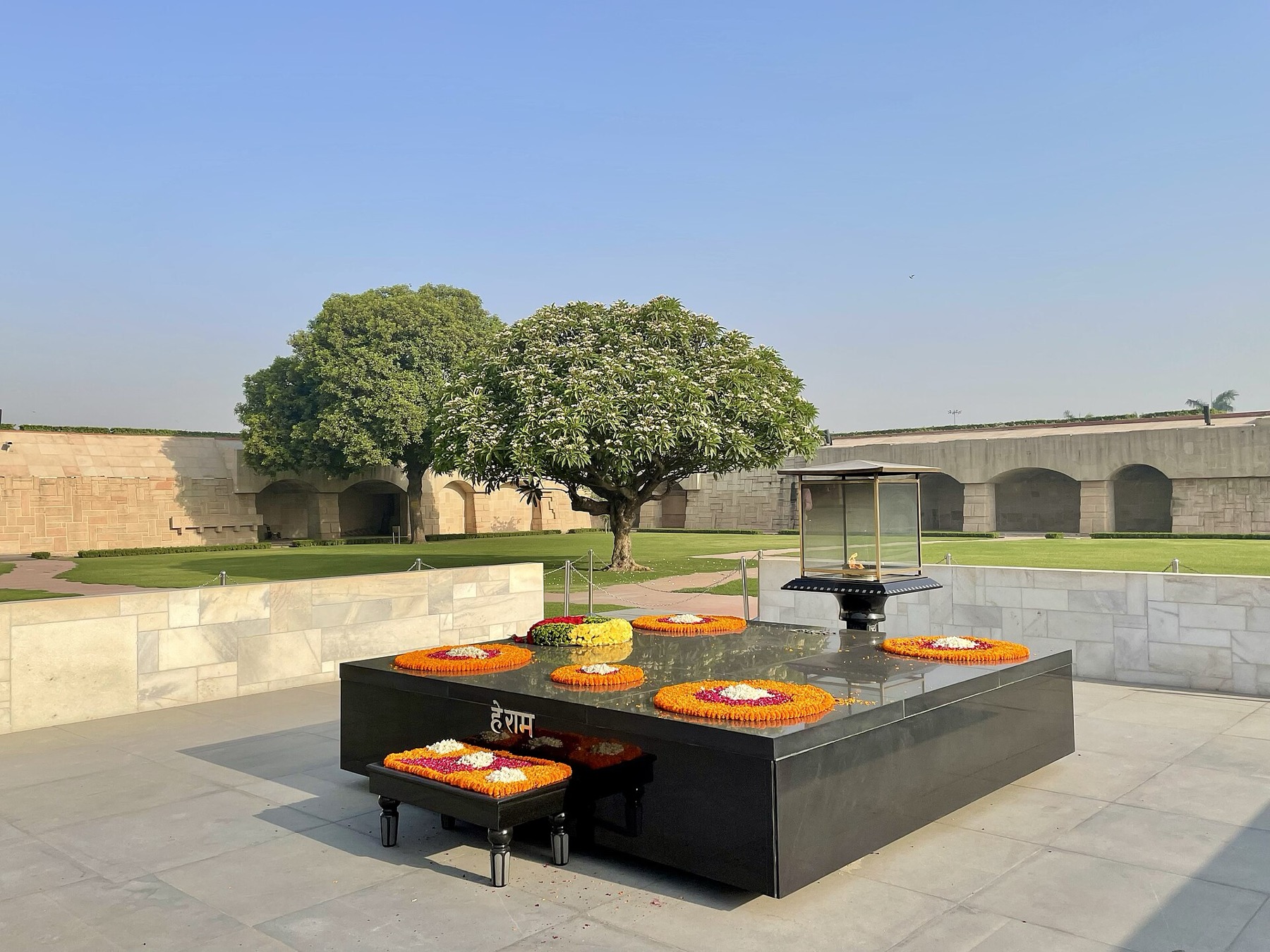

4. Raj Ghat and Gandhi Smriti
The Raj Ghat memorial on Ring Road consists of a black marble platform at the cremation site of Mahatma Gandhi. The word ghat means steps to the river or a place by the water. Open daily from 5:00 a.m. to 7:30 p.m., and entry is free. Shoes must be removed before entering.
Gandhi Smriti is the house where Gandhi was assassinated on January 30, 1948. Usually open Tuesday to Sunday from 10:00 a.m. to 6:30 p.m., closed Monday, and entry is usually free.
The first place commemorates Gandhi’s cremation, the second his death.
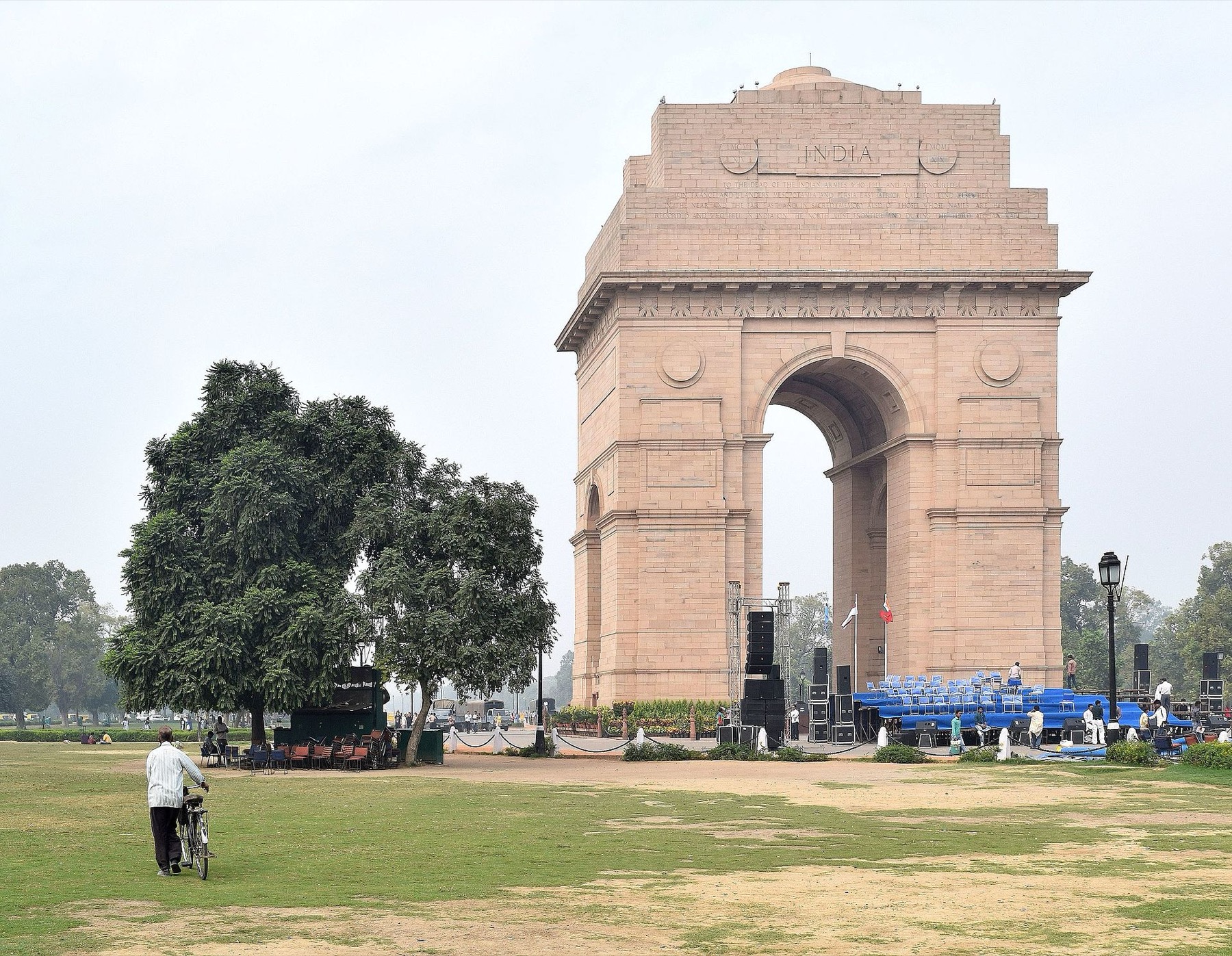
5. India Gate, Kartavya Path and National War Memorial
In the heart of New Delhi stands the triumphal arch India Gate, built to honor the memory of Indian soldiers who fell in World War I. The area around India Gate is freely accessible around the clock, and no entry fee is charged. Right next to the arch you’ll find the National War Memorial, which is open from 9:00 a.m. to 7:30 p.m., and entry is usually free.
From India Gate, the wide ceremonial avenue Kartavya Path leads to the presidential palace; it used to bear the name Rajpath before authorities renamed it in 2022. It’s illuminated in the evening. Every year on January 26, a military parade for Republic Day takes place along this boulevard, which closes the entire area, as we mention in the section on holidays.
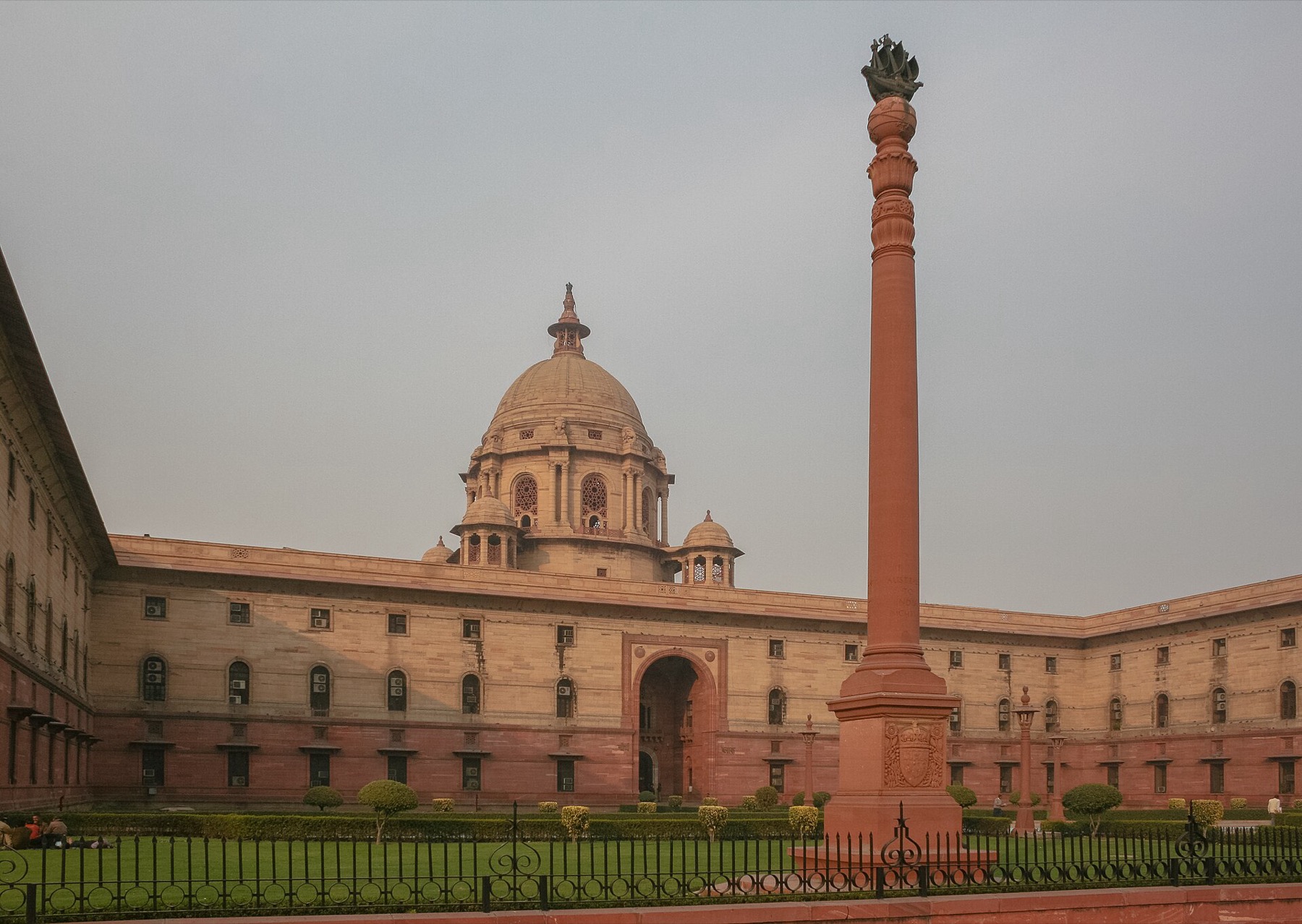
6. Rashtrapati Bhavan: Tour of the Presidential Palace
The presidential palace Rashtrapati Bhavan can be viewed from inside, but you must arrange a reservation online at visit.rashtrapatibhavan.gov.in up to seven days in advance. Open Tuesday to Sunday, the palace closes on Mondays and holidays. The main building tour (Circuit 1) offers seven time slots; the first starts at 9:30 a.m., the last entry admits at 4:00 p.m. Each slot accommodates 60 people, and entry is through Gate 38. A ticket costs 50 rupees (€0.50), children under eight go free, and payment is by card or UPI.
The Stables museum has had phase two closed since October 6, 2025. The Amrit Udyan gardens, formerly Mughal Gardens, open only during the Udyan Utsav festival in February to March and August to September, Tuesday to Sunday between 10:00 a.m. and 6:00 p.m. The changing of the guard takes place every Saturday except holidays, and from October 10, 2026, a new time applies from 7:30 a.m. to 8:30 a.m.
💡 Tip: International visitors upload a passport copy during online reservation and must present the original at entry.
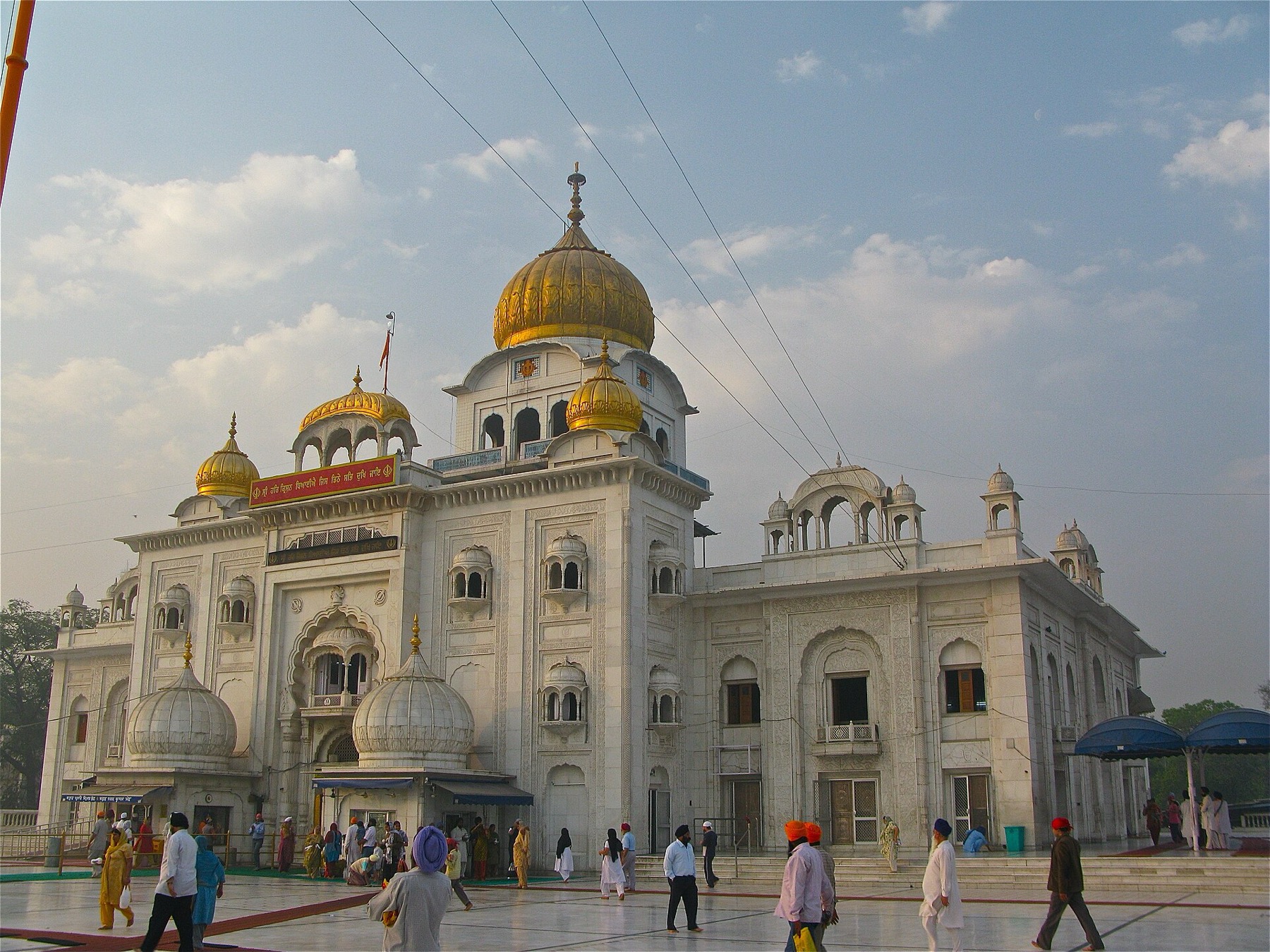
7. Gurudwara Bangla Sahib and Langar
The Sikh temple (gurudwara) Bangla Sahib lies on Hanuman Road near Connaught Place and is open around the clock. You’ll recognize it by its golden dome and pool called sarovar; the site is connected with Sikh Guru Har Krishan’s visit to Delhi.
Langar Hall is open around the clock. Langar is free vegetarian food for anyone, and thousands of portions are served here daily. Any donation is voluntary, never payment for the meal.
In the temple, you cover your head (scarves are free at the entrance), remove shoes, wash your feet, and do not bring alcohol, tobacco or meat inside.
💡 Tip: According to guides, you can volunteer in the kitchen; this service is called seva.
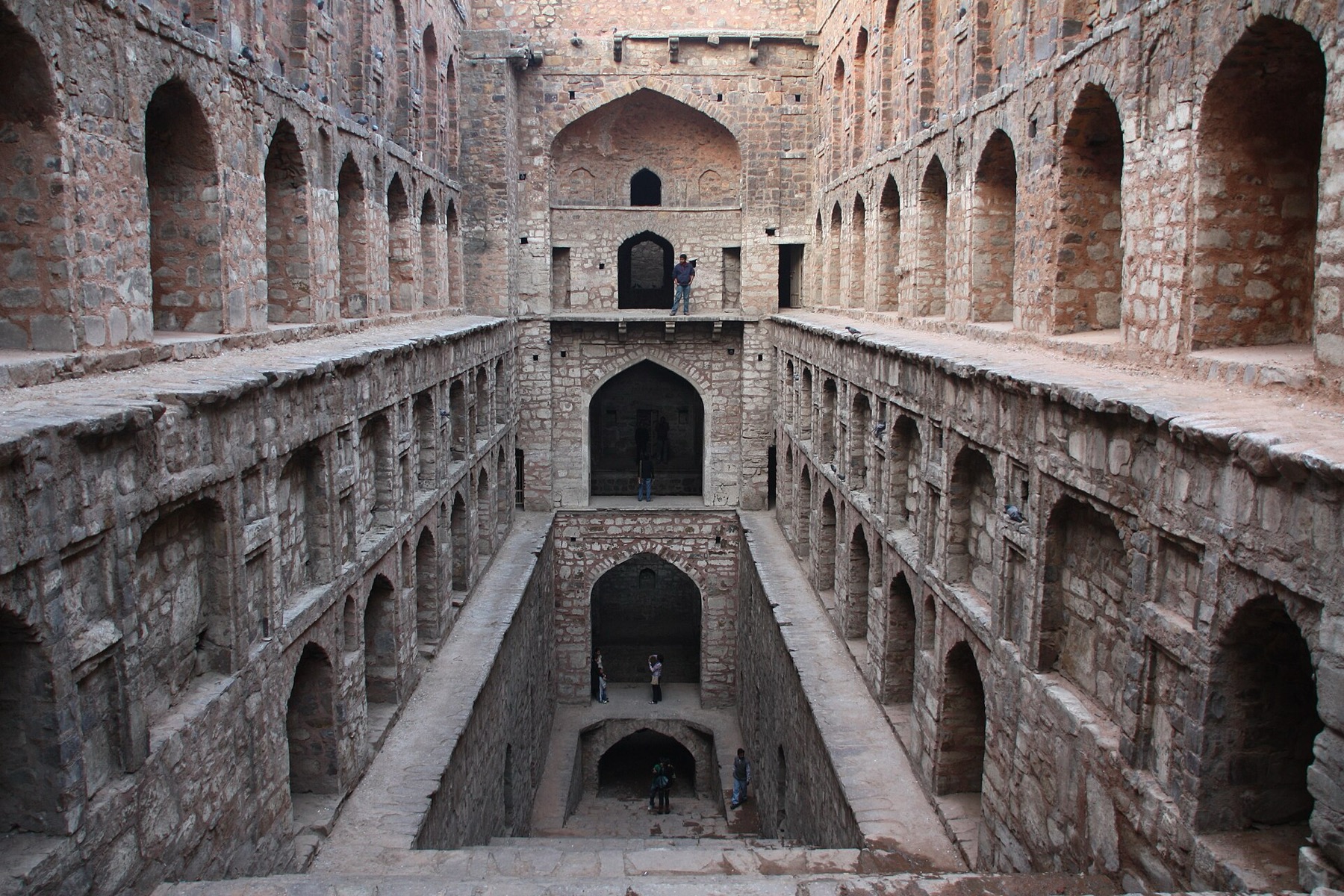
8. Agrasen ki Baoli
Agrasen ki Baoli is a medieval stepwell on Hailey Road near Connaught Place. The word baoli designates a well with steps leading down to the water.
The monument is managed by ASI. Open daily from 9:00 a.m. to 5:30 p.m., and entry is usually free.
It works well as a short stop during a walk through the center.
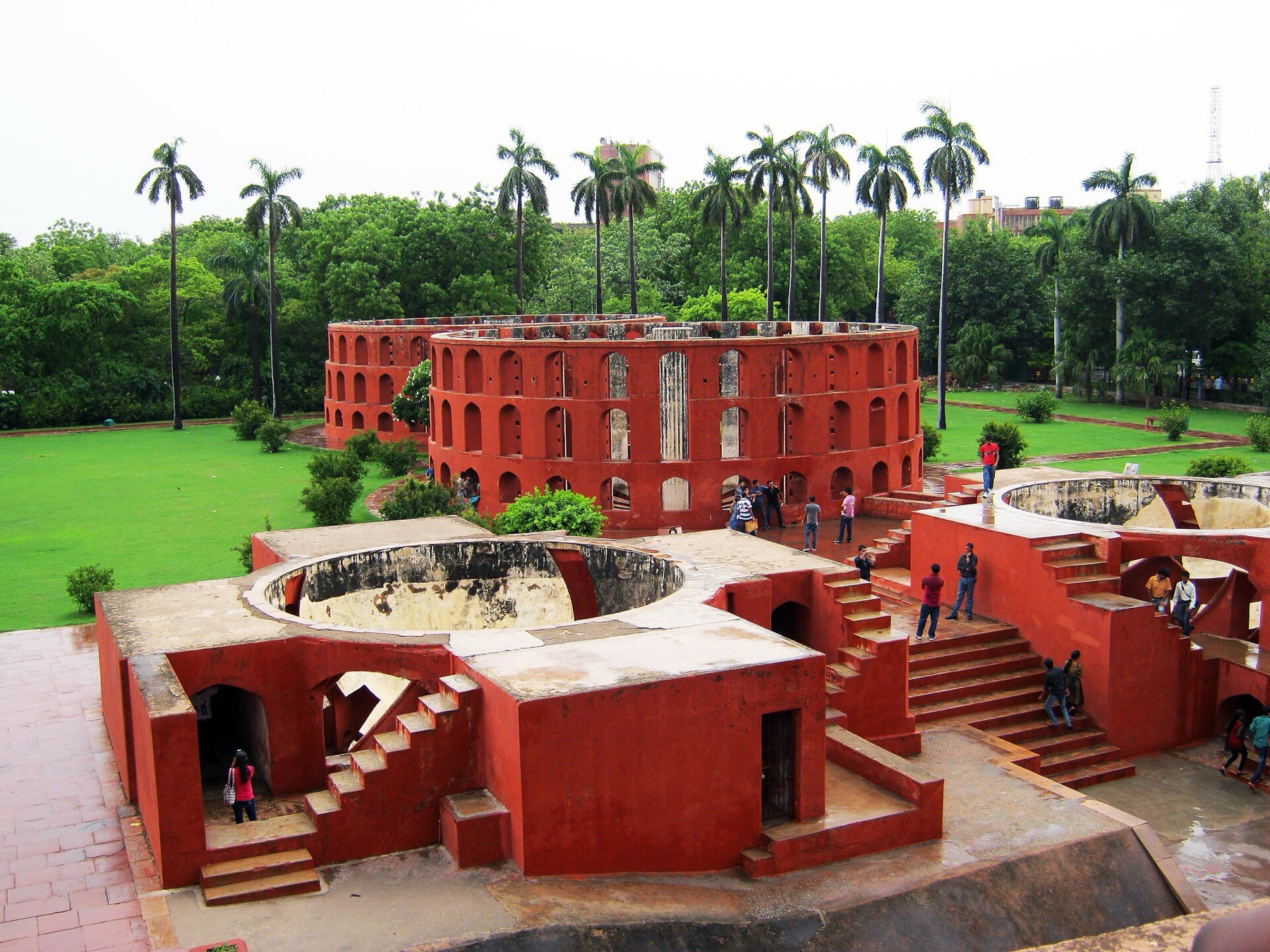
9. Connaught Place, Janpath and Jantar Mantar
Connaught Place forms a colonial circular square with shops and cafés. Nearby lies Jantar Mantar, reportedly a collection of 13 astronomical instruments from 1724, built on the orders of Muhammad Shah. Open from 9 a.m. to 6 p.m., check the entry fee at the ticket office.
On Janpath street and at Tibetan Market, souvenirs are sold, and bargaining is expected when shopping. On Janpath you’ll also find the National Museum, which is closed on Mondays and open Tuesday to Sunday from 10 a.m. to 6 p.m. Around Connaught Place, touts operate with fake tourist offices; find details in the safety section.
💡 Tip: The current National Museum on Janpath still operates. The first gallery of the new national museum Yuge Yugeen Bharat in the North Block and South Block buildings is expected to open by the end of 2026, according to Outlook Traveller. Check before your visit whether it’s accessible yet.
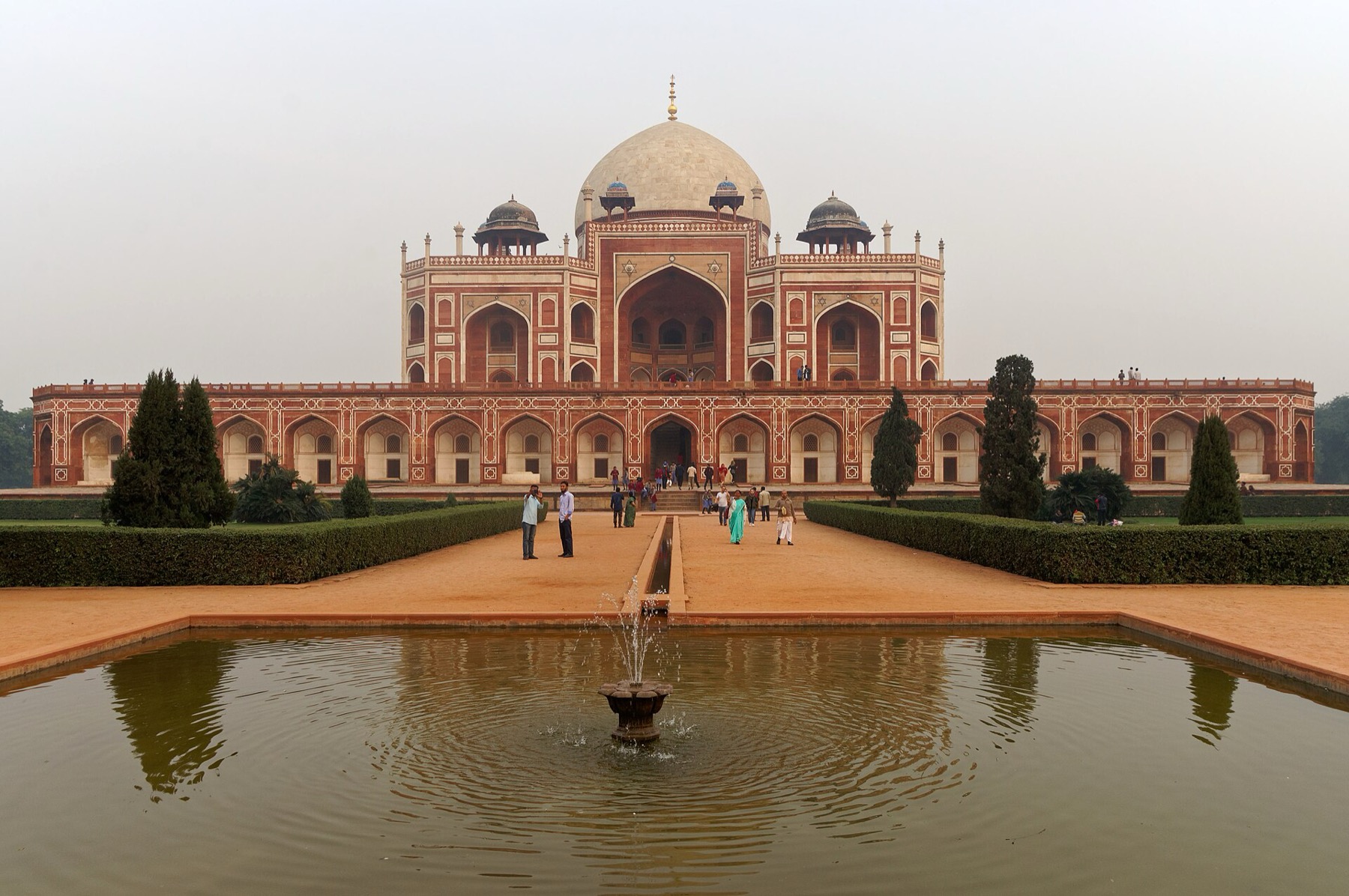
10. Humayun’s Tomb
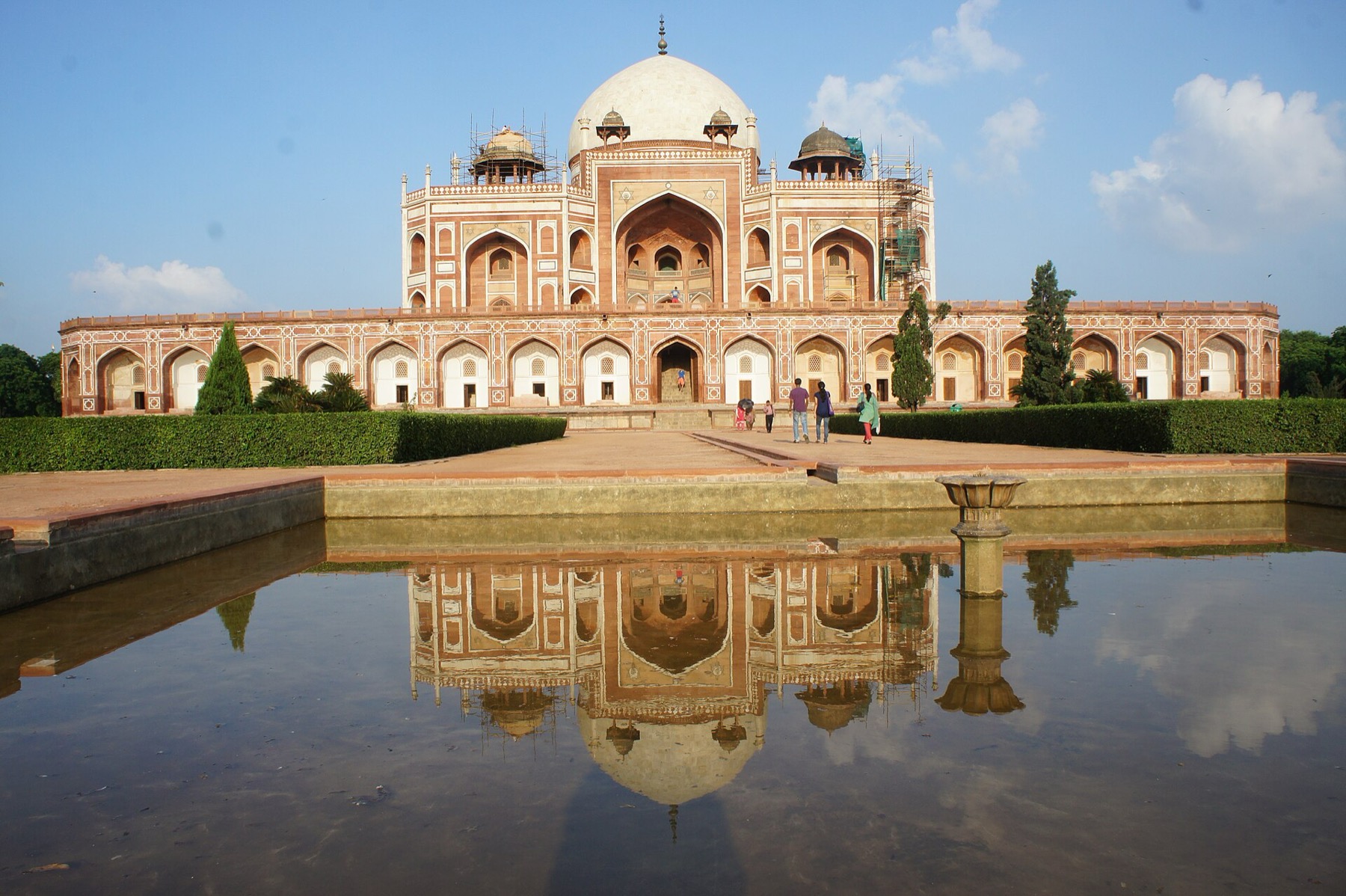
On Mathura Road in the Nizamuddin district stands the tomb of Mughal Emperor Humayun, built according to historical records in 1572 and surrounded by formal gardens. Humayun’s Tomb is often called the precursor to the Taj Mahal, so you can visit it before your trip to Agra.
The complex also includes Isa Khan’s tomb and an underground museum, which is closed on Mondays. Opening hours are typically from 6:00 to 18:00; verify the times before your visit. The entrance fee for foreigners is the same as at the Red Fort (tip 1). The nearest metro stations are JLN Stadium and Hazrat Nizamuddin.
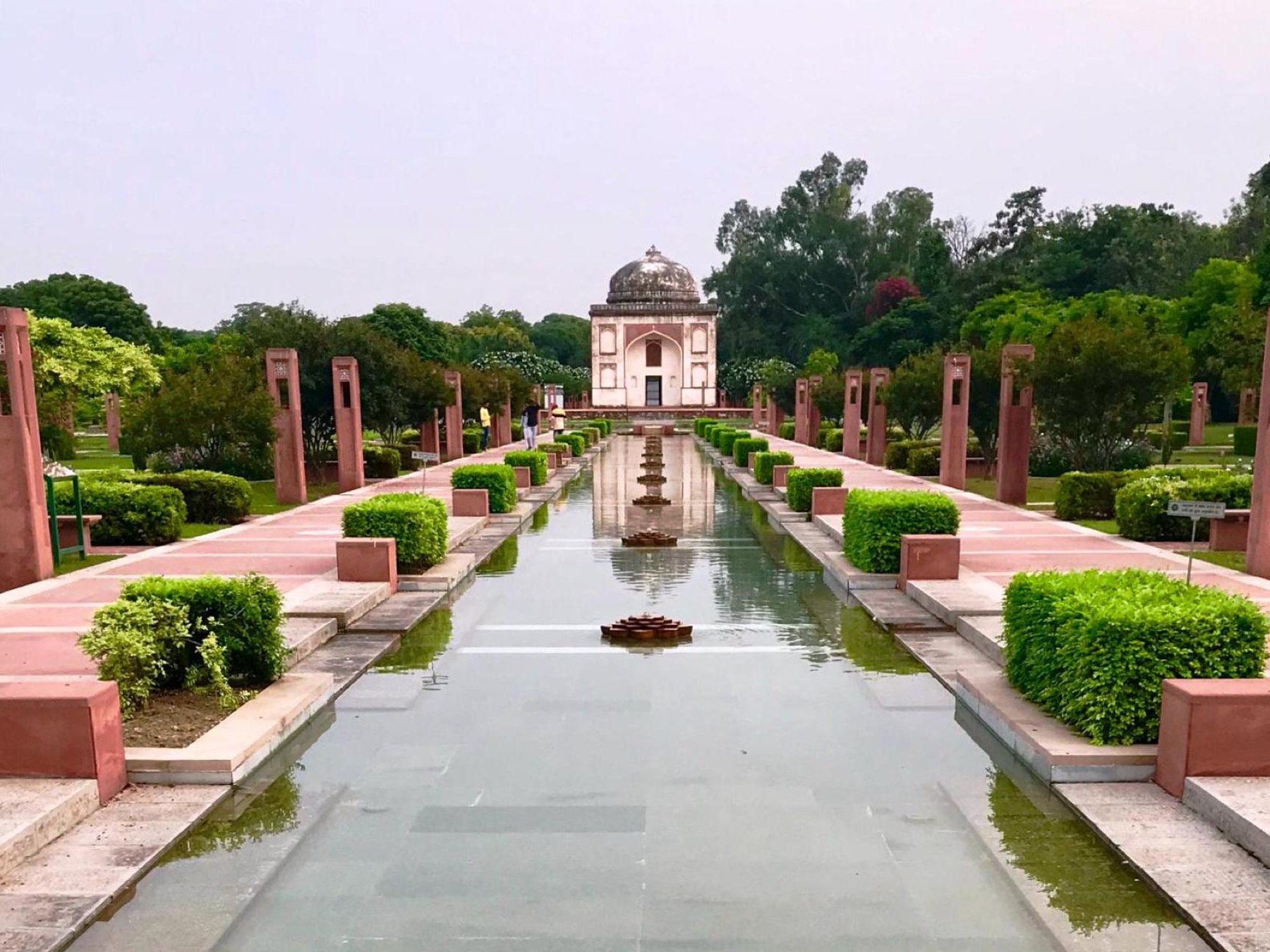
11. Sunder Nursery
Sunder Nursery lies opposite Humayun’s Tomb. It’s an extensive park with gardens, a plant nursery and a historic tomb. It’s open daily from 6:00 to 22:00. You’ll find out the entrance fee for foreigners at the gate.
You can combine your visit with tip 10 and the Nizamuddin Aulia dargah, a Sufi shrine open from 5:30 to 22:00. Prayers are held daily and vegetarian food is served. Qawwali, Sufi devotional singing, usually takes place on Thursday evenings after sunset.
12. Lodhi Garden
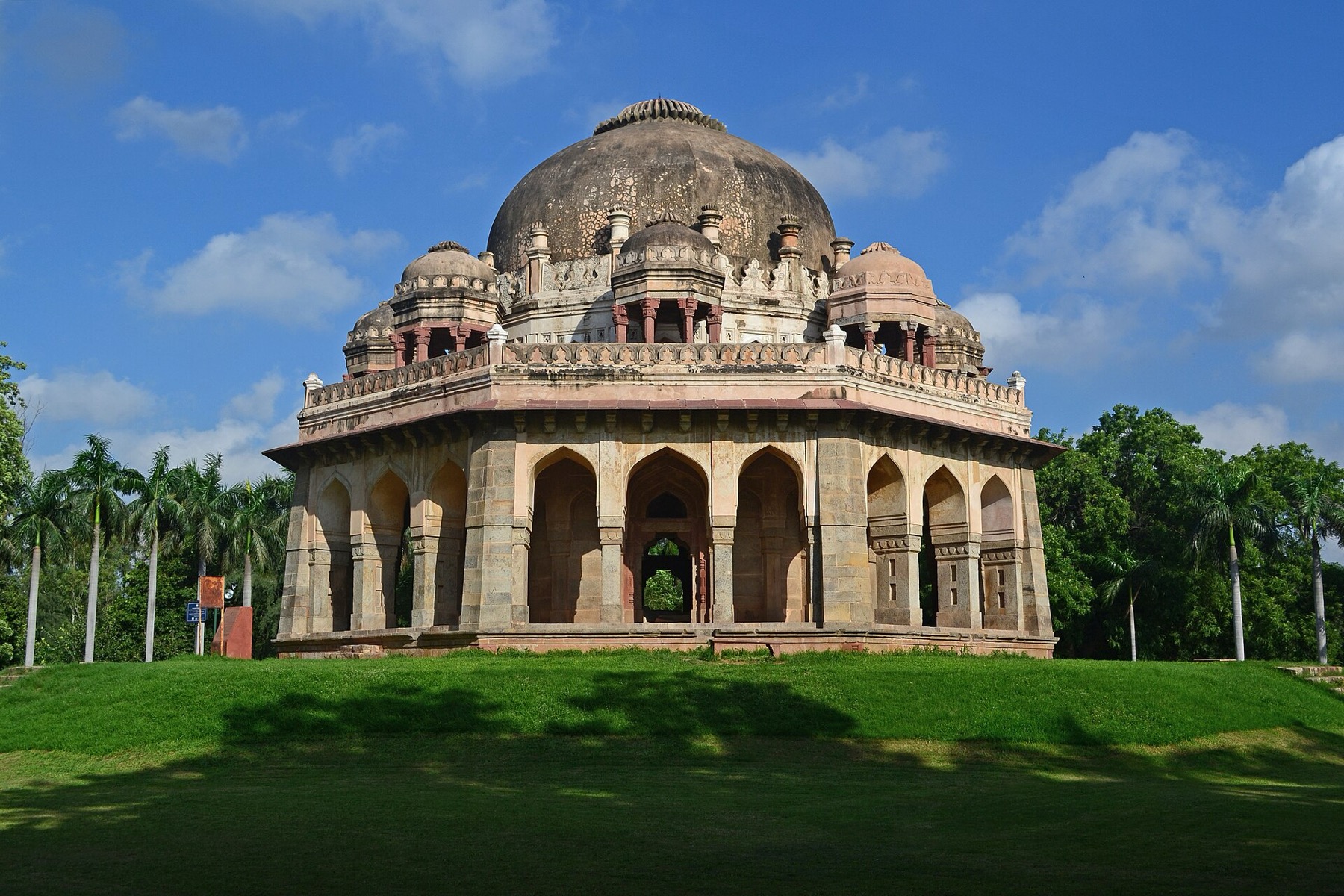
Lodhi Garden on Lodhi Road is a park from the British era featuring tombs of the Lodi dynasty from the 15th and 16th centuries. You’ll find a rose and herb garden, bonsai trees and a small lake. It’s open daily from 5:00 to 20:00, admission is free.
In the mornings, joggers and yoga practitioners come here, so you can include the park at the start of your day. Nearby you’ll find Khan Market with cafés and bookshops, as well as the Lodhi Art District with street art. As another stop, you can add Safdarjung’s Tomb, open from 9 to 19.
13. Purana Qila (Old Fort)
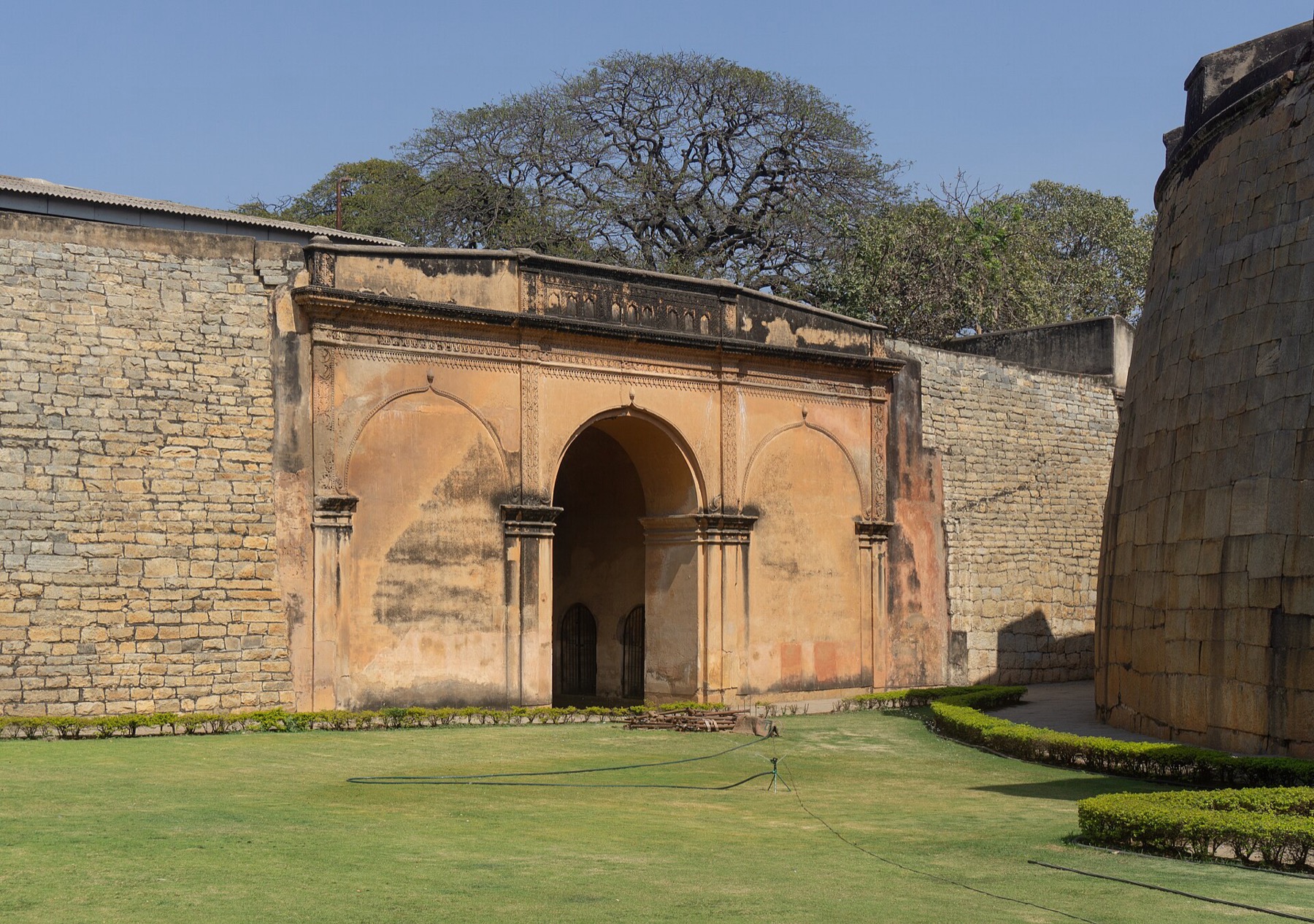
On Mathura Road stands Purana Qila, a 16th-century fort by the river, with a gate and mosque. It’s open from 7 to 17. The entrance fee for foreigners follows the ASI price list and you’ll find it out on site.
According to tradition, the fort is associated with the legendary Indraprastha. ASI excavations have also taken place at the site. You can combine your visit with Humayun’s Tomb and Sunder Nursery, as both Purana Qila and Humayun’s Tomb are located on Mathura Road and Sunder Nursery is directly opposite the tomb.
14. Qutb Minar
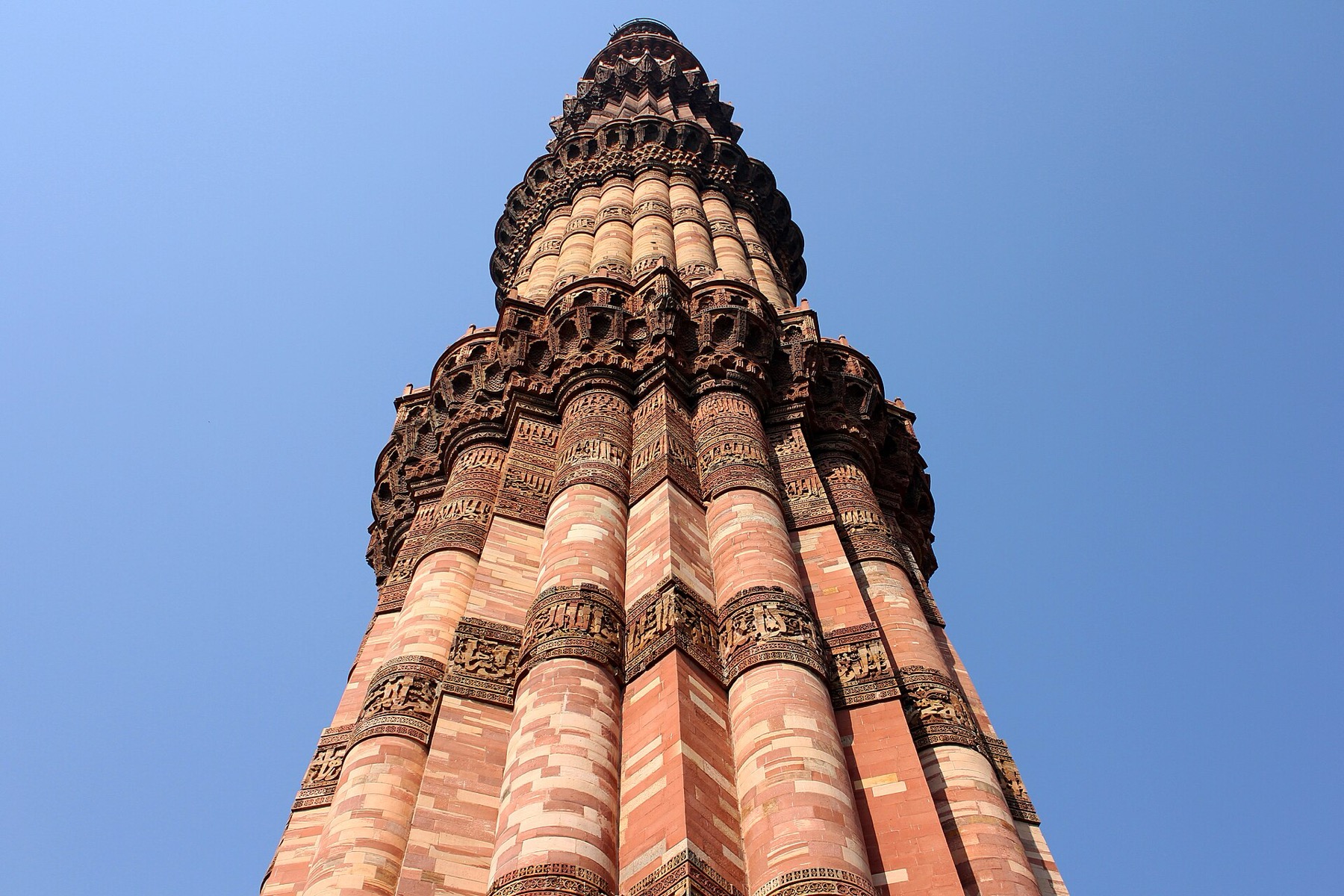
In South Delhi, in the Mehrauli district, stands a minaret over 70 metres tall from the 12th and 13th centuries. In the complex you’ll also find the Iron Pillar, which is said to have remained rust-free for approximately 1,600 years.
The entrance fee for foreigners is the same as at the Red Fort (tip 1). Opening hours are typically from 7 to 17; verify the times. The nearest metro station on the Yellow Line is officially called Qutab Minar. You can easily combine your visit with Mehrauli Archaeological Park.
15. Mehrauli Archaeological Park
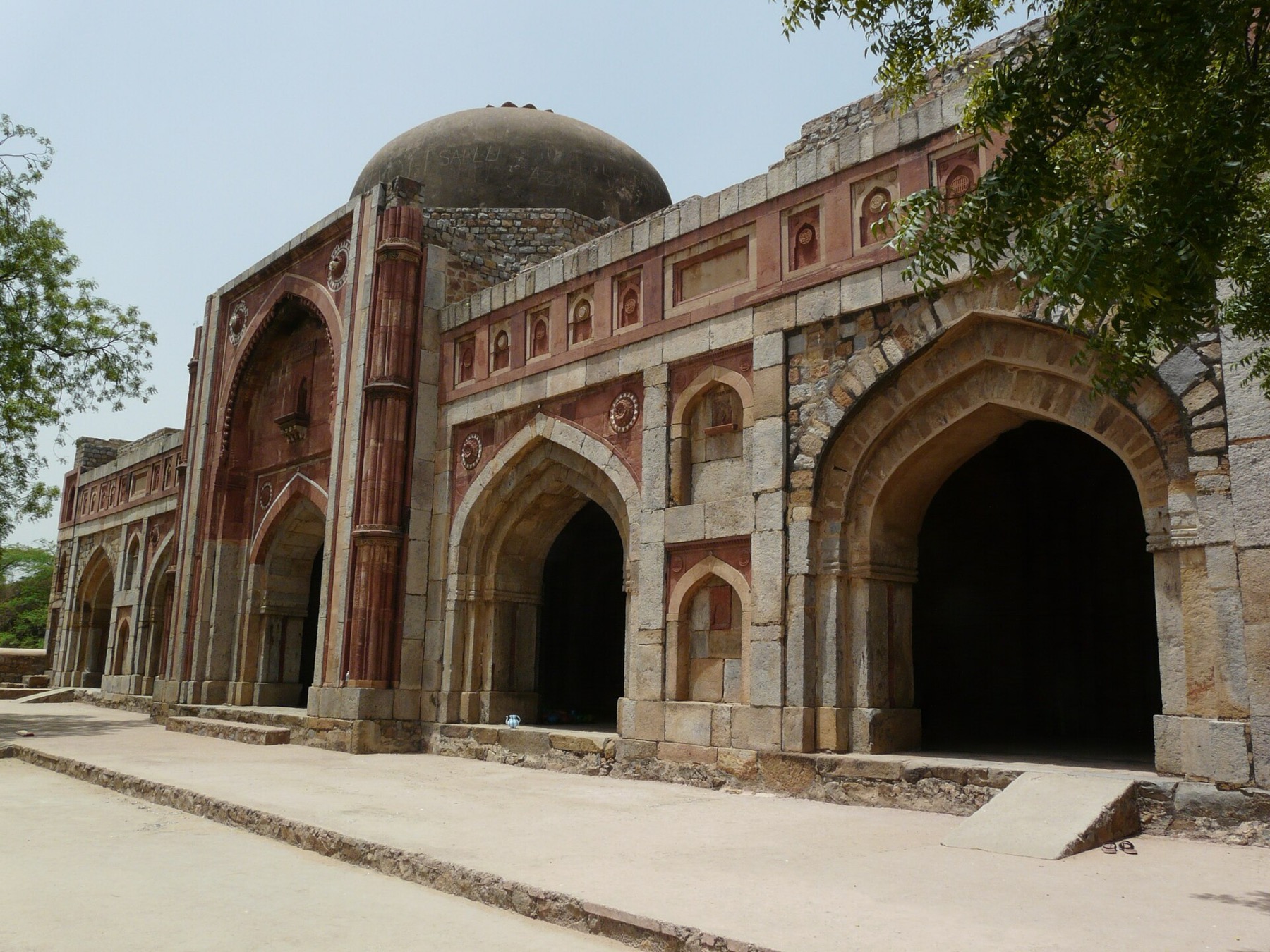
According to National Geographic CZ, the park contains over one hundred historic monuments from 1060 to the British Raj. In the complex you’ll find the 16th-century Jamali Kamali mosque and tomb, as well as the stepwell Rajon ki Baoli.
The park is located opposite Qutab Minar metro station, admission is usually free. Compared to Qutb Minar, you’ll encounter fewer tourists here. Visit during daylight hours and preferably with a companion.
16. Hauz Khas Village and Deer Park
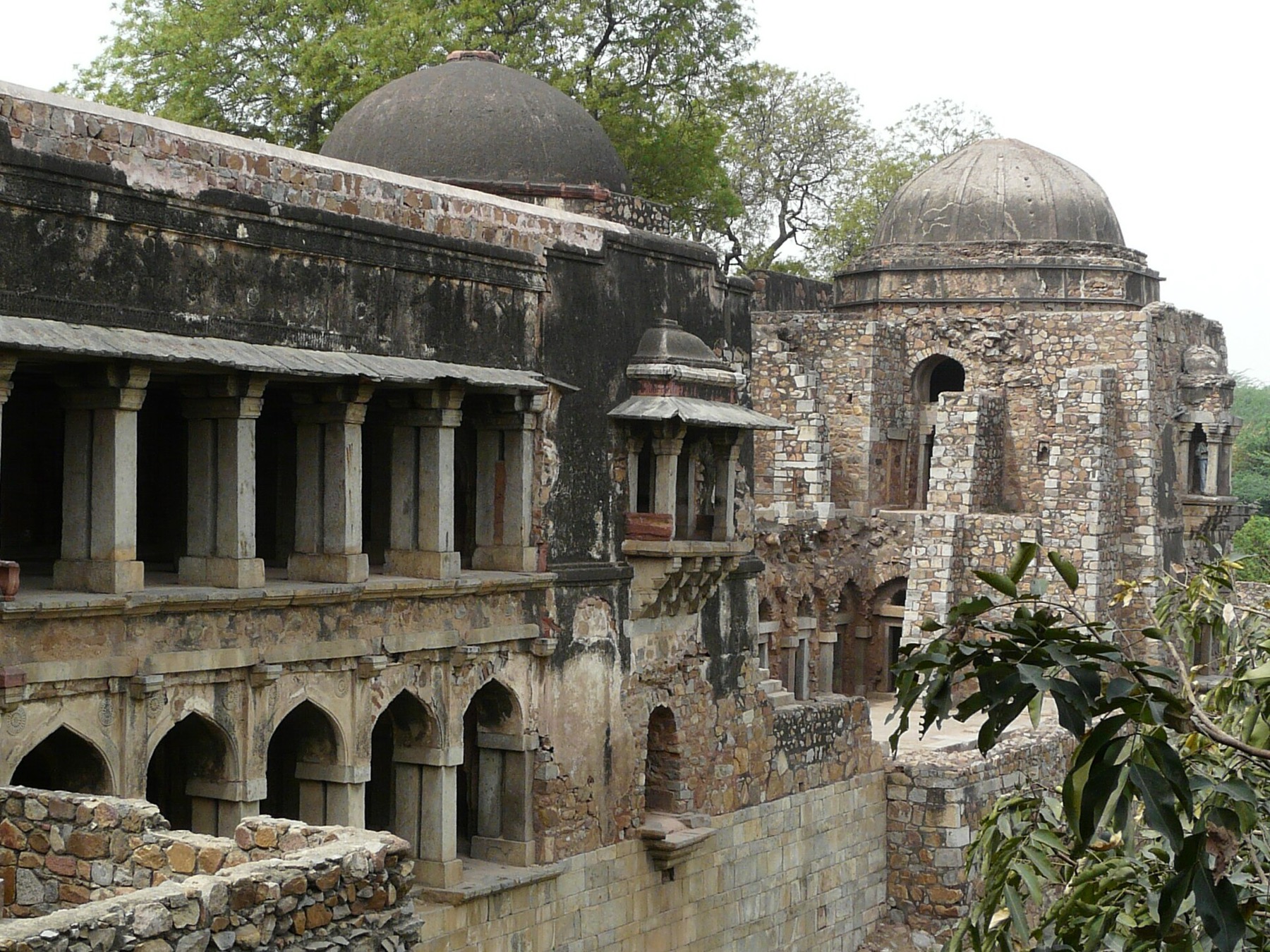
Hauz Khas Village is a pedestrian neighbourhood with galleries, boutiques and bars. Hauz Khas Fort above the lake is open from 10:30 to 19:00; you’ll see the madrasa and the tomb of Firoz Shah Tughlaq.
Next to the village and lake you’ll also find Deer Park. For South Indian food, try the vegetarian restaurant Naivedyam. You can head to Kunzum for coffee or books, where reportedly you pay what you think is appropriate.
17. Lotus Temple
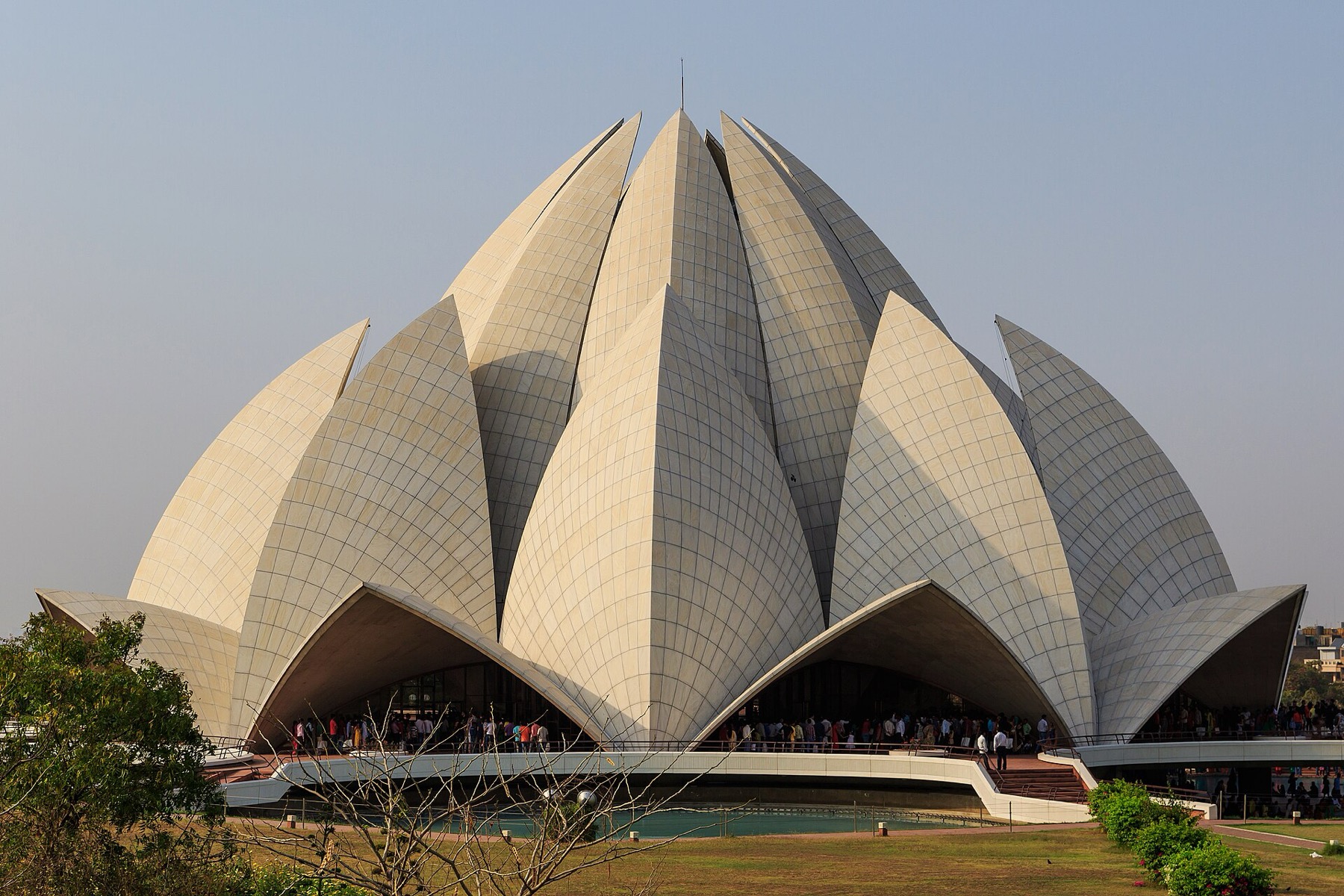
In Kalkaji stands the Lotus Temple, a Baháʼí house of worship opened in 1986 for people of all religions. It’s closed on Mondays; from Tuesday to Sunday, opening hours are from 8:30 to 17:00. Admission is free.
Inside it’s silent, no ceremonies or sermons are conducted, and shoes must be removed. The nearest metro station is called Kalkaji Mandir. You can combine your visit with the ISKCON temple (Hare Krishna movement), which is open from 4:30 to 13:00 and from 16:15 to 21:00 and has a vegetarian café.
18. Swaminarayan Akshardham
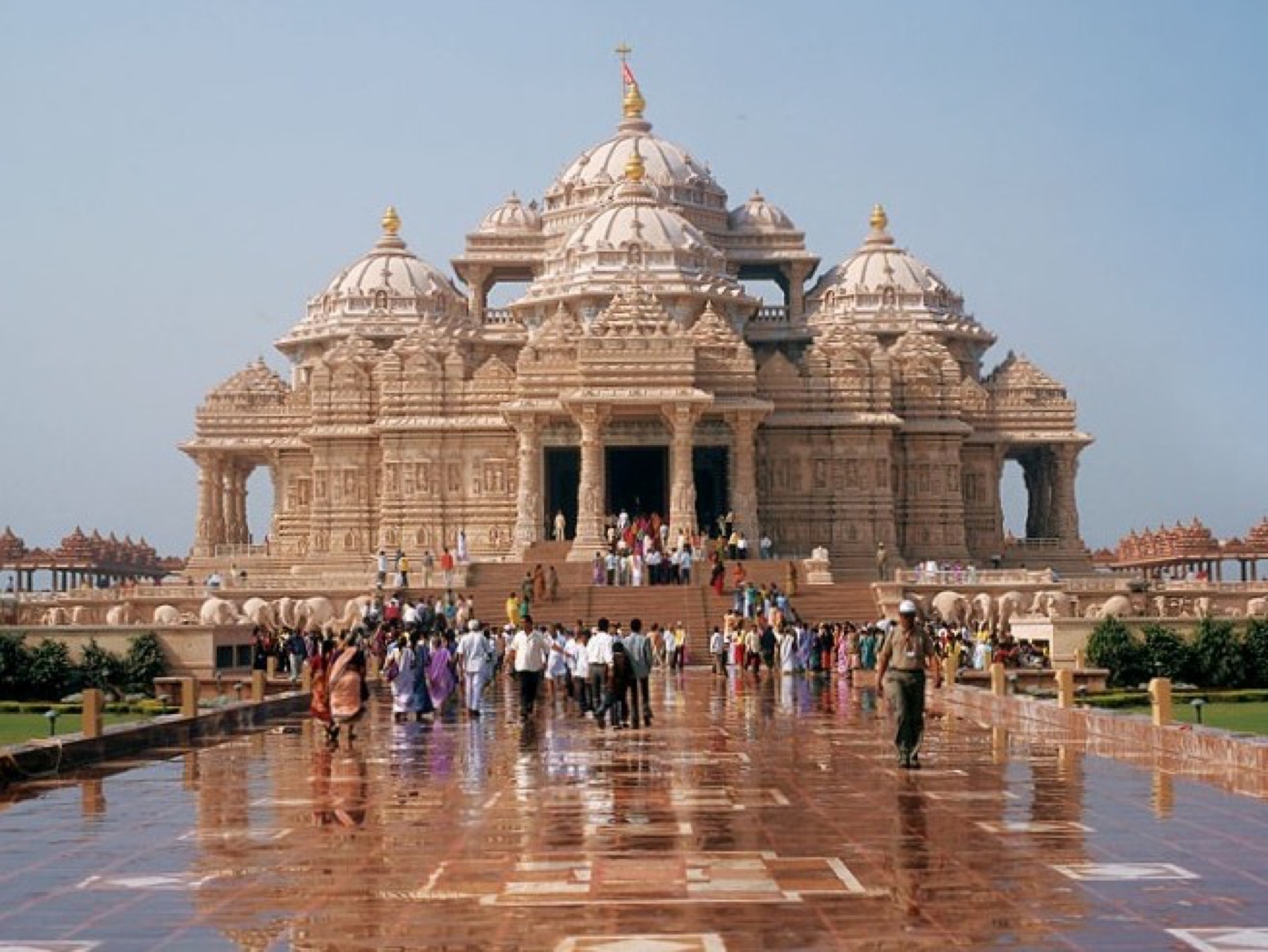
Swaminarayan Akshardham stands at NH 24, Pandav Nagar. It’s closed on Mondays; from Tuesday to Sunday, entry to the complex is until 18:30 at the latest. Entry to the complex and temple is free and without reservation; exhibitions and shows have a fee.
For exhibitions included in one ticket, adults pay 260 rupees (€2.50), seniors 210 rupees (€2) and children aged 4 to 11 pay 160 rupees (€1.50). The Sahaj Anand water show costs 110 rupees (€1), children pay 80 rupees (€0.75). The show starts after sunset.
Clothing must cover shoulders, chest, back and upper arms; length must not end above the knees. You can buy a sarong for 100 rupees (€1). According to guides, mobile phones, cameras, smart watches, headphones, flash drives and bags are not allowed inside. Prohibited items must be handed in before the security check queue at a free cloakroom. Leave your phone at the hotel or expect a queue at the cloakroom; photography is not allowed inside.
You can reach the complex by metro to Akshardham station and walk 350 metres. The complex has a purely vegetarian restaurant, Premvati.
19. Majnu ka Tilla: Tibetan Colony
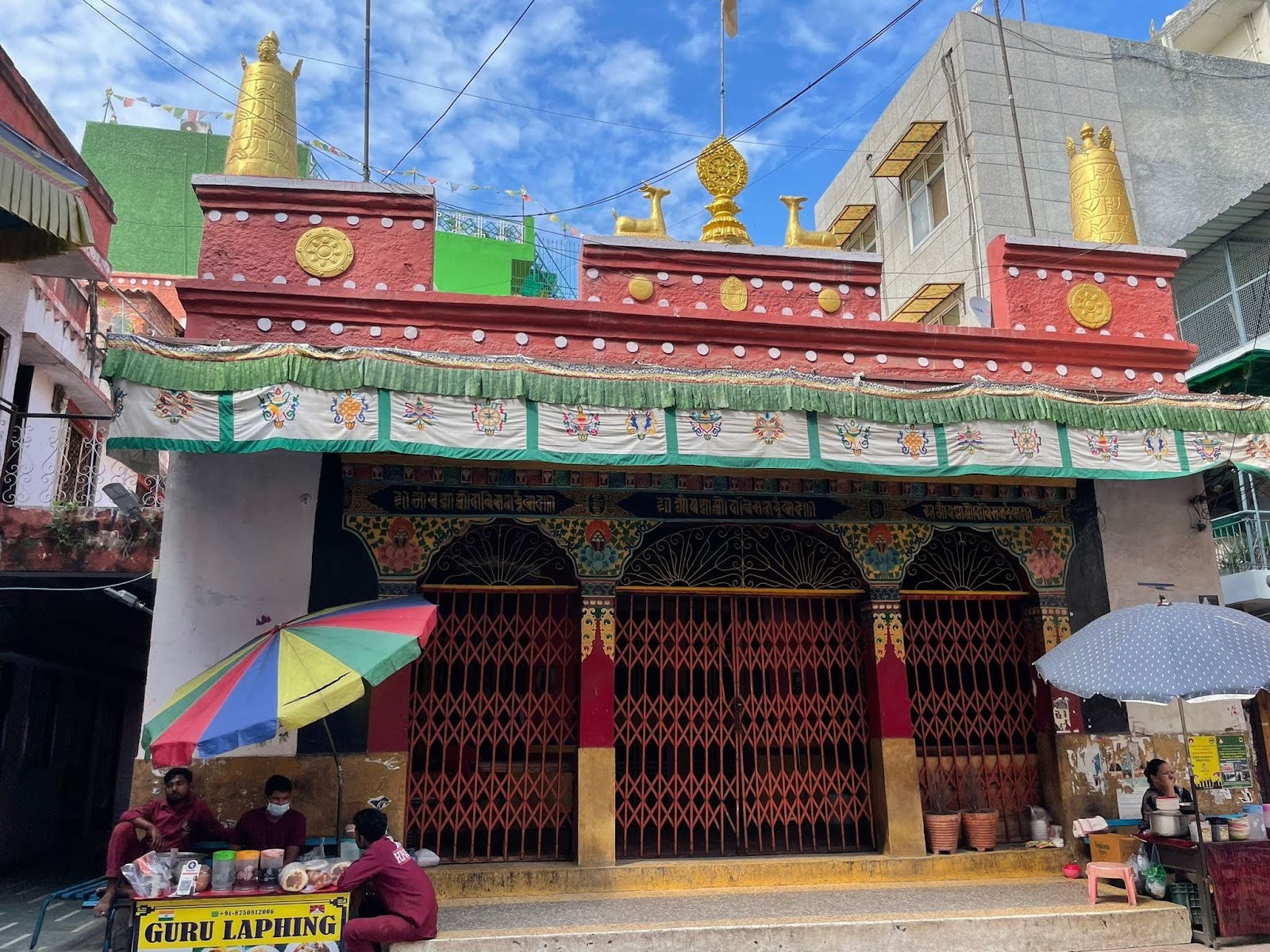
Majnu ka Tilla is a neighbourhood where many Tibetan refugees live. You’ll find a Buddhist temple and Tibetan restaurants here.
You can stop for coffee at AMA Cafe. In the surrounding Tibetan restaurants you can taste traditional momo dumplings; ask directly on site about vegetarian versions with vegetables or cheese.
You can reach Majnu ka Tilla by metro to Vidhan Sabha station, from where you’ll take an e-rickshaw.
20. Vegetarian Delhi: Where to Eat
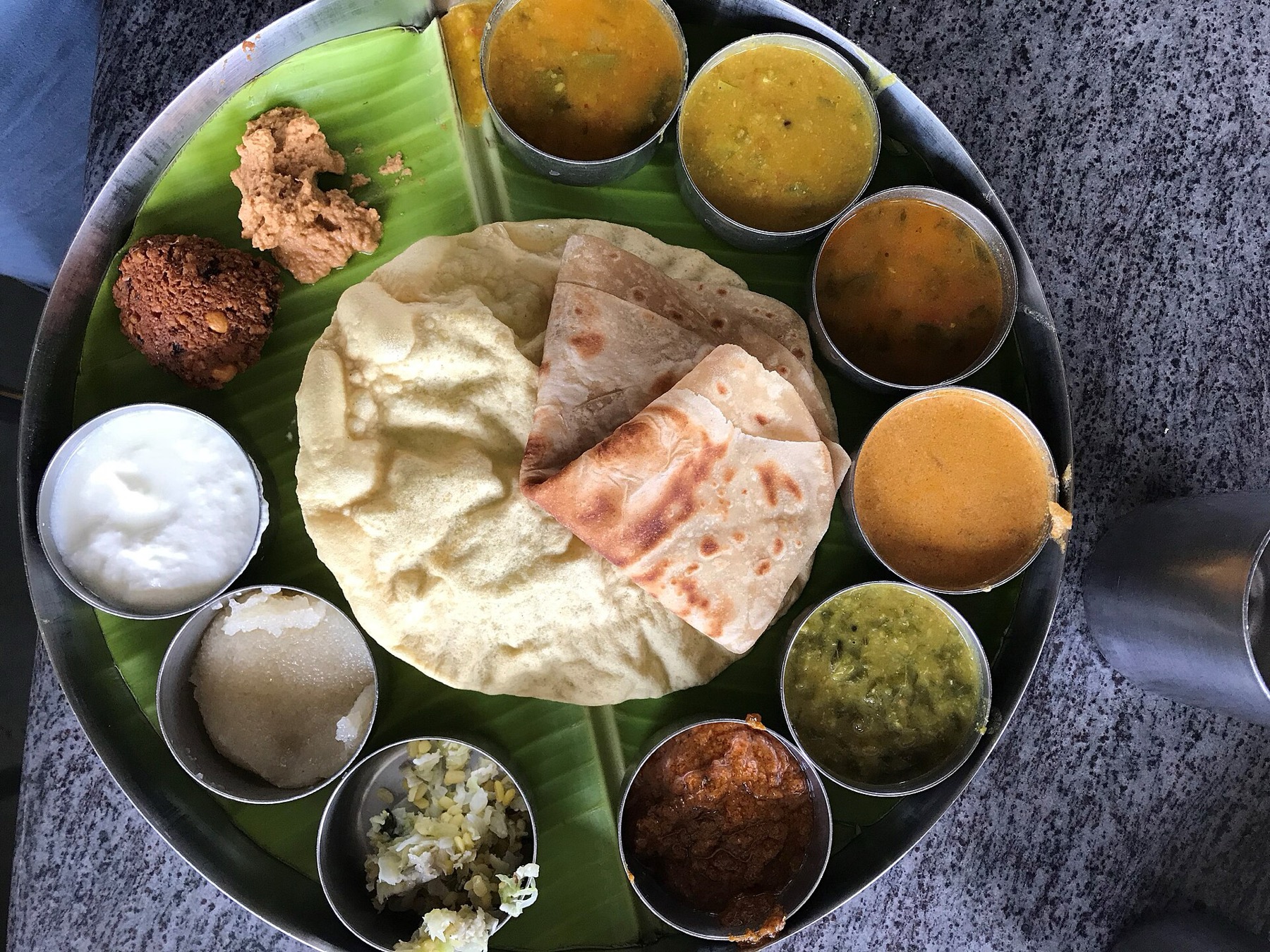
Delhi is a paradise for vegetarians. On packaging and menus, look for a green square with a dot, which indicates vegetarian dishes, while a brown or red symbol indicates meat. Establishments marked “pure veg” don’t serve meat, fish or eggs, and some cook without onions and garlic as well. Rules for street food can be found in the practical section.
Free food is offered by the langar at Gurudwara Bangla Sahib Sikh temple (tip 7). In Connaught Place, try South Indian specialities dosa and thali at Saravana Bhavan at 50 Janpath, open from 8 to 23. You’ll also find Haldiram’s with an assortment of chaat (street savoury snacks) and sweets. In Defence Colony there’s the Sagar Ratna chain, in Select Citywalk shopping centre in Saket you’ll find Sattvik, and in Greater Kailash I there’s the vegan Greenr Cafe. In Paharganj, taste chole bhature (fried bread with chickpea curry) at Sita Ram Diwan Chand.
On Chandni Chowk, you can get sweets at the Bikanervala chain. You’ll also find Old Famous Jalebi Wala (jalebi and samosa), Natraj Dahi Bhalla (dahi bhalla and aloo tikki) and the lane Paranthe Wali Gali (fried stuffed flatbreads). A bit further, in Sitaram Bazar near Chawri Bazar, is Kuremal’s Mohanlal Kulfi (kulfi, also stuffed into fruit).
For specialities, taste aloo tikki, pani puri (golgappa), paranthe, lassi, idli or momo dumplings in the Tibetan quarter. The water used to fill pani puri can be a risk, see the practical section. The winter foam daulat ki chaat is available from November to February. Moti Mahal in Daryaganj and Bukhara at ITC Maurya hotel are well-known meat establishments with kebabs and tandoor.
💡 Tip: If you can’t handle spicy food, say “less spicy”.
21. Taj Mahal and Agra
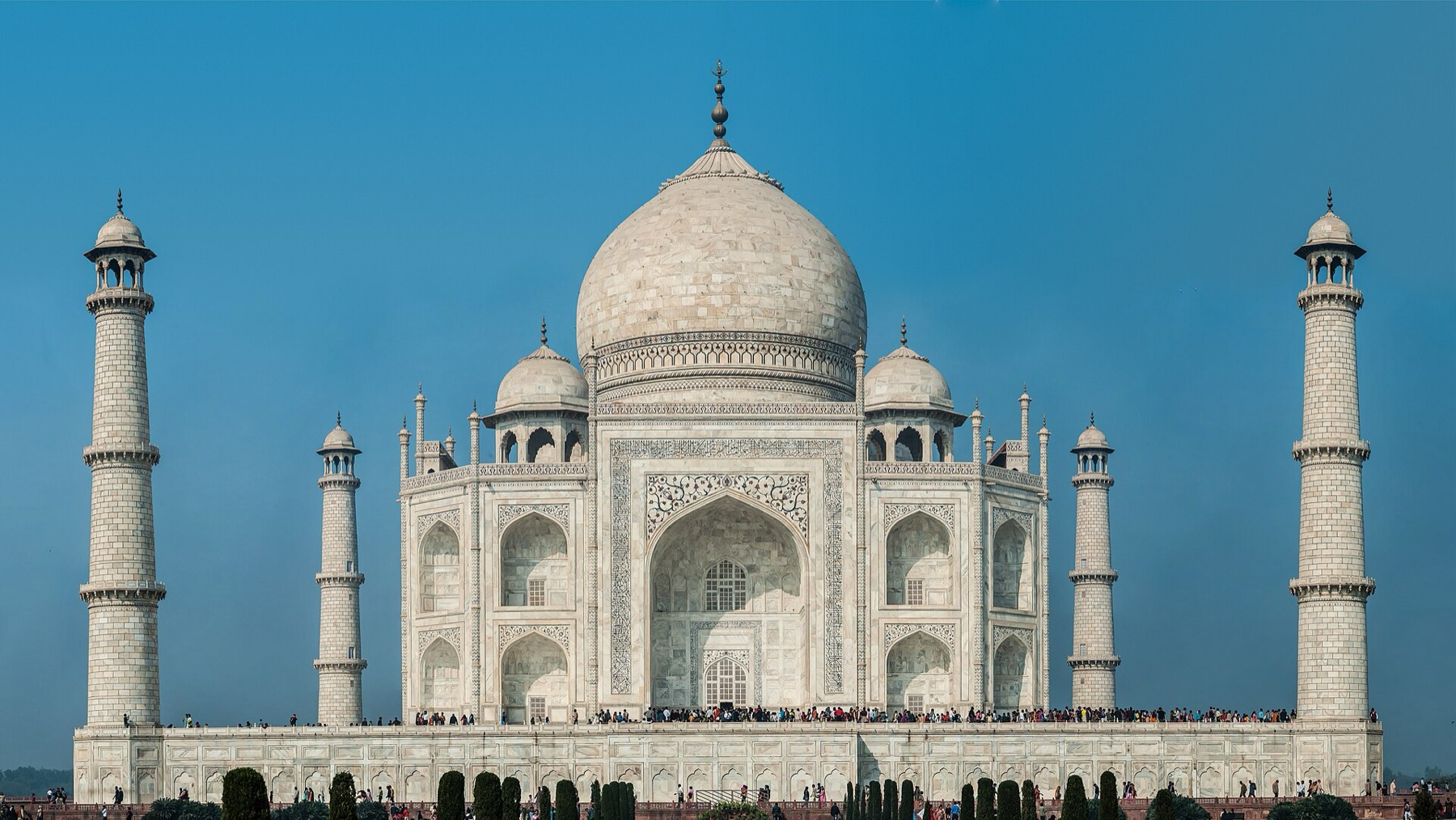
The Taj Mahal in Agra represents one of the seven modern wonders of the world. The complex is open from 30 minutes before sunrise until 30 minutes before sunset, but it’s closed on Fridays. You can buy tickets online or at the ticket counters by the West and East Gates, while the South Gate is for exit only. Foreigners pay 1,100 rupees (€10), an online ticket costs 1,050 rupees (€10), entry to the main mausoleum requires an additional 200 rupees (€2), and children under 15 enter free.
Night viewing takes place five nights a month around the full moon between 8:00 PM and 11:59 PM. Tours are divided into eight half-hour groups of up to 50 people each. Foreigners pay 750 rupees (€7) and must register half an hour in advance at Shilpgram. Night visits do not take place on Fridays or during Ramadan.
According to timetable aggregators, the Gatimaan Express (12050) departs from Hazrat Nizamuddin station around 8:10 AM, the journey takes about 1 hour and 40 minutes, and the train doesn’t run on Fridays. According to the same aggregators, Vande Bharat 22470 also departs from Hazrat Nizamuddin at 6:00 AM, stops at Agra Cantt station at 7:40 AM, and doesn’t run on Mondays. Check timetables and prices on IRCTC. By car on the Yamuna Expressway, the journey takes about 3 to 4 hours according to travel websites.
In Agra, you can also visit Agra Fort with an entrance fee of 650 rupees (€6), or 600 rupees (€6) on Fridays. The Itimad-ud-Daulah tomb, known as the Baby Taj, costs 310 rupees (€3), and Mehtab Bagh garden with a view across the river costs 300 rupees (€3).
22. Fatehpur Sikri and Jaipur
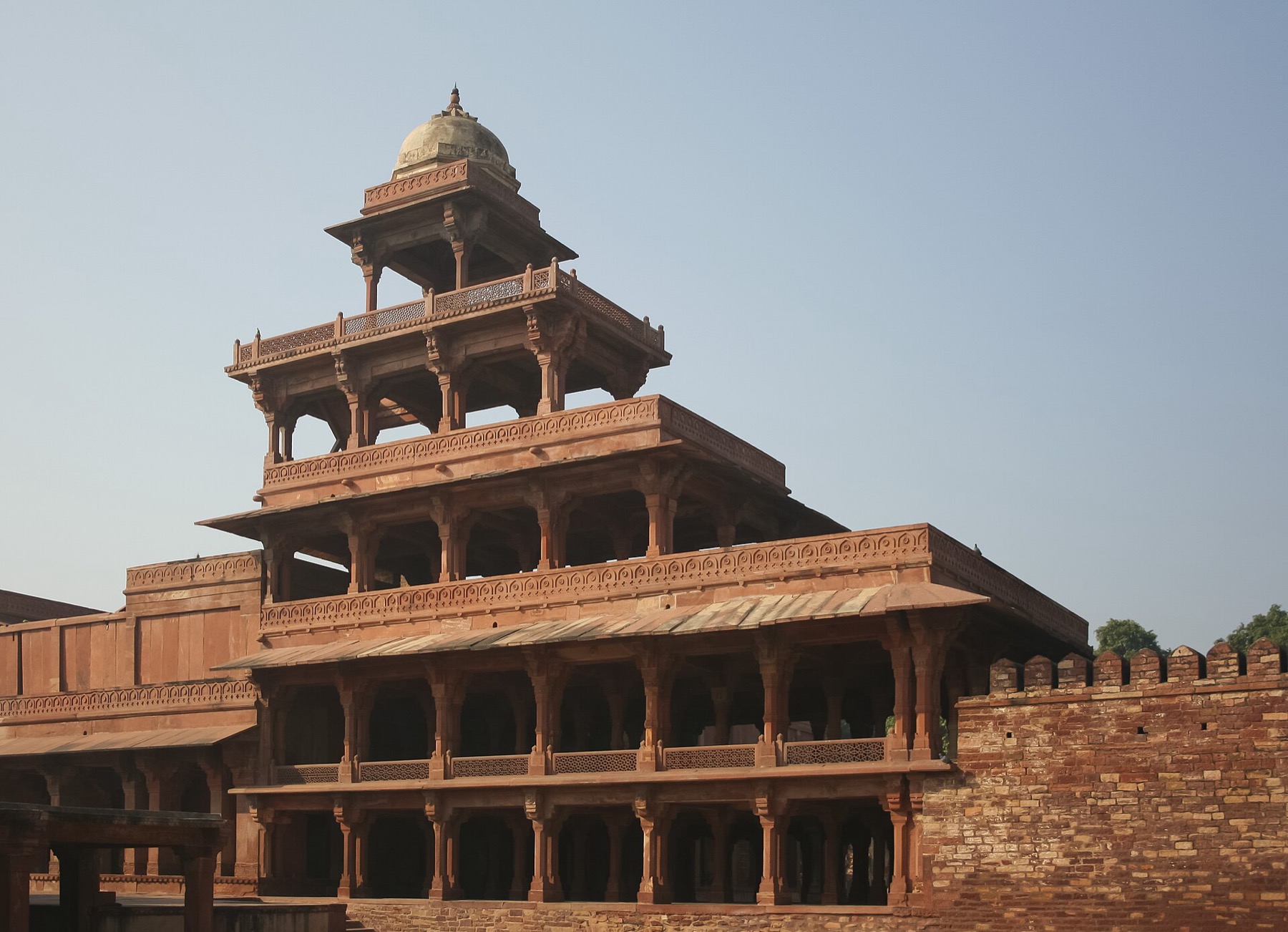
About 40 kilometres from Agra lies Fatehpur Sikri, the Mughal city of Emperor Akbar. The entrance fee for foreigners is 610 rupees (€6) from Monday to Thursday and on weekends. On Fridays you’ll pay 600 rupees (€6). The Buland Darwaza gate is open from 8 AM to 7 PM.
Delhi, Agra and Jaipur form the Golden Triangle. The journey from Delhi to Jaipur takes about 5 hours by car or train according to travel websites. Landmarks in Jaipur include Amber Palace (open from 7 AM to 9 PM), Hawa Mahal (from 9 AM to 6:30 PM), City Palace (from 9:30 AM to 7:30 PM) and Jaipur’s Jantar Mantar (from 9 AM to 6:30 PM). Avoid elephant rides at Amber Palace for ethical reasons.
One traveller on Reddit in April 2026 described an Uber ride from Agra to Jaipur for 3,500 rupees (€33). The driver stopped along the way and another man demanded an additional 2,500 rupees (€23) for tolls and taxes. Don’t pay anything extra in cash.
Where to Go Next from Delhi
From Delhi you can continue along the Golden Triangle, which connects Delhi, Agra and Jaipur. Details for each destination are provided in tips 21 and 22.
If you’re planning to travel further, Goa or Mumbai are good options. The articles What to See in Mumbai and Where to Stay in Mumbai will help you. The e-Tourist Visa and UPI payments are valid throughout India.
Frequently Asked Questions
How many days do I need for Delhi?
Set aside 2 to 3 days for the main sights. Add one day for the Taj Mahal. If you want to cover the entire Golden Triangle, count on a week.
Do I need a visa for India and how much does it cost?
Yes, you need a visa in advance and cannot obtain it upon arrival. A 30-day e-Tourist Visa costs from July to March 25 USD (€23), from April to June 10 USD (€9) plus a 3% bank fee. Apply only at indianvisaonline.gov.in. You’ll find details in the Entry for International Visitors section.
When is the best time to go to Delhi?
The best compromise is mid-February through March. According to the foreign ministry, smog persists from late October to March, with the worst from November to January; the air improves in February and March. From April to June there is extreme heat, with May and June averaging around 40 °C during the day. The monsoon arrives from July to September. You’ll find details in the Weather and Smog section.
How do I get from the airport to the city center?
From Terminal 3, you can reach New Delhi station on the Airport Express line for 64 rupees (€0.60). At night, use a prepaid taxi from the counter in the arrivals hall or Uber. Decline offers from random touts.
How much is admission to monuments in Delhi?
Admission for an adult foreigner to the Red Fort, Qutb Minar complex, and Humayun’s Tomb costs approximately 600 rupees (€5.50), online 550 rupees (€5). The current price list is on the ASI website. Lotus Temple, Bangla Sahib temple, India Gate, and Lodhi Garden park have free admission. At Akshardham, entry to the grounds is free; exhibitions and shows are charged. A tour of Rashtrapati Bhavan palace costs 50 rupees (€0.50) with online reservation. You’ll find more prices with individual tips.
When is the Taj Mahal closed?
The Taj Mahal is closed every Friday, including night tours. According to schedule aggregators, the morning Gatimaan Express from Delhi to Agra does not run on Fridays either. You’ll find details in tip 21.
Is Delhi good for vegetarians?
Yes, in Delhi you’ll find entire pure veg restaurants. At the Sikh temple Gurudwara Bangla Sahib, you can get a free lunch in the langar. In restaurants, look for the green symbol. You’ll find specific recommendations in tip 20.
Tips and Tricks for Your Vacation
Don’t Overpay for Flights
Search for flights on Kayak. It’s our favorite search engine because it scans the websites of all airlines and always finds the cheapest connection.
Book Your Accommodation Smartly
The best experiences we’ve had when looking for accommodation (from Alaska to Morocco) are with Booking.com, where hotels, apartments, and entire houses are usually the cheapest and most widely available.
Don’t Forget Travel Insurance
Good travel insurance will protect you against illness, accidents, theft, or flight cancellations. We’ve had a few hospital visits abroad, so we know how important it is to have proper insurance arranged.
Where we insure ourselves: SafetyWing (simple monthly subscription) and TrueTraveller (for extra-long trips).
Find the Best Experiences
Get Your Guide is a huge online marketplace where you can book guided walks, trips, skip-the-line tickets, tours, and much more. We always find some extra fun there!