

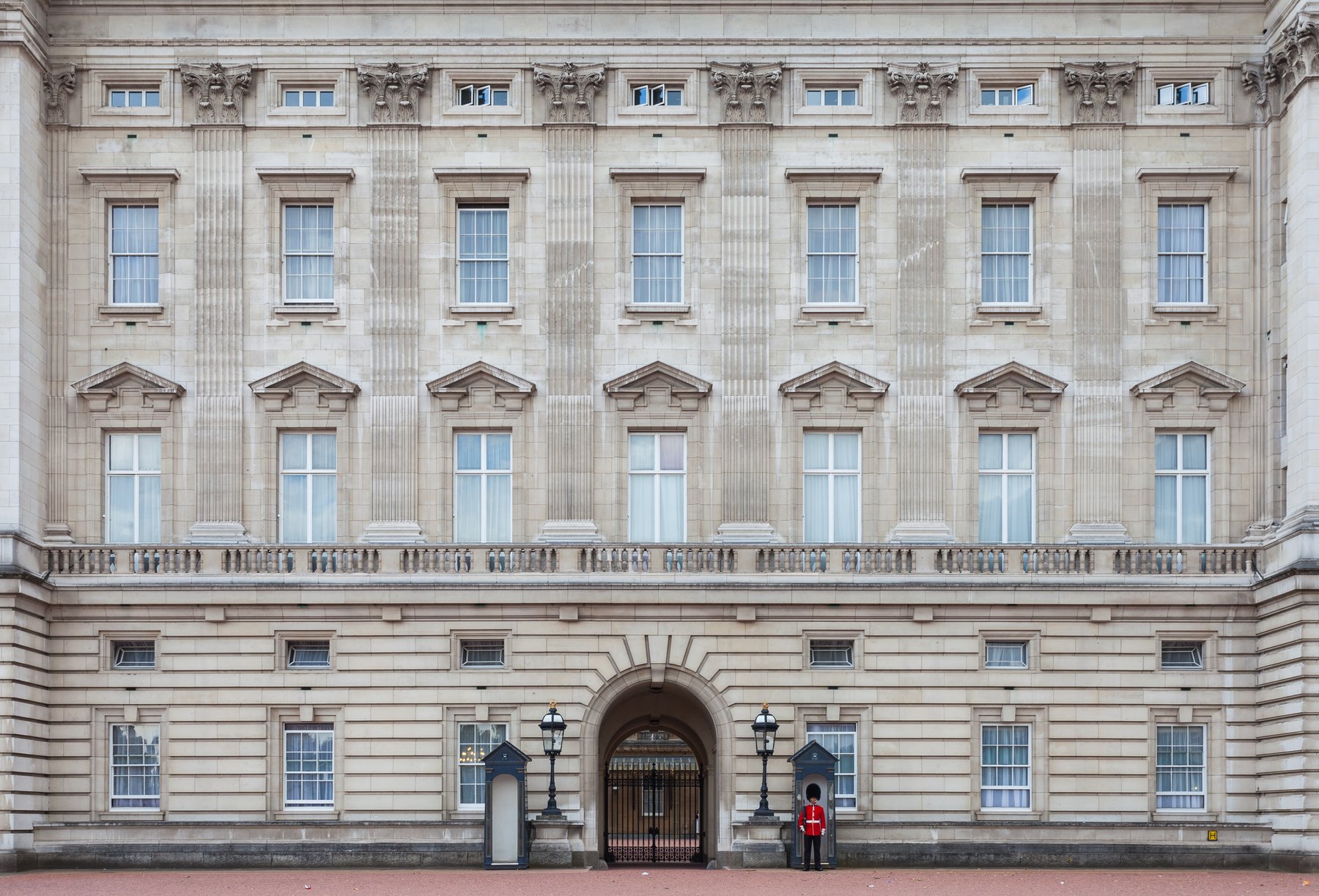
Say the word London and most of us instantly picture Buckingham Palace, the residence of the British monarch and one of the most famous buildings in the world. We first came to London years ago after a year spent in Canada, back when we were cycling around the whole city and watching every penny. Paid tours weren’t on the agenda, but the palace has this magic where its sheer majesty hits you the moment you approach the main gate.
While planning our next trip, though, I discovered that visiting the palace comes with strict rules, and if you don’t do your homework beforehand you can end up pretty disappointed on the spot. Most people have no idea that the famous Changing of the Guard is actually really hard to see from the main railings, or that you can only get inside during the summer. There are simply a lot of myths swirling around the whole residence.
That’s why I’ve put together this ultimate guide for you. You’ll find everything that matters here, from exact ticket prices and the best photo spots to fascinating stories about how an intruder once broke into the Queen’s bedroom. Grab your notes, let’s start planning so you can get the absolute most out of the royal residence.
TL;DR
- Inside only in summer: The State Rooms are open to the public for roughly ten weeks a year, this year from 9 July to 27 September.
- Changing of the Guard isn’t daily: The ceremony takes place on Monday, Wednesday and Friday at 11:00 and on Sunday at 10:00. It can be cancelled at the last minute in heavy rain.
- Avoid the railings: From the main gate during the Changing of the Guard you’ll mostly see the backs of other tourists’ heads. The steps of the Victoria Memorial or the nearby barracks offer a much better view.
- Watch the flag: If the colourful Royal Standard is flying above the roof, the King is home. If you see the British flag (the Union Jack), the monarch is away.
- Buy tickets in advance: On-the-day tickets are pricier and sell out very fast. Booking online is an absolute must.
- For families with kids: The lengthy Changing of the Guard often bores children, who’ll be far more thrilled by the royal carriages in the Royal Mews.
Buckingham Palace tickets and opening hours in 2026
This is absolutely key information: the interiors, known as the State Rooms, are open to the public ONLY in summer, from 9 July to 27 September 2026. For the rest of the year you’re simply out of luck, because the palace is in full working order and the King is in residence. If you come outside this main summer season, you’ll have to settle for a photo through the fence.
Fancy seeing the rooms where state visits are received? The tour is set out as a self-guided route lasting around 2 to 2.5 hours, and a fantastic audio guide is already included in the ticket price. Tickets bought on the day are always a little pricier and, more importantly, they sell out in a flash. So it’s better to buy them online well in advance, so you don’t come away empty-handed.
| Category | Advance | On the day |
|---|---|---|
| Adult (25+) | £33 | £37 |
| Young person (18–24) | £21.50 | ~£23–25 |
| Child (5–17) | £16.50 | ~£18–20 |
| Under 5 | free | – (booking required) |
If you’re travelling to London with kids, the official website sometimes offers better-value family tickets. Their exact price and conditions do tend to change, though. For that reason it’s best to check directly in the basket on the official site before you pay.
The palace also has other attractions that come at an extra cost. Separate admission to the Royal Mews will set an adult back £18. A ticket to The King’s Gallery costs £22, and this year it’s hosting a unique exhibition on the life of Elizabeth II. If you want to see absolutely everything and spend the whole day here, go for the combined Royal Day Out ticket at £65.70.
Fascinated by the famous balcony where the royal family regularly waves? There’s now a premium guided East Wing tour you can pay extra for, which lets you see the Centre Room right behind the balcony. The ticket costs roughly a generous £93, but to be safe check the current price on rct.uk. As a small point of interest, Britons on certain benefits are entitled to tickets for a symbolic £1.
You’re always admitted in precise fifteen-minute slots, so there’s no need to fear endless crowding. You’ll meet the fewest people if you snag that very first morning entry.
| Dates | Opening hours |
|---|---|
| 9 Jul – 31 Aug 2026 | daily 9:30–19:30 |
| 1 Sep – 27 Sep 2026 | shorter days (exact last-entry times on rct.uk) |
💡 My tip: Buy State Rooms tickets exclusively on the official Royal Collection Trust website. Through GetYourGuide, though, you can grab great sightseeing tours and combos with other London attractions.
When to visit London and the palace
If you want to see the interiors, you really have no choice and must go in the summer months. At this time the royal family heads off to Balmoral Castle in Scotland and the palace opens to the public for about ten weeks. That does mean, however, that you’ll be dealing with the biggest tourist crowds, so a healthy dose of patience is genuinely called for here.
For a simple look from the outside, spring or autumn is ideal. The surrounding London parks are beautifully coloured and the temperatures are pleasant for long walks. The Changing of the Guard happens all year round, but in winter the soldiers wear grey coats, which don’t look as striking in photos as the traditional summer red tunics.
I’d recommend arriving at the gate itself early in the morning or, conversely, later in the afternoon. During the late morning the crowds pour in for the Changing of the Guard and the square in front of the palace is bursting at the seams. In the evening light, on the other hand, you can photograph the building in relative calm and with a far nicer atmosphere.
Changing of the Guard: where to stand so you don’t just see backs
The famous Changing of the Guard is an absolute London classic. A huge bonus is that this spectacle is completely free and you don’t need any ticket for it. You just have to show up in the right place at the right time. But there’s one enormous catch that trips up plenty of tourists.
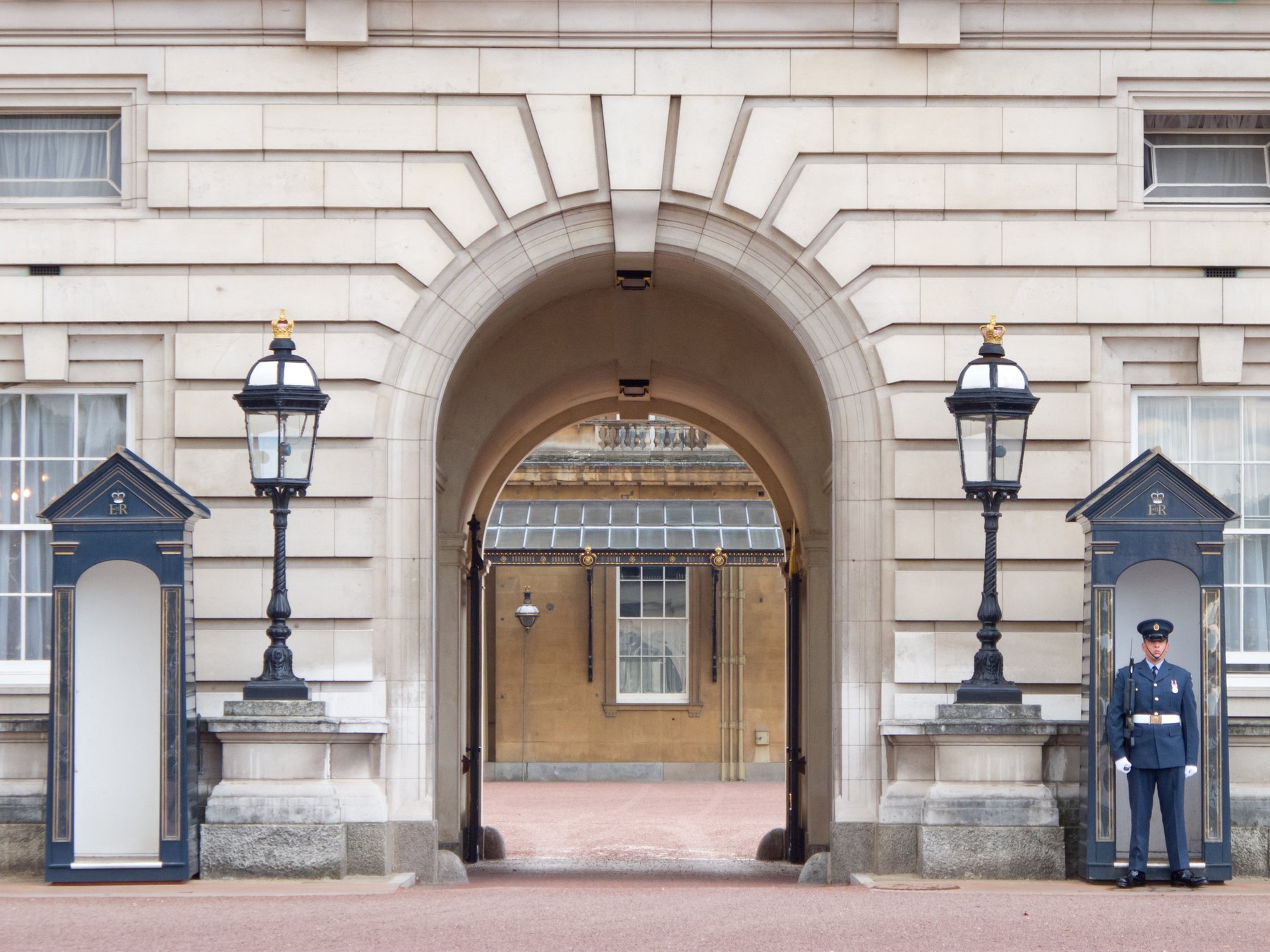
Most guides forget to tell you the most important thing. If you stand at the front railings of the palace, you’ll most likely see just the backs of the people in front of you and the massive gate. The ceremony itself takes place quite far behind the fence in the inner courtyard. Anyone who doesn’t arrive at least 90 minutes early usually leaves feeling seriously let down.
So where’s the best spot? Head straight for the steps of the Victoria Memorial, which stands right in front of the palace. It’s raised ground, so you get a lovely view over the heads of the crowd of both the palace itself and the arrival and departure of the guards. The best view is from the side of the memorial facing the palace, but it fills up the fastest, so in the summer months be there by around 10:15.
What’s more, the schedule changed a little in 2026 and the Changing of the Guard no longer happens every day. On Monday, Wednesday and Friday everything starts at 11:00, while on Sunday the format of the ceremony changes and it kicks off as early as 10:00. The whole ceremony takes roughly 45 minutes. Always check the specific date on the official calendar, though, because plans do like to change.
English weather can throw a spanner in the works, so in heavy rain the ceremony is cancelled without mercy. The decision sometimes comes literally at the last minute, potentially as late as 10:45. That’s why it pays to have a backup plan in reserve in case it’s chucking it down.
If you can’t stand huge crowds, there are far smarter alternatives. Try heading to the Wellington Barracks on Birdcage Walk at around 10:45. Here you can watch the forming-up and inspection of the New Guard from up close and without the crush, before they even set off on the march. The wide avenue of The Mall also offers a fabulous spectacle, where the guards march to music and you have them right in front of you.
Another absolutely brilliant option is the changing ceremony at Horse Guards Parade. It’s a slightly shorter ceremony lasting about 30 minutes, but there are hardly any tourists here. It’s plenty to arrive ten minutes before the start and you’ll still have a luxurious front-row spot. That way you dodge the worst of the madness that reigns at the main palace.
This, by the way, is a genius tip for families with children. For little ones, being crushed in the crowd at the main gate of Buckingham Palace is pure frustration, because they simply can’t see anything past the adults. At Horse Guards or Wellington Barracks, on the other hand, they’ll come away with a great experience and you’ll save your nerves.
Where to stay near Buckingham Palace
Staying within walking distance of the British monarch’s residence means you’re in the most prestigious districts of London, such as Westminster or St James’s. Prices are logically higher here, but then you save loads of time on Tube commuting and the main sights are literally around the corner.
If you’re after true luxury with a sense of history, book a night at The Goring. This iconic hotel sits just a few steps from the palace and even holds a Royal Warrant. It was a favourite of the Queen Mother, and Princess Kate spent the night before her wedding here. Another fantastic choice for the discerning is The Rubens at the Palace, which stands directly opposite the Royal Mews and offers rooms with a breathtaking view of the palace walls.
For lovers of modern elegance blended with the classic, I’d recommend the Sofitel London St James or the nearby Conrad London St James. Both hotels offer first-class service and are within a pleasant walking distance of The Mall and the surrounding parks. A great boutique experience is provided by the tucked-away St. James’s Hotel and Club, which boasts a fantastic restaurant and an incredibly peaceful atmosphere.
If you’re on a tighter budget but still want to stay strategically close, take a look at the Premier Inn London Victoria. This hotel offers clean, modern rooms at a reasonable price, sits right by Victoria station, and you can stroll to the palace comfortably in under ten minutes. I always recommend booking hotels well in advance via Booking.com, because capacity in central London disappears at lightning speed.
10 tips on what to see and do at Buckingham Palace
1. Changing of the Guard without disappointment or crowds
The Changing of the Guard is probably the most sought-after event in all of London. Everyone wants to see the soldiers in red tunics with their huge bearskin caps. The reality, though, is that most visitors who stand right at the main railings of the palace leave disappointed. From this spot you’ll mostly see the backs of other people’s heads, a chunk of the iron gate, and the ceremony itself takes place too far away in the courtyard.
Seasoned travellers therefore advise picking a more strategic spot. The best is the steps of the Victoria Memorial right opposite the palace. Here you’re raised above the crowd and have a lovely overview of the guards arriving and the goings-on behind the fence. But you need to get here around 10:15 to bag a good spot. Once the ceremony begins, you won’t be able to wriggle out of the crowd.
💡 Tip: If you hate crowds, skip the palace and head to the nearby Wellington Barracks on Birdcage Walk. At around 10:45 you’ll see the forming-up and inspection of the New Guard nicely up close and with far fewer tourists. An even better alternative is the ceremony at Horse Guards Parade, which lasts just thirty minutes, isn’t as packed, and the soldiers are literally within arm’s reach.
Also remember that the changing ceremony at the palace doesn’t happen every day. The current schedule for this year is Monday, Wednesday and Friday at 11:00 and Sunday at 10:00. On top of that everything can change, and in heavy rain the event is cancelled without mercy, potentially as late as 10:45. So before your trip always check the current calendar on the official Household Division website.
2. How to tell whether the King is home
This is one of those super practical details you can use to impress your travel companions. Lots of people think that when they arrive at the palace, the King will be waving to them from a window. In reality, whether the monarch is physically present in the building can be told with a single glance at the roof.
If the colourful Royal Standard, studded with lions and the Irish harp, is flying on the main flagpole, it means Charles III is home right now. Incidentally, this flag is never lowered to half-mast, not even on the death of a monarch, because the throne is never empty.
When the King goes off to another estate or abroad, the classic British flag flies over the palace, namely the well-known Union Jack. Interestingly, this custom with the national flag was only introduced in 1997. Before that, when the monarch wasn’t home, the flagpole simply stood empty.
3. Visiting the State Rooms
As I’ve already mentioned, the palace interiors only open for a short summer period. This year that falls on the dates 9 July to 27 September. You’ll walk through nineteen stunning rooms used for official state visits and ceremonies. You’ll see the famous Throne Room with its dramatic arch, the enormous Ballroom, and the Picture Gallery with works by Rembrandt and Rubens.
Admission for an adult costs £33 in advance, young people up to 24 pay £21.50 and children £16.50. Tickets on the day are a few pounds pricier, but above all they’re usually hopelessly sold out. The tour itself is self-guided with no live guide, but the price includes an excellent audio guide and it’ll take you roughly two to two and a half hours.
💡 Booking tip: Lots of people buy tickets through resellers, which makes sense for various combined tours. But if you just want a basic ticket, first check the official Royal Collection Trust website. For other activities in London, you can then use GetYourGuide, where you’ll find great tips for river cruises or trips out of town. Photography inside the rooms is usually strictly limited or completely banned, so bear in mind that you’ll mostly be storing the experiences in your memory.
4. The East Wing and the famous balcony known the world over
The East Wing with that famous balcony actually wasn’t part of the original building. It was added only in the mid-19th century at the request of Queen Victoria, because the palace was simply too small for her growing family. The balcony was designed by Prince Albert himself, and Queen Victoria first waved to the crowds from it in 1851 at the opening of the Great Exhibition.
Since then it has become a symbol of the British monarchy. It was here that the historic moment of 8 May 1945 played out, when King George VI, Queen Elizabeth and the then-young princesses stepped out before a cheering crowd to celebrate the end of the war in Europe. On that day they appeared on the balcony no fewer than eight times, once even alongside Prime Minister Winston Churchill.
Today the balcony is mainly used for royal weddings, jubilees and the June birthday celebrations. Since 2024, moreover, there have been special guided tours of the East Wing, which also include a visit to the so-called Centre Room. It’s from this room that you step onto the balcony itself, so you can look out onto The Mall through the same eyes as members of the royal family. These tours are more expensive, though, and disappear very quickly.
5. The Royal Mews and the stunning gold coach
If you’re travelling with kids, the Changing of the Guard itself will probably bore them after a few minutes. A far better experience for them will be the royal stables known as The Royal Mews. These are working stables where the horses are cared for and all those magnificent historic carriages we see on TV at ceremonial occasions are kept.
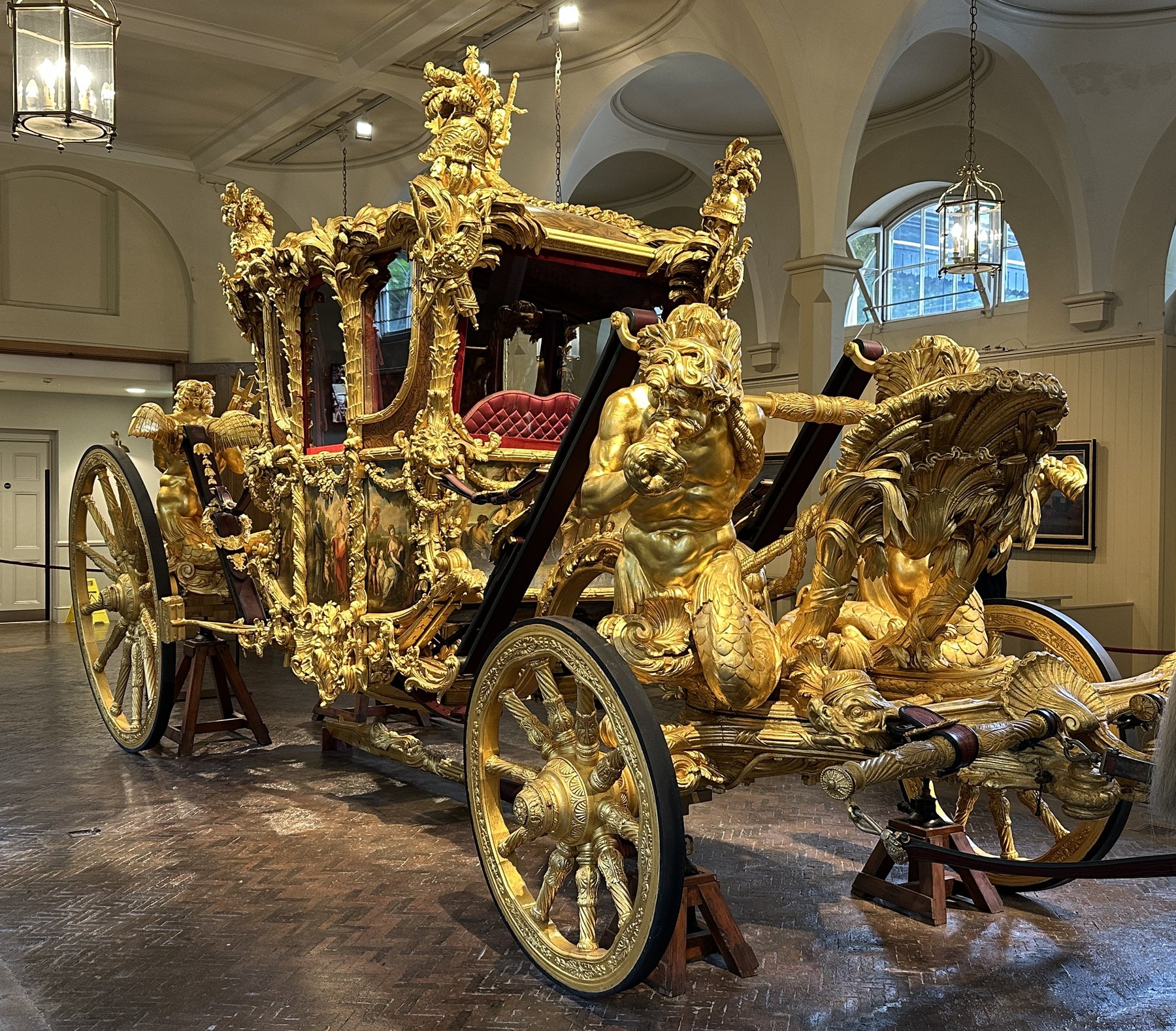
The absolute highlight of the tour is the Gold State Coach, an enormous golden carriage over 260 years old. It’s been used at every coronation since the days of George IV, and seeing it in the flesh is a real treat. In real life it’s surprisingly huge and the detailed decoration is breathtaking. On top of that, children will find interactive corners with a wooden pony and colouring pages here.
Admission to the stables costs £18 for an adult and they’re open from March to November. Families can check the current price packages directly on the official website. Just remember one honest warning: these are working stables, so the horses may not actually be there during your visit if they happen to have other duties.
6. The King’s Gallery and its artistic treasures
Right next to the palace you’ll find The King’s Gallery, formerly known under the Queen’s name. This gallery hosts regularly changing exhibitions of artworks from the vast Royal Collection. It’s an ideal place for art lovers who head to London outside the summer season, when the main State Rooms are closed.
This year offers a fascinating exhibition devoted to the life and style of Elizabeth II. You’ll see hundreds of objects here, many of them presented to the public for the very first time. An adult ticket costs £22, young people pay £14 and children £11.
The advantage of the gallery is that the price includes a multimedia guide and the spaces aren’t so enormous, so the visit won’t completely wear you out. If you’re planning to visit the State Rooms, the stables and the gallery in a single day, it’s worth buying the combined Royal Day Out ticket, which costs just under £66 and saves you a lot of money.

7. The royal garden and vegetarian treats in the Garden Café
The garden of Buckingham Palace covers an incredible 39 acres (about 16 hectares) and is thus the largest private garden in all of London. It’s literally an oasis in the middle of the city, where you’ll find over a thousand trees, a huge lake and a tennis court. In the past a colony of pink flamingos even lived by the lake, until the whole flock was sadly wiped out by a fox in 1996.
An interesting fact is that on a small island in the middle of the lake stand four beehives. The local Italian bees produce roughly 160 jars of golden honey a year, which goes straight to the royal kitchen. During summer, when the State Rooms are open, at the end of the tour you walk through part of this very garden.
There’s also a seasonal Garden Café on the terrace by the exit, where you can rest with a view over the lawn. I warmly recommend trying their fantastic “Plant Power” salad with quinoa and lentils or the Mediterranean vegetable quiche. They also do great coffee, and for those with a sweet tooth they scoop excellent plant-based vanilla ice cream. In short, the ideal way to round off a royal visit.
8. The story of the intruder in the bedroom (fact vs. legend)
Countless incredible tales are tied to the palace, but the one from 9 July 1982 sounds like a film script. A certain Michael Fagan climbed the four-metre-high wall, shinned up a drainpipe and got all the way into the bedroom of the sleeping Queen Elizabeth II. A motion sensor did trigger the alarm, but the police considered it faulty and muted it.
For years the legend circulated that Fagan sat on the edge of the Queen’s bed and they had a long chat until help arrived. Fagan himself, however, debunked this myth in later interviews. In reality the Queen didn’t wait for anything, quickly left the room barefoot and called security.
The most bizarre thing about it all is that it wasn’t Fagan’s first break-in. A month earlier he had already broken into the palace, eaten some cheese and biscuits, drunk a bit of wine and left again unnoticed. The laws of the time didn’t classify breaking into the palace as a criminal offence, so he was only charged with the theft of that wine. In any case, the whole incident led to a huge overhaul of royal security.
9. The palace during the Second World War
The history of this building isn’t tied only to pompous parties. During the Second World War the palace fell victim to German bombing and was hit by bombs no fewer than nine times. The worst attack came in September 1940, when a bomb completely destroyed the palace chapel at the very moment King George VI and his wife were nearby in the residence.
The royal couple refused to leave London at the time, even though their daughters were sheltering in safer Windsor. After the chapel was destroyed, Queen Elizabeth (the later Queen Mother) uttered her now legendary line: “I’m glad we’ve been bombed. Now I feel I can look the East End in the face.”
It was precisely this decision to stay in the battered city and share the wartime fate with ordinary Londoners that hugely boosted the popularity of the monarchy. The spot where the destroyed chapel once stood was rebuilt after the war, and today it houses the very Queen’s Gallery, now The King’s Gallery.
10. Fascinating numbers and the great renovation
Reading various guides you’ll often come across the outdated figure that the palace has roughly 660 rooms. The official numbers are far more impressive, though. Buckingham Palace hides a total of 775 rooms, of which 19 are state rooms, 52 royal bedrooms and an incredible 78 bathrooms. To that add 1,514 doors and 760 windows, which have to be cleaned every six weeks.
To keep this enormous machinery running, a huge ten-year programme called Reservicing is currently underway. It began in 2017 and its completion is planned for exactly 2027. The aim is a complete replacement of the outdated electrical wiring, pipes, lifts and boilers, many of which dated back to the 1950s.
This mega-project will swallow an astronomical £369 million, which sparked some fairly heated debates in Britain. For you as a visitor it means one thing: some parts of the palace may be hidden under scaffolding during your trip. Definitely don’t let that put you off, though—despite the ongoing works the building retains its unmissable majesty.
How to tell whether the King is home
A flag always flies over the palace, and it’s that flag that reveals whether the monarch is inside. Whenever you see the colourful Royal Standard (with its lions and harp) on the flagpole, it means the reigning King is home right now. It’s an old rule that used to mean that when the monarch was away, the flagpole stood empty.
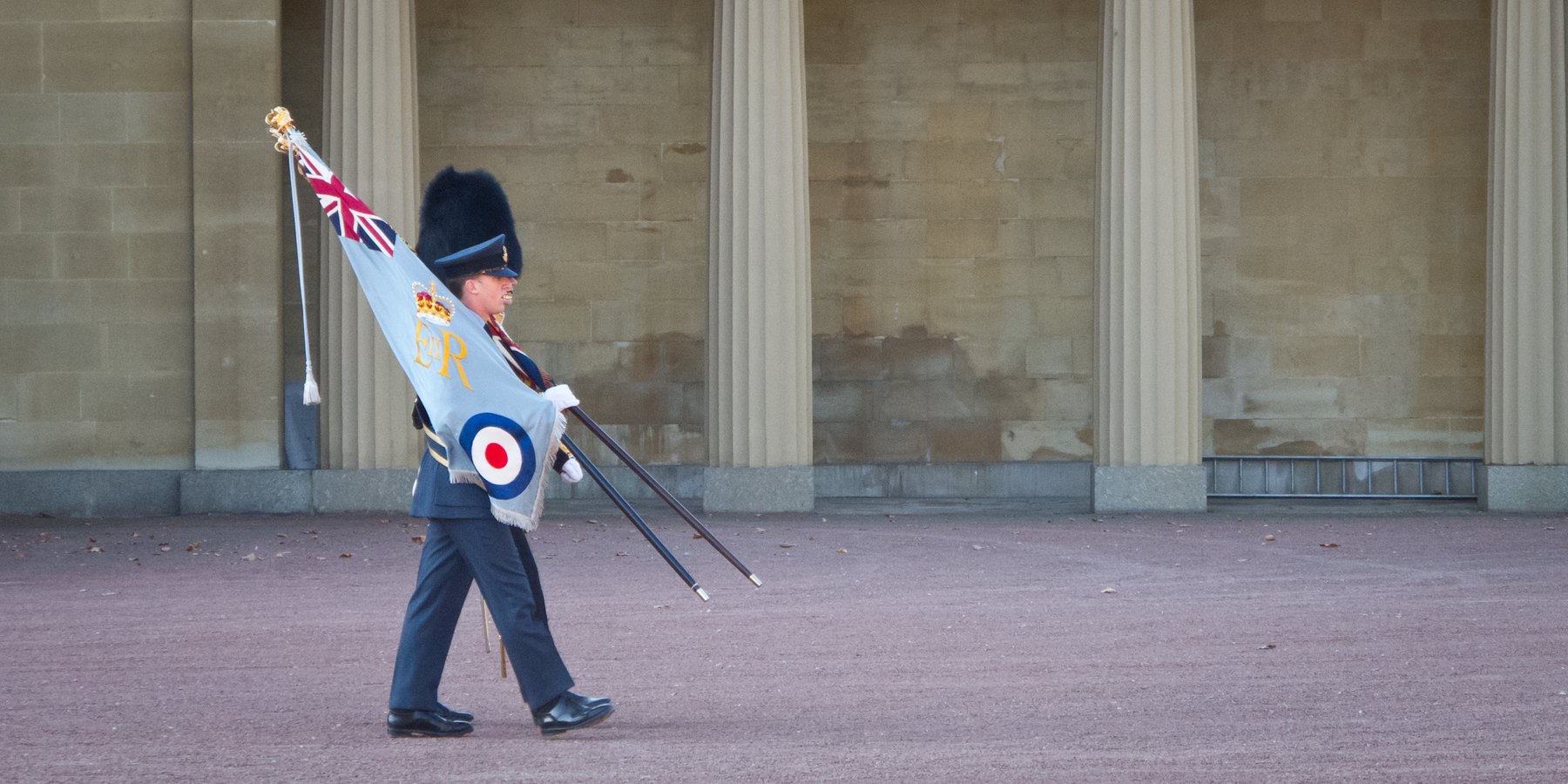
That changed in 1997 after the death of Princess Diana, though. Since then, when the King is away from the palace, the British national flag flies over it, namely the famous Union Jack. What’s more, the Royal Standard is never lowered to half-mast, because historically the throne is never empty.
It’s only a visual detail, but in London it never fails to delight. Children especially adore this detail and eagerly study from afar which fabric is fluttering in the wind. So you can easily play at being true experts in court etiquette with them.
How to get to Buckingham Palace
Getting to the palace is dead easy, and the best way is to come by ordinary Tube. Get off at Green Park station, from where an eight-minute and very pleasant walk straight through the greenery awaits you. Other logical options are the nearby Victoria station or the St James’s Park stop. Always look up the connection in advance via the official Transport for London website.
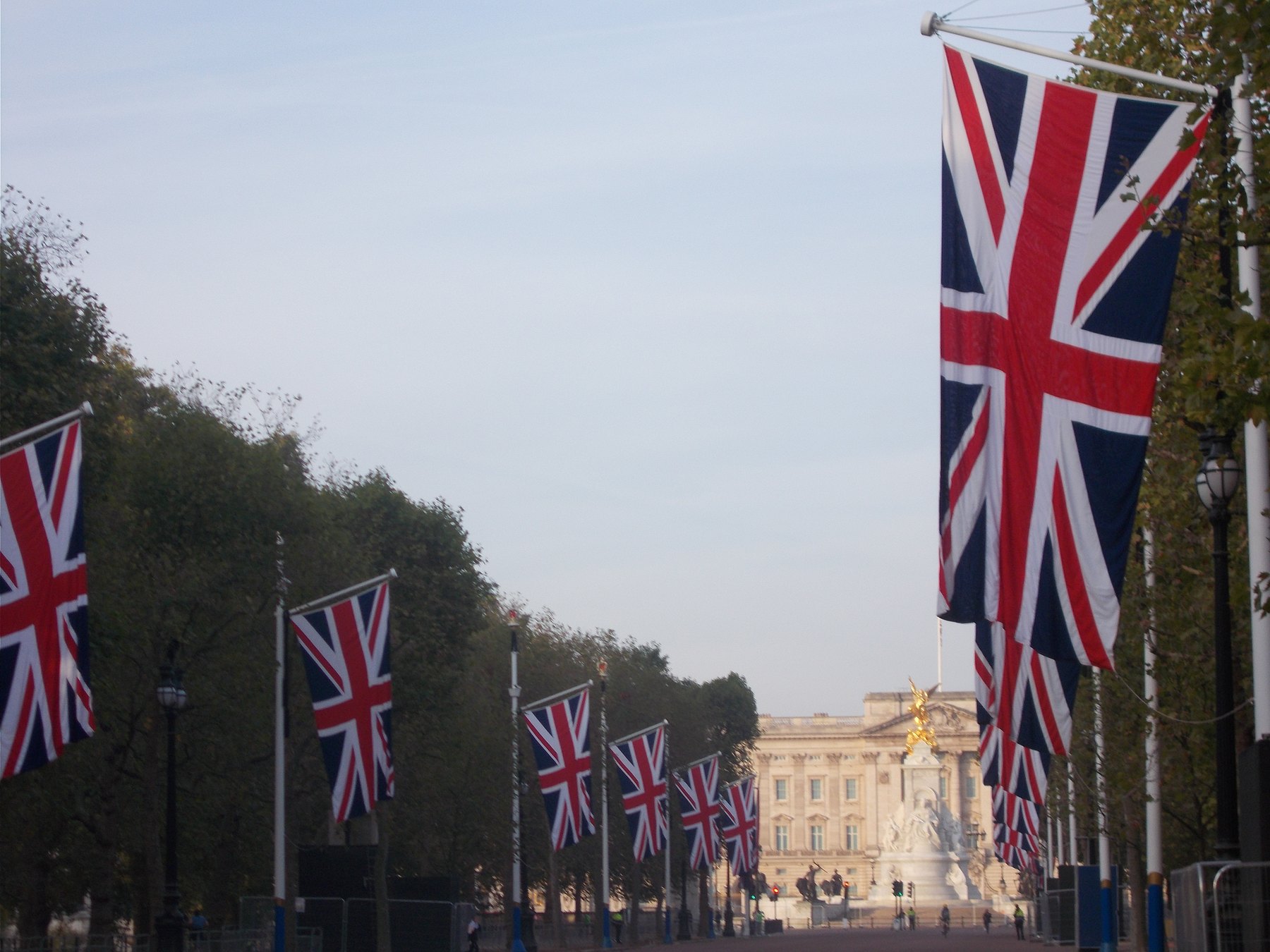
I’d recommend treating the palace visit as a wider walking loop, because it combines beautifully with the surroundings. In one relaxed morning you can stroll the legendary red avenue of The Mall and both adjoining parks. There’s no rush, and along the way you’ll meet loads of cheeky squirrels and waterfowl.
💡 I’ve got a secret photo tip for you too. The very nicest view of the palace supposedly isn’t from the front through the railings, but from the little lake in St James’s Park. Across the water you’ll see the Victoria Memorial framed perfectly between the trees, and no crowds of tourists will ruin your photo.
If you have tickets inside to the State Rooms, watch out for the size of your luggage. All backpacks or bags larger than A4 size must be left at the cloakroom right at the entrance. Luckily it’s available completely free of charge, so you needn’t fear any further unpleasant fees.
The stories the palace hides
The man who woke up next to the Queen
In 1982 one of the most bizarre security blunders in British history played out. A certain Michael Fagan climbed the palace wall and, despite the patrols, slipped unnoticed all the way into Queen Elizabeth II’s personal bedroom. It sounds like a scene from a madcap comedy, but the residence’s security simply failed completely back then.
For years a popular legend then circulated among people that the monarch kept a cool head and had a long chat with the intruder on the edge of the bed. Fagan himself, however, admitted in a 2012 interview that the reality was far more prosaic.
According to him, the Queen didn’t wait for anything and quickly ran out barefoot to summon help in the corridor. This cheeky morning visit meant, in any case, that the palace’s security measures had to be overhauled and tightened from the ground up.
The balcony known the world over
When the palace was radically rebuilt in 1847 under Queen Victoria, Prince Albert came up with the idea that the building should have a central balcony. Originally there was only an open courtyard here, which was closed off by the very construction of the new East Wing. It’s from this balcony that the royal family waves today at all the important events, from weddings to the June parade of Trooping the Colour.
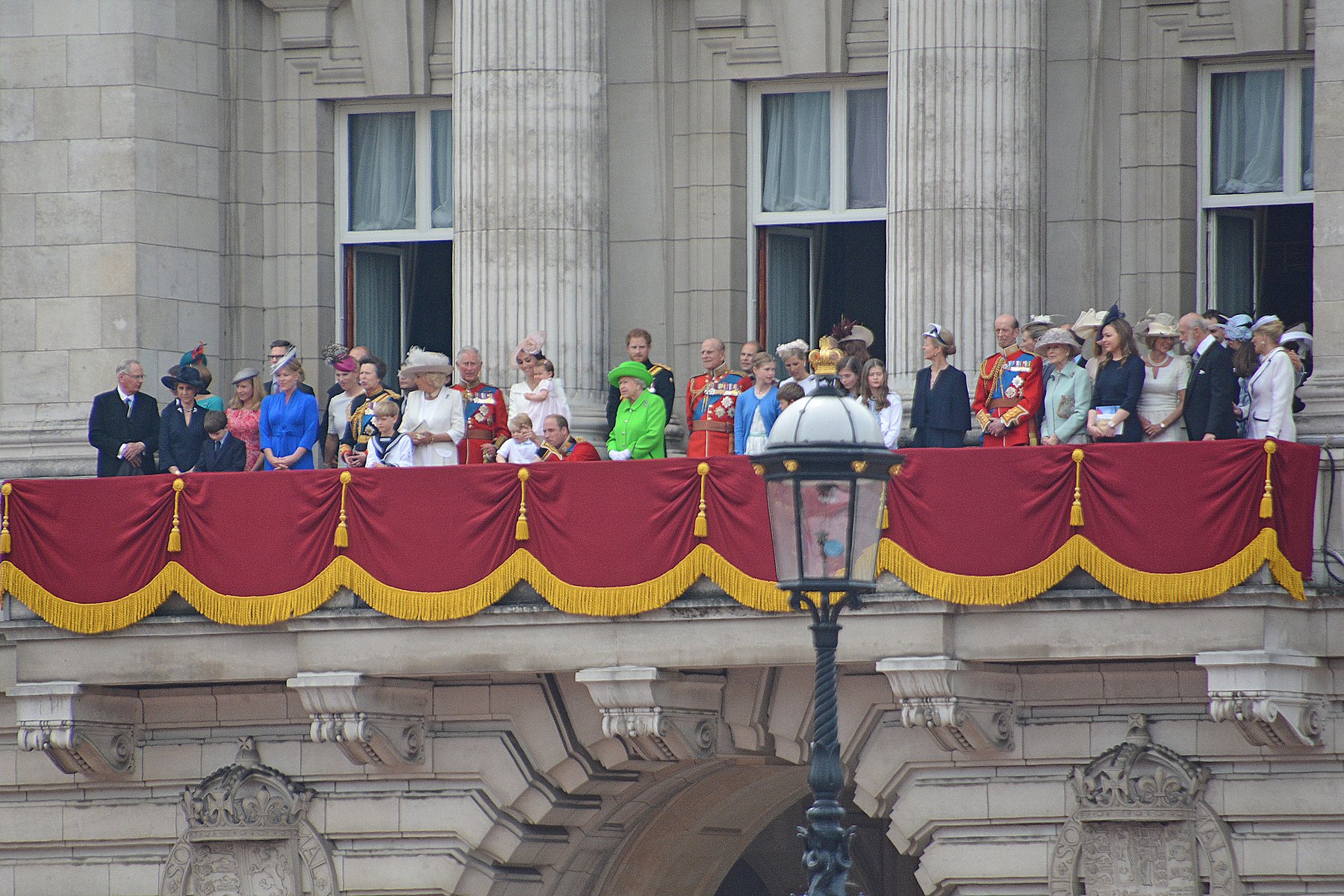
One of the most powerful moments Britons experienced here was at the end of the Second World War in May 1945 during the so-called VE Day. The royal family appeared before the cheering crowd no fewer than eight times that day. At one of these historic appearances they were joined by none other than Prime Minister Winston Churchill.
For the ordinary mortal, the balcony itself is logically off-limits. But if you pay for the most expensive premium tour of the interiors in summer, you’ll at least get a peek into the so-called Centre Room, which lies exactly behind it.
The palace in wartime
Buckingham Palace really took it hard during the night-time bombing of London and suffered a total of nine direct hits. One of the devastating bombs even razed the palace chapel to the ground.
King George VI and Queen Elizabeth refused to flee to safety at the time and, despite the huge personal risk, stayed in the capital. They wanted to show ordinary people that in the worst suffering they were all in the same boat.
The Queen then uttered a famous and very powerful line that went down in British history books. She declared that she was actually glad about the bombing, because now she could finally look the shattered East End straight in the eye.
The secret garden behind the palace
Right behind the enormous building hides the largest private garden in London, which spreads across a respectable 39 acres. In it you’ll find not only a huge manicured lawn for the famous garden parties, but even a large private lake with two islands.
For long years this green oasis in the middle of the metropolis was adorned by a flock of pink flamingos, who gave the place a decent touch of the exotic. In 1996, sadly, a hungry fox found its way in and killed every last bird.
Today it’s a little safer on the island in the middle of the lake, and the bees have the final say here. The royal gardeners diligently tend four hives, from which they harvest around 160 jars of exclusive homemade honey a year.
Where to eat near the palace
If you have tickets inside, you’ll find the summer Garden Café on the terrace overlooking the lake. For us it’s absolutely crucial that it offers great vegetarian food, so we won’t go hungry. They take real care over plant-based treats, from the quinoa and lentil salad through the Mediterranean quiche to vanilla ice cream free of palm oil. On the other hand, if you’re travelling with someone who’s partial to a classic afternoon tea with meat or fish sandwiches, those are of course on the menu too.
Anyone admiring the palace only from the street has endless swathes of parkland all around, perfect for lunch on the grass. Just buy some food to go and find a quiet spot in neighbouring St James’s Park. If you’d rather sit somewhere warm, head to the adjacent district of Victoria. You’ll find plenty of nice cafés and restaurants there where you can rest your legs after a long walk.
Practical tips that will save you disappointment
- You won’t see the King. The palace serves primarily as a workplace and office, not as a space for meeting the monarch. Anyone who arrives at the railings hoping for a royal selfie will simply be disappointed.
- The State Rooms only open in summer. You can only look inside during a limited window, specifically from 9 July to 27 September 2026. The rest of the year you can only admire the palace from the outside through the fence.
- The balcony is off-limits. You can’t photograph up close the spot from which the family waves to the crowds. You can only glimpse the famous room behind it if you pay extra for the premium East Wing tour.
- Changing of the Guard isn’t daily. In 2026 it takes place only on Monday, Wednesday, Friday and Sunday, so it’s best to check the schedule on the official website. In heavier rain the ceremony is cancelled without mercy.
- Photography inside the State Rooms is usually limited. The rules change quite a bit over time, so it’s always best to ask staff about the current instructions. Definitely forget about using flash or a tripod, though.
- Renovation is underway. The palace is going through a huge ten-year restoration known as Reservicing, due to finish in 2027. Bear in mind that part of the space may be covered up and not entirely photogenic.
- Arrive early. Securing a good spot for the Changing of the Guard means arriving at least 45 to 90 minutes early. If you’re after the best view from the steps of the Victoria Memorial, you’ll have to come even earlier.
Where to go next from Buckingham Palace
Once you’ve photographed the palace and strolled through the adjacent park, London is at your feet. Just a short way off begins the Westminster area, full of other historic gems. If you’re looking for more inspiration, read our detailed article on what to see and do in London.
A stone’s throw from Parliament stands Westminster Abbey — the site of coronations and royal tombs, which you can even get into for free at Evensong.
Love history and art? Then don’t miss the British Museum — entry is free, and in our guide you’ll find what not to skip in a couple of hours.
And right next to the fortress stands the famous Tower Bridge — in our guide you’ll find when the bridge lifts and whether the paid exhibition with the glass floor is worth it.
And if you want to see London from up high, check out our guide to the London Eye observation wheel — we’ll advise whether it’s worth it or whether the free Sky Garden is a better bet.
Lovers of darker history will surely be thrilled by the fortress on the banks of the Thames that we write about in our guide to the Tower of London. For families with children, a trip in search of magic is an absolute must — take a look at our tips for the Harry Potter Studio London. And if you have a car available or you’re planning longer trips outside the capital, you’ll definitely be intrigued by mystical Stonehenge or, further north, the gorgeous Edinburgh.
Frequently asked questions
Can you go inside Buckingham Palace year-round?
No, the interiors or State Rooms are open to the public only during the summer months, roughly from July to the end of September. For the rest of the year, the royal family actively uses the palace for work and residence.
How much does the palace entrance fee cost?
In 2026, a basic ticket to the State Rooms for an adult costs £33 when pre-booked online. Tickets at the door are slightly more expensive and very often sell out in advance. Children and students receive discounts.
When does the changing of the guard take place and how much does it cost?
The Changing of the Guard ceremony is completely free and you don’t need any ticket for it. However, it doesn’t take place every day – in 2026 it occurs on Mondays, Wednesdays and Fridays at 11:00 AM and on Sundays at 10:00 AM.
Does the king live in the palace?
Yes, it is the official London residence of the British monarch. Whether the king is physically inside the building can be determined by the Royal Standard, which flies from the roof when he is present.
Where is the best spot for photographing the changing of the guard?
“`html
Definitely don’t stand right at the palace railings, you’ll only see other people’s backs. The best view is from the elevated steps of the Victoria Memorial, but you need to arrive about three-quarters of an hour early.
“`
Is photography allowed in the palace?
Photography is traditionally strictly forbidden inside the State Apartments, although the rules occasionally change slightly. To be safe, always check the current conditions at the entrance. Outside in the garden, you can take photos without restrictions.
How do I best get to the palace?
The easiest way is by tube. You can get off at Green Park station, from where you’ll walk across the park in eight minutes. Other great options are Victoria or St James’s Park stations, both located very close by. EXCERPT: Heading to Buckingham Palace? Find out which tickets to buy, when to go and from which spot you’ll get the best view of the famous Changing of the Guard.
Tips and Tricks for Your Vacation
Don’t Overpay for Flights
Search for flights on Kayak. It’s our favorite search engine because it scans the websites of all airlines and always finds the cheapest connection.
Book Your Accommodation Smartly
The best experiences we’ve had when looking for accommodation (from Alaska to Morocco) are with Booking.com, where hotels, apartments, and entire houses are usually the cheapest and most widely available.
 🚗 Car rental on the roadVerified rental cars in Great Britain
Search with the DiscoverCars comparison engine — it compares prices from dozens of local and international rental companies, and most bookings come with free cancellation.
Compare car prices in Great Britain →Don’t Forget Travel Insurance
Good travel insurance will protect you against illness, accidents, theft, or flight cancellations. We’ve had a few hospital visits abroad, so we know how important it is to have proper insurance arranged.
Where we insure ourselves: SafetyWing (best for everyone) and TrueTraveller (for extra-long trips).
Why don’t we recommend any Czech insurance company? Because they have too many restrictions. They set limits on the number of days abroad, travel insurance via a credit card often requires you to pay medical expenses only with that card, and they frequently limit the number of returns to the Czech Republic.
Find the Best Experiences
Get Your Guide is a huge online marketplace where you can book guided walks, trips, skip-the-line tickets, tours, and much more. We always find some extra fun there!


