

Norway is a vast country full of natural extremes, where the simple act of driving becomes an utterly unique experience. When it comes to scenic Norway roads, the Møre og Romsdal region on the west coast is hard to beat — it boasts two architecturally unique roads that regularly top the world rankings of the most beautiful viewpoint routes.
On one side you’ll find the Atlantic Road (Atlanterhavsveien), which gracefully leaps across tiny islets and reefs right above the surface of an unpredictable ocean. A little further inland, the famous Trollstigen — or the Troll’s Path — cuts into steep mountain cliffs, testing the nerves of even the most experienced drivers with its hairpin bends.
If you’re thinking of heading north and you love the freedom of travelling by car, skipping these two engineering marvels would be a serious mistake. In this guide I’ll show you how best to plan this iconic Norwegian road trip, where to find a strategically located base, and what to watch out for when driving through the mountain passes.
TL;DR
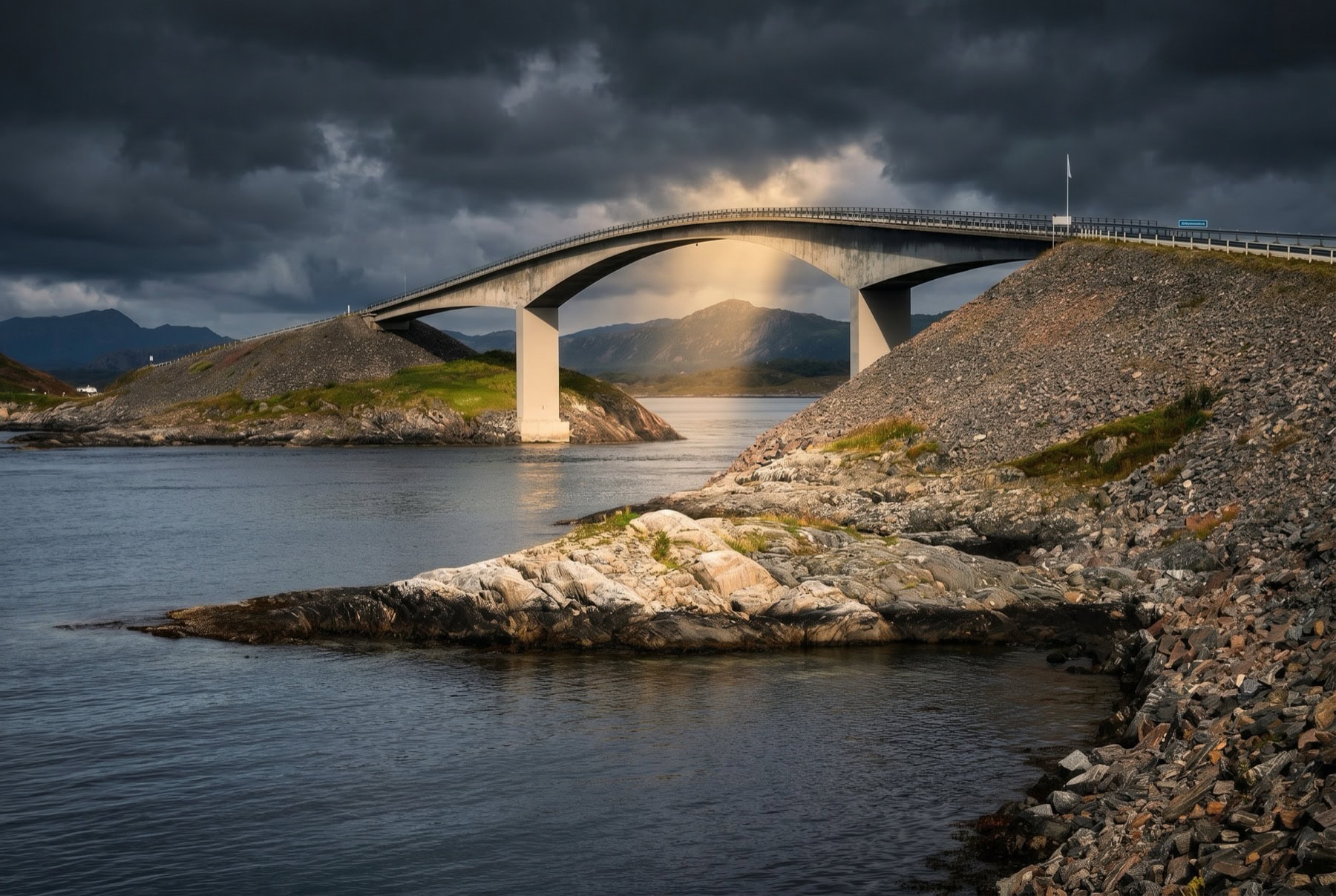
- The Atlantic Road (Atlanterhavsveien): An 8.3-kilometre stretch between the towns of Kristiansund and Molde that links small coastal islets via eight bridges.
- Storseisundet Bridge: The most famous, photogenic spot on the Atlantic Road, which from a certain angle looks like a launch ramp into the sky.
- Trollstigen (the Troll’s Path): An extremely steep mountain road near the town of Åndalsnes with 11 sharp hairpin bends and breathtaking viewpoints.
- Trollveggen: The tallest vertical rock face in Europe, found close to the foot of the Troll’s Path in the Romsdalen valley.
- The Golden Route: A popular connection from Trollstigen via a ferry and the Eagle Road (Ørnevegen) all the way to the famous Geirangerfjord.
- Opening times: While the Atlantic Road is open year-round, Trollstigen opens only for the summer season and frequently suffers unexpected closures.
- Bases for exploring: The best places to look for accommodation are the towns of Molde, Ålesund, or the mountain resort of Åndalsnes itself.
When to Visit Western Norway
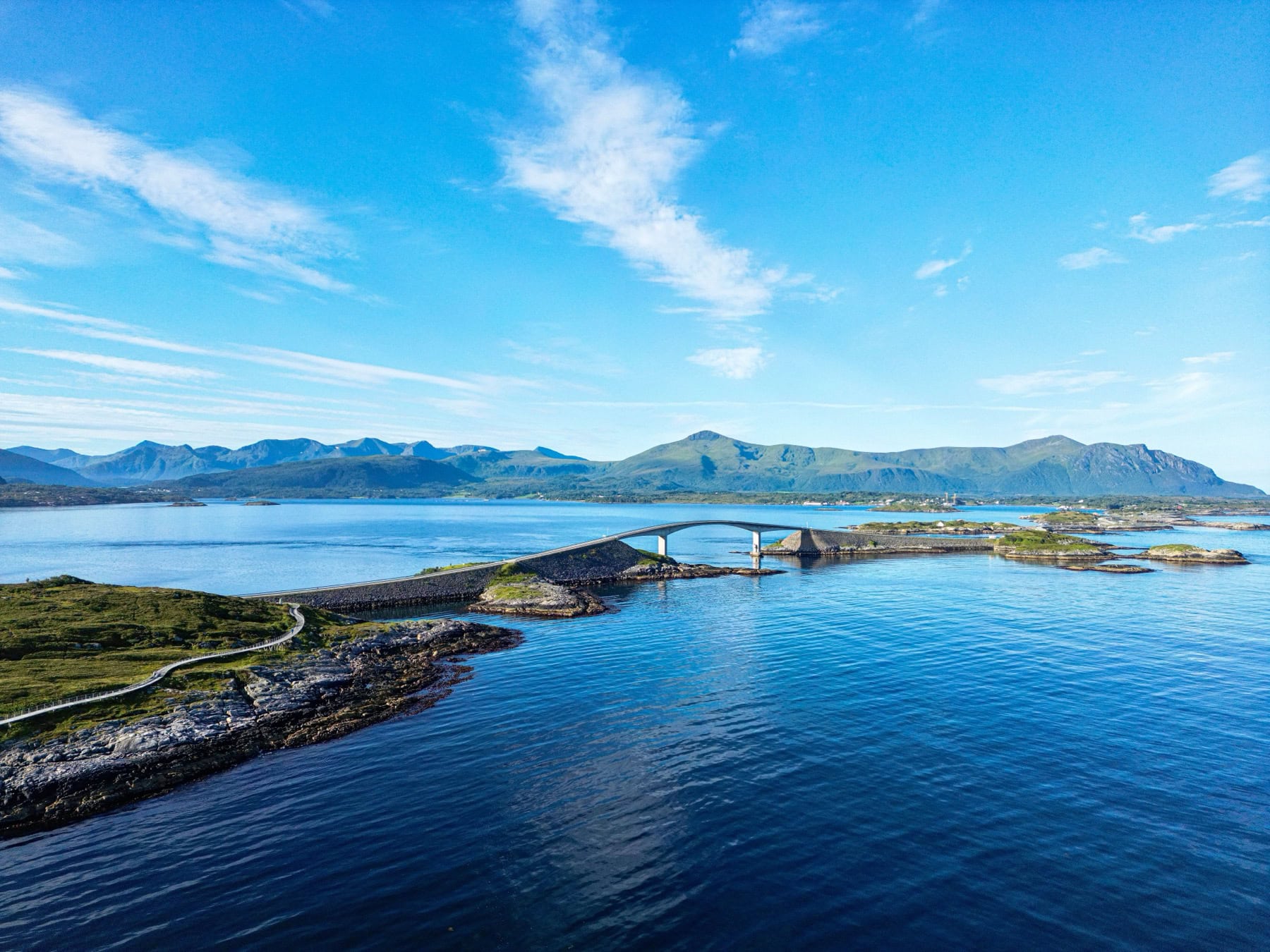
Planning a trip to Norway always revolves around the unpredictable weather, and when it comes to mountain roads that goes double. The Atlantic Road may be open all year, but its atmosphere changes dramatically depending on the season and the current conditions.
Many travellers agree that the most dramatic experience comes during the autumn storms, when enormous waves crash straight into the bridge piers and water occasionally splashes right up onto the cars. In summer, by contrast, the sea here tends to be calm and turquoise, creating ideal conditions for spotting seals and a relaxed bit of fishing from the coastal walkways.
Completely different rules apply to the Trollstigen mountain road, which operates strictly seasonally. It usually opens around mid-May and closes again uncompromisingly with the first snows in October. On top of that, in recent years the Troll’s Path has faced frequent closures due to dangerous landslides, so it’s absolutely essential to check the latest traffic information right before you set off.
Where to Stay Near the Atlantic Road and Trollstigen
💡 Tip for accommodation and experiences: We love searching for places to stay on Booking.com, which usually has the best cancellation terms. For tickets, tours and activities, it’s worth comparing and booking through GetYourGuide.
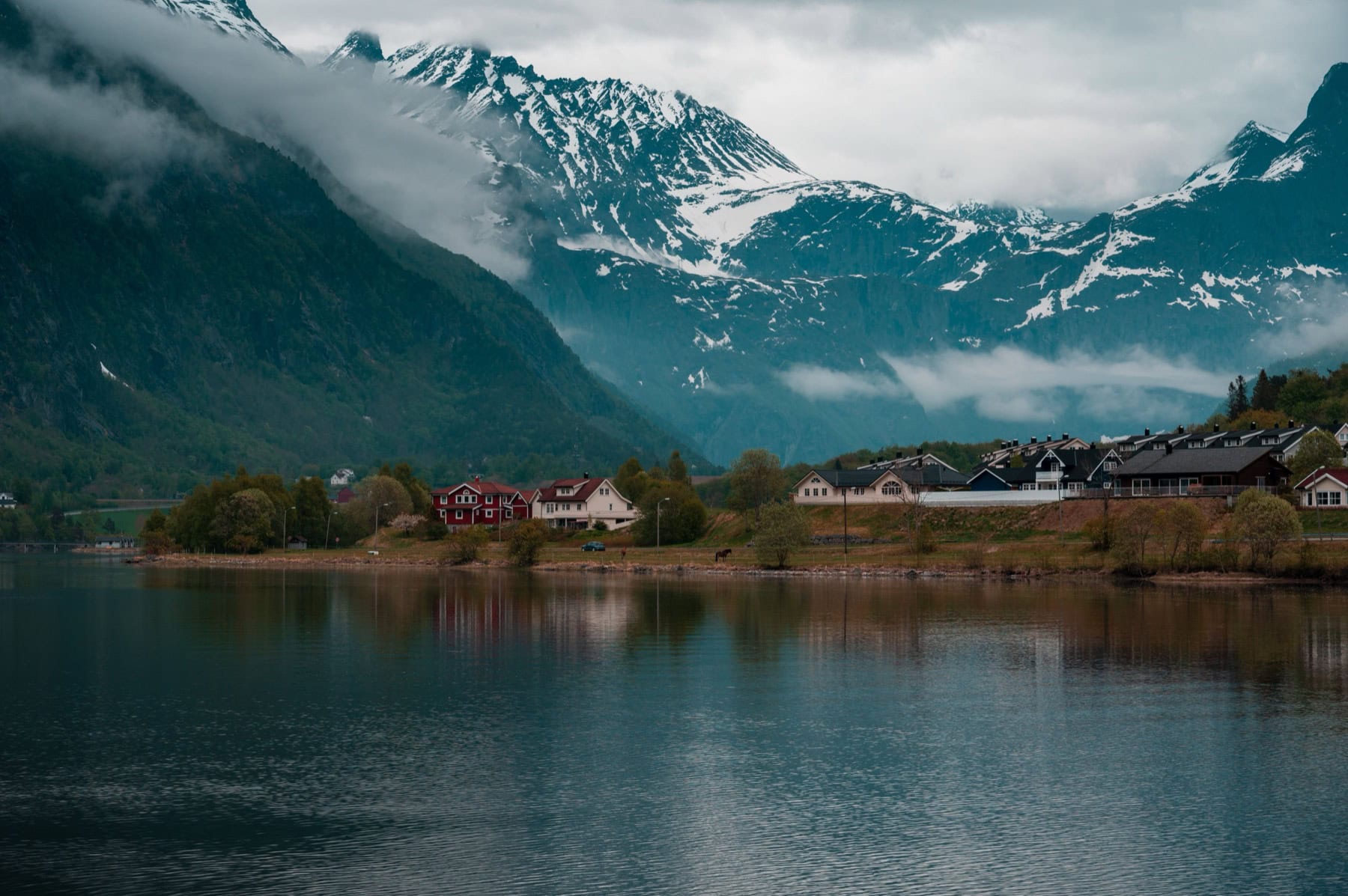
Choosing the right base is absolutely crucial for this road trip if you want to avoid wasting hours in transit. The most strategic locations are the towns of Molde and Åndalsnes, from which you can easily reach both the ocean and the steep mountains.
If you’re looking for accommodation right in the thick of it beneath the mountains, the renowned Hotel Aak in the town of Åndalsnes is a fantastic choice. It’s a historic mountain hotel with a wonderful atmosphere and views of the surrounding peaks, where a night in a double room will set you back around 2,000 NOK (about €175).
For lovers of modern design and fjord views, there’s Scandic Seilet in the town of Molde. This sail-shaped hotel stands right on the fjord’s edge and makes an ideal starting point for a trip to the Atlantic Road, with a night costing roughly 1,800 NOK (around €158).
Travellers on a tighter budget, or those who prefer being close to nature, often go for Trollstigen Camping, which sits close to the foot of the famous hairpins. Renting a cosy wooden cabin here costs around 1,400 NOK (roughly €123) a night, and naturally it’s best to book well in advance via Booking.com.
The Atlantic Road: Island Hopping by Car
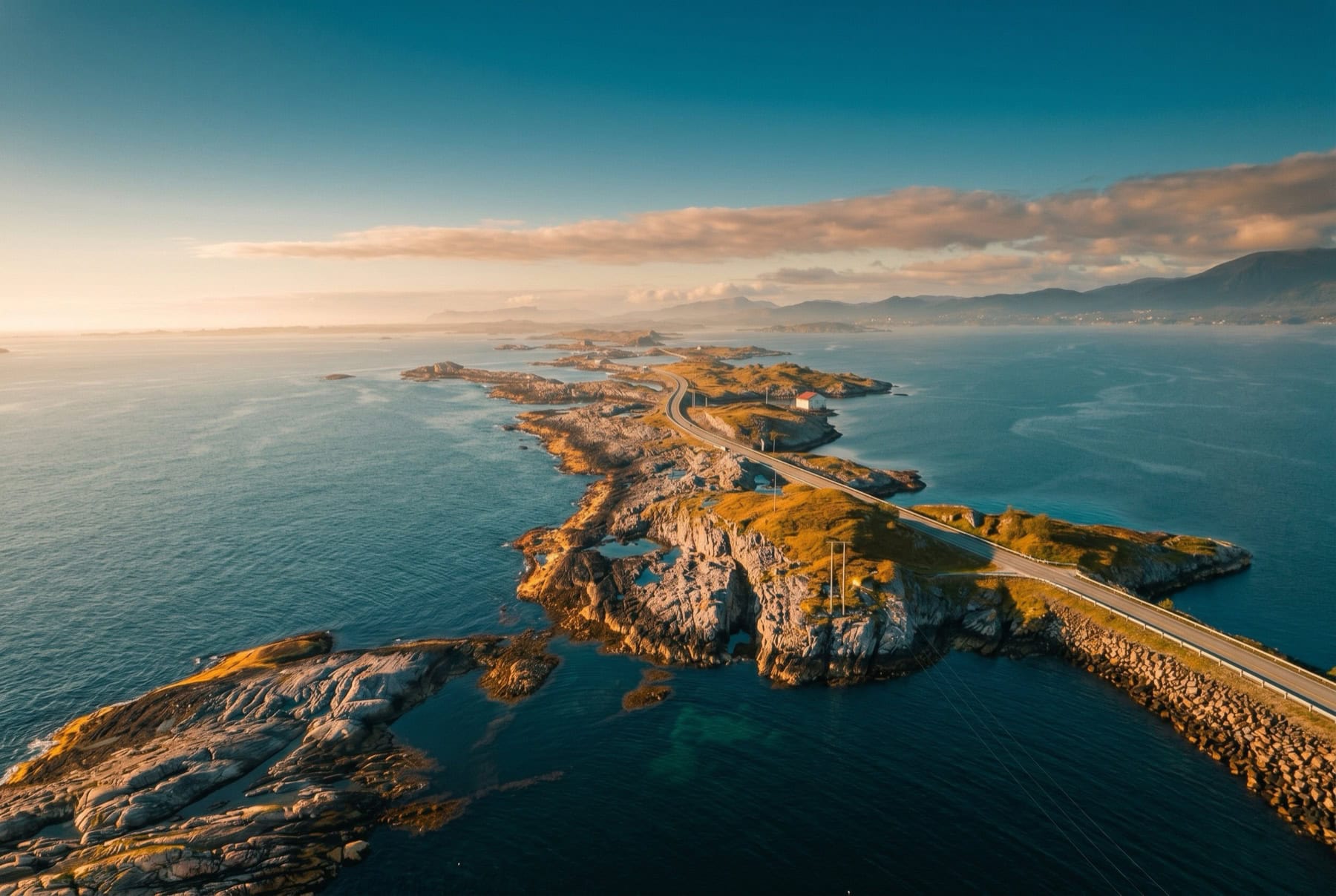
The Atlantic Road (Atlanterhavsveien in Norwegian) is regarded as a masterpiece of modern Norwegian engineering. This relatively short but incredibly intense stretch of road connects the towns of Molde and Kristiansund, crossing the open sea via a series of bridges and causeways.
Driving through this area feels more like sailing on a boat than driving a car. Let’s take a closer look at exactly what this national tourist route has to offer and where it’s definitely worth hitting the brakes.
1. The Atlantic Road in All Its Glory
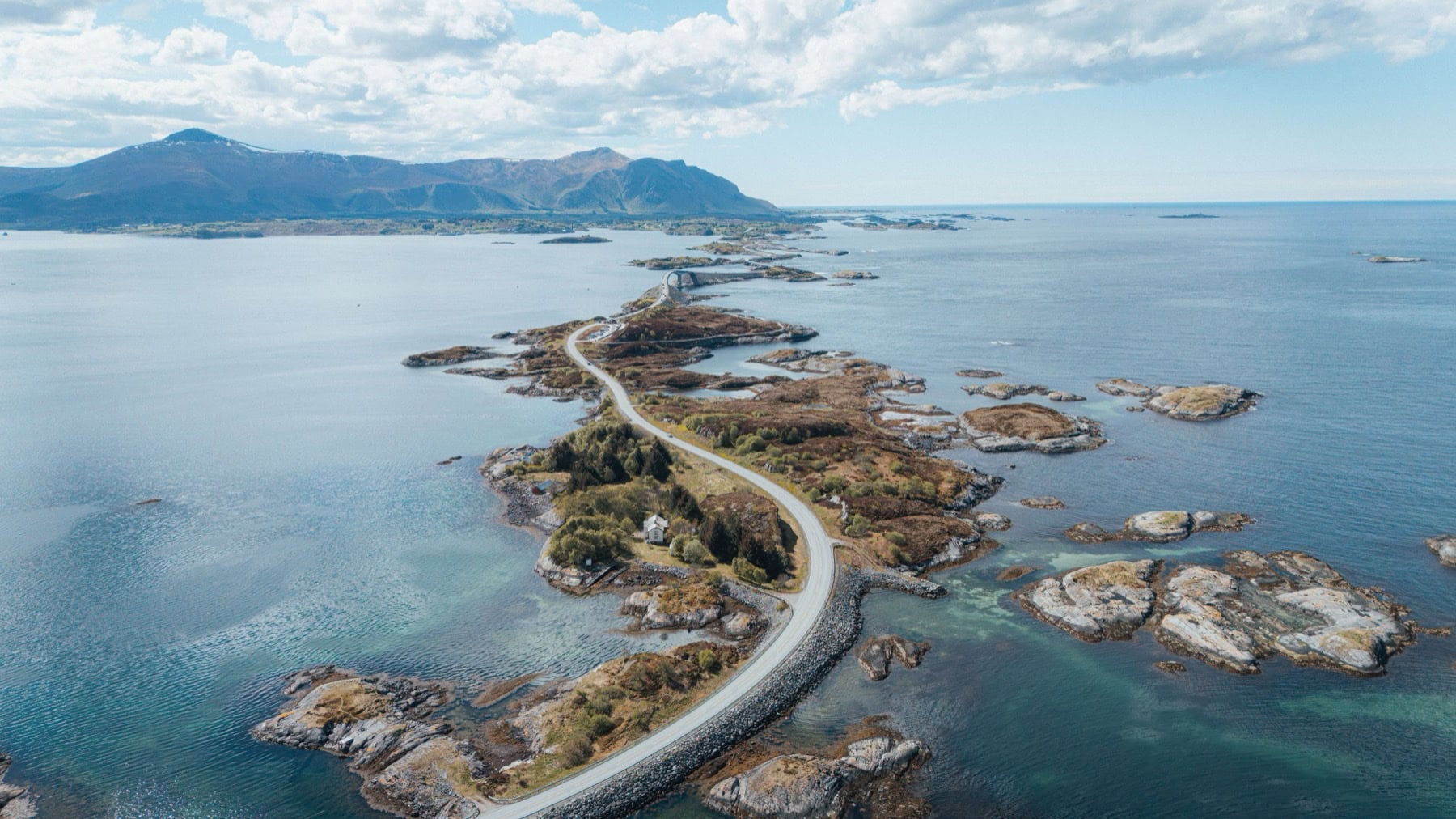
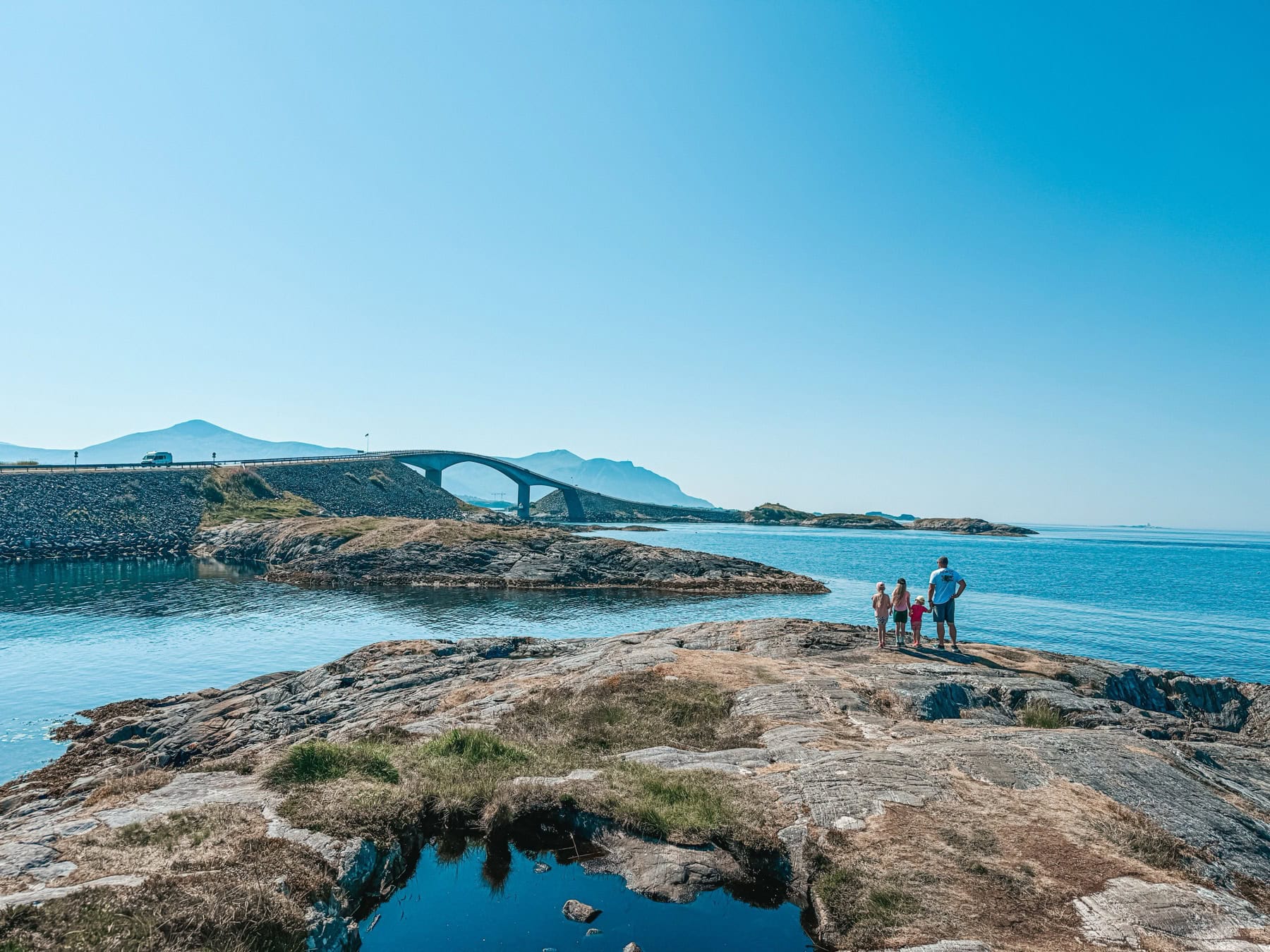
The Atlanterhavsveien itself measures just 8.3 kilometres, yet even on such a short stretch Norwegian engineers managed to build an astonishing eight bridges. The road winds across the Hustadvika archipelago, notorious as one of the most dangerous stretches of sea along the entire Norwegian coast.
On calm summer days it’s a very relaxing drive with gorgeous views into the blue distance. But once an autumn low-pressure system rolls in, the road reveals its true face and the journey turns into an adrenaline-fuelled experience, where you have to battle strong gusts of wind and sea spray.
This engineering marvel was completed in 1989 and has since picked up a string of architectural awards. What’s more, the road is completely free with no tolls to pay — a rather pleasant exception in Norway, where toll roads are common.
2. The Storseisundet Bridge, the "Bridge to the Sky"
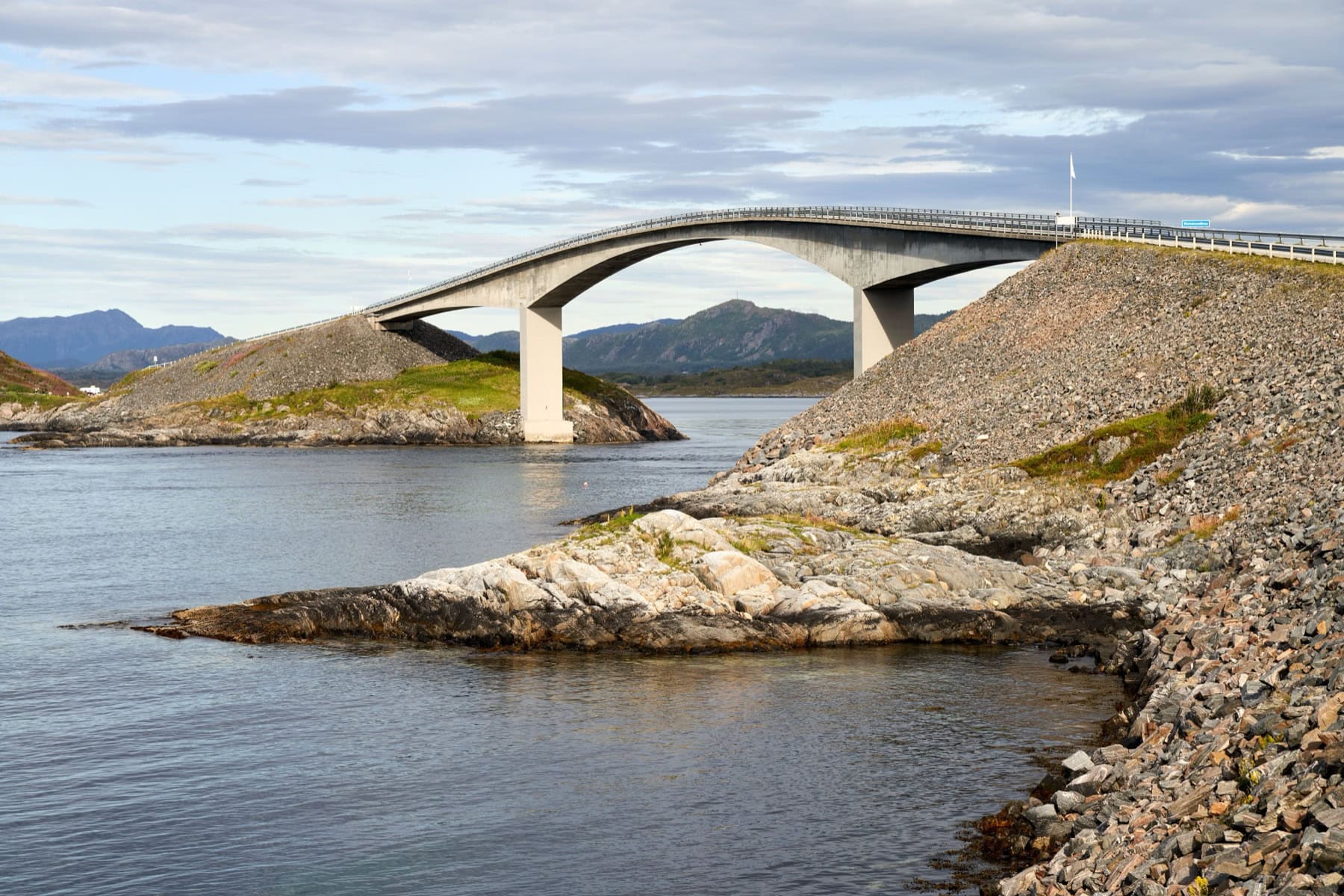
The largest and undoubtedly most photographed feature of the whole route is the cantilever Storseisundet Bridge. It measures 260 metres and its main arch rises an impressive 23 metres above sea level so that ships can pass safely beneath it even at high tide.
Thanks to its asymmetric shape, it creates a perfect optical illusion from certain angles. As you approach from the south-west, it looks as though the road suddenly ends in mid-air and the cars plunge straight into the ocean — which earned it the nickname the “bridge to the sky”.
💡 Tip: To get the best photos of this bridge, stop at the dedicated car park just before it. You’ll find safe walking paths there from which to capture the perfect angle of the curve.
3. Stops and Viewpoints on the Islet of Eldhusøya
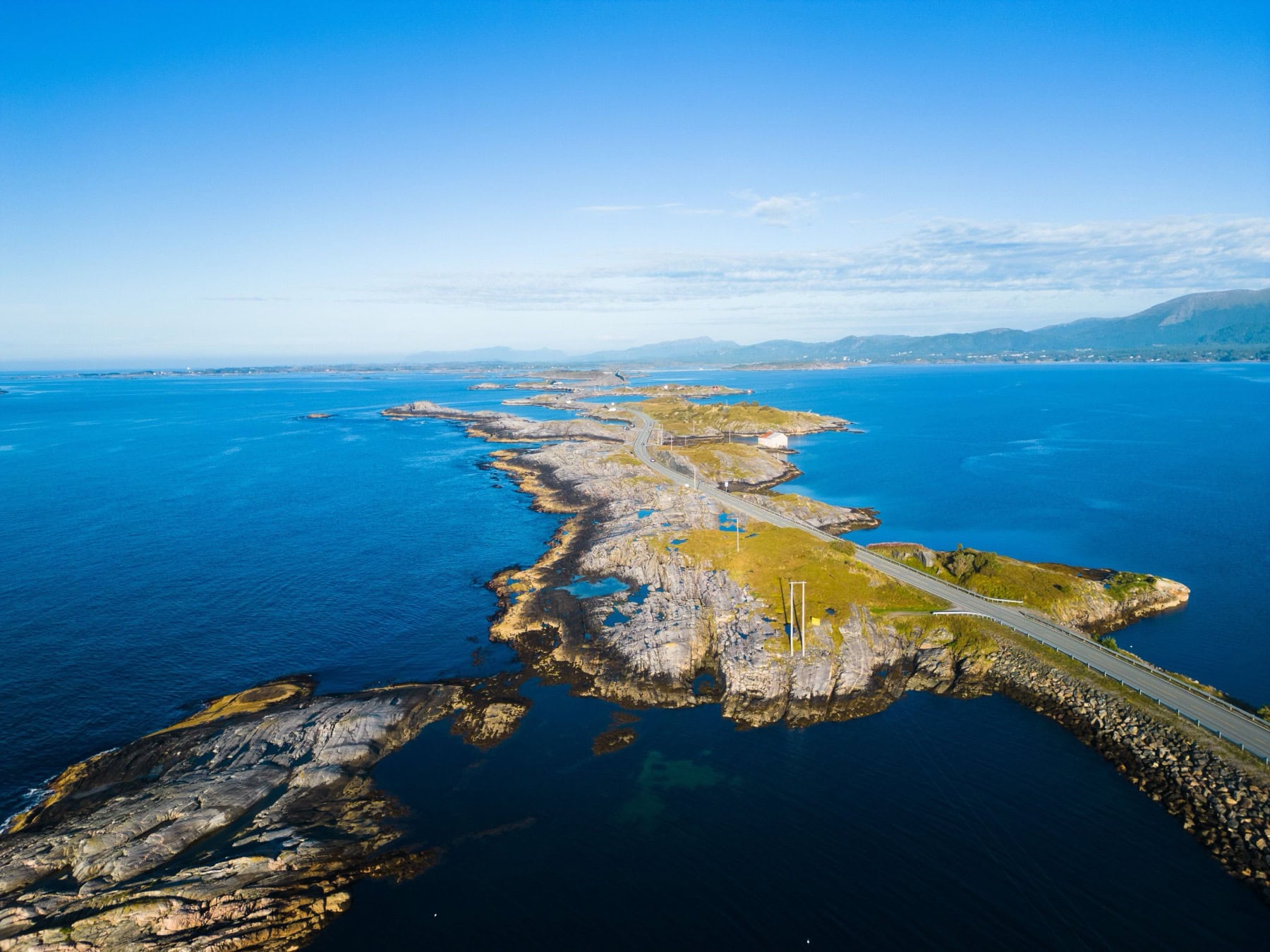
So that visitors can truly soak up the rugged nature up close, the Norwegians built a modern architectural complex on the islet of Eldhusøya. Its main feature is an elevated viewing walkway made of steel grating, which safely loops around the entire island.
From this walkway, fantastic views open up over the open ocean, and in good weather you can supposedly even spot whales or seals in the distance. The complex also includes an elegant glass café that, from the outside, looks more like a work of art blending into the surrounding rocks.
Many of the bridges on the Atlantic Road are also specially adapted for sport anglers. The secured side walkways allow you to safely cast your line straight into the powerful sea currents, where large shoals of cod are said to gather.
Trollstigen and the Golden Route: a Mountain Adventure
As you move from the flat coast deeper inland towards the town of Åndalsnes, the landscape begins to rise dramatically. Suddenly you’re surrounded by steep granite massifs enclosing deep, dark valleys.
This is where the legendary Trollstigen lies — a road that, since opening in the 1930s, has held the status of one of the country’s greatest engineering achievements. Driving carefully through these places leaves a deep impression on absolutely everyone.

4. Trollstigen and Its 11 Hairpin Bends
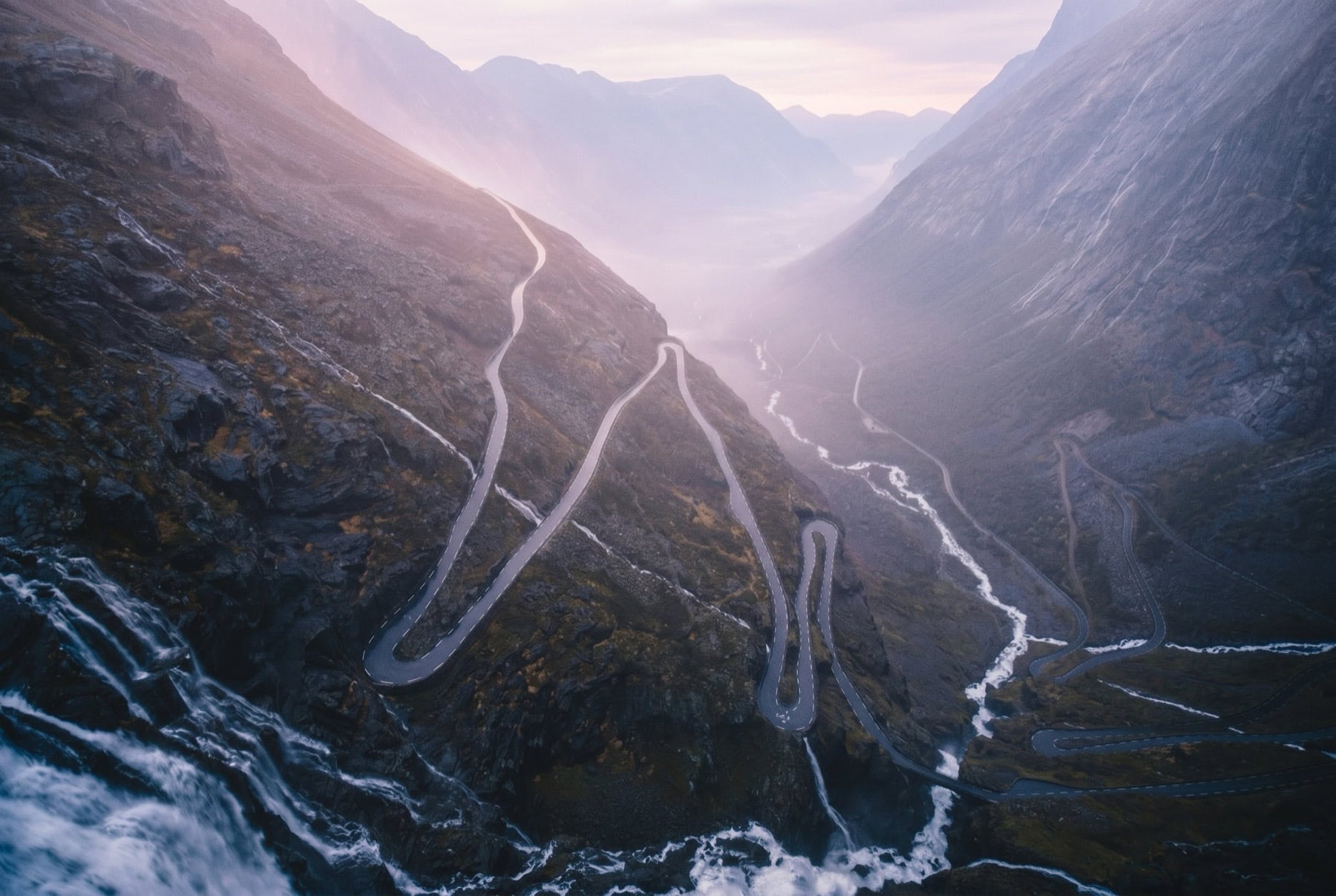
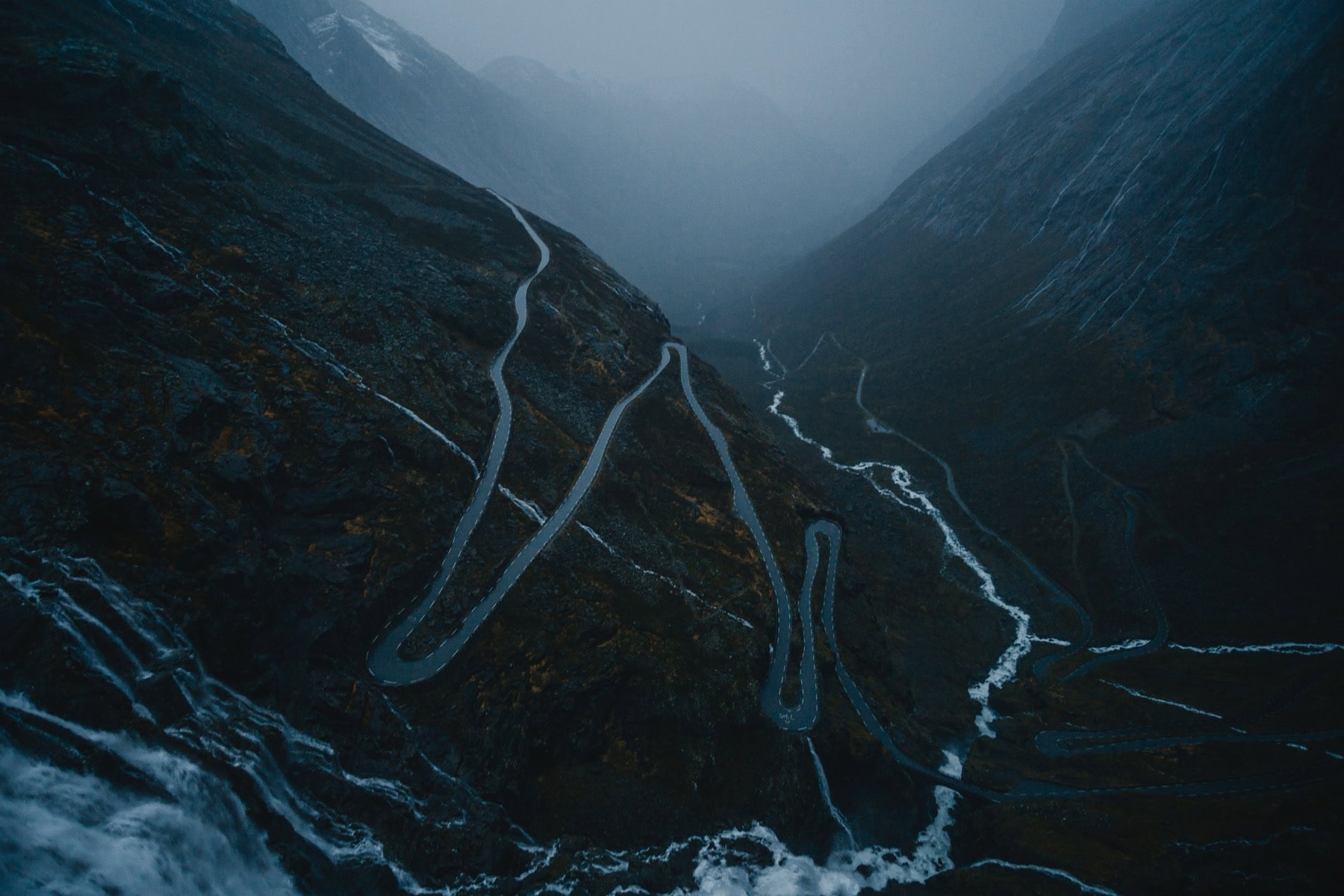
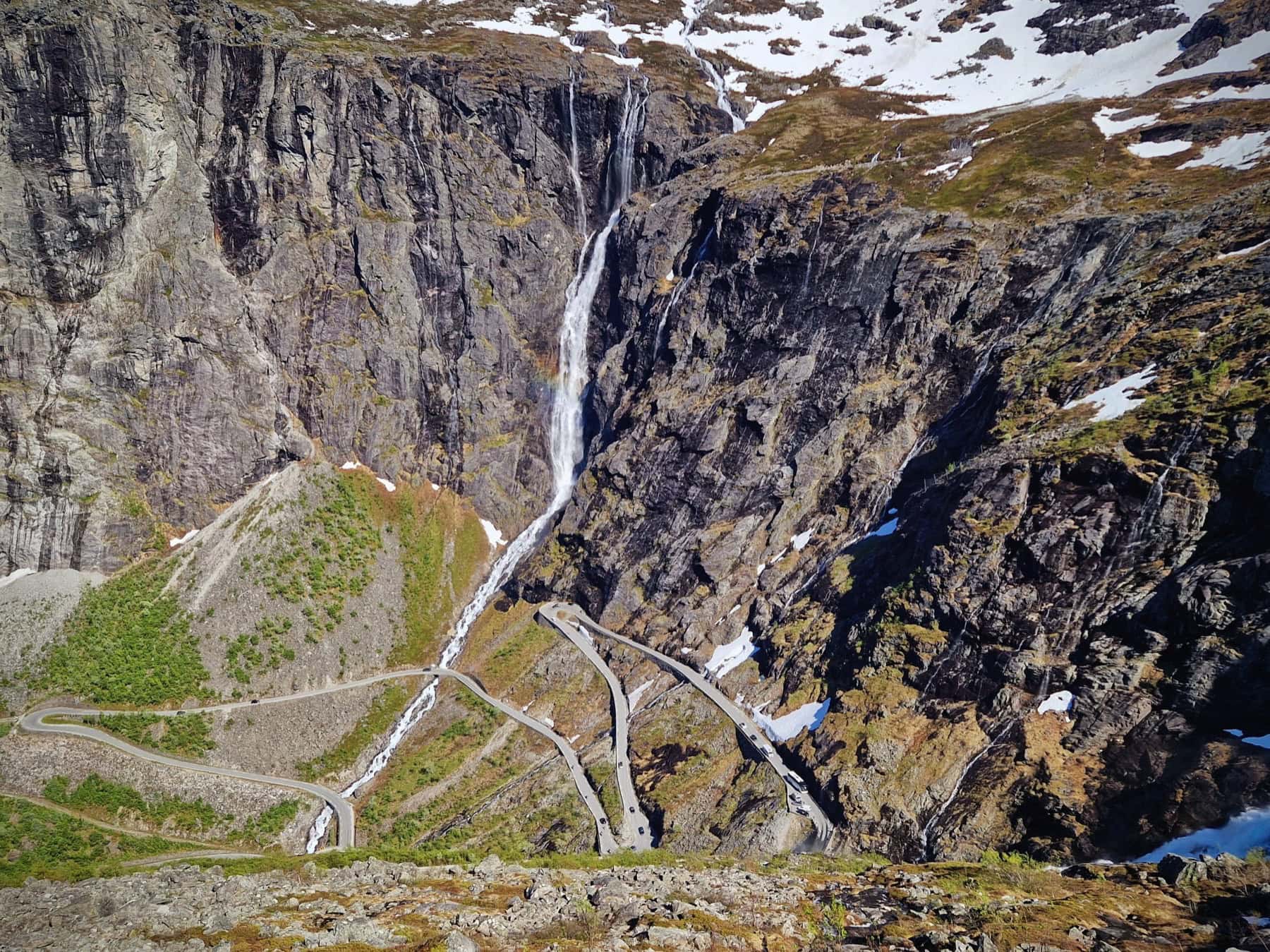
The Troll’s Path is the very embodiment of a driving challenge. This narrow road cuts into a sheer rock face and climbs more than 850 metres via eleven extremely sharp hairpin bends, with an average gradient reaching a respectable nine percent.
In places the road is so narrow that two larger vehicles can barely pass one another, which is why there’s a strict ban on vehicles longer than 13.1 metres. Each bend even has its own name, usually after the foreman of the construction crew that carved that section into the rock by hand back in the 1930s.
Driving here demands total concentration, as the crash barriers in many spots consist only of low stone walls. The reward for all that stress behind the wheel, however, is utterly incredible views into the valley, which keep getting better with every bend.
5. The Stigfossen Waterfall and Viewing Platforms
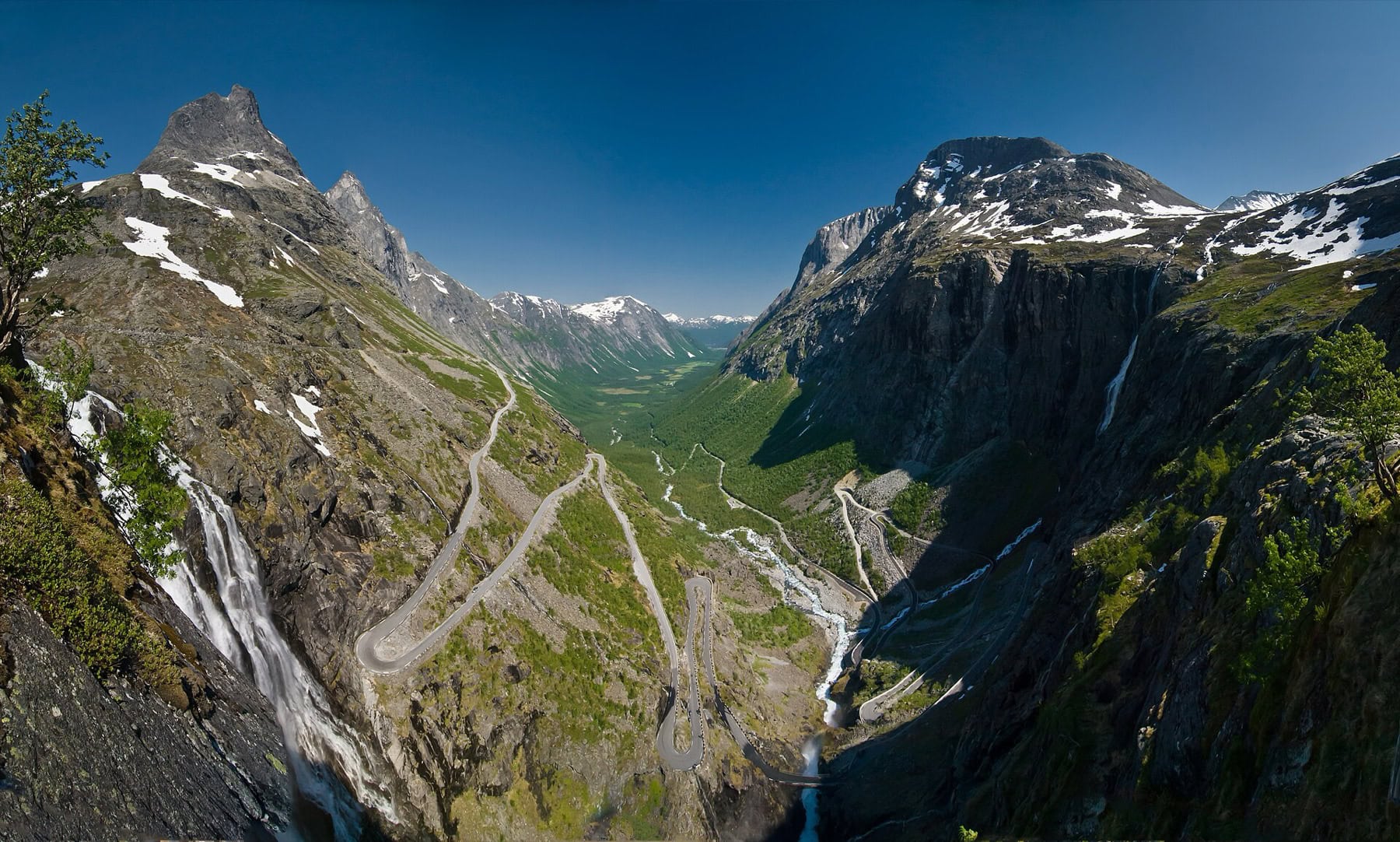
As you climb the hairpins, the roaring Stigfossen waterfall will keep you company. This mighty mass of water plunges from a height of an impressive 320 metres and flows through old stone bridges just beneath the road in several places, so in the spring months it often splashes icy water onto the cars.
Once you’ve negotiated every bend up to the summit, you’ll reach the sprawling Trollstigen visitor centre. From here a short, easy concrete path leads to a set of modern steel viewing platforms that hang high above the abyss.
The view from the furthest platform, which juts straight out into the void, is supposedly only for the brave. From this bird’s-eye perspective you can see the full zigzag of all eleven bends deep below you, carved into the rugged Nordic landscape.
6. The Romsdalen Valley and the Vertical Trollveggen Wall
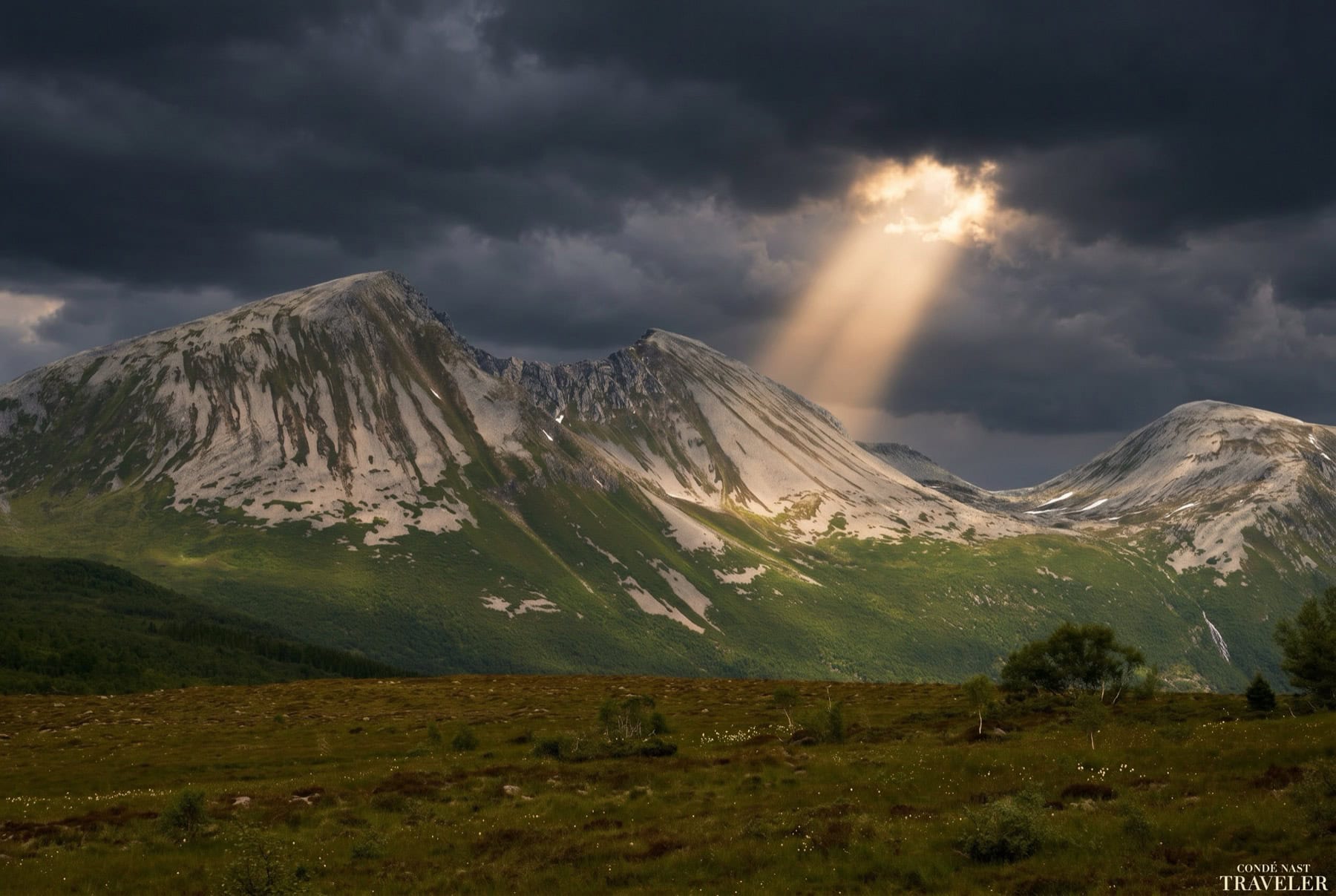
Even before you start the climb up the Troll’s Path, it’s worth taking a short detour through the Romsdalen valley. This is home to the famous Trollveggen, or the Troll Wall, which is the tallest vertical rock face in all of Europe.
From base to jagged summits this rock massif measures roughly 1,100 metres, and in places it even overhangs menacingly. No wonder it has become a global mecca for the most experienced climbers and, in the past, attracted lovers of extreme base jumping too.
Due to the enormous risk and several tragic accidents, however, jumping from the Troll Wall is now strictly forbidden. You can still admire this natural giant safely from the modern Trollveggen Besøkssenter visitor centre, which sits right beneath the wall and offers an excellent café with huge panoramic windows.
7. The Golden Route: Geiranger–Trollstigen and Ørnevegen
Many travellers fold the drive over the Troll’s Path into a longer itinerary nicknamed the Golden Route. This stretch of roughly one hundred kilometres links Trollstigen with the famous Geirangerfjord, a UNESCO World Heritage Site.
After cresting the summit of Trollstigen, the road continues across a mountain plateau dotted with lakes and snowfields all the way to the town of Valldal, where you need to take a short ferry across the fjord on the Linge–Eidsdal route. The route then climbs towards another iconic road known as the Eagle Road (Ørnevegen).
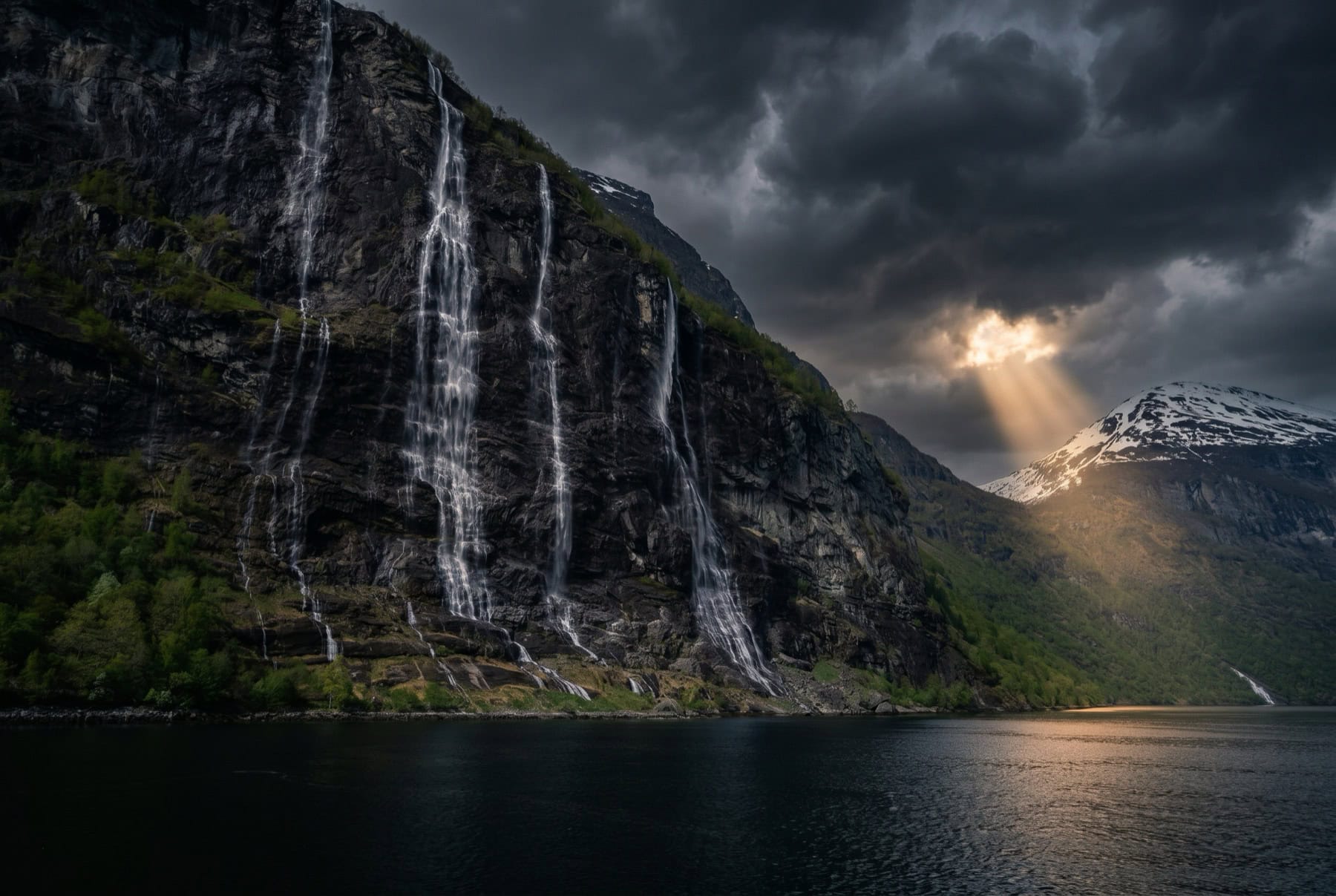
Ørnevegen offers hairpins every bit as steep as Trollstigen, with the difference that from its top you get one of the most famous views of the deep-blue Geirangerfjord and the Seven Sisters waterfall. This whole route is said to be the absolute best that Norway roads have to offer.
8. Closures, Safety and When the Roads Are Open
While the Atlantic Road troubles drivers with strong winds at most, on Trollstigen nature poses a far more real threat. The mountain pass usually lies under a thick layer of snow from late October until mid-May, when the road is completely closed off by a barrier.
In recent years, though, a far more serious problem has emerged in the form of falling rocks and large landslides. Due to melting snow and unstable ground, the Norwegian authorities have already had to close the Troll’s Path for extended periods several times, even in the middle of the main summer season.
💡 Tip: Before every trip into these mountains it’s absolutely essential to check current road conditions on the official Norwegian roads website (Statens vegvesen). If the road were closed, you’d have to take a very long detour through a neighbouring valley.
How to Plan a Western Norway Road Trip
The ideal road trip linking the Atlantic Road and Trollstigen takes roughly two full days at a relaxed pace. If you decide to add the Golden Route all the way to Geiranger, plan for three days instead, so you have plenty of time for photos and soaking up the scenery.
The beautiful Art Nouveau town of Ålesund is the most common starting point, followed by the Molde and Kristiansund areas. The route from the Atlantic Road south to the mountains requires crossing the Romsdalsfjord, which means taking the regular ferry between the ports of Sølsnes and Åfarnes.
Time passes very differently on Norway’s roads than in the rest of Europe. Speed limits are very strict (often just 60 or 80 km/h) and mountain roads don’t allow for fast driving, so budget about a third more time for each section than your sat nav suggests. For getting here from the UK, the easiest route is to fly direct from London or Manchester to Ålesund (or via Oslo with SAS/Norwegian) and pick up a hire car at the airport.
💡 Tip: If you don’t fancy driving your own car on roads this extreme, definitely check out GetYourGuide. Local agencies there regularly offer safe, organised coach tours that depart straight from Ålesund or Molde.
Where to Go Next from the Møre og Romsdal Region
Norway’s west coast is laced with jaw-dropping places, and these two roads are just a small taster. If you’re looking for inspiration on where to point the steering wheel after conquering the Troll’s Path, I’ve put together links to a few more useful articles:
- Discover the perfect streets in the article Ålesund — the Art Nouveau town by the sea.
- Plan a cruise in the guide to Geirangerfjord.
- Explore the whole country with the article Norway: 50 tips on what to see.
- Or read the comprehensive manual Norwegian Fjords — a guide.
Frequently Asked Questions
When exactly is Trollstigen open?
“`html
The mountain road is open seasonally only, usually from mid-May to the end of October. However, the dates vary depending on snowfall, and in recent years there have been frequent summer closures due to dangerous landslides. You must always check the current status.
“`
Is the Atlantic Road open year-round?
Yes, this coastal route remains open all year round and there is no toll charged on it. Many travellers agree that it offers the most dramatic spectacle during harsh autumn storms, when huge ocean waves crash over it.
How long does this road trip take?
If you want to connect the coast with the mountains and continue all the way to Geiranger, ideally set aside two full days for the journey. The actual drive won’t take that much time, but constant photo stops and waiting for ferries will significantly extend your schedule.
Can you drive on these roads with a caravan?
“`html
The Atlantic Road is completely problem-free for caravans and has plenty of rest areas. On the other hand, Trollstigen’s sharp hairpin bends require enormous driving experience and there is a strict ban for all vehicles longer than 13.1 meters.
“`
Where is the best place to have a base?
For visiting the Atlantic Road, the towns of Kristiansund or Molde are the best choice. If you’re planning to tackle the mountain passes, you’ll find the ideal base in the small town of Åndalsnes, which lies right at the foot of the mountains in the Romsdalen valley.
What exactly is the Golden Route?
This is a popular tourist route that starts at the foot of Trollstigen, continues across a mountain plateau to the Linge–Eidsdal ferry, and then climbs via the Eagle Road (Ørnevegen) up to Geirangerfjord. This section is among the most beautiful in the country.
Is the Storseisundet Bridge worth photographing?
Definitely yes, it’s the most photographed spot in the entire area, often nicknamed the bridge to heaven. If you stop at the adjacent designated parking lot, you’ll find safe walkways from where you can capture that famous angle where the road seemingly ends in mid-air.
Tips and Tricks for Your Vacation
Don’t Overpay for Flights
Search for flights on Kayak. It’s our favorite search engine because it scans the websites of all airlines and always finds the cheapest connection.
Book Your Accommodation Smartly
The best experiences we’ve had when looking for accommodation (from Alaska to Morocco) are with Booking.com, where hotels, apartments, and entire houses are usually the cheapest and most widely available.
 🚗 Car rental on the roadVerified rental cars in Norway
Search with the DiscoverCars comparison engine — it compares prices from dozens of local and international rental companies, and most bookings come with free cancellation.
Compare car prices in Norway →Don’t Forget Travel Insurance
Good travel insurance will protect you against illness, accidents, theft, or flight cancellations. We’ve had a few hospital visits abroad, so we know how important it is to have proper insurance arranged.
Where we insure ourselves: SafetyWing (best for everyone) and TrueTraveller (for extra-long trips).
Why don’t we recommend any Czech insurance company? Because they have too many restrictions. They set limits on the number of days abroad, travel insurance via a credit card often requires you to pay medical expenses only with that card, and they frequently limit the number of returns to the Czech Republic.
Find the Best Experiences
Get Your Guide is a huge online marketplace where you can book guided walks, trips, skip-the-line tickets, tours, and much more. We always find some extra fun there!


