

If you’re thinking about heading north to explore Scandinavia, I have to give you an honest warning right from the start. The Norwegian landscape will utterly bewitch you, plant a stubborn bug in your head, and you’ll probably never want to spend your summer holiday anywhere else again. This classic loop through southern and western Norway ranks among the most beautiful road trips in all of Europe, because it combines modern cities with completely wild nature, deep fjords and mountain passes. If you’re looking for the perfect Norway itinerary, you’ve come to the right place.
The land of trolls and waterfalls is enormous, and distances here are deceptive, so a well-planned route is the foundation of any successful trip. In this article we’ll walk through a detailed 10-day itinerary together, taking you from the iconic Opera House in Oslo all the way to the art nouveau streets of the west coast. You’ll also find out roughly how much such a journey costs, how toll payments work, and why it pays not to leave your ferry bookings until the last minute.
TL;DR
- Length of the route: The ideal amount of time to set aside for this loop is exactly 10 days, which lets you keep a comfortable pace without daily stress behind the wheel.
- Main stops: Along the way you’ll see Oslo, ride the famous railway down to Flåm, explore historic Bergen, and you won’t miss Geirangerfjord or the legendary Trollstigen mountain road.
- When to go: The best conditions run from late May to early September, when even the high mountain roads are safely passable.
- Transport: The greatest freedom comes hands down from a rental car, which lets you stop at every other waterfall (and trust me, there’ll be plenty).
- Budget: Norway isn’t a cheap destination — expect rough costs of around 2,000 to 2,800 NOK per day for two people (roughly £150–£210) if you opt for mid-range accommodation.
- Top tip: Accommodation around the most famous fjords sells out months in advance during the summer season, so book your hotels well ahead of time.
When to Take This Trip and How to Adjust the Route
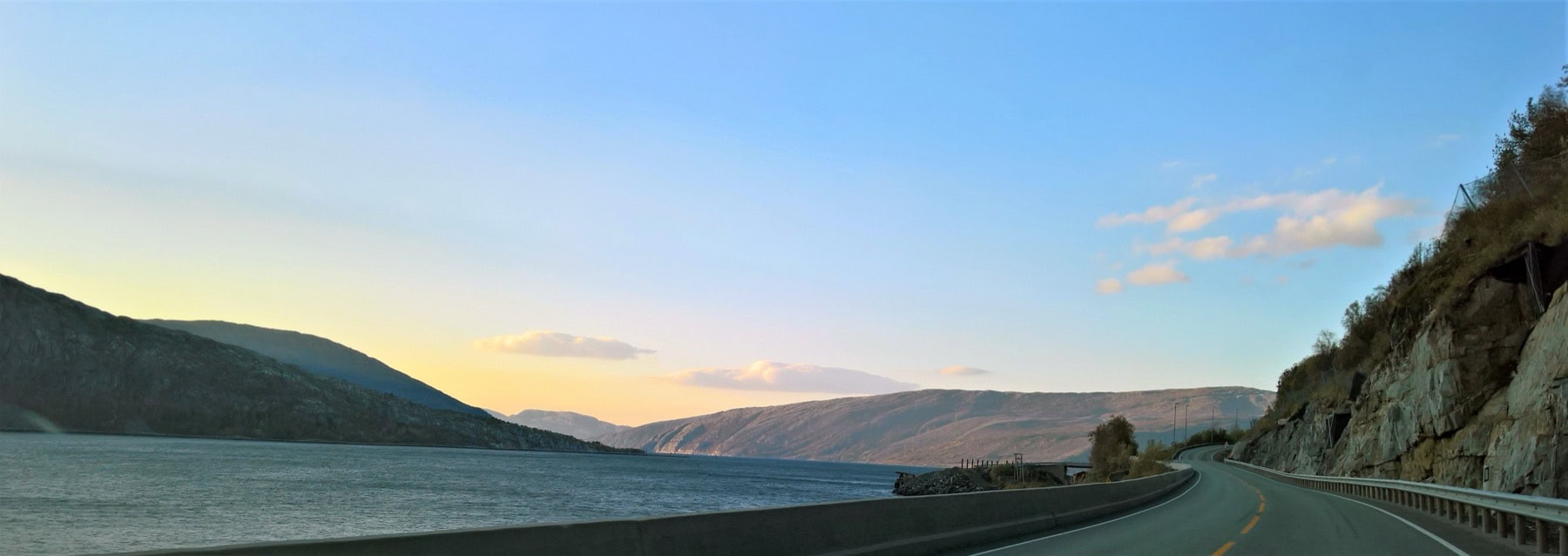
Norwegian weather can be unpredictable even in the middle of July, but as a general rule, summer is by far the best season for a road trip through the fjords and mountains. From late May to early September you can count on the mountain passes — like Trollstigen — being cleared of snow and fully open. On top of that, all the tourist ferries and sightseeing cruises run at full capacity in summer, so you won’t have to worry about missing out on any of those iconic experiences.
If you’re considering a trip in autumn or spring, be prepared for frequent road closures and the fact that many smaller hotels outside the big cities shut their doors. Winter in Norway has its own unmistakable magic, but this particular itinerary isn’t suited to it at all, because you’d spend most of your time detouring around impassable mountain ranges.
What If You Only Have 7 Days?
If you’re pushed for time and can only afford a week’s holiday, you’ll have to trim the route a little and pick up the pace. In that case, I’d recommend skipping the more northerly part with the Atlantic Road and the city of Ålesund. Focus purely on the golden triangle made up of Oslo, the Flåm area with Bergen, and then Hardangerfjord with Geiranger. From Geiranger you can head straight back to Oslo, saving roughly two to three days of driving — even if it means missing out on the famous Trollstigen.
A 14-Day Version for Connoisseurs
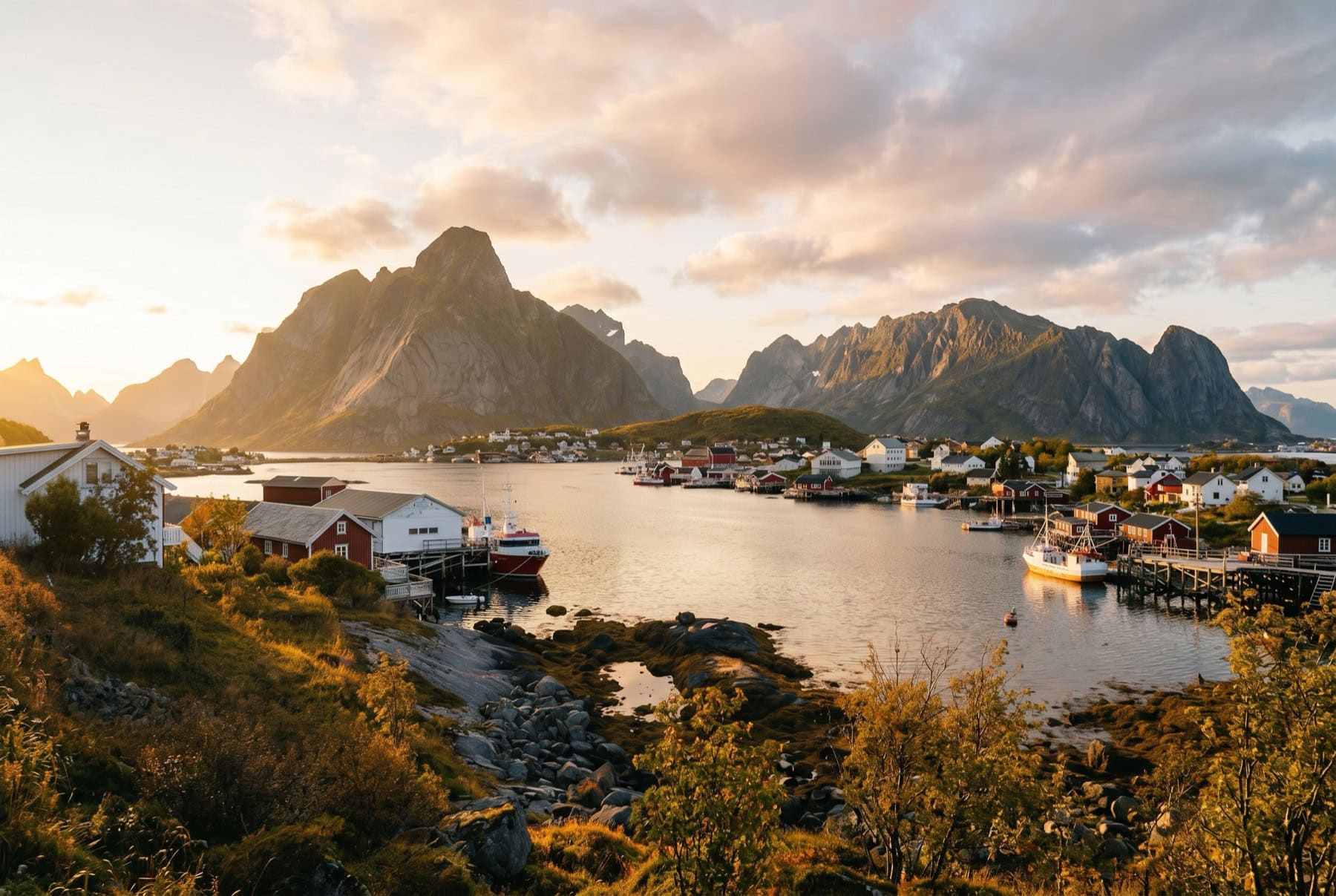
Got a full two weeks at your disposal instead? Then a world of fantastic options opens up for extending the itinerary. At the start of the trip you can add the southern tip with the city of Stavanger, the launching point for the famous Preikestolen rock plateau, which towers majestically over the Lysefjord. The second — and perhaps even more tempting — option is to fly north at the end of your trip from Ålesund or Oslo to the Lofoten Islands or Tromsø, where you’ll enjoy the never-setting midnight sun in summer.
Practical Info: Car, Transport and Budget
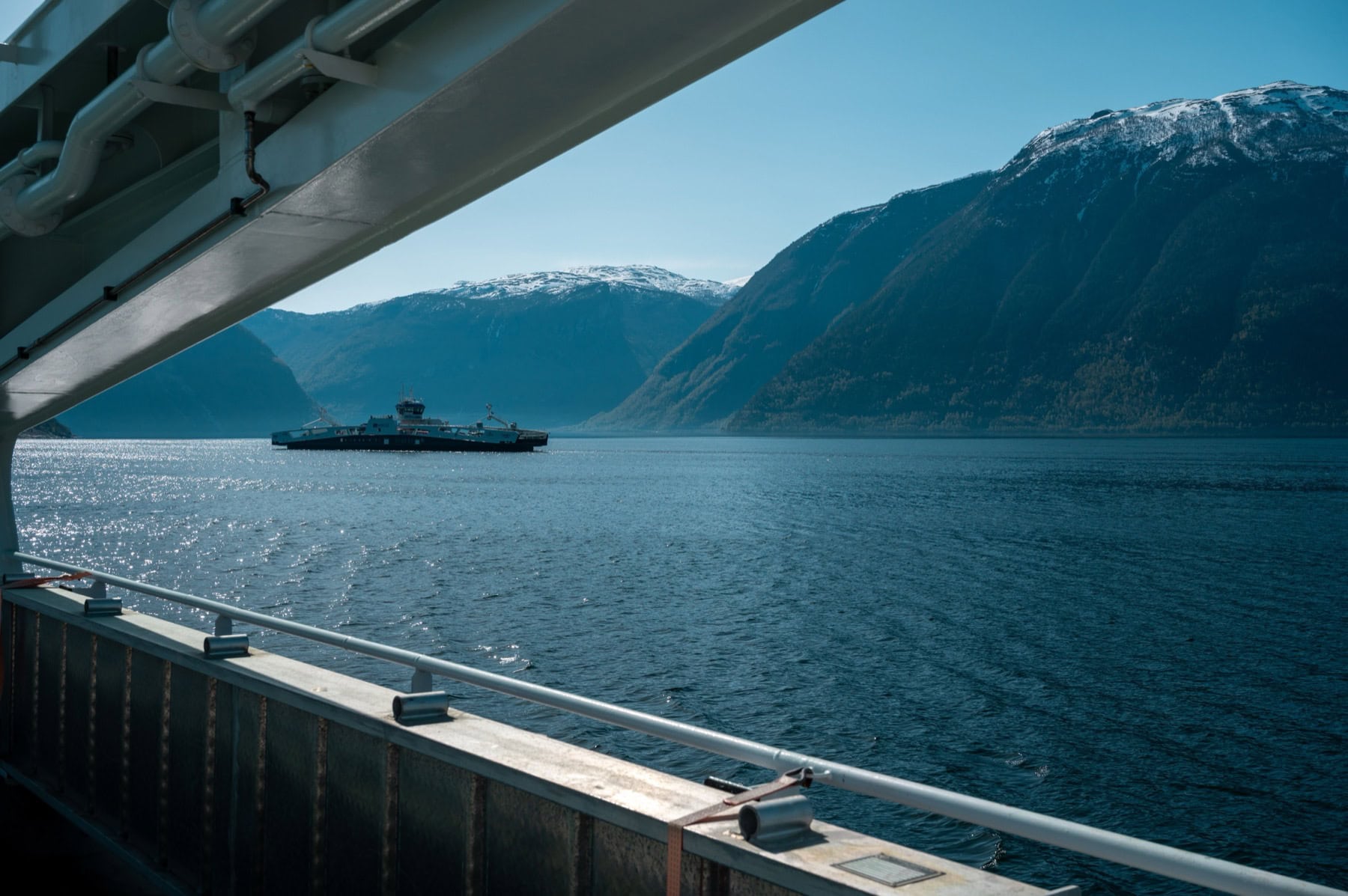
The basic rule for driving in Norway is to come to terms with the fact that distances here are incredibly deceptive. If your sat-nav shows your destination is two hundred kilometres away, don’t for a second assume you’ll be there in two hours. The roads constantly wind along inlets, climb up steep hills, and very often you’ll face a wait for a ferry — the only way to cross the deep waters of the fjords.
When you rent a car at the airport, you don’t need to stress too much about paying tolls, because most vehicles are automatically fitted with an AutoPASS chip. It records your passes through toll gates, city entry charges and payments for most ferries, and at the end of the trip the rental company simply charges everything to your credit card. Petrol prices in 2026 hover at roughly 21 to 24 NOK per litre (about £1.55–£1.80), so a more fuel-efficient car definitely pays off.
As for the overall budget, Norway is one of the pricier European destinations, but with a bit of planning it’s manageable. If you stay in nice mid-range hotels and eat out occasionally, budget for daily costs of roughly 2,000 to 2,800 NOK for two people (around £150–£210). You can save significantly by shopping at supermarkets like REMA 1000 or Kiwi, where you’ll pick up great ingredients for picnics you can enjoy with a view of majestic mountains.
The Day-by-Day Itinerary
Let’s take a look at the trip plan itself, designed so that you see the very best while not spending your entire holiday just sitting in the car. This schedule assumes you’ll pick up your car right after landing in Oslo, or alternatively collect it the next morning before leaving the city.
Day 1: Modern Architecture and Parks in Oslo
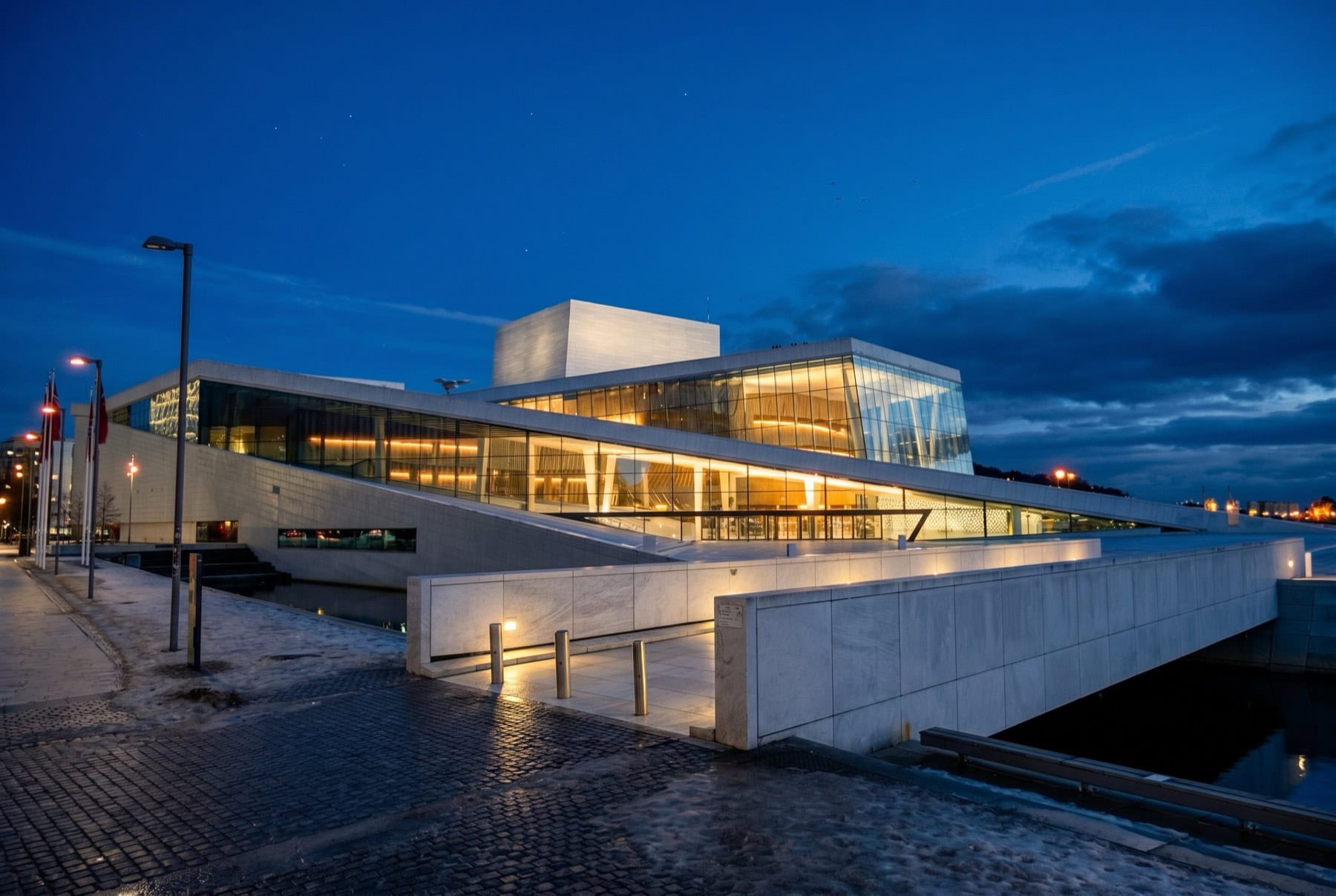
Your Norwegian adventure begins in the capital, which has undergone an incredible architectural transformation in recent years. Straight after landing and checking in, head down to the harbour, where the famous Opera House dominates the landscape — you can freely walk up its sloping roof all the way to the very top. Right next door you’ll find the modern Bjørvika district with the new Munch Museum building, whose shape resembles a bent book.
In the afternoon, move to a quieter part of the city and stroll through the sprawling Vigeland Park, full of fascinating sculptures depicting the cycle of human life. If you’re interested in history, take a boat over to the Bygdøy peninsula, home to several excellent museums, including one about the polar expeditions aboard the ship Fram. In the evening, unwind in one of the cosy cafés in the Grünerløkka district.
💡 Tip: The fastest way into central Oslo from Gardermoen Airport is the Flytoget express train, which runs every ten minutes, but the regular regional train is noticeably cheaper and only takes a few minutes longer.
Day 2: From Oslo to the Deep Waters of Flåm
On day two your first big westward transfer awaits, and you have a choice between two completely different but equally fascinating options. You can set off by car across the Hardangervidda plateau and through the famous Lærdal Tunnel, which at over 24 kilometres is the longest road tunnel in the world. The drive itself takes roughly five hours of pure driving time, but with the inevitable photo stops, plan for a whole day.
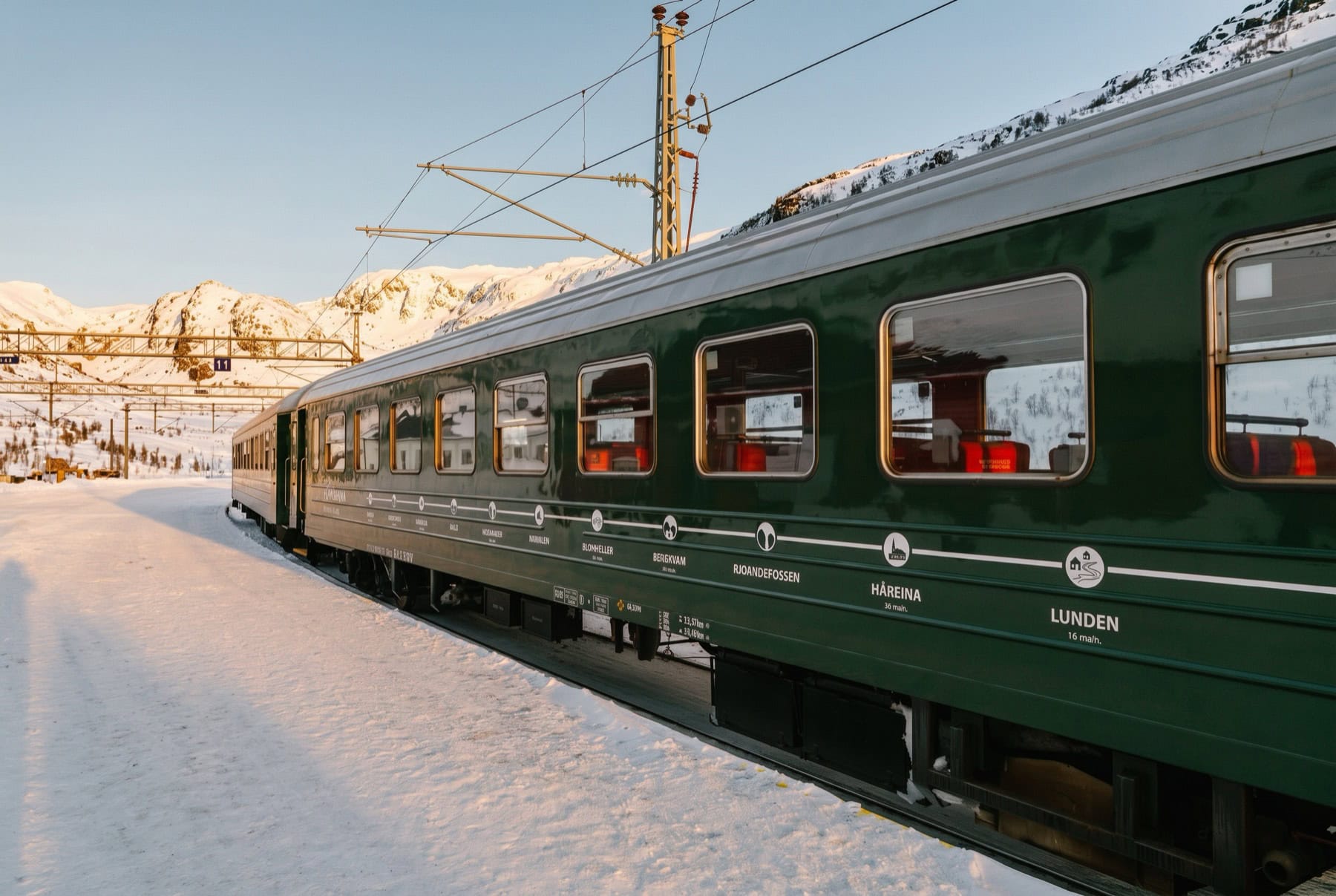
The second, hugely popular option is to set driving aside for a while and take the train. From Oslo you board the famous Bergensbanen line, ride up to the mountain station of Myrdal, and there change onto the iconic historic Flåm Railway (Flåmsbana). It descends steeply into the valley and offers some of the best views in all of Norway, passing right by thundering waterfalls. In the evening you’ll stay in the picturesque village of Flåm, right on the shore of the fjord.
💡 Tip: Tickets for the Flåmsbana train tend to sell out well in advance during the summer months. Just like the sightseeing cruises, you can easily and safely book them ahead of time through GetYourGuide.
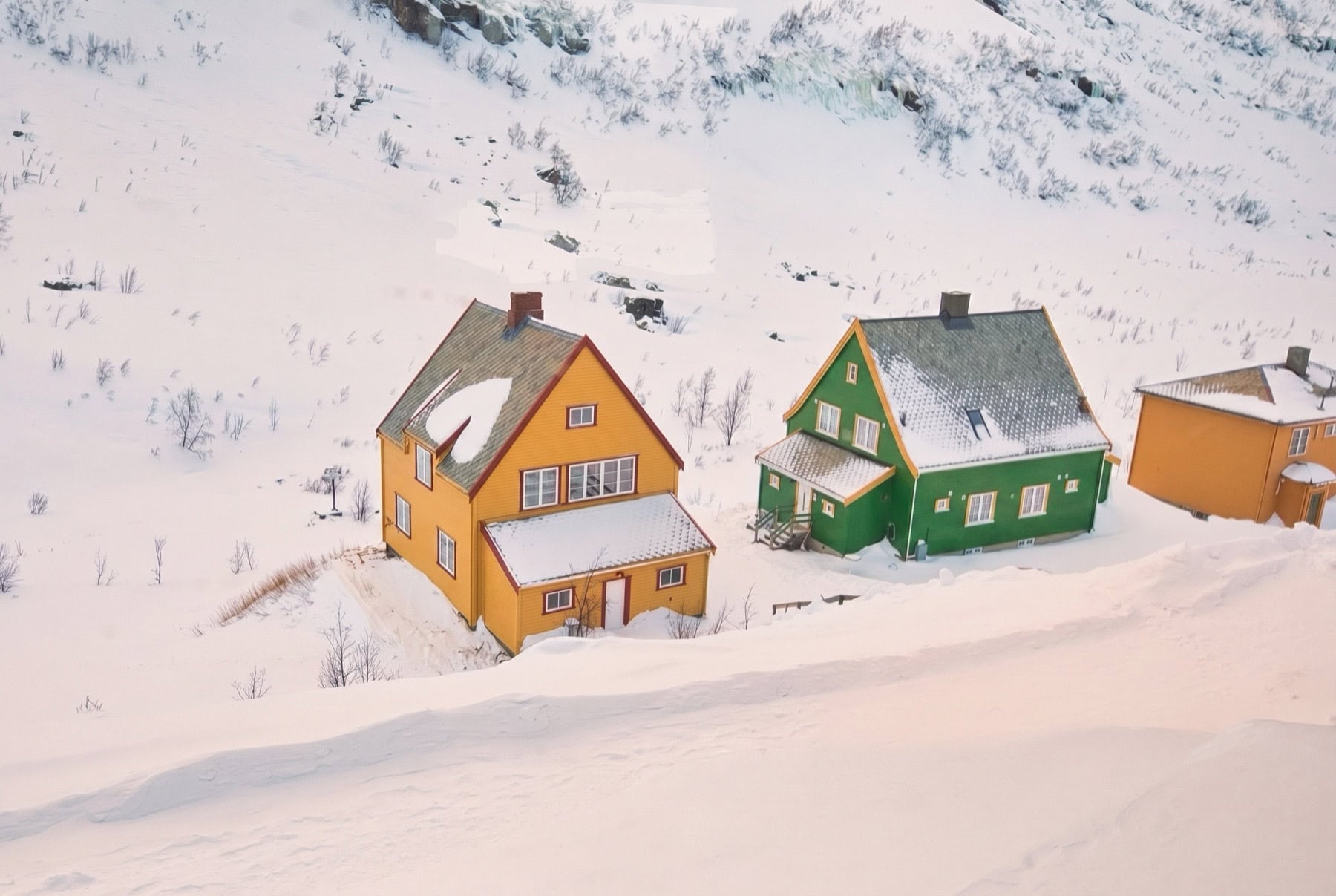
Day 3: Nærøyfjord and Views into the Abyss
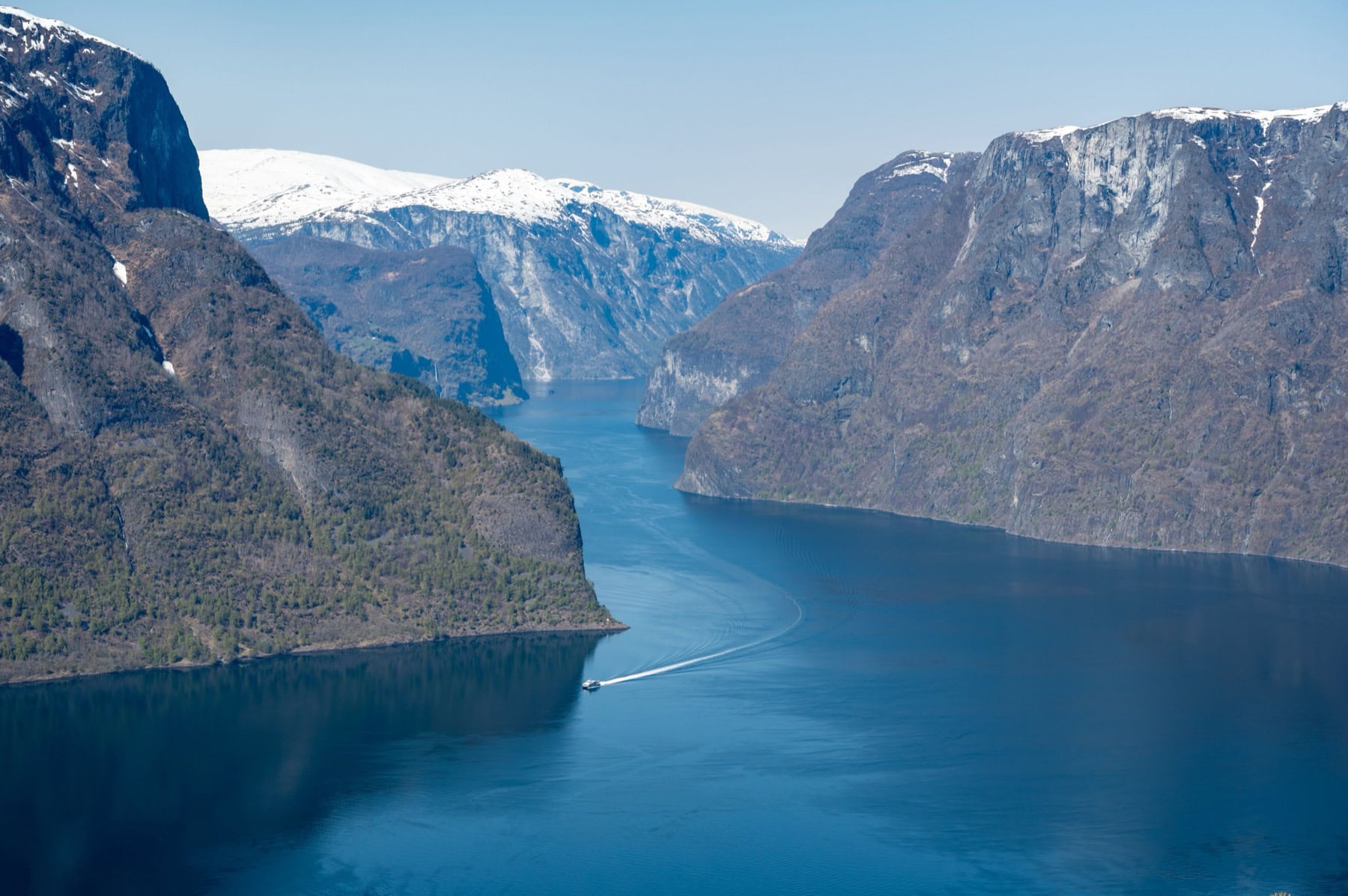
On day three you’ll stay in the area and focus on what makes Norway, well, Norway. In the morning, set off on an unforgettable cruise along the Nærøyfjord, which is on the UNESCO list and in places is so narrow you feel as if you could reach out and touch the cliffs on both shores. The boats depart directly from Flåm and take you to the village of Gudvangen, from where you can easily return by shuttle bus.
After returning from the cruise, hop in the car and head up a narrow road to the Stegastein viewpoint. This elegant wooden platform juts a full thirty metres out into the void above the Aurlandsfjord and ends in nothing but a sheet of transparent glass, which will reliably get the pulse racing for anyone with a fear of heights. In the afternoon you can fit in a short walk to nearby waterfalls and then rest up at your hotel in the evening.
💡 Tip: To avoid the biggest crowds at the Stegastein viewpoint, go either early in the morning before breakfast or, conversely, in the early evening, once most of the tourists from the cruise ships have already left.
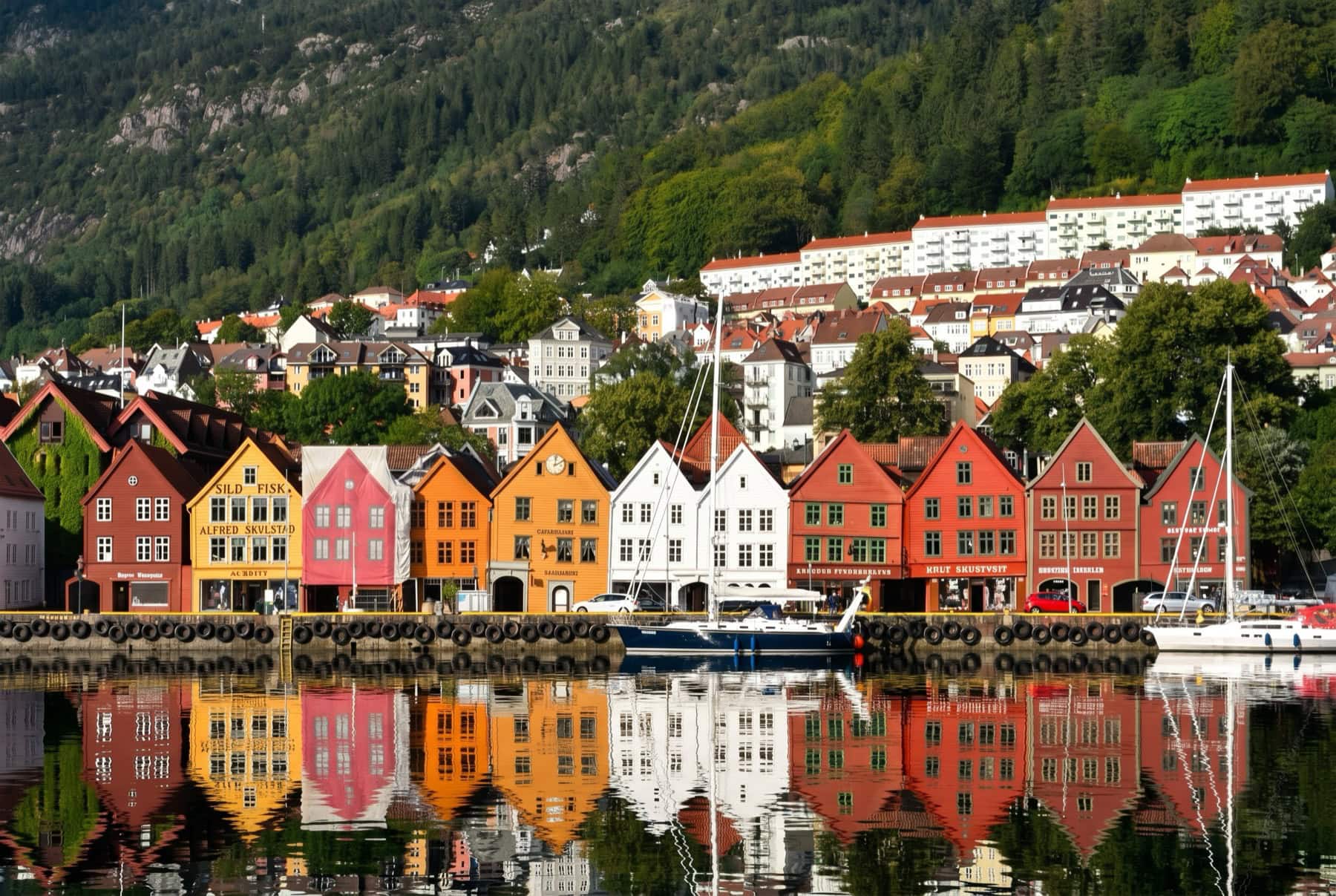
Day 4: Over the Mountains to Rainy Bergen
After breakfast you’ll leave Flåm and head towards the west coast to historic Bergen. The journey takes roughly three hours of pure driving time and runs mostly through the scenic Voss region, known as the centre of Norwegian adrenaline sports. Along the way you’ll pass dozens of smaller lakes and deep forests that practically beg you to make short stops and picnic out in nature.
You’ll probably reach Bergen shortly after noon, which gives you plenty of time for a first taste of the city. Park the car, drop your things at the hotel, and head out for an early-evening stroll around the harbour, where the smell of the sea mingles with the historic atmosphere. Bergen is notorious for its rainy weather, so keep an umbrella or a good waterproof jacket to hand, even when there isn’t a single cloud in the sky.
💡 Tip: There’s an environmental toll for entering central Bergen, which changes depending on the time of day and rush-hour traffic. The AutoPASS system records it automatically — you don’t need to stop anywhere or pay in cash.
Day 5: Bryggen and Bergen’s Streets
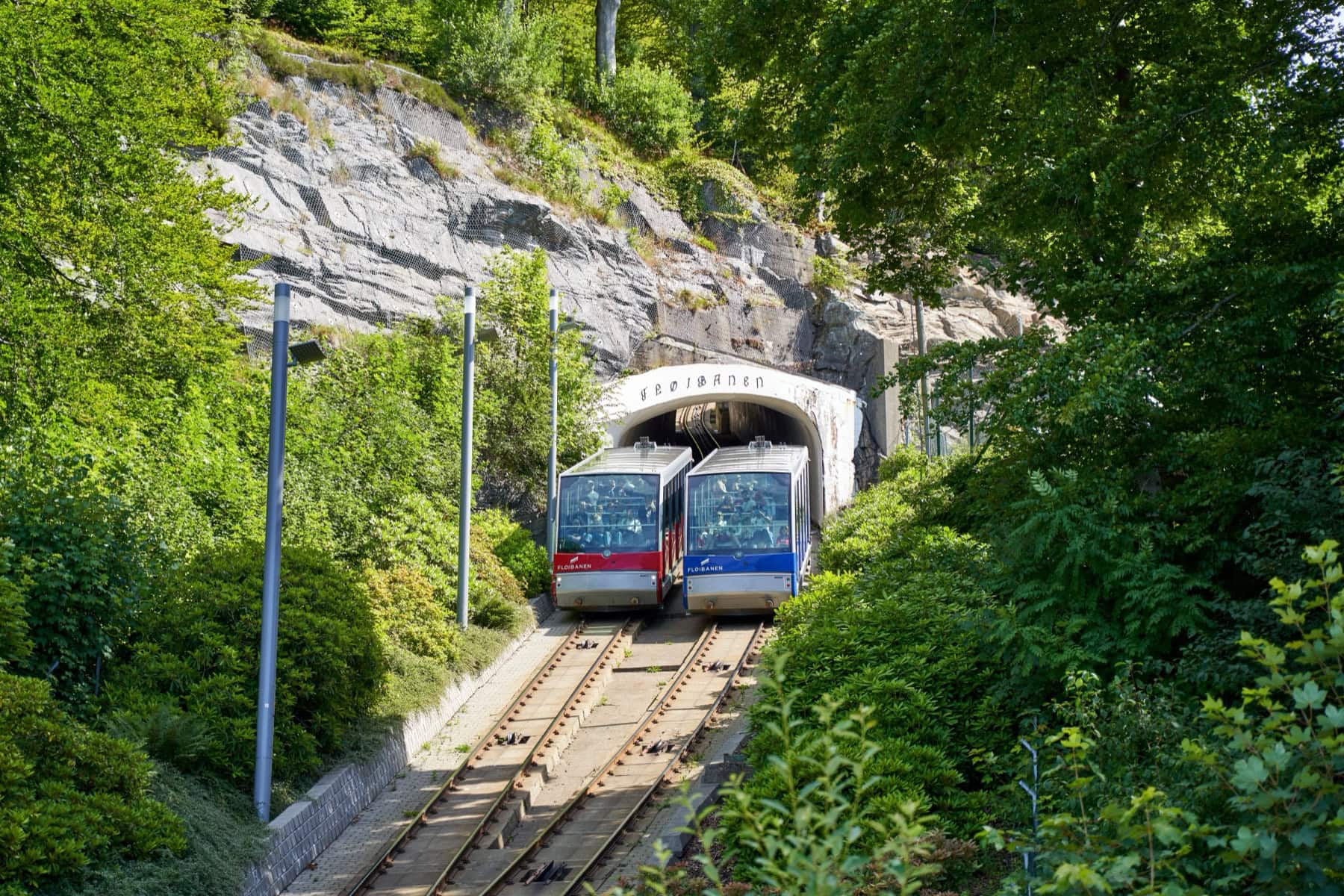
Dedicate the whole of day five to exploring Bergen, nicknamed the gateway to the fjords. Your first steps should lead to the Bryggen district, a row of colourful wooden Hanseatic houses lining the waterfront, whose narrow, slightly crooked lanes hide craft workshops, galleries and cosy cafés. Right across from it you’ll find the famous fish market. The local specialities are, naturally, fish and seafood, but if meat isn’t your thing, you’ll also find great stalls offering fresh artisan bread and excellent local cheeses.
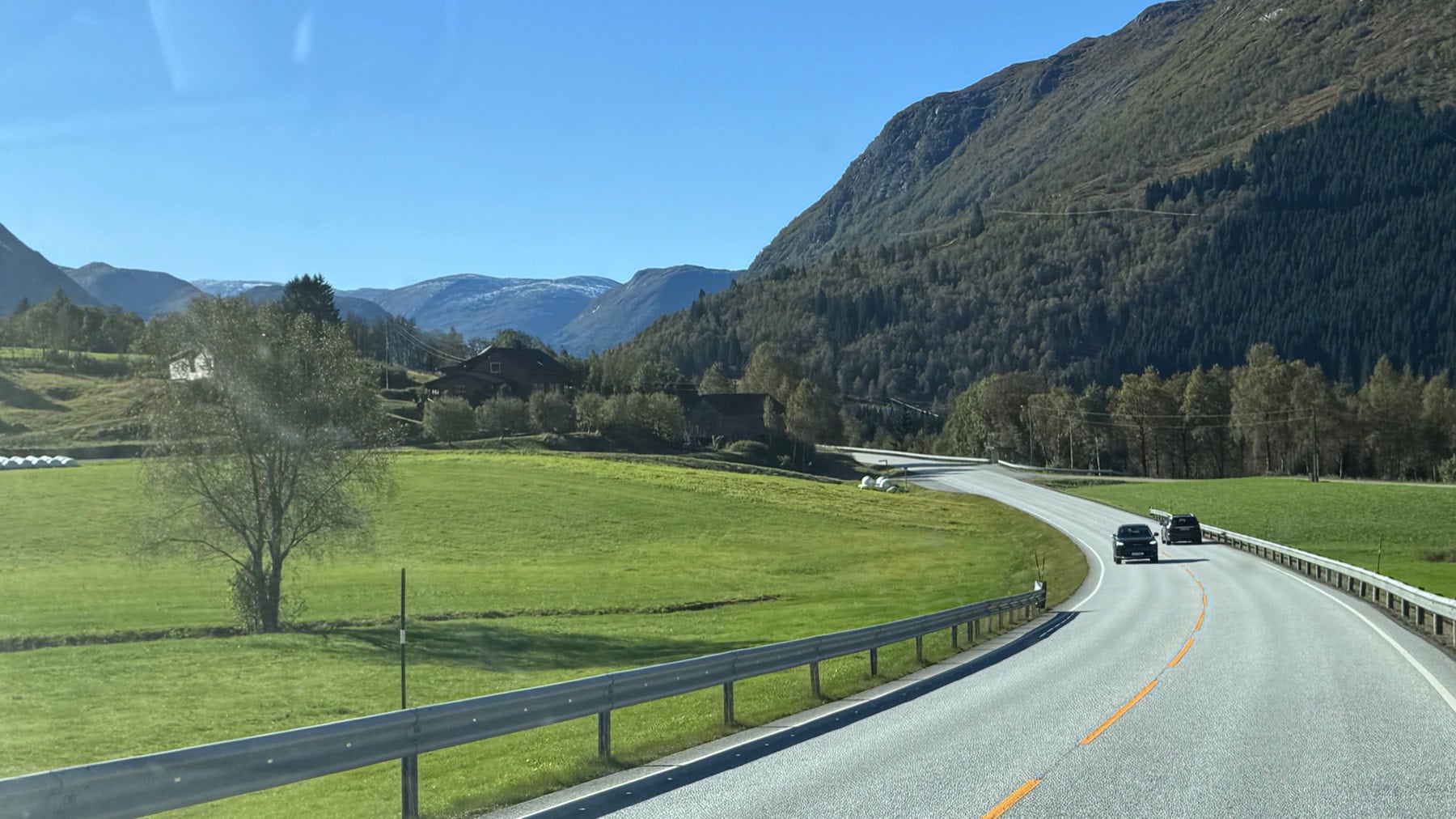
In the afternoon, don’t miss the ride up the Fløibanen funicular to Mount Fløyen, which rises right above the city. From the summit you’ll get a breathtaking panoramic view over the whole of Bergen and the surrounding islands, and if you fancy a bit of exercise, you can head back to the centre on foot along well-marked forest trails.
💡 Tip: If it’s really pouring (which happens often in Bergen), take shelter in the KODE museums, an extensive complex of art galleries set along a picturesque little lake in the city centre.
Day 6: Apple Orchards in Hardanger
You’ll leave Bergen and head back inland, this time to the Hardangerfjord region, famous for its fruit orchards. Along the way, be sure to stop at Steindalsfossen waterfall, which is unique in that you can walk along a safe little path right behind its falling wall of water without getting wet. It’s a stunning experience and a great spot for photos.
Once you reach the fjord itself, the landscape shifts slightly and turns more rugged. Your main goal for today is the staggering Vøringsfossen waterfall, located near the town of Eidfjord. The water plunges into a deep, narrow canyon from a height of over 180 metres, and a new, very boldly designed footbridge was recently built here, leading you right out over the abyss. You’ll spend the night in one of the villages along the fjord, ideally in Eidfjord or the picturesque Lofthus.
💡 Tip: The Hardanger region grows the best apples in all of Norway. Be sure to stop at one of the small farm stalls by the road and buy some local artisan apple cider (eplemost).

Day 7: The Long Mountain Crossing to Geiranger
Brace yourself: in terms of driving, day seven will be the most demanding of the entire itinerary. You face a crossing from Hardanger northwards to the legendary Geirangerfjord. This route takes at least five to six hours of pure driving and also involves crossing fjords by ferry, so the total travel time easily stretches into a full day. Don’t let that put you off, though, because the road itself is the destination here, and the scenery changes around every bend.
You’ll drive across vast highland plateaus, where remnants of snow often linger even in the middle of summer, pass lakes with turquoise water fed by glaciers, and travel through countless shorter and longer tunnels. When the view into the deep valley of Geiranger first opens up before you in the early evening, you’ll understand why the whole world admires this place. Check into accommodation right in the town and enjoy a well-earned rest.
💡 Tip: For long crossings, always stock the car the evening before with plenty of food and drink. Refreshment options in remote mountain areas tend to be limited, and petrol stations appear only rarely.
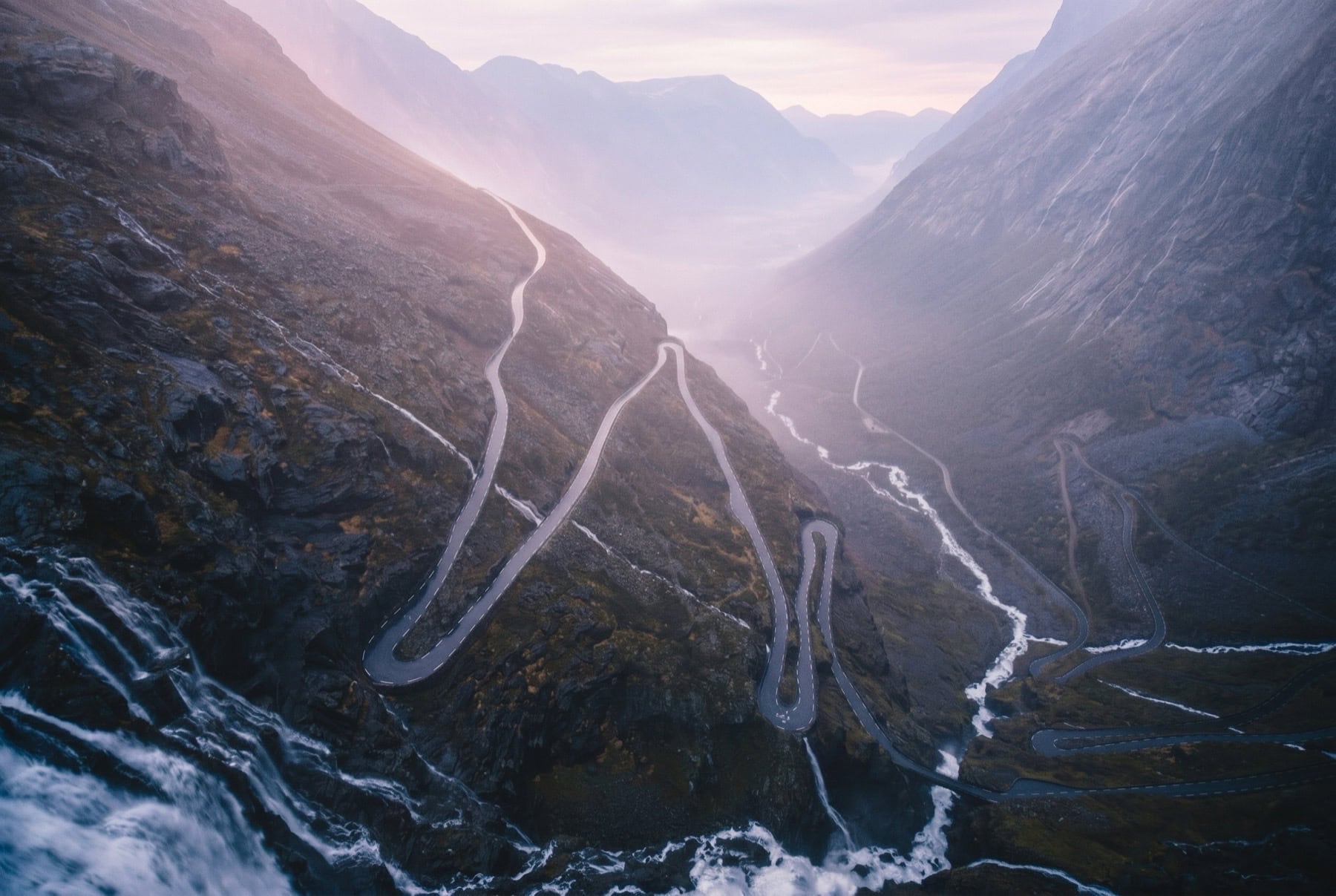
Day 8: Geiranger, the Eagle Road and Magical Trollstigen
Start your morning in Geiranger as early as possible, before the town fills up with tourists from the big cruise ships. Hop in the car and drive the endless hairpin bends up to the Dalsnibba viewpoint, which sits at an altitude of 1,500 metres and offers a breathtaking view down onto the fjord, which from up here looks like nothing more than a small blue ribbon. After heading back down, don’t miss a cruise along the Geirangerfjord itself, during which you’ll see the famous Seven Sisters waterfalls up close.
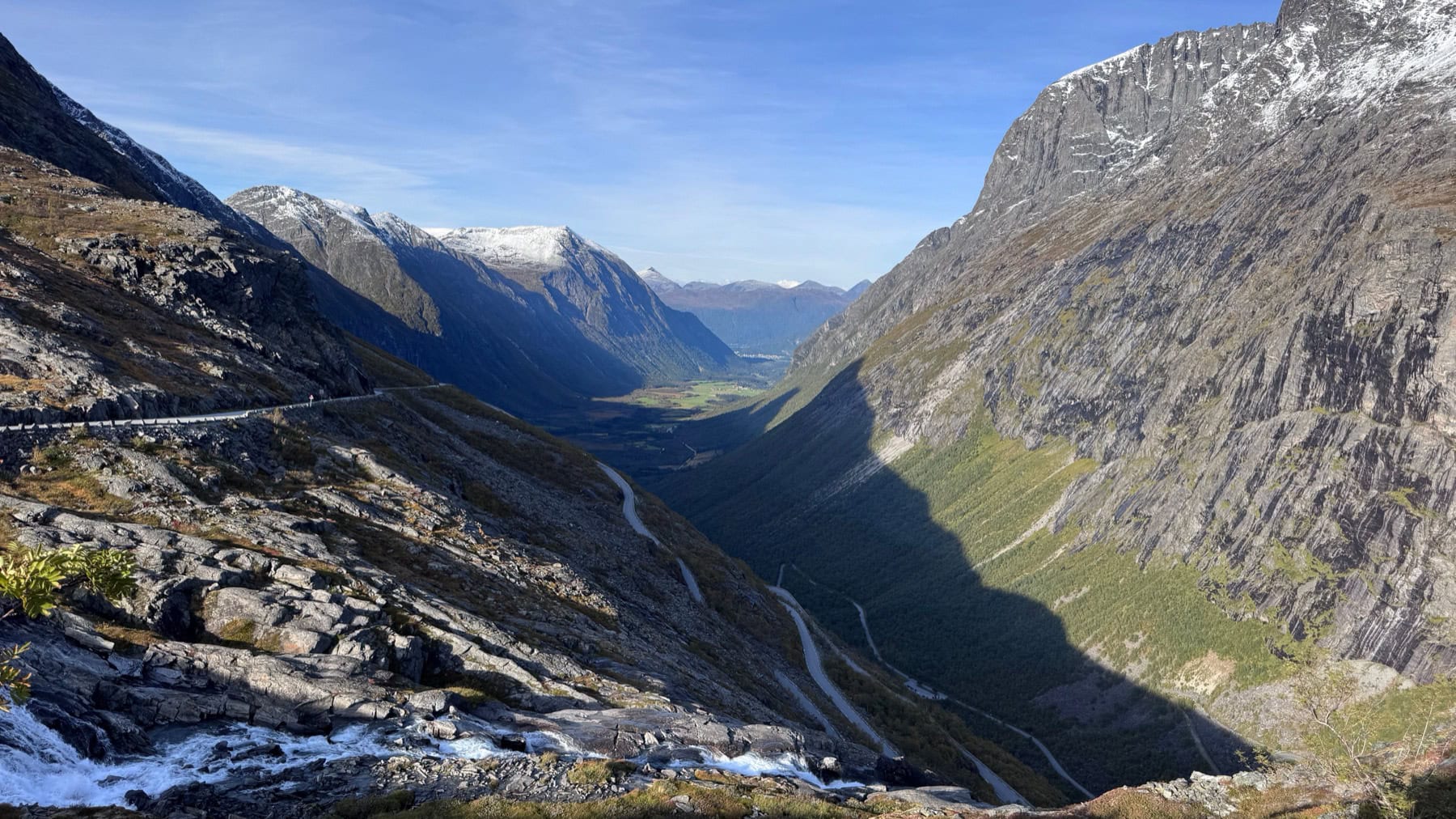
The afternoon brings another driving thrill. You’ll set off along the steep Eagle Road (Ørnevegen) and travel over the mountains to one of Europe’s most famous roads. The Troll Road (Trollstigen) cuts into a sheer rock face in eleven sharp hairpin bends, and driving it is a genuine adrenaline rush, especially when you meet a coach coming the other way. After successfully descending into the valley, you’ll arrive in the town of Åndalsnes, known as the main hub of Norwegian mountaineering, where you’ll also spend the night.
💡 Tip: At the top of the Troll Road there’s a modern visitor centre with several viewing platforms suspended in the air over the valley. Give yourself plenty of time here for photos.
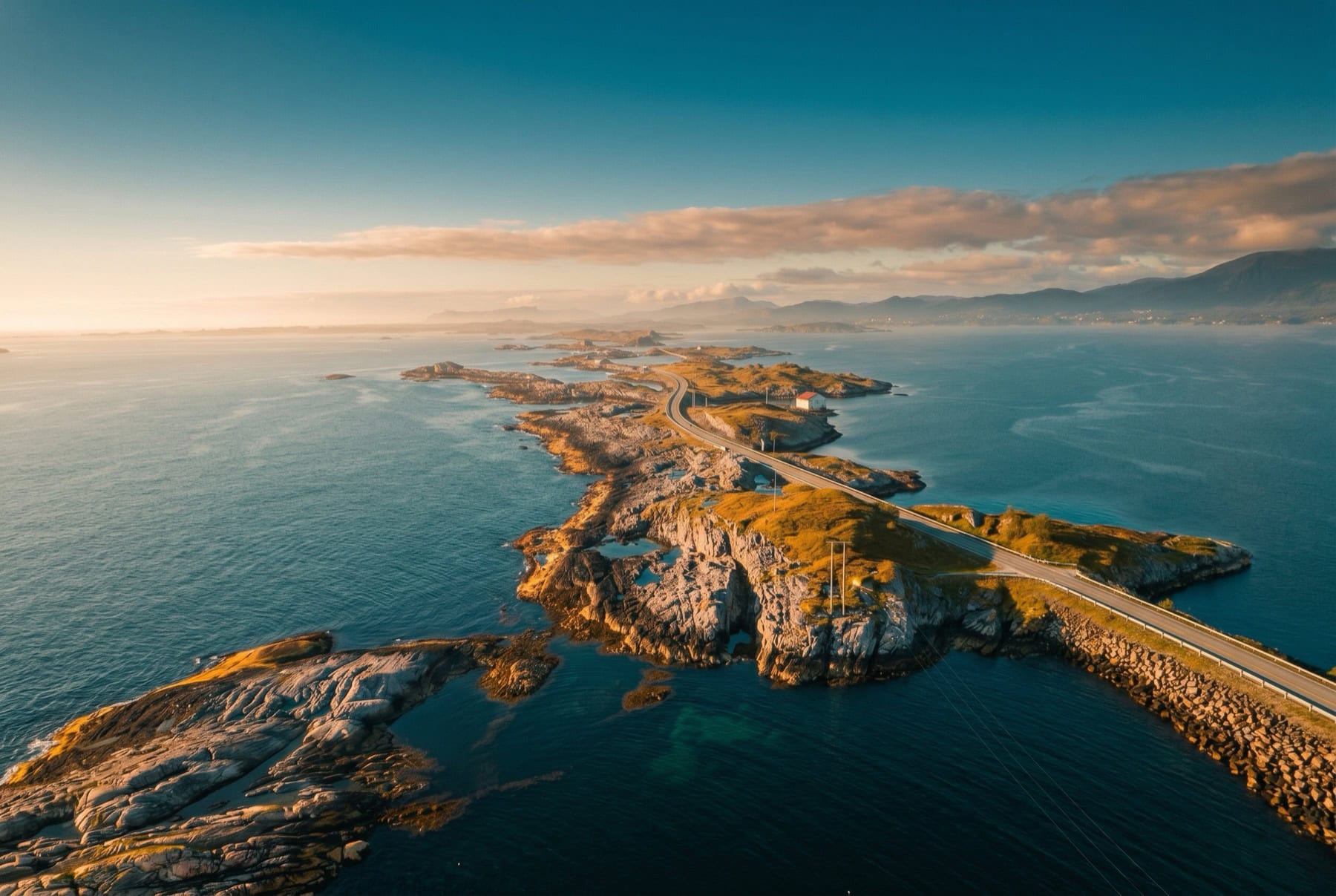
Day 9: Leaping Over the Waves on the Atlantic Road
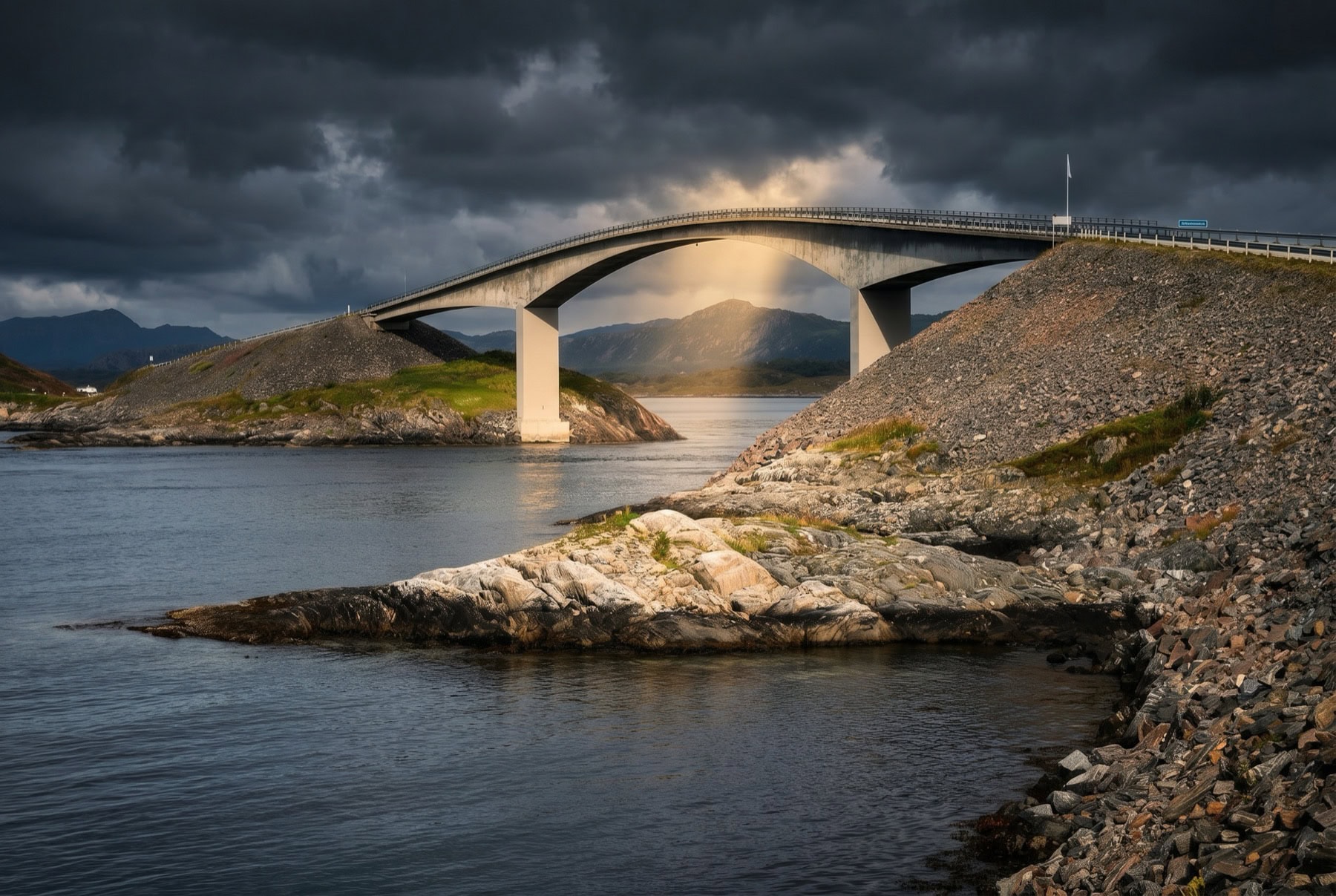
After yesterday’s mountain massifs, the landscape changes dramatically on day nine as you head straight to the ocean coast. From Åndalsnes you’ll make your way towards the town of Molde, from where a ferry takes you closer to the famous Atlantic Road (Atlanterhavsveien). This architectural marvel links islets and reefs by means of eight bridges, and driving it feels more like flying low over the water.
The most famous and most photographed spot is the Storseisundet bridge, which thanks to its asymmetrical shape looks, from certain angles, as though it ends in mid-air and the cars are dropping straight into the sea. If you’re lucky enough to catch wilder weather, you’ll see the ocean waves crashing right into the pillars, with the spray occasionally drenching passing cars. In the evening you’ll stay either in the modern town of Molde or in the more historic Kristiansund at the northern end of the road.
💡 Tip: An excellent scenic walking trail with boardwalks runs right by the sea along the Atlantic Road. Park at one of the rest areas and take a stroll on foot — you might even spot seals playing in the waves.
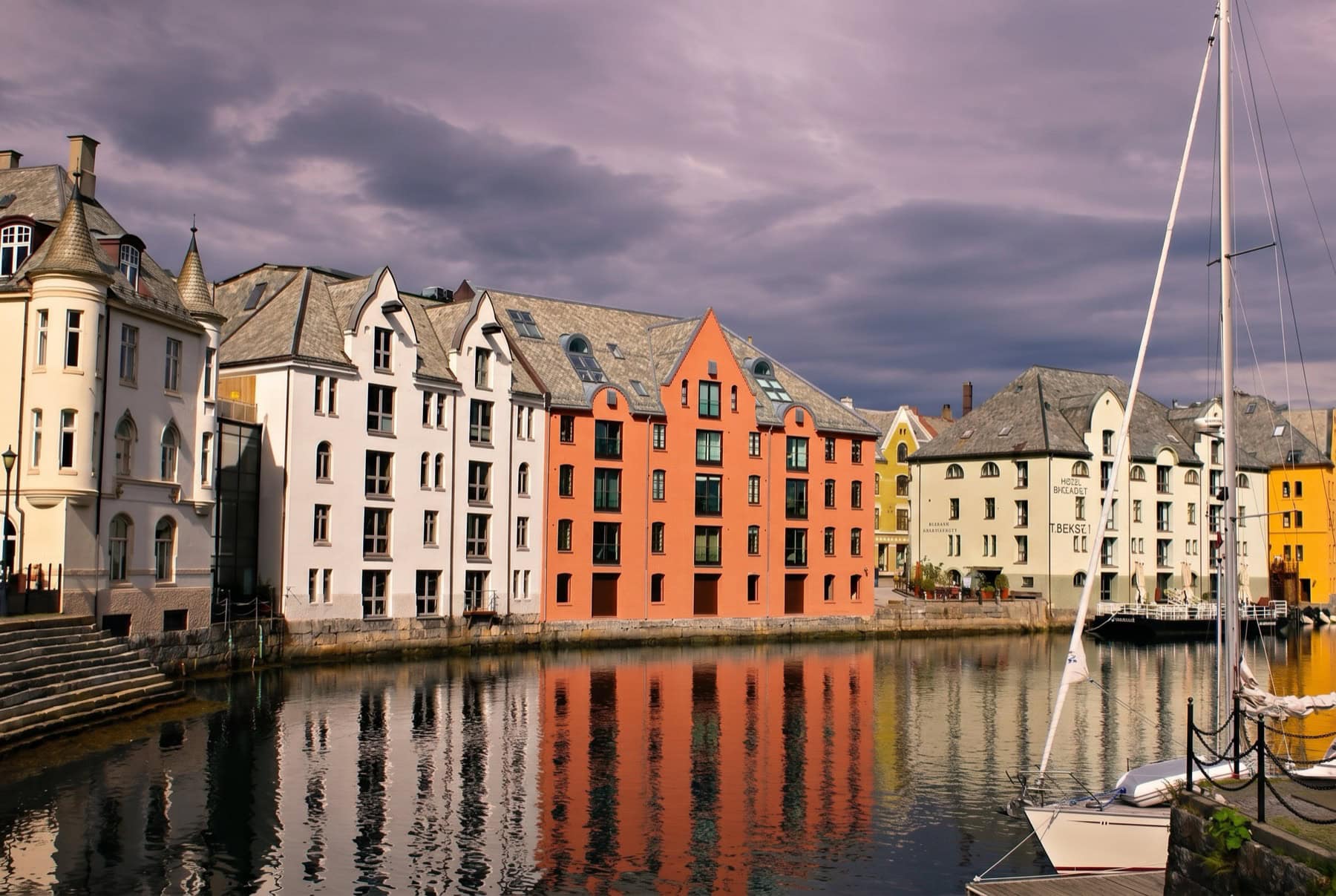
Day 10: Art Nouveau Ålesund and the Flight Home
The final day of your Norwegian road trip belongs to the town of Ålesund, which sits across several small islands and boasts utterly unique architecture. After a devastating fire at the beginning of the 20th century, the entire centre was completely rebuilt in elegant art nouveau style, which is why you’ll find houses adorned with turrets, gargoyles and colourful ornaments that form a perfect contrast with the cold ocean waters all around.
Before you head to the nearby Vigra Airport (or set off on the long drive back south), be sure to climb up to the Aksla viewpoint. There are 418 steps leading up directly from the town park, and the view of the bay, the islands and the mountains in the background is an absolutely perfect way to round off the whole journey.
💡 Tip: Ålesund is also a great place to pick up your last souvenirs. In the local galleries you’ll find beautiful glass and ceramic pieces that will remind you of your Nordic trip for years to come.
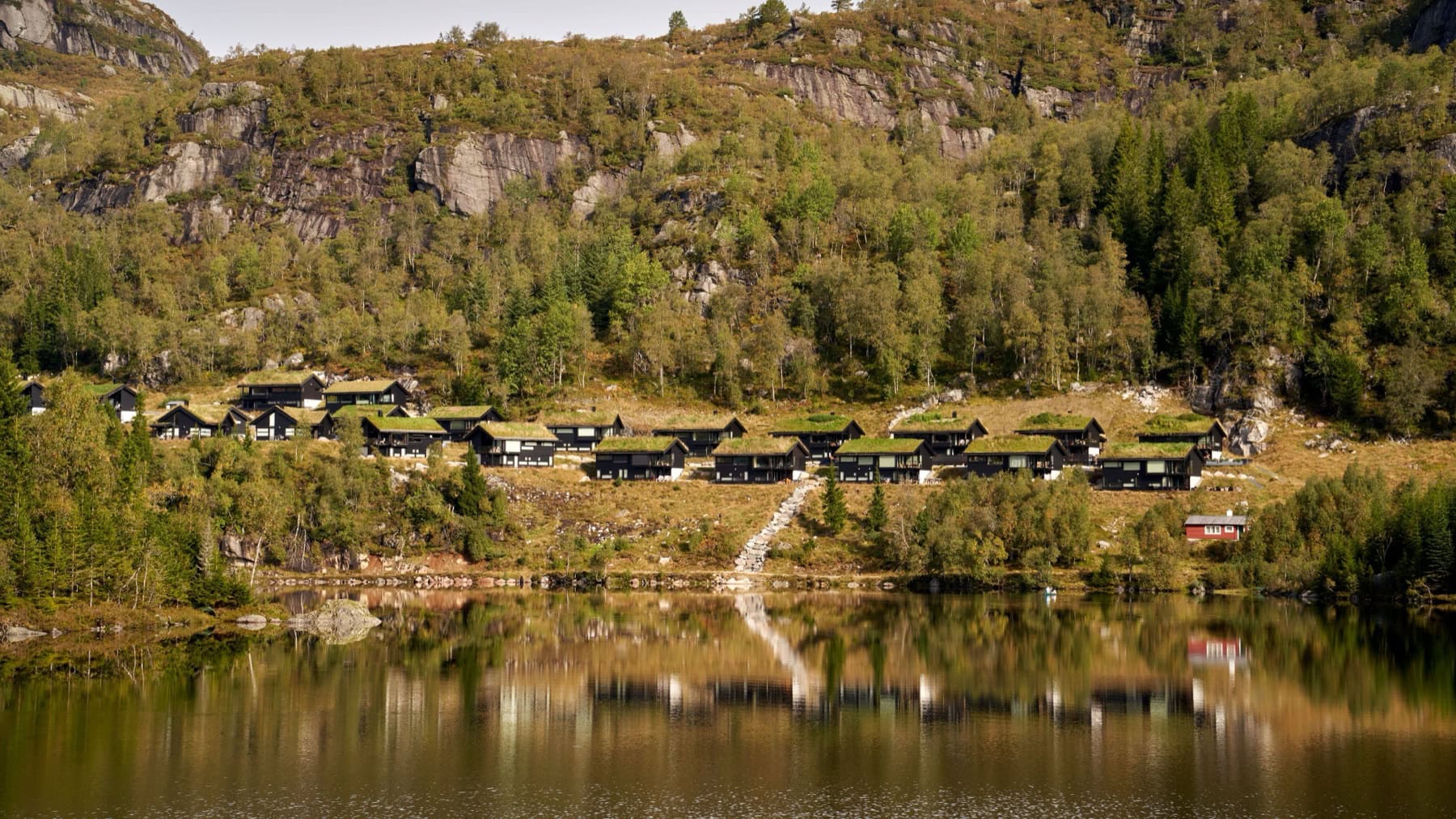
Where to Stay Along the Route
💡 Tip for accommodation and experiences: We prefer to look for places to stay on Booking.com, which tends to have the best cancellation terms. It’s then worth comparing and buying tickets, tours and activities through GetYourGuide.
Given that this is the most popular tourist route in the country, I’d recommend leaving nothing to chance and sorting out your accommodation as much as half a year in advance. If you turn up at a fjord in July without a reservation, you could very easily end up sleeping in the car, because every hotel within a fifty-kilometre radius will be hopelessly full. Good old Booking is perfect for reservations, with everything from small guesthouses to large luxury resorts.
Here’s a summary of the best bases along with specific hotel tips worth trying:
- In Oslo: A great choice is the Thon Hotel Rosenkrantz, located right in the centre just a stone’s throw from parliament, and famous for serving one of the best and most generous breakfasts in the entire city.
- In Flåm: If you want a taste of history, stay at the gorgeous Fretheim Hotel, a grand historic building with beautiful gardens that dates back to the dawn of Norwegian tourism in the late 19th century.
- In Bergen: Go for a strategic location near the harbour — the Thon Hotel Orion is excellent, just a few minutes’ walk from the famous Bryggen Hanseatic houses and the funicular.
- In Geiranger: For maximum comfort and relaxation in the heart of the mountains, the iconic Hotel Union Geiranger fits the bill, perched on a hill above the village and boasting a fantastic wellness centre with mountain views.
- In Åndalsnes: A wonderful family atmosphere and modern Nordic design are on offer at Hotel Aak, which caters to active travellers — and after a full day of driving, you’ll find perfect peace and quiet here.
Where to Go Next
If you already have your itinerary roughly figured out and you’re after more detail on specific places, or you need to soak up more practical advice before your trip, take a look at these companion articles:
- Norway: 50 Things to See — A huge overview of the most interesting places across the whole country, perfect if you’re considering stretching out your route.
- Norway by Car: Road Trip and Practical Tips — An article focused purely on driving, where I break down tolls, speed limits and how the ferries work in detail.
- Norwegian Fjords — A Guide — A detailed look at the most beautiful inlets of the west coast and tips on how to enjoy them both from the deck of a boat and from mountain viewpoints.
- Geirangerfjord — A standalone guide dedicated to the king of all fjords, because this place simply deserves an article of its own.
Frequently Asked Questions
How many days is enough for Norway?
If you want to see the main highlights of the western fjords, 7 days is the absolute minimum. The ideal and most recommended length is 10 days, which allows you to drive the route at a relaxed pace. If you want to add Preikestolen in the south or fly to the north, set aside at least 14 days or more.
Can this itinerary be done without a car?
“`html
Partly yes, but you’ll miss out on a great deal of freedom. You can use the popular “Norway in a Nutshell” package, which combines trains and boats between Oslo, Flåm and Bergen, but getting to more remote places and mountain viewpoints like Trollstigen by public transport is very complicated.
“`
Is it better to go for 7, 10, or 14 days?
The golden middle ground is 10 days, because you’ll cover all the icons of the south and west without a frantic pace. The one-week option is very condensed and you’ll have to cut out interesting places, while 14 days gives you space to discover lesser-known corners or combine the south with the Arctic north.
When to set out on this trip?
“`html
The safest and most beautiful period is roughly from the end of May to the beginning of September. During this time, the snow on mountain roads has usually melted, nature is beautifully green, and all tourist attractions including ferries operate at full capacity.
“`
How much does it all cost roughly?
Calculate that when traveling as a couple in a rental car and sleeping in mid-range hotels, your daily budget will be roughly between €170 and €240. This includes the car, petrol, tolls, accommodation and occasional restaurant visits, with the rest of your meals covered by supermarket shopping.
Where is the best place to start and end the route?
This classic circuit is best to start in Oslo, as it has the most flight connections and you can easily rent a car. You can finish either in Bergen or in Ålesund, from where you’ll fly home with a connection, or you can return to Oslo airport with one last long drive.
Can I handle this road trip even with small children?
Absolutely yes, Norwegians are an incredibly family-friendly nation. However, I recommend loosening the itinerary a bit, avoiding eight-hour car journeys and instead spending at least two nights in each place, so you can give the children time to rest and play in nature.
Tips and Tricks for Your Vacation
Don’t Overpay for Flights
Search for flights on Kayak. It’s our favorite search engine because it scans the websites of all airlines and always finds the cheapest connection.
Book Your Accommodation Smartly
The best experiences we’ve had when looking for accommodation (from Alaska to Morocco) are with Booking.com, where hotels, apartments, and entire houses are usually the cheapest and most widely available.
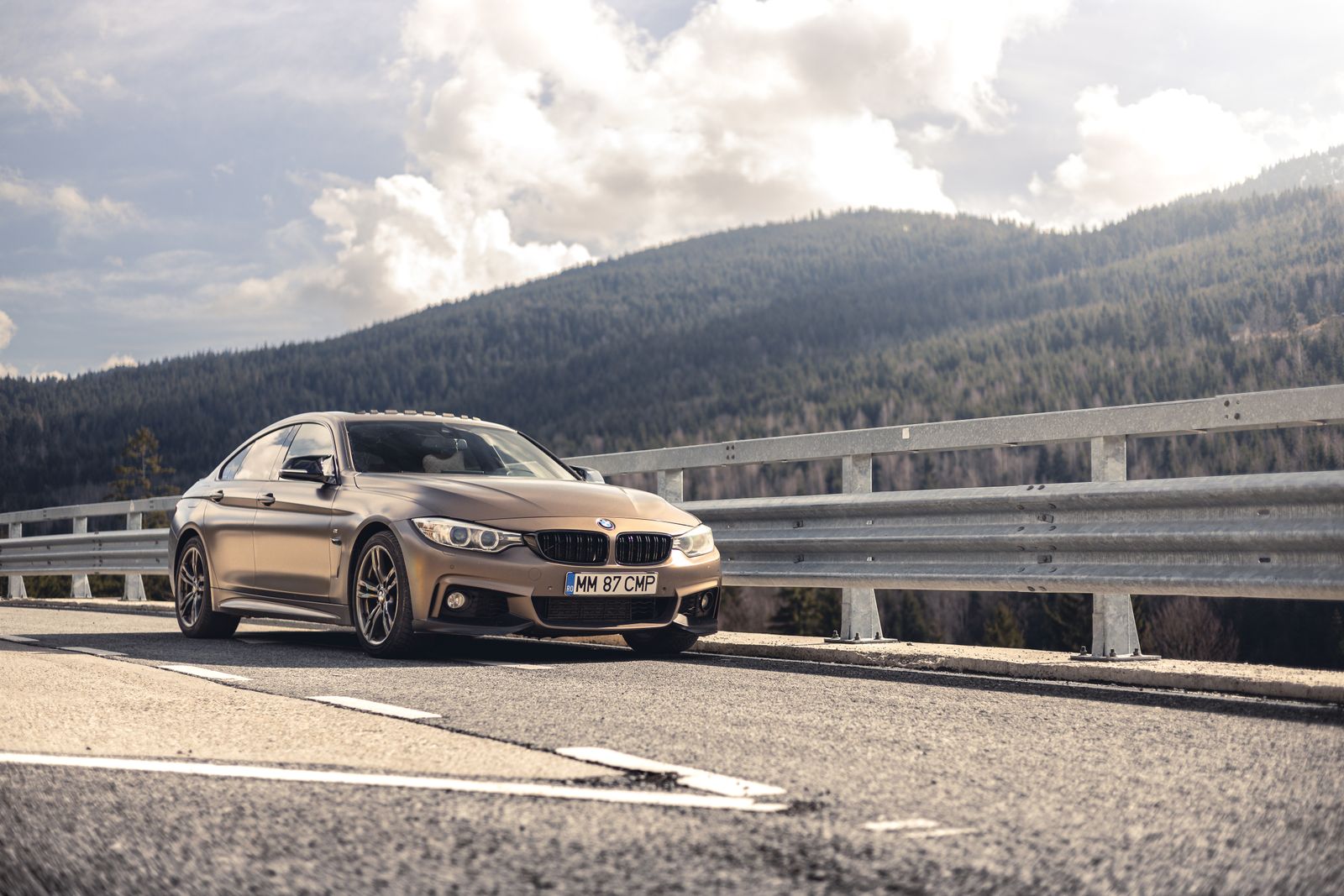 🚗 Car rental on the roadVerified rental cars in Norway
Search with the DiscoverCars comparison engine — it compares prices from dozens of local and international rental companies, and most bookings come with free cancellation.
Compare car prices in Norway →Don’t Forget Travel Insurance
Good travel insurance will protect you against illness, accidents, theft, or flight cancellations. We’ve had a few hospital visits abroad, so we know how important it is to have proper insurance arranged.
Where we insure ourselves: SafetyWing (best for everyone) and TrueTraveller (for extra-long trips).
Why don’t we recommend any Czech insurance company? Because they have too many restrictions. They set limits on the number of days abroad, travel insurance via a credit card often requires you to pay medical expenses only with that card, and they frequently limit the number of returns to the Czech Republic.
Find the Best Experiences
Get Your Guide is a huge online marketplace where you can book guided walks, trips, skip-the-line tickets, tours, and much more. We always find some extra fun there!


