

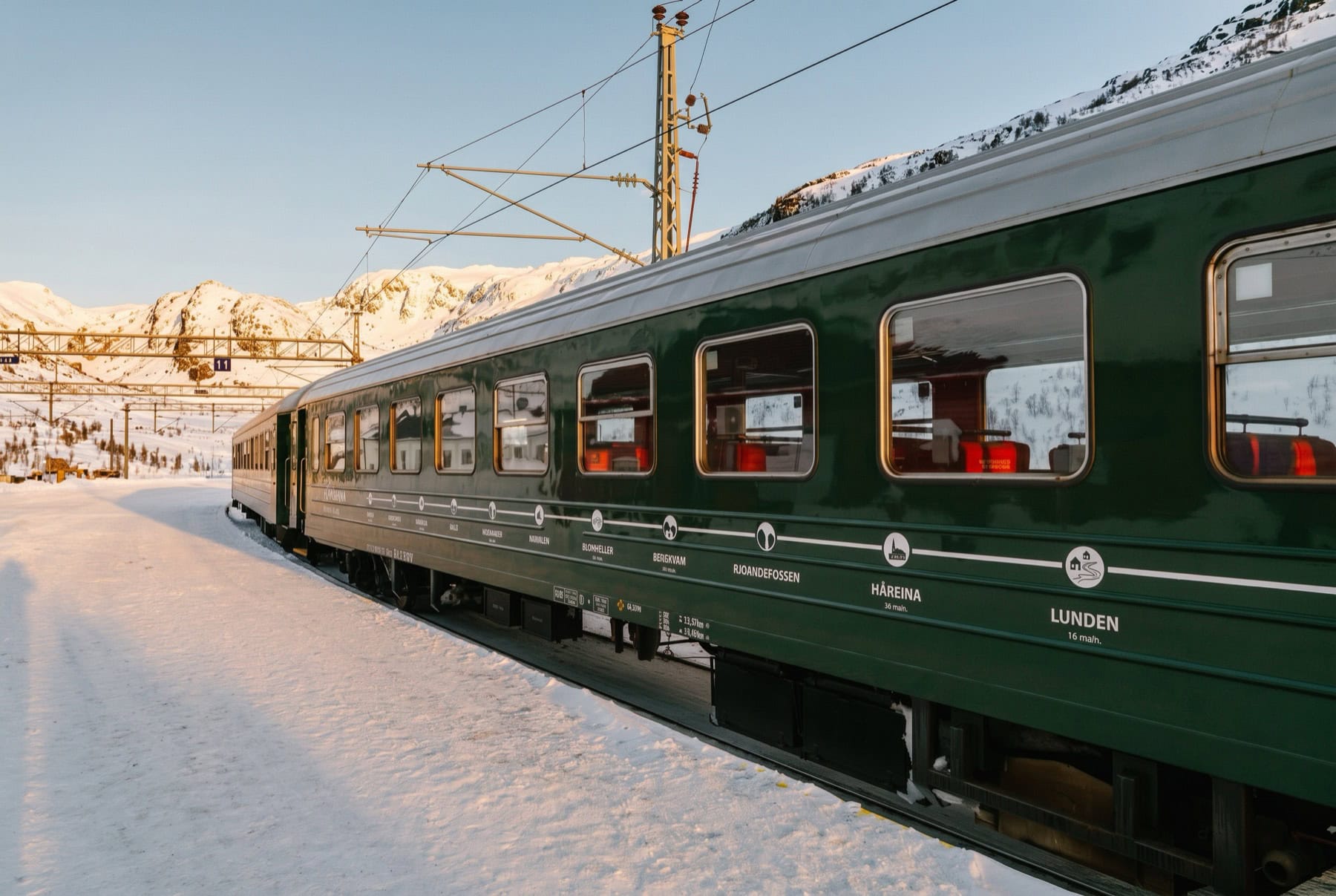
Norway is famous for its deep fjords and rugged Nordic wilderness, but there’s one engineering marvel that lets you take it all in from the comfort of a soft seat. The Flåm Railway (Flåmsbana) in Flåm, Norway rightfully and regularly tops the charts of the most beautiful train journeys on the entire planet.
In just twenty kilometres of travel, you’ll climb (or descend) an enormous elevation change of more than eight hundred metres, all while admiring steep green valleys and thundering waterfalls. The journey from the high-mountain station of Myrdal all the way down to the surface of the majestic Aurlandsfjord is simply something you absolutely shouldn’t miss when visiting Scandinavia.
In this guide, we’ll walk through all the essential information so you can plan your Nordic trip completely stress-free. You’ll learn how to secure your tickets well in advance, why the photo stop at the Kjosfossen waterfall is worth it, and where to stay strategically right in the picturesque little village of Flåm.
TL;DR
- Length and route: The Flåm Railway runs 20 kilometres and connects the mountain station of Myrdal with the harbour village of Flåm.
- Extreme gradient: It’s one of the steepest standard-gauge railways in the world, with the track reaching a gradient of up to 5.5 percent.
- Best views: On the descent from Myrdal, sit on the right-hand side of the train to see the deep valley in all its glory.
- Waterfall stop: The train makes a special pause at the mighty Kjosfossen waterfall, where the mythical Huldra fairy appears during the season.
- Booking is a must: Tickets sell out in a flash during the summer months, so buying online well ahead of time is absolutely essential.
- Part of a bigger trip: The route forms the very heart of the popular Norway in a Nutshell tour.
When to Go and How to Get to Flåm
Planning a trip to the Flåm Railway takes a bit of strategic thinking, especially if you want to dodge the biggest crowds of cruise-ship tourists. The main summer season runs from June to August, when the entire valley is beautifully green and the temperatures are at their most pleasant — but you’ll also have to reckon with fully booked carriages. Spring and autumn offer a noticeably calmer atmosphere, while a winter ride through the snow-covered landscape feels like a genuine Nordic fairytale. If you’re checking the forecast before you go, the Flåm, Norway weather is famously changeable, so pack layers no matter the season.
If you’re travelling by public transport, your starting point will most likely be the high-mountain station of Myrdal. You reach it via the main Bergensbanen railway line, which connects the Norwegian capital Oslo with the coastal city of Bergen. The journey from Oslo takes roughly four and a half hours, while from Bergen you’ll be in Myrdal in about two hours. Coming from the UK, the easiest route is to fly into Bergen — direct flights run from London and several regional airports — and then take the scenic train onward. If you prefer a road trip and have a hire car, you can drive straight into the village of Flåm, passing through the famous Lærdal Tunnel along the way.
Where to Stay: Hotels in Flåm, Norway
💡 Tip for accommodation and experiences: We love searching for places to stay on Booking.com, where the cancellation terms tend to be the best. For tickets, tours and activities, it’s worth comparing and booking through GetYourGuide.
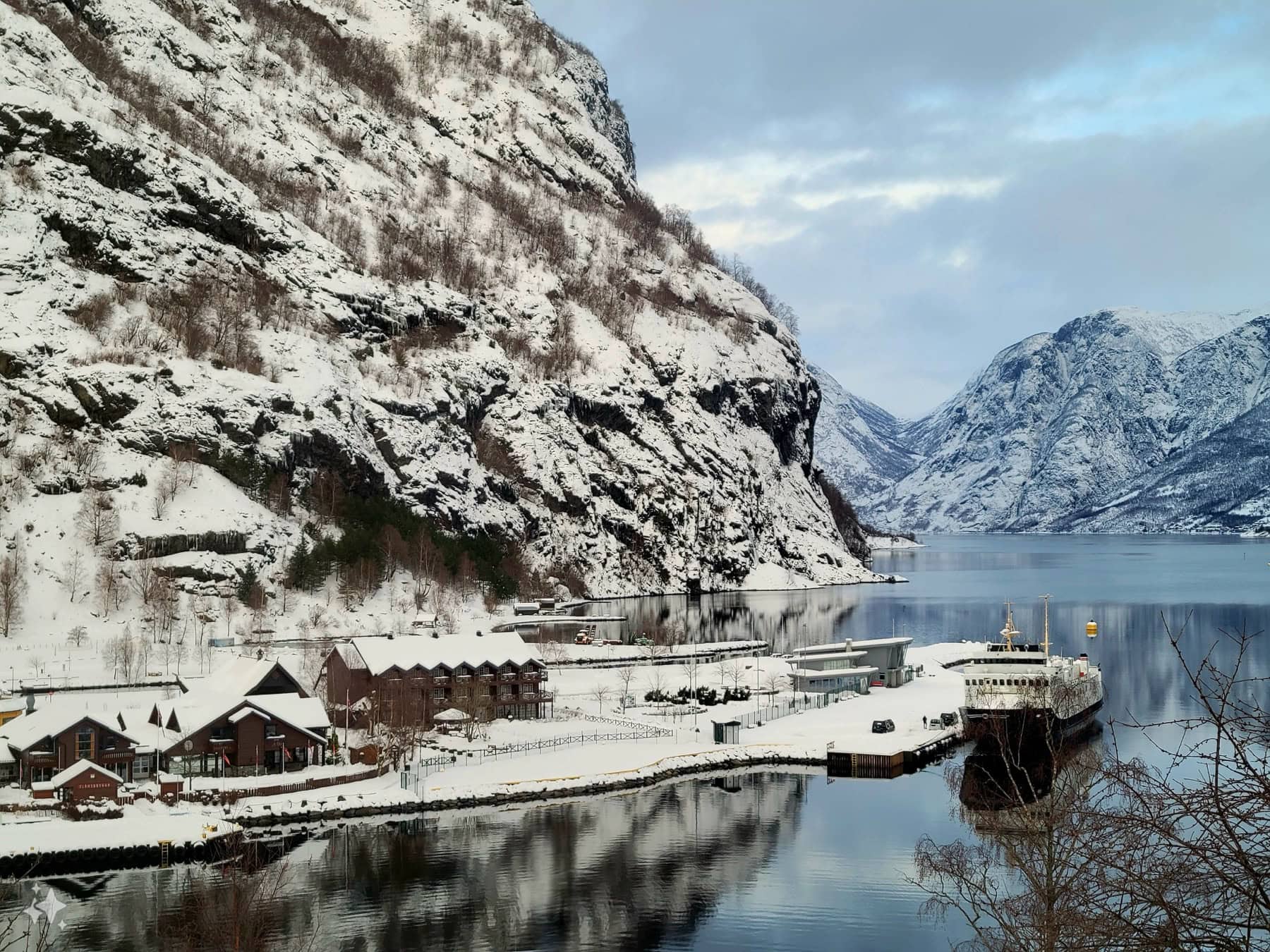
Finding good accommodation right in the village of Flåm can be quite a challenge during peak season, so it pays to sort your booking even six months ahead. Most hotels are located right next to the harbour and the railway station, so you won’t have to drag your suitcases far. Prices here usually range from 1,600 to 2,800 NOK per night (roughly 140 to 245 €), depending on the season and room type.
I’d definitely recommend taking a look at the Fretheim Hotel, a gorgeous historic building brimming with charm that stands just a few steps from both the fjord and the station itself. Another excellent choice is the Flåmsbrygga Hotel, which sits right by the harbour pier and is home to a beloved local brewery, so you won’t have far to go for an evening drink. You can easily book both of these through Booking, where you can also keep an eye out for free cancellation.
7 Things to See and Do Around the Flåm Railway
The Flåm Railway isn’t just about sitting in a carriage and being carried down to the fjord. The whole Flåmsdalen valley works as a complete experience destination, offering an incredible range of activities for lovers of nature, history and good food alike. To make the most of your time in this area, I’ve put together a detailed list of places and experiences.
You’ll find everything here, from hikes and bike rides to cruises across the deepest fjords in the country. Set aside at least one full day for this area, ideally with an overnight stay, so you can savour the early-evening calm once the big tour groups have headed back to their cruise ships.
1. Riding the Steepest Railway
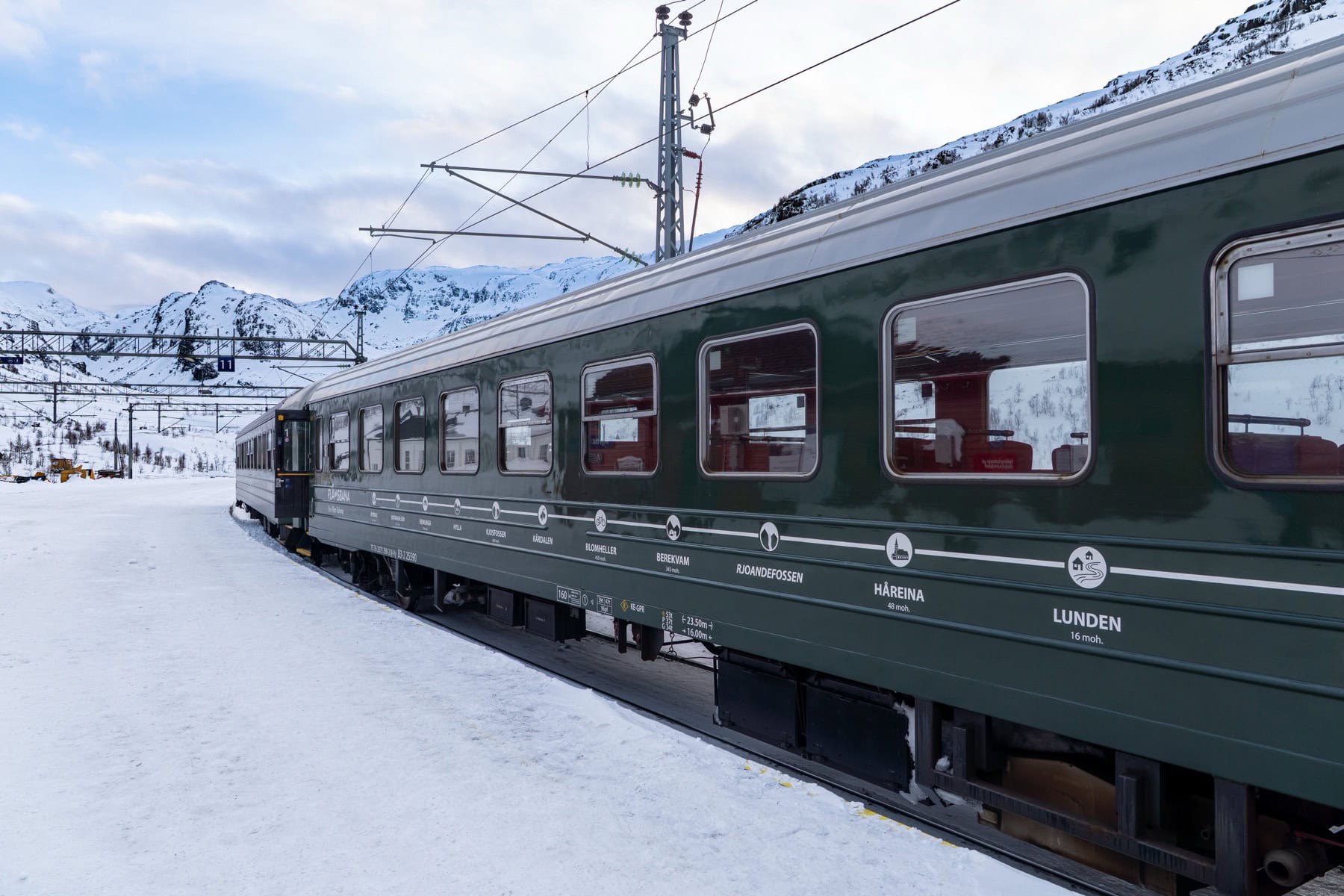
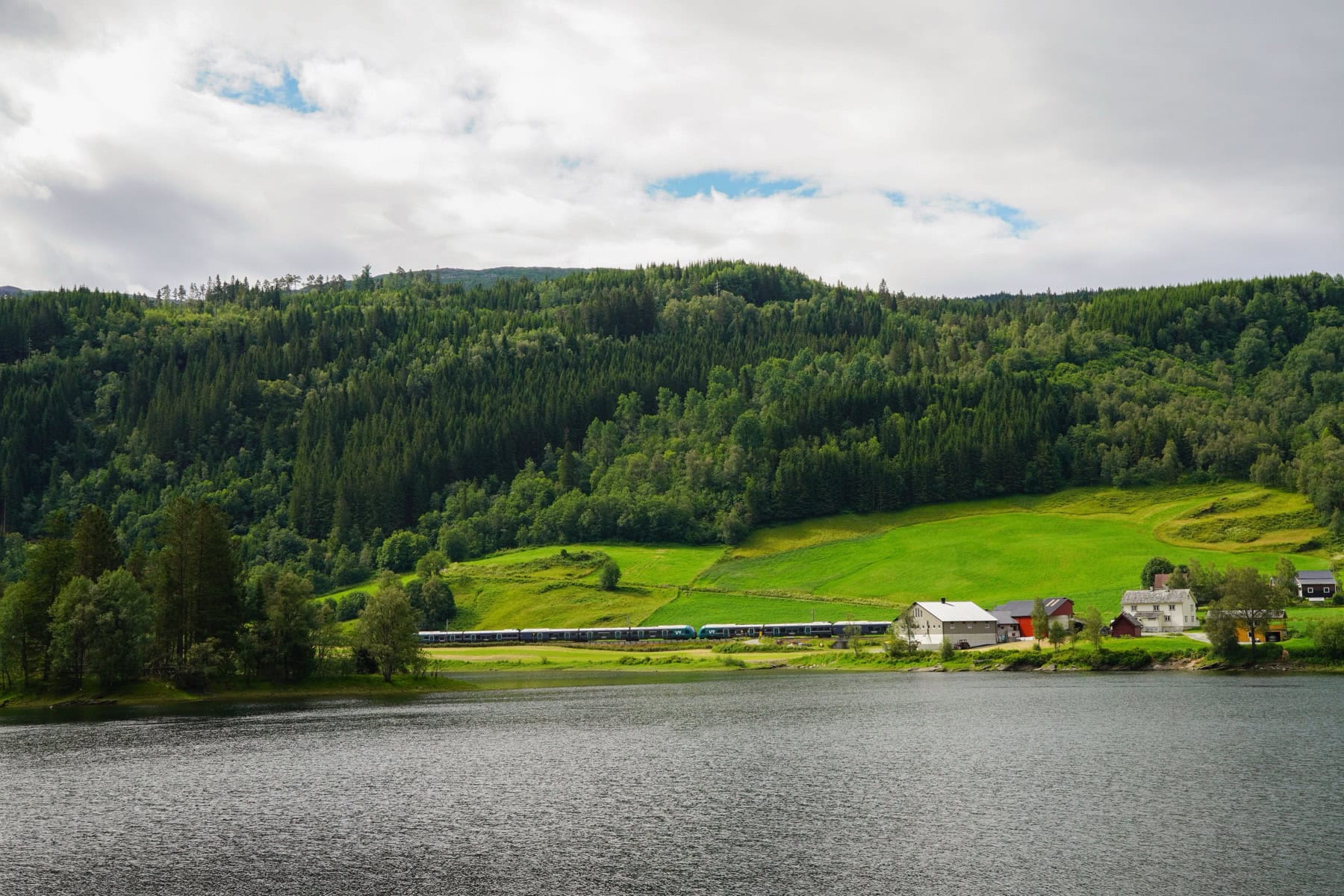
The Flåmsbana journey itself is an astonishing feat of engineering that took a full twenty years to build and demanded an enormous amount of effort. Over its twenty kilometres, the train tackles a gradient of up to 5.5 percent, making it one of the steepest standard-gauge railways in the world. Along the way you’ll pass through no fewer than twenty tunnels, eighteen of which were carved into the hard Norwegian rock entirely by hand, without any heavy machinery.
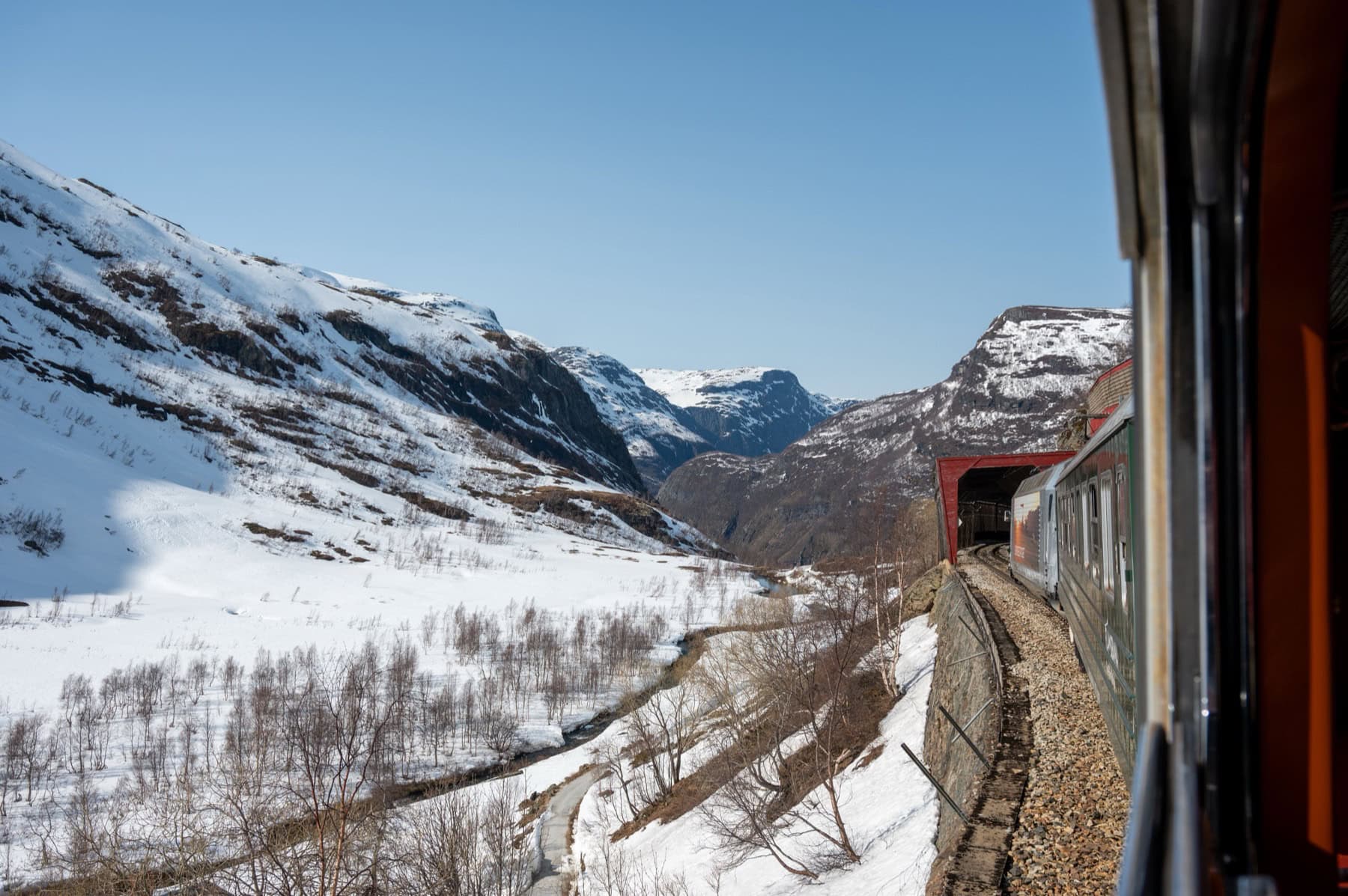
The scenery outside the window changes by the minute, as the rugged high-mountain plateaus around Myrdal gradually give way to lush green pastures in the valley. The train deliberately travels very slowly, so passengers can soak in all those dramatic views of deep ravines and farms scattered across the mountainsides. The carriages are also fitted with large panoramic windows and a nostalgic wooden interior that gives the whole experience just the right historic atmosphere.
💡 Tip: If you’re travelling from Myrdal down to Flåm, try to grab a seat on the right-hand side of the train. It’s from this side that you’ll get the very best views deep into the Flåmsdalen valley itself.
2. Kjosfossen Waterfall and the Huldra Fairy
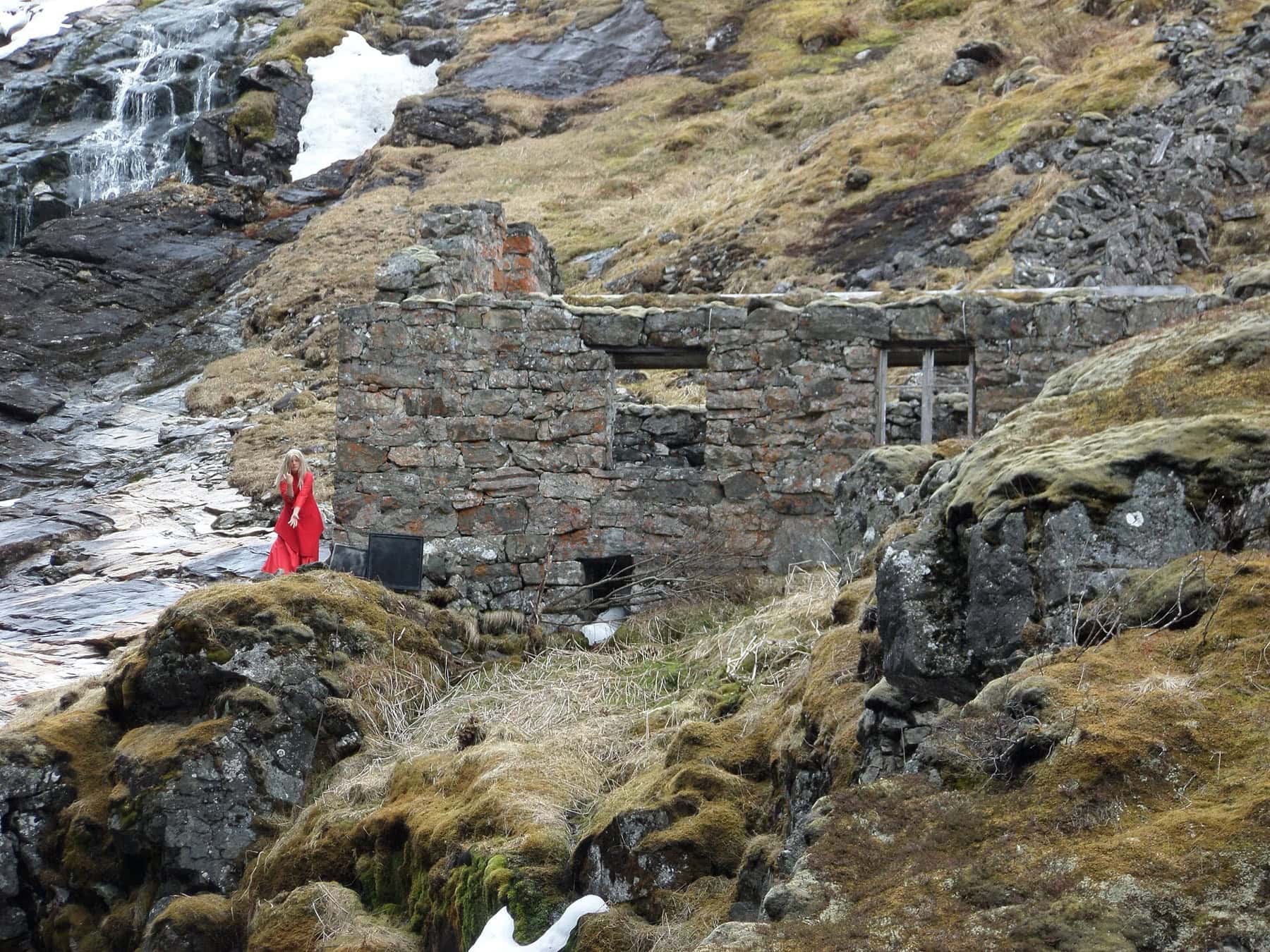
About halfway through the journey, the train starts to slow down, eventually coming to a complete stop on a specially built wooden platform in the middle of the wilderness. This is where the mighty Kjosfossen waterfall is located, its waters plunging from an impressive height of 93 metres and creating such a powerful spray that you probably won’t stay entirely dry. The stop lasts about five minutes — just enough time to step out and take a few lovely photos.
But this natural spectacle has one more big draw, rooted in old Norse myths and legends. During the summer season, the mysterious Huldra fairy appears at the waterfall — a mythical creature in a long red dress who, according to legend, lured men into the deep forests with her song. Accompanied by dramatic Norwegian folk music echoing through the valley, she performs a short, magical dance right on the rocks beside the thundering water.
Interestingly, the role of this mythical being is usually played by talented students from a Norwegian ballet school. The whole little performance feels almost impossibly mystical in the middle of the wilderness, and for many travellers the moment at Kjosfossen is the most powerful experience of the entire train journey.
3. The Village of Flåm
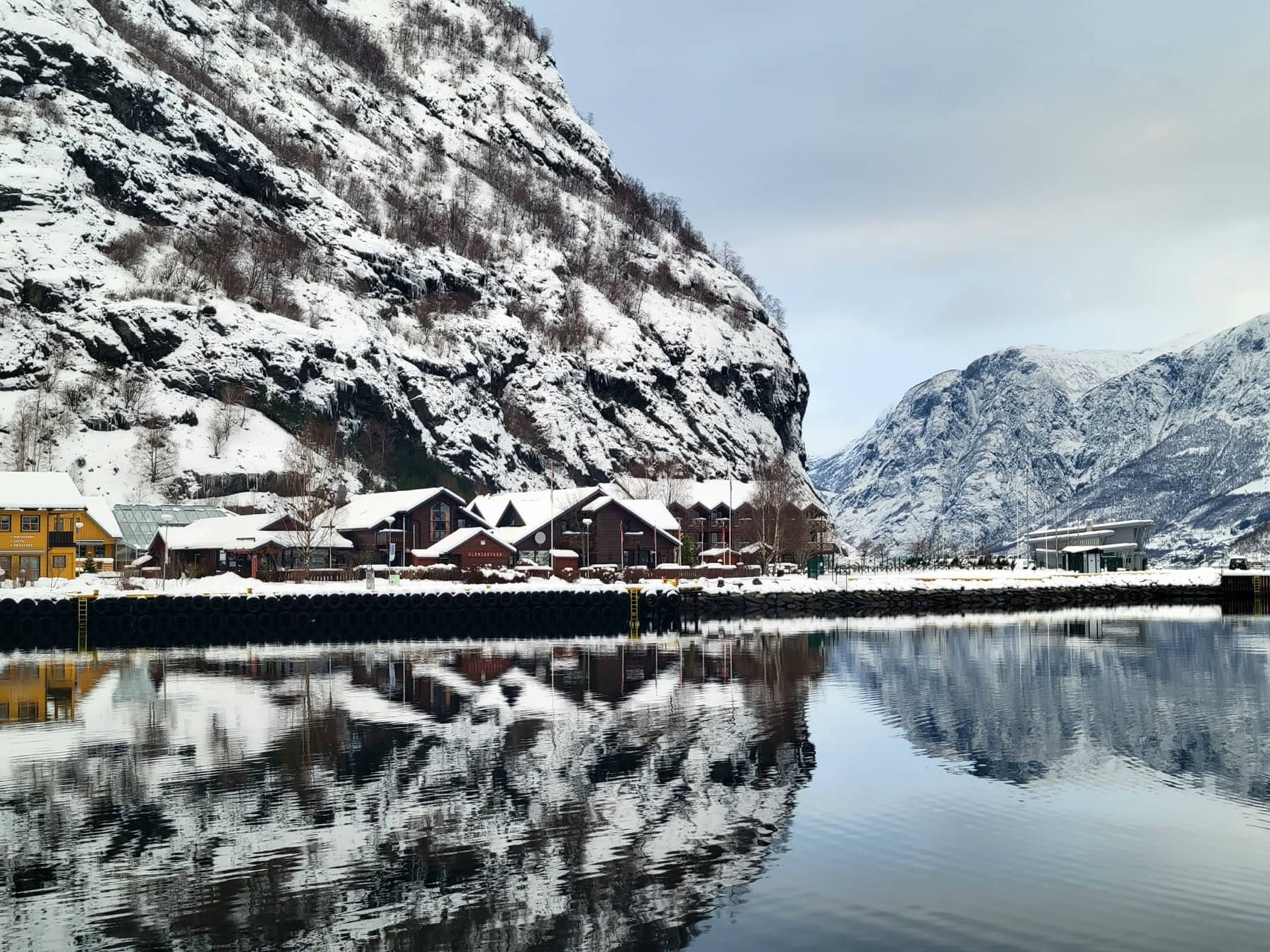
Your train journey ends right at the water’s edge in the picturesque little village of Flåm, which may have only around 350 permanent residents but bursts at the seams during the season. Right next to the station you’ll find the free Flåmsbana Museet, where you can dive into the fascinating history of building this unique railway and admire the old locomotives. It’s a great way to understand just how incredibly demanding it was to construct a working line in such extreme mountain terrain.
When hunger strikes after your journey, don’t miss the famous local Ægir brewery, whose building looks from the outside like a traditional Viking stave church. Inside, you’ll be greeted by a wonderful atmosphere with a huge fireplace in the centre of the room, where you can order a tasting board of their craft beers. Beyond the excellent drinks, the brewery serves a varied range of local dishes, and vegetarians are well catered for too, thanks to some great meat-free specialities inspired by Nordic cuisine.
Flåm also serves as the main launch point for exploring the surrounding nature by water. A whole fleet of cruise boats and fast craft is moored in the harbour, but if you prefer a more active kind of relaxation, you can hire a sea kayak here and explore the fjord’s quiet corners entirely on your own.

4. The Aurlandsfjord and the Stegastein Viewpoint
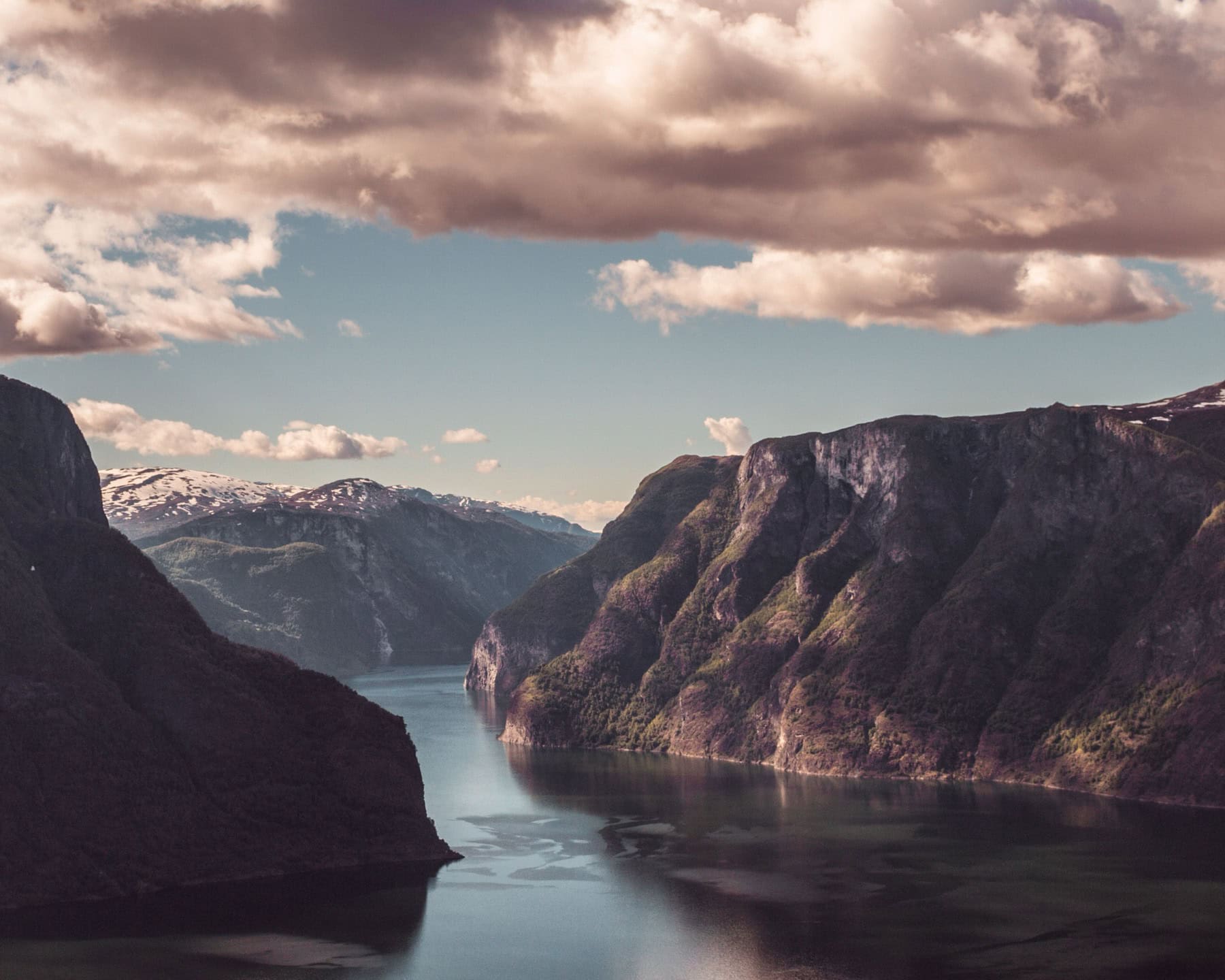
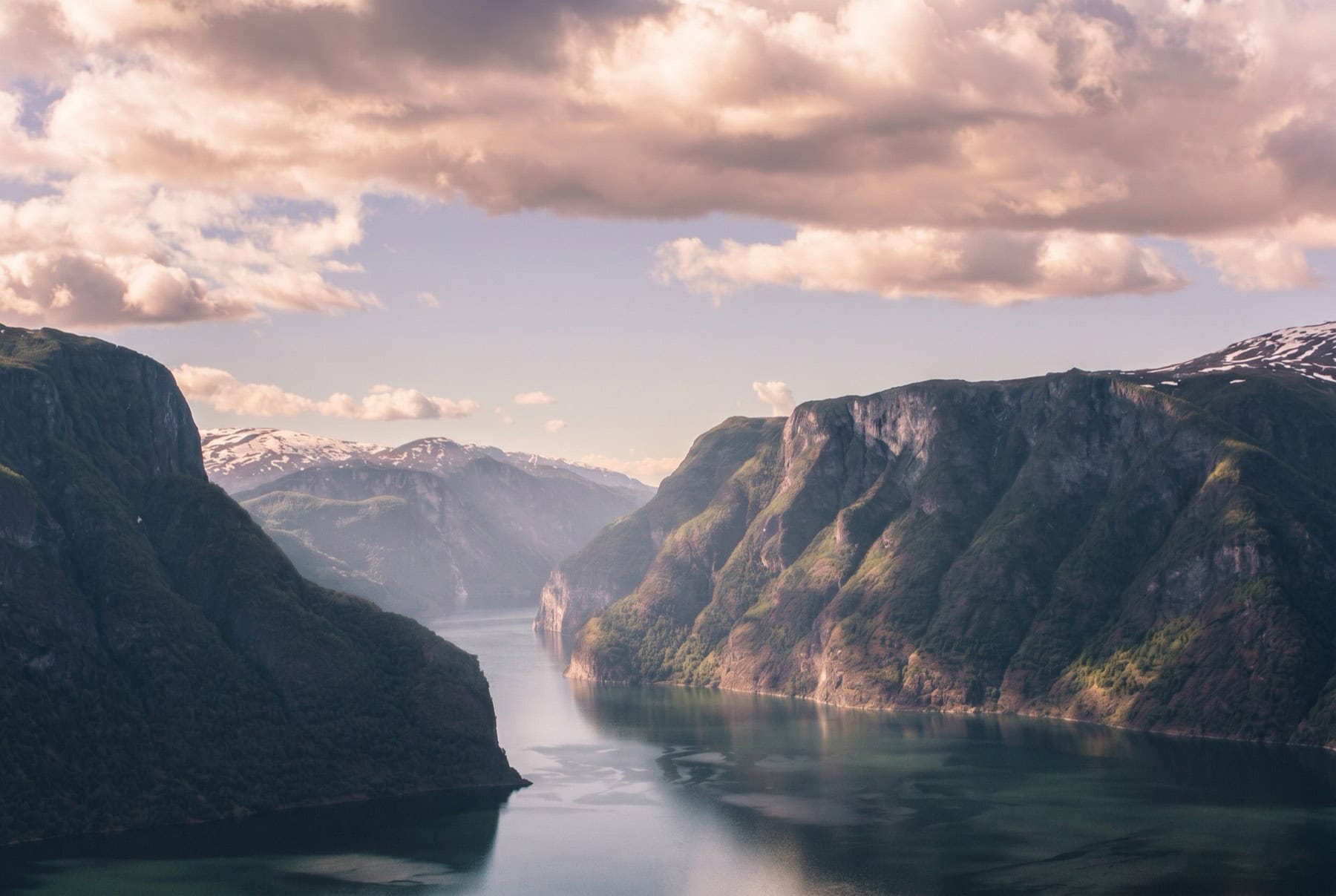
The village of Flåm lies at the very end of the Aurlandsfjord, one of the most beautiful arms of the vast Sognefjord, which cuts deep into the Norwegian mainland. The sight of the deep blue water hemmed in by steep green hills is absolutely breathtaking and well worth heading out on an organised cruise for. Modern, fully electric boats set off regularly from the local harbour, gliding across the water almost silently so as not to disturb the surrounding wilderness.
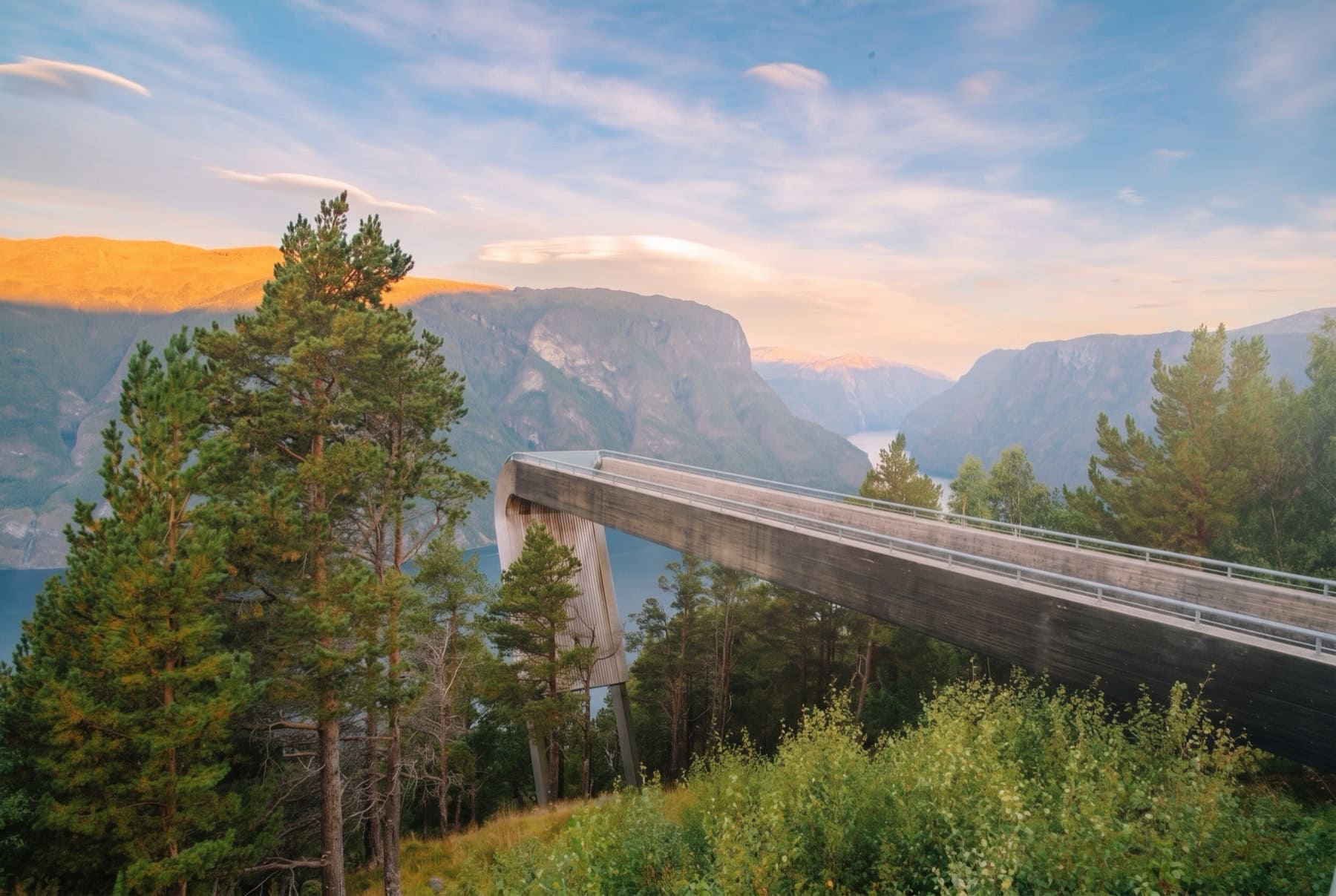
If you want to take in all that beauty from a bird’s-eye view, you’ll need to make your way to the famous Stegastein viewing platform. This stunning wooden structure rises 650 metres directly above the surface of the fjord, and thanks to its clear glass edge, you’ll feel as though you’re floating freely in mid-air. It’s reached via a narrow, winding road known as the Snow Road, which might make your head spin a little — but the view is one hundred percent worth it.
Special sightseeing buses run regularly from Flåm to the viewpoint, so you can get there easily even without your own car. The trip takes about an hour and a half including time for photos, so it fits perfectly as an extra afternoon activity once you’ve come down from the mountains by train.
5. The Norway in a Nutshell Tour
If you want to see the best of the Norwegian fjords in a short space of time and don’t have a car, this is your best possible option. The Flåm Railway forms the very heart of the popular Norway in a Nutshell package, which brilliantly links together the country’s most beautiful train and boat routes. There’s no complicated planning required — the whole system is designed so that all the connections fit together perfectly and stress-free.
A typical one-day tour starts early in the morning in Oslo or Bergen with a ride along the main Bergensbanen line to Myrdal station. From there you descend the famous Flåmsbana down to the fjord, where you smoothly transfer to a cruise boat that takes you not only through the Aurlandsfjord but also the breathtaking, UNESCO-listed Nærøyfjord. In places this fjord is just 250 metres wide, with steep cliffs towering more than a kilometre above it.
After the cruise to the village of Gudvangen, the journey continues by bus along steep hairpin bends to the town of Voss, and from there by train back to civilisation. This trip is more demanding in terms of both time and money, but it gives you a truly complete picture of just how diverse and monumental Norwegian nature really is.
6. The Rallarvegen Cycling Route
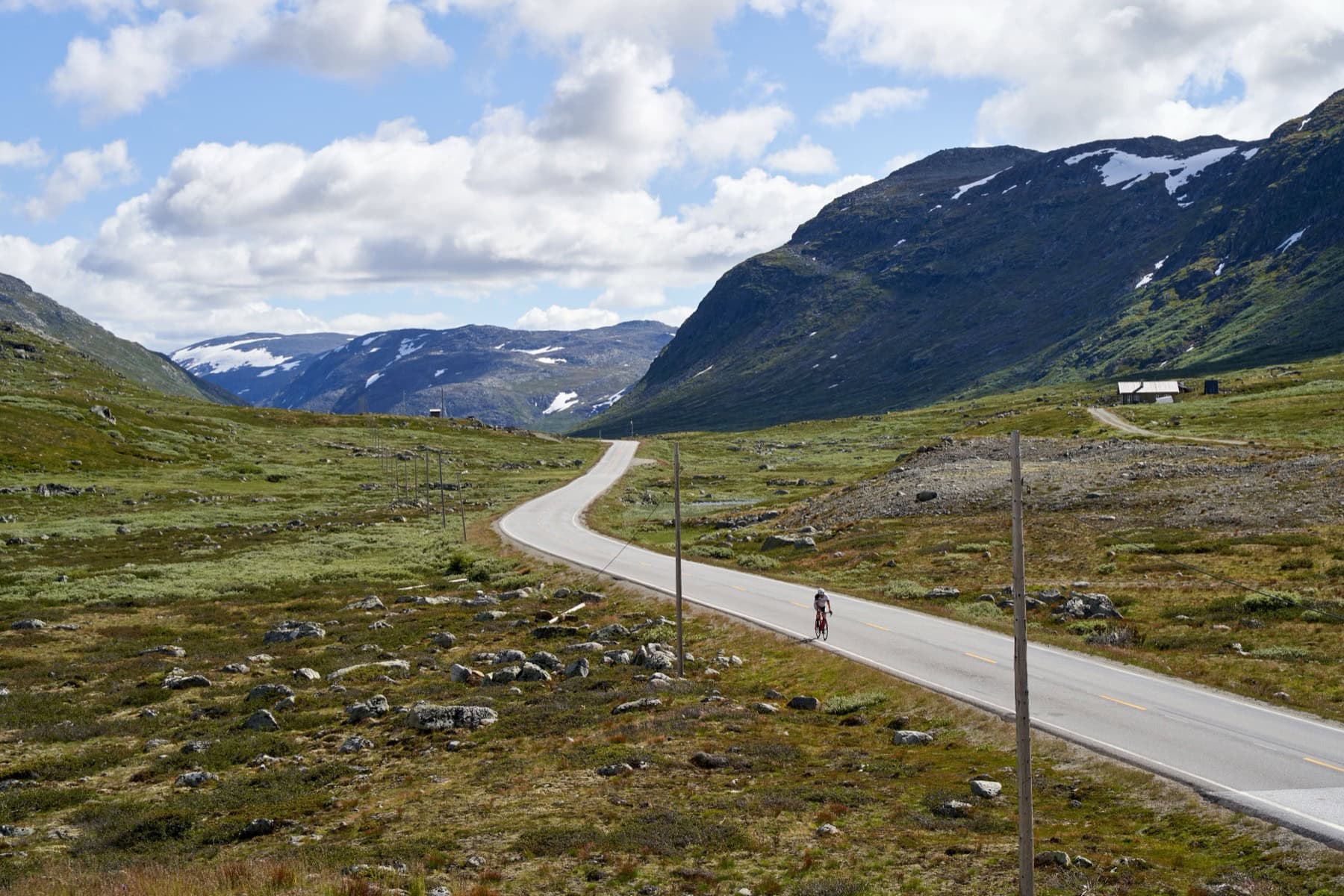
For travellers who love combining stunning views with a bit of physical effort, the area around the railway is an absolute paradise. The historic Rallarvegen road originally served the workers who built the railway line at the end of the nineteenth century, and today it ranks as one of the most popular and beautiful cycling routes in all of Norway. You can simply bring your bike with you on the train, ride up to Myrdal station, and then enjoy the twenty-kilometre descent back down.
The route is largely gravel and steep in places, so good brakes and a bit of cycling caution are definitely in order here. On the way down you’ll pass roaring rivers, sheer drops and picturesque mountain farms that the average tourist will never get this close to from a train window. You can stop wherever you fancy and soak up that incredible sense of mountain freedom to the full.
If you don’t have your own gear, there’s no need to worry at all. You can comfortably hire bikes right in Flåm or at other stations along the route, and once you’ve finished your trip you simply return them at your destination, which makes the whole logistics enormously simpler.
7. Tickets, Prices and Booking
Travelling around Norway isn’t exactly a cheap affair, and a ride on this historic train is no exception. A return ticket will set you back around 600 NOK, which works out at roughly 52 €, with the one-way option only marginally cheaper. Even so, it’s such a powerful experience that this investment in memories is well worth it — you won’t regret a penny.
The basic rule for the summer months is not to leave buying your tickets until the last minute. Trains are often sold out weeks in advance, because much of the capacity is snapped up by travel agencies and the huge cruise ships moored in the fjord. If you want to be absolutely certain of getting on the train at your chosen time, buy your tickets online well ahead.
💡 Tip: A great solution is to book your tickets through trusted platforms like GetYourGuide, where you can reserve them from the comfort of home with the benefit of free cancellation. This gives you flexibility in case your travel plans or the weather change dramatically at the last minute.
Where to Go Next from Flåm
Once you’ve explored the Flåmsdalen valley and ridden the train, it would be a shame not to linger in the fjord region a little longer. Norway offers an endless number of beautiful places just waiting to be discovered. If you want to keep exploring the surrounding waterways, I’d recommend reading our article focused on the Sognefjord and Nærøyfjord, where you’ll find plenty of practical information about boat trips.
From Flåm you can also easily get back onto the main railway line and head off for some urban culture on the west coast. Norway’s second-largest city has a wonderful historic atmosphere, which you can read more about in our guide Bergen: what to see. For more comprehensive holiday planning, don’t miss the extensive article Norway: 50 things to see or our big Guide to the Norwegian Fjords, where you’ll find plenty more travel inspiration.
Frequently Asked Questions
Planning a trip to this mountain railway comes with a whole host of practical details. Below I’ve gathered answers to the most common questions that travellers usually have before visiting this area, so you have all the important information neatly in one place.
How much does a ticket for the Flåm Railway cost?
A return ticket on the route from Flåm to Myrdal and back will cost you approximately 600 NOK, which is roughly 60 EUR. If you’re buying just a one-way ticket, the price is somewhat lower. Children usually qualify for significant discounts, which are worth taking advantage of when travelling as a family.
How long does the ride take?
The train journey itself in one direction takes approximately one hour of pure time. During this time, you’ll cover a twenty-kilometer distance and overcome an elevation gain of over eight hundred meters. The train travels very slowly so that passengers have plenty of space for taking photos and admiring the views.
Where to buy tickets?
The best option is to purchase tickets well in advance online through official websites or portals like GetYourGuide. During the peak summer season, connections are usually hopelessly sold out, and relying on buying tickets directly at the station is a huge risk that could ruin your plans.
What is Norway in a Nutshell?
This is a very popular tourist package that combines a train journey from Oslo or Bergen, a ride on the Flåm Railway, and a beautiful boat cruise on the Nærøyfjord. It’s an absolutely ideal choice for anyone who doesn’t have a rental car and wants to see the best of the Norwegian fjords in just one day.
When is the best time to visit?
Most tourists head here during the summer months, when nature is lush green and the weather is most stable. However, if you want to avoid the biggest crowds, feel free to go in autumn, when the trees turn golden, or in winter, when the entire landscape is blanketed in snow and takes on an incredibly romantic charm.
Is the Flåm Railway Worth It?
Definitely yes. Despite the higher ticket price and occasional tourist crowds, this is one of the most beautiful and steepest railway lines in the world. Just the view from the window of the deep valleys and the special stop at the thundering Kjosfossen waterfall are things you won’t forget anytime soon.
How to get to Myrdal and Flåm?
You can reach the mountain station of Myrdal by the main train line Bergensbanen, which connects Oslo and Bergen. From Myrdal, you simply transfer to the Flåmsbana, which takes you down to the fjord. If you’re travelling by rental car, you can comfortably drive directly to the village of Flåm through the system of road tunnels.
Tips and Tricks for Your Vacation
Don’t Overpay for Flights
Search for flights on Kayak. It’s our favorite search engine because it scans the websites of all airlines and always finds the cheapest connection.
Book Your Accommodation Smartly
The best experiences we’ve had when looking for accommodation (from Alaska to Morocco) are with Booking.com, where hotels, apartments, and entire houses are usually the cheapest and most widely available.
 🚗 Car rental on the roadVerified rental cars in Norway
Search with the DiscoverCars comparison engine — it compares prices from dozens of local and international rental companies, and most bookings come with free cancellation.
Compare car prices in Norway →Don’t Forget Travel Insurance
Good travel insurance will protect you against illness, accidents, theft, or flight cancellations. We’ve had a few hospital visits abroad, so we know how important it is to have proper insurance arranged.
Where we insure ourselves: SafetyWing (best for everyone) and TrueTraveller (for extra-long trips).
Why don’t we recommend any Czech insurance company? Because they have too many restrictions. They set limits on the number of days abroad, travel insurance via a credit card often requires you to pay medical expenses only with that card, and they frequently limit the number of returns to the Czech Republic.
Find the Best Experiences
Get Your Guide is a huge online marketplace where you can book guided walks, trips, skip-the-line tickets, tours, and much more. We always find some extra fun there!


