

Do you still picture Turkish food as a tired kebab in a wrap from the corner shop? Prepare to be amazed. Turkish cuisine is a global phenomenon – an incredibly diverse crossroads where the influences of opulent Ottoman palaces, the sun-soaked Mediterranean, the spiced Middle East and the rugged Caucasus have mingled for centuries.
Here, food isn’t just a quick way to silence hunger – it’s a ritual and a social event, a symbol of the famous Turkish hospitality. Travellers often come home saying, “I had no idea it would be this good.” And there’s great news for vegetarians: even though Turkish cuisine loves its meat, the choice of meat-free dishes is enormous.
In this guide we’ll take you on a tour of Turkish flavours from the kahvaltı breakfast all the way to baklava – meze, flatbreads, sweets, tea and Turkish coffee. We’ll tell you what to order, what to drink and how to feast if you don’t eat meat.
TL;DR
- Breakfast: kahvaltı – a lazy feast of dozens of little bowls (olives, cheeses, honey, kaymak, menemen eggs) that can easily stretch over two hours.
- Safe vegetarian bets: meze, gözleme (cheese/spinach), börek, lentil soup, stuffed vine leaves.
- Something sweet: baklava, hot künefe, lokum (Turkish delight) and stretchy dondurma ice cream.
- What to drink: the ever-present tea (çay) in a tulip-shaped glass, thick Turkish coffee (never stir it!), salty ayran.
- Kebabs: Adana, İskender and co. are meaty specialities for non-vegetarians (we describe them, we don’t recommend them).
- For vegetarians ⚠️: Turkey is a breeze – meze, soups, flatbreads and salads are everywhere.
- Money: thanks to the weak lira, food is cheap; leave a tip (bahşiş) of 5–10% in cash.
The ritual called kahvaltı: a breakfast that lasts all morning
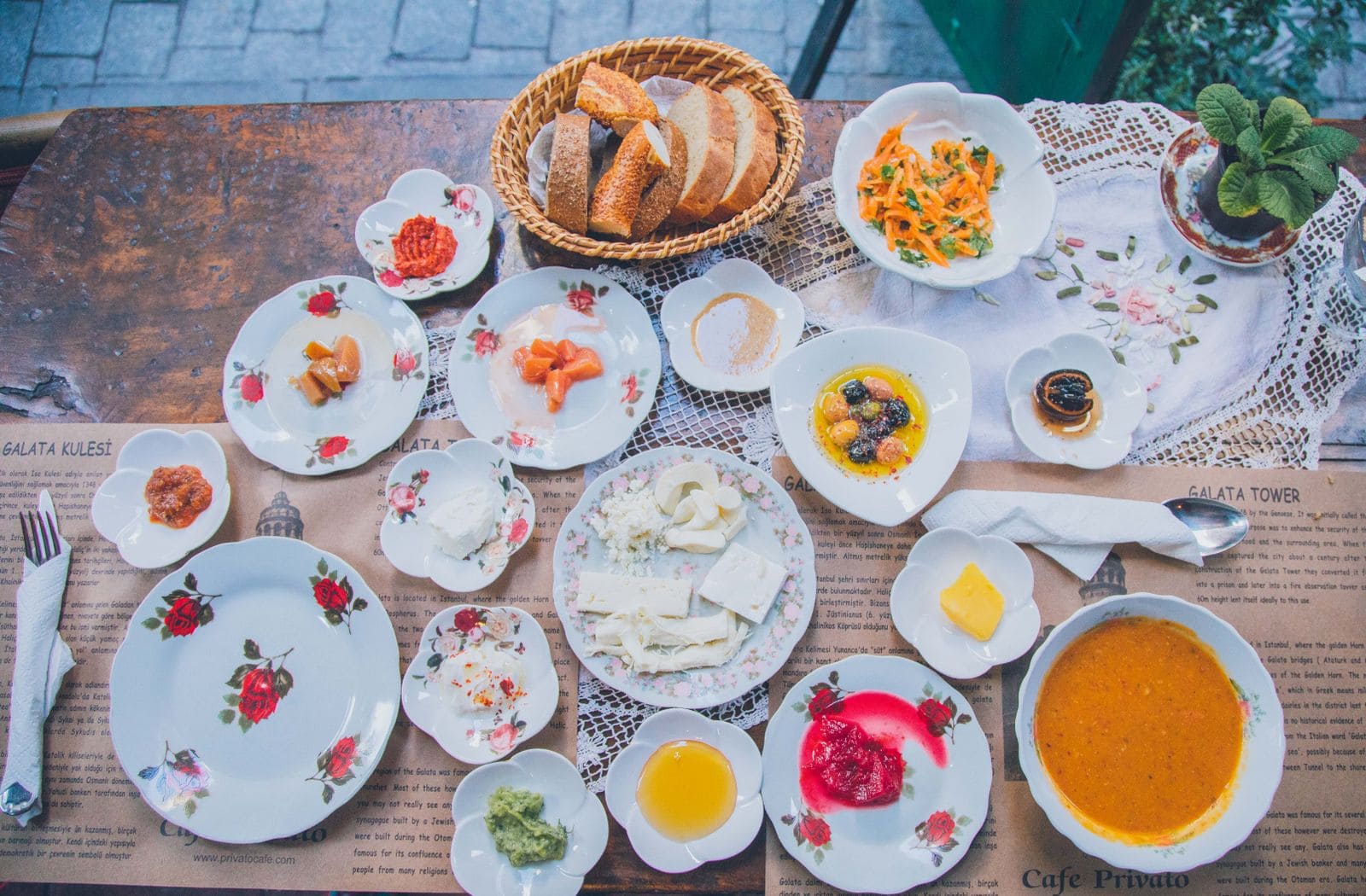
The word kahvaltı literally translates as “before coffee” – because in Turkey, coffee comes only at the very end, like a full stop after the feast. Turkish breakfast isn’t a roll eaten on the run, it’s a lazy, shared occasion you can happily linger over for two hours.
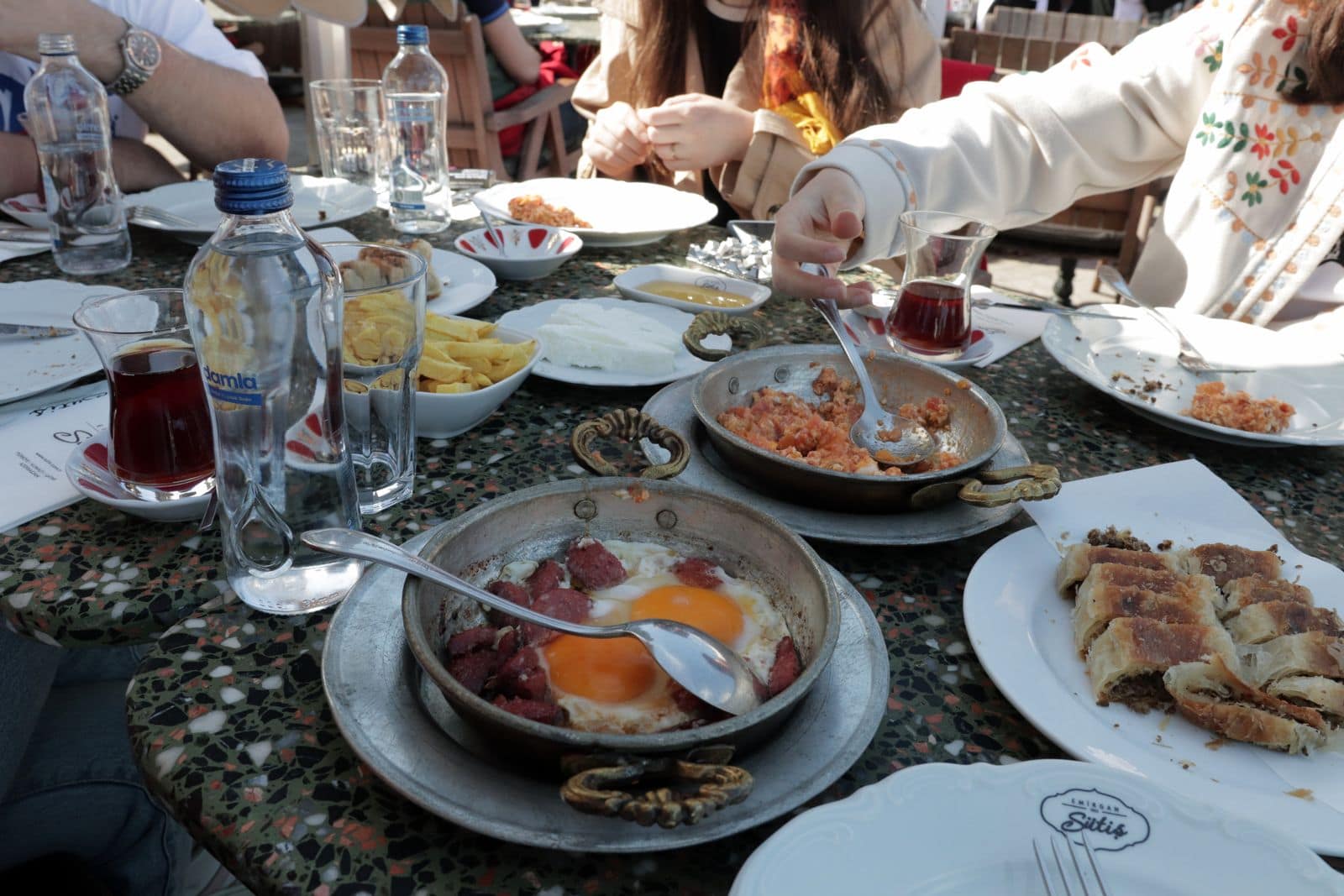
Within minutes the waiter covers your table with dozens of little dishes: green and black olives, fresh tomatoes and cucumbers, walnuts, homemade jams, honey, several kinds of cheese, butter and a pile of bread crowned by the crunchy sesame ring known as simit. Hot dishes belong here too – it just isn’t breakfast without menemen (scrambled eggs cooked down with tomatoes, peppers and spices). But the real star of the morning is kaymak: an extremely thick cream, similar to clotted cream, which you drench generously in honey and spread on bread.
💡 Tip: If you come across the term serpme kahvaltı, it means a spread-out table piled high with food for the whole group. Don’t expect to finish it all – and it’s the ultimate meat-free feast.
Kebabs: a whole different league to your local takeaway
Let’s clear up the terms first. Turks make a strict distinction between a kebap (meat on a skewer or grill) and a döner (meat from a rotating vertical spit) – the word döner comes from the verb “to turn”. For meat eaters, the Turkish grill is an experience in itself: the spicy Adana kebap (hand-kneaded meat on a wide skewer with chilli flakes), its milder sibling Urfa kebap, the classic şiş kebap of marinated cubes over charcoal, or İskender kebap – slices of döner on pide bread, smothered in tomato sauce, yoghurt and sizzling butter.
We mention these dishes descriptively – they’re regional meat specialities that vegetarians will leave to others. The good news: Turkish cuisine isn’t primarily spicy, and most dishes don’t have any heat at all (Adana and the south-eastern specialities being the exception).
Street food, meze and comfort food
Turkish streets serve up brilliant quick bites for just a few lira. And a huge proportion of them are meat-free or have a meat-free version:
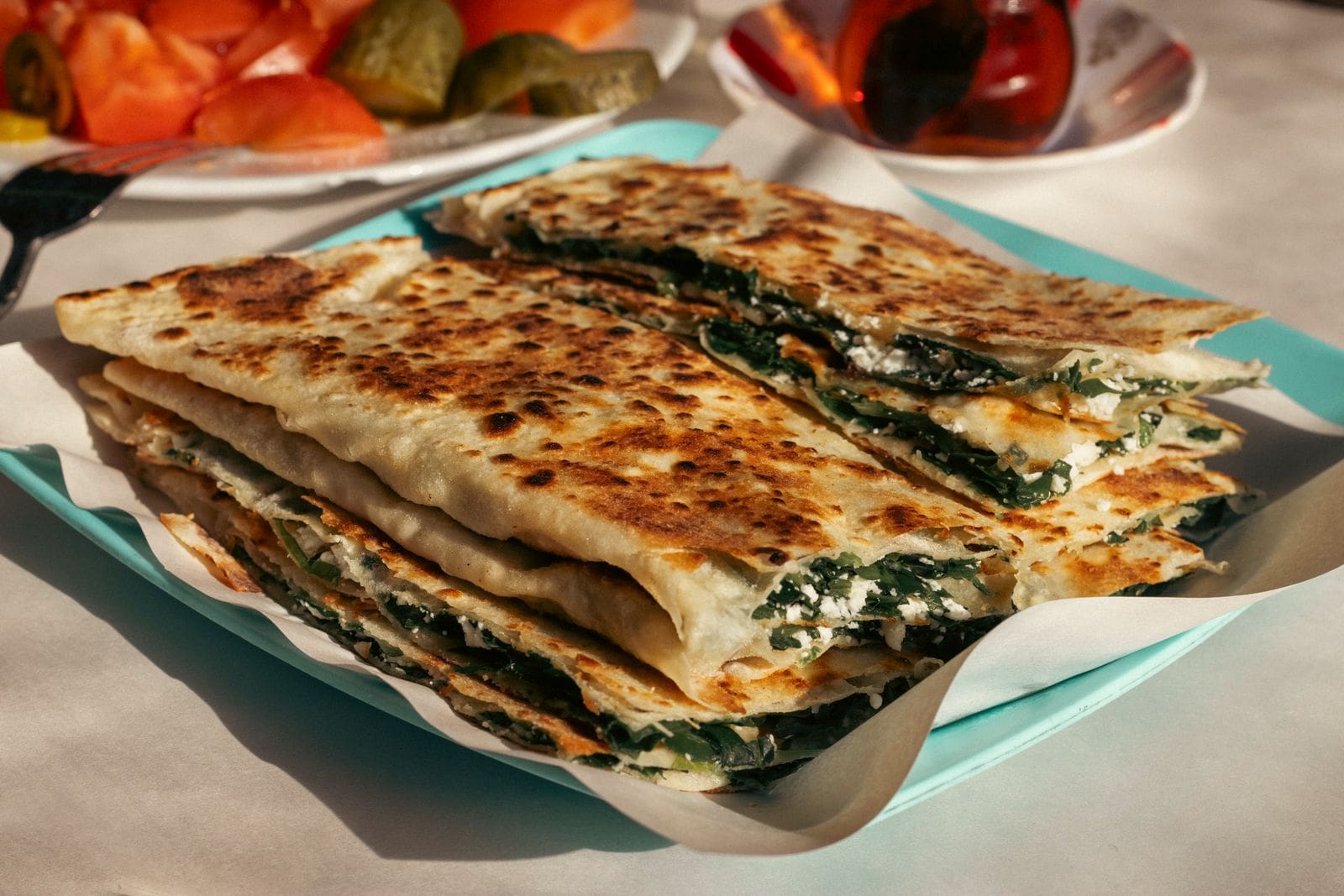
- Gözleme – hand-stretched thin flatbreads cooked on a domed griddle called a sac, filled with spinach and cheese or potato. A meat-free classic that women cook right in front of you at the markets.
- Börek – layers of wafer-thin stretched yufka pastry filled with cheese; a hearty breakfast snack.
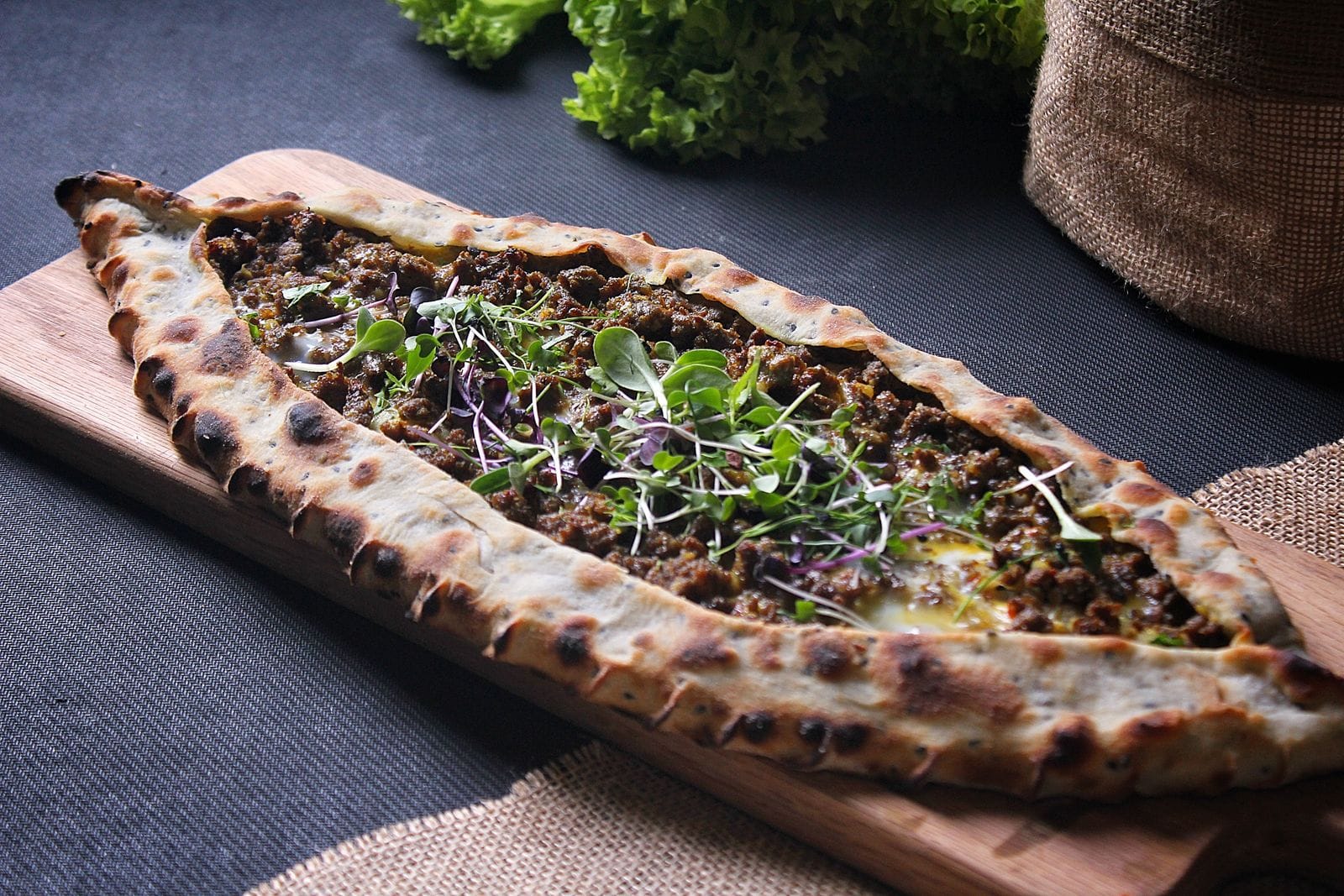
- Pide – an oblong, boat-shaped bread you can order filled with cheese (the vegetarian version). Leave the meat and sausage variants to others.
- Mercimek çorbası – a rich lentil soup, an absolute safe bet for vegetarians on the road.
- Mantı – tiny pasta dumplings drenched in garlic yoghurt and minty butter; classic Turkish comfort food (traditionally filled with meat, so ask for a meat-free version).
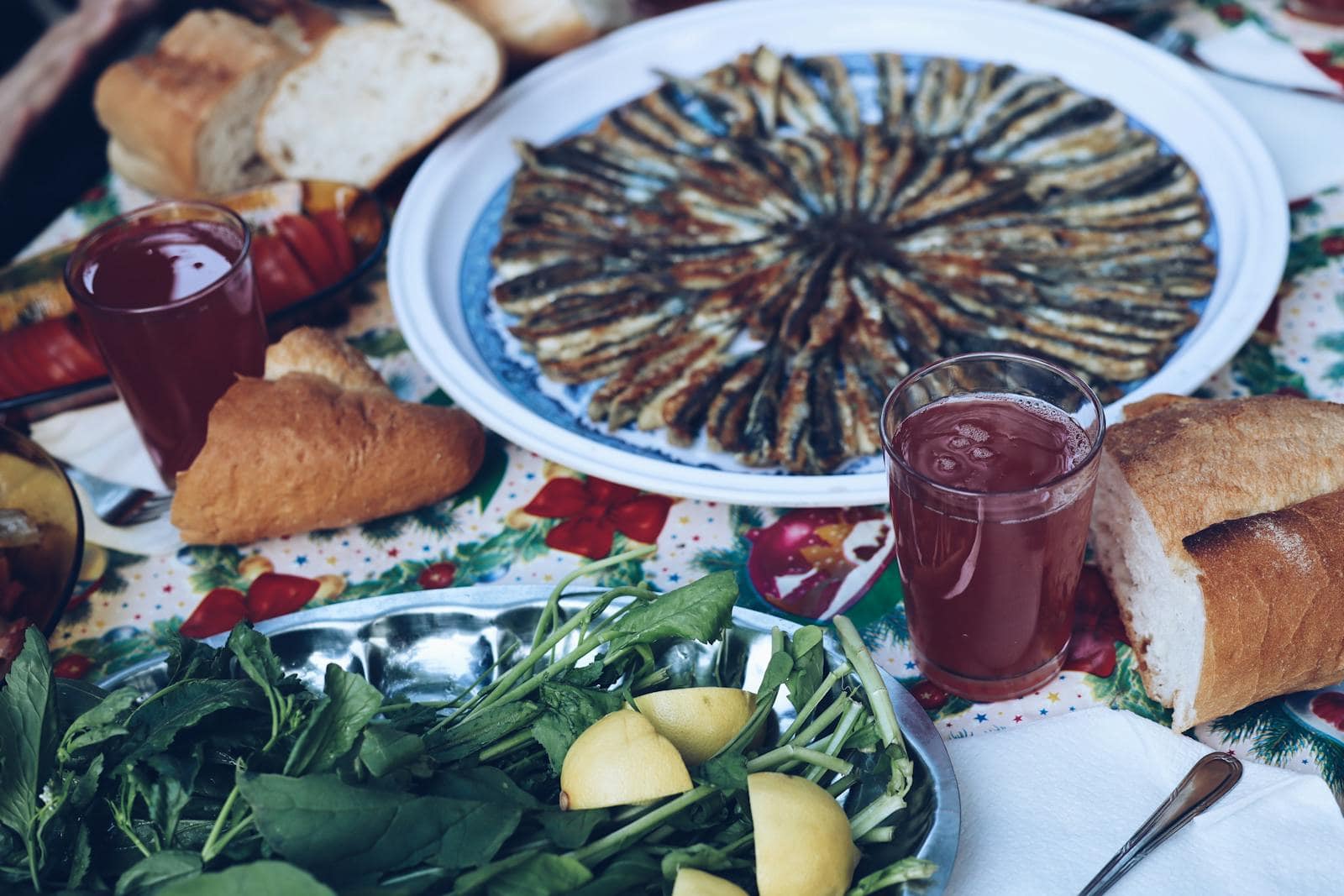
Meat and fish street classics like lahmacun (a thin flatbread topped with minced meat) or balık ekmek (the fish sandwich from Istanbul’s waterfront) are for meat eaters – we mention them just for completeness.
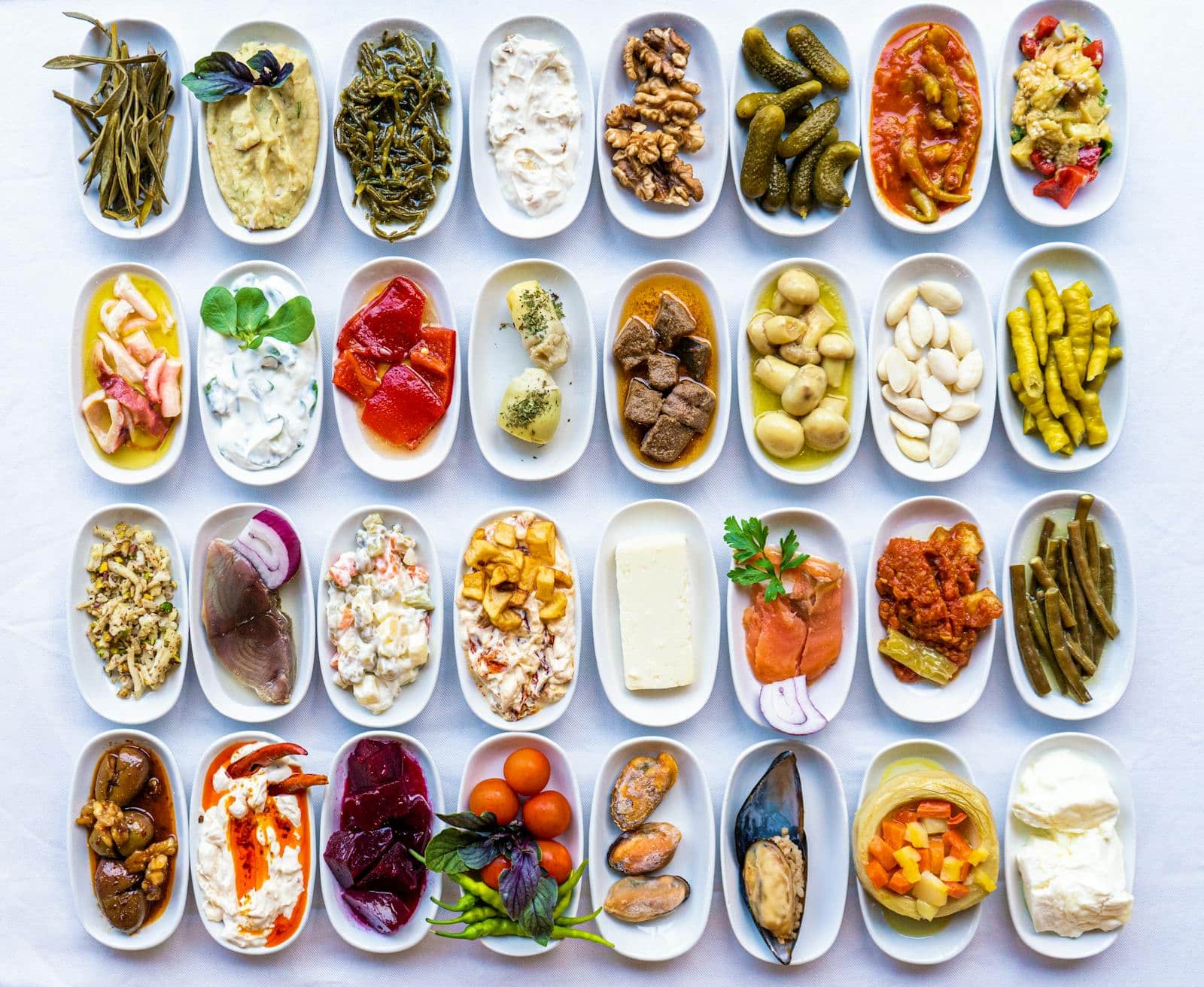
Meyhane and the culture of meze
As the day winds towards evening, it’s time for meze – a selection of cold and hot starters that form the backbone of a traditional Turkish dinner. In the taverns known as meyhane you don’t pick from a menu: the waiter brings round a huge tray full of little plates and you simply point at what you fancy. For vegetarians it’s paradise – aubergine purée, hummus, the spicy tomato salad ezme, stuffed vine leaves, herby yoghurt. The meyhane is an institution, a place to eat, laugh and share late into the night.
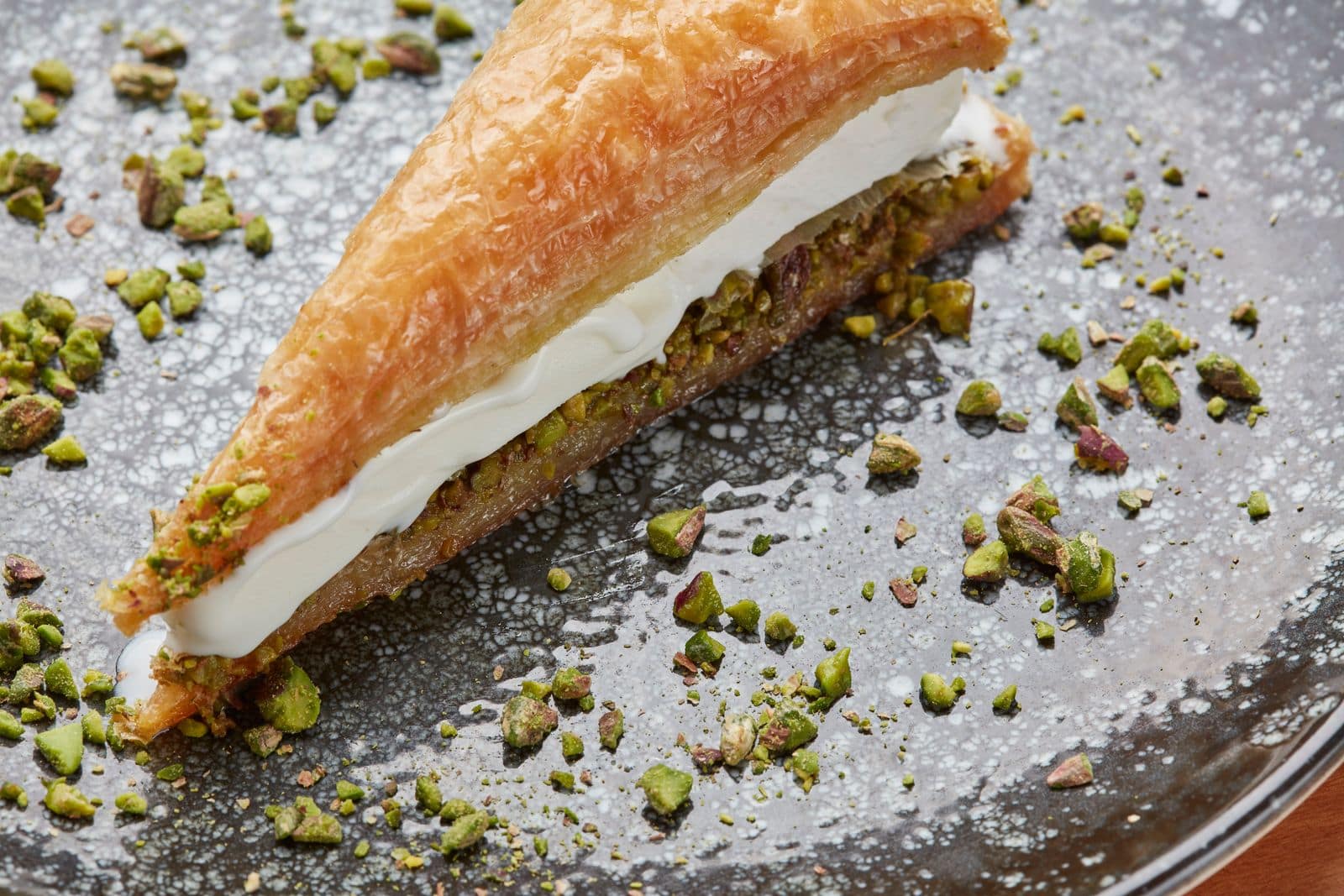
Sweet sins: sugar, pistachios and rose water
Turks adore sweet things and their desserts are world-famous. Almost all of them are vegetarian, making Turkish cuisine desserts a real highlight of any trip:
- Baklava – wafer-thin layers of pastry layered with butter and crushed nuts, soaked in syrup. Genuine pistachio baklava (a speciality of the city of Gaziantep) crunches and melts in your mouth – it has nothing in common with the dried-out stuff from the supermarket.
- Künefe – a hot dessert made from fine strands of kadayıf pastry filled with unsalted cheese, baked golden and drowned in syrup. Sink your fork in and the cheese stretches beautifully.
- Lokum (Turkish delight) – jelly cubes dusted in icing sugar, traditionally flavoured with rose water, today in hundreds of variations with nuts or pistachios.
- Dondurma – Turkey’s stretchy ice cream from the Maraş region, thick and chewy thanks to salep and mastic. Buying it is a show in itself: vendors perform tricks with it on a long stick, teasing the cone right under your nose.
- Sütlaç – a soothing rice pudding in a clay bowl, often baked until it forms a dark crust.
💡 Tip: Don’t buy lokum and spices as souvenirs on the main tourist drags. Head to the Tahtakale wholesale market near the Spice Bazaar in Istanbul – wider choice, better prices and room to haggle.
What to drink: from ever-present tea to lion’s milk
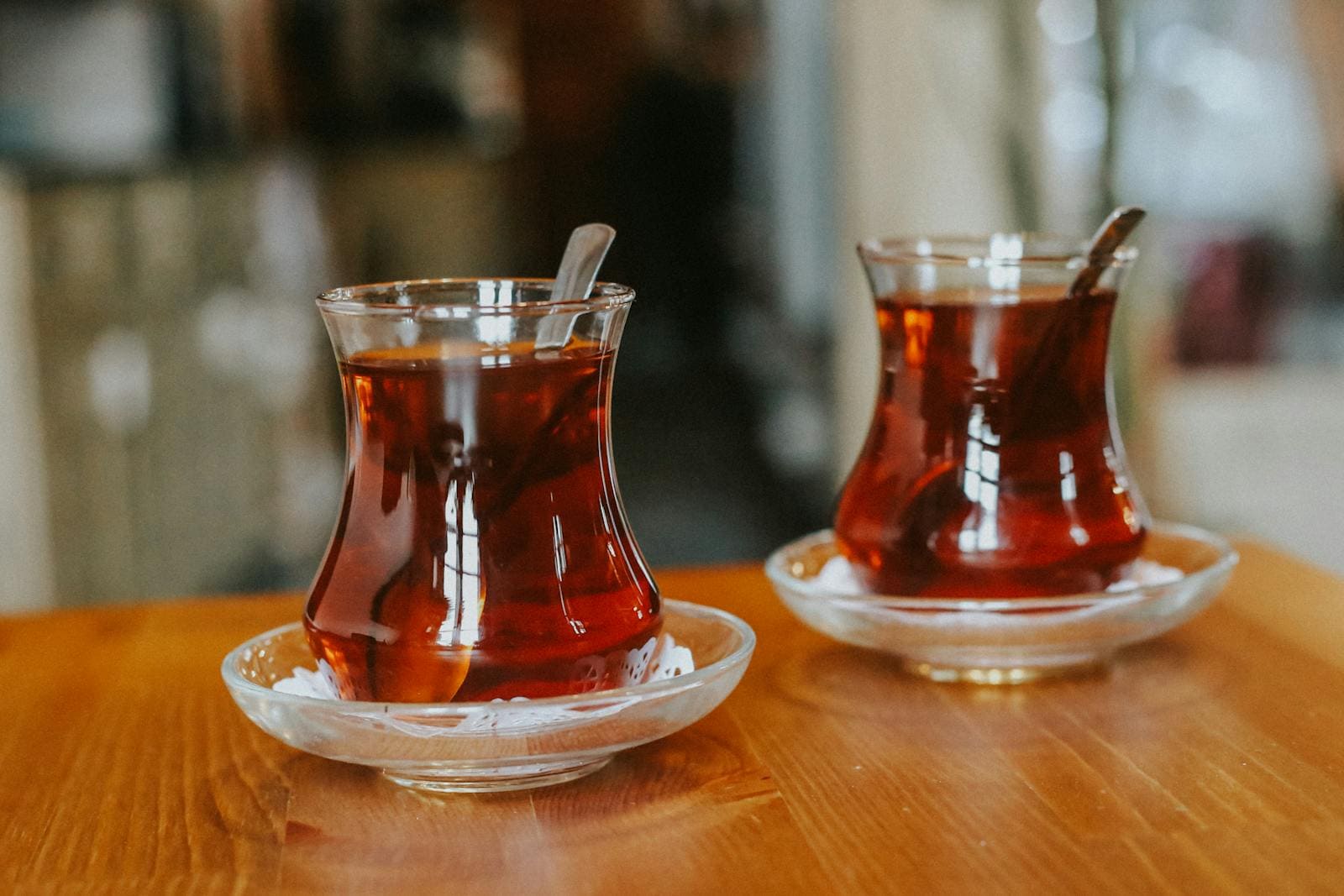
Çay: the fuel of the Turkish nation
The true ruler of Turkey is tea (çay) – Turks have the highest tea consumption per head in the world. It’s drunk everywhere, all the time: it accompanies haggling at the bazaar, waiting for the ferry and business meetings alike. It’s brewed in a double teapot called a çaydanlık and served in those iconic tulip-shaped glasses, often with two sugar cubes, but never with milk. Offering someone tea here is a way of saying “welcome”.
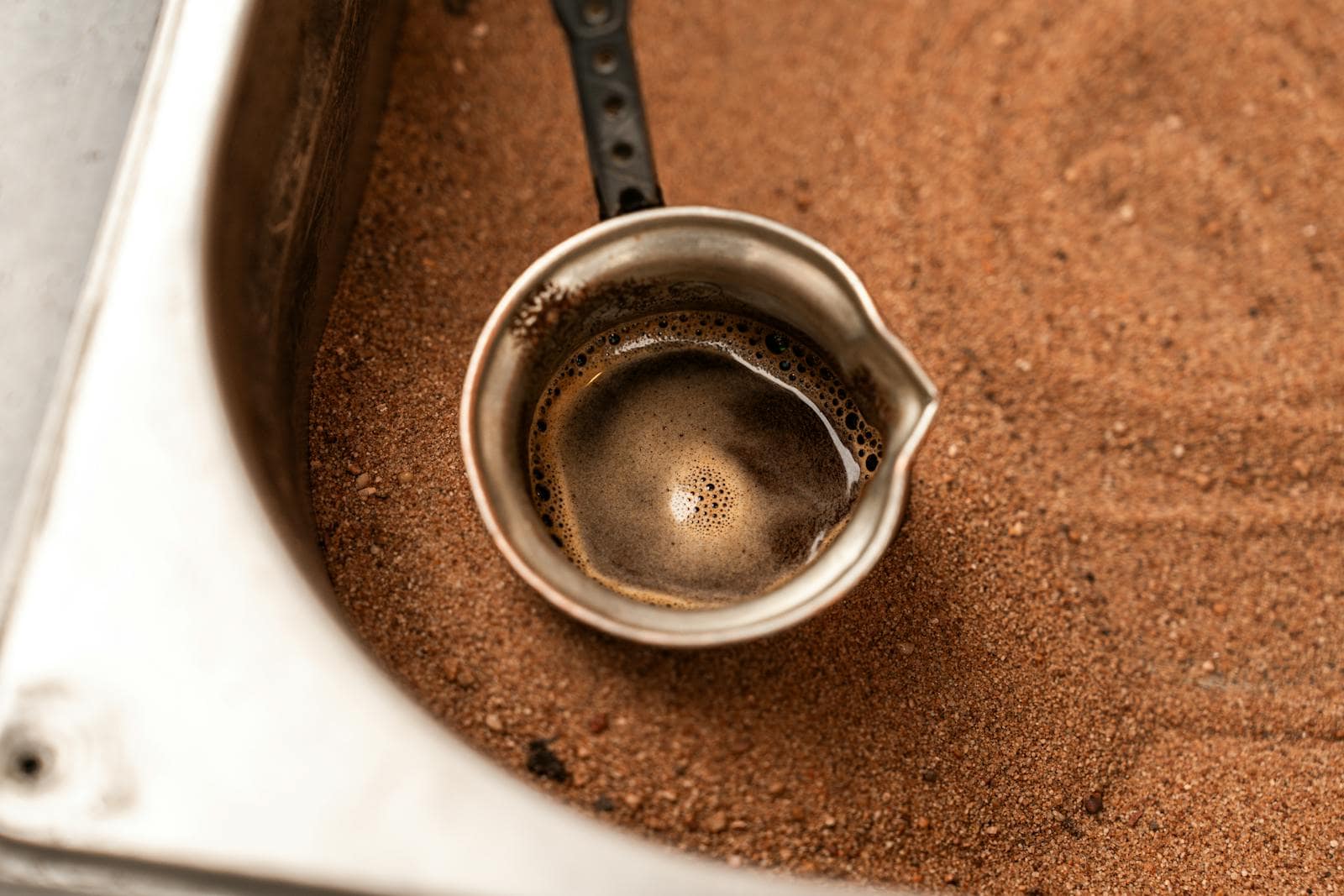
Türk kahvesi: coffee under UNESCO protection
Turkish coffee is such a one-off that it’s on the UNESCO list. Finely ground coffee is slowly brewed in a copper pot called a cezve so that a thick foam forms on the surface. ⚠️ The key mistake tourists make: don’t stir Turkish coffee – you’ll ruin the foam and cloud the flavour. After it arrives, wait half a minute for the grounds to settle, and don’t drink the thick “mud” at the bottom (it’s there to keep the coffee warm; old aunties read your fortune from it).
Ayran and rakı
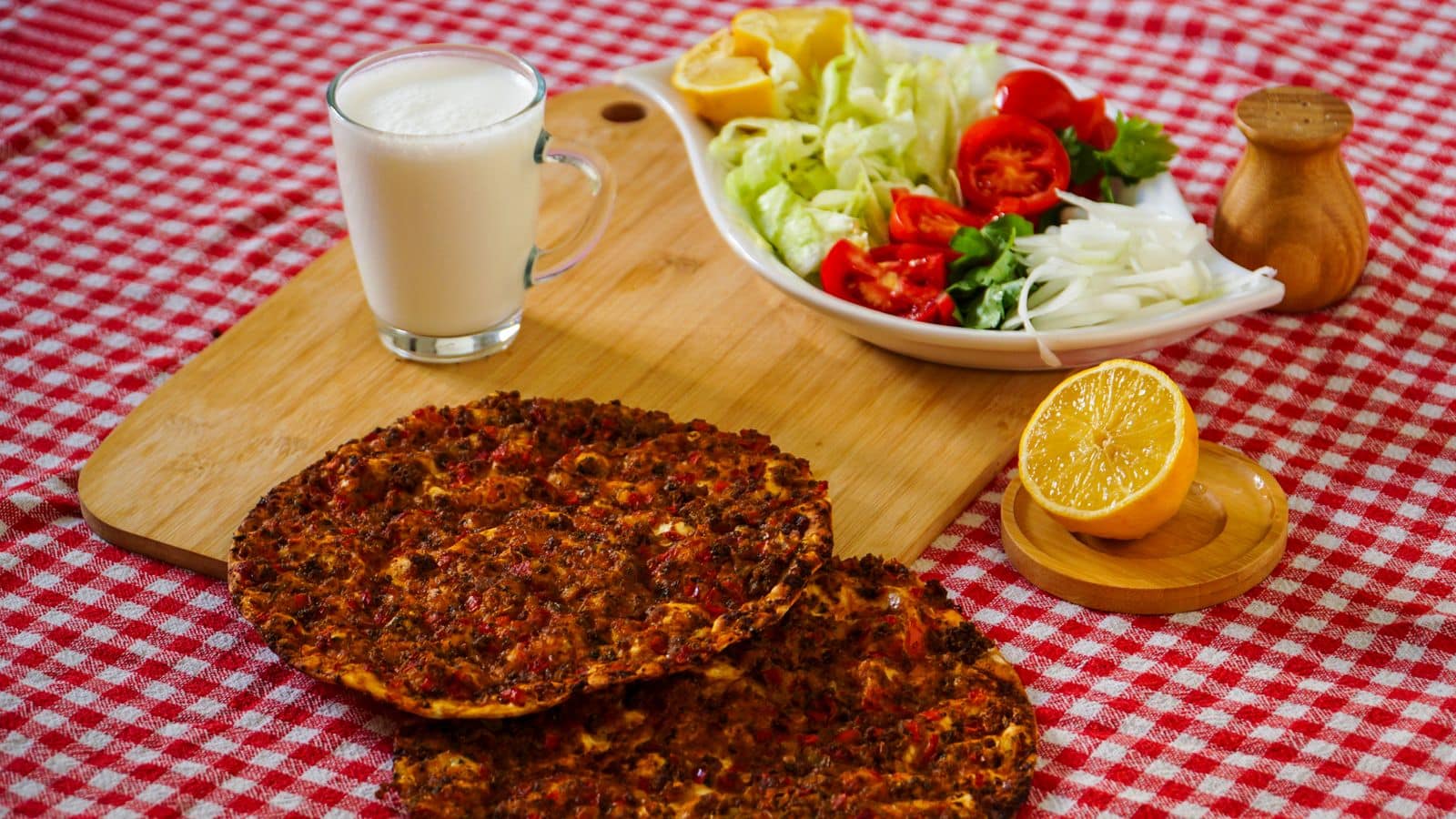
Alongside grilled food, or simply as a refreshment, you’ll find ayran – a simple salty drink of whisked yoghurt, water and salt that cools you down a treat. And no long evening in a meyhane is complete without rakı, a strong aniseed spirit. You pour a measure, top it up with water, and it turns milky white – which is why it’s called aslan sütü, lion’s milk. The toast is Şerefe!
Tips for vegetarians in Turkey
You’ll get by as a vegetarian in Turkey without the slightest trouble – the cuisine may love meat, but the range of meat-free dishes here is huge. Reliable safe bets:
- Kahvaltı – the whole breakfast is a meat-free feast.
- Meze – purées, salads, cheeses, olives, stuffed vine leaves.
- Mercimek çorbası – lentil soup on almost every menu.
- Gözleme and börek with cheese or spinach.
- Pide with cheese and salads with sheep’s cheese.
- Sweets – baklava, künefe, lokum and dondurma are for everyone.
💡 Tip: The phrase “etsiz var mı?” (do you have it without meat?) will open doors; waiters are used to it and happy to advise. Just watch out for hidden meat stock in some soups.
Practical tips for food lovers
- Water ⚠️: Don’t drink the tap water, even in the big cities – buy bottled (it costs next to nothing), use it for brushing your teeth too, and be wary of ice and unpeeled fruit from stalls.
- Prices ⚠️: Thanks to the weak lira, food and street food are cheap for British wallets, but menu prices shift due to inflation – check the exchange rate before you go.
- Paying: In restaurants you can pay by card (in lira, and decline DCC), while at stalls and bazaars you’ll need cash in lira.
- Tipping (bahşiş): 5–10% in a restaurant, more in upmarket places – always in cash, as you usually can’t add it on the card terminal.
💡 Accommodation and experience tip: We like to look for places to stay on Booking.com, where the cancellation terms tend to be the best. For tickets, tours and activities, it pays to compare and book through GetYourGuide.
Where to next
Start with the main hub holiday in Turkey, the big food-filled cities of Istanbul and Cappadocia, the Aegean coast around Bodrum and Fethiye with Ölüdeniz, plus practical advice on when to visit Turkey and all inclusive in Turkey.
Frequently asked questions
What to try first in Turkey?
Start with a traditional kahvaltı breakfast (dozens of little bowls with olives, cheeses, honey, kaymak, and menemen eggs) and in the evening have meze at meyhane taverns. For street food, try gözleme and börek, and for sweets baklava and hot künefe. And of course Turkish tea and thick Turkish coffee to go with it.
Is Turkish cuisine suitable for vegetarians?
Yes, absolutely. Even though Turks love meat, there are plenty of meat-free dishes: the entire kahvaltı breakfast, the meze culture (purées, salads, cheeses, stuffed vine leaves), lentil soup, gözleme and börek with cheese or spinach, pide with cheese, and all the sweets. Just ask “etsiz var mı?” (without meat?) and watch out for hidden meat broth.
How to properly drink Turkish coffee?
Turkish coffee should not be stirred – you would destroy the carefully created foam. After it’s brought to you, wait about 30 seconds for the coffee grounds to settle to the bottom, and drink slowly. Don’t drink the thick “sludge” at the bottom of the cup; it’s always served with a glass of water and a piece of Turkish delight.
Is Turkish food spicy?
“`html
Mostly not. Turkish cuisine is bold and spiced, but not primarily spicy-hot. The exception is the piquant Adana kebap and some specialties from the southeast of the country. Most dishes, including meze and flatbreads, aren’t hot at all.
“`
How much does food cost in Turkey?
Thanks to the long-term weak lira, food is very affordable for Czechs – street gözleme or simit costs a few crowns, a full kahvaltı breakfast at a local café is around €7–14. Prices change due to inflation, so check the exchange rate before your trip. Tips are given in cash, 5–10%.
Tips and Tricks for Your Vacation
Don’t Overpay for Flights
Search for flights on Kayak. It’s our favorite search engine because it scans the websites of all airlines and always finds the cheapest connection.
Book Your Accommodation Smartly
The best experiences we’ve had when looking for accommodation (from Alaska to Morocco) are with Booking.com, where hotels, apartments, and entire houses are usually the cheapest and most widely available.
 🚗 Car rental on the roadVerified rental cars in Turkey
Search with the DiscoverCars comparison engine — it compares prices from dozens of local and international rental companies, and most bookings come with free cancellation.
Compare car prices in Turkey →Don’t Forget Travel Insurance
Good travel insurance will protect you against illness, accidents, theft, or flight cancellations. We’ve had a few hospital visits abroad, so we know how important it is to have proper insurance arranged.
Where we insure ourselves: SafetyWing (best for everyone) and TrueTraveller (for extra-long trips).
Why don’t we recommend any Czech insurance company? Because they have too many restrictions. They set limits on the number of days abroad, travel insurance via a credit card often requires you to pay medical expenses only with that card, and they frequently limit the number of returns to the Czech Republic.
Find the Best Experiences
Get Your Guide is a huge online marketplace where you can book guided walks, trips, skip-the-line tickets, tours, and much more. We always find some extra fun there!


