

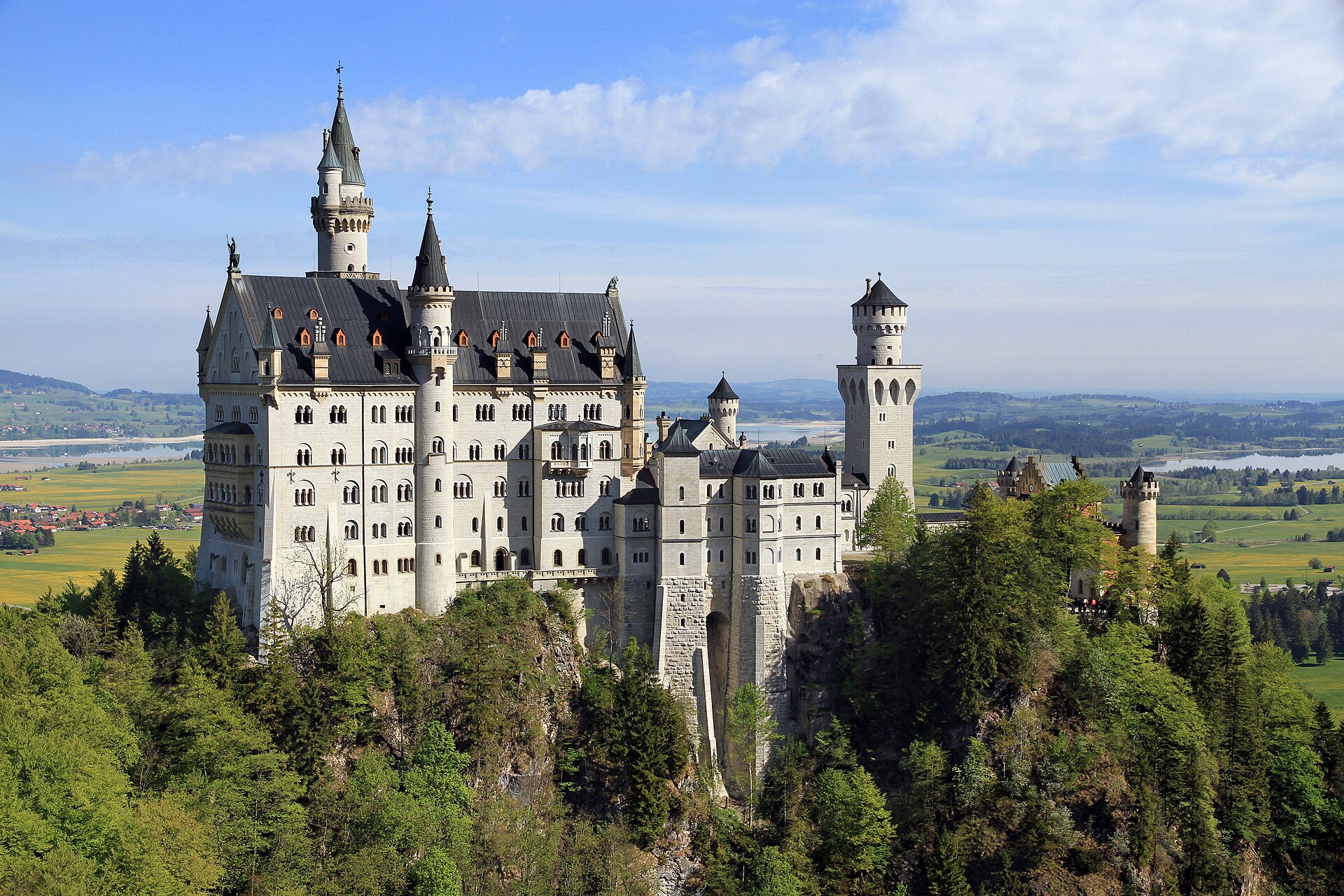
The fairytale Neuschwanstein Castle in Germany looks exactly like something cut straight out of the most enchanting children’s storybook. It’s no wonder Walt Disney himself drew inspiration from it when he was searching for the model for his famous Sleeping Beauty castle. Although it’s probably the most visited landmark in all of Bavaria, it’s absolutely worth making the trip to see this breathtaking beauty with your own eyes.
In this article you’ll find 14 tips on what to see and do around Neuschwanstein so you can make the most of your trip and avoid any unnecessary stress. The castle attracts millions of tourists every year, so without good planning it’s easy to get lost in the endless crowds. I’ll show you how and where to get tickets in time so you even stand a chance of stepping inside those gorgeous interiors.
We’ll also look at when the best time to visit is, how to reach the castle from nearby Munich, and where to base yourself strategically. I’ll throw in some recommendations for other interesting spots in the area too, because it would be a real shame to miss out on the Bavarian countryside and the nearby historic town of Füssen on your journey.
TL;DR
- Booking ahead is a must: Buy your tickets online weeks in advance — they’re usually sold out on site.
- Ticket price: A standard ticket costs roughly €21 plus a booking fee.
- Audio guide: An audio guide is available in English, which is a huge advantage.
- Best photos: For the iconic view, head to the nearby Marienbrücke bridge.
- Stay overnight nearby: Book a room right below the castle and beat the morning crowds arriving from Munich.
- Combine it with the area: Don’t miss the neighbouring Hohenschwangau Castle and the crystal-clear Alpsee lake.
The full destination guide: Germany — guide and what to see
When to visit Neuschwanstein
The Bavarian Alps have their own unmistakable charm all year round, but every season offers a completely different experience. You’ll see the most beautiful colours in autumn, when the surrounding forests turn shades of gold and red. Winter transforms the castle into a magical icy fortress, though you should bear in mind that some paths and viewpoints may be closed due to snow. The castle welcomes six to eight thousand visitors a day, so be ready for the bustle.
If you want to avoid the biggest crowds, arrive either early in the morning before eight or, alternatively, in the late afternoon after three. Most tourists come here on a day trip from Munich, and by ten o’clock the area around the castle starts filling up dangerously fast. The weather in the Alpine foothills can also change very quickly, and mornings tend to be the clearest.
Getting here from the UK is straightforward: fly directly to Munich with Lufthansa, British Airways or easyJet from London and several other UK airports, then continue south. By car the journey from Munich takes just under two hours, and you can park at the P1 to P4 car parks in Hohenschwangau, where all-day parking comes to roughly €7–8. If you prefer the train, grab the great-value Bayern Ticket and ride to Füssen station, from where bus number 73 or 78 will take you right below the castle in ten minutes.
Where to stay near Neuschwanstein
💡 Tip for accommodation and experiences: We love searching for places to stay on Booking.com, where the cancellation terms are usually the best. For tickets, tours and activities, it pays to compare and book through GetYourGuide.
The best strategy for a relaxed visit is to arrive in the area a day early. If you stay overnight right below the castle, you can head up first thing in the morning and enjoy it in relative peace before the buses full of tourists arrive from Munich. The area offers everything from luxury resorts to cosy family-run guesthouses.
Right in the village of Hohenschwangau you’ll find Hotel Müller Hohenschwangau, which boasts an absolutely perfect location with views of both castles. It’s an ideal starting point, as the ticket office is an easy walk away and the romantic horse-drawn carriages even depart right outside the hotel. Another great option just a stone’s throw from the castle is Villa Ludwig Suite Hotel, where guests rave about the amazing breakfasts and spacious suites.
If you’re after relaxation and a wellness experience instead, take a look at the AMERON Neuschwanstein Alpsee Resort & Spa in Schwangau. This gorgeous resort sits right on the shore of Lake Alpsee and features a huge spa centre where you can unwind perfectly after a full day of sightseeing. A slightly cheaper alternative is Hotel Alpenstuben, which is very cosy and a bit easier on the wallet.
14 tips on what to see and do at Neuschwanstein Castle and around
Let’s take a look at the specific tips and highlights you shouldn’t miss when visiting this magical corner of Bavaria. Neuschwanstein Castle may be the main draw, but the whole area offers so many activities that you could easily spend several days here exploring.
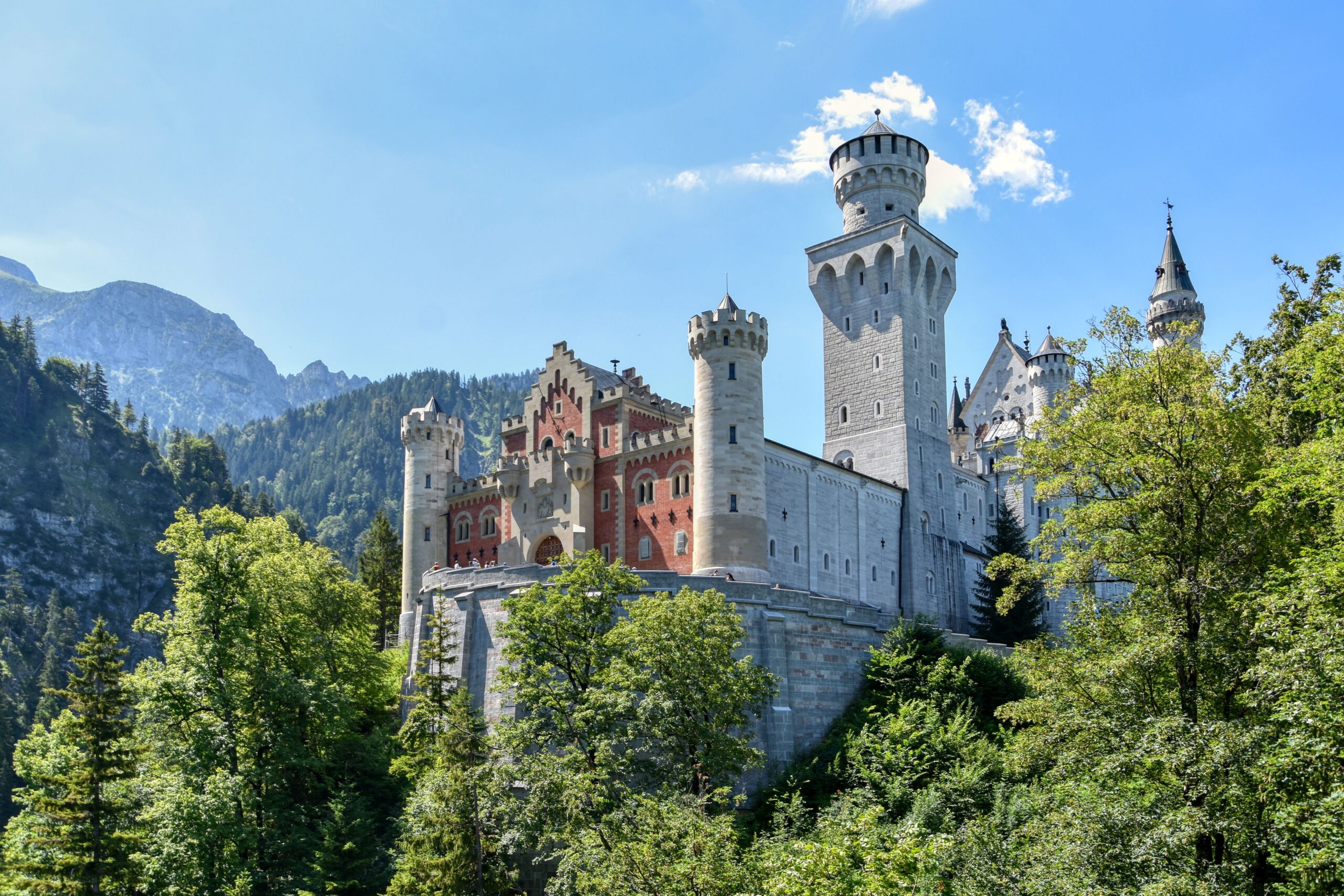
1. Tickets and booking in advance
This is probably the single most important piece of advice in the whole article. You must buy your tickets online well in advance, because on site they’re hopelessly sold out weeks ahead. Bookings go through the official Ticketcenter Hohenschwangau website, and an adult ticket costs roughly €21 plus a €2.50 online processing fee.
When booking, you choose a specific time slot, and it’s extremely important to arrive on time, because groups leave on the dot and latecomers won’t be let in. Children and young people under eighteen get in for free, but you still have to reserve a spot for them in the system and pay the booking fee. If the official tickets are gone, you can try your luck on GetYourGuide, where you’ll find tickets as part of organised day trips from Munich.
💡 Tip: A handy detail for visitors from the UK is that the castle’s audio guide is available in English, so you’ll hear the full history in your own language. Just ask for it on entry.
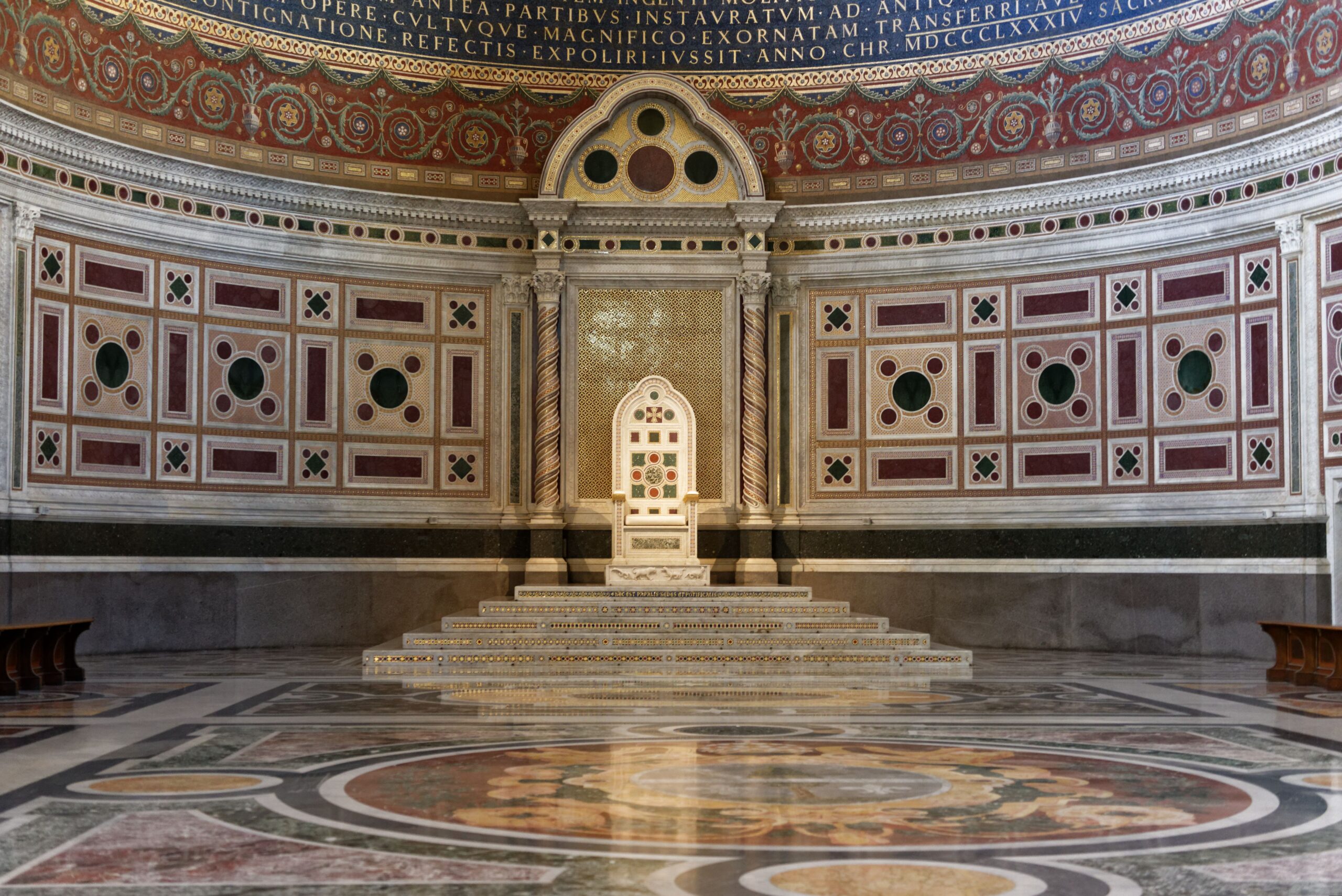
2. What you’ll see inside
You can only access the interiors as part of a guided tour, which lasts around thirty minutes. You’ll walk through roughly fourteen finished rooms on the third and fourth floors, as a large part of the castle was never completed due to the king’s untimely death. The tour is fairly quick and tightly managed, so you’ll need to keep pace with your group.
Right at the start you’ll be wowed by the majestic Throne Hall, inspired by Byzantine churches. The irony is that this famous hall has no throne at all, because King Ludwig II died before one could be made. Next you’ll see the enormous Singers’ Hall with motifs from the opera Parsifal, and the incredibly detailed royal bedroom, whose wooden panelling took carvers a full four years to complete.
💡 Tip: Photography and filming are strictly forbidden throughout the entire castle. The guards keep a very close eye on it, so you’re better off soaking up the sights with your own eyes and keeping the camera tucked away in your bag.
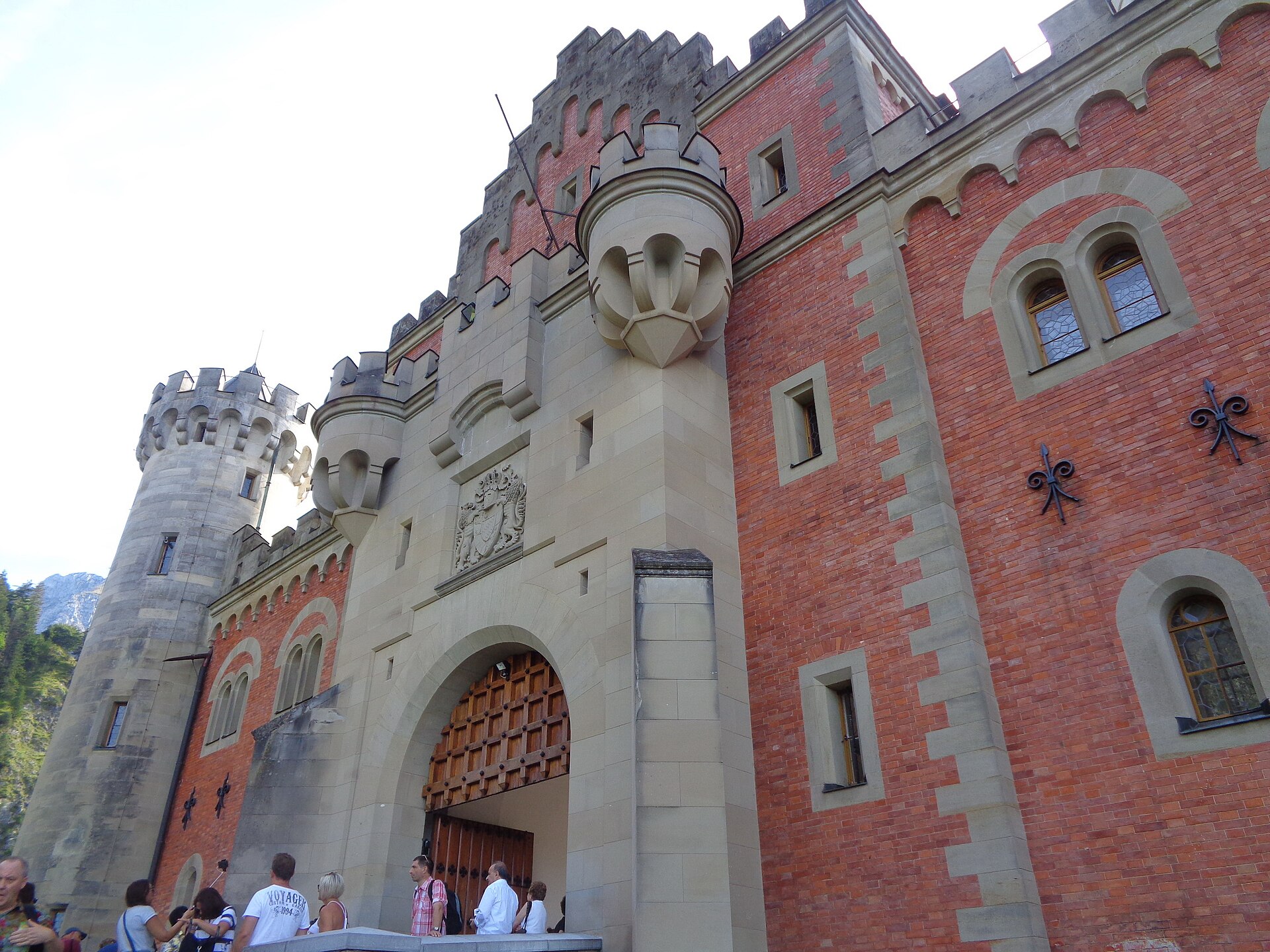
3. How to get up to the castle
The route from the valley ticket office up to the castle itself runs up a fairly steep hill, and no regular cars are allowed up there. The cheapest option is to walk, which takes thirty to forty minutes of brisk walking along a paved road. The path winds through the forest, with occasional lovely views down into the valley between the trees.
If you’d rather save your energy, you can take the shuttle bus that departs from car park P4. A one-way ticket up costs roughly €3.50, and the bus drops you just a short walk from the Marienbrücke viewpoint, from where it’s only ten minutes downhill to the castle. In the winter months, though, the bus only runs in very good weather and when the road is snow-free.
💡 Tip: The third and arguably most romantic option is a horse-drawn carriage ride. The carriages leave from Hotel Müller and take you to just below the castle, but bear in mind they don’t run on a fixed schedule and queues tend to form.
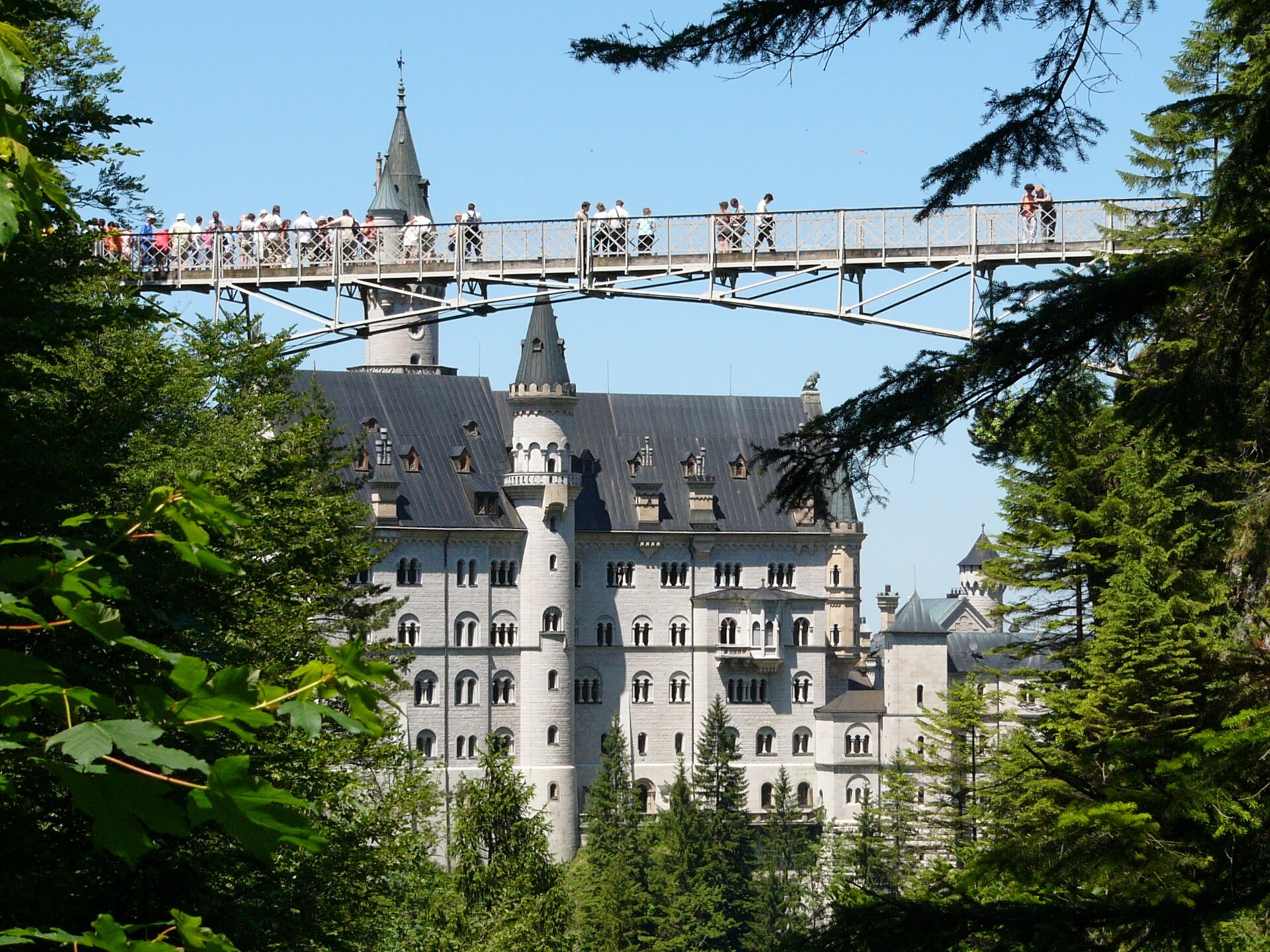
4. Marienbrücke, the best photo spot
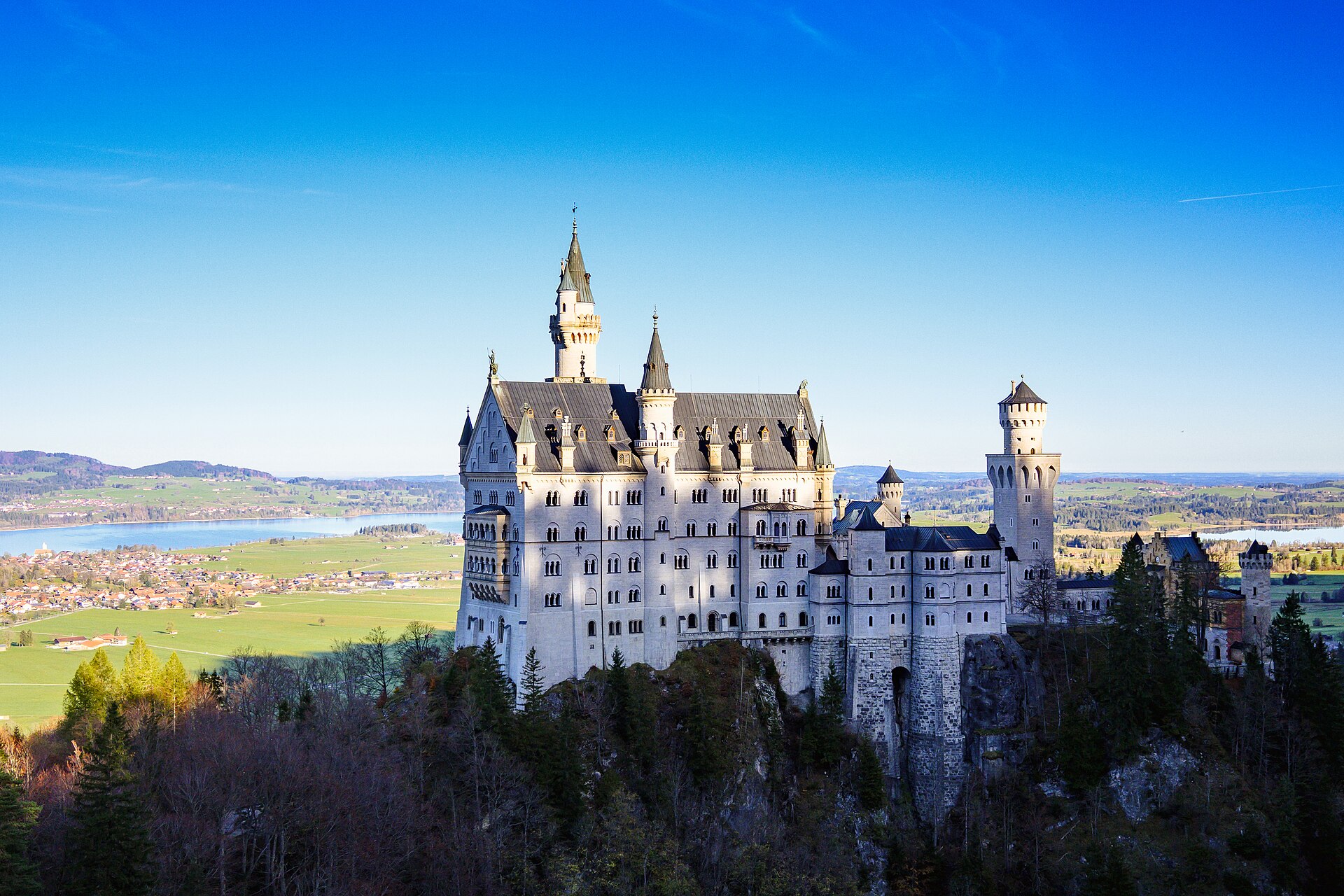
When you see those gorgeous photos of Neuschwanstein Castle online with the whole valley in the background, they’re almost certainly taken from Mary’s Bridge, or Marienbrücke. This suspension bridge spans a deep gorge and offers an absolutely fantastic panoramic view of the entire structure. Access to the bridge is completely free and it’s about a fifteen-minute walk from the castle.
Because the bridge is fairly narrow and only holds a limited number of people, long queues form here in peak season. You’ll get the best light and the fewest people early in the morning or, alternatively, in the late afternoon around five o’clock. In winter or when there’s ice, the bridge is often closed completely for safety reasons.
💡 Tip: To be safe, check whether the bridge is open the day before on the official Ticketcenter Hohenschwangau website, so you’re not left disappointed after climbing the hill.
5. Hohenschwangau Castle
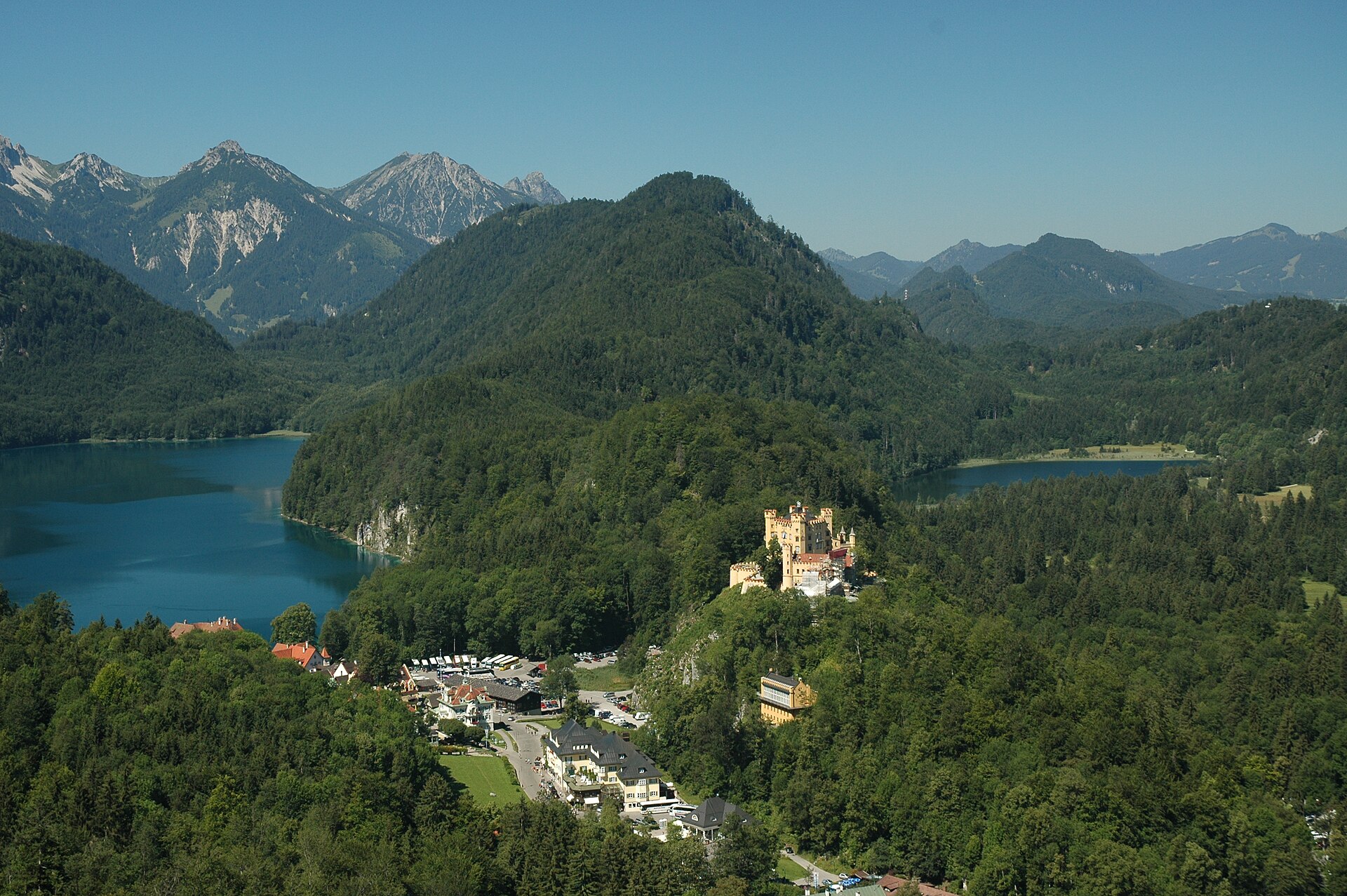
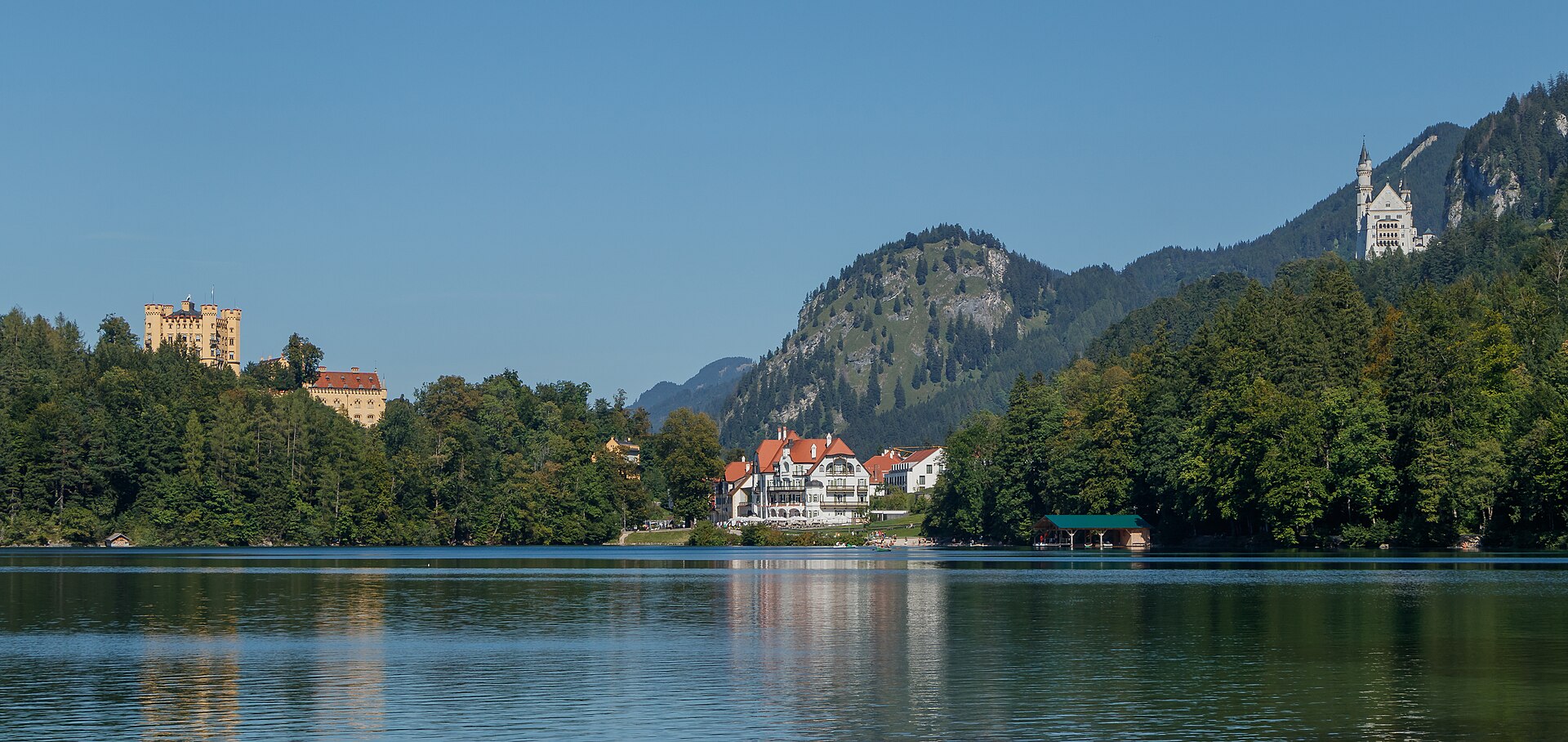
Just a short distance from the famous Neuschwanstein lies the somewhat smaller and often unfairly overlooked Hohenschwangau Castle. This striking yellow building served as the summer residence of the Bavarian royal family, and it was here that King Ludwig II spent his childhood. Unlike its more famous neighbour, this castle is completely finished and furnished with its original furniture.
If you’re interested in history and want to see the surroundings in which the eccentric king grew up, definitely stop by. You can buy what’s called the Königsticket, a combined ticket for both castles at a price of around €31. Allow at least two hours between visiting the two sites for a comfortable transfer and a short rest.
💡 Tip: From the courtyard of Hohenschwangau Castle there’s a beautiful view straight across to Neuschwanstein and the surface of Lake Alpsee, which makes for a great photo opportunity.
6. Lake Alpsee
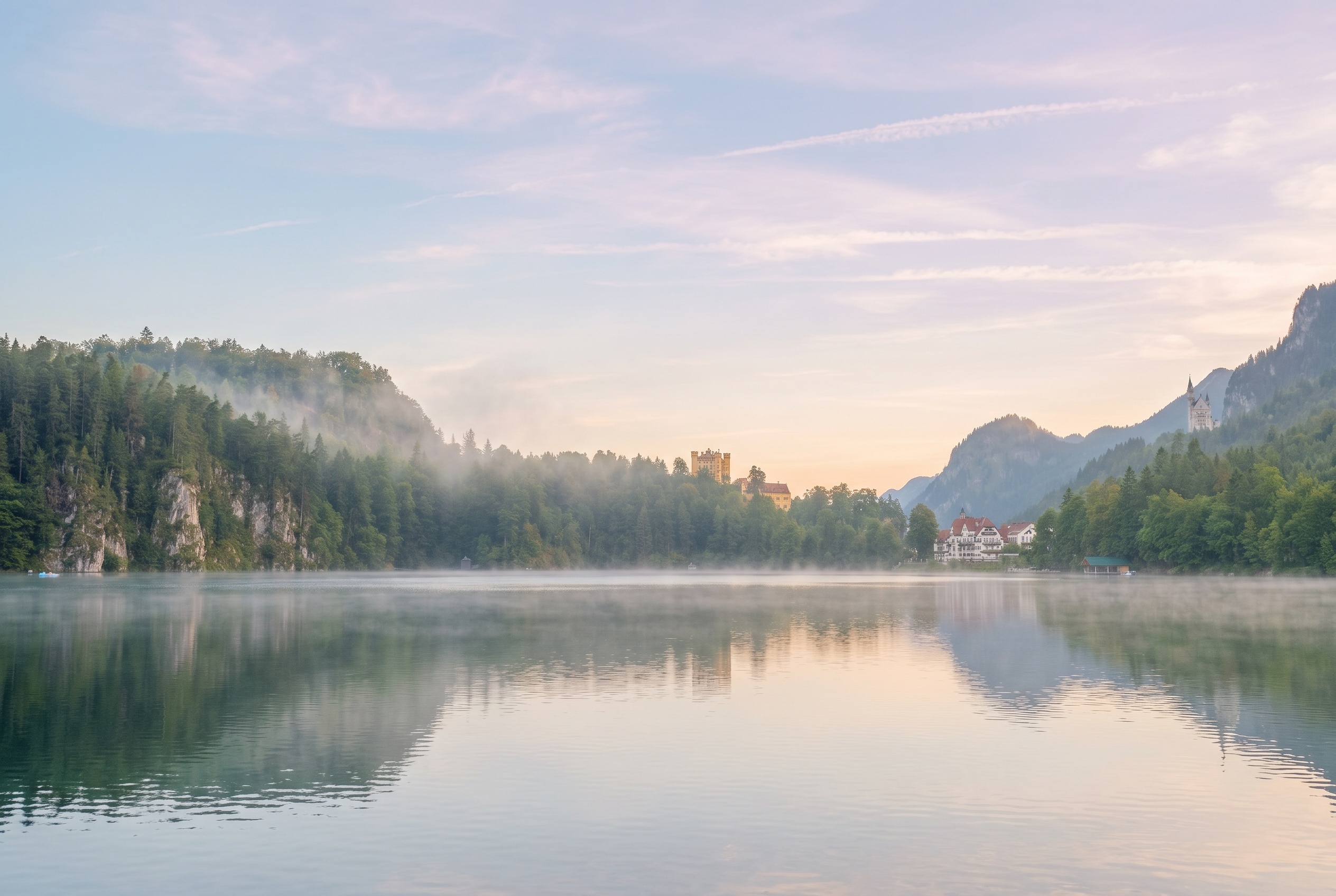
Right below both castles lies the stunning glacial Lake Alpsee, which is one of the cleanest in all of Germany. The lake is fringed by dense forests and high mountains, giving it an incredibly calm and majestic feel. After demanding castle tours, it’s the ideal place to rest and let all your impressions sink in.
A well-maintained path circles the entire lake, and an easy stroll takes just under an hour. In the hot summer months you can even take a swim here, though the water in this mountain lake tends to be pleasantly refreshing to mildly chilly. From certain spots on the shore you’ll also get a perfect view of both castles towering high on the hilltops.
💡 Tip: If you get hungry, you’ll find several restaurants around Alpsee. Vegetarians will enjoy traditional cheese noodles called Käsespätzle topped with crispy onions, or the sweet shredded pancake Kaiserschmarrn. The local sausages and roast pork get plenty of attention, but Bavarian cuisine thankfully has plenty to offer meat-free eaters too.
7. Tegelberg peak and the cable car
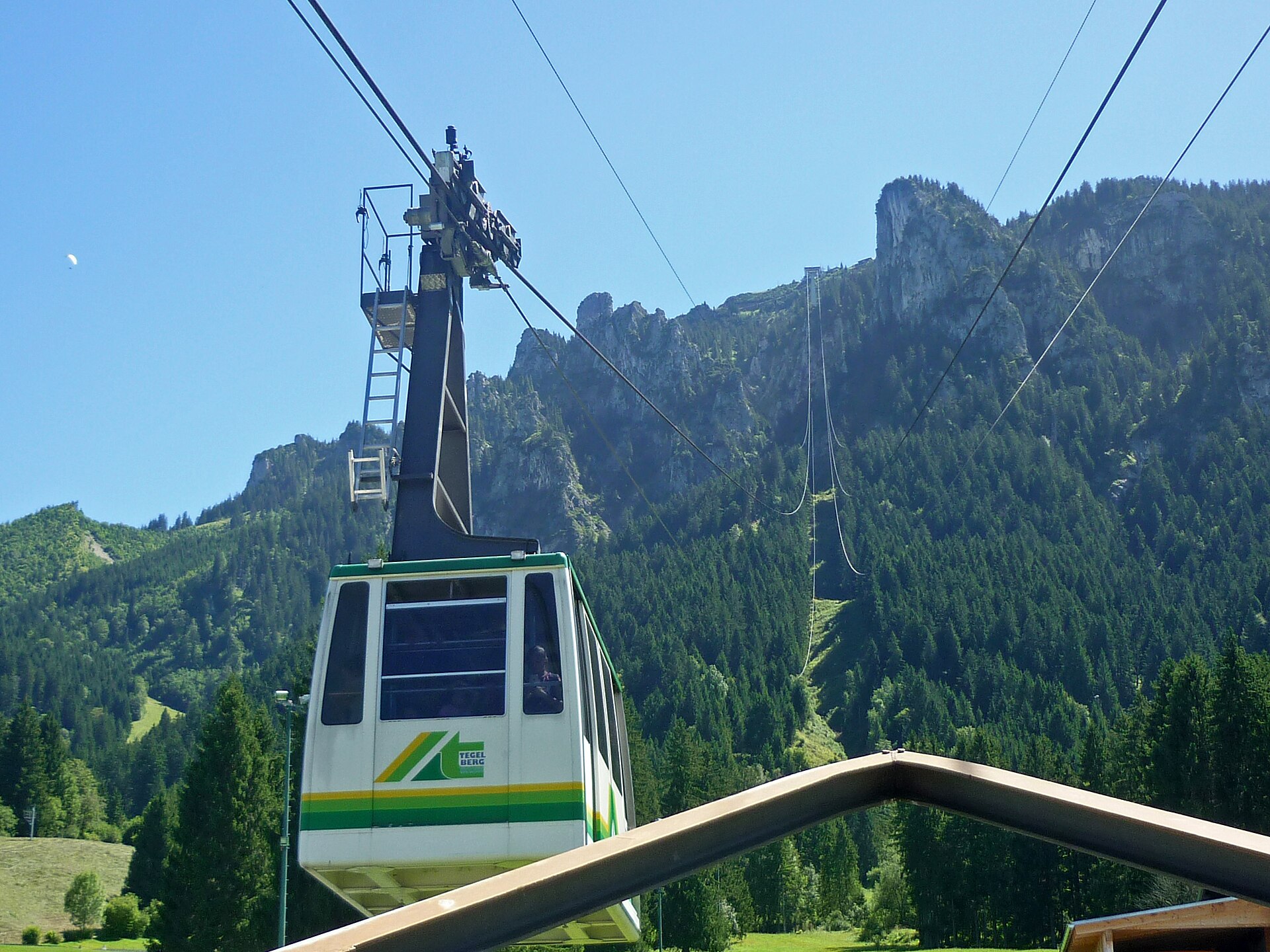
If you love bird’s-eye views, head to the nearby Tegelbergbahn cable car. In just ten minutes it whisks you up to an altitude of 1,881 metres, where an absolutely breathtaking panorama opens up before you. From the top you’ll see not only the Alps themselves, but also the huge Forggensee lake and both castles, which from this height look like tiny toys.
A return ticket for the cable car comes to roughly €22, and at the top you’ll find a pleasant restaurant and plenty of marked hiking trails. Mount Tegelberg is also a huge mecca for paragliders, so in good weather you’ll see dozens of colourful canopies in the sky. In winter, the slopes here turn into a popular ski resort.
💡 Tip: Down by the lower cable car station there’s a fun summer toboggan run that delights not only children but reliably entertains grown-up visitors too.
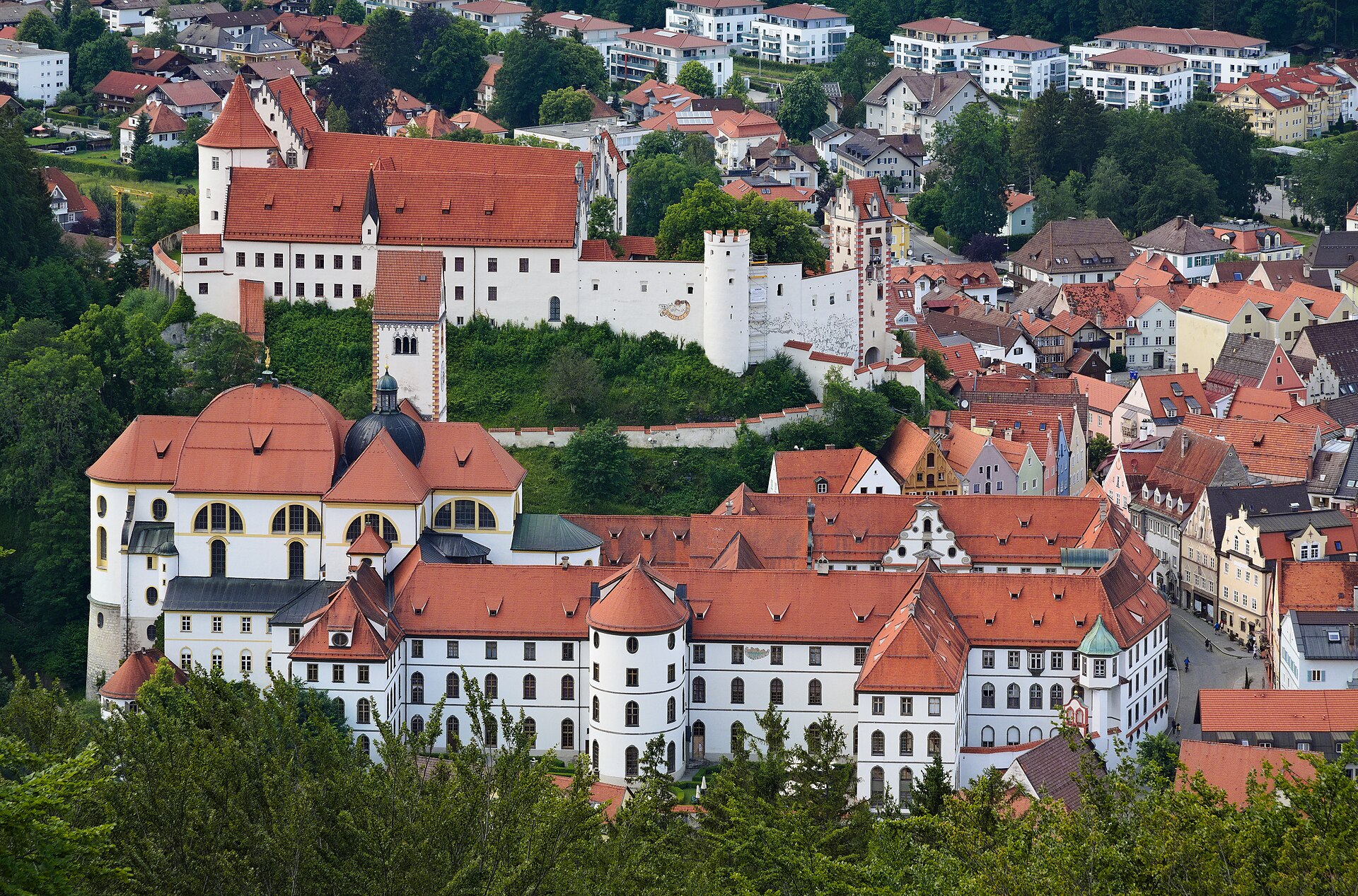
8. The historic town of Füssen
Just about four kilometres from the castle lies the picturesque little town of Füssen, which is definitely worth a longer stop. The town marks the symbolic southern end of the famous Romantic Road, and its historic centre is full of beautifully coloured houses, narrow lanes and little cafés. A walk through the old town feels wonderfully calming and offers a great contrast to the overcrowded area below the castle.
You’ll find plenty of small shops selling traditional products and pleasant spots where you can grab a coffee and a warm apple strudel. Füssen is also a great and more affordable base for accommodation if you don’t want to sleep right by the castle. Direct buses run from the local station all the way to Neuschwanstein.
💡 Tip: The town’s evening atmosphere, with its softly lit lanes, is very romantic. Try to find a small beer garden, order a fresh pretzel and just soak up the local vibe.
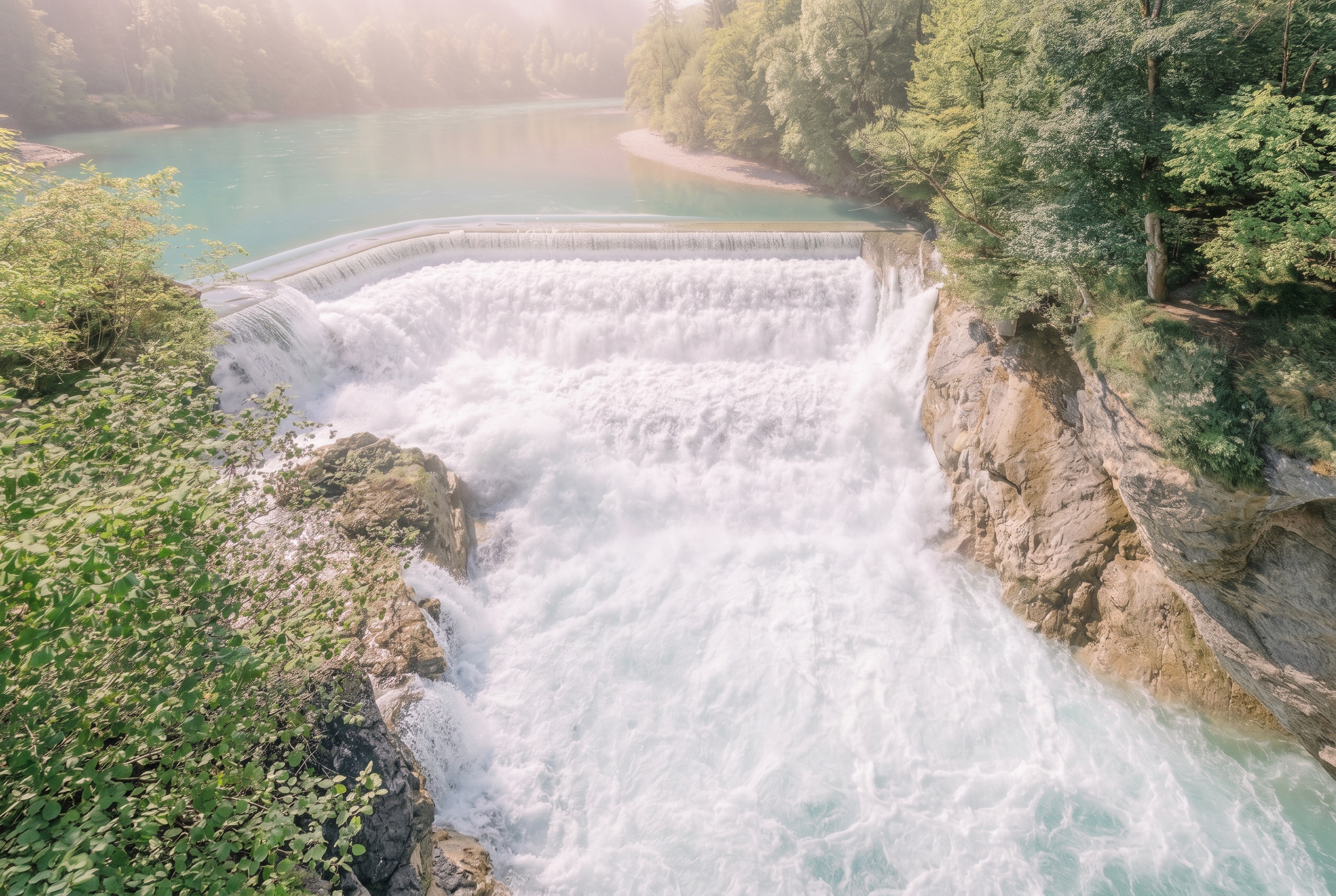
9. Hohes Schloss and Lechfall
Right above the centre of Füssen rises the majestic late-Gothic Hohes Schloss, which once served as the summer residence of the bishops of Augsburg. One of this castle’s curiosities is its trompe-l’œil façade paintings, which are so elaborate that from a distance they look like real three-dimensional bay windows and openings. Inside there’s a lovely state gallery with historical paintings.
Right next to the castle you’ll find the Baroque monastery of St. Mang, which hides richly decorated interiors and one of the oldest surviving depictions of the Dance of Death in Bavaria. Be sure to visit the nearby Lechfall waterfall too, which is an easy twenty-minute walk away. Here the River Lech tumbles over an artificial rock step, creating a gorgeous turquoise spectacle.
💡 Tip: From the bridge directly above the Lechfall waterfall you can take great photos of the wild river carving its way into the narrow rocky gorge.
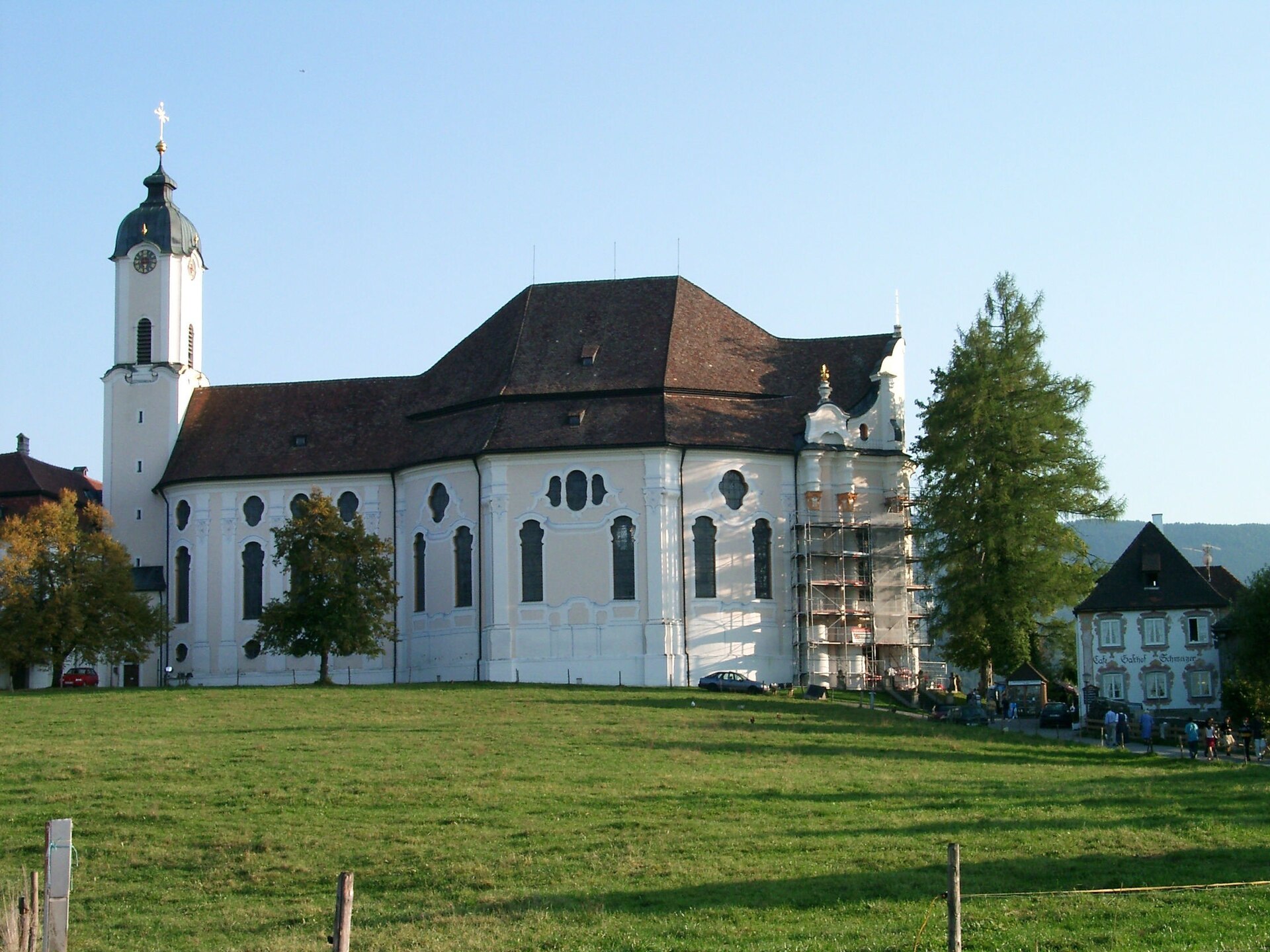
10. The Wieskirche pilgrimage church
Roughly twenty-five minutes’ drive from the castle lies a place that will thrill every architecture lover. The Wieskirche pilgrimage church is a UNESCO World Heritage Site and represents the absolute pinnacle of Bavarian Rococo. From the outside, the church standing in the middle of a green meadow looks fairly unassuming, but the moment you step inside, your jaw will literally drop.
The interior is incredibly richly decorated with stucco, gold and stunning ceiling frescoes that create the illusion of an open sky. The church was built in the mid-eighteenth century and pilgrims from all over the world still flock to it today. Entry is completely free and it’s an ideal stop on the way from Munich.
💡 Tip: Even though entry is free, regular services are held in the church, during which sightseeing is limited. So check the service times on their website beforehand.
11. Boat trips on Lake Forggensee
The largest body of water in the whole area is the Forggensee reservoir, which offers great recreation options in summer. From June to October there are regular sightseeing boat trips that give you a completely new perspective on the entire region. From the deck of the boat you’ll see not only the Alpine peaks but also, in the distance, both famous castles.
The lake is also a paradise for cycling enthusiasts, as it’s encircled by a perfectly maintained cycle path. The whole loop measures around thirty kilometres and is fairly flat, so you’ll manage it easily even with children. In the summer months you’ll find plenty of beaches and spots ideal for a refreshing swim.
💡 Tip: During the winter months the water level is lowered significantly for safety reasons, so you can walk across the partially exposed lakebed, where the remains of an old Roman road are occasionally visible.
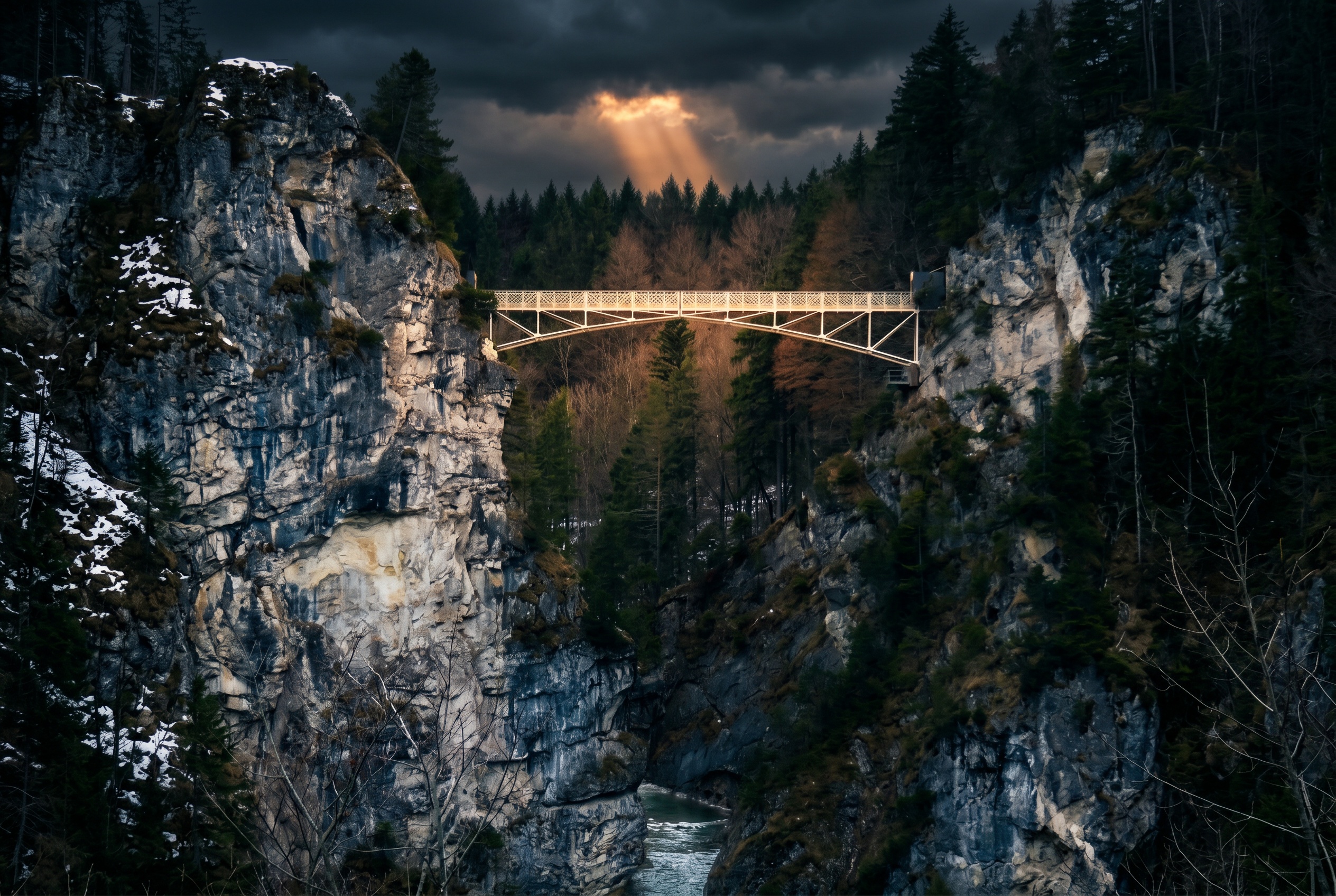
12. The dramatic Pöllat gorge
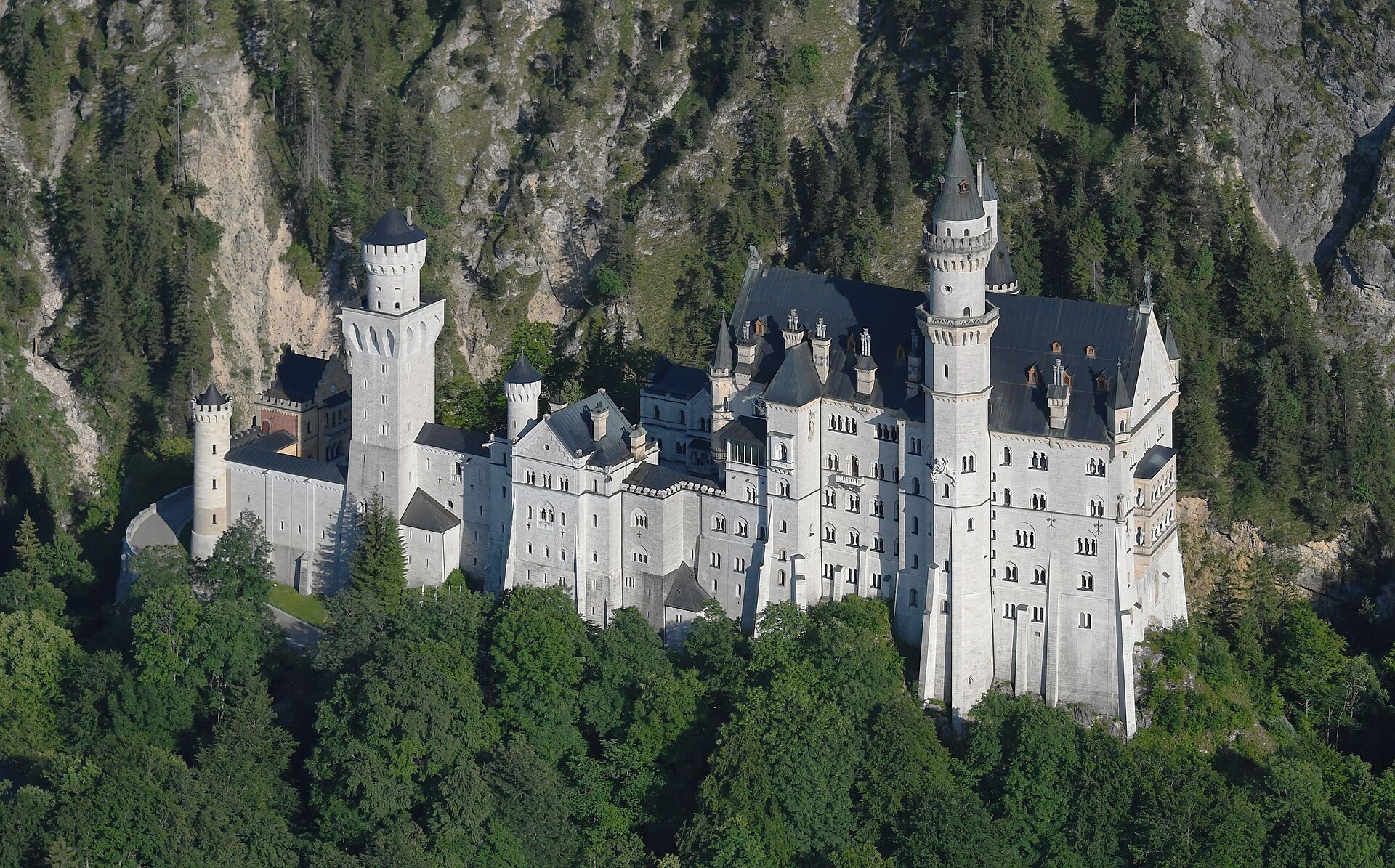
Right below the famous Marienbrücke bridge lies a deep gorge called the Pöllatschlucht. This dramatic ravine hides a wild river and cascading waterfalls that tumble down steep rock faces into the valley below. The marked trail runs partly along iron walkways fixed directly to the rock and offers a very unusual view of the castle from below.
The walk through the gorge is incredibly refreshing, especially on scorching summer days when there’s a pleasant coolness here. Unfortunately, the trail is fairly often closed due to the risk of falling rocks or ongoing maintenance. But if it’s open, I definitely recommend adding it to your plans as an alternative route down from the castle.
💡 Tip: Wear sturdy shoes for the gorge walk, as the damp iron walkways and rocks can be very slippery and treacherous.
13. The story of King Ludwig II
A visit to the castle wouldn’t be complete without understanding the fascinating and somewhat sad story of its creator. King Ludwig II of Bavaria, often called the Fairytale King or the Swan King, was an eccentric loner with an immense passion for art and the music of Richard Wagner. Rather than governing, he preferred to escape into his dream world and plunged the state into debt building fairytale castles.
His obsession ultimately cost him the throne, when in 1886 he was declared insane and deposed. A few days later he mysteriously drowned in nearby Lake Starnberg together with his psychiatrist, and the circumstances of this tragedy have never been reliably explained. Neuschwanstein Castle was opened to the public just a few weeks after his death, so that the proceeds from ticket sales could pay off the enormous royal debts.
💡 Tip: Pop into the Museum of the Bavarian Kings, which sits on the shore of Lake Alpsee. Admission costs roughly €12 and you’ll learn plenty of details about the history of the whole House of Wittelsbach.
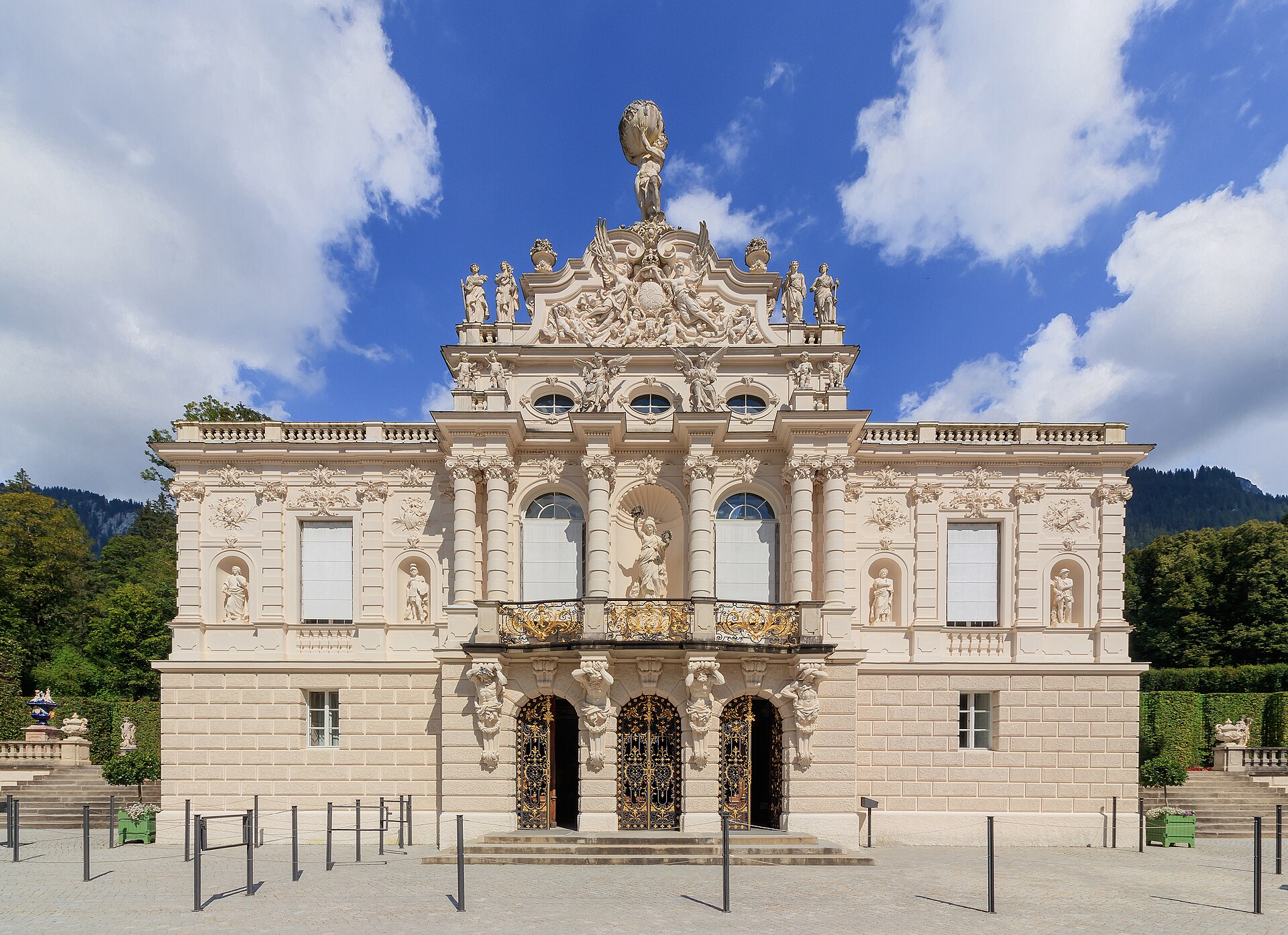
14. More castles and the Romantic Road
If Bavarian architecture has won you over, set out to discover King Ludwig’s other projects. About an hour and a half’s drive from here lies the gorgeous Linderhof Castle, which is the only one of the king’s projects to be fully completed and boasts an amazing park. The majestic Herrenchiemsee, which was meant to function as a Bavarian copy of France’s Versailles, is also well worth seeing.
The whole Füssen and Schwangau area sits at the southern end of the so-called Romantic Road, a popular tourist route linking the most beautiful Bavarian towns. The famous ski resort of Garmisch-Partenkirchen is also not far from here, along with Germany’s highest mountain, the Zugspitze. So you can easily combine a trip to Neuschwanstein with some proper mountain hiking or winter skiing.
💡 Tip: If you’re planning to visit several Bavarian state monuments, consider buying the 14-day Mehrtagesticket, which will save you a lot of money on individual castle entries all over Bavaria.
Where to go from Neuschwanstein Castle
While you’re discovering the beauty of southern Germany, be sure to consider a stop in the Bavarian capital. Munich offers amazing history, superb museums and legendary beer culture that’s guaranteed to win you over. Take a look at our article Weather in Munich: when to go so you can plan your visit for the best possible days and avoid those rained-out afternoons.
If you prefer to relax and unwind after long days out, Germany is famous for its meticulous spa culture. You’ll find beautiful wellness centres scattered throughout the Alps and deeper inland too. For inspiration for the perfect relaxing break, check out our overview of Wellness hotels in Germany.
Frequently asked questions
Do I need to buy tickets in advance?
Yes, I definitely recommend booking tickets online through Ticketcenter Hohenschwangau several weeks in advance. On-site tickets sell out within minutes of the ticket offices opening, and you risk not getting inside at all.
Does the audio guide speak Czech?
Yes, an audio guide is available in many languages including Czech. Just ask for one at the entrance and you can comfortably listen to the entire rich history of the castle in your native language without complicated translation.
Can you drive all the way to the castle?
Unfortunately no, the road up is closed to regular cars. You have to park down in the village at designated parking lots P1 through P4 and head up on foot, by shuttle bus, or in a romantic horse-drawn carriage.
How much time should you set aside for a visit?
Count on at least three hours of time. The uphill journey takes about forty minutes, the tour itself lasts approximately half an hour, and you’ll spend additional time walking to the Marienbrücke viewpoint and returning back to the car park.
Can I take photos inside the castle?
Inside the castle, there is a strict ban on photography and filming. Guards monitor this ban very strictly, so it’s better to keep your cameras and phones hidden in your bag the entire time and enjoy the details with your own eyes.
When is the best time to visit Marienbrücke bridge?
Experience the best light and fewest tourists early in the morning before 8 AM or late in the afternoon after 3 PM. During the day, the narrow bridge tends to be packed to bursting and long queues of waiting people form in front of it.
Is it worth going to Neuschwanstein in winter?
Winter has enormous charm and the snow-covered castle looks like something out of a fairy tale, but you need to account for limitations. Shuttle buses often don’t run and the path to the popular viewing bridge Marienbrücke is frequently closed for safety reasons due to ice.
Tips and Tricks for Your Vacation
Don’t Overpay for Flights
Search for flights on Kayak. It’s our favorite search engine because it scans the websites of all airlines and always finds the cheapest connection.
Book Your Accommodation Smartly
The best experiences we’ve had when looking for accommodation (from Alaska to Morocco) are with Booking.com, where hotels, apartments, and entire houses are usually the cheapest and most widely available.
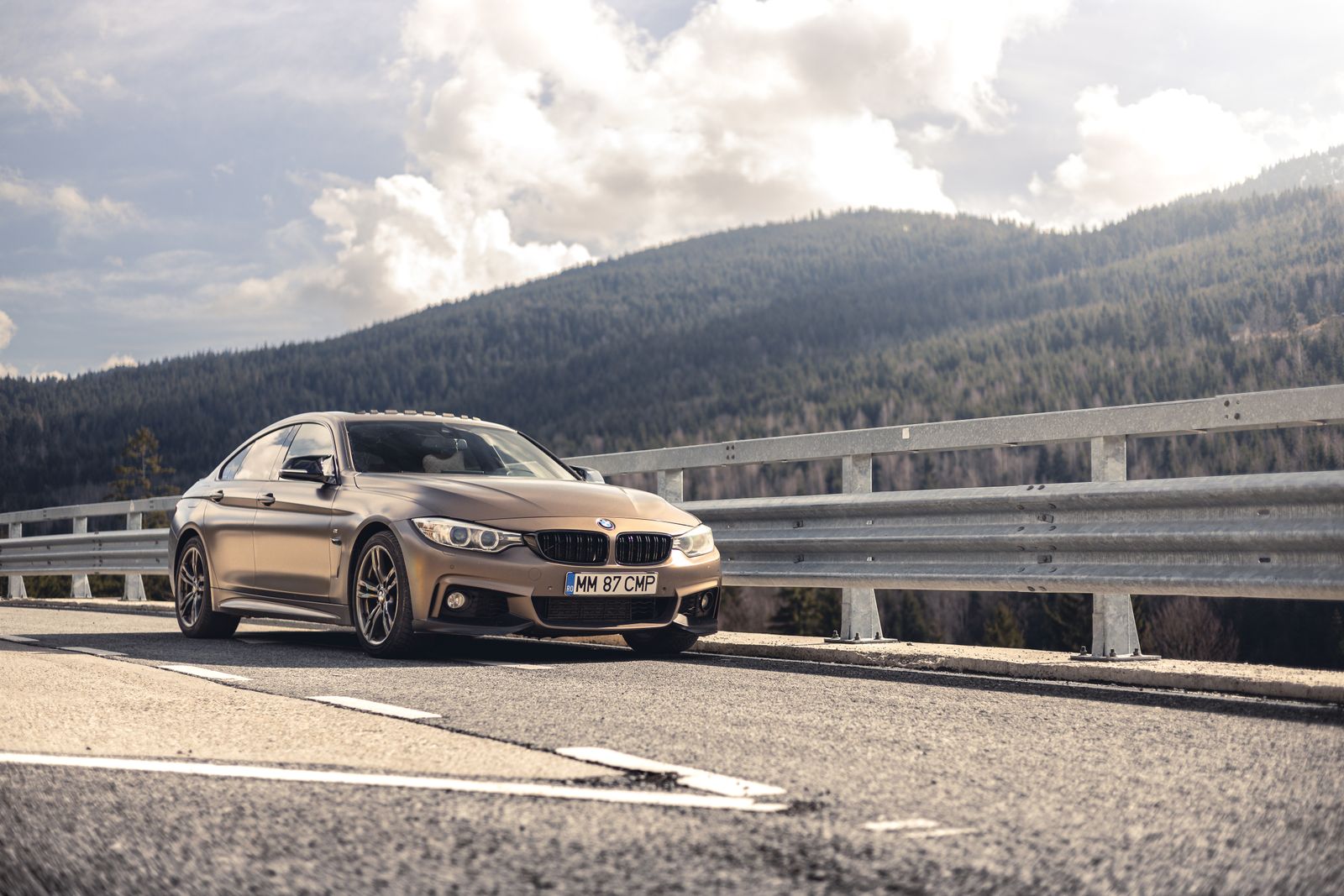 🚗 Car rental on the roadVerified rental cars in Germany
Search with the DiscoverCars comparison engine — it compares prices from dozens of local and international rental companies, and most bookings come with free cancellation.
Compare car prices in Germany →Don’t Forget Travel Insurance
Good travel insurance will protect you against illness, accidents, theft, or flight cancellations. We’ve had a few hospital visits abroad, so we know how important it is to have proper insurance arranged.
Where we insure ourselves: SafetyWing (simple monthly subscription) and TrueTraveller (for extra-long trips).
Find the Best Experiences
Get Your Guide is a huge online marketplace where you can book guided walks, trips, skip-the-line tickets, tours, and much more. We always find some extra fun there!
More from Germany
Full guide →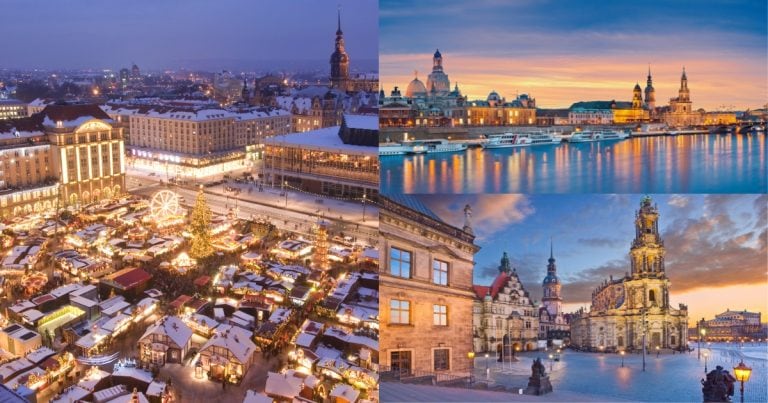 When to go · most readChristmas Markets in Dresden Germany 2026: When and Where
 Day tripsSchwäbisch Hall, Germany: 11 Best Things to Do and See
 Where to stayWellness Hotels in Germany: 12 Hidden Gems Most Travellers Don’t Know About
 Where to stayWhere to Stay in Frankfurt Germany: 12 Best Hotels and Neighborhoods
 Where to stayWhere to Stay in Hamburg: 12 Popular Hotels and the Best Neighbourhoods


