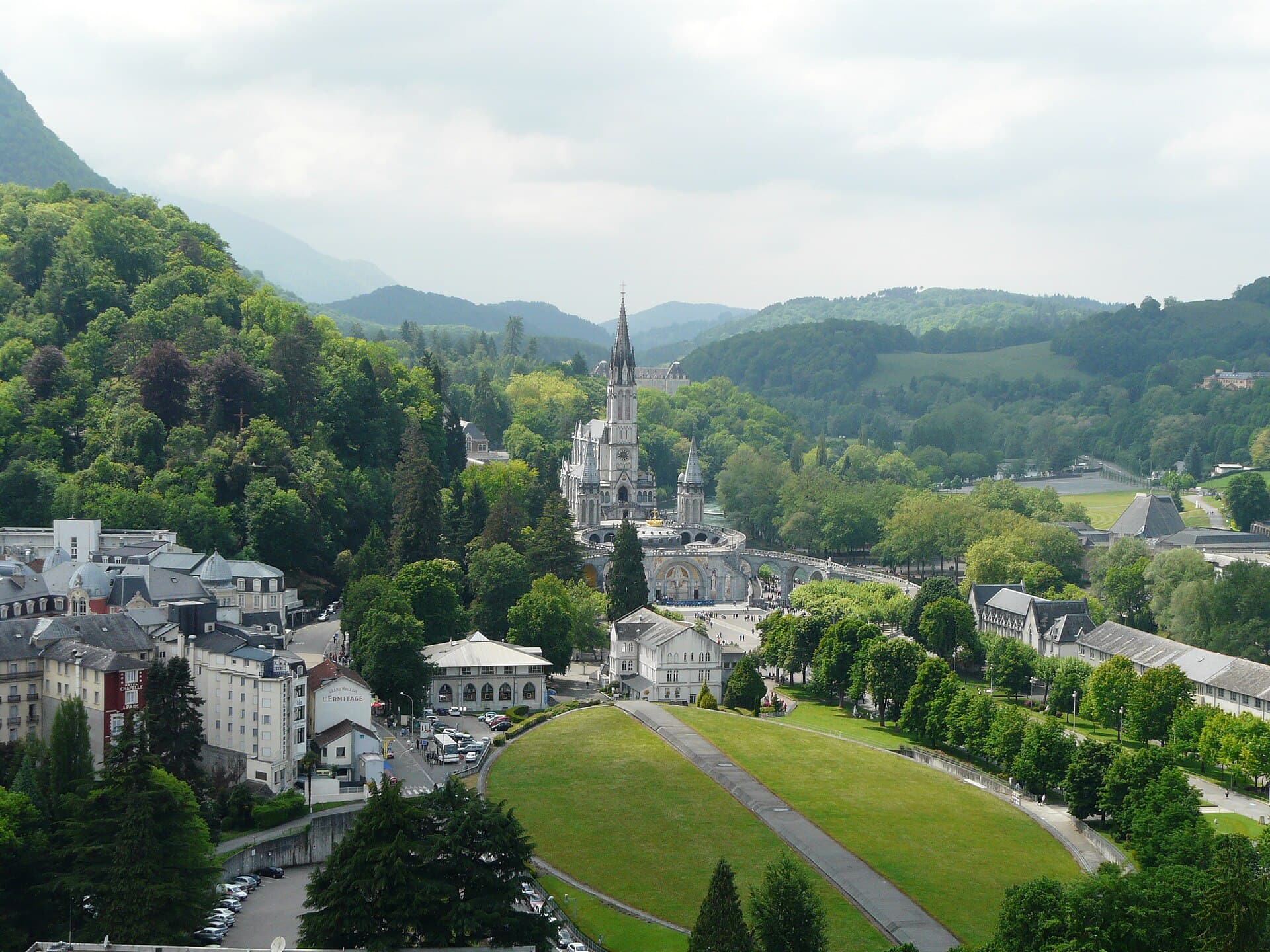
France wears many faces, but Lourdes in France, nestled at the foot of the Pyrenees, feels like an entirely different world. Every year this little town in the southwest of the country welcomes millions of visitors. Some arrive carrying enormous hope, while others are drawn here by pure curiosity.
In this article you’ll find 11 practical tips that will help you make the most of this fascinating pilgrimage site. You’ll learn where to look for strategically located accommodation and when the best time to visit is. That way you can soak up the incredible atmosphere even if you don’t count yourself among the deeply devout.
TL;DR
- The magical Massabielle Grotto: The site of the apparitions, where absolute silence reigns and you can touch the sacred rock.
- The evening procession: The most powerful emotions come after dark, when thousands of people walk through the night carrying lit candles.
- Lourdes water: A miraculous spring where you can fill bottles or take part in the traditional ritual.
- The underground basilica: A fascinating concrete colossus shaped like an upturned hull, holding an incredible 25,000 visitors.
- Trips into the Pyrenees: The town is an absolutely ideal launchpad for journeys to the Gavarnie waterfalls or the summit of Pic du Midi.
- Commerce vs. spirituality: Be ready for the huge contrast between neon-lit souvenir shops in the streets and quiet prayer inside the sanctuary.
The full destination guide: Nouvelle-Aquitaine — guide and what to see
When to Visit Lourdes
Lourdes comes alive mainly from Easter to the end of October, when the vast majority of visitors arrive and the whole town runs at full tilt. Each year an incredible four to six million people show up here, with the absolute peak of the tourist and pilgrimage season traditionally falling in the hot summer months. August 15th is especially intense, when the Assumption of the Virgin Mary is celebrated and the streets and hotels are literally bursting at the seams under the influx of pilgrims from all over the world.
If you’re planning a trip for 2026, keep in mind that Lourdes is entering a new three-year cycle dedicated to Saint Luke. Various dioceses around the world organise massive national pilgrimages during this period, so logistics in the town tend to be extremely tight and accommodation vanishes at lightning speed. The British diocese, for example, sends a huge organised pilgrimage here in late August, so for a calmer visit I’d recommend the turn of May and June, or alternatively a warm October, when the crowds thin out but the weather in the Pyrenean foothills is still very pleasant.
So how do you actually get here from the UK? The most logical option is to fly into Toulouse or Bordeaux and pick up a reliable rental car right at the airport. There are convenient connections from London and other major UK airports. The drive from Toulouse airport takes roughly two hours on the motorway, covering 175 kilometres to the foot of the mountains. A car gives you enormous freedom in any case, because reaching the most beautiful Pyrenean waterfalls and glacial lakes by relying on public transport alone is genuinely very difficult.
Where to Stay in Lourdes
💡 Tip for accommodation and experiences: We like to search for places to stay on Booking.com, which usually has the best cancellation terms. Tickets, tours and activities are then worth comparing and booking through GetYourGuide.
Lourdes is absolutely packed with hotels and guesthouses, but bear in mind that most of them are primarily geared toward huge organised groups and often carry a slightly retro feel from decades past. If you’re after something more personal and comfortable, it’s definitely worth booking a room well in advance through Booking. Ideally choose accommodation within walking distance of the sacred precinct, so you don’t have to deal with tricky evening parking, which becomes an absolute nightmare in the narrow streets during summer — and the police are only too happy to hand out fines for parking in the wrong spot.
A great choice is the renowned Grand Hôtel Moderne, which will instantly charm you with its historic atmosphere and beautiful Belle Époque architecture. It sits just a few steps from the main entrance to the sanctuary, so the magical evening procession is right on your doorstep and you avoid pushing through crowds across the whole town. Prices per night for two people in the 2026 season hover roughly around 130 to 180 euros, which is a fairly reasonable amount for such a prestigious location.
If you prefer more modern, quieter facilities, take a look at the Hôtel Roissy or the very popular Hôtel Alba, both offering excellent value for money, spotlessly clean rooms and friendly staff. Ordinary travellers, though, would do better to avoid staying right in the epicentre of the noisiest shopping streets. An alternative for nature lovers is to set up base camp in nearby mountain towns like Cauterets or Luz-Saint-Sauveur, from where you’re close to the Pyrenean treks and can simply make an afternoon trip into Lourdes.
11 Things to See and Do in Lourdes
Let’s take a look at 11 specific tips on what to see and do in Lourdes and the immediate surroundings. Whether you’re seeking spiritual comfort or rather architectural and natural highlights, you’re sure to find something here for you.
1. The Massabielle Grotto and the Apparitions
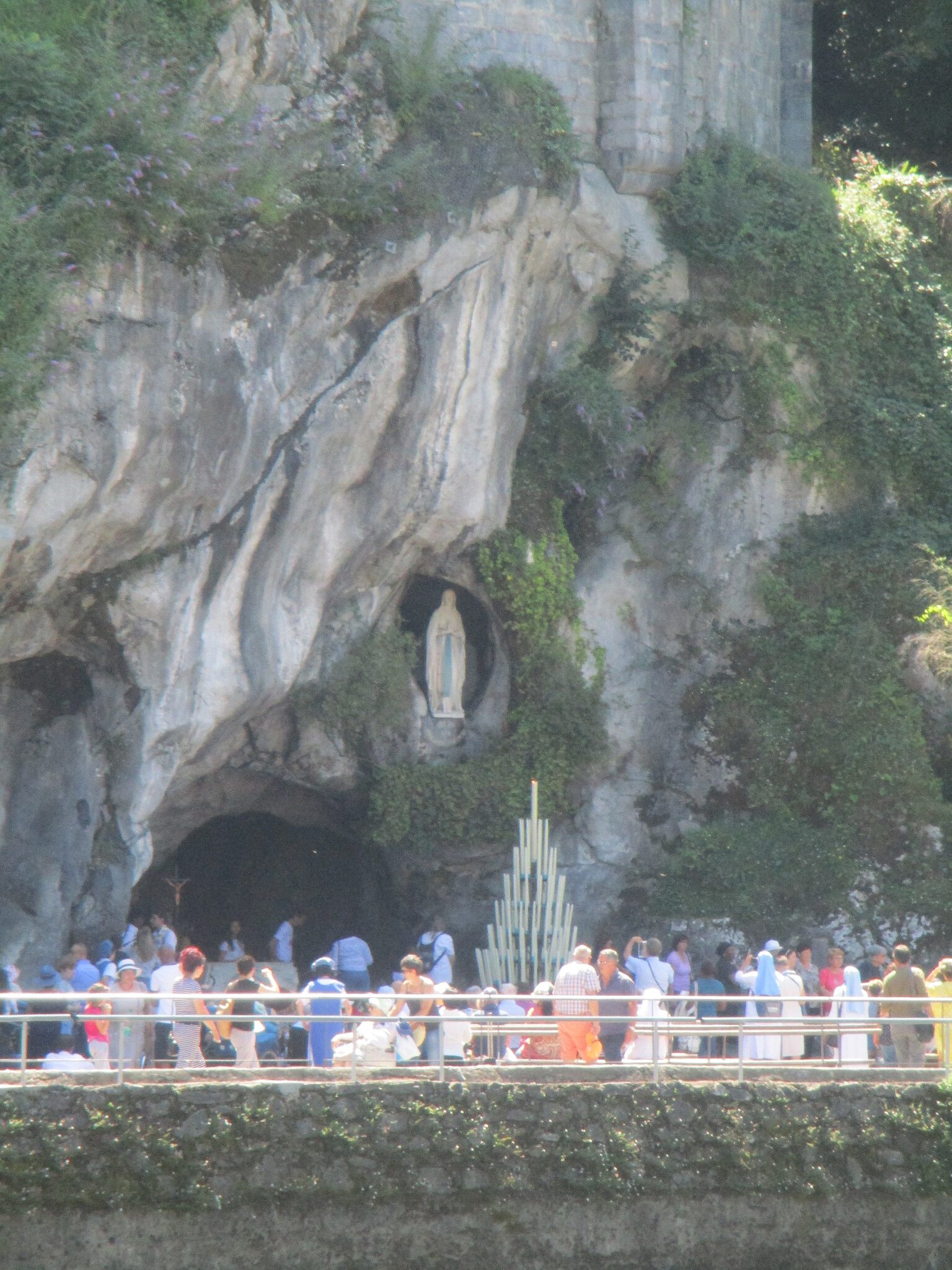
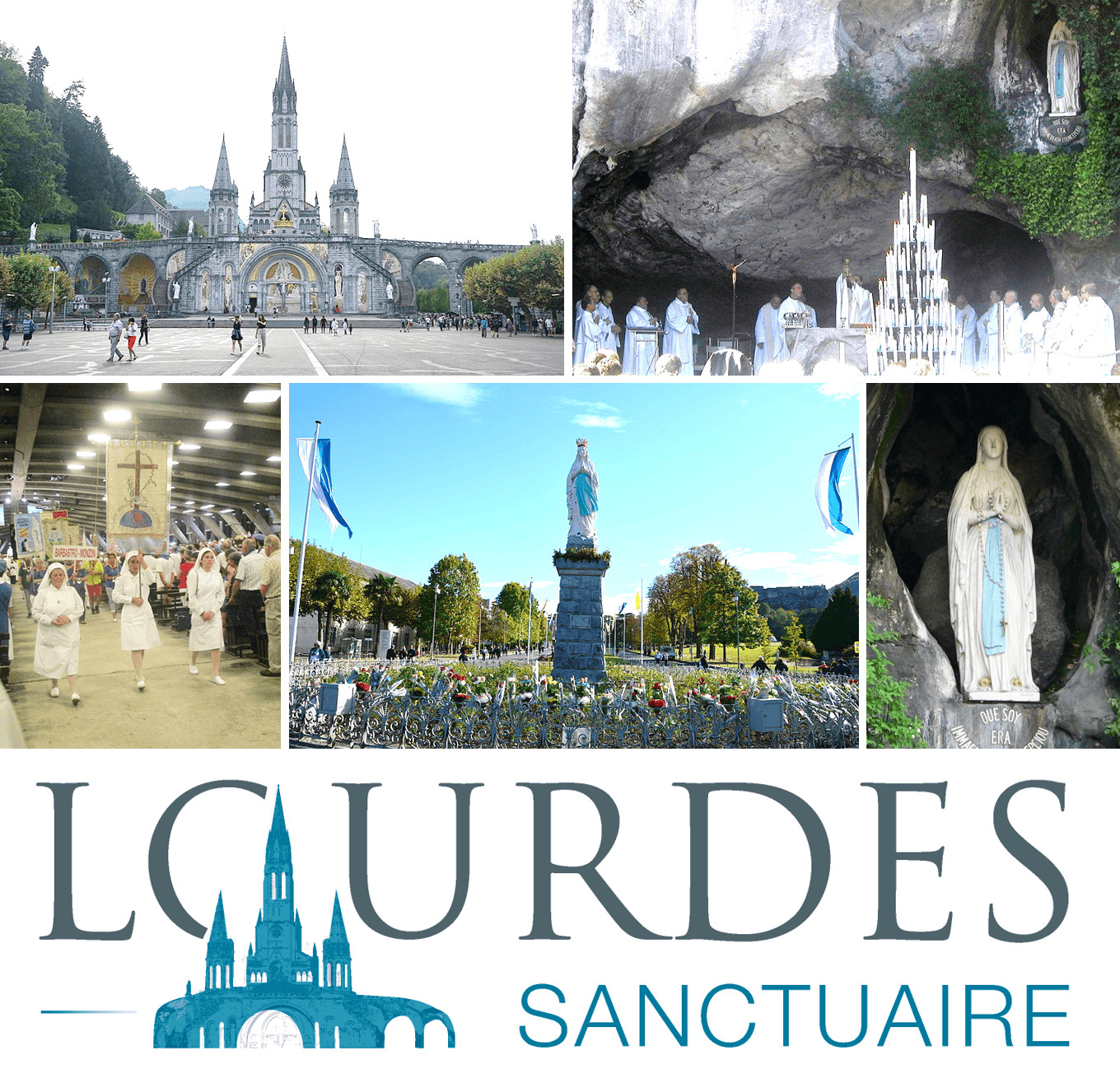
This is exactly the sacred spot where it all began in 1858, and which changed the history of the entire region forever. Back then, a local girl named Bernadette Soubirous, only fourteen years old, claimed that the Virgin Mary repeatedly appeared to her in the shallow Massabielle Grotto. Today this little rock overhang on the bank of the Gave de Pau river is the pulsing heart of the whole pilgrimage complex, drawing millions of the faithful from around the world every year.
As you approach the grotto itself, you’re immediately struck by the absolute, deeply respectful silence that reigns here. People stand in long but orderly queues, pray quietly, light candles, and hopefully touch the damp limestone rock. Over the long decades, the stone has been worn incredibly smooth by millions of human palms, and the whole scene feels powerful even for complete atheists who come purely out of curiosity.
💡 Tip: If you want to avoid the biggest crowds and experience the place in its purest form, head to the grotto early in the morning around seven o’clock. The sanctuary grounds open at dawn, and the morning mist rising off the icy mountain river lends the whole space an incredibly mystical, peaceful atmosphere.
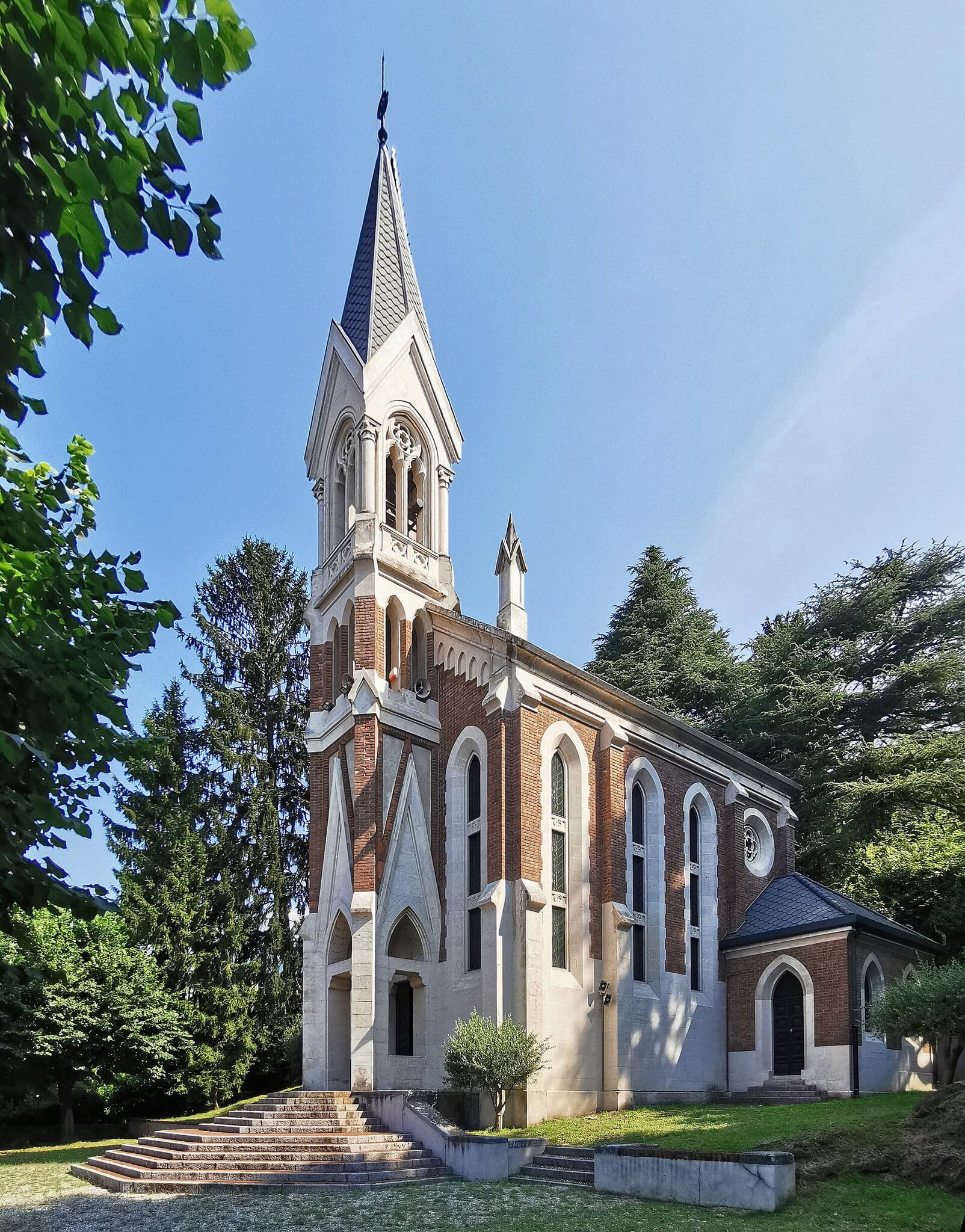
2. Basilica of the Immaculate Conception
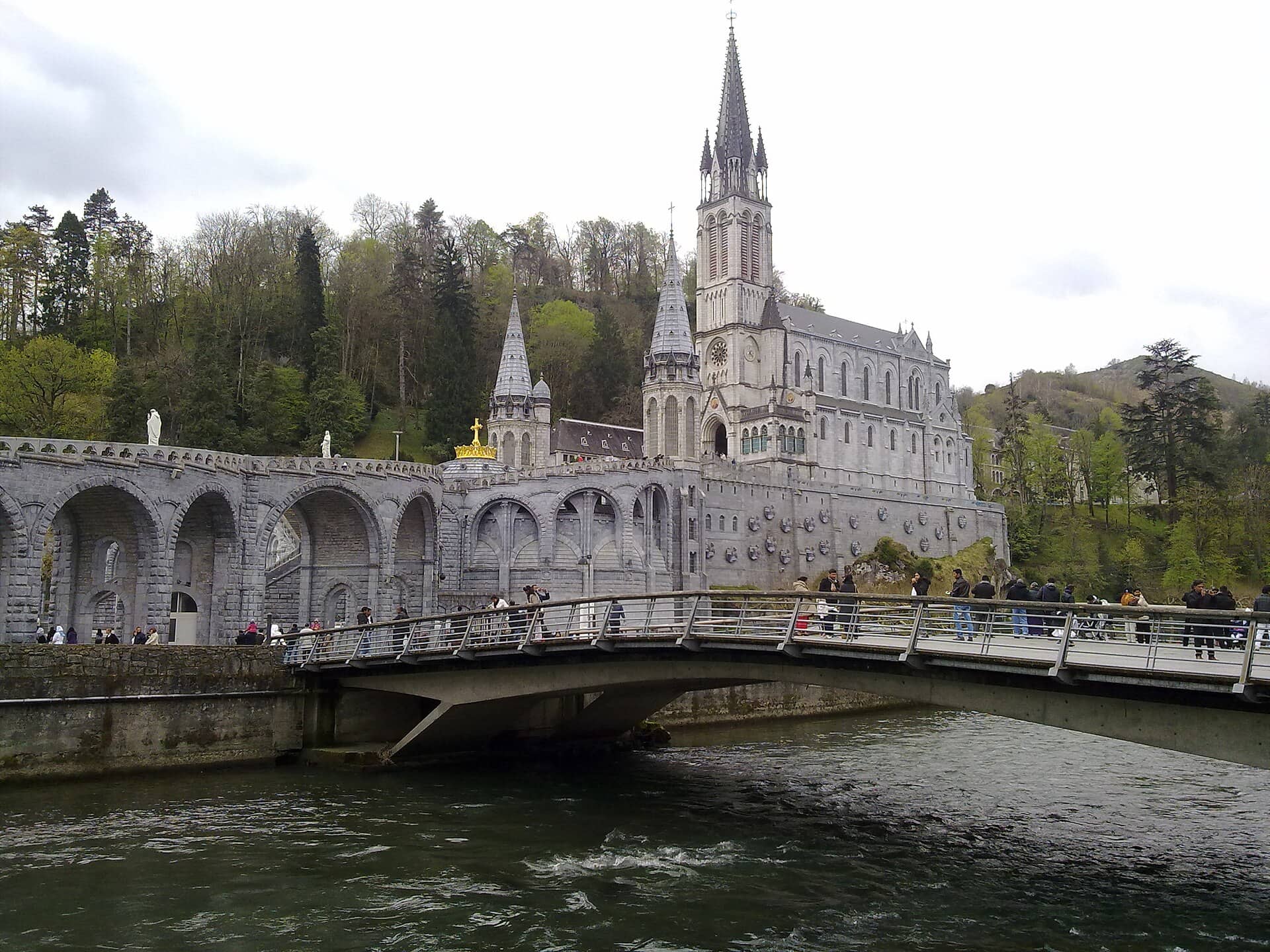
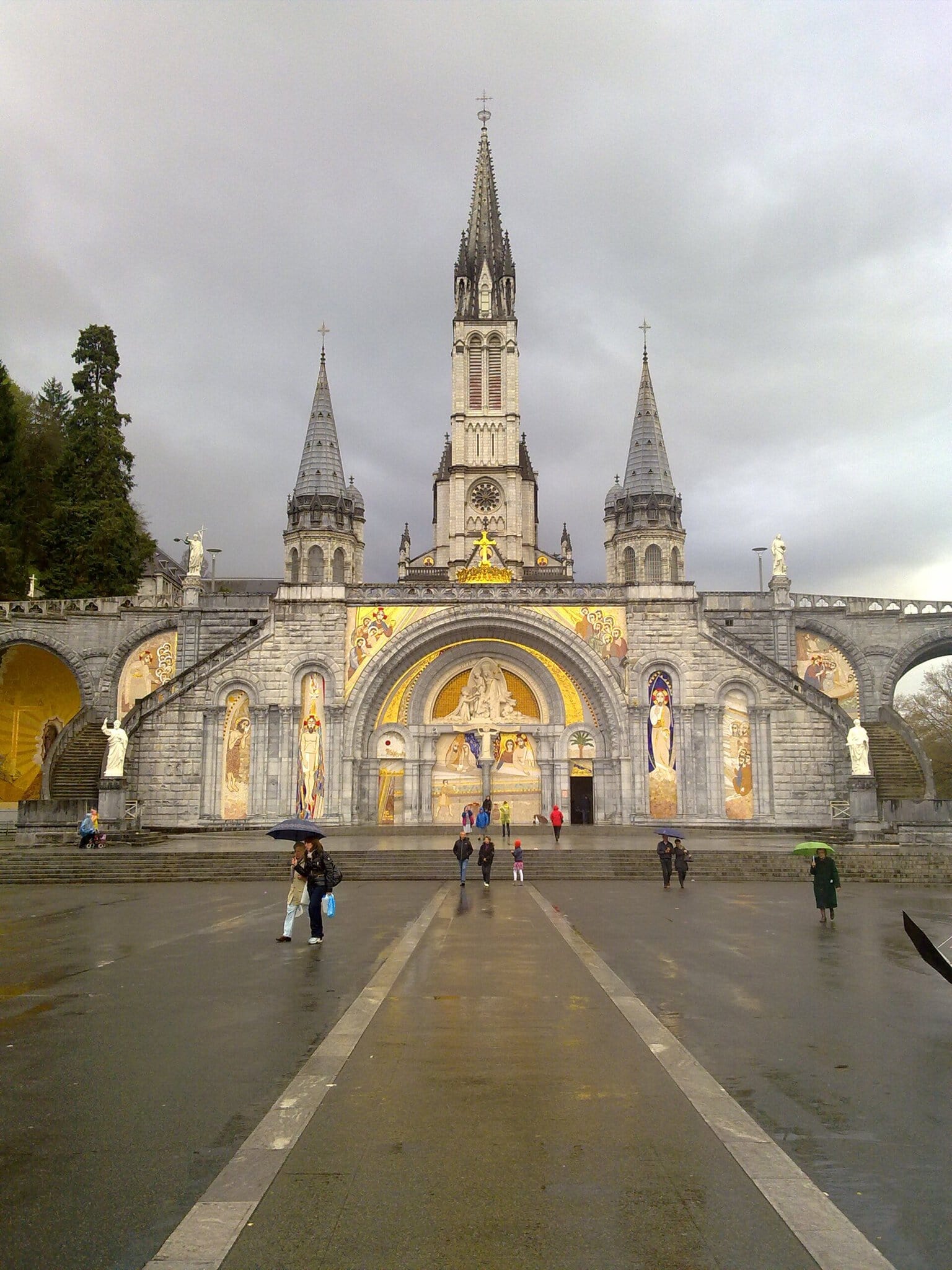
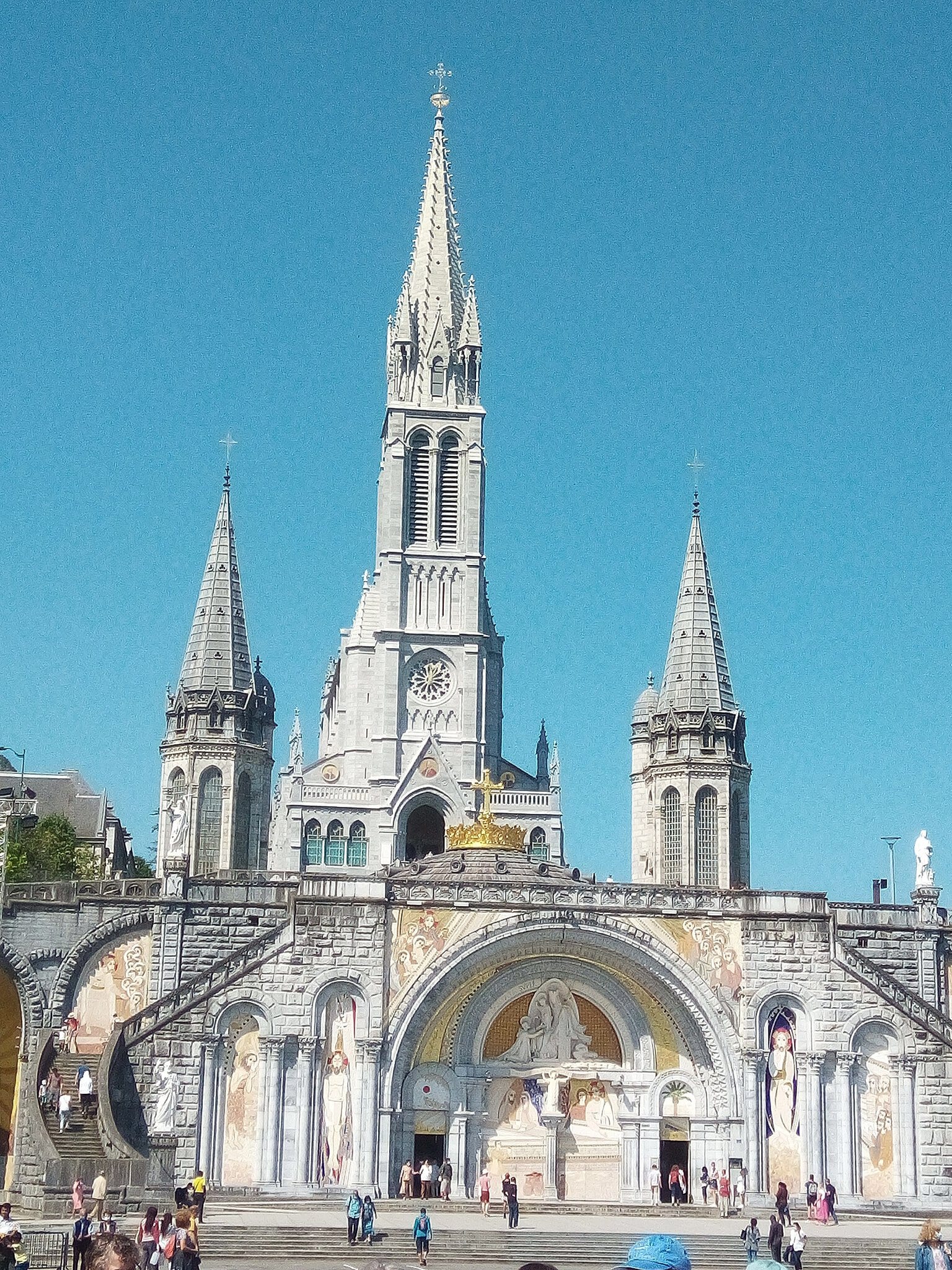
Right above the grotto of the apparitions rises a magnificent white building that serves as the main visual symbol and landmark of all Lourdes. The Basilica of the Immaculate Conception was completed in 1871, and thanks to its elevated position, its elegant, sharply cut slender spire can be seen from nearly every corner of the town. The brilliant white stone also creates a fantastic contrast with the dark green slopes of the Pyrenees that rise just behind the complex.
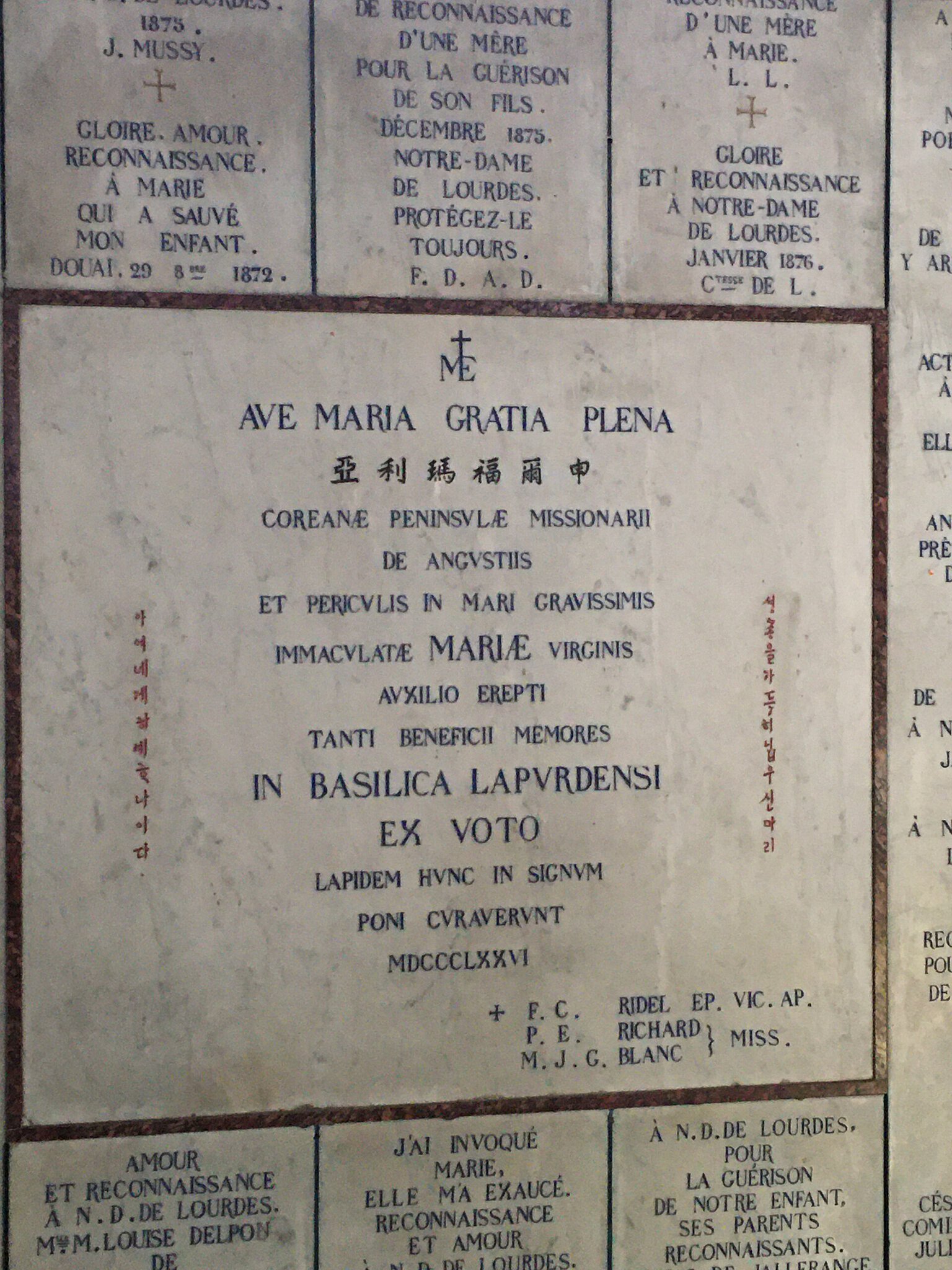
Be sure to step inside too, because the neo-Gothic interior is truly beautiful and intricately detailed. Stunning stained glass windows tell the complete story of the apparitions and, on sunny days, let in soft, beautiful light that colours the stone walls. Around the perimeter you’ll see hundreds of marble thank-you plaques from pilgrims from the most varied corners of the world, who believe this place brought them the healing or comfort they longed for.
An amazing architectural feature leads up to the basilica: a system of enormous stone ramps that embrace the main square like two giant protective arms. From here you get a perfect panoramic view over the entire sacred precinct, and only from this bird’s-eye perspective do you fully grasp the vast, endless crowds of people constantly streaming toward the grotto.
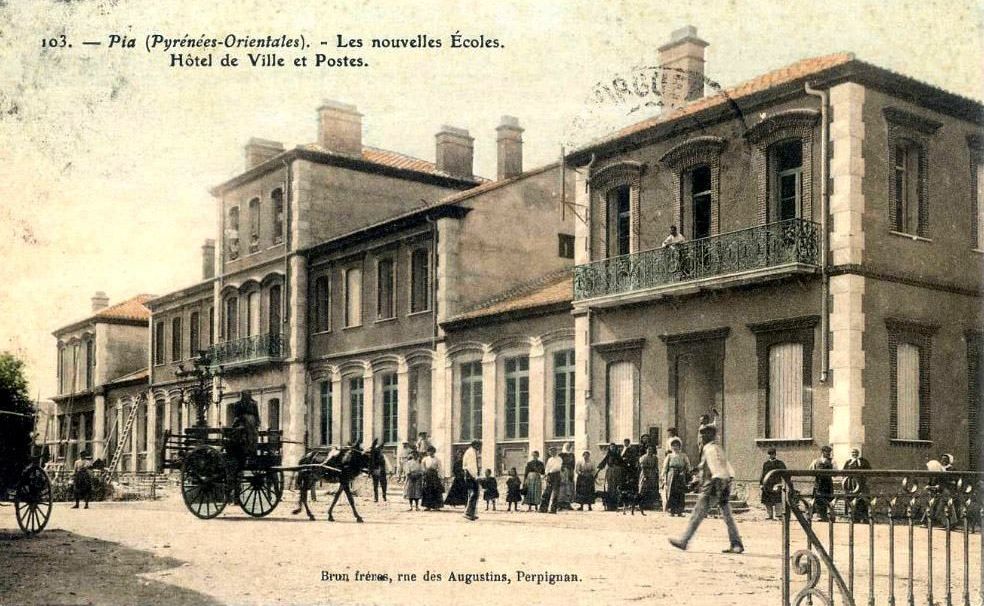
3. Underground Basilica of Saint Pius X
This is a huge architectural shock that you probably wouldn’t expect in a traditionally ornate pilgrimage town full of neo-Gothic. The Underground Basilica of Saint Pius X is a gigantic concrete structure designed in pure brutalist style, ceremonially consecrated in 1958 to mark the centenary of the first apparition. For many lovers of modern architecture, this space is the most interesting in the entire complex.
From the outside you can barely see it, because it’s cleverly hidden below ground level and its roof is formed by a sprawling green lawn. But as soon as you descend the wide steps, you’ll be stunned by a space of giant proportions resembling the hull of an upturned ship. The whole structure is technically designed so that an incredible 25,000 visitors can fit into its elliptical interior at once, without the slightest problem.
💡 Tip: Even when there’s no big international mass on and the space sits empty, definitely head down and walk around the perimeter. A stroll through the giant concrete hall has a peculiar, almost slightly dystopian, raw atmosphere that contrasts sharply and very interestingly with the romantic, airy architecture of the upper historic basilicas.
4. The Evening Candlelight Procession
The single most powerful emotional experience in Lourdes doesn’t await you during the day, but long after dark. Every day from roughly April to the end of October, the famous Marian procession takes place on the main esplanade at exactly 9:00 p.m. Thousands of people from all over the world gather with lit candles in hand and walk slowly, in perfect harmony, along the wide paths of the pilgrimage grounds.
It’s a visually overwhelming spectacle that’s guaranteed to move and stir nearly every visitor, regardless of faith. The crowds, singing the traditional Ave Maria without pause, form an endless river of flickering light stretching through the darkness. The power of shared hope takes on an almost tangible, physical form here, and the overall night-time atmosphere is incredibly moving.
You can buy a candle with a protective paper cone to shield it from the wind for just a few coins on practically every corner in the streets surrounding the grounds. I’d recommend arriving at the main esplanade a little earlier to find a good elevated spot on the steps for watching and taking photos, or you can simply join the crowd and become a direct part of this fascinating ritual.
5. Lourdes Water and the Cleansing Baths
The clear water springing from the source right inside the Massabielle Grotto is a phenomenon in itself and the main reason many people come here. Pilgrims from all over the world believe boundlessly in its miraculous, healing effects on body and soul. Today, along the rock wall, you’ll find dozens of neatly arranged stone taps from which you can fill bottles for free and take a piece of Lourdes home with you.
Historically, seriously ill people came here to undergo full cleansing baths in stone pools designed for the purpose. In recent years, however, for hygiene reasons, full immersion in the icy water has been somewhat phased out. Instead, what’s done now is the so-called water gesture, where under the supervision of volunteers you symbolically wash your face and hands, which is a safer yet still deeply spiritual experience.
💡 Tip: If you want to take Lourdes water home as a keepsake, don’t waste money on overpriced plastic canisters in the shopping streets. An ordinary clean bottle from the supermarket will do you just fine. The spring water is regularly and very strictly tested in laboratories, is perfectly drinkable, beautifully cool, and wonderfully refreshing on hot summer days.
6. The Monumental Stations of the Cross on the Hill
If you want a break for a while from the constant flow of crowds on the main esplanade and to stretch your legs in nature at the same time, set off on the local Stations of the Cross. They wind their way up the steep, wooded Colline des Espélugues hill right above the sanctuary and offer a beautiful, quiet walk in the pleasant shade of mighty trees — something you’ll definitely appreciate in summer.
The whole route is gradually lined with 115 monumental statues cast in golden metal, modelled at larger-than-life size. The realistic scenes from the last days of Christ’s life feel very dramatic in the wild, natural setting, with the whole trail measuring about a kilometre and a half up a fairly steep hill — it’ll give you a proper physical workout.
For older visitors, families with pushchairs or people in wheelchairs, this wooded route is unfortunately too demanding and inaccessible. Luckily, right in the lower grounds on flat terrain you’ll find another, modern and fully accessible Stations of the Cross, so no visitor has to miss out on this powerful artistic and spiritual experience.
7. The Castle and the Pyrenean Museum
Lourdes isn’t just a world-famous pilgrimage complex but also an interesting historic town with a splendid medieval fortress dominating the whole valley. The Château Fort de Lourdes stands on a high, steep rock right in the middle of town and for many centuries served as an impregnable military guardian of the strategic trade route leading deep into the heart of the Pyrenees.
Today, thankfully, you don’t have to climb the demanding steps, because you can reach the inside comfortably by a glass lift, and from the massive ramparts you’ll get an utterly unrivalled panoramic view over the entire sanctuary and the surrounding green mountain peaks. It’s by far the best spot for capturing the most spectacular photos of the whole Lourdes valley from a bird’s-eye view.
Inside the castle complex, don’t miss the Pyrenean Museum, which vividly illustrates the rugged, traditional life of the local mountain folk. You’ll find interesting examples of old crafts, beautifully decorated traditional costumes, and scale models of typical rural dwellings and farms from across the vast region of southwestern France.


8. The Atmosphere of Pilgrimages and Major Feast Days
Visiting Lourdes during the most significant religious feast days is a chapter all its own and requires a little mental preparation. On these days the whole town transforms into one enormous, pulsing organism, where the streets are constantly criss-crossed by hundreds of devoted volunteers pushing blue wheelchairs carrying seriously ill pilgrims who have come here seeking healing.
It’s absolutely fascinating to watch the incredible logistics and organisation that a town of just fifteen thousand permanent residents manages to handle. Special white trains converted into mobile hospitals arrive at the local station from all over Europe, and everywhere there’s a contagious atmosphere of mutual help and human solidarity that’s quite unique in today’s fast-paced world.
💡 Tip: During the big August feasts, such as the Assumption of the Virgin Mary, or during national pilgrimages (in 2026, for example, the major British pilgrimage in late August), expect extreme waiting times for absolutely everything. From tables in restaurants to parking to the entrance to the grotto itself. If you don’t like crowds, give these busy dates a wide berth.
9. A Trip to Pic du Midi
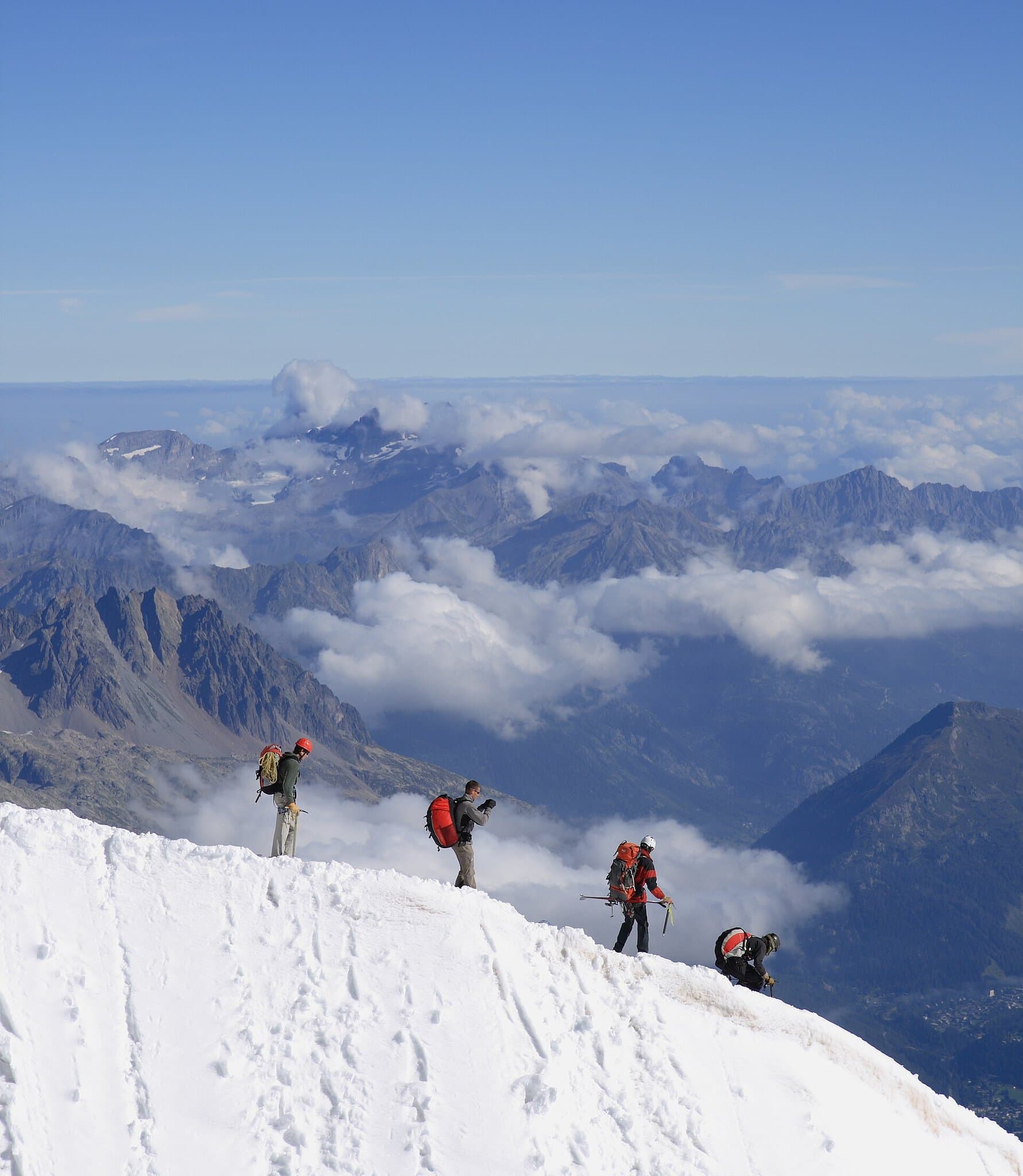
Once you’ve had just about enough of the spiritual atmosphere and the bustle of the town, set off to discover the wild, untamed countryside. Lourdes is, after all, an absolutely fantastic starting point for day trips into the high mountains. One of the best and most accessible experiences is the ride on the giant cable car up to the majestic summit of Pic du Midi de Bigorre, to a staggering altitude of 2,877 metres above sea level.
The journey begins in the nearby ski resort of La Mongie, and the modern cable car whisks you in no time straight up to the steep, rocky peak, where you’ll feel a sharp change in temperature. At the top, the famous astronomical observatory has been operating continuously since the end of the nineteenth century, because conditions here are among the very best and clearest for stargazing in all of Europe.
From the huge viewing terraces, on a clear day you can take in the entire breathtaking wall of the Pyrenees stretching for hundreds of kilometres. For true connoisseurs and romantics, there’s even the option to book an exclusive overnight stay at the summit, spend the evening stargazing with local astronomers, and wake up in the morning high above the clouds with a view of the rising sun.
10. Cirque de Gavarnie and the Waterfalls
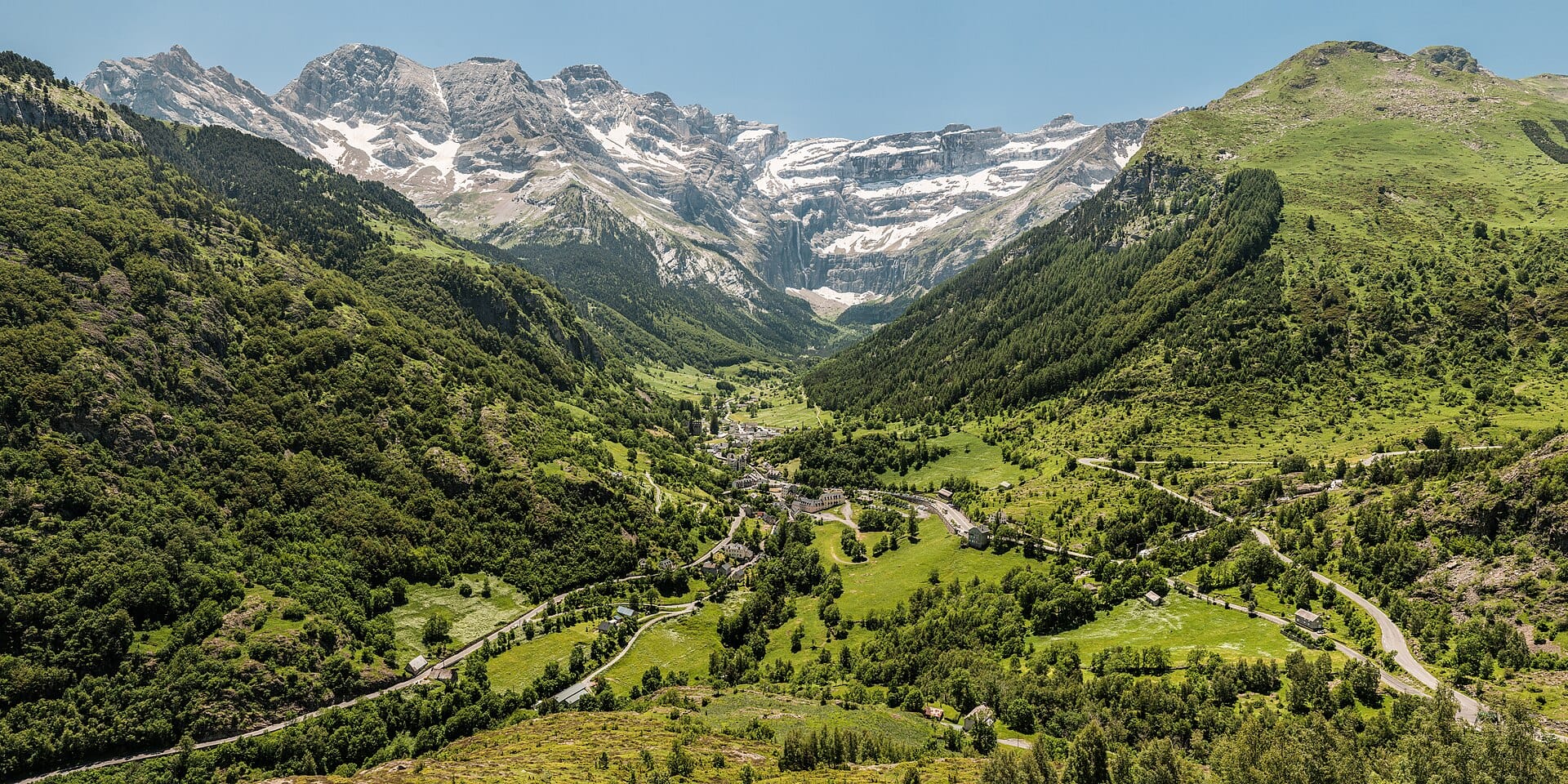
If you’re going to see just one single natural wonder in the whole of the Pyrenees, let it be the breathtaking Gavarnie, which you can reach from Lourdes by car in about an hour and a quarter (50 kilometres). This enormous glacial amphitheatre listed as a UNESCO World Heritage Site was described by the famous writer Victor Hugo as a natural colosseum — and looking at it, you’ll realise he certainly wasn’t exaggerating.
Picture a gigantic rock wall rising steeply to a height of over 1,500 metres, forming a perfect semicircle six kilometres across and closing off the entire valley. Countless icy streams tumble down this mighty limestone wall, and the largest waterfall, the Grande Cascade, measures an incredible 422 metres, making it one of the very tallest in all of Europe.
The walk from the car park in the village to the waterfall itself is surprisingly fairly easy, leading over gentle terrain and taking roughly an hour and a half of comfortable walking. You can book organised trips here through GetYourGuide if you’d rather not deal with the hassle of driving your own car along the narrow, winding mountain roads.
11. Pilgrimage Commerce and Souvenirs
The last tip is more of a practical observation about the local reality, which might catch you off guard. Lourdes is, you see, a town of enormous and often hard-to-grasp extremes. Right beyond the gates of the sacred, quiet, soothing complex begins a wild commercial zone full of glowing neon and hundreds of souvenir shops, all competing to grab your attention.
Be ready to see shop windows overflowing with colourful plastic bottles shaped like the Virgin Mary, glow-in-the-dark rosaries, holy-water canisters and kitschy figurines of every imaginable kind. This massive visual onslaught is literally shocking for many people, but it’s been an inseparable part of the Lourdes character and the workings of the local economy for many decades now.
💡 Tip: Take in the souvenirs at your leisure as an interesting cultural phenomenon, but remember that prices in the streets closest to the sanctuary tend to be significantly inflated. If you’re looking for something a bit more tasteful for yourself or your loved ones, try searching in the smaller shops tucked away deeper in the historic town centre, away from the main tourist flow.
Map of points of interest for your phone
Where to Go Next from Lourdes
Once you’ve had your fill of the Lourdes spiritual atmosphere and the majestic mountains, I’d recommend heading straight toward the ocean. Just a little over two hours’ drive separates you from an entirely different world, where surf culture, long beaches and a very laid-back mood rule.
Here you’ll find the famous Biarritz and the Basque Country, which will instantly charm you with their wild cliffs and authentic architecture. Stop in beautiful, historic Bayonne for a traditional thick hot chocolate, or explore the picturesque fishing lanes of Saint-Jean-de-Luz. It’s an absolutely ideal contrast to the quiet mountain valleys.
Frequently Asked Questions
How much does entry to the grounds in Lourdes cost?
Entry to the entire sacred area, including the Massabielle grotto, the procession grounds and all the basilicas, is completely free and open to all regardless of faith. Payment is only voluntary for candles, or for entry to the historical museums or the medieval castle towering above the town.
Can non-believers visit the basilicas and the cave too?
Absolutely yes, you don’t need to have any concerns. Lourdes is open to people of all faiths and curious non-believing visitors who come here to admire the architecture and the phenomenon of the place. Only basic human respect for the site is required, along with quiet, considerate behavior in the immediate vicinity of the grotto, where people are focused on silent prayer.
Can you normally drink Lourdes water?
Yes, the water flowing from the mountain spring directly in the cave is regularly and very strictly tested in laboratories to meet all hygiene standards. It’s absolutely pure, refreshing spring water that you can safely drink and fill into your own bottles at the stone fountains prepared for this purpose near the cave.
How to dress for visiting a shrine?
Since this is one of the most significant pilgrimage sites in the world, respectful and appropriately modest clothing is logically expected. It’s recommended to have your shoulders covered and ideally your knees as well, so it’s better to leave very short beach shorts, low-cut tops or tank tops at the hotel to avoid unnecessarily offending older pilgrims.
Are Lourdes suitable for wheelchair users?
Lourdes is probably the most wheelchair-accessible city in the entire world. Given the enormous number of sick pilgrims in wheelchairs, you’ll find comfortable ramps everywhere, spacious elevators, perfectly maintained wide paths, and even a specially adapted flat Stations of the Cross in the lower part of the complex.
How much does a stay in Lourdes for a few days cost?
The price level here is surprisingly very friendly compared to Paris or the French Riviera. You can find a room for two in a decent three-star hotel in the 2026 season for around 100 to 150 euros per night. A coffee will cost you about 3 euros and a simple lunch at a local bistro away from the main tourist spots will run you around 15 euros per person.
Will I find good vegetarian food in Lourdes?
France can sometimes be a bit tricky for vegetarians, but in Lourdes and the surrounding area you’ll manage without any problems. Head to the local traditional crêperies for excellent savoury pancakes filled with local cheese and mushrooms, or thanks to the international clientele you’ll find plenty of Italian restaurants with good pizza and pasta. Be sure to also try the excellent local hard sheep’s milk cheeses, which are typical for the Pyrenees region.
Tips and Tricks for Your Vacation
Don’t Overpay for Flights
Search for flights on Kayak. It’s our favorite search engine because it scans the websites of all airlines and always finds the cheapest connection.
Book Your Accommodation Smartly
The best experiences we’ve had when looking for accommodation (from Alaska to Morocco) are with Booking.com, where hotels, apartments, and entire houses are usually the cheapest and most widely available.
 🚗 Car rental on the roadVerified rental cars in New Aquitaine
Search with the DiscoverCars comparison engine — it compares prices from dozens of local and international rental companies, and most bookings come with free cancellation.
Compare car prices in New Aquitaine →Don’t Forget Travel Insurance
Good travel insurance will protect you against illness, accidents, theft, or flight cancellations. We’ve had a few hospital visits abroad, so we know how important it is to have proper insurance arranged.
Where we insure ourselves: SafetyWing (simple monthly subscription) and TrueTraveller (for extra-long trips).
Find the Best Experiences
Get Your Guide is a huge online marketplace where you can book guided walks, trips, skip-the-line tickets, tours, and much more. We always find some extra fun there!