Heading to Croatia and looking for a day trip that will leave your jaw on the floor? Krka National Park in Croatia is an absolute natural gem of central Dalmatia that simply shouldn’t be missing from your travel itinerary. Cascading travertine waterfalls, emerald-green water and deep karst canyons create scenery that looks like it was lifted straight out of an adventure novel.
Unlike the far more sprawling Plitvice Lakes, this park is a touch more compact, yet across its 109 square kilometres it hides an incredible seven waterfalls along with fascinating historical landmarks. You can take a boat cruise out to a picturesque island monastery, explore ancient watermills, and enjoy a stroll along wooden walkways that lead you right above the roaring mass of water.
In this detailed guide you’ll find everything you need to know before your visit, from current ticket prices and opening hours to the best walking routes. I’ll also let you know which entrance is best to use and where you can safely take a dip, because the rules for getting into the water have tightened up quite a bit in recent years.
TL;DR
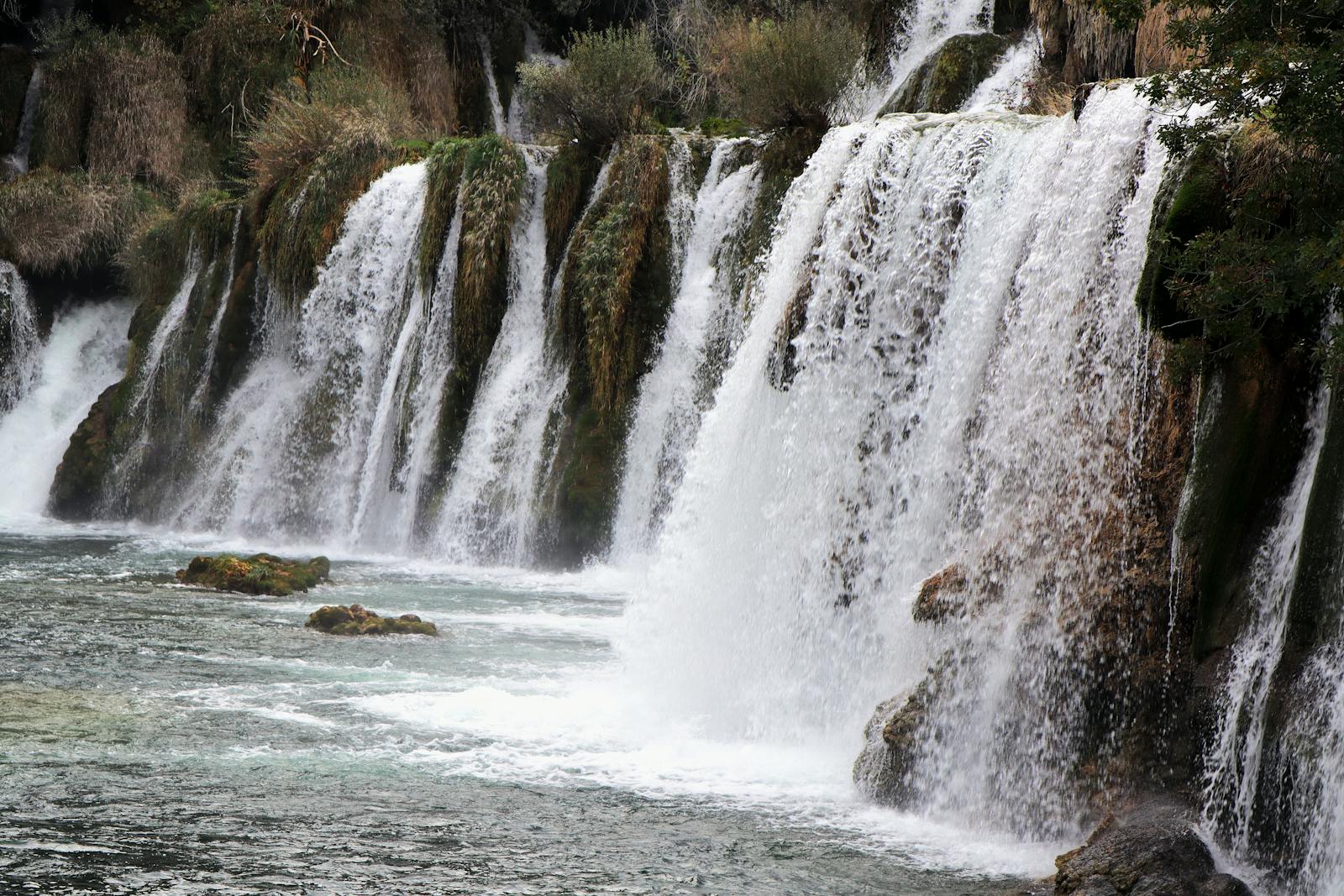
- Main attraction: The most famous cascade is Skradinski Buk, which tumbles over seventeen travertine steps, but the stunning Roški Slap is also well worth seeing.
- Swimming ban: Since January 2021 a strict swimming ban has been in place at the main Skradinski Buk waterfall to protect nature. You can only cool off in the marked areas by the Roški Slap waterfall.
- Two main entrances: Drivers most often choose the Lozovac entrance with its large car park, while more romantic souls will appreciate the entrance through the town of Skradin, where a boat will carry you to the waterfalls.
- Tickets 2025/2026: During the peak summer season adults pay €40, in spring and autumn the price drops to €20, and in winter you can see the park for just €7.
- Summer discount: If you arrive in summer after 3 pm, you’ll get a nice 25% discount on your ticket.
- Booking accommodation: A strategic base is the historic town of Šibenik or the charming town of Skradin itself, where you can easily sort out accommodation through Booking.
The full destination guide: Dalmatia — guide and what to see
When to Visit Krka National Park
Choosing the right season will completely shape your overall experience of this watery kingdom. The best compromise is late spring or the month of September, when the weather is pleasantly warm, a decent amount of water flows through the river, and there are noticeably fewer tourists than during the school holidays. The spring months also offer beautifully rich colours from the awakening landscape, which you’ll especially appreciate when taking photos.
If you’re longing to see the Krka waterfalls at their absolute most powerful, come here in April or May. The spring snowmelt in the surrounding mountains and heavier rains push the river’s flow to its maximum, so the waterfalls literally thunder and the riverbed is full to the brim. Just bear in mind that the water is still very cold at this time and spring weather can occasionally be a little unpredictable.
During the summer months from July to August you need to be prepared for truly large crowds of tourists as well as the highest ticket prices, which climb to €40 per adult. If you have to come in summer regardless, I’d recommend arriving at 8 am sharp when the park opens. Another clever option is to take advantage of the discounted afternoon ticket after 3 pm, when the sun isn’t beating down as hard and the crowds of day-trippers from Split and Zadar are slowly heading home.
A winter visit from November to March also has its undeniable and very peaceful charm, because a ticket costs just €7 and you’ll have the park almost to yourself. You’ll have to accept, though, that during this off-season the boats and shuttle buses don’t run. Opening hours in winter are usually cut short to around 4 pm, so you’ll need to drive to the waterfalls in your own car and plan your time well.
Where to Stay in and Around Krka National Park
💡 Tip for accommodation and experiences: We like to look for accommodation on Booking.com, where you’ll usually find the best cancellation conditions. It’s then worth comparing and buying tickets, tours and activities through GetYourGuide.
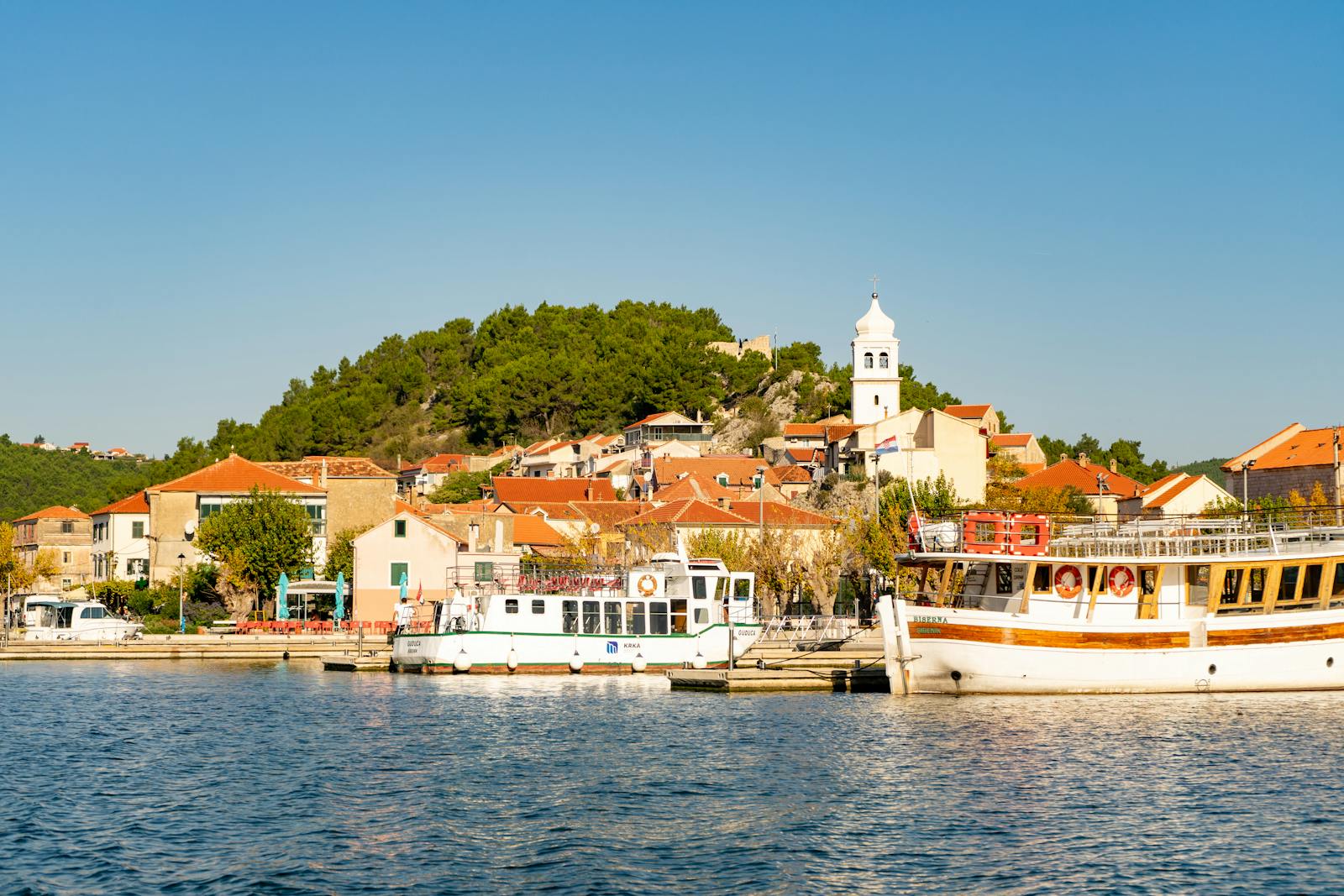
If you want to explore the park really thoroughly and not rush anywhere, it’s ideal to find a place to stay right nearby. The most practical choice is the picturesque town of Skradin, which sits right on the riverbank and offers great food, narrow historic lanes and a beautiful marina for yachts. On top of that, the boats to the main waterfall set off from this town, so you won’t lose a single minute in the morning.
Right in Skradin you can stay at the popular Hotel Skradinski Buk, which offers very comfortable rooms and is just a few steps from the main jetty. This hotel is a fantastic base for an early-morning visit, allowing you to easily beat the crowds arriving by bus from the larger resorts.
Another fantastic and highly strategic base is the nearby historic town of Šibenik, which is roughly a twenty-minute drive from the park. Here I recommend the gorgeous Heritage Hotel Life Palace, tucked right into the historic heart of the town, where you’ll feel the incredible atmosphere of old Dalmatia. You’ll be just a short walk from the magnificent Cathedral of St. James, a UNESCO World Heritage Site.
If you’re after something a little more modern with a touch of luxury and its own parking, take a look at the wonderful Boutique Hotel King in Šibenik. After a full day of walking the wooden boardwalks of the national park, you’ll enjoy the perfect rest here. You can easily and safely book any accommodation in this area through Booking, where you’ll also find plenty of cosy private apartments for families.
10 Tips on What to See and Do in Krka National Park
Let’s take a look together at the most beautiful spots you definitely shouldn’t miss during your visit. Krka National Park offers much more than just one famous waterfall, so it’s worth setting aside a whole day for exploring and discovering its lesser-known corners too.
1. Skradinski Buk and a Walk Along the Wooden Boardwalks
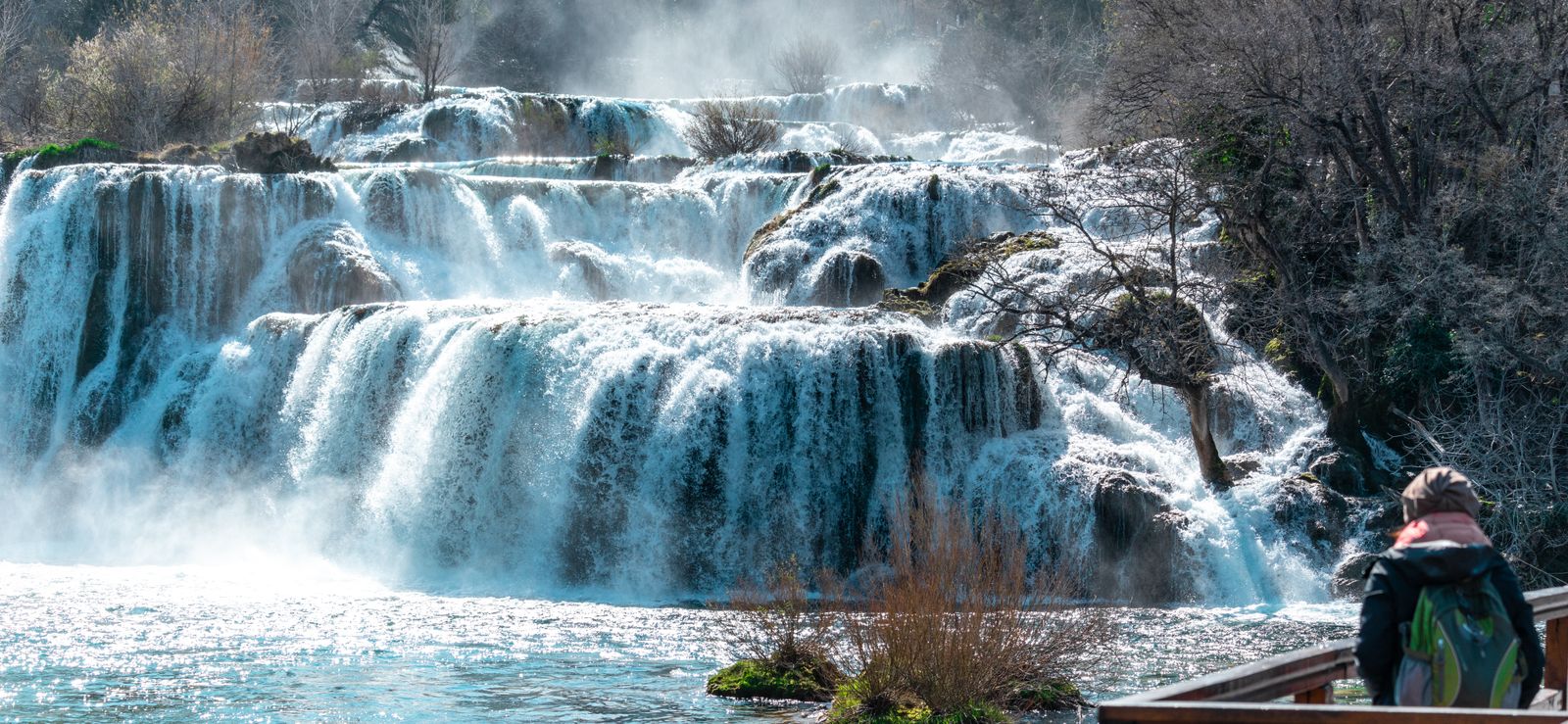
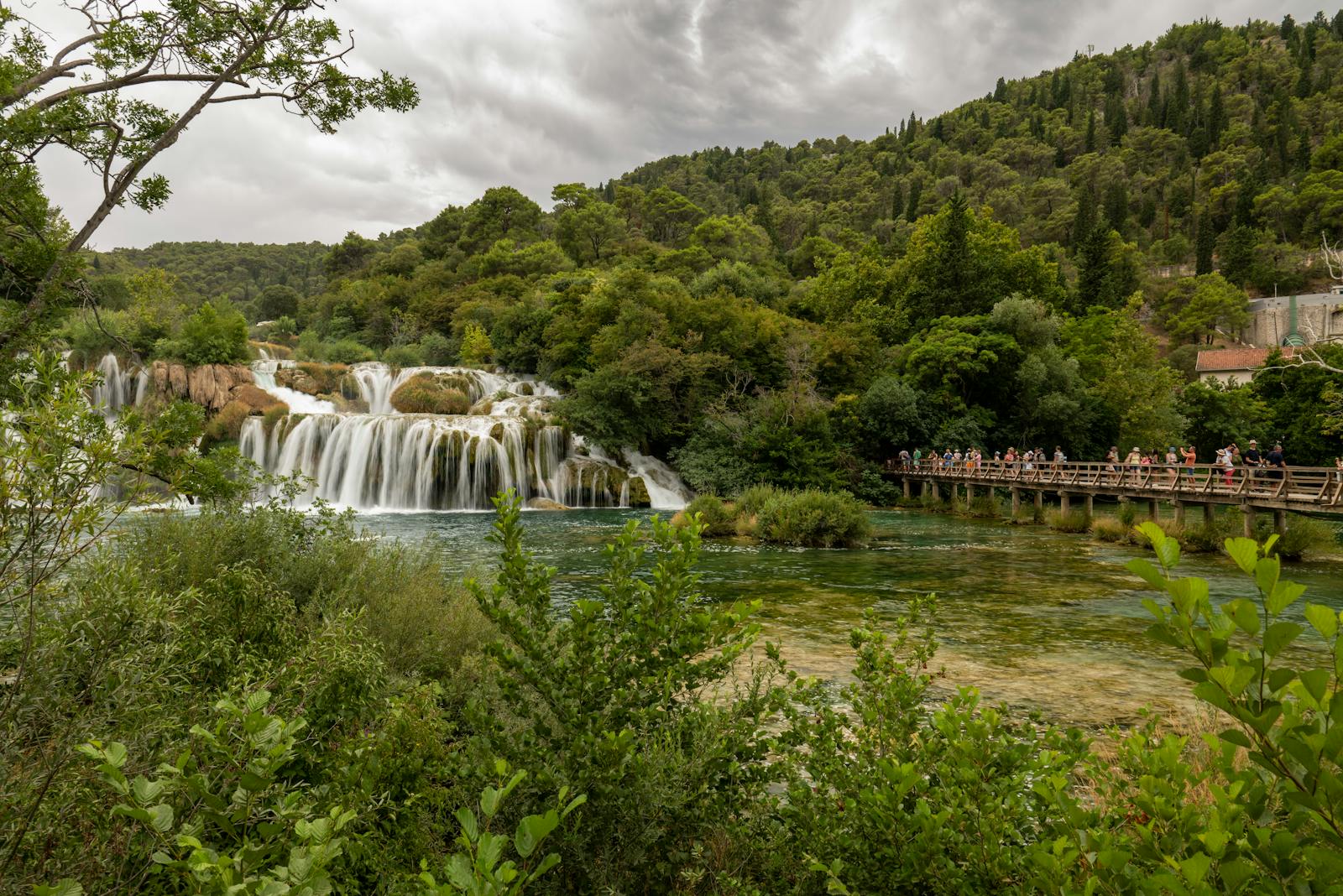
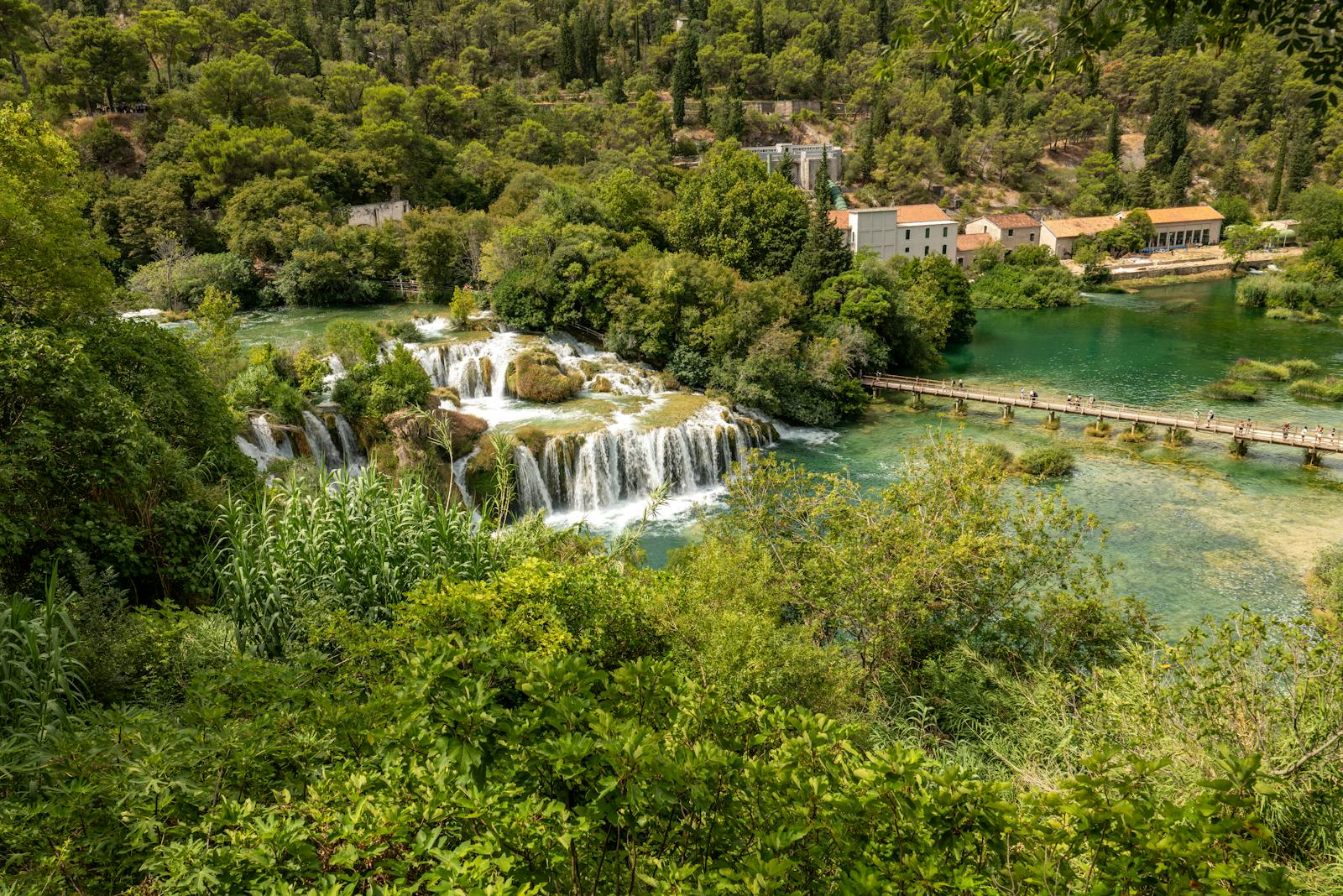
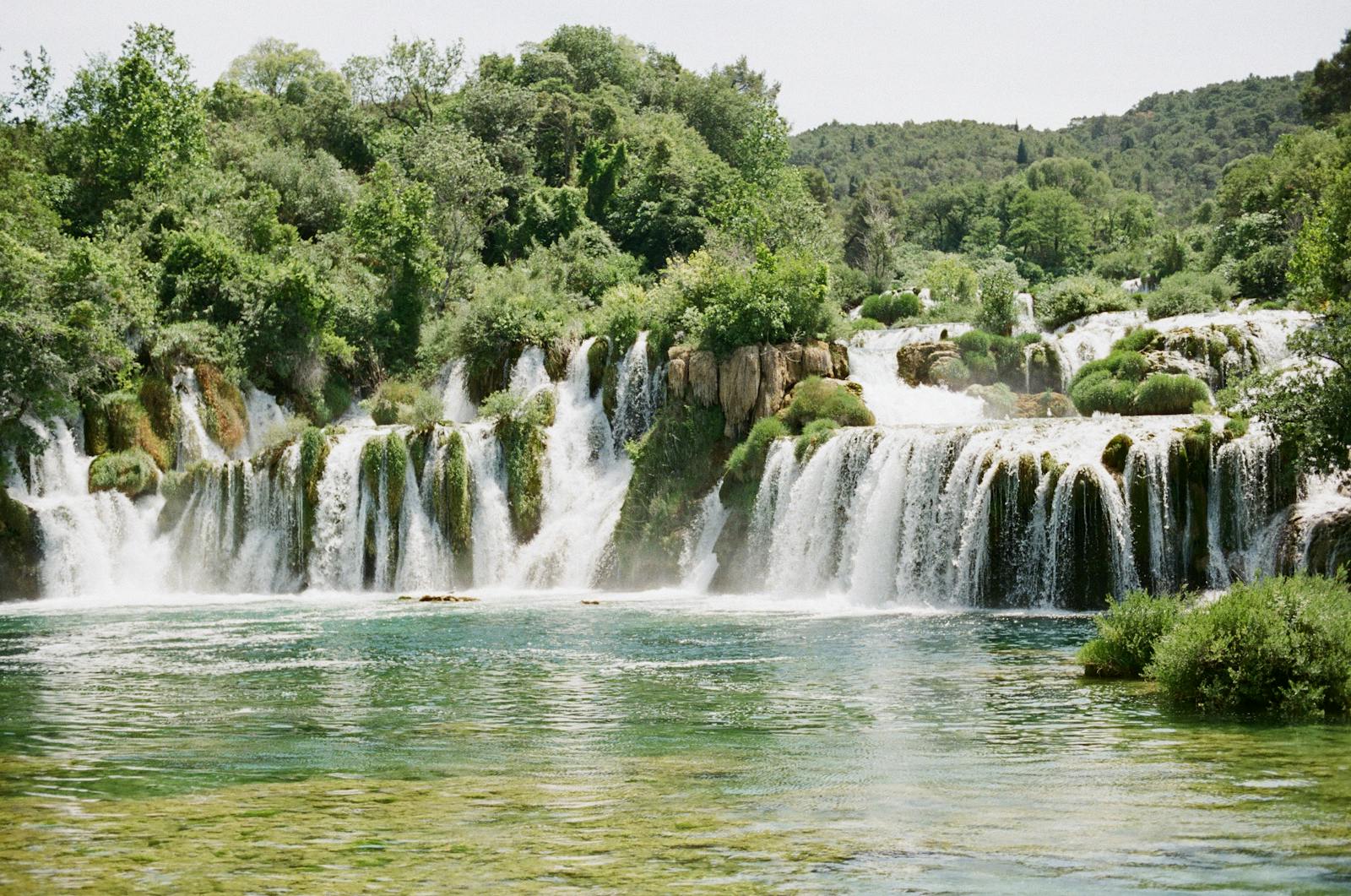
The biggest magnet of the entire park is undoubtedly the stunning Skradinski Buk, which at 800 metres long is the longest travertine cascade in all of Europe. Here the water overcomes a height difference of nearly forty-six metres across seventeen cascading steps. The width of the waterfall ranges between two and four hundred metres, and the powerful flow of water creates an utterly deafening and mesmerising natural spectacle.
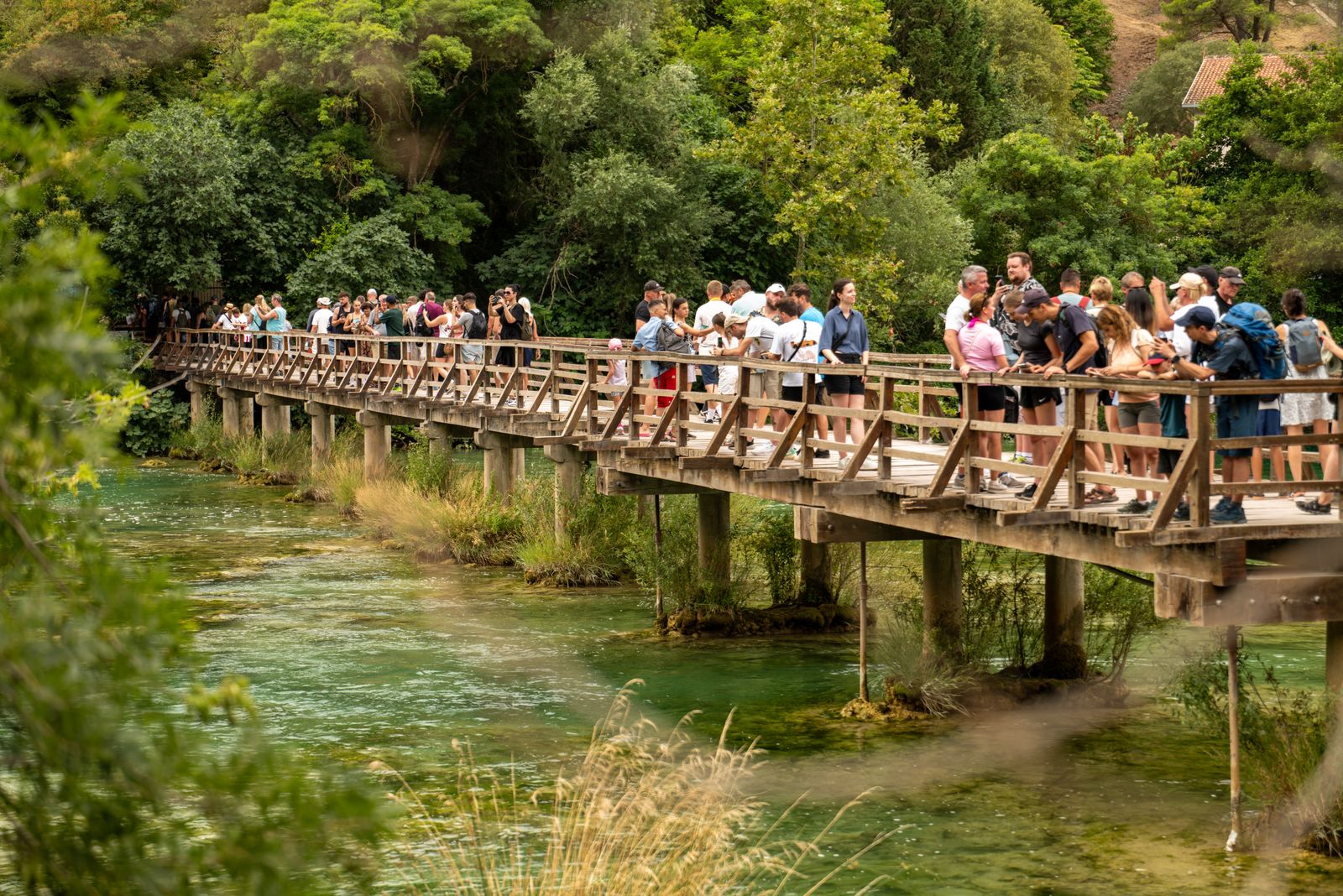
A roughly two-kilometre circular trail leads around the entire waterfall along a system of wooden walkways and bridges, taking you right above the bubbling water and small emerald pools. Along the way you’ll come across a series of panoramic viewpoints, old stone watermills and interesting ethnographic exhibits. These ancient buildings still show the traditional life of the local people and the old crafts of past centuries.
💡 Tip: Keep in mind that since 1 January 2021 a strict swimming ban has been in place at Skradinski Buk, introduced by the park administration to protect the exceptionally sensitive travertine bedrock. People used to bathe freely under the main cascade, but today you can only photograph the crystal-clear water here, so feel free to keep your swimsuit tucked away in your backpack for this part of the trip.
2. Roški Slap Waterfall and the Famous Water Necklaces
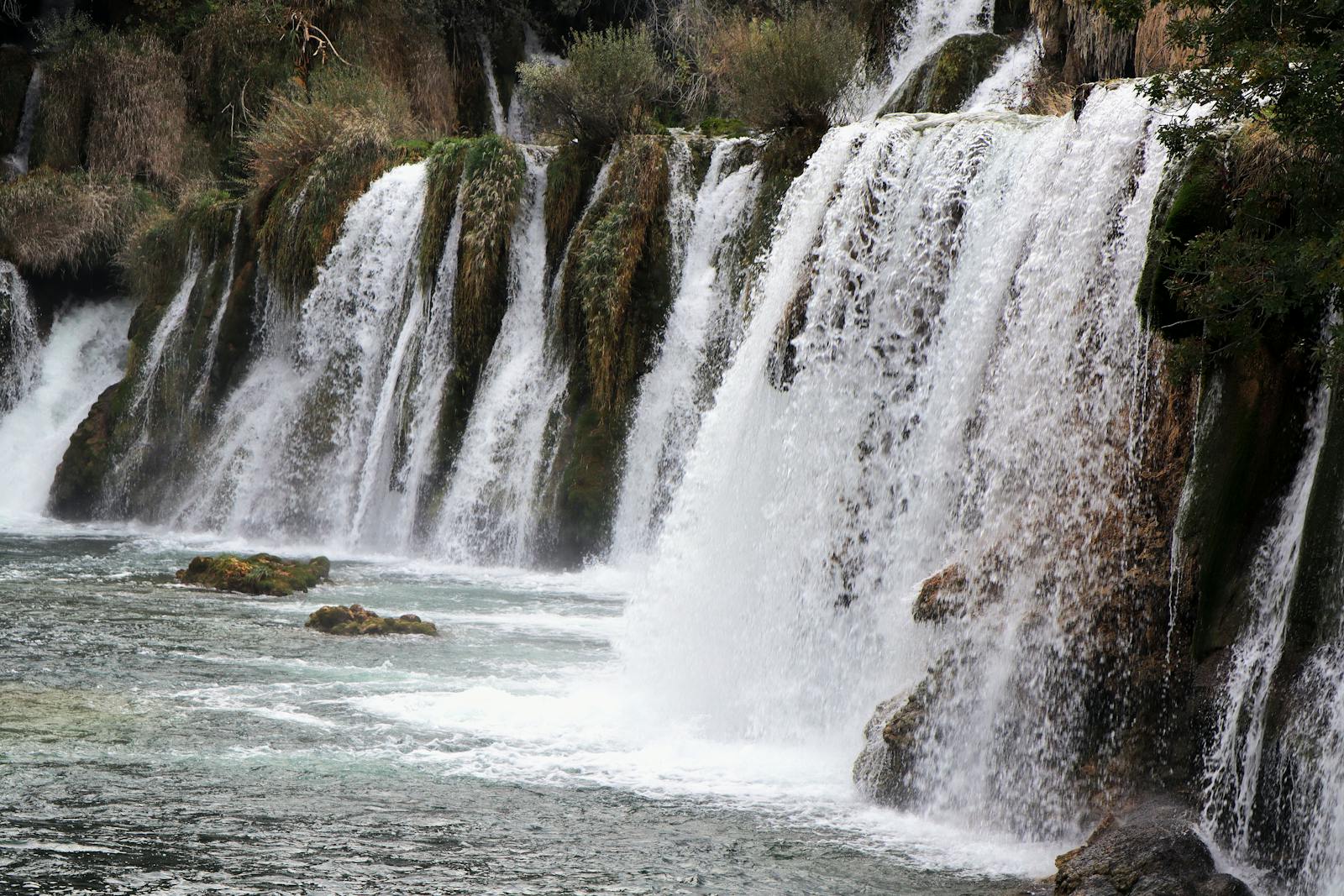
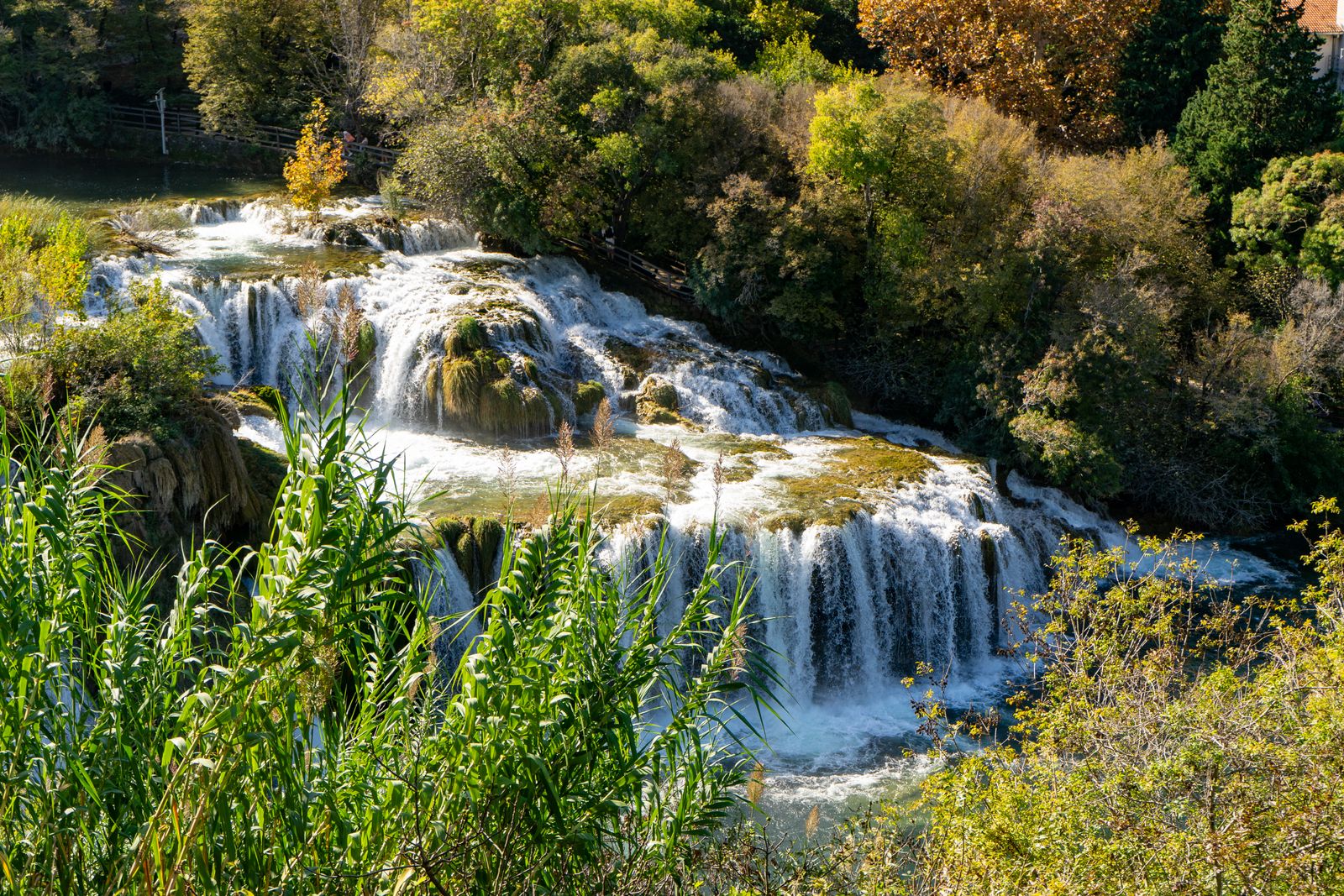
If you continue further upstream, you’ll reach the sixth waterfall in the chain, the stunning Roški Slap. This waterfall is roughly six hundred and fifty metres long, reaches a height of twenty-five metres, and its most interesting feature is the so-called water necklaces (ogrlice in Croatian). It’s a fascinating network of tiny cascades, pools and rapids that, when viewed from above, really do resemble scattered beads.
Compared to the main waterfall down south, it’s noticeably quieter here, and you’ll also find beautifully restored watermills. In the past they were used to grind grain for the entire surrounding area and they’re still fully functional to this day. You can reach this enchanting spot either by car from the northern side of the park, or on an organised boat trip that departs from Visovac Lake.
💡 Tip: Roški Slap is currently the only place in the park where swimming is still officially allowed, in clearly marked areas from June to the end of September. Swimming here is at your own risk, but if you need to cool off in the refreshing river water on a scorching summer’s day, it’s simply the best option available.
3. Visovac Island and the Franciscan Monastery
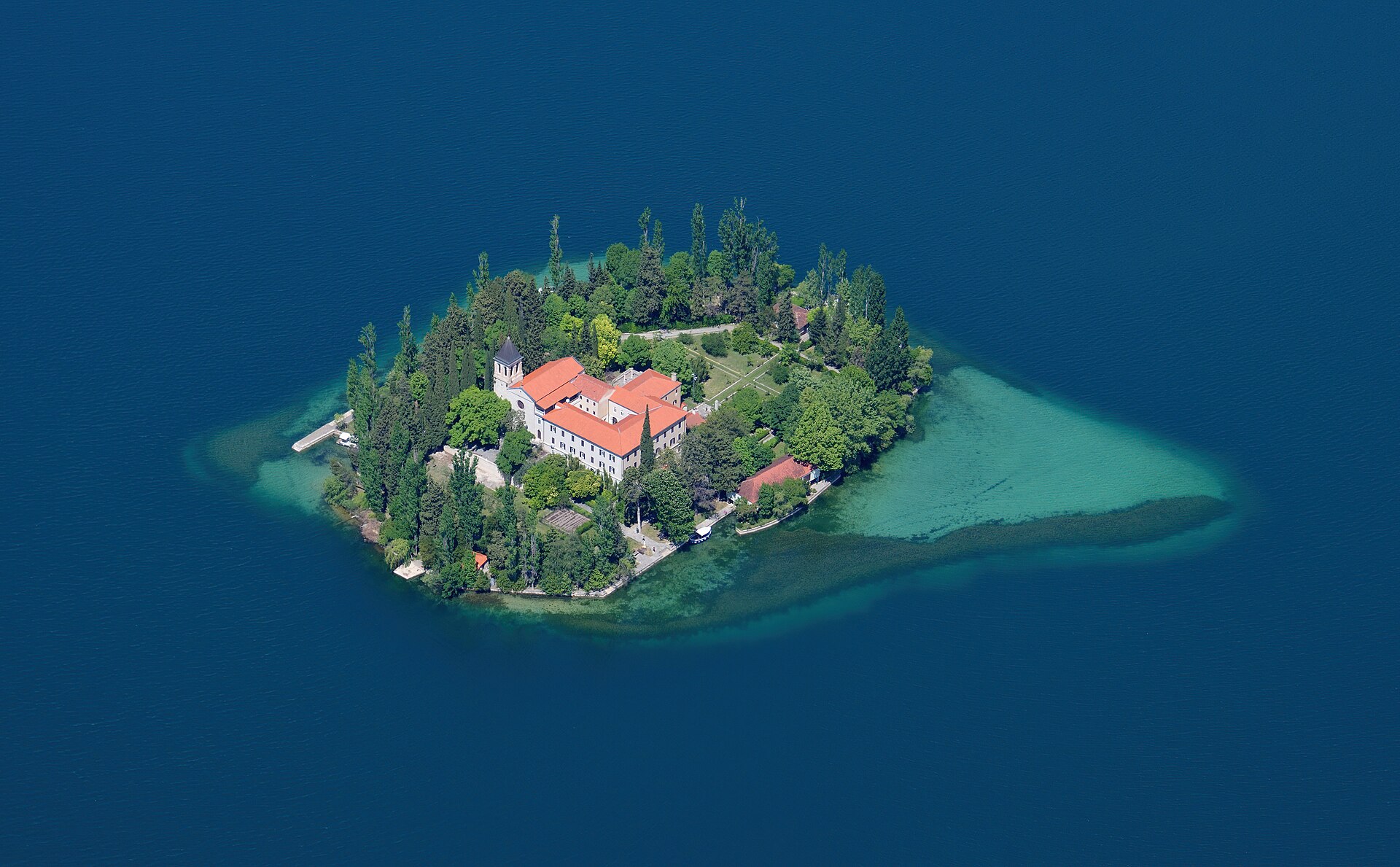
Right in the middle of the wide river basin known as Visovac Lake lies the small, romantic island of Visovac. On this tiny patch of land stands an ancient fifteenth-century Franciscan monastery, surrounded by tall cypresses and a beautiful, tranquil garden. The Augustinians originally settled here in the fourteenth century, but since 1445 the site has belonged to the Franciscans.
The monastery library holds immensely rare historical treasures that draw historians from all over the world. The most remarkable is one of just three surviving editions of Aesop’s Fables from 1487, an absolute world-class rarity. The only way to reach the island is by boat, and this cruise is included in the price of the so-called full ticket to the national park during the main season from April to October.
💡 Tip: You’ll need to plan and book your boat trip to Visovac at the jetty just above Skradinski Buk, since boat capacity is naturally limited. The island tour itself takes around half an hour, which is plenty of time to visit the church, the small museum of historical artefacts and take a short stroll through the well-kept gardens.
4. Manojlovac Slap for Lovers of Heights
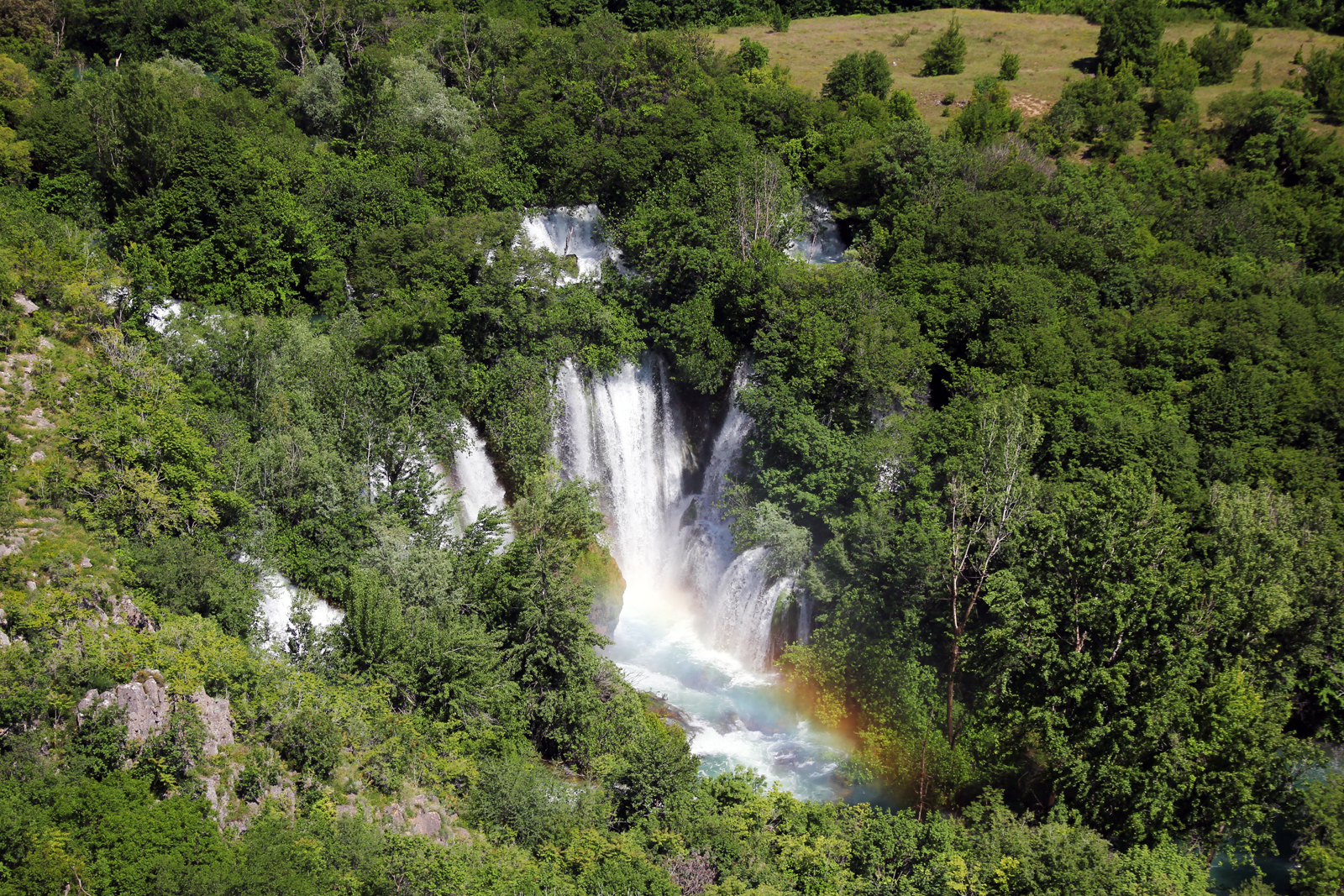
While most tourists end their tour at the Roški Slap waterfall, the more curious head even deeper north to the Manojlovac waterfall. With a total drop of almost sixty metres, it’s the highest waterfall on the Krka river, offering an exceptionally dramatic and wild spectacle. The karst canyon is deep and incredibly steep in this part.
The easiest way to reach the waterfall is by car, as it lies close to the Burnum archaeological site and is accessed by a narrow road. From the small car park there’s only a very short and easy walk to the viewing platform on the edge of the canyon. From there you’ll get a spectacular view of the enormous mass of water roaring down into the deep abyss.
💡 Tip: If you come here during the scorching summer period, you might be in for a slight disappointment, because the water flow is often regulated in summer due to a nearby hydroelectric power station. This giant offers its most beautiful spectacle without question in spring, when the riverbed is full of meltwater and the waterfall shows its true power.
5. Two Main Entrances: Lozovac and Skradin
When planning your trip, you’ll need to decide in advance which of the two main entrances to the national park you’ll use. The Lozovac entrance is absolutely ideal for drivers, as it offers a huge free car park on the plateau above the river. From there, in the summer season, a free shuttle bus will safely carry you straight to the start of the trail loop, while in winter you drive down in your own car.
The second and far more romantic option is the entrance via the town of Skradin, where you leave your car in a paid town car park. You then head to the waterfalls themselves on the official park boat, which is included in the ticket price from the start of April to the end of October. This roughly twenty-five-minute cruise through the green canyon is a wonderful experience in itself and gets you perfectly in the mood for the rest of the day.
💡 Tip: If you want to avoid any potential wait for the boat, you can also reach the waterfalls from Skradin on foot or by rented bike. A very pleasant, flat gravel path of roughly three and a half kilometres runs this way. It hugs the river itself and offers plenty of beautiful views where you won’t be squeezed in among the crowds.

6. The Krka Orthodox Monastery and Ancient Burnum
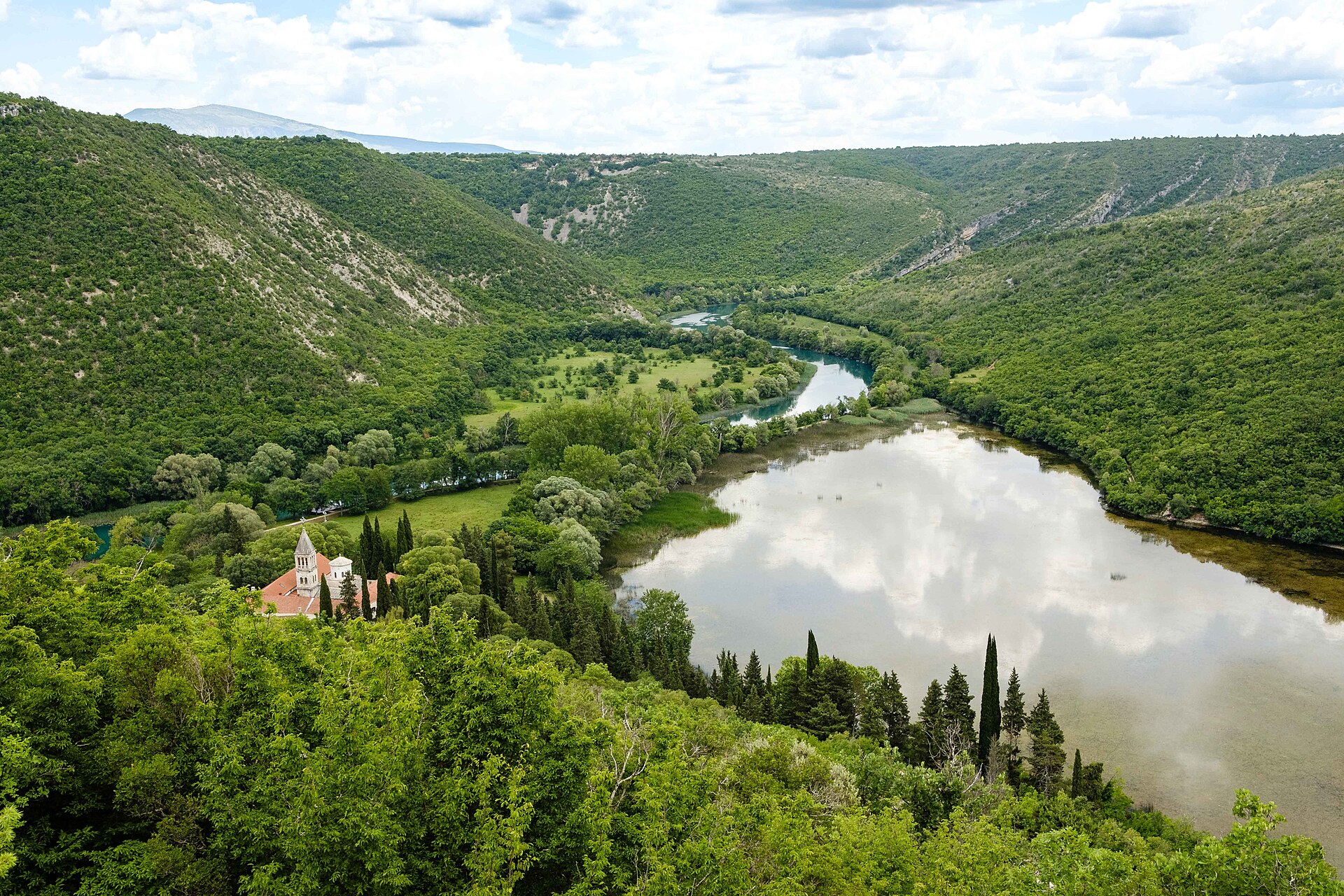
Krka National Park isn’t only about breathtaking nature, but also about a wonderful blend of different cultures and religions. While the island of Visovac is the historic centre of the Catholics, deeper in the northern canyon of the river, about three and a half kilometres from the town of Kistanje, lies the Serbian Orthodox Krka monastery. This monastery is incredibly photogenic, and right beneath it you can even explore ancient Roman catacombs.
A short distance away, history lovers will be thrilled by the remains of the Roman military camp of Burnum, built here by seasoned legionaries in the first century AD. Impressive stone arches and the remnants of a large amphitheatre have survived from the original mighty military structure to this day, standing alone in the middle of the parched karst landscape and creating a very mystical impression.
💡 Tip: These northern landmarks are visited by only a tiny fraction of ordinary tourists, so you’ll enjoy complete peace and quiet here even in the height of summer. To explore this part of the park, however, you’ll definitely need your own car, because the distances between the individual stops are already quite large here and walking simply isn’t doable in the heat.
7. Bilušića Buk and the Tranquil Watermills
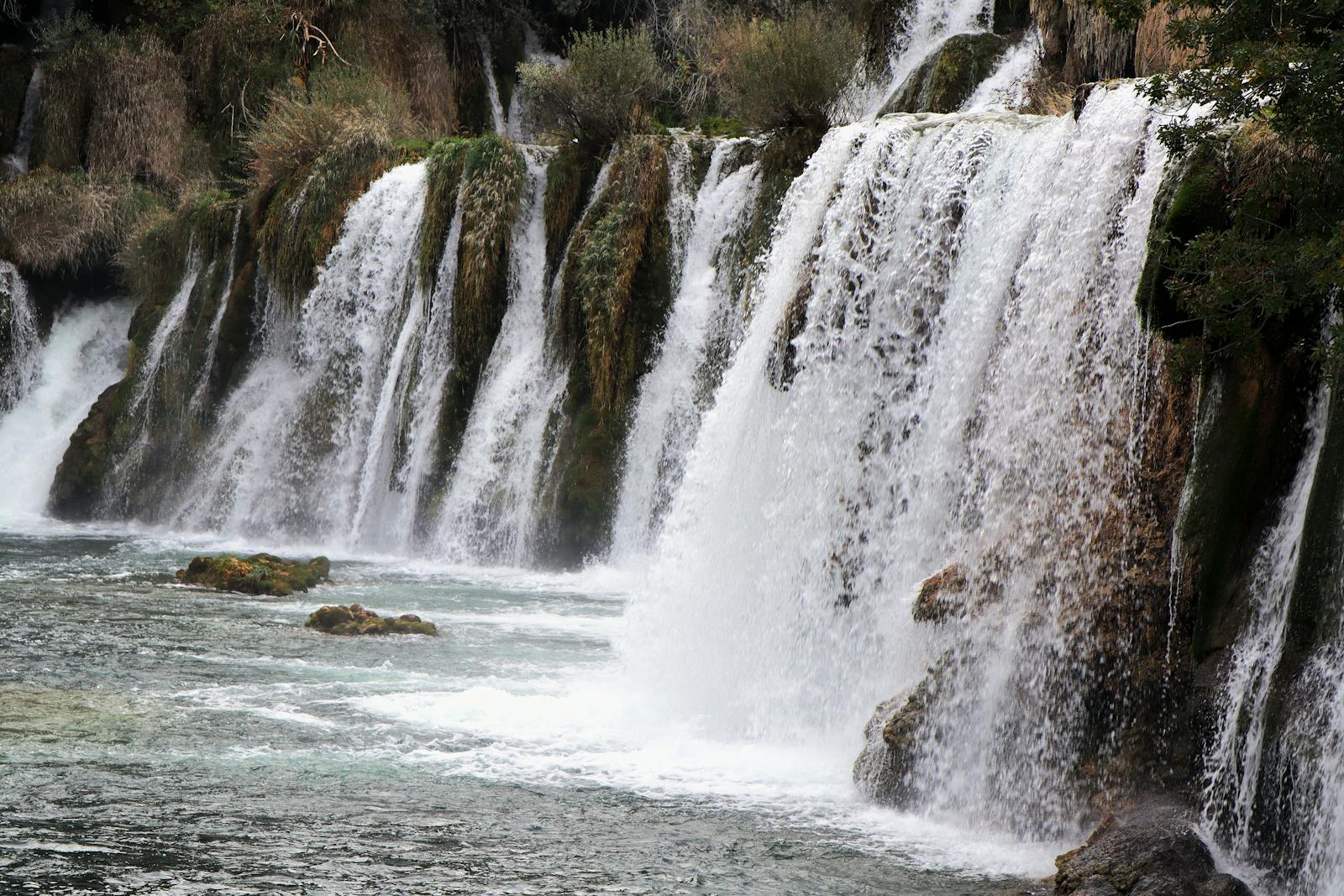
The very first waterfall on the upper course of the Krka river is Bilušića Buk, located roughly nine kilometres downstream from the historic town of Knin. Here the water rushes through a bed enclosed by limestone cliffs over two main steps with a total drop of twenty-two metres. You’ll hear the roar of the falling water from quite a distance as soon as you step out of the car.
This waterfall is utterly exceptional in that the human hand has touched it only minimally, so it has a very wild and unspoilt feel. In its immediate surroundings you’ll find several old but still carefully maintained watermills and small fields. Local people still grow crops and farm here in exactly the same way as they did hundreds of years ago.
💡 Tip: If you’re looking for a place on holiday where you can escape the holiday hustle and bustle of the sun-baked coast, a visit to Bilušića Buk is a bullseye. Most organised coach tours from Split don’t come here at all, so you’ll often have nature all to yourself even during the peak summer season.
8. A Boat Cruise Through the Krka River Canyon
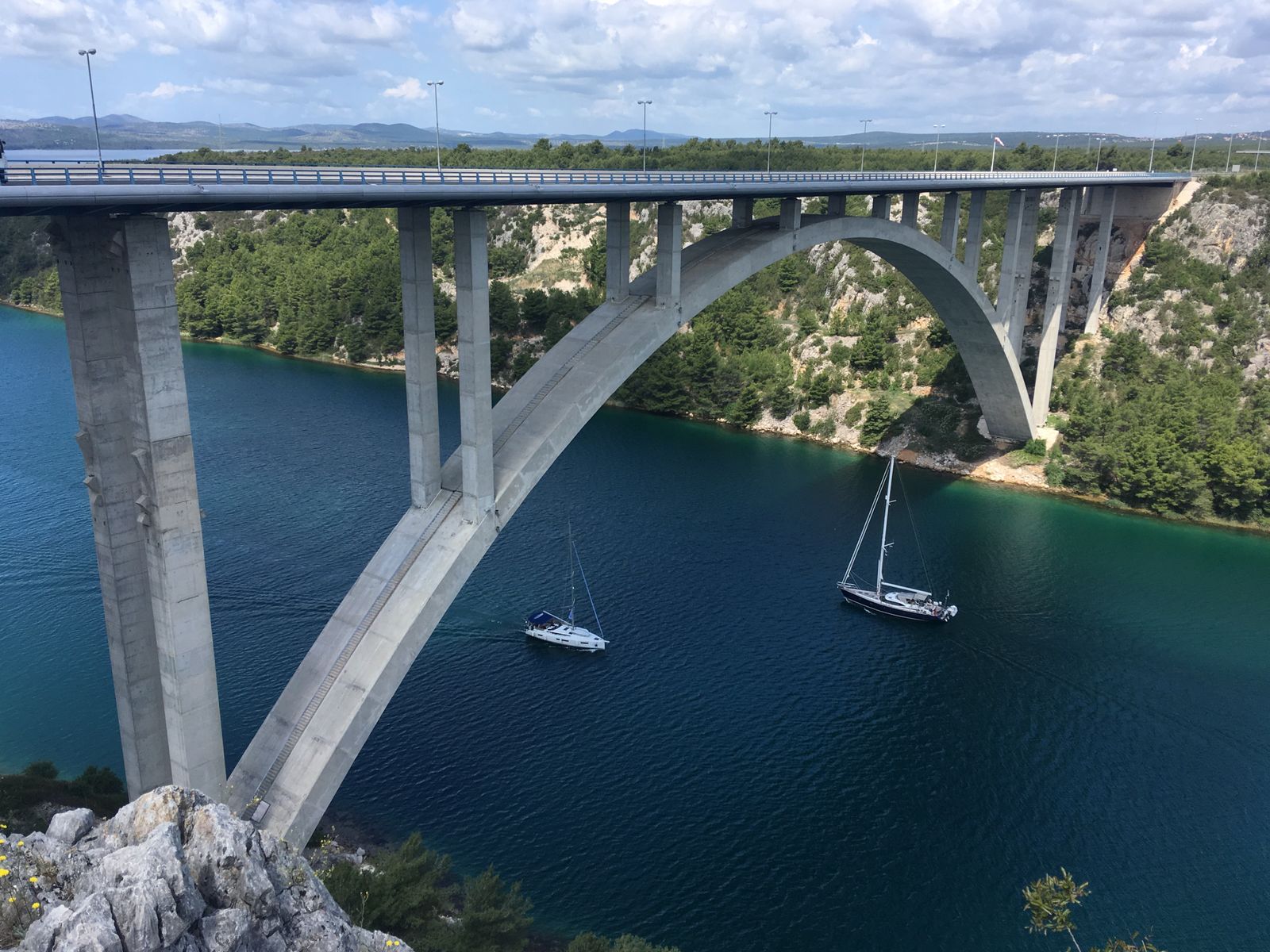
Seeing the karst canyon from the water’s surface itself is something you definitely shouldn’t miss on your trip. The park administration runs several official boat lines that cleverly connect the most interesting points. From spring to autumn these boats serve as an extremely pleasant alternative to walking and save you plenty of steps in the summer heat.
The basic cruise from Skradin to the main waterfall is always included in the summer ticket. But if you buy the so-called full ticket, you can also take advantage of longer boat trips heading to the island of Visovac, to the Roški Slap waterfall, or even to the Oziđana Pećina cave. The boat journey is very slow and quiet, and provides perfect views of the steep limestone walls that close in the river from both sides.
💡 Tip: Ask about the specific boat departure times right at the park entrance, because the timetables change very often depending on the current season and water levels. There’s also a strict rule on all boats that dogs must wear a muzzle. So if you’re travelling with a four-legged companion, don’t forget to pack one in your backpack.
9. Where to Eat and Vegetarian Refreshment Options
A full day of walking the wooden boardwalks of the national park will certainly leave you exhausted, but luckily you won’t go hungry here. Right in the area around the main Skradinski Buk waterfall, as well as by the more relaxed Roški Slap waterfall, you’ll find several pleasant kiosks and outdoor restaurants. You can easily buy chilled drinks, iced coffee or a simple but tasty lunch here.
Although Dalmatian cuisine is renowned above all for its fresh fish and local cured meats, vegetarians will be well catered for here without the slightest trouble. In the cosy local konobas they’ll gladly prepare you excellent pizza, hearty pasta salads, grilled Mediterranean vegetables or cheese sandwiches. Another great culinary experience is the traditional baked štrukli filled with fresh cheese.
💡 Tip: Food sold inside the national park is logically a little more expensive, which is why packing your own picnic is a brilliant choice. In many places along the river you’ll find benches and wooden tables set in the shade of mature trees, where you can quietly eat your own packed snack and refuel for more walking.
10. Practical Tips for Your Visit: Tickets, Discounts and Gear
Krka National Park ticket prices vary dramatically depending on which month you decide to come. While during the summer peak from June to September adults pay €40, in spring and autumn the price drops to a pleasant €20. Children aged seven to eighteen and students always pay the child rate (€20 in summer), while the youngest children under seven get in completely free.
If you want to save money during the summer months while cleverly avoiding the worst of the heat, take advantage of the discounted ticket after 3 pm, when an adult ticket costs a more favourable €30 and a child’s ticket just €11. In high season, be sure to buy your tickets in advance online on the official website at shop.np-krka.hr to avoid the long queues at the ticket office. The park’s ecological capacity is, after all, strictly limited.
💡 Tip: Definitely don’t underestimate your choice of footwear, because the wooden walkways are often very slippery and wet from the ever-present spray. Rather swap ordinary flip-flops for sturdy, comfortable walking shoes. Also throw a hat and a large bottle of drinking water into your backpack, because there’s really very little shade on the scenic trails around the waterfalls.
Map of points of interest for your phone
Where to Go Next from Krka National Park
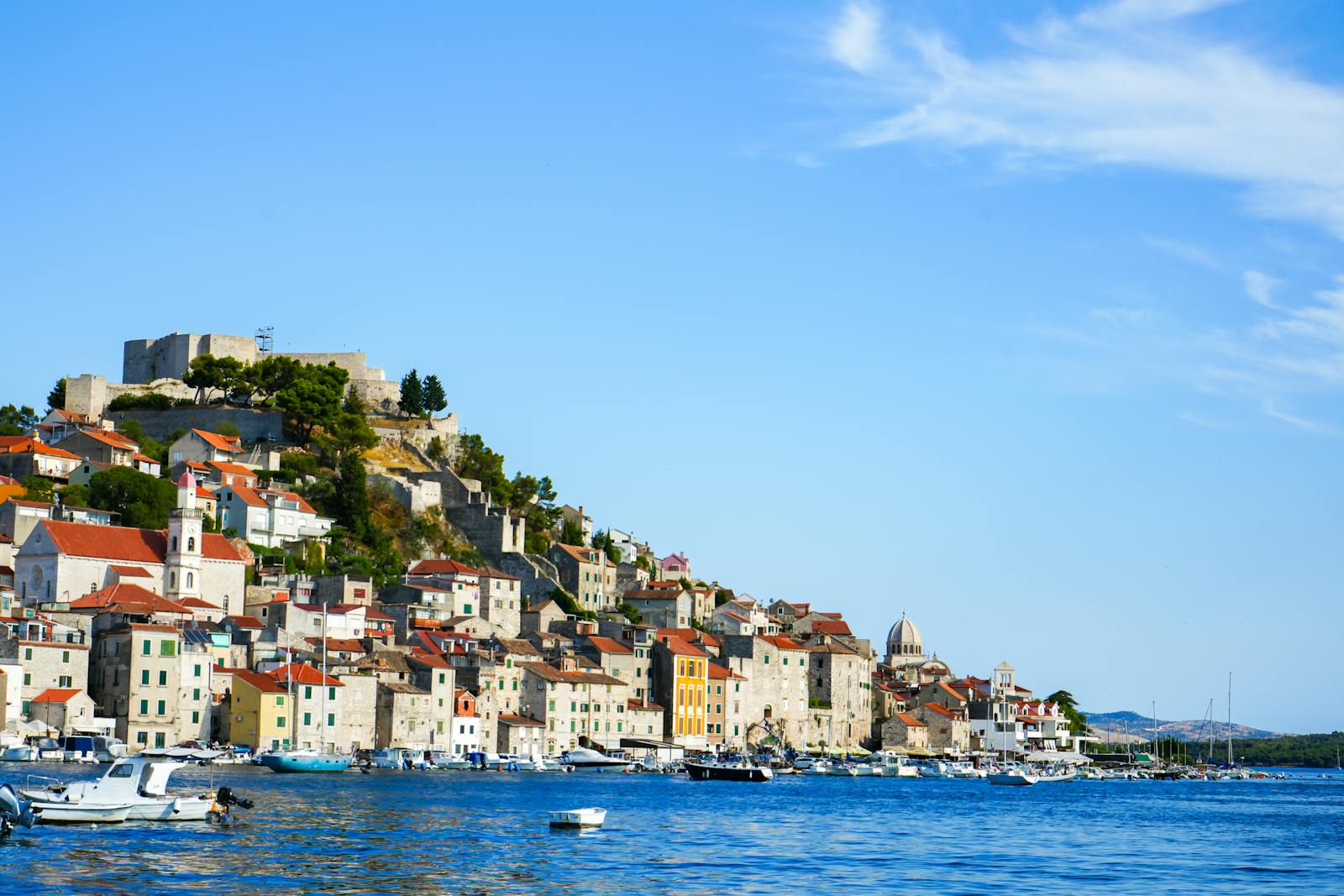
From the national park you can set off to plenty of other amazing places that central Dalmatia has to offer. An absolute must is the nearby Šibenik, whose historic centre with the UNESCO-listed Cathedral of St. James will completely charm you with its narrow stone lanes and majestic fortresses.
If the buzz of a big city appeals to you more, head south to the ancient city of Split, where you can lose yourself in the magnificent ruins of Diocletian’s Palace. On the way, be sure to stop in the magical island town of Trogir, famous for its beautiful promenade and Romanesque-Gothic architecture.
To the north, on the other hand, lies the popular Zadar, a city known for its unique sea organ and breathtaking sunsets that even Alfred Hitchcock himself is said to have admired. If you’re planning a wider road trip and wondering where to go on holiday in Croatia, you can also combine a visit to Krka with a trip to the famous Plitvice Lakes, so you can compare both of these natural wonders with your own eyes.
Frequently Asked Questions
Can you swim in Krka National Park?
At the main and most famous waterfall, Skradinski buk, there has been a strict swimming ban since 2021 to protect the travertine barriers. If you want to cool off, you can swim only at designated areas near the Roški slap waterfall, or at the Stinice and Pisak locations, from June until the end of September.
How much does admission cost in 2025 and 2026?
Prices vary depending on the tourist season. During the busiest months from June to September, adults pay 40 euros, children and students 20 euros. In spring and autumn months, an adult ticket costs 20 euros, and in winter, when the park has limited access without boat transport, you’ll pay only 7 euros.
How long does it take to tour the park?
It depends on how much you want to see. The walking trail around the main Skradinski buk waterfall alone takes about two to four hours. If you add a boat trip to Visovac island, the visit extends to five to six hours, and exploring the entire park including the Roški slap waterfall is a full-day trip.
Which park entrance is better to choose?
For drivers who want to park for free and quickly reach the main trail, the Lozovac entrance is best, from where a shuttle bus runs down. The Skradin entrance is ideal for those who enjoy romance, as a complimentary excursion boat takes you from the town to the waterfalls, which is a wonderful experience in itself.
How do I get to Krka NP from Split or Zadar?
Regular bus lines run from both cities to the town of Skradin. From Split, the journey takes approximately one hour with up to sixteen connections daily during the season, and from Zadar it’s very similar time-wise with twelve connections daily. The drive by car on the highway is fast and very well signposted.
Do I need to buy tickets in advance?
During the main summer season, I definitely recommend buying tickets online in advance, as the park’s capacity is limited for ecological reasons and long queues can form at the ticket offices. Outside the season, you can easily buy tickets directly on-site at the park entrances.
Is the park suitable for strollers or wheelchairs?
The national park is not fully accessible. From the upper Lozovac entrance, you can reach the upper viewpoints relatively easily, but the main circular trail runs along wooden walkways that include many steps and uneven surfaces, which significantly complicates movement with a stroller or wheelchair.
What does the reduced admission after 3 PM mean?
The park administration offers a special summer discount from June to September. If you buy a ticket and enter the area after three o’clock in the afternoon, you’ll pay only thirty euros for an adult instead of forty euros. Children and students pay just 11 euros at this time.
Do boats run in the park year-round?
No, boat transport in the national park operates exclusively during the tourist season, from April 1st until the end of October. During the winter months, boats don’t run, so you can’t reach Visovac island and must use your own car via the Lozovac entrance to access the park.
Tips and Tricks for Your Vacation
Don’t Overpay for Flights
Search for flights on Kayak. It’s our favorite search engine because it scans the websites of all airlines and always finds the cheapest connection.
Book Your Accommodation Smartly
The best experiences we’ve had when looking for accommodation (from Alaska to Morocco) are with Booking.com, where hotels, apartments, and entire houses are usually the cheapest and most widely available.
 🚗 Car rental on the roadVerified rental cars in Croatia
Search with the DiscoverCars comparison engine — it compares prices from dozens of local and international rental companies, and most bookings come with free cancellation.
Compare car prices in Croatia →Don’t Forget Travel Insurance
Good travel insurance will protect you against illness, accidents, theft, or flight cancellations. We’ve had a few hospital visits abroad, so we know how important it is to have proper insurance arranged.
Where we insure ourselves: SafetyWing (simple monthly subscription) and TrueTraveller (for extra-long trips).
Find the Best Experiences
Get Your Guide is a huge online marketplace where you can book guided walks, trips, skip-the-line tickets, tours, and much more. We always find some extra fun there!