Forget about lavender fields, lazy afternoons with a glass of rosé and the endless chirping of cicadas for a moment. Here in Brittany, France, you find yourself in the far northwest, on the very edge of the European continent, where the land wages an eternal and futile battle with the stormy Atlantic. This is definitely not the polished, romantic France you know from travel brochures.
It is a rugged land of granite, salt, fierce wind and immensely proud Celtic heritage. The locals often feel like Bretons first and French second, and they’ll let you know it very quickly. They have their own language, their own black-and-white flag called the Gwenn-ha-du, which you’ll see flying absolutely everywhere, and a completely different idea of what a good life should look like.
Travellers come here for the raw and dramatic scenery that takes your breath away. They come for the cliffs where enormous ocean waves shatter with such force that the ground literally trembles beneath your feet. They are drawn by the mysterious standing stones that stood on these plains long before the Egyptian pyramids were even built.
If you’re planning a road trip, allow yourself a proper loop of ideally seven to ten days. Brittany won’t give you anything for free and the moody weather will occasionally test your patience, but in return it rewards you with experiences that get under your skin and never let go.
TL;DR
- Best bases: For the north coast choose historic Dinan or Saint-Malo; to explore the south, base yourself strategically in the town of Vannes.
- Transport and getting around: A car is an absolute must, because the most beautiful spots sit on narrow lanes by the cliffs that public transport practically never reaches.
- Tides: The northern part of the region has some of the biggest tidal ranges in Europe, with the water rising and falling by more than 10 metres.
- Breton cuisine: Forget baguettes — here it’s all about salted butter, buckwheat galettes and the ever-present apple cider.
- Weather and clothing: A waterproof jacket is essential kit even in August; the Atlantic wind would turn an ordinary umbrella into a useless tangle of wire.
- Book ahead: Reserve accommodation and ferry tickets to the islands well in advance, as capacity is very limited over the summer.
- New UNESCO rules: The famous standing stones at Carnac have been under stricter protection since 2025, and in high season you can only approach them with a paid guide.
The full destination guide: France — guide and what to see
When to visit Brittany and how to survive the local weather
A popular local joke says that in Brittany the weather is lovely several times a day. The conditions here are extremely changeable, and a strong Atlantic wind with rain can lash you even in the middle of an August afternoon. So leave the umbrella at home, because the Atlantic gale would turn it into a completely useless tangle of wire within a single minute. Instead you’ll want a quality waterproof jacket, which the locals call a ciré. Ideally get one in the traditional bright yellow, so you blend right in with the locals and honour their seafaring tradition.
On the other hand, this wild untameability is a huge advantage for the whole region. While the south of France bakes in 40-degree heat in July and August and suffocates under unbearable crowds of tourists, Brittany offers pleasantly breathable air and refreshing coolness. Summer temperatures rarely climb above 25 degrees, which creates absolutely ideal conditions for full-day walks along the coastal paths or exploring the stone-built towns. Do pack clothes you can easily layer, though, because the morning sea mists can really chill you to the bone.
If you want to avoid the biggest crowds of French holidaymakers who descend on the region en masse, the ideal compromise for a visit is June or September. The ocean is calmer at this time and nature is beautifully coloured. Outside the main summer months, however, be prepared for many smaller family businesses, rural crêperies and some historic attractions to cut their opening hours or close their doors entirely. The winter months are reserved for the most hardened adventurers only. They love the solitude, don’t mind the endless gales, and want to experience the rawest face of this Celtic coast first-hand, without any embellishment.
Where to stay in Brittany and how much it costs
💡 Accommodation and experiences tip: We like to look for places to stay on Booking.com, which usually has the best cancellation policies. For tickets, tours and activities it pays to compare and book through GetYourGuide.
Given the enormous size of the region, it makes no sense to stay in one place the whole time, as you’d spend long hours pointlessly driving back and forth. It’s best to split your stay between two strategic bases, something seasoned travellers also recommend. To explore the northern Emerald Coast and the pink granite cliffs, choose accommodation around the towns of Dinan or Saint-Malo. Incidentally, you can reach both by high-speed TGV train from Paris, so you can get there without a long drive too. For the southern Celtic part with its standing stones, the area around the town of Vannes or the Gulf of Morbihan is a great fit, putting you a short hop from the most beautiful islands.
In 2026, be ready for the fact that accommodation prices in France have crept up slightly again. A decent double room in a small guesthouse or three-star hotel will cost you around 90 to 110 euros a night out of season. During July and August these figures easily jump to 140 to 180 euros, especially if you want to stay right by the sea or in the historic centres of the fortified towns. Always look for your accommodation well in advance to bag the most charming family-run hotels and traditional stone cottages with blue shutters.
If you’re after a truly authentic experience in the north, I’d recommend you choose medieval Dinan over the busy resort of Saint-Malo. Dinan offers a far calmer evening atmosphere, gorgeous views over the green valley of the river Rance, and the hotels here tend to be noticeably cheaper than right on the coast, which is a magnet for day-trippers. In the south, consider the smaller villages within walking distance of the Gulf of Morbihan. In the morning you’ll hear only the cry of gulls, the rustle of pines and the bells from nearby country churches — pure balm for the soul after days spent on windy cliffs.
15 Best Things to See and Do in Brittany
Let’s take a look together at a complete overview of the most beautiful places that definitely shouldn’t be missing from your itinerary. From fortified pirate ports through geological anomalies to mystical sites full of prehistoric stones. Remember that it’s better to arrange boat tours or entry to some of the castles in advance during the high season, and you can easily book all sorts of trips through GetYourGuide.
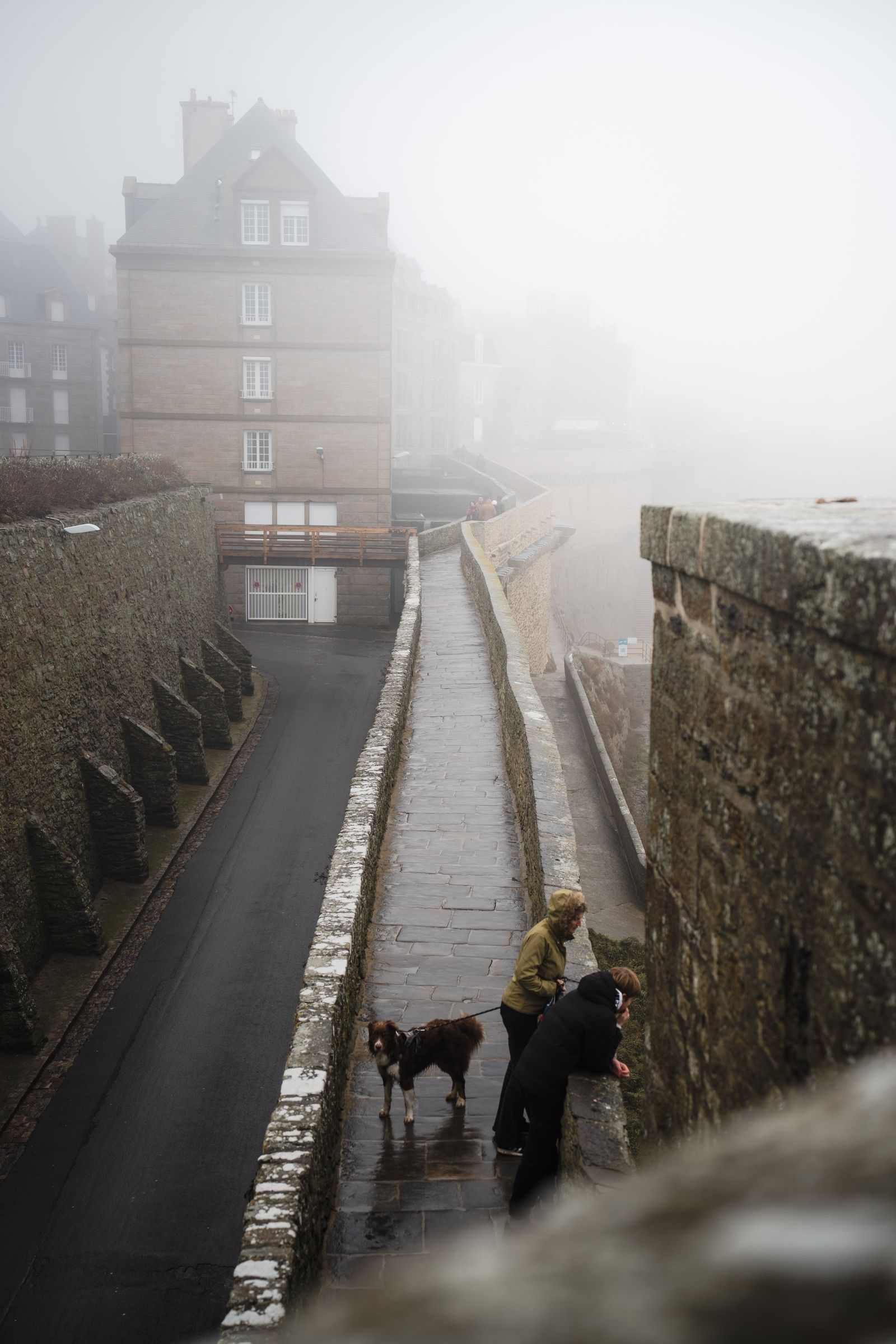
1. Saint-Malo and a walk along the ramparts
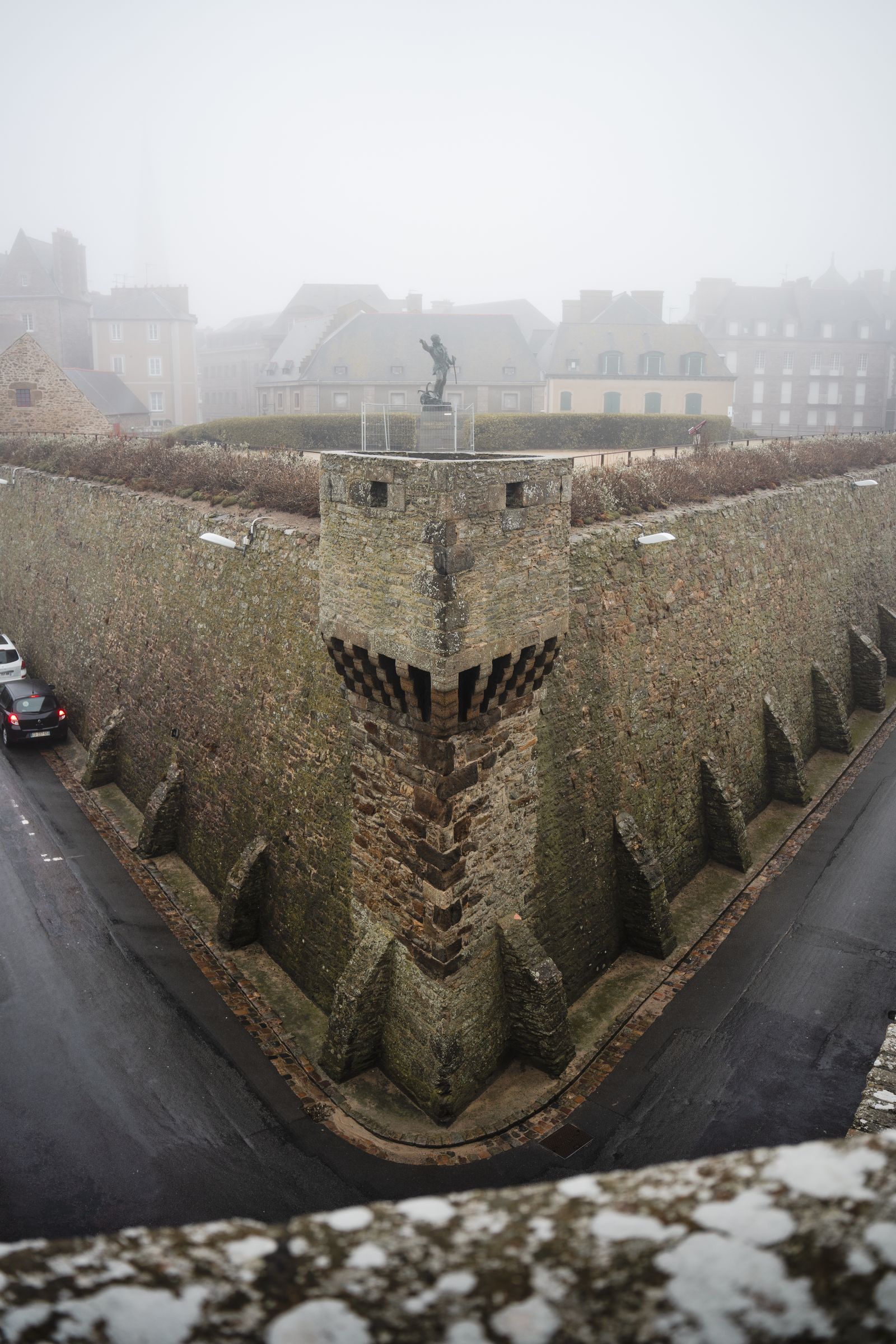
Saint-Malo is an absolute icon of the north coast and the symbolic gateway to all of Brittany. This former stronghold of the feared corsairs — state-sanctioned pirates who raided enemy English ships — is surrounded by massive stone ramparts. During the Second World War the town was sadly almost levelled to the ground, but the locals stunningly rebuilt it stone by stone. A walk along the ramparts known as Les Remparts is an absolute must, giving you a bird’s-eye view of the narrow lanes packed with crêperies, the endless ocean and the island fortresses.
The bay between Brittany and Normandy — where, incidentally, the famous abbey of Mont-Saint-Michel lies about fifty minutes’ drive away — has one of the biggest tidal ranges in all of Europe. The water regularly rises and falls by an incredible ten metres. At low tide you can walk dry-footed all the way out to the little islet of Grand Bé, where the famous French writer Chateaubriand is buried.
💡 Tip: Keep a close eye on your watch and the official tide tables posted at every beach entrance. Once the water starts coming back in, they say it advances at the speed of a galloping horse. Many careless tourists have had to be ignominiously rescued from the islet by the coastguard, so watch the time carefully.
2. Tasting authentic Breton cuisine
Before heading further along the coast, you absolutely must get to grips with the local gastronomy, because it is utterly sacred to every Breton. The cornerstone here is salted butter, which goes into absolutely everything and without which the local cuisine would scarcely exist. You simply must try the traditional galette — a dark, earthy, slightly crispy savoury buckwheat pancake. The classic is the so-called complète with cheese, egg and optionally ham. In the local crêperies, though, you’ll come across dozens of different variations; the cheese-only, mushroom or fresh-spinach fillings are excellent too.
For a sweet finish, treat yourself to the classic wheat-flour crêpe, ideally with homemade salted caramel known as caramel au beurre salé. If you like really rich desserts, hunt down a kouign-amann at the bakery. It’s a devilishly good pastry made of layers of dough, butter and sugar, after which you’ll need to walk at least ten kilometres. You can also try far breton, a dense flan-like dessert often studded with prunes.
💡 Tip: You never drink wine or beer with galettes, but exclusively fermented apple cider known as cidre, whether in the dry (brut) or sweet (doux) variety. It’s served in traditional wide ceramic bowls called bolées. And if you spot a poster for a Fest-Noz celebration, head along for an evening full of Celtic music, dancing in circles and litres of cider.
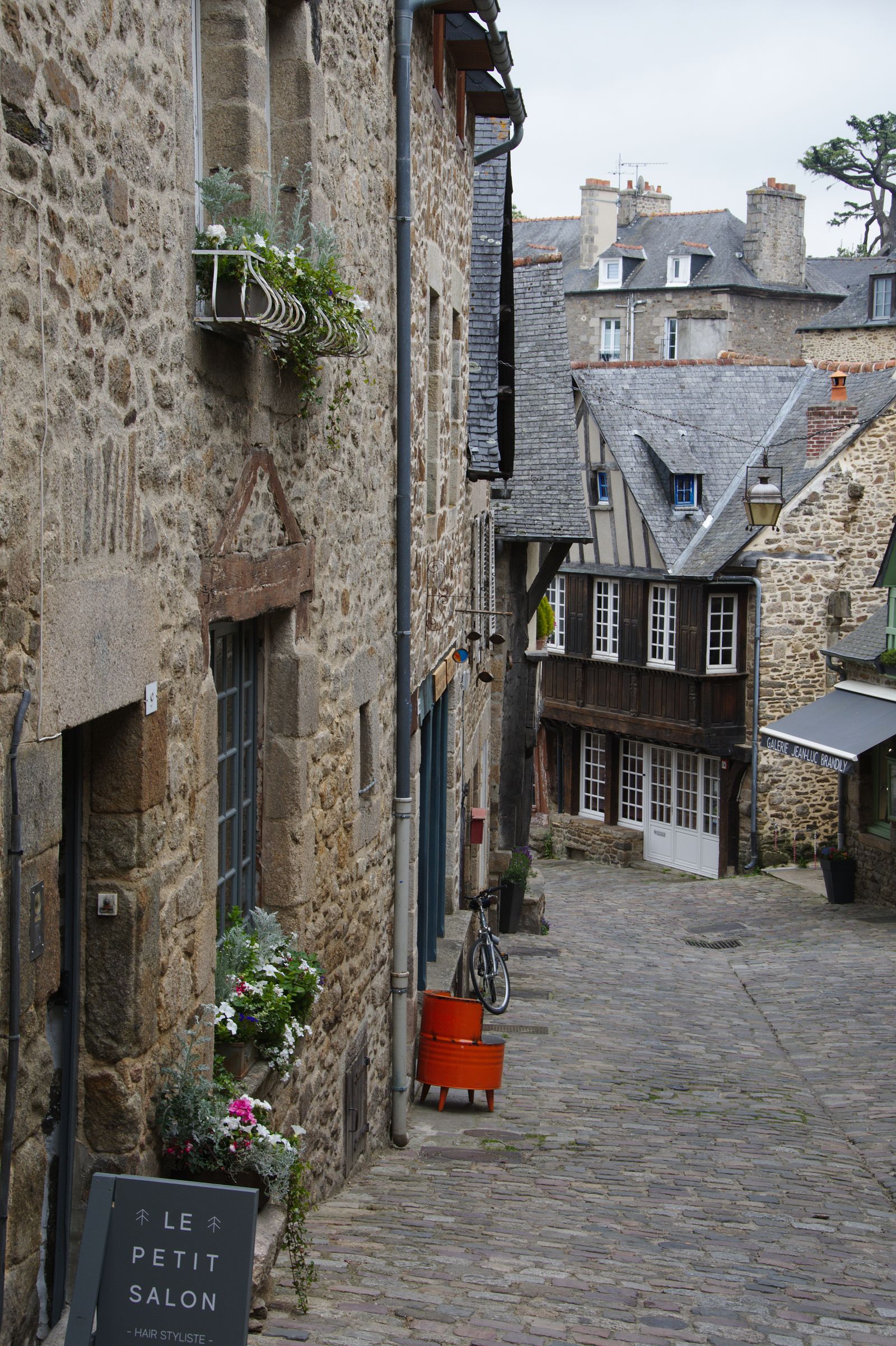
3. Dinan and its medieval lanes
If you’re after pure medieval charm and want a break from the strong ocean wind, drive a little way inland to the enchanting little town of Dinan. Luckily this town didn’t suffer the enormous wartime damage that the coastal ports did, so here you’ll find perfectly authentic half-timbered houses and winding stone lanes that whisk you back several centuries in an instant. The entire historic centre sits high on a hill above the river Rance and offers wonderful views over the green wooded valley.
The best-known and most-photographed spot is the steep Rue du Jerzual, which drops from the centre all the way down to the small, peaceful port on the river. It’s lined with the workshops of local artists, little cafés and craft shops, so you’ll definitely linger far longer than you originally planned. The walk down is incredibly romantic, but be prepared — the steep climb back up will give you a decent workout.
💡 Tip: Head down to the river early in the morning, when a light mist still hangs over the water and the narrow lanes are completely empty. The atmosphere is utterly magical at that moment. Dinan also works as a superb, quieter strategic base for exploring the whole north coast, from where you can run day trips out in all directions.
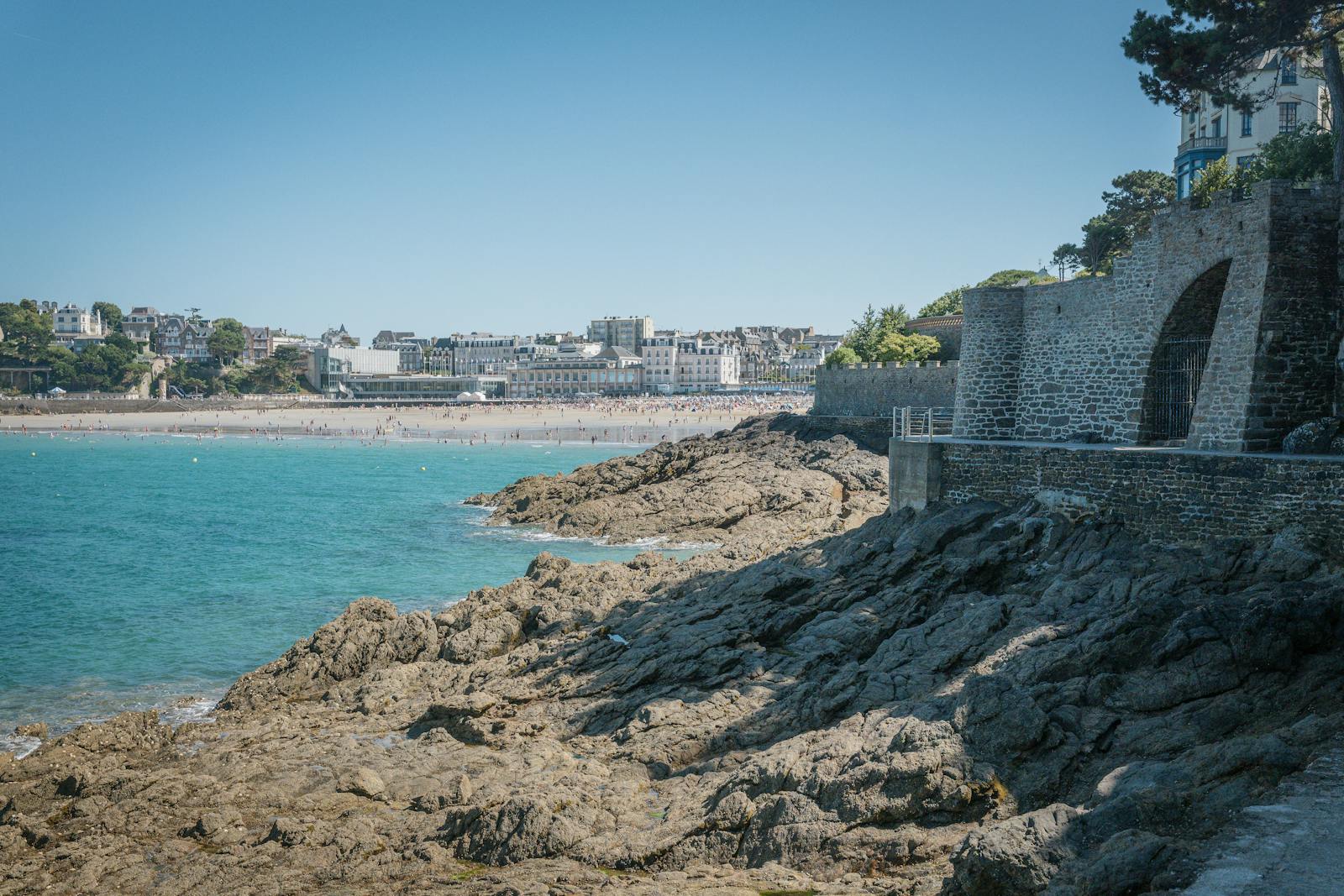
4. Dinard and the Belle Époque atmosphere
Right across from rugged, stone-built Saint-Malo, directly over the mouth of the river Rance, lies the noticeably more elegant and refined Dinard. At the turn of the nineteenth and twentieth centuries, wealthy Britons and influential Parisians built showpiece villas perched high on the cliffs here. You can feel the very strong atmosphere of the good old days of the Belle Époque, when people went to the sea in long striped bathing suits and ladies strolled with lace parasols to carefully protect their pale skin.
Stroll along the gorgeous seafront promenade, the Promenade au Clair de Lune, which is surprisingly planted with palm trees and lush Mediterranean greenery. That, by the way, is a real rarity for the windswept northern coast of France. The architecture of the local villas is incredibly varied and at times almost crazy. You’ll find everything from fake Gothic castles with turrets to extraordinary oriental palaces commissioned by eccentric millionaires craving attention.
💡 Tip: In the summer months, popular guided evening walks are held around the town, during which the most beautiful historic villas are dramatically illuminated. It’s a lovely contrast to the wild scenery you’ll see everywhere else, and it shows an entirely different face of this normally very rugged Celtic region.
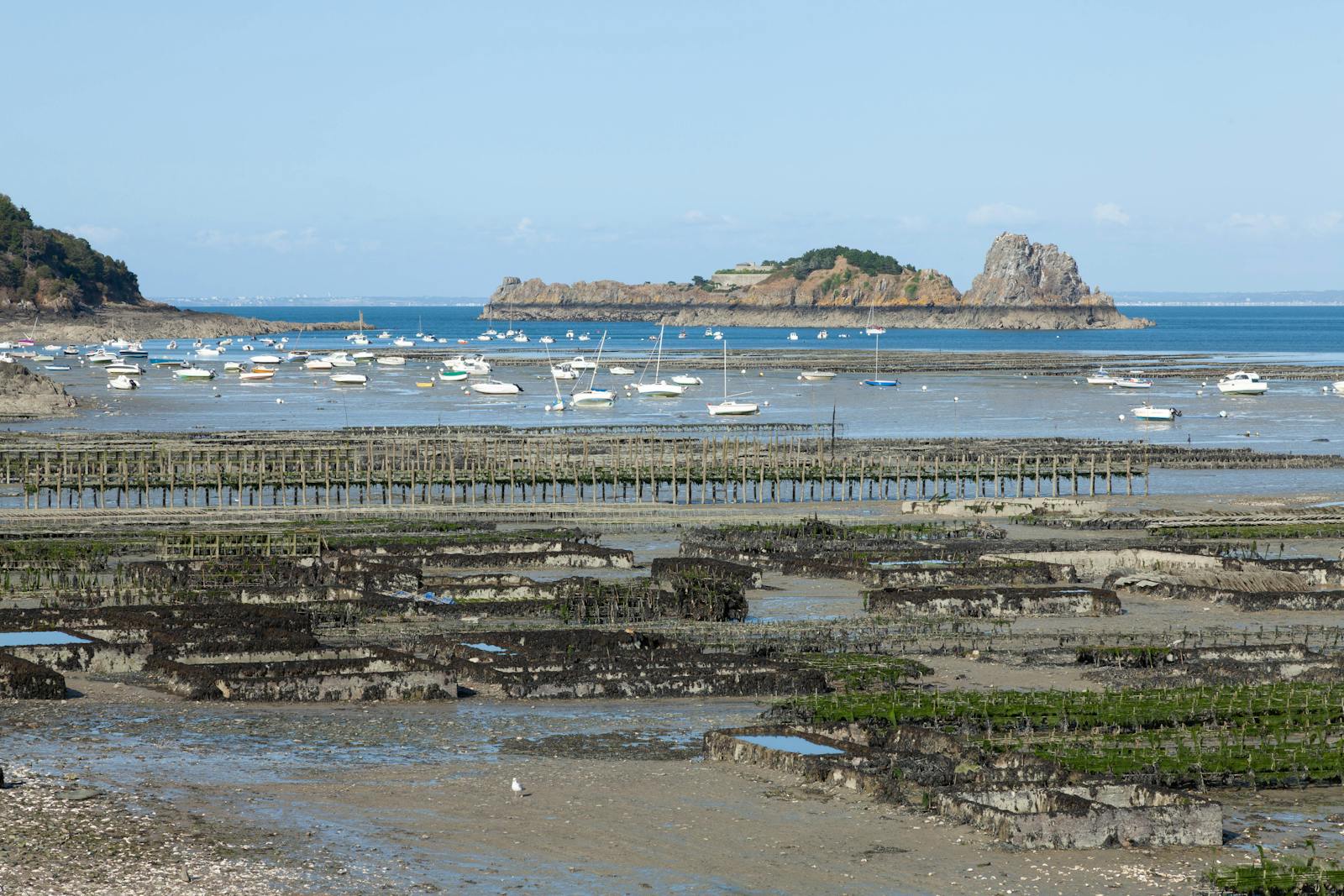
5. Cancale and the famous oyster market
This little harbour town is an absolute culinary phenomenon you mustn’t miss, even if you’re not normally a fan of seafood. The shallow local bay produces an incredible 15,000 tonnes of oysters a year, and gourmets flock here from all over Europe for this gastronomic treasure. The best and most authentic experience, though, isn’t found in some overpriced restaurant with white tablecloths. Instead, head straight to the quayside and the bustling open-air market, the Marché aux Huîtres.
The atmosphere here is wonderfully relaxed, noisy and utterly informal. The stallholders sell freshly caught oysters for literally a few euros, expertly shuck them for you on the spot and add nothing more than half a plain lemon. Locals and tourists alike then sit down on the stone wall with a view of the sea and tuck in. They simply toss the empty shells over their shoulder onto the beach below, where millions of other pearly shells from previous years already lie.
💡 Tip: On a clear day you can see the famous silhouette of Mont-Saint-Michel abbey in the distance from the Cancale quay. Just outside the village lies the wild Pointe du Grouin, where, they say, the wind goes to sleep. Take a post-meal walk out there for views of the rough sea and the bird reserve on the Île des Landes.
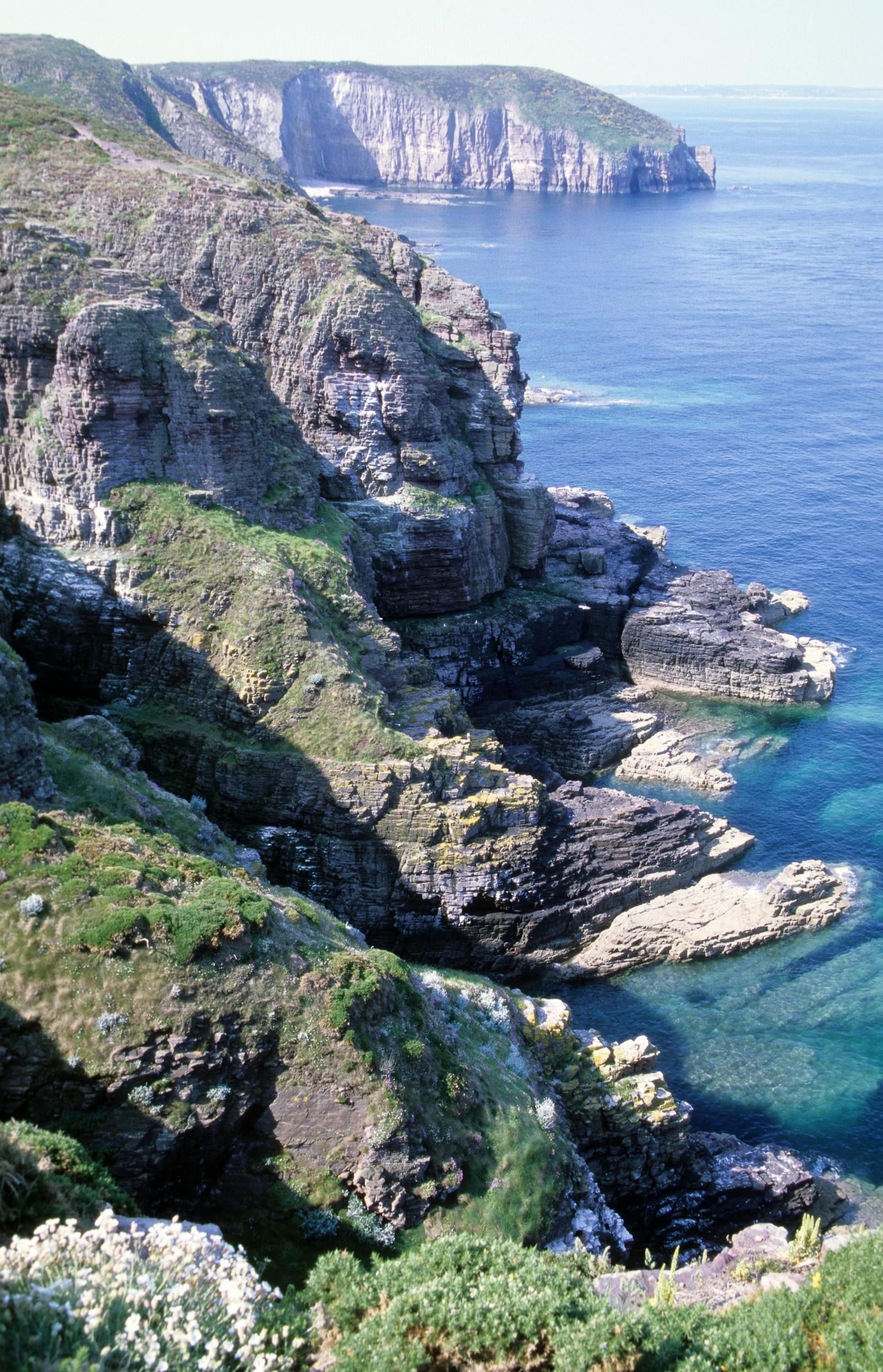
6. Cap Fréhel and the wild heathlands
As you continue along the north coast further west, you’ll hit the dramatic headland of Cap Fréhel, which will quite literally take your breath away. The breathtaking pink sandstone cliffs here drop 70 metres straight down into the churning ocean, where huge Atlantic waves shatter against them. It’s demonstrably one of the windiest places in all of France, so don’t forget to fasten your hood tightly and keep a firm grip on your hat — otherwise you’ll lose it forever in a single second.
Around the tall lighthouse stretch endless heathlands, a strictly protected nature reserve and home to many rare species of seabirds. If you arrive at the end of summer, the whole plain bursts into vivid purple and rich yellow. In sharp contrast to the dark blue ocean, it creates an absolutely perfect scene that looks just like something out of a romantic painting.
💡 Tip: The car park by the lighthouse itself fills up very quickly in high season and charges a fee. It’s far better to leave the car a little further away and walk out to the headland along the well-kept coastal path. The experience of the lighthouse slowly emerging from the mist and heather is much stronger, and you’ll get wonderful photos without the crowds.
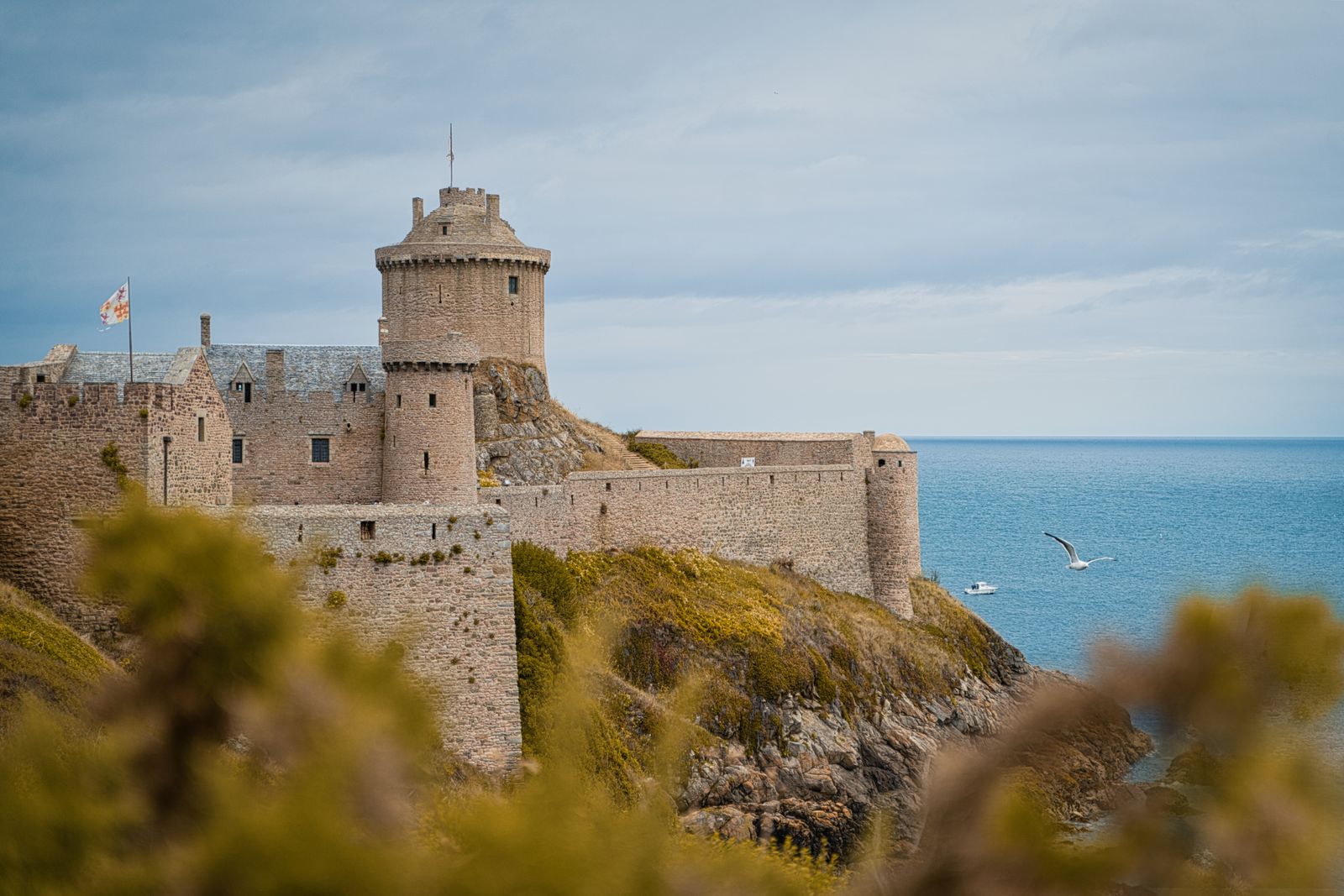
7. Fort la Latte towering above the ocean
About an hour and a half of leisurely walking along the scenic coastal path from Cap Fréhel, you’ll reach the fascinating medieval castle of Fort la Latte. You can, of course, also drive there in a few minutes if you’re short on time, but that walk with its uninterrupted views of the jagged cliffs is truly worth it. The fortress itself, built in the fourteenth century, looks exactly how you’d picture an impregnable castle on the very edge of an abyss, with enormous waves crashing against it.
Several historical films have been shot here, and it’s no wonder — the setting is absolutely flawless. The castle still has a working drawbridge, massive stone towers and a spacious courtyard relentlessly battered by the ocean wind. The view from the main keep over the churning ocean and the surrounding Emerald Coast is priceless, even if the climb up the narrow, well-worn spiral stairs requires a bit of fitness.
💡 Tip: In August, grand medieval festivals with real knightly tournaments and period music are regularly held at the castle. If you’re travelling with children, it’s a tremendous experience they’ll remember for a long time. The whole castle comes alive exactly as it actually functioned hundreds of years ago.
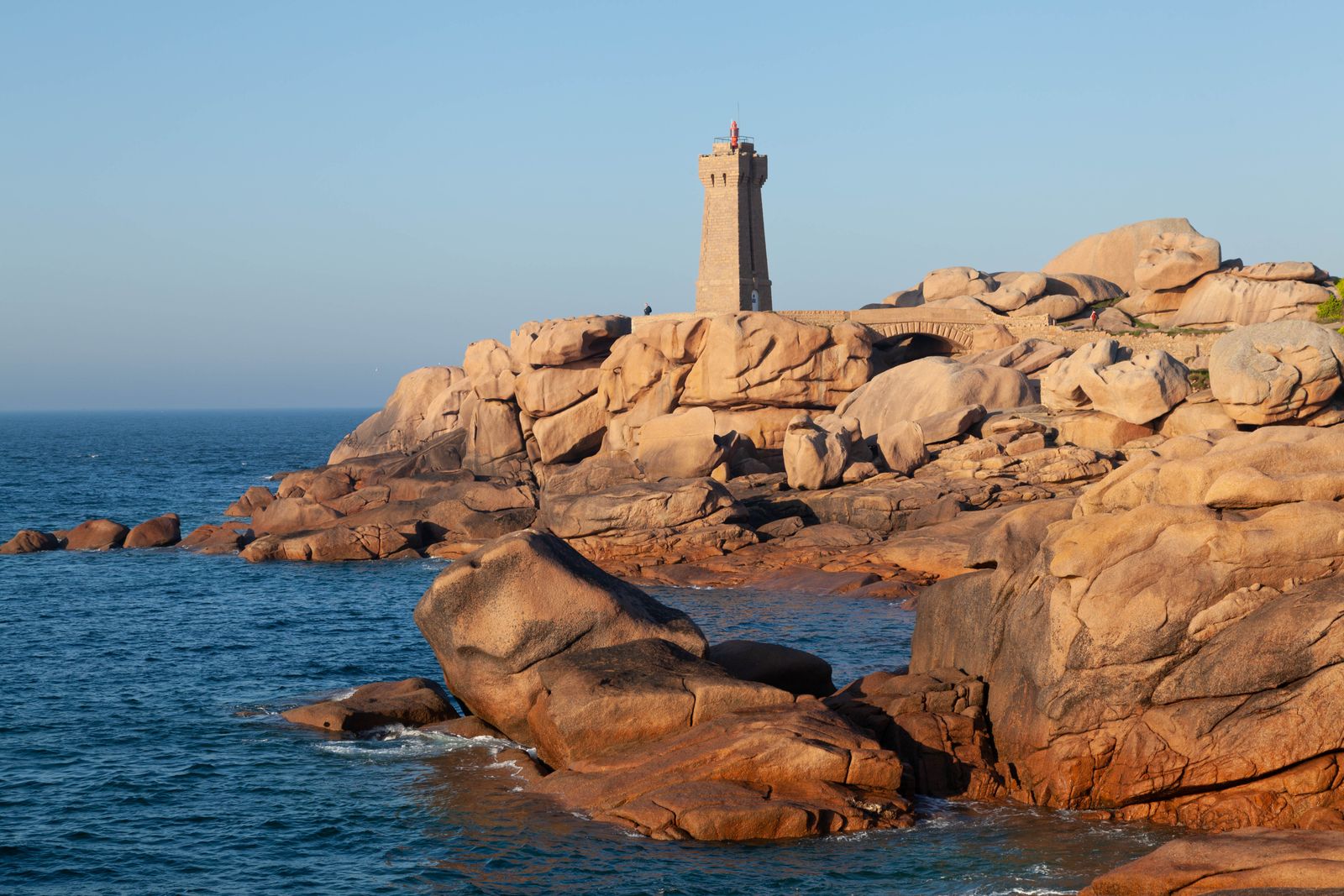
8. Ploumanac’h and the Côte de Granit Rose
The north coast hides an incredible geological anomaly that you’ll find in only three other places on Earth — the rest being nearby Corsica and far-off China. The Côte de Granit Rose, or Pink Granite Coast, is a unique stretch around the villages of Perros-Guirec and Ploumanac’h. The local shores and shallows are strewn with massive pinkish boulders that look as though some angry prehistoric giant scattered them here.
The village of Ploumanac’h itself regularly, and entirely deservedly, wins the polls for the most beautiful village in all of France. When you arrive at dusk and the setting sun strikes the granite stones full on, they turn incredible shades of copper, orange and deep pink. The tireless Atlantic wind and water have, over millions of years, sculpted the stones into the most bizarre shapes, in which, with a bit of imagination, you can spot all kinds of figures and animals. The locals will happily show you a boulder resembling Napoleon’s famous hat, a sinister witch or a giant turtle crawling out of the sea.
💡 Tip: In the immediate area around the Mean Ruz lighthouse, the concentration of pink stones is absolutely highest and the scenery is most impressive. Be prepared, though, to share the best photo spots with crowds of other enthusiastic travellers in the summer months, so I recommend setting out really early in the morning or, conversely, just before sunset, when the place is at its most magical.
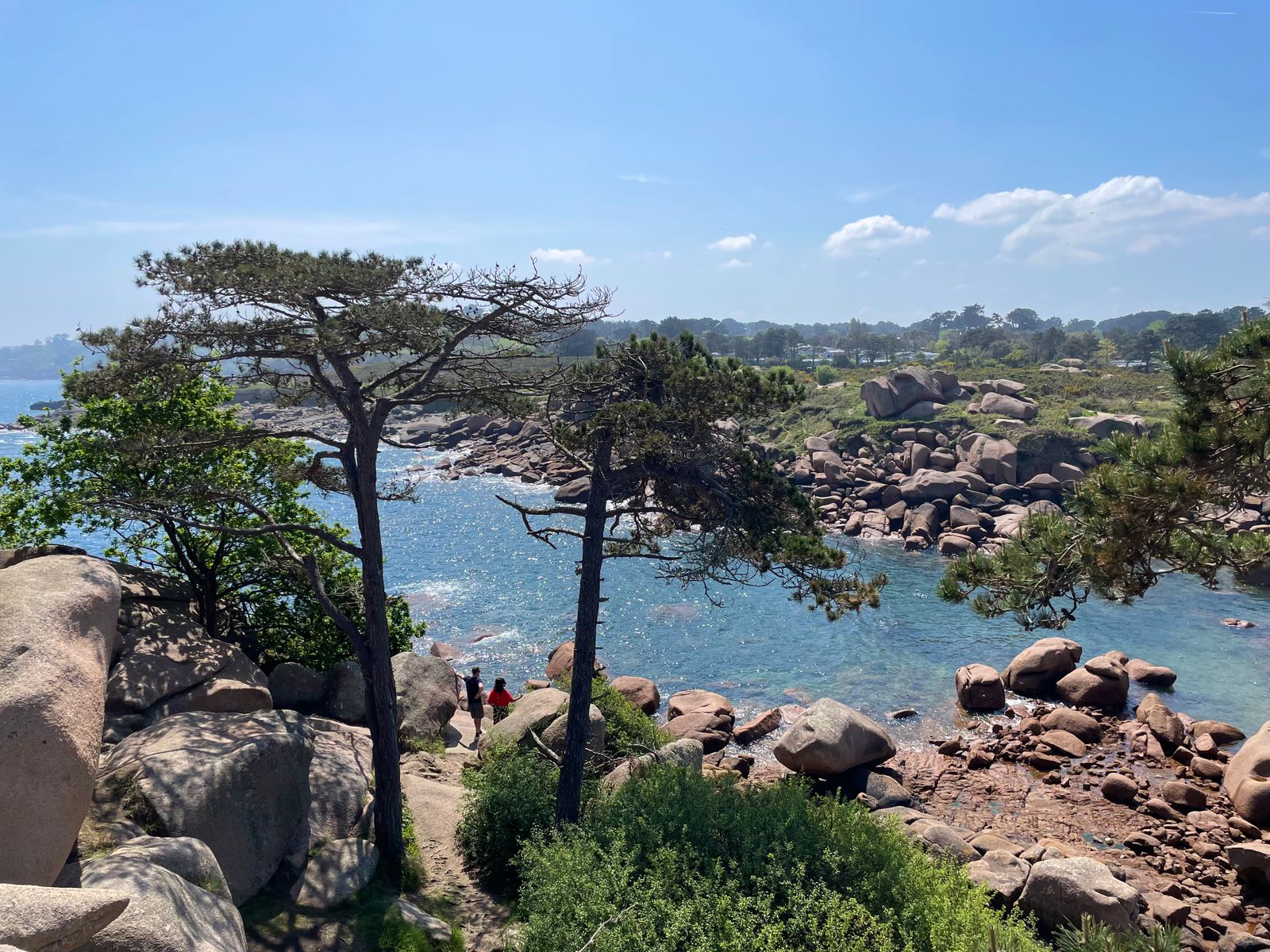

9. Sentier des Douaniers (the Customs Officers’ Path)
The absolute best way to soak up the atmosphere of the pink coast and avoid the crowded car parks is to go for a walk. The Sentier des Douaniers, also known as the long-distance GR 34 hiking trail, was originally created for vigilant customs officers who patrolled the cliffs by night, scouring for dangerous smugglers. Today this iconic trail winds right between the giant granite boulders along the sea and offers the best, unobstructed views of the endless ocean — views you simply won’t get from elsewhere on the mainland.
The most beautiful section, lying between the towns of Perros-Guirec and Ploumanac’h, is about nine kilometres long and is walkable for absolutely everyone. You don’t need any special hiking gear for it — just comfortable shoes, because the path is more or less flat. The route is very well and clearly marked, and quite literally every few moments it forces you to stop and admire, mouth agape, yet another bizarre rock formation jutting dramatically out of the churning water.
💡 Tip: Set out on the trail ideally very early in the morning at sunrise, or conversely late in the afternoon. Around midday in the summer months it gets surprisingly hot here, and because you’re out on an open cliff the whole time, there’s nowhere to hide from the harsh sun. The treacherous ocean breeze can fool you unpleasantly too, so without good sunscreen you’ll burn very easily.
10. Pointe du Raz at the very end of the world
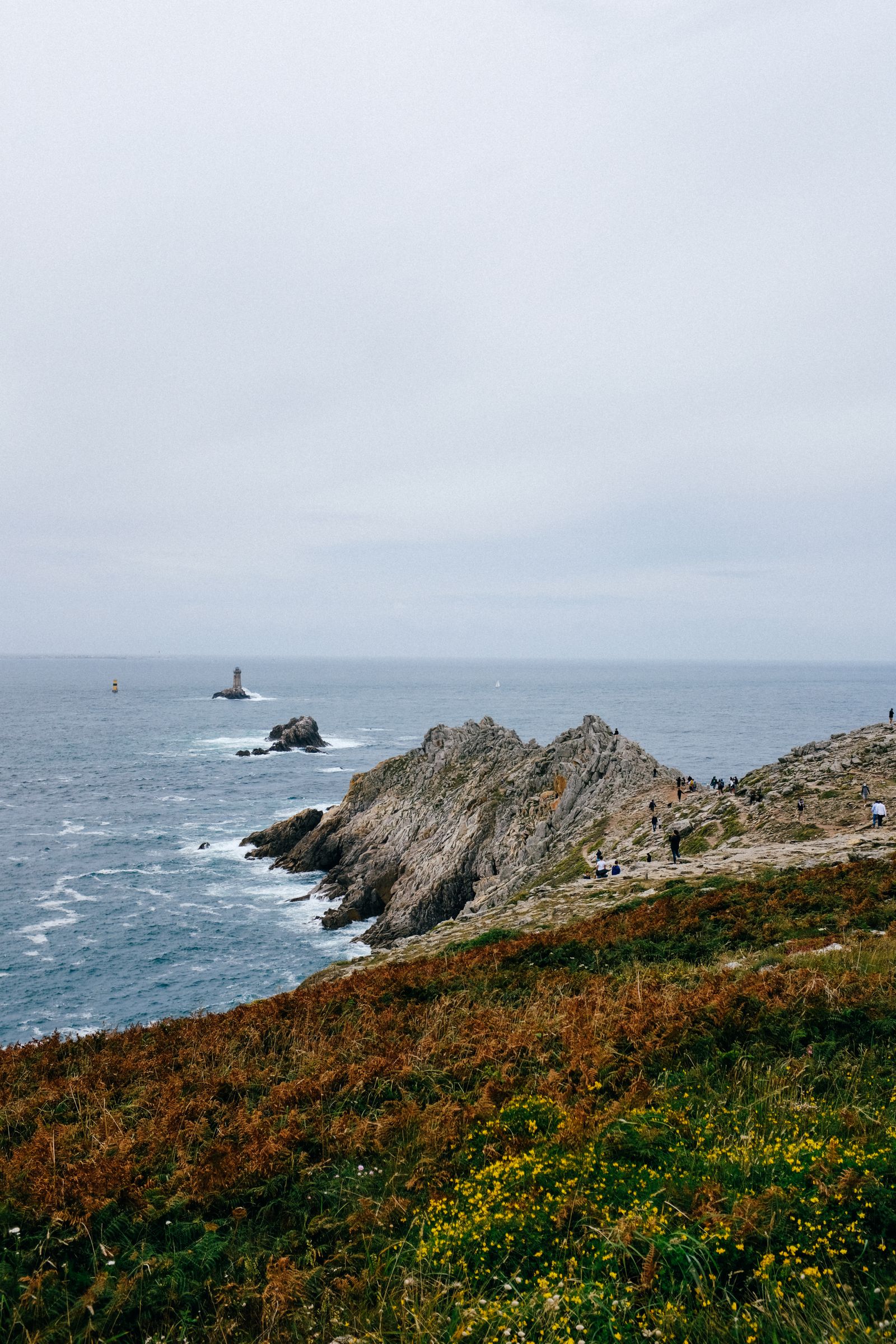
The word Finistère comes from the original Latin Finis Terrae, which literally translates as the very end of the land. It’s the westernmost tip of France, the wildest and most Celtic part of all Brittany, which quickly reminds you how small we are compared to Mother Nature. If you want to experience an intense feeling of human insignificance against the enormous power of nature, head out to Pointe du Raz. This rocky headland cuts deep into the Atlantic, and giant waves slam into the cliffs with such overwhelming brutality that it’ll take your breath away and send spray shooting dozens of metres into the air.
The whole area was once the victim of an enormous tourist onslaught and unpleasant overtourism, but the French luckily made a very radical cut here. They demolished all the ugly commercial buildings on the headland itself, moved the large car parks and visitor centre further inland, and wisely let nature reclaim this magical place. Today it’s a strictly protected and gorgeous zone, where in the distance you’ll see only the solitary La Vieille lighthouse, bravely defying all the raging elements on a small patch of deserted rock.
💡 Tip: From the central car park to the headland itself it’s about twenty minutes of very pleasant walking. If a strong wind is blowing, definitely keep well away from the edges of the cliffs, because the gusts here can be extremely strong, completely sudden and, above all, very unpredictable.
11. Quimper and its leaning cathedral
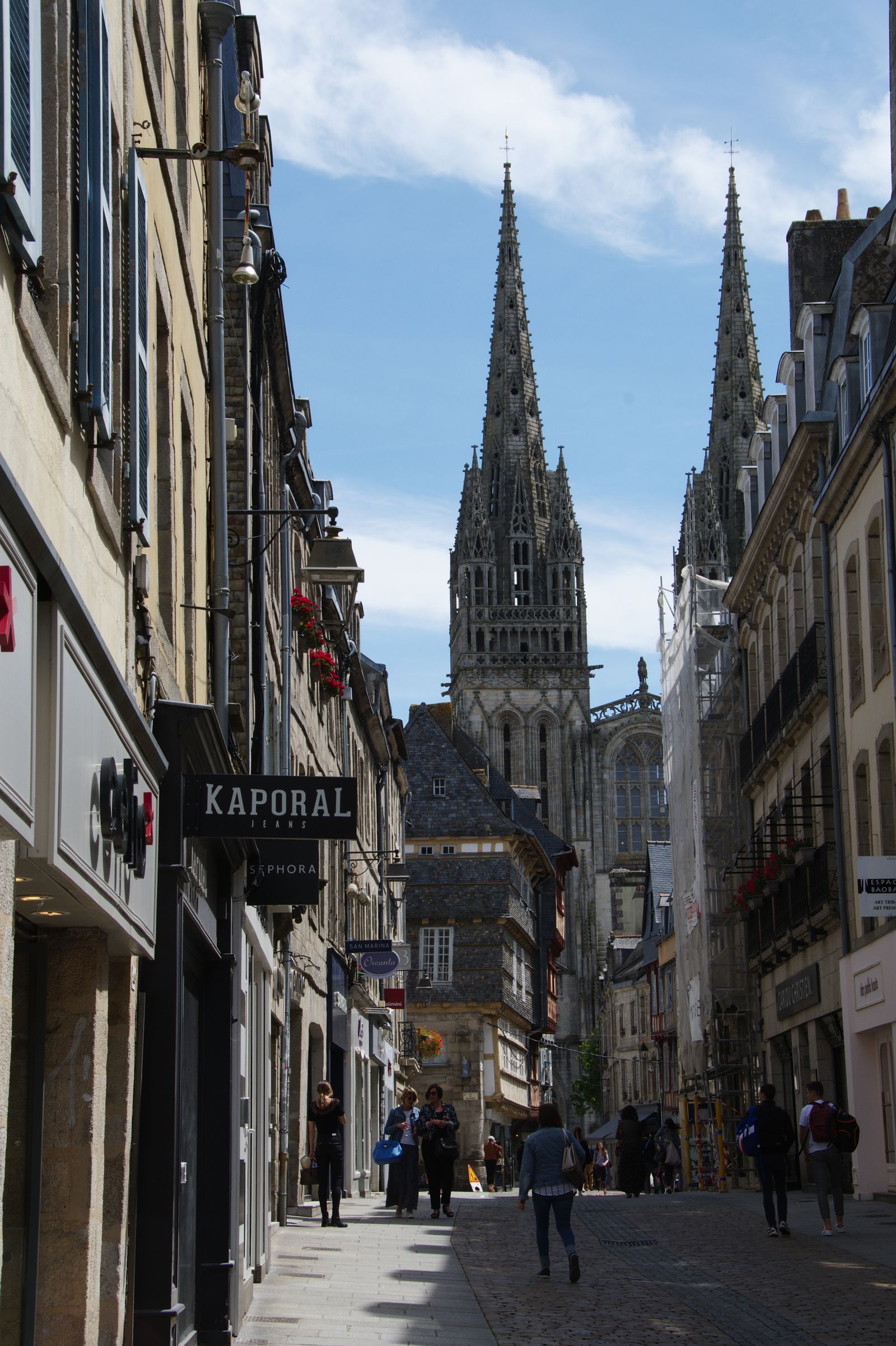
When the endless, relentless wind on the cliffs finally wears you down, retreat to the pleasant and considerably calmer inland city of Quimper. This historic capital of the traditional region of Cornouaille is full of romantic narrow lanes, flower-laden bridges over the quiet river Odet and beautiful traditional Breton houses that lean over you. The whole city is clearly dominated by the magnificent Gothic cathedral of Saint-Corentin, which conceals one huge and fascinating architectural curiosity. Its main nave is noticeably and visibly curved. According to an old legend, the medieval architects did this deliberately so the shape of the huge building would resemble Christ’s head tilted on the cross, although a more realistic and far more pragmatic explanation speaks of the need to adapt the structure to the unstable marshy subsoil.
Beyond its unique architecture, Quimper is famous throughout France for its traditional faience. This is beautiful and very detailed hand-painted pottery with typical blue and yellow patterns, which you can buy here as a truly perfect, authentic souvenir to take home. These craft workshops have been operating very successfully since the seventeenth century, and some of them still offer interesting tours right into the production itself, where you can watch the skilled painters at work.
💡 Tip: In the immediate vicinity of the huge cathedral you’ll find plenty of excellent establishments and cosy little cafés. Sit outside on the terrace, order a bowl of dry cider, have a delicious cheese galette and simply watch, in peace, the easy-going hustle of this important Breton centre, which lives at its own slow pace.
12. Concarneau and the fortified Ville Close
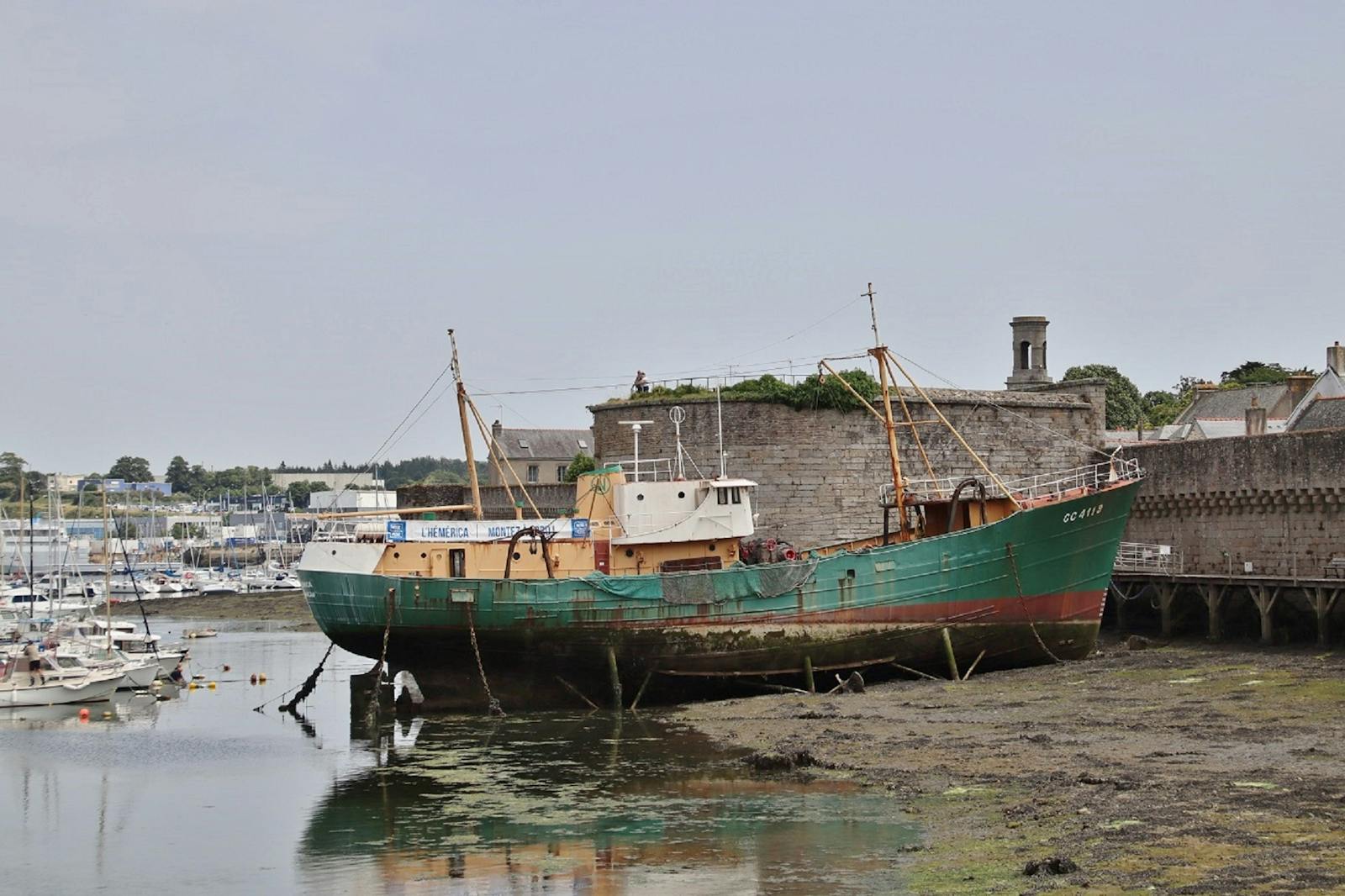
On the considerably sunnier southern coast of the rugged Finistère department, you definitely shouldn’t miss the picturesque harbour town of Concarneau. Its main and biggest tourist draw is the so-called Ville Close, or Walled Town. It’s an ancient fortified historic centre sitting on its own small island right in the middle of a large and, to this day, very busy fishing port. You enter this stunning stone town dramatically across a long bridge that spans a deep moat and instantly carries you back hundreds of years into the past.
Inside these old walls awaits a real labyrinth of narrow, cobbled lanes with an unmistakable atmosphere. It’s true that in the main summer season it gets quite touristy here, with plenty of classic souvenir shops and iconic striped sailor shirts. Nevertheless, an evening walk along the massive ramparts overlooking hundreds of anchored fishing boats still has enormous charm and clearly reminds you that Concarneau lives to this day primarily off fresh seafood.
💡 Tip: Arrive at the port around midday, right by the large fish market, where a wonderful spectacle plays out. Even if you have no plans to cook on holiday, it’s absolutely fascinating to watch the fishing boats unload their fresh catches and the noisy, fast-paced auction to local restaurateurs that follows.
13. Vannes as the gateway to southern Brittany
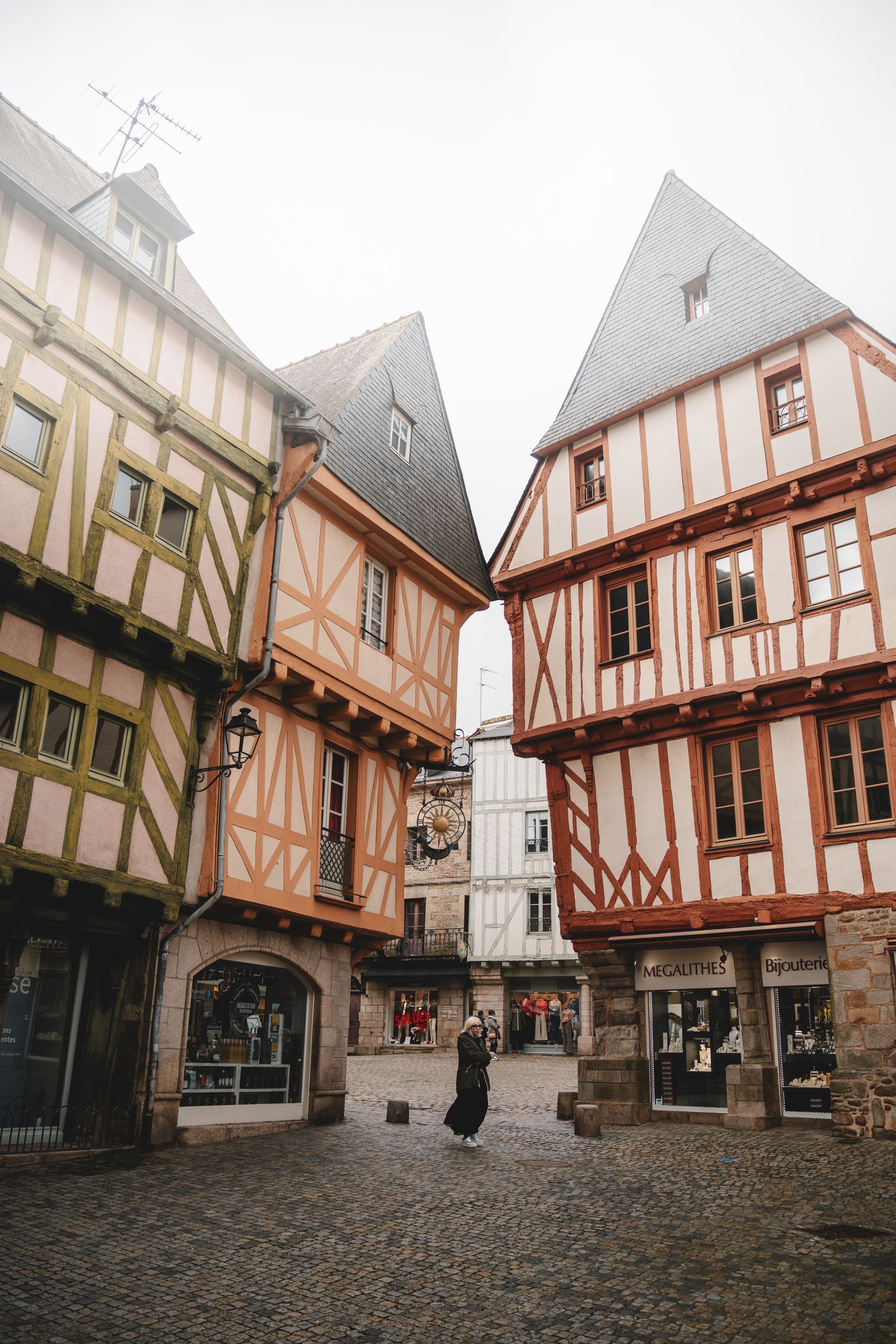
The southern coast of Brittany, the so-called Morbihan department, is noticeably milder and friendlier than the rugged, ever-windy north. The ocean is markedly calmer here, the sun shines far more often and the whole landscape is full of shallow bays that invite you to slow down and rest. An absolutely superb and strategic base for exploring this calmer area is the beautiful town of Vannes. Its medieval centre, with colourful half-timbered houses leaning gently into the narrow cobbled streets, is among the very best-preserved and most charming in the whole wide area.
Beyond the historic core, you’ll also find beautiful, perfectly maintained French gardens stretching along the mighty old town walls. They lead onto a very easy-going promenade lining the modern marina full of snow-white boats bobbing on the calm water. Vannes combines absolutely perfectly the elegance of a larger historic town with the relaxed atmosphere of a summer holiday resort, where there’s simply no rush to be anywhere.
💡 Tip: Don’t forget to stop by the beautiful Place Henri IV during your wanders through town. This is precisely where you’ll find the most beautiful timber-framed houses, and you’ll take the most iconic photos here. It’s especially magical at sunset, when the old wood takes on a wonderfully warm, almost honeyed hue.
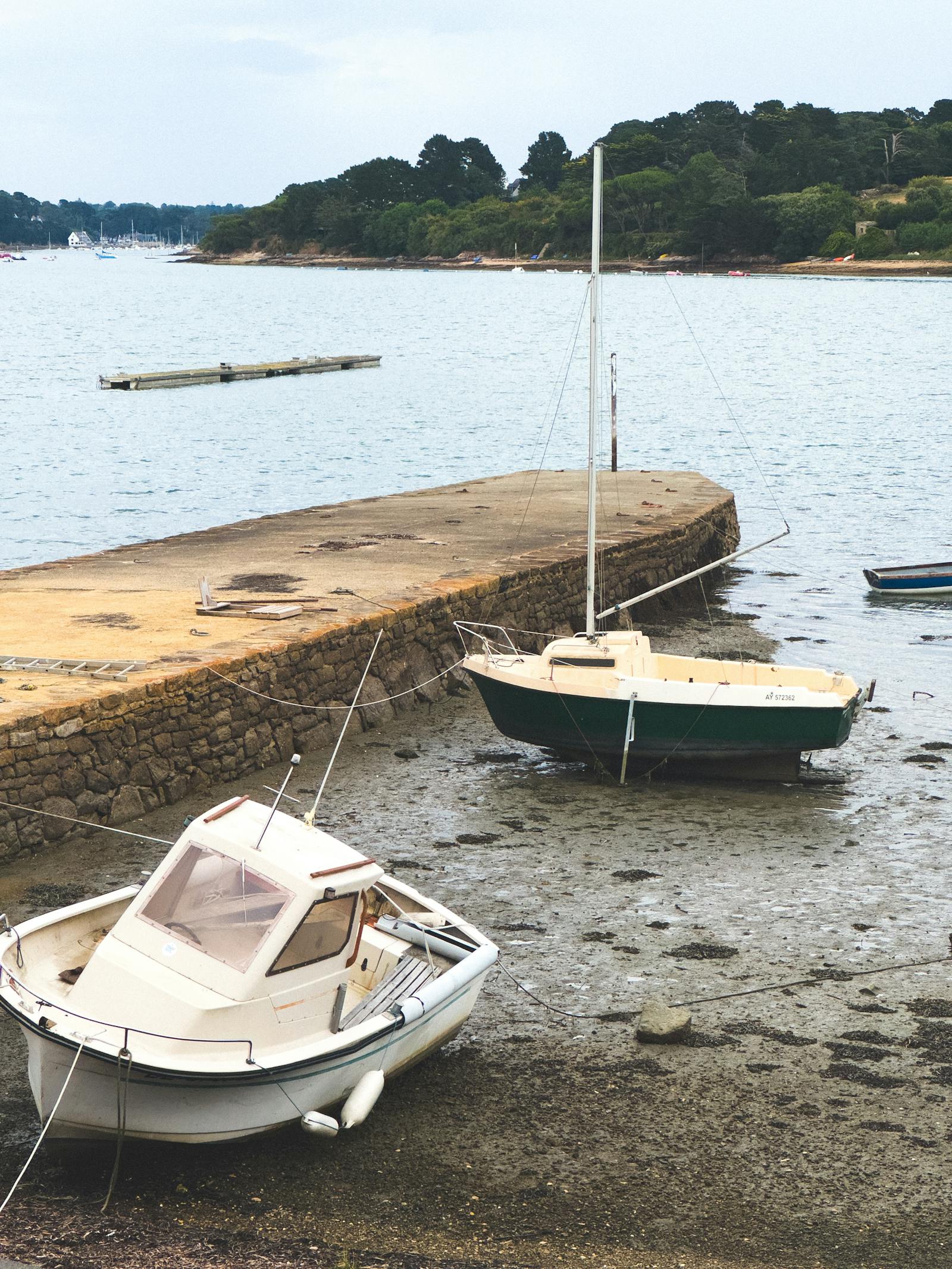
14. A boat trip across the Golfe du Morbihan
The name Morbihan itself means “little sea” in old Breton, which perfectly captures the character of this place. In reality it’s a huge, largely landlocked bay dotted with dozens of wooded islands and small islets. According to one old local legend there are exactly 365 of them, one for each day of the year, but in reality only about thirty are inhabited year-round. The rest belong to untamed nature and seabirds, which find a perfect refuge here from the wild ocean.
The absolute best way to get to know this fascinating bay in depth is to hop aboard a pleasure boat in Vannes or the nearby smaller port of Port-Blanc and take a leisurely round trip. The most common and most popular destination is the Île aux Moines, a gorgeous island full of fragrant pines, figs and little white houses. There are almost no cars on the island, so as soon as you disembark in the port, rent a bike and enjoy the complete tranquillity, scented with the intense aroma of sea salt and resin.
💡 Tip: If you have more time and want to see a real, wild ocean island outside the bay, buy a ferry ticket from the nearby port of Quiberon to Belle-Île. This so-called Beautiful Island alternates perfectly between dramatic, steep cliffs and picturesque, pastel-coloured coves where small sailing boats shelter from the wind.
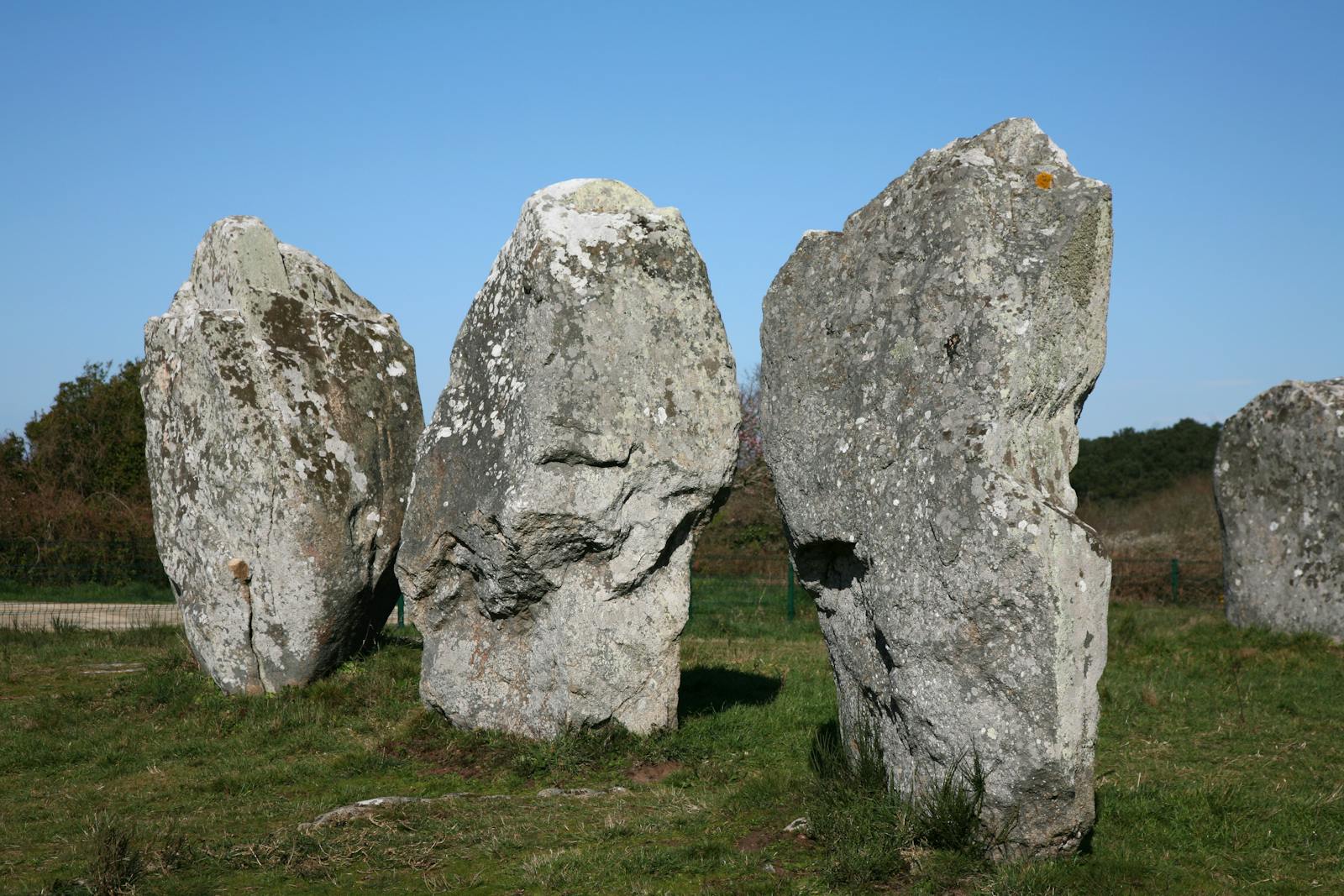
15. Carnac and the mystery of the prehistoric standing stones
The single greatest and most captivating mystery in all of Brittany lies in the south near the unassuming little town of Carnac. Here you’ll find an incredible more than 3,000 standing stones, the so-called menhirs, carefully arranged in extremely long rows stretching for kilometres into the open countryside. They are absolutely staggering, demonstrably over 6,000 years old, and not one of the world’s historians or archaeologists knows for certain to this day why they actually stand here or how people of that era managed to get them here at all with their primitive technology.
Was it a giant astronomical observatory, a sacred place for worshipping the dead, or perhaps a gigantic calendar for farmers? An amusing local legend, meanwhile, claims they are a petrified Roman legion, turned to stone by Saint Cornelius as he fled from them along the coast. Whatever the truth, the place has an incredible and deeply mysterious energy that completely engulfs you the moment you first lay eyes on those endless ranks of giant, silent boulders.
💡 Tip: Be very careful of the new rules. Since 2025, Carnac has been proudly inscribed on the UNESCO list, and due to extreme tourist pressure a very strict protection regime now applies to the monument. From April to September, free access right among the stones is forbidden, and you can only reach them as part of a paid guided tour with an official guide. You can see them for free and comfortably from behind a low fence, but if you long to walk right among them and touch them, you must book a tour in good time. In the winter months the regime is noticeably more relaxed.
Map of points of interest for your phone
Where to go next from Brittany
If you’ve set aside more than ten days for your French road trip, definitely cross the regional border eastwards. Brittany flows very smoothly into the equally fascinating Normandy, which offers a slightly different history but equally good food and a gorgeous coastline.
- You absolutely mustn’t miss Mont-Saint-Michel. This famous island abbey lies exactly on the border between the two regions and is an absolute architectural miracle, cut off from the mainland with every high tide.
- Continue along the Normandy coast and visit the giant chalk cliffs at Étretat, which the famous Claude Monet himself came to paint.
- Stop off at the historic D-Day landing beaches in Normandy, such as the well-known Omaha Beach, where the weighty but hugely important modern history of our planet hangs in the air.
Frequently asked questions
Jak dlouho trvá cesta autem z Česka do Bretaně?
Cesta z Prahy do Rennes, což je pomyslná vstupní brána do regionu, trvá čistého času zhruba 13 až 14 hodin a urazíte při ní přes 1300 kilometrů. Většina cestovatelů si tuto dlouhou trasu chytře rozděluje na dva dny s přespáním někde v Německu nebo východní Francii. Je to mnohem bezpečnější a zajistí to, že nepřijedete na pobřeží naprosto zničení a rovnou si začnete užívat dovolenou plní energie.
Platí se v Bretani dálniční poplatky?
Tady pro vás mám naprosto skvělou zprávu, která hodně potěší vaši peněženku. Na rozdíl od zbytku Francie, kde jsou dálnice poměrně draze zpoplatněné mýtnými branami, jsou rychlostní silnice a dálnice v samotné Bretani pro osobní auta zcela zdarma. Je to historické specifikum, které si region před staletími úspěšně vybojoval, a při delším roadtripu vám to spolehlivě ušetří spoustu peněz na další palačinky.
Domluvím se v Bretani anglicky?
V hlavních turistických centrech, větších hotelech a u vyhlášených památek se anglicky bez větších problémů domluvíte. Jakmile ale vyrazíte do menších vesnic, zastrčených venkovských palačinkáren nebo na trhy, angličtina velmi rychle mizí. Místní hrdí obyvatelé ale nesmírně ocení, když se naučíte alespoň základní francouzské pozdravy jako bonjour a merci. Rázem roztají a hned se k vám budou chovat o poznání vřeleji a vstřícněji.
Je v Bretani moře vhodné ke koupání?
Bretaň z jedné strany omývá Atlantický oceán a z druhé průliv La Manche, takže voda je tu opravdu hodně studená a divoká. I v parném srpnu se teplota vody málokdy dostane nad osvěžujících 18 až 19 stupňů. Koupání je tak spíše pro opravdové otužilce a milovníky ledové vody, většina lidí sem jezdí spíše za dramatickými výhledy, dlouhými procházkami na útesech a pobytem na zdravém čerstvém vzduchu.
Jak je to v Bretani se psy?
Francouzi obecně psy naprosto milují a Bretaň v tomto ohledu není žádnou výjimkou, spíše naopak. Do mnoha restaurací i menších hotelů vás se čtyřnohým parťákem bez řečí a s úsměvem pustí. Dejte si ale velký pozor na plážích, protože během hlavní letní sezóny platí na většině opečovávaných městských pláží přísný zákaz vstupu psů, musíte tedy s chlupáčem vyhledávat divočejší a odlehlejší úseky pobřeží.
Co dělat, když celý den prší?
Pokud vás chytne opravdový a vytrvalý atlantický liják, stáhněte se z větrných útesů do vnitrozemí. Můžete navštívit obrovské mořské akvárium v Saint-Malo, prozkoumat malebné kryté historické centrum města Vannes, schovat se do monumentální gotické katedrály v Quimperu nebo prostě strávit dvě hodiny v suchu a teple nad výbornou sýrovou galette a velkou miskou jablečného cidru, což k místní kultuře patří úplně stejně jako památky.
Jsou v Bretani nějaké možnosti pro vegetariány?
Ačkoliv je místní tradiční kuchyně hodně založená na sýrech, vejcích a slaném másle, vegetariáni tu nebudou mít vůbec žádný problém. V každé crêperii vám bez sebemenších potíží udělají slanou galette plněnou jen rozteklým sýrem, houbami, čerstvým špenátem nebo karamelizovanou cibulí. Restaurace ve větších městech a přístavech už dnes navíc naprosto běžně nabízejí i moderní a velmi chutná bezmasá hlavní jídla.
Tips and Tricks for Your Vacation
Don’t Overpay for Flights
Search for flights on Kayak. It’s our favorite search engine because it scans the websites of all airlines and always finds the cheapest connection.
Book Your Accommodation Smartly
The best experiences we’ve had when looking for accommodation (from Alaska to Morocco) are with Booking.com, where hotels, apartments, and entire houses are usually the cheapest and most widely available.
 🚗 Car rental on the roadVerified rental cars in France
Search with the DiscoverCars comparison engine — it compares prices from dozens of local and international rental companies, and most bookings come with free cancellation.
Compare car prices in France →Don’t Forget Travel Insurance
Good travel insurance will protect you against illness, accidents, theft, or flight cancellations. We’ve had a few hospital visits abroad, so we know how important it is to have proper insurance arranged.
Where we insure ourselves: SafetyWing (simple monthly subscription) and TrueTraveller (for extra-long trips).
Find the Best Experiences
Get Your Guide is a huge online marketplace where you can book guided walks, trips, skip-the-line tickets, tours, and much more. We always find some extra fun there!