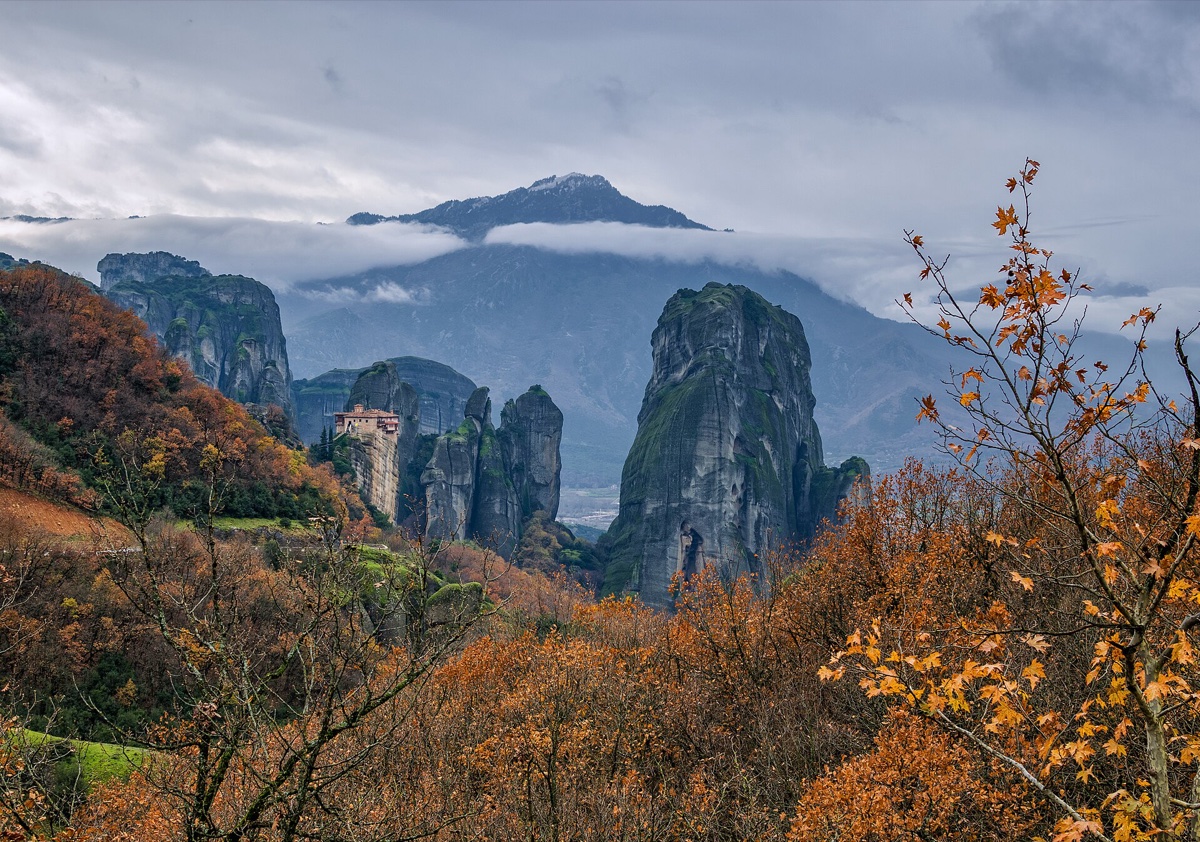
There are places where you get the feeling that physics has stopped working. The Meteora monasteries in Greece are exactly that kind of place. Out of the flat Thessalian plain, giant sandstone towers hundreds of metres high suddenly shoot skyward, and perched on their very summits, as if floating between heaven and earth, balance ancient Orthodox monasteries. No wonder the name Meteora literally means “suspended in the air.”
It’s one of the most spectacular and still slightly underrated landscapes in Europe, a UNESCO World Heritage Site, and after Mount Athos the most important monastic centre in Greece. Whether you’re coming for the spiritual side, for photos that look like another planet, or for hiking among the rock towers, Meteora will win you over.
In this guide you’ll find everything you need for a visit to the Meteora monasteries: which six monasteries you can visit, entrance fees and opening hours, how the dress code works, how to get here, and where to stay. Let’s dive in. ☺️
The full destination guide: Greece — guide and what to see
TL;DR
- Meteora is a complex of six working monasteries built on top of sandstone towers in central Greece, a UNESCO World Heritage Site.
- The entrance fee is around €3 per monastery, so keep some small change on you.
- There’s a strict dress code: covered shoulders, long trousers for men, a long skirt for women (they lend wraps for free at the entrance).
- Each monastery closes on a different day, so check the opening hours in advance so you don’t miss out.
- It’s ideal to stay two nights in Kalambaka or Kastraki and catch both sunrise and sunset, when the rocks change colour.
- From Athens it’s about a 4-hour drive, and there’s also a train.
What is Meteora and why visit
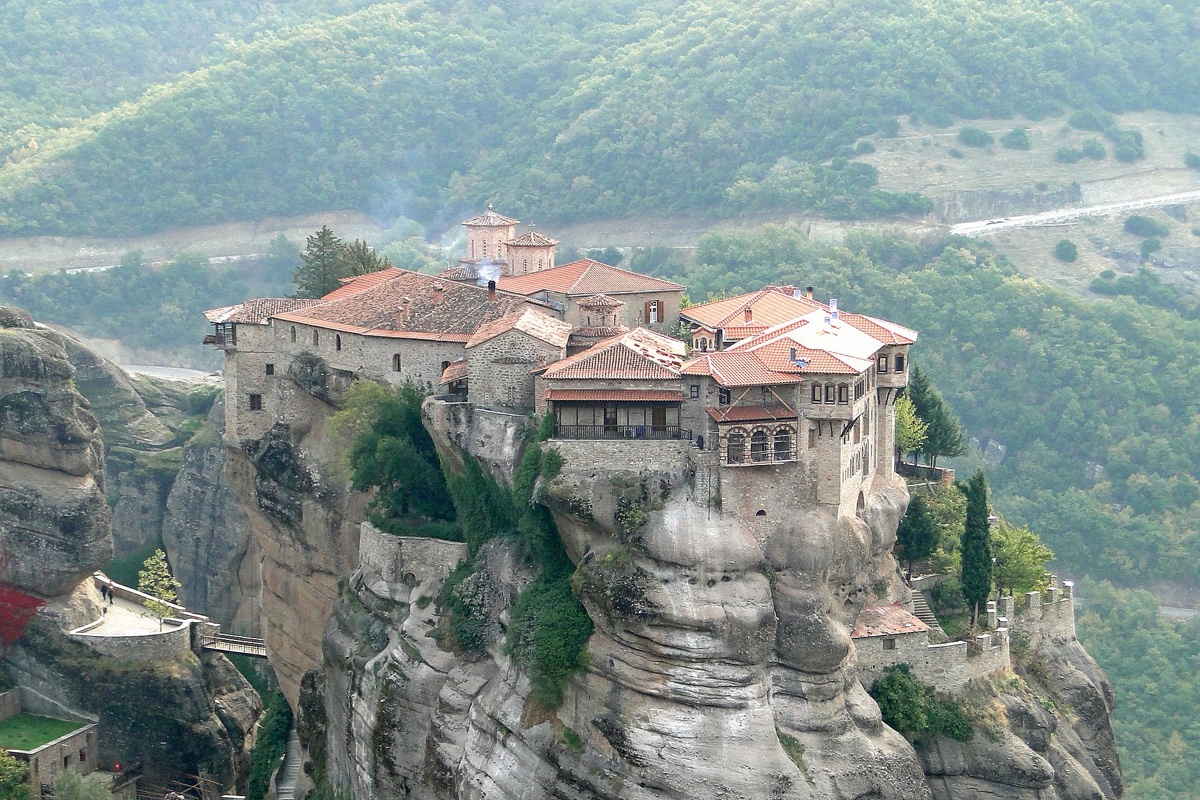
Meteora’s story is as dramatic as its landscape. As early as the 14th century, monks fled here to escape raids, seeking safety and solitude on the inaccessible rock summits. Originally the only way up to the monasteries was via long ladders or in nets hauled up on ropes — something you can still see at a few of them today.
Today, staircases carved straight into the rock lead up to the monasteries, so while the visit is a bit of a workout, pretty much anyone can manage it. At the peak of its glory there were more than twenty monasteries here; today six remain inhabited, all listed as a UNESCO World Heritage Site. Wandering between them, looking down over the plain from up high and watching the stone towers bathe in the morning or evening light, is an experience that gets under your skin.
The six Meteora monasteries in Greece: which to choose
Visiting all six in a single day is theoretically possible, but exhausting. If you’re short on time, pick two or three depending on what appeals to you. Here’s a quick overview.
Great Meteoron and Varlaam
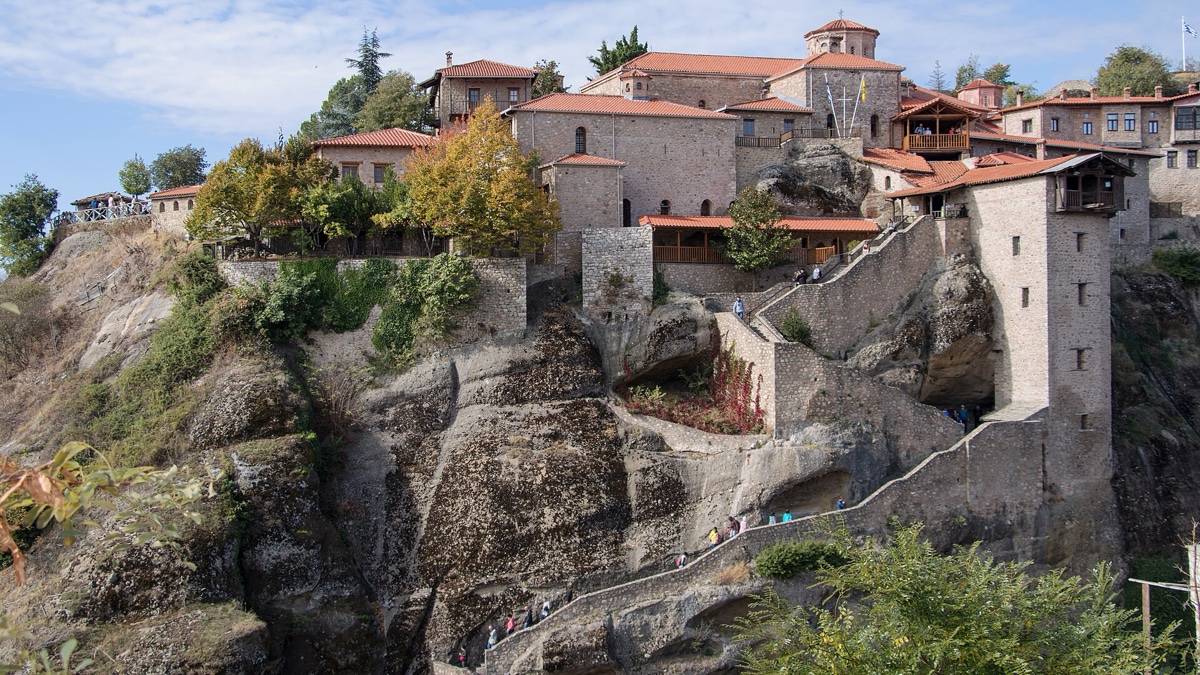
Great Meteoron (the Monastery of the Transfiguration) is the oldest, largest and highest of the six. You’ll find a fascinating museum here, plus an old kitchen and an ossuary, and the views are absolutely breathtaking. Right across the ravine stands Varlaam, the second-largest monastery, with beautiful frescoes and an old net once used to haul up supplies and even people. This pair is among the most visited and it makes sense to explore them together.
Roussanou and St. Nicholas Anapausas
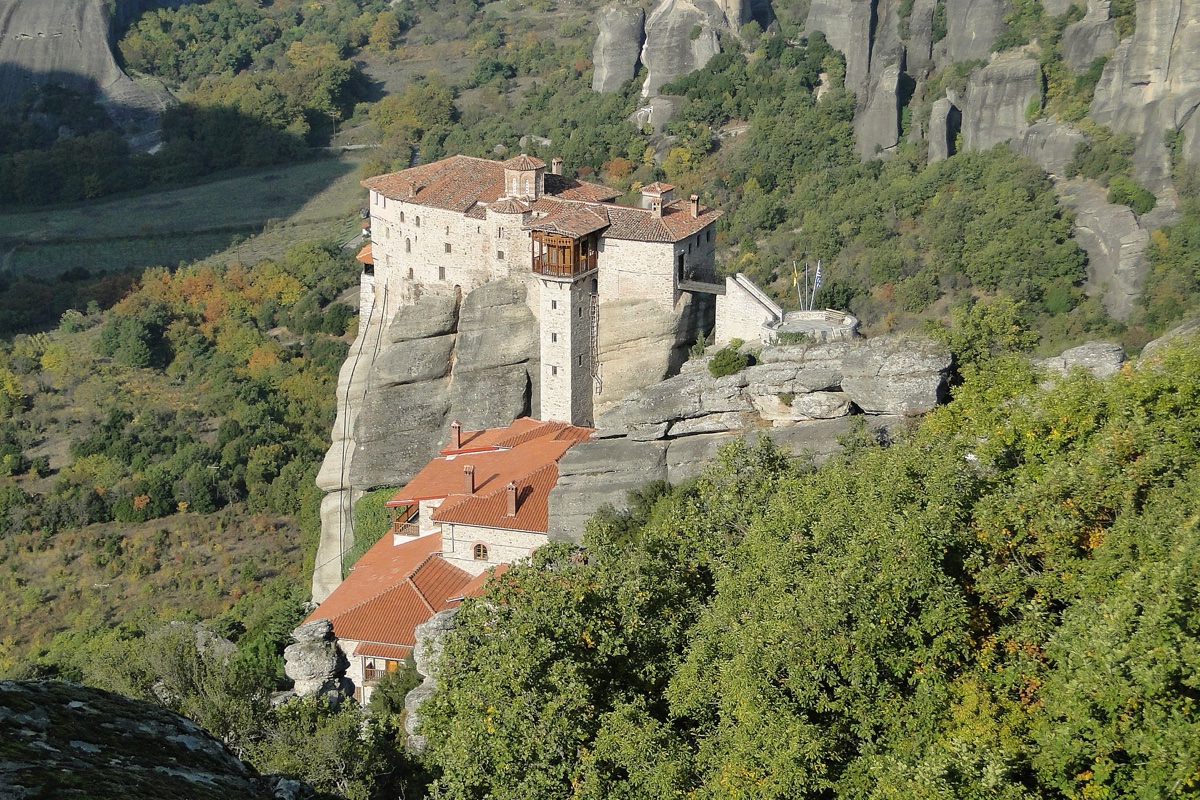
Roussanou, thanks to its lower position and access via a little bridge, is one of the most accessible and photogenic monasteries, and today it’s home to nuns. It looks as if it grows straight out of the rock. The small St. Nicholas Anapausas hides gorgeous frescoes by the Cretan master Theophanes, and it’s usually the least crowded, so you can enjoy it in peace.
Holy Trinity and St. Stephen
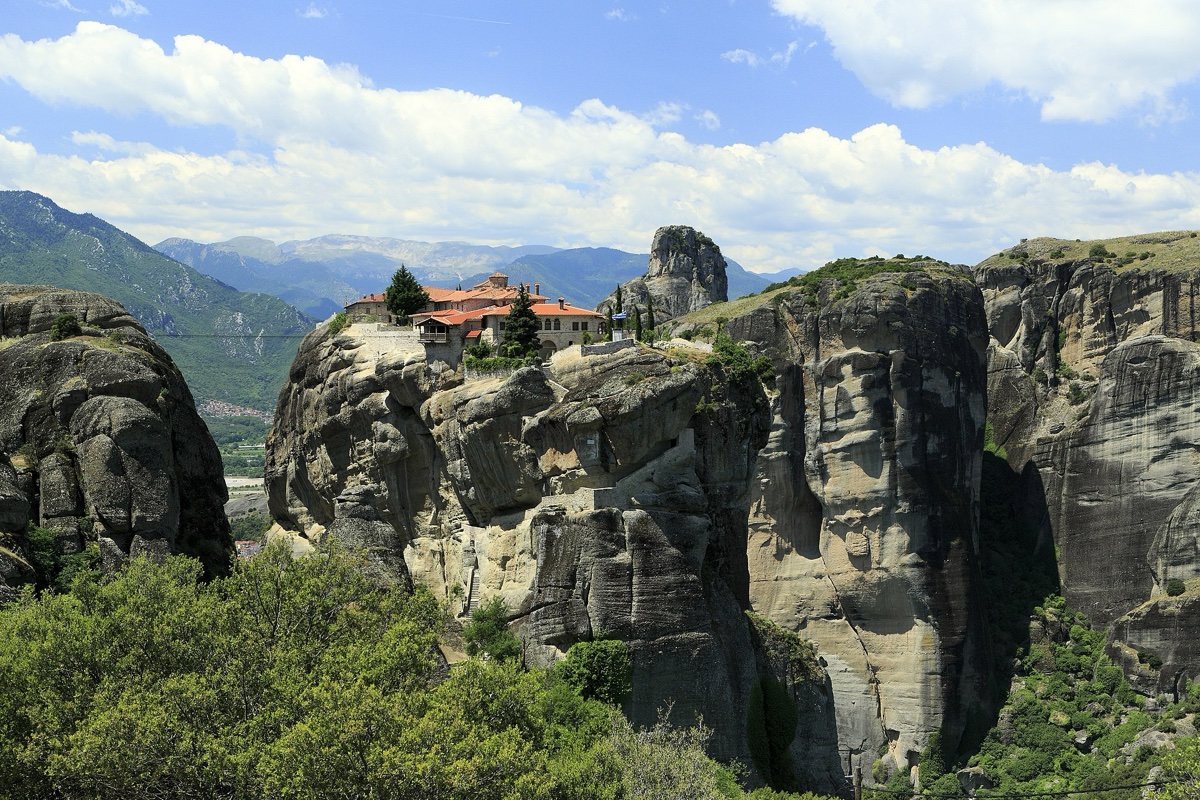
Holy Trinity (Agia Triada) sits in the most dramatic spot, reached by the most demanding climb up steps carved into the rock. It might look familiar — the James Bond film For Your Eyes Only was shot here. And finally there’s St. Stephen, a convent on the edge of the complex that’s the most accessible of all, since you reach it via a bridge with no strenuous climb. That makes it ideal for visitors who struggle with stairs.
Practical info: entrance fees, opening hours and dress code
A visit to Meteora has its rules, and it’s worth knowing them in advance so you don’t end up disappointed at the gate.
The entrance fee for each monastery is around €3 and is paid separately, so make sure you have enough small change on you. Opening hours vary from monastery to monastery, and crucially each one is closed on a different day of the week (which often changes between summer and winter). Before you set off, check the current times on the official tourist website so the monastery you’ve got your heart set on doesn’t shut right in front of you.
The key thing is the dress code, which is genuinely strictly enforced. Men must wear long trousers and have covered shoulders, women a long skirt and covered shoulders (and note — trousers really aren’t acceptable for women). If you don’t have a skirt, they’ll lend you a wrap for free at the entrance, but it’s better to plan for it and bring your own suitable clothing.
💡 Tip: The most beautiful light is early in the morning and at sunset, when the sandstone rocks shift in colour from ochre to a rich orange. The viewpoints along the road between the monasteries are free at sunset, and you’ll witness one of the most gorgeous sights in all of Greece.

Map of points of interest for your phone
How to get to Meteora from Athens and beyond
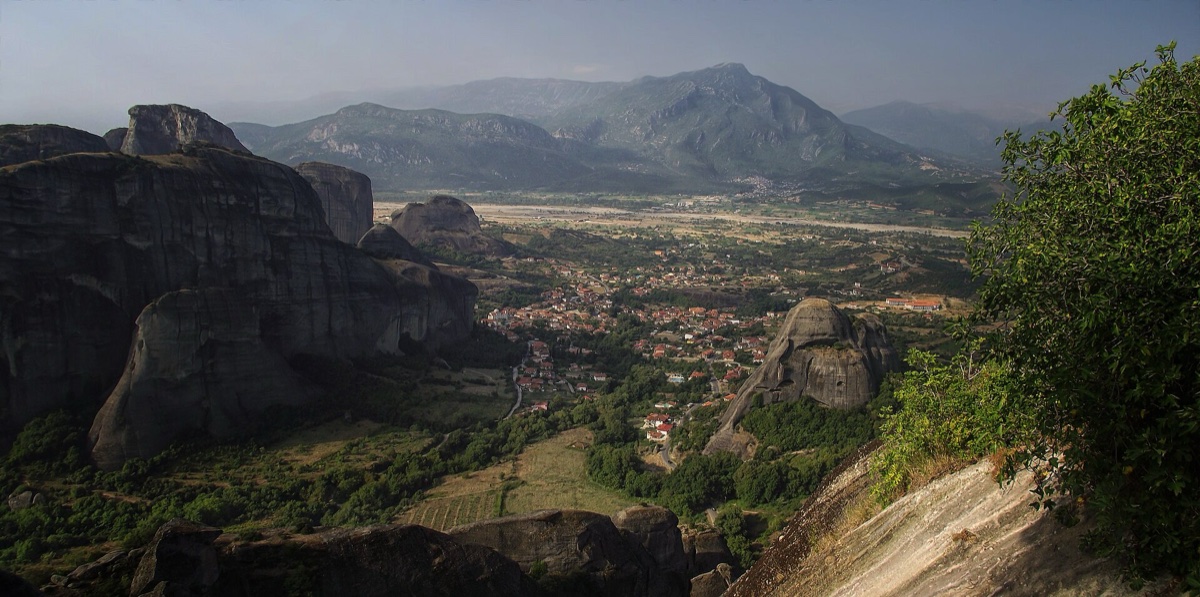
Meteora lies in central Greece near the town of Kalambaka, far from the coast, so most people visit it as part of a mainland road trip. From Athens it’s about a 4-hour drive along the motorway, and from Thessaloniki it’s a little less.
Don’t give up if you don’t have a car, though — there’s also a train to Kalambaka from both Athens and Thessaloniki (the journey takes roughly 4 to 5 hours). The Greek railways are undergoing restructuring following accidents in recent years, so always double-check the current timetable in advance. From Kalambaka you can reach the monasteries by local bus, taxi, on an organised tour, or by bike or on foot if you’re in good shape. A car is clearly the most convenient option, though, with a smooth paved road running between the monasteries.
Where to stay near Meteora
💡 Tip for accommodation and experiences: We prefer to look for accommodation on Booking.com, which usually has the best cancellation terms. The specific hotels I recommend below were picked based on real reviews across price ranges. For tours, boat trips and tickets, compare options on GetYourGuide.
The smaller, more picturesque Kastraki sits right beneath the rock towers and has a quieter, more village-like atmosphere. For rock views from breakfast onwards, I recommend the boutique Tsikeli Boutique Hotel Meteora with its garden café, the family-run Hotel Doupiani House on the highest point of the village, or Dellas Boutique Hotel right by the Agios Nikolaos monastery. Affordable and full of character is the stone Guesthouse Sotiriou, dating from 1845.
The larger Kalambaka offers full infrastructure, restaurants and the widest choice of accommodation. A great mid-range option with balconies facing the rocks is Hotel Kosta Famissi, while more spacious facilities are on offer at Grand Meteora Hotel a short distance from the monasteries. Whichever spot you choose, it’s worth booking a room with a view of the rocks — waking up to the monasteries in the rising sun is unforgettable.
Ideally, stay here for two nights. You’ll have enough time to experience the magical sunrise and sunset, and to wander around several monasteries at a relaxed pace without rushing. Rooms with a view fill up fast, so book well ahead.
Where to go next
Before you head off, take a look at our other articles about Greece:
- Where to go on holiday in Greece: islands, mainland and tips
- Athens: 21 things to see and do
- When to visit Greece: weather month by month
- Thessaloniki: 22 things to see and do
Frequently asked questions
What does Meteora mean?
The word Meteora comes from Greek and literally means “suspended in the air” or “hovering aloft”. The name perfectly captures the monasteries here, which stand atop steep sandstone cliffs as if floating between heaven and earth. The same Greek root is found in the word meteor.
How many Meteora monasteries are there and how many can you visit?
Today there are six functioning monasteries in Meteora that can be visited: Great Meteoron, Varlaam, Roussanou, St. Nicholas Anapausas, Holy Trinity, and St. Stephen. In the past there were over twenty. All six are listed as UNESCO World Heritage sites. In one day you can manage two to four, but ideally spread your visit over two days.
How do you get to Meteora?
Meteora is located near the town of Kalambaka in central Greece. From Athens you can drive via the motorway in about 4 hours, and there are also trains (4 to 5 hours) from both Athens and Thessaloniki. From Kalambaka you can reach the monasteries by car, local bus, taxi, or organized tour. Visiting by car is the most convenient option, as the monasteries are connected by paved roads.
What are the entrance fees and opening hours in Meteora?
Entry to each monastery costs around €3 and is paid separately, so have some change with you. Opening hours vary between the individual monasteries and each has a different closing day of the week, often differing in summer and winter. Always check the current times on the official website before your visit to make sure your chosen monastery isn’t closed.
What is the dress code in the Meteora monasteries?
The dress code is strictly enforced. Men must have long trousers and covered shoulders, women must have a long skirt and covered shoulders (trousers are not sufficient for women). If you don’t have appropriate clothing, they will lend you a wrap-around shawl or skirt free of charge at the entrance. Cover your shoulders even in hot weather, without that you won’t be allowed inside.
How long should you stay in Meteora?
Ideally stay two nights in Kalambaka or Kastraki. This gives you time to visit several monasteries without rushing and, most importantly, to experience both sunrise and sunset, when the rocks turn orange – the highlight of the entire experience. If you only have one day, you can manage two to three monasteries and at least one sunset from a viewpoint.
Tips and Tricks for Your Vacation
Don’t Overpay for Flights
Search for flights on Kayak. It’s our favorite search engine because it scans the websites of all airlines and always finds the cheapest connection.
Book Your Accommodation Smartly
The best experiences we’ve had when looking for accommodation (from Alaska to Morocco) are with Booking.com, where hotels, apartments, and entire houses are usually the cheapest and most widely available.
 🚗 Car rental on the roadVerified rental cars in Greece
Search with the DiscoverCars comparison engine — it compares prices from dozens of local and international rental companies, and most bookings come with free cancellation.
Compare car prices in Greece →Don’t Forget Travel Insurance
Good travel insurance will protect you against illness, accidents, theft, or flight cancellations. We’ve had a few hospital visits abroad, so we know how important it is to have proper insurance arranged.
Where we insure ourselves: SafetyWing (simple monthly subscription) and TrueTraveller (for extra-long trips).
Find the Best Experiences
Get Your Guide is a huge online marketplace where you can book guided walks, trips, skip-the-line tickets, tours, and much more. We always find some extra fun there!